
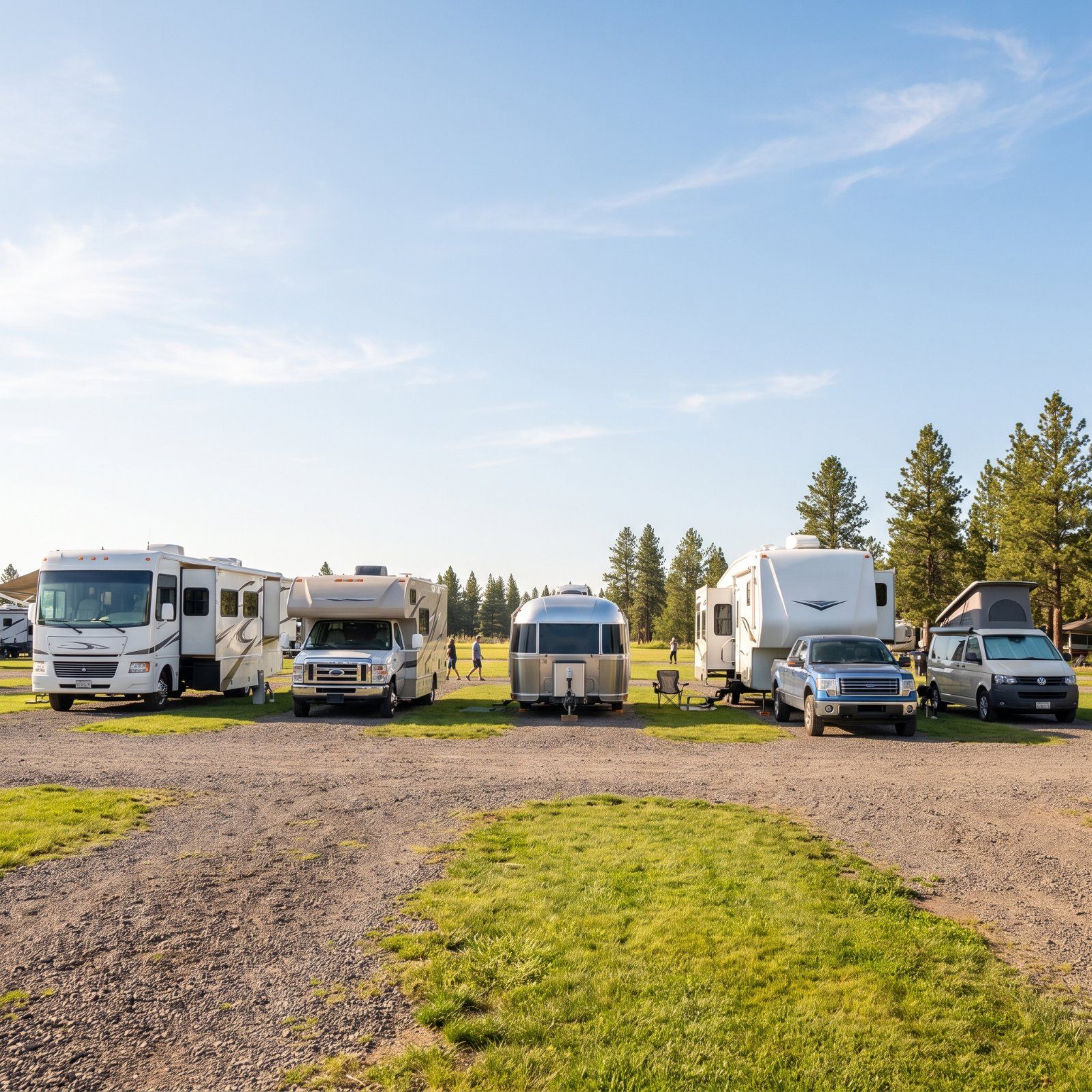
Walk a dealer lot on a Saturday and you can tell who’s going home with what before anyone signs a thing. The way a person stops walking. The rig their hand lands on first. The one they circle back to while pretending to look at something else.
We’ve all picked a camper telling ourselves it was about the money, the mileage, the floor plan. It almost never is. The Class A, the Class C, the Airstream, the fifth wheel, the camper van, each one answers a question you weren’t aware you were asking. About control. About home. About how much uncertainty you can stand before you book the next site.
None of this is an insult, and none of it is a horoscope. It’s closer to a mirror you didn’t mean to look into. Keep reading. Your rig is talking, and it’s saying more than you’d admit over a campfire.
16. The Rig You Point At First in the Dealer Lot Says More About You Than Your Budget Does
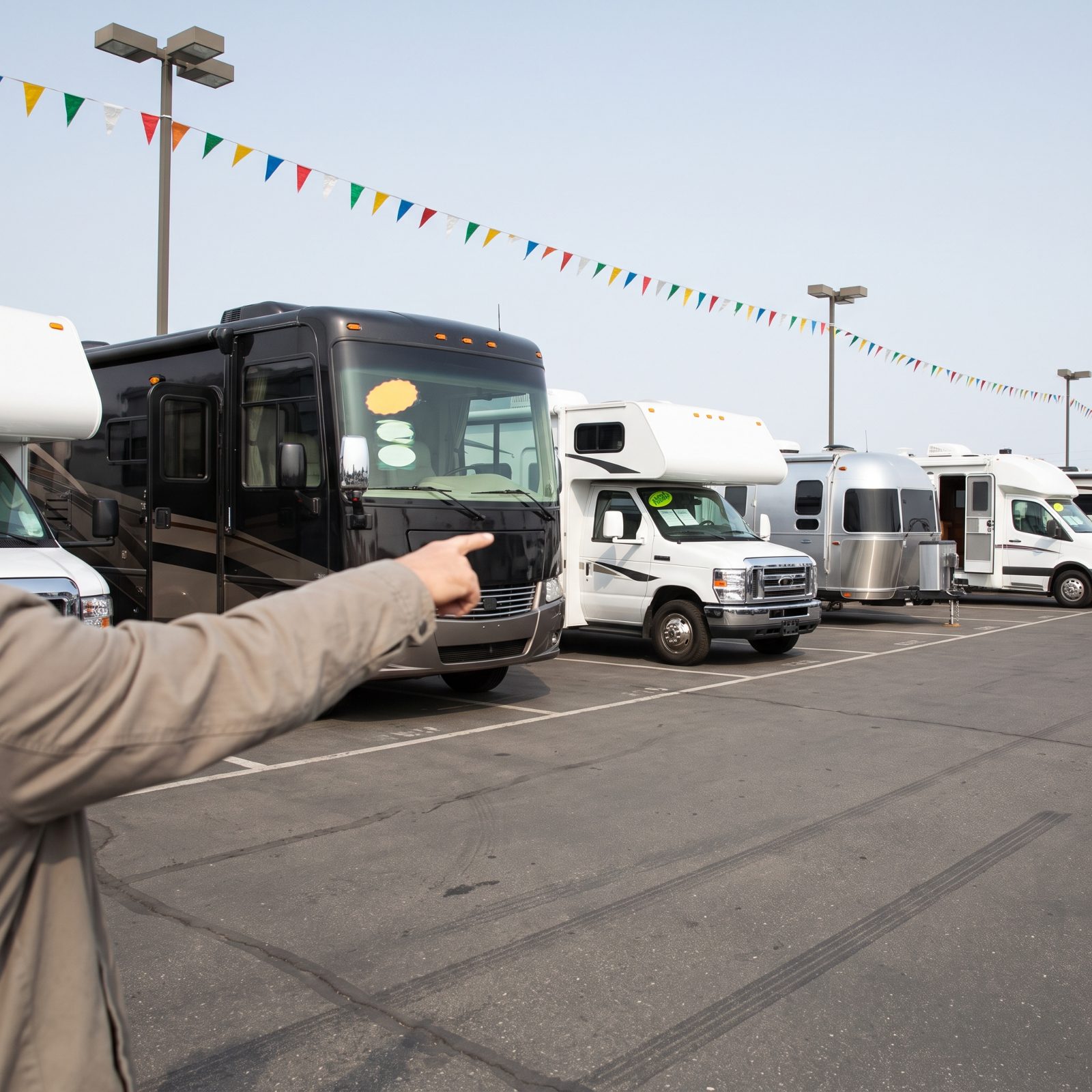
Walk a dealer lot at ten in the morning. Forty rigs, sun bouncing off aluminum, that new-upholstery smell leaking out of every open door. You will drift. You won’t mean to. Your feet carry you toward one shape before your wallet has weighed in on anything.
That drift is the tell. The thing you reached for first isn’t a spec sheet, it’s a self-portrait. There’s a line of consumer research, going back to Russell Belk’s 1988 paper on the extended self, arguing that the objects we buy stop being objects and start being us. Possessions, Belk wrote, become incorporated into our sense of self beyond body and mind. A motorhome is about the biggest possession a person can back into that idea.
So the question under the question isn’t can I afford it. It’s which version of my life am I picturing when I open that door. You already answered. You just did it with your feet.
15. Why the Person Who Buys the Biggest Class A Isn’t Actually Chasing Luxury (It’s Something Quieter)
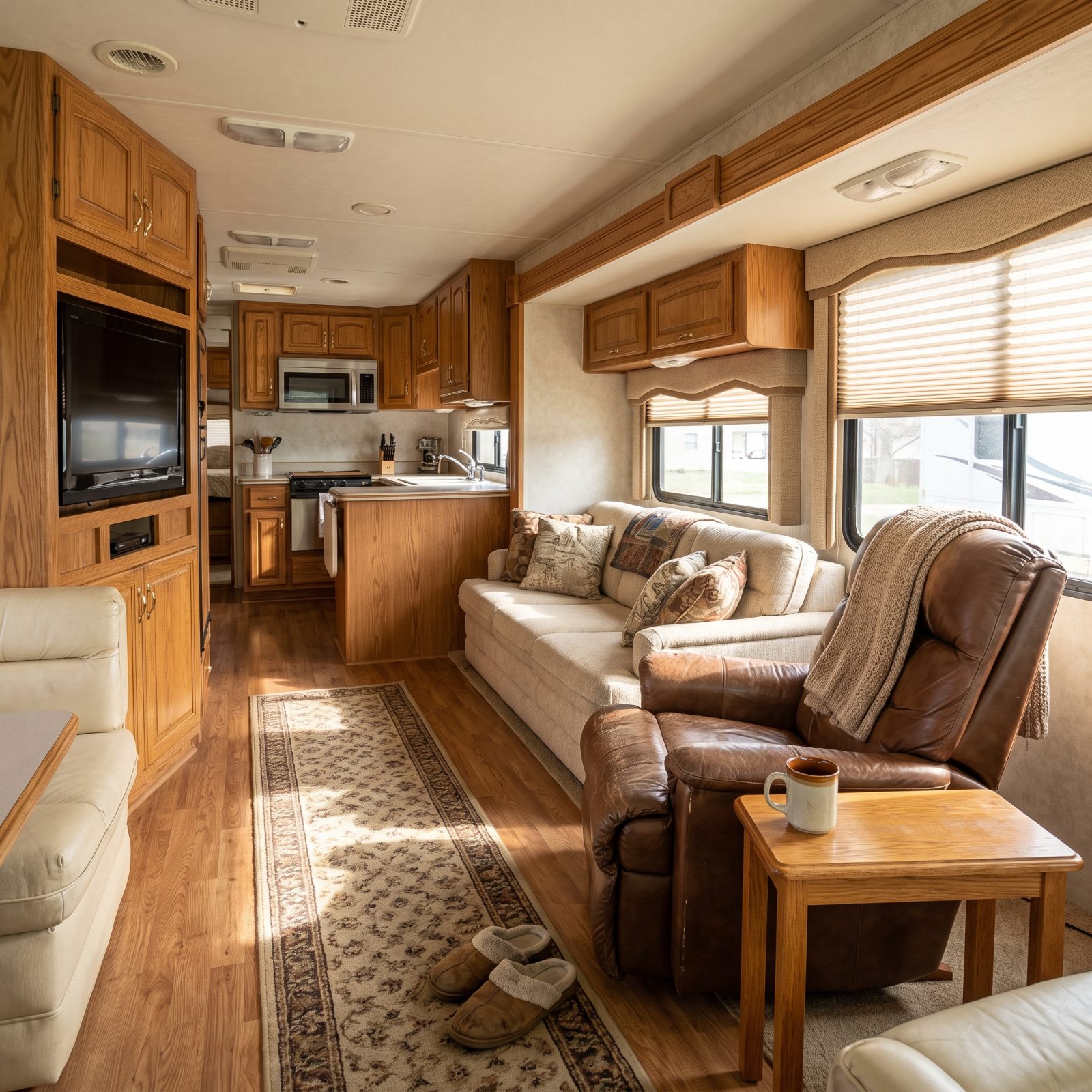
The forty-foot Class A gets read wrong constantly. People see the push-out slides, the leather, the washer-dryer tucked behind a cabinet, and they think: showing off. Most of the time they’re missing it.
Watch what the big-coach owner actually does at a campsite. Levels the rig. Sets the chairs. Then sits, and does not move for four days. The size isn’t about spectacle. It’s about not leaving anything behind. The coffee maker you like. Your own mattress. The recliner that fits your back. Loss aversion, the principle Kahneman and Tversky built into prospect theory in 1979, says the pain of losing something runs about twice as strong as the pleasure of gaining it (Source). The big coach is a person refusing the loss. All of home, carried whole, so nothing gets subtracted on the road.
14. The Class C Buyer Is Making One Calculation Everyone Else Is Too Proud to Admit They’re Making
Here’s the math nobody says out loud.
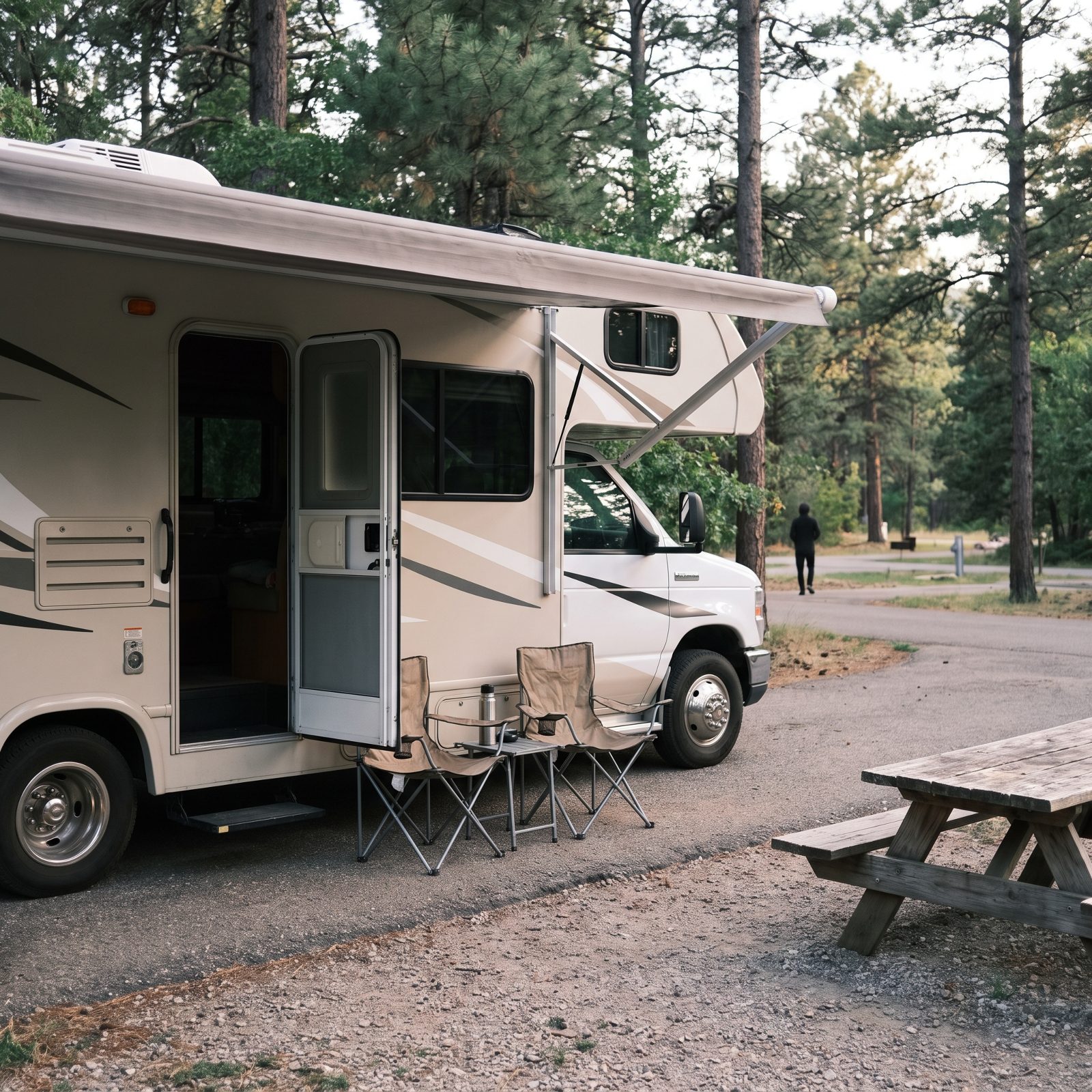
The Class C, the one with the bed hanging over the truck cab, is the honest rig. It admits something the others dance around: you want enough, and you want to be able to drive it to the grocery store without a prayer. The over-cab bunk is pure efficiency. Sleep the grandkids up top, keep the footprint on a van chassis you already know how to park.
That’s a trade-off calculation, and it’s the exact kind behavioral economists study. Prospect theory holds that people judge every option against a reference point rather than against some perfect ideal (Source). The Class C buyer anchors to a minivan or a work van. Against that, a rig you can still maneuver feels like a gain, not a compromise. The big-coach crowd anchors to a house. Different reference point, different rig.
Nobody wants to say the ceiling clearance at the gas canopy factored into their decision. It did. There’s no shame in it. That’s just somebody who’s actually going to use the thing.
13. What It Means When Someone Refuses Every Rig Except the Silver One
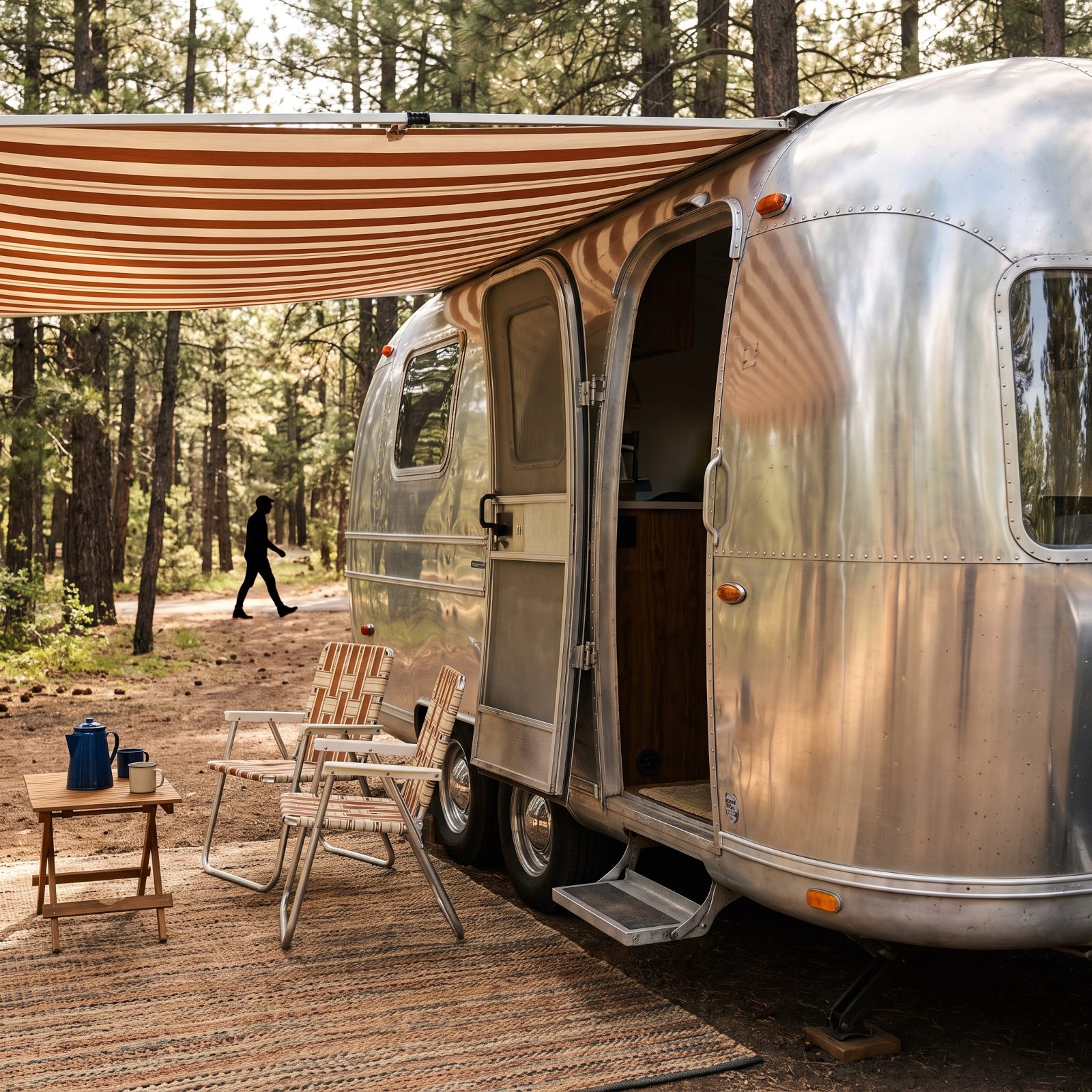
You’ve met this person. They don’t say “travel trailer.” They say Airstream, the whole word, like it’s a surname. Show them a perfectly good rig at half the price and they’ll nod politely and go back to looking at riveted aluminum.
That’s not stubbornness. That’s identity doing its quiet work. Belk’s extended-self research argues that certain possessions become so intertwined with who we are that “you are what you own” stops being a slogan and starts being accurate (Source). The silver trailer isn’t a purchase. It’s a membership. And the brand itself leans into it: the Airstream community has run a caravan club since the early 1950s, where the silhouette stands for friendship, travel, and a shared way of life more than for a product (Source).
So when someone refuses everything but the silver one, they’re not being difficult about aluminum. They’ve already decided who they are at the campground. They’re just waiting for the paperwork to catch up.
12. The Fifth-Wheel Decision Reveals a Relationship to ‘Home’ That Most People Never Say Out Loud
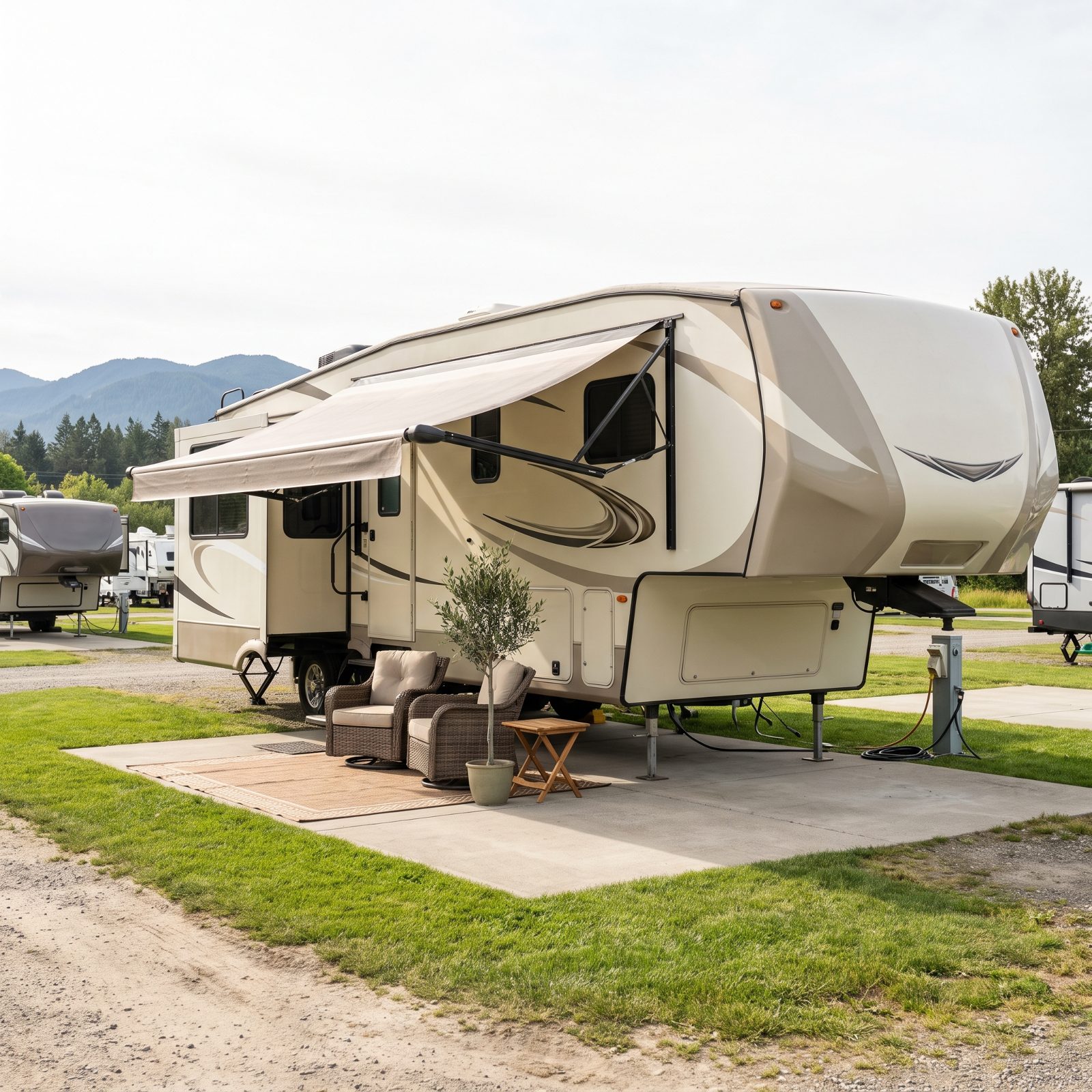
The fifth wheel is the rig that admits the truth: you want to leave your house behind and also take a house with you. You unhitch the truck, and the trailer stays put, planted, with that raised front bedroom up over the hitch like a second story. Then you drive off in the truck. The home stays home. You just get to go places.
There’s something underneath that choice worth naming. Environmental psychologists have spent decades on place attachment, and one finding keeps surfacing: home ownership isn’t a necessary condition for the feeling of home at all (Source). What makes a place home is rootedness, familiarity, the felt security of somewhere that’s yours. The fifth wheel delivers exactly that, then puts it on wheels. Set up once, stay a season, and it becomes a fixed point you return to from every day trip.
The full-timers who pick fifth wheels usually aren’t fleeing home. They’re rebuilding it, lighter, in a spot they chose on purpose. That’s a different thing entirely.
11. The Camper Van Crowd Is Optimizing for Something Science Calls Loss Aversion (And They’d Never Call It That)
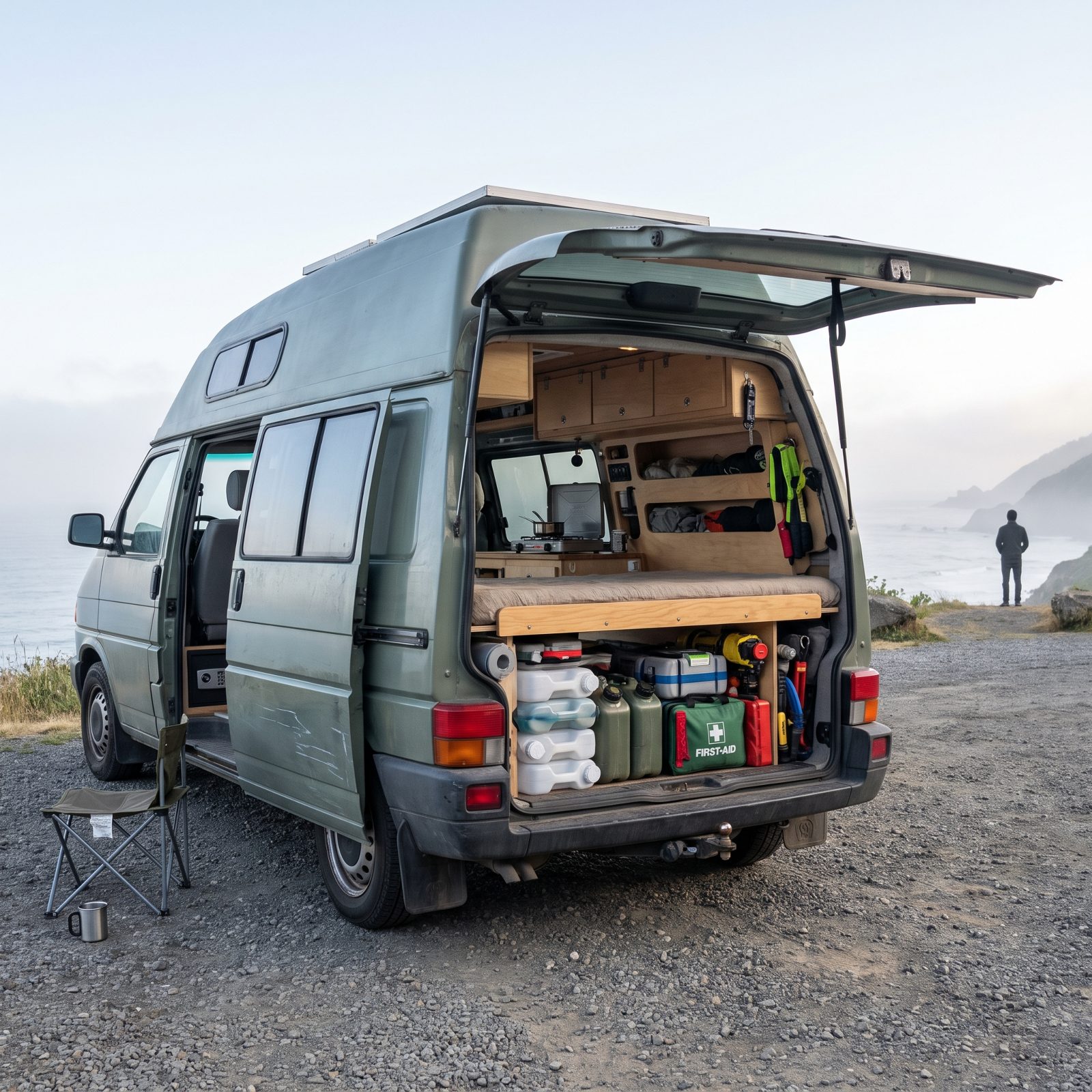
Ask a van-lifer why the van and you’ll get a list. Fits in a regular parking spot. Can stealth-camp on a city street. Gets real mileage. Goes down the fire road the big rigs can’t touch. One vehicle, no towing, park it anywhere.
Notice the shape of that list. Every item is a thing they refuse to lose. Access. Spontaneity. The option to turn down any road that looks interesting. That’s loss aversion wearing hiking boots. Prospect theory puts the loss-aversion coefficient around two, meaning losing something stings roughly twice as hard as gaining the equivalent feels good (Source). The van owner has looked at the big coach and seen, not comfort, but a cage of things they can’t do anymore. No cliffside pullout. No last-minute U-turn. No slipping into a trailhead lot at dawn.
They’d never put it in those terms. They’d say the van is “freedom.” Same thing. Freedom is just loss aversion with better scenery.
10. Why Backing Into a Site Is the Real Personality Test, Not the Purchase
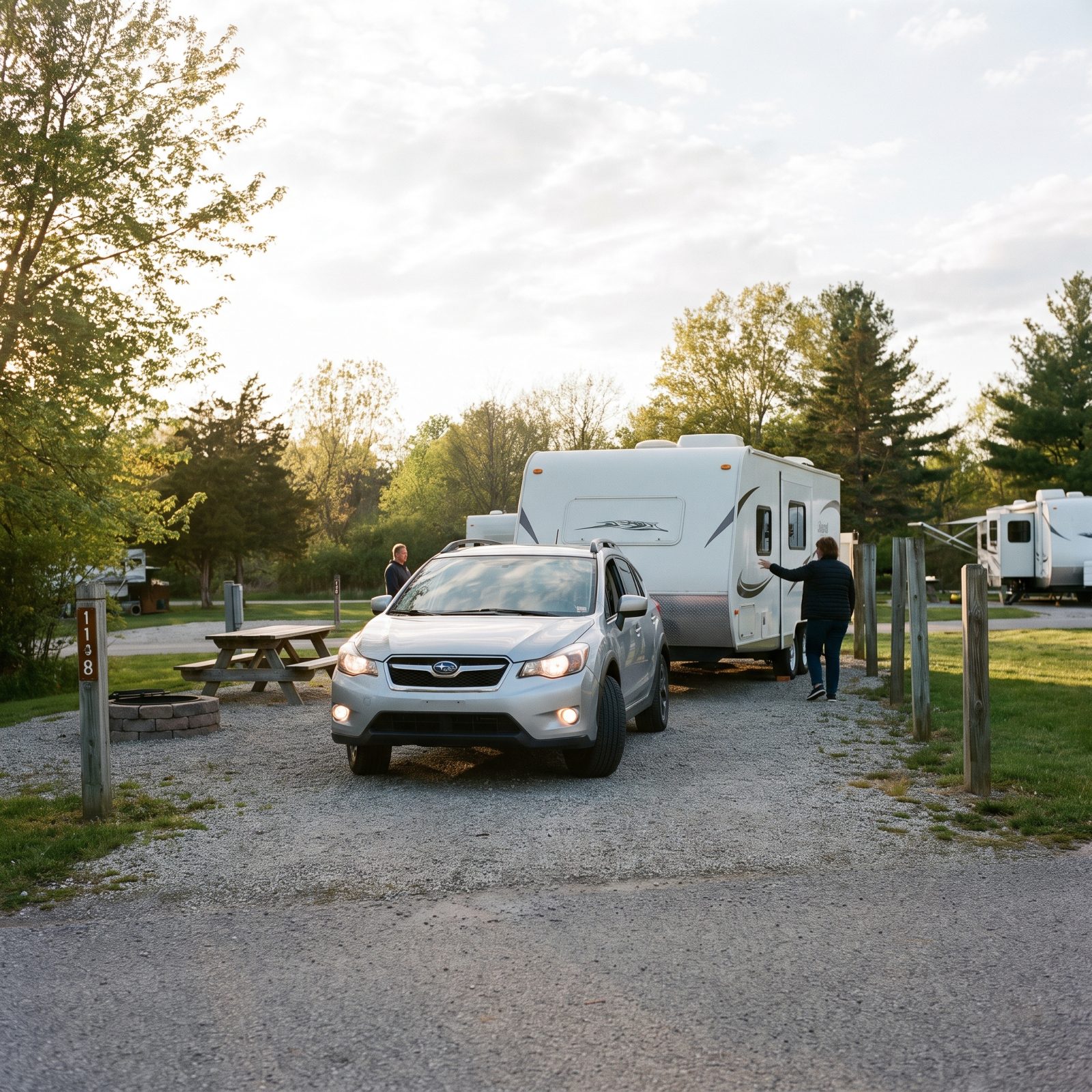
Buying the rig is a daydream. Backing it into site 47 at dusk with a crosswind and your spouse standing somewhere in the mirror’s blind spot is the actual exam. And everyone at the campground is watching, pretending not to.
This is where personality stops being a story you tell and becomes a thing you do. The person who gets out and walks the site first. The one who insists on no spotter and refuses to admit it’s going badly. The couple who’ve worked out hand signals that look like air traffic control. You learn more about a traveler in ninety seconds of reversing than in an hour of them explaining their water filtration setup.
And there’s a payoff hiding in the frustration. Place attachment research finds that a bond to a place deepens through repeated effortful interaction, not through a single arrival (Source). The site you fought to back into is the site you remember. The struggle writes it into memory. Easy pull-throughs blur together. The hard back-in becomes a story you still tell.
9. The One Thing Class A Owners and Van-Lifers Secretly Have in Common (And It’s Not What You’d Guess)
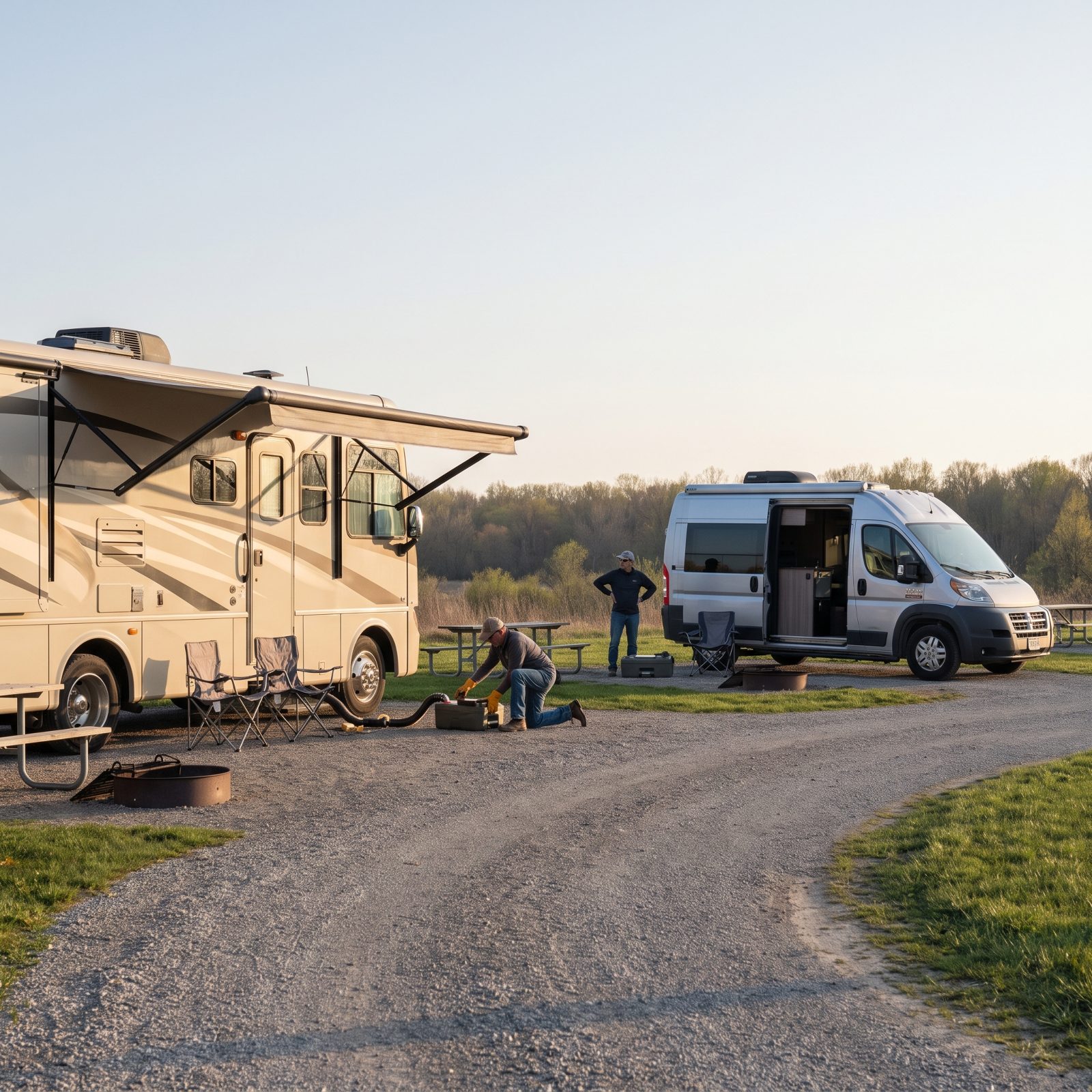
On paper these two are opposites. Forty feet of diesel coach versus a converted cargo van. The one with a residential fridge versus the one with a cooler and strong opinions about weight. They’d razz each other across a campground fire and mean most of it.
Here’s what they share, and it isn’t the obvious stuff. Both built their entire travel life around refusing to lose the thing they value most. The coach owner refuses to lose comfort and home. The van owner refuses to lose access and freedom. Same engine, loss aversion, that asymmetry where losses loom roughly twice as large as equivalent gains (Source), pointed at two different fears.
And underneath that, both are doing what Belk described forty years back: pulling an object into the self until it stops being a vehicle and becomes a way of saying who they are (Source). The coach says one thing. The van says another. But both are the same sentence: this is me, and I built it on wheels.
So which one are you? You already know. You’ve known since the dealer lot. Go back and read where your feet took you first.
8. What Your Setup Ritual at the Campsite Quietly Tells the People Three Spots Down
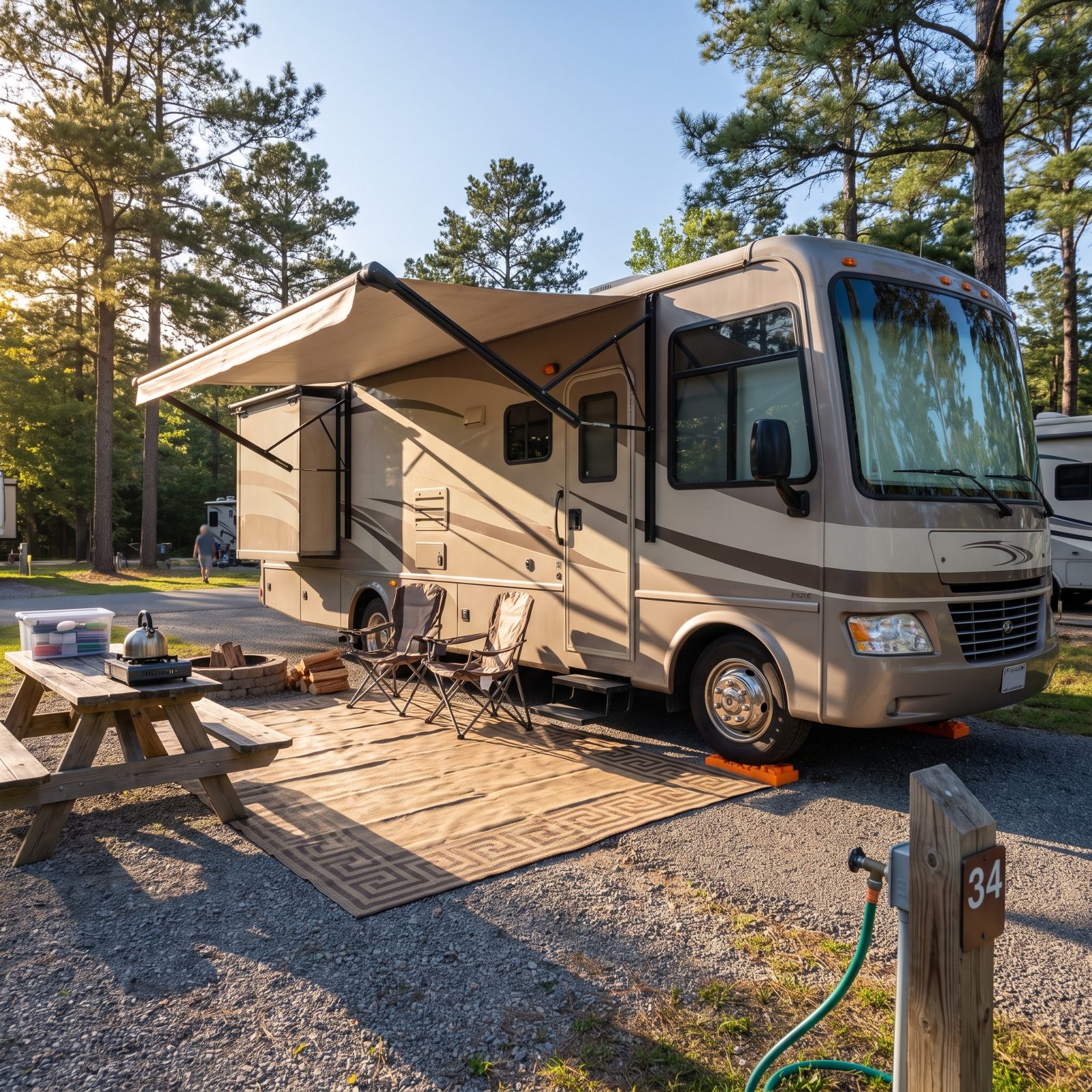
Pull into any state park loop around four in the afternoon and watch. One rig levels, pops the awning, and has the camp chairs out and the kettle on before the neighbors have even found the fuse box. Another is still backing in at six, directing with hand signals, chocks in one hand. Nobody says a word. But everybody’s watching, and everybody’s reading it.
The setup ritual is the first thing strangers learn about you, and it broadcasts more than you’d like. Researchers have found that people make surprisingly accurate personality judgments from someone’s possessions and personal spaces alone, sometimes as reliably as close friends can. Source The Class A owner with the outdoor rug squared to the picnic table, the Airstream owner with the string lights already up, the van traveler who’s set up and gone for a hike in eleven minutes: each of those is a legible signature.
The efficient setup says control. The elaborate one says this is home, not a stopover. Neither is better. They just tell on you.
7. The Psychology of the Owner Who’d Rather Tow Than Drive Their House
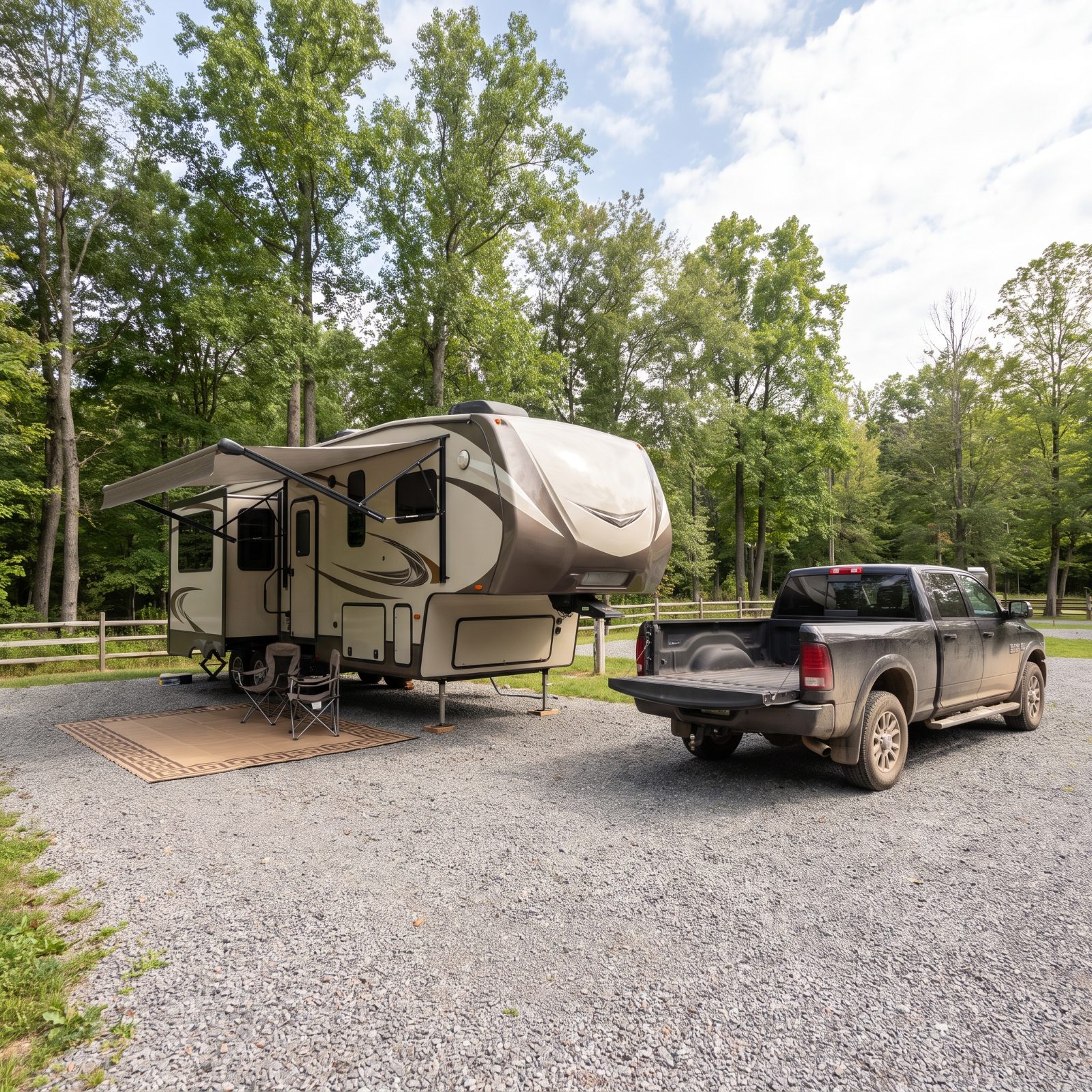
There’s a specific kind of camper who looks at a 36-foot motorhome and feels something close to claustrophobia. Not of the space. Of the arrangement. The bed, the kitchen, the engine, and the driver’s seat all welded into one object that goes everywhere together. For the fifth-wheel and travel-trailer crowd, that’s the problem, not the appeal.
Towing is a decision about separation. You park the house and drive away in the truck. Groceries, the hardware store, the trailhead twenty minutes down a washboard road: all of it happens in a vehicle that isn’t also your bedroom. The rig stays put. You stay mobile.
Underneath the practicality is a tidier mind than people assume. Possessions work as extensions of the self, and how we organize them maps onto how we organize everything else. Source The tow-rig owner likes functions kept in their lanes. Home is home, transport is transport, and blending the two feels like a category error. It’s the same instinct that keeps the toolbox sorted and the medications in the right drawer. Separate the systems and nothing surprises you.
6. Why Some Travelers Need to See the Road and Others Need to Forget They’re on It

Climb into the cockpit of a Class A and the windshield is the size of a picture window. The road comes at you wide and panoramic, the dashboard low, the view enormous. Now climb into a Class C built on a van chassis, where you’re tucked behind a familiar hood with a cab-over bunk above you, and the drive feels like, well, driving. A big van. Nothing to relearn.
That gap is a personality tell. One traveler wants the theater of the road, the elevated throne, the sense of commanding the whole highway. The other wants the drive to disappear so the destination can take over.
It tracks with how people handle new, complex situations. Those higher in openness tend to seek out novel experience and unfamiliar stimulation, while others prefer the known quantity and the smaller learning curve. Source The panoramic-windshield crowd treats the drive as part of the trip. The familiar-cab crowd treats it as the thing you get through to arrive. Same campground, two completely different relationships with the four hundred miles in between.
5. The Fixer Versus the Finisher: What Choosing a Vintage Camper Over a New One Admits About You
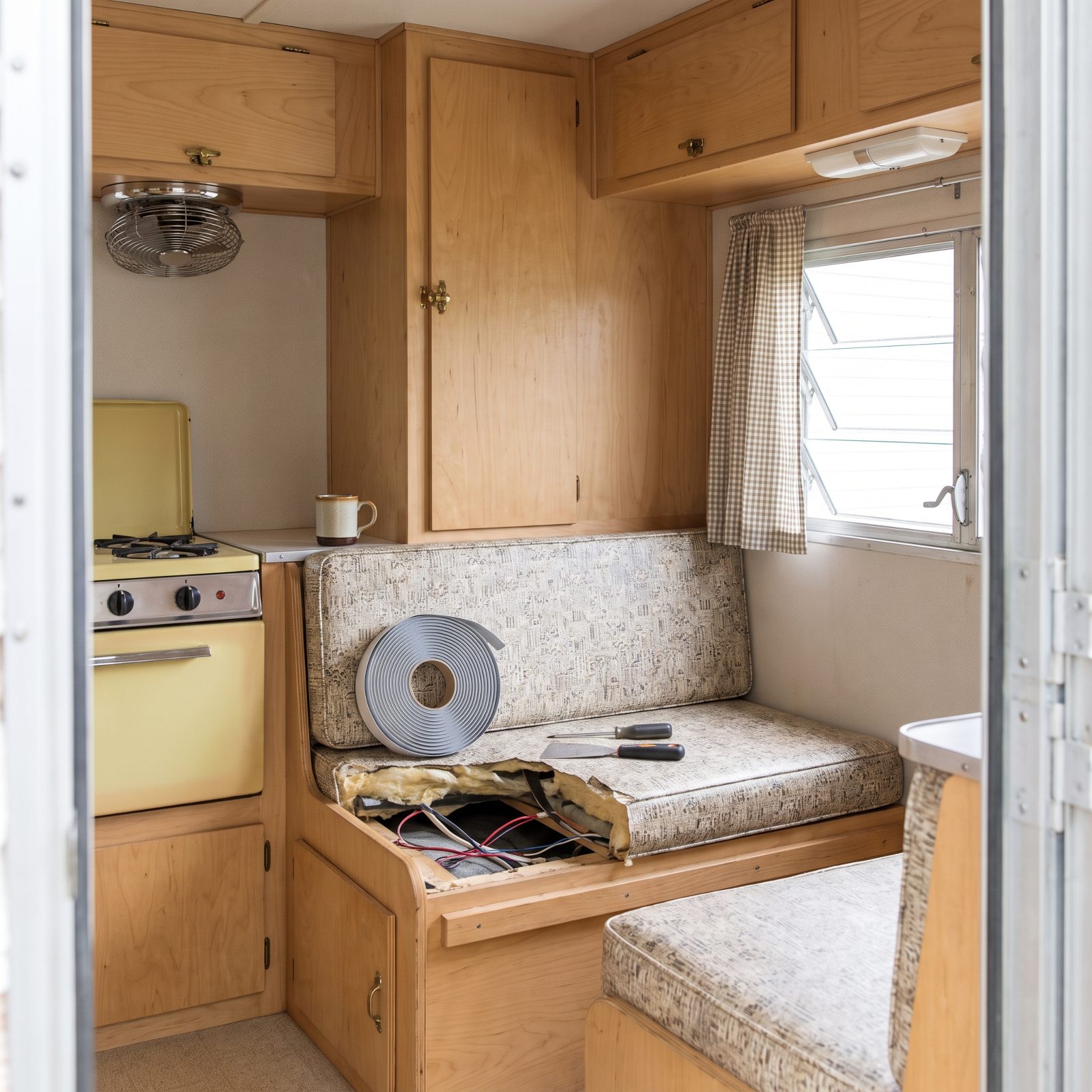
A 1967 canned-ham trailer with birch interior and a dent in the fender. Or a factory-fresh unit under warranty with a backup camera and a residential fridge. Same budget, roughly. Two entirely different people.
The vintage buyer is signing up for a relationship, not a purchase. There will be a soft floor to replace, a water heater that quits in Utah, a roof seam that needs resealing every single spring. And that’s the appeal. The project is the point.
Our attachment to objects deepens the more we interact with them, a bias psychologists call the IKEA effect: the more we handle a thing and pour ourselves into it, the more we value it. Source Every repair the fixer makes welds them tighter to the trailer. The finisher wants none of that. They want to turn the key and go, and they’d rather spend the weekend on a trail than under a dinette with a putty knife.
Neither is right. But the vintage owner is buying a hobby with a bed in it, and should probably admit that out loud before the first leak.
4. The Real Reason Minimalists Choose the Rig With the Least Storage On Purpose
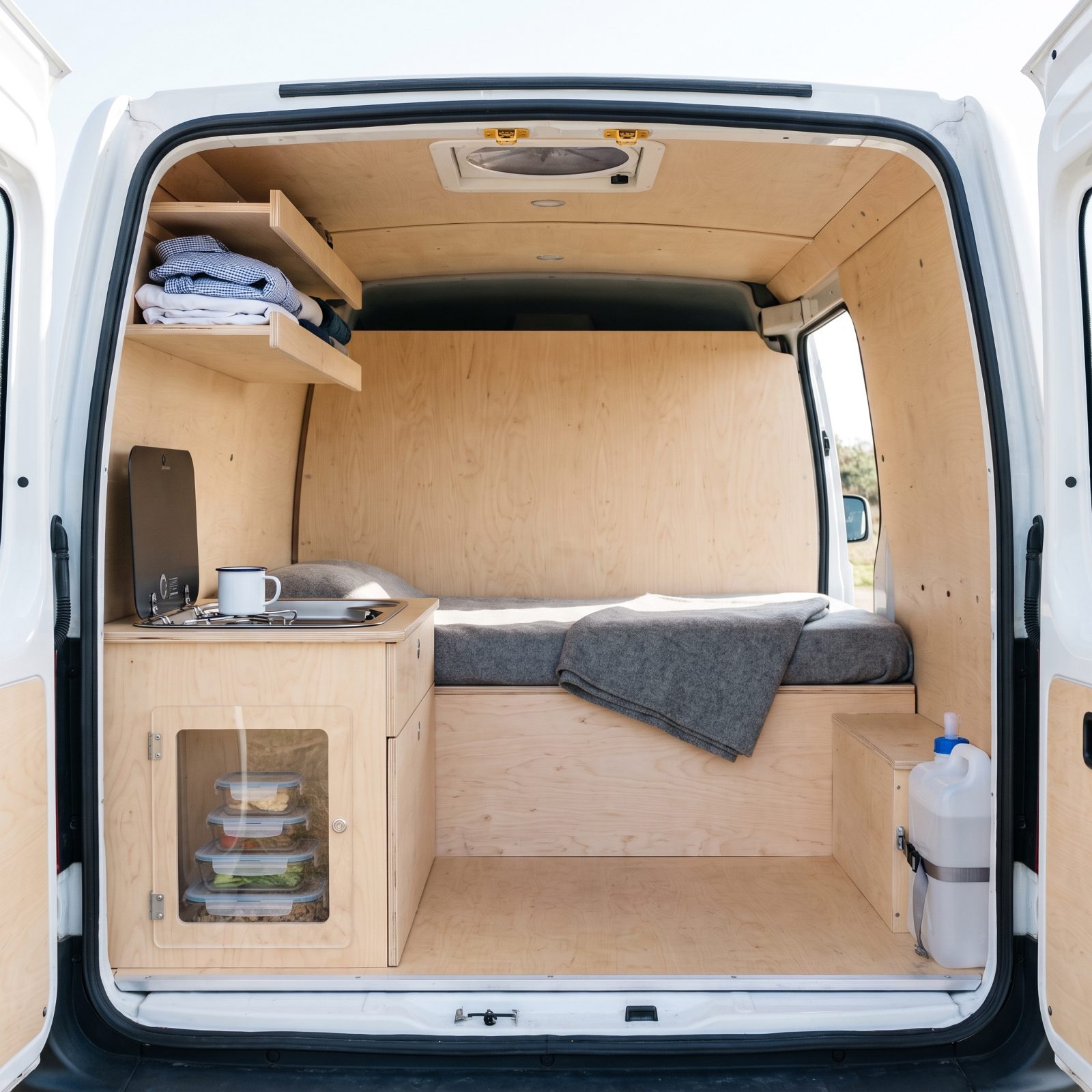
You’d think the van lifers chose the smallest rig to save money. Sometimes. More often they chose it to save themselves from themselves.
A camper van has maybe a quarter of the storage a fifth-wheel has, and that’s the feature. When there’s one drawer for clothes and one cabinet for food, the decision about whether to bring the third pair of shoes makes itself. The rig enforces a discipline the owner wanted but couldn’t impose alone.
There’s real research behind the relief that follows. A systematic review of the empirical literature found a consistent positive relationship between voluntary simplicity and well-being. Source People who live with fewer possessions report more autonomy, more mental space, and a lighter sense of control over their days. Source
The van owner isn’t deprived. They’re outsourcing willpower to the floor plan. The small rig says no on their behalf, every single trip, and they love it for that.
3. What the Size of Your Rig Predicts About How Often You’ll Actually Move It
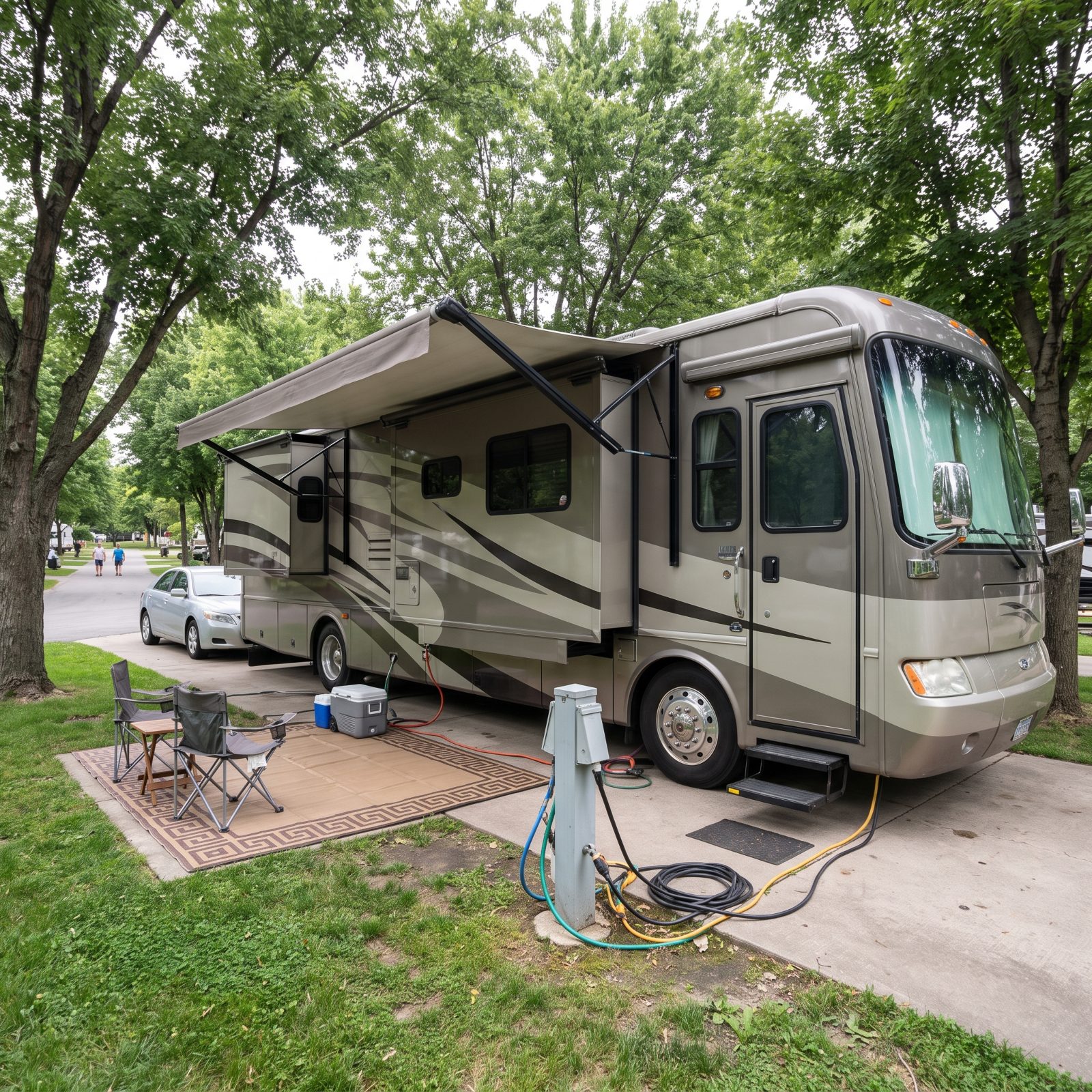
Here’s the quiet irony of RV ownership. The bigger the rig, the less it tends to move.
A camper van will see three states in a week. A 40-foot diesel pusher with a tow car, a washer-dryer, and three slide-outs often picks one spot and stays a month, because moving it is a production. Break camp, retract the slides, stow everything that isn’t bolted down, unhook utilities, and then thread that thing down a park road built in 1958. You don’t do that on a whim.
The size you buy is a prediction about your own behavior, and it runs deeper than logistics. Possessions reflect and then reinforce who we are; the relationship runs both directions, so the choice shapes the habit as much as the habit shaped the choice. Source Buy the big rig and you become a settler, a base-camper, someone who learns one lake deeply. Buy small and you become a wanderer who’s gone before the neighbors learn your name.
2. The Decision That Looks Like Money But Is Actually About How You Handle Uncertainty
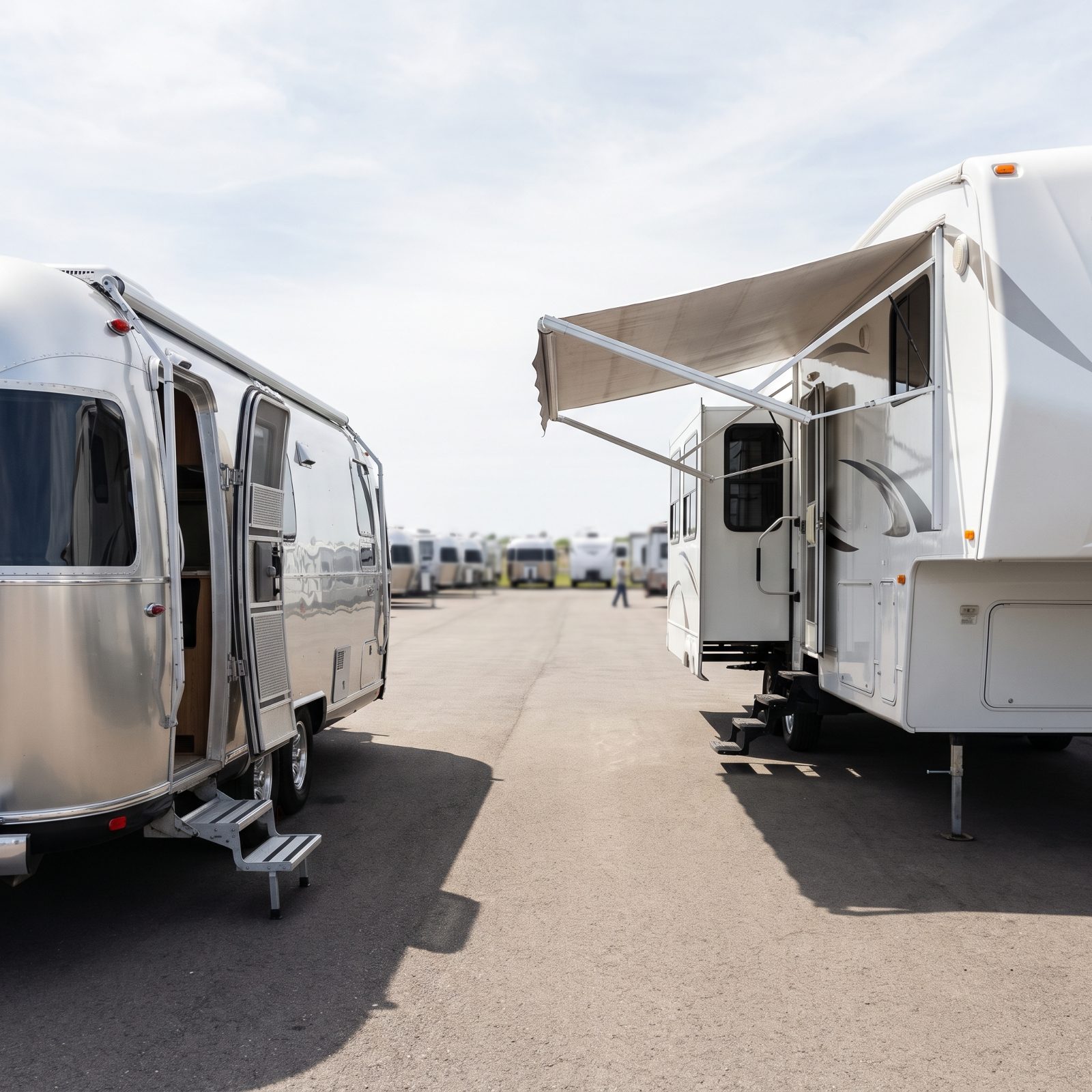
Two shoppers, same lot, same budget. One agonizes between the Airstream and the fifth-wheel for eight months, reads every forum thread, spreadsheets the resale curves, and still can’t pull the trigger. The other test-drives one unit on a Saturday and buys it by Sunday.
Looks like a money decision. It isn’t. It’s an uncertainty decision wearing a price tag.
Psychologists separate how we handle risk, where the odds are known, from how we handle ambiguity, where they aren’t. People low in tolerance for ambiguity tend to experience stress in unfamiliar situations, react to it by seeking certainty, and avoid committing until the picture feels complete. Source Buying an RV is pure ambiguity. You can’t know the weekend in the rain, the backing-in learning curve, or whether you’ll still want this in three years.
The eight-month shopper is trying to shrink the unknown to zero, which it never reaches. The weekend buyer is comfortable buying into incompleteness and figuring the rest out on the road. The research is clear that higher ambiguity tolerance links to more decisive, functional decision-making, which is to say the fast buyer isn’t reckless. Source They’ve just made peace with not knowing.
1. Why the ‘We’ll Grow Into It’ Buyer and the ‘We’ll Grow Out of It’ Buyer End Up at the Same Campground
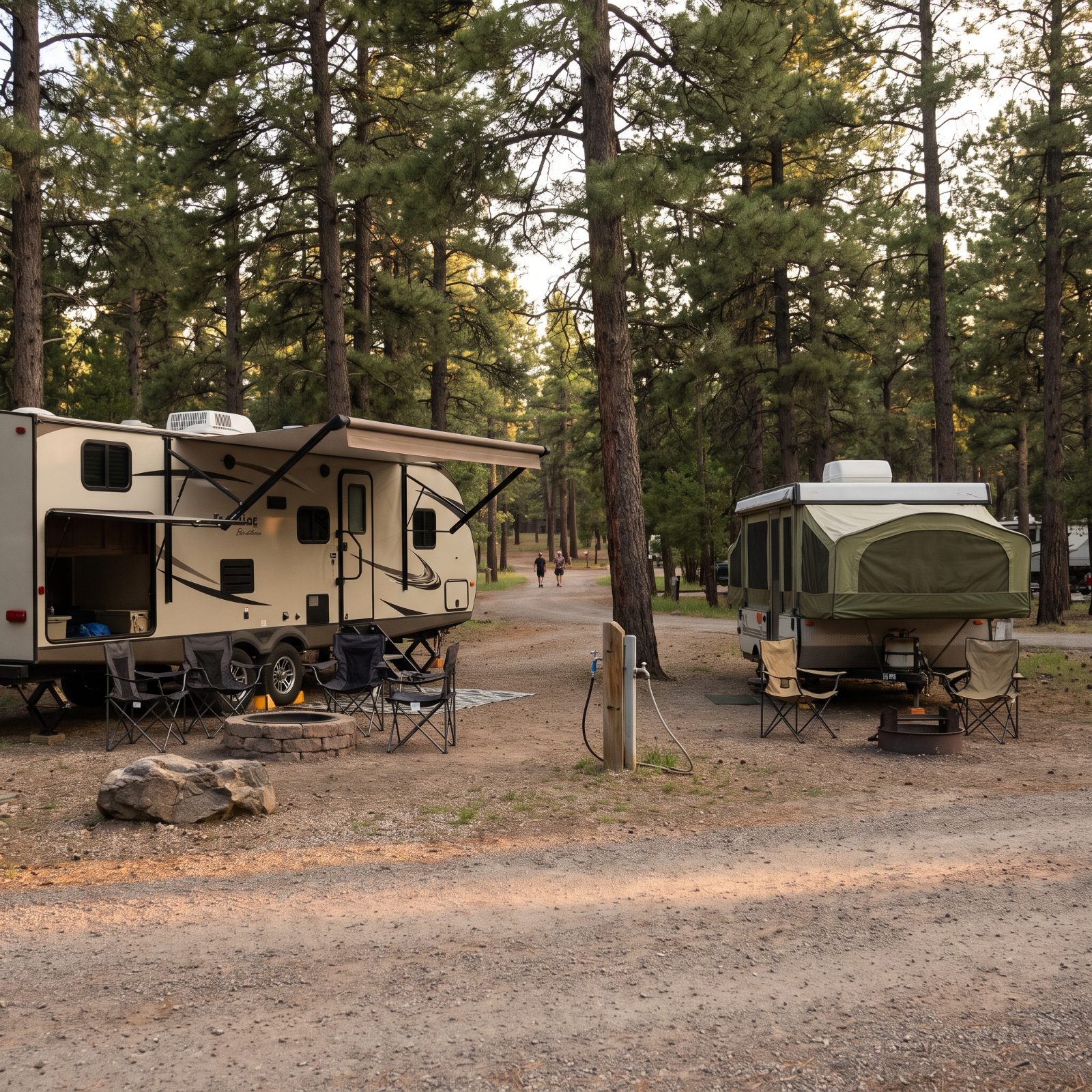
One couple buys big on day one. Bunkhouse model, room for grandkids who don’t exist yet, the floor plan for a life they’re planning to have. Grow into it.
Another couple buys the smallest thing that’ll work, figuring they’ll trade up once they know what they’re doing, or sell it off when the knees give out. Grow out of it.
Opposite strategies, opposite psychologies. And they park next to each other at the same KOA every July, run the same hose to the same spigot, trade the same camp-coffee at the same fire. Because the rig was never really the thing.
Possessions help people establish identity and satisfy the deep motivation to possess a home, a place to belong. Source One couple is reaching forward toward the family they want gathered around them. The other is traveling light toward freedom and ease. Different directions, same destination: a folding chair, a view, and the particular quiet of a campground after dark. The floor plan was just the excuse to get there.
The Bottom Line
Here’s the confession underneath all of it: the rig you chose isn’t about the road at all, it’s about how much certainty you need before you’ll let yourself go anywhere. The big-box buyer wants to carry home with them; the van-lifer wants to prove they can leave it behind. Both are answering the same question, how much control do I need to feel free?, and next time you walk a dealer lot, notice which rig quiets that question for you. That’s the one telling the truth.