
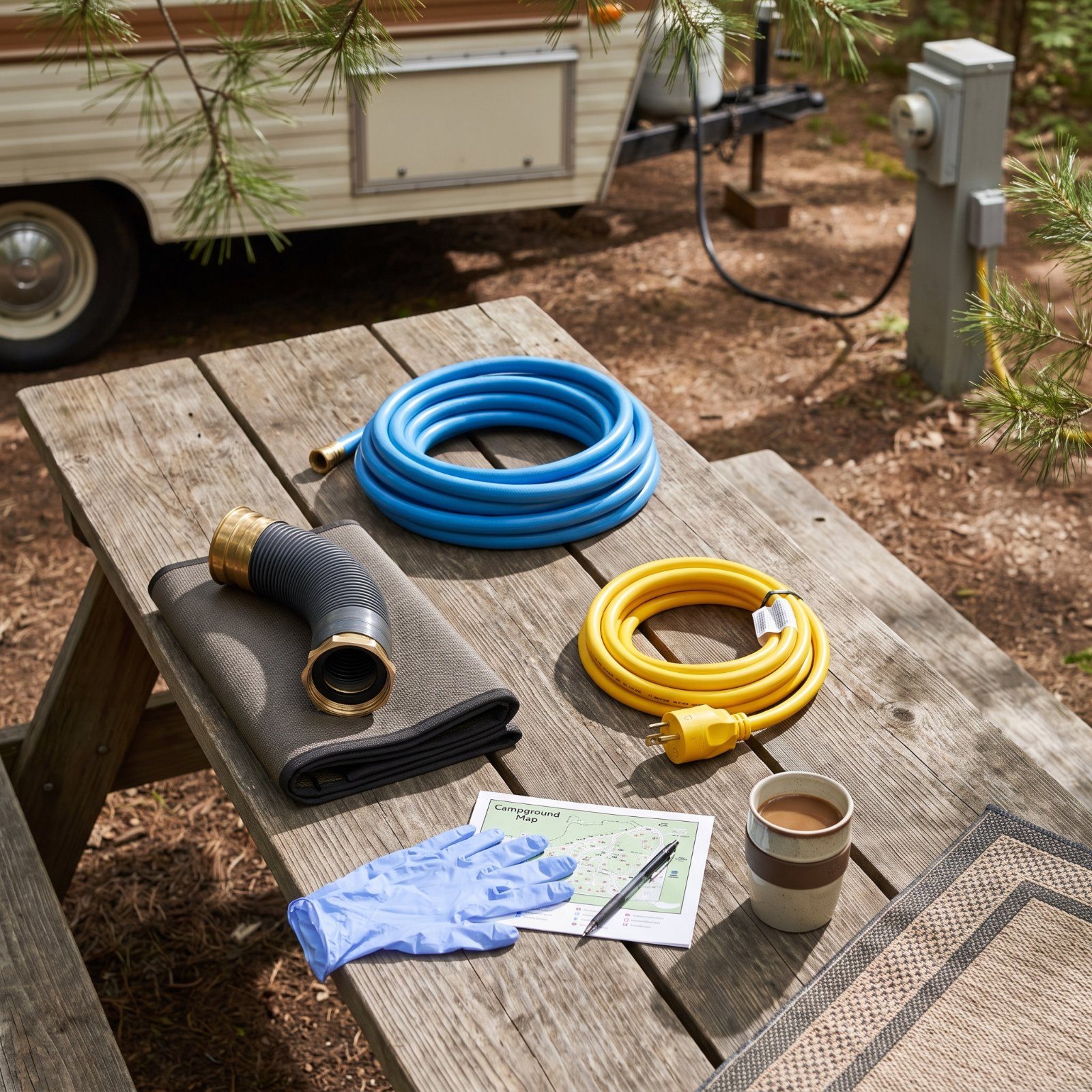
Nobody tells you the rules until you break one. You roll into your first site feeling good, and within an hour a neighbor gives you a look. Maybe you parked backwards. Maybe your sewer hose ended up two feet from the drinking water tap. Or maybe you flipped a breaker in the wrong order and heard a pop you’ll never forget. Most campground friction comes down to small customs that seasoned campers treat as second nature — nothing in a handbook, just stuff you absorb or stuff you learn the embarrassing way. Learn them before your first weekend and you skip the awkward conversations, the sanitation scares, and the quiet resentment from the folks parked next door.
Please note that some of the images in this article were created with the assistance of AI.
47. Park the RV in the Campground’s Intended Orientation
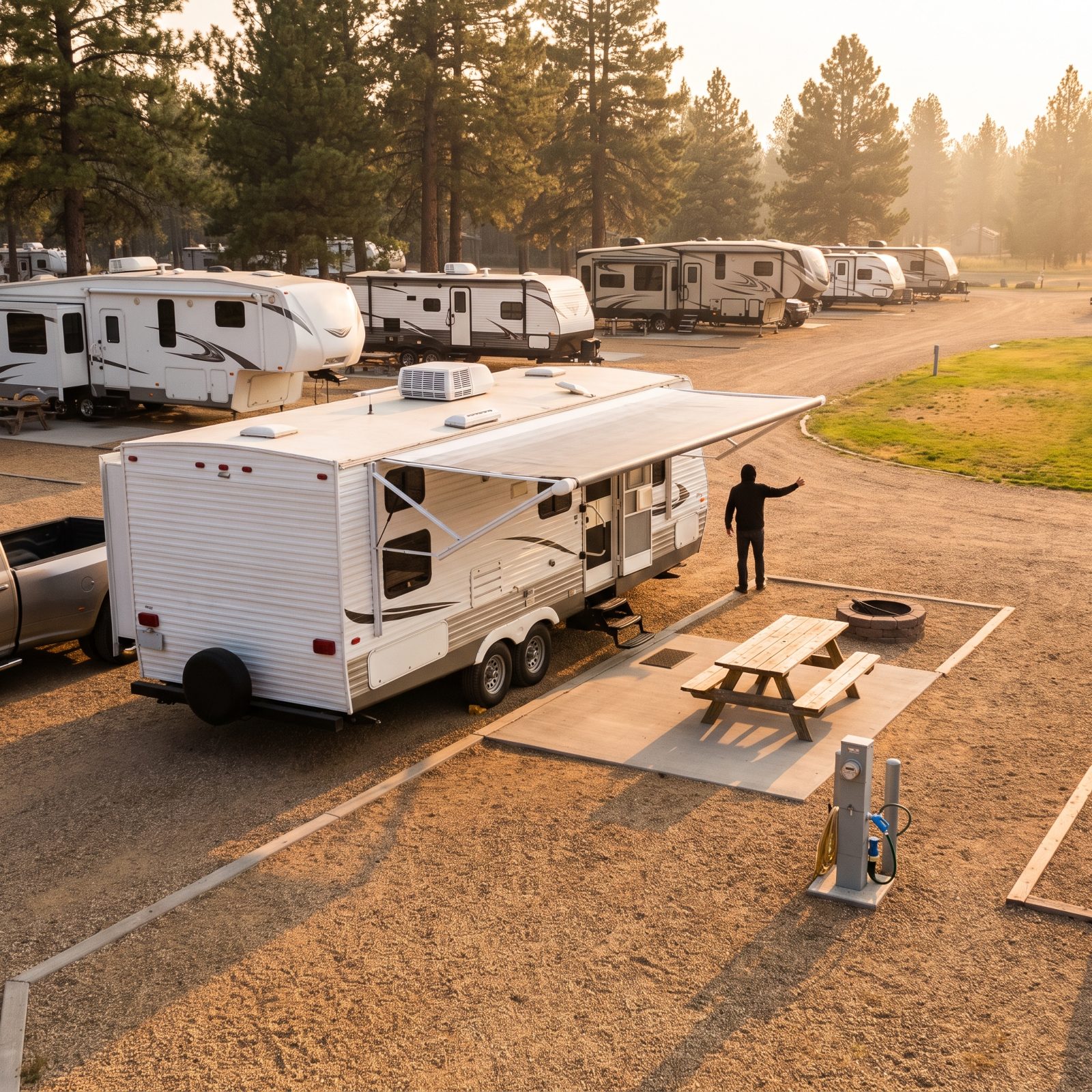
Every site is designed with a right way to sit in it. The hookup pedestal stands on the driver’s side toward the rear of the site, the patio pad stretches out along the opposite, door side, and the awning is meant to open over your own space — not into your neighbor’s bedroom window.
Get it backwards and two things happen: your sewer hose won’t reach, and your door opens three feet from someone else’s picnic table. So walk the pad before you commit. Find the pedestal, note which side it’s on, then back in so your utility bay lands near it. A minute of looking saves a frustrating re-park with a whole line of rigs idling behind you, engines running, kids hanging out windows, the works.
46. Keep Sewer-Rinse Hoses Away From Potable-Water Spigots
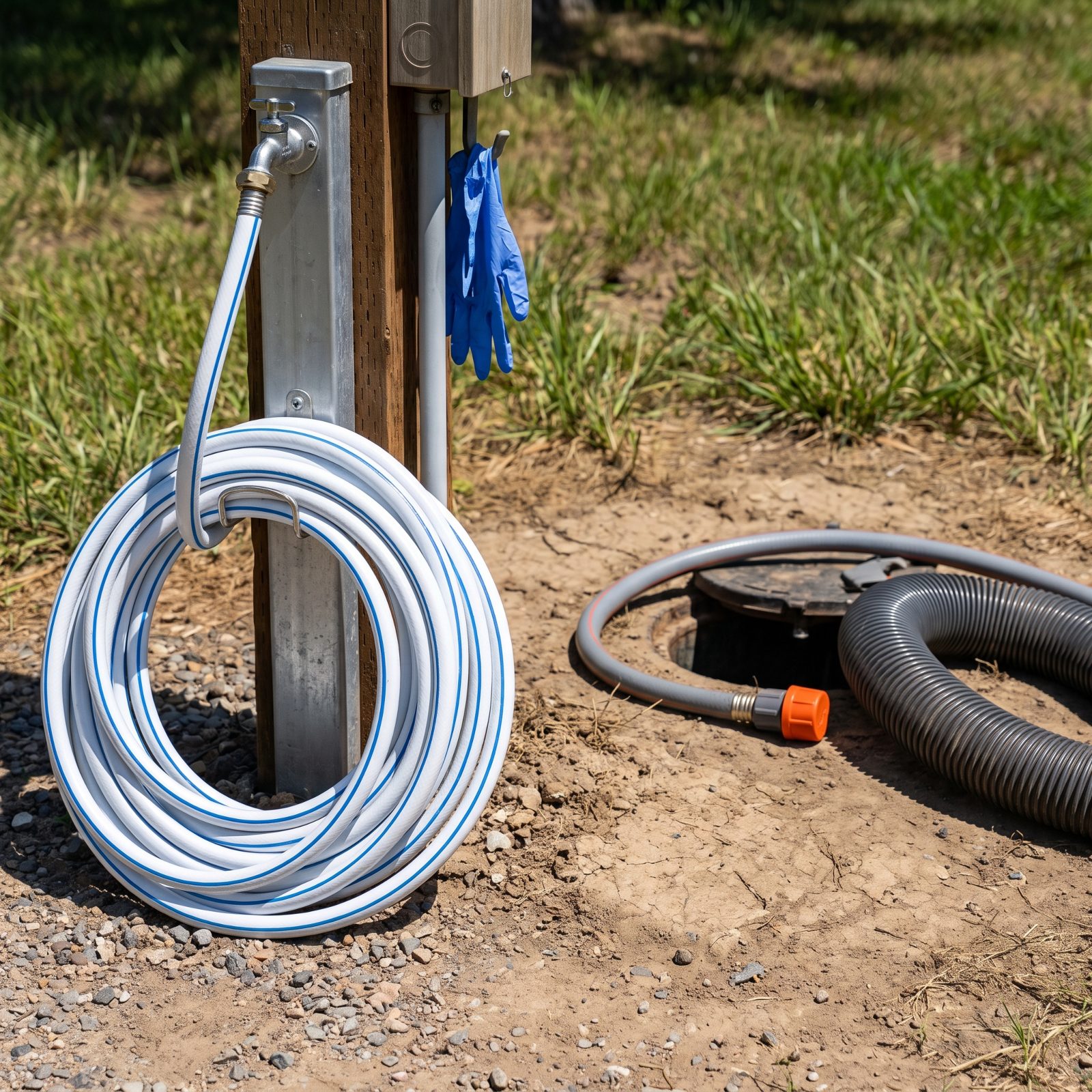
This one makes experienced campers wince. The spigot at your site feeds drinking water, and plenty of folks nearby fill their fresh tanks from the same type of tap. A rinse hose that has touched sewer gear has no business anywhere near it.
Keep a separate hose, in a different color, strictly for tank flushing and cleanup. Never let it rest against the potable spigot, and never fill your fresh-water hose from a tap you just splashed. Cross-contamination is how a relaxing weekend turns into a stomach bug that rides home with you.
45. Clear the Dump Inlet Before Stowing the Rest of the Gear
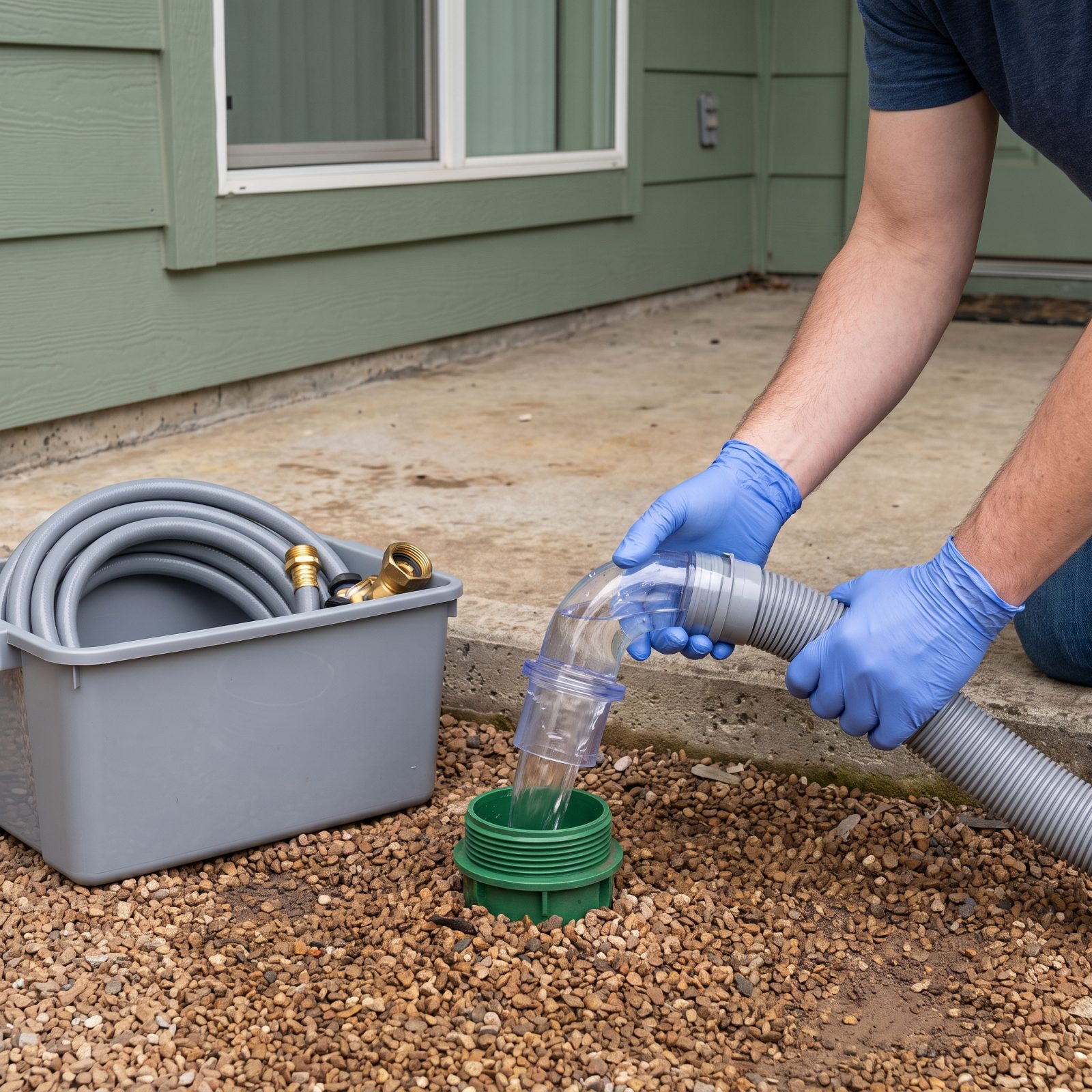
The dump inlet is the last thing you disconnect and the first thing people get wrong. They pull the hose, close the valves, and start packing — leaving the inlet open or capped over leftover residue.
Run clean water through until it comes out clear, then cap the inlet before you touch anything else. Stow the sewer gear in its own dedicated bin. Not loose in a bay with your food totes and camp chairs. Order matters, because once your gloves come off, nobody on earth wants to put them back on to fix a sloppy inlet.
44. Stay With a Running Black-Tank Flush
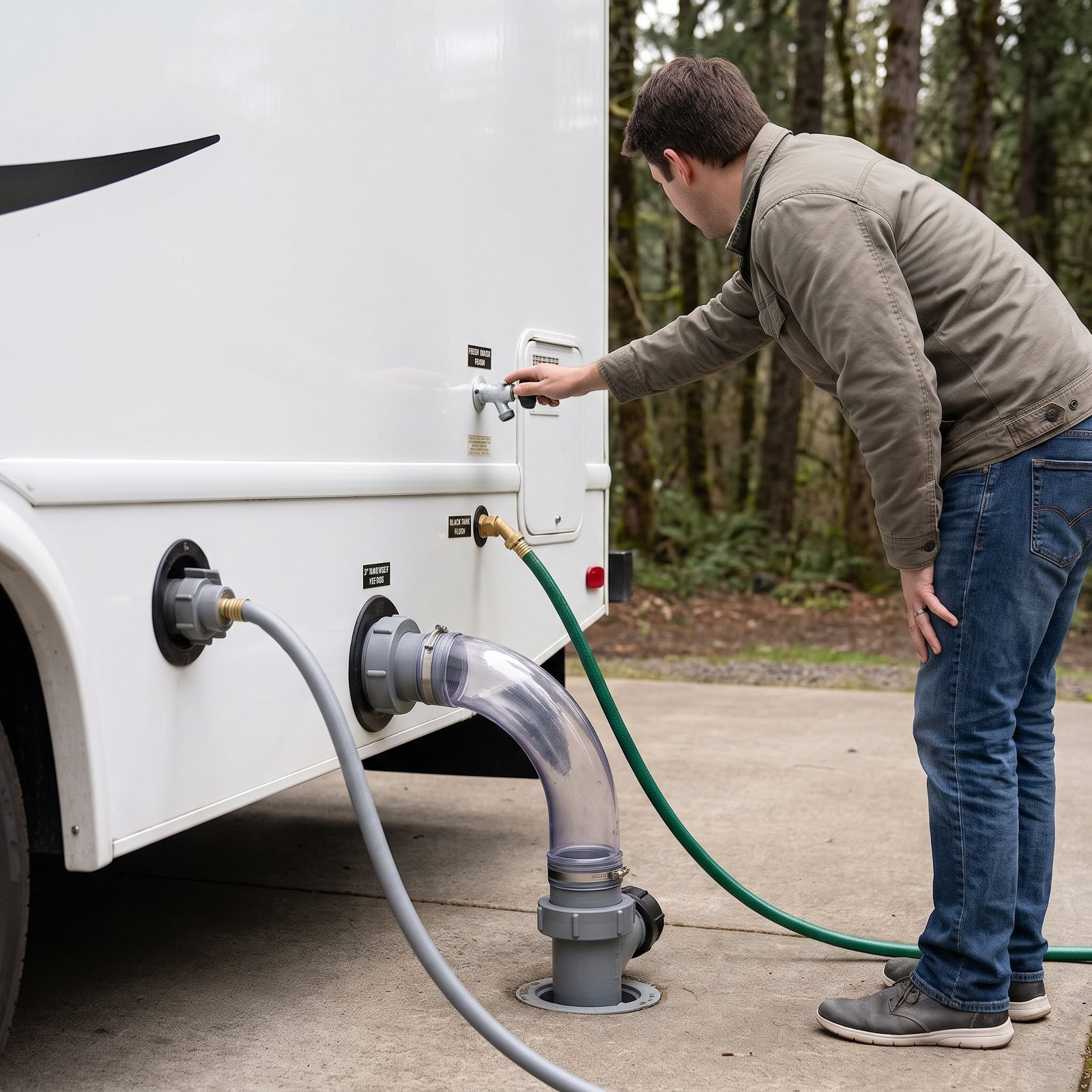
Walk away from a running flush and you risk overfilling the black tank. That means waste backing up into your bathroom, or worse, out through a connection point. It happens faster than you’d think.
A built-in tank flush fills while it rinses. If the outlet valve isn’t flowing freely, or you forget to open it, the pressure has nowhere to go. Stay close, keep a hand on the flush connection, and shut the water off the second the rinse is done. Five-minute job. Do not multitask it.
43. Use a Gasketed Sewer Elbow That Seals the Inlet
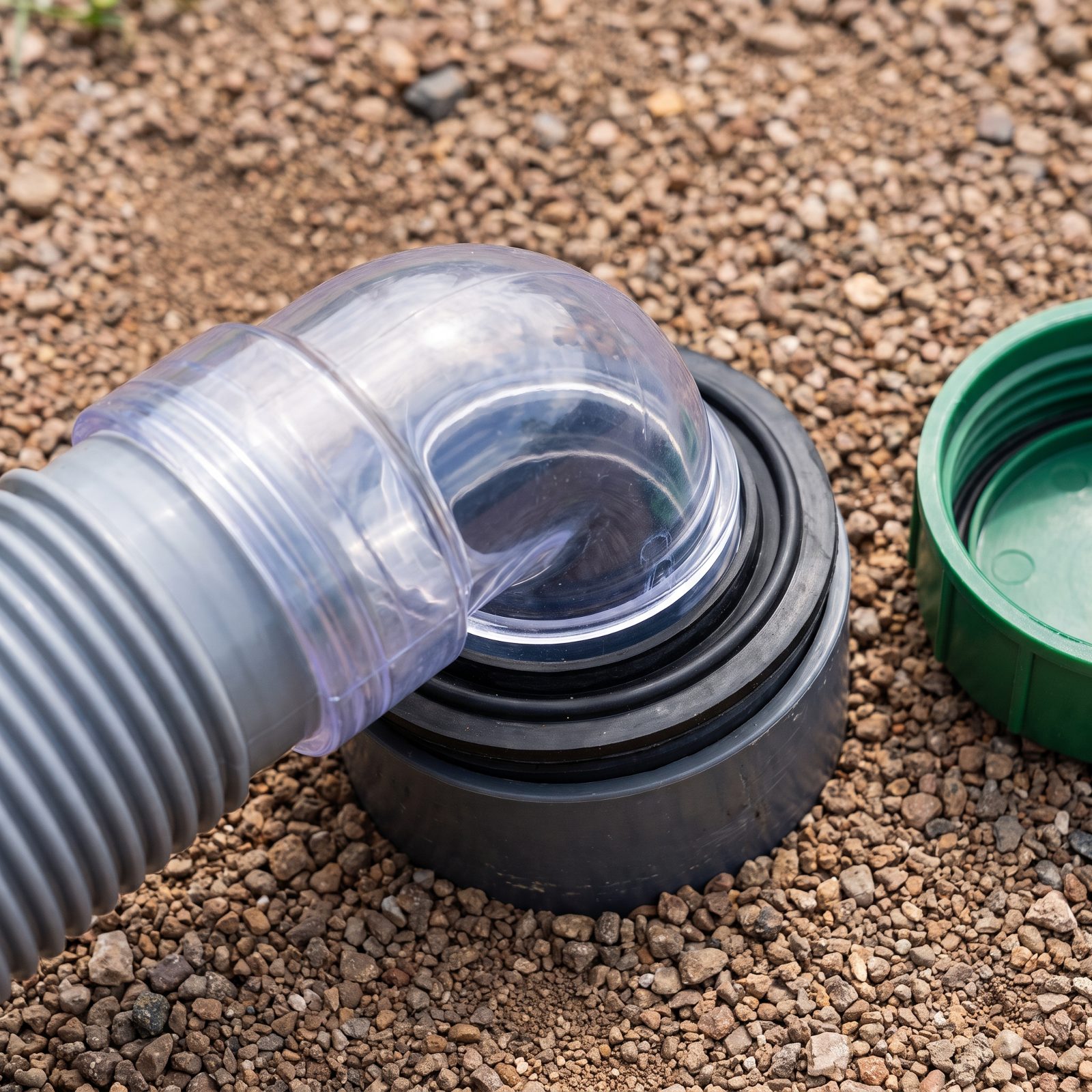
A sewer hose just laid into an open inlet lets odors drift straight up, and that smell carries across three sites on a still evening. Your neighbors will know. And they won’t love you for it.
A gasketed elbow — that rubber donut that wedges into the ground pipe — seals the connection and keeps gases down where they belong. Most parks actually require one, and for good reason: it also stops the hose from popping loose mid-dump, which is a disaster you only clean up once before you go buy the right fitting.
42. Switch the Pedestal Breaker Off Before Connecting Power
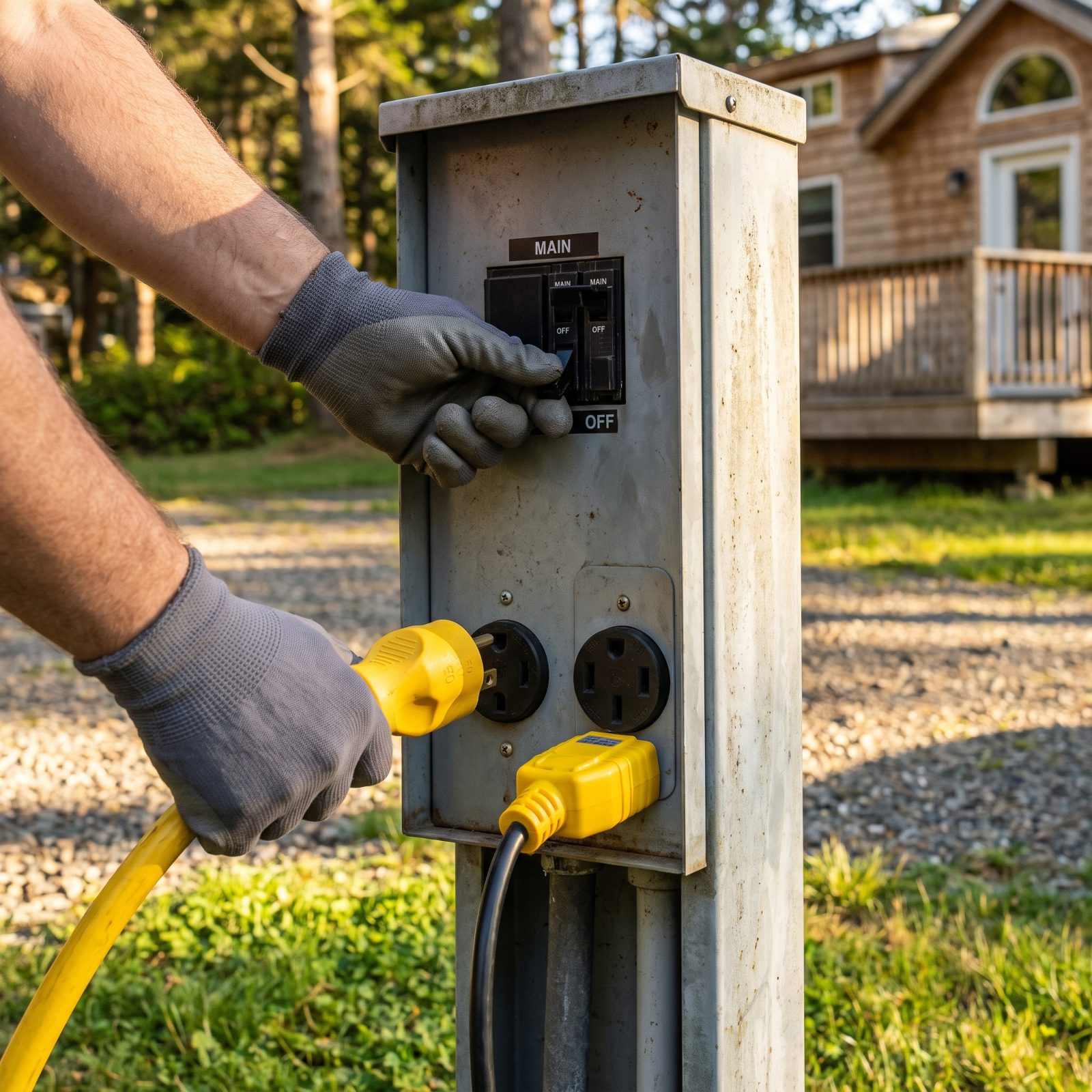
Plugging into a live breaker draws an arc across the contacts. Do it enough times and you pit the pedestal plug — the park’s equipment — and you shorten the life of your own cord’s prongs right along with it.
The sequence is simple: breaker off, plug in firmly, breaker on. Reverse it when you leave. And add a surge protector between the pedestal and your cord while you’re at it, because campground power can swing wild in older parks on a hot afternoon when every rig on the loop is running the AC flat out.
41. Ask Whether a Burn Ban Includes Propane Fire Pits
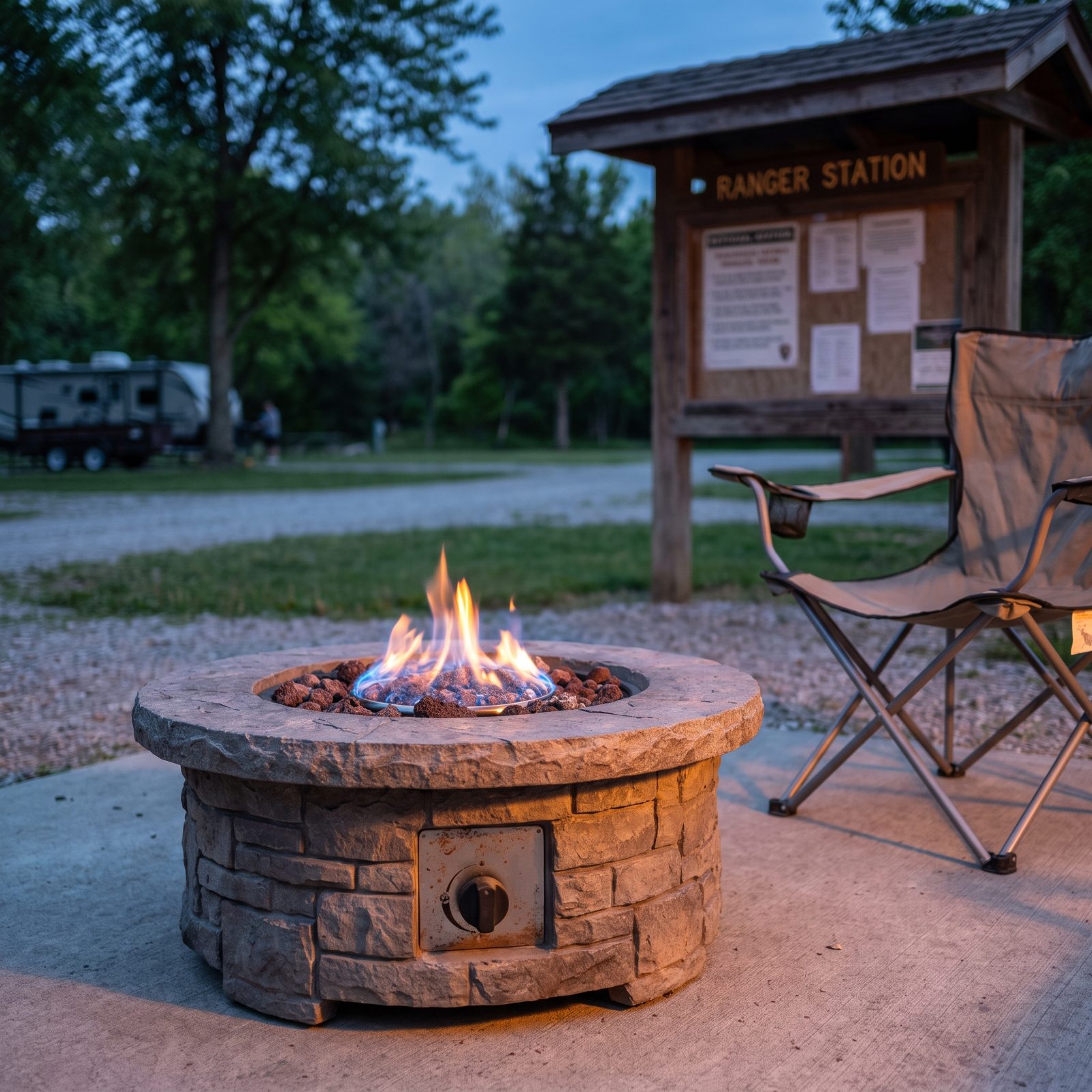
A burn ban usually targets open wood fires — the kind that throw embers into dry brush. Propane pits with a shutoff valve often get a pass even when wood is banned, because you can kill the flame instantly.
Often, not always. Some parks and some fire districts ban every open flame during the worst conditions, and they mean it. Don’t assume, and don’t lean on what someone told you two campgrounds back. Ask at check-in, read the posted notice, keep it in your head. A ranger walking through at dusk is checking, and a friendly warning beats a fine you’ll be grumbling about all weekend.
40. Confirm That Outdoor Mats Are Allowed on Grass
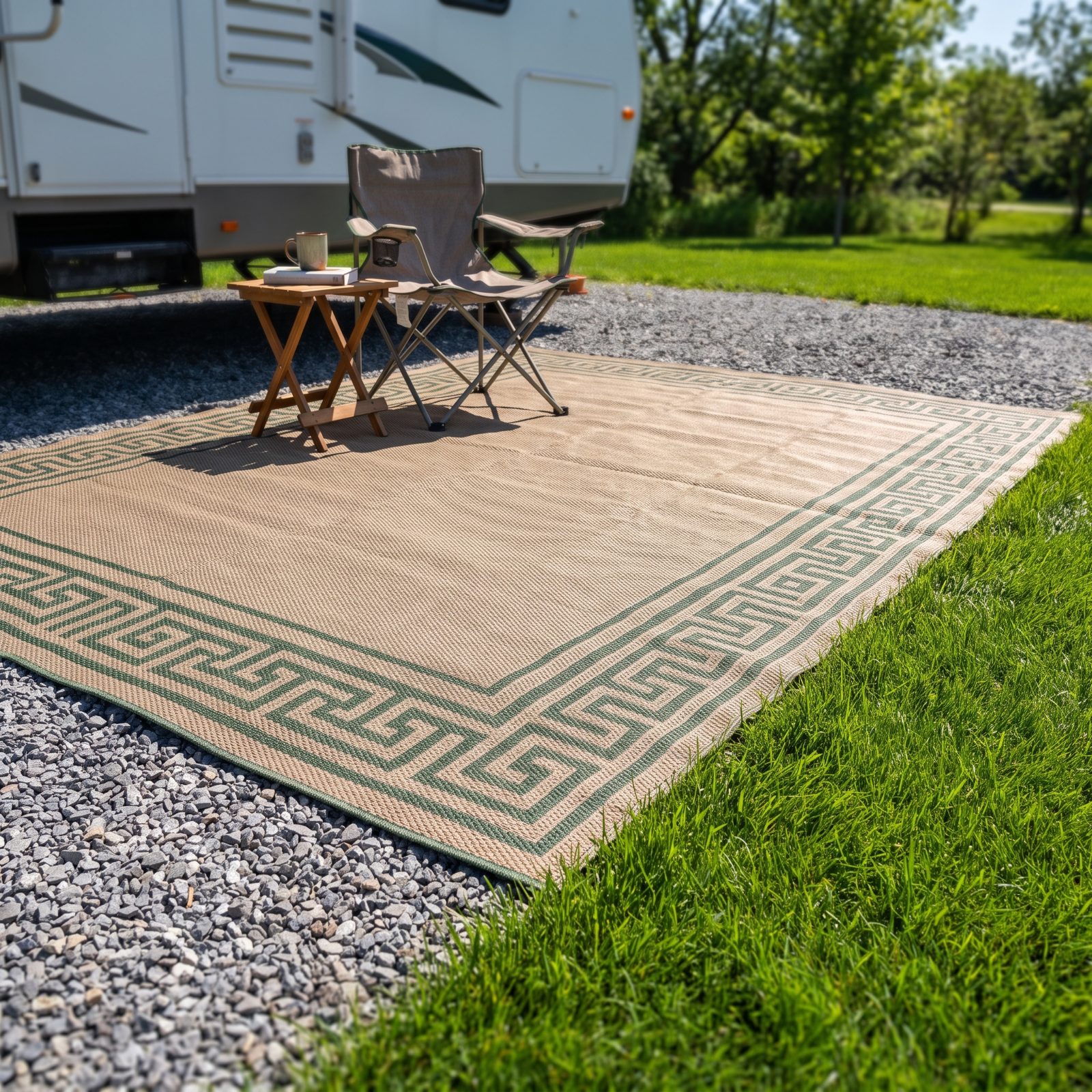
A big outdoor rug left on grass for a few days kills the grass underneath it. Those dead yellow rectangles are exactly why some parks ban mats on turf entirely and allow them only on gravel or concrete pads.
Check the site rules before you roll one out. If mats on grass are fine, lift and shake yours daily so the lawn underneath gets light and air. Parks that fight to keep a green site do not want to reseed your footprint after you pull out.
39. Never Treat an Empty Campsite as Extra Yard Space
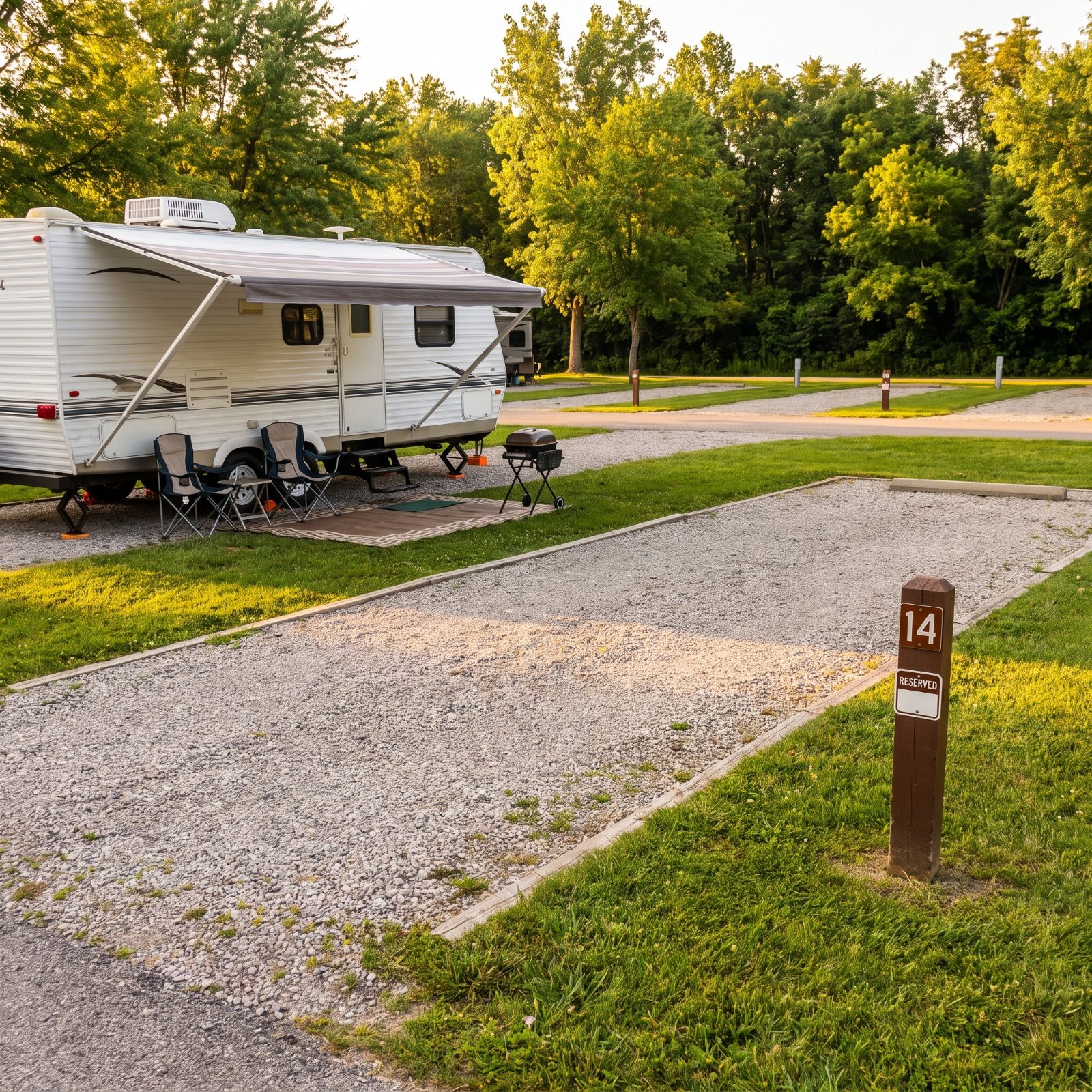
That empty site next to you is not overflow parking. It’s not a dog run, and it’s not where your extra chairs live. Someone booked it, and they could roll in at any hour.
Camp inside your own lines. Sprawl your gear across the vacant pad and you’ll be scrambling to haul it all back when headlights swing in at ten at night, long after the new arrival has already clocked exactly who’s been squatting on their space. Staying inside the boundary is the easiest way to be the neighbor everyone secretly hopes they’ll get.
38. Do Not Claim a First-Come Site With an Unattended Token Unless Allowed
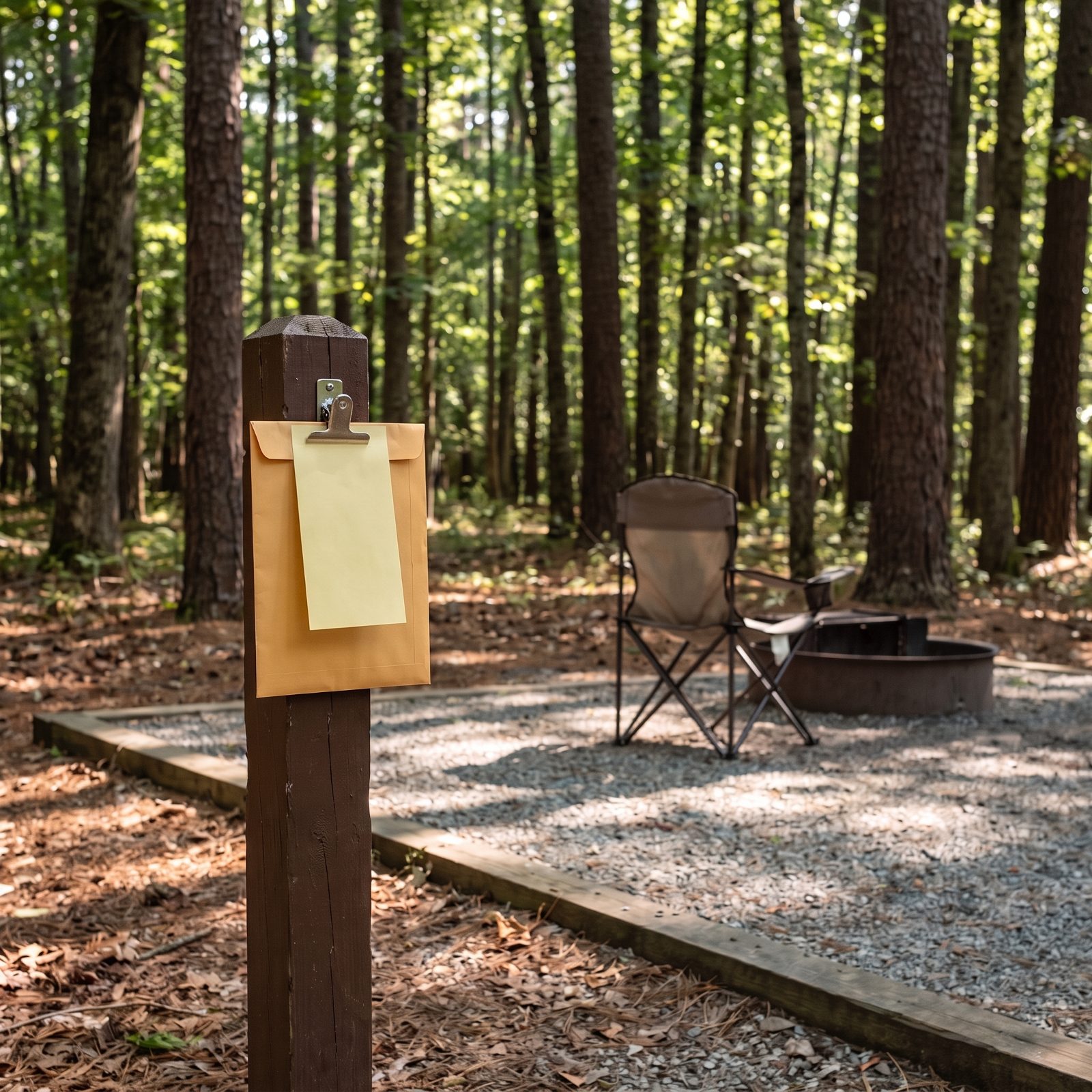
Some campers toss a cooler or a lawn chair onto a first-come site and drive off to grab supplies, treating the item as a placeholder. At a lot of public campgrounds, that holds nothing. Only a paid registration tag or actual physical occupancy counts.
Rules vary wildly here. Some parks honor a chair for a few hours; others won’t recognize anything but a receipt clipped to the post. Check how that specific campground handles it before you gamble a day’s drive on a lawn chair. Arriving to find your spot legally taken — your chair set politely off to the side by whoever paid for it — is a rough way to start a trip.
37. Respect Generator-Free Loops Even During Posted Generator Hours
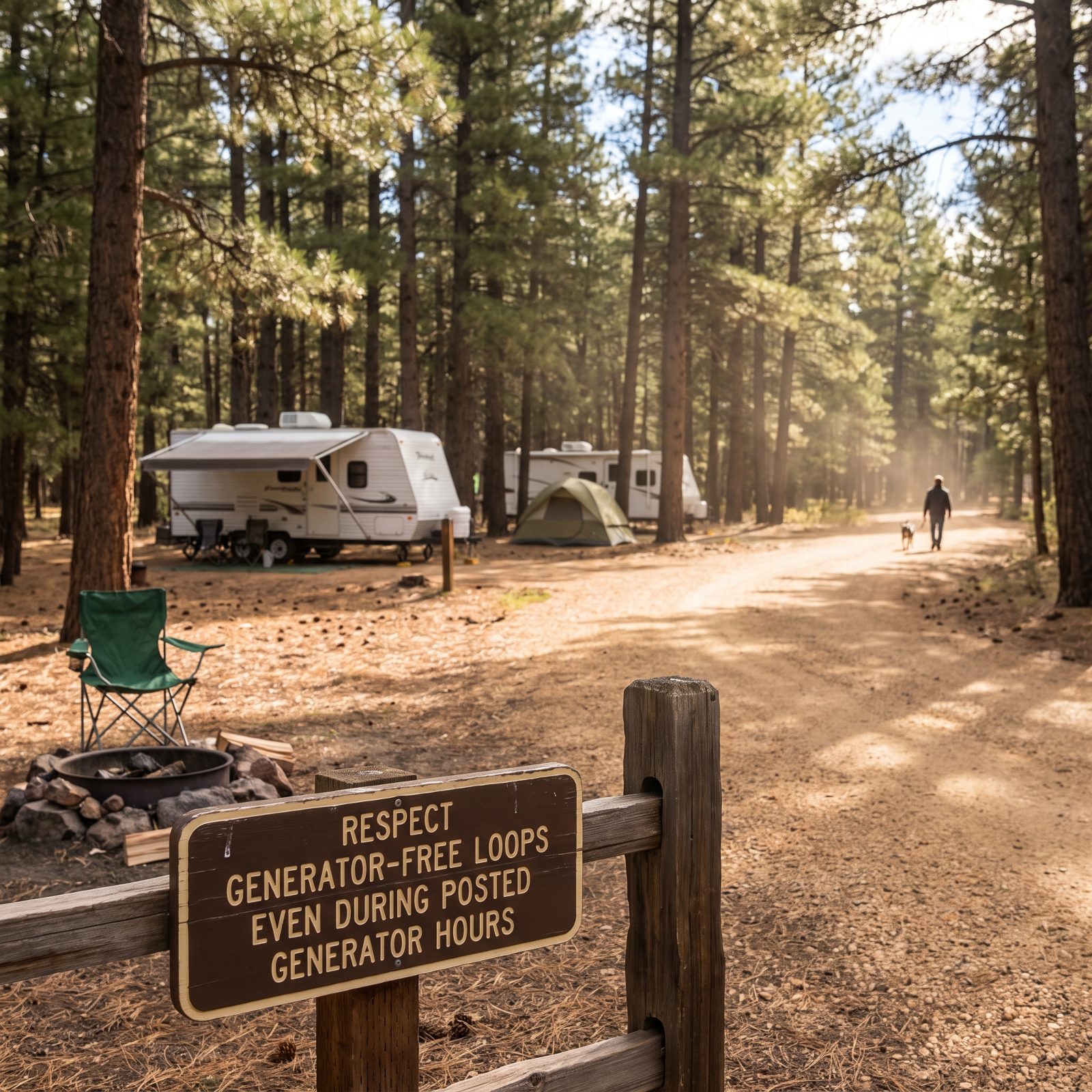
Posted generator hours tell you when you can run one. They don’t override a loop that’s marked generator-free, and those sections exist for a reason. The folks who book them chose them on purpose, because they came for wind in the pines, not the drone of an inverter humming forty feet away.
Plenty of first-timers spot “generators permitted 8am to 8pm” on the main board and figure it covers the whole park. It usually doesn’t. Check the specific loop sign, or ask at the office when you check in. Need power that badly? You booked the wrong site.
36. Ask Before Adding a Splitter to a Shared Water Spigot
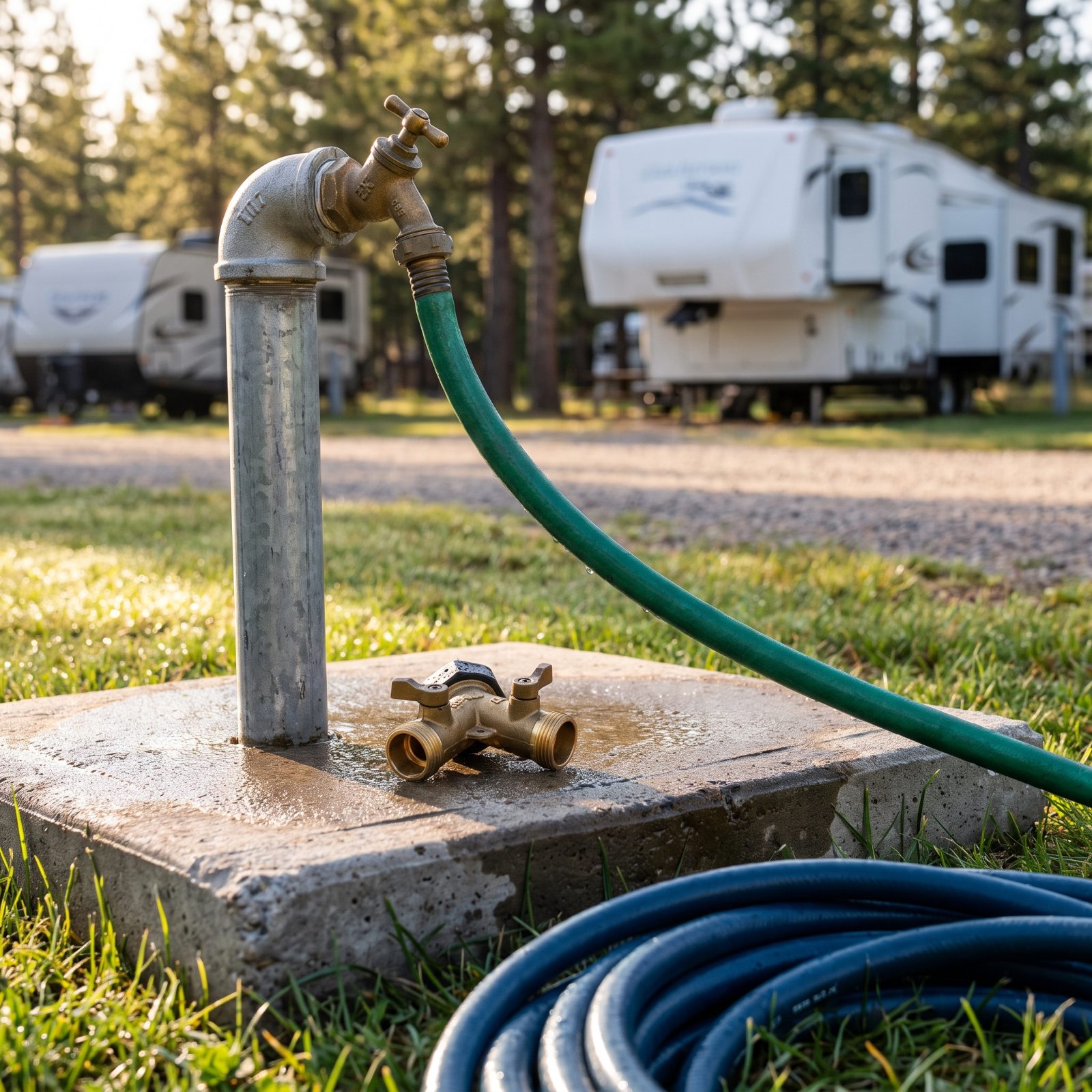
A shared spigot has shared pressure. Thread a splitter onto it so you and your neighbor both draw at once, and both lines can drop to a trickle right when someone’s trying to flush a tank. Small thing until it isn’t.
Worse, some parks treat a splitter as a liability issue — backflow, cross-connection risk, all of it. So knock on the door or have a word at the office before you add hardware to communal plumbing. Nine times out of ten the answer is yes. The tenth time saves you an awkward conversation.
35. Put Cold Ash Only in the Designated Disposal Area
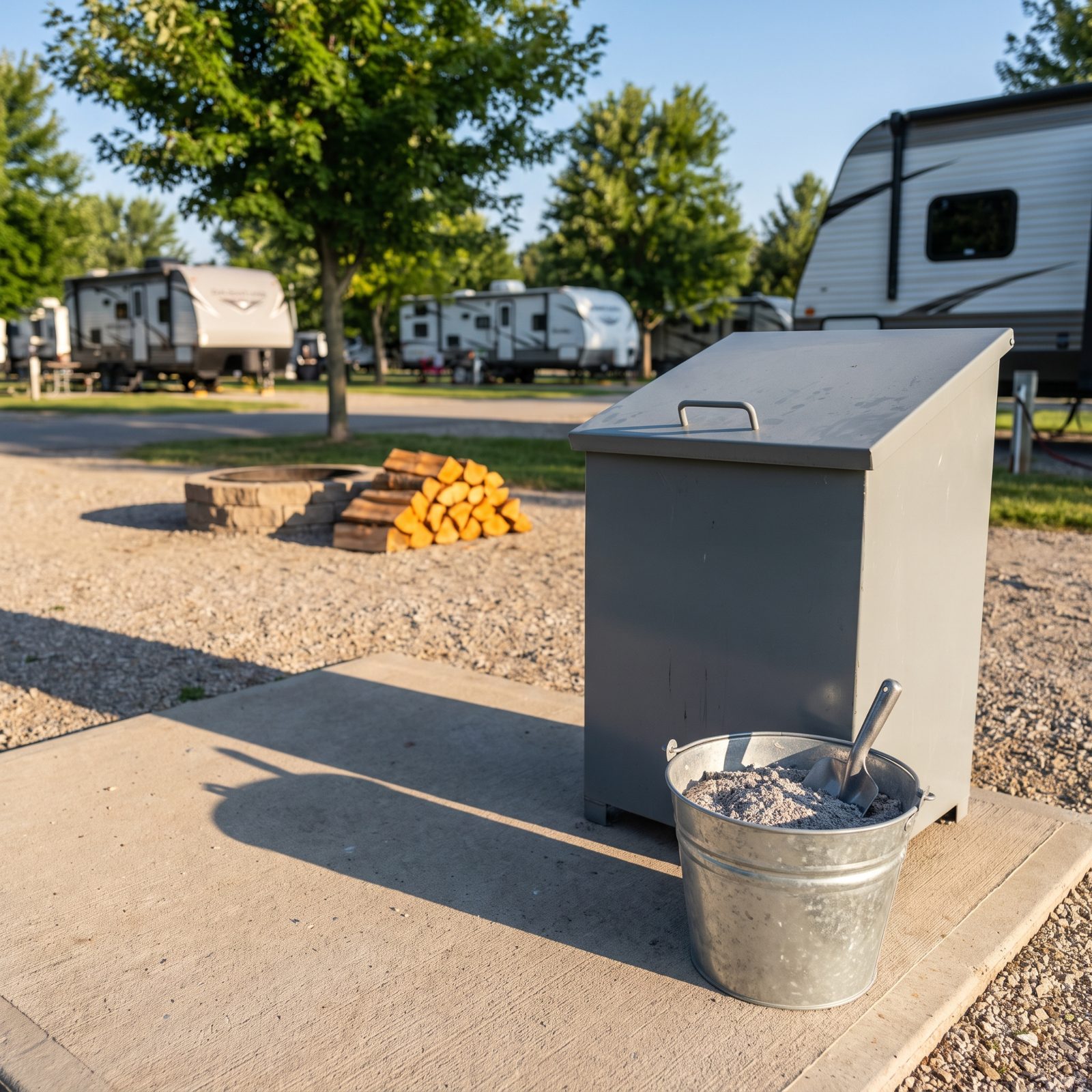
Ash holds live embers for a full day. People scoop a fire pit the morning after, dump the “cold” ash in the brush, and come back to a scorch line — because the stuff looks dead and gray on top while it’s still cooking underneath.
Every campground with fire rings has a plan for ash, usually a steel bin or a specific pit. Use it. And soak the pit before you leave, even if the fire went out hours ago. A hand hovered over the surface tells you more than your eyes do.
34. Buy Firewood Near the Campground Instead of Transporting It
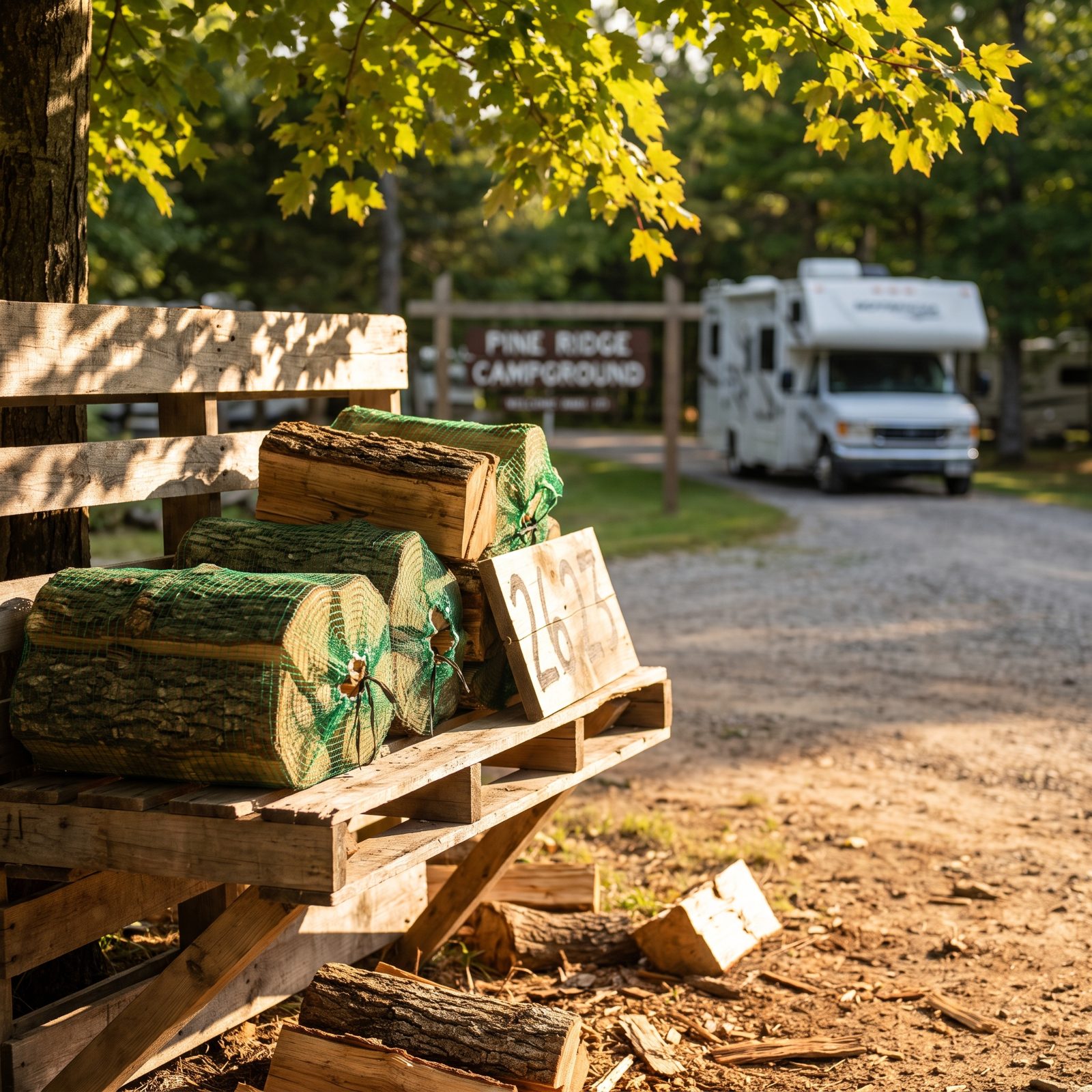
The “buy it where you burn it” rule isn’t a cash grab by the camp store, though it sure can feel that way when the bundle runs eight bucks. Firewood moves invasive insects. The emerald ash borer, the Asian longhorned beetle, and plenty of others ride into new forests inside the logs you haul from home.
Many states cap how far you can move untreated wood, often somewhere near 50 miles. So buy local, buy enough, and burn it all before you leave. Carting the leftovers to your next stop is exactly the behavior those rules exist to stop.
33. Check for Buried Utilities Before Driving Long Stakes
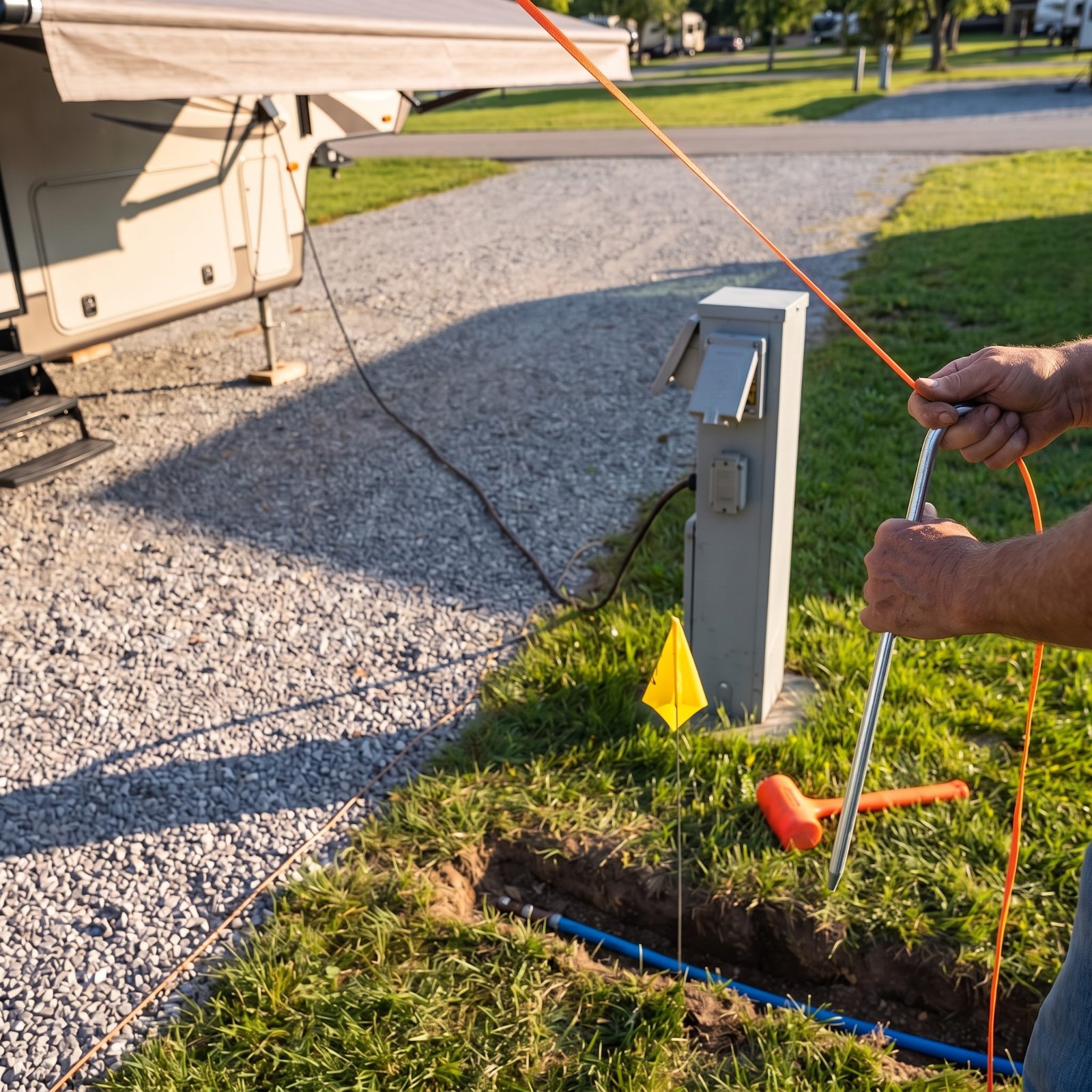
Long awning anchors, dog tie-outs, and screen-room stakes can punch a foot or more into the ground. At a developed site, that’s exactly where shallow water lines, low-voltage lighting runs, and sometimes electrical conduit live.
First-timers hammer away with a 12-inch steel stake, then wonder why the water pressure went funny at site 14. Ask the office where lines run, look for marker flags, and keep anything near the pedestal shallow. Hit resistance that isn’t rock? Stop and pull it. A nicked water line floods your pad and bills you for the repair.
32. Check the Rules Before Washing Pet Bedding in Shared Machines
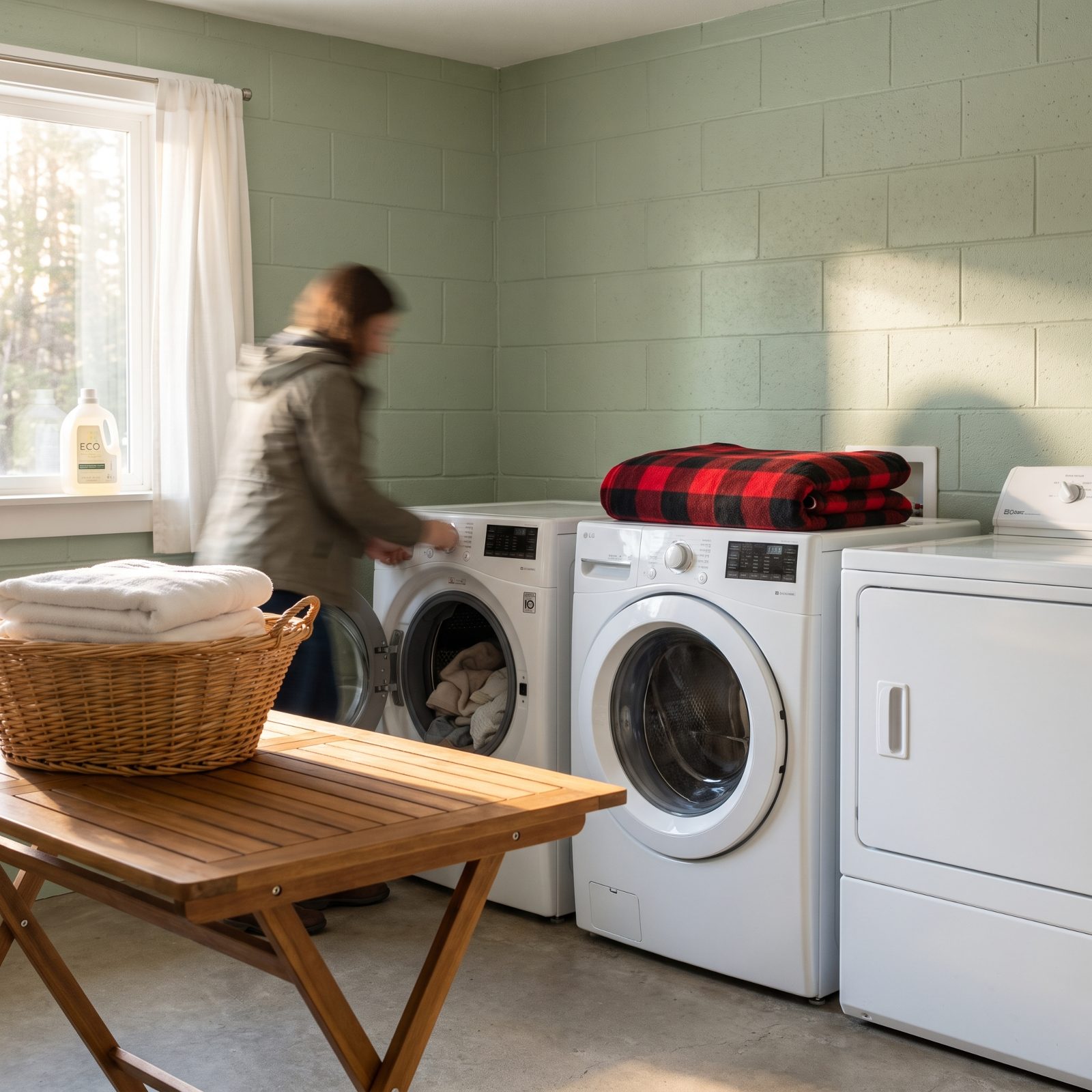
That flannel dog blanket sheds fur like it’s being paid to. Run it through a campground washer and the next person loads their sheets into a drum lined with your retriever’s coat. A fair number of campgrounds ban pet laundry in the common machines outright, and now you know why.
Check the posted laundry rules or ask at the office. If pet bedding’s allowed, shake it out hard first and run an empty rinse cycle after. If it’s banned, a drop cloth and a hose outside handles the worst of it before anything goes in.
31. Take Campsite Garbage to the Dumpster, Not Bathhouse Bins
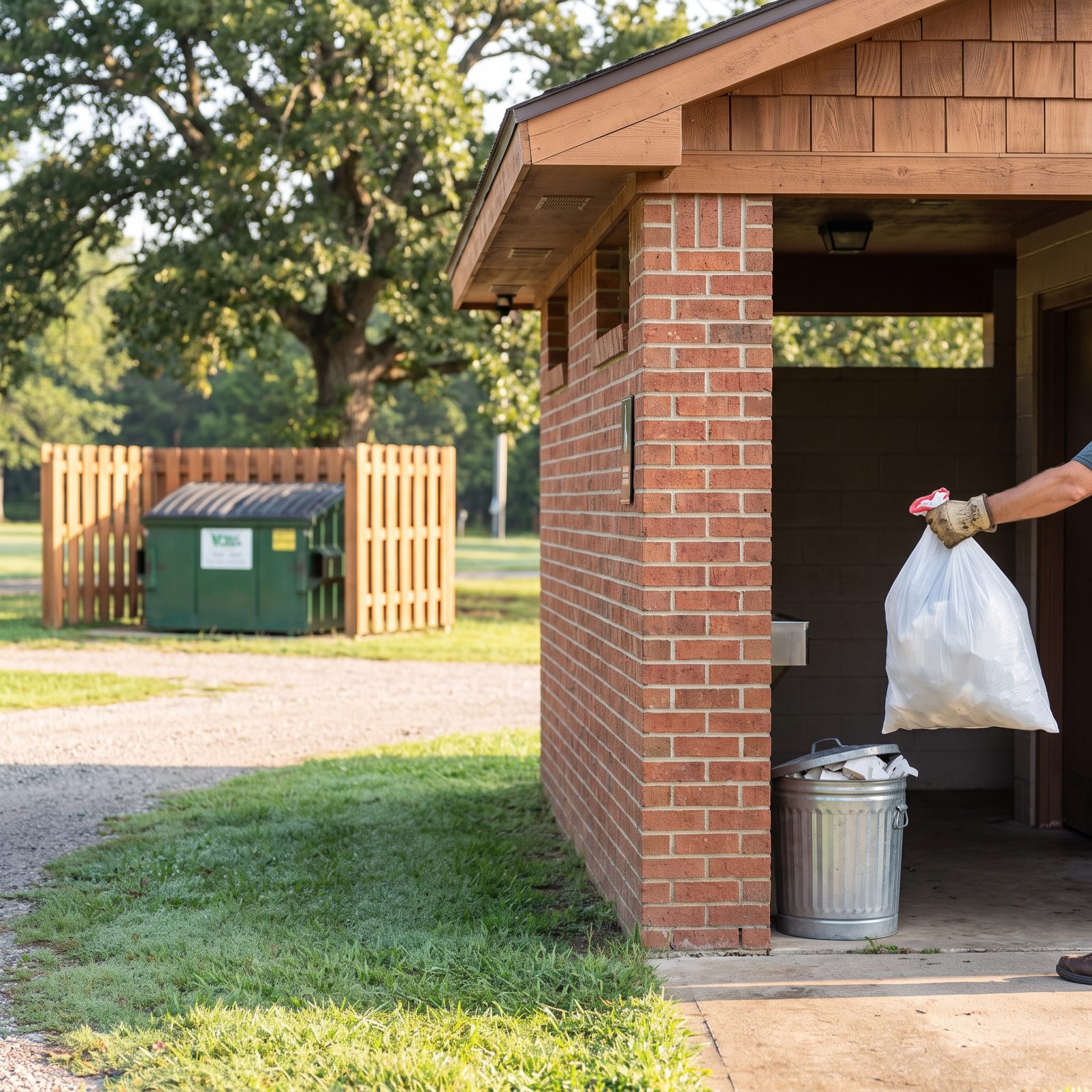
The little can by the bathhouse sink is for paper towels. Not your bag of taco-night cleanup. Cram household trash into it and it overflows by noon, the staff cleaning the showers get stuck hauling it out, and the raccoons throw a party after dark.
Walk the campsite garbage to the real dumpster, usually at the loop entrance or near the office. It’s almost always closer than you think. Overfilled bathhouse bins are one of the fastest ways to end up in the ranger’s memory for the wrong reason.
30. Get Permission Before Hanging a Clothesline
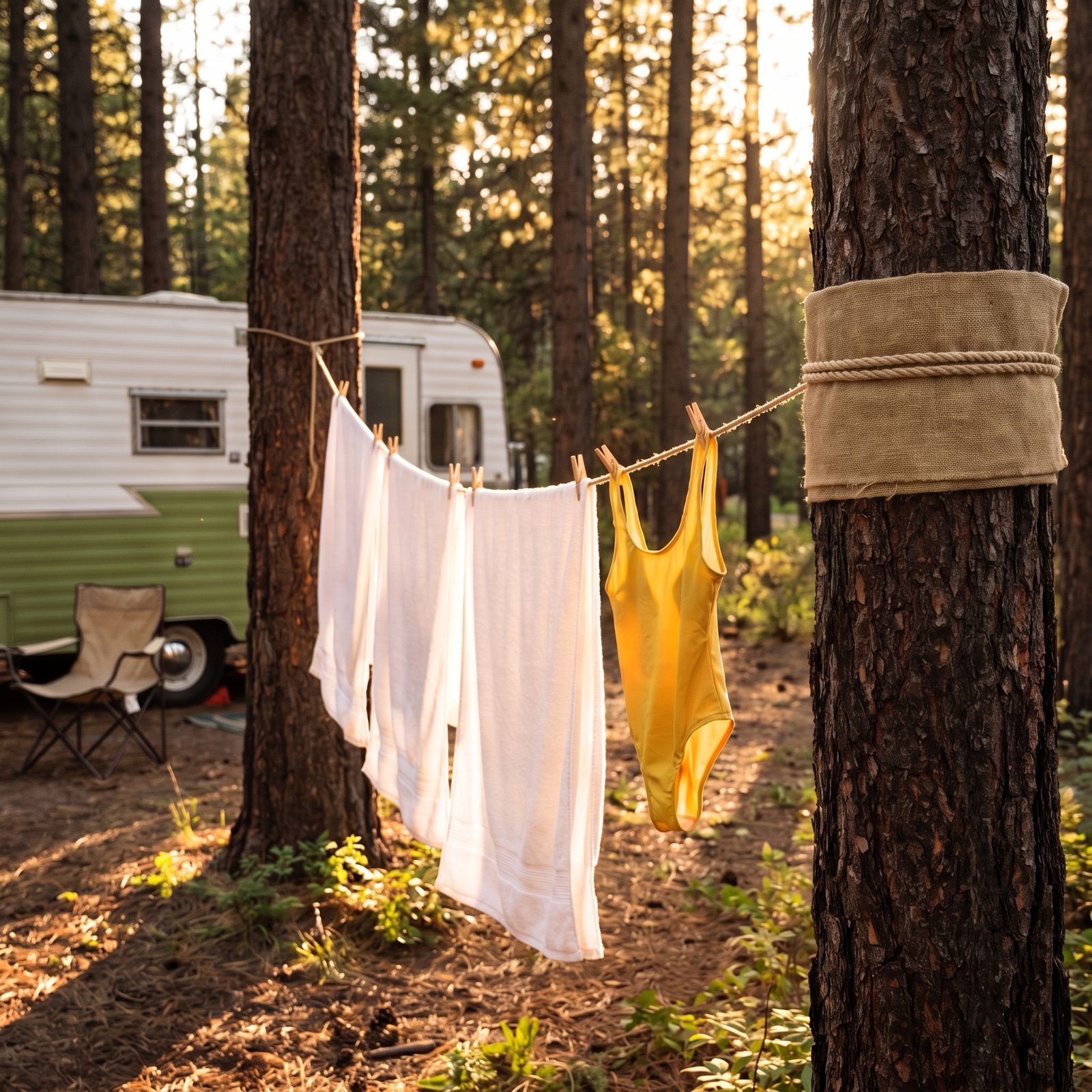
A clothesline seems harmless until you hear why some parks ban them. Lines strung across a lawn turn into a trip hazard at dusk. Ropes cinched tight around thin bark girdle young trees. And a few campgrounds just don’t want laundry flapping across the view everyone else paid for.
Ask first. If the answer’s yes, run the line between your own gear or wrap a soft cloth around every trunk you tie off to, not just one of them; a line cinched straight onto bare bark at the other end still does damage. The retractable lines that mount to your RV ladder dodge the whole problem and roll up when you’re done.
29. Treat the Entrance Gate Code as Private
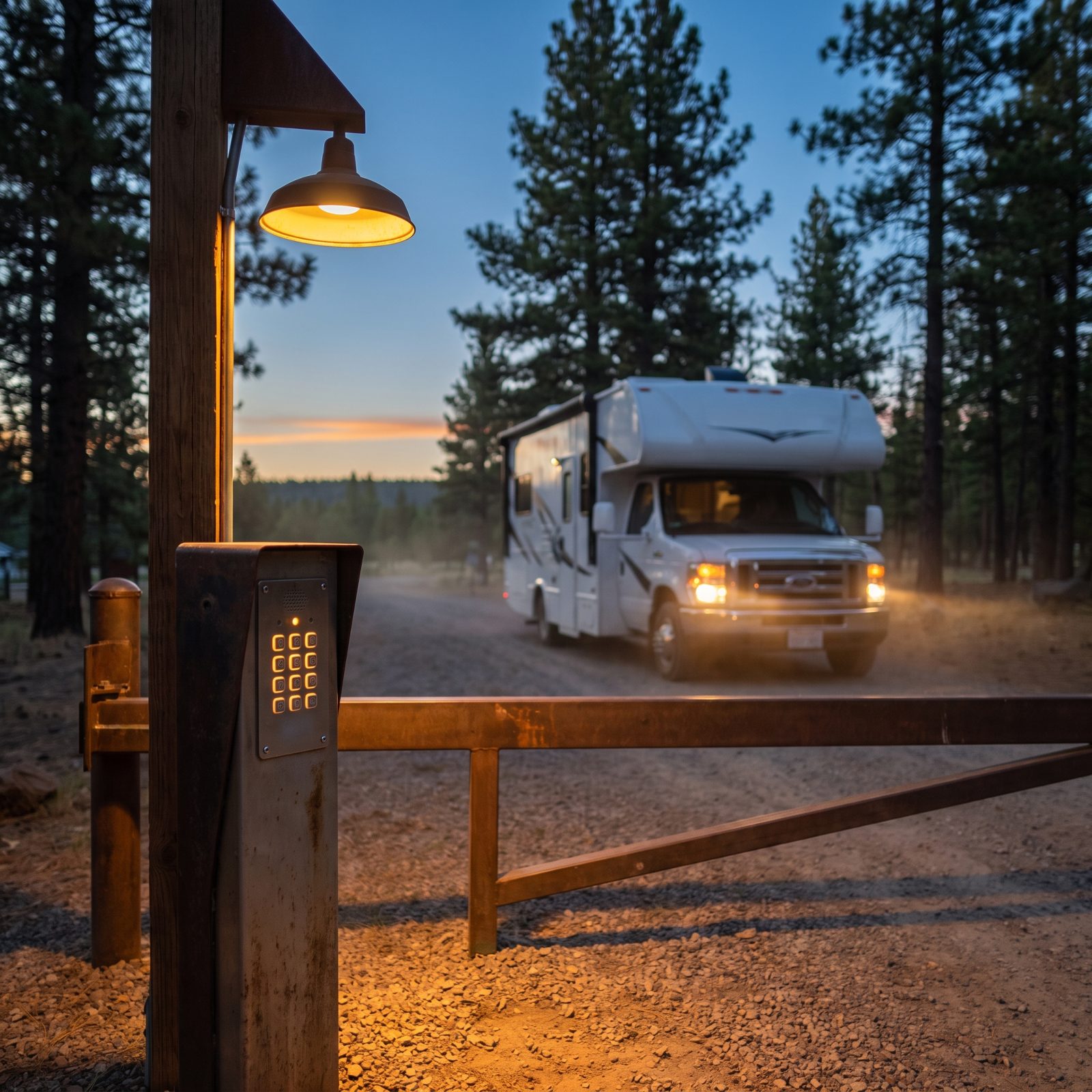
The gate code isn’t yours to share. It’s the one thing standing between a paying guest list and anyone who wants a free night or worse. Hand it to a friend who wants to swing by, and you’ve handed it to everyone that friend knows.
If someone you invited needs in, call the office and let staff sort it. They can log the visitor, set day-use fees, or open the gate remotely. Posting the code in a group chat or taping it to your dash where anyone can read it defeats the only real security a small park has.
28. Never Swap Vacant Sites Without Staff Approval
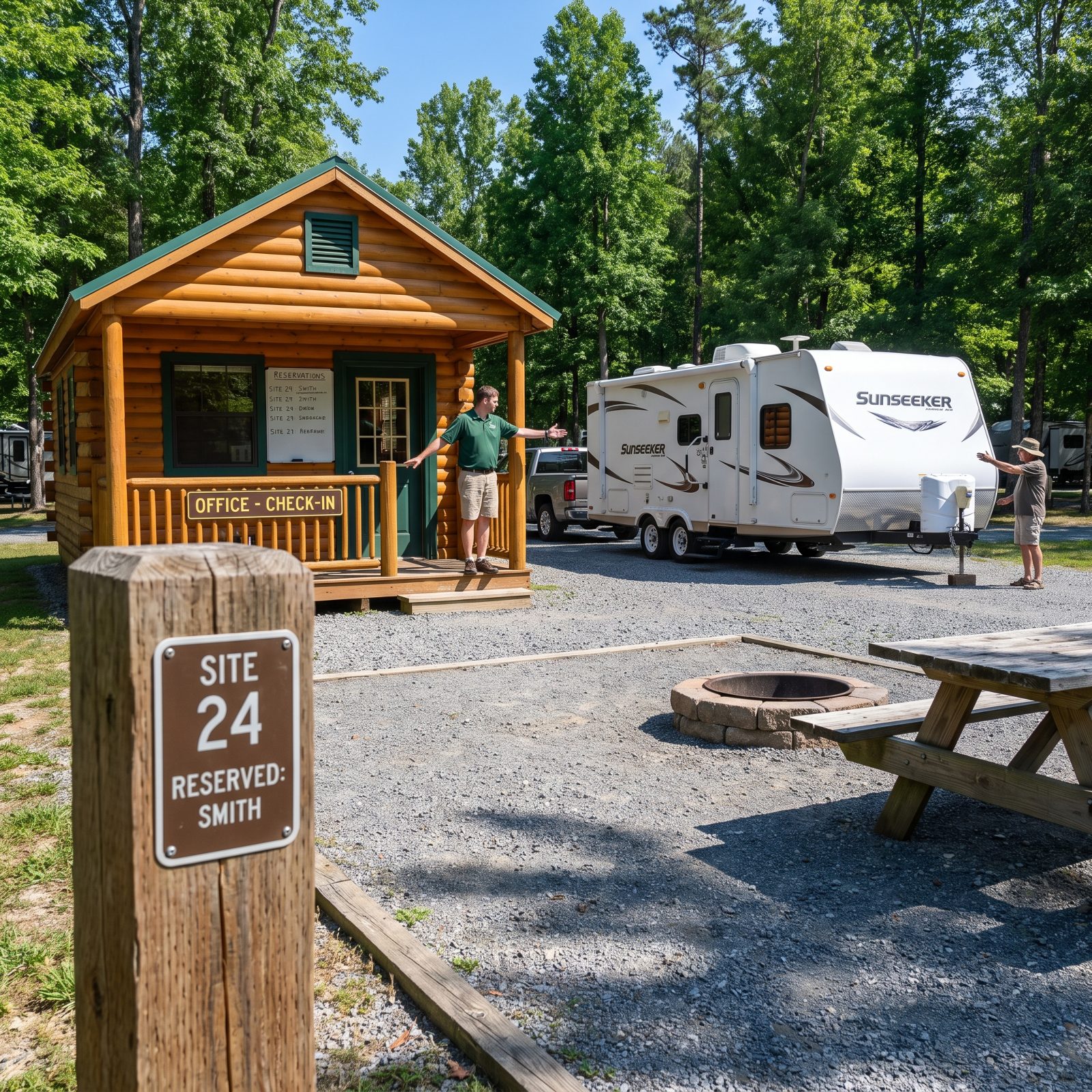
That empty pad next door looks open. It almost never is. Sites that sit vacant are usually held for an arrival later in the day, flagged for maintenance, or blocked because the hookups are being serviced.
Move yourself over without asking and you can bump a family who booked that exact spot months ago, or park right on top of a broken sewer connection nobody’s marked yet. Got a real problem with your assigned site? Go to the office. They know what’s actually free and what just looks that way. A thirty-second chat beats the scramble of backing out while someone with a confirmation number idles at the entrance.
27. Call the Office Before You Roll In Early
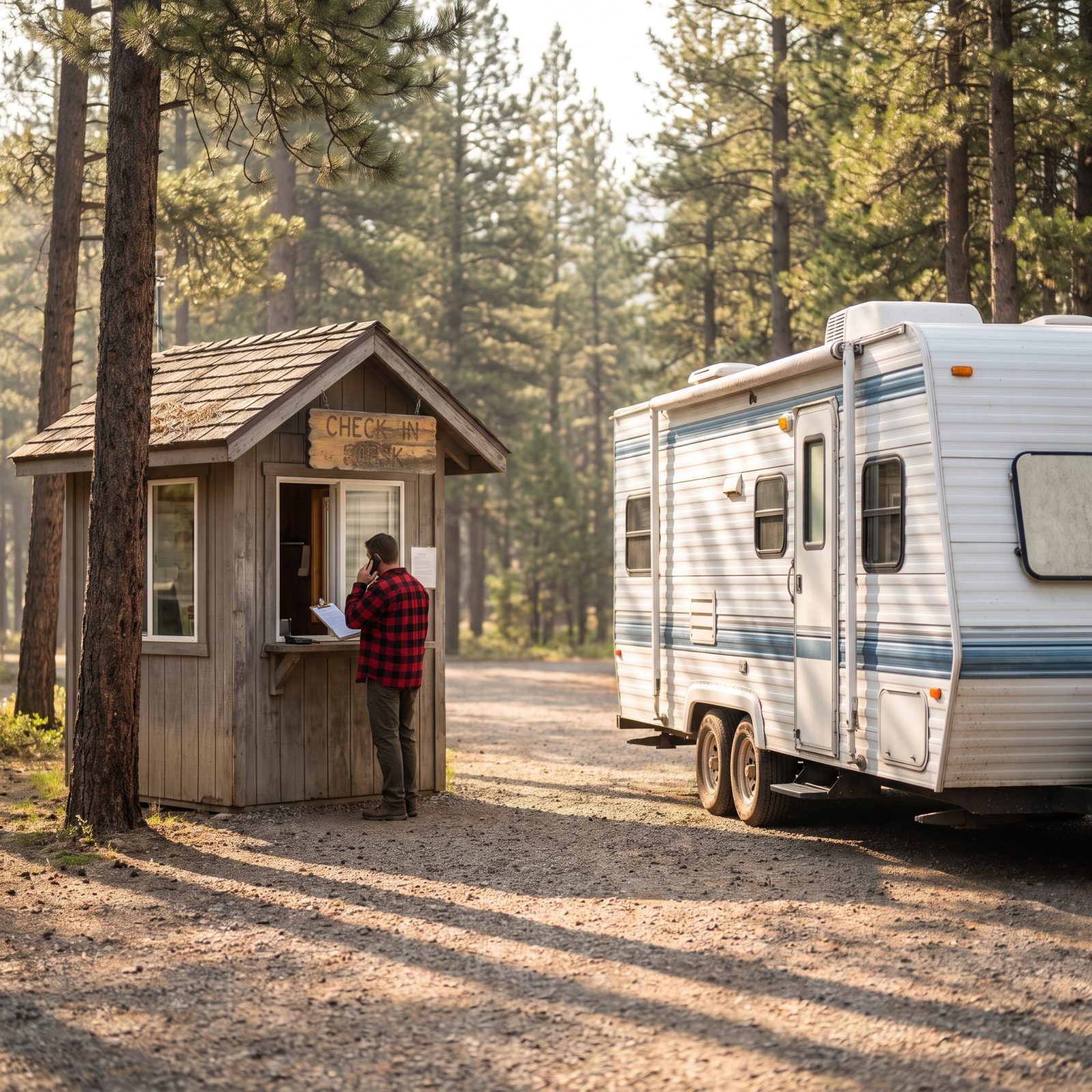
Showing up three hours before check-in feels harmless. It almost never is. That site you reserved might still have someone packing up, the host could be mid-coffee on a mowing run, and your rig blocking the loop road helps nobody.
One phone call fixes all of it, as long as you make it from the road and not from the check-in window with your trailer already parked beside the booth. Ask if the site’s clear and whether early entry is fine — plenty of places say yes, and some have a staging lot where you can wait without jamming traffic. The ones that say no are saving you from idling in a driveway while a family wrestles their awning back into the bag.
26. Sign In Your Day Visitors at the Gate First
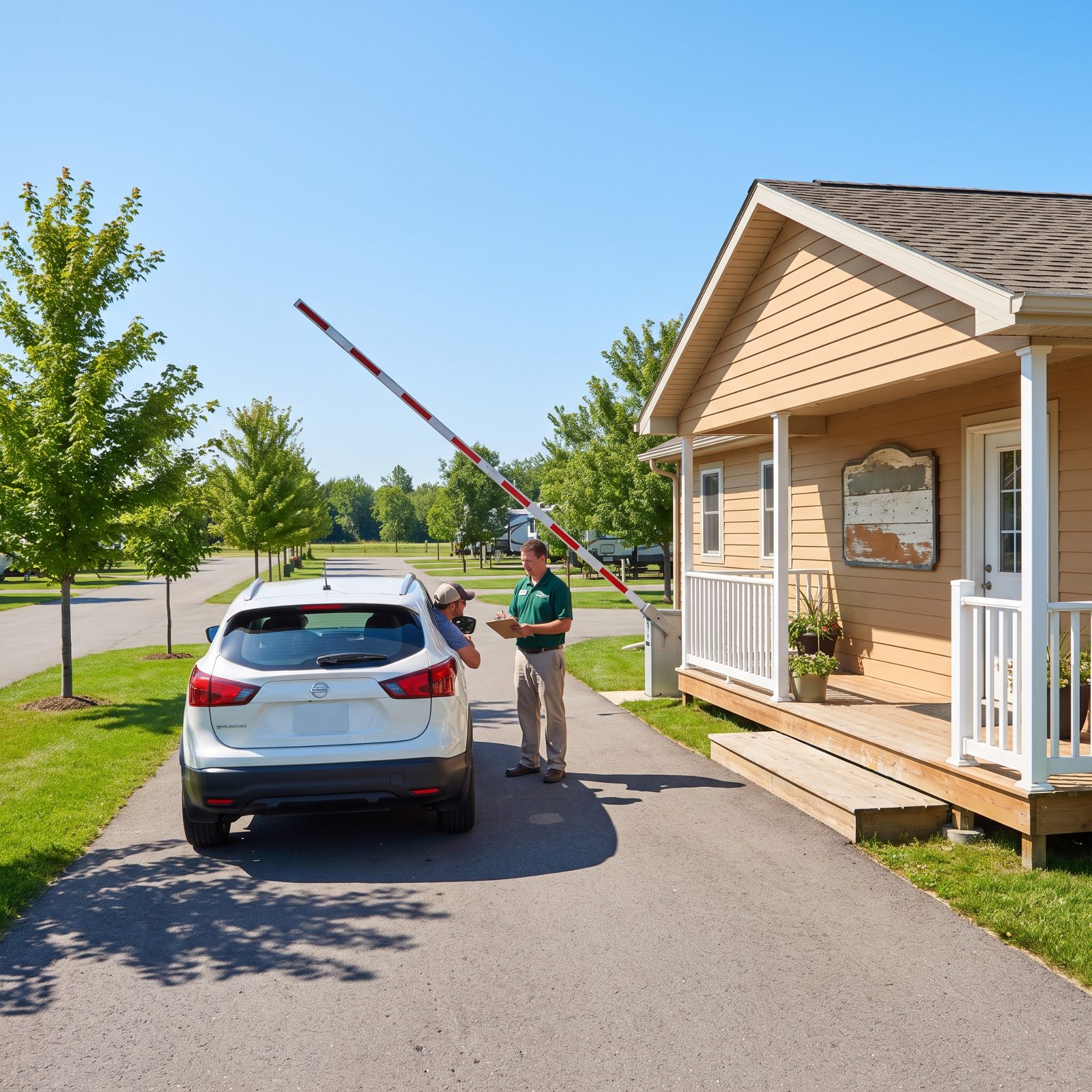
Your kids drive up for a Saturday cookout. Great. Most campgrounds still want them logged at the office before they’re inside the gate.
It isn’t bureaucracy for its own sake. The host needs to know who’s on the property if there’s a storm warning, a lost child, or a medical call — and a logged visitor keeps the day-use lot from filling and keeps extra vehicles off someone else’s site pad. A thirty-second stop at the window saves a very awkward conversation later about the truck blocking a neighbor’s slide-out.
25. Keep Late-Night Setup to the Absolute Minimum
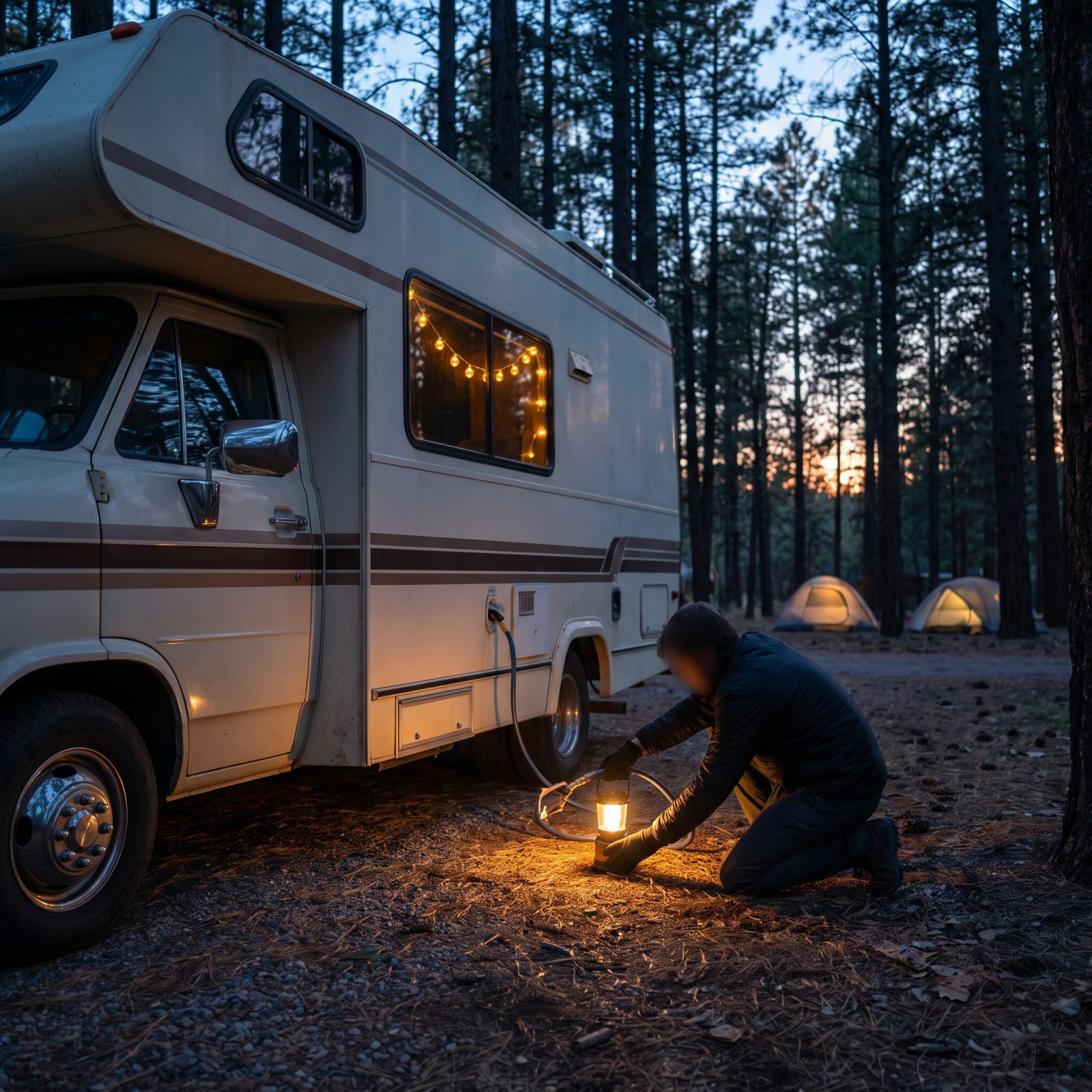
Arriving after dark is its own skill, and most of it is restraint.
You rolled in at 10:40 because traffic ate your buffer. Fine. Level the rig, plug into power, hook the water if you need it tonight, and stop. The sewer connection, the awning, the outdoor rug, the chairs, the satellite dish — all of that waits until morning.
Sound carries at night in a way it never does at noon. A dropped stabilizer jack. A slamming compartment door. A generator firing up at 11pm. Every one of those lands in someone’s tent like a gunshot. So do the essentials, kill the lights, and finish the pretty stuff with your first cup of coffee.
24. Point Your Headlights at the Trees, Not the Tents
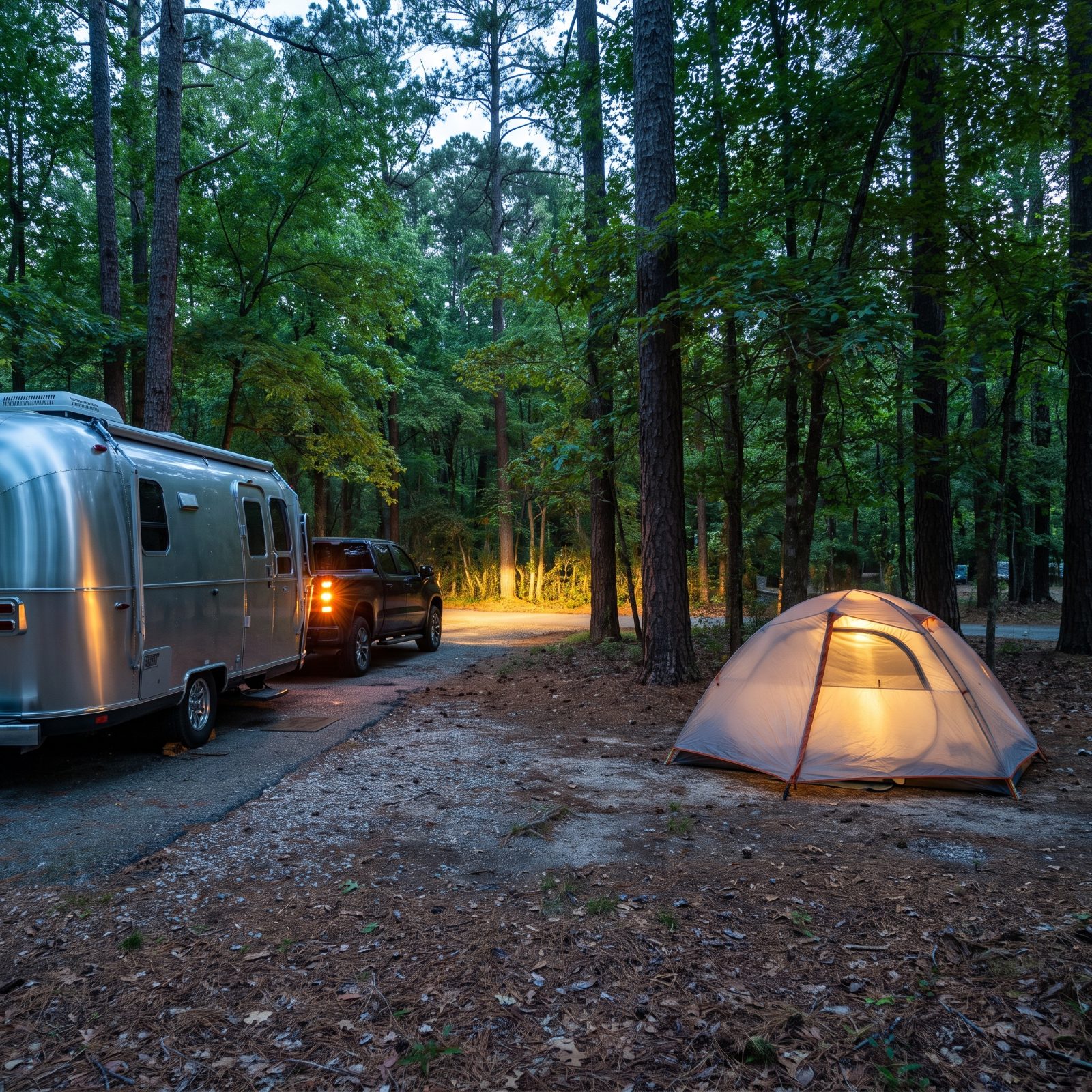
Here’s a small kindness that costs nothing. Rolling in after dusk, your headlights throw a long beam across the loop. Aim them the wrong way, and for the family already zipped into their tent, that’s a flashbulb through thin canvas.
Angle your approach so the beams rake the empty woods or an open field instead of raking across windows and tent walls. Waiting while someone else backs in? Cut your lights entirely and use parking lights. People remember who blinded them at midnight. Don’t be that rig.
23. Silence the Key-Fob Horn Chirp at Camp
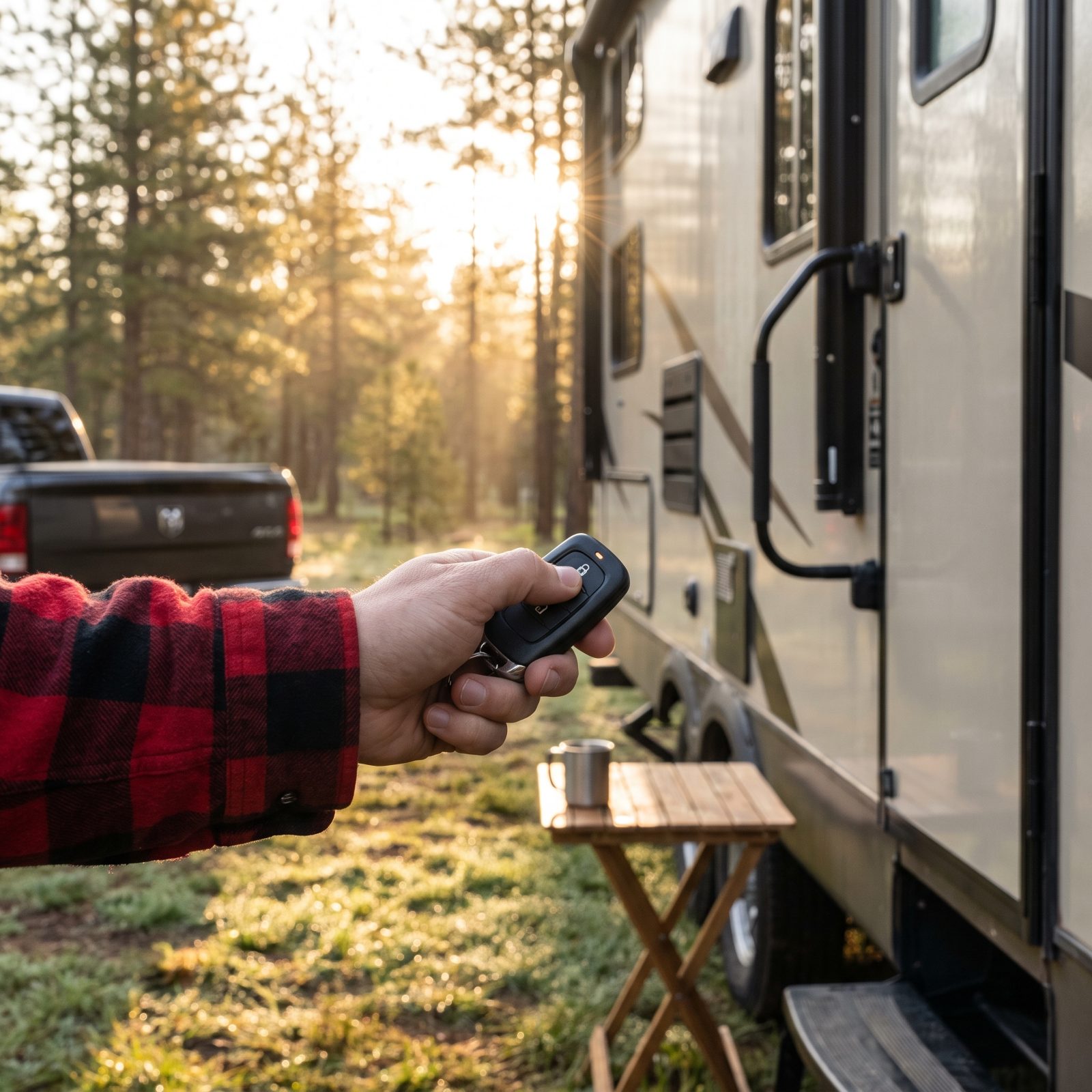
That cheerful double honk when you lock the truck? In a campground at 6am it’s a declaration of war.
Most vehicles let you turn off the lock-confirmation chirp, usually through a dashboard menu or by holding the lock button a certain way — check your owner’s manual before the trip. Same goes for those panic-button-sensitive fobs that go off when they knock around in a pocket.
Can’t disable it? Lock the doors manually or use the physical key. One quiet morning in a full campground and you’ll understand exactly why this matters.
22. Hang Back and Let the Driver Have the Lane
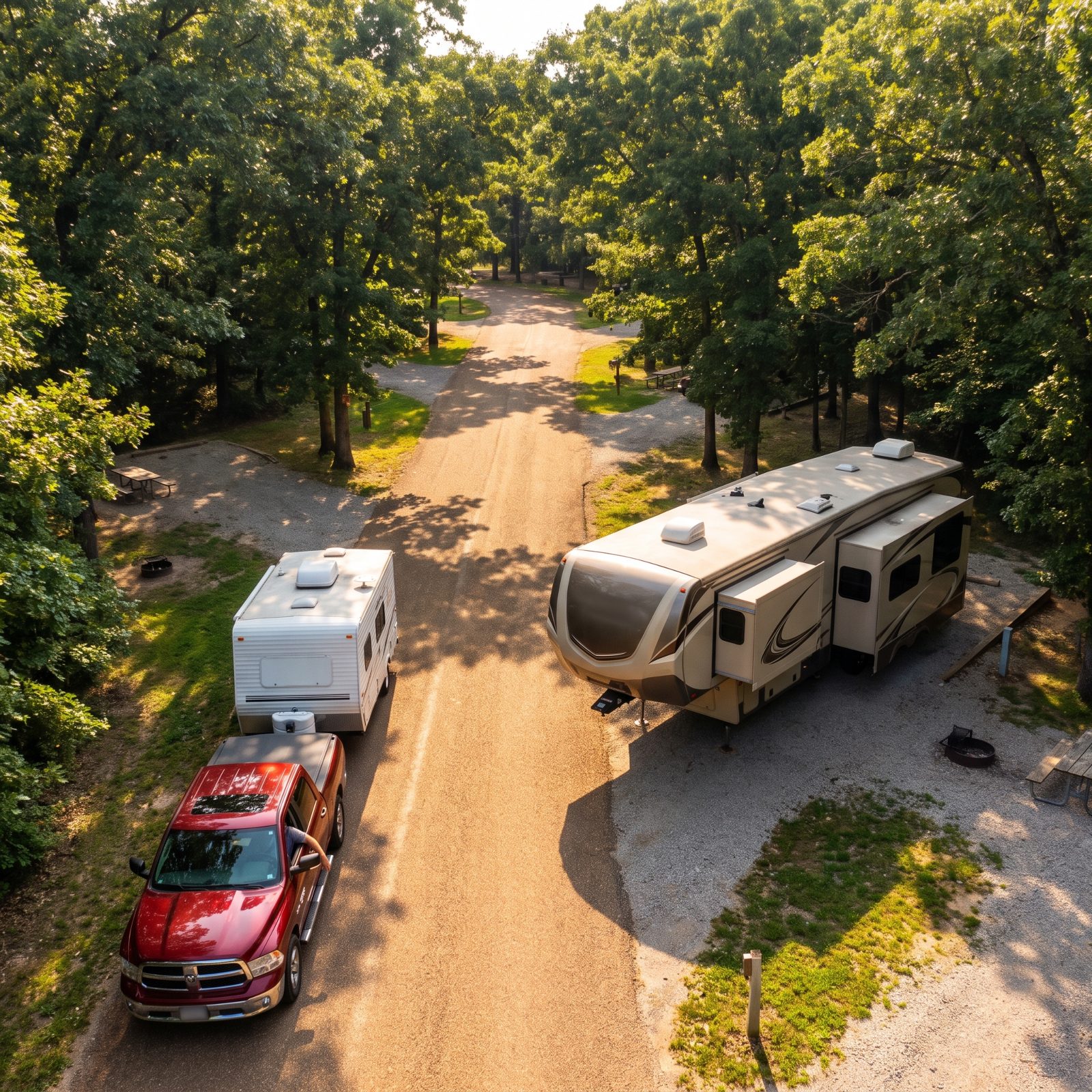
Backing a trailer into a tight site is a three-dimensional geometry problem with an audience. The driver needs the whole road to swing wide and cut back in.
If you roll up mid-maneuver, stop well back and wait. Don’t creep forward hoping to squeeze past, and don’t tailgate the spotter. The space behind the rig is the driver’s working room, and crowding it turns a two-minute job into a ten-minute sweat.
Thirty seconds of patience from you. A world of less stress for them. Everyone gets to their site with their dignity intact.
21. Keep Your Backing Tips to Yourself Until Asked
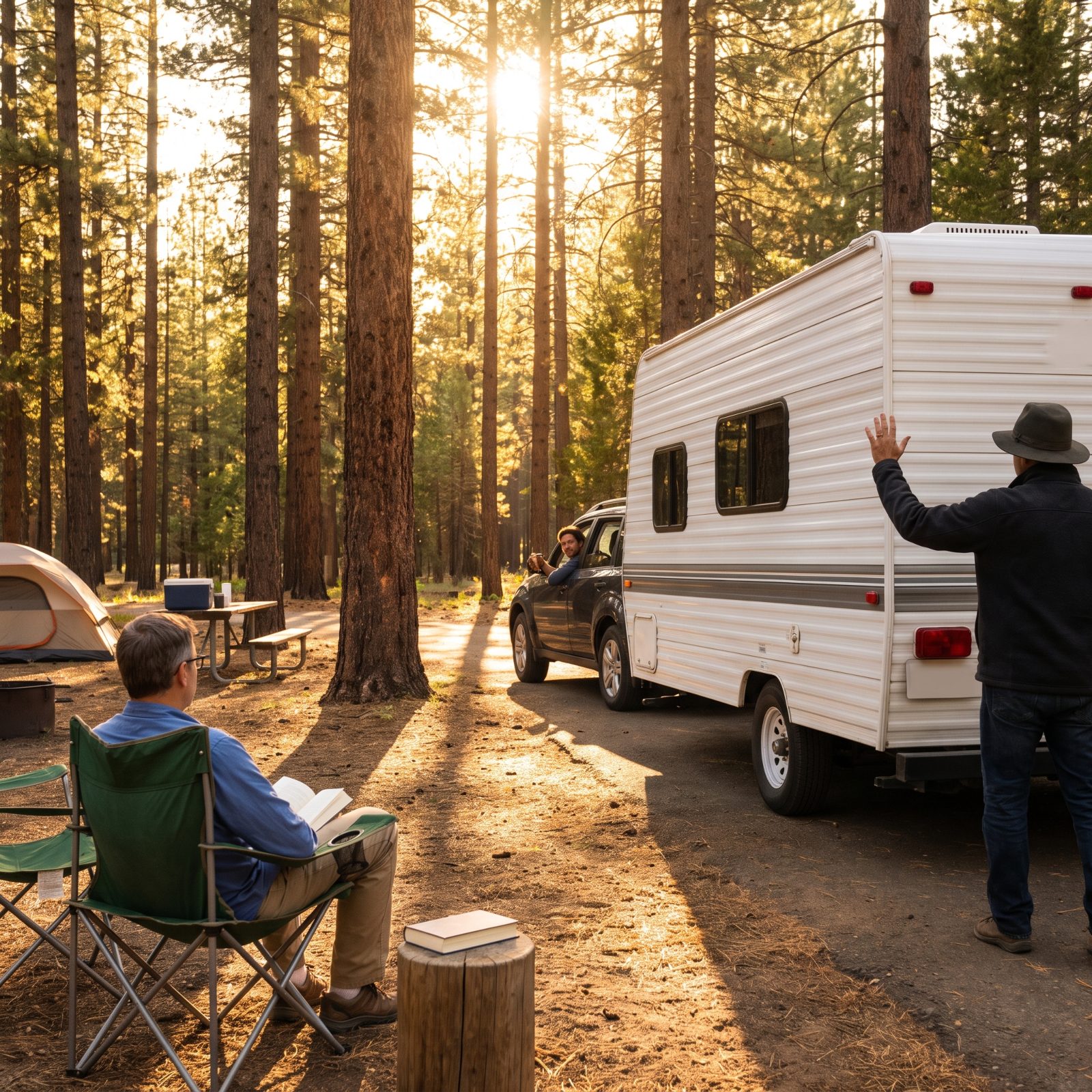
You’ve watched it happen at every campground in America. A rig starts backing in, and suddenly four strangers materialize with hand signals, each one contradicting the last.
The driver has a system — usually a spouse or a backup camera and a worked-out set of signals. A chorus of unsolicited helpers wrecks that system and piles on pressure instead of help.
The kindest thing you can do while a neighbor backs in is absolutely nothing.
If they wave you over, help gladly. If they’re sorting it out, let them. And if they do ask, give one clear instruction at a time, not a running commentary.
20. Do Your Hitching and Unhitching Off the Loop Road
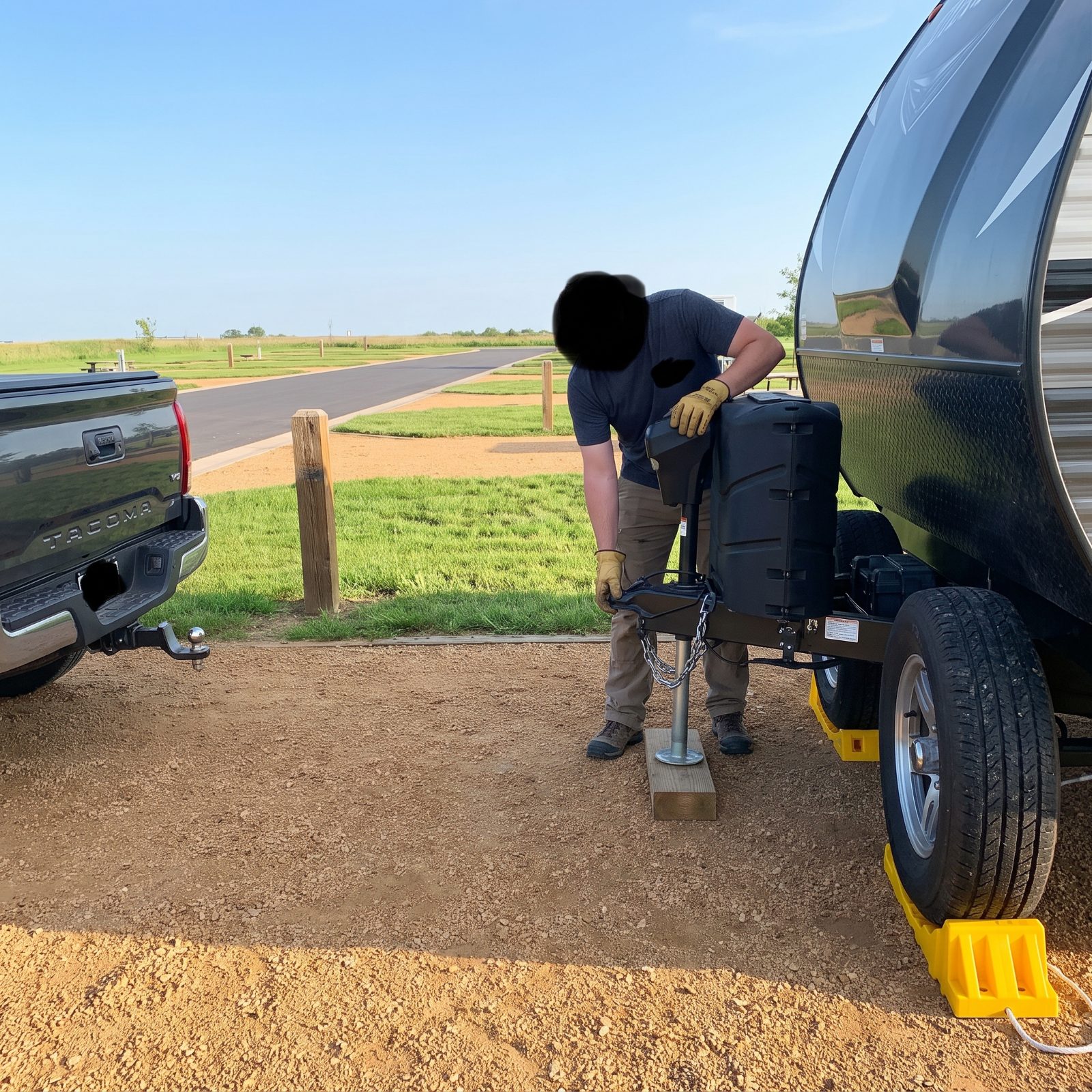
Unhitching in the middle of the road is the campground equivalent of changing a tire in the fast lane.
Pull all the way onto your pad first, then do the work. Hitching and unhitching takes a few minutes of fiddling with jacks, chains, and chocks, and during every one of those minutes the loop road behind you is blocked. Other arriving rigs pile up. Someone trying to leave for a hike just sits there.
Get the whole operation onto your own site before you touch the hitch. The road stays clear, your blood pressure stays low, and nobody has to thread a forty-foot coach around your bumper.
19. Keep Cords and Hoses Off the Shared Walkway
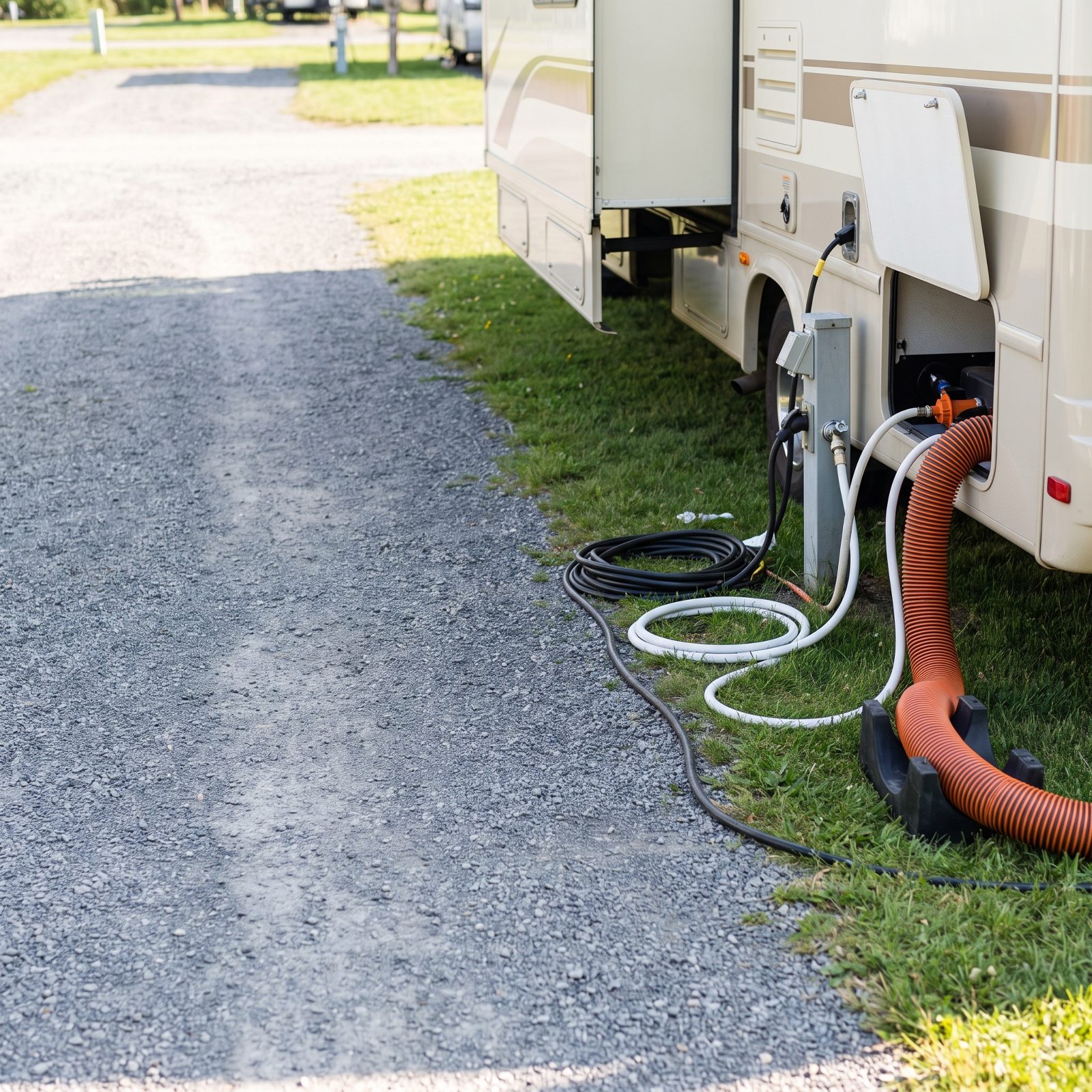
A water hose stretched across the path between two sites is a trip wire with your name on the lawsuit.
Route everything along your own site’s edge — power cord, fresh water line, sewer hose, the lot. If a connection genuinely has to cross a walking path, use a cord cover ramp and flag it. But the better answer is almost always to reposition the rig or run the line the long way around.
Kids run these paths after dark. So do people carrying firewood with both hands and no free fingers to catch themselves.
18. Pull Forward and Clear the Fill Station the Second You’re Done
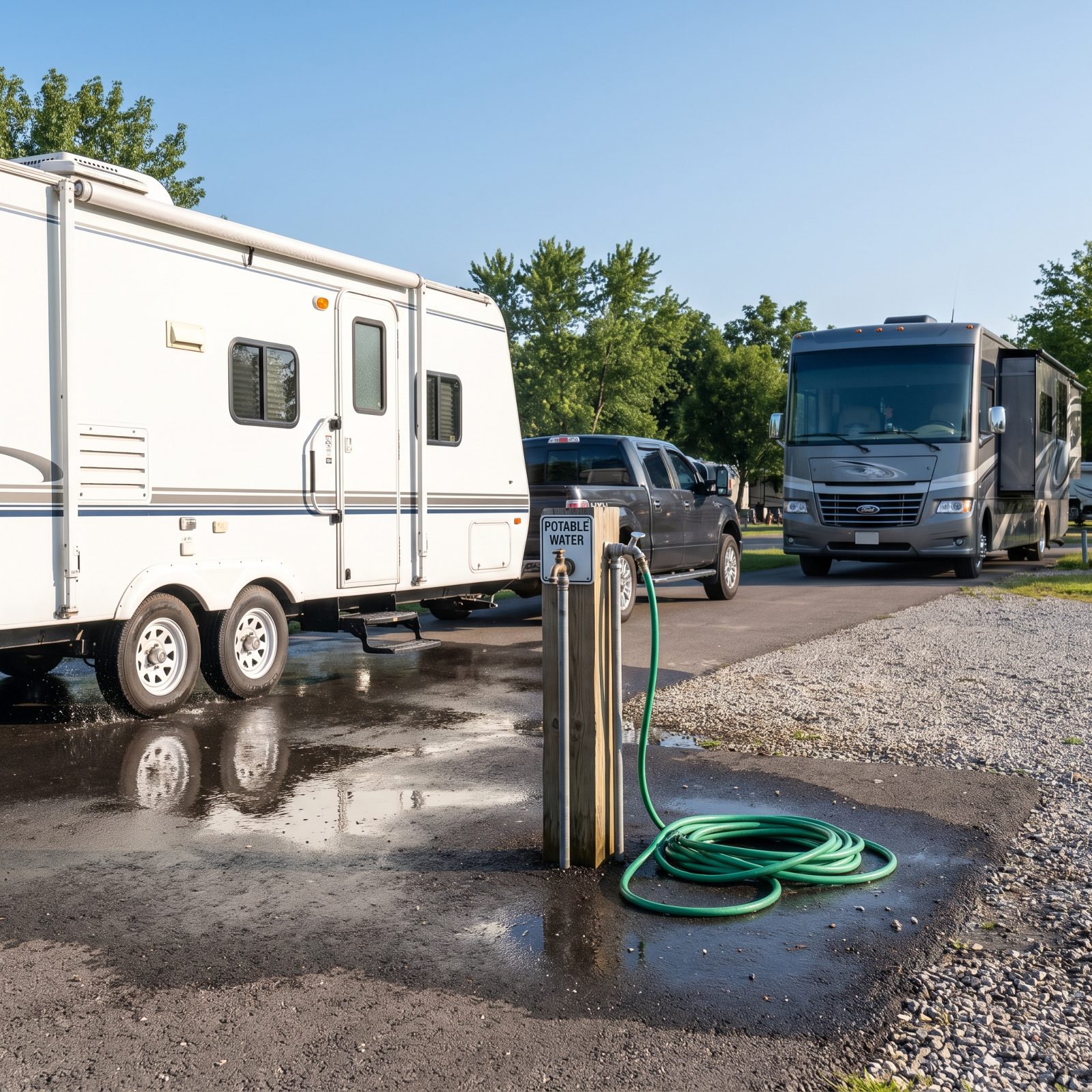
The fresh water fill station is a shared resource, not a parking spot.
Fill your tank, cap it, coil the hose, and move. The temptation to leave the rig there while you run inside for a coffee or chat with the host is strong — especially on a busy Friday when everyone’s topping off at once.
Don’t give in. There’s a line forming behind you, often with big rigs that needed a running start to get into the fill lane and can’t easily back out. A few seconds of lingering at the spigot becomes ten minutes of logjam. Pull forward, finish your business elsewhere, and keep the water flowing for the next person.
17. Never Wash Dishes at a Drinking-Water Tap
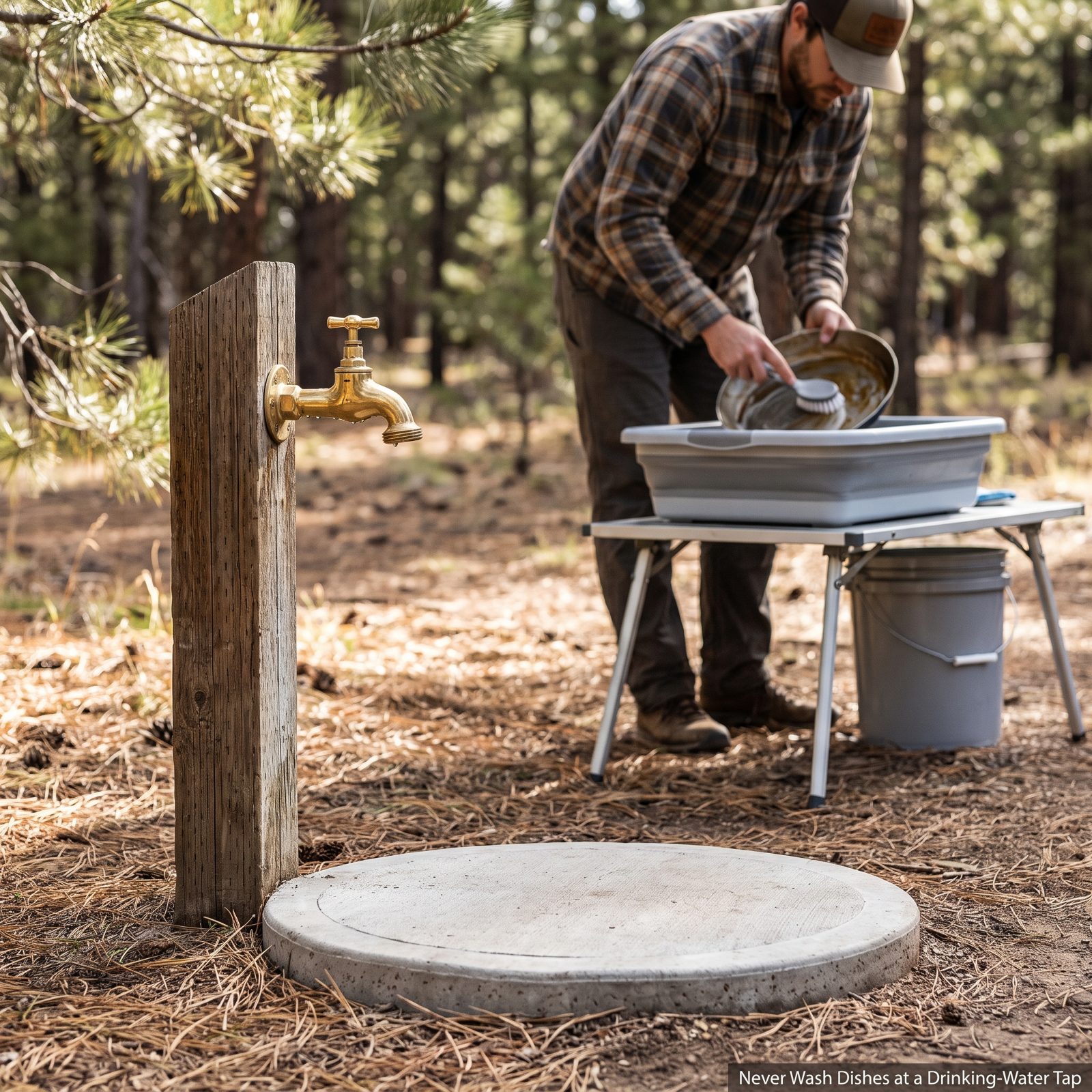
This one makes long-time campers wince. A family scrubs bacon grease off a skillet right at the communal spigot everybody fills their drinking jugs from, food scraps clog the drain, grease coats the fixture, and the next person ends up filling their coffee pot from a tap that smells like last night’s dinner.
Fill a jug, carry it back to your site, and wash in a basin. Dump the gray water where the rules say — a utility sink or a designated drain — never on the ground near the tap.
16. Ask Before Washing an RV or Tow Vehicle at the Site
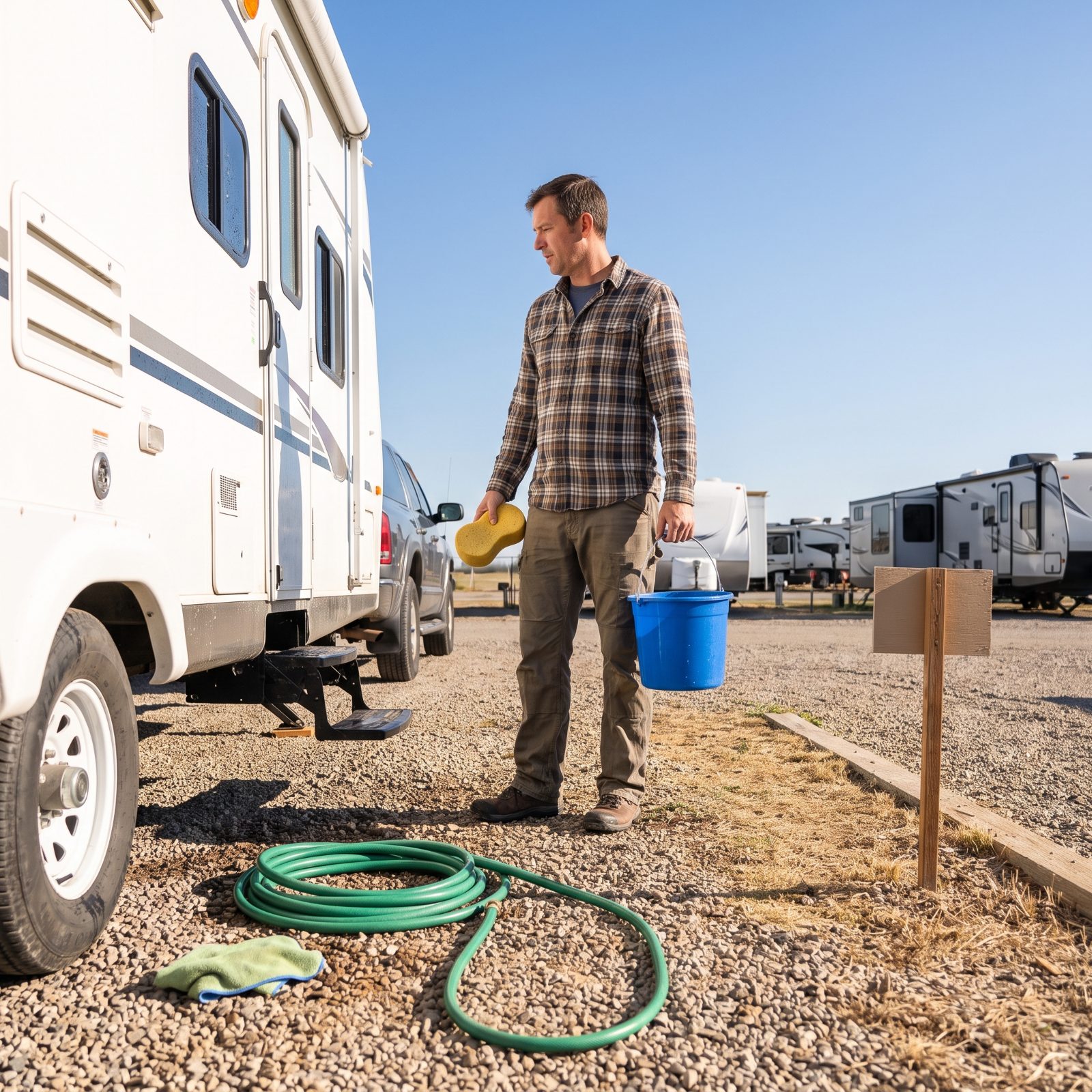
Plenty of parks flat-out ban rig washing on the site, and a surprising number of first-timers never think to check. The reasons are practical: washing burns through water the park pays for, soapy runoff pools on gravel and kills grass, and a half-washed 30-foot trailer drips straight onto the neighbor’s pad.
Ask at the office first. Some parks have a designated wash bay or a weekly allowance, others point you to a truck wash down the road. When in doubt, a damp microfiber cloth and a spray bottle handle road dust without a hose.
15. Never Dig Drainage Trenches Around a Tent
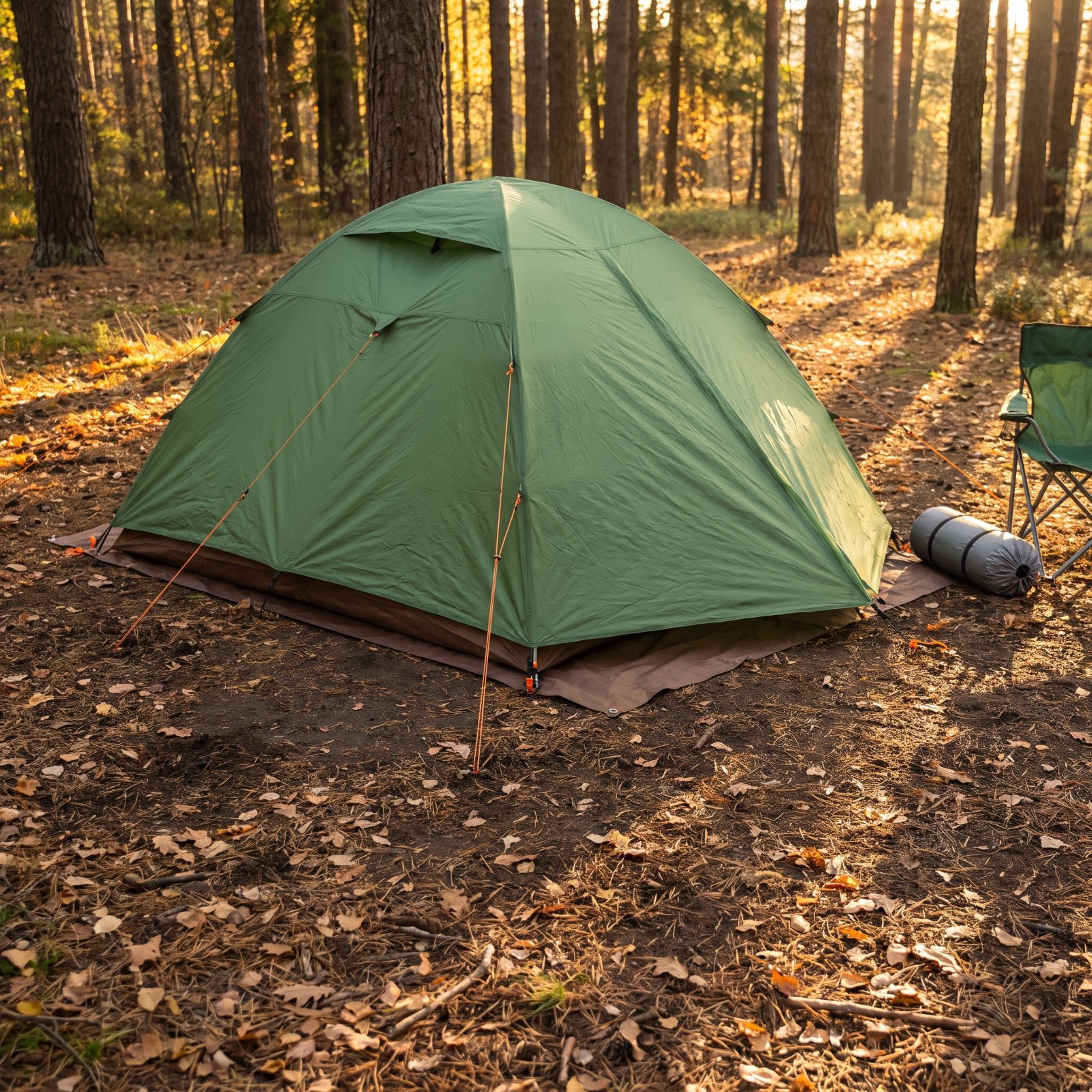
Old scout manuals told you to dig a trench around the tent to channel rainwater. They’re wrong now, and most public campgrounds prohibit it outright. Trenching scars the ground, kills vegetation, speeds erosion, and leaves a hazard the next camper trips into.
Modern tents have sewn-in bathtub floors that keep water out on their own. Pick a spot with natural drainage, pitch on slightly higher ground, and use a properly sized groundsheet tucked under the edges, not one like the brown sheet here that sticks out past the front and right corners, where it catches rain and lets it pool beneath the tent. Leave the shovel in the truck.
14. Use Wide, Tree-Safe Hammock Straps Instead of Nails or Staples
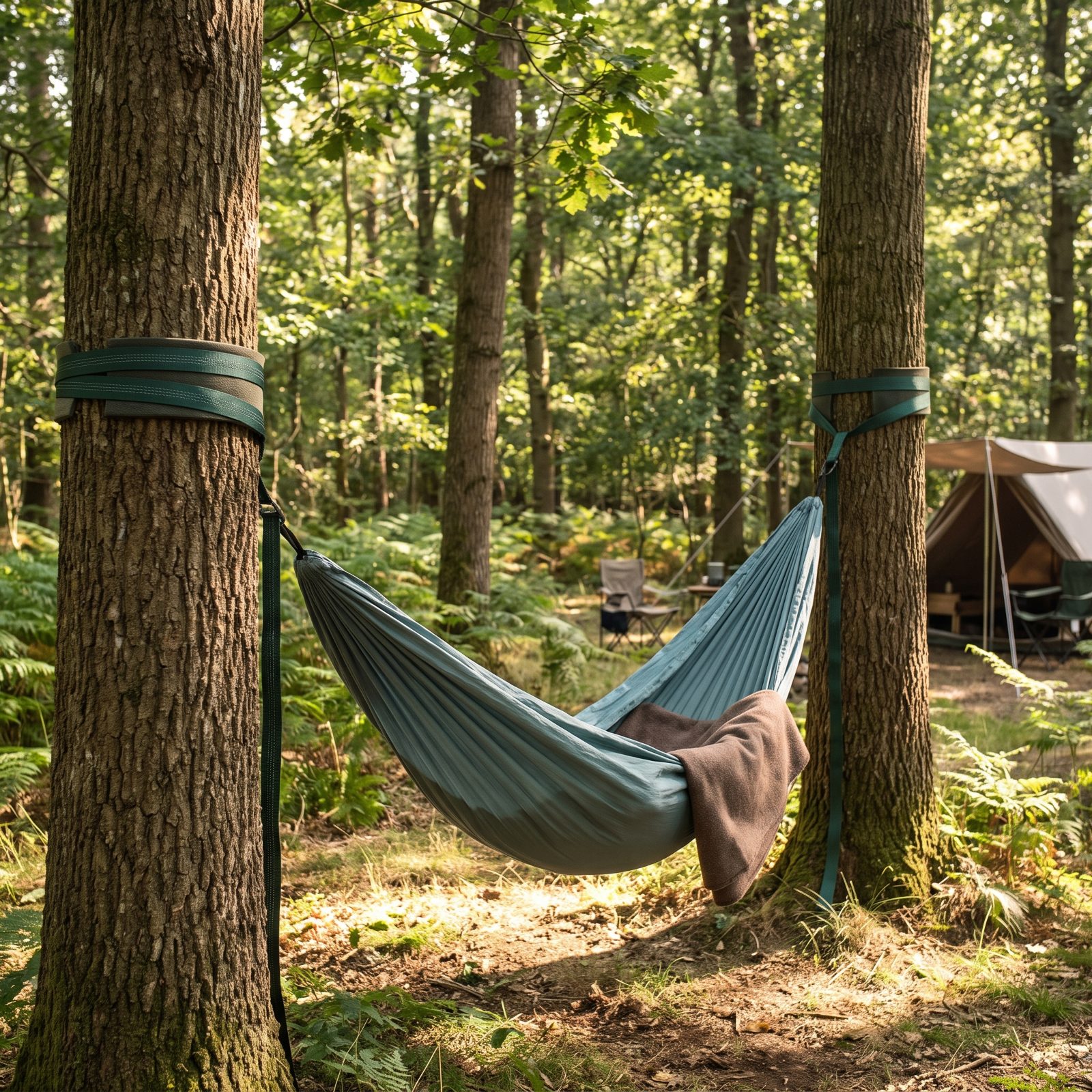
Thin rope and — yes, people really do this — nails bite straight into bark, girdling the tree and inviting disease. Many parks now require wide straps for exactly this reason, and some ban hammocks entirely because of the damage.
Grab a set of wide tree-safe hammock straps at least an inch across. They spread the load so the bark stays intact, and they go up faster than you can tie a decent knot.
13. Walk Around Occupied Campsites, Not Through Them
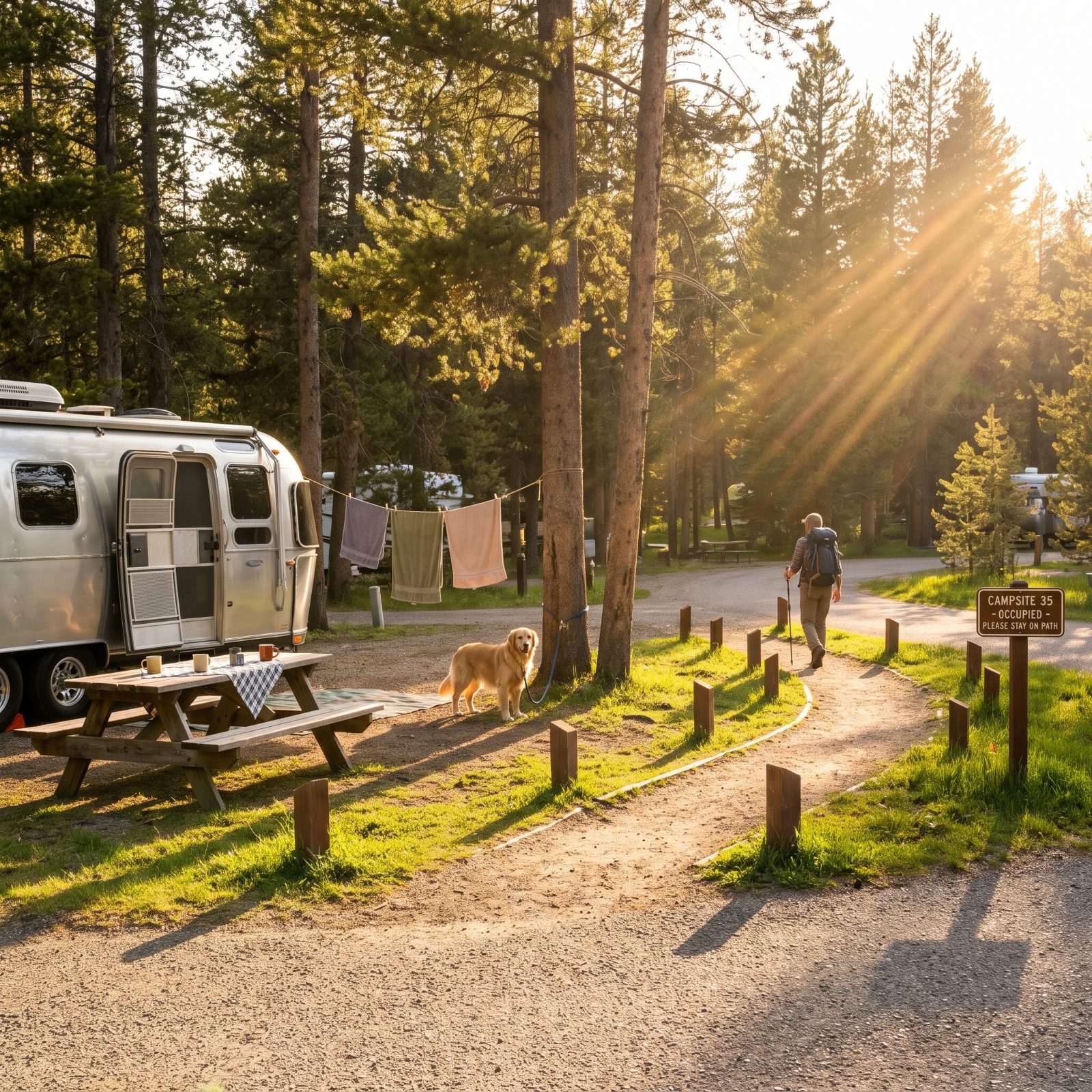
A campsite is someone’s temporary living room. Cutting across it to reach the bathhouse faster is the camping equivalent of strolling through a stranger’s kitchen — it startles dogs, wakes nappers, and tramples the spot where kids are playing.
Stick to roads and marked paths even when they add fifty yards. The detour costs you a minute. The shortcut costs you a reputation on the loop.
12. Keep Slides, Awnings, and Rugs Inside the Assigned Site
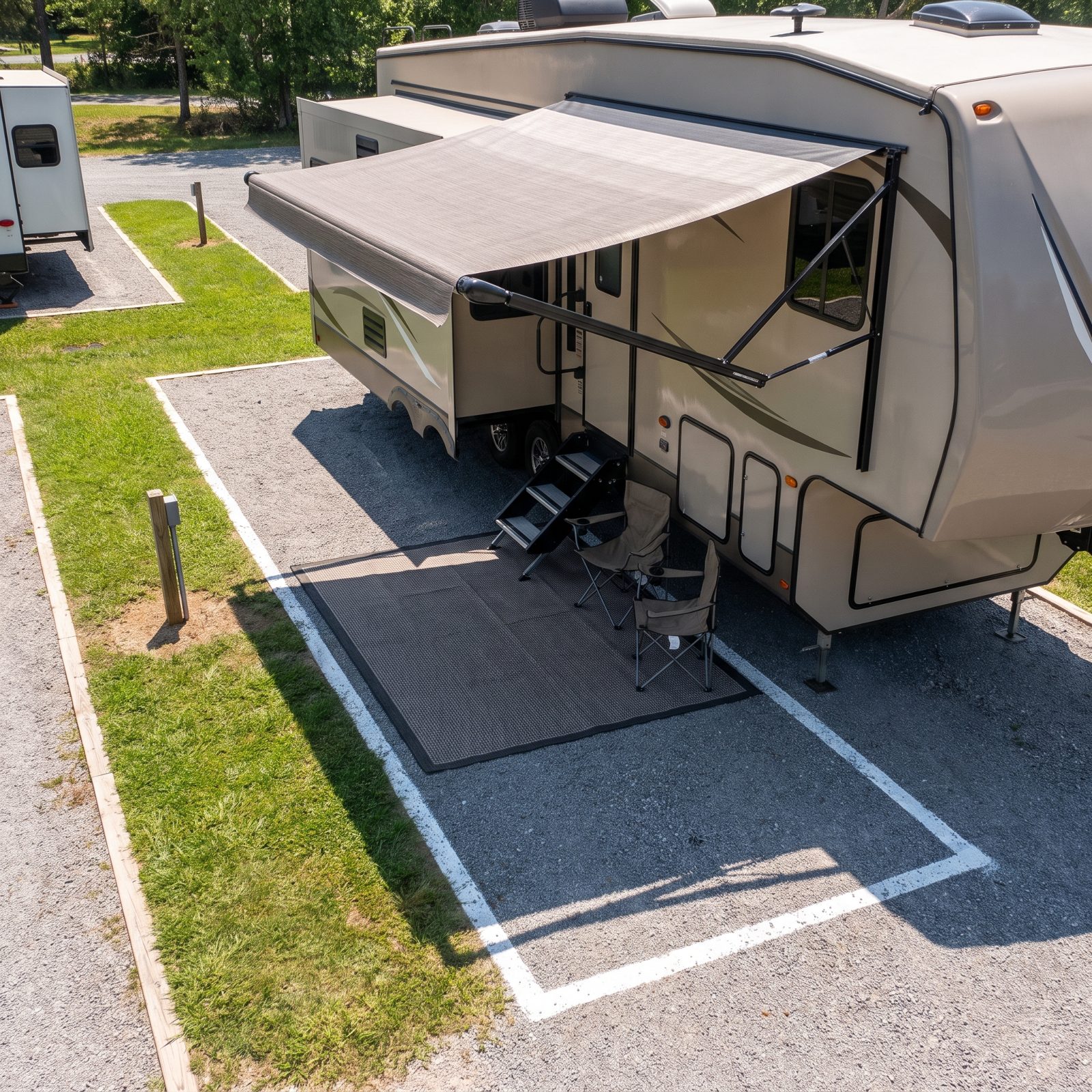
Sites are sized tighter than they look, and an awning plus a slide plus a sprawling patio setup can creep right into the neighbor’s space before you notice. On a packed holiday weekend, that ten feet matters.
Keep every extension — your awning, your outdoor patio rug, the camp chairs — inside your marked boundaries. Even with the white lines painted right on the gravel, it’s easy to miss: in this site the rug stays inside the left line, but the rear of the trailer sits over it, and the front jack edges just past the right line. And leave the common grass between sites clear so nobody gets funneled onto the road to squeeze past you.
11. Position Campfire Smoke Away From Neighboring Sites
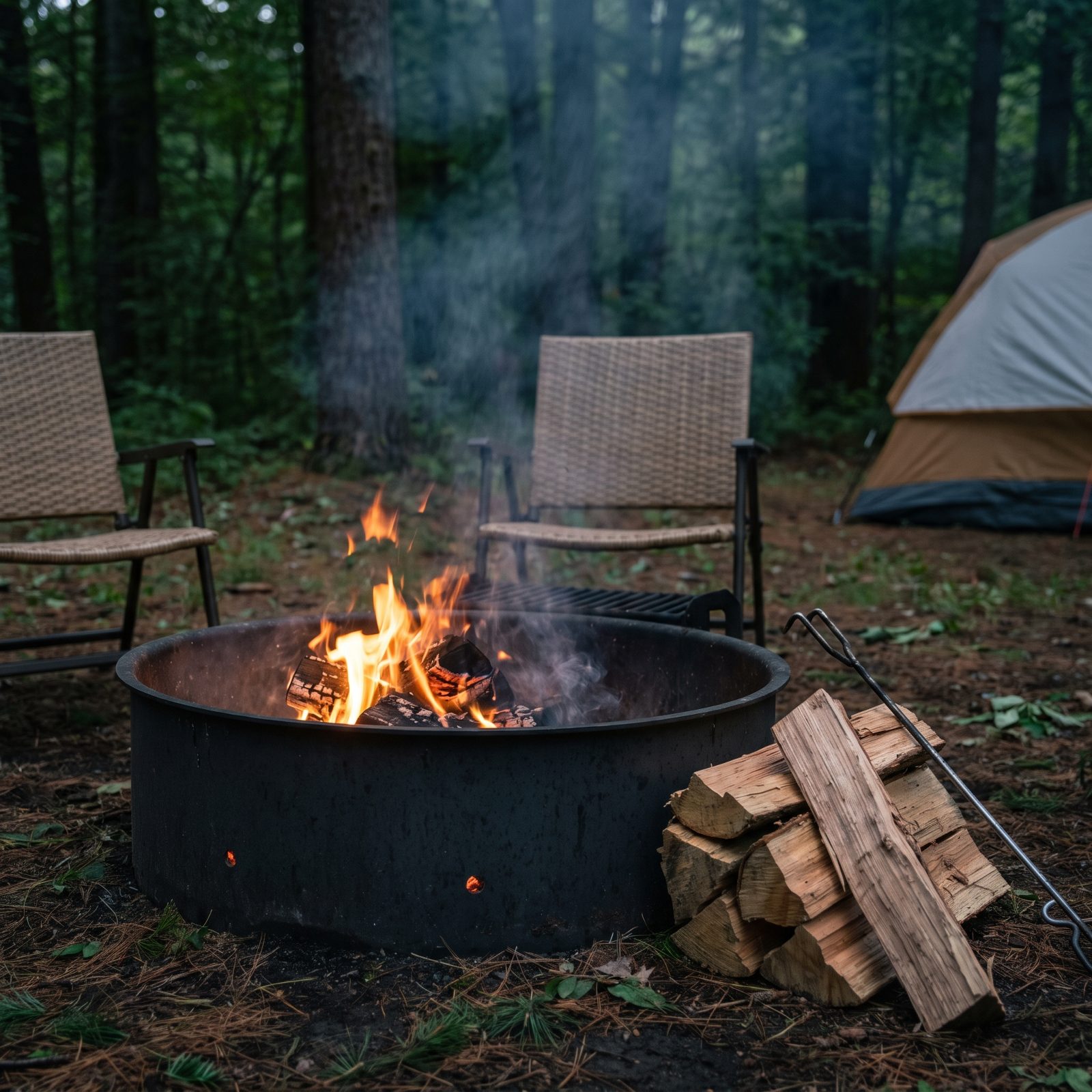
Smoke follows the wind, and nobody signed up to breathe your campfire through their open RV window all evening. First-timers rarely think about placement until a neighbor is quietly closing up their awning and heading inside.
Check which way the wind’s blowing and set your chairs so the smoke carries toward open space, not toward the next pad. And burn dry, seasoned wood — green or wet logs smolder and throw far more smoke, which is the fastest way to make the whole loop resent you.
10. Turn Off Exterior Floodlights Before Bed
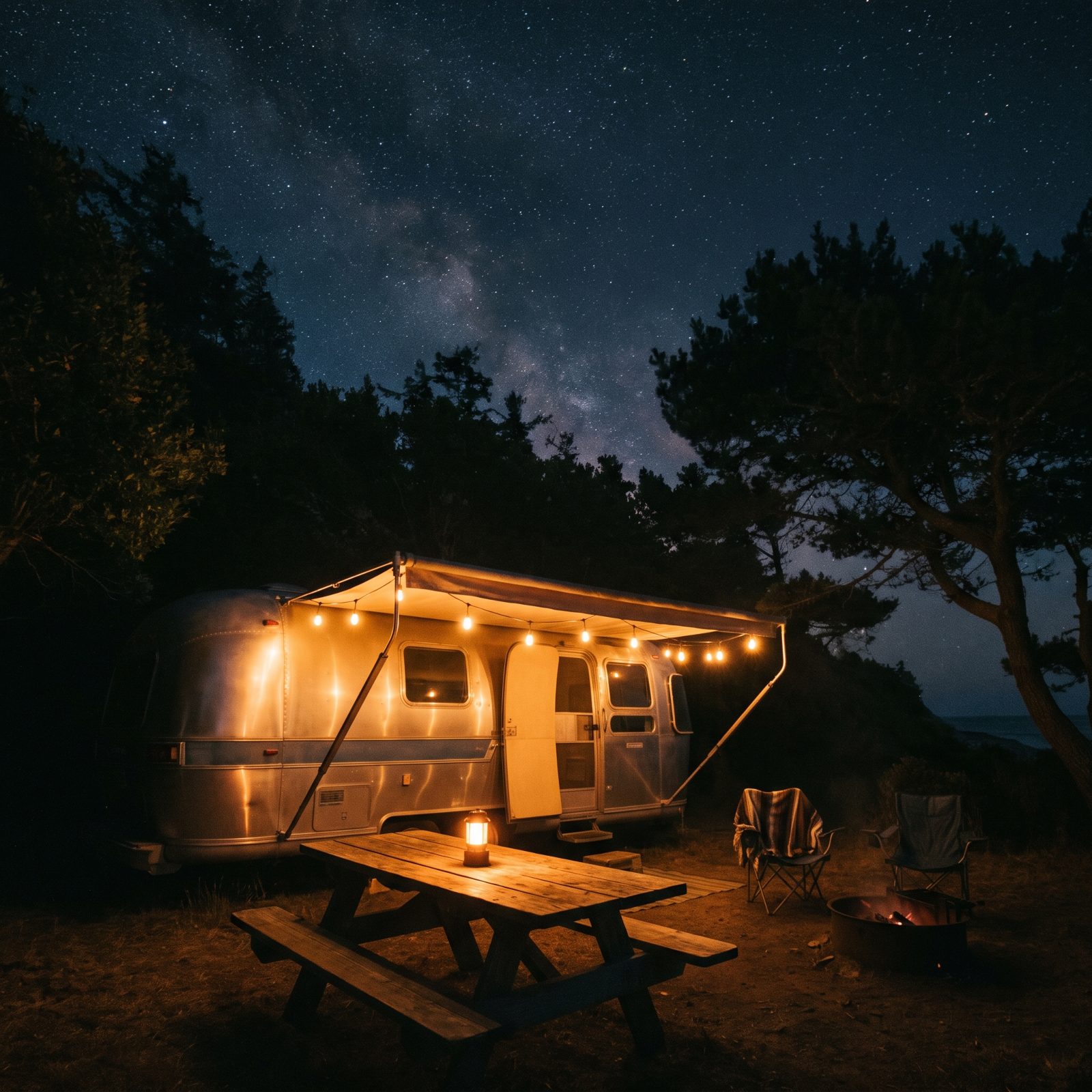
Those RV porch floodlights are brilliant for unhitching at dusk and miserable for everyone after ten. One bright exterior light washes across three or four sites and turns a tent neighbor’s dark into perpetual noon.
Kill the big lights before bed. Switch to warm, low warm string lights or a small lantern for ambiance. Half the reason people haul out to a campground is the dark sky overhead — and one forgotten floodlight erases it for the whole loop.
9. Control the Glare and Sound From Outdoor Screens
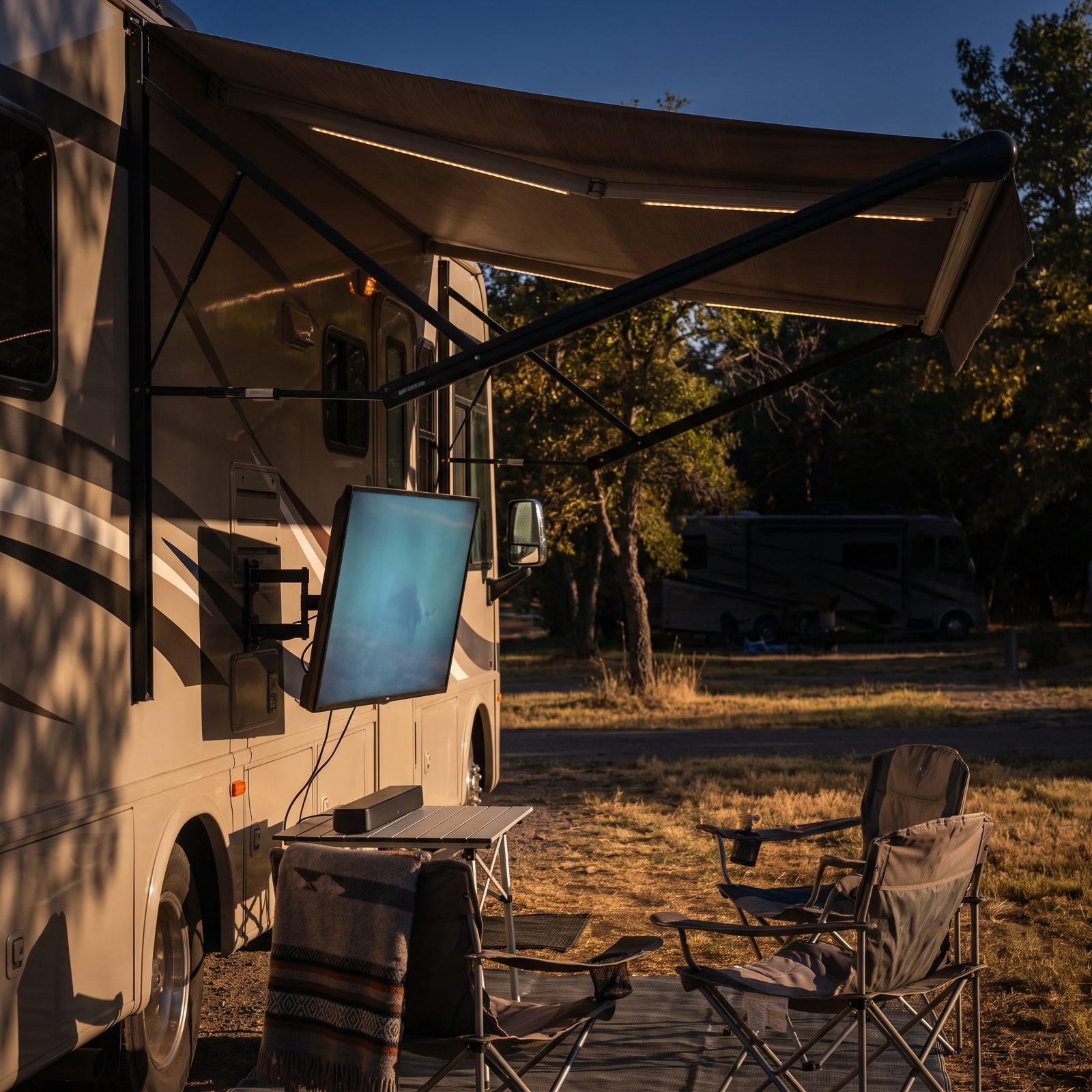
The outdoor TV has become standard kit on bigger rigs, and it turns into a genuine problem when a bright screen and its speakers face straight into the site next door. Movie night for you is a flickering blue wall and muffled dialogue for them.
Angle the screen inward toward your own chairs. Drop the brightness after dark. Skip the open-air speakers — use a small soundbar kept low, or better yet, headphones. Nobody drove out here to watch the back of your screen light up the trees.
8. Keep Music From Carrying Beyond the Campsite
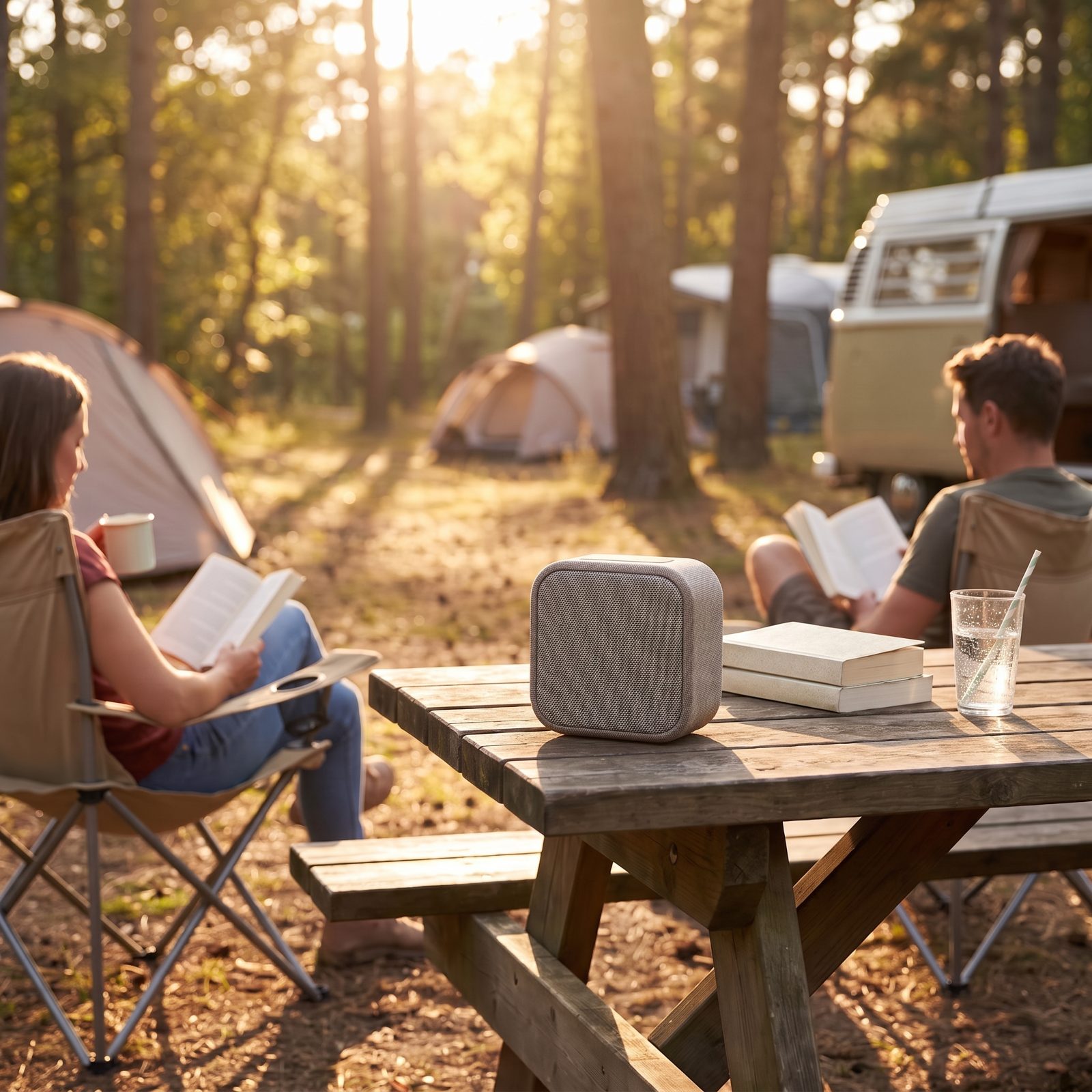
Sound travels farther outdoors than anyone expects, especially across open water or a flat field at night. Your tasteful playlist at what feels like a reasonable volume on your own pad is landing crystal clear on the site three down.
The old rule still holds: if your neighbor can name the song, it’s too loud. Leave the big floor-standing speakers and stereo receiver at home, reach for a pair of headphones instead, respect posted quiet hours, and remember that for a lot of campers the whole draw was wind in the trees, not your bass line.
7. Point Your Generator Exhaust Away From Every Occupied Site
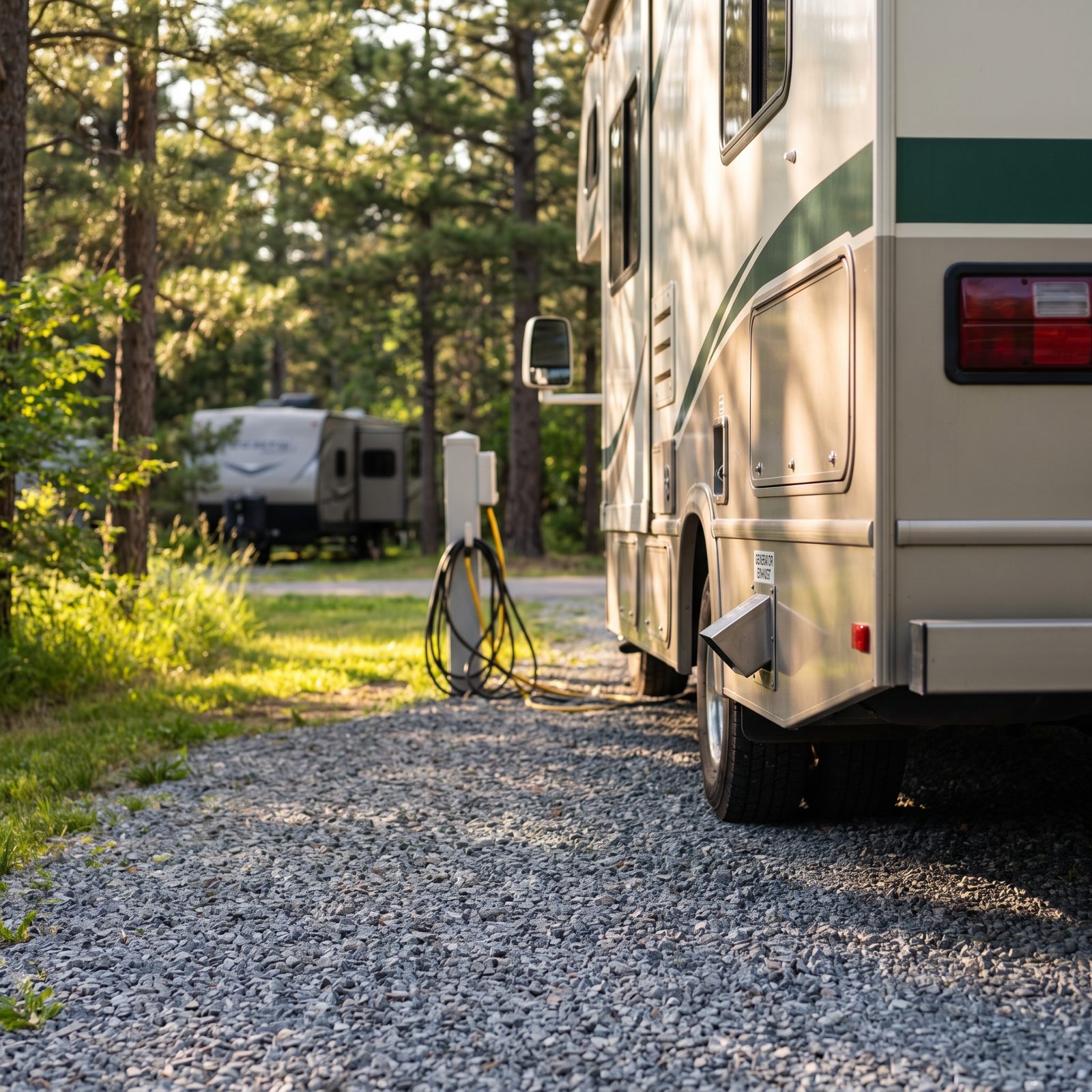
Carbon monoxide has no smell, and it drifts. Aim a generator exhaust at the neighbor’s open window and you’ve turned their quiet morning into a headache at best, a hospital trip at worst — fumes drifting straight into the awning, the coffee, the eggs.
Face the exhaust toward open space, a tree line, or the road. Not the picnic table twelve feet over. Newer rigs tuck the port at the rear, but built-in units and portables are where people get careless.
6. Skip the Long Idle, Even When You’re Just Topping Off Batteries
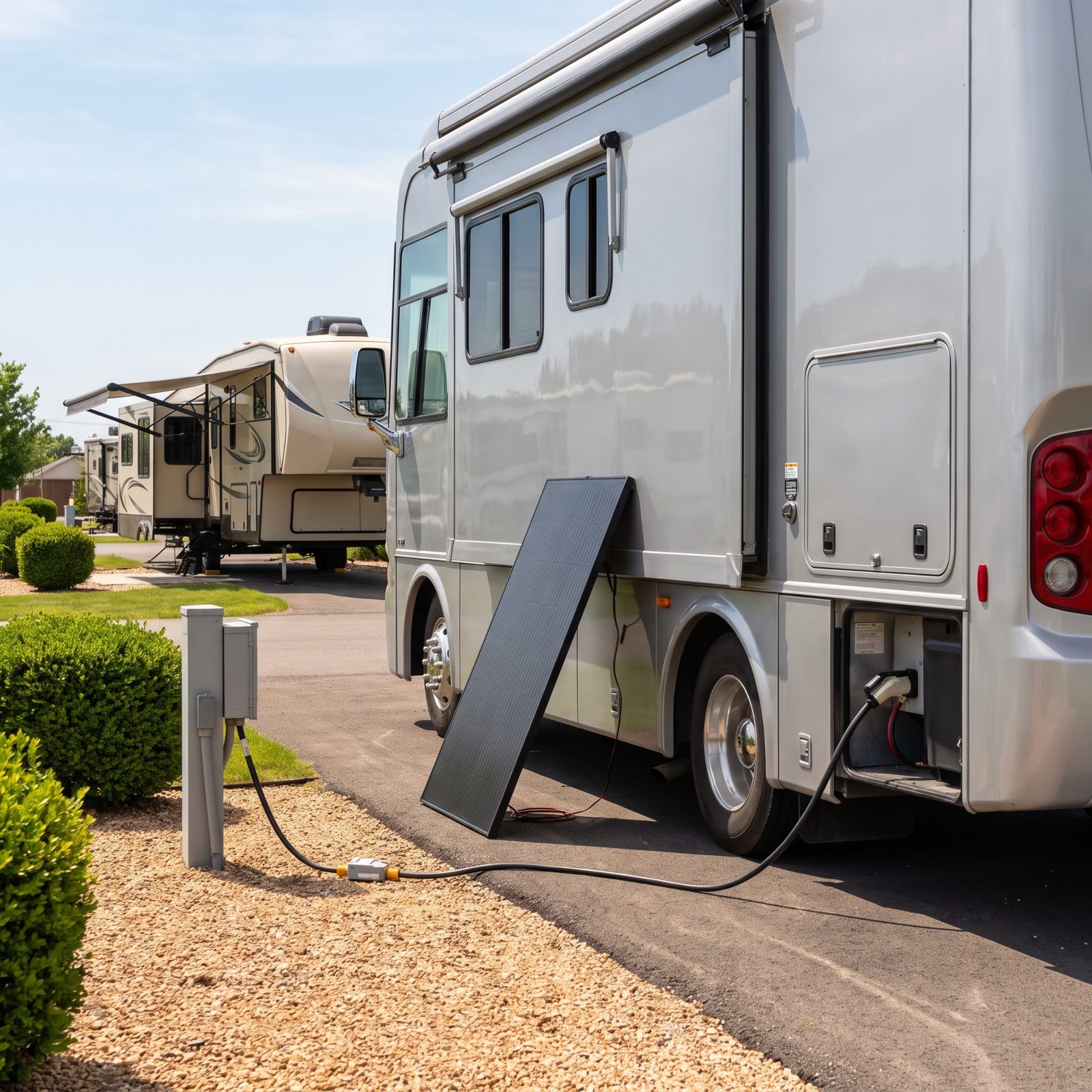
Idling to charge is loud, smelly, and mostly useless — an engine at idle trickles power into your house batteries while pumping exhaust across the whole loop, and neighbors hear the rumble long before they understand why it won’t quit.
Batteries need help? That’s what shore power, a solar panel, or a proper generator run during allowed hours is for. The truck engine is the worst tool for the job on every count.
5. Save the Hammering, Hitching, and Big Pack-Up for Mid-Morning
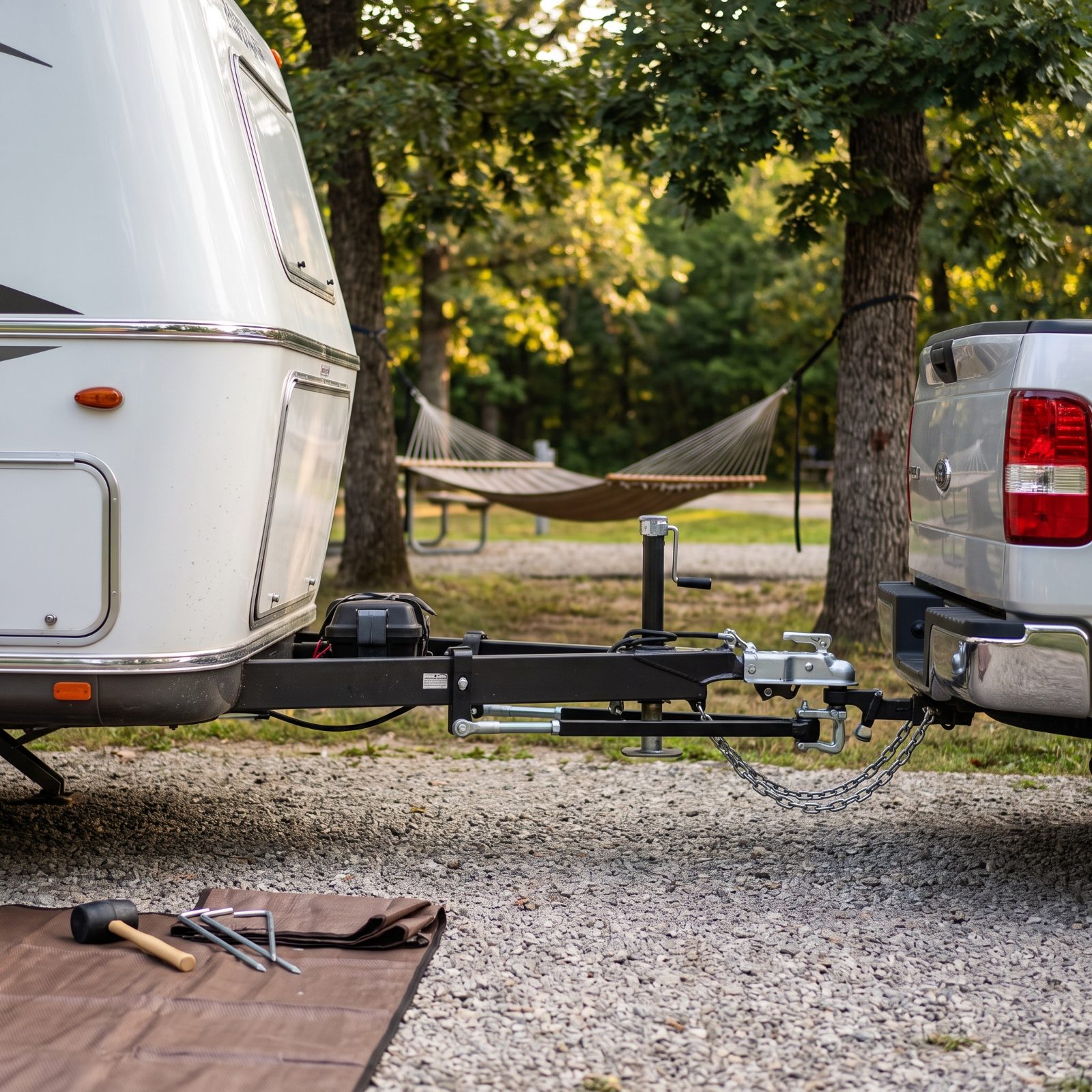
Sound carries further at a campground than anywhere else you’ve slept. No walls, no traffic hum, nothing to soak up a mallet hitting a tent stake at dawn. One person breaking camp early can wake the whole loop.
Parks set quiet hours that usually run until 7 or 8am, and honestly, the decent move is to sit on the loud jobs a little past that anyway. Do the silent prep early if you’re leaving — coil cords, load the inside, stage your gear. Then hammer, hitch, and clatter once people are actually up and moving.
4. Don’t Let a Retractable Leash Stretch Across the Road
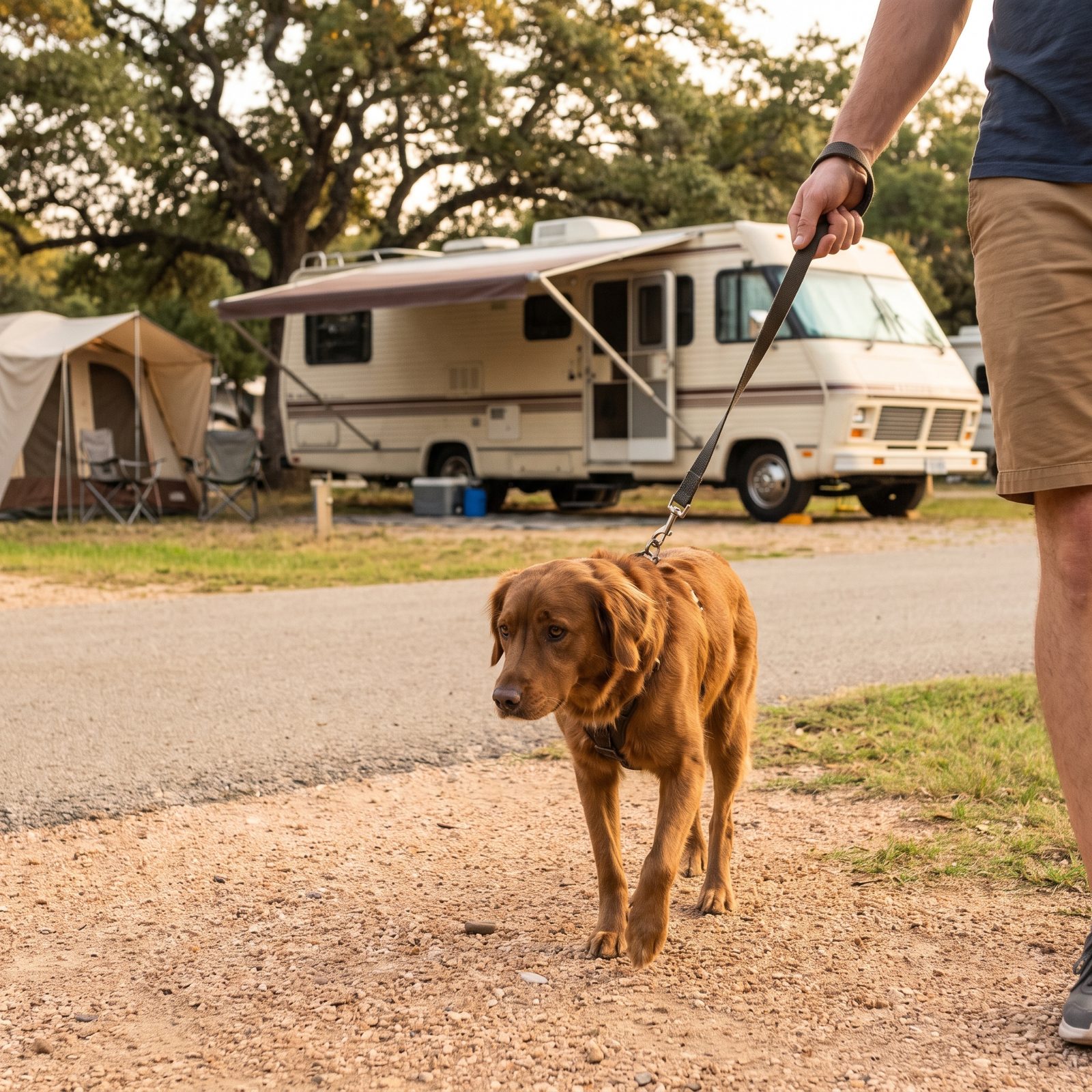
Sixteen feet of thin cord stretched across a campground road is a trip wire nobody spots until it catches a shin or a bike tire. On the trail, that same slack lets a dog charge a stranger, a kid, or another dog before anyone can react.
Lock the retractable short around sites and crossings, or just carry a fixed leash for busy areas. The retractable sells freedom, and in a place packed with people, rigs, and other animals, freedom is the last thing you want on a dog.
3. Never Leave a Barking Dog Alone at the Site
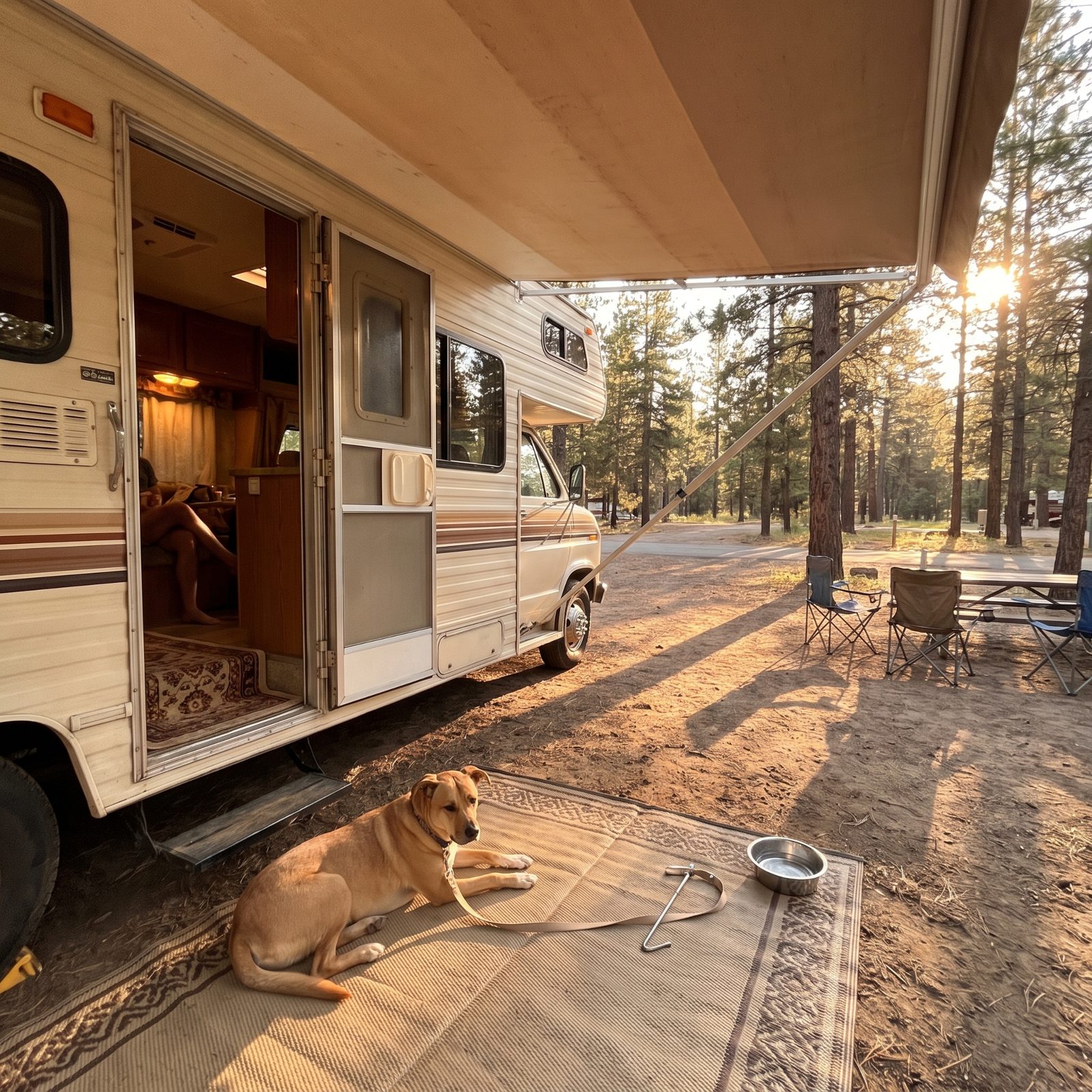
A dog tied outside an empty rig will bark. Not always, but often enough — and the whole loop pays for it while the owner is off at the trailhead, blissfully unaware.
Most pet-friendly parks ban leaving animals unattended for exactly this reason. Heading out? The dog comes along or stays crated inside with the fan running. Separation anxiety doesn’t care how mellow your dog is back home on the couch.
2. Pick Up After Your Dog Right Away, Even in the Woods
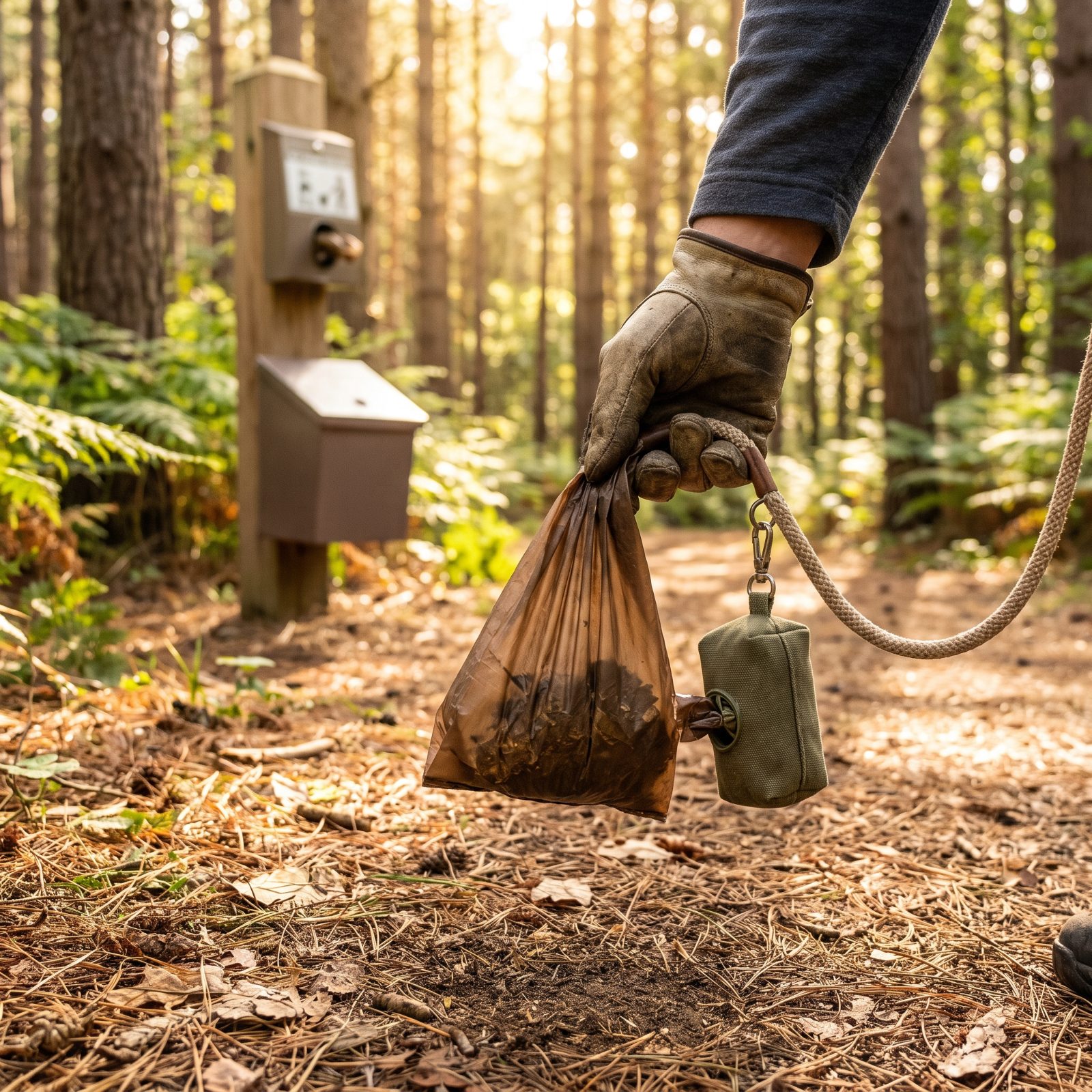
That myth about waste just melting back into the woods? Wrong. Dog waste isn’t like a wild animal’s — it carries bacteria and parasites that wash into streams, and it won’t vanish before the next hiker steps in it off the edge of the trail.
Bag it where it drops, every time, including the back corner of your own site. Keep extra bags clipped to the leash so you’re never stuck empty-handed a quarter mile out.
1. Don’t Feed Wildlife or Leave Food Out Overnight
A fed animal is a dead animal, as the rangers put it, and they aren’t being dramatic. Raccoons, jays, and bears that learn a campsite means an easy meal lose their fear of people fast, and a bold bear eventually gets relocated or put down.
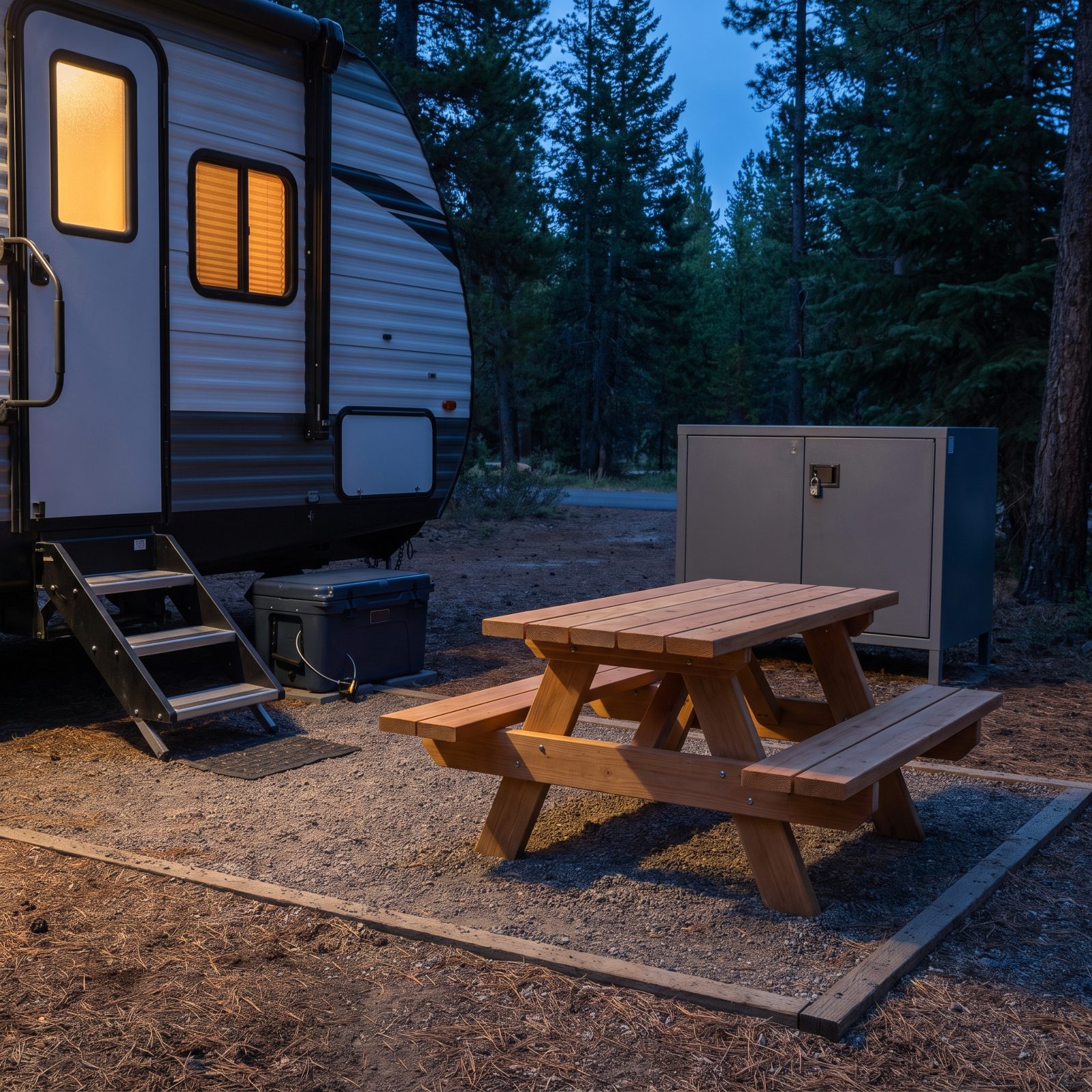
Lock food, trash, and scented stuff like toothpaste in the rig or a provided locker overnight. Clear the picnic table before bed, and don’t leave the cooler sitting by the trailer steps the way it is in this photo; a cooler is not bear-proof, even with a cable lock on it, so it goes inside or in that locker too. Wipe the grill.
The neighbor flicking chips to a chipmunk figures it’s harmless. Two nights later that same critter is chewing through somebody’s screen door, hunting for more.