
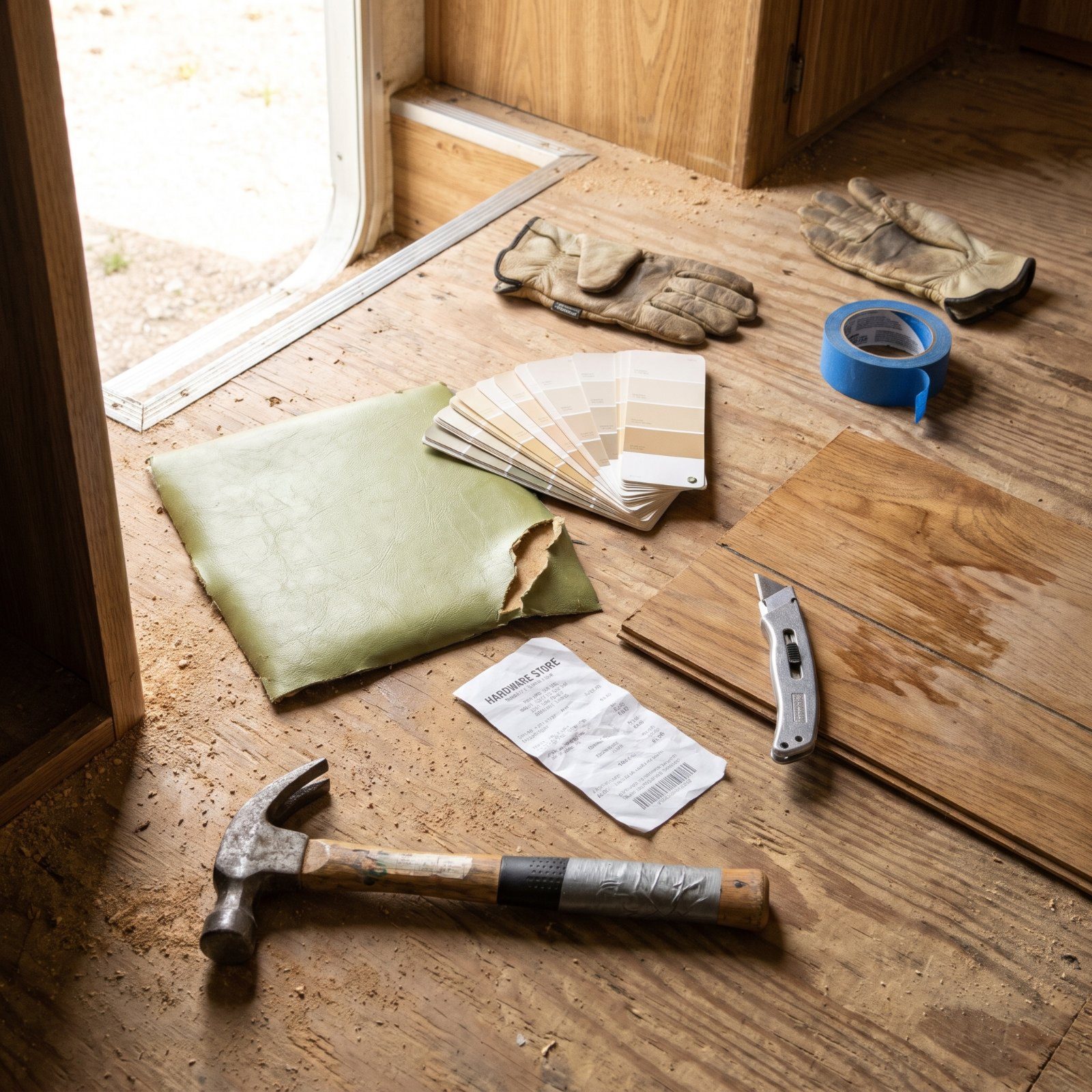
The subfloor near the dinette gives a little when you step on it. Soft. You’ve known for weeks, but you keep stepping around it instead of pulling it up, because once you pull it up you have to see what’s underneath — and what’s underneath is never one problem. It’s four.
Please note that some of the images in this article were created with the assistance of AI.
Anyone who has tried to save an old motorhome knows this feeling, and anyone who has tried to save a long marriage knows it better. The same wiring runs both: sunk cost, selective memory, the hope that a little fresh paint buys you out of a structural conversation. Below are the parallels nobody warns you about when you hand over the cash for a fixer. You’ll recognize at least half of them. Probably from both sides of your life.
18. You Remember the Road Trips, Not the Roof Leaks
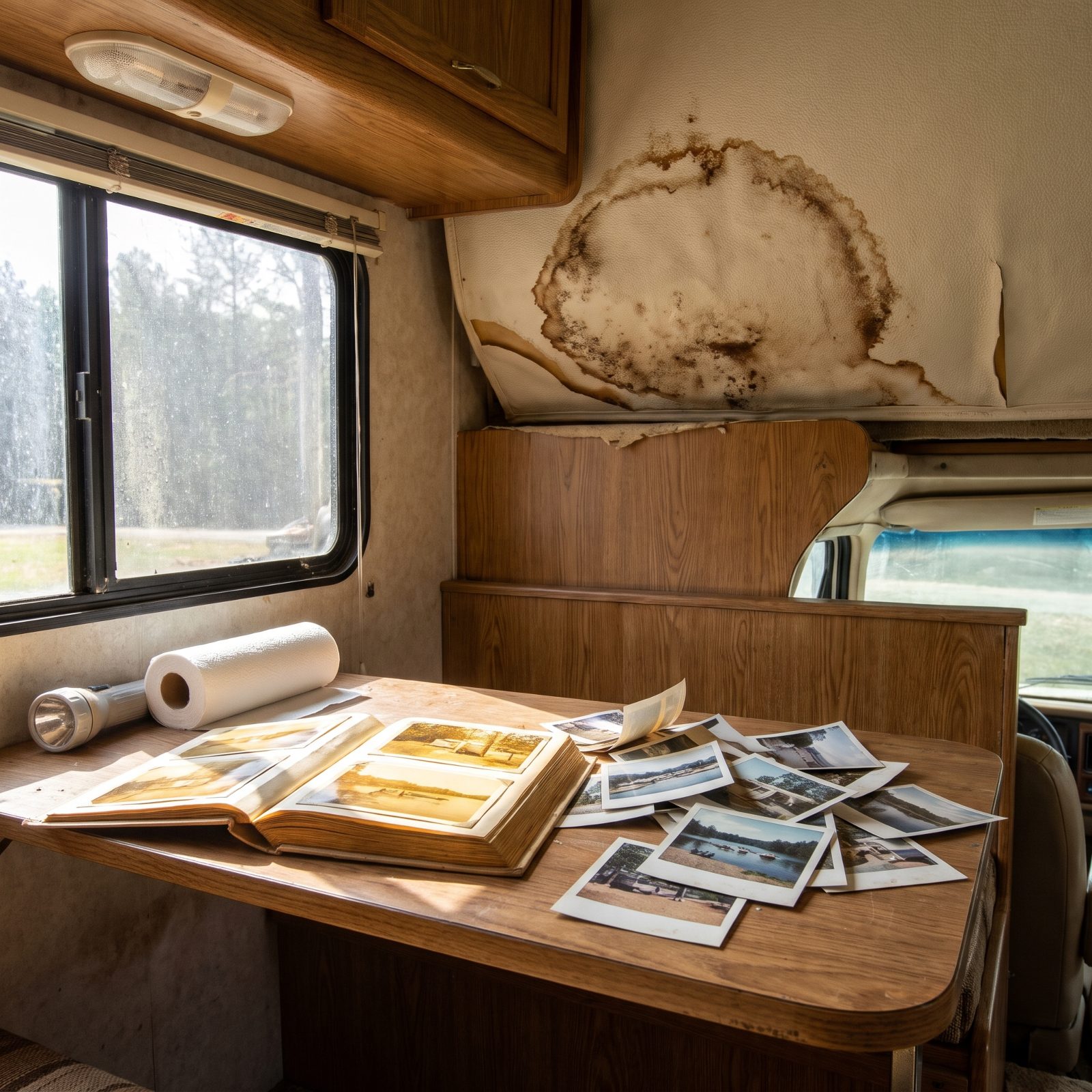
Ask anyone restoring a tired rig why they bought it and they’ll tell you about the trip. The lake. The kids asleep in the overhead bunk. That one morning the coffee tasted better because of where you’d parked. Nobody leads with the roof leak that’s been quietly turning the ceiling to cardboard.
We edit a long relationship the same way. The good years stay vivid and frequent in memory while the bad stretches blur into one gray smear. Psychologists call it the fading affect bias — the sting of a negative memory dulls faster than the warmth of a good one. It’s why you’ll stand there defending something that’s actively soaking in water.
Nostalgia isn’t lying to you, exactly. It’s just a terrible project manager, still approving the work based on how you felt in 1994.
17. You Keep Going Because the Custom Cabinets Are Already Paid For
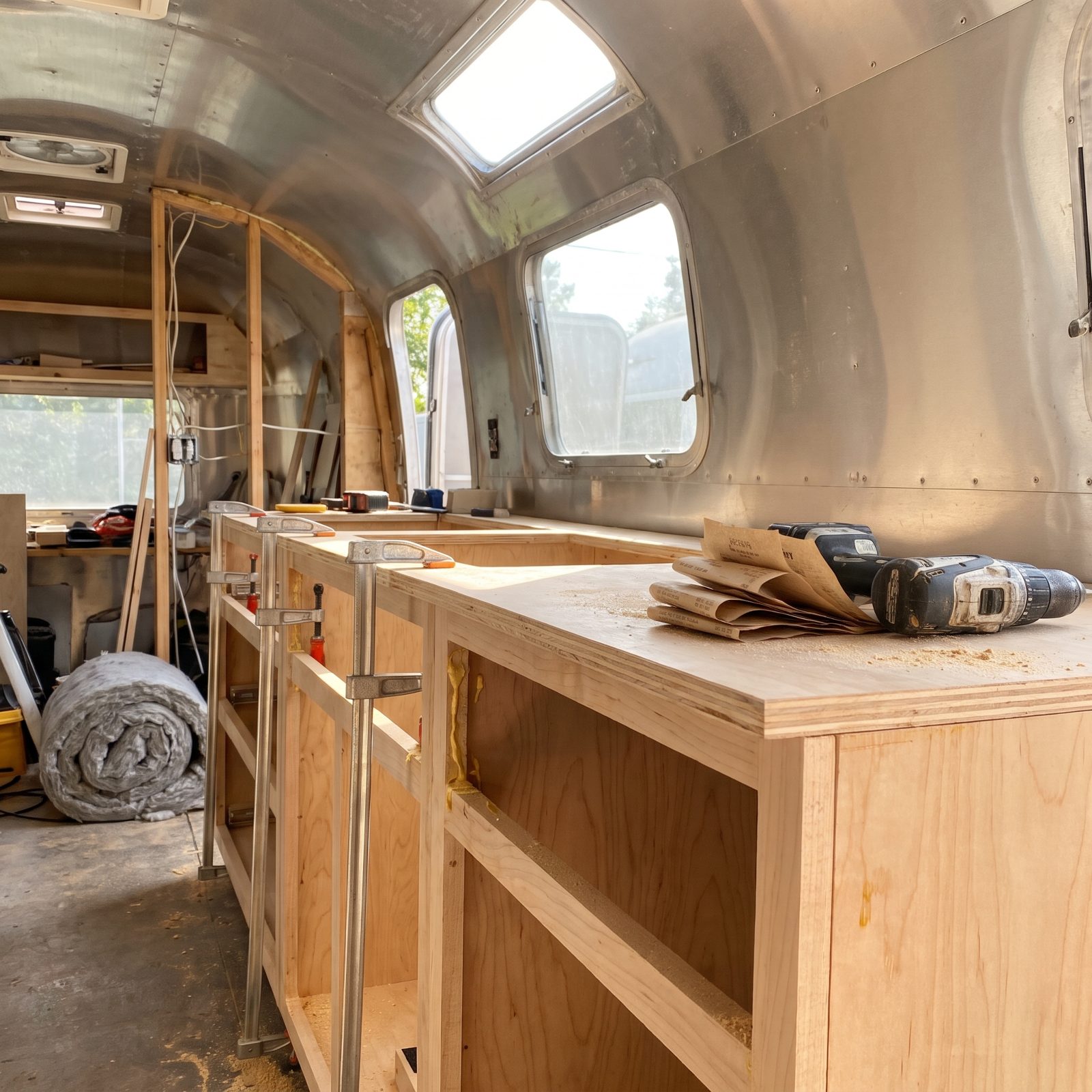
Here’s the trap. You spent real money on custom cabinets — beautiful birch, built to the exact odd dimensions of your rig — and now the subfloor they’re bolted to is questionable. Stopping might be the smart move. But those cabinets are paid for, so you keep pouring in money to protect the money you already spent.
That’s the sunk-cost fallacy, and it’s the exact logic that keeps people in relationships long past their expiration date. Fifteen years in. A house. Friends who feel like joint custody now. You don’t stay because it’s working. You stay because leaving would waste all of it.
The hard truth, for rigs and for people: money and years already gone are gone. They vote in the past tense only. The honest question is whether the next dollar and the next weekend are worth it going forward.
16. Fresh Paint Can’t Fix a Spongy Subfloor
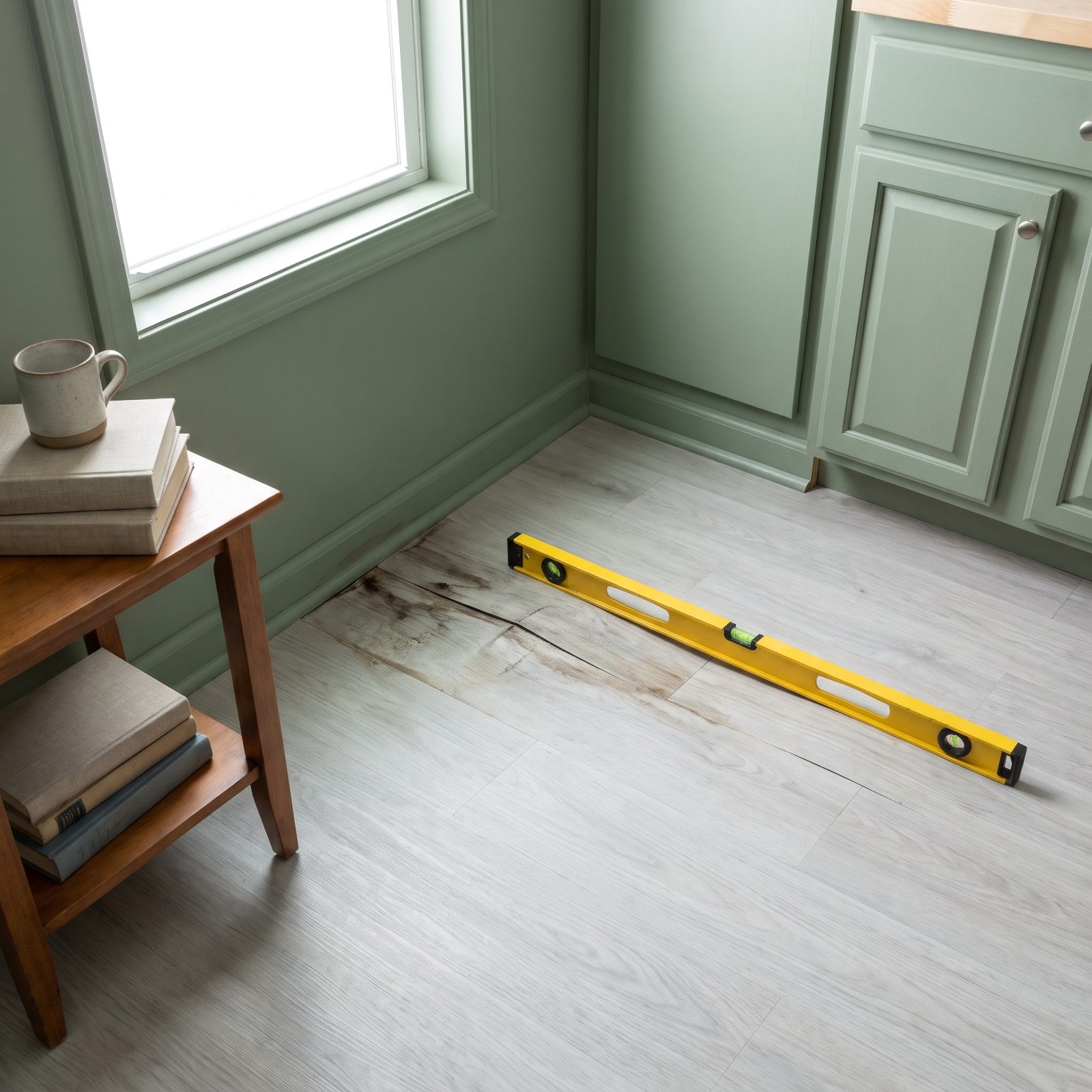
A fresh coat of paint is the most seductive lie in restoration. For a couple hundred bucks and a weekend, the whole interior reads new. Bright. Hopeful. And it does absolutely nothing for the subfloor flexing under your feet like a trampoline.
Couples pull the same stunt. A weekend away, a new mattress, one grand gesture that makes everything feel fixed for about nine days. The cosmetic win is real, which is exactly what makes it dangerous — it hands you the feeling of progress without the substance, and feelings of progress are how you avoid the actual work.
Surface fixes are fine. Just be honest about what they are. A good coat of paint buys you cheerfulness. It does not buy you structure.
15. The First Wall Panel Hides Three More Problems
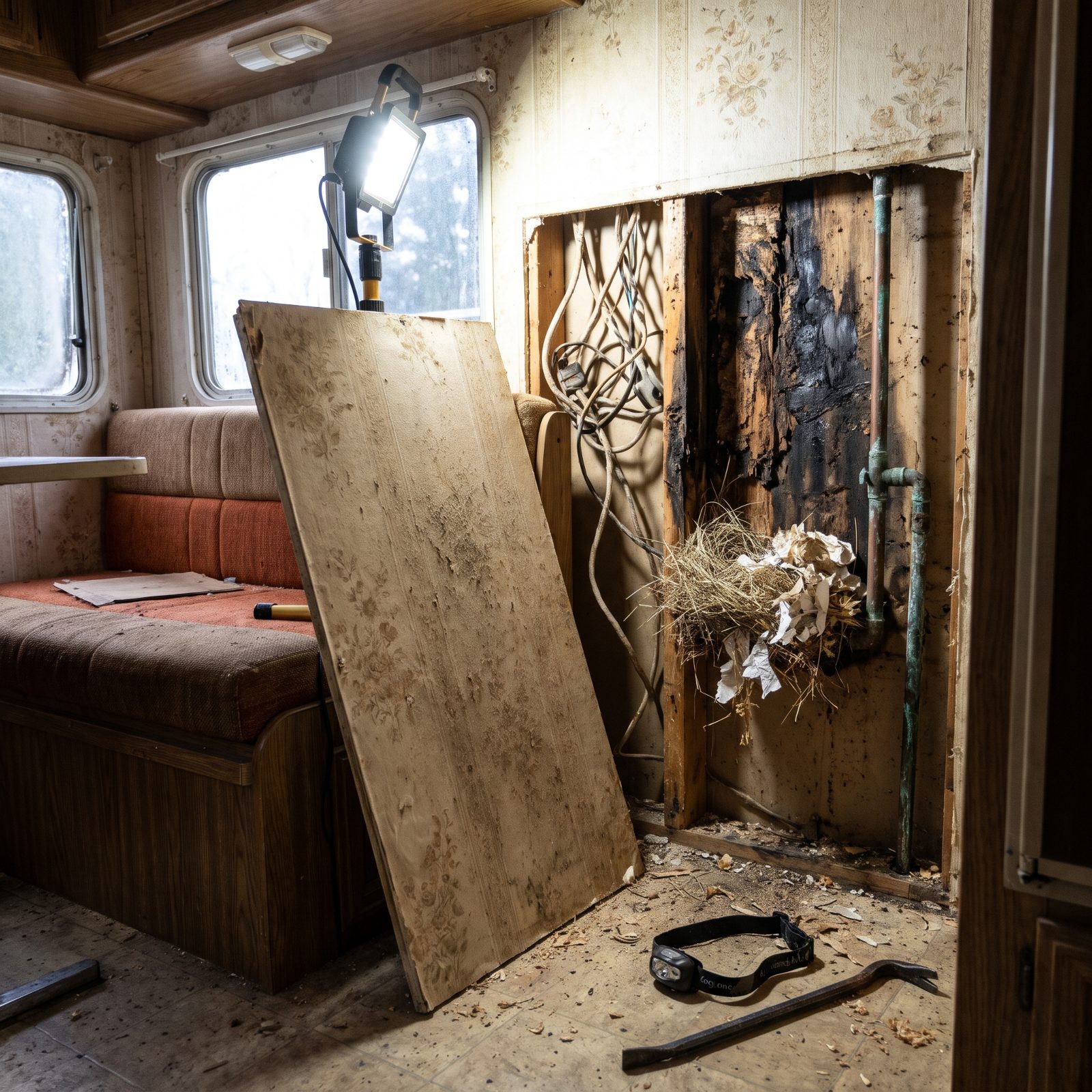
You pull one panel to chase a small stain. Behind it: rotten framing, a mouse condo, and wiring someone clearly spliced in the dark during a thunderstorm. One problem was never one problem. It was just the one problem polite enough to show itself first.
Troubled marriages open up the same way. You start a conversation about the dishes and ninety minutes later you’re somewhere near 2011 and a thing his mother said. The dishes were the visible panel; the structure behind it had been quietly failing for years.
Call it scope creep. It wrecks more restorations and more relationships than the original damage ever could. The shock isn’t the first problem — it’s realizing the first problem was load-bearing, and everything you believed was solid had been resting on it.
14. One Person Wants Solar; The Other Wants a Shower
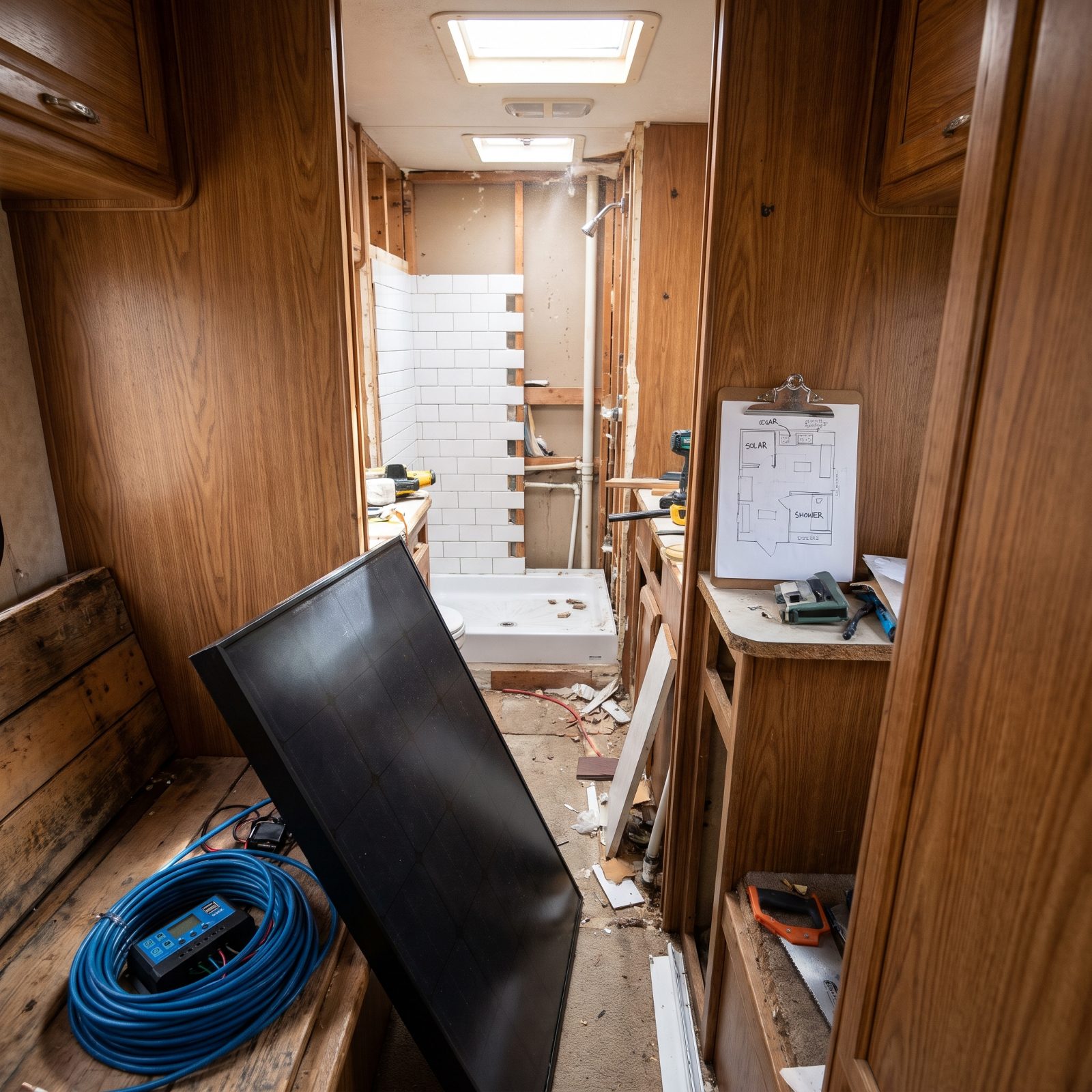
Every RV project hits the budget fork. One of you wants the off-grid dream — solar array, lithium, the freedom to park anywhere for a week. The other wants a shower that drains and doesn’t smell. Both are reasonable. There’s money for one.
What’s really happening is a values negotiation wearing a hardware costume. Solar is the person who wants adventure and independence. The working shower is the person who wants comfort and the basics handled. You’re not arguing about watts. You’re arguing about what the good life even is.
Couples run this same play over the kitchen renovation, the vacation, the retirement plan. The item is never the item. It’s a stand-in for whose definition of happiness gets funded this year.
13. One Person Sands While the Other Picks Fabrics

Classic RV build split: one of you is on hands and knees sanding a cabinet door for the third hour, breathing dust, measurably grumpier by the minute. The other is across the rig with fabric swatches and a mood board, deeply absorbed in whether the cushions should be terracotta or sage.
Neither job is fake. The sanding is the sweat equity, the fabric choice the vision that makes the sweat worth it. Trouble is, each side quietly believes they’re doing the real work while the other person plays.
Here’s the oldest fault line in any partnership — the invisible-labor gap. One person does the tasks that show. The other does the ones that don’t, and each silently keeps score against a ledger the other can’t even see. Resentment doesn’t come from doing more. It comes from believing your more goes unnoticed.
12. The Parts Receipt Becomes Evidence in Every Budget Argument

That faded receipt from the parts store doesn’t get thrown away. It gets filed. And three weeks later, mid-argument about the new awning, it reappears — proof of what the last overrun cost, waved like a court exhibit.
Money fights in a restoration rarely stay about the current purchase. They become a running case file, every receipt ammunition for a larger grievance about who spends recklessly and who gets to decide.
Relationships keep the same cabinet. Nobody’s actually arguing about forty dollars of plumbing fittings. They’re arguing about trust, respect, and whether their judgment counts, using the receipt as a prop. Confirmation bias with a stapler: you keep the evidence that proves your side and quietly lose the slips that don’t.
11. The Weekend Project Eats Every Weekend for Months
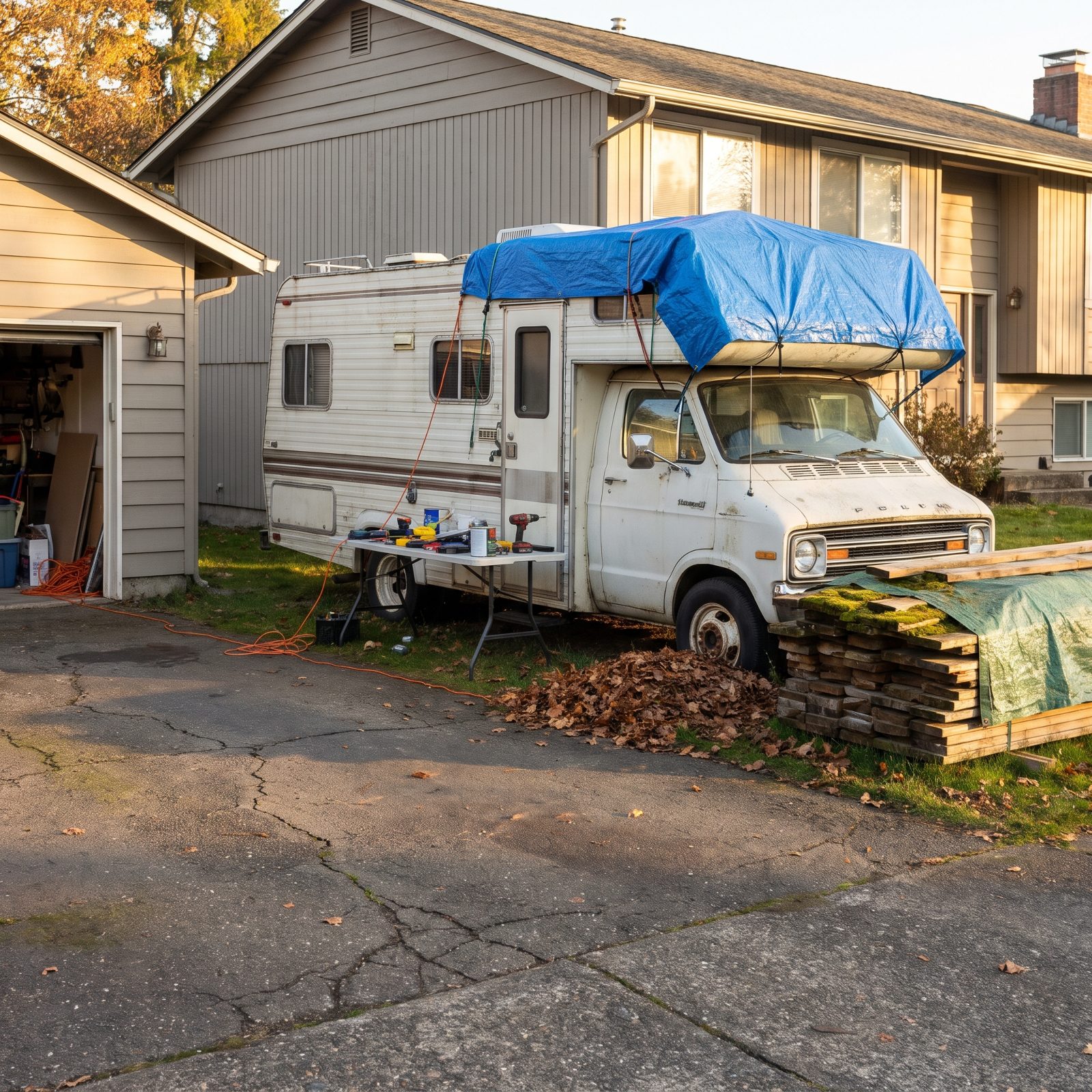
It was going to be a weekend. Patch the roof, reseal the seams, done by Sunday. The tarp has now been on long enough to grow algae, the extension cord to the house has become permanent landscaping, and leaves are piling against the tires. Three months in, every Saturday is spoken for before it even arrives.
This is the planning fallacy — the reliable human habit of estimating any project as if nothing will go wrong, when something always does. We do it with RVs, kitchens, novels, and marriages. “We just need to work on communication” is the roof-in-a-weekend of relationship repair.
We never budget for the wrong that always comes. We budget for the best possible Saturday, then act betrayed when Saturday behaves like every other Saturday ever.
The fix isn’t working faster. It’s planning for the version of the project where things go sideways, because that’s the real version.
10. Living in the RV Makes Every Repair Feel Bigger
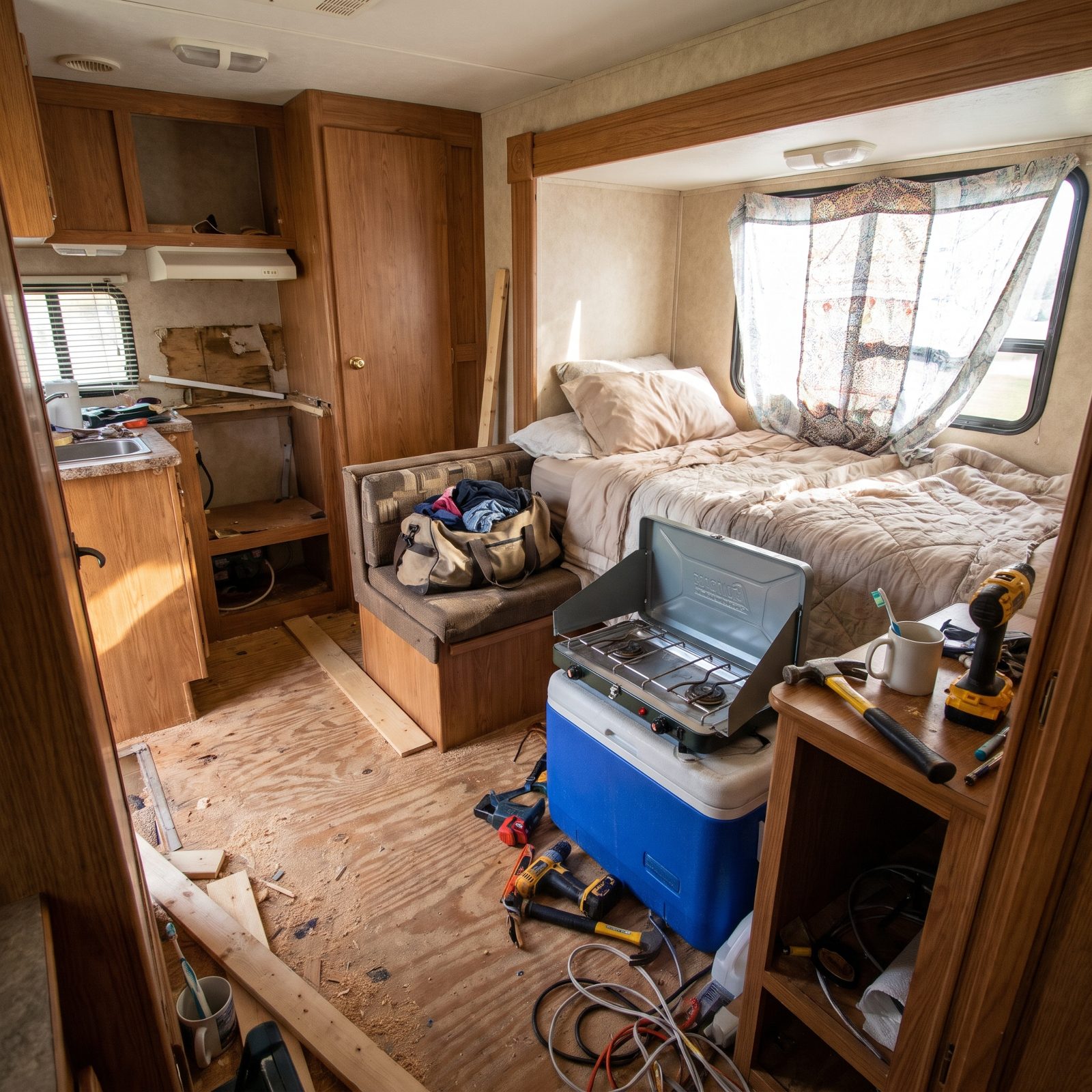
There’s a huge difference between restoring a rig in the driveway and restoring one you’re sleeping in. Live in the thing you’re repairing and there’s no stepping back. The torn-up floor is also where you walk to the bathroom at 2 a.m. The dust is in your coffee. Every small repair swells, because you can never leave the problem.
Couples trying to fix things under the same roof know this exactly. You can’t go home and cool off. Home is the renovation. Every unresolved thing sits in the hallway you both have to use.
Which is why distance helps — and why it also feels like abandonment. Proximity amplifies everything, good and bad, because you never get the reset that comes from walking away and coming back with a clearer head.
9. You Fix the Same Window Leak and Trust It Less
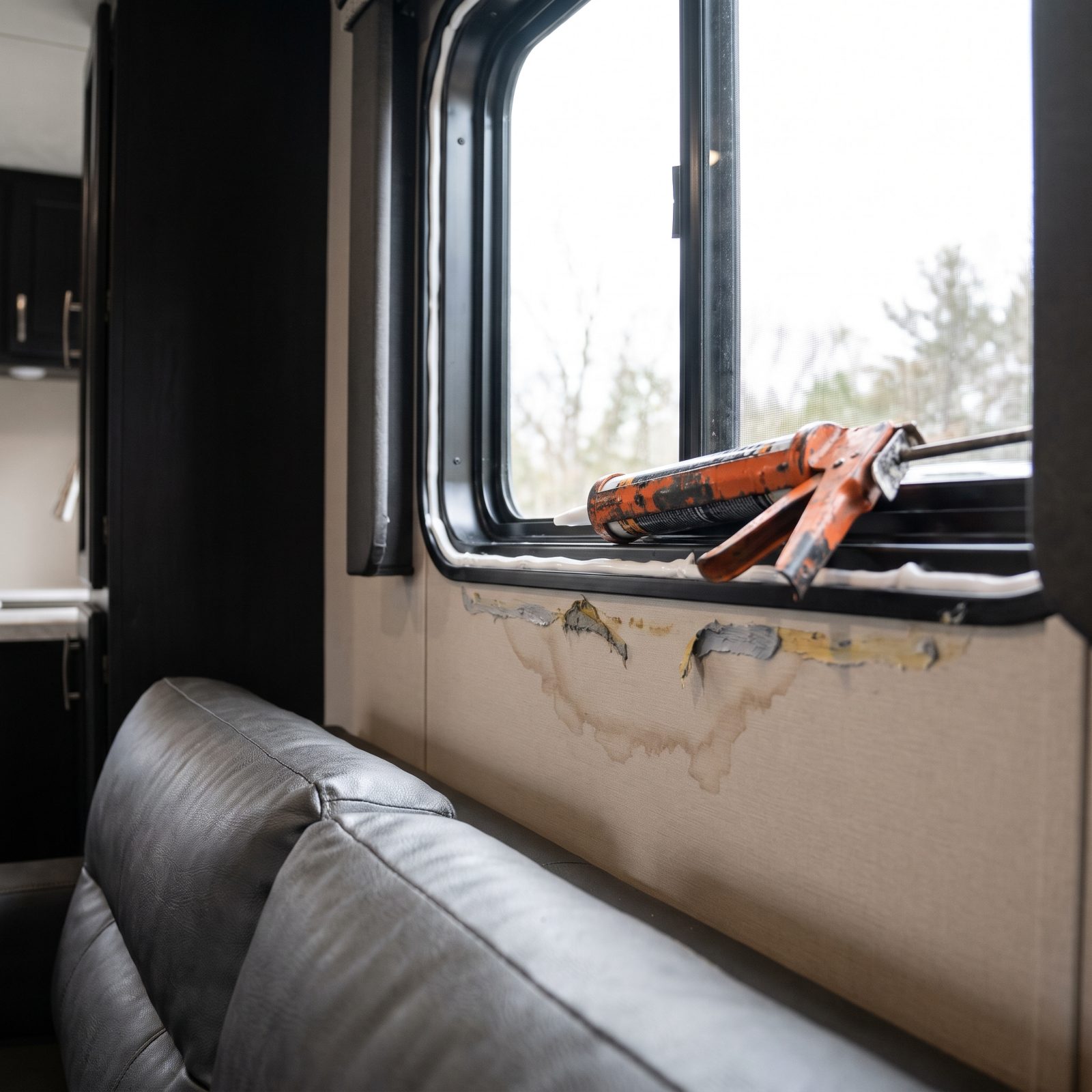
You’ve resealed this window three times. Each time you do it right. Each time you believe it. And each time the first real rainstorm has you lying awake, listening, running a finger along the frame at dawn to check for damp. You fixed it. You just don’t trust it anymore.
Repeated betrayal, even repaired betrayal, does the same thing to a relationship. The apology can be sincere, the change can be real, and the vigilance still never fully stands down. Trust, once broken and patched, runs on a lower setting forever. You’re not waiting for it to fail. You’re just never quite able to stop watching.
That’s the quiet cost nobody prices into a restoration or a reconciliation. Some things can be fully repaired. Your confidence in them usually can’t. And learning to live alongside that watchfulness, without letting it poison the good days, might be the hardest repair of all.
8. You Learn Which Cabinet Door Not to Open
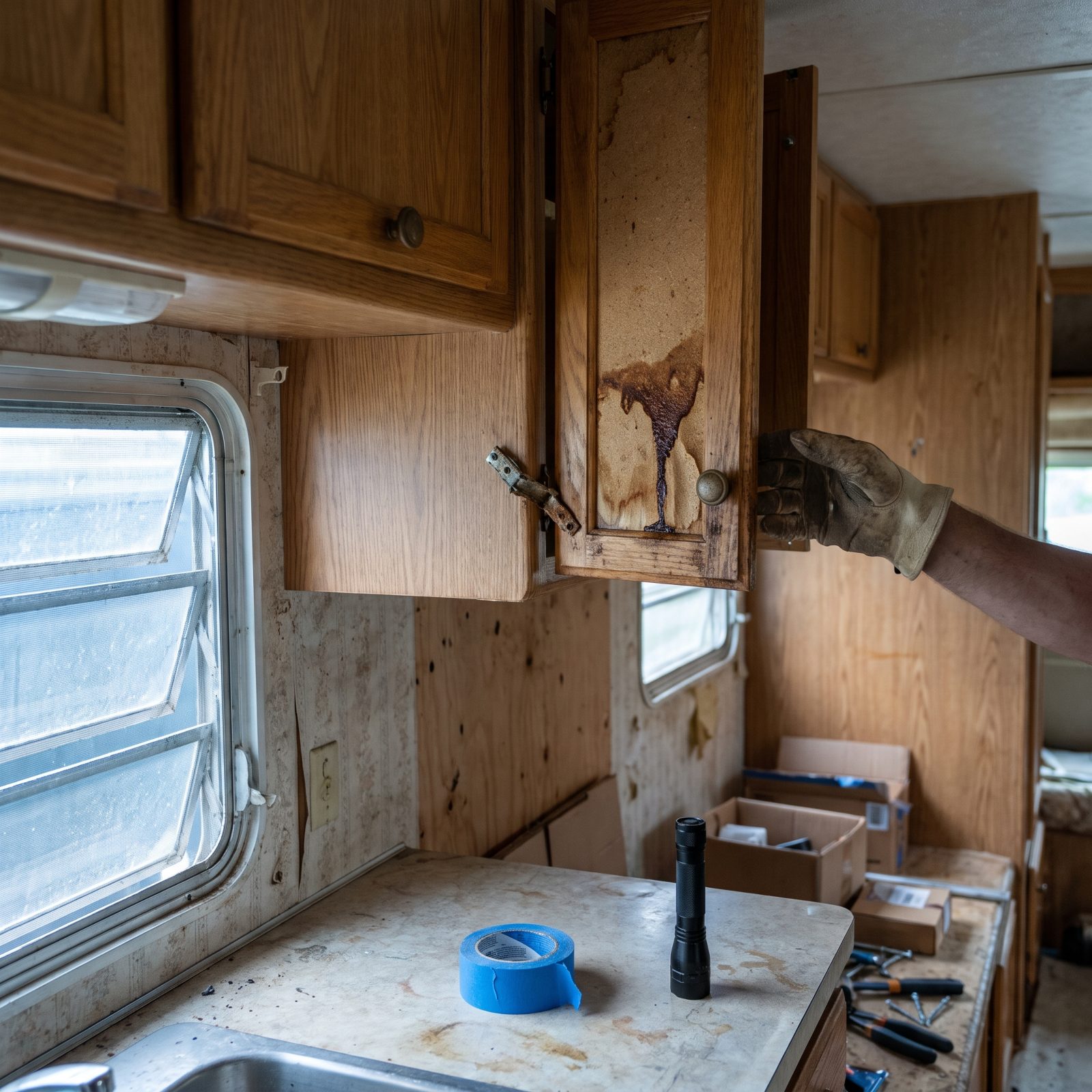
Every old rig has that one cabinet. You know the exact spot where the door swells against the frame, and behind it sits the soft, ruined particleboard from a roof leak you keep meaning to chase down. So you stop opening it. You reach for the next door over, the one that still swings clean, and you get on with your day.
Couples make the same move without noticing. There’s a subject nobody raises at dinner — the money thing, the in-law thing, the thing from four years ago. You both learn the edges and route around them automatically, no map required.
Psychologists call it avoidance coping, and it works right up until it doesn’t. The leak keeps spreading behind the door you refuse to open. Dodging the hard conversation feels like peace. It’s actually postponement, with interest.
7. Instagram Renovations Make Your Half-Gutted Dinette Look Hopeless
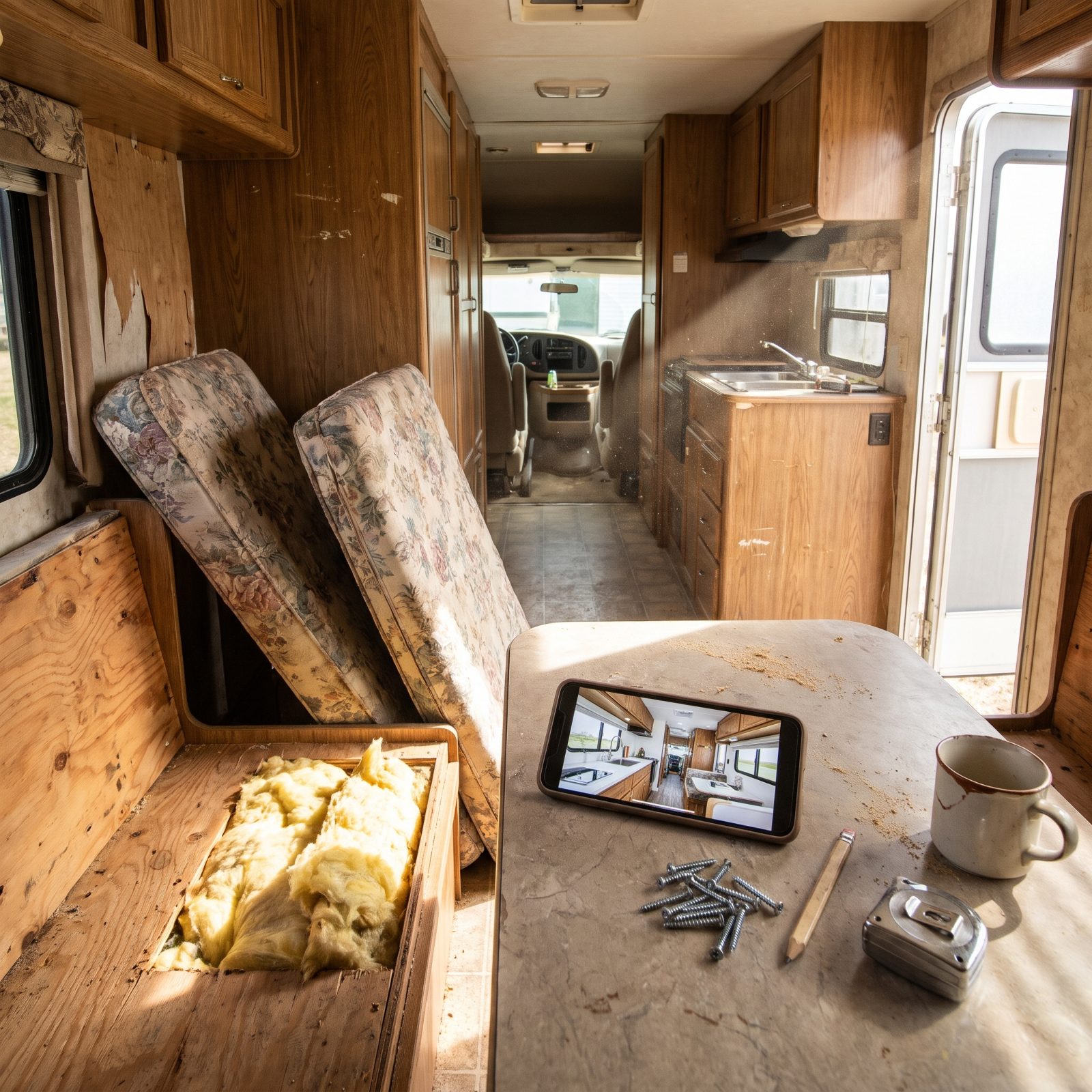
You pull up a reno account at eleven at night. Someone’s turned a rotted 1994 shell into a cream-and-walnut dream with a copper backsplash and a dog asleep on a sheepskin. Then you look up at your own dinette — currently a plywood box with the cushions propped against the backrest and insulation hanging out like stuffing from a split toy.
The gap feels enormous. Hopeless, even. But you’re stacking your gutted middle against someone else’s finished, filtered, heavily edited ending.
Marriages do this too. You scroll past anniversary posts and vacation photos and quietly weigh your Tuesday-night silence against everyone’s best twelve seconds. Social comparison theory nailed this decades ago: we don’t measure ourselves against reality, we measure against the curated version other people choose to show.
6. A Mechanic Says What You Wouldn’t Admit About the Engine
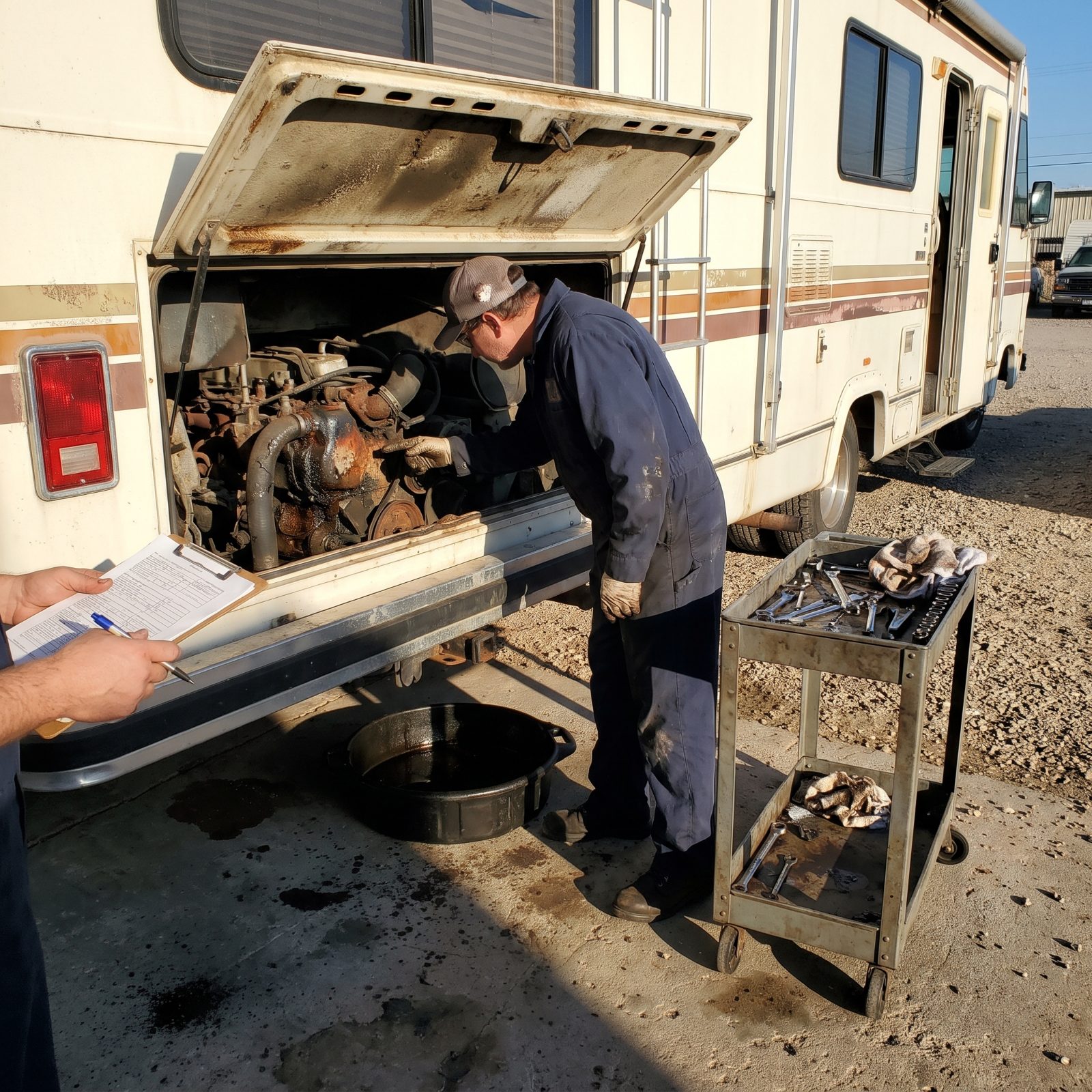
You knew the engine had a tick. You’d been calling it character. Then the mechanic wipes his hands, looks you dead in the eye, and says the words you’ve been managing not to think — this block is on borrowed time, and the money you want to spend on curtains belongs somewhere lower.
It stings because it’s true, and because you already knew. You just needed someone with no emotional stake to say it out loud.
A good counselor plays that role in a struggling marriage. So does a blunt friend, sometimes. They name the thing you’ve both been dressing up as a quirk, and the relief and the dread show up together. Motivated reasoning let you believe the hopeful story for months. An outside voice owes nothing to your comfort, so it can afford to be accurate.
5. You Restore the RV You Had, Not the One You Need
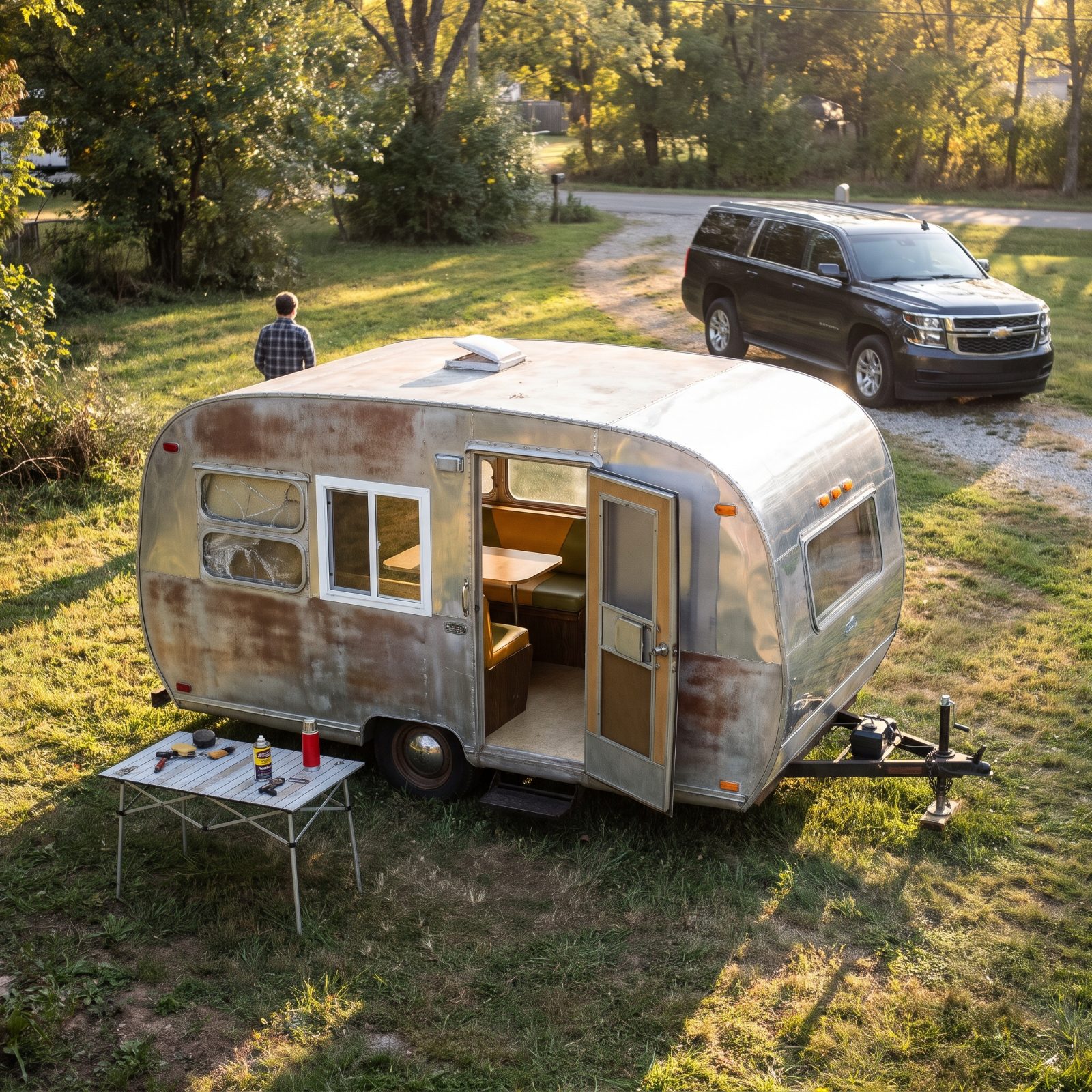
You bought this trailer when the kids were small and the plan was weekends at the lake. The plan changed. Now it’s two of you, you want a real bathroom and a bed you don’t have to assemble every night, and yet here you are sanding the original avocado dinette back to glory.
You’re fixing up the rig you had, not the one your life actually needs now. The sunk cost pulls hard. You’ve already poured in a summer of labor, so you keep pouring, chasing the trailer that made sense a decade ago.
People do this with a marriage too. They keep rebuilding the version that fit their twenties instead of asking who they both are at fifty-five.
4. You Avoid Camping Until Everything Is Finally Perfect

The rig is almost done. Almost. You tell yourself you’ll take her out once the awning is rehung, once the backsplash is grouted, once that one cabinet finally gets dealt with. Another season passes in the driveway while the camp chairs sit in their plastic.
Perfectionism dressed up as responsibility. You won’t let yourself enjoy the thing until it clears a standard that keeps sliding one project further out of reach.
Couples run the identical dance. We’ll be happy once the house sells, once work calms down, once we sort out the big issue — and the whole life keeps idling behind a finish line that never arrives.
Here’s the uncomfortable thing we learned the hard way. A camper you actually use while it’s imperfect beats a flawless one that never leaves the driveway. The trip is the point, not the punch list.
3. Selling Looks Tempting Right After the Black-Tank Disaster
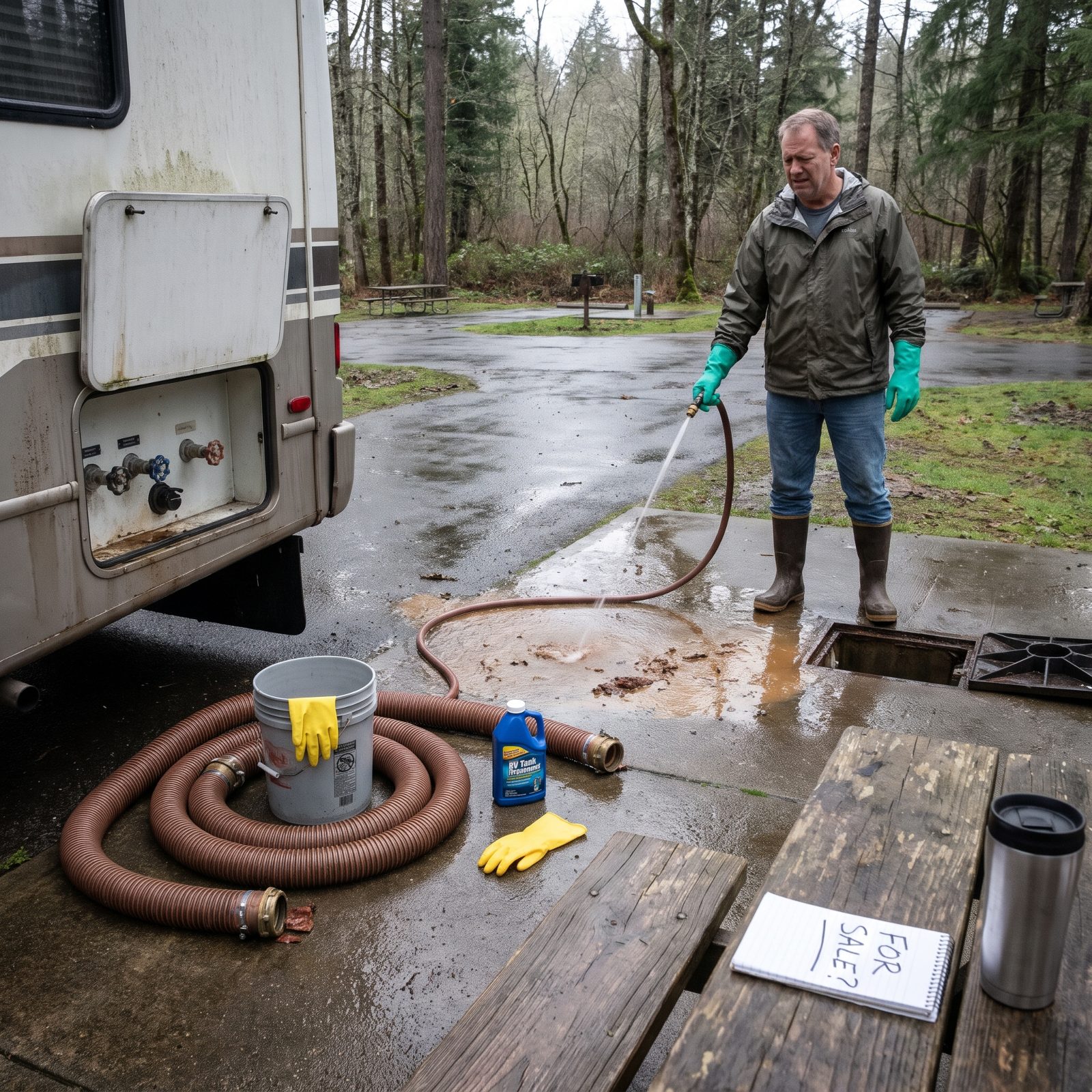
There is no lower moment in RV ownership than a black-tank failure at the dump station. Gloves on, hose detached at the worst possible second, you’re standing on a concrete pad reconsidering every decision that led you here. And right then, trading the whole thing in for something new looks like pure genius.
Nobody makes a good long-term call while hosing off a sewer pad. The misery is loud. The memory is short.
Same impulse that makes people threaten to walk out during the worst fight of the year. The affect heuristic takes over: feel terrible right now and you assume the whole situation is terrible and permanent. It isn’t. It’s a bad Tuesday.
The urge to quit always peaks at the lowest point, which is the worst possible moment to trust it.
Wait a week. Clean up. The rig that felt worthless at the dump station usually looks fine again by the weekend.
2. One Good Overnight Trip Reminds You Why You’re Trying

Then one night it all works. The leveling is quick, the fridge is cold, the awning lights come on, and you’re sitting by a fire at the edge of a lake with the rig you nearly gave up on glowing behind you. Everything that frustrated you for a year goes quiet.
That single good night does more for your resolve than a month of logic ever could, because it reminds you what all the sanding and swearing was actually for.
Relationships run on the same fuel. One genuinely good evening — the kind where you remember why you chose this person — can carry you through weeks of ordinary friction. Peak-end memory is lopsided that way. We weight the best moments far heavier than the dull stretches between them, and honestly, that lopsidedness is the whole reason anyone keeps going.
1. One Calls It Finished; The Other Sees Missing Trim

The flooring’s in, the cabinets are painted, the bed’s made, and one of you looks around and declares it done. The other is already crouched at the baseboard pointing at the quarter-inch gap where the trim never went in, the outlet cover still missing, the patch of wall behind the corner nobody got to.
Same room. Two completely different verdicts on whether it’s finished.
This is where plenty of restoration partnerships run aground, and plenty of marriages too. One person needs the project closed so they can rest. The other can’t rest while anything hangs unresolved. Neither is wrong — they’re just wired to different definitions of done.