
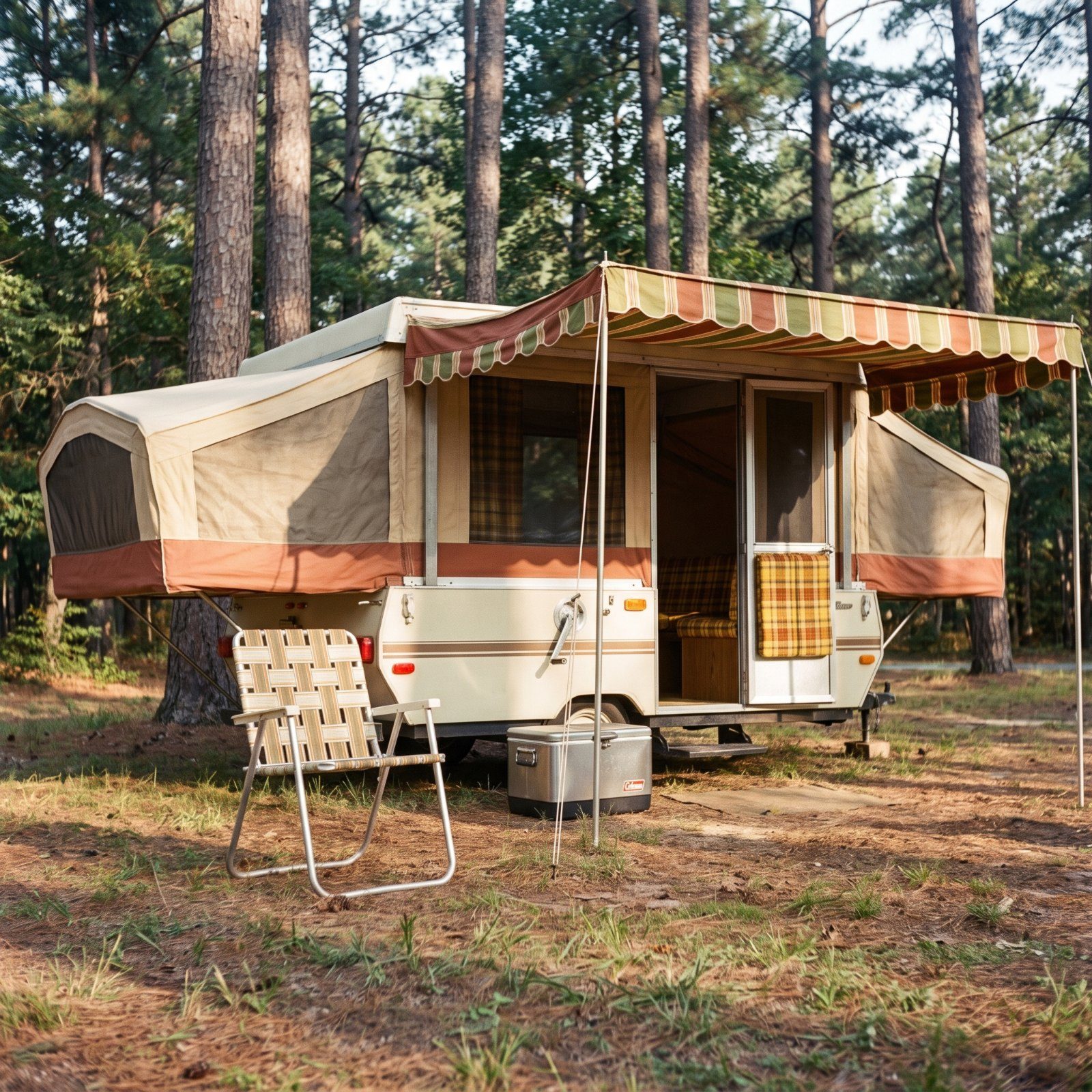
The sound came first. That long metal groan of the crank, the roof rising inch by inch, and then the smell poured out: warm canvas, mildew, pine sap, last summer’s campfire all at once. If you grew up climbing into a 1975 pop-up at a wooded campsite, your whole body remembers it. The plaid cushions. The zipper teeth. A flashlight cone sweeping the bunk canvas at bedtime. Little things, really — and somehow they turned a folded box on wheels into the best bedroom a kid ever had.
27. The Race to Choose the Best Sleeping End
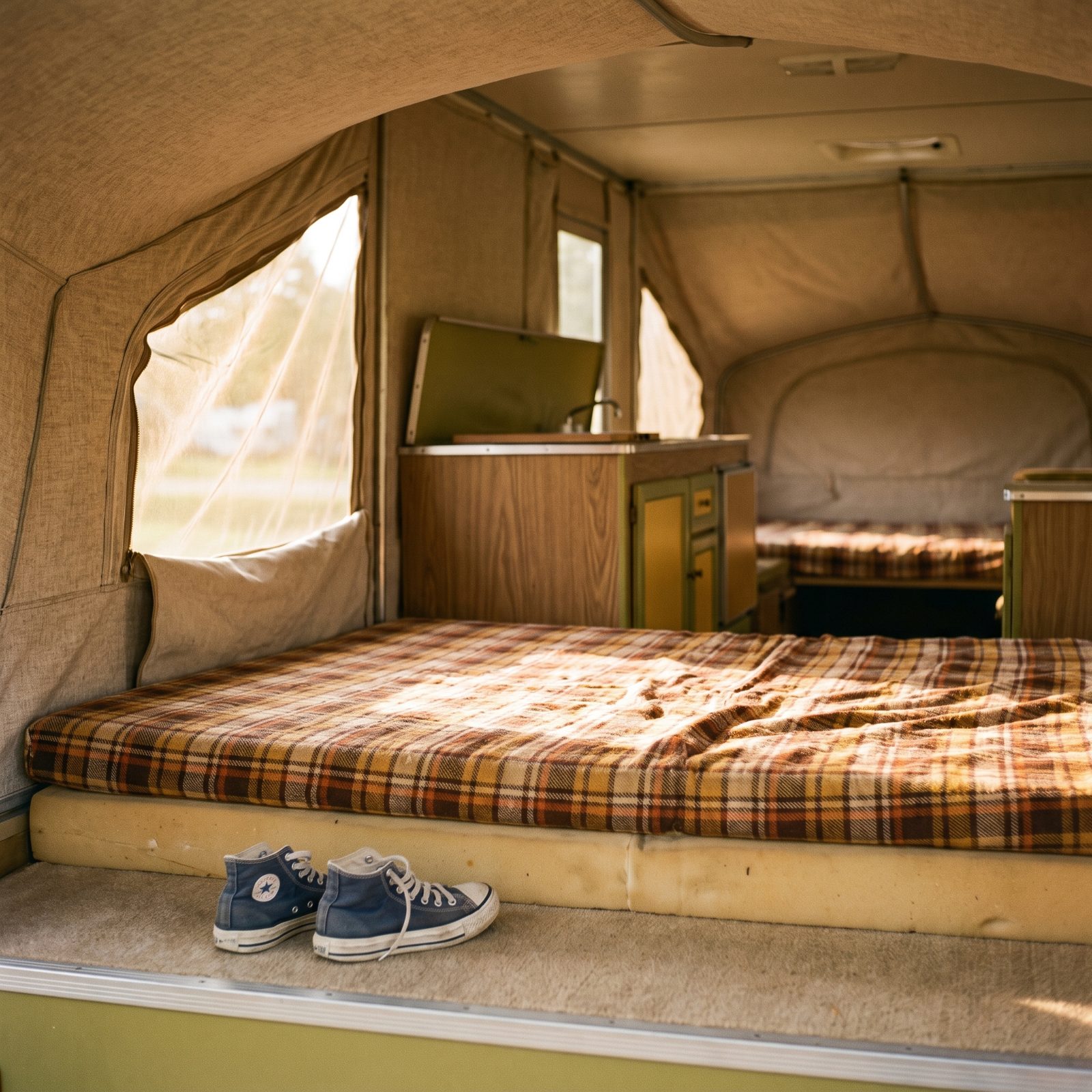
You knew the second the car stopped. Doors flew open, somebody yelled, and the great negotiation began. Which bunk end was best? The one by the window, obviously — or the one over the dinette, because you were higher up and could spy on everyone.
There was no logic to any of it. Both beds were the same foam slab. But claiming one felt like staking out your own little country for the weekend, and heaven help the sibling who tried to invade.
26. Beds That Slid Out Like Secret Rooms
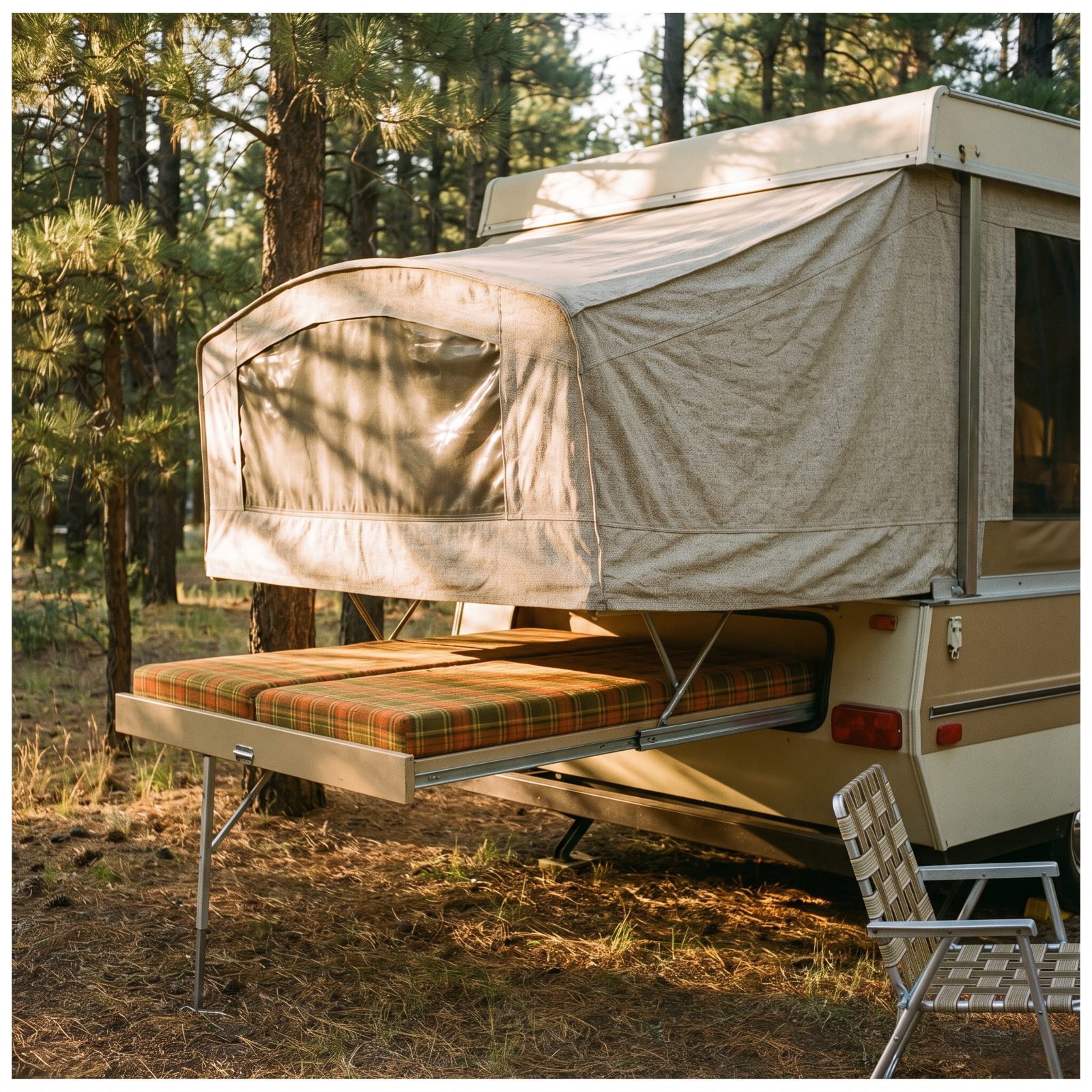
One minute the camper was a small box you could barely stand up in. Then an adult pulled, something slid, and suddenly a whole bed appeared out of the wall. To a kid, that was closer to a card trick than furniture.
The slide-out ends roughly doubled the floor space, which is how four or five people fit in something that towed behind a station wagon. Nobody cared about square footage at age seven, though. You cared that your bed hung out over the campsite like a bunk suspended in the woods.
25. Canvas Bunk Ends That Felt Like Tents in the Trees
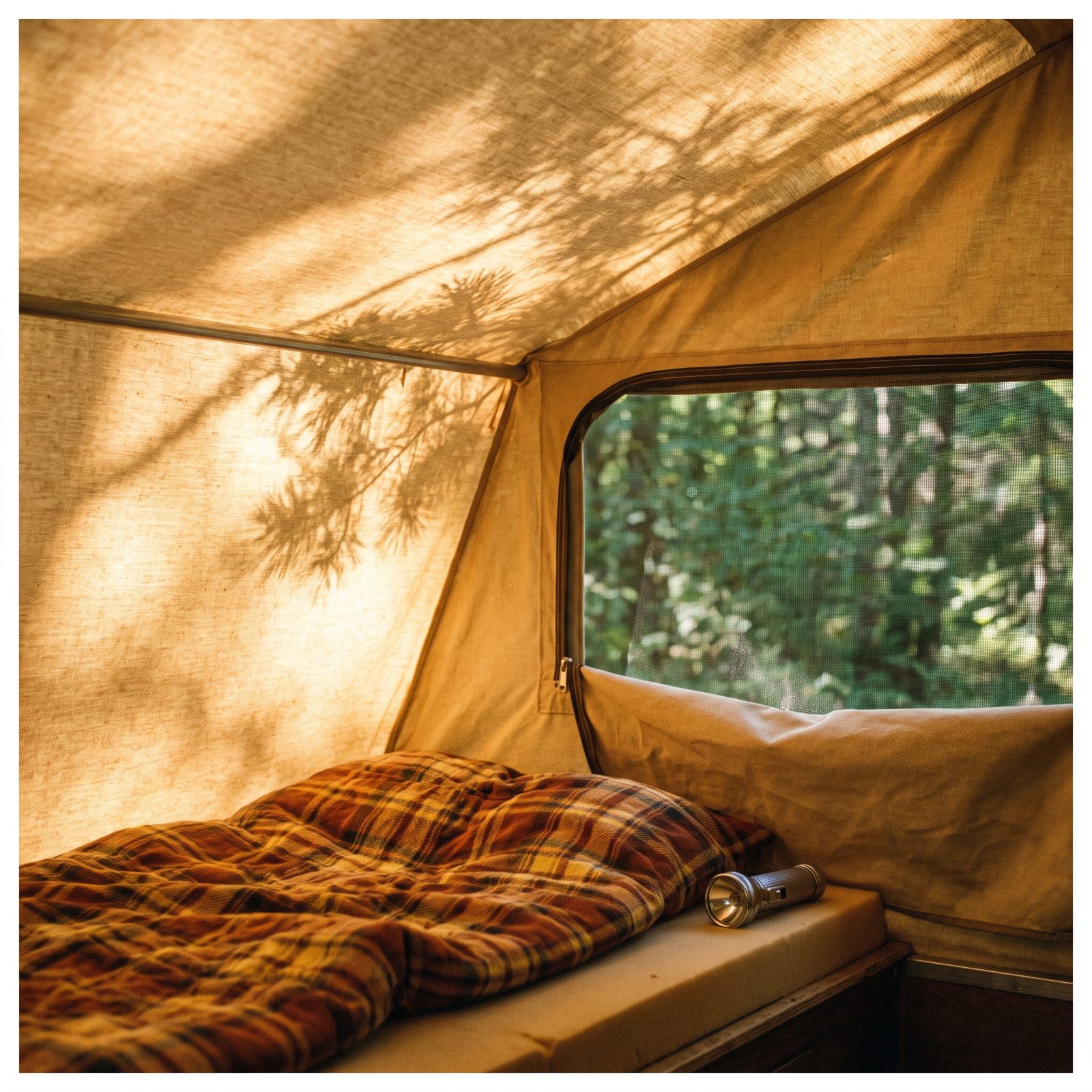
Ask any kid what made the camper worth it, and the answer was lying in that bunk end. Canvas on three sides, a zippered screen window at your head, and the forest right there against the fabric. You could hear every twig snap and every owl.
When it rained, the sound on the canvas inches from your face beat any lullaby ever recorded. And when the sun came up? The whole wall glowed amber and warmed the fabric until it smelled like a tent and a summer afternoon rolled into one.
24. The Crank Handle That Raised the Roof
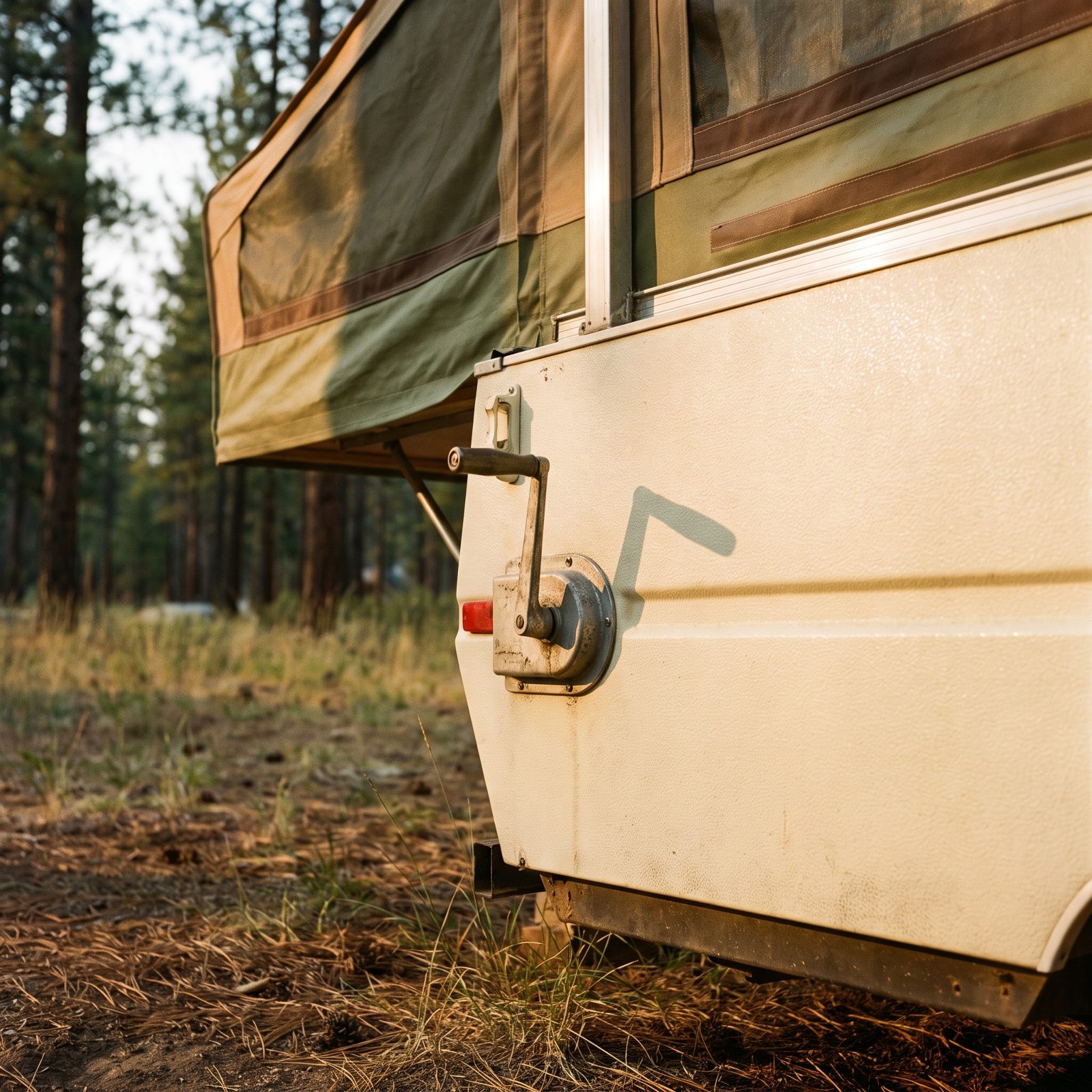
Arriving at the campsite meant one job mattered above all others. Raise the roof. And if you were old enough to be trusted with the crank handle, this was your moment.
You fit the handle into the gear, braced your feet, and turned. The roof climbed slowly, groaning that metal groan, canvas unfolding on every side. It took real effort — your arms burned halfway up — and it was absolutely worth begging for the chance to do it. Watching the camper grow from a box into a home, one hard-won crank at a time, was the official start of vacation.
23. A Door Installed Only After the Roof Was Up
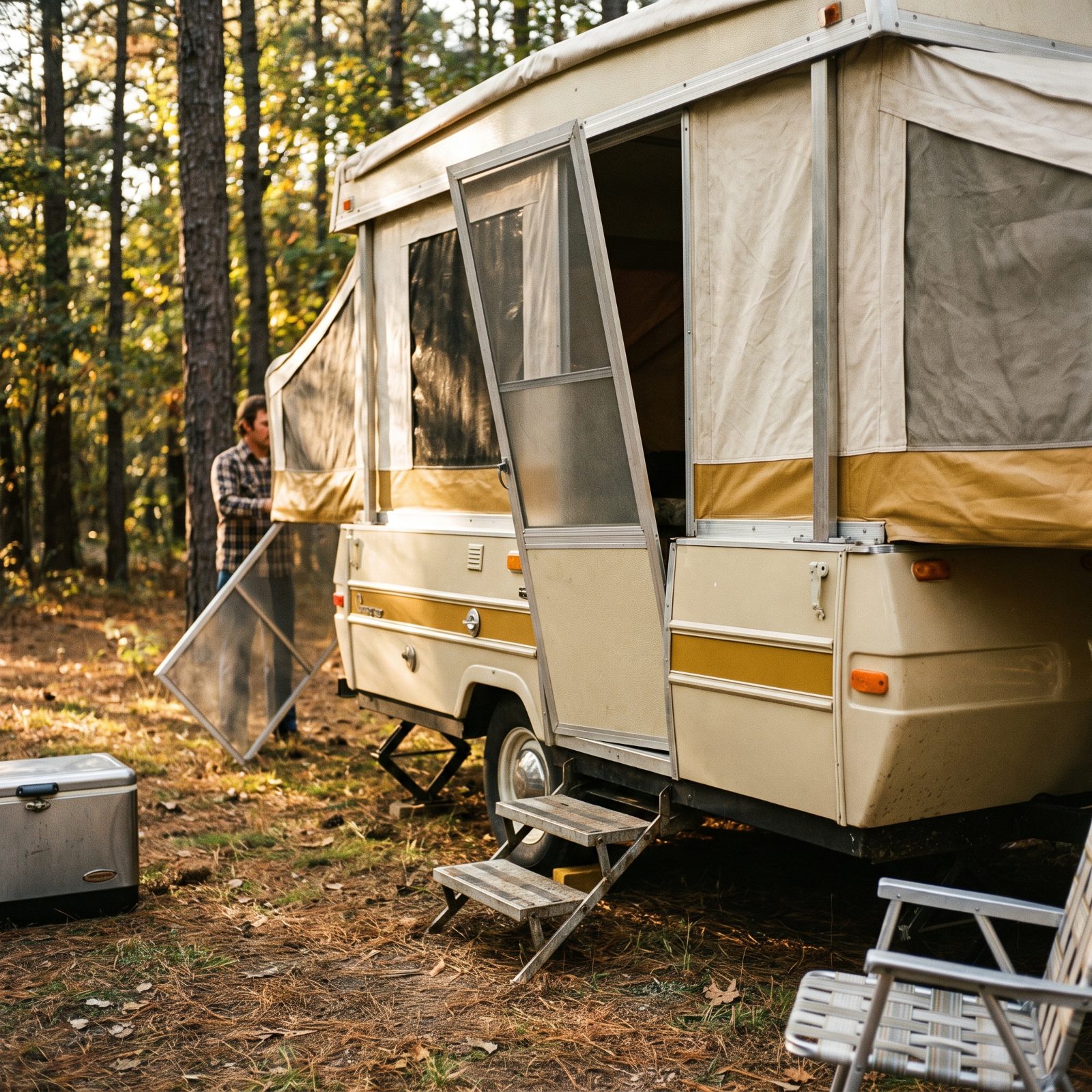
The door was the last piece, and that always felt backwards to a kid. You couldn’t walk in until the roof was up and the whole structure made sense. Then an adult slotted the door section into place and, just like that, it was a real little house with a real little entrance.
Those fold-down steps were maybe eight inches deep and bounced slightly under your weight. You ran up and down them forty times the first hour anyway.
22. Bed-Support Poles Slotted Under the Bunks
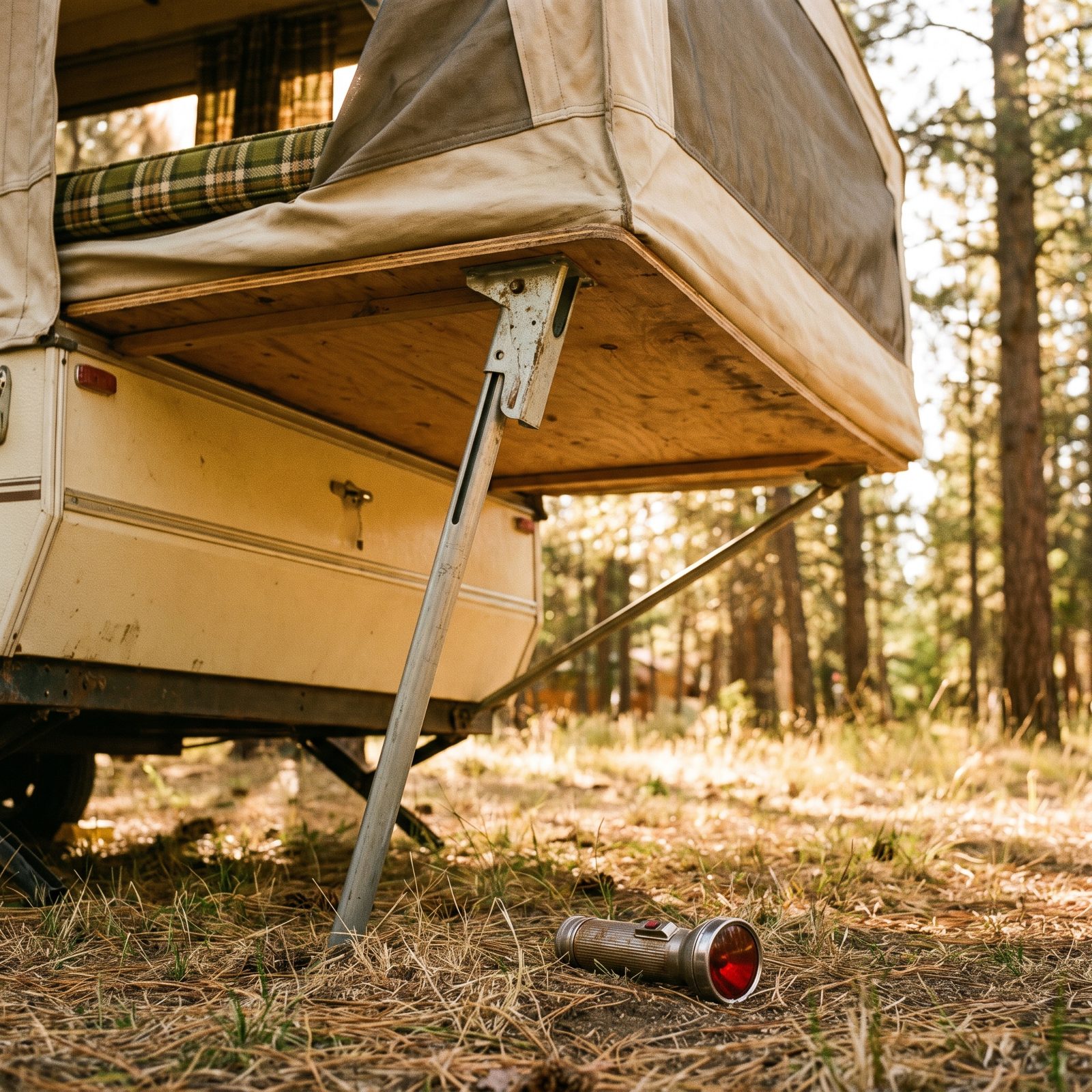
Every slide-out bunk needed a support, and that meant poles. Some slotted up from the ground, some braced underneath, and getting them right was a two-person job that kids loved to supervise.
You learned fast which bunk wobbled if the pole wasn’t seated. You also learned that crawling under the extended bed to “check the pole” was an excellent excuse to dodge chores. Nobody looks for you under a camper.
21. The Bubble Level Everyone Wanted to Watch
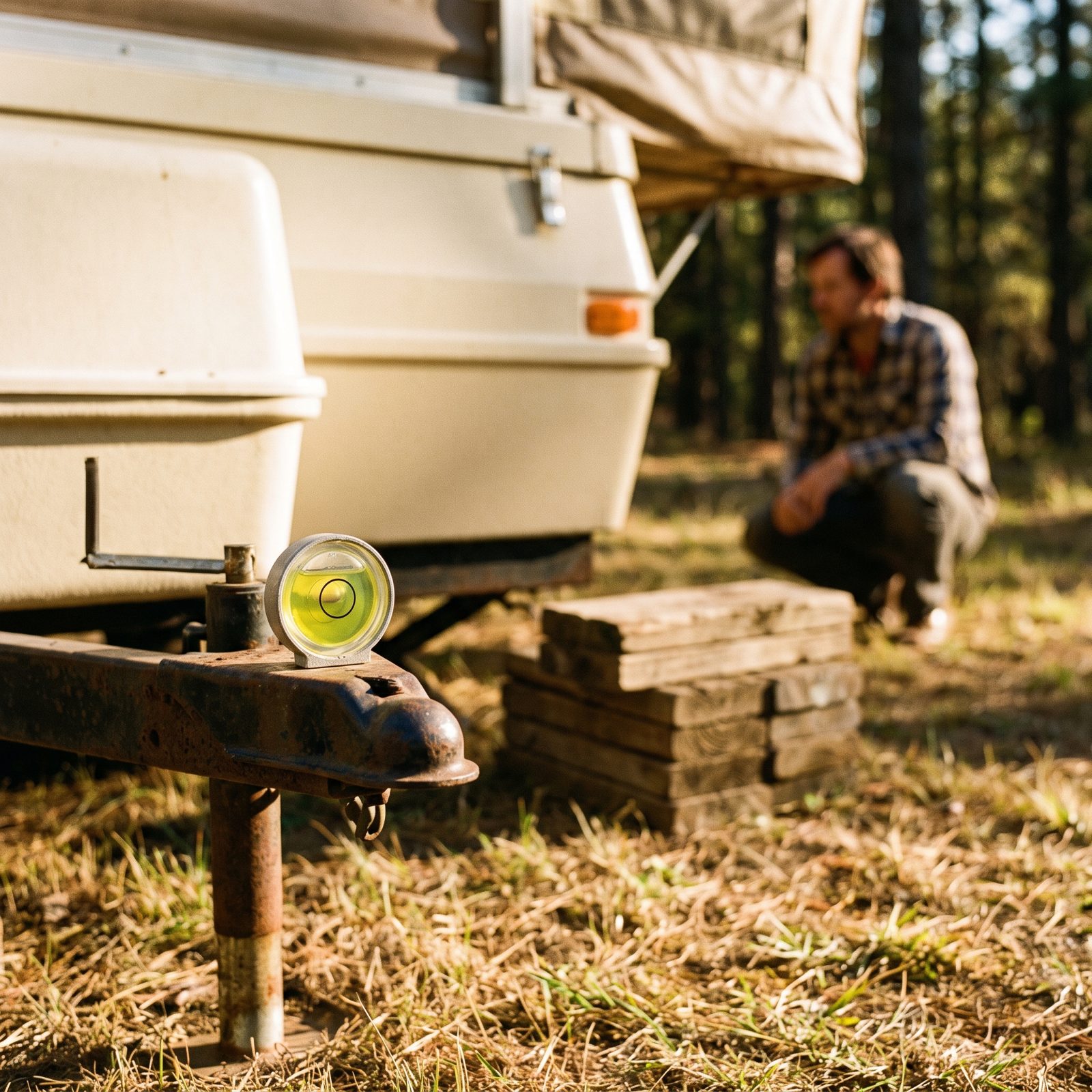
Getting the camper level was a whole production, and the star of it was that tiny bubble floating in green fluid.
An adult would drive one wheel up onto wooden blocks, climb out, check the level, mutter, add a block, check again. Every kid wanted to be the one calling it out. “Little more! No, too much! There, right there!”
When that bubble finally drifted dead center, there was a strange satisfaction to it, like the camper had officially agreed to stay put for the weekend.
20. The Canvas Smell When the Camper First Opened
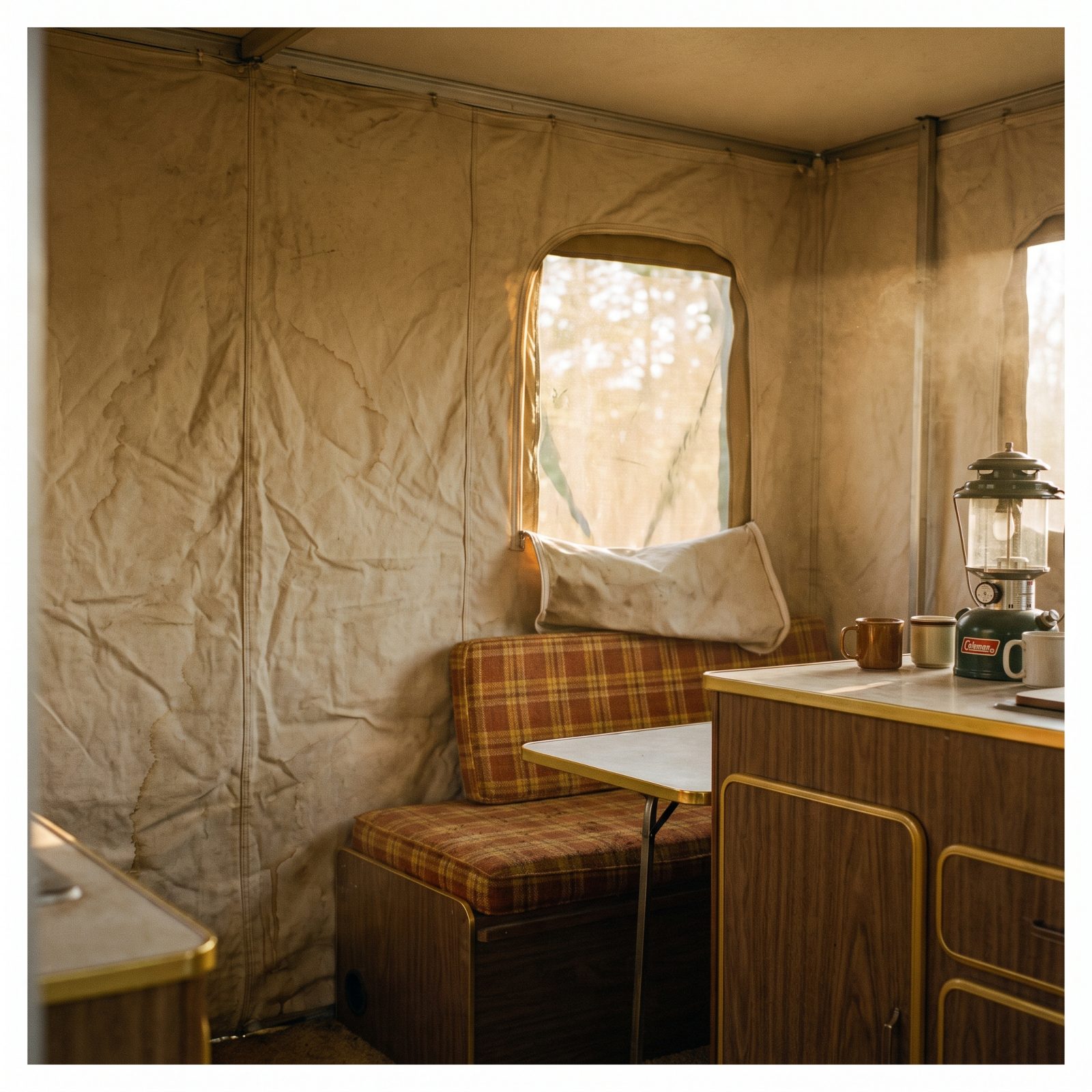
Pop the roof on the first trip of the year and it hit you right in the chest. That smell. Musty canvas, a little mildew, old sunscreen, woodsmoke that never fully washed out — all of it rushing out the second the camper opened.
Grown-ups wrinkled their noses and left the windows unzipped to air it out. Kids breathed it in like it was the best thing ever, because to us it meant one thing: camping was back.
Honestly, I’d bottle that smell if I could. Nothing says summer like the inside of a canvas camper warming up in the sun.
19. The Zippered Canvas Windows
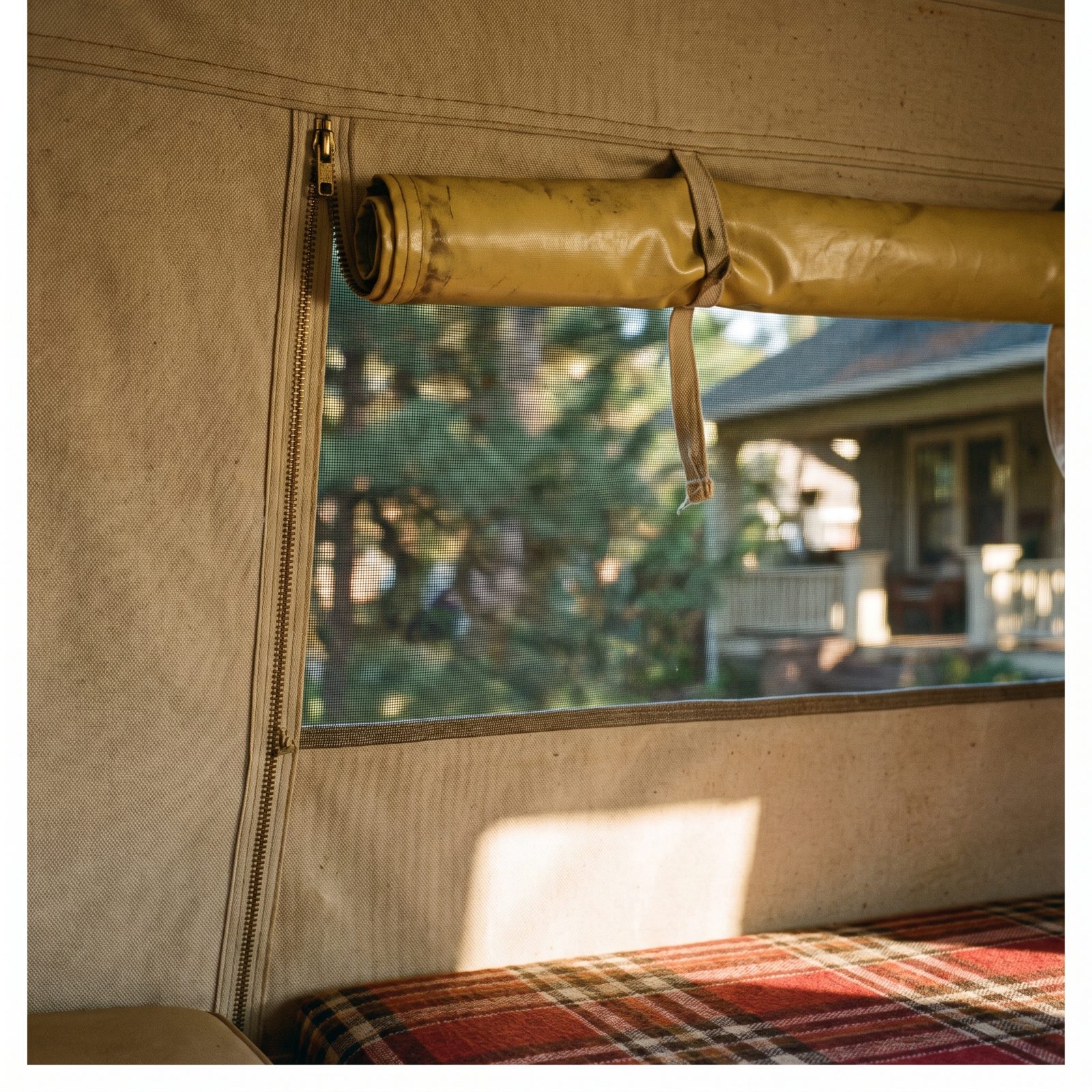
Each bunk window was its own small project. You unzipped the heavy metal zipper, rolled up the cloudy yellow vinyl pane, tied it off with a little canvas strap, and left just the screen so the breeze came through.
At bedtime you reversed the whole thing — pane down against the cold, screen still letting in the sound of the campground. There was real power in running your own window, zipping it exactly how you wanted while the adults ran everything else.
18. Curtains Around Each Bunk
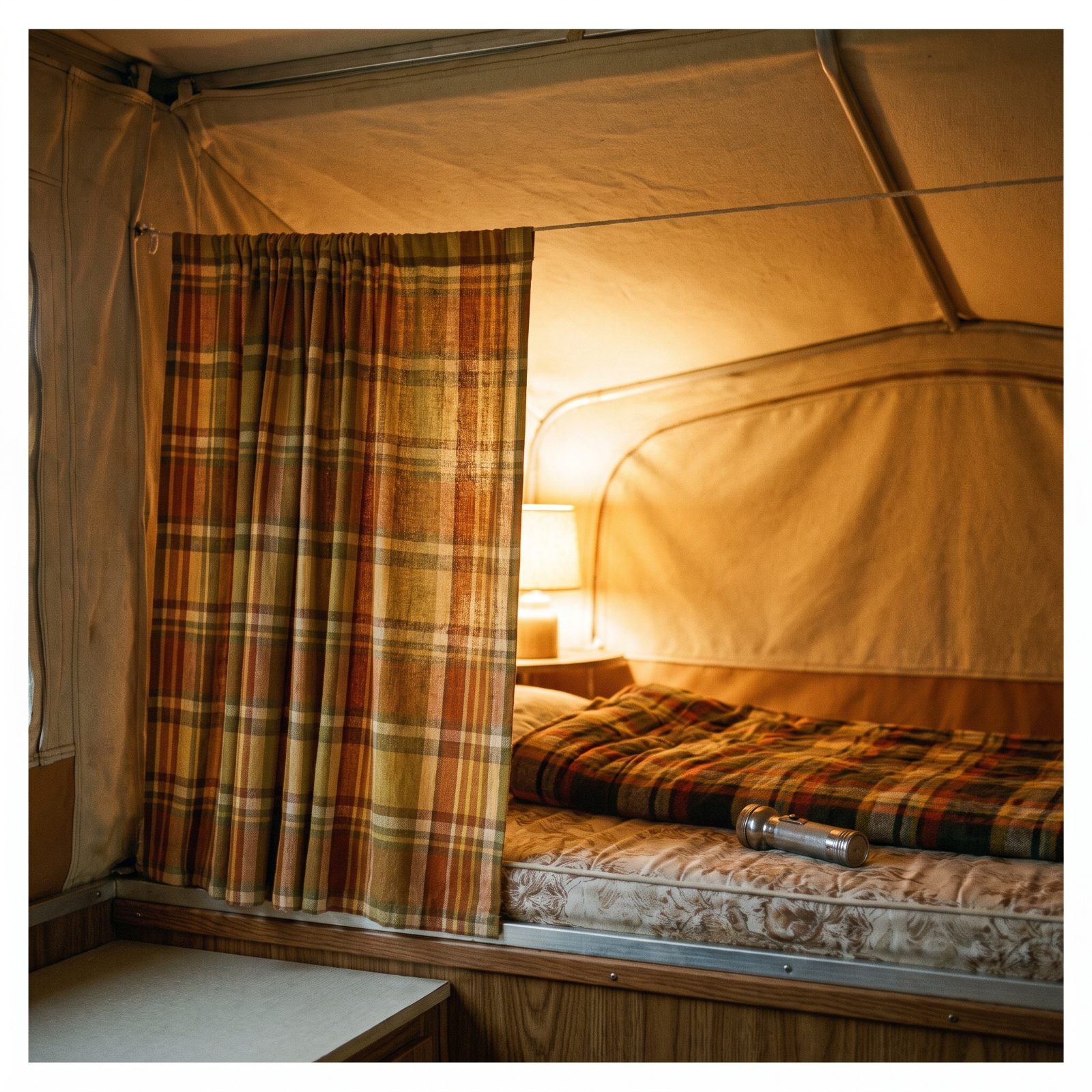
And then there were the curtains. Thin plaid fabric on a little rod or a sagging cord, pulled across your bunk to make a private cave that fooled absolutely no one.
You’d draw them shut, click on your flashlight, and the canvas glowed. Read a comic. Whisper to your sibling across the camper. Pretend nobody could hear you, even though the whole family could hear everything.
That flimsy curtain gave a kid a bedroom door for the first time in a place with no actual doors. On the last morning, cranking the roof back down and folding all of it away, that was always the part that stung. You weren’t packing up a trailer. You were folding up the best little room you ever had.
17. Plaid Cushions With That Rough Woven Fabric
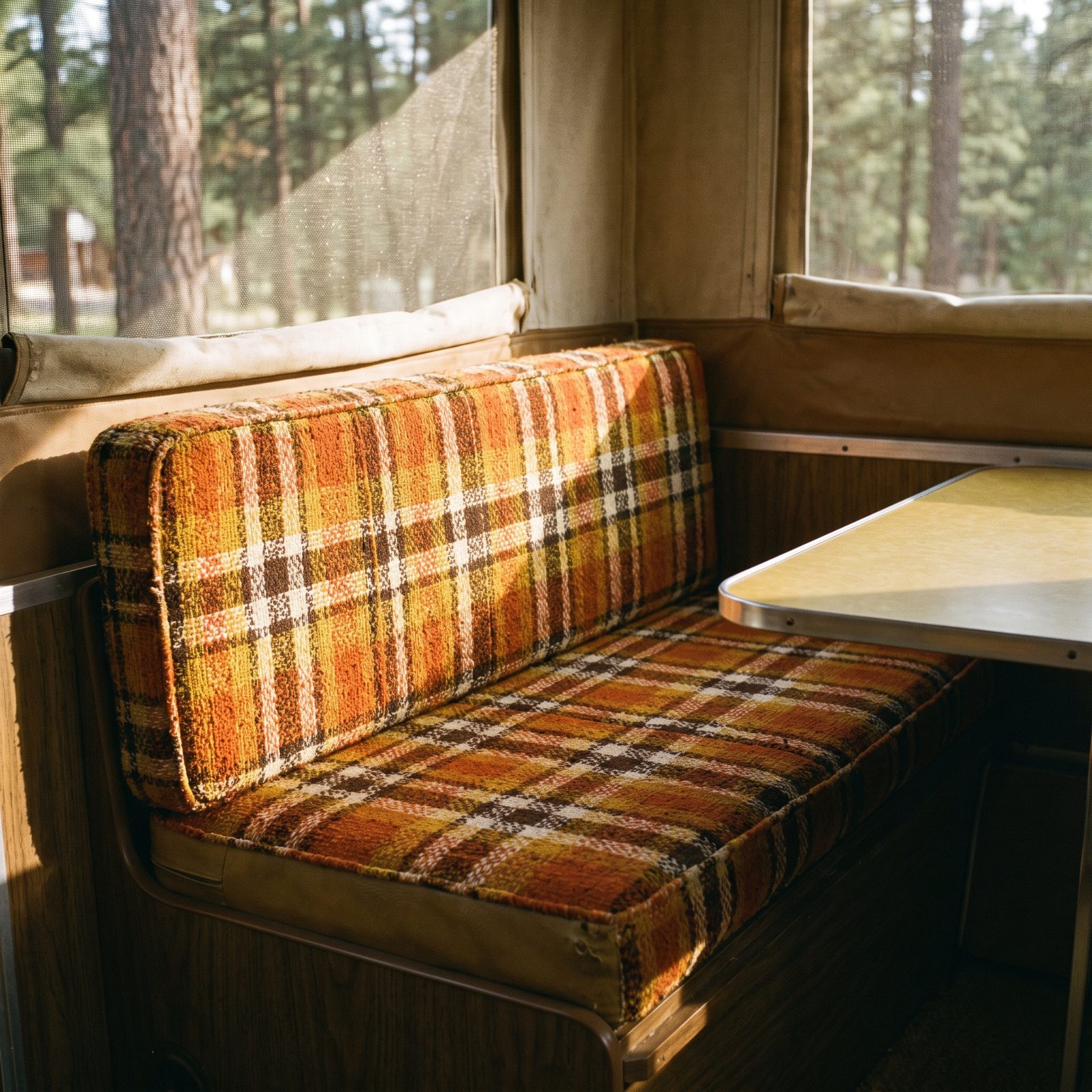
You remember the texture before anything else. That scratchy, almost burlap-rough plaid in orange and gold and brown — the kind that left little grid marks on the backs of your legs if you sat too long in shorts.
Those cushions pulled triple duty: bench by day, mattress by night, fort wall when you stacked them. They smelled like canvas and sunscreen and whatever your family cooked the night before. Nothing about them was soft. Somehow that made them better, because you weren’t home — you were somewhere that let you get a little dirty.
16. Rain Tapping Inches From Your Pillow
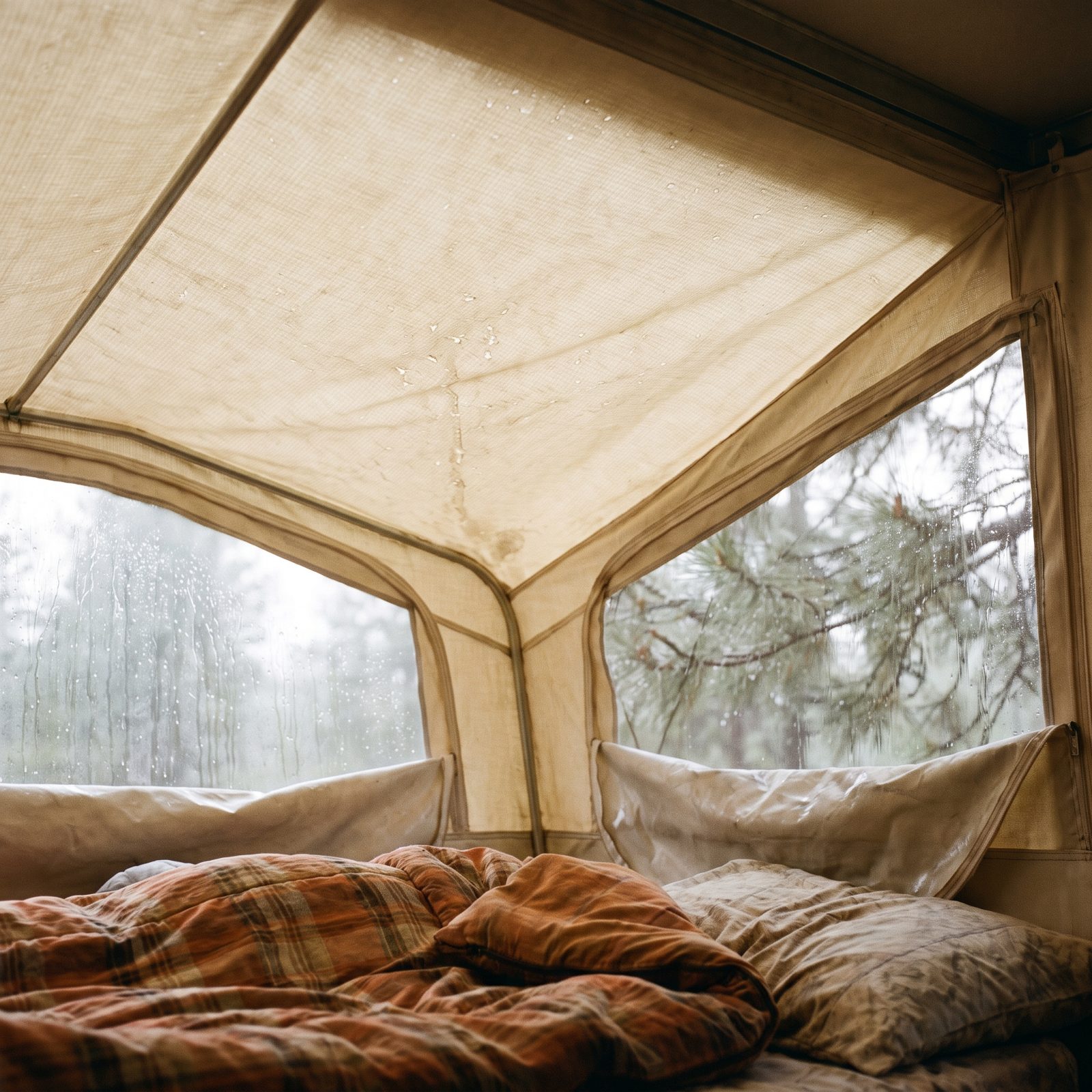
The storm started as a few taps and became a steady drum, all of it maybe eight inches from your face. Just a layer of canvas between you and the whole sky.
Grown-ups lay awake worrying about leaks and pooling water. You just listened. It was the safest you ever felt, cocooned in a sleeping bag while the weather carried on without you. Rain on a solid roof is fine. Rain on canvas, right against your ear, is a sound you can still summon decades later.
15. Flashlight Shadows Dancing Across the Canvas
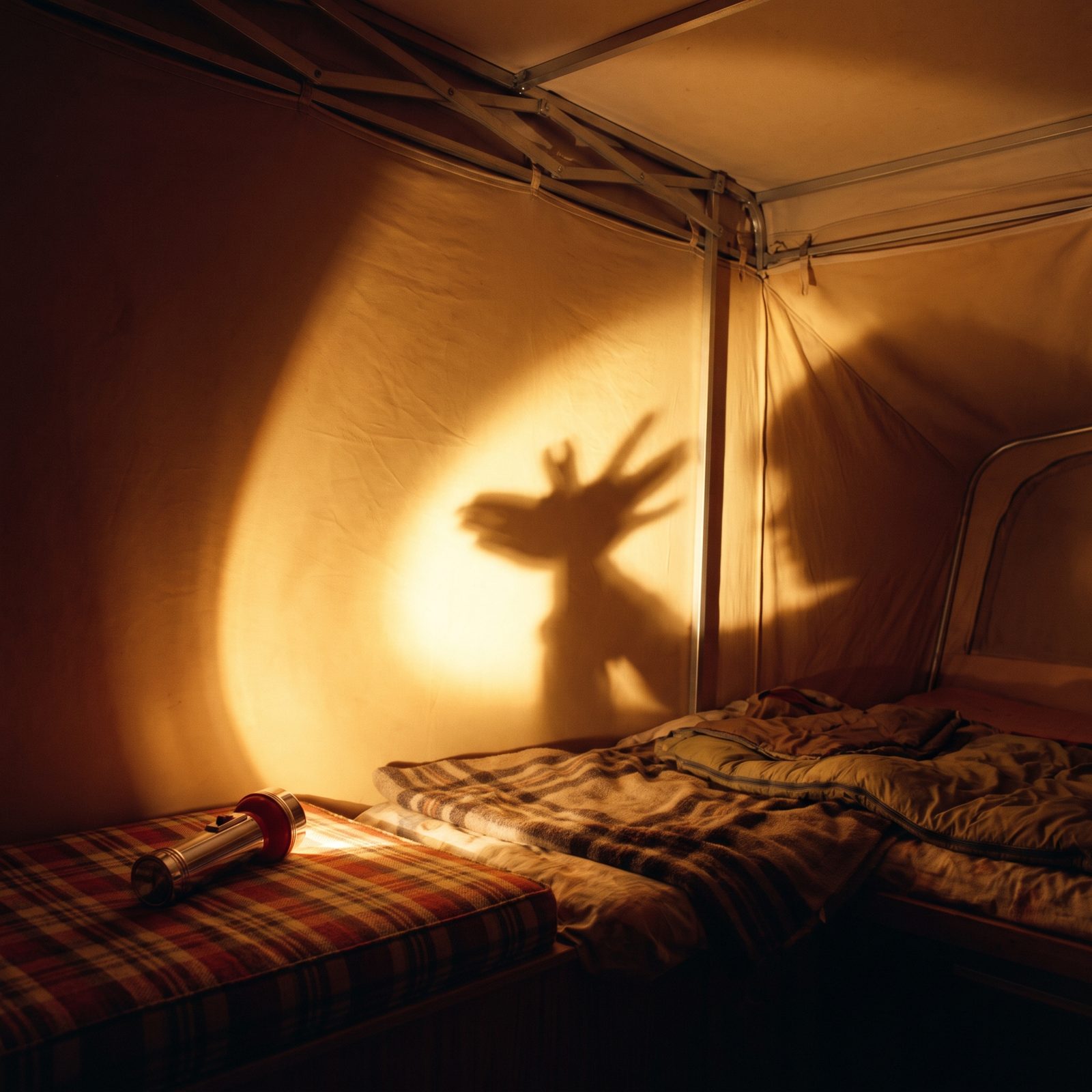
Lights out meant the show started.
One flashlight, pointed at the canvas, and suddenly your hand was a rabbit, a bird, a monster that chased your brother until somebody kicked a tent pole. The canvas made a perfect screen — close and curved, glowing amber from that warm incandescent bulb.
You’d whisper long after you were supposed to be asleep, the beam sweeping across the ceiling, until a grown-up voice from the dinette-bed said the words that ended every camping night: go to sleep, it’s late. You never thought it was late. It was the best part.
14. Tree Frogs Pressed Against the Screen
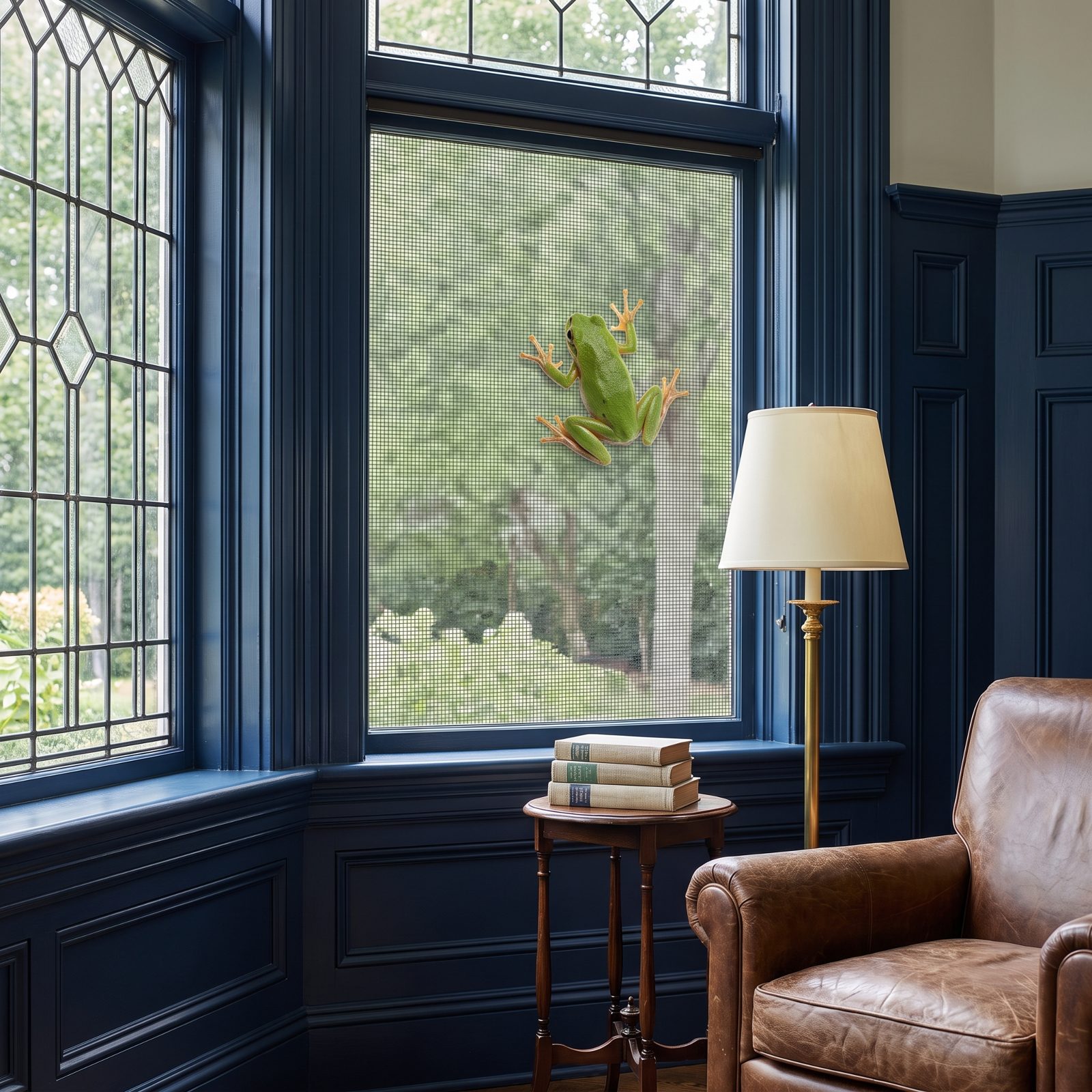
A tree frog on the screen was a genuine event. You’d press your nose close, careful not to scare it, studying the little suction-cup toes splayed flat against the mesh an inch from your face.
That screen was the whole magic of the pop-up. You were inside and outside at the same time. Bugs, frogs, the smell of wet pine, the sound of other families settling in two sites over — all of it came right up to the net and stopped there. Kids today sleep sealed inside climate-controlled boxes. We slept behind a bug net and thought we had the better deal.
13. The First View From the Bunk Each Morning
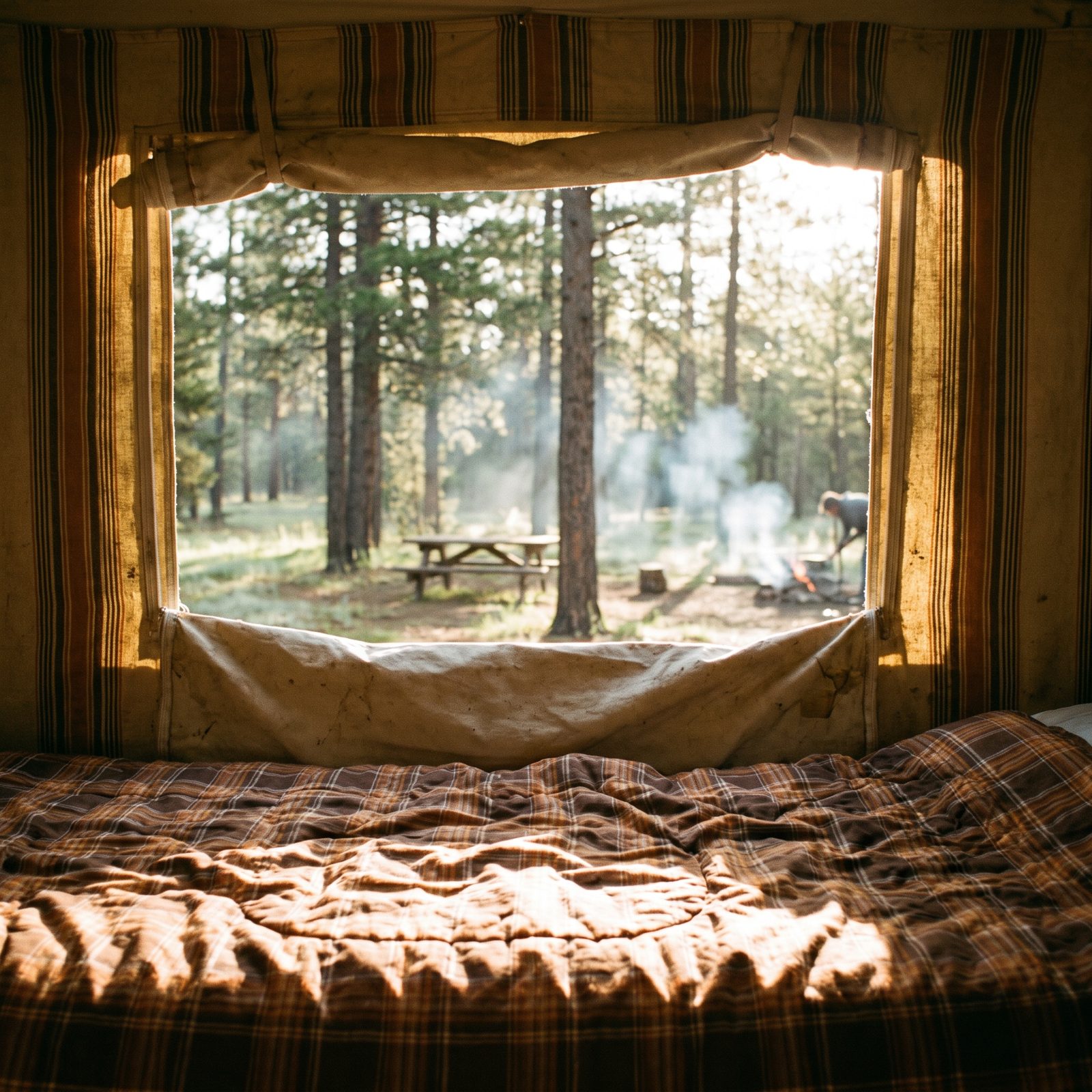
You’d wake up warm in the bunk and the first thing you saw was the campsite through a half-open flap. Sun already up, mist still hanging low, somebody outside working on a fire.
There’s no version of this at home. At home you woke up to a ceiling. Here you woke up already halfway outdoors — trees right there, the whole day sitting out in the open waiting for you. You’d lie still a minute just to keep it a little longer before the real morning started.
12. The Dinette That Turned Into Another Bed
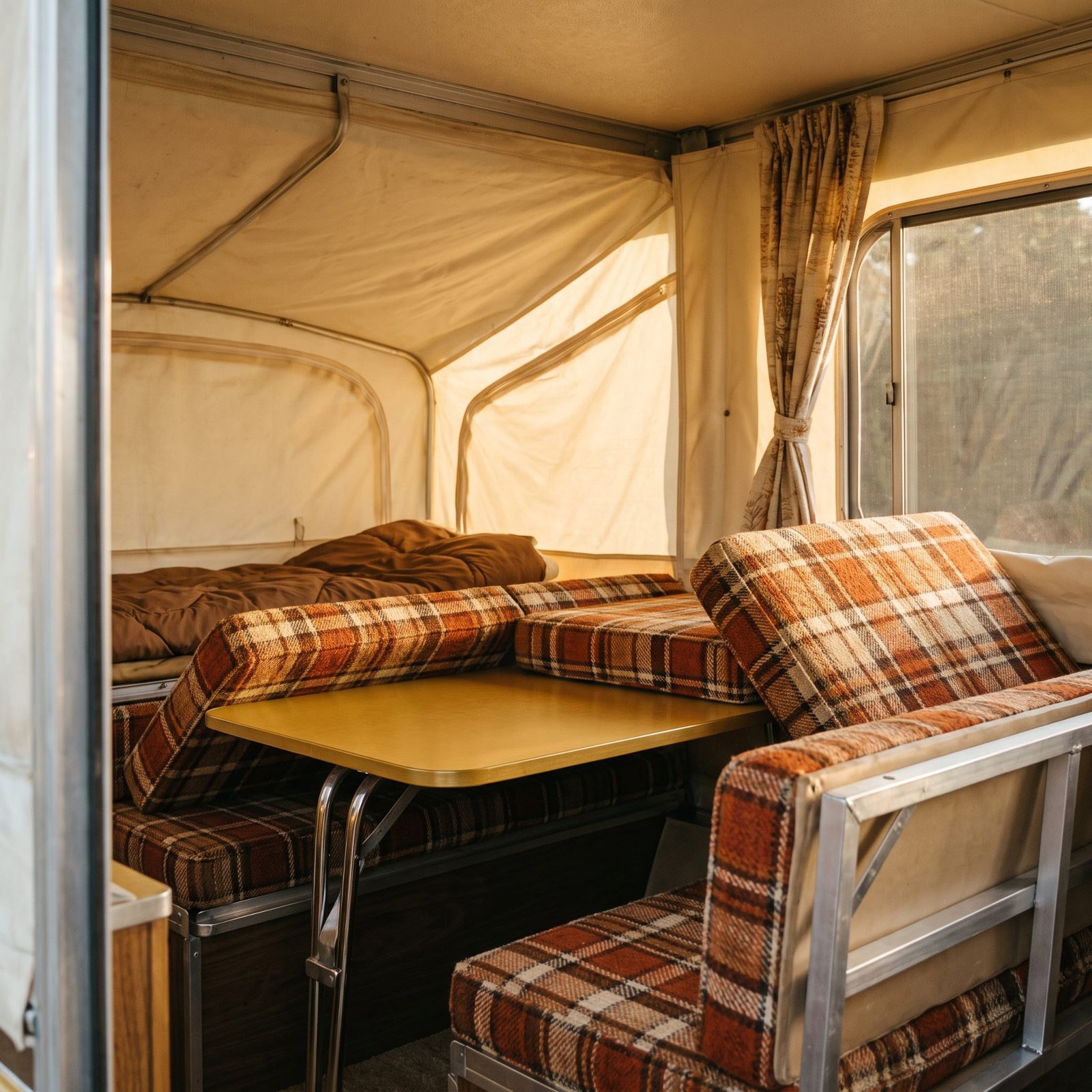
The great nightly magic trick.
You ate dinner at that table, elbows on the harvest-gold Formica. Then an adult pulled a lever, dropped the tabletop down flush with the benches, rearranged the cushions, and the whole thing became a bed. You helped, mostly by getting in the way.
Every inch of a pop-up did two jobs. The table was a bed. The benches held pots and board games underneath. For a kid, that convertibility felt like a secret — furniture that changed shape at bedtime, like the camper was in on something with you.
11. The Little Sink That Swung Into Position
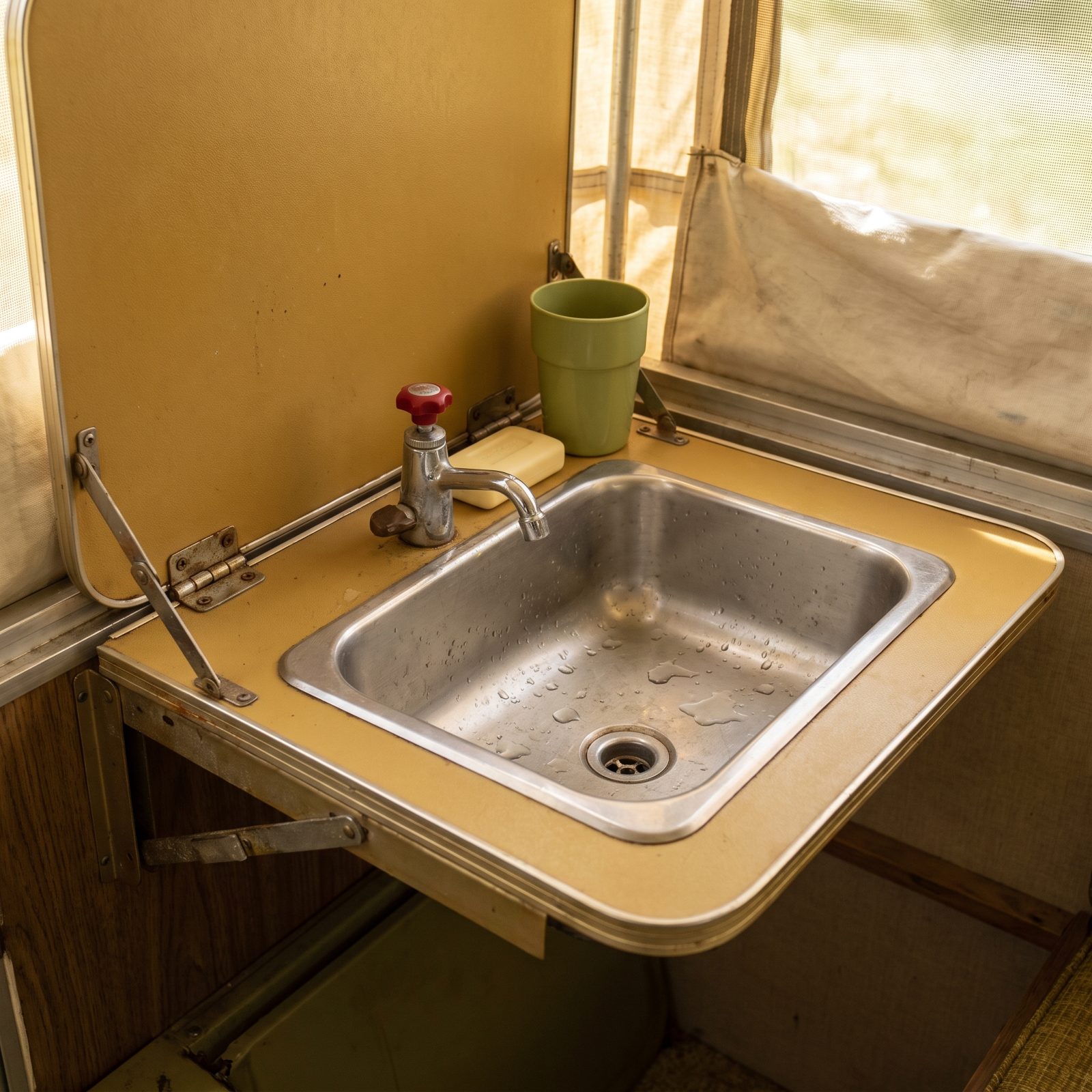
The sink lived folded away until somebody swung it out into place — this tiny stainless basin that appeared out of a cabinet like it had been hiding. Brushing your teeth in it felt like operating a piece of equipment.
It held almost no water. One cup, a splash, done. But the mechanism was the fun part. Everything in a pop-up folded, swung, lifted, or pumped. Nothing just sat there being ordinary.
10. A Match-Lit Two-Burner Stove
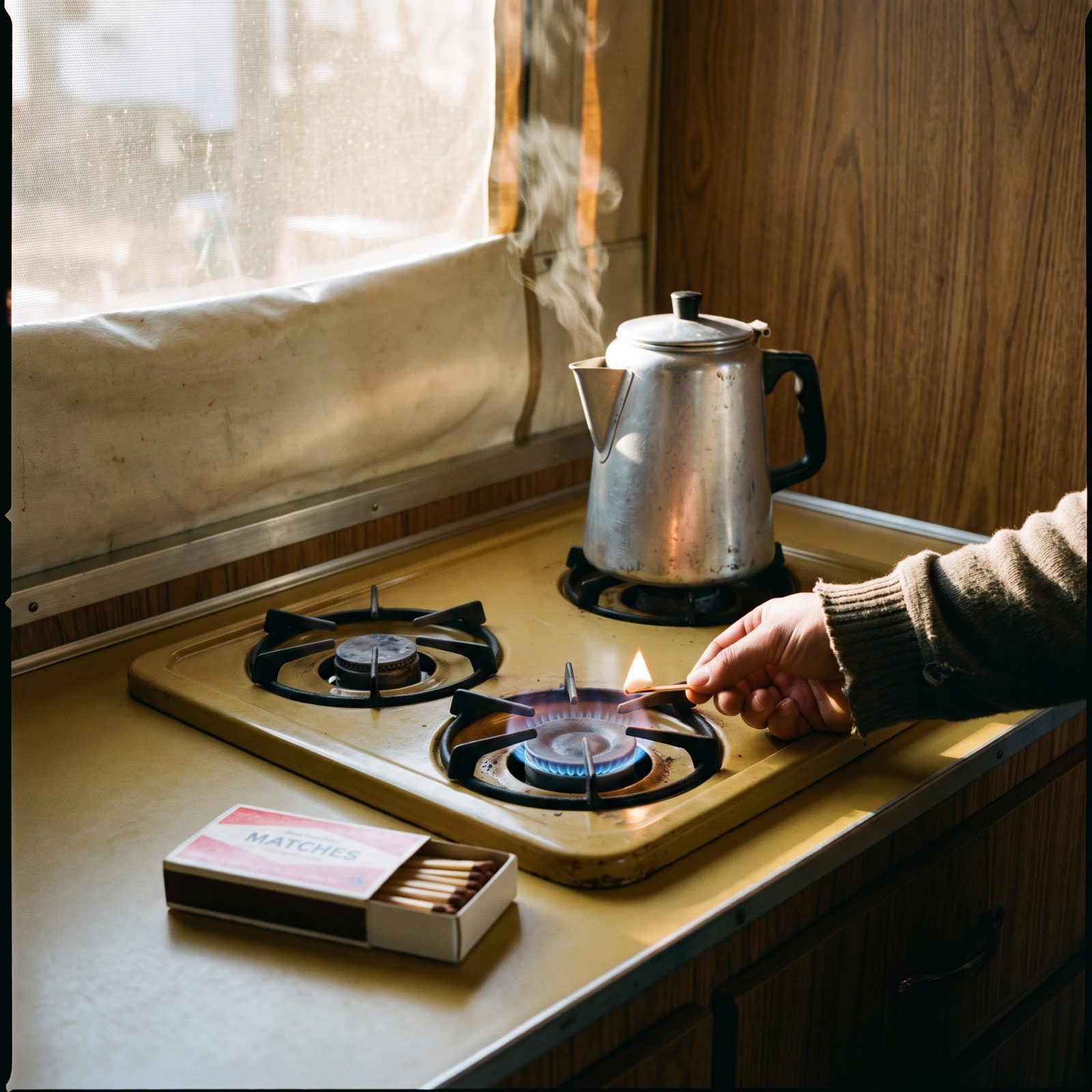
Breakfast began with a sound: the soft whoomp of a burner catching after the match touched the ring. That little blue flame cooked pancakes, or a dented aluminum percolator of coffee that filled the whole camper with smell.
Watching an adult light it was its own ritual. Turn the knob, strike the match, the quick flash, the hiss settling into a steady hum. You weren’t allowed near it, which only made it more interesting.
9. A Hand Pump for Every Glass of Water
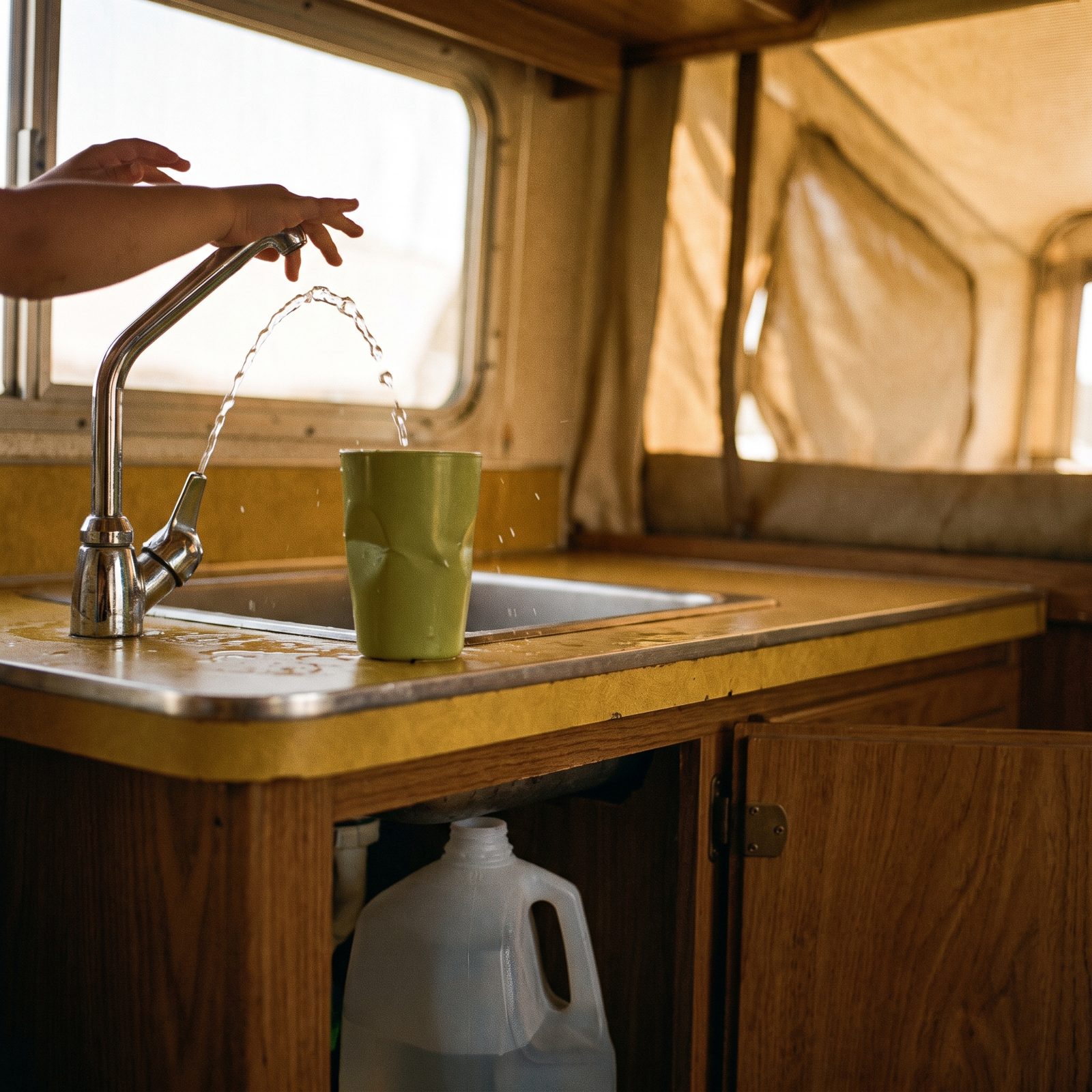
No tap, no spigot, no instant water. You wanted a drink, you pumped for it — up, down, up, down on that chrome handle until water finally sputtered out into your cup.
Kids fought over who got to do it. Pumping water was a job, which to a seven-year-old meant it was a privilege. You learned fast that water wasn’t automatic, that the tank only held so much, and that wasting it earned you a reminder about where it came from. Small lesson, delivered by a camper, and it stuck.
8. An Icebox Packed With Block Ice
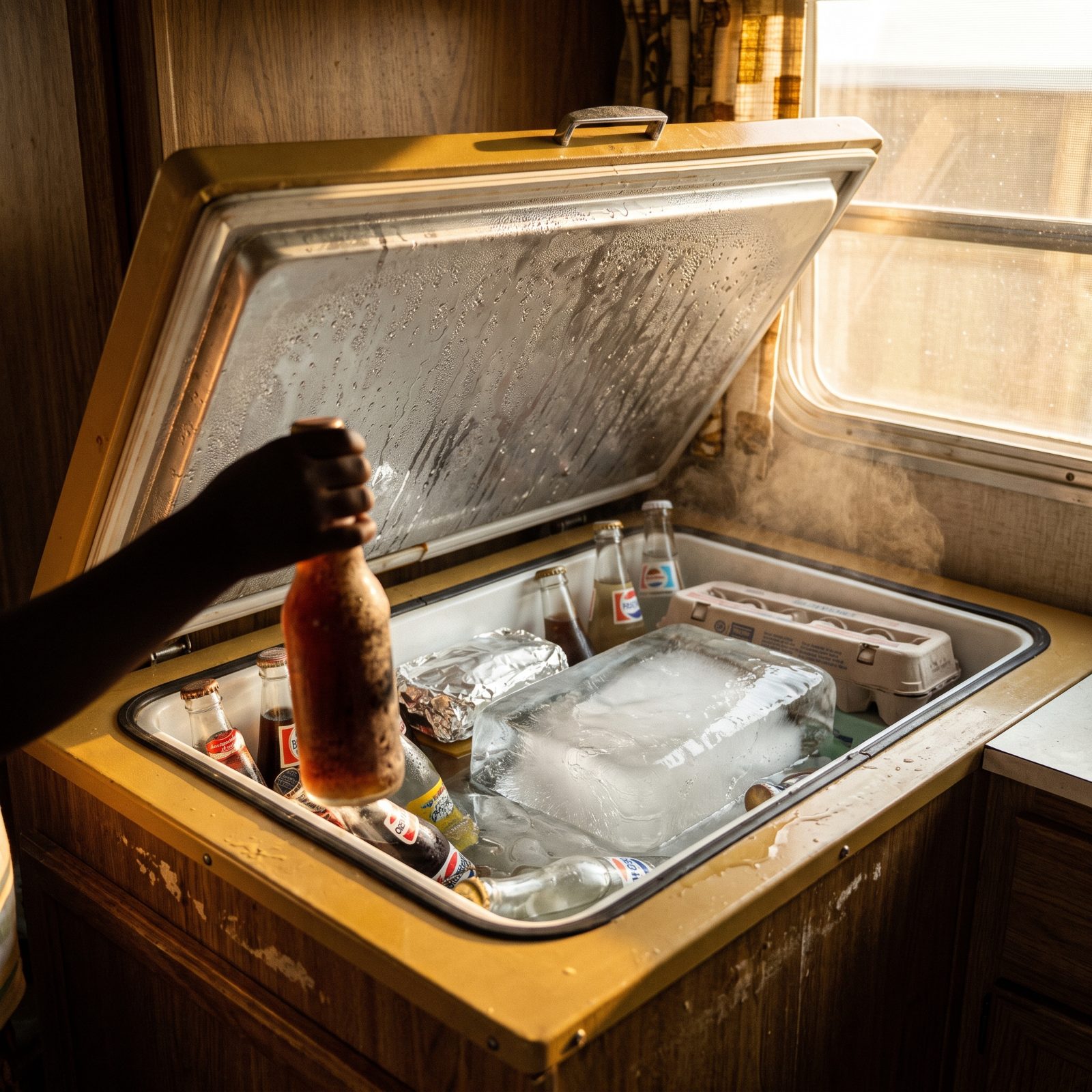
Opening the icebox was the best job of the trip.
A solid block of ice, bought on the way in, sat in the bottom slowly melting all weekend. Bottles of pop stood chilling in the cold water pooling around it, and reaching past that block for a cold one on a hot afternoon felt like finding treasure.
Block ice outlasted cubes, so it earned its spot. But what you remember is the shock of cold air when the lid came up, the clink of glass bottles, and the grown-up rule you learned to beat: don’t hold the lid open, you’re letting the cold out. You held it open anyway. Just long enough.
7. Storage Hidden Beneath Every Bench
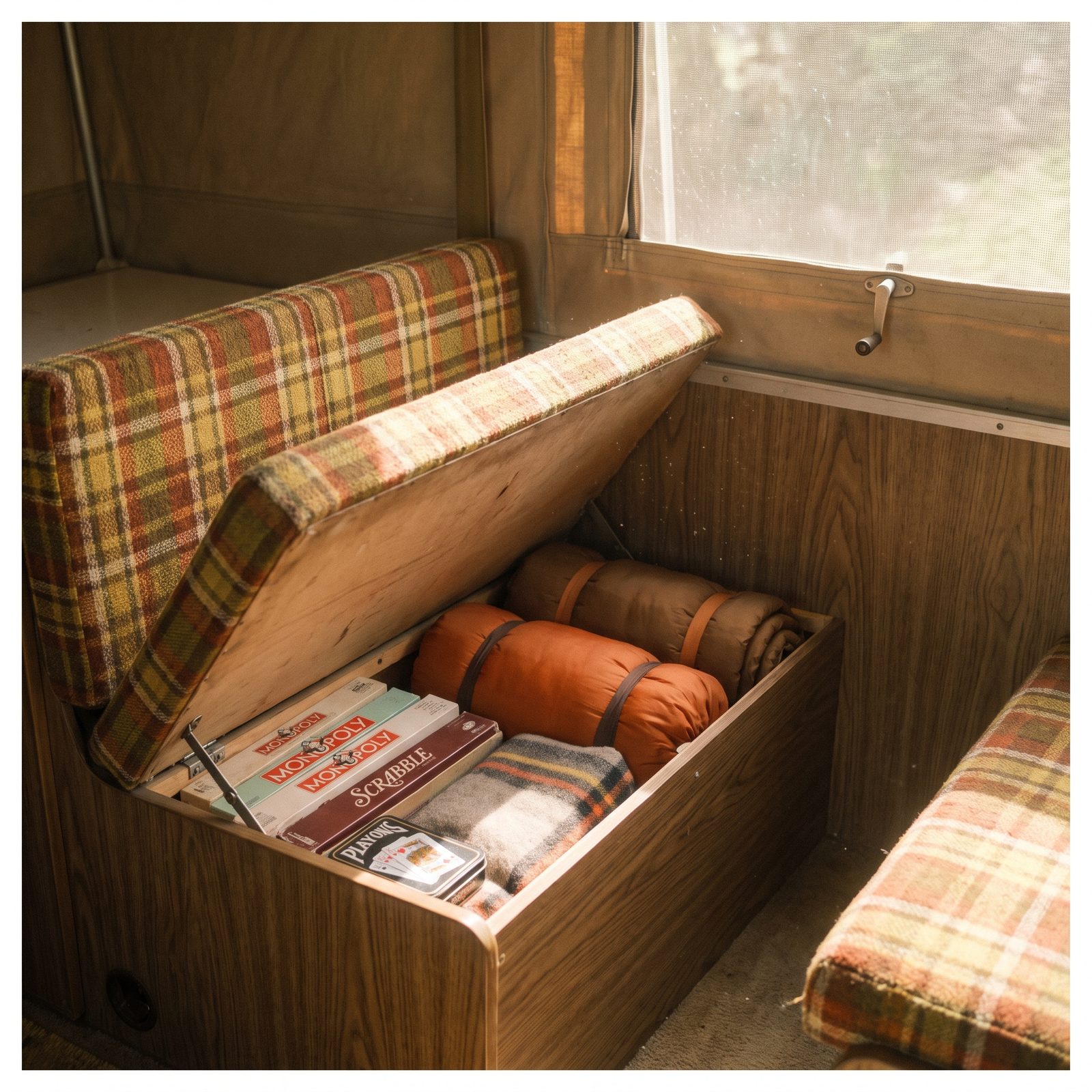
Every bench was a lie, in the best way. You sat on your dinner, your pajamas, and tomorrow’s beach towels all at once, and lifting the plaid cushion made the whole seat yawn open like a toy chest, deep and dark and smelling of canvas and sleeping bag.
That was where the good stuff lived. The flashlights, the travel Yahtzee, the one deck of cards with the bent corner that nobody would throw out. You learned fast which bench held the snacks and which held the spare socks nobody wanted.
6. A Screen Door That Never Closed Quietly
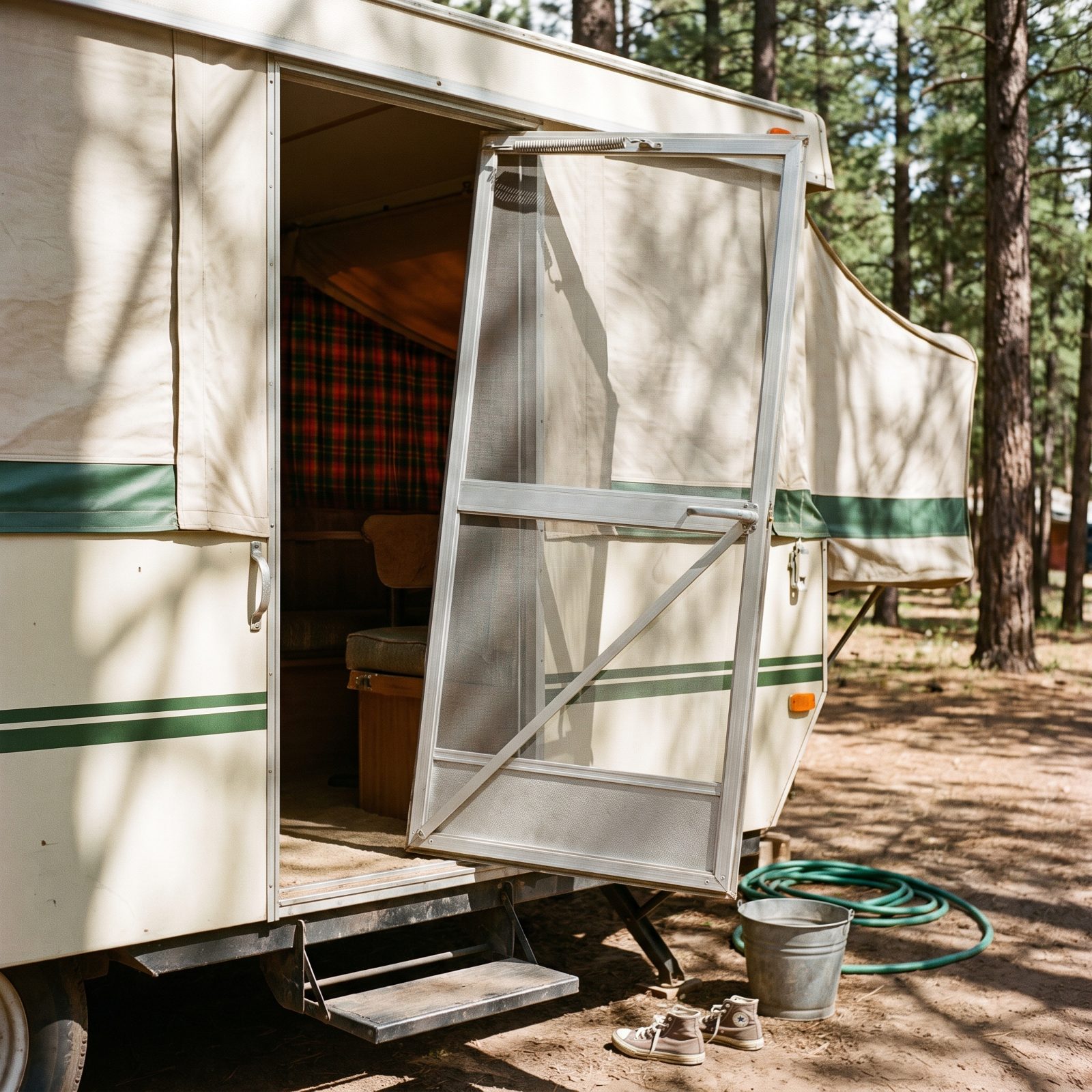
You could hear it from the swings three sites over. That aluminum screen door had exactly one volume, and it was slam. The spring pulled it shut a half-second after you let go, and the frame hit the jamb with a tinny rattle that announced every entrance and exit on the whole campground.
Nobody snuck anything past that door. Somebody always yelled “stop slamming the door!” through it, which, naturally, slammed it again on the way out.
5. The Table Reserved for Cards on Rainy Days
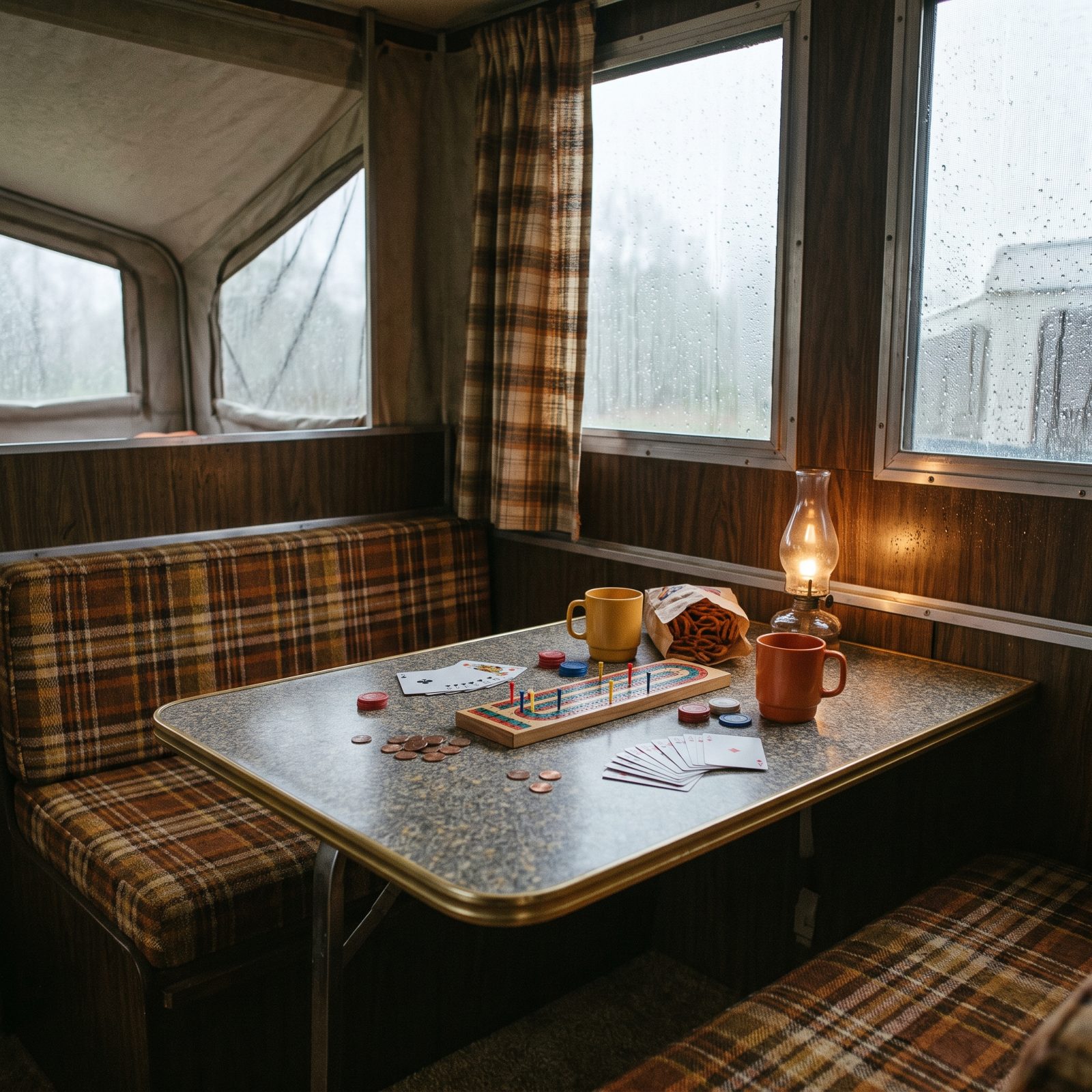
Rain turned the camper into the best room in the world.
The whole family squeezed around that little Formica table while the drops drummed on the canvas roof. Out came the cards, the pennies, the cribbage board nobody fully understood. You played Crazy Eights until it got dark enough to switch to Go Fish, which was the same game somehow played with more gravity.
That table dropped down into a bed at night and came back up by morning. During a downpour, though, it belonged to card games, with one layer of canvas between you and the storm.
4. A Coleman Lantern Hanging Outside
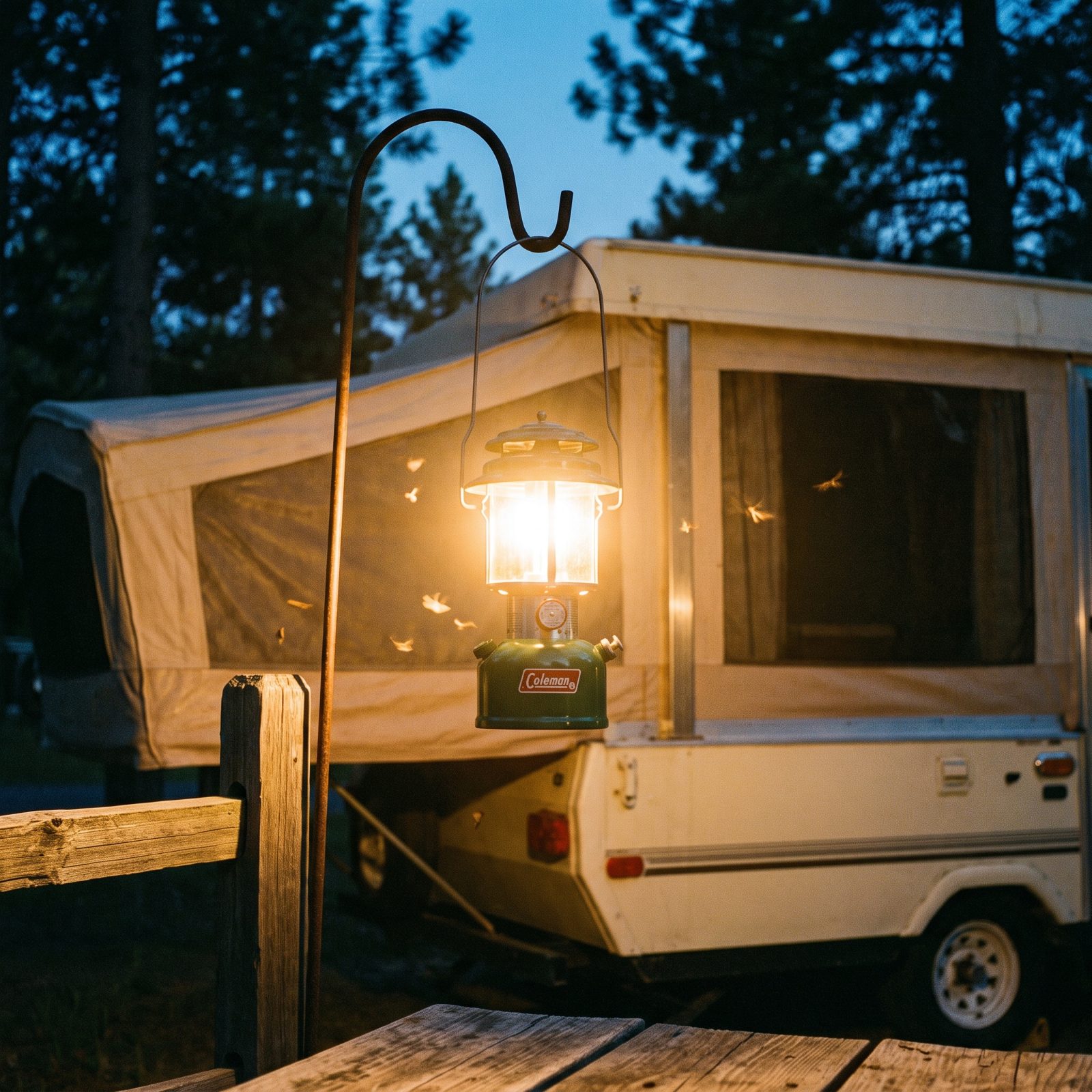
The hiss was the sound of the day being over. Someone pumped the little plunger, struck a match, and that green Coleman burned white and loud and warm, drawing every moth in the county into a circle of light just big enough to cover the picnic table.
You weren’t allowed to touch it, which was the draw, obviously. It got blazing hot and glowed like a tiny sun. When the grown-ups finally turned it down for the night, the dark that rushed in afterward was the biggest dark you’d ever seen.
3. A Canvas Awning Held by Ropes and Stakes
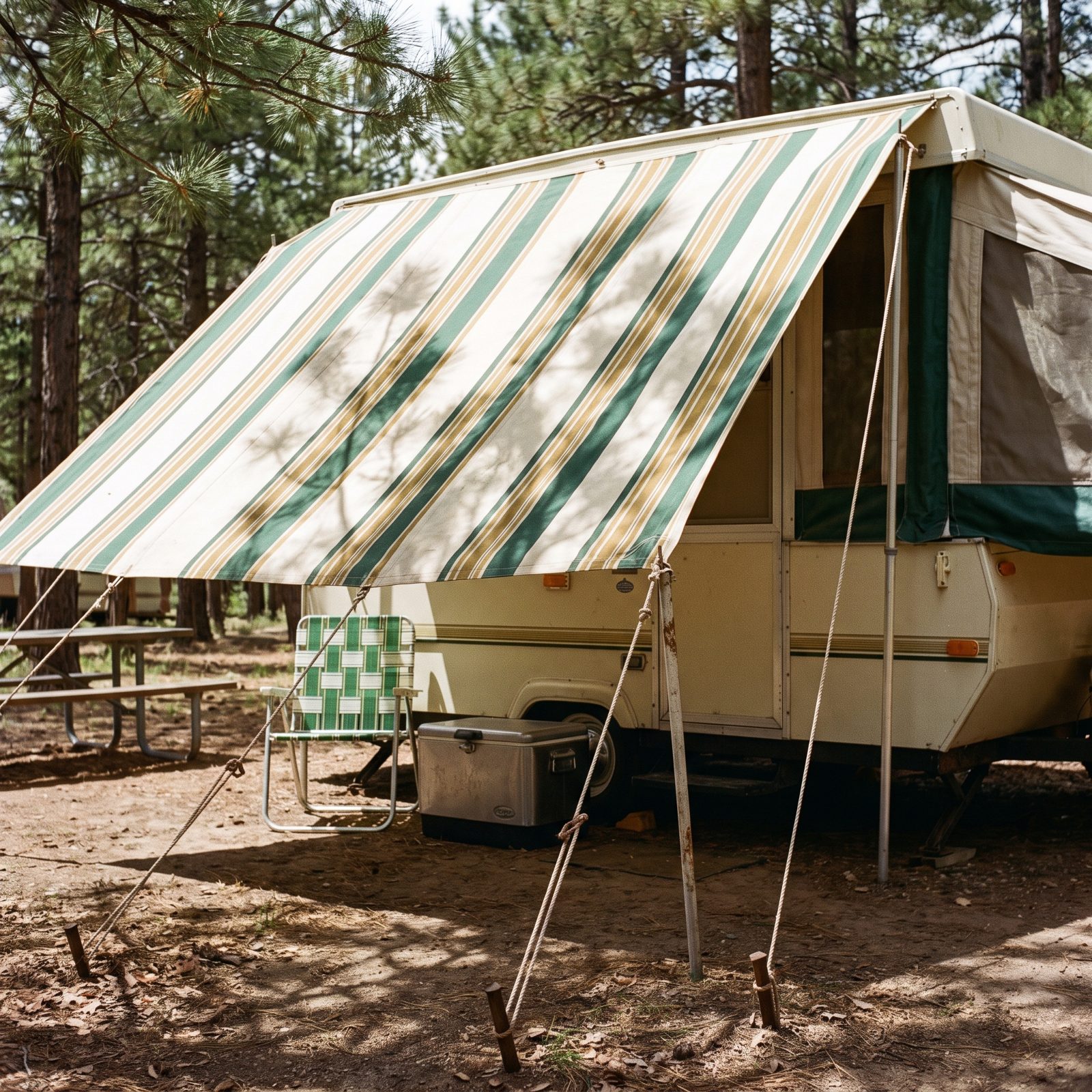
Putting up the awning was a two-adult job with a lot of opinions. Poles went crooked, ropes came loose, and someone always tripped on a stake in the dark later and told the whole campground about it.
Once it was up, though, it made a room out of thin air. Shade for the lawn chairs, cover for the cooler, somewhere to sit when the sun got mean. The striped canvas glowed gold when the afternoon light poured through it, and that patch of shade became headquarters for the whole week.
2. A Campsite Fort Built Beneath the Extended Bunk
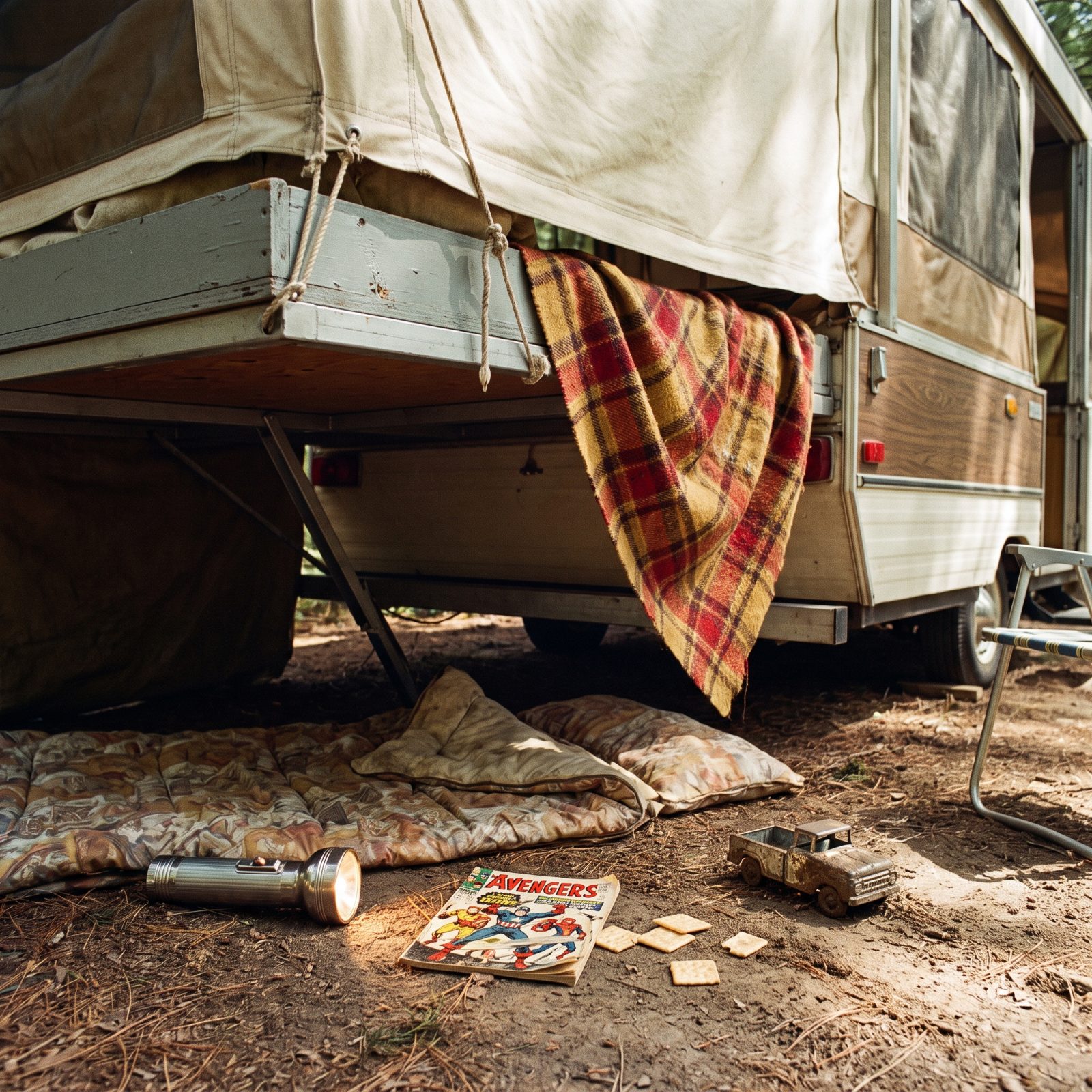
The best real estate on the whole campsite was the dirt under the bunk.
The bunk-end stuck out past the camper body, and the shadowed cave underneath it was yours. Drape a blanket off the edge and you had walls. Drag a sleeping bag in and you had a floor. A flashlight, a comic, a sleeve of crackers, and you were set for the afternoon.
Grown-ups didn’t come under there. Too low, too dim, too much work for them. Which meant it was the one square of the trip that belonged entirely to the kids, no rules, no bedtime, just cool dirt and the sound of everyone else carrying on without you a few feet away.
1. The Final Jump Onto the Folded Canvas Before Closing
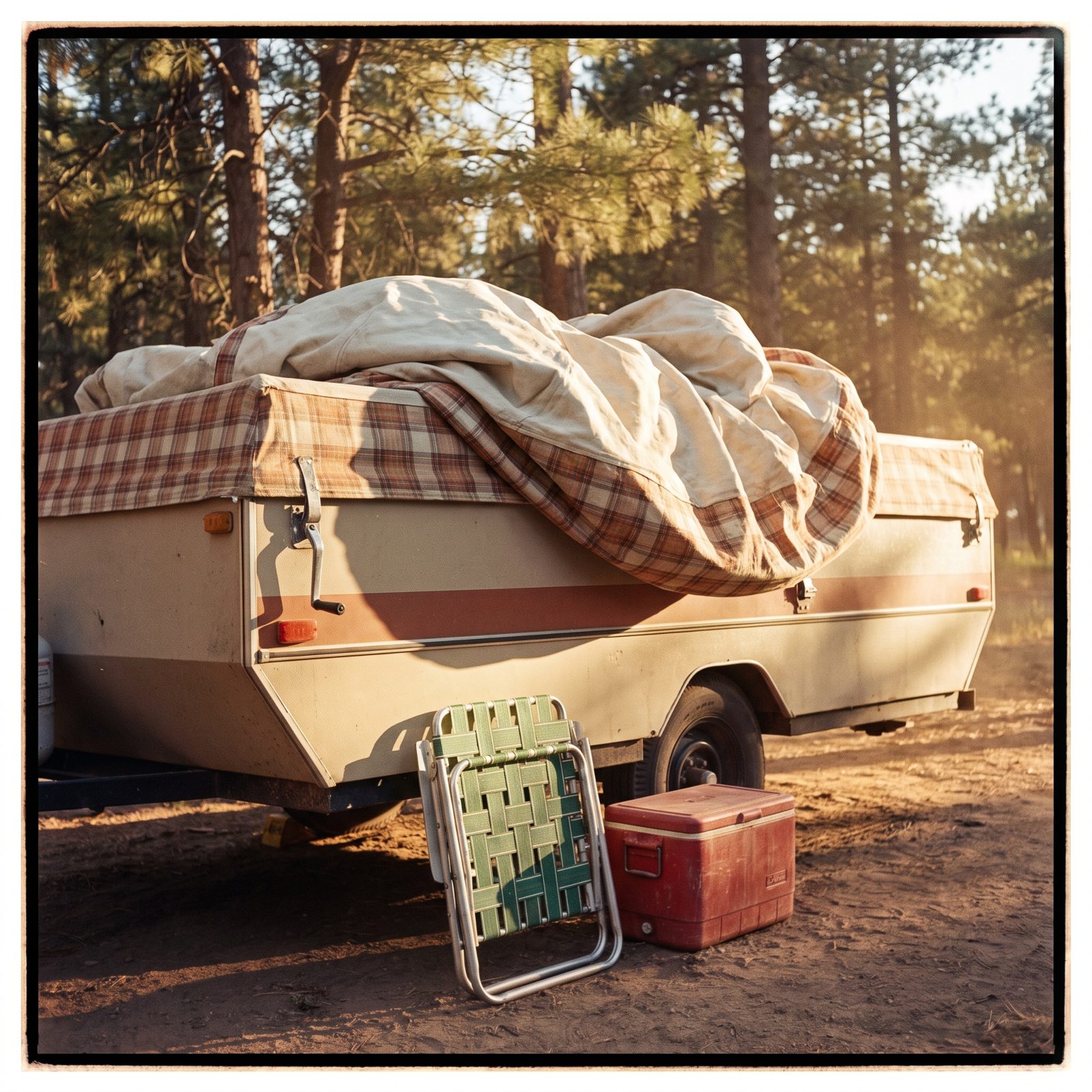
Teardown day had one perk, and every kid in a pop-up knew it. The roof came down, the canvas got bunched up on top, soft and lumpy and waiting, and you got the last jump. One flop to squash the air out before the lid came down and the latches clicked.
It was officially helping. Really it was the final stamp on the whole trip.
The crank turned, the lid sank, and the camper folded itself back into the little box it towed home as. You’d done it a dozen times and it never stopped feeling like a trick. Something you’d lived in all week collapsed flat and small, and the whole summer went home behind the car.