
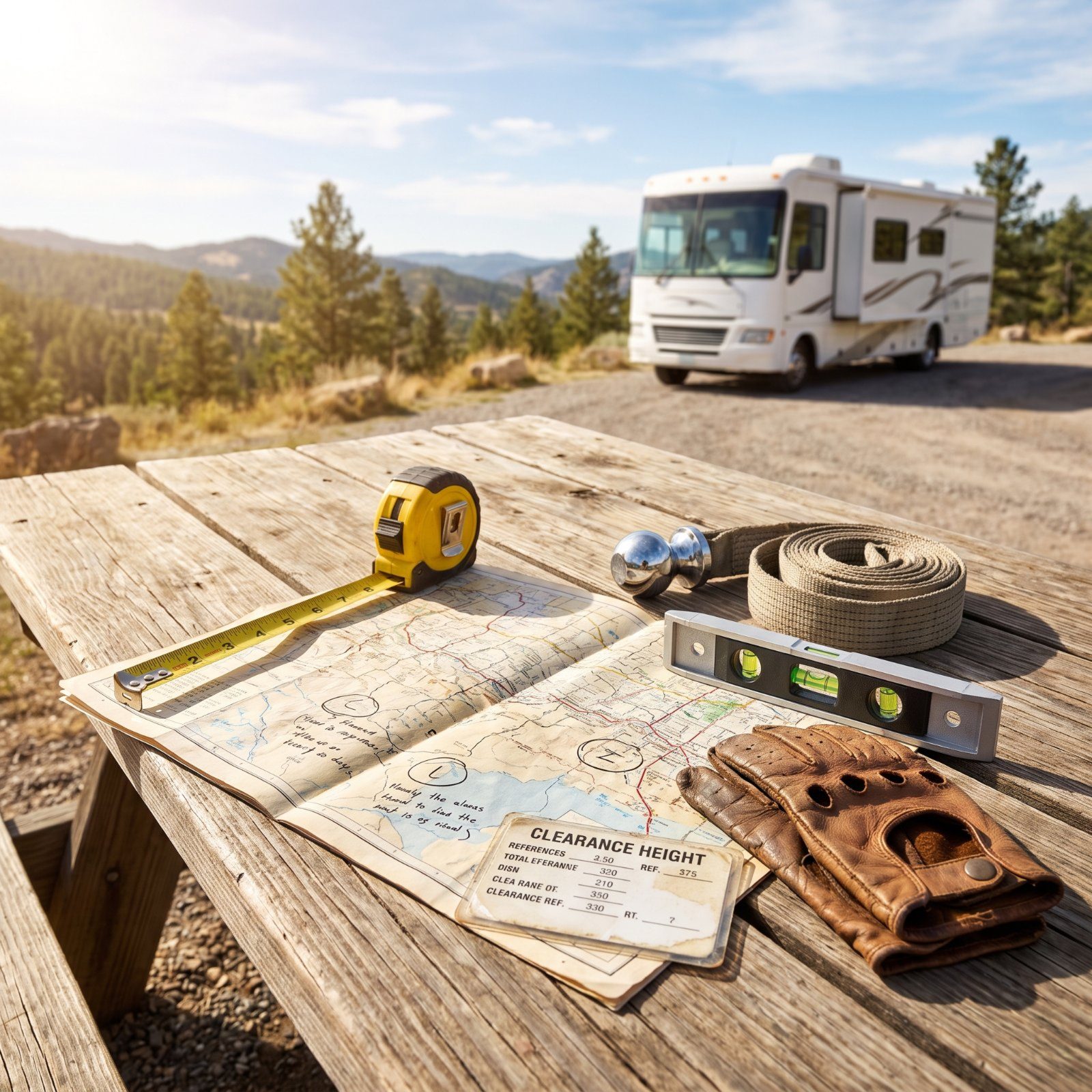
A low-slung sedan drives over things an RV can’t, and nobody at the dealership warns you about that. The posted clearance, the gentle crest, the tight gas-station turn — all of it was measured for cars. Your rig is longer behind the axle, taller over the roof, and dragging wheels that don’t follow the ones up front. That geometry changes everything. The spots that cost people a torn-off hitch or a cracked roof corner are rarely the obvious ones; they’re small, legal-looking features that only bite a vehicle built like yours. Here are the ones worth knowing before you meet them the hard way.
Please note that some of the images in this article were created with the assistance of AI.
43. Humped Railroad Crossings That High-Center a Long Overhang
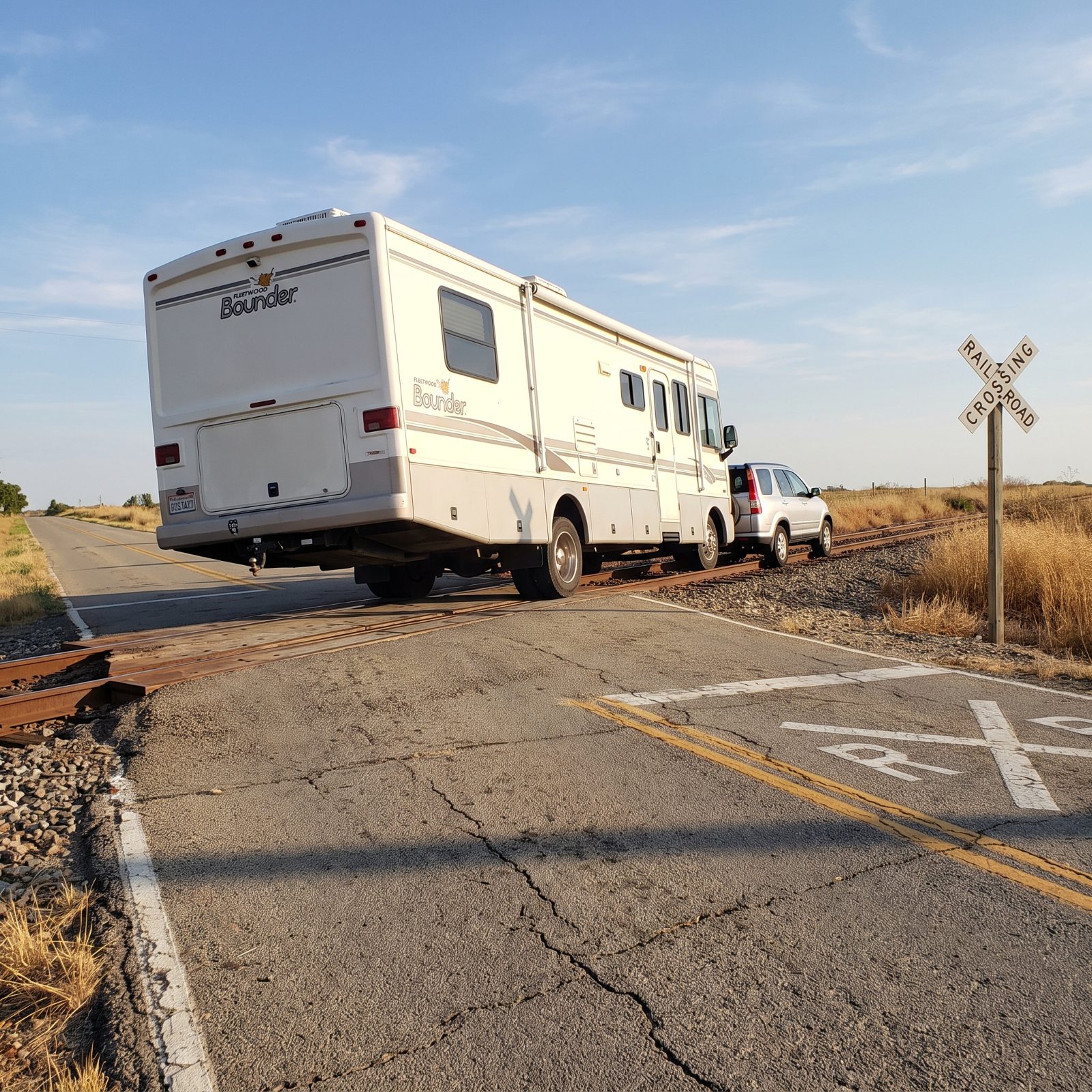
The danger isn’t the tracks. It’s the shape of them. Older grade crossings are built with a pronounced hump so water drains off the rails, and that crest acts like a seesaw pivot — your front and rear wheels drop away on either side while the long belly of the rig settles onto the high point.
A motorhome with a big rear overhang, or a travel trailer riding on a low frame, can plant itself on that crest and refuse to move. Tires spinning, frame grounded, train schedule indifferent. Those blue-and-white emergency notification signs posted at crossings exist for exactly this moment: the number connects straight to the railroad’s dispatcher.
42. Traffic Lights Right Past the Tracks That Trap You On the Rails
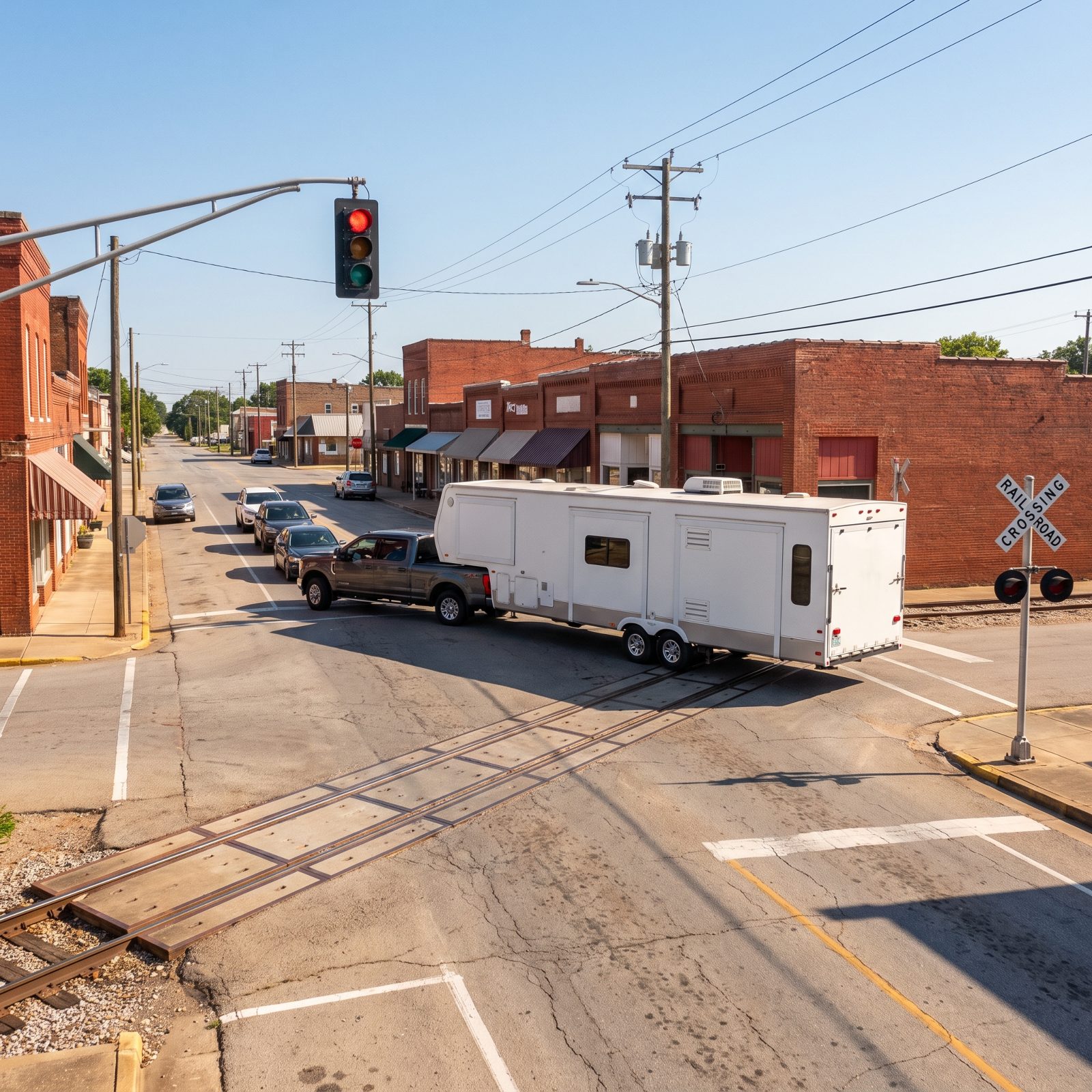
You clear the tracks in a car and never think about it again. In a sixty-foot combination, clearing the tracks and being clear of the tracks are two very different things.
Here’s how it goes wrong. The light ahead turns red, traffic backs up, and you creep forward because the car in front of you did. Now your truck is angled across the middle of the intersection, nosed into the side of the line of stopped cars, and your trailer wheels are sitting on the rails. You can’t go forward. You can’t back up without hitting whoever crowded in behind you. The fix is boring and it works: never pull onto tracks until you can see enough pavement on the far side to hold your entire rig.
41. Ferry Ramp Hinge Points Where the Tide Changes the Angle
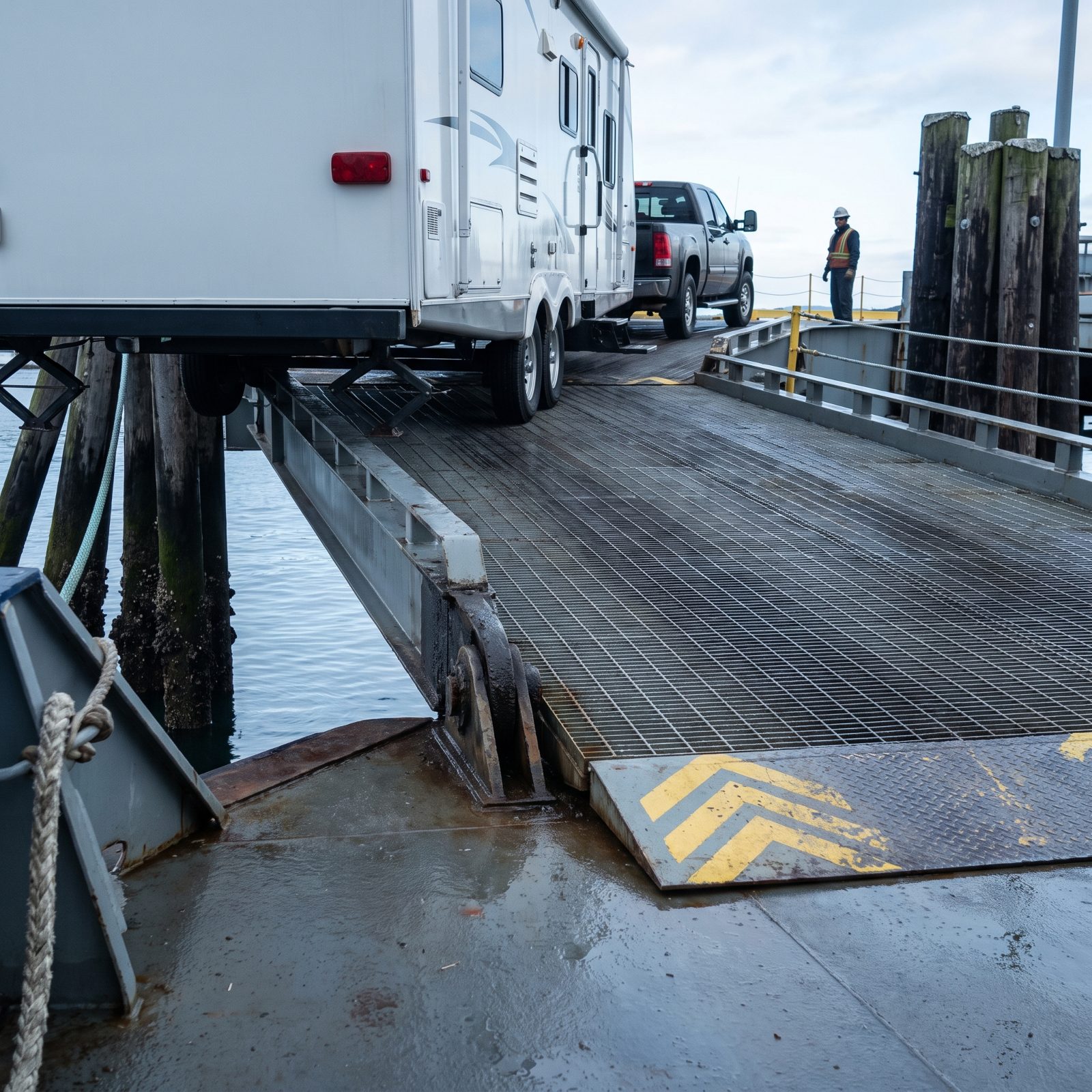
Ferries are a highlight of coastal RV trips. The loading ramp is where they humble you.
A ferry ramp pivots on a hinge so it can rise and fall with the water. When the tide is high or low, that hinge creates a sharp break in grade right at the lip of the boat, and a long rig drops its nose onto the deck while the tail is still up on the ramp. Your hitch, rear bumper, or stabilizer jacks grind into the steel.
40. Arched Underpasses Where the Curb Edge Is Lower Than the Sign
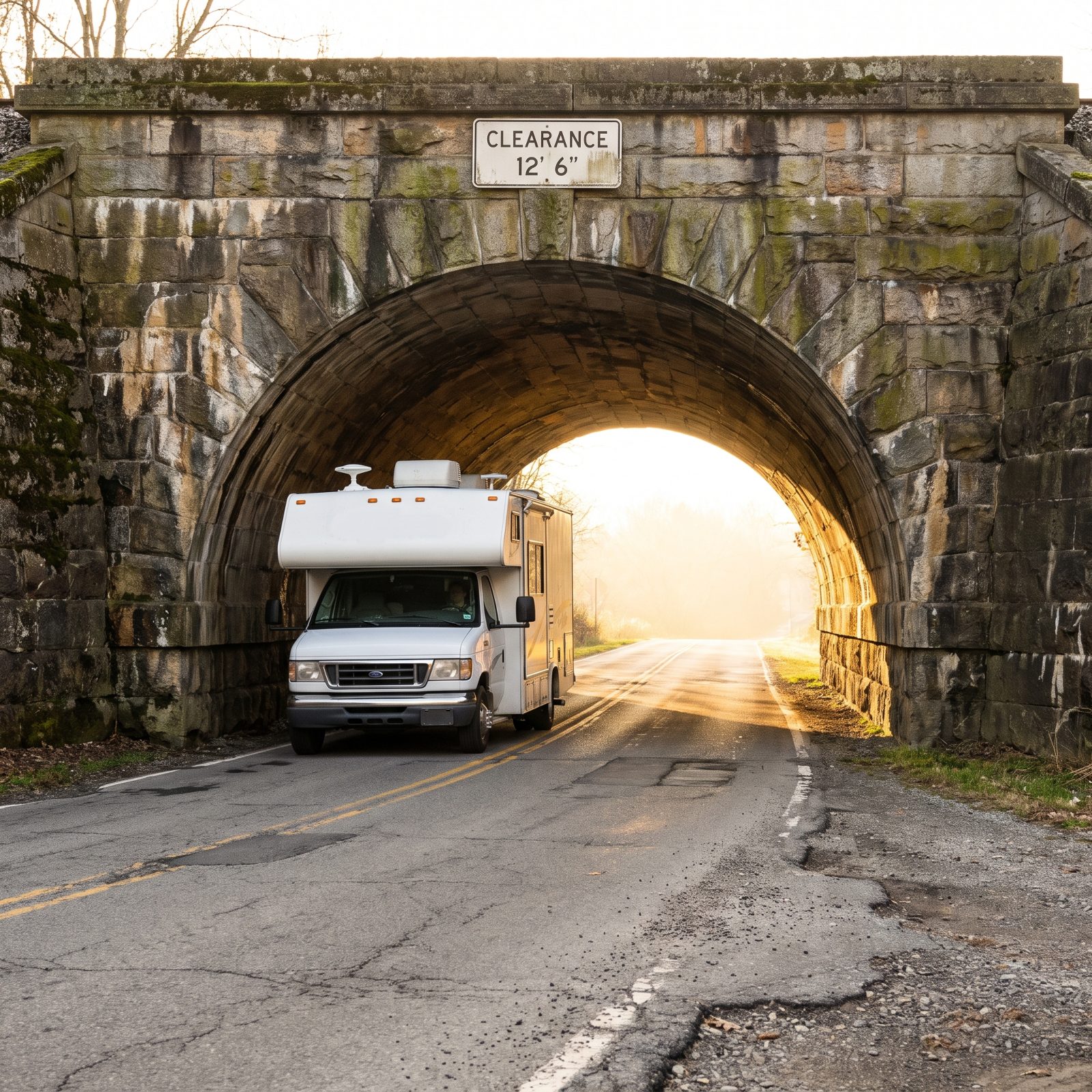
That number painted on the underpass is measured at the tallest point, which is almost always dead center of the arch. From there it curves down.
Hug the shoulder to let an oncoming truck pass, and your rooftop air conditioner, your antenna, your vent covers are suddenly under the part of the arch that’s a foot shorter than the sign promised. RVs lose the fragile gear bolted to their roofs here far more often than they lose the whole vehicle, because people trust the posted figure and drift to the edge.
Take the center lane through an arch whenever the road lets you. That’s where the number is honest.
39. Snowpack Beneath Low Bridges That Eats Your Clearance
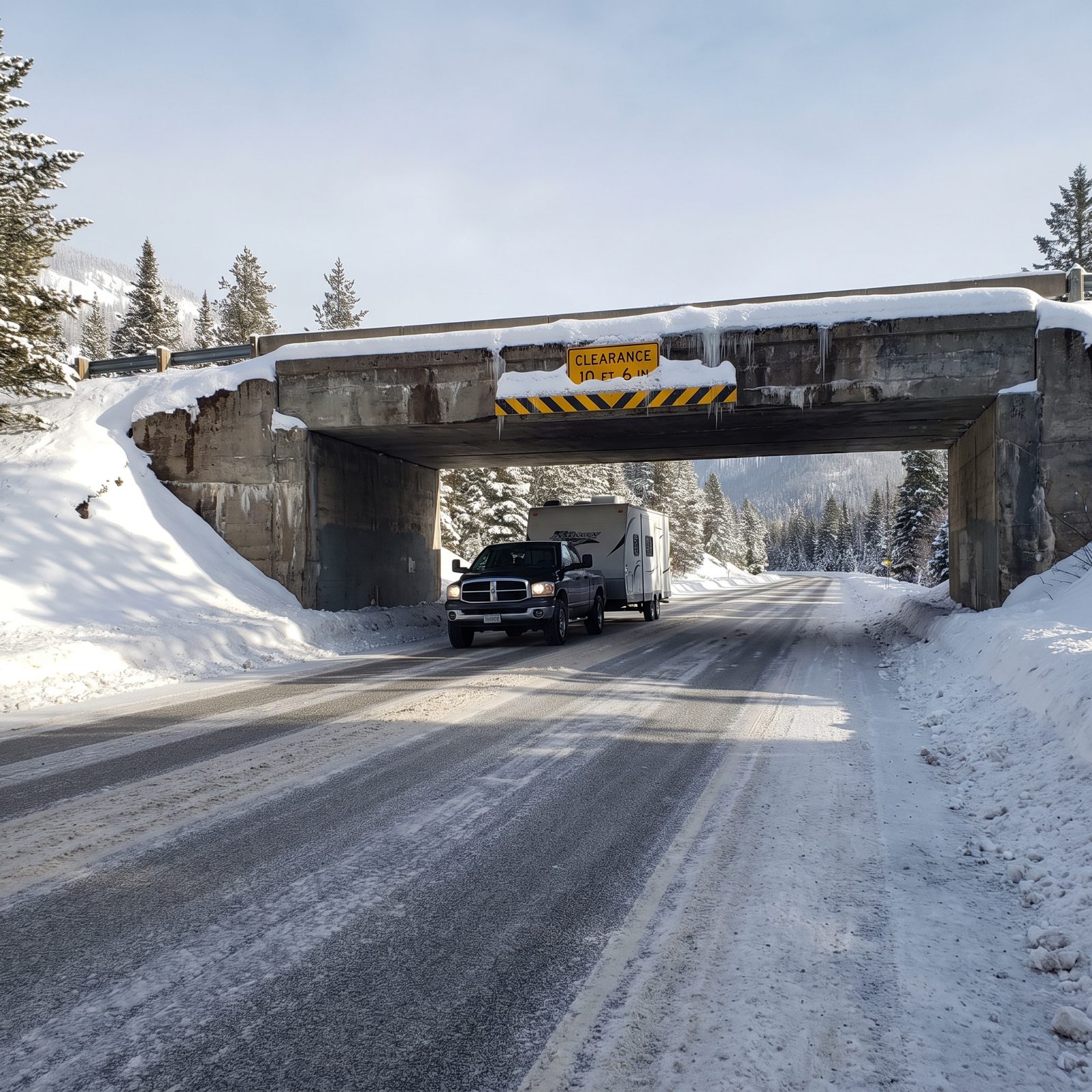
A twelve-foot underpass in July is not a twelve-foot underpass in February. Plowed snow gets packed into a hard layer, fresh snow piles on top, the road surface rises, and the concrete beam stays exactly where it was.
Nobody repaints the clearance sign after a storm. It was accurate in summer and has been lying ever since the first plow run.
38. Rock Overhangs on Mountain Roads That Clip Your Upper Corner
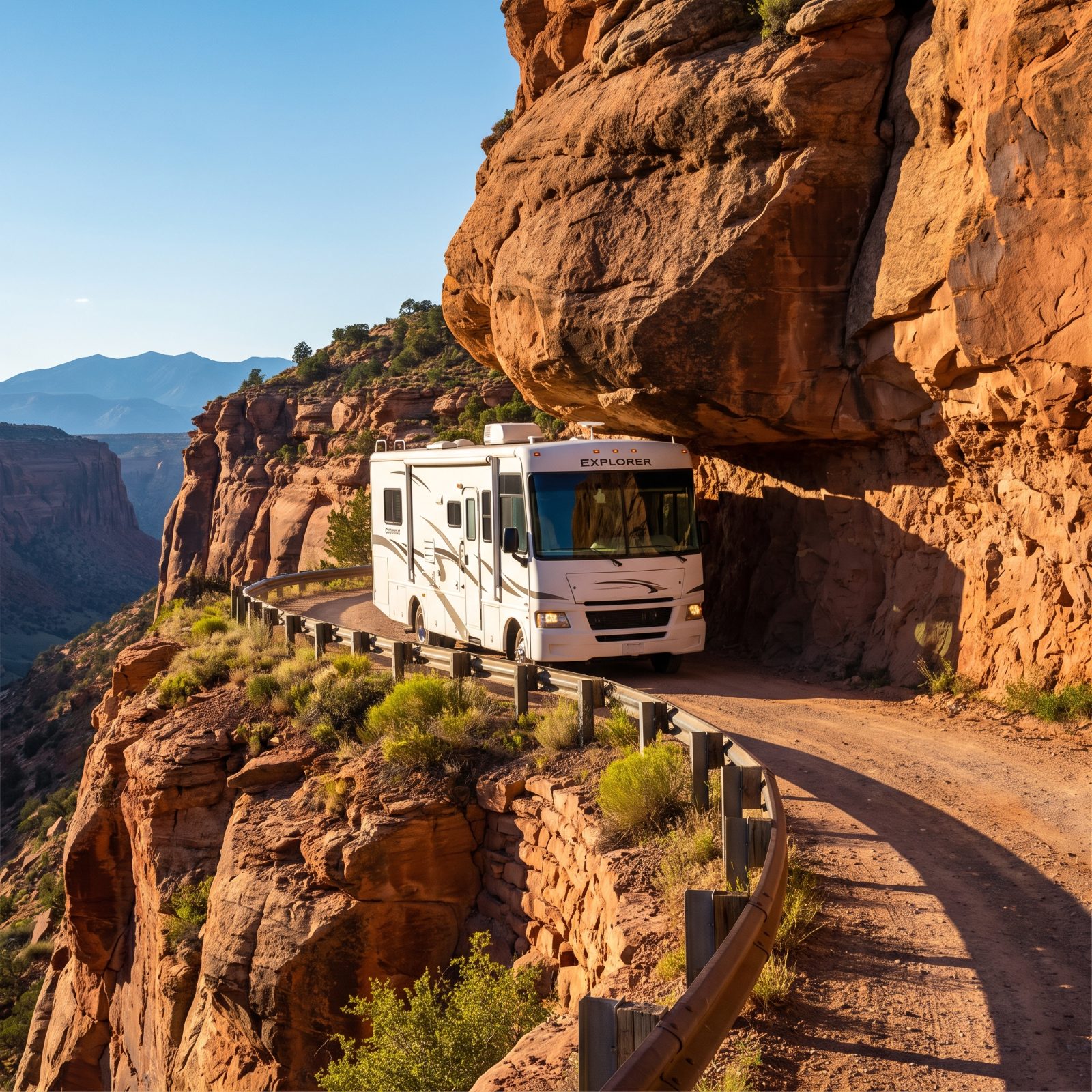
Old mountain roads were blasted out of rock by crews worried about car-sized vehicles getting through. The lower wall is generous. The upper wall is wherever the dynamite happened to stop.
A rock face can lean outward as it climbs, so the base of the cliff clears your sidewall by a mile while the overhang bulges out right at your roof corner. You watch the lower wall the whole time, feel safe, and hear the scrape from above.
On switchbacks and tunnels bored through stone, the inside corner on a turn is where this bites. Give the wall more room than it seems to need, and keep an eye upward — not just out the side mirror.
37. Culvert Headwalls at Tight Driveways Where Trailer Wheels Cut the Corner
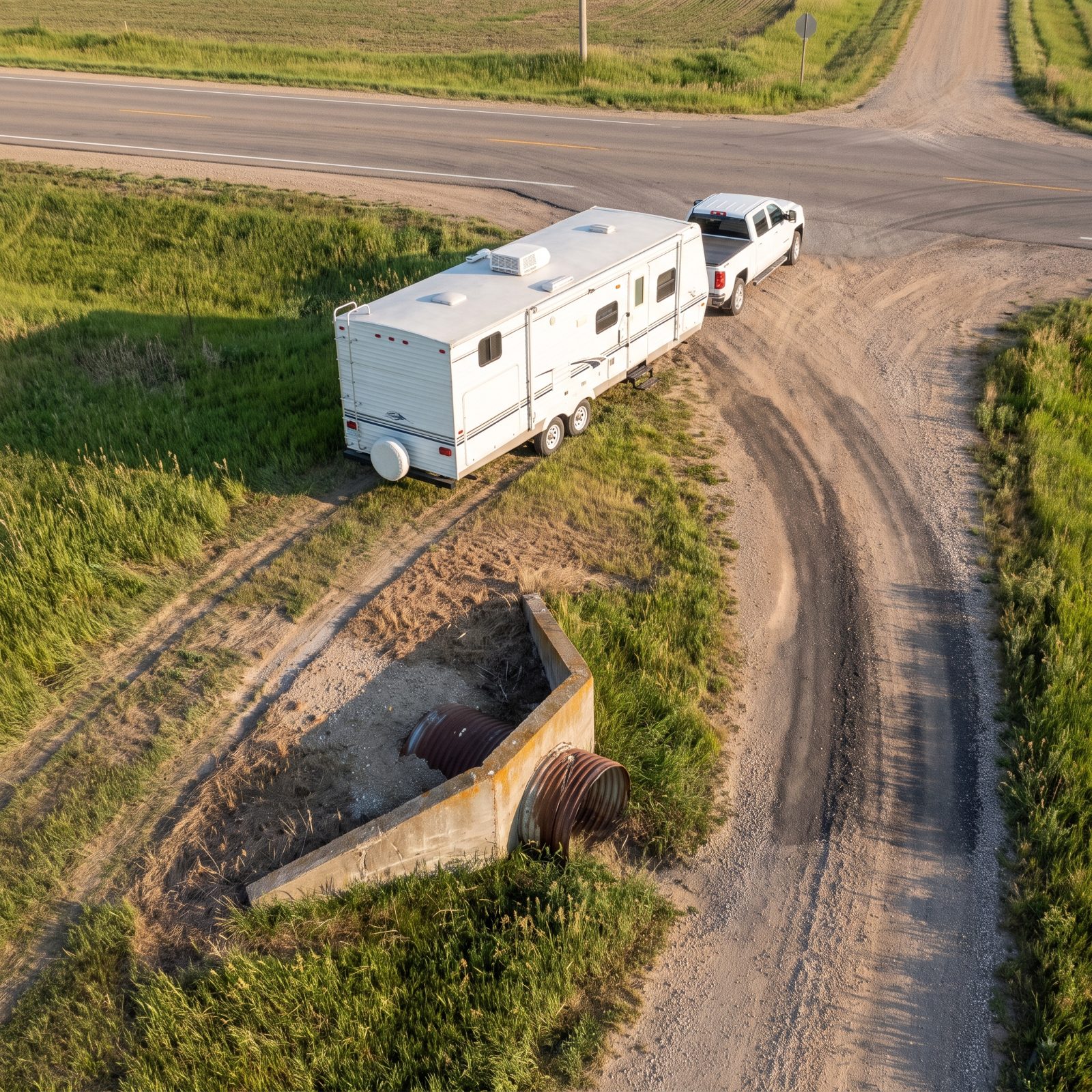
Trailer wheels don’t follow your truck’s wheels. On a turn, they cut inside the arc, and the tighter the turn, the deeper they cut. Everybody who tows learns this, and everybody still gets caught by it occasionally.
Rural driveways and campground entrances often have a culvert running alongside the gravel, and its concrete headwall can sit right at the edge of the drive, in the path your off-tracking trailer wheel wants to take. You can’t see it from the cab. Even a big, fully exposed concrete headwall drops below your sightline once you’re committed to the turn.
Swing wider than feels necessary when turning into or pulling out of a tight entrance. That gives the trailer room to tuck back toward where you actually want it.
36. Recessed Storm Drains on Tight Corners That Swallow a Trailer Wheel
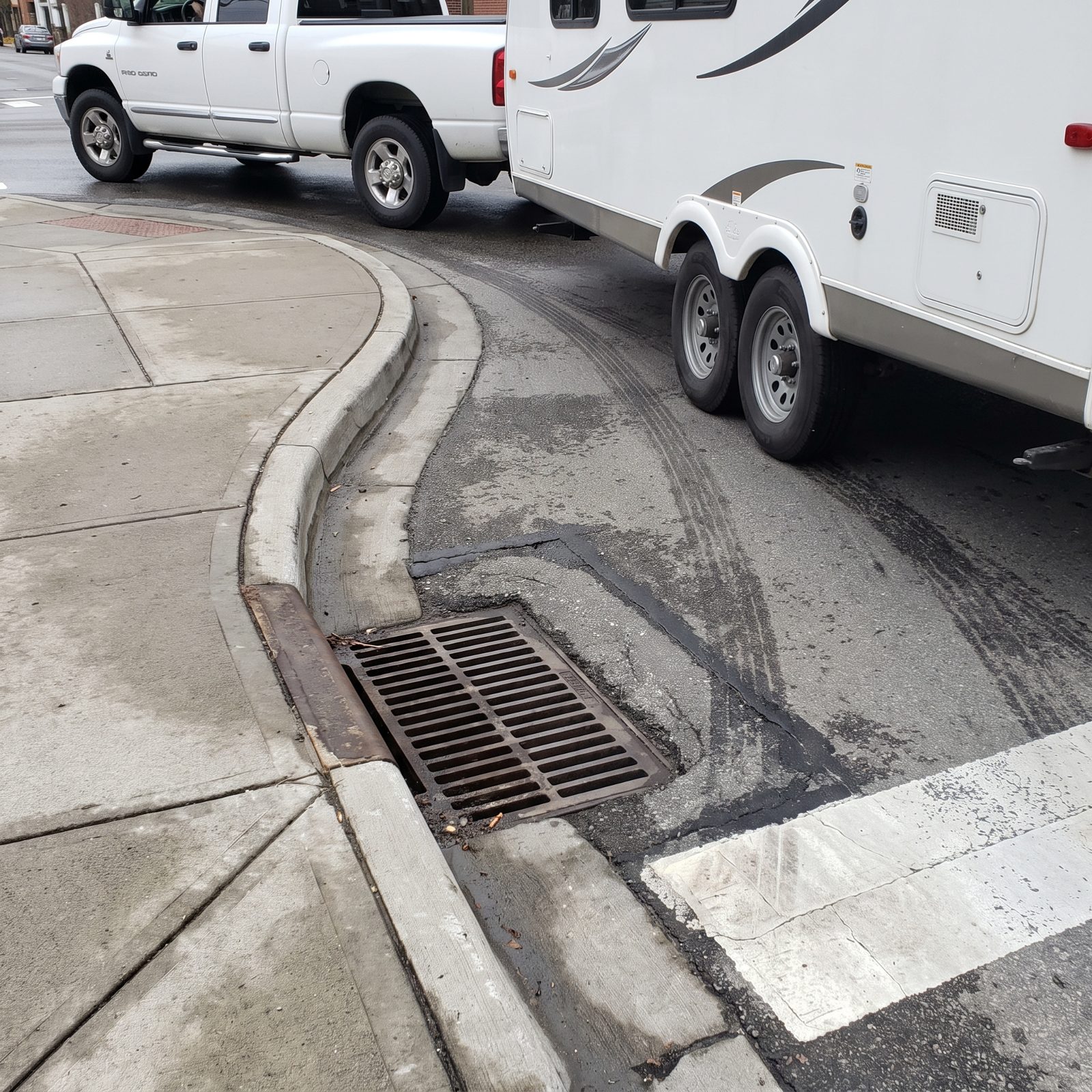
Storm drains sit in a dip. The road slopes down toward them so water runs in, which means the pavement around the grate rides lower than the lane beside it.
Your tow vehicle, following the center of the lane, sails right past. Your trailer wheel, off-tracking toward the curb on a tight corner, drops into that depression with a bang that jolts the whole rig. At best it rattles your dishes. At worst it bends a trailer axle or knocks your alignment out.
The corners where this happens are usually in old downtowns with narrow streets and deep gutters — the exact places a big rig has no business being. When the GPS routes you through one, trust your gut over the little blue line.
35. Left Turns Beside Poles and Bollards Where Your Tail Swings the Other Way
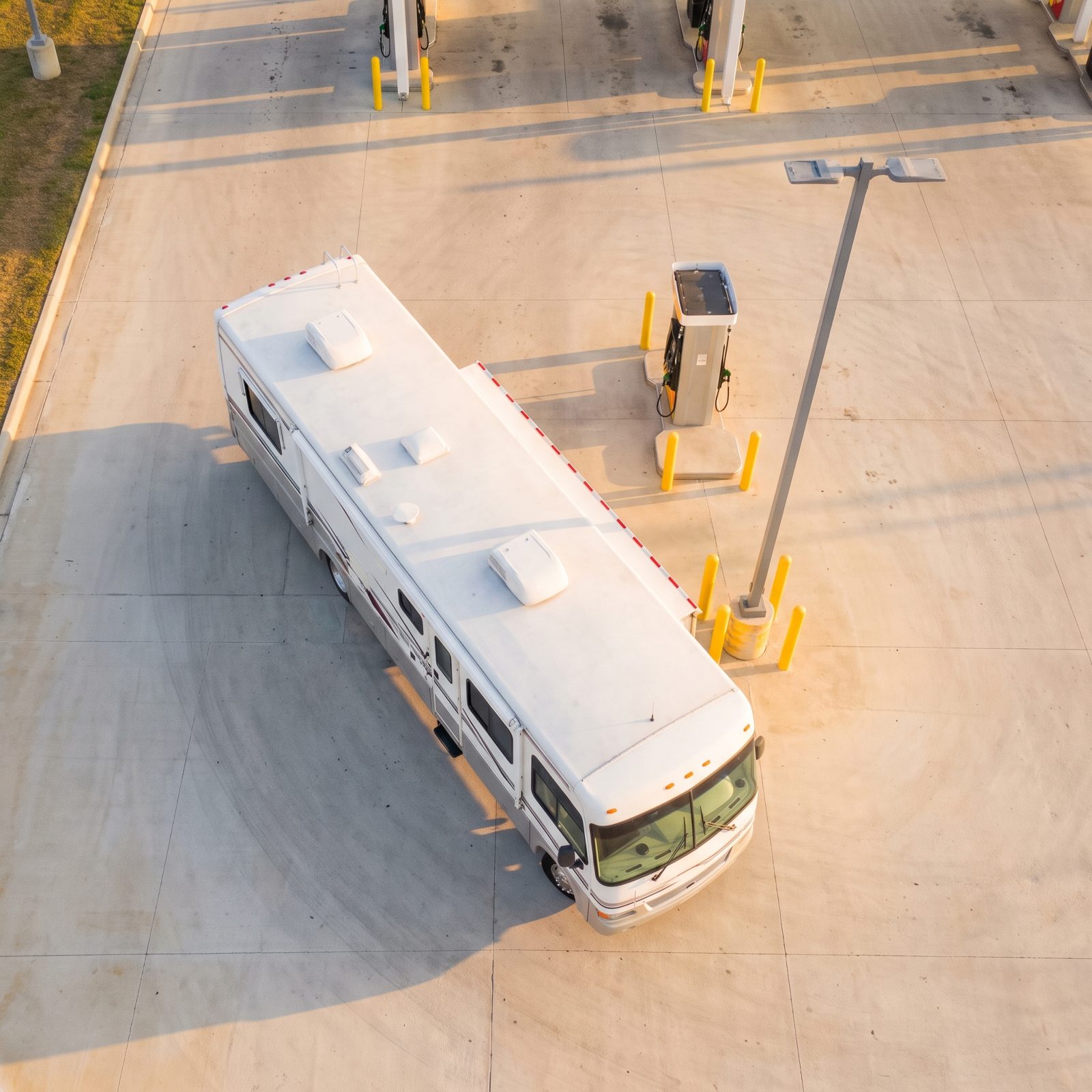
Nobody mentions this about a long motorhome until you’ve traded paint with a pole: when your front end goes left, your back end goes right.
Everything behind the rear axle swings opposite to the direction you’re turning, and the longer your overhang, the farther it sweeps. You’re watching the front of the rig thread past an obstacle, feeling good about it, while the tail is arcing out toward a bollard, a light pole, or the pump island you thought you’d already cleared.
34. Low Concrete Medians on Curves That Vanish Under Your Hood
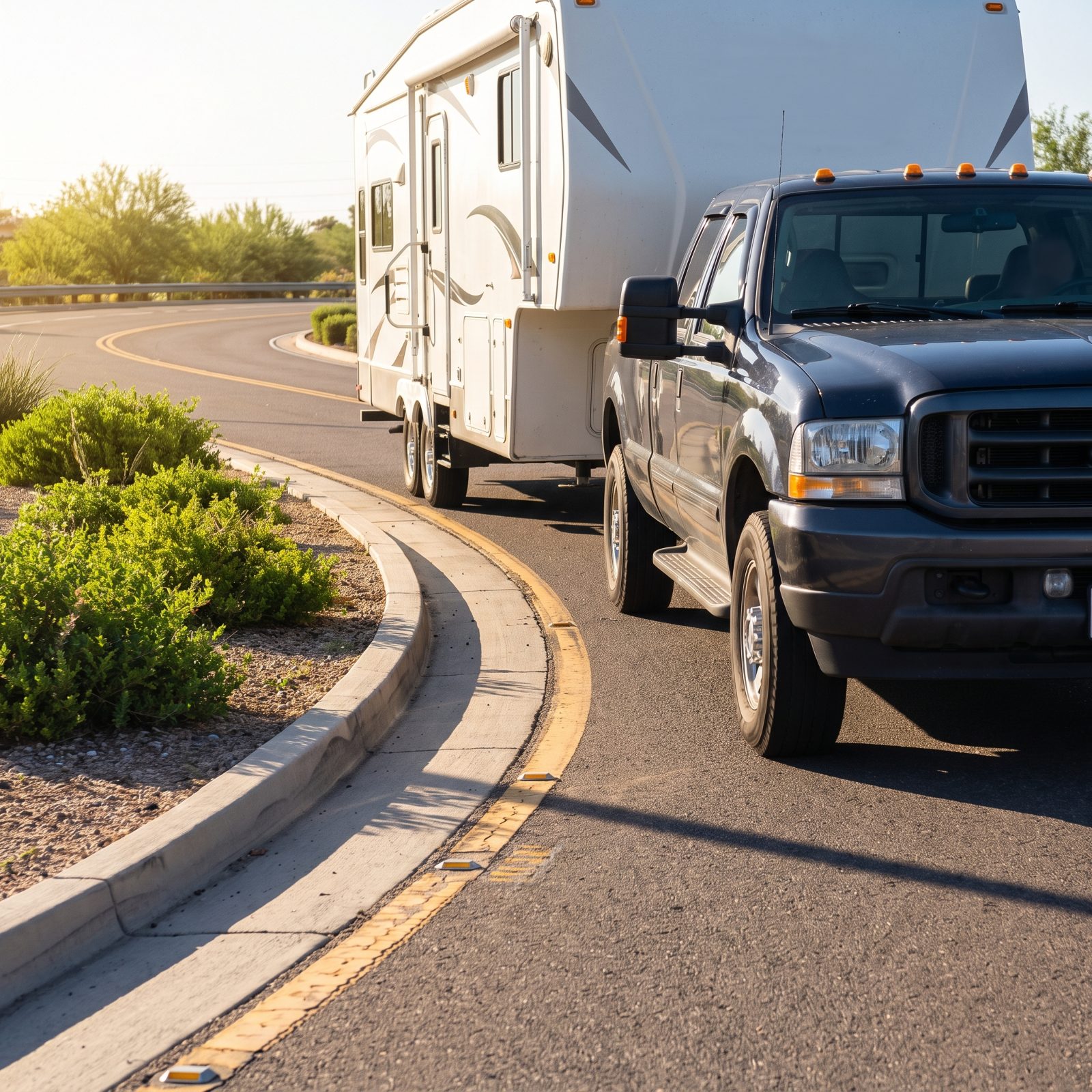
Low concrete medians are built just tall enough to stop a car from crossing and just short enough to disappear below your windshield. On a curve, that’s a bad combination.
As you round the bend, the median slides out of your sightline right under the hood, exactly when your trailer is cutting toward the inside of the turn and over it. You lose track of the one thing your trailer is drifting across.
These show up on highway on-ramps, parking lot entrances, and divided-road turnarounds. Pick your line early, before the median vanishes, and hold it. Once the curb drops out of view, you’re driving on memory, and memory is a lousy co-pilot when there’s a concrete lip hiding beside your tires.
33. Propane-Restricted Tunnels That Spring the Rule at the Last Sign
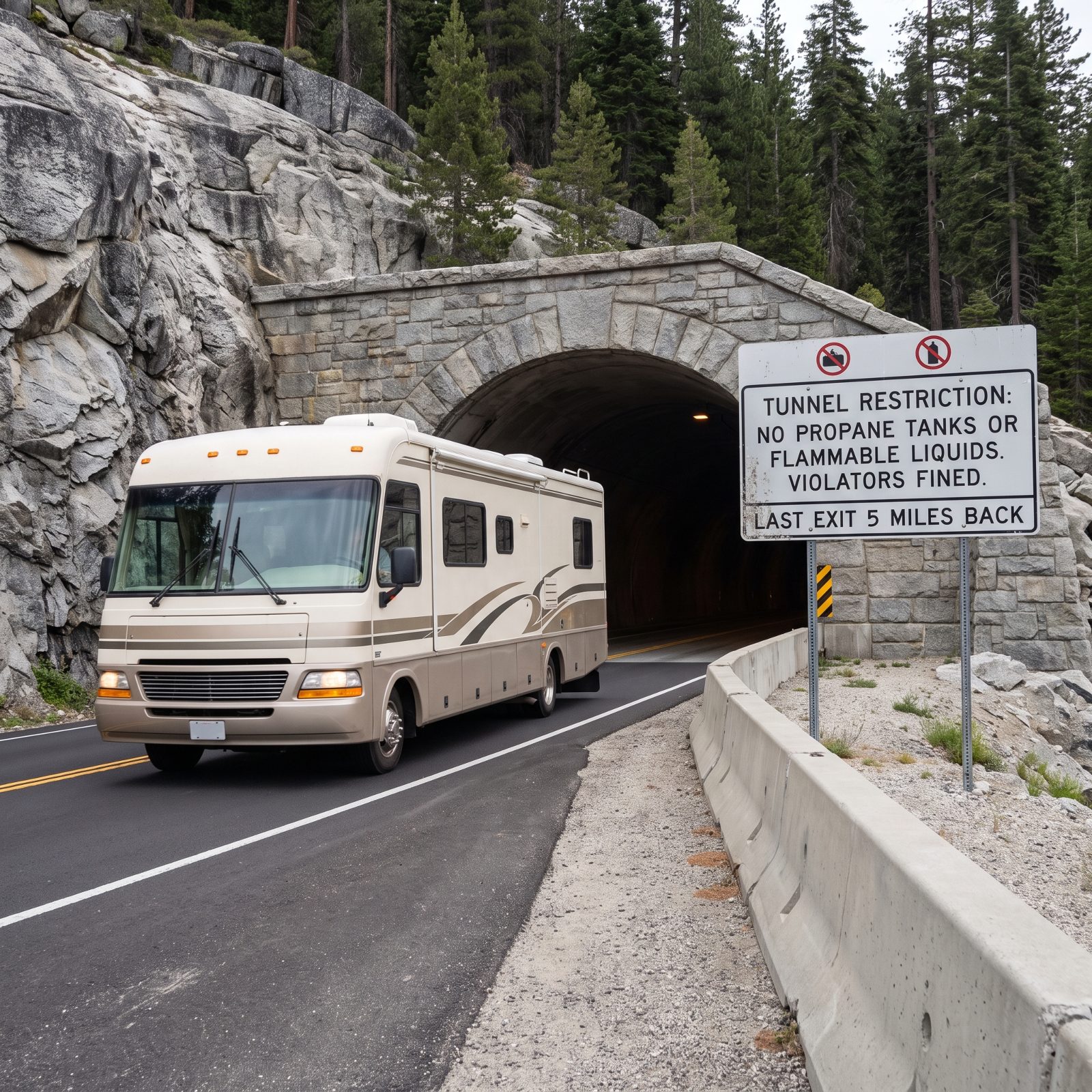
The sign banning propane and flammable cargo rarely shows up early. Often it stands at the portal itself, boxed in by concrete barriers, with the last exit miles back, so drivers only read it at the mouth.
Plenty of long tunnels on major routes prohibit RVs carrying active propane, and a few want the gas shut off at the tank, not just at the appliance. Learn that at the mouth and your choices shrink to two bad ones: a multi-point turn in a slot built for a sedan, or a reverse into moving traffic. Nobody enjoys either.
32. Compact Roundabouts Where the Trailer Climbs the Center Apron
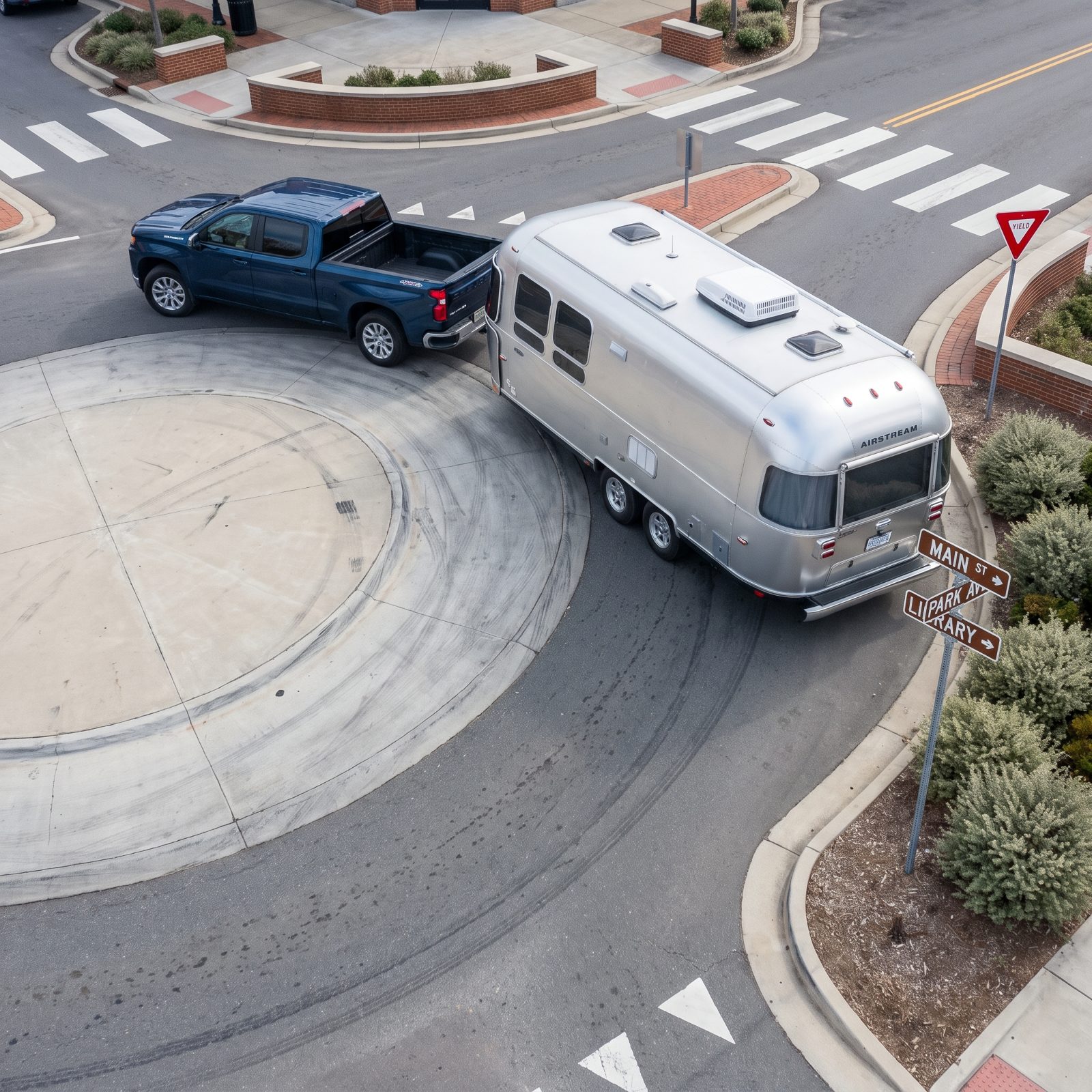
Small roundabouts are built around the tight turning circle of a car. Hang a trailer off the back and the geometry quits on you.
Your tow vehicle takes the curve just fine. The trailer doesn’t follow it; it off-tracks inward, cutting toward the center island and reaching for the curb, the signs, and whatever somebody planted there. That raised center apron? It exists partly for this — bigger rigs are supposed to ride up over it. Keep your trailer tidy inside the painted lane on a compact roundabout and you’re probably clipping something the cab can’t see.
31. Narrow Median U-Turn Openings That Strand the Trailer Across Traffic
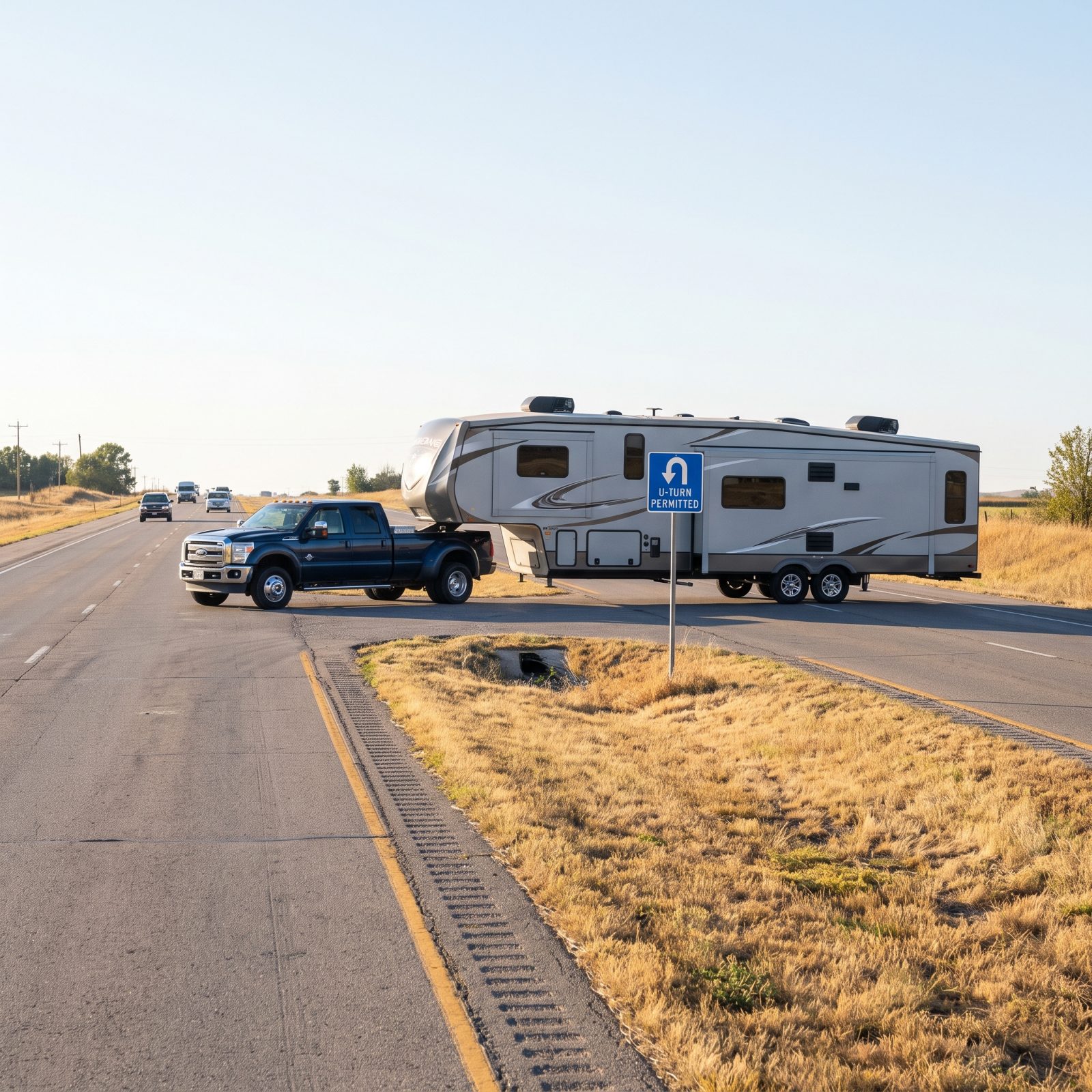
A median U-turn opening is a trap of arithmetic. Somebody sized the gap for cars and short pickups, and your combined length blows right past it.
The nose of your tow vehicle clears into the far lanes while the back half of the trailer never finishes crossing. So it sits there, parked diagonally across the opposing traffic, while you saw at the wheel and pray. On a divided highway at real speed, that’s the kind of exposure you want zero of. Dedicated truck U-turns run wider for a reason. Can’t tell whether the opening will swallow your whole length? Drive to the next exit and loop back like you mean it.
30. Low Branches That Reach the Roof Before They Reach the Windshield
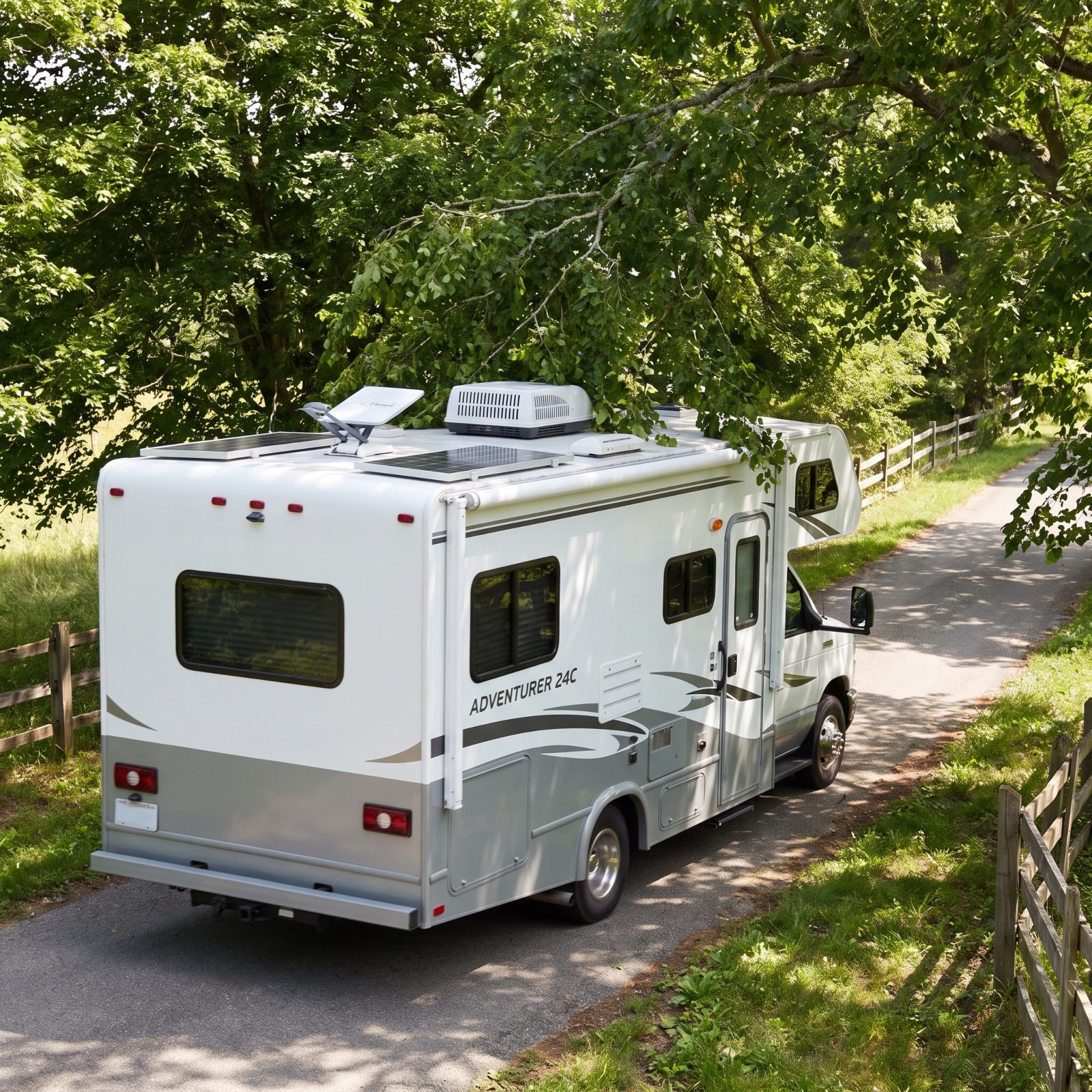
You see a clear windshield and assume clear road. The rooftop begs to differ.
Your air conditioner, TV antenna, solar array, and the roof edge all ride two or three feet above the cab, and they meet overhanging branches long before anything in your line of sight does. On tree-lined campground loops and narrow country lanes, the hit arrives as a scrape you feel more than see.
29. Sagging Utility Lines Strung Low Over Back Roads
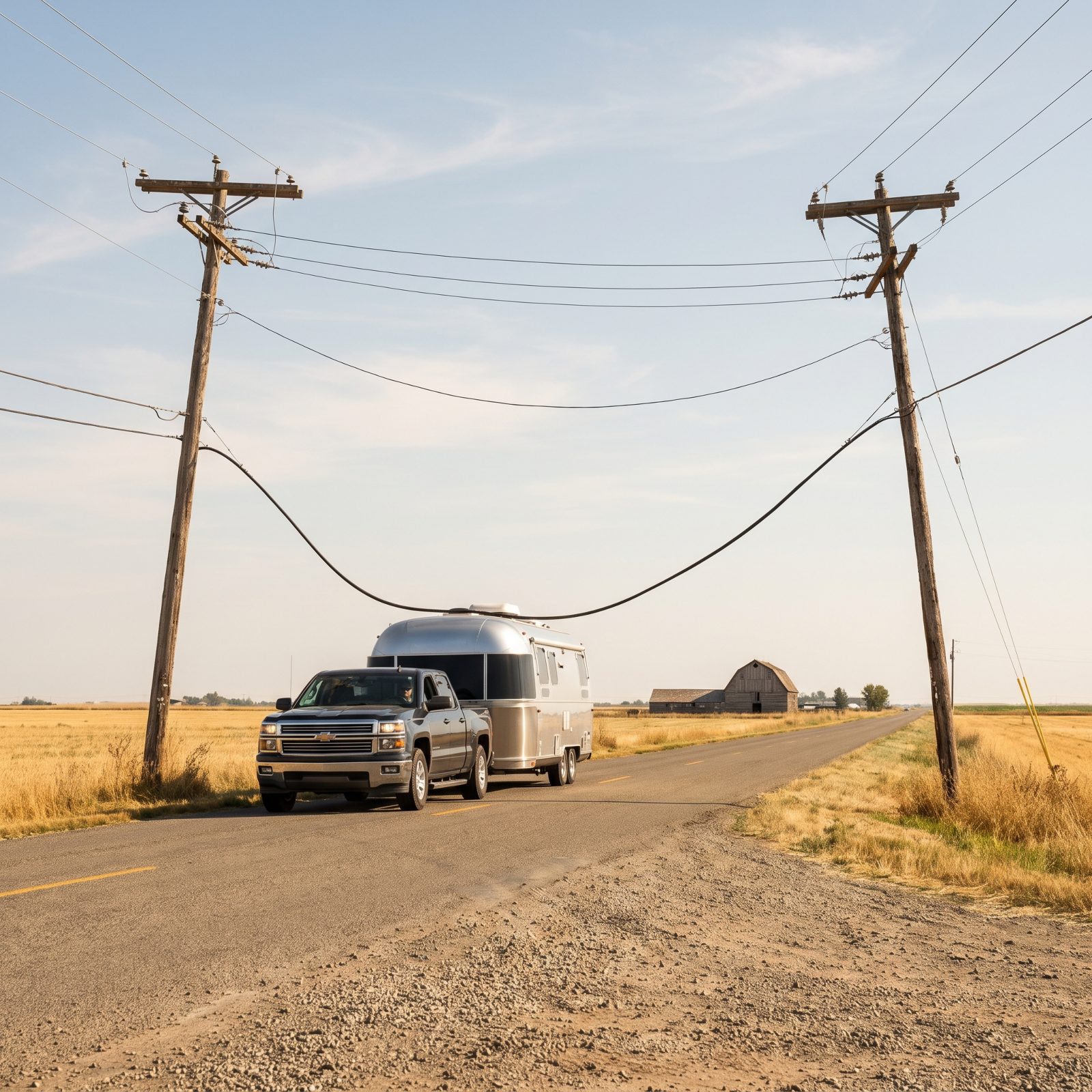
Utility lines over country roads were hung for cars, not for a thirteen-foot roof. Heat and a few decades of weather pull them lower every year.
A sedan glides under without a thought. Your roofline might be the first thing on that whole stretch to meet a drooping cable in years. And catching one isn’t a scrape — it can pull down a pole, drag live wires across the pavement, or hook your roof and stop you cold. Old farm roads and private drives are the usual culprits. Nobody’s been out to re-tension those spans since Nixon, probably.
28. Fuel-Station Canopies Your Roof Equipment Won’t Clear
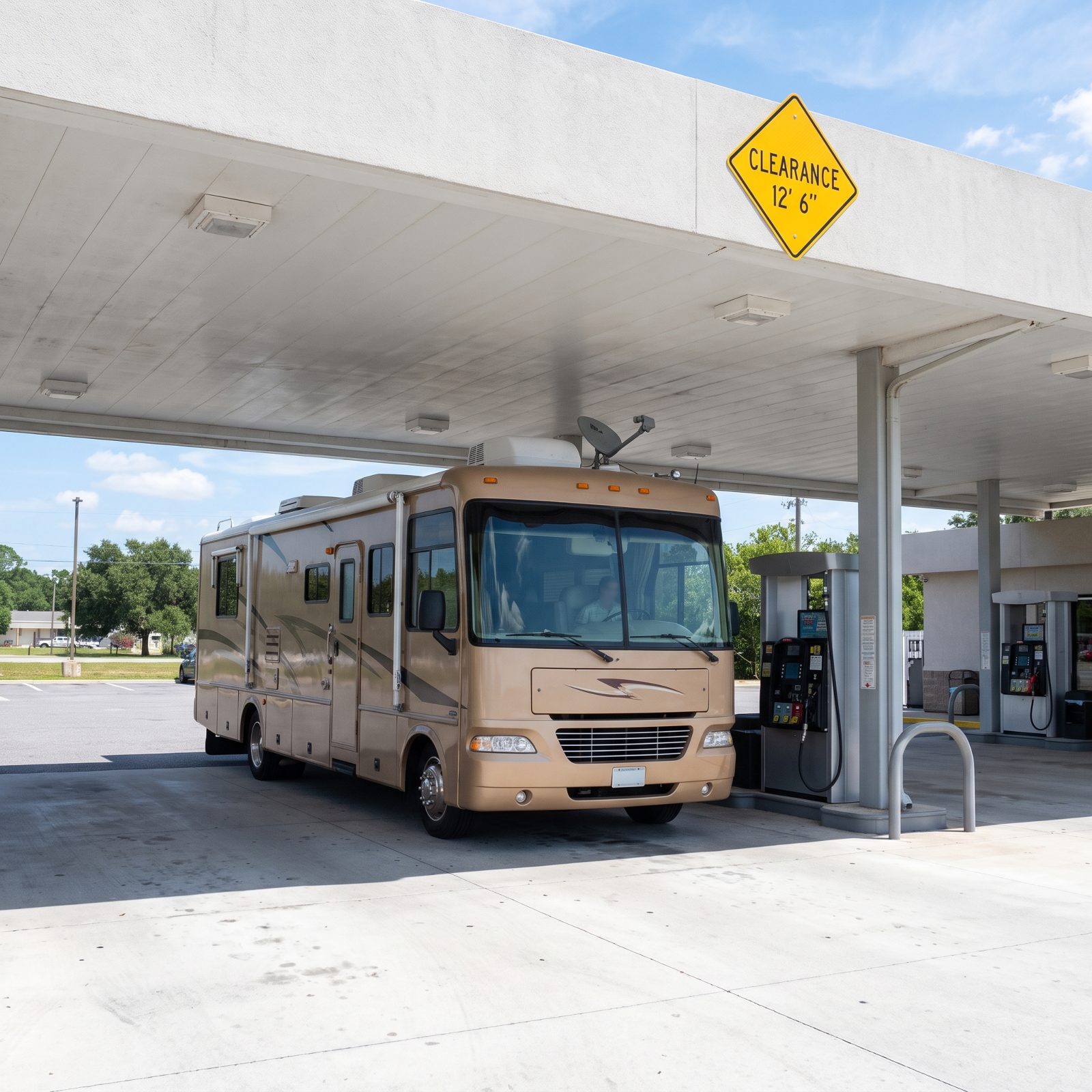
The body of the rig slides under with room to spare, so you relax. Then the roof-mounted AC finds the steel you were sure you’d cleared.
Posted clearances measure to the lowest point of the canopy. Your real height includes every last thing bolted to the roof. Lots of ordinary gas stations hang canopies in the twelve-to-fourteen-foot neighborhood, and a tall RV sits right in that band once you count the hardware up top. So know your true roof height — write it somewhere you’ll actually see it from the driver’s seat — and make truck-stop fuel islands your default instead of some cramped corner station.
27. Checkpoint Canopies at Border and Agricultural Inspection Lanes
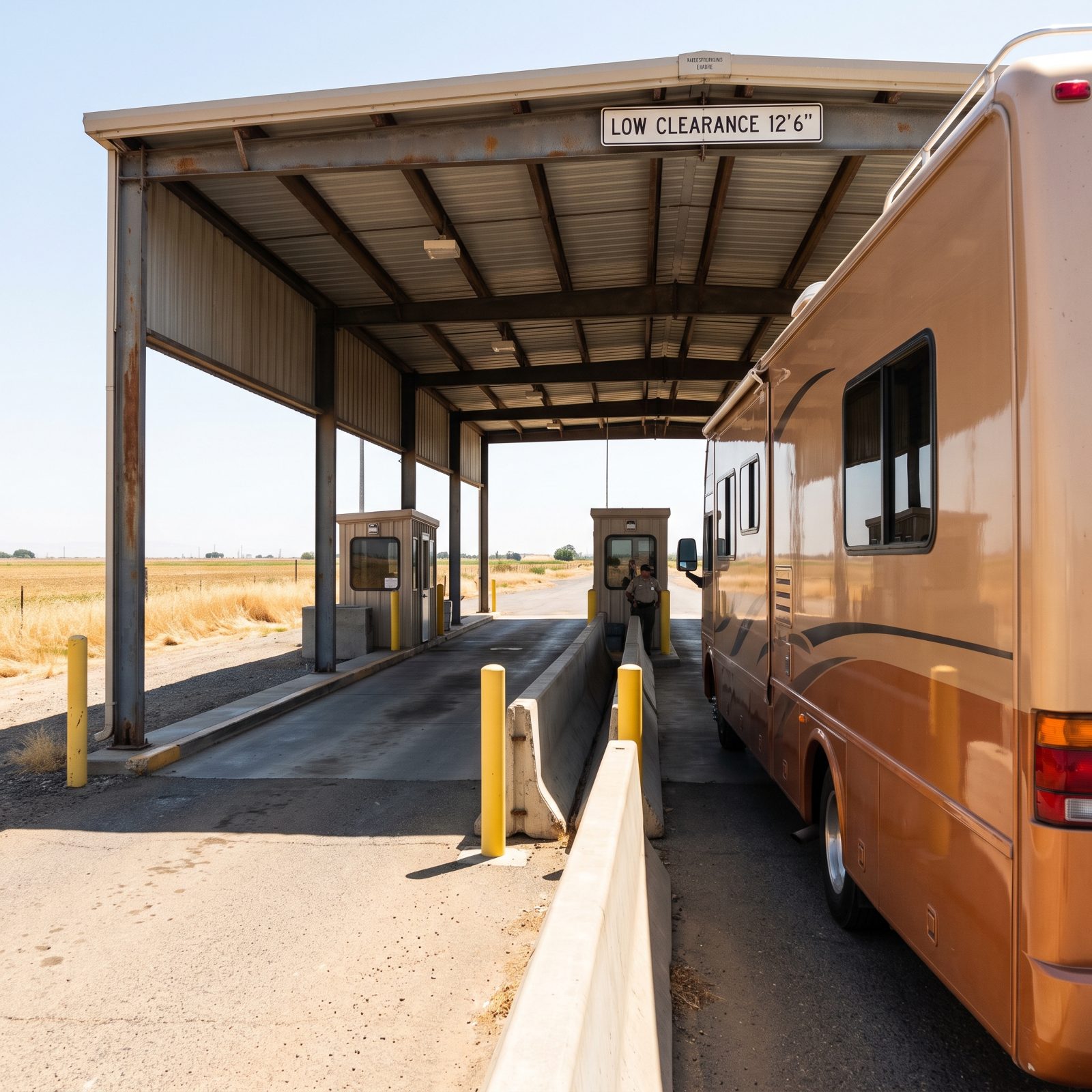
Inspection lanes are built to channel you, not to let you reconsider. Bollards and dividers lock you in before you can read the overhead.
Agricultural checkpoints and border crossings often run fixed canopies over the booths, and once you’re wedged between the dividers, backing out becomes a production that jams up the whole line. Tall rigs end up staring at a clearance bar with a truck on their bumper and nowhere to go.
26. Tollbooth Lanes Narrower Than Your Mirrors and Awning
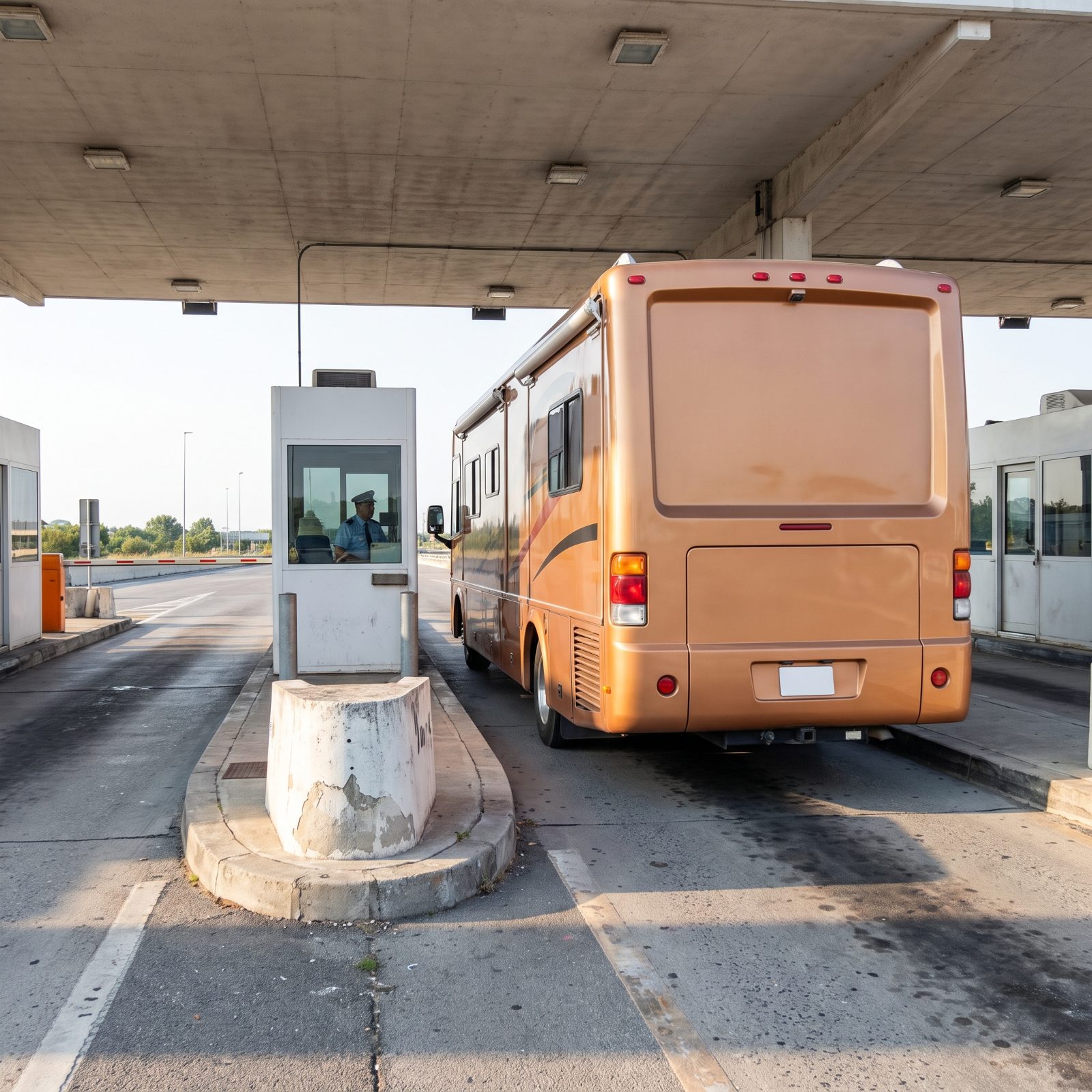
Older toll lanes were striped for cars, and your rig gets measured at the mirrors, not the fenders.
Fat side mirrors, a patio awning left rolled out, wheel hubs — they all poke out past the body you’re watching through the windshield. Thread the body dead-center down the lane and you can still clip a booth island or a curb with the parts you forgot you had. Open-road and automated lanes run wider and are a lot kinder to anything RV-sized. Given the choice, take the lane that doesn’t have a concrete chute on both sides.
25. Temporary Work-Zone Signs Leaning Into Your Lane
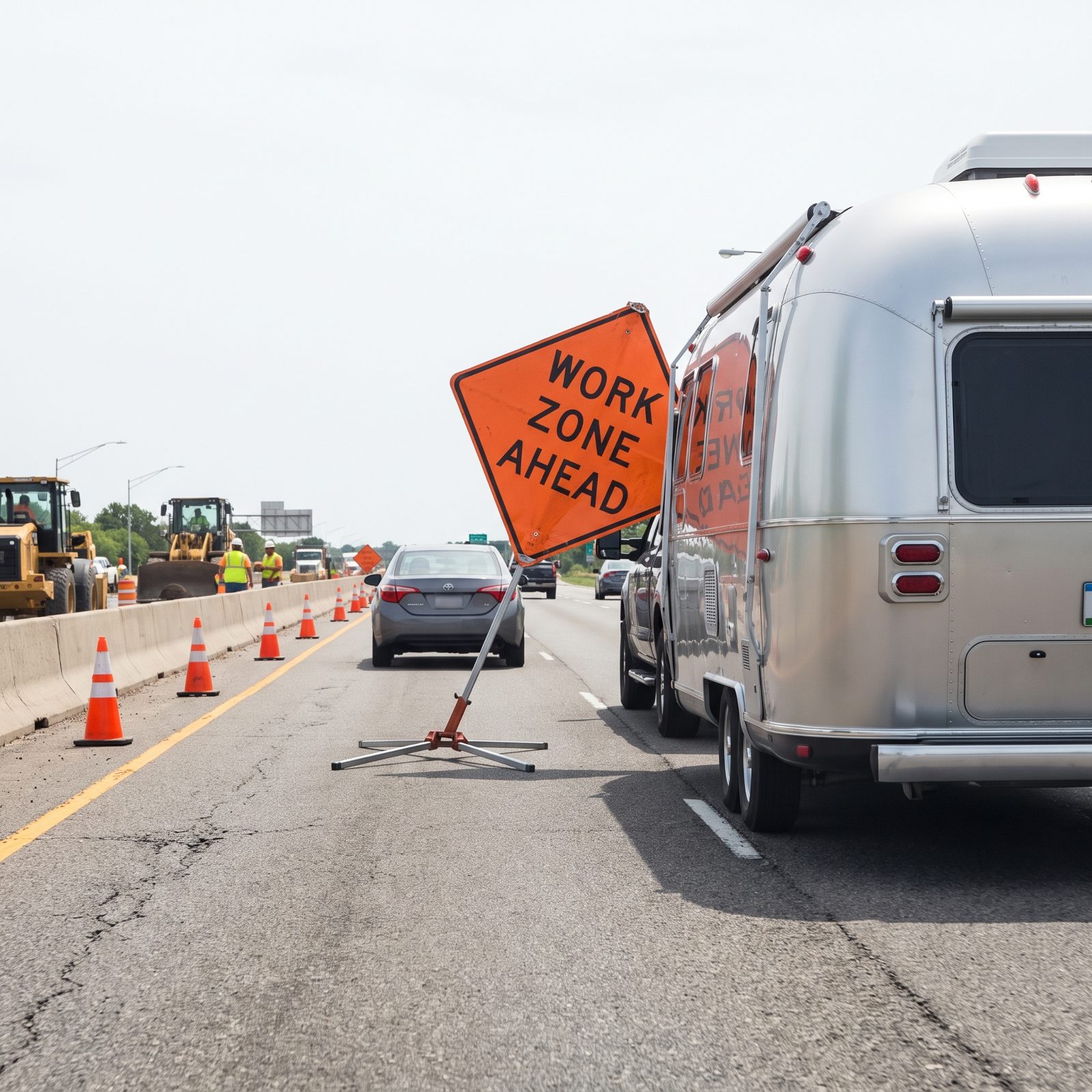
Portable work-zone signs perch on folding stands, and a little wind, a few bumps, or a glancing knock from a mirror leaves them tilted into the lane.
A car breezes past at bumper height, no problem. Your roof corner and awning housing ride higher and farther out — exactly where a leaning sign lives. And in a narrowed work zone you usually can’t swing left to dodge it, because left is the barrier or oncoming traffic. So the sign that looked perfectly harmless to the ten cars ahead of you catches the top edge of your rig and shears a corner clean off.
24. Steep Driveway Crests That Ground a Long Wheelbase
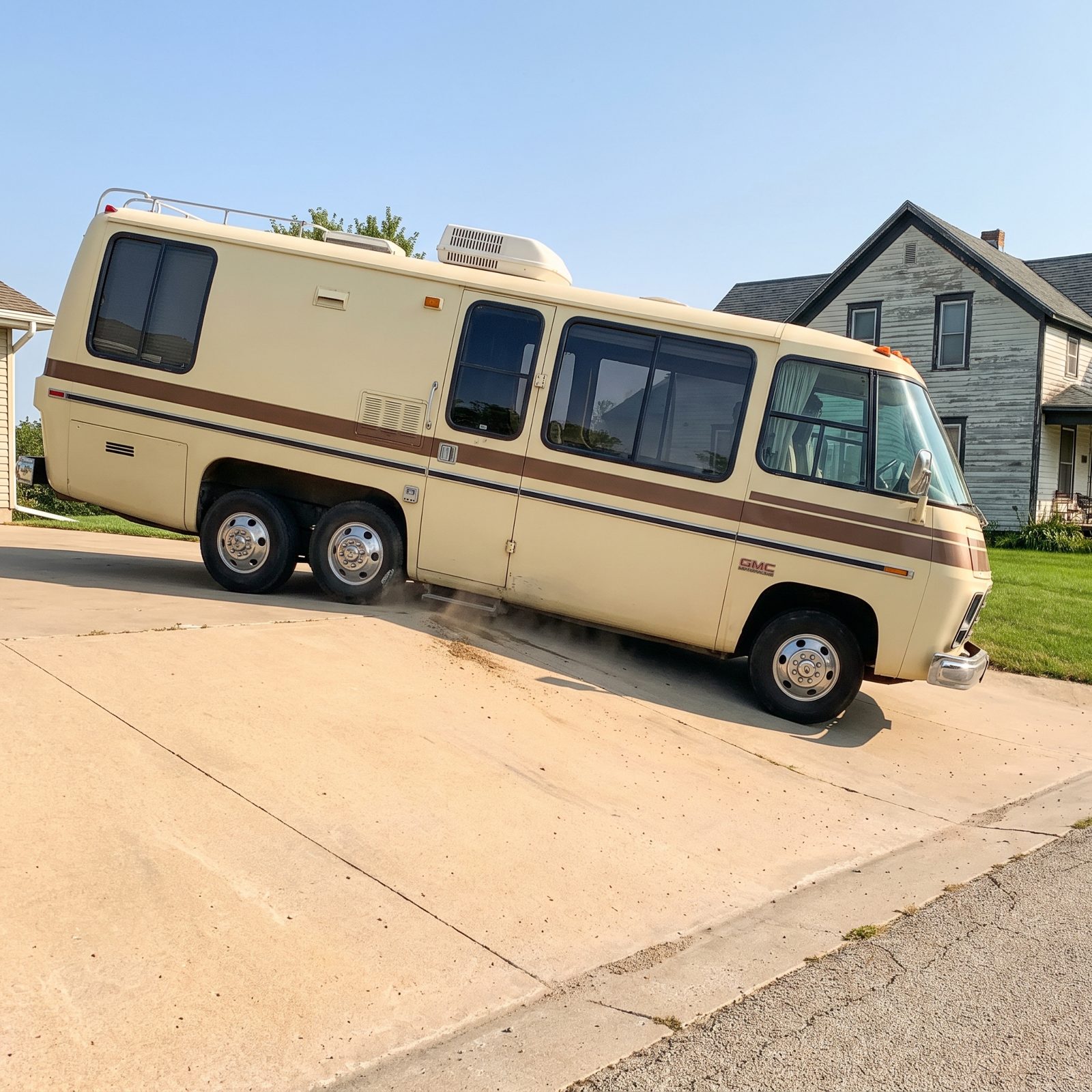
A short car rolls over a steep crest one axle at a time. A long rig tries to bridge it, and now the belly is the lowest point on the vehicle.
When the grade breaks hard at a driveway apron, campground entrance, or gas-station lip, your front wheels drop down the far side while the rears are still climbing the near one. The middle of the chassis rides up onto the high point and drags. Scraped sewer connections, bent steps, a motorhome high-centered like a kid stuck on a seesaw.
23. Deep Entrance Gutters and Drainage Dips That Grab the Hitch
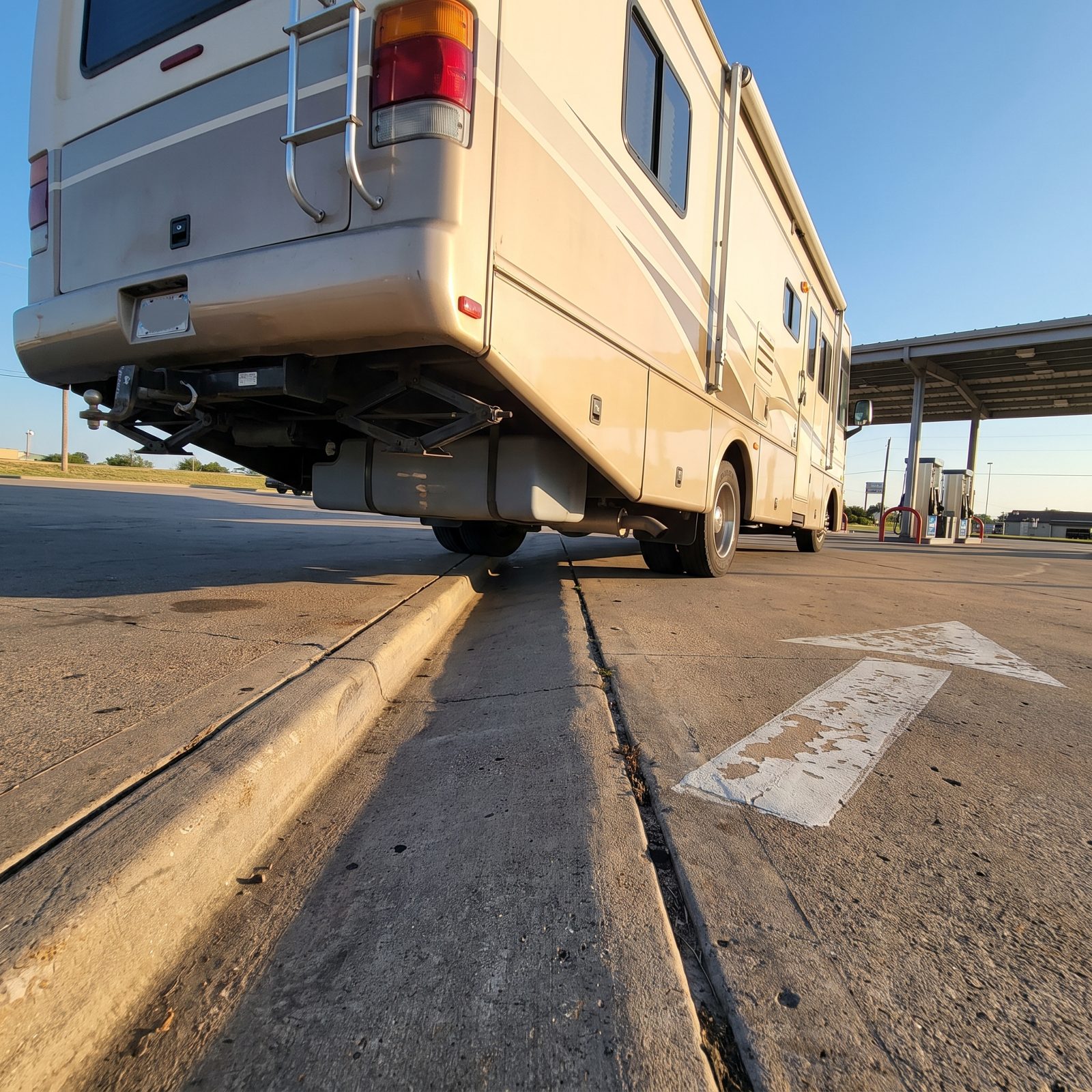
The spot that eats low-clearance rigs is almost never on the highway. It’s the entrance to a gas station or a campground, where a drainage gutter cuts a sharp V across the apron. Your front wheels climb the lip, the chassis pivots, and that long rear overhang drops right where your hitch bar, step, or dump valves can find concrete.
Approach at an angle so only one wheel drops into the dip at a time. A long motorhome dragging a toad behind it is the nightmare version. And that scrape you hear? Usually the sewer connection — an expensive noise.
22. Single-Lane Bridges With Raised Curbs You Can’t See
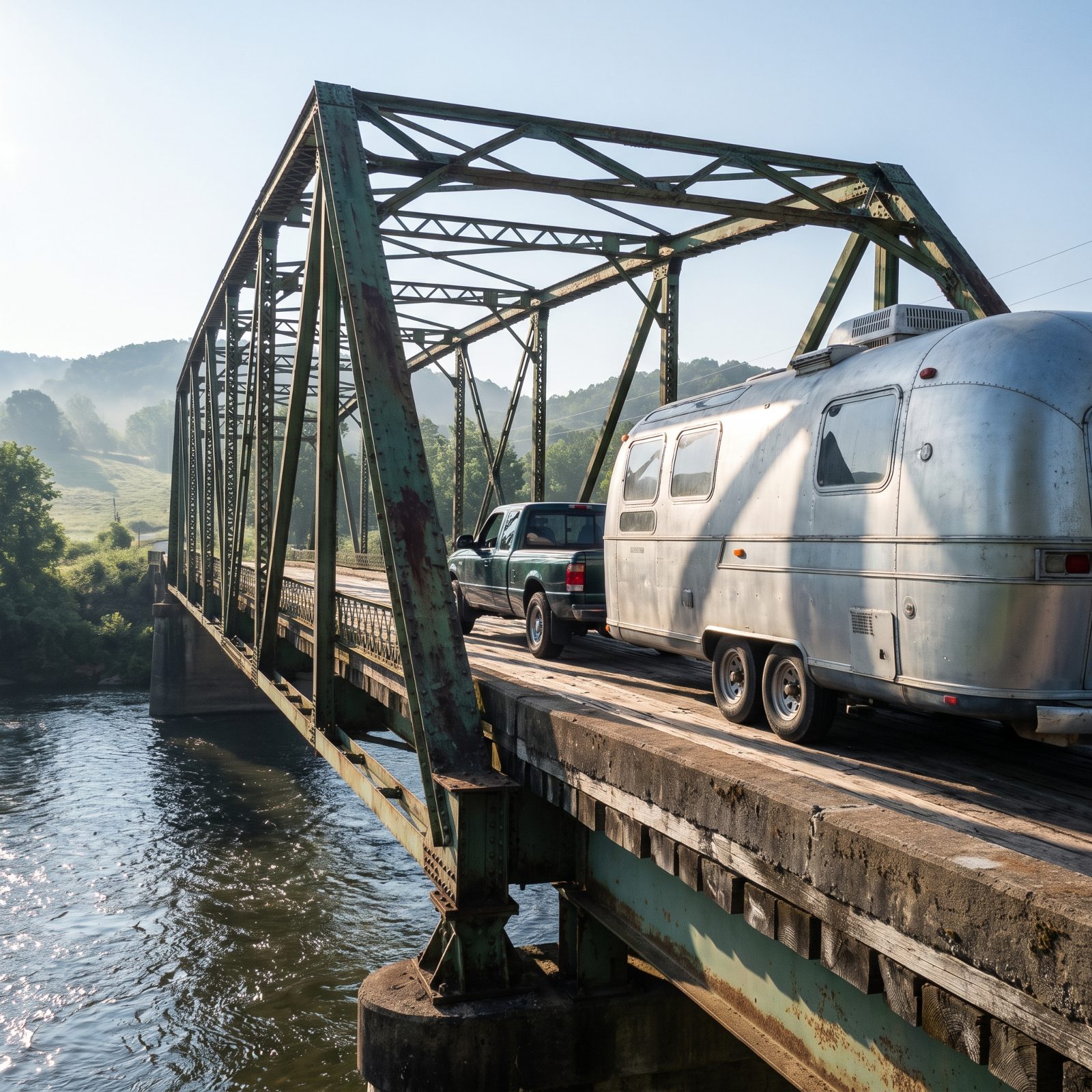
The mirrors lie to you here. On a narrow single-lane bridge your side mirrors clear the curbs with room to spare, so your brain signs off. But your truck’s rear wheels and the trailer tires ride lower than the mirror line — and they’re the ones that catch the raised curb.
A curb hit at bridge speed can blow a sidewall or bend a rim. Center up and creep. If a curb is rising on one side, your low tires are closer to it than anything you can see from the driver’s seat.
21. Right Turns With High Curbs and a Rear Axle That Cheats Inward
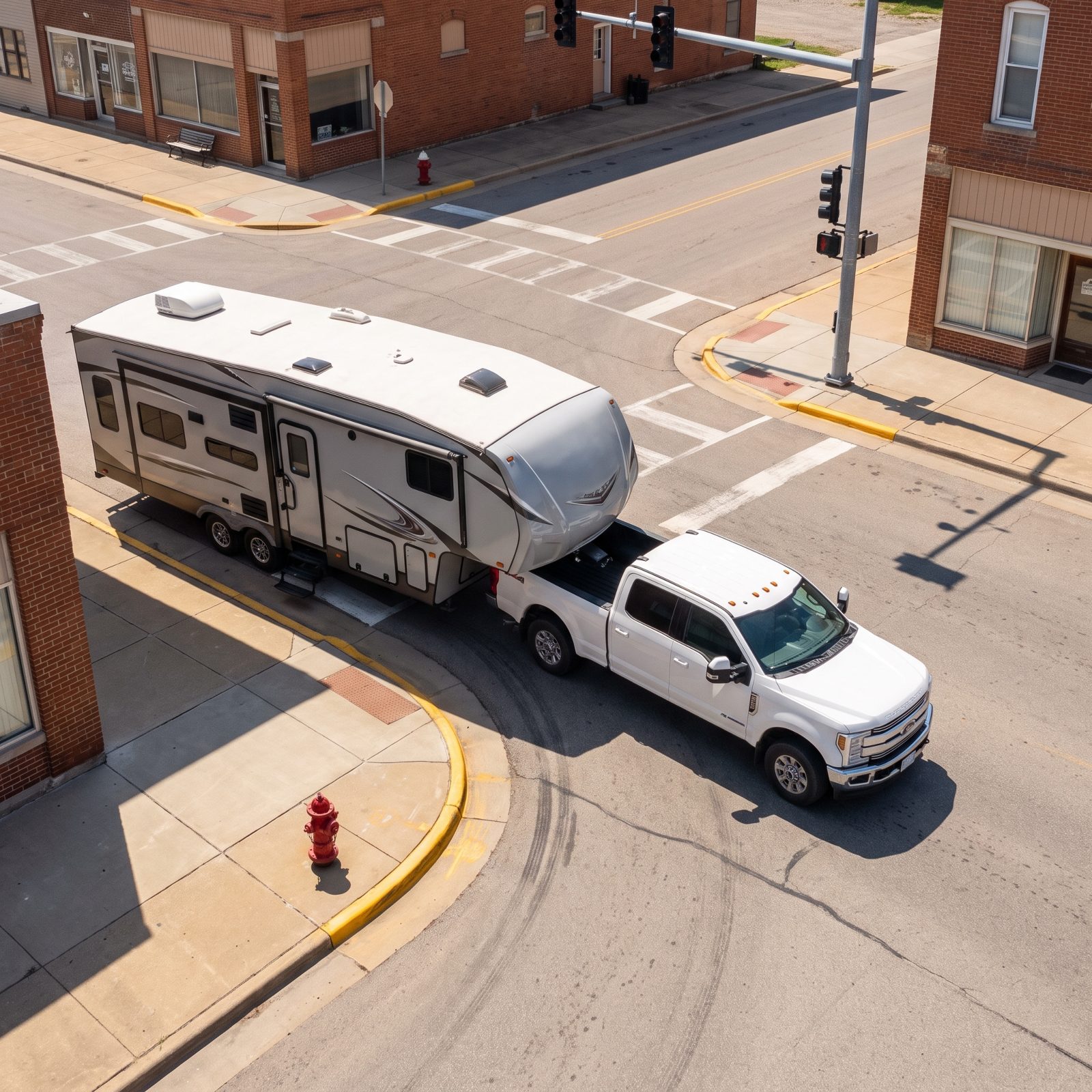
Watch a bus take a right and you’ve already seen the physics. The driver swings wide, and the rear wheels still cut the corner anyway. In an RV or a towed trailer that inside path can run two or three feet tighter than where you’re sitting.
High curbs are where it gets expensive. Catch one with the rear duals and you’ll roll a tire off the rim or crack a wheel. Swing wider than feels natural, let the front end drift toward the far lane, and give that back axle the room it’s going to take whether you planned for it or not.
20. Mountain Switchbacks Where the Trailer Cuts the Corner
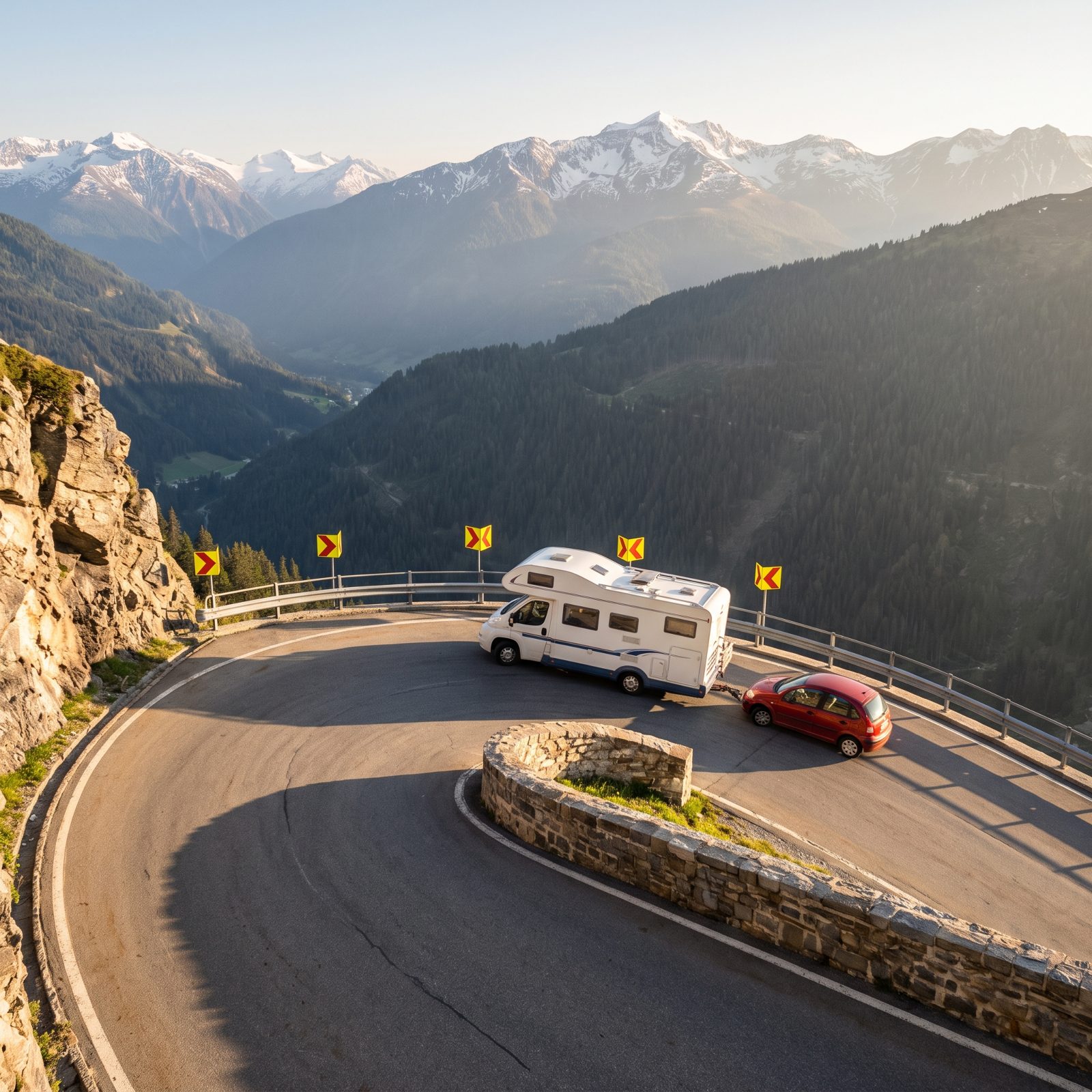
Switchbacks punish length more than height. The tow vehicle sweeps the outside of the hairpin, clears it clean, and feels fine — while the trailer or towed car behind you still has to make the turn. On a tight arc it slices across the inside of the bend, hunting for the wall or the drop.
Take these slow and run wide on the approach. The tighter you make the arc for the tow vehicle, the worse the cut for whatever’s hitched behind it. Throw in oncoming traffic and loose gravel on the inside line and it gets ugly.
19. Traffic-Calming Chicanes Built for Sedans, Not Rigs
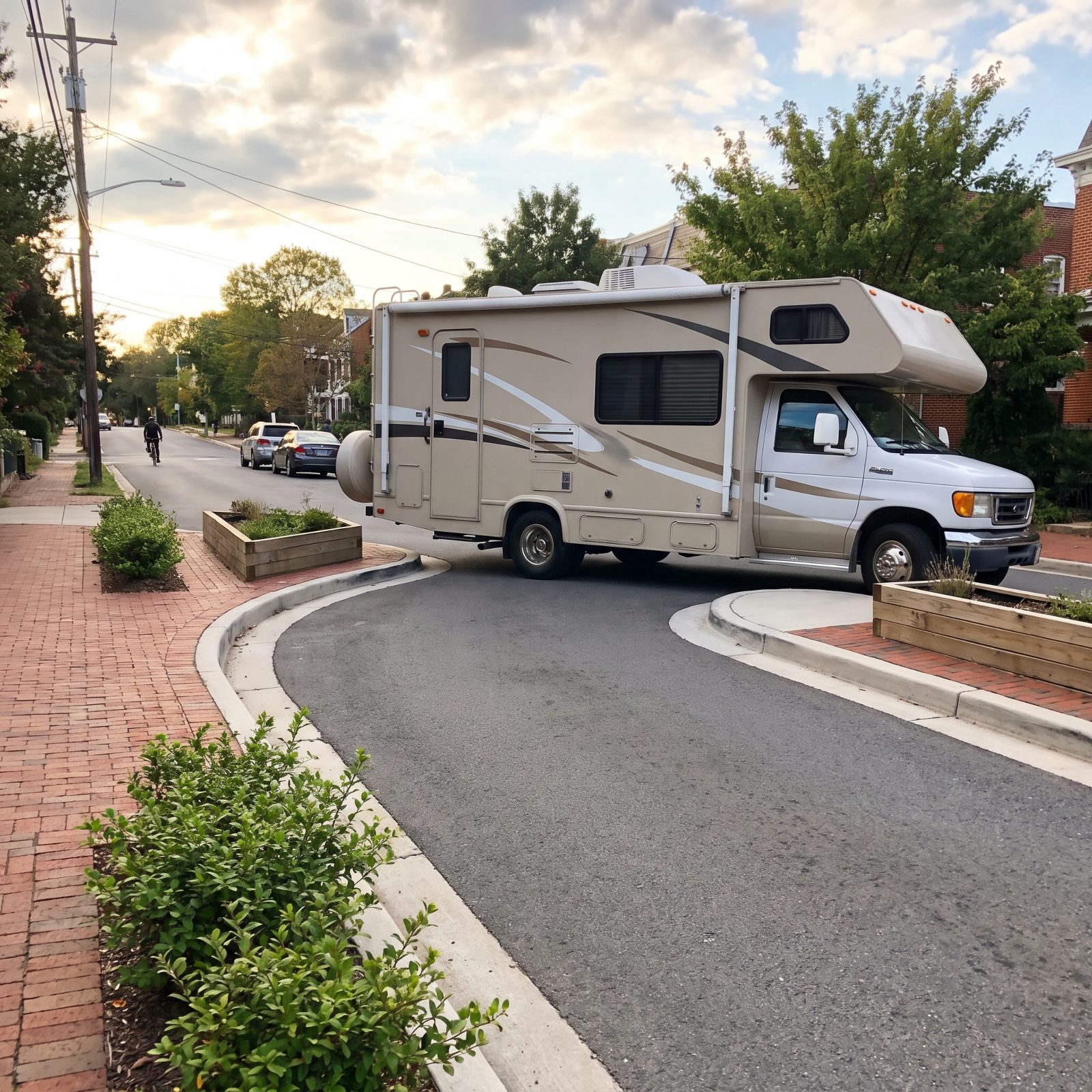
Someone designed the chicane to slow a Honda. They did not picture a thirty-foot Class C threading it.
Those alternating curb bulbs force a little S-wiggle that a car shrugs off. A long rig can’t make both offsets without its tail swinging toward the opposite curb as the nose clears the first one, and suddenly you need lateral room the street physically does not have.
Slow to a crawl, take one bulb at a time, and don’t be shy about straddling the centerline on an empty residential lane. These show up near schools and town centers — right where you least want to misjudge your tail.
18. Dead Ends and Gated Closures With Nowhere to Turn Around
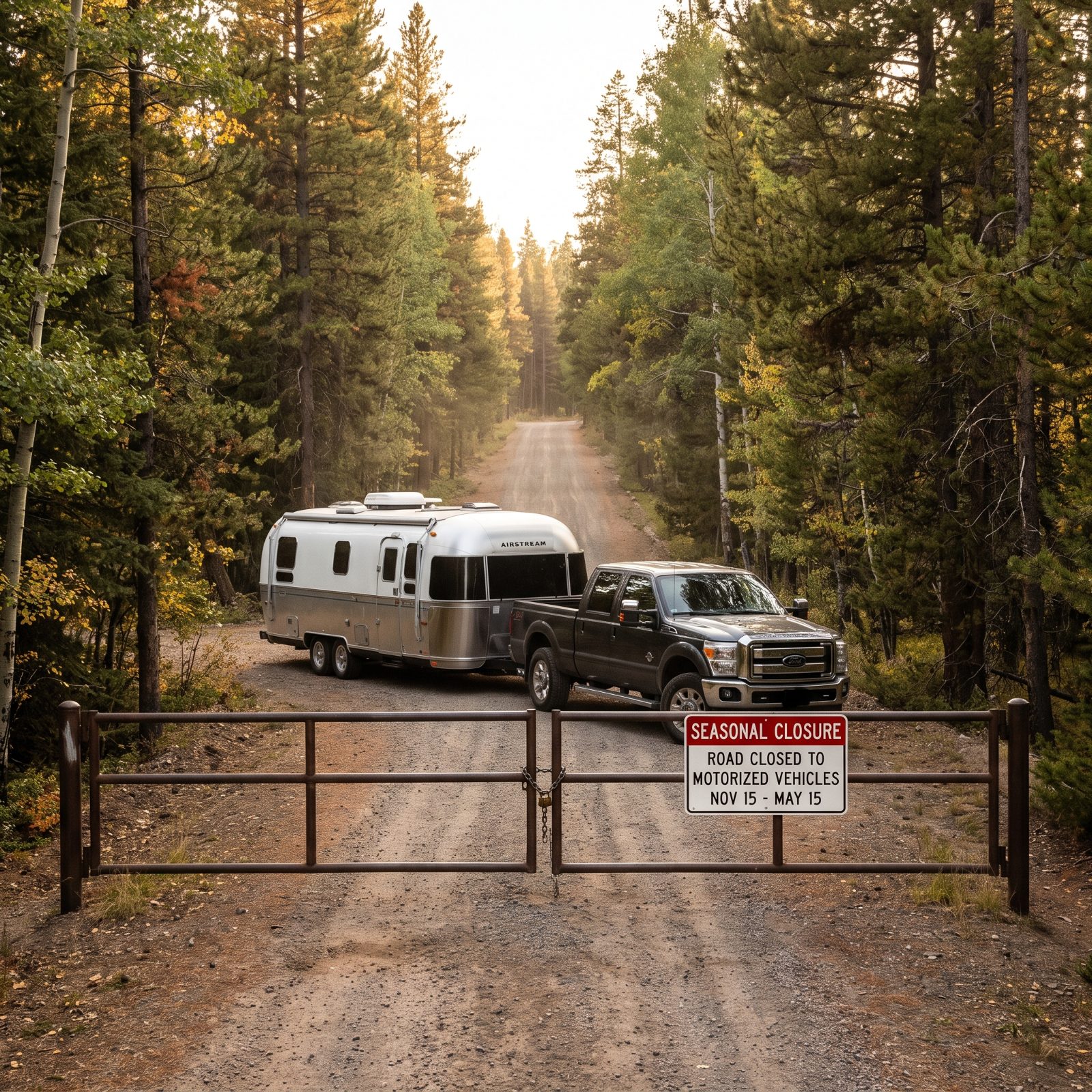
The gate is the gut-punch at the end of a pretty forest road. You followed it in, the shoulders closed up behind you, and now there’s a locked barrier ahead and no circle wide enough to swing a long combination around.
Which means reversing. A trailer in reverse, down a tree-lined gravel lane, maybe for a half mile, back to the last junction you can actually use. In failing light, that’s a long evening.
17. Weight-Restricted Rural Bridges That Look Perfectly Fine
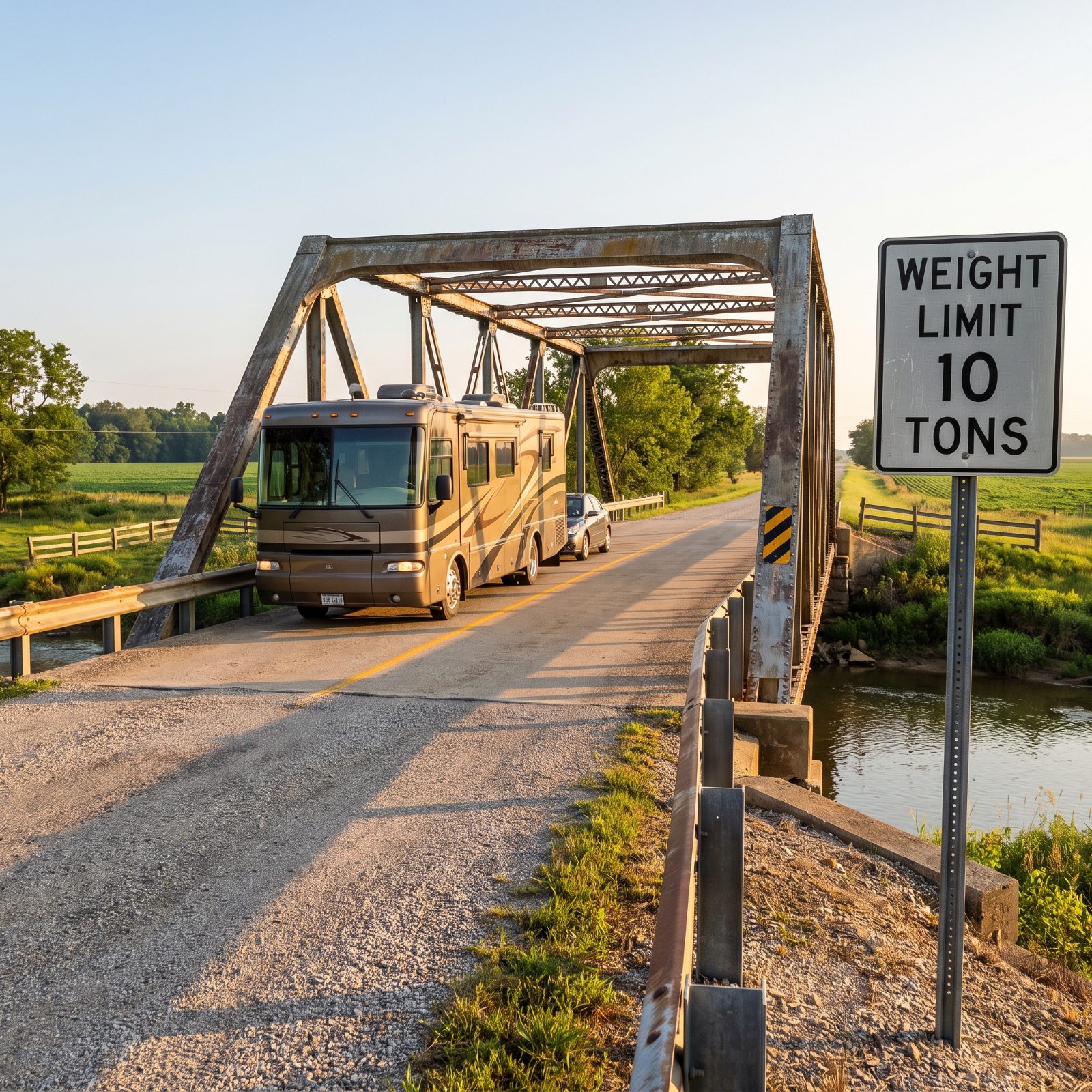
A loaded motorhome weighs more than almost any driver guesses. Full water, full fuel, a basement packed with gear, a car hanging off the back — the number climbs fast, and plenty of owners have never once seen it on a scale.
Rural bridges post limits that look generous until you do the math. The structure looks solid, so people roll across without a thought. Know your real gross weight, respect the posted limit, and when it’s close, find another route. This is not a number to round down in your head.
16. Cattle Guards Too Narrow or Too Light for a Heavy RV
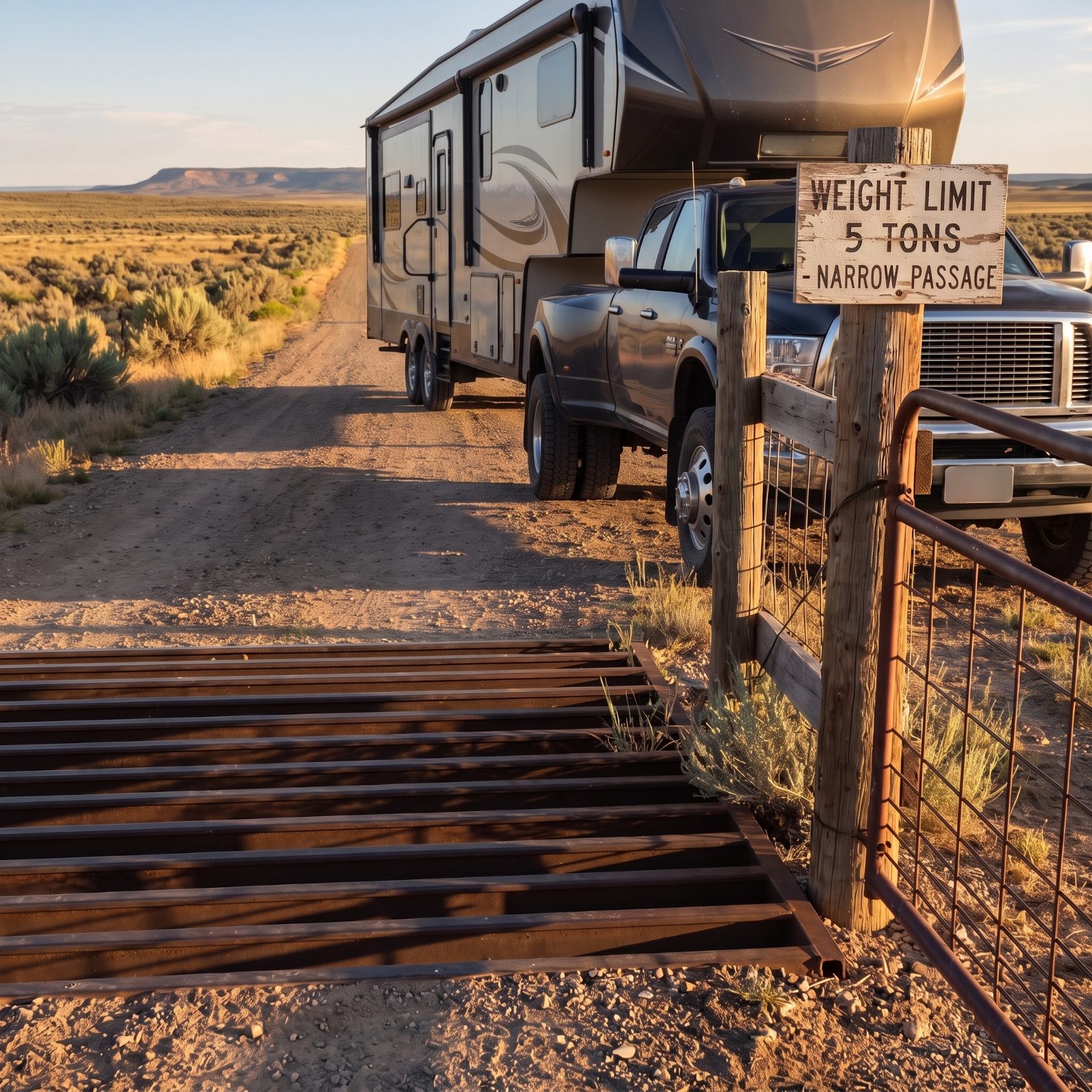
Cattle guards look like a minor nuisance until you’re straddling one in a heavy rig. The rails are spaced for ranch trucks, so a dually’s wide track or a wandering trailer tire can drop a wheel between bars if your alignment is off.
Some are posted for weight too, and those postings aren’t decoration. An old guard spanning a culvert can be the weakest point on the whole road. Line up square, go slow, and if the width or the posted capacity looks marginal for a loaded RV, treat it like a sketchy bridge.
15. Concrete Barriers in Narrow Work Zones With No Room to Flinch
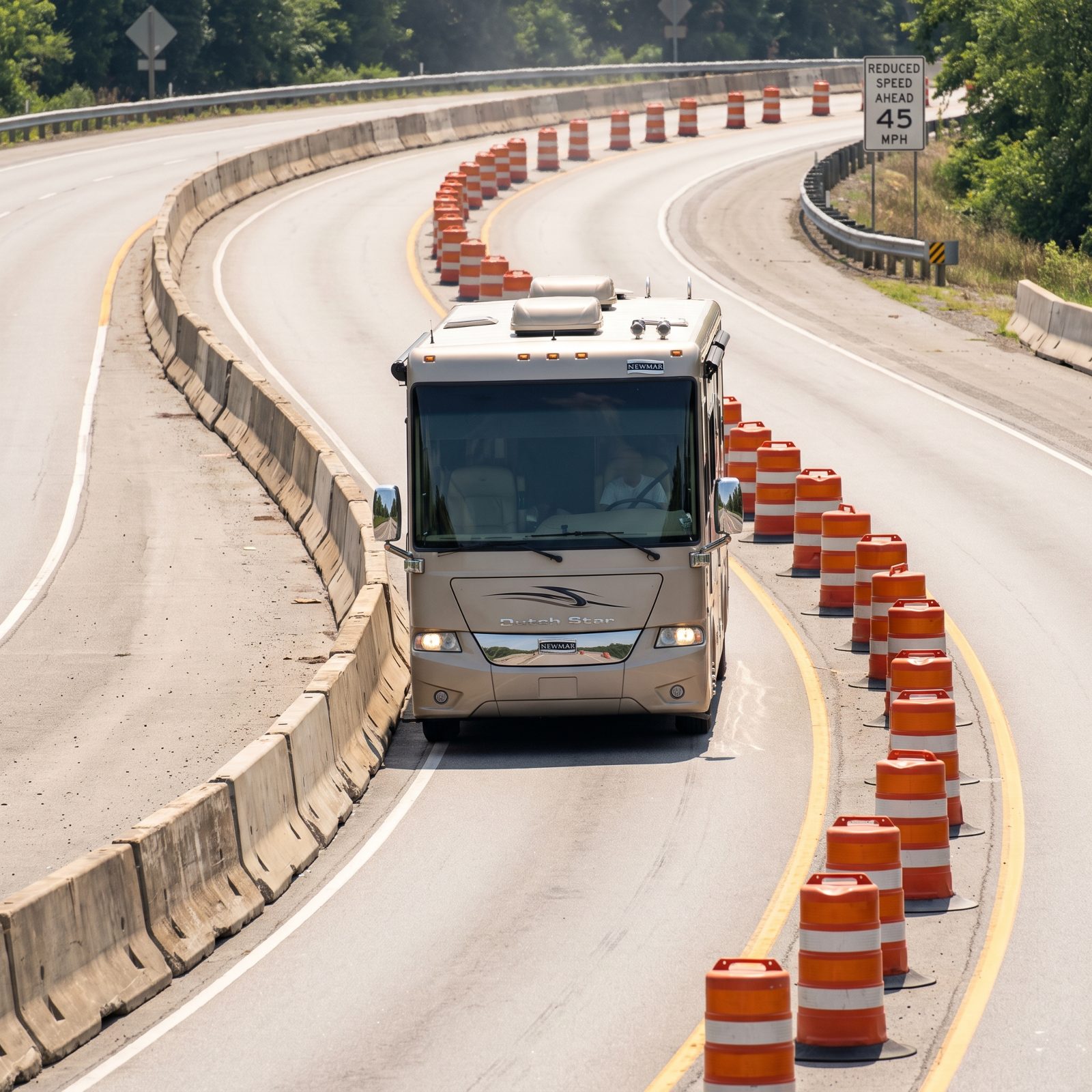
A work zone takes away your margin for error, then throws in a curve for good measure. Temporary concrete barriers narrow the lane to almost nothing, shove it sideways, and leave a wide RV zero room to drift.
In a car you’d never notice. In an eight-and-a-half-foot motorhome with mirrors sticking out further still, there’s no recovery space on either side. A gust from a passing semi, a seam in the pavement, one momentary wander — and you’re into concrete or barrels.
Drop below the posted limit, square up in the lane early, keep both hands committed. The barrier doesn’t move for you.
14. Pavement Edge Drop-Offs That Can Spin a Tall Rig
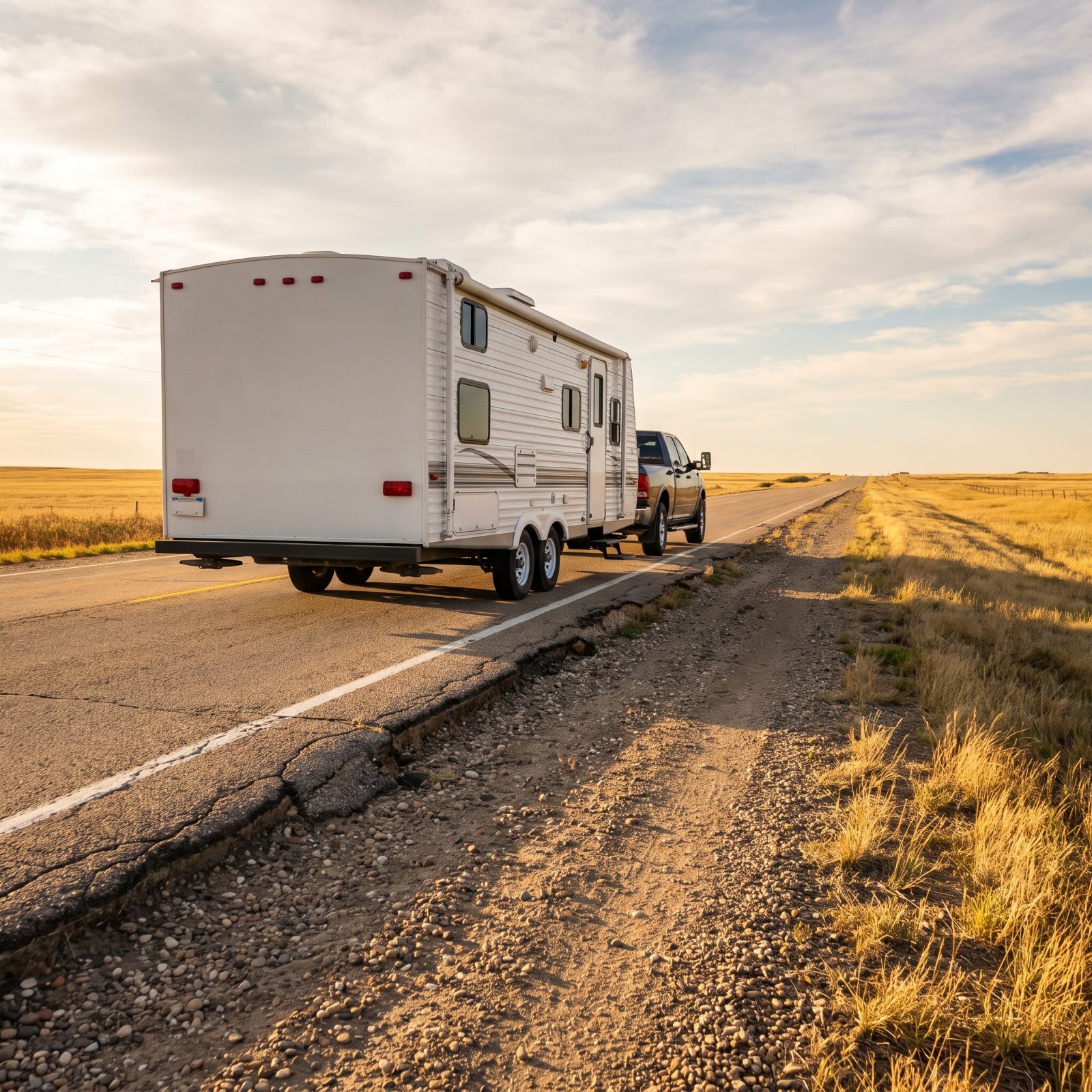
The quiet killer on back roads isn’t the ditch. It’s the lip of asphalt where the pavement meets a lower gravel shoulder.
Drift a left tire off and your instinct is to yank it back onto the road. In a tall, heavy rig that hard correction is exactly what starts the sway — and in a trailer it can snowball into a jackknife or a roll before you’ve finished the thought.
If a wheel drops off, don’t fight it. Ease off the gas, hold straight, and climb back on gently once the two surfaces sit nearly level again. A top-heavy vehicle has a high center of gravity and a short temper. Treat the edge like it bites.
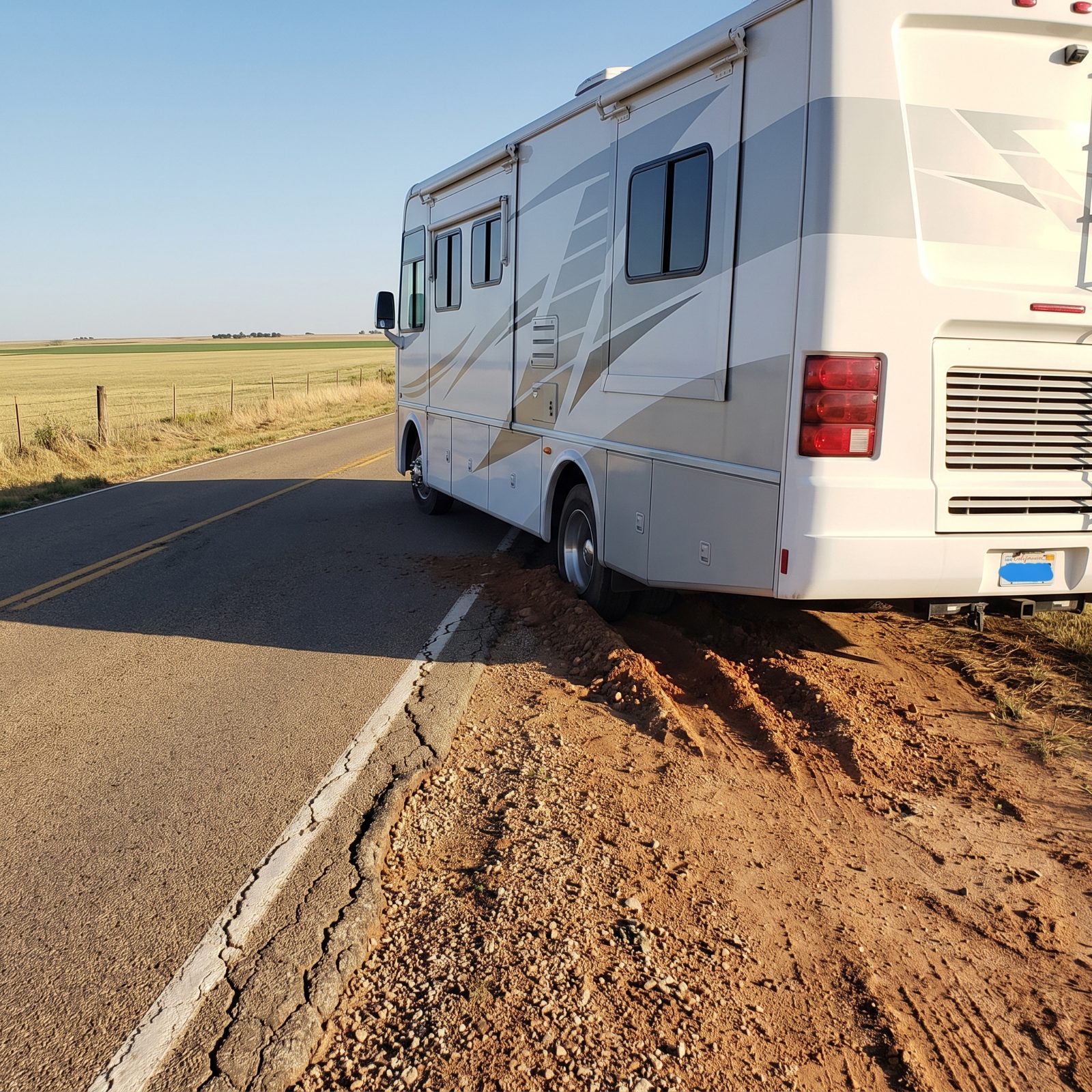
13. Soft Shoulders That Hold a Car and Swallow an RV
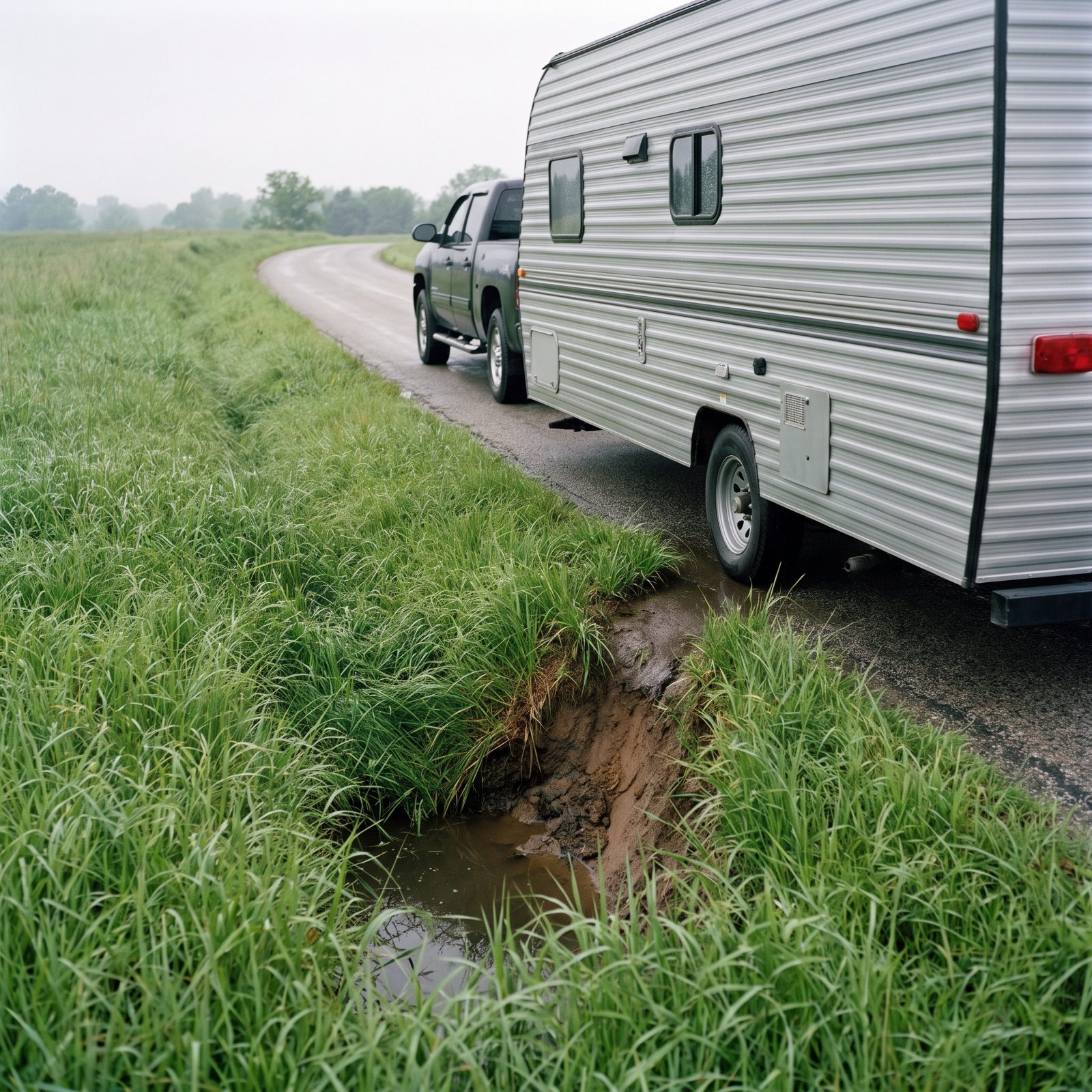
12. Grass-Hidden Ditches Waiting Just Off the Pavement
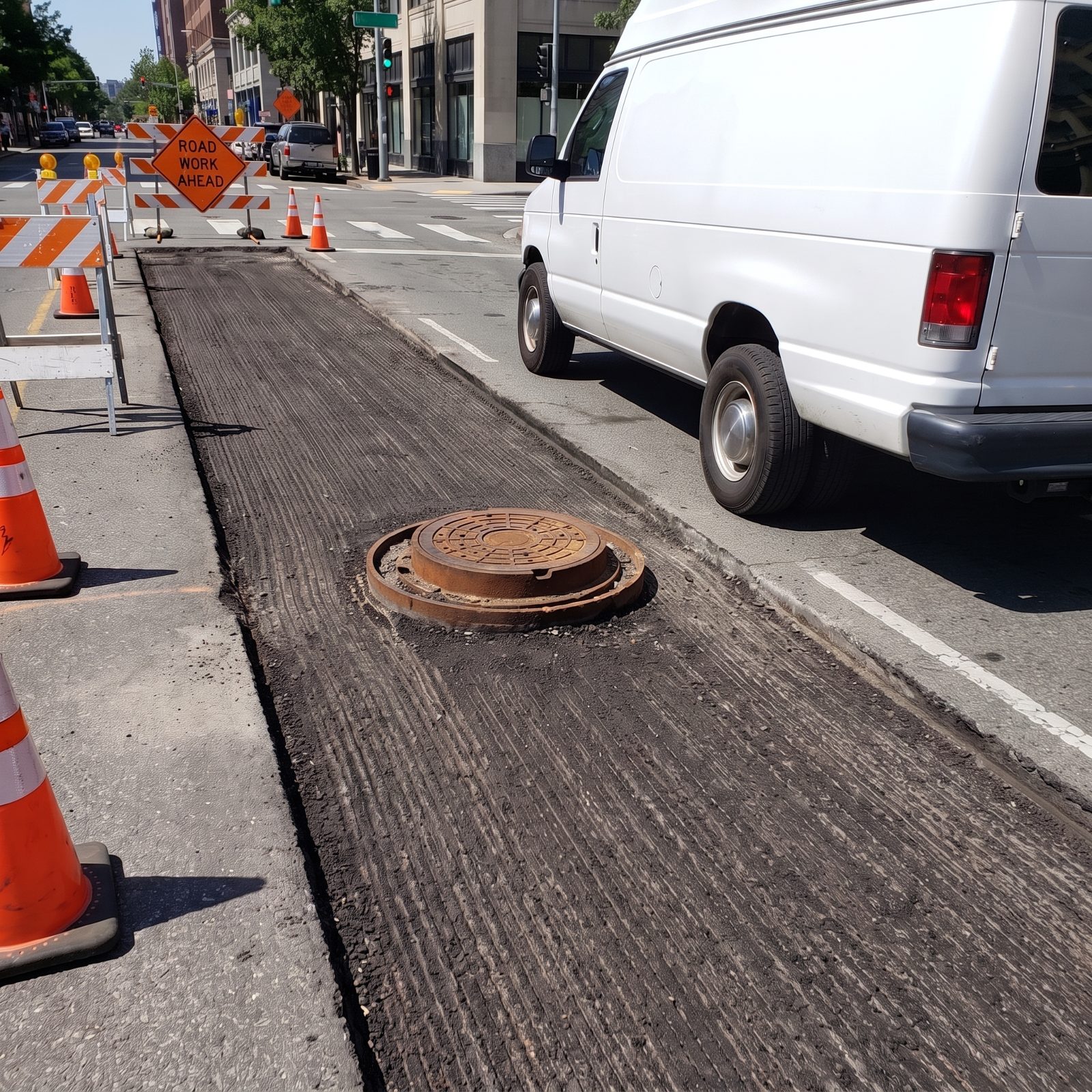
11. Raised Manholes in a Freshly Milled Lane
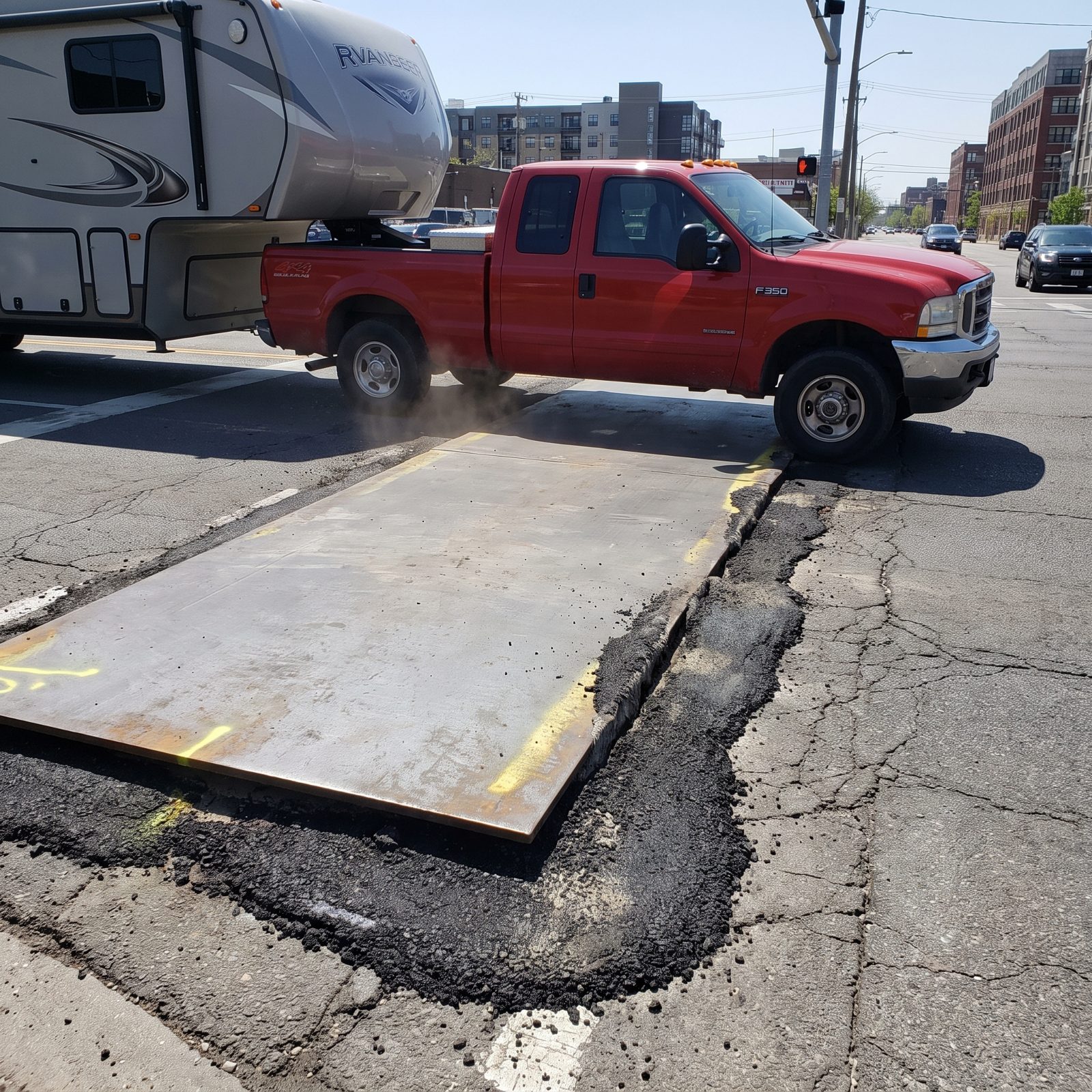
10. Road Plates With a Lip That Jolts the Whole Rig
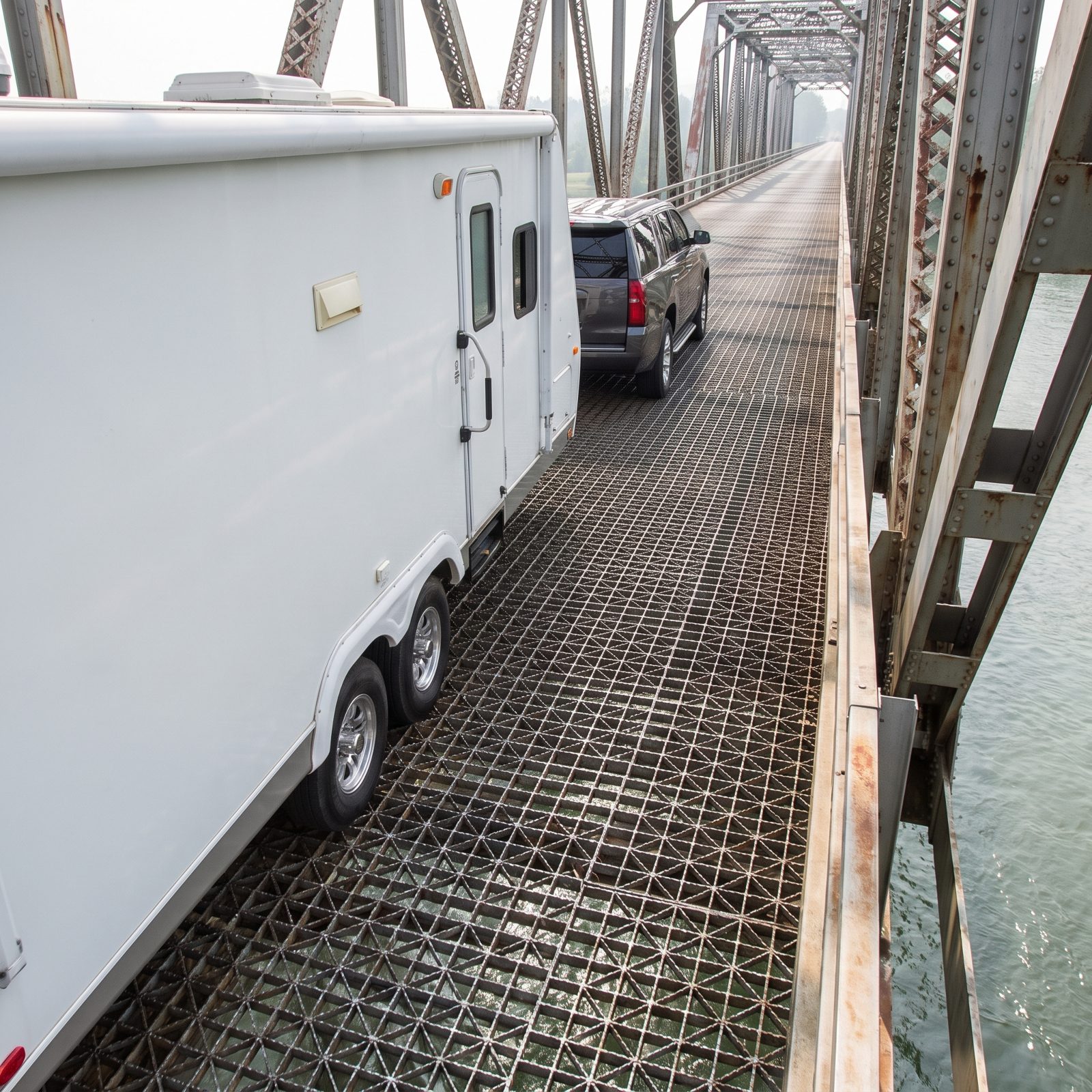
9. Open-Grid Steel Bridge Decks That Grab the Tires
8. Washboard Gravel That Rattles Everything Loose
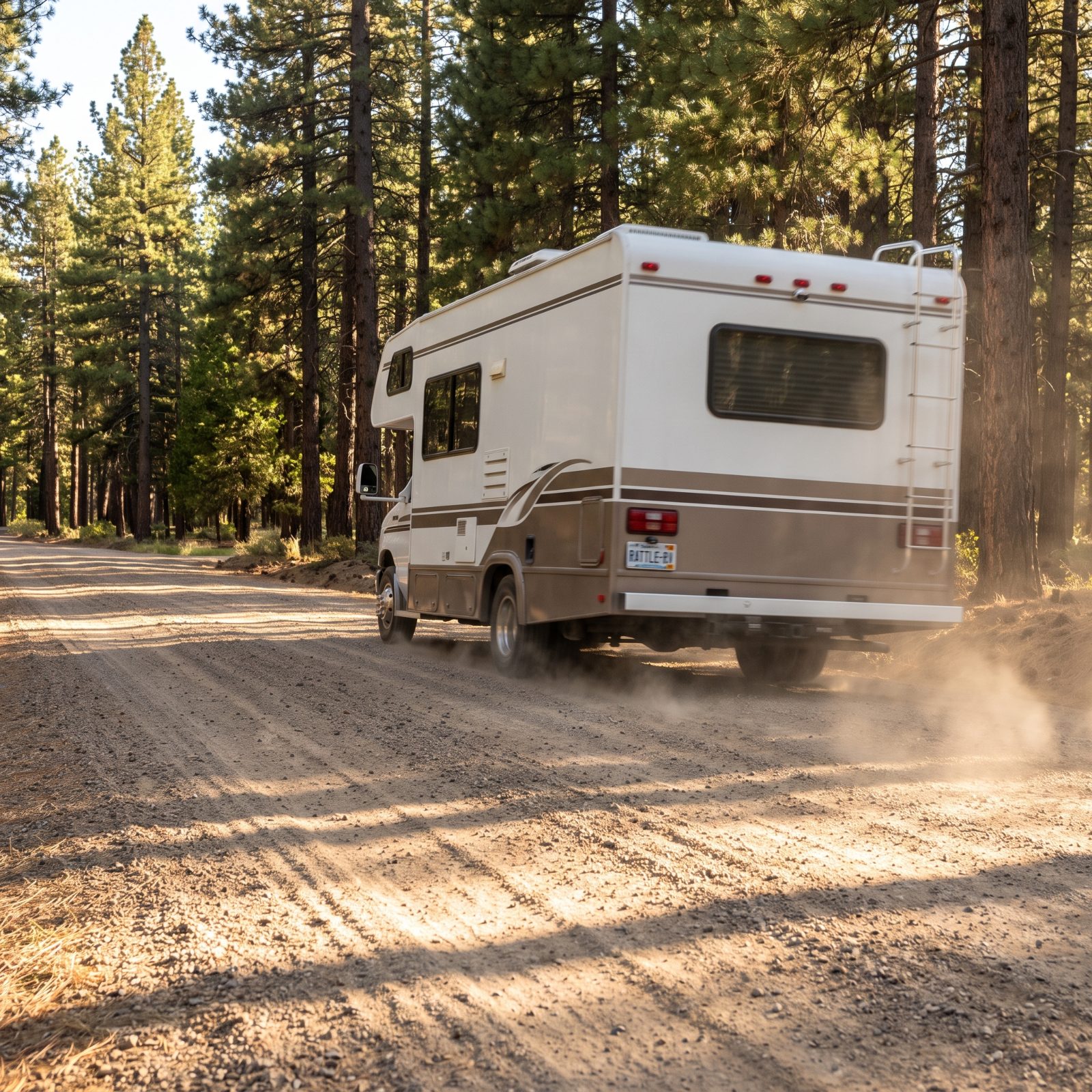
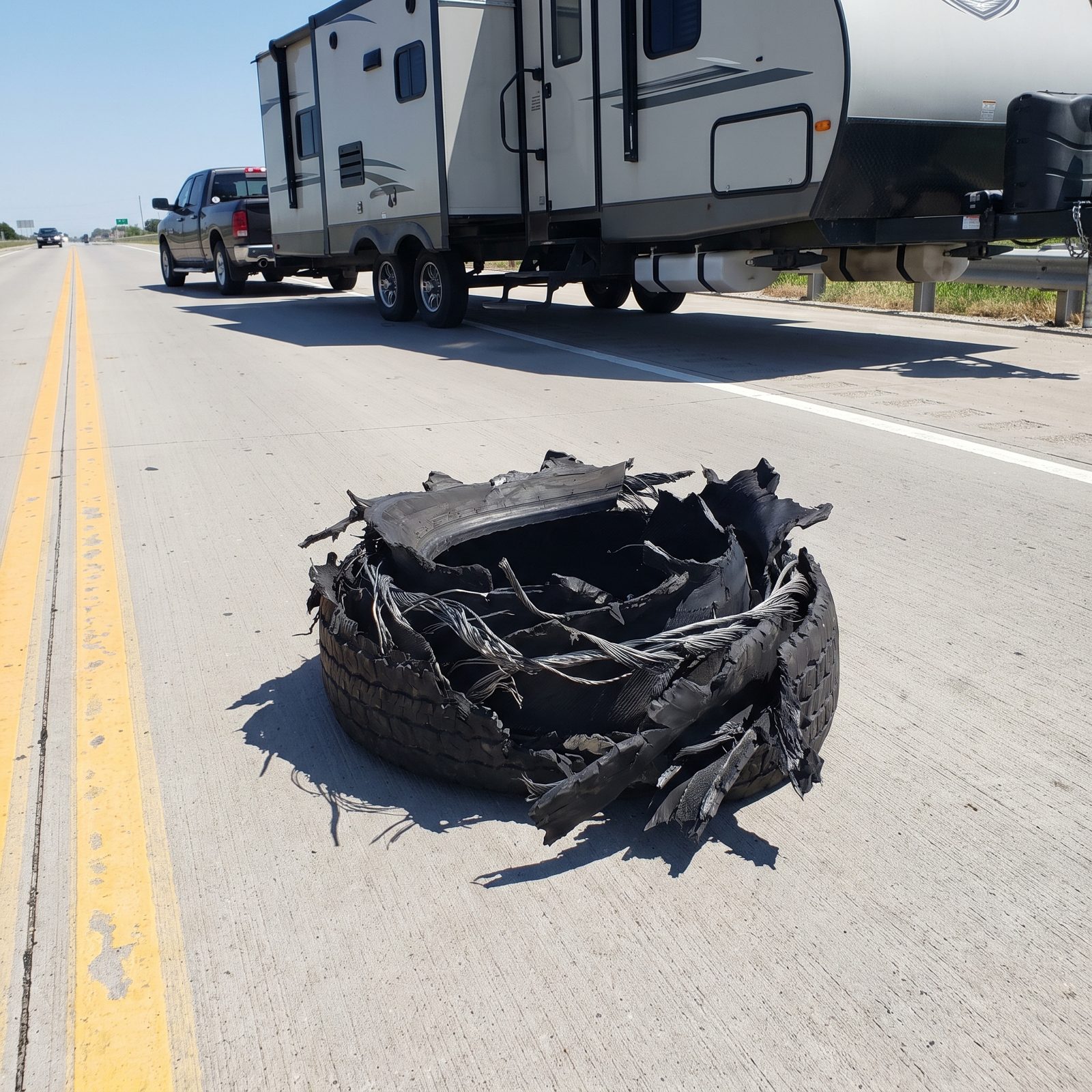
7. Shredded Truck-Tire Treads Lying in the Lane
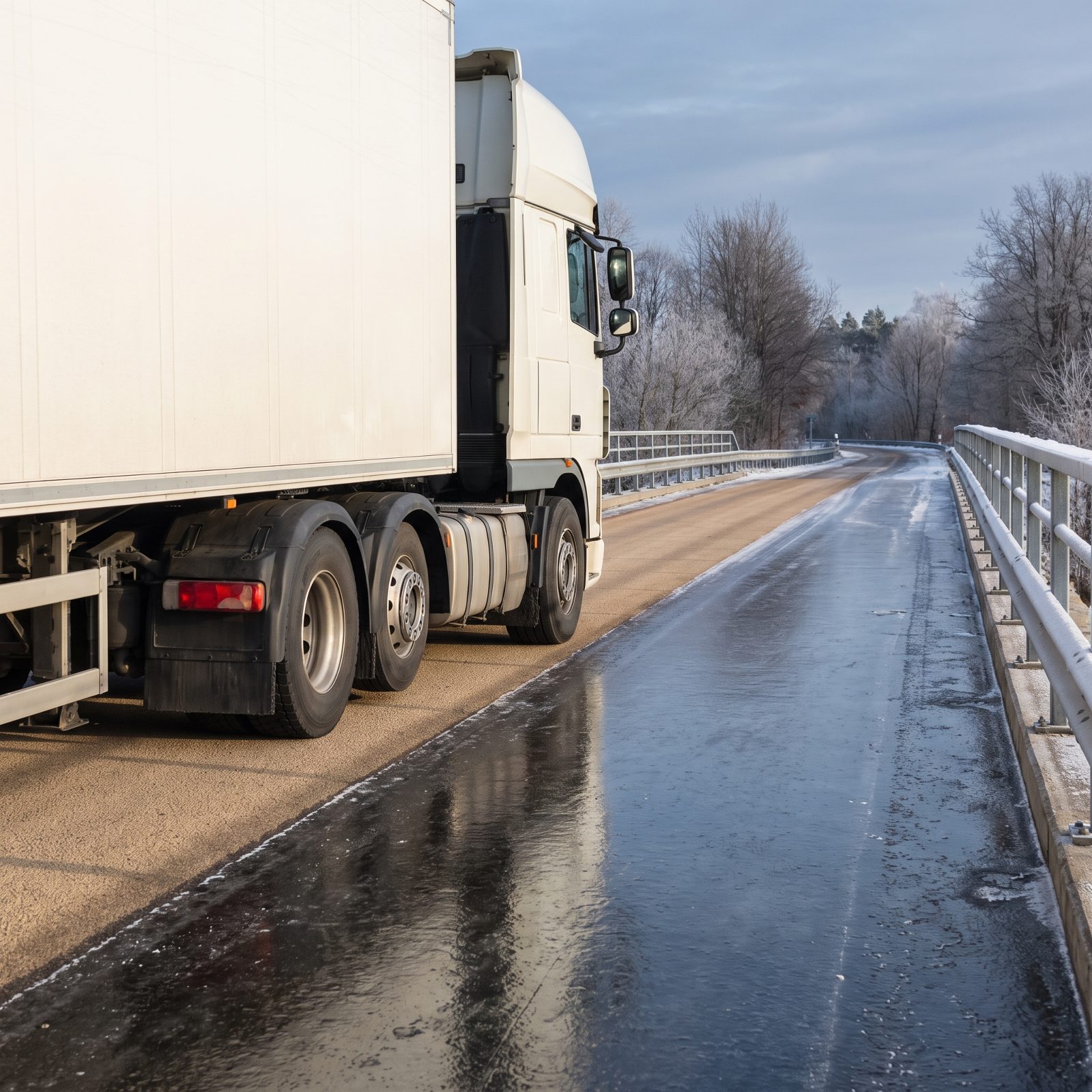
6. Black Ice on a Bridge Deck the Road Didn’t Warn You About
5. Crosswinds That Explode From the End of a Treeline
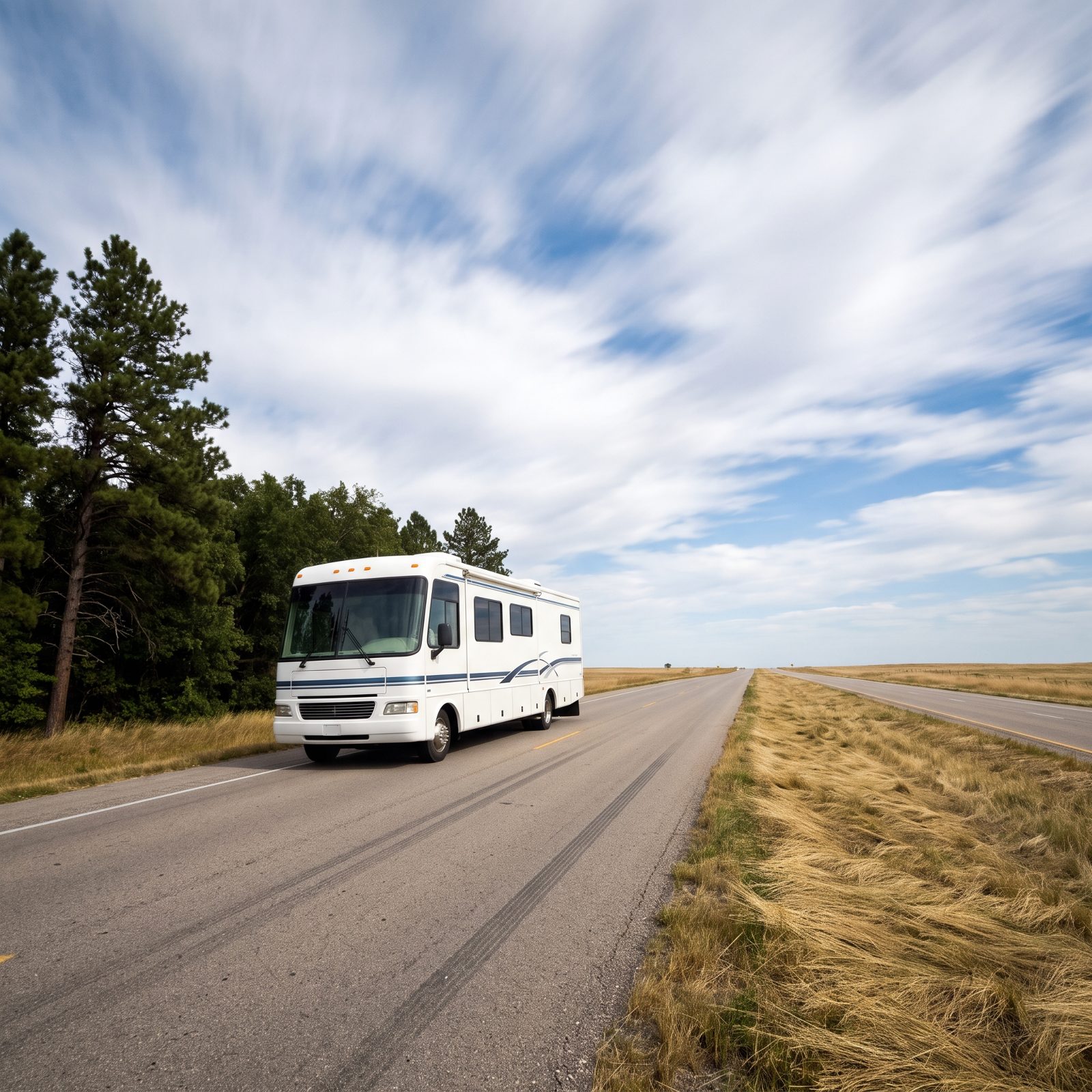
4. Passing-Truck Bow Waves That Push Then Pull
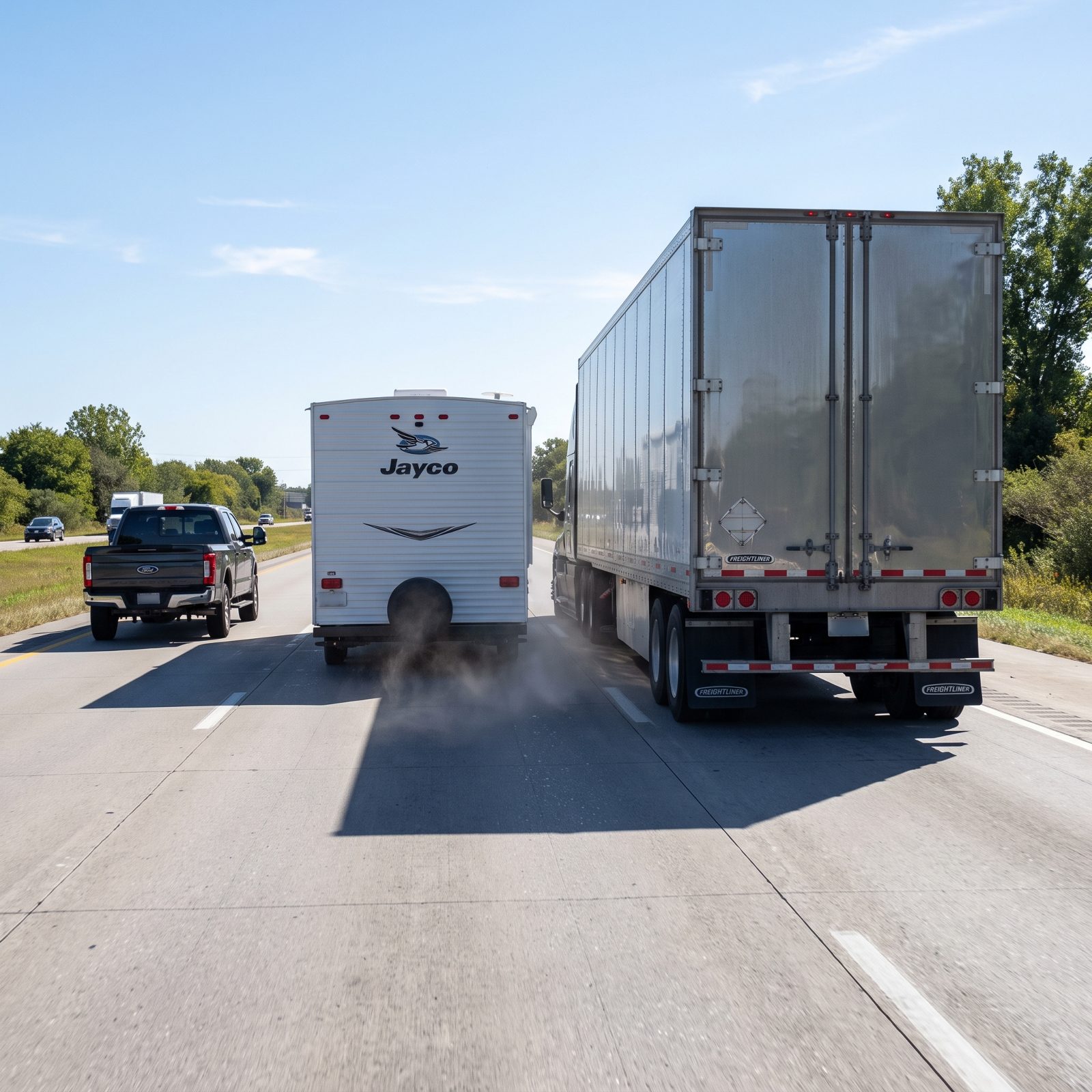
Air has weight, and a loaded semi pushes a whole wall of it ahead. The truck’s nose draws level, and that bow wave shoves the side of your RV away. Then the cab passes, the low-pressure pocket behind it yanks you back the other direction, and the whole thing happens in about two seconds.
Taller and lighter rigs ride it worst. A high-walled travel trailer feels a shove that a squat motorhome barely registers. Here’s where people blow it: they yank the wheel the instant the first push hits. Problem is, by the time you’ve reacted, the pull is already arriving — so now you’ve just steered yourself straight into it.
Loosen your grip. Hold your line and let the two forces cancel each other out. And if you ease off a touch before the truck closes the gap, the whole business has more time to settle.
3. Long Mountain Descents That Cook Your Brakes Before You Reach the Bottom
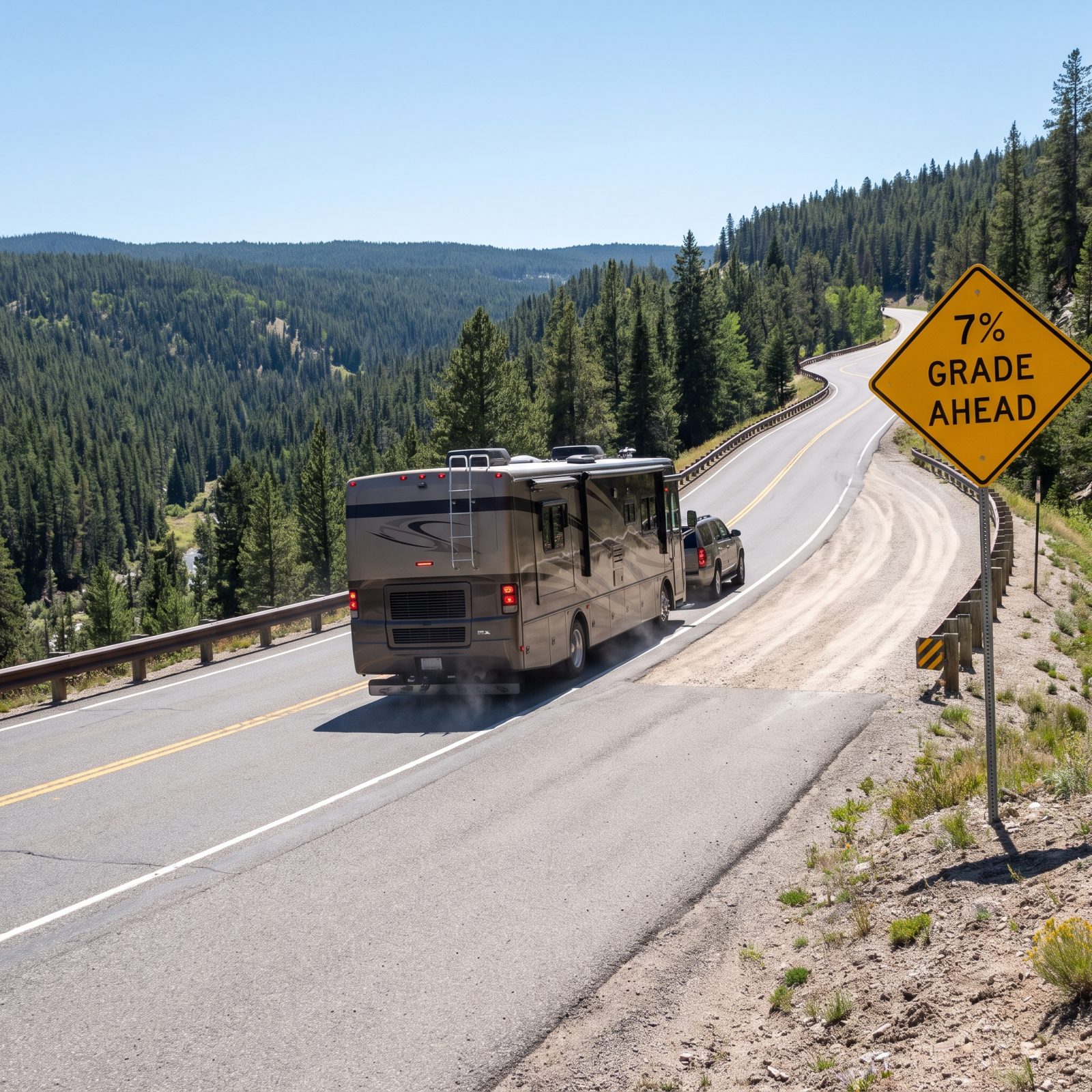
Brakes don’t fail on the way down because you pressed too hard. They fail because you pressed too long. A heavy motorhome riding a sustained grade turns friction into heat faster than the brakes can shed it, and once they’re cooking, they stop grabbing. That’s brake fade, and by the time the pedal goes soft under your foot, you’re already in trouble.
Shift down before the descent, not during it. Let the engine and transmission do the slowing so the brakes stay cool enough to work when you actually need them. See those gravel runaway ramps you keep passing? Somebody built every one of them because a driver found out the hard way.
2. The Traffic Light at the Bottom of a Grade That Turns Yellow Too Late
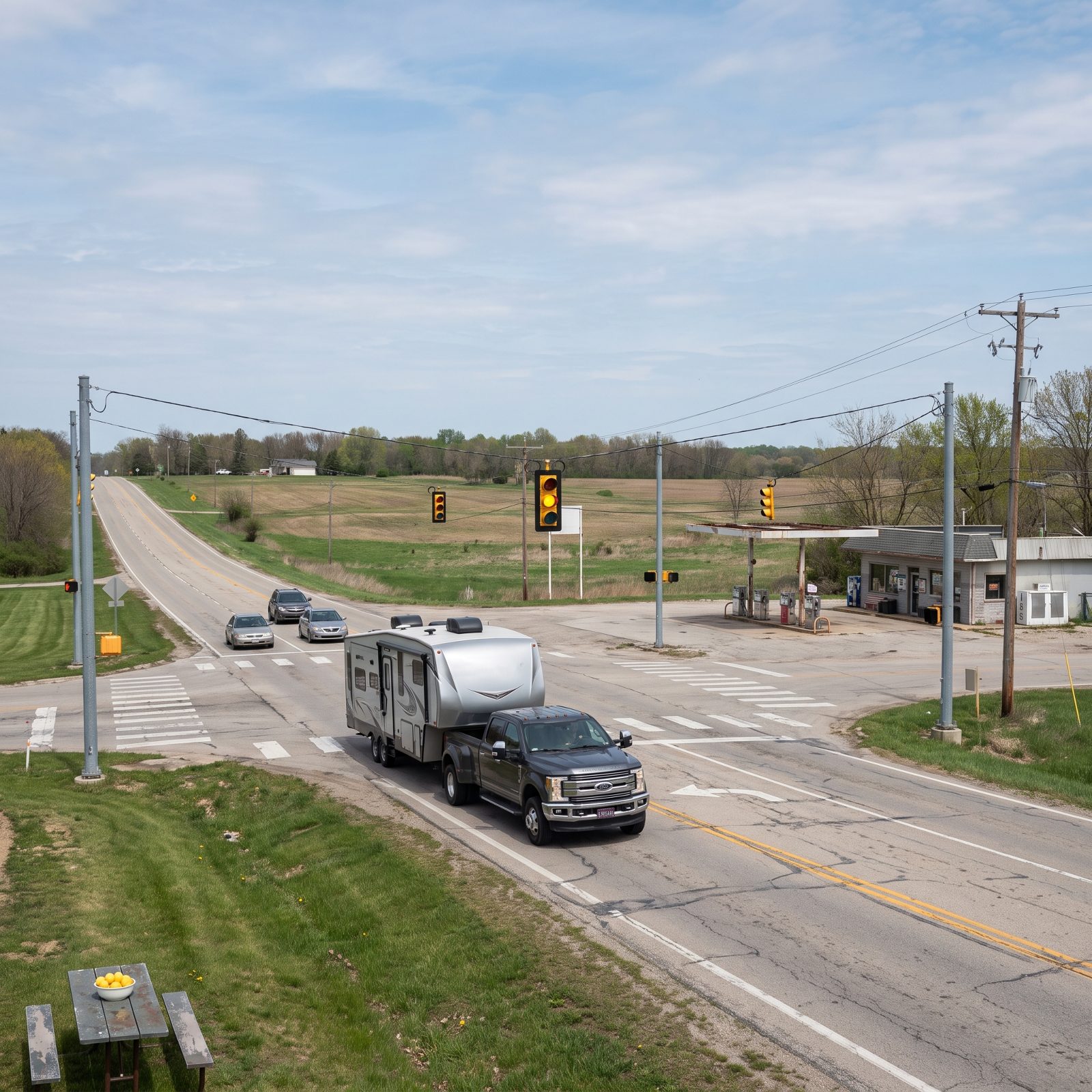
A yellow light is a math problem for anything heavy. In a car you glance at it, decide, and either coast through or stop. In a loaded rig coming downhill, that same yellow hands you a lousy choice: slam on brakes you don’t fully trust, or blow through a red you can’t quite reach in time.
Gravity isn’t on your side here. The grade that got you rolling also eats into your stopping distance, so an intersection that looks perfectly manageable arrives faster than your brakes can answer. Read the signals early. If a light at the bottom of a hill is already green when you first spot it, assume it’ll change on you, and start bleeding off speed long before you’d ever bother to in a sedan.
1. Short Freeway On-Ramps Where the Merge Lane Runs Out Before You Do
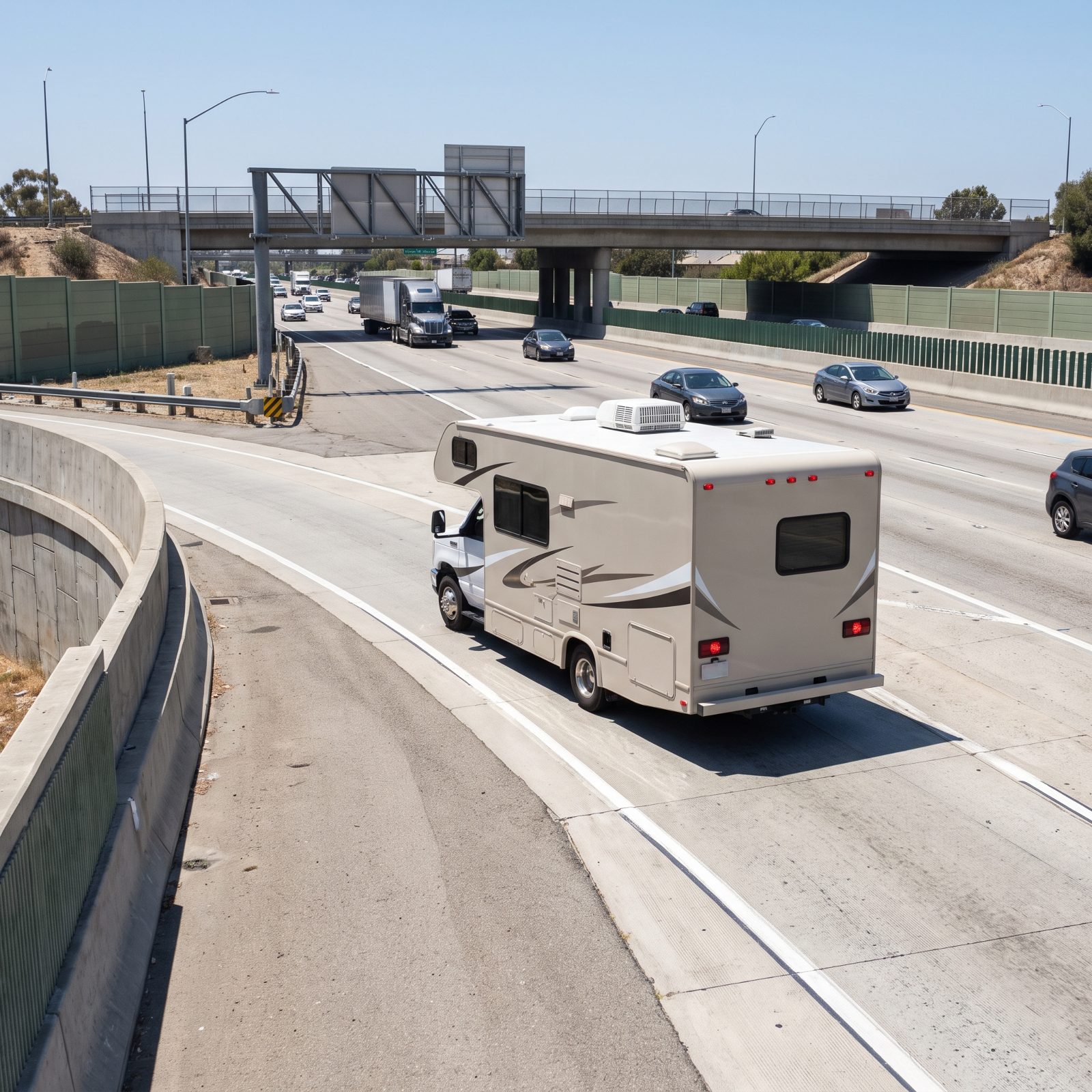
Some on-ramps are built for cars that hit highway speed in a few seconds. An RV is not that car. A long, heavy rig lumbers up to speed while the merge lane shrinks beneath it, and the gap you were counting on closes before you’ve got the giddy-up to take it.
The worst move? Arriving at the end of the lane still slow and still hunting for an opening. Build speed early, make the merge decision early, and commit. A rig already matching traffic with a plan beats one creeping along, praying the cars behind decide to be generous.