
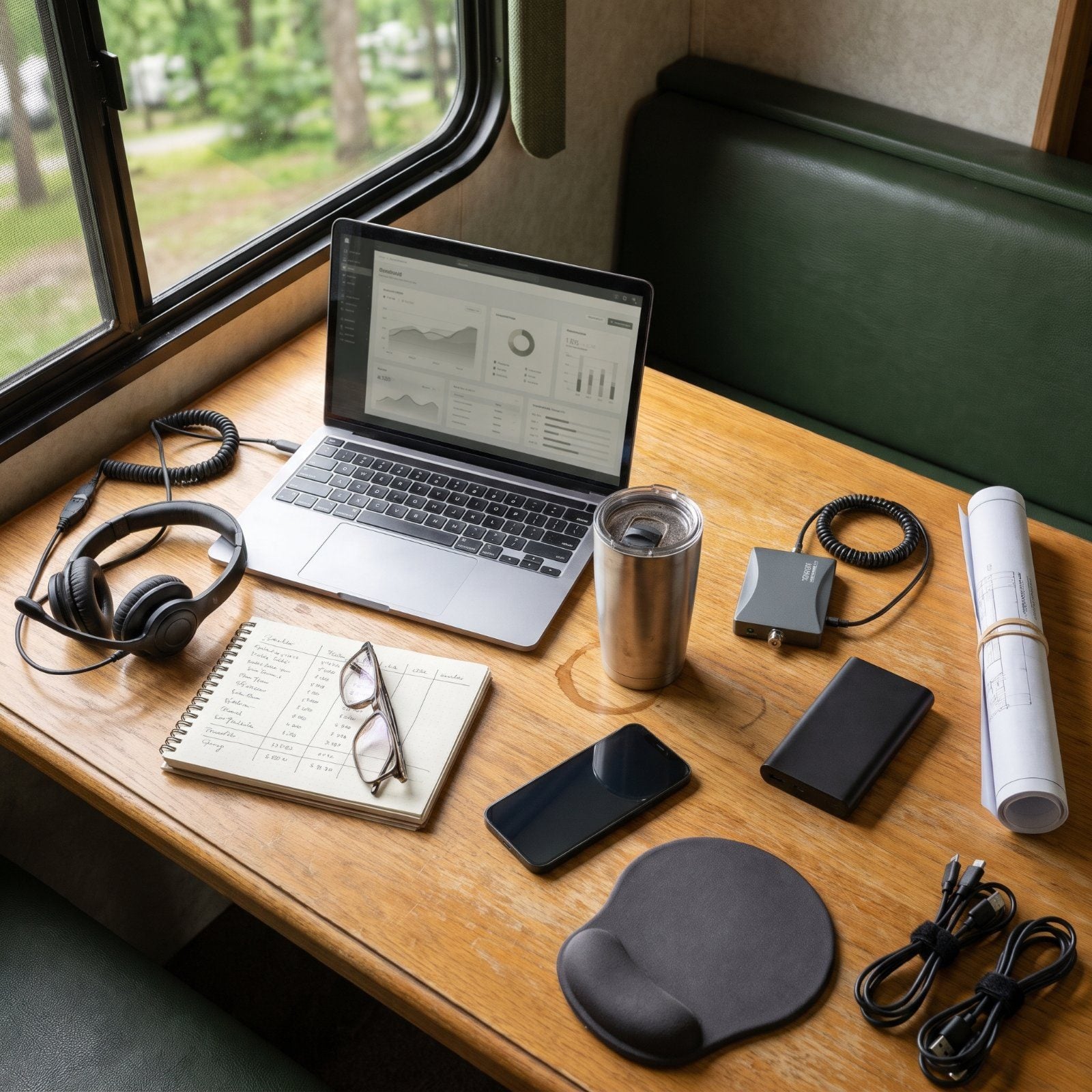
The question nobody at the dealership answers: what do you do for money once the house has wheels? The dream gets sold as sunsets and campfire coffee. The reality runs on upload speed, a cell booster, and a desk that doubles as the dinner table. Plenty of real careers travel fine, and not the ones in the brochures either. Boring, steady, pays-the-propane careers, the kind that keep the bank account flat instead of bleeding. Below are jobs people hold down from a parking spot at a state park, and an honest rundown of what each one actually demands before you point the rig west.
Please note that some of the images in this article were created with the assistance of AI.
46. Virtual Receptionist Answering Calls for Multiple Businesses
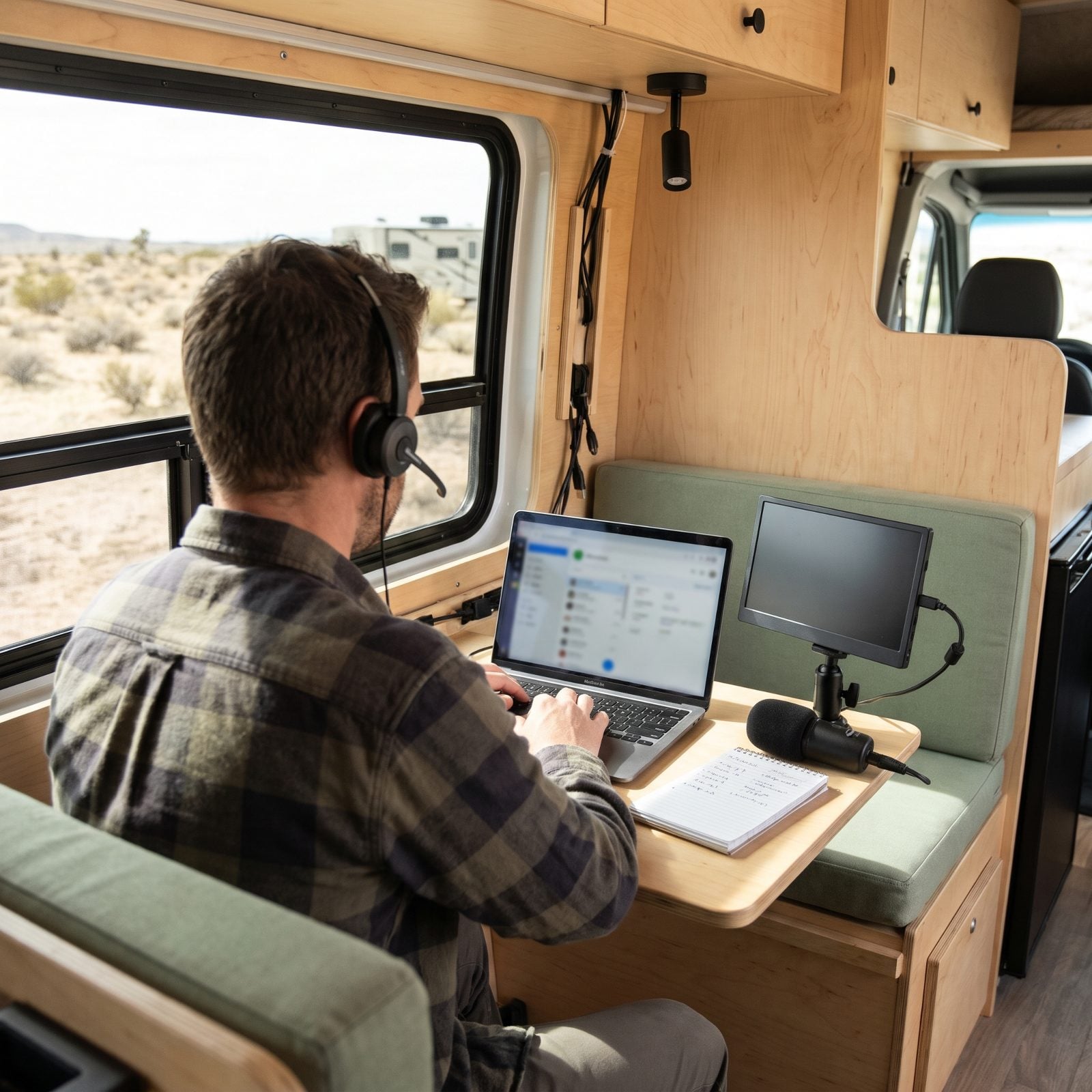
You answer for a dental office, a law firm, and an HVAC company inside the same five minutes, and the caller must never once hear a campground. That’s the whole job. One screen tells you which business is ringing so you greet it right.
What it takes on the road: a quiet rig during business hours (no barking dog, no generator), a wired headset rather than Bluetooth, and a backup connection. Dropped calls get you fired faster than anything.
45. Accountant Closing the Books From a Dinette Desk
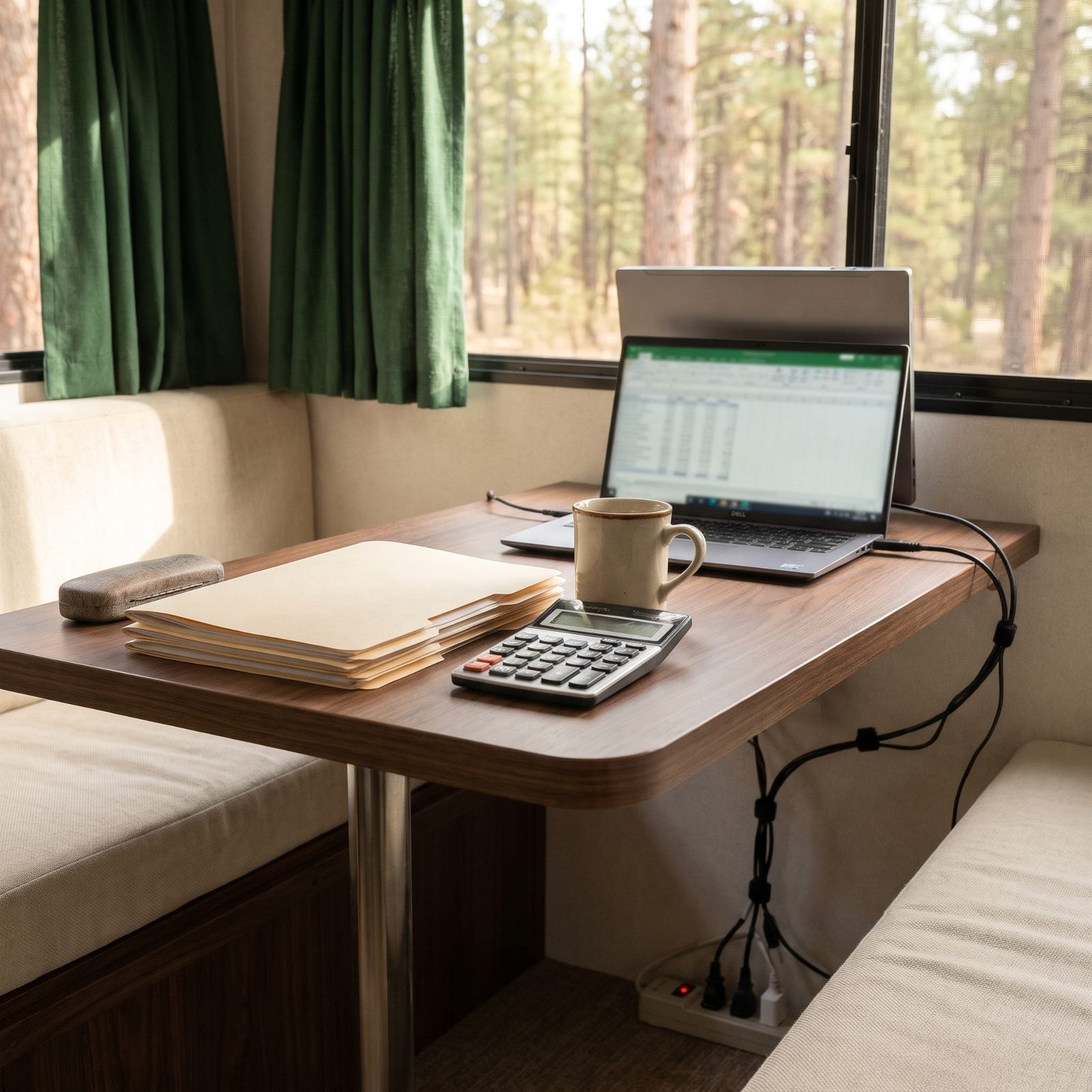
Books don’t care where you park. Month-end close, payroll, quarterly filings, all of it moves through a laptop and a secure connection, and accounting travels better than almost any desk job out there.
The catch is deadlines you don’t control. Tax season and close week are not when you want to be chasing a signal in a national forest with one bar, so plan your boondocking around the calendar.
You’ll want a second monitor (spreadsheets on a 15-inch screen are misery), a document scanner, and a portable external hard drive for encrypted backups. Confidential client data riding across public campground WiFi is a lawsuit waiting to happen, so a VPN isn’t optional.
44. Architectural Drafter Creating Plans Inside a Fifth Wheel
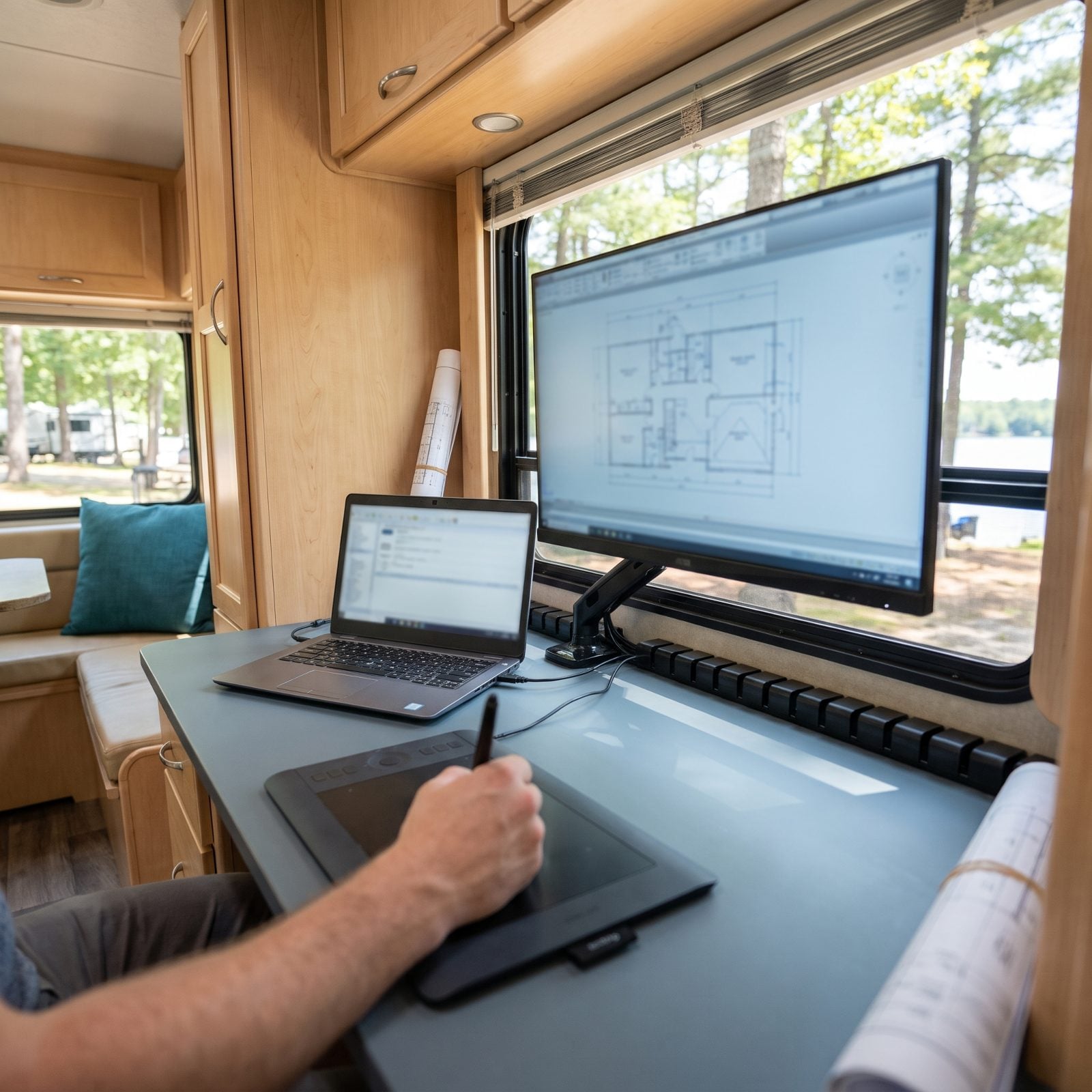
CAD eats hardware for breakfast. Drafting floor plans and construction documents means a real workstation-class laptop, or a desktop tower bolted down somewhere it won’t walk during travel days. A thin ultrabook will stall and overheat.
You also need screen real estate. A single wide external monitor and a graphics tablet beat squinting at a built-in display. A fifth wheel’s front living area tends to hand you the elbow room and the window light to pull it off.
43. Auto Insurance Claims Adjuster Reviewing Cases Online
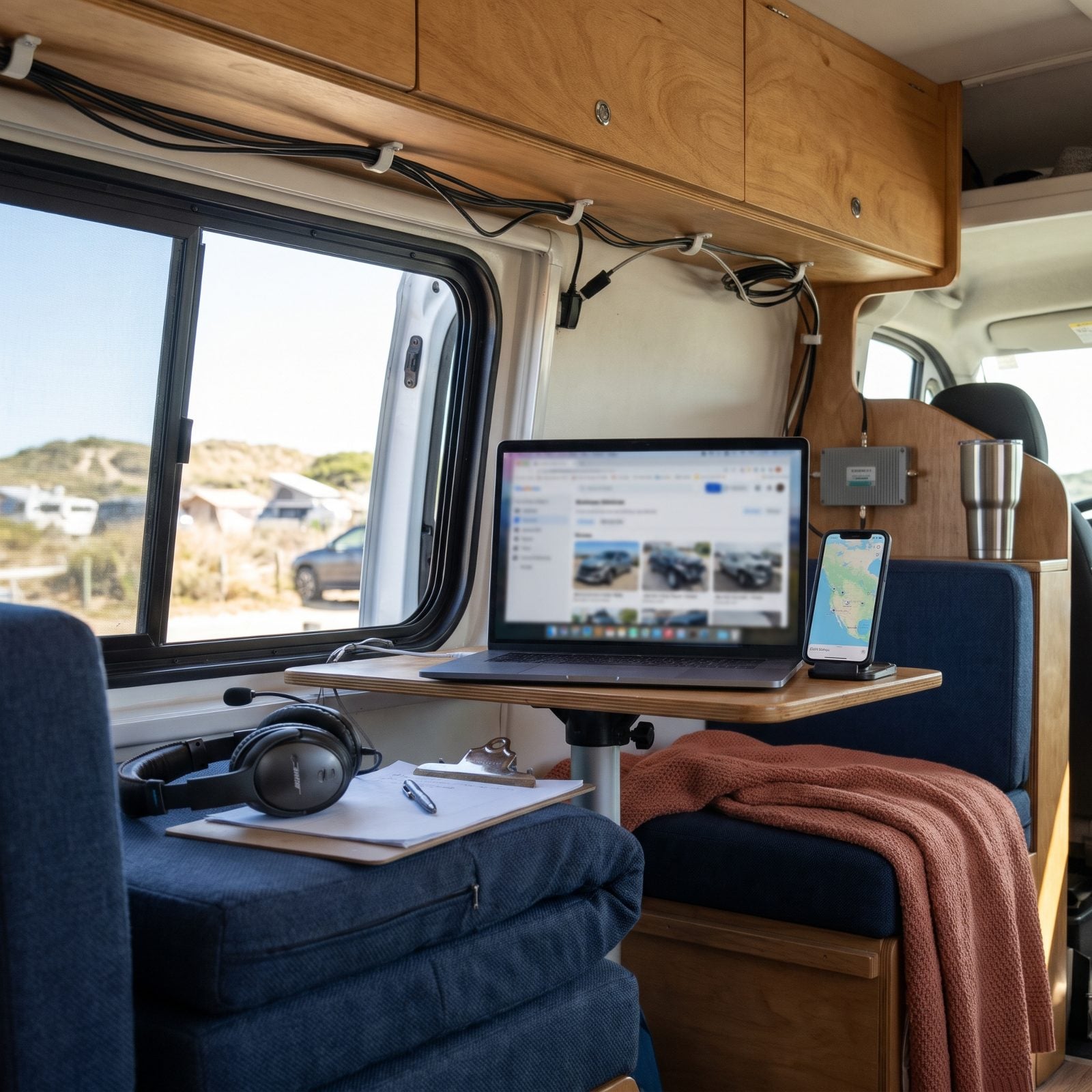
Desk adjusting is the remote-friendly half of insurance. You review damage photos, estimate repairs, talk to claimants, and never leave the dinette. Field adjusting, the kind where you climb on roofs, obviously doesn’t travel.
Licensing is the wrinkle most people miss. Adjuster licenses are state-specific, and some states want you licensed where the claim originates rather than where you happen to be parked. Check before you assume your license covers you cross-country.
Steady phone time means a reliable booster and a quiet rig. Nobody wants their accident claim handled over the racket of a campground pickleball game.
42. Software Engineer Building Applications From an RV
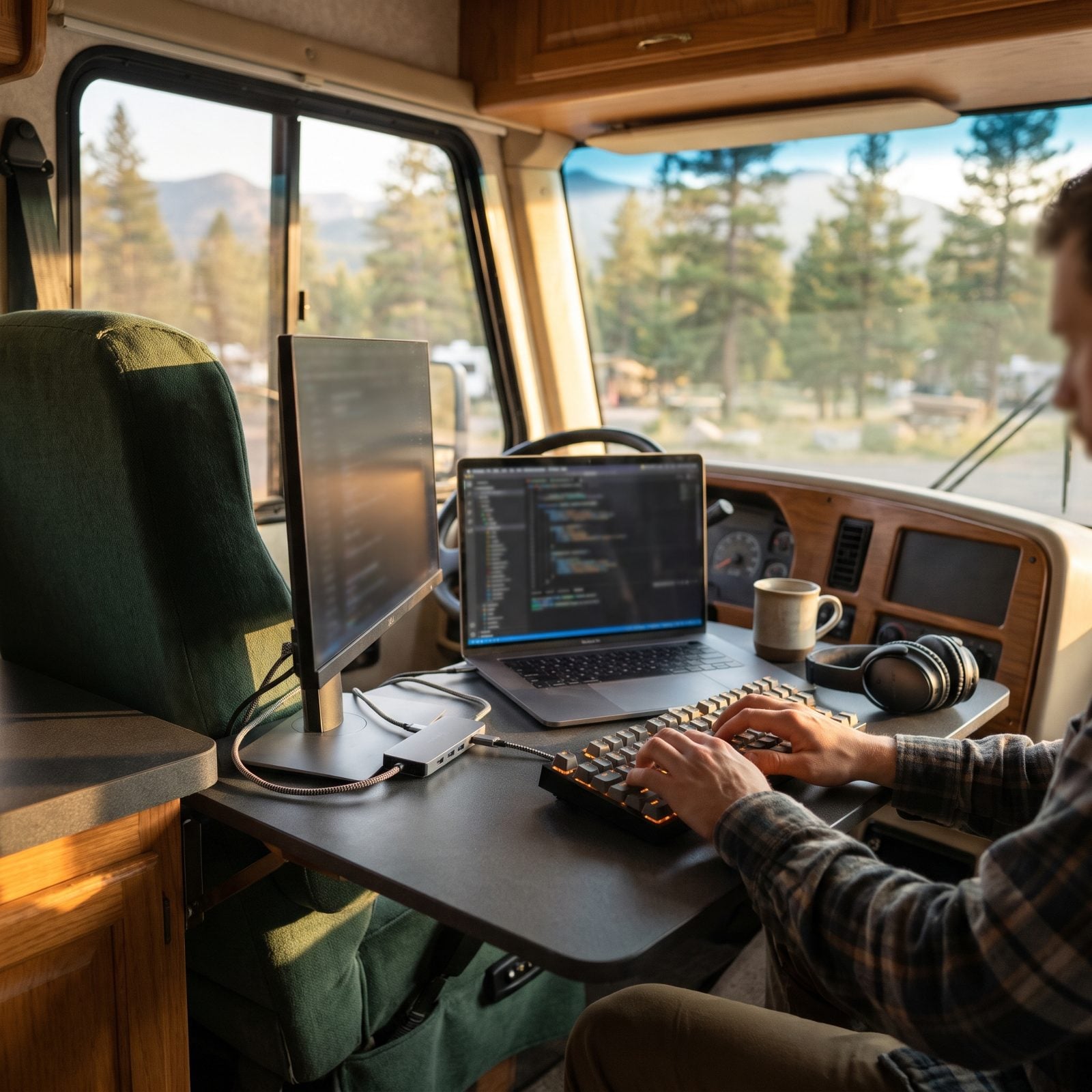
Of every job here, this one was practically built for the road. Code is just text going over a wire, and most of the work is asynchronous. Push the commit, join standup, move on.
Standup is the trap. Video calls at a fixed hour mean your connection has to be dependable at that hour, not just sometime today. It’s why engineers obsess over cell data plans and redundancy more than anybody.
Two connections from two carriers, a decent chair, headphones that kill campground noise. That’s the kit.
Describing so-so RV park Wi-Fi, one remote software developer living in a fifth wheel notes “But, 5 mbps on a good day can still support Zoom calls and teleconferencing.”
41. Appointment Scheduler Booking Customers From the Road
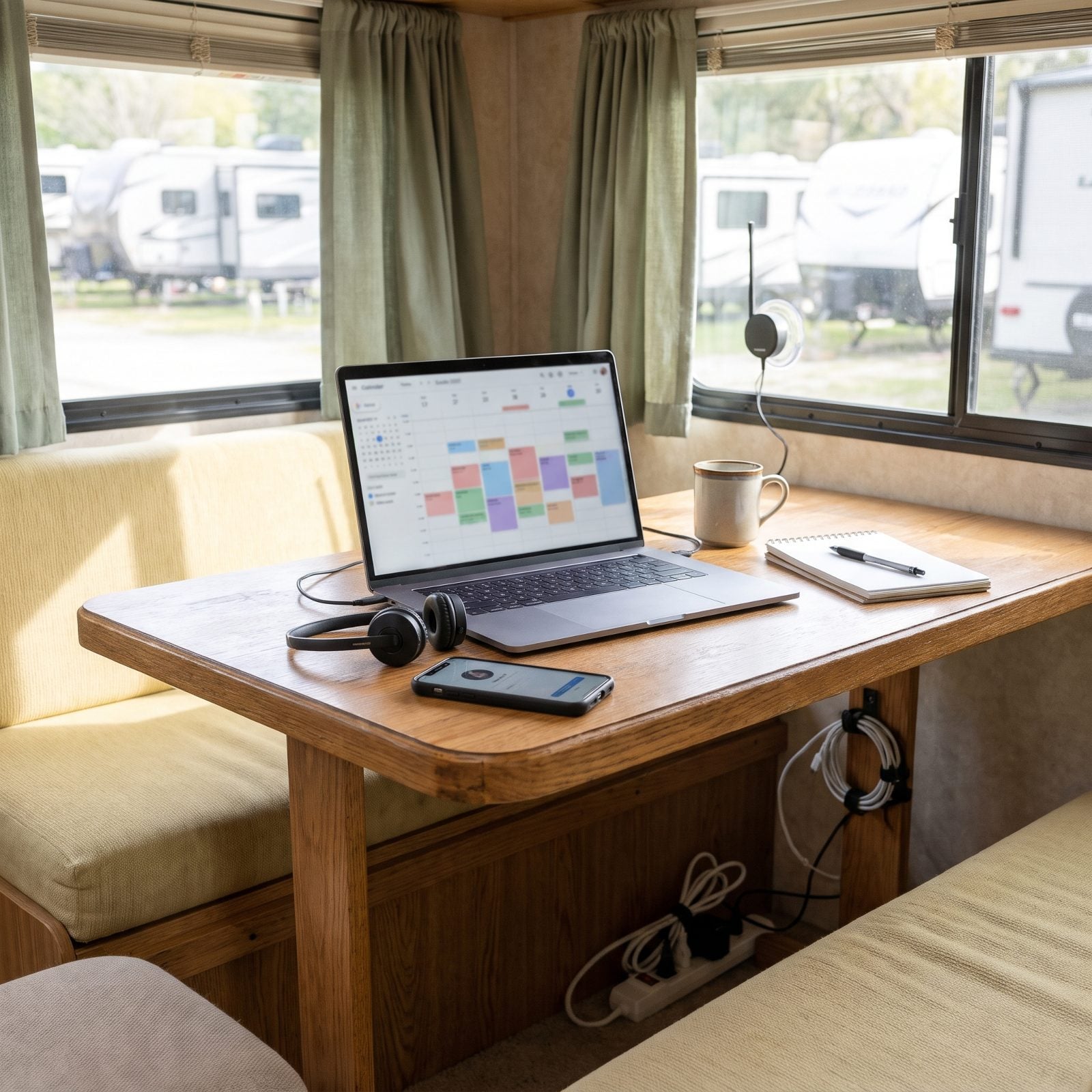
The lightest-footprint job here. You take inbound calls and online requests and slot people into a calendar for salons, clinics, contractors, whoever. No heavy files, no video, just a steady line and a clear head.
Because the hardware bar sits so low, people badly underestimate how much quiet and steadiness matter. One choppy call during a booking rush and the business loses customers, which means you lose the contract. Decent audio beats fast internet here, every time.
40. Court Transcriptionist Preparing Legal Records
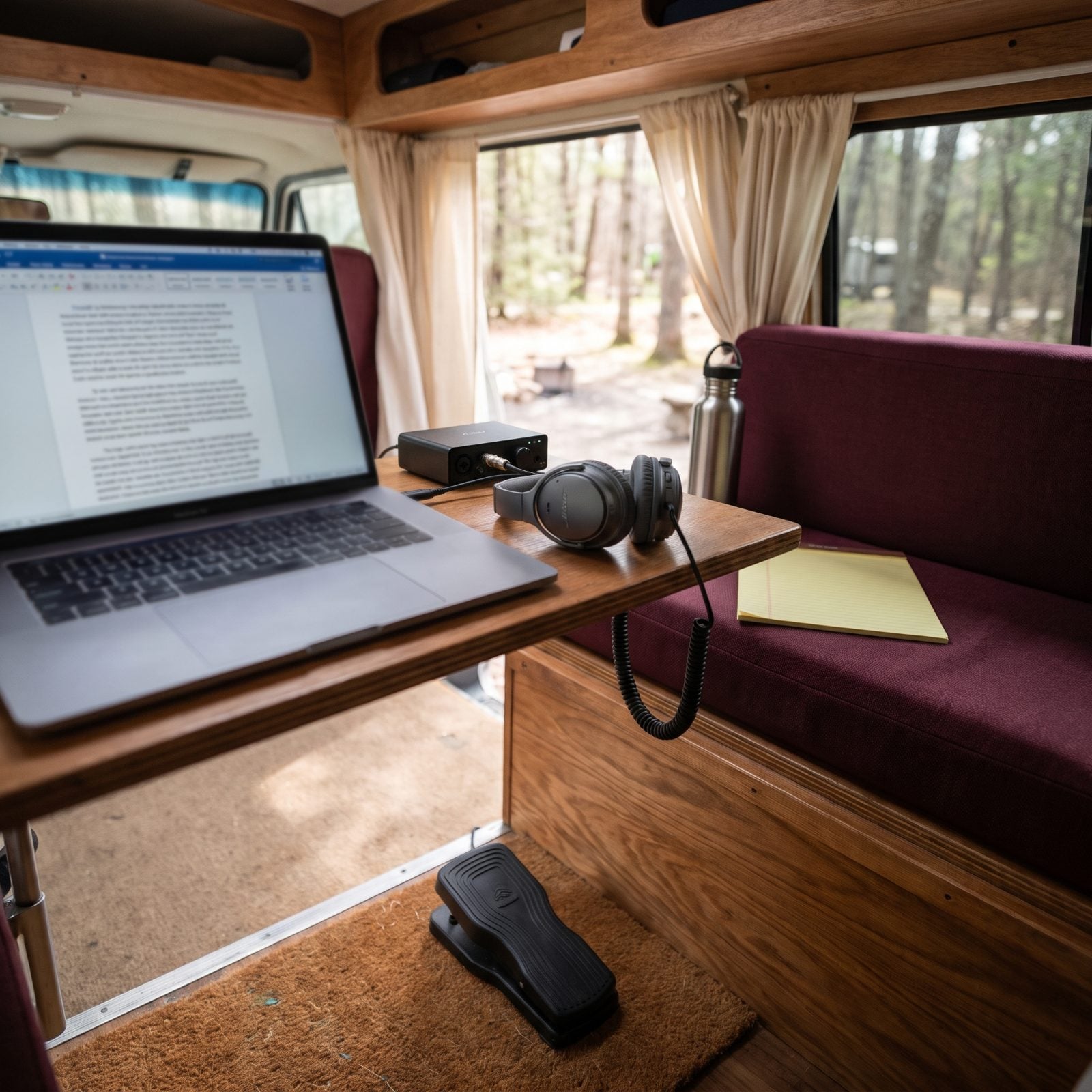
Transcription runs almost entirely offline, which quietly makes it one of the best fits for boondockers. Download the audio when you’ve got signal, then type for hours from a deep-woods site with zero bars and nobody bothering you.
The gear is specific: a foot pedal for playback, closed-back headphones to catch the mumbled aside at the back of a courtroom, and silence to actually hear it. Accuracy standards in legal work are brutal, so you can’t half-listen.
39. Dispatcher Coordinating Drivers From a Motorhome
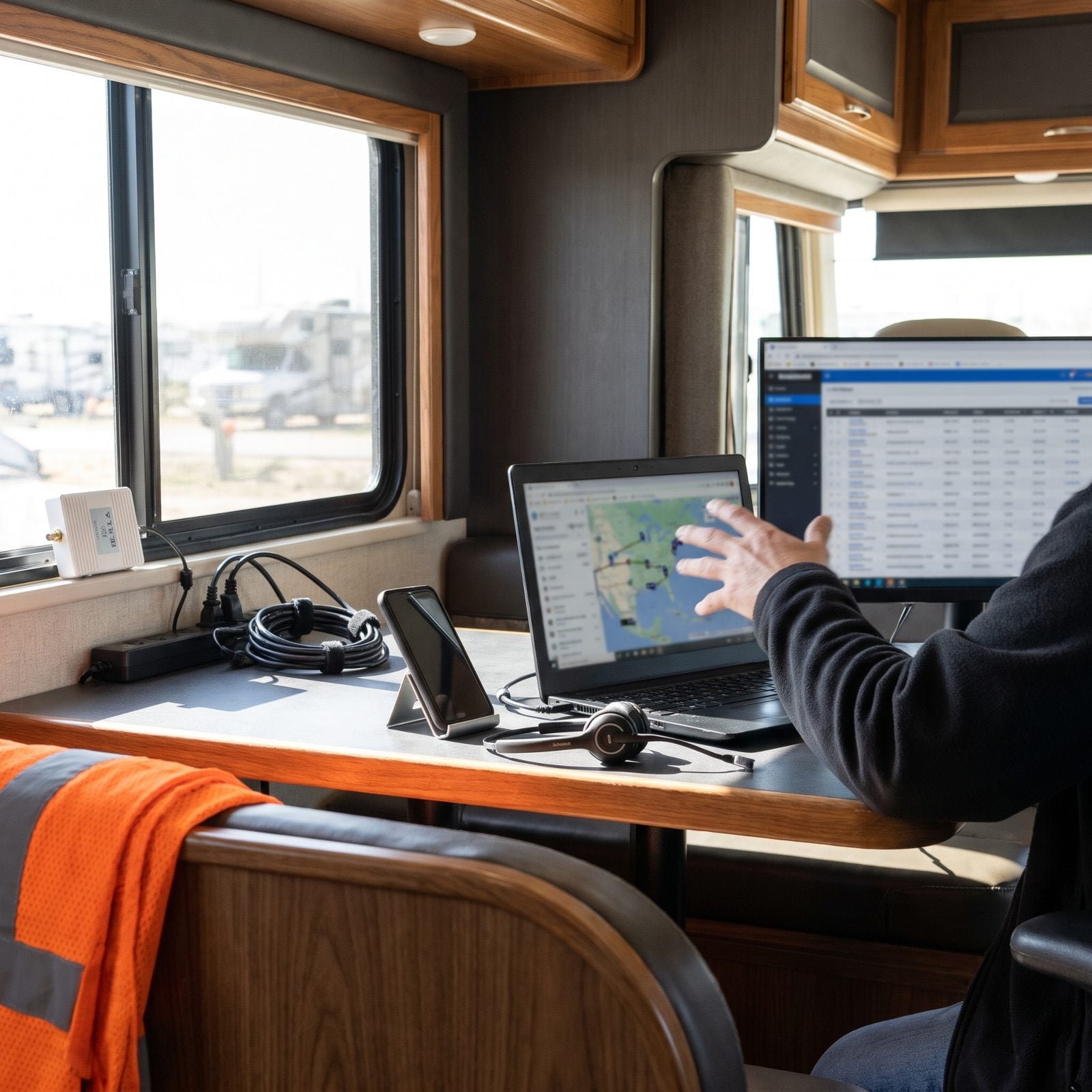
Dispatching is air-traffic-control for freight, delivery fleets, or service techs. You’re matching drivers to loads, solving breakdowns, smoothing over a late arrival, all through a headset and two screens.
It’s a phone-and-connection job that spikes without warning. A driver jackknifes at 2 a.m. and you’re the one they call, so your line has to be live at odd hours. That rules out the dead-signal sites, no exceptions.
Dual monitors earn their keep here, map on one, load board on the other. And get a real booster, because “I lost you, say again” doesn’t fly when a truck is stuck on an interstate shoulder.
38. Financial Aid Advisor Helping Students Navigate Funding
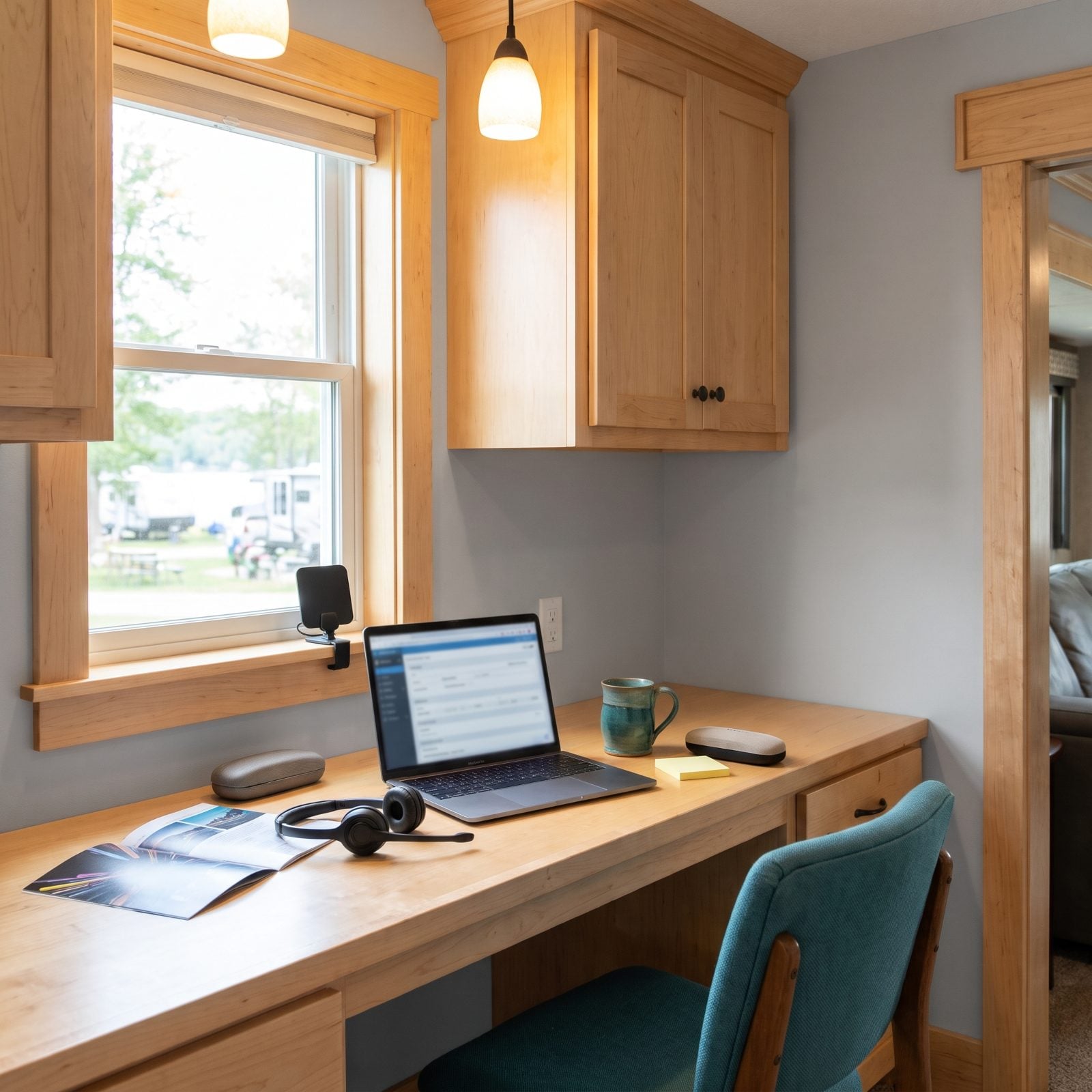
Half the job is empathy over the phone. Students and parents call in confused and stressed about loans, grants, and deadlines, and you walk them through it. The work is call-heavy and seasonal, peaking hard around enrollment windows.
Hardware is simple. Privacy is not. You’re handling Social Security numbers and income figures, so a locked-down VPN and a space where your screen isn’t visible through the rig window are both part of the job.
37. Graphic Designer Creating Client Work at the Dinette
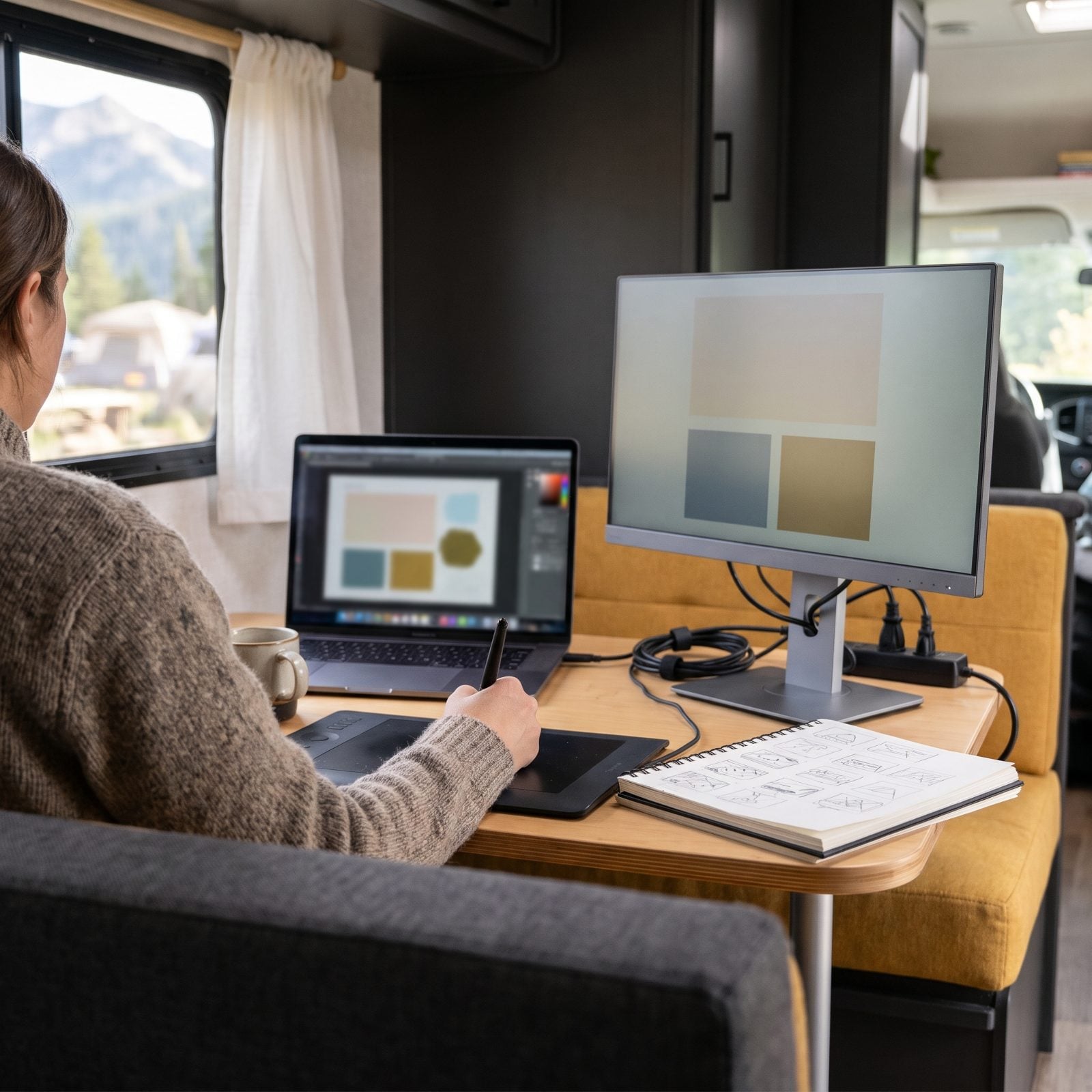
Design is portable right up until color accuracy bites you. A dinette window’s glare, plus a laptop screen that shifts hue every time you touch the brightness, and you’ll be shipping work that looked right in the rig and wrong on the client’s monitor. A calibrated external display is the fix.
You’ll want a graphics drawing tablet, a hood or window shade to kill glare, and cloud sync so a dropped file doesn’t swallow the afternoon’s work.
The upside is real. Once a project’s downloaded, you can push pixels for hours with no signal whatsoever. Then surface, upload, repeat. Of the creative gigs, this one tolerates a dead campsite the best.
36. Corporate Recruiter Interviewing Candidates by Video
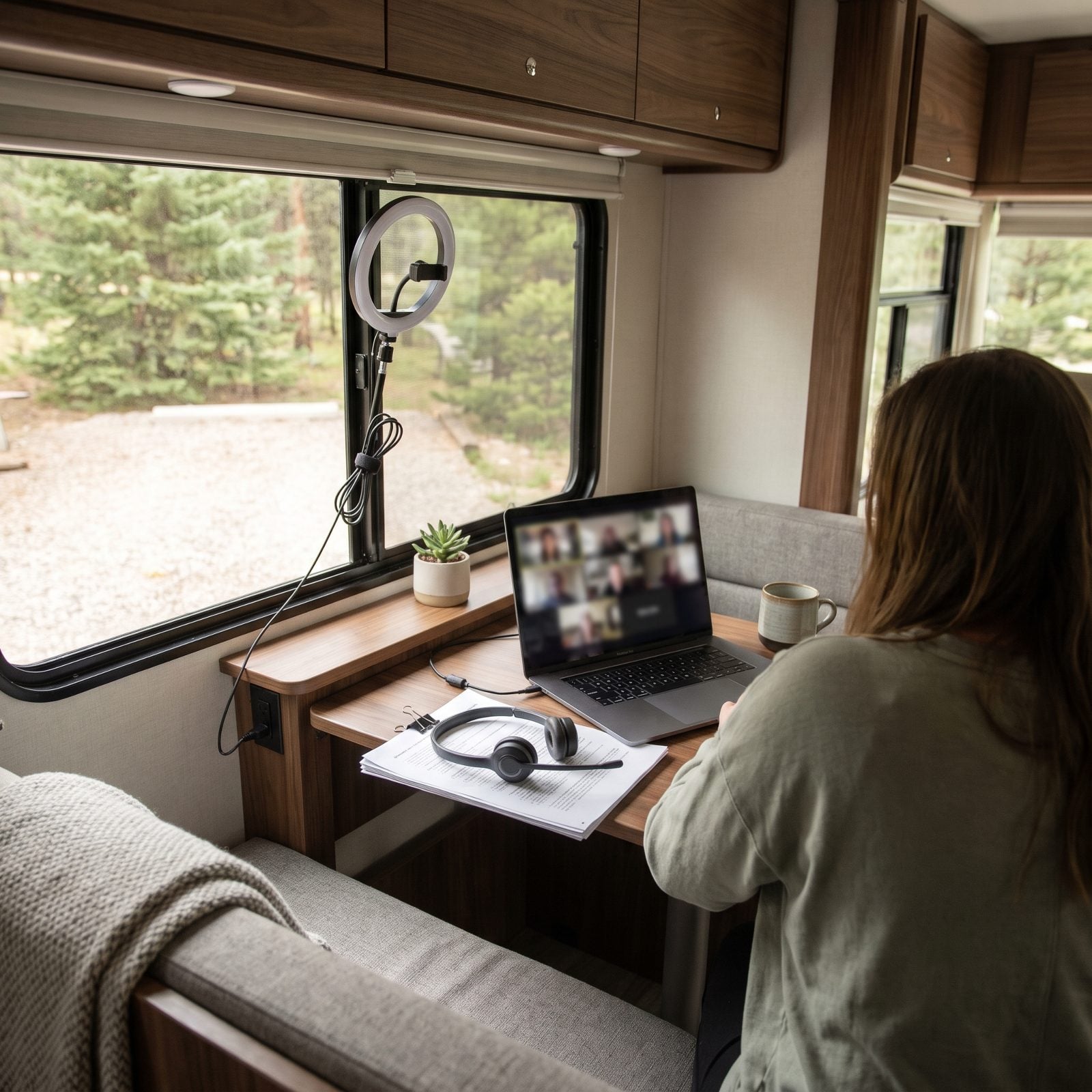
Recruiting is mostly talking: screening calls, video interviews, follow-ups with hiring managers, and gentle nudges to candidates who went silent. None of that cares whether your office has a hitch. All of it cares what’s behind your head on camera.
A messy bunk or a window full of RV hookups reads as unprofessional to someone deciding whether to trust you with their career. A plain backdrop, a light in front of your face rather than behind it, and enough upload speed that you don’t freeze mid-question go a long way. Candidates often want to talk before or after their own workday, so expect early mornings and evenings, and plan travel days around interview slots rather than the other way around.
35. Medical Coder Translating Patient Records Into Billing Codes
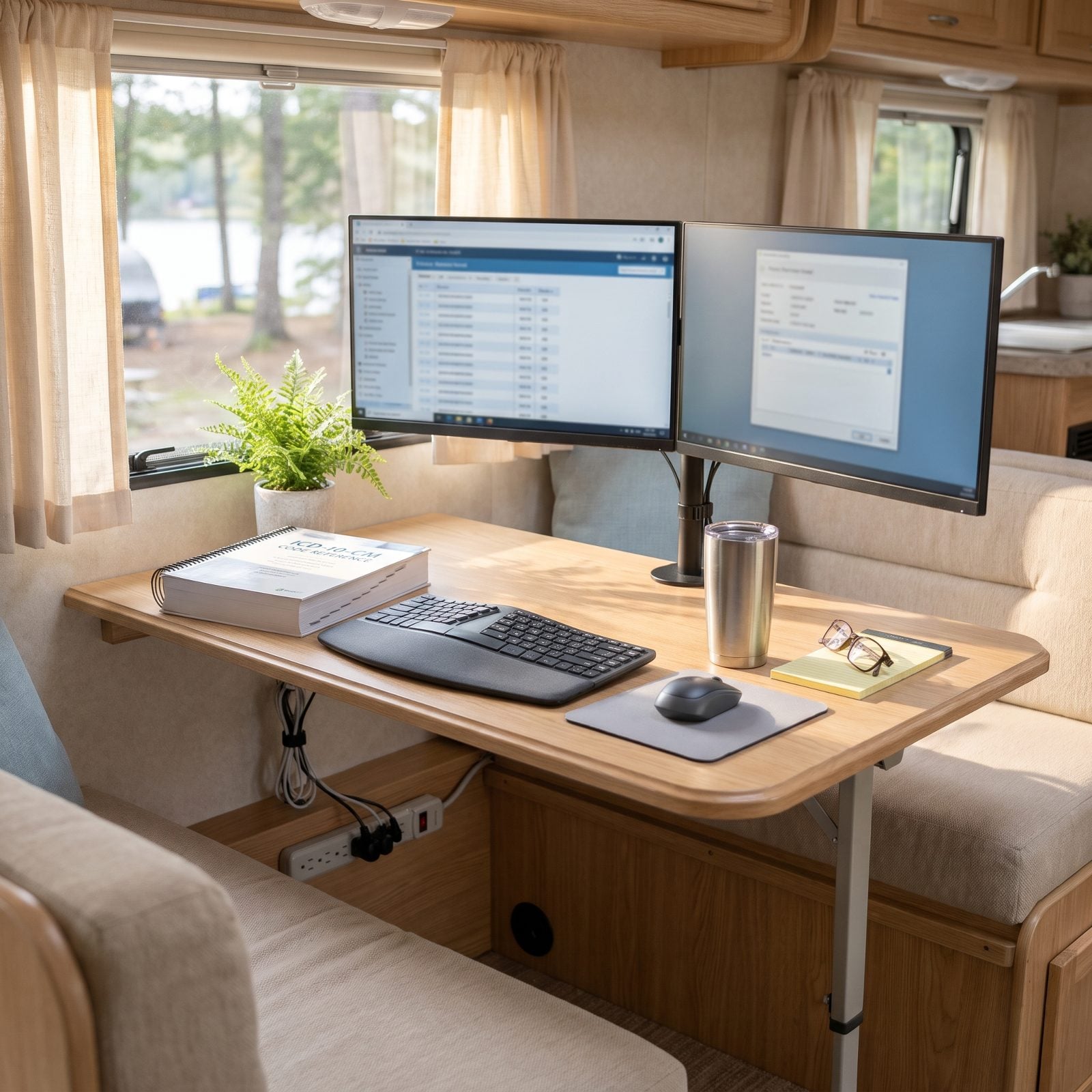
Every doctor’s visit ends up as a string of codes. Diagnoses, procedures, supplies, all translated from clinical notes into the standardized language insurers pay on. Coders do that translation, and the work is detail-heavy, deadline-driven, and very portable once you’ve proven yourself.
The catch is getting in the door. Most employers want a credential such as the CPC or CCS, and many want on-site experience before they let you go remote. Once you’re there, expect an employer-issued laptop, a mandatory VPN, and strict rules about where patient records can be opened. Productivity is often measured in charts per hour, so a reliable connection and a workspace with no distractions directly affect your paycheck.
In a live session on coding from the road, a medical coding educator put it plainly “But if you wanted to live in say a fifth wheel or an RV or even a condo someplace, you know, that and in travel then internet is number one priority.”
34. Travel Agent Booking Vacations From a Motorhome
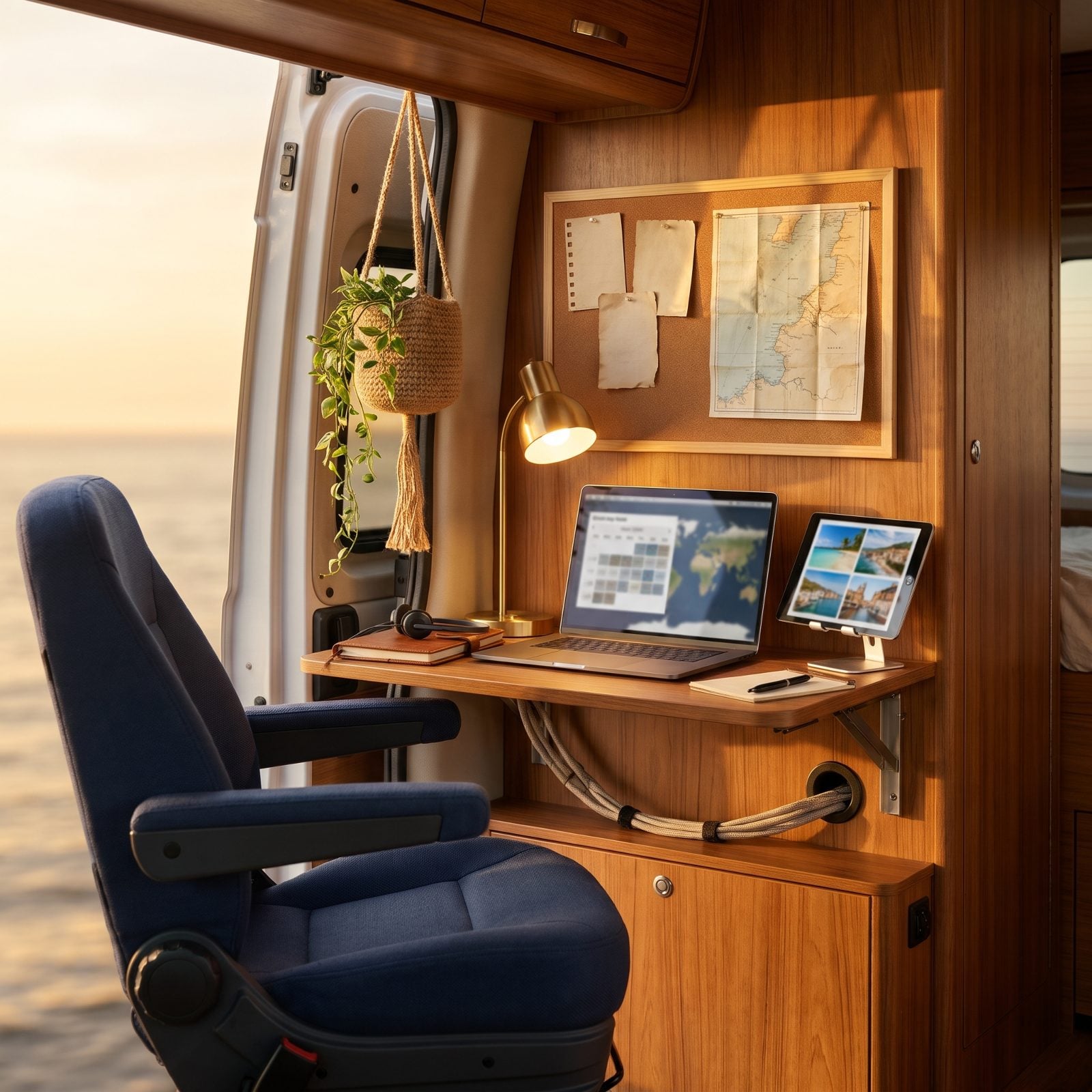
There’s a nice irony in planning other people’s trips from the road, and it’s a real advantage. You’ve actually stood in the national parks, coastal towns, and mountain passes your clients ask about.
Most independent agents work through a host agency that supplies booking tools, supplier relationships, and back-office support in exchange for a cut of commissions. The work itself is phone calls, email, and supplier portals, which travel well. The income doesn’t always. Commissions can arrive months after a booking, sometimes only after the client travels, so a cash cushion matters while you build a client list. Pick a niche, like cruises, family travel, or destination weddings, and referrals get easier.
In a roundup of jobs for RV life, an RVing blogger couple says a friend bought a travel agency franchise and now has a great business on the road.
33. Cybersecurity Analyst Monitoring Networks From the Road
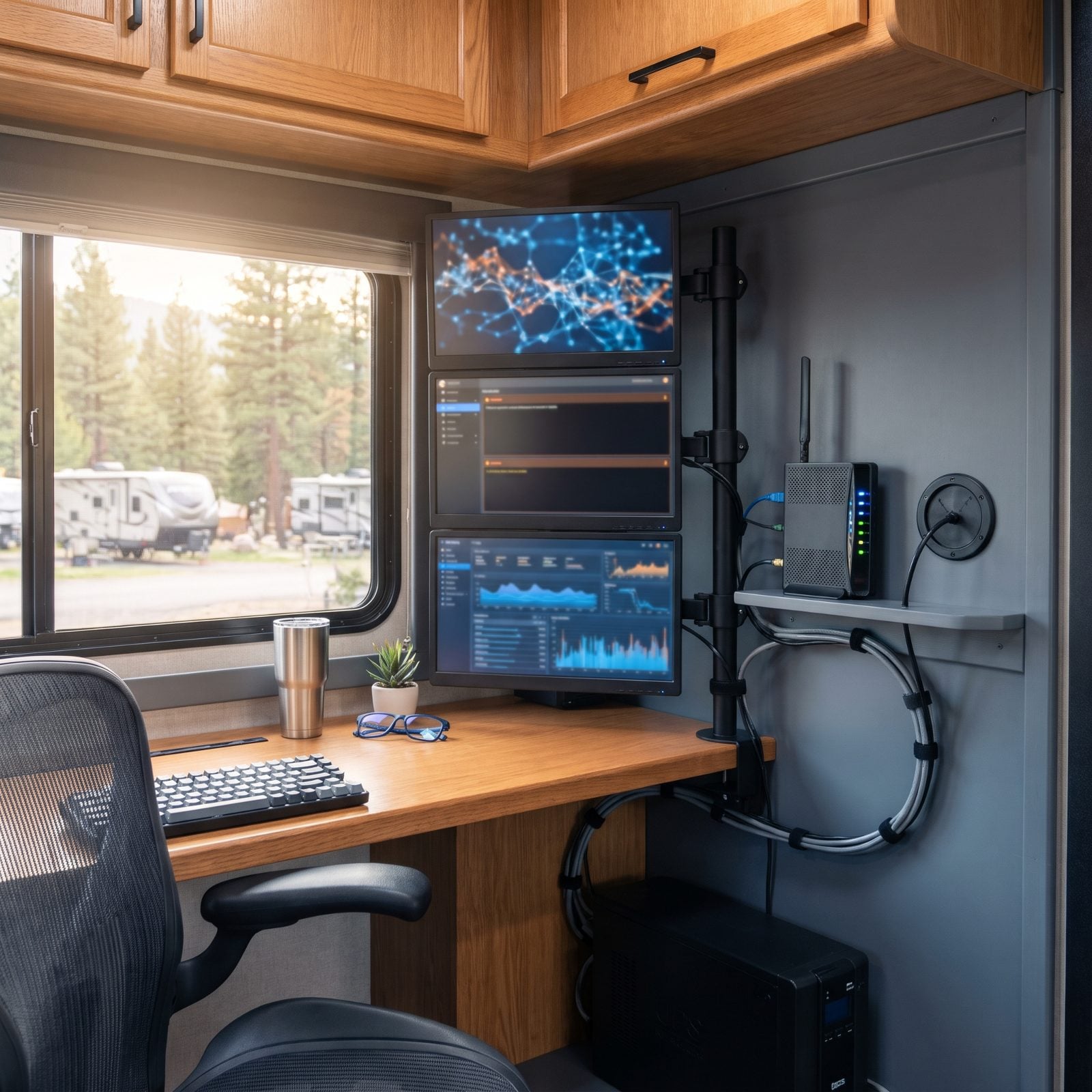
Threats don’t keep business hours, and neither do a lot of security jobs. Analysts watch alerts, investigate suspicious activity, and escalate real incidents, often on rotating shifts or on-call schedules where a slow response isn’t an option.
That makes connectivity the non-negotiable. You need at least two independent ways online, say a cellular plan plus satellite, because “my campground Wi-Fi went down” is not an acceptable reason to miss an incident. Expect your employer to be strict about devices, networks, and even physical location; some roles, particularly in government contracting, require on-site work or approved sites only. Read the remote policy carefully before you sign anything.
32. Loan Processor Preparing Mortgage Files on the Road
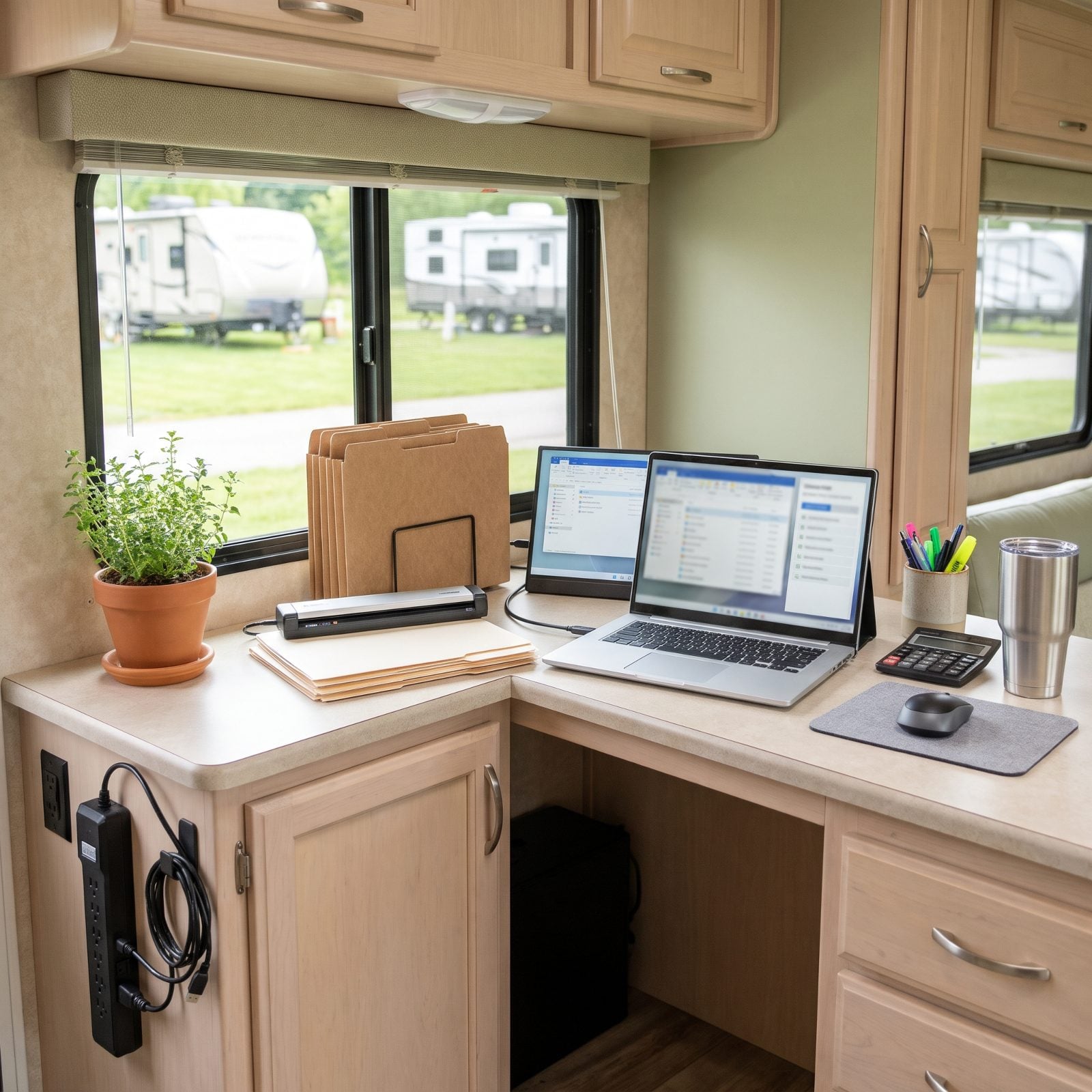
A mortgage file is a mountain of paperwork: pay stubs, tax returns, bank statements, appraisals, title documents. Processors gather it, verify it, chase down what’s missing, and clear underwriting conditions so a loan can close on time.
Nearly all of it moves through secure portals and e-signature tools now, which is what makes the job portable. What isn’t flexible is the calendar. Closing dates and rate lock expirations are fixed, and a borrower who has already given notice on their apartment won’t care that you were driving through a dead zone. Schedule moves around the end of the month, when closings pile up, and keep sensitive files strictly on the lender’s systems rather than downloaded to a shared laptop.
31. Interpreter Providing Live Language Support by Video
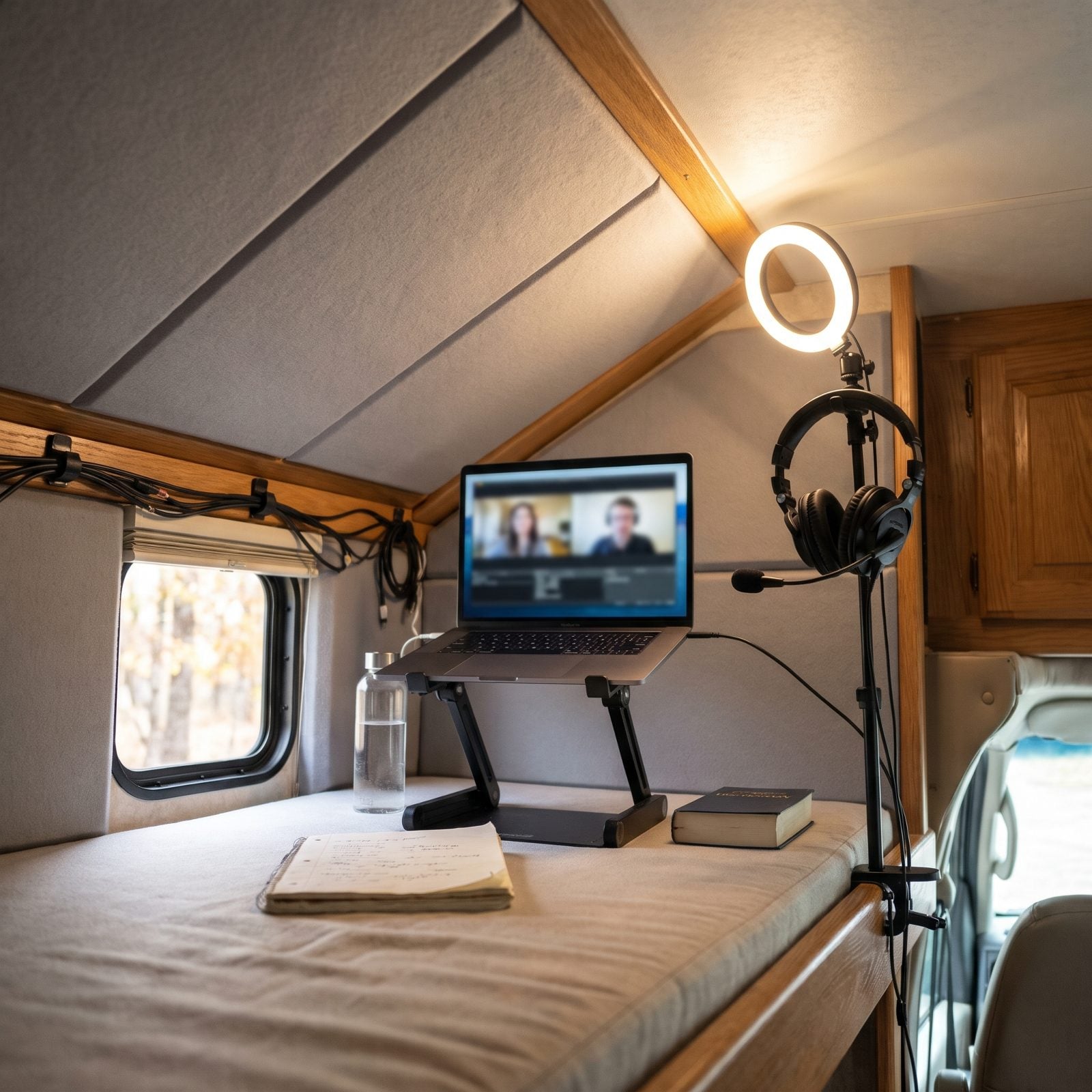
Hospitals, courts, and businesses increasingly use video remote interpreting, connecting an interpreter on a screen to a patient, client, or caller who needs help in real time. You’re the bridge in conversations that sometimes involve a diagnosis, a legal right, or a frightened family.
That’s why video quality is everything. A frozen frame or a two-second lag breaks the flow of interpretation, and for sign language interpreters, whose work is entirely visual, a choppy feed makes the job impossible. Expect to need a hardwired or very strong connection, a solid-color background, good lighting, and a space where nobody walks behind you. Medical and legal settings usually require certification, so build credentials before building the road plan.
30. E-Commerce Store Manager Processing Orders and Inventory
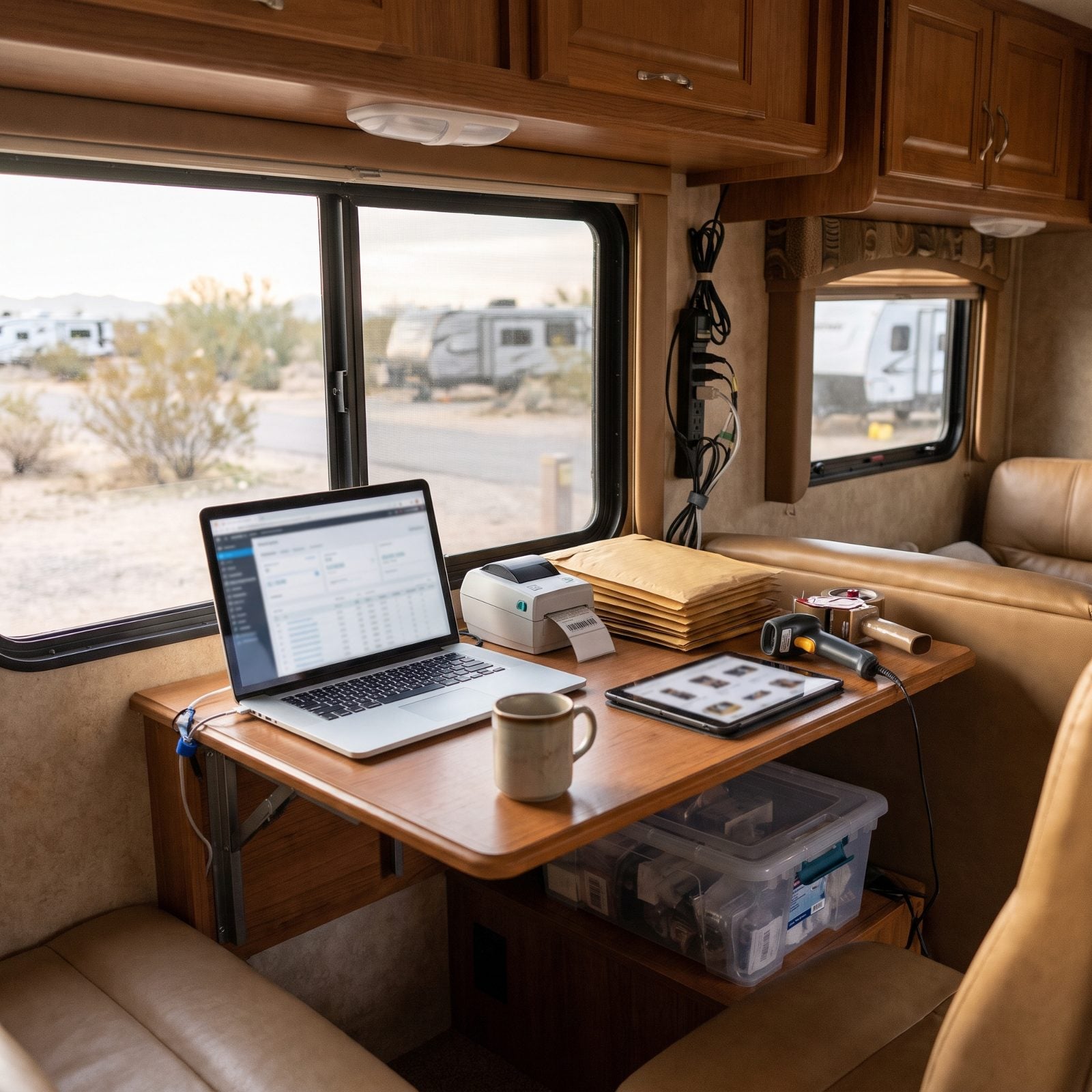
Running an online store sounds like it requires a garage full of boxes. It doesn’t. A fold-down dinette table and a storage bin can do the job. Managers who live on the road often ship orders themselves with a thermal label printer, a stack of padded mailers, a barcode scanner, and a tape dispenser, keeping inventory in a clear plastic bin under the table.
Alongside the packing, there’s everything on the screen: product listings, pricing, order issues, customer emails, returns, and inventory counts that keep you from selling something you don’t have. Most store platforms run fine on a phone in a pinch, which helps on travel days. Watch the seasonal rush closely. Holiday order volume and a weak signal in the backcountry are a bad combination, so many sellers stay parked near reliable coverage from November through December.
29. Executive Assistant Managing Calendars Across Time Zones
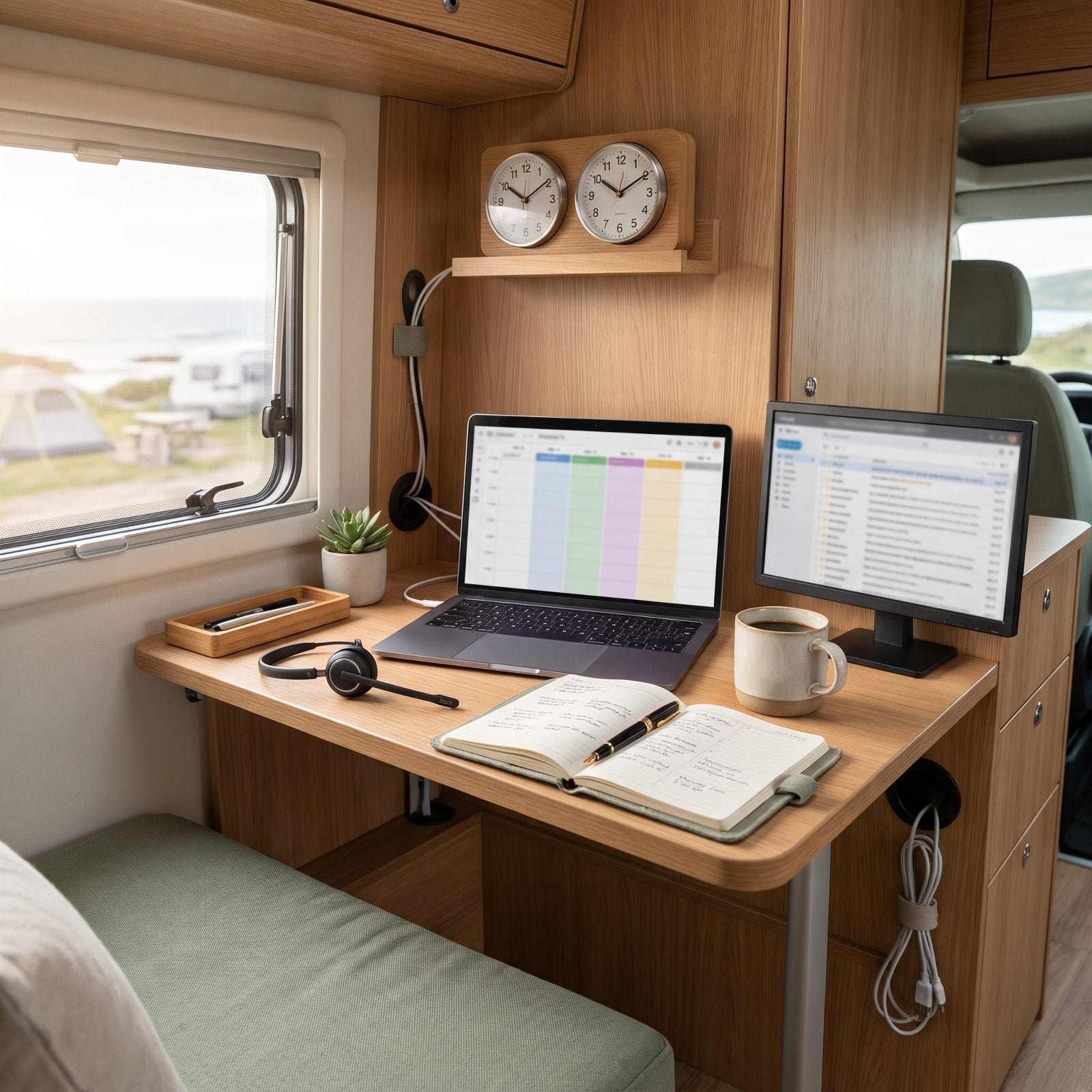
You run someone else’s day so they can run the company. Meetings, travel, inbox triage, board materials, and a calendar that might include people in New York, London, and Singapore in the same week.
Here’s the trap unique to RV life: you’re changing time zones too. Cross a state line and your laptop clock may shift without warning, turning a 9 a.m. meeting into a missed one. Pin your calendar to your executive’s time zone, not your own, and double-check around daylight saving changes. Arizona, for one, mostly doesn’t observe daylight saving time, which trips people up every year. Executives also expect fast replies, so long drives need a plan for who’s covering while you’re behind the wheel.
28. Electrical Estimator Pricing Projects From Digital Plans
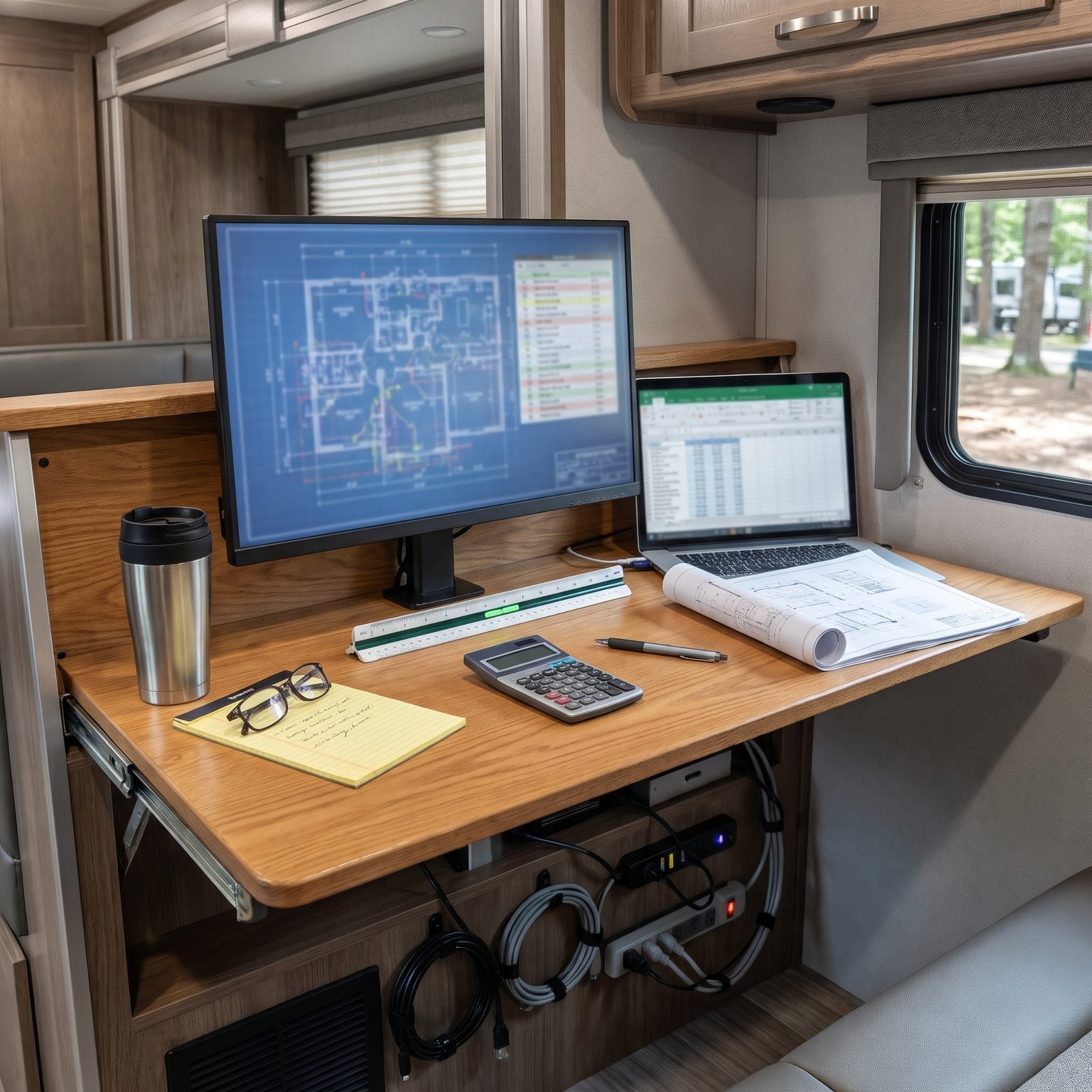
Before a contractor bids on wiring a building, someone has to count every outlet, fixture, panel, and run of conduit on the plans and turn it into a price. That’s the estimator, and the job now lives almost entirely in digital takeoff software working from PDF plan sets.
It’s very doable from a rig, with two caveats. Plan sets can be huge files, so download them while you have strong signal, not the night before a bid is due. And a laptop screen is miserable for reading drawings; a large external monitor is close to mandatory. Most estimators come up through the trade or a contractor’s office first, because knowing how the work actually gets installed is what keeps a bid accurate and profitable.
27. Customer Service Representative Solving Everyday Problems
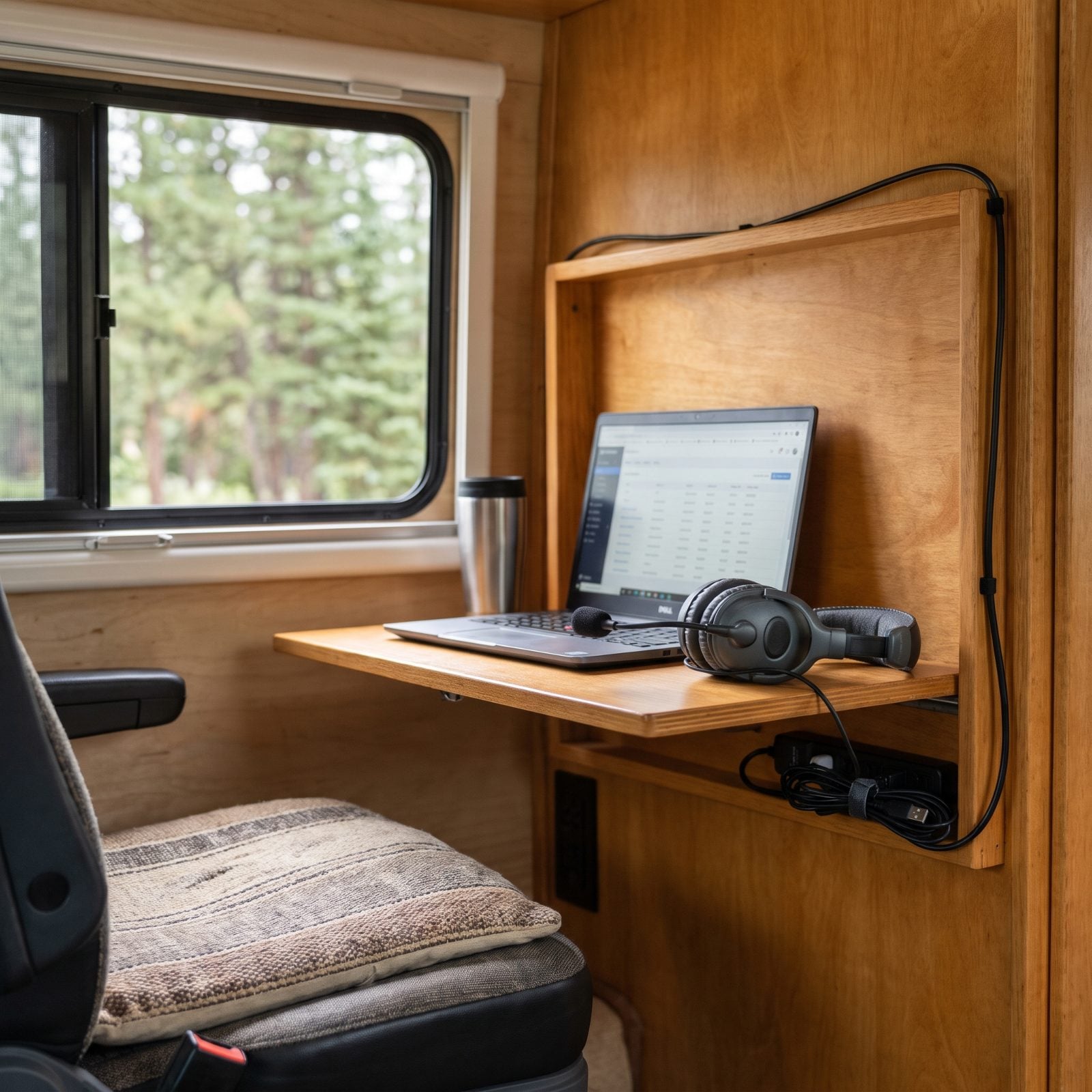
This is the job that pays the fuel bill for a lot of full-timers, and for good reason. All you really need is a quiet corner, a wired headset, and internet that holds steady for an eight-hour shift. The headset matters more than the computer, because a built-in laptop mic picks up every bird, every generator, and every neighbor backing in their fifth wheel.
Here’s what nobody mentions. Most queues run on fixed schedules in a fixed time zone, so you can wake up in Montana and still be logging in at 6 a.m. local if your team runs Eastern hours. Plan your drive days around your days off, not the other way around.
26. Data Analyst Building Reports at an RV Workstation
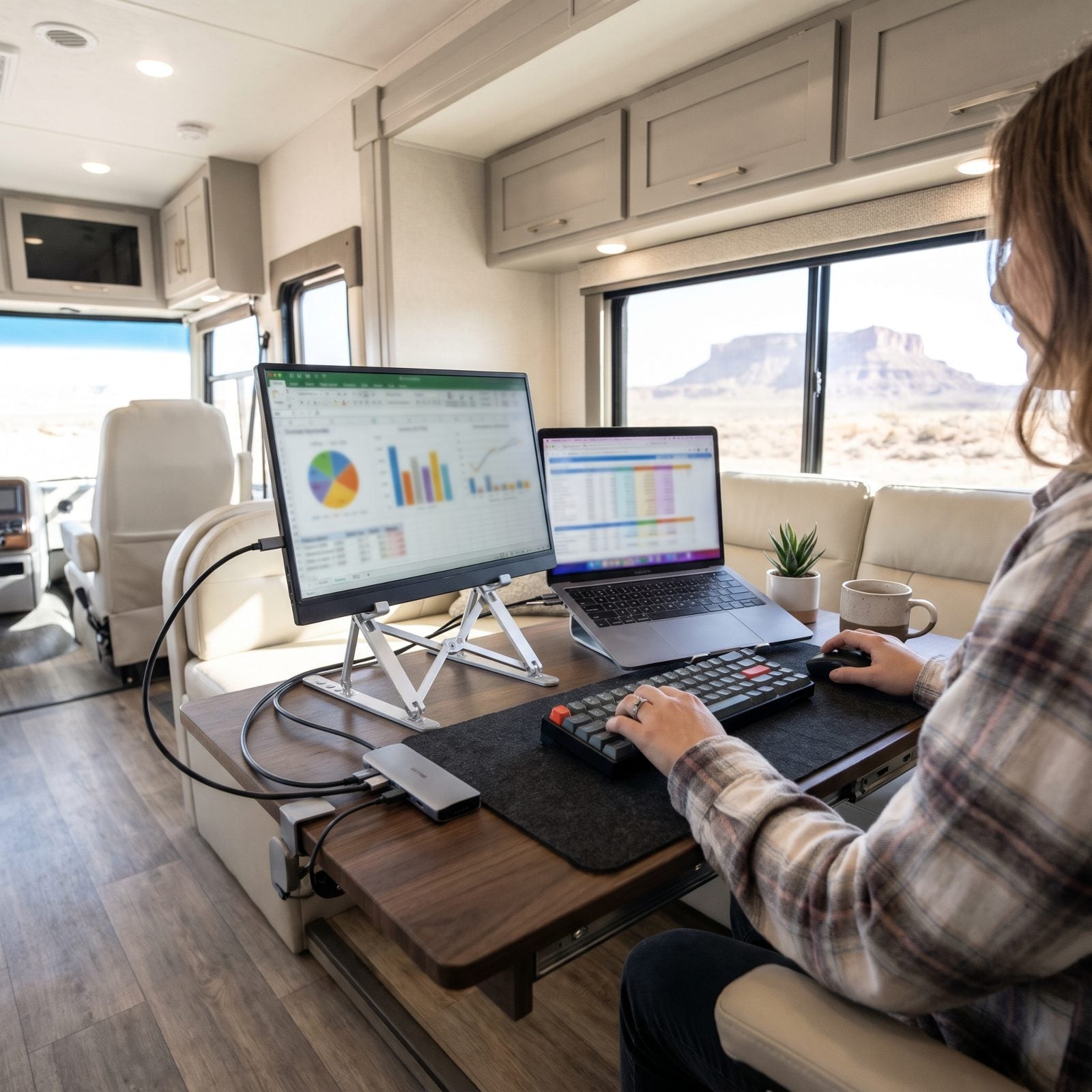
Numbers don’t care where you park. If you can write a clean query and turn it into a chart someone’s boss actually understands, this travels beautifully.
The real constraint is screen real estate. One laptop panel is misery for anyone who lives in spreadsheets, and a single portable monitor changes everything while folding flat against a cabinet when you drive. Budget for one before you budget for anything else.
Bandwidth is lighter than people assume. You’re pushing small files, not streaming all day, so even middling campground Wi-Fi usually handles the actual work fine. It’s the video standups that expose a weak signal.
25. Paralegal Researching Cases From a Mobile Workspace
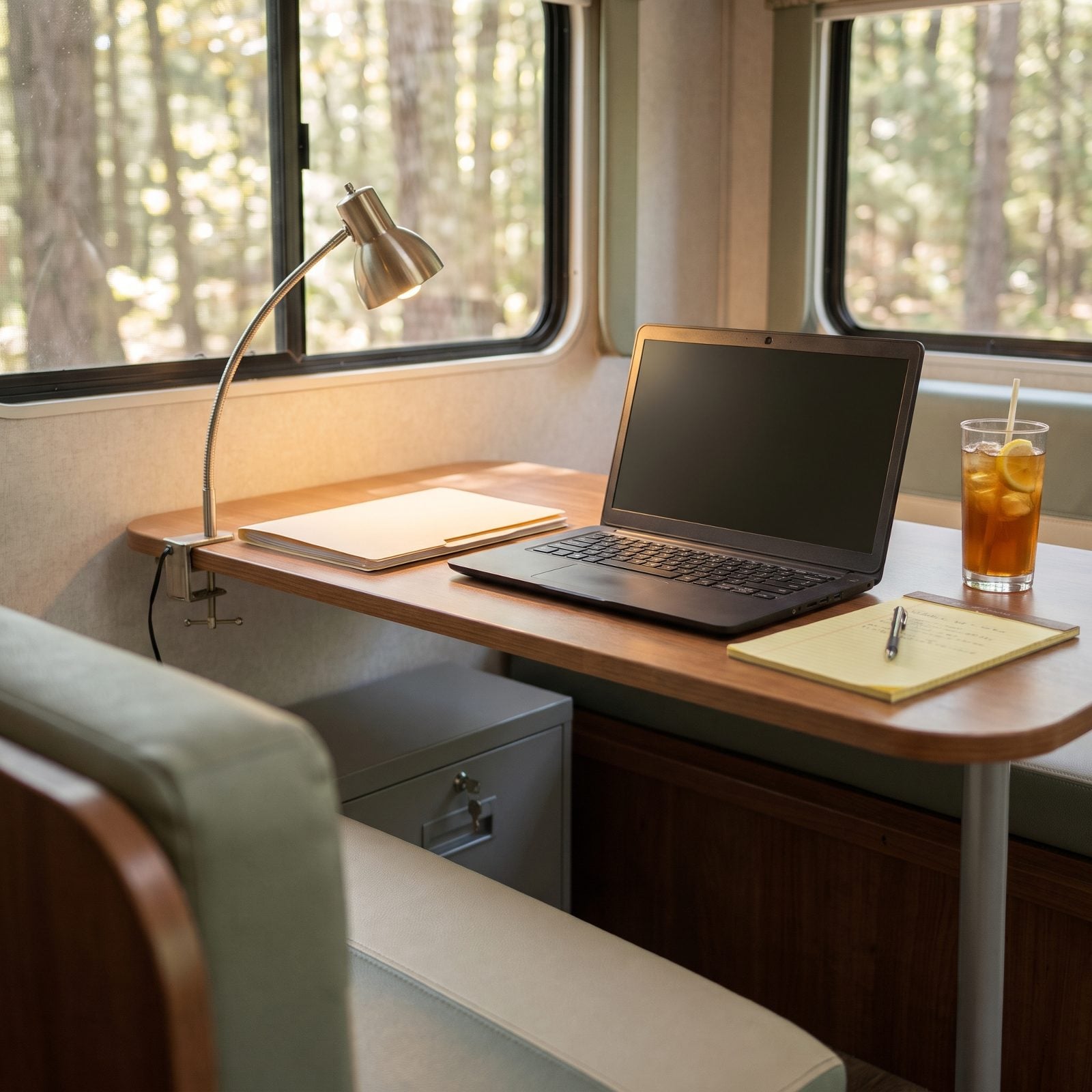
Confidentiality is the whole ballgame here. You’re handling case files that can’t end up on a shared campground network or a screen your campsite neighbor can read over your shoulder.
So you need a VPN your firm trusts, a privacy screen filter on your laptop, and a seat angled away from windows and foot traffic. Cloud-based legal research tools made this job genuinely portable, but the firm has to be on board, and some won’t allow it. Ask before you sell the house.
24. Instructional Designer Building Corporate Training Courses
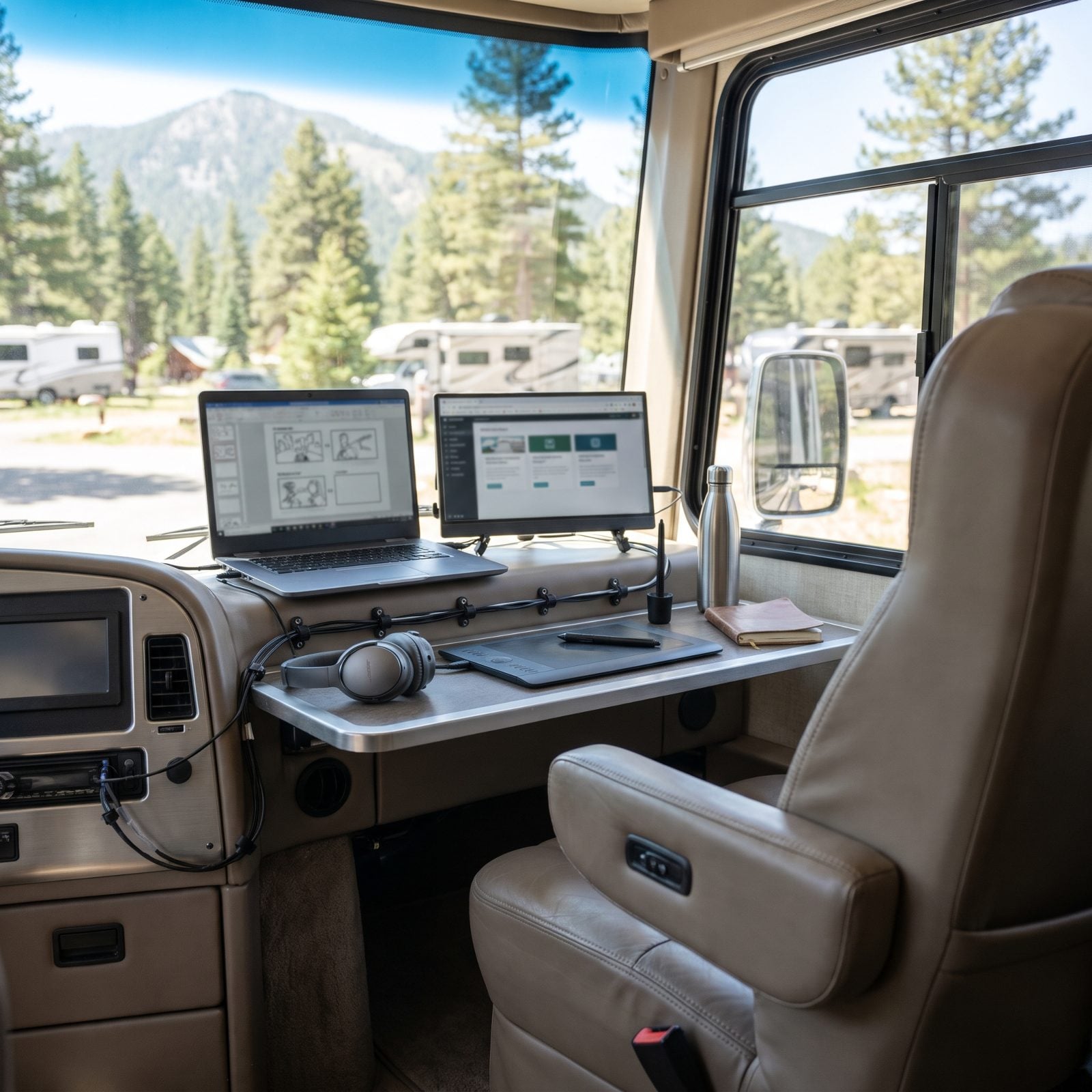
Someone has to turn a dull compliance policy into a course people won’t rage-quit twenty minutes in. That’s this.
It’s project work, deadline-driven, mostly solo. You build modules, record narration, drop in quizzes, and ship the whole package off. Your hours are largely your own, which is the gift of RV life. The curse is file sizes.
Video exports and course packages get heavy fast, and uploading a finished module on thin rural bandwidth can eat an entire evening. A graphics tablet and a pair of closed-back headphones for recording clean audio earn their shelf space quickly. Record your voiceovers when the campground’s quietest, usually mid-morning after everyone’s cleared out.
23. Payroll Specialist Running Paychecks From the Road
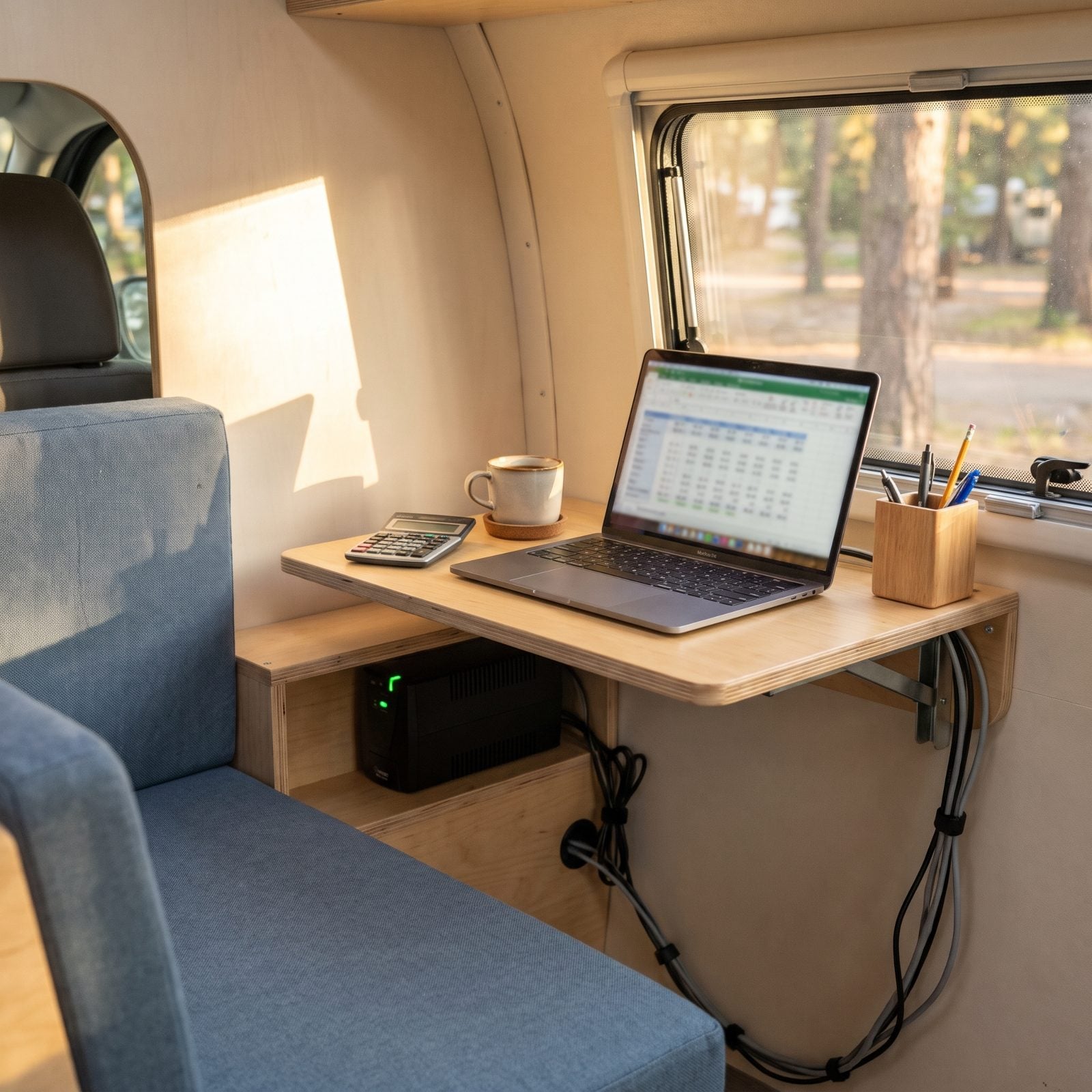
Payroll runs on a calendar that does not negotiate. People get paid Friday whether you’re in a signal dead zone or not, and that single fact shapes your entire travel plan.
The work itself is light on bandwidth but brutal on reliability. A dropped connection mid-submission can be a real mess. This is the one job where a battery backup and a rock-solid second internet source aren’t luxuries, they’re the job.
22. Career Coach Holding Video Sessions From Campgrounds
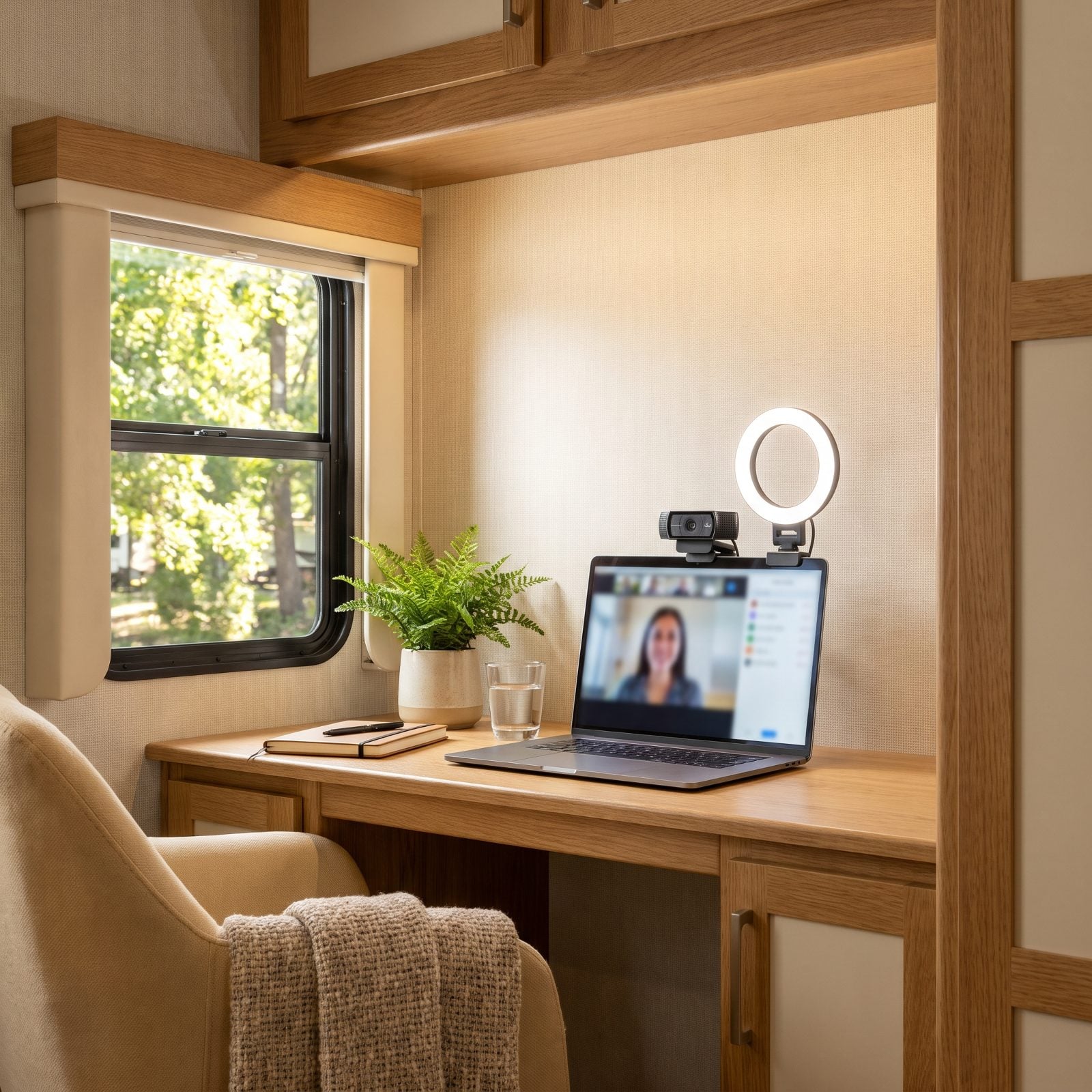
Face-to-face is the product here. Clients hire a career coach to be seen and heard clearly, which means your camera, your light, and your backdrop are doing as much work as your advice.
A clip-on ring light and a camera at eye level beat whatever’s built into your laptop lid, no contest. The lid camera shoots up your nose and makes a serious conversation look like a prank call.
Keep one clean wall behind you. Nobody needs to see your drying laundry while they’re crying about their layoff. And here’s the part that trips up first-timers who only ever checked their download number: for live video, upload speed is what actually matters.
21. Quality Assurance Tester Checking Software for Bugs
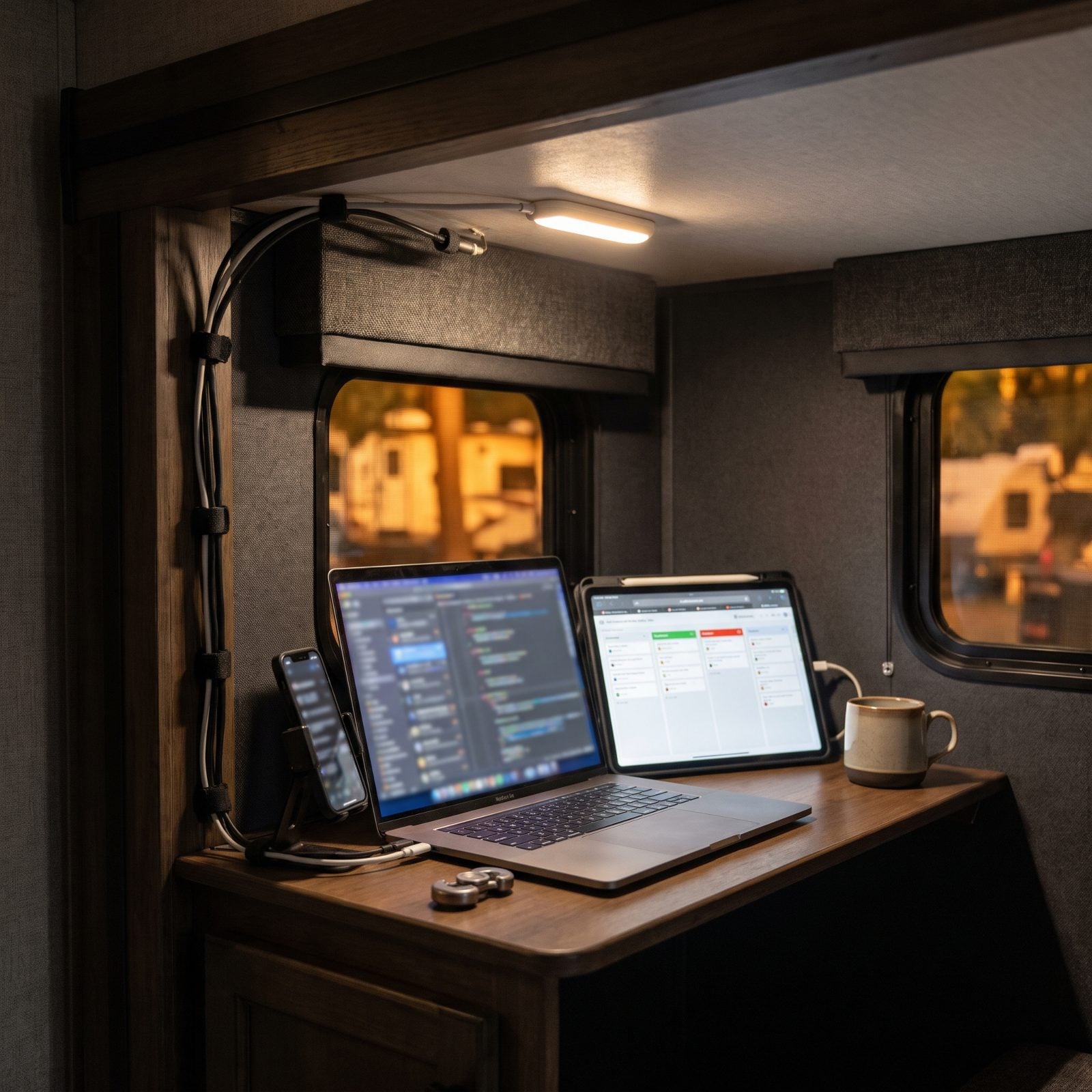
Break things on purpose, then write down exactly how you broke them. That’s the gig, and it’s oddly satisfying.
QA testing suits RV life because the work is often self-paced within a sprint. You might run a few devices at once, a phone, a tablet, a laptop, but none of it is heavy hardware, and a bunk converted into a low desk works fine. Testing live web apps leans on steady internet. Testing a locally installed build barely touches your signal at all. Know which kind of testing your team does before you commit to a week of backcountry camping.
20. Insurance Underwriter Evaluating Applications From an RV
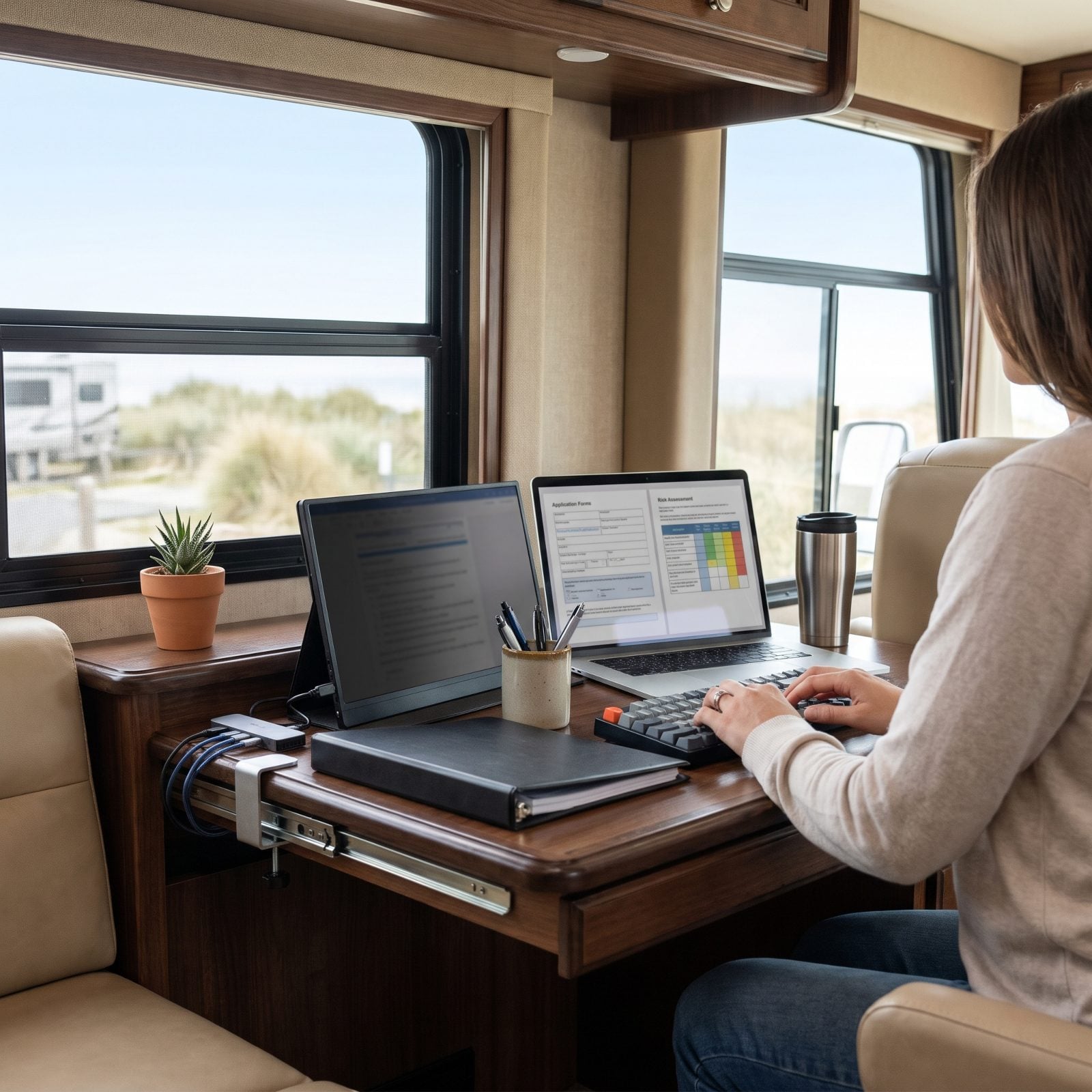
This is heads-down analytical work with a privacy requirement. You’re reviewing applications, pricing risk, and making calls that involve people’s personal and financial data.
Like paralegal work, it lives or dies on security. A VPN, a privacy filter, and a locked-down company laptop are non-negotiable. The actual data traffic is light, so bandwidth is rarely the bottleneck.
The quieter challenge is isolation. Underwriting can be a solitary slog, and the road only amplifies that. Build in your social hours on purpose, because the campground happy hour won’t schedule itself around your deadlines.
19. Online Tutor Teaching Students From an RV Office
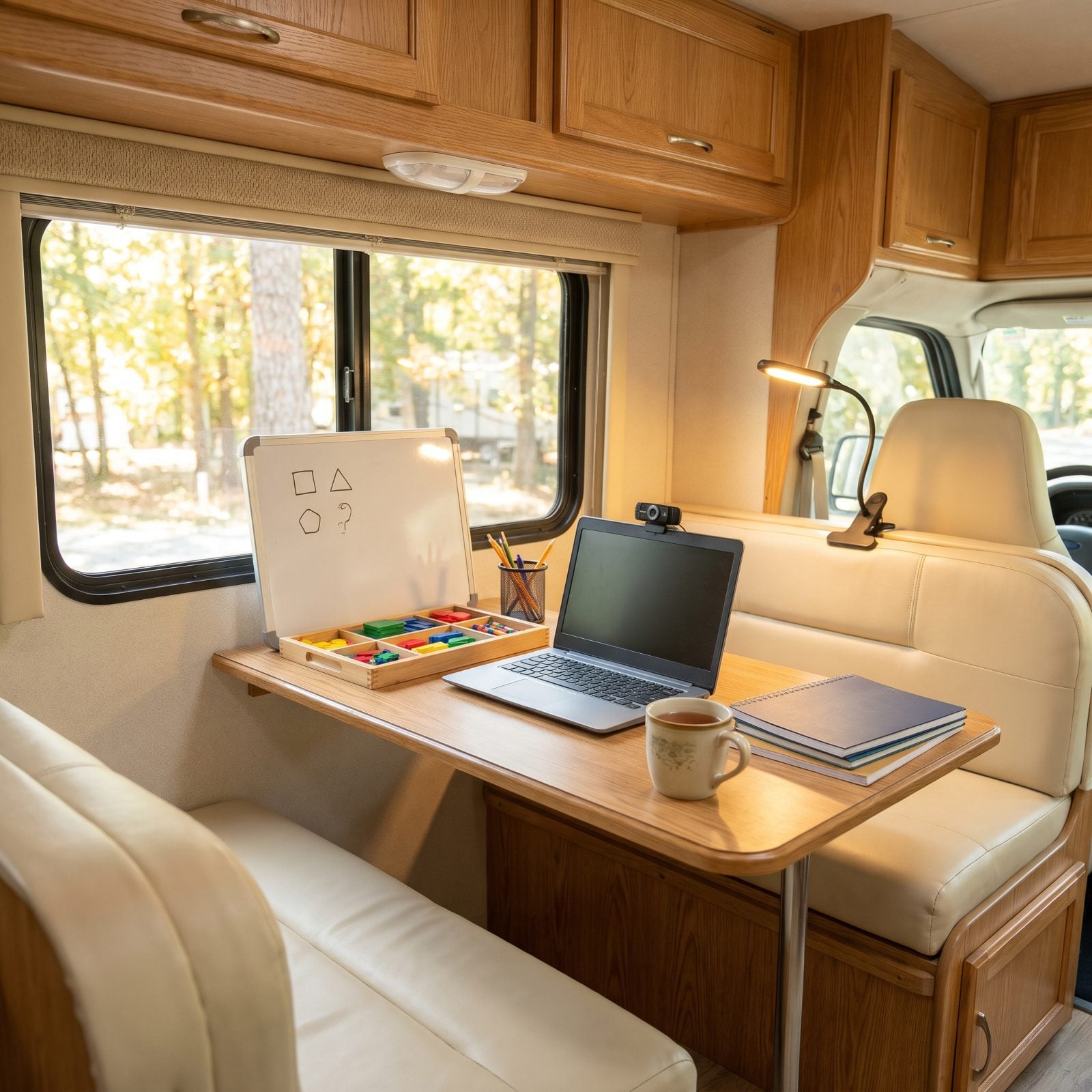
Kids and parents in a fixed time zone are watching your little camera square, which means your schedule belongs to them, not the sunset.
Tutoring platforms are built for exactly this, so the tools are usually handled. What you bring is a reliable upload connection, a quiet window of time, and a backdrop that doesn’t distract a nine-year-old from fractions.
A small whiteboard you can hold up to the camera beats any fancy app. And the seasonal rhythm is real. Summer and exam season are busy, mid-semester lulls are not, so plan your boondocking for the slow weeks and your reliable-hookup parks for the busy ones.
18. Property Manager Handling Tenants and Vendors Remotely
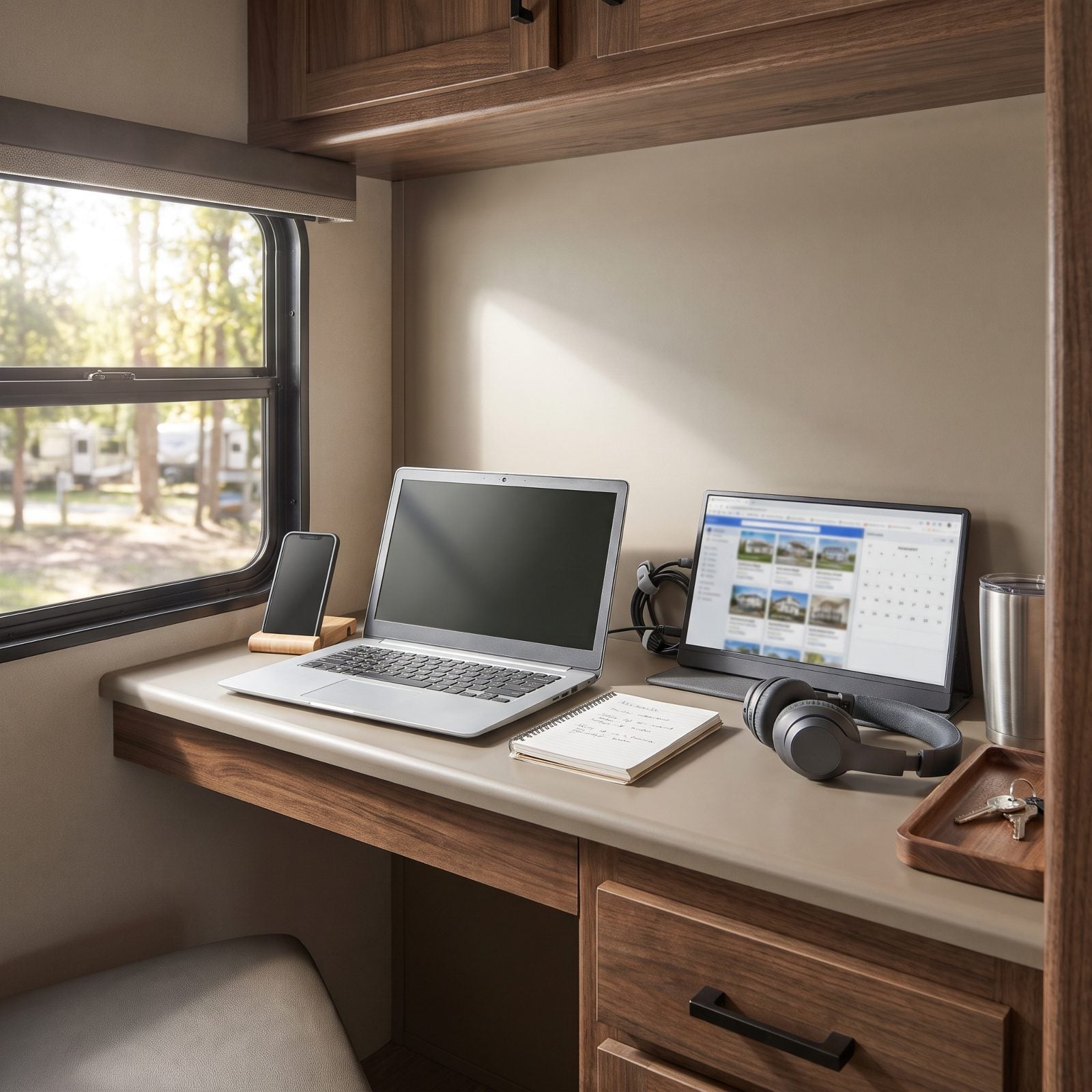
Leaky faucets don’t wait for you to get back into cell range. That’s the tension at the heart of managing property from the road.
Most of the job runs fine remotely now. You’re fielding tenant messages, coordinating vendors, approving repairs, chasing rent, all of it over phone and software. The infrastructure got genuinely good, and plenty of managers run full portfolios from a desk six states away.
What keeps you up at night is the emergency you can’t physically reach. A trusted local handyman and a clear after-hours protocol matter more than any app. And phone coverage, more than Wi-Fi, is your lifeline here, because a tenant with a burst pipe isn’t going to wait for you to find the campground hotspot.
17. Medical Transcriptionist Turning Dictation Into Reports
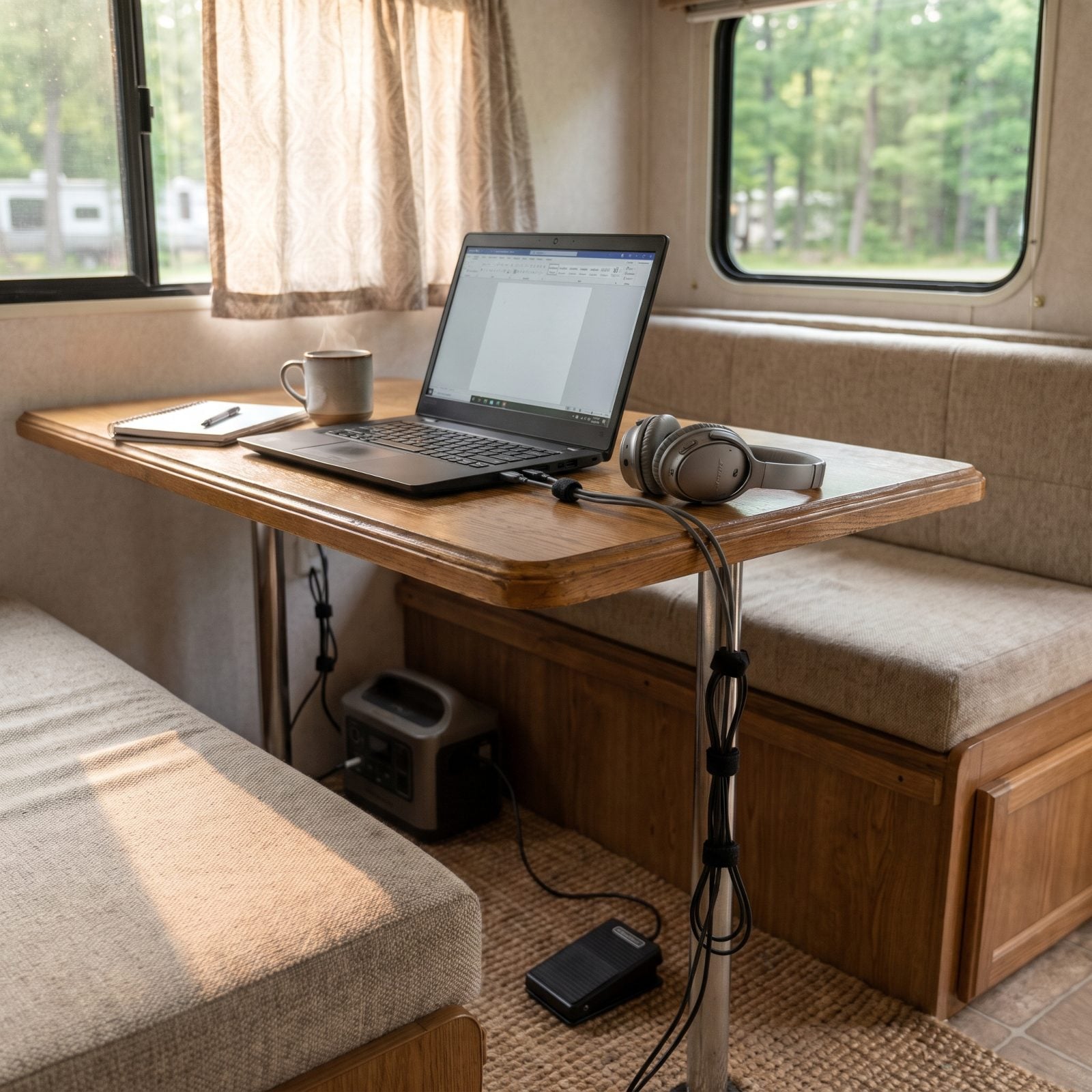
This one rewards quiet. Dictation work lives or dies by audio, so you need a decent headset and a cabin that isn’t echoing with the furnace fan or a neighbor’s generator. A USB foot pedal keeps your hands on the keyboard, which matters when you’re paid by the line.
Here’s what nobody mentions: medical work often requires HIPAA-compliant setups, so public campground Wi-Fi is usually a non-starter. Plan on a cellular hotspot with a VPN. The accuracy standards are brutal and real, and slow connections plus background noise will cost you money.
16. Video Editor Producing Projects at a Mobile Editing Station
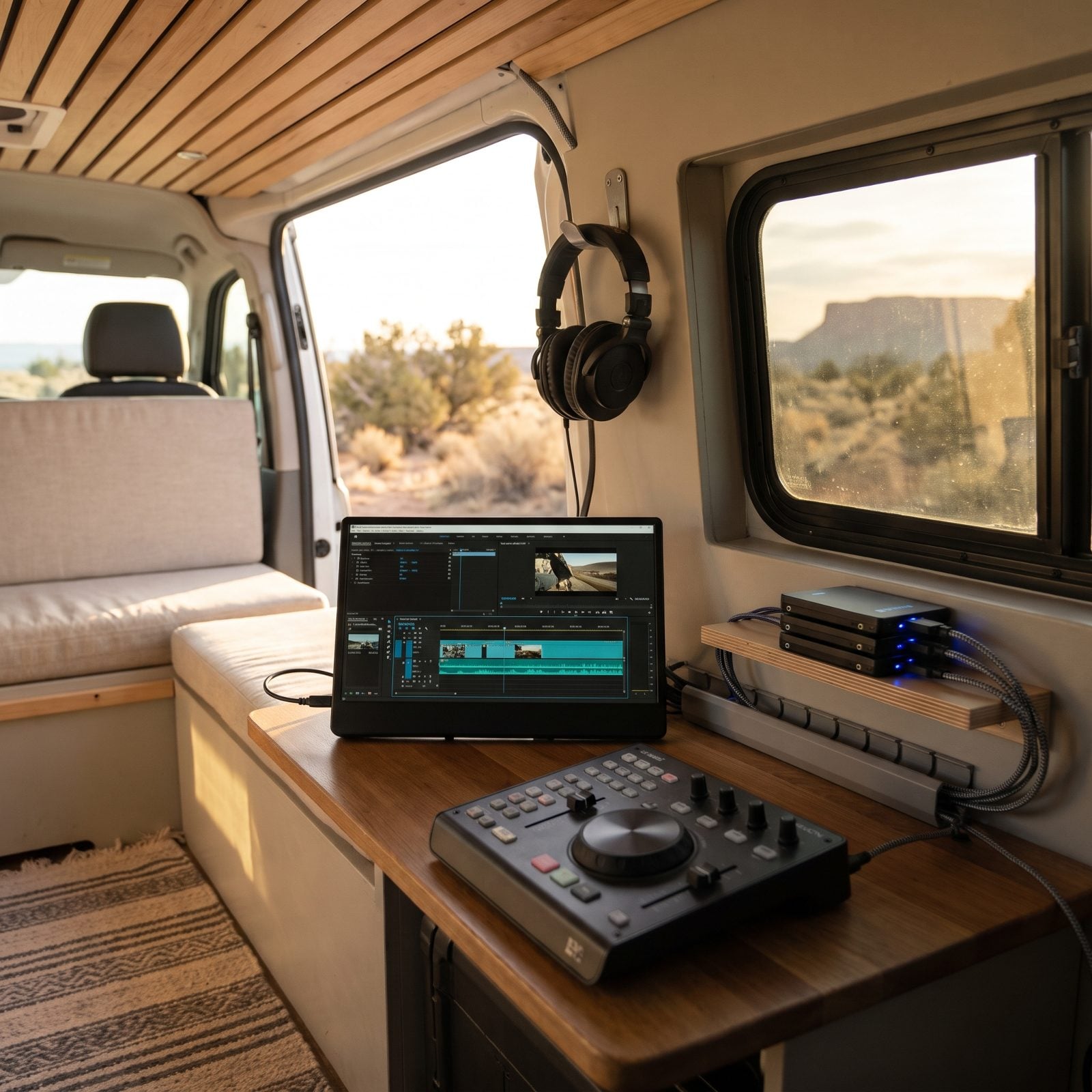
Editing is the job that eats bandwidth and battery for breakfast. You can cut proxies happily on a van’s lithium bank, but exporting a two-hour 4K project while boondocking will drain you fast. Big footage files also chew through data caps, so most road editors deliver via drive-sync overnight or from a coffee shop.
You want a color-accurate screen, a shade hood for daylight glare, and external SSDs that don’t rattle loose on washboard roads. Keep two backups of everything. Hard drives die on the interstate, and clients don’t care that you hit a pothole outside Moab.
15. Human Resources Generalist Supporting Employees Online

HR runs on conversations, and a lot of them are confidential. A camper van with thin walls becomes a real problem fast. You need a door that closes and a spot where a pay dispute or a termination call can’t be overheard at the next site over.
A clean video background and reliable audio do more for credibility here than any fancy gear. People read professionalism through the screen. The travel wrinkle? Multi-state employment law gets complicated when you’re in a different state every month, so most road HR folks keep a fixed domicile and let the company address stay put.
14. Research Assistant Gathering and Organizing Information Online
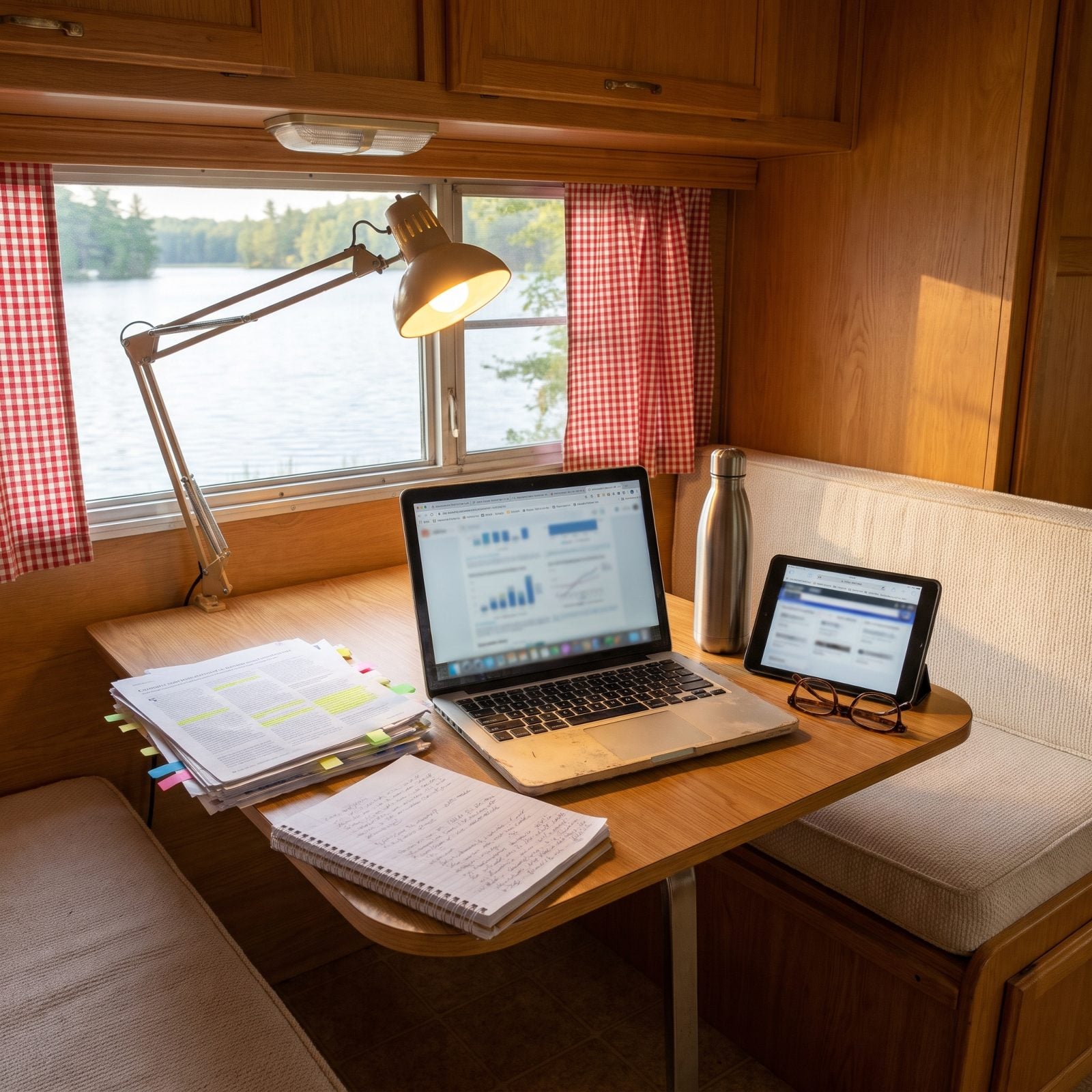
Research is the friendliest job on this list for RV life. It’s mostly reading, synthesizing, and writing up what you found, which means it tolerates weaker connections than most remote work. A page loads, you read for ten minutes, you load another page. Simple.
What it asks for is organization and good light. Browser tabs multiply, PDFs pile up, and dim campground overheads will cook your eyes by sundown. Keep a system for sources so you can hand back where every fact came from.
13. Financial Planner Meeting Clients Through Secure Video Calls
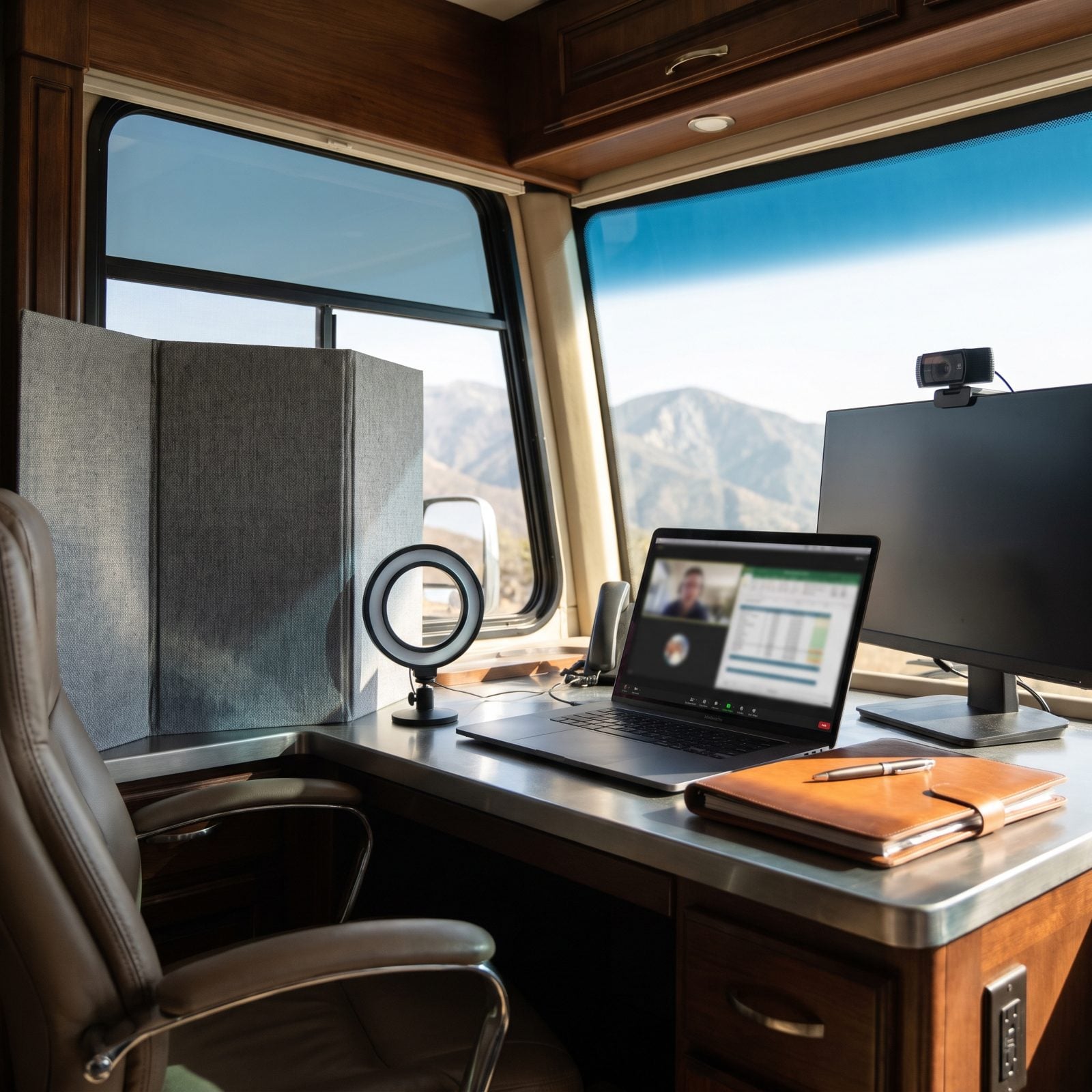
Clients are handing you their retirement. They need to believe you have it together. That means a backdrop that reads “office,” not “parked at a rest stop,” and audio that never cuts out mid-sentence about their 401(k).
The regulatory side is where it gets hard. Licensing and compliance are state-specific, custodial platforms demand secure connections, and some firms flat-out require a registered business address. Most planners on the road keep a legal domicile nailed down and treat the RV as the commute, not the headquarters.
12. Data Entry Clerk Updating Company Records
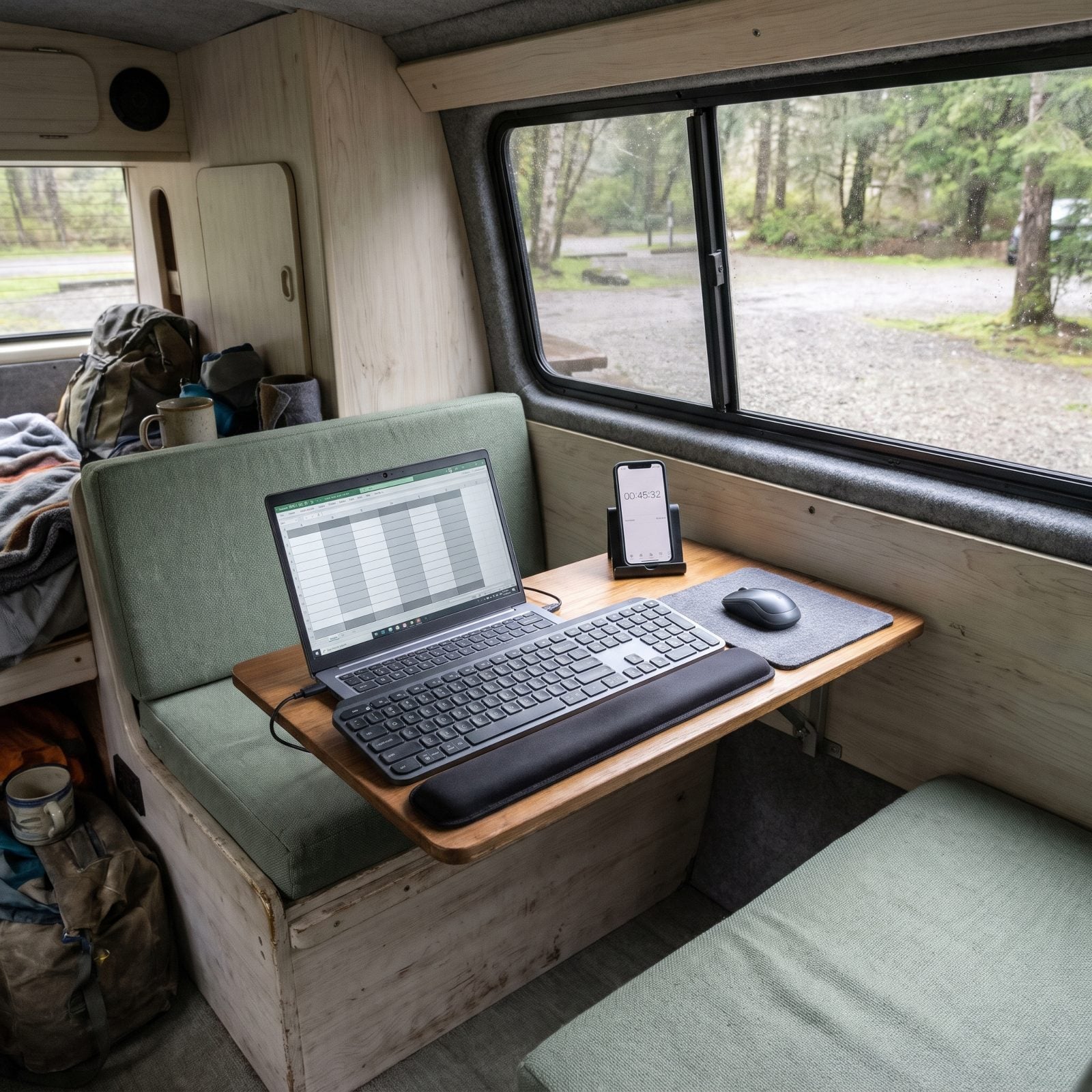
Not glamorous. Steady, though, and that counts for a lot when you’re paying for campsites. Data entry is the kind of task you can knock out in two-hour blocks between hikes, and it forgives a spotty signal because most platforms let you work in batches and sync later.
Your real enemy is your wrists. Hours of typing on a cramped laptop keyboard will wreck them. A full-size external keyboard and a mouse are worth every inch of drawer space they take up.
11. Social Media Manager Planning Posts for Businesses
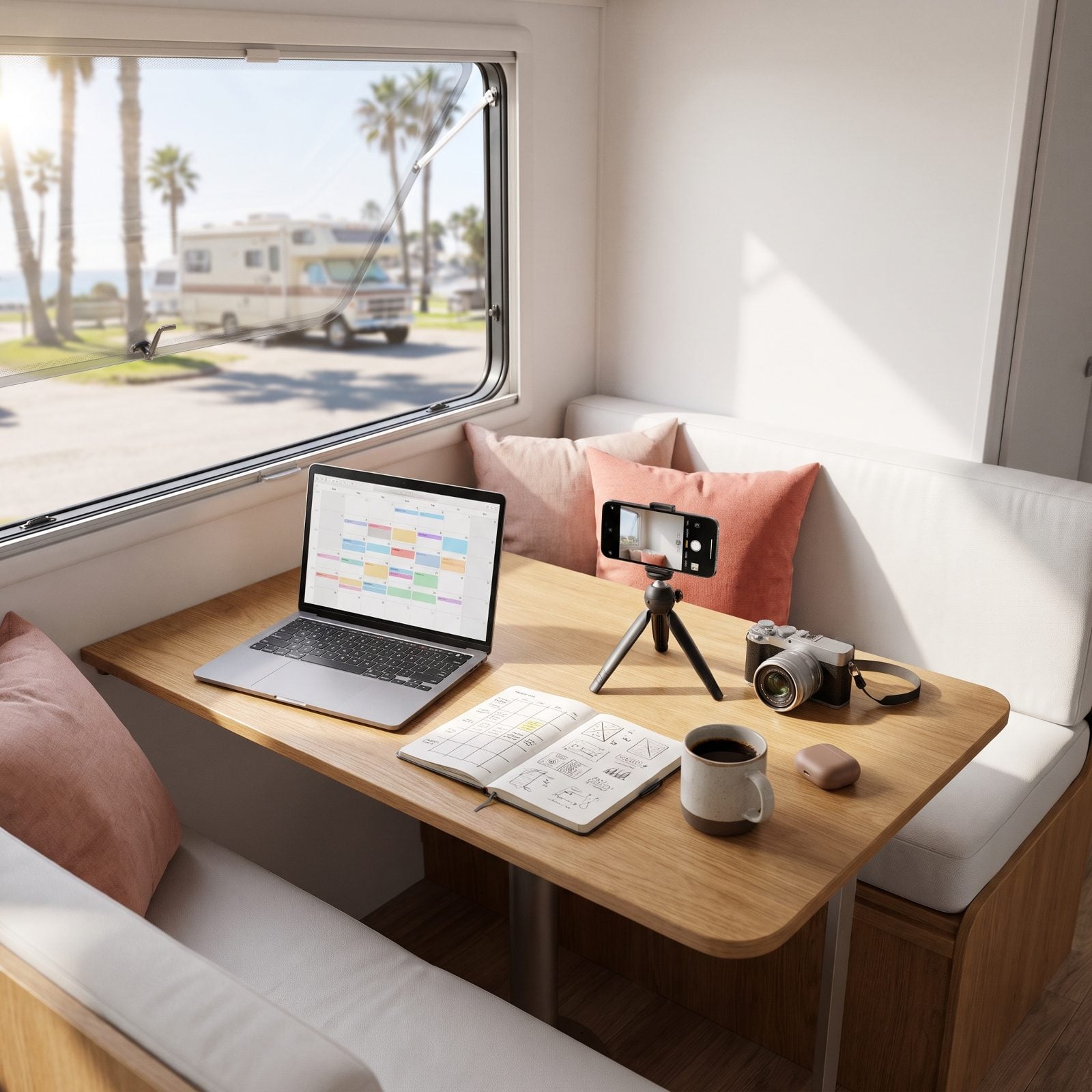
Now here’s the job that actually benefits from the scenery. New backdrops every week mean endless content, and a changing view keeps a feed from going stale. Good light is free when you’re parked by the coast at golden hour.
The work is deadline-driven more than connection-hungry. You batch and schedule, so one strong Wi-Fi session can load a week of posts. Keep a phone on a tripod, a scheduling tool, and a backlog of drafts for the stretches where you’ve got bars from nobody but the pine trees.
10. Help Desk Technician Troubleshooting Problems Remotely
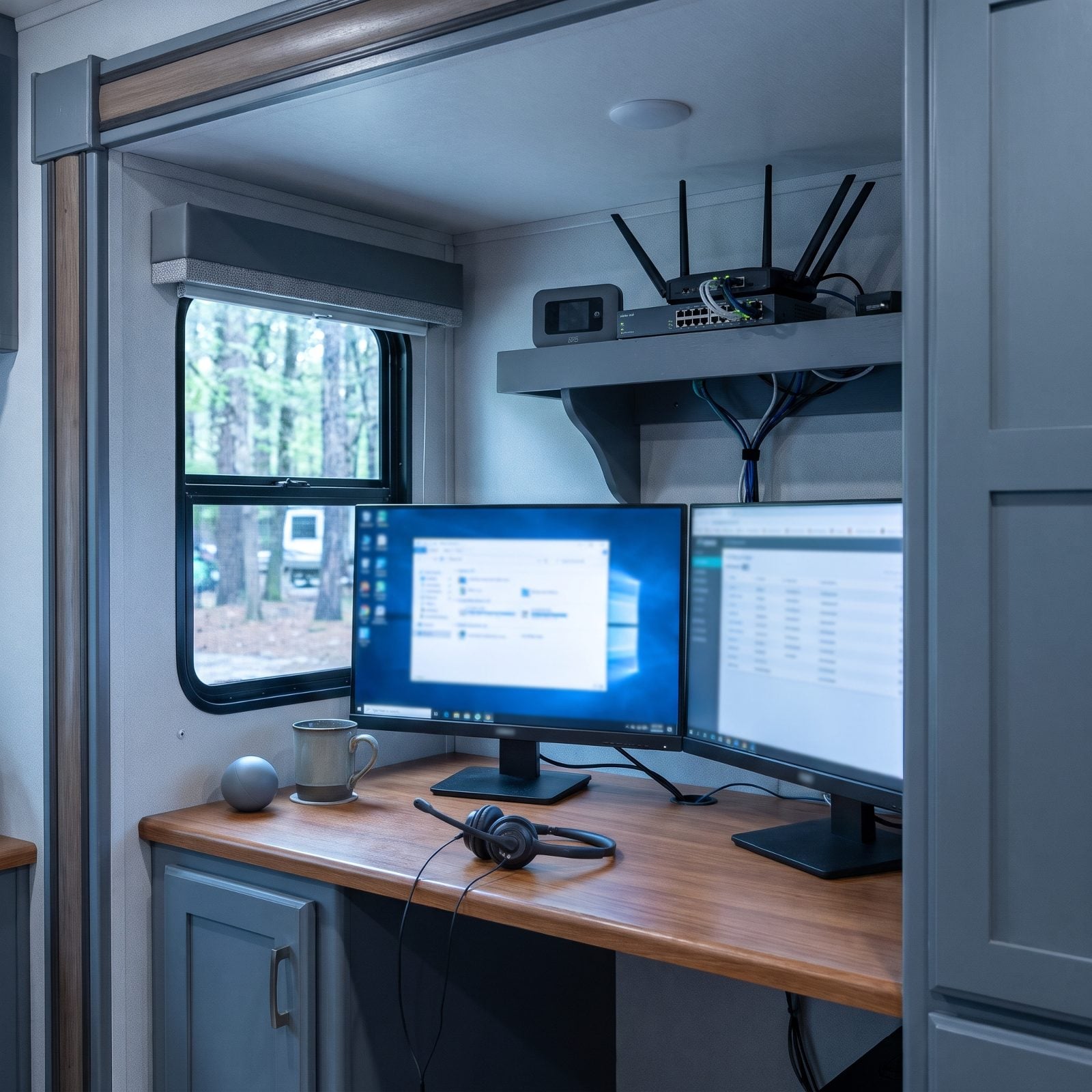
Your whole job is fixing connections, so losing your own is a cruel kind of irony. Help desk work needs rock-solid, always-on internet, because a dropped remote session mid-fix leaves a stressed user staring at a frozen screen.
This is a two-hotspot profession. Most road techs run a primary cellular line and a backup on a different carrier, because campground dead zones don’t care about your ticket queue. You also need a boom-mic headset that filters wind and barking dogs, plus a willingness to take calls on a schedule — which does clip the “free as the open road” fantasy a bit. The paychecks are reliable. That’s the trade.
As two longtime mobile internet educators put it in their guide to redundancy “There simply is no single best mobile internet plan, device, or set-up that works everywhere. If you intend to be mobile, you’ll need multiple options onboard to deploy when needed.”
9. Interior Designer Presenting Digital Room Plans to Clients

Design is visual persuasion, which means two things on the road: color-accurate screens and enough storage for a swatch kit. Clients approve or reject based on what they see, and a washed-out laptop panel showing the wrong terracotta can cost you a signoff.
Rendering and 3D software is heavy, so a capable machine matters more here than for most jobs on this list. The material samples are the annoying part. Fabric, tile, and paint chips need a drawer, and you’ll be mailing physical swatches to clients from whatever post office is nearest your next stop.
8. Procurement Specialist Ordering Supplies for a Company
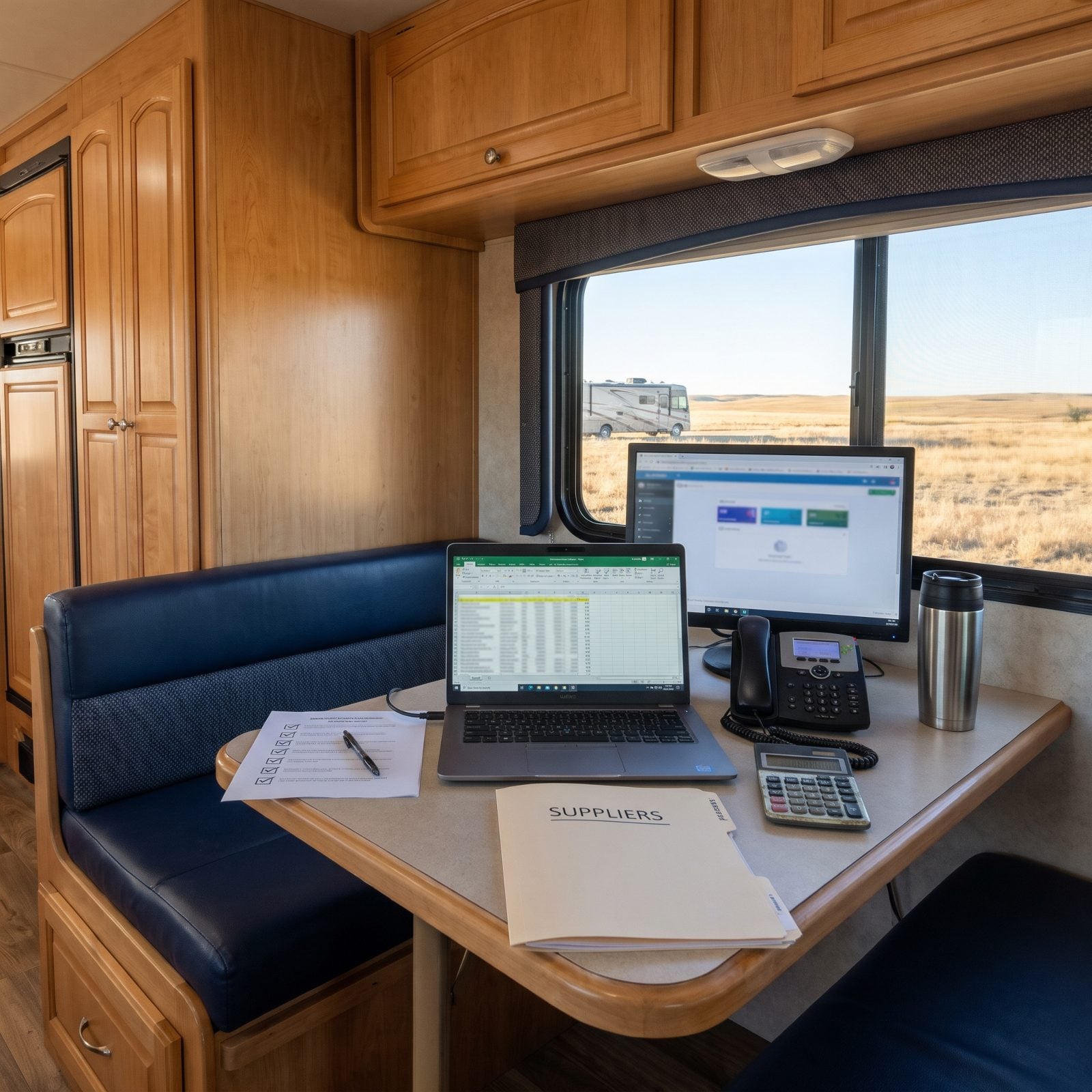
Procurement runs on email, portals, and phone calls, none of which care where the RV is parked. That makes it one of the more road-friendly office jobs, as long as your signal holds during business hours when suppliers actually answer.
The quiet challenge is timing. You’re coordinating deliveries and deadlines across time zones, so a casual “let’s drive west today” can shift your whole workday an hour. Keep a reliable hotspot, a headset for negotiation calls, and a calendar that knows what zone you’re actually in.
7. Medical Billing Specialist Submitting and Tracking Claims
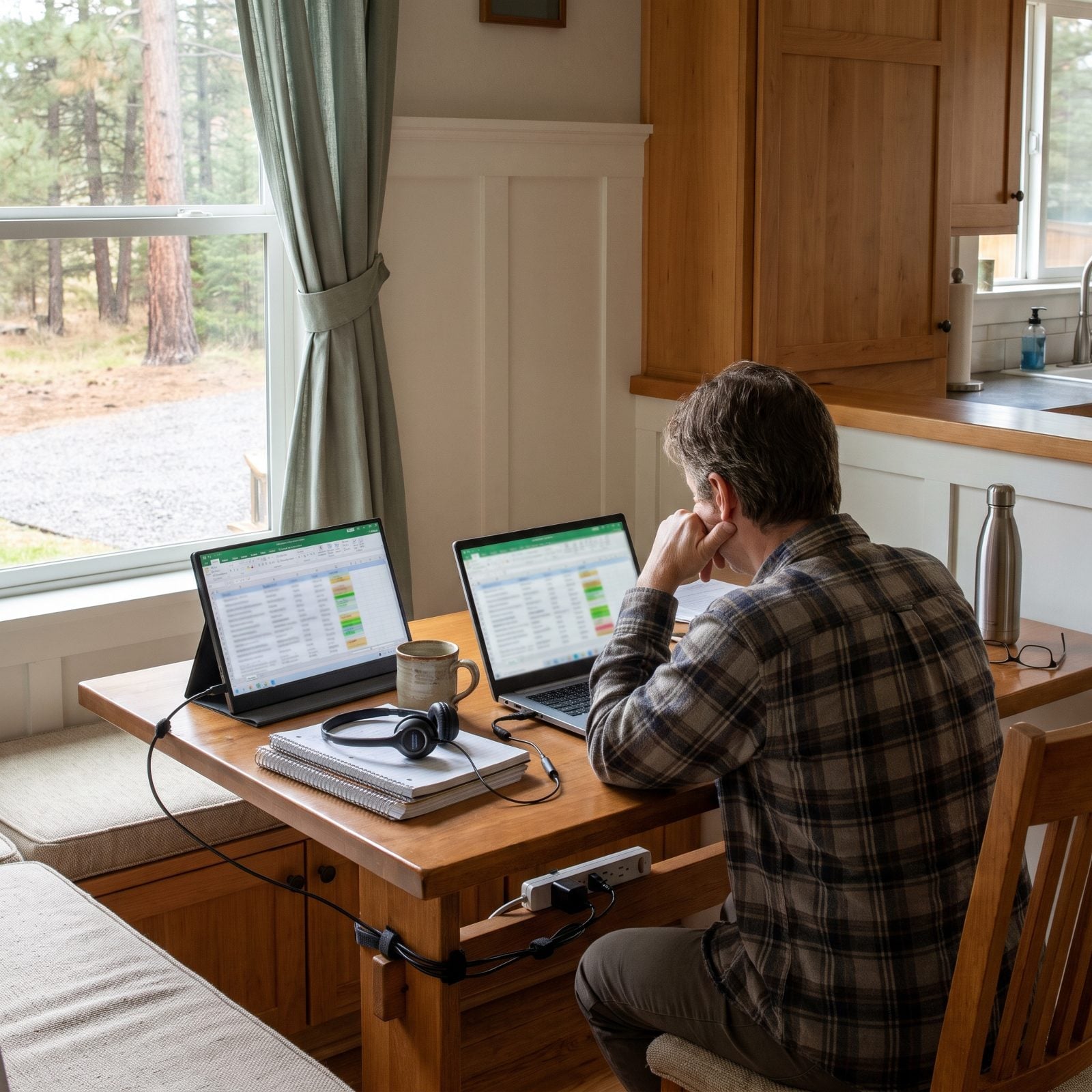
Medical billing runs on steady attention, not drama. You submit claims to insurers, chase denials, and reconcile what actually got paid, and the work fits an RV because it’s queue-based and asynchronous. Nobody needs you on camera at 9 a.m. sharp.
What the road demands is a HIPAA-minded setup: a privacy screen, a locked laptop, encrypted connections, and a VPN your clearinghouse signs off on. Campground WiFi won’t cut it for protected health information, so most full-timers run a cellular hotspot with a backup carrier. Certification through AAPC or AHIMA gets your foot in the door, and clients tend to stick around once you prove you catch the coding errors that quietly leak money out of their practice month after month.
6. Resume Writer Preparing Job Applications for Clients
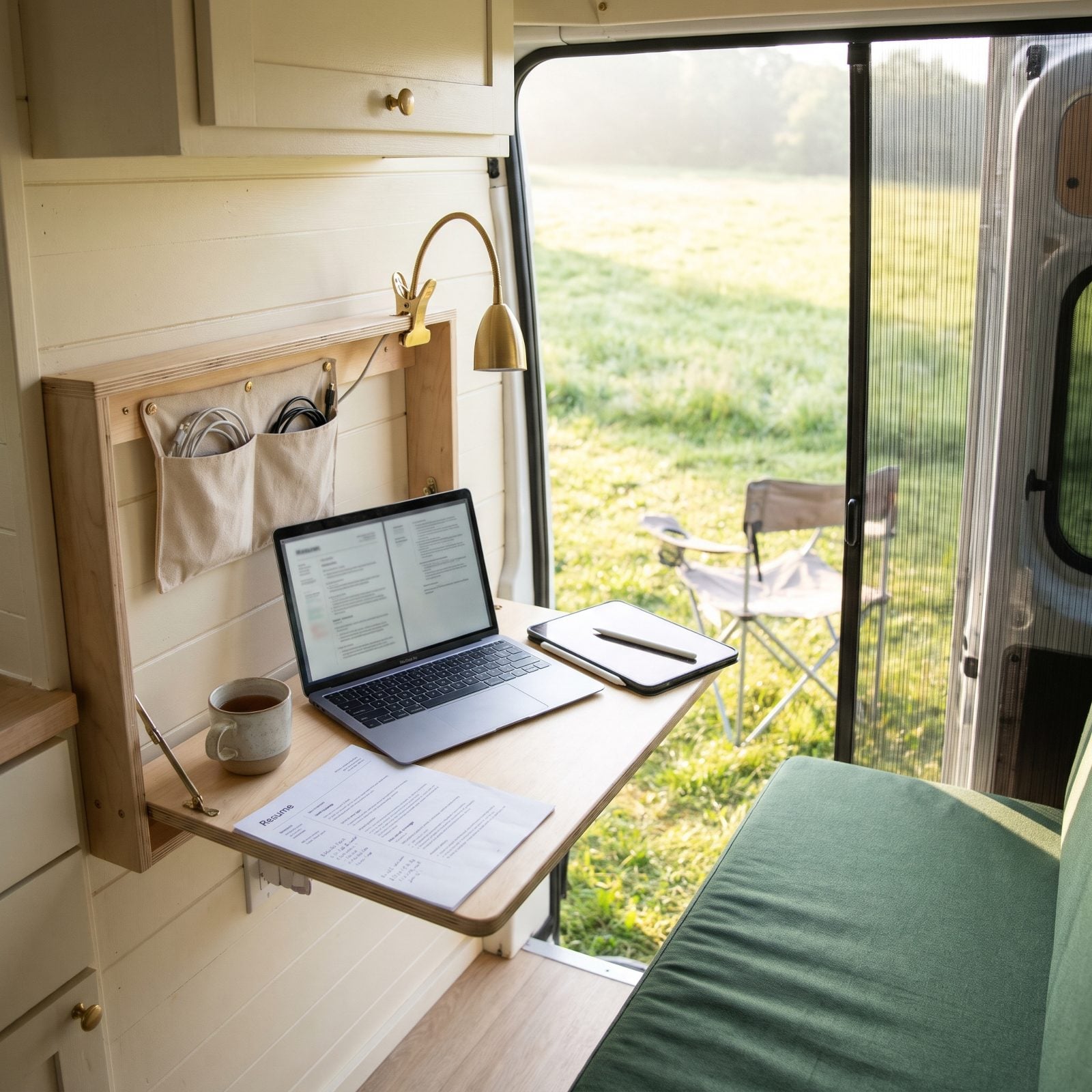
A good resume writer sells someone else’s life back to them better than they could ever tell it themselves. You interview clients over video, drag the real accomplishments out of them, then rebuild the document so an applicant tracking system doesn’t quietly trash it before a human ever looks.
One of the most RV-friendly gigs going. No big files, no fragile software, just a word processor and a quiet hour for each call. Take a client Tuesday, deliver Friday, park wherever you like in between. The hard part isn’t the work — it’s finding clients, which means a referral habit and a LinkedIn presence that does the hunting while you drive.
5. Compliance Specialist Reviewing Policies and Records
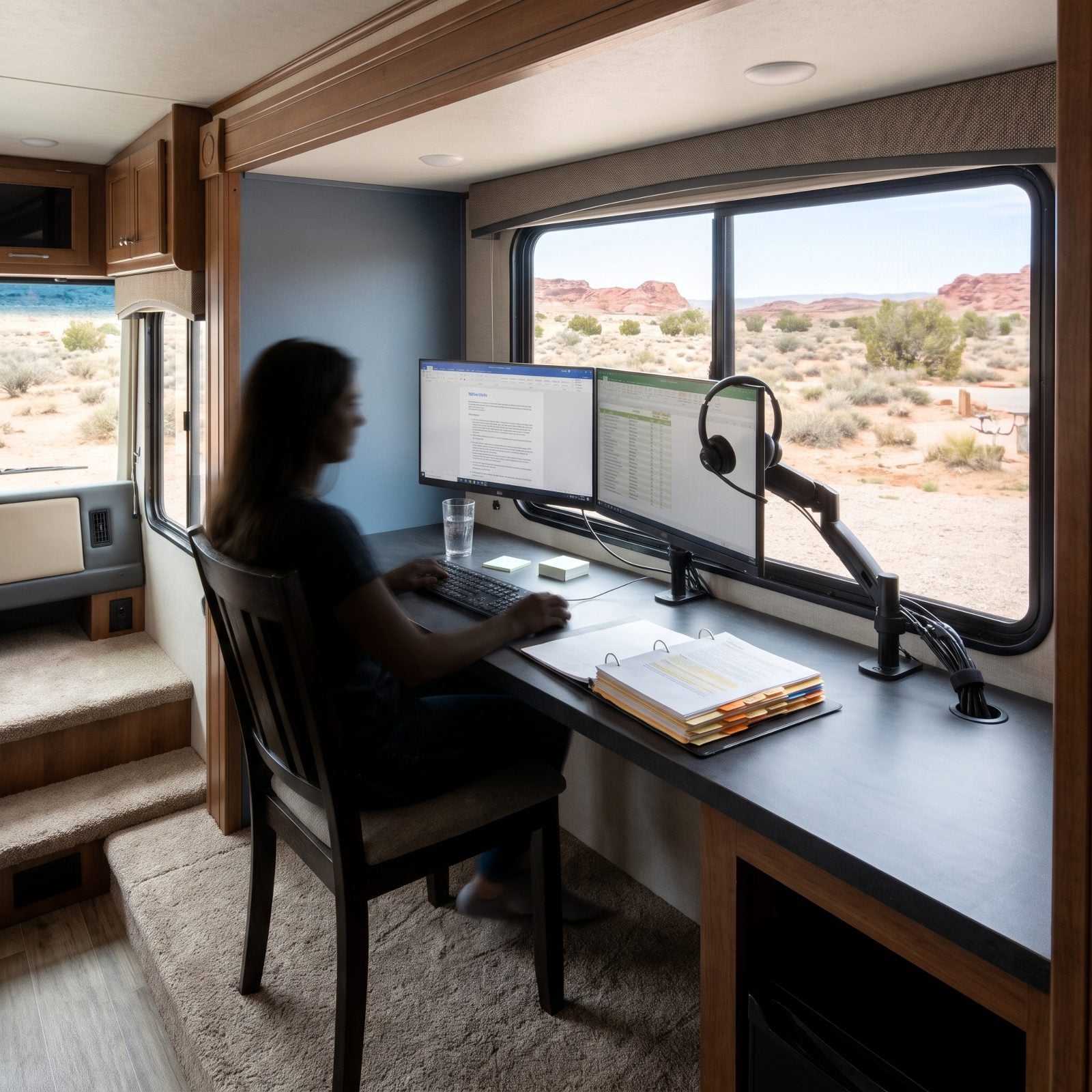
Compliance work is the opposite of flashy. You read policies, audit records against regulations, flag what’s out of line, and write up the findings. Industries from healthcare to finance to cannabis need it, and most of the job comes down to document review and reporting.
Why it travels well:
- The deliverables are reports, not live meetings.
- Deadlines are weekly or monthly, not minute-to-minute.
- You control when the deep-focus hours happen.
The road requirement is dependable bandwidth for large secure document portals and a workspace you can actually concentrate in. Compliance mistakes get expensive fast, so clients want evidence you won’t miss a clause because the generator next door was roaring.
4. Real Estate Transaction Coordinator Managing Closings Online
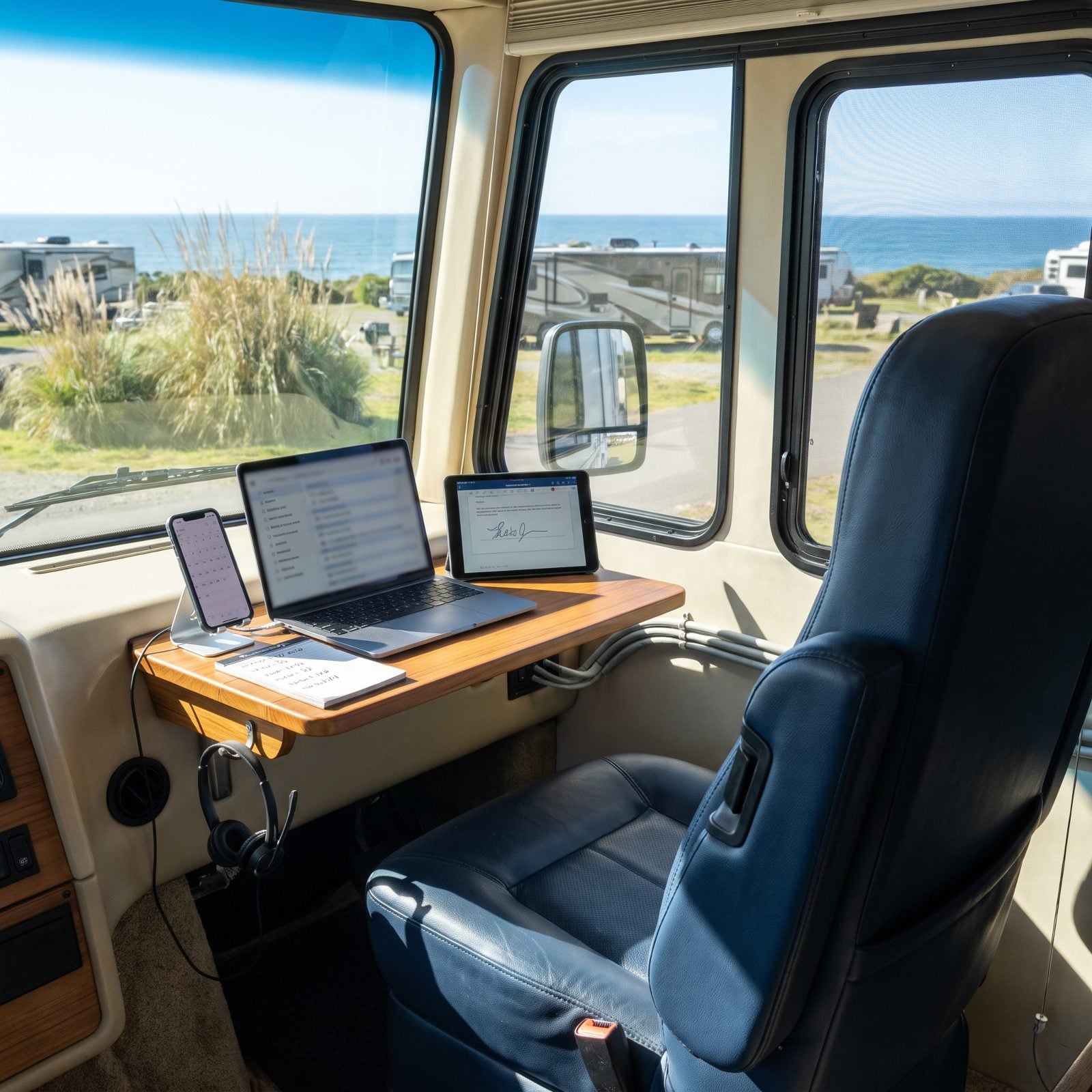
Behind every real estate closing is someone keeping forty moving pieces from colliding. That’s the transaction coordinator. You track contingencies, chase signatures, nudge lenders and title companies, and make sure nothing slips through a crack before close.
It’s almost entirely online now — e-signatures, shared document platforms, a phone, and a good checklist. The catch is that phone part. Agents and clients call during business hours in a specific time zone, so you need reliable coverage and a quiet enough spot that a barking dog two sites over doesn’t become your client’s first impression. Full-timers plan their stops around cell maps for exactly this reason.
3. Online Community Manager Moderating Member Discussions
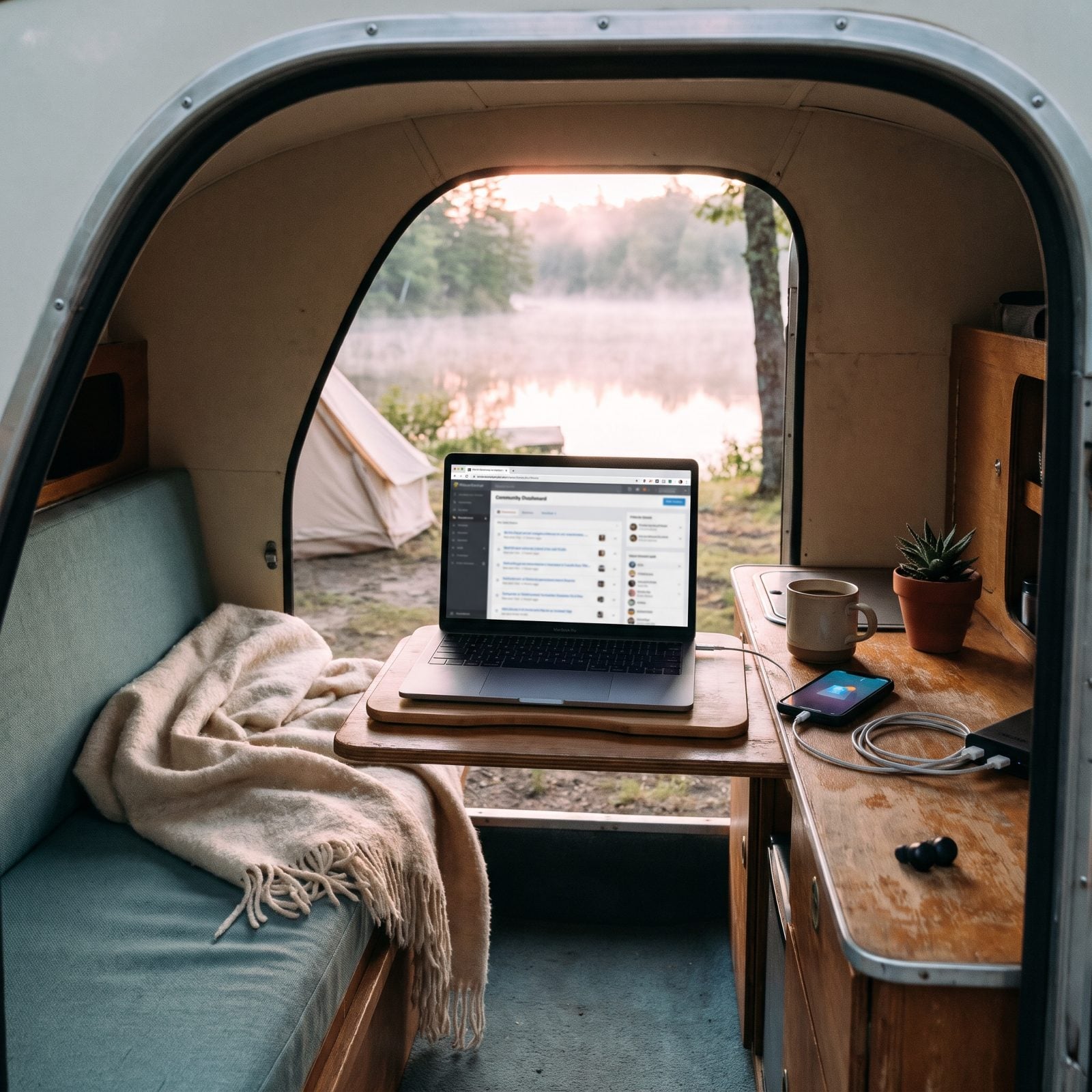
Someone has to keep the online group from turning into a comment-section bar fight. That’s the community manager. You welcome new members, moderate discussions, defuse arguments, and keep the conversation worth showing up for.
The job is made for RV life, mobile and flexible, but it comes with a quiet trap: it never fully switches off. Communities run around the clock, and the pull to check your phone from the campfire is real. Strong community managers build a moderation schedule and actually hold to it. Brands pay for warmth and judgment here, not just rule enforcement, so your personality is the product.
2. Technical Writer Creating Manuals and Help Documents
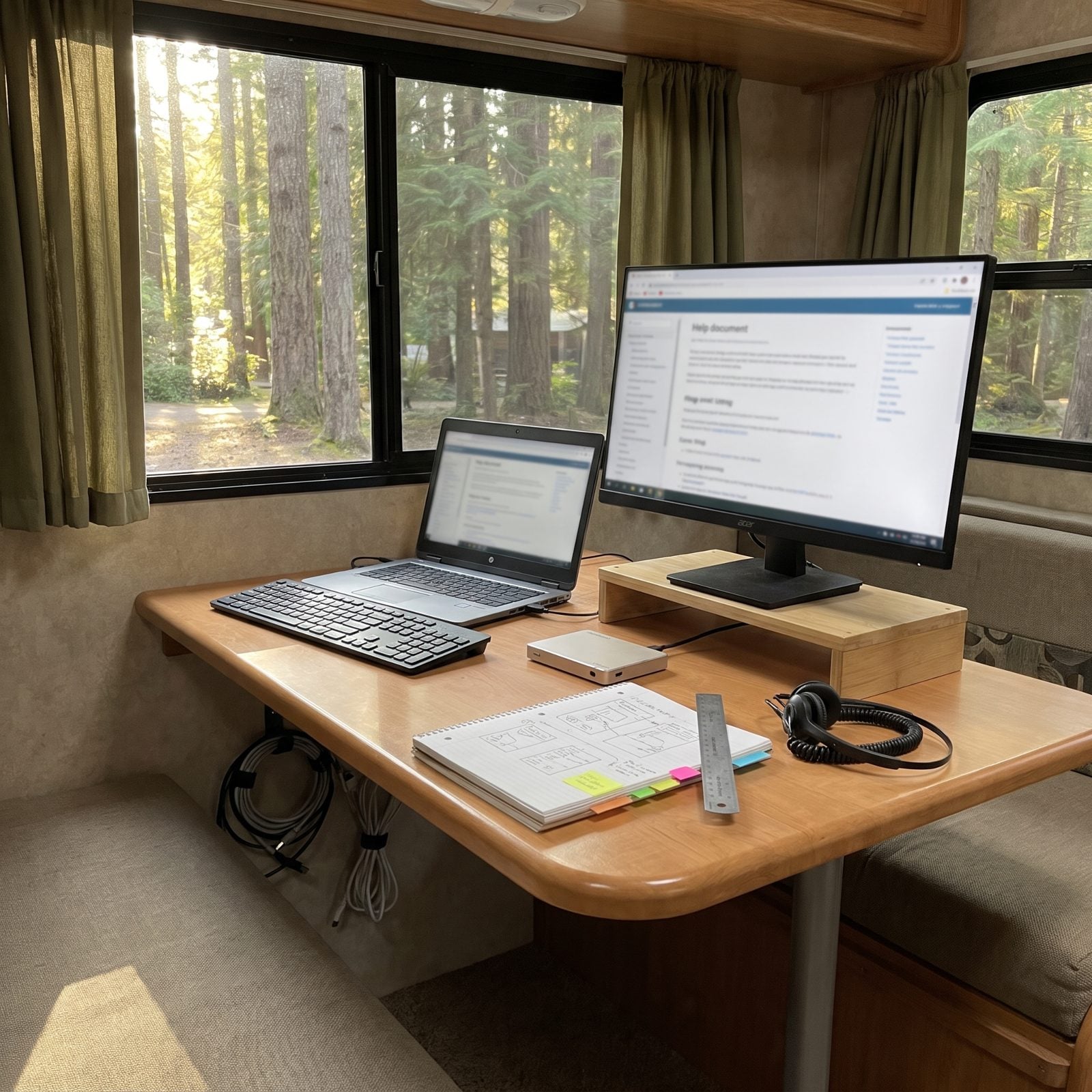
Technical writing turns a confusing product into instructions a tired person can actually follow at 11 p.m. You write manuals, help centers, API docs, onboarding guides — anything that keeps a user from rage-quitting.
It fits the road beautifully. Self-directed work, small files, and most collaboration happens in shared docs and the occasional screen-share. Get a second monitor if you can swing it. Toggling between the thing you’re documenting and the doc you’re writing on one cramped laptop screen is a special kind of misery, and plenty of road writers have suffered through it more than once. Buy the monitor.
1. Remote Sales Representative Calling Prospects From Campgrounds
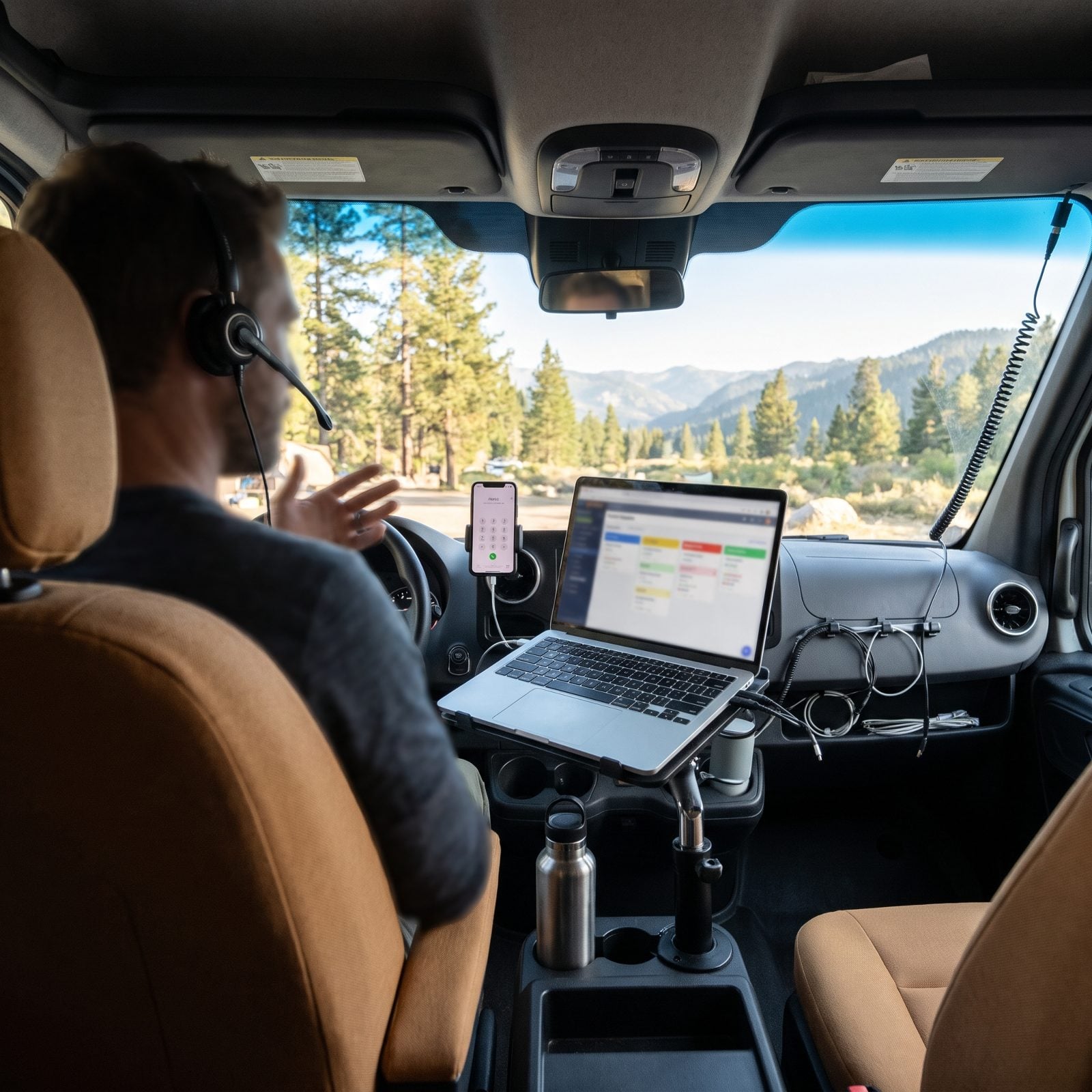
Sales on the road lives and dies on one thing: the call has to sound like you’re in an office, even when you’re parked under ponderosa pines.
Inside sales, SDR work, account management — if it runs on calls, video demos, and a CRM, it can run from an RV. The gear list is short but non-negotiable. A noise-canceling headset, a cell booster, and a backup hotspot so a dropped call doesn’t become a dropped deal. Dead air kills credibility faster than a bad pitch ever will.
Plan your week around cell coverage, not scenery. The prettiest boondocking spot with zero bars is worthless on a quota day.