
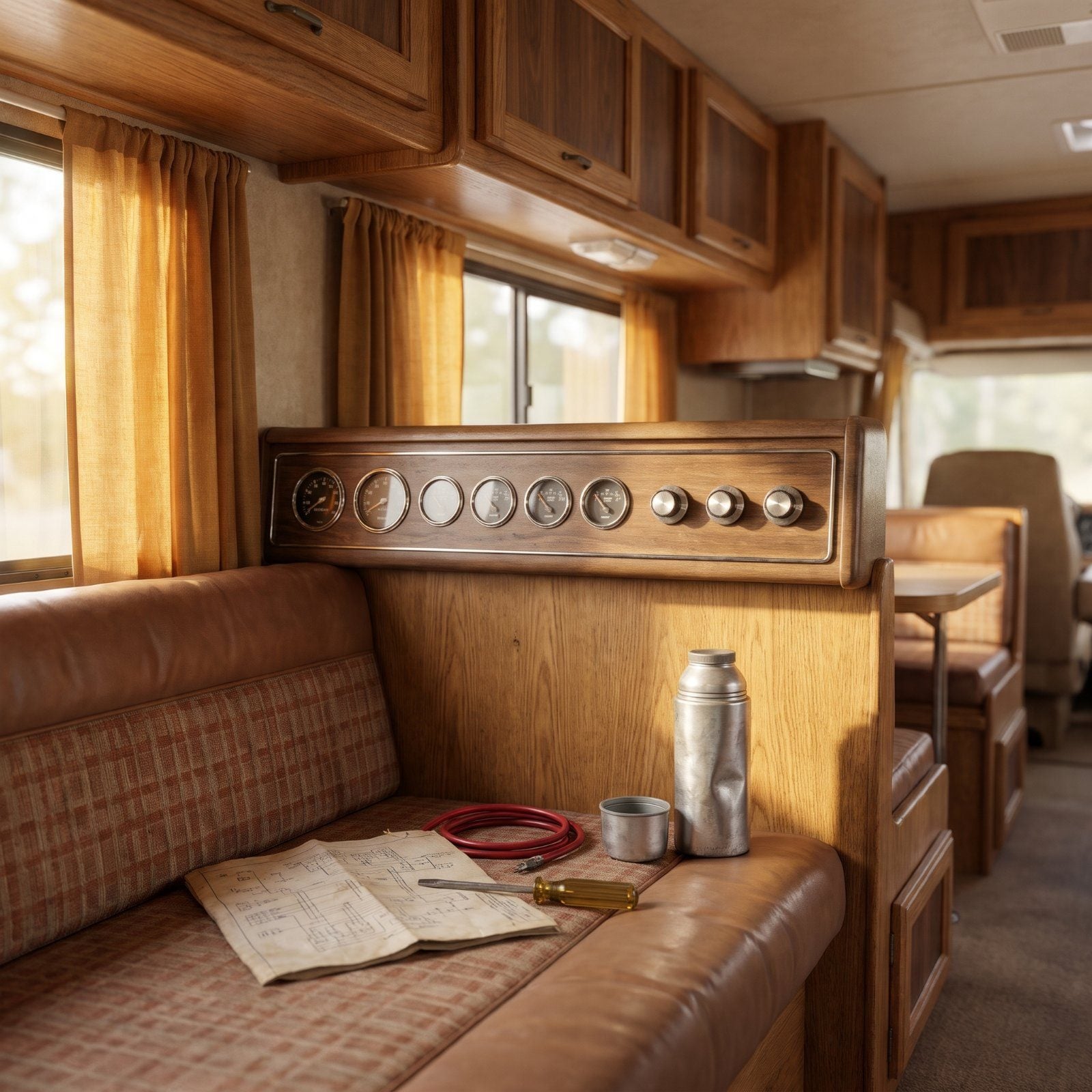
The dash of an ’83 motorhome never asked you to find a menu. You reached for the heat, the heat was a knob, you turned it, done. Those rigs smelled like warm oak and old vinyl, and half of them still run. Somewhere along the way the RV industry decided touchscreens and glued-together cabinetry counted as progress. A lot of it wasn’t. The features below are the ones that made those coaches last, and the ones we keep wishing our new rigs still had.
Please note that some of the images in this article were created with the assistance of AI.
32. Physical Knobs for Every Major Control
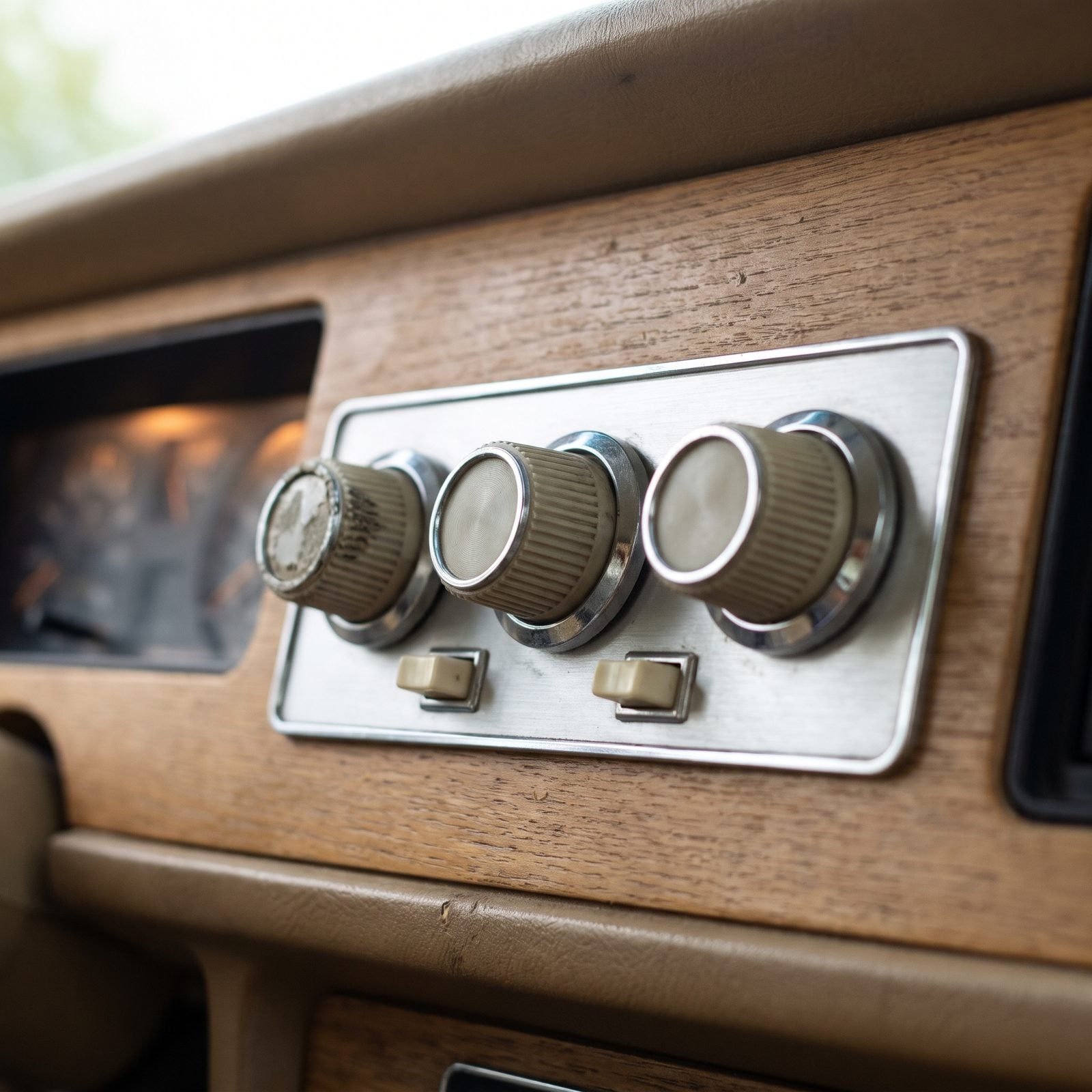
You could set the cabin temperature with your eyes on the road, and that’s the whole case for knobs right there. Your thumb found the detent, you felt the click, and the fan came up a notch without you glancing down at a glowing rectangle to hunt for the right submenu.
Eighties coaches ran everything off physical controls because physical controls work in the dark, work with gloves on, and keep working after fifteen summers of heat. A knob tells you where it’s set by its position. A touchscreen? Nothing until it wakes up and decides to cooperate.
As one car safety watchdog chief puts it, “We want to see carmakers bring back buttons for the functions drivers use every day”
31. Repairable Household-Style Appliances
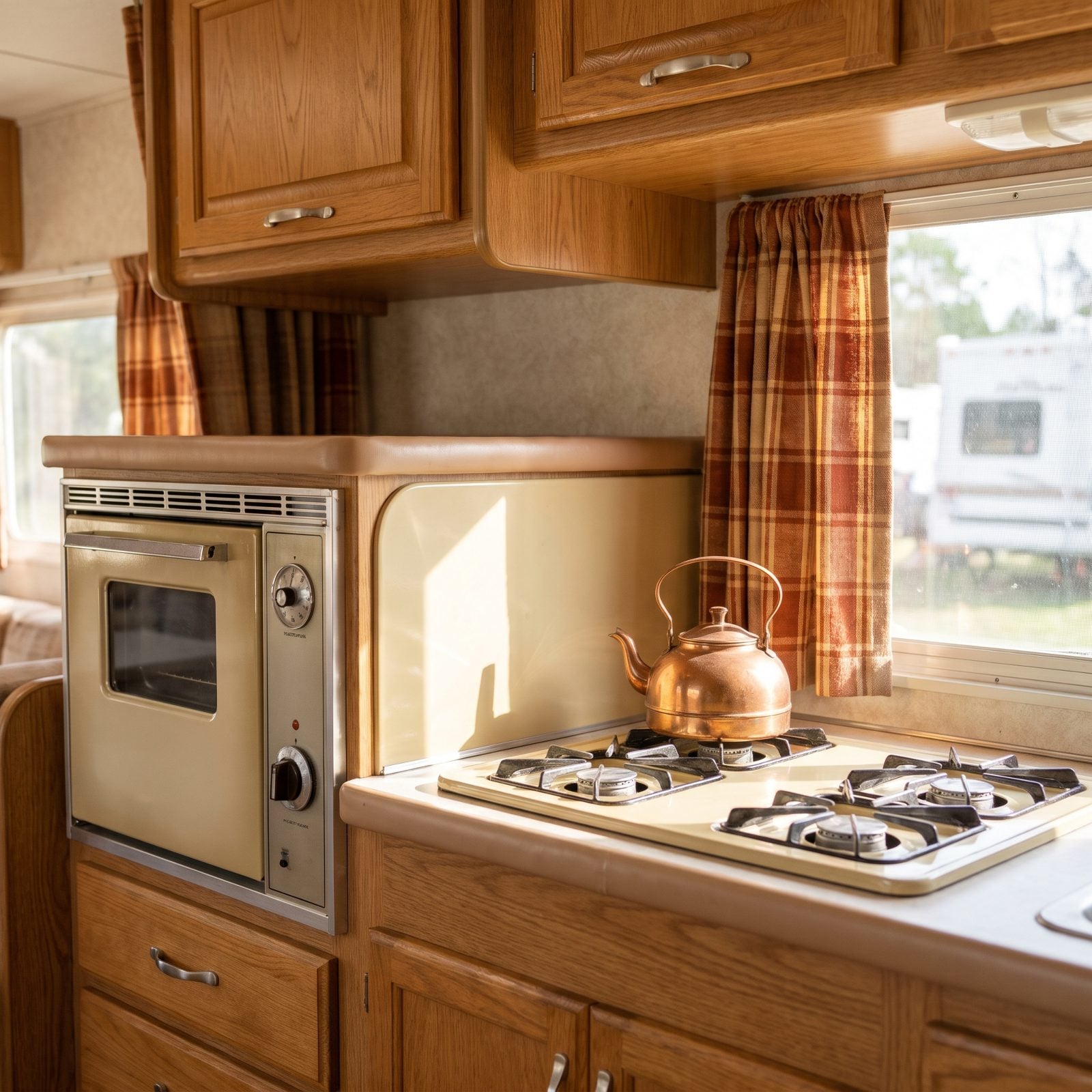
Open the back of an ’80s RV fridge and you’d find parts a human could reach. A thermocouple. A control board the size of a playing card. A gas valve you could actually unscrew. These were household-style units adapted for the road, which meant any appliance guy in any town could figure them out.
Modern RV appliances tend to fail as sealed assemblies. One cheap sensor dies and the fix is a full replacement, because the manufacturer never meant for you to open it. The old stuff assumed you’d keep it running for twenty years, so it was built to be opened.
30. Real Hardwood Cabinet Doors
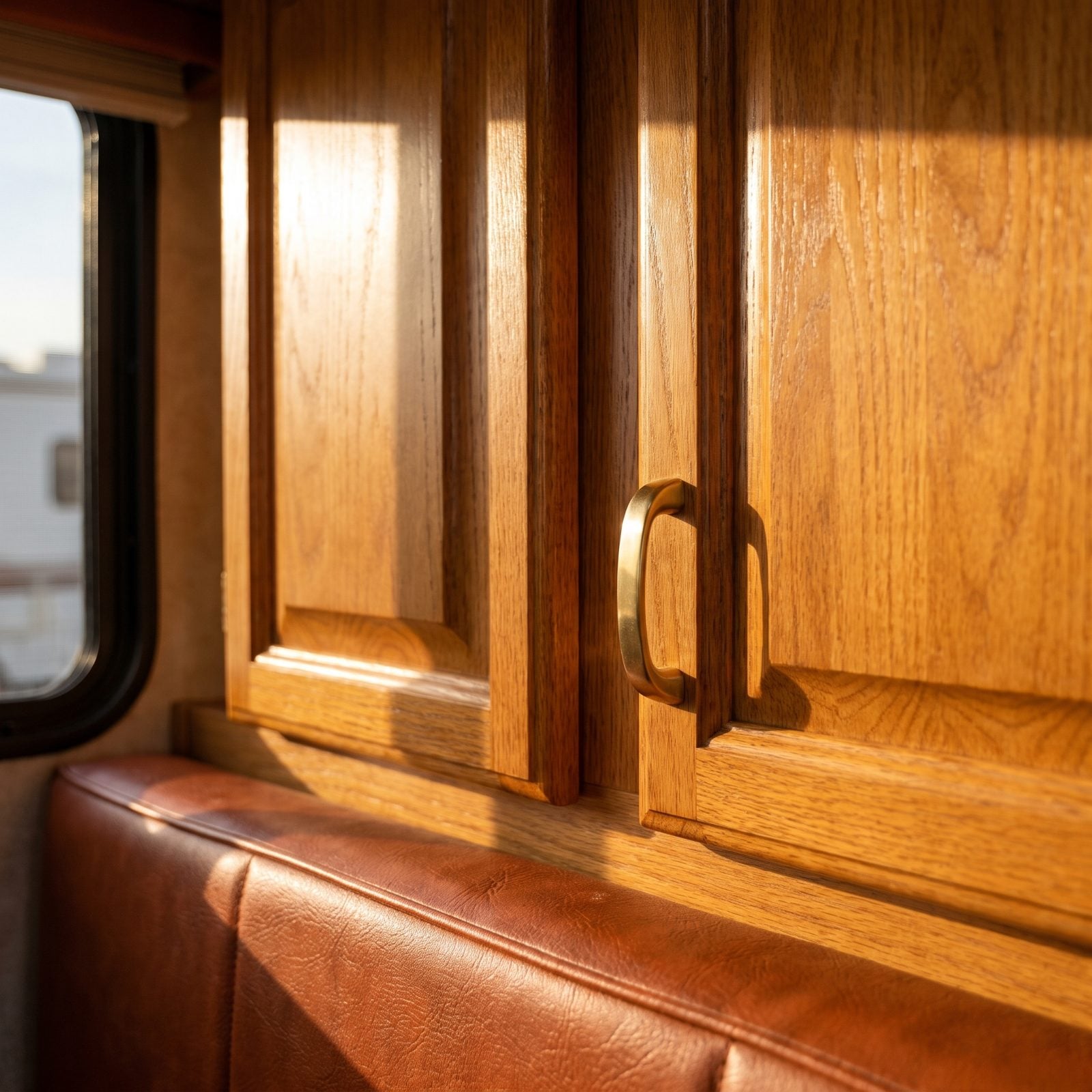
Knock on an ’80s cabinet door and it knocks back solid. Real oak, real walnut, actual wood with weight and grain, the kind of surface that takes a scratch and wears it like character instead of peeling.
Most new RV cabinetry is thin printed vinyl wrapped over particleboard. Looks fine for about three years. Then a corner delaminates, the edge swells after one humid week, and there’s no sanding it back because there’s nothing underneath to sand. Hardwood you can refinish forever. I’d rather sand an old door on a camp table than price out a new one that’ll do the same thing in three more years.
29. Positive-Latching Metal Cabinet Hardware
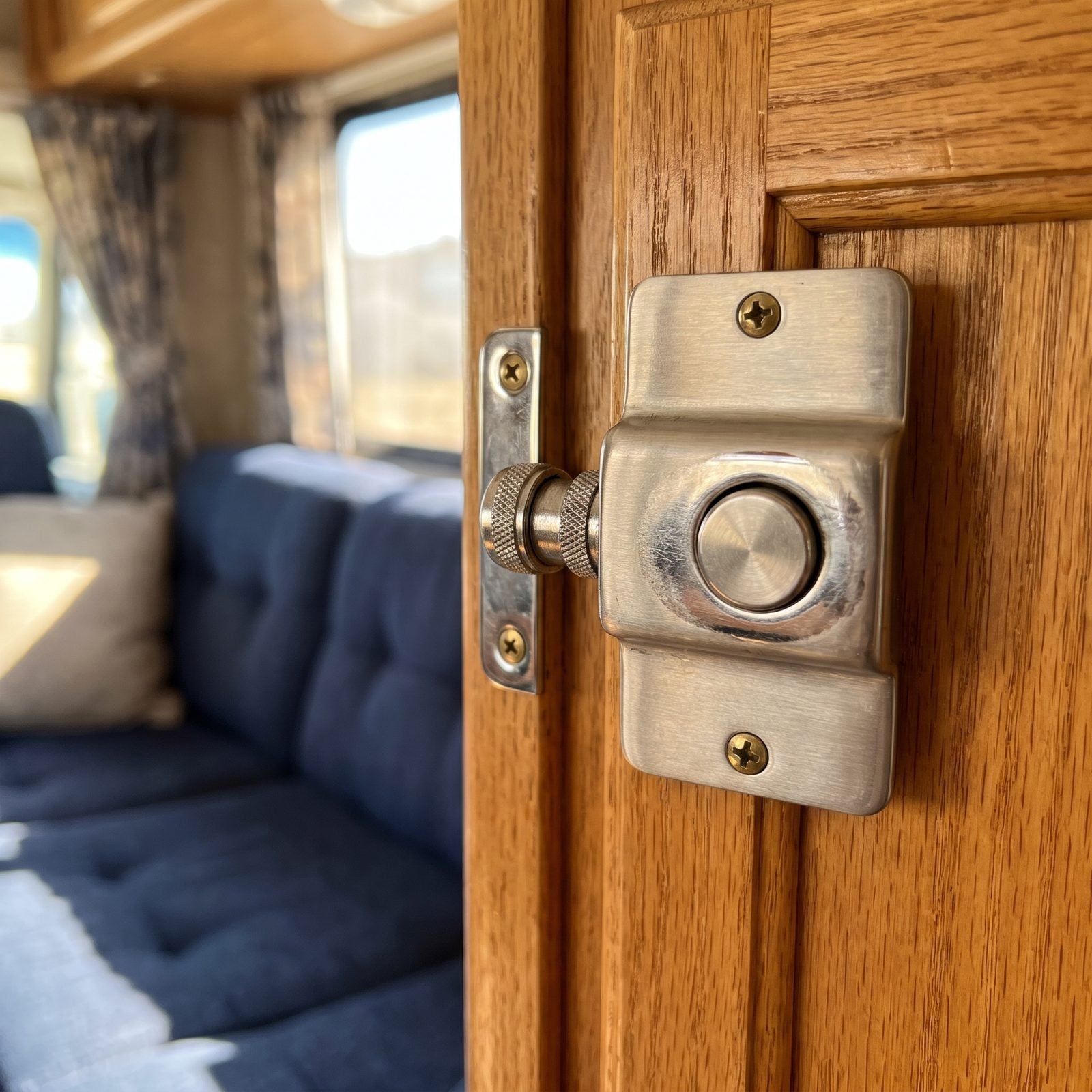
That hard metallic click when a cabinet shut over a rough road meant the latch was doing its one job: staying closed. Eighties coaches used positive-latching metal hardware, little spring-loaded catches that physically grabbed a strike plate and held until you pushed to release.
You know the alternative. The modern plastic friction catch seems fine in the driveway, then pops open on the first washboard forest road and redecorates the galley floor with your coffee mugs. Metal catches outlast the cabinet. Plastic ones outlast the warranty, barely.
28. Printed Wiring Diagrams Kept Onboard
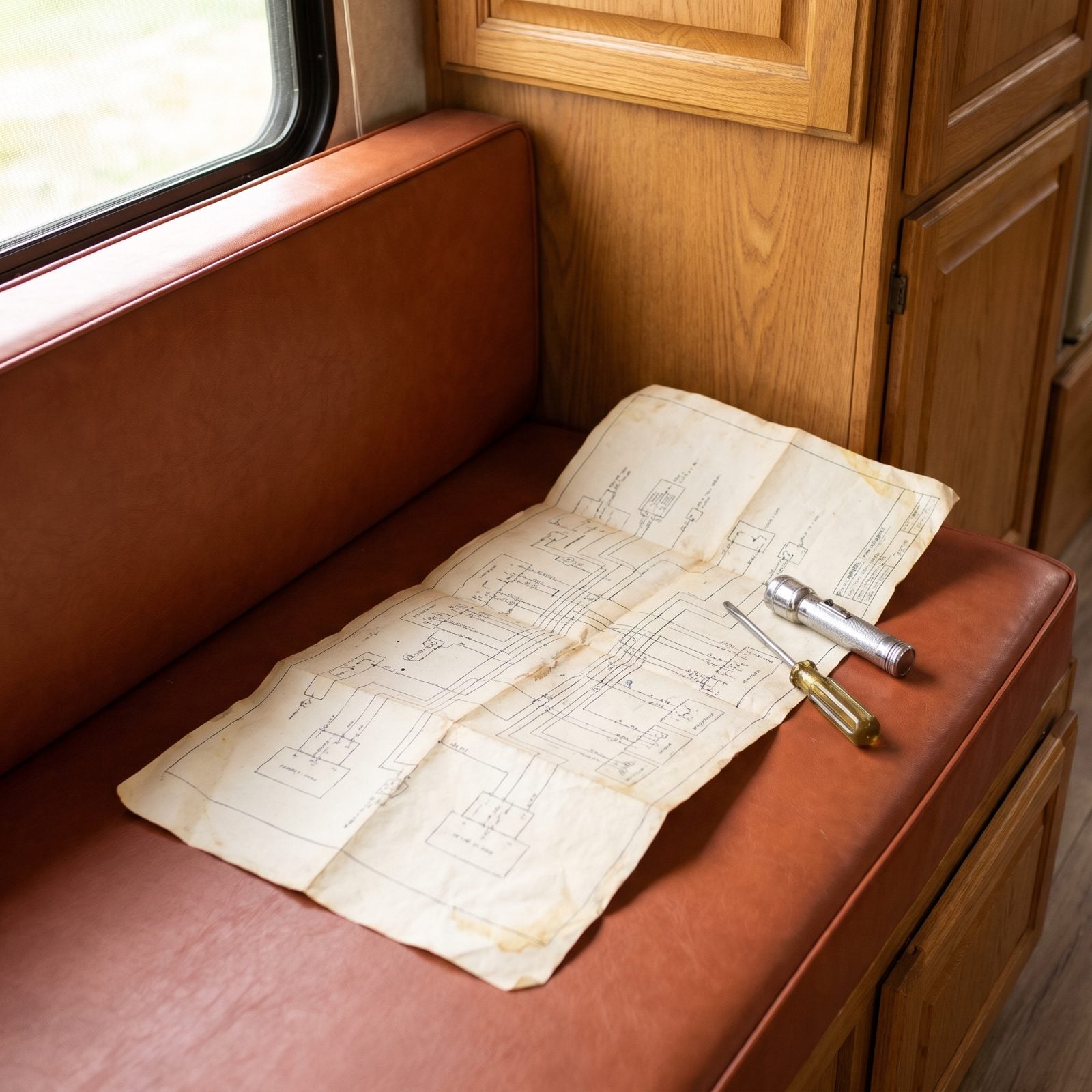
Tucked behind a panel or rolled in a cabinet tube, the wiring diagram came with the coach. A full schematic. Every circuit, every ground, every fuse, drawn out so a human with a test light could follow the problem back to its source.
Try getting that today. Most new rigs ship with a glovebox pamphlet and a phone number, and the real diagram lives on a server you can’t reach when you’re parked in a canyon with no signal and a dead water pump.
A rig you can diagram is a rig you can fix. A rig you can’t is a rig that goes to the dealer.
27. Slide-Out Battery Trays
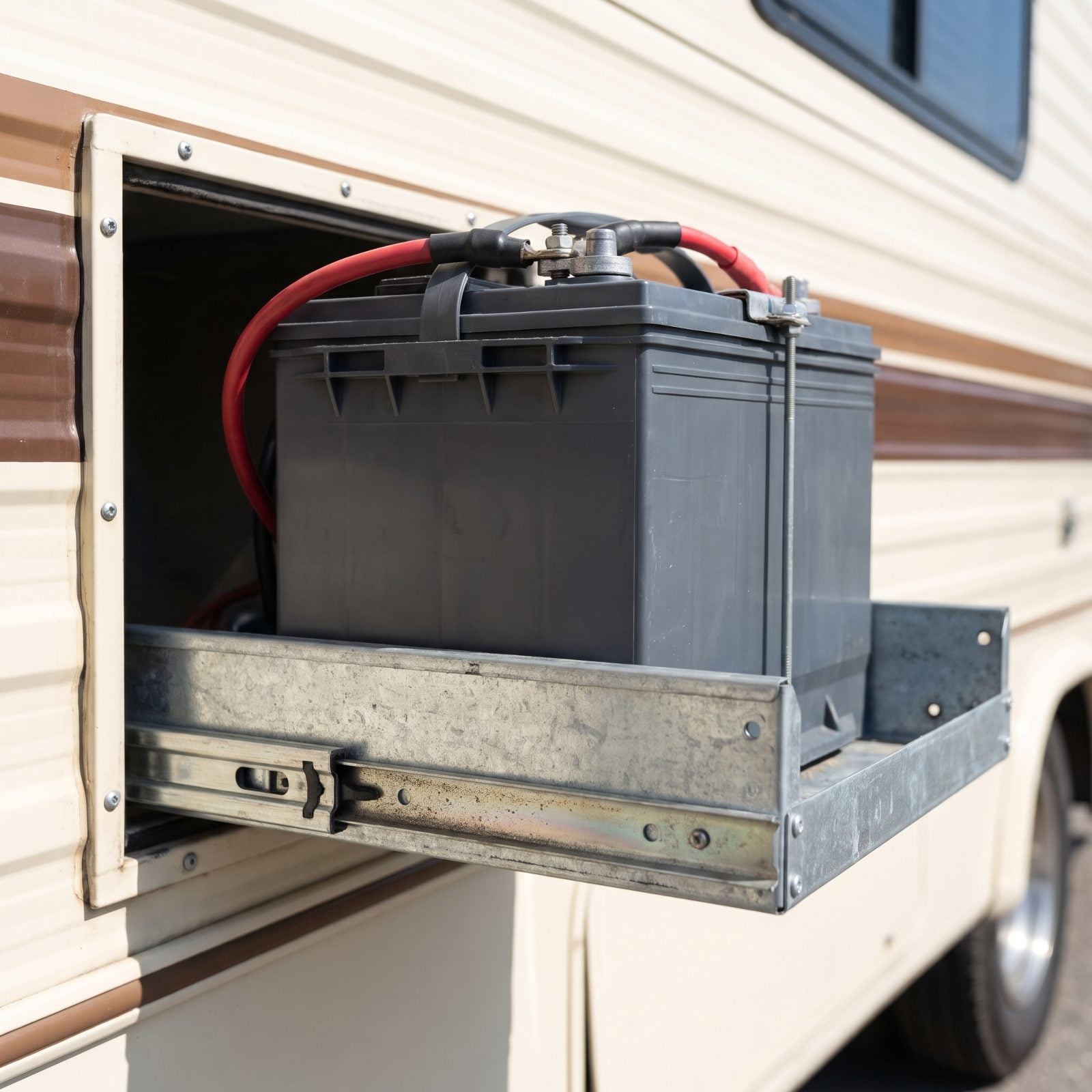
Pull a handle and the whole battery rolled out to meet you. No crawling into a cramped bay with a flashlight in your teeth, no wrestling forty pounds of lead-acid out of a hole it barely fit into. The tray slid out on steel rails, terminals up, everything in plain sight.
Battery maintenance is the kind of chore people skip when it’s miserable to reach. Make it easy and it actually gets done, which is exactly why those old trays beat tucking the battery somewhere you’d need a shop to service it.
26. Exterior Generator Service Doors
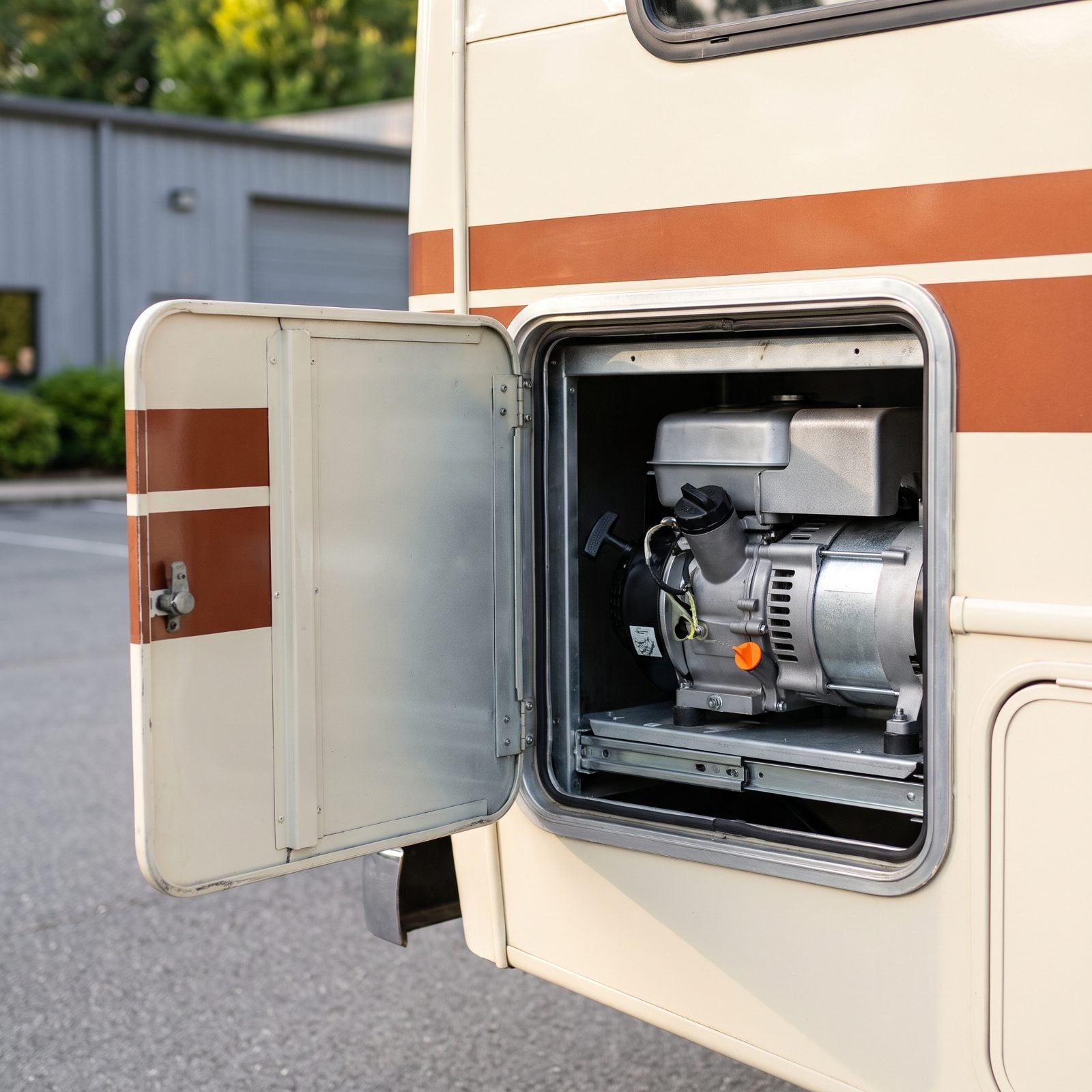
The generator lived behind its own exterior door, and that door opened onto everything you’d ever need to touch: the oil fill, the filter, the pull cord, the fuel line. You checked it from outside in your street clothes, standing up, in daylight.
That’s the thread running through all of this. The old coaches were built on the assumption that you’d maintain them, for decades, with your own two hands, and every door and panel was placed to make that possible. Spend a weekend with one and you start to understand why so many are still on the road. They were made to be kept.
25. The External Water-Heater Access Panel You Could Actually Reach
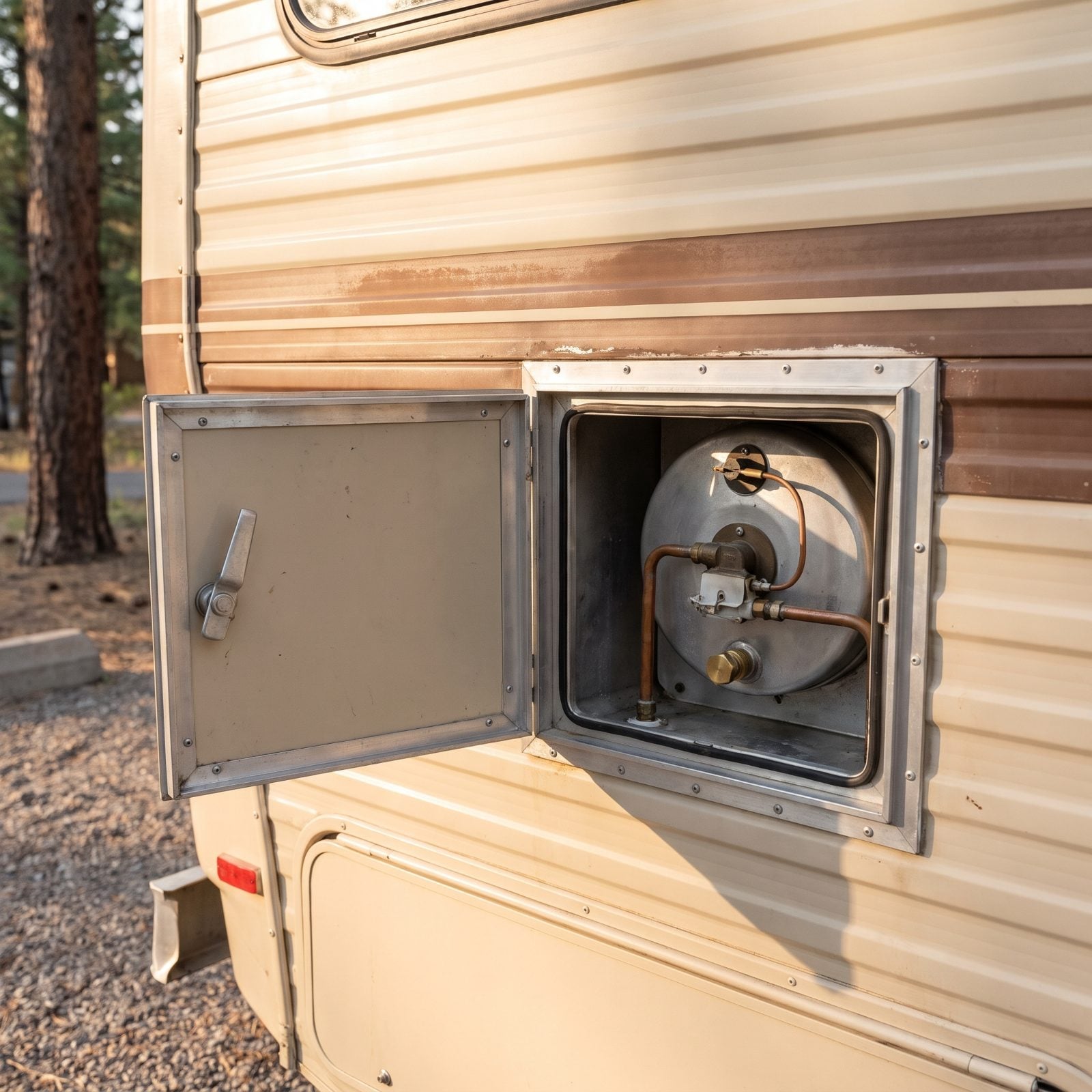
On an ’83 rig, flushing the water heater meant popping one exterior panel, backing out a brass drain plug, and watching the sediment run out onto the gravel. Fifteen minutes, maybe a wrench. That was the whole job.
Modern RVs bury the same tank behind interior cabinetry or seal it into a package you’re not meant to touch. The old builders assumed you’d do your own maintenance, so they put the thing where your hands could get to it. I’ve flushed a 1980s heater in a campground loop while the coffee brewed. Try that on a 2023 unit without an appointment.
24. Permanent Roof Ladders Bolted On Like They Meant It
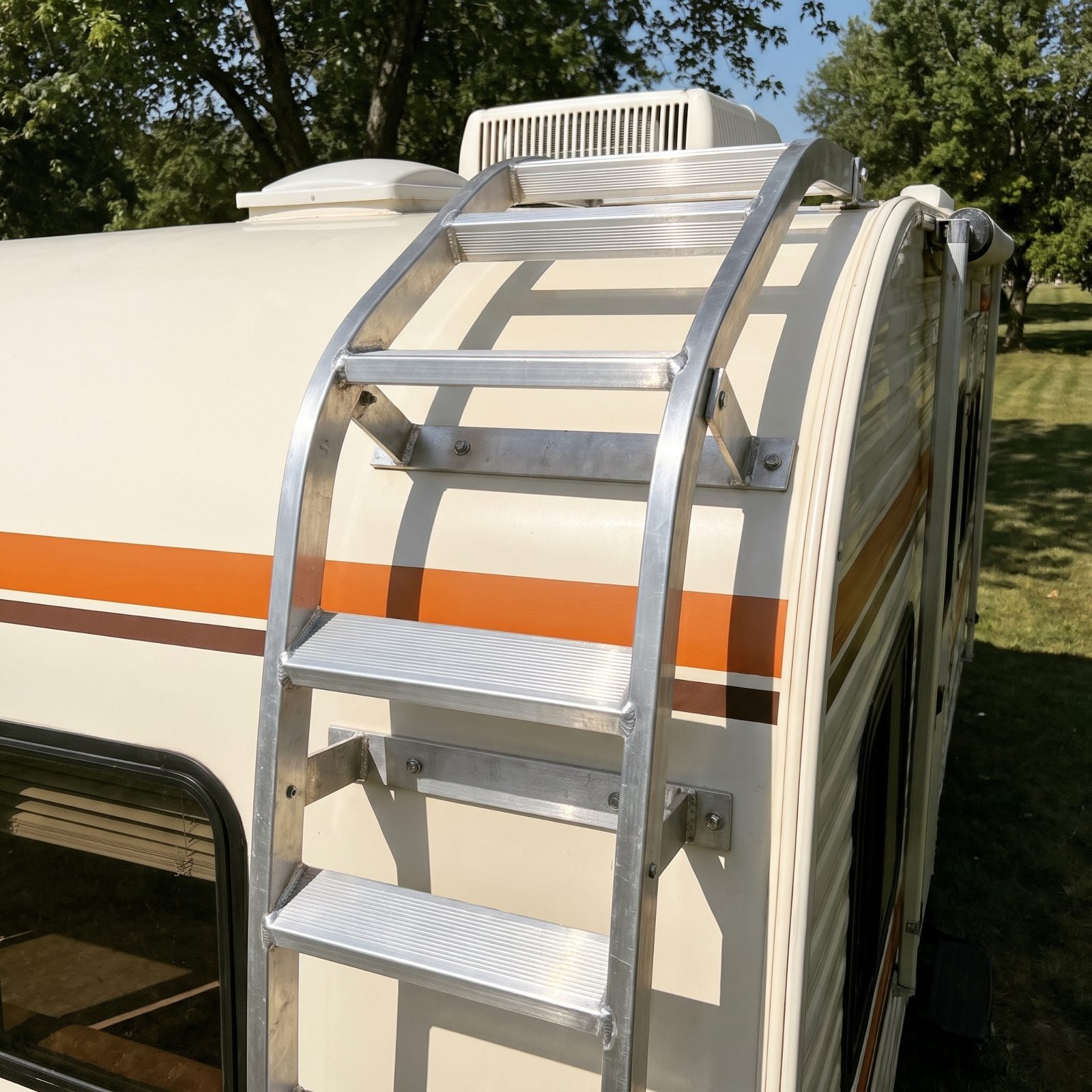
Want to check the roof seams? Climb the ladder. It’s right there, bolted to the back of the coach, rated to hold a grown adult without flexing. Nobody thought twice about it in 1985.
Plenty of today’s trailers ship with no ladder at all, or a flimsy decorative one the manufacturer warns you not to actually climb. So you’re hauling a folding ladder to every roof inspection, balancing it on uneven gravel, hoping it doesn’t kick out from under you. The permanent ladder wasn’t a luxury — it was an admission that roofs need looking after and the owner is the one who’ll do it.
23. Roof Racks That Carried Real Weight
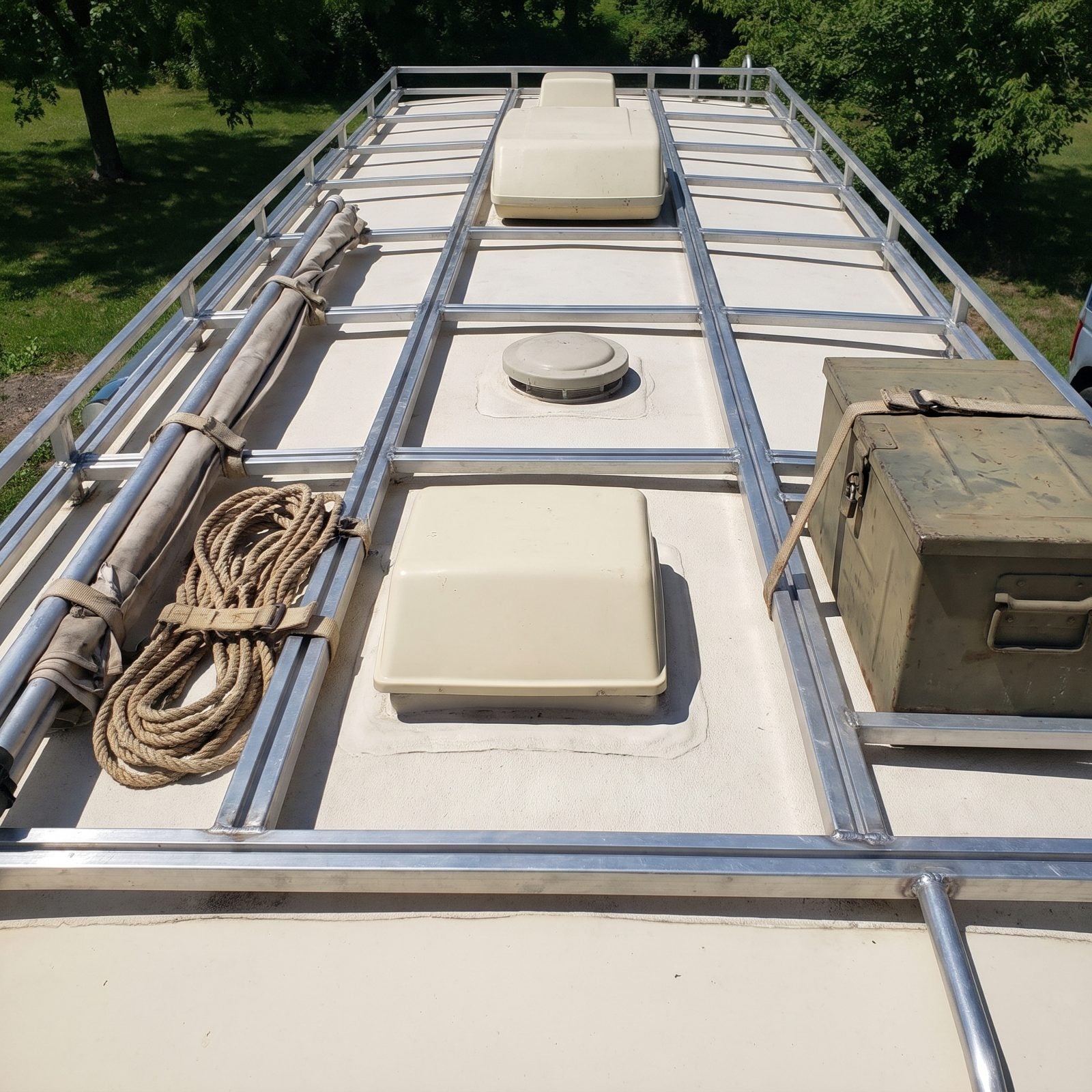
Lawn chairs, a spare propane cylinder, the folded screen room, a cooler for the long hauls. The roof rack on an ’80s coach took all of it, because it was cut from the same aluminum stock as the ladder and anchored straight into the frame rails.
Modern roofs are a crowded mess of slide toppers, solar panels, and sealed membranes you’re told to stay off entirely. Storage got pushed into basement bays and the roof became off-limits. Fine — until you’re hunting for somewhere to stash the folding grill and realize every usable surface is already spoken for.
22. Lounge Seating Padded Like Furniture, Not Patio Cushions
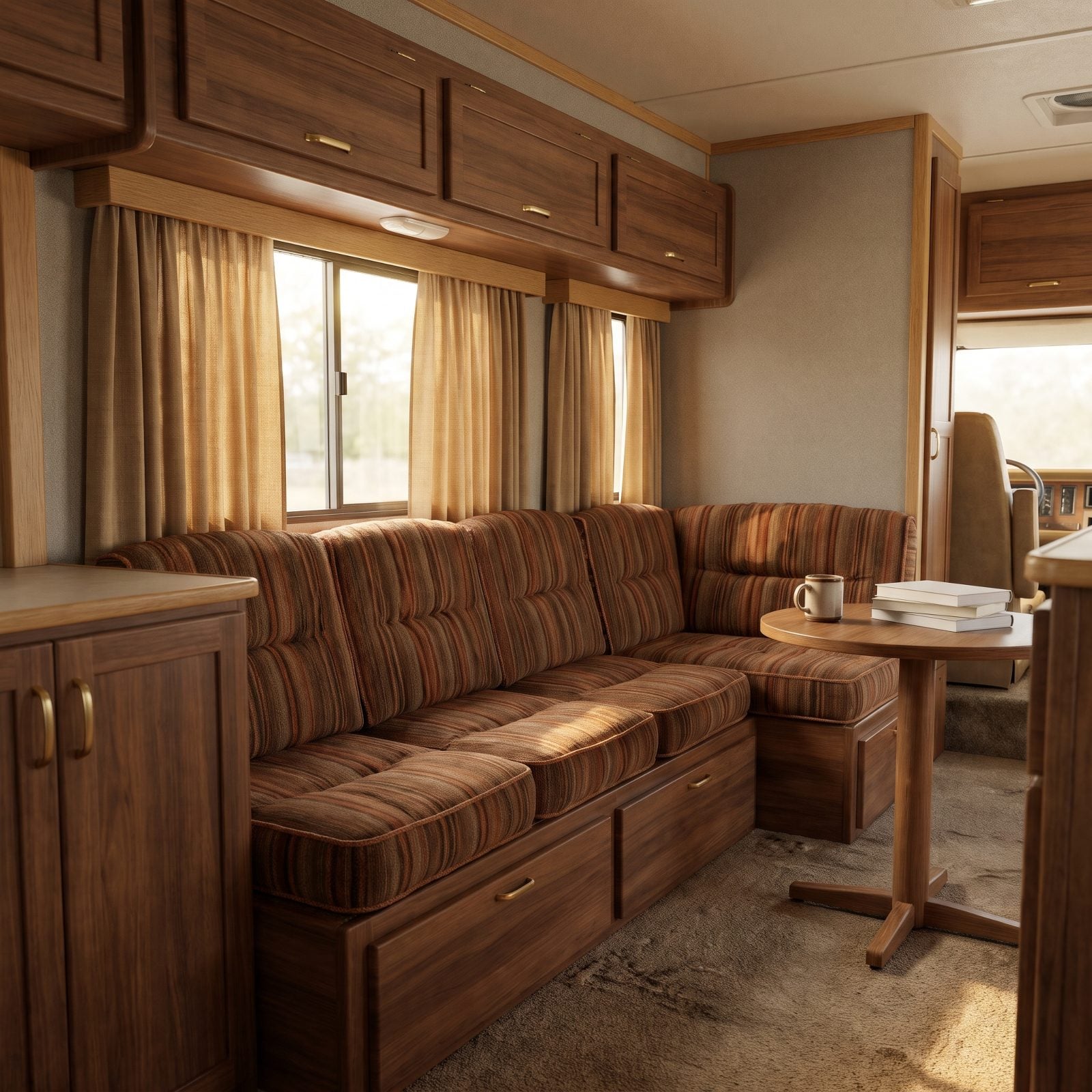
Sink into the lounge of a cared-for 1980s coach and your body understands immediately. These cushions had foam with actual loft, springs in the better units, fabric meant to be sat on every day for twenty years. You could nap on them. You could read all afternoon and never shift once for comfort.
So much modern RV seating is thin foam over a particleboard storage box — firm, shallow, aching your lower back by hour two. The ’80s builders understood that a motorhome is a living room that drives, and they furnished it like one.
21. Face-to-Face Sofa Layouts Built for Actual Conversation
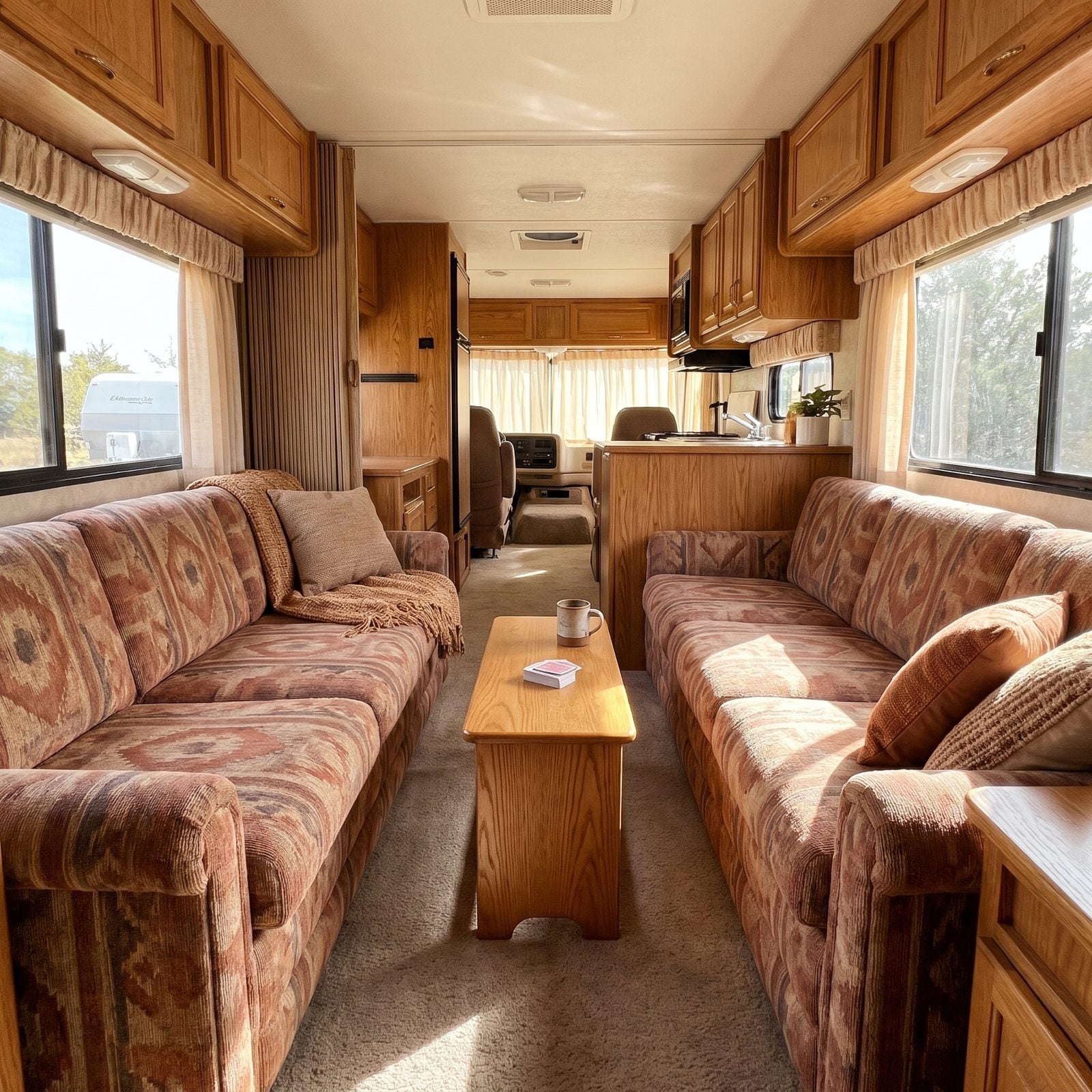
Two sofas facing each other across the aisle. Simple idea, and it made the whole interior work differently. You could play cards, pass a bowl of chips, actually look at the person you’re talking to. The space was built for the way families spend a rainy camp evening.
Modern layouts obsess over the theater seating — two recliners bolted side by side, both aimed at a television, nobody facing anyone. It sells the TV. It kills the conversation. The face-to-face arrangement assumed the best part of RV life was the people you brought along, and it put them where they could see each other.
20. Freestanding Pedestal Tables You Could Move Where You Wanted
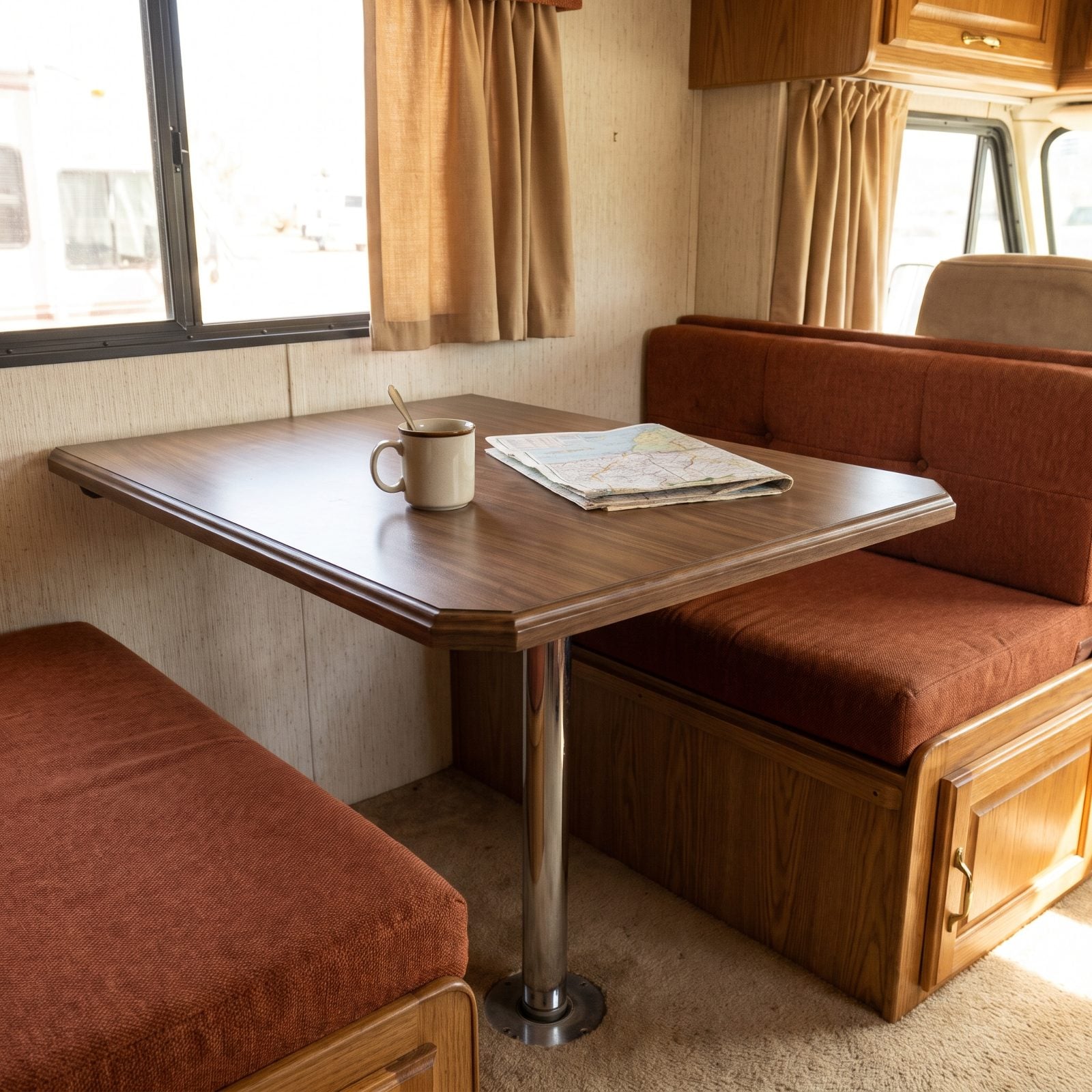
The table sat on a single chrome post that dropped into a floor socket. Lift it out, carry it outside for cards under the awning, drop it into a different socket to make the bed, or stow it against the wall when you wanted the floor open. One table, four jobs.
Built-in tables welded to a slide-out do none of that. They’re fixed wherever the factory decided, and the only way to change the space is to accept the space you were given. The pedestal table trusted you to know what your own trip needed. That trust runs through every one of these features, and it’s the part I miss most of all.
19. Drop-Down Cabover Bunks That Slept the Whole Carload
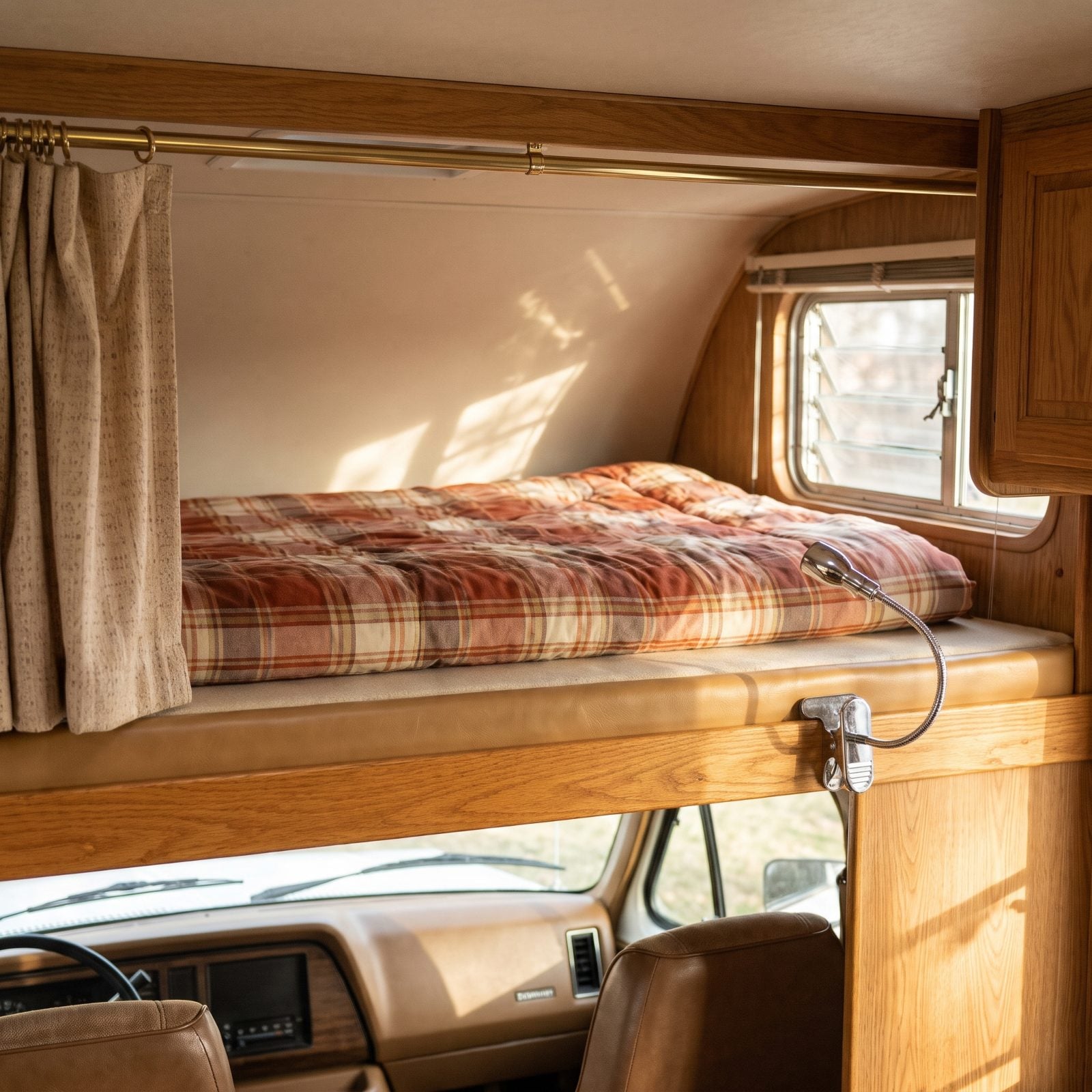
You climbed up there as a kid and felt like you’d won something. The cabover bunk sat over the driver’s cab, a whole second bedroom that cost you zero floor space. Two kids fit, sometimes three if nobody minded elbows.
Modern Class C rigs still technically have this, but a lot of newer floor plans turned it into a storage shelf or an entertainment cubby with a bolted-in TV. The old ones kept it a bed. A real one, with a little curtain you could yank across for privacy and a padded rail so nobody rolled out on a hard brake.
18. Dedicated Reading Lights You Could Aim at One Page
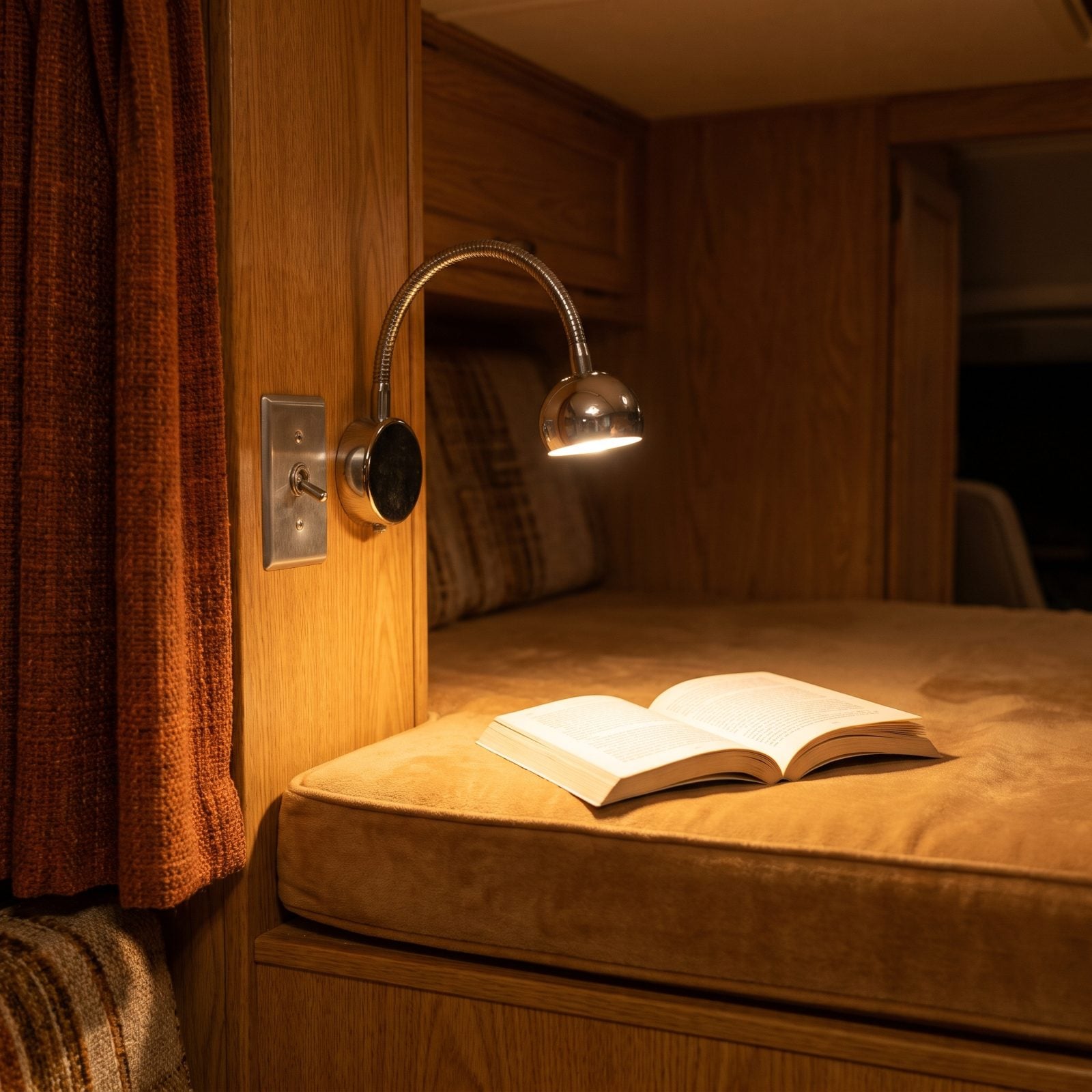
The rest of the coach had gone dark for the night and you still wanted your own light on the page. That was the whole appeal of the gooseneck lamp mounted on the wood paneling beside the bunk cushion. You bent the chrome arm, aimed the little shade straight at your paperback, and the light landed right where you were reading.
New RVs flood you with LED strips and recessed can lights that are either all the way on or all the way off. Great for cleaning, terrible for reading next to a sleeping spouse. The old motorhomes gave every bunk its own pool of warm light you could point exactly where you needed it.
17. Jalousie Windows You Could Leave Open in the Rain
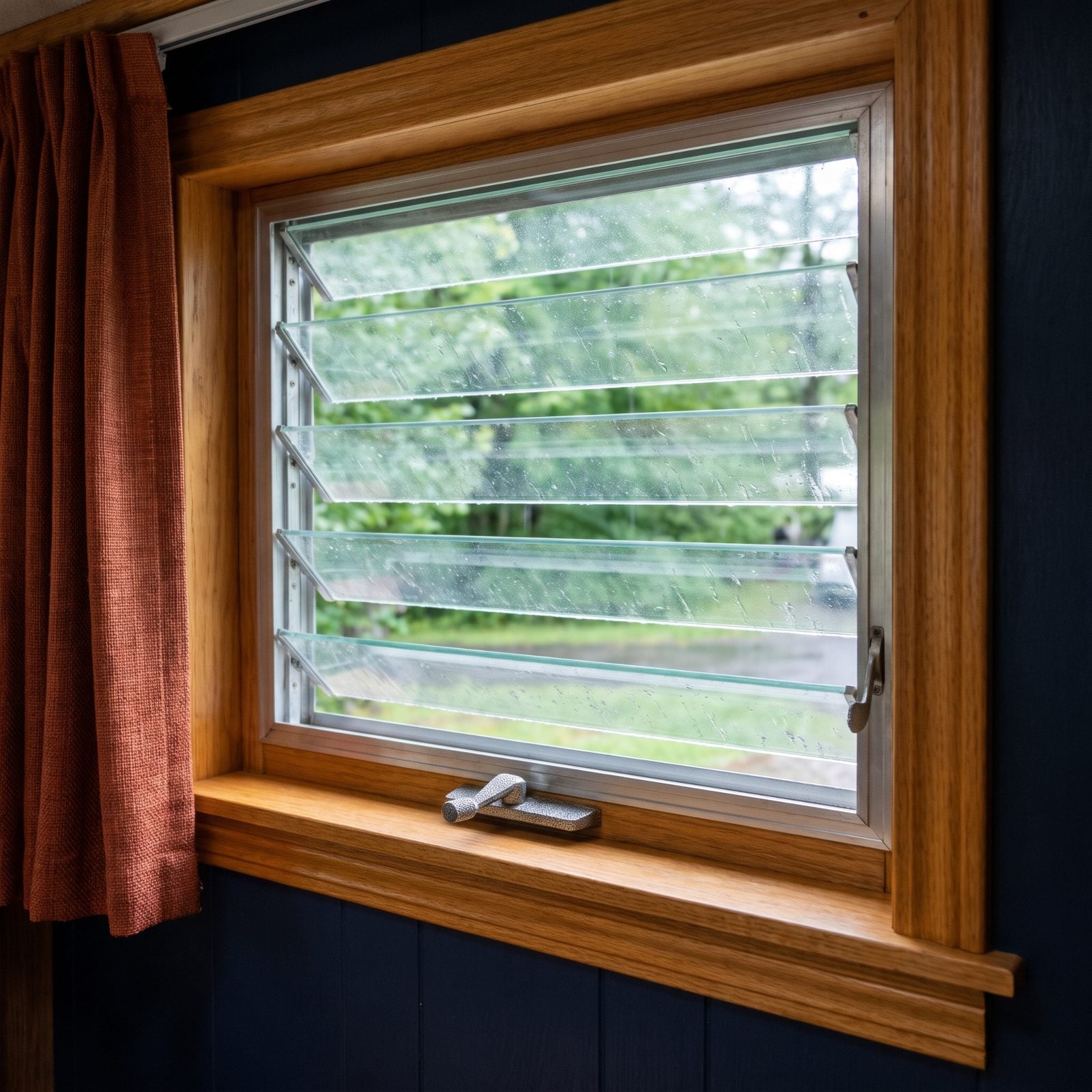
It started raining and you didn’t have to do a thing. The jalousie window’s glass slats tilted downward like little awnings, so the breeze came through but the water ran off the outside. You slept with fresh air on a wet night and woke up to a dry pillow.
Try that with a modern slider. The second a drop hits, you’re reaching up to crank it shut, and then the cabin gets stuffy. Those angled louvers solved a problem new windows pretend doesn’t exist.
16. Multiple Manual Roof Vents You Could Crank Yourself
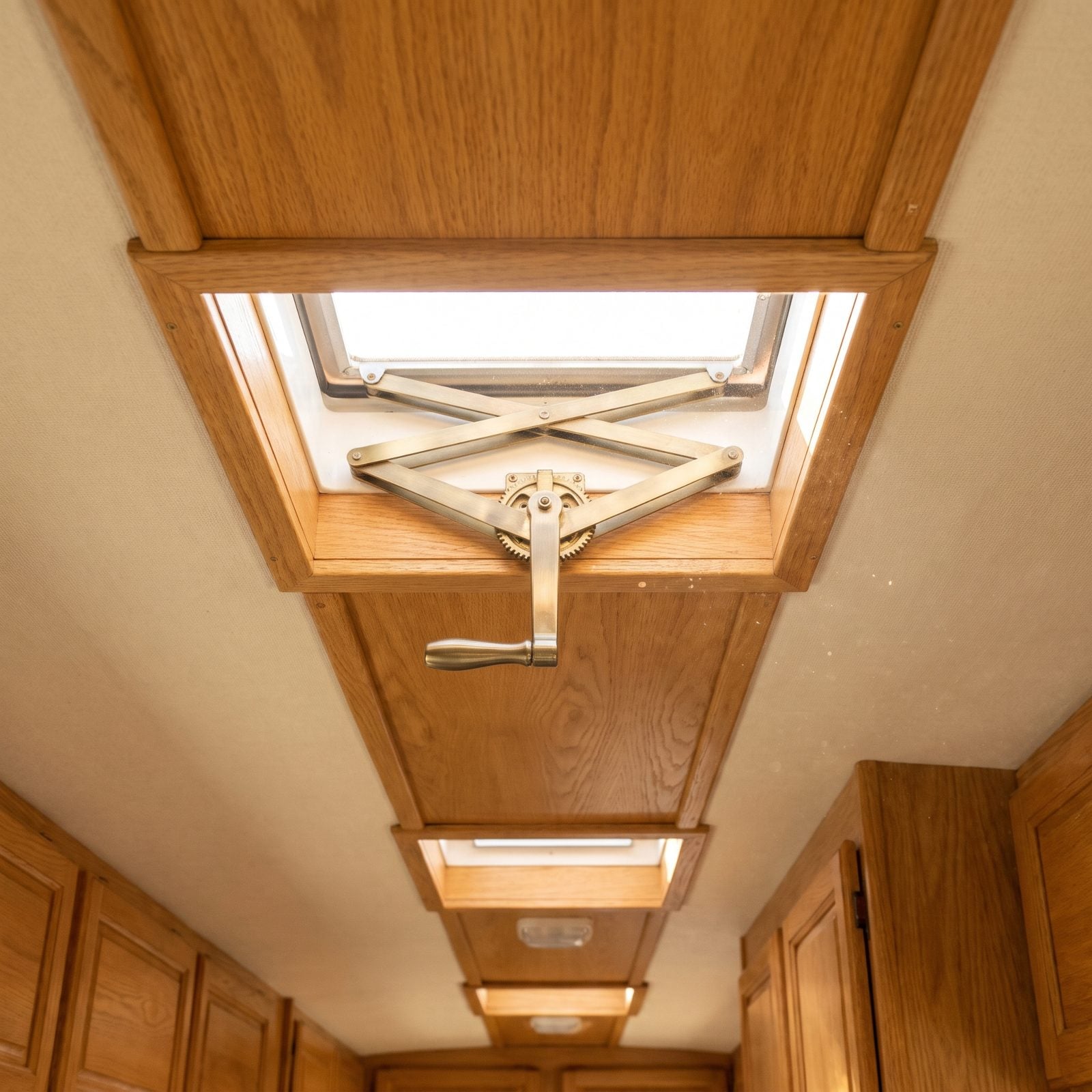
Two vents open, one at each end, and suddenly the whole rig breathed. You cranked the handle, the lid rose on its scissor arm, and the hot air that had pooled at the ceiling all afternoon finally had somewhere to go.
No fan. No fuse. No circuit board. Just a hand crank that worked the same in the driveway as it did fifteen summers later. When a vent motor dies on a new RV, you’re pricing out a part; when a crank gets stiff, you hit it with a little lubricant and you’re done.
15. Insulated Curtains That Actually Blocked the Cold
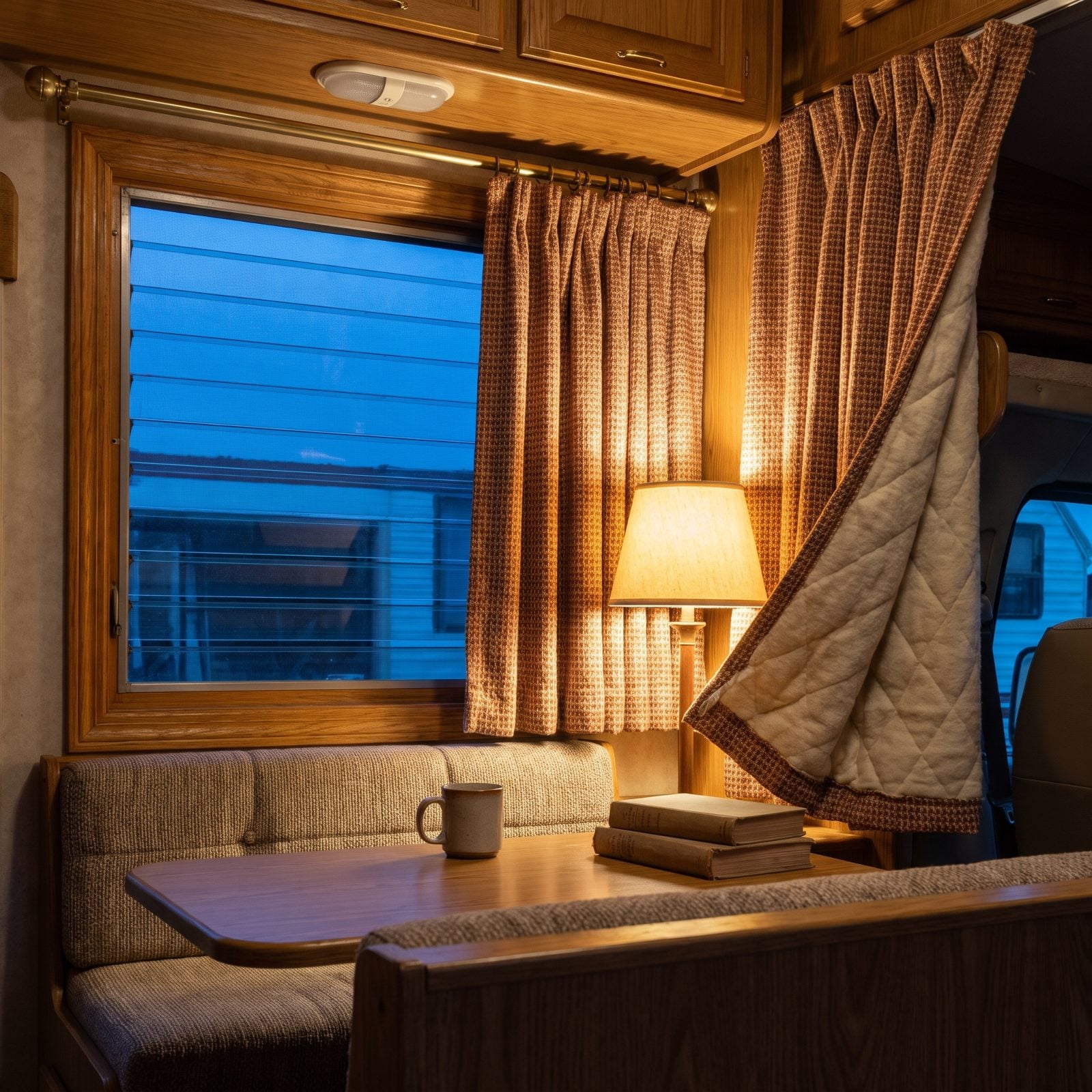
You pulled them shut and the cold stopped at the glass. Those old curtains weren’t decoration. They had a quilted backing, thick enough that on a frosty mountain night the cabin held its heat while the windows fogged.
Newer RVs lean on thin day-night shades that look tidy and insulate like tissue paper. Pretty, sure. But come October you’ll feel every degree slip out through them. The heavy drawn curtain was doing real work.
14. Real Privacy Doors, Not a Zippered Curtain
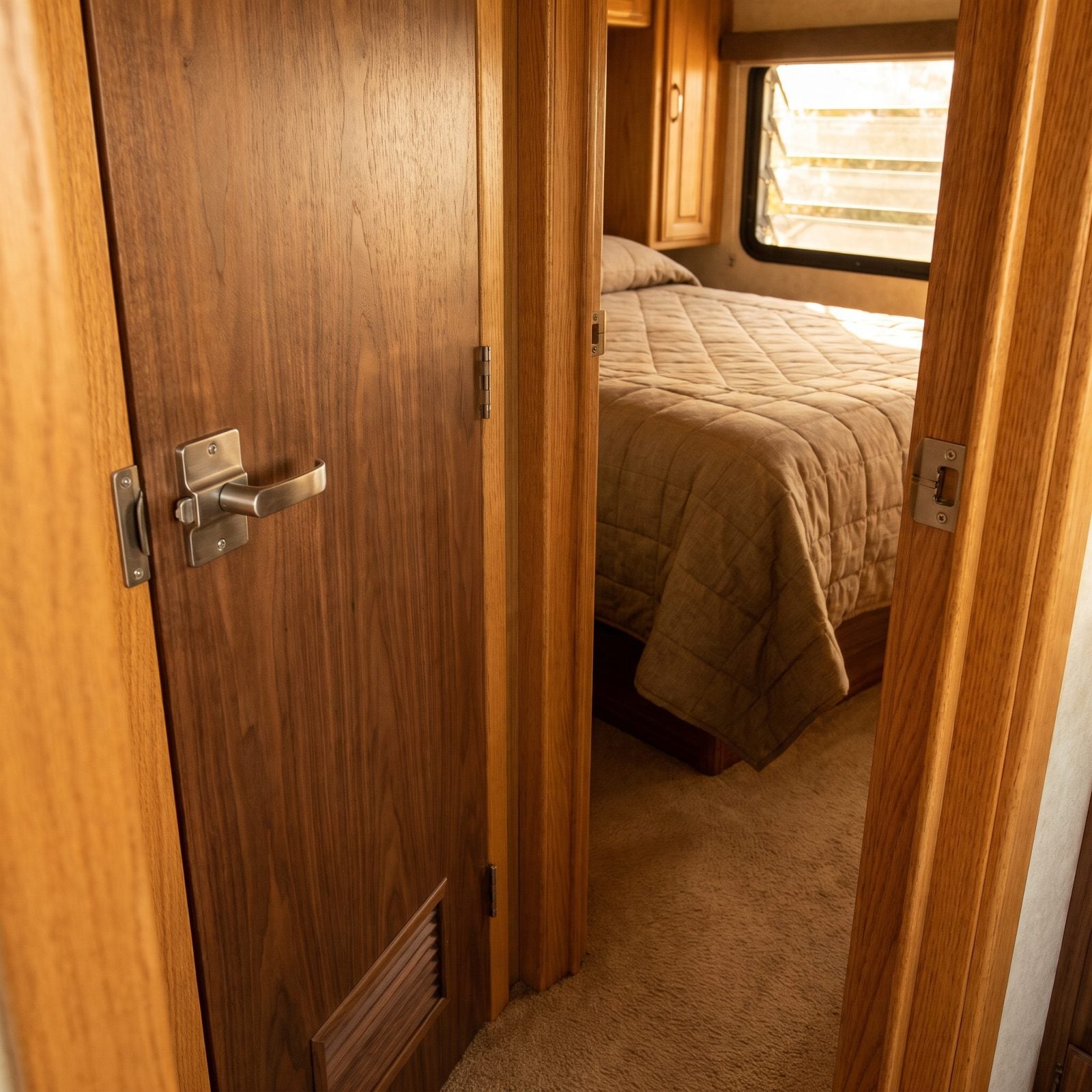
You swung the bedroom door across the hall. A real walnut door on hinges, with a lever handle and a louvered vent. The kids could be eating cereal and watching cartoons up front while you got a little quiet in the back.
A lot of newer floor plans trade that door for an accordion panel or a zip curtain to save weight. I get the thinking. I also know a curtain blocks no sound and offers no real separation. When two people live in a box for three weeks, a real hinged door is worth its weight in gold.
13. Tambour Doors That Hid a Mess Without Stealing Room
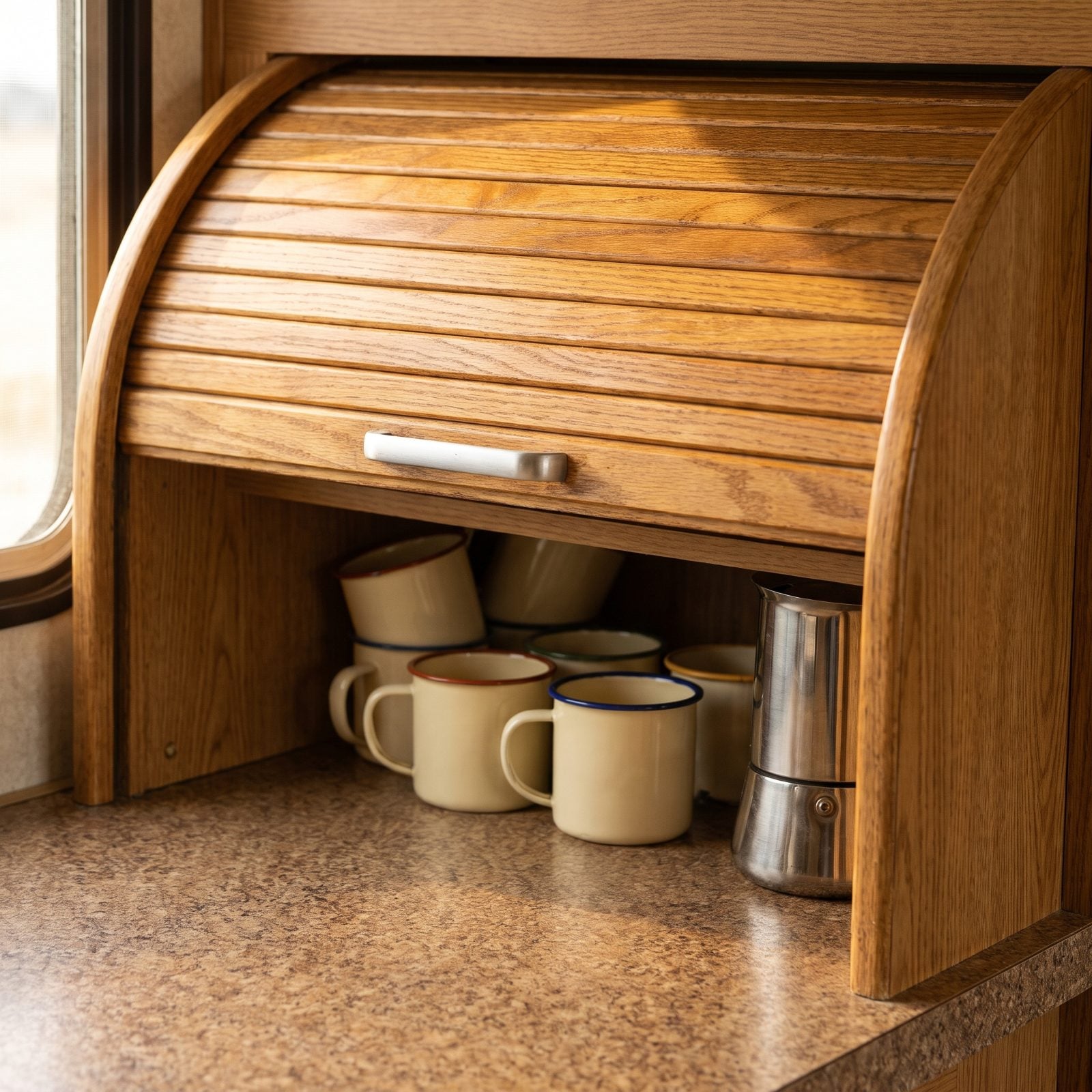
The little oak slats rolled up and vanished into the cabinet. No swing-out door to clear your head on, no drawer that needed pull-out space. The tambour slid up and out of your way, and behind it sat the coffee percolator and a stack of enamel mugs.
In a galley where every inch counts, a door that opens into nowhere is clever. You find the same trick on rolltop desks, and the nicer old campers understood it. Modern builders mostly skip them because a flat panel is cheaper to cut.
12. A Proper Coat Closet Right by the Door
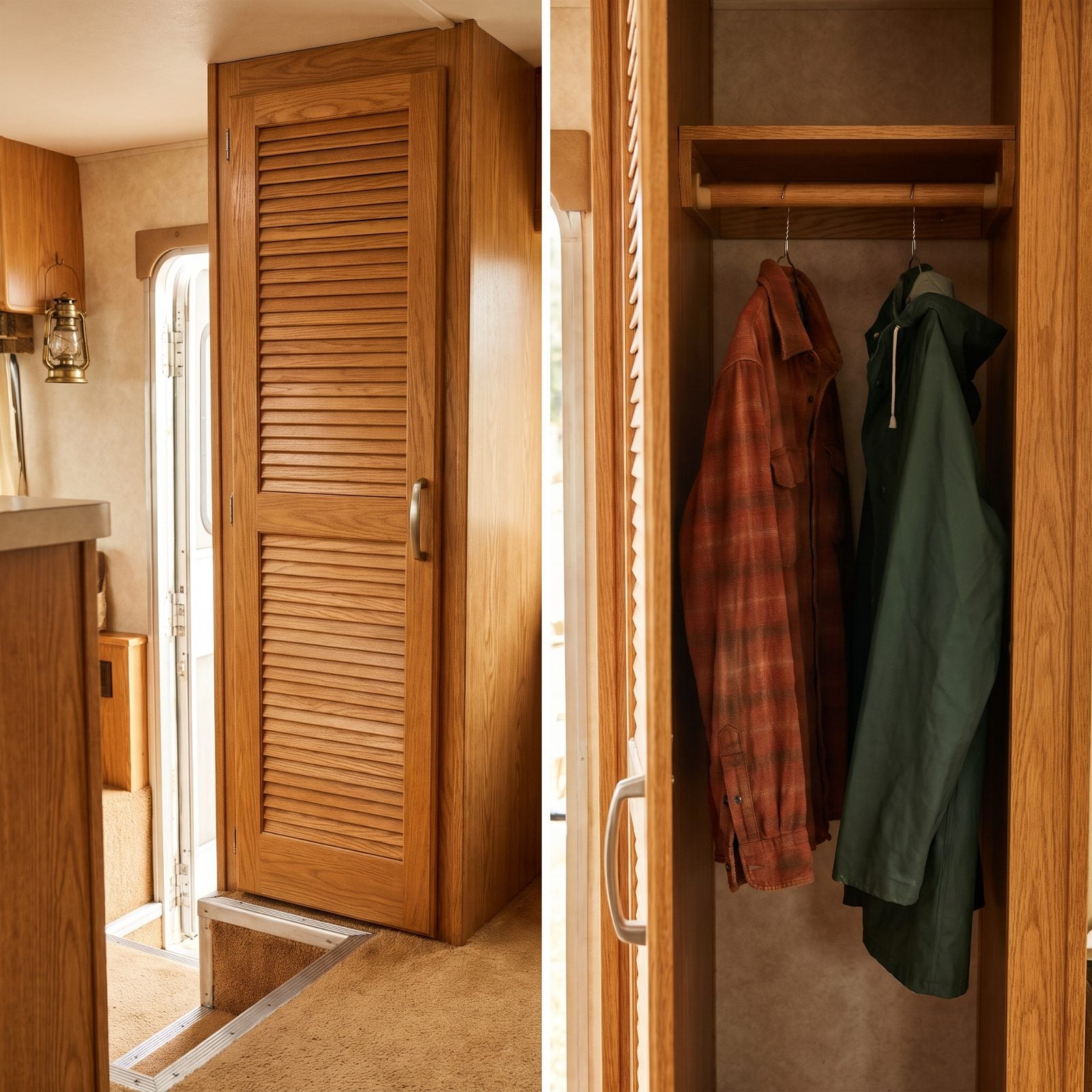
Wet jacket? It went in the closet, not on the back of a dinette chair where it dripped on the cushion. The old motorhomes often built a slim hanging closet right by the entry, a louvered oak door and a real rod inside.
Hang the raincoat. Stash the boots below. Keep the mud at the door instead of tracking it the length of the rig.
11. Deep Food Pantries That Held More Than a Weekend
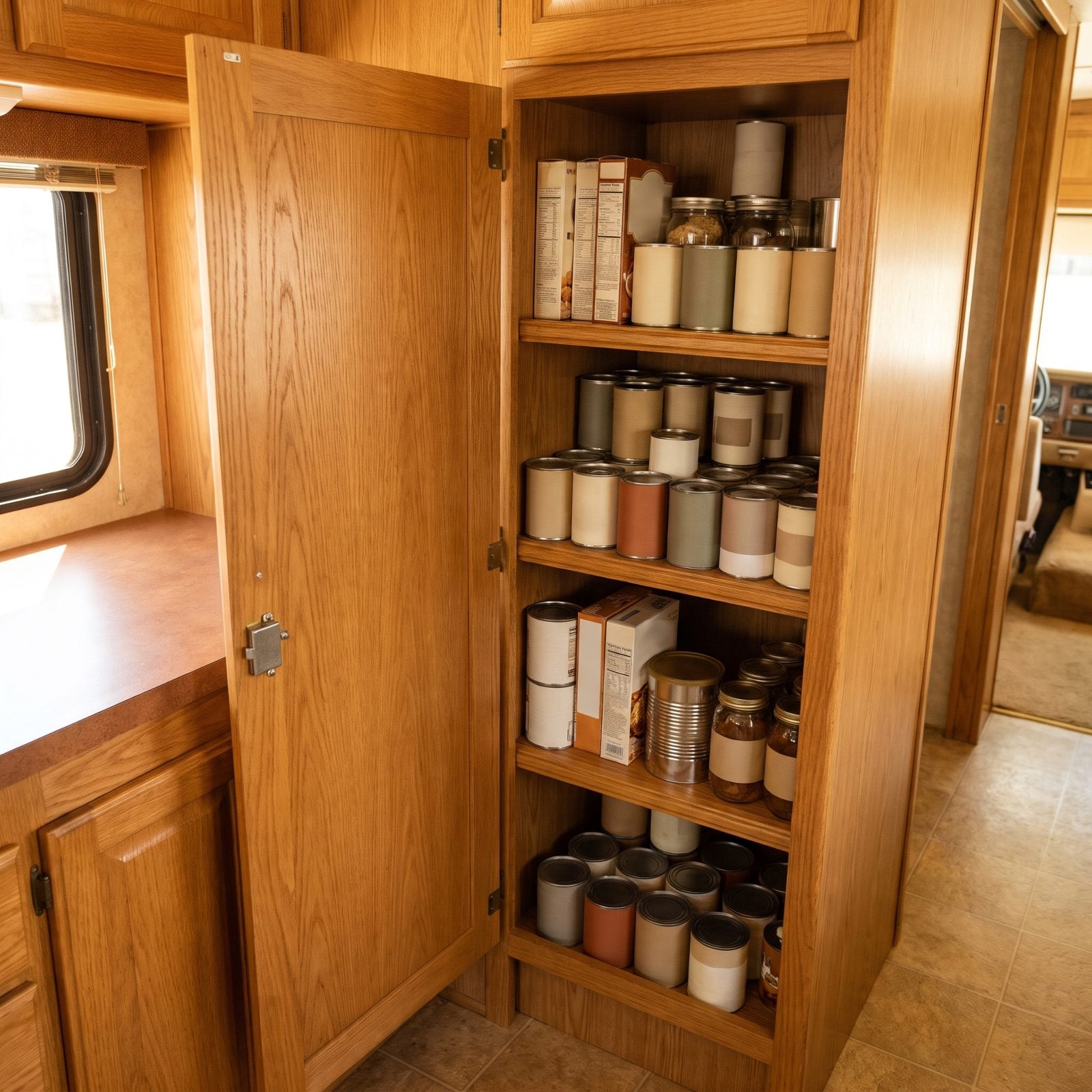
You could stock it for two weeks and still shut the door. The old galley pantry ran tall and deep, real shelves that swallowed canned goods, cereal, coffee, the works. On a long trip through country where the next grocery store was a hundred miles off, that depth mattered.
New RVs chase open floor plans and shrink the storage to match. Lovely to stand in, frustrating to provision. There’s a reason full-timers are always adding wire shelves and door organizers to claw back the space the old rigs just handed you.
A deep pantry is the difference between a trip and a logistics problem.
Load it right and you drive past the overpriced camp store without a second glance. That’s freedom, and the old builders knew it.
10. Under-Sofa Storage Drawers That Actually Pulled Out
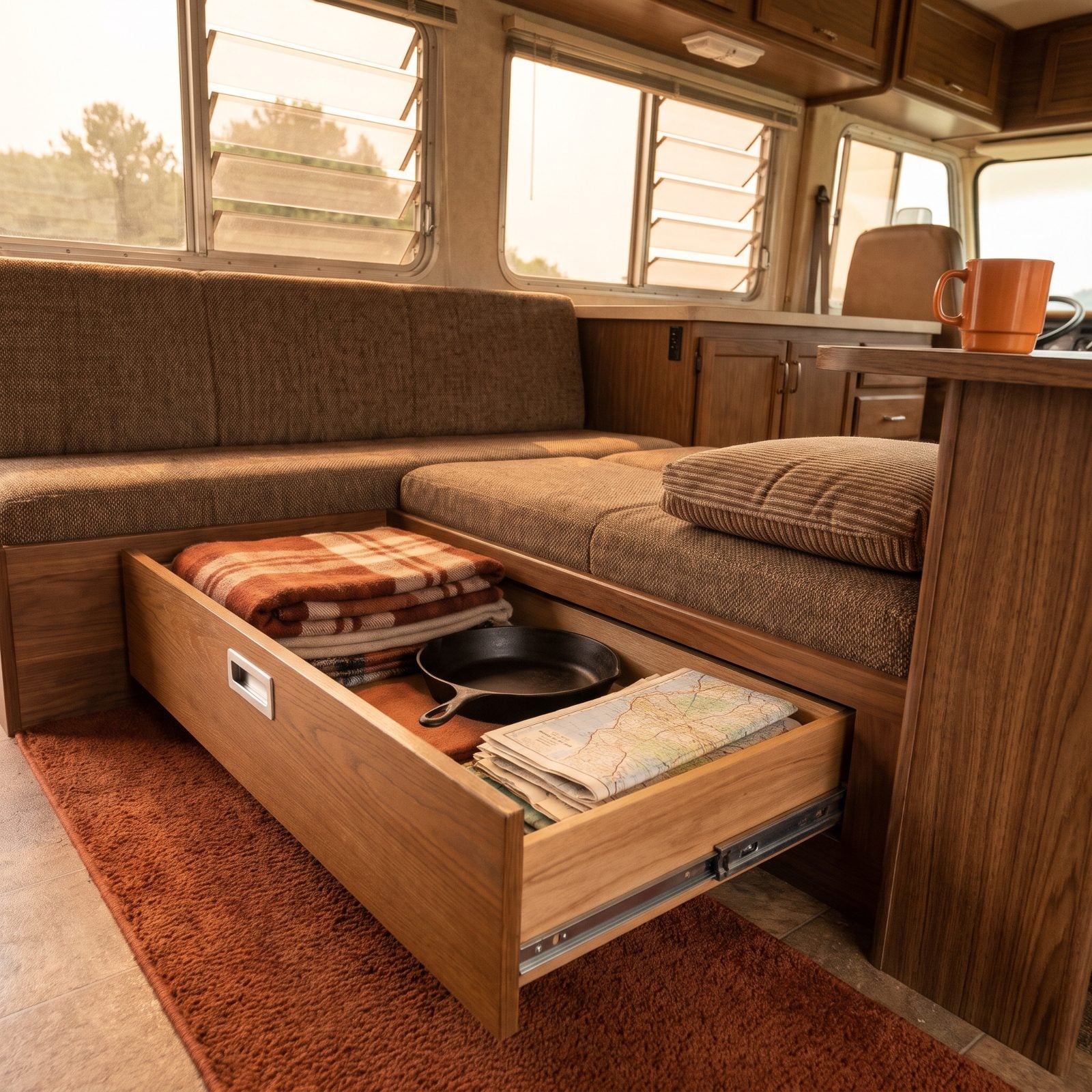
You lift the cushion, grab the recessed metal pull, and the whole drawer rolls out on steel glides heavy enough to hold a Dutch oven without complaint. That’s the sound of 1980s storage: a solid wooden clunk, not some fabric flap you have to kneel on the floor to reach.
Most modern RVs hide a cavern under the dinette, call it storage, then make you excavate it on your hands and knees. The old builders knew better and put drawers there instead. Real ones, with solid wooden sides and full-extension steel glides that roll the whole box out into the aisle.
9. The Double-Bowl Kitchen Sink Nobody Should Have Dropped
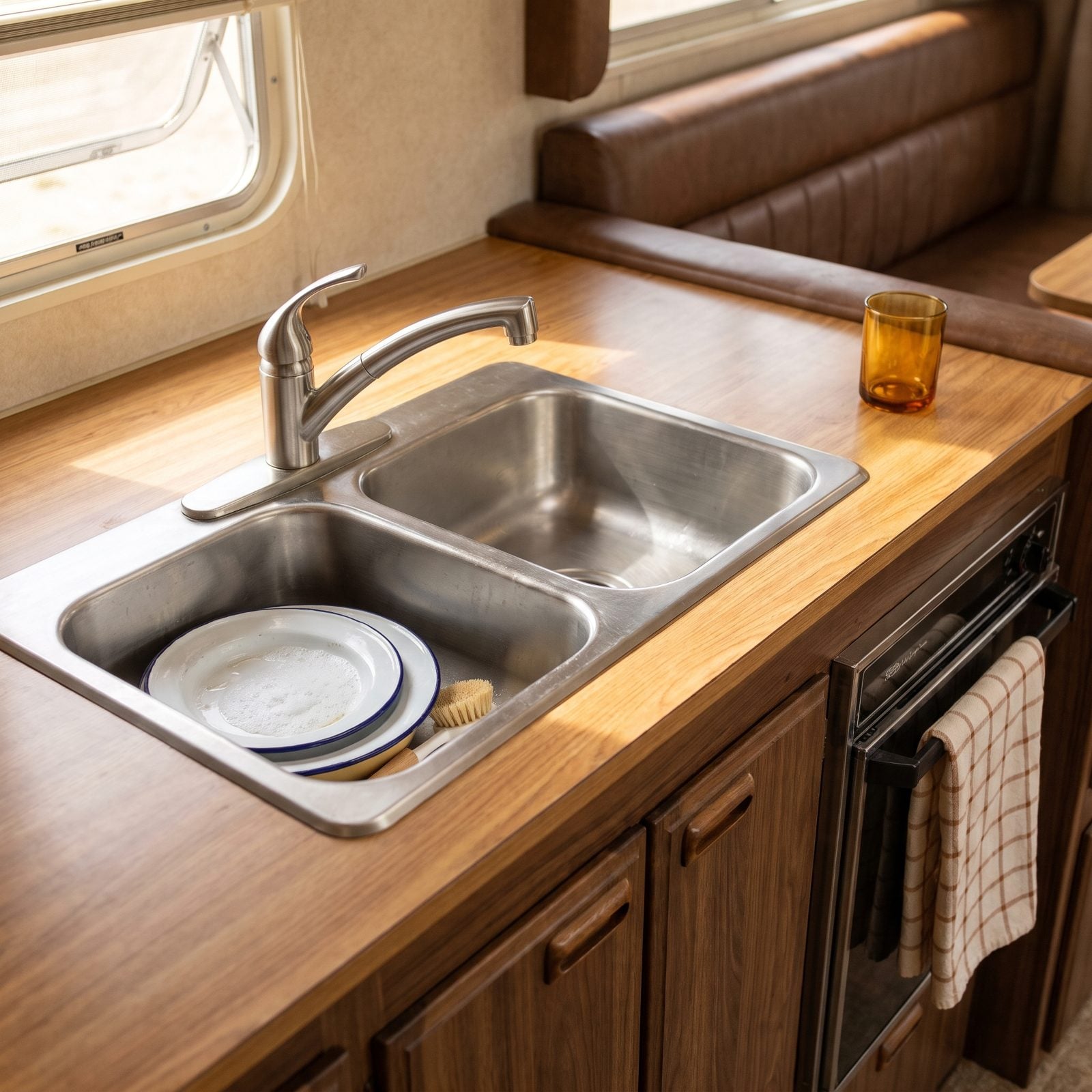
Two bowls. One for washing, one for rinsing or draining, and suddenly doing dishes in a tin box on wheels feels almost civilized. The 1980s galley gave you that without apology.
Somewhere along the way, designers swapped it for a single giant basin and a flimsy plastic colander that slides around while you work. The big sink looks great on paper. In practice you end up with a counter covered in drippy dishes because there’s nowhere to stack the clean ones. That second bowl solved a problem nobody admits still exists.
8. A Real Propane Oven You Could Actually Bake In
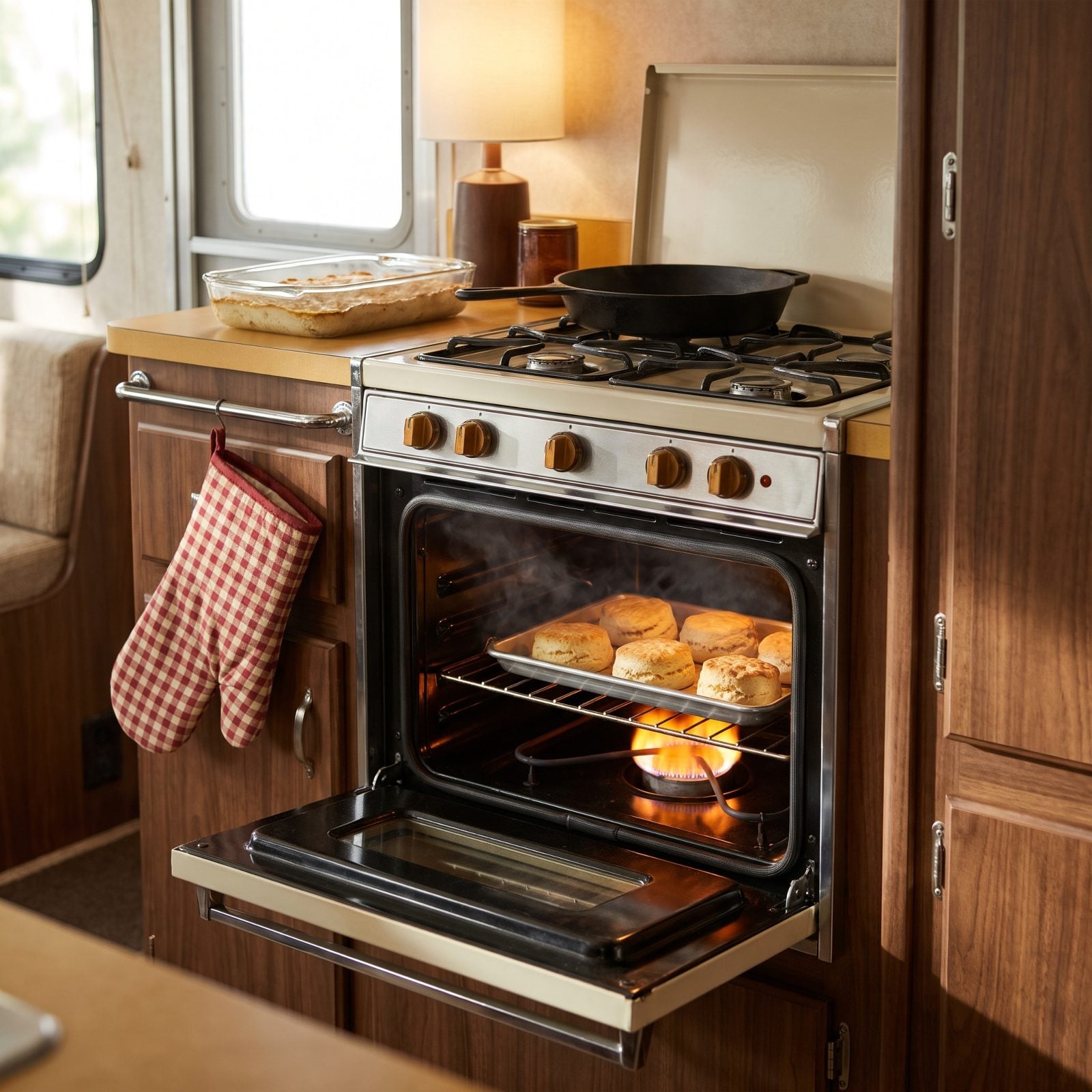
The smell of biscuits in a motorhome at a damp campground is a specific kind of memory. You struck the pilot, waited for the whoomp, and twenty minutes later the whole rig smelled like home. A real propane oven did that.
New rigs lean hard on microwaves and convection combos that need shore power or a running generator just to toast a bagel. Dry camp for a weekend and you’ll miss the old oven fast. Propane doesn’t care whether you’re off-grid — it bakes exactly the same at a remote forest service site as it does in a packed RV park with full hookups.
Pushing back on the idea that the RV propane oven is a useless appliance, a frequent RV oven cook says “We use our propane oven on an almost daily basis, and you can too.”
7. Range Hoods That Vented Outside, Not Into Your Face
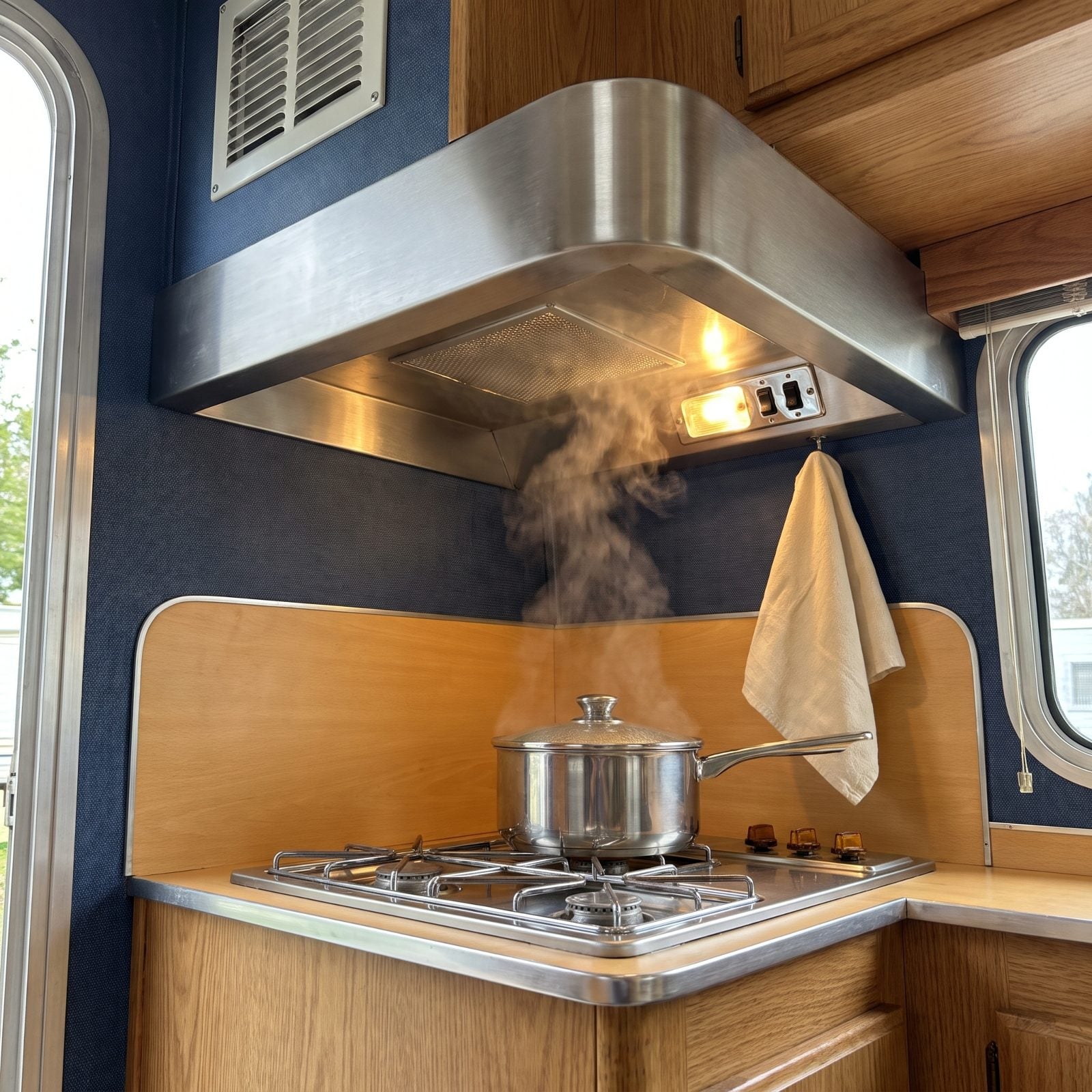
Fry bacon in a sealed box and you’ll understand why this mattered. The 1980s hood pulled grease, steam, and smoke up off the stove and through its filter, away from your face.
Plenty of rigs give you a recirculating hood, which is a fancy way of saying it pushes your cooking smells around the cabin through a thin filter and calls it done. Three days later the curtains still smell like Tuesday’s dinner. Ducted and vented outside is the honest version. Your fire alarm will thank you too.
6. The Fold-Up Counter Extension That Doubled Your Workspace
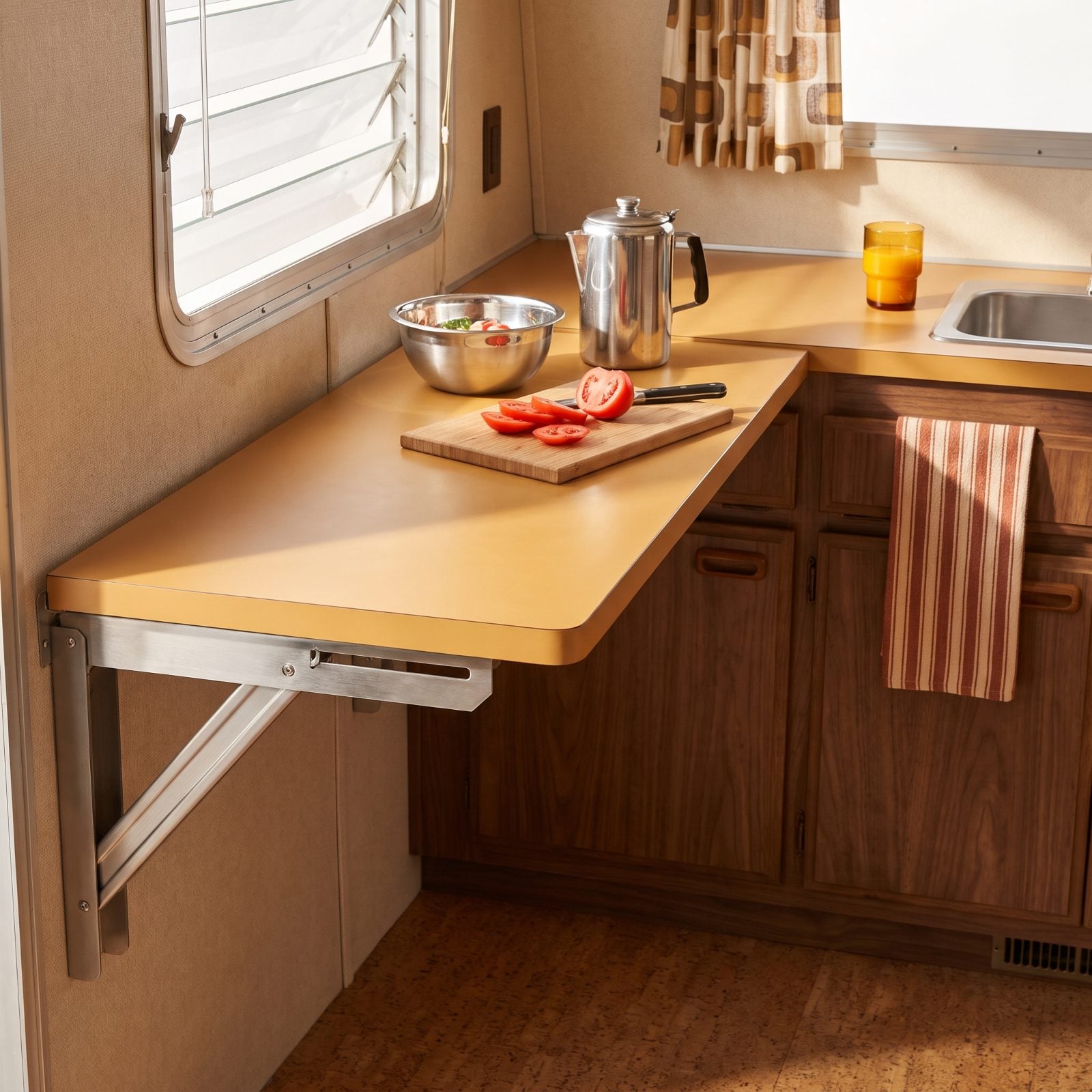
Lift the flap, drop the little brushed-metal leg or swing the bracket, and the galley gained a full extra foot of counter in two seconds. Then you folded it back down and the aisle was clear again.
Cooking in a tight galley means you’re always out of counter at the worst moment, usually with a knife in one hand and a cutting board balanced on the stove. This extension was such a simple fix. A hinge and a leg. No motors, nothing to break, nothing to charge.
5. Bathroom Windows That Opened to Real Air
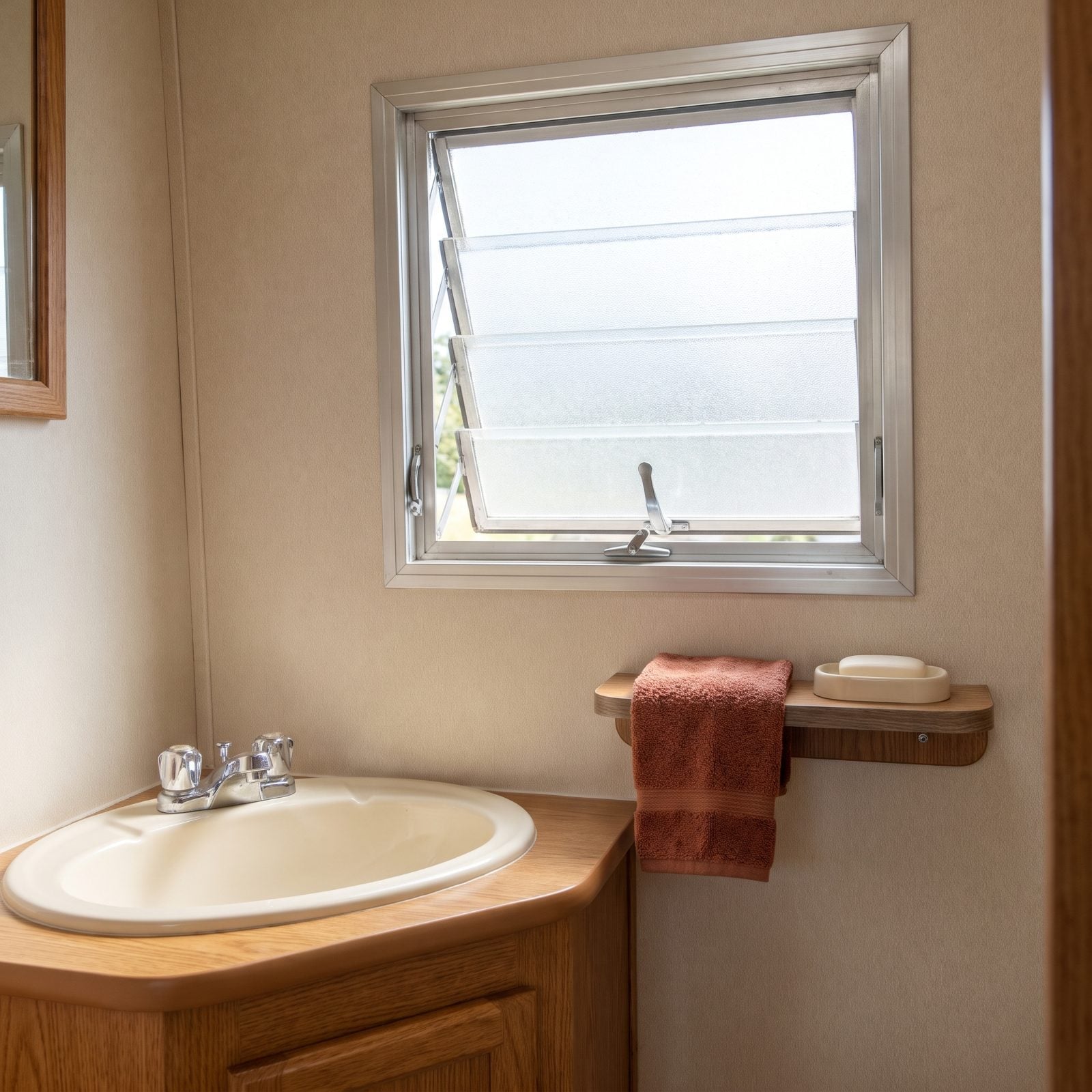
You cranked it open after a shower and actual outdoor air moved through, drying things out instead of leaving that damp funk that settles into a windowless modern bath by day two.
Somewhere in the chase for sleeker exteriors, the opening bathroom window started disappearing in favor of a fan and a sealed wall. A fan helps. A fan plus a window that catches a cross breeze is better, and it doesn’t draw a single amp off your battery. Mildew hates moving air. Give it some.
4. Gravity-Fill Freshwater Inlets That Never Fought You
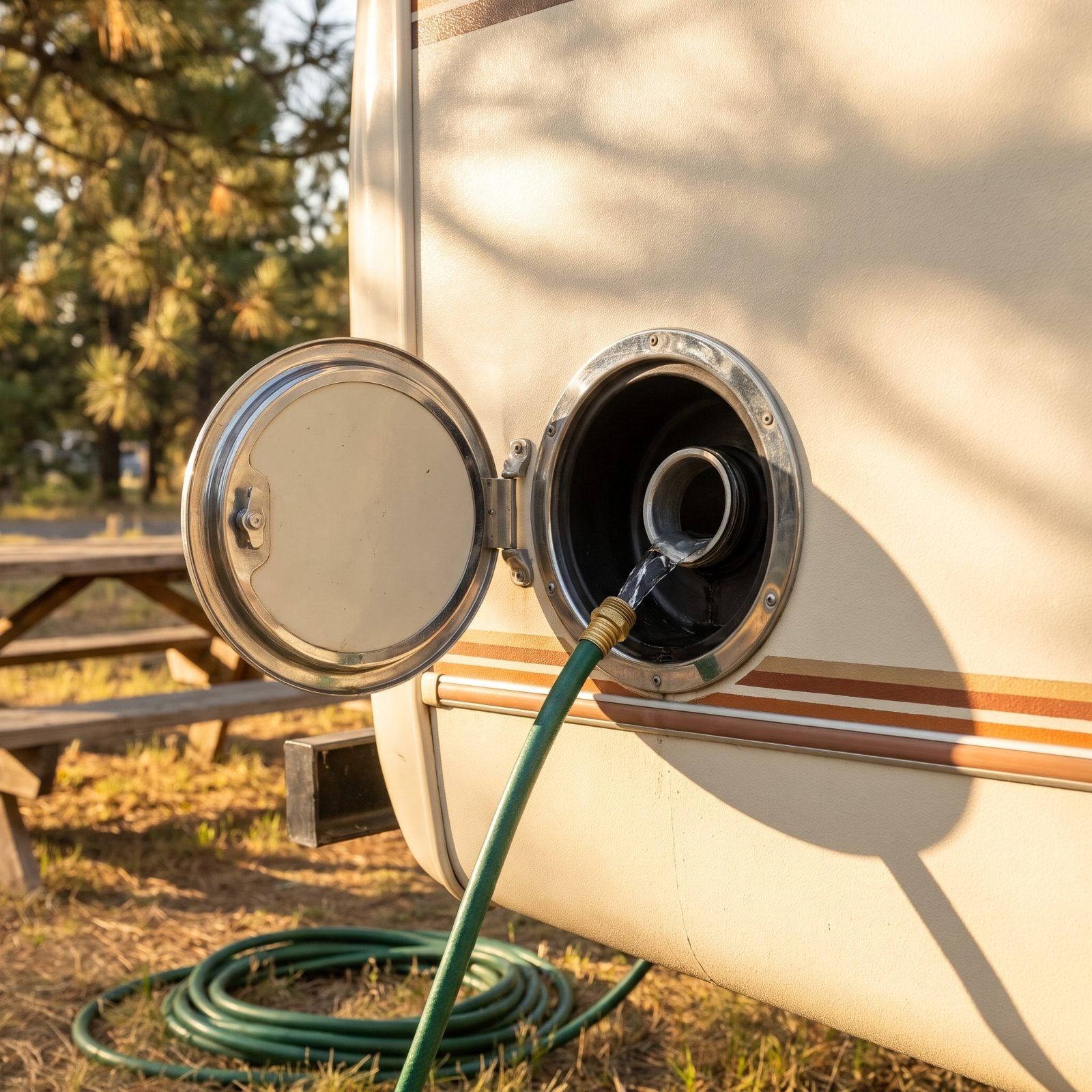
Flip the little chrome door, stick the hose in the hole, walk away. That was the whole operation. No pressurized city-water connection to crack a fitting, no worrying about a hose blowing off at 3 a.m. and flooding a bay.
Gravity fill is almost foolproof, which is exactly why it endured so long. You could top off from a campground spigot, a jug, even a stream run through a filter. Modern pressure-fill setups stay tidy right up until a fitting fails under pressure and you’re mopping out a storage compartment.
3. Painted Stripes Instead of Peel-Away Vinyl Graphics
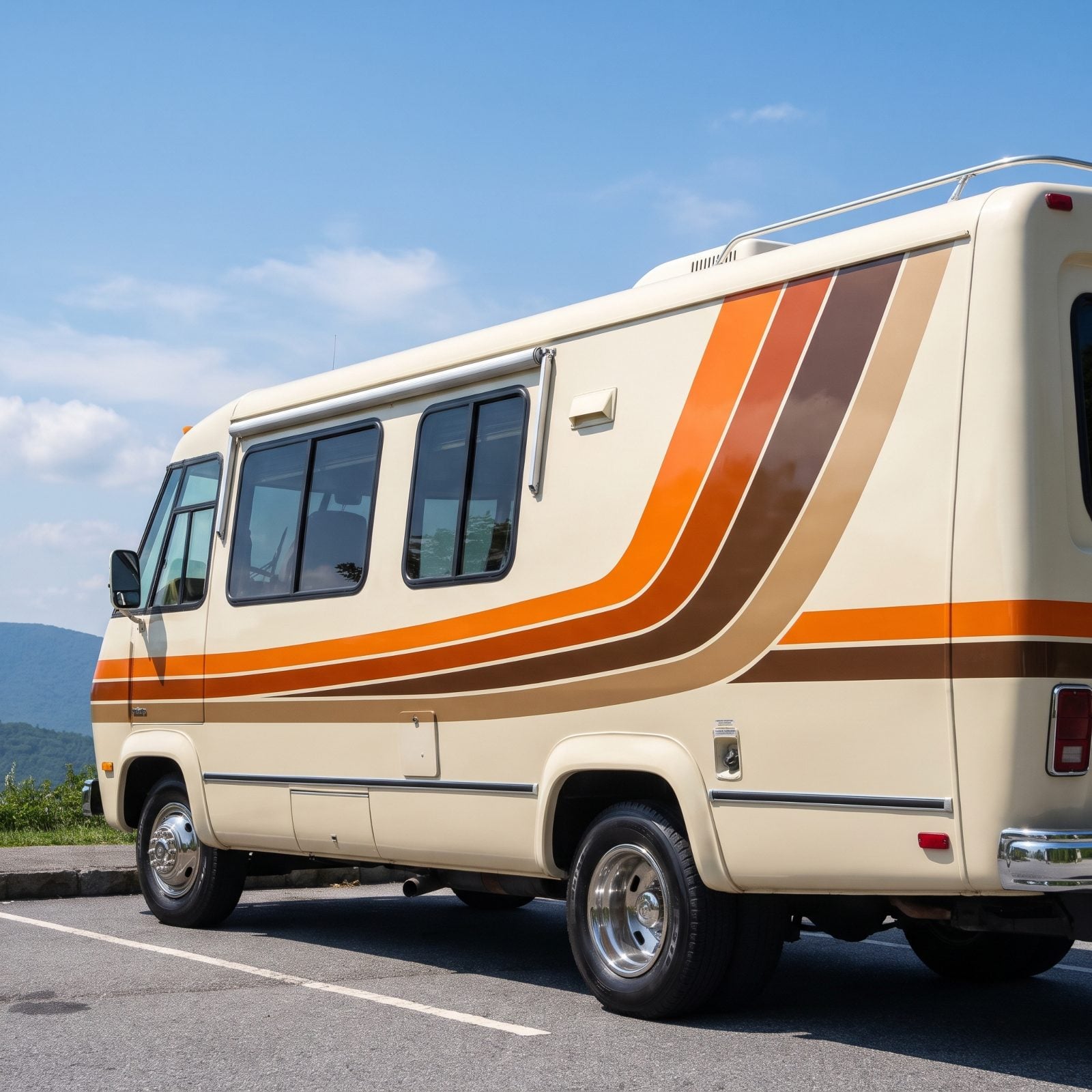
Run your hand along the side of a well-kept 1980s rig and the stripes are in the paint, not stuck on top of it. Forty years later they’re still sharp — no curling corners, no sun-faded decal flaking off in strips.
Walk through any modern RV lot and you’ll spot the problem: vinyl graphics peeling at the edges on rigs barely a decade old, the clear top layer cracking into little islands. Paint ages gracefully. Vinyl just ages. One can be buffed and touched up; the other has to be scraped, reheated, and replaced panel by panel.
2. Shorter Overall Lengths That Could Still Go Places
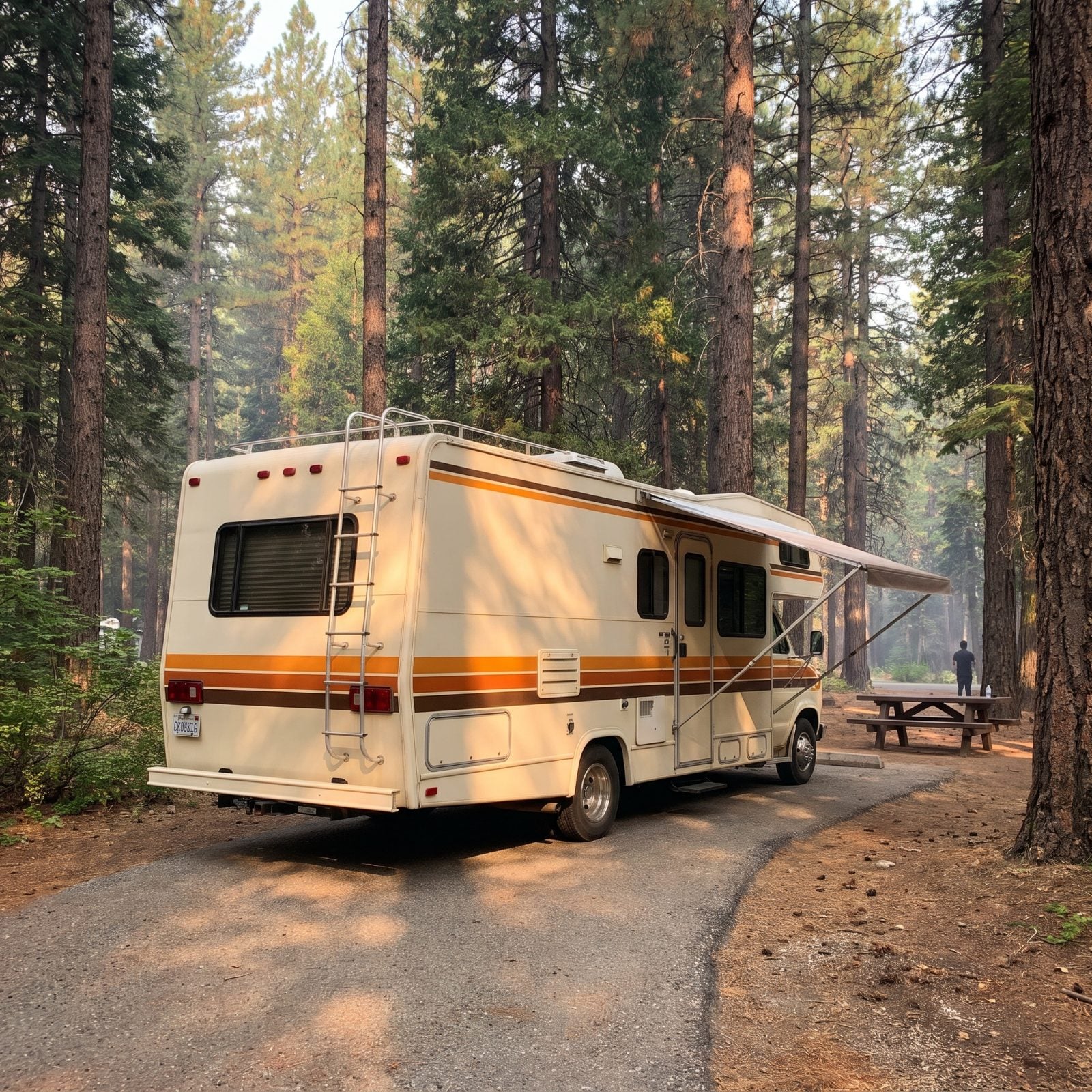
A 24-foot motorhome fit campsites a 40-footer can only dream about. It took the tight forest-service loops, the older state park sites carved out before everything got supersized, the gravel pull-through that doesn’t require a spotter and a prayer.
Rigs kept growing because length sells on a showroom floor. Out in the actual world, though, the longer you go the fewer places you can go. That sweet 1980s mid-size slipped into national park campgrounds with hookups the big rigs get turned away from, and it was easier to drive, easier to park, easier to back into a space without your dinner getting cold.
Smaller never meant worse. It meant more roads open to you — worth remembering every time you stare at a spec sheet and wonder whether bigger is really better.
1. The Full-Size Spare Tire That Actually Got You Home
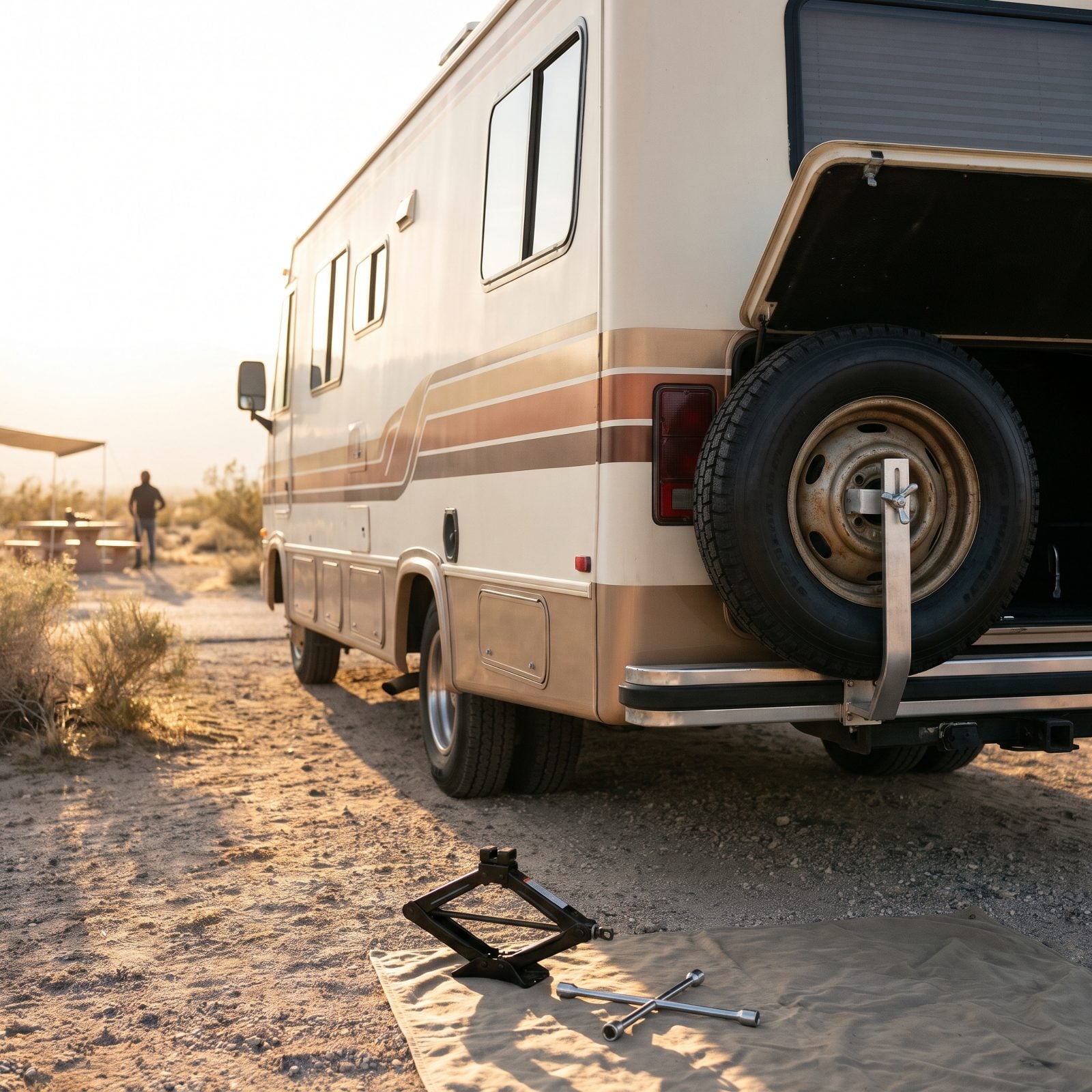
Pop the rear compartment on a well-kept 1980s coach and there it is: a real, full-size spare, same size as the tires already rolling. Not a space-saver donut rated for fifty miles of white-knuckle crawling. Not a can of sealant and a prayer. Just an actual wheel you could bolt on and keep driving wherever you were headed.
And that mattered a whole lot more on an RV than it ever did on a car. Picture blowing a tire on some empty two-lane, way past the last town with a gas station, and a temporary donut isn’t going to haul ten thousand pounds of motorhome anywhere you’d call comfortable. With a full-size spare you swapped it, checked the pressure, and finished the trip. No tow truck. No ruined week.
These days most new rigs ship with nothing in that bay — just a roadside-assistance number and a hope that help is somewhere within cell range. Give me the oak-paneled coach with a tire I can mount myself, thanks.