
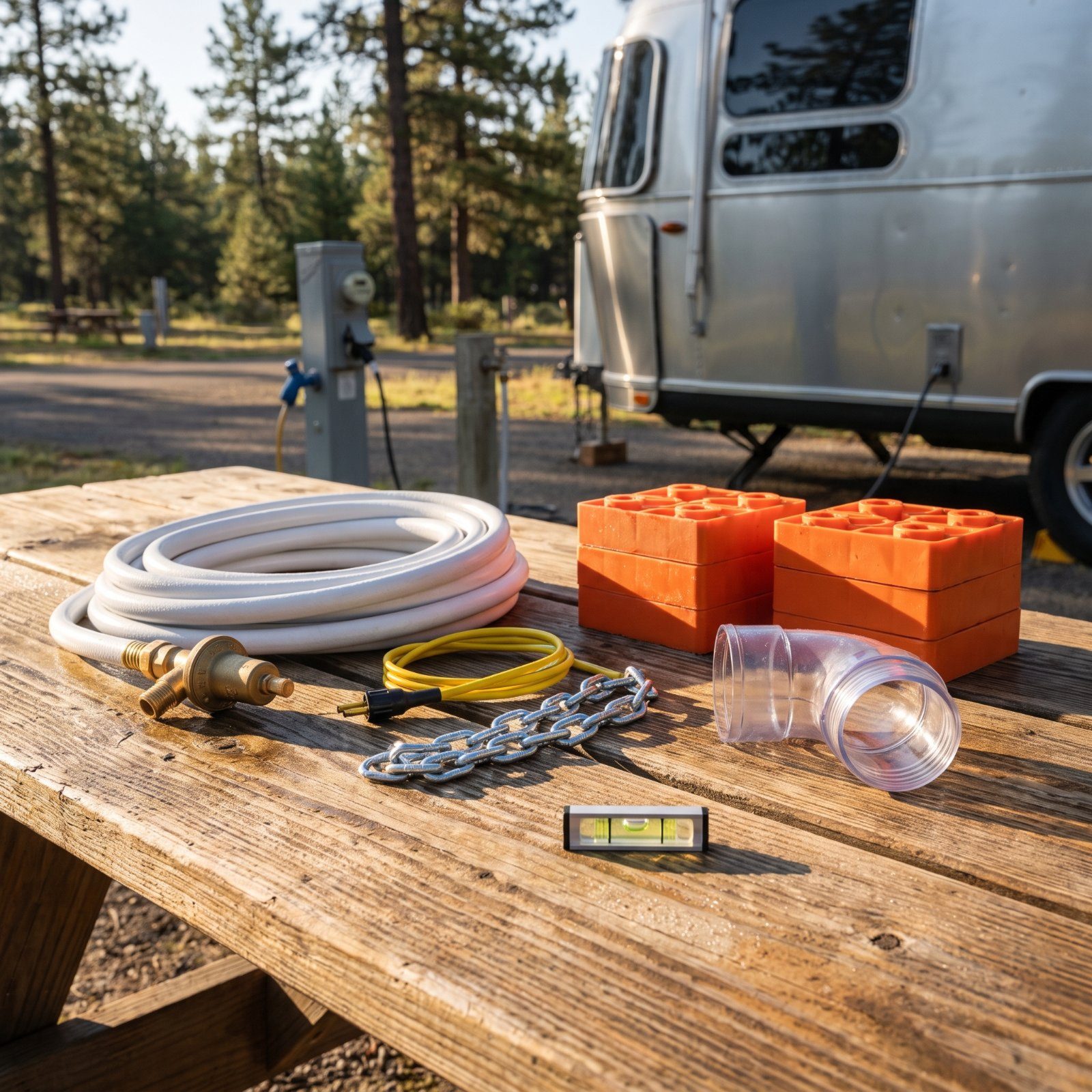
A good host can read a brand-new RVer from across the loop. Not by the shine on the rig or the dealer sticker still stuck in the window — by the small stuff. How the hose gets hooked up, jacks going down before the tires are chocked, a breakaway cable clipped to the wrong thing. None of it is shameful. Everyone starts somewhere, and the folks who’ve been doing this for decades made every one of these errors first. The trick is knowing which ones cost you a tire, a tank flush gone sideways, or a water heater element on day one.
Please note that some of the images in this article were created with the assistance of AI.
43. Jacking Up Only One Tire in a Dual-Wheel Pair Overloads Its Partner
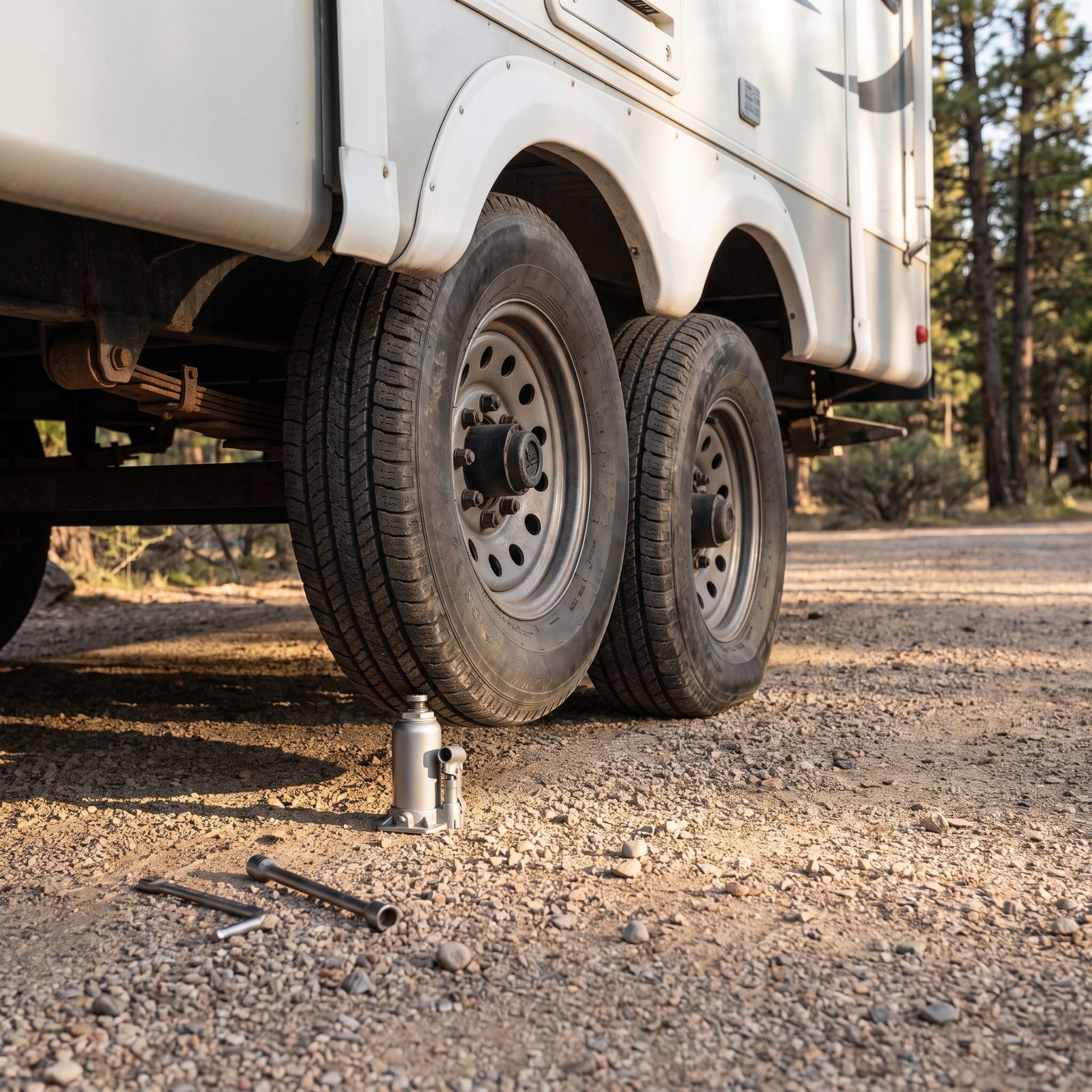
This one bites newcomers mid-tire-change. You’ve got a dual-wheel axle, four tires, and you set a bottle jack down on the gravel beside just one of them, ready to slide it under. Nothing’s lifted yet and both tires still sit on the ground — but once that jack goes up, the tire left on the ground will be carrying the full load of that corner by itself, a job it was never meant to do solo.
Use a ramp or a block that lifts both tires of the pair together, or rated jack stands under the axle. Hosts wince from forty feet away at a single jack under one dual. They know exactly where that’s headed.
42. Clipping the Breakaway Cable to a Safety Chain Cancels the Whole Point of It
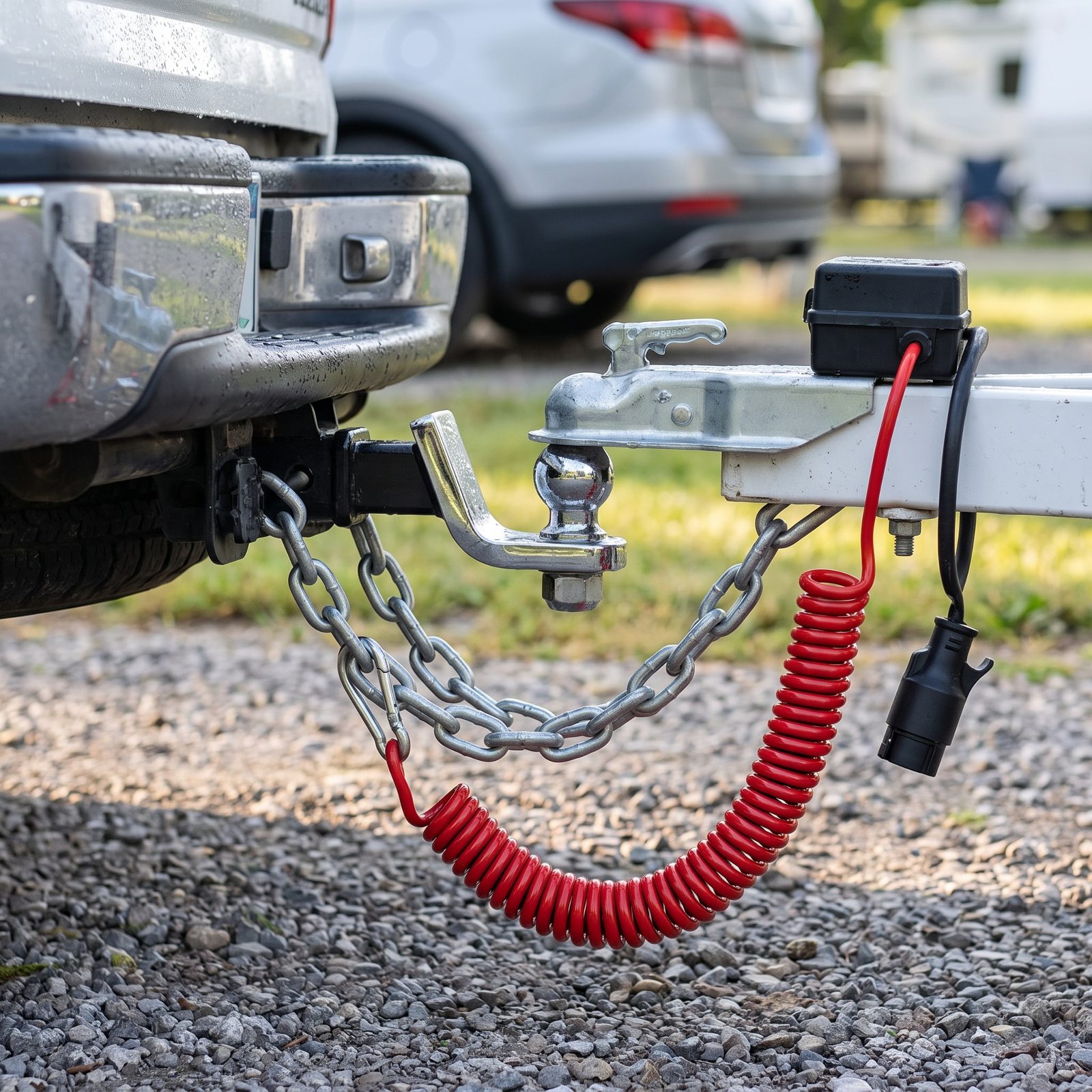
The breakaway cable has one job. If the trailer ever separates from the tow vehicle, it yanks a pin and slams the trailer brakes on by itself. For that to work, it has to be anchored to something that stays with the truck — not to the safety chains.
Clip it to a chain and picture the worst case: the hitch fails, the chains fail too, and your breakaway cable goes down the road attached to nothing at all. The brakes never trigger. It’s one of those mistakes that costs you nothing for years and everything once.
Find the dedicated loop or hole on the receiver or the tow vehicle frame. No loop on your truck? A bolt-on bracket fixes it in an afternoon.
41. Screwing the Pressure Regulator Onto the RV Instead of the Spigot
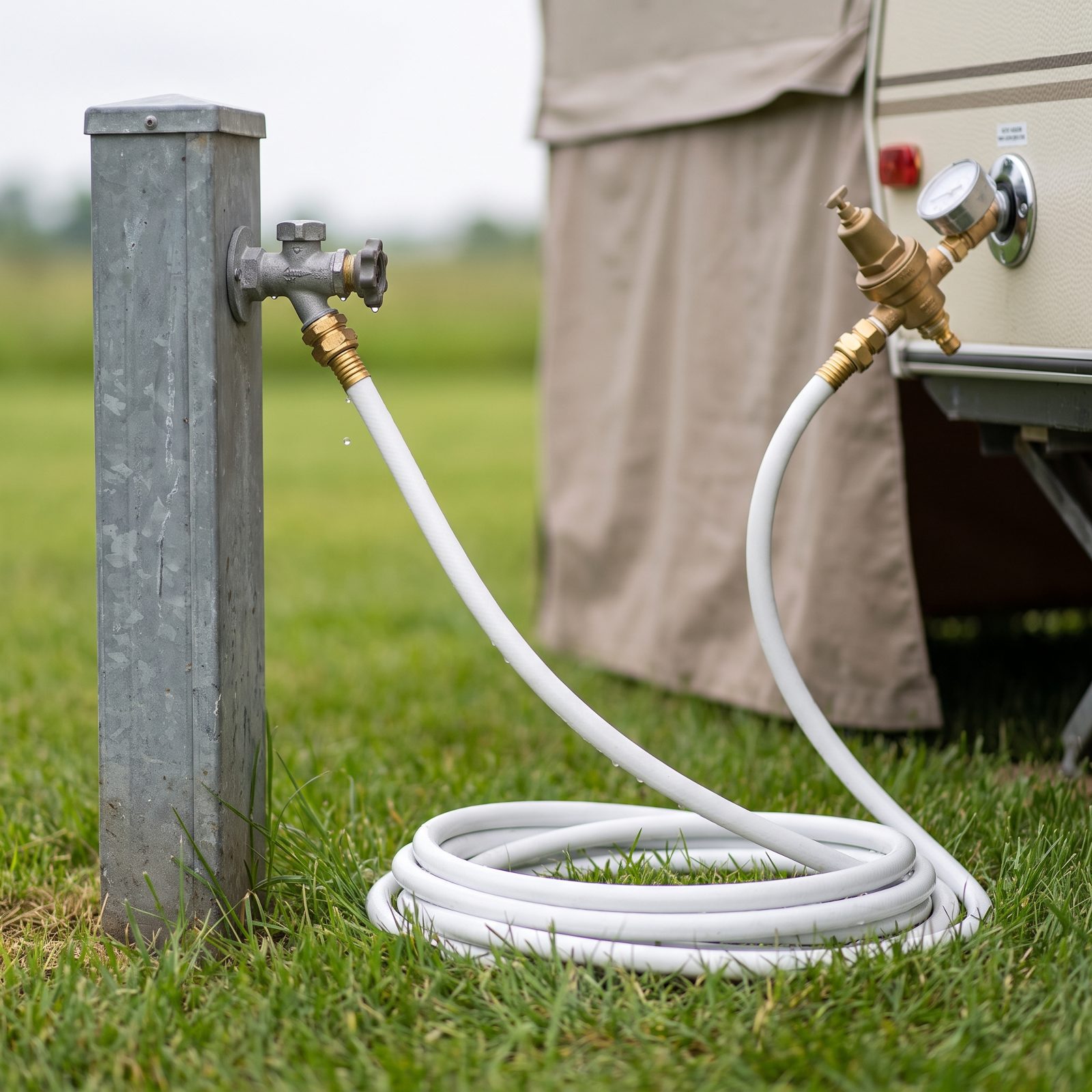
Most people put the regulator where it’s convenient, which is right at the RV’s city water inlet. Reasonable guess. Wrong spot.
Put it there and the whole length of your hose sits at the campground’s raw pressure, which at some older parks can spike alarmingly high. That’s how hoses balloon, split a seam, and leave a geyser on your site while you’re off hiking. Thread the regulator onto the spigot first, then run the hose. Now the hose and your plumbing both live at a safe 40 to 50 psi.
40. Cranking the Stabilizer Jacks Down Hard to Level the Rig
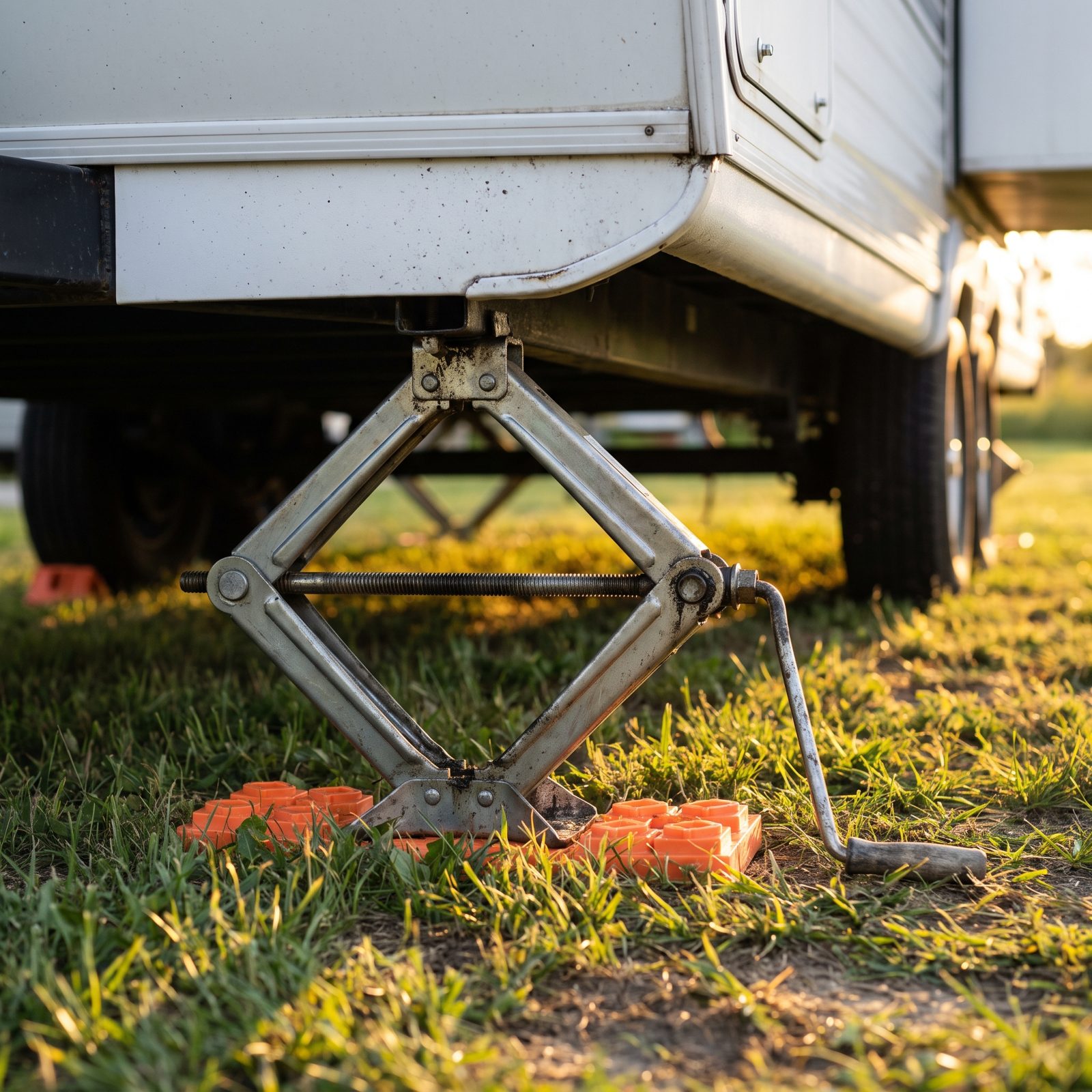
Stabilizer jacks stop the wiggle when you walk around inside. That’s all they do. They are not meant to lift or level the trailer.
Crank them down to raise a low corner and you’re asking four little scissor mechanisms to do what belongs to your tires and leveling blocks. The payoff is bent jacks, a tweaked frame, and a trailer that still wobbles. Level front-to-back and side-to-side on blocks under the tires first, then drop the stabilizers just until they make firm contact. Snug, not straining.
Plenty of new owners get this wrong for a whole season and never figure out why the dinette rattles. The jacks are fighting the frame the whole time.
39. Unhitching Before You’ve Tested the Power Pedestal
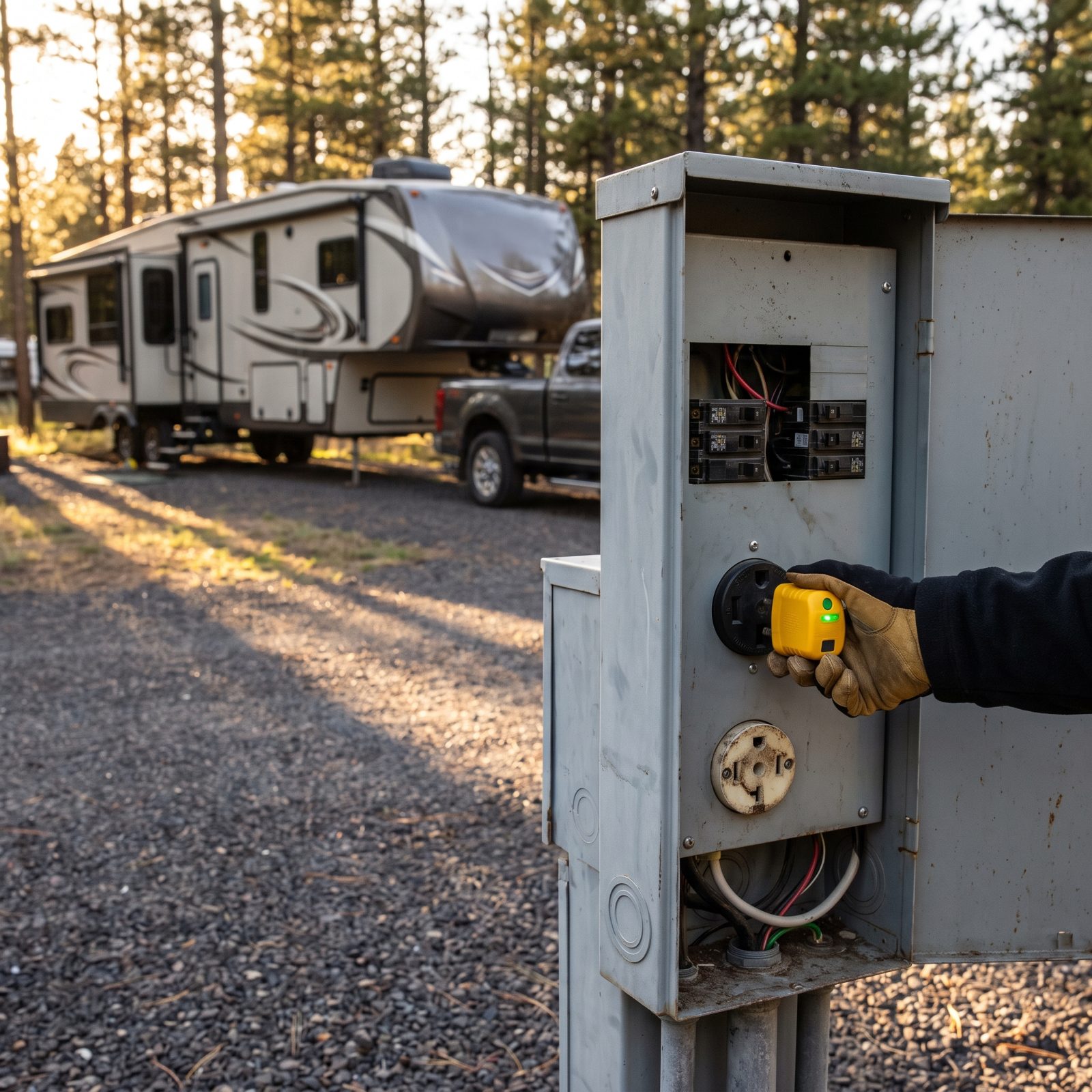
Test the pedestal before you break down the hitch. This is the one seasoned RVers do on autopilot and new arrivals skip every single time.
Plug in a surge protector or an outlet tester the moment you roll in. If the pedestal is miswired, has reversed polarity, or shows an open ground, you want to know while you’re still hitched and can move two sites over without a fight. Unhitch first, then discover a dead or faulty outlet, and now you’re re-leveling, re-hitching, and holding up the loop at dusk.
38. Leaving the Black-Tank Valve Open on a Full Hookup
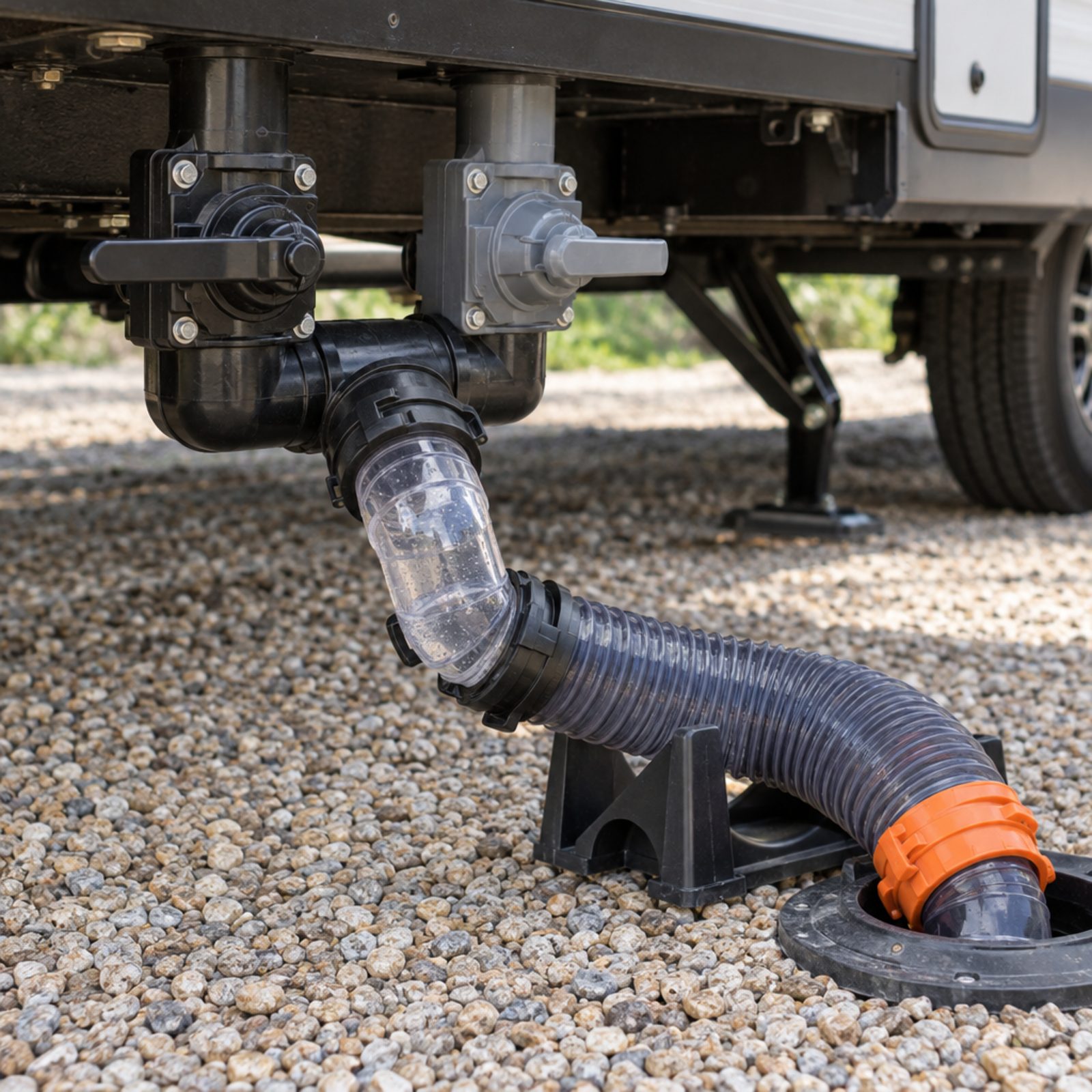
Full hookups tempt first-timers into leaving the black valve open so they never have to dump. Feels efficient. It’s the exact wrong move.
Liquid drains away freely. Solids don’t. Leave the valve open and the water runs off while everything else piles up and dries into a mound right under the toilet. Veterans call it the pyramid, and nobody wants to meet theirs. Keep the black valve closed until the tank is at least two-thirds full, then open it and let the rush of water carry everything out. Gray tank can stay open if you like. The black one earns its keep by staying shut.
37. Hooking Fresh Water to the Black-Tank Flush Port
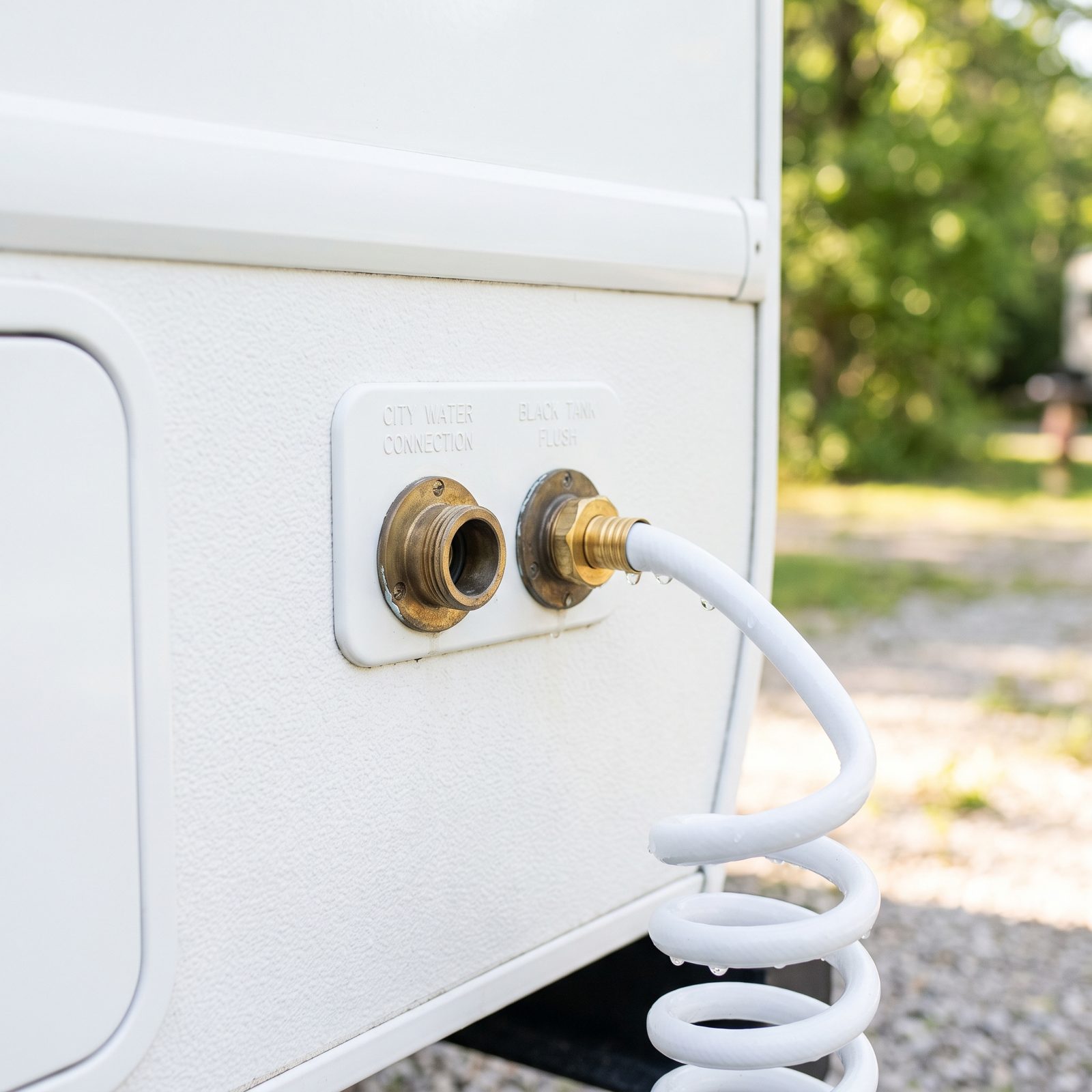
Two inlets on the side of the RV. They look like cousins. One is your city water fill, and the other is the black-tank flush — which runs a hose straight into the toilet holding tank.
Connect your drinking hose to the flush port by mistake and you’ve either cross-contaminated your clean hose or, worse, overfilled a closed black tank until something backs up. Genuine first-day error. A lot of rigs don’t label the two ports clearly from the factory, which doesn’t help anybody.
36. Letting Auto-Level Lift the Tires Clean Off the Ground
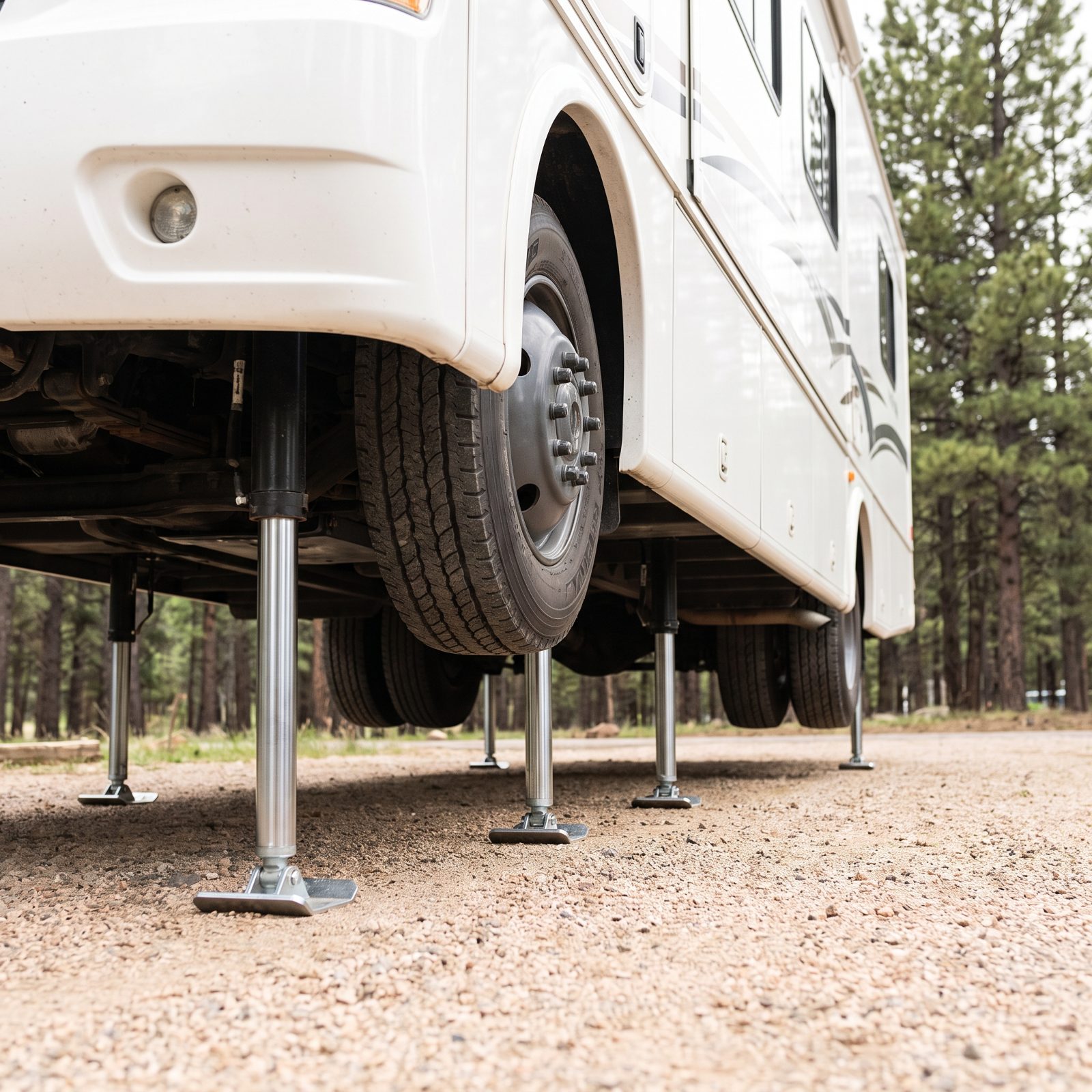
Auto-level is magic right up until it hoists the whole rig onto its jacks and leaves every tire dangling. New owners see level floors and assume that’s the goal. It isn’t.
A rig balanced on four hydraulic legs with the tires off the ground is tippy in wind and loads the frame in ways it wasn’t built for. The system is supposed to keep the tires planted and just take the lean out. Badly sloped site? Stack leveling blocks under the low side first so the jacks have less work to do.
35. Flipping On the Water Heater Before It’s Actually Full
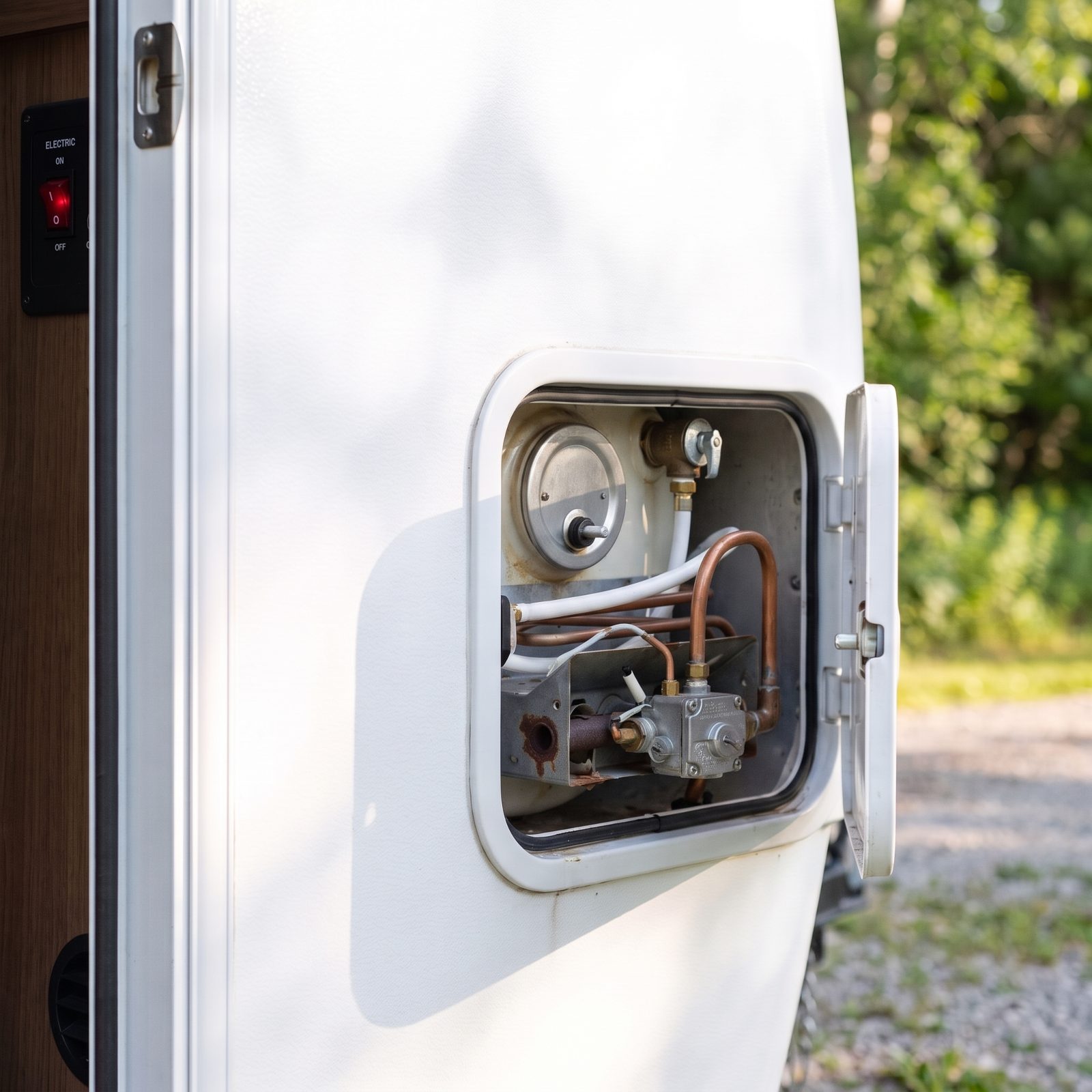
Switch on the electric element of a dry water heater and you can cook it in minutes. The element needs water around it to pull the heat away — no water, no heat sink, burned-out element.
After you’ve been winterized or run the tank dry, open a hot tap and wait until water runs steady with no sputtering air. That’s your sign the tank is full. Then flip the switch. Gas mode is more forgiving, but the electric element is unforgiving and cheap to ruin.
Plenty of owners take out an element learning this. The replacement can cost less than lunch, but the lesson sticks a lot longer.
34. Popping a Downhill Sewer Cap With No Clue What’s Behind It
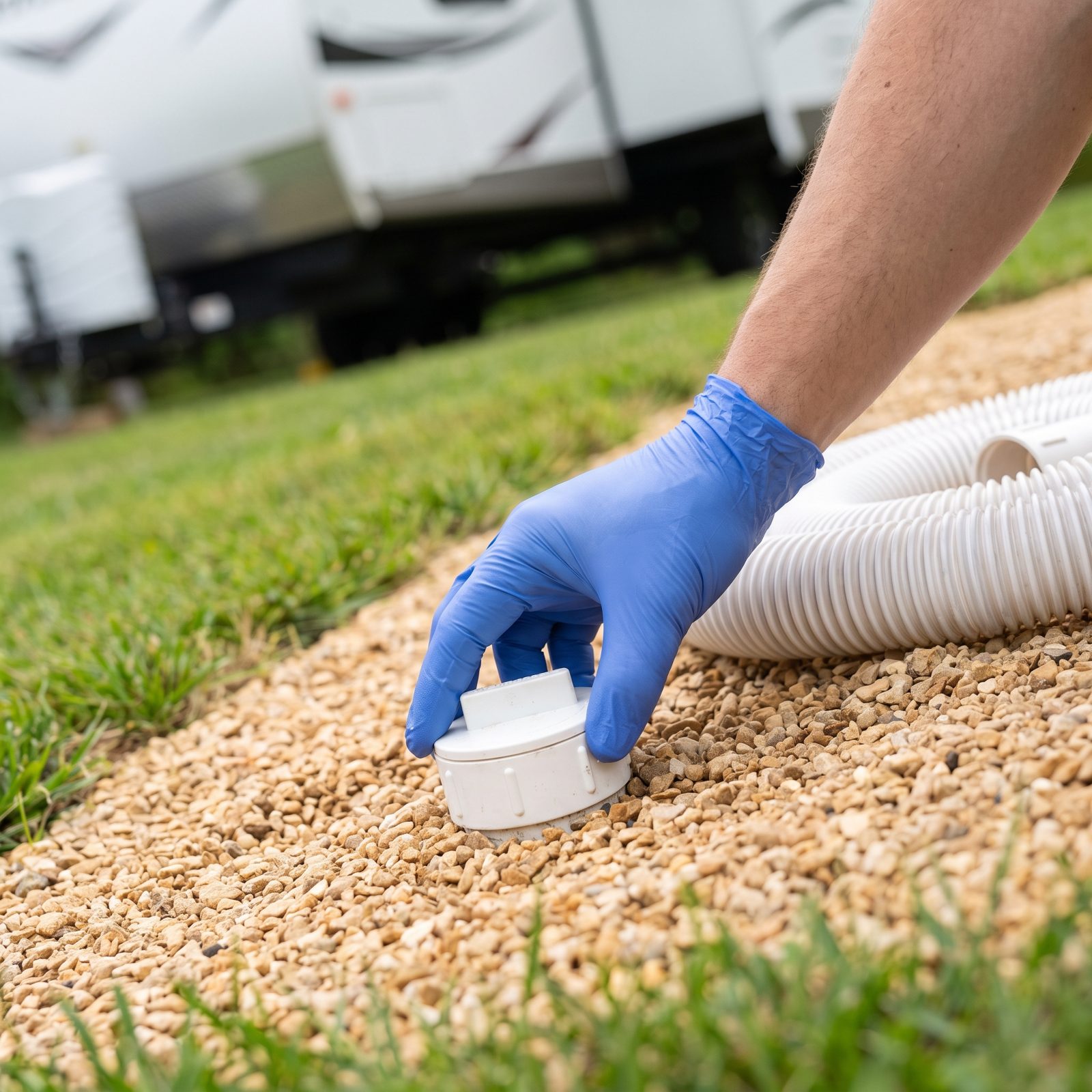
When the rig is parked uphill of the sewer connection, the whole line between tank and ground drains downhill and sits waiting behind that cap. New arrivals unscrew it standing directly in front, expecting nothing.
Crack the cap slowly, stand to the side, and keep the hose ready to seat before you fully release it. Gravity has been loading that line the whole time you were leveling and hooking up power. It’s patient. It is not polite.
33. A Sewer Hose That Runs Uphill Will Not Drain Properly
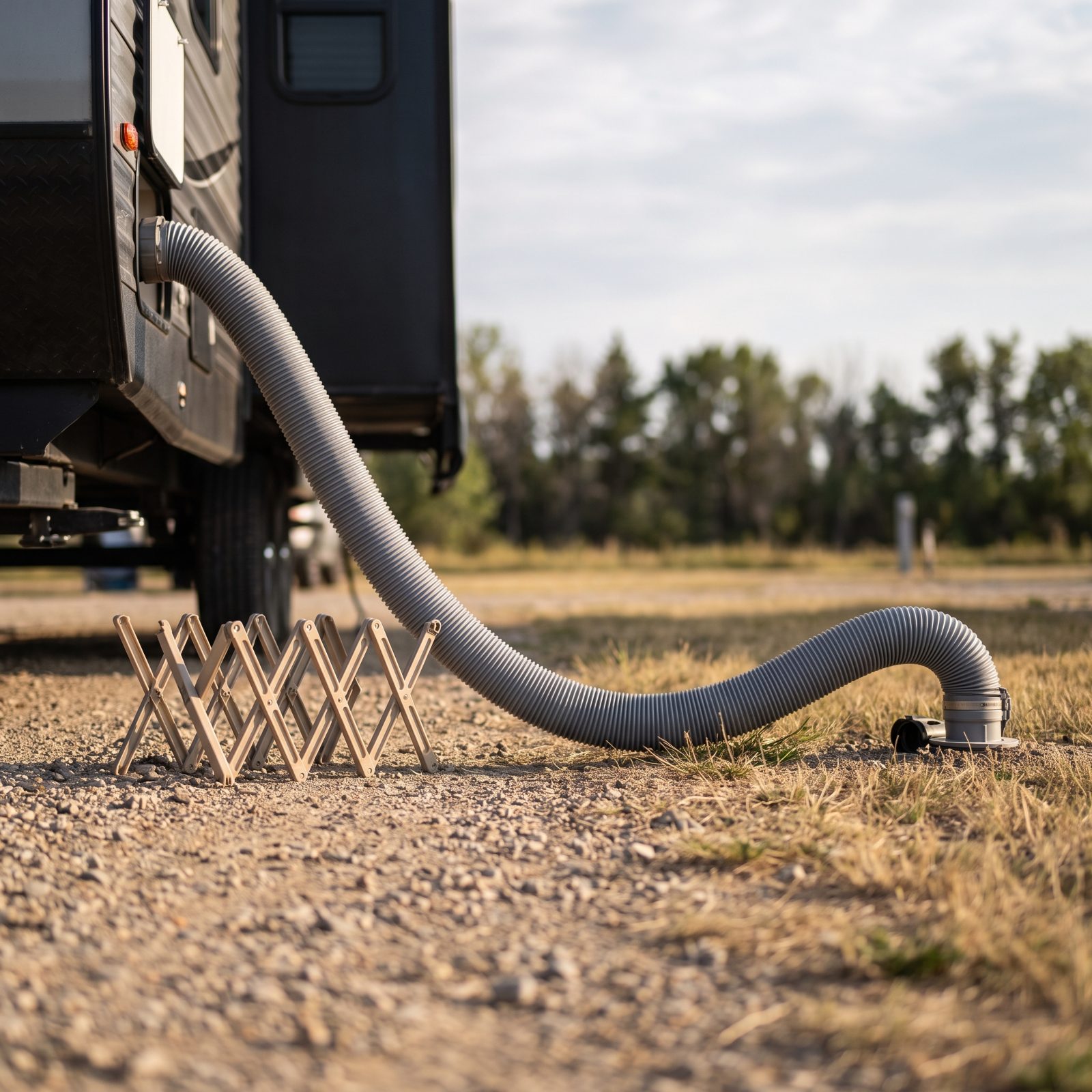
Gravity doesn’t negotiate. If your sewer hose dips and then climbs back up to the inlet, waste pools in the low spot and just sits there, so you dump the black tank, hear it rush, then watch the last of it stall halfway.
A simple ramp-style support rack would hold it on a steady downward slope the whole run instead of letting it drape onto the gravel. Skip it and you’re out there kicking the hose every morning to burp it along the line, which is exactly as pleasant as it sounds.
32. Handling Fresh-Water Fittings With Sewer Gloves Cross-Contaminates the System

This one makes hosts wince. The gloves that just wrestled a sewer hose should never touch the spigot you drink from — one habit, two completely separate jobs.
Seasoned RVers keep their fresh-water hose a different color from everything else and never let it share a storage bay with the sewer gear. Color-coding isn’t fussy. It’s the cheapest insurance you’ll ever buy against a stomach bug three states from home.
Swap gloves between tasks, or keep dedicated pairs. Ten seconds. Saves a miserable weekend.
31. Driving Stakes Without Checking for Buried Utilities Can Hit Water or Electrical Lines
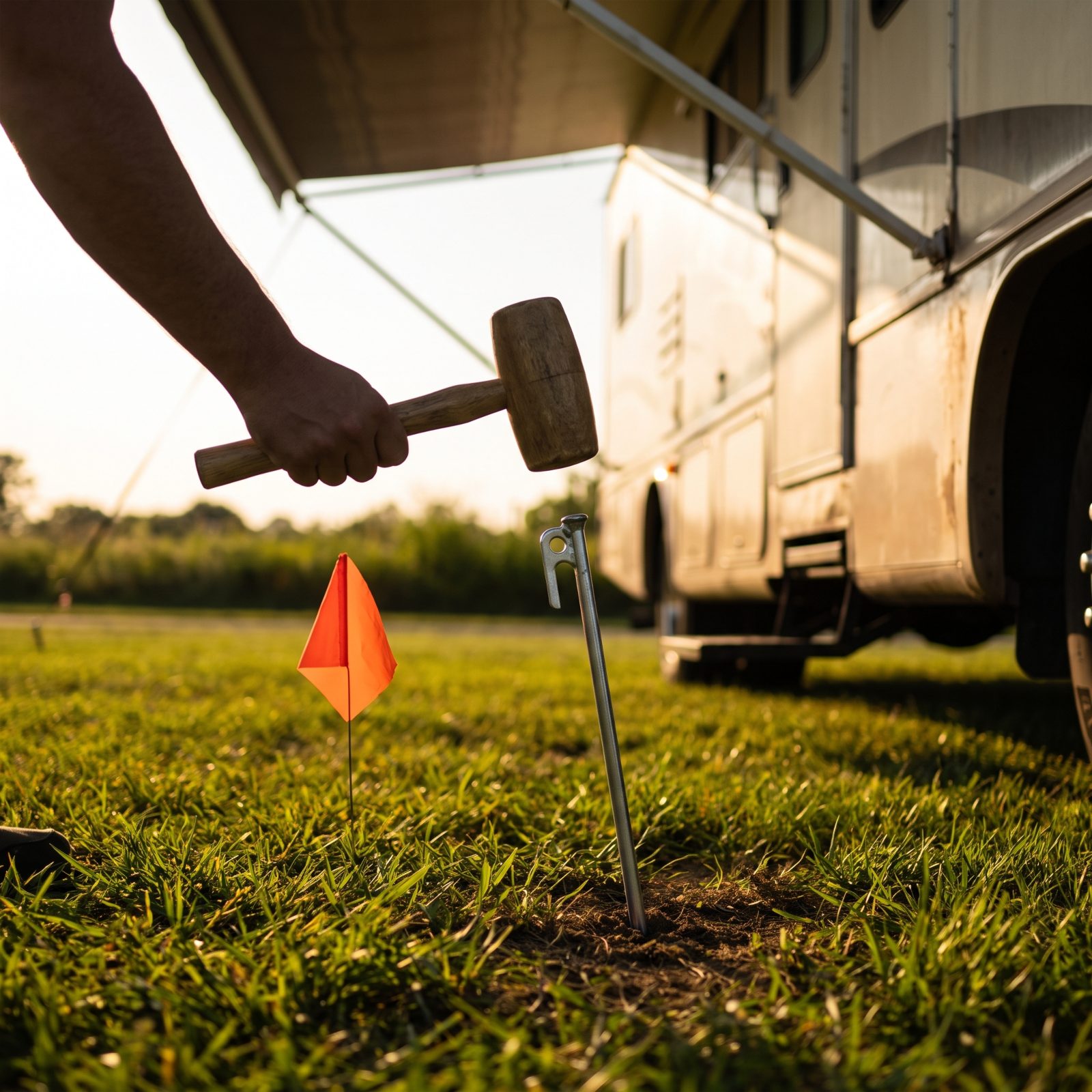
Hammering an awning stake or a dog-tie-out spike into soft ground feels harmless right up until you clip a shallow water line or a buried pedestal feed, and then the campground’s afternoon gets expensive fast.
Plenty of parks run electrical and water just inches below the surface near the pad. Those little colored marker flags aren’t decoration. Give them a wide berth, and if there’s any doubt, ask the host where the lines run before the mallet comes out.
30. Transporting Outside Firewood Can Spread Invasive Insects
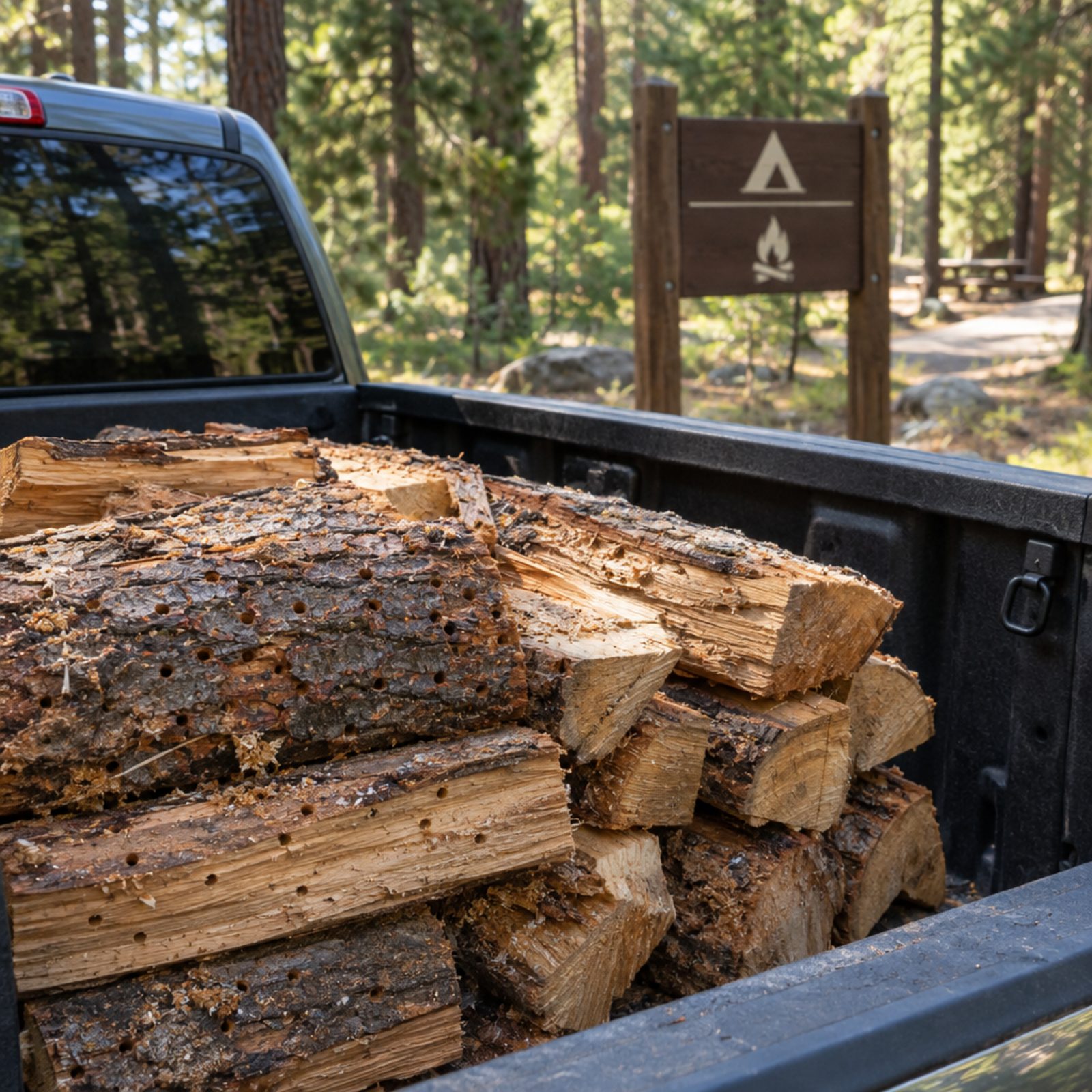
That truckload you hauled from home to save a few bucks can carry emerald ash borer, spotted lanternfly eggs, or other hitchhikers that wipe out a local tree stand. The bugs ride in the bark, and you never see them until it’s too late.
Most parks ask you to buy wood on-site or within a short radius for exactly this reason. Burn what you buy locally. Leave the leftover logs behind rather than dragging the problem on to your next stop.
29. Dropping a Pickup Tailgate Without Checking the Tongue Jack Can Cause a Collision
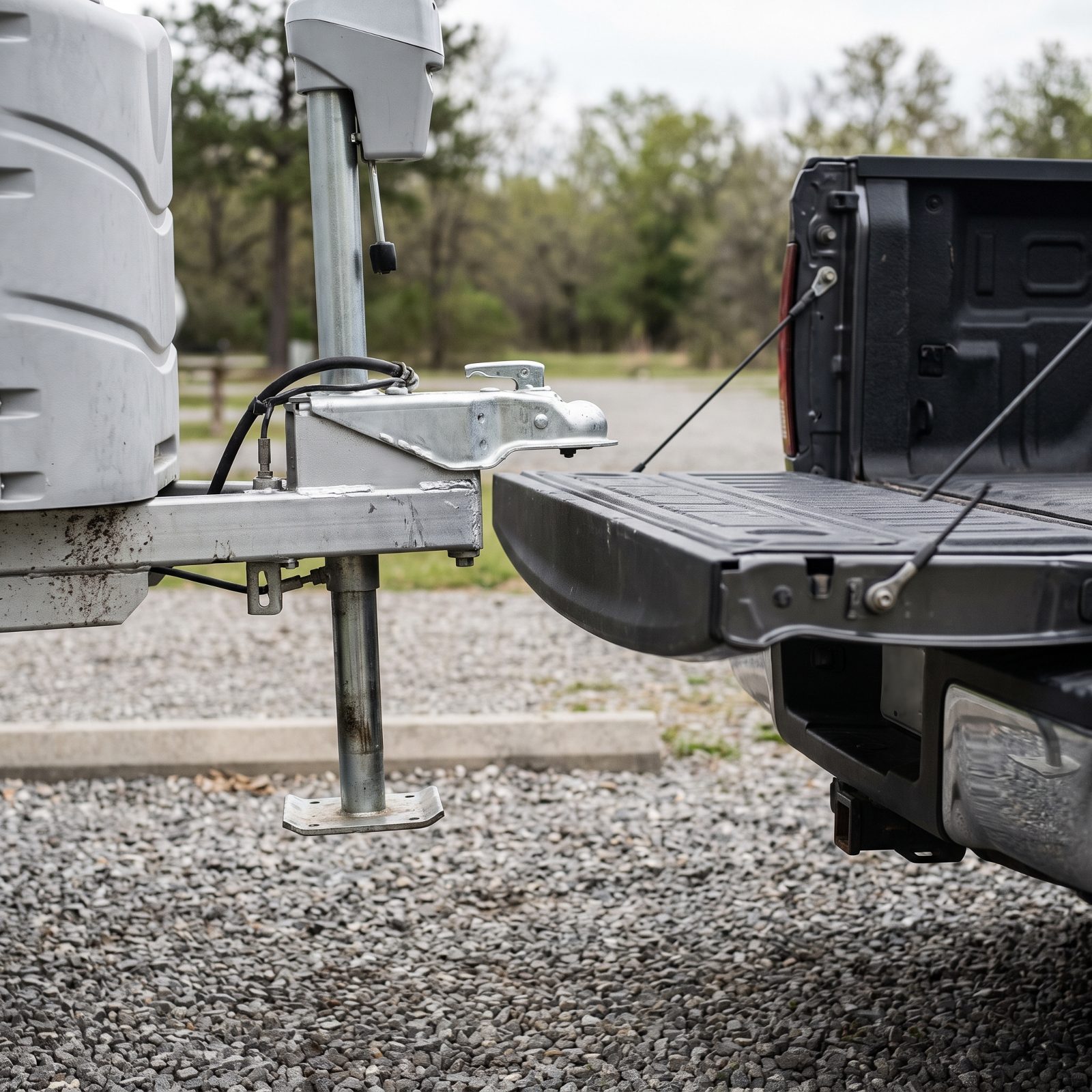
Picture it. You’ve backed up to the trailer but haven’t hitched yet — the receiver is still empty, no ball mount, no chains — and you absent-mindedly drop the tailgate to grab something from the bed, right beside the coupler, which ends up hanging just inches from the gate’s edge.
Hosts watch that dent story play out all season long. The fix is a thirty-second habit: before the tailgate moves, look at where the jack and coupler actually sit. If they’re in the arc, raise the jack or pull the truck forward first.
28. Backing Toward a Hidden Fire Ring Can Damage Tires, Plumbing or Steps
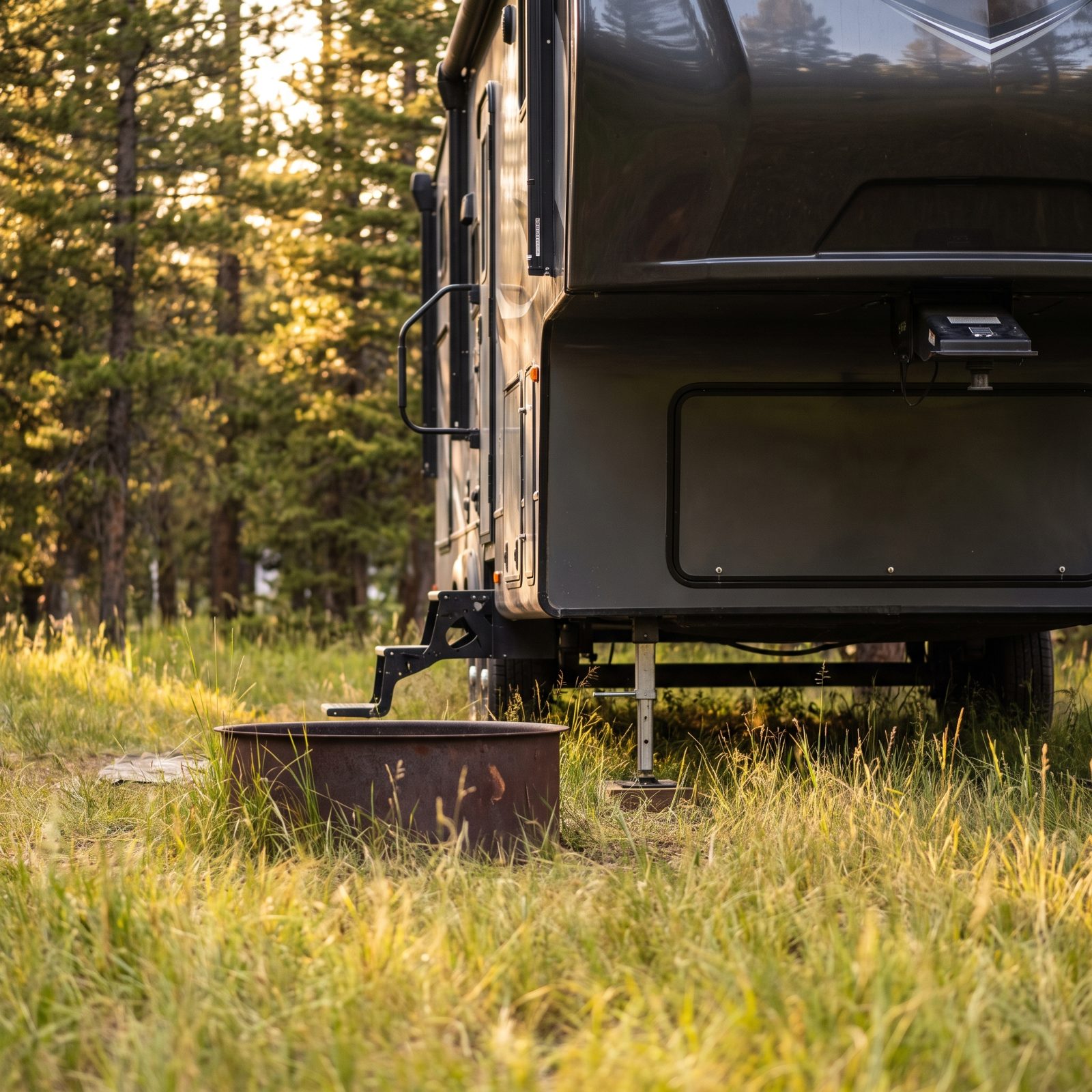
Fire rings crouch low in tall grass at exactly the wrong height to catch a tire sidewall, a drain pipe, or the bottom step as you back in. By the time you feel the thunk, something’s already bent.
Walk the site before you reverse. Every single time. Not just for the fire ring but for roots, stumps, and the water riser that loves to hide behind a bush — a two-minute stroll beats a plumbing repair in a dark forest.
27. A Spotter Who Cannot See the Driver’s Mirror Cannot Communicate Effectively
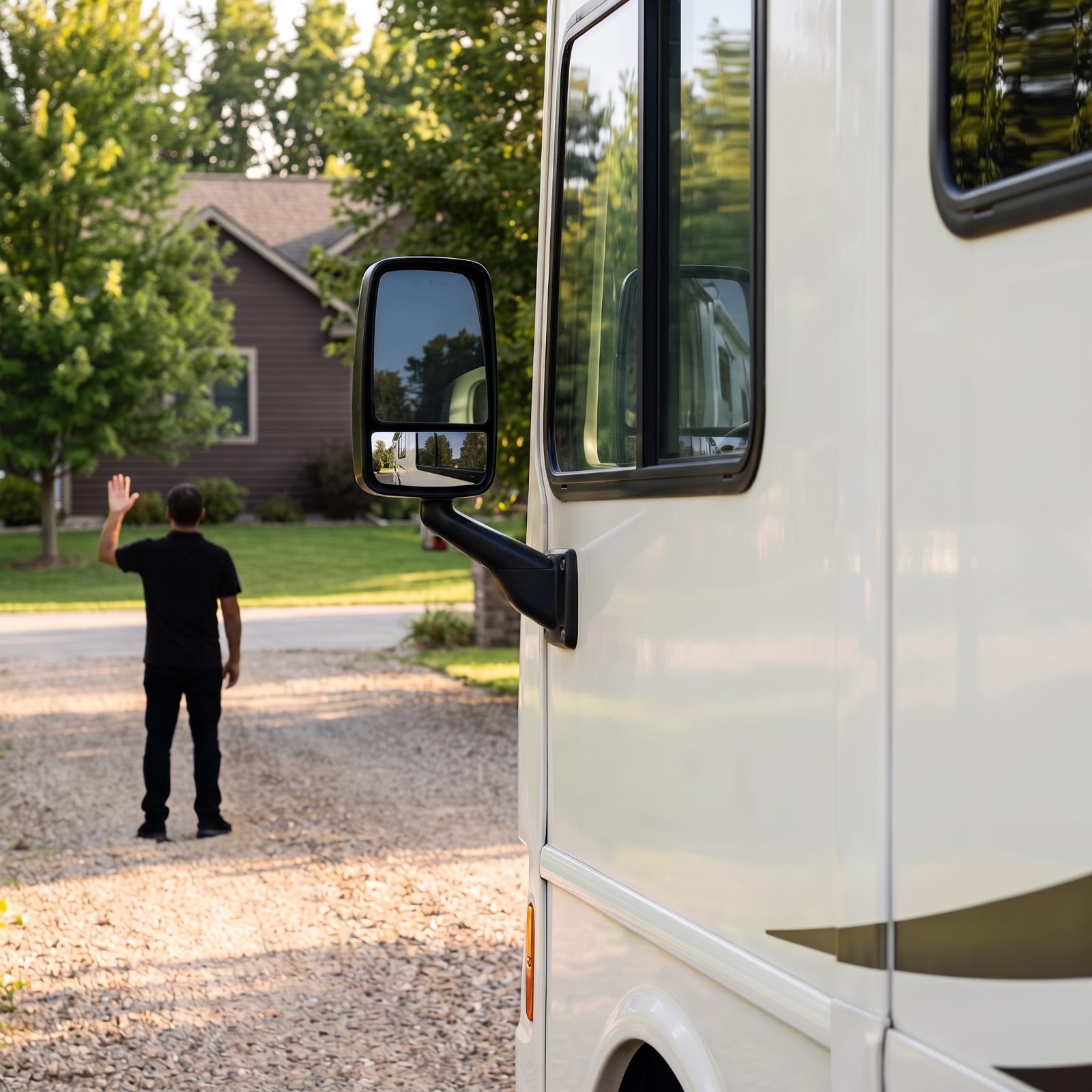
Here’s the rule every veteran lives by. If you can’t see the driver’s face in the side mirror, the driver can’t see you. Standing out ahead of a big rig, waving frantically, means you’re invisible to the one person who matters once it starts backing.
Pick a spot behind the rig and off to the driver’s side where your reflection lands square in the mirror, and agree on hand signals before anyone touches the gearshift — not shouted mid-maneuver when the engine’s running and nobody can hear a thing.
The best backing teams barely speak. They set the signals in the parking lot, then let the mirror do the talking.
26. Forgetting Rear Overhang Swing Can Clip a Post or Neighboring Vehicle
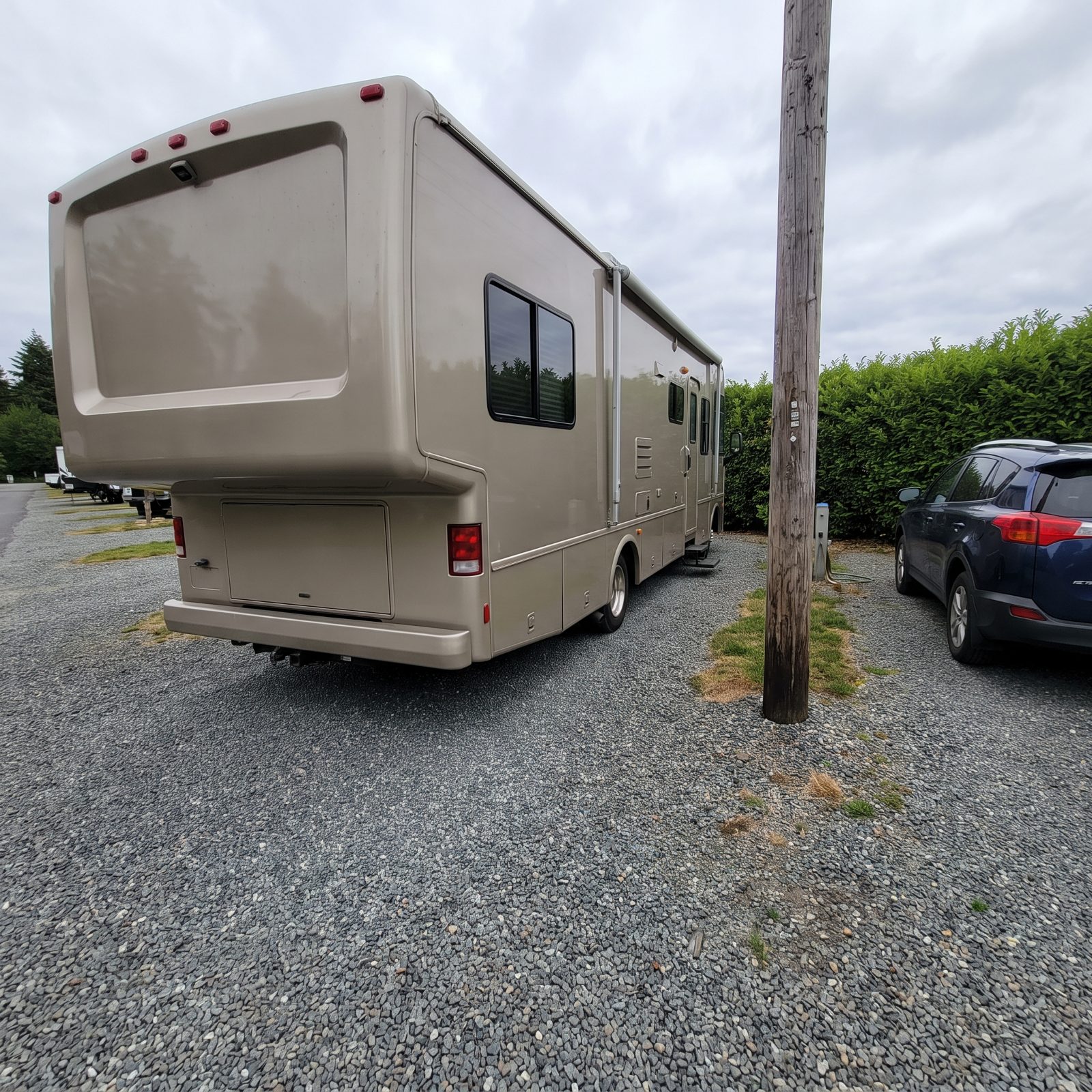
The back of a long coach doesn’t follow the front. Crank the wheel and the rear overhang swings the opposite way, wide and fast, straight toward whatever’s beside you. New drivers lock onto the front corner and never once see the tail clip the post.
The more rig you’ve got hanging past the rear axle, the bigger the swing. Train yourself to glance at both ends mid-turn, because the damage almost always happens where you aren’t looking.
25. Extending a Slide Without Measuring Clearance Can Hit a Pedestal or Tree
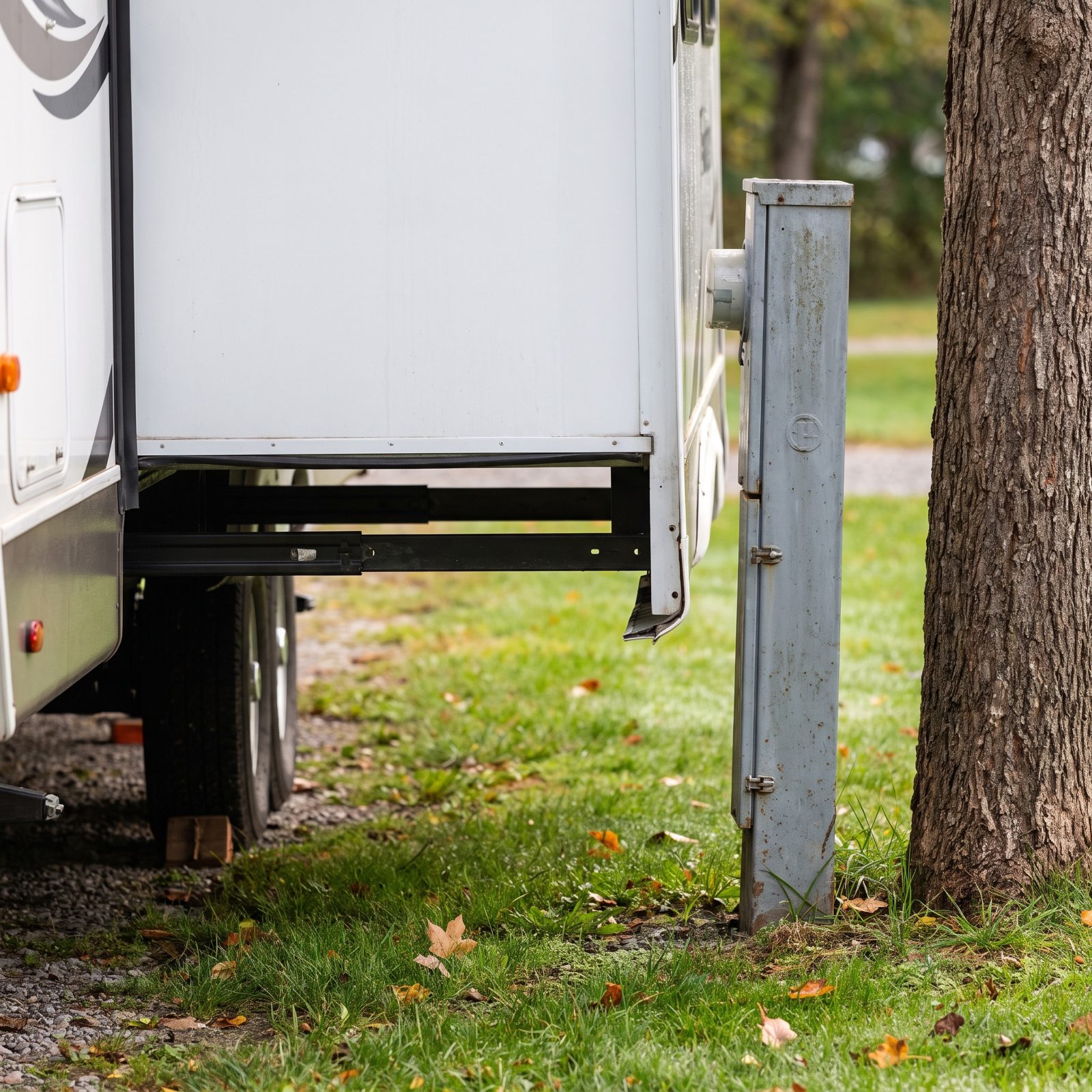
Slides push out two or three feet before you register how far that really is. On a tight site, that’s the difference between a comfy living room and a cracked slide seal where the wall met the power pedestal or a low branch.
Look up and look out before you hit the button. Tree limbs, pedestals, picnic tables, the neighbor’s mirror — they all live in that swept zone. And reversing a slide that’s already jammed against something? That’s how awnings and seals die young.
24. Parking Backward Puts Utility Connections on the Wrong Side of the RV
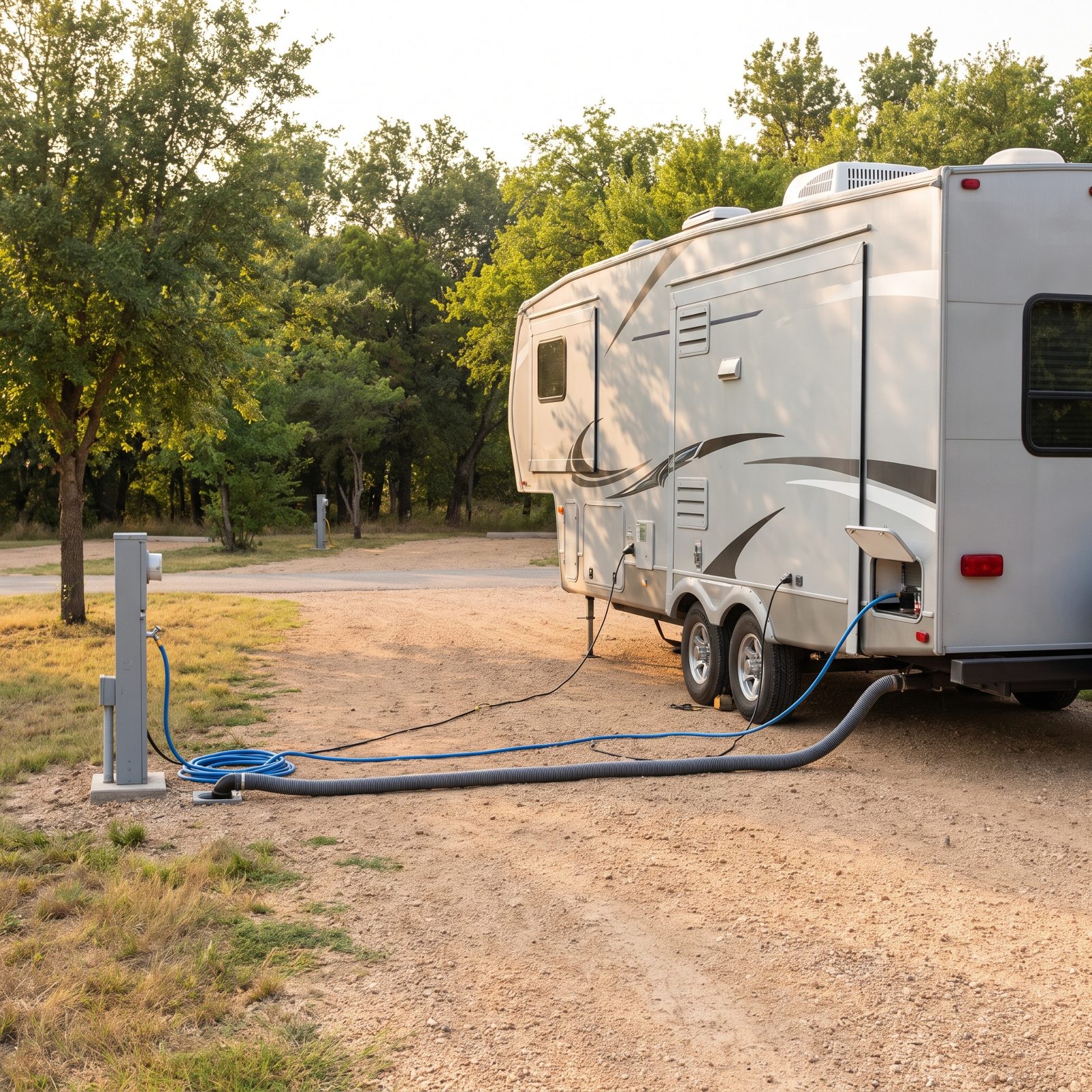
Every RV wears its hookups on one side, usually the driver’s side here in North America. Park facing the wrong way and suddenly your sewer hose has to crawl all the way around or under the rig to reach the inlet, if it even reaches at all.
Check which side your bay sits on, then orient so it lands near the pedestal. Hosts can spot this one from clear across the loop — a shiny new rig with hoses stretched over the pad like a garden gone feral.
23. Setting Up on the Wrong Numbered Site Creates an Avoidable Move
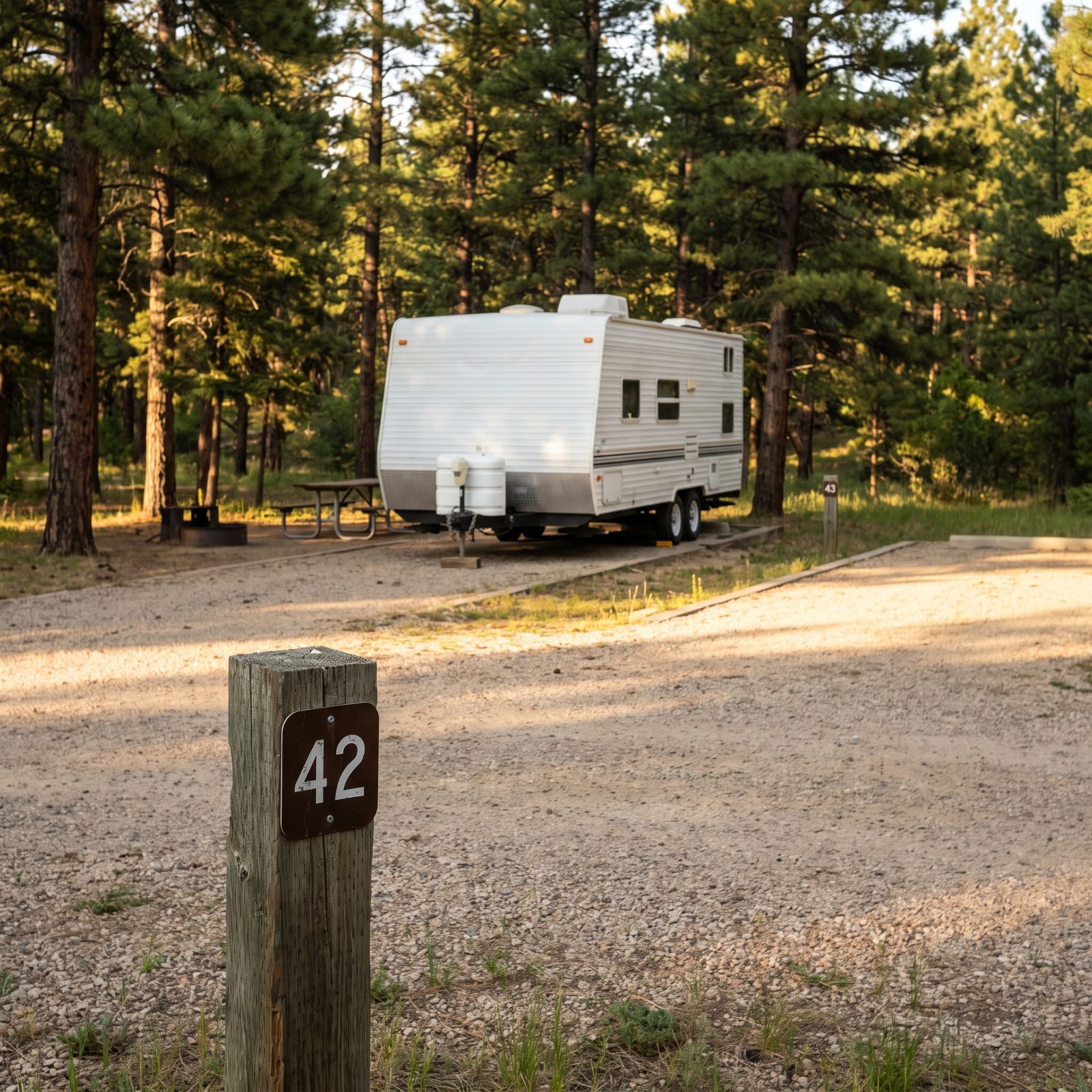
Hosts clock this before the engine’s even off. A rig rolls past the pedestal, parks on site 14, and the reservation says 15. Now everything’s wrong — hookups on the far side, the awning facing the neighbor’s grill instead of the view.
The move itself is the punishment. You’ve already dropped the jack, maybe pulled the slides, and now you’re backing out and repositioning in front of a whole loop of folding chairs. Here’s the quirk that catches first-timers: site numbers sit on the post nearest the pad entrance, not centered. Aim for the middle marker and you’ll land a space over.
22. Unhitching Before Chocking the Wheels Lets the Trailer Shift
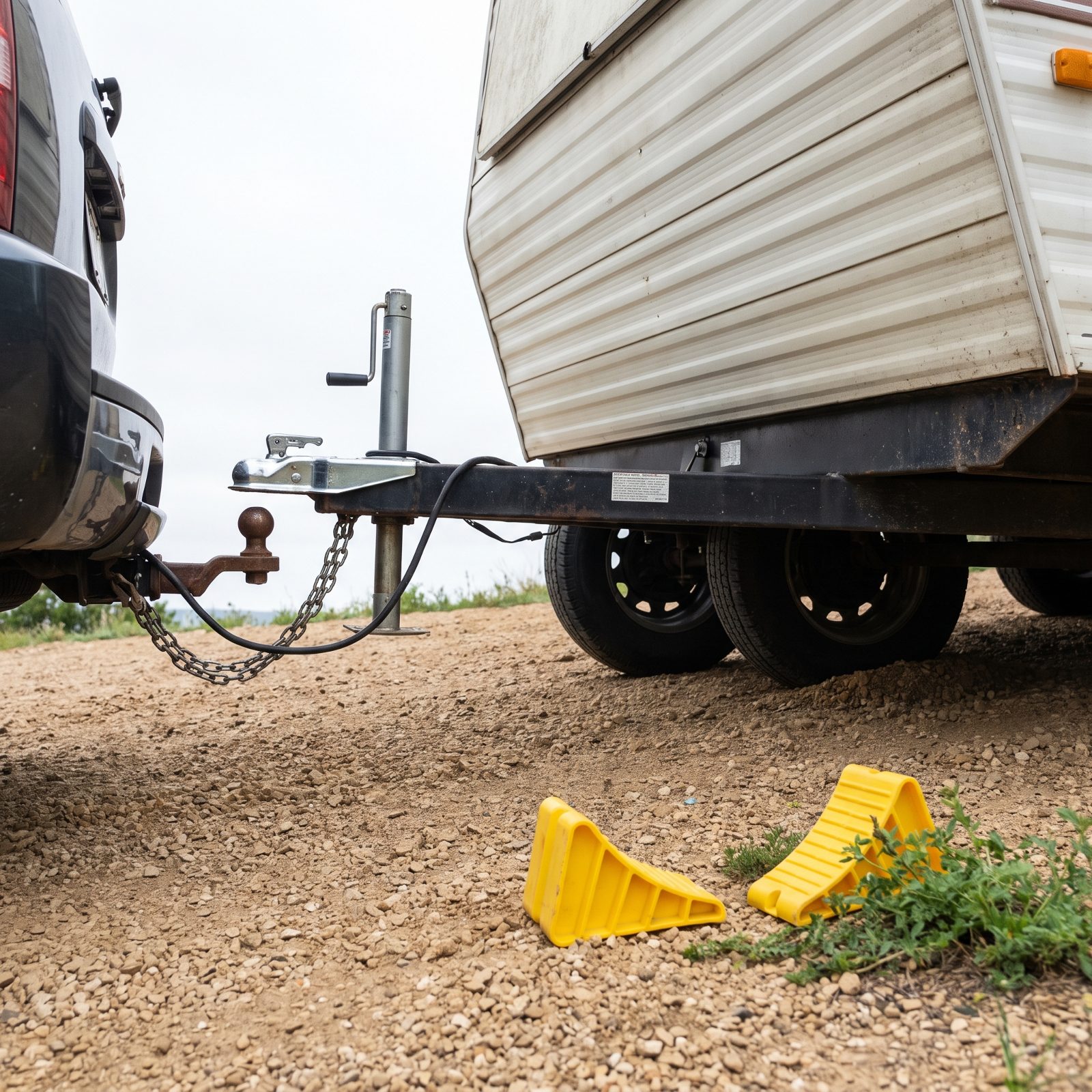
A trailer with nothing holding its tires is a thousand-pound sled waiting for a reason. Lift the coupler off the ball on even a gentle grade and the whole rig can creep, roll, or pin someone against the tow vehicle.
Chocks go in first. Every time. Both sides of at least one axle, snug against the tread before anything else happens. Hosts always notice the folks who unhitch on a slope with the yellow chocks still sitting in the storage bay. Once a trailer starts moving on its own there’s no graceful recovery, so the order matters far more than the speed.
21. Placing a Tongue Jack on Soft Soil Without a Pad Causes It to Sink
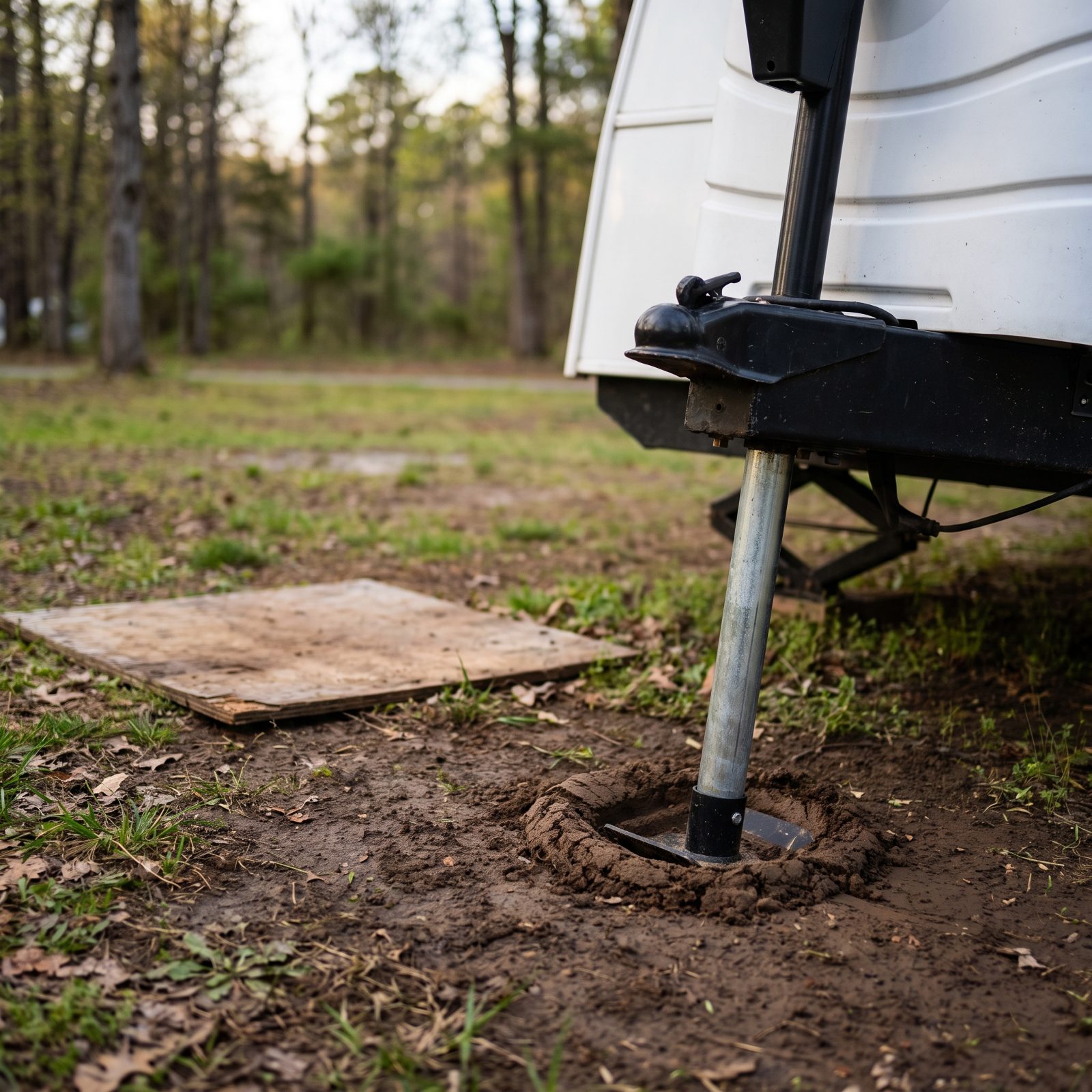
The foot of a tongue jack is small. The weight bearing down on it is not. Set it straight onto grass, mulch, or rain-soft dirt and it starts its slow dive the moment you load it.
By morning the nose has dropped, the level’s gone, and sometimes the whole front corner has tilted enough to make the door stick. A host walking the loop at dawn can spot that lean from clear across the road. A jack pad, a scrap of lumber, even a dense rubber block spreads the load so the foot stays put. Soft ground after rain is where this bites hardest.
20. Tall, Narrow Leveling-Block Towers Can Shift Under the RV
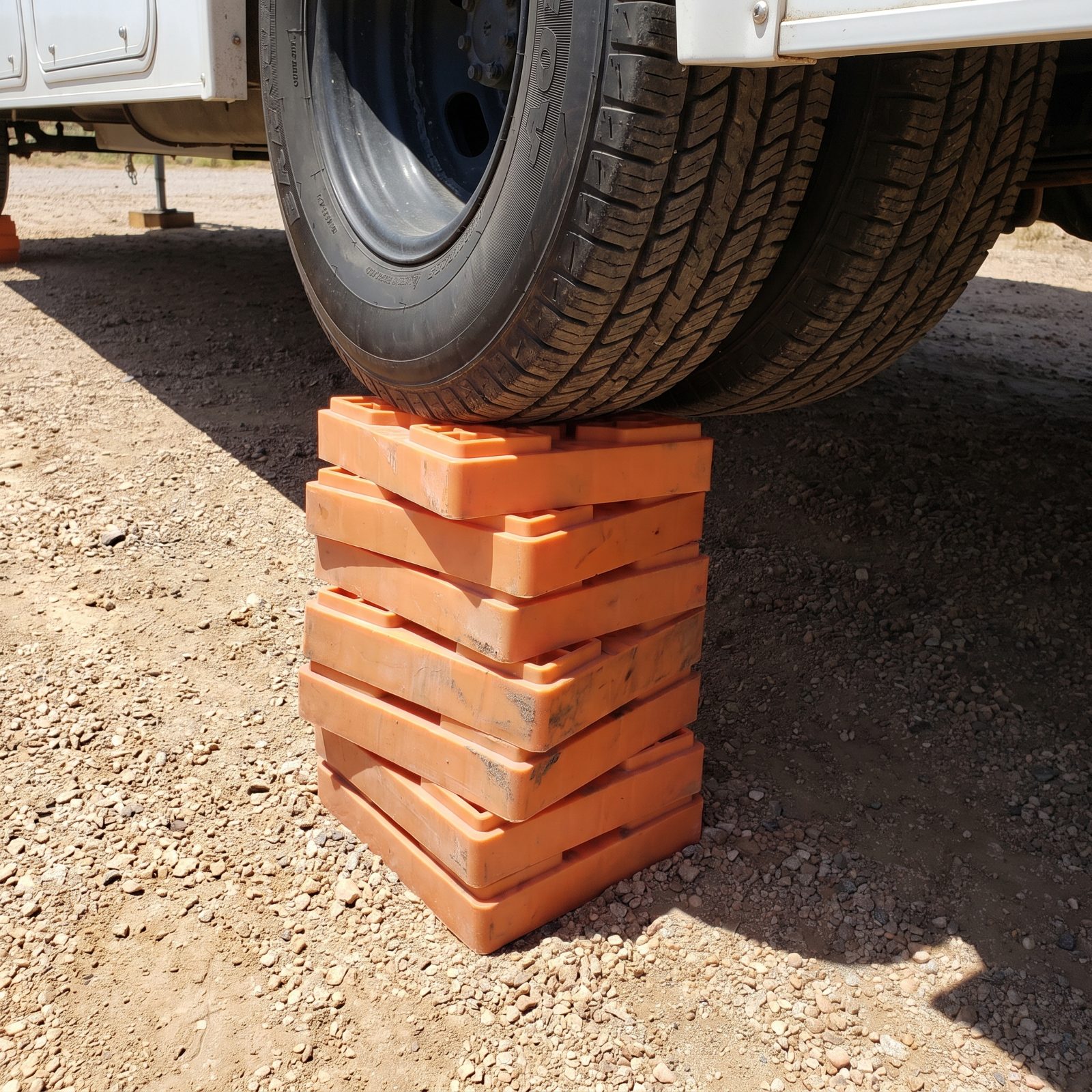
Stacking leveling blocks like a kid’s toy tower feels resourceful right up until the tire rolls onto it. Build them too high and too narrow and the whole column kicks out sideways under the weight, dropping the rig and spitting plastic across the pad.
Blocks want a wide, pyramid-style base — broad on the bottom, stepping in as it rises, never a straight vertical stack past a few layers. And if the site’s that far off level, spreading blocks under both low-side tires usually beats one teetering tower.
19. Leaving a Roof Antenna Raised Can Catch Branches During Arrival
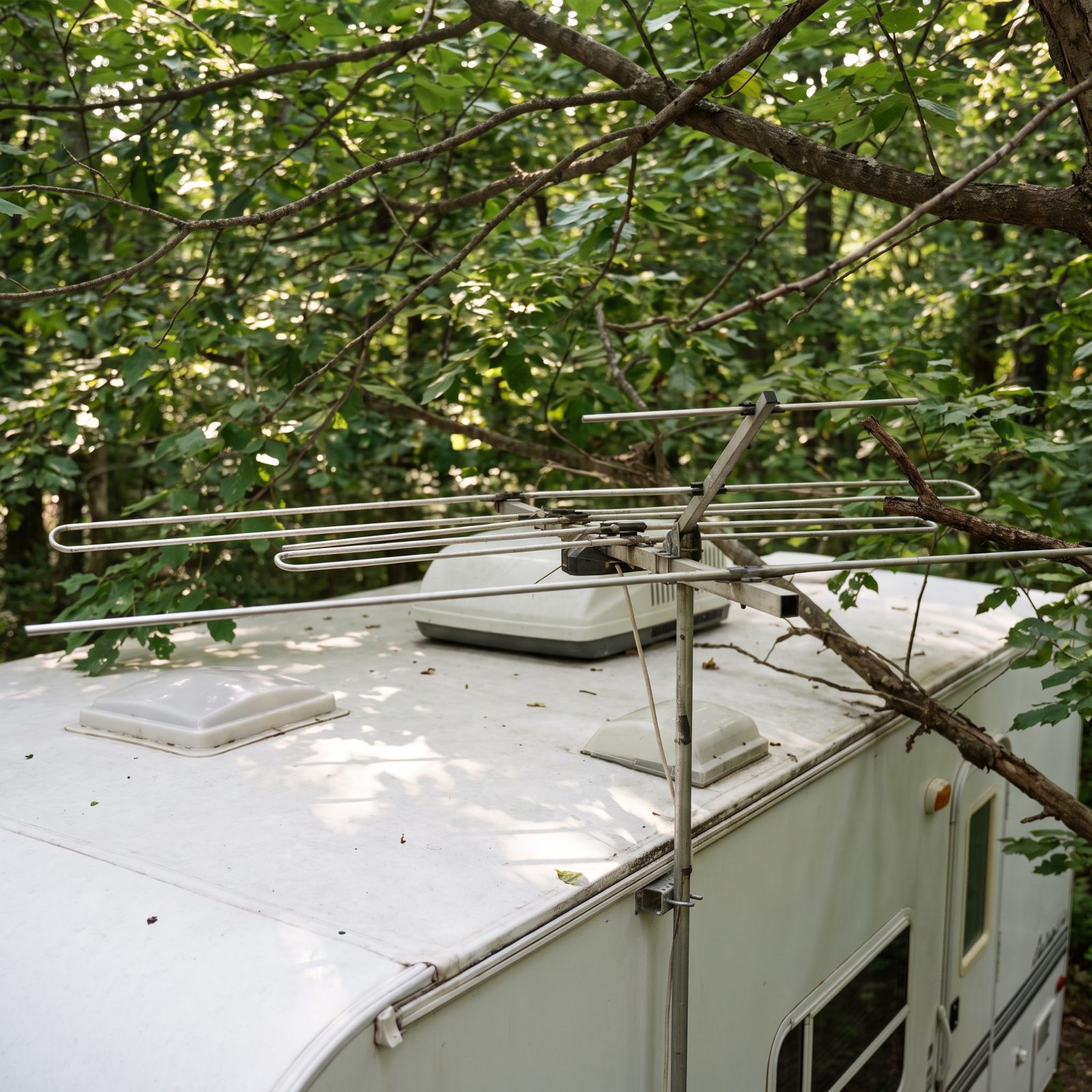
That pole-mounted TV antenna lives on the roof — out of sight, out of mind. Pull into a shaded site with it still up and the first low branch grabs it like a hand.
Snapped antenna arms are a classic first-season souvenir. A fixed mast clamped to a side-wall bracket won’t crank down, so the only fix is to climb up, loosen the mast and take the antenna down before you move. Fold it into your shutdown routine so it’s never up when the wheels are rolling under trees.
18. Arriving With Entry Steps Extended Risks Striking Curbs and Posts
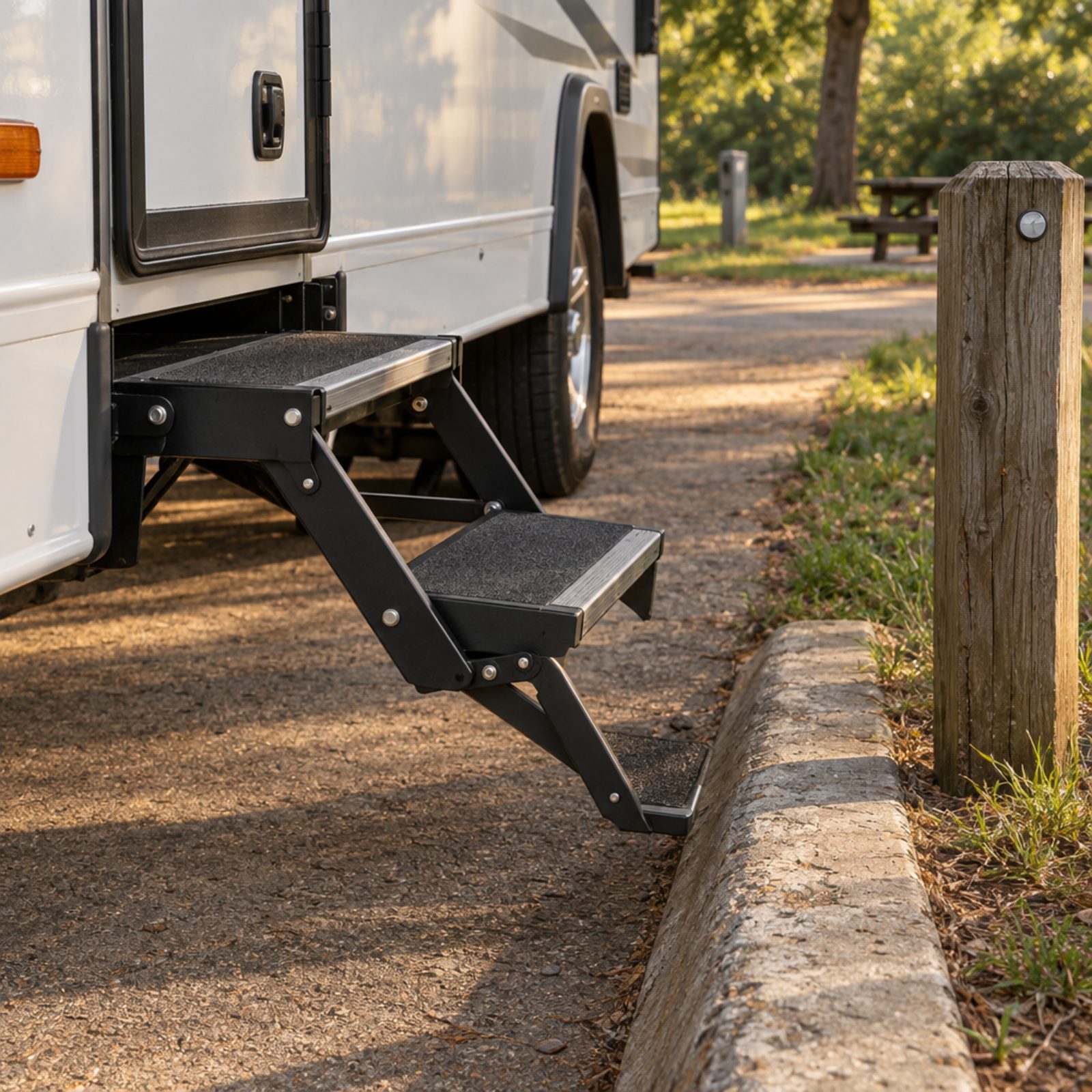
Manual fold-out steps swing a chunk of steel out past the body of the rig, right at curb height. Roll into a tight site with them down and they’ll find the first concrete curb, post, or rock on your approach.
Bent steps don’t fold flush afterward, so they stay a hazard for the rest of the trip. Automatic steps mostly retract on their own. The manual kind depend entirely on you remembering — tuck them up before you move, pull them out once you’re parked.
17. Plugging In With the Pedestal Breaker On Can Arc the Connection
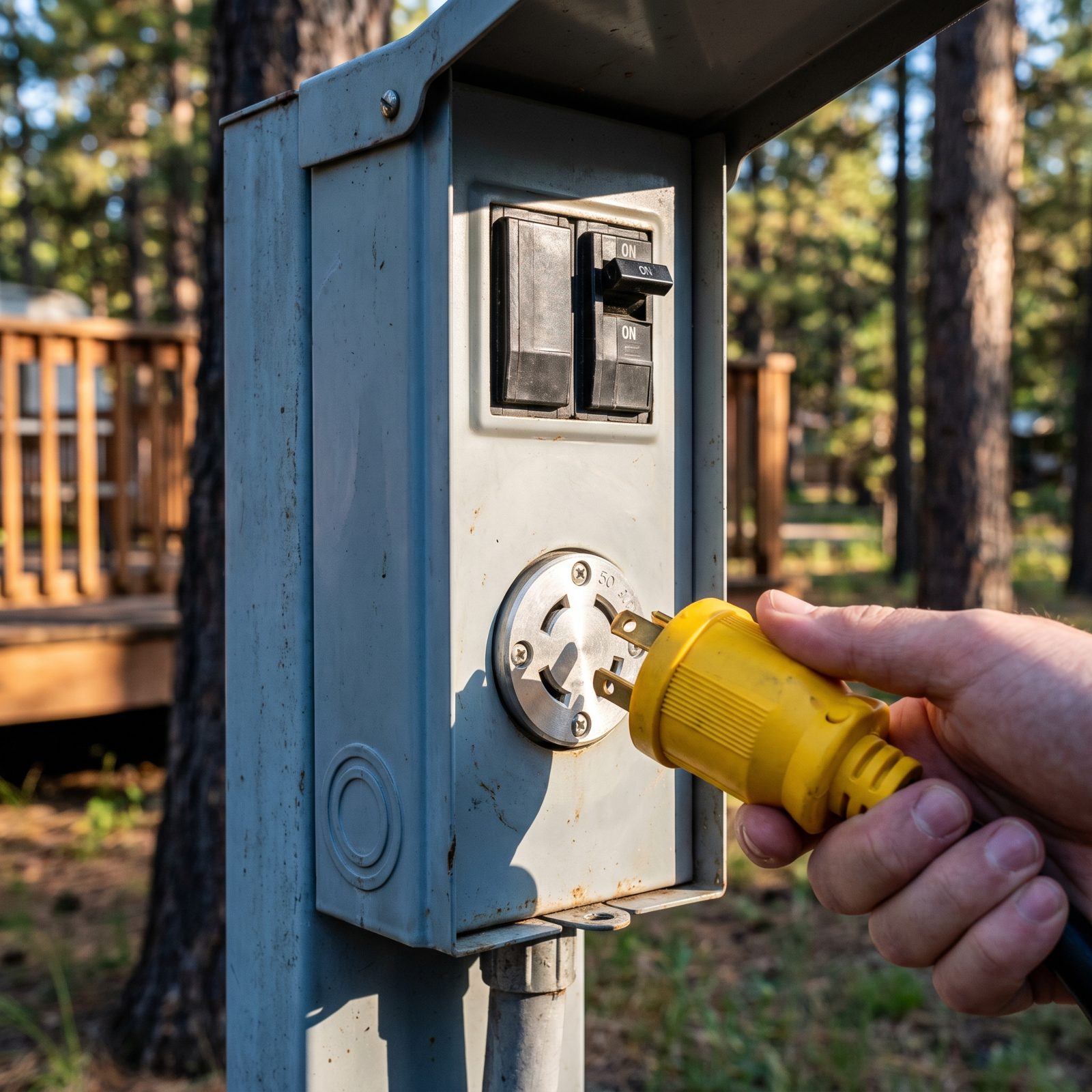
Jamming a power plug into a hot receptacle is how pedestals end up with those scorched, pitted contacts hosts hate seeing. With the breaker on, the connection energizes mid-insertion and arcs across the prongs, burning the metal a little more each time.
Breaker off, then plug in, then flip it back on. That order means the contacts meet cold and seat fully before any current flows. It’s the difference between a clean connection and a melted outlet the next camper inherits.
16. Leaving a Loaded Power Cord Coiled Can Trap Heat
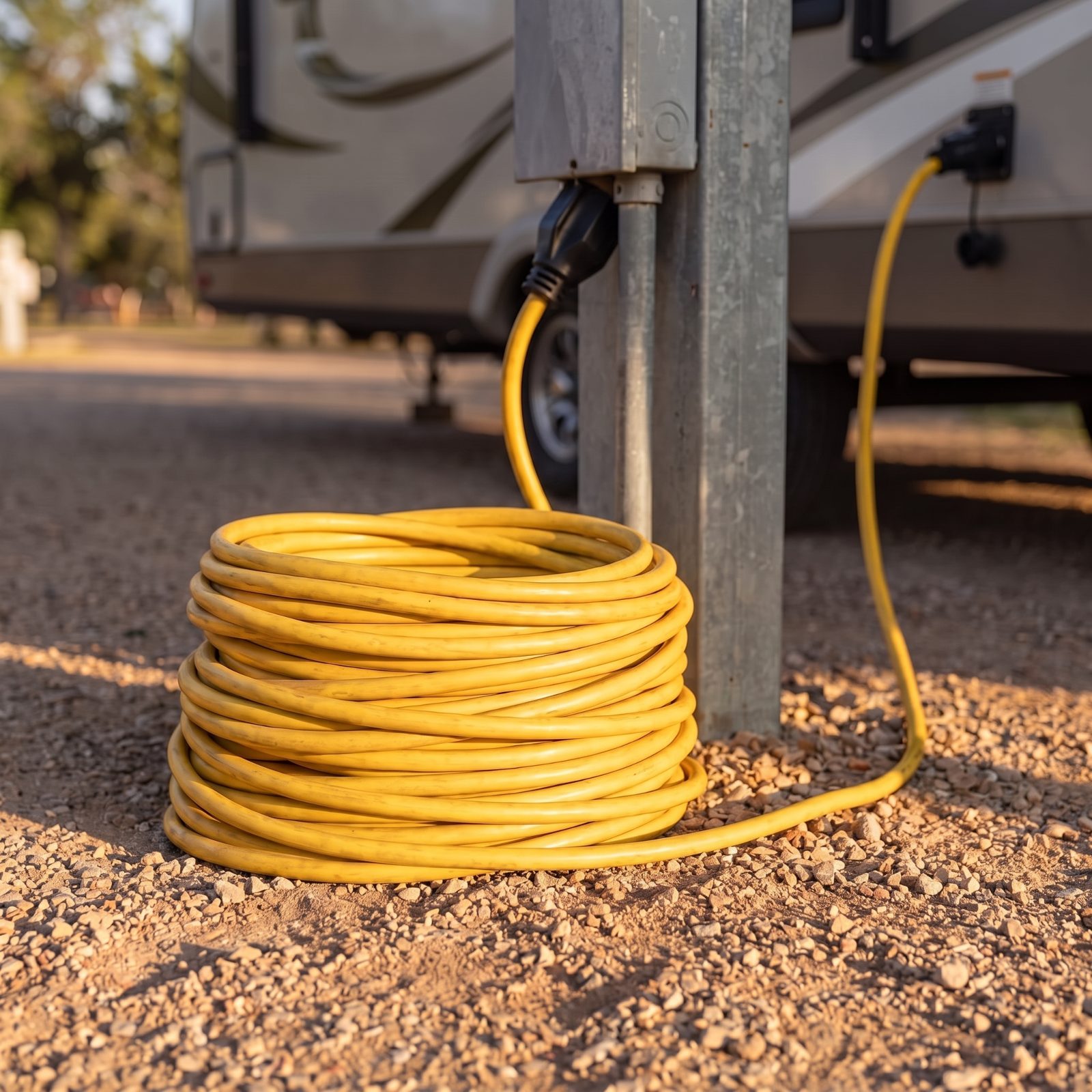
A power cord carrying real load wants to breathe. Leave the whole thing coiled in a tight bundle by the pedestal and the heat it naturally gives off has nowhere to go — it just builds up in the center of the loop.
Run the extra length out loose, or lay it in long, open loops instead of one dense coil. Most of the time nothing happens. But run a big air conditioner off a bunched-up reel on a hot day and you’re flirting with cooked insulation.
15. A Heavy Adapter Hanging Unsupported Can Loosen the Pedestal Connection
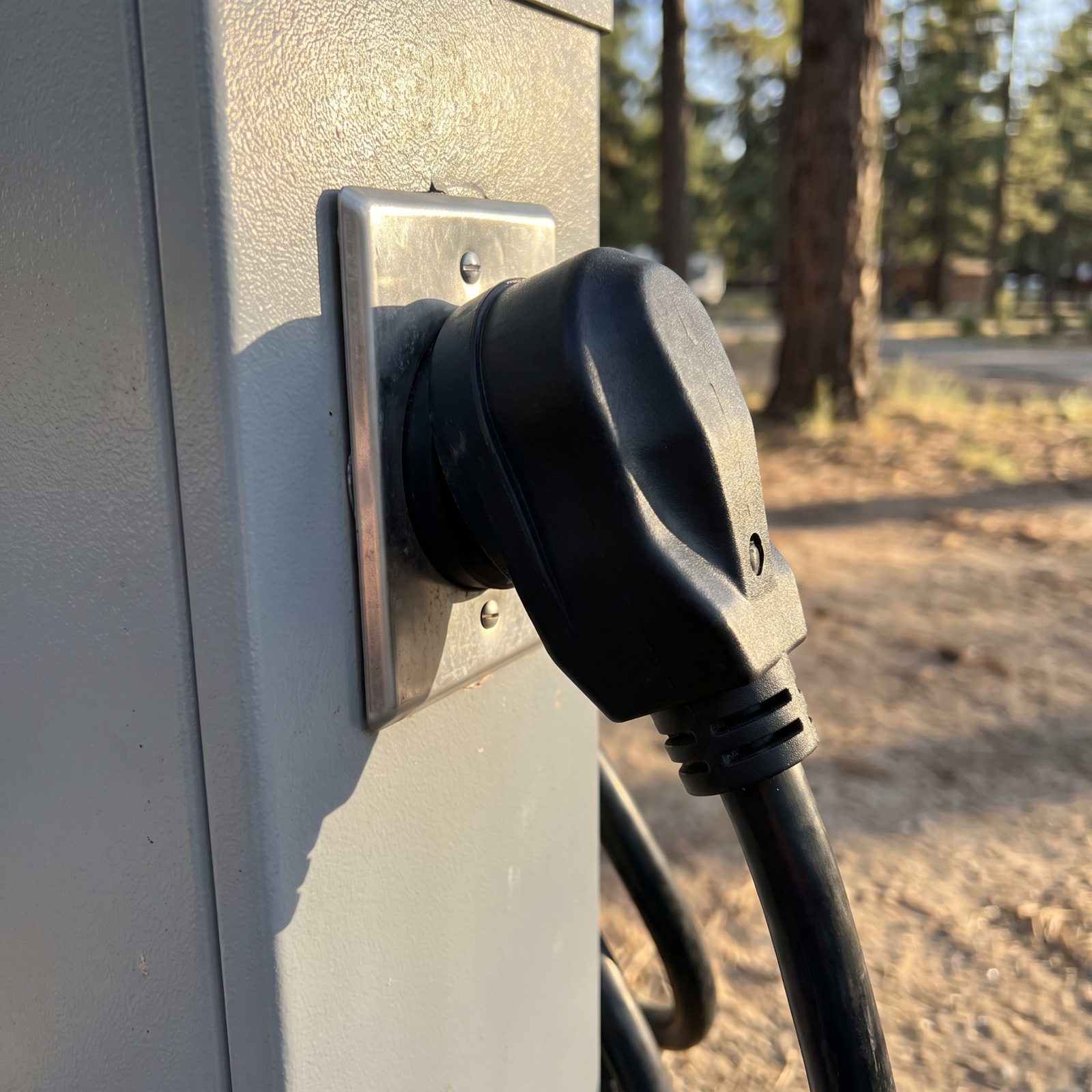
Those chunky dogbone adapters weigh more than they look, and gravity never clocks out. Hang one off a pedestal outlet with nothing underneath it and it slowly wiggles the connection loose, cocking the plug at an angle that invites arcing and heat.
Prop it on the pedestal ledge, zip-tie it to the post, or loop the cord so the adapter rests instead of dangles. A loose, warming connection is the slow kind of trouble — it announces itself with a burnt-plastic smell three days into your stay.
14. Routing the Power Cord Straight Across the Campground Road
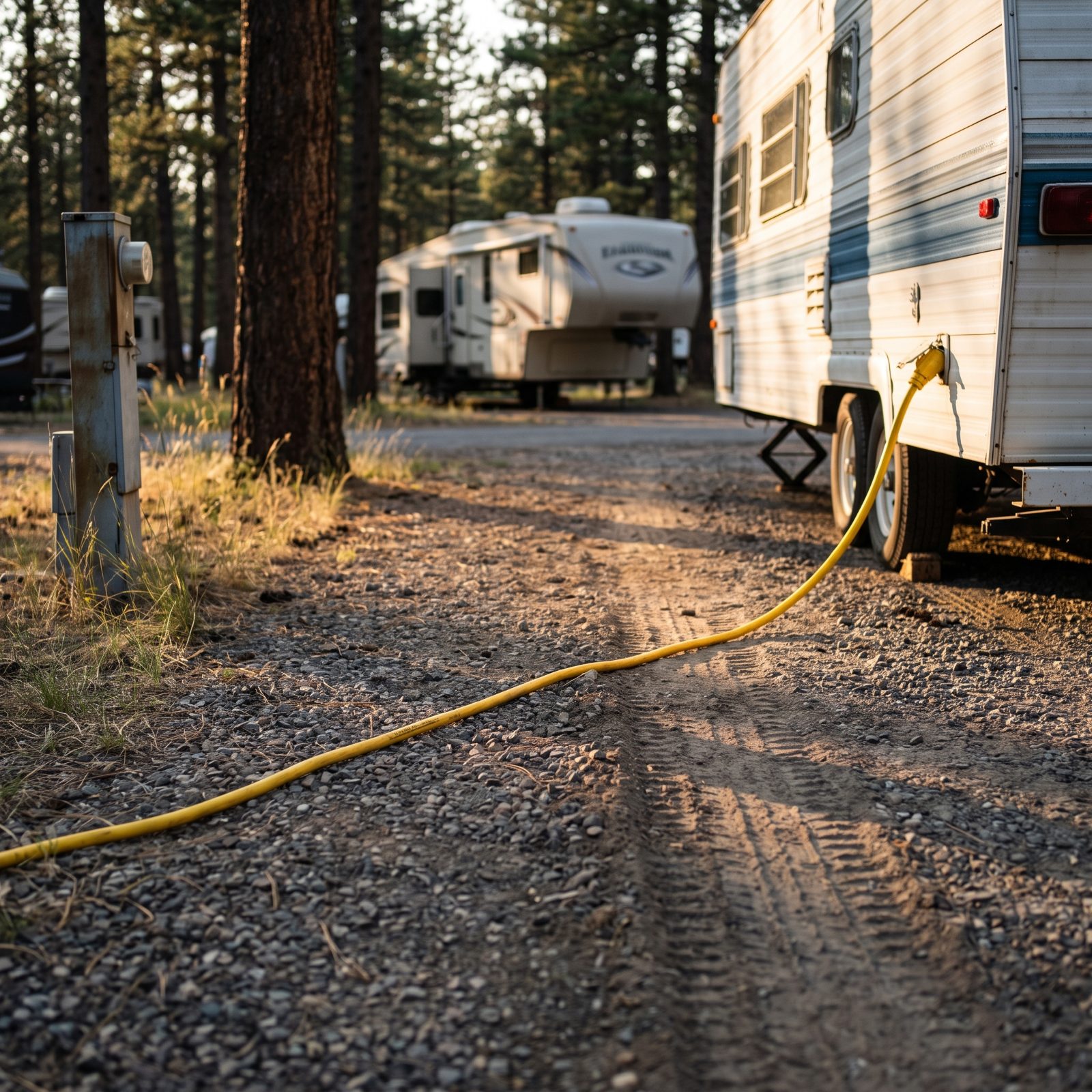
Hosts clock this one before they’ve finished their coffee. A power cord looped across the road is the first tell that someone grabbed the nearest pedestal and never looked up to see whose site it actually belonged to.
The pedestal almost always sits on the back corner of your own site, not across the lane. Stretch the cord over the road and every arriving rig flattens it, pinches it, and eventually nicks it — a damaged cord can arc. Worse, a raised loop catches ankles in the dark, when flashlights are weak and dogs are wandering loose.
13. Walking Away Mid-Fill and Letting Water Gush From the Overflow Vent
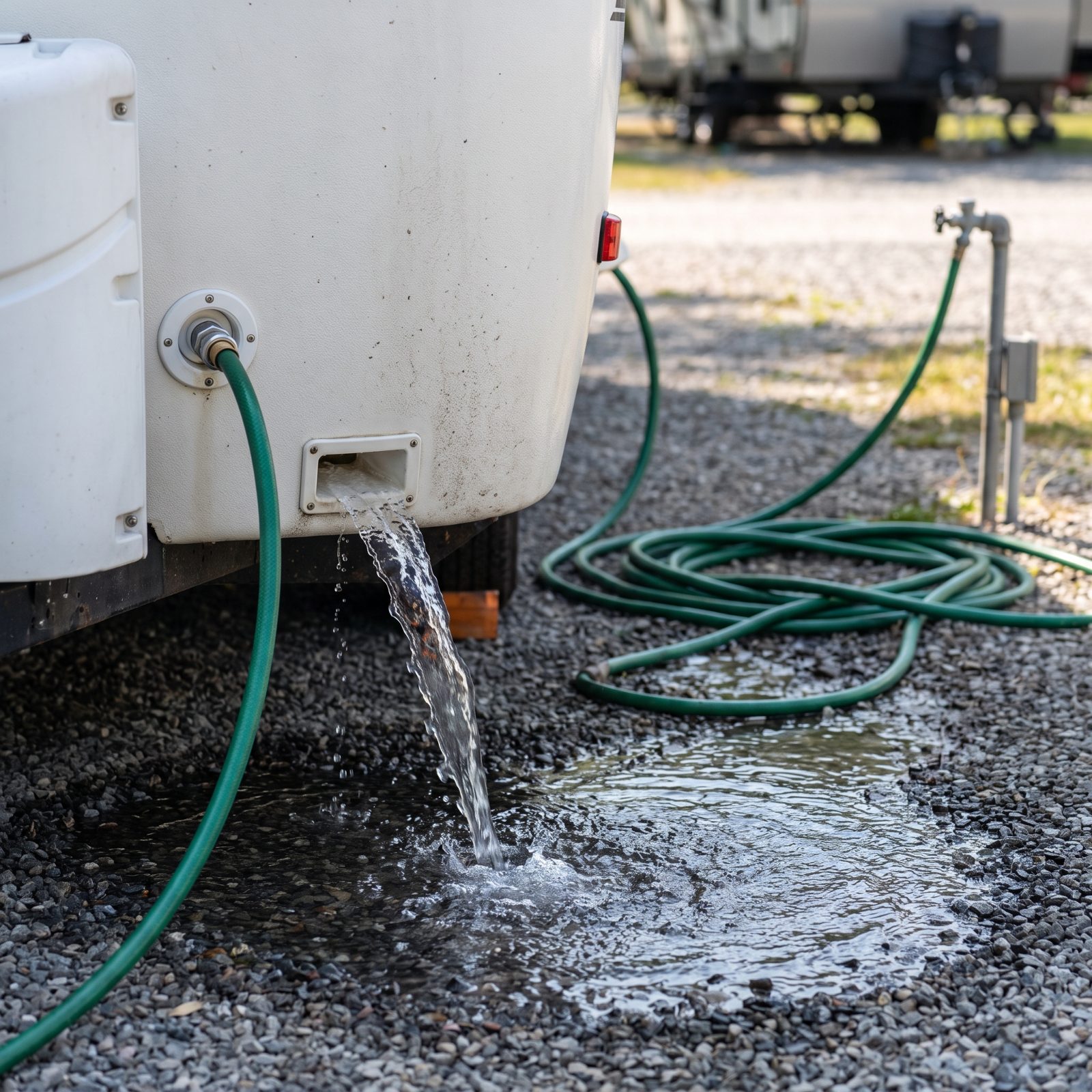
You hear it before you see it — that steady trickle running down the fiberglass, the dark stain spreading under the rig. Someone connected the hose, figured they had time, and wandered off to level the trailer.
Fresh tanks fill slower than you’d guess, and the overflow vent gives no warning beep. By the time you notice, you’ve dumped gallons onto the site and turned your neighbor’s level pad into mud. Come cold weather, that puddle is an ice rink by morning.
Stay with the fill, or rig an inline shutoff and watch the clock. How long it takes depends entirely on your rig, and anyone who quotes you a flat number is guessing.
12. Unhooking the Toad in the Entrance Lane While Everyone Waits
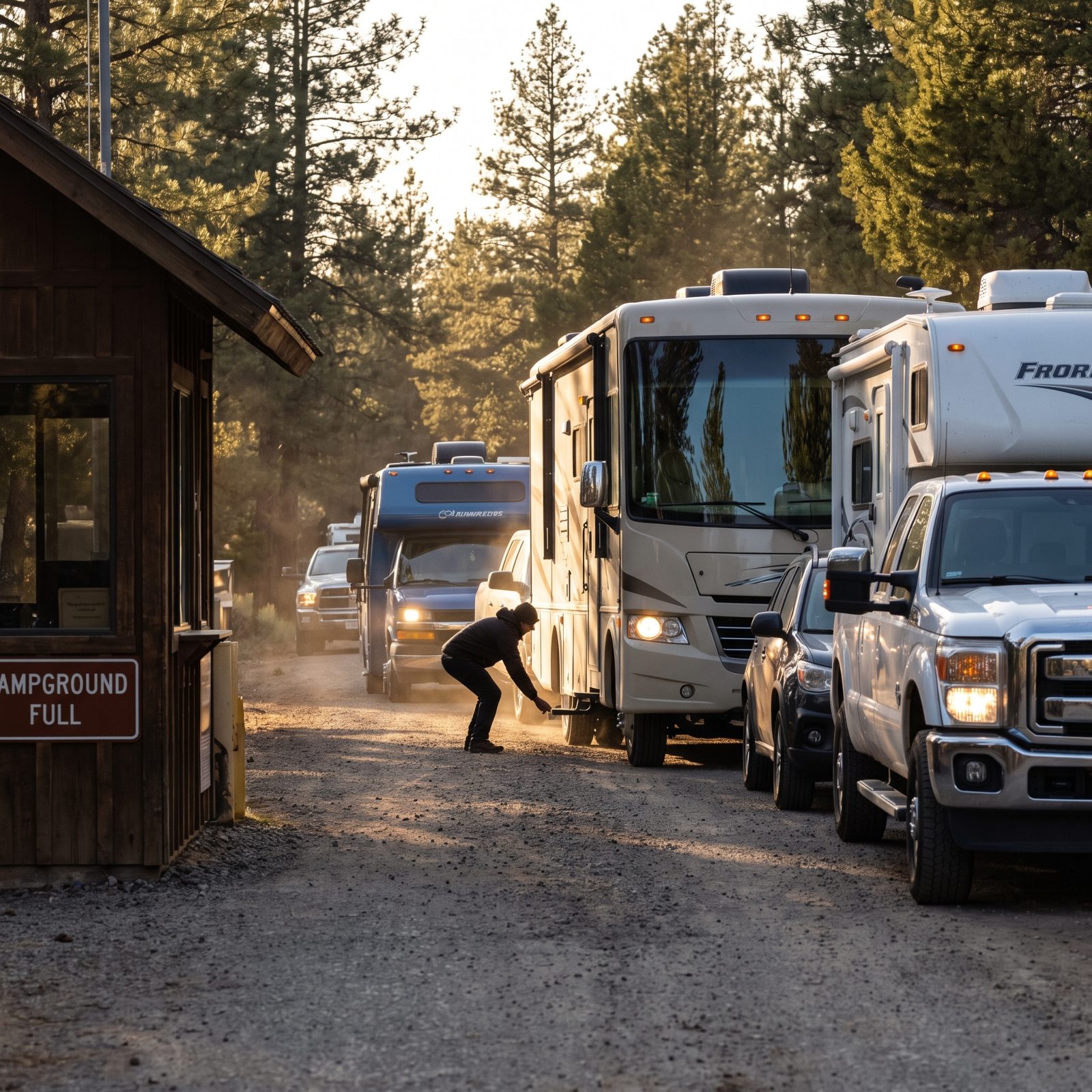
The entrance lane is not a parking spot. Pull a towed vehicle apart right at the gate and you’ve turned a wide, multi-lane entry into a bottleneck that blocks every rig lined up beside and behind you — some of them 40 feet long with nowhere to reverse.
Most campgrounds keep an overflow pad, a wide shoulder, or a gravel apron near registration meant for exactly this. Pull all the way through, clear the lane, then drop the tow bar. The folks idling behind you will notice you either way. Give them the version where they’re smiling.
11. Going the Wrong Way Around a One-Way Loop
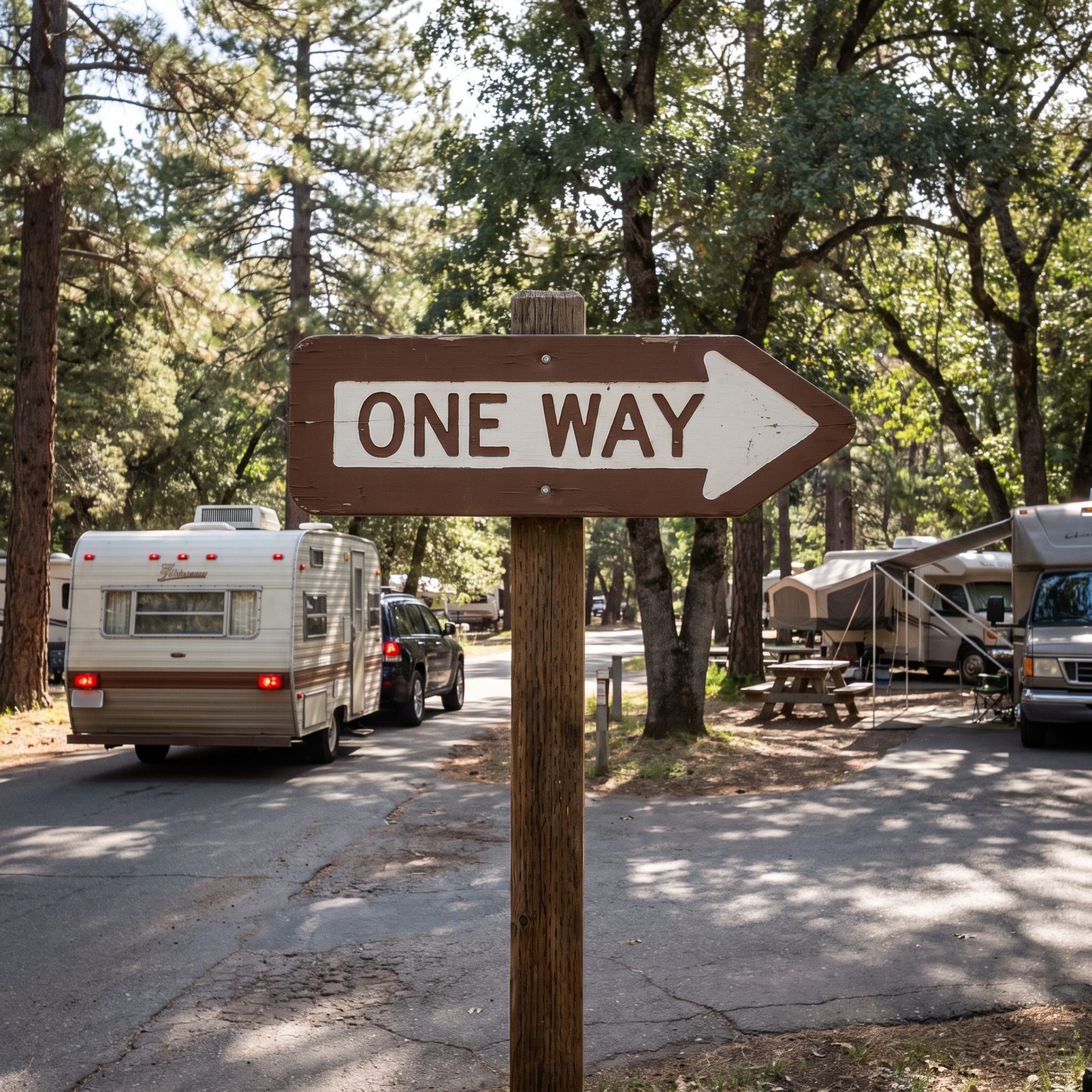
Loops run one direction for a reason, and the reason is backing. Sites are angled so you reverse in from the correct approach. Come at it backwards and you’re trying to jackknife into a spot that was never cut for that angle.
Then there’s the head-on problem. Two big rigs meeting nose to nose on a loop with no turnaround is a special kind of misery — one of you doing a long, sweaty reverse while an audience watches from their picnic tables.
10. Treating the 10 MPH Sign as a Suggestion
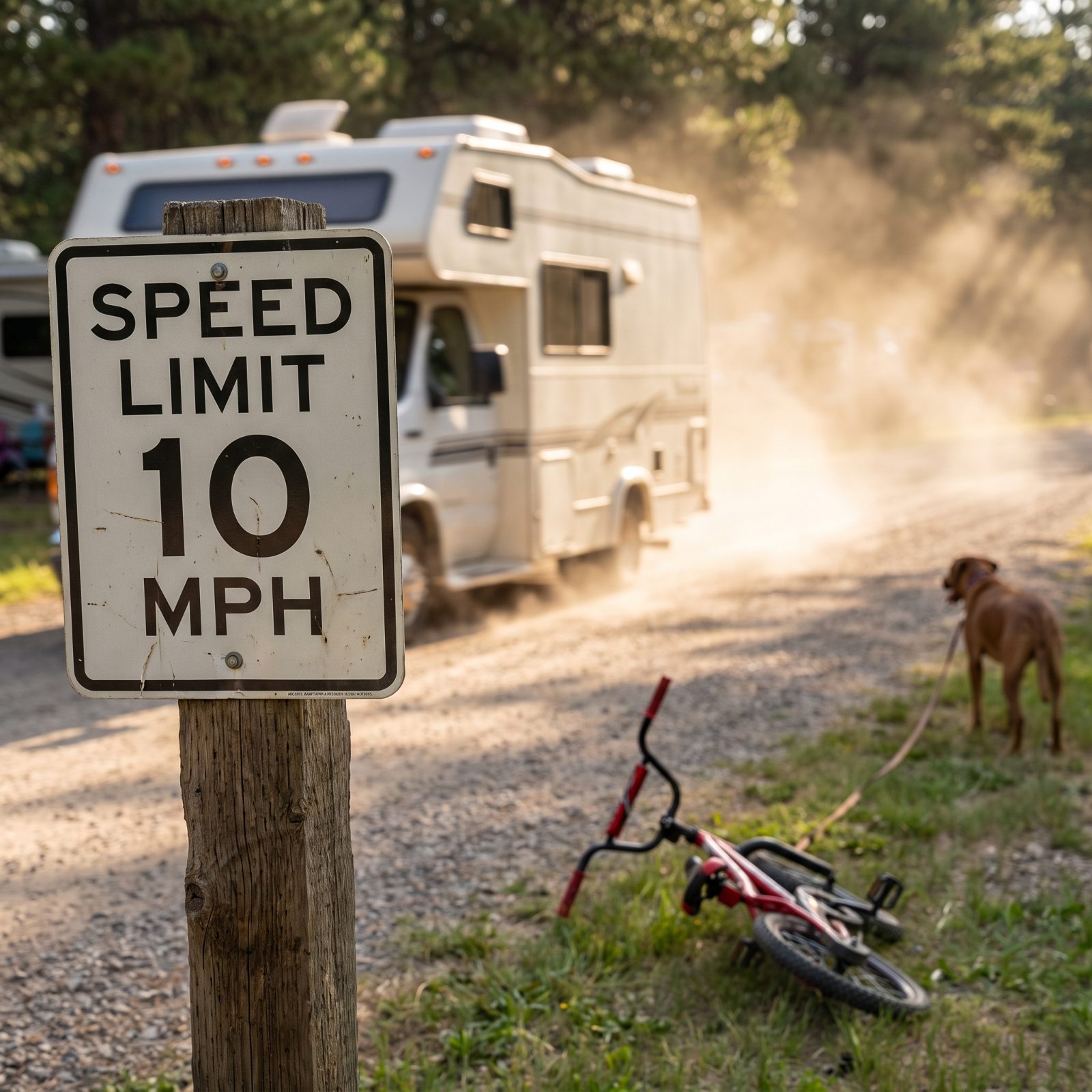
Kids dart. Dogs lunge. People back out of their sites staring at mirrors instead of at you. That posted limit — usually a crawling 5 or 10 — has nothing to do with your schedule and everything to do with stopping distance on gravel when a four-year-old chases a ball into the lane.
And the dust. Roll through a dry loop at 20 and you’ve coated three families’ lunch plus a stranger’s laundry line. Nothing earns the group stink-eye faster by dinnertime.
9. Parking the Tires on the Grass to Save a Few Feet
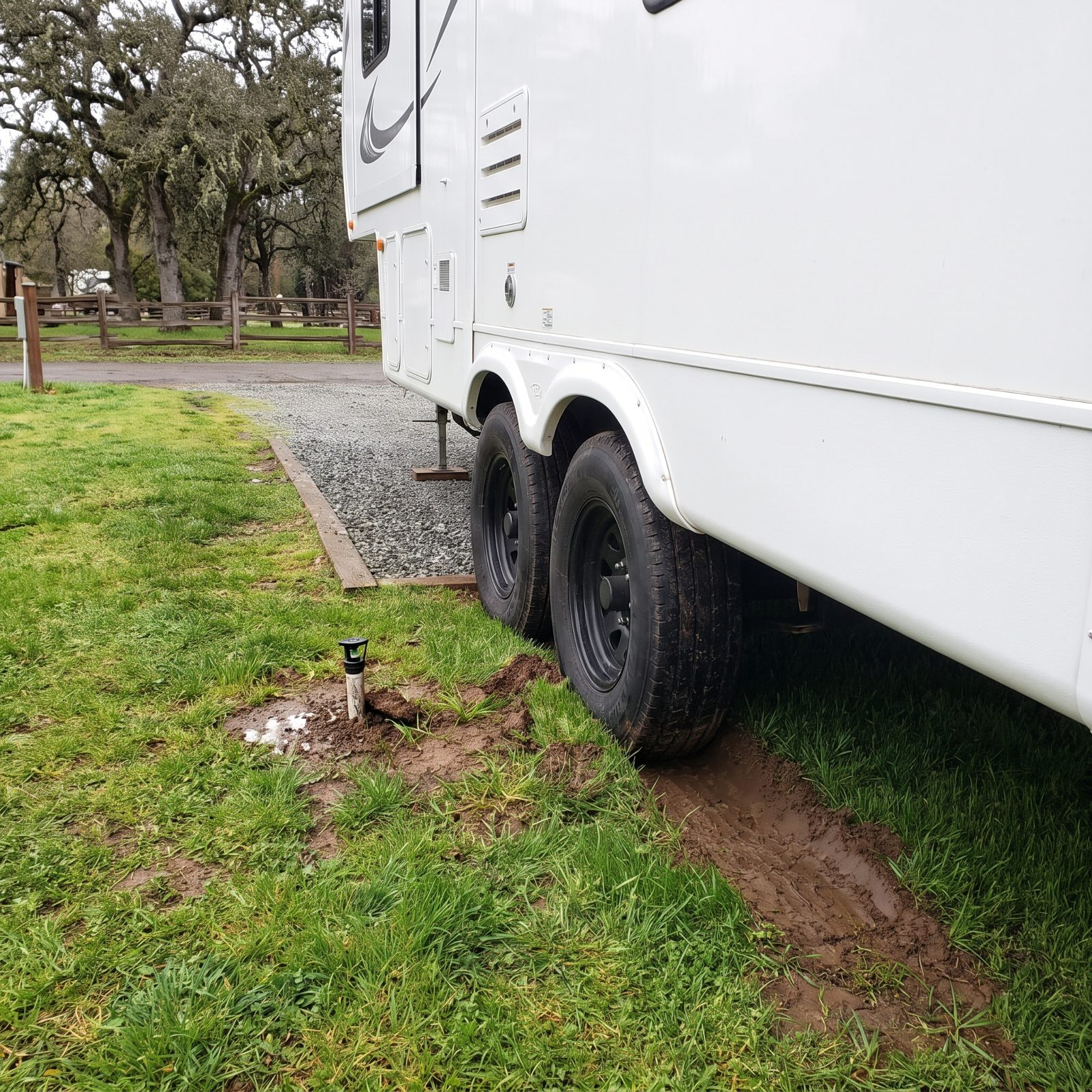
The pad looks a foot short, so you ease the back tires onto the grass. Seems harmless enough. But under that lawn runs the irrigation, and a 15,000-pound rig finds sprinkler heads the hard way.
Soft ground is the quieter trap. After a rain, grass that held your truck on arrival won’t hold your loaded rig on the way out — and now you’re the one getting dragged free by the host’s tractor while the whole loop watches.
Keep every wheel on the pad. If the pad is too short for your rig, that’s a booking problem, not a parking one.
8. Leaving the Second Vehicle Half in the Road
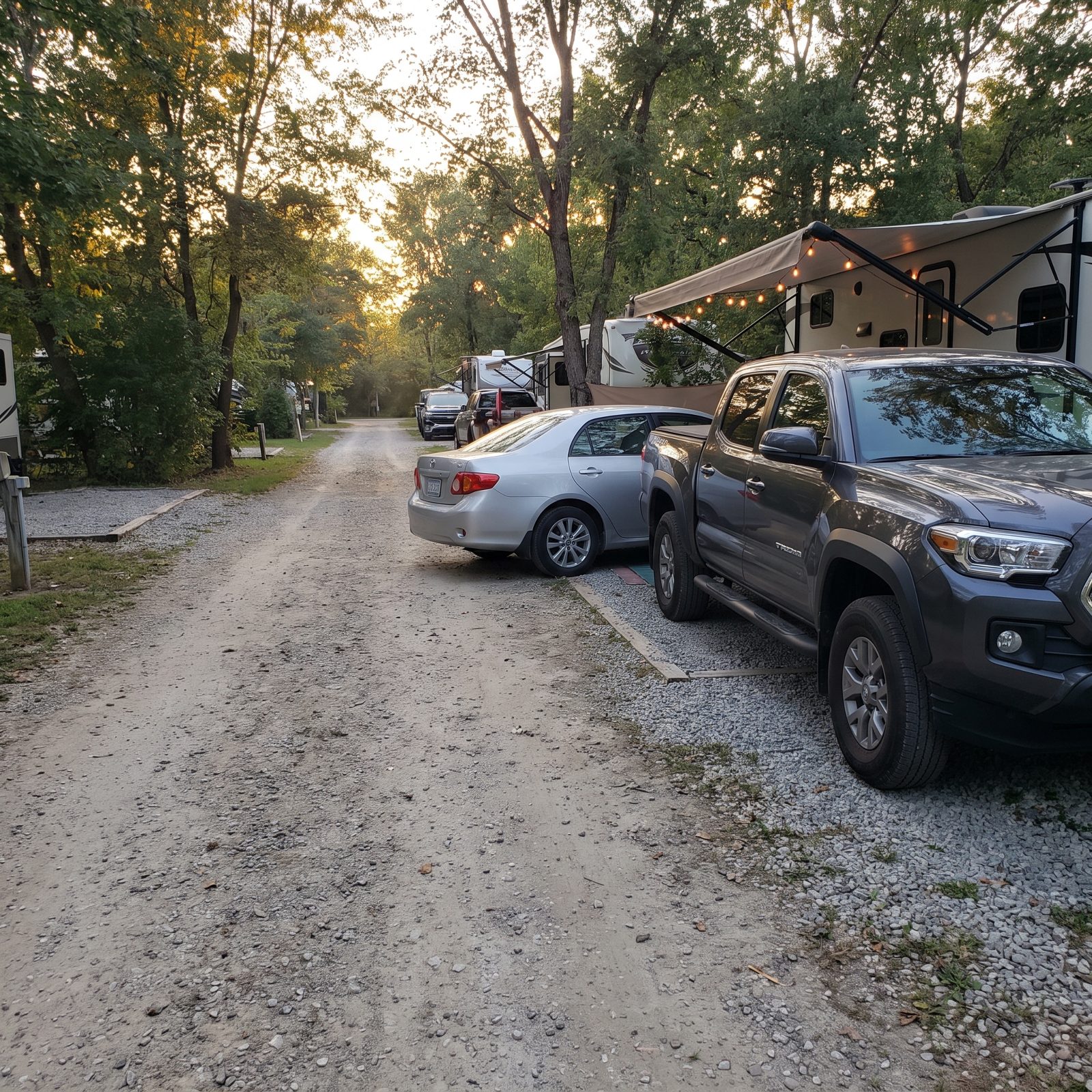
Most sites fit one vehicle on the spur, so the extra car ends up nosed into the lane, which shrinks from passable to barely. On a normal night it’s just an annoyance. The night an ambulance needs through, it’s a real problem.
Fire access is the quiet reason campgrounds post two-vehicle limits and overflow lots in the first place. Hosts walk the loops checking for exactly this. Park the overflow vehicle where they tell you, not where it happens to be handy.
7. Firing Up the Generator Outside Posted Quiet Hours
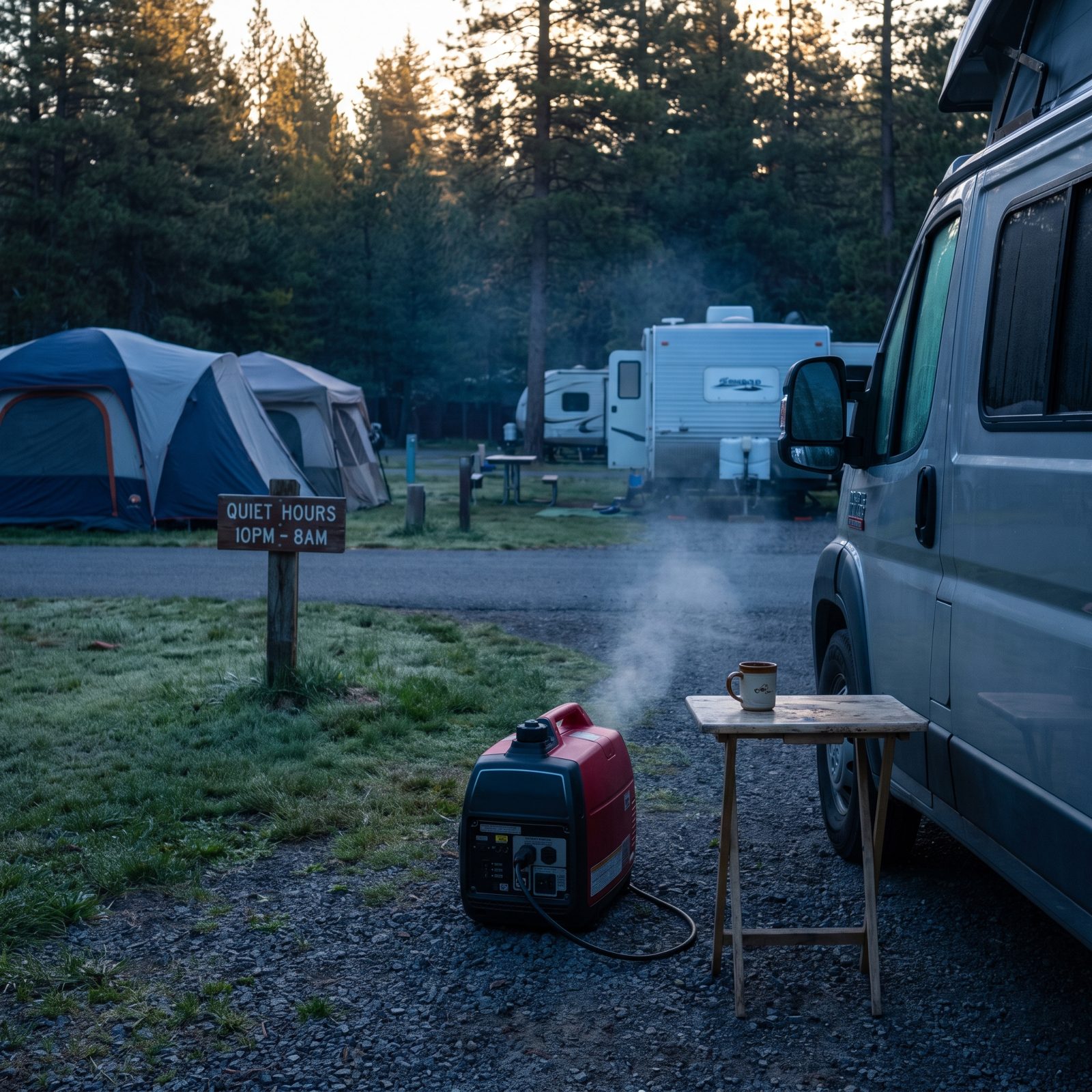
Nothing announces a rookie quite like a generator coughing to life at dawn in a loop full of tents. Those posted hours exist because sound carries absurdly far at a campsite when everything else has gone silent.
Battery and solar have made a lot of this avoidable. But if you lean on a generator, run it midday and keep it short. The neighbor trying to sleep off a long drive remembers who woke them — and so does the host, come next season when it’s time to hand out the good sites.
6. Letting the Diesel Idle Long Enough to Gas Out the Row
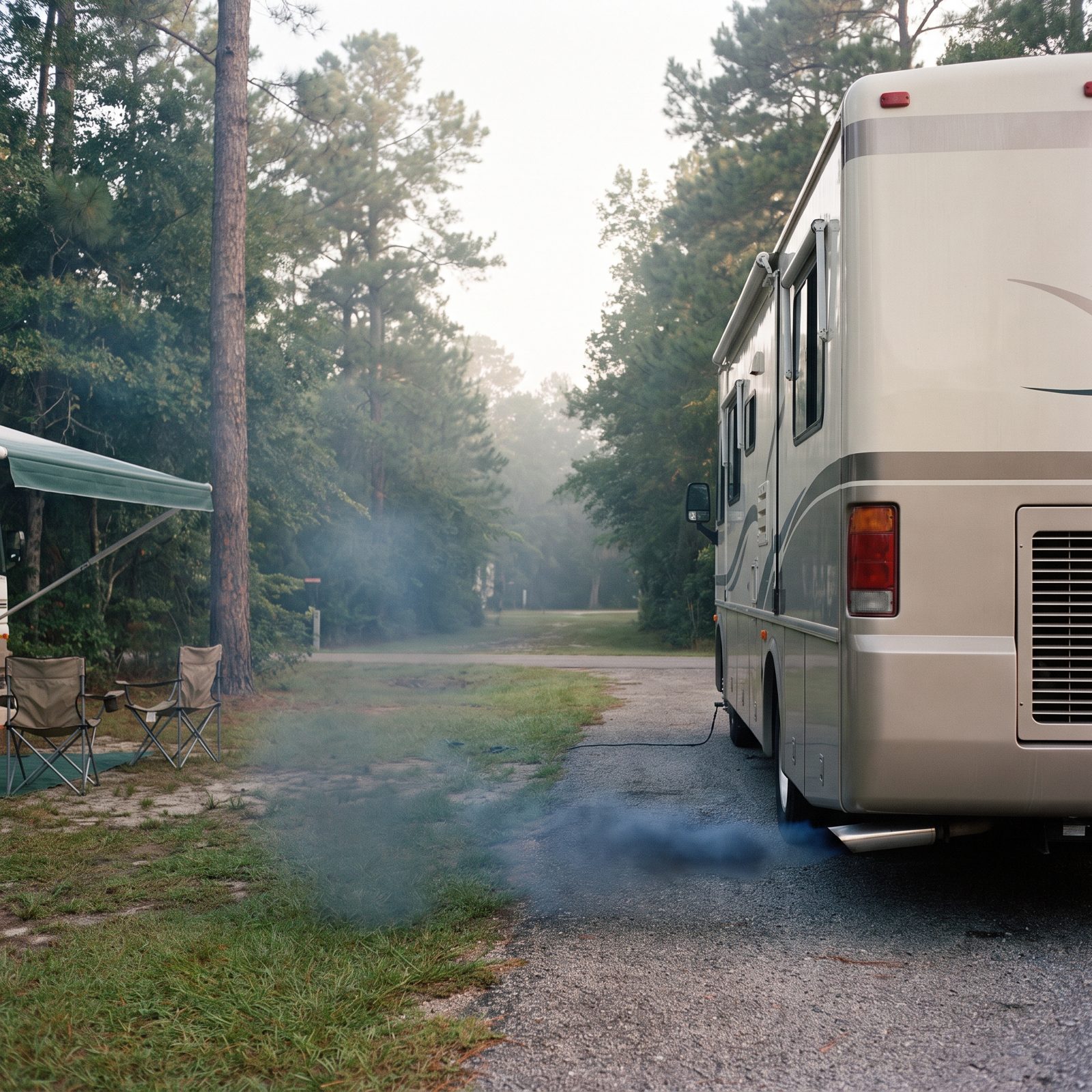
You’re warming the engine before pulling out, or topping off the chassis batteries, and ten minutes quietly becomes thirty. Meanwhile the exhaust pools in dead-still air and rolls straight into the site downwind, where someone’s eating breakfast under their awning.
Tight, tree-lined loops trap fumes. No breeze to clear them, so they just hang there. Keep warm-ups short, and if you truly need a long idle, do it away from occupied sites. People smell it long before they trace the source — and then they trace the source.
5. Blasting Outdoor Speakers Across Four Sites at Once
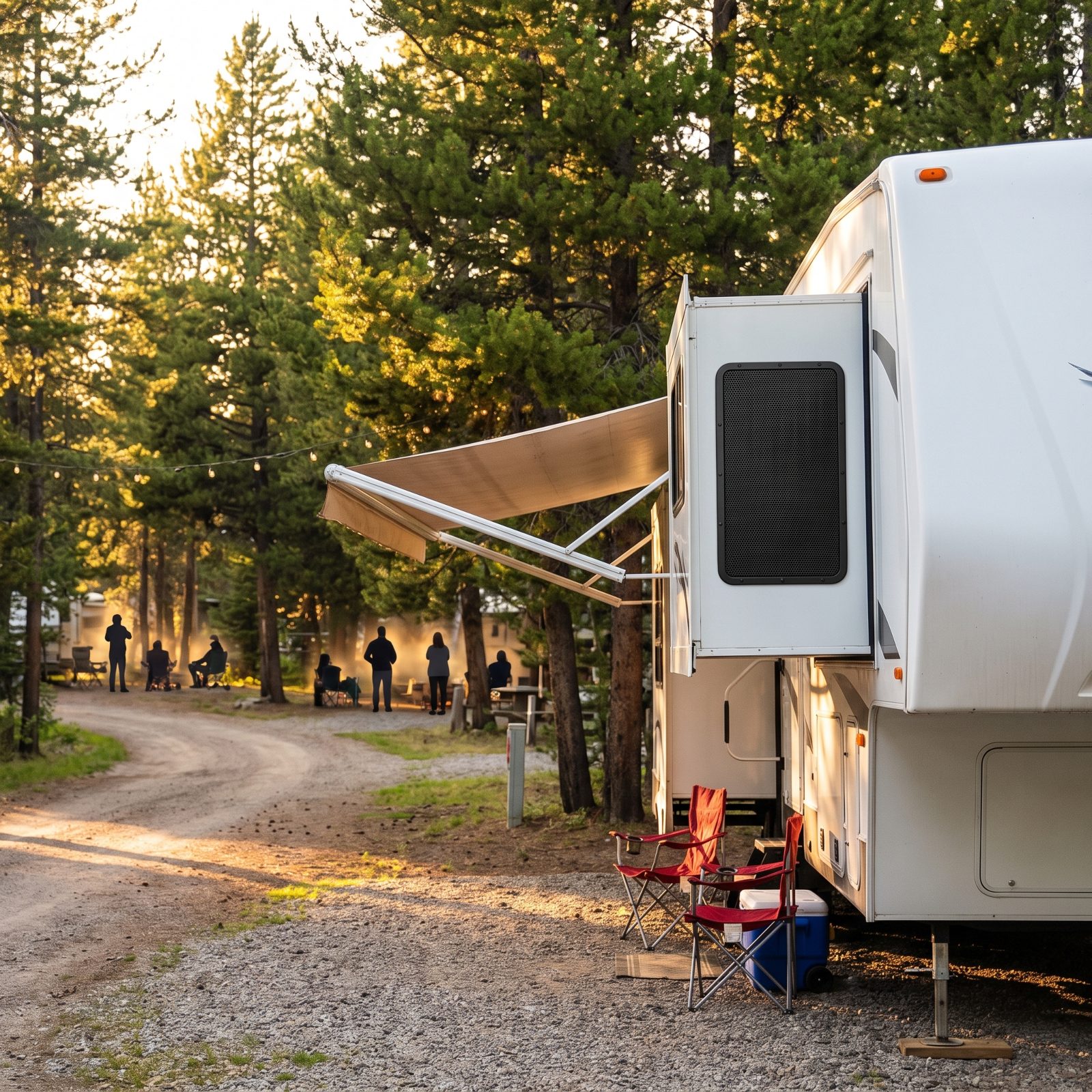
Exterior RV speakers point outward, which means your playlist becomes everyone’s playlist whether they voted for it or not. One rig with the volume up owns an entire row, and the people three sites down didn’t haul out here to hear your music through their tent wall.
Keep the sound at your own picnic table, not past your fire ring. Here’s the honest test: if a neighbor can hum along without trying, it’s too loud. Most folks came for crickets and a crackling fire. Give them that, and they’ll forgive almost anything else you fumble on your first trip out.
4. Aiming Bright Exterior Lights at Adjacent Windows After Dark
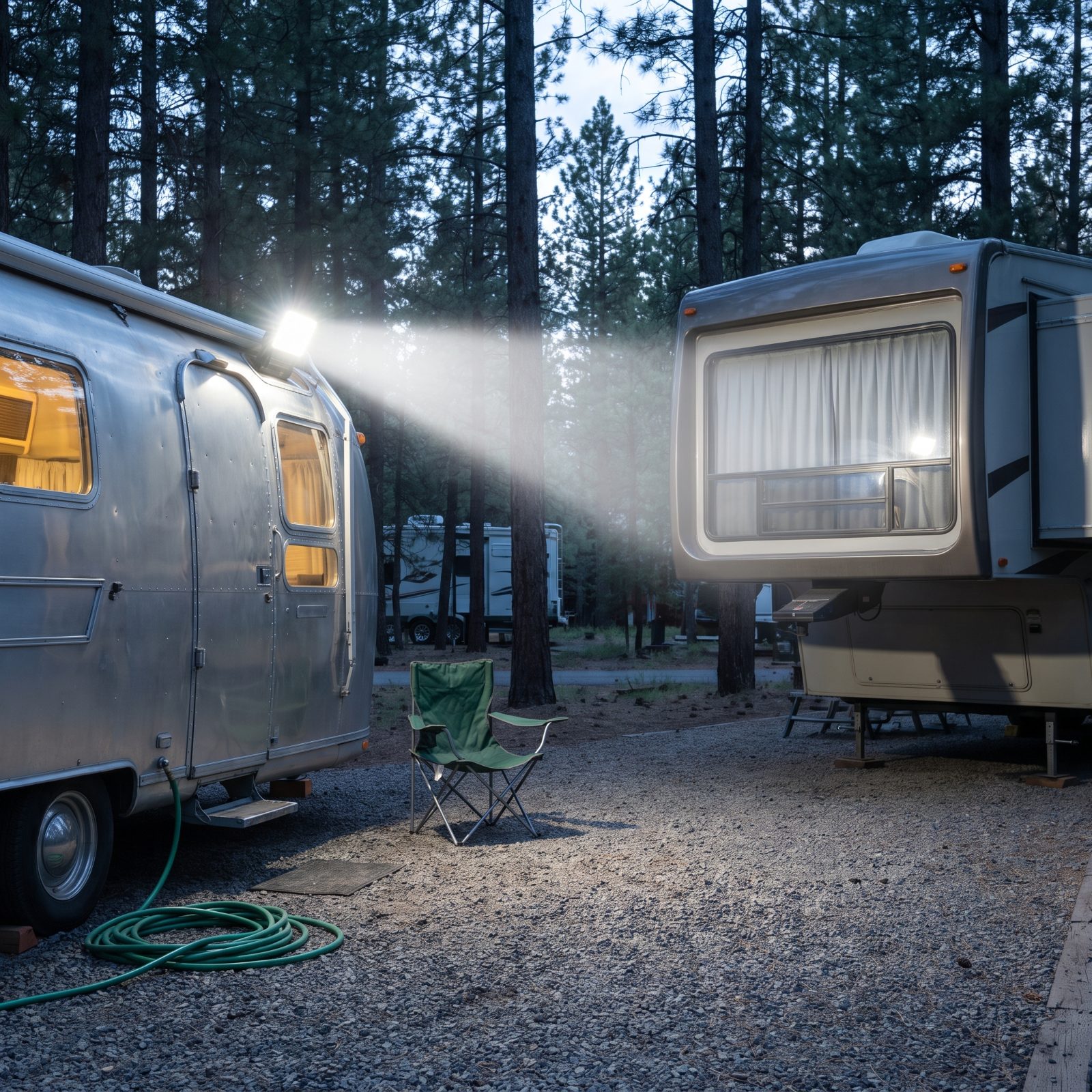
Porch lights and LED awning strips are great until yours is pointed straight into the rig parked twelve feet away. Hosts notice this one fast — usually because the neighbor’s already at the office asking someone to say something.
Dark sky campgrounds take it seriously, and plenty of developed parks have a lights-out or dim-after-10 rule written right on the paperwork you skimmed at check-in. The fix costs nothing. Angle the beam down at your own site, swap the blue-white bulbs for warm amber, and kill the big floods once you’re settled in for the night.
3. Letting the Dog Run Off Leash the Second You Park
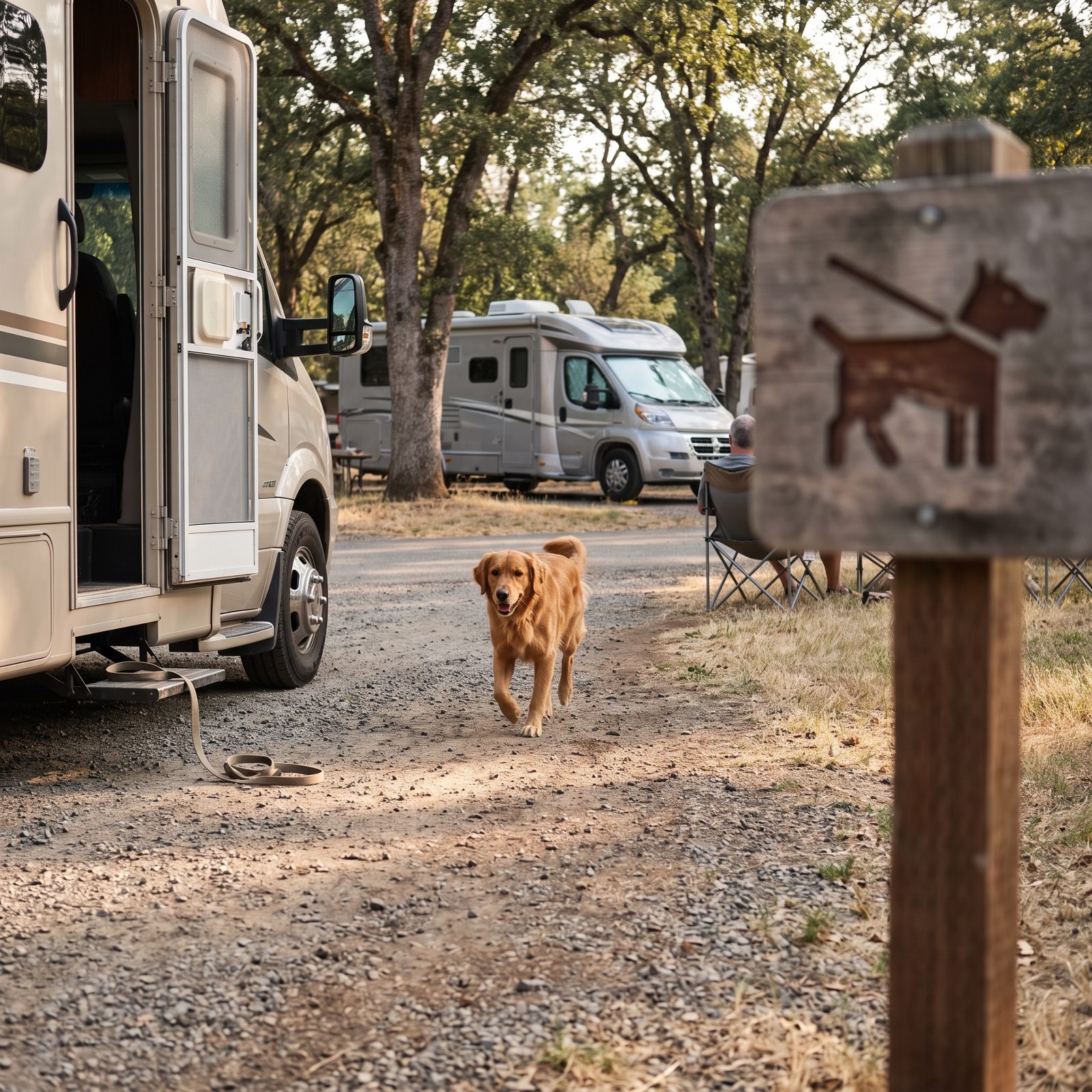
The dog’s friendly. That’s not the point, and every host has heard it a hundred times.
Most developed campgrounds require pets on a leash six feet or shorter, and it’s rarely a suggestion. The rule exists because the next site over might have a kid, a leashed dog who is not friendly, or someone who’s flat-out scared of dogs and has every right to sit at their own picnic table in peace. A loose dog also has a gift for finding the one thing you’d rather it didn’t — a neighbor’s lunch, a fire ring, a skunk.
A good host clocks a wandering dog before the slide-outs are even extended. Fastest way to earn yourself a reputation in a loop you’ll be sharing for three nights.
2. Stringing a Pet Tether Across the Walking Path
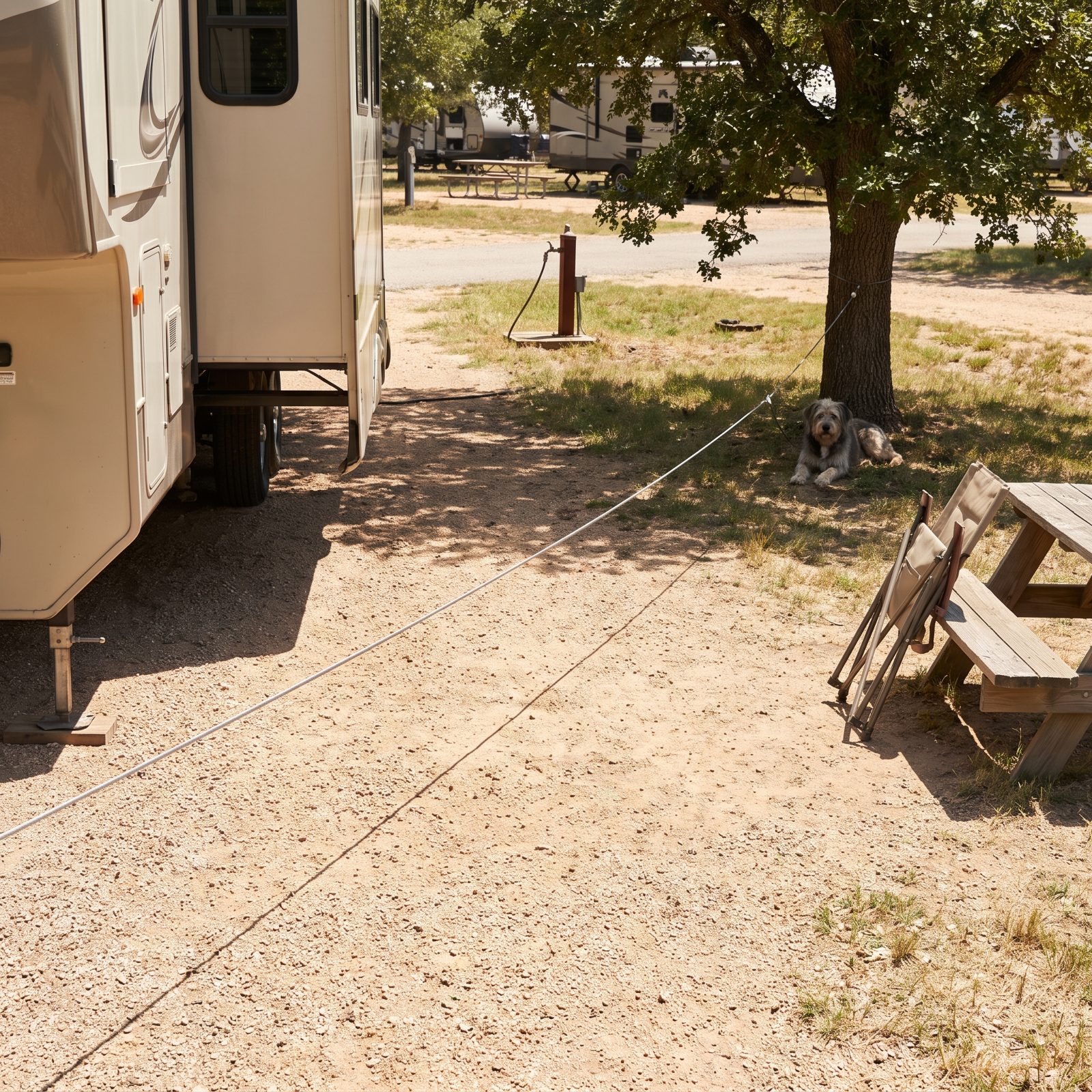
A tether run across the path turns into a clothesline the moment it gets dark. Someone walks the loop to the bathhouse, catches a shin on a cable they never saw, and now you’ve got a scraped neighbor and a dog yanked off its feet at the other end.
Keep the tether inside your own site footprint, anchored so the dog can reach shade and water without the line crossing anywhere people walk. Reflective cable helps a little. Keeping it off the path helps a lot more.
1. Leaving Food and Dishes Out on the Table Overnight
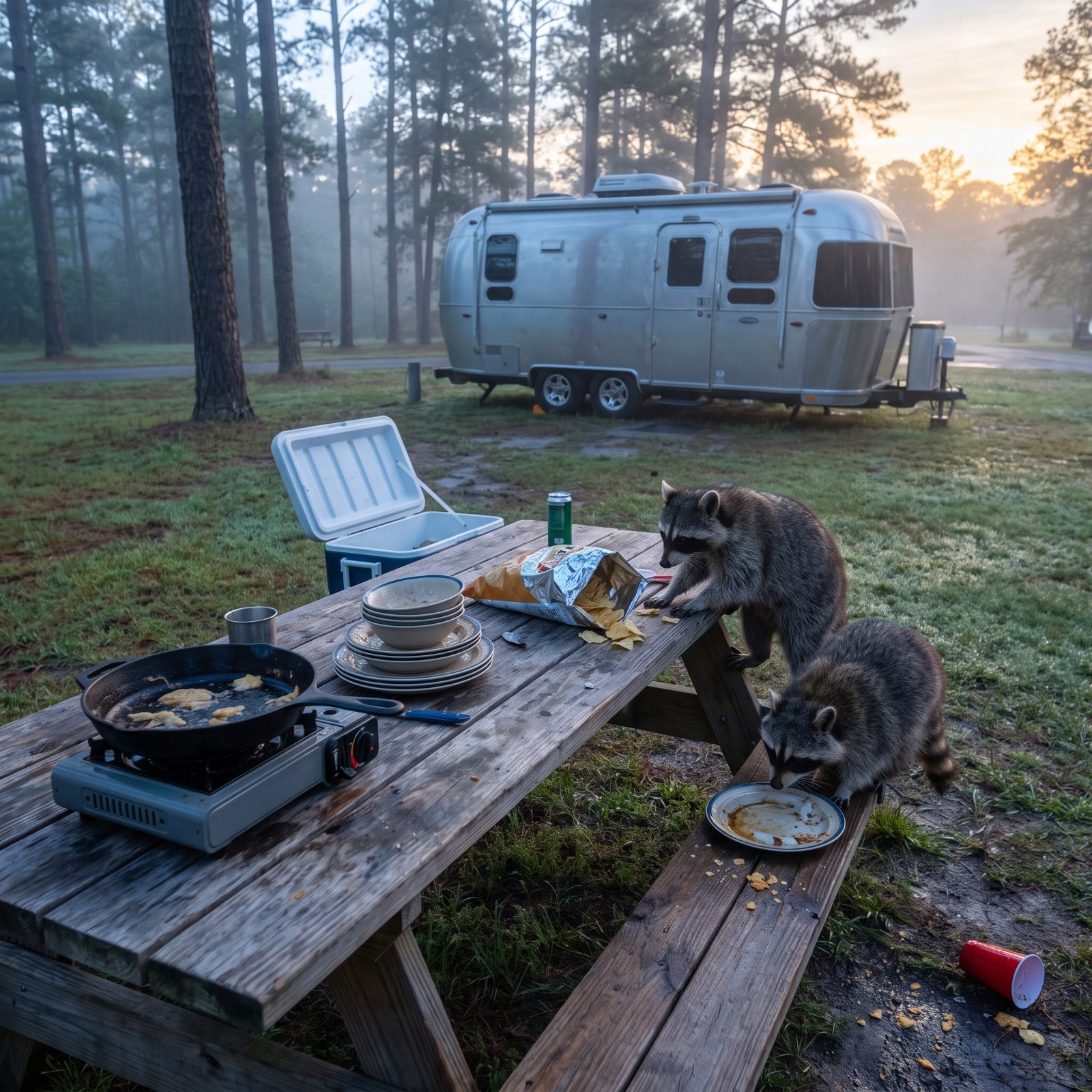
You went to bed with a full table and woke up to a crime scene. Chip bag shredded, cooler lid flipped, something small and determined long gone into the trees.
Wildlife works the loop at night. Once a raccoon or a bear learns a campground feeds easy, every camper who rolls in after you pays for it — which is exactly why bear country parks hand you the storage rules at the gate and mean every word. Lock food in the rig or the bear box, scrub the grease off the pan, and wipe the table down before the fire’s out.