

Nobody browses Class A diesel pushers at 11pm because the dishwasher broke. They browse because something bigger broke, quietly, somewhere around the third week of a long, flat stretch of ordinary. RV shopping and the classic midlife wobble run on the same wiring: the itch to become someone new, the fantasy of driving away from all of it, the sudden conviction that a 36-foot box with a fireplace will fix what a vacation never could. We’ve watched it happen. We’ve done it ourselves. We recognize every stage. What follows is a field guide to the moment a sensible person meets a very big vehicle and loses their grip on arithmetic. Laugh if you want. You’ll also nod.
Please note that some of the images in this article were created with the assistance of AI.
17. You Start Browsing Motorhomes After One Brutal Monday

A good day never sends you to the motorhome listings. It’s the Monday that ran four hours long, the meeting that should have been an email, the drive home where the radio played nothing you liked. By 9pm you’re not researching anymore. You’re escaping, and the browser tab is a trapdoor.
Same impulse sends a stressed person to the gym membership desk, the hair salon, or the dealership for a convertible. Psychologists call it mood repair, and the RV is a particularly good drug for it. Every listing photo sells you not a vehicle but a version of yourself that’s calm, sunburned, and parked by a lake with nowhere to be.
But the want is real even if the trigger is fake. A bad Monday doesn’t mean you shouldn’t own an RV. It means you shouldn’t sign anything on a Monday.
16. You Research Tow Ratings at Two in the Morning
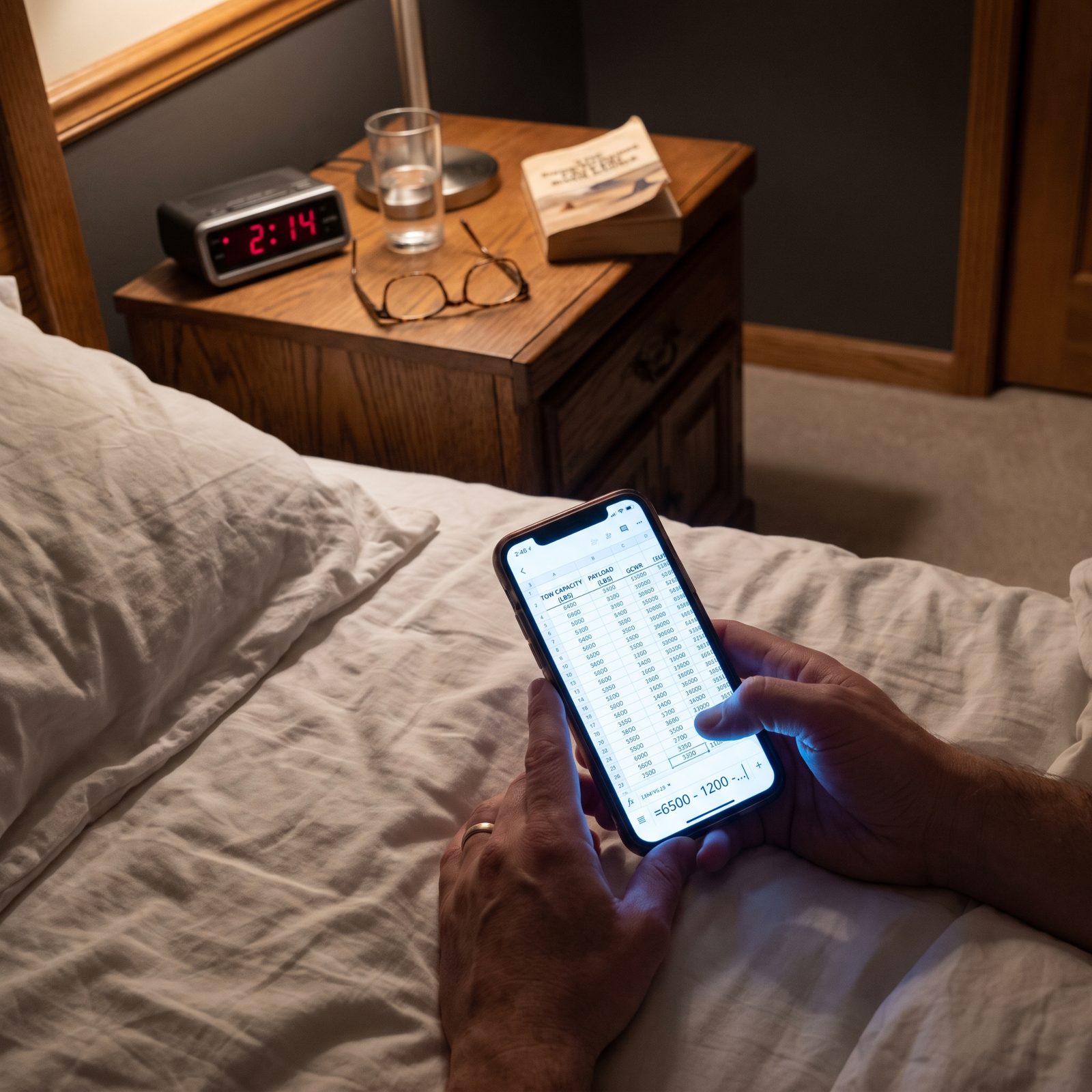
There you are, wide awake, comparing the gross combined weight rating of a half-ton against a three-quarter-ton, cross-referencing tongue weight, doing payload math you’d never do for your actual retirement account. It’s 2am and you have never felt more focused in your life.
Welcome to the deep-dive phase. It mirrors exactly how people in a reinvention spiral attack a new identity, like the person taking up cycling who memorizes derailleur specs before owning a bike. The sudden expert. Mastering the details gives you a feeling of control, and control feels wonderful when the thing underneath is really about longing, not engineering.
You’re not really solving for tow rating. You’re solving for permission.
The research is useful, to be fair. Tow ratings matter, and people wreck themselves ignoring them. But notice when the spreadsheet stops being a tool and turns into a ritual. Three hours of numbers at 2am isn’t due diligence. It’s courtship.
15. You Join Three RV Groups Before Owning Wheel Chocks
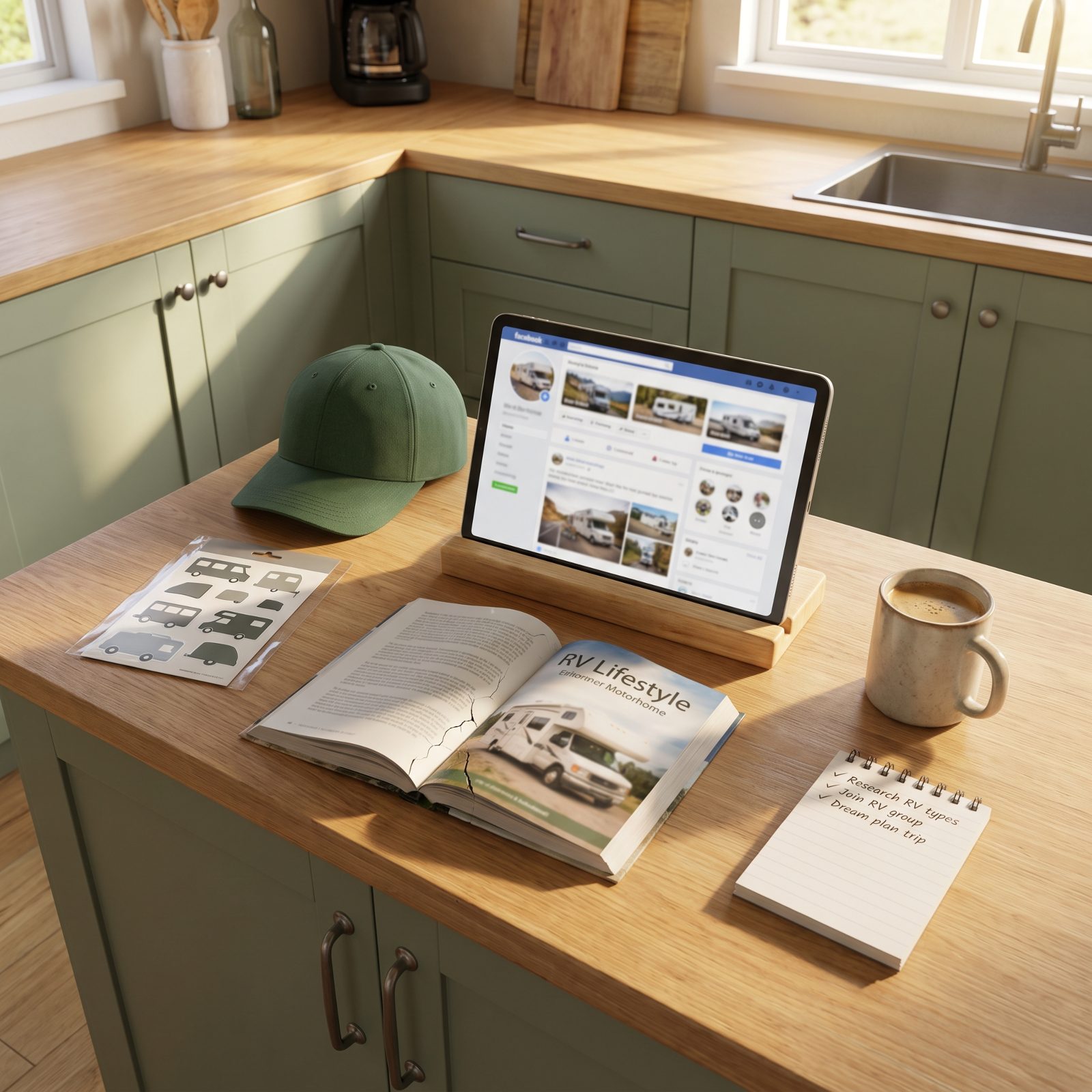
You don’t own a trailer. You don’t own a hitch. What you own, as of this week, is membership in three online RV communities, and you’ve already scrolled through a feed full of other people’s motorhome photos.
Joining the tribe before you’ve earned the campfire is one of the oldest moves in reinvention. Call it identity-first commitment. We adopt the markers of a group, the lingo, the inside jokes, the strong opinions about dump-station etiquette, because belonging feels like becoming. Say you want to be an RVer. Posting like one is the cheapest, fastest way to feel like one already.
And honestly? Nothing wrong with it. These groups are where you learn which brands leak and which dealers lie. Just know what the membership is doing for you psychologically. It’s dress rehearsal for an identity you haven’t bought yet.
14. The Floor Plan Becomes Your Brand-New Personality
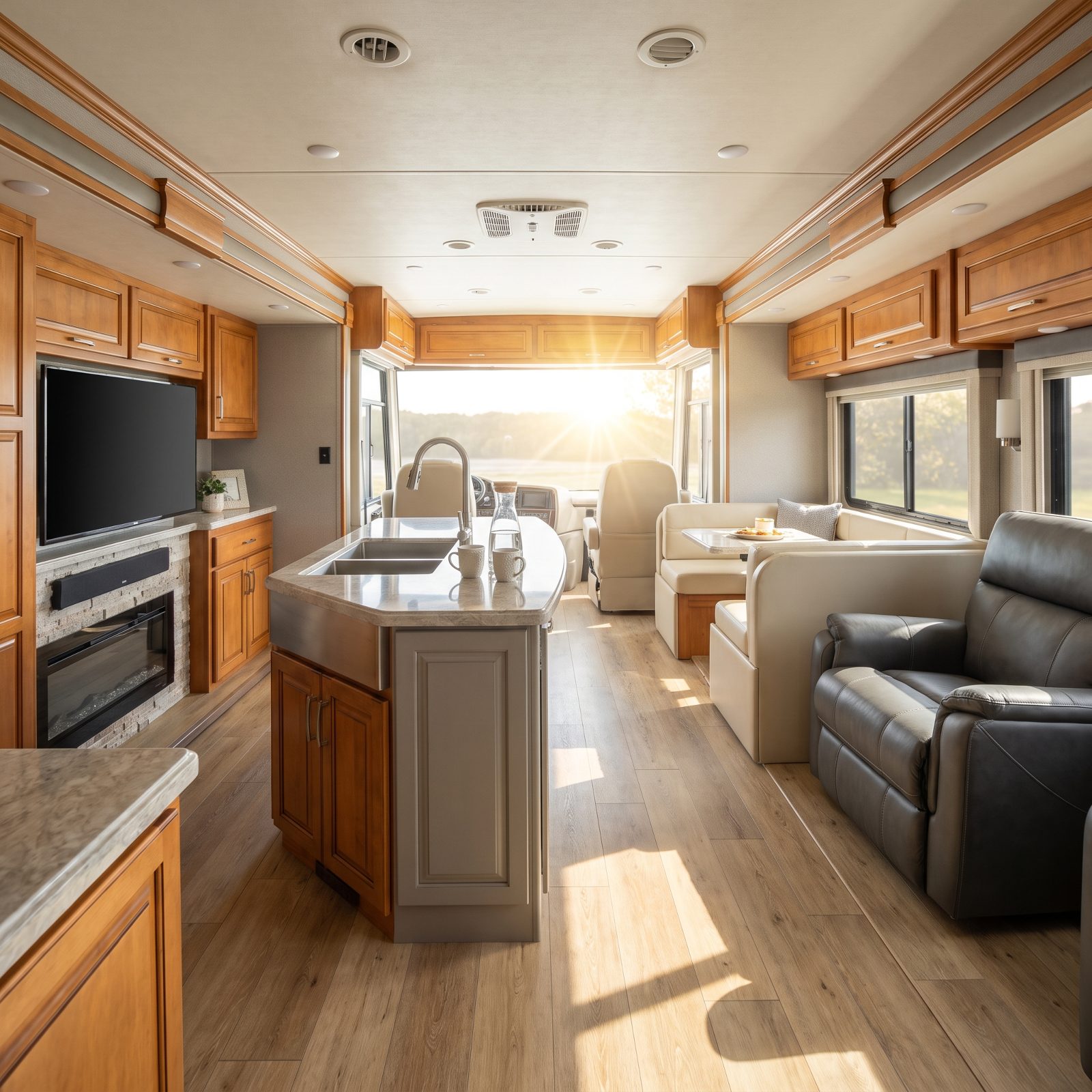
Last month you had hobbies. Now you have a floor plan, and you will describe it to anyone who stands still. The rear bunkhouse. The mid-kitchen. The bath-and-a-half with the dedicated pantry. You speak of it the way other people speak of a new grandchild.
This is identity signaling in its purest, happiest form. The floor plan isn’t furniture arrangement, it’s a story you’re telling about the person you’re about to be: the one who hosts, who cooks on the road, who has a specific drawer for everything. We bond to the layout because it lets us pre-live the life.
Watch for the tell, though. When the floor plan starts solving problems you don’t have, more sleeping spots than people who’ll ever visit, an outdoor kitchen for the gourmet camping you’ve never once done, you’ve stopped buying a vehicle and started buying a character. A fun one. Just an expensive one.
13. You Reject Beige Interiors Like They Personally Betrayed You
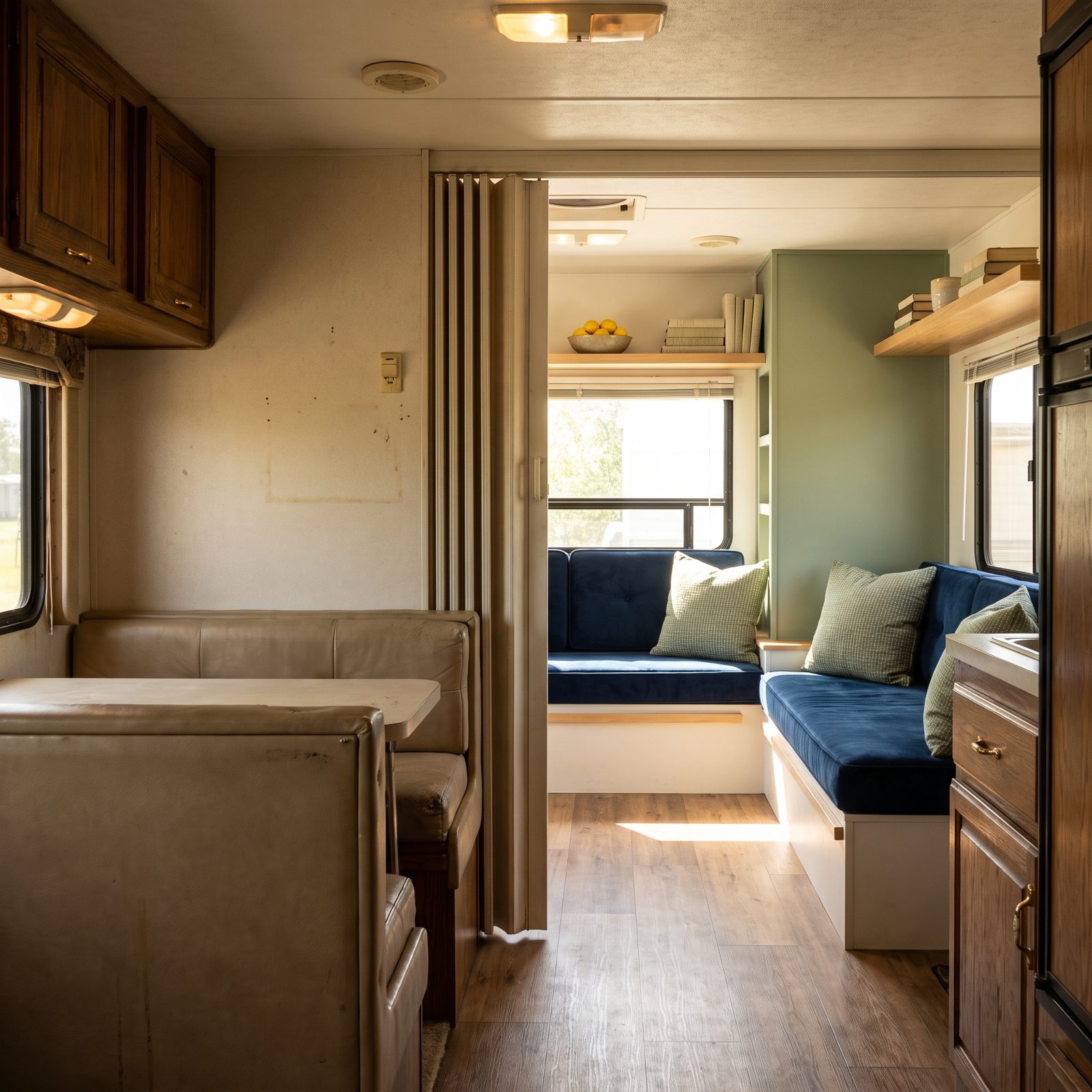
Something happens to a person mid-reinvention. The beige that was perfectly fine for thirty years becomes intolerable overnight. You walk into a used coach with tan valances and oak everything and you physically recoil, as if the previous decade personally approved it.
The beige didn’t change. You did. Rejecting the neutral is a declaration that you’re done being the sensible, blend-in version of yourself. Same force behind the new haircut, the bold glasses, the suddenly adventurous wardrobe after years of safe navy. Color becomes a flag you plant on your own skin.
Reaction formation, psychologists would say. You push hard against the thing that represents the self you’re trying to leave. Which is why that dealer-fresh coach with the deep green cabinets and warm wood floors doesn’t just look better to you. It looks like escape.
12. You Suddenly Need More Horsepower Than You Did Yesterday
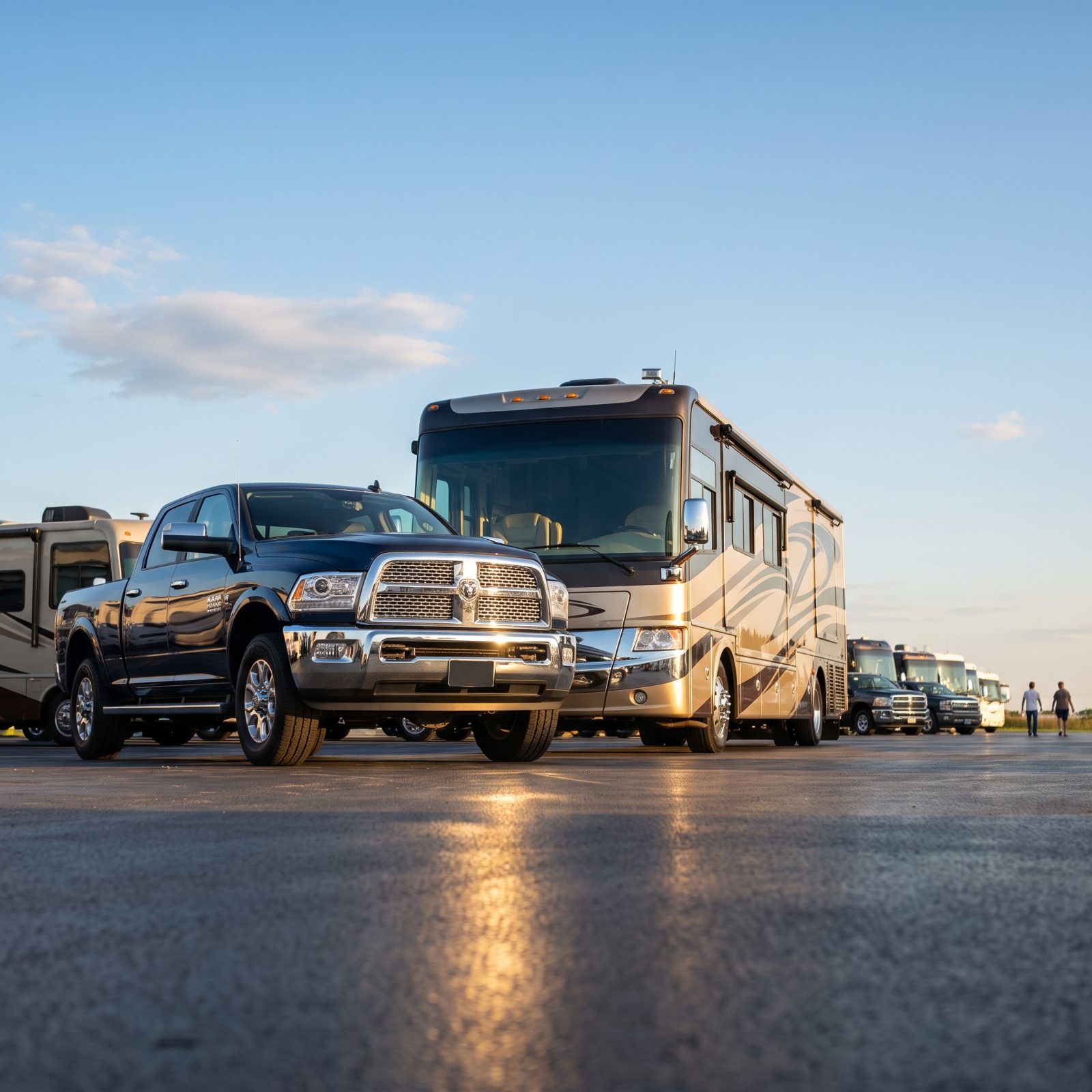
A week ago you’d never thought about horsepower in your life. Today you cannot stop. The half-ton you came in with suddenly feels like a toy, and now you need the diesel, the dually, enough grunt to tow a house up a mountain you’ll probably never climb.
Capability creep is the engine of a thousand midlife upgrades. The person who buys the mountain bike for trails near their flat suburb. The convertible rated for speeds no public road allows. More power feels like more possibility, and possibility is the whole fantasy. That spec sheet turns into a promise about a bolder life.
The quiet truth? Most RVers never use more than a fraction of what they buy. But the extra horsepower isn’t for the hill. It’s for the feeling of being someone who could climb it.
11. A Test Drive Makes Sensible Math Feel Deeply Optional

Up until the test drive, you had a budget. You had a number. You had, frankly, your head on straight. Then they hand you the keys, you climb up into that captain’s chair, and from way up there the whole world looks like yours. Somewhere around the second mile, the budget quietly leaves the building.
Dealers know exactly what the drive does, which is why they push it so hard. It’s the peak of the whole dopamine arc. A brain in a state of high desire discounts future costs with astonishing speed. Same wiring runs the convertible test drive, the open house, the puppy they let you hold.
Nobody does math with their hands on the wheel.
The fix isn’t to skip the drive. The fix is to decide your walk-away number before you ever climb in, write it down, and leave the checkbook in the car. Emotion is a terrible accountant and a wonderful salesman.
10. The Dealer’s “Last One” Turns Browsing Into Destiny
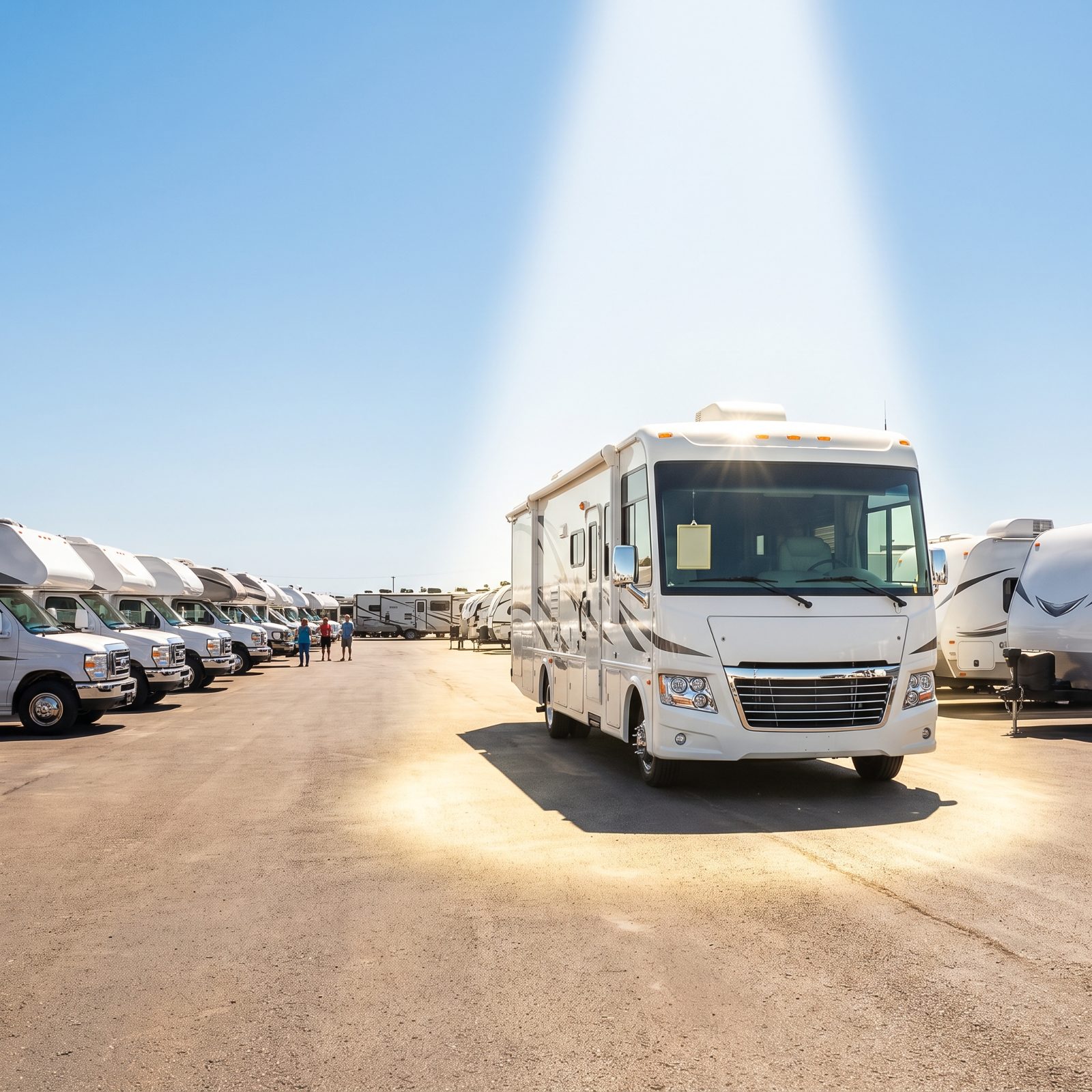
“This is the last one at this price.” “We’ve got two people coming to look at it this afternoon.” “Honestly, I shouldn’t even be telling you this.” And just like that, a casual look-around becomes a story about fate. You weren’t shopping. You were summoned.
Scarcity is the oldest lever in sales for a reason. The threat of loss lights up the brain harder than the promise of gain, every single time. We want the thing we might not get to have far more than the thing sitting patiently in front of us. Add a ticking clock and a competing buyer, real or invented, and a reversible decision suddenly feels like a train leaving the station.
Here’s your out. There is almost never a last one. There’s a next one, at a better price, next quarter, when the lot needs to move inventory. Scarcity that’s manufactured for you evaporates the moment you walk toward the door.
9. You Name the Rig Before the Loan Is Approved
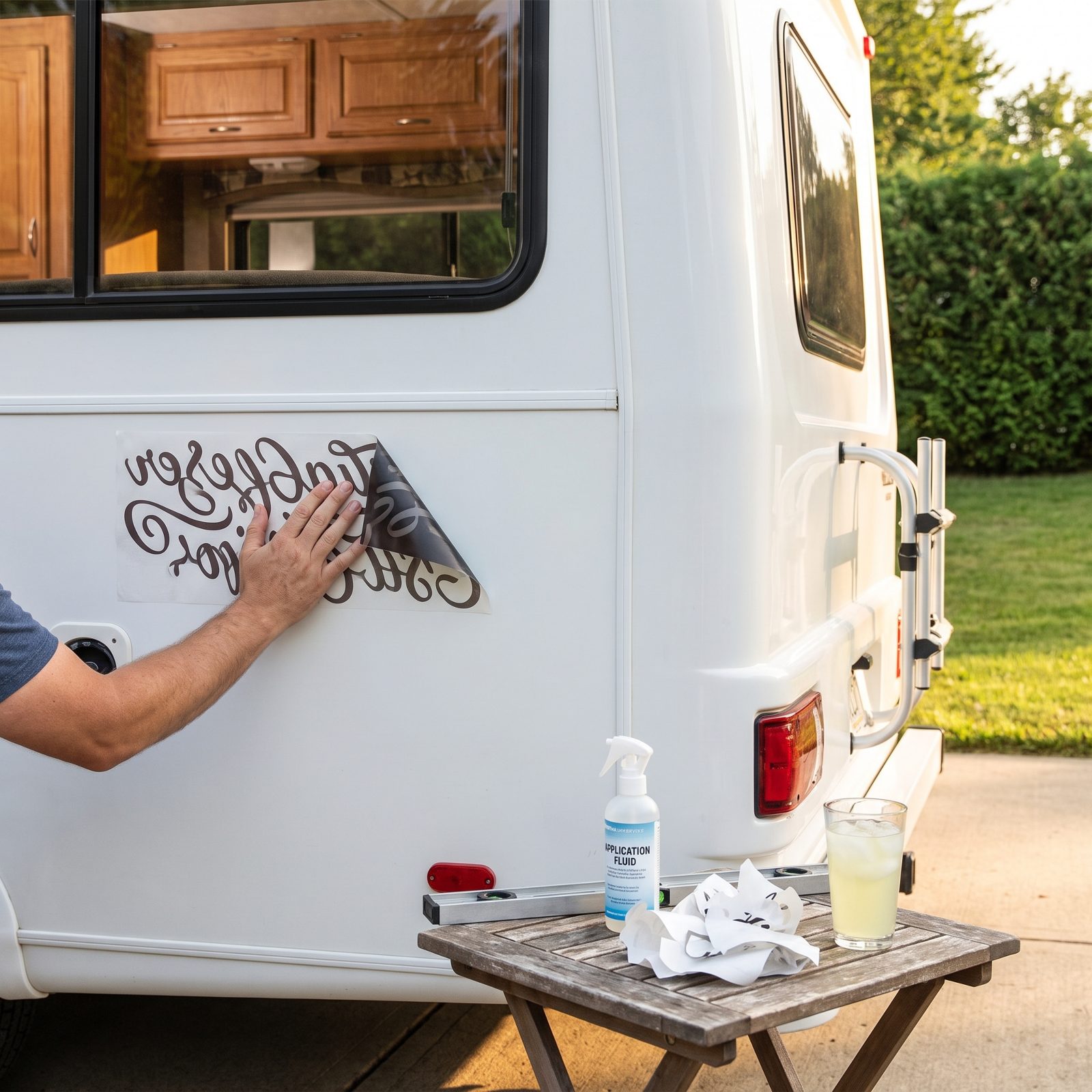
The paperwork isn’t signed. The loan is still “in review.” And yet you’ve already named her. Something cheerful, something with a story. You’ve maybe even sketched what the name would look like in script on the back panel. Congratulations, you are emotionally married to a vehicle you don’t yet own.
Naming is commitment made visible. The second a thing has a name, it stops being merchandise and becomes a member of the family, and nobody haggles hard over a family member. Psychologists call the broader pull the endowment effect: we value what feels like ours far beyond what we’d ever pay for a stranger’s version of the same object.
That’s exactly why this move is so dangerous and so human. You’ve transferred ownership in your heart before the bank transferred a cent, which means every remaining negotiation is you bargaining against your own affection. The name can wait. Name it after it’s paid for, when the thing is truly yours and the celebration is earned. Trust me, she’ll answer to it either way.
8. You Call the Monthly Payment Freedom, Not Debt
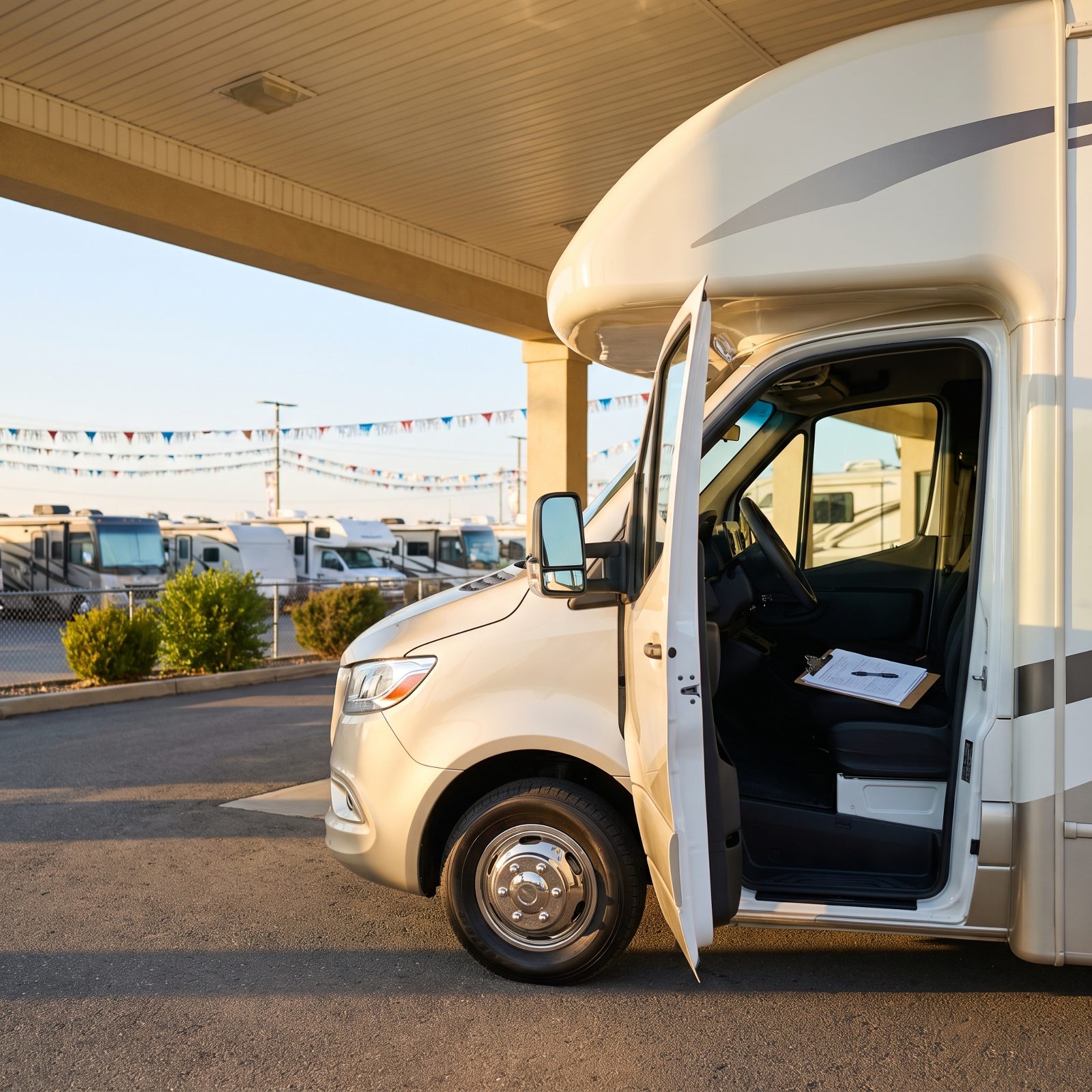
Eighty-four months. Said out loud, it sounds like a prison sentence. Said at the dealership, it sounds like the open road. Somewhere between the test drive and the finance office that number quietly stops being debt and starts being freedom, and you stop hearing the word “loan” at all.
Everyone recognizes the midlife move. The sports car financed over seven years, the boat nobody questioned because it was “an investment in time together” — we reframe the cost the second we want the thing badly enough. The brain does this on purpose. Psychologists call it motivated reasoning, and it works like a very agreeable lawyer who only argues the side you already picked.
The monthly payment helps the trick along. A big scary total feels survivable once it’s sliced into something that fits next to your streaming bills. And that slicing is exactly why the number climbed in the first place.
7. You Picture National Parks, Not Dump Station Lines
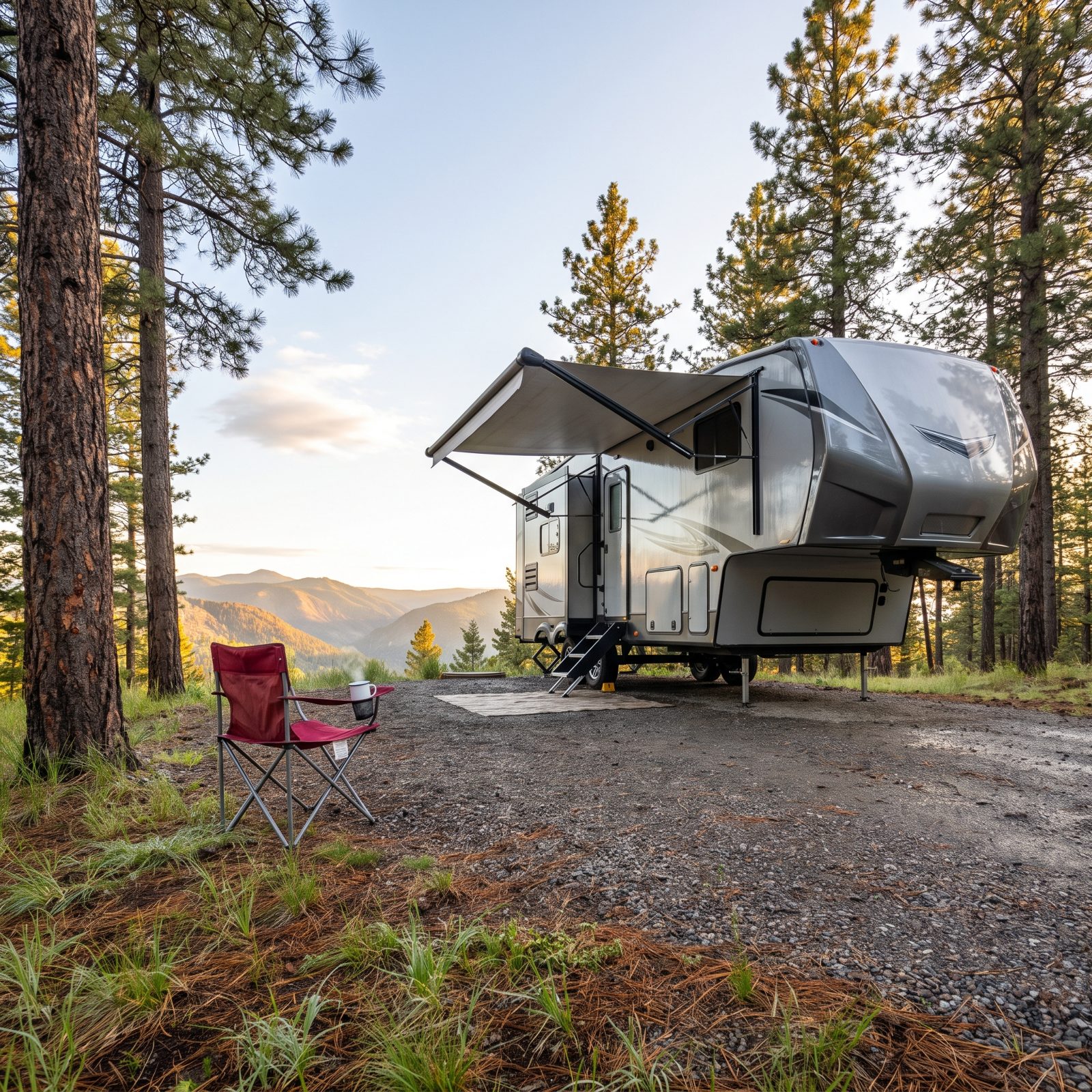
The brochure sells you the overlook — granite peaks, a mug of coffee, the awning out, nowhere to be. What it skips is the Sunday-morning line at the dump station, four rigs deep, a sewer hose in your hands while everyone pretends not to make eye contact.
You’ve done this exact edit in your own head before. The road trip that was all open highway and no bickering over directions. The vacation that was all beach and no sunburn. We remember the highlight reel and quietly delete the maintenance tape. There’s a name for it — impact bias. We overestimate how good the peaks will feel and underestimate how often the ordinary stuff shows up.
None of this means the parks aren’t worth it. They are. But RV life is maybe twenty percent overlook and eighty percent logistics, and that twenty percent is doing all the heavy lifting in your imagination. Buy the rig knowing the hose comes with it.
6. You Keep Adding Solar Because Reinvention Needs Accessories
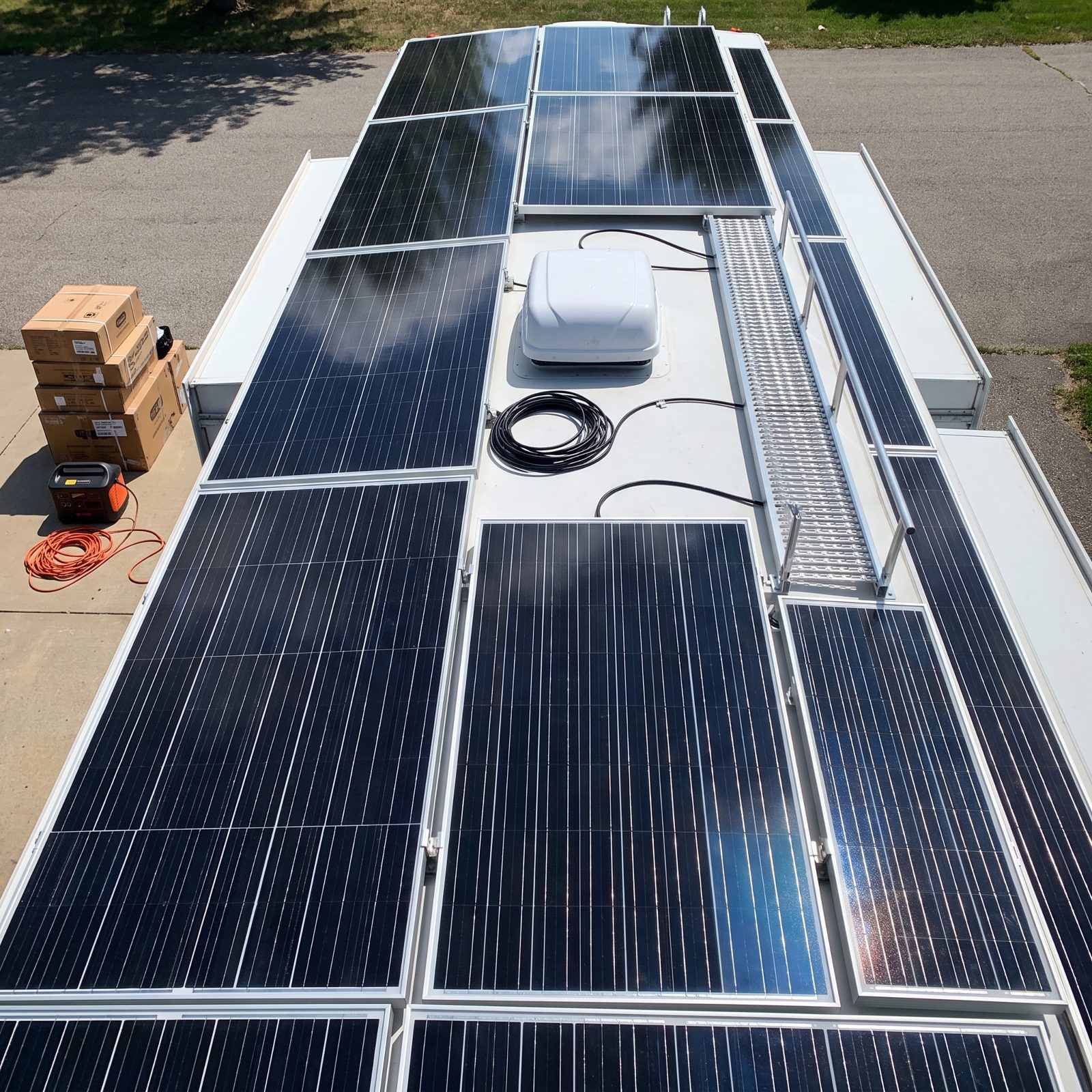
First it was one panel. Just enough to keep the fridge happy off-grid. Then a second panel, because why stop there. Then a lithium battery bank, an inverter the size of a microwave, a portable folding solar suitcase for the days the roof sits in shade, and a portable power station for the days the whole system sulks.
What nobody says out loud: most of this gear powers a lifestyle that lives mostly in the planning. Each new piece feels like becoming a different, more capable version of yourself — the kind who boondocks for two weeks in the desert and never flinches.
The accessories are the reinvention. Same reason the midlife guitar comes home with three pedals before he’s learned four chords. Buying the gear feels like doing the thing. There’s even a term for it, the Diderot effect: one aspirational purchase drags a whole matching wardrobe of upgrades behind it, each one justified by the last.
5. You Trade Practical Storage for a Fireplace You Love
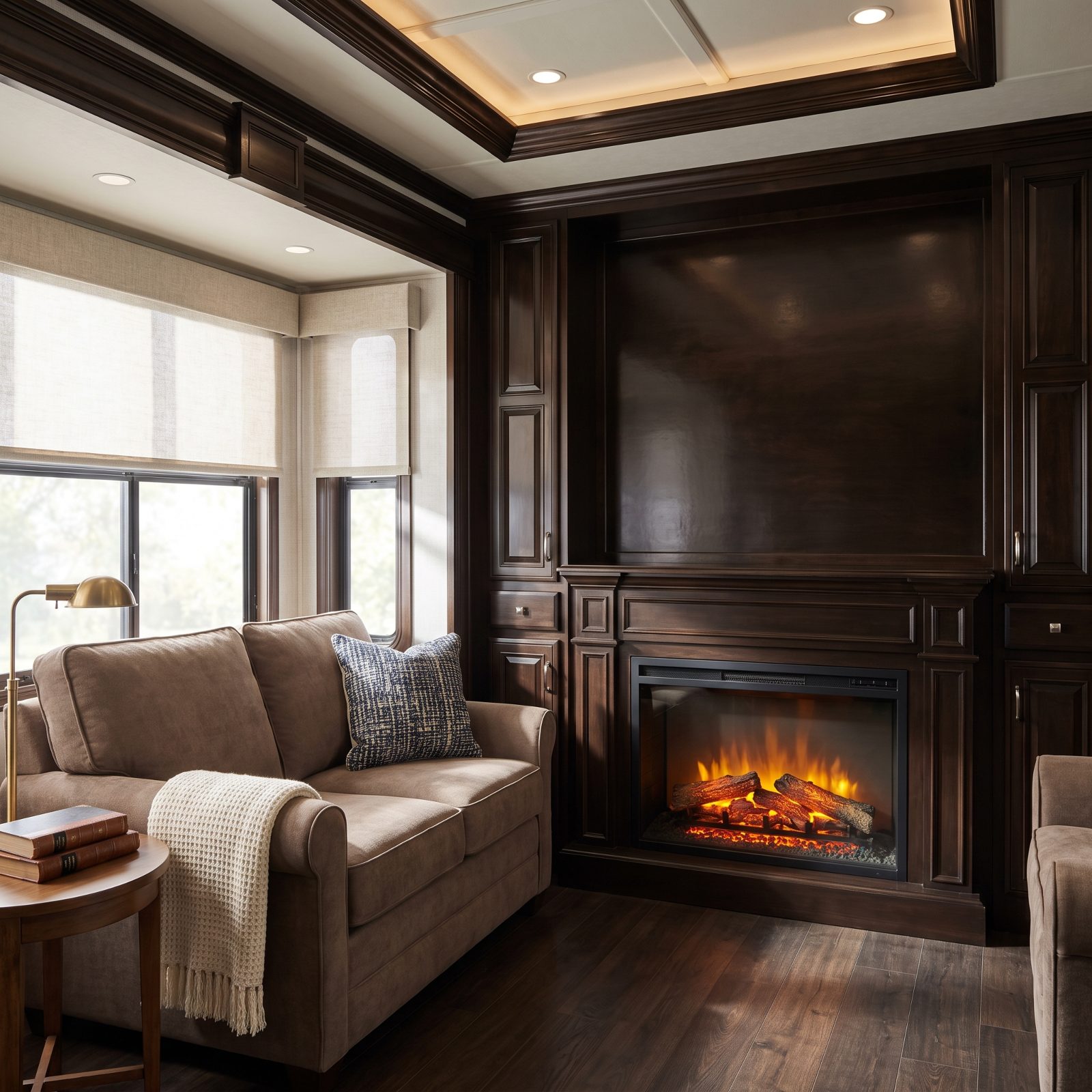
Walk through the model with a measuring tape and the math falls apart fast. The galley has two drawers. The pantry is a cubby. There’s nowhere obvious to stow the folding chairs, the leveling blocks, or six weeks of groceries. But there’s a fireplace — a glowing electric fireplace right under the TV — and the second you saw it, every other floor plan went gray.
We do this with houses too. The kitchen with no counter space loses to the one with the clawfoot tub. One emotional feature outshines a dozen practical ones, and we tell ourselves the storage will “work itself out.”
Call it the affect heuristic. We make a complicated decision based on how one detail makes us feel, then back-fill the reasoning afterward. The fireplace isn’t keeping you warm in July. It’s keeping you certain. And certainty, when you’re about to spend this kind of money, is worth more to the brain than a few extra inches of cabinet.
4. You Assume Remote Work Will Fix the Whole Plan

The plan hinges on one word: “remotely.” You’ll keep the income, drop the commute, and answer emails from a dinette overlooking a lake. The whole leap only pencils out because work comes along for the ride, frictionless, same as it was at the desk back home.
Then you learn the lake has no cell signal. The “remote” campground is remote in every sense. Video calls over a booster feel like negotiating with a hostage. The plan didn’t account for any of this, because the plan never does.
This is the planning fallacy — the same optimism that makes every home renovation run late and every budget run short. We picture the smooth version and skip the parts where things go sideways. Remote work on the road is real and doable. It’s also a job with extra steps, and the extra steps were invisible from the showroom floor.
3. Your Partner Hears “RV” and Immediately Checks the Budget
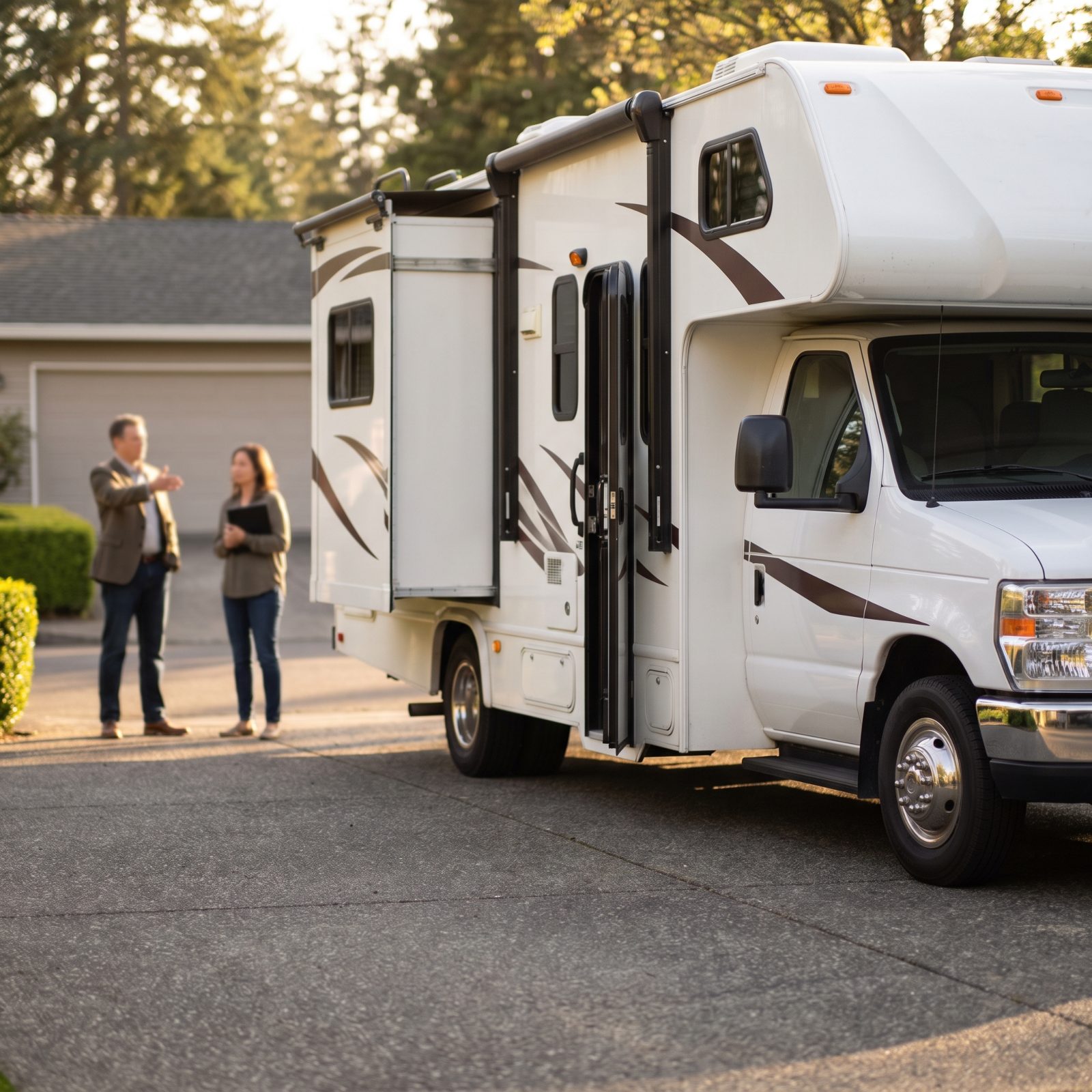
You say “RV.” You see the open road. Your partner sees insurance, registration, storage fees, the propane, the tires that cost more than a decent used sedan, and the depreciation that starts the moment you pull off the lot.
One of you is dreaming in experiences while the other is doing arithmetic in real time. Neither of you is wrong, and this exact split has been playing out in kitchens for generations — one person wants the thing, the other holds the calculator.
It comes down to how differently we weigh a possible loss against a possible gain. Loss aversion means the budget-keeper feels those recurring costs more sharply than the dreamer feels the future sunsets. The sunsets are hypothetical. The $300 storage bill is a certainty, every single month.
What actually works isn’t out-arguing the calculator. It’s running the real yearly number together, ownership costs and all, before anyone falls in love with a floor plan. Fall in love after the math, not before. Your marriage will thank you around tax time.
2. You Defend the Purchase Harder After the First Repair
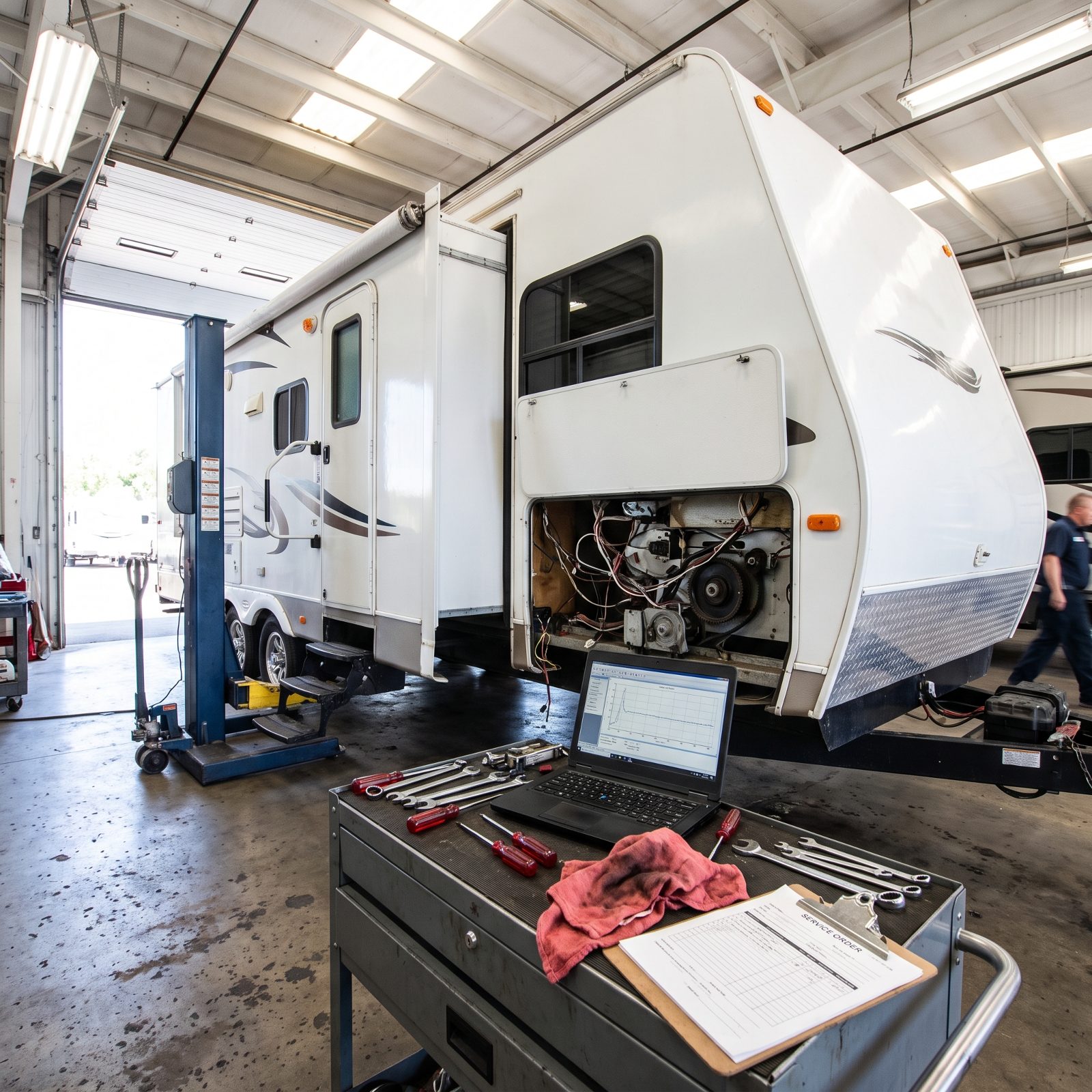
The slide-out jams three weeks in. The repair is eye-watering. And instead of quietly wondering whether you made a mistake, you come out swinging — best decision you ever made, everyone has a few bugs, you’d buy it again tomorrow.
The louder the repair bill, the louder the defense. That’s no coincidence.
The more a choice costs us, the harder we work to prove it was the right one.
This is commitment escalation feeding on cognitive dissonance. Admitting the purchase was a stretch would mean sitting with the discomfort of having spent all that money on a stretch. So the brain does the cheaper thing and rewrites the stretch as genius. You see it everywhere people double down after a bad bet — defending the renovation that went sideways, the car in the shop every other month. The repair didn’t test your faith in the rig. It manufactured more of it.
1. The Kids’ Eye Rolls Somehow Make the RV More Appealing
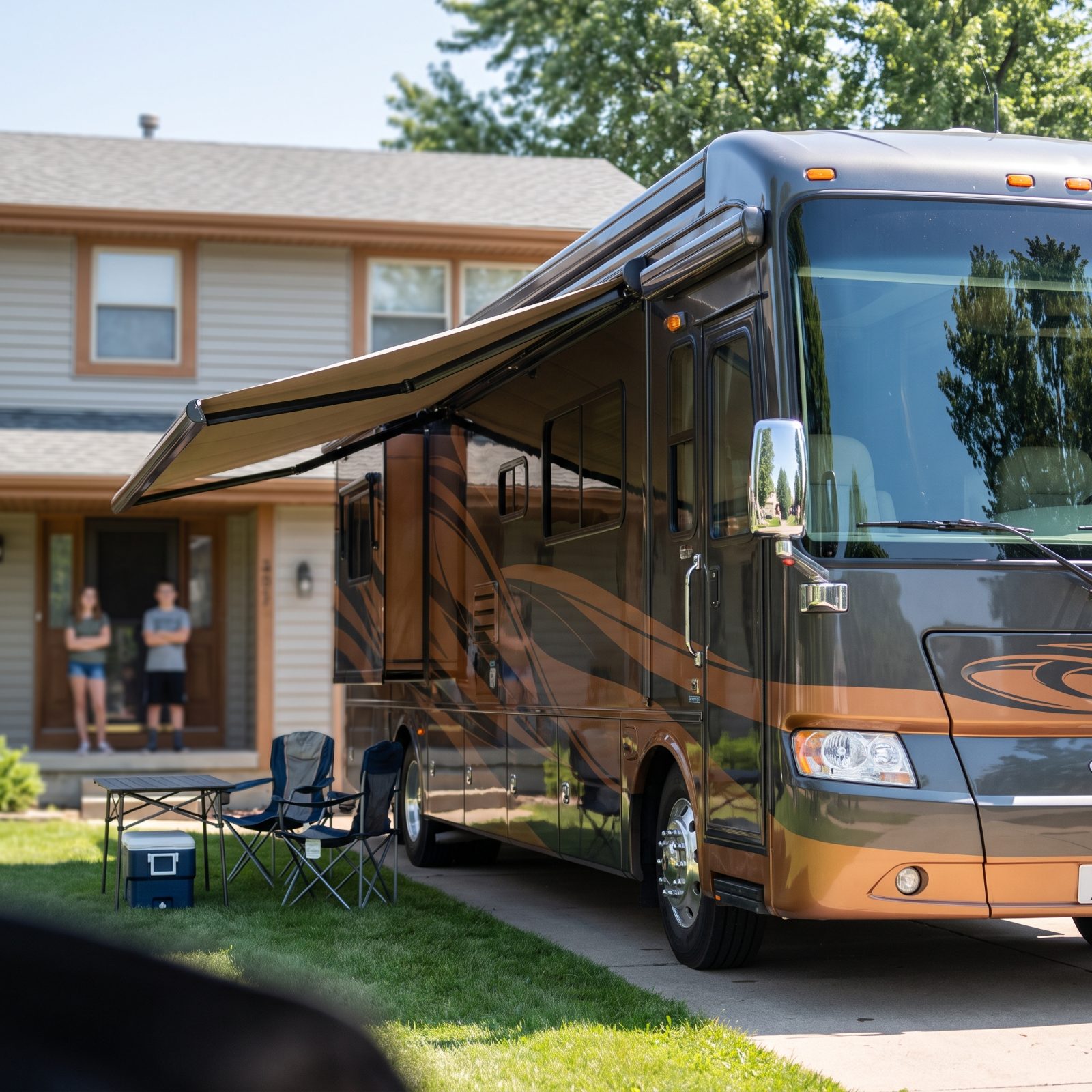
Grown kids find out and the reaction is immediate. The slow blink. The “you’re doing what?” The muttered crack about their inheritance driving off into the sunset at eight miles a gallon. And strangely, the disapproval doesn’t cool you on the idea. It warms you up.
Because this was never only about the RV. It’s about doing something that’s unmistakably yours, on your terms, at a point in life when a lot of decisions have stopped being about you. The eye roll just confirms you’re coloring outside the lines — which is sort of the whole appeal.
There’s a name for it: reactance, that little flare of “you can’t tell me what to do” that pushes us harder toward a choice someone’s trying to steer us off. The more they resist, the more the rig becomes a flag you’re planting. Your time, your money, your road. And the kids will come around fast enough when they want to borrow it for a long weekend.