
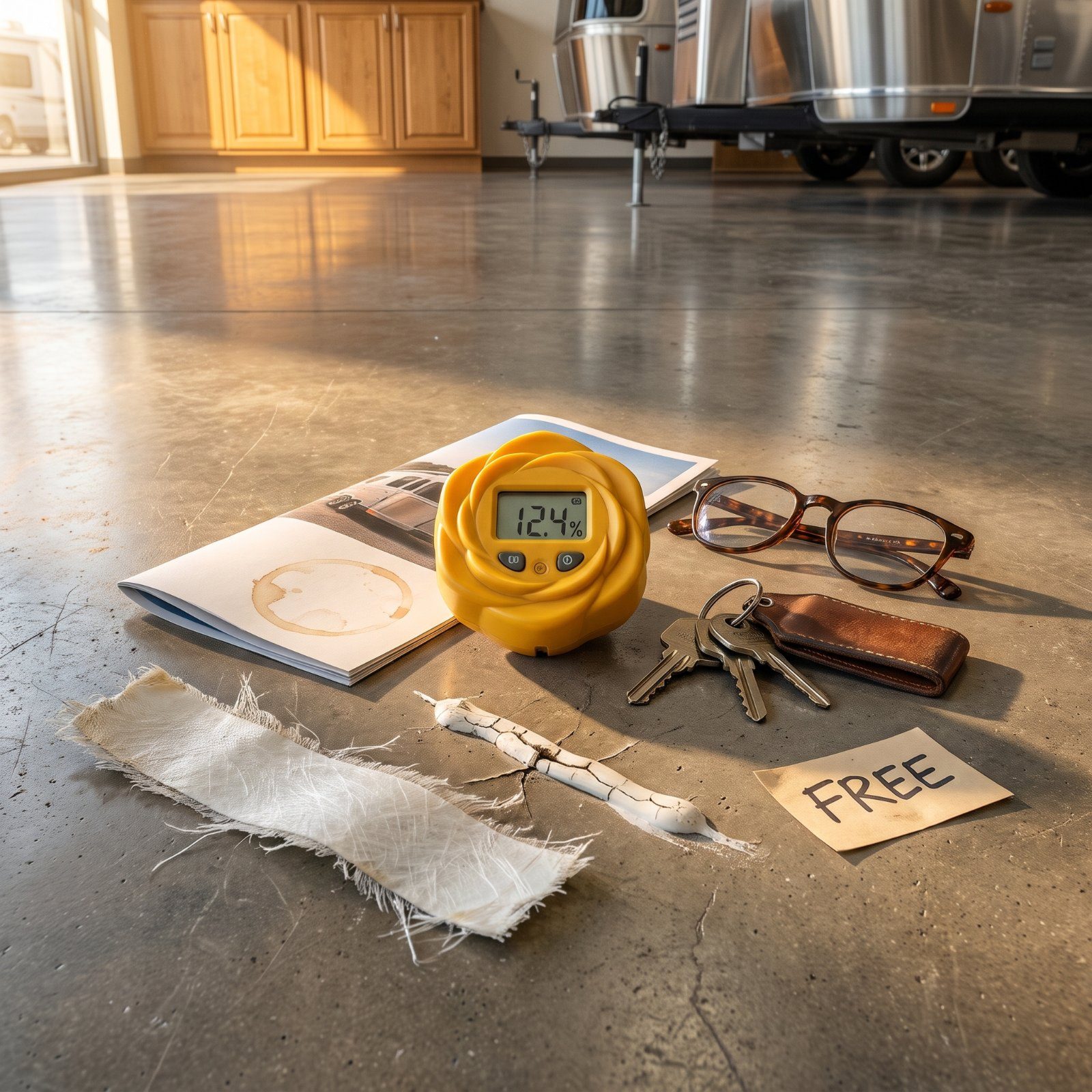
The soft spot on the bathroom floor gave a little when you stepped on it. You felt it. And in that same half second you decided it was probably just the way the vinyl was laid. That tiny act of talking yourself out of what your foot already knew is the exact mental move people make when a new partner cancels plans twice and they call it busy. Buying an RV pulls the same levers as falling for someone you should probably walk away from — the brain wants the story more than the facts. What follows are the habits that turn a water-stained ceiling into a rounding error and a $90,000 rig into true love. You’ve done at least three of these. So have we.
Please note that some of the images in this article were created with the assistance of AI.
18. You Let Fresh Wax Distract From Bubbling Sidewalls
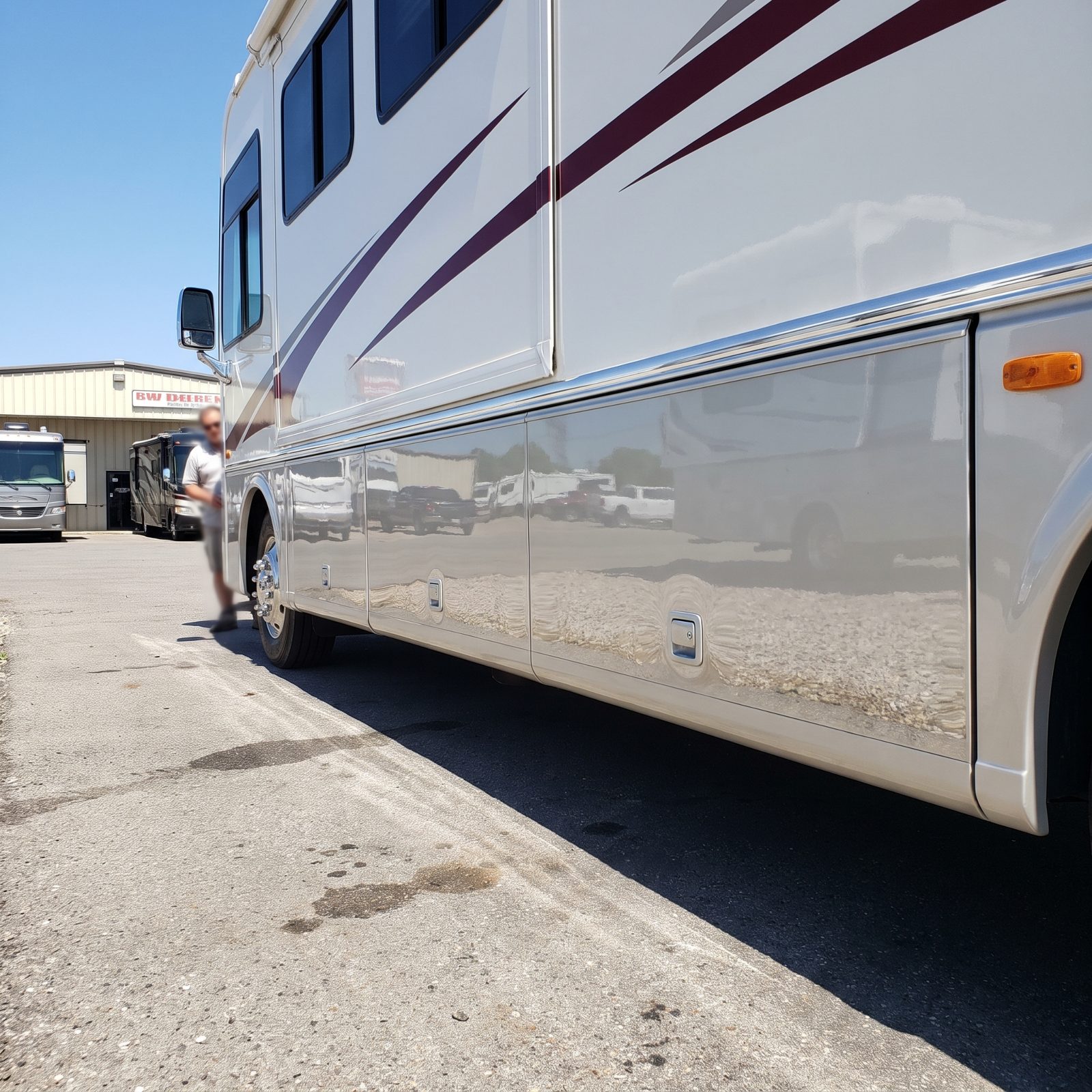
The salesman waxed it that morning. You can smell it — that sweet carnauba haze — and the fiberglass is throwing sunlight back at you like a trophy, so your eyes slide right past the lower panel, where the surface ripples like a lake somebody dropped a stone into. That’s delamination. That’s the expensive one. And you just filed it under later.
This is the halo effect doing its favorite trick. One strong positive signal, the shine, leaks over everything else and colors how you judge the whole rig. Same reason a charming first date makes you discount the three red flags that showed up with dessert. Your brain is lazy about evidence; it grabs the easiest impression and lets it vote on things it has no business voting on.
Wax is a Tuesday. Delamination is a year. Learn which is which.
17. The Diesel Pusher Fits the Person You Want to Be
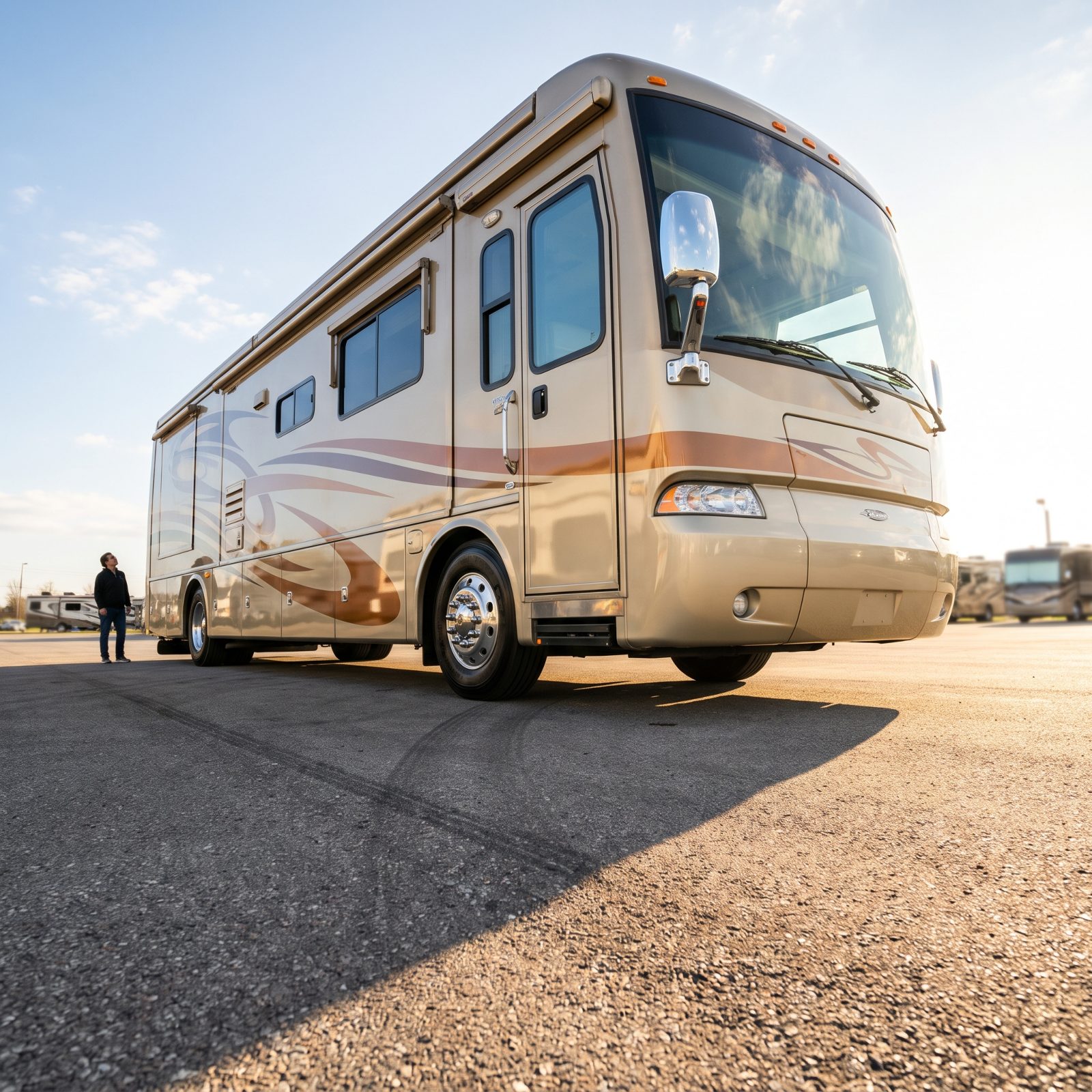
You walked in for a modest travel trailer. Now you’re standing in a 40-foot diesel pusher with heated tile floors and a residential fridge, and something in your chest has gone warm and certain. This is who you’ll be — retired, unhurried, pulling into mountain towns like you own them.
Here’s what nobody says out loud: you’re not shopping for an RV, you’re shopping for a version of yourself. The rig is a costume for a future identity. That’s identity signaling, the same force that makes someone chase the partner who represents the life they wish they already had rather than the one who actually fits their Tuesday.
The coach doesn’t know who you want to be. It only knows it needs $400 oil changes and a chassis mechanic two states away. Buy the life you live, not the one you’re auditioning for.
16. You Picture Sunset Campsites Instead of Tuesday Repairs

Ask someone why they’re buying and they describe a sunset. The fire pit, the folding chairs, the coffee outside at six a.m. with fog on the lake. Nobody’s daydream includes resealing the roof every autumn, chasing a propane smell, or crawling under the rig to find where the gray tank is dripping.
We imagine the peak and forget the maintenance. Same reason people marry the wedding and not the marriage, picture the honeymoon dinner instead of the Tuesday arguments about the dishwasher. Psychologists call it affective forecasting, and we’re reliably terrible at it. The postcard moments get overweighted. The grinding ordinary ones that actually fill the calendar barely register.
An RV is mostly Tuesdays. Beautiful ones, sometimes. But Tuesdays with a caulk gun. Picture that campsite, sure — then picture yourself three feet under it with a flashlight in your teeth.
15. Dad Owned This Brand, So Its Leaks Feel Safer
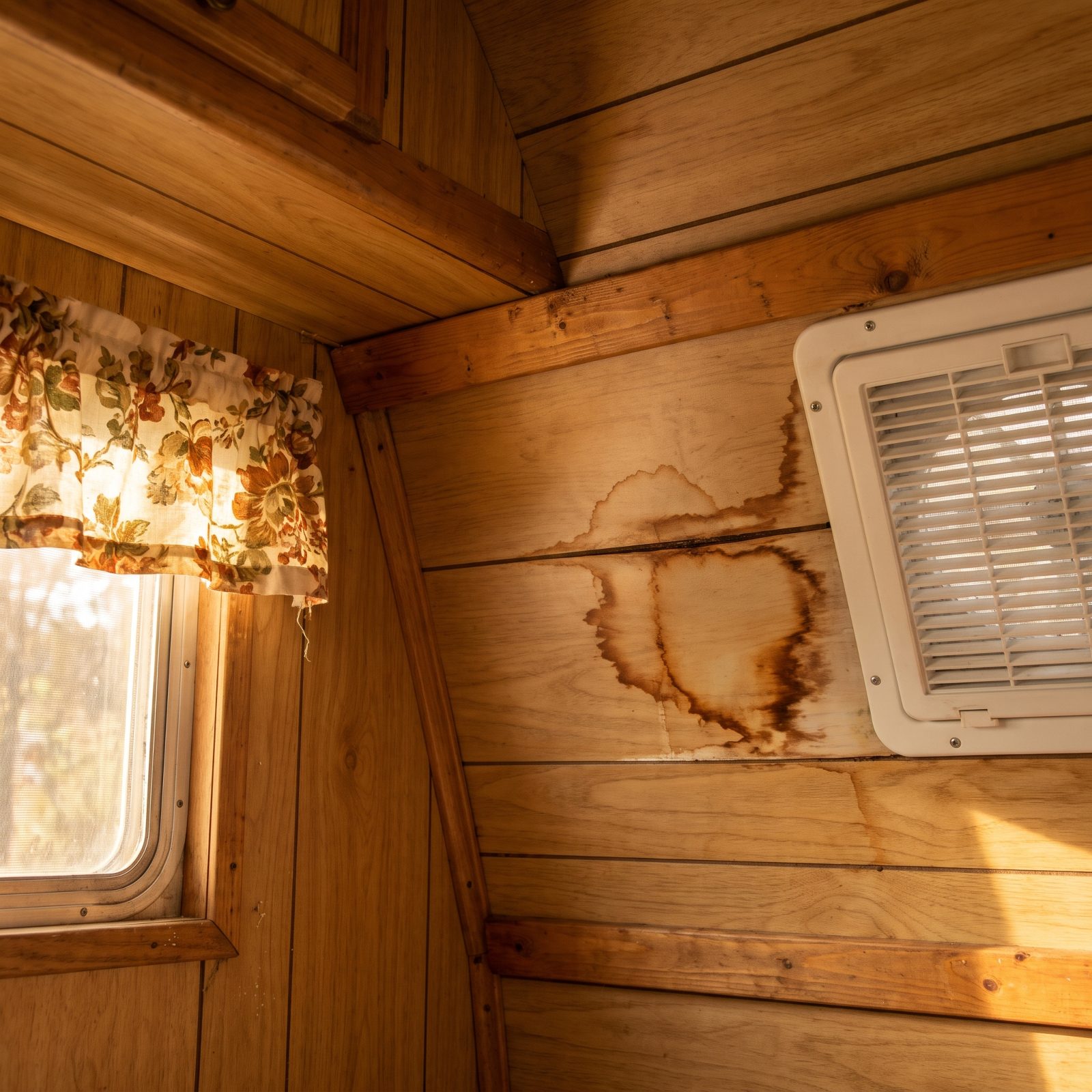
There’s a brown ring blooming near the roof vent, the unmistakable signature of a slow leak, and instead of alarm you feel oddly reassured. Because your dad hauled this same brand to the lake every July for fifteen years. The badge feels like family. A leak under that logo can’t be serious, right? Dad’s rig never fell apart.
That’s nostalgia doing security work it isn’t qualified for. Brand loyalty inherited from a parent is one of the stickiest biases there is — the retail version of trusting someone too fast because they remind you of a person who once loved you well. The feeling is real. So is the water damage, and it doesn’t care whose childhood it borrows.
Fiberglass rots the same under every logo. Dad would tell you to check the seams.
14. A Best-Seller Sticker Feels Like Hundreds of Personal References

A starburst sticker on the windshield announces this is the best-selling floorplan three years running, and something in you relaxes. All those other buyers can’t be wrong. It’s like showing up to a first date and learning everyone they’ve dated adored them.
Social proof is the oldest shortcut in the book. When we don’t know how to judge something, we outsource the judgment to the crowd. Trouble is, a best-seller tag measures what moved off the lot cheapest, not what held up after year four. Popular and good are different animals that happen to wear similar coats.
Those hundreds of buyers aren’t your references. They never saw this specific unit, this roof, these soft spots. They bought a brochure, same as you’re about to.
A crowd tells you what sold. It cannot tell you what lasted.
13. You Trust the Dealer Badge Over Your Moisture Meter
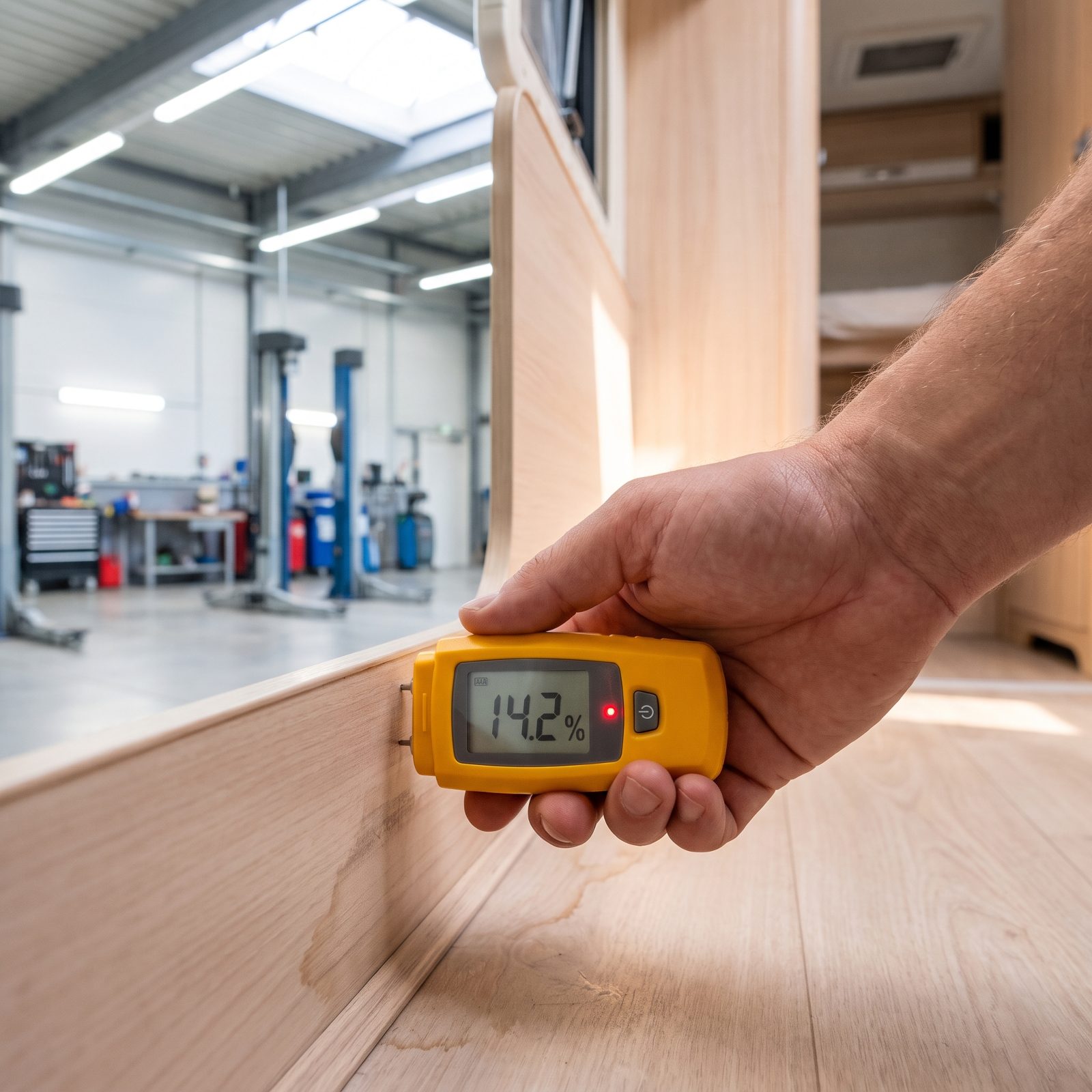
Your moisture meter is beeping. The number on the little screen is higher than it should be, right there along the floor seam. And yet the sales rep in the clean polo says the whole lot’s been inspected, certified, gone through the bay — so you pocket the meter. The institution outranks your own instrument.
Authority bias does this. A uniform, a badge, a certificate, and we downgrade our own senses to make room. People do it in relationships too, when the partner with the confident voice and the good credentials gets believed over the quiet thing the gut keeps flagging.
The meter has no reason to lie to you. The person whose commission depends on your signature has several. When your own tool and the salesman disagree, the tool wins. Every time.
12. A Huge MSRP Makes Any Discount Feel Like Devotion
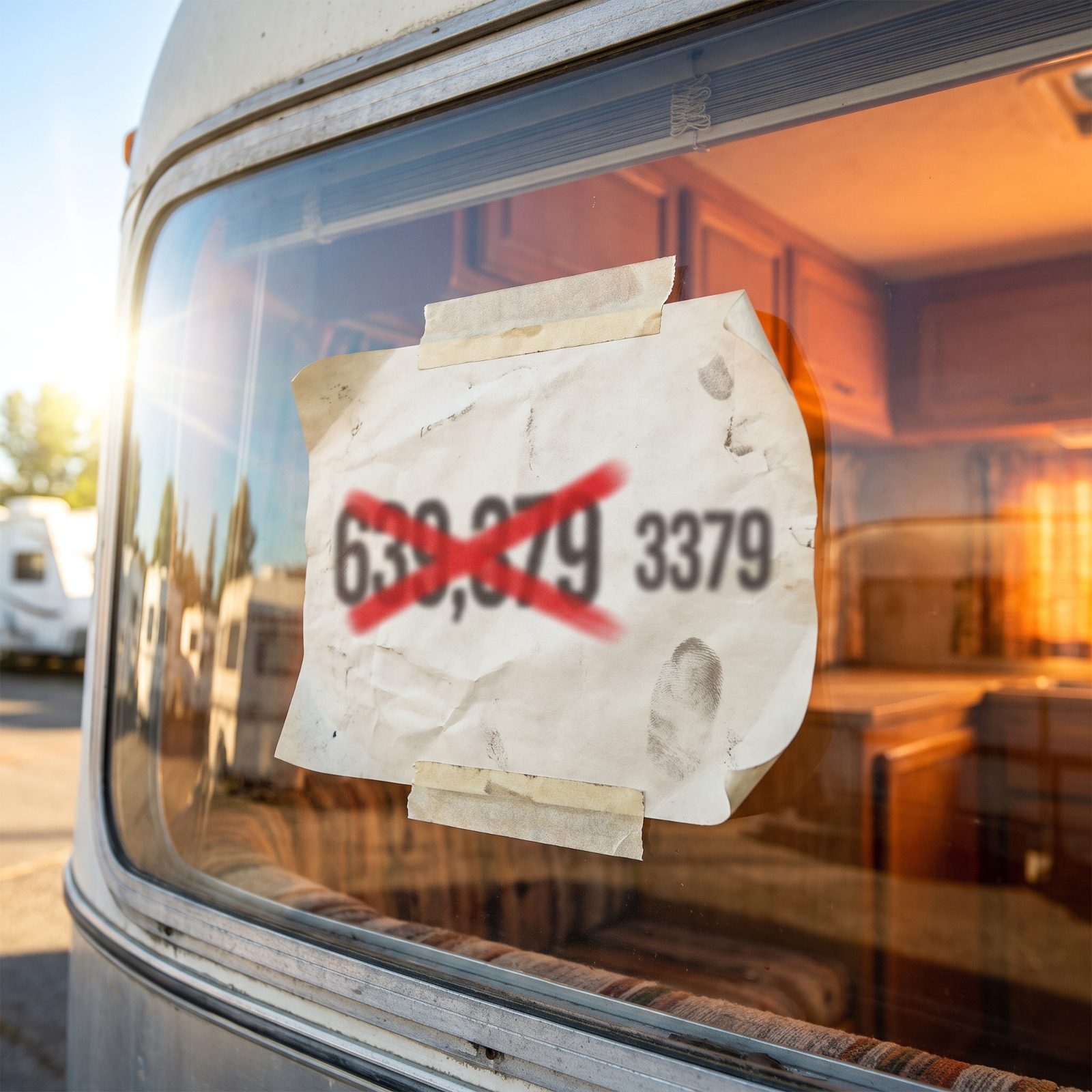
The sign taped to the windshield says $63,900. Someone crosses it out with a big red X and writes $33,790 beside it, and you still feel like you’ve been chosen. Thirty thousand off! For you! That generosity lands like affection.
Anchoring, pure and clean. The first number you see becomes the gravity well every other number orbits. Nobody ever paid 63-whatever-thousand for this rig. That price exists only to make the real one feel like a love letter. Retailers have run this play since storefronts had awnings, and the mind falls for it every single time.
The same trick runs through bad romances. Set the bar impossibly high, then deliver crumbs, and the crumbs feel like devotion by contrast. A discount off a fake number is not a gift. It’s a magic trick, and you’re the volunteer from the audience.
11. The Awful Base Model Makes the Pricier Rig Look Sensible

The salesman walks you through the base model first, and it’s grim on purpose. Gray vinyl like a rental office, curtains you can see through, a dinette that feels like a waiting room. Then he opens the next one up, the tan rig parked beside it — warm wood, cushioned seating — and suddenly a seven-thousand-dollar jump feels not just reasonable but obvious. Who’d punish themselves with the base?
That’s the decoy effect, and the ugly trailer isn’t there to be sold. It exists to make the pricier one look sensible by comparison. Menus pull it with the one wildly overpriced bottle of wine. Dating does it too — the friend who makes you look better by standing next to you.
Nobody planned to buy the middle rig until they were shown something worse. Decide what you need in the parking lot, before anyone starts arranging the options around you.
10. Another Buyer Is Coming, So Suddenly the Floorplan Works
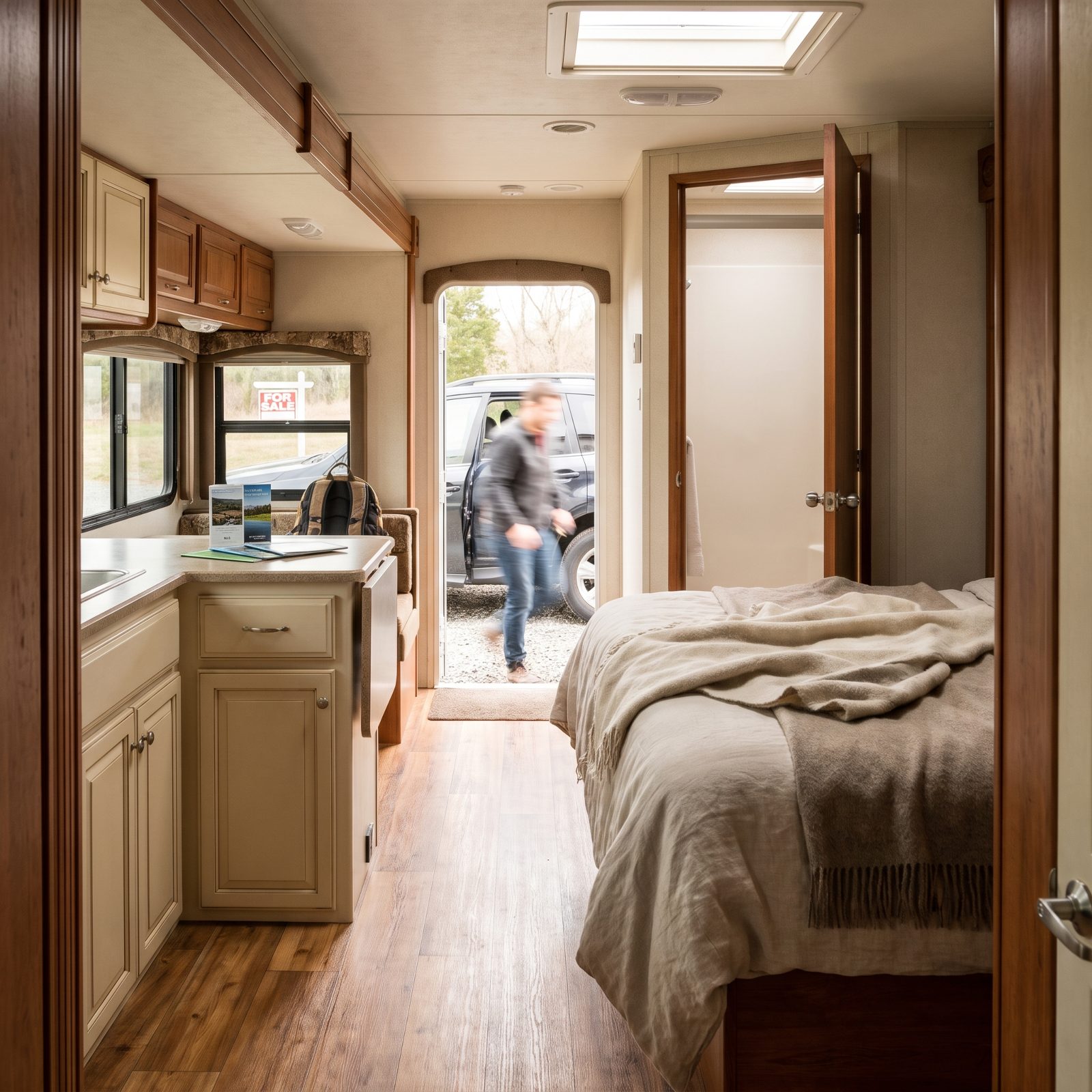
Ten minutes ago you were griping about the walkway — how you’d have to turn sideways to get past the island, how the bed crowds the bathroom door. Then the sales rep mentions another couple is driving over this afternoon to see this exact unit, and just like that the cramped walkway becomes cozy and the whole floorplan clicks into place.
Scarcity flips the switch instantly. The second something feels like it might be taken, we want it harder and nitpick it less. It’s the ex who became fascinating the moment someone else showed interest. Nothing about the thing changed. Only its availability did, and availability hijacks desire like almost nothing else.
There’s always another buyer coming. It’s the most reliable sentence on the lot. The floorplan that annoyed you at two o’clock will still annoy you at midnight, after you’ve signed.
9. Free Camping Chairs Somehow Sweeten a Questionable Roof
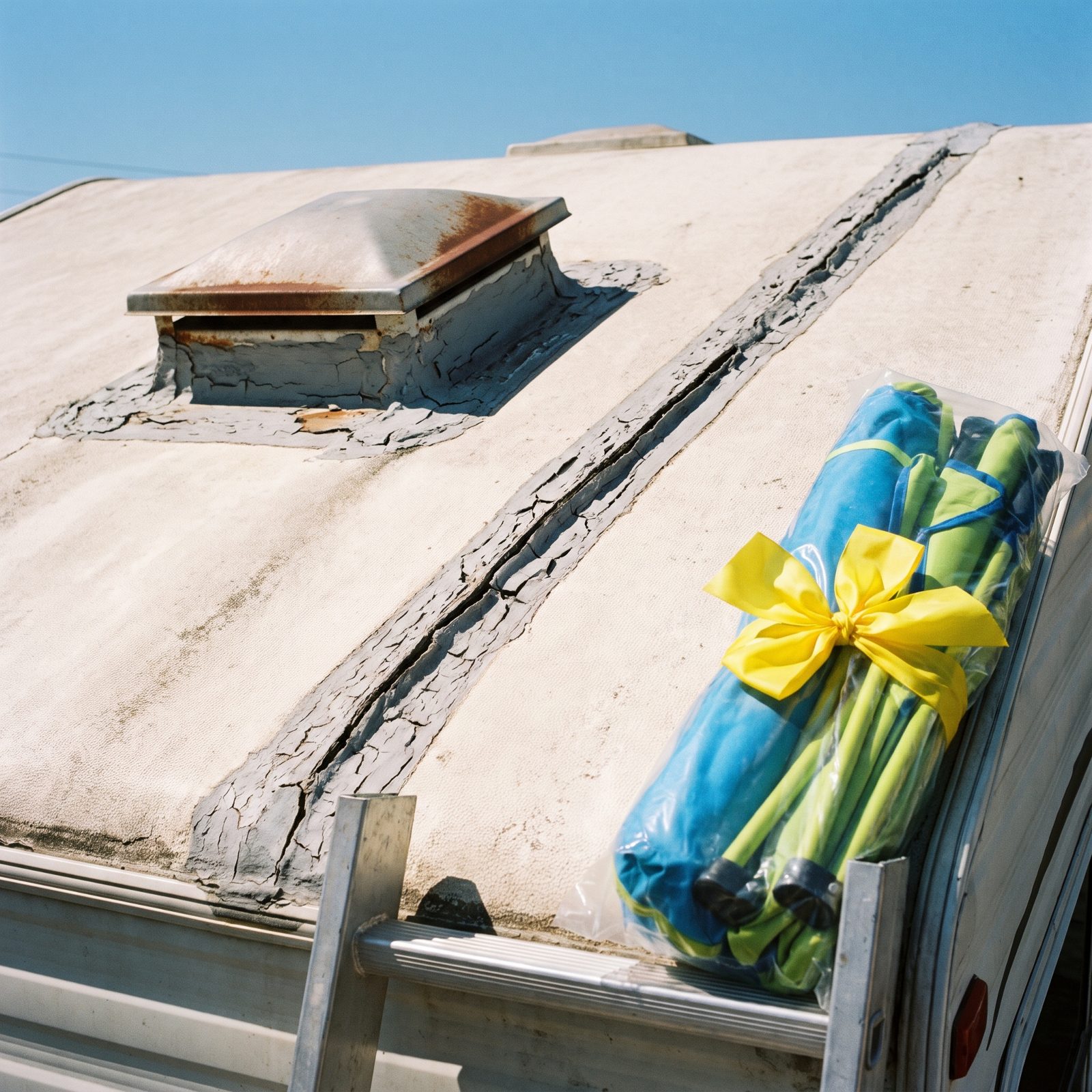
Up on the roof, the sealant tells a story you don’t want to read: cracked beads around the vents, a seam peeling like old sunburn, the slow start of a thousand-dollar problem. Then the dealer tosses in two free camping chairs and a sewer hose kit, and somehow the roof feels less urgent. You walked up a skeptic and climbed down charmed over forty bucks of nylon.
Reciprocity is the lever. Someone gives you something, even something small, and you feel a pull to give back — usually your trust, usually your willingness to overlook. Same ancient wiring that makes you forgive a bad week because someone brought you flowers.
The chairs cost the dealer less than the caulk you’ll buy to fix what they’re distracting you from. A gift on the roof doesn’t fix the roof. Take the chairs if they’re offered. Then go back up the ladder.
8. A Low Monthly Payment Hides a Very Long Problem

The salesperson never says the price. They say the payment. “We can get you in this for around three-ninety-nine a month.” Your shoulders drop, because three-ninety-nine feels doable, like a dinner out you skip twice. What they don’t circle is the part that runs for years and costs more in interest than a second-hand Jeep.
It’s the same math people do when they settle. The relationship is tolerable day to day, so the decade it quietly swallows never gets added up. You’re pricing the Tuesday, not the total.
Lenders are very good at this, and the trick has a name: framing. A big ugly number splits into small friendly ones, and your brain treats the small one as the real cost.
7. You’ve Driven Three Hours, So Walking Away Feels Wasteful
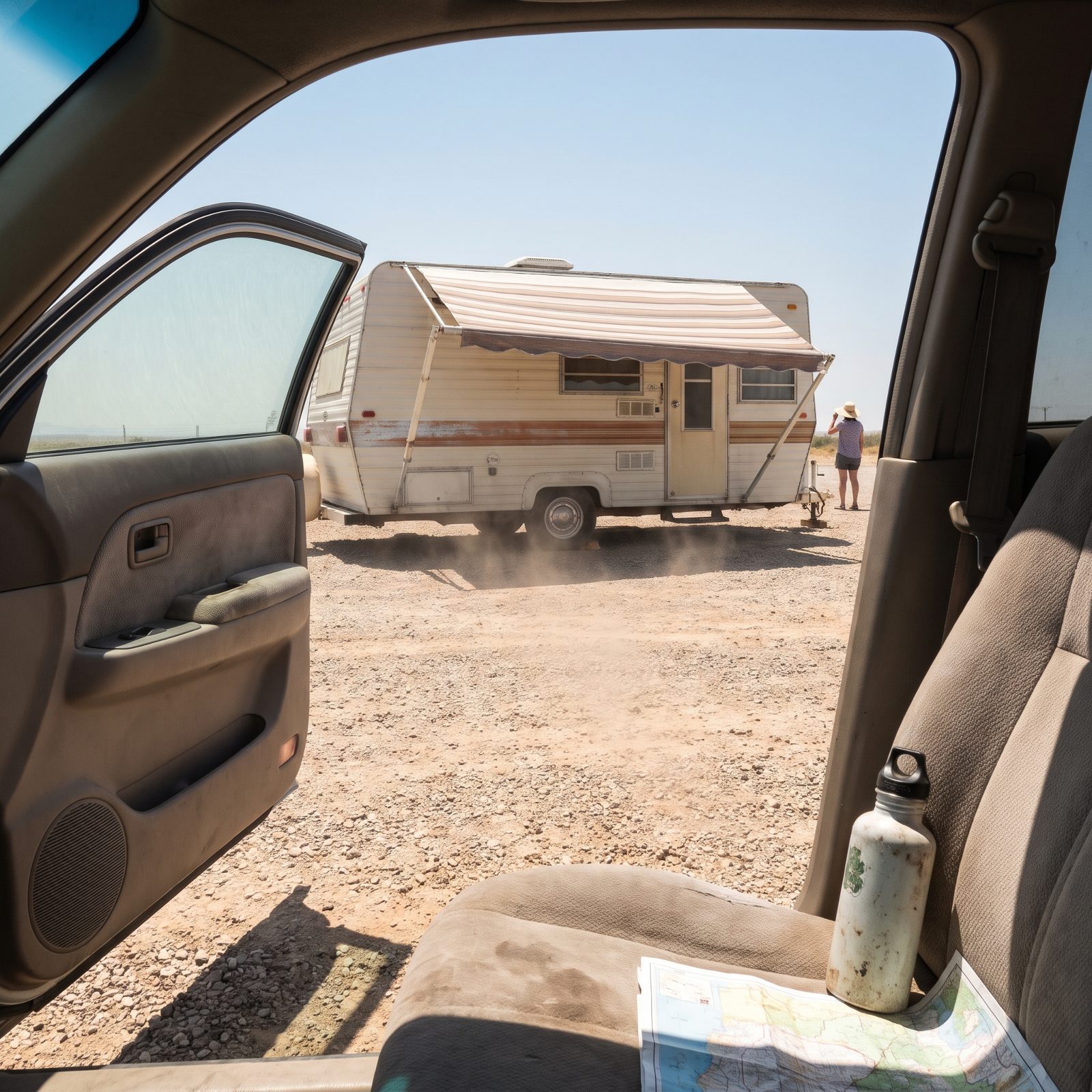
Three hours of highway, a gas station sandwich, and a toll you resented. Now you’re standing in front of a trailer with a soft spot by the entry step, and some part of your brain starts negotiating with itself: all this way, surely I’m not leaving empty-handed.
That’s the sunk-cost fallacy, the loudest voice on a used RV lot. The gas and the hours are already gone, and they don’t improve the trailer by one square inch. But we hate feeling like our effort was for nothing, so we throw good money after a bad drive.
People do it with years instead of miles. “I’ve already given this so much time” keeps more folks in the wrong spot than any genuine affection ever did. The sunk cost isn’t a reason to stay. It’s the thing whispering that it is.
6. You Tell Everyone It’s the One Before the Inspection
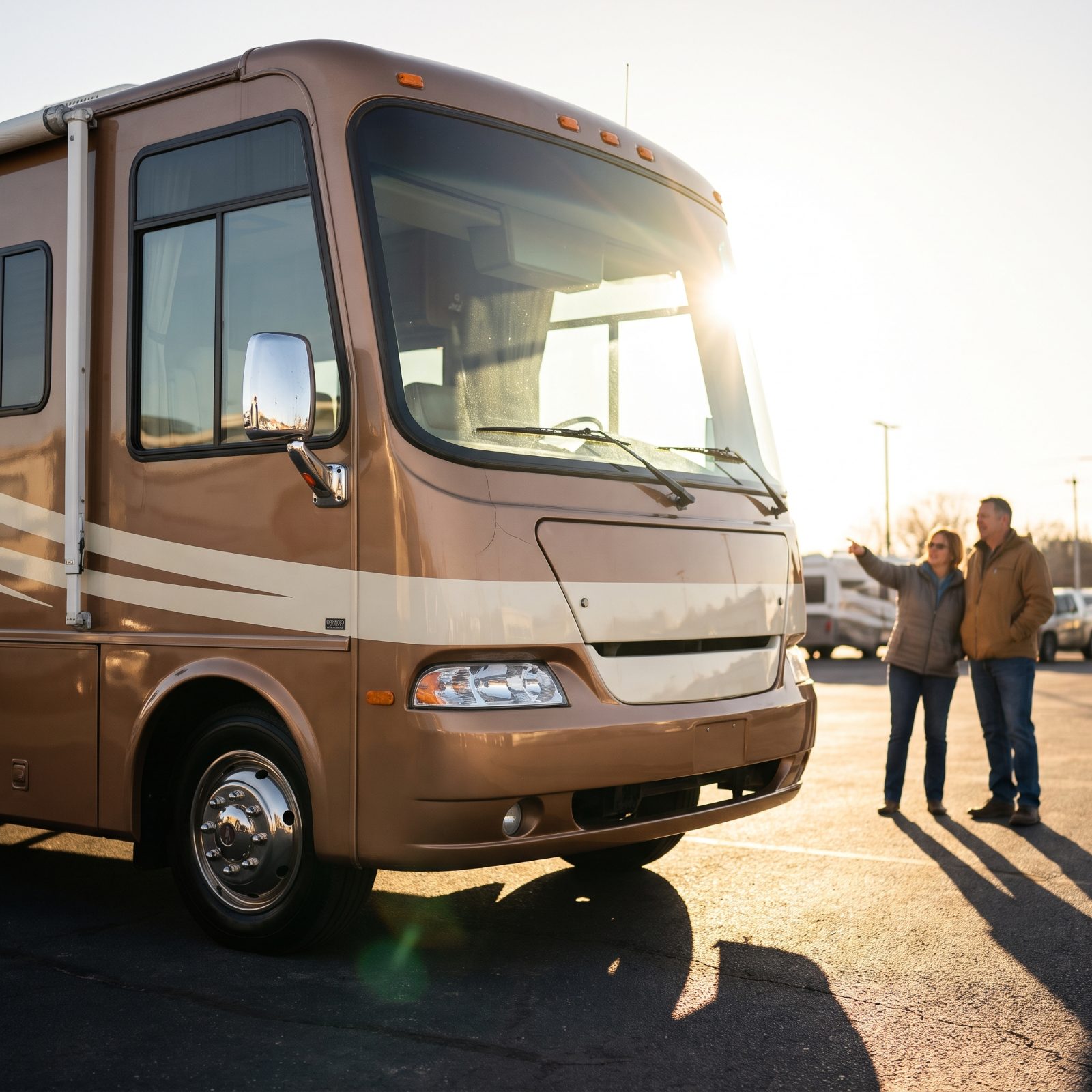
Before anyone has crawled under it with a flashlight, you’ve already texted the kids a photo, named the first trip, and mentally parked it in the driveway. The decision happened in the first ninety seconds. Everything after is your mind building a case for a verdict it already reached.
Psychologists call this confirmation bias. Once you’ve decided, you collect evidence that agrees with you and quietly discount the rest. The cracked sealant becomes “cosmetic.” The hesitant slide? “It just needs lubricant.”
It’s the exact mechanism behind introducing someone as “the one” at week two. You announce it, and the announcement locks you in. Now admitting doubt means admitting you were wrong in front of people, which is a cost all its own.
5. After Calling It “Our Rig,” Giving It Back Feels Personal
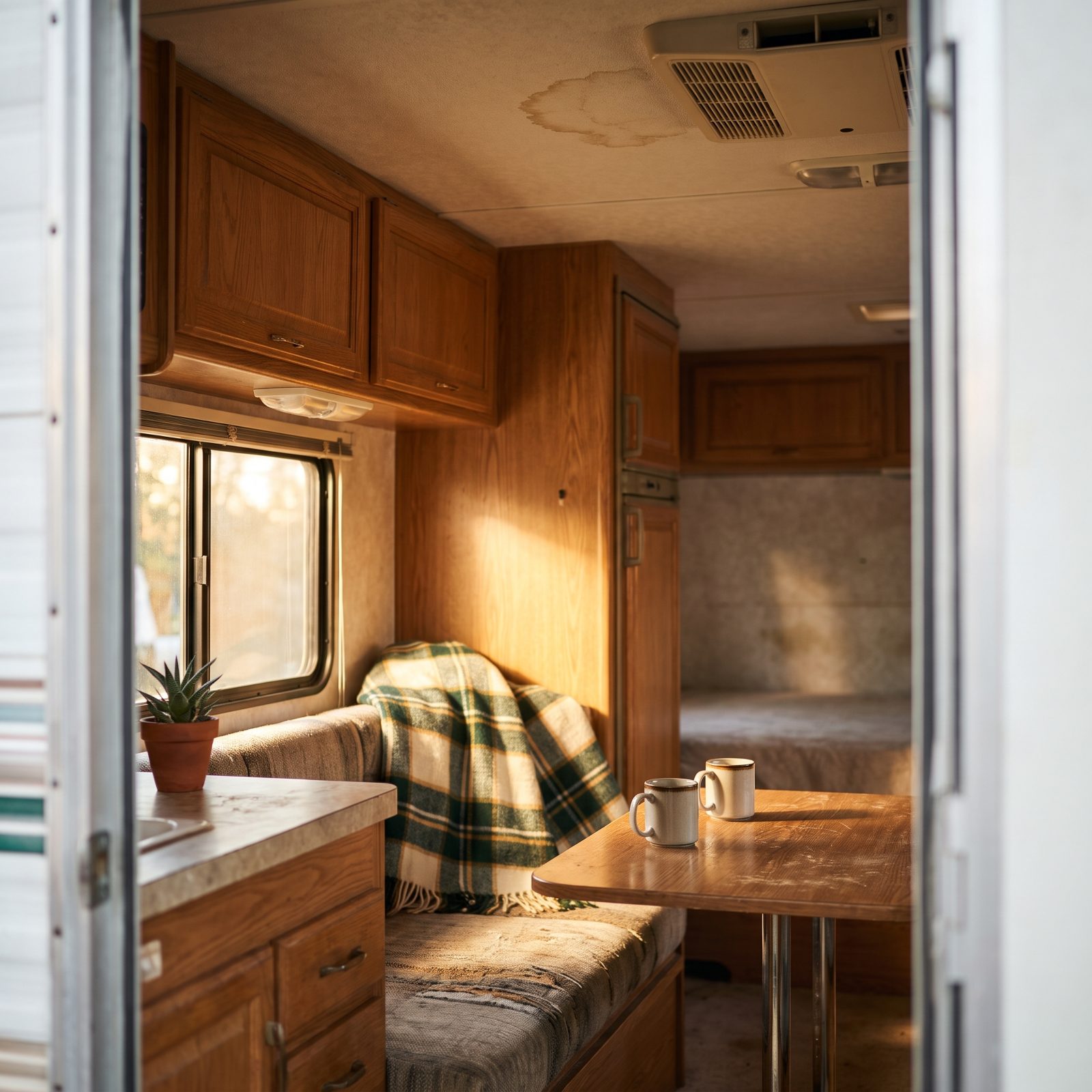
Funny how fast “the unit” becomes “our rig.” You start saying it during the test drive. By the time you’re home that night you’re picturing your mugs in the cabinet and a throw on the dinette. And once it’s yours in your head, handing the keys back feels less like canceling a purchase and more like a breakup.
This is the endowment effect. The moment we feel ownership, the thing is worth more to us and letting go hurts more than it logically should. Researchers have watched people demand more to give up a coffee mug they’ve held for five minutes than they’d pay to buy the same mug off the shelf.
The same force keeps people in a relationship they’d never choose fresh today. Walking away feels like loss, not escape. But you don’t actually own the trailer yet. You own a daydream, and daydreams are free to return.
4. You Figure the Delamination Is an Easy Weekend Fix
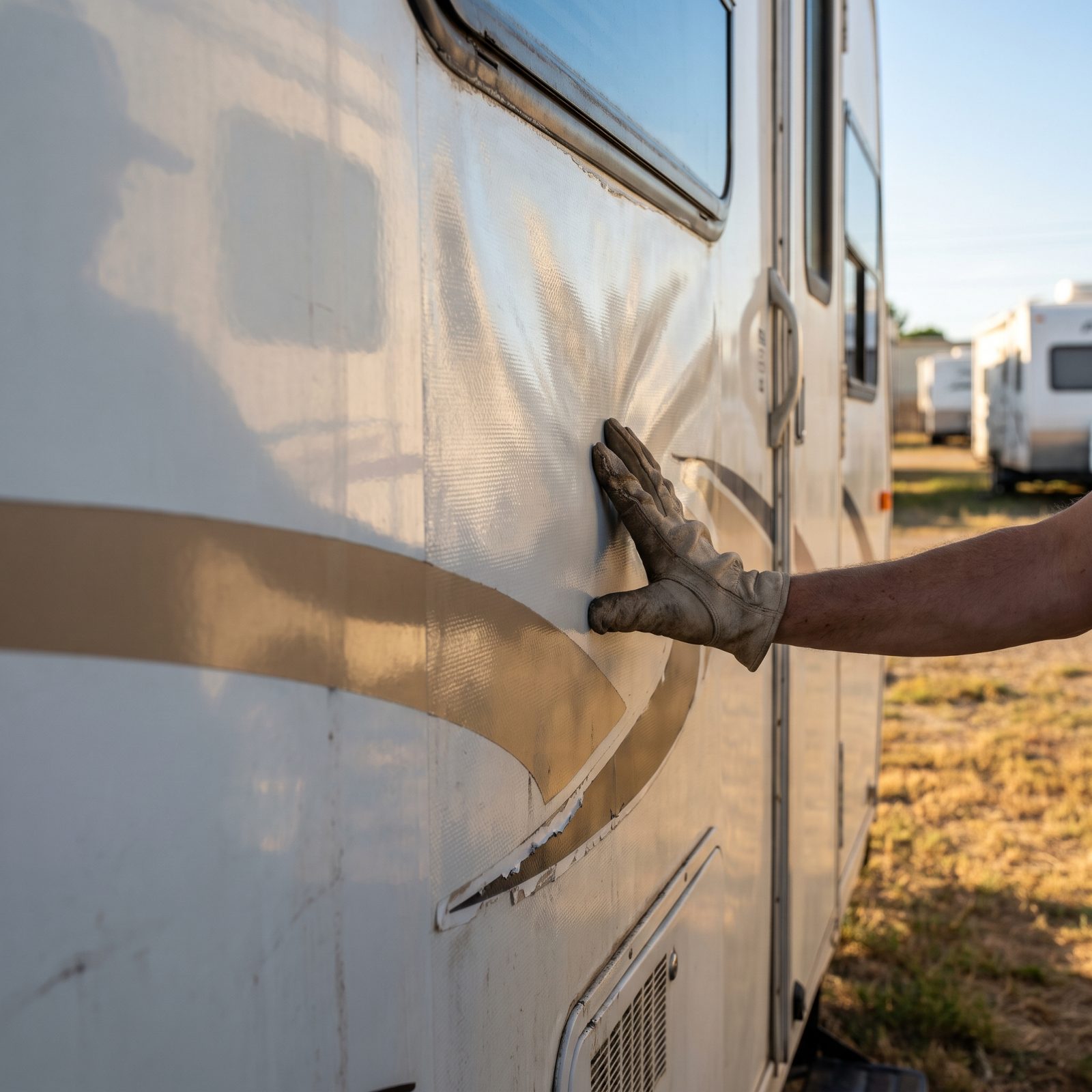
Delamination looks like a bubble in the sidewall, a gentle ripple where the outer skin has let go of what’s behind it. And standing there, you hear yourself say the most dangerous three words on an RV lot: “I can fix that.” A weekend, some adhesive, a few clamps. How hard could it be.
Harder than you think. That’s the planning fallacy at work. We underestimate how long a job takes and how much it costs, because we picture the smooth version and skip every snag. The real fix often means water got behind that skin, which means rot you can’t see yet.
People pull the same move with a difficult partner: “I can work with this.” The fantasy of the fix is more comfortable than the reality of the damage. Confidence in your own repair skills is cheap at the moment of purchase and expensive six months later.
3. That Ceiling Stain Is “Probably From the Old Leak”
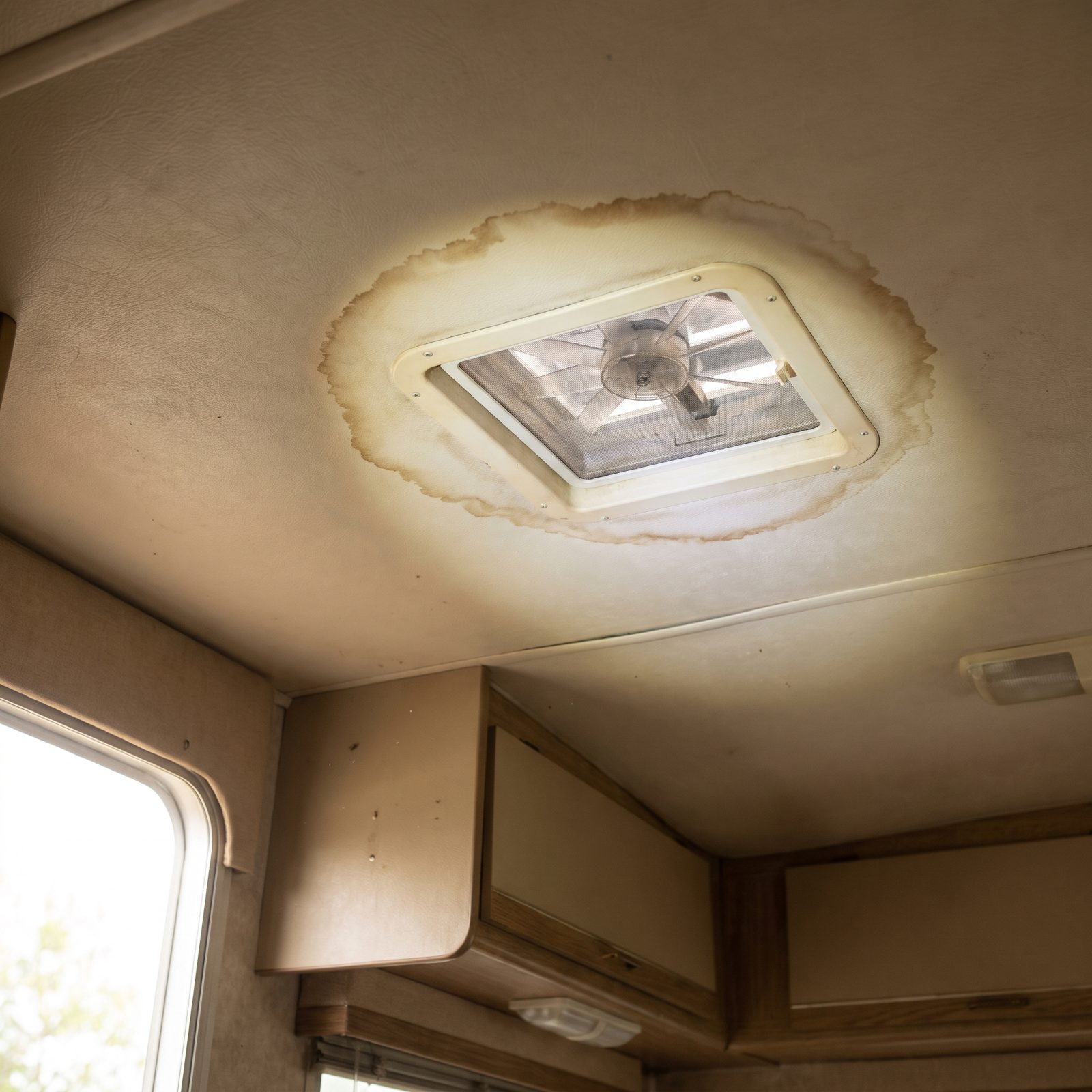
A brown ring around the roof vent. You tap it, it feels okay-ish, and the seller offers the magic phrase: “That’s from an old leak, it’s been fixed.” And you want that to be true so badly that you accept it without a single piece of evidence.
Welcome to motivated reasoning. The explanation isn’t believed because it’s convincing. It’s believed because it lets you keep wanting what you already want. A stain the color of weak coffee becomes ancient history on the strength of one sentence from the person selling it to you.
You’ve heard the human version. “That was a one-time thing.” “That’s just how they were back then.” We accept thin reassurance when the alternative is giving up the thing we’ve set our heart on.
A water stain never fixes itself. It either stopped, or it’s still spreading behind the panel. “Probably” is not a diagnosis.
2. You Skip the Inspection Because Bad News Could Ruin Everything
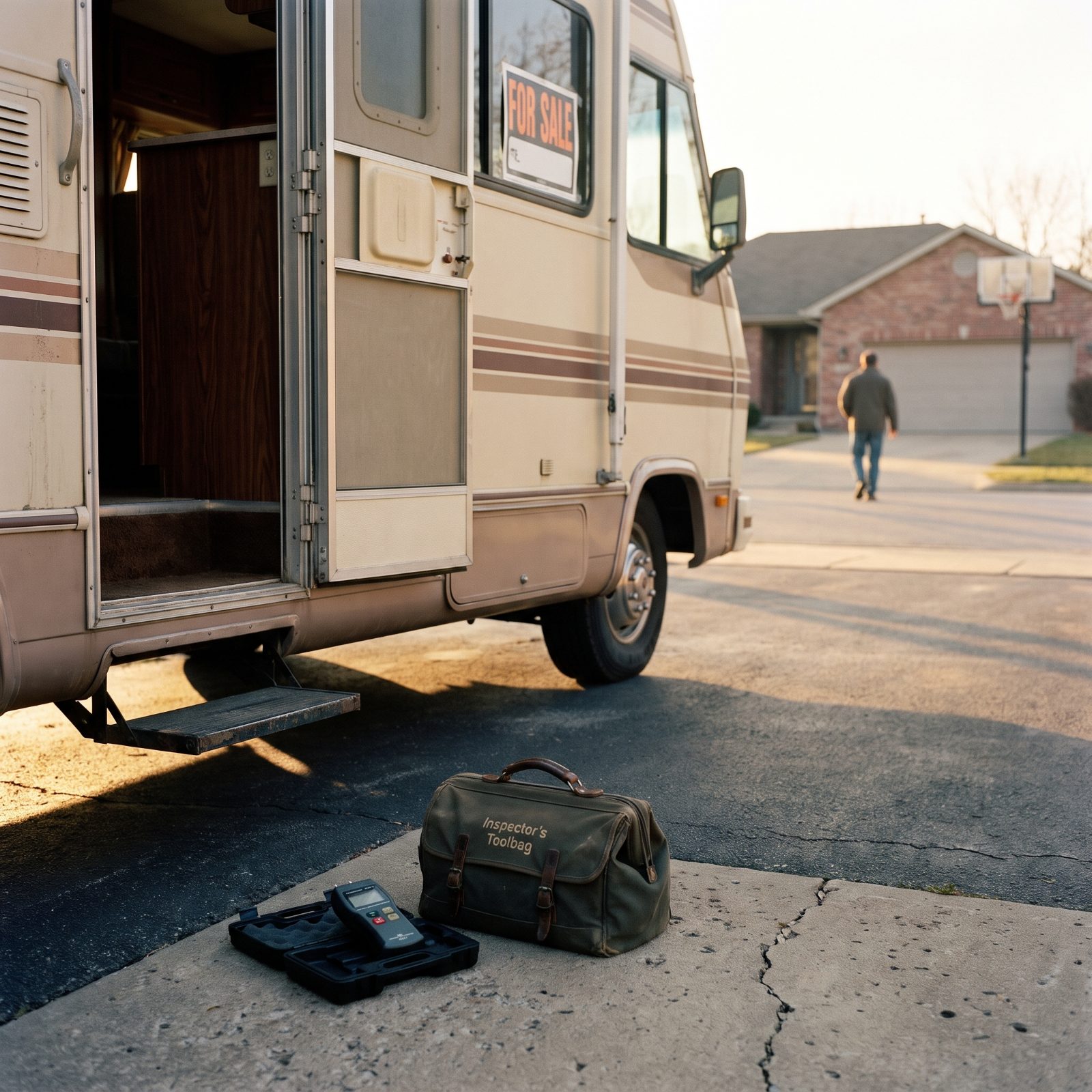
Here’s the quiet one. You don’t skip the independent inspection because you trust the rig. You skip it because some part of you is afraid of what it’ll find. If nobody looks under the floor, the floor can stay perfect in your mind.
That’s the ostrich effect, our habit of avoiding information we suspect we won’t like. Investors do it when they stop checking their accounts in a downturn. Buyers do it when an inspection fee feels riskier than a five-figure purchase, because the inspection might say no.
Same reflex as not asking the question you don’t want answered. The not-knowing feels like safety. It isn’t. It’s just the problem, waiting, with a delivery date of about a year from now.
1. One Perfect Test Drive Erases Three Troubling Walk-Throughs

Three walk-throughs turned up a balky slide, a soft floor, and storage bays already overloaded by the current owner. Then you take it on the highway, the engine pulls clean, the road opens up, and that single wonderful hour quietly files away everything that bothered you before.
Blame the peak-end rule. We judge an experience mostly by its best moment and its ending, not by the honest average. A great test drive at the end becomes the whole memory, and those three uneasy inspections fade like they happened to someone else.
It’s exactly how one perfect night papers over a month of warning signs. The high point rewrites the record. Trouble is, you don’t buy the test drive. You buy the floor, the slide, and the thousand dull Tuesdays after. Average the whole thing, not the best hour of it.