
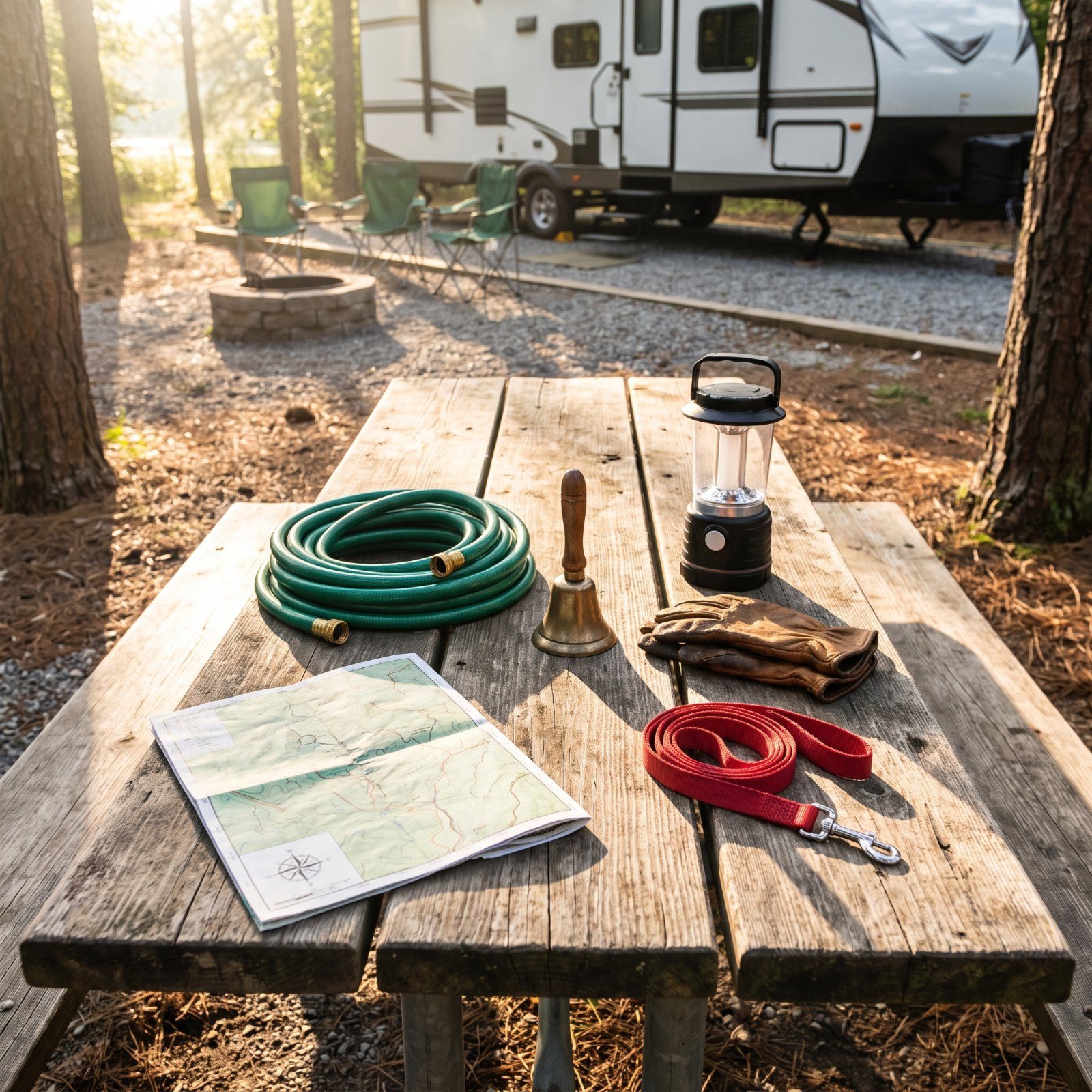
The guy two sites over is a saint until he fires up his generator at 10:47 p.m. Suddenly you remember he exists. Campground etiquette runs on small, invisible agreements, and most of the friction out there comes from people who have no clue they’re the problem. That’s actually the good news, because nearly every one of these is a five-second fix once you see it. What follows are the habits that make neighbors grumble, create real hazards, and quietly sour the reputation of everyone parked nearby.
42. Cutting Through Occupied Campsites Instead of Walking the Road
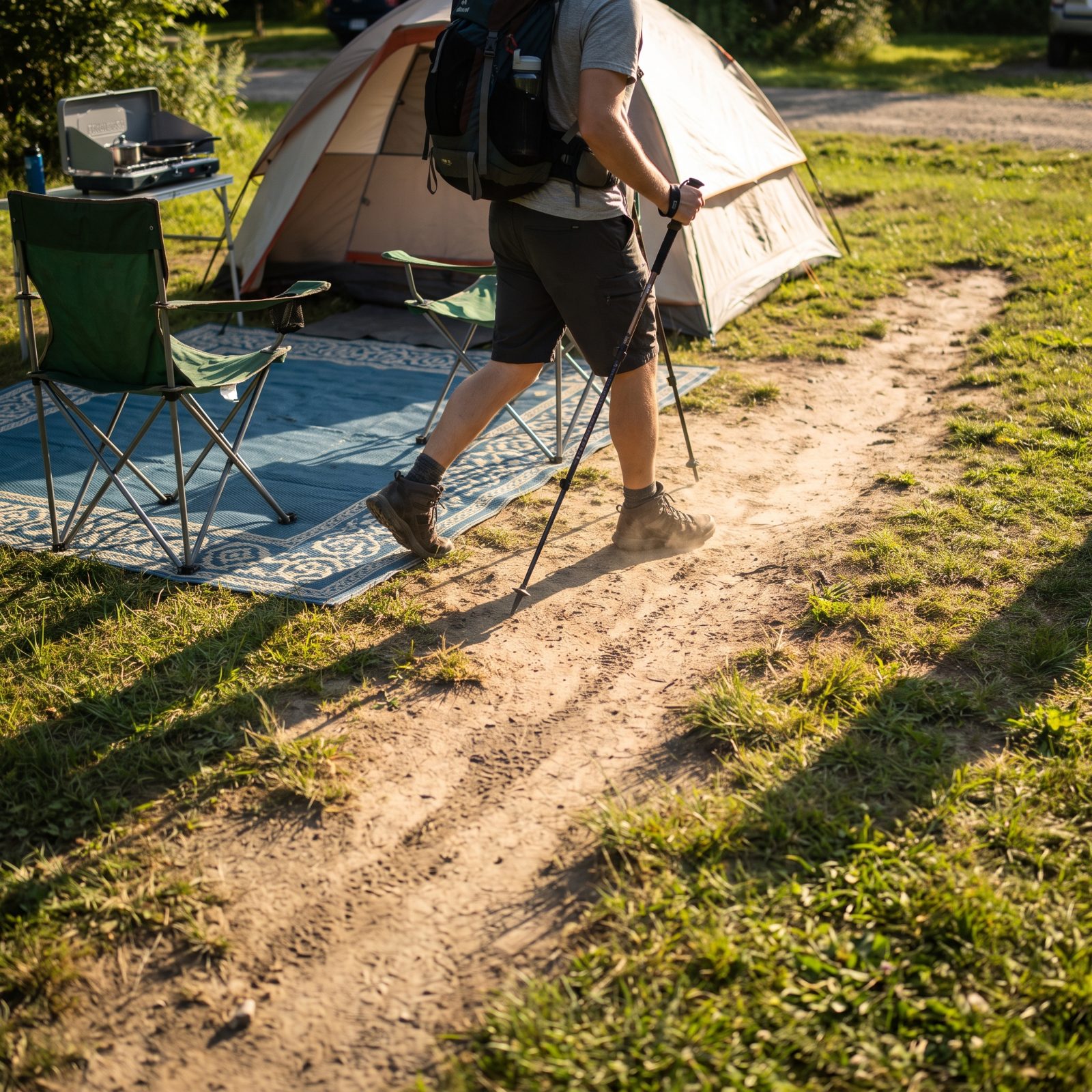
Your campsite is your living room for the week. So when somebody strolls diagonally across it to save forty feet of walking, it lands exactly the way a stranger wandering through your backyard would. It breaks the one rule campers actually agree on without ever saying it out loud: the space inside the fire ring, the chairs, and the pad belongs to whoever paid for it.
The fix costs nothing. Walk the road, follow the loop, and if there’s a trail to the bathhouse, use it even when cutting through looks faster. Teach the kids and grandkids the same thing on day one, because they’ll copy whatever they watch you do.
41. Parking Your Sewer Gear on the Picnic Table
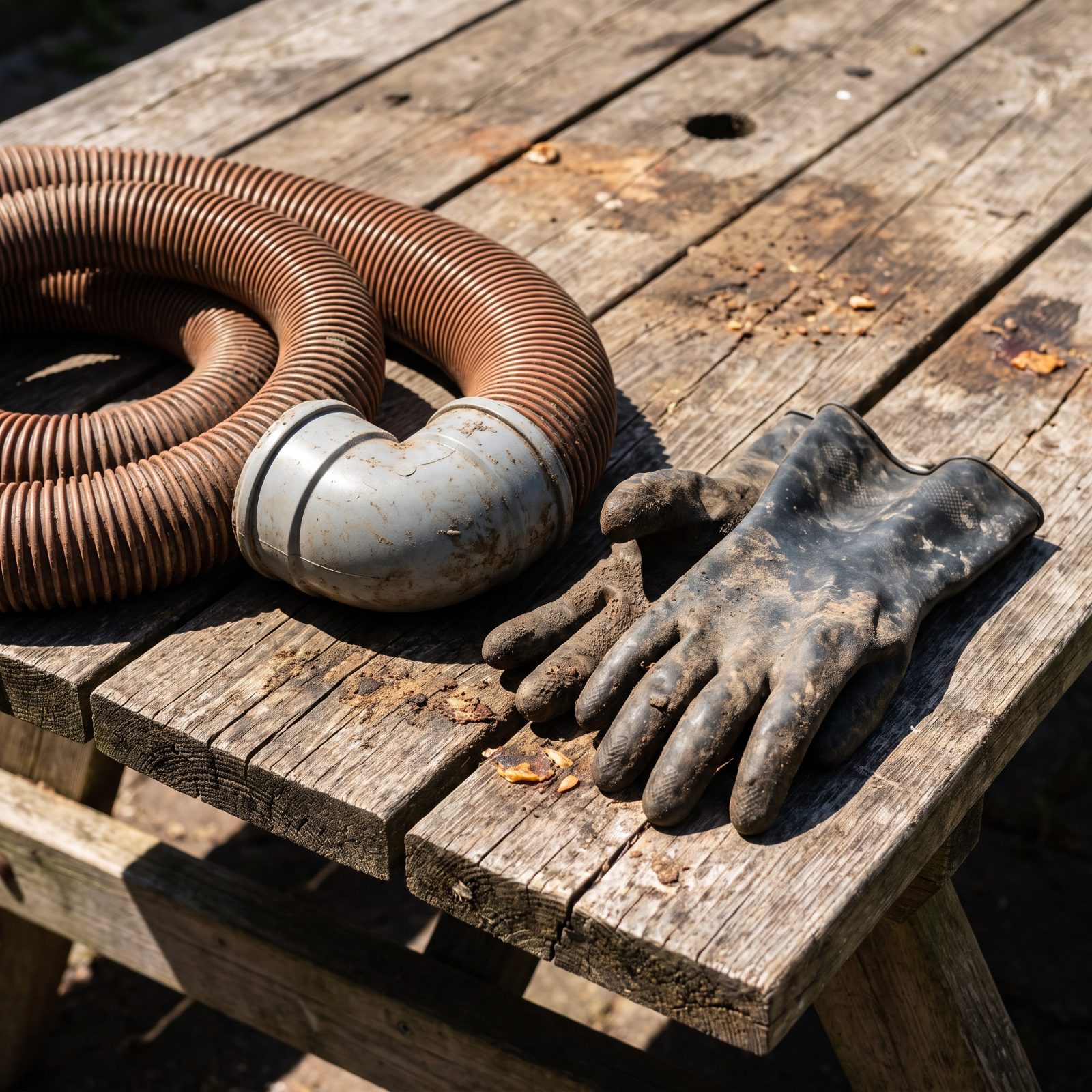
That picnic table is where the next family eats breakfast. The sewer hose, the elbow, the gloves: none of it belongs anywhere near a surface meant for food. It reads as careless to every neighbor who walks past, and it becomes a real sanitation problem the moment someone sets a plate down after you’ve gone.
Keep a dedicated tote or a dollar-store plastic bin stashed in a basement bay just for the stinky slinky and its fittings. Contained, off the table, and never riding loose next to your camp chairs.
40. Letting the Dog Roam the Loop Off-Leash
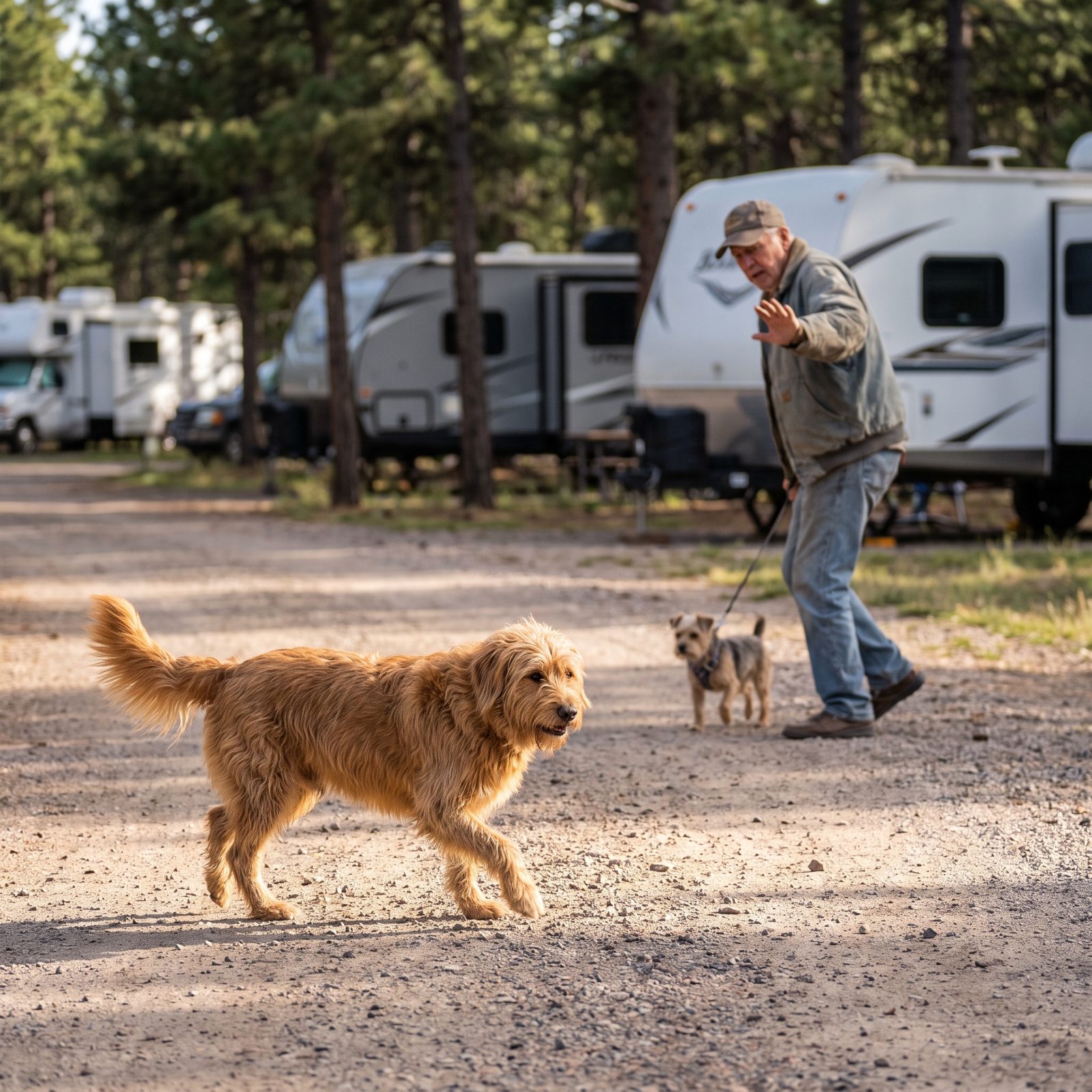
Your dog is friendly. You know that. But the retiree three sites down, walking a reactive rescue on a short leash, does not know that, and watching a strange dog bound toward them turns a peaceful evening into a scramble.
Almost every campground requires leashes, and the reason has nothing to do with whether your dog behaves. It’s about the other dogs, the kids, the wildlife, and the person with a genuine fear of being jumped on. So clip the leash. A 20-foot lead plus a ground stake gives your dog plenty of room to roam your own site without ever wandering into someone else’s.
39. Cranking Music That Carries Three Sites Over
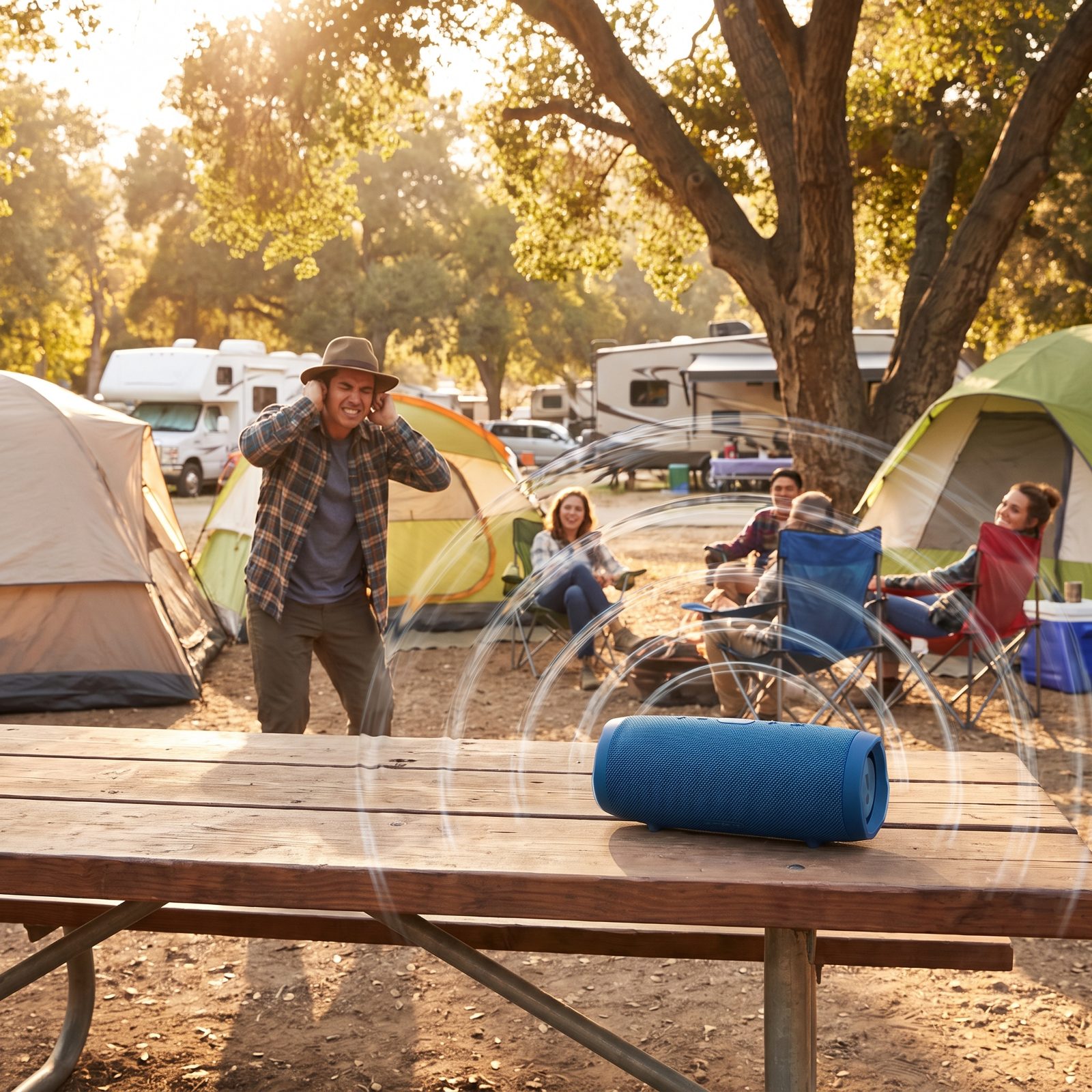
Music in a campground follows a cruel little law of physics: it always sounds better at your own fire than at your neighbor’s. What feels like a pleasant backyard playlist to you lands as a muffled bass thump that someone two sites over can’t escape no matter where they drag their chair.
Keep it at conversation level. The volume where you can still hear the fire crackle and the birds over the top of it. Want it louder? That’s what headphones are for. Nobody drove into a state park to hear your road-trip mix.
38. Running the Generator Past Quiet Hours
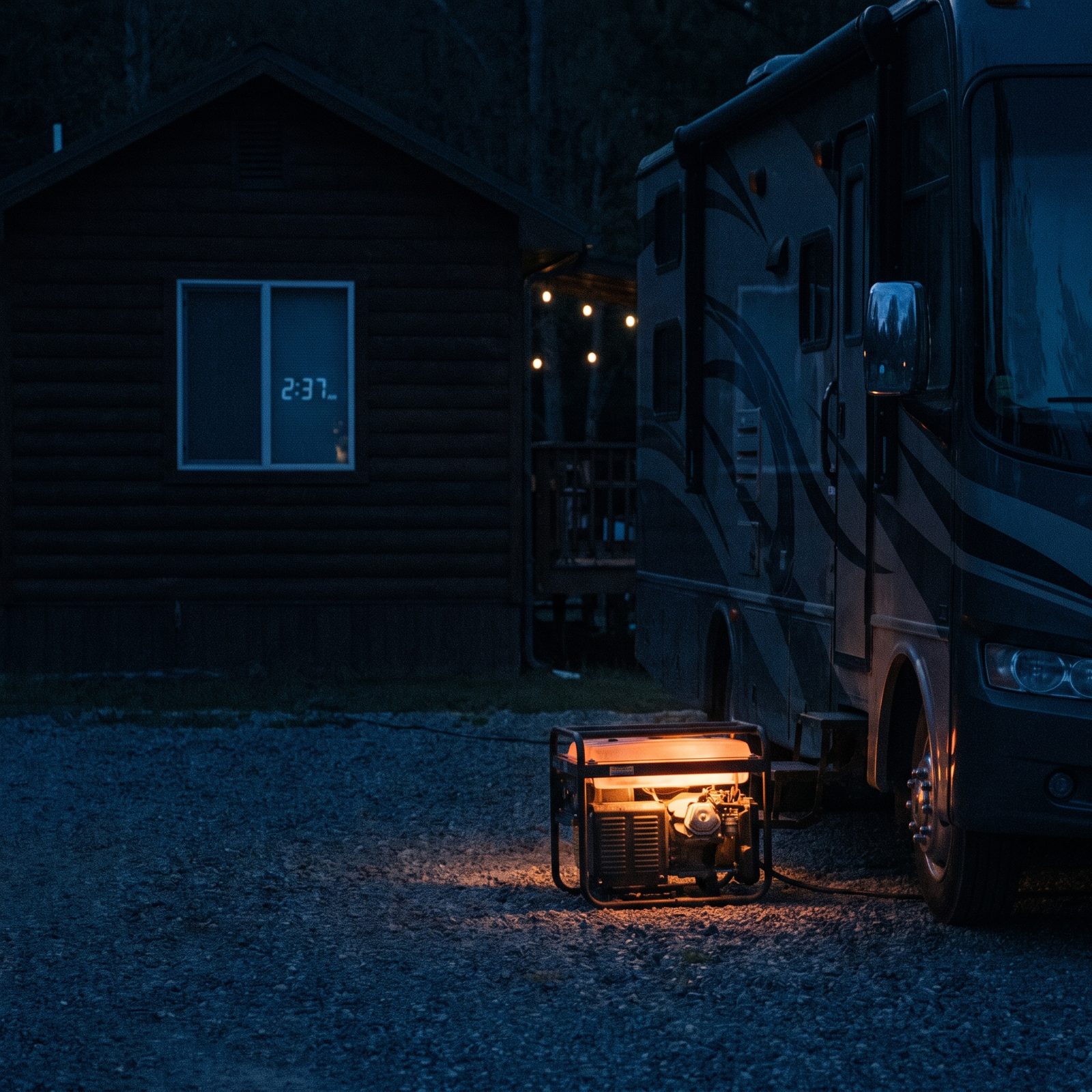
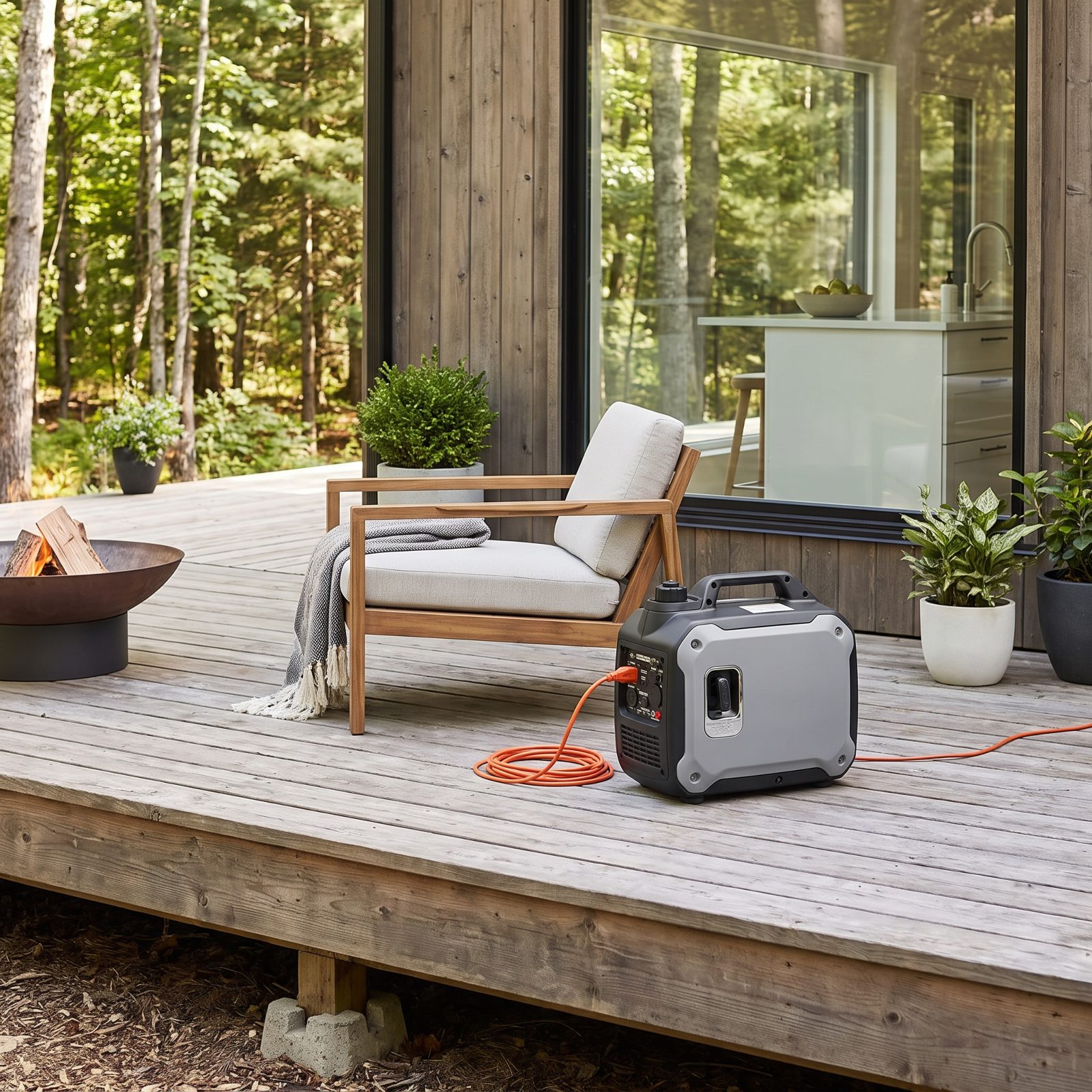
Most campgrounds post quiet hours, often something like 10 p.m. to 6 or 8 a.m., and the generator is the single most common thing that tramples them. A fridge or a CPAP machine feels like a perfectly legitimate reason. To the tent family next door, it’s a lawnmower that won’t turn off.
So plan around it. Top off your batteries before quiet hours kick in, run the generator in the late afternoon, and if you boondock often, look into a lithium battery with a small solar panel. A 100-watt panel and a decent battery bank will carry most overnight loads without a single pull of that cord.
37. Driving the Loop Like It’s an Open Highway
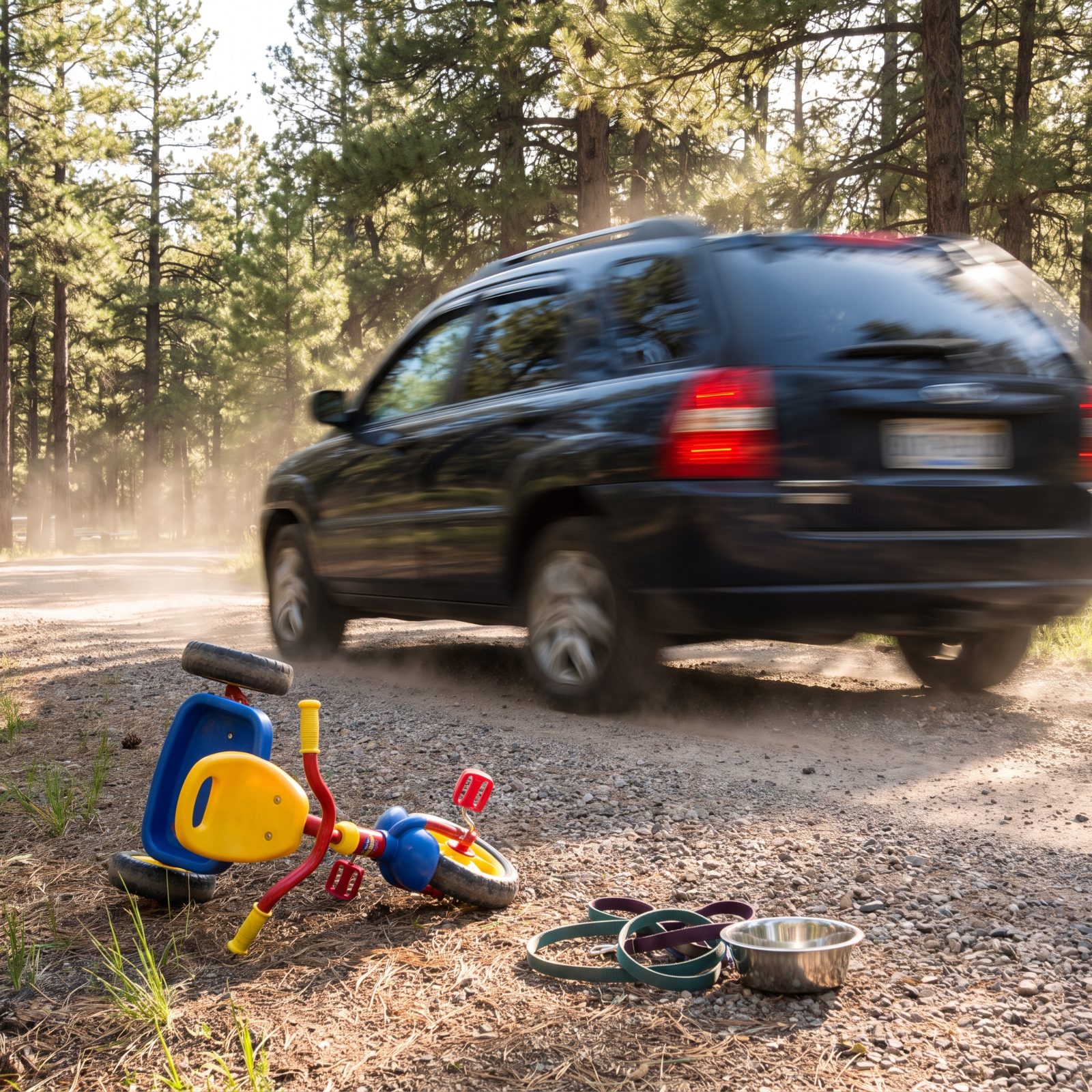
Campground speed limits usually land around 5 to 10 mph, and they feel absurdly slow until you remember what’s loose out there. Kids on bikes. Dogs on long leads. Toddlers who dart. People backing in with zero view of the road. A loose gravel loop taken at 20 mph throws dust over everyone’s dinner and cuts your reaction time down to nothing.
Crawl. Treat the whole loop like a parking lot full of folks who aren’t watching for you, because they aren’t. The five minutes you’d save aren’t worth the one time a child rolls out from between two trailers.
36. Walking Away From Your Dog’s Mess
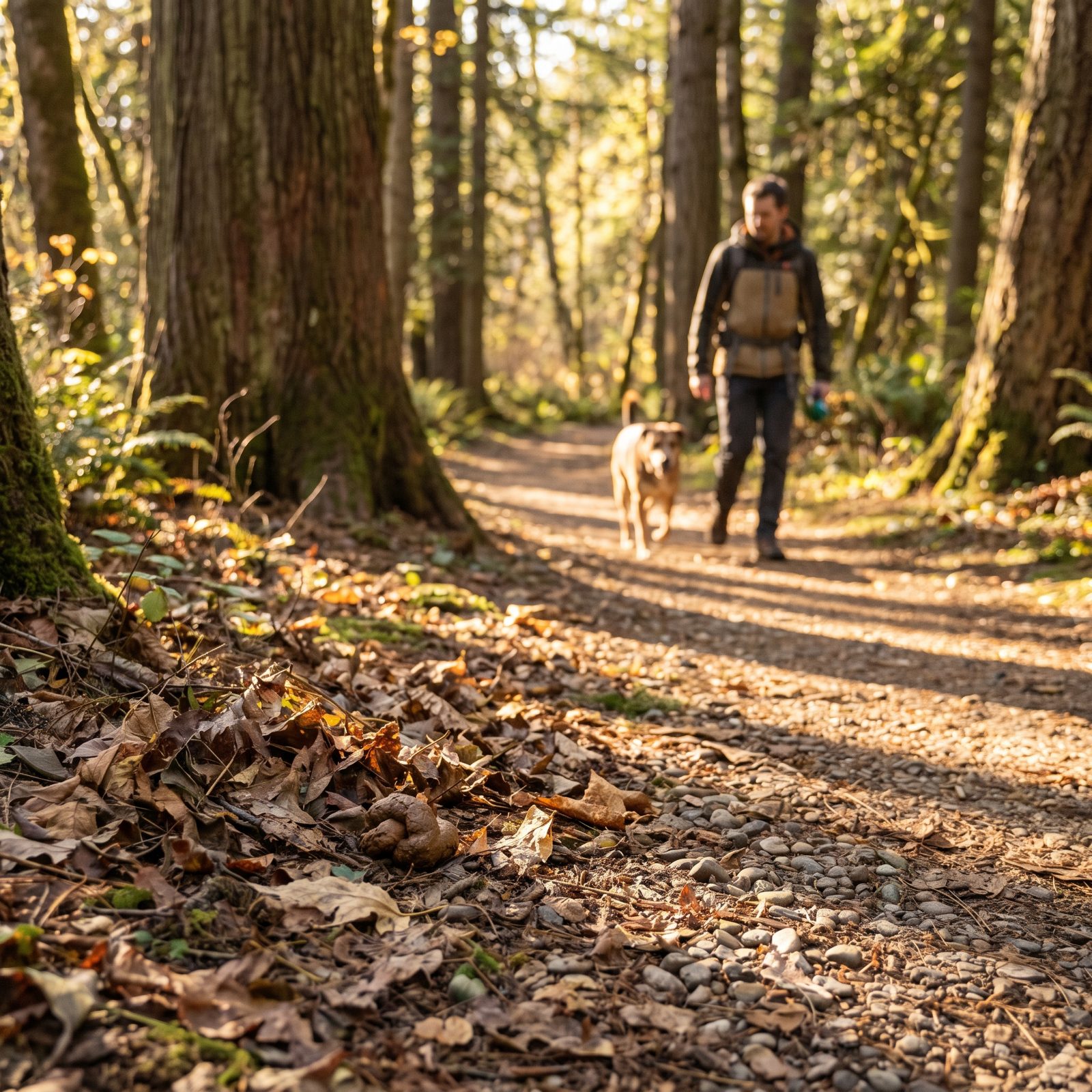
Nothing turns a scenic walking path into a minefield faster than people who figure the woods will handle it. They won’t. A campground packs more dogs into a few acres than any backyard ever would, and uncollected waste fouls the grass where kids play and other dogs sniff around.
Carry bags. Keep a roll clipped right to the leash so you never fall back on the “I forgot” excuse. Pick it up every single time, even at night, even when nobody’s watching, even when you’re pretty sure nobody saw. Somebody always steps in the one you left.
35. Rolling in After Dark and Setting Up Full-Volume
A late arrival doesn’t have to wake the whole loop, but it usually does. Headlights swinging across tents, a spotter shouting directions, the clatter of jacks and slide-outs, the bang of the tailgate. By the time you’re finally level, you’ve introduced yourself to every neighbor as the person who wrecked their 11 p.m.
If you know you’ll land after dark, do the quiet version. Back in with minimal reversing, keep voices low, and skip the full production. Level it, hook up power, then leave the awning, the chairs, and the outdoor rug for morning. Nobody judges a camper who waits until daylight to finish the job.
34. Letting the Diesel Idle Right Next to the Neighbors
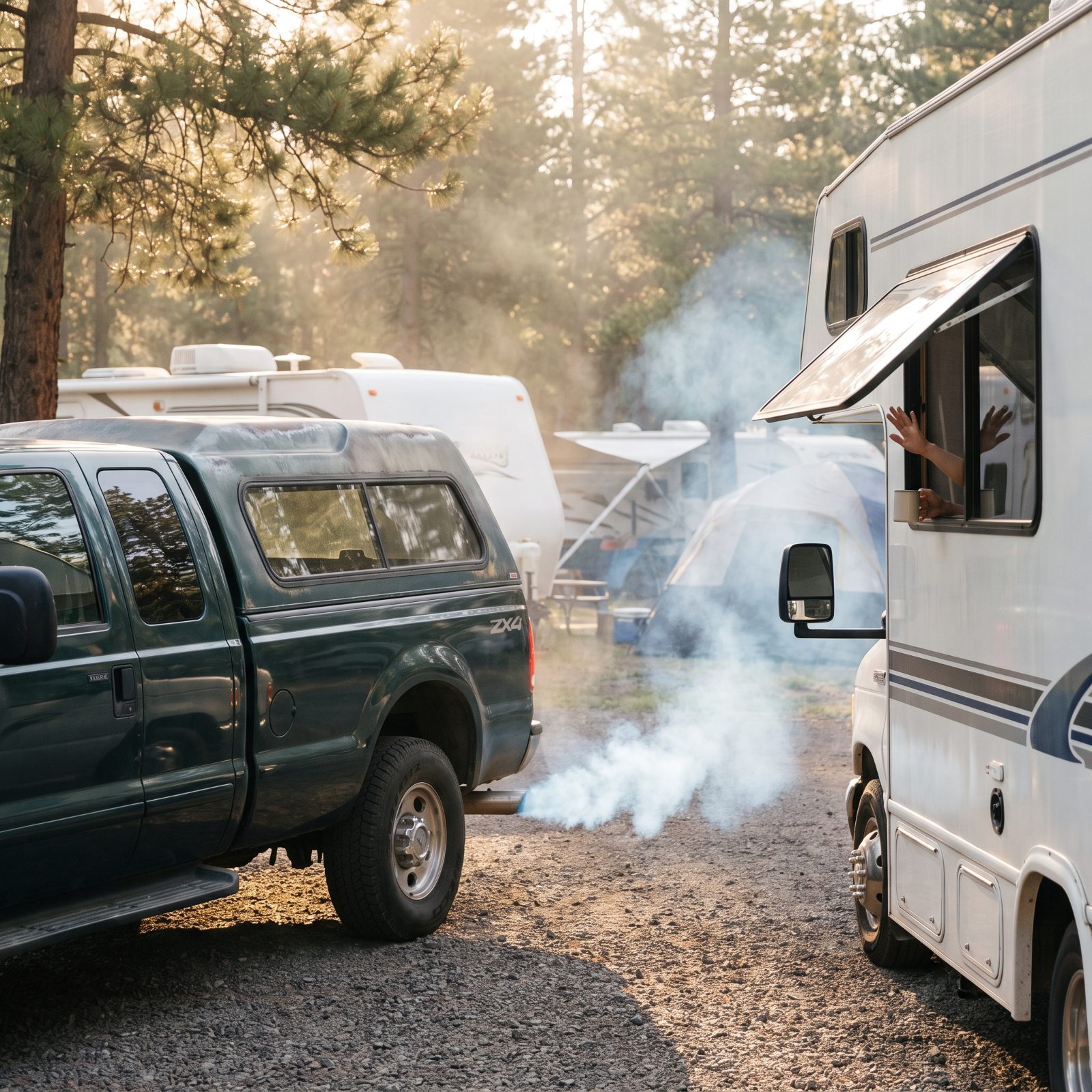
Warming up the diesel for twenty minutes made sense on an old tractor. On a modern truck parked ten feet from someone’s breakfast, it’s a cloud of exhaust drifting straight into their coffee and their lungs, and the rattle and the smell carry across half the loop.
Modern diesels don’t need a long idle to warm up. Start it, let it settle for a minute, and drive off gently. If you genuinely need it running, point the tailpipe away from your neighbor’s site, or just wait until you’ve pulled out onto the road.
33. Lighting the Place Up Like a Stadium All Night
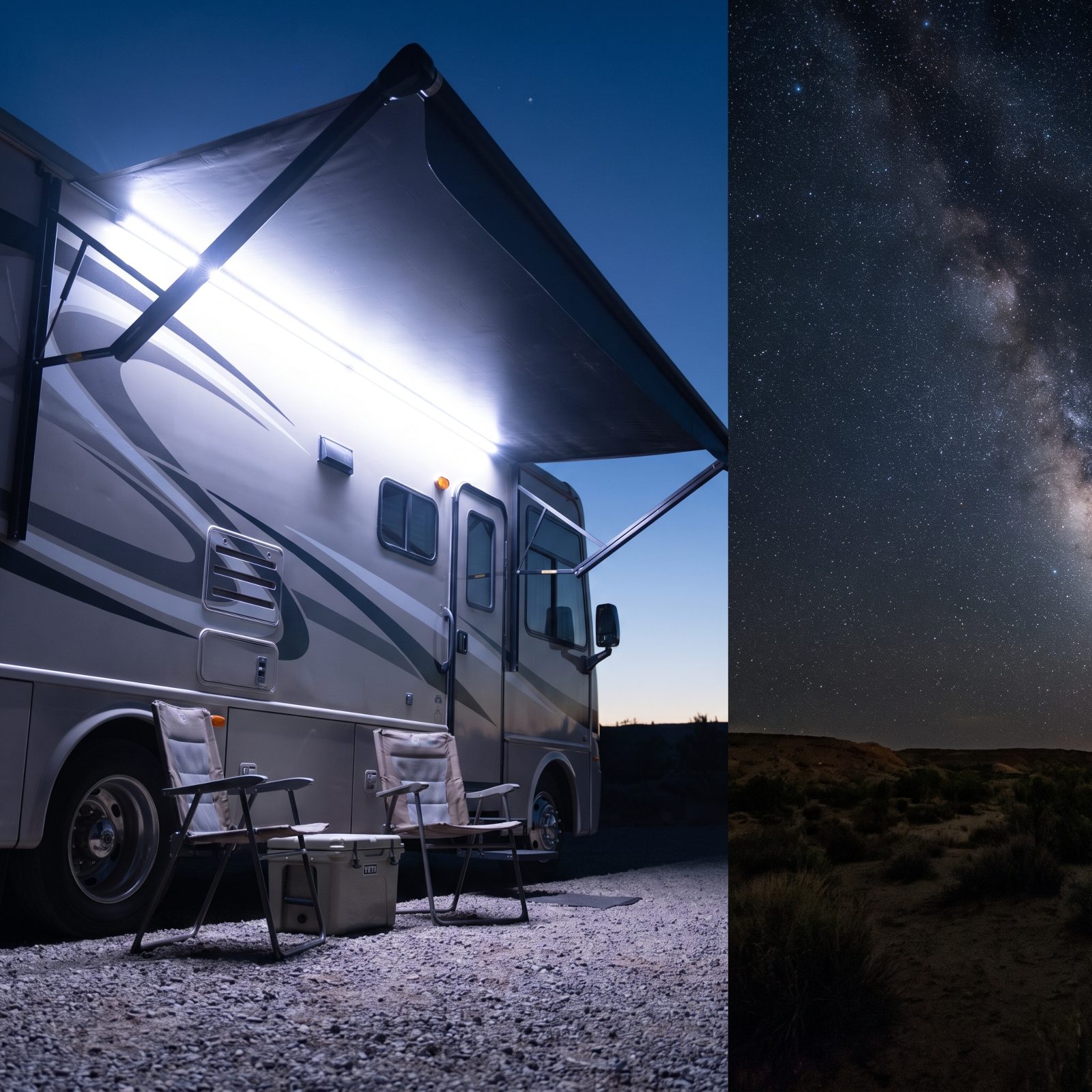
Half the reason people drive hours into a state park is the dark sky. Bright white floodlights blazing off your awning all night erase the stars for everyone and pour cold light straight through the next camper’s bedroom window.
Kill the floods once you’re done cooking or walking around. Swap them for a string of warm amber lights or a low porch light that marks your steps without lighting up the loop. Worried about security? A small motion-sensor light handles that and then goes dark the rest of the night.
32. Leaving a Barking Dog Alone Inside the RV
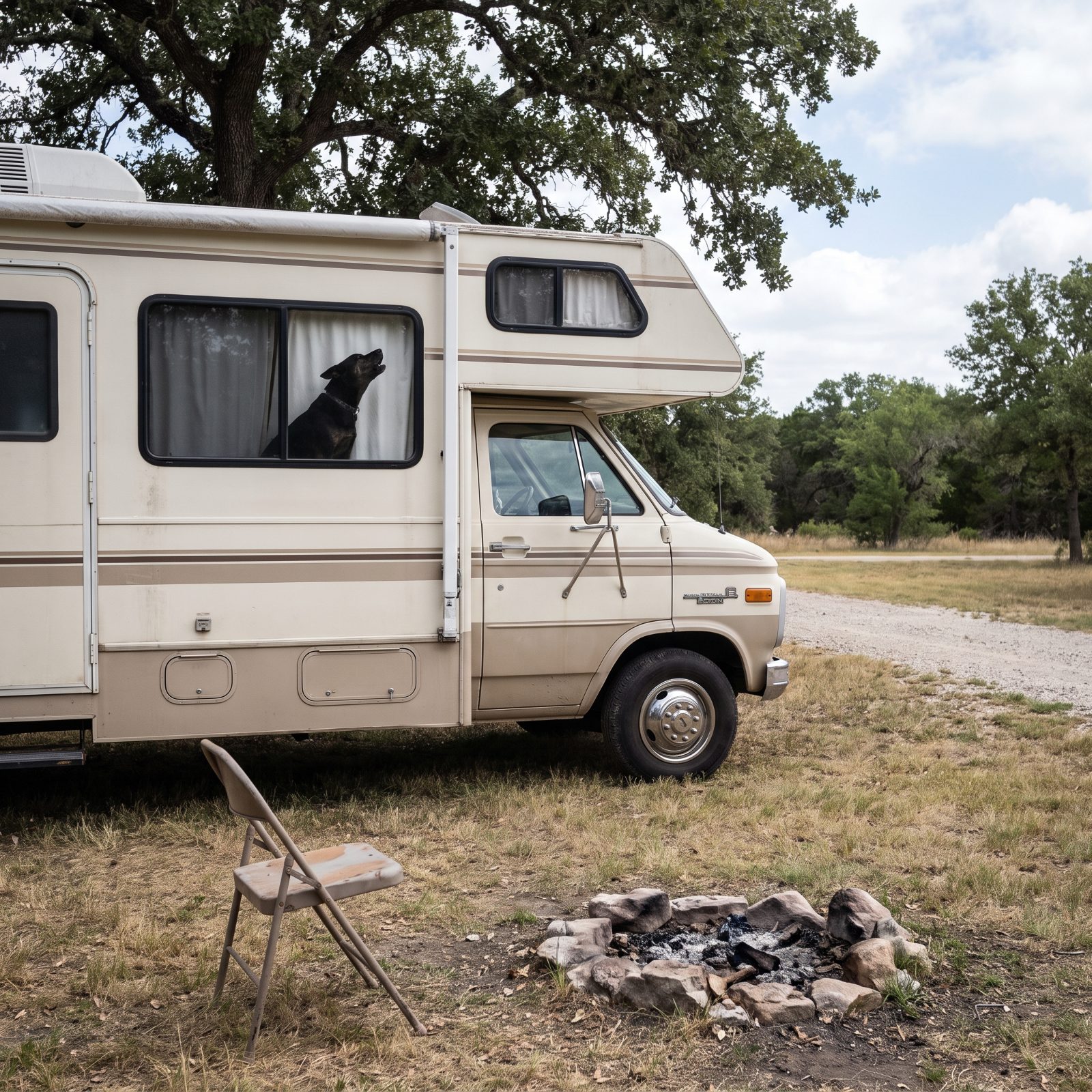
You pop into town for an hour. The dog, meanwhile, loses its mind the second your truck leaves the loop. To you it’s silence — to the folks three sites over it’s a car alarm with a heartbeat.
A dog that barks nonstop while you’re gone is the fastest way to turn friendly neighbors into people who avoid eye contact at the bathhouse. Some parks log the complaint. A few will ask you to leave.
Test it before you go anywhere. Walk off for ten minutes and listen from a distance, and if the barking starts, leave a radio on low, close the shades, and crate-train ahead of the trip instead of during it. And if your dog genuinely can’t settle alone? Bring it with you or stay put.
31. Using a Long Pet Tether That Reaches Into Other Sites
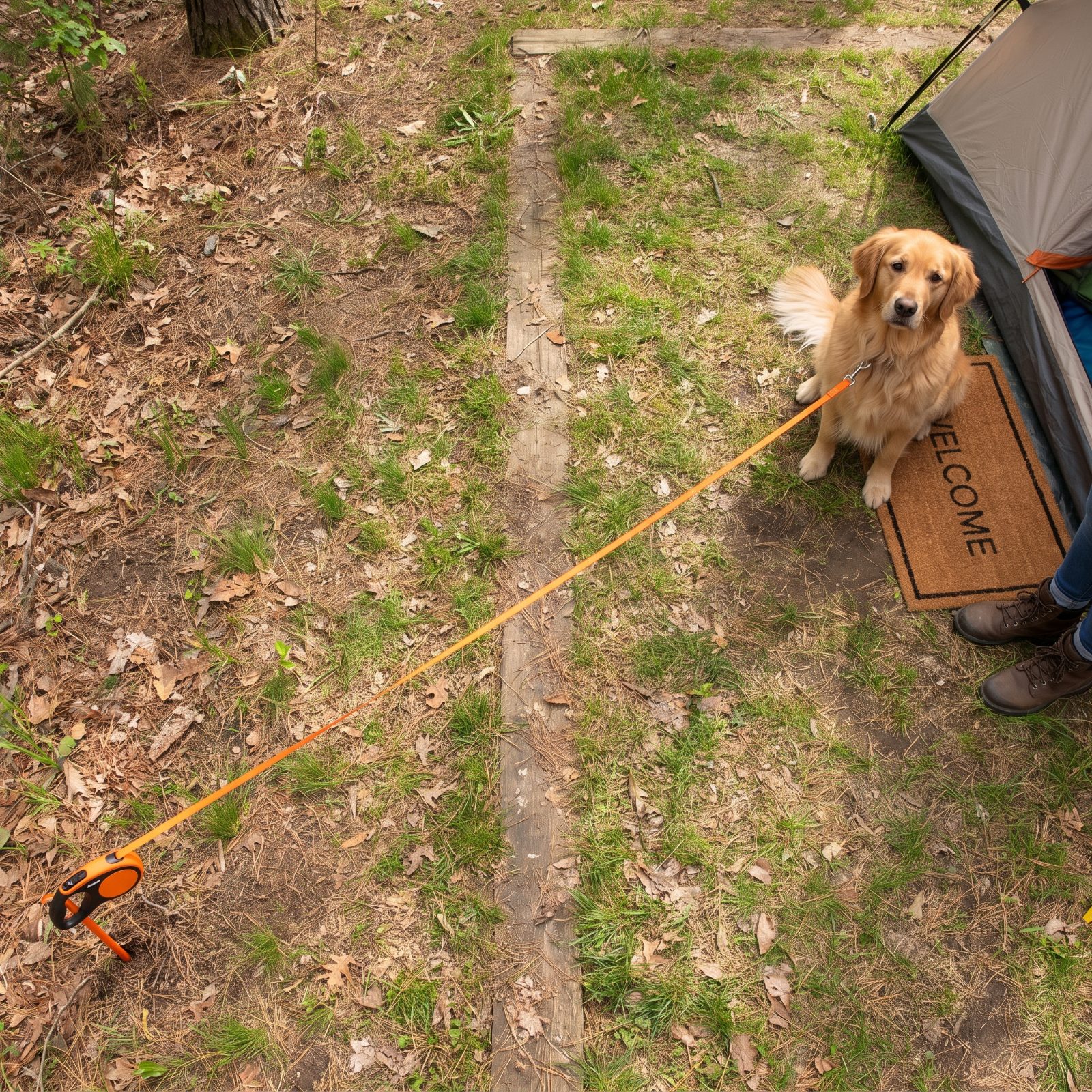
That 30-foot cable tie-out feels generous until you realize it turns the neighbor’s welcome mat into your dog’s turf. Nobody wants to step out of their motorhome and find a strange dog standing on their outdoor rug, friendly or not.
A tether that crosses the site line is how toddlers get knocked over and how two couples who could’ve been friends end up not speaking. Your pad is your pad. The rest belongs to someone else.
Measure before you stake it. The tether radius should keep your dog fully inside your own gravel, well clear of the road and the fire ring next door. A folding exercise pen gives dogs room to move without turning the whole loop into open range.
30. Leaving Young Children Unsupervised Around the Park
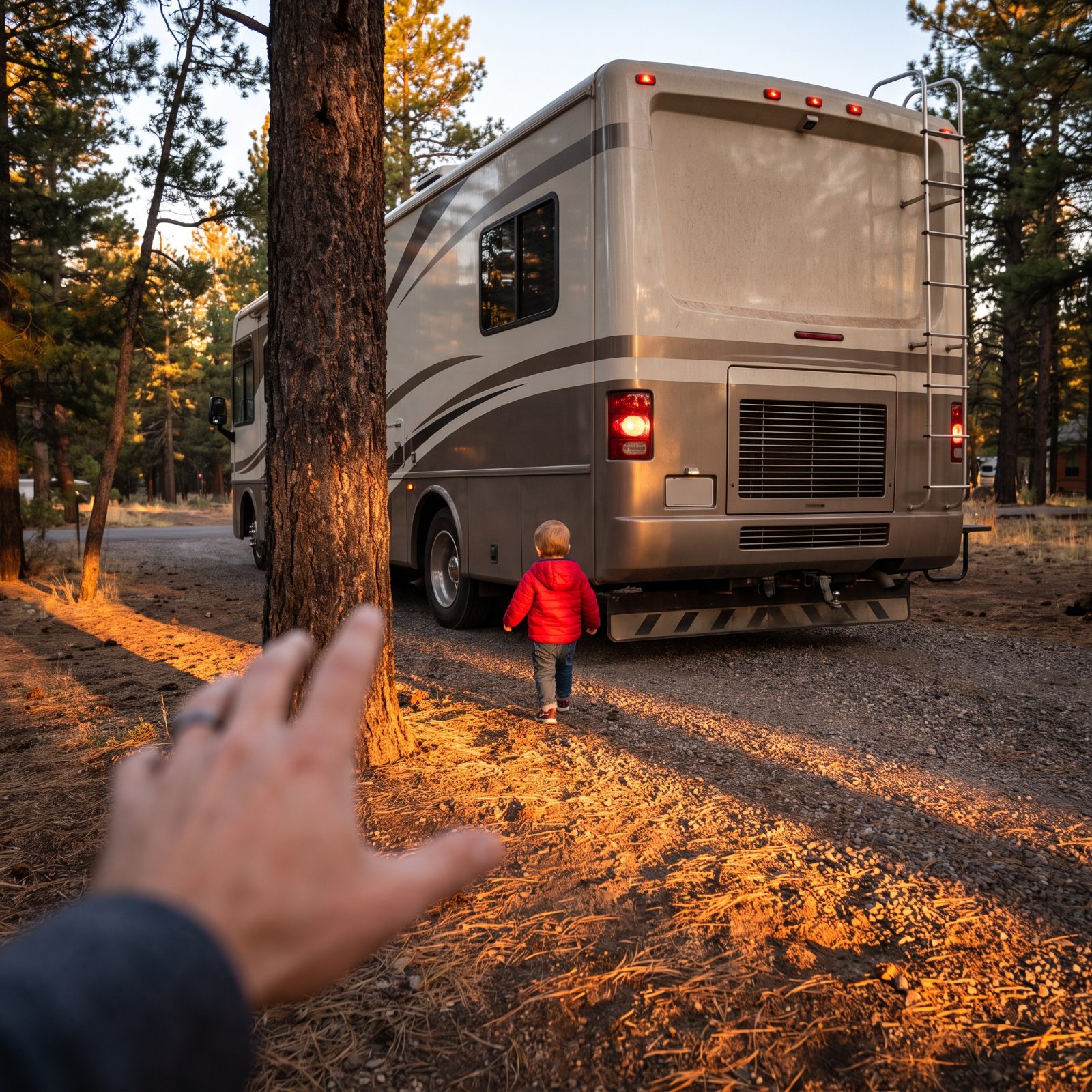
Campgrounds feel like the safest place on earth, which is exactly the problem. Big rigs back into tight sites with blind spots the size of a couch, golf carts roll through at dusk, and little ones treat the loop road like their own cul-de-sac.
A driver maneuvering a 40-foot coach often can’t see a kid crouched behind the bumper. That’s not a scolding. It’s physics.
Set the rule before you set up camp: stay where an adult can see you, and keep off the roads during the arrival and departure crush — usually late morning and late afternoon. A shared family campsite only works when everyone knows where the edges are.
29. Building a Smoky Campfire That Blows Into the Next Site
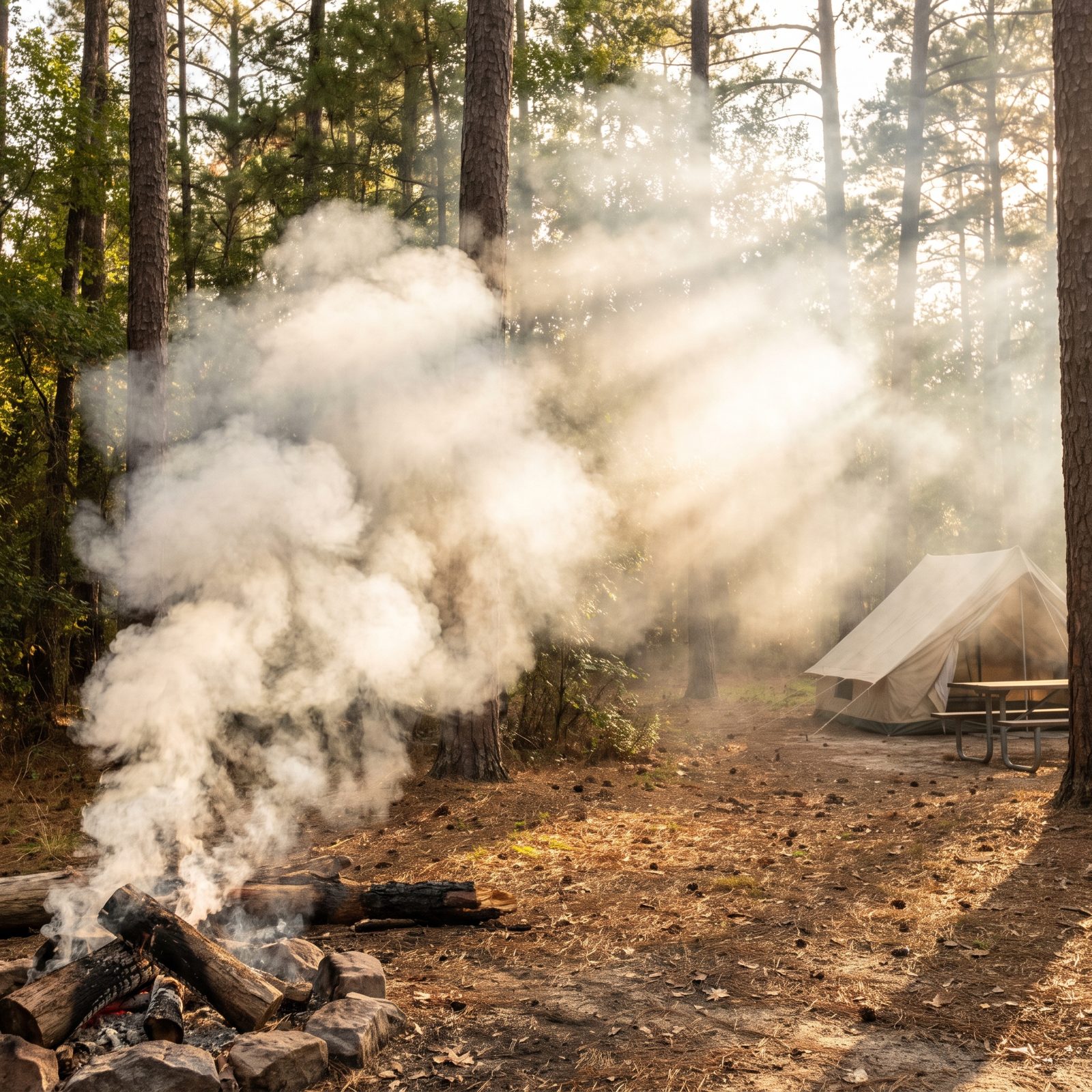
A smoldering fire of damp or green wood throws a plume of white smoke that doesn’t rise so much as crawl, and it always seems to crawl straight into the neighbor’s open window.
That smoke means their evening is ruined, their awning smells like a bonfire, and their asthma is acting up. You won’t notice, because you’re upwind. They’ll notice all night.
Burn dry, seasoned hardwood and build a small hot fire that flames clean instead of a big smoldering pile that chokes. Check which way the wind’s pushing before you light it. If it shifts toward a neighbor’s rig, let the fire burn down rather than stoking it back up.
28. Walking Away From a Burning Campfire
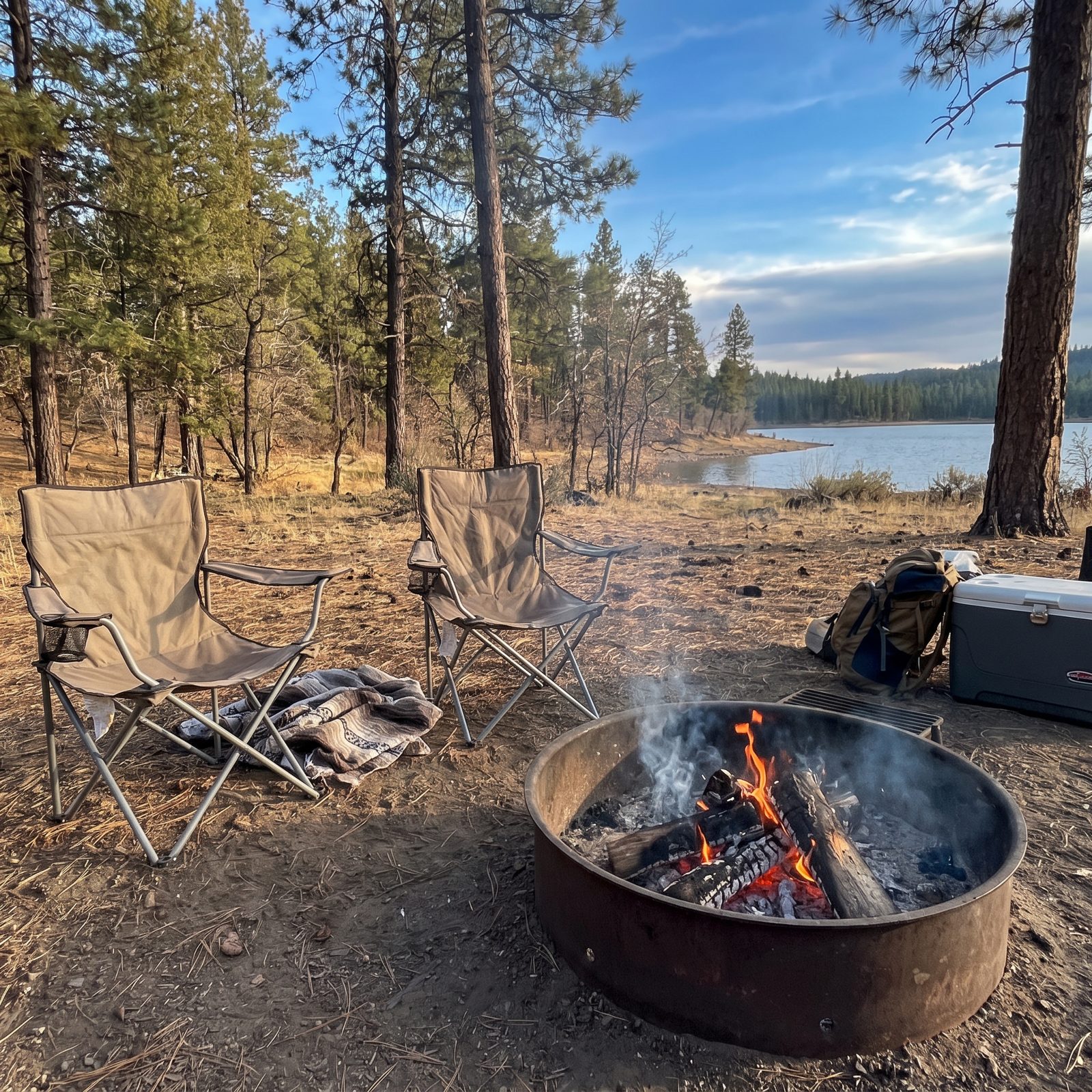
You’re only going to the bathhouse. Or to grab another log. Or just to bed — the fire’s dying anyway. That’s the exact thinking that starts wildfires.
A live fire, a gust of wind, and a bed of dry pine duff is all it takes. Unattended campfires are a leading human cause of forest fires, and the Forest Service will tell you a fire isn’t out until it’s cold to the touch.
Never leave it burning. Drown it, stir the ashes, drown it again, then hold your hand near the embers and feel for heat. Too hot to touch means too hot to leave. Keep a bucket of water right next to the ring the whole time.
27. Burning Plastic, Cans, or Household Trash in the Fire Ring
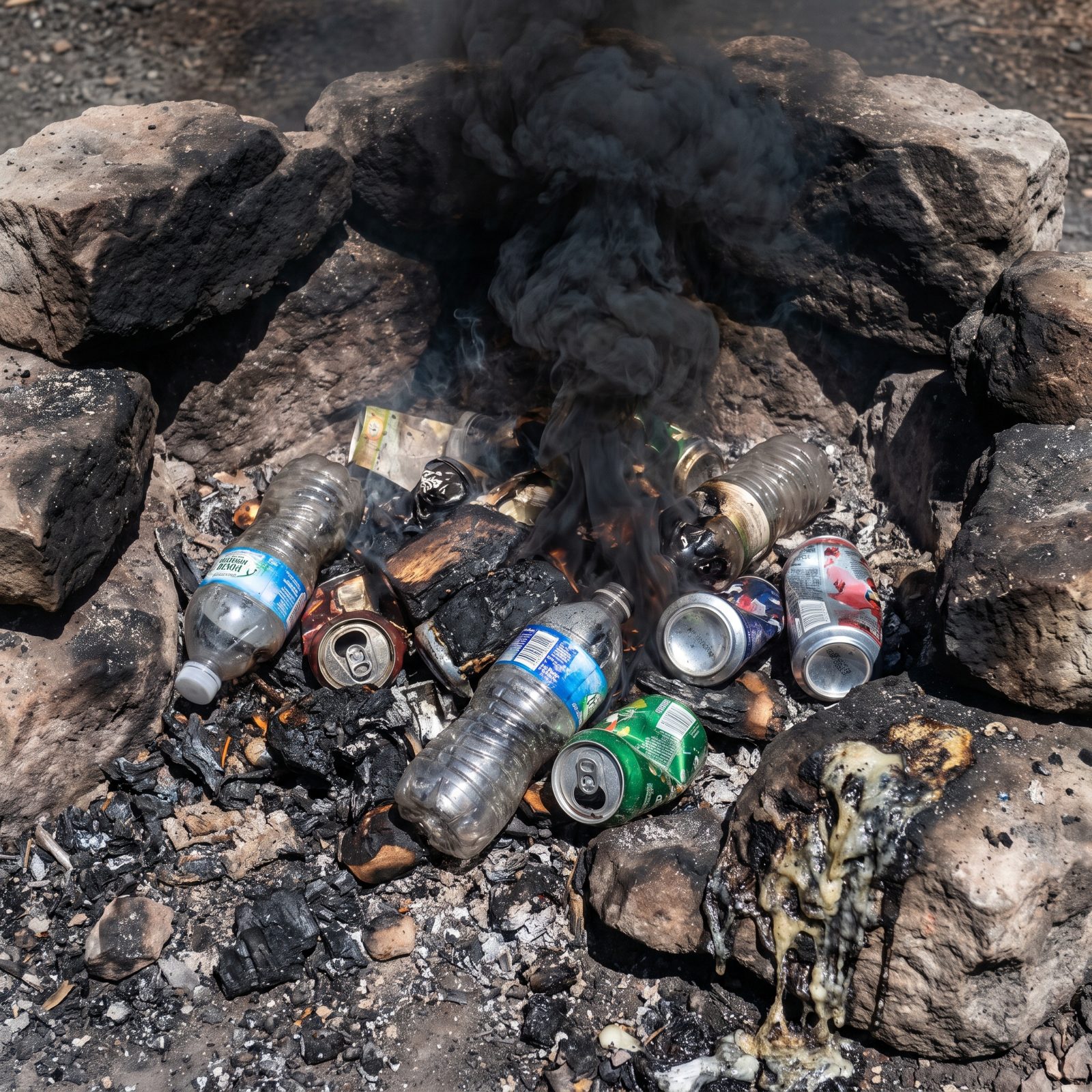
The fire ring is not an incinerator. Tossing in plastic cups, foil wrappers, cans, and the pizza box feels efficient — and it fills the loop with a chemical stink that coats everyone’s lungs.
Burning plastic and trash releases toxins nobody downwind signed up for, and cans and foil don’t burn at all. They just leave a melted, jagged mess in the ring for the next camper and the park staff.
Burn wood. Only wood. Pack a trash bag, hit the dumpster on your way out, and leave the ring cleaner than you found it. The next family wants to roast marshmallows over coals, not fish bottle caps out of the ash.
26. Lighting a Campfire During a Posted Burn Ban
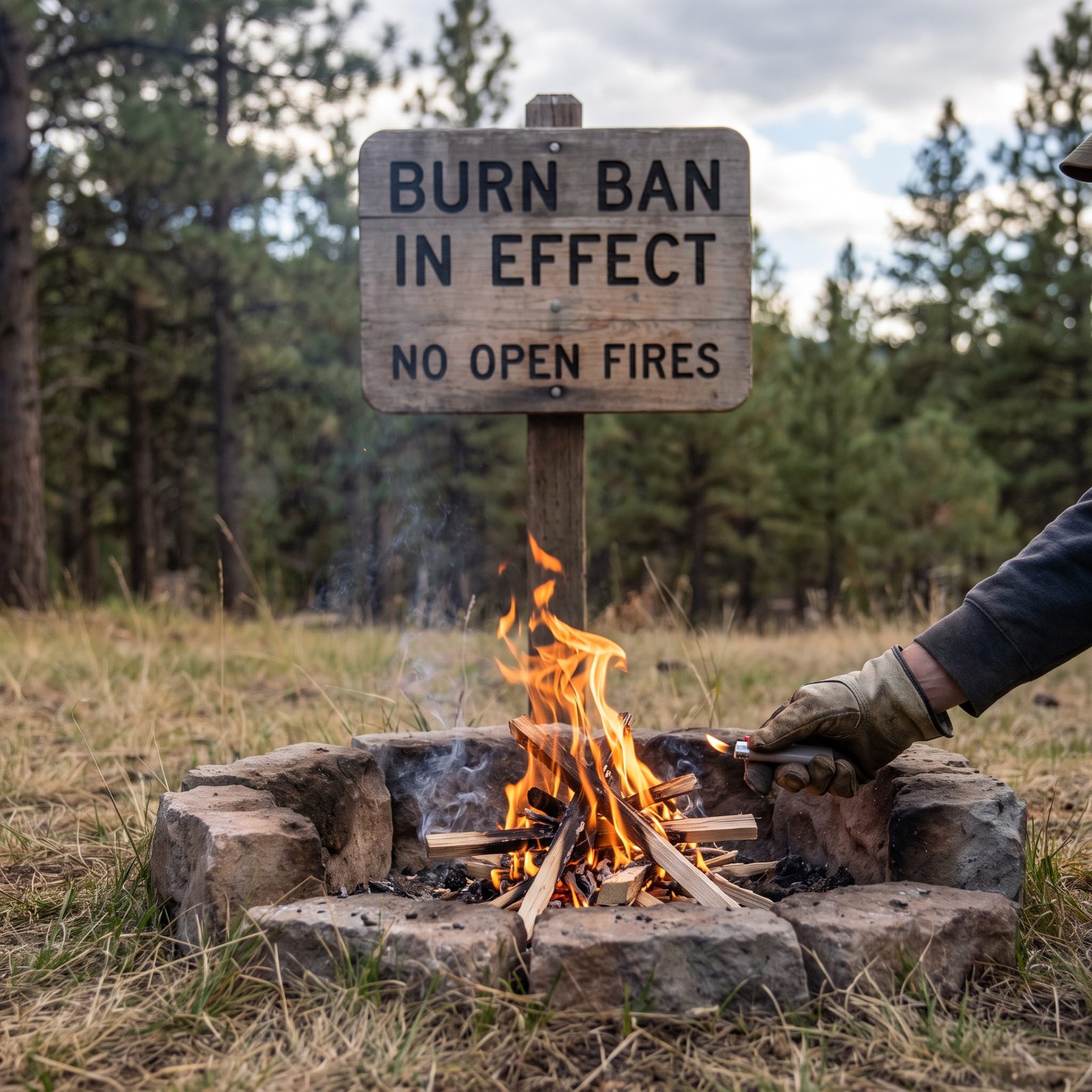
The weather’s perfect, the kids want s’mores, and that little sign by the office said something about restrictions that you half-read on the way in. The pull to light one small fire anyway is enormous.
Burn bans exist because the ground is a tinderbox. One careless ember during a dry August is how whole canyons burn and how people lose everything. The fines run into the thousands — and that’s if nothing catches.
Read the posted rules at check-in and ask the host if you’re unsure. When fires are banned, a propane fire pit with a shutoff valve is usually still allowed, and it gives you the glow without the risk. Cook on the camp stove. S’mores survive a microwave in a pinch, and the forest survives the night.
25. Letting Your Slide-Out Cross the Site Boundary
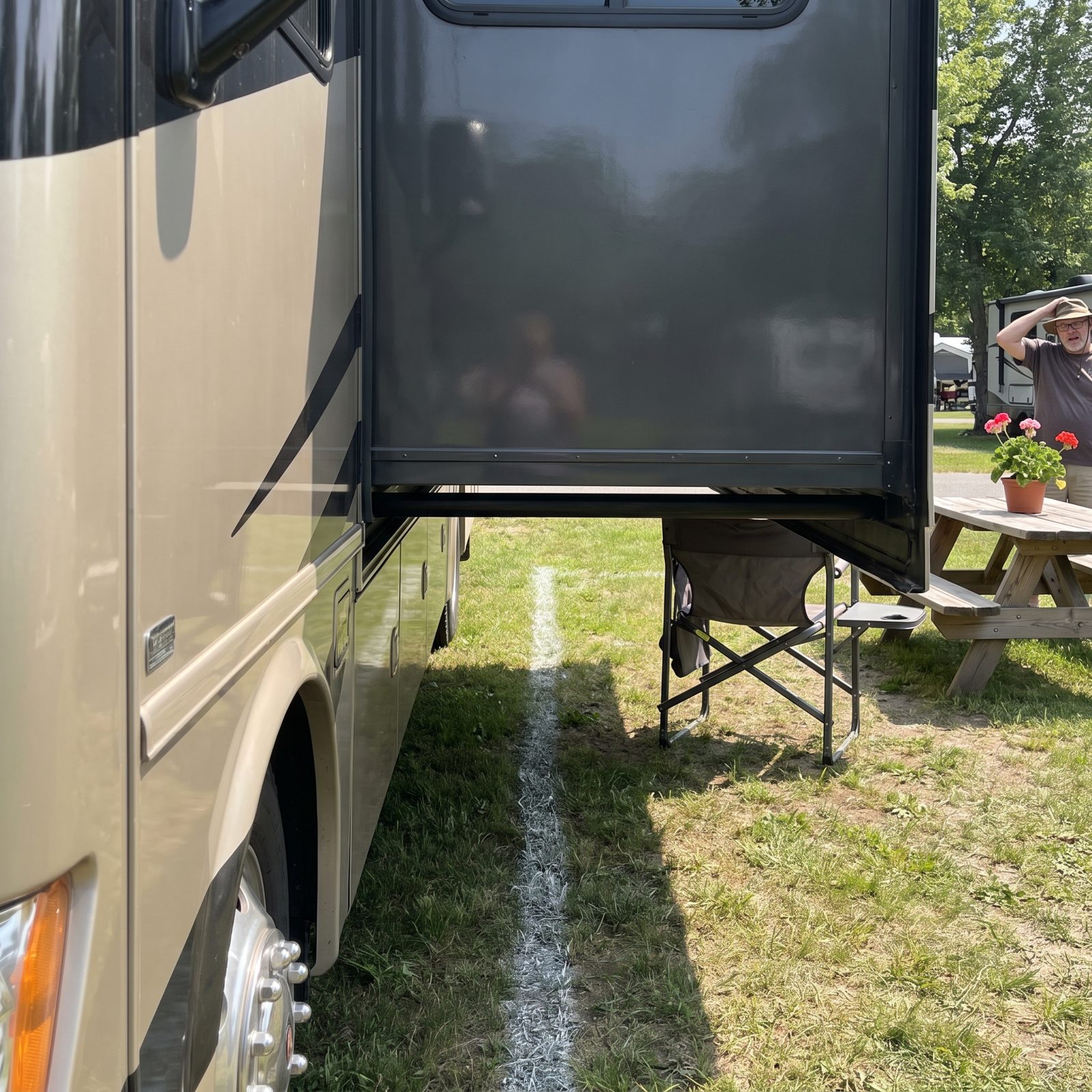
You back in, hit the switch, the slide rolls out — and suddenly your bedroom is hanging three feet over the neighbor’s picnic table. Site lines don’t disappear just because your rig is wide.
A slide that crosses the boundary eats into the space someone else paid for, blocks their door, and sets up an awkward conversation the moment they pull in. Call it the RV version of parking over the property line.
Know your rig’s width with the slides out, and position your coach so everything stays on your own pad when deployed. If the site’s too narrow for your extended footprint, ask the host for a different spot before you unhitch. Easier to move empty than to apologize later.
24. Dumping Gray Water Onto the Ground
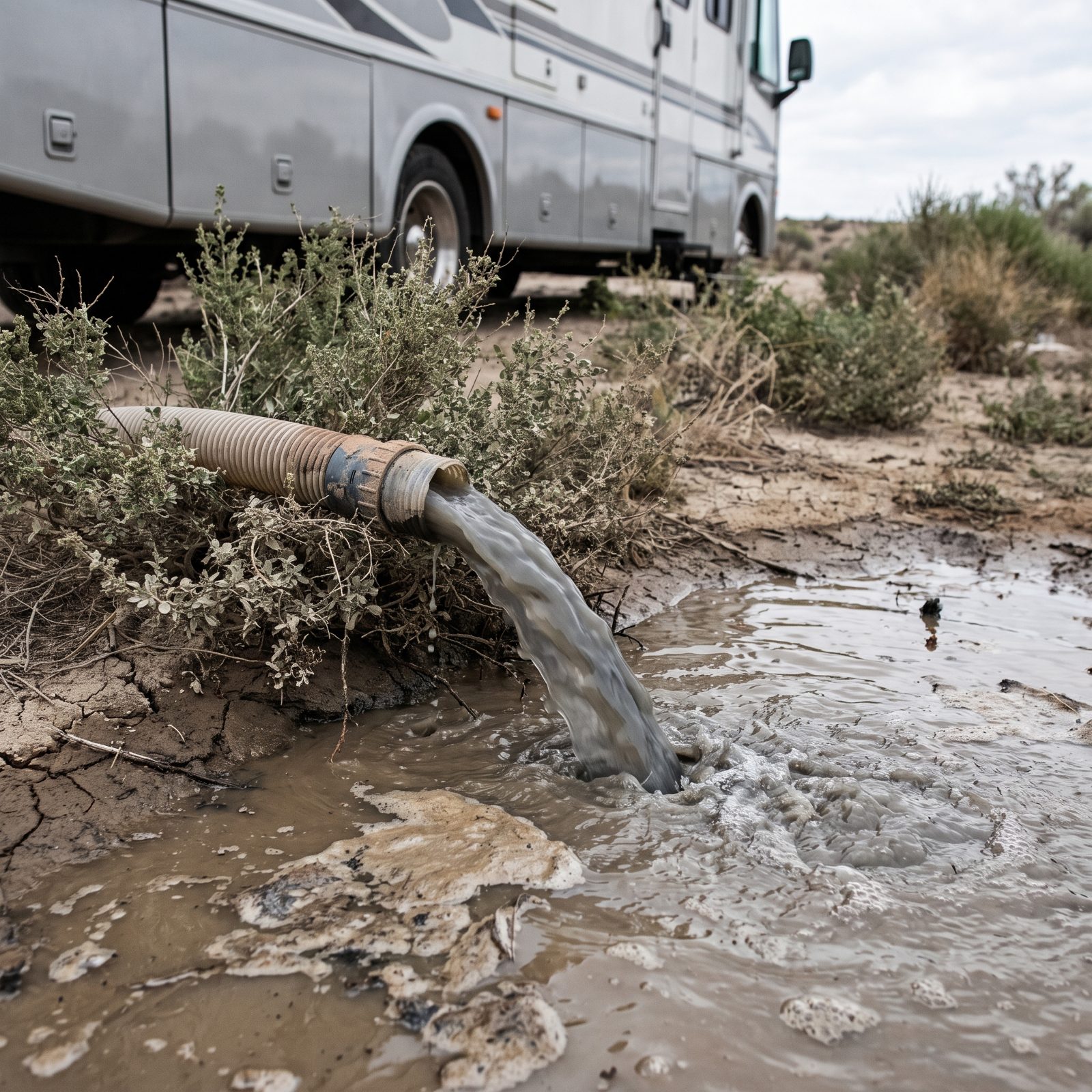
Dish water and shower runoff seem harmless, so the hose ends up pointed at the bushes instead of the sewer connection. It’s one of the most common shortcuts out there, and one of the worst habits a camper can carry.
Gray water carries grease, soap, and food bits. That turns your site into a smelly, soggy mess, draws flies and raccoons, and leaches into the ground your neighbors are walking barefoot across. Health departments and park rules exist for exactly this reason.
Where it actually goes
If your site has a sewer hookup, connect to it. If it doesn’t, hold gray water in your tank and empty it at the dump station on your way out. A portable waste tote lets you haul it over without moving the whole rig. Dumping on the ground is never the answer — not even with the “clean” water from your kitchen sink.
23. Ignoring a Leaking Sewer-Hose Connection

A sewer connection that weeps a little is the kind of thing you stop noticing by day two. Your neighbors never stop noticing. That faint sulfur smell drifting across the gravel on a warm afternoon turns a friendly site cold faster than anything else I know of.
A loose or cracked bayonet fitting also lets gray and black water seep into soil that dozens of families walk barefoot across — a genuine health problem, not just a matter of manners.
Seat the hose with a proper locking fitting, drop a storm collar donut into the inlet, and carry a spare clear elbow so you can actually watch the flow. Check it the moment you hook up. Don’t wait for the smell to tell you.
22. Rinsing a Sewer Hose at a Potable-Water Faucet
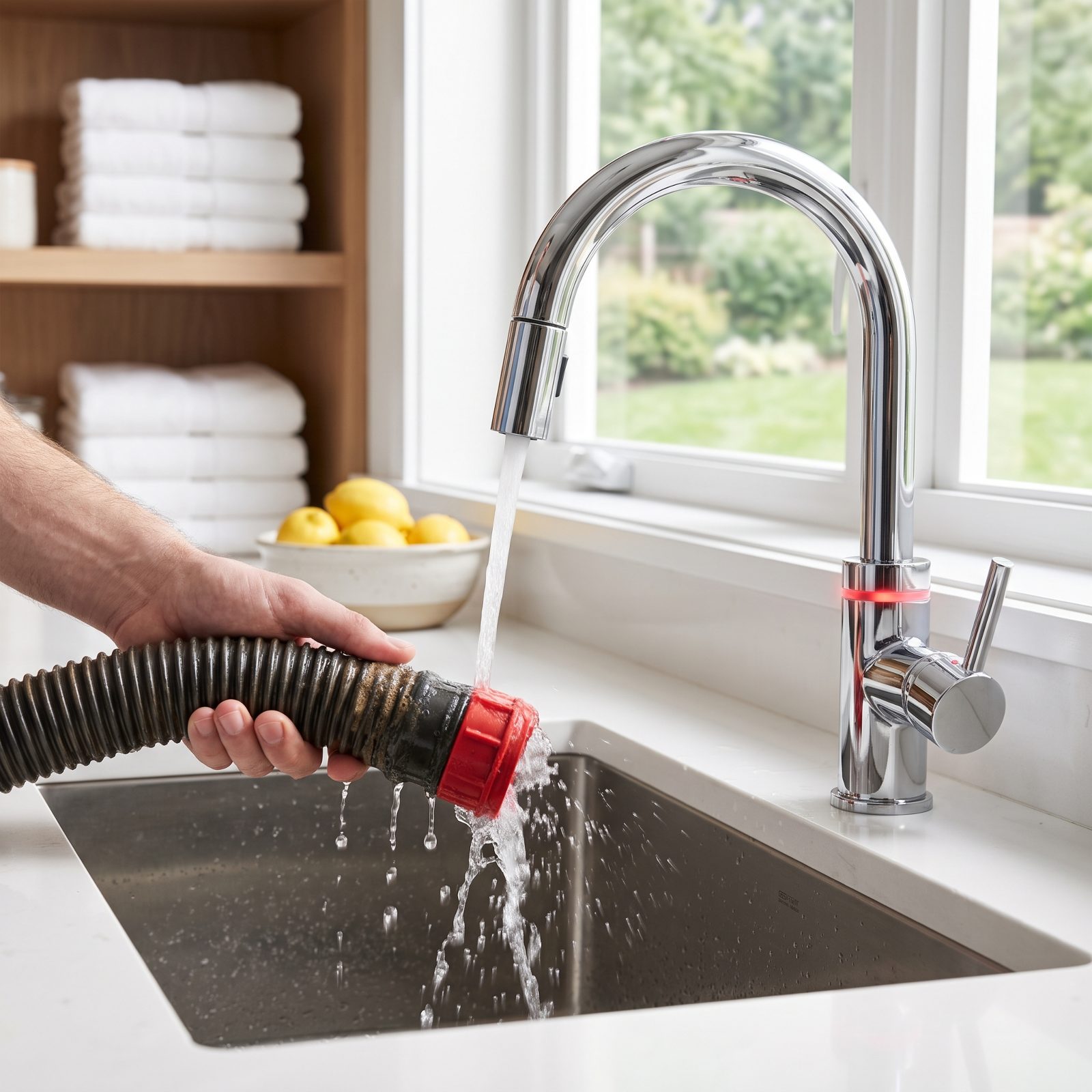
The potable faucet fills everybody’s drinking tanks. Rinse a sewer hose there and you’ve contaminated the exact water a family two sites over will brush their teeth with tonight.
This is the campground sin that empties a reputation fast. Hosts remember it, other campers remember it, and it’s completely avoidable.
Rinse sewer gear at the dump station’s designated rinse port, or carry a dedicated short hose just for flushing that never touches a clean spigot. Color-code everything: blue for fresh, anything but blue for waste. I keep mine in separate bins so a tired evening never mixes them up.
21. Monopolizing the Dump Station While Other RVs Wait
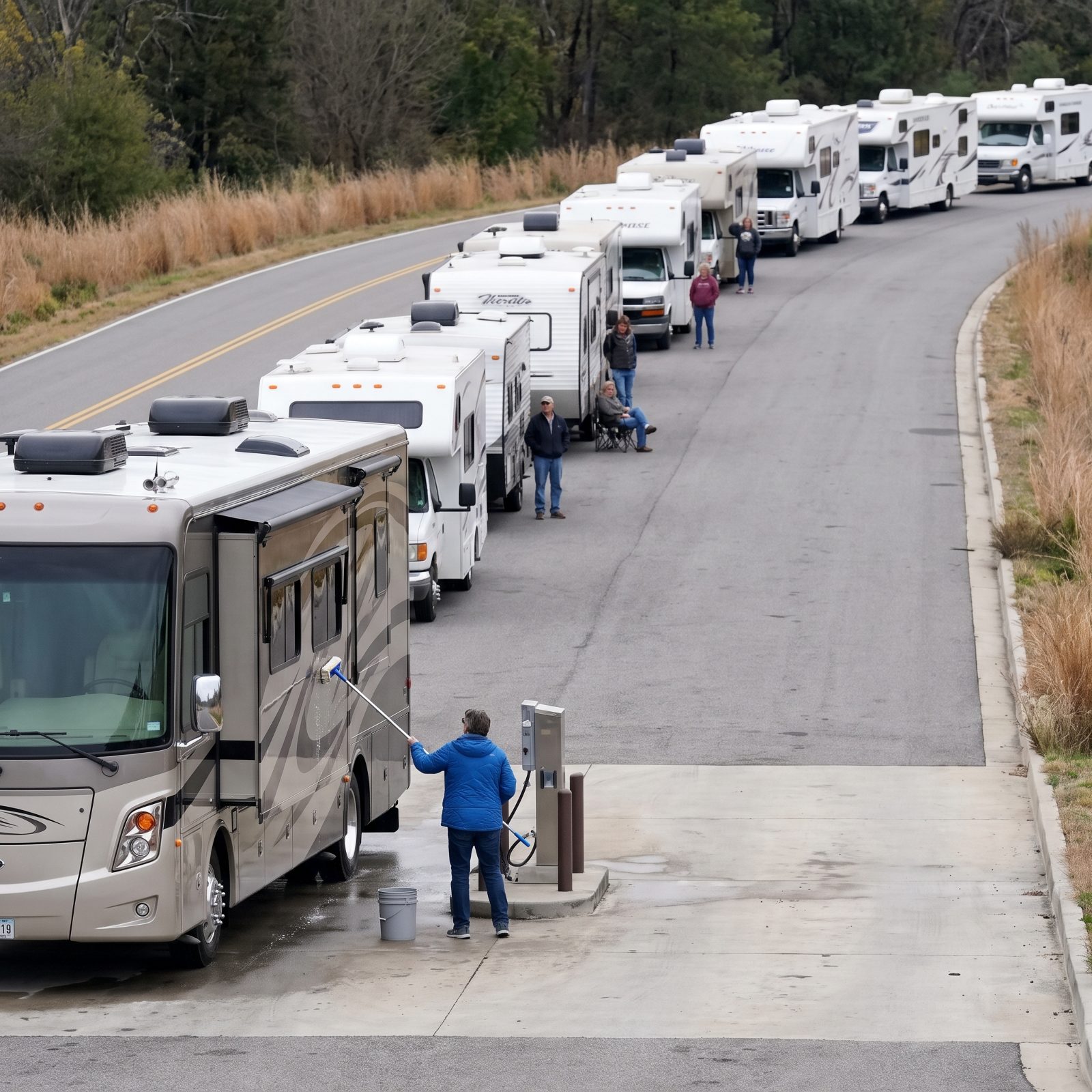
You pull into the dump station, hook up, and then decide this is also a fine moment to wash the rig, scrub the holding tank twice, and reorganize the wet bay while three rigs idle behind you in the Sunday checkout rush.
The dump station is a shared chokepoint, not your personal service bay. Every extra minute you spend detailing is a minute someone else bakes in the sun.
Dump, rinse, pack, move along. Want a deep tank flush or a full wash? Do it at your site or during off-peak hours. Checkout mornings are the worst possible time to linger, and everyone in that line knows it.
20. Washing Dishes Directly at a Communal Water Faucet

Scraping last night’s chili off a pan at the communal spigot feels efficient. It also smears food grease, suds, and chunks around a faucet the whole loop shares, and it draws ants and raccoons straight to the water source.
Most parks ban it outright, and the ones that don’t are just trusting campers to have the sense not to.
Wash at your own site in a collapsible basin, then dump the gray water into your tank or a designated drain. A two-tub wash-and-rinse setup handles a full dinner’s dishes on a couple gallons. Keeps the shared faucet clean, keeps you off the host’s radar.
19. Leaving Mud, Hair, and Toiletries in a Shower Stall
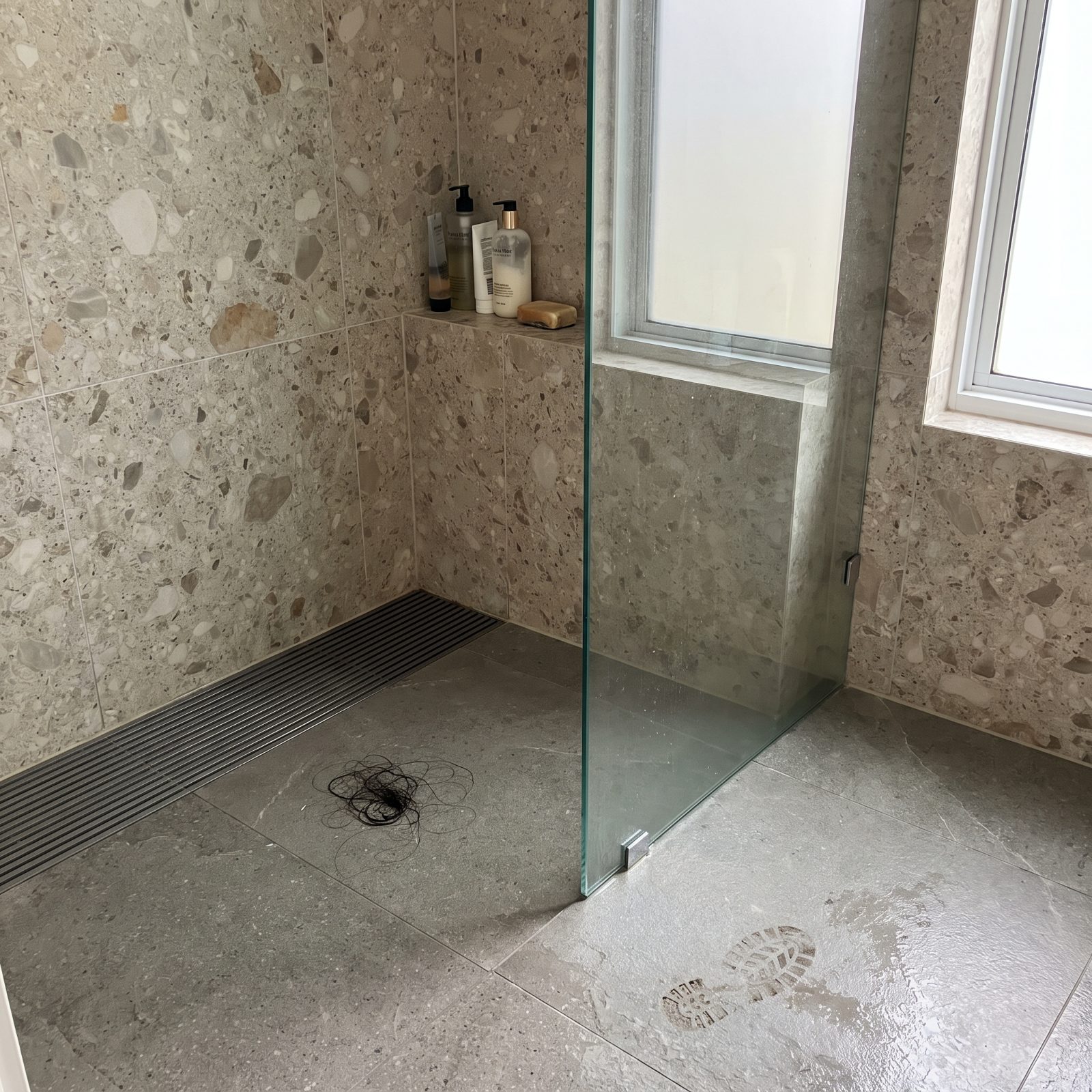
You’ve walked into a bathhouse stall and found a slug of someone else’s hair around the drain, a muddy footprint on the bench, and a sliver of soap melting in the corner. Not a great way to start a morning.
Shared showers run on one simple deal: leave it the way you’d want to find it. Hair clogs the communal drain, and tracked-in mud becomes the next person’s problem on bare feet.
Rinse the stall down after yourself, scoop your hair off the drain cover, and take every bottle and towel out with you. Shower shoes and a quick rinse of the walls is all it takes.
18. Leaving Finished Laundry in a Machine for Hours
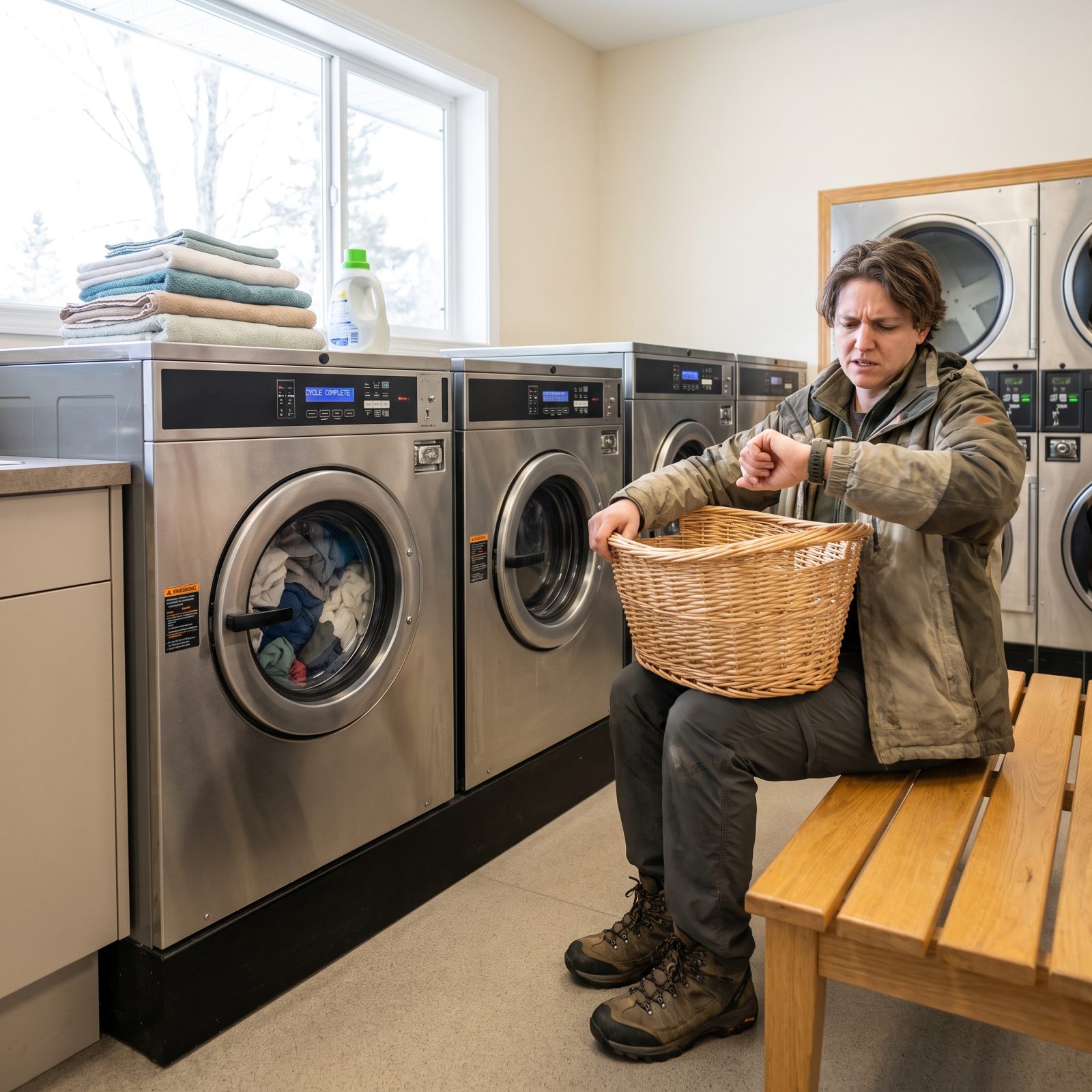
Two washers, one dryer, and your finished load has been sitting in there since breakfast while you went for a hike. The person standing with a full basket is doing the math on whether it’s rude to touch your clothes.
These laundry rooms are tiny and heavily used. One parked load gums up the whole loop’s morning.
Set a timer on your phone for the cycle and come back on time. If the room’s busy and you can’t, leave a note with your return time, or better yet, stick around with a book. Nobody wants to be the one piling a stranger’s socks on a counter.
17. Leaving Trash Bags Outside Overnight
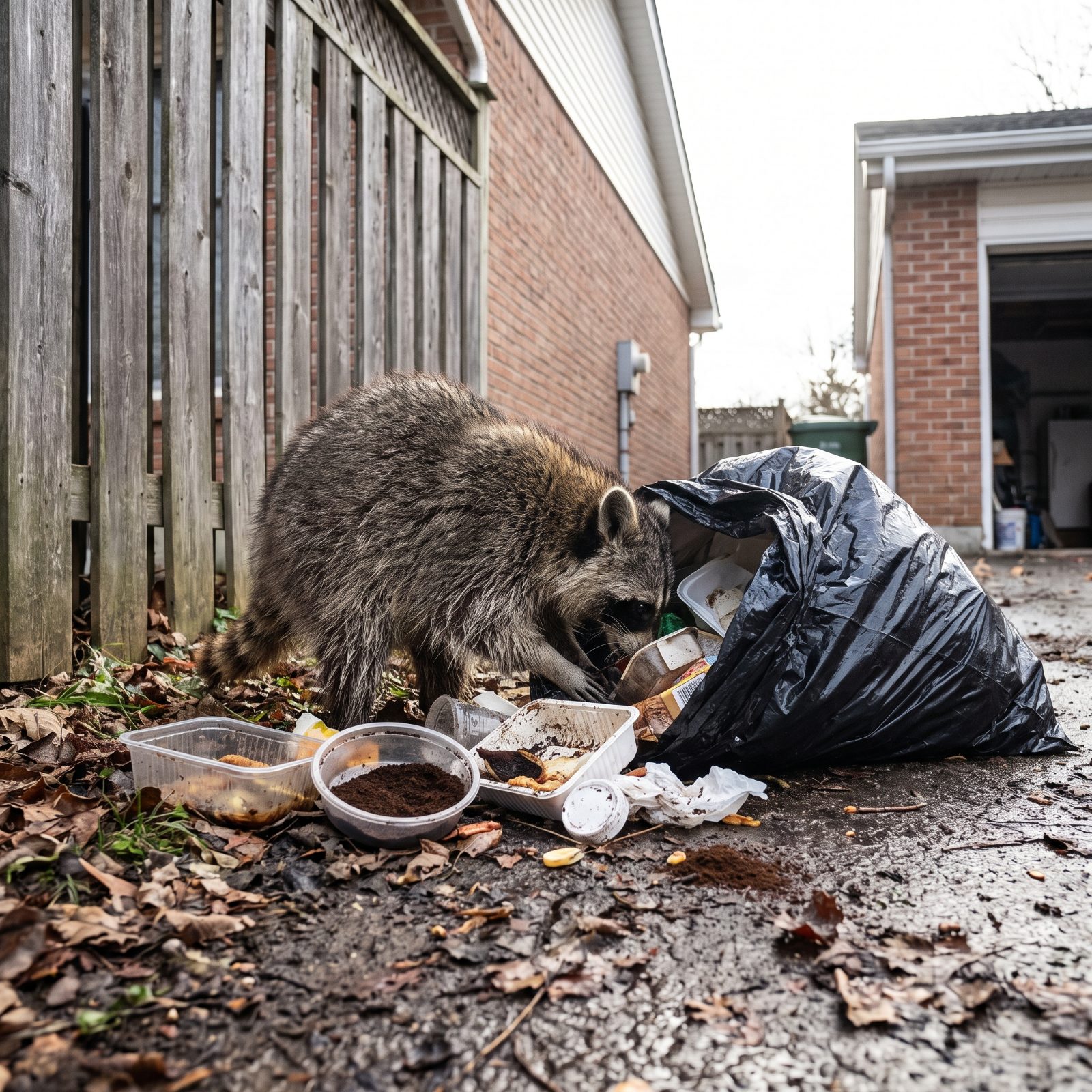
Setting the trash bags out by the picnic table at night so you can deal with them in the morning seems harmless enough. By 2 a.m. a raccoon has shredded them, and the whole corner of the loop wakes up to a scattered mess.
Once wildlife learns a campground is an easy buffet, they come back bolder. That’s a safety problem for the next family, not just a cleanup job.
Walk your trash to the bear-proof bin or dumpster before dark, every night. If the bins are far, keep bagged trash sealed inside your rig or in a locked storage bay until morning. Short walk now, or a torn-open mess later.
16. Scattering Food Scraps Around the Campsite
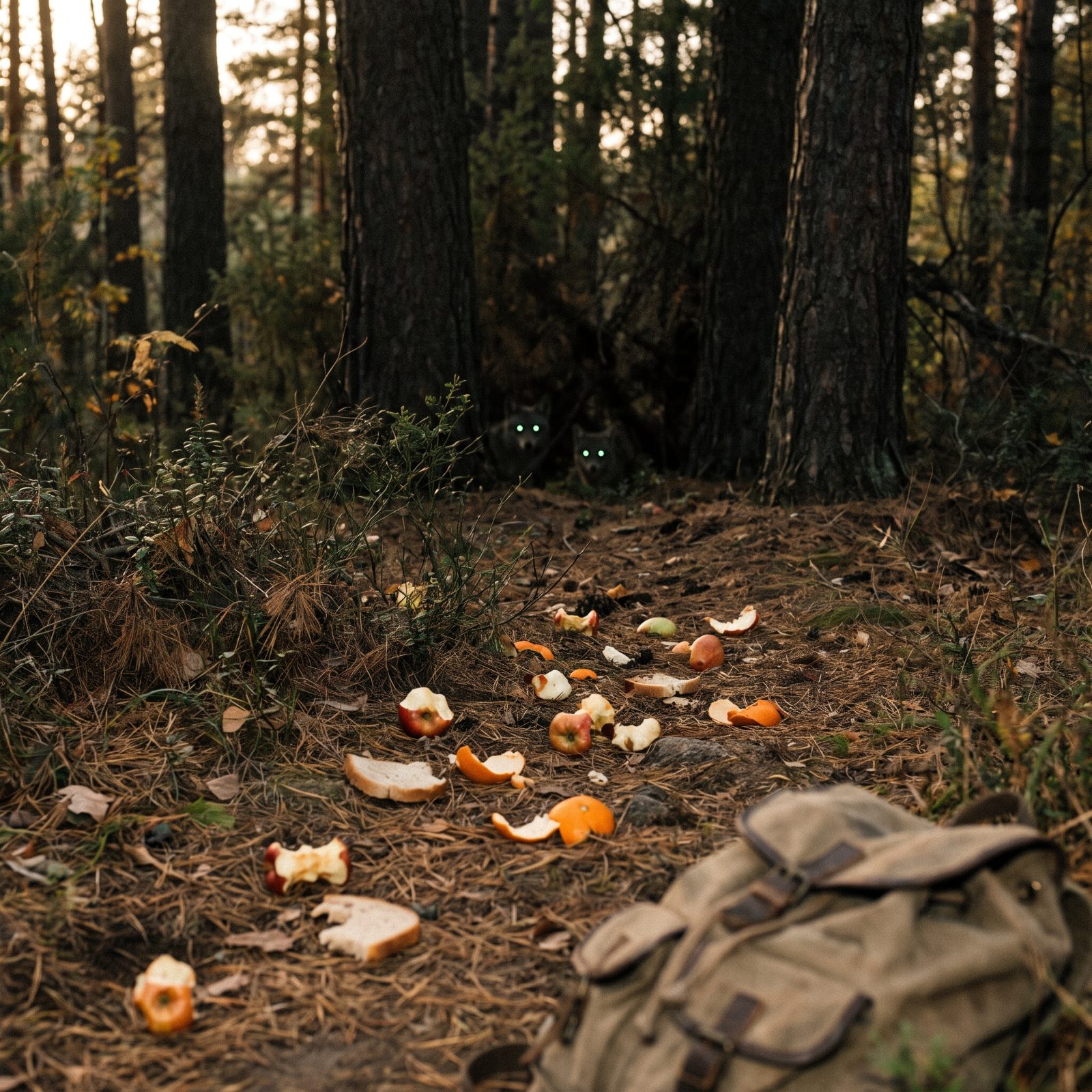
Tossing apple cores and corn husks into the brush feels like feeding the forest. It isn’t. It’s a scent trail that pulls rodents, raccoons, and sometimes bears right into the campsite you and the next camper will use.
Food scraps dumped in the fire ring don’t fully burn either, and half-charred garbage is a lousy welcome for whoever sets up after you.
Everything food-related goes in a sealed bag and then the dumpster. Wipe the table, sweep crumbs off the pad, walk the ground before you turn in. Leave the site cleaner than the brochure photo and you earn your reputation back, one campsite at a time.
15. Feeding Deer, Raccoons, Squirrels, or Other Wildlife
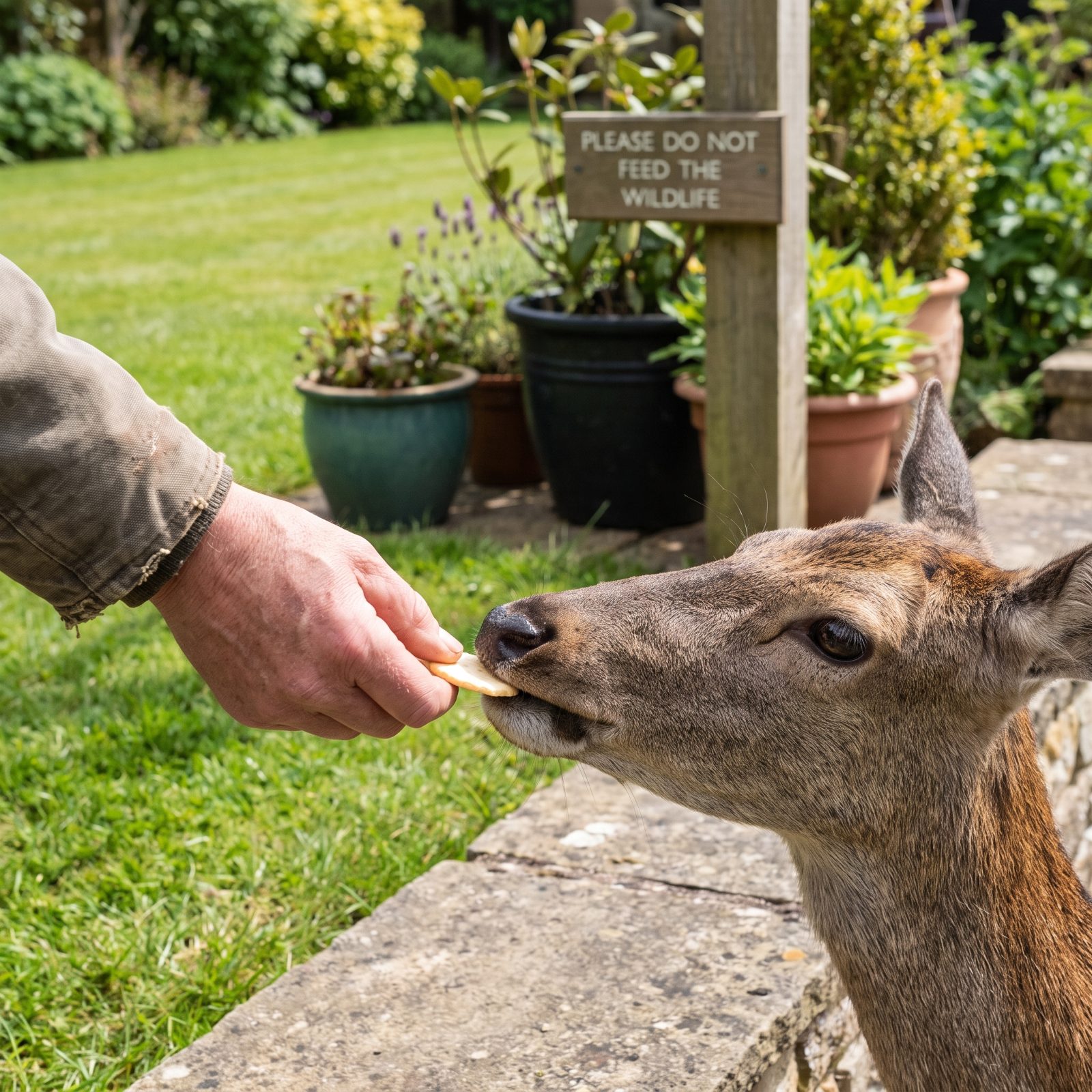
That deer wandering up to your campsite looks like a magic moment. Hand it a cracker and you’ve just signed it up for a harder life and set a trap for the next camper.
Fed wildlife loses its fear of people. It raids coolers, bites hands, and often ends up euthanized once it gets bold. Squirrels and raccoons chew into rigs. A fed deer can turn downright dangerous during rut. None of it stays cute once it escalates.
Keep all food sealed, never hand-feed anything, and shoo animals away from your site rather than toward it. Watch them from a distance through a pair of binoculars.
14. Smoking Where the Smoke Drifts Through a Neighbor’s Site
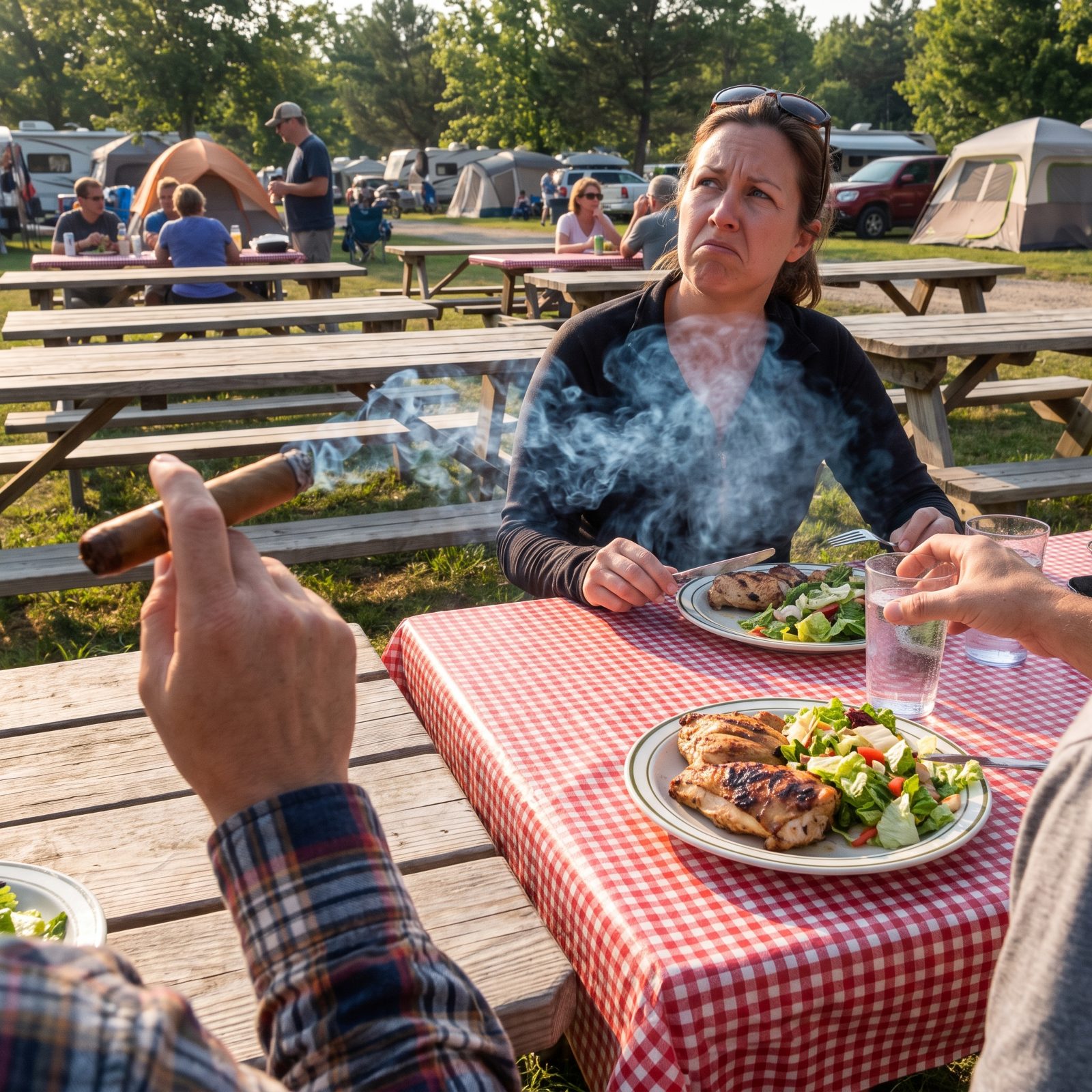
Campsites sit closer than people think. A cigar on your side of the picnic table drifts straight into the neighbor’s open windows and across the plates they just set out for dinner.
Smoke carries, and in a tight loop there’s nowhere for it to go but somebody else’s evening. Flick a butt into the dry pine duff and you’ve added a fire risk on top of it.
Smoke downwind, away from open RV windows and shared paths, and keep a sealed can for butts instead of the fire ring or the ground. A quick glance at the breeze before you light up saves everyone a tense conversation at the water spigot.
13. Parking Your Tow Vehicle Halfway Into the Campground Road
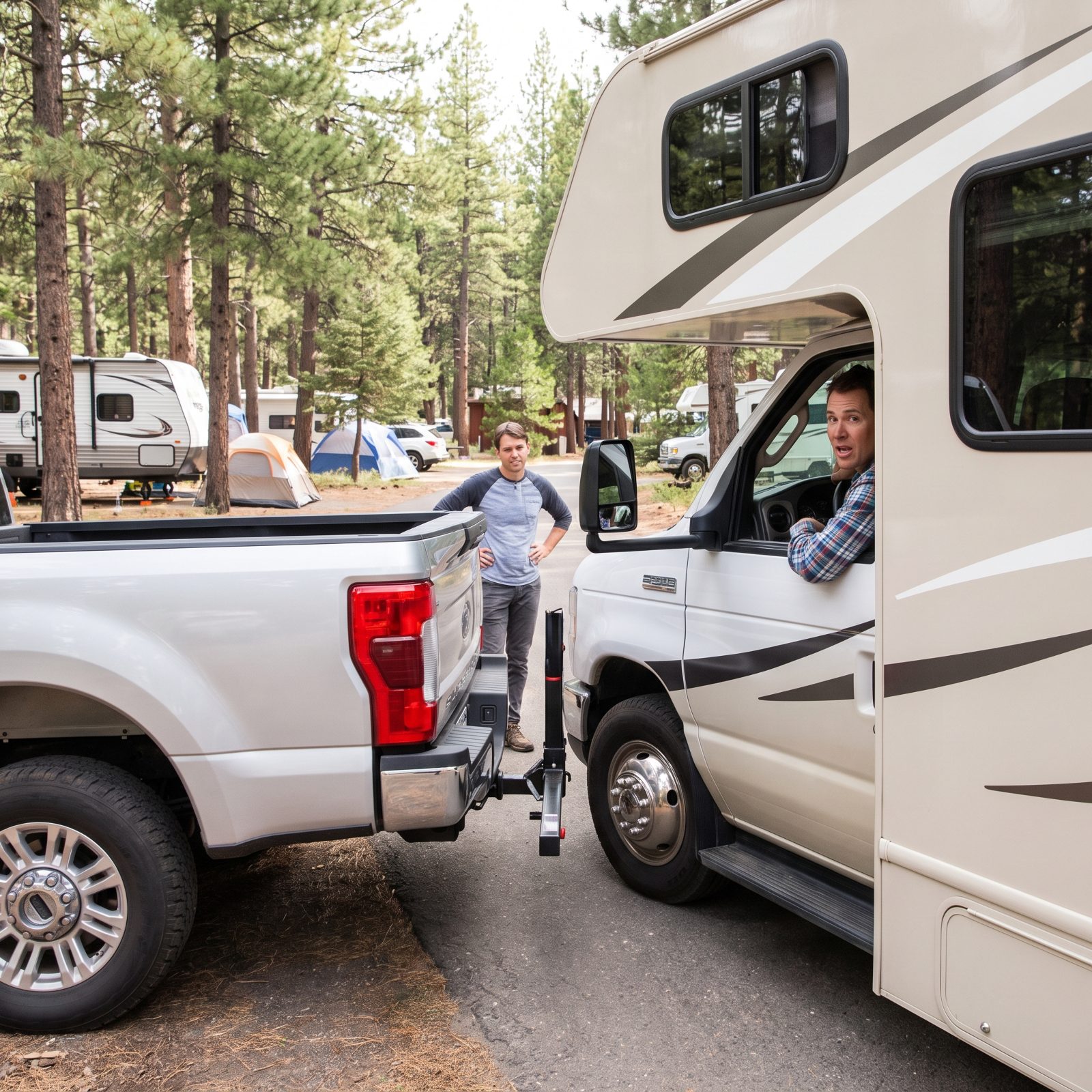
You pulled in, got the trailer level, and left the truck wherever it landed — trouble is, the tail end is sitting a good three feet into the loop road.
Fire trucks and ambulances need that lane. So does the neighbor backing a 34-foot fifth wheel into the site across from you at dusk. A truck sticking out turns a two-way loop into a game of inches, and somebody’s mirror pays for it eventually.
Pull the whole rig onto your pad, even if it means parking the tow vehicle nose-to-tail or tucking it alongside. If it genuinely won’t fit, ask the host about overflow parking. Most campgrounds keep a spot for exactly this.
12. Treating the Empty Site Next Door as Your Overflow Lot
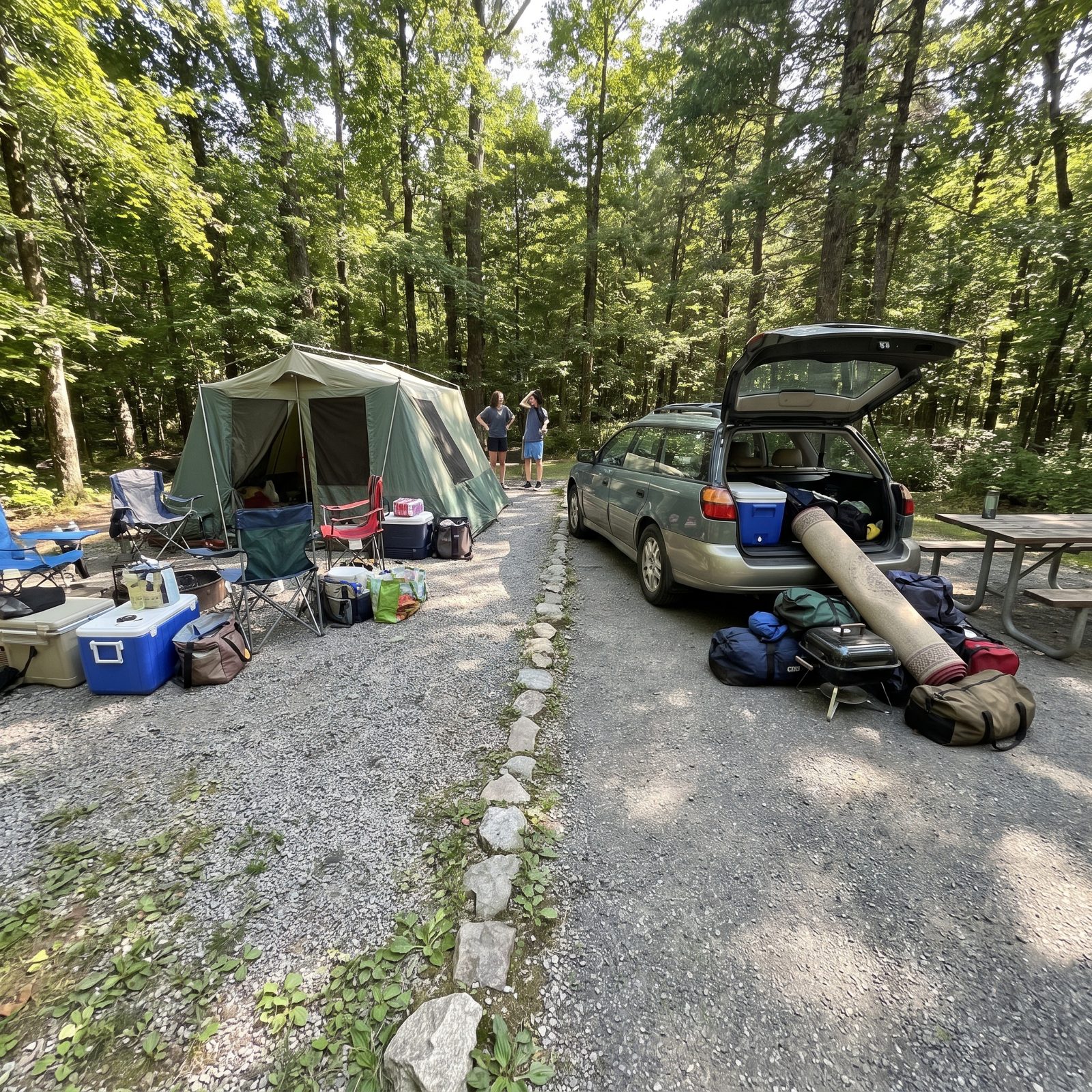
That empty site next to you isn’t yours. It just hasn’t been claimed yet.
Spreading your second car, the bikes, and the kayak trailer onto it feels harmless right up until someone rolls in at 7 p.m. with a reservation for that exact number and finds it buried under your gear. Now you’re scrambling to move things in the dark while a tired family waits and the host fields a complaint.
Keep everything on your own pad. Need more room? Pay for a second site or ask about a pull-through. An empty space is an open door, not a free one.
11. Leaving a Solid Outdoor Rug Down Until the Grass Underneath Dies
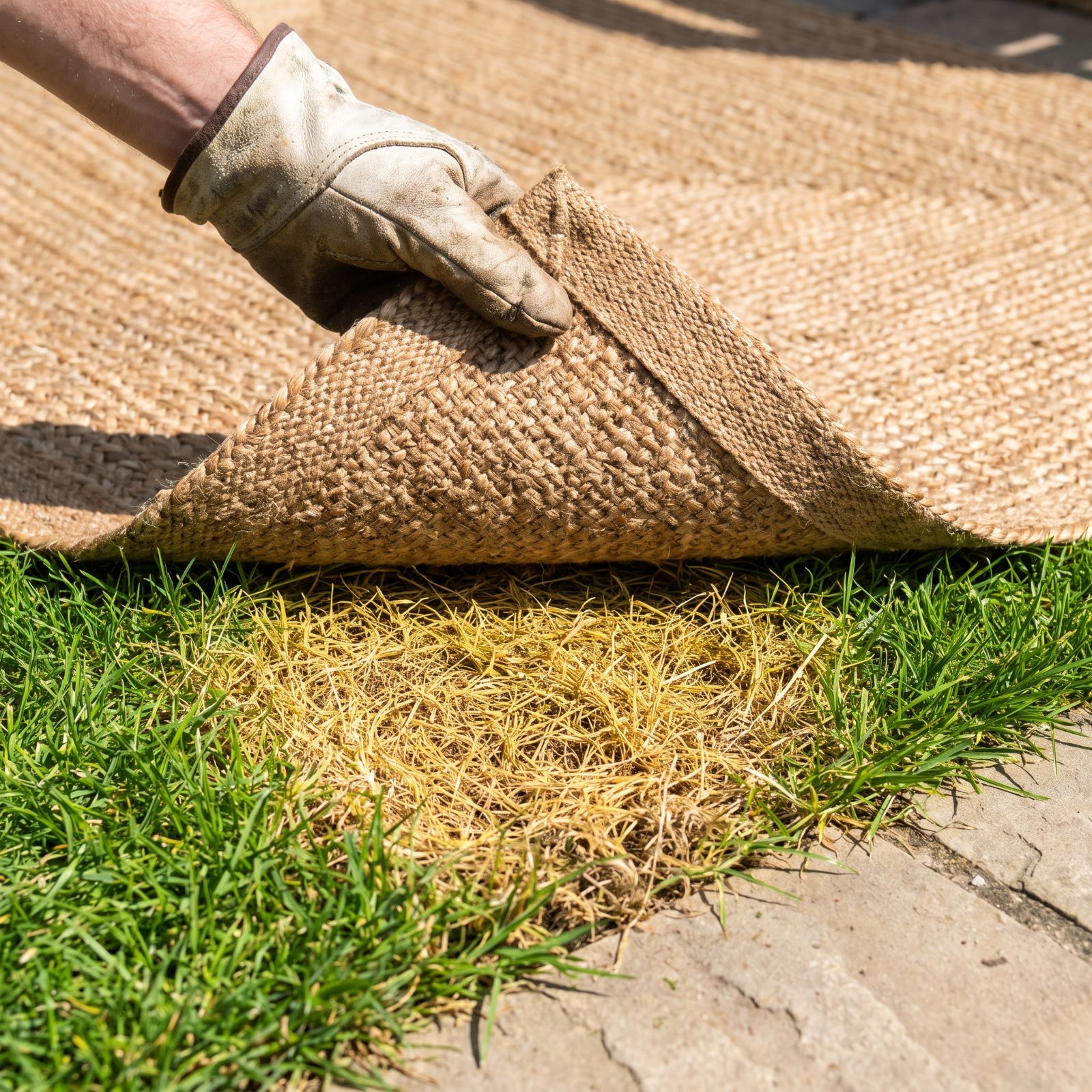
A good campsite rug keeps the mud out and the dirt off your floors, and I’m all for it. The trouble starts when a solid, rubber-backed rug sits on living grass for a week straight.
No light, no air, and that patch goes yellow, then brown, then bald. The next camper inherits a dead rectangle and the park eats the cost of reseeding. Enough of this and campgrounds start banning rugs on grass entirely, which punishes everyone.
Use a breathable mesh green outdoor camping rug that lets water and light through. Lift it to air out the grass if you’re parked more than a couple of nights. On a gravel pad, rug whatever you like.
10. Driving Nails and Screws Into Campground Trees
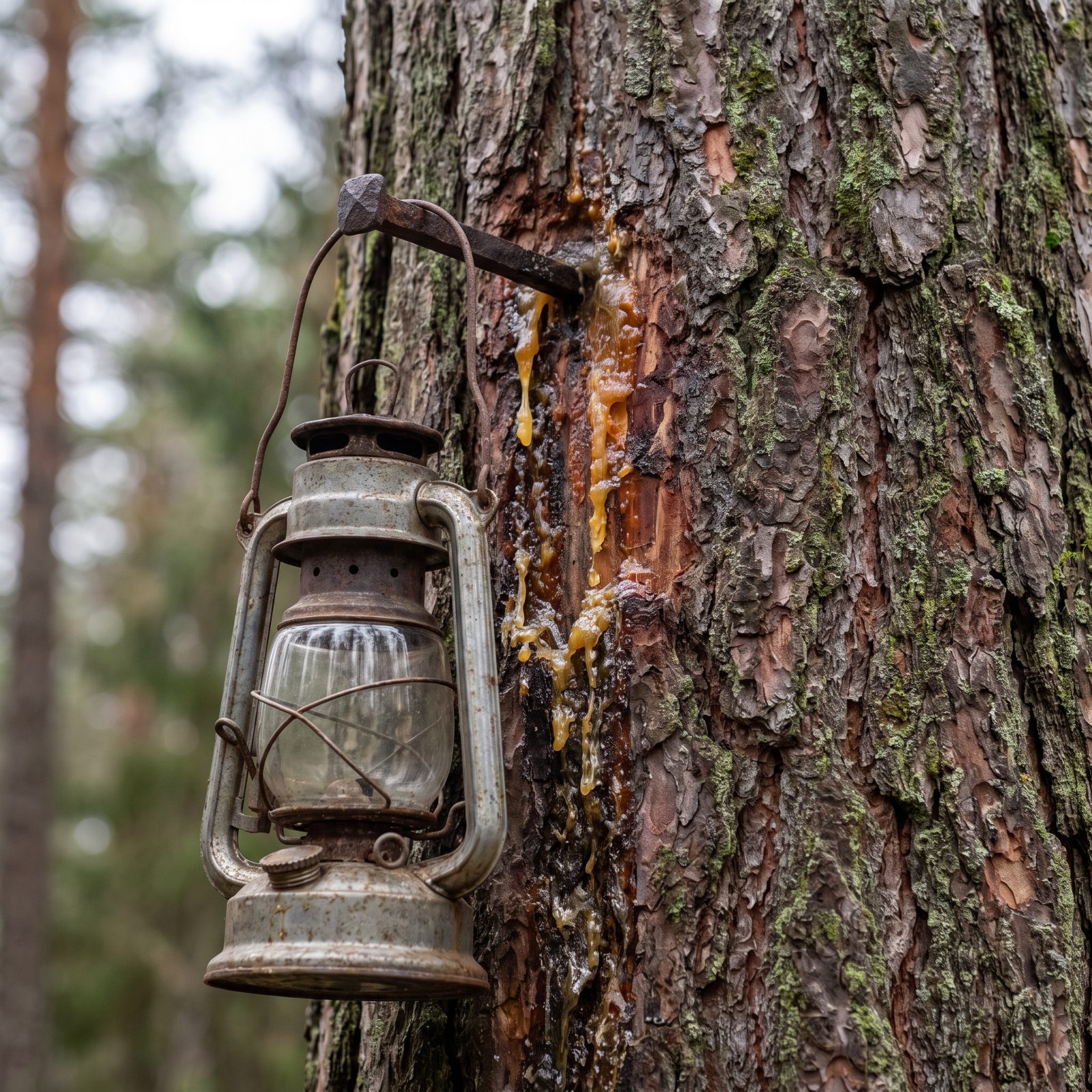
You need somewhere to hang the lantern or the dish towel, and that trunk is right there. One little nail. What’s the harm?
Plenty, actually. Every puncture is an open door for insects and fungus, and a mature campsite pine or oak can take decades to replace. Rangers have pulled whole sites out of rotation because the shade trees got hollowed out one nail at a time.
Use wide fabric tree straps or a freestanding pole for lights and lines. They hold more weight than a nail anyway, and you can move them in two seconds when you change your mind about the setup.
9. Stringing Cords and Hoses Across the Walking Path
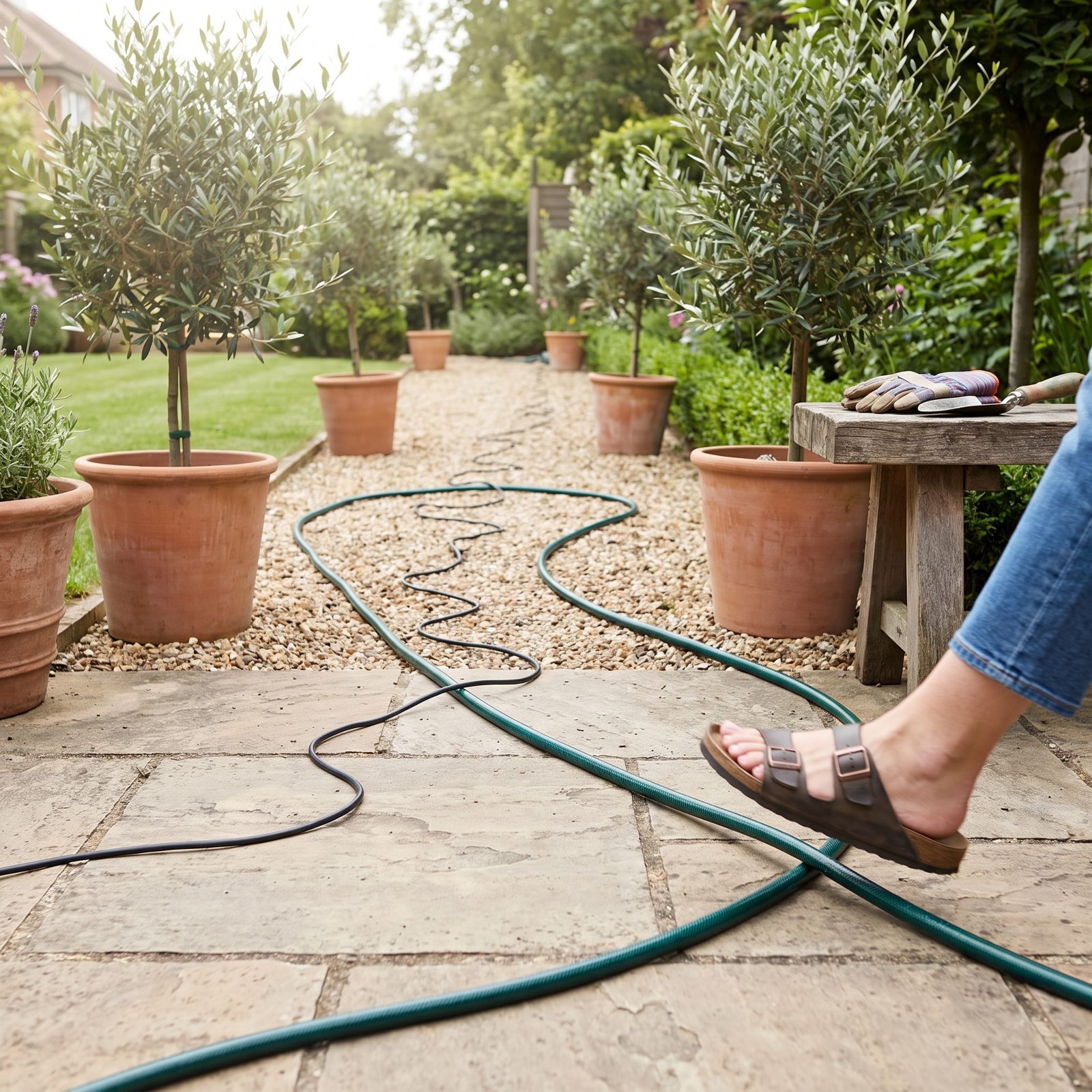
A cord strung across the footpath to the bathhouse is a lawsuit waiting to trip over itself.
Someone heading to the shower at 2 a.m. with a flashlight and a full bladder is not watching for your water line. Catch a toe on it and you’ve got a fall, a cut cord, and maybe a hurt neighbor. Campgrounds hate this one because the liability lands squarely on them.
Route cords and hoses along the back of your site, hugging the pad edge. If the only path crosses foot traffic, lay a bright cord cover ramp over it so people step over, not into, the line.
8. Letting the Chairs, Coolers, and Cornhole Creep Into the Next Site
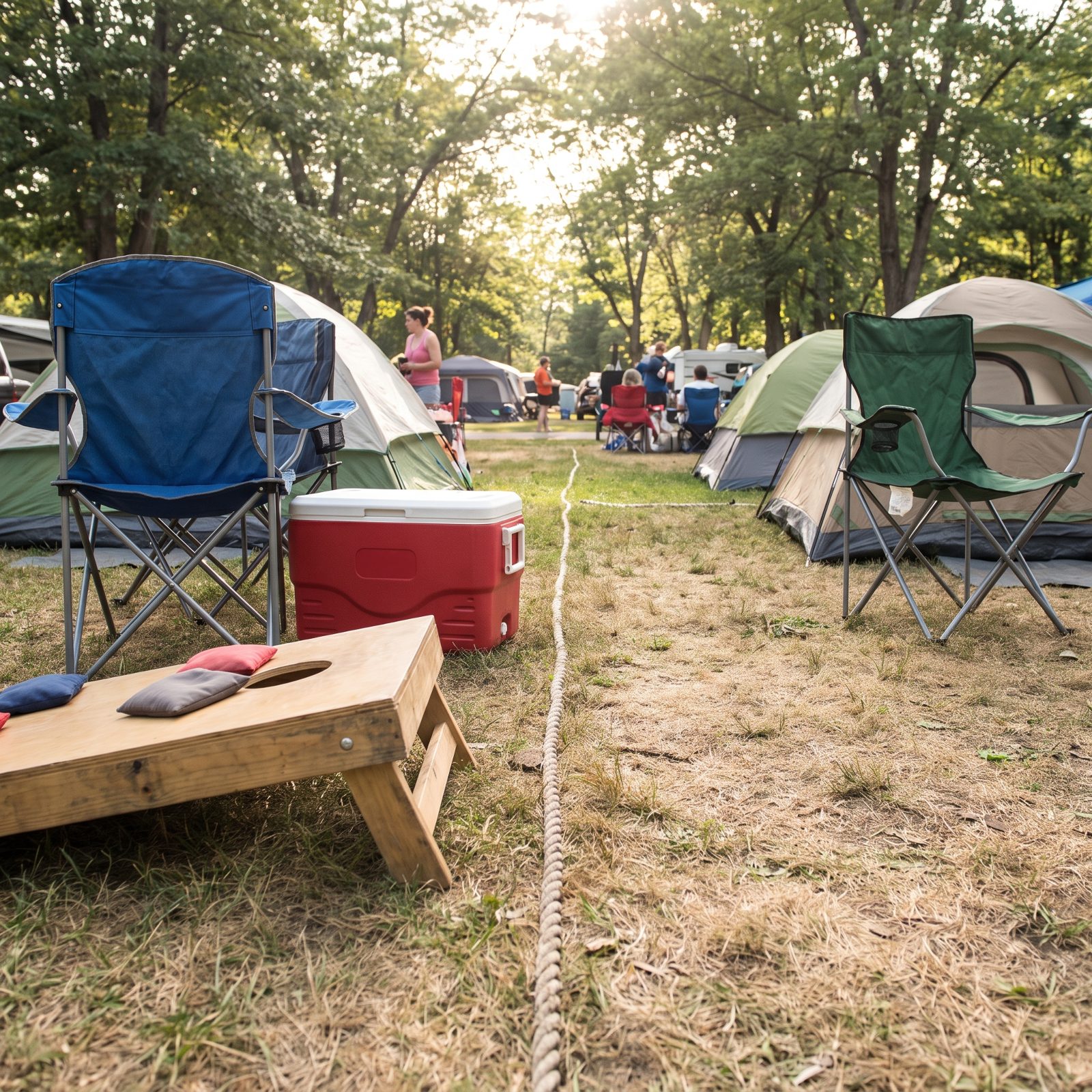
It starts innocent. One chair over the line to catch the shade, then the cooler, then the cornhole boards, and by evening your camp has quietly annexed half the neighbor’s site.
The folks who paid for that space now feel like they’re camping in your living room. Most won’t say a word. They’ll just leave a sour review and tell the host you’re a boundary problem.
Know where your site ends — the marker post, the fire ring, the pad edge — and keep the whole operation inside it, chairs and games included. Want elbow room? Book an end site or a double.
7. Turning a Single Site Into an Unauthorized Block Party
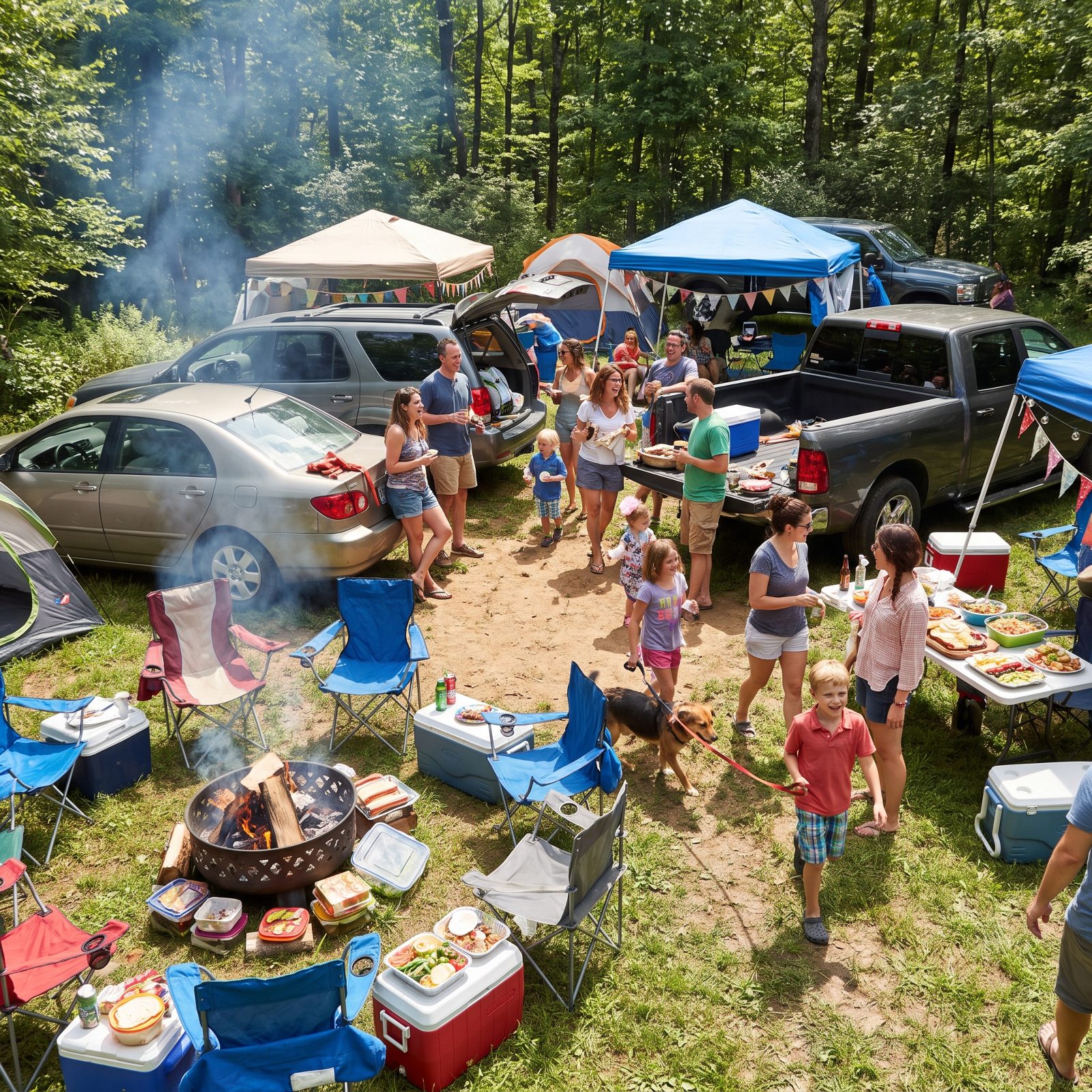
The family reunion was a great idea. Twelve people, six chairs, three extra cars, and one fire ring built for four, all crammed onto a single 40-foot pad.
Noise travels at a campground, and so does a crowd that spills onto the road and into the next site. Most parks cap how many people and vehicles a site allows — usually for septic and safety reasons, not to be difficult. Blow past that and the host has to come knock.
Call ahead and book adjoining sites, or use the park’s day-visitor policy. Ask about the vehicle and guest limits when you reserve. The party nobody complains about is the one that stays within its lines.
6. Flying a Drone Low Over Occupied Campsites
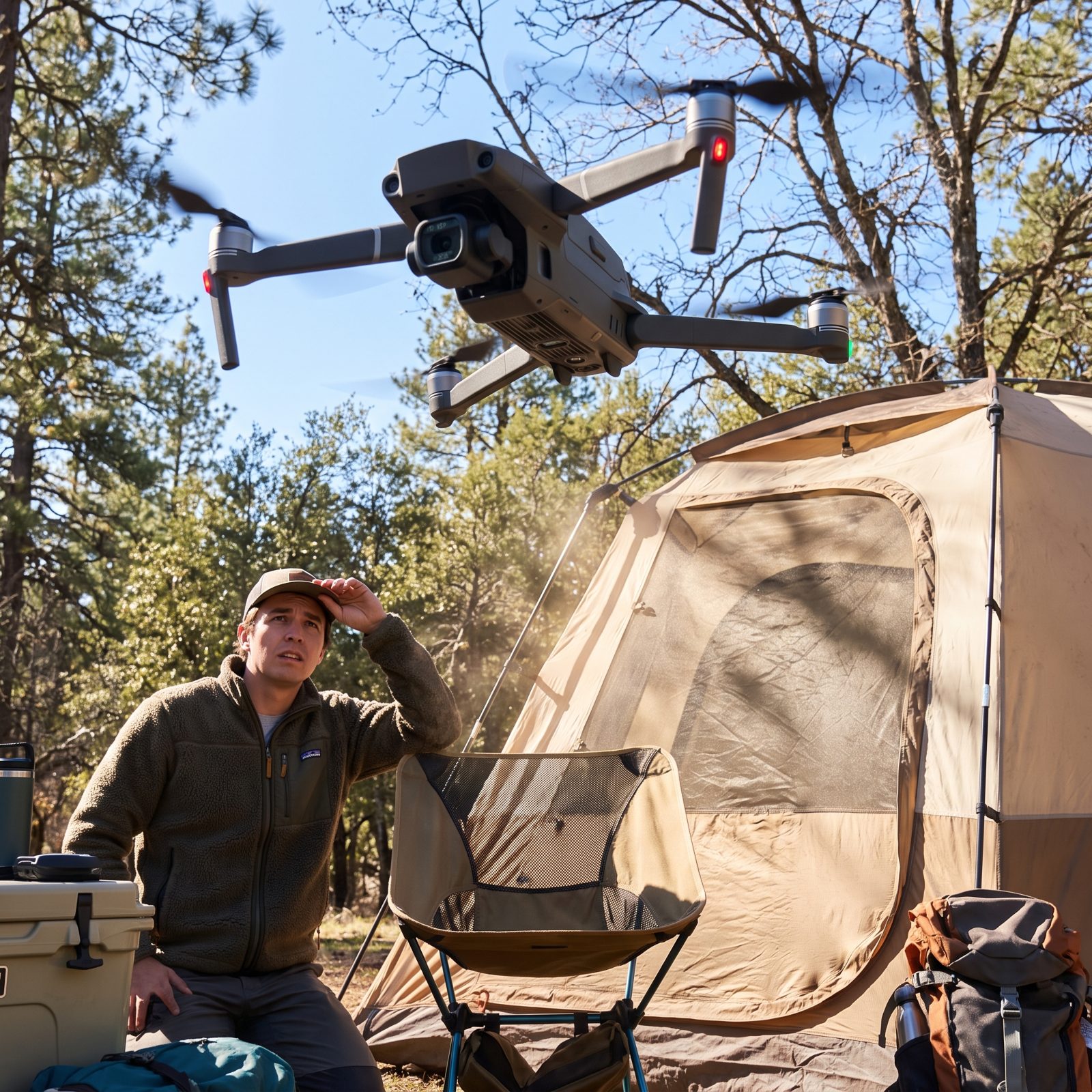
Drones make for great footage of a mountain loop or a lakefront sunset. I get the appeal. It ends the moment you’re buzzing one over someone’s picnic table while they eat lunch.
That whine overhead reads as a camera in people’s faces, because that’s exactly what it is. It spooks kids, wakes nappers, and in a lot of national and state parks it’s flat-out banned, fines included.
Check the park rules first, every single time. Fly over open ground away from occupied sites, keep your altitude up, and never hover over anyone’s camp. Permission costs you one friendly question. Annoyance costs you the whole campground’s goodwill.
5. Wandering Into a Stranger’s Site to Admire Their Rig
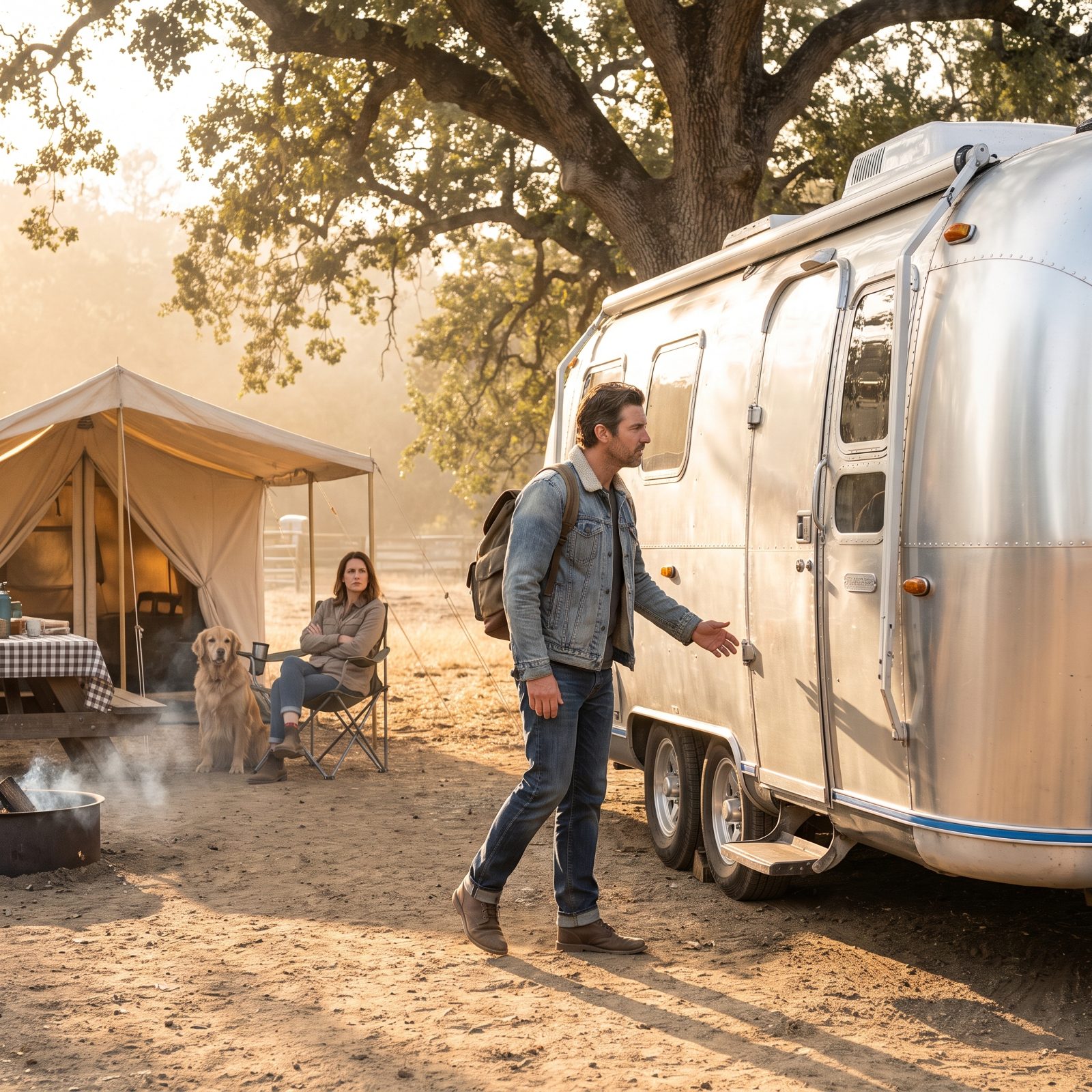
A gleaming Airstream or a rare vintage pop-up pulls admirers like a magnet. Nobody blames you for wanting a closer look. But walking onto someone’s pad to peer in the windows crosses a line you’d never cross at their house.
A campsite is a temporary home. Strolling up uninvited while the owner’s inside having coffee feels like a stranger in the driveway trying the car doors. It puts people on edge fast.
Admire from the road. Want the full tour? Catch the owner outside and ask. RV folks love to talk about their rigs, and most will walk you through every cubby happily. The ask is the whole difference between a new friend and a creep.
4. Claiming a First-Come Site With a Chair, Then Vanishing All Day
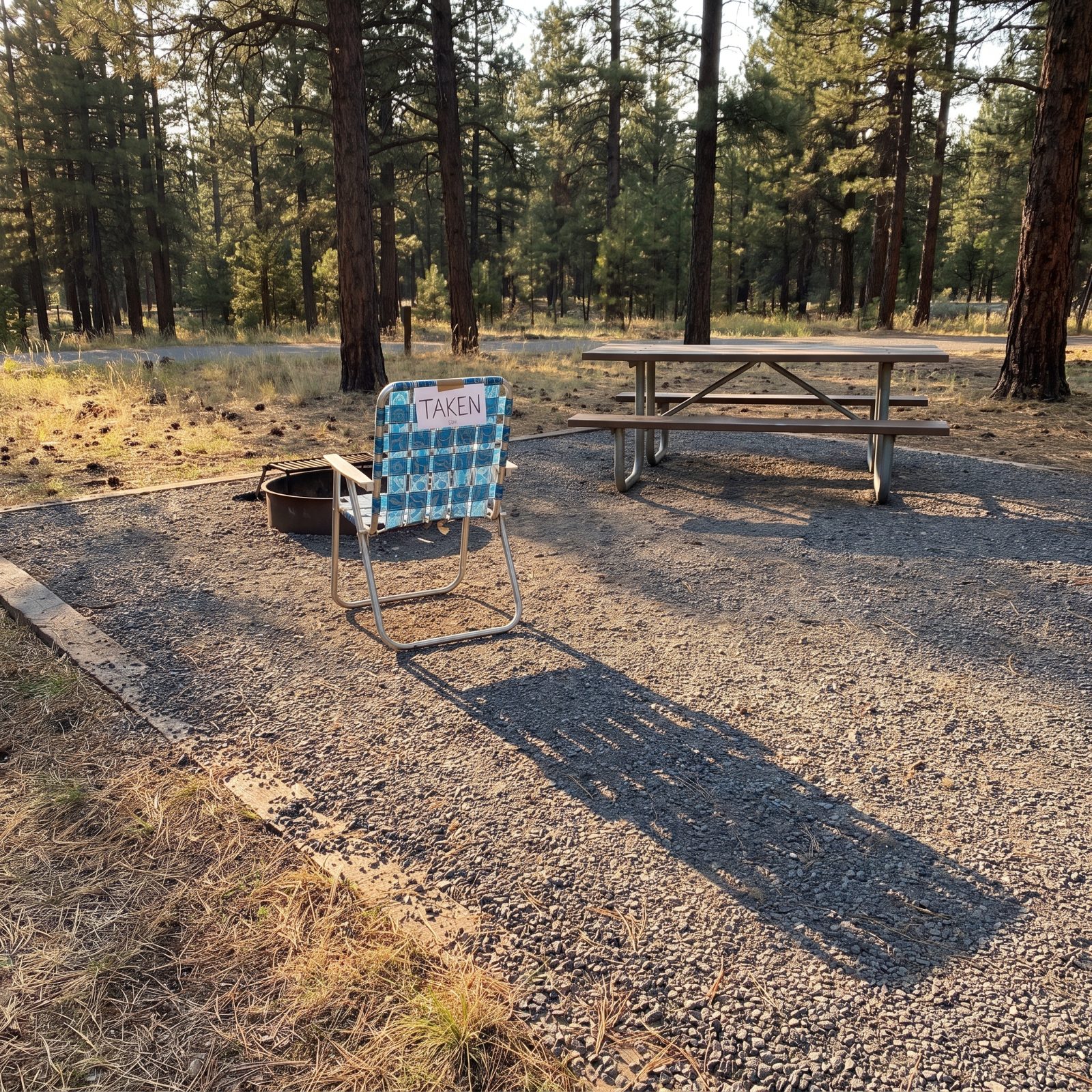
A chair on an empty first-come site is not a reservation. It’s a hope.
Dropping a lawn chair on the prime lakefront spot at 8 a.m. and driving off for the day leaves it in limbo. Honest campers circle for hours, unsure if it’s taken, while you’re forty miles away at a trailhead. By evening someone’s fed up, the host is refereeing a dispute over a folding chair, and nobody’s happy.
First-come means first to occupy, not first to drop a marker. If you want the site, set up on it and stay. Have to leave for the day? A visible tent, a hookup, and a note with your return time read as genuine. A single chair reads as a land grab, and people treat it like one.
3. Ignoring Checkout Time While New Campers Wait
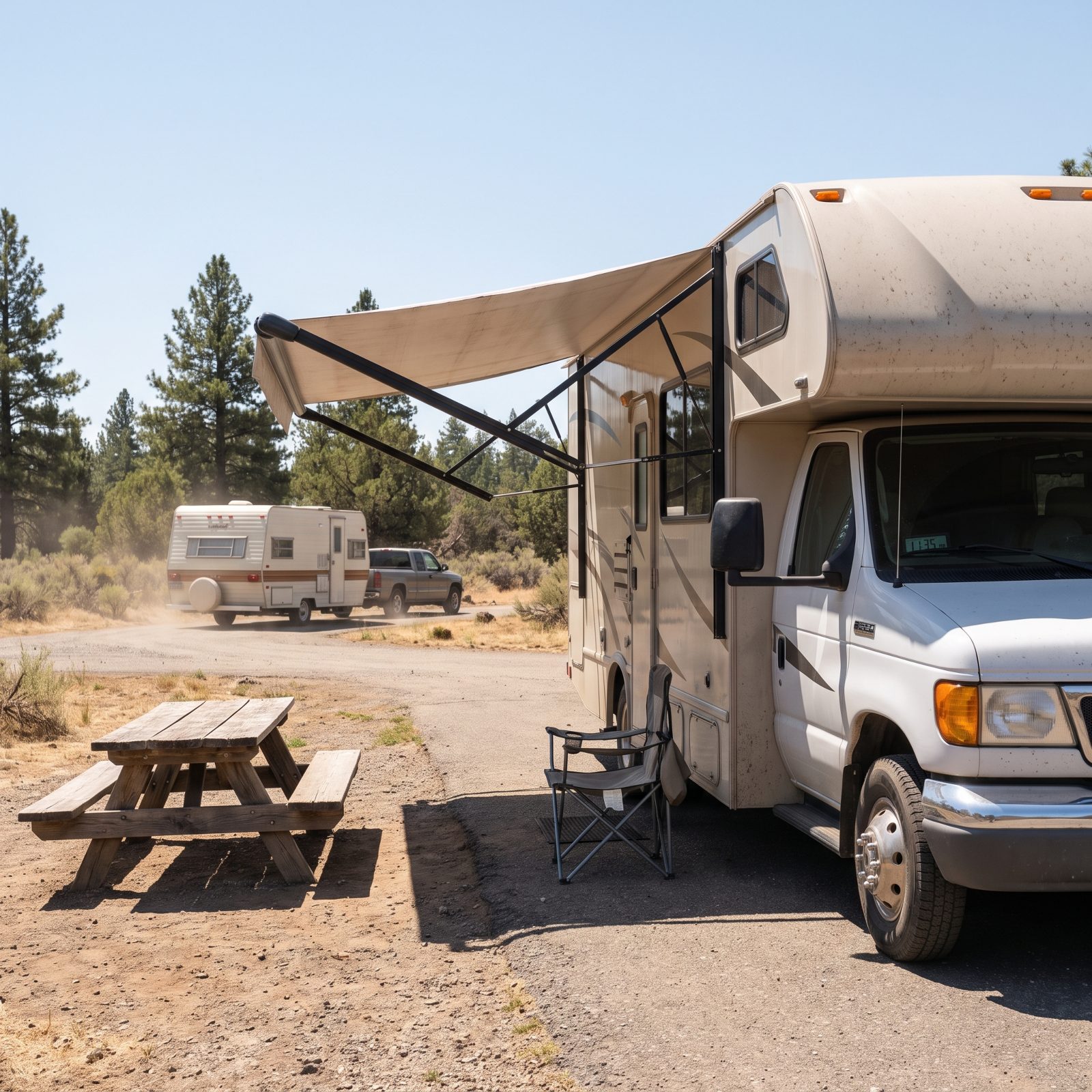
Checkout is 11 a.m. You know this. And the new family circling the loop in a dusty travel trailer knows it too, because they’ve been staring at your awning since 10:45. Every minute you linger over a third cup of coffee is a minute they idle on the road, blocking the loop while their reservation window shrinks.
The consequence isn’t just a cranky neighbor. Campgrounds run on tight back-to-back bookings, so one slow departure cascades into a line of rigs stacked up at the entrance — which is exactly how you earn the reputation RVers hate.
Here’s the fix. The night before, do your outside teardown: hoses drained, chairs folded, awning in, nothing left but the morning essentials. Set a phone alarm for 10:15. And if you genuinely need more time, walk to the office and ask about late checkout instead of squatting. Most hosts say yes if you ask. Almost none forgive you for not.
2. Leaving Trash, Ashes, or Broken Gear Behind at Departure
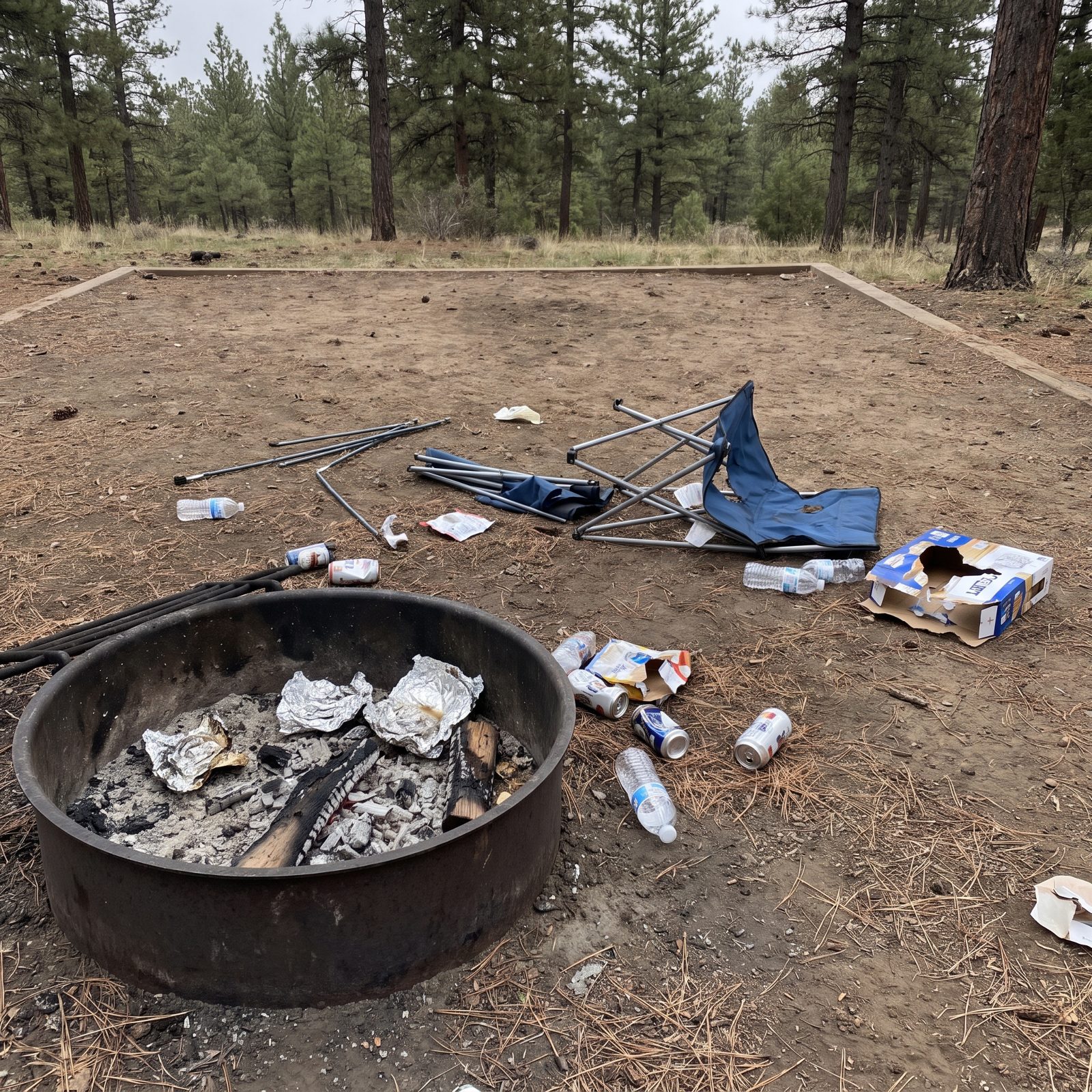
The worst thing you can leave behind isn’t a full trash bag. It’s the little stuff — a melted foil packet in the fire ring, a snapped tent pole in the weeds, a collapsed canopy you decided wasn’t worth hauling home, slumped against the picnic table like someone else’s problem.
That mess becomes the next camper’s first impression and the host’s unpaid chore. Hot ashes, though? Worse than ugly. A fire that looks dead can hold coals for a full day and reignite in dry wind. People have burned acres that way, and it started with exactly this kind of lazy exit.
So walk the site before you pull out. Pack out every scrap, bag it, and use the dumpster, not the half-full can by the bathhouse. Drown your fire until it’s cold enough to touch with a bare hand, then stir and drown it again. Broken gear goes home with you or into the proper trash. Leave the pad cleaner than you found it. That’s the whole code.
1. Arguing Loudly With the Camp Host Over Rules Everyone Else Follows
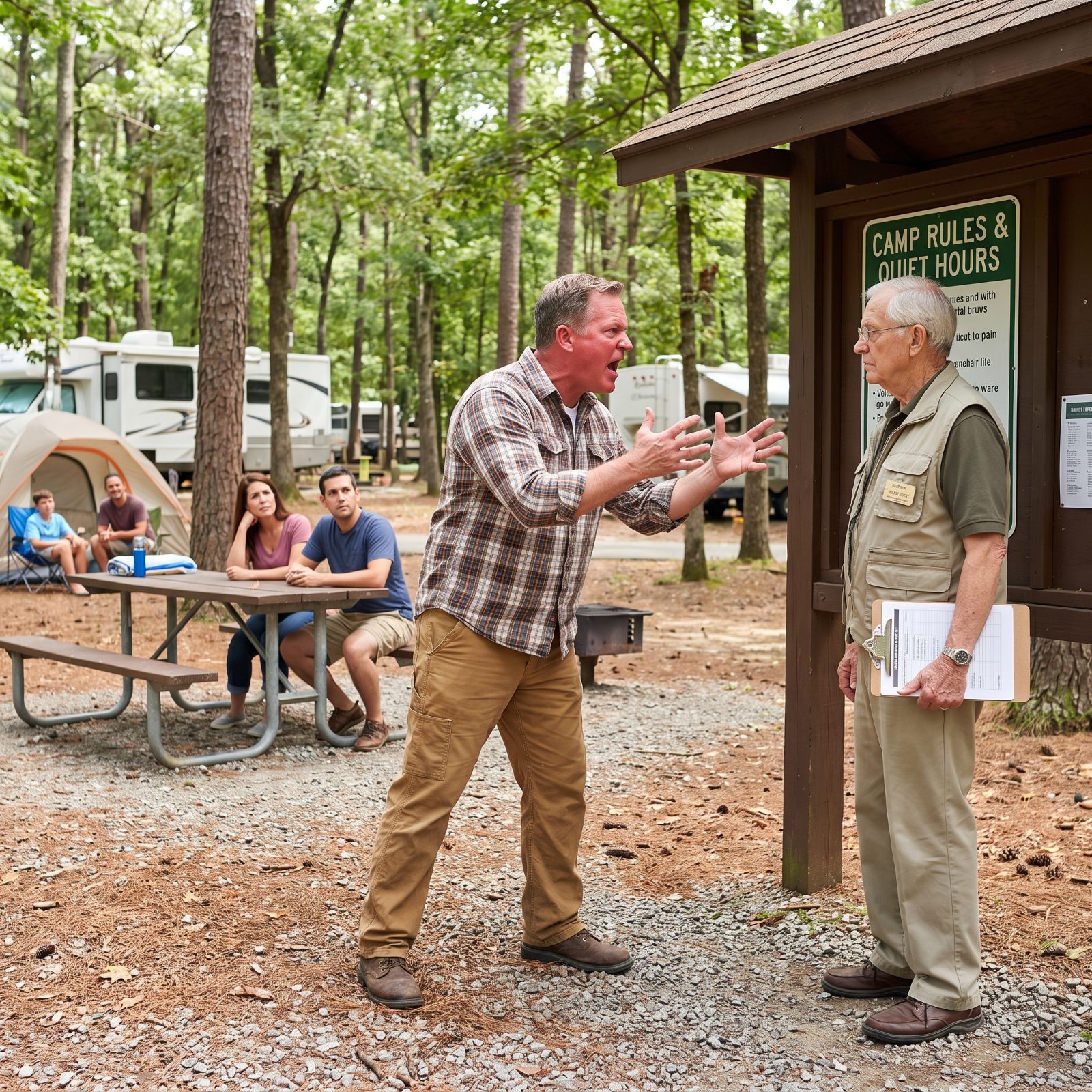
Quiet hours start at 10. Your generator kicks back on at 10:20. The host walks over, polite as can be, and instead of a quick fix it turns into a scene — raised voice, crossed arms, the whole loop pretending not to listen while absolutely listening.
I’ll be blunt. This almost never ends in your favor. The rule was posted at check-in, everyone around you is following it, and the host didn’t write the policy — they’re just the one stuck delivering it. You’re not winning an argument. You’re auditioning for the role of the RVer nobody wants next door.
When you disagree with a rule, lower your voice and ask a question instead of mounting a case. “Is there any flexibility on generator hours?” gets you further than a lecture. And if the answer is no, let it go. Save the real feedback for the post-stay survey or a calm email to management, where it might actually change something.