
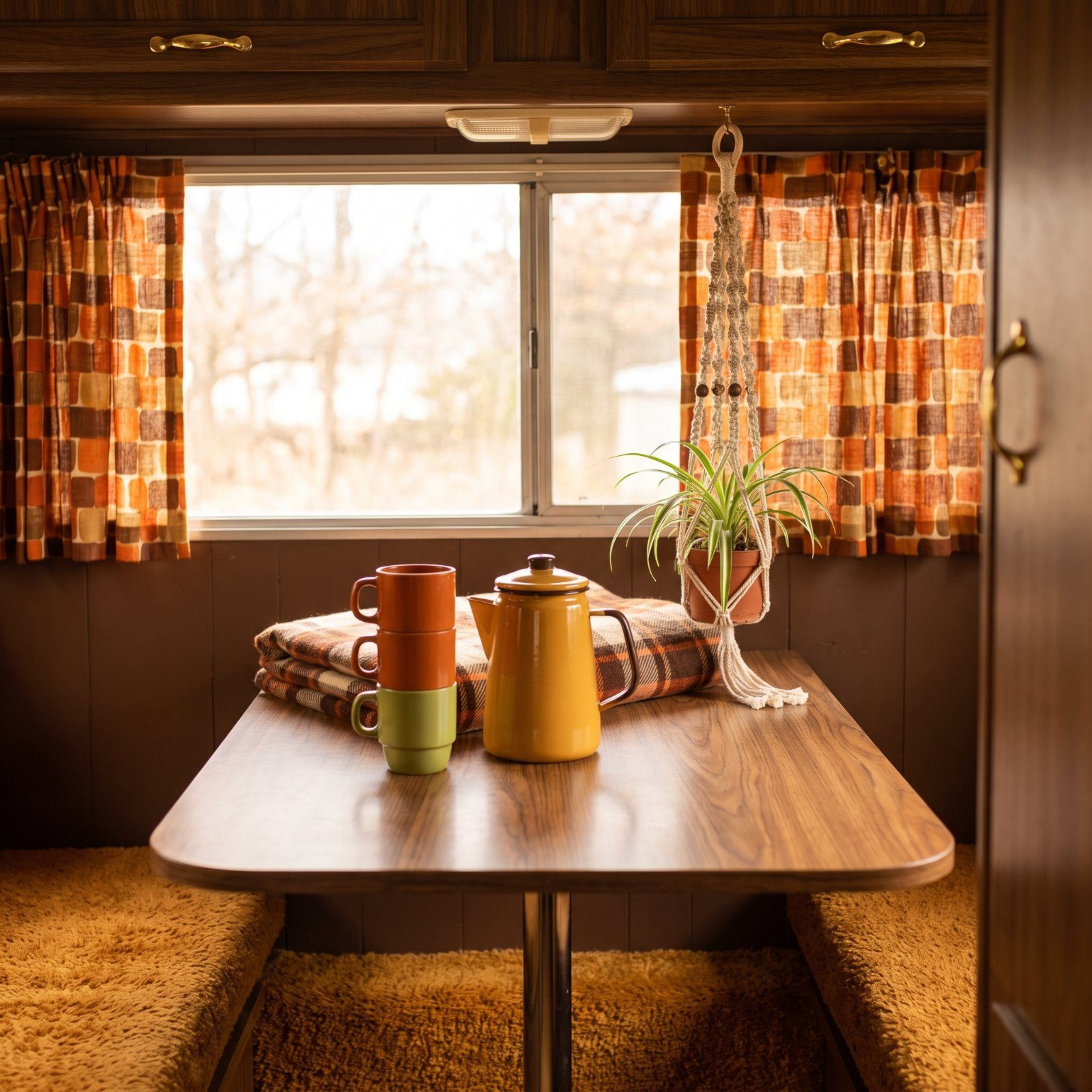
Somewhere along the way, we all agreed that harvest gold was a crime. We ripped out the shag, painted over the brown paneling, and told ourselves we were improving things. We were wrong about some of it.
The 1970s motorhome had a point of view — warm, textured, confident in its woodgrain and its orange plaid. Climb into a well-kept one today and the whole thing hums with a coziness our beige interiors never figured out. Here are the details worth loving again.
39. Shag Carpet You Could Lose a Quarter In
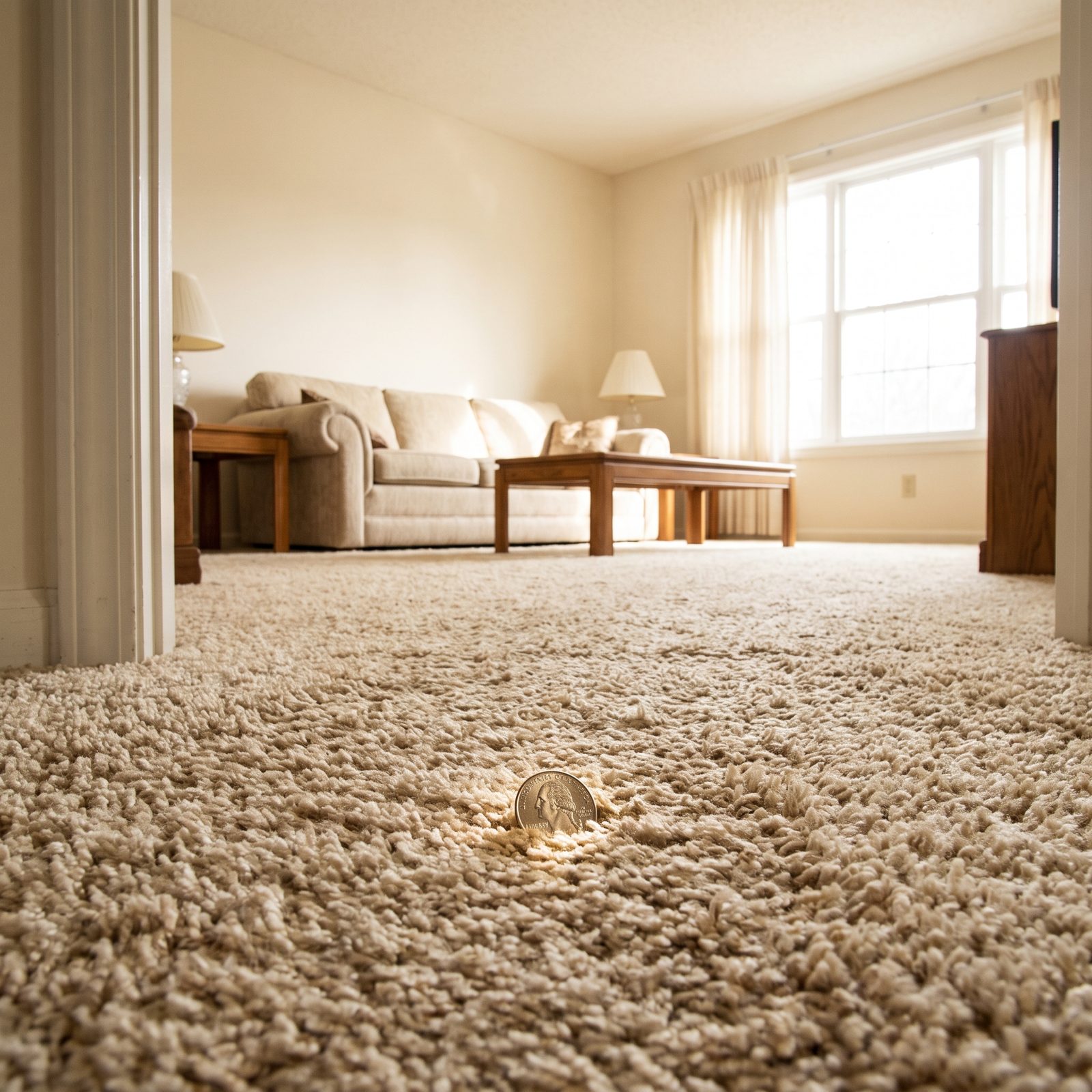
You felt it before you saw it. Step out of the cab, down onto that floor, and your socks sank into something that remembered being a meadow — gold, rust, sometimes a swampy green, always deep enough to swallow a dropped Lego or a handful of spilled M&Ms you’d never fully recover.
We tore it all out for low-pile commercial grade and called it progress. But nothing modern has ever felt like that underfoot on a cold morning in a mountain campground. It was insulation you could wiggle your toes in.
38. Harvest Gold Appliances That Owned Their Color
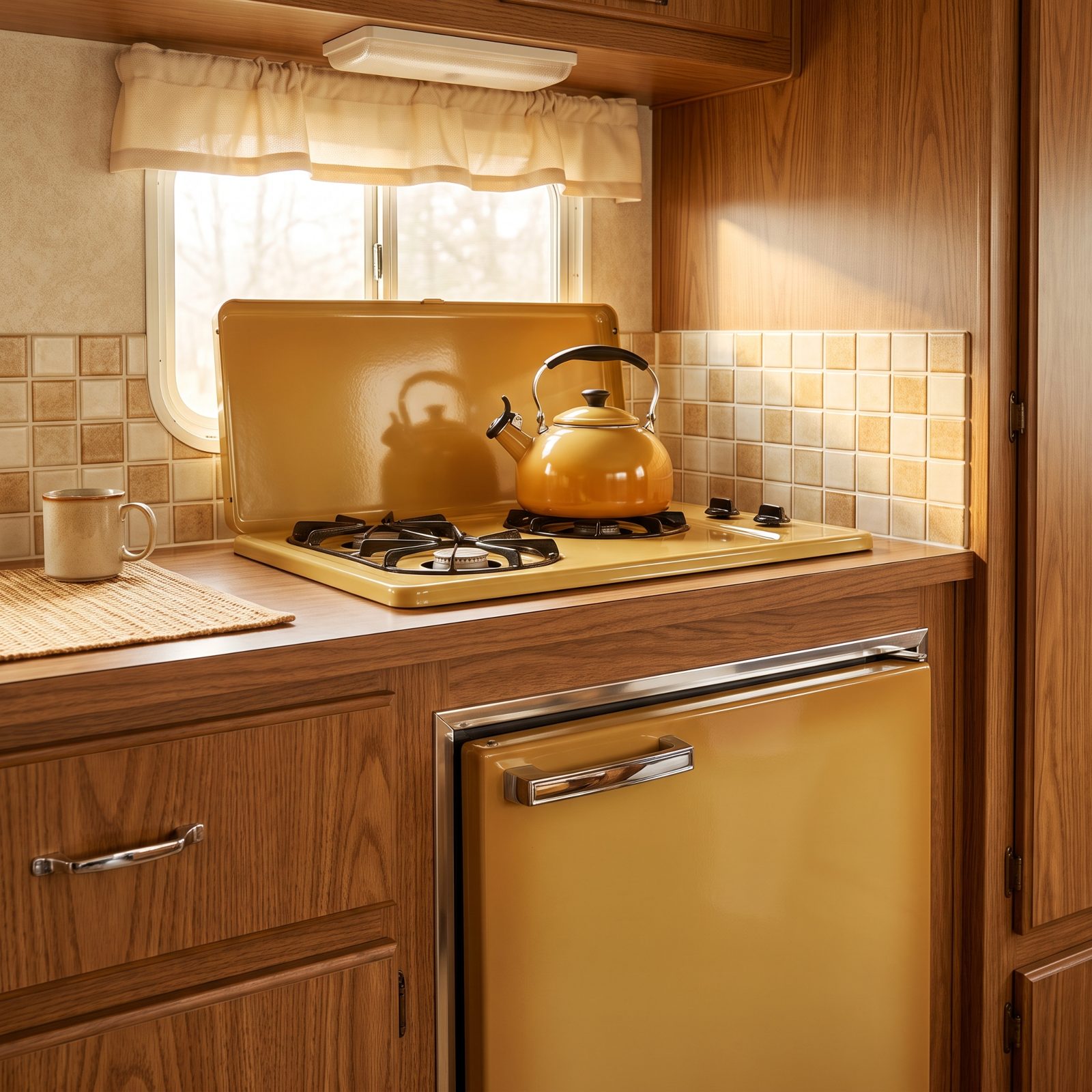
Harvest gold wasn’t trying to blend in. It was a confident mustard-yellow that walked into the galley and announced itself. The fridge, the stove, the little range hood — all matching, all glowing like butterscotch when the morning sun hit them.
We swapped it for stainless and now every RV kitchen looks like every other RV kitchen. Harvest gold had the nerve to have a personality.
Beige is a decision nobody will ever regret. That’s exactly the problem with it.
37. Avocado Green Cabinet Doors
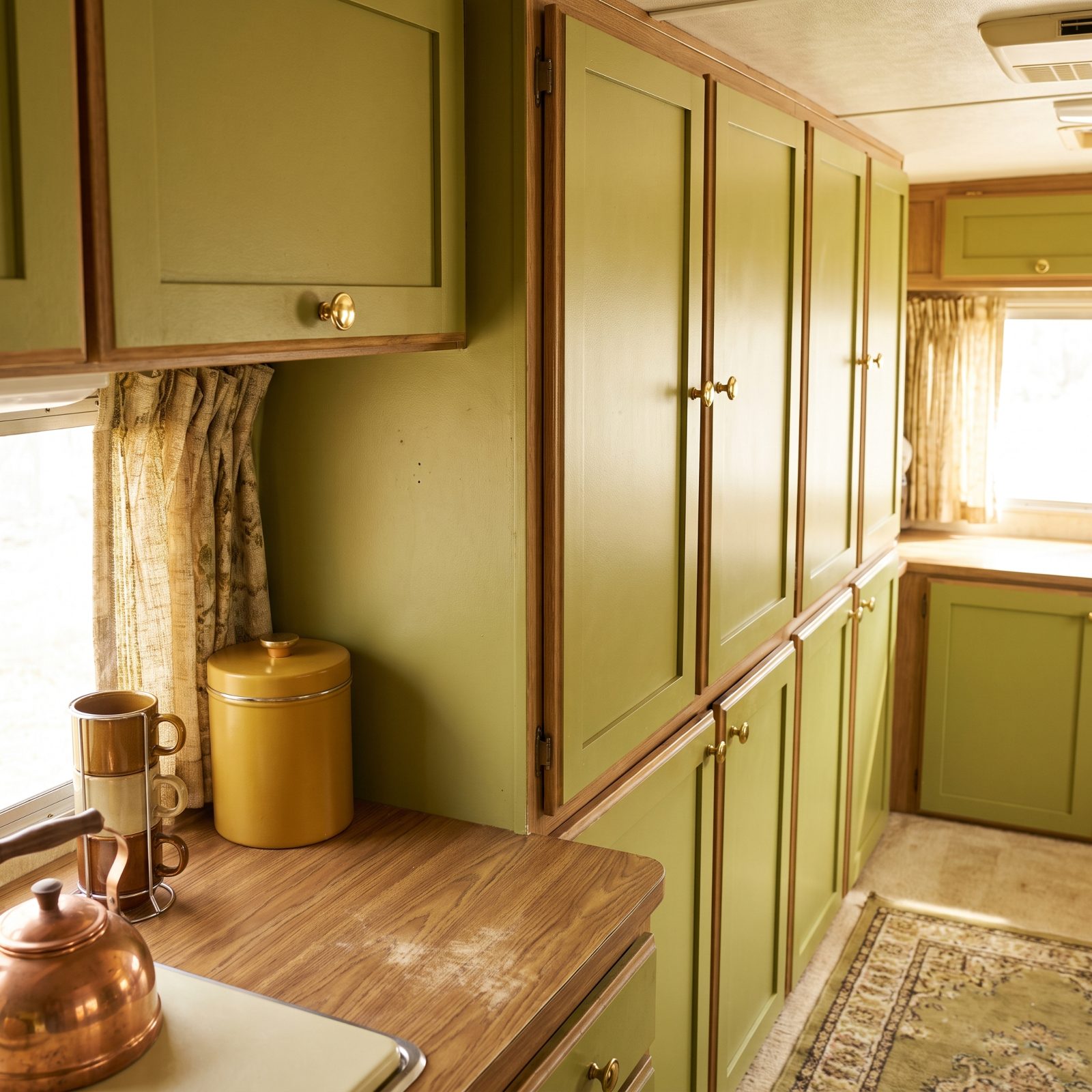
Avocado green was the color everyone loved to hate, right up until they stopped hating it. Those cabinet doors, somewhere between olive and army, paired with little brass knobs that your thumb polished to a shine over a thousand coffee mornings.
It reads differently now. Against woodgrain and warm light, avocado looks grounded, earthy, almost intentional. Modern RVs went glossy white and we lost the one green that actually looked good next to brown.
36. Burnt Orange Upholstery on the Dinette
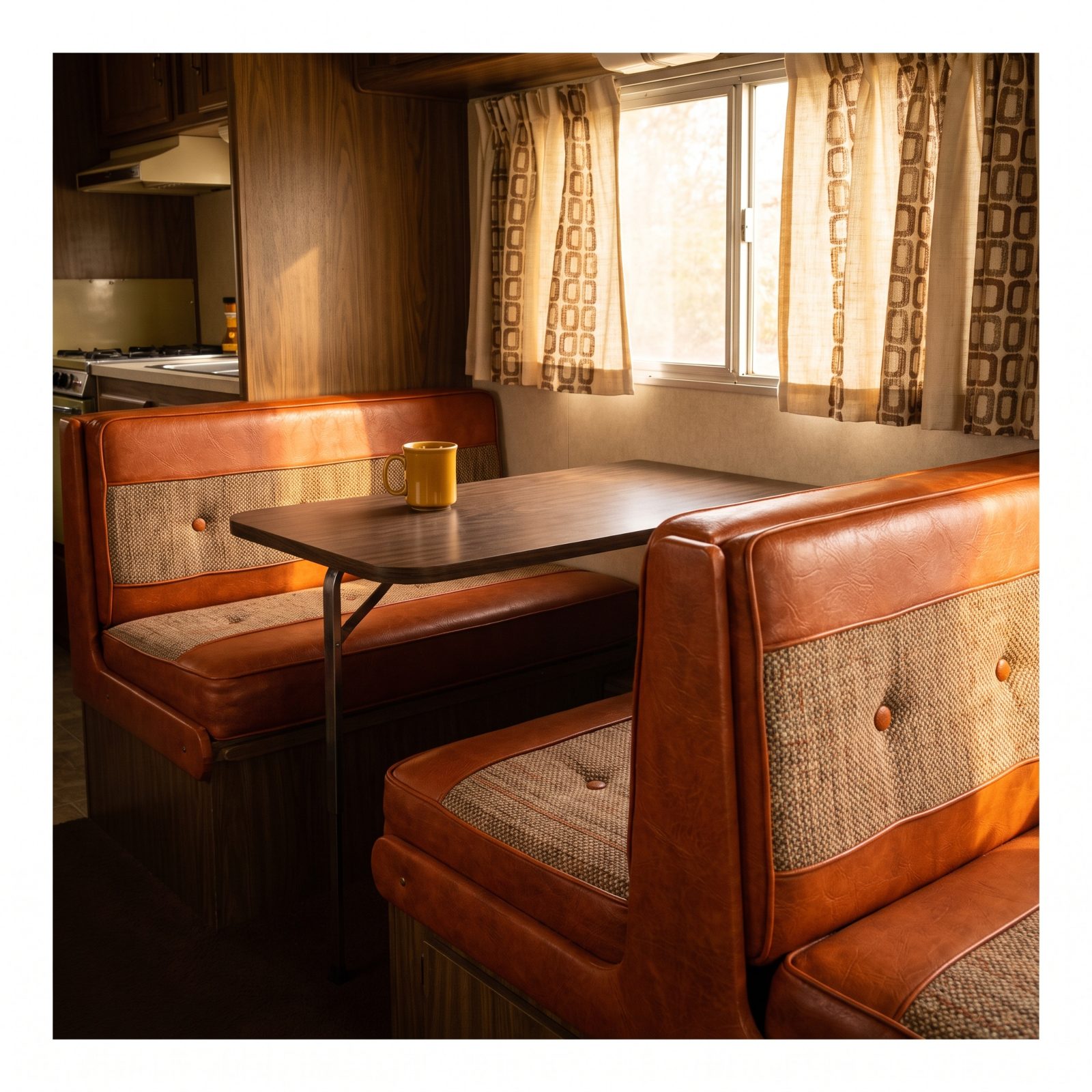
Slide into that dinette on a summer evening and the burnt orange almost looked lit from within. It was the color of a campfire catching, of the desert at sundown, warm enough to make the whole eating nook feel like the heart of the rig.
I used to think it was loud. Now I think the opposite. Every modern RV dinette is gray or taupe, afraid to commit. Burnt orange committed. It held a crowd of sunburned kids and sloppy joes and never once looked tired.
35. Chocolate Brown Wall Paneling
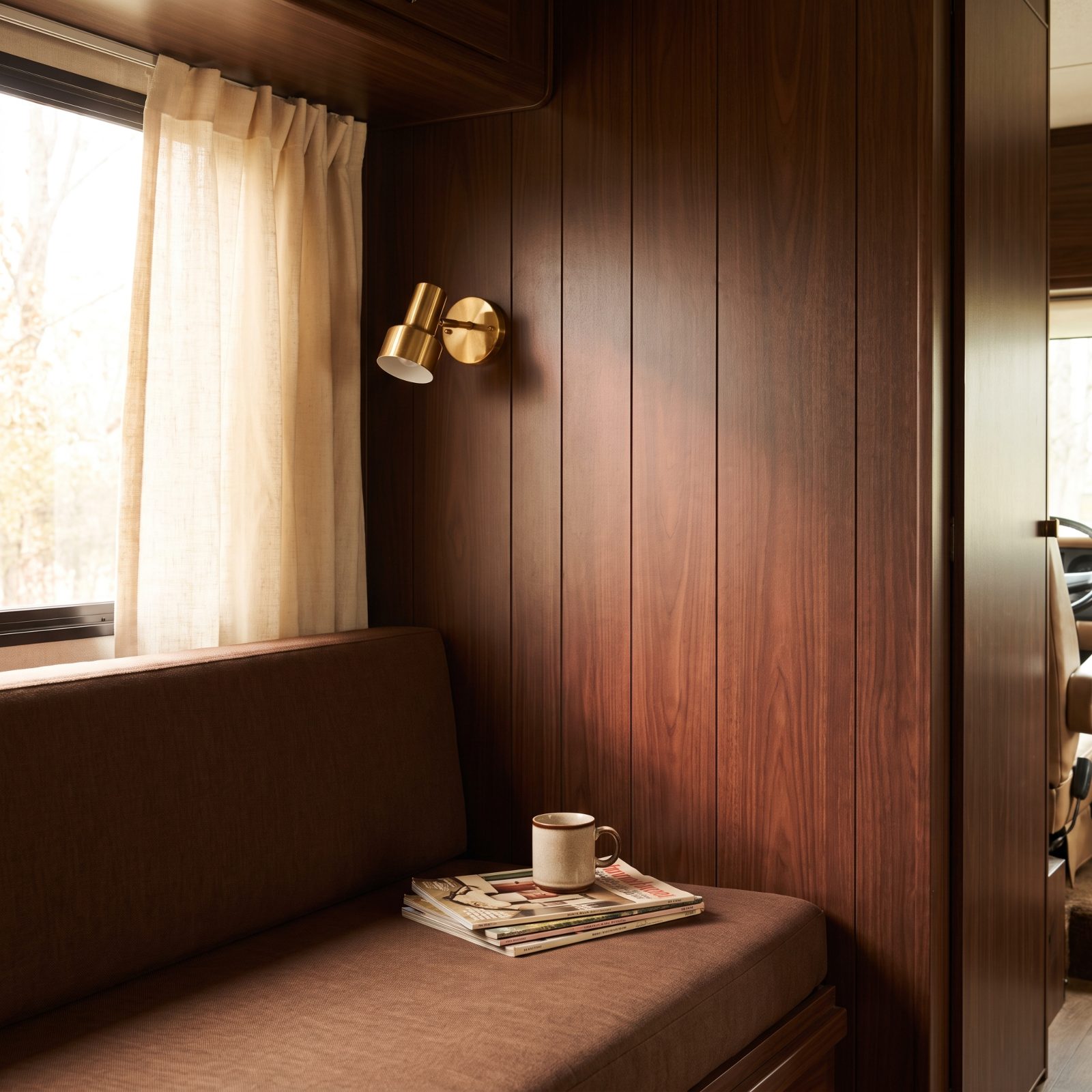
We painted so much of this over. White, then gray, then whatever shade of greige the dealer was pushing that year. We told ourselves dark paneling made the space feel small.
It didn’t make it small. It made it warm. Chocolate brown paneling with its faint woodgrain turned a fiberglass box into a cabin, especially at night with a single brass lamp glowing against it. A good vintage interior feels like a hug. A new one feels like a rental car.
34. Woodgrain Vinyl Dashboards
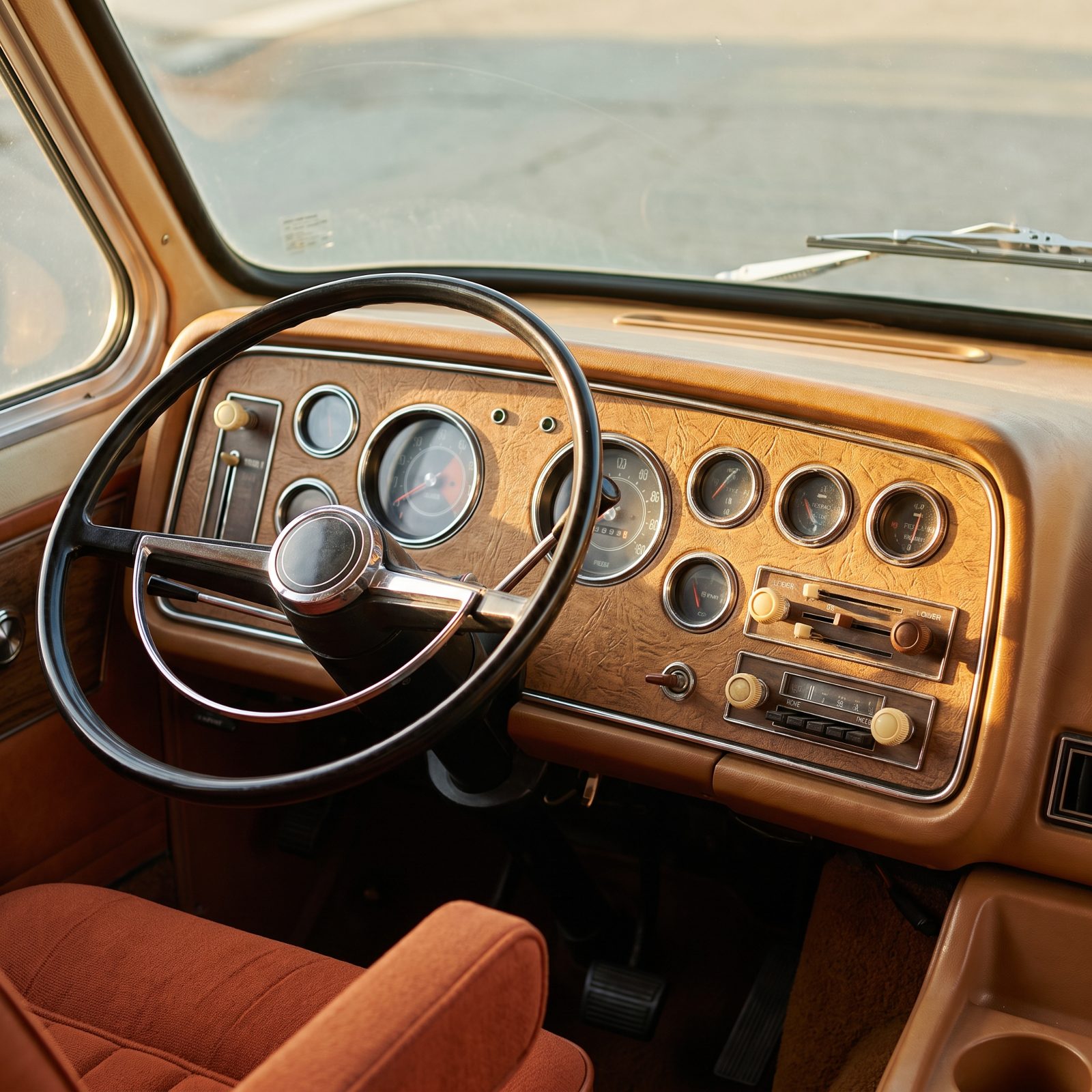
Nobody was fooled. That dashboard was no more wood than the carpet was grass. But the embossed woodgrain vinyl, wrapping around a bank of round chrome gauges, gave the whole cockpit a warmth that black plastic never managed.
You gripped that big thin wheel, watched the honey-colored dash catch the morning light, and the drive felt like an occasion. Today’s dashboards? Matte charcoal and touchscreens. Functional. Cold. A little joyless, honestly.
33. Bold Geometric Curtain Fabric
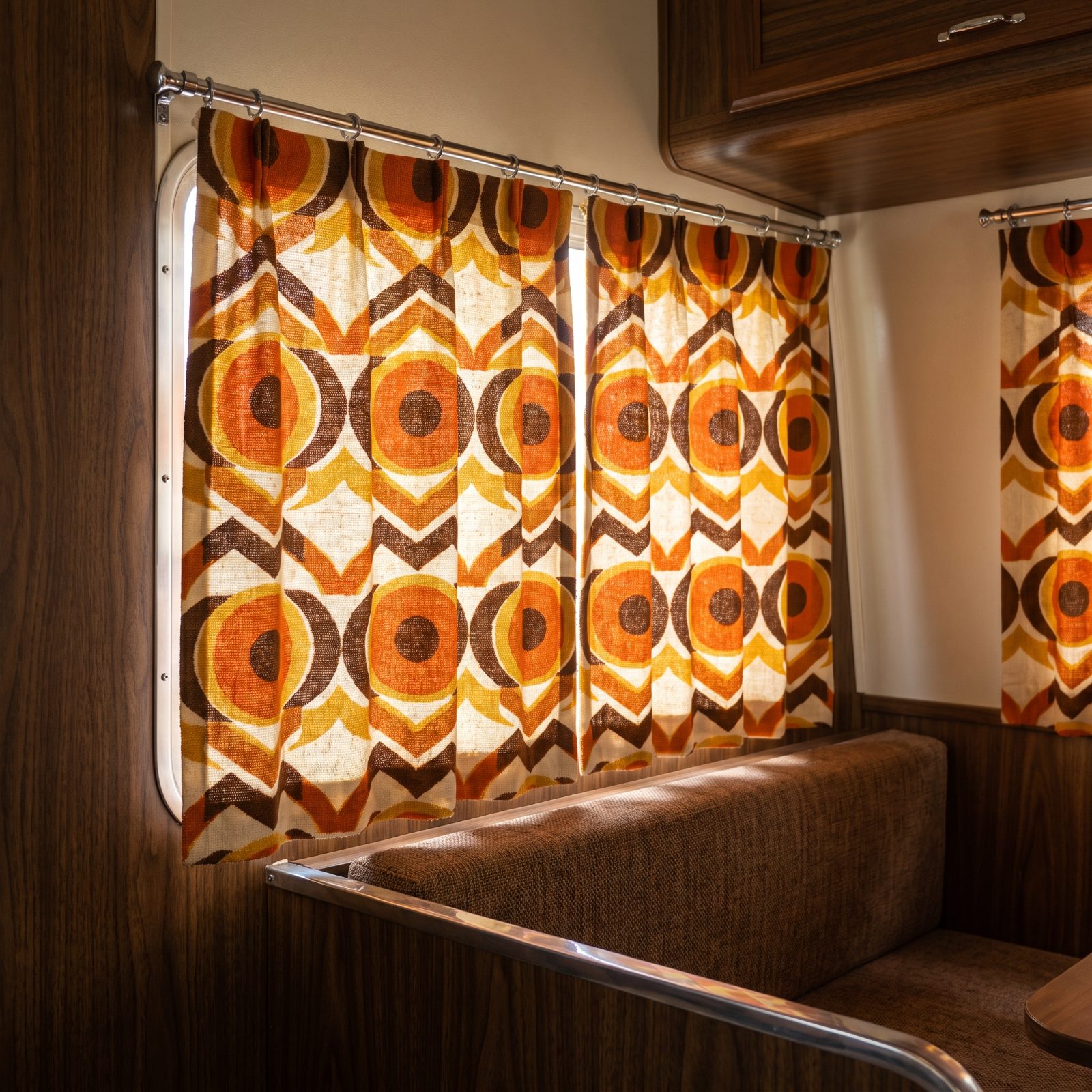
Pull those curtains closed on a bright afternoon and the whole rig glowed orange and gold. The pattern was never shy — fat circles, chevrons, starbursts, the kind of print that showed up on everything from your mom’s apron to the camper windows.
Filtered through them, the light went warm and honeyed. It’s the one detail restorers hunt hardest for now, scouring estate sales for that exact bolt of fabric. Turns out we miss the pattern we spent decades trying to tone down.
32. Plaid Bench-Seat Upholstery
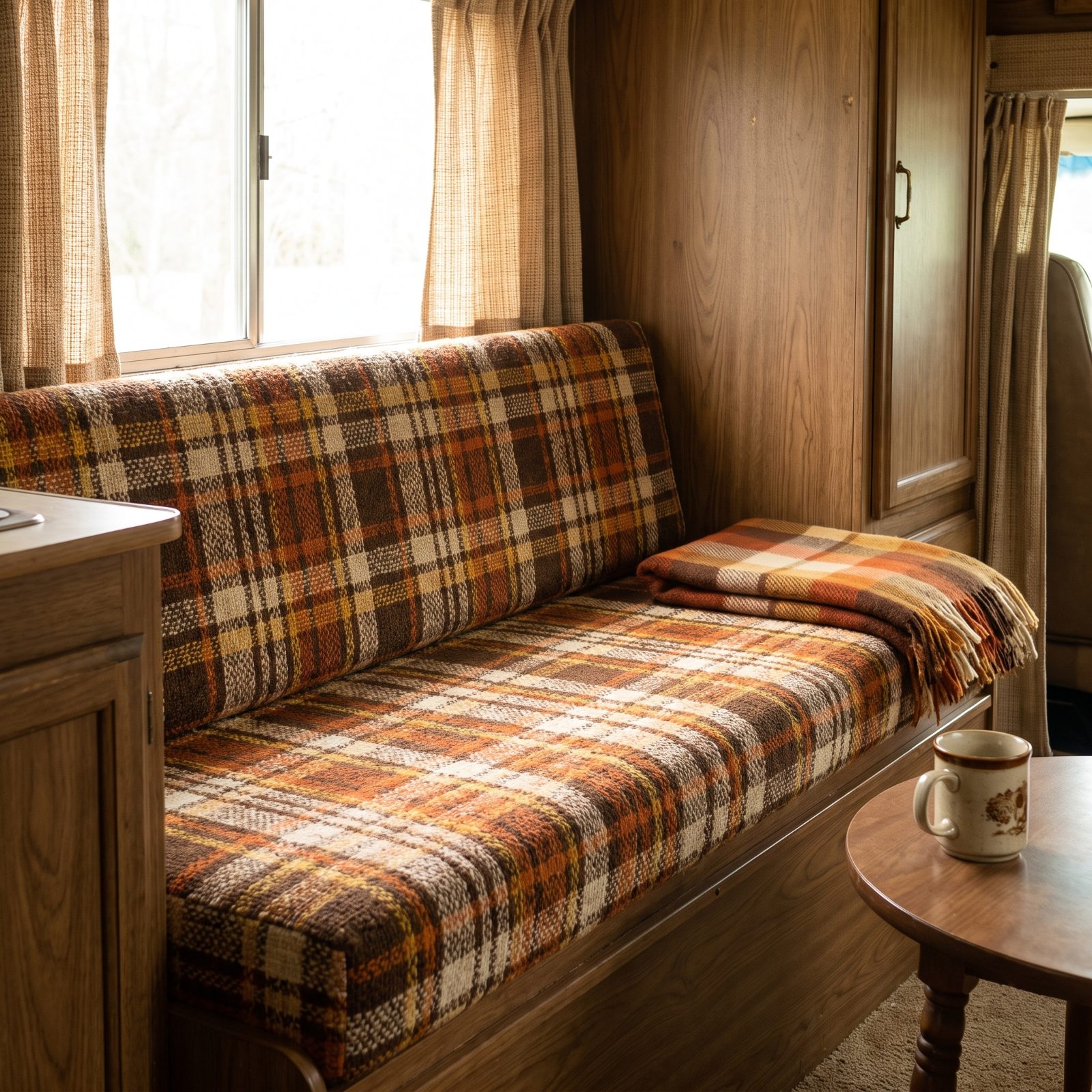
Plaid was the workhorse of the 1970s camper. Brown, orange, and gold tartan stretched across every bench seat because it hid crumbs, campfire ash, and the occasional grape soda disaster better than any solid ever could.
Practical, dressed up as cozy. And it worked. A plaid bench felt like a flannel shirt you could sit on, the pattern busy enough to forgive a decade of family road trips.
31. Floral Vinyl Flooring in the Galley
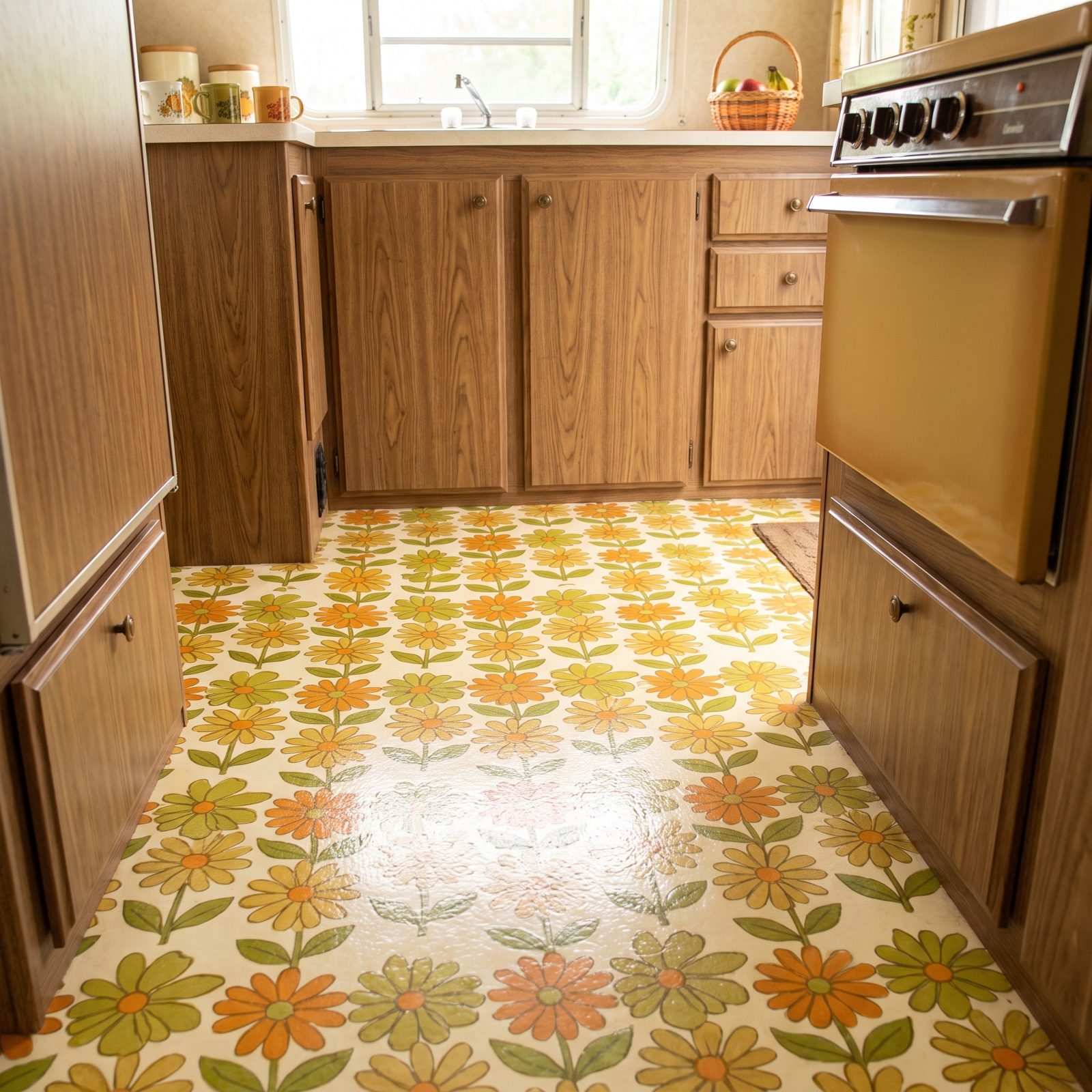
Down in the galley, where the shag couldn’t survive the splashes, you got floral vinyl. Big stylized daisies in gold and orange, sometimes a trellis of avocado leaves, all sealed under a glossy wipe-clean surface that took every spill and asked for more.
Cheerful in a way kitchen floors just aren’t anymore. Mop it, step back, and a little garden bloomed under your feet while the coffee percolated.
30. Macramé Plant Hangers Swaying Over the Dinette
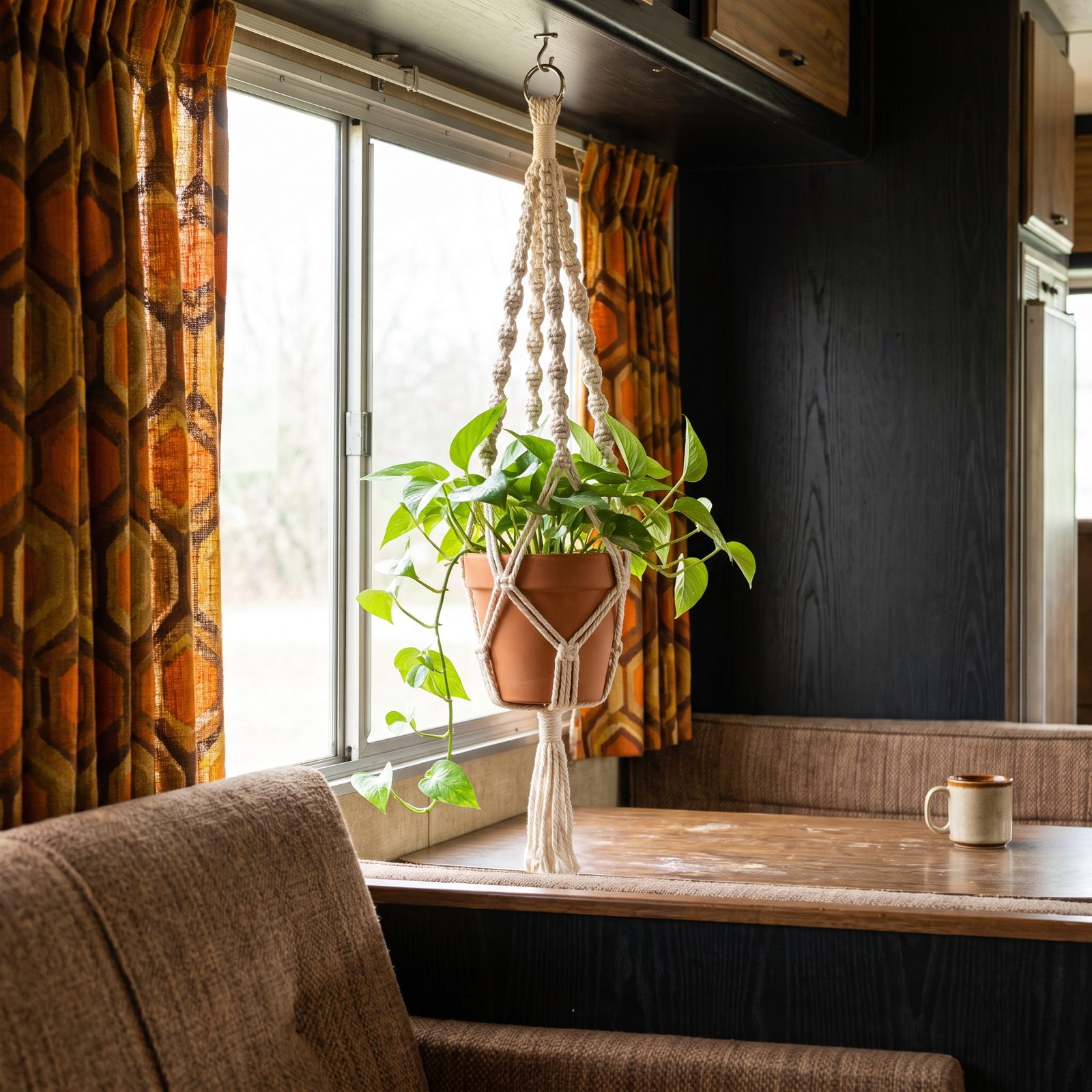
Every camper had one. A chunky cream cotton macramé hanger, knotted by hand, cradling a terracotta pot that swayed every time you took a corner too fast. The spider plant in it had probably been divided from a neighbor’s at the last campground.
It was the one living, breathing thing in a box of vinyl and laminate. The cords softened the hard corners, the trailing leaves caught the window light, and the whole thing said somebody actually lives here and loves it.
29. Amber Glass Pendant Lights That Turned Dinner Into Firelight
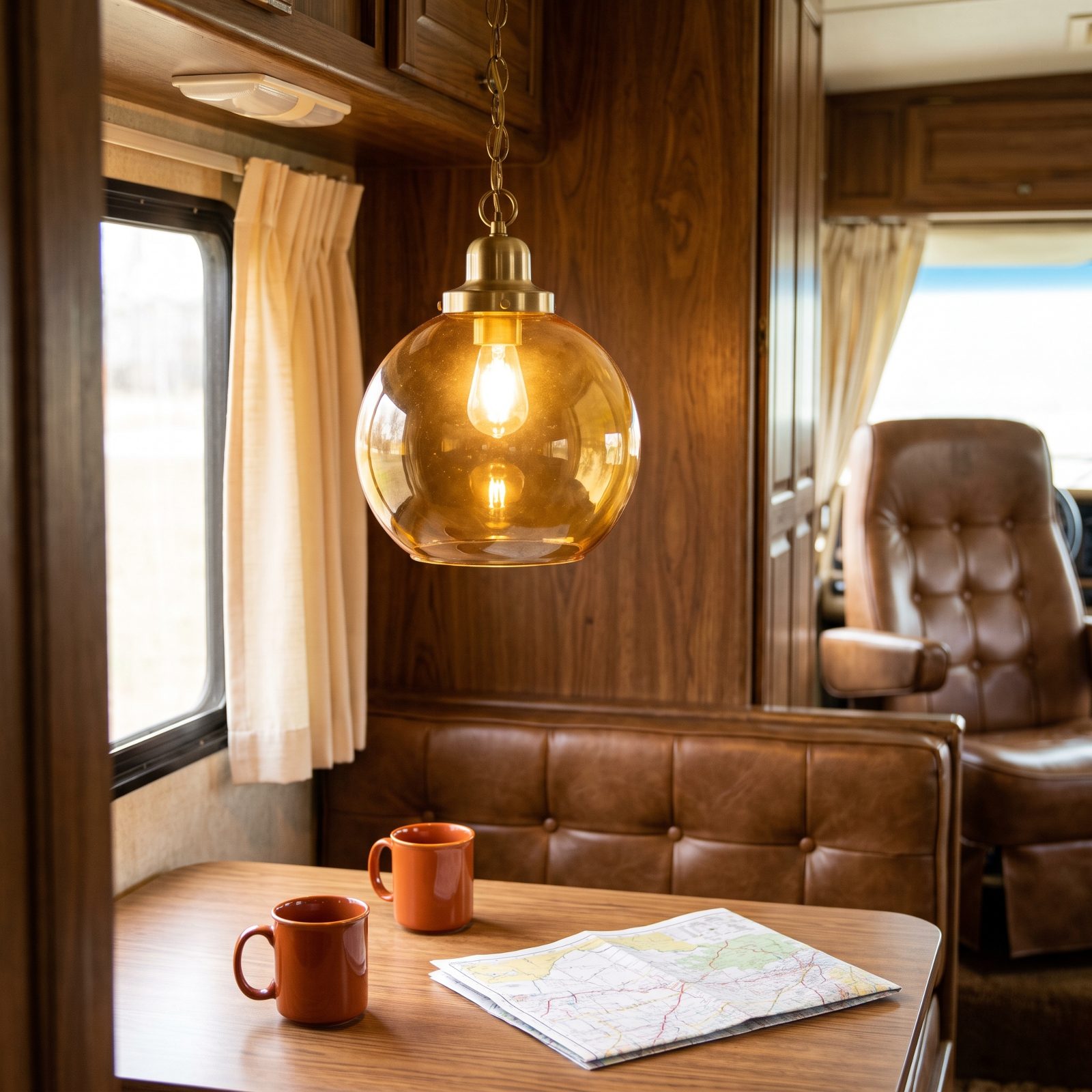
Flip one of these on at dusk and the whole dinette goes gold. The amber glass soaked up a plain bulb and threw it back as something warmer, something closer to a campfire than a reading lamp, and dinner suddenly felt like an occasion even when it was canned chili and crackers.
Why amber? Nobody on the factory floor was writing poetry about ambiance. The tinted glass just hid the harshness of the cheap bulbs behind it, and it happened to make everyone at the table look ten years younger and a lot more relaxed. A happy accident that owners grew to love.
Find an original one still hanging today and you’ll notice the brass fitting has gone soft and dark at the edges. That patina is half the charm. People pay real money now to recreate a glow that used to come standard.
28. Faux-Wood Accordion Doors We Pretended Weren’t Plastic
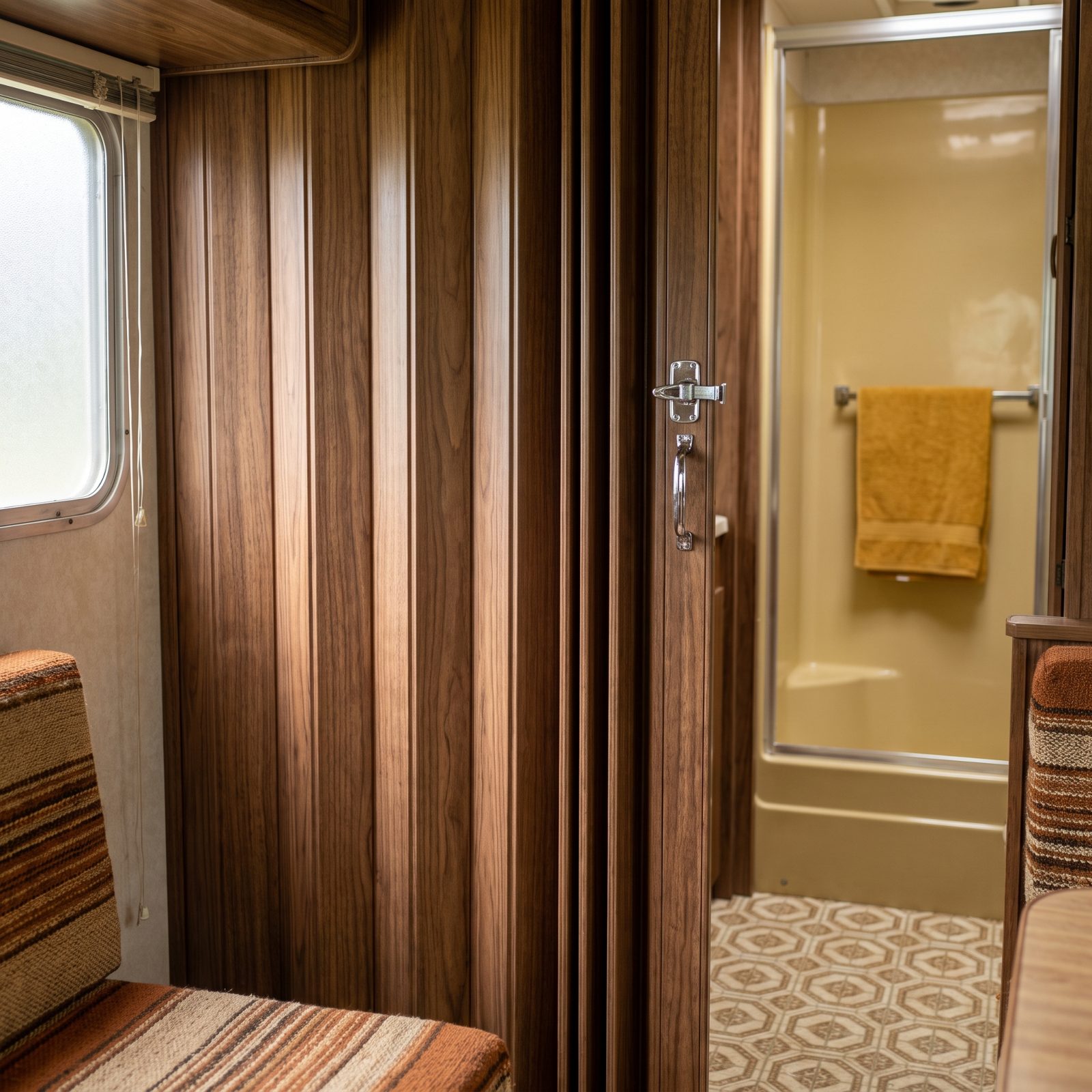
We all knew. From across the cabin it read as walnut, and up close it was obviously printed vinyl over a plastic core, and everybody agreed to let the illusion stand. That little latch click when you folded it shut was the sound of privacy in a rig where privacy was mostly theoretical.
Here’s what the accordion door actually solved: a swinging bathroom door needs clearance, and clearance is the one thing an RV floorplan never has to spare. Fold it flat against the wall and you reclaimed a couple feet of walkway. Genius, really.
The vinyl cracked eventually. They all did, usually right along the fold lines where the plastic flexed a thousand times a trip. But a working original still slides and clacks exactly the way it did on day one, and that sound drops you straight back into 1974.
27. Tufted Vinyl Captain’s Chairs Built Like Recliner Thrones
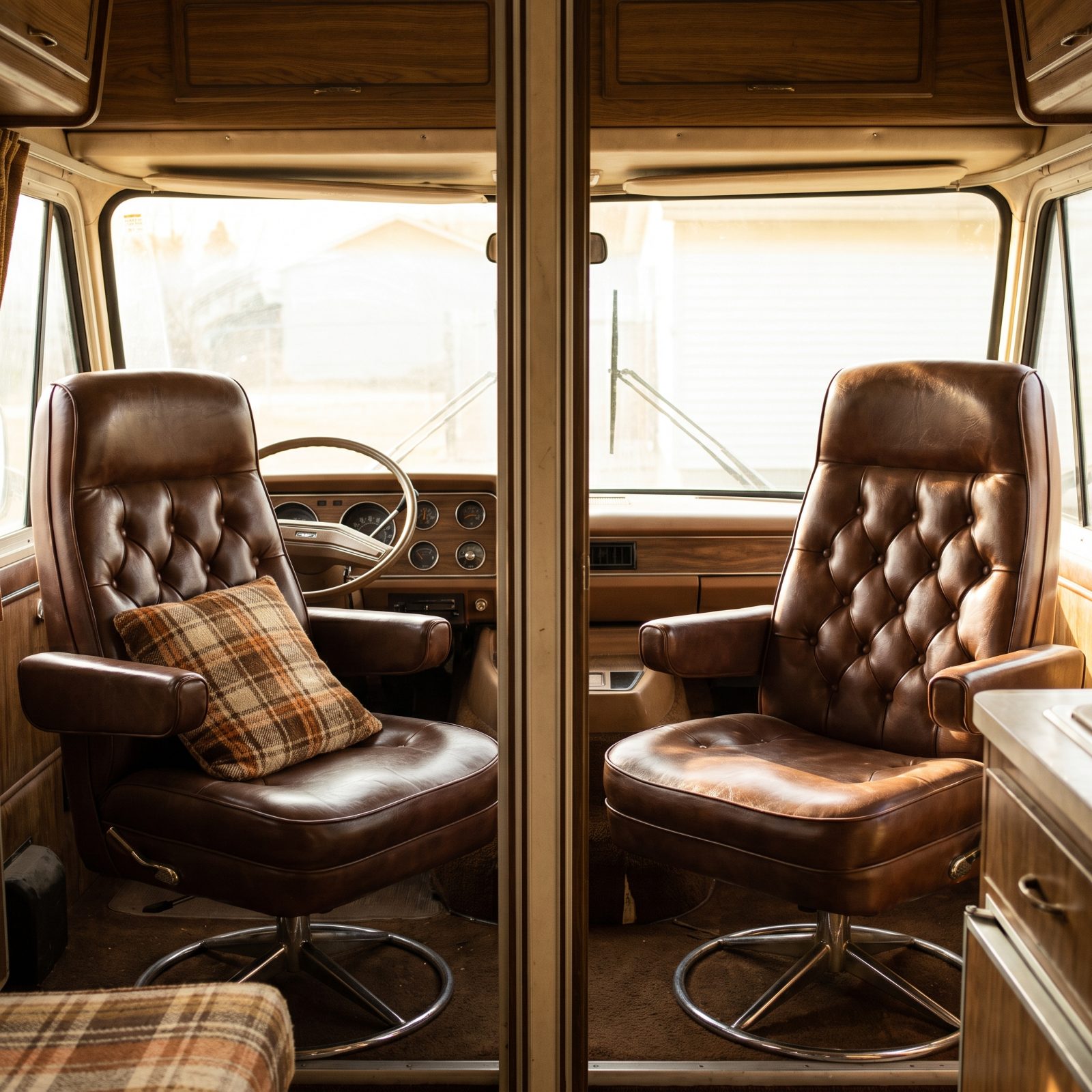
These weren’t seats so much as thrones bolted to a swivel. Deep button tufting, padded arms wide enough to lose your keys in the crease, and a chrome pedestal that let you spin around to face the galley the moment you parked. Driving one of these rigs made you feel less like a motorist and more like the captain of something.
The vinyl was the trick. Hot in July, cold in January, and absolutely impervious to a dropped ice cream cone or a leaky thermos. You wiped it down and moved on. Fabric would’ve been ruined in a season of family road trips.
Spin one toward the living area and it became an extra armchair. Half the appeal of the whole layout lived in that one swivel joint.
26. Quilted Bedspreads in Earth Tones Soft as a Sunday Nap
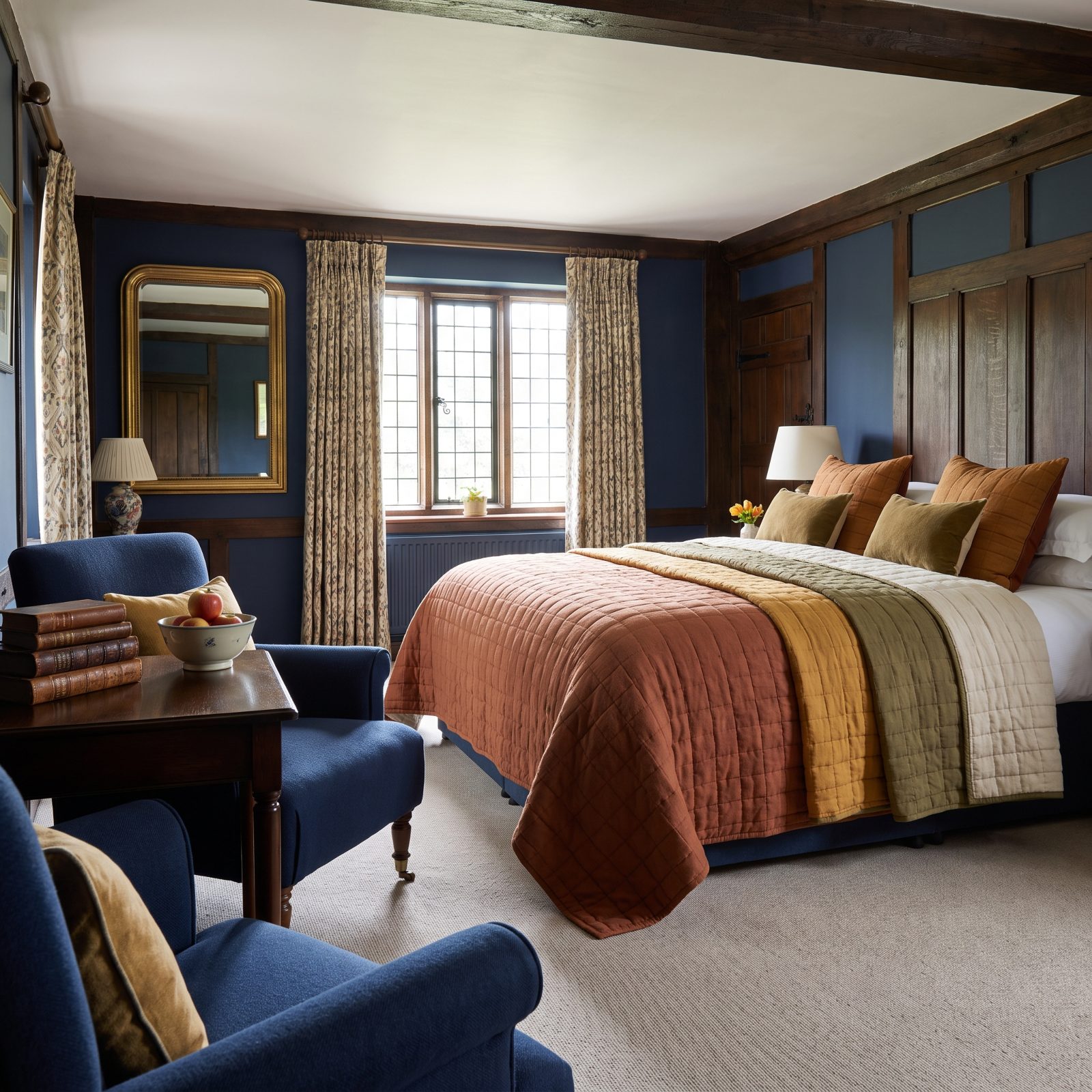
Rust, harvest gold, olive, and cream, channel-stitched into a bedspread that weighed about as much as a small child. These things were engineered to survive. You could nap on top, flop a wet swimsuit down, let the dog up for a while, and it shrugged all of it off.
The earth-tone palette wasn’t an accident. Those colors hid campground dust, coffee splashes, and the general grime of a week on the road better than any pastel ever could.
And the heft mattered more than you’d think. Mountain campgrounds get cold after dark, furnace or not, and that quilted weight pinned you to the mattress like a reassuring hand. You slept hard under one of these.
25. Orange Laminate Countertops That Were Secretly Indestructible
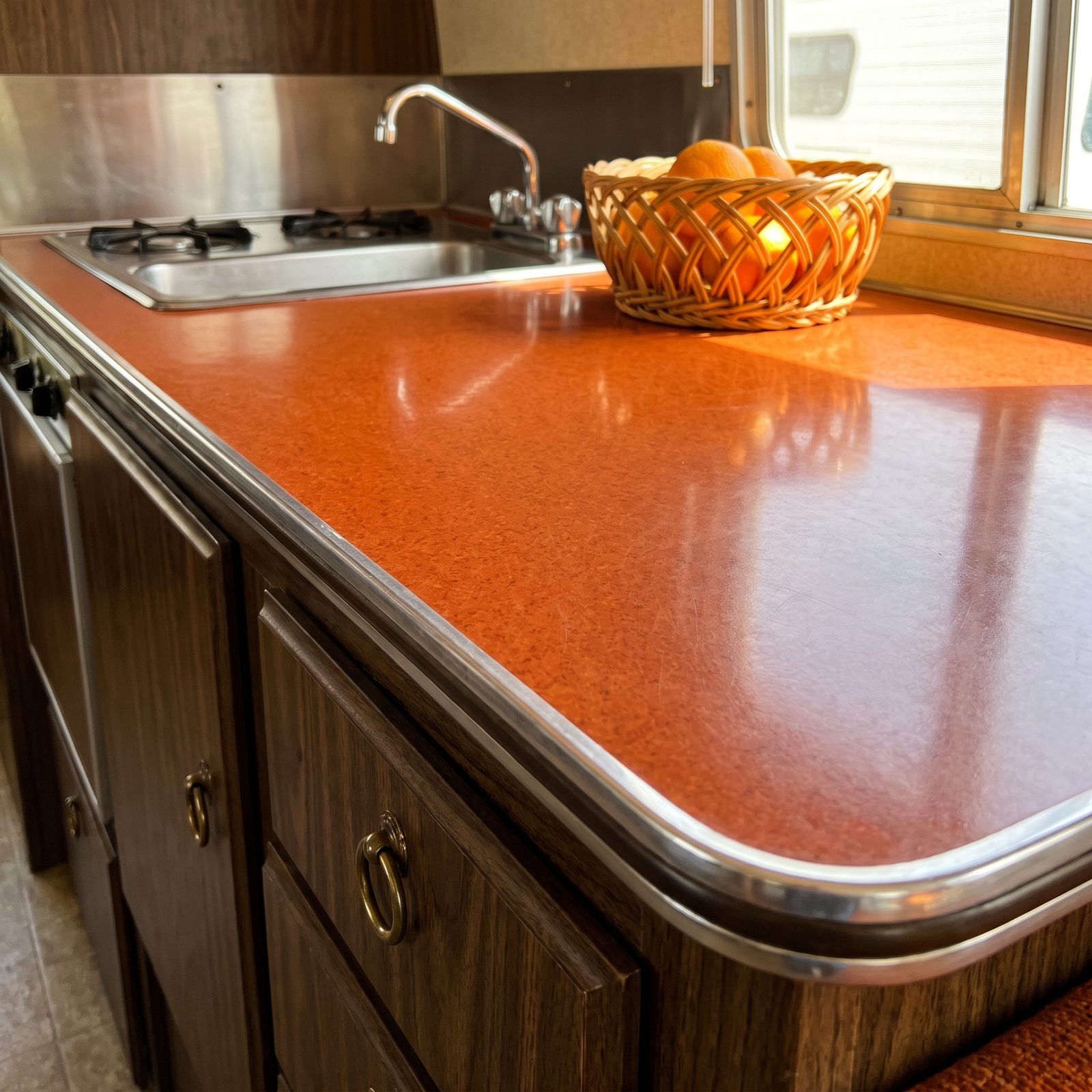
People love to laugh at the orange now. Go ahead. But that burnt-orange laminate with the chrome edge banding outlasted three sets of owners, two kitchen fires, and roughly a decade of cast-iron skillets dropped from careless hands.
Laminate got a bad reputation it mostly didn’t earn. The good 1970s stuff was thick, glued down properly, and finished with that rounded chrome trim that kept crumbs from wedging into the seam. You could set a hot pot on it and worry later.
Here’s a confession from someone who’s restored a few of these: the orange grows on you. After a month of staring at it over morning coffee, beige starts to look like a tragedy.
24. Mushroom-Shaped Table Lamps Glowing on Every Dinette
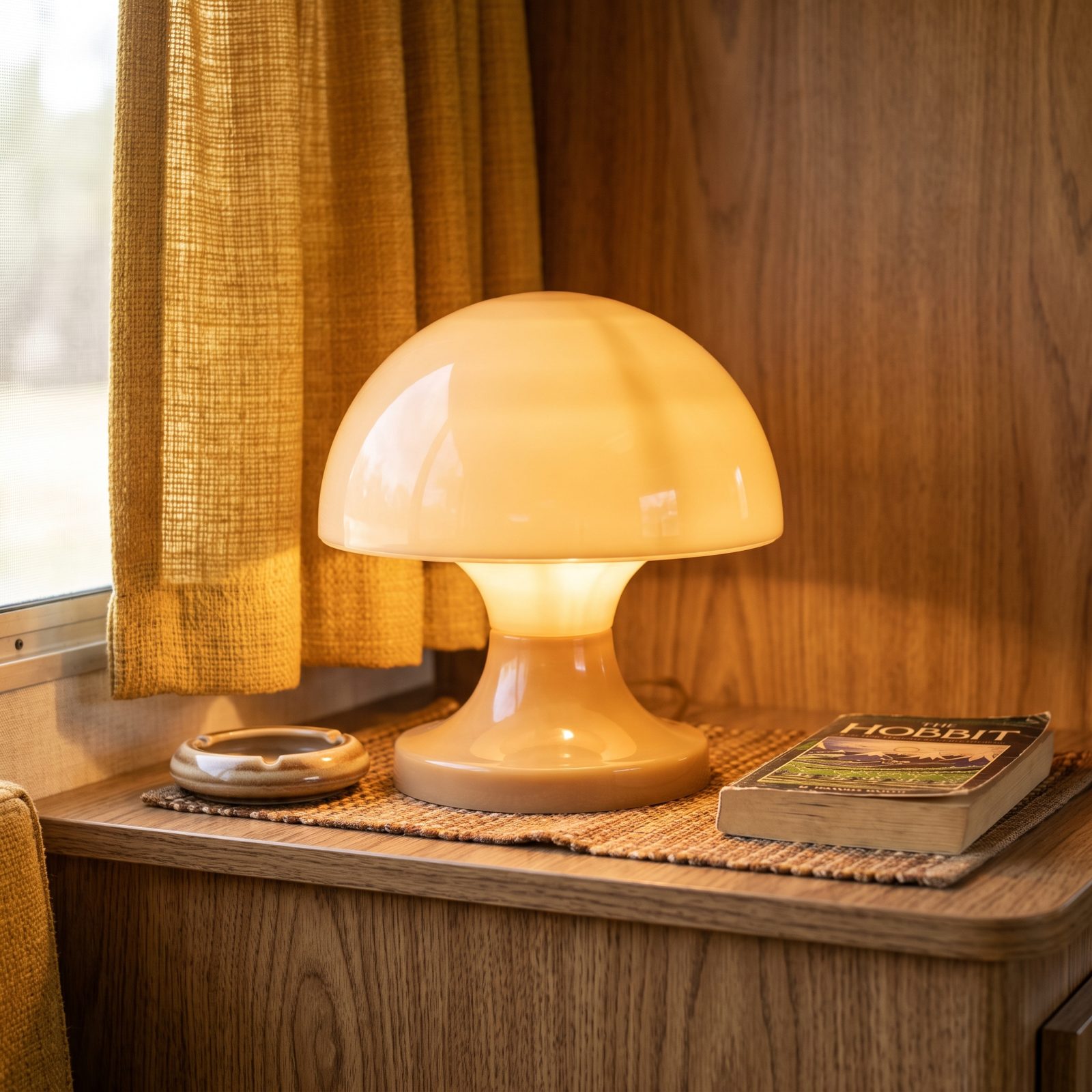
That rounded acrylic dome, a shade and base molded into one fat little mushroom, glowed like a nightlight for grownups. It lived on the dinette shelf and came on the second the sun dropped behind the pines.
The shape had a practical secret. A low, stable lamp doesn’t tip over when the rig sways or when somebody bumps the table reaching for the ketchup, which a tall skinny lamp absolutely would. Round and squat survived RV life.
The acrylic diffused the bulb into a soft even wash, no glare, no hot spot, just enough light to read a paperback or finish a hand of gin rummy before bed. Warm, forgiving, and impossible to knock off a shelf. What more did you want from a lamp?
23. Rattan Cabinet Inserts That Let the Woodwork Breathe
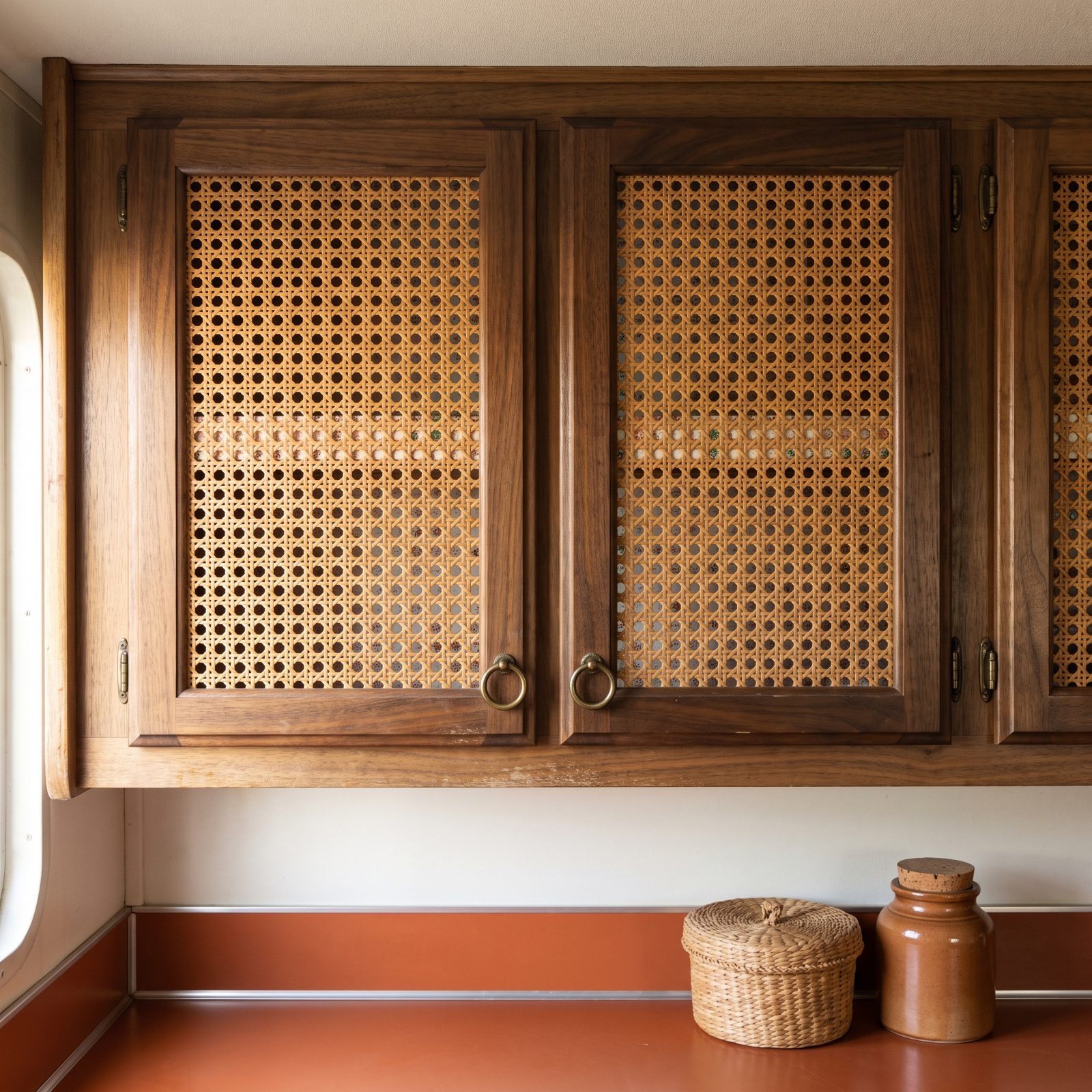
Woven cane panels set into the upper cabinet doors, framed in oiled wood, let a little daylight filter through the hexagonal weave. The whole galley felt less boxed-in because of them.
There was function hiding under the good looks. Cane breathes, and in a sealed little kitchen where a pot of soup fogs every window, those woven inserts let air move through the cabinets instead of trapping cooking damp against your dishes. Fewer musty cereal boxes. Fewer mildew surprises.
The downside showed up years later, when the cane dried out and started to sag or split at the corners. Re-caning a panel is fussy, patient work. The owners who bother wind up with cabinet doors prettier than anything you can buy new, and they’ll tell you so at length.
22. Smoked Acrylic Cabinet Doors With a Rocket-Age Shine
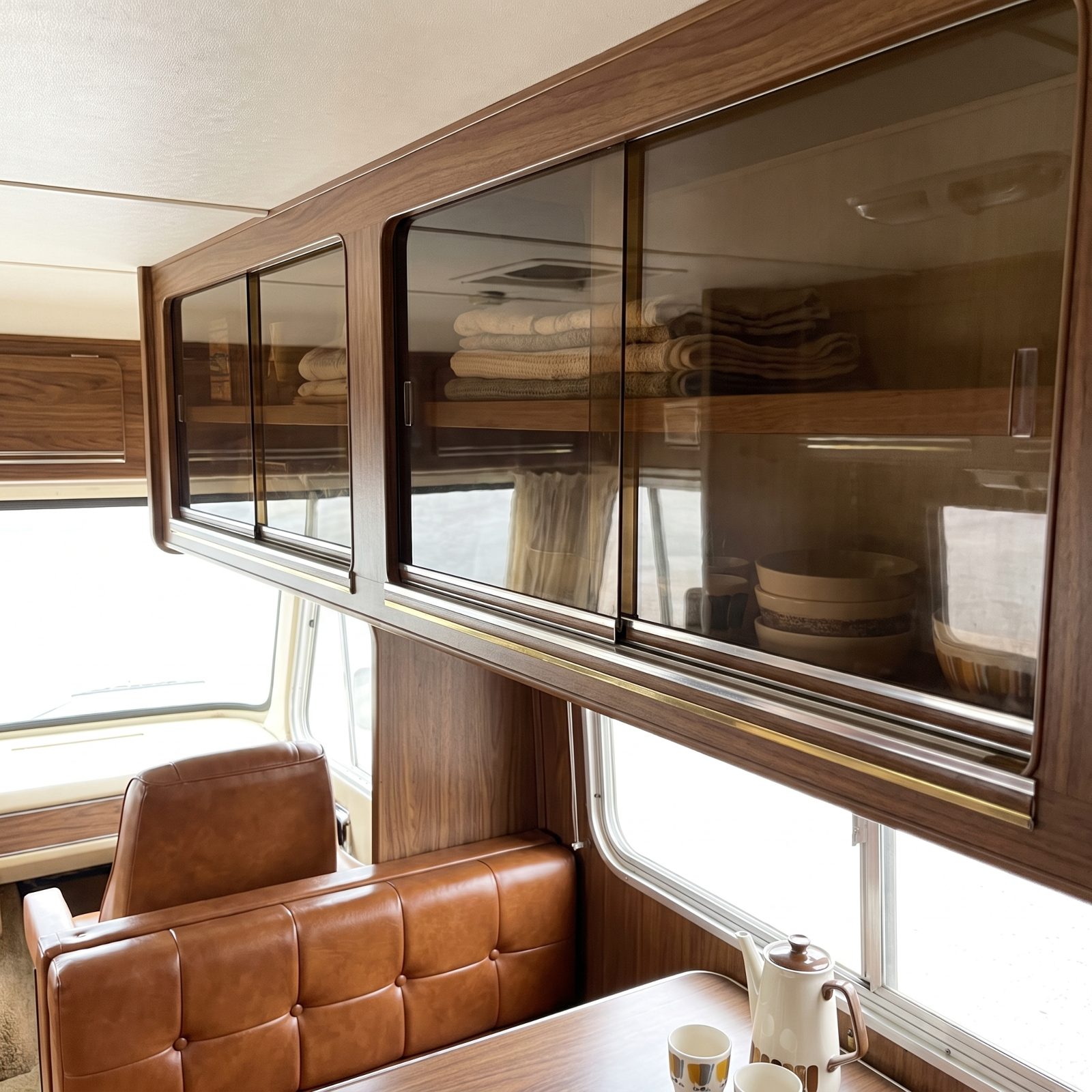
Bronze-tinted acrylic fronting the overhead lockers, glossy enough to throw back a soft reflection and just translucent enough to show the ghost of folded towels behind. Somebody in a design office clearly spent a weekend at the planetarium.
The tint did real work. You could see roughly where the coffee filters lived without flinging every door open at breakfast, and the smoke color politely hid the chaos of a cabinet you hadn’t organized since the trip began. Clever, that.
Acrylic scratches, sure, and a half-century of fingernails and stacked plates leaves a haze. But a buffed-up original still catches the morning light like it just rolled off the line, and that rocket-age shine is the first thing people notice when they step inside.
21. Colorful Striped Window Awnings That Shouted Vacation
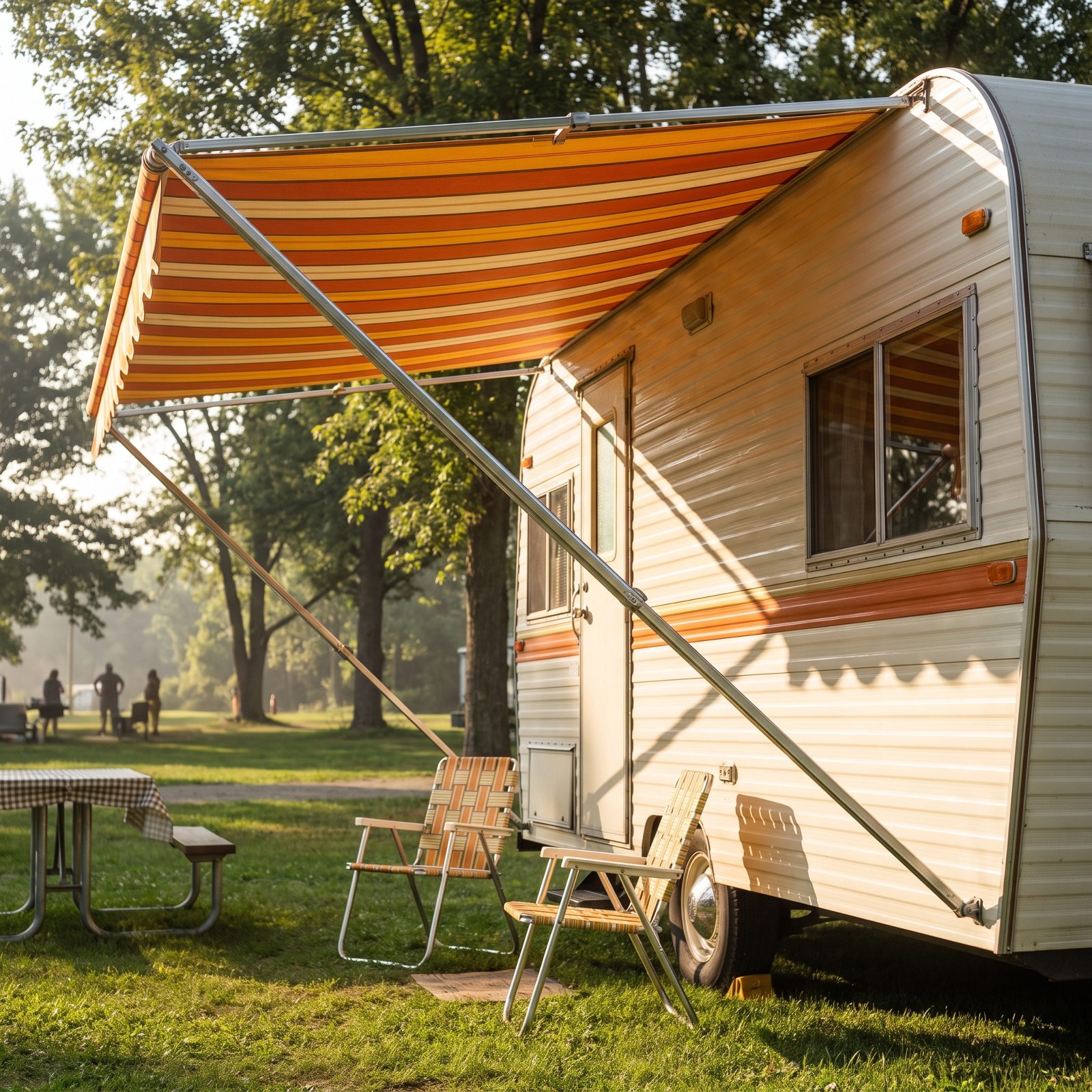
Crank one of these out over the windows and the whole campsite knew you’d arrived for a good time. Bold horizontal stripes in orange and gold and cream, a scalloped shadow dancing on the aluminum siding, the woven-webbing lawn chairs set up underneath before the engine even cooled. Vacation, declared loudly and without apology.
Beyond the swagger, the awning earned its keep by dropping the trailer’s interior temperature on a July afternoon. Shade over the sunny side meant you could actually sit inside at two in the afternoon instead of fleeing to an air-conditioned gift shop.
Modern awnings retract at the push of a button, and that’s fine. But there was a small satisfying ritual to the old crank-arm setup, the taut canvas, the webbing chairs, a cold drink. The whole scene announced that the driving was done and the sitting-around had officially begun.
20. Rounded Fiberglass Wet Baths That Fit a Whole Bathroom in a Closet
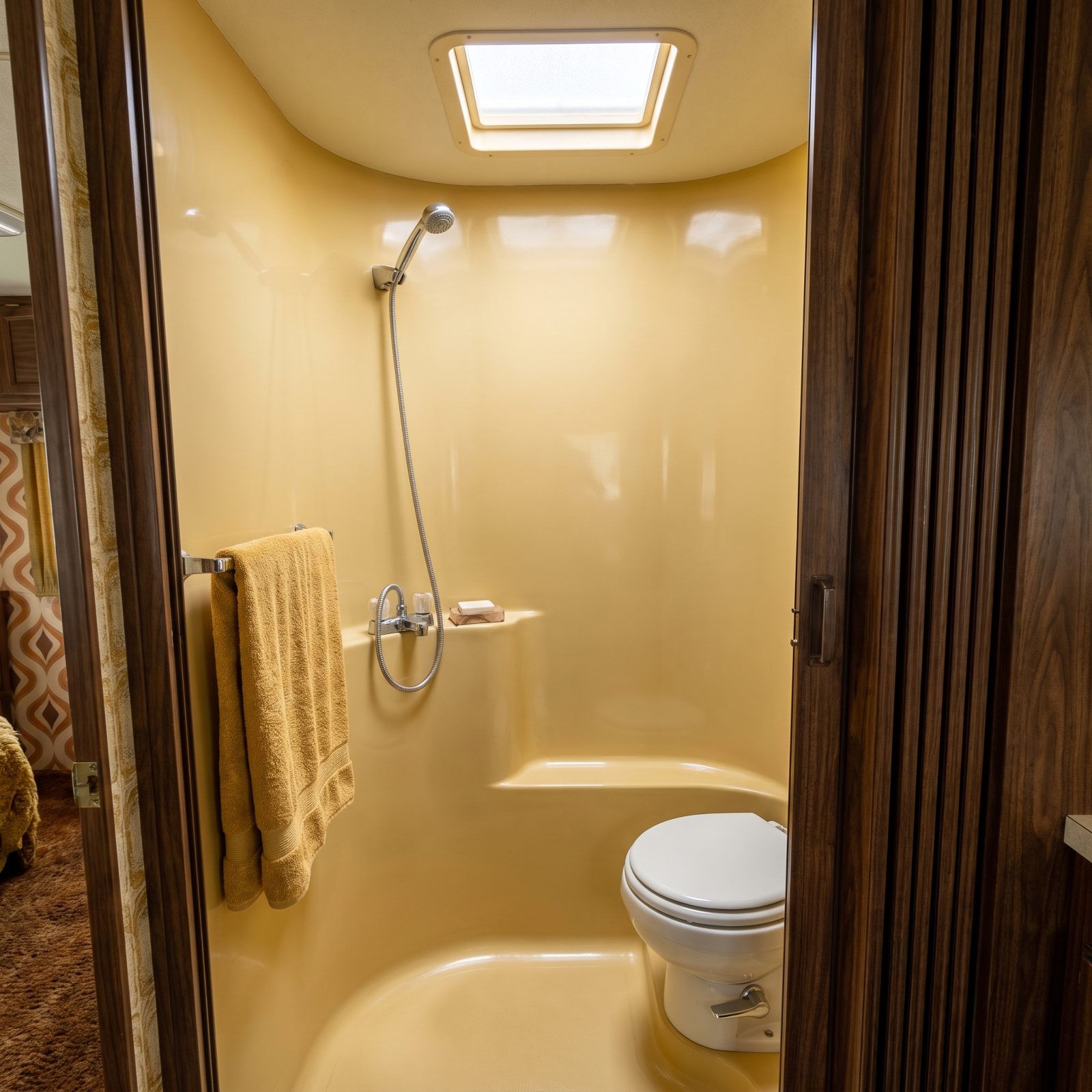
One molded piece of pale harvest-gold fiberglass, curved into every corner, with a toilet, a showerhead, and a soap ledge all sharing the same three feet of floor. You showered standing over the toilet. The whole thing drained to a single point and wiped down in two minutes.
The curves were the point. No seams meant no leaks and nowhere for mildew to take hold, which in a cramped wet space is the difference between a bathroom you use and a bathroom you dread. Spray it, squeegee it, done.
Engineers crammed a functioning bathroom into a space most people would’ve called a closet, and somehow it worked. Cramped? Absolutely. But it meant you never had to hunt for a campground restroom at two in the morning in the rain, and anyone who’s made that walk will tell you it was worth every awkward inch.
19. Flip-Up Formica Dining Tables
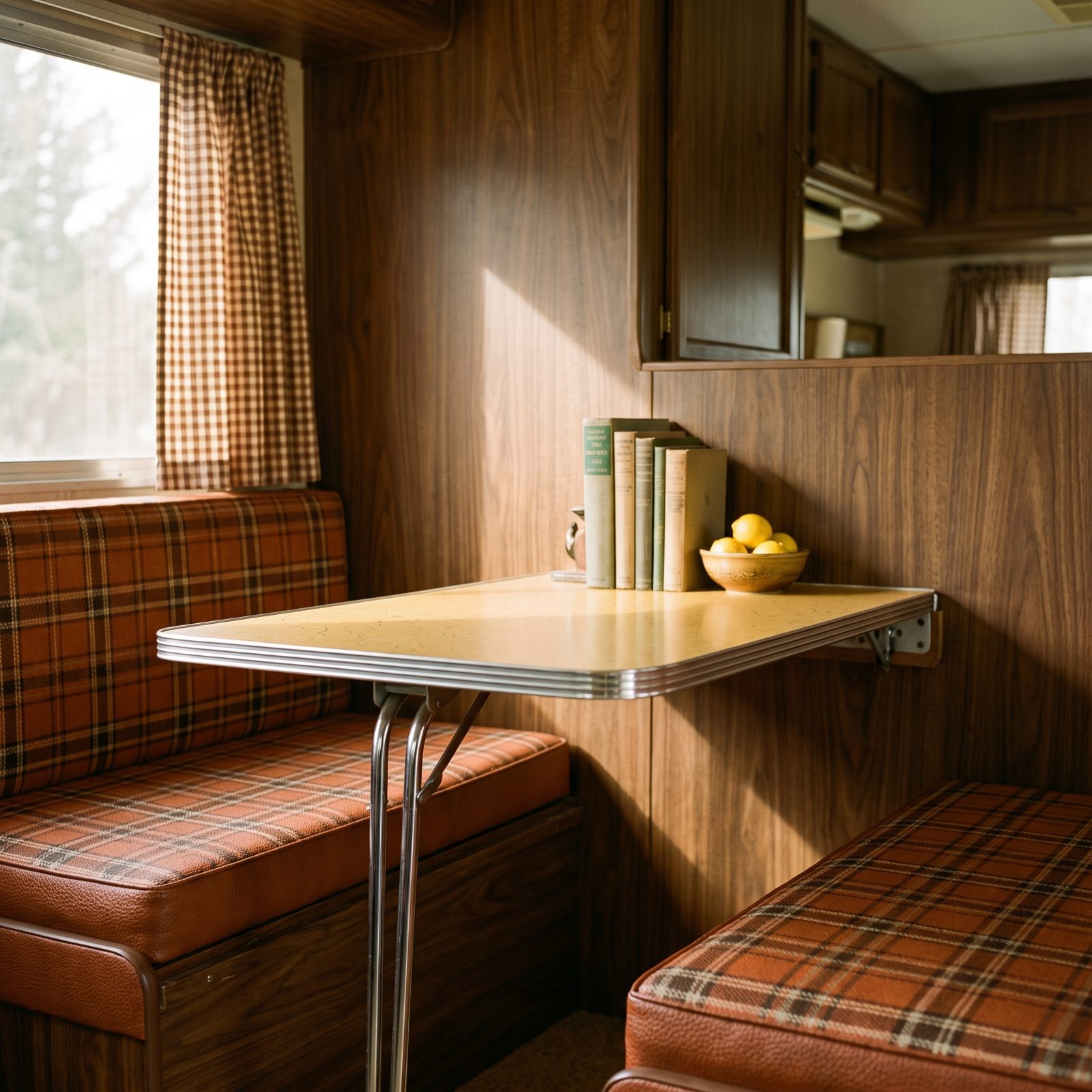
You pulled the cord, the leg swung out, and dinner happened in a space that was a hallway ten seconds earlier. The flip-up Formica table was convertible furniture decades before anyone bothered to coin the term.
We treated the laminate as cheap. It wasn’t. That boomerang-speckle surface survived hot coffee, dropped forks, map ink, and forty summers of elbows — try that with a reclaimed-wood farmhouse slab. The chrome edge band still shines with a damp rag.
18. Faux-Brick Kitchen Backsplashes
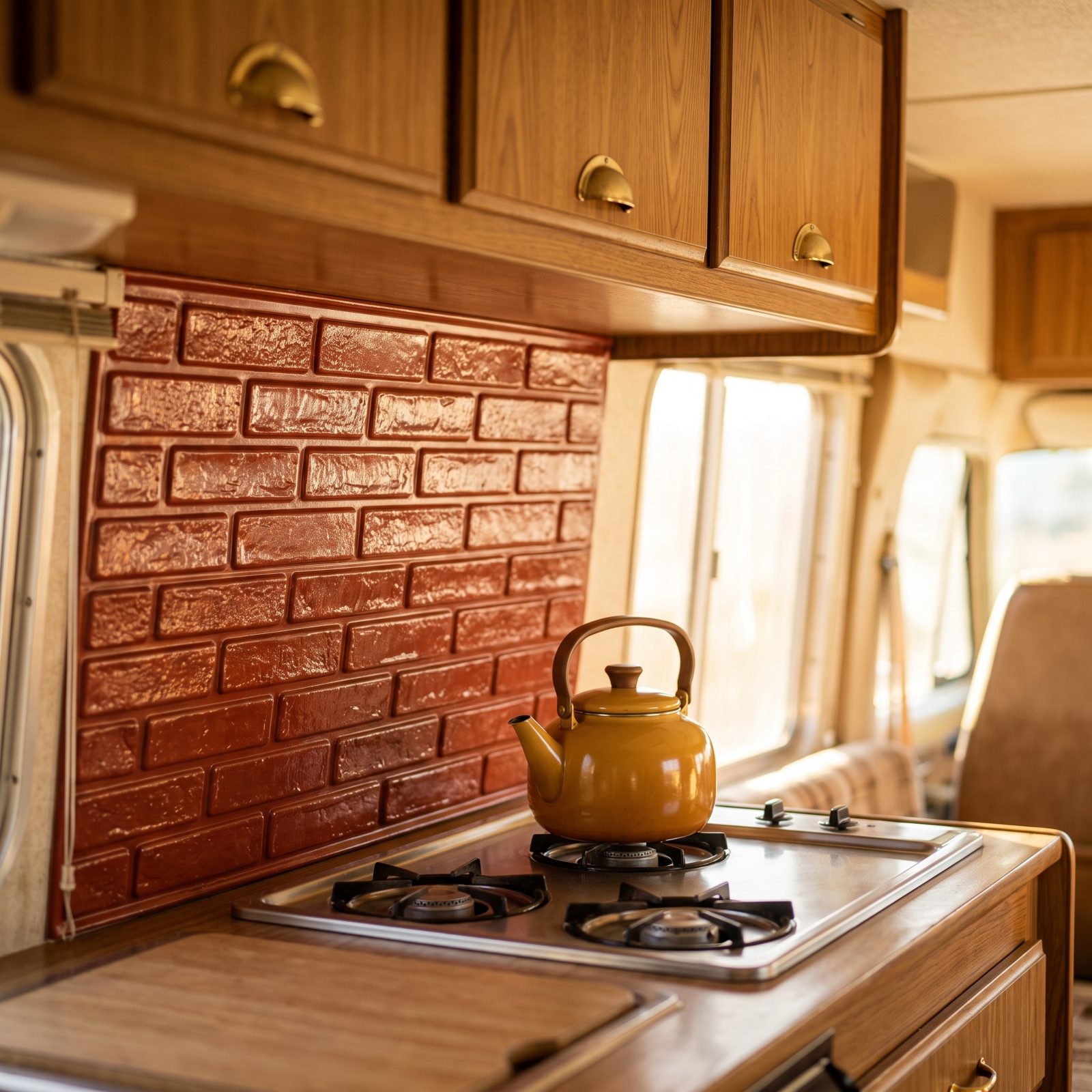
It was plastic pretending to be brick, everyone knew it was plastic, and nobody cared because it wiped clean with one pass and never needed grouting. The faux-brick backsplash gave a tin can on wheels the warmth of a hearth.
I used to roll my eyes at these. Then I watched someone restore a 1977 coach, and the first thing they protected was the molded brick panel. No sealing, no cracking, lighter than real tile would ever be in a vehicle that corners hard. And the rust-red tone glows under a galley light in a way white subway tile never manages.
17. Pleated Drum Lampshades
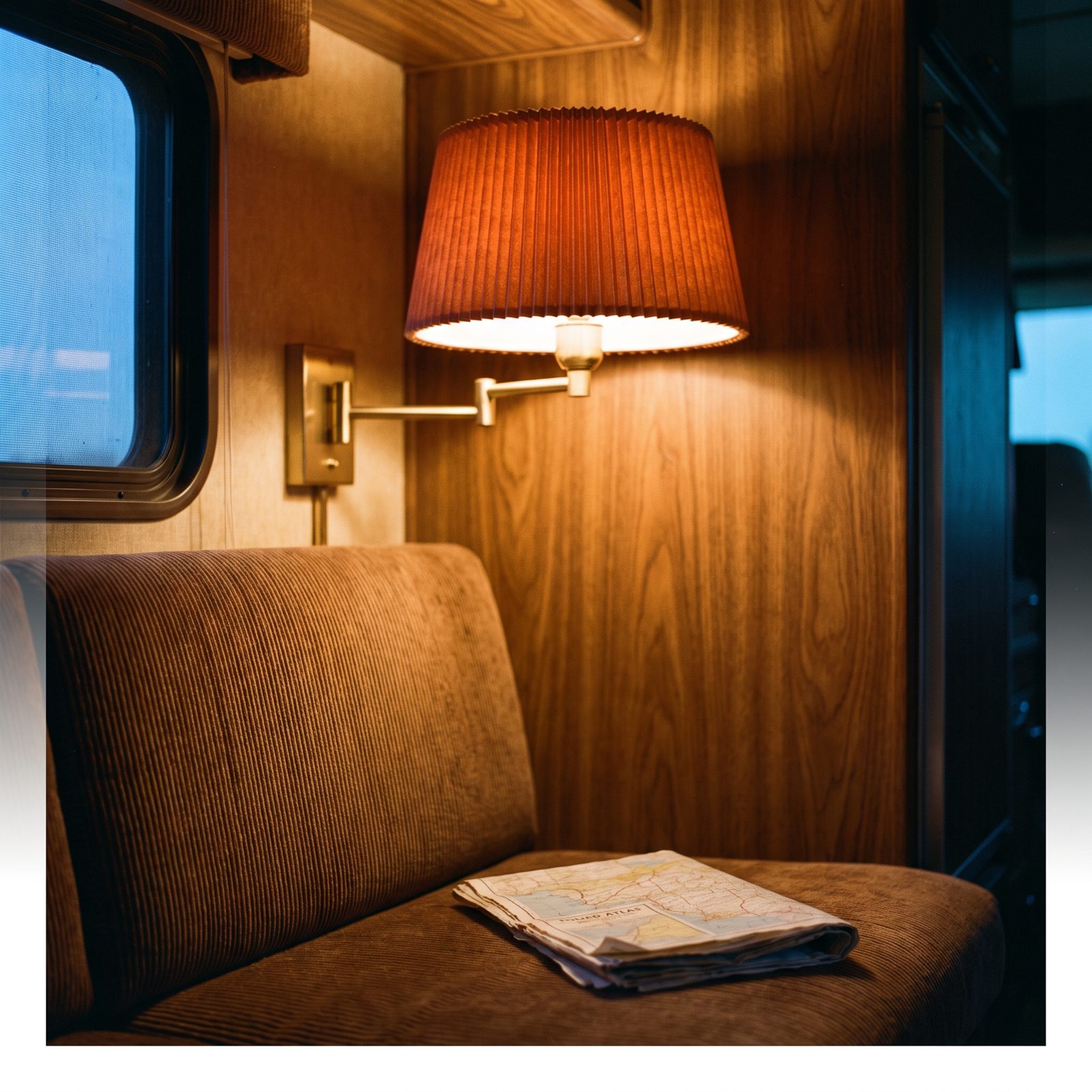
Switch it on at dusk and the whole coach softened. The pleated drum shade in burnt orange threw a warm cone of light that said settle in, the day’s driving is done.
These got tossed by the truckload because the fabric yellowed and the pleats collected dust. Fair enough. But the light quality was the point, and nobody makes a replacement that feels this good. A modern LED puck gives you a flat, blue, clinical wash. The pleated shade gives you a campfire you can read next to.
16. Chunky Analog Instrument Clusters
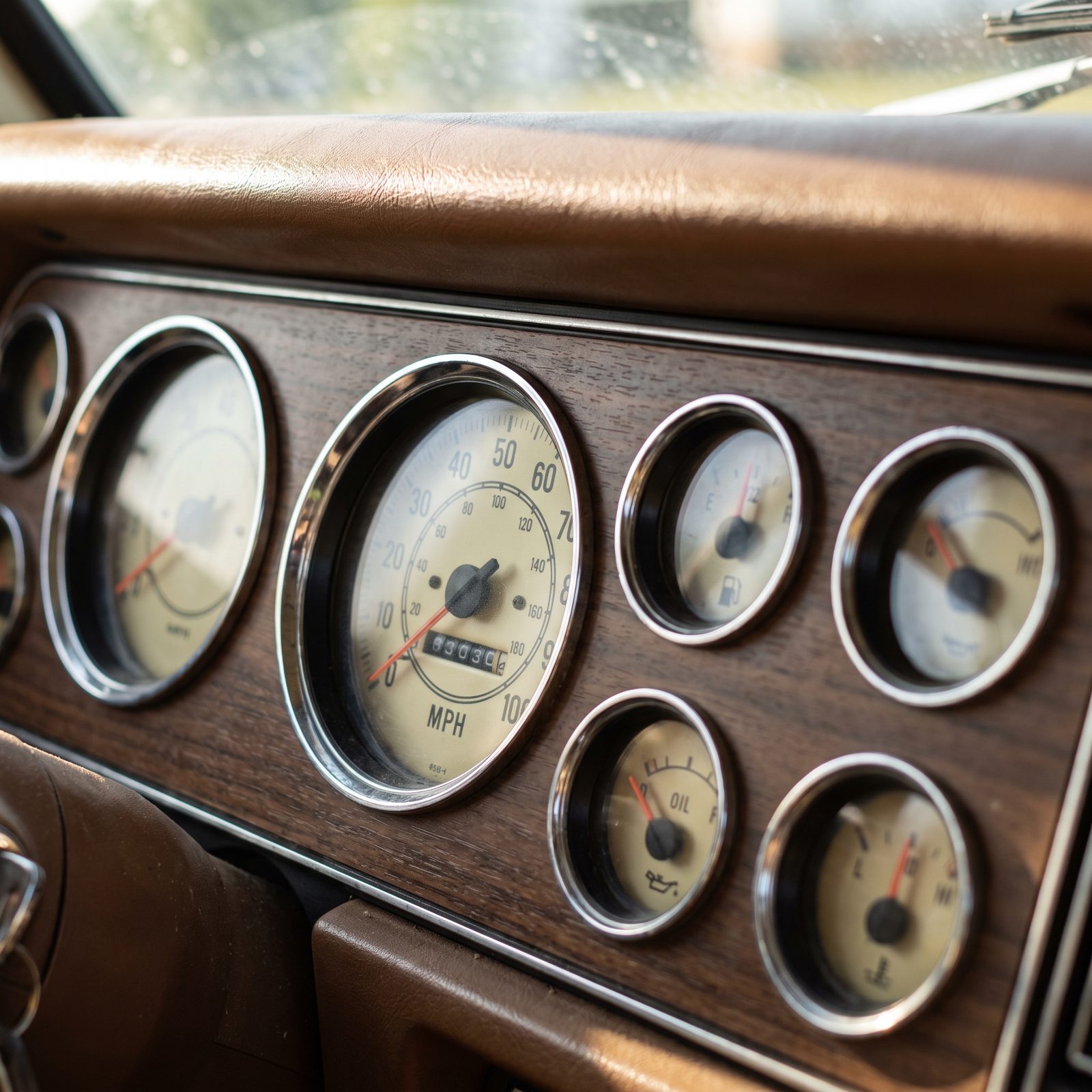
Big round dials with chrome rings and needles you could read at a glance in bright sun. No menus. No touchscreen. No software update that bricks your speedometer at a rest stop.
We called the chunky cluster old-fashioned the second digital dashes arrived, and now the vintage crowd prizes exactly this. A gauge with a physical needle tells you the trend, not just the number — you feel the oil pressure drop before you’d ever clock a digit changing.
15. Chrome Pedestal Dinette Tables
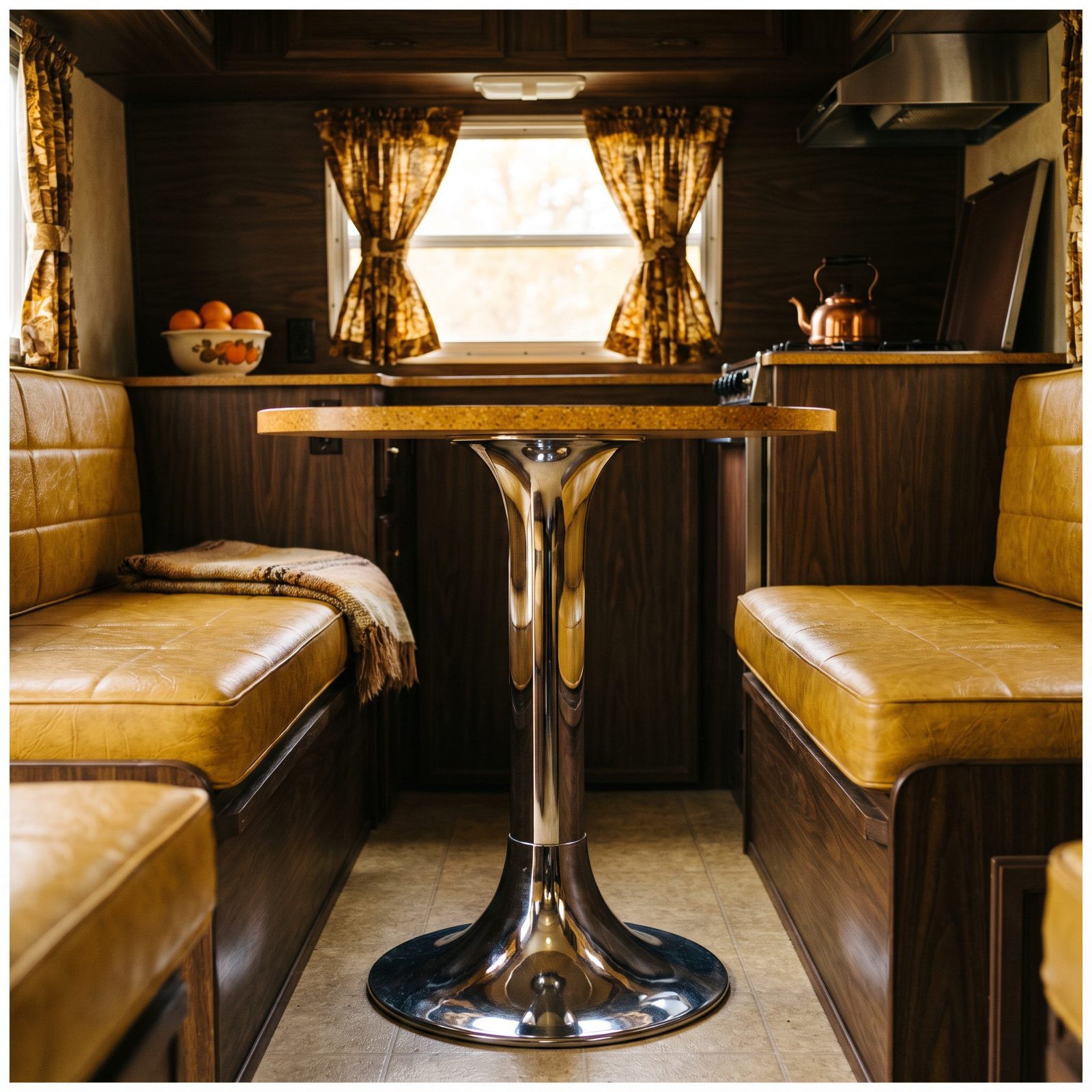
One polished chrome column holding up a round amber top. No legs to bark your shins on, nothing to vacuum around. The pedestal dinette was the coach’s quiet showpiece.
People swapped these for fake-wood blocks thinking chrome read cheap — backwards. The chrome was the expensive bit. It catches your eye the second you step up into a restored rig, and it ages better than any painted base. A quick polish and it looks like the day it rolled off the line.
14. Sliding Tambour Cabinet Doors
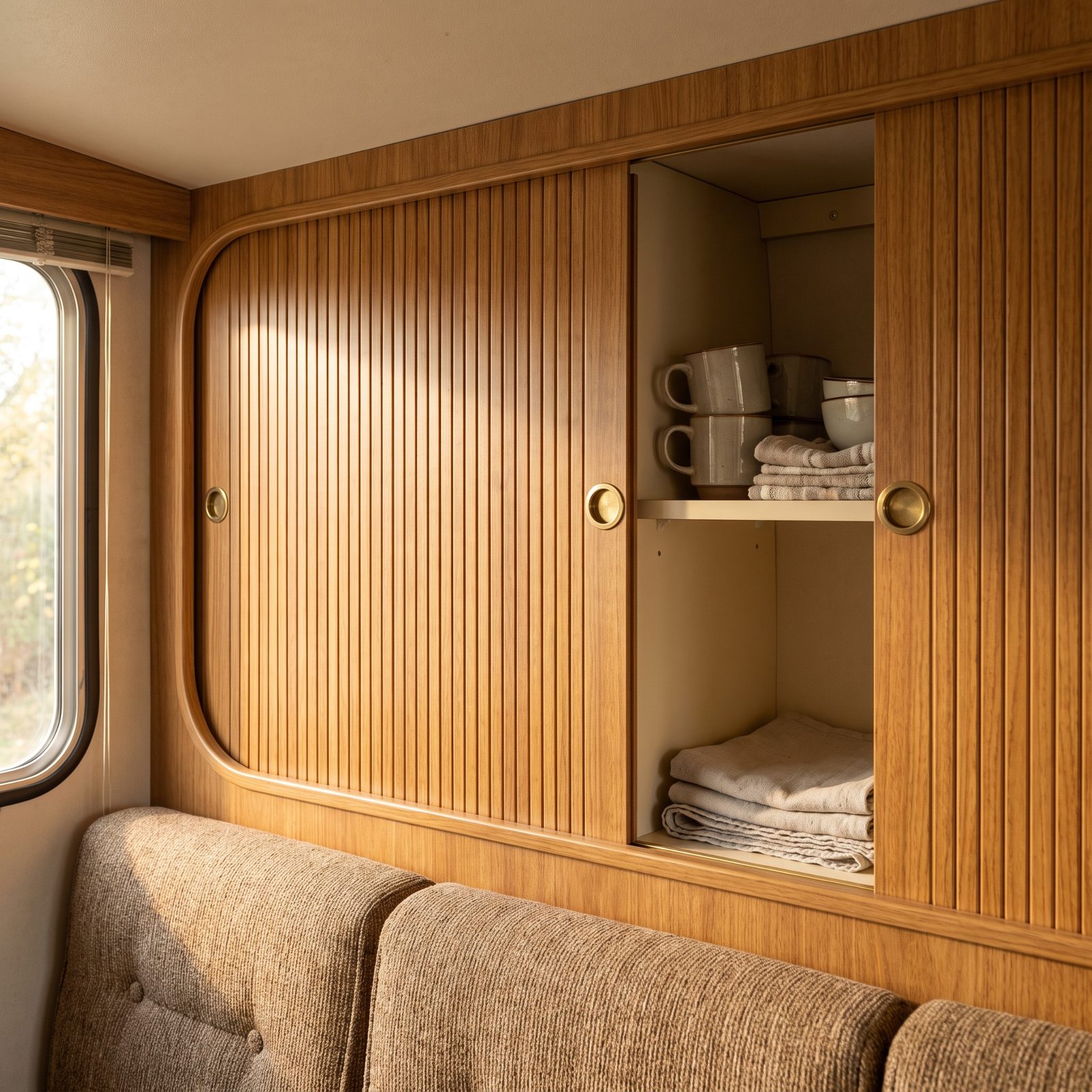
No swing-out door to clock you in the head on a bumpy road, no handle to snag a sleeve. The tambour door rolled up and over into its own track with that soft wooden rattle, then tucked away where it couldn’t fly open on a corner.
Honestly? These are the detail I miss most. Modern coaches went back to hinged doors that bang shut and pop open over every pothole. The ribbed slats of a tambour door are a small piece of real craftsmanship riding around in a vehicle, and they solved a problem newer rigs pretend doesn’t exist.
13. Built-In AM/FM Eight-Track Players
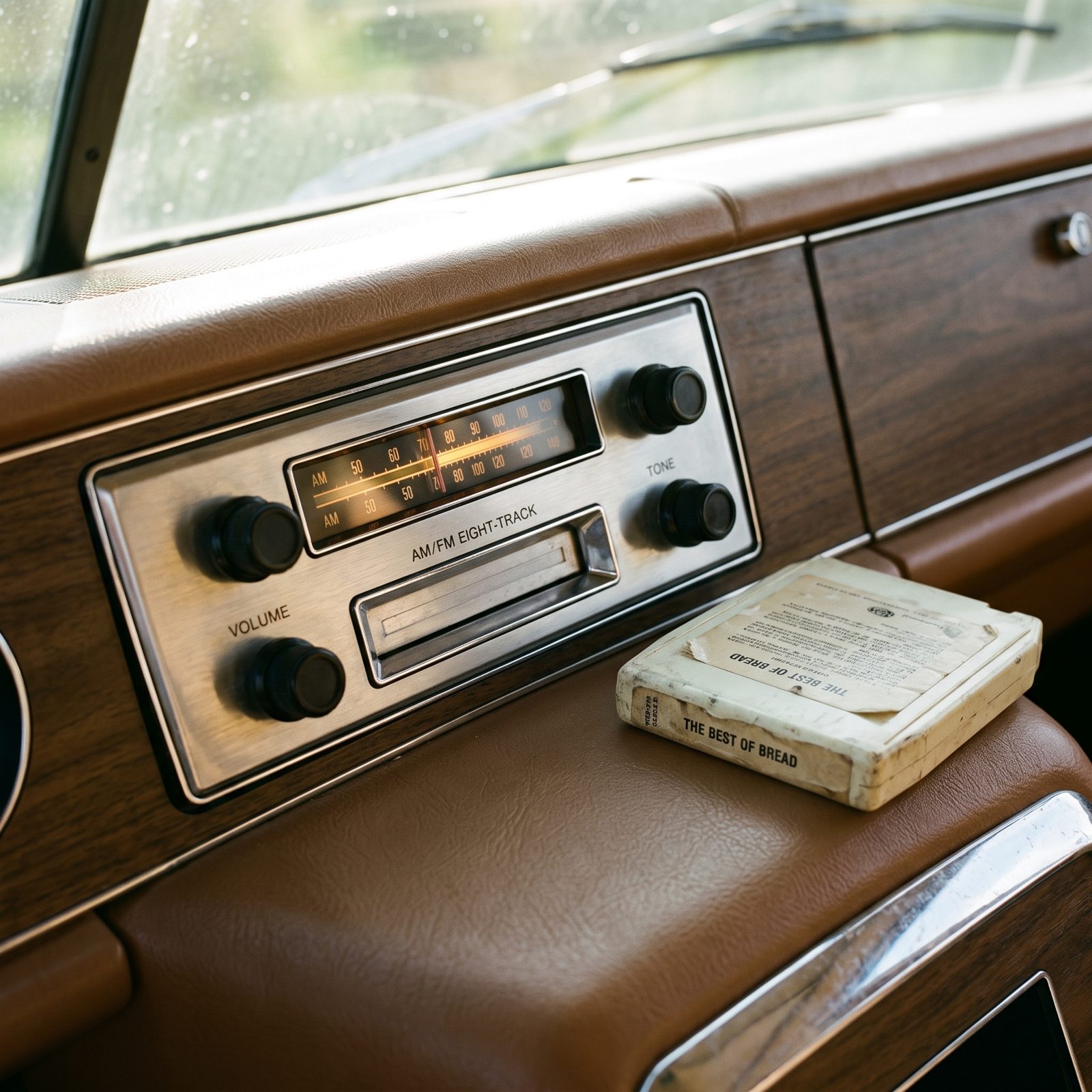
You pushed the cartridge in with a solid clunk and the music started mid-song, because eight-tracks never really stopped — they just looped. The built-in player with its slider tuning dial and chrome face anchored the whole dash.
It went obsolete fast and we laughed at it for years. But the ritual holds up. Pick a tape, slide it home, drive. No scrolling, no buffering, no algorithm guessing your mood. A restored coach with a working eight-track and a shoebox of cartridges in the glovebox is a genuine joy, even if you had to clean the heads to make the thing play at all.
12. Starburst Wall Clocks
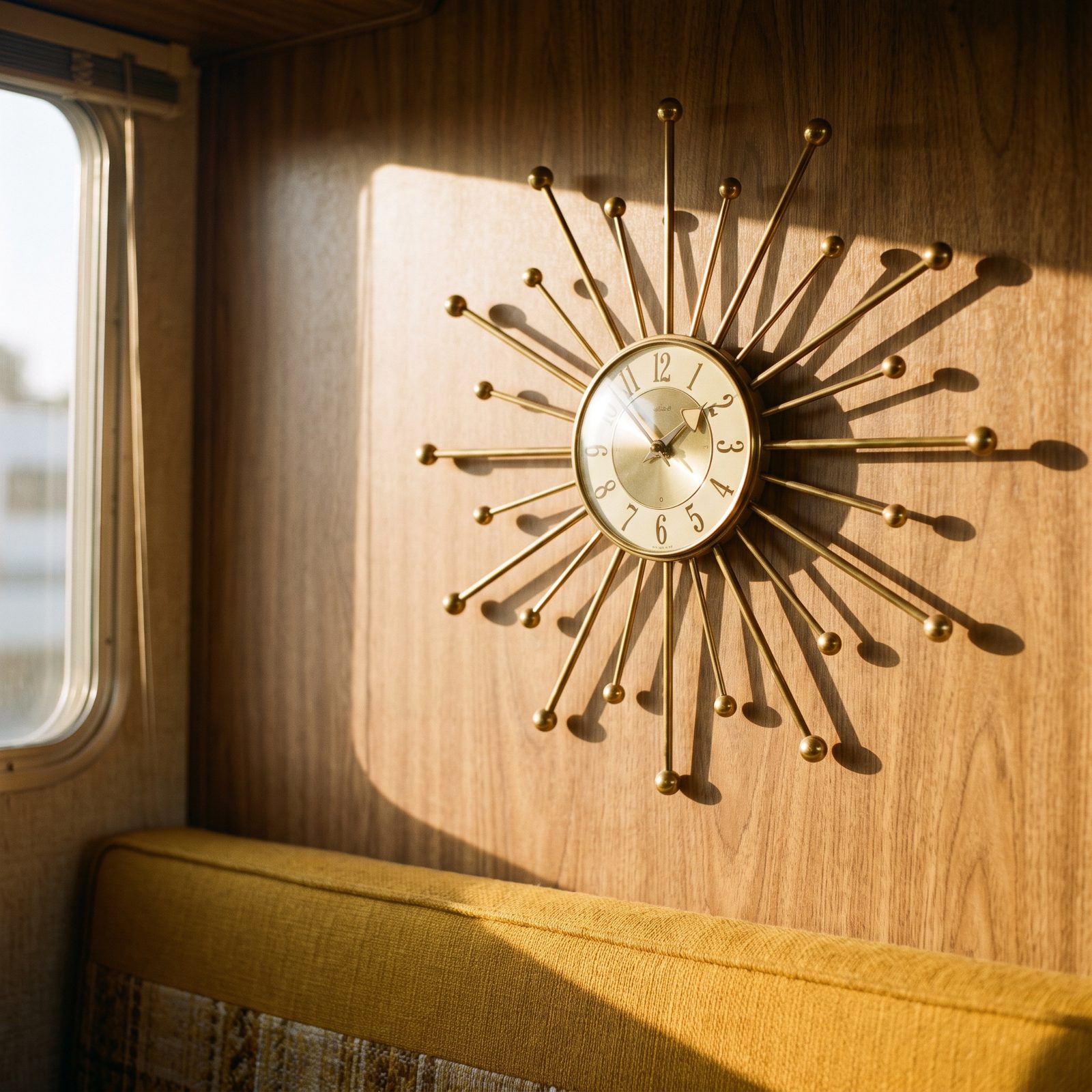
Brass spokes shooting out like a cartoon sun, each one tipped with a little ball, ticking away on the paneling above the dinette. The starburst clock was pure atomic-age optimism screwed to a wall that moved at 55 miles an hour.
Nobody needed a decorative clock in a motorhome. That’s exactly why it matters. Someone decided the inside of a camper deserved a little flourish, and that small generosity is most of what makes these rigs lovable.
11. Orange-and-Brown Floral Wallpaper
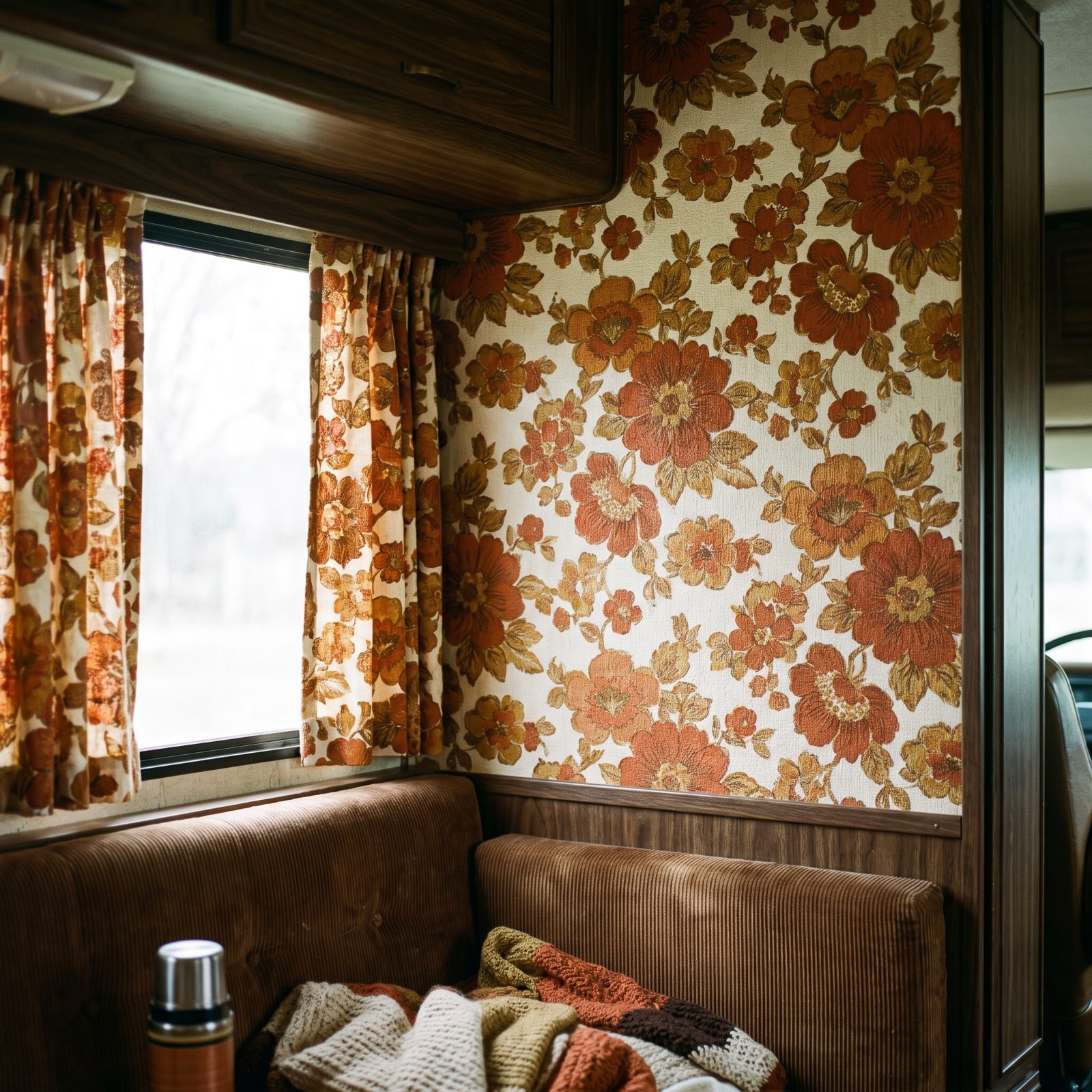
Big bold blooms in burnt orange and rust, repeating across a bulkhead like a field you were driving through even when you were parked. Loud, and not one bit apologetic about it.
We spent the ’90s and 2000s peeling this off and painting everything beige, convinced neutral meant upgrade. It meant forgettable. The floral vinyl wiped clean, hid scuffs, and gave a cramped space a personality no eggshell paint ever will. Restorers now scour the internet for new-old-stock rolls of exactly this pattern. Funny how that works.
10. Vinyl Lace-Up Steering-Wheel Covers
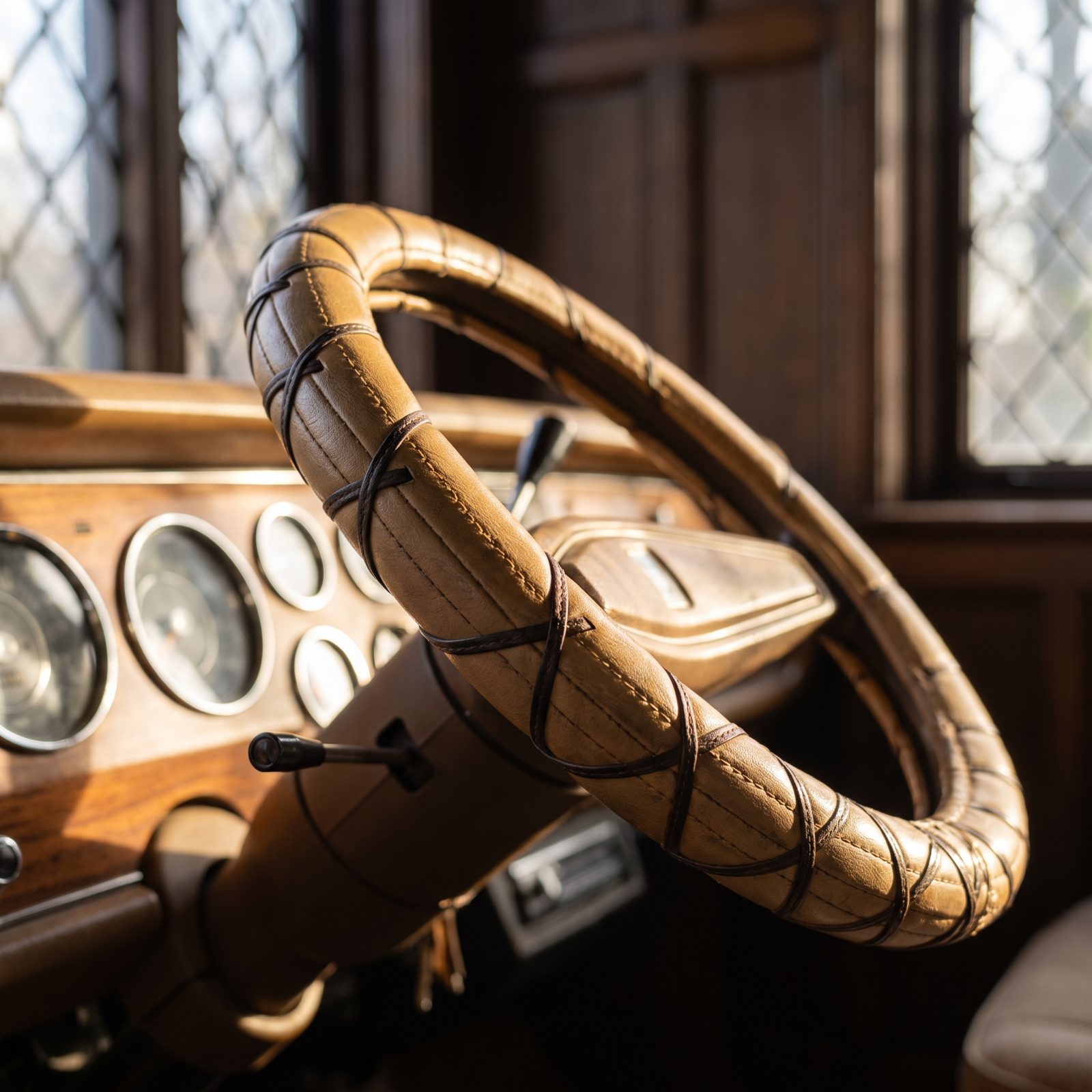
The cover came flat in a bag and you laced it onto the wheel yourself, pulling the cord tight loop by loop like stitching a baseball. By the end your thumbs ached and the thin hard wheel finally felt like something you wanted to hold for six hours.
These were drugstore-cheap and we treated them as throwaway. But the padded grip genuinely fixed the skinny, cold wheels of the era, and the hand-laced look has a homemade honesty to it. There’s a reason a restored dash still wears one. It’s the single upgrade in the whole coach you installed with your own two hands, and it shows.
9. Wooden Roof-Rack Slats That Everyone Swore Would Rot
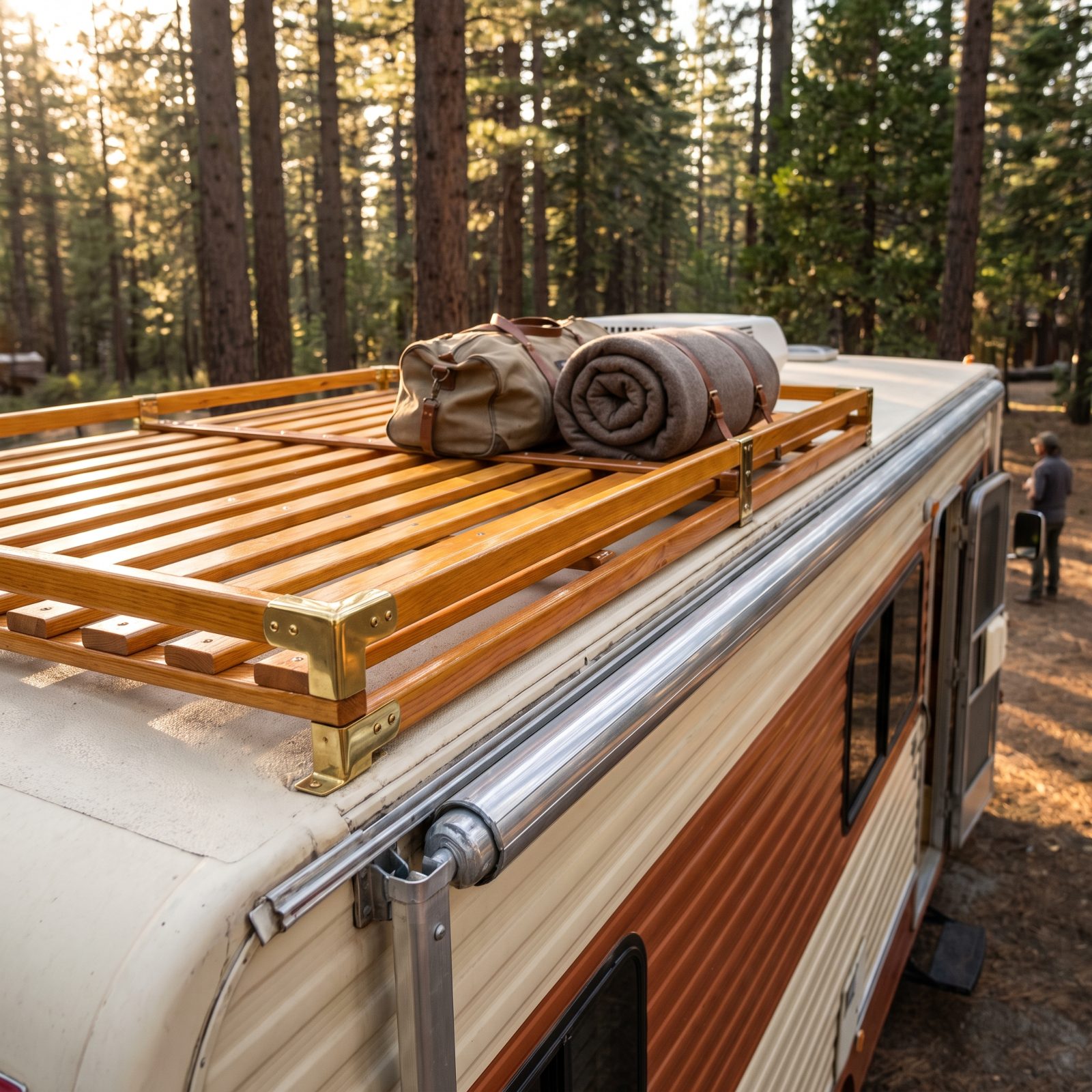
Everyone said wood on a roof was a terrible idea — rain, UV, the whole physics of water finding its way into end grain. And yet here they are, decades later, still holding luggage and still looking better than the extruded aluminum racks that replaced them.
The appeal was never purely practical. Those varnished slats softened the whole top of a boxy rig, gave it the look of a Chris-Craft runabout that had wandered onto the interstate by mistake. Once a season you oiled them, the way you’d oil a cutting board, and that small ritual kept them alive. Skip a couple of summers and you’d regret it. Nobody who kept up with it ever did.
8. Round Porthole-Style Windows Nobody Could Open
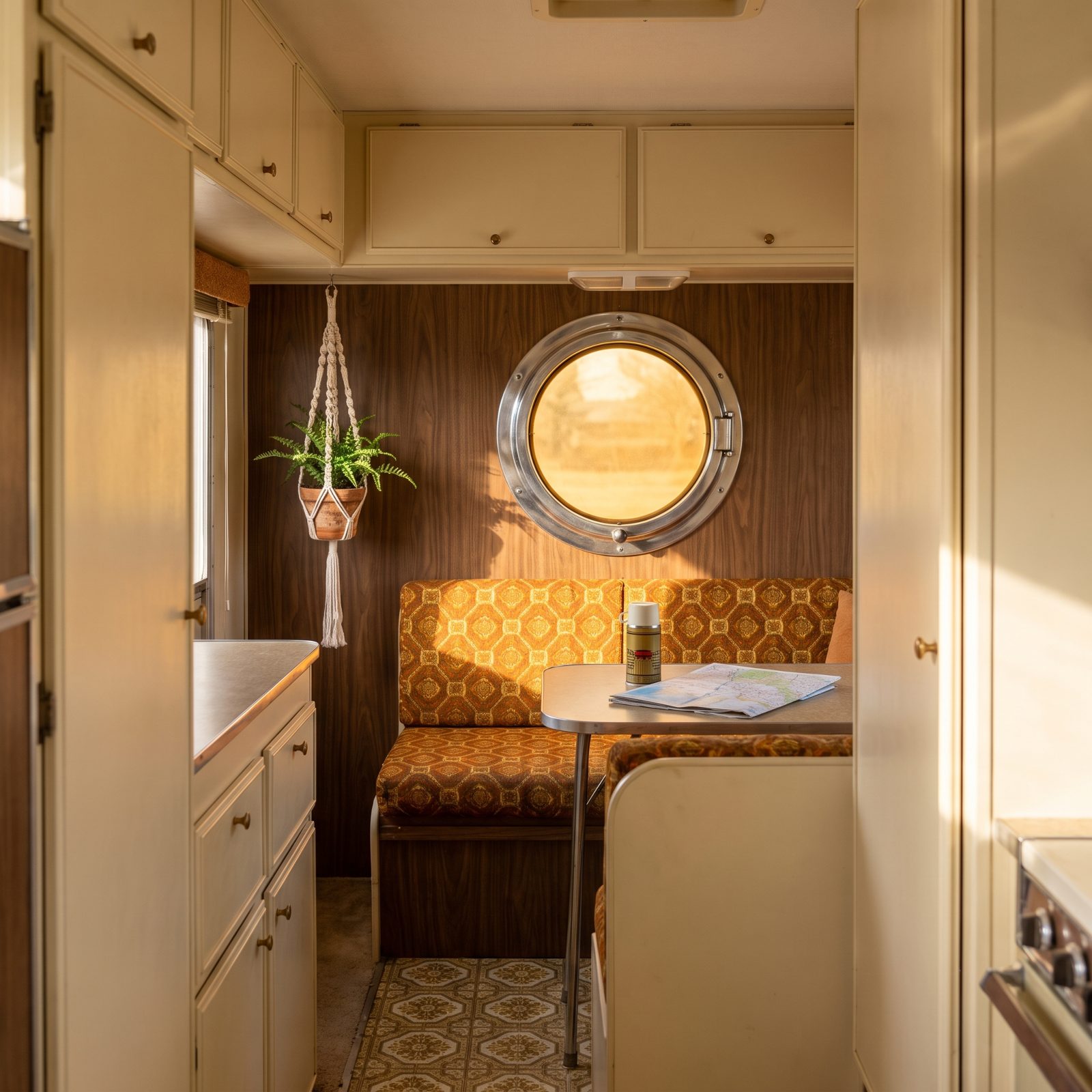
You could not open most of them. That was half the complaint. A round window sealed shut, purely for looks, in a vehicle where ventilation actually mattered — owners grumbled about it for years.
Now that same porthole is the first thing people photograph. It breaks up a wall of flat rectangles and does something a square window never manages, which is frame a view like a picture. Morning light comes through the amber tinted glass and lands in a warm circle on the floor, and for about ten minutes it feels less like a camper and more like the cabin of a small ship.
The chrome ring always needs a polish. That’s part of why people love them — a small job you can do with a rag, result showing up instantly.
7. Diamond-Tufted Entry Doors That Looked Like a Headboard
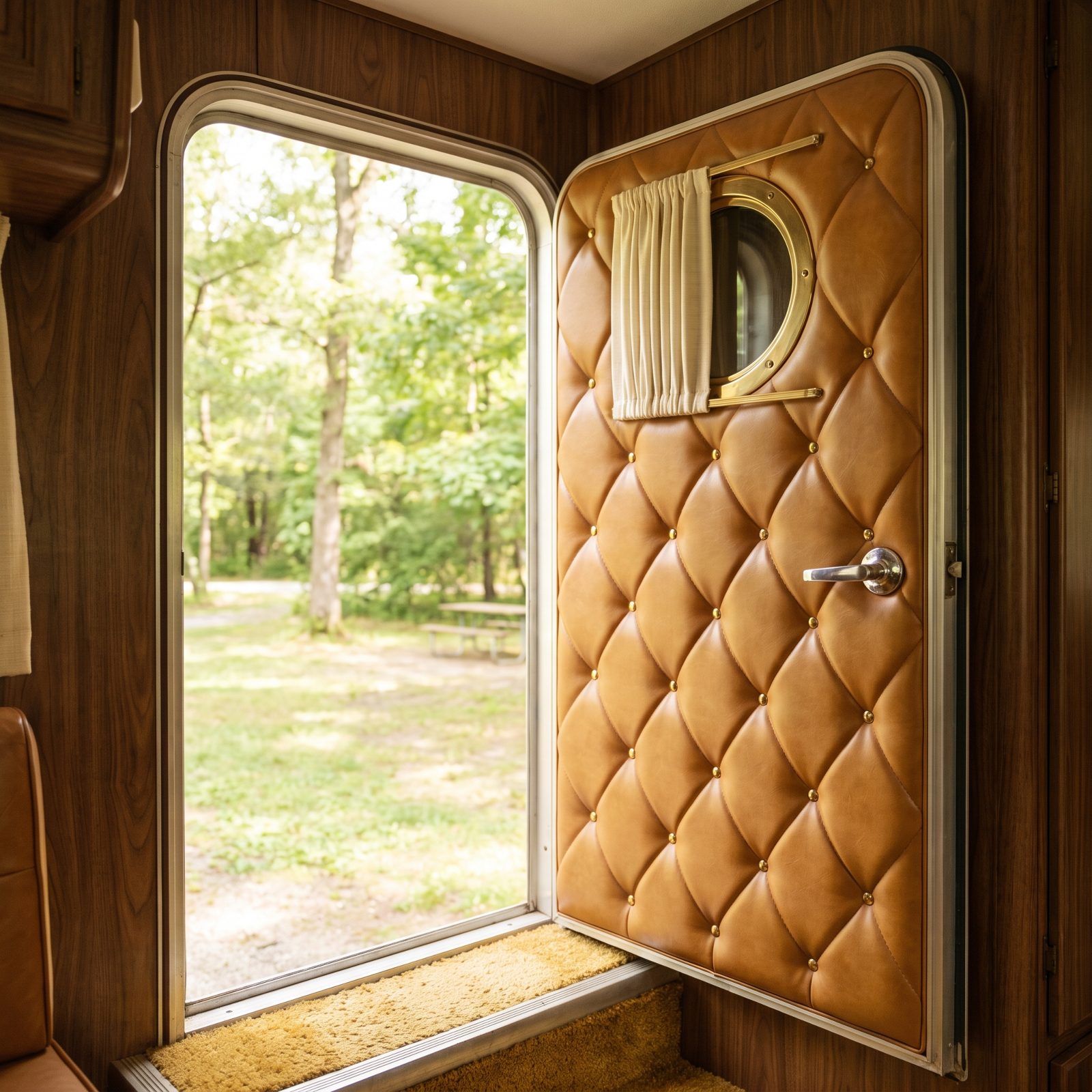
Padded vinyl on a door. The reaction was predictable — somebody always said it looked like a motel headboard that had gotten lost on its way to the bed.
But run your hand across that diamond quilting and the logic clicks. It insulated against road noise, hid a cheap hollow door, and made the first thing you touched every morning feel soft instead of cold. The brass buttons caught the light, the tan vinyl wiped clean with a damp cloth, and that was that.
6. The Built-In Cocktail Cabinet Tucked Behind the Driver
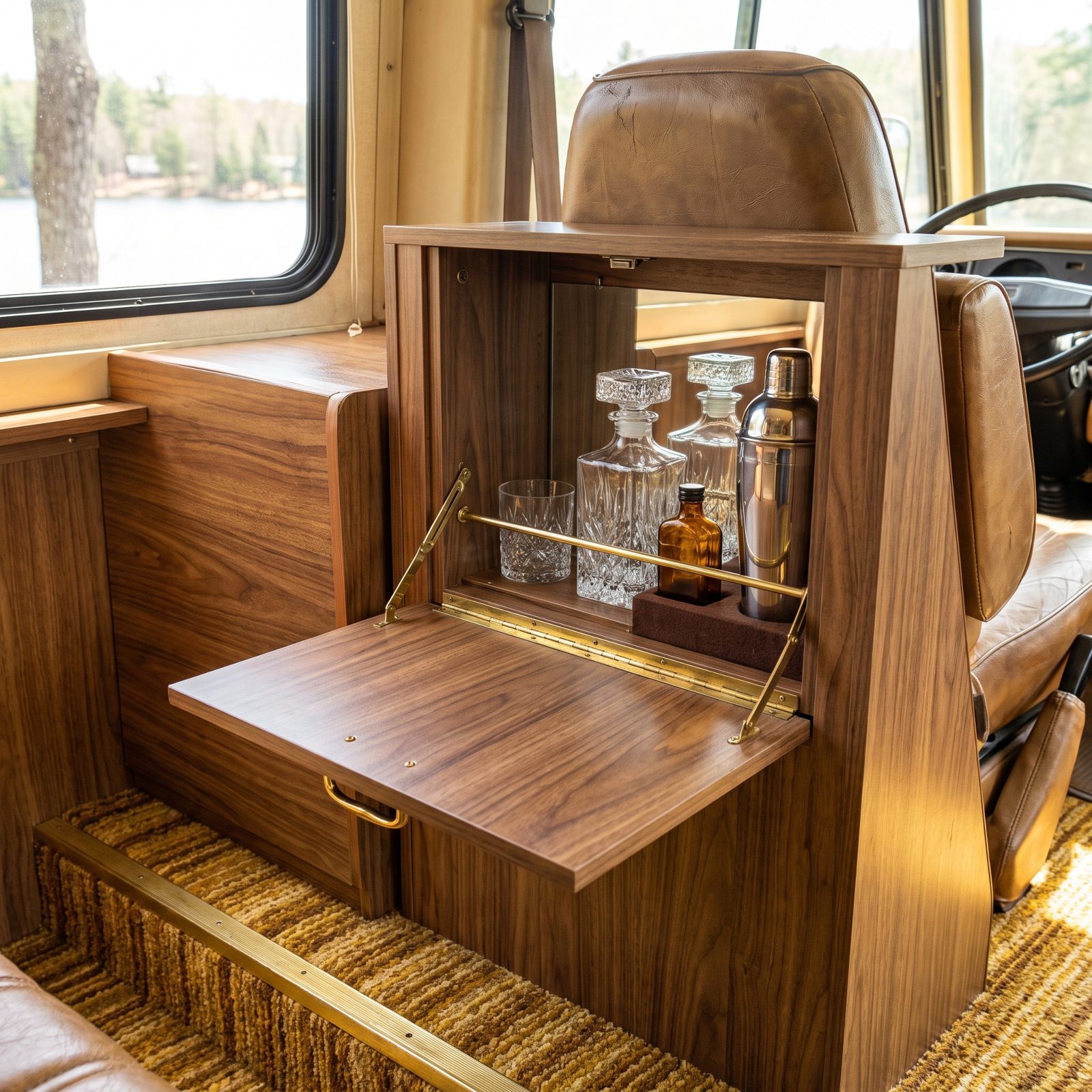
Somewhere behind the captain’s chair, tucked into the cabinetry, there was a little fold-down door with a mirror backing and fitted slots for glasses. The cocktail cabinet. A whole built-in bar in a vehicle, which later generations found slightly scandalous and mostly impractical.
It tells you everything about how that era pictured the trip. Not an endurance test — a moving living room where you’d pour something over ice while the sun went down over whatever lake you’d parked beside.
The mirror inside doubled the light and the glasses. A set of heavy vintage lowball glasses clinked in their slots over every bump in the road, which, if you ask me, is the sound of a vacation beginning.
5. Ceramic Tile Trivets Set Right Into the Countertop
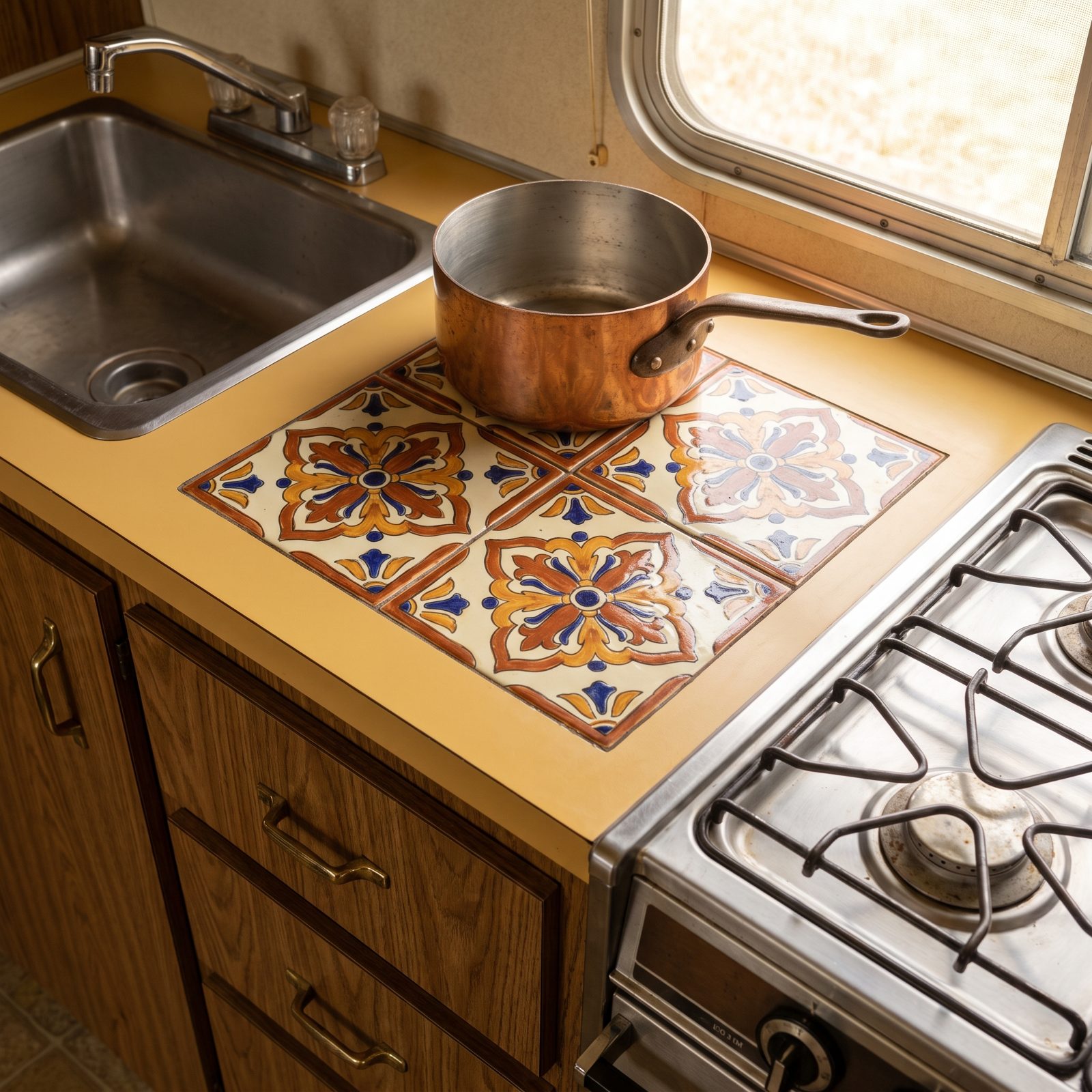
A square of hand-painted ceramic tile, set flush into the counter right next to the stove. The idea was simple — you lift a hot pot straight off the burner and set it down an inch away without scorching anything.
People called it fussy, one little decorative panel in an otherwise plain galley. But those cobalt-and-ochre tiles were often the only real handmade thing in the whole rig, and they outlasted it all. Heat. Grease. Forty years of travel. Still bright.
4. The Rotary-Dial Wall Telephone That Didn’t Dial Anything
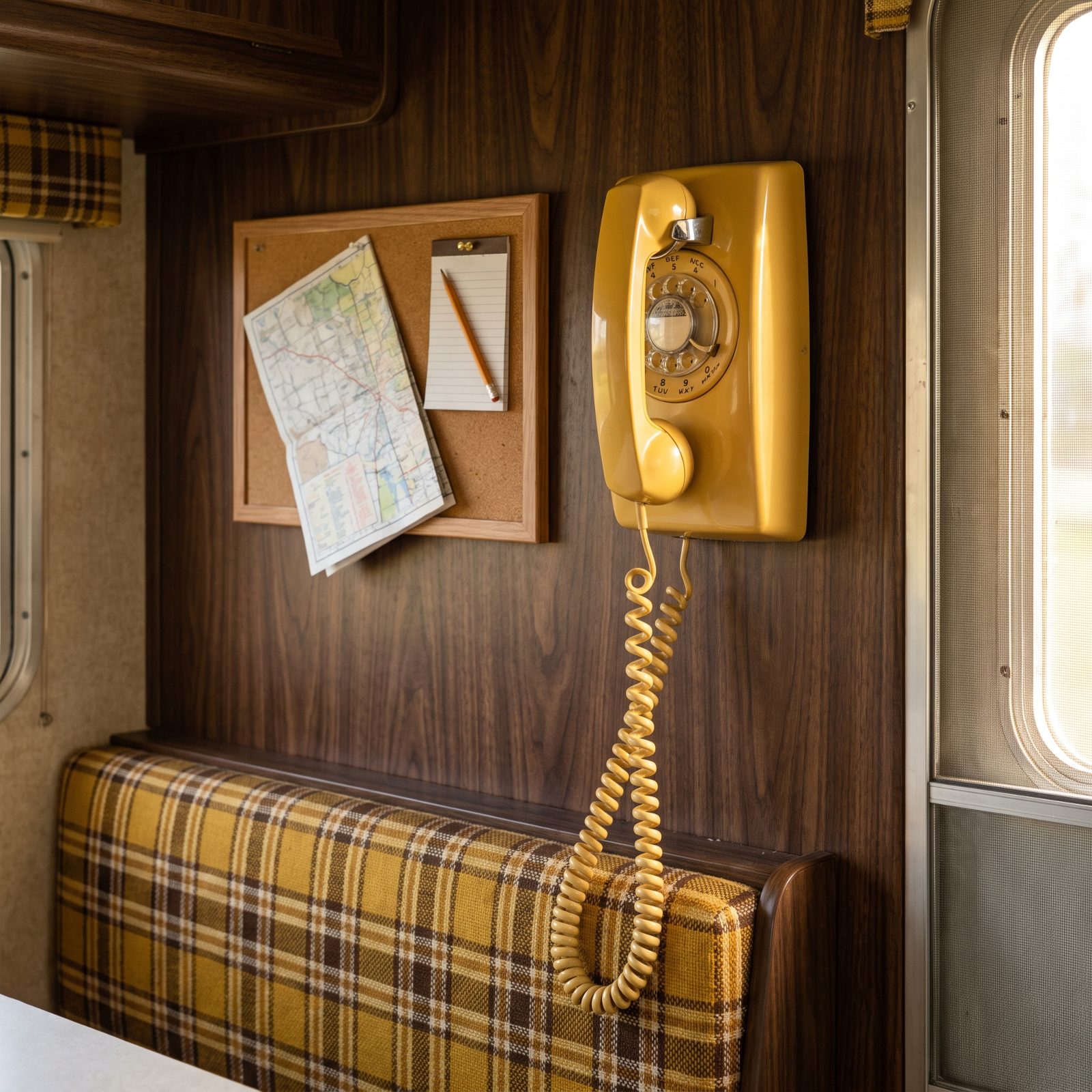
Here’s the funny part. The phone on the wall rarely connected to anything — in most rigs it was an intercom to the cab, or wiring some previous owner installed hoping the future would catch up. Harvest-gold handset. Coiled cord. The satisfying weight of the dial returning after each number.
You don’t appreciate the sound until it’s gone, that mechanical whir as the dial spun back and the little click at the end. A phone you couldn’t drop in a parking lot, couldn’t lose between the seats, couldn’t scroll on at 2am.
I’d keep it mounted even if it never rings. Some objects earn their wall space just by being there.
3. Decorative Eagle Decals Spread Across the Flanks
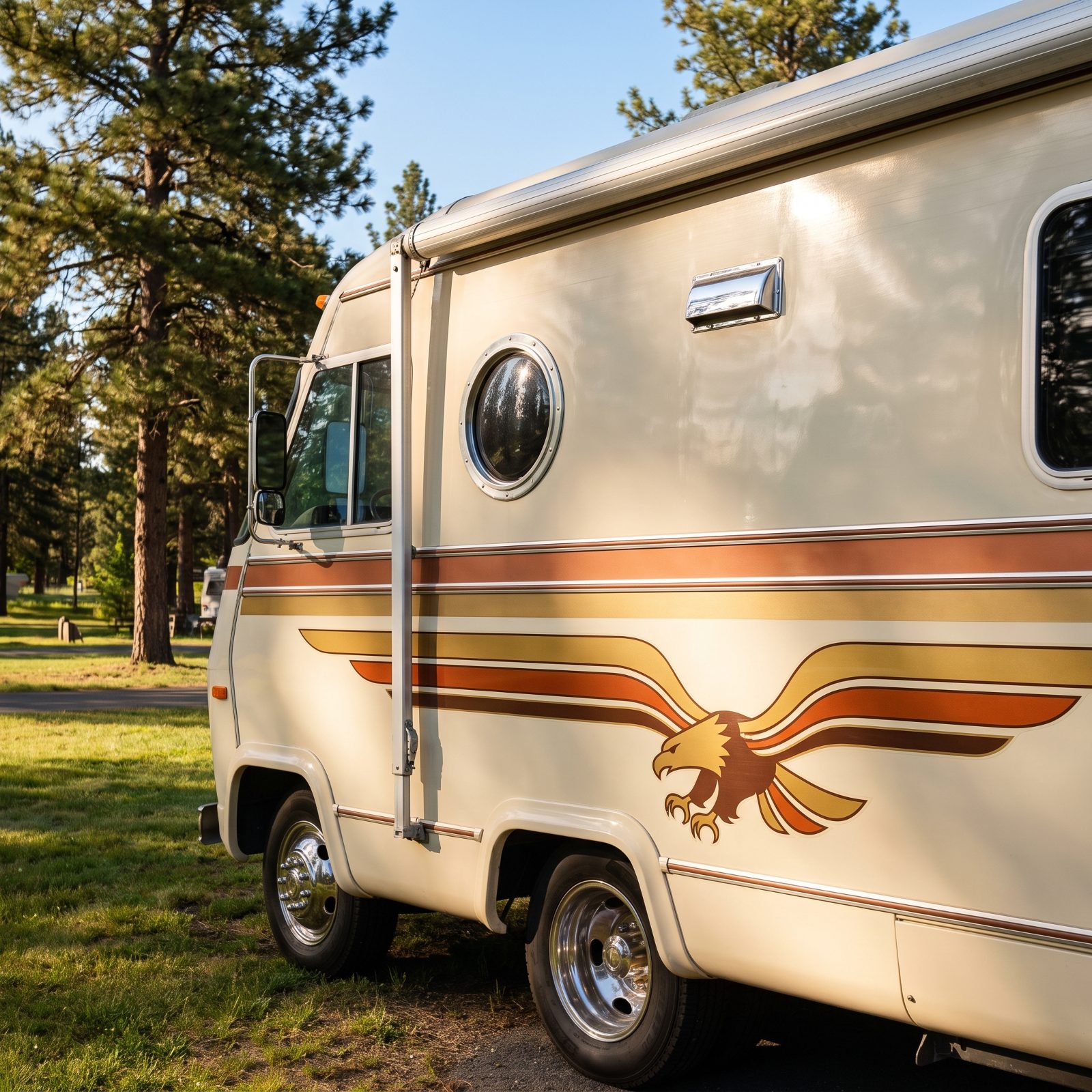
A giant eagle, wings swept across the side panel in gold and burnt orange. For years this was shorthand for everything people found overdone about the decade. Too much. Too loud. Too patriotic by half.
Then the pendulum swung, because it always does. Now a clean, uncracked eagle decal is a selling point — it dates the rig precisely, covers an enormous blank panel with actual personality, and looks fantastic parked against pine trees.
I used to think these were tacky. I was wrong, and I’ll say so plainly. There’s a confidence in a graphic that big that a modern RV wrapped in gray swooshes would kill for.
2. Chunky Bakelite-Look Stove Knobs You Could Grip With Oven Mitts
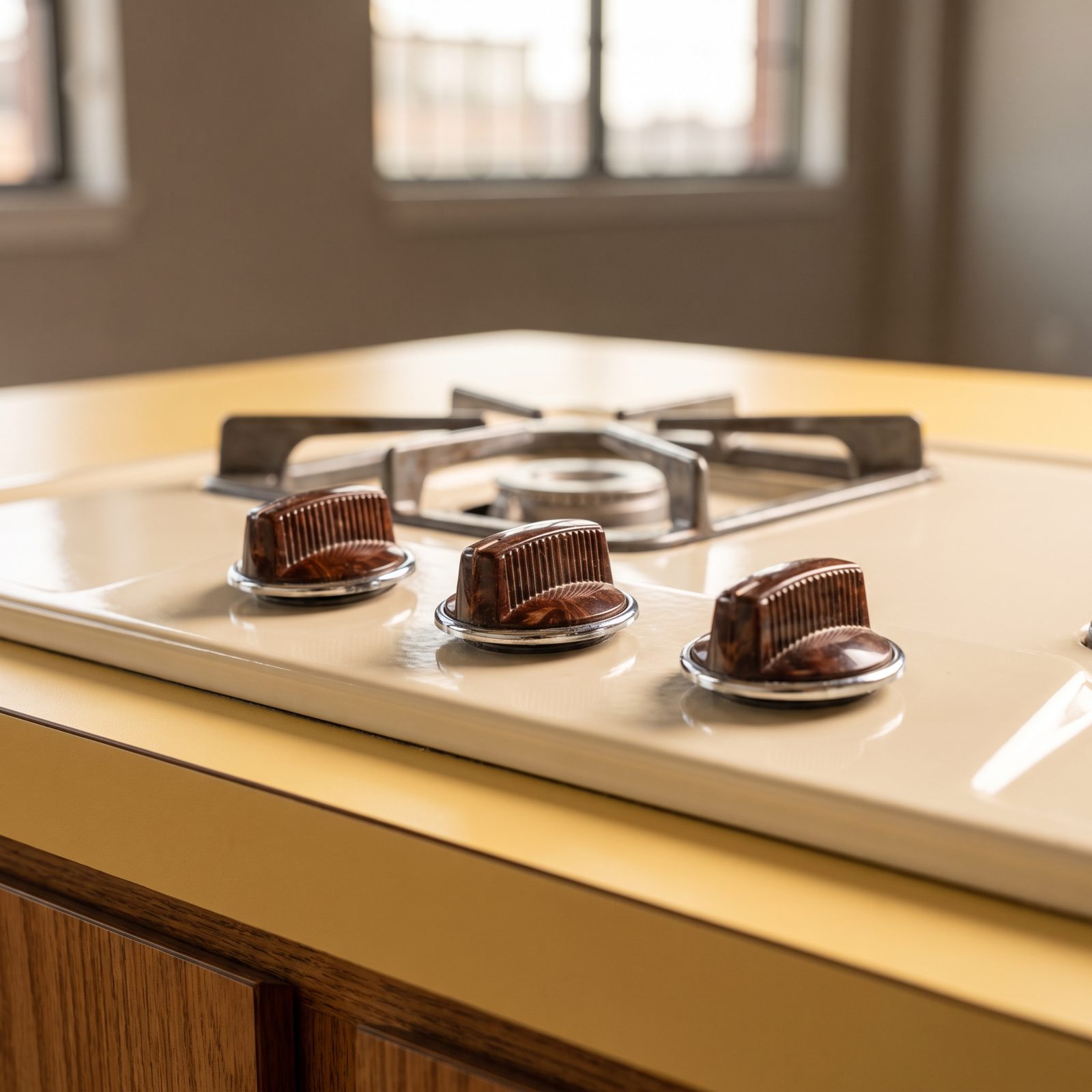
Big, brown, ridged, heavy in the hand. The stove knobs on these old cooktops were built to be turned by somebody wearing oven mitts in a rocking vehicle. Function first, apology never.
Modern flush touch controls can’t do what these did. You could find them in the dark by feel and tell gas from off by the resistance. That chunky marbled plastic, made to mimic old Bakelite, took heat and grease and decades of thumbs without fading.
1. Exterior Woodgrain Siding Panels That Weren’t Wood at All
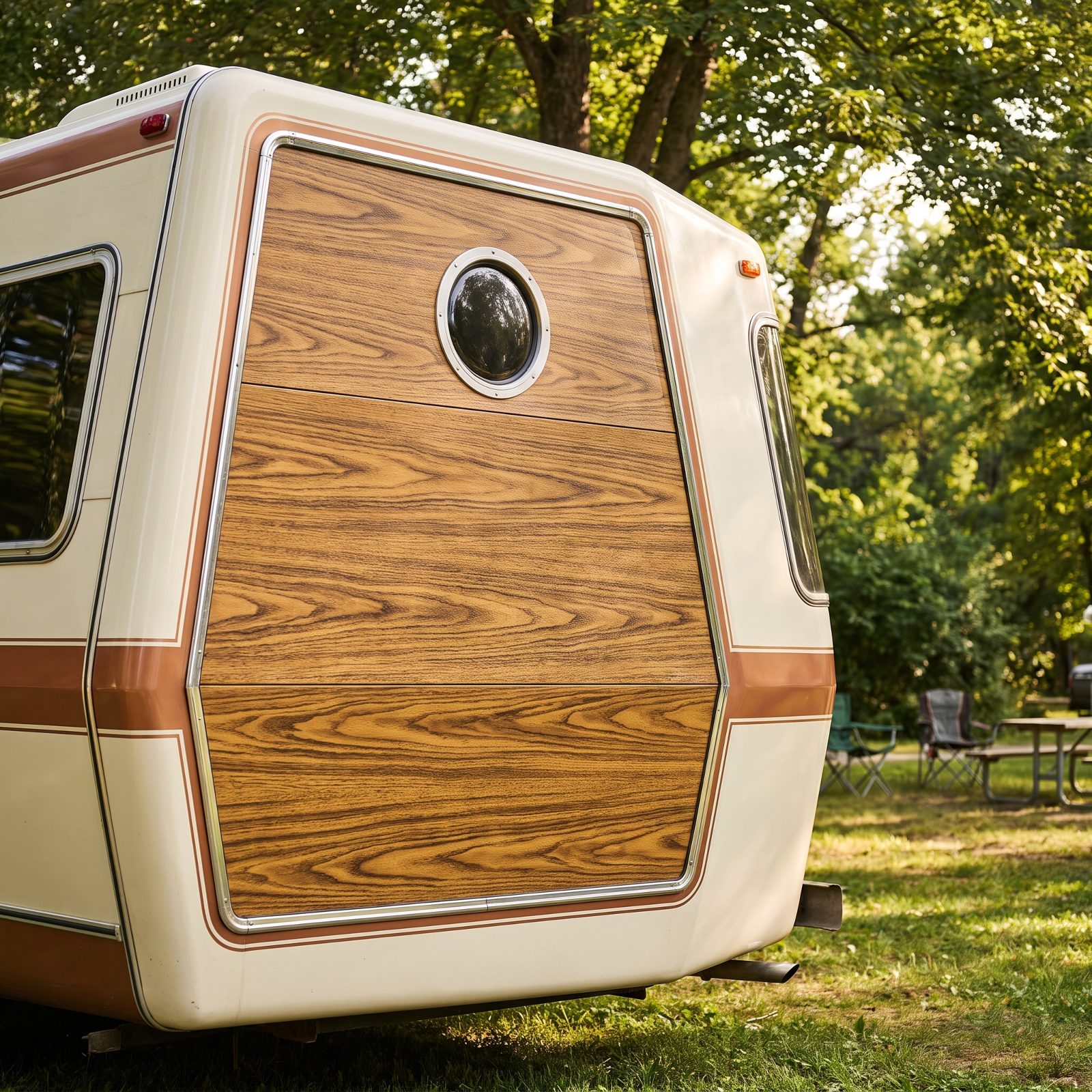
It fooled no one up close. The woodgrain siding was printed laminate, a trick lifted straight from the station wagons parked in every driveway. From ten feet away, though, it worked, and from a campsite across the field it still does.
There’s a warmth to it that flat white fiberglass never had. The grain softens the whole slab-sided shape, ties the exterior to the woodgrain cabinets inside, and makes the rig look like it belongs among the trees instead of fighting them.
Faux wood got mocked for decades as the fakest thing on the road. Stand next to a preserved one in good light, though, and tell me it doesn’t make you want to pull up a lawn chair. These panels knew exactly what they were doing. We’re only now catching up.