
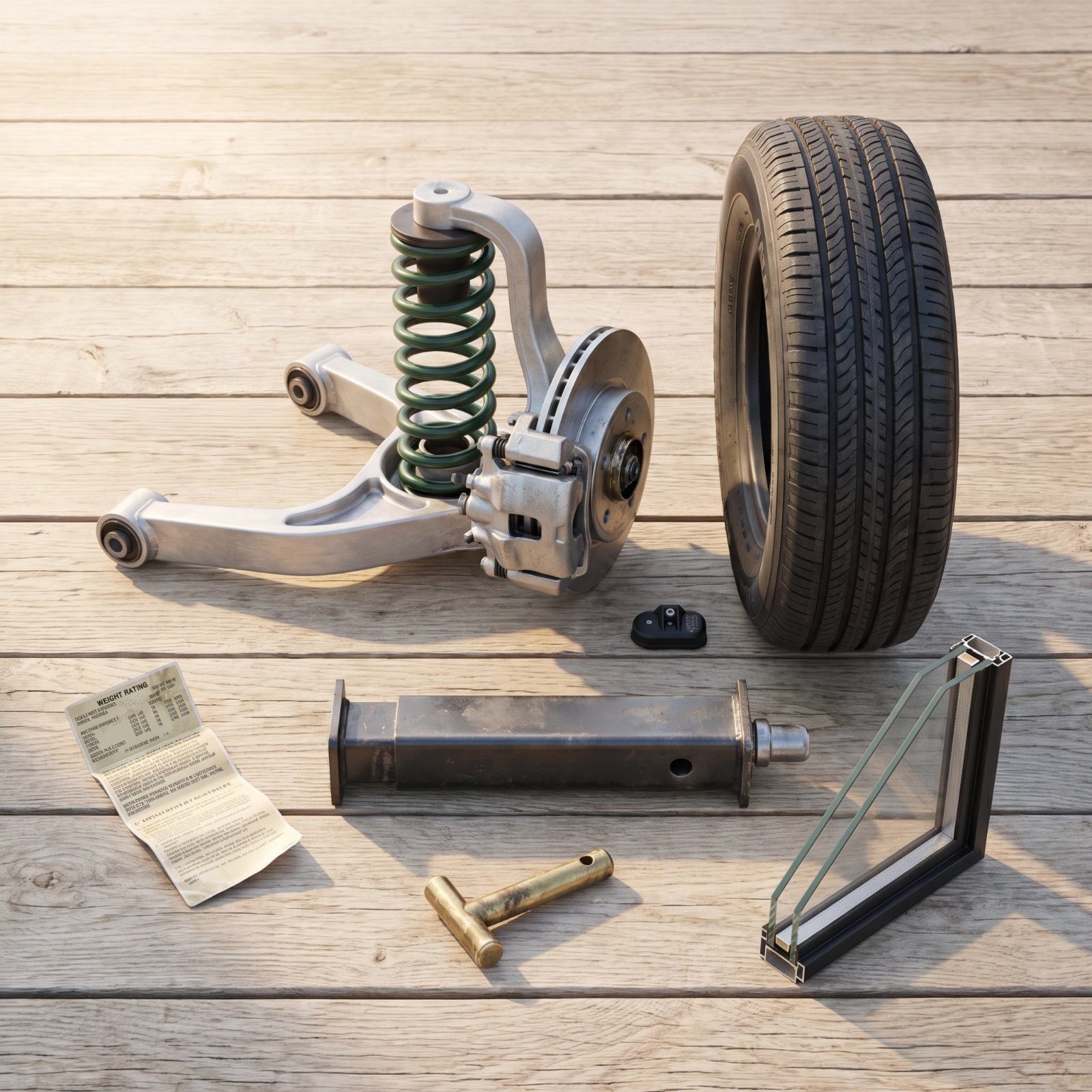
Slide-outs sell the walkthrough. They don’t win the trip. You remember the night you pulled into a gravel lot after a wrong turn, felt the trailer yaw, and realized the thing hauling your family down the interstate was held together by leaf springs and optimism. The features that actually keep you safe and warm and parked level rarely make the brochure cover — they sit under the floor, behind the wheel wells, inside a sticker nobody reads. So we went looking for the stuff that earns its keep after the salesman waves goodbye. Here’s what to check before you sign.
47. Verified Occupant-and-Cargo Carrying Capacity (The Sticker Nobody Reads)
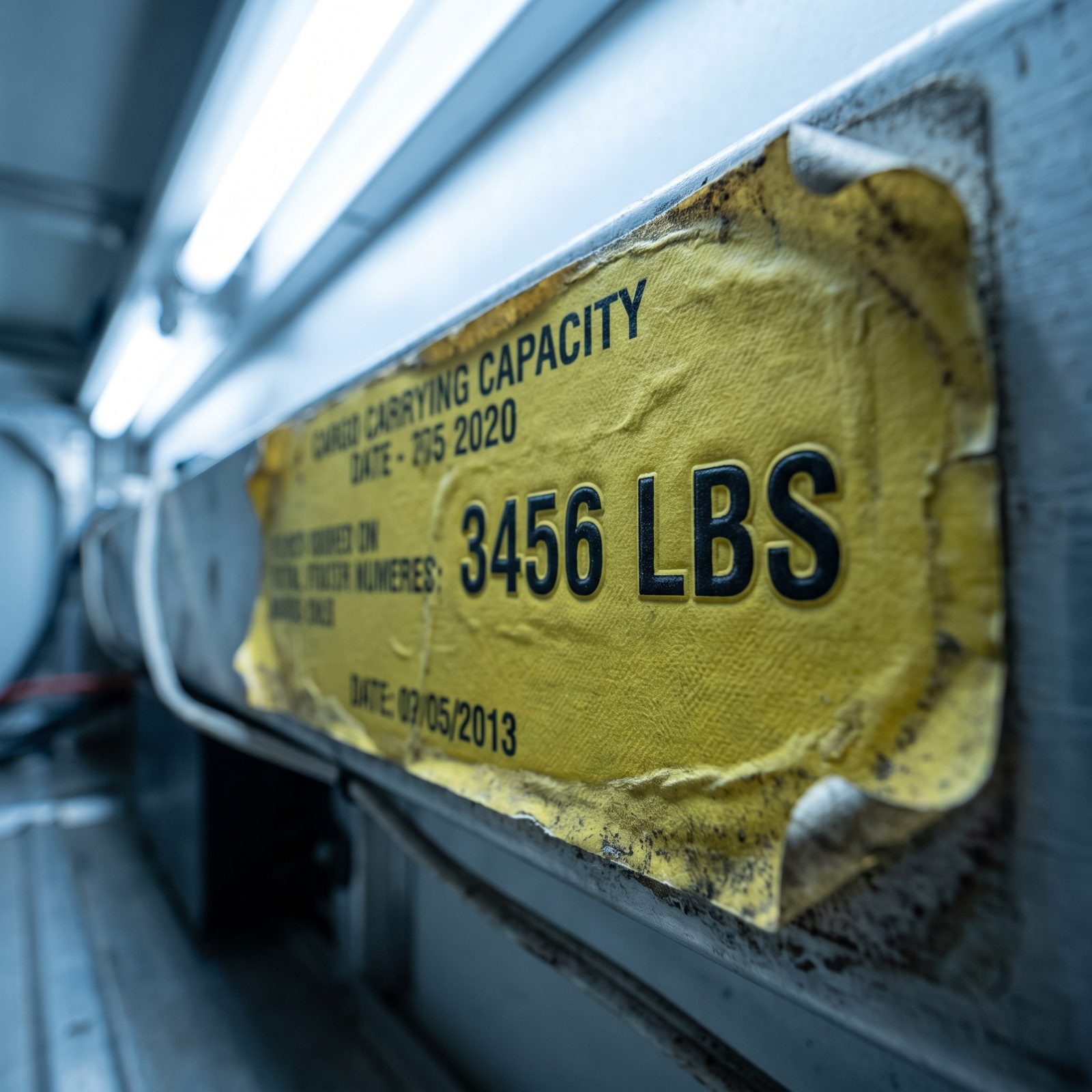
This number tells you how much life you can actually load before you’re overweight. It’s the CCC, cargo carrying capacity, and it lives on a yellow sticker inside a cabinet door. Full water, propane, gear, people, the dog, your spouse’s rock collection — all of it has to fit under that figure.
I ignored this for years and wondered why my rig felt like a drunk shopping cart. Turns out I was 400 pounds over. A couples’ coach with a cute floor plan and a tiny cargo rating is a cruel joke once you add a full fresh tank. Check it before the slide-out.
46. Tow-Friendly Gross Weight and Tongue Weight
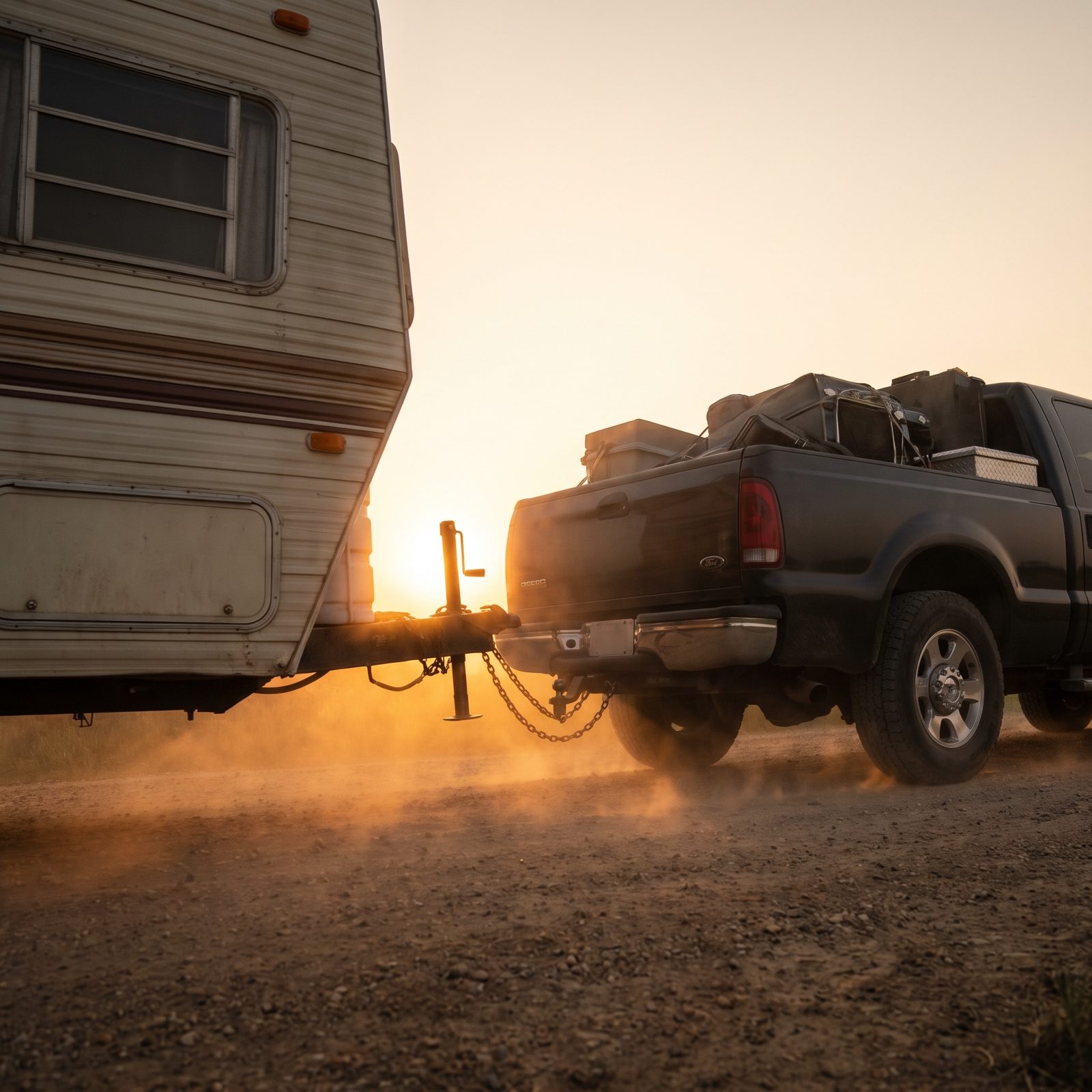
Your truck’s advertised tow rating is marketing. The honest number is what’s left after you load fuel, passengers, and the hitch itself.
Tongue weight should land somewhere around a tenth to a seventh of the loaded trailer weight. Too little and the trailer sways like a trout. Too much and your front tires go light while your steering turns vague. A rig that comes off the factory line with a sensible balance saves you from a weekend of fighting the wheel. Match the loaded gross trailer weight to your real payload — not the badge on the tailgate.
45. Independent Suspension Built for Rough Roads

Most trailers still ride on leaf springs and a solid axle, which is 1930s technology bolted under a 2027 interior. One wheel finds a pothole, the whole axle levers over, and everything inside takes the hit.
Independent suspension lets each wheel move on its own. Cabinets rattle less, dishes survive, and washboard forest roads stop feeling like punishment. If you ever plan to leave pavement — even just a county road out to a boondocking spot — this is the upgrade you feel in your spine.
44. Hydraulic Disc Brakes
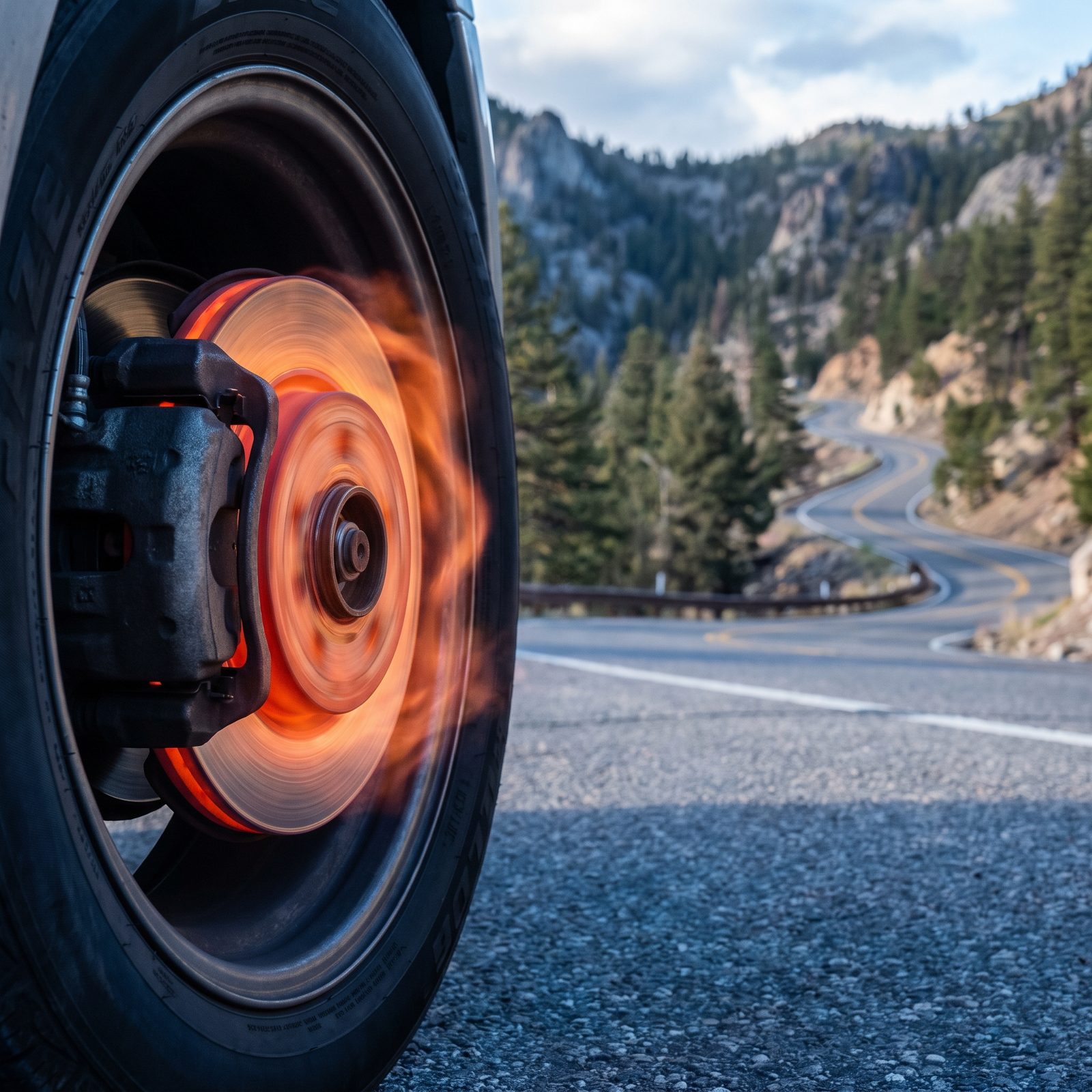
Electric drum brakes fade. Drag them down a long grade in the heat and they turn into polite suggestions — you feel it as a slow, sickening loss of bite right when you want the opposite.
Hydraulic disc brakes shrug off heat and stop short, every time, wet or dry. More 2027 trailers are offering them factory-installed instead of as a pricey aftermarket retrofit. Tow in mountains and this isn’t a luxury. It’s the difference between a controlled stop and a prayer.
43. Factory-Installed Tire-Pressure Monitoring

A blowout on a trailer tire starts as a slow leak you can’t see from the driver’s seat. By the time you smell rubber, the tire is already chewing through your wheel well and fender.
TPMS watches pressure and temperature on every tire and warns you before anything comes apart. Built in from the factory, the sensors are sealed and matched rather than a cheap aftermarket set you forget to charge. One avoided blowout pays for the whole system several times over.
42. A Proper Full-Size Spare Tire

Plenty of new trailers ship with no spare at all, or a skinny temporary that was never meant for highway speed and trailer weight. You find this out on a Sunday. On a shoulder. Forty miles from the nearest tire shop.
A real full-size spare, mounted and ready, is the cheapest peace of mind on the lot. Check that it matches your road tires and that the carrier actually works without a wrestling match. And I’ll die on this hill: a rig without a usable spare is unfinished.
41. One-Touch Automatic Leveling
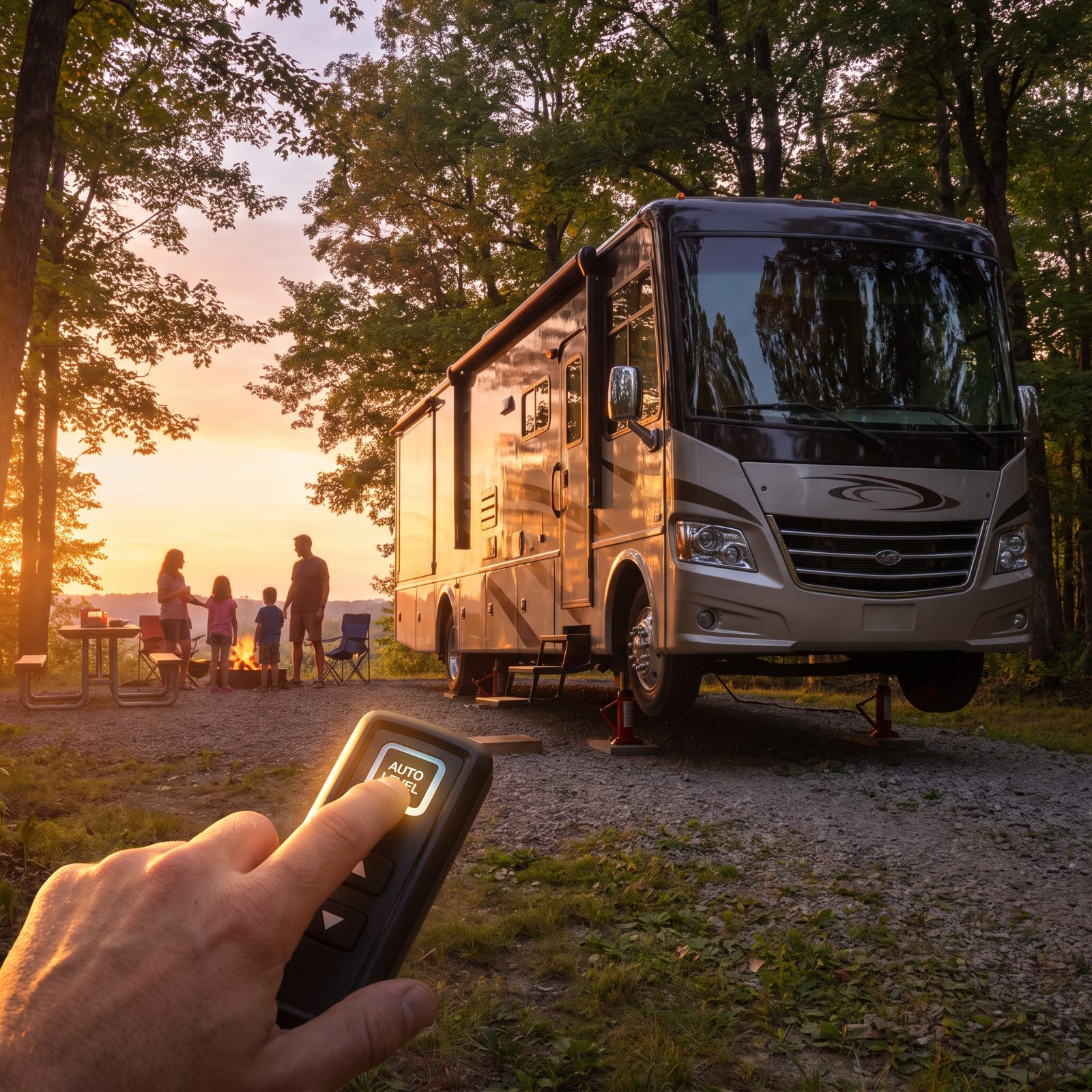
You arrive at dusk, everyone tired and hungry. The old way: blocks under the tires, a bubble level on the counter, your spouse shouting “more” from the window while you back onto a stack of wobbling lumber.
Automatic leveling reads the slope and extends the jacks on its own. One button, and the fridge runs right, the doors stop swinging shut, and nobody sleeps with their head downhill. On uneven ground it turns a twenty-minute argument into a ninety-second wait. Worth every penny for the marriage alone.
40. A 360-Degree Exterior Camera System
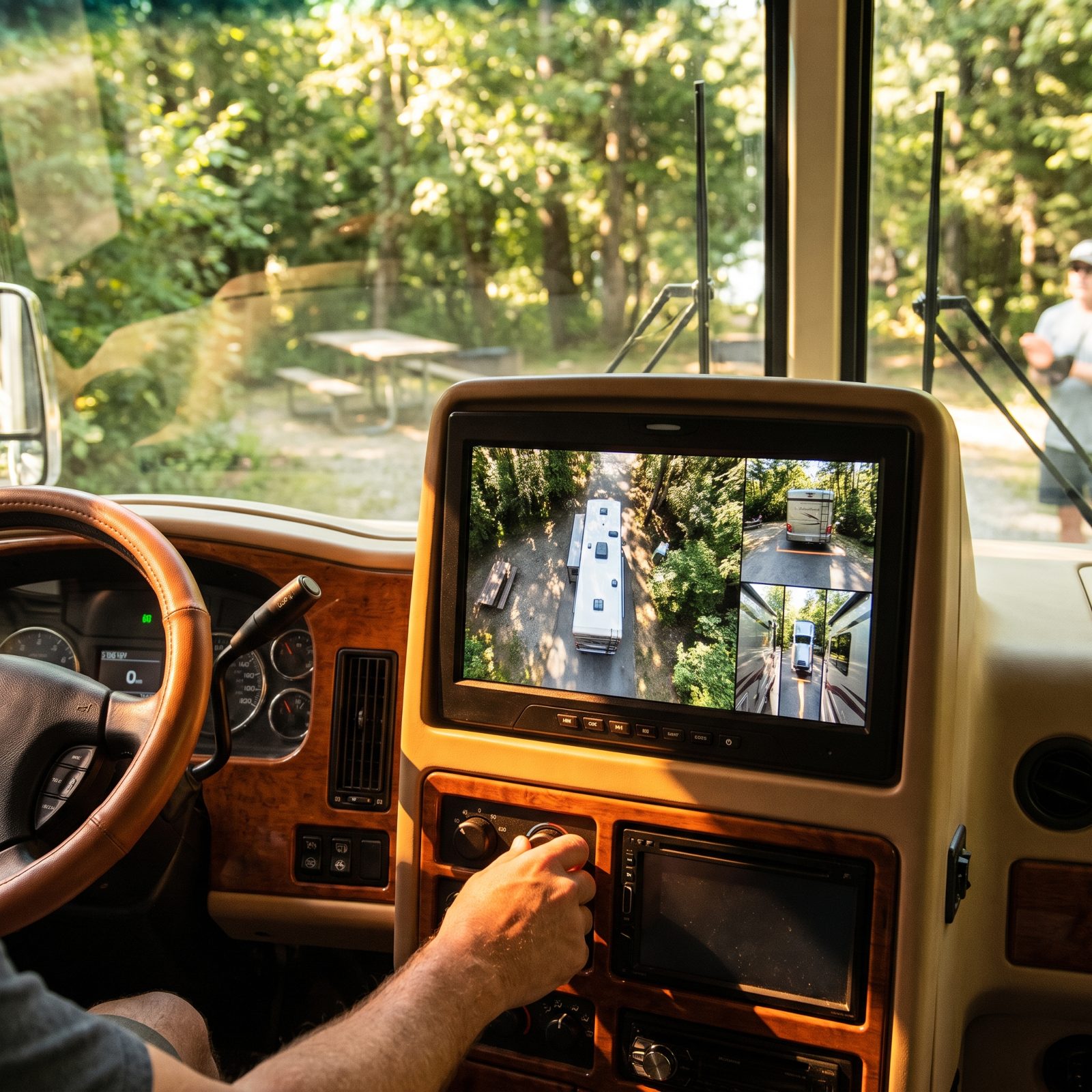
Backing a long rig into a shaded site with a tree on one corner and a hookup post on the other is where tempers go to die.
A stitched 360-degree view puts the whole rig on one screen, seen from above, blind spots and all. Side cameras catch the cyclist you’d never spot in a mirror. Once you’ve used one, backing by mirror alone feels like parking with your eyes half shut. It also quietly retires the person standing behind you waving both arms in contradictory directions.
39. A Receiver Hitch Rated for Bikes or a Towed Vehicle
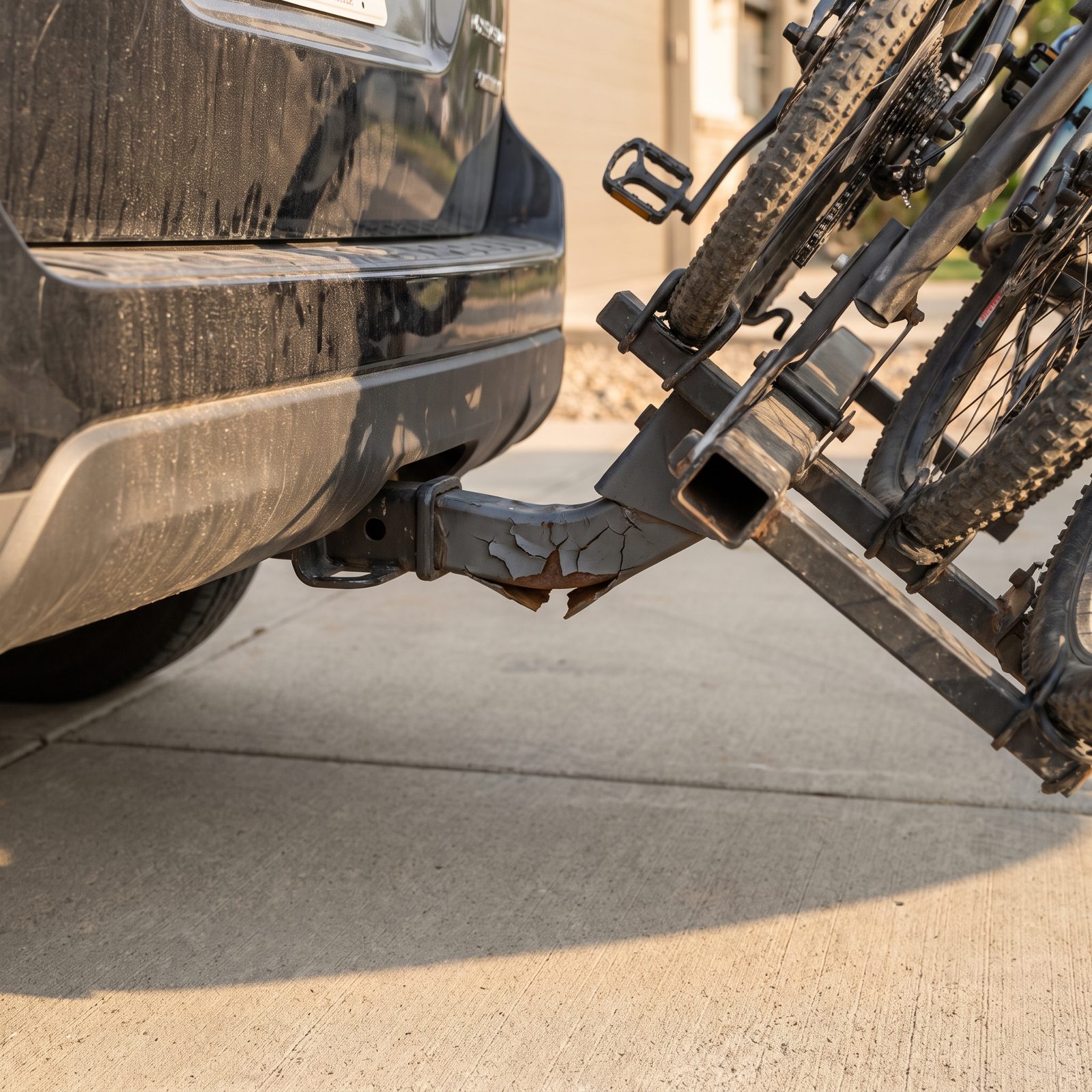
That square tube on the back isn’t all the same. Some are cosmetic, rated for next to nothing, and they’ll bend under a loaded bike rack.
A properly rated rear receiver changes what your trip can be — hang a bike rack, haul a cargo box, flat-tow a small car behind a motorhome. Check the stamped rating, and check whether the frame behind it is actually reinforced. A receiver that can only carry a license plate holder is a decoration, not a feature.
38. A Genuine Four-Season Package With Dual-Pane Windows

“Four-season” gets printed on brochures the way “gourmet” gets printed on frozen pizza. A heated tank pad and a sticker do not make a four-season rig.
The real thing has an enclosed, heated underbelly, ducted furnace runs to the tanks, serious insulation, and dual-pane windows doing the quiet heavy lifting. Single-pane glass weeps condensation all over your sills by morning and bleeds heat all night long. Dual-pane runs warmer, stays dry, and hushes the highway roar.
Single-pane windows are where a warm RV goes to leak its heat into the dark.
Plan to camp past October? This one feature decides whether you’re comfortable or just enduring. Ask to see the underbelly, not the sticker.
37. A Seamless One-Piece Fiberglass Roof
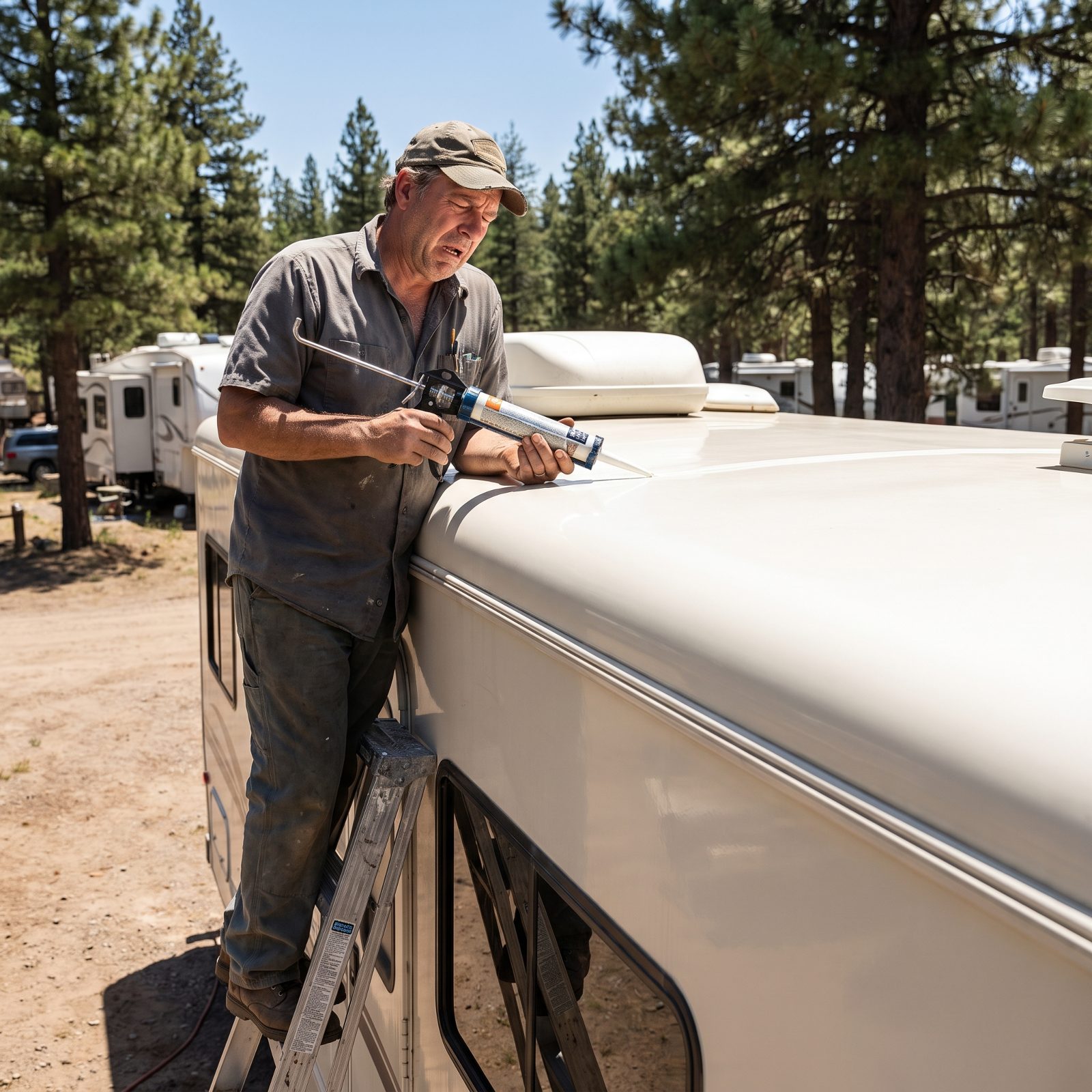
Rubber roofs are the thing nobody warns you about until you’re standing on a ladder at a campground with a tube of self-leveling sealant and a bad attitude. EPDM and TPO membranes work fine, but they want babysitting — seams open up, lap sealant cracks in the sun, and one missed inspection sends water straight into the ceiling panels.
A one-piece molded fiberglass cap has no seams to fail and nothing to re-caulk every spring. It sheds water like a boat hull, because that’s basically what it is. You pay more up front. The trade is a roof you stop thinking about.
36. Safe Roof Access for Inspection and Maintenance
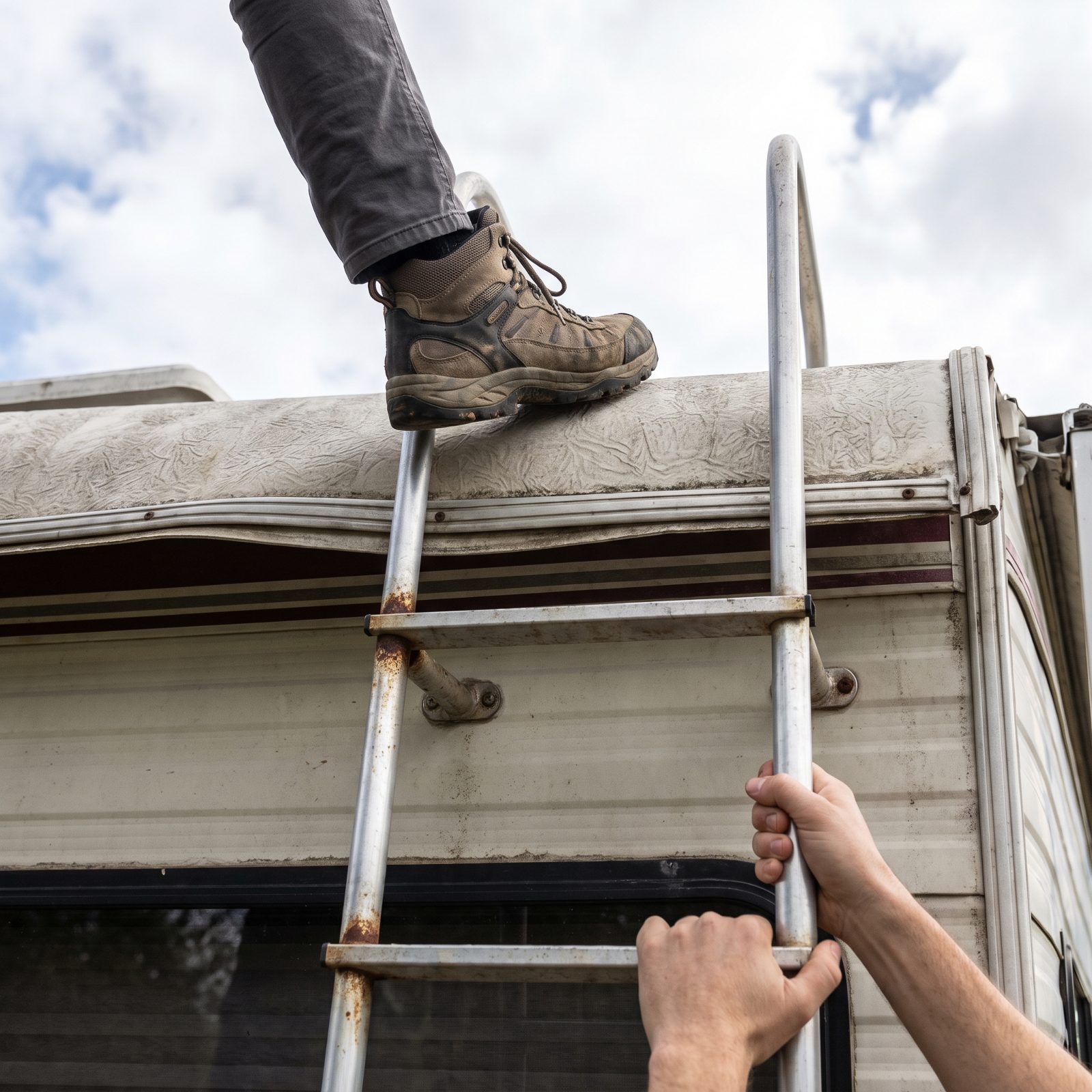
Something I got wrong for years: I assumed every roof could hold me. Plenty can’t. Walk the wrong panel on a budget rig and you’ll feel it flex under your boot like a trampoline you don’t trust.
A rig built for roof access gives you a real ladder, reinforced walkable decking, and a grab point near the edge so you’re not doing a balance act two stories up. Sounds boring, sure. Then you need to clear pine needles off the AC shroud or reseat a vent gasket, and suddenly it’s the feature keeping you out of the ER.
35. A Rot-Proof Composite Subfloor
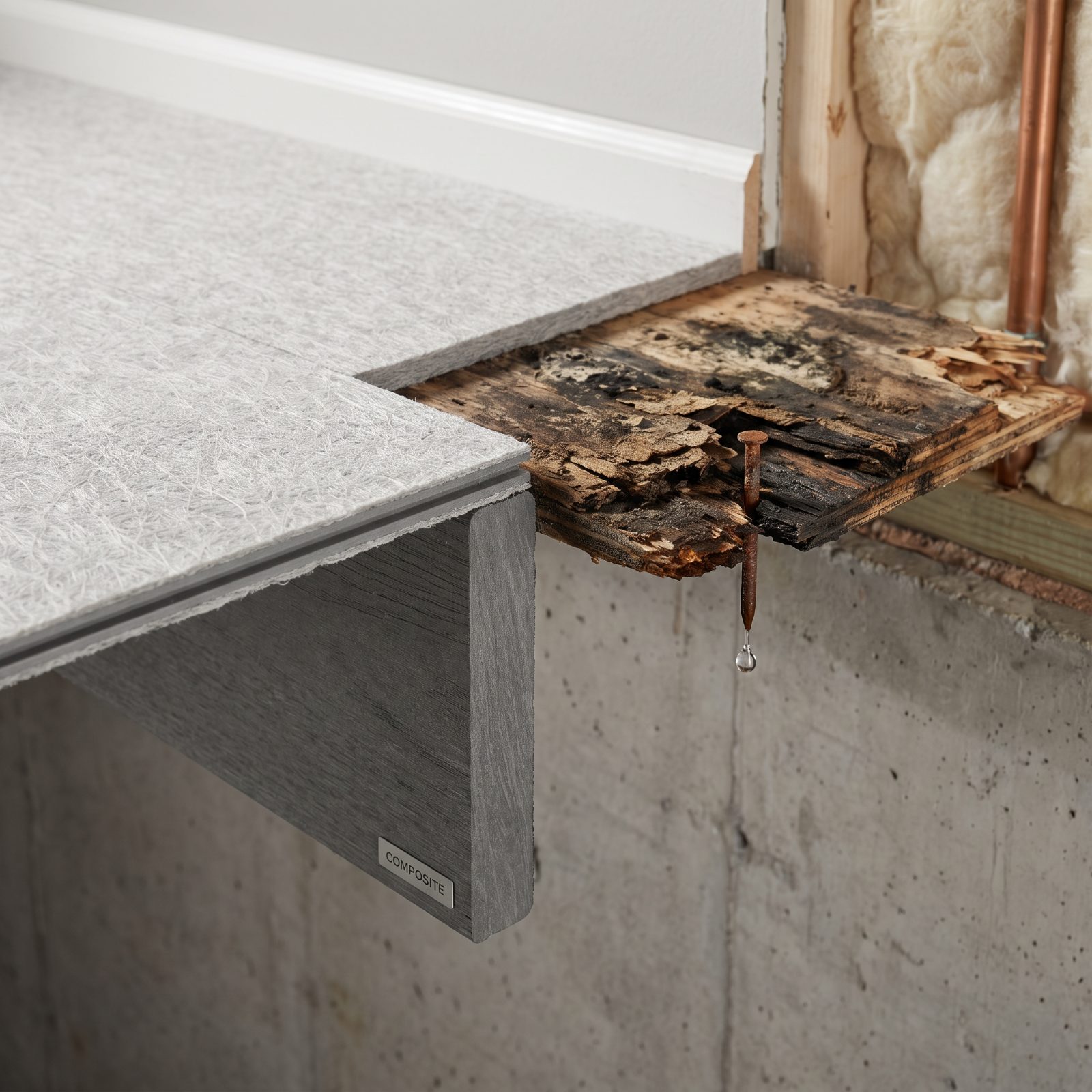
The floor is where RVs go to die. Traditional plywood or OSB subfloor soaks up one slow leak and turns to oatmeal, and by the time you feel the soft spot by the shower, the rot has been spreading for months under your vinyl plank.
Composite and closed-cell honeycomb subfloors don’t absorb water. A leak that would have ruined plywood just sits there — annoying, but not structural. If you plan to keep a rig past the five-year mark, that’s the difference between a repair bill and a total loss.
34. Built-In Water-Leak Detection Sensors
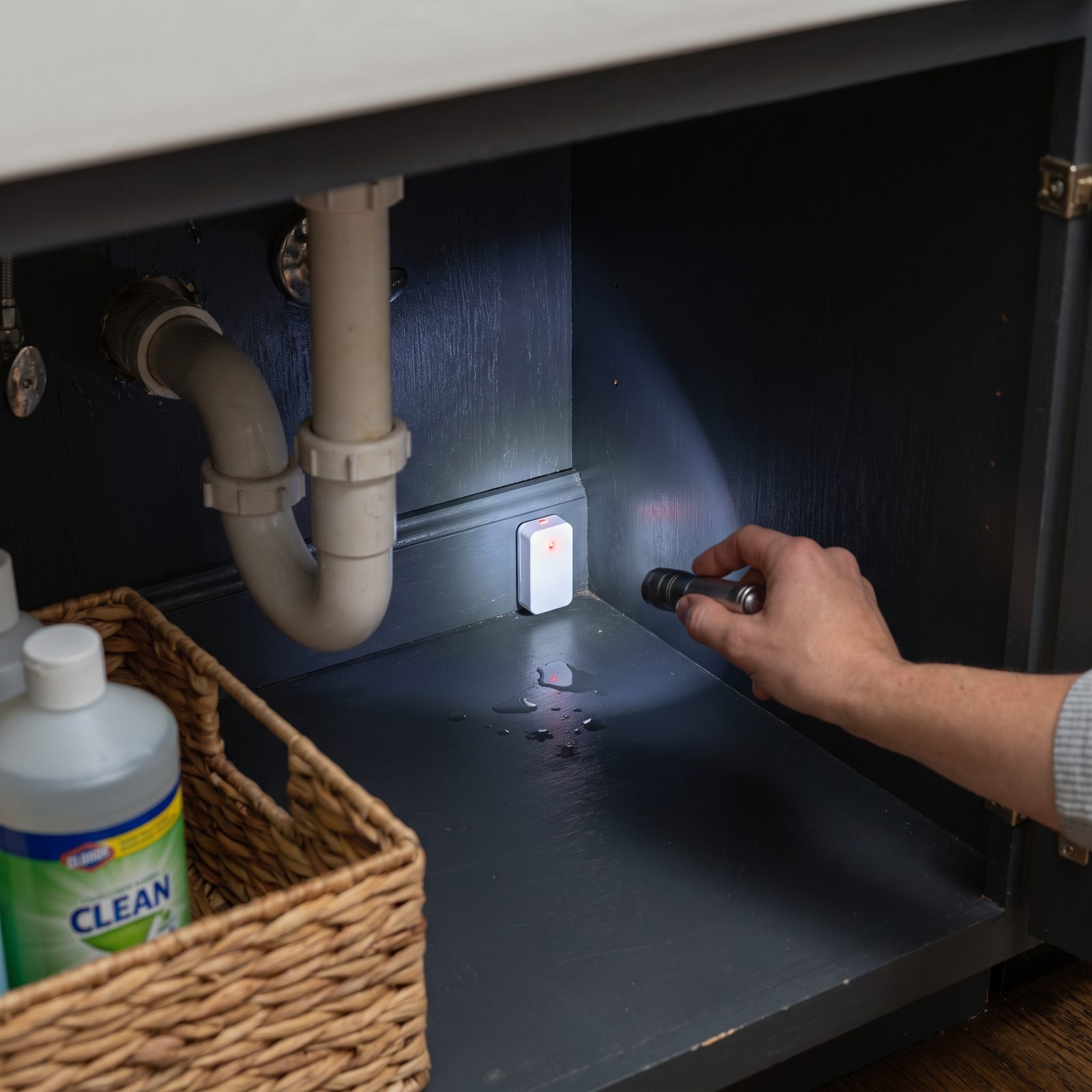
You don’t smell a leak. You smell mold, three weeks later, by which point it’s already won.
Factory leak sensors sit where water actually shows up first — under the sink, behind the water heater, near the fresh tank fittings — and they ping a panel or your phone the moment something’s wet. Cheap insurance against the single most expensive thing that can happen to a coach you plan to keep. I’d take leak sensors over a second slide-out every time, and I’ll die on that hill.
33. A Labeled, Serviceable Plumbing Manifold
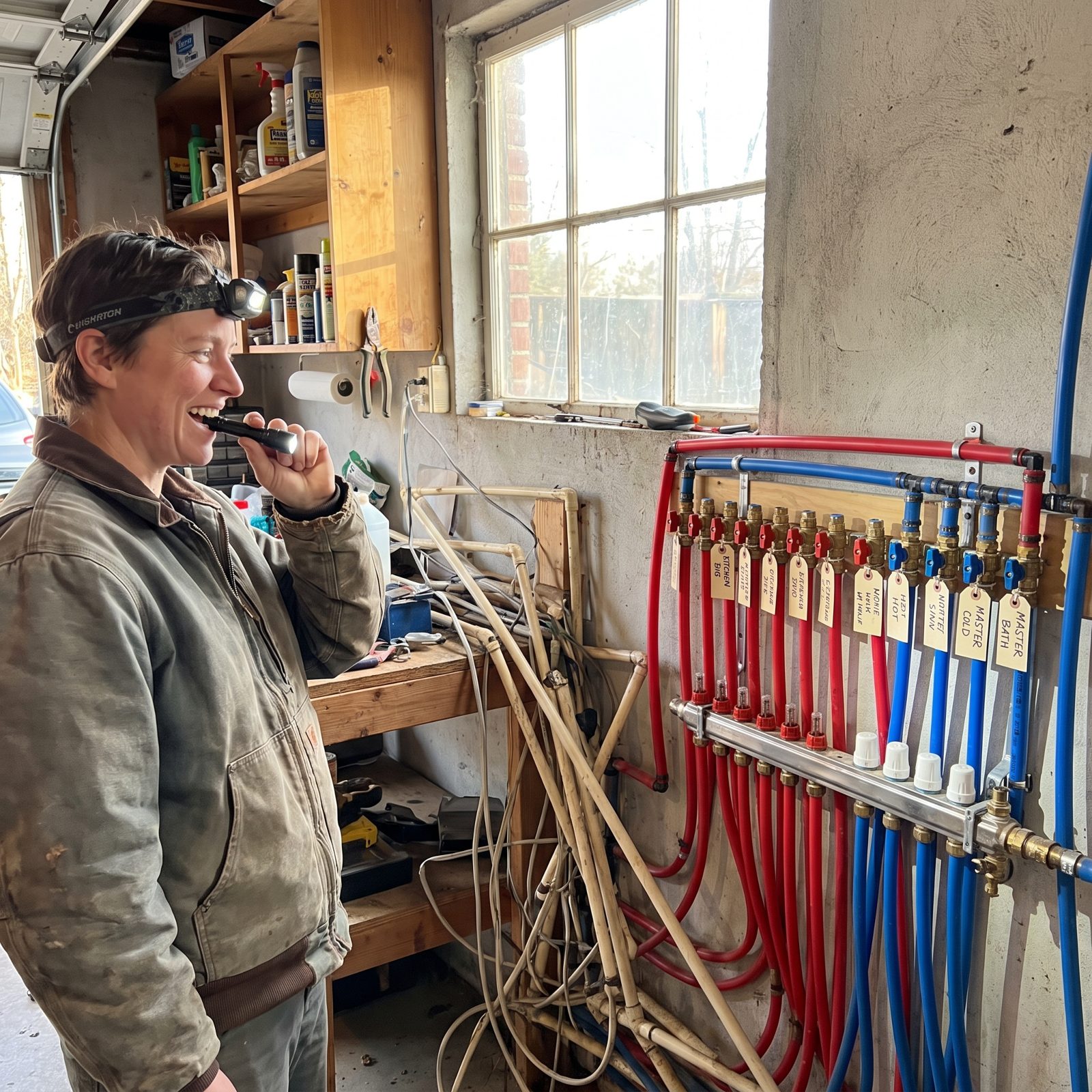
Picture winterizing at dusk in October, flashlight clamped in your teeth, trying to figure out which beige tube feeds the outdoor shower you’ve never once used. That’s most RV plumbing — a tangle behind an access panel, nothing labeled, one shutoff for the whole mess.
A proper manifold puts every line on its own labeled valve. Isolate the toilet without killing the galley. Winterizing drops from an hour of guessing to a few minutes of turning known valves, and a repair no longer means ripping out a cabinet to hunt down the fitting.
32. A High-Wattage Factory Rooftop Solar Array
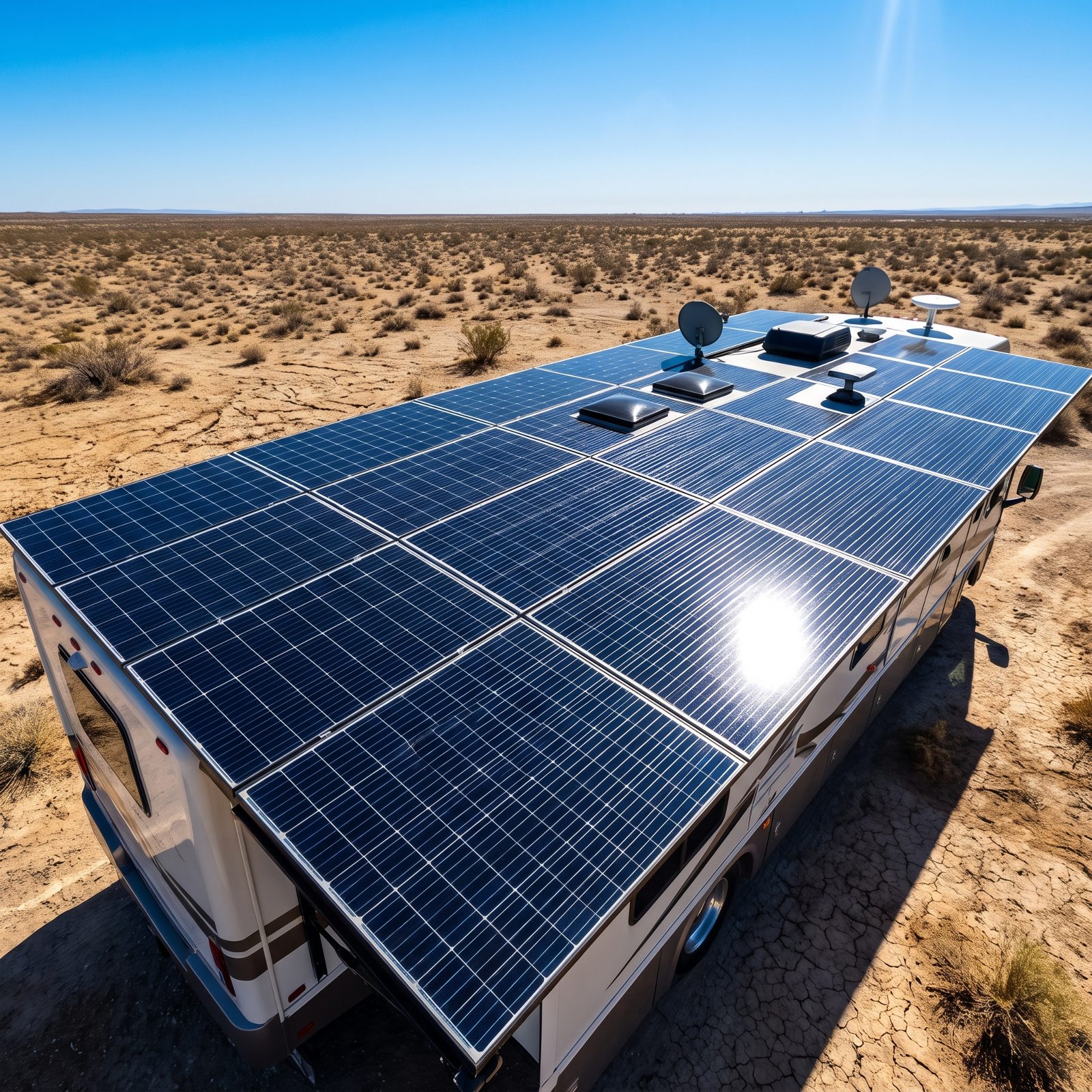
A hundred watts of solar is a marketing sticker, not a power system. It’ll keep your batteries from dying in storage and not much else.
Factory arrays pushing serious wattage change how you camp. Park in the sun, the batteries fill, the generator stays off — no roof clutter from a DIY install, no gel coat punctured by someone who learned wiring off a video. If you’re eyeing boondocking, or you just can’t stand generator noise at a quiet site, the real decision lives on the roof, not in the showroom slide-out.
31. A Heated Lithium Battery Bank
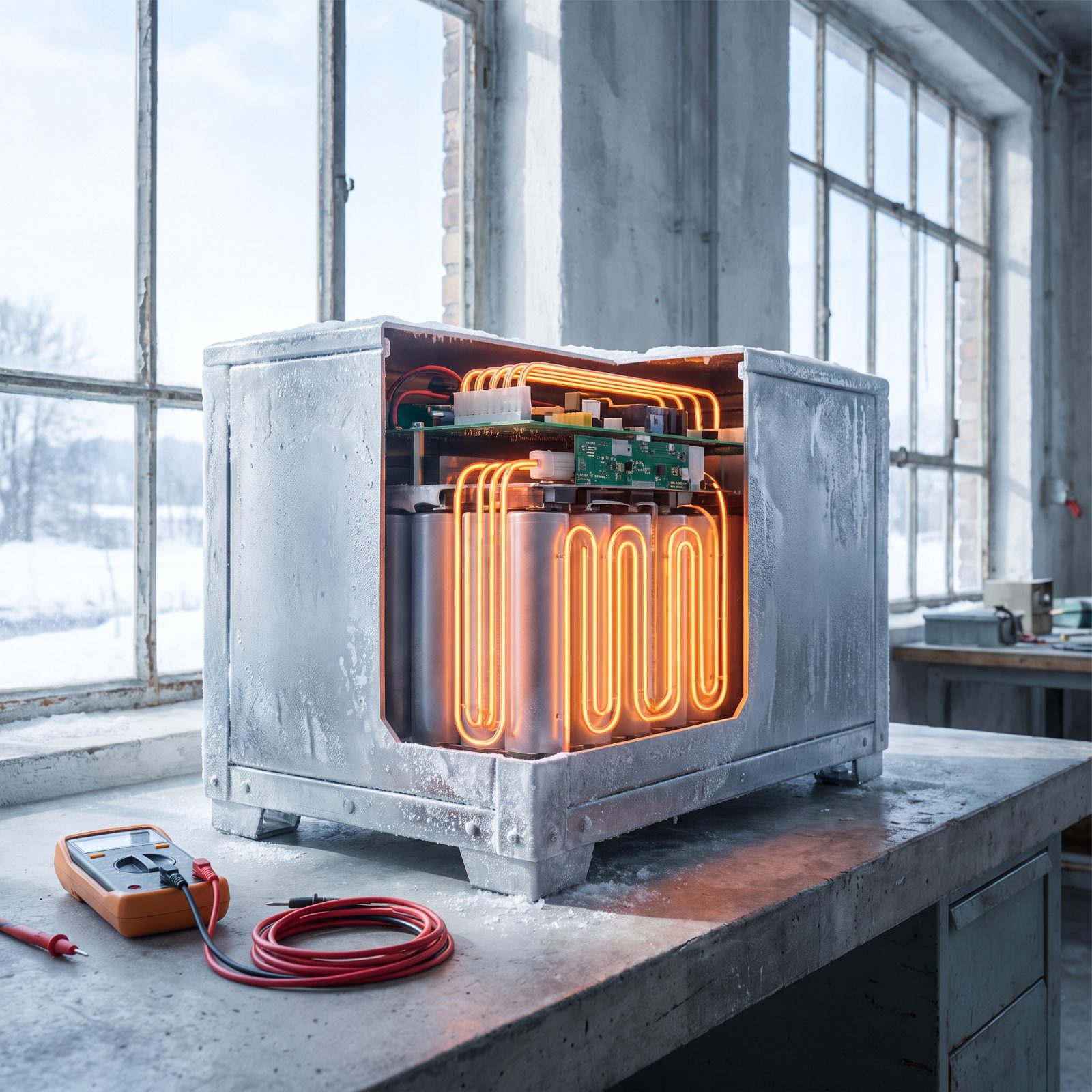
Lithium is the obvious upgrade — lighter, deeper usable capacity, charges faster, lasts for years. Here’s the catch nobody mentions on the sales floor. You can’t charge a plain lithium battery below freezing without damaging it.
Camp a shoulder-season weekend in the mountains and that matters a lot. A heated bank has a small warming element that lets the cells accept a charge in the cold. Without it, your fancy batteries just sit there sulking until noon.
30. A Whole-Coach Inverter-Charger
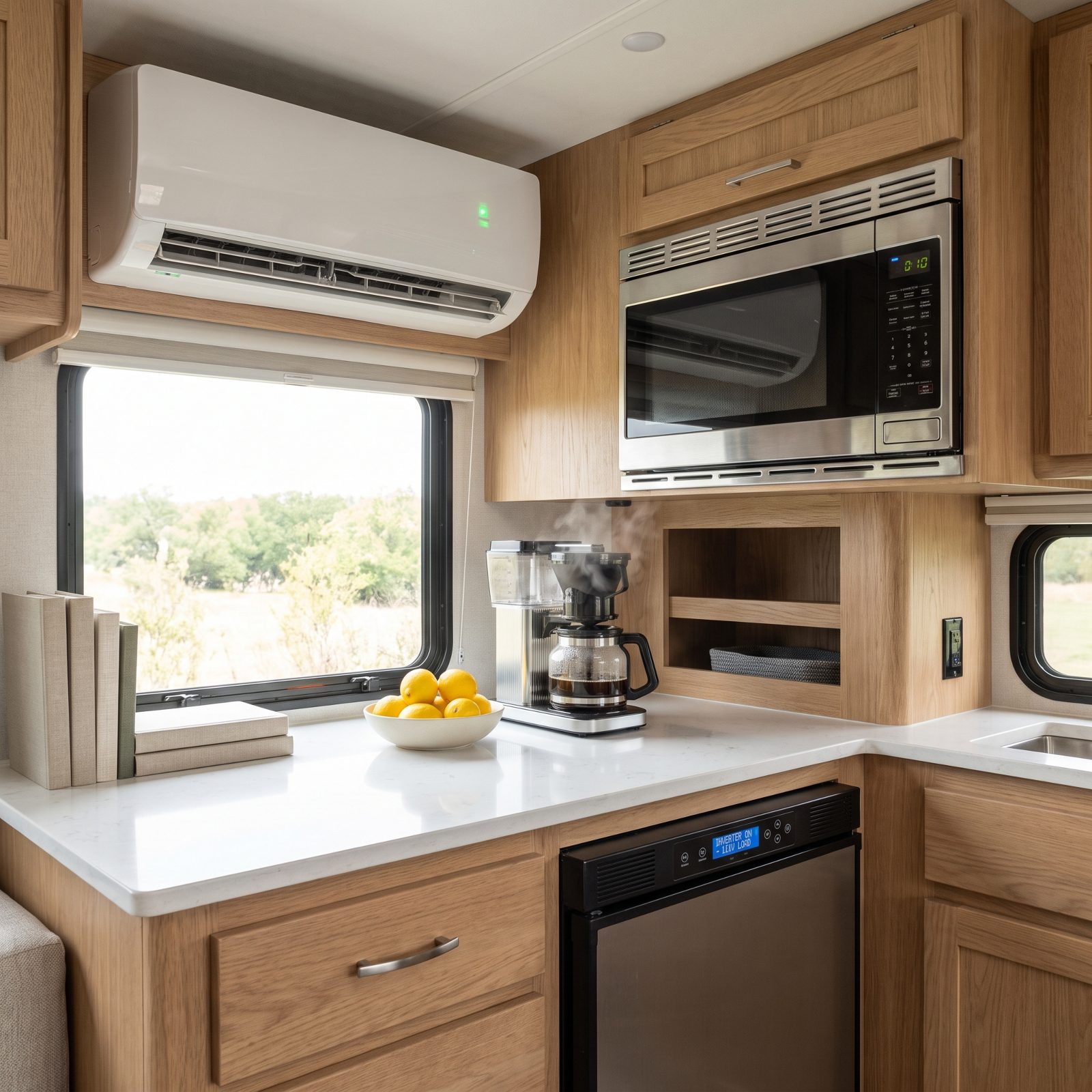
The small inverter most rigs ship with runs your TV and maybe a laptop charger. Try the microwave and it trips. Try the residential fridge overnight and you wake up to warm leftovers.
A whole-coach inverter-charger runs the real outlets off battery, then flips to shore power and charges the bank the second you plug in. No switch to flip. No circuits you have to remember are dead. It’s the quiet gap between a rig that camps with power and one that only works tethered to a full-hookup pedestal.
29. DC-to-DC Charging From the Tow Vehicle or Alternator
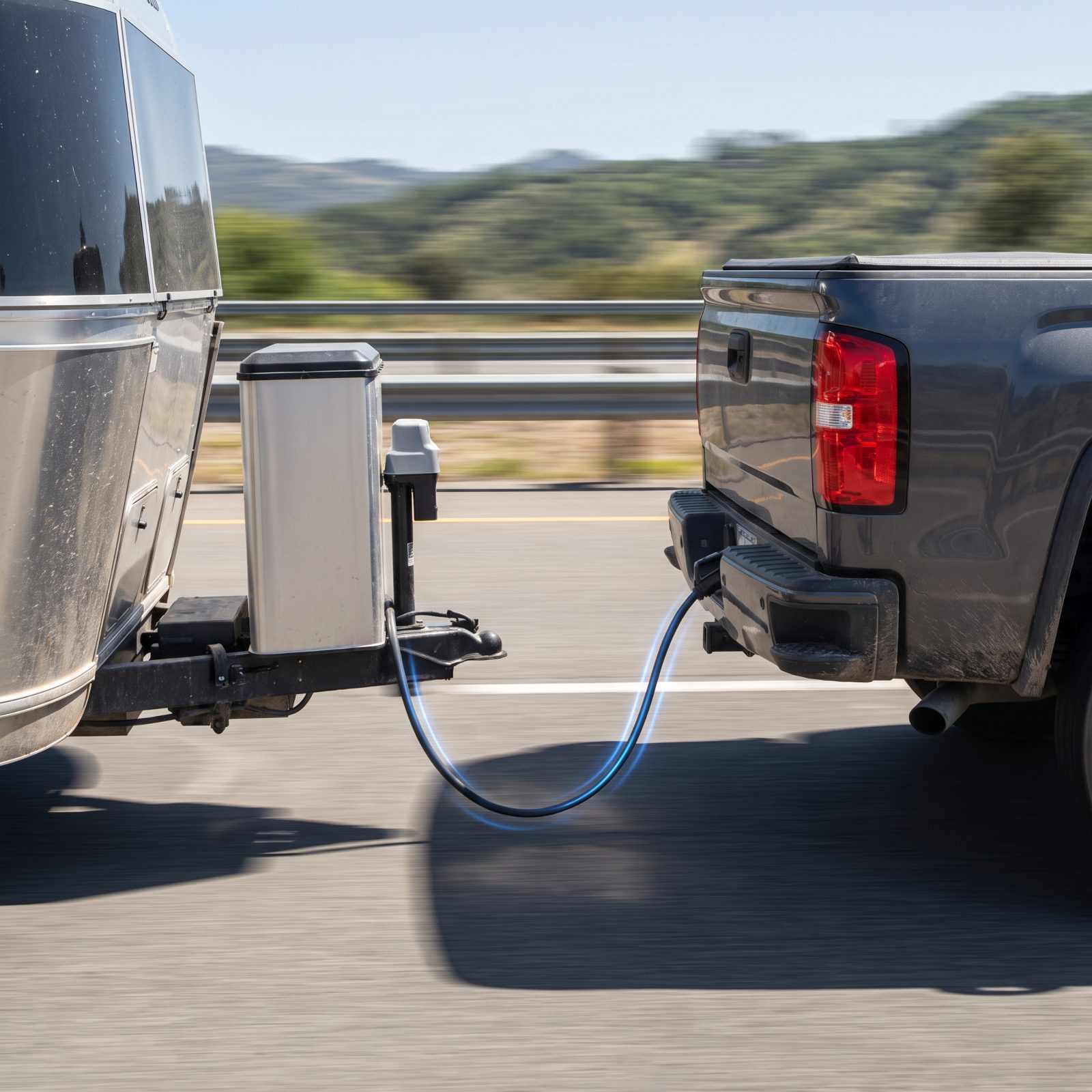
You’d think a full day of driving would top off your batteries. With an old trailer-plug setup, it barely trickles — the voltage drop over that long run means your lithium bank sips a few amps and rolls into camp still half-empty.
A DC-to-DC charger fixes the voltage mismatch and pulls real current from the tow vehicle or chassis alternator while you drive. Four hours on the road, and you arrive with meaningfully fuller batteries. If you move camps often and don’t always luck into sun or shore power, this is the charging source hiding in plain sight.
28. True 50-Amp Electrical Service
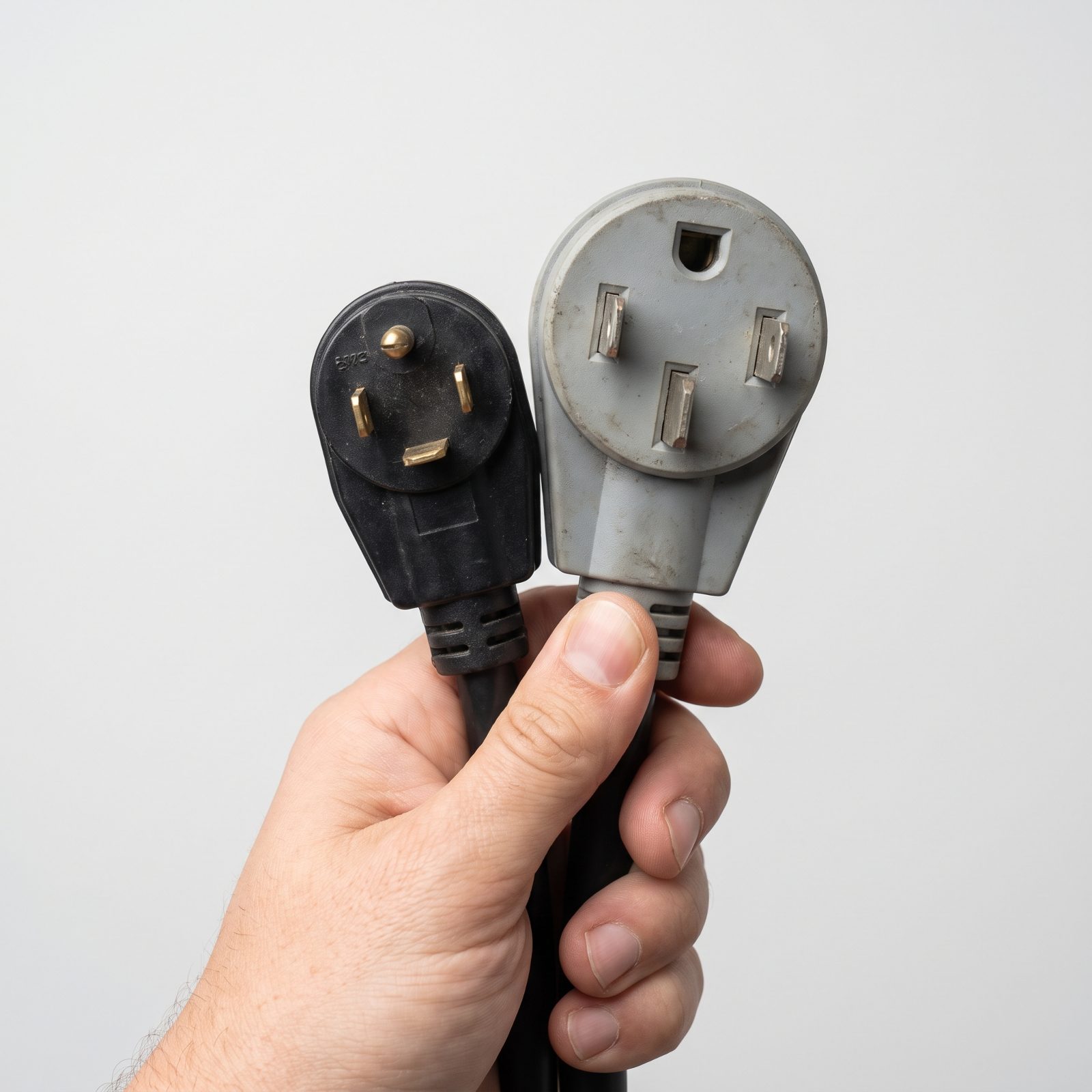
People hear 50 amp and assume it’s just a bigger 30. Nope — different animal entirely. True 50-amp service runs two 120-volt legs, which means close to four times the usable power, not some modest bump.
That’s the gap between running both air conditioners on a July afternoon and picking which one gets to work. Camp in the heat, cook on electric, run a washer-dryer, and 30 amp has you playing a constant round of what-can-I-turn-on. Fifty amp just lets you live.
27. A Hardwired Electrical Management System
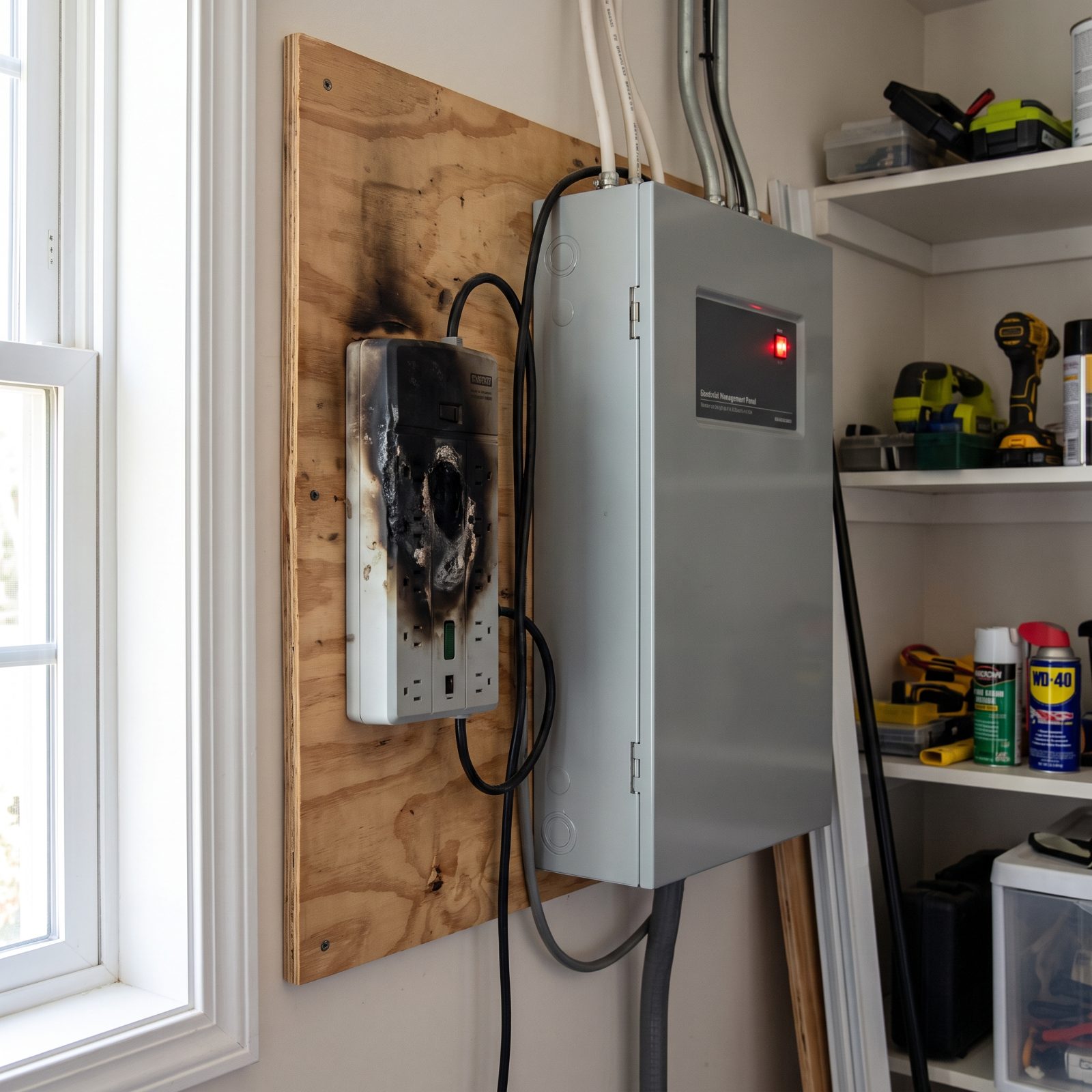
Plug into the wrong pedestal and you can cook a converter, a fridge compressor, and a rooftop AC in the time it takes to find the water spigot. A hardwired electrical management system sits between the shore power cord and everything you own, watching for low voltage, surges, and the miswired pedestals that are more common at older parks than anyone will admit to your face.
Portable versions dangle off the pedestal and get stolen or forgotten. The built-in kind protects every circuit automatically and never walks off. Figure a few hundred dollars installed — cheap insurance against a repair bill that starts with a comma.
26. A Detailed Battery and Energy Monitor
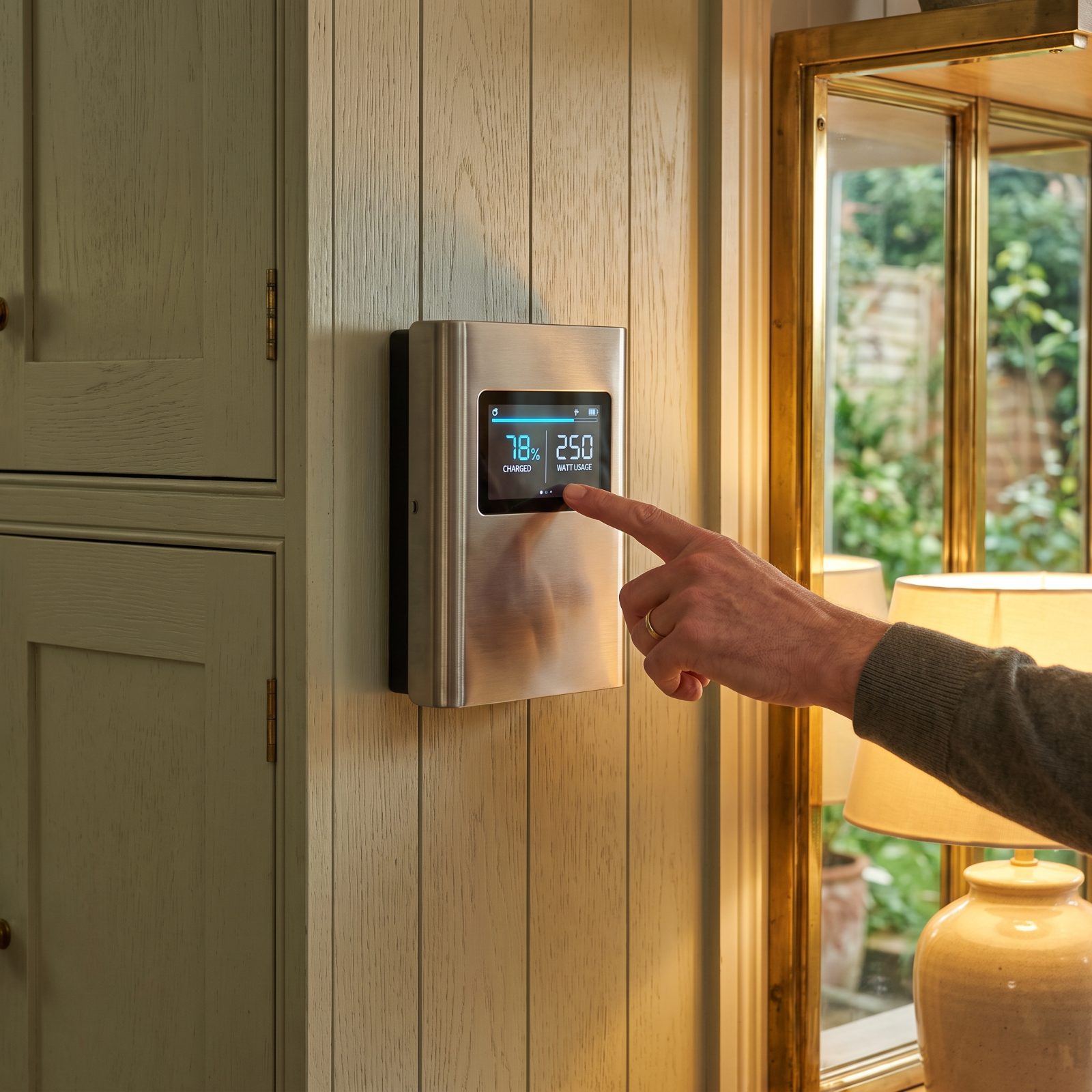
Call it a fuel gauge for your whole rig. Instead of guessing whether the batteries will survive a second night off grid, you glance at a screen and know exactly how many amp-hours you’ve got left, what the solar is bringing in, and what that electric kettle just cost you.
I ignored this for way too long and ran a bank flat more than once. Great way to murder expensive lithium. A shunt-based monitor reads actual current instead of voltage guesswork, and that distinction is the whole ballgame.
25. An Auto-Start Generator for Backup Power
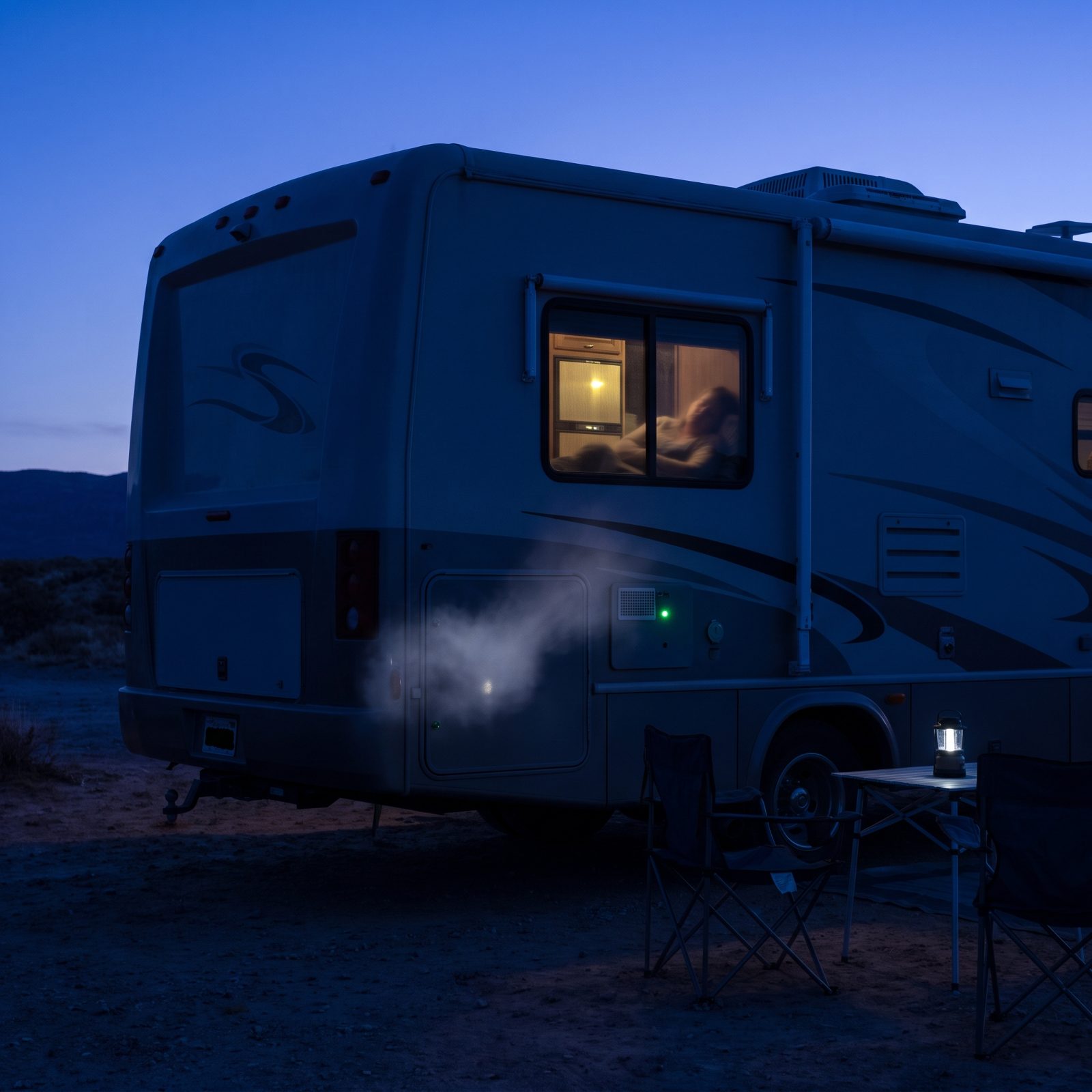
Picture a July afternoon with the batteries sagging, the fridge warming, and you dead asleep. An auto-start generator reads the low state of charge, fires itself up, tops off the bank, and shuts down — and you wake up to full batteries having never touched a switch.
The quiet ones run propane or diesel, not the screaming gas units people remember from the 90s. Ask whether the start is truly automatic or just remote. One kind watches your batteries. The other sits there waiting for you to press a button.
24. Quiet Variable-Speed Air Conditioning
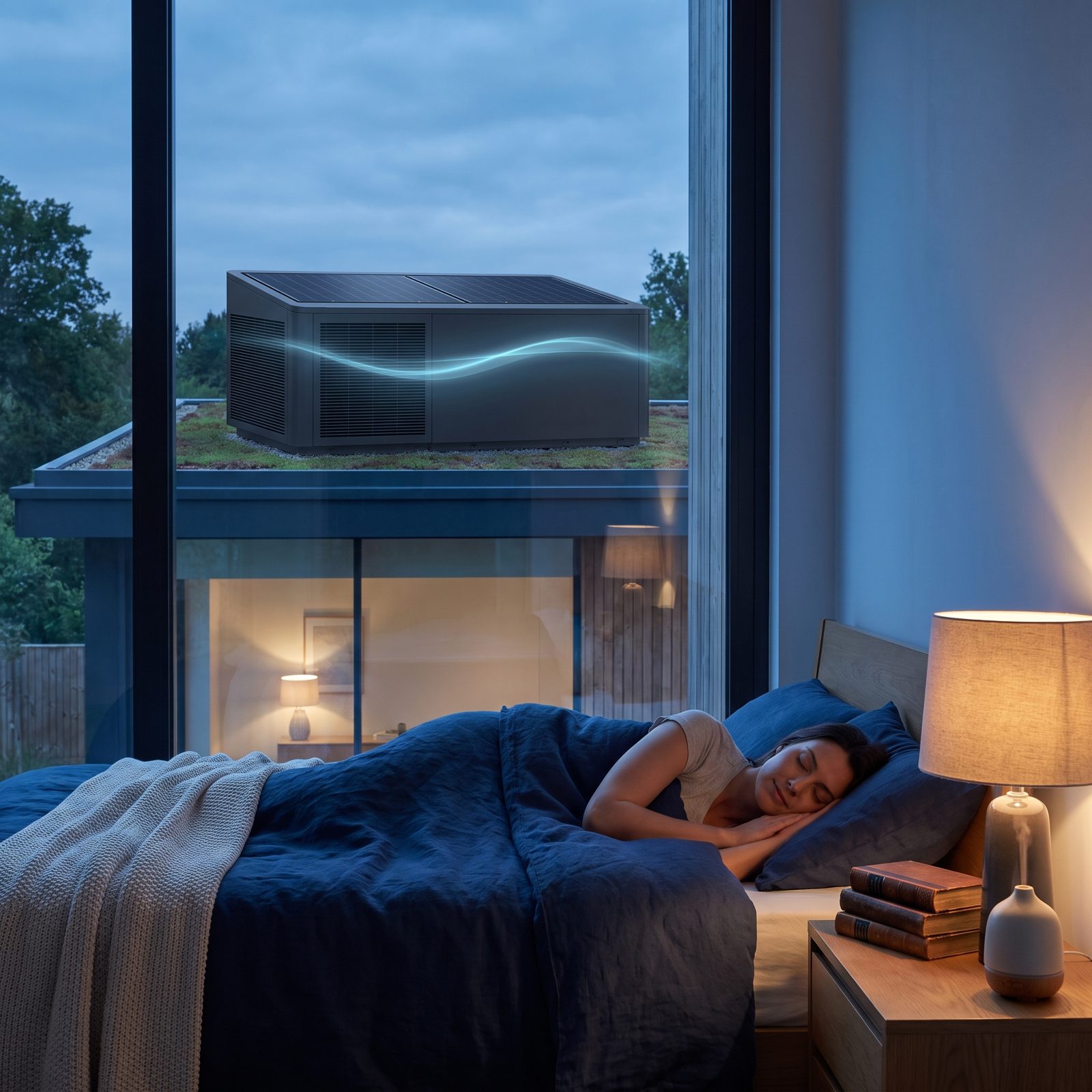
Old RV air conditioners run flat out or off, like a light switch for cold air. The compressor hammers on, roars, overshoots, then slams off — and the whole cycle restarts right as you’re drifting to sleep.
Variable-speed units ramp up and down to hold a steady temperature, so they run quieter, pull far less power, and don’t yank you awake every twenty minutes. For boondockers running off batteries and solar, the lower startup draw is the real headline. A soft-start conventional unit helps. A true variable-speed system is a different animal.
23. Hydronic Heating With Even, Silent Warmth

The quietest heat you’ll ever camp with. Hydronic systems warm a loop of fluid in a small boiler, then push that warmth through the coach via low registers and the floor. No roaring forced-air furnace kicking on and off all night, and no cold spots lurking by the slide.
It heats your domestic hot water off the same unit, so you’re not running two systems. The warmth is even and genuinely silent. The catch? Hydronic costs more up front and takes a few minutes longer to come up to temperature. For four-season owners who actually camp in the cold, it’s the feature they stop mentioning because they just assume it’s there now.
22. Dedicated Whole-Coach Dehumidification
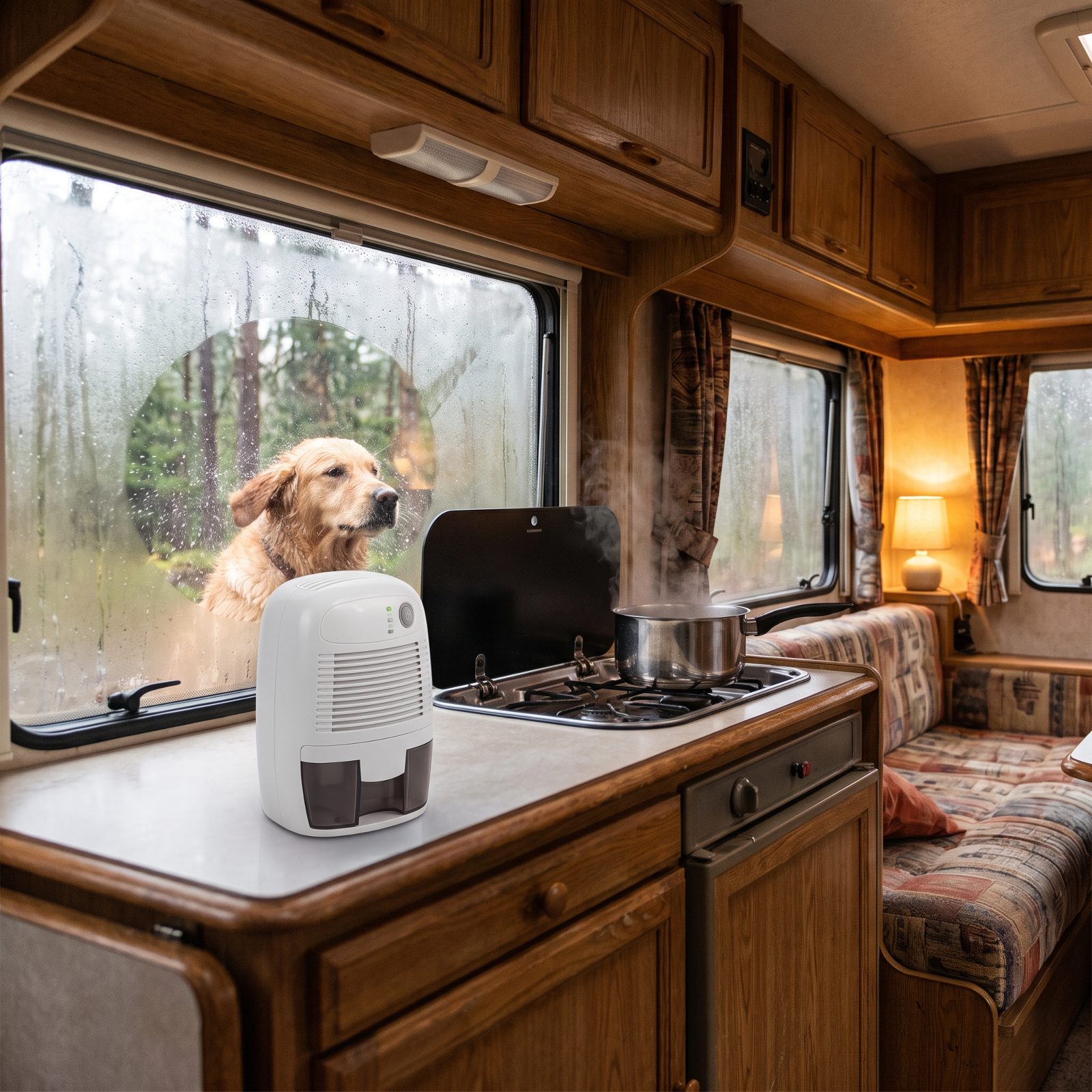
Condensation is the quiet killer in an RV. Four people breathing, a pot of pasta on the boil, a wet dog, a cold night — and by morning the windows are dripping and the mattress underside is damp.
Run that for a season and you grow mildew in places you can’t reach and rot you won’t find until it’s a four-figure problem. A dedicated dehumidifier plumbed to drain into the gray tank runs in the background and keeps the whole coach dry. People buy a little countertop unit and call it handled. It isn’t — not for a sealed box full of warm bodies.
21. Boondocking-Ready Fresh, Gray, and Black Tank Capacities
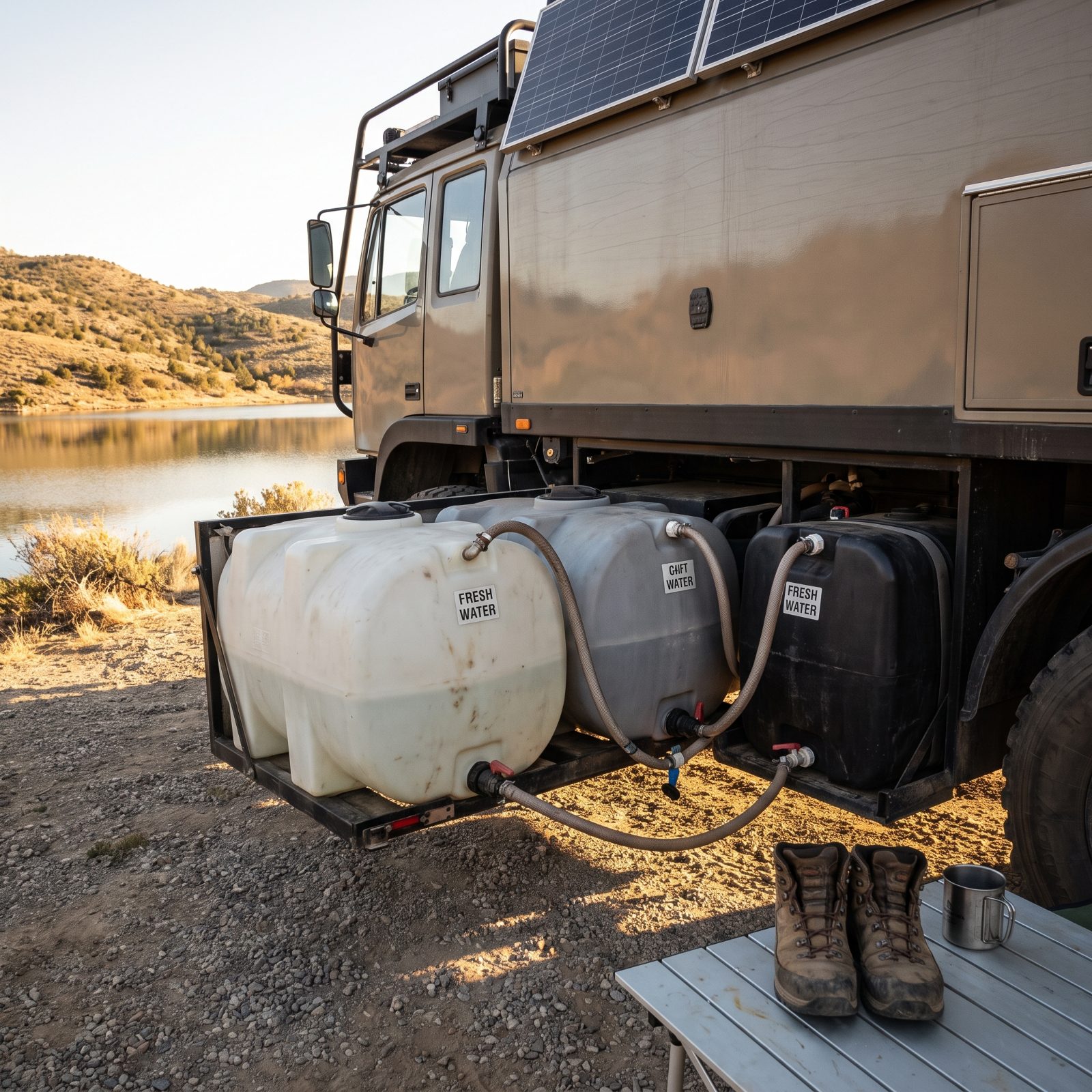
Slide-outs look great in the showroom. But tank sizes are what actually decide how long you can stay parked somewhere beautiful with nobody around.
The math is simple and almost nobody runs it before buying. A generous fresh tank gets water in; gray and black tanks of matching size get the water out before you have to break camp and drive to a dump station. A small fresh tank paired with huge waste tanks — or the reverse — leaves you stuck mid-trip either way. Balance across all three is what buys you the long stay.
20. A Tankless Water Heater With Stable Temperature Control

Here’s the cruelest trick in RV life: six gallons of hot water, then an ice-cold rinse right as the shampoo hits your eyes.
A tankless unit heats on demand, so the hot water doesn’t quit mid-shower. But the real upgrade is stable temperature. Older on-demand heaters surged and sputtered between scalding and freezing depending on flow, which is exactly why people hated them. The newer modulating units hold a set temperature and shrug off your water pressure swings. Longer showers, no cold shock, and no 40-pound tank of standing water eating weight and space.
19. A Multi-Stage Drinking-Water Filtration System

You have no idea what’s coming out of a campground spigot. Could be fine. Could taste like a swimming pool. Could be fed off a well with sediment that clogs your faucets before the week is out.
A single inline filter at the hose helps with the obvious grit and chlorine. A multi-stage system under the sink handles your drinking water properly — sediment, carbon, and often a fine stage for taste and the smaller contaminants. I used to haul jugs of store water everywhere. Heavy, wasteful, annoying. Good filtration means you drink from your own tap and quit playing water roulette at every new park.
18. An Easy-Access Winterization and Water-Control Station
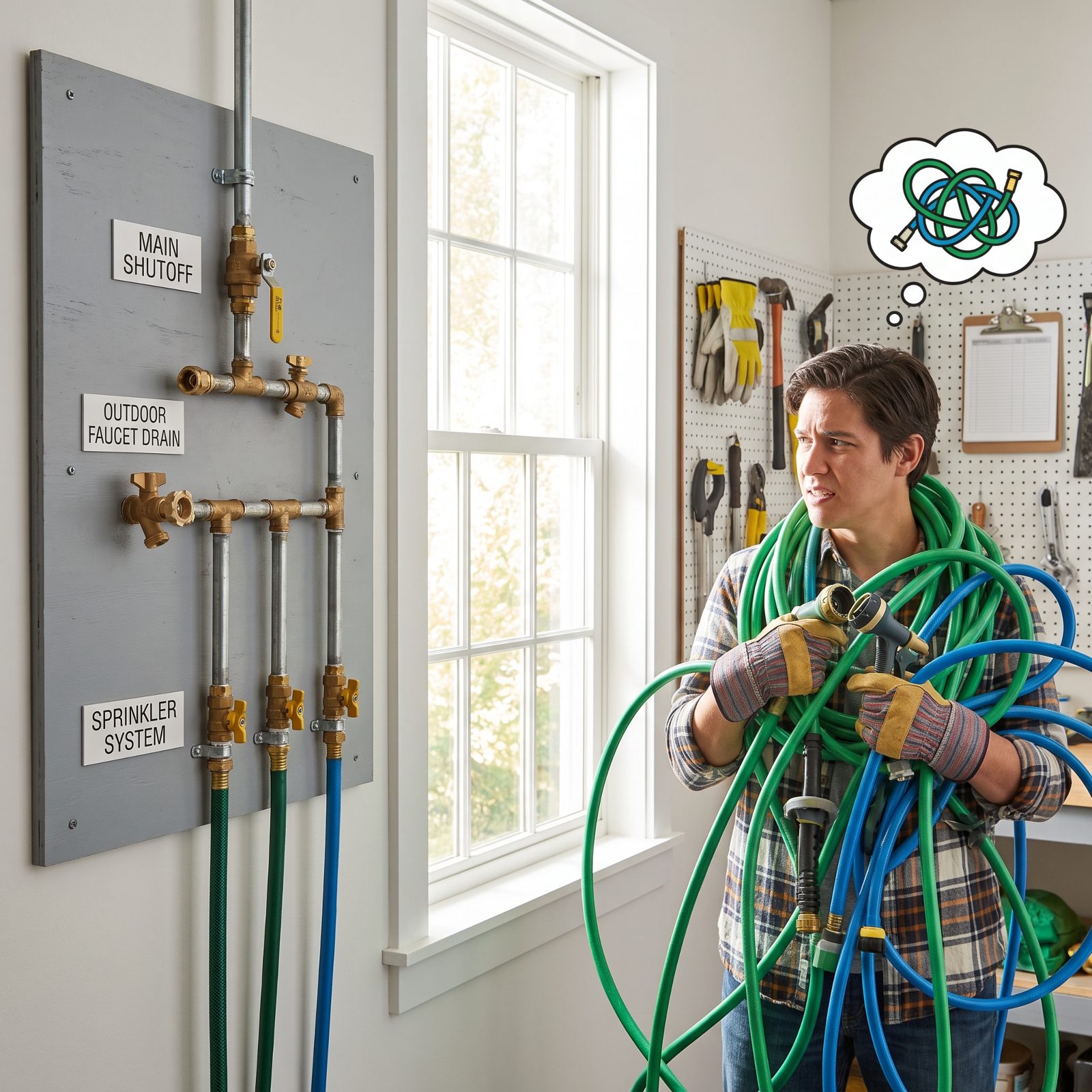
Freeze a water line and you’ll spend spring chasing cracked fittings in places you can’t reach. Ask me how I know.
Most people dread winterizing because the valves are scattered across three compartments and a crawl under the dinette. A centralized water-control station gathers the bypass, the low-point drains, and the antifreeze intake into one labeled panel you can reach standing up. What used to be a frustrating afternoon drops to fifteen minutes.
17. A Power-Efficient 12-Volt Compressor Refrigerator

Absorption fridges were a compromise everyone just accepted. They cooled slowly, hated hot days, needed to sit dead level, and ran off propane you’d rather save for the furnace. The 12-volt compressor fridge ends all of that.
It cools hard no matter what it’s doing outside, keeps working while you’re tilted and rolling down the interstate, and sips power a decent solar-and-lithium setup handles without blinking. We gave up on the old kind after one too many warm-milk mornings in Arizona.
16. An Induction Cooktop Instead of a Propane Range

Cooking with an open flame inside a sealed box on wheels always struck me as a little optimistic. Propane ranges throw heat into the cabin, add humidity, and leave you cracking a window in January to let the fumes out.
Induction heats the pan, not the room. It boils water faster than you’d believe and wipes clean in one pass, because nothing bakes onto a cold glass surface. One less propane dependency, too. The catch? You need the battery capacity to run it, and your old copper-bottom pots are useless here. Magnetic cookware only.
An induction cooktop is the single clearest sign a floor plan was designed for how people actually live, not how they camped in 1995.
15. A Long, Uninterrupted Kitchen Work Surface

Counter space is the thing nobody misses until the first dinner. You chop an onion and there’s nowhere to set it, you rinse a bowl and there’s nowhere to drain it. Half the galleys out there give you a six-inch sliver of laminate and have the nerve to call it a kitchen.
Give me a long run of surface, ideally with flush covers over the sink and cooktop, and the whole rig feels different. Prep a real meal. Spread out groceries after a Costco run. Let a casserole cool somewhere. Unglamorous, and it beats any gadget on the spec sheet.
14. A Dedicated Workstation for Remote Work

The dinette-as-office routine wears thin fast. You eat breakfast on your spreadsheets, clear the laptop for lunch, then set it all back up again an hour later. A dedicated workstation, meaning a real surface at the right height with power and a window beside it, has become the deciding factor for a huge slice of buyers.
People work from the road year-round now, and the rigs are finally catching up. Look for a spot that stays set up all day, not a flip-down tray that groans the second you lean on it.
13. A Walk-Around Bed With Access on Both Sides

The island bed sounds fussy until you’ve spent a year climbing over your partner to reach the bathroom at 3 a.m. A bed jammed against the wall traps one person every night, and making it up is basically a yoga class.
Access on both sides sounds minor. It isn’t. It saves a marriage’s worth of small irritations, and you can finally tuck in a fitted sheet without crawling across the mattress on your knees.
12. A True Dry Bath With a Separate Shower

Wet baths are fine for a weekend and miserable for a month. You know the drill. Shower, and now the toilet seat is soaked, the toilet paper’s damp, and you’re wiping down every surface before you can use the room again.
A dry bath keeps the shower behind its own door and leaves everything else dry and usable. Full-timers rank this near the top, and for good reason. The daily friction of a wet bath grinds you down slowly, one damp towel at a time.
11. A Proper Washer-and-Dryer Compartment
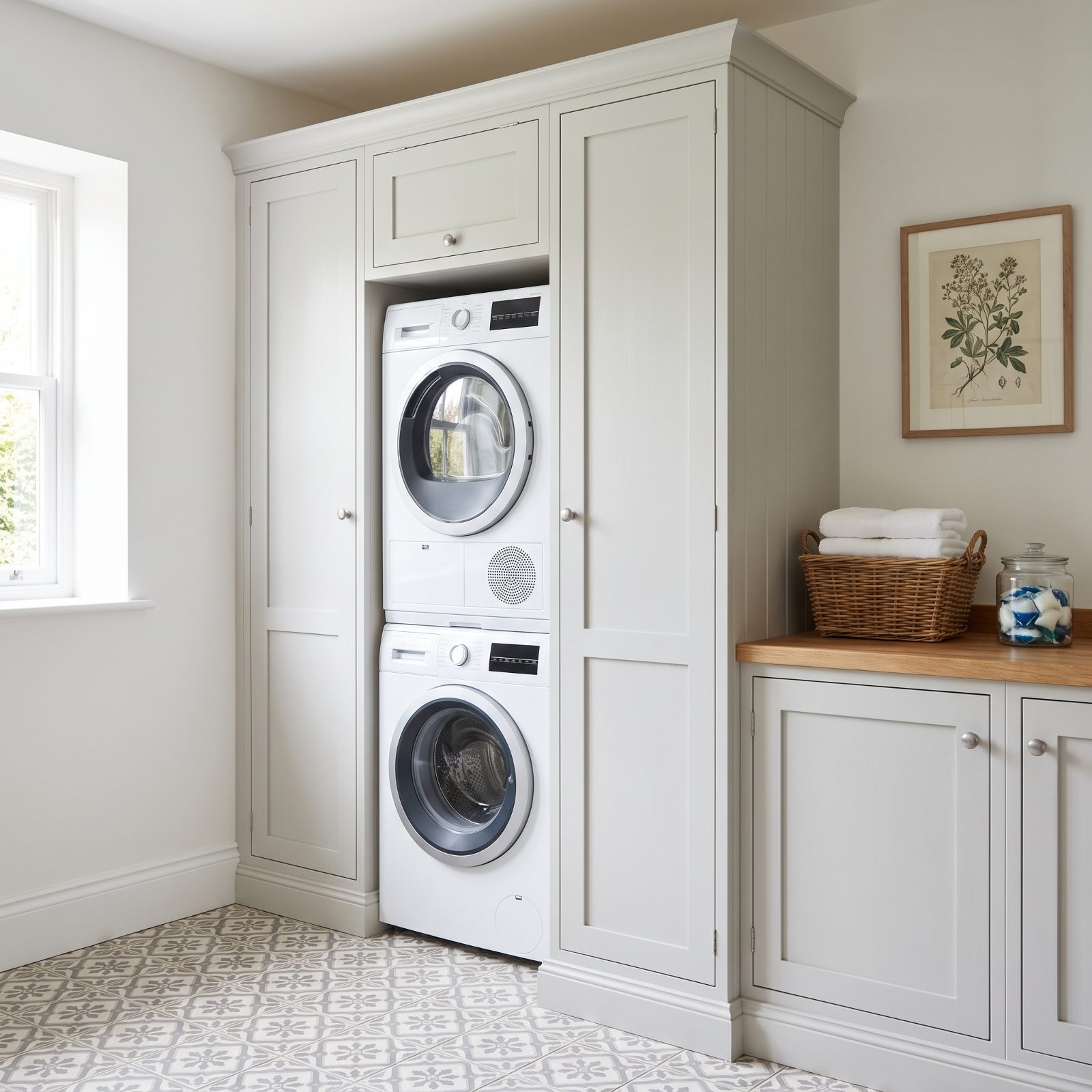
Laundromats eat whole afternoons of a trip. You haul your bag to a strip-mall washateria, feed quarters into a machine someone’s gym shorts just vacated, and park yourself in a plastic chair to watch your clothes spin.
A real washer-dryer compartment, plumbed and vented right and backed by the water capacity to support it, buys all that time back. Combo units run slow and small, so keep the loads modest and your expectations modest too. Still, running a towel wash at your campsite with a lake out the window beats the laundromat every time. Just confirm your fresh and grey tanks can handle it before you lean on it hard.
10. A Wide, Low-Step Entry and Step-Free Interior

Step-free interiors used to be an afterthought. Now they’re quickly becoming a dealmaker, especially for the buyers keeping this whole industry afloat: people who plan to use these rigs well into their seventies.
A steep triple-step entry and a floor full of trip-hazard level changes is how good nights out end in the ER. A wide, low entry with a solid grab handle and a flat run inside isn’t about frailty. It’s about carrying groceries, a dog, and a cup of coffee all at once without plotting your footing like a rock climber.
9. Large Pass-Through Exterior Storage
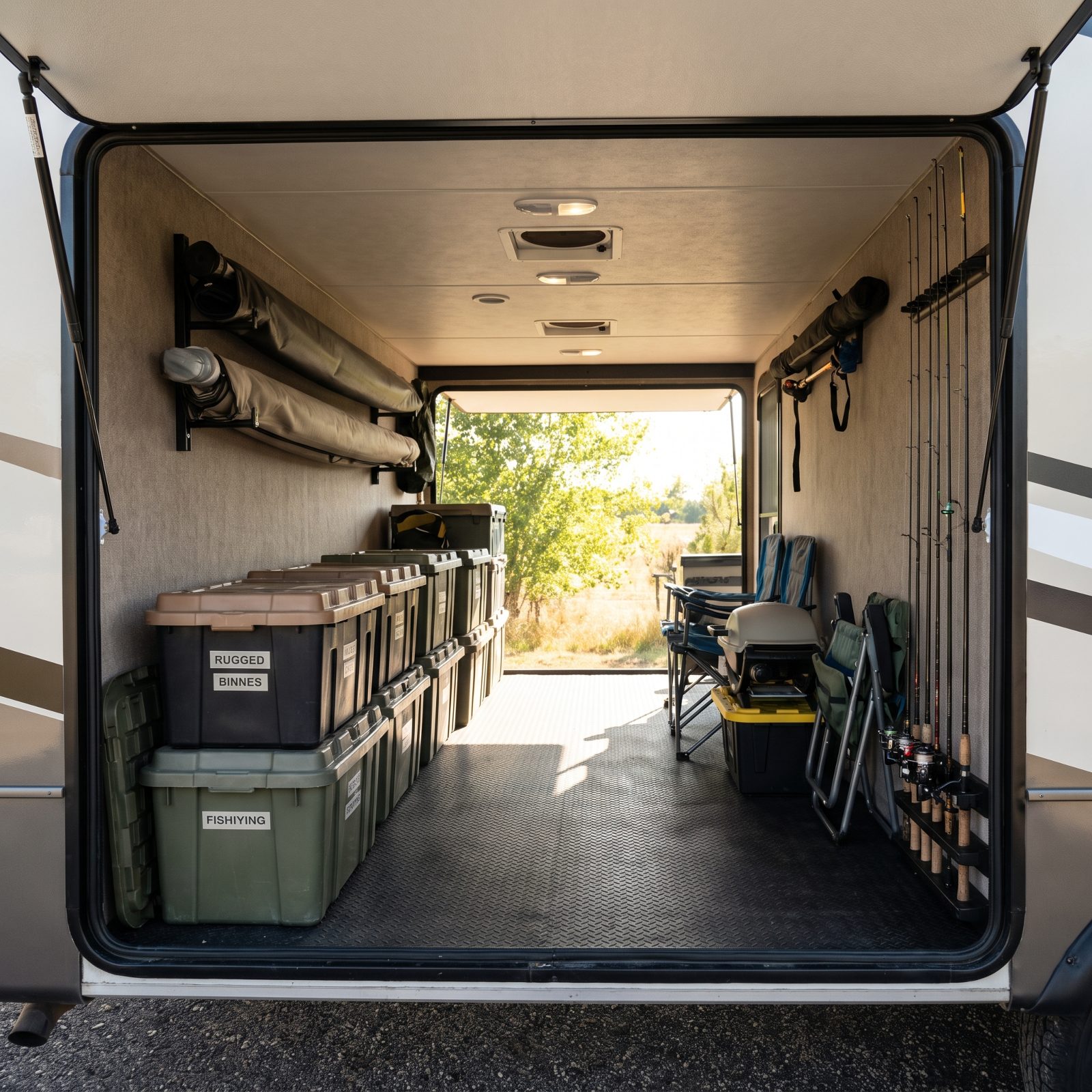
Pass-through storage is the feature you ignore in the showroom and worship on the road. One deep bay running the full width of the rig, accessible from both sides, swallows camp chairs, hoses, leveling blocks, folding tables, and that inevitable bin of stuff you swore you wouldn’t bring.
The alternative? A dozen tiny shallow cubbies that fit nothing longer than a broom. Measure the real opening, not the brochure photo. Depth and door height are what matter the day you’re wrestling a ten-foot something through the gap.
8. A Rear Gear Garage for Bikes and Adventure Equipment
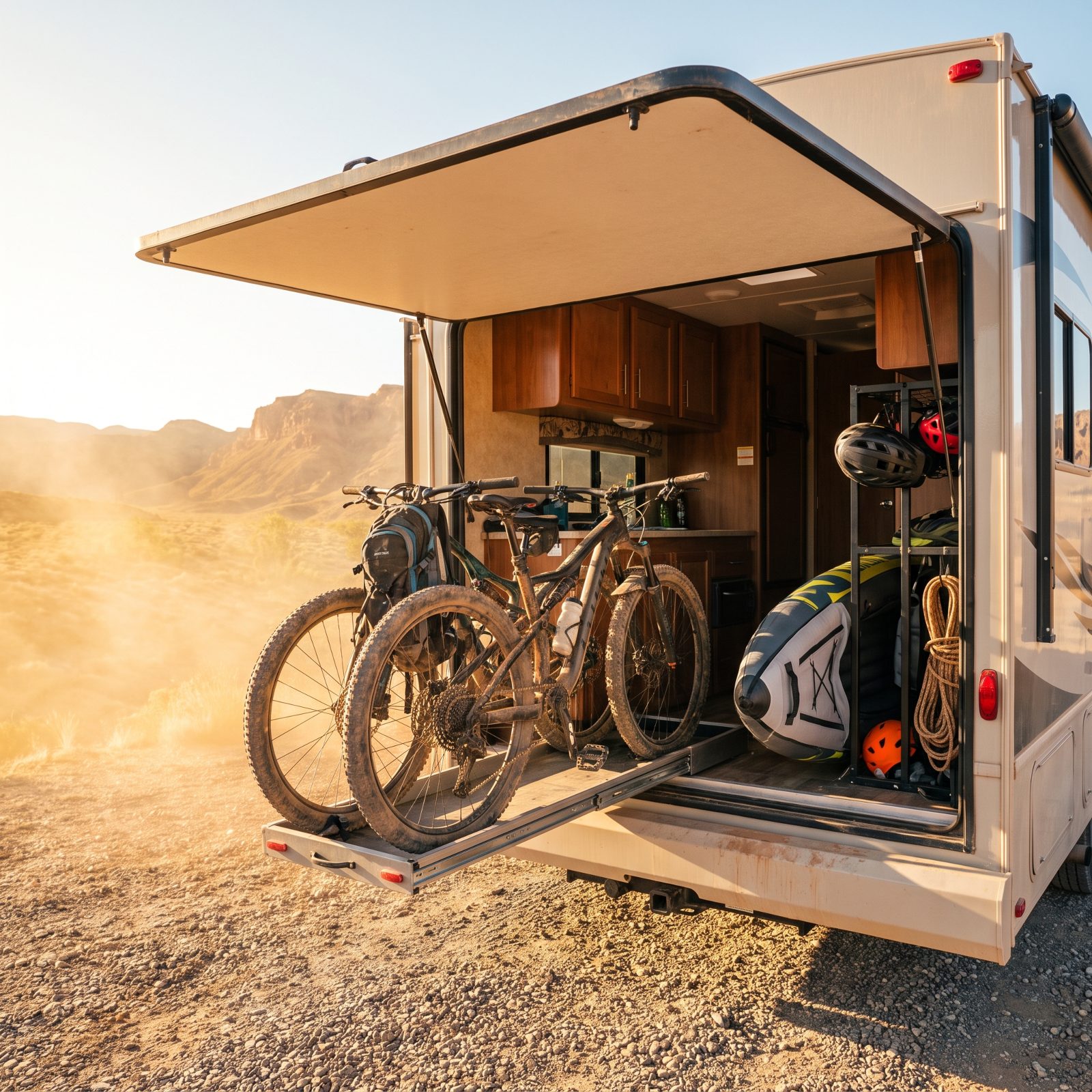
Bikes strapped to a hitch rack are a theft magnet and a road-grime collector. Kayaks on the roof turn every low bridge into a prayer. A rear gear garage fixes both by bringing the toys inside, locked, clean, and dry.
Once the exclusive turf of dedicated toy haulers, the cargo zone is creeping into regular floor plans because people want their e-bikes and paddleboards along without dragging a trailer behind them. Mind the payload math, though. Load a garage full of heavy gear and you eat into your cargo capacity fast, and an overweight rig handles like a drunk shopping cart.
7. Modular Furniture You Can Rearrange or Pull Out Entirely
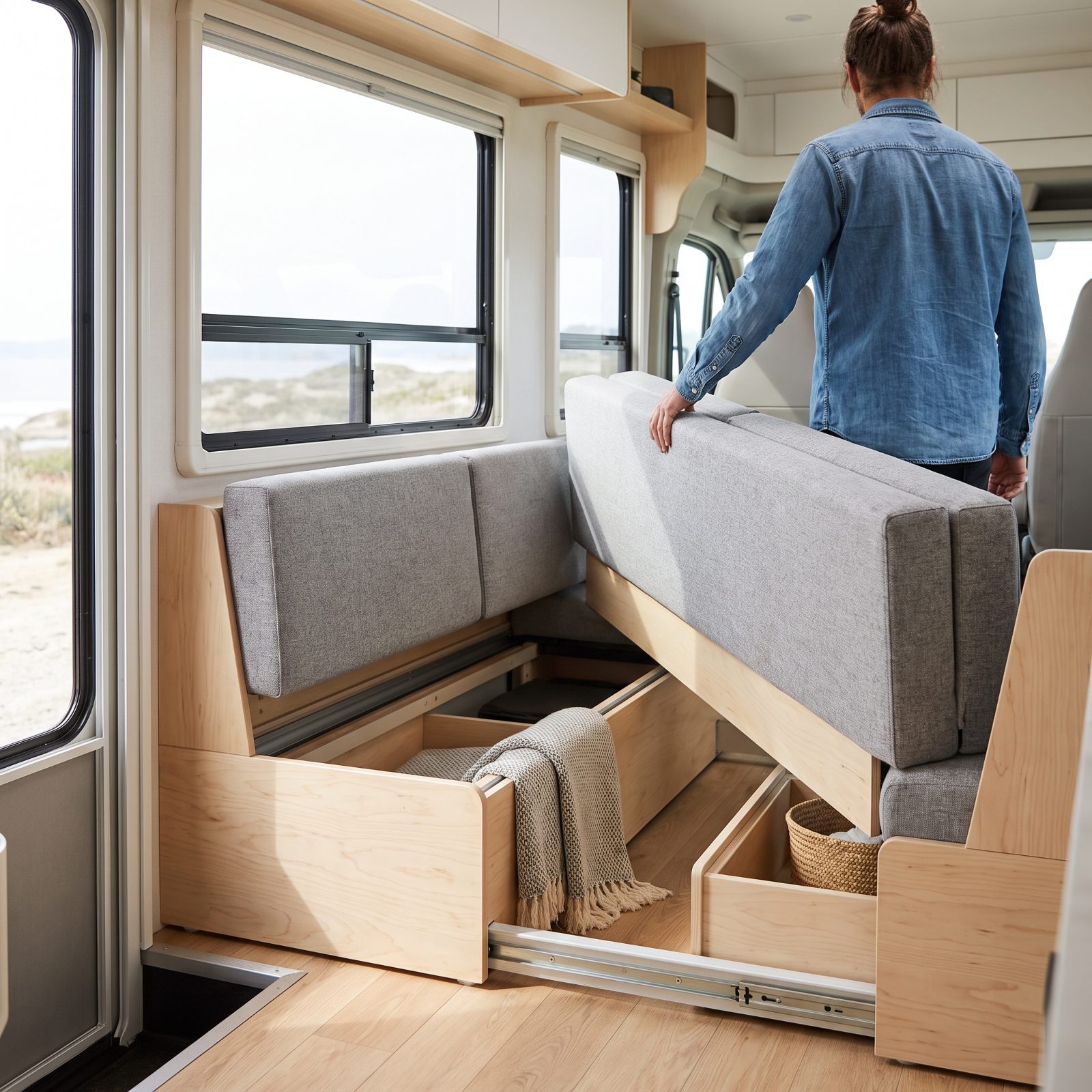
Fixed dinettes are where good floor plans go to die. You eat there twice, and then it turns into the spot junk piles up for the rest of the trip.
The 2027 rigs worth your money bolt furniture to floor tracks instead of framing it in. Pull a seat section out for the week you’re hauling bikes, swap the dinette for a desk when you’re working remote, reconfigure the lounge when the grandkids show up. I got this wrong on my first camper — committed to a slide-out sofa I couldn’t budge an inch, and resented it for four solid years.
Removable means two things buyers forget to check. The hardware has to lock down rock-solid for travel, and you need somewhere to stash the piece once it’s out.
6. A Dedicated Cabinet for Your Cellular Router and Satellite Internet
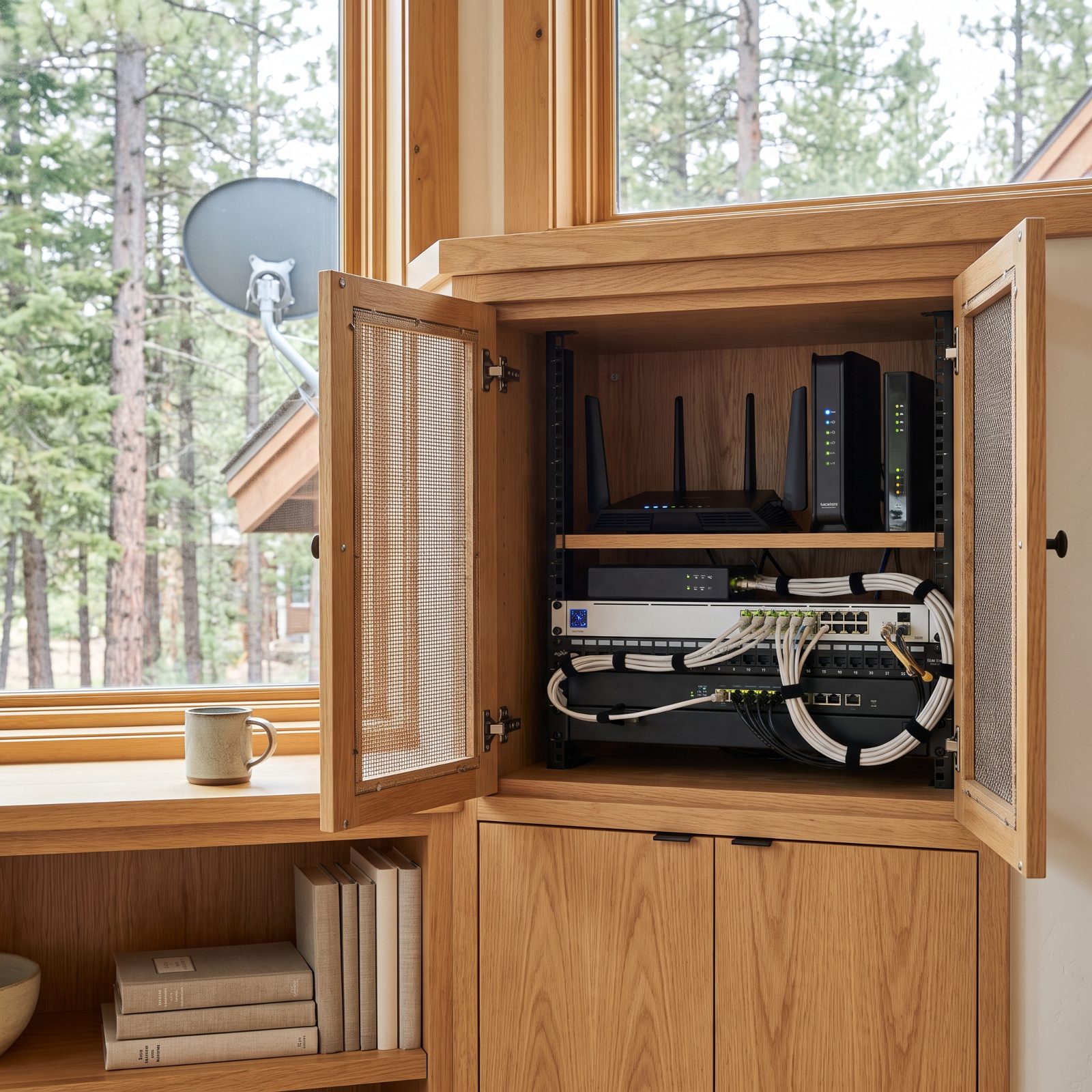
Starlink changed what people expect from a campsite. Full-timers work from pine forests now, and the gear that makes that possible keeps getting duct-taped under beds and jammed into cabinets never meant to hold electronics.
A purpose-built connectivity cabinet solves a boring problem that wrecks trips. Cram a router behind your clothes and it overheats. Run cables with nowhere to route them and they get yanked loose. A ventilated bay with its own 12-volt power, airflow, and tidy pass-throughs keeps the whole setup cool and within reach.
Nobody asks about this one on the lot. Everybody wishes they had it by month two.
5. High-Output USB-C Outlets That Actually Charge a Laptop
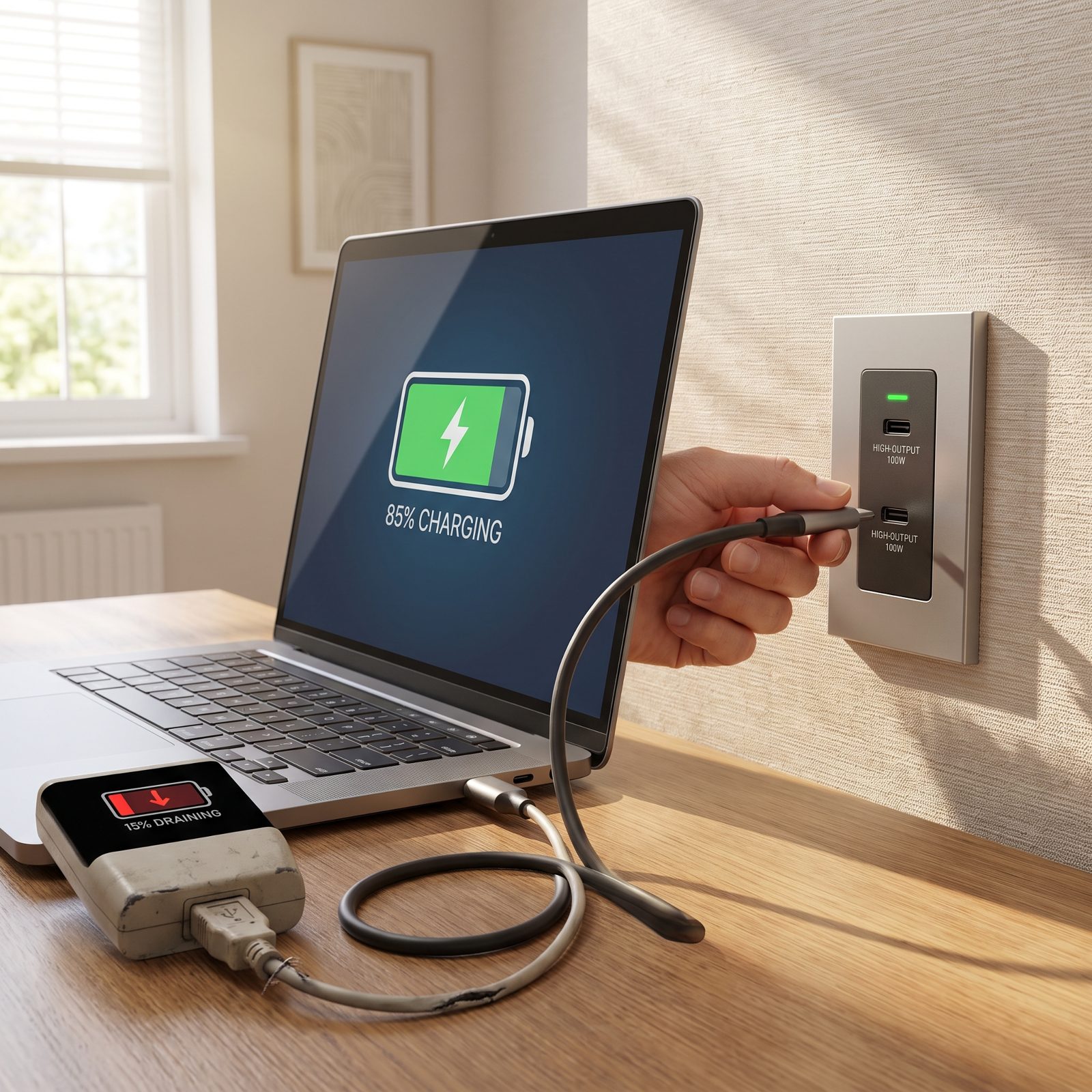
You’ve plugged a laptop into an RV USB port and watched the battery drain while it’s supposedly charging. Those old low-wattage ports were built for flip phones.
2027 rigs are finally wiring in USB-C Power Delivery outlets that can actually run a modern laptop — no more hunting for the single AC plug hidden behind the TV. For anyone working from the road, that’s the difference between one cramped workspace and a mobile office that works anywhere.
Count the high-output ports. Note where they live, too. One by the dinette and one by the bed covers most real life. Six crammed into a single corner helps nobody.
4. Keyless Entry With Separate Locks on Every Compartment
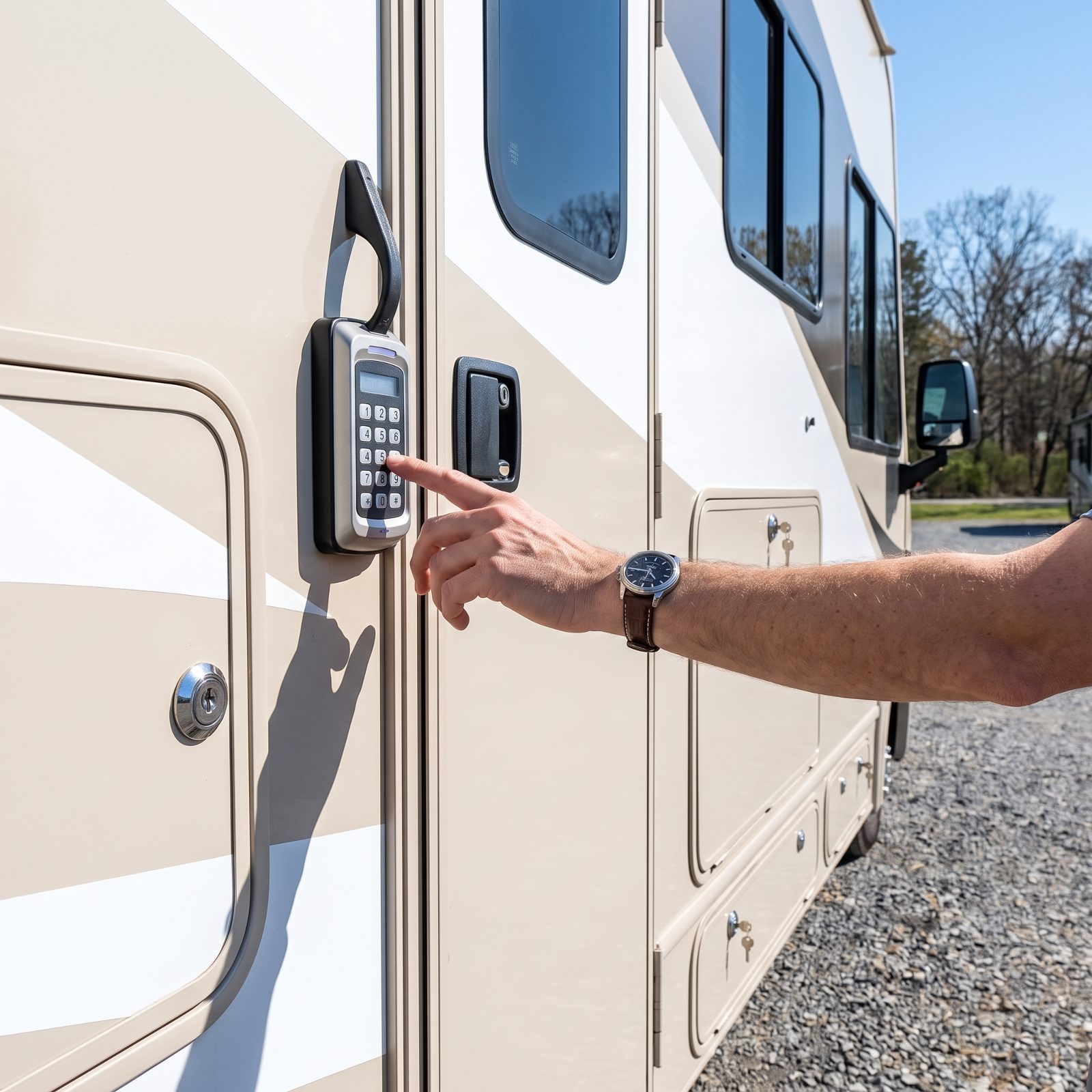
Losing a physical RV key on a travel day is a special kind of panic. Keyless entry fixes that. The real upgrade in 2027 rigs, though, is independent locks on each exterior compartment.
One code for the door, separate codes for the storage bays. You can hand the propane guy or a mobile tech access to a single compartment without unlocking your whole rig. Share the door code with family meeting you at the site, then change it the week after.
Here’s the catch everyone learns at 2 a.m.: keypads need power. Buy the system with a mechanical backup and toss a fresh battery in the glovebox.
3. A Power Awning That Retracts Itself in Wind and Rain
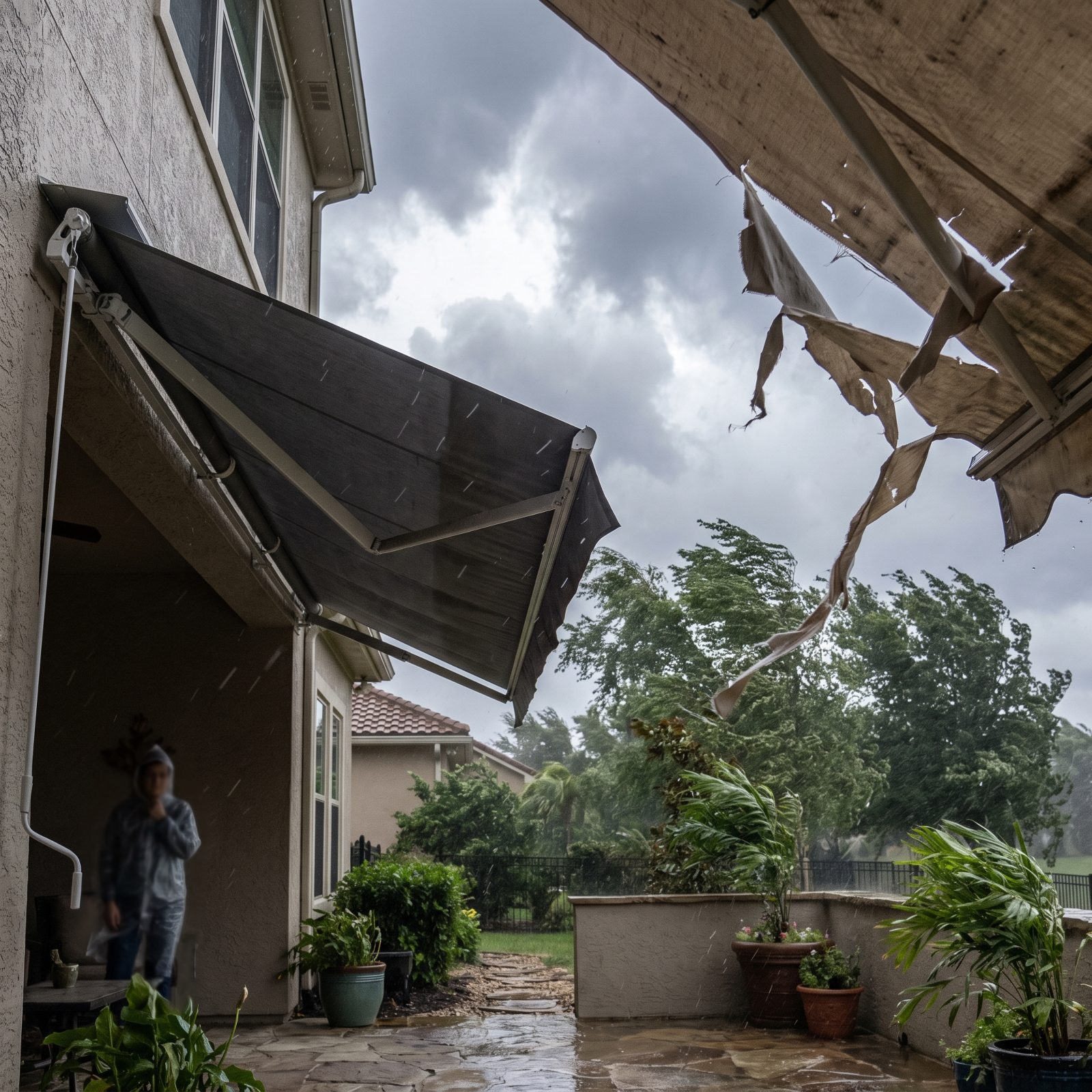
Ask anyone who’s owned an RV for a few seasons. They’ll tell you about the awning that got shredded because a storm rolled in while they were off at the trailhead.
Power awnings with built-in wind and rain sensors pull themselves back before the weather wins. No frantic drive back to camp. No shelling out for a new fabric panel because one afternoon gust came through.
I used to think this was a gimmick. Then I watched a neighbor’s manual awning fold backward over the roof in about four seconds flat. Changed my mind on the spot.
2. Smart Controls With Real Physical Switches Behind Them
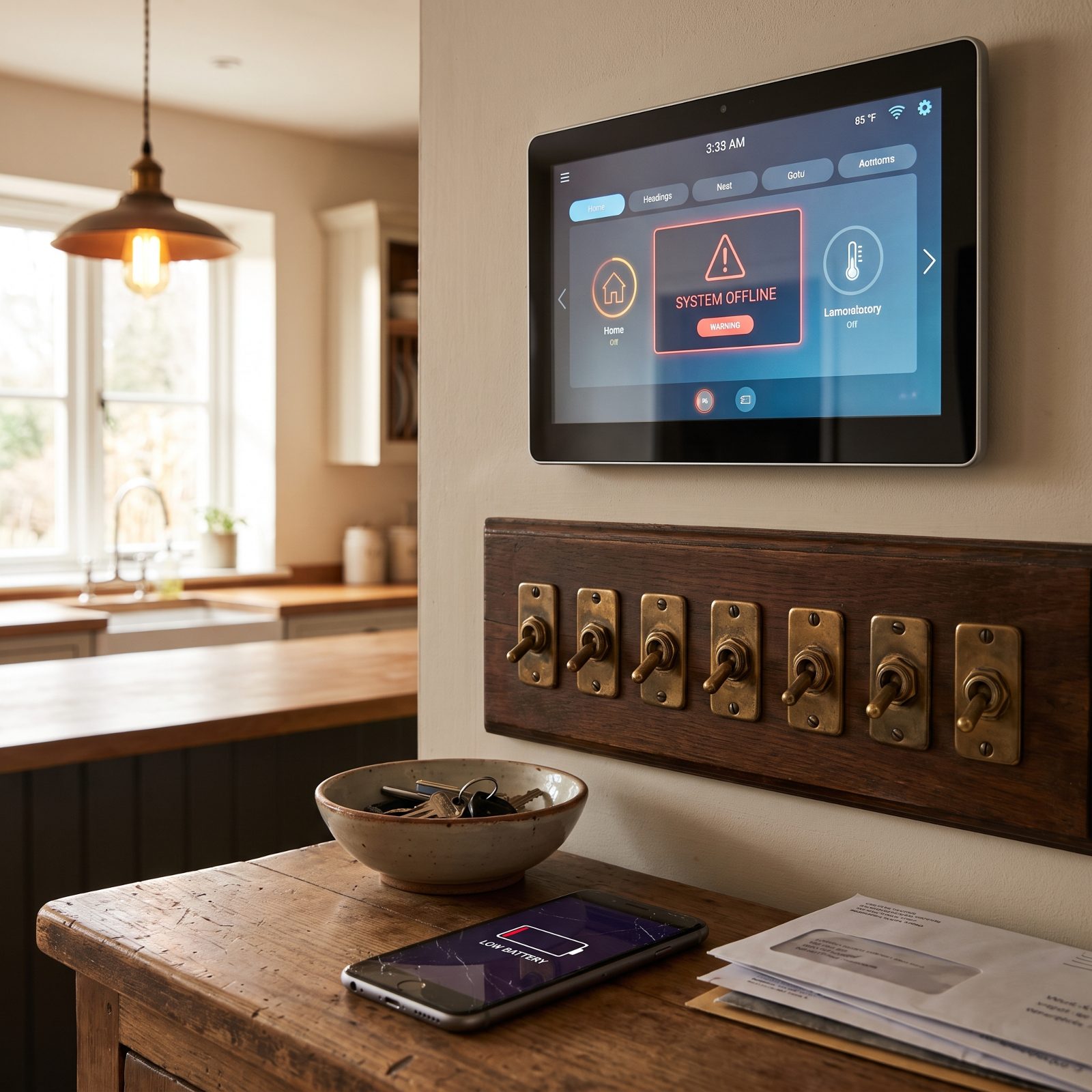
App-controlled everything sounds great until the phone dies, the firmware glitches, or you’re parked in a canyon with no signal and the lights simply won’t turn off.
The 2027 rigs built by people who actually camp keep a physical switch behind every smart function. Touchscreen for convenience, sure. But a real rocker for when the screen freezes, and a manual valve you can reach when the electronics decide to sulk.
Software fails in ways a toggle never does. I’ll take the toggle every time, and I’ll die on this hill.
A smart RV with no manual override isn’t smart. It’s a gamble you take every night you park it.
Before you sign anything, ask the salesperson to run the slide, the lights, and the pump with the screen dead. If they can’t, walk.
1. A Rig That’s Fully Usable With Every Slide Pulled In
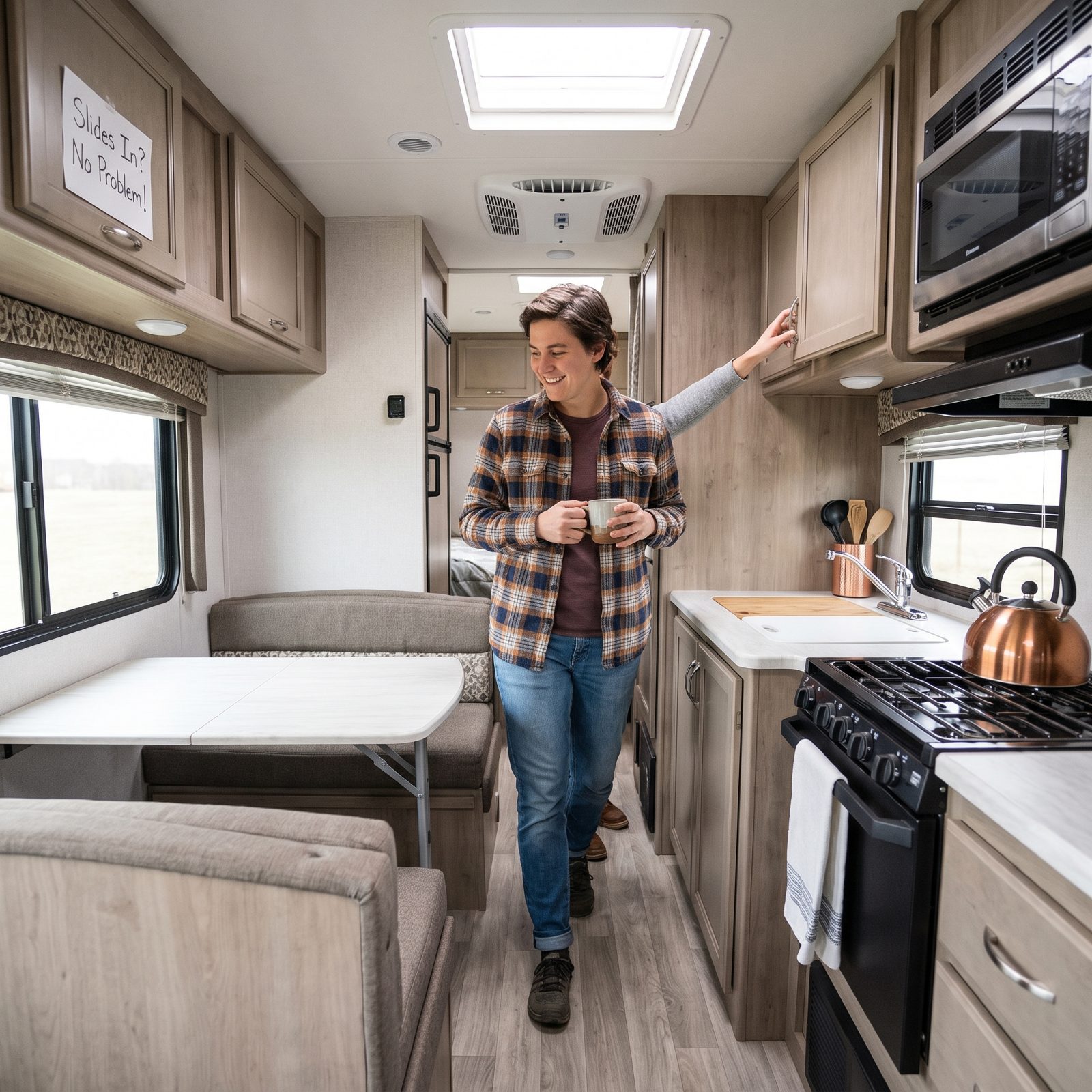
The slide-out sales pitch hides a cost nobody mentions on the lot: in plenty of rigs, you can’t use the thing at all until the slides are out, you’re leveled, and you’re hooked up.
Overnight at a rest stop? You’re climbing over the bed to reach the bathroom. Quick lunch in a parking lot? Good luck opening the fridge.
Floor plans that stay livable with every slide retracted are the quiet upgrade that matters more than whatever slide count the brochure brags about. A clear aisle, a reachable bed, a working kitchen — all with the slides tucked in. That’s what a travel day actually needs.