
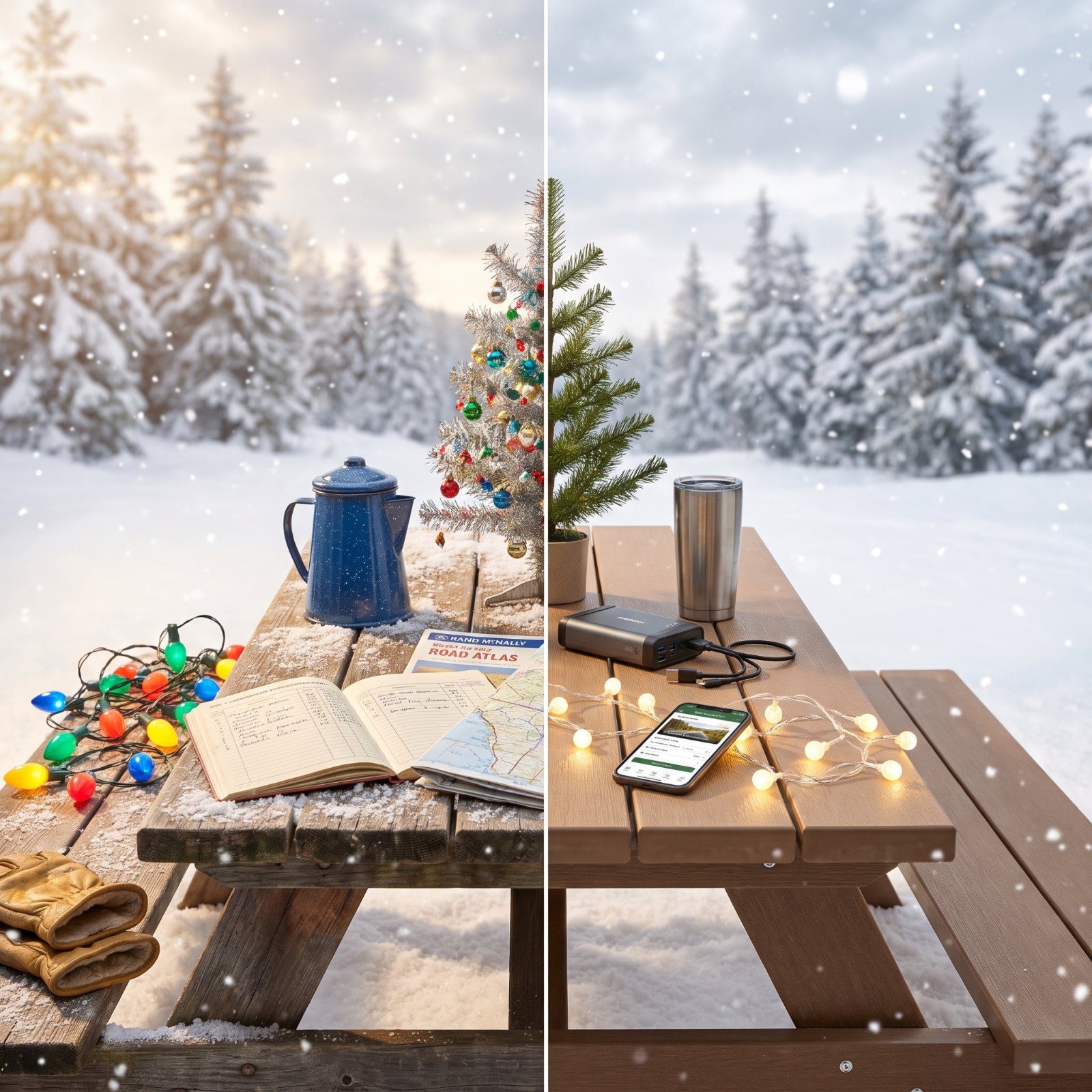
The smell hits first. Propane and woodsmoke, someone’s percolator chugging away on a camp stove while a transistor radio pushed carols through a trailer window. Back in 1978 a campground at Christmas meant strings of fat colored bulbs taped to aluminum siding and a hand-cut pine lashed to the station wagon roof. We lined up ten pieces of that life next to how the same campground does it now. Some of it we miss. Some of it we’re glad is gone for good. Most of it will surprise you.
39. Holiday Camping Rigs: Wood-Paneled Travel Trailers vs. Luxury Motorhomes
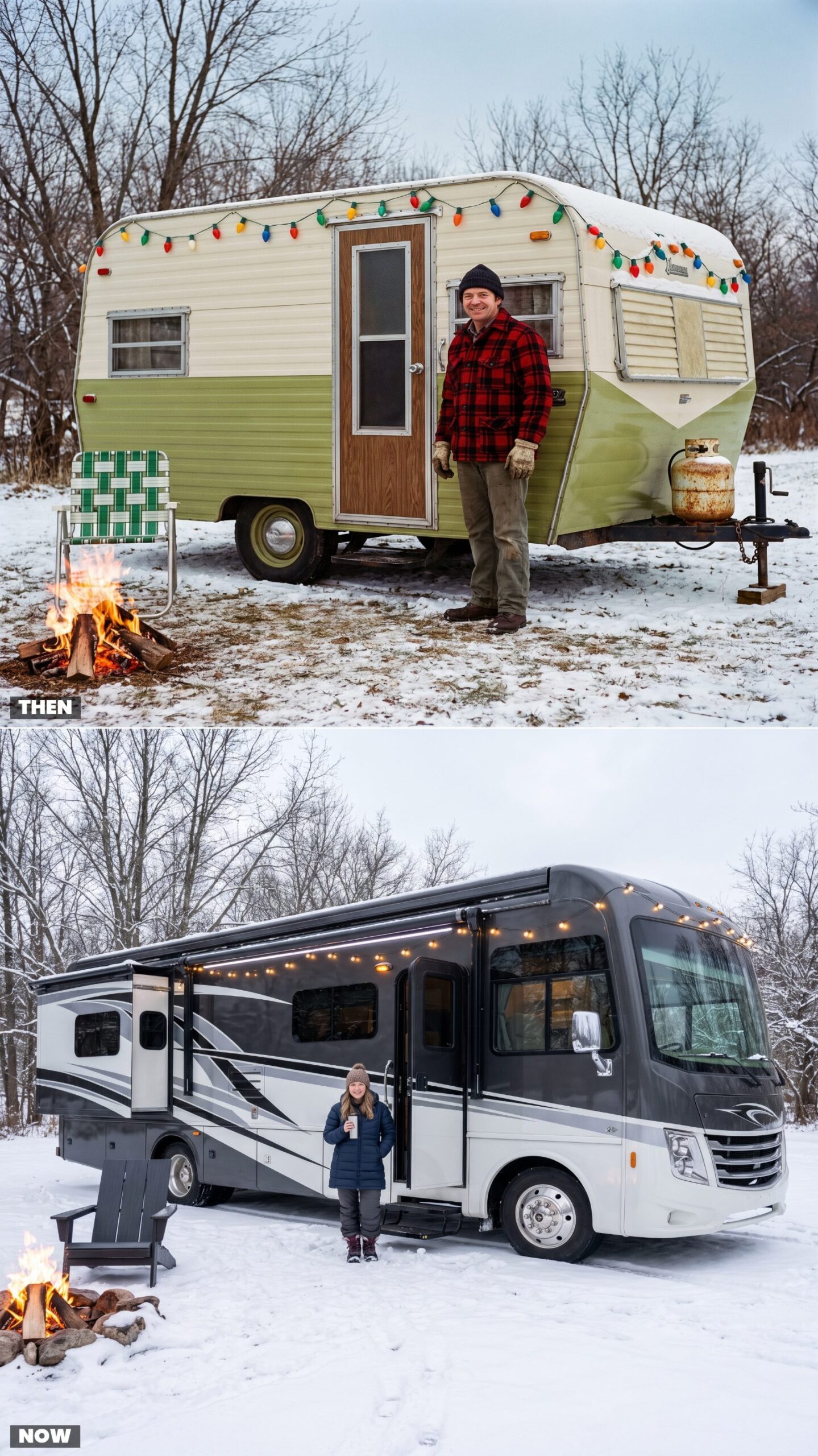
In 1978 your holiday rig was a 16-foot box of aluminum and ambition, that unmistakable fake wood-grain running around the door, a propane tank you topped off at the Gulf station on the way in. Heat came from one furnace that roared like a jet taking off and then quit the second you got comfortable.
Now the Class A rolls in with heated floors, a king bed, and a slide-out that doubles the living room. Honestly? The old one had more charm per square foot. The new one has a dishwasher. Pick your religion.
38. Campground Entrances: Hand-Painted Holiday Signs vs. Digital Welcome Boards
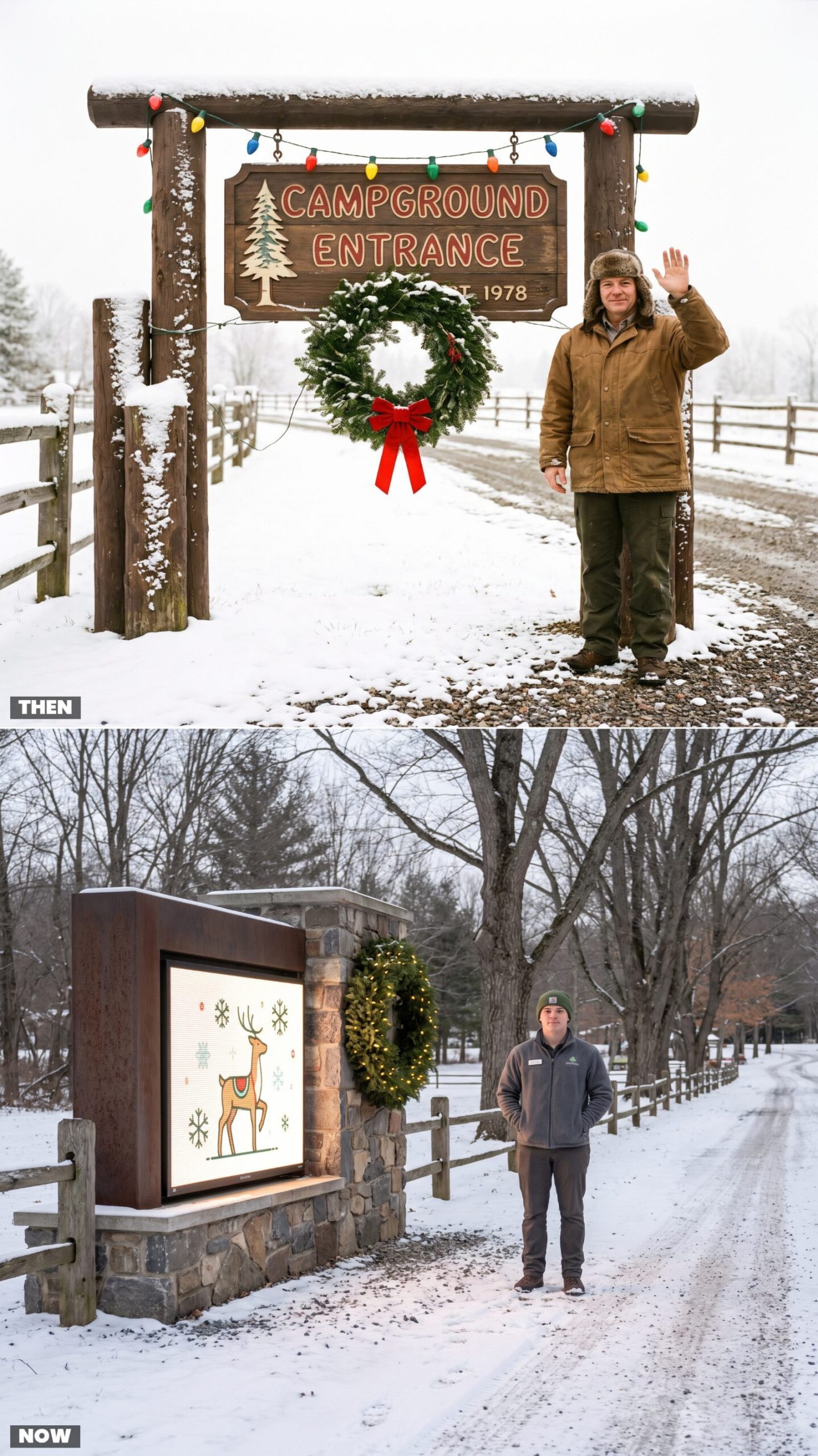
You knew you’d arrived when the headlights swept across that hand-routed cedar sign, a wreath wired crooked to it and colored bulbs blinking out of sync. Somebody’s dad repainted the lettering every couple of summers whether it needed it or not.
Today a digital board greets you with a scrolling snowflake graphic and your site number before you’ve even parked. Faster, sure. But nobody ever took a Polaroid in front of an LED screen.
37. Christmas Reservations: Paper Ledgers and Walk-Ins vs. App-Based Site Selection
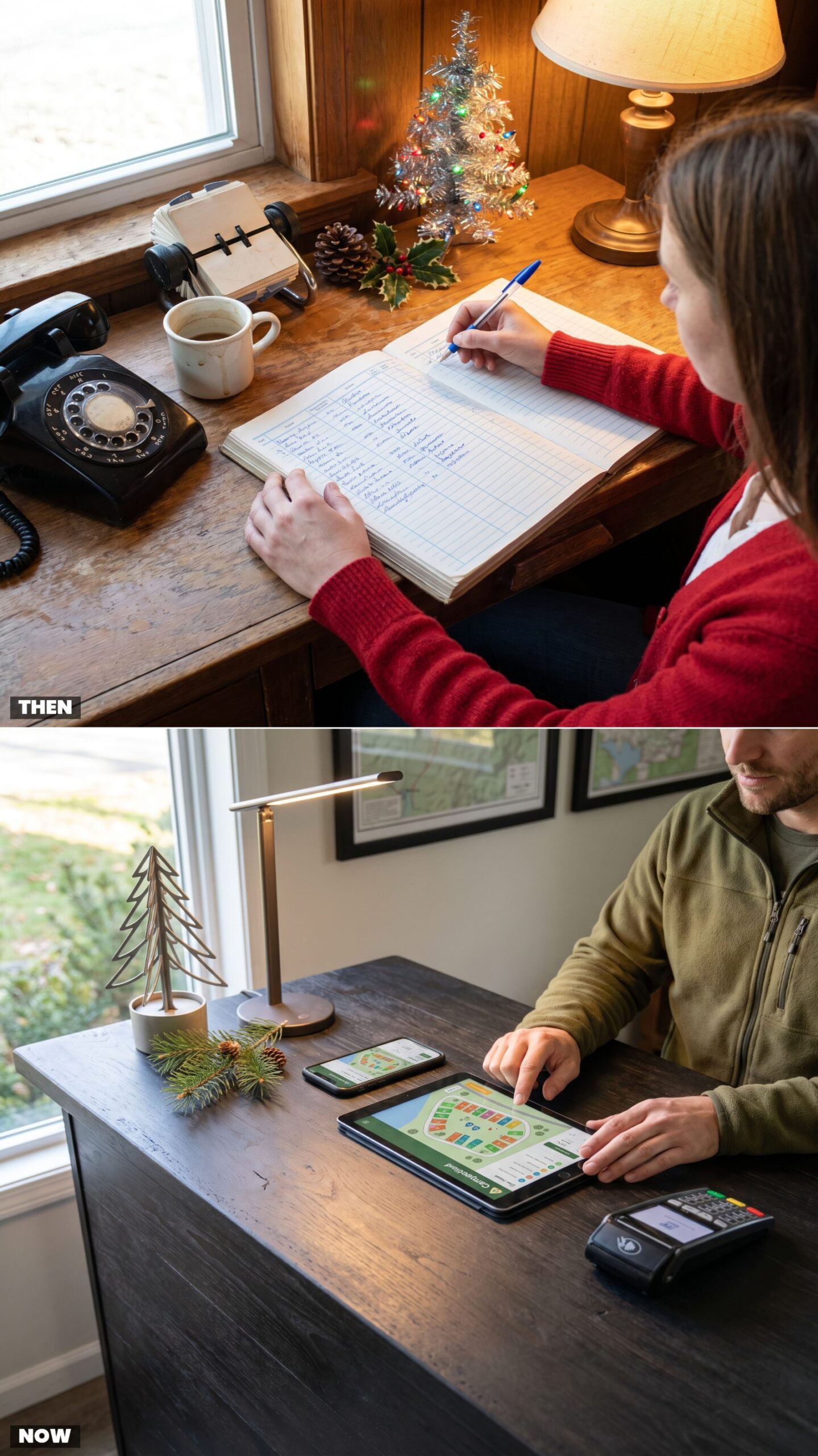
The ledger was the whole system. One book, one person’s handwriting, and a prayer that the family holding site 14 actually showed. Want a spot for Christmas week? You called the rotary phone and hoped someone picked up, or you drove out and took your chances.
Now you pick your exact site from the couch, scroll the photos, filter for a pull-through with 50-amp, and pay before you’ve backed out of the driveway. I love the convenience. I also kind of miss the gamble.
36. Arriving at Camp: Printed Road Atlases vs. Turn-by-Turn RV Navigation
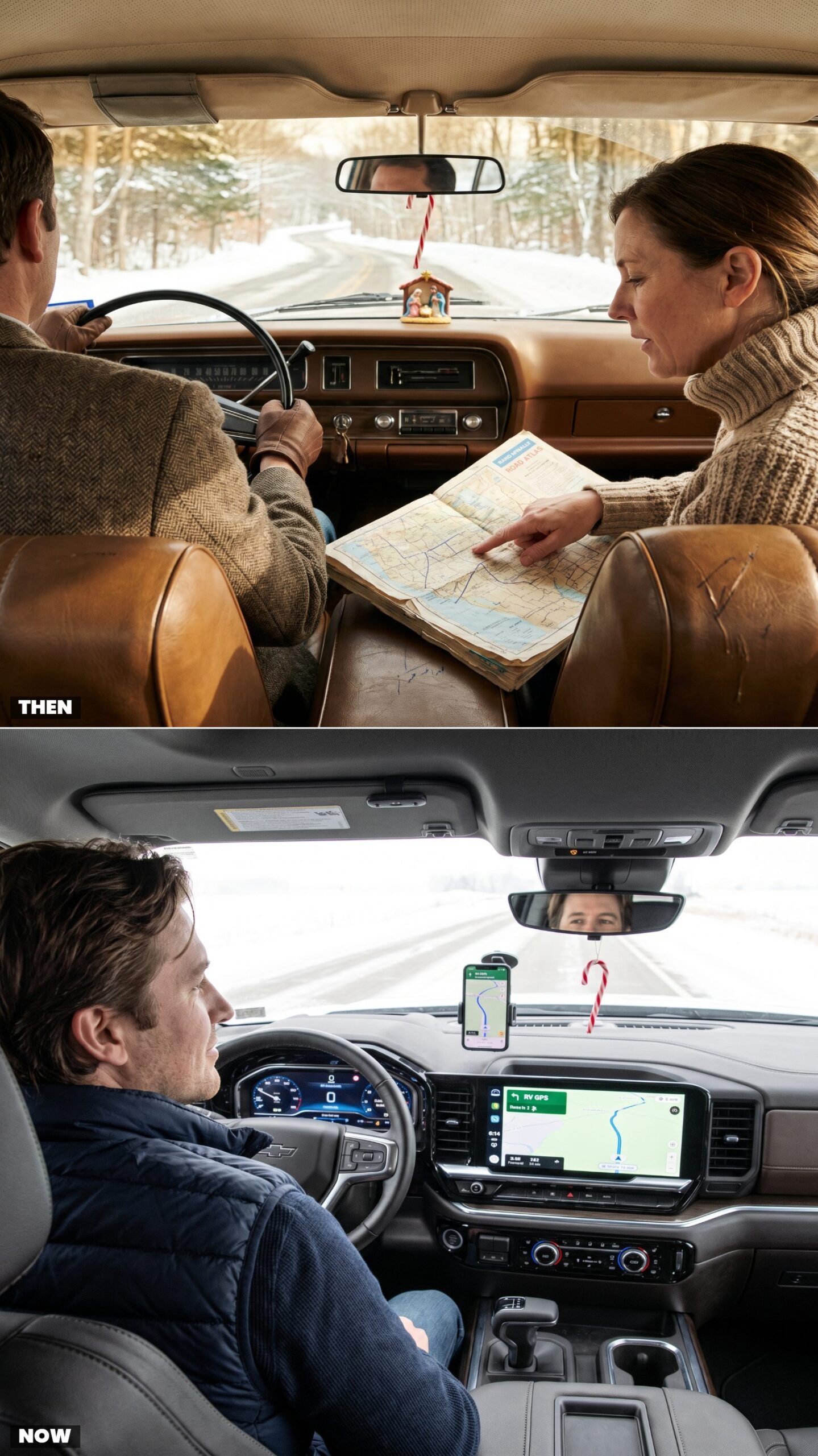
Someone always rode shotgun as navigator, the atlas spread across their knees, a finger tracing the county roads and the turn announced about two seconds too late. The arguments were part of the trip.
Now the screen knows your rig’s height and weight and routes you around the low bridge before you ever see it. Genuinely safer. Still, the atlas never rerouted you into a cul-de-sac with a confident robot voice.
35. Tow Vehicles: Family Station Wagons vs. Heavy-Duty Crew-Cab Pickups
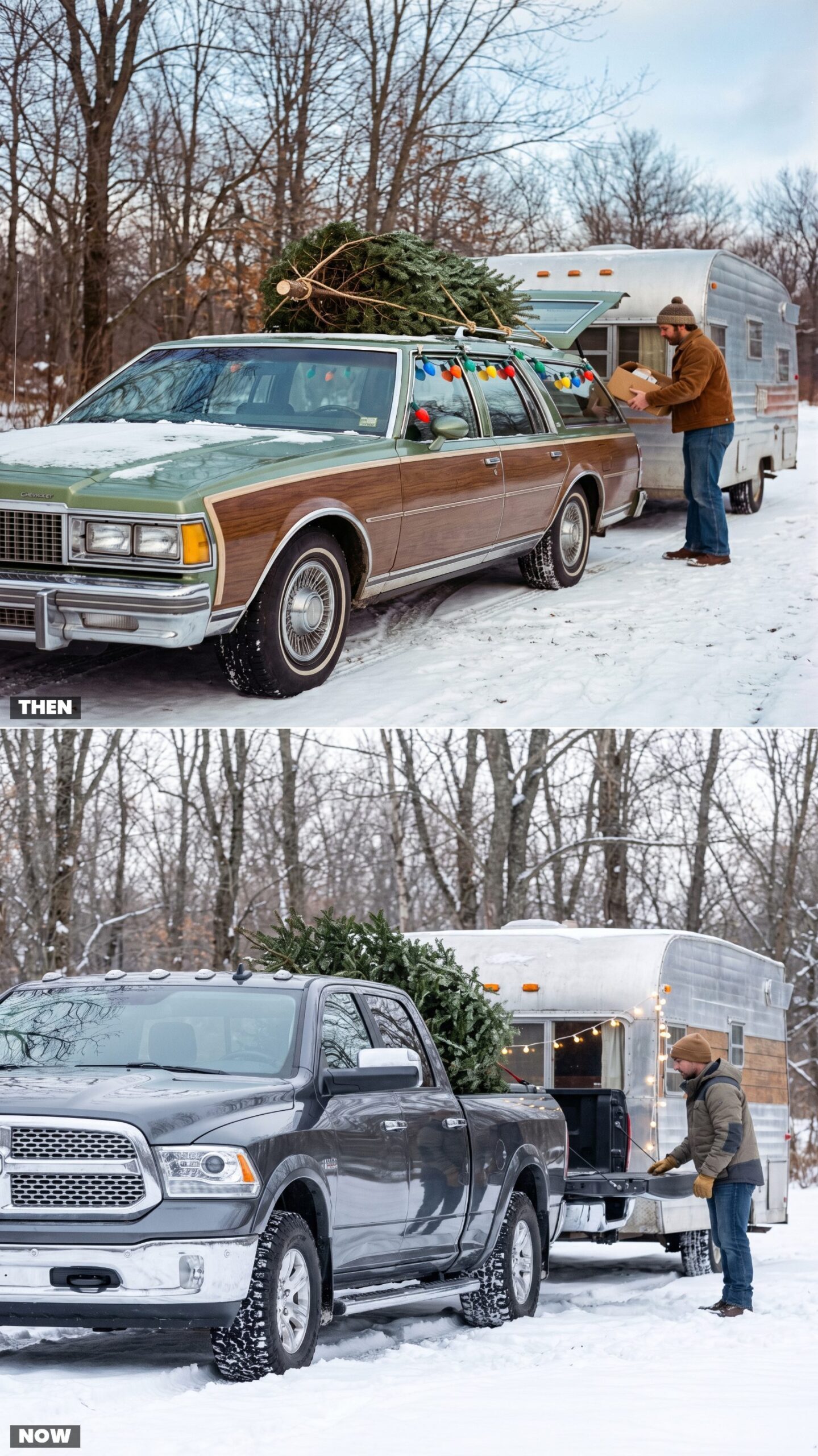
The wagon did everything. It hauled the trailer, swallowed five kids and a dog, and wore its fake-wood siding like a badge of honor. You strapped the Christmas tree to the roof rack with clothesline and said a quiet prayer over every overpass.
Today’s crew-cab diesel tows triple the weight without breaking a sweat, and a backup camera lines up the hitch for you. The tree rides in the bed now, safe and legal. Progress has a towing capacity, and it’s enormous.
34. Keeping Warm: Portable Propane Heaters vs. Multi-Zone RV Heat Pumps
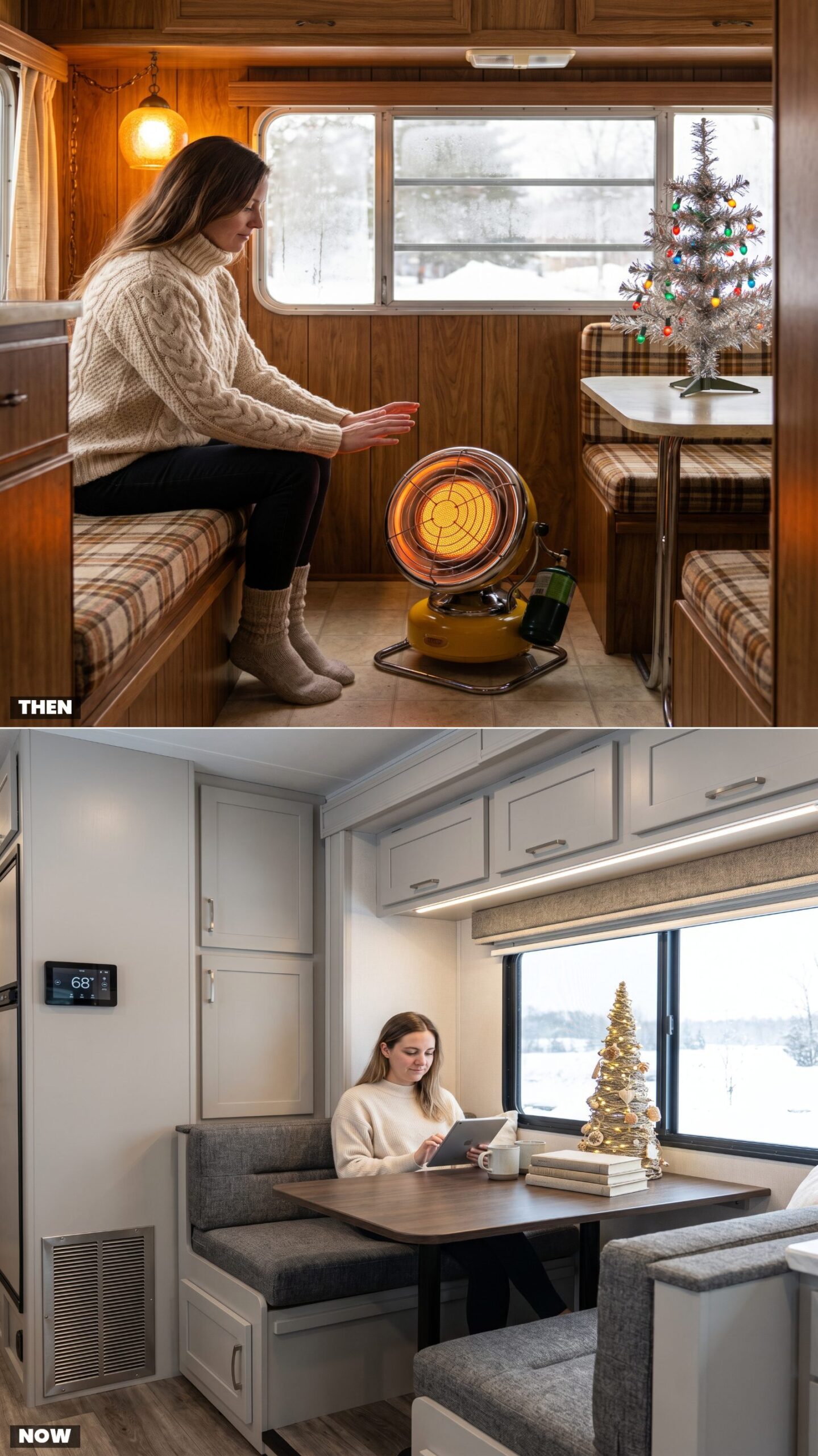
That little catalytic heater glowed orange in the corner and everybody fought over who got to sleep closest to it. You cracked a window for fresh air and still woke up at 3 a.m. to relight it, your breath fogging in the dark.
A heat pump now holds the whole rig at an even 68, zone by zone, while you sleep straight through. I’ll take the quiet thermostat. But there was something honest about a flame you could actually see.
33. Winter Skirting: Plywood and Hay Bales vs. Custom Insulated Panels
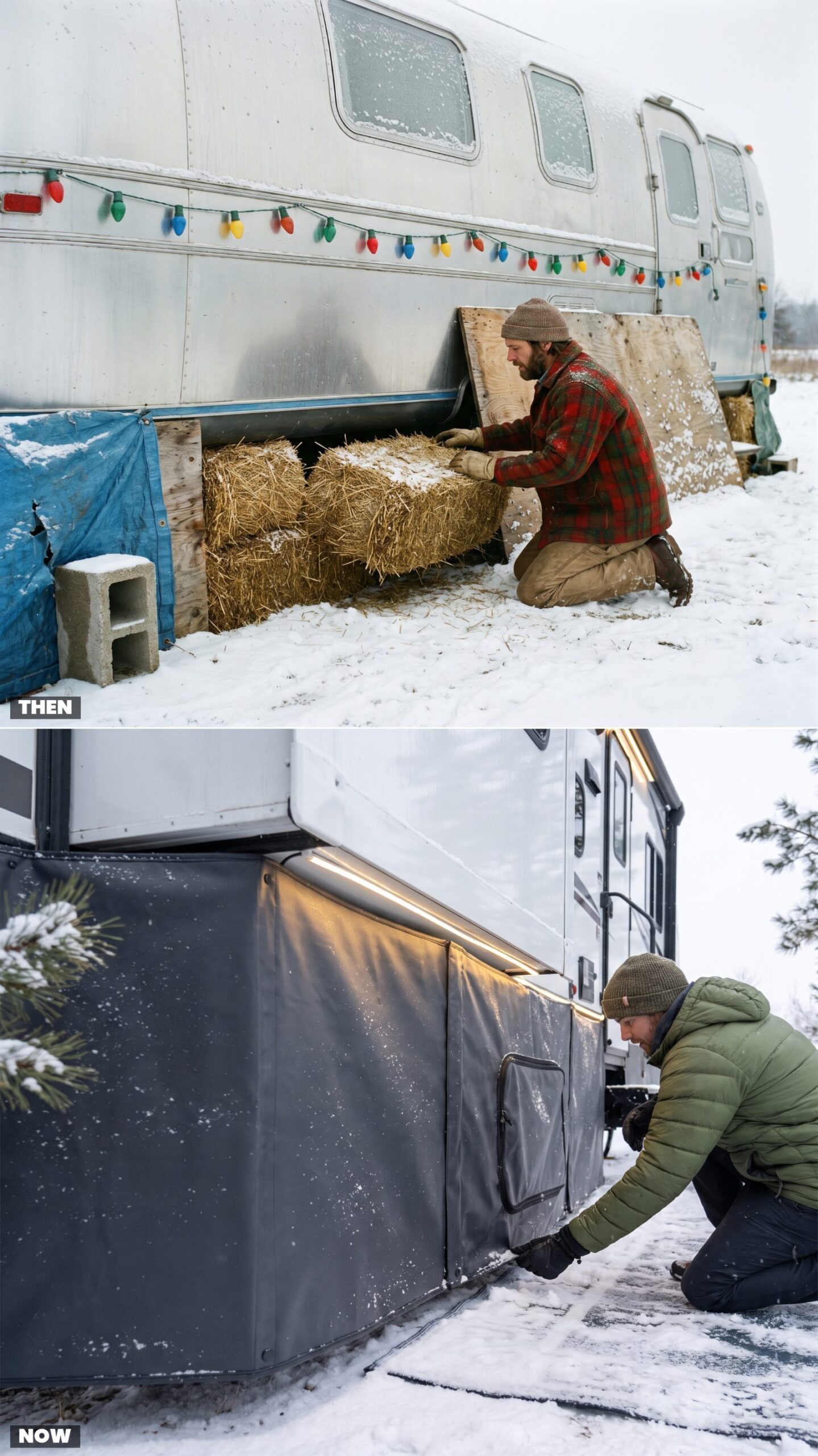
Skirting in 1978 meant whatever kept the wind off the water lines. Hay bales from the farm down the road, a few sheets of plywood, maybe a tarp and a cinder block pinning the whole arrangement in place. It worked until it didn’t.
Modern insulated skirting snaps on in an afternoon, zips open for access, and keeps the holding tanks from freezing solid on a 10-degree night. Less rustic. Far fewer burst pipes.
32. Rooftop Power: Generator-Only Camping vs. Solar Panels and Lithium Batteries
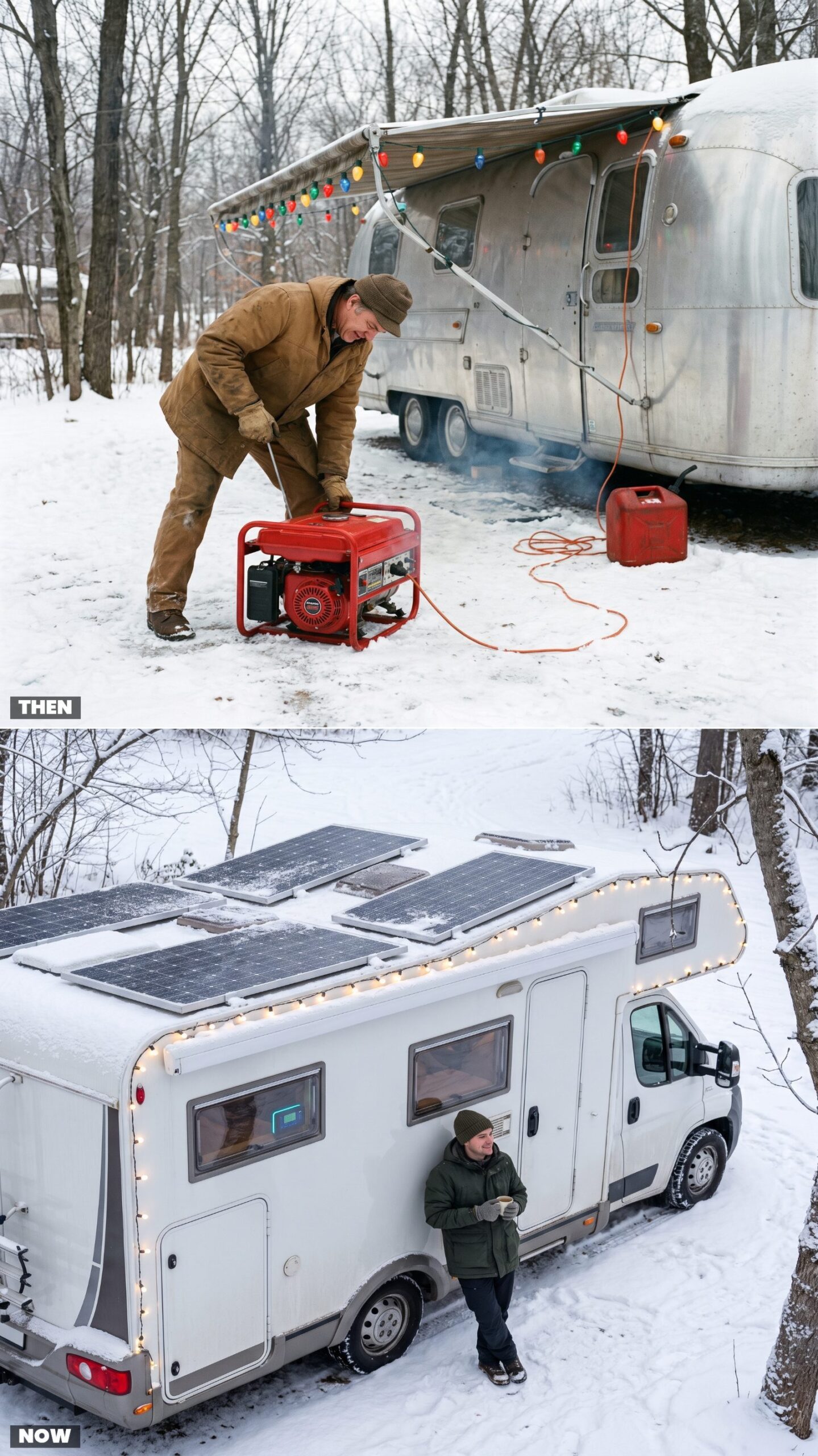
Quiet hours were a joke when half the loop was running generators. You’d hear them cough to life at dawn, catch the gas on the air, and curse the guy three sites over who ran his all night for the electric blanket.
Solar and lithium changed the whole mood of winter camping. Panels soak up the thin December sun, the battery bank runs the furnace fan and your lights in total silence, and nobody’s dragging a gas can through the snow at 6 a.m. anymore.
The best upgrade in forty years of RVing might just be the sound of nothing.
31. The Main Christmas Tree: A Locally Cut Evergreen vs. a Pre-Lit Community Showpiece
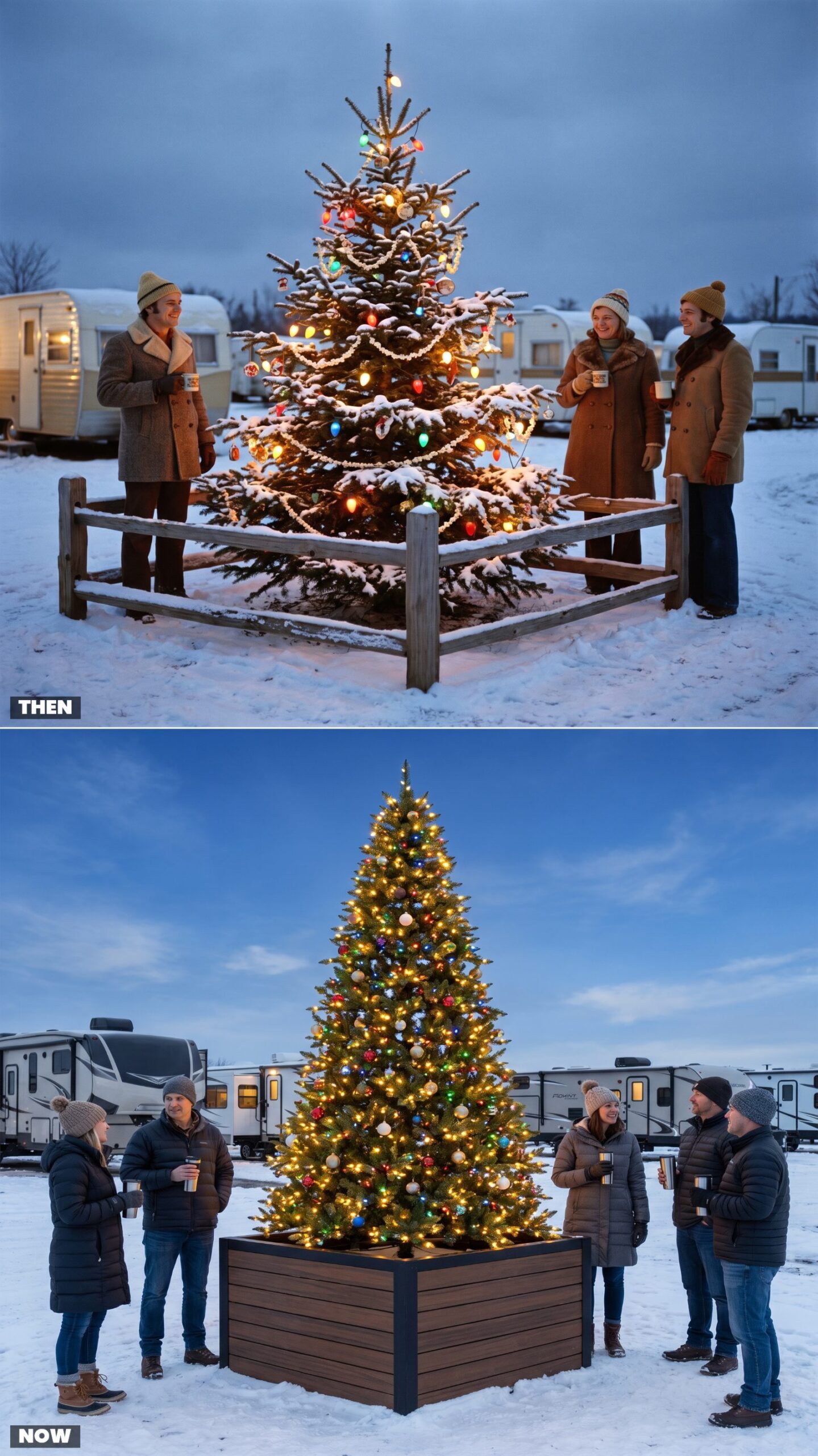
The park tree in 1978 came out of the woods behind site 30, dragged in by whoever had the sharpest saw. It leaned a little. The popcorn garland got raided by birds. Nobody cared, because the whole loop decorated it together on some cold Saturday afternoon, mugs in hand, kids underfoot, the dads arguing over whether it was straight.
The community tree now shows up pre-lit, perfectly conical, programmed to fade between colors. Beautiful. Never drops a needle. It also never smelled like anything.
30. RV Christmas Trees: Tabletop Tinsel Trees vs. Slim Collapsible Designs
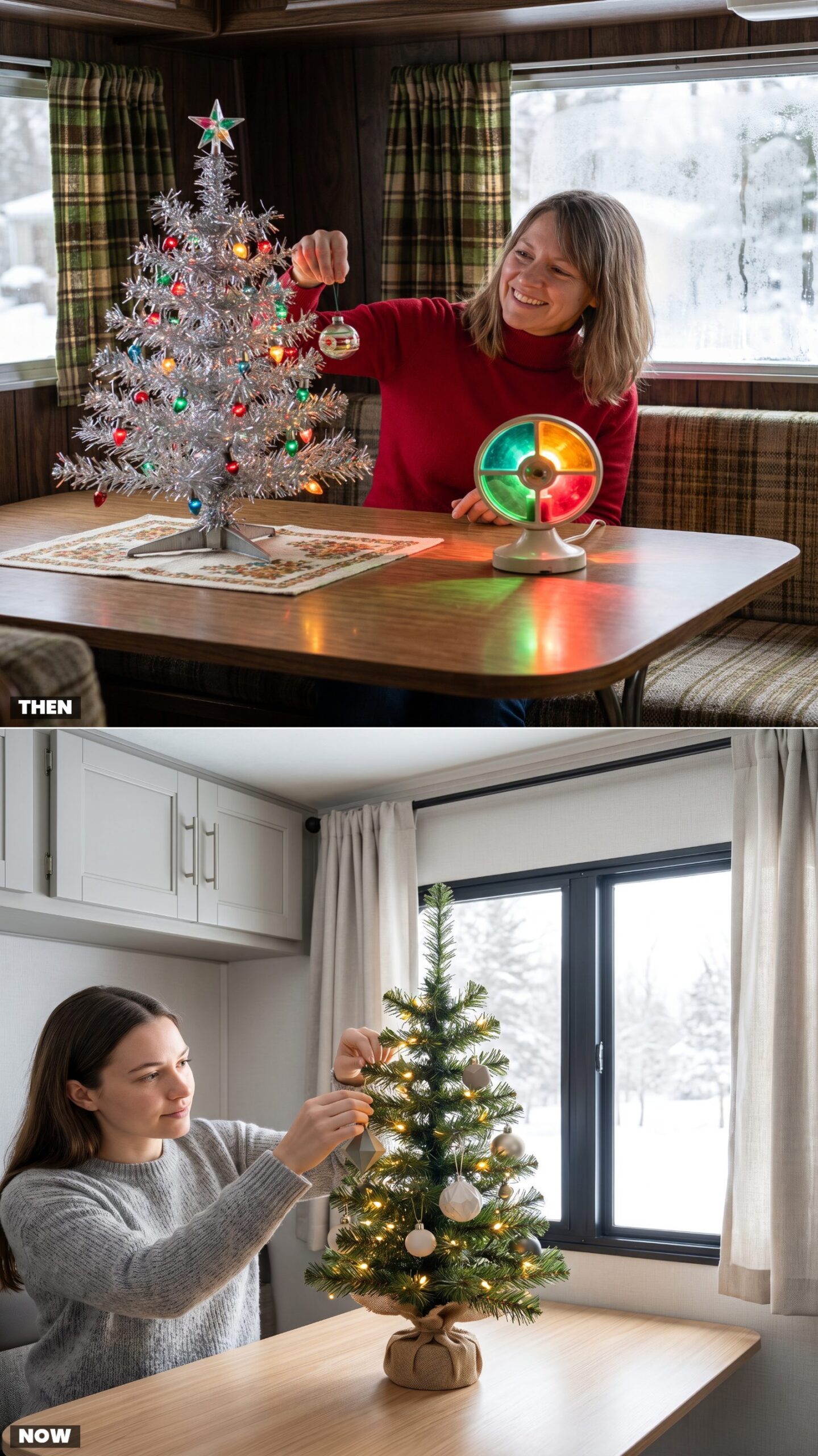
Space was always the enemy, so the RV tree stayed tiny and shiny: a foil-needled tinsel number lit by a spinning color wheel that turned the whole thing red, then green, then gold. It folded flat into a box under the bench.
Today’s version is a slim collapsible tree that looks like the real thing, pre-lit, and still tucks away in a corner. It’s a smarter little tree, no argument. The color wheel, though, that one we’re still a little sad about.
29. Campsite Christmas Lights: Big Colored Bulbs vs. Programmable LED Displays
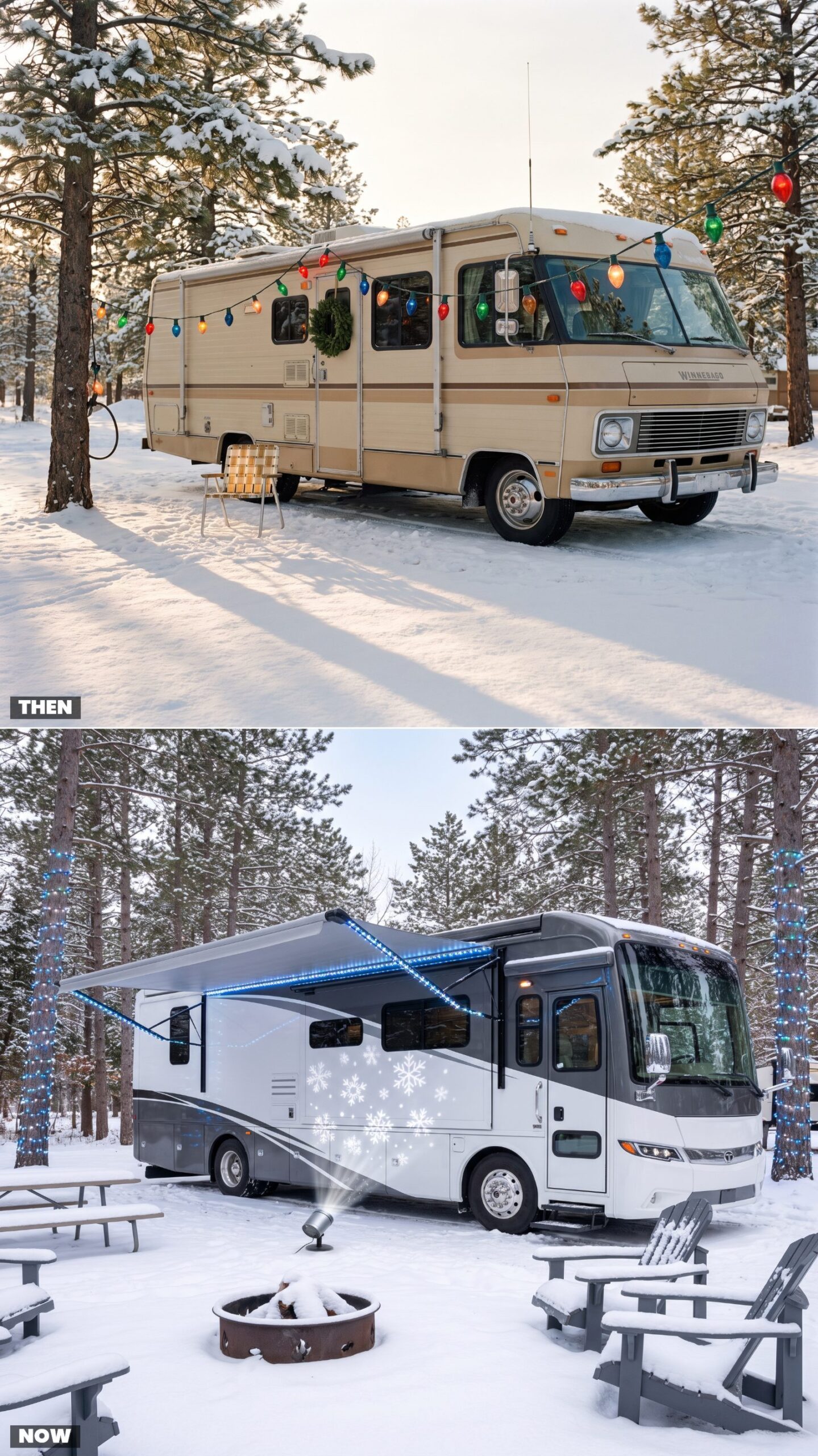
The 1978 version came in a tangled box from the hall closet, smelling faintly of hot glass, and those C9 bulbs ran warm enough to dry your mittens on. Every strand had that one dead bulb that killed the whole run. You replaced it by feel in the dark, swearing quietly so the kids wouldn’t hear.
Now the lights sync to an app, chase through sixteen million colors, and a projector throws snowflakes across your RV wall. Nobody misses testing bulbs one at a time. But those fat colored globes had something LEDs still can’t fake. A softness. A glow that felt handmade.
28. Stockings in the RV: Cabinet Knobs vs. Electric Fireplace Mantels
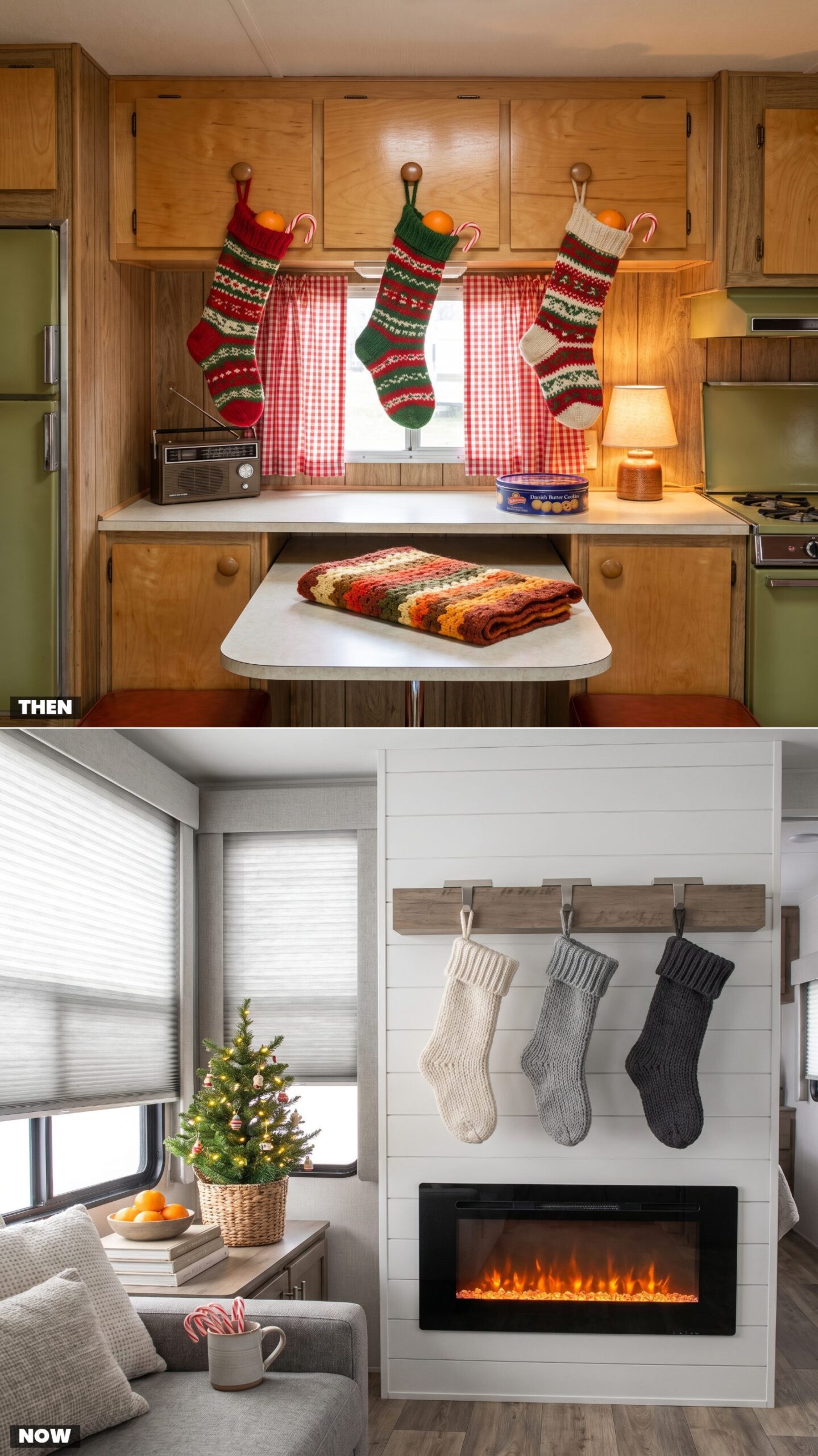
No fireplace in a 1978 camper meant you got creative. Cabinet knobs became stocking hooks, and so did the awning rail, the ladder rung, the back of the dinette bench. The stockings were usually knit by somebody who’d learned during the war — lumpy, warm, irreplaceable.
Modern RVs come with electric fireplaces now, flickering LED flames and a little mantel shelf practically begging for stocking holders. Looks like a real living room. And yes, it’s a nicer place to hang a stocking than an avocado cabinet knob. I still miss the knob a little.
27. Holiday Decorating Contests: Staff-Chosen Winners vs. Online Voting and Drone Photos
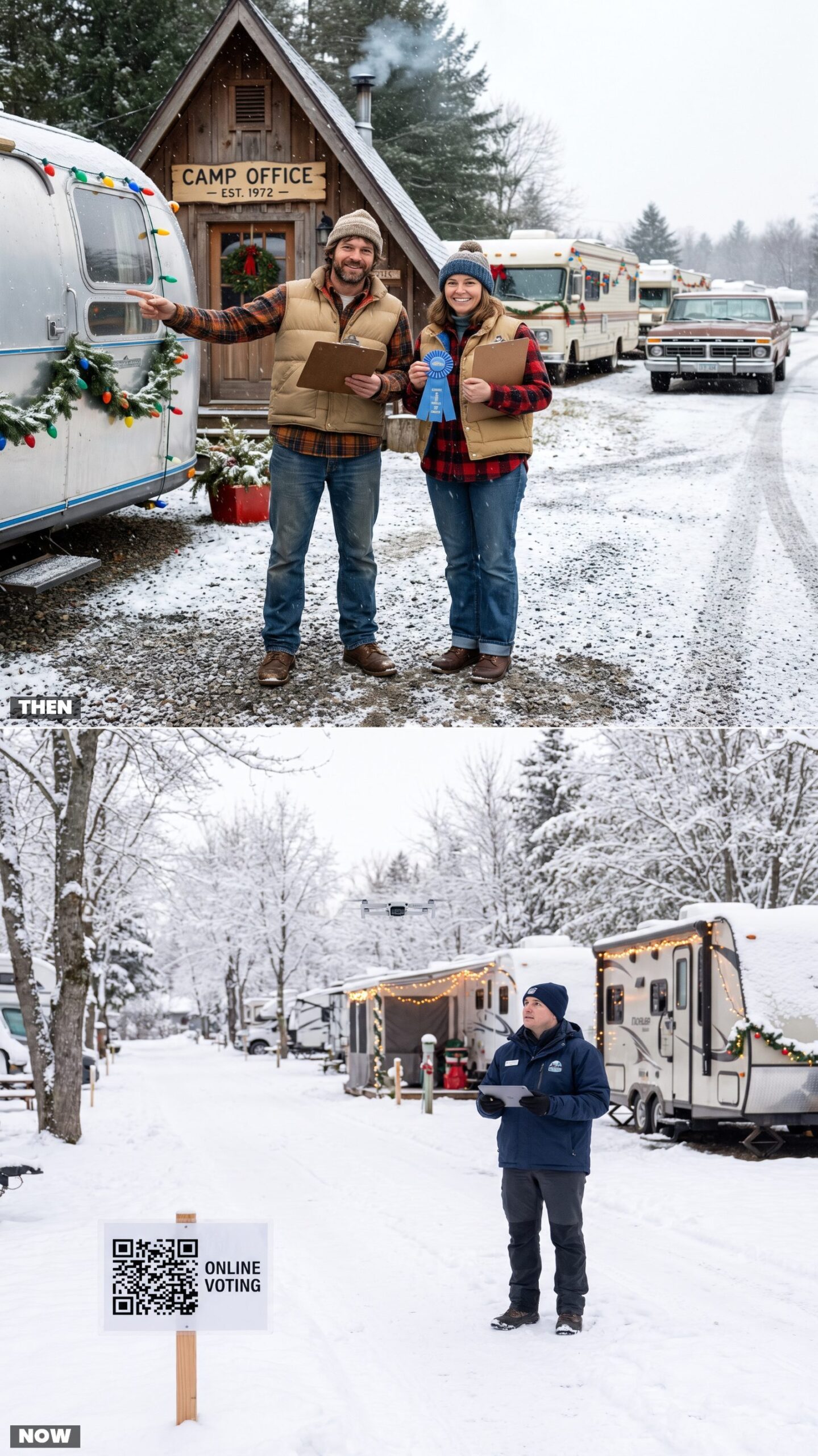
The old contest was gloriously unscientific. Two staff walked the loop with clipboards, argued a bit, and taped a blue paper ribbon to somebody’s door. Everyone suspected the winner was friends with the office. Everyone was usually right.
Today a drone buzzes the whole loop for overhead shots, the photos go up online, and every camper with a phone gets a vote. Fairer? Sure. But there was a charm to a human being deciding your lights were the best on the row, and telling you so to your face.
26. Christmas Golf-Cart Parades: Decorated Utility Carts vs. LED-Covered Custom Cruisers
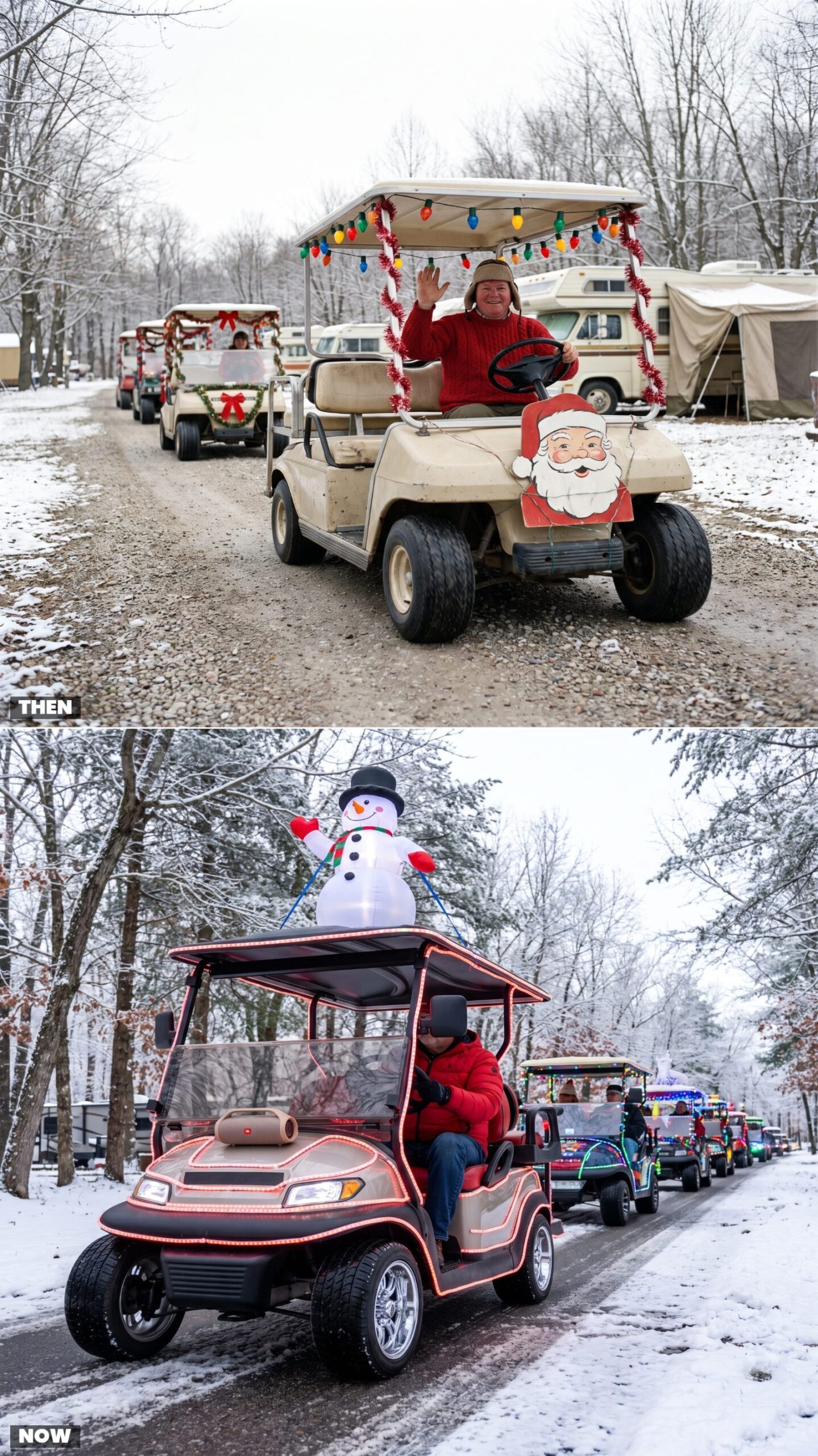
A 1978 golf-cart parade was basically whatever you could tape on in twenty minutes — a strand of bulbs, some tinsel, a cardboard Santa flapping in the wind. The carts were utility models borrowed from the maintenance shed, and nobody cared that the garland came loose by the second loop.
Now there are custom cruisers wrapped bumper to roof in programmable LEDs, lit inflatables bouncing on top, speakers pumping Bing Crosby. Quite a sight. They also eat a full weekend of work. The cardboard Santa never did, and he showed up every single year.
25. Santa’s Campground Arrival: A Borrowed Pickup vs. a Decked-Out Golf Cart
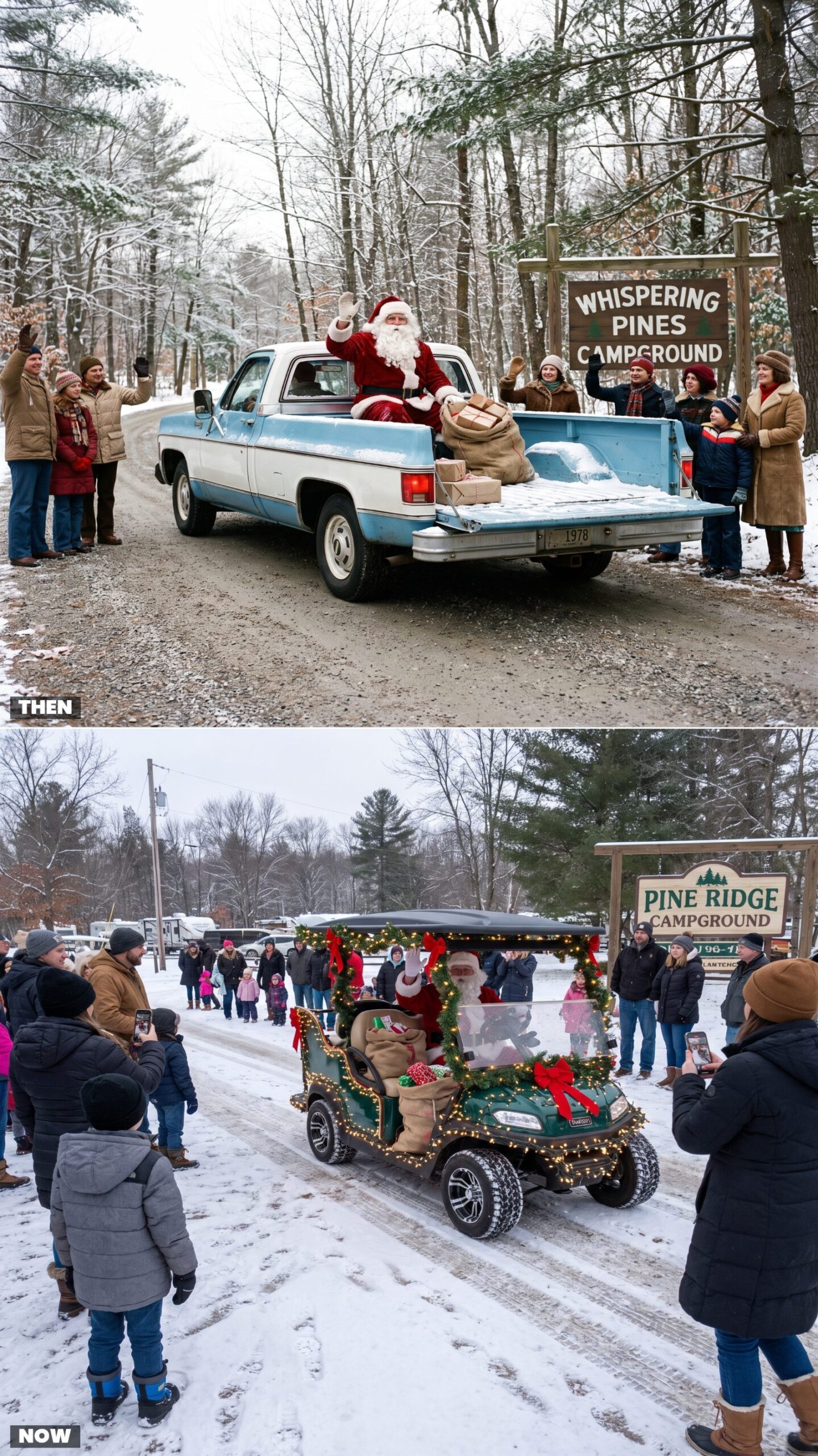
Santa used to roll in standing in the bed of somebody’s pickup, usually the maintenance guy’s, waving over the cab while the truck crawled down the road at five miles an hour. Kids ran alongside. The sack was real burlap, the beard was cotton, and the whole thing felt enormous.
These days he arrives in a golf cart dressed up as a sleigh, lit like a runway, and the kids greet him from behind a wall of raised phones. Easier to photograph now. He was better at eye level in a pickup, honestly.
24. Photos With Santa: Instant-Film Keepsakes vs. Smartphone Portrait Stations
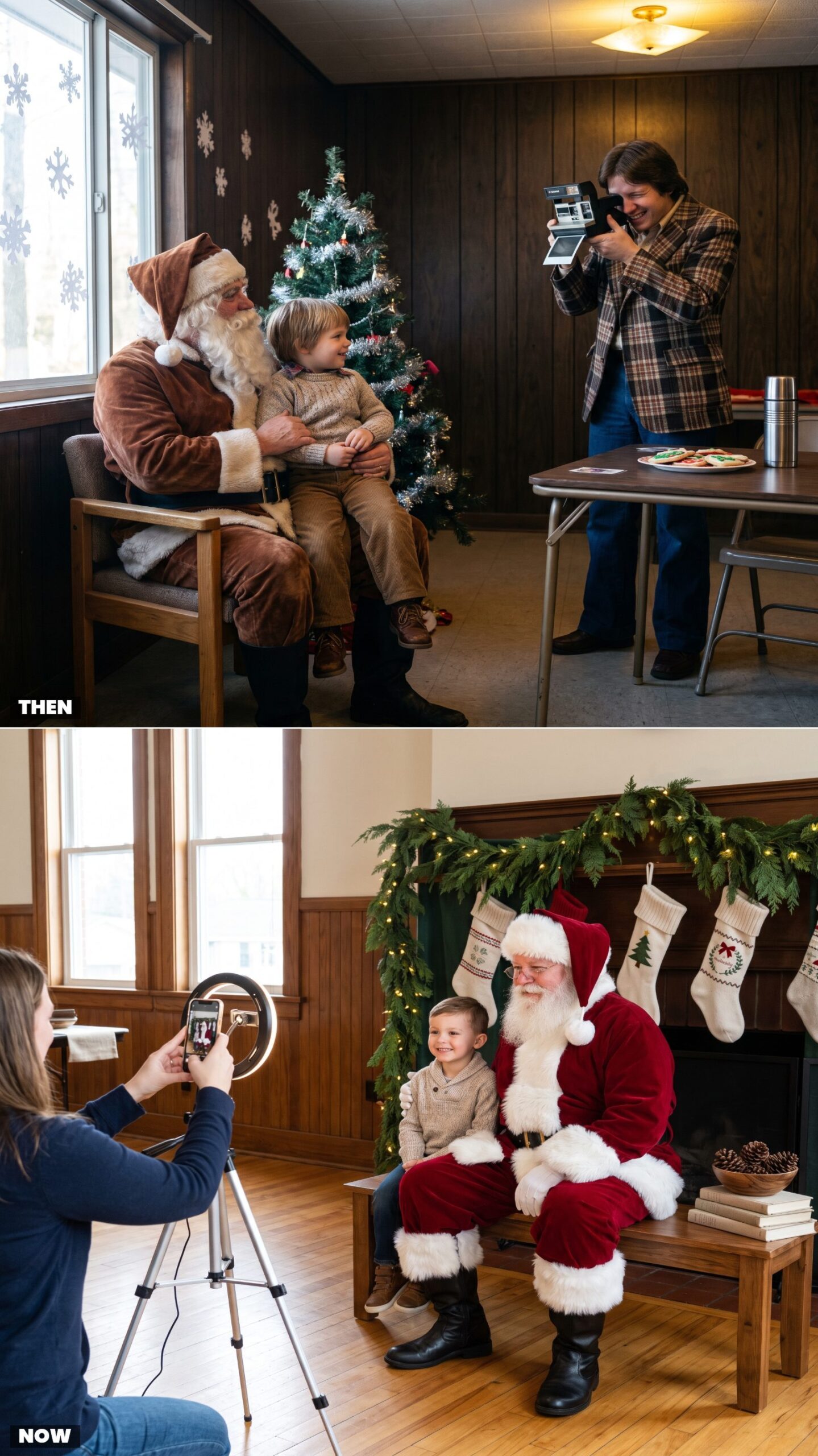
You got one shot with the instant camera, then stood there shaking it while it developed, half-convinced it hadn’t worked. The photo came out a little green, a little blurry, Santa’s beard slightly crooked. It went on the fridge and stayed there for a decade.
Now there are proper portrait stations — ring lights, backdrops, burst mode, retakes, instant uploads. You get forty perfect frames and keep none of them longer than a week. Funny how the one flawed Polaroid outlasted all of them.
23. Christmas Cards: Postcards Mailed From the Campground Office vs. Digital Greetings From the Road
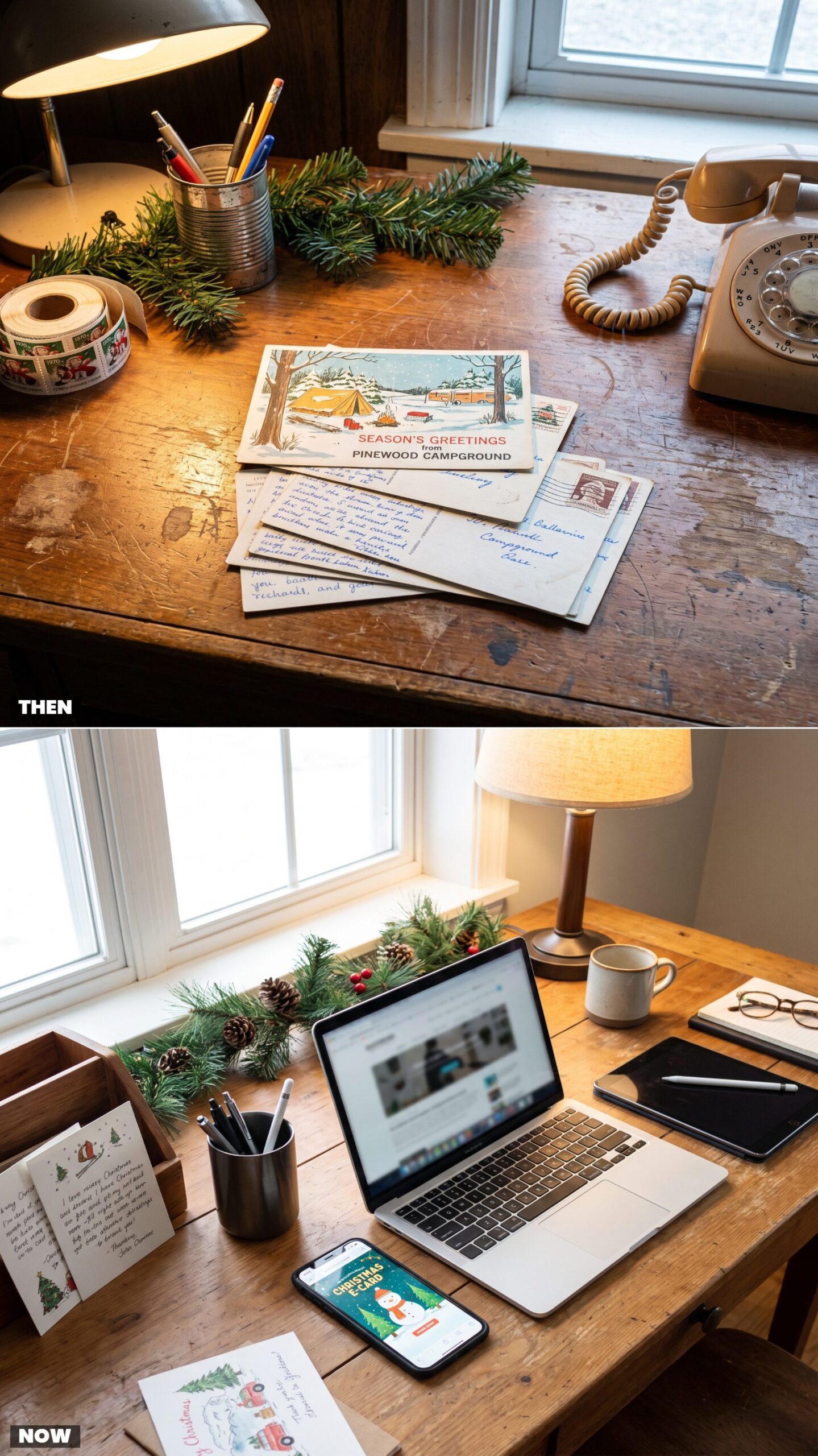
The campground office sold postcards with a little snowy illustration, and you’d sit at the counter writing out a dozen before the big drive home. You licked the stamps. You guessed at zip codes from memory. The card reached your sister in January, which was somehow part of the fun.
Now the greeting goes out from the road the second you think of it, a photo and a caption to everyone at once. Faster, free, and gone in a scroll. The postcard sat on a mantel until the needles dropped off the tree.
22. Calling Home: A Line at the Payphone vs. Video Calls From the RV Couch
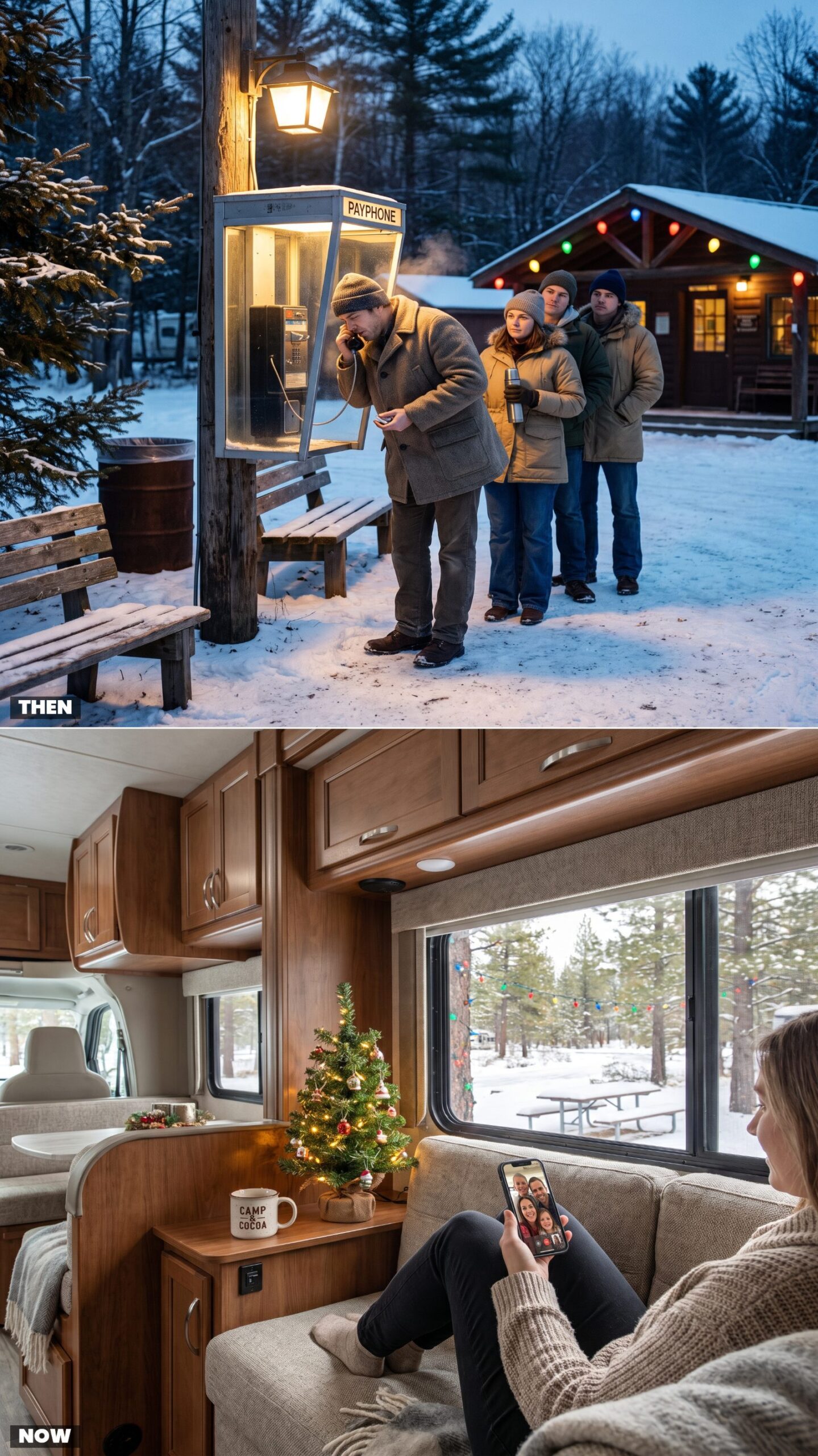
Christmas night meant lining up at the one payphone by the office, coats zipped to the chin, counting out quarters. You got three minutes before the line grew impatient behind you. Everybody overheard everybody. “Merry Christmas, love you, gotta go, there’s a line.” Click.
Now you call home from the couch, cocoa in hand, and Grandma can see the tree in the corner of the RV. Nobody’s counting coins. Nobody’s waiting in the cold. Better, honestly. It’s also quieter out by the office these days, and that line used to feel like its own little gathering.
21. Campground Bulletin Boards: Thumbtacked Holiday Flyers vs. QR-Code Event Calendars
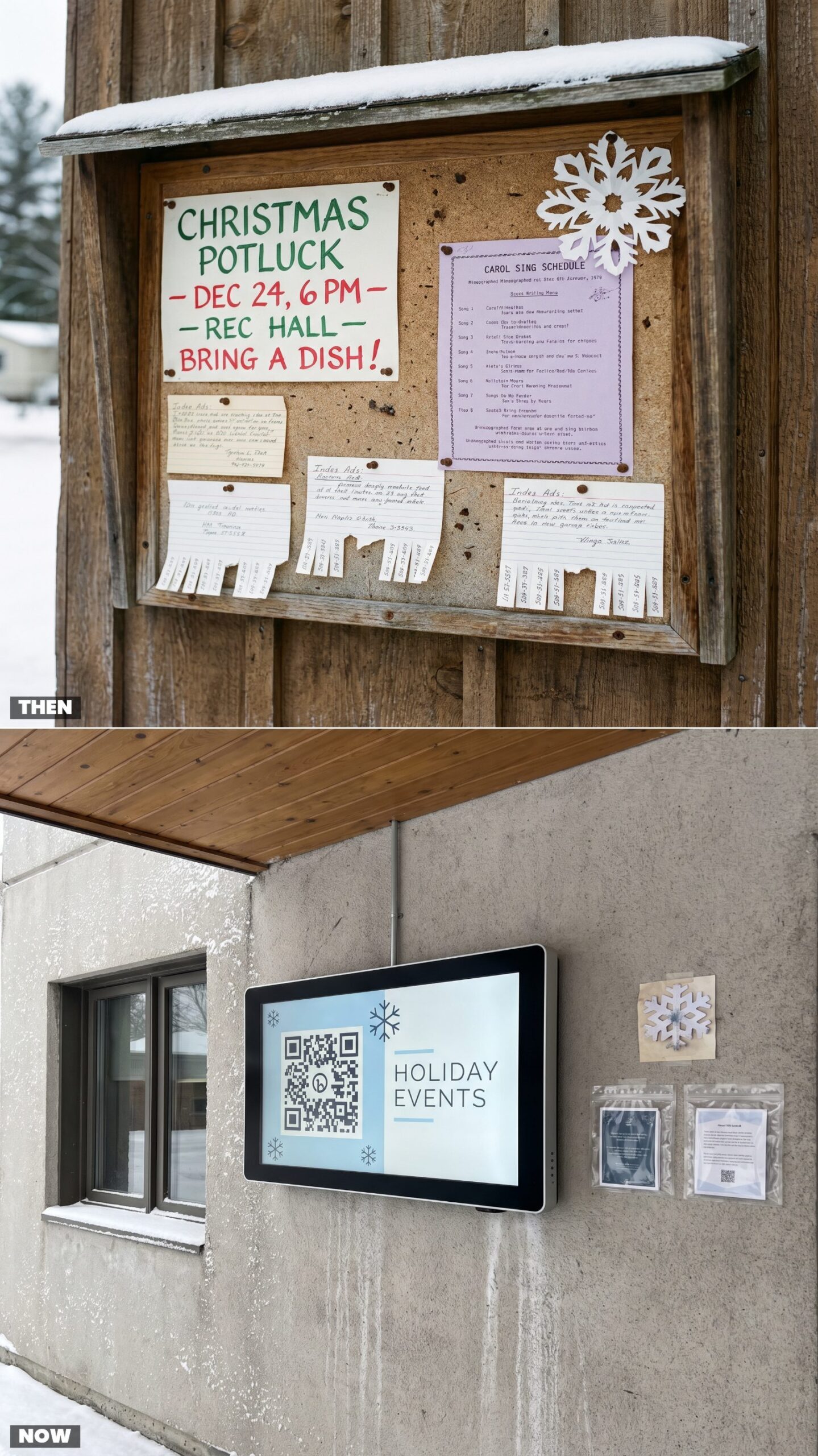
The bulletin board was the campground’s nervous system. Potluck signup, carol-sing times, a lost mitten notice, somebody selling a cord of firewood — all of it thumbtacked over last week’s flyers in layers you could practically date like tree rings.
Now it’s a QR code. Point your phone, the calendar loads, tap to RSVP. Tidier, sure. But you don’t wander up to a QR code and bump into your neighbor reading the same potluck flyer. That accidental meeting was half of what the board was for.
20. Holiday Music: Portable Radios and 8-Tracks vs. Bluetooth Speakers and Streaming Playlists
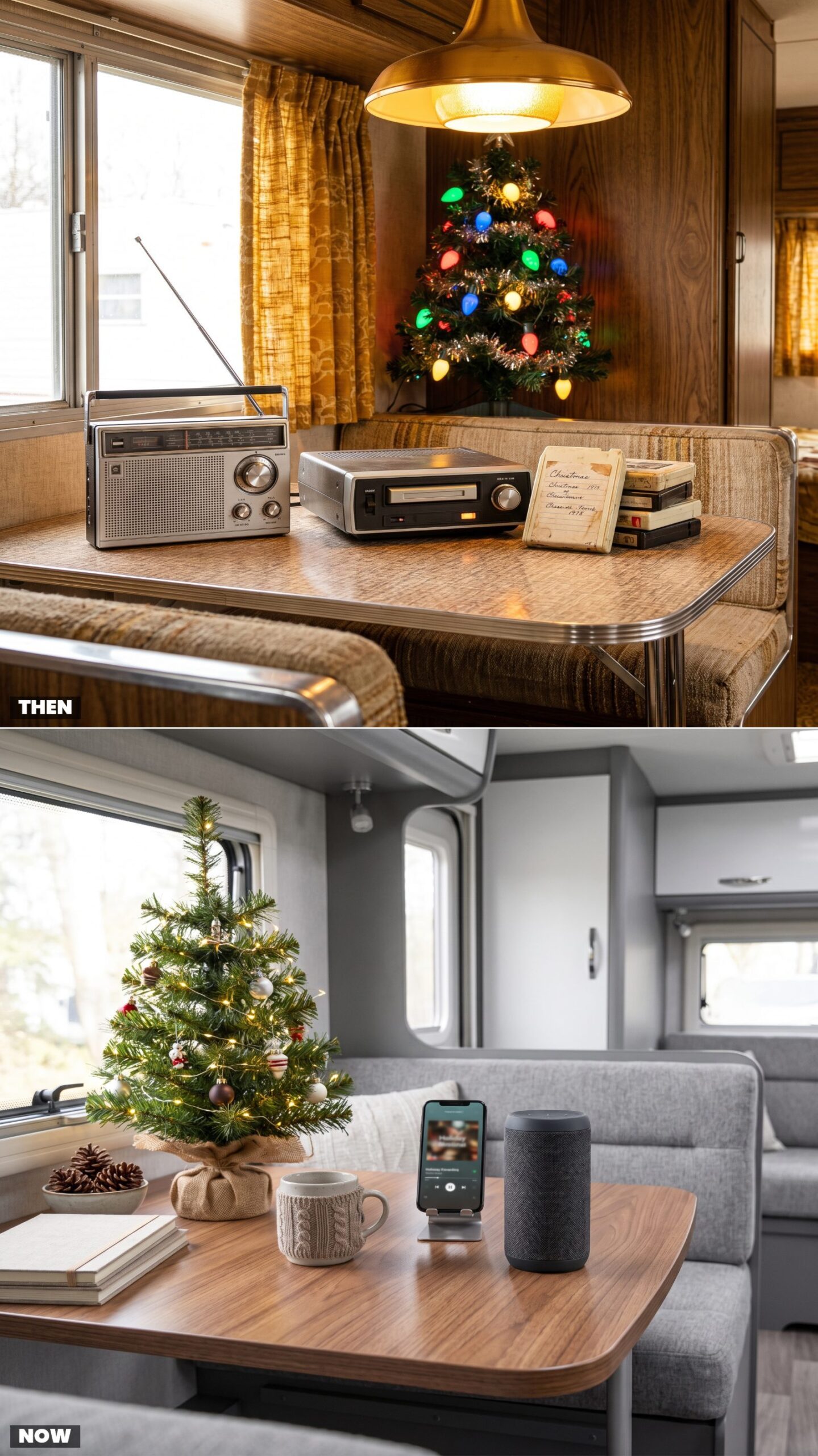
Holiday music in 1978 came from a transistor radio with a telescoping antenna you nudged a hundred ways to catch the one station still playing carols. Or from an 8-track that clunked mid-song, right in the middle of “Silent Night,” every single time. You lived with it.
Now a speaker the size of a thermos streams any playlist ever made, no static, no clunk, and it’s objectively better. But hunting for a carol station on a crackly dial made actually finding one feel like a small gift all its own. Alright — go turn something festive on.
19. Christmas Television: The Rabbit-Ear Set vs. Streaming Everything
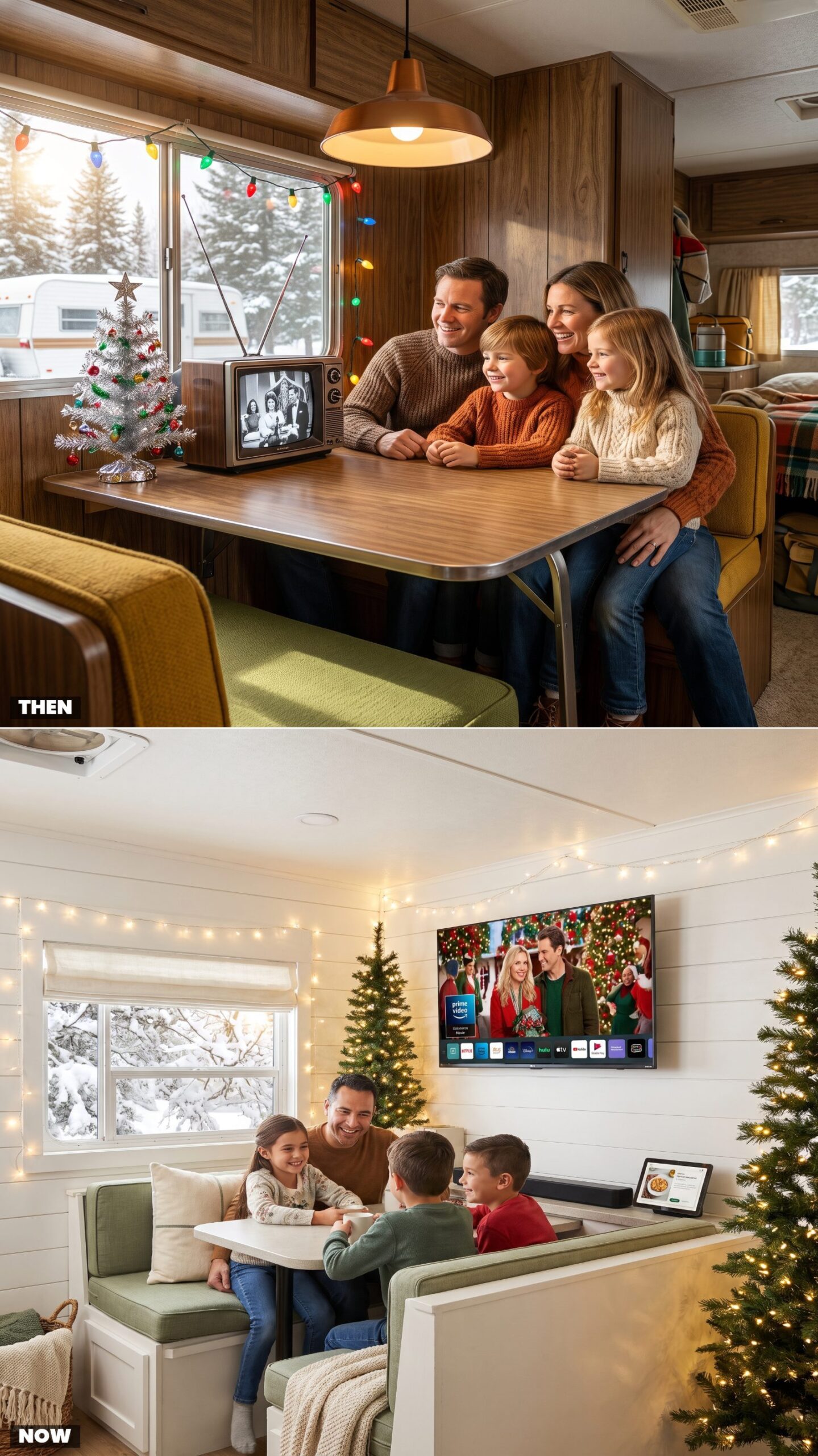
A twelve-inch screen, three channels on a good night, and a kid assigned to hold the antenna at the exact angle that killed the snow — that was Christmas TV in a 1978 trailer. You watched whatever the networks decided to air, and if the special started at 8, you were parked by 7:55.
Now you queue up decades of holiday movies on a wall-mounted screen with the campground WiFi, or your own hotspot, because campground WiFi is still mostly a rumor. Nobody holds the antenna. Nobody waits for anything. And honestly? I miss the waiting a little. The waiting was half the magic.
18. Christmas Morning Gifts: The Sears Wish Book vs. Gadgets and Gift Cards
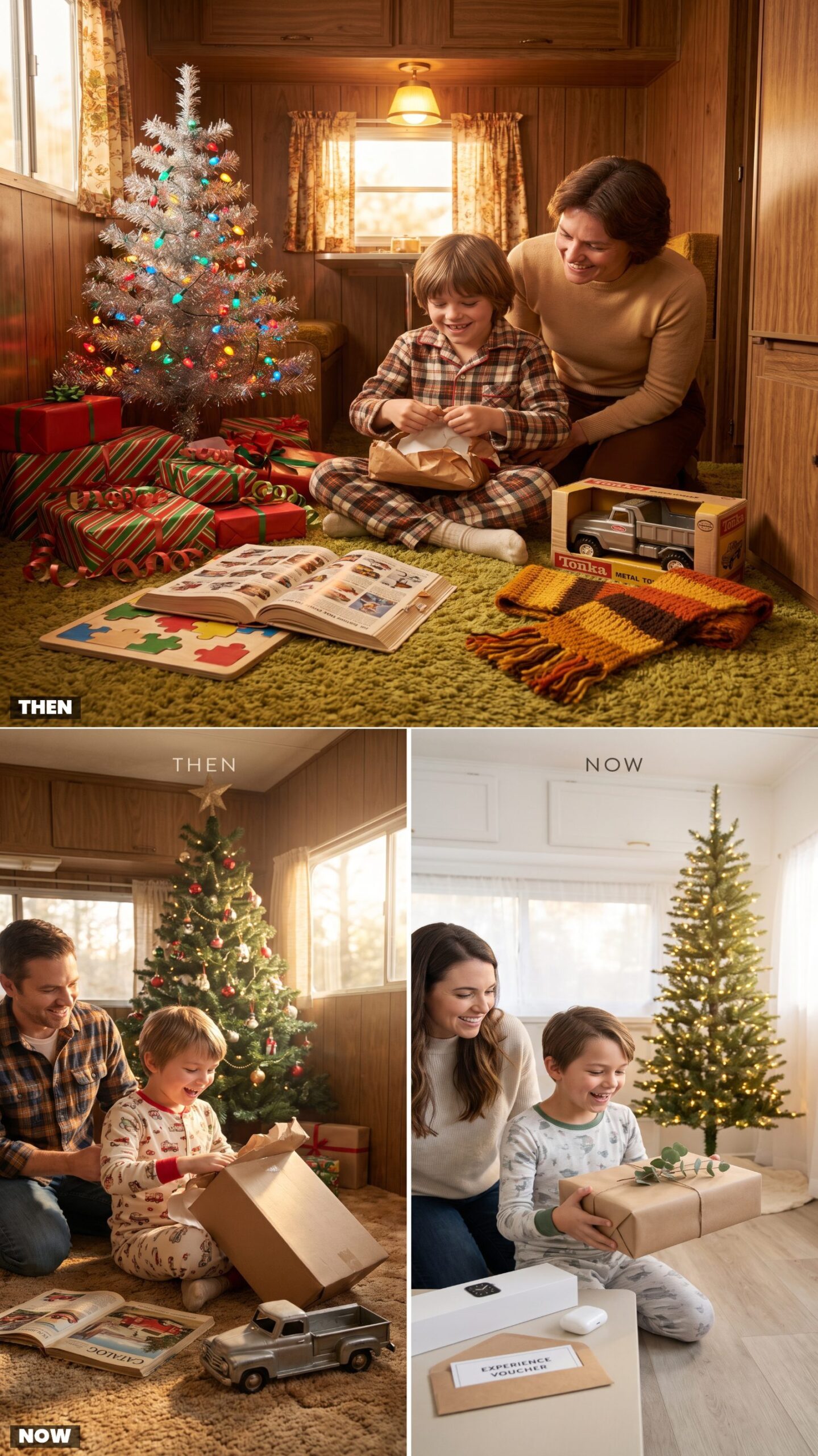
Half the gifts under the 1978 tree got circled in the catalog back in October. The kid knew exactly what was coming and faked surprise anyway, which is its own kind of love. Presents were things you could drop, stack, and run over with a bike.
Today’s haul fits in a padded envelope: a smartwatch, a set of earbuds, a card promising a weekend at a mountain cabin come spring. Experiences over objects. Smart, probably. But nothing under that modern tree makes the thunk a metal truck made when it hit the floor.
17. Kids’ Toys: Big Wheels and Baby Dolls vs. Tablets and App Toys
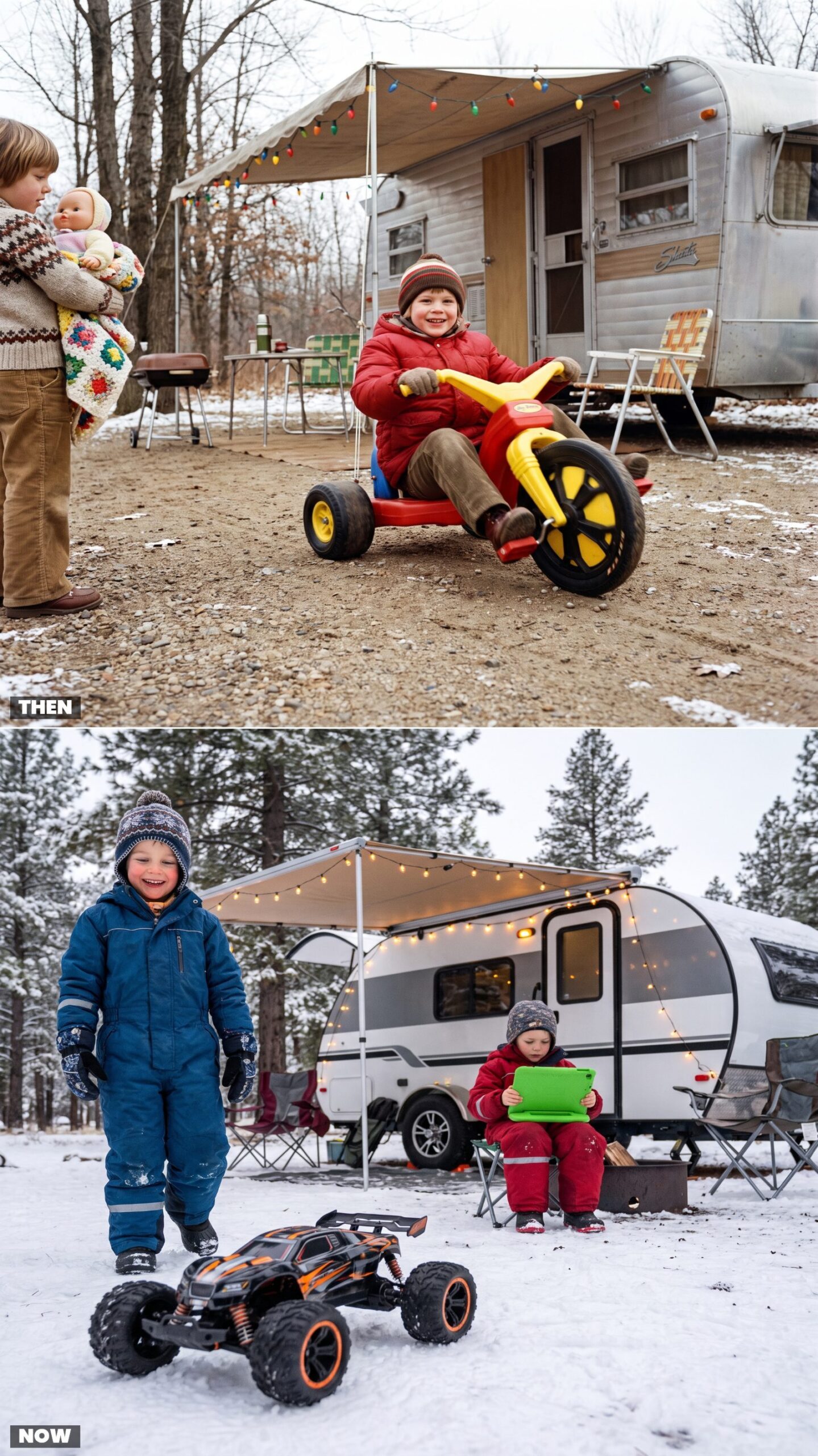
The soundtrack of a 1978 campground Christmas was plastic wheels grinding gravel. A Big Wheel had no batteries, no app, no charging cable — you pedaled until your legs gave out, and the only update it ever needed was a new set of hard plastic tires.
Now the fast toy drives itself off a phone, and the quiet toy is a tablet in a bumper case. Both are clever. Both run out of charge halfway through the morning, while the Big Wheel never once asked for anything but a hill.
16. Family Board Games: Monopoly by Lantern vs. Travel Packs and Digital Trivia
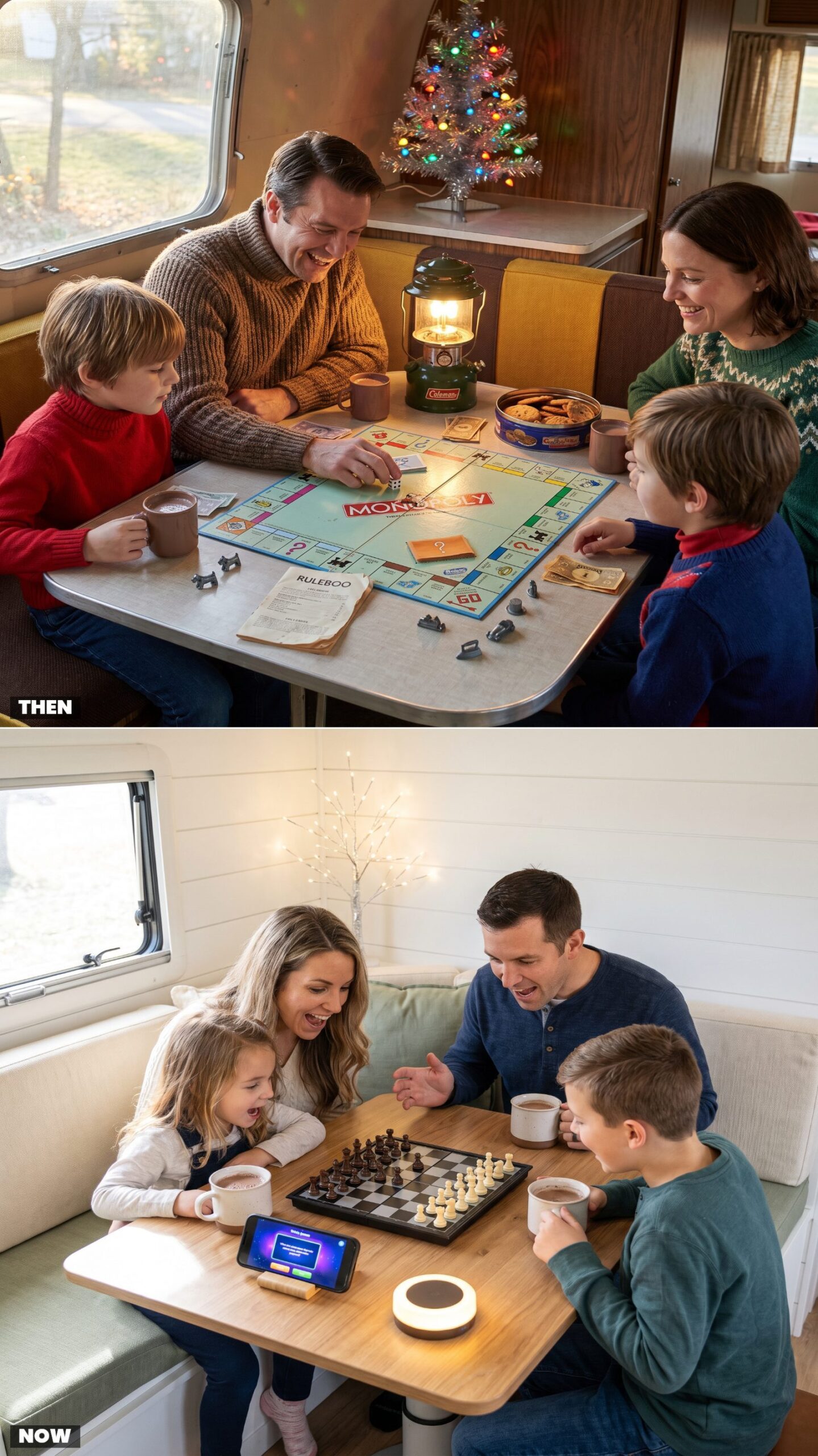
Monopoly in a trailer meant somebody’s elbow knocking the hotels across the board every twenty minutes, and a game that started after dinner and was still unresolved at bedtime. The lantern hissed. The banker cheated. Somebody flipped the board. Classic.
Travel games went compact and magnetic so the tokens stop launching every time you hit a pothole, and trivia lives on a phone now, scorekeeping handled automatically. Faster, tidier, fewer tears. Though I’d argue a game nobody can quite finish is more Christmas than one that ends on schedule.
15. Christmas Crafts: Popcorn Garlands vs. Vinyl Signs and Custom Tumblers
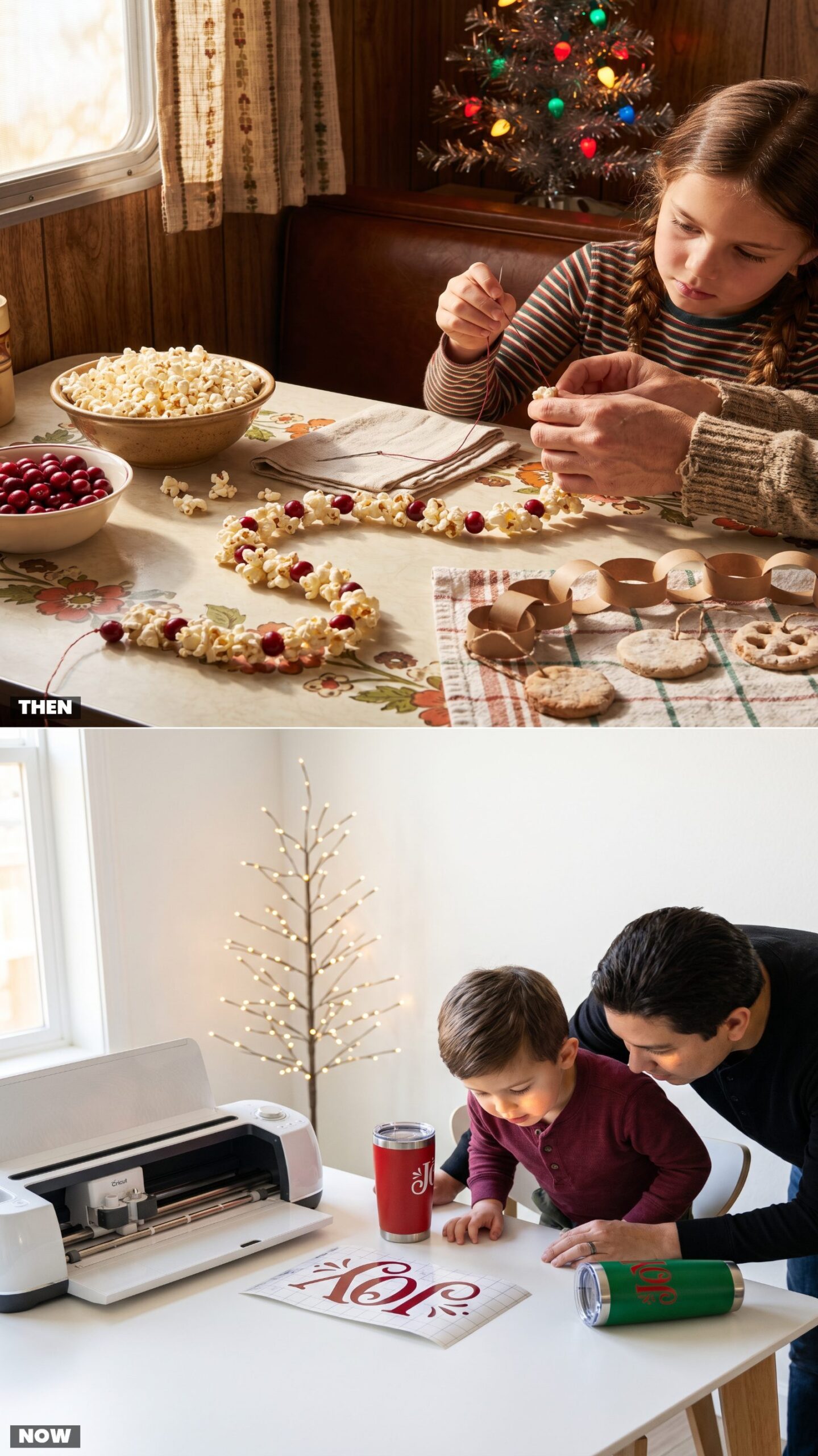
Craft day in 1978 cost you a bag of popcorn and a sewing needle. You strung popcorn and cranberries into garlands, and the real skill was eating slower than you threaded. Salt-dough ornaments dried on the heater vent. Everything smelled faintly of flour.
The modern version hums. A vinyl cutter spits out crisp holiday signs and personalized tumblers with your campsite number and a snowflake, sharper lines than anyone’s hands could manage, no needle pricks, no eating the supplies. I’ll give the machine its due. But I’ve never once stood over a vinyl cutter and sneaked a handful.
14. Holiday Outfits: Flares and Knit Vests vs. Matching Family Pajamas
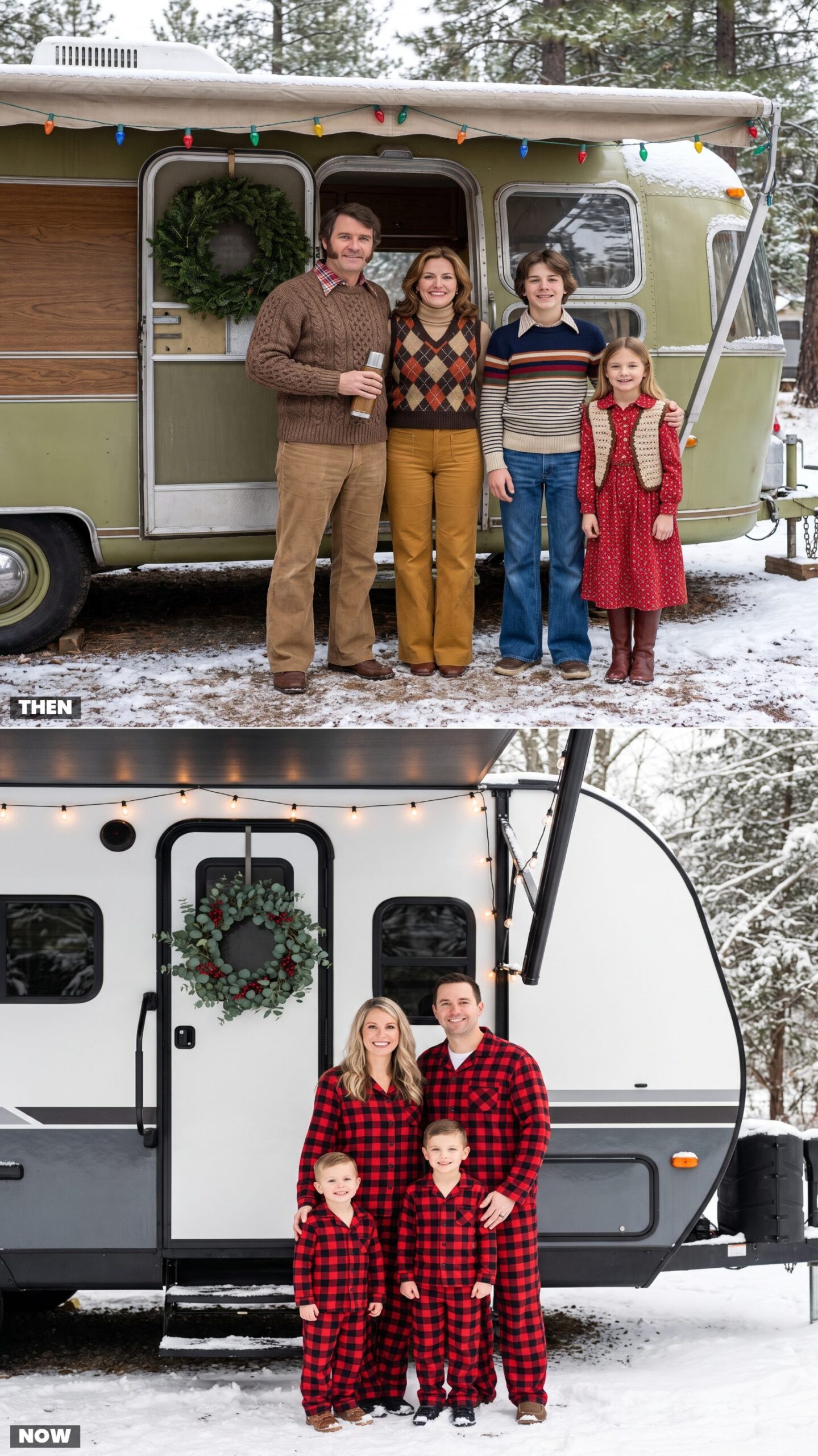
In 1978 you dressed up for Christmas, even at a campground. Flared cords, a knit argyle vest over a wide-collar shirt, a cable sweater your aunt made. You looked pulled together for the photo, then froze a little because none of it was built for snow.
These days the whole family wears matching plaid pajamas, head to toe, in the same photo. Comfort won outright, and the look is intentionally unserious — which is its own confident choice. One era dressed to impress the camera. The other dressed to admit it’s a holiday and nobody’s leaving the campsite.
13. Camp Chairs: Aluminum Webbed Folders vs. Padded Zero-Gravity Recliners
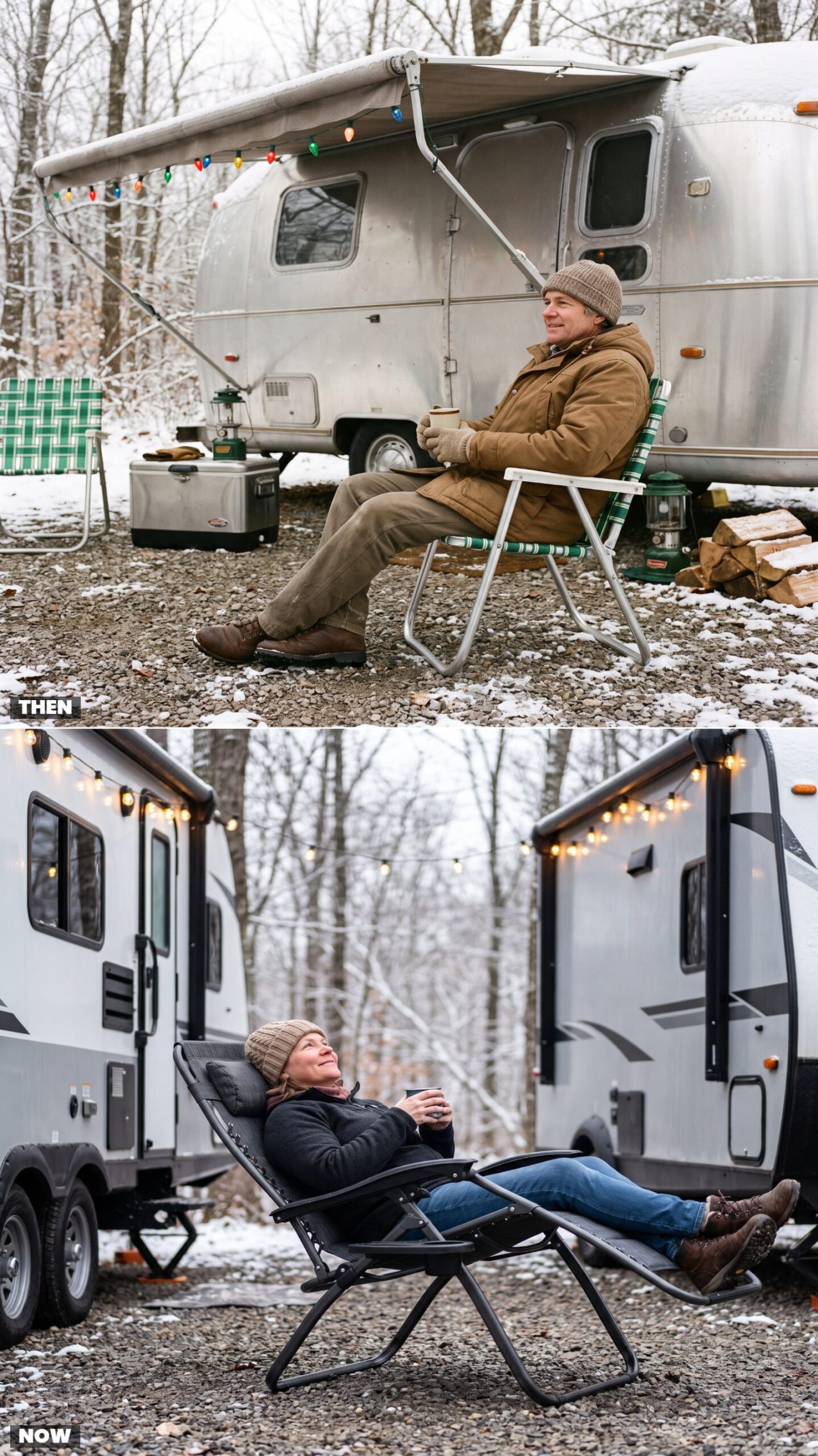
Those green-and-white webbed aluminum chairs pinched the back of your legs and left a waffle print on your thighs by July. They weighed almost nothing, folded flat as a cracker, and every single family owned four. The webbing always frayed first.
Now the chair reclines you nearly flat, cradles your head, and holds your cocoa in a built-in cup holder. Your knees float. Your lower back forgives you. The trade is weight and bulk — the thing’s a beast to haul. But nobody frays anymore, and nobody misses the waffle print either.
12. Outdoor Shelter: Roll-Out Canvas Awnings vs. Screen Rooms With Wind Panels
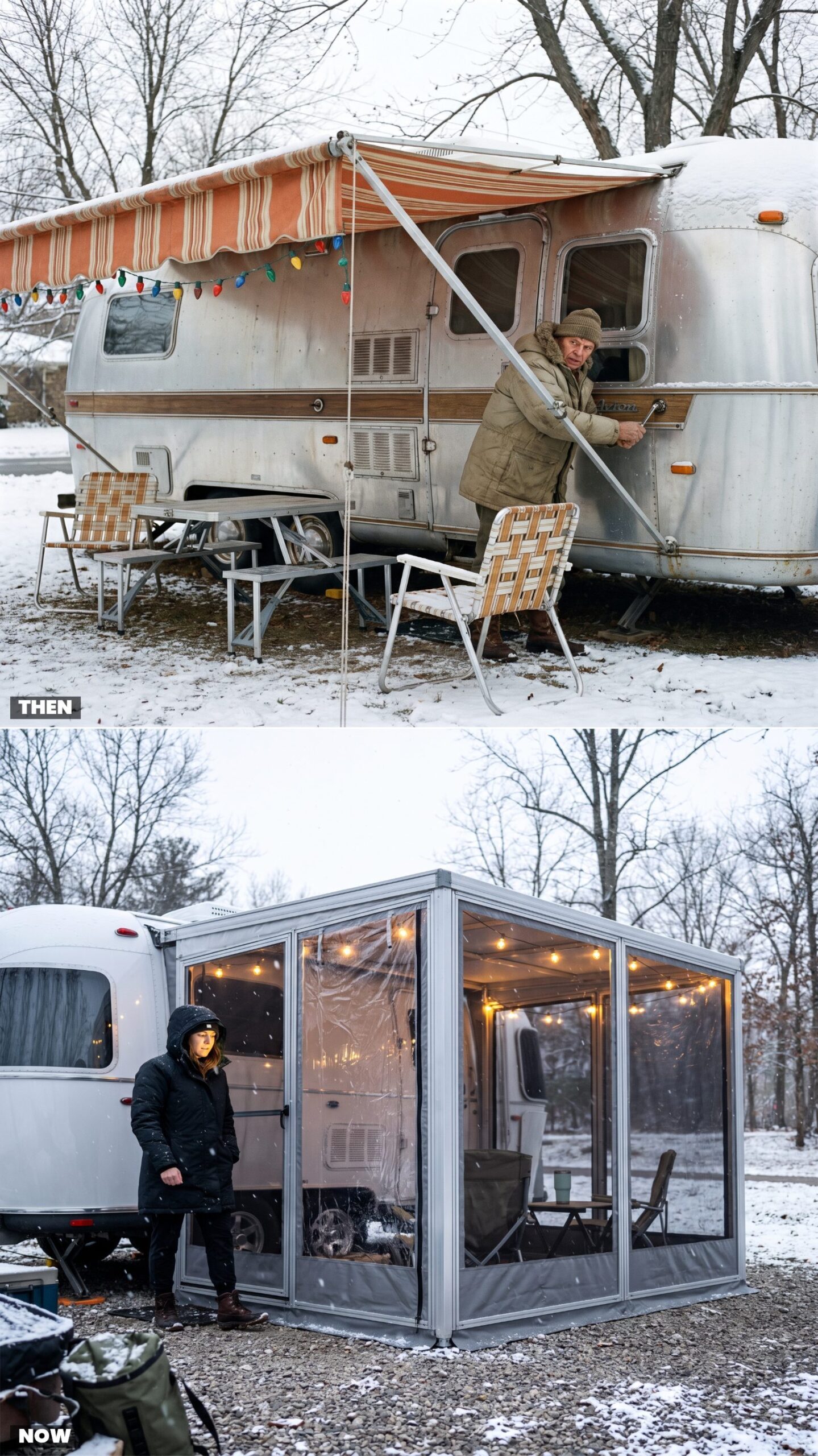
The canvas awning was a two-person job and a test of marriage. One cranked, one held the pole, both argued about the angle. It threw shade and kept light rain off, and in a December wind it flapped like a sail trying to make a break for it.
Modern screen rooms zip shut completely. Mesh keeps the bugs out in summer, and clear wind panels snap on to block the December chill, turning a bare site into a usable room. You can actually eat Christmas Eve dinner out there now without your gravy going cold. The old awning never once offered that.
11. Christmas Eve Campfires: Split Logs and Marshmallows vs. Propane Pits and Gourmet S’mores
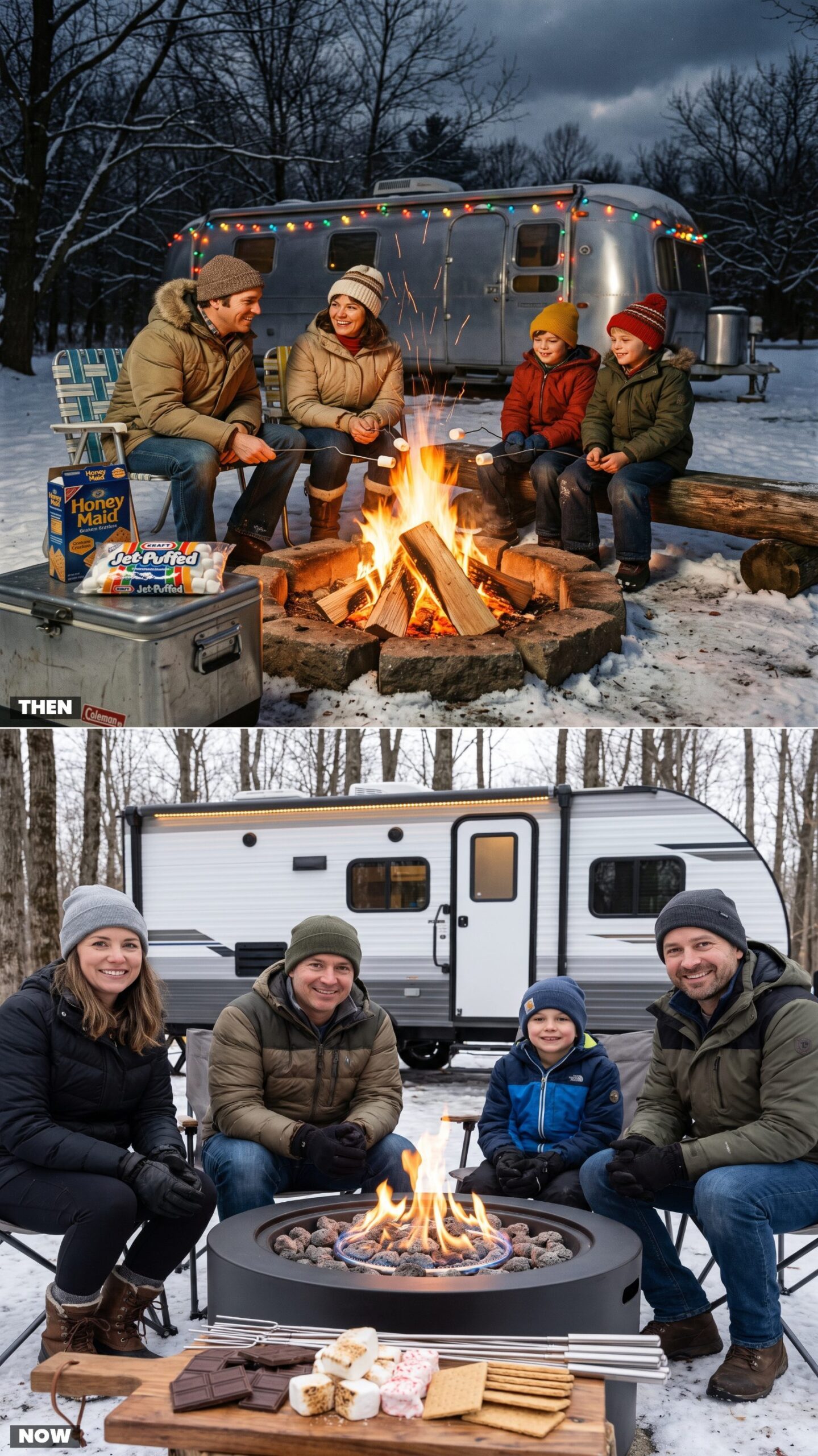
A 1978 Christmas Eve fire meant hauling split logs, coaxing a flame with newspaper, and roasting marshmallows on a straightened coat hanger until they caught fire and you ate them anyway. Your front cooked, your back froze, and everybody smelled like woodsmoke for two days.
The propane pit lights with a knob and never spits a spark onto your parka. S’mores come on a board now — dark chocolate, salted caramel marshmallows, shortbread instead of grahams. Cleaner. Fancier. No permit worries in a dry season.
But a propane flame doesn’t crackle, and a gourmet marshmallow that didn’t nearly burn your fingers off just isn’t the same marshmallow. I’ll die on this hill.
10. Campground Caroling: Door-to-Door Songbooks vs. Organized Singalongs With Speakers
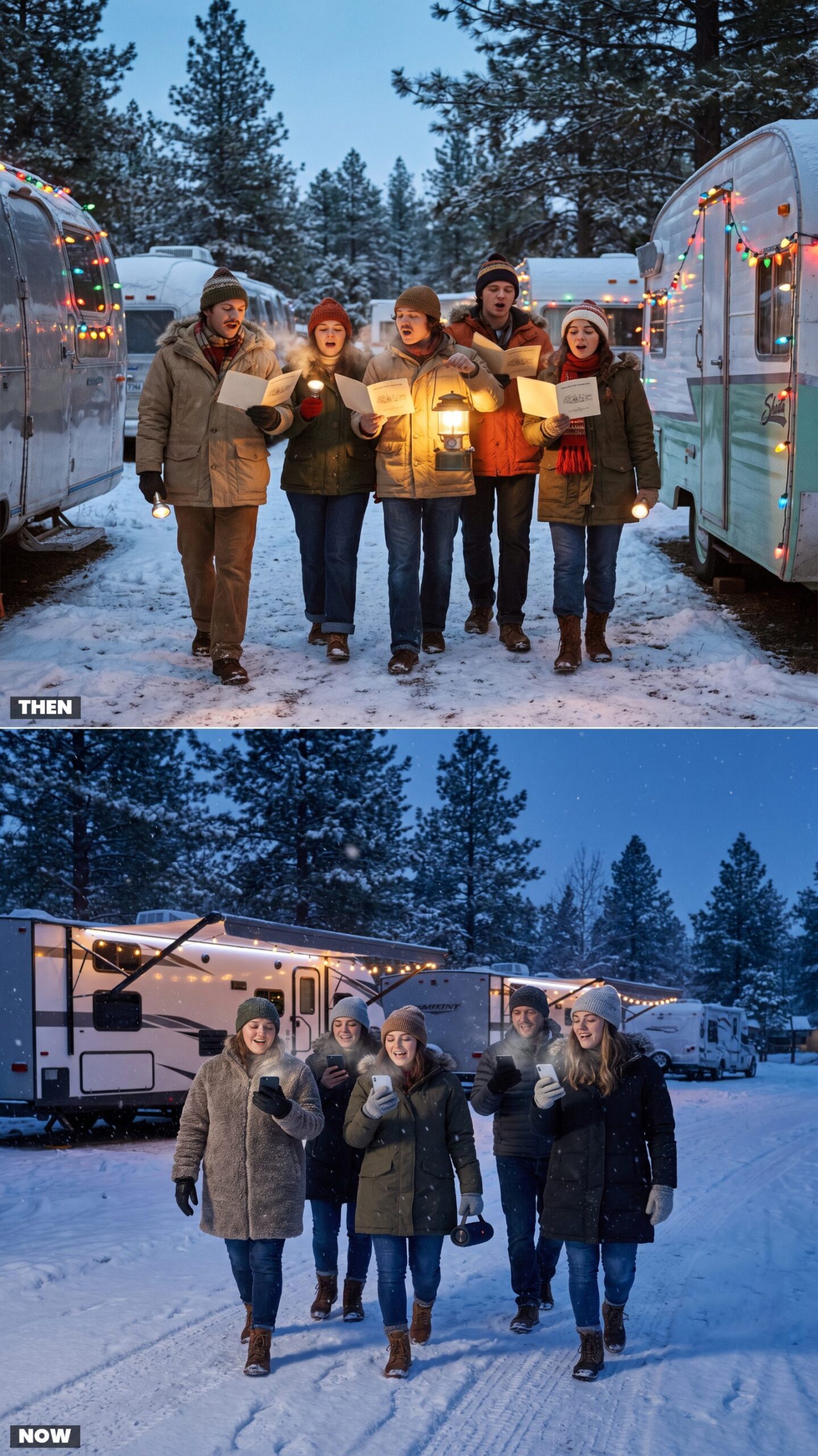
Caroling in 1978 was a door-to-door operation. Somebody photocopied lyric sheets, somebody else carried the lantern, and the whole group walked the loop singing slightly off-key into the cold. Half the carolers forgot the second verse and hummed through it, which everyone did.
Today it’s often an organized singalong on the common green, lyrics on phones, a Bluetooth speaker carrying the backing track so nobody has to find the starting note. More in tune. More scheduled. Fewer forgotten verses.
Still, something about a ragged group humming the parts they forgot, breath fogging in lantern light, beat any speaker ever made. Some things got better. Caroling mostly just got louder.
9. Christmas Worship: Recreation-Hall Service vs. Livestreamed Inside the RV
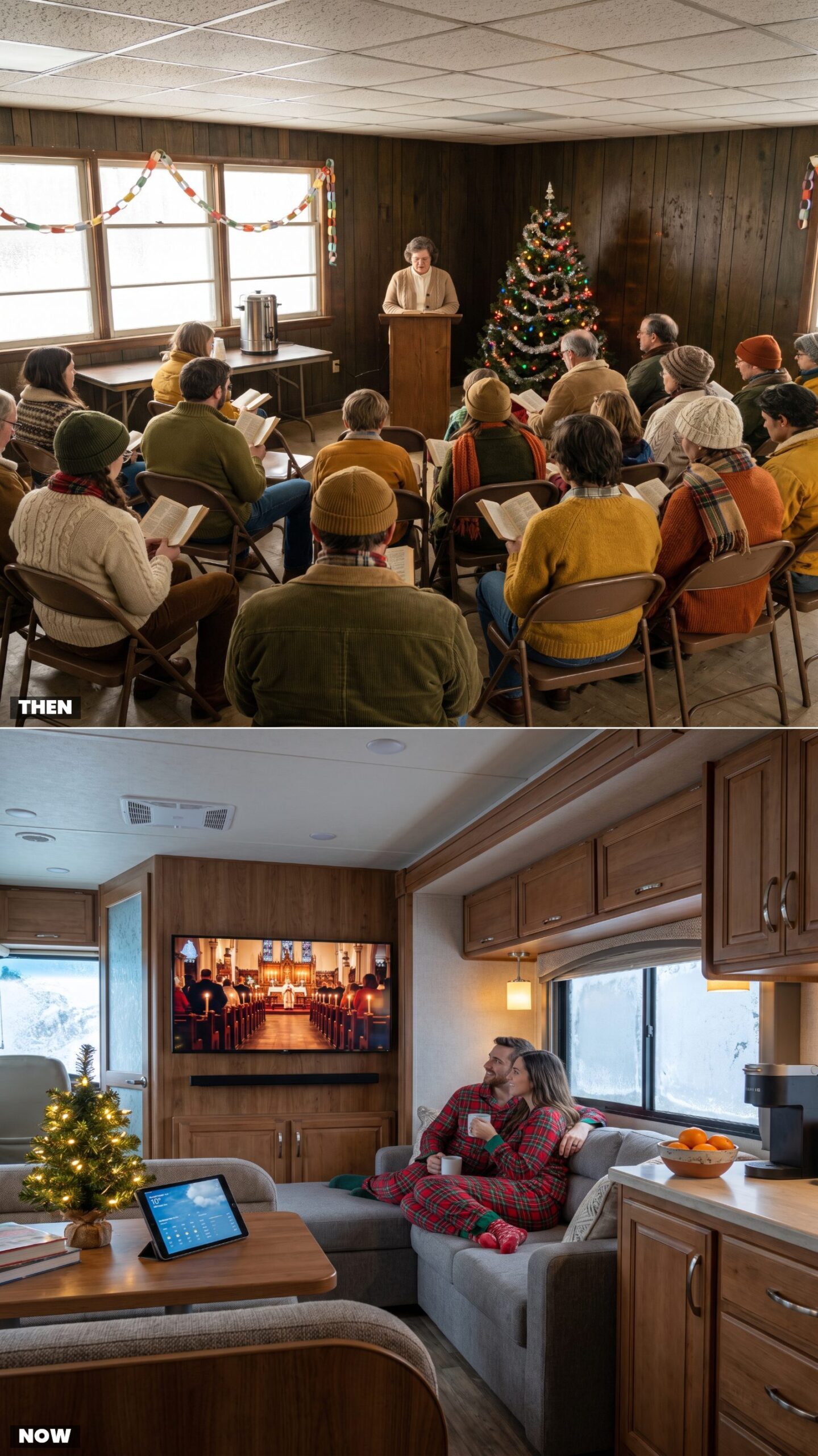
In 1978 the Christmas service happened in the rec hall. Somebody plugged in the coffee urn, somebody dragged the folding chairs into rows, and the whole park drifted over in their warmest sweaters. The hymnals were booklets and the piano was out of tune, and nobody minded one bit. You went because it was there, and because your neighbors were there too.
Now the service comes to you. Livestream on the wall-mounted TV, coffee from the pod machine, slippers on. Convenient, no question. But I’ll admit I miss the walk through the cold to a room full of faces I half-knew.
8. Community Potlucks: Handwritten Sign-Up Sheets vs. Coordinated Online Menus
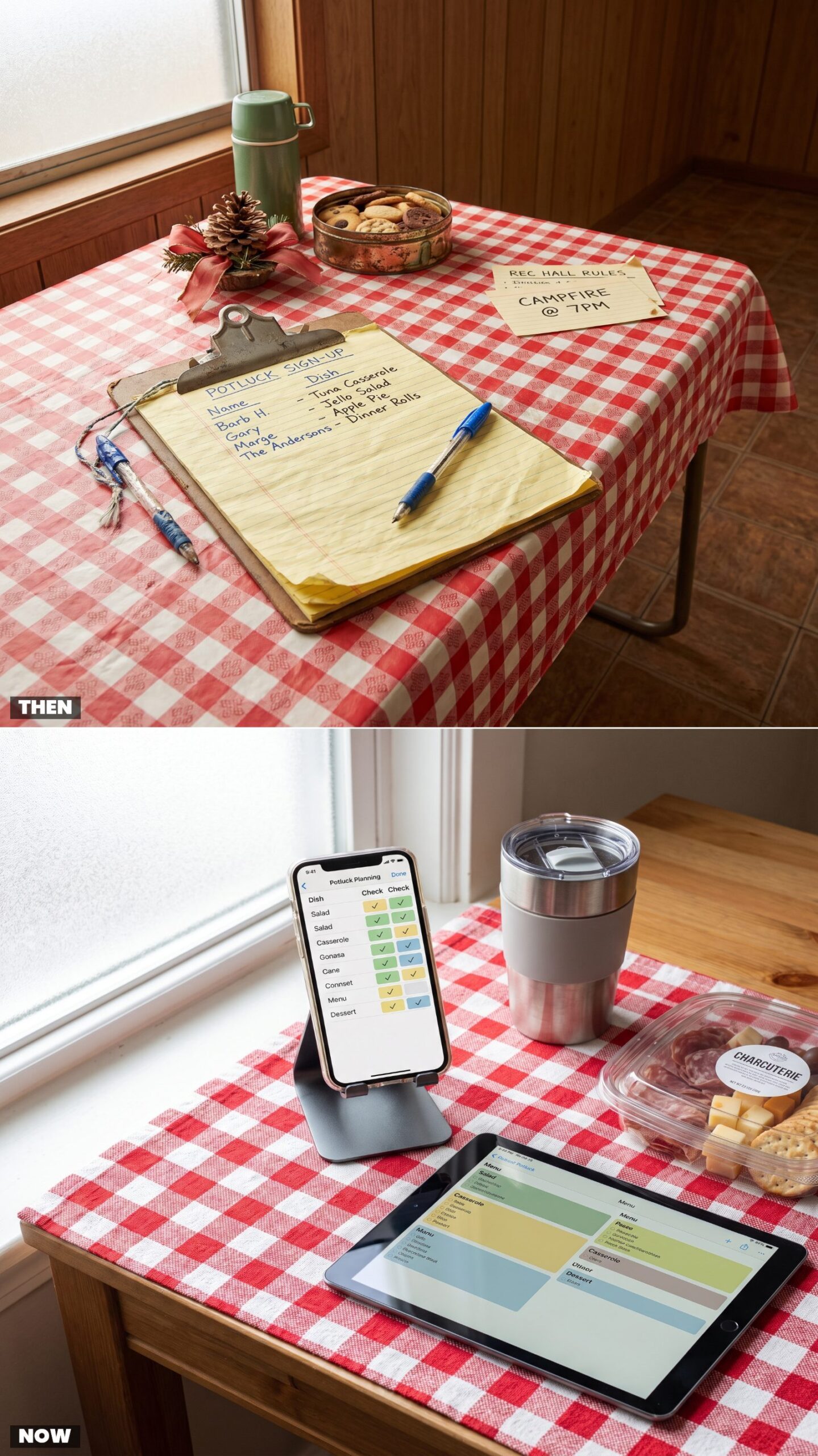
The sign-up sheet lived on a clipboard by the door. You wrote your name, you wrote your dish, and you prayed three people didn’t all claim green bean casserole. They usually did. Nine desserts and no rolls, every single year.
Today a shared app sorts it out before anyone lifts a spoon. Dishes get claimed, dietary notes get flagged, reminders ping your phone. Efficient? Sure. Though I’d swap the tidy spreadsheet for the chaos of that yellow legal pad any day of the week.
7. Christmas Dinner: Turkey From a Compact Oven vs. Smoked Meat From a Pellet Grill
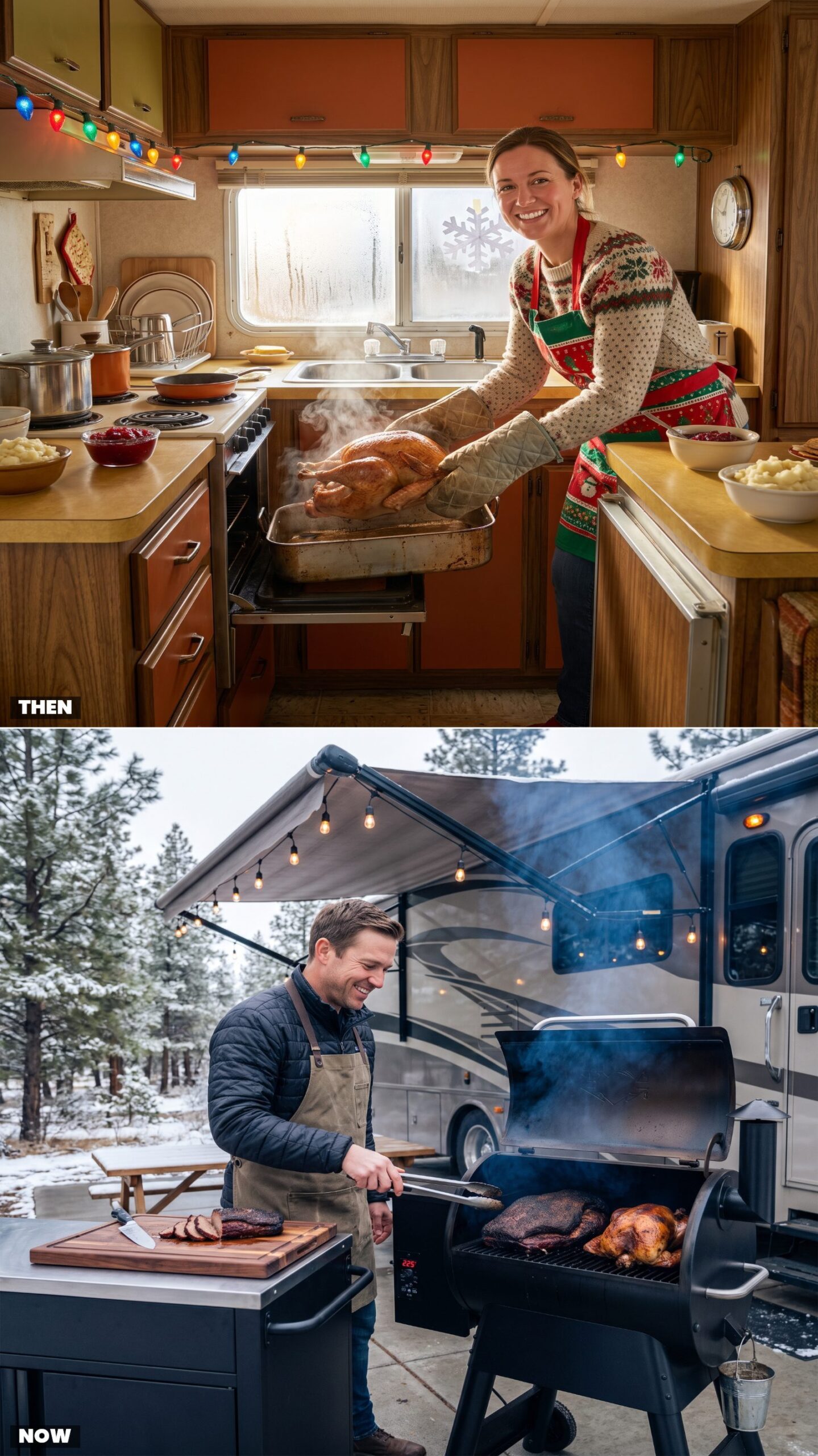
That little propane oven could just about fit a modest bird if you wrestled it in sideways. You basted, you crossed your fingers, and the whole trailer fogged up with condensation. The turkey came out fine. Cramped, but fine.
Now the cooking moves outside, to a pellet grill that holds temperature to the degree while you sip cocoa in the cold. Smoked brisket, smoked turkey, blue smoke curling over fresh snow. And the trailer stays clear, so nobody fights the oven for counter space.
6. Christmas Breakfast: Percolator Coffee and Cinnamon Rolls vs. Pod Coffee and Brunch Boards
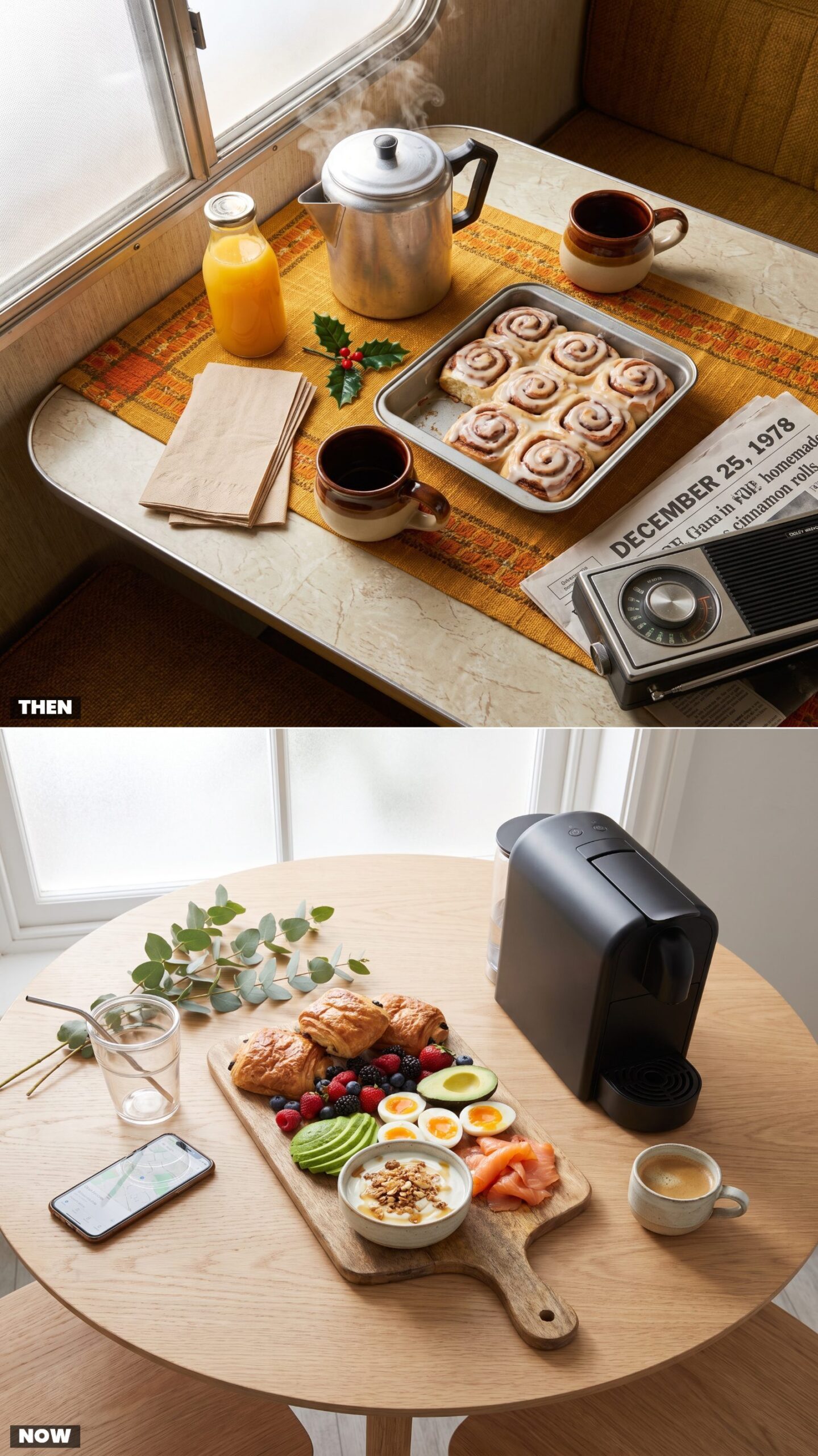
Christmas morning used to start with the percolator doing its slow bubbling thing on the propane burner, and the smell of coffee and cinnamon filling the whole trailer before anyone’s feet hit the cold floor. Rolls from a tin, icing still soft. Two mugs. A radio playing carols low.
These days breakfast is a board. Pod coffee in under a minute, pastries and berries and a soft-boiled egg laid out like a magazine spread. It photographs beautifully. But that percolator gurgle was its own little alarm clock, and no pod machine is ever going to replace it.
5. Hot Chocolate: Powdered Mix in Enamel Mugs vs. Elaborate Cocoa Stations
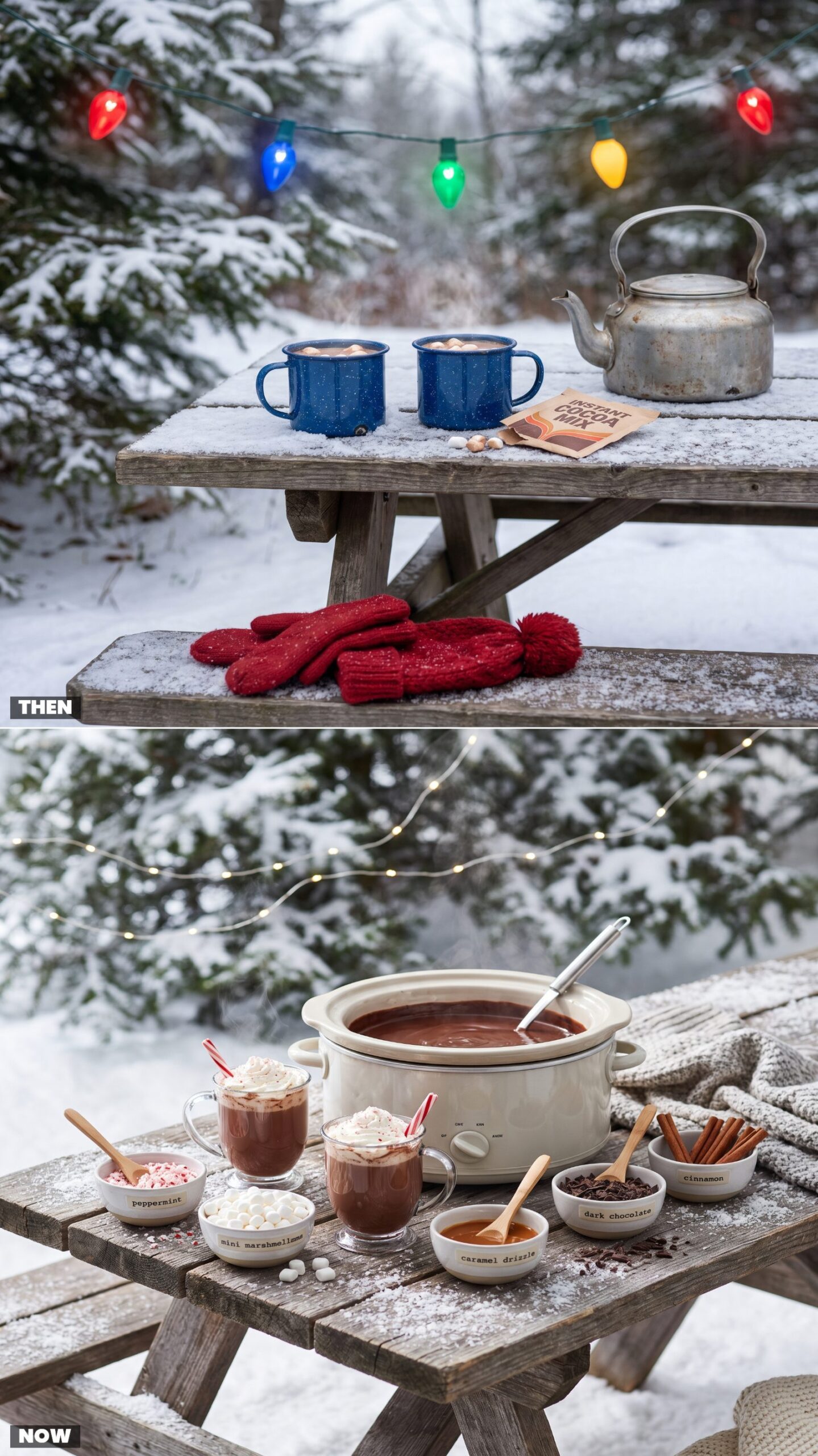
Hot chocolate in 1978 was a torn packet of powder, water from the kettle, a quick stir, and if you were lucky a handful of marshmallows that had survived the glovebox. The speckled enamel mug burned your lips and your mittened hands both. It was perfect.
Now there’s a cocoa bar. Melted chocolate in a slow-cooker, crushed peppermint, whipped cream, caramel drizzle, candy-cane stir sticks, the whole operation. It’s a project. Lovely, genuinely. Still, I’ve got a soft spot for the kind you could throw together in forty-five seconds with cold fingers.
4. Campground Stores: Basic Groceries and Propane vs. Branded Gifts and Artisan Goods
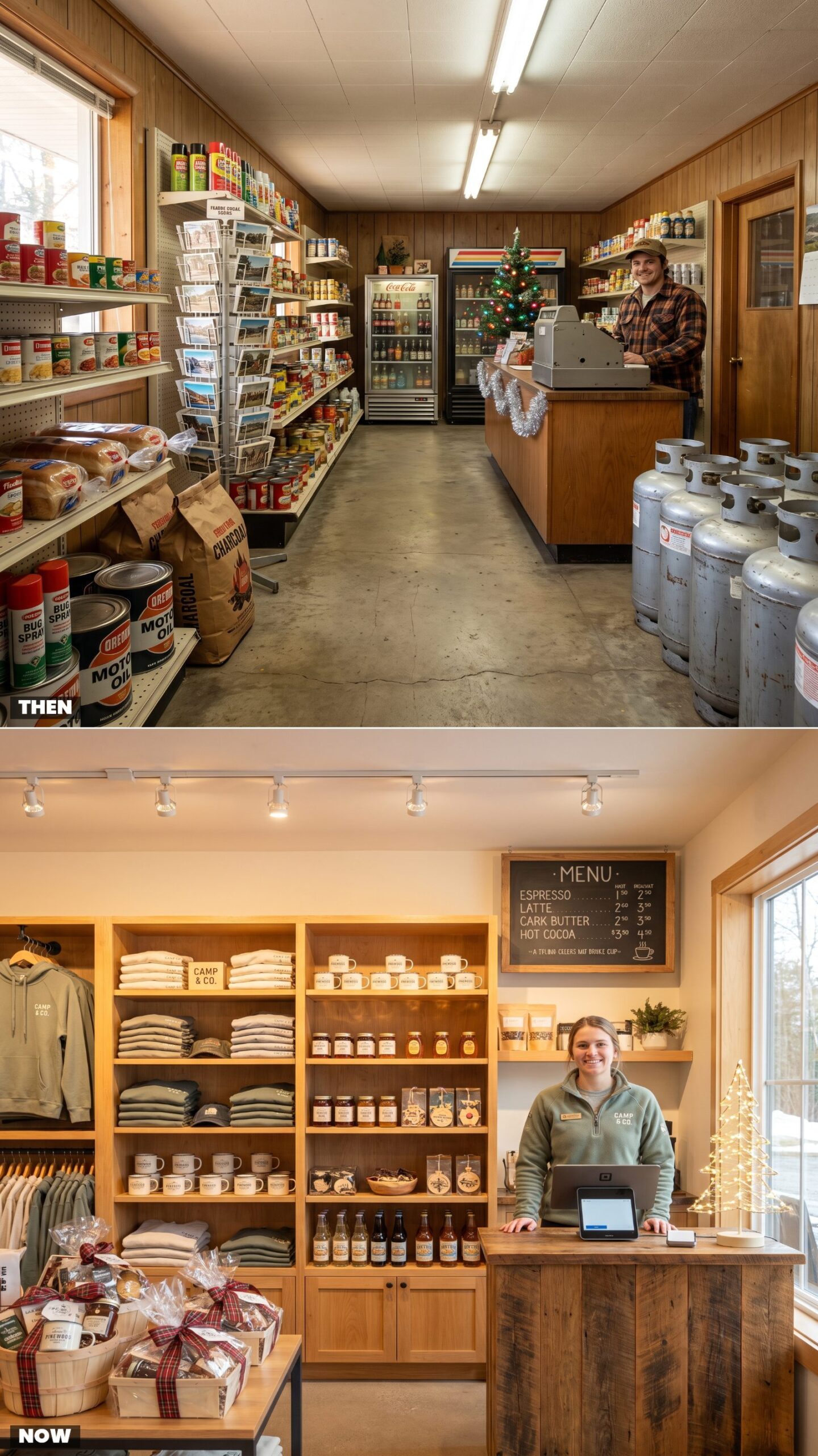
The old camp store sold what you forgot. Bread, a can of beans, charcoal, bug spray, propane by the door, postcards on a squeaky wire rack. The register was mechanical and the clerk knew your rig by sight. You’d go in for one thing and leave with three.
Walk into one now and it’s half gift shop. Branded hoodies, local honey, handmade ornaments, craft soda, a coffee counter in the corner. The propane’s still out back. It’s just sharing shelf space with artisan jam these days.
3. Pet Camping: A Dog Tied Beside the Trailer vs. Fenced Dog Parks and Portable Pens
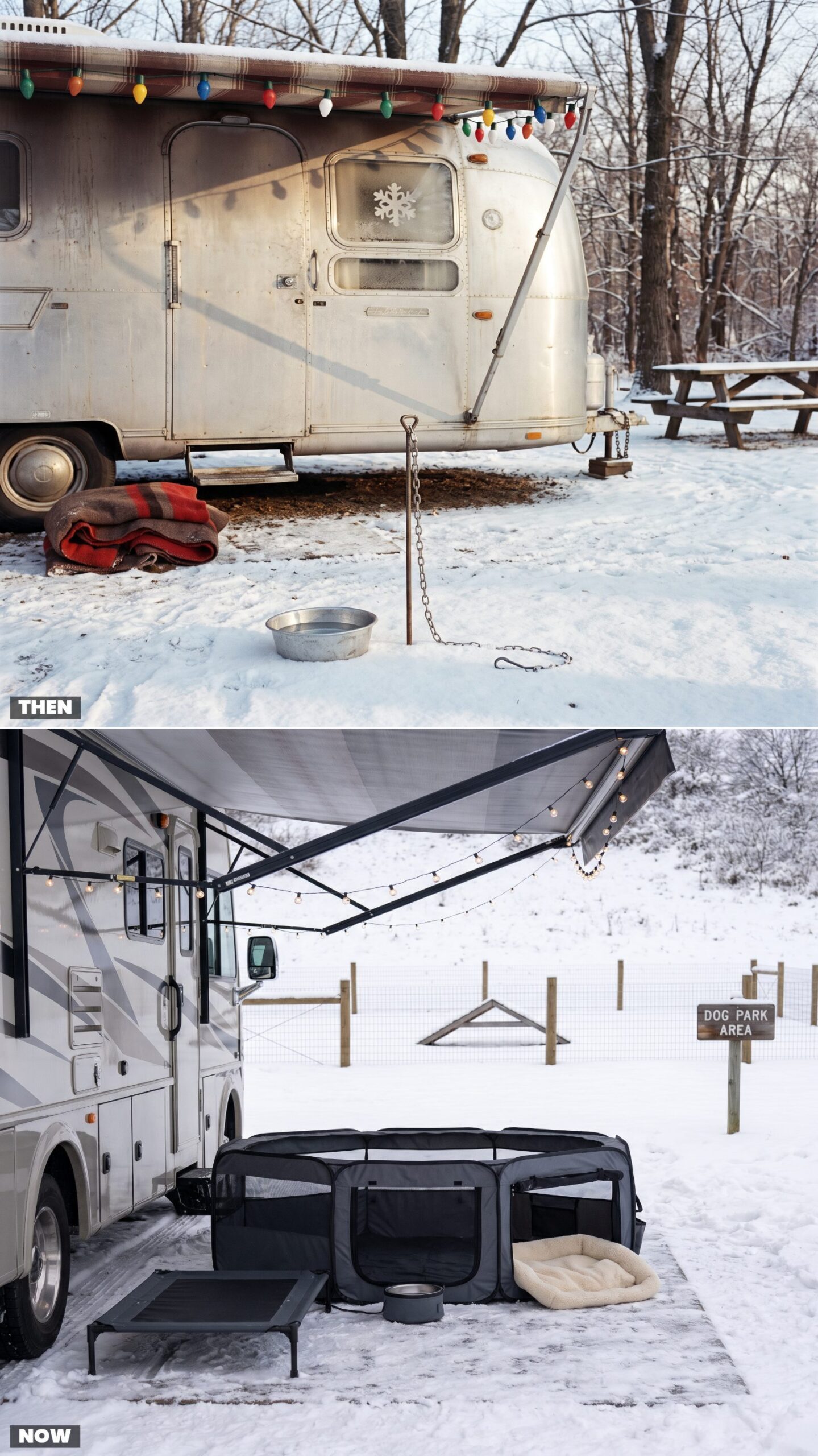
In 1978 the family dog got a stake, a long chain, a bowl, and a blanket by the step. That was it. He had the run of a twenty-foot radius and knew every inch of it.
Now pets get a fenced dog park down the lane, a collapsible pen on the pad, a raised cot, an insulated bowl so the water doesn’t freeze solid overnight. Parks advertise the amenities right on the sign. Better deal for the dog, honestly, and I say that as someone who always felt a little guilty about that old chain.
2. Snow Removal: Campers With Shovels vs. Plowed Pads and Heated Utility Areas
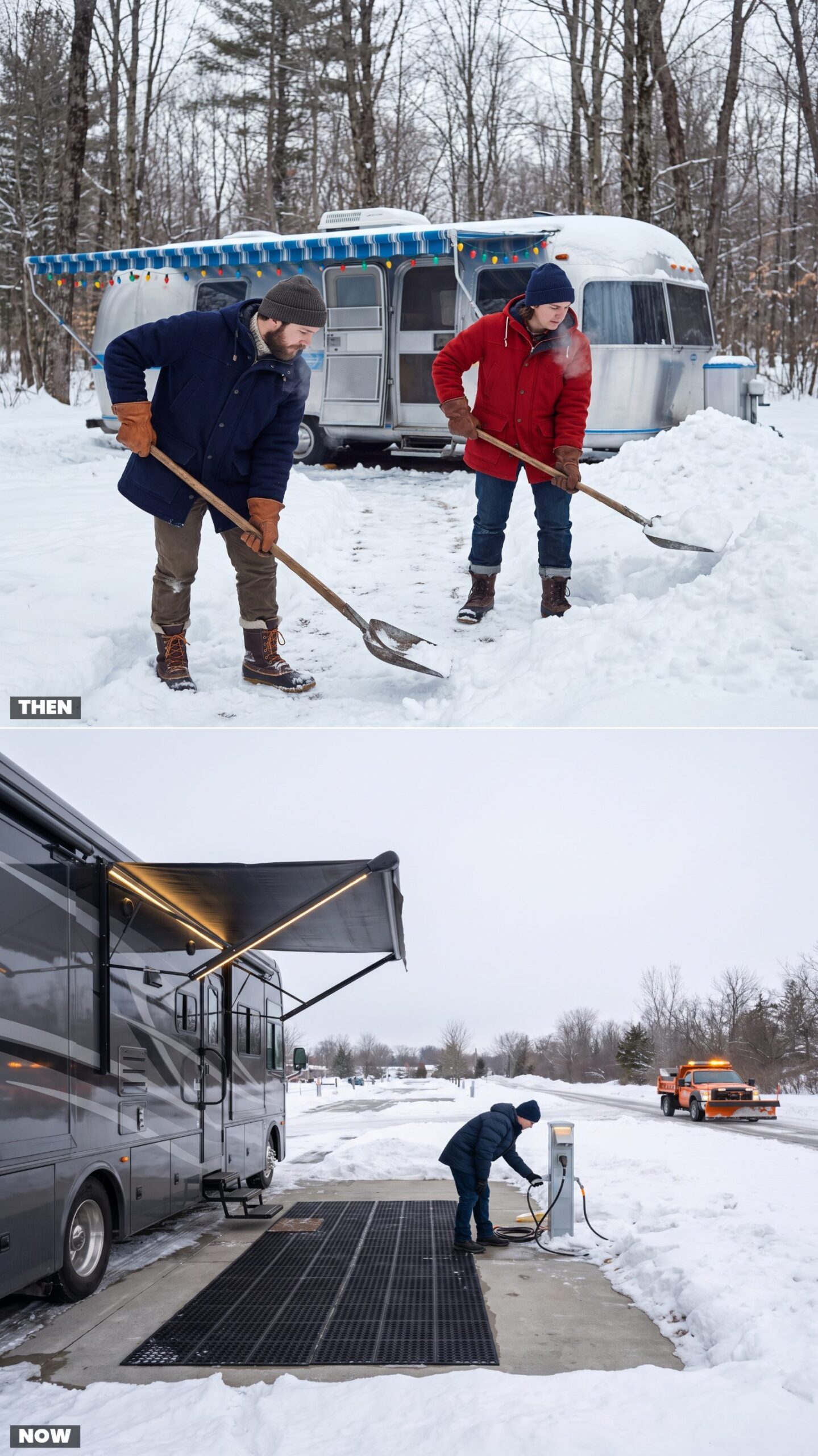
Snow was your problem in 1978, and your tool was a shovel. You cleared a path to the door, cleared around the tires, cleared the step, then did it all again every time it fell. Your back knew exactly how much it had snowed.
Winter parks now plow the pads and the roads, and the better ones keep the utility hookups in a heated, cleared zone so your water line doesn’t turn to ice overnight. You still own a shovel. You just don’t lean on it the way the old-timers did.
1. Christmas Night at the Campground: A Few Glowing Windows vs. a Park-Wide LED Spectacle
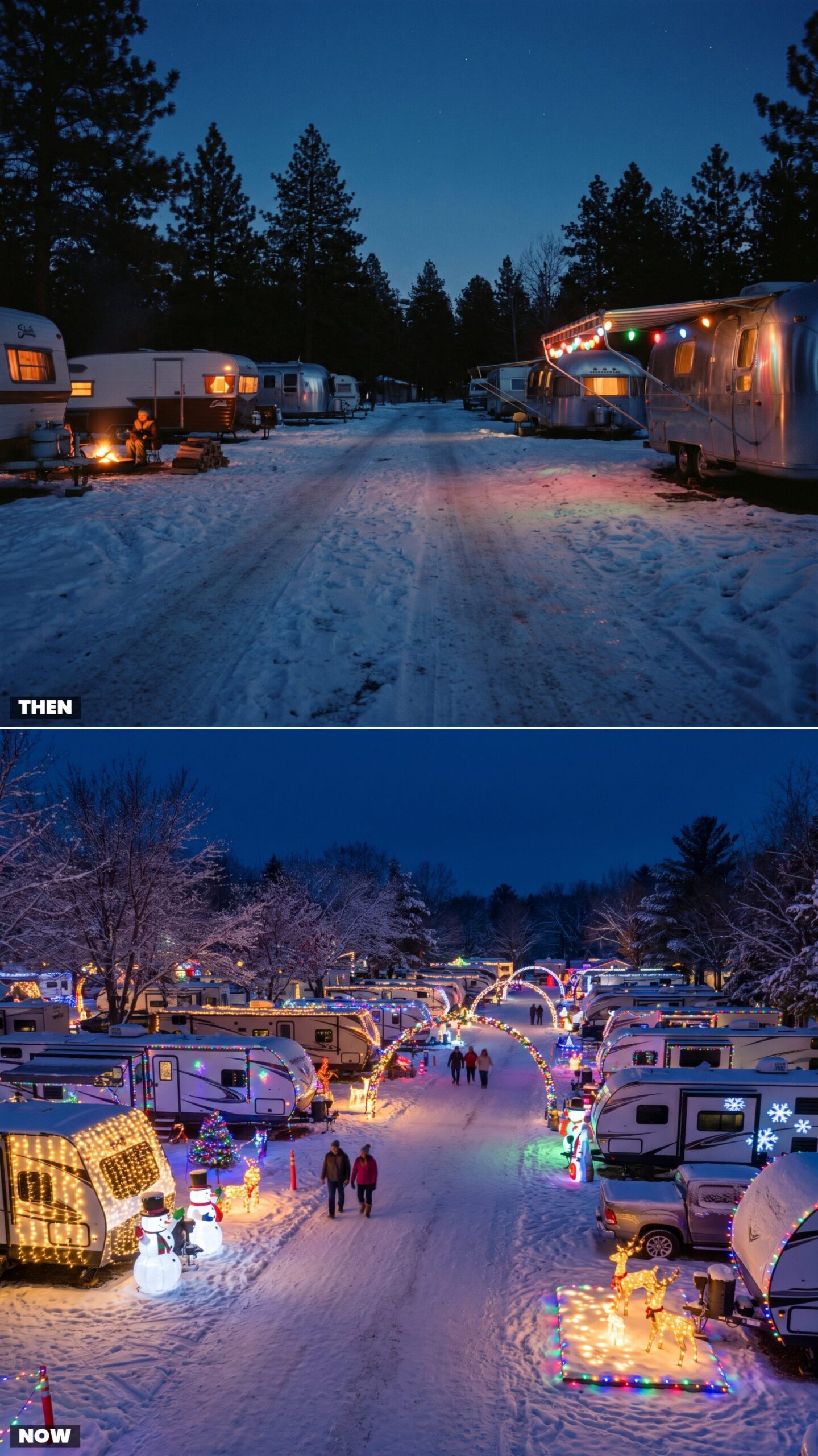
Christmas night at the park used to be mostly dark. A few trailers glowing warm from the inside, one or two strands of fat multicolored bulbs on an awning, a low campfire down the loop. Quiet. You could see every star, and you could hear the snow coming down.
Drive the loop today and it’s a show. LED light curtains, synchronized color-changing strings, inflatable snowmen taller than the picnic tables, projectors throwing snowflakes across the siding. Genuinely something to see.
The old loop had a handful of glowing windows and a whole sky full of stars. The new one has a thousand lights and you can barely find the stars at all.
Both are Christmas. One just plugs in a lot harder.