
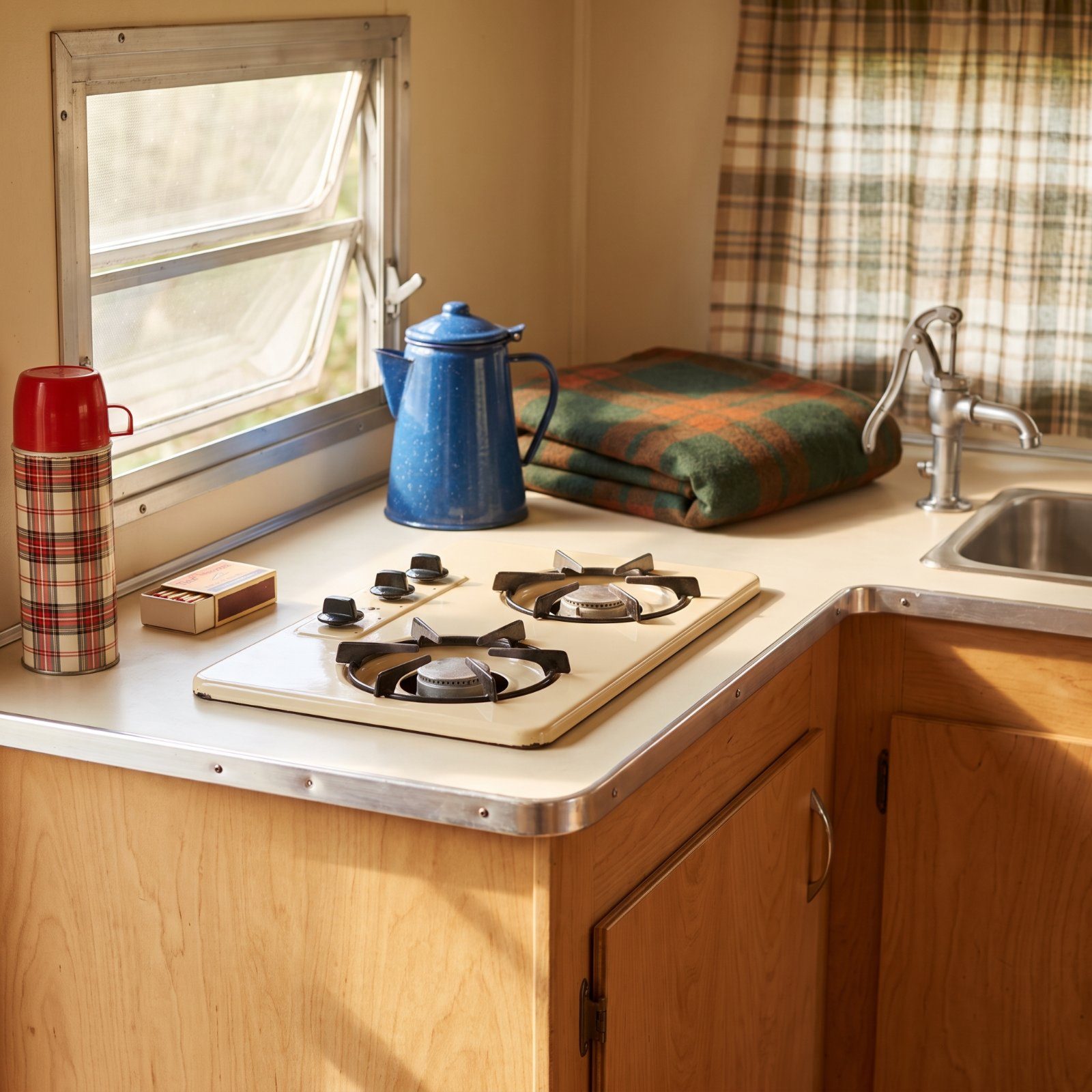
Open the door of a 1962 travel trailer and your nose gets the first clue: propane, cold canvas, and the faint sweetness of a wooden icebox that spent the summer holding block ice. Nothing in here beeps. Nothing glows. You lit things with a wooden match, and you pumped your own water by hand.
These campers ran on muscle, patience, and a little faith in your propane lines. What follows is the gear that made weekend camping work before touchscreens and tank sensors showed up.
31. An Icebox Cooled by a Real Block of Ice
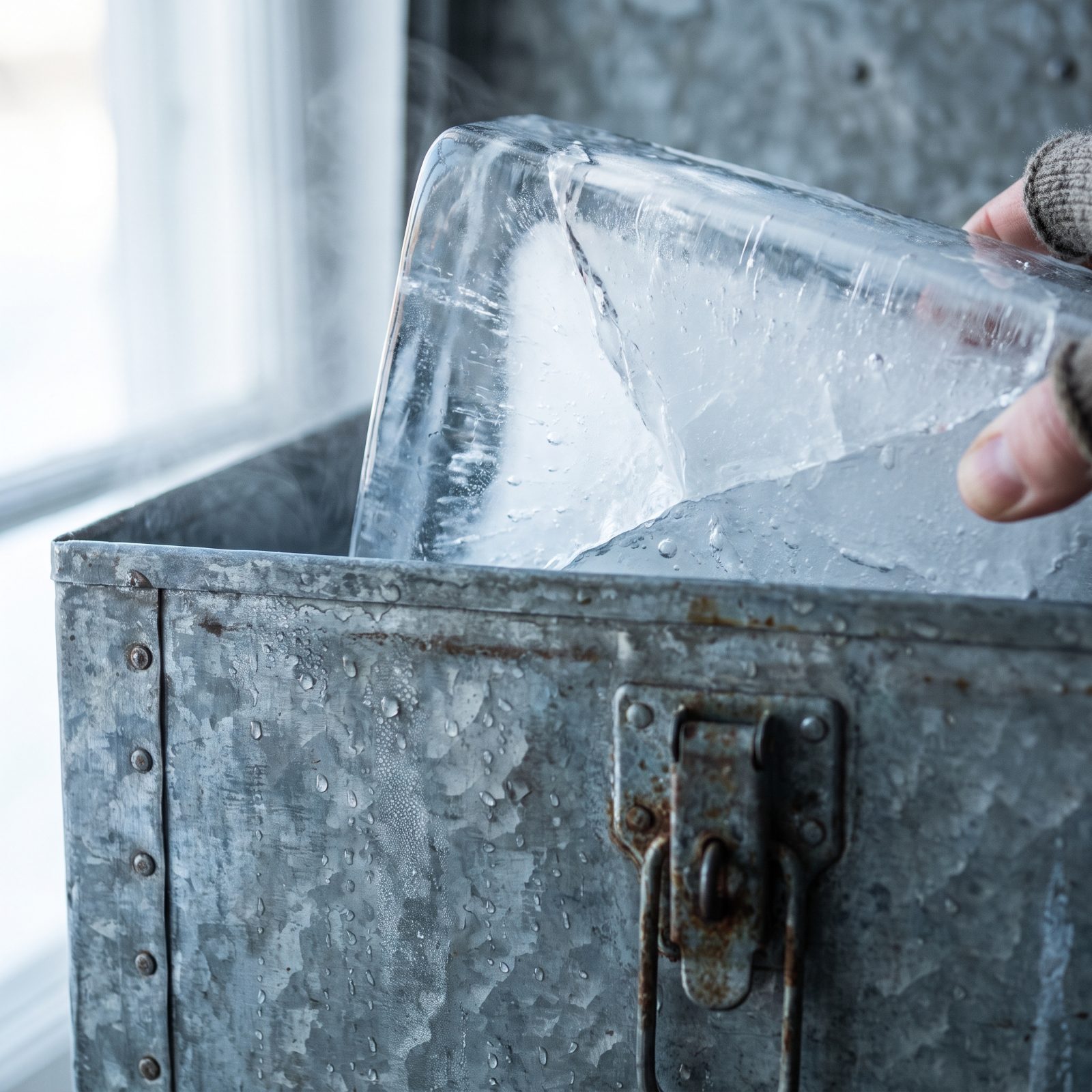
No compressor hum, no power cord — just a galvanized box and a dripping block of ice you bought at the last gas station before the campground.
You planned your trip around ice. A fifty-pound block lasted maybe two days if you were careful about opening the lid, which of course you weren’t, because somebody always wanted a cold soda. Milk went on the bottom near the ice. The butter floated near the top where it was safe to go soft.
Underneath sat a drip pan that overflowed if you forgot about it, and you always forgot about it. Modern RV owners flip a switch and the fridge just works. We bought our cold by the block and watched it shrink.
30. A Hand-Pumped Water Faucet
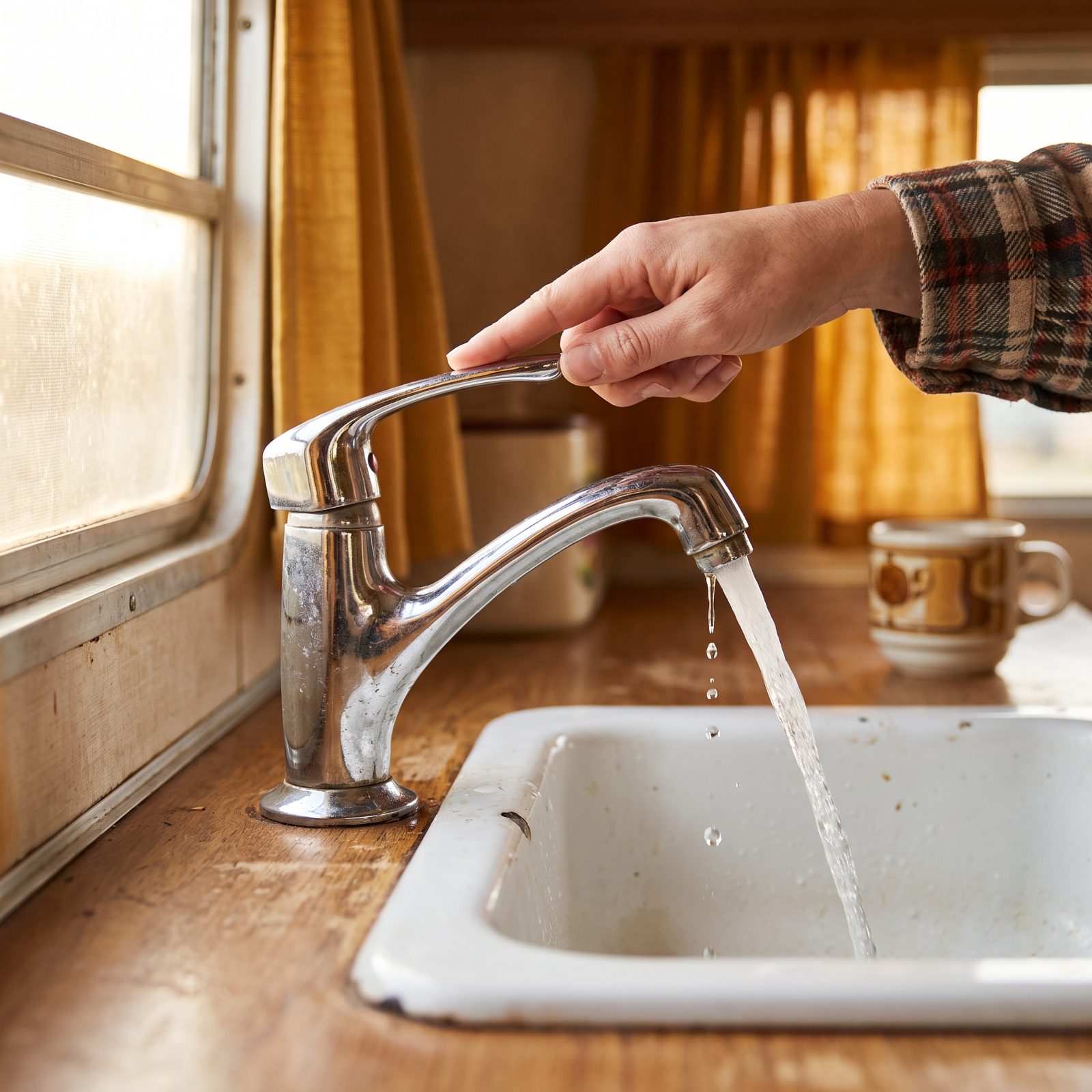
Want water? You earned it. The faucet was a little chrome lever you pumped by hand, each push sending a modest gush into the sink before the pressure died and you pumped again.
It made you thrifty without trying. Nobody left this tap running. You pumped exactly enough to rinse a plate or fill a pot, then stopped, because your arm was doing the work a modern pump handles for free.
Kids fought over who got to pump. Most fun chore in the whole camper — right up until the novelty wore off around lunchtime on day one.
29. A Three-Burner Stove With Match-Lit Burners
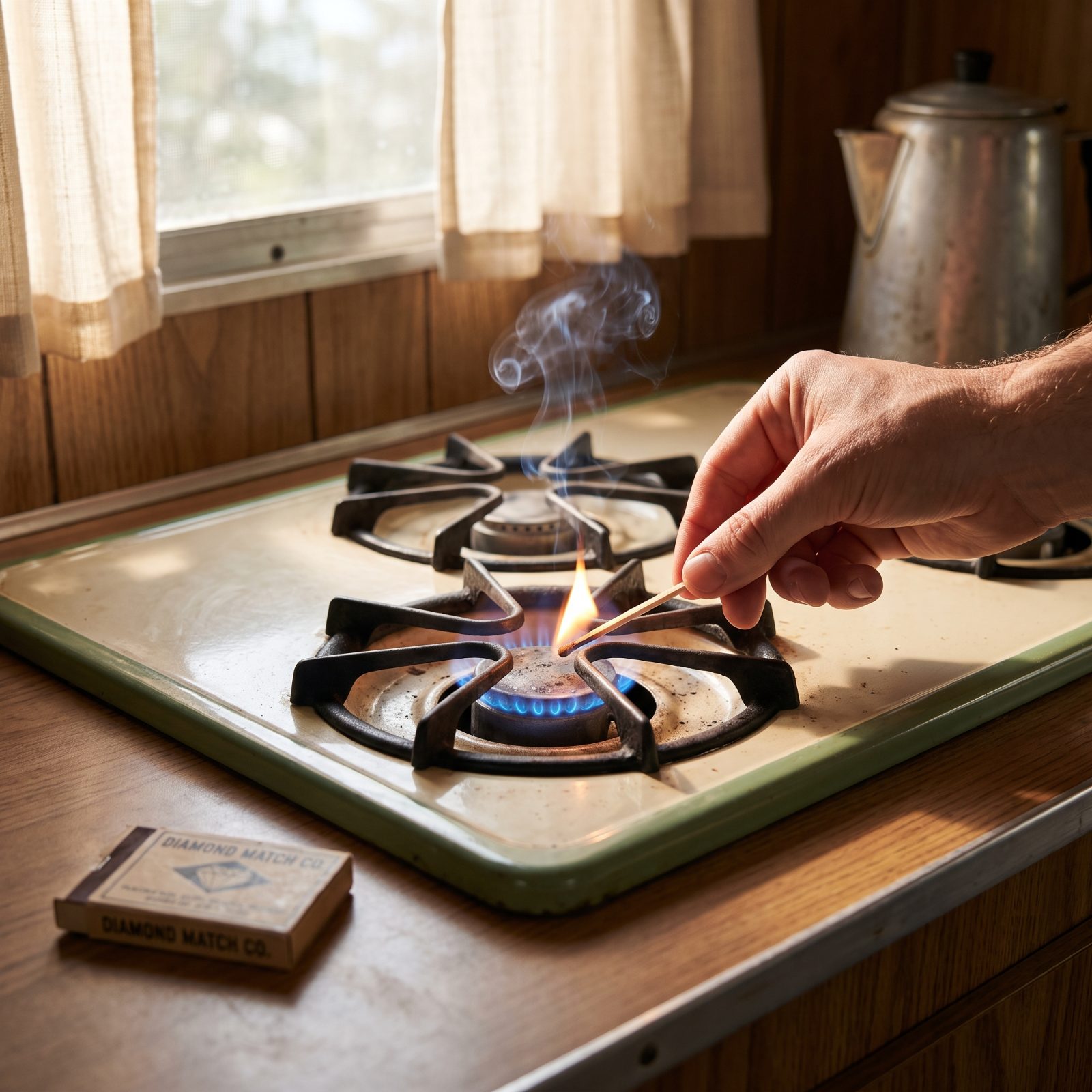
The whole camper smelled faintly of sulfur every morning.
28. A Gas Refrigerator With No Electronics
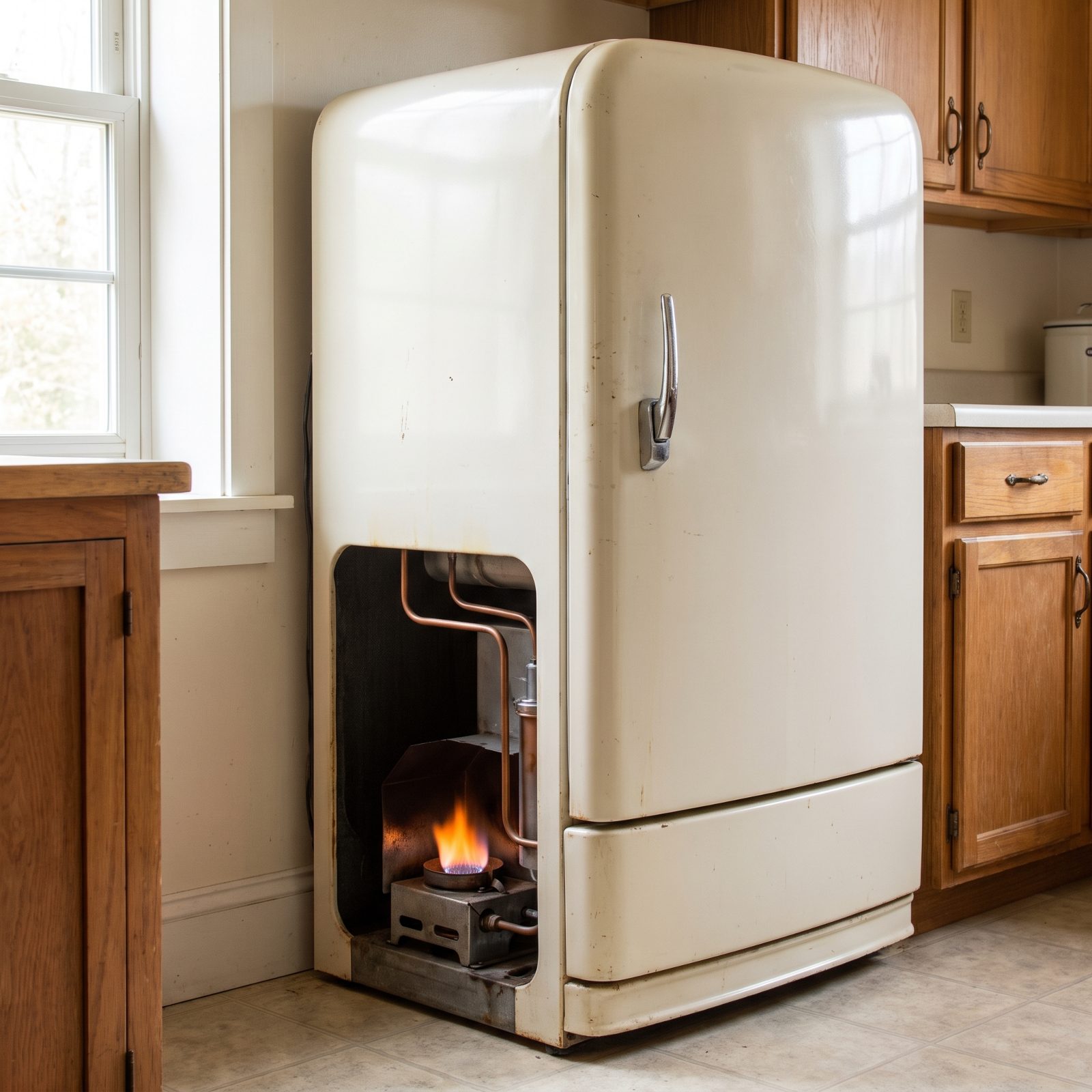
Here’s the part that still sounds like a magic trick: this refrigerator ran on a flame. A tiny propane burner, no bigger than a birthday candle, somehow made the inside cold through absorption chemistry nobody in the family could explain.
No circuit board. No sensors. You set a dial, lit the pilot, and trusted it. There was a little mirror or window at the base so you could confirm the flame was still going, usually at midnight in your socks.
Level the trailer wrong and it stopped cooling, which taught a whole generation to carry a bubble level and actually use it.
27. A Pilot-Light Propane Heater
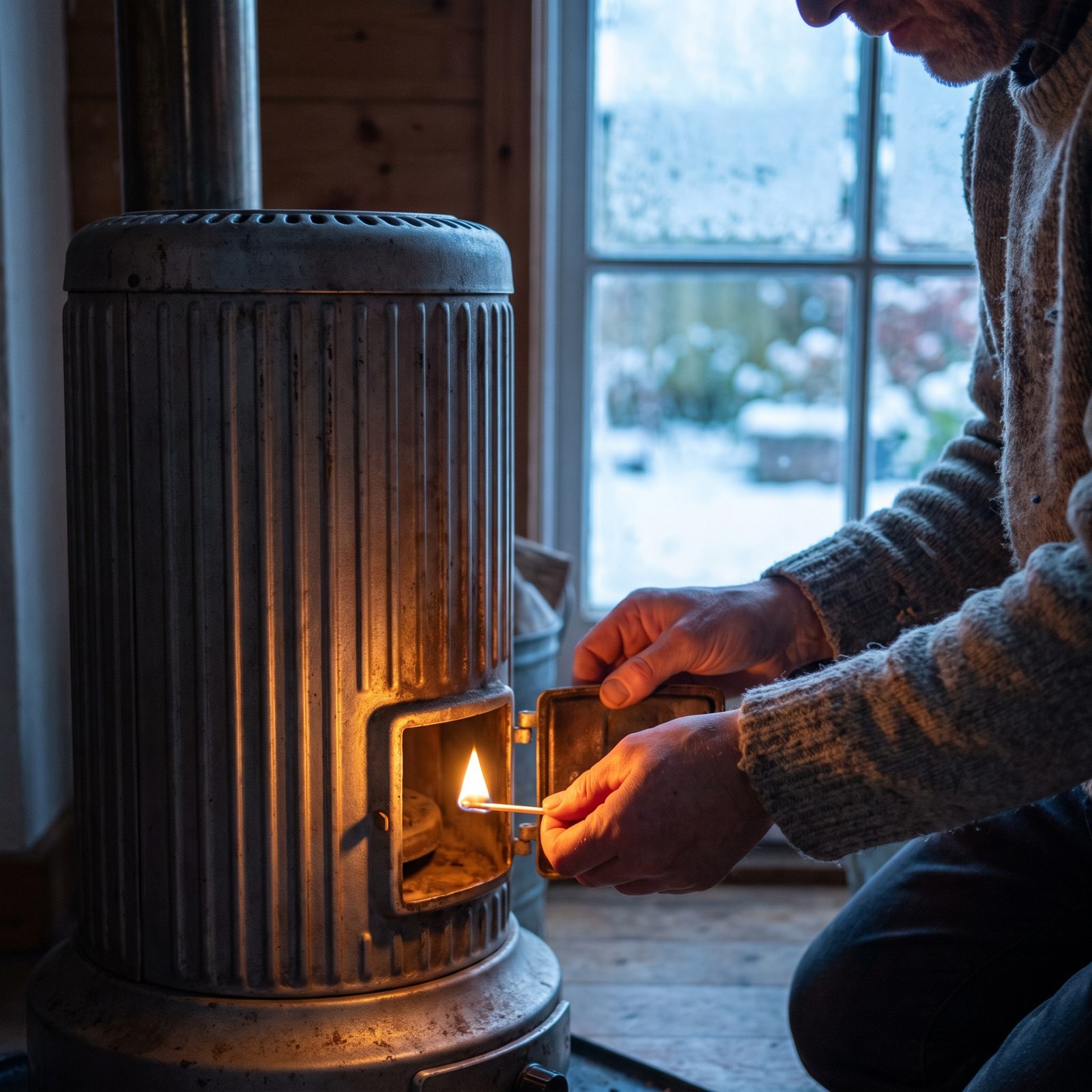
Cold mornings in the mountains came with a ritual. You cracked the little door at the base, held a match to the pilot, turned the knob, and waited for that reassuring whoomp as the burner caught.
Then the whole front panel glowed orange and the camper filled with that particular smell of propane heat — a little toasty, a little chemical. You cracked a window because everyone knew you were supposed to, even if nobody could tell you exactly why.
Honestly? This is the fixture I’d be most nervous running today. But on a frosty September morning it worked, and that glowing grille felt like the heart of the trailer.
26. A Pressurized Water Tank
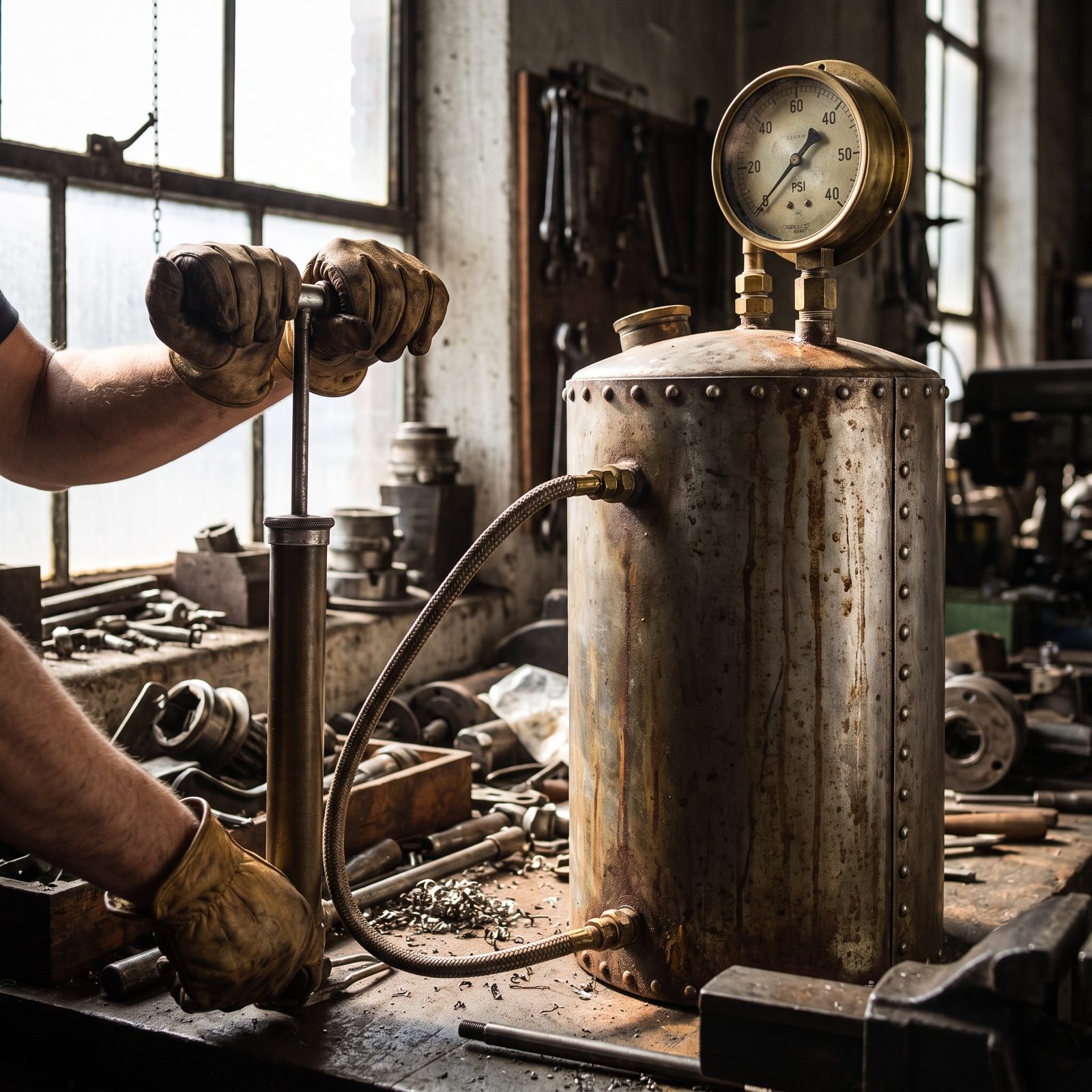
Some step-up trailers skipped the hand pump for something fancier: a sealed tank you pressurized by hand with an air pump, like inflating a giant tire. Build up enough pressure and the faucet actually ran on its own for a while.
It felt like luxury. It also meant somebody had to re-pump the tank every morning while the coffee brewed, and that somebody lost the argument the night before.
When the pressure faded mid-rinse, the water just quietly gave up. You learned to listen for it dying.
25. A Portable Chemical Toilet Hidden Under a Seat
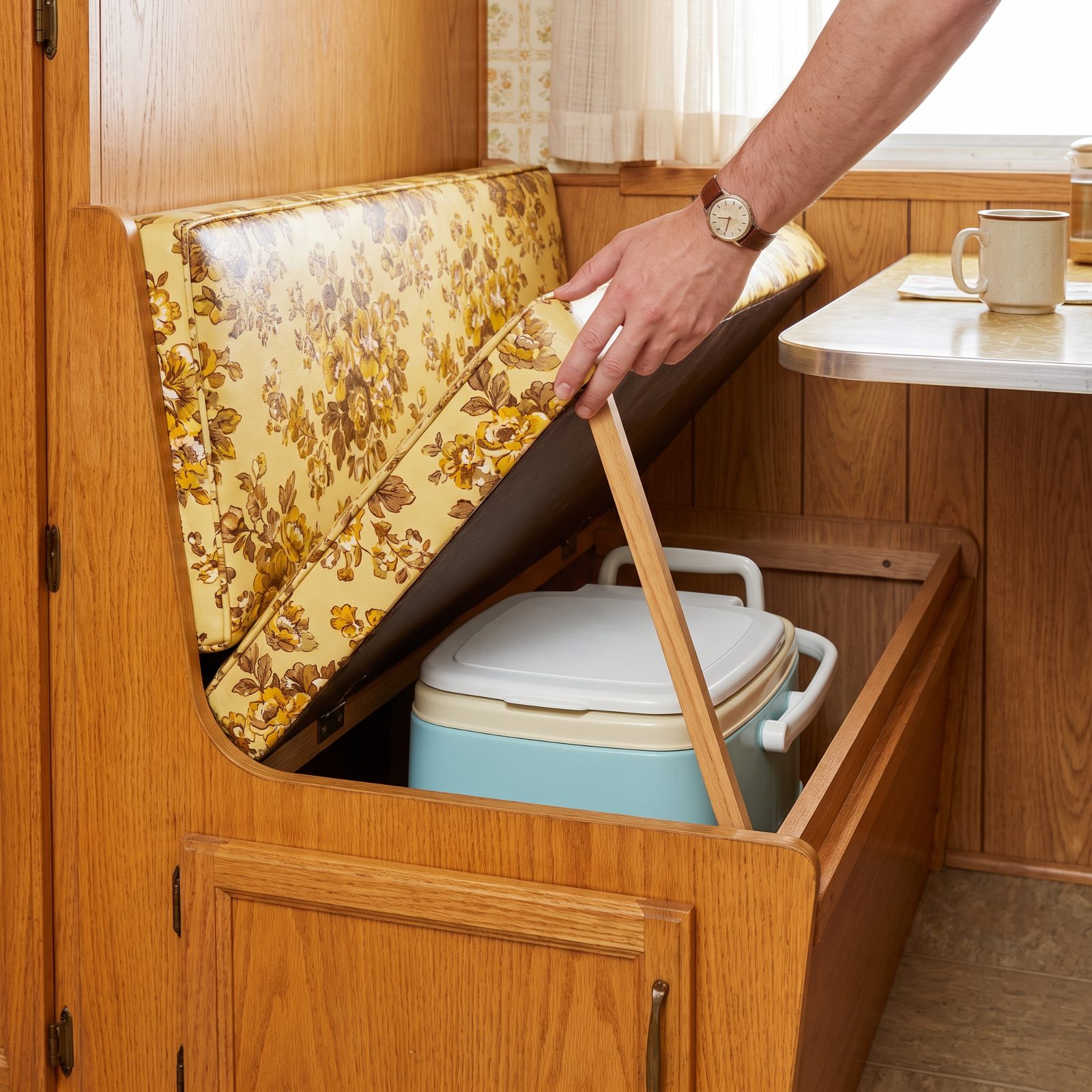
Nobody talked about it, but everybody knew it was under the bench.
Lift the dinette seat and there it sat: a squat plastic toilet with a little valve and a bottle of blue chemical that promised to handle the smell. It mostly did. Mostly.
There was no bathroom, really — just a corner, a curtain, and an understanding that the rest of the family would suddenly find a reason to go look at the lake. Emptying it was the job nobody volunteered for, handled at the campground dump station with as little eye contact as possible.
24. Jalousie Windows With Crank Handles
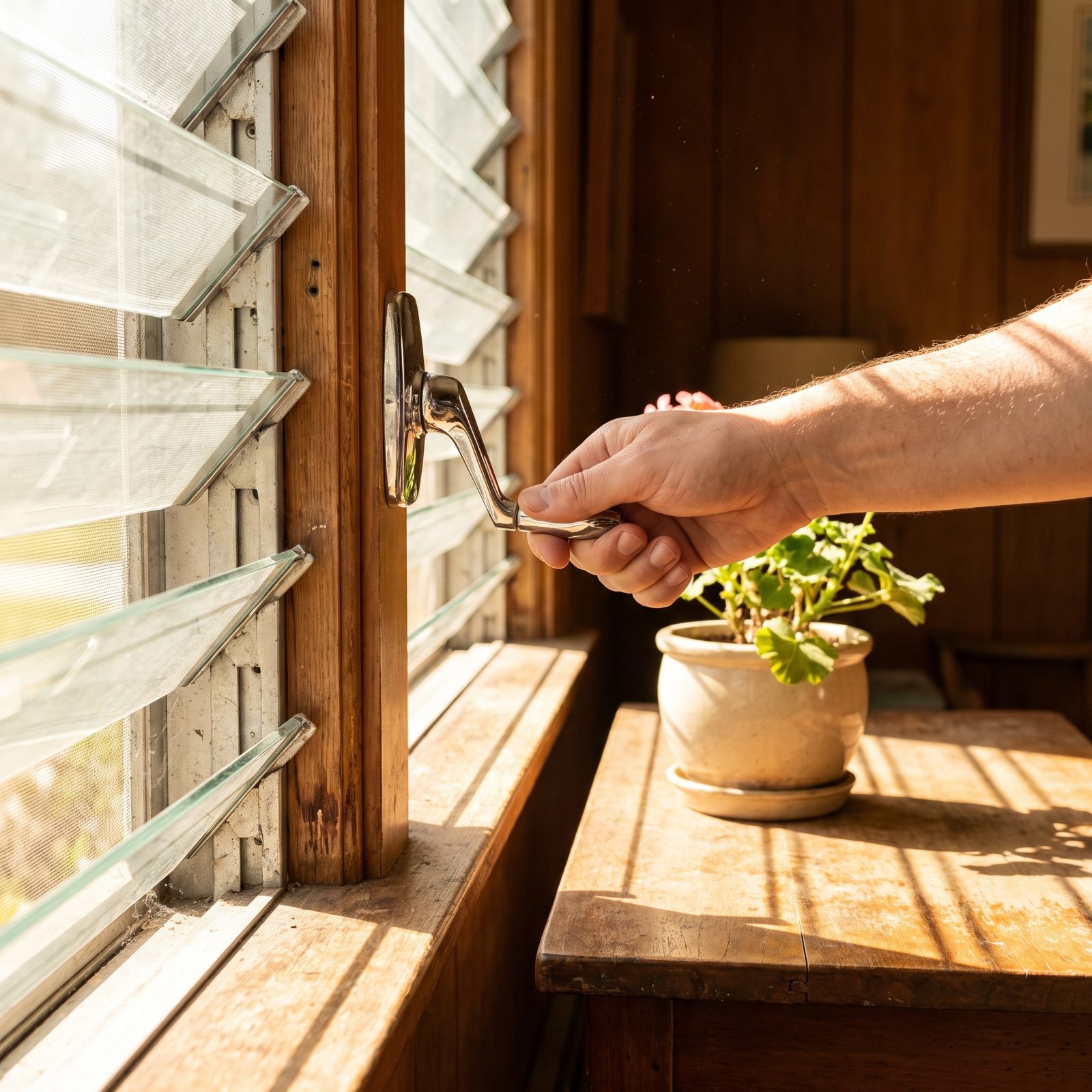
You didn’t slide these windows. You cranked them. A little chrome handle turned, and rows of horizontal glass slats tilted open like venetian blinds made of glass.
They were brilliant in the rain. You could leave them cracked during a storm and the angled slats kept the water out while the breeze came through. The downside? They never sealed tight, so on a cold night the camper breathed a little whether you wanted it to or not.
That crank handle is pure muscle memory for anyone who grew up in these trailers. Open for air, closed for rain, and that faint whistle when the wind found a gap.
23. A Dinette That Folded Down Into a Bed
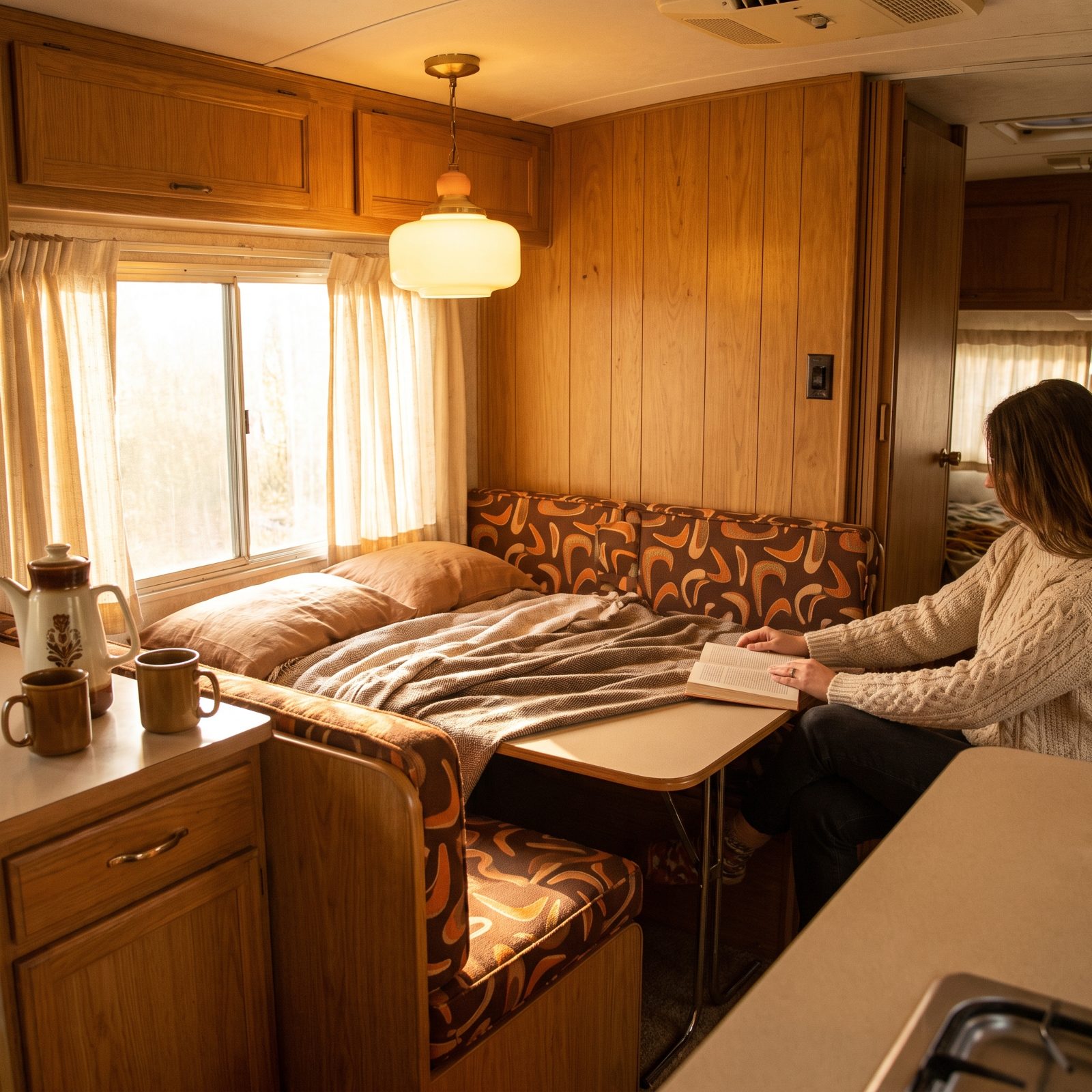
Every night the kitchen became a bedroom. You pulled a pin, dropped the table down between the two bench seats, and rearranged the plaid cushions into a surprisingly flat sleeping surface.
Space magic, 1960s edition. Dinner table at seven, double bed by nine, and if the cushions shifted in the night you woke up folded into the gap where the table used to be.
Modern slide-outs give you a real bed that stays a bed. But there was a small satisfaction in that nightly transformation — the whole family building their beds out of the furniture they’d eaten dinner on an hour earlier.
22. A Curtain Instead of a Bathroom Door
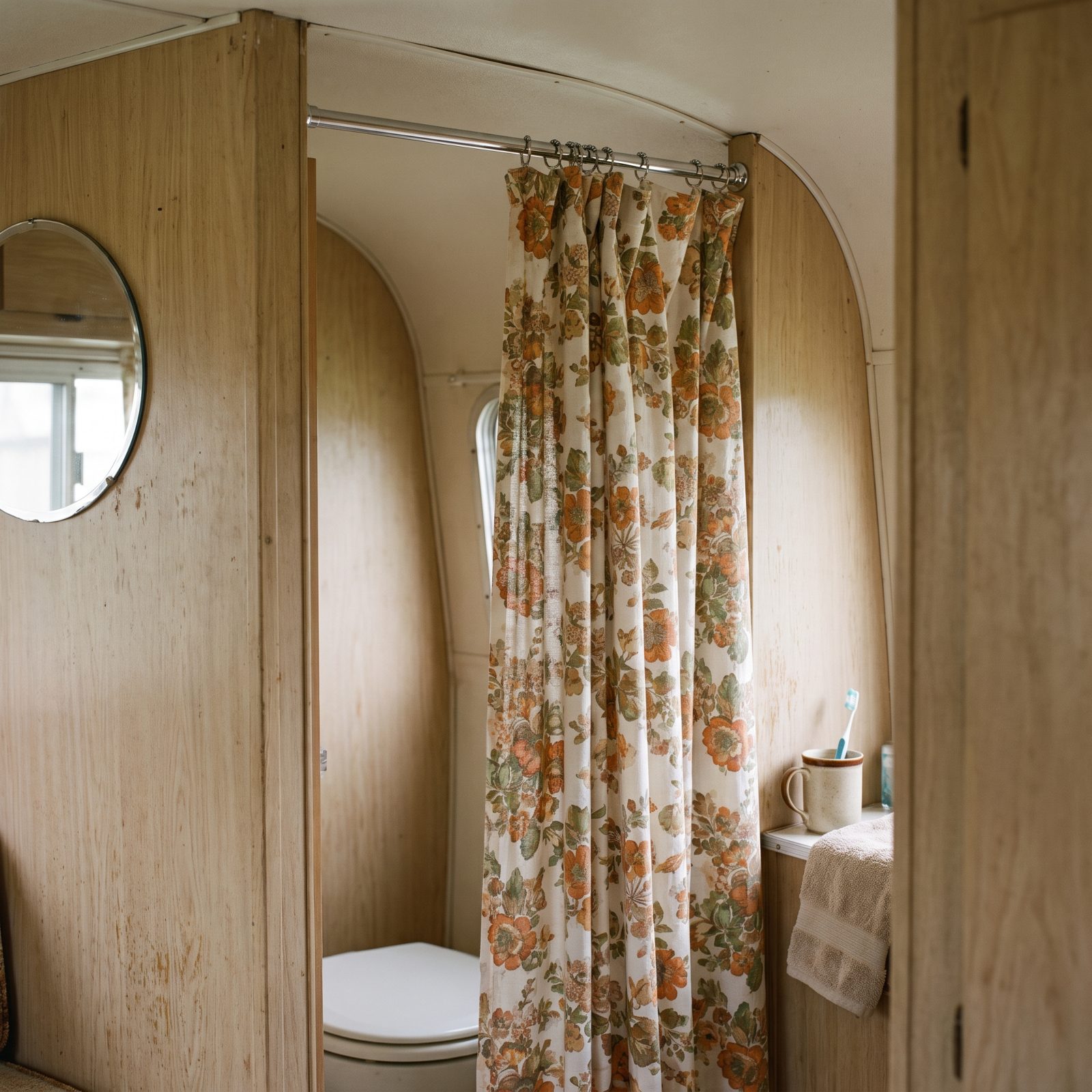
Privacy came on a chrome rod. In the smaller trailers the bathroom wasn’t a room at all — just a corner you curtained off with a panel of the same plaid that was on everything else.
You yanked it closed and announced yourself by the sound of the rings sliding. Everyone knew exactly what was happening three feet away, and the polite move was to suddenly need something outside.
It taught families a kind of tactful deafness you don’t develop in a house. That thin plaid curtain did the work of a locked door, and somehow it was enough.
21. The 110-Volt Extension Cord Fed Through a Wall Hatch
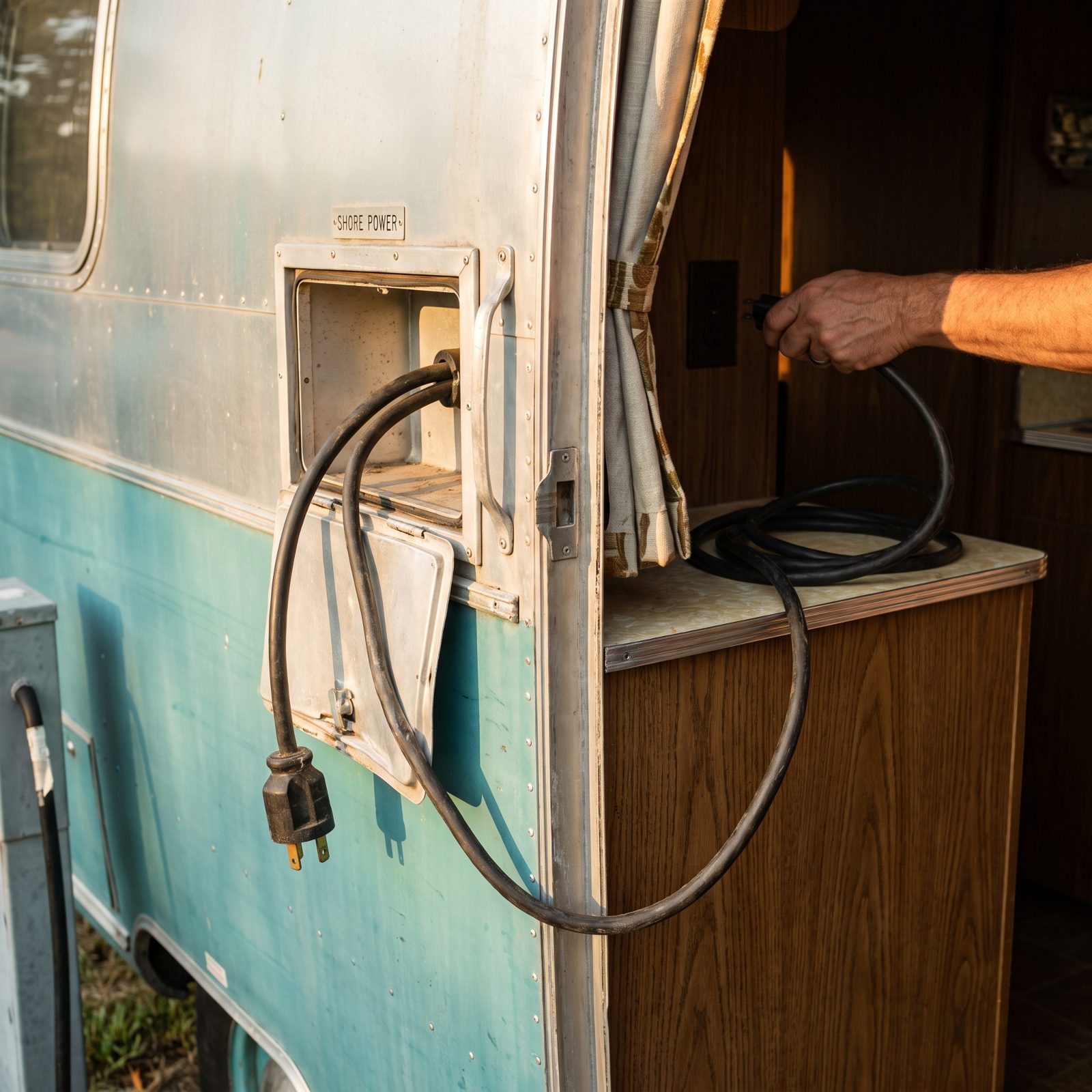
Shore power used to mean a garden-hose-thick extension cord snaked through a little hatch in the wall and plugged into whatever outlet the campground happened to have. No locking twist connector, no 30-amp receptacle, no surge protector the size of a lunchbox. Just a cord, a hole, and faith.
You’d thread it through, pop it into a single round outlet box inside, and that was the electrical system. One circuit. Maybe two if you were lucky. A modern owner expects a dedicated power pedestal and a panel full of breakers, but back then you were running a lamp and a fan and quietly praying nobody fired up a coffee pot at the same time.
20. The Screw-In Glass Fuse Panel
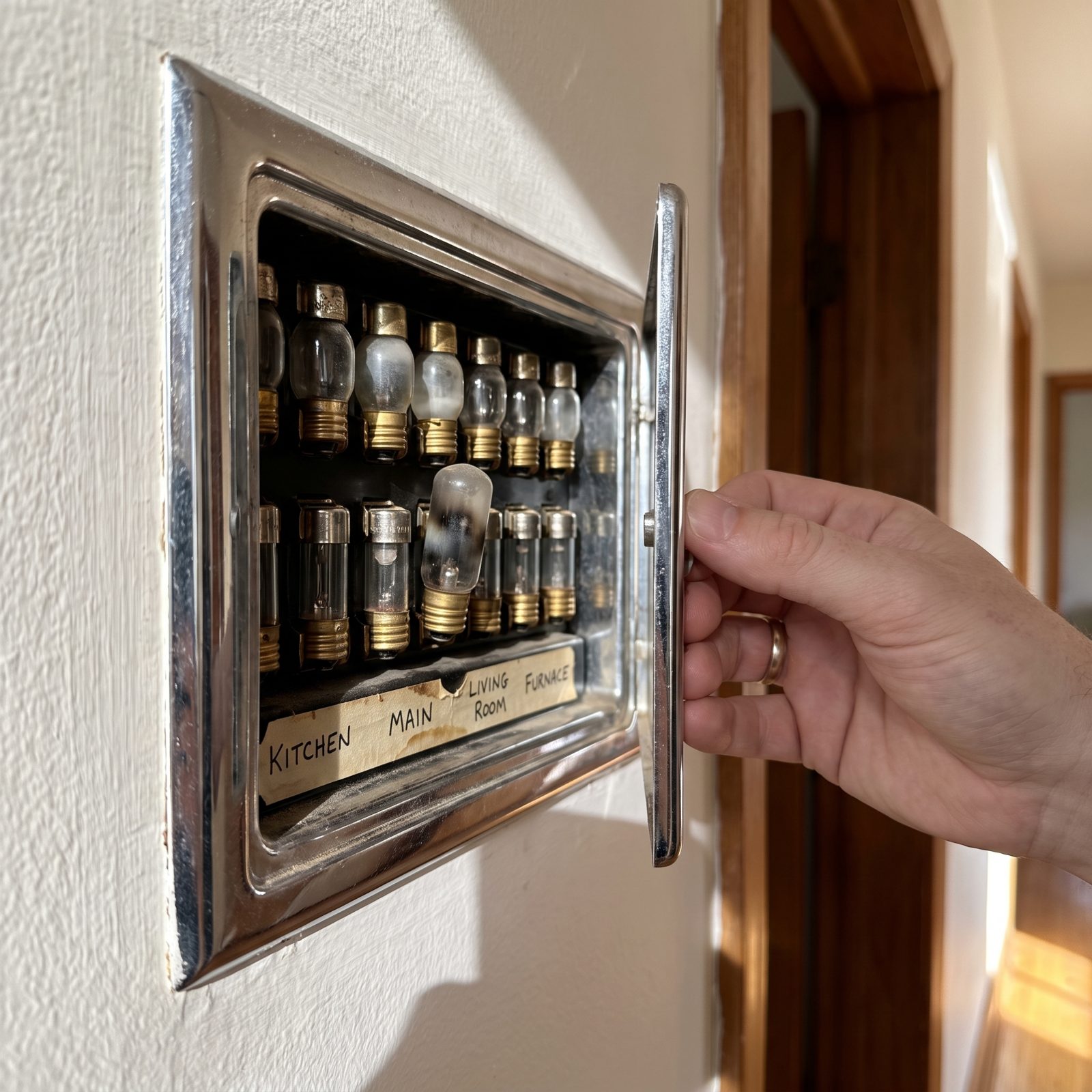
A blown fuse used to be a thing you could see.
Open the little chrome-edged door, find the glass fuse with the melted filament, and you knew instantly which one went. No reset switch, no mystery breaker to flip and hope about. You kept spares in a tin, screwed the new one in, and got on with your evening.
Modern panels are rows of identical plastic breakers that tell you nothing until you poke at them with a meter. There was a real satisfaction in diagnosing a problem just by looking at it. The glass never lied.
19. The Battery Box With Exposed Terminals
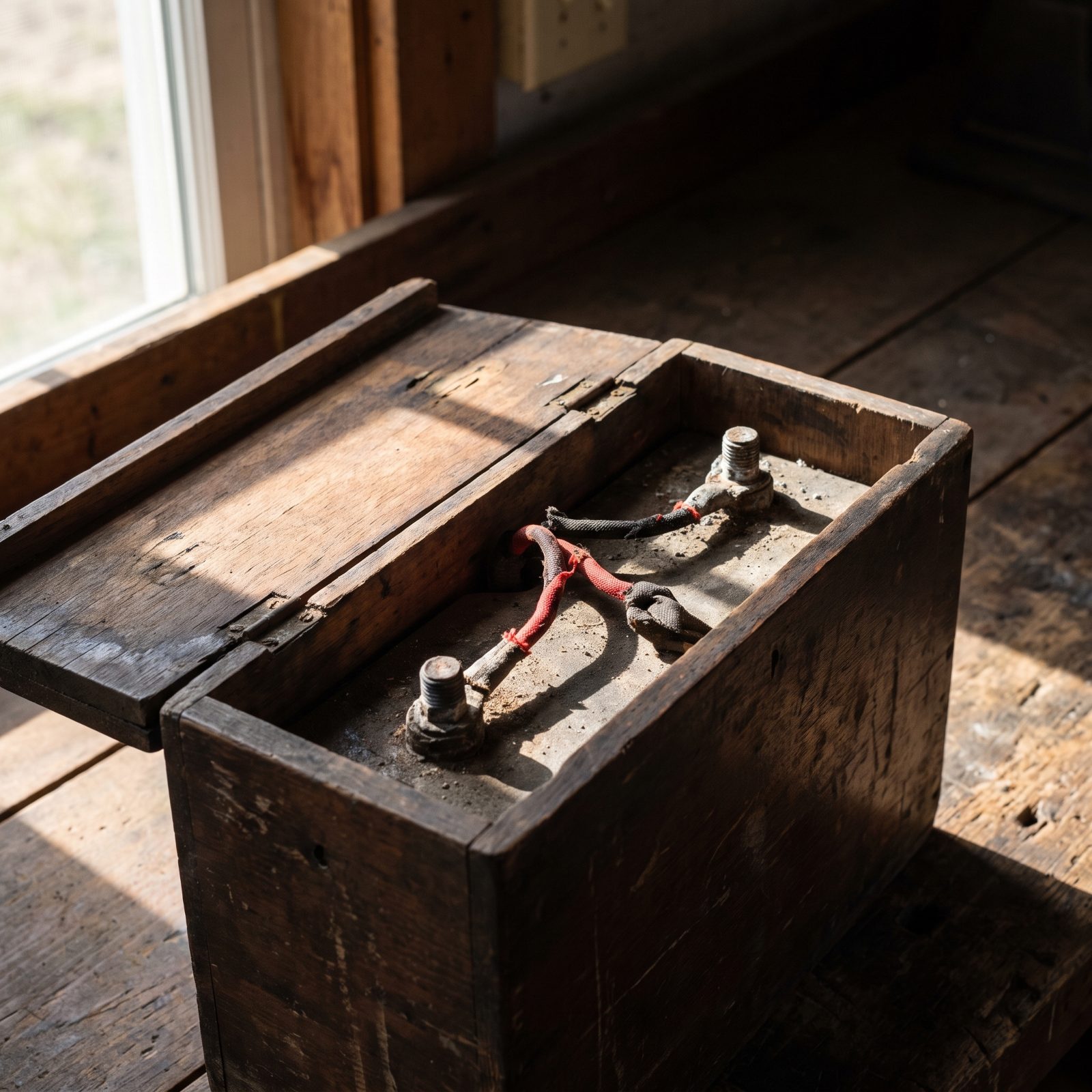
Lift the lid on an old battery box and the terminals stared right back at you. Bare lead posts, cloth-wrapped wires clamped on, and a little crust of corrosion you scraped off with a wire brush every spring.
No sealed AGM, no lithium with a Bluetooth app, no plastic shroud over the posts to save you from yourself. You checked the water level with a flashlight and topped it off from a jug of distilled water. And if you ever reached across both terminals with a wrench, well, you learned a lesson that stuck.
18. A Propane Bottle Mounted in Plain Sight
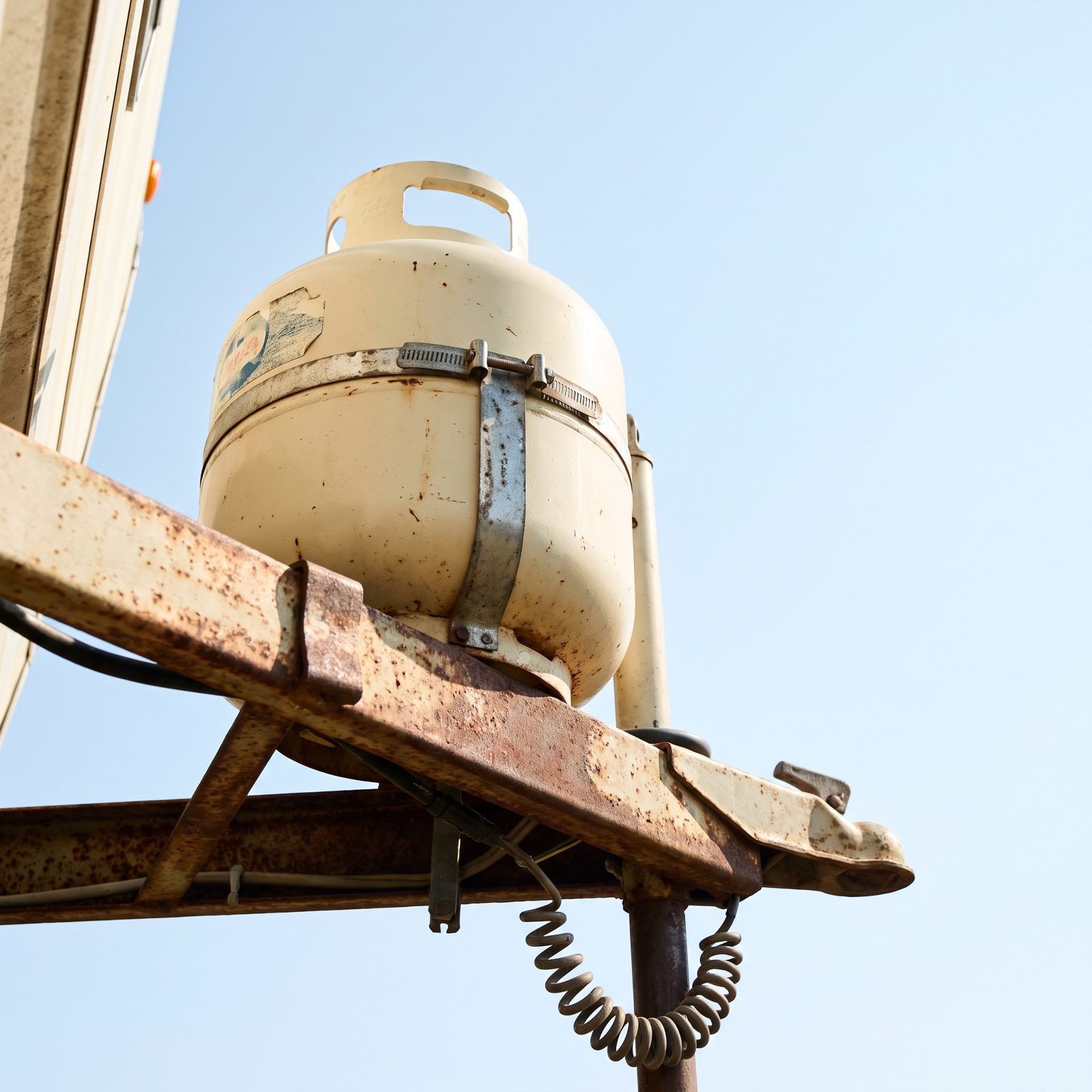
Right out front on the tongue, bolted to the A-frame with a band clamp, sat a single propane bottle in full view. No molded plastic cover, no sleek dual-tank setup with an automatic changeover regulator. Just the bottle, a brass regulator, and a rubber hose doing its job out in the weather.
You judged your fuel level by lifting it and feeling the weight, and sooner or later somebody taught you to pour warm water down the side and feel for the cold line where the liquid sat. That one bottle ran your stove, your lights, and your fridge, which is a story all its own.
17. The Canvas-and-Pole Awning
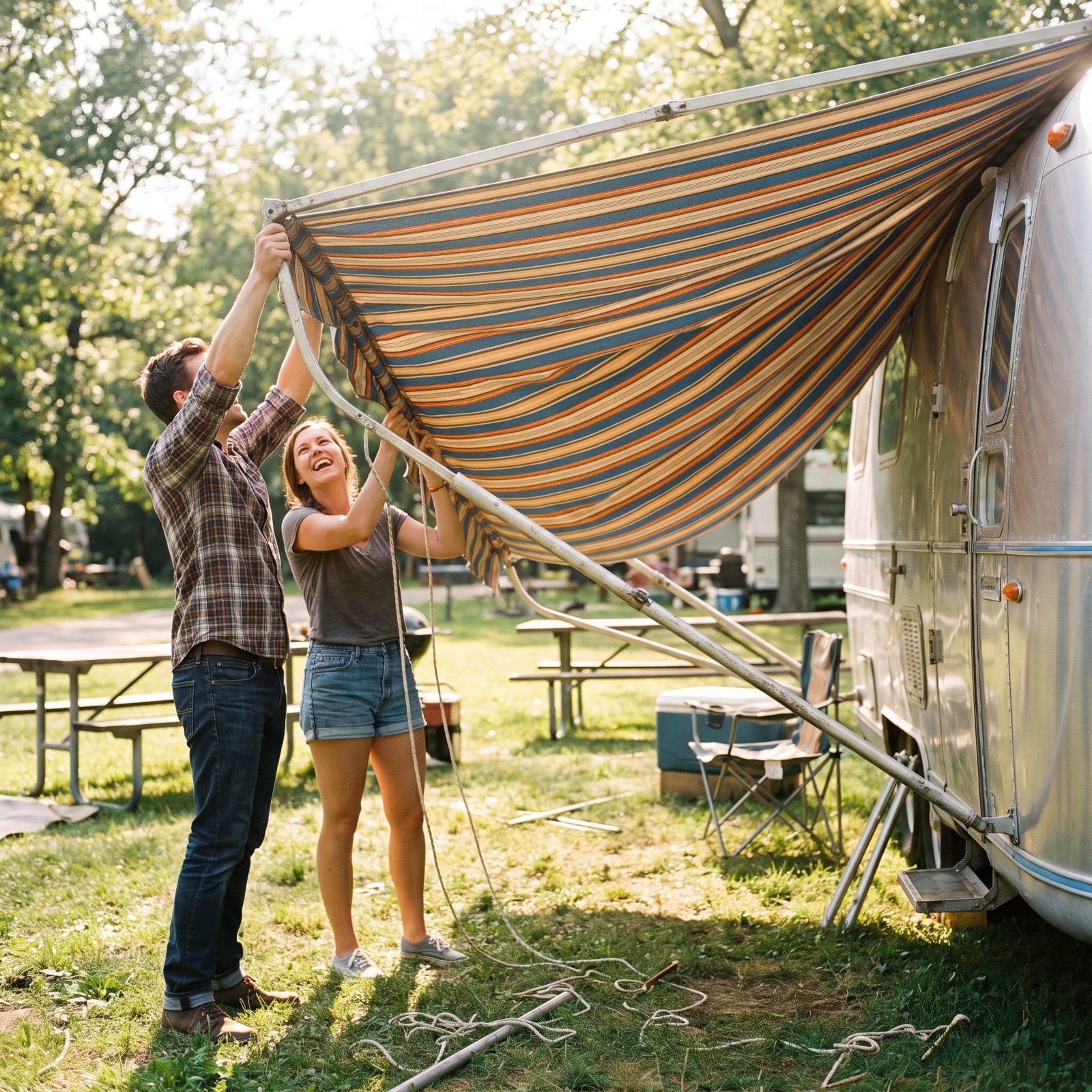
Setting up the awning was a two-person job and a genuine workout. You unrolled a heavy striped canvas, slotted aluminum poles into the ground, ran guy ropes out to stakes, and tensioned the whole thing by hand until it finally stopped flapping.
No crank. No spring-loaded arms. No one-pull vinyl roll-out. And when a thunderstorm rolled through at midnight you were out there in the dark loosening ropes so the canvas wouldn’t fill with water and drag the whole works sideways. It took effort, sure, but the shade under those faded red-and-cream stripes felt earned.
16. Manual Leveling Jacks With a Hand Crank
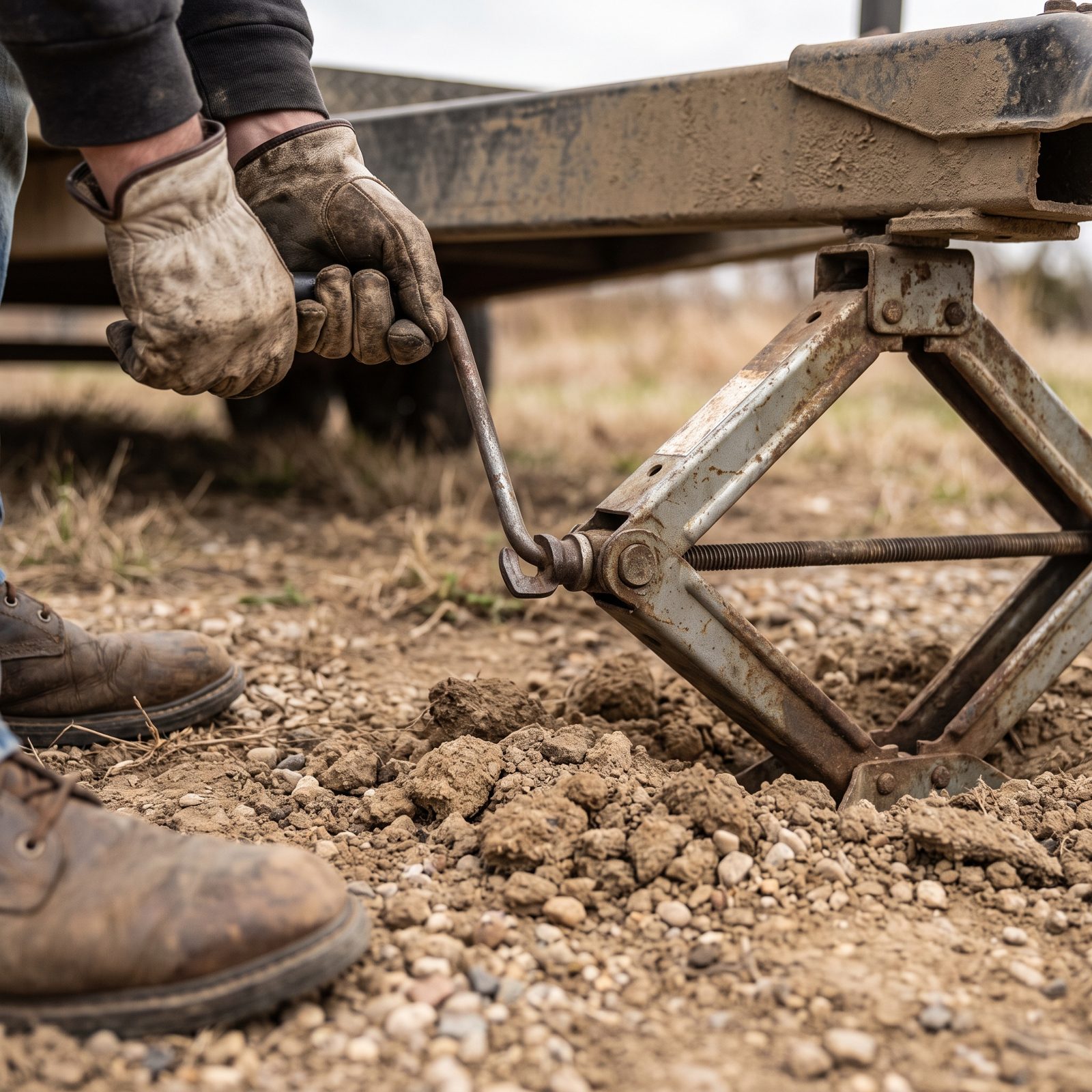
Leveling meant getting on your knees in the dirt.
You carried a steel crank around to each corner, slotted it onto the jack, and turned until the scissor mechanism lifted the trailer off its springs. Then back inside to squint at a little bubble level on the counter, back out, crank some more, repeat until the bubble sat center.
No four-button auto-leveling, no hydraulic hum, no app announcing that the trailer is 1.2 degrees off true. Just you, a crank, a bubble, and a few blocks of scrap wood you kept in the bumper for the really crooked sites.
15. A Roof Vent With No Electric Fan
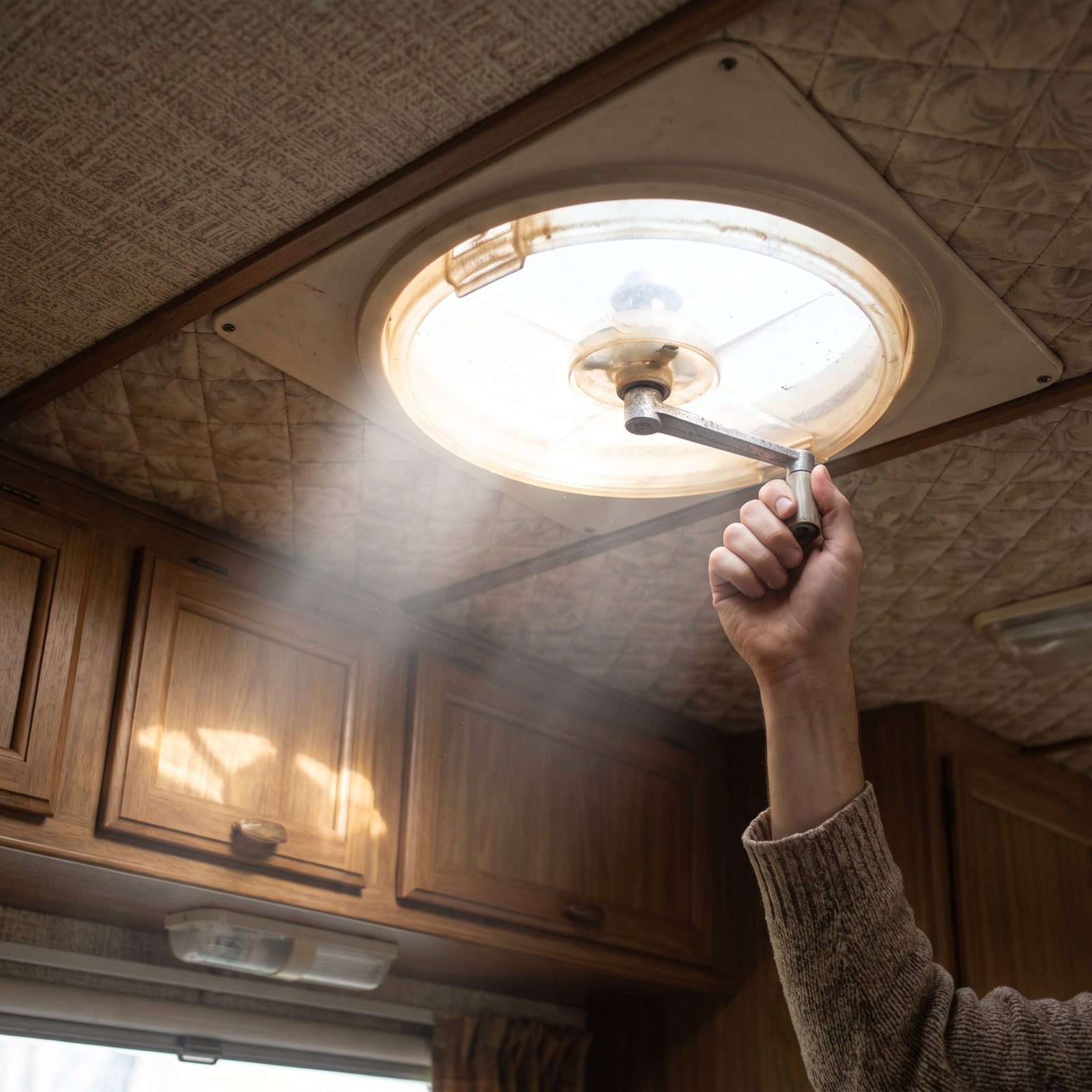
The only ventilation was a plastic dome you cranked open by hand, and physics handled the rest. Hot air rose, slipped out the top, and cooler air drifted in through a cracked window. That was the whole climate system.
No 14-inch powered fan hauling a storm of air through the cabin, no thermostat, no remote tucked in a drawer somewhere. On a dead-still August afternoon you opened everything and waited for a breeze that might never come. When rain arrived you reached up and cranked the dome shut, hoping you beat it before the cushions got a soaking.
14. The Bare Aluminum Exterior
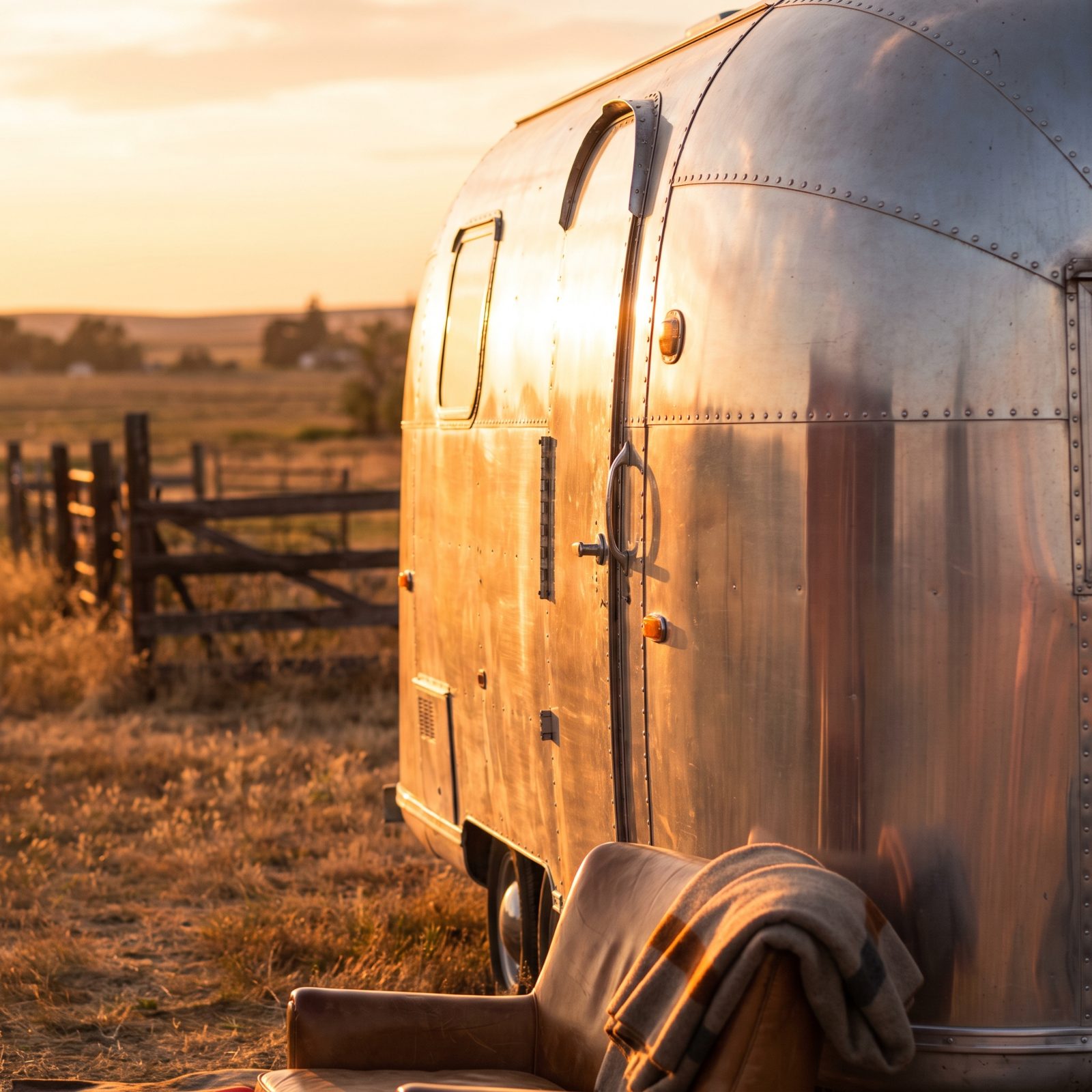
Before fiberglass and gel-coat and swooping painted graphics, campers wore bare aluminum, riveted panel after panel, buffed to a soft shine that threw the whole campsite back at you in a warped silver reflection.
It dented if you backed into a tree and it hazed with oxidation the moment you got lazy, so owners kept polish and a soft rag on hand like part of the standard kit. Modern rigs are smooth molded shells that hide their seams. The old ones showed every rivet, and that honesty is exactly what collectors chase hardest today.
13. The Fold-Down Exterior Step
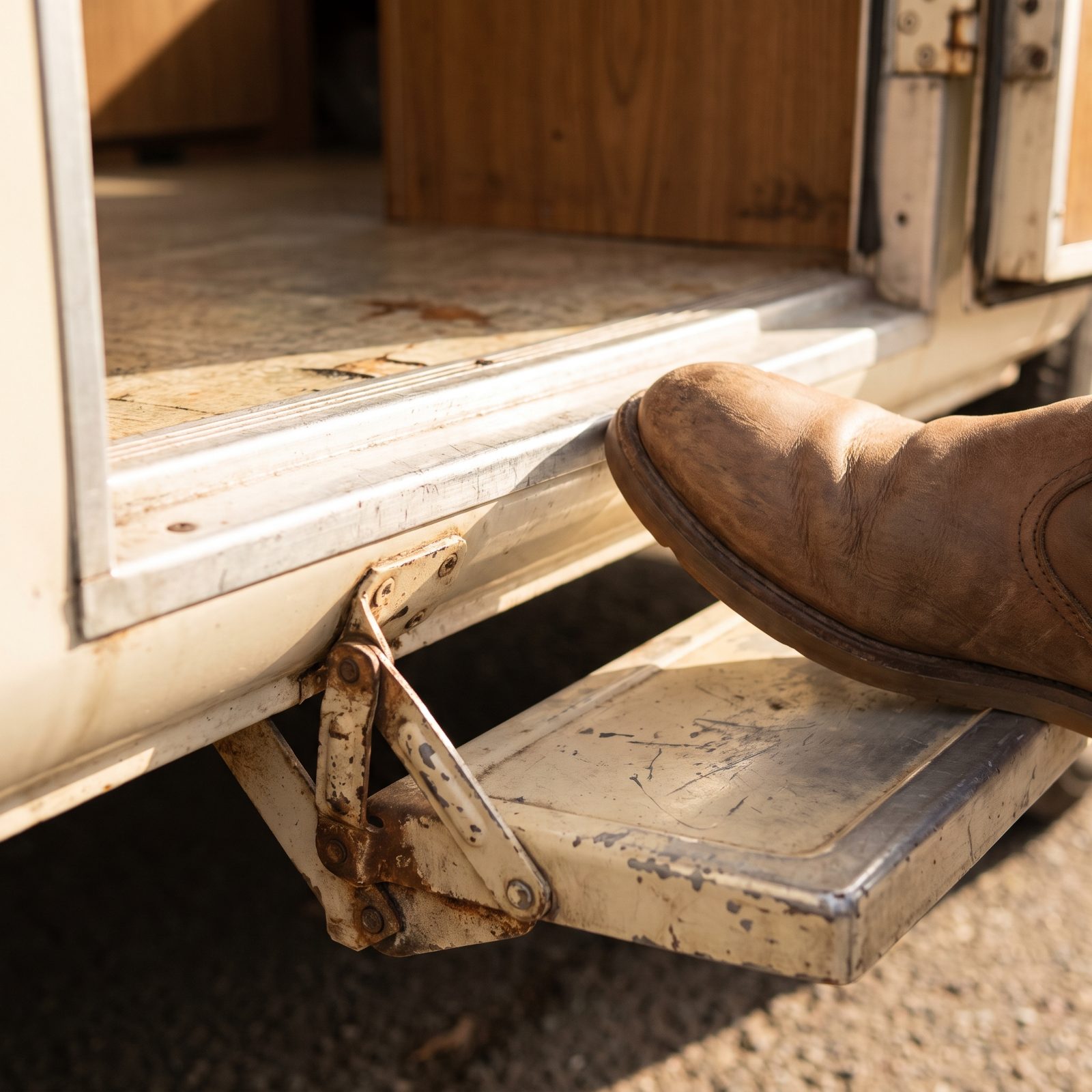
One step. Hinged to the frame, folded up flat against the body when you towed, dropped down with the toe of your boot when you arrived. That was the entire system for getting in and out.
It was almost always the wrong height for the ground you’d parked on, so you high-stepped up or crouched down depending on the site. No motorized triple-step gliding out the instant the door cracks open. Just a flat chunk of diamond-tread steel that squeaked on its hinge and narrated every late-night trip to the campground bathroom.
12. The Screen Door With a Spring Closer
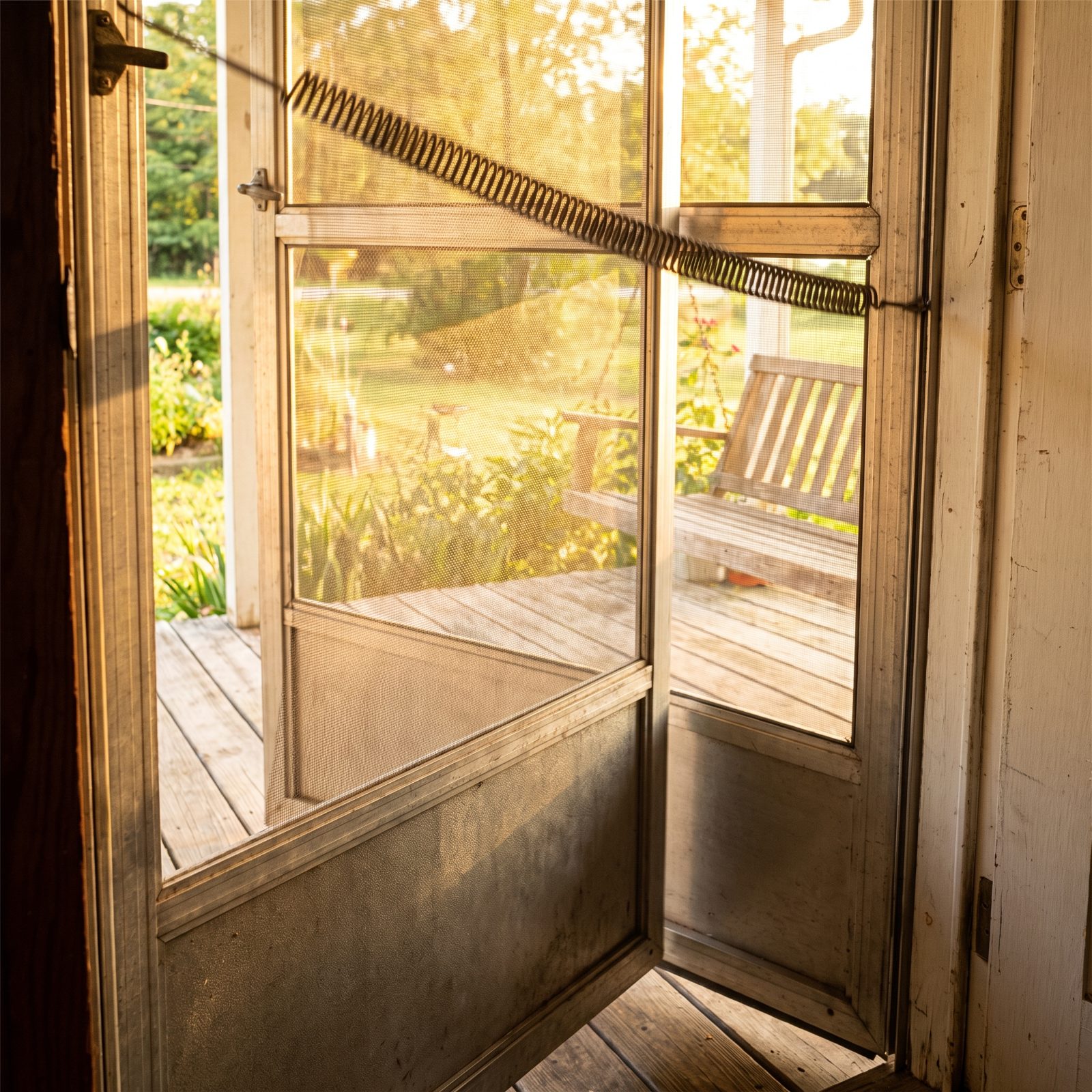
Nothing says summer like that sound.
A coiled steel spring hauled the screen door shut behind you with a stretch, a pause, and then the unmistakable slap of frame against jamb. It happened a hundred times a day and not once did anybody catch it in time.
No soft-close hinge, no magnetic catch, no slow pneumatic cylinder easing it home. Just a spring doing what springs do. The mesh let in woodsmoke and kept out most of the mosquitoes, and that slap became the background music of every evening you ever spent parked under the trees.
11. A Dinette Table That Hooked Onto the Wall
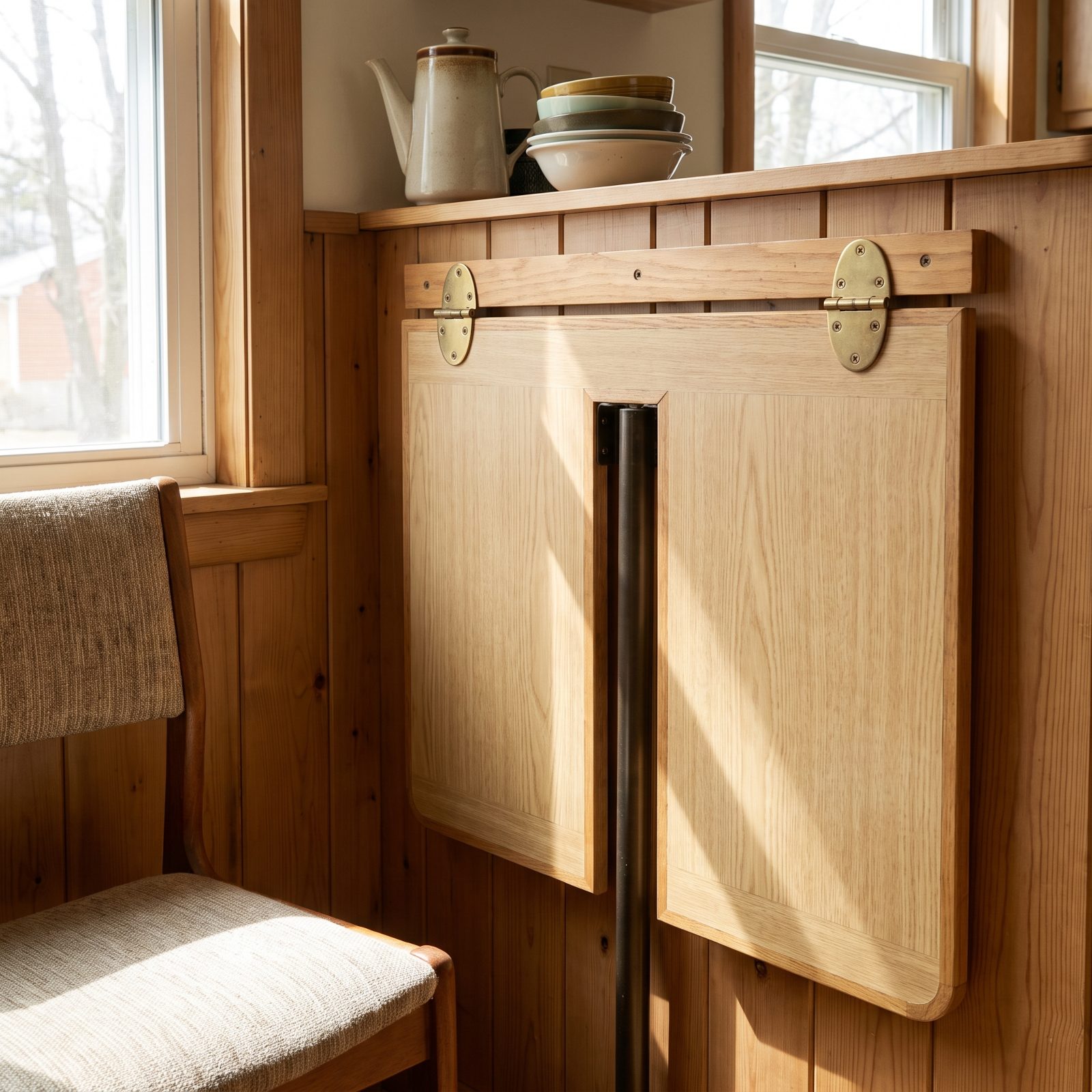
Pull the pin, lift the leg, and the table folds flat against the wall — dinner cleanup and bed assembly in one move. The whole thing hung off a wall bracket on one side and balanced on a single chrome leg on the other. Felt alarming the first time. By the second night it was nothing.
Modern RVs give you a dinette that drops into a bed, sure. But this older setup managed it with a hook and a hinge and not one thing electric, which meant you learned fast to clear your coffee cup before somebody decided it was bedtime.
10. Cabinet Latches Designed for Rough Roads
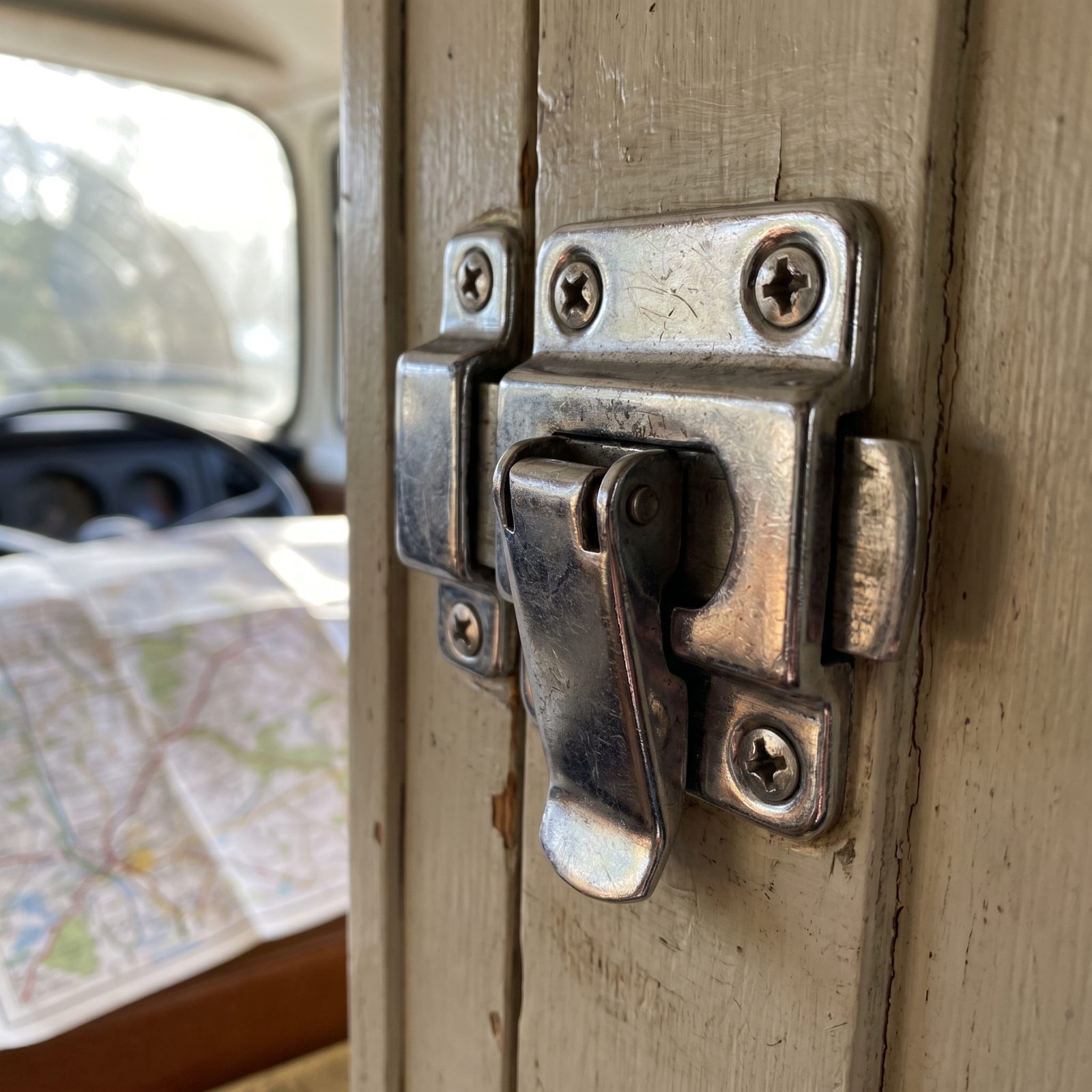
These latches meant business. Not the soft magnetic nudge that keeps your modern galley doors shut on a smooth highway — these were spring-loaded chrome levers that locked hard, because a 1960s two-lane could launch your dishes clean across the camper if the latch gave up.
You pushed the lever sideways and felt it click home. That sound became part of the pre-departure ritual: a hand down every cabinet front, listening for the click, knowing nothing would spill its guts on the floor at the first pothole. I miss how deliberate it all was. A magnet never made you feel that sure.
9. A Metal Screen Food Safe
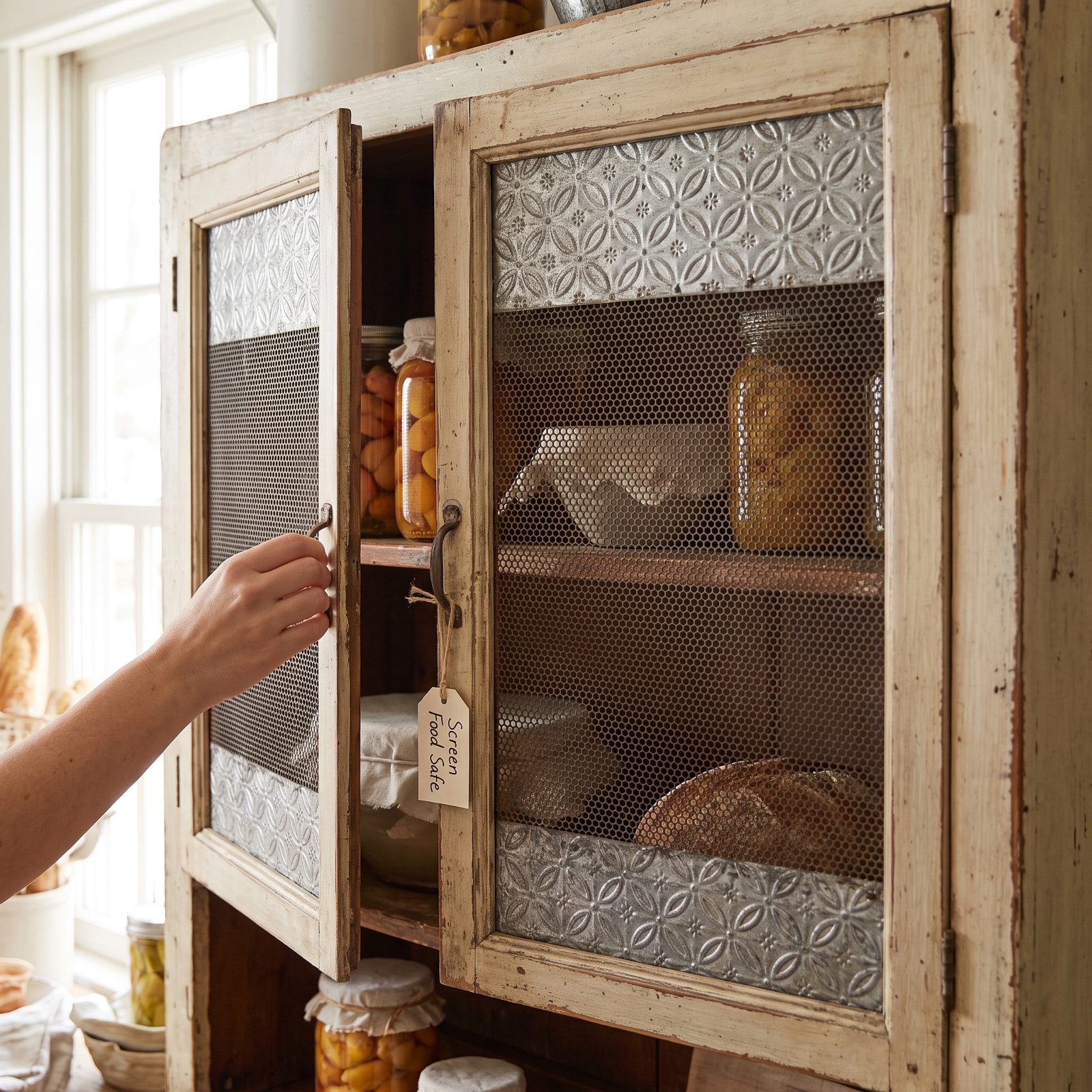
Before a camper fridge was a given, you had a screen food safe — a little cabinet with mesh doors that let air move while keeping things covered. Bread, cheese, anything that didn’t need ice lived behind that fine perforated metal.
Worked the way a kitchen screen safe did back home a generation earlier. The whole notion of keeping food cool-ish rather than cold feels foreign now, when we argue over whether the 12-volt compressor fridge beats the propane absorption one. Honestly? For a long weekend in the mountains, that breezy little mesh box did the job better than it had any right to.
8. A Built-In Metal Bread Box
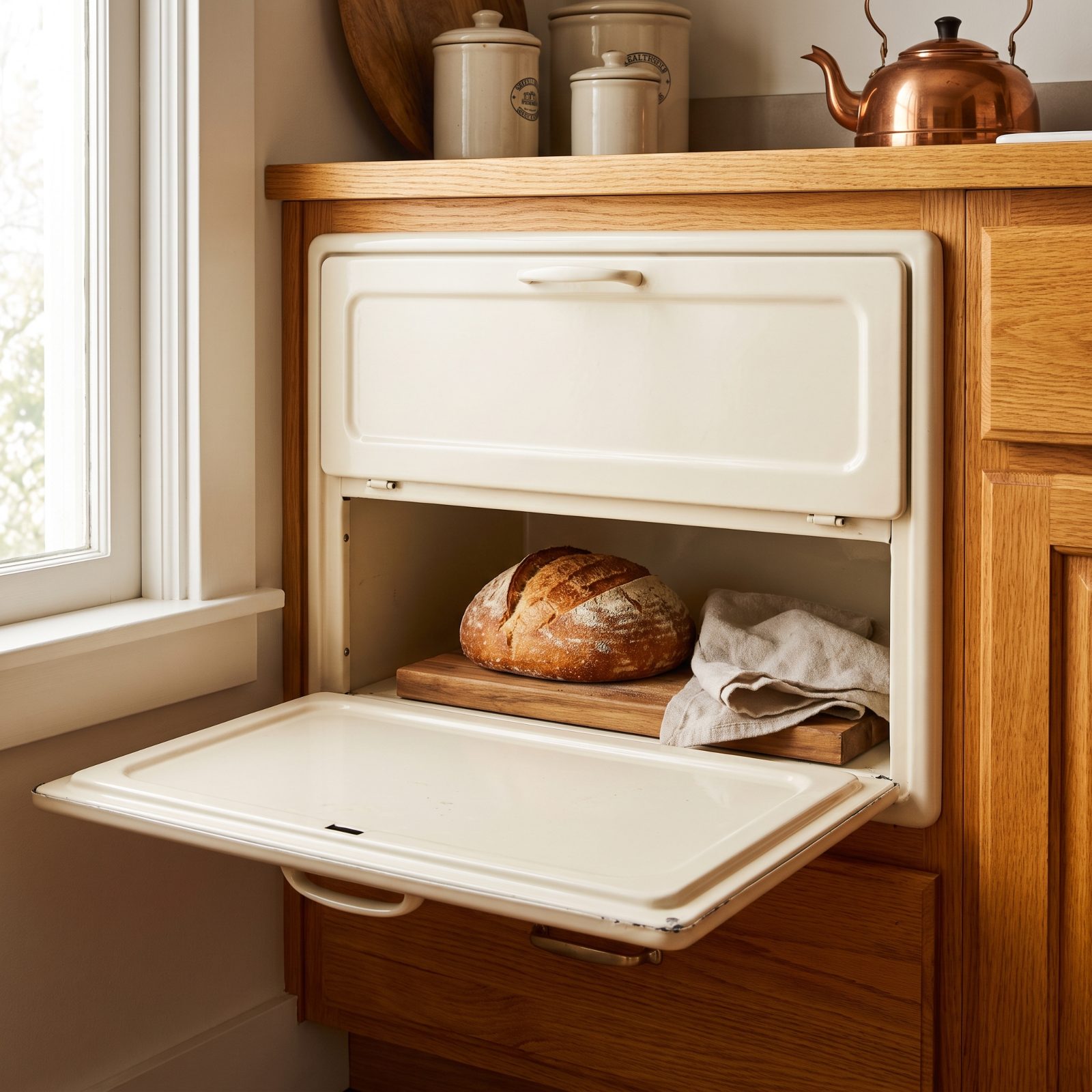
A metal drawer, cream enamel inside and out, built right into the cabinetry just for bread. Not a cupboard that happened to hold bread. A box made for it, often with a roll-down front that rattled shut like a tiny garage door.
The metal kept mice out and crusts from going stale too fast, which mattered when the nearest store was forty miles of gravel away. We’ve traded all that for a Ziploc bag shoved in whatever cupboard has room. The old built-in treated a loaf like it deserved its own address, and there’s something quietly nice about that.
7. A Wall-Mounted Bottle Opener
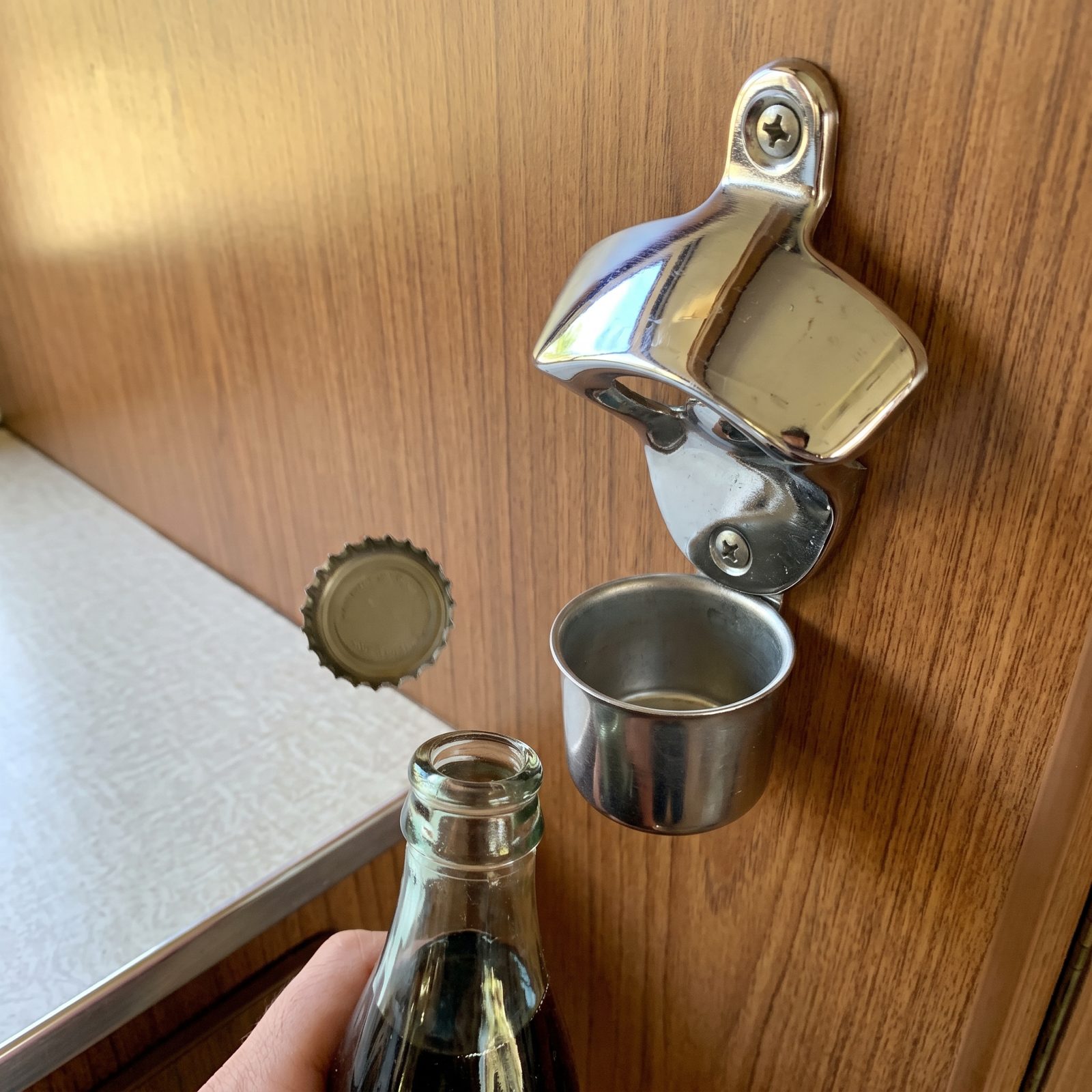
Screwed right into the wall near the counter, sometimes with a little cup underneath to catch the caps. No fishing through a drawer. You walked up, hooked the bottle, popped it, and heard the cap drop.
Everything came in glass then, so a fixed opener made as much sense as a light switch. These days half of us can’t find the opener on the Swiss Army knife, and twist-offs made the whole fixture pointless. But a wall opener in a camper was an invitation. It said somebody’s cracking a cold one before the fire’s even lit.
6. A Formica Table With Chrome Edging
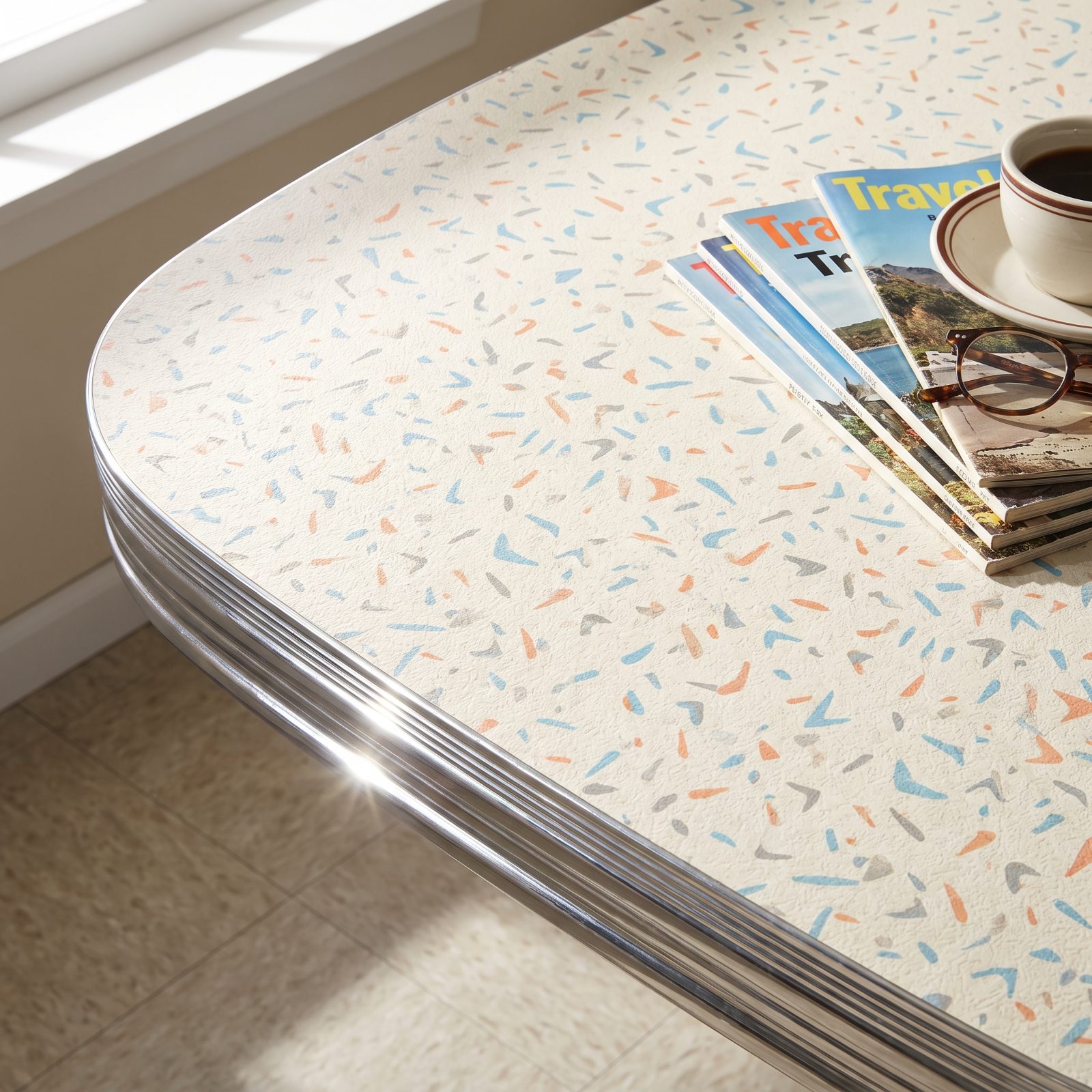
That cream top with the little boomerang specks, banded in a strip of bright chrome T-edge that caught every bit of lantern light. Formica with chrome edging wasn’t just a camper thing. It was the whole decade’s idea of a surface that could take a beating and wipe clean.
Spill your coffee and you wiped it with a dishrag and moved on. Set a hot percolator down and the surface shrugged. Today’s RV tables chase a woodgrain look. The old chrome-edged Formica never pretended to be anything but what it was — and it aged better for it.
5. A Ceiling-Mounted Clothesline
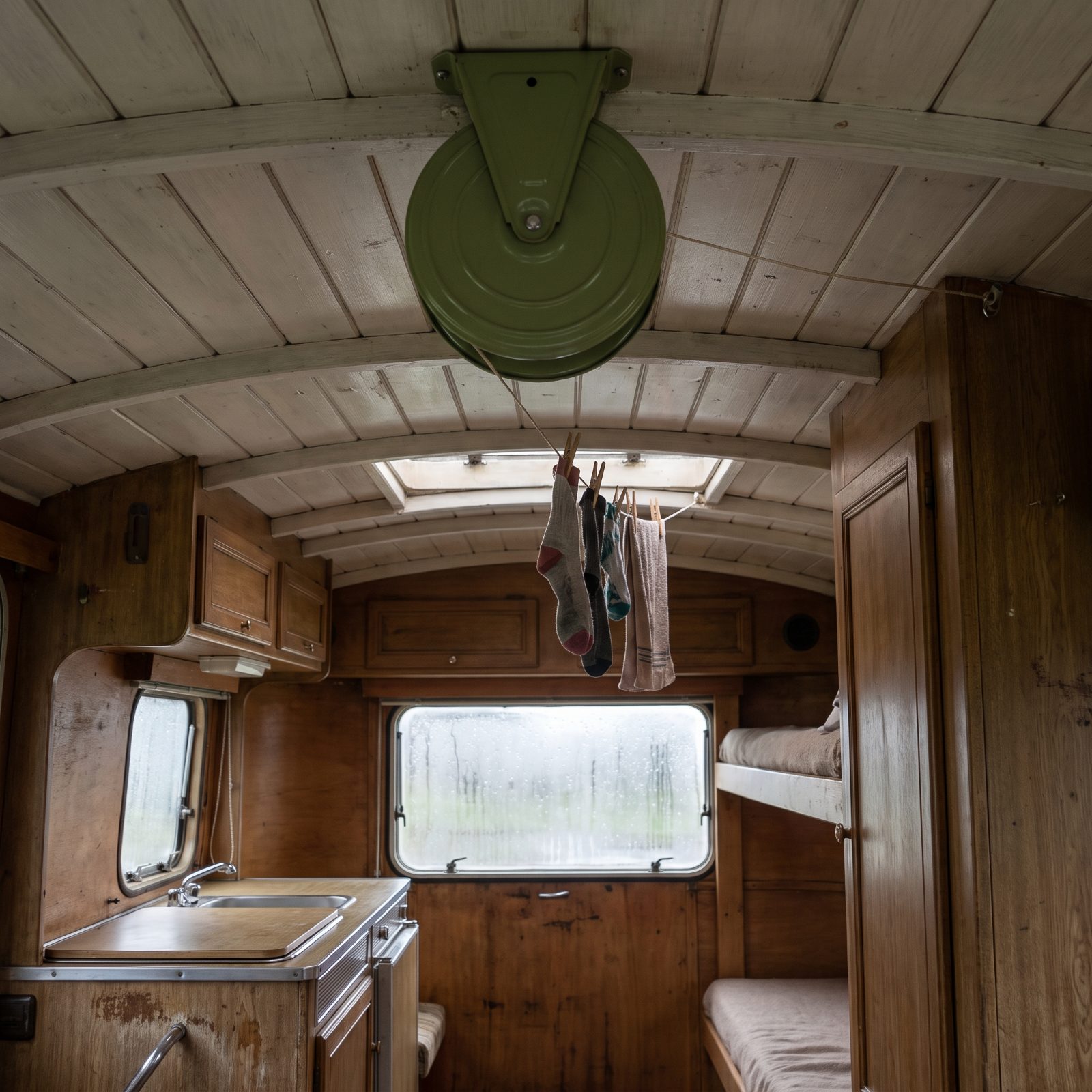
A little reel bolted to the ceiling, line pulled taut across the cabin and hooked to the far wall. On a rainy afternoon it filled up with dish towels and swimsuits dripping onto the Formica below.
You ducked under it to get to the dinette. It was in the way and nobody minded, because the alternative was damp towels going sour in a hamper. Modern campers hand you a fold-out drying rack if you’re lucky. The ceiling line used the one space nobody else wanted — the smartest kind of thinking a small trailer ever did.
4. A Foldaway Ironing Board
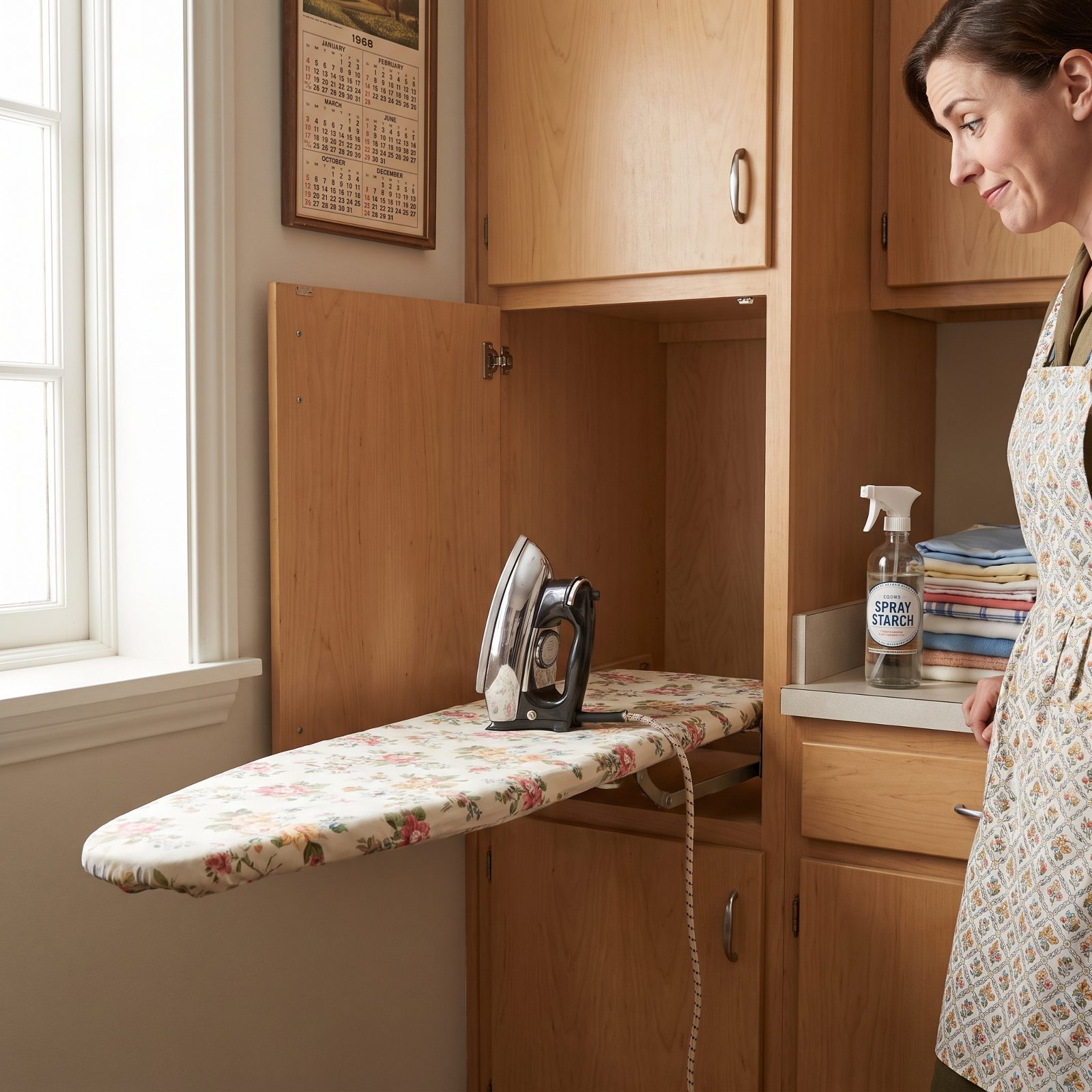
Ironing on vacation sounds like a punchline now. Back then it was built right into the cabinetry — a narrow padded board that folded down out of a tall cupboard, chrome leg swinging into place, scorched cover and all.
People traveled in clothes they expected to look crisp, campground or not, and a collared shirt went on for the drive into town. The foldaway board was ready for it, and the heavy flat iron lived in the drawer below.
3. A Permanent Ashtray Built Into the Cabinetry
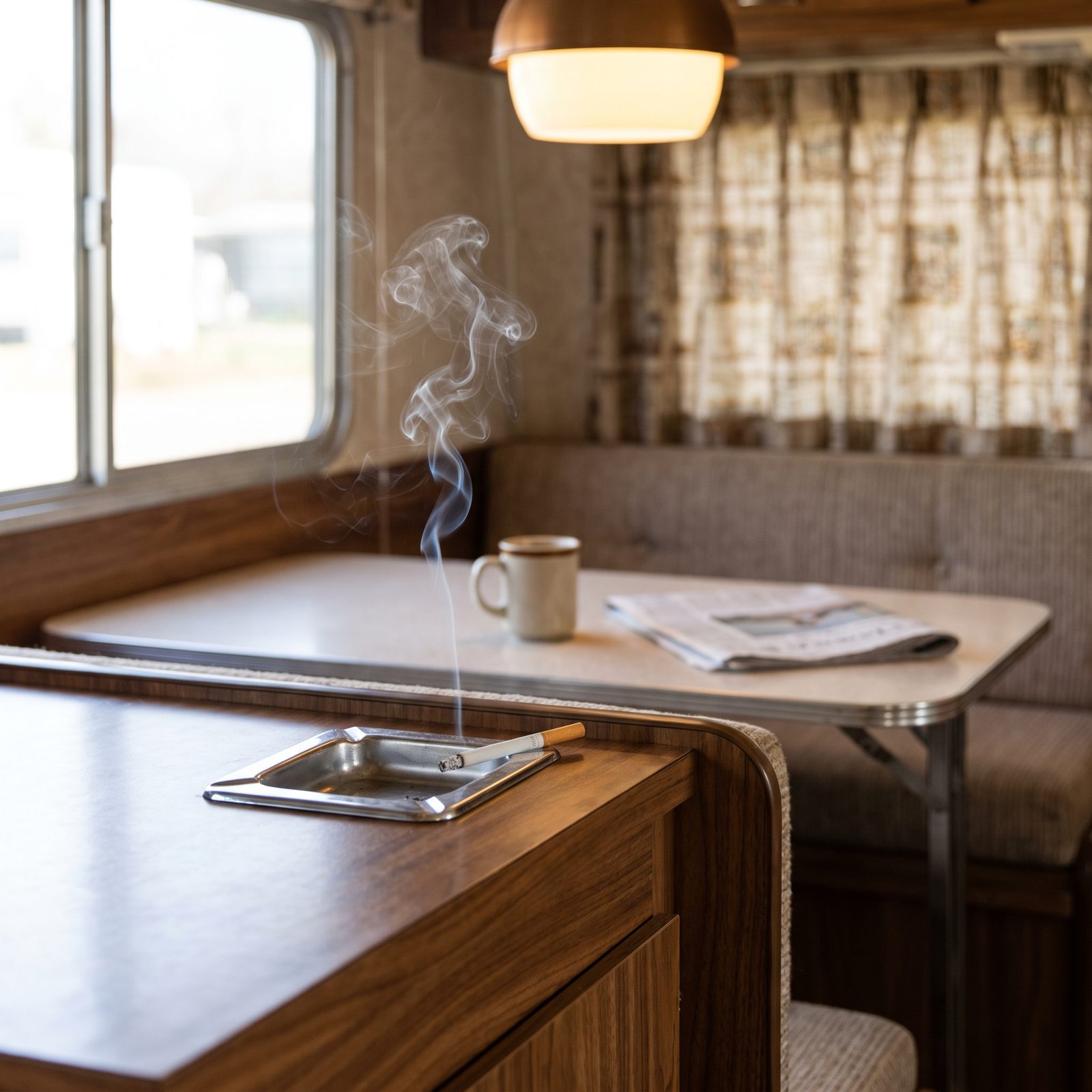
Not a dish you set out. A real ashtray, chrome-rimmed, recessed flush into the woodwork beside the dinette, often with a hinged flip-lid to knock the ash in and close. The builder assumed you’d smoke inside the camper, and most people did.
It’s the fixture that dates a vintage trailer faster than anything else. You find one tarnished and stained in a restoration project and it stops you cold — a little artifact from a time when the family car, the airplane, and the camper all came with ashtrays standard. Nobody builds those in anymore, and that one small absence tells the whole story.
2. A Roof-Mounted Swamp Cooler
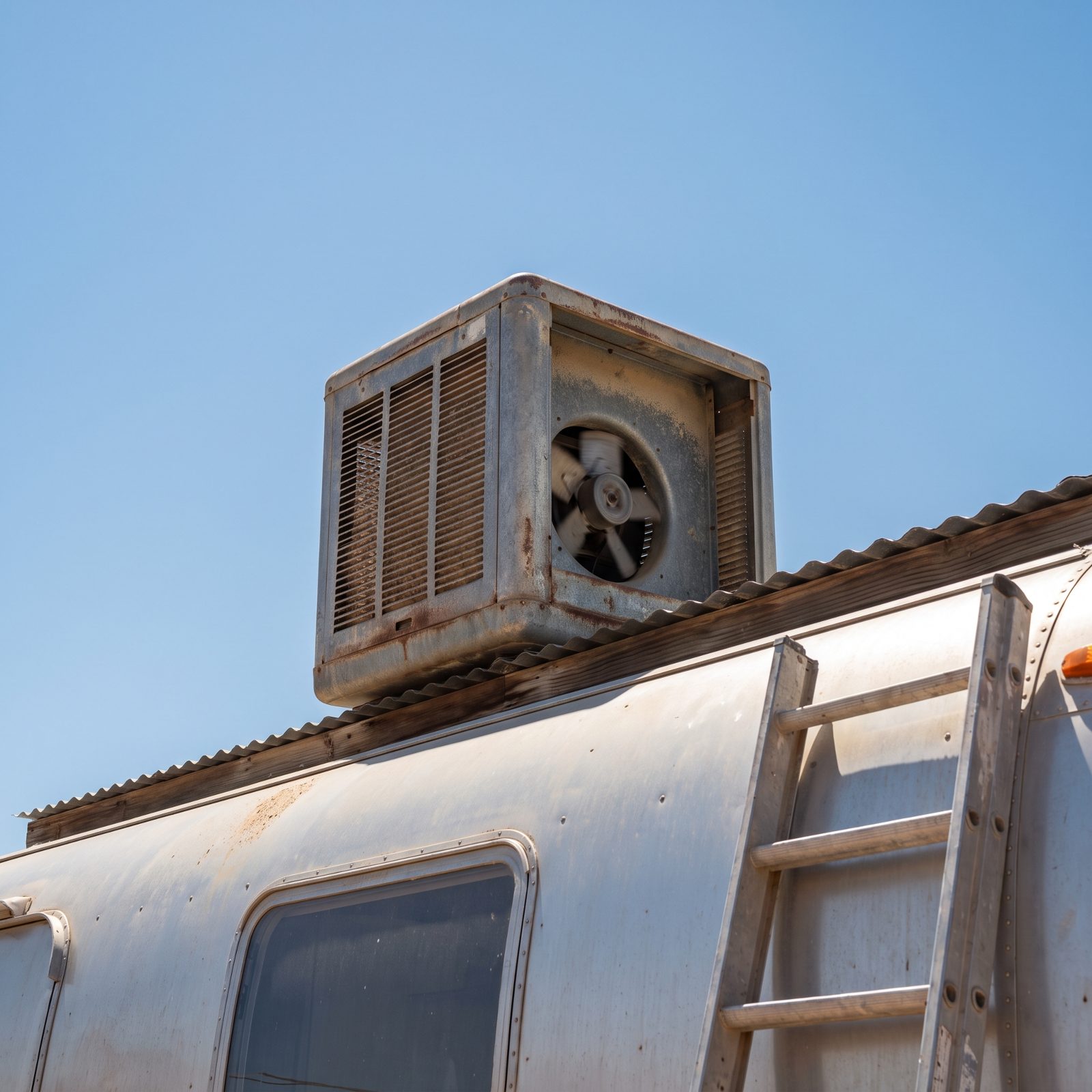
A box on the roof that cooled with water, not refrigerant. Before rooftop air conditioning went standard, a lot of campers in the dry Southwest ran an evaporative cooler — a swamp cooler — strapped up top. Water trickled over pads, a fan pulled hot air through, and the camper filled with air that was cooler and a little damp.
It only worked where the air was dry. That’s why you saw them headed to Arizona and never to Florida. They left faint water stains streaking down the aluminum siding, a signature of where that trailer had spent its summers.
Compressor AC eventually won everywhere, because it works in humidity and nobody has to top off a reservoir. But a swamp cooler on a 105-degree desert evening, with the smell of wet pads and sagebrush coming through the vent? No modern unit reproduces that.
1. The Propane Mantle Lamp That Hissed All Night
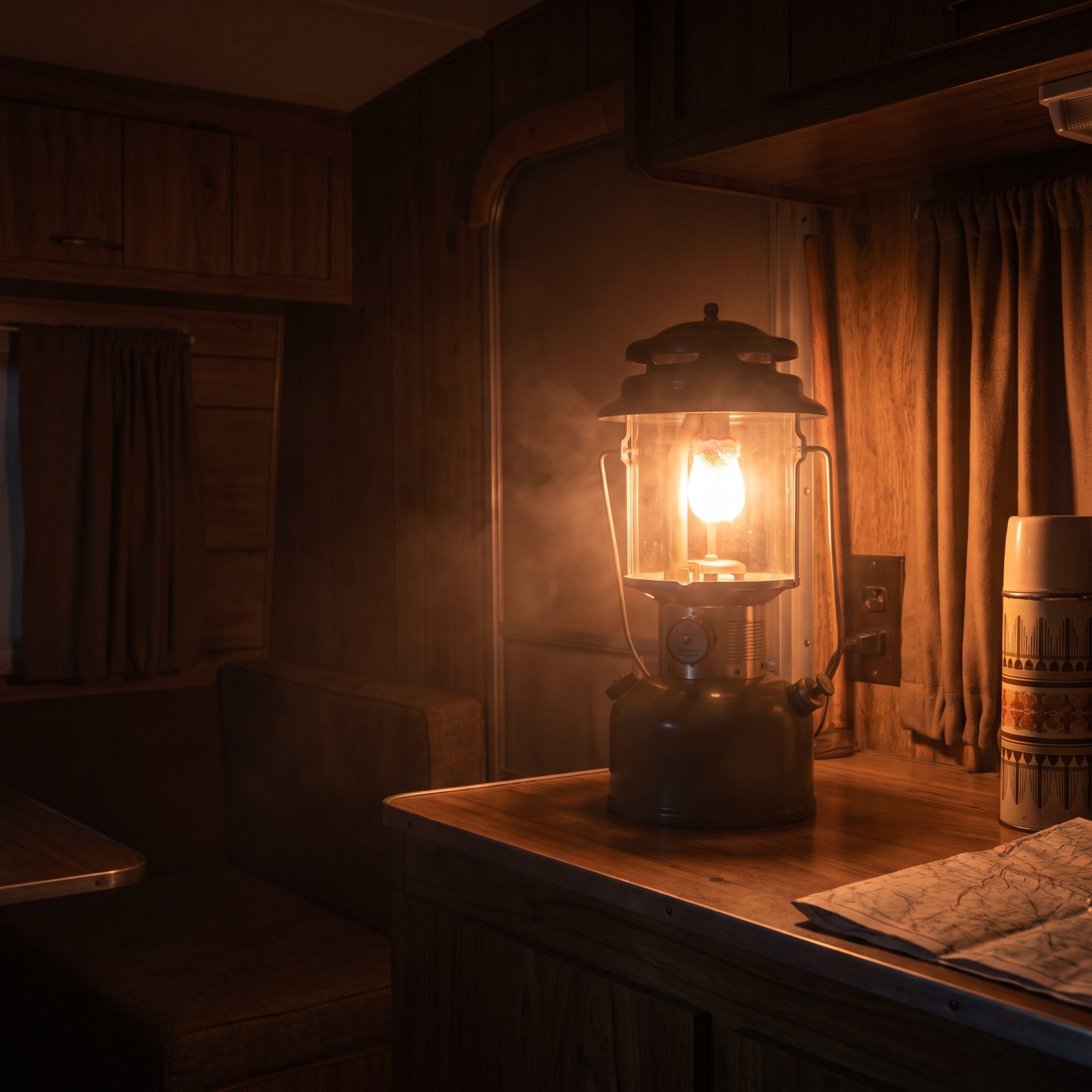
You lit it with a match and held your breath. The mantle — that fragile little fabric sock — would flare, then settle into a steady white-hot glow, and the whole camper filled with a sound modern RVs forgot: a low, constant hiss that became the background noise of every evening.
These ran off the same propane that fed the stove, plumbed straight into a brass line in the wall. No batteries, no switch to flick. You turned a valve, struck a match, and that was the ritual. The light was warmer than anything an LED can fake, gold and a little flickery — great for playing cards, hopeless for finding whatever you’d dropped under the dinette.
Here’s the part nobody puts on the brochure. They threw off real heat and burned real oxygen, so you cracked a window — always — or you woke up with a headache and a fogged windshield. We knew the rules without being told them. Leave the louvered vent open a sliver and fall asleep to the hiss.