
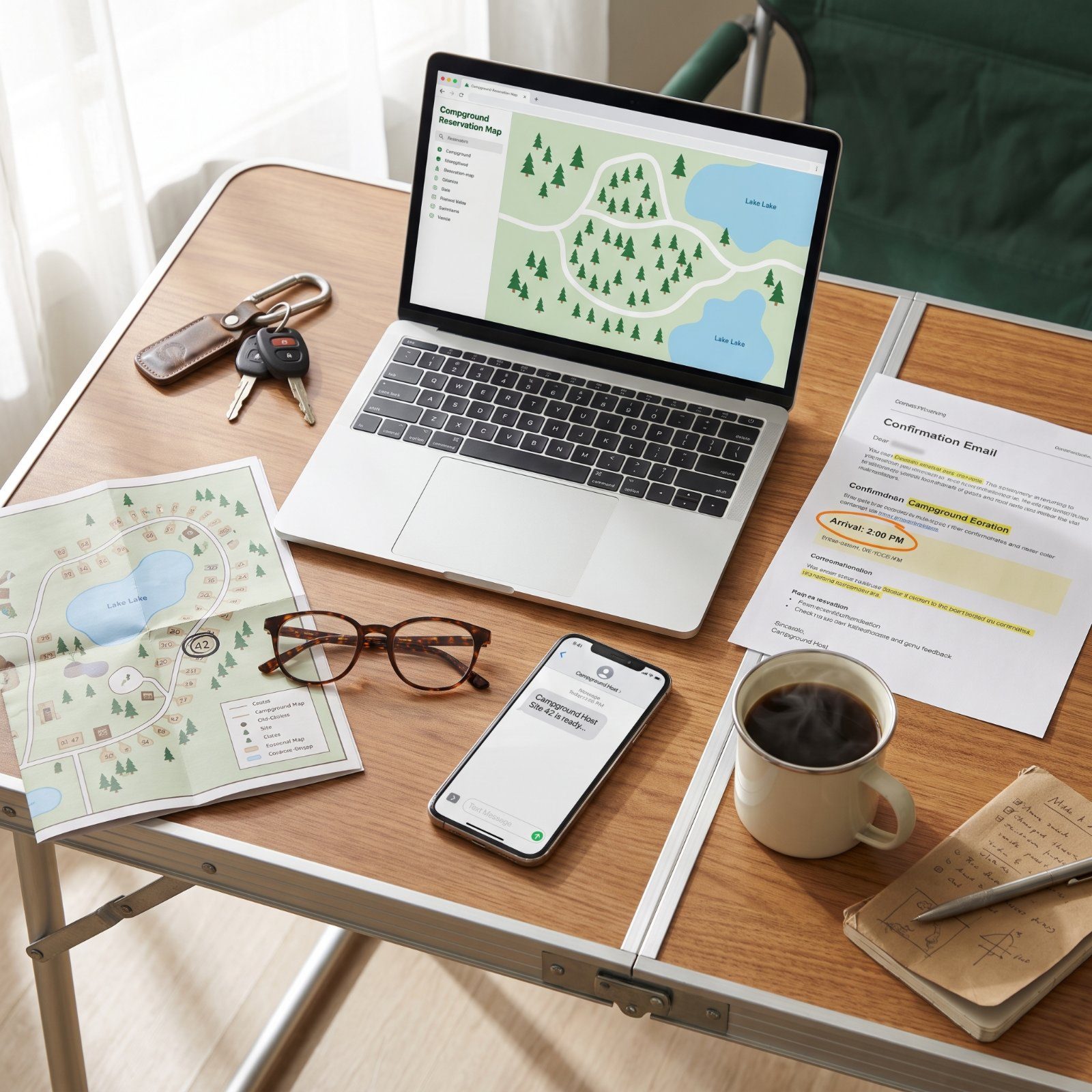
A good campground tells on itself long before the gravel crunches under your tires. You can read it in the booking page, the way the phone gets answered, the photos that match the actual site instead of some drone shot lifted from a prettier property down the road. We’ve pulled into enough places that looked great online and turned out grim in person to know the tells. The difference between a restful weekend and a tense one usually shows up during reservation, not after. Learn to spot the clues early and you’ll waste fewer nights wishing you’d booked somewhere else.
29. The Property Photos Show Real Sites, Not Just the Pretty Lake
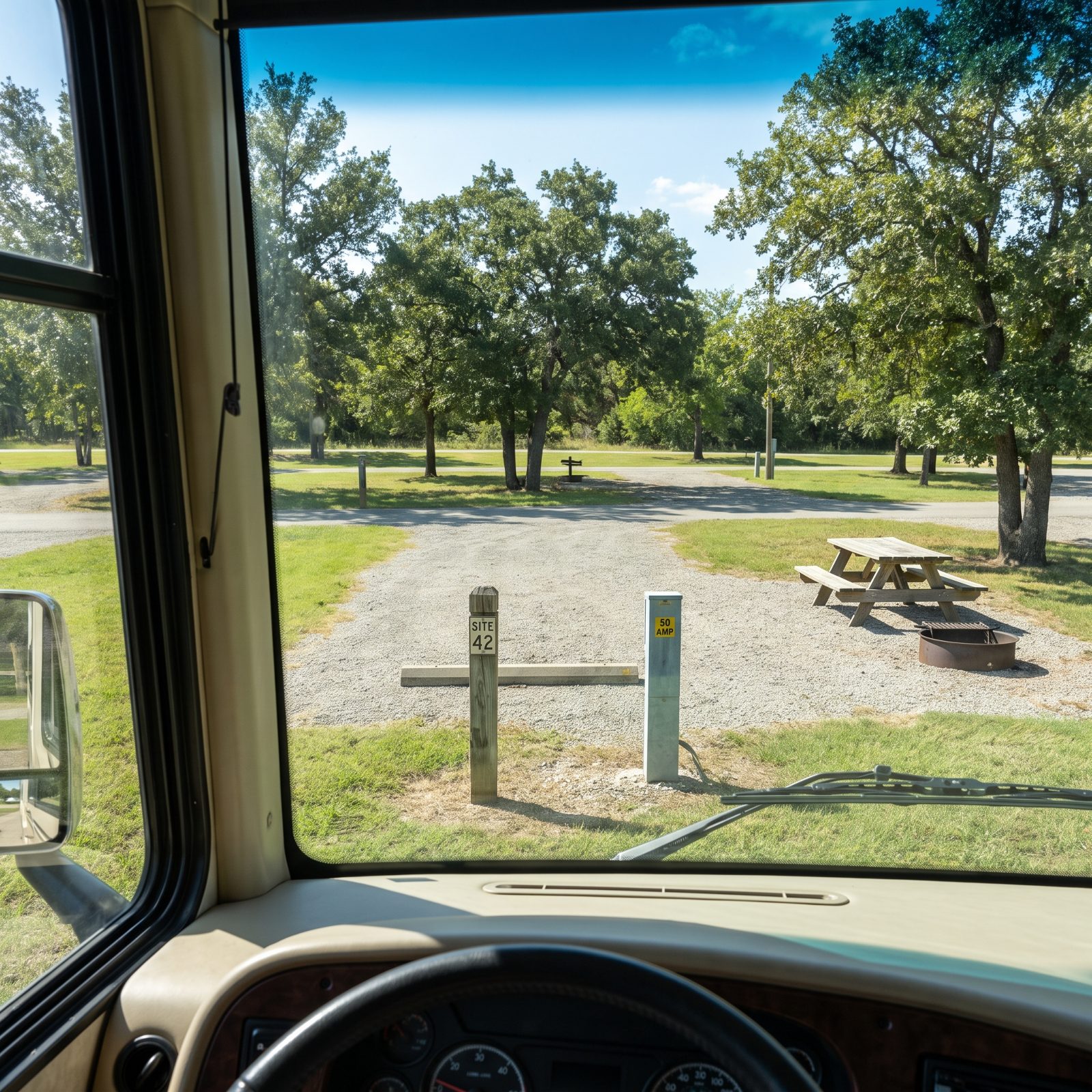
Drone shots of a glittering lake tell you nothing about where your rig actually parks. The campgrounds worth trusting post photos of the sites themselves, shot from eye level, with the pedestal and picnic table right there in frame.
We once booked a place off one gorgeous sunset photo and arrived to find our assigned pad was a muddy strip wedged behind a dumpster. The lake was real. Our view of it was a chain-link fence.
Show me the unglamorous truth and you’re telling me you’ve got nothing to hide.
28. Site Dimensions Are Listed Clearly, Not Buried in Fine Print
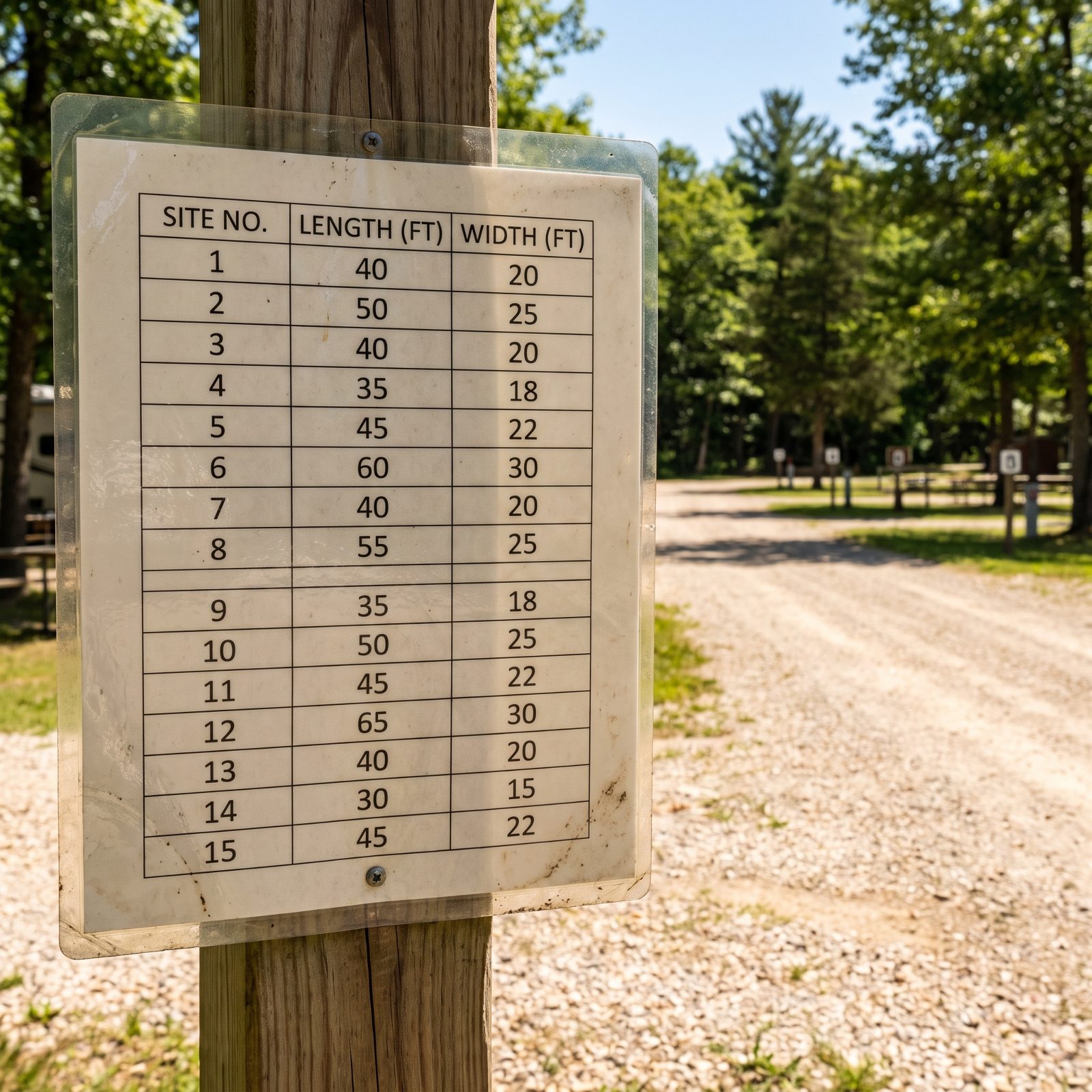
A listing that tells you a site runs 70 feet long and 20 feet wide respects your time. A listing that just says “RV friendly” wants your deposit and hopes you’ll figure it out.
Length matters more than people realize. A big fifth wheel plus a truck needs real room, and “pull-through” means nothing if the pad maxes out barely longer than your rig. Good campgrounds publish the numbers because they’d rather lose a booking than have you jackknifed at the entrance holding up a line of cranky arrivals.
27. The Reservation Map Tells You Which Sites Get Shade
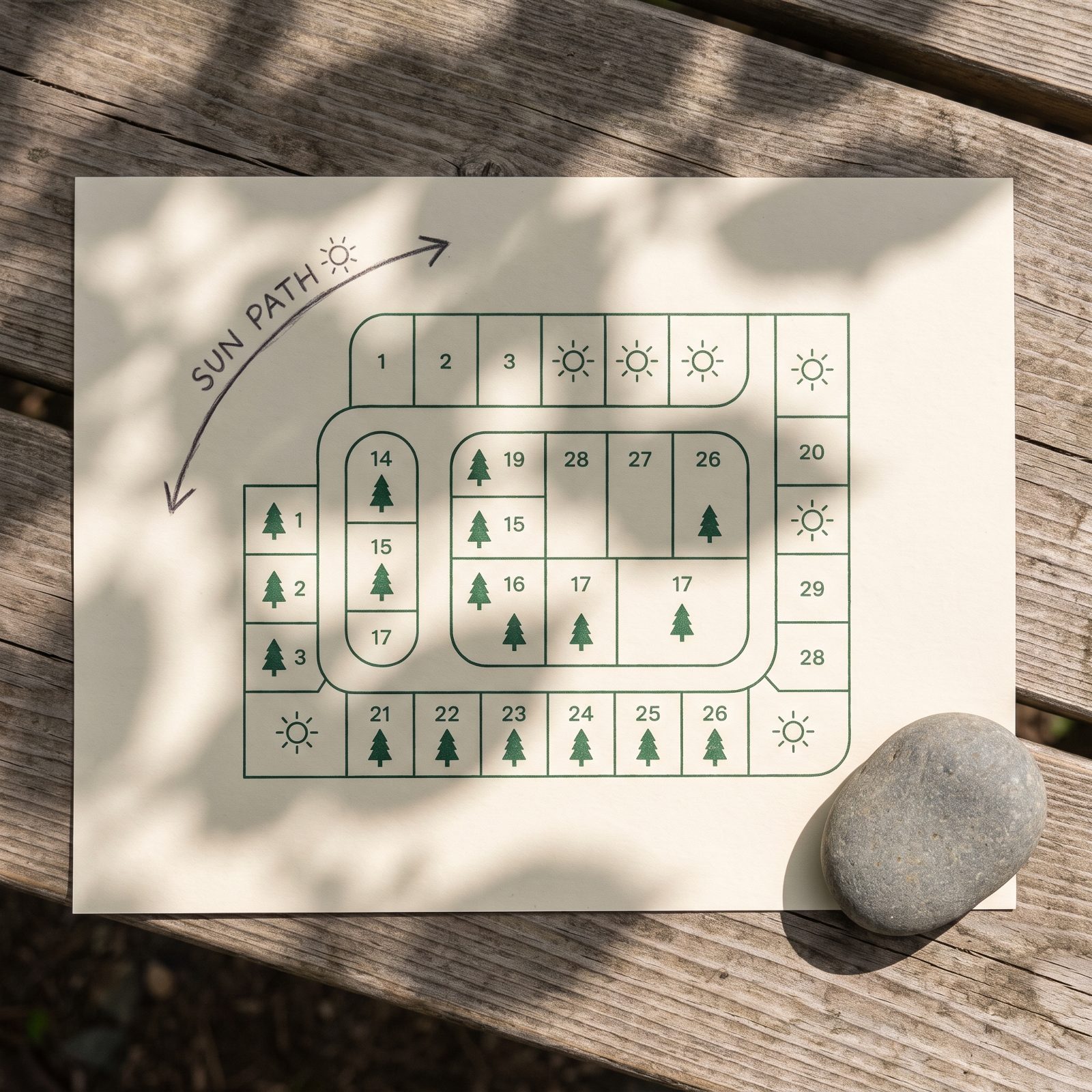
In July, shade isn’t a luxury. It’s the difference between your air conditioner winning and your air conditioner running itself to death by two in the afternoon.
A reservation map that marks tree cover, or better yet shows morning versus afternoon sun, was built by somebody who actually camps. They know a west-facing site with no trees turns into a tin oven after lunch. One detail like that tells you the people running the place have slept in their own sites and paid attention.
26. Management Replies to Recent Reviews Like They Read Them
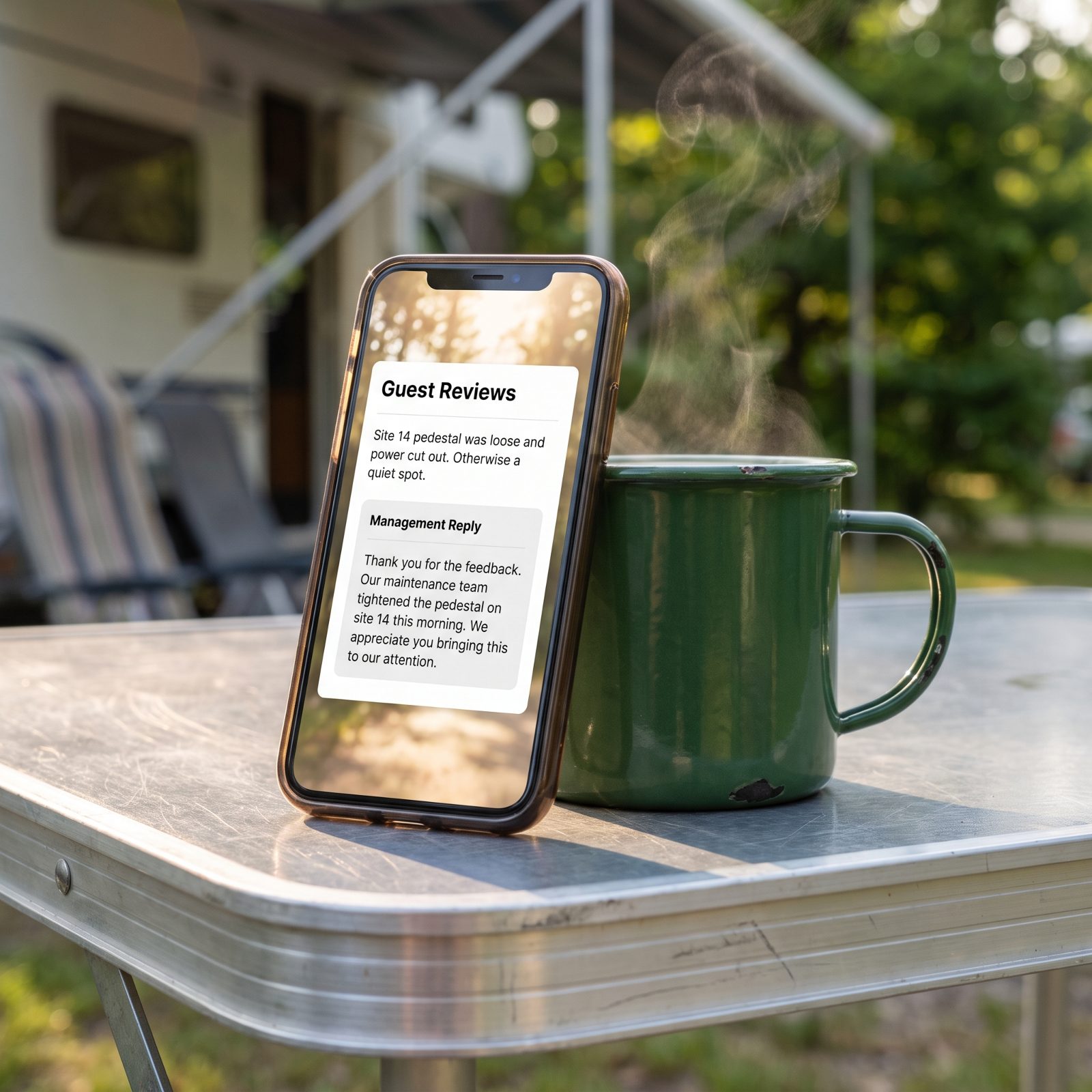
Skip the five-star reviews. Go read how the owner responds to the one-star ones.
You can learn everything from a complaint reply. The defensive owner who argues with a guest about a broken hookup is the owner who’ll argue with you. The one who writes “you’re right, the pedestal on 14 was faulty, we replaced it in March” is telling you two things at once: they fix problems, and they remember the details.
A copy-paste “thanks for your feedback!” on every review, good or bad, means nobody’s actually reading them.
Careful replies take time. A place that spends that time on strangers online will spend it on you at the gate.
25. Cancellation Rules Written So a Human Can Understand Them

Plain cancellation language is a trust signal most people read right past.
“Cancel seven days out for a full refund, less a $15 fee” is a sentence written by someone who wants you to understand it. Three paragraphs of nested conditions about peak-season tiers and non-transferable credits? Written by someone betting you won’t read closely enough to notice they’re keeping your money.
Clear rules don’t mean soft rules. A strict policy stated simply is fine. It’s the fog you want to avoid.
24. Staff Answer the Phone Knowing the Road to the Trout Stream
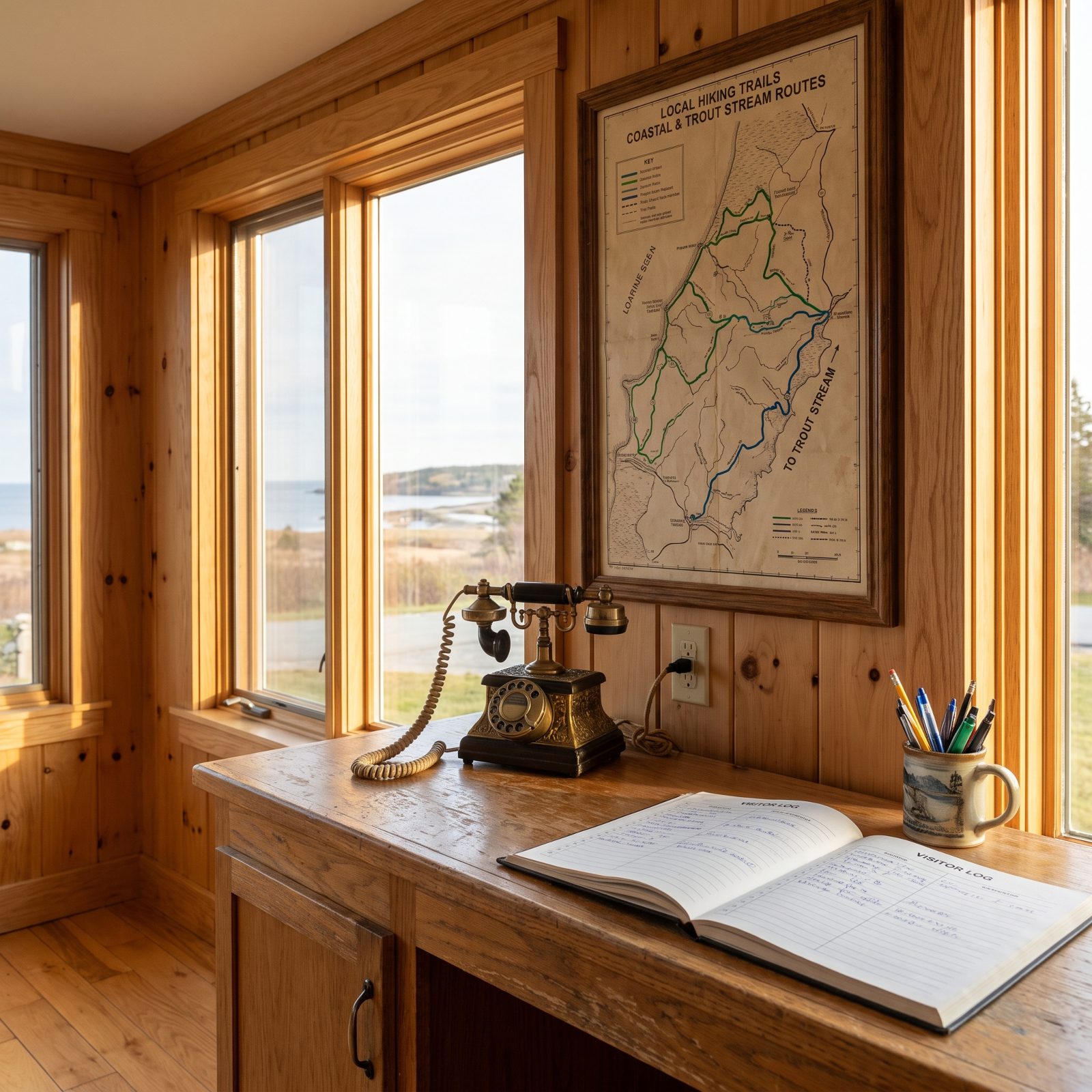
Call before you book. Ask something only a local would know, like whether the boat launch is usable at low water or which sites catch the morning breeze.
A clerk who says “let me check” and comes back with a real answer is working at a place that knows its own ground. A clerk who reads you a script or dodges the question? Red flag. The best campground phone calls feel like talking to a neighbor who’s genuinely glad you’re coming and wants you to see the good stuff while you’re there.
23. The Confirmation Email Spells Out Exactly How to Arrive

A great confirmation email reads like a handoff from someone who’s thought about your drive. The gate code. The GPS pin that actually lands at the entrance and not in a cornfield half a mile off. Which lane to take for big rigs.
Now compare that to the email that just says “See you soon!” and nothing else. That’s the place where you’ll be circling a dark county road at 9 p.m., trying three different driveways. I’ve done it. Miserable, and avoidable with two more sentences from the campground.
22. A Prearrival Text Warns You About the Low Bridge
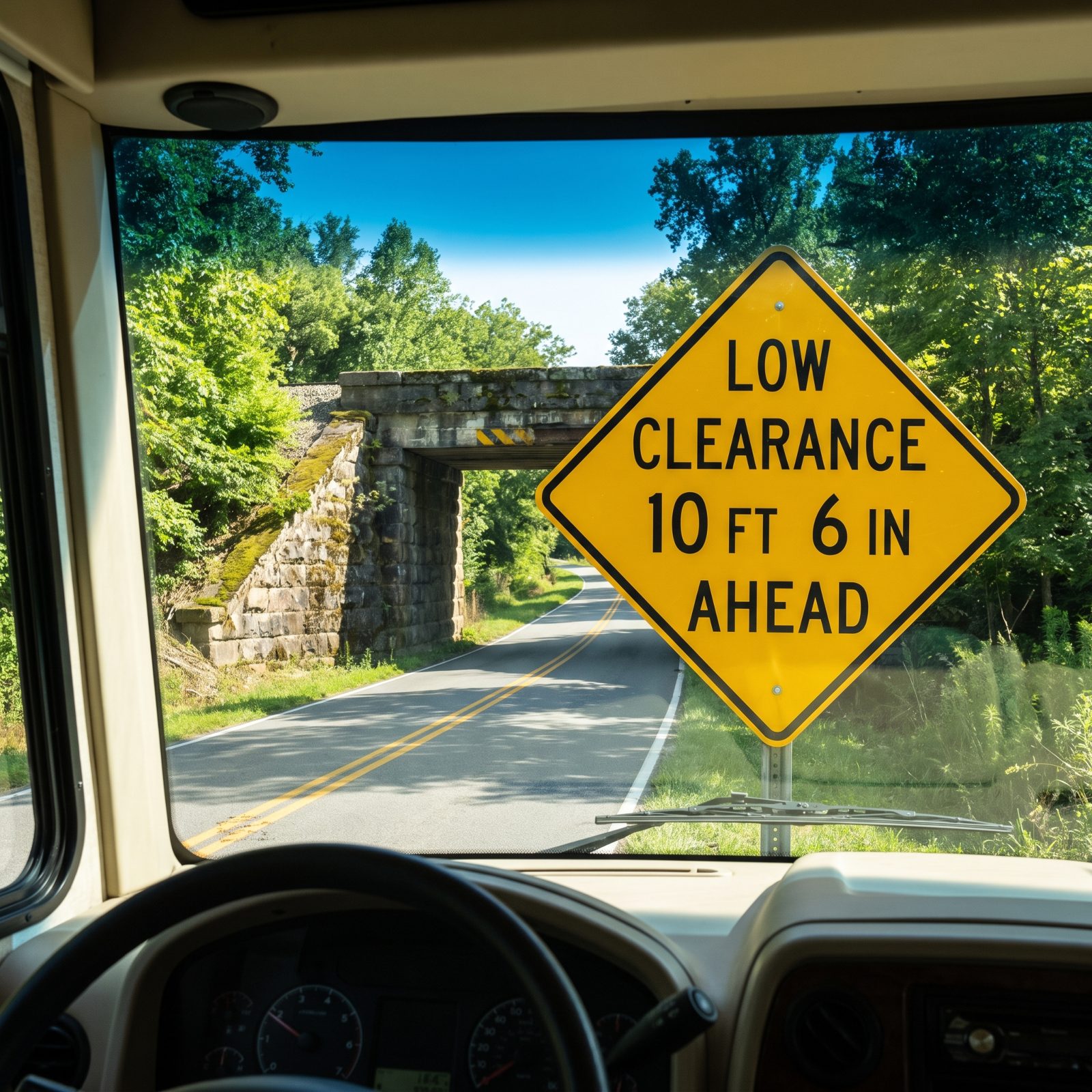
The text that lands the morning before you leave, warning you the GPS route runs under a low railroad bridge and your rig needs the alternate road, is worth its weight in sheared-off roof vents.
Campgrounds that send these have learned the hard way. They’ve watched a motorhome wedge itself under a trestle or scrape a county bridge, and now they warn everybody. Their scar tissue becomes your protection. A place that volunteers the dangerous route is looking out for you before you even arrive.
21. They Tell You the Truth About Cell Signal and WiFi
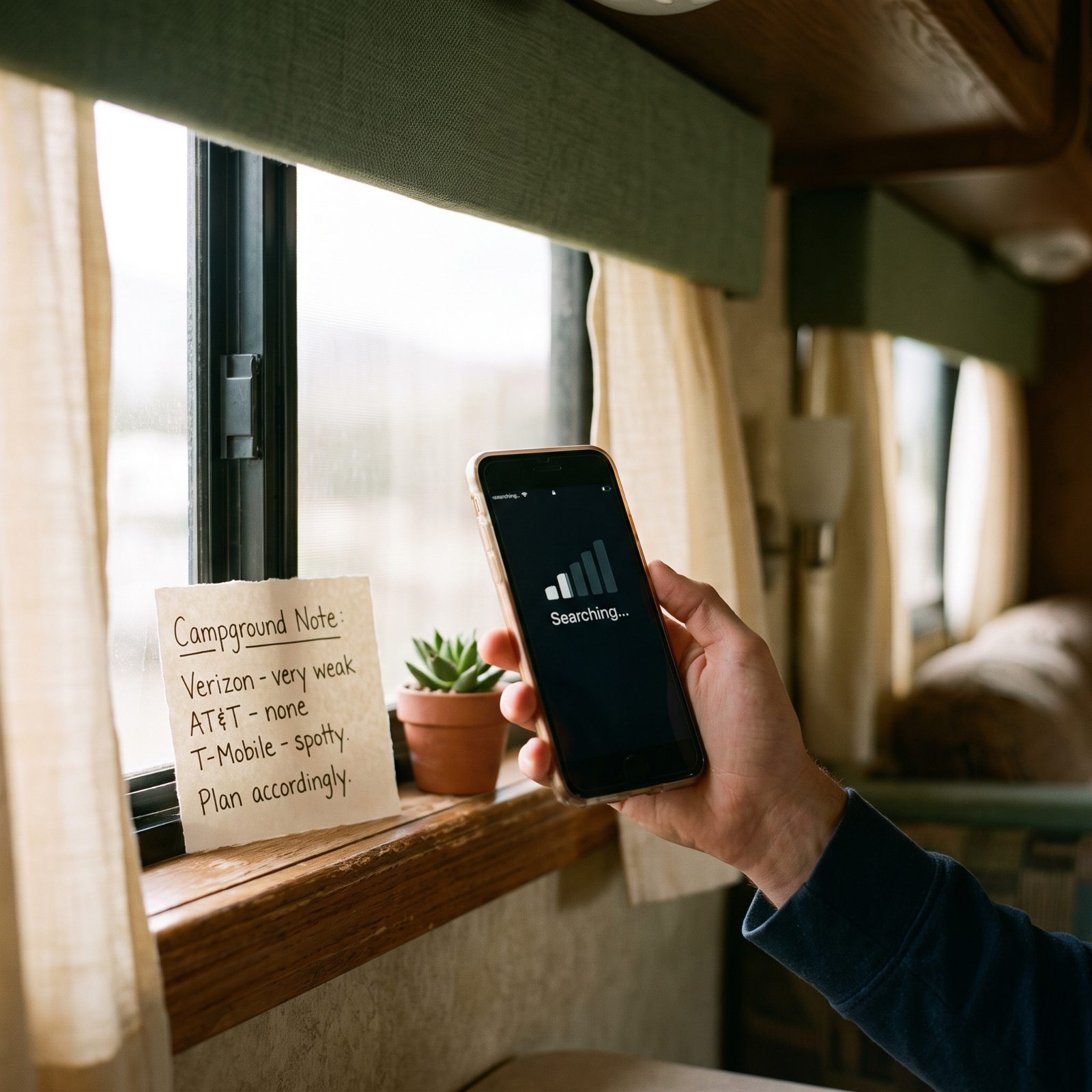
Honesty about dead zones is rarer than it should be.
Plenty of campgrounds advertise “free WiFi” that turns out to be one flickering bar shared across a couple hundred sites. The trustworthy ones tell you straight: Verizon is very weak, AT&T gets nothing, T-Mobile is spotty, plan accordingly. That candor costs them bookings from remote workers, and they offer it anyway.
If you work on the road, this is the detail that saves your whole week. A campground willing to say “our signal is bad, bring a hotspot” is a campground you can believe about everything else.
20. After-Hours Check-In Is Explained Before You Need It
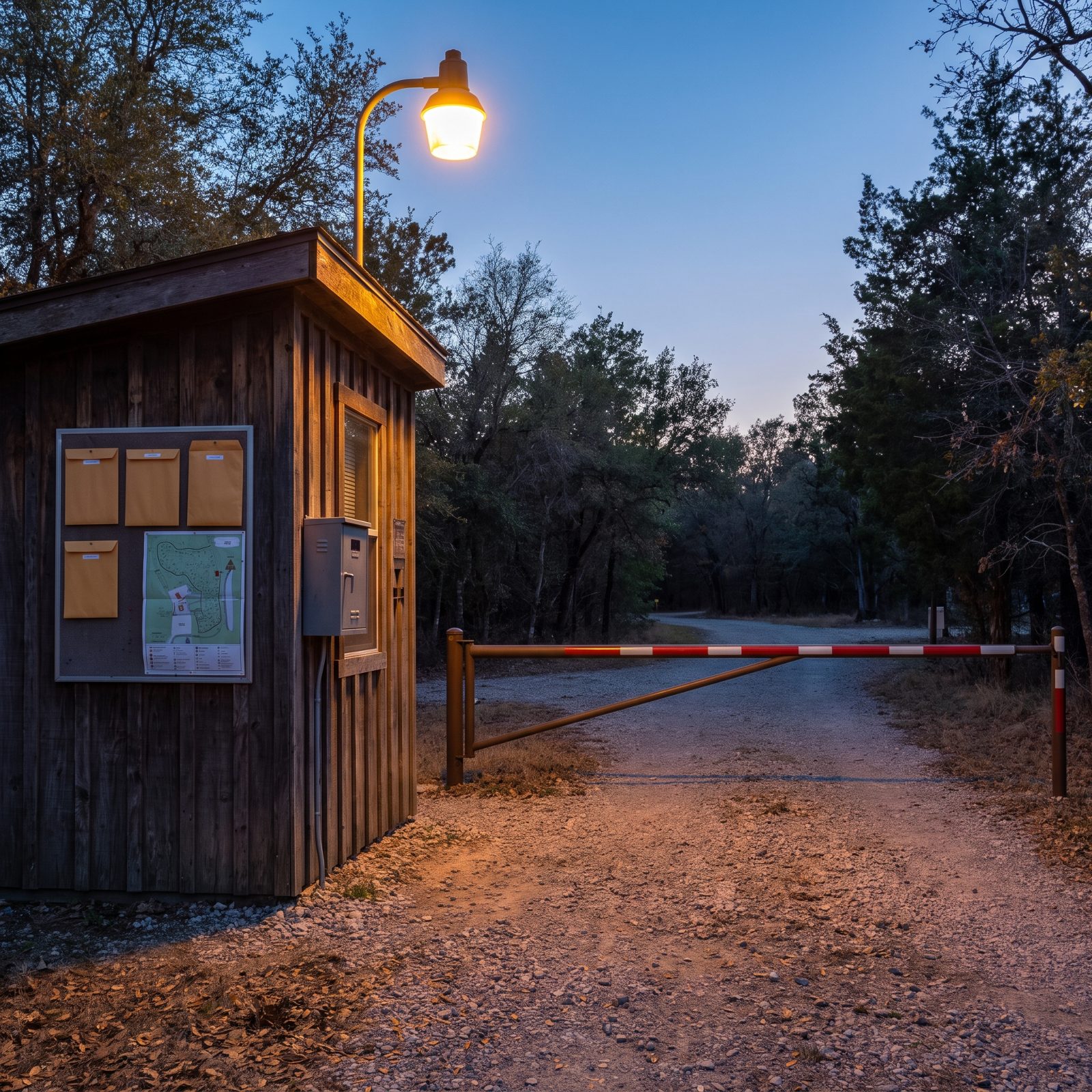
Delays happen. Traffic, a blown trailer tire, a dinner stop that ran long. The campground that already told you where the lockbox is, which envelope has your name, and how to find your dark site after closing has spared you the single worst feeling in RV travel: rolling up to a locked gate with no plan.
And a clear after-hours process is one of the strongest tells. Someone sat down and imagined your worst arrival, then wrote instructions so it wouldn’t wreck your night. That’s the gap between a campground that collects your money and one that’s genuinely ready for you. Book that one.
19. The Access Road Is Marked Before the Last Turn
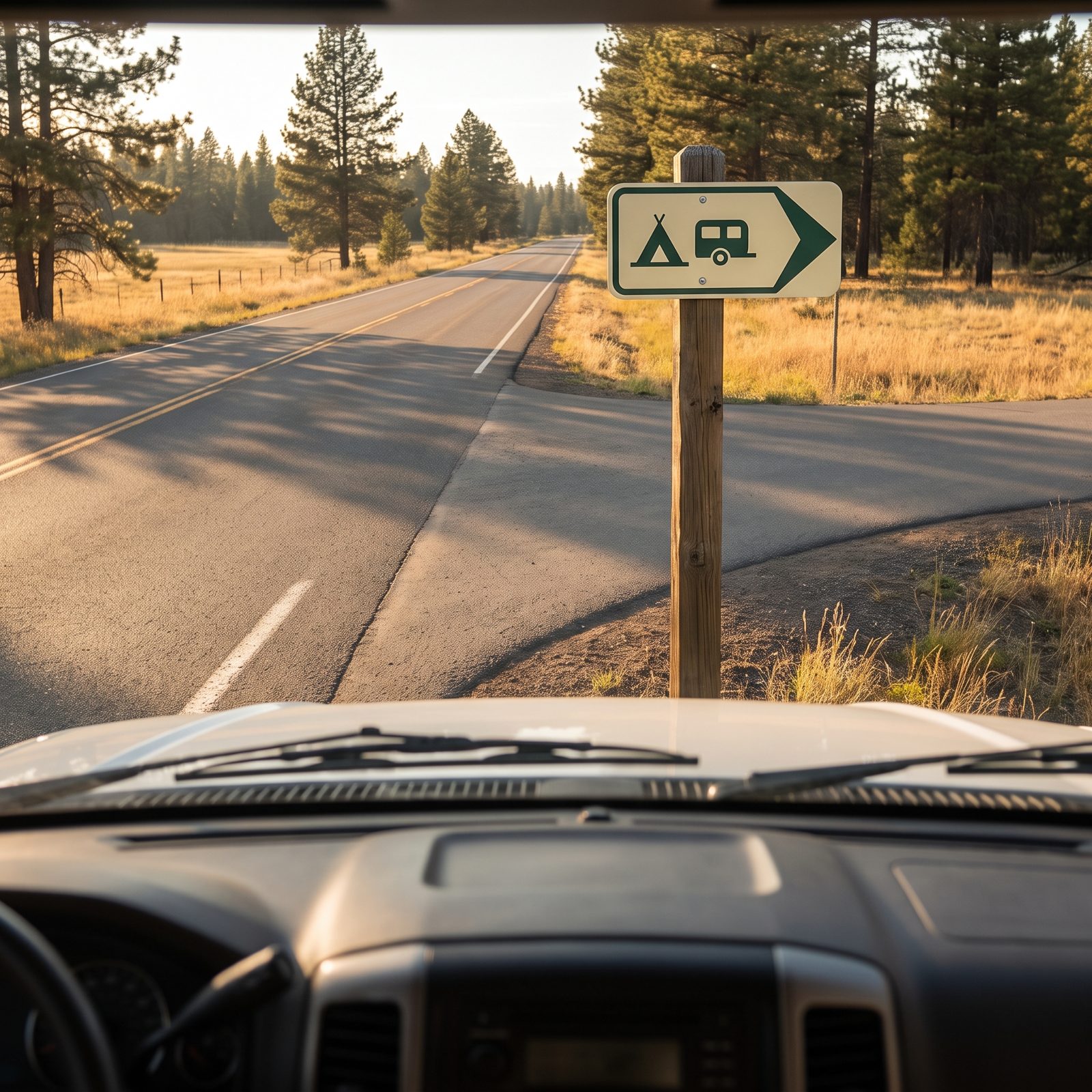
You know the sinking feeling. GPS says turn in 400 feet, there are three gravel driveways, not one of them says a thing, and now you’re either guessing or stopped dead on a two-lane with a trailer behind you.
A good campground puts a sign out before the fork, not at it. That small courtesy tells you someone has towed a big rig into this place and knows exactly where people get lost. First proof they thought about you before you arrived — instead of after you called the office from a ditch.
18. The Entrance Can Handle a Long Rig Without Backing Up
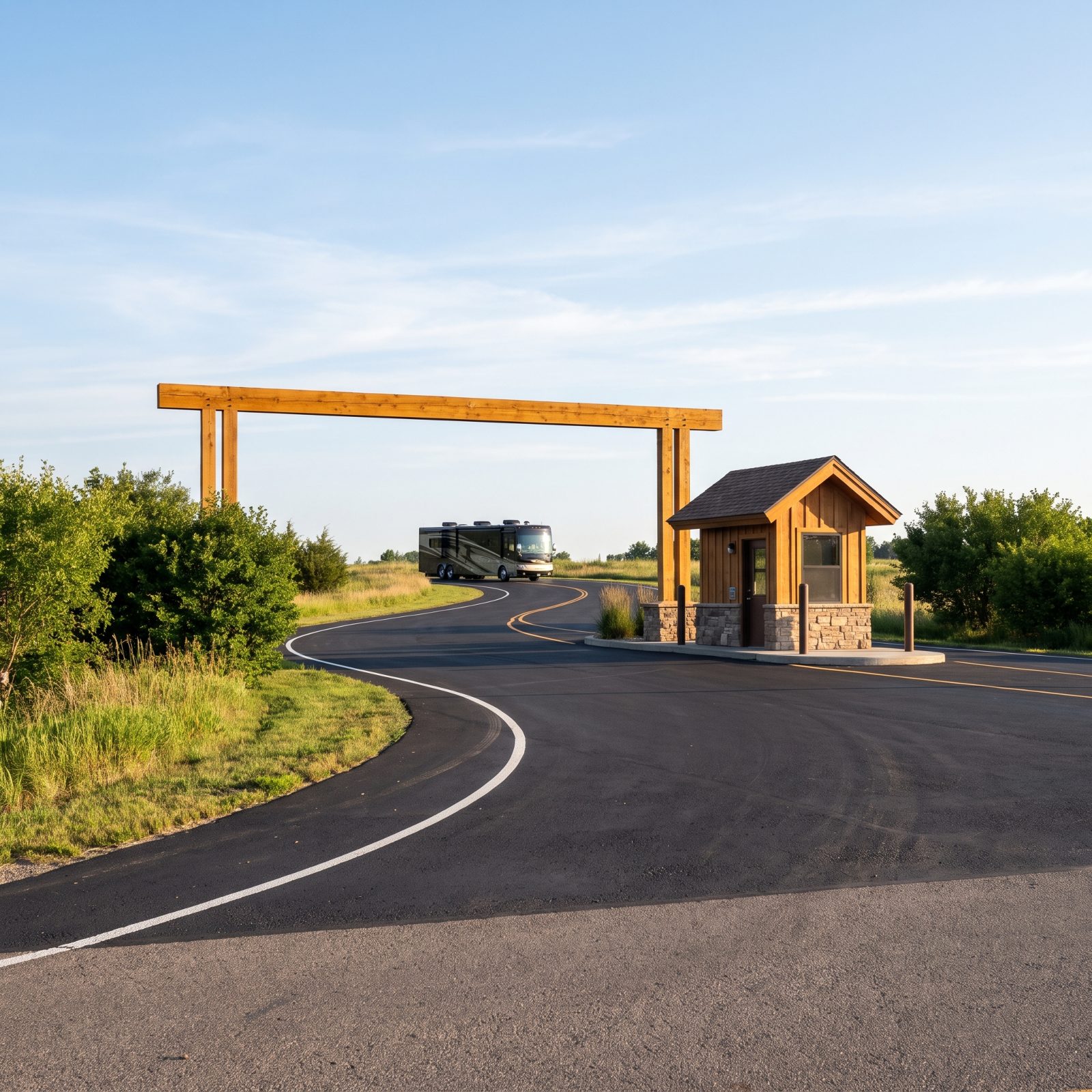
Pull up to an entrance and watch where the pavement goes. A tight little gate with a hairpin right after it means you’ll be jackknifed and sweating while someone waits.
Well-run parks give you a fat turning radius and height clearance you can read from the road. Nobody writes this on the website. You learn it the hard way — usually once, usually with your partner outside hand-signaling and a line of cars forming behind you. A generous entrance is a quiet promise that the interior roads were built by people who tow.
17. The Check-In Lane Does Not Block Through Traffic
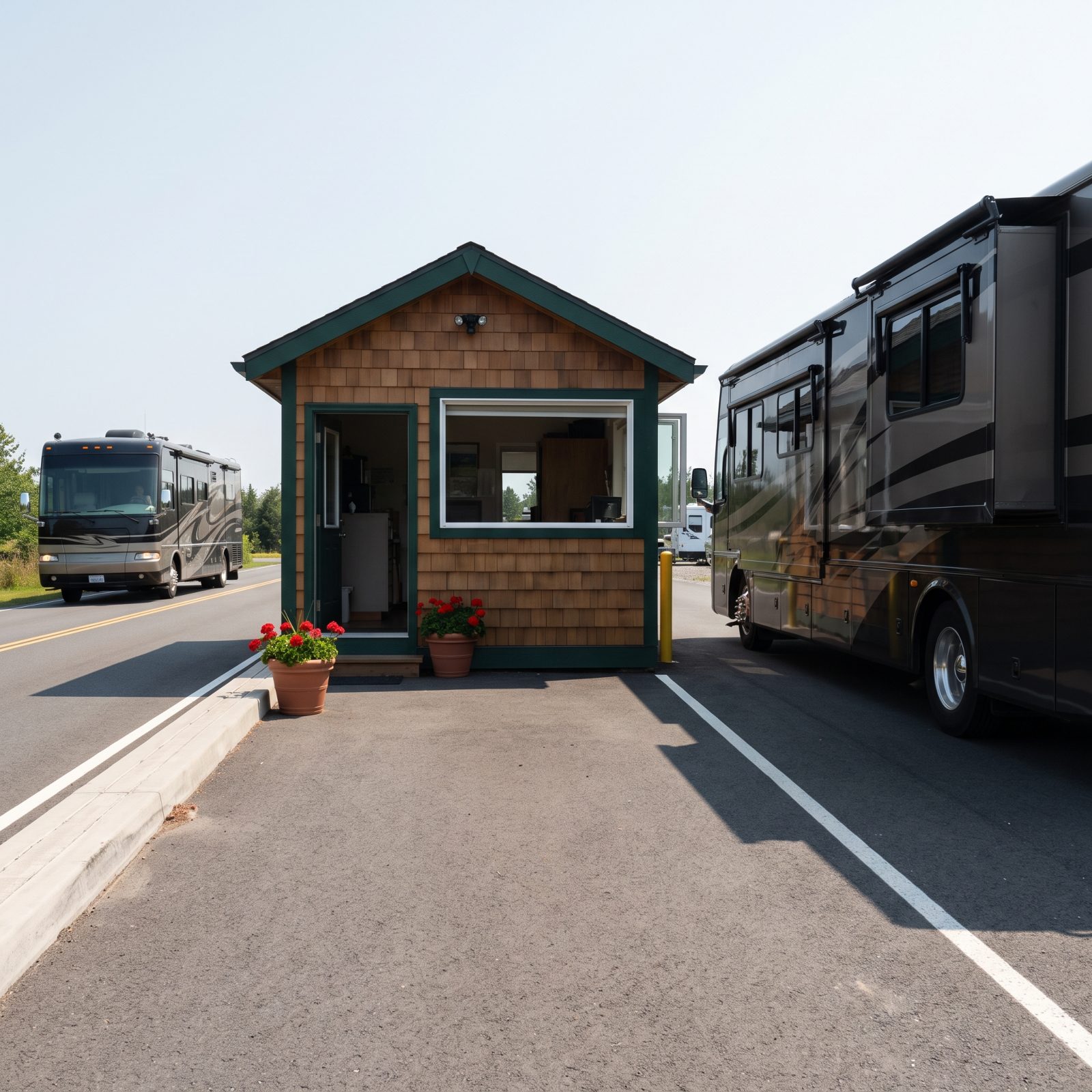
Here’s a detail nobody mentions until it ruins their arrival: where does the rig in front of you park while they check in?
In a sloppy layout, every arriving RV stops smack in the only lane, and the whole park stacks up behind the newest guest fumbling for a reservation number. A park that carved out a pull-off for check-in has thought about flow. You can roll past, or wait without blocking anyone. Reads as calm instead of chaos, and that tone usually holds for the rest of the stay.
16. Entrance Landscaping Does Not Block Sightlines
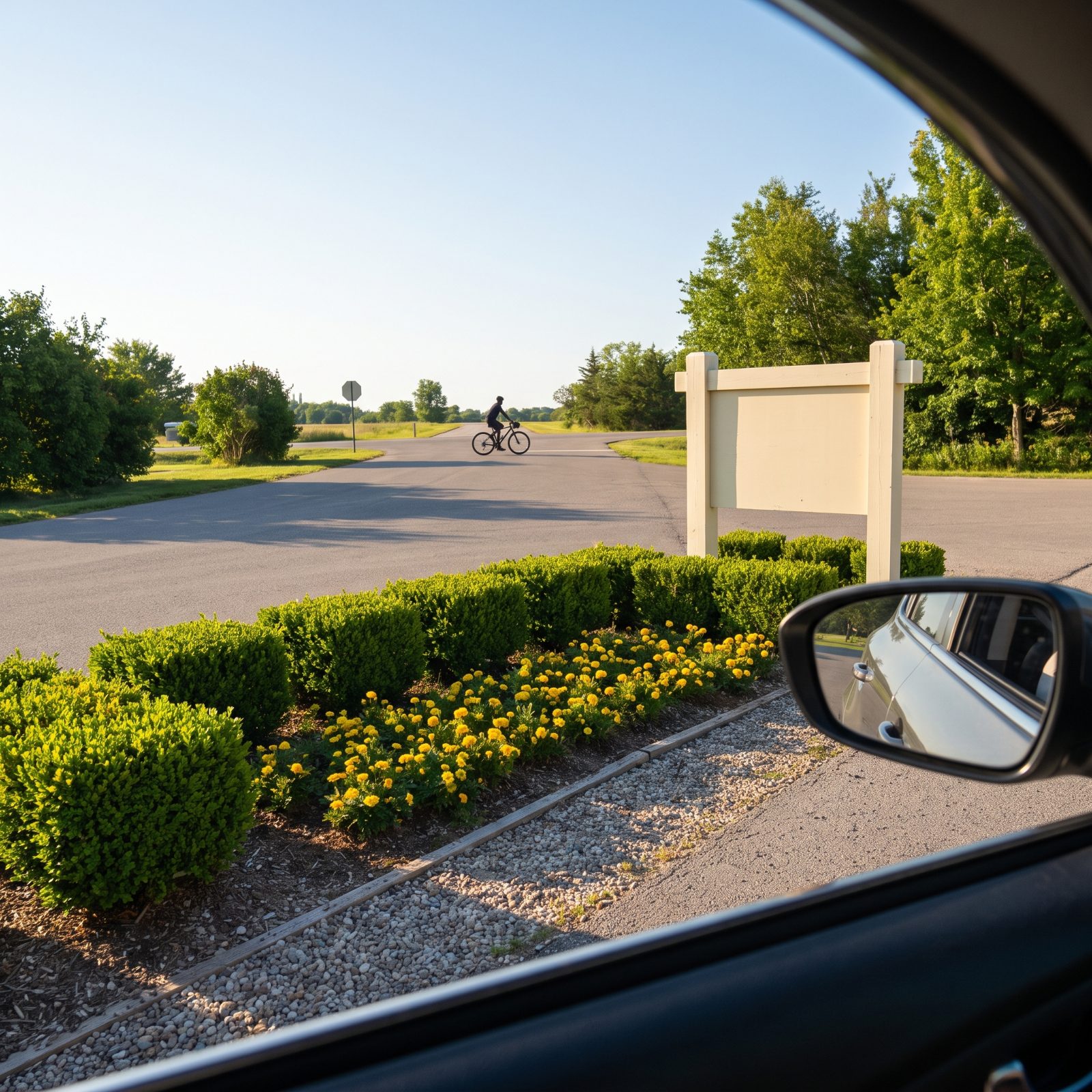
Pretty entrance plantings can hide a real problem. Tall ornamental grass and overgrown junipers at a corner mean you creep out blind, hoping nothing is barreling down the loop road toward a kid on a bike.
The parks that get this right keep plantings low where it counts and let them run tall only where it’s safe. You notice it without naming it. Your shoulders drop a little because you can actually see. Grounds groomed for safety and not just curb appeal tend to be run by somebody who walks the property.
15. Speed-Limit Signs Appear Before the First Campsite
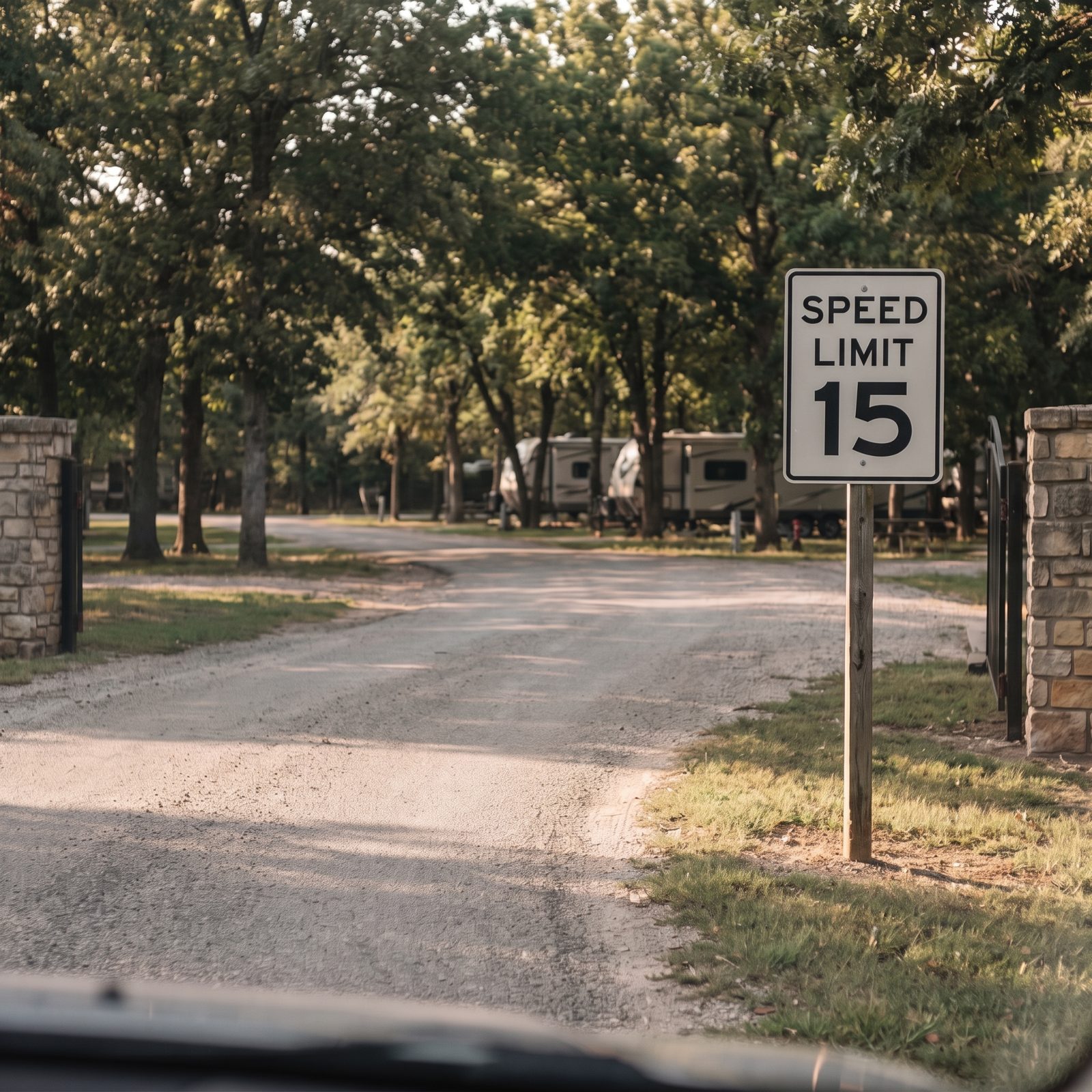
A speed sign posted right where the campsites begin tells you management thinks about the ten-year-old who darts across the road after a dropped ball.
Miss that sign, or never see one, and you learn the culture of the place fast. Loose dogs, kids everywhere, and some guy doing 20 in a dually. Parks that mark the speed early, before the first occupied site, are usually the same ones where quiet hours actually get enforced. I’ll take that over a lake view any day.
14. Roads Are Free of Potholes and Low Branches
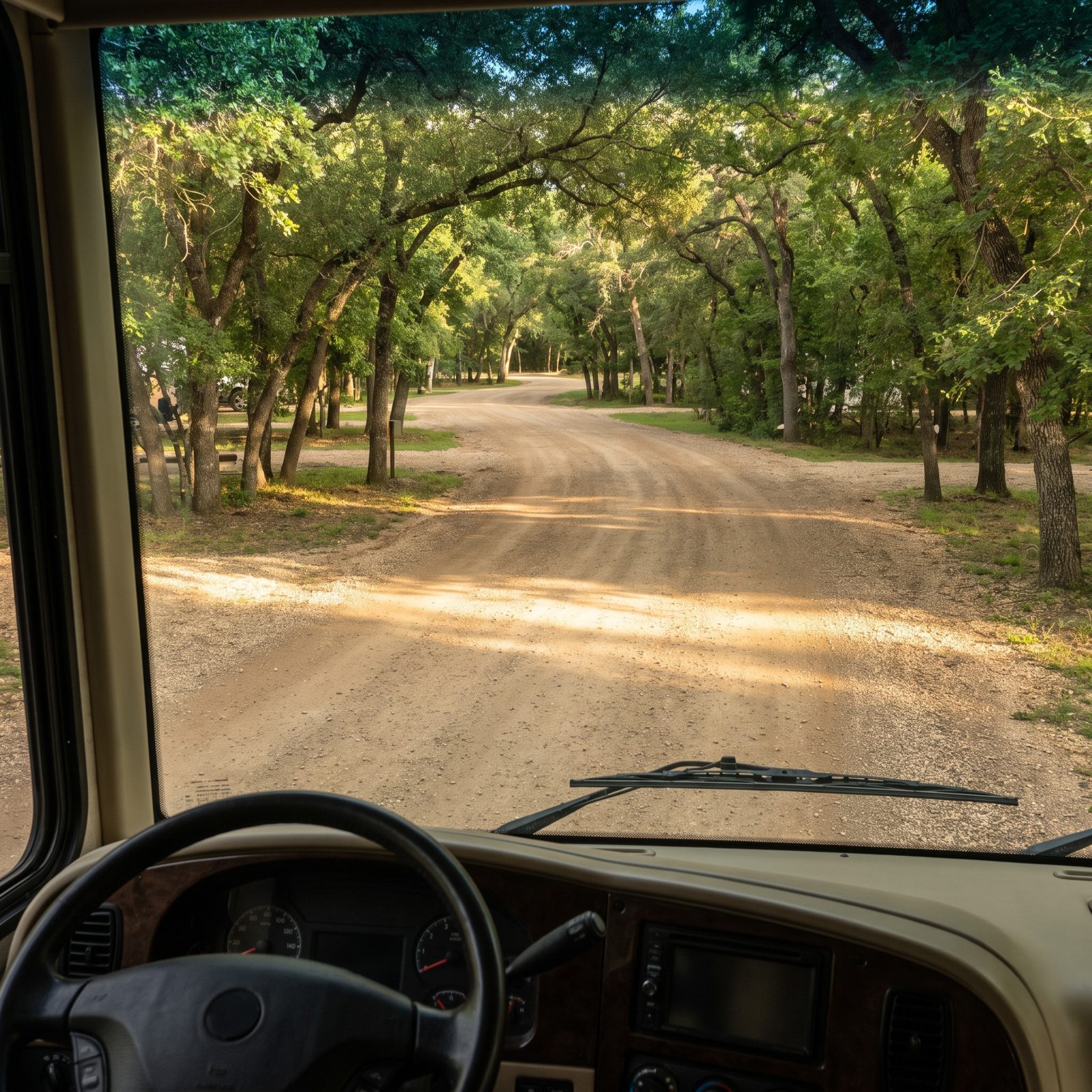
Roll slowly down the first stretch of interior road and look up, not just ahead.
Potholes rattle your cabinets and jar the fridge. Low branches do worse. A single unseen limb can gouge a roof seam or snap off a vent cover, and you won’t find out until it’s raining inside. Parks that keep their canopy trimmed to rig height and their surface patched have spent real money on maintenance most guests never thank them for.
Smooth roads and high branches are the clearest sign the owner reinvests instead of just pocketing nightly rates.
13. The Dump Station Is Positioned Away From Check-In
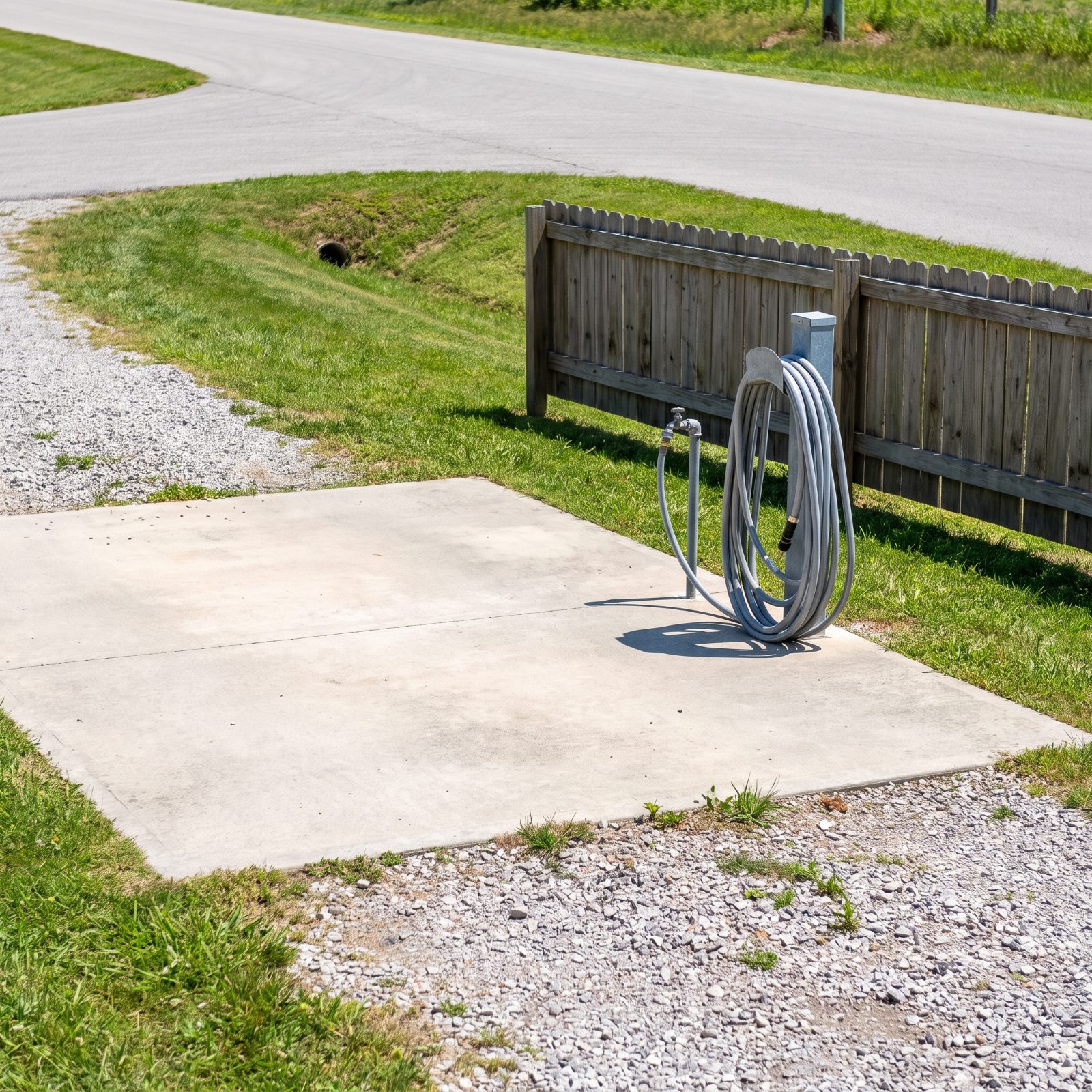
Nobody wants their first impression of a campground to be a dump station. Yet plenty of parks put theirs right at the mouth, so arriving guests queue up next to someone emptying a black tank in the heat.
Smart layouts tuck the dump station on its own spur, downwind, away from the office and the welcome. It’s a dignity thing and a traffic thing both. When you see that separation, you’re looking at a park designed by people who understood that arrival and departure shouldn’t share the same strip of pavement.
12. Trash and Recycling Areas Are Screened and Tidy
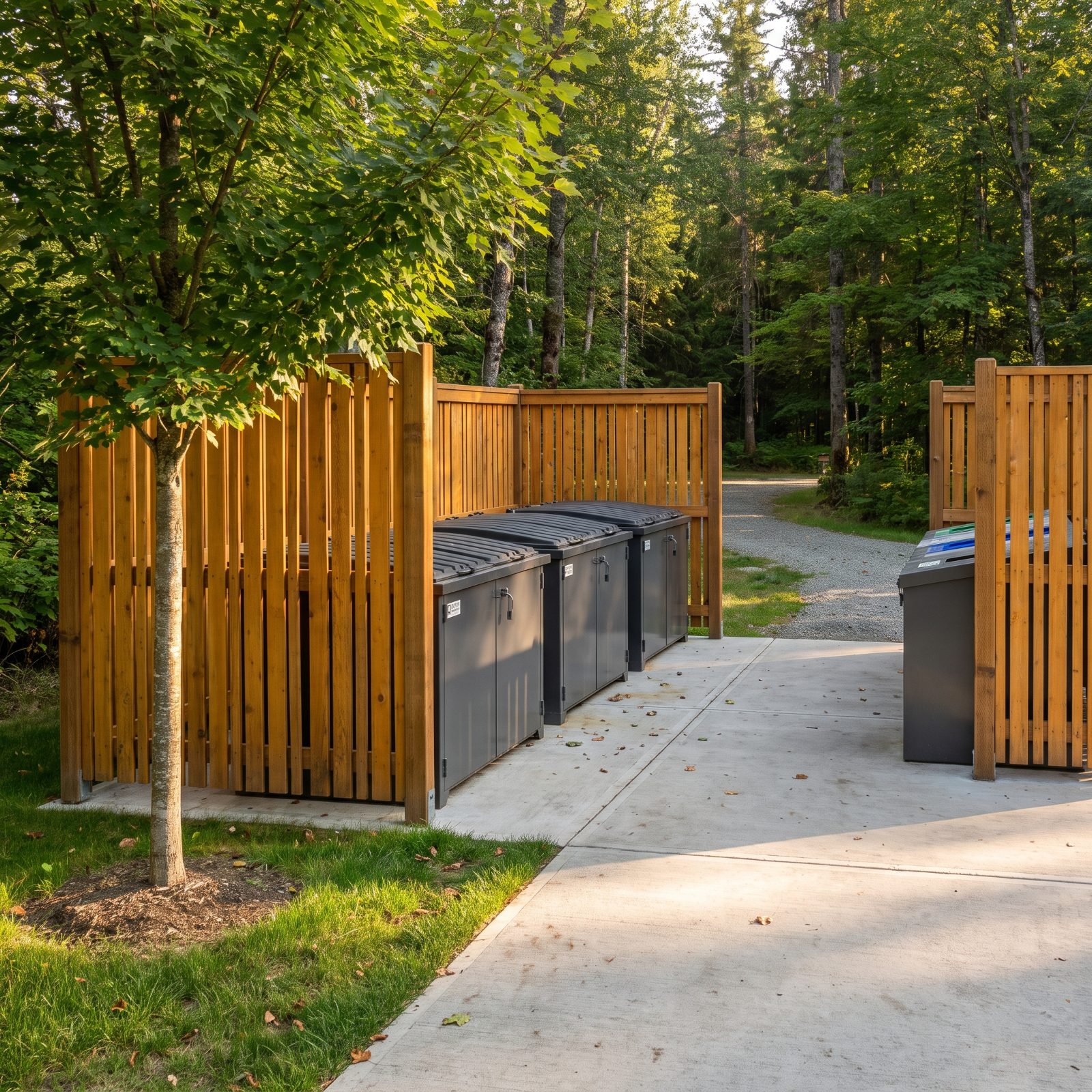
A tidy trash enclosure tells you more about a park than the pool does.
Overflowing bins by day two mean short staffing or no routine, and both get worse by the weekend. Screened bins with closed lids and a swept pad mean someone handles this on a schedule.
In bear country it matters even more. Bins that actually latch are the difference between a quiet night and a clatter outside your window at some ungodly hour. Honestly? I judge the whole operation by the dumpster corner, and I’ve never been wrong.
11. The Campground Map Marks Emergency Exits
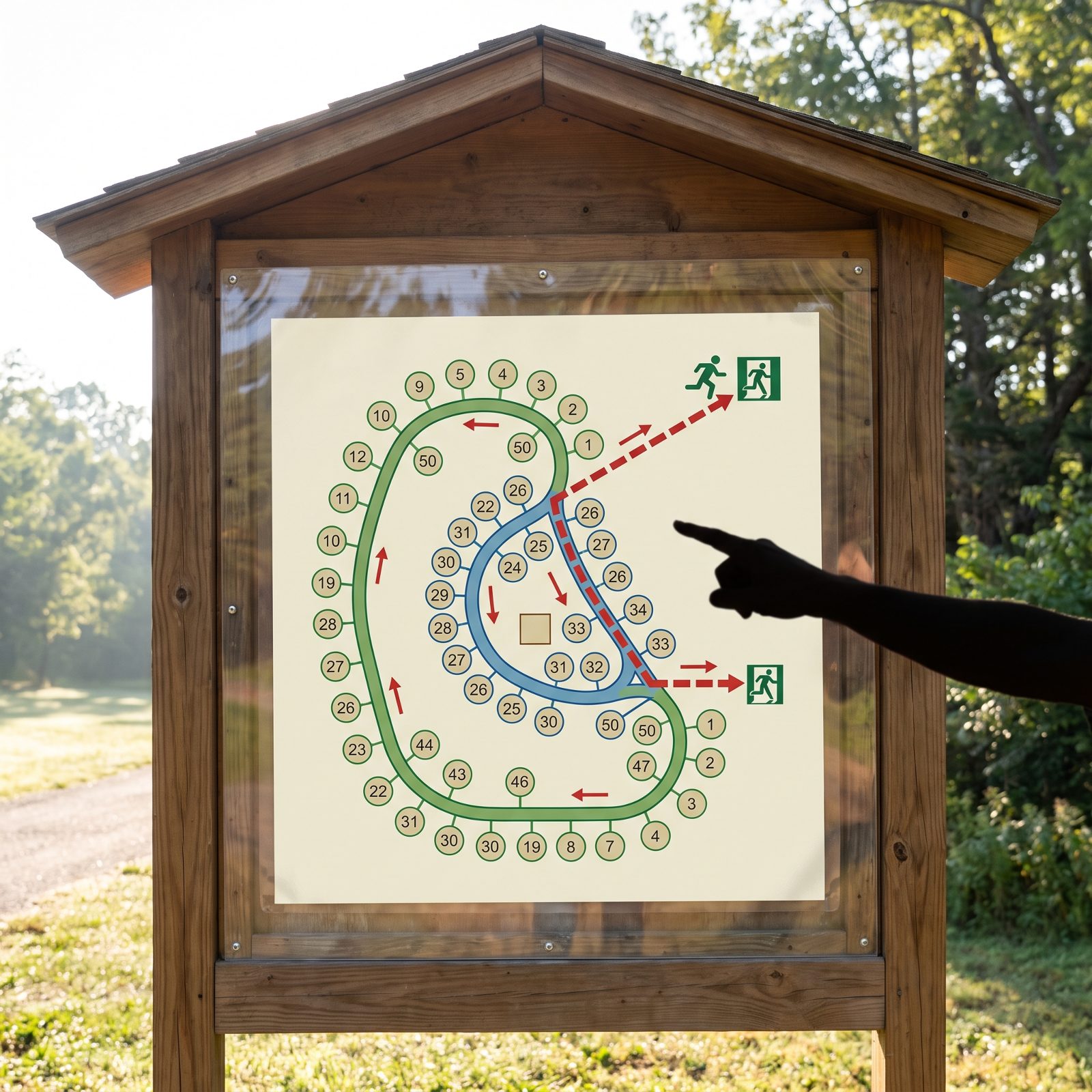
Flip over the little map they hand you at check-in. The good ones show more than site numbers and the shower house.
A map that marks a second way out, a fire assembly point, where the hose bibs sit — that’s a map made by someone who thought past a sunny Saturday. Wildfire season, flash floods, a medical call at midnight. You want the back route in your head before you need it.
Most guests never glance at this. I read it before I unhook, every time, and so should you.
10. An Escort Cart Is Ready for Unfamiliar Sites
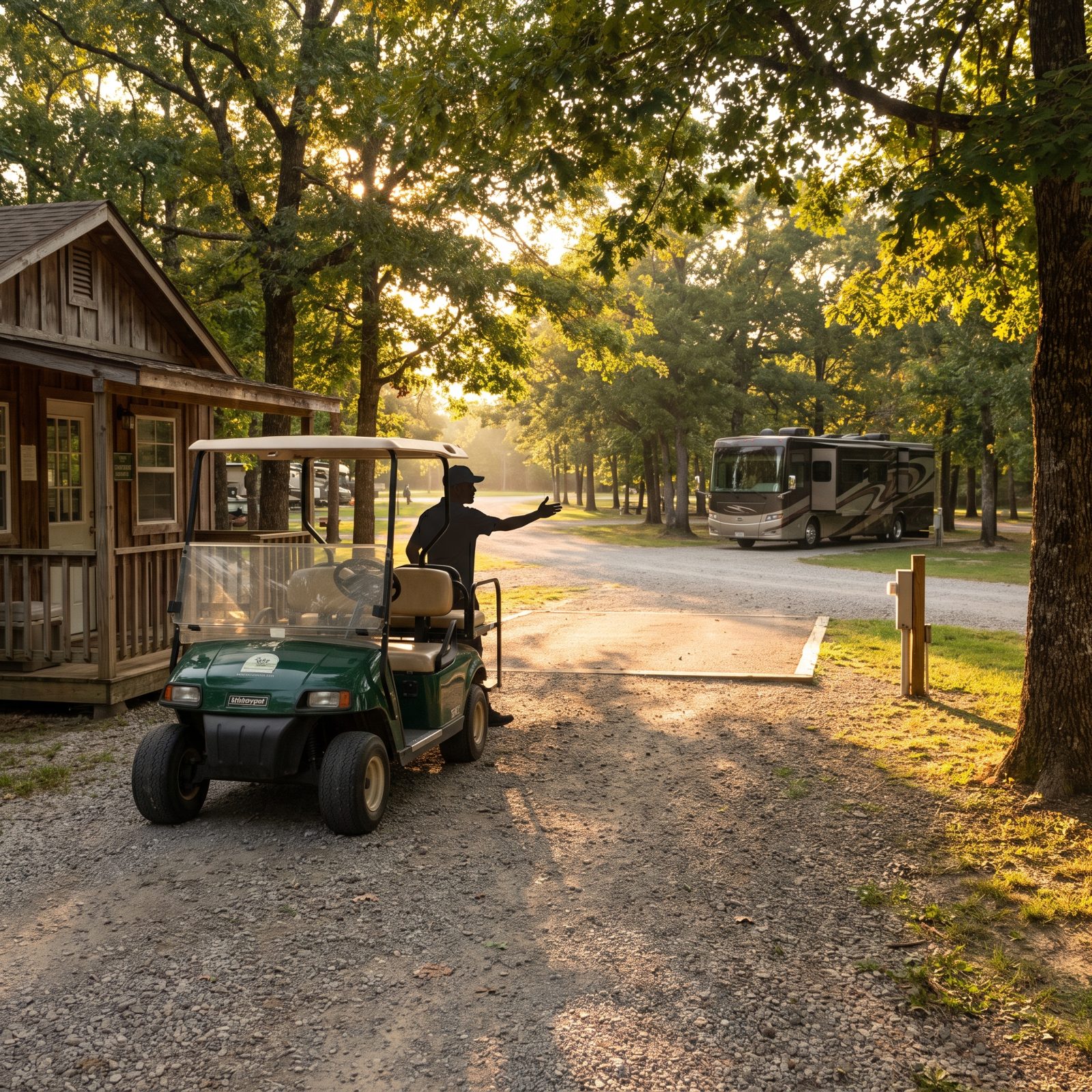
The offer to lead you to your site is one of the warmest things a park can do, and one of the rarest.
A staffer in a cart ahead of you means you’re not squinting at tiny numbers on posts while a line builds behind you. They know which pull-throughs are actually level, which pads run tight, where the low branch hides. You follow, you park, you breathe.
Keep a cart ready at check-in and you’re telling every arrival that getting settled is a service here, not a self-serve scramble. That attitude usually runs all the way through the stay.
9. Empty Sites Look Level From the Road
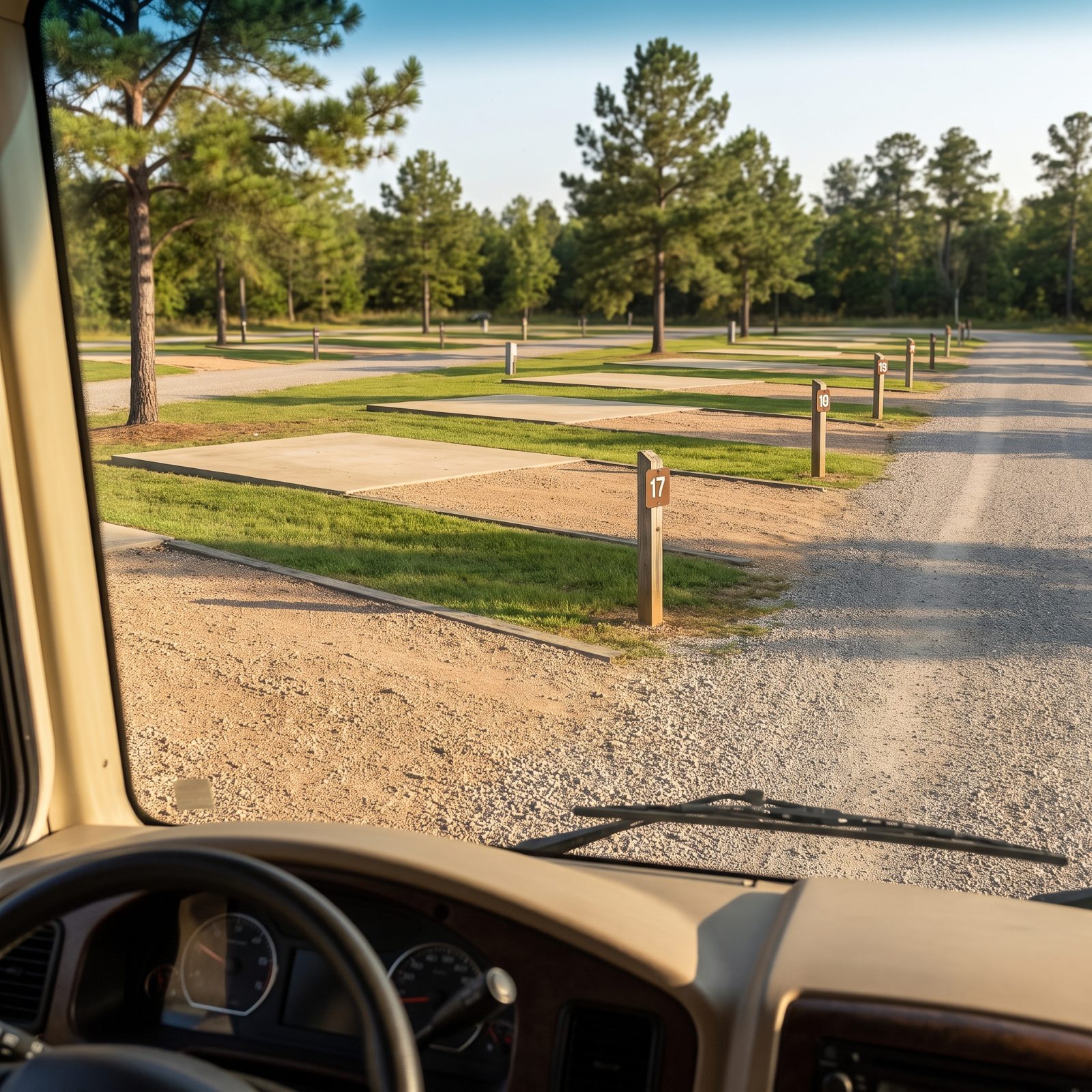
You can read a campground’s maintenance budget off the empty sites before you ever park. Flat pads mean somebody grades them. Sloped, rutted, washed-out pads mean somebody stopped caring a few seasons back, and you’ll feel it the first night when everything in the fridge rolls to one side.
Watch for crushed stone that holds its shape at the edges instead of bleeding into the grass — that tidy border is the tell, because it says the staff re-levels after storms instead of letting the pad slowly collapse.
8. Pedestrians Have a Defined Route Near the Office
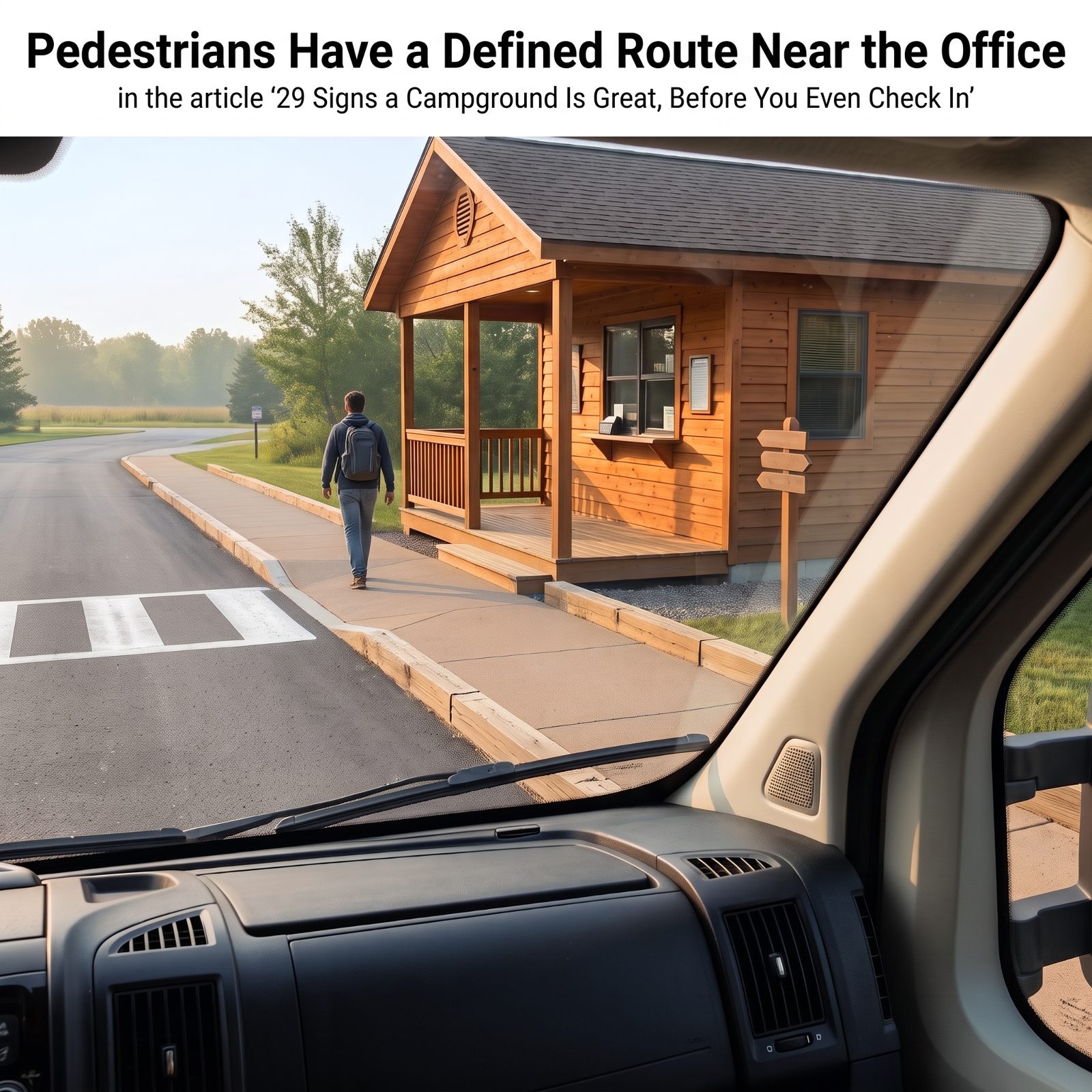
Notice where the people on foot are when you pull up to register. A well-run place gives them somewhere to be that isn’t the middle of your turning radius.
A painted crosswalk, a short timber-edged path, even a line of stepping stones from the lot to the office window — any of those tells you someone thought about the collision between a 10,000-pound rig and a kid carrying a bag of marshmallows. Chaos at the office is the first thing you see and the hardest thing to fix later. Give foot traffic a lane and everything else tends to have one too.
7. The Playground Is Separated From Moving RVs
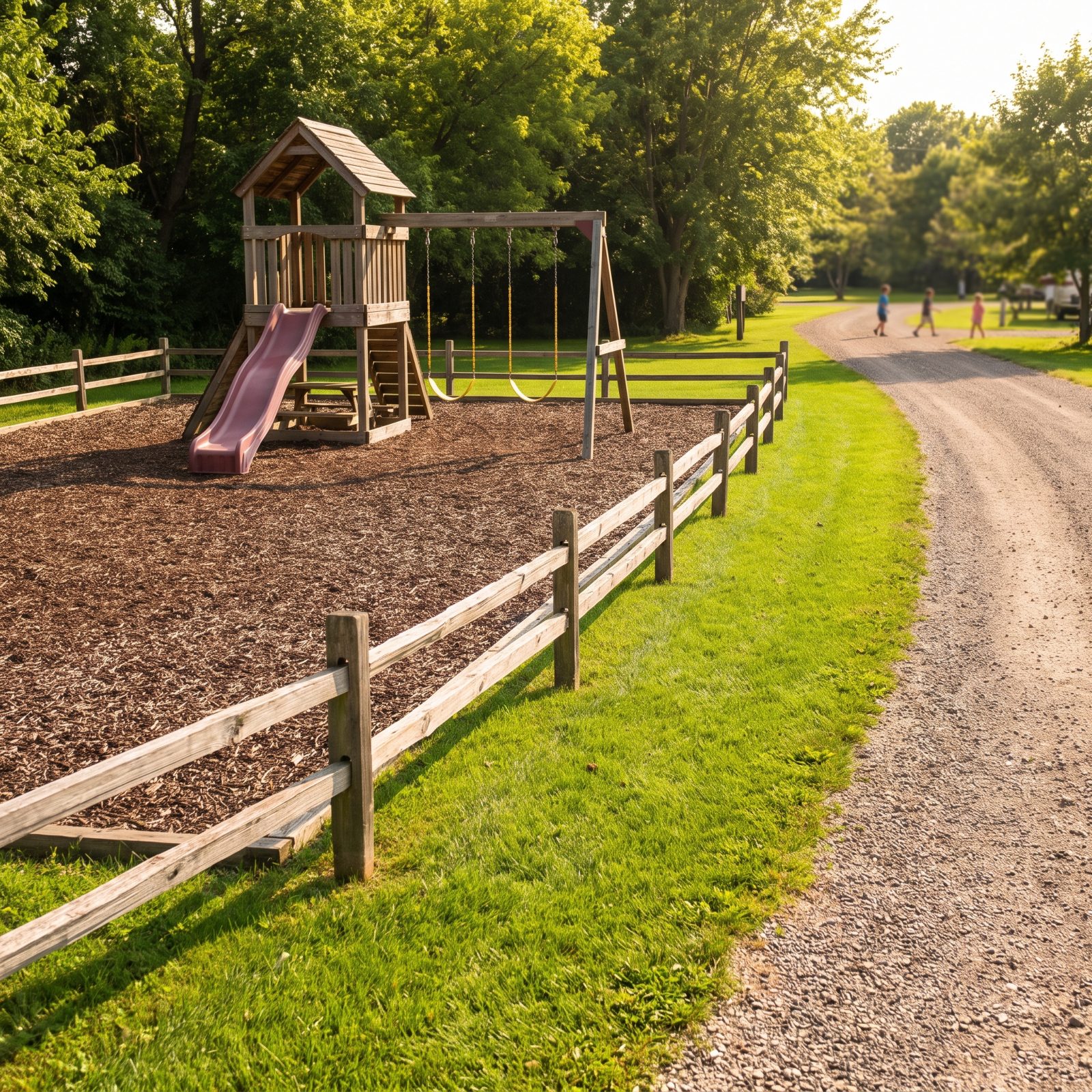
Where the playground sits tells you how the place thinks about risk. A good one lives behind a fence, a hedge, or a solid buffer of lawn, pushed back from any lane where rigs turn and back up.
The careless version drops the swings right against the loop road, equipment almost touching the gravel, nothing between a reversing fifth-wheel and a four-year-old but hope. You can spot the difference in two seconds from the driver’s seat. One layout was designed. The other just happened.
6. Quiet Hours Are Visible Before Registration
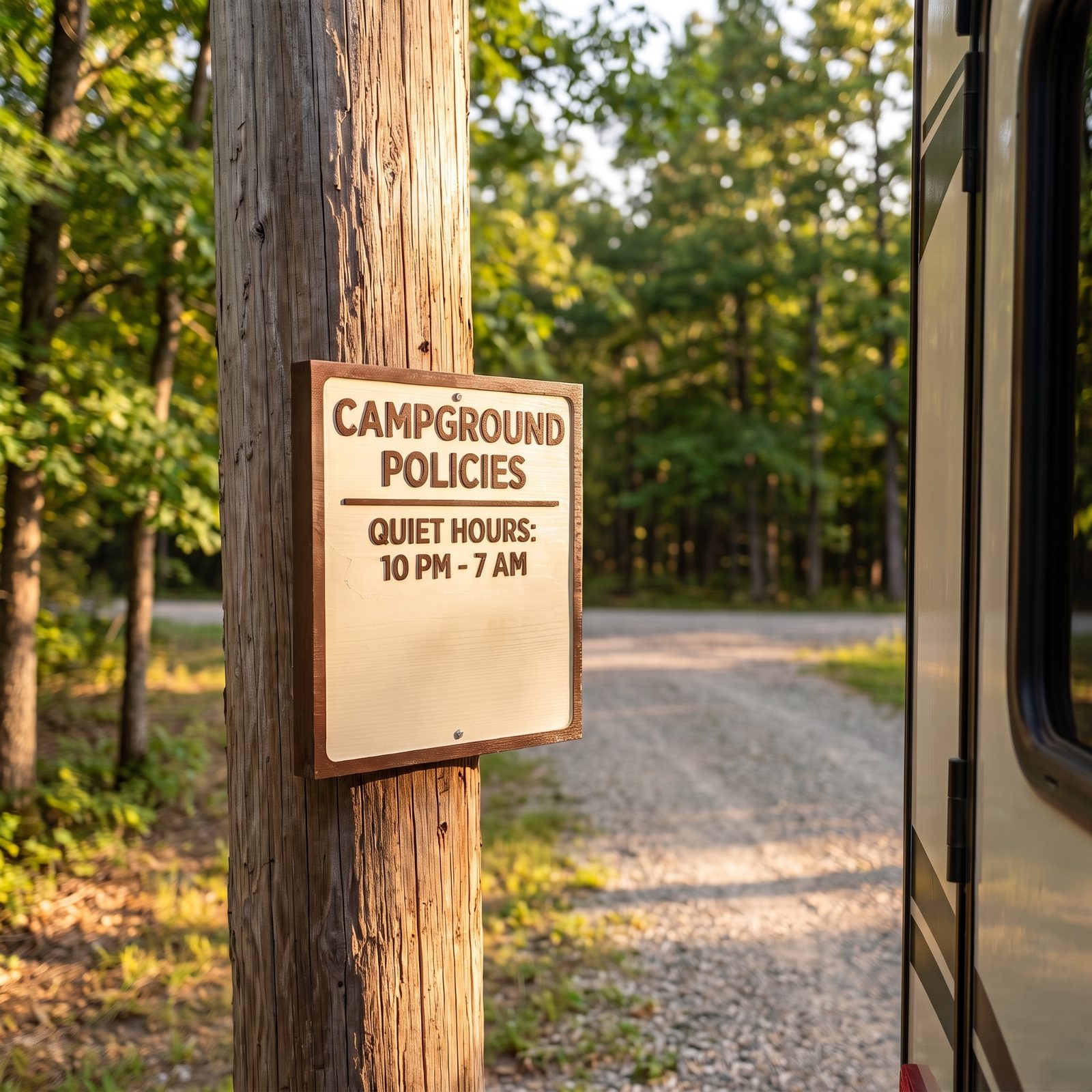
A sign posting quiet hours at the entrance does two jobs at once. It tells you when the generators go off, and it tells you the place actually expects people to follow it.
I’ve stayed at parks where the rules only existed on the website, buried three clicks deep — which is another way of saying they don’t exist at all. When the hours are posted on a sturdy sign mounted to a pole by the road, somebody is willing to enforce them. That’s the difference between a peaceful night and a neighbor running a diesel generator at 11:40.
5. Overflow Parking Is Clearly Designated
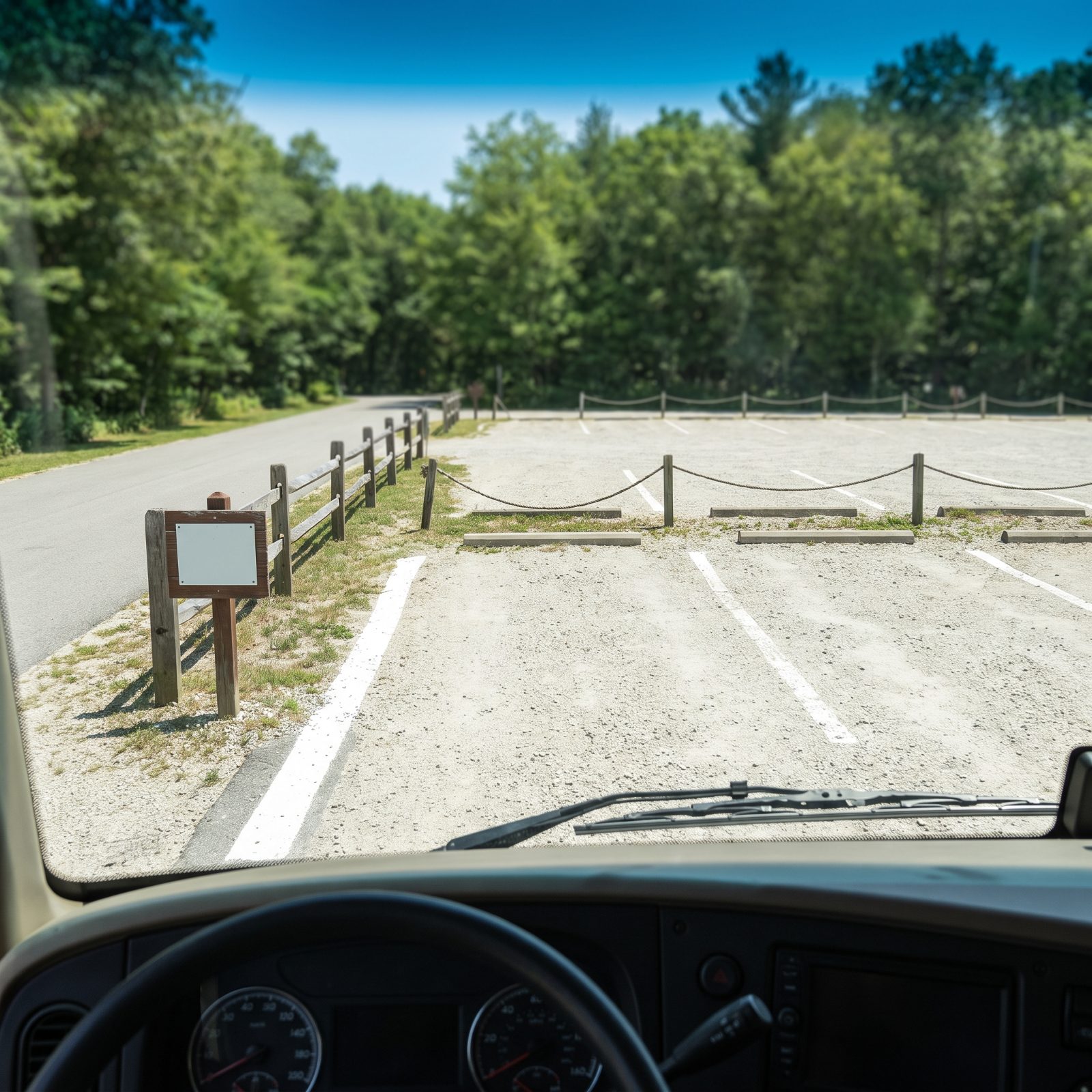
Overflow parking sounds boring until you arrive late, towing a boat, with nowhere legal to leave your tow vehicle. A park that marks a real overflow lot has thought about the awkward night.
The good version is gravel, graded, and signed, set off the main drive so nobody’s second car blocks a turning lane. The bad version is “just park on the grass somewhere,” which works right up until it rains and you’re digging a sedan out of the mud. Designated space is a quiet promise that this place has seen a full weekend and planned for it.
4. The Propane Area Looks Orderly and Inspected
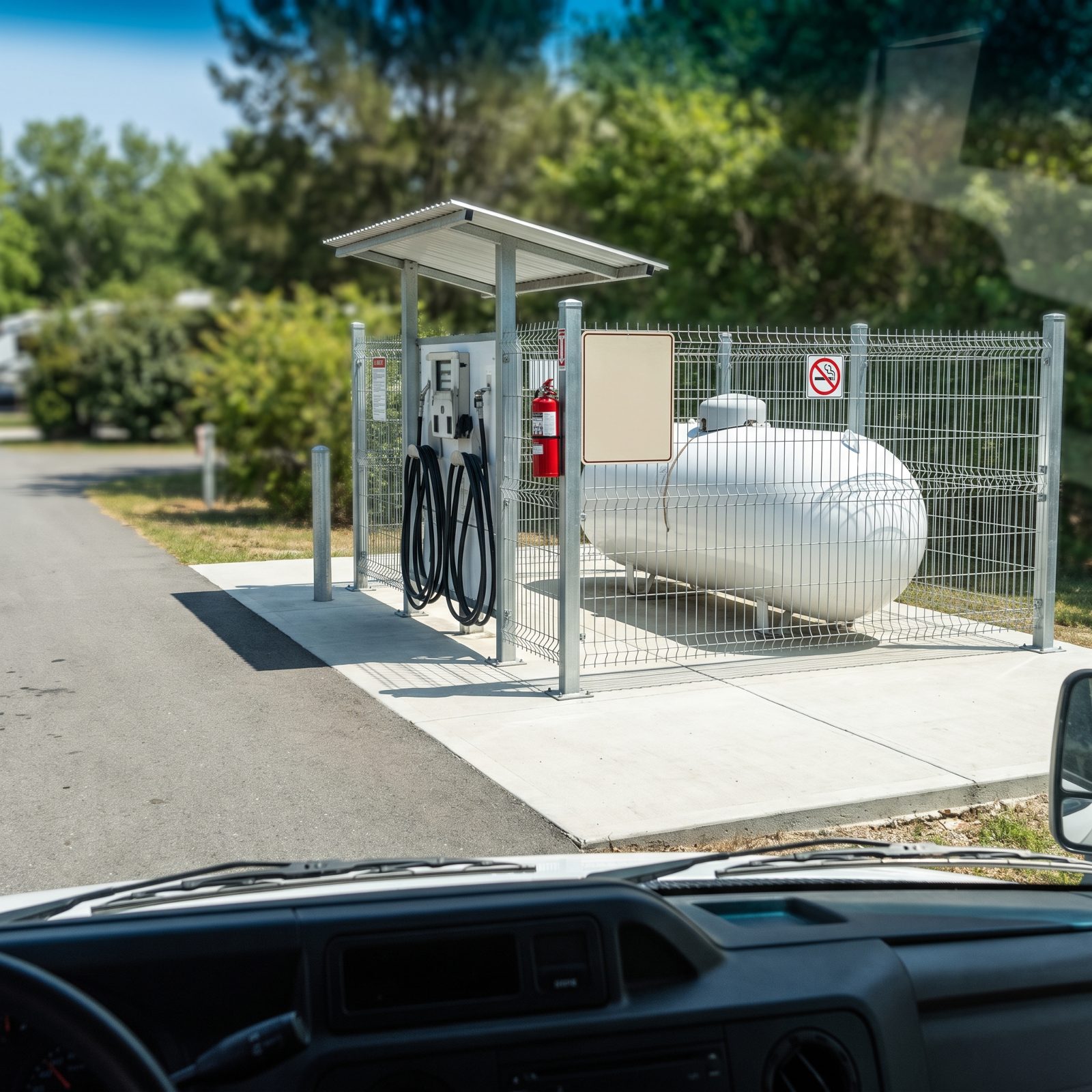
The propane area is where I look hardest, because it’s the one spot on the property that can genuinely hurt you.
Coiled hoses on a wall mount, a swept concrete pad, a fire extinguisher where you can actually see it, a chain-link fence around the pad so nobody wanders or backs into it — that’s a station somebody inspects. A rusted tank sitting in weeds with a hose puddled on the ground is a station somebody forgot about, and it tells you how they handle every other system you can’t see, like the water and the electric.
Orderly here usually means orderly at the pedestal too.
3. Entrance Lighting Is Bright Without Harsh Glare
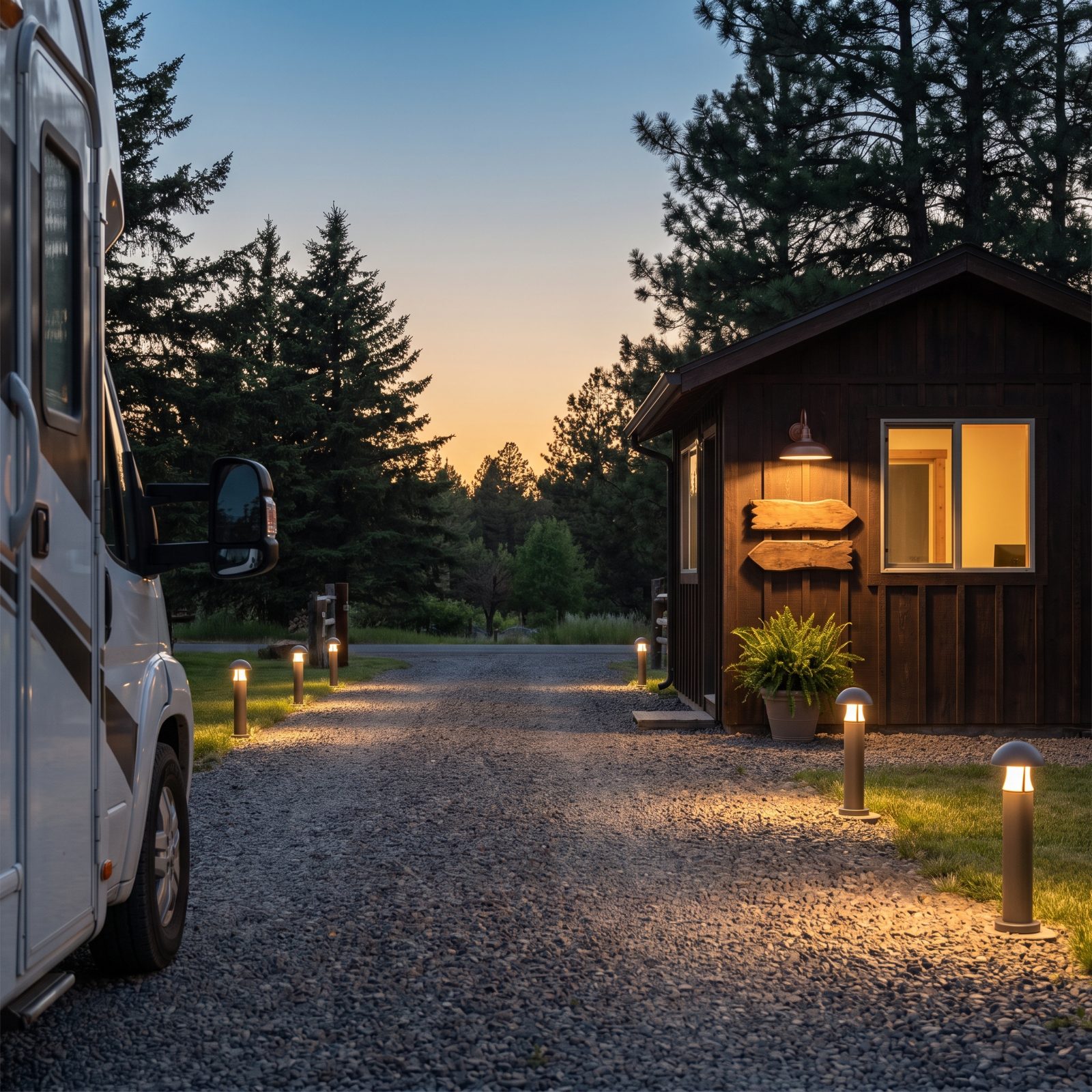
Arrive after dark and the entrance lighting tells on the whole operation in about three seconds.
You want warm, downward-facing light that pools on the drive and marks the office. What you don’t want is a single blue-white floodlight firing straight into your windshield, blinding you at the exact moment you need to spot the office and judge a turn. Overlit is as lazy as underlit. Give me low bollards, shielded fixtures, and a drive I can actually see.
2. Site Numbers Can Be Read From the Driver’s Seat
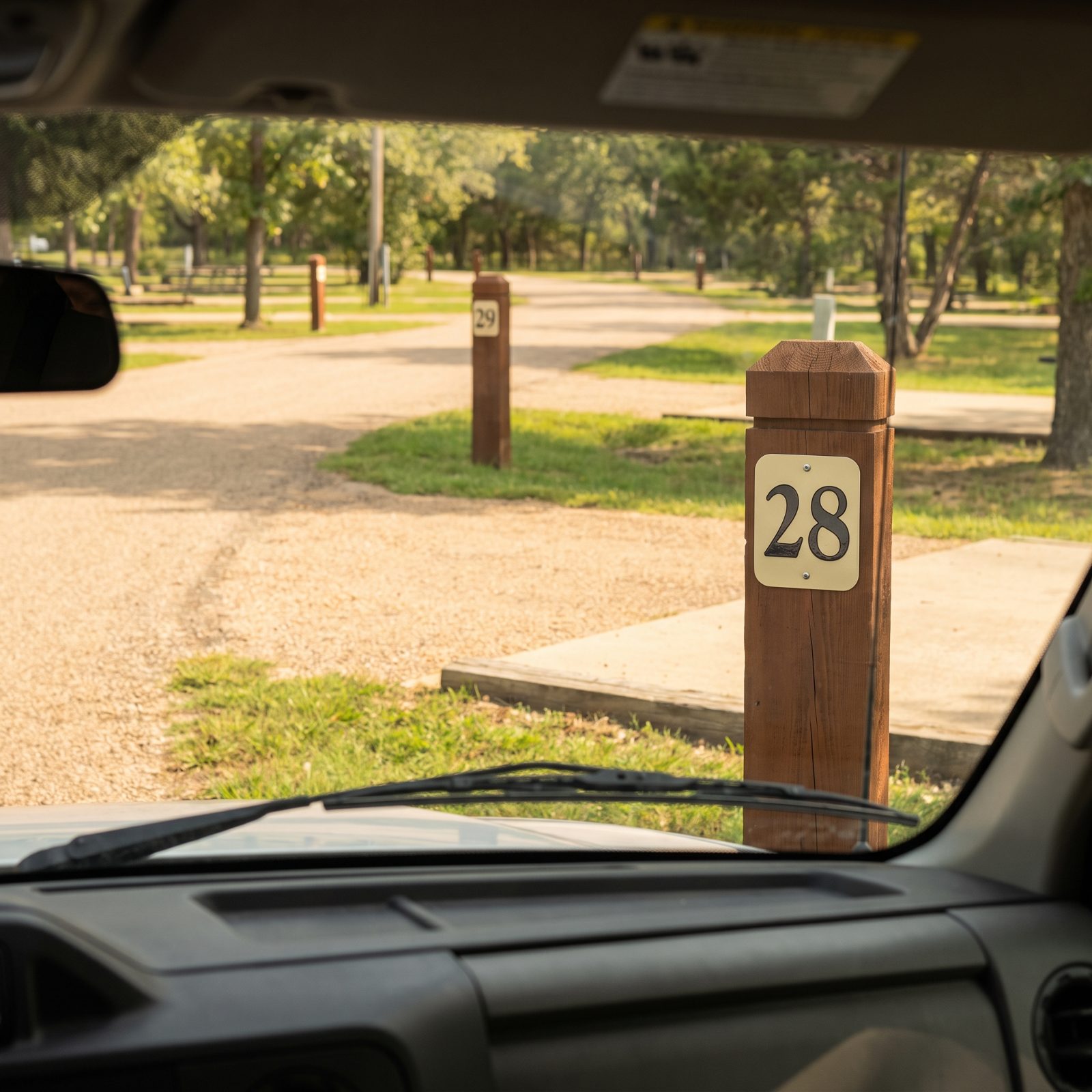
Here’s the detail nobody mentions until their first circle of the loop: you need to read site numbers from the cab, while rolling, often while towing, sometimes in the rain.
Good parks mount the number at eye level on a post facing the approaching driver. Bad parks staple a faded card to a stake buried in the grass, so you creep past your own site twice before you find it. A number you can read at 5 mph is a small kindness that says the place is run by people who’ve actually driven a rig, not just owned a map of one.
1. The First Impression Is Calm Rather Than Chaotic
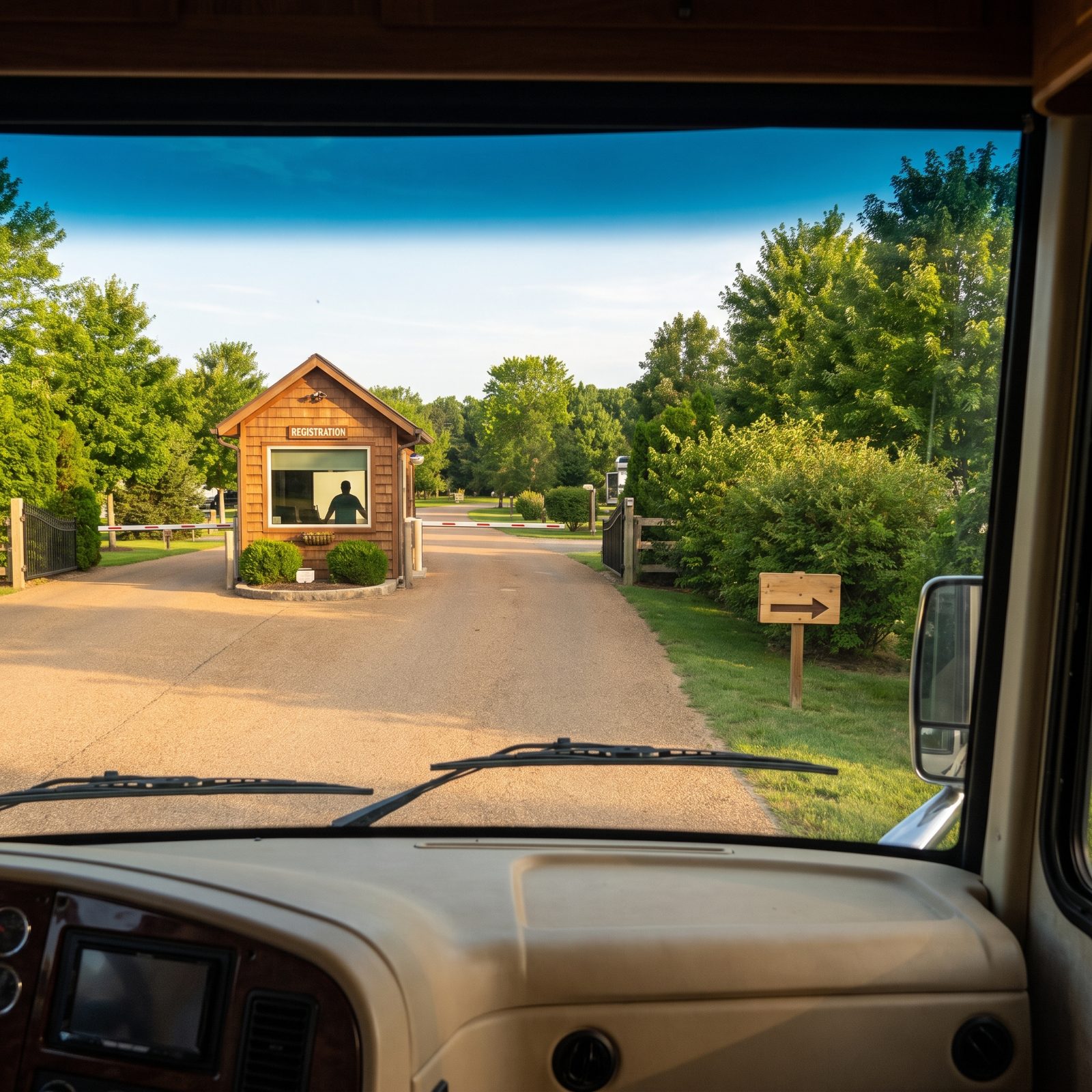
Everything above adds up to one gut read you make before you ever reach the window: does this place feel calm, or does it feel like you walked into a problem?
Calm is an uncluttered drive, one clear sign pointing where you need to go, and someone at the office who isn’t visibly underwater. Chaos is a pile of spare picnic tables by the gate, three conflicting arrows, and a line of confused rigs idling nose to tail. Your nervous system does the math instantly. Trust it. A park that’s organized at the entrance is almost never a mess at the site.
The entrance is the handshake. You already know how the stay will go before anyone says a word.