
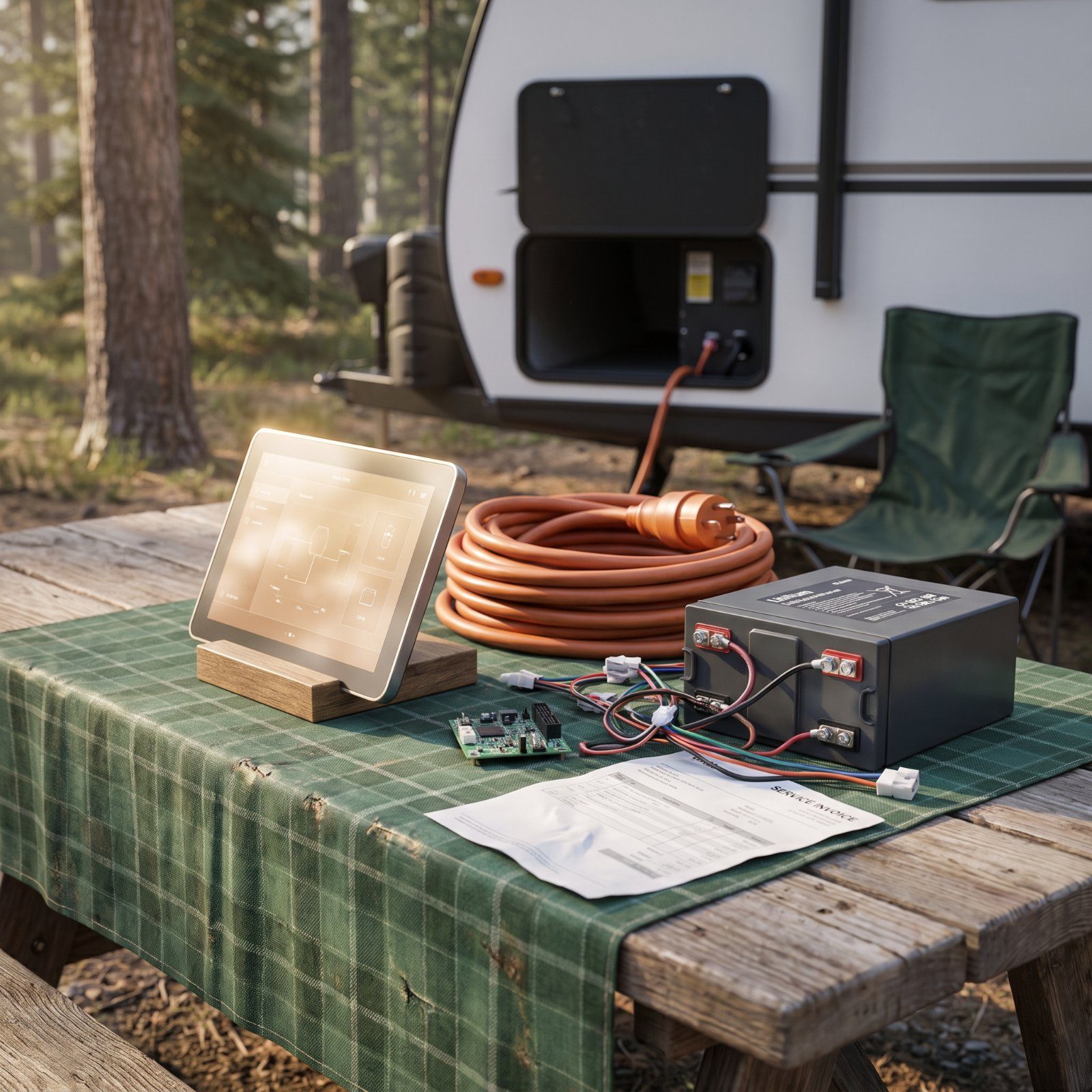
Nobody walks into a dealership planning to buy regret. Yet the options sheet is full of boxes that feel smart under showroom lights and feel very different at a dark campsite when the one touchscreen controlling every light decides to reboot. The slickest features on a new rig carry the heaviest hidden tax: parts you can’t source, repairs that gut your weekend, upgrades locked out before you’ve finished paying for the thing. Some are genuinely worth it. Plenty aren’t. Here are the ones that shine in the brochure and sulk in a parking lot at nine at night.
Please note that some of the images in this article were created with the assistance of AI.
44. Multiplex Touchscreens That Route Every Light Through One Module
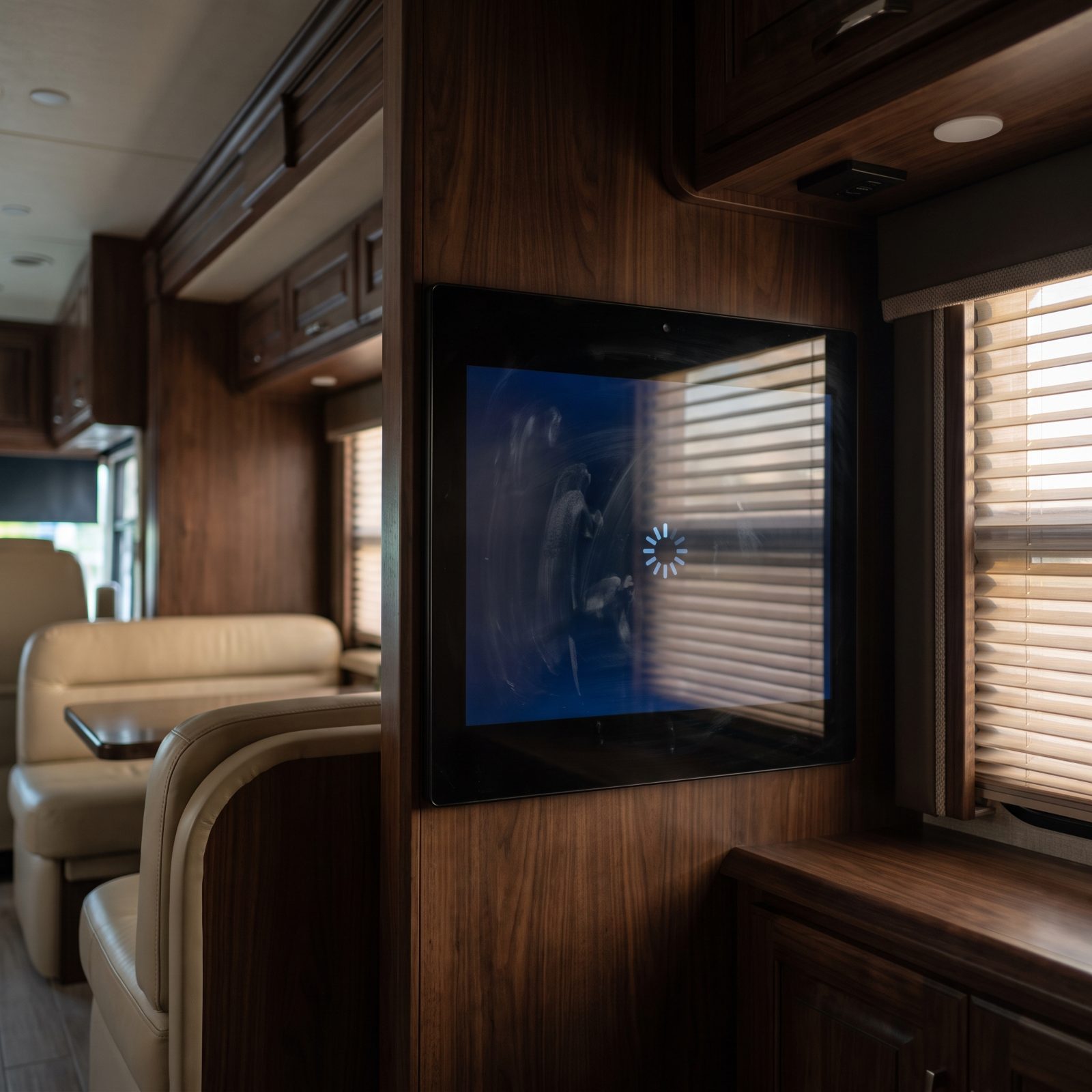
One module, every circuit. That’s the pitch and also the problem. When a multiplex system runs your lights, pumps, slides, and awning through a single touchscreen, a software hiccup doesn’t just dim one bulb — it takes the whole cabin dark.
The convenience is real, and so is the dependency. Troubleshooting a bad switch used to mean a two-dollar part and a screwdriver. Now it can mean a proprietary control board, a dealer visit, and a rig that sits for weeks waiting on a component no auto parts store carries.
43. Proprietary Lithium Packages That Marry You to Matching Parts
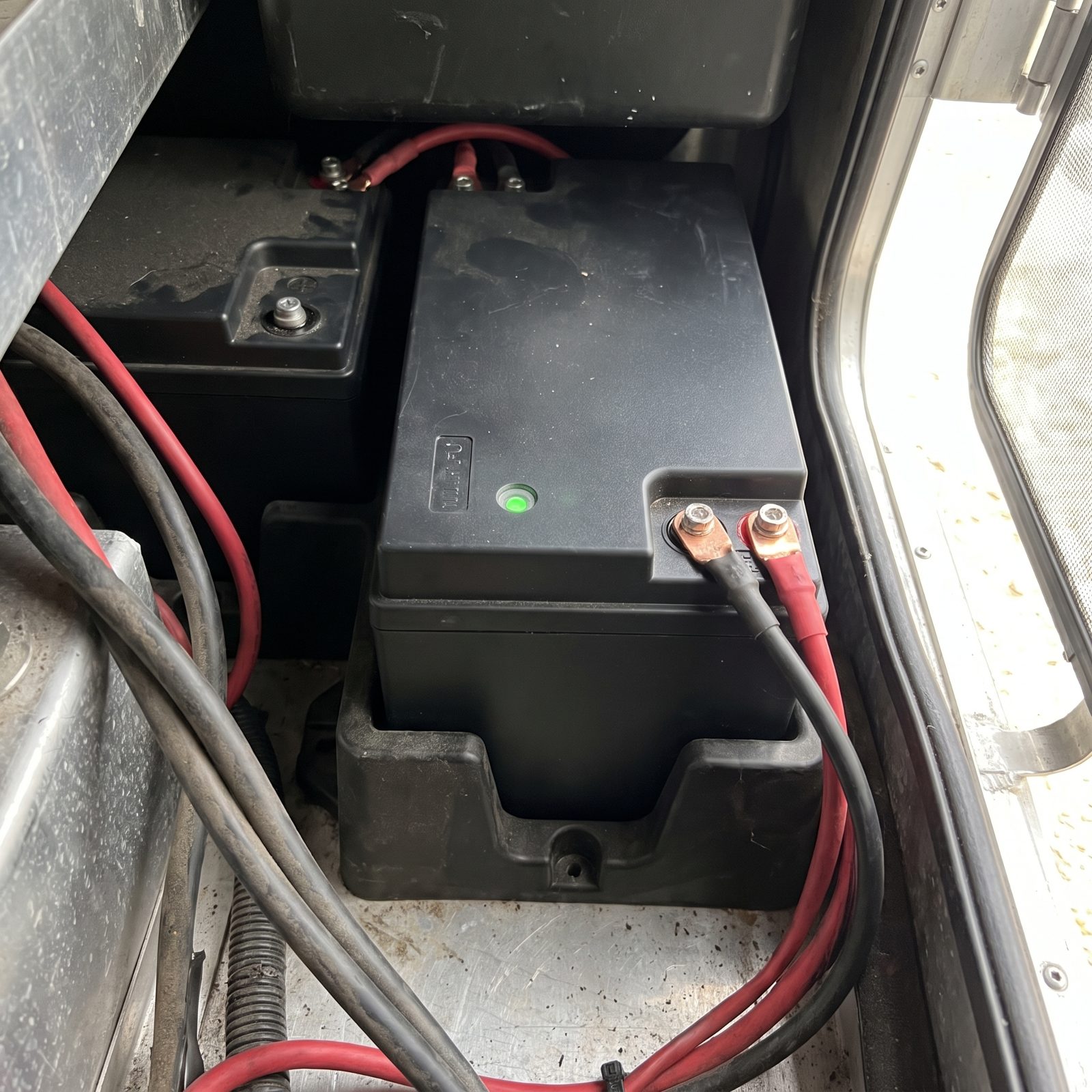
Lithium is worth every penny. A closed ecosystem that only accepts the manufacturer’s own matching batteries, inverter, and charge controller is a different story.
The components talk to each other over a locked network. Add a cheaper, better battery from anyone else and the system may refuse it, throw a fault, or quietly derate your capacity. You’re not buying power. You’re buying a membership, and whoever built it sets the renewal terms.
When one cell fails outside warranty, you don’t price-shop. You pay what they ask, because nothing else plugs in.
42. Power-Tilting Beds You Must Remember to Lower Before Packing Up
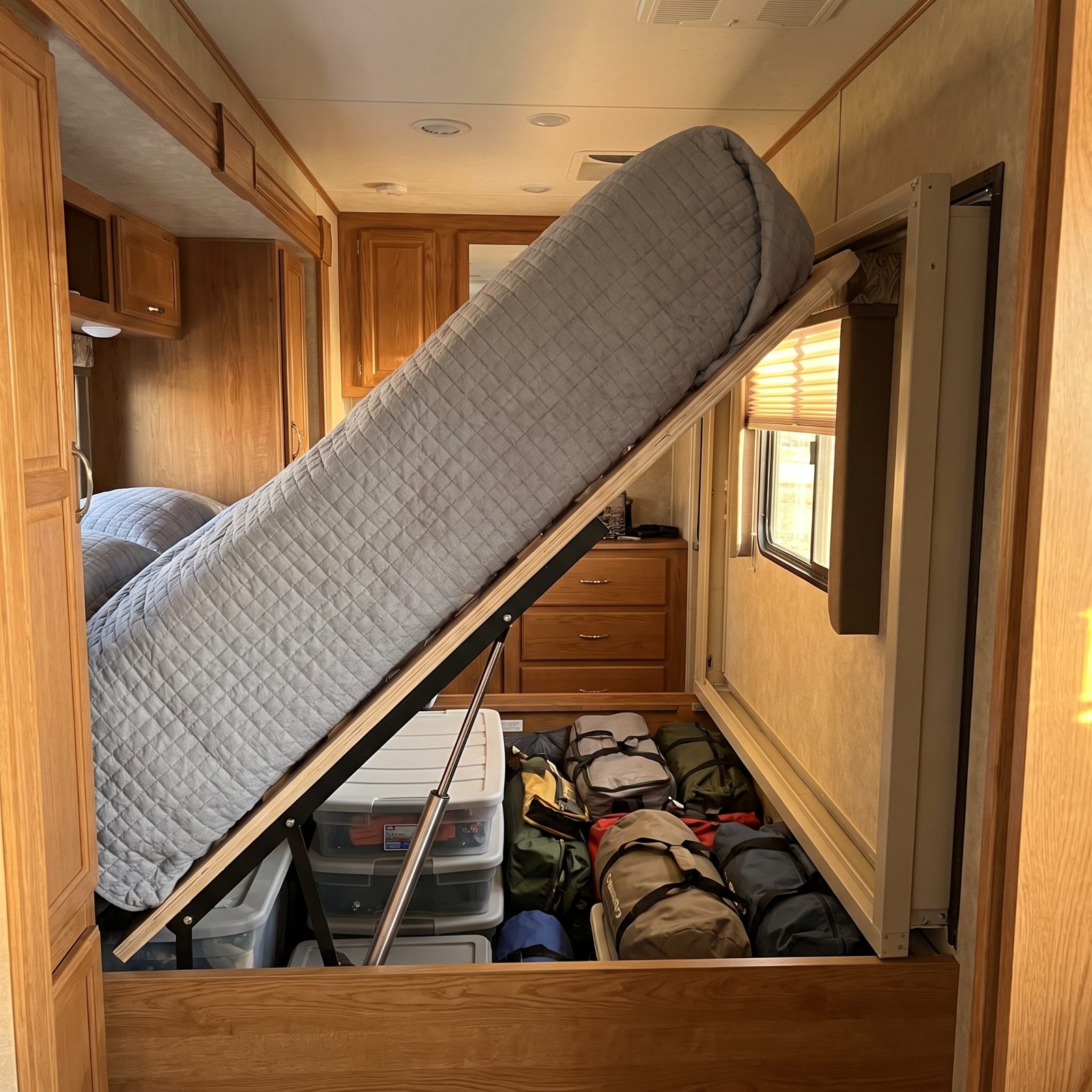
Forget the sequence and the rig won’t let you leave. Power-tilt beds that store gear underneath often swing up into the path of a slide. The mechanism and the slide physically collide, so there’s an order of operations: lower bed, retract slide, then drive.
Guess which step people forget on a cold morning when they’re rushing checkout. The slide stalls against the mattress platform, you panic, and now you’re troubleshooting a jam instead of hitting the road. Every motor you add is one more thing that can quit with the bed stuck half-open.
41. Built-In Macerators That Turn Dumping Into Diagnostics
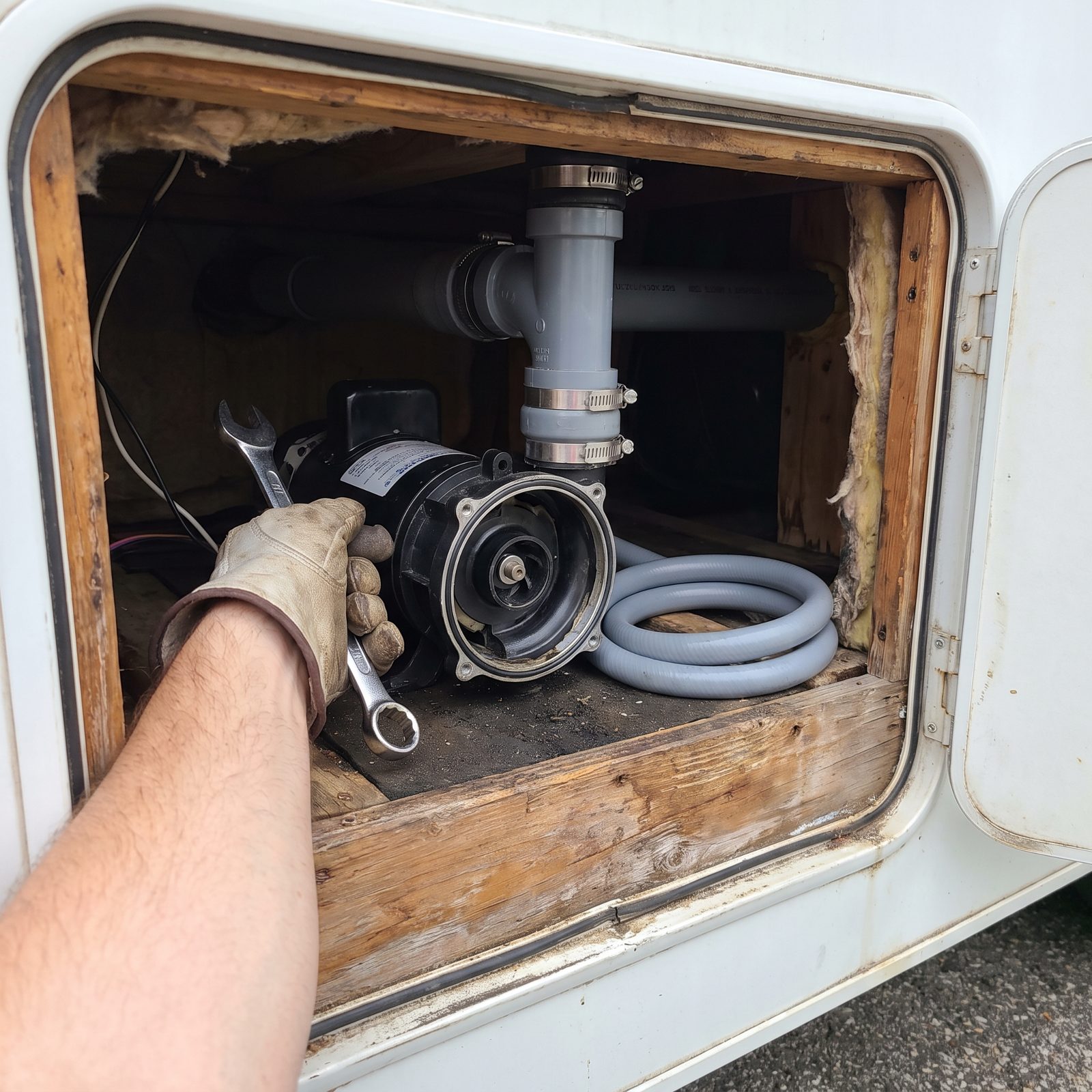
A macerator grinds waste and pumps it through a garden-hose-sized line, which sounds tidy until the day it isn’t. Gravity dumping has no moving parts to fail. A macerator has an impeller, a motor, and a pump that very much can.
When it clogs or burns out, a routine chore becomes a repair — and given what’s in the line, not a pleasant one. Full-timers love them for long, uphill discharge runs. The casual weekender pays extra for a pump they rarely need, then curses the day it dies.
40. Vacuum-Flush Toilets That Need Power to Do One Simple Job
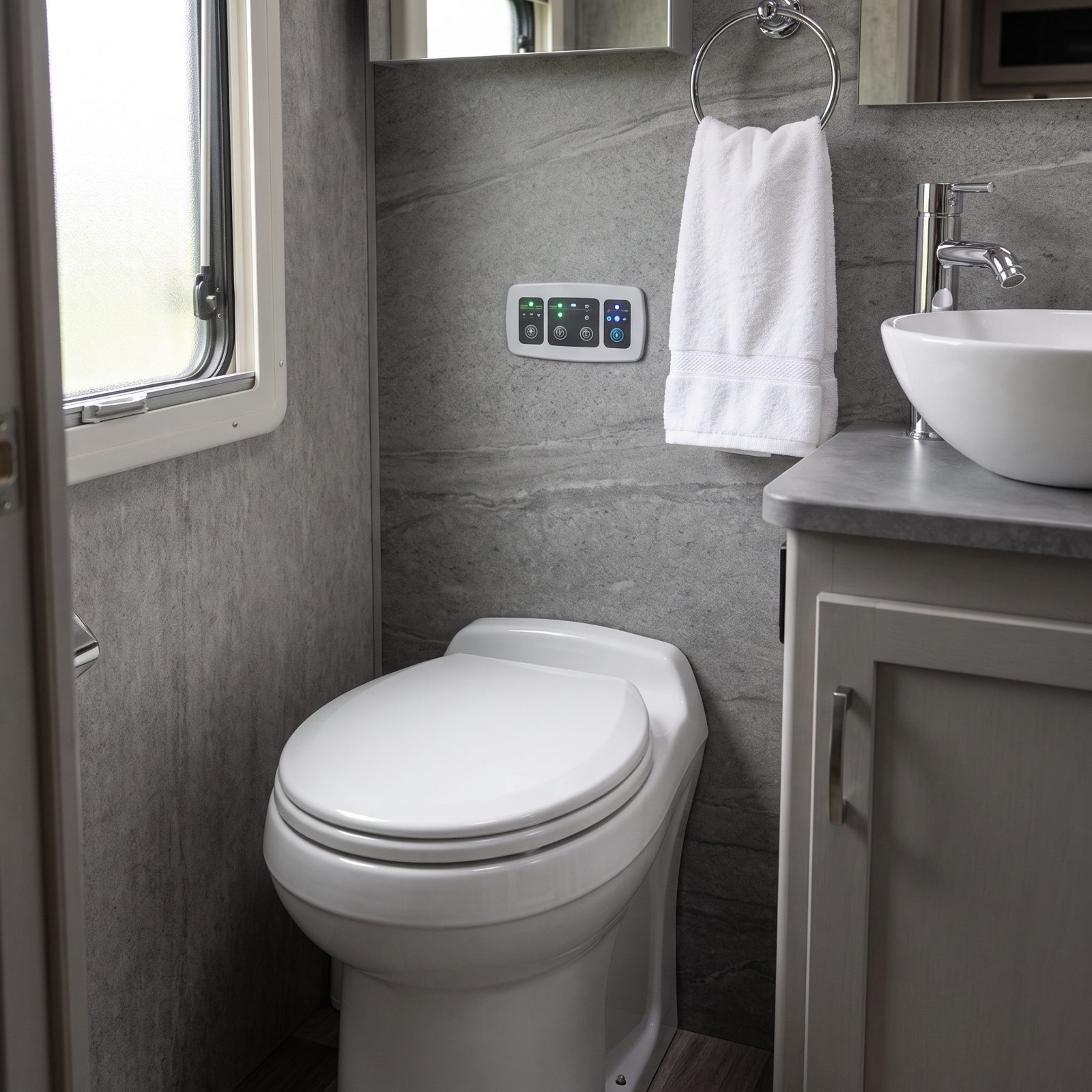
Vacuum-flush toilets feel like a cruise ship upgrade — quiet, low-water, oddly satisfying. Then the vacuum pump fails or the batteries run flat, and you own the one toilet in the rig that can’t be used at all.
A gravity toilet works with a bucket of water and a prayer when things go wrong. A vacuum system is dead weight without its pump cycling, a pile of complexity bolted to a fixture whose entire job is being dependable.
39. Hydronic Heating That Demands a Specialist Every Season
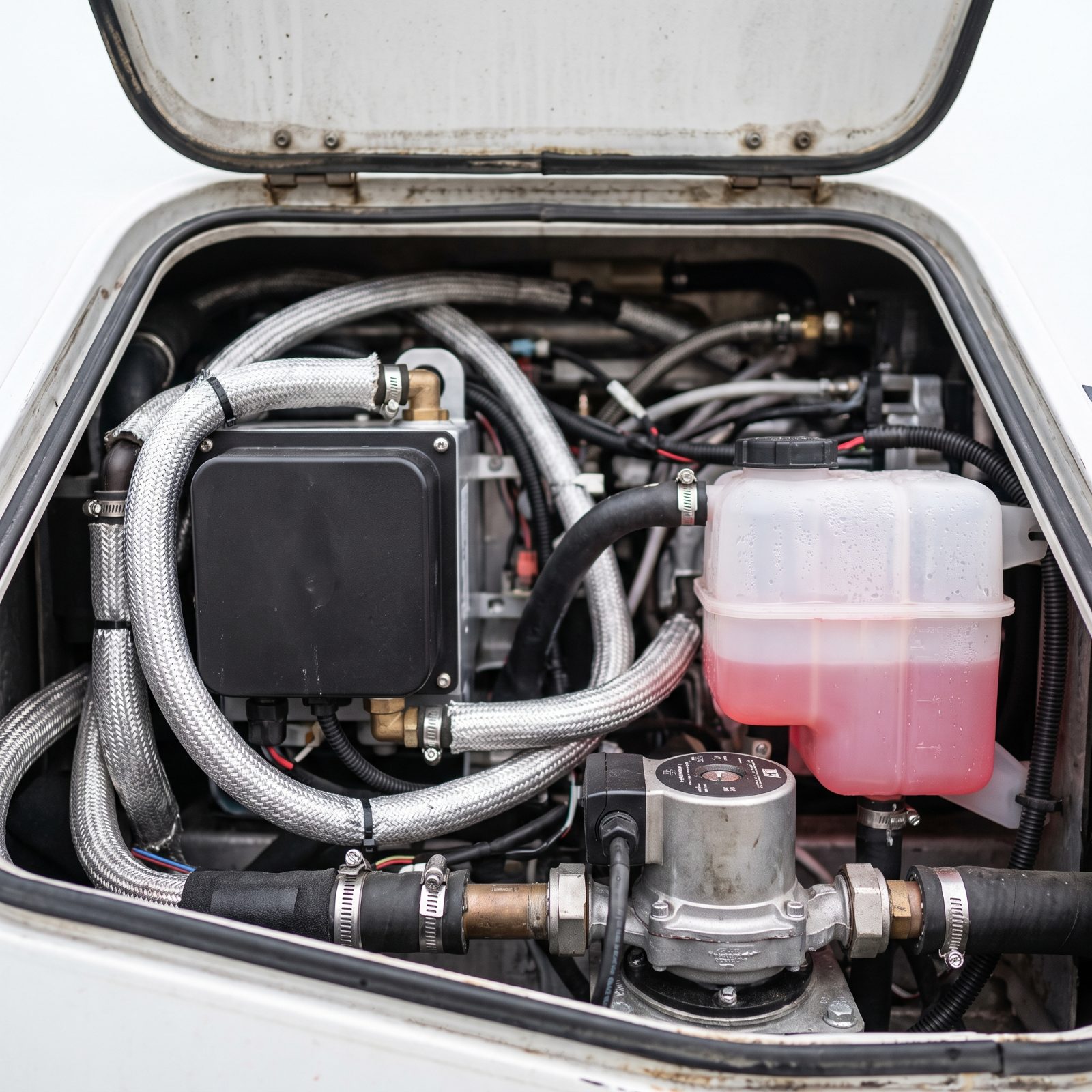
Hydronic heat is genuinely wonderful. Even warmth, endless hot water, no roaring furnace at 3 a.m. It’s also a small boiler and a glycol loop living in your RV, and it wants attention most owners aren’t equipped to give.
Annual service often means specialized parts, glycol changes, and a tech who actually knows the system. Not every mobile RV guy does. Skip the maintenance and you risk the whole loop — expensive to replace, worse to ignore.
Brilliant for people who heat hard all winter. For a fair-weather camper, it’s a service contract wearing a comfort feature’s clothes.
38. Electric Radiant Floors Buried Under Flooring You Can’t Lift
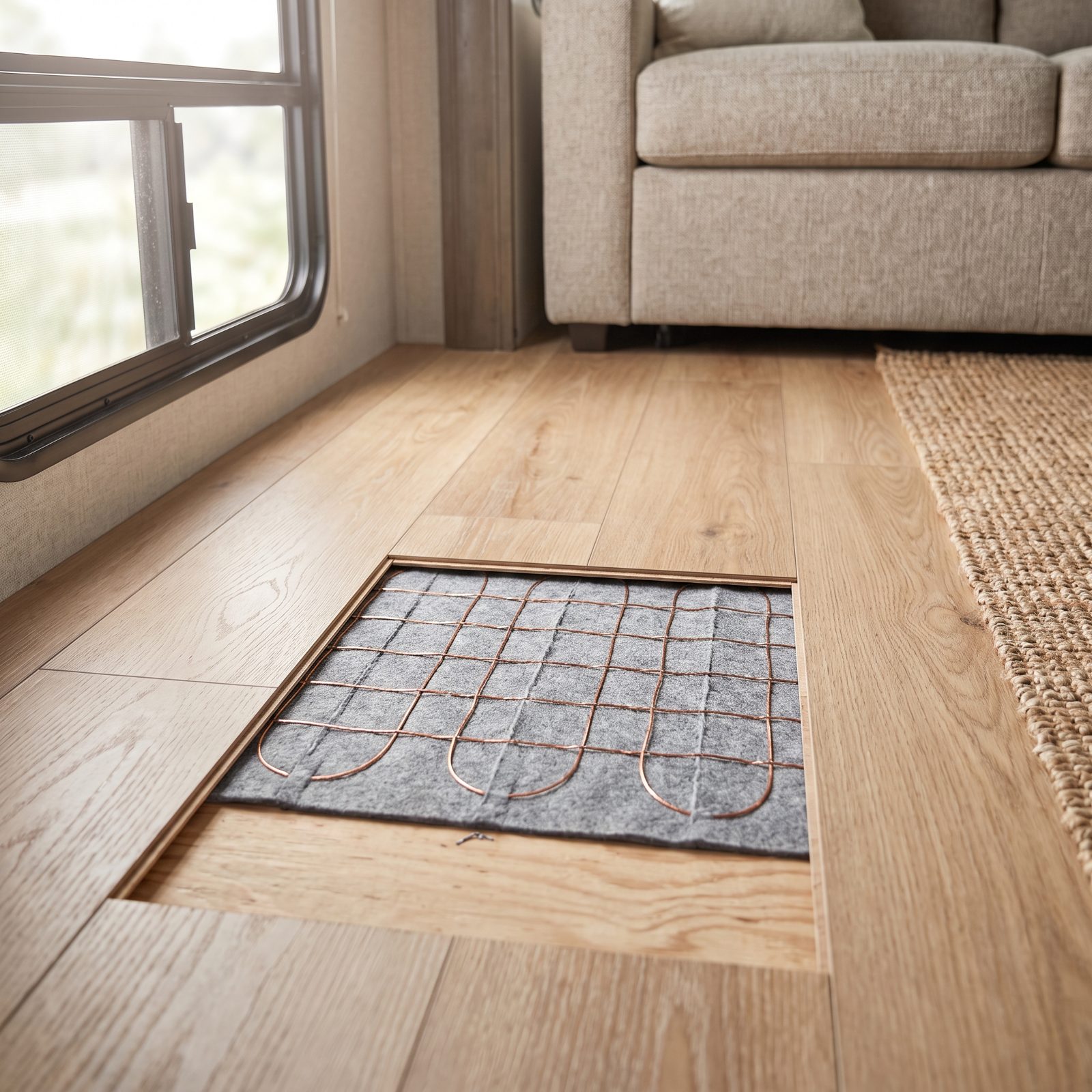
Warm floors on a frosty morning are a real pleasure. Here’s the catch nobody mentions at signing: the heating element lives under the finished flooring, sealed in place.
When a zone stops working, the fault is buried beneath planks installed over it. Diagnosis becomes a guessing game and repair can mean pulling up flooring that was never meant to come up. Fixing a failed section can cost nearly as much as just living with cold feet.
37. Smartphone Control Packages That Outlive Their Own Apps

Run your whole rig from your phone. Great — until the app does what apps do: stops getting updates, drops support for your phone’s operating system, or the company folds and takes the cloud servers with it.
Software ages faster than aluminum. An RV built to last twenty years can have a control app abandoned in five, and suddenly a core feature of a six-figure vehicle hangs on a developer who moved on.
Physical switches don’t get deprecated. There’s a reason the old rigs still work.
36. Factory Solar Packages That Look Good on Paper and Little Else
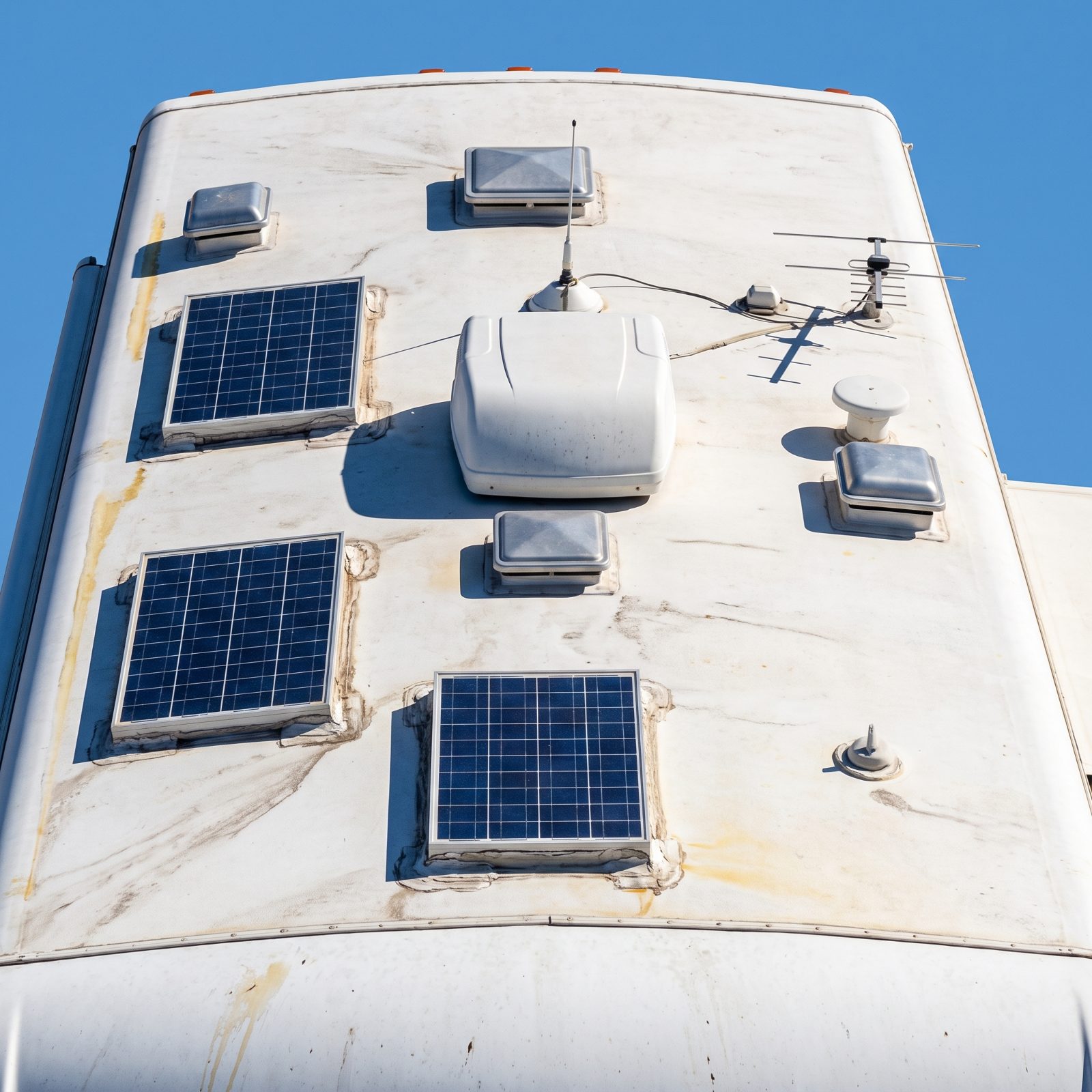
The window sticker says “solar ready” or “200-watt solar system,” and both can mean close to nothing. Factory packages are frequently small, routed through an undersized charge controller, and wired to fight any attempt to add more.
You think you’ve got a head start on boondocking. What you’ve really got is a token panel feeding a controller that can’t handle a proper array, plus wiring you may have to tear out to do the job right.
Often the honest move is pretending the factory solar isn’t there and building the system you actually wanted from scratch.
35. Motorized Cord Reels That Jam and Eat a Whole Bay
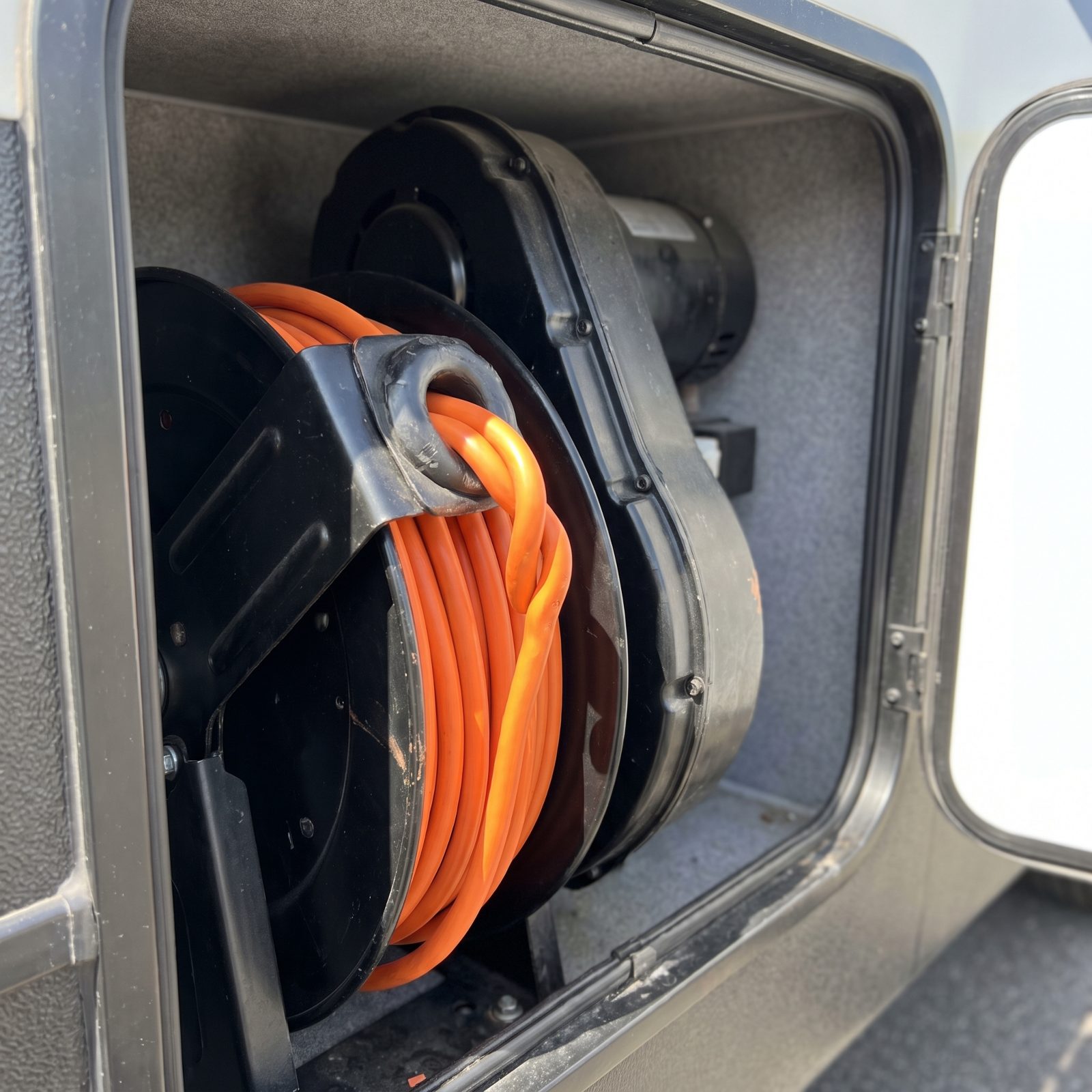
A power cord that retracts itself at the push of a button is a lovely idea. The reality is a bulky drum and motor that claims an entire storage bay and occasionally refuses to cooperate.
Cords kink. Reels jam. Motors draw their own power and add their own failure mode to the one job that absolutely has to work: getting shore power into the rig. When it seizes half-wound, you’re wrestling a heavy cord and a stuck mechanism in the dark.
Hand-wrapping a cord takes a minute and a half and never, ever breaks. That’s not nostalgia talking. That’s just the math.
34. Power Drop-Down Cab Bunks That Trap Your Gear When the Motor Quits
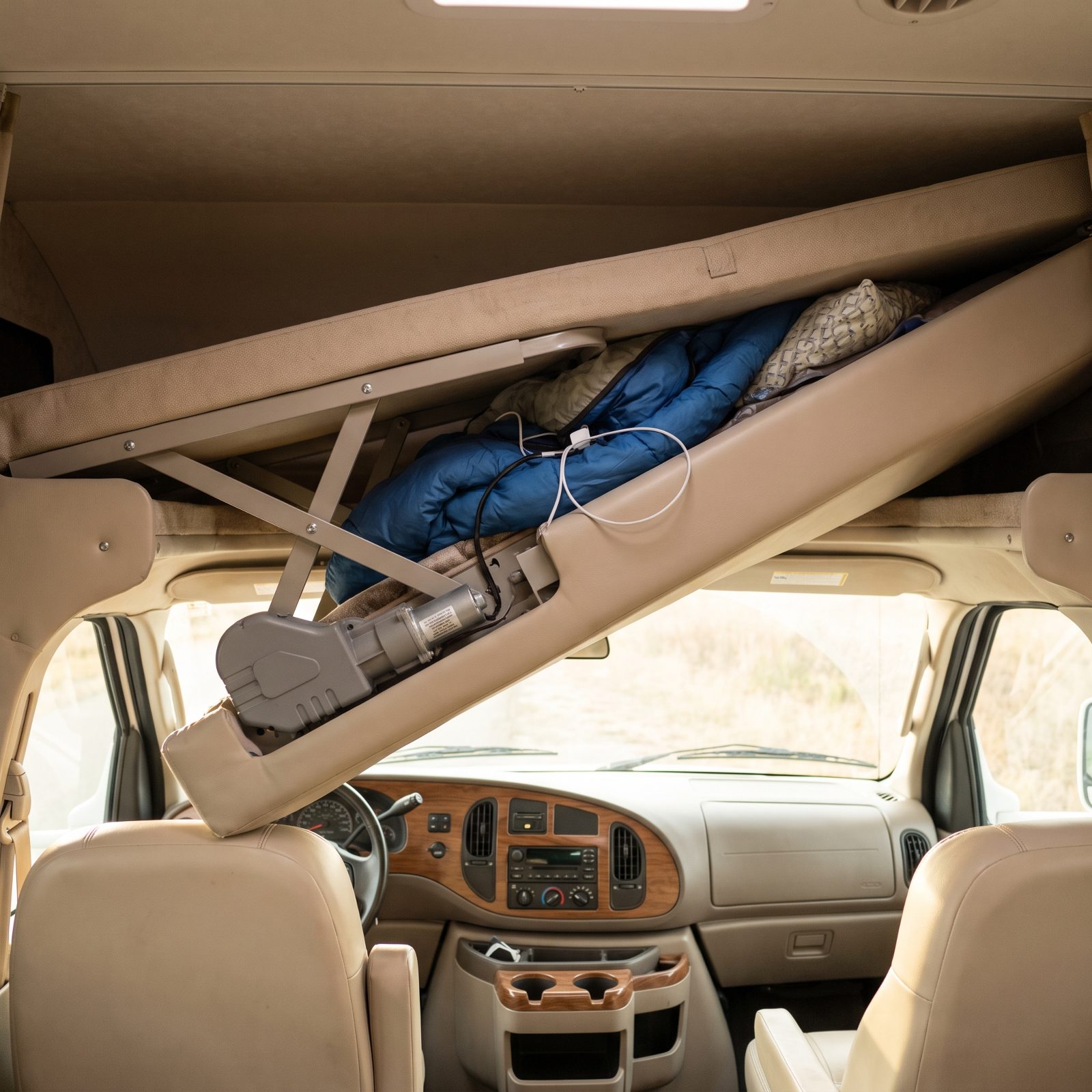
That bunk over the cab felt like free square footage in the showroom. Press a button, it floats down, and suddenly the grandkids have a fort. Then a limit switch fails mid-travel, it stops dead mid-travel with one cushion flopped down toward the dash, and your sleeping bag, pillow, and charging phone are stranded up on the platform, out of reach.
Manual bunks had a strut and a latch — that’s it. Power bunks add a motor, wiring, limit switches, and a control board, any one of which can pick a bad moment to quit. Getting one down by hand usually means hunting for a release most owners never knew they had.
33. Built-In Fuel Stations That Add Pumps, Lines, and a Chunk of Your Payload
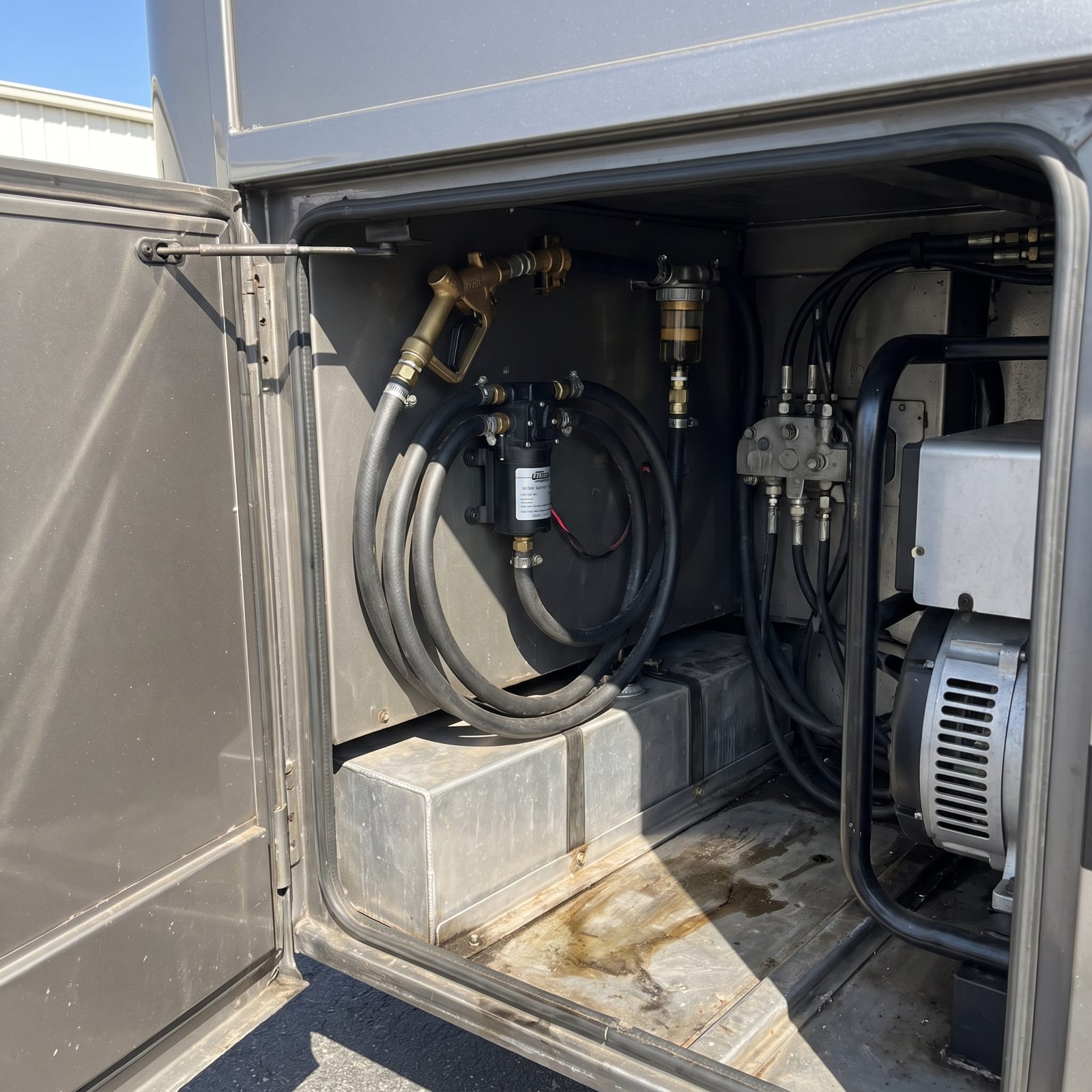
An onboard fuel station sounds brilliant until you run the numbers. Every gallon you carry to top off toys or a generator weighs about seven pounds, and a station big enough to matter eats into payload you were probably already short on.
Then there’s the hardware — a pump, hose, nozzle, filter, and fuel lines living in a bay that gets heat-cycled and road-vibrated for years on end. Rubber fuel line wears out. Most owners never give it a second look until they catch a whiff of diesel.
Honestly? A jerry can and a funnel do the same job, weigh nothing when empty, and have nothing to leak.
32. Roof Decks That Pile Weight Up High and Punch More Holes in Your Roof
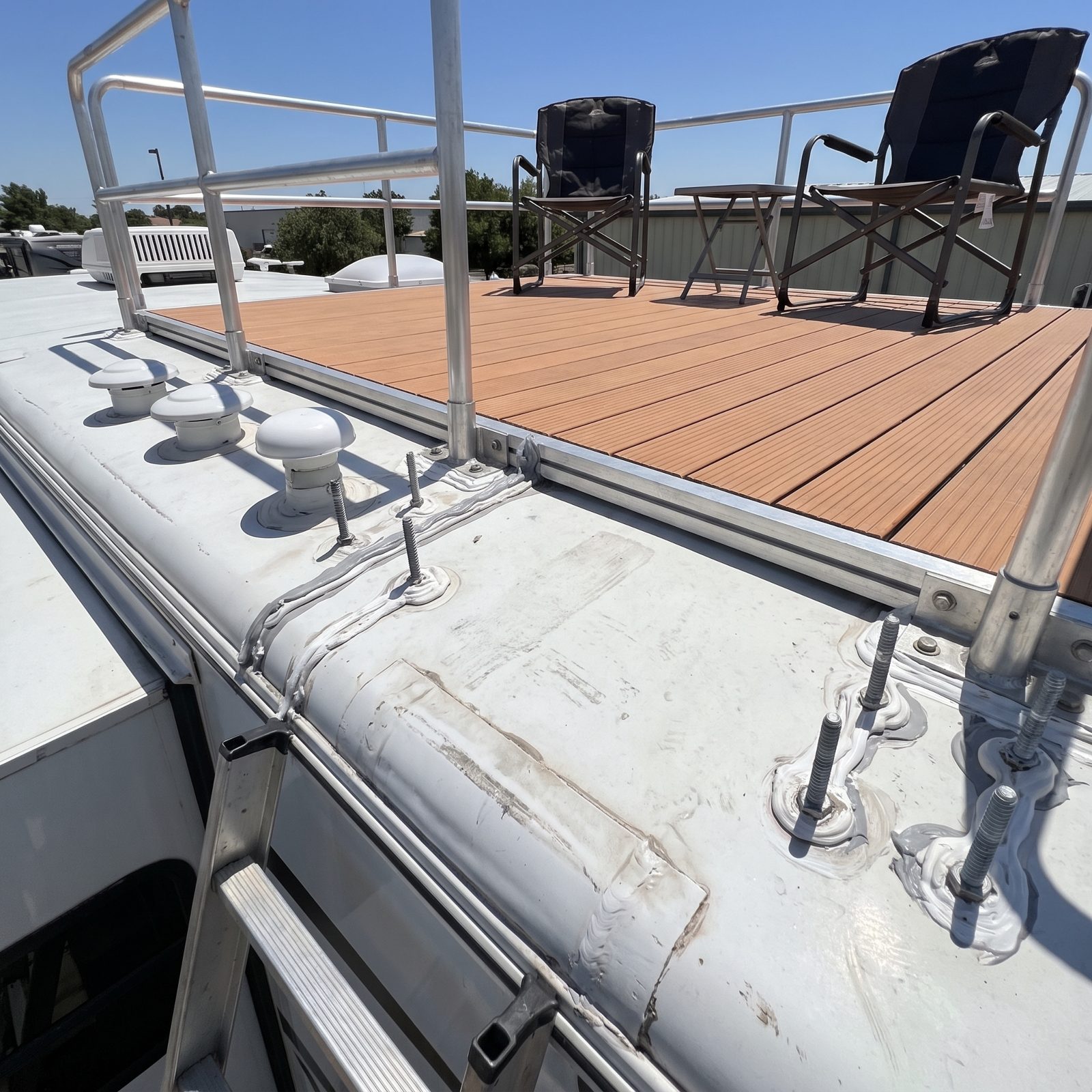
A rooftop deck for morning coffee above the treetops is a genuinely nice idea. Physics and sealant have other plans.
Every pound up on the roof sits way above the rig’s center of gravity, and that does your handling no favors when a crosswind hits. A deck also means railings, hinges, and supports all bolted through your roof membrane, and every bolt is a penetration that needs inspecting twice a year and resealing before it fails.
Water always wins eventually. More holes in the roof just hands it more places to start.
31. Full-Wall Slides That Trade One Big Room for a Pile of Mechanical Risk
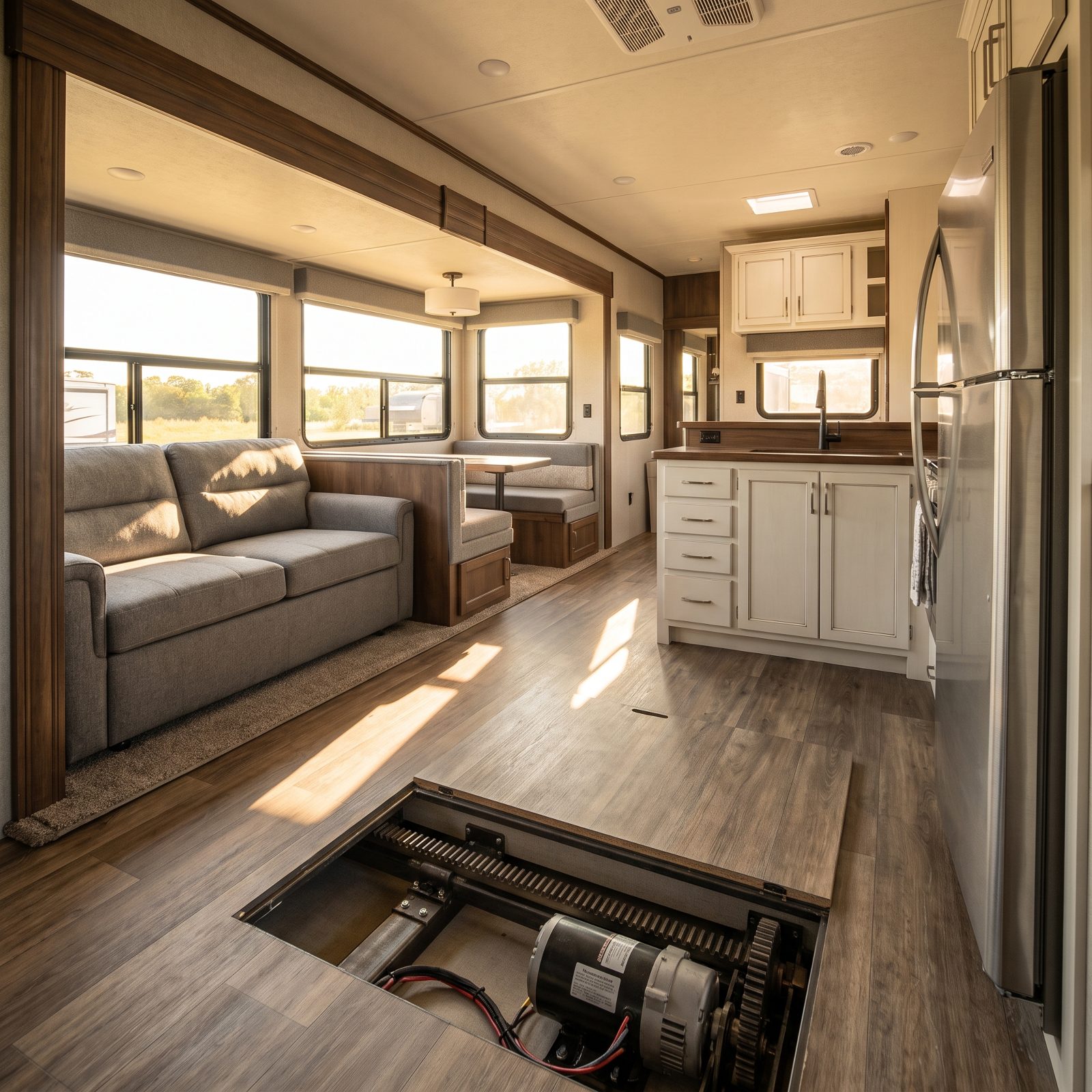
Walk into a fifth wheel with a full-wall slide and the room feels like an apartment — the whole side swings open, furniture and all.
That one feature is also hauling a staggering amount of weight. A sofa, a dinette, counter, and sometimes a fridge, all riding on rails that have to extend and retract perfectly every single time. More travel means more seal length, more motor load, and more structural stress on the frame around that big opening.
When it works, it’s great. When a full-wall slide goes wrong, you don’t have a small problem — you’ve got your entire living room stuck out in a thunderstorm.
30. Undersized Slide Mechanisms Bolted Under Rooms That Are Too Heavy for Them
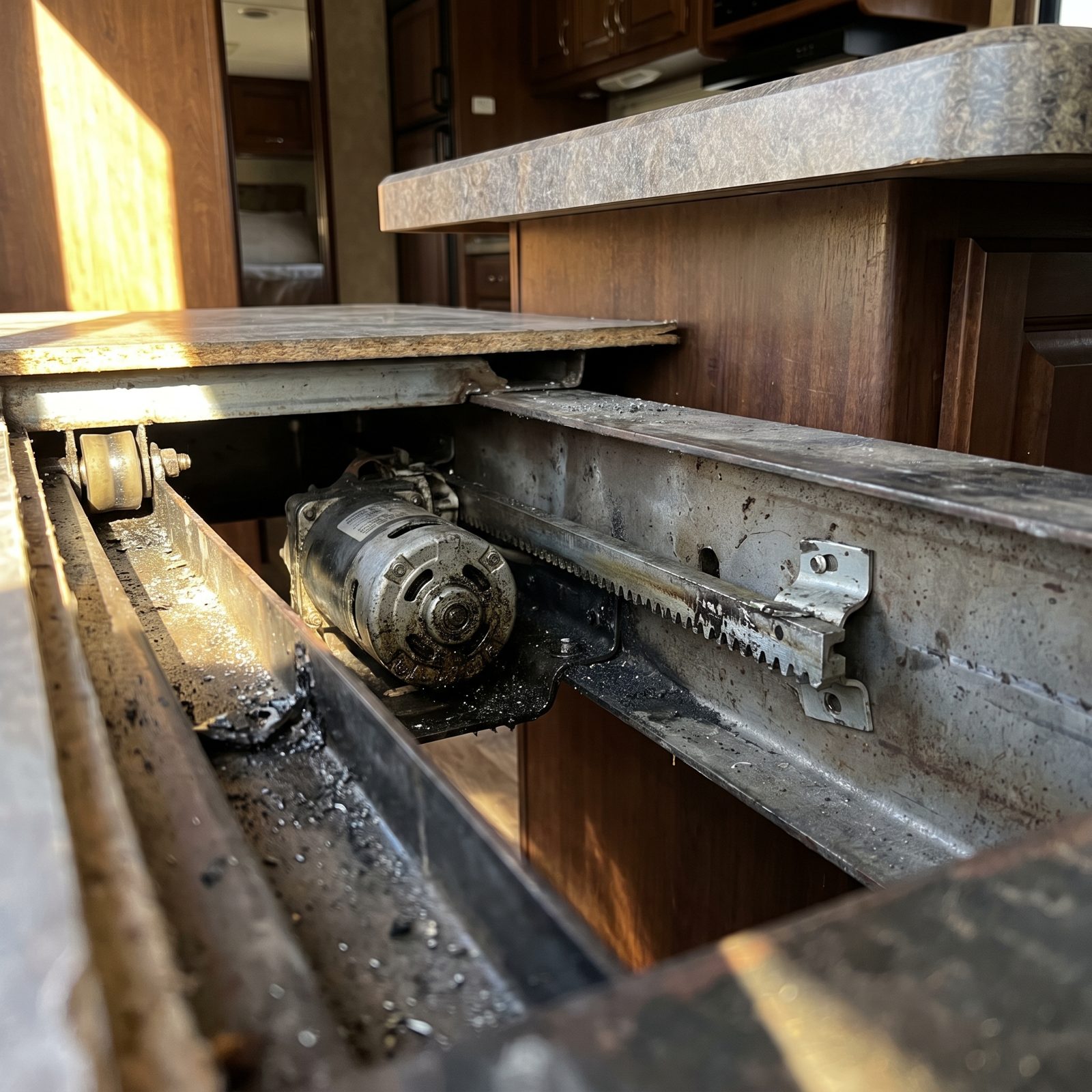
Nobody mentions this one at the dealership, and it should be the first thing you ask about.
Plenty of RVs get built with a slide mechanism that’s fine on paper but light for the room it’s hauling. Load that room up with a stone countertop, a residential fridge, and full cabinets, and the motor and gear are working near their limit from day one.
The symptoms creep in. First the slide groans. Then it starts going in and out unevenly, a roller wears flat, and one day the gear strips. Heavier room plus borderline mechanism equals a repair you’ll be meeting again.
29. Opposing Living-Room Slides That Wall You Out of Your Own RV at a Rest Stop
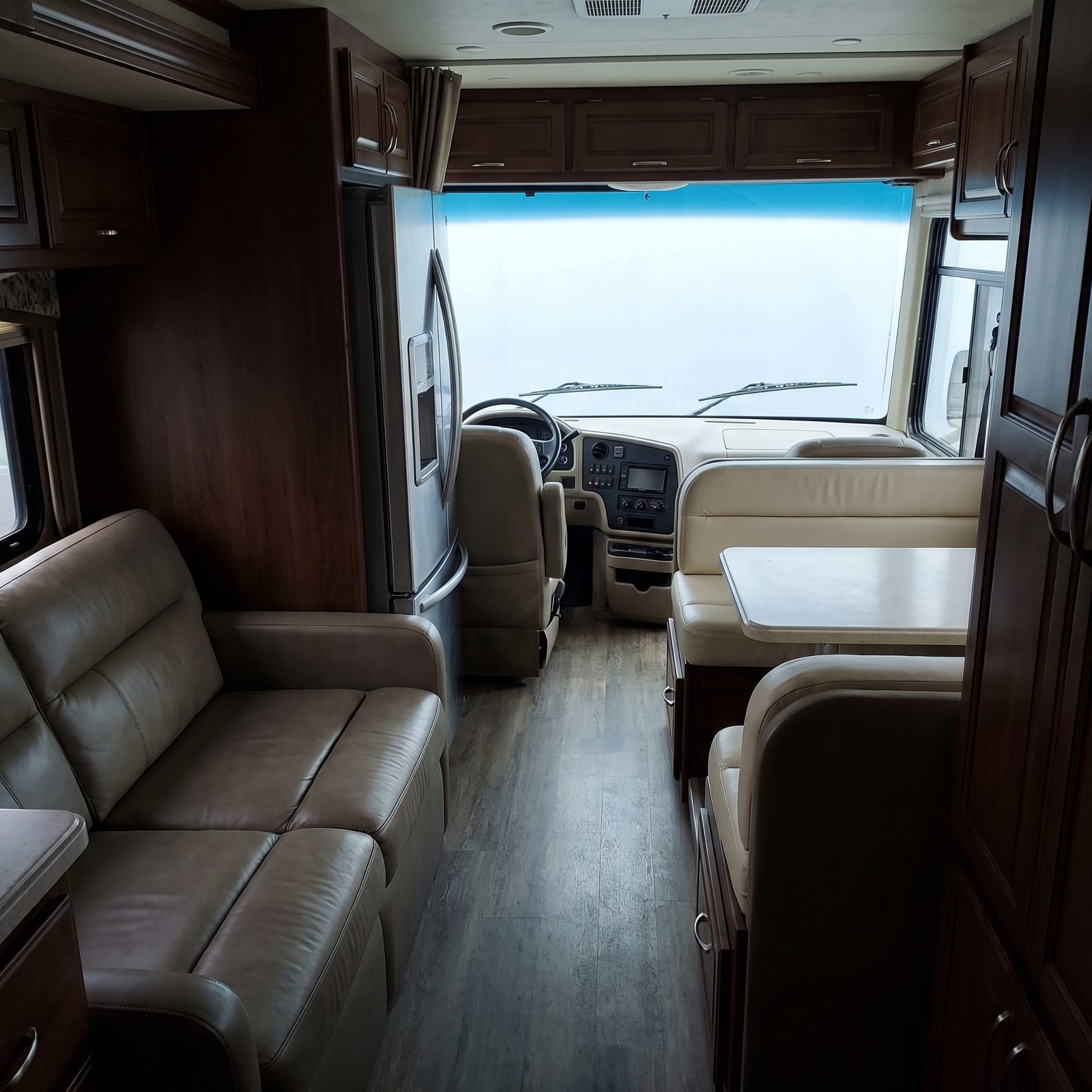
Big opposing slides make a living room feel like a hotel suite when you’re parked. Pull them in for travel and that same room becomes a hallway you can barely sidestep through.
Here’s what stings on travel days. With the slides in, you often can’t reach the fridge, the bathroom, or the bed without crawling, so a quick lunch stop turns into a whole project. Anyone who’s tried to grab a sandwich with the galley sealed behind a retracted dinette knows the drill.
Not a dealbreaker. Just a daily tax you pay every time you move the rig.
28. Bedroom Slides That Add Seals and a Motor to Buy You a Few Inches of Floor
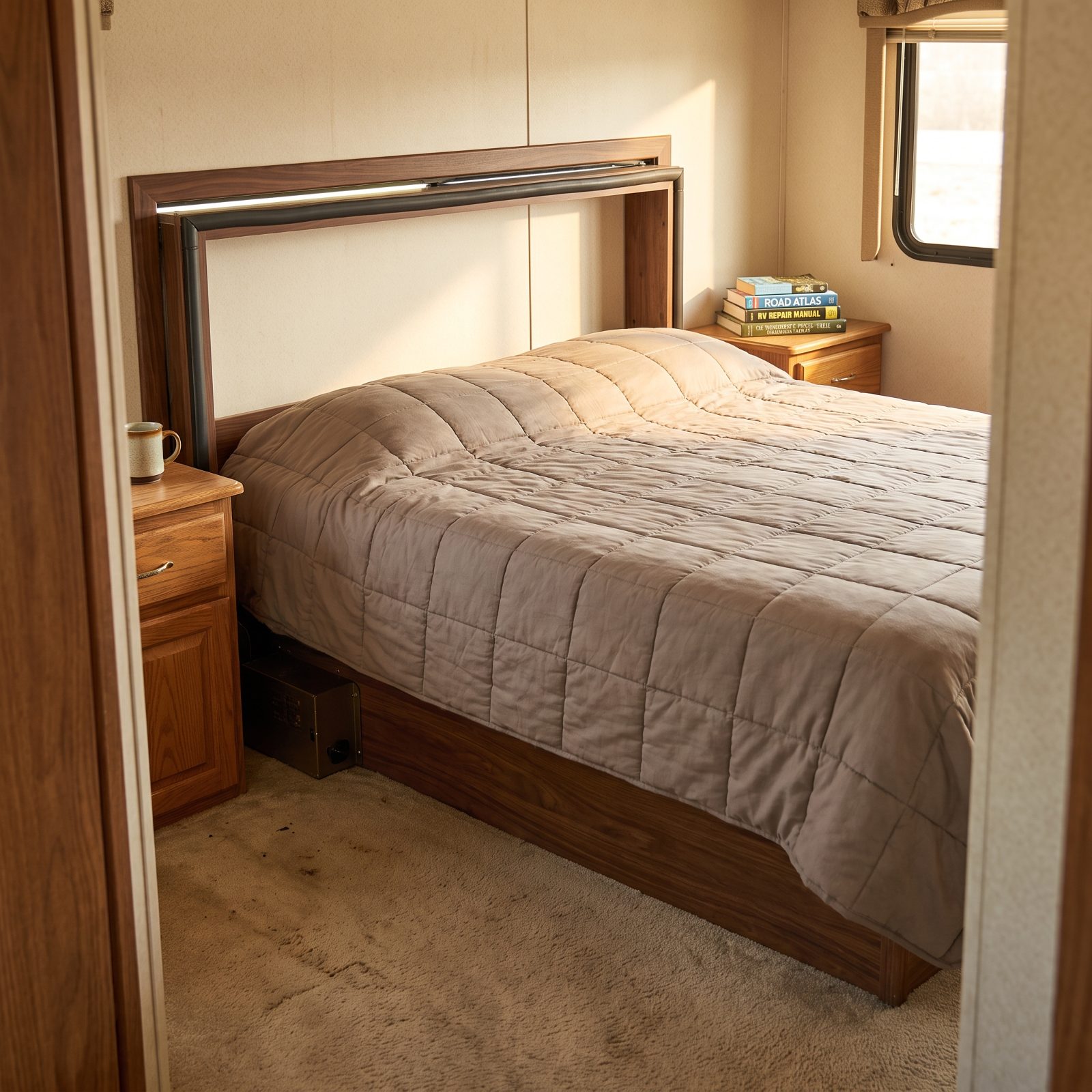
Bedroom slides are the ones worth squinting at. A living-room slide earns its complexity by opening up the space you actually live in. A bedroom slide often adds a motor, rails, and a long seal just to let you walk around the foot of the bed.
That seal is the catch — another gasket that dries out, another path for water and dust, another thing to lube and inspect. All for space you’re asleep in and barely use.
27. Slide-Topper Awnings That Turn Into Water Traps, Leaf Bins, and Wind Sails
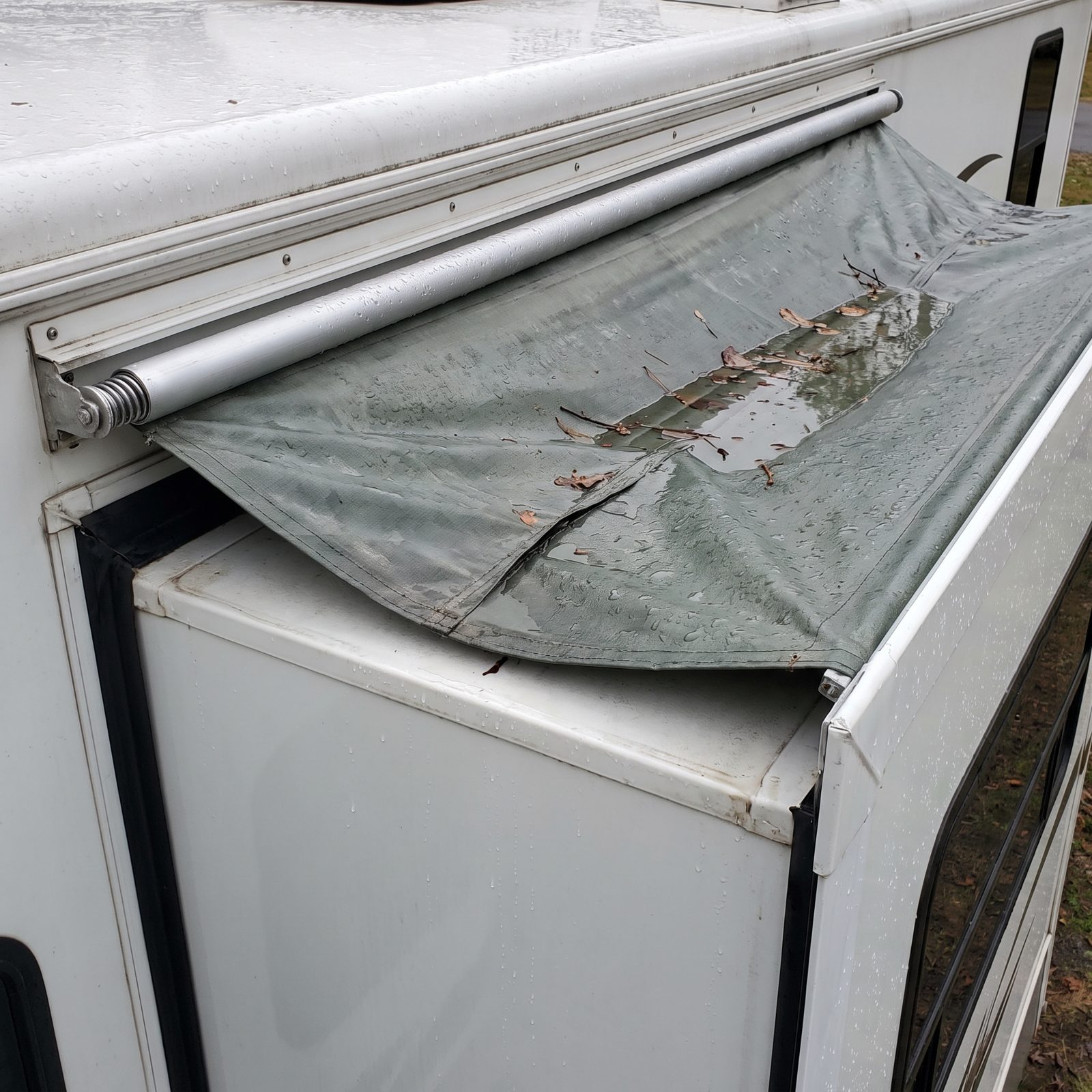
Slide toppers do a real job. They keep leaves and rain off the top of the slide so you don’t drag a pile of debris inside when you pull it in.
But they bring their own baggage. Park under trees and the topper hoards pine needles, acorns, and standing water until the fabric stretches into a sagging pool. Add a gust of wind and that same fabric flaps, frays, and works the spring tension loose.
The fabric wears out too. Sun bakes it, water stains it, and somewhere around the decade mark you’re paying to recanvas every one you own.
26. Automatic Awning Wind Sensors That Teach You to Trust a Gadget Too Much
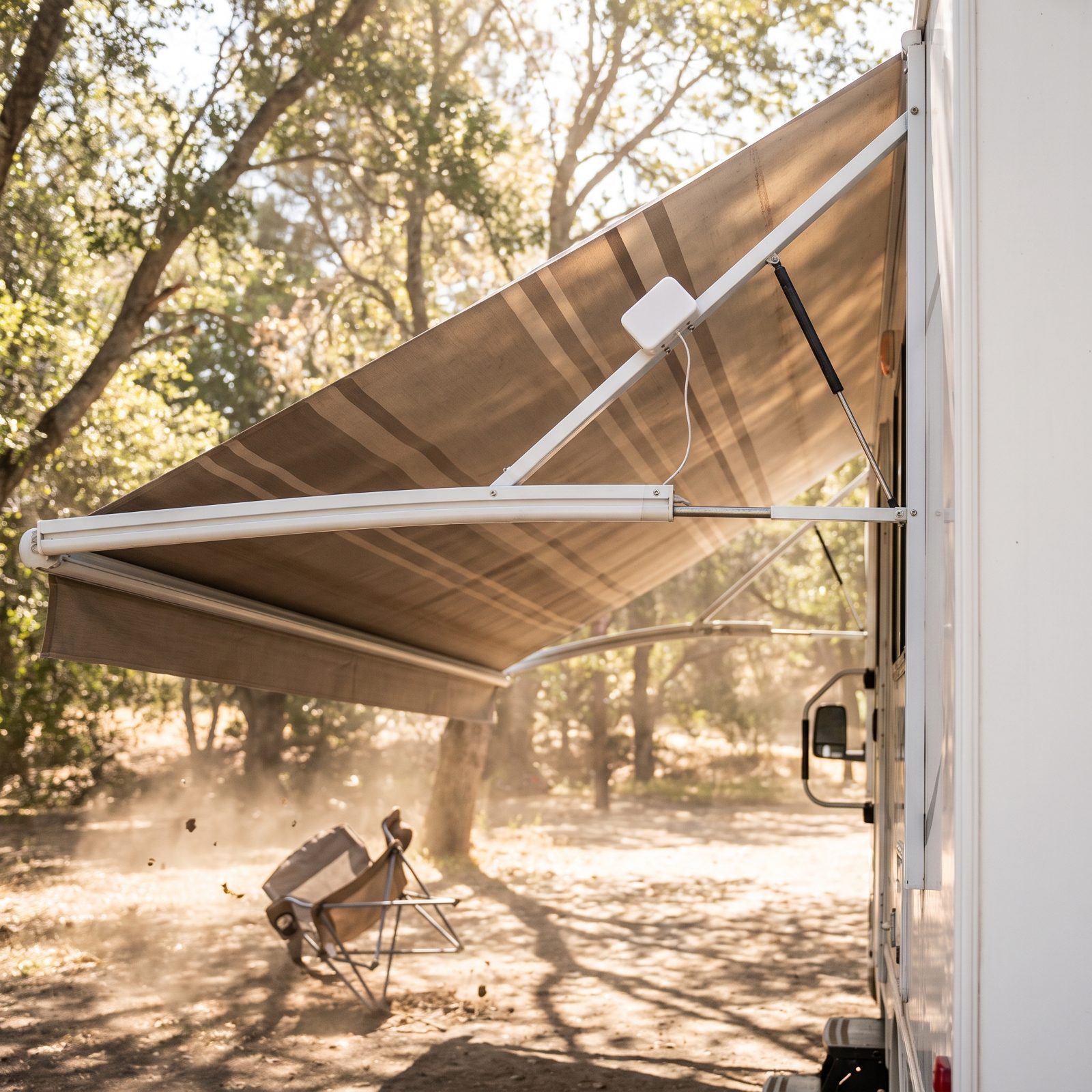
An automatic awning that retracts itself when the wind picks up sounds like peace of mind. And it is — right up until you lean on it.
Wind sensors run on a threshold and a delay. A hard gust can catch and bend the awning before the system even reacts, and a sensor fed by a weak battery or a corroded connection simply won’t trip at all. Owners who lean on it stop watching the sky, which is exactly when a storm walks off with the awning.
25. Oversized Shower Skylights That Turn Your Bathroom Into a Magnifying Glass
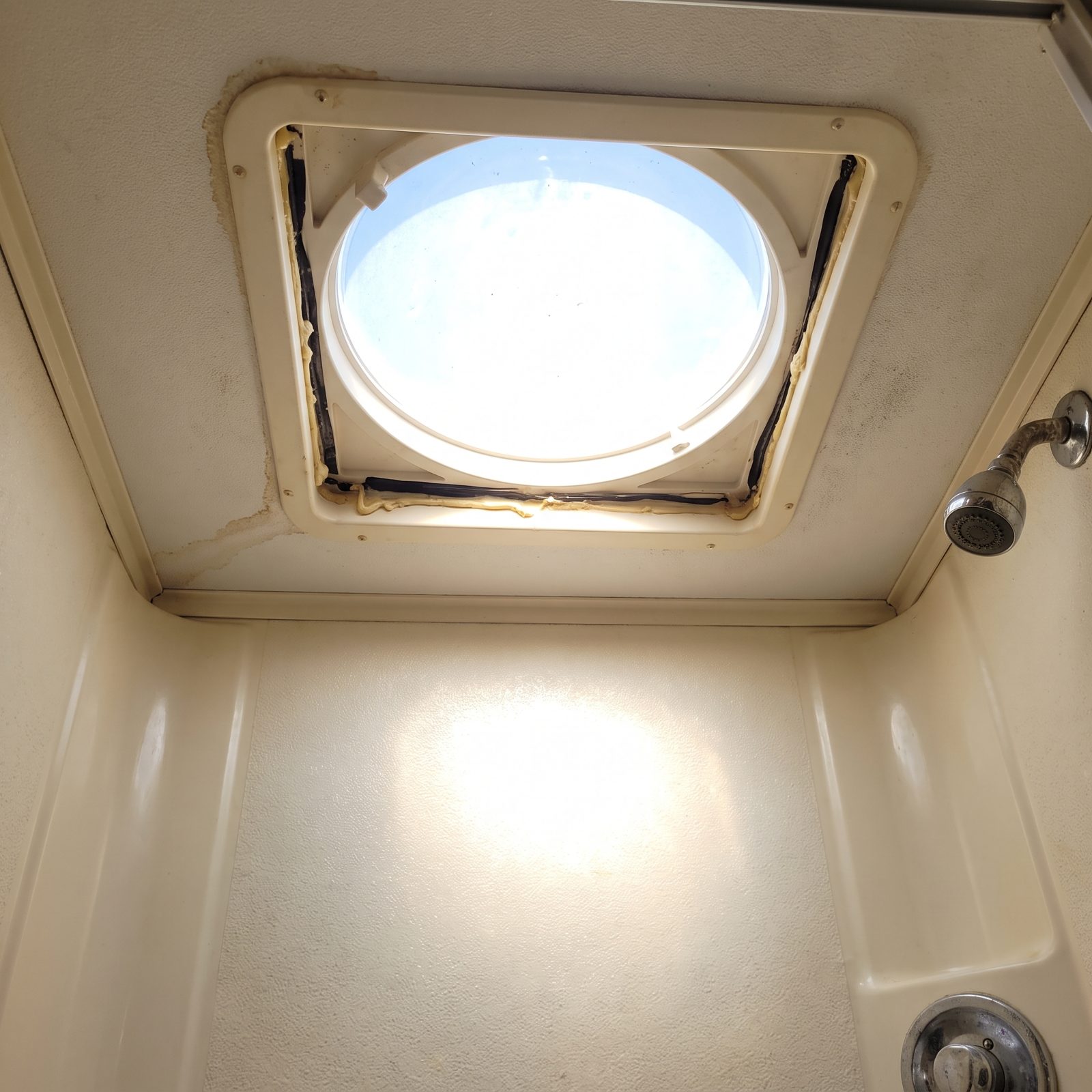
A big skylight over the shower feels luxurious at the dealership — all that headroom and daylight. On a July afternoon it feels like showering under a magnifying glass.
Acrylic domes pull in heat and glare, so your bathroom runs hot and your shower turns into a spotlight. And it’s one more thing poking through the roof. The dome ages and yellows, the sealant around the frame needs watching, and when it finally leaks, the water lands right over your head.
A smaller vent fan gives you light and airflow with a fraction of the heat and far less roof to fuss over. Go stand in one on a hot day before you decide it’s a selling point.
24. Acrylic Dual-Pane Windows That Scratch Easier Than Glass
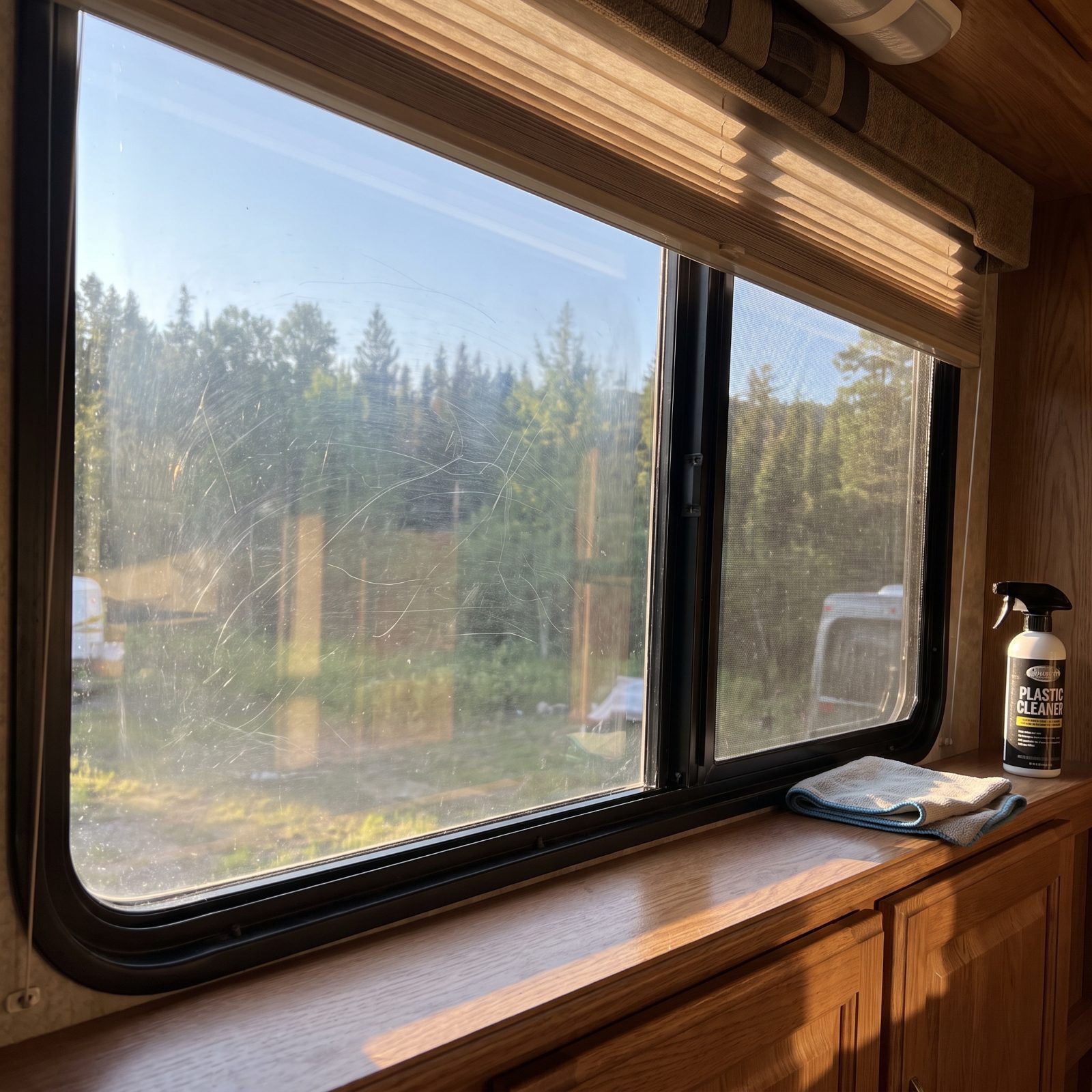
The dual-pane acrylic window is quieter, warmer, and lighter than glass. It also scratches if you look at it wrong. One pass with a gritty paper towel on a dry pane leaves swirl marks you can’t buff out without a plastic polish kit and a whole lot of patience.
Glass takes an ammonia cleaner and a squeegee and shrugs it off. Acrylic hates both, so you end up babying it, hoarding soft microfiber cloths, and watching the haze creep into the corners where road grit collects anyway.
23. Frameless Windows That Look Sleek but Barely Crack Open
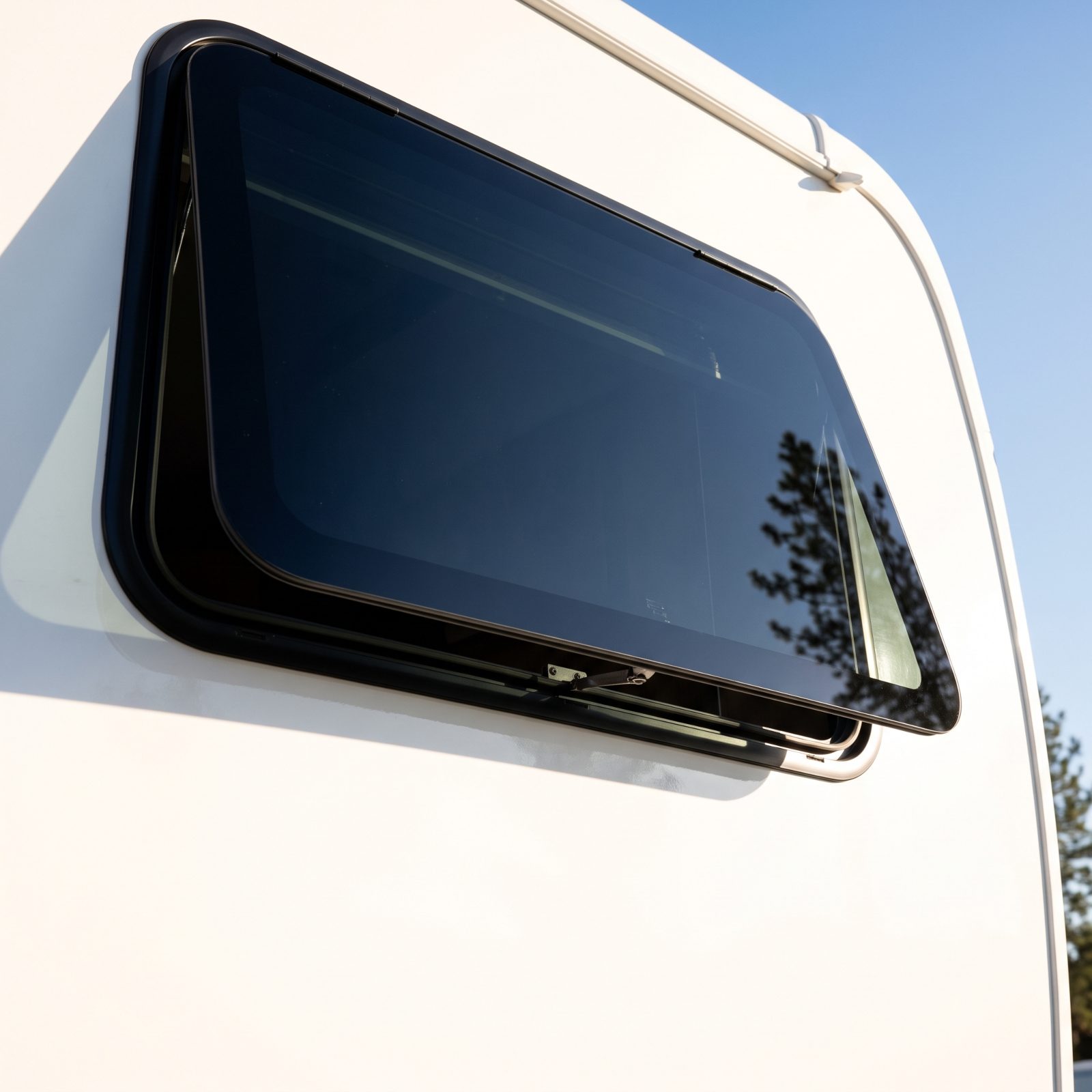
Frameless tinted glass gives a coach that automotive, high-end look. From outside it reads clean and modern. From inside it tilts out on a top hinge and opens maybe a few inches at the bottom — and that’s the catch nobody mentions at the dealer.
On a warm night with no air conditioning, those few inches don’t move much air. A traditional sliding or awning-style window opens wide and pulls a real breeze through. So the frameless looks better parked and breathes worse boondocking. Decide which you actually do more.
22. Panoramic Rear Windows That Cost You Cabinets and Cook the Bedroom
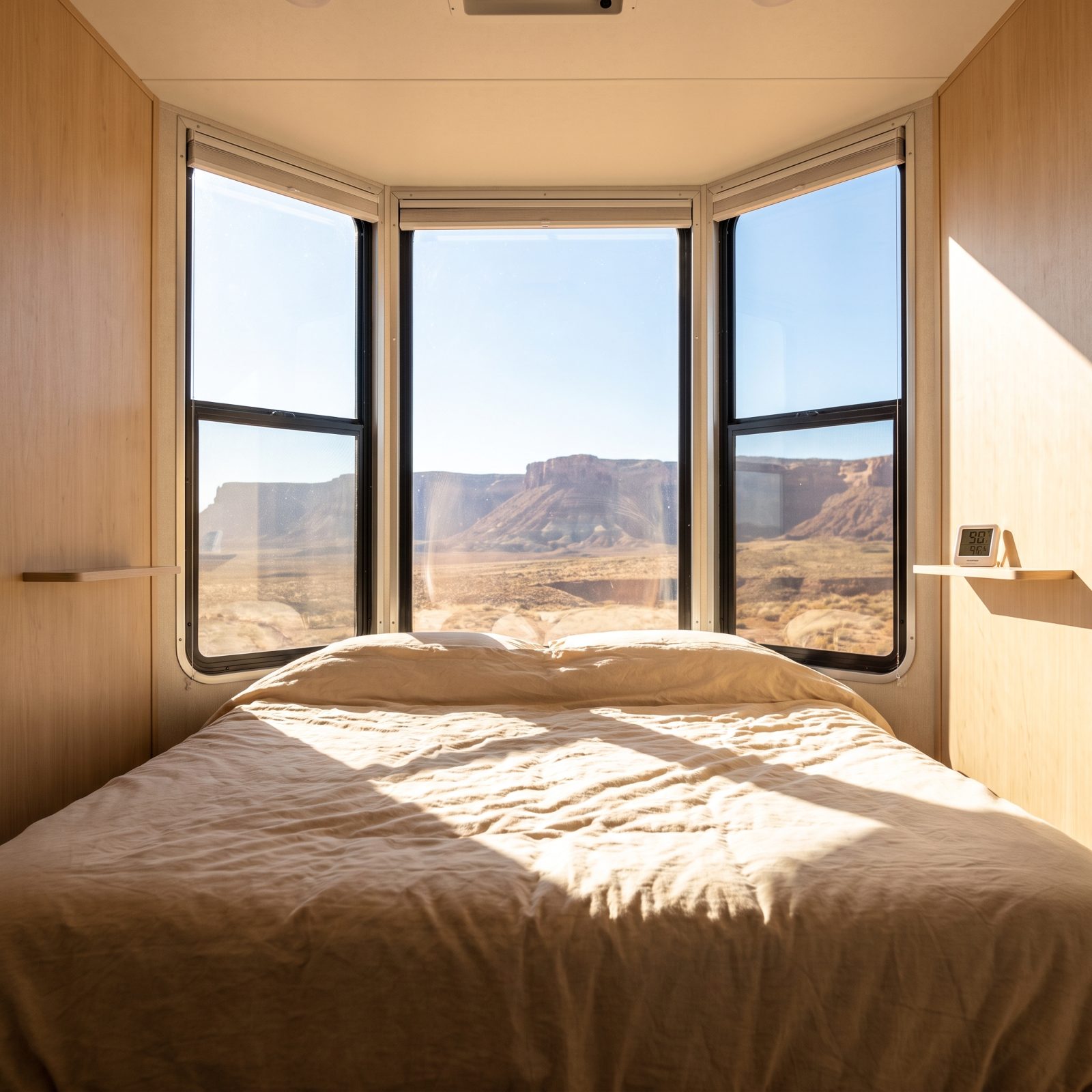
The view sells itself. A wall of glass across the back of the coach, the campsite framed like a painting. Then August arrives.
Big rear windows pour heat in during the day and dump it back out at night, so the bedroom runs hot when you want cool and chilly when you want warm. All that glass also took the place of overhead cabinets, which is real storage gone — the kind full-timers fight over. You trade a wall of pillowcases and spare bedding for a view you mostly see lying down with your eyes closed.
21. Roof-Mounted Satellite Dishes Nobody Uses Anymore
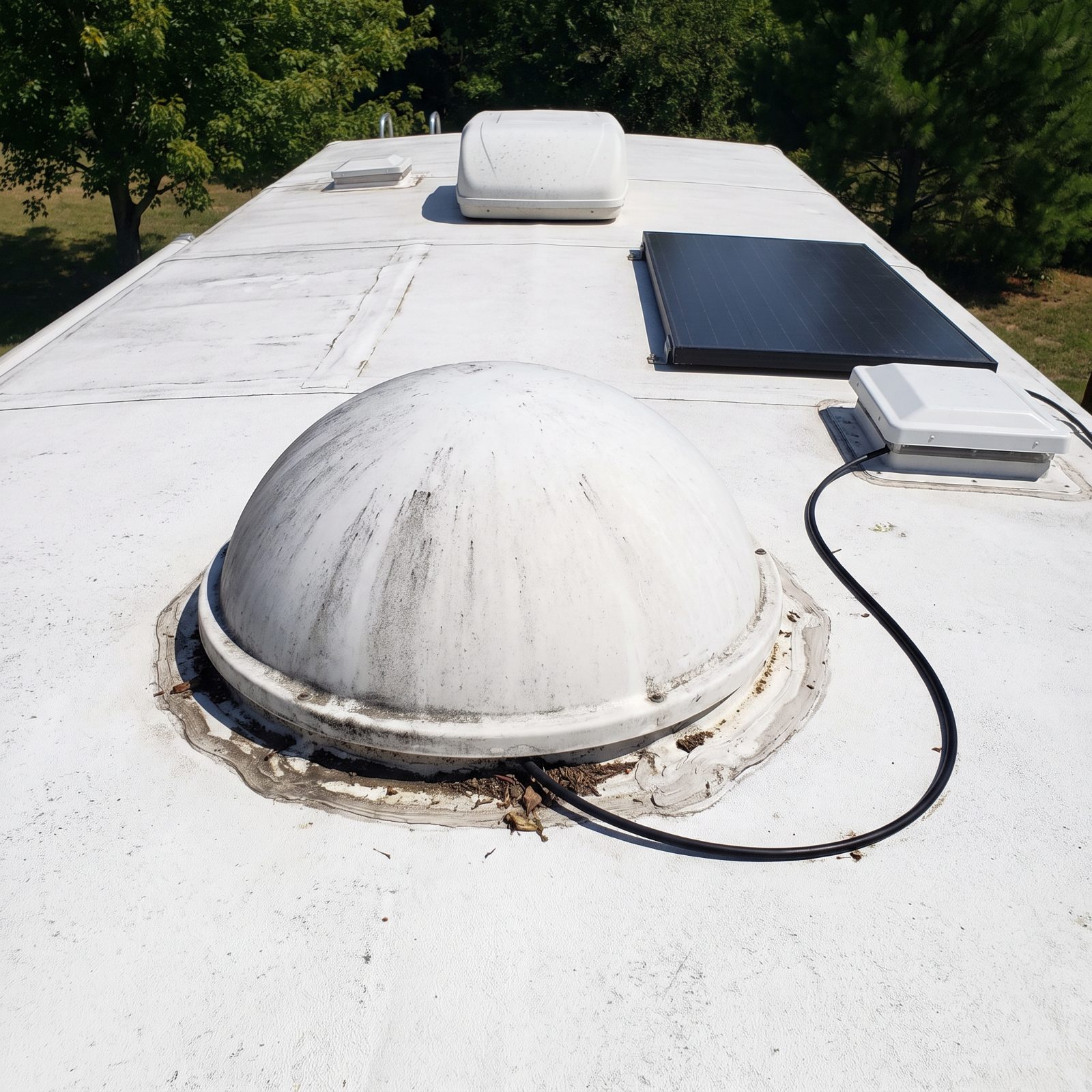
A roof satellite dish used to mark a serious rig. Now it’s a weathered dome squatting on prime roof real estate where a second solar panel could live.
Streaming over a mobile hotspot covers most of what people watch, and it works at campgrounds the dish can’t — the shady ones where trees block the southern sky. The dome still needs its seals checked and still catches debris. Plenty of owners pay for it new, use it twice, then stare at it every time they’re up top resealing seams.
20. Built-In Wi-Fi Routers That Go Obsolete Before the Tires Do
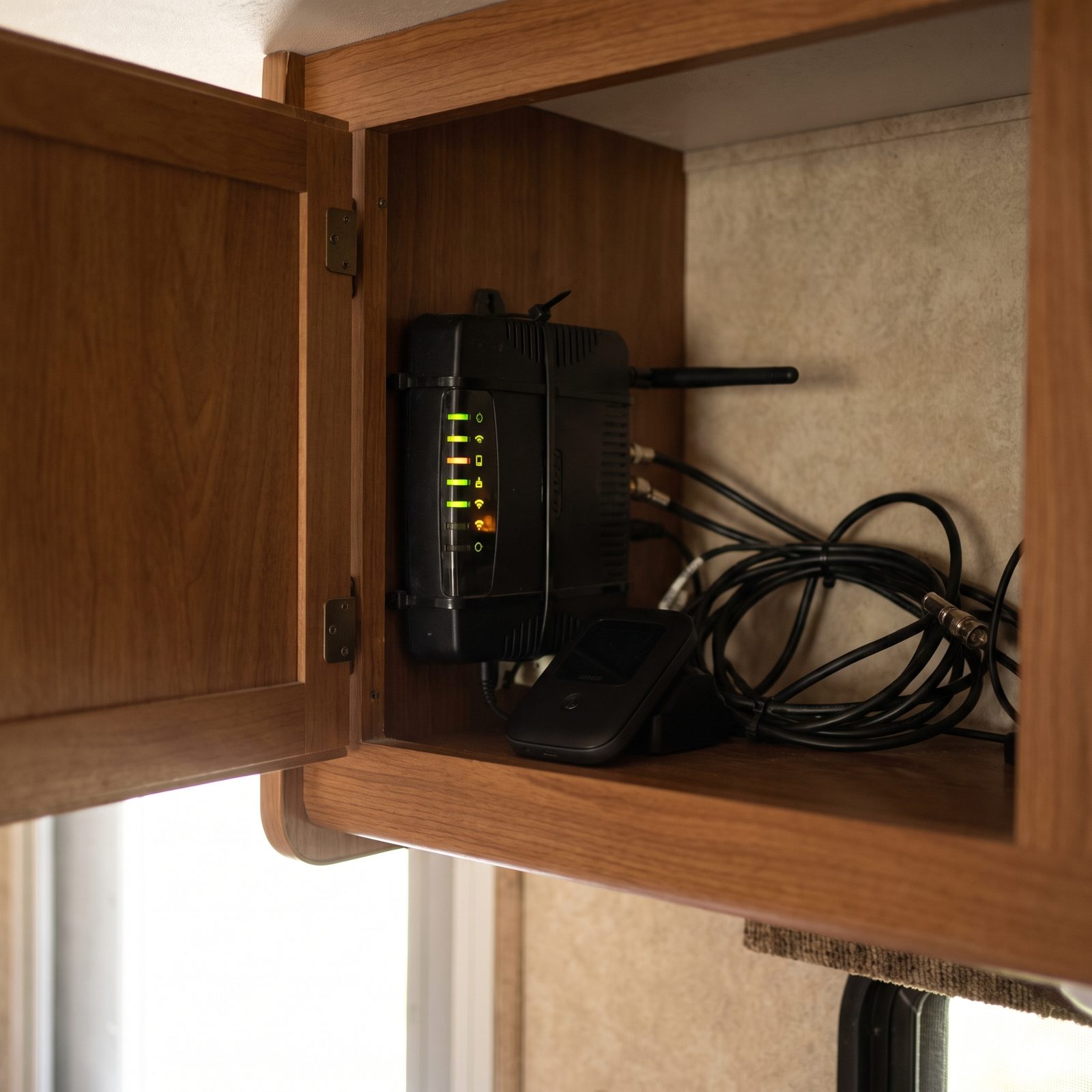
Cellular tech moves fast. An RV lasts fifteen or twenty years. So a router wired into the coach in 2024 will feel ancient long before the frame does — and it’s tucked behind a panel, where swapping it means pulling cables and fighting zip ties.
A standalone hotspot you can replace in two minutes when a new model drops does the same job without the surgery. Built-in sounds tidy. What it really means is being stuck with yesterday’s chip until you tear the cabinet apart.
19. Dashboard GPS That Can’t Keep Up With the Phone in Your Pocket

Factory dash navigation sounded worth the upcharge. Then the maps went stale, the updates cost money or stopped entirely, and the phone clipped to the vent started doing everything better.
The good apps route for height and weight, reroute live around traffic, and know about the construction that opened this morning. The dash unit knows about last decade. For big-rig routing especially, a dedicated RV app earns its keep — and that pricey built-in screen becomes an expensive clock.
18. Powered Entry-Door Awnings That Add a Motor to Shade a Doormat
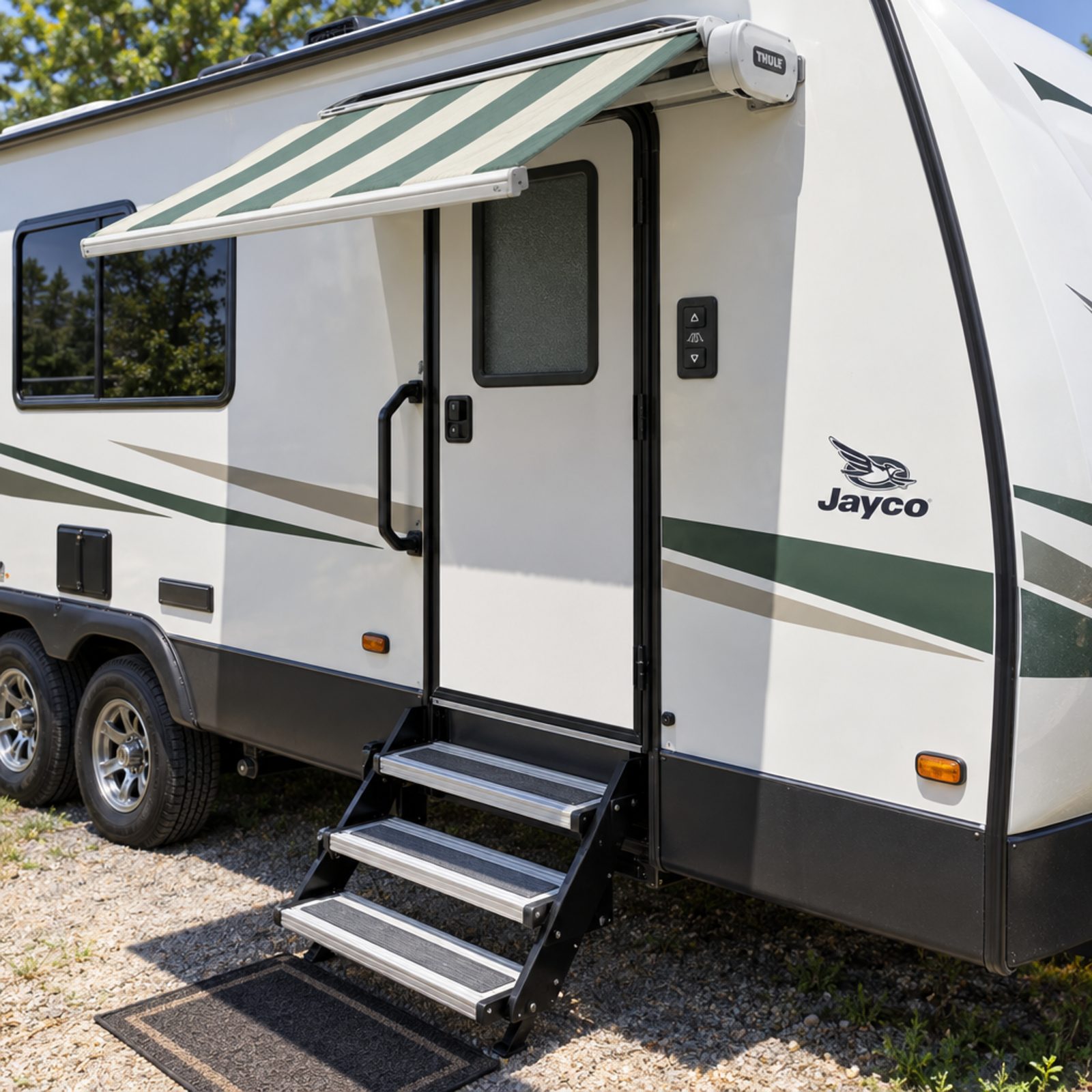
A manual door awning pops out with a flip and a pull. The powered version adds a motor, a switch, and wiring to shade an area about the size of a welcome mat.
So now you’ve got one more thing to fail, one more fuse to hunt, one more motor to replace out of warranty — and the coverage barely reaches past the bottom step. For the sliver of shade it actually throws, the mechanized version answers a question a strong arm and three seconds already answered.
17. Motorized Window Shades That Turn a 10-Minute Fix Into a Wiring Job
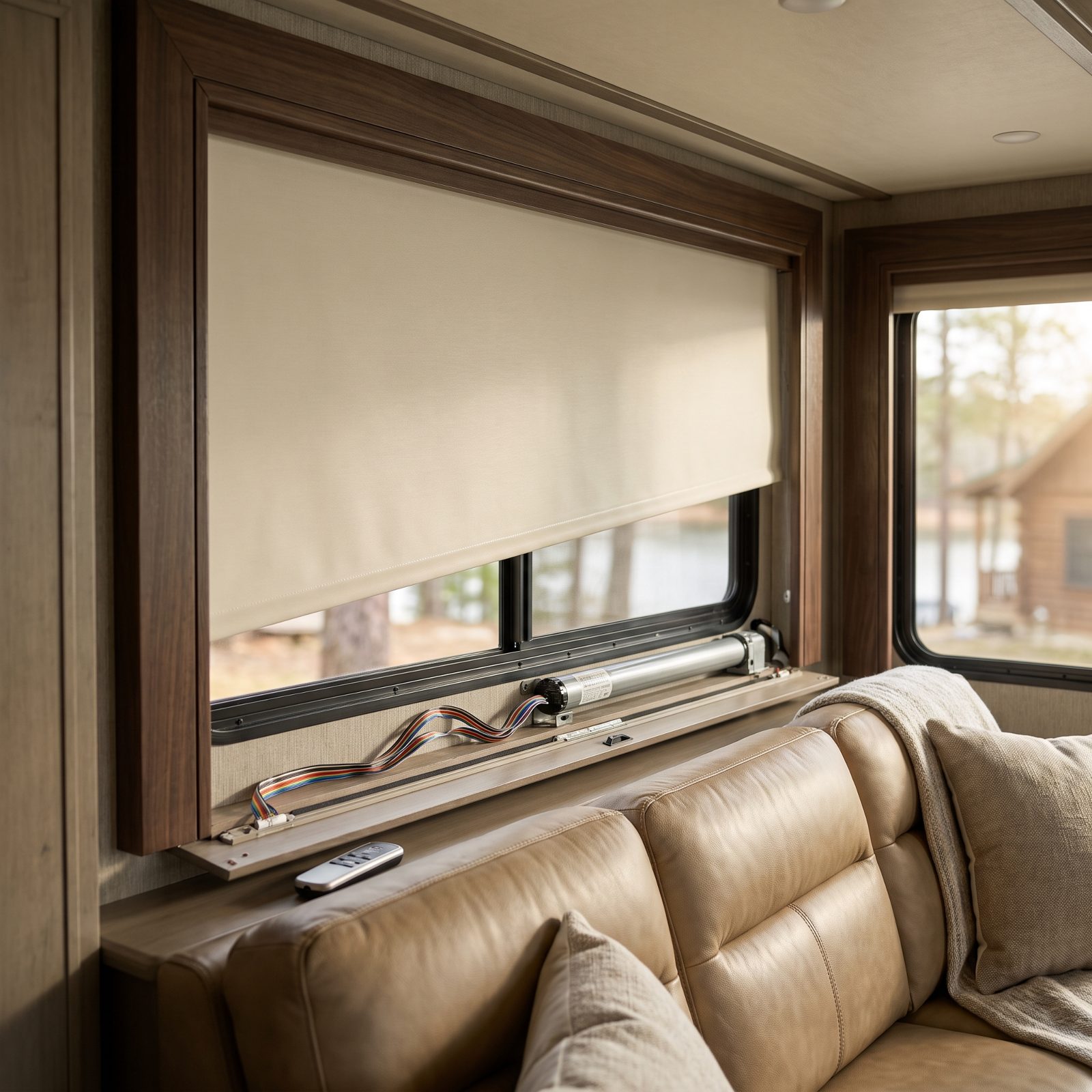
A manual day/night shade that won’t stay up is a cheap spring cartridge and ten minutes at the kitchen table. The motorized version swaps that for a motor, a control board, a remote, and ribbon wiring buried in the window frame.
When it jams halfway — and they do jam — you’re not replacing a spring. You’re diagnosing electronics behind a valance, usually on a coach that’s out of warranty. Convenient until the day it isn’t, and that day shows up out on the road with no dealer within a hundred miles.
16. Automatic Ice Makers That Run Water Lines Where You Can’t Reach Them
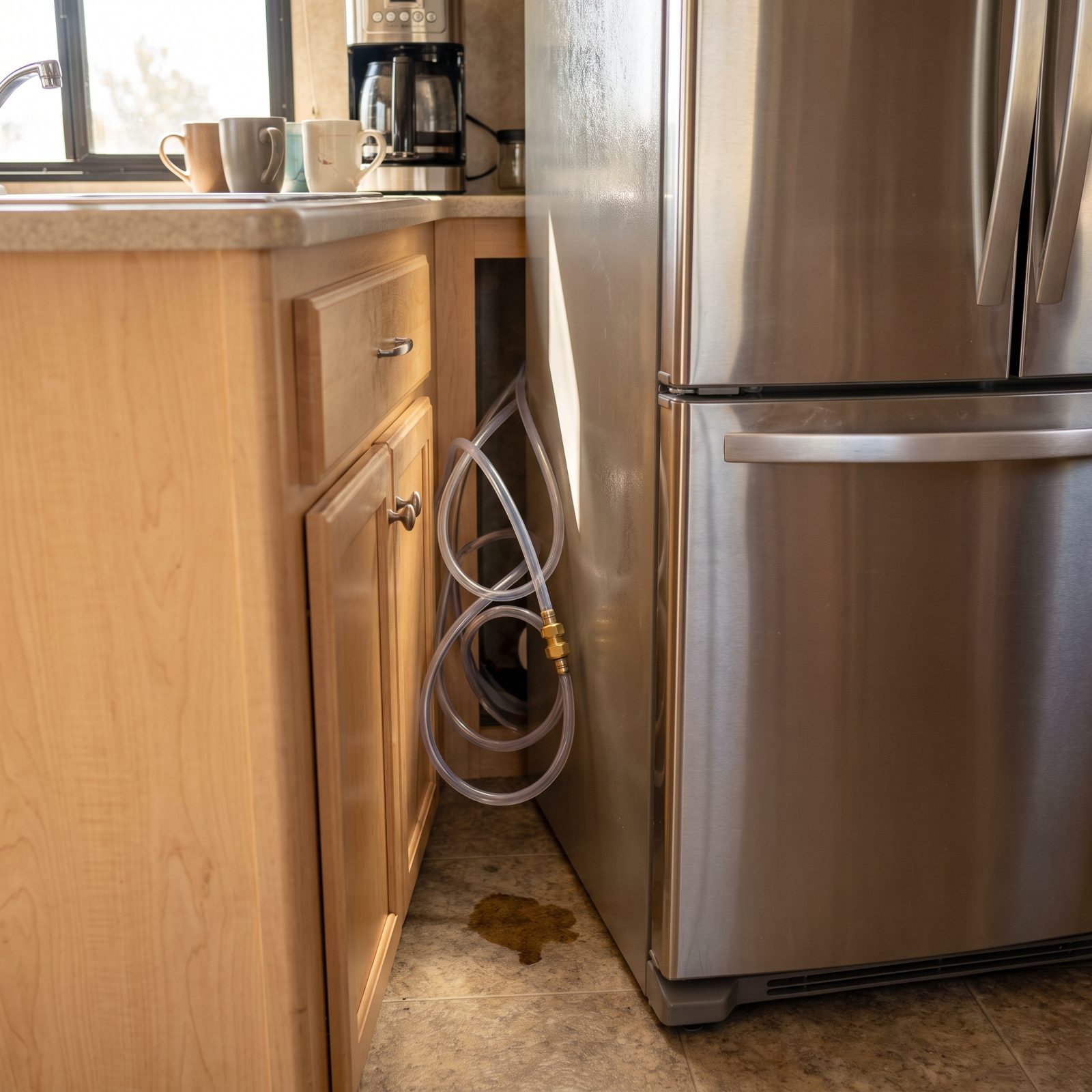
Ice on demand is lovely until the water line beside the fridge springs a leak and puddles across the floor.
That coiled clear vinyl tubing and its brass fittings hide behind the fridge, waiting for a fitting to work loose. A drip there pools out of sight under the fridge, and if you miss it, it seeps into the tile seams and the subfloor below. It’s also one more thing to winterize, one more connection to blow out, one more place for a fitting to let go while you’re three states from home. A bag of ice from the camp store is a lot cheaper than a floor repair.
15. Residential Refrigerators That Live and Die by Your Battery Bank
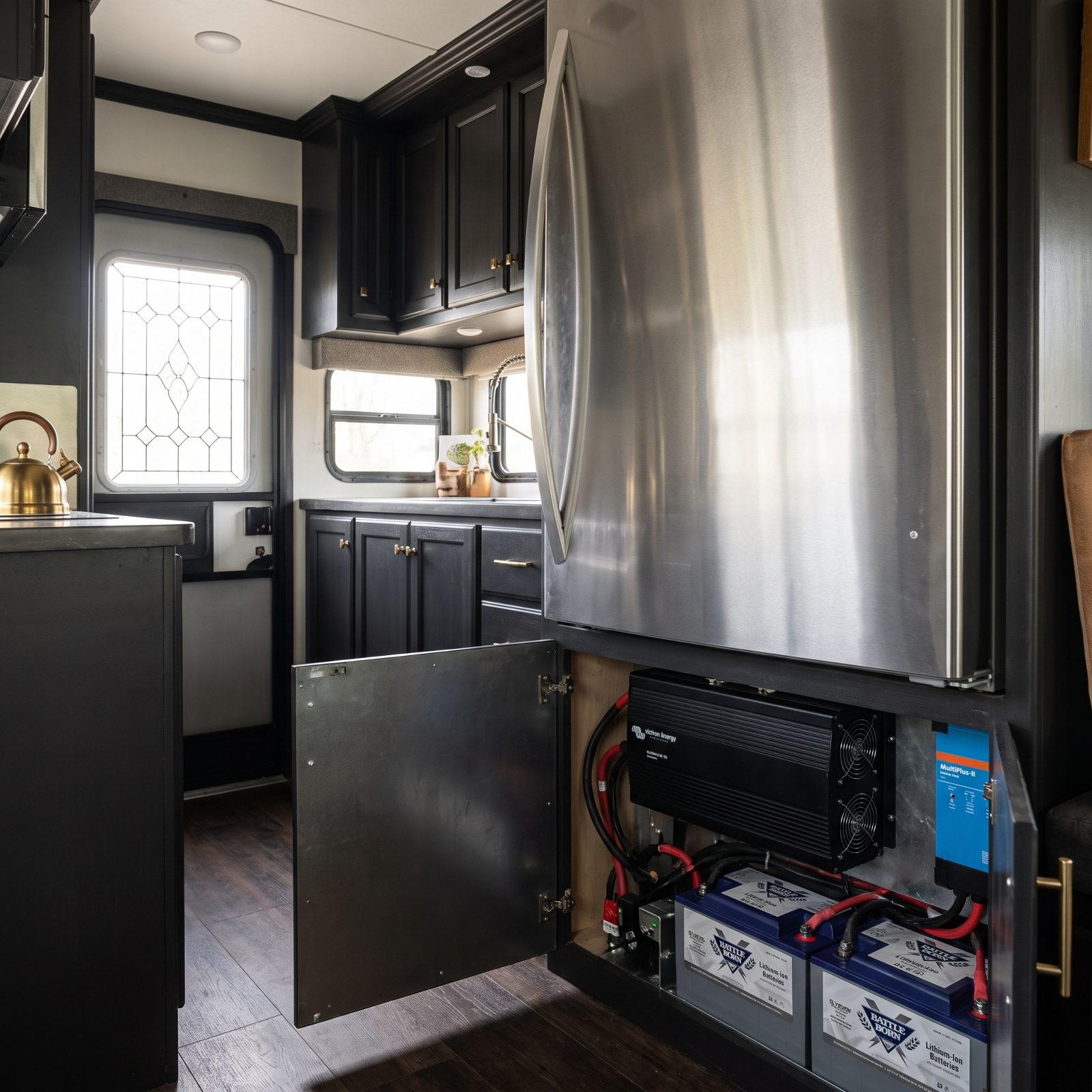
A residential fridge keeps food colder, holds more, and never needs leveling like an absorption unit. People love them — until the power runs out.
It runs on AC only, which means an inverter and a battery bank pulling weight any time you’re off shore power. Boondock for a night without enough solar or a running generator and you wake up to a warming fridge. What felt like pure convenience at a full-hookup site turns into quiet dread the moment you unplug.
It’s a genuine upgrade for someone who parks at full-service campgrounds and a liability for someone who likes dispersed camping. The fridge isn’t the mistake. Buying it without the battery and solar to feed it is.
14. Combination Washer-Dryers With Small Loads and Long Cycles

The brochure calls it a full laundry room in a closet. What you actually get is a drum that swallows about half a normal load and a wash-dry cycle that can grind on for hours to handle it. Ventless condensing dryers don’t blow hot air out the way a home unit does — they wring moisture out slowly, so clothes come out warm and faintly damp more often than owners ever expect going in.
And it sips power and water the whole time. That bites hard when you’re boondocking off a battery bank and a limited fresh tank. Most full-timers who install one finish their clothes on a drying rack anyway.
13. RV Dishwashers That Eat Cabinet Space, Water, and Electrical Capacity
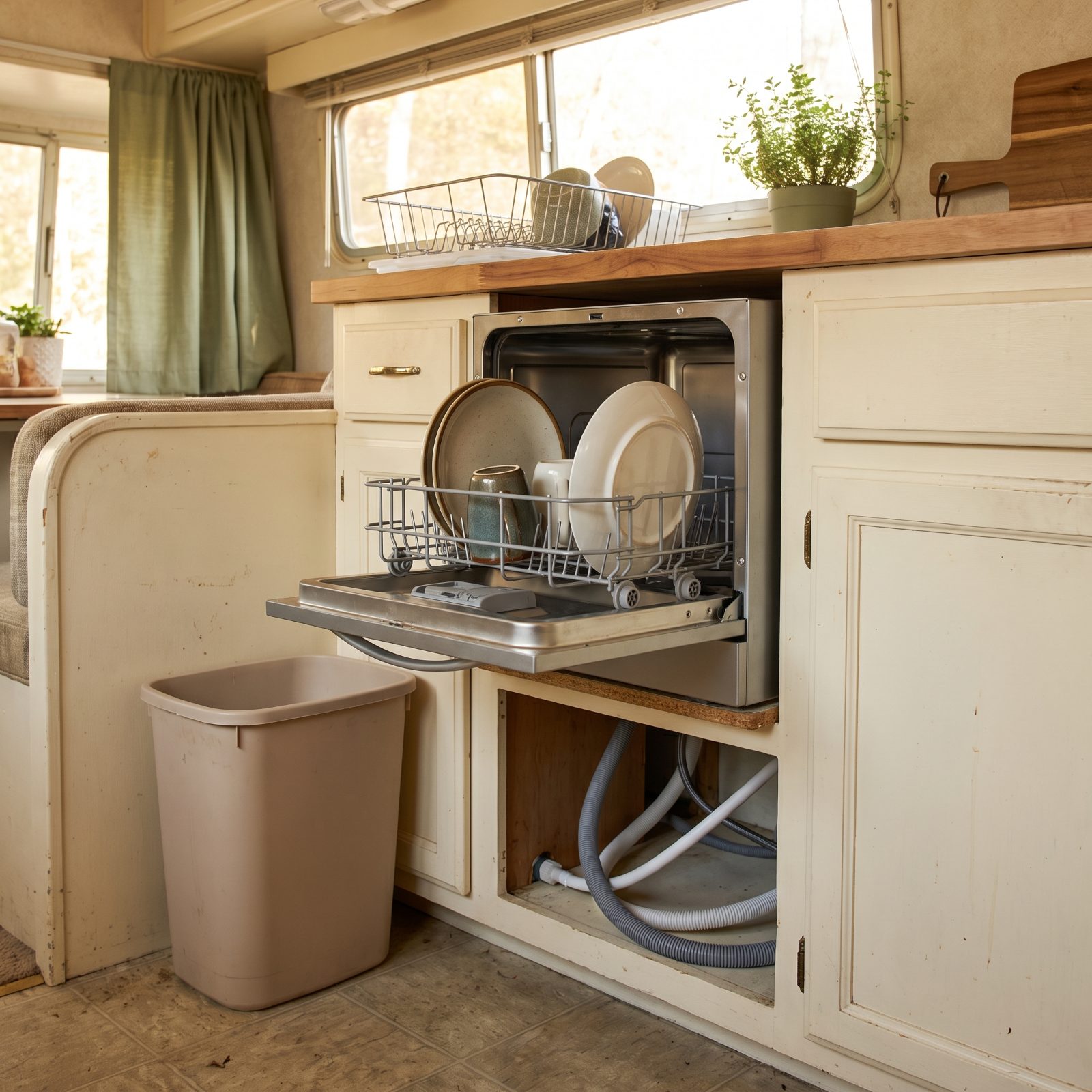
Nobody runs the math before buying. A compact front-loading dishwasher steals a whole lower cabinet — the one place you actually stored your pots — and hands back a rack that holds about a two-person dinner’s worth of dishes. The big stuff? Still in the sink.
It draws real amperage on the heated cycle and pulls more water than a careful rinse-and-scrub, which is exactly backwards for anyone camping without hookups. Two people generate so few dishes that filling the thing means letting plates sit dirty a full day. Washing by hand takes four minutes and never once needs a service call.
12. Built-In Wine Refrigerators That Burn Cabinet and Power Budget
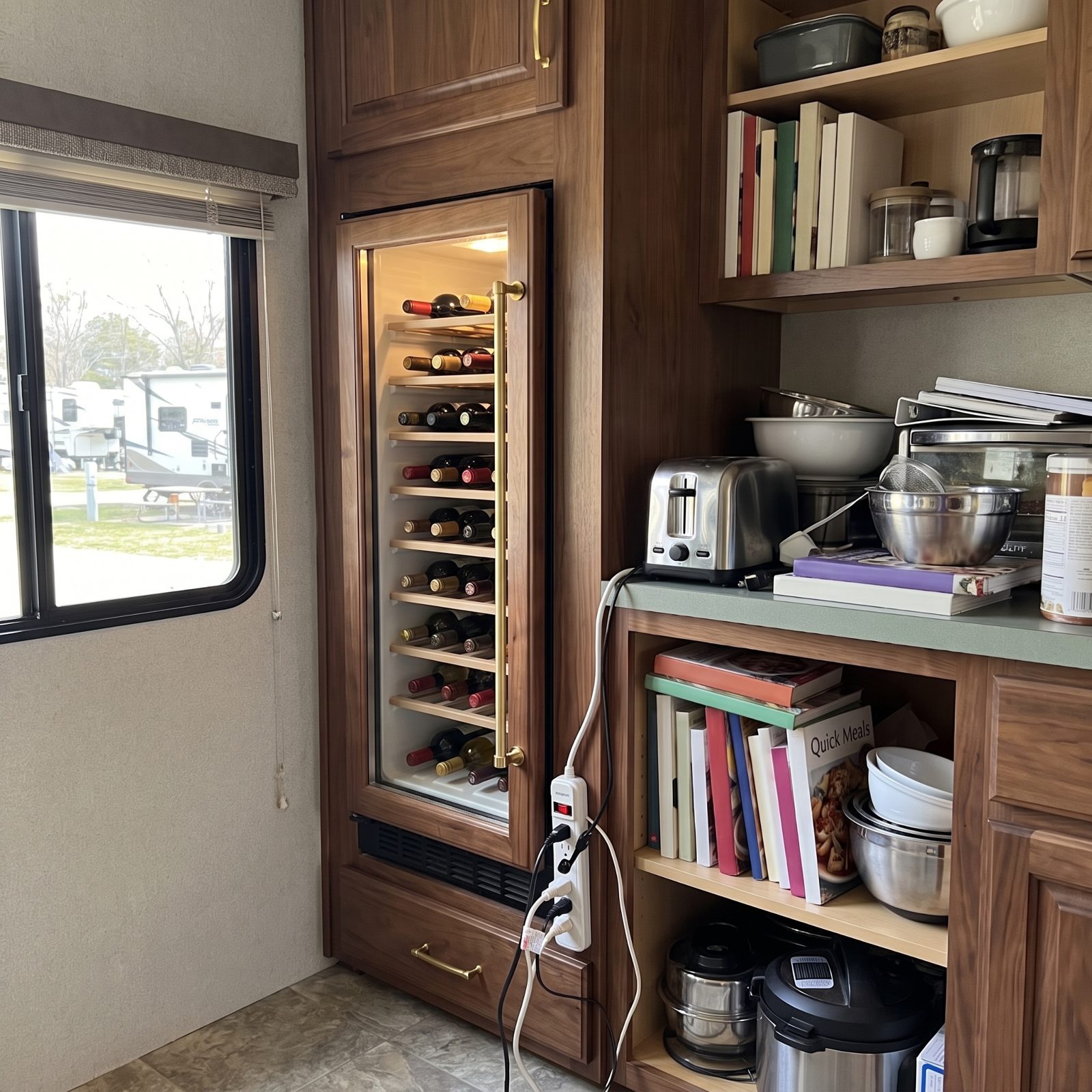
A wine fridge in an RV is a status move dressed up as a convenience. It holds a few dozen bottles, runs a compressor around the clock, and claims a cabinet that could’ve held a season’s worth of actual groceries.
That compressor is one more vibrating gadget bouncing down the highway, and the glass door is pure heat gain the second you park in the sun. A padded wine tote in a lower cupboard keeps bottles just as safe for pennies and zero amp draw.
11. Induction Cooktops That Demand Special Pans and Serious Electrical Power
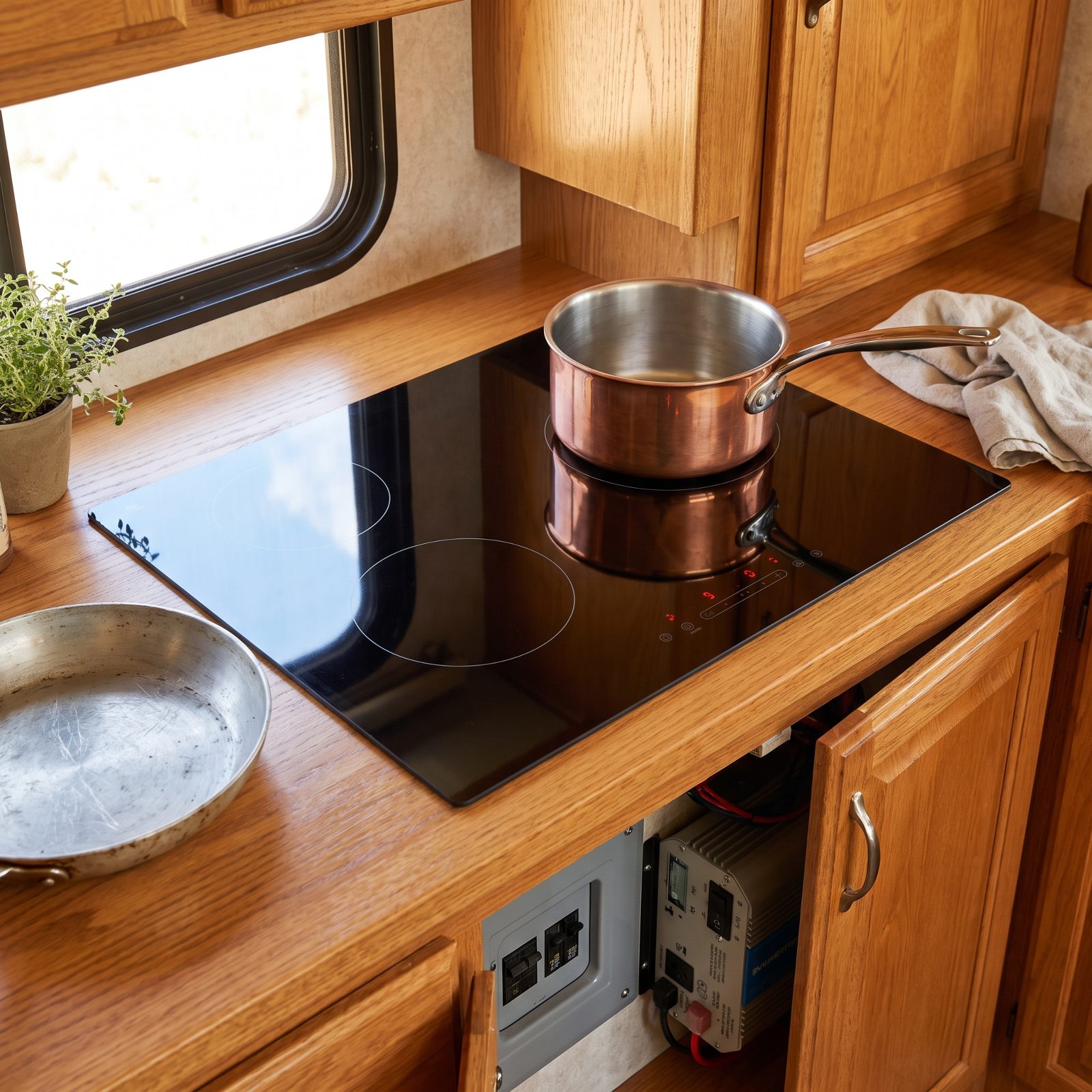
Induction is genuinely fast and clean, so this one isn’t all bad. But the brochure skips two things. First, your old pans may not work at all — induction only heats magnetic-base cookware, so that trusty aluminum skillet becomes landfill the day the cooktop arrives.
Second, and this is the bigger one: a single burner can pull well north of 1,500 watts, which means serious shore power or a hefty inverter and battery bank behind it. Run two burners off a modest system while the AC kicks on, and watch the breaker decide dinner’s over.
10. Central Vacuum Systems With Awkward Hoses and Short Reach
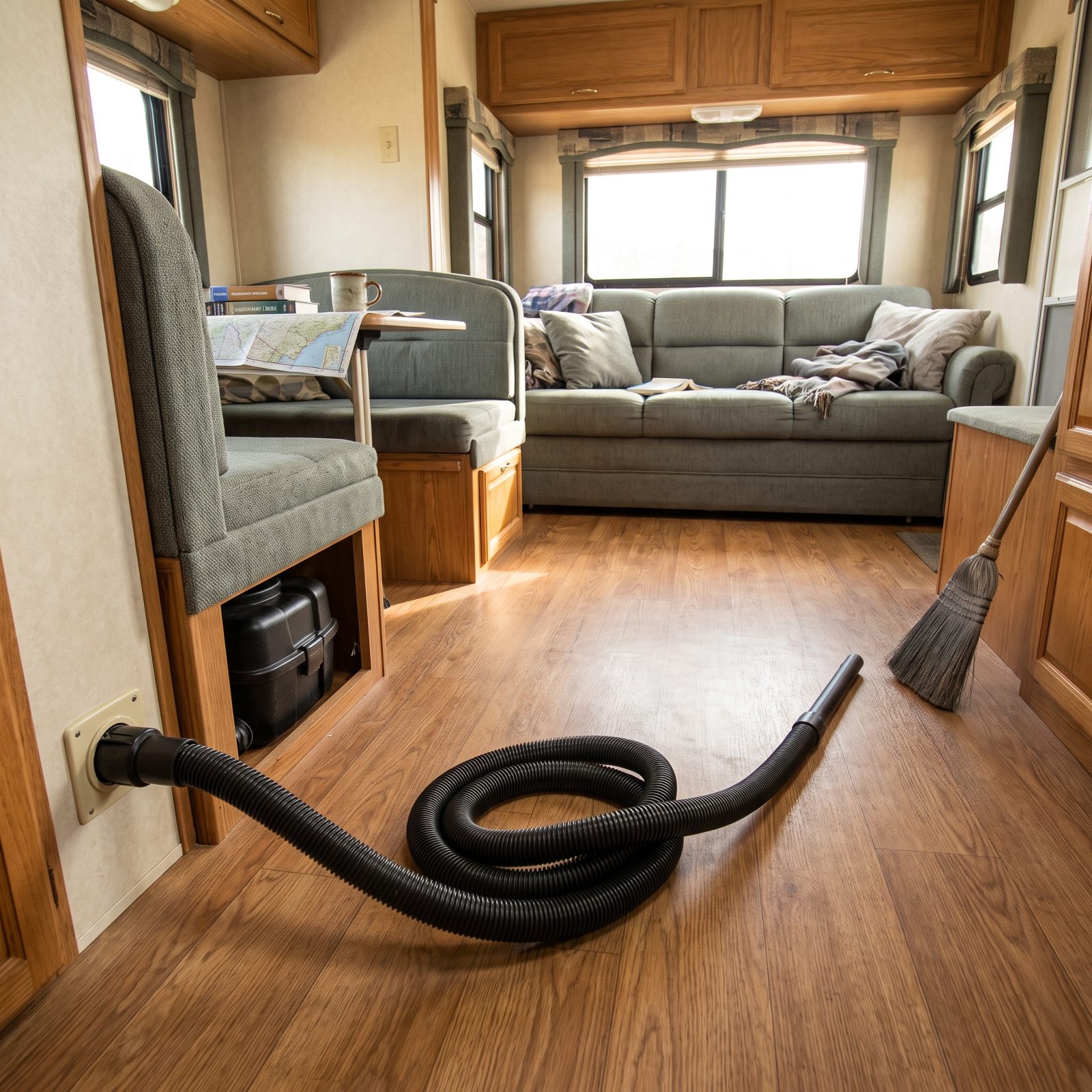
Someone looked at 300 square feet of floor and decided what it really needed was ductwork. The central vac buries a bulky canister in a storage bay you’ll sorely miss, then asks you to drag a long stiff hose out of a wall port that never sits anywhere near where you need it.
Even with open floor to spare, the hose is so long it piles up in loops in the middle of the room, waiting to be wrangled. A handheld cordless stick weighs two pounds, charges on a hook, and does the whole rig in the time it takes to uncoil the other thing.
9. Second Bathrooms That Swallow Floor Space and Black-Tank Capacity
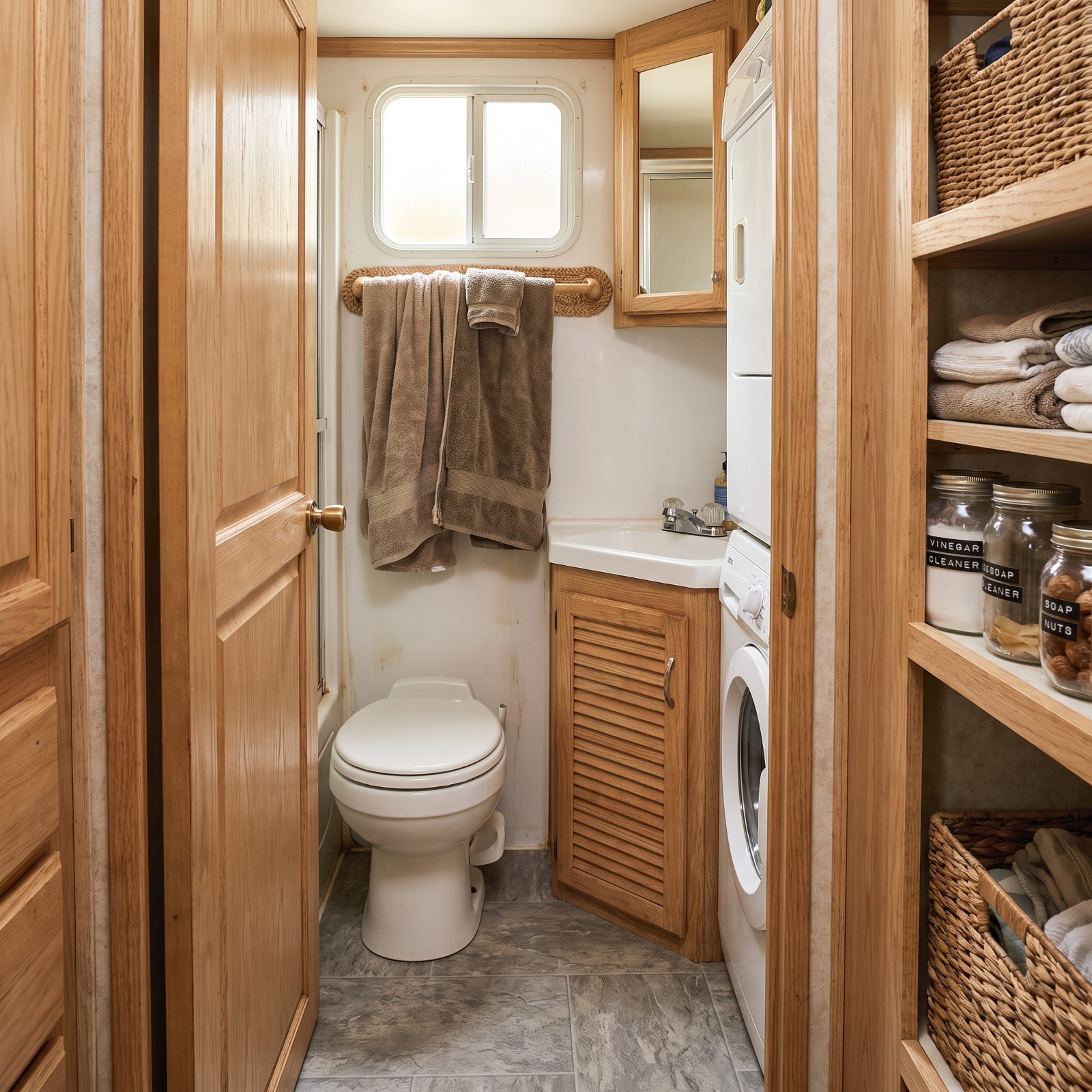
A second bathroom sounds like domestic peace right up until you price it in square footage. In a trailer that’s maybe eight feet wide, a full second bath with a tub, sink and toilet carves out a chunk of living area and a pile of storage you’ll feel every single day — all for a room you use a few times a week.
And here’s the part that really stings: it feeds the same black tank. Two bathrooms don’t buy you more capacity. They just help you fill the one tank faster, which means dumping more often, not less.
8. Sleeping Lofts That Become Hot Storage Caves With Terrible Access
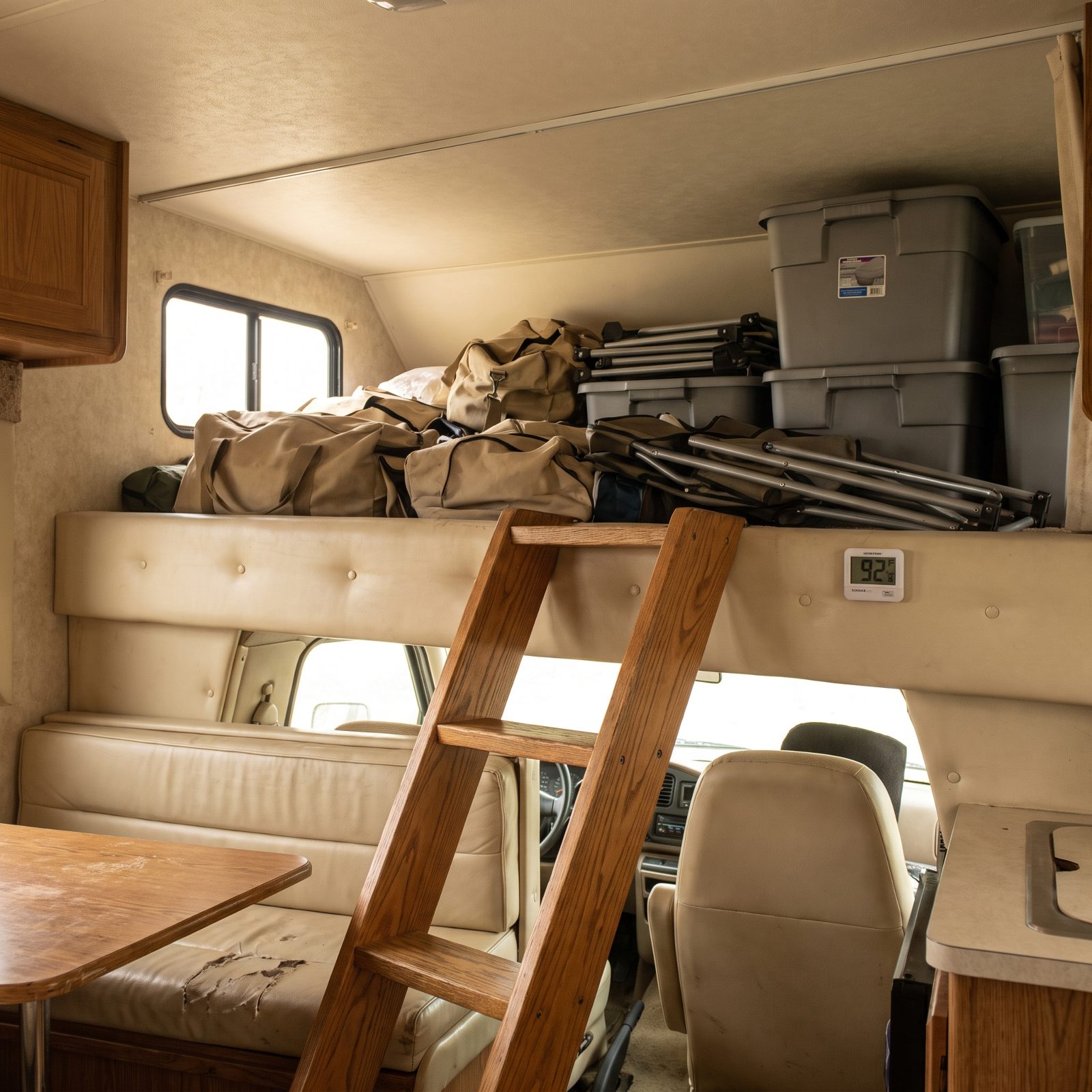
Heat rises, and the loft sits right where it pools. That bunk the kids were supposed to love turns into the warmest, stuffiest corner of the rig, reached by a ladder that’s a blast at twelve and miserable at fifty.
So it stops being a bed. It becomes the place duffels and camp chairs go to disappear — awkward to load, worse to unload, headroom too low to even sit up in. You paid for a bedroom and got an attic.
7. King Beds That Erase Your Bedside Walkways and Bedroom Storage
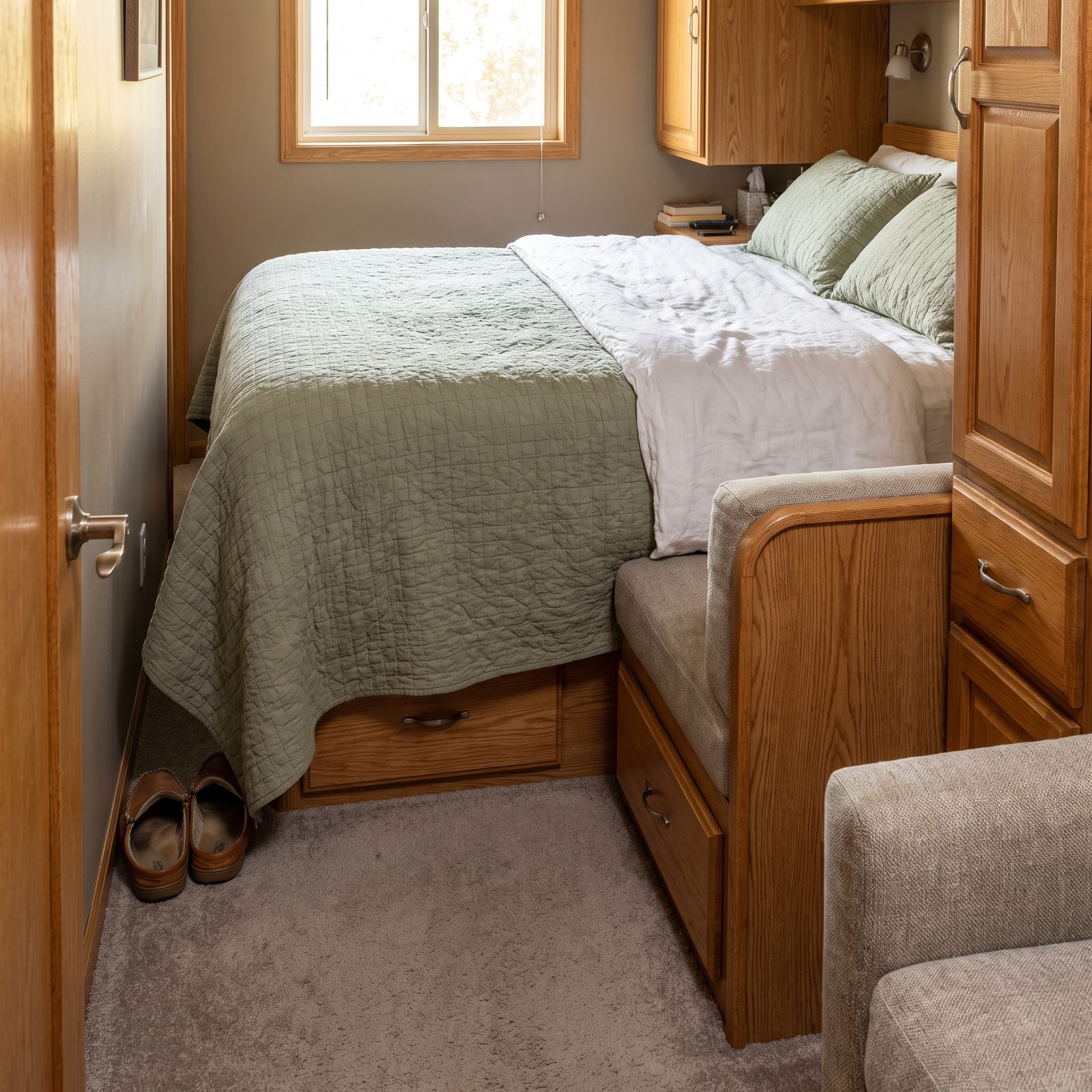
Put a king mattress in a bedroom barely wider than the bed and the bed simply is the room. The side walkways vanish, making the thing turns into a climbing exercise, and the wardrobe doors can’t swing open because the mattress is parked in front of them.
Short-queen and RV-queen sizes exist for a reason. They give back the aisle, the drawer access, and the dignity of getting into bed without crawling over your partner. Those extra few inches of width cost more than you’d guess — and you pay for them in floor space every single night.
6. Murphy Beds That Turn Bedtime Into a Nightly Furniture Project
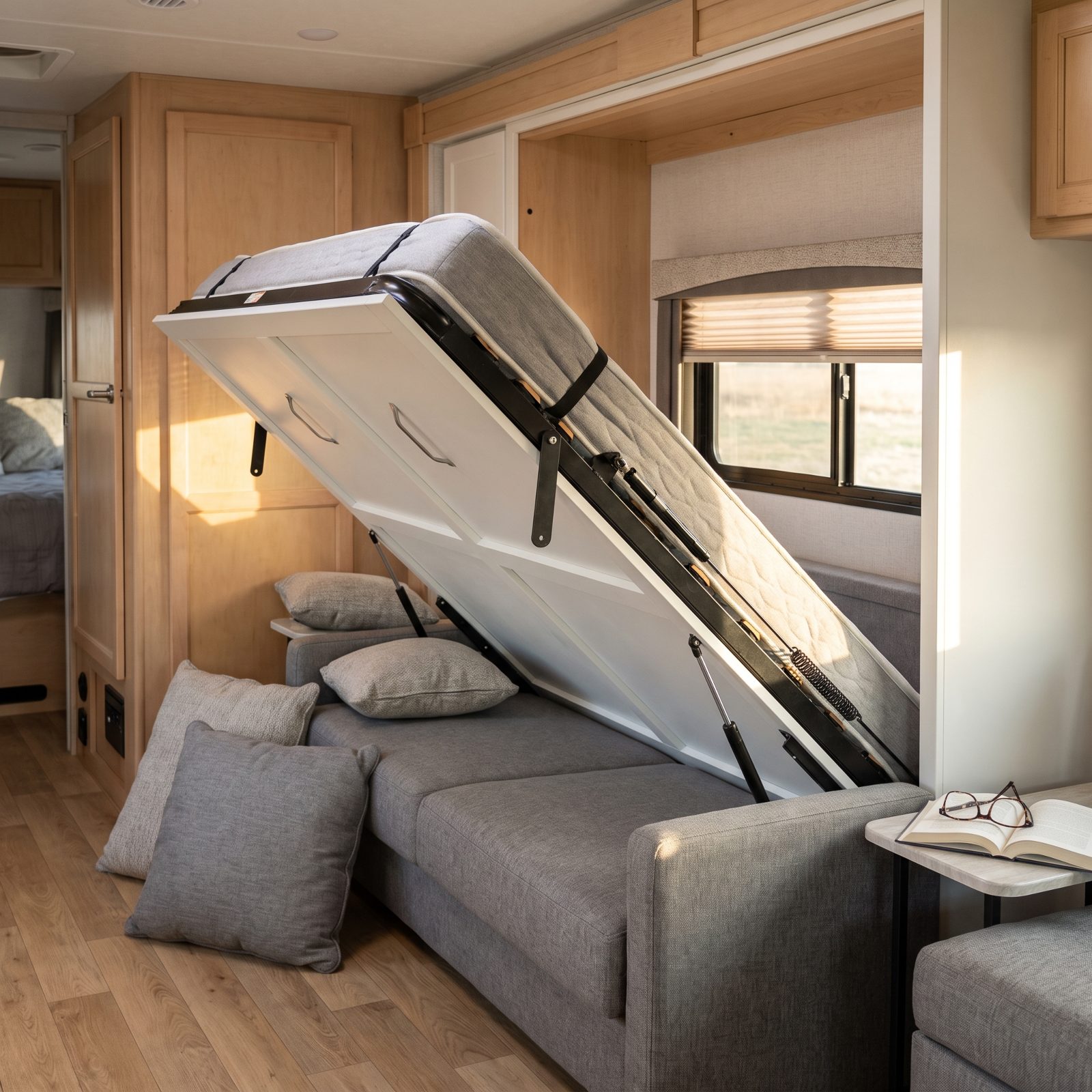
Every night, the same chore. A Murphy bed sells the dream of a daytime sofa that becomes a bed, but the fine print is that you perform the transformation twice a day — clearing cushions and whatever ended up on the sofa before the mattress can drop.
The lift mechanism and gas struts are one more set of moving parts that wear, squeak, and eventually sag. Make the bed, unmake the room, repeat. For full-timers it gets old in a hurry. And nobody ever just leaves it down, because then you’ve traded away your living room instead.
5. Outdoor Kitchens That Trade Away Storage and Rarely Beat the Inside One
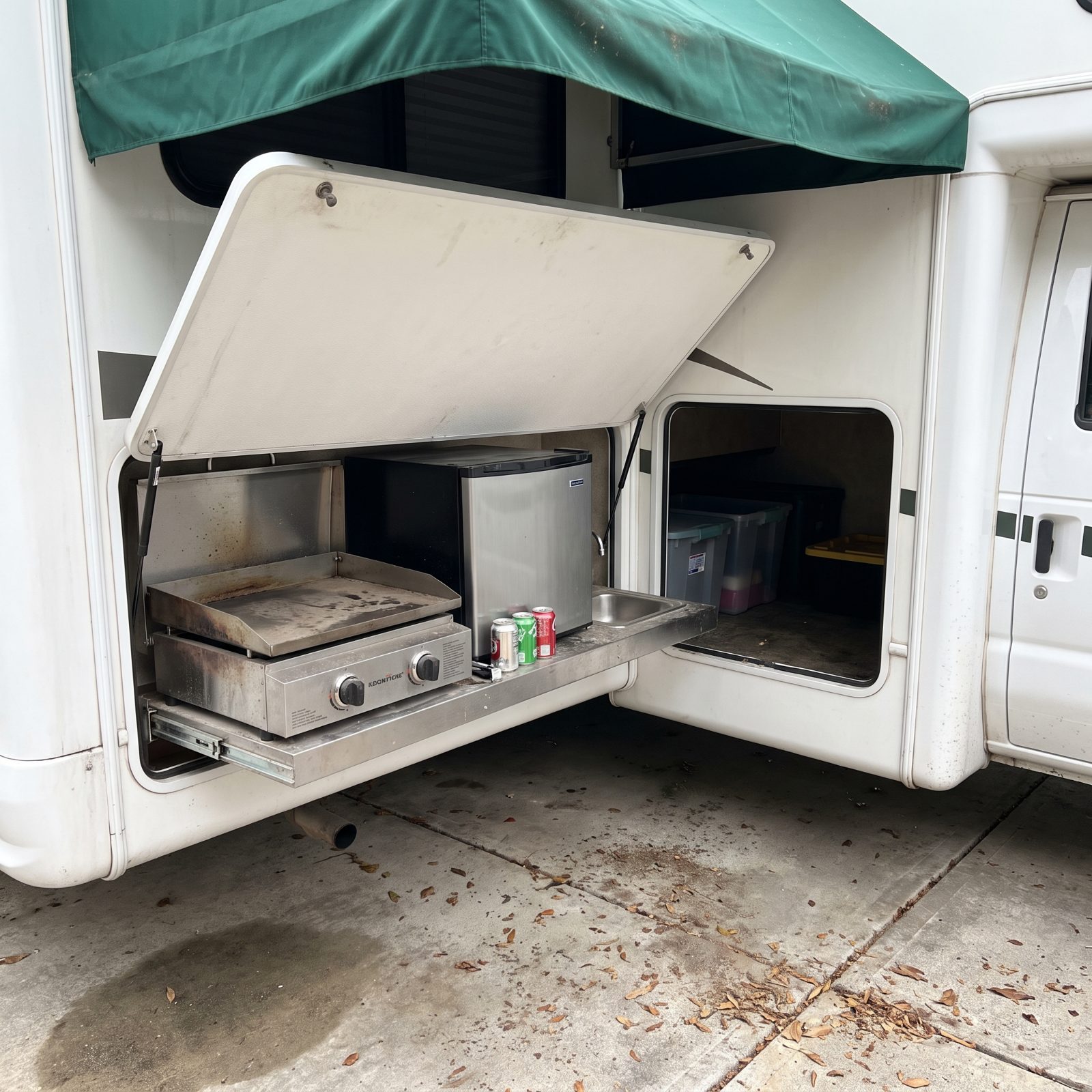
The outdoor kitchen demos beautifully on a sunny lot. Out in the field it’s a tiny griddle, a mini fridge, and a sink you have to haul water to — all carved straight out of the big pass-through bay where your chairs, grill, and hoses used to live.
Wind blows out the flame. Sun glares off the stainless. Bugs find the food, and the sink drains onto the ground. Most owners use the thing a handful of times, then retreat inside where the good knives, the real range, and the shade actually are. A folding table and a portable grill do the exact same job and tuck away when you’re done.
4. The Outdoor TV That Lives Behind a Gasketed Hatch and Still Hates Its Life
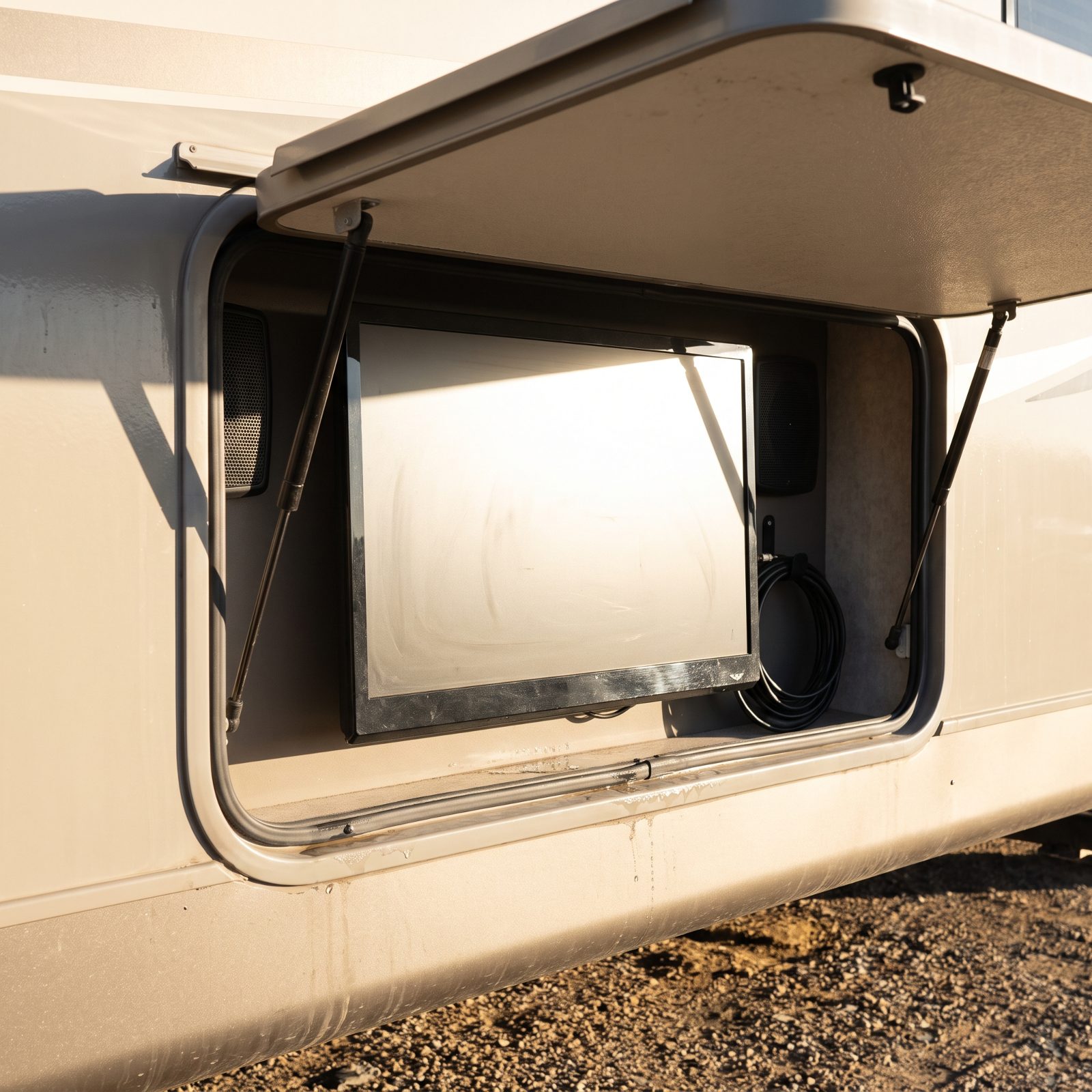
An outdoor TV sounds like the best thing you ever added to the rig. Then August hits. The sun swings around at four in the afternoon and turns the screen into a mirror, and there you are, squinting at your own reflection instead of the ballgame. Most consumer panels just can’t throw enough brightness to fight full daylight, and daylight wins every single time.
Then there’s the compartment it lives in, which is its own slow-motion disaster. Heat cycling, morning condensation, moisture creeping past a gasket that ages a lot faster than anyone at the sales lot will tell you. Standard TVs were never built to survive a 120-degree bake-out or the teeth-rattling shake of a washboard forest road.
3. Toy-Hauler Patio Deck Kits That Cost You Cargo Weight You Actually Needed
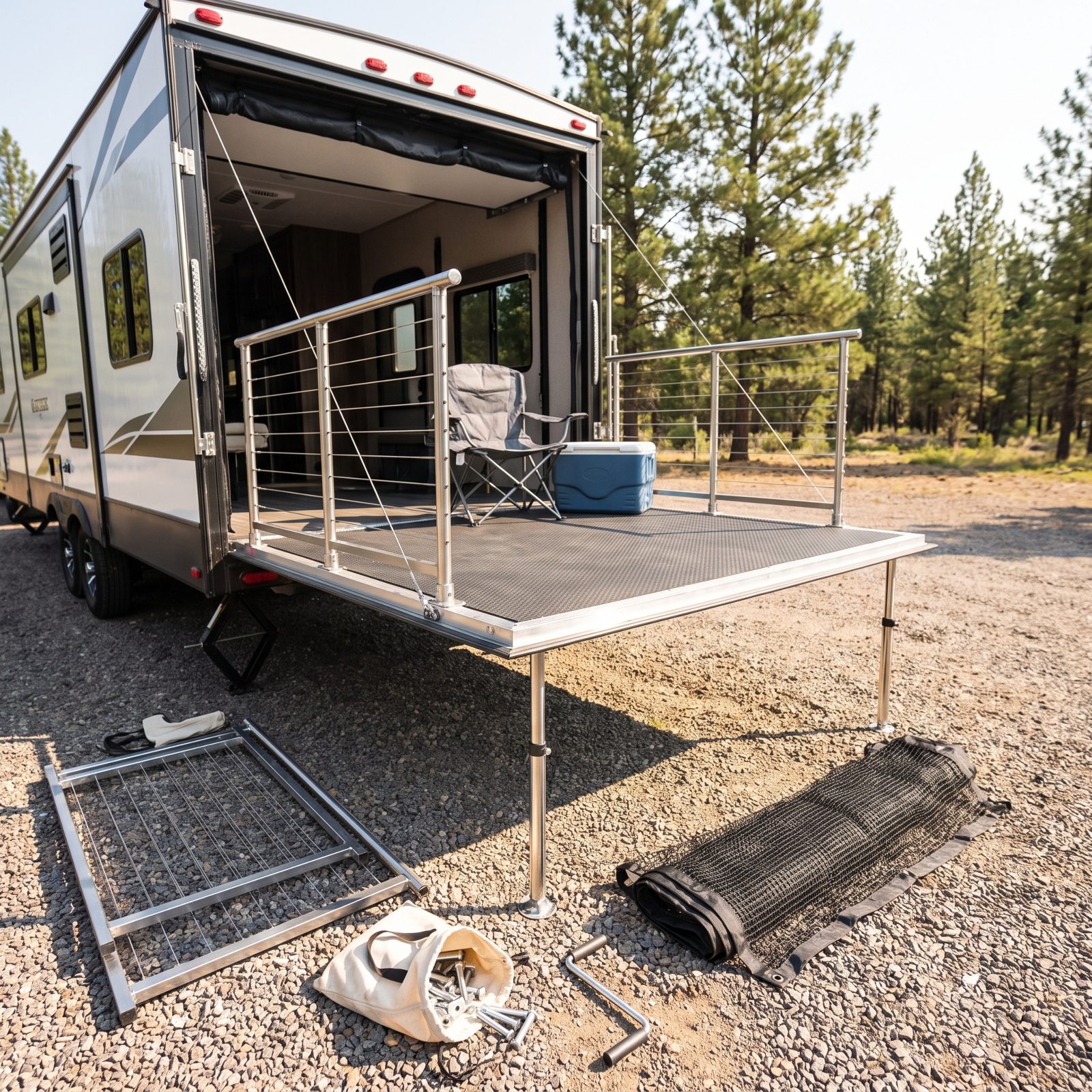
The ramp-door patio looks great in the brochure. Lower the door, clip on the rails, pour a coffee, enjoy the view from six feet up.
Nobody at the dealership mentions the catch. That kit is cargo weight, and a toy hauler’s entire reason for existing is cargo capacity. The rails, the telescoping legs, the safety netting, the mat, all of it eats into the number you were saving for a side-by-side, a generator, and a full fresh-water tank. Garage floors already run heavy. Pile a deck system on top and suddenly you’re doing nervous arithmetic at the scale by the fuel pumps, hoping you didn’t just blow past your rating for the sake of a photo op.
And the setup is never the two-minute magic trick the video promised. Legs that refuse to seat right, railing pins that fight you tooth and nail, a crank you’ll be cursing by the third campground. Fun.
2. Three-Season Enclosures That Swallow a Whole Storage Bay to Live In
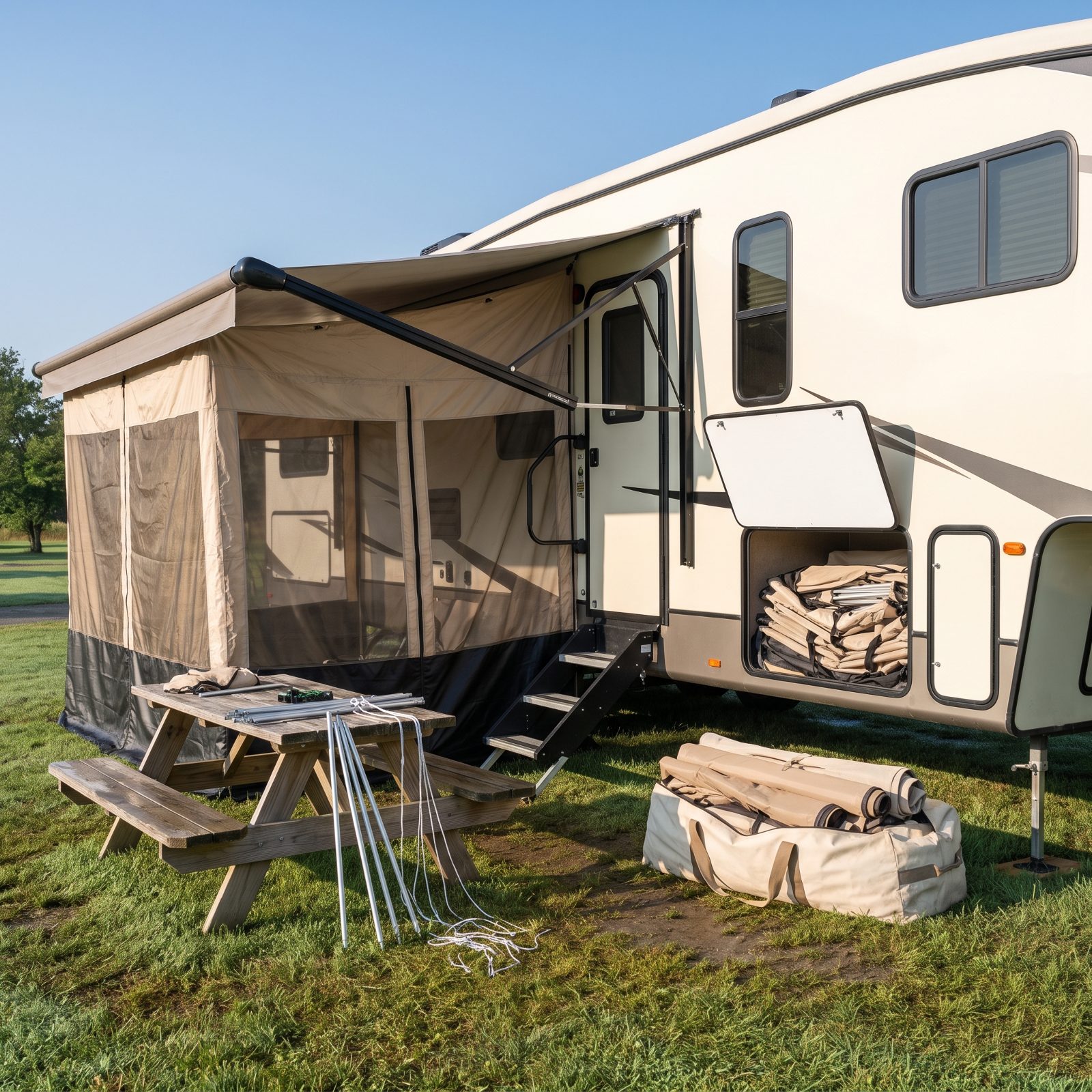
A screen room pitched beside the entry door buys you a bug-free corner for evenings and a dry place to sit when the sky opens up, even if the door and steps still open outside it. Genuine value, once it’s standing. The headache is everything that happens on either side of that.
Folded down, these things are enormous. Panels, poles, and vinyl windows pack into a duffel that eats an entire pass-through bay, the very one you wanted for chairs, the grill, and your leveling blocks. So it either rides along for half your trips and gets left behind the rest, or it permanently kicks something you use far more often out onto the pavement.
Assembly? Half an hour on a good day, solo, and a lot longer when the wind decides to join in. By the time it’s zipped and staked, the mosquitoes have already RSVP’d and found their seats.
1. Theater Seats With Built-In Massage Motors That Weigh a Ton and Can’t Be Swapped
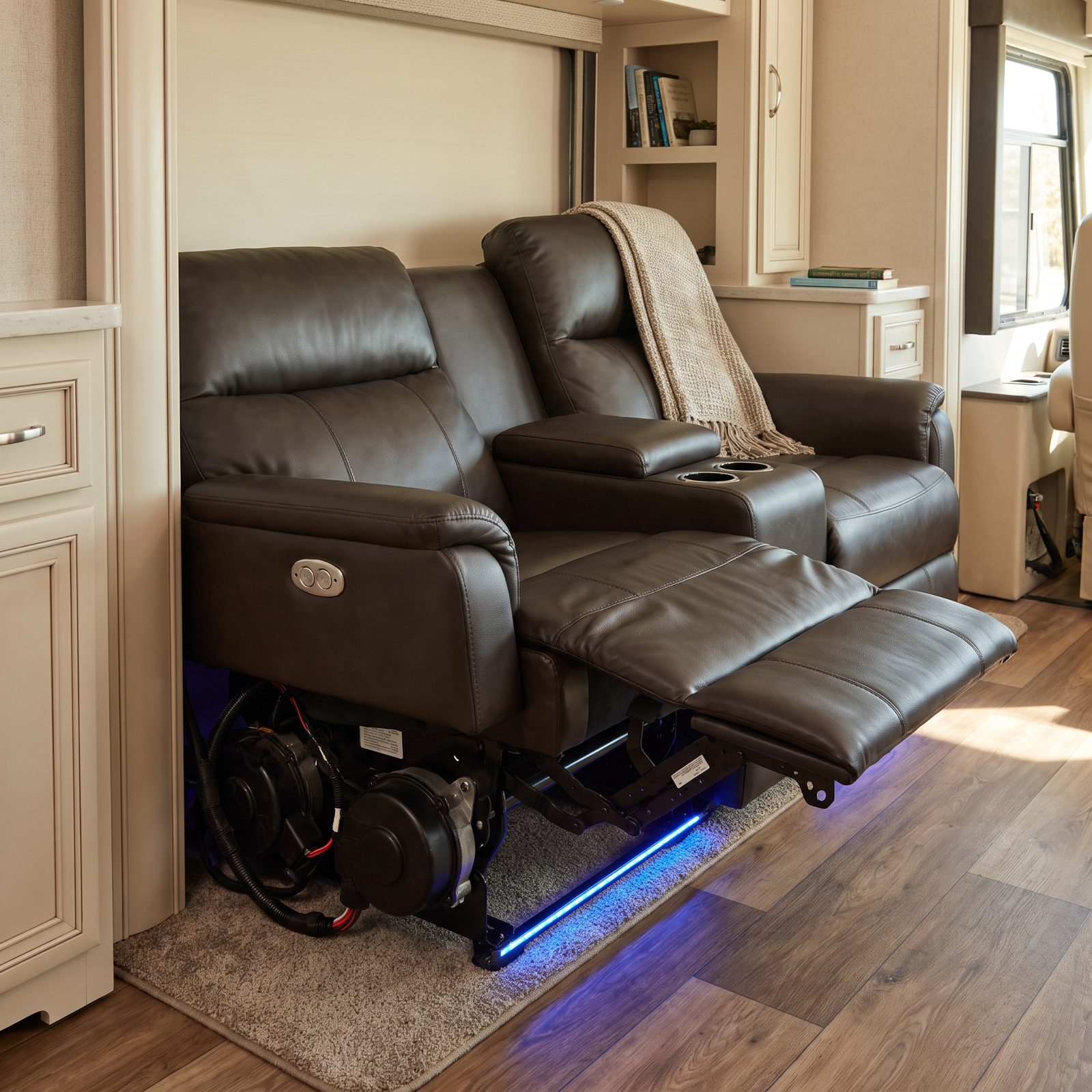
Push a button, the footrest rises, the lumbar motor hums, and for about a week it feels like the best seat you’ve ever owned. Then reality clocks in.
These dual theater recliners are heavy brutes, and they come bolted and wired straight into the slide. The massage mechanism piles on weight you’ll never get back and a brand-new failure point you never asked for. Motors quit. When this one does, you won’t be grabbing a replacement off the shelf at the RV store. You’ll be hunting down a proprietary unit sized to that exact slide, which is a long afternoon on the phone and a bill you’ll remember.
Fully reclined, they crowd the aisle and shove up against the slide wall. Living space you paid real money for, surrendered to a gadget you use for ten minutes a night.
A recliner should give you comfort, not a repair you can’t source and a floor plan you can’t walk through.