
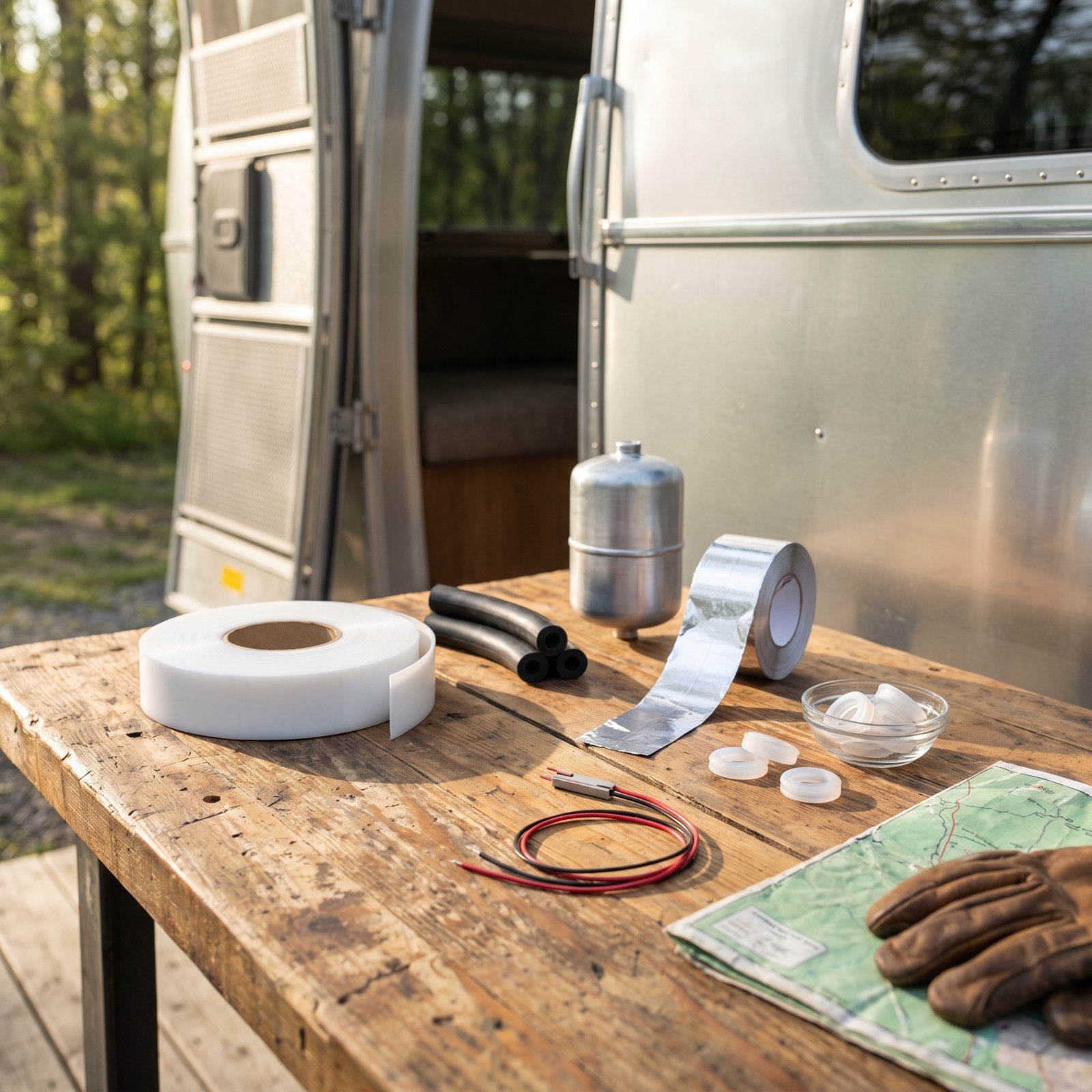
The expensive stuff gets all the attention. New awnings, lithium banks, solar arrays, the kind of upgrades that need a loan and a weekend with a buddy. But the changes that actually make daily RV life better are almost always small, cheap, and a little odd. A strip of tape here, a rubber foot there. Nobody tells you about any of it until you’ve spent your first rainy night listening to a water pump rattle the whole trailer awake. Here are the small, strange fixes that cost less than a tank of fuel and earn their keep every trip.
Please note that some of the images in this article were created with the assistance of AI.
38. UHMW Slick Tape That Makes Stubborn Dinette Drawers Glide

Factory RV drawers run on wood sliding against wood, and after a few seasons of humidity and road vibration they swell, stick, and screech. The fix costs about eight dollars. UHMW slick tape (ultra-high-molecular-weight polyethylene) is a glossy white self-adhesive band engineers use on conveyor rails. Wrap a wide strip along the lower half of the drawer’s outer side where it rubs the cabinet, and the drawer glides like it’s on ball bearings.
Here’s the part nobody mentions. Clean the wood with alcohol first, because the adhesive won’t grab sawdust and old furniture wax, and get that wrong and the tape peels off in a week. Do it right and you forget the drawer ever stuck.
37. A HepvO Waterless Trap That Frees the Cabinet Beneath the Sink
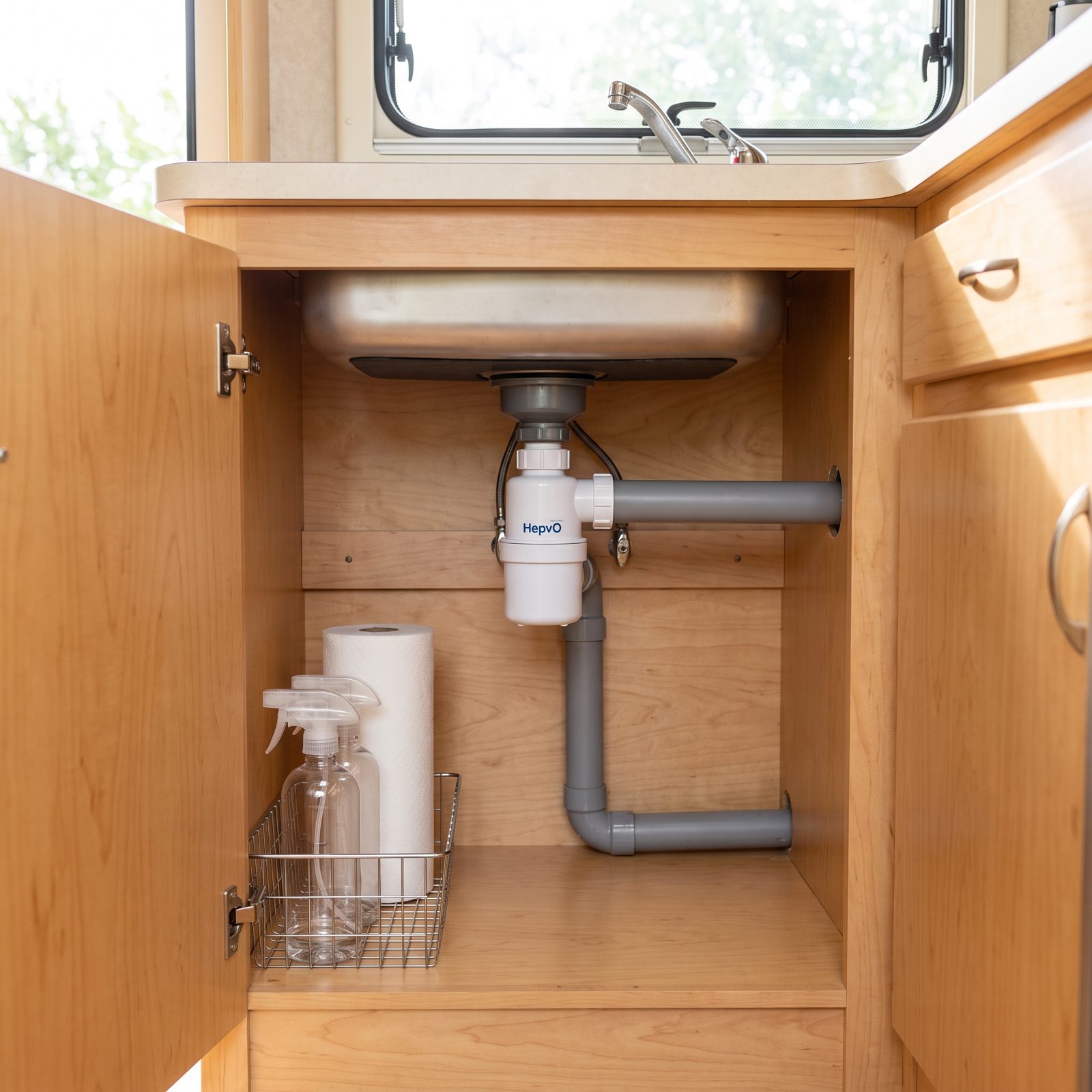
A traditional P-trap is a fat loop of pipe that eats the most useful real estate in your galley: the floor of the under-sink cabinet. A HepvO trap adds a compact inline valve with a silicone membrane that seals against sewer gas. The remaining run of gray drain pipe drops down the back wall and runs along the floor to the side wall, leaving the rest of the cabinet floor open.
Suddenly that cabinet holds a whole bin of supplies it couldn’t before. Roughly twenty to thirty bucks, slip fittings, ten minutes. One of the rare upgrades that hands you storage back instead of swallowing it.
36. Silicone Stove-Grate Grommets That Stop the Metal-on-Metal Clatter
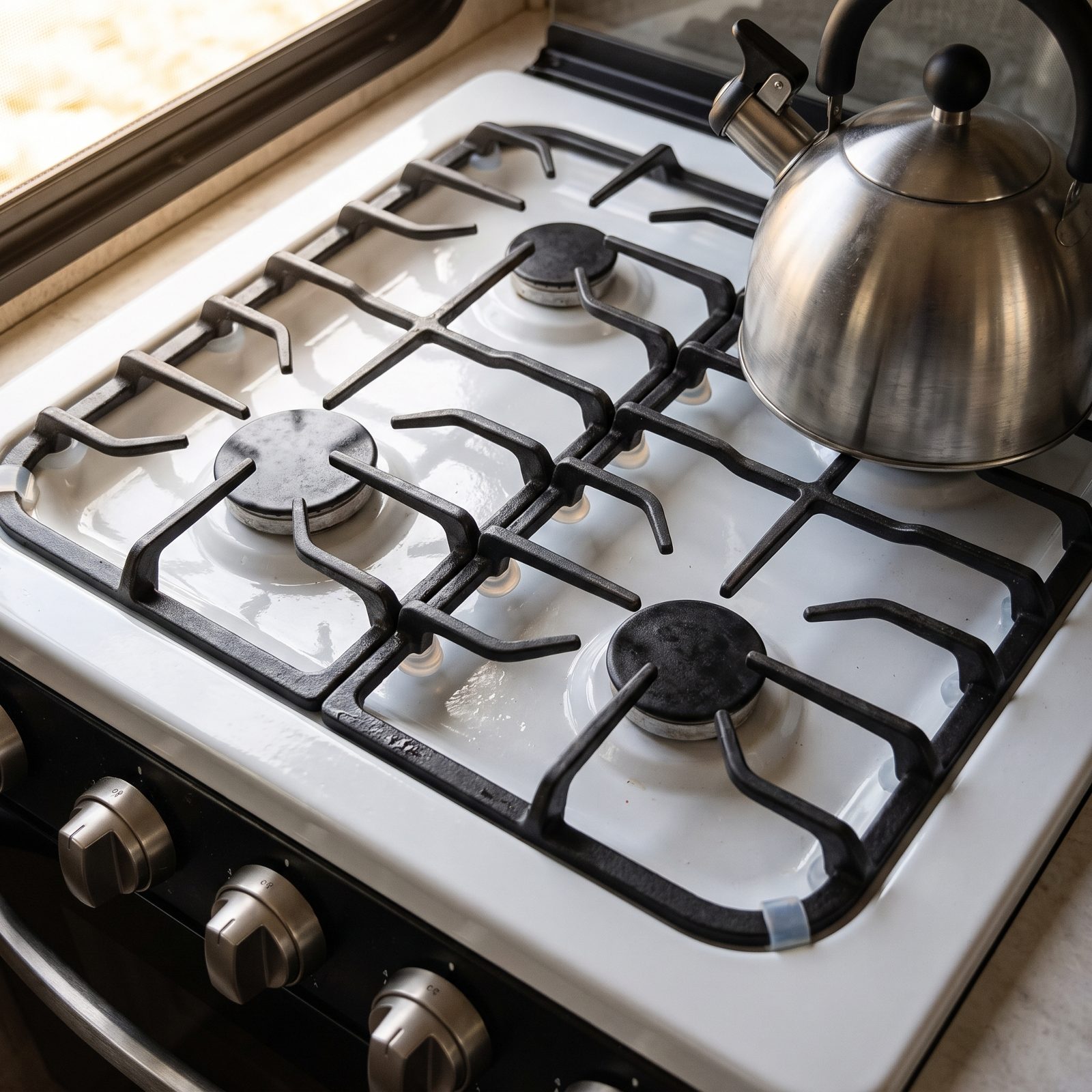
You know the sound. Every dip, every railroad crossing, the stove grate chattering against the cooktop like a drawer full of silverware. By day two it drives you up the wall.
Little silicone grommets slip onto the grate feet and cushion that contact, and the rattle stops. A pack runs four or five dollars, the kind of fix you wish you’d found three trips back. Heat-rated silicone won’t melt near the burners, but keep them snug on the feet, not sitting loose out on the open stovetop where a flame could reach them.
35. Rubber Isolation Feet That Tame Water-Pump Vibration
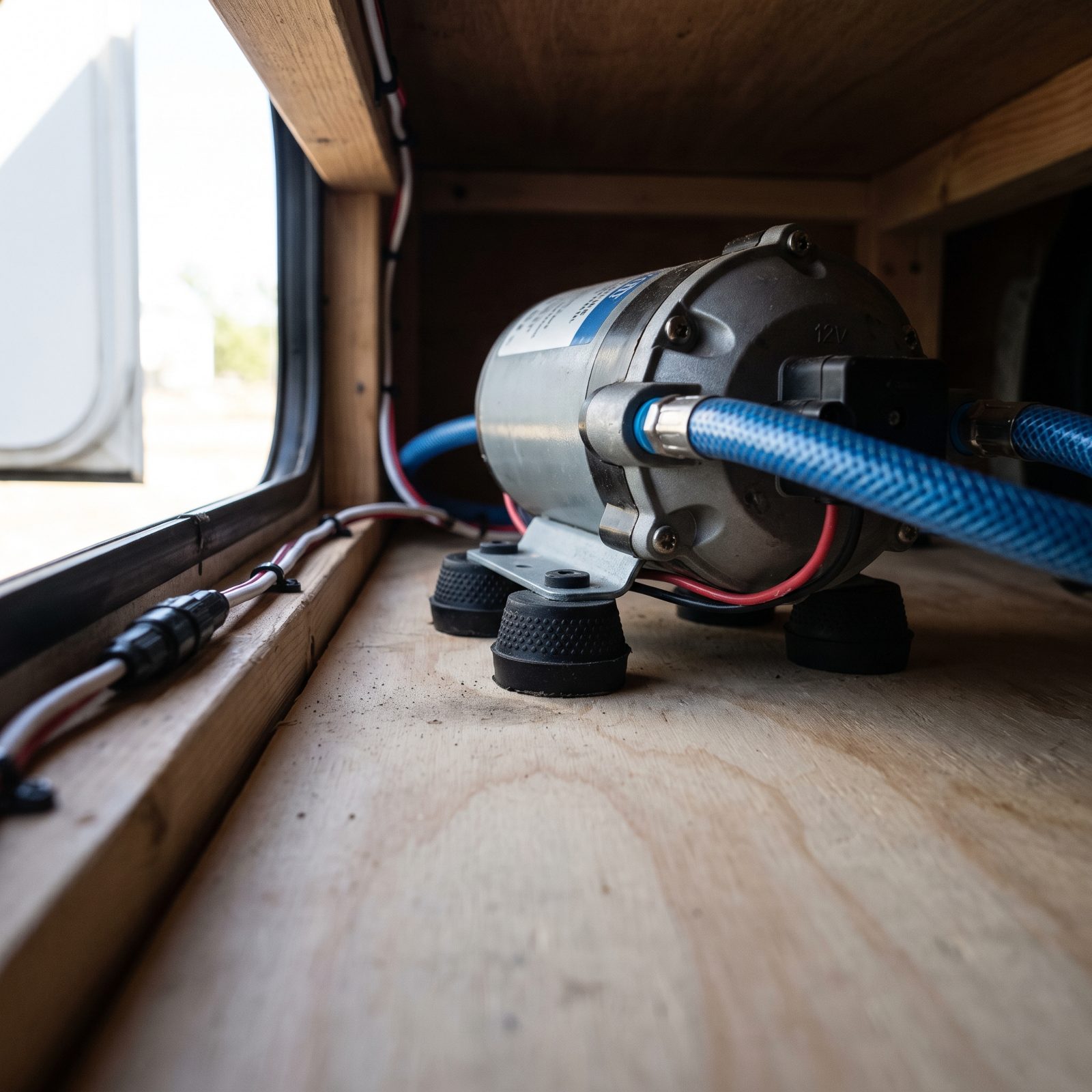
A water pump bolted straight to the floor turns your whole rig into a drum. Every time someone flushes at 2 a.m., the hum travels through the plywood and into the mattress. The pump isn’t the problem. The hard mounting is.
Swap the factory screws for rubber isolation feet, the vibration-damping mounts sold for marine and HVAC use, and the pump floats instead of transmitting. Under ten dollars, and the noise drops noticeably.
34. An Adjustable Refrigerator Thermistor Clip for More Consistent Cooling
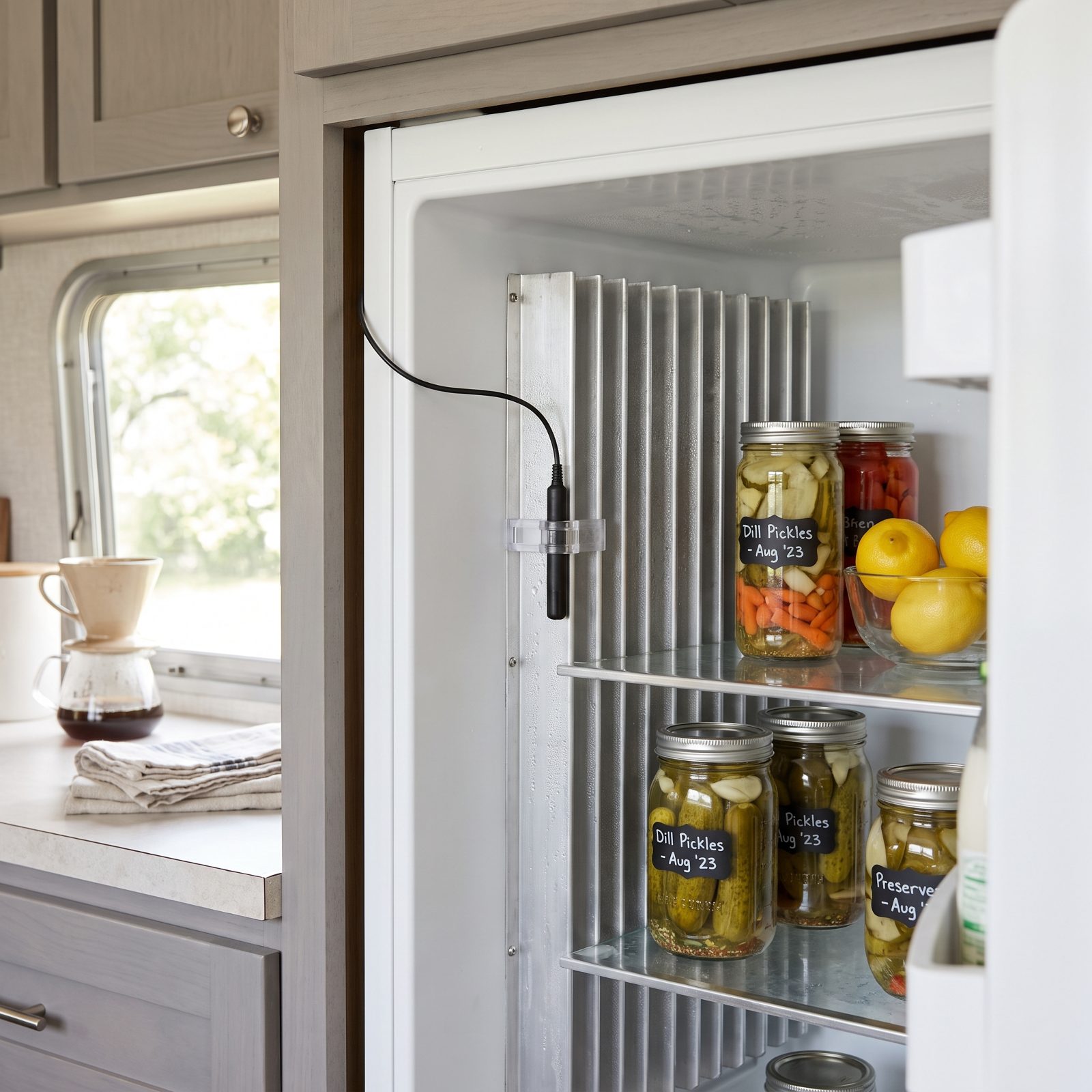
RV absorption fridges are famously moody. They cool great on a calm day and sulk the moment it’s warm out, and a lot of that comes down to where the thermistor, the little temperature sensor, is clipped on the cooling fins.
An adjustable thermistor clip lets you slide the sensor up or down the fin to fine-tune when the fridge calls for cooling. Move it toward the top and the fridge runs colder and steadier in heat. Two-dollar part, genuinely useful dial. Keep a cheap fridge thermometer inside so you’re adjusting to real numbers instead of guessing.
33. Foil HVAC Tape That Seals Leaks Around the Air-Conditioner Plenum
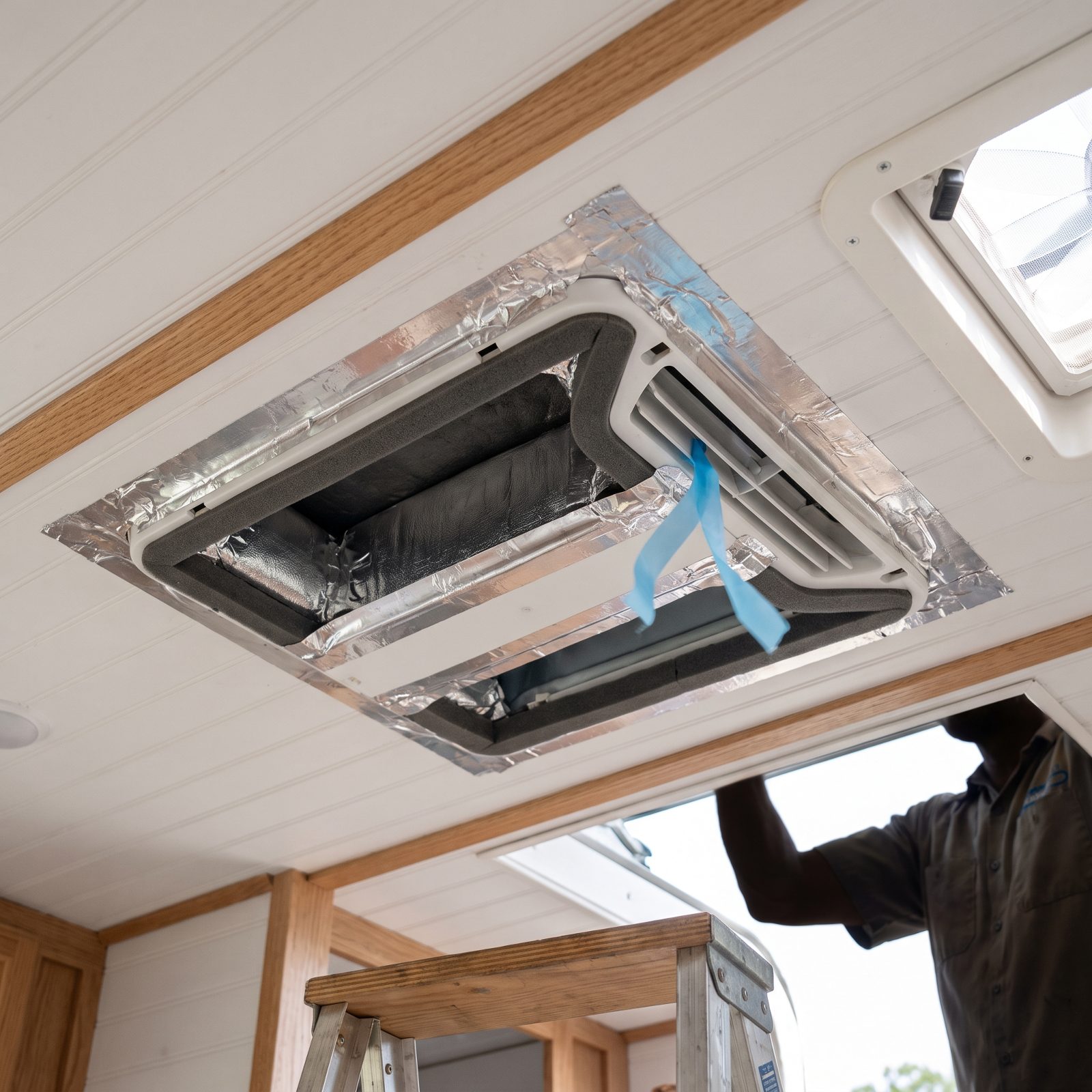
If your rooftop AC blows cold but the rig never quite gets comfortable, there’s a good chance it’s leaking conditioned air inside the ceiling before it ever reaches you. The culprit is usually gaps around the plenum and a compressed or missing foam gasket.
Proper foil HVAC tape seals those seams so the cold air goes where you aimed it. A roll is under fifteen dollars and does the whole unit.
Real talk: the grey cloth duct tape at the hardware store is useless here. It turns to goo in the heat and lets go. Buy the aluminum foil tape rated for HVAC and you’ll never touch it again.
32. Marine Anti-Chafe Tape That Protects Awning Fabric at Rub Points
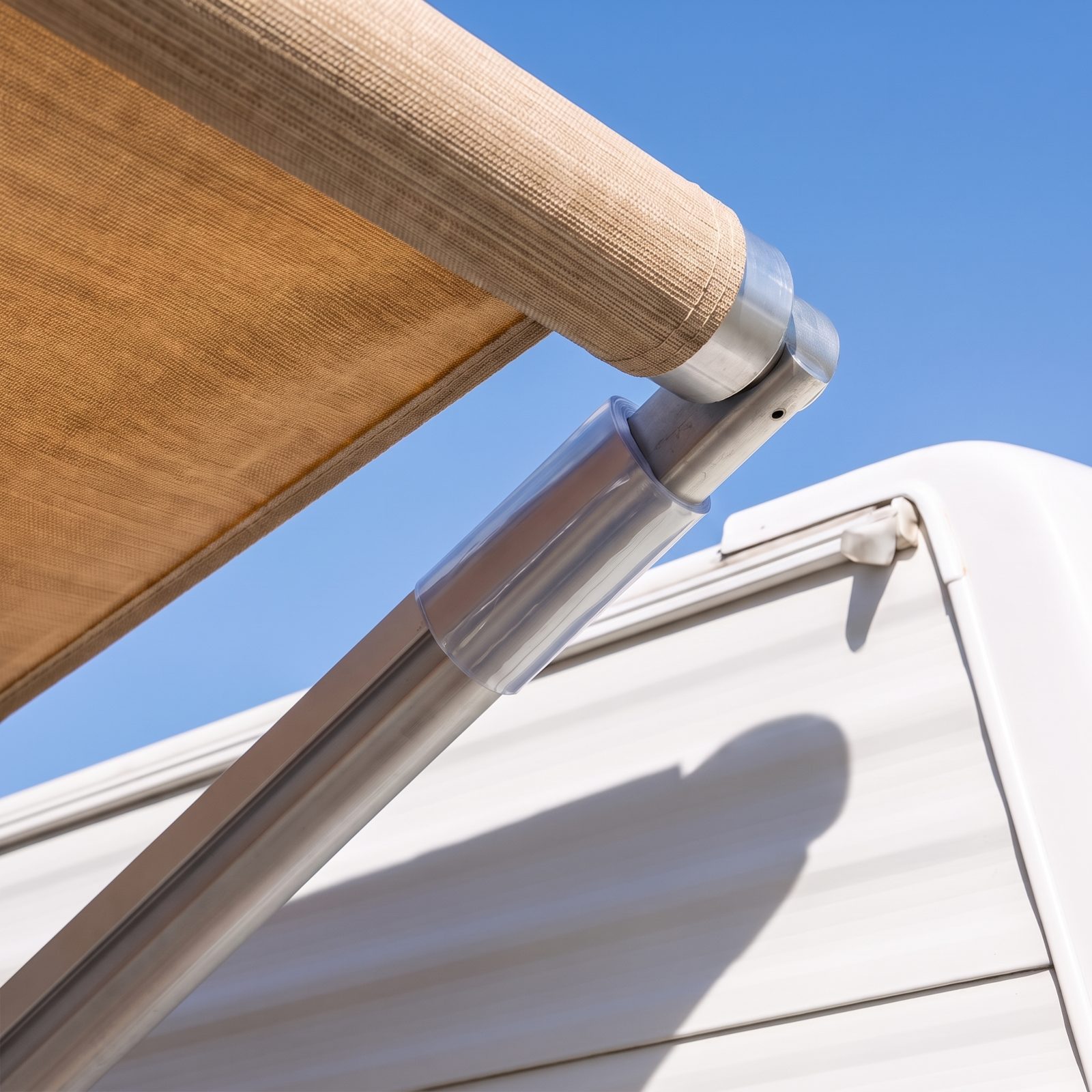
Awning fabric almost never fails in the middle. It fails at the edges, where it rubs the roller housing and the arm hardware every time you roll it in and out. Thousands of tiny abrasions, and one day there’s a tear.
Clear marine anti-chafe tape, the sacrificial film sailors wrap on lines and sails, takes that wear instead of your fabric. Nearly invisible from a few feet away, around twenty dollars a roll.
31. A Countdown Switch That Automatically Turns Off the Bathroom Fan
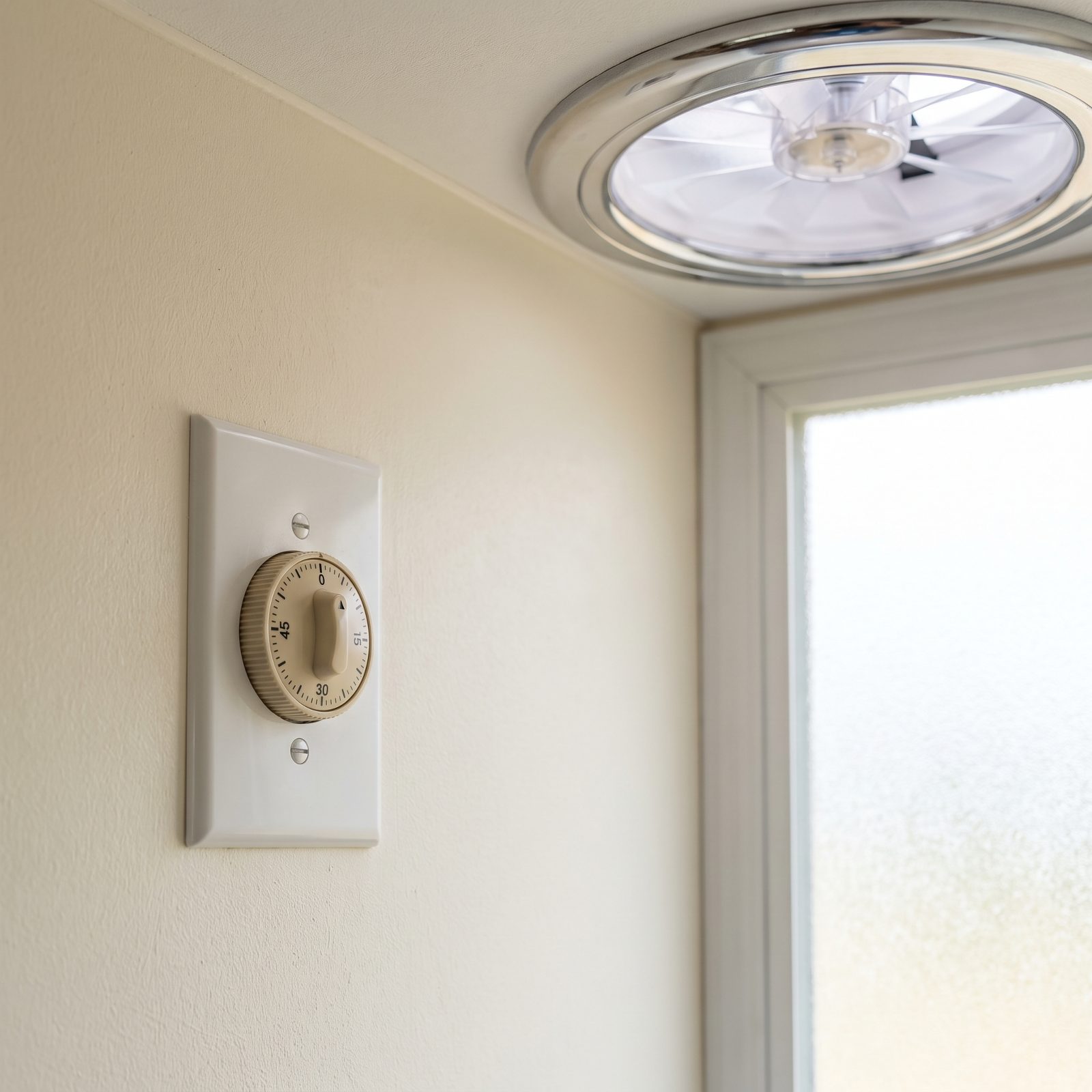
Everyone forgets the bathroom fan. You run it after a shower, walk out, and it’s still spinning three hours and a chunk of battery later. Come morning you’re squinting at the monitor wondering why the house bank dropped.
A spring-wound or electronic countdown timer switch replaces the regular on-off toggle. Twist it to ten or fifteen minutes and it shuts itself off. No wiring wizardry, just the same two wires behind the existing switch. Around twenty dollars, and it quietly saves amp-hours you never knew you were wasting.
30. A Magnetic Reed Switch That Lights a Storage Bay When It Opens
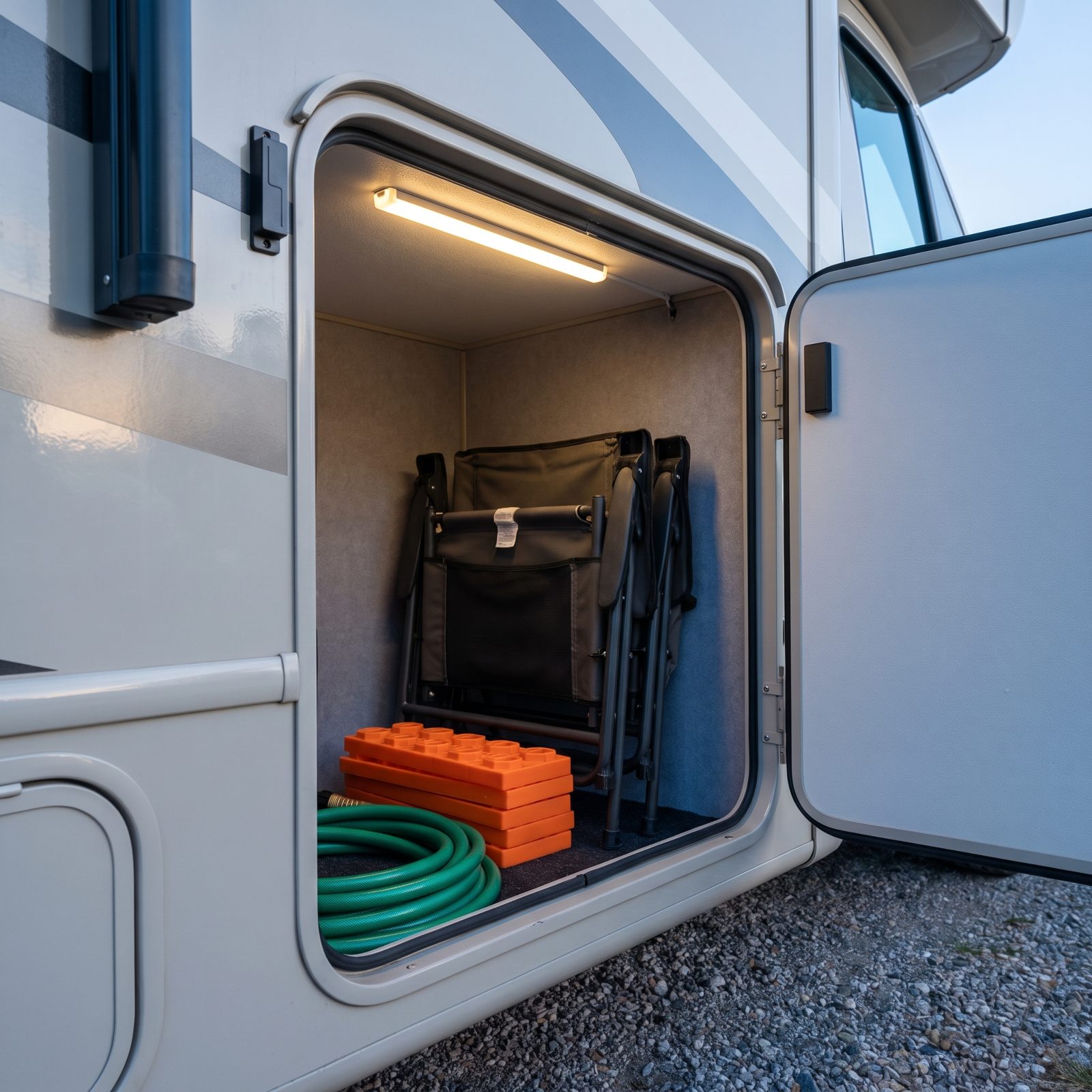
Finding the leveling blocks in a dark storage bay at 9 p.m. is a camping rite of passage, usually involving a phone flashlight clamped in your teeth. There’s a better way, and it’s the same thing your car does when you open the door.
A magnetic reed switch, a tiny sensor that closes a circuit when a magnet moves away, wires an LED strip to turn on the instant the bay door opens and off when it shuts. The parts run under ten dollars together.
It’s a small thing. But the first night you reach into a lit bay instead of fumbling around in the dark, you’ll wonder why every rig doesn’t come with it.
29. A Mini Accumulator Tank That Smooths Water-Pump Cycling
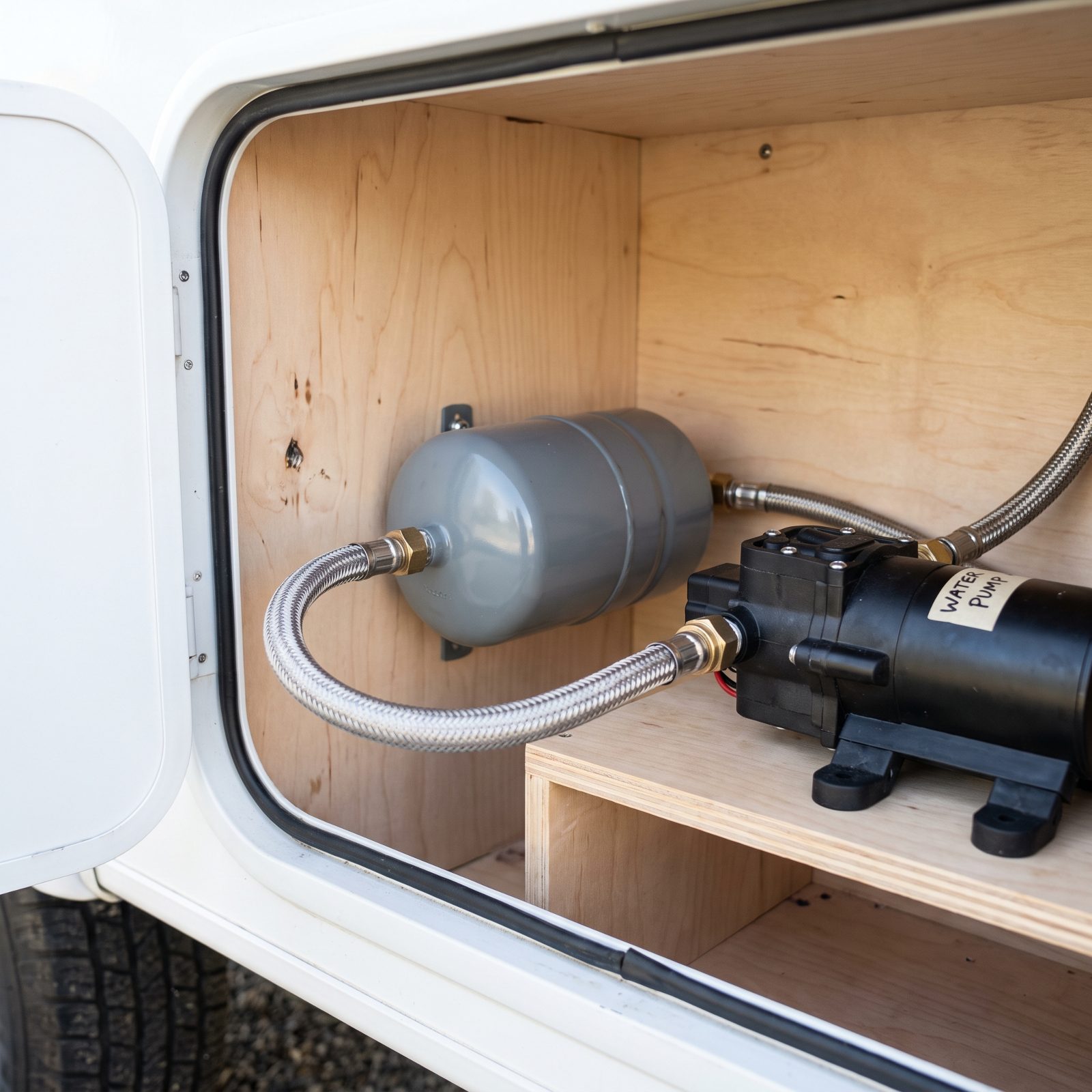
Turn on the faucet a crack and the pump starts stuttering: on, off, on, off, pulsing the water in nervous bursts. Annoying at the sink, genuinely maddening in the shower when the pressure surges with every cycle.
A mini accumulator tank, a small canister with a pressurized air bladder, plumbs inline and acts as a cushion. It holds a little pressure so the pump runs less often and more evenly, and the water comes out in a steady stream instead of pulses.
28. A Thermostatic Mixing Valve That Stops the Shower Temperature Rollercoaster
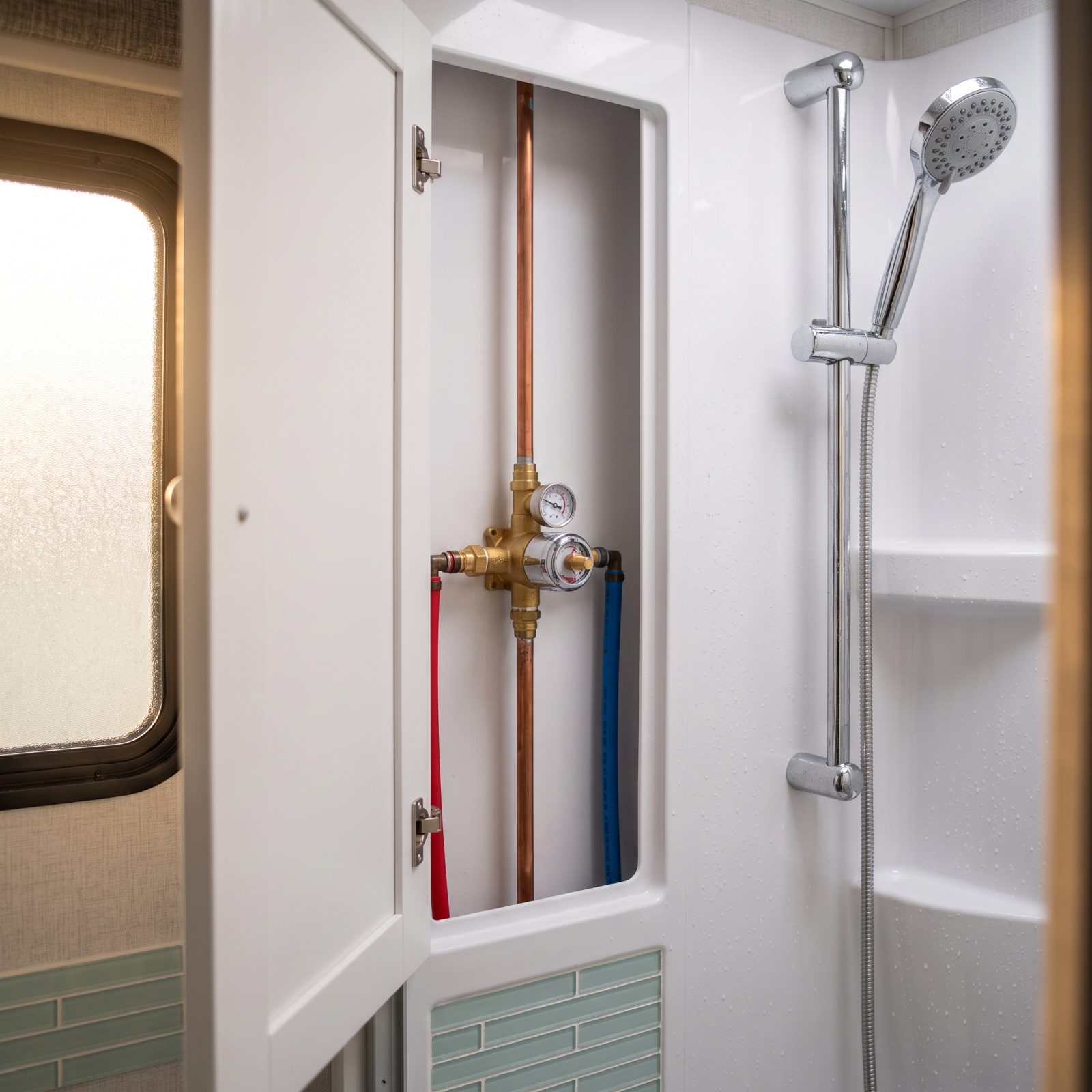
Flush the toilet or run the kitchen tap while someone’s mid-rinse, and the RV shower turns into a punishment. Cold slap, then a scald. Everybody who’s camped more than a weekend knows the yelp.
A thermostatic mixing valve sits on your hot and cold lines and holds the blend steady no matter what the rest of the plumbing gets up to. It runs you somewhere around thirty to fifty bucks, tucks in behind an access panel, and it’s one of those rare upgrades you actually feel the first morning you use it. Trailers with their undersized water heaters make the swings worse, which is exactly where the valve earns its keep.
27. A Twist-On Waste Valve That Backs Up Your Main Gate Against Surprise Spills
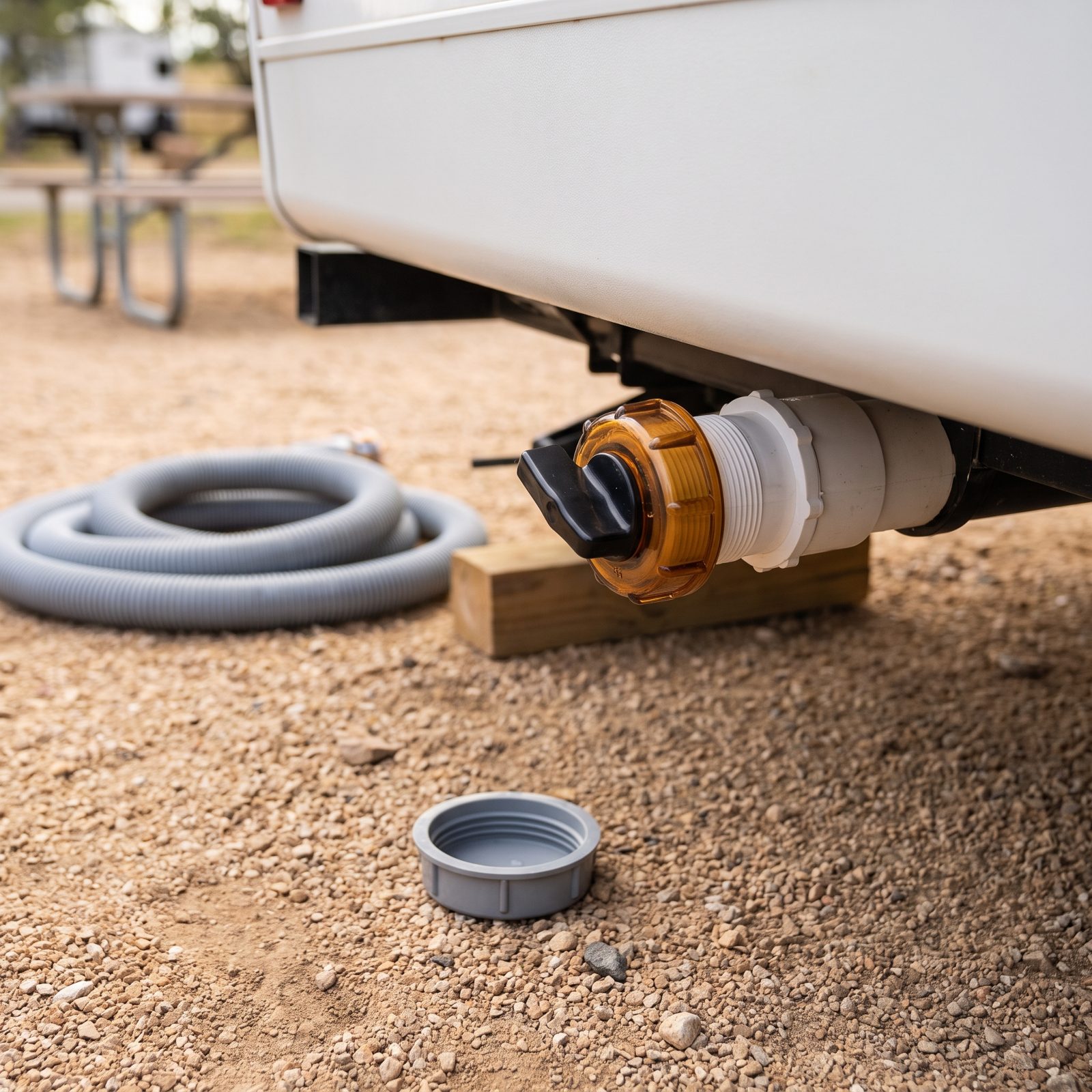
The main gate valve on an RV is a single point of failure, and when it goes, it goes at the worst possible second — usually while you’re disconnecting, hands full, cap already off.
Thread a clear twist-on valve onto the outlet bayonet and you’ve got a second shutoff before the hose ever comes uncapped. Crack it slow, watch the flow through the clear body, and if the main gate has been seeping past its seal you’ll find out before it lands on your shoes. Fifteen dollars, give or take. And the see-through body tells you the black tank’s finally empty, which beats standing there guessing by sound.
26. A Vinyl Fence-Post Turned Sewer-Hose Carrier Mounted Under the Belly
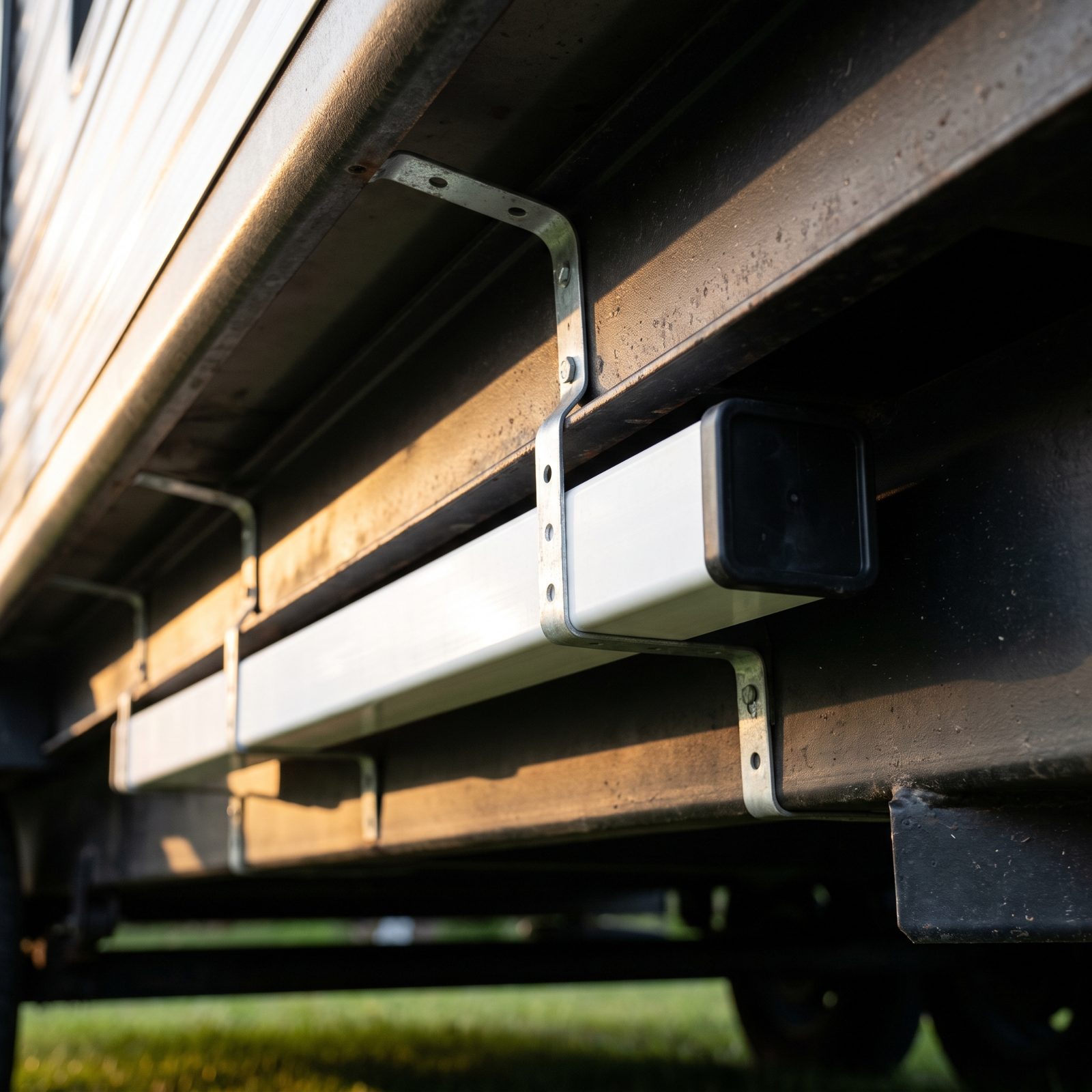
The dirtiest piece of gear you own shouldn’t be riding in the same bay as your camp chairs. But that’s where a lot of folks stash the sewer hose, and that’s how a lot of folks end up scrubbing out a storage bay they’d rather not think about.
Cap a length of vinyl fence post on both ends, strap it to the frame rails, and you’ve got a sealed tube that keeps the hose outside, isolated, and nowhere near your folding table. Materials run under thirty bucks at any home store. A four-inch post swallows a standard twenty-foot hose with room to spare.
25. A Hitch Anti-Rattle Clamp That Kills the Receiver Clunk
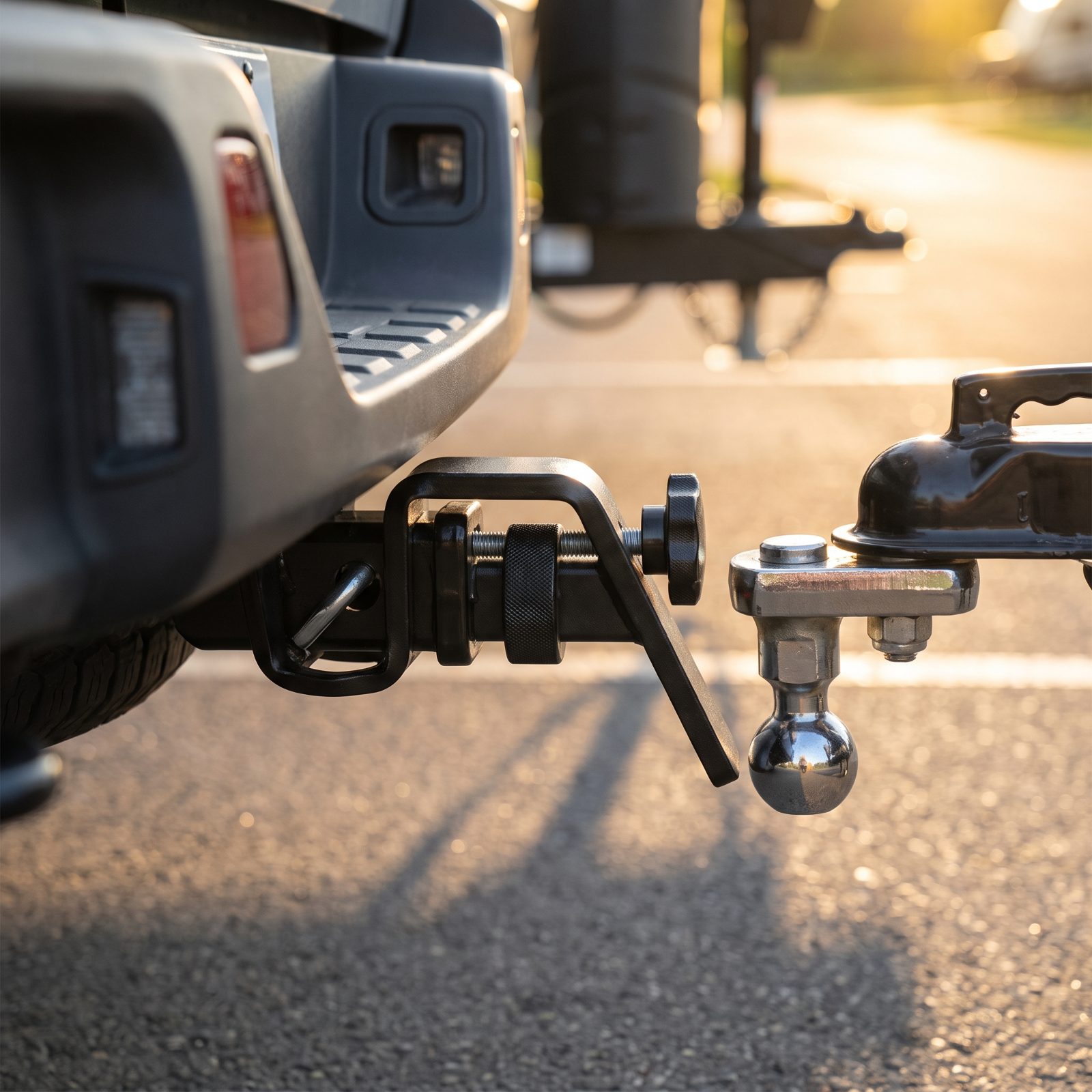
That clunk every time you brake or crawl over a speed bump isn’t the hitch doing its job. It’s slop. Whatever you slide into the receiver never fits it tight, so it rattles around in the gap, and year after year that little bit of play chews at the metal until the fit gets looser still.
An anti-rattle clamp wedges that insert hard against one wall of the receiver and pins it there. The noise quits. Towing feels tighter, more planted, less like you’re dragging something loose behind you. Twenty, maybe thirty dollars, and it goes on in two minutes with nothing but its own knob.
24. A Wide Snap-On Foot That Keeps the Tongue Jack From Sinking
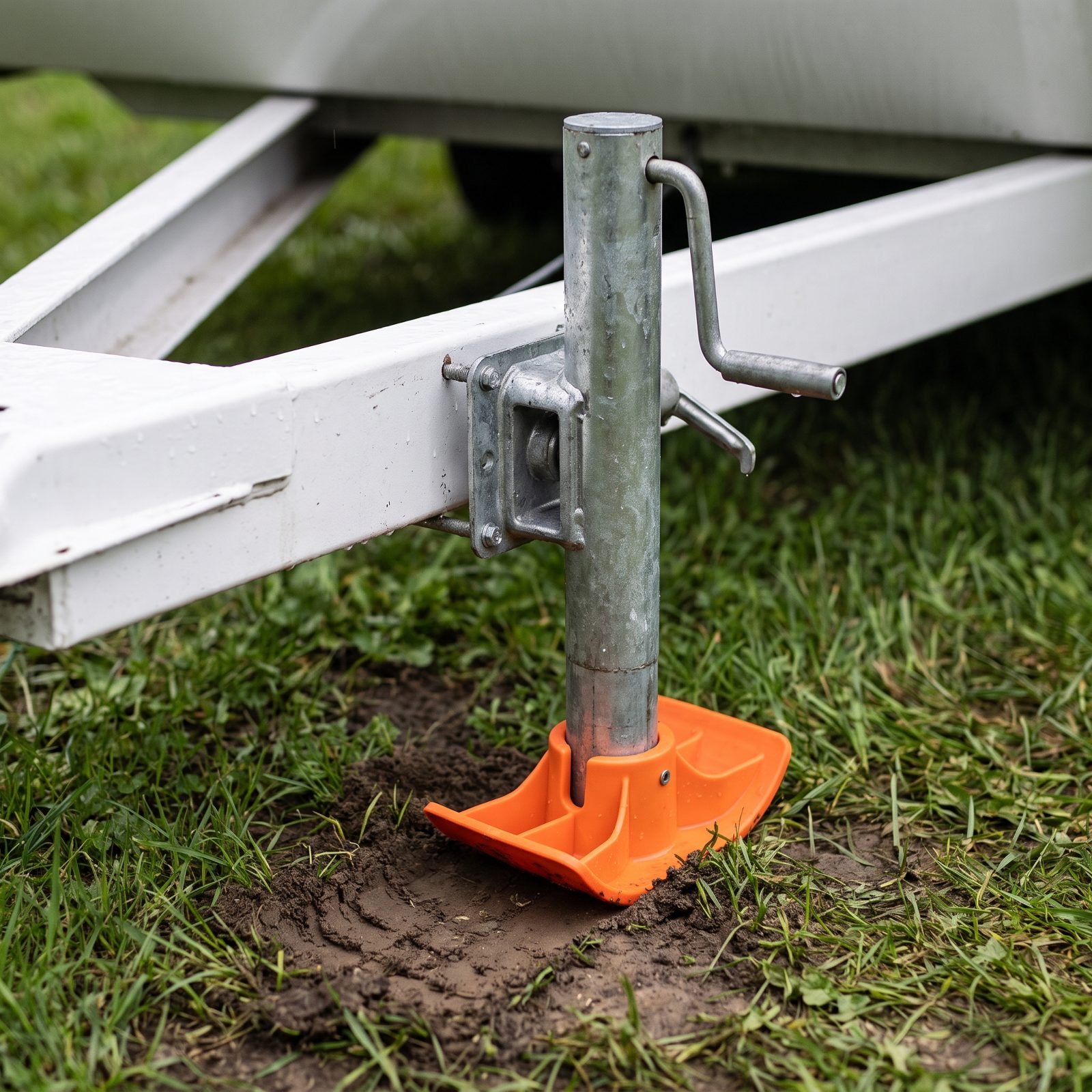
Level a trailer on grass or gravel, come back in the morning, and the whole nose has settled an inch because the jack foot bored straight down into wet ground overnight. Now your fridge is off level and your coffee’s leaning.
Slip a wide foot over the jack post and the load spreads across a much bigger circle, so the post stays put. Ten or fifteen dollars, slides right over the bare pipe, pulls off when you pack up. Spring for the wider ones on soft sites — worth the extra couple bucks.
23. Reflective Tape Along Slide-Out Edges You Won’t Walk Into at Night
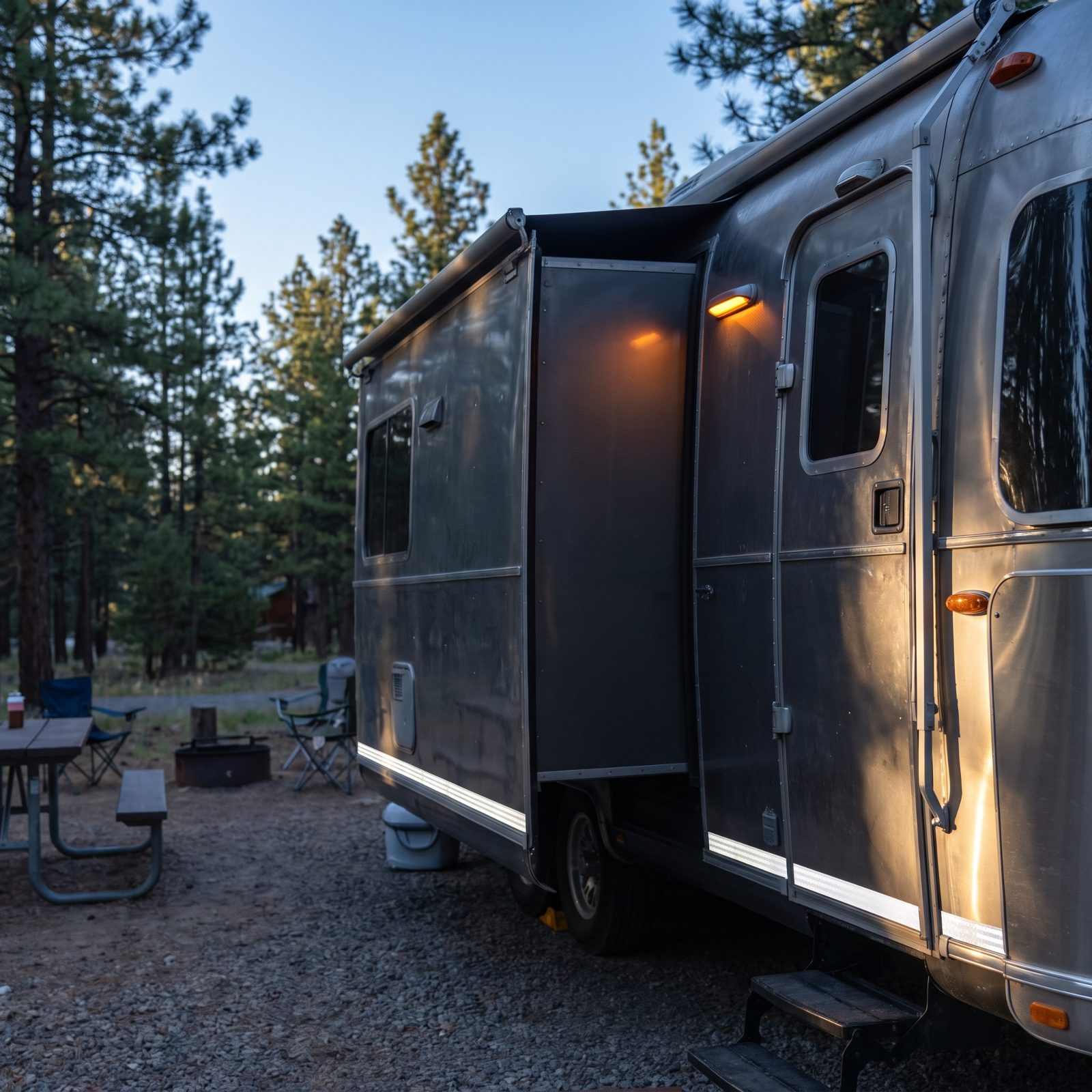
Slide-outs push a wall of RV right into the zone where people walk after dark. More than one camper has caught a hip on a slide corner hauling dishes back from the fire.
Run reflective tape along the bottom edge of each slide, across both the end and side faces, and it lights up the instant any headlight, lantern, or phone beam catches it. A few bucks a roll. That lower edge does the most work, so even if all you tape is that one strip along the bottom, you’ve covered the part that’ll actually catch a hip.
22. Clip-On Gutter Extensions That Throw Roof Runoff Clear of the Walls
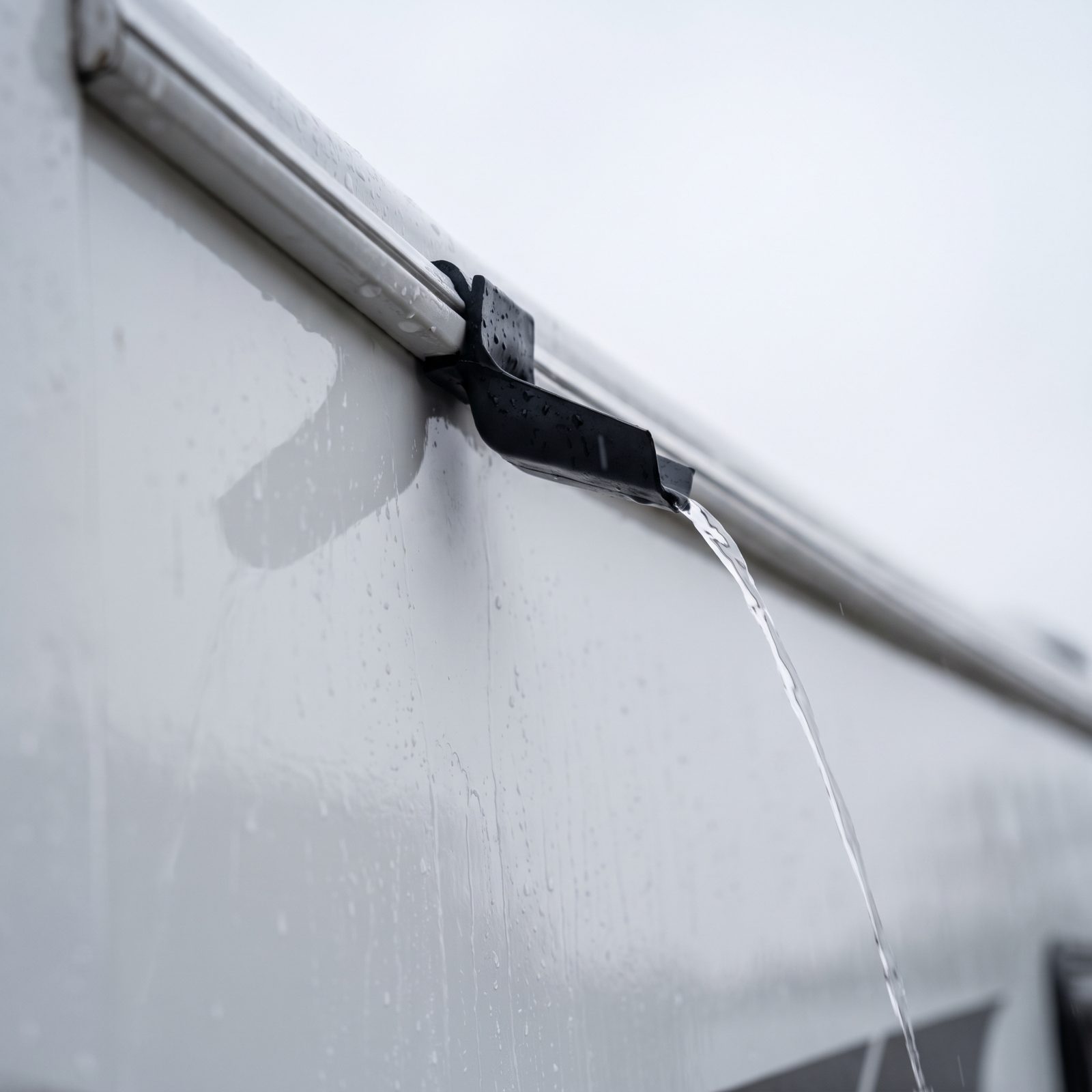
See those long black streaks running down the sidewalls of older RVs? Not dirt. That’s years of roof runoff dragging grime down the fiberglass every time it rains, and once it sets in, good luck scrubbing it out.
Little clip-on or stick-on gutter spouts kick the water off the drip rail and drop it straight to the ground instead of letting it sheet down your walls. A pack runs five or six dollars. They also kill that waterfall that always seems to pour right on your head when you step out the door.
21. Fine-Mesh Vent Screens That Lock Out Mud Daubers and Nesting Bugs
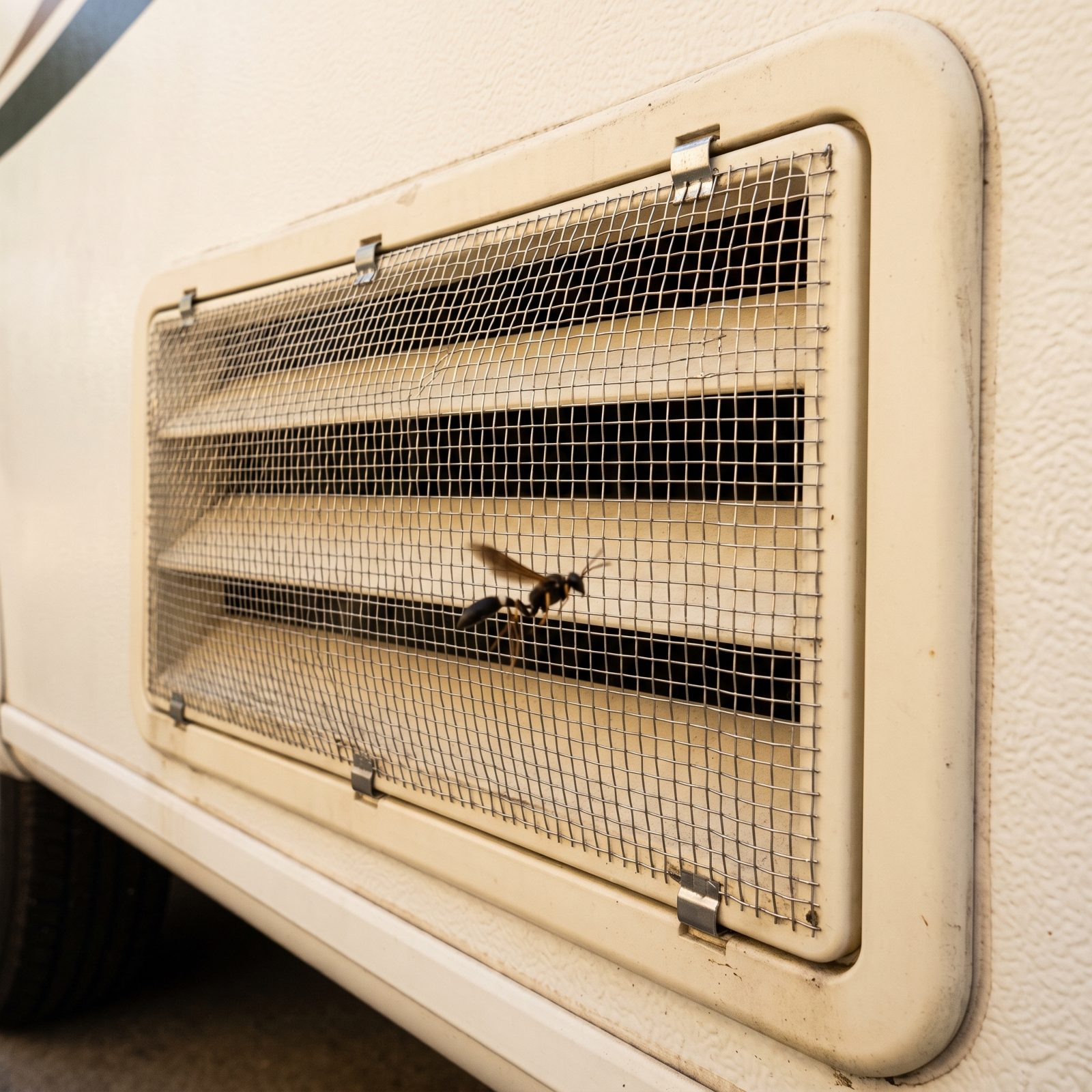
Mud daubers love the warm, sheltered openings on the side of an RV, and the furnace and water-heater vents are their favorite targets. They pack them solid with mud nests while you’re parked, and a plugged burner vent can stop your furnace cold or, worse, turn into a fire hazard the day you fire it up without checking.
Fine stainless mesh screens clip over those openings and shut out every nesting insect while still letting the appliance breathe. A set covering the usual vents comes in well under thirty dollars. Cheap insurance against a wasp-packed furnace on a cold night.
20. A Screen-Door Crossbar That Gives Your Hand Something to Push Besides the Mesh

RV screen doors are flimsy by design, and everybody pushes on the mesh because there’s nothing else to grab. Arms full of groceries, you shove the screen, and after a season it’s stretched out, popped at a corner, or torn clean through.
Mount a single horizontal bar across the screen door’s frame and your hand, elbow, or hip finally has a solid bar to push instead. Twelve to twenty dollars. It saves the mesh and keeps the door from flexing every time someone bumps it. Small thing, but after you install it you stop thinking about that screen entirely — which was the whole reason to bother.
19. Photoluminescent Tape That Marks Every Step After the Campfire Dies
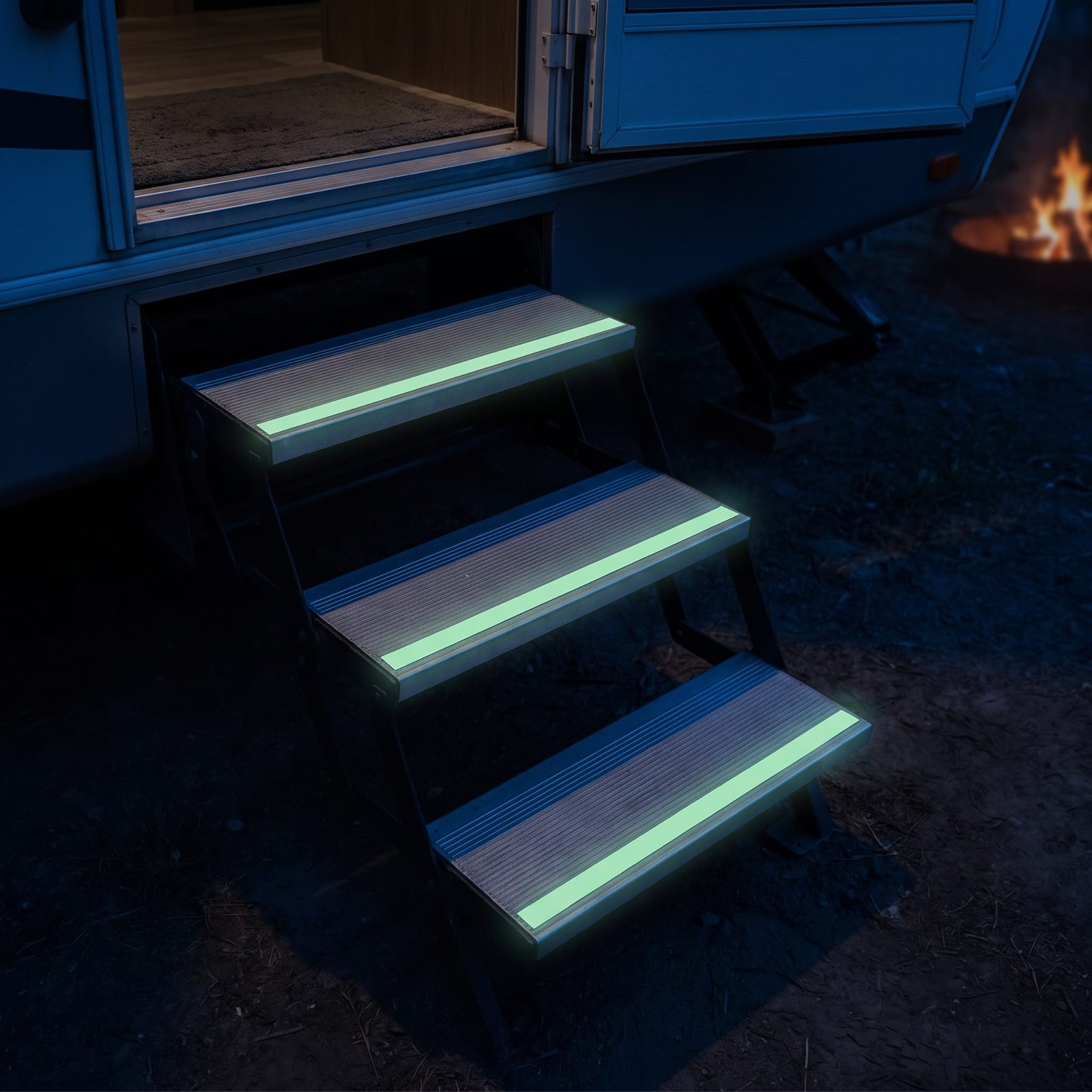
The last trip from the campfire up into the RV is the one that gets people. Fire’s out, eyes still haven’t adjusted, and those fold-out entry steps with their ribbed aluminum treads have gone invisible in full dark. Miss one and you’ve got a twisted ankle a long way from the nearest clinic.
Photoluminescent tape soaks up daylight and glows on its own for hours — no batteries, no switch, nothing to turn on. Run a pale strip along each tread edge while it’s bright out, and all three steps light themselves after sundown. A roll’s a few dollars and marks every step up to your door. Sure beats fumbling for a phone with your hands full.
18. Thumb-Turn Baggage Latches That Kill the Key Hunt at Your Busy Bays
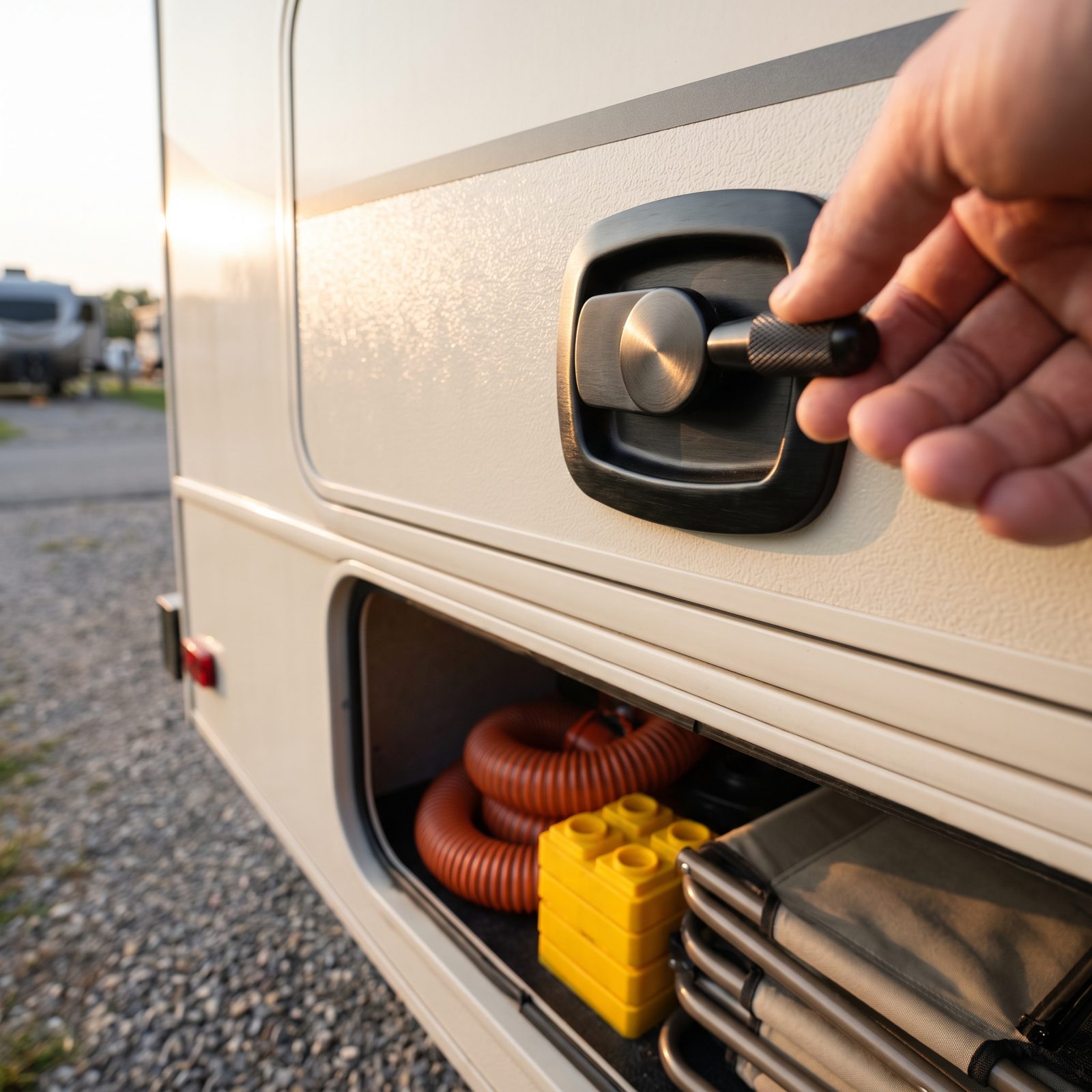
The bays you open twenty times a day shouldn’t need a key — your sewer bay, your water bay, the one with the chairs. Swapping the keyed cam lock for a thumb-turn latch runs about fifteen to thirty dollars per door, and it ends that little ritual of patting four pockets in the rain.
Leave the keyed locks on the bays holding anything worth stealing. Batteries, tools, the generator. You’re not trying to unlock everything — you’re just trying to stop treating a bin of garden hose like a safe.
17. Compact Gas Struts That Hold a Baggage Door Over Your Head
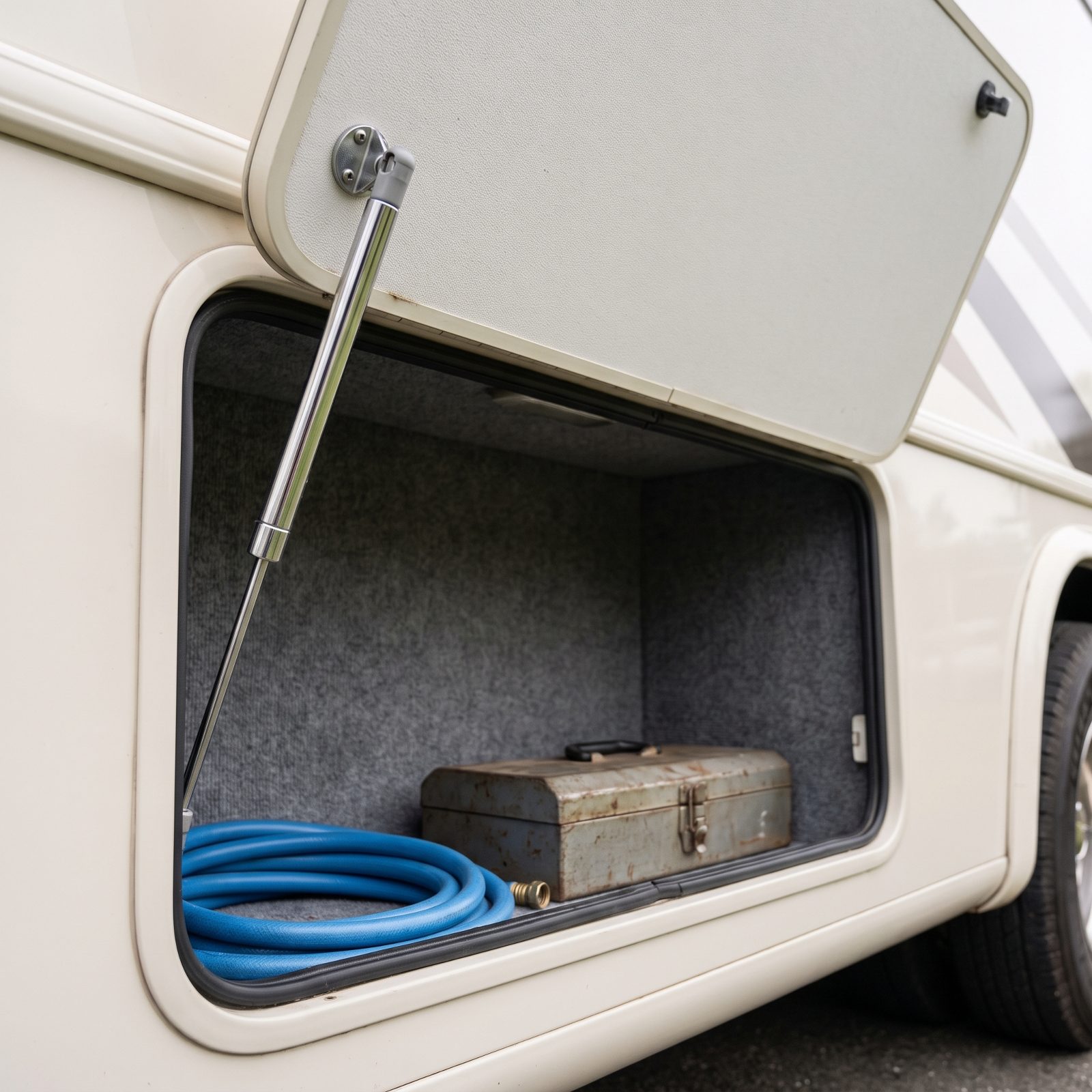
Ever had a baggage door drop on the back of your neck while both hands were full of hose? The flimsy prop rods that ship on most trailers give up fast. A pair of compact gas struts, usually twenty to forty dollars, holds the door open flat and keeps it there.
Measure the force rating against the door’s weight. Too strong and it fights you on the way down. Too weak and it sags halfway — which is somehow worse than no strut at all.
16. An Inline Digital Water Meter That Tells You Exactly What Went in the Tank
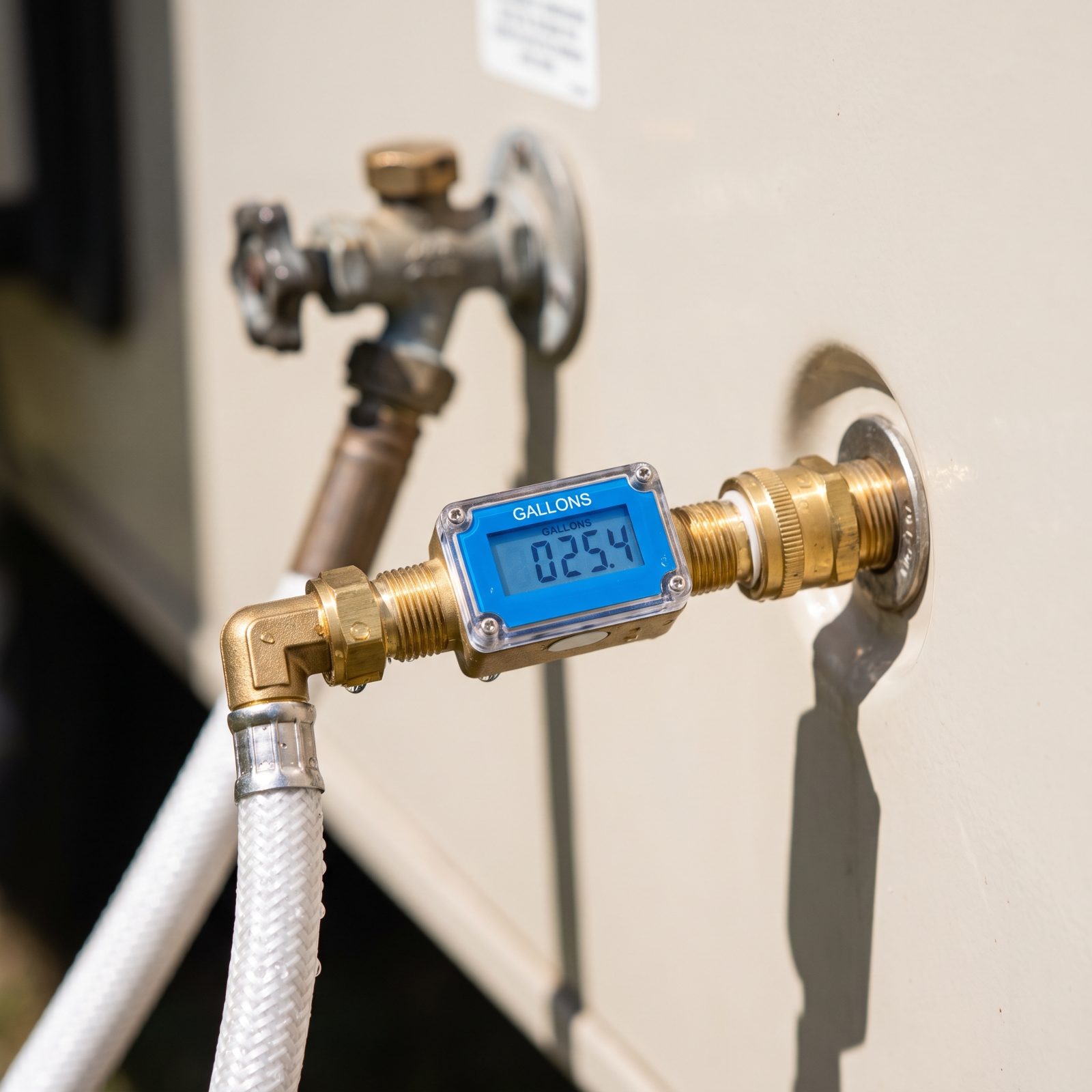
Guessing how full your tank is gets old by the second dump station. An inline digital meter screws between the spigot and your hose and counts gallons as they flow. Twenty to thirty-five dollars, and suddenly you know your 40-gallon tank is sitting at 32 — not somewhere between “probably fine” and “why is it overflowing.”
It earns its keep at boondocking sites where water is precious. Fill to a number, not to a hunch. Bonus: the same meter quietly tells you when a spigot is barely trickling before you waste twenty minutes on it.
15. A Clear Water-Pump Strainer That Lets You See the Gunk Coming
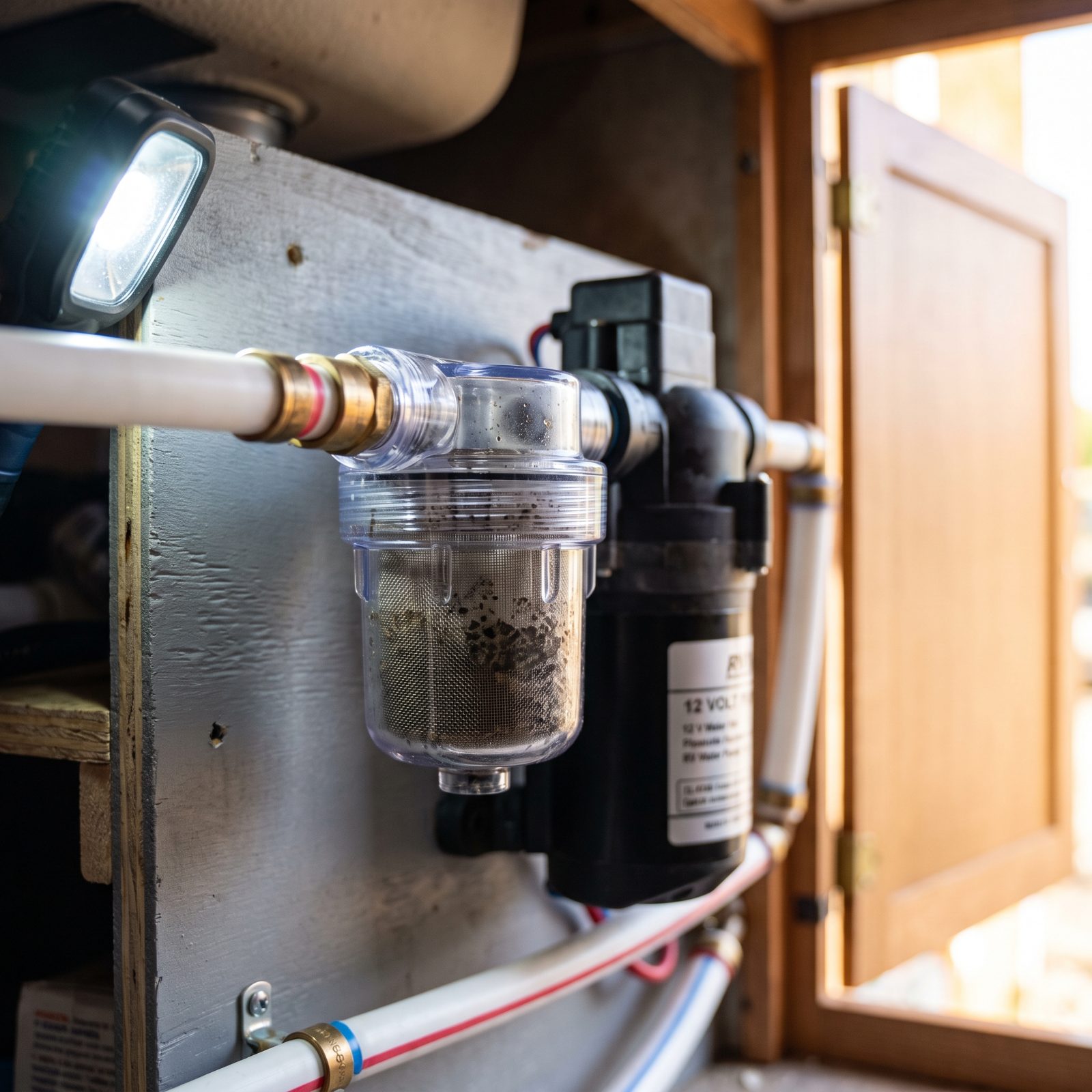
The strainer that protects your water pump is probably an opaque plastic cap you’ve never once looked inside. Swap it for a transparent one, around twelve to twenty dollars, and you can catch sediment or that pink winterizing residue before it clogs the pump and kills your flow.
Cleaning becomes a glance instead of a teardown — unthread, rinse the mesh, thread it back. Nobody mentions this one until their pump starts cycling for no reason and they blow an afternoon chasing a problem a clear bowl would have shown them in two seconds.
14. A Swiveling Faucet Aerator That Finally Reaches the Corner of the Sink

RV sinks are small and the faucets never reach where you need them. A swiveling aerator, under fifteen dollars, screws onto the existing spout and bends to hit that dead corner where you keep barking your knuckles trying to rinse.
It aerates too, softening the stream and stretching your fresh water a little further. On a tank you’re rationing, that matters more than it sounds.
13. A Heat-Proof Silicone Mat That Turns the Stove Cover Into Counter Space
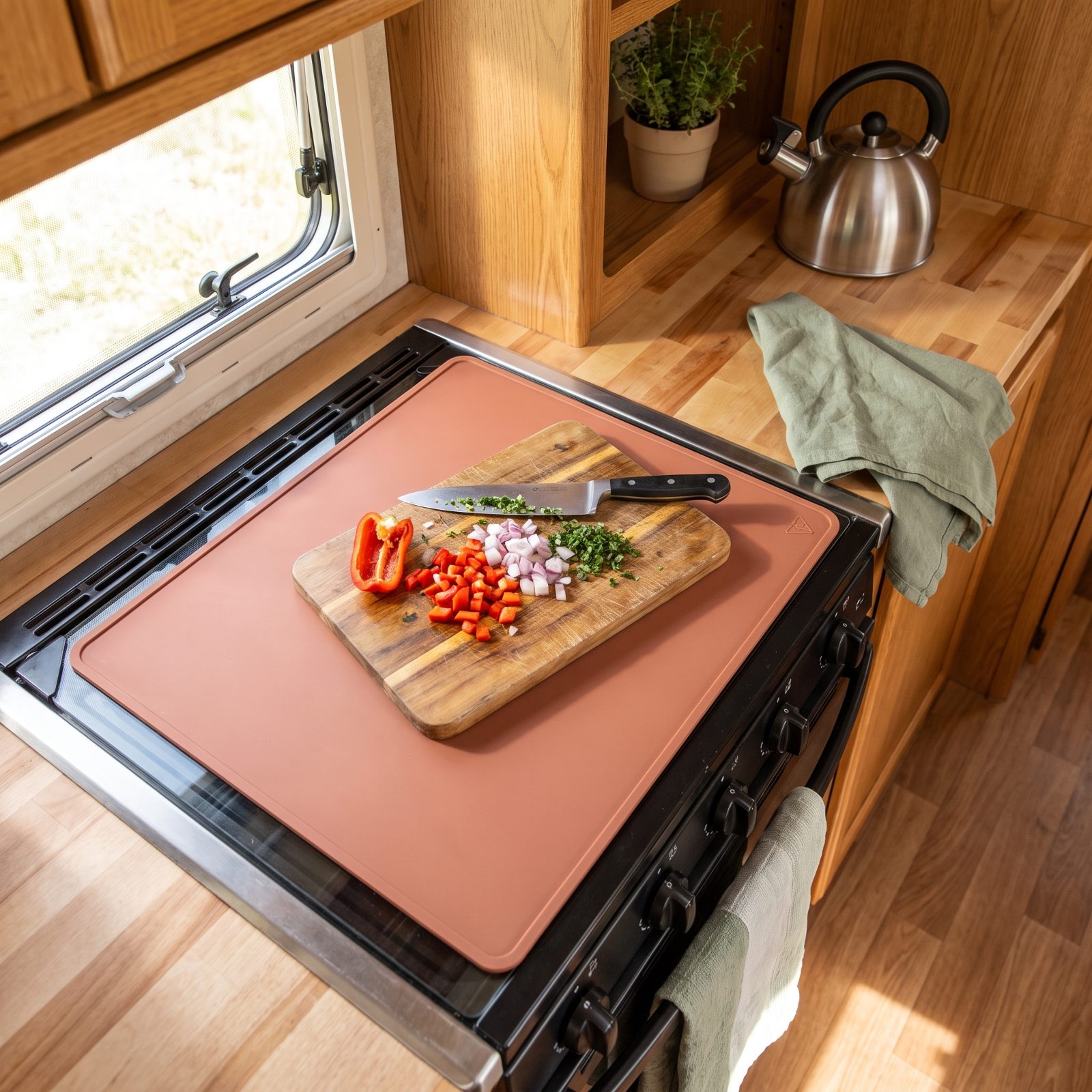
Counter space in an RV galley is a cruel joke. The flat glass stove cover is the biggest surface you’ve got, but you can’t trust it with a hot pot or a dripping board. A heat-resistant silicone mat handles both, usually ten to eighteen dollars, and shrugs off a scorching pan straight out of the oven.
Roll it up when you need the burners. Dumb-simple fix, and it doubles your usable prep area for the price of a sandwich.
12. A Battery Fridge Fan That Chases the Warm Spots Out of an RV Refrigerator
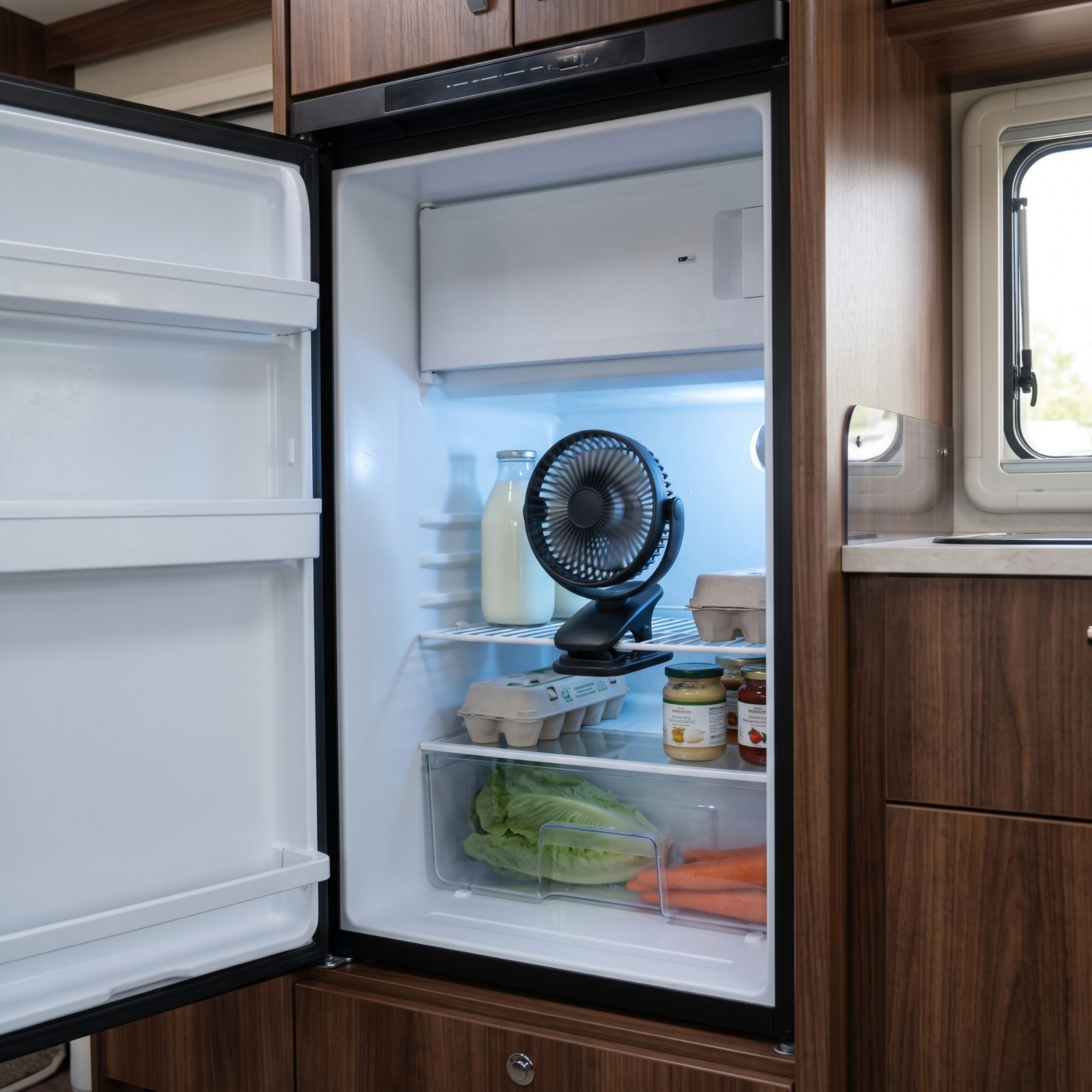
Even a full-size kitchen fridge can cool unevenly. The top is frosty, the bottom shelf is suspiciously warm, and your lettuce can’t decide what it’s doing. A clip-on fan clamped to a shelf, twenty to thirty dollars, pushes the cold air around and flattens out those pockets.
It also helps the box recover faster after you’ve stood there with the door open deciding what to eat. Clamp it to a shelf edge and you’ll rarely need to touch it — about as close to set-and-forget as a notoriously moody appliance gets.
11. A Ratcheting Paper-Towel Holder That Won’t Unspool All Over the Road
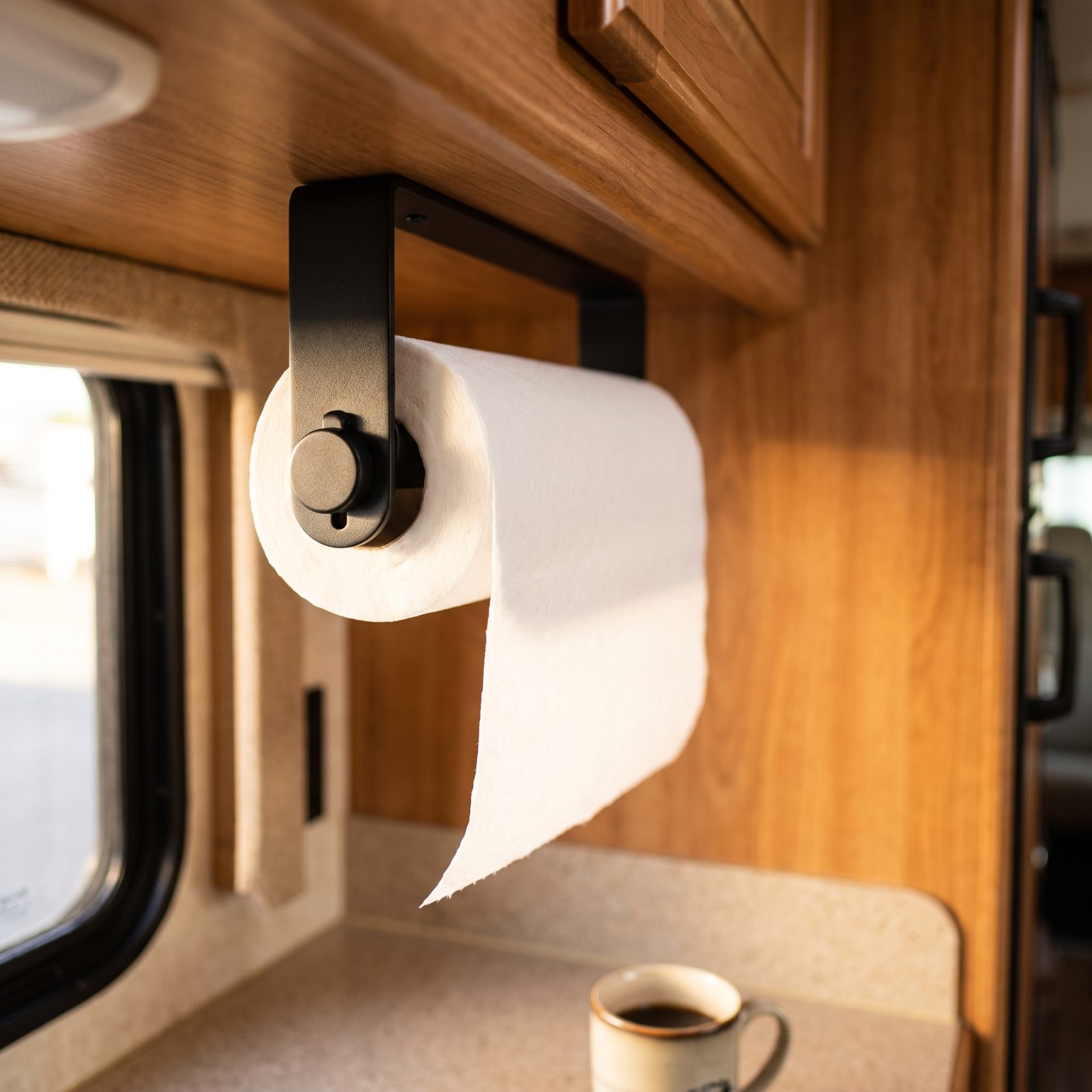
You know what a loose paper-towel roll looks like after a day of travel? Half of it unwound across the galley floor, pooled against the pump cabinet, soaking up whatever leaked. A ratcheting holder, around ten to fifteen dollars, lets you tear a sheet one-handed but clamps the roll firm against every bump and brake.
The ratchet is the whole trick. Tension releases only when you pull hard enough to tear, so highway vibration never budges it.
10. Spring-Tension Rods That Stand Baking Sheets Upright in a Deep Cabinet
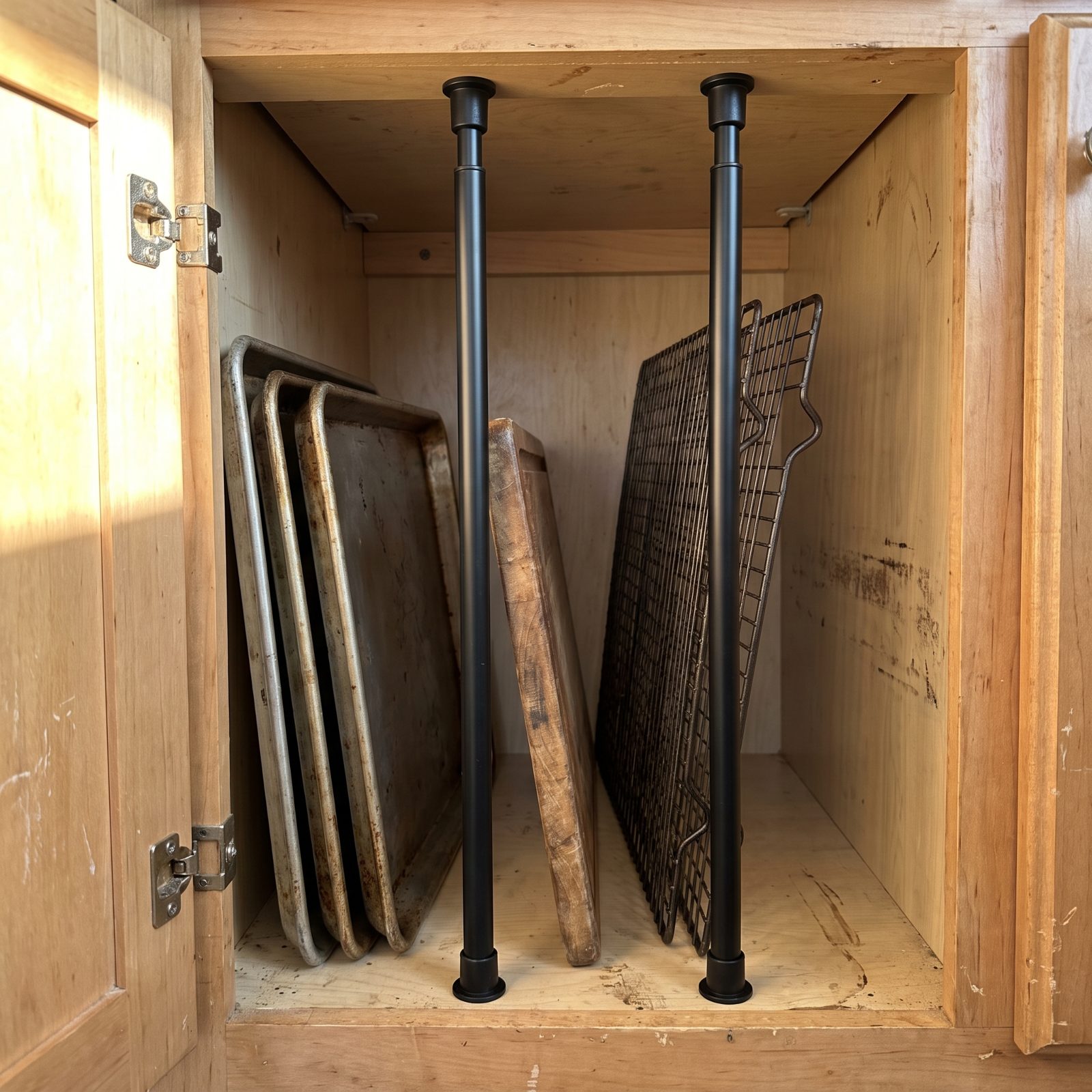
Flat things stacked flat are a nightmare. You want the one on the bottom, so you unstack the four on top, and it’s a whole production. Stand a couple of spring-tension rods vertically in a cabinet and you’ve made slots. Baking sheets, cutting boards, and serving trays slide in on edge and come out one at a time.
A two-pack runs five to twelve dollars. No drilling, no brackets, nothing permanent. Pull them out and the cabinet is back to stock whenever you want.
9. Removable Museum Putty That Keeps the Decor From Launching Itself

The little things you set out to make an RV feel like home are also the little things that turn into projectiles on a mountain grade. Museum putty — the stuff art galleries use — pins candlesticks, picture frames, and that pottery you hauled home from Sedona to the shelf. A pea-sized dab holds, peels off clean, and leaves no mark on the finish.
A tub costs six to ten dollars and lasts years. It’s the difference between arriving with your decor where you left it and arriving to the sound of something broken rolling around under the bed.
8. Positive-Locking Cabinet Latches That Stop Roadside Avalanches
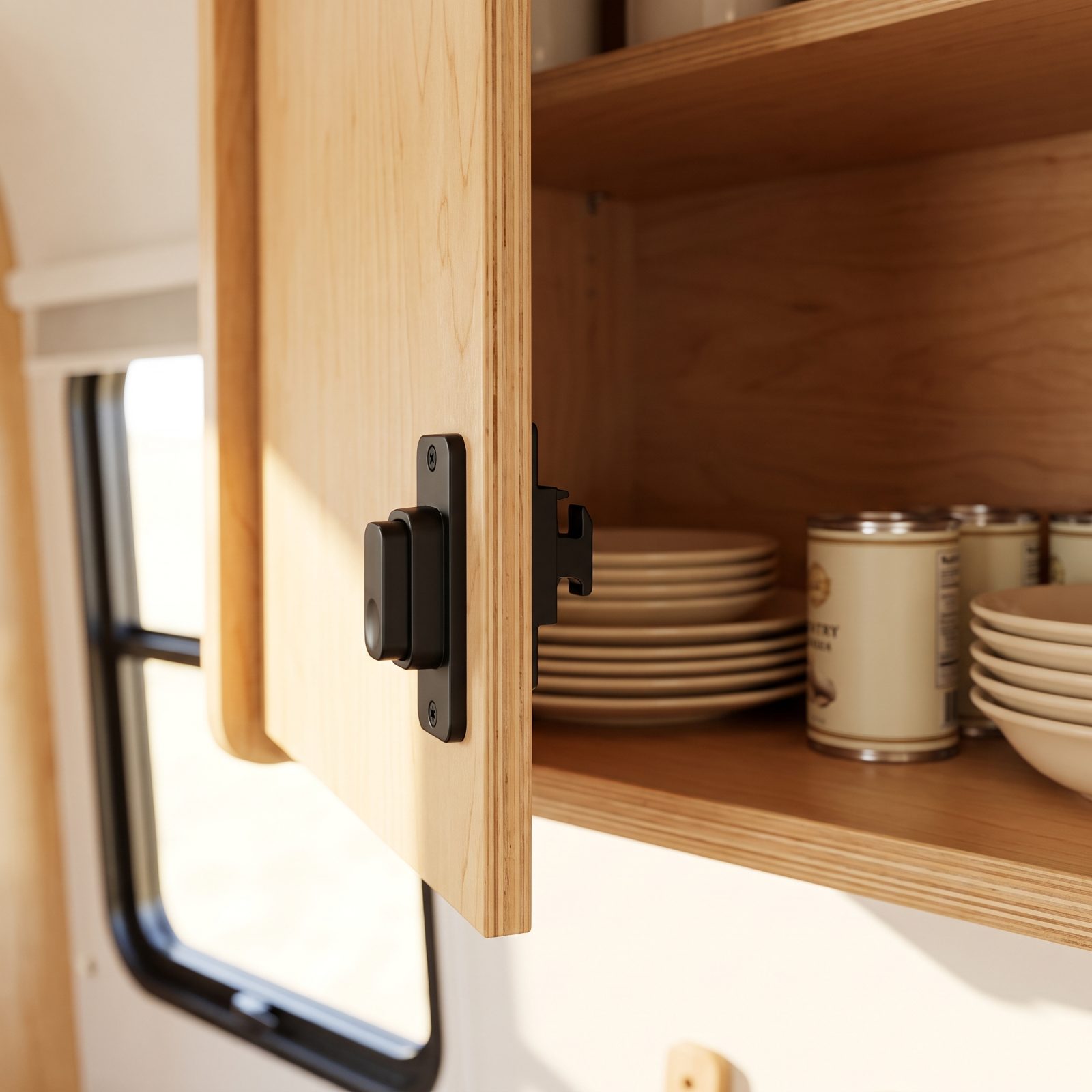
The friction catch your RV came with was built to survive a showroom, not a mountain pass. Take one switchback too fast and the cabinet opens itself, then a sleeve of crackers and a jar of peanut butter audition for a part in your windshield.
Positive-locking latches cost a few dollars each and actually grab. You push a button to release them, so road vibration can’t. A kitchen’s worth runs well under $50 and installs with the screws already in the box.
7. A Hanging Mesh Produce Hammock That Clears the Counter

Counter space in a trailer gets measured in square inches, and a bowl of fruit hogs most of them. Worse, loose produce turns into a bowling league the second you hit a pothole.
A small mesh hammock slung from two hooks under a cabinet sags just enough to cradle a week of bananas, apples, limes, and garlic, and lets air circle everything so nothing goes to mush in a sealed drawer. The sway is a feature, not a flaw — ripe fruit stops rolling onto the floor.
6. Adhesive Soft-Close Dampers That End the 2 a.m. Cabinet Slam
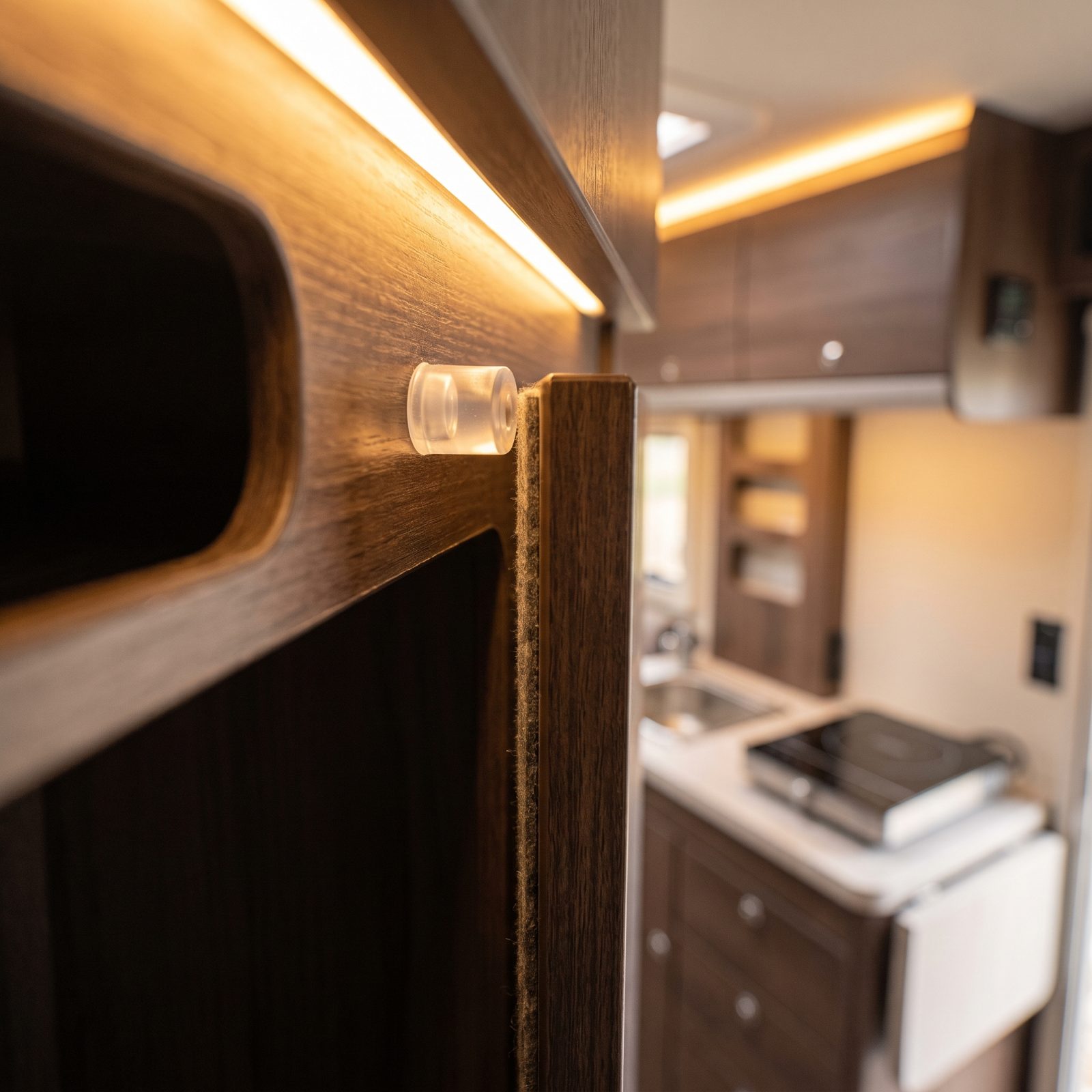
Thin walls carry sound like a drum. One cabinet door slammed in the galley rattles the whole rig, and in a campground at night everybody hears it.
These little silicone or rubber dampers peel off a backing and press onto the cabinet frame. Aim matters, though: stick the pad to the face-frame stile, facing the door and sitting right in its closing path, so the door meets it in its last inch of travel and settles instead of banging. A bag covers your whole RV for maybe fifteen bucks. Here’s the bonus nobody mentions: the catch latches cleaner too, because the door isn’t bouncing off its own momentum.
5. A Magnetic Insulated Window Panel With Zero Drilling

RV windows are heat sieves. In July they bake the cabin by noon, and come January they sweat and leak cold off every pane of single glass.
A reflective insulated panel cut to the window and edged with adhesive magnetic strips snaps up in seconds and pops out when you want the view back. No screws, no snaps drilled through aluminum trim, nothing that voids a warranty. Foam-core kits and precut reflective rolls land under $50 for a small window, and the temperature change on a sunny afternoon is the kind you feel the moment the panel goes up.
4. LED Blade Fuses That Light Up When a Circuit Blows
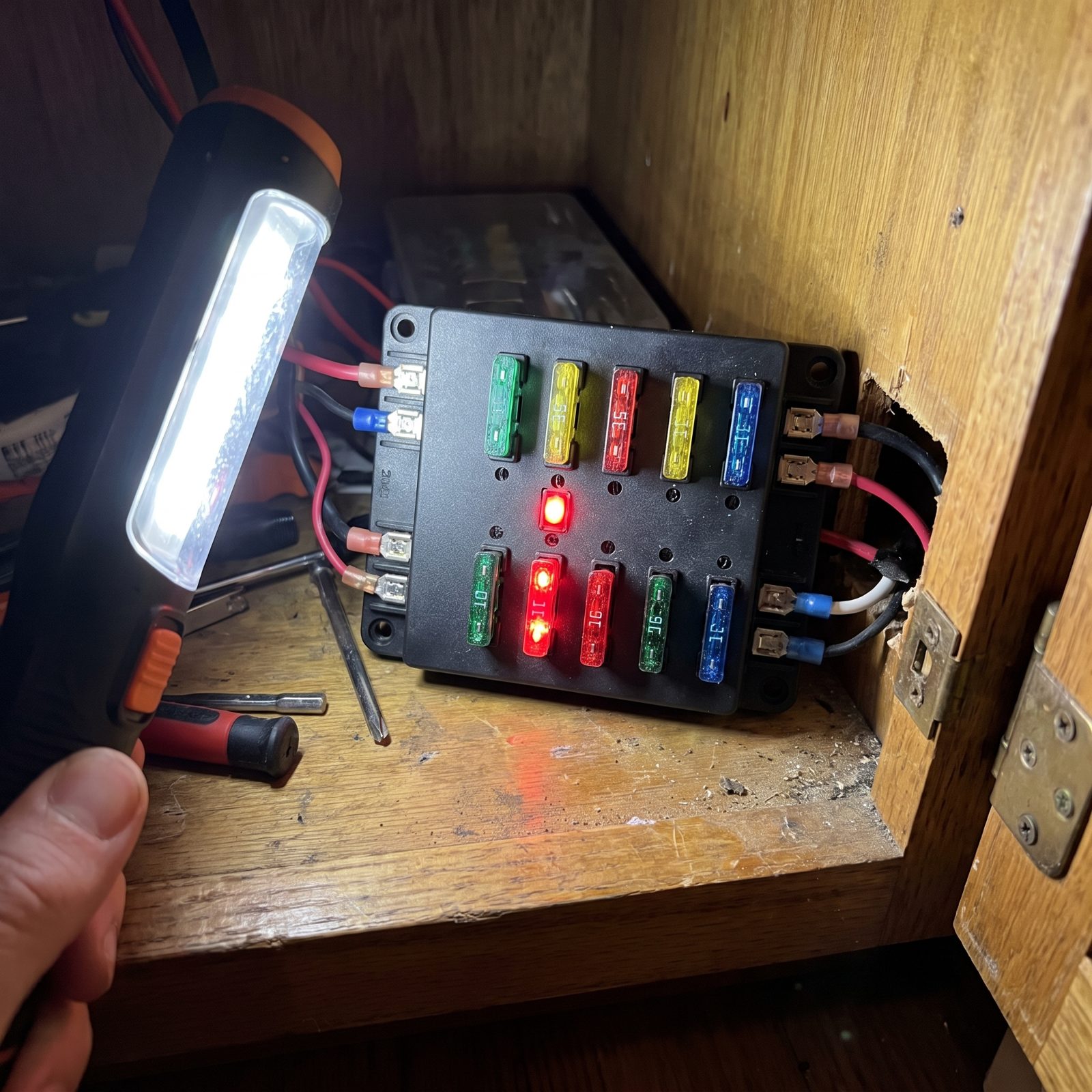
Finding a blown fuse in an RV usually means pulling them one at a time with a cabinet door digging into your spine. There’s a better way, and it costs about ten dollars for an assortment.
LED blade fuses look identical to ordinary ones until they fail. When the element inside breaks, a tiny LED lights up red. You scan the panel, spot the glow, swap one fuse, done. Keep the right amperages on hand and match them exactly — a fuse is the cheapest part in your rig and the only thing standing between a short and a fire.
3. An Anderson-Style Exterior Port for Plug-and-Play Solar
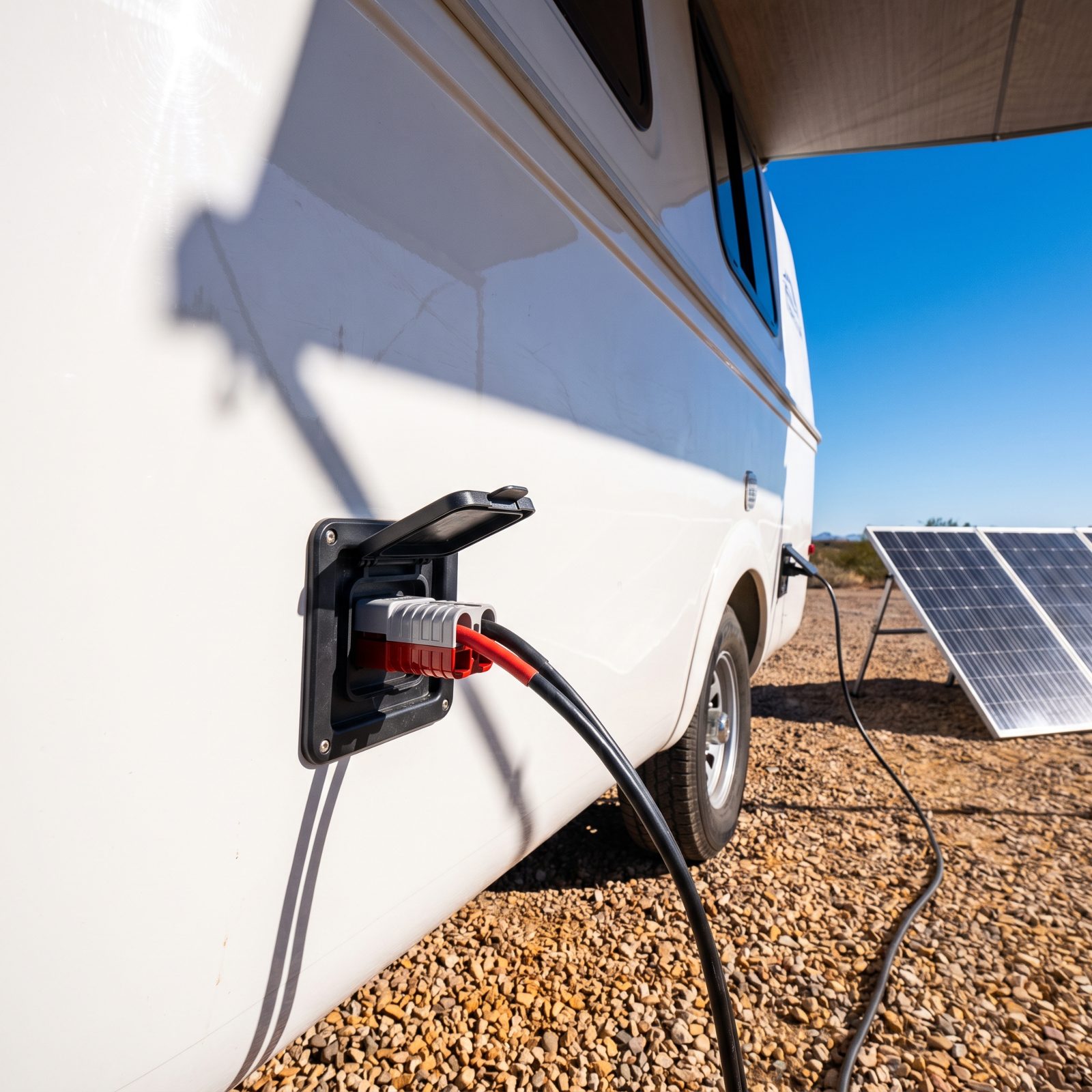
Portable solar is useless if charging it means feeding a cable through a window that then won’t close and lets every bug in the county inside.
An Anderson-style port mounts flush to the exterior wall and wires to your battery or charge controller. Park in shade, set a portable panel out in the sun, run the cable to the port, clip it in. The connector shrugs off weather, won’t let you reverse polarity, and handles real current. The port itself runs $15 to $30. Doing the small bit of wiring correctly, with an inline fuse near the battery, is the part worth taking your time on.
2. A 12-Volt Dimmer That Tames Harsh Factory Ceiling Lights

Factory LED ceiling lights have one setting: interrogation room. Flick them on at night and everyone squints.
A 12-volt PWM dimmer wires inline on the light circuit and hands you a knob that runs from a candle-low glow all the way to full brightness. Evenings get softer, your eyes ease toward sleep instead of fighting a cold white blast, and you draw fewer amps at low settings — something boondockers clock on the battery monitor. Figure $15 to $25. Confirm your LEDs are actually dimmable first, or you’ll chase a buzzing, flickering mess and blame the dimmer.
1. A Shoe Pocket Mounted on the Entry-Step Riser

The spot nobody uses in an RV is the flat face of each step riser. It’s dead vertical space, and your shoes are currently making a graveyard of the entry floor.
A slim shoe pocket — the kind made for closet doors — screws or sticks to the riser and holds boots, sandals, and that one flip-flop that always goes missing. Mud stays contained, the floor stays walkable, and you stop kicking a hiking boot under the dinette every morning. A couple of pockets cost next to nothing and reclaim storage you forgot you had.