
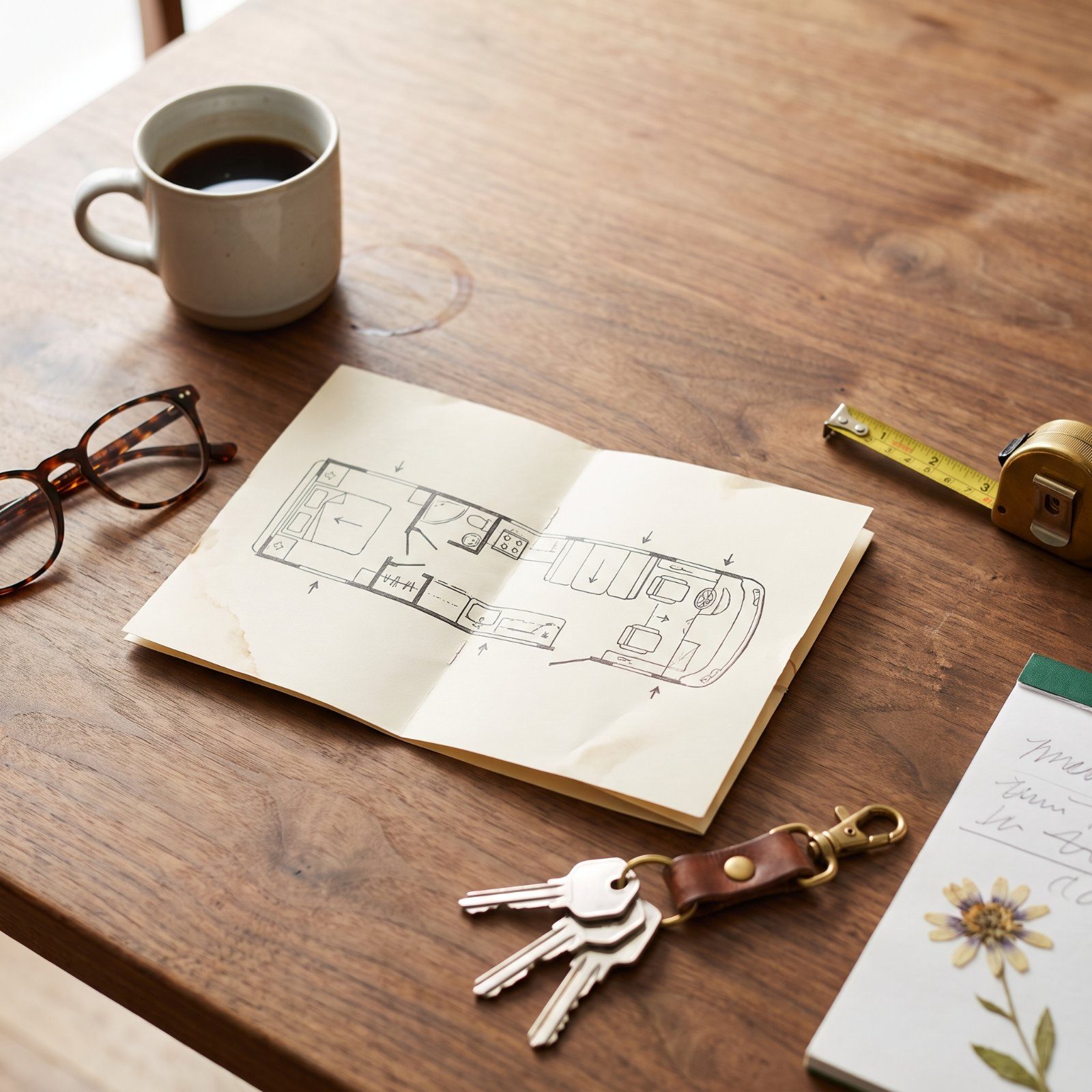
Nobody falls for a floor plan. They fall for a feeling. You step up into the rig, the light hits the kitchen counter just right, and some quiet part of your brain starts drawing up a future out of coffee mornings and rainy afternoons with a book. The whole life, assembled from one walk-through that lasted eleven minutes.
Please note that some of the images in this article were created with the assistance of AI.
That is the same wiring that picks a partner. You meet the version someone shows you on a good day and you marry the version you get on a flat tire outside Amarillo. The RV teaches the lesson faster, because a bad layout can’t hide. Live in 300 square feet with the wrong one and every flaw introduces itself by Tuesday. Here is where the two decisions rhyme, and why the same human brain keeps making the same beautiful mistake.
16. You Claim Bed Access Matters, Then Pick the Prettier One
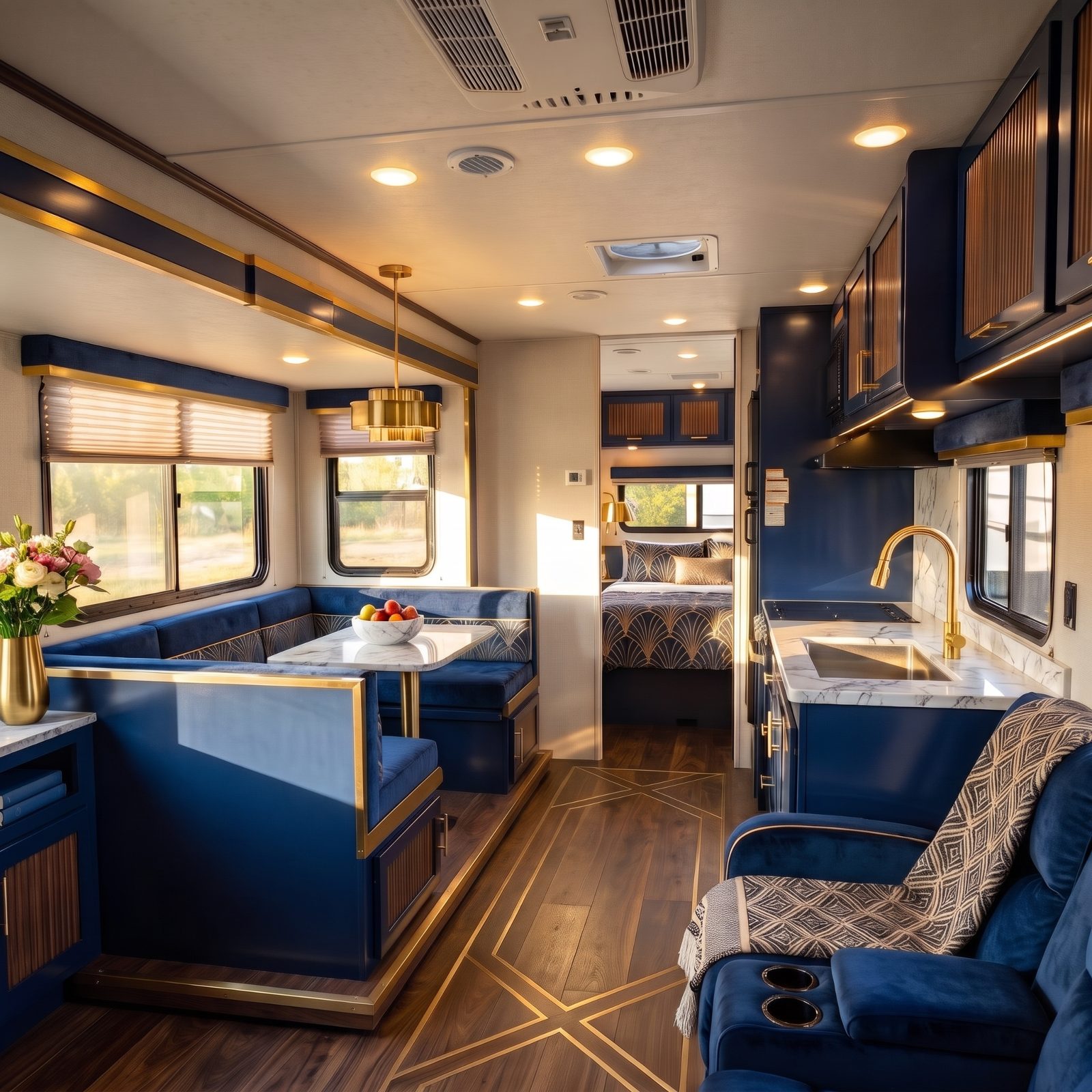
You walk into the rear bedroom and say the words every first-time buyer says. “We need the walk-around queen. I’m not climbing over anyone to use the bathroom at 2 a.m.” Firm. Sensible. A real requirement.
Then you see the bed dressed in navy-and-gold fan-print bedding, framed by navy cabinets with warm wood fronts, and the firm requirement goes soft. It photographs beautifully, it feels like a hotel, and you tell yourself you’ll adjust.
You will not adjust. Three months in, the person on the inside is doing a nightly gymnastics routine over the footboard while resentment quietly files paperwork. This is the gap between what we say we want and what we actually choose, the same gap that makes people swear they want kind and steady, then date exciting and unavailable. We say what we value. We choose what shines.
15. You Need a Rainy-Day Test, Not a Showroom Date
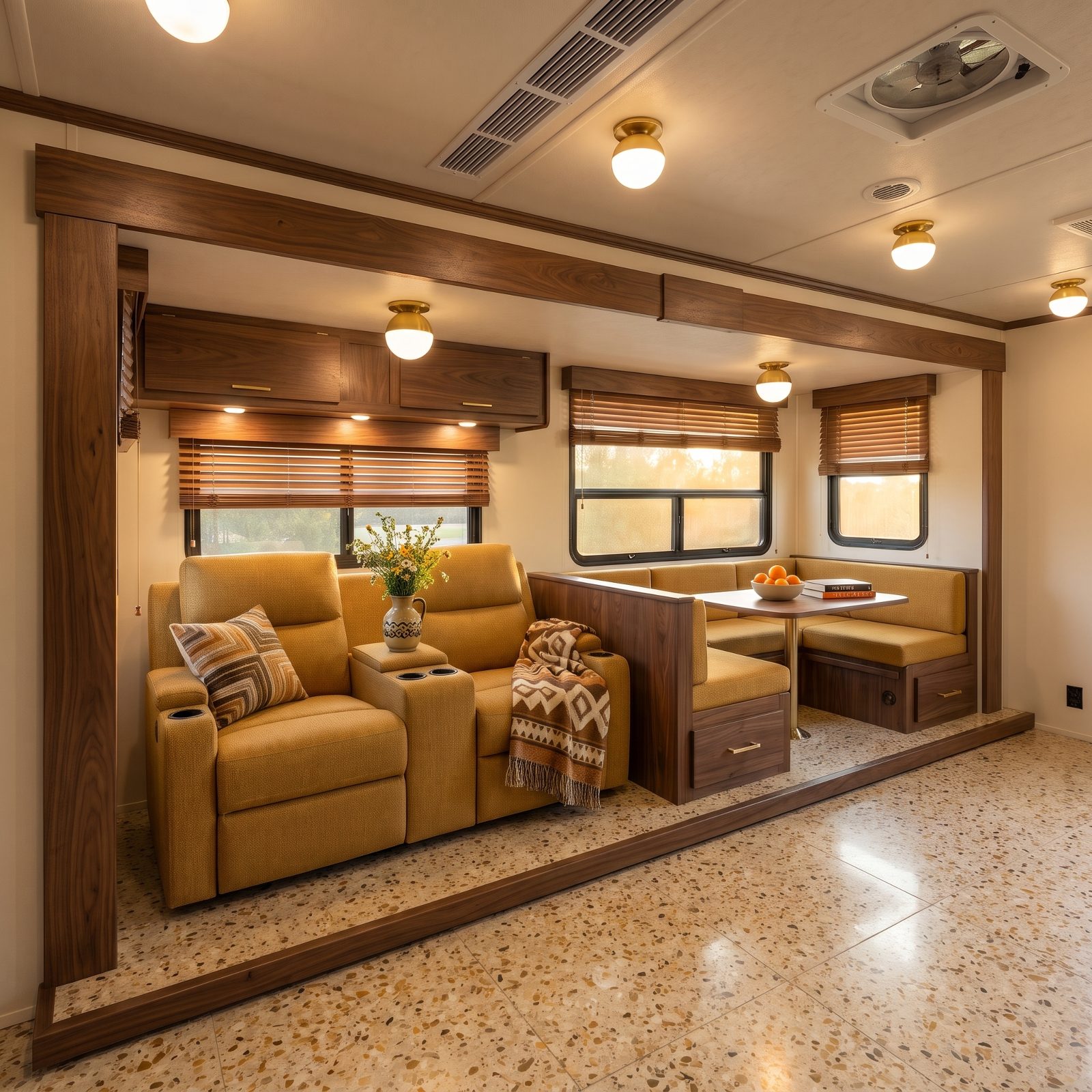
Every floor plan looks roomy on a sunny Saturday with the slides out and the awning up. You’re half-outside anyway, and the whole world is your living room.
Now picture three straight days of rain in a state park, both of you stuck inside, slides or no slides, trying to cook and read and not step on each other. That is the real review. That is when a layout earns its keep or starts a fight.
Same with people. Anyone is pleasant over dinner and a good mood. The question that matters is who they are on the bad day — the delayed flight, the bad news, the stretch where nothing goes right. A showroom shows you potential. A rainy day shows you reality. So book the overnight before you sign, and spend a weekend before you commit, because potential isn’t a floor plan you can live in.
14. The Bathroom Dealbreaker Makes Everything Else Irrelevant
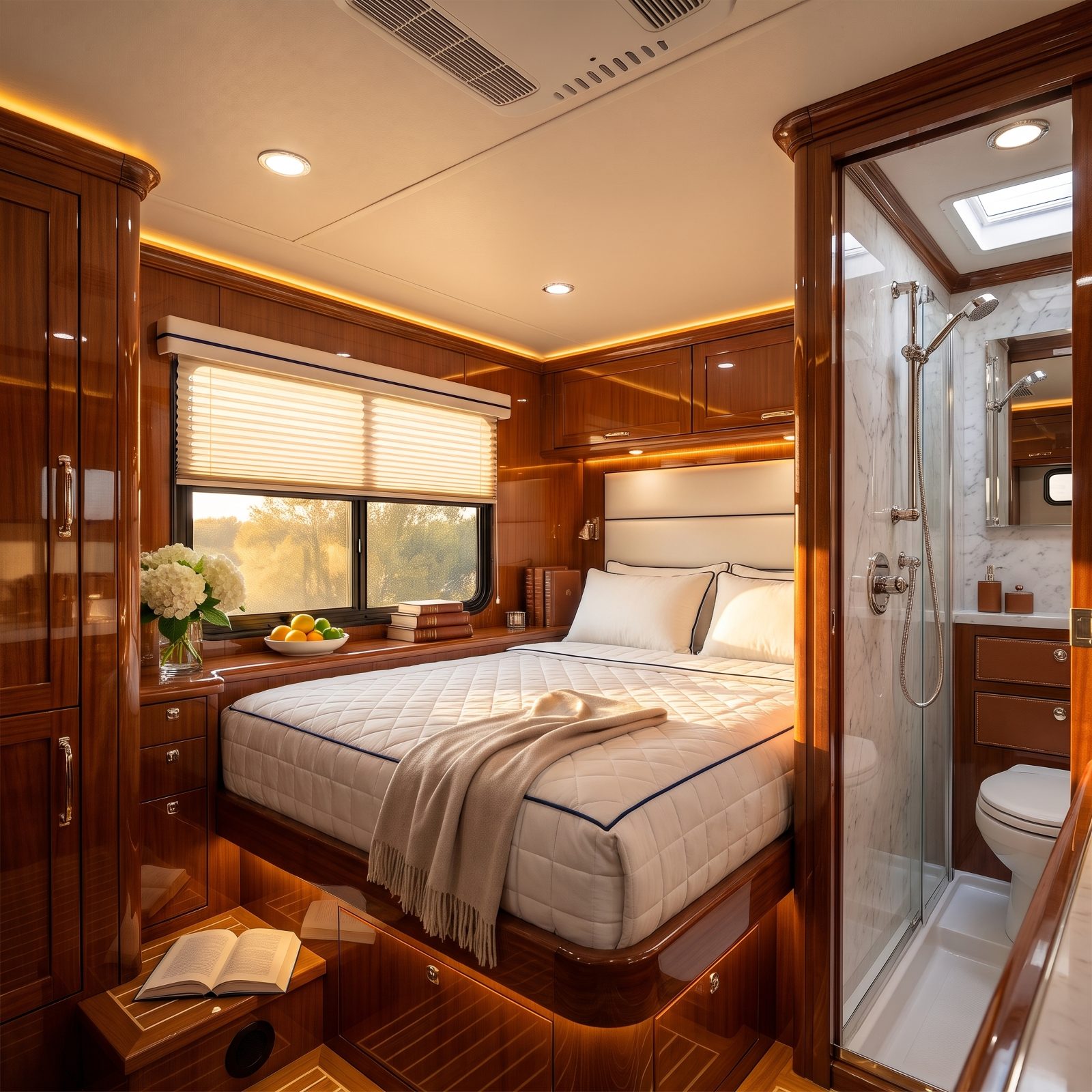
Here’s the cruel math of a small space. You can love the kitchen, love the storage, love the way the light comes through the dinette — and none of it survives a bathroom you dread using.
The wet bath where your knees hit the door. The shower you can’t turn around in. The toilet jammed so close to the wall you brace yourself every time. One non-negotiable flaw, used a few times a day, drowns out ten things you liked.
A dealbreaker isn’t about size. It’s about frequency. The small thing you touch every single day beats the big thing you admire from across the room.
Partners run the same math. The charming ones with one habit you genuinely cannot stand will lose to the quiet ones with no habit you can’t stand. Negativity weighs more than positivity. One daily aggravation outscores a pile of pleasant qualities, because your brain logs the irritation every time and the nice stuff fades into the background. Test the bathroom first. If that’s a no, the rest is a tour of a house you’ll never buy.
13. You Keep Comparing Every Floor Plan to Your First Rig
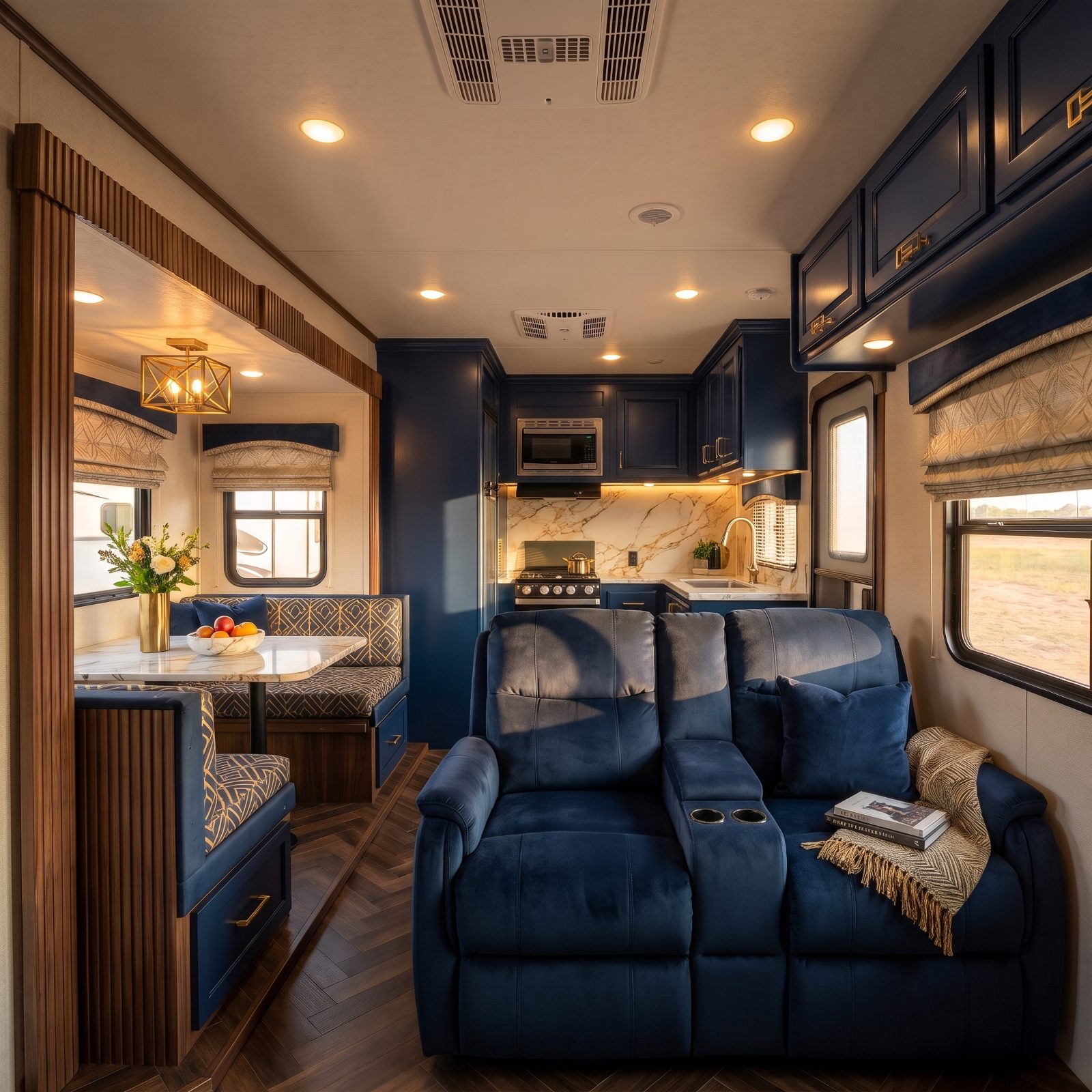
There’s a reason you keep measuring every new rig against the one you started in. Maybe it was a leaky pop-up. Maybe it was a hand-me-down trailer with harvest-gold cushions and a stove that only half worked. It was terrible, you loved it, and every floor plan since has been quietly failing to be that.
Nostalgia is a liar with great lighting. It edits out the cold nights and the broken awning and keeps the campfire and the first cup of coffee at dawn. You’re not comparing the new layout to the old one. You’re comparing it to a highlight reel.
People do this with a first love for the rest of their lives. The mind preserves early experiences in warm, forgiving amber and makes everything after feel like a step down. Honor the old rig. Just don’t let a trailer that’s been scrap for twenty years veto the one parked in front of you.
12. Your Family Gets Opinions Despite Never Camping With You
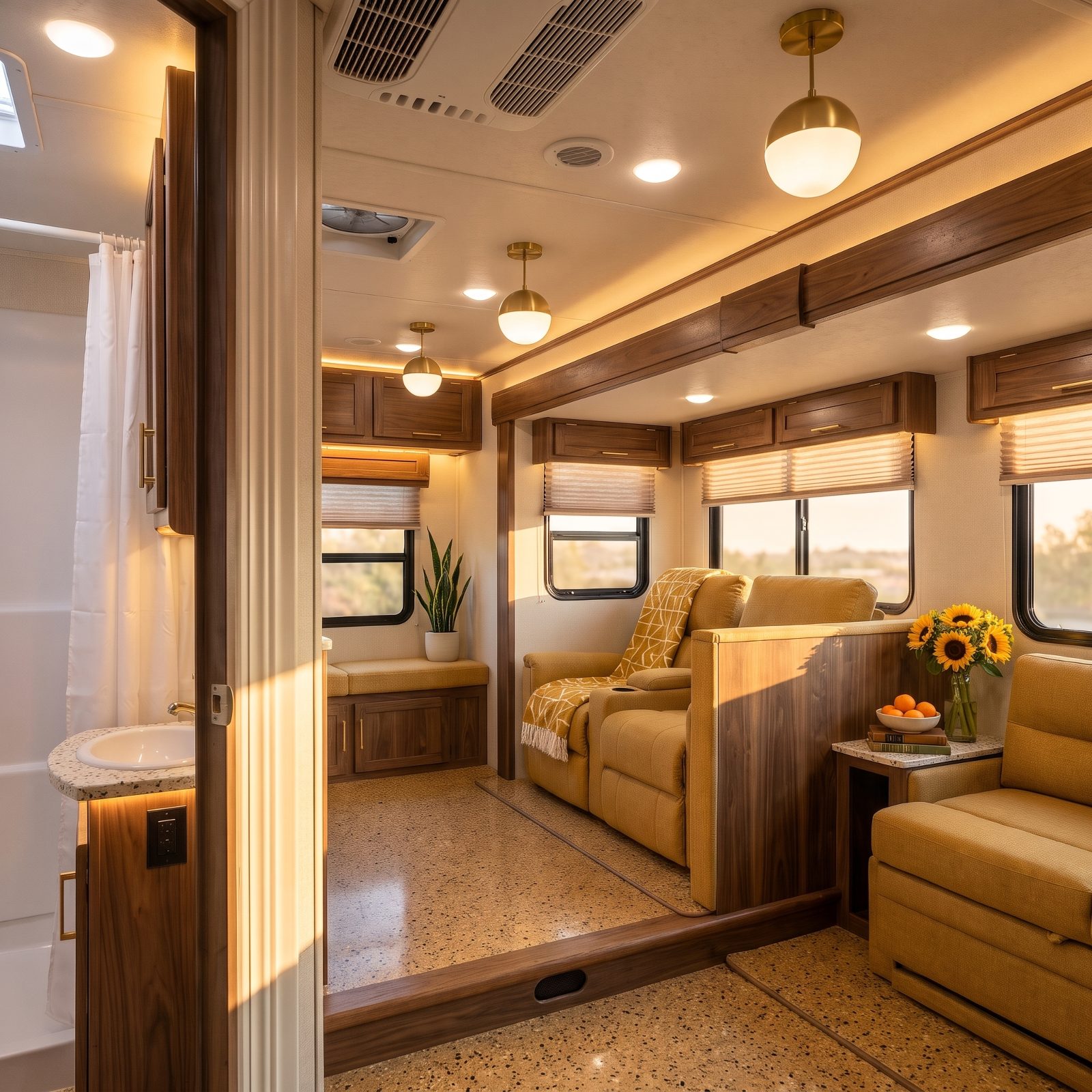
You bring the whole family to the lot. Good intentions. Then the committee convenes. Your brother who hasn’t slept outdoors since Reagan has strong feelings about the slide, someone’s spouse doesn’t like the color, and a nephew thinks you should “go bigger.” None of them will ever ride in this thing.
Advice on a floor plan flows freely from people who’ll spend zero nights inside it. They’re not picturing your morning routine or your parking situation or your towing limit. They’re picturing a brochure.
That same ancient script plays out when you introduce a partner. Everyone has a verdict, and the loudest verdicts come from the people least affected. Listen politely. Then remember who’s actually going to be living in those 300 square feet. It isn’t your brother.
11. You Imagine Hosting Guests Who Rarely Actually Visit
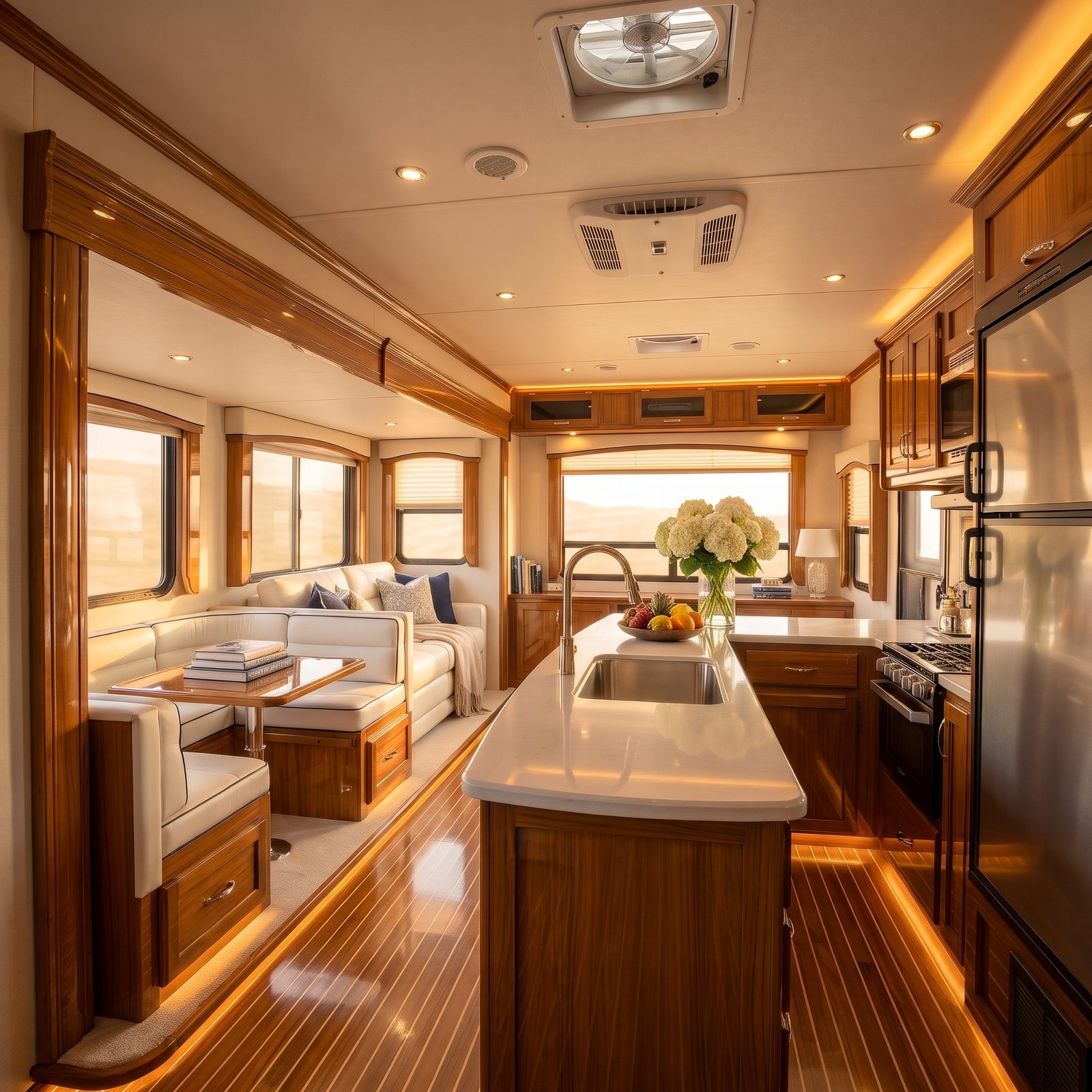
You stand in the bigger rig and the daydream kicks in. The grandkids all stay over. Friends swing by for cards. There’s a drop-leaf table and a convertible sofa and a free-standing dinette because what if six people want dinner at once.
Here’s the honest accounting. The grandkids visit twice a year. The friends talk about coming and don’t. And you’ve just paid for, towed, and will forever maneuver around hundreds of pounds of seating for a crowd that exists mostly in your imagination.
This entertaining fantasy costs real people real money and real backaches. Folks buy houses with formal dining rooms they use once a decade for the same reason. You’re not buying for your actual life. You’re buying for the hospitable version of yourself you’d like to be.
Couples do it choosing a home for the parties they’ll throw instead of the Tuesdays they’ll live. Buy for the Tuesdays. The guests, when they come, will manage.
10. The Dealer’s Deadline Makes an Average Layout Look Great
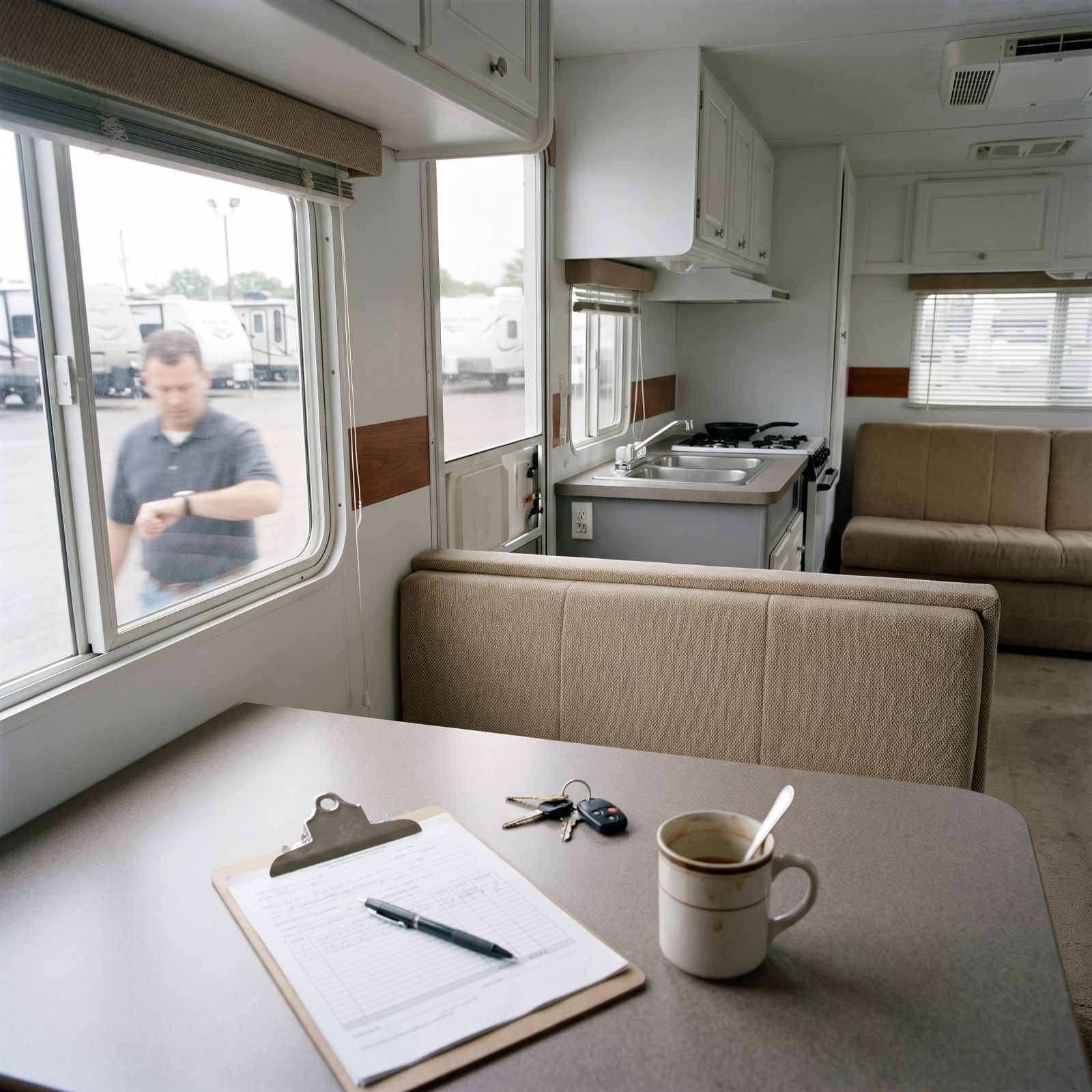
“This price ends Sunday.” “We’ve got two other couples looking at this one.” “Factory order deadline is Friday.” Suddenly the perfectly average layout in front of you sparkles. You stop seeing the awkward galley and start seeing the thing you might lose.
Scarcity rewires judgment on contact. The moment something feels like it’s slipping away, your brain inflates its value and shrinks your patience. The clock doesn’t make the floor plan better. It makes you worse at evaluating it.
It’s the oldest nudge in the book, and it works on hearts too. The relationship that only feels urgent because it might end wasn’t urgent. It was scarce. Tell the difference and you’ve saved yourself a decade.
9. Online RV Owners Can Talk You Past the Red Flags
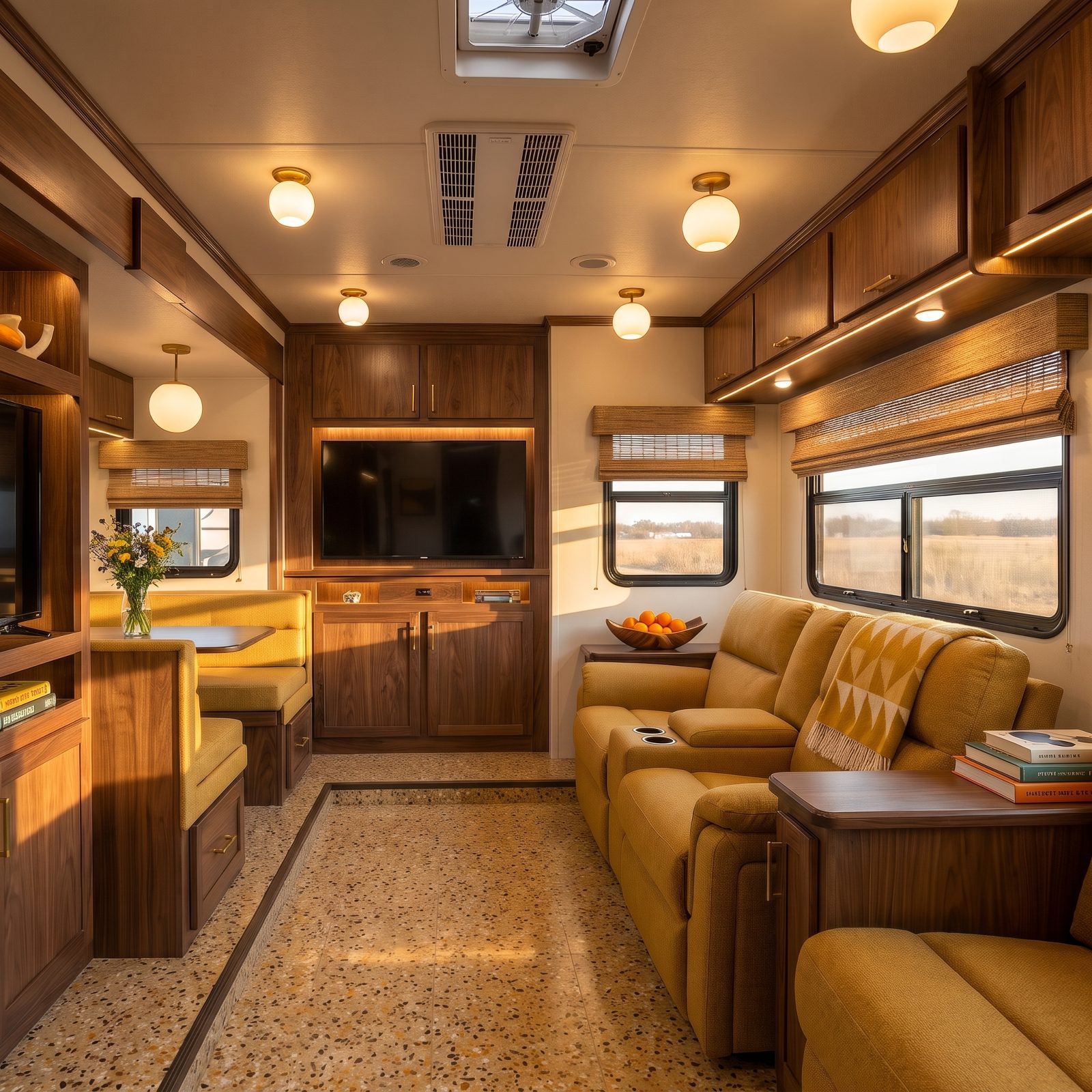
You go online to research the rig, and the forums have already decided. Hundreds of owners, every one of them in love with the same floor plan you’re worried about. Sure, the pass-through storage is tight, but look how happy everybody is. You start arguing yourself out of your own instincts.
What you’re not seeing are the people who bought it, hated it, traded it, and left. They don’t post. The folks who stuck around and kept the rig are the ones filling the threads, and their enthusiasm reads like proof. It’s survivorship bias wearing a smiley face.
Social proof is a powerful drug. When a crowd seems certain, your own doubts start to feel like the thing that’s wrong. It’s the same force that keeps people talking their friends into relationships everyone else can see are a mistake. “But look how in love they seem.” A red flag stays a red flag even when a hundred strangers insist it’s a feature. Trust the thing that caught your eye on the walk-through. It was trying to tell you something.
8. You Learn More With the Slides Pulled In
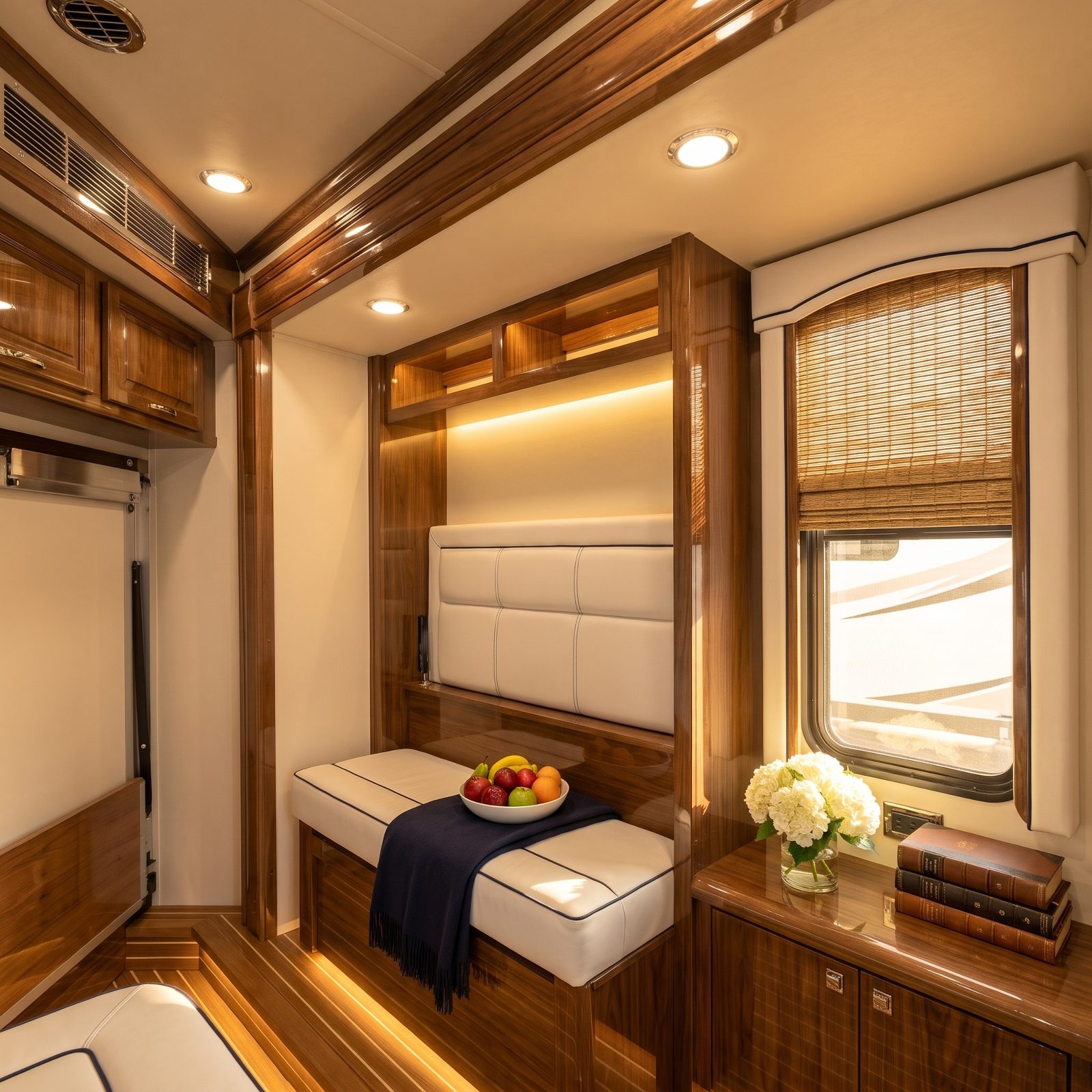
Smart buyers do one thing dealers quietly dread. They ask to see the rig with the slides pulled in. Slides out is the showroom self, roomy and generous. Slides in is the version you live in on a tight campsite, at a rest stop, on a travel day when you need to grab lunch without deploying the whole living room.
That retracted footprint is the real one. Can you reach the fridge? Get to the bathroom? Pass each other without a negotiation? If the layout only works when it’s fully expanded, it doesn’t actually work.
People show themselves the same way — not at the dinner party, but on the ordinary Tuesday when nobody’s performing. Watch the slides-in version of anything before you commit. That’s the one you’ll be living in most days of the year.
7. You Say Storage Matters, Then Never Open the Cabinets
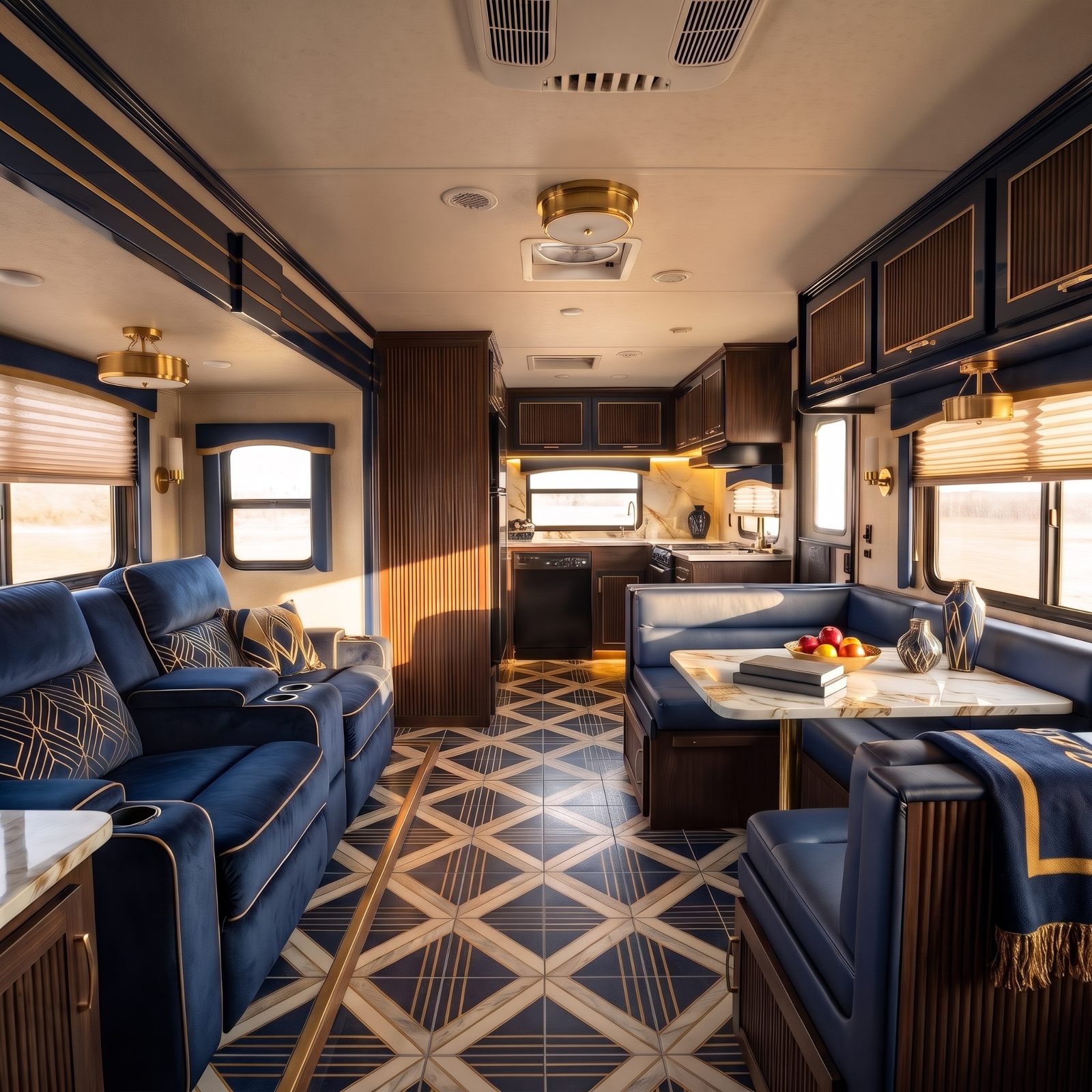
You announce it on day one. “Storage is everything. We need real storage.” Then you walk the floor plan and never open a single cabinet. You admire the counter, sit on the sofa, check the bed. The thing you swore mattered most, you don’t inspect at all.
Open the doors. Pull the drawers. Half of them are shallower than they look, carved up by wheel wells and plumbing you can’t see from the front. The handsome cabinetry is a face, and the volume behind it is the marriage.
We do this constantly. We state a priority out loud, then make the decision on the surface stuff our eyes land on first. It’s the gap between what we claim to care about and where we actually point our attention — the same way someone insists they want a partner who listens, then falls for the one who talks the best game at dinner.
The cabinets won’t lie to you. But only if you open them. Go open them.
6. A Private Bedroom Feels Romantic Until Someone Snores
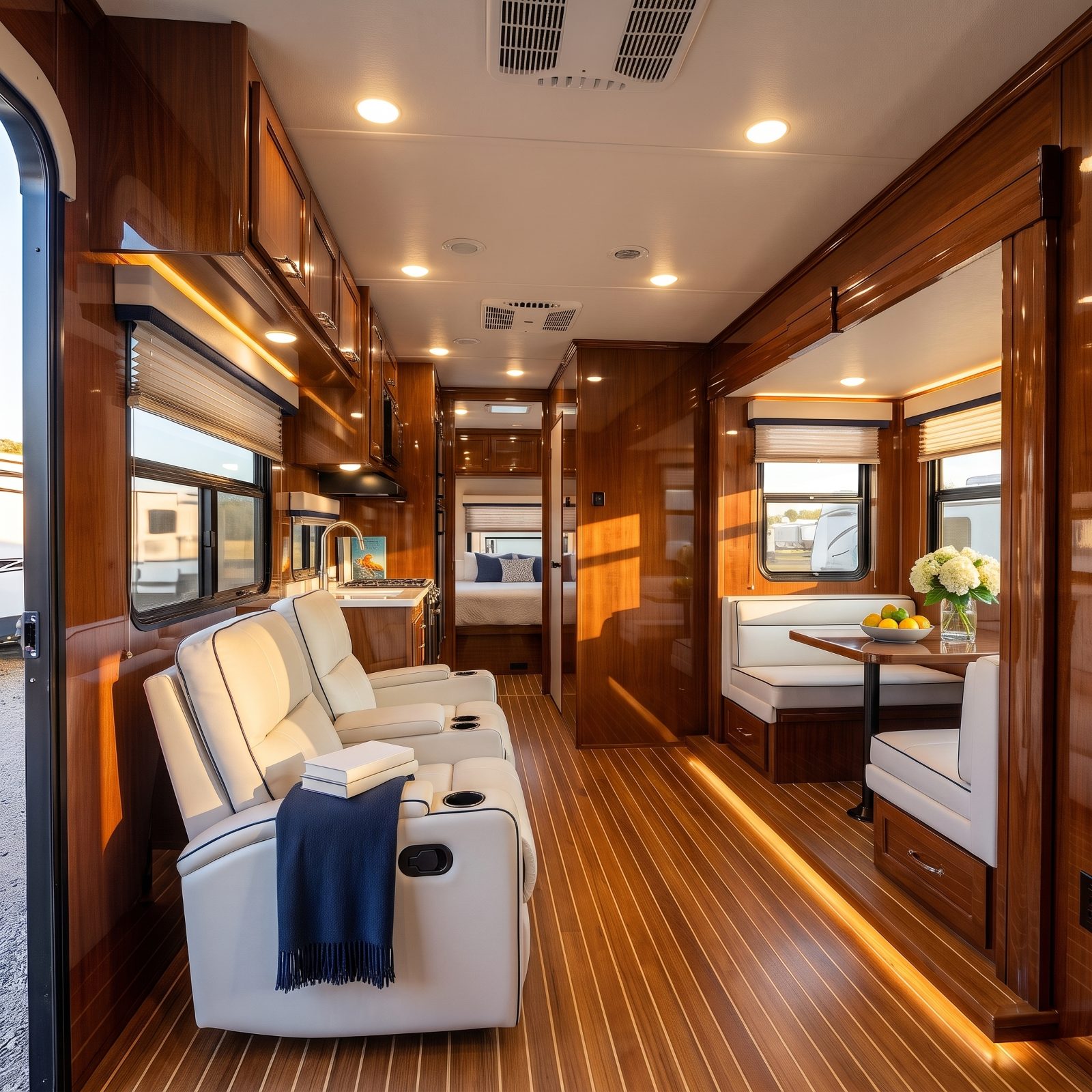
The brochure shot of the rear bedroom sells a dream. A door that closes, a real mattress, a little pocket of privacy after a day of driving. You picture quiet evenings and nobody tripping over you at midnight.
Then comes night one, and you learn that an RV bedroom is a resonance chamber. Thin walls, hard surfaces, maybe eighteen inches between your face and your partner’s. Every snore, every late phone scroll, every rustle of the quilt arrives in crisp high fidelity. The door that felt romantic just traps the noise in with you.
Same story as the first bedroom you ever shared with somebody. You wanted intimacy and signed up for a front-row seat to sleep habits you never knew existed. What you think matters — privacy — and what actually makes or breaks the night — noise, airflow, whether the mattress sags toward the heavier sleeper — are two different animals. So lie down on the lot. Pull the door shut. Notice how close that wall is. The feature you fall for is rarely the one you live with.
5. One Awkward TV Angle Can Become a Daily Argument
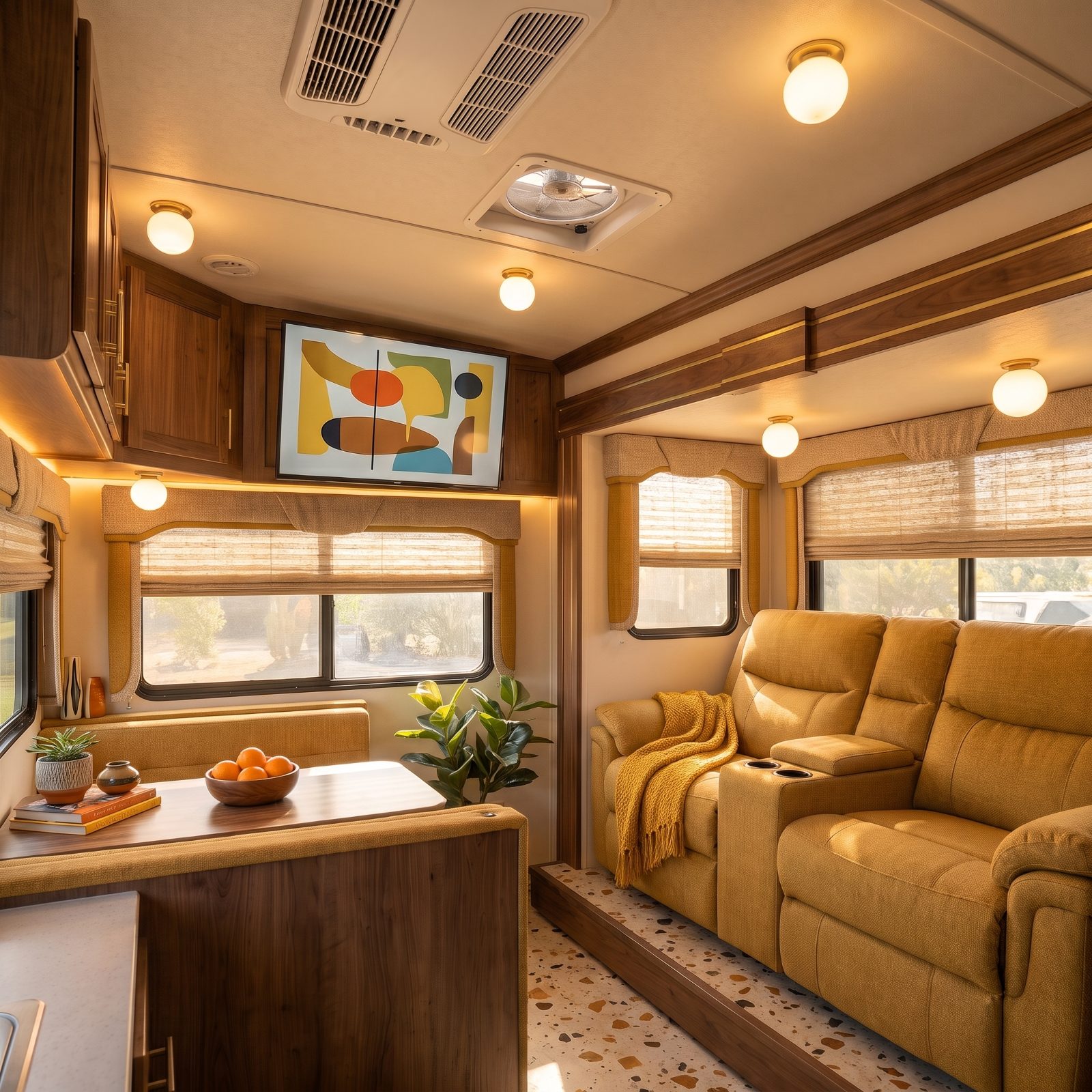
Nobody clocks the TV placement on the showroom floor. It’s off, and you’re too busy admiring the leather recliners. Then you get home, settle in for a movie, and realize the screen sits up near the ceiling at an angle that puts a crick in your neck by episode two.
Small thing. Tiny thing. And it becomes the thing you fight about, because the irritation shows up every single evening and never once resolves itself.
This is exactly how the toilet-seat argument works. The conflict is never really about the toilet seat or the screen angle — it’s about a minor friction repeated daily until it stands in for everything. Call it the focusing illusion: a small recurring annoyance grabs attention way out of proportion precisely because it keeps coming back. Sit in the actual seats and look at the actual screen before you sign. Grand features rarely cause divorces. The daily geometry does.
4. A Giant Bathroom Usually Means Sacrificing Something Else
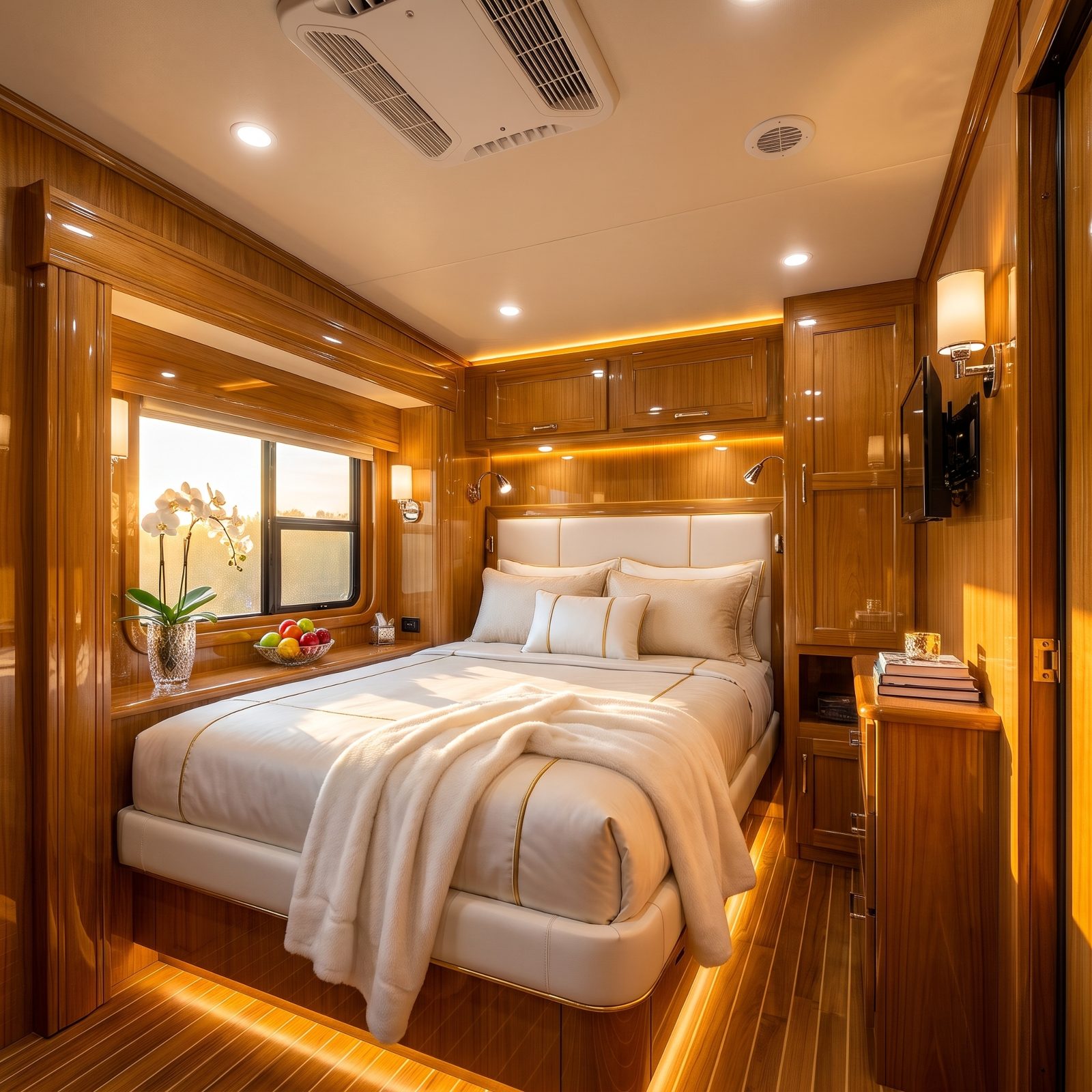
A huge RV bathroom sells itself in about four seconds. You walk in, turn around without clipping a wall, spot a real shower — sold. And you stop examining the rest of the rig entirely.
What the big bathroom never admits is that the space came from somewhere. Usually the kitchen shrank. Or the pantry vanished. Or the living room lost a slide. An RV is a fixed box, and when you give one zone room, another zone foots the bill.
People pull this stunt with partners too. One dazzling quality — the looks, the charm, the one amazing thing — floods the whole evaluation, and you quit noticing what got quietly traded away. The halo effect: a single strong feature convinces us everything else must be fine. It usually isn’t. We just stopped looking.
3. You Mistake More Square Footage for Better Compatibility
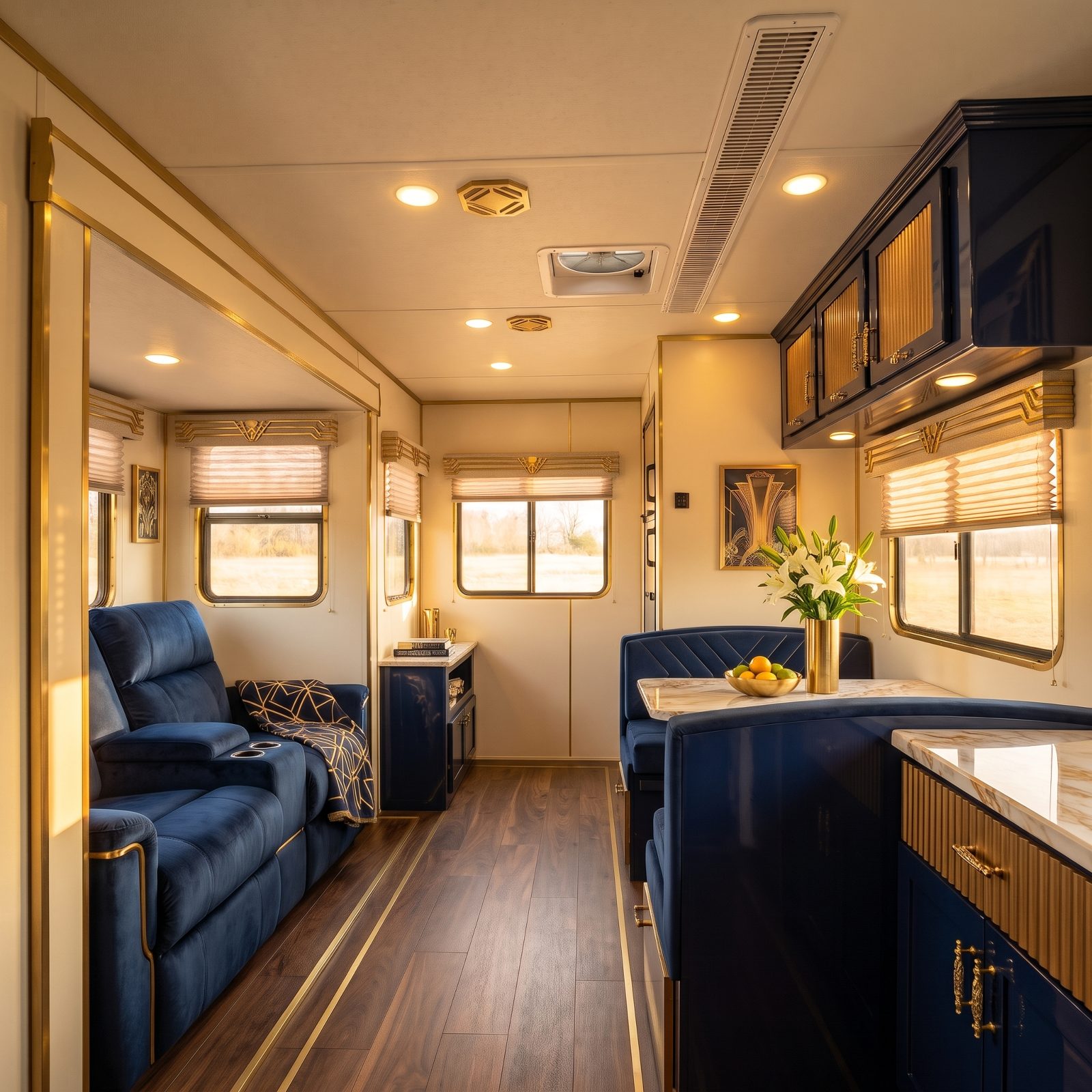
Bigger reads as better. More slides, more floor, a kitchen island you could land a plane on. You stand in a 43-foot diesel pusher, feel the relief of all that room, and start believing the size will fix everything.
It won’t. A huge rig is harder to park, harder to drive, harder to find a site for, and weirdly lonelier — now two people rattle around a space built for a family reunion. Square footage doesn’t manufacture connection. It just hands you more rooms to not talk to each other in.
This is the same busted math people run on relationships, figuring more money, more house, more grand gestures somehow adds up to more compatibility. It doesn’t. Fit is about how the daily rhythms mesh, not how much there is to go around. Past a modest threshold, more space and more stuff stop adding happiness at all. The comfortable 30-footer you can actually drive beats the showpiece you’re afraid to back into a site. Plenty of owners learn that the expensive way, so you don’t have to.
2. Resale Value Starts Influencing a Very Personal Decision
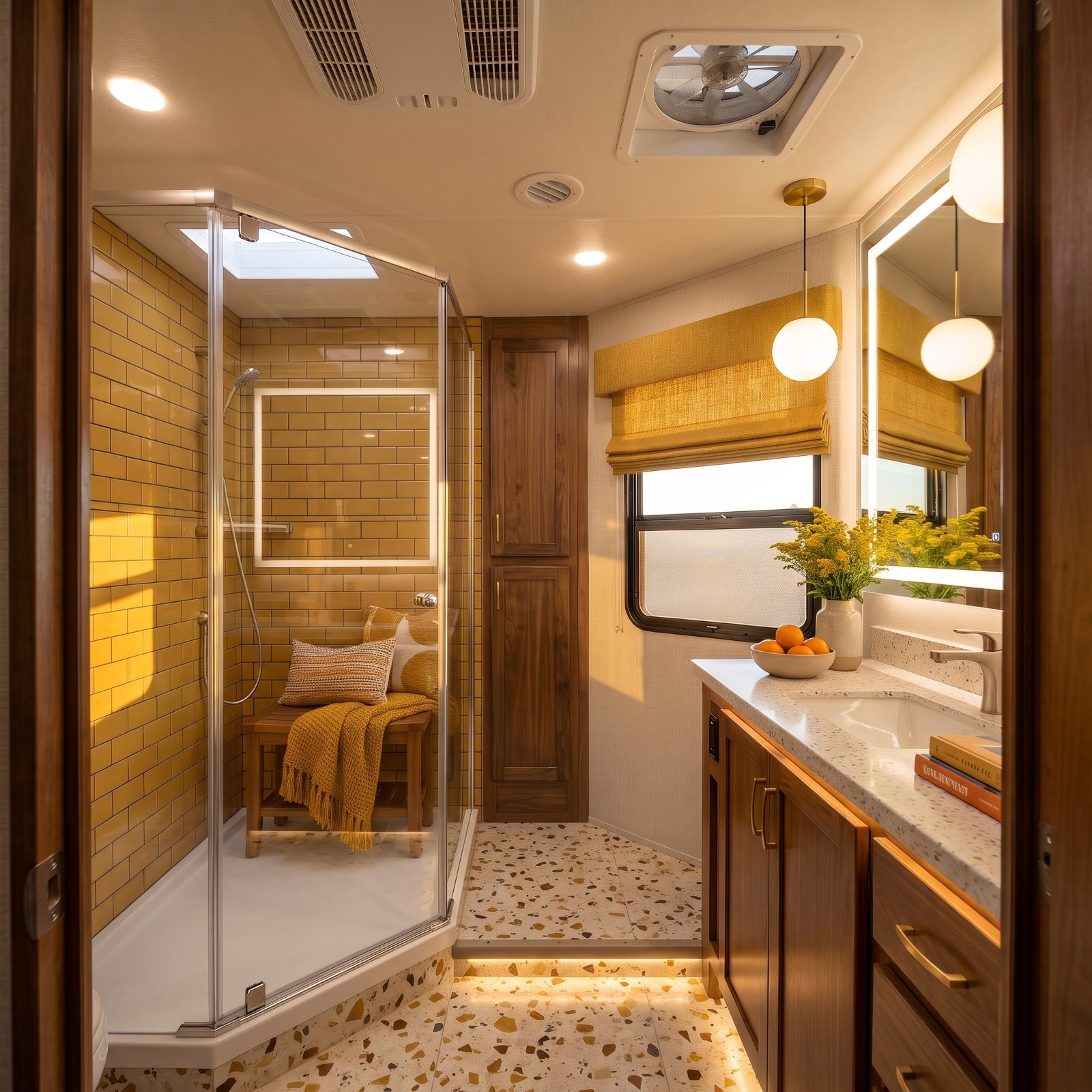
You find the floor plan you love. Then the little voice pipes up: but how will it resell? Bold color, quirky layout, that one weird feature you adore — all of it gets second-guessed because someday, hypothetically, a stranger has to want it too.
So you talk yourself into the beige. The safe layout nobody loves and everybody tolerates. You bought it for a buyer who doesn’t exist yet, and you’re the one who has to live in it for years first.
People do this with partners constantly, picking the option that looks sensible to the imaginary audience in their head over the one they genuinely want. Call it anticipated regret stirred together with social proof. We weigh the imagined judgment of strangers against our own daily happiness, and happiness loses.
1. You Need Room to Change as Your Travel Style Changes
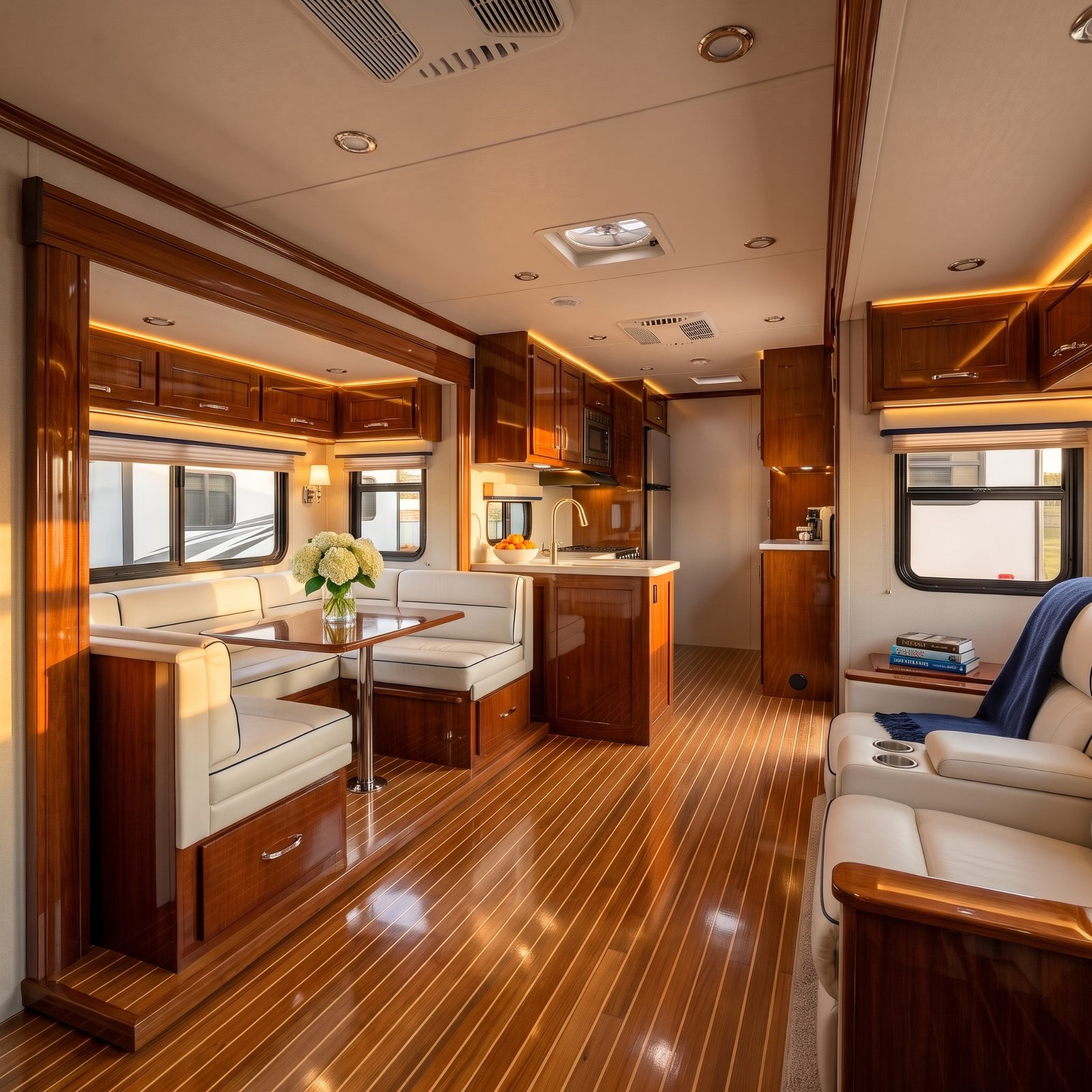
The way you camp now is not the way you’ll camp in five years. Weekend warriors turn into snowbirds. Snowbirds turn into full-timers. Full-timers suddenly need a desk because one of them picked up remote work. The floor plan you buy for today’s life has to survive a life you haven’t even met yet.
Rigid layouts punish you for changing — a dinette bolted to the floor, a bedroom that can only ever be a bedroom, a single-purpose everything. Convertible spaces let you become a slightly different traveler without buying a whole new rig. Murphy beds, flip sofas, a table that doubles as a work surface. That kind of thing.
Here’s the quiet truth under every long partnership, too. You aren’t choosing a fixed person for a fixed life — you’re choosing someone to keep changing alongside, and what lasts is the flexibility, not a perfect snapshot of right now. We’re wired to size up the present and forget that both of us are moving targets. Psychologists call it the end-of-history illusion: we assume we’ve finished becoming ourselves, and we’re wrong every single time. Buy the floor plan that can keep pace with who you’re turning into.