
A campground at 10:15 PM tells you everything. The sites that went dark and quiet belong to people who’ve done this a while. The one still running a generator with a floodlight blazing and a kid’s cartoon leaking through thin aluminum walls? Somebody’s first weekend out. Nobody hands you a rulebook when you buy a rig. The courtesies that keep a place pleasant live in the heads of folks who learned them the hard way, usually by being the one who broke a rule and caught the stares. Here’s what the veterans already know, so you can skip the part where the whole row quietly resents you.
Please note that some of the images in this article were created with the assistance of AI.
26. Respect Quiet Hours After 10 PM
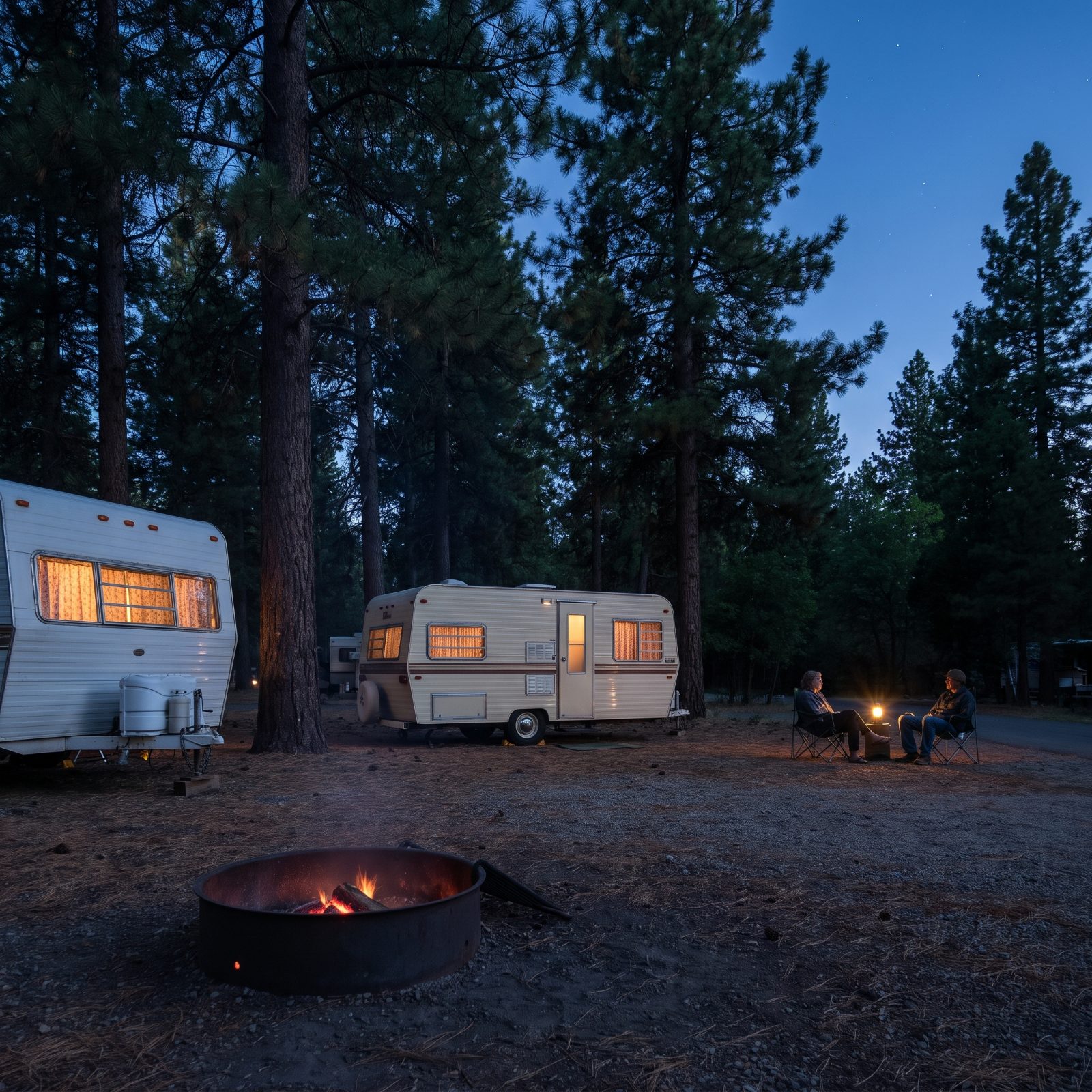
Quiet hours aren’t some rule posted by killjoys. They’re the one thing deciding whether your neighbors sleep. Sound carries strangely after dark, bouncing off rigs and skating across open sites in a way it never does at noon, so the laugh that felt normal at your fire pit lands like a dropped pan three sites over.
Most parks set it at 10. Veterans don’t wait for the clock. By a quarter to ten the volume’s already dropping on its own, because somebody knows the family that drove nine hours with a cranky toddler is finally down for the count.
25. Shut the Generator Down During Quiet Hours
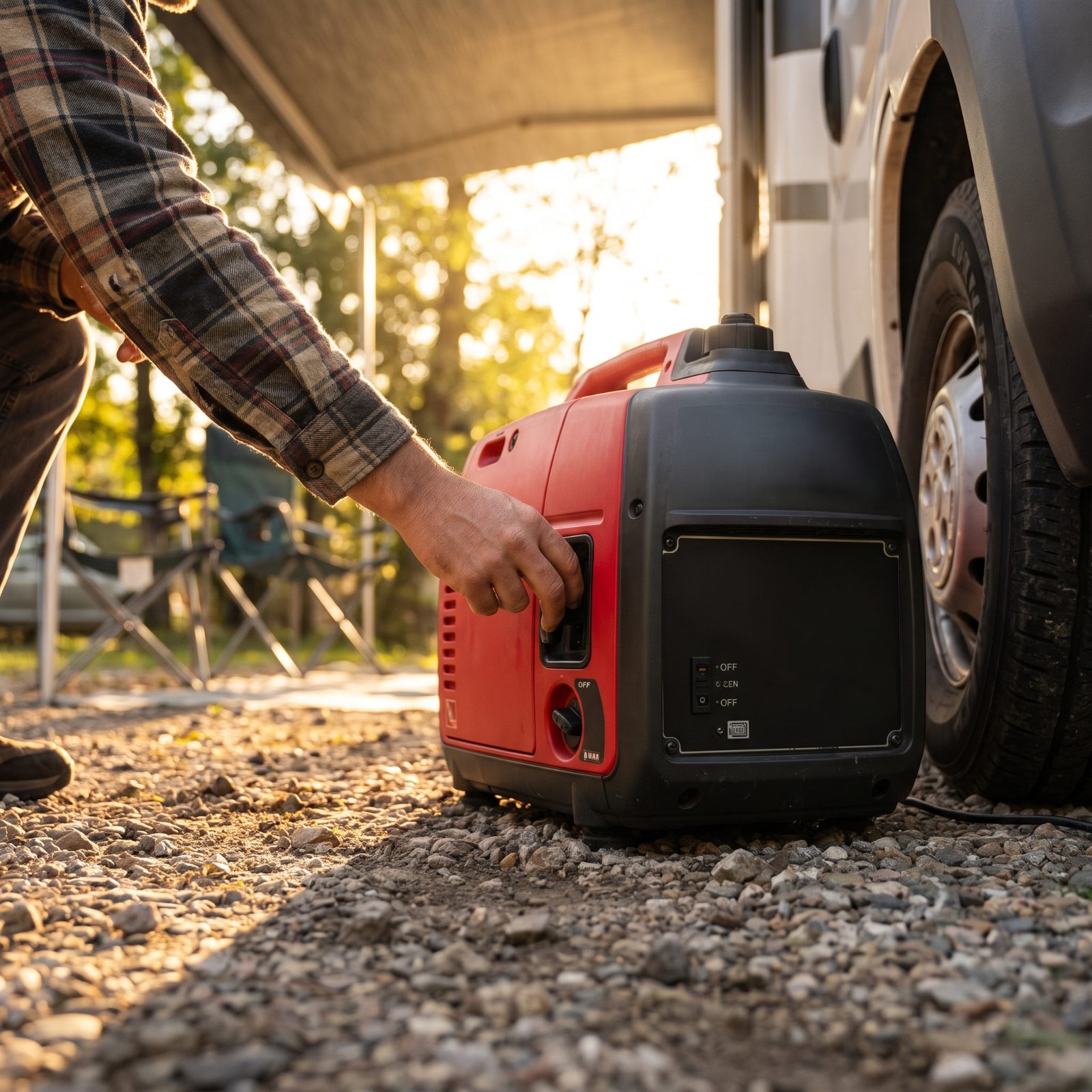
A generator is the loudest thing most beginners bring, and the one they’re least aware of. Running yours at 11 because your batteries are low isn’t a quiet-hours gray area. It’s the single fastest way to earn a row full of enemies.
Now, the newer inverter units are genuinely quiet at low load. The old open-frame contractor models, though? They sound like a lawnmower idling under your window. Know which one you own before you convince yourself you’re being polite. If you need power overnight, that’s a sign to look hard at your battery setup or book a site with hookups, not a reason to make the whole loop listen to your engine chug through breakfast.
24. Walk Around Your Neighbor’s Site, Not Through It
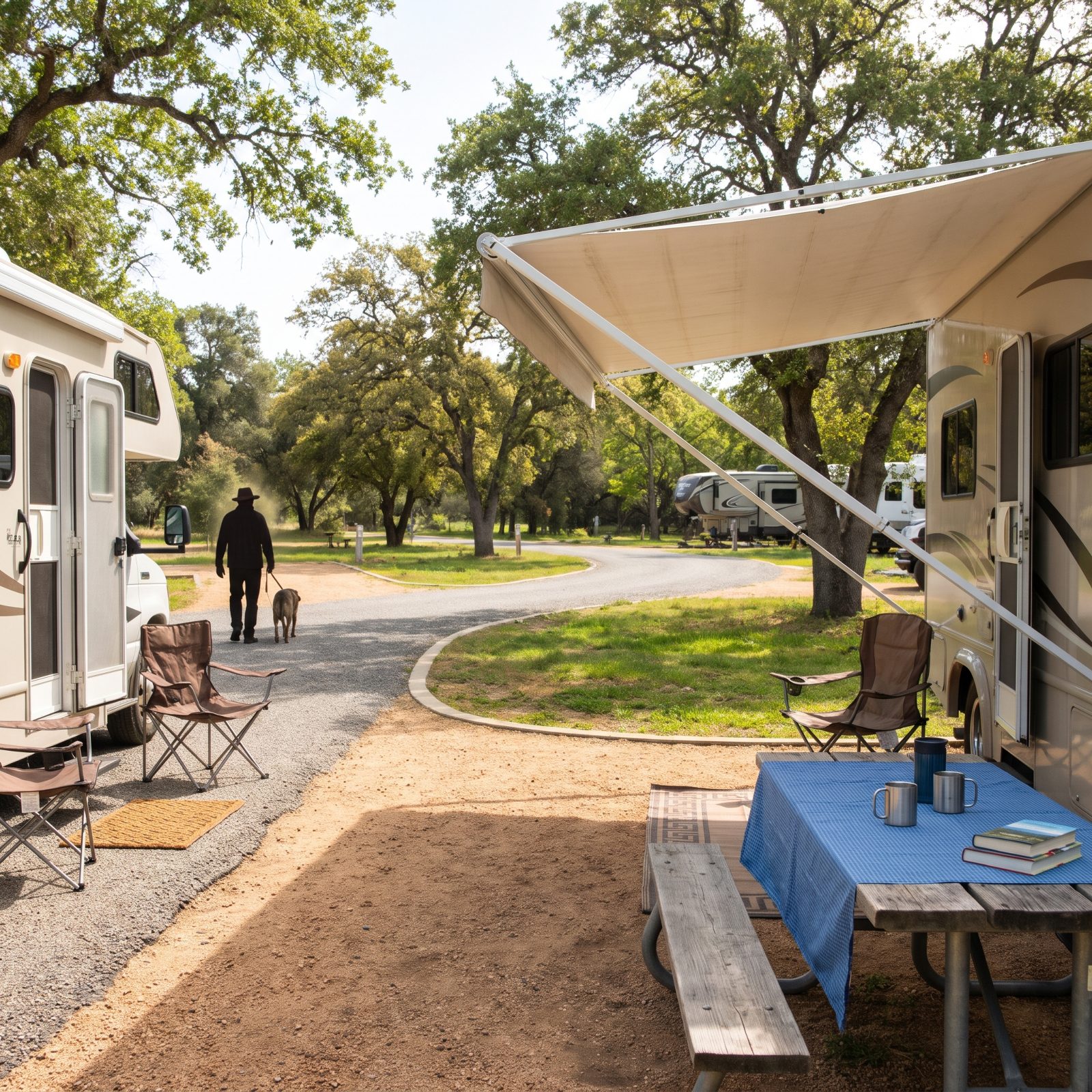
A campsite is somebody’s temporary front yard. You wouldn’t cut across a stranger’s lawn to save thirty steps to the bathhouse, and the same courtesy holds here even though there’s no fence to remind you.
That ground between the picnic table and the fire ring is where people kick off their shoes, leave a paperback facedown, let the dog settle in the shade. Walking through it feels like someone trimming the corner of your living room on their way to raid the kitchen. Take the road. Take the path. It’s rarely more than a few extra feet, and it tells your neighbors you see their patch as theirs.
23. Never Dump Gray Water on the Ground
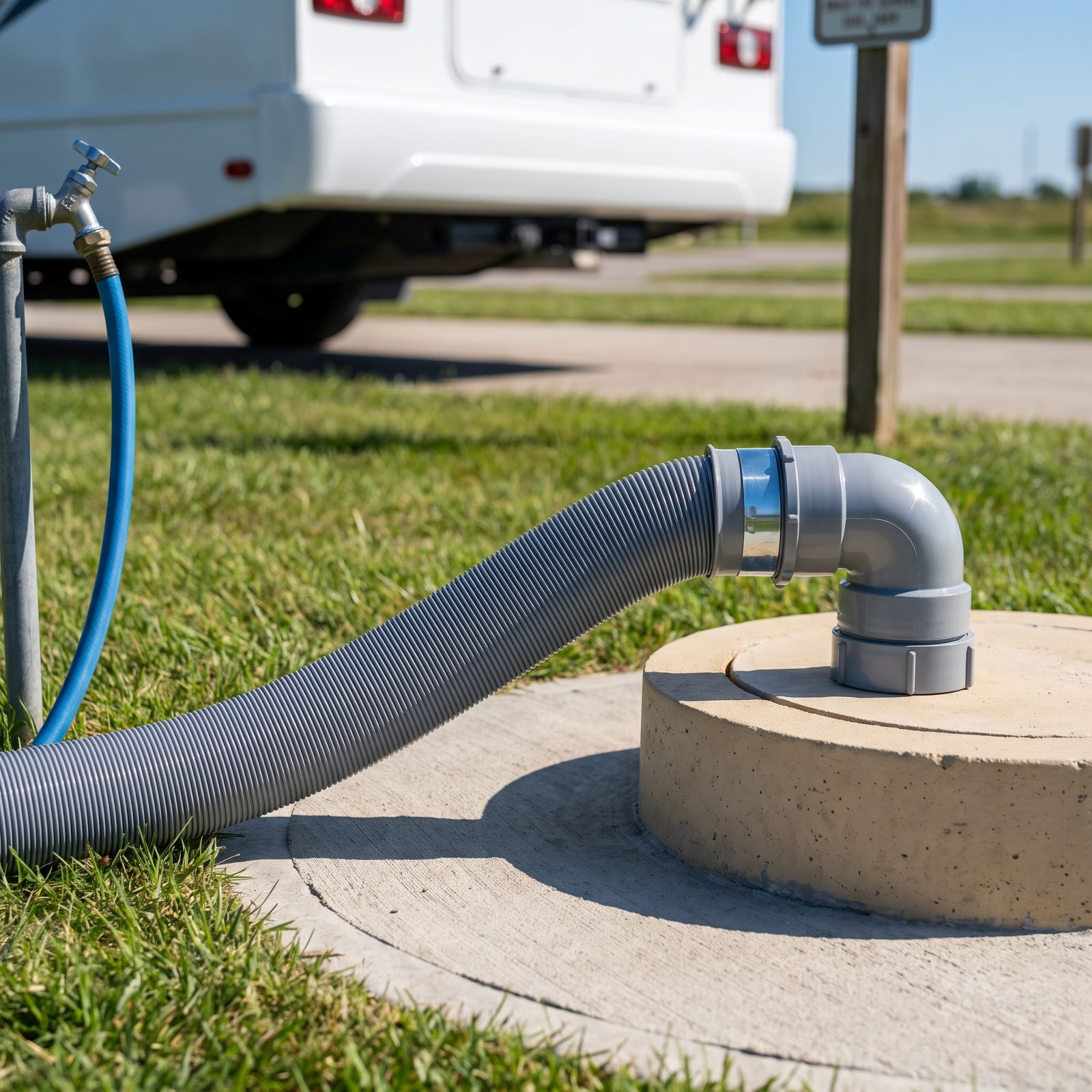
Some beginners figure gray water is harmless because it’s just dish and shower runoff. It isn’t. It carries soap, grease, food bits, and a smell that sinks into the dirt and lingers for whoever parks there next.
Draining your gray tank onto the grass to dodge a trip to the dump station breaks the rules at nearly every developed park, and for good reason. It pools. It stinks. It draws flies and critters you’d rather not meet at 2 AM. Use the dump station or a proper portable tote. The patch of ground you’re watering down is somebody’s campsite next week.
22. Keep Your Dog Leashed at All Times
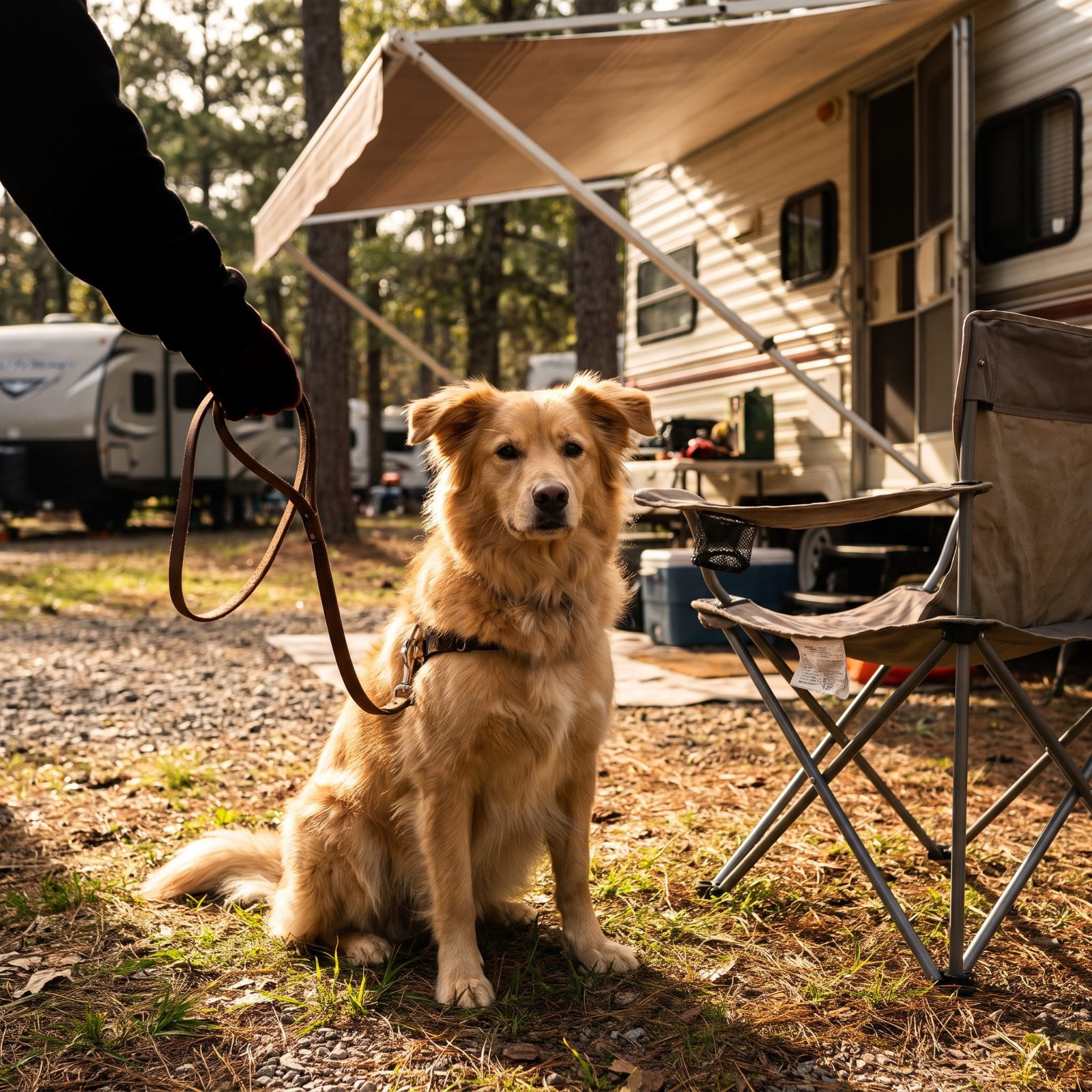
Your dog is friendly. You know this. The kid three sites over who’s terrified of anything bigger than a terrier does not know this, and neither does the leashed dog about to meet yours whether either owner wants it to happen or not.
A leash isn’t really about whether your dog behaves. It’s about the stuff you can’t control: the wildlife smell that overrides every command you’ve ever drilled into him, the quick dart into a road where someone’s backing in a thirty-foot fifth wheel. Six feet of lead keeps your good dog from becoming a story people tell. Almost every park requires it, and the ones that don’t still appreciate it.
21. Pick Up After Your Pet, Right Then
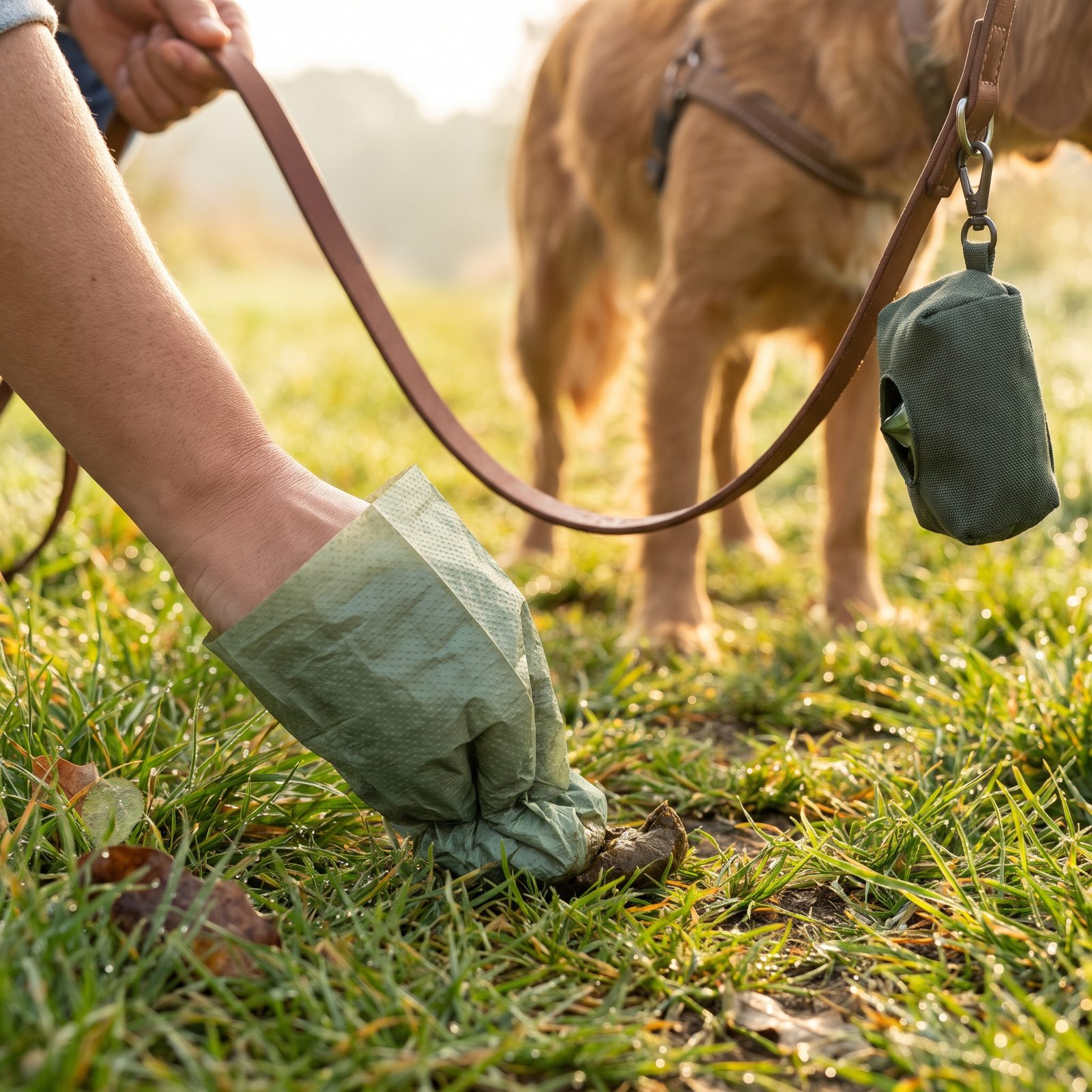
“I’ll grab it on the way back” is how campgrounds turn into a minefield along every trail. You won’t grab it on the way back. You’ll forget, and someone in flip-flops finds it instead.
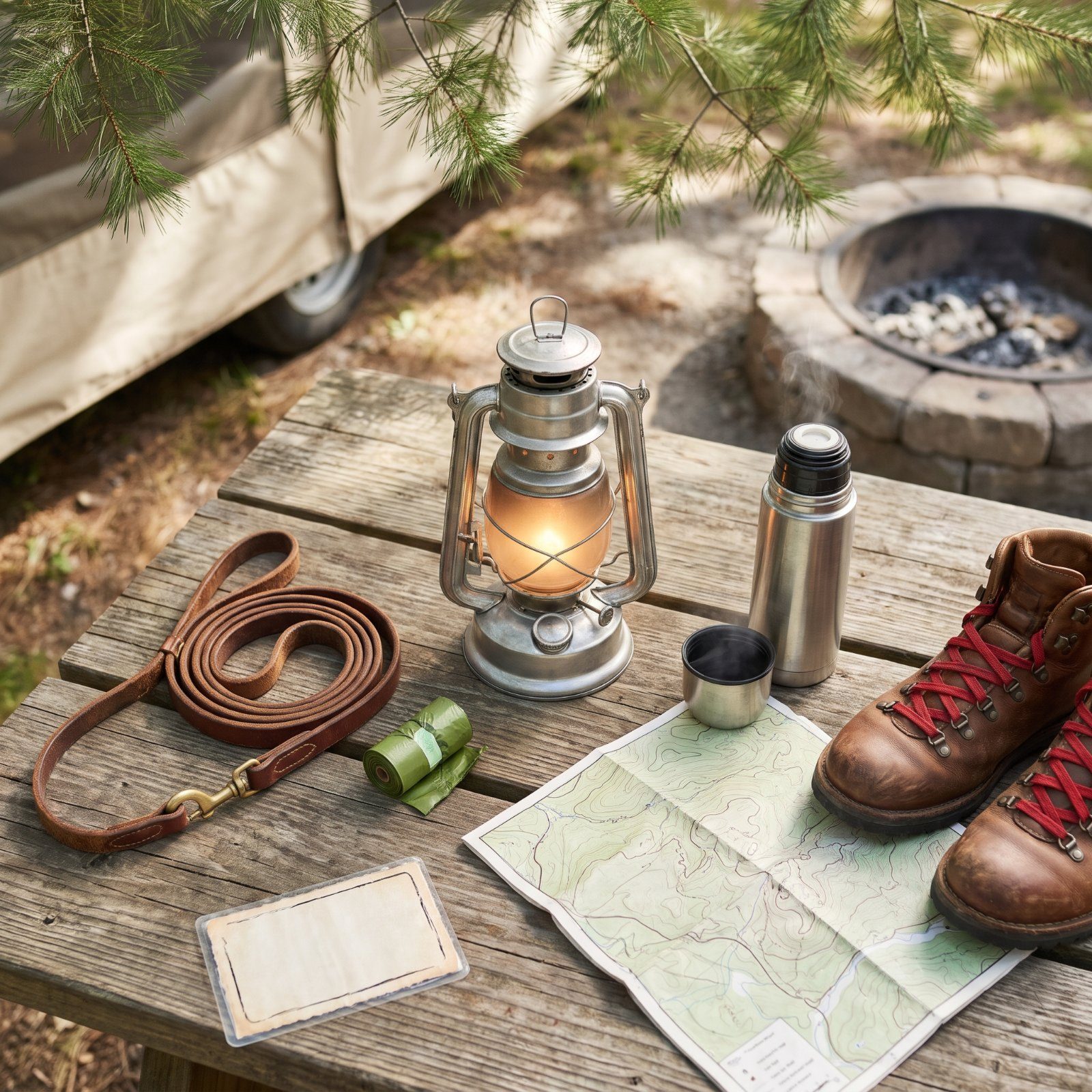
Pick it up the moment it happens, bag it, carry it out. The bags weigh nothing. Clip a roll to the leash so you’re never caught short, because the one time you forget is always the time you need it.
20. Don’t Leave a Dog Barking While You’re Gone
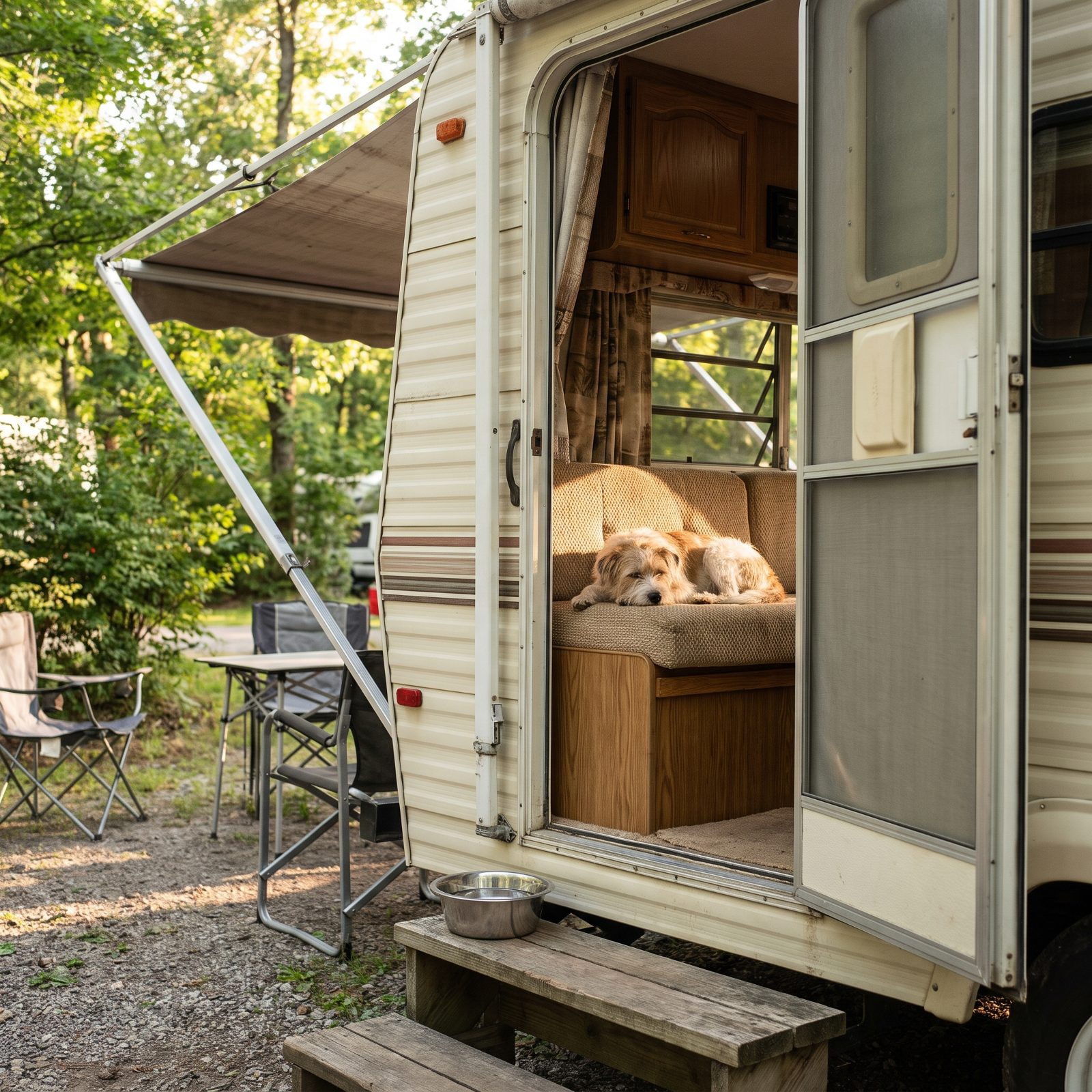
This is the goal: your dog dozing on the dinette cushion by the open door, water bowl on the step, camp chairs still set up under the awning because you haven’t gone anywhere. Now picture driving off to the trailhead and leaving him locked in the rig. He might bark the entire four hours you’re gone, and you’d have no clue, because you’re not the one stuck hearing it.
A dog left alone to howl is the complaint that gets people asked to leave. If yours can’t settle without you, that’s a real limit on how you camp, not something to wave off and hope works out. Take the dog along, hire a sitter, or pick spots where you don’t have to vanish for half a day. The neighbors eating lunch twenty feet from your howling trailer have opinions, and they’re correct.
19. Dim Your Exterior Lights Once It’s Dark
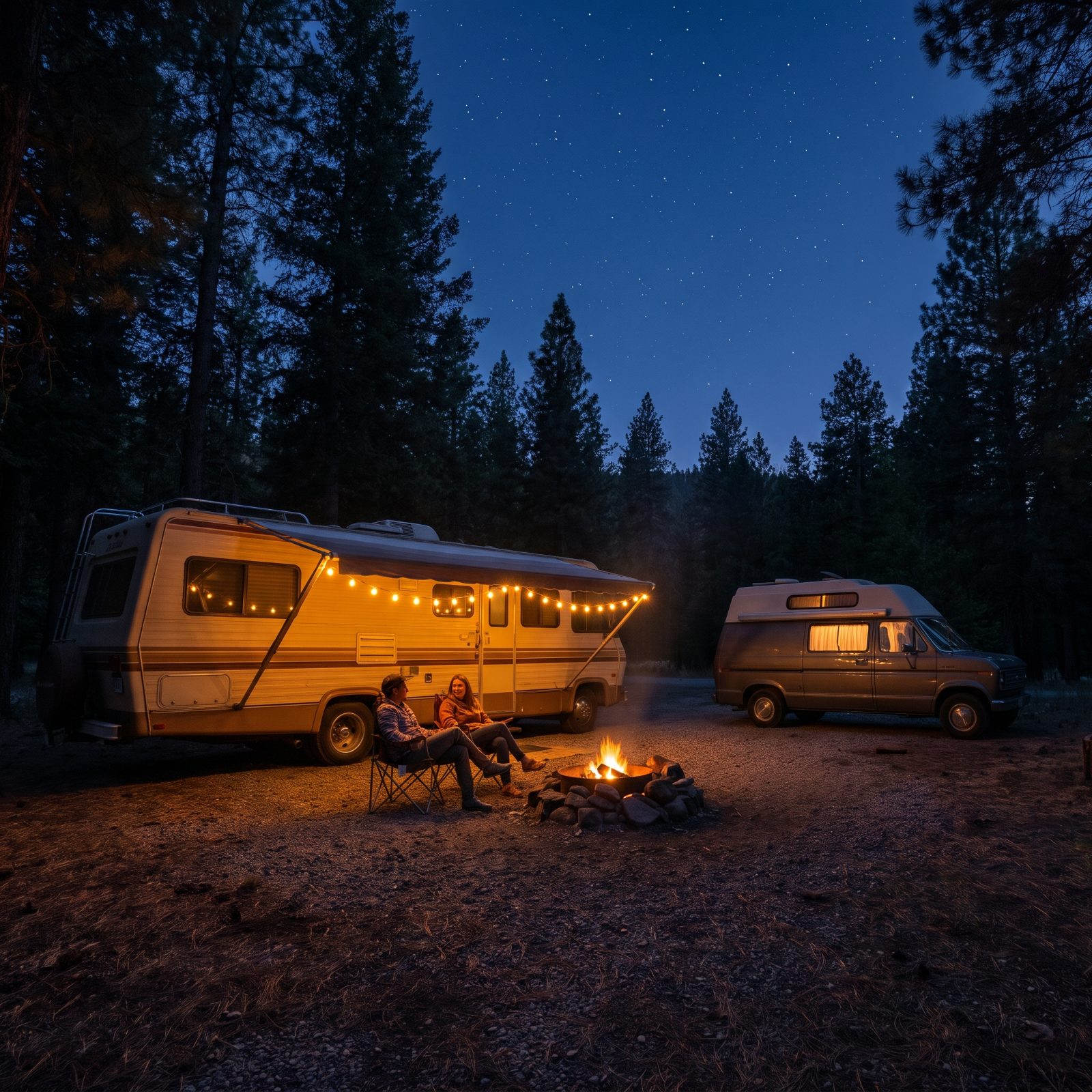
Part of why people come to a campground is the dark. Real dark, the kind with stars you can’t see from a driveway back home. One rig blazing a 3,000-lumen porch light wipes that out for everyone in sight of it.
Nobody’s asking you to sit in blackness. Soft string lights under the awning are perfect. Those bright white security floods are the trouble, pouring into your neighbor’s bedroom window and bleaching the sky overhead. Switch them off once you’re settled, and let the campground go dark the way it’s meant to.
18. Keep Your Headlights Off a Neighbor’s Rig at Night
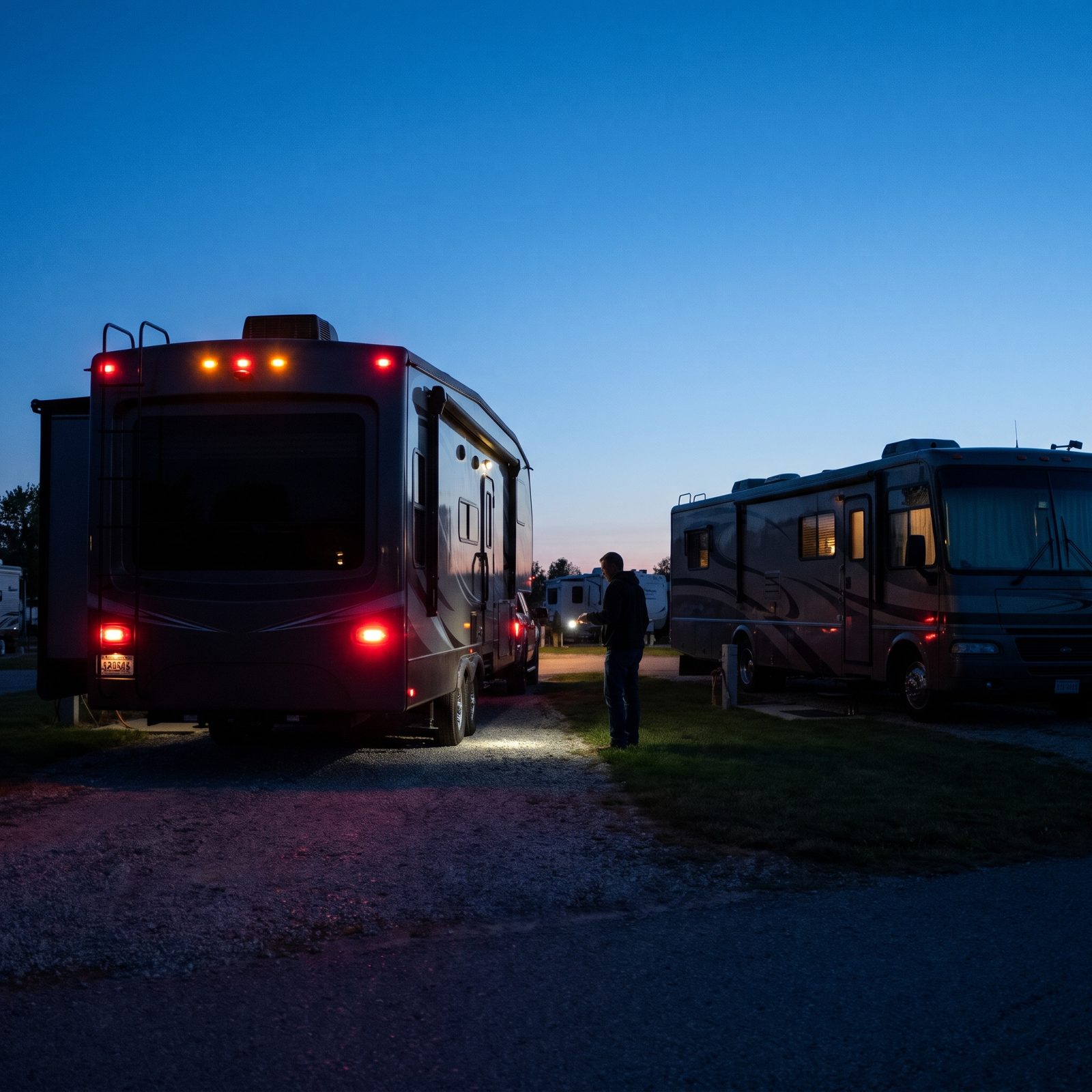
Arriving after dark happens to everyone eventually. The traffic, the wrong turn, the day that ran three hours past the plan. What separates the courteous from the clueless is what happens to those front lights once the rig is parked, even with the tow vehicle still hitched up front.
A beginner leaves the tow vehicle’s headlights burning after setup, aimed straight into the neighbor’s big picture window and lighting up their living room like an interrogation. A veteran switches them off the moment the rig is settled, finishes setup with a dim flashlight, and takes an extra minute to make sure nothing is shining into anyone’s window. Roll in late and quiet and careful, and most people never even know you were there. That’s the whole goal.
17. Point Your Campfire Smoke Away From the Neighbors
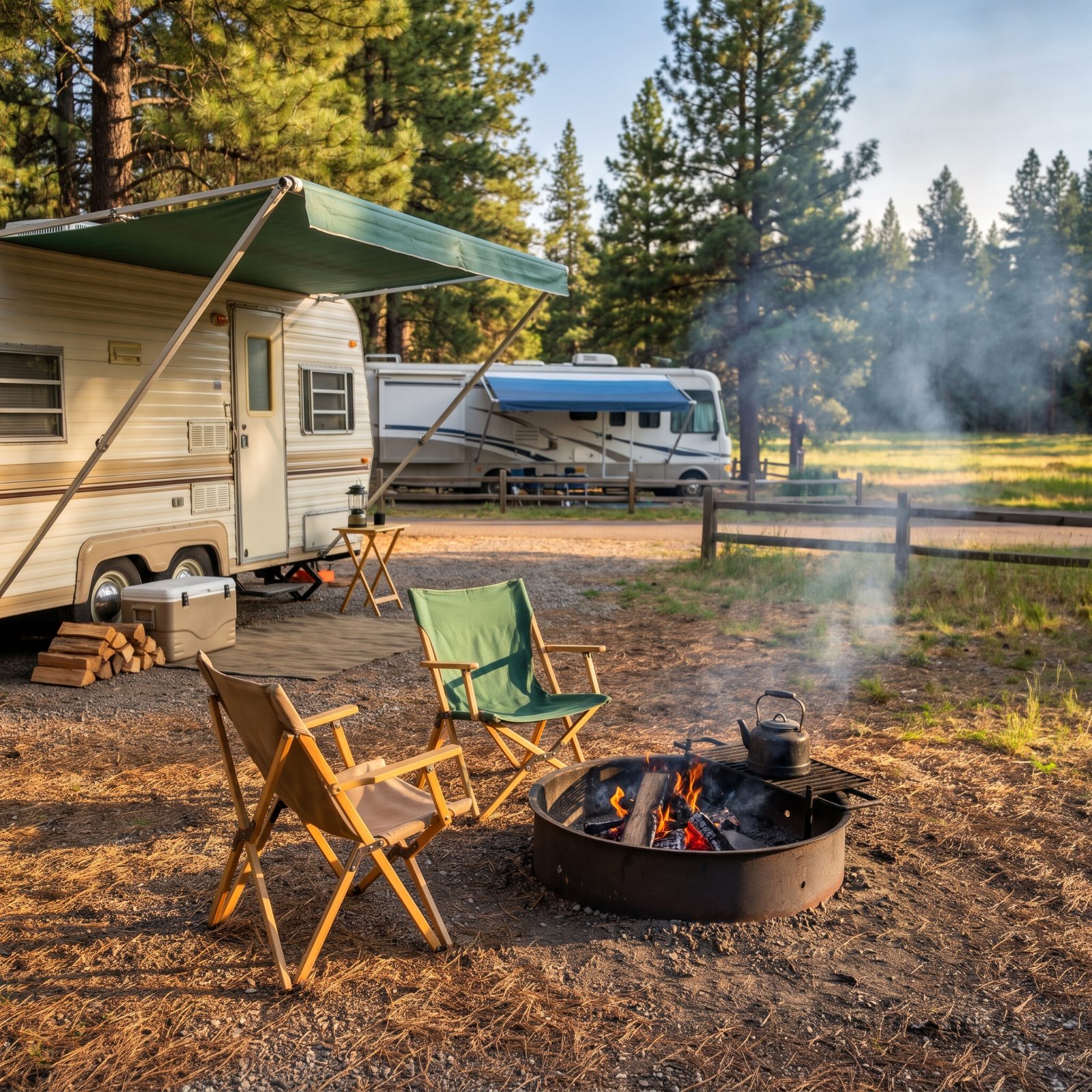
Smoke has no manners. It drifts wherever the breeze sends it, and the breeze does not care that your neighbor just set dinner out on their picnic table.
Read the wind before you light up. A fire built on the downwind edge of your pad keeps the haze rolling away from occupied sites instead of straight into someone’s open windows. And here’s where the wood matters more than most people realize: dry, seasoned hardwood smolders far less than the damp chunks half the camp store sells. Green wood is the real villain. You can smell it from three sites over, long before you spot the gray cloud.
16. Never Walk Away From a Lit Fire
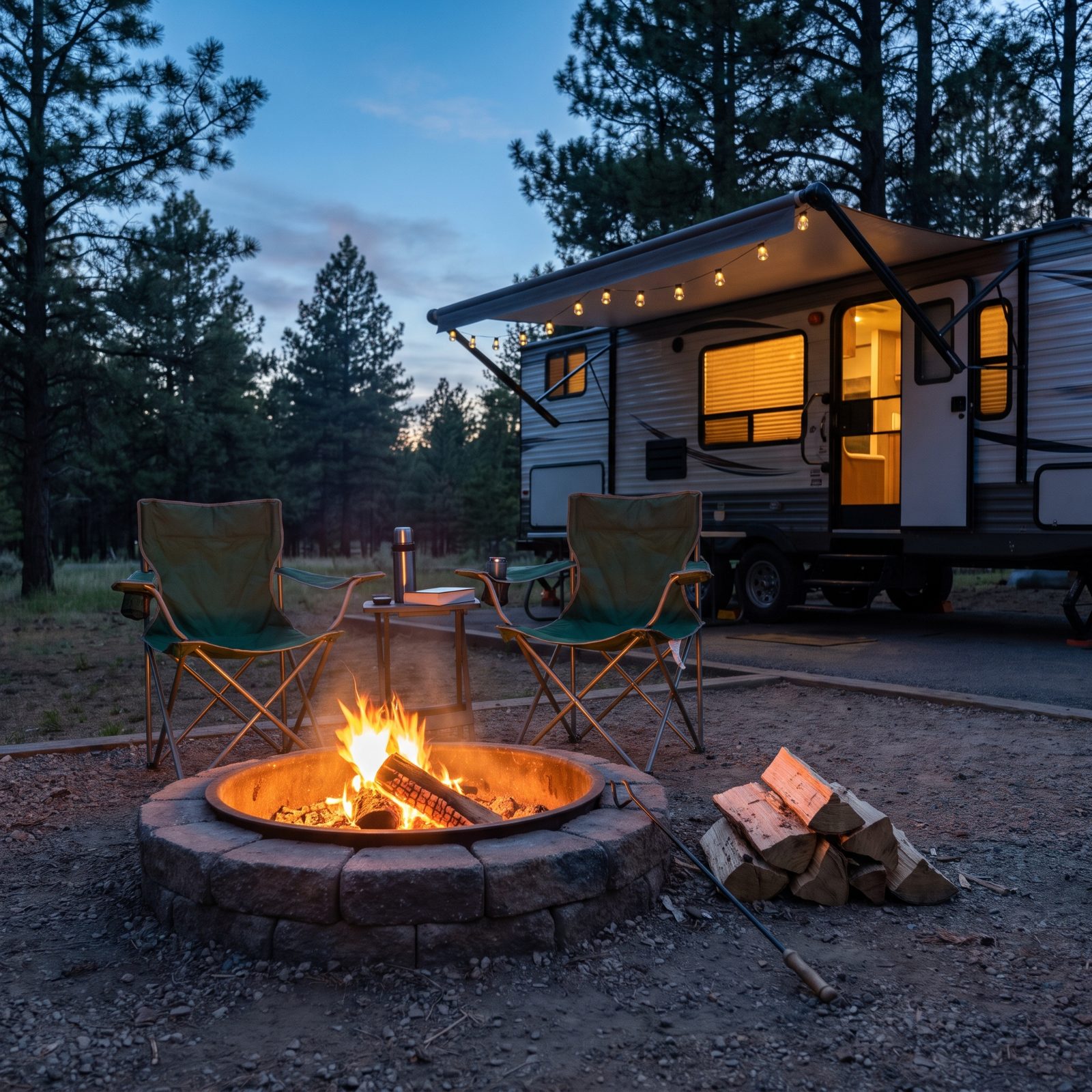
A fire left alone for “just a minute” is how most campground incidents start. A gust lifts an ember, it lands in dry grass, and your minute turns into a very bad evening.
If everyone’s heading to the restroom or walking to the camp store, bring the fire down to coals first or leave someone behind. No exceptions. No “it’ll be fine.” A campground packs rigs, propane, and dry pine close together, which means your fire is never really just yours.
15. Drown It Dead Before You Crawl Into Bed
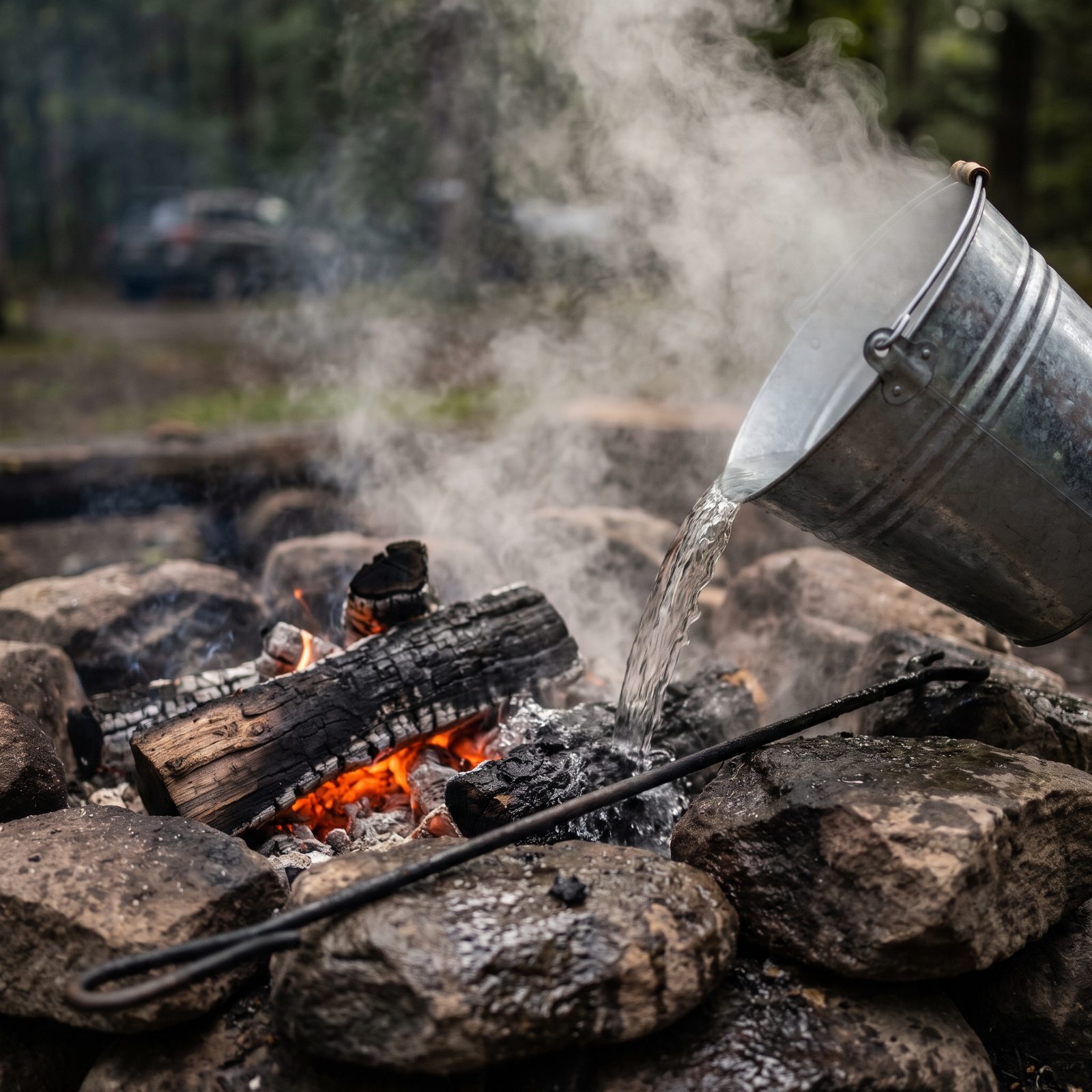
If it’s too hot to touch, it’s too hot to leave. That’s the only test that matters when you’re drowning a fire for the night.
Pour water, stir the ash with a stick, pour again. Coals hide heat deep in the pile and reignite hours after you’ve zipped the camper shut. Keep going until the hissing stops and you can hold a bare hand over the ash without flinching.
We used to think a good stir and a light splash did the job. Then we watched a “dead” fire smoke back to life at two in the morning. Now we use twice the water we think we need, and we still go back and check.
14. Leave the Fire Ring Ready for the Next Camper
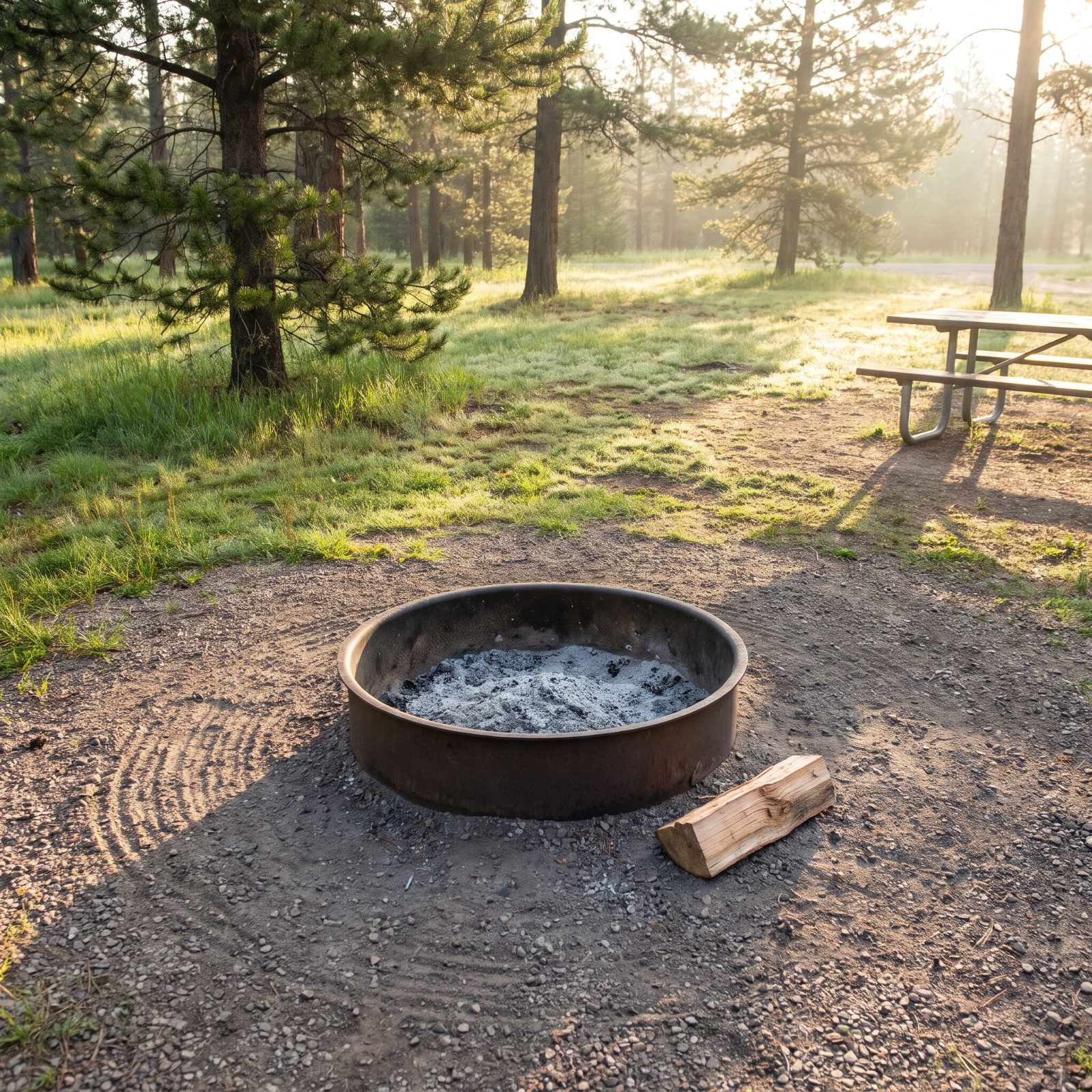
Pull into a site and find a fire ring crammed with melted beer cans, foil, and the charred remains of somebody’s dinner, and you already know exactly what kind of camper left it. Don’t be that camper.
Foil and cans don’t burn. They just sit there looking miserable and leaching into the ash, so pack them out with the rest of your trash. A quick rake of the cold ash and a tidy ring says more about you than any bumper sticker ever could.
The old rule still holds: leave it better than you found it. Some folks even stack a few pieces of unused firewood for whoever rolls in next. Small gesture. People remember it.
13. Don’t Camp Out at the Communal Water Spigot
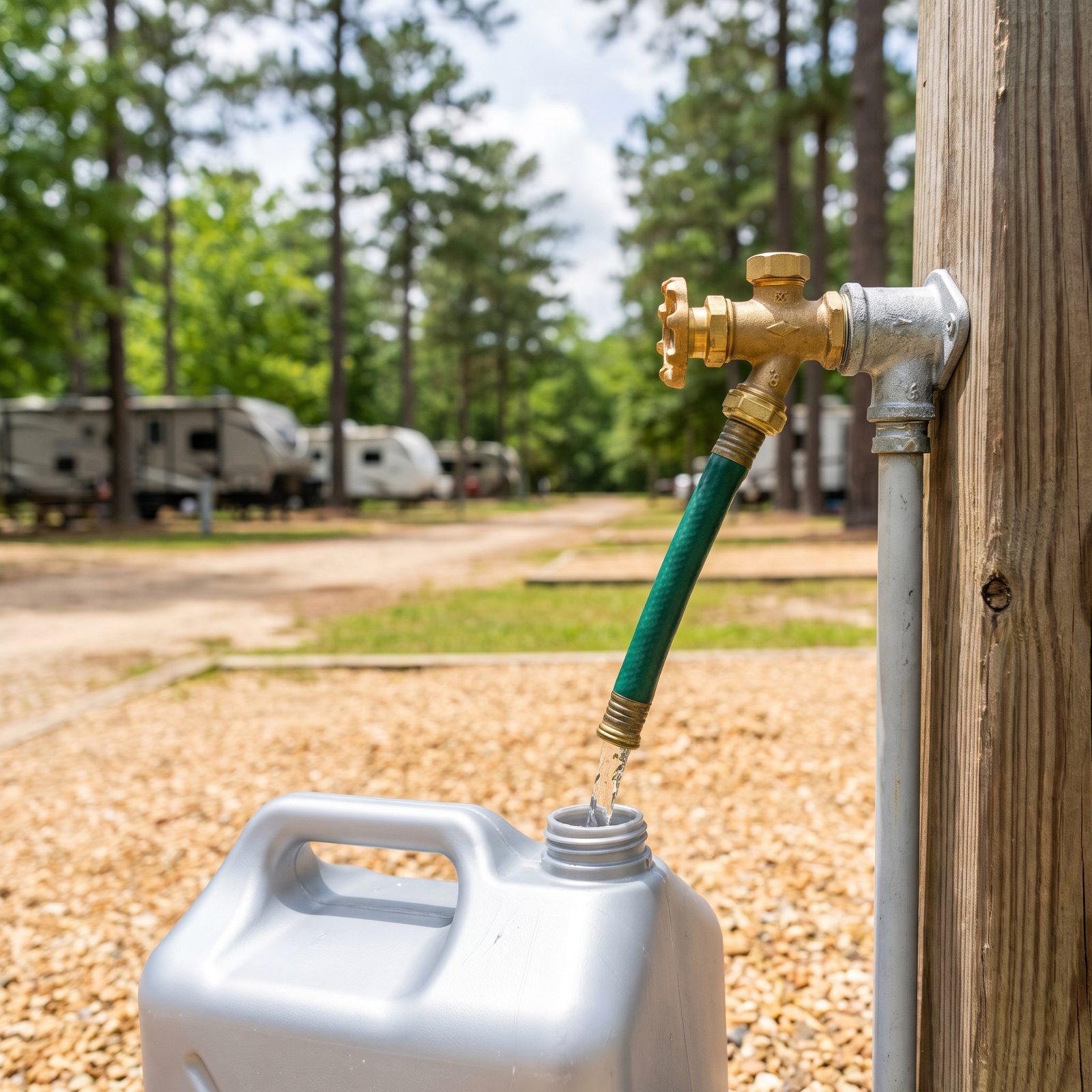
The communal spigot isn’t your private faucet. At campgrounds without full hookups, that one tap serves the whole loop, and there’s usually someone behind you with an empty jug and a growing sigh.
Fill your tank or your containers, then move along. Washing dishes, rinsing muddy gear, or scrubbing down the dog at the shared tap backs up the line and splatters mud all over the fill area.
12. Give Arriving Neighbors Room to Back In
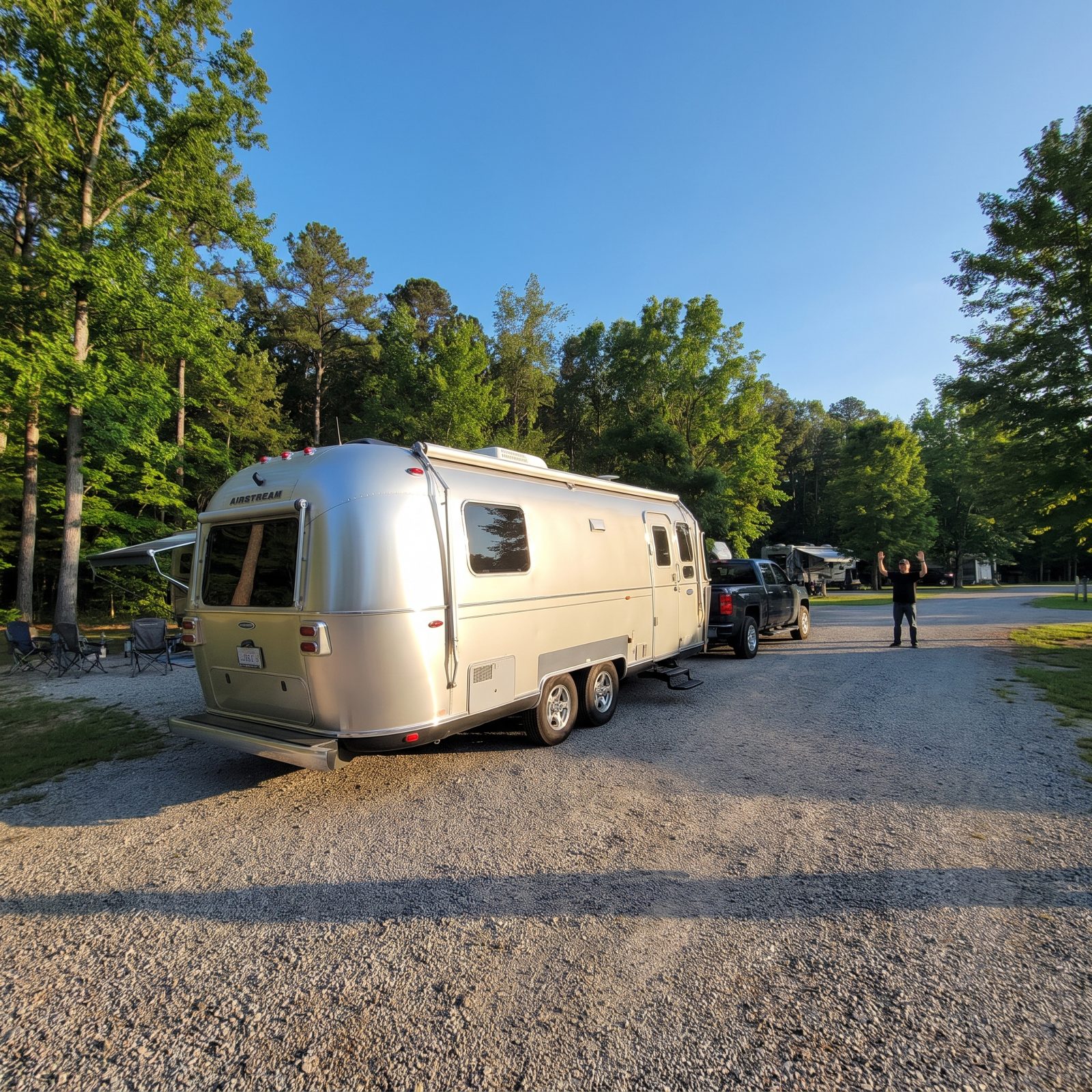
Backing a 30-foot trailer into a tight site with an audience is its own special kind of pressure. Every experienced RVer knows the feeling, which is exactly why they don’t gather round to watch.
When a neighbor arrives, pull your chairs in, keep the dog close, and don’t park your toad or your bikes anywhere near the swing path. Give them the whole approach lane. Nothing spikes the blood pressure like a kid’s scooter abandoned right where you need to cut the wheel.
Watch quietly from your own site if you like. Hovering at the edge of theirs with a drink in hand? That’s a different thing entirely.
11. Offer a Hand Only When It’s Actually Wanted
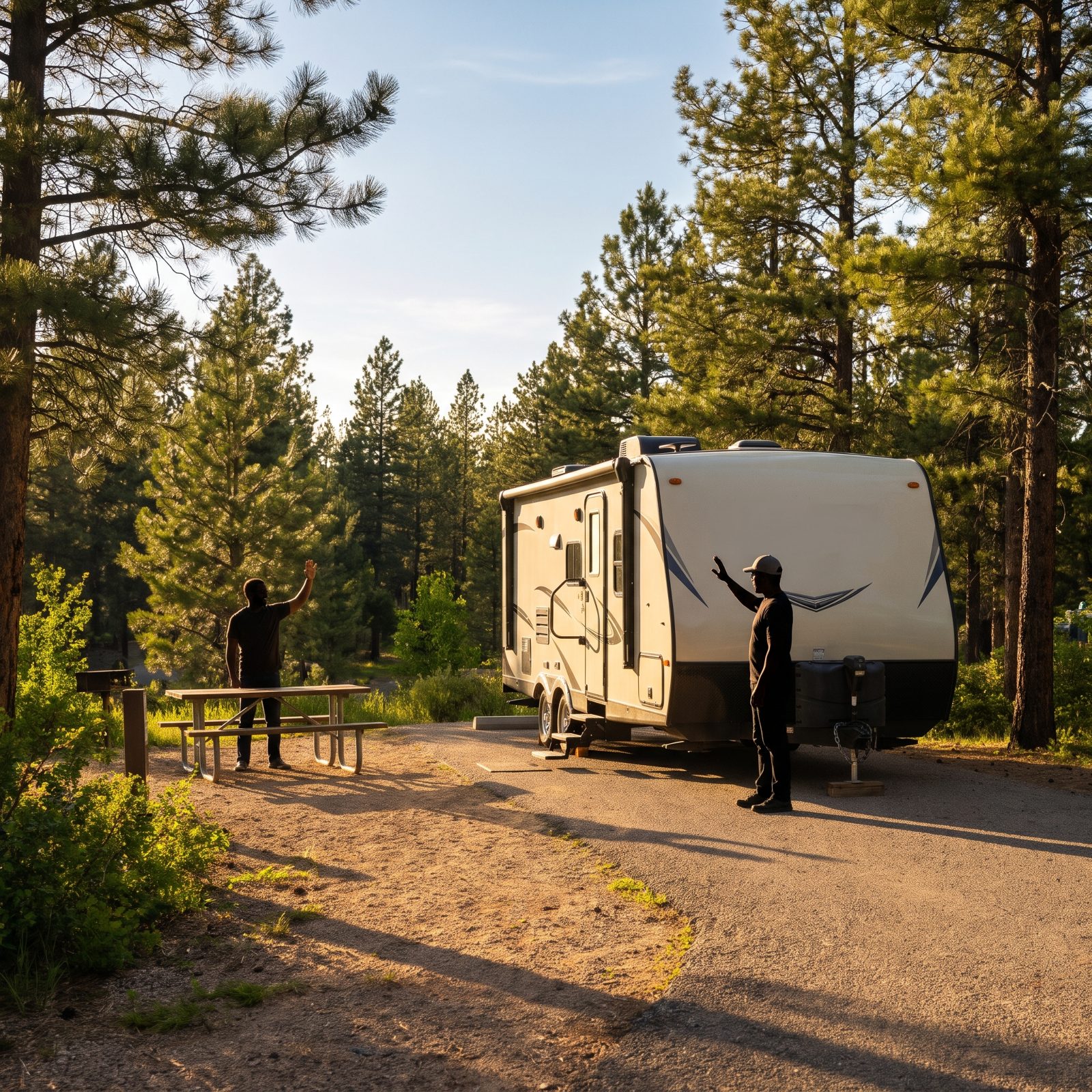
The instinct to jump in and guide a stranger’s backup is generous, and often exactly wrong. Most couples have a system already worked out, whether it’s a hand signal, a radio, or a spotter who knows both the rig and the driver down to the inch. A well-meaning outsider tossing in a second round of “a little left” just muddies all of it.
Call out a friendly “need a hand?” from your site and wait. If they say yes, follow their lead. If they wave you off, let them work.
10. Keep Your Awning, Chairs, and Gear Inside the Lines
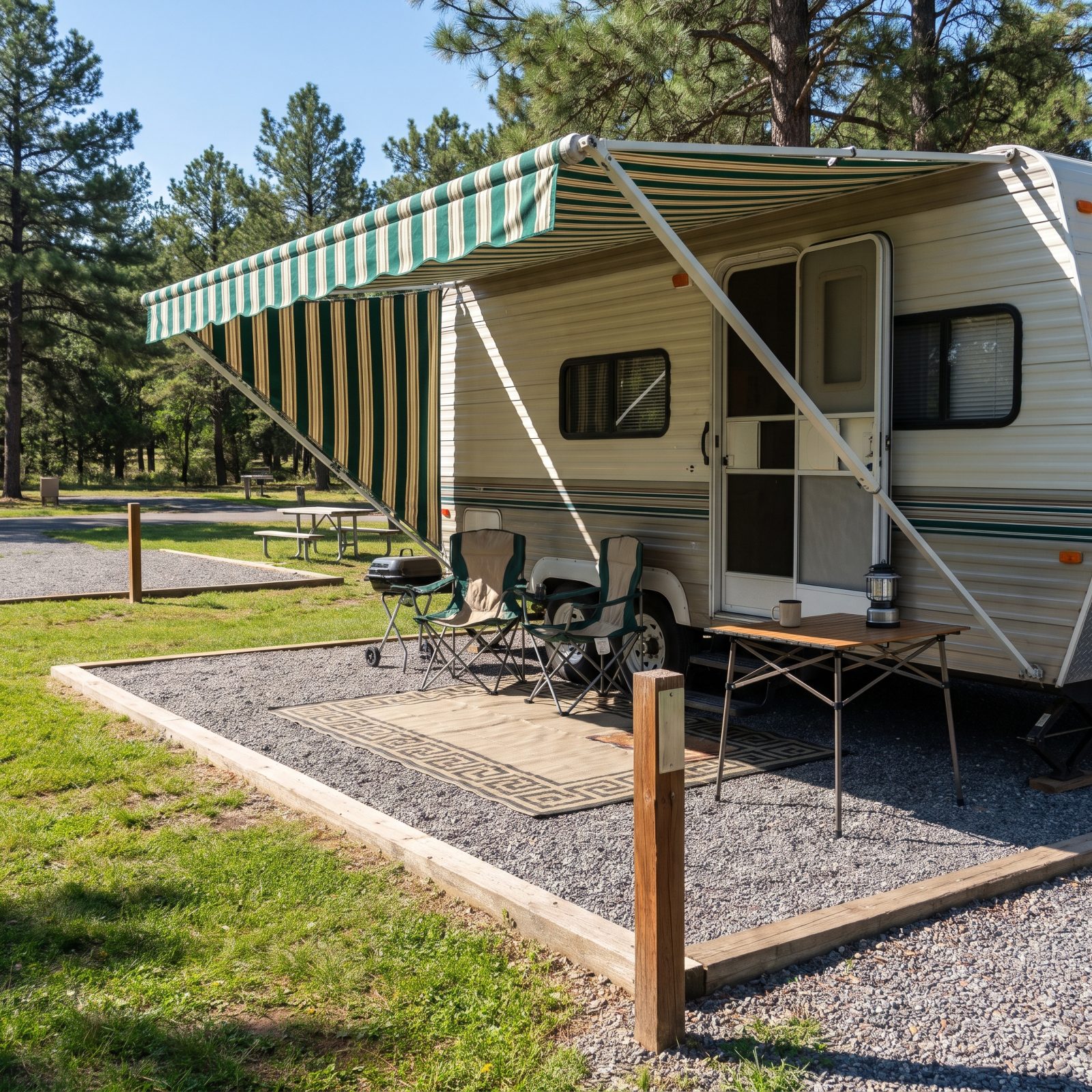
Sites feel bigger than they are until your awning is shading your neighbor’s picnic table and your outdoor rug has crept across the invisible property line.
Every site has rough boundaries, usually the edge of the pad, a post, or the midpoint to the next hookup. Keep your awning, chairs, grill, bikes, and sprawl of gear on your side of it. Nobody books a campsite hoping to share it with the guy next door’s screen tent.
9. Keep the Kids on Your Own Site
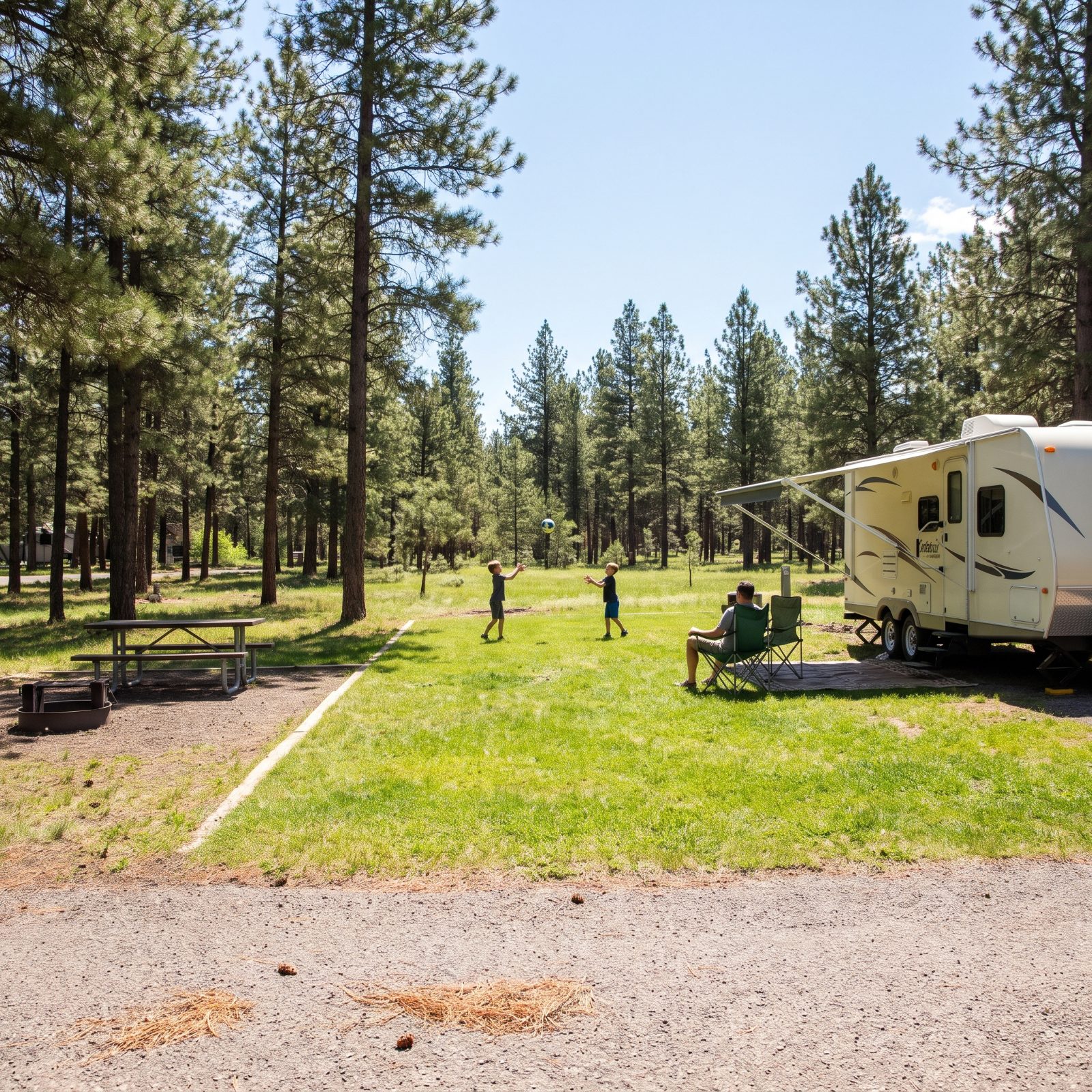
Kids treat a campground like one enormous backyard, and honestly, that’s half the magic of RVing with them. The trouble starts when the shortcut to the playground runs straight through someone else’s firepit and guy lines.
A site is a temporary home. Cutting through it feels exactly like a stranger strolling across your lawn. Teach the little ones to use the roads and paths, and to steer clear of occupied sites, tow bars, and anyone’s fire.
8. Return That Borrowed Torque Wrench Before You Forget You Have It
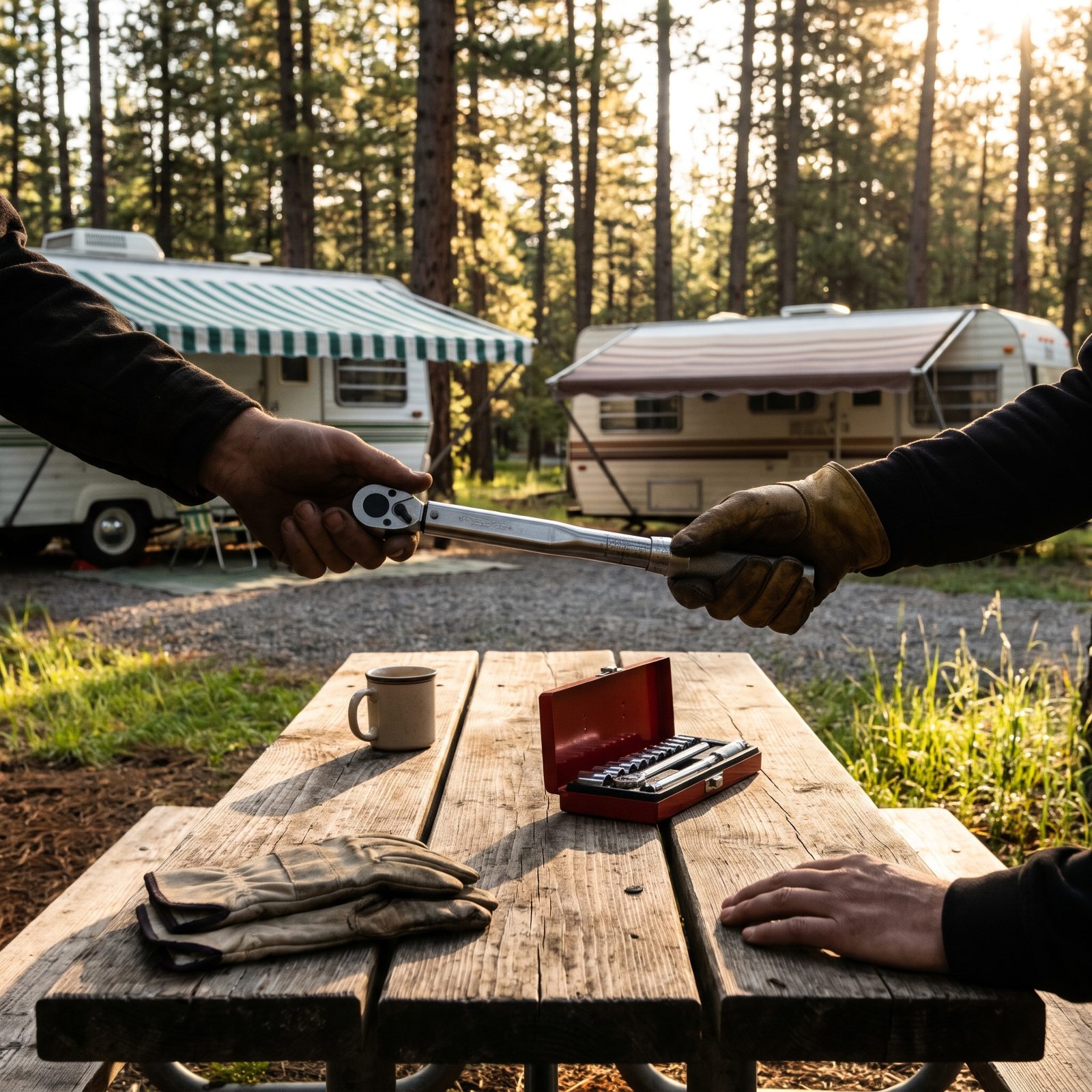
The quickest way to become the person nobody lends anything to? Hold onto a borrowed leveling block for three days. Campground generosity runs on short memory debts. Somebody walks over with a torque wrench because yours is buried under the bed, and the unspoken deal is that it comes back the same afternoon, not whenever you happen to remember it exists.
We’ve been the forgetful ones. Found a neighbor’s socket set in our storage bay two campgrounds later and felt sick about it. Return it clean, return it fast, mention it worked great. That last bit costs nothing and buys you the next favor.
7. Don’t Flag Three Empty Sites With a Chair When You’re Only Using One
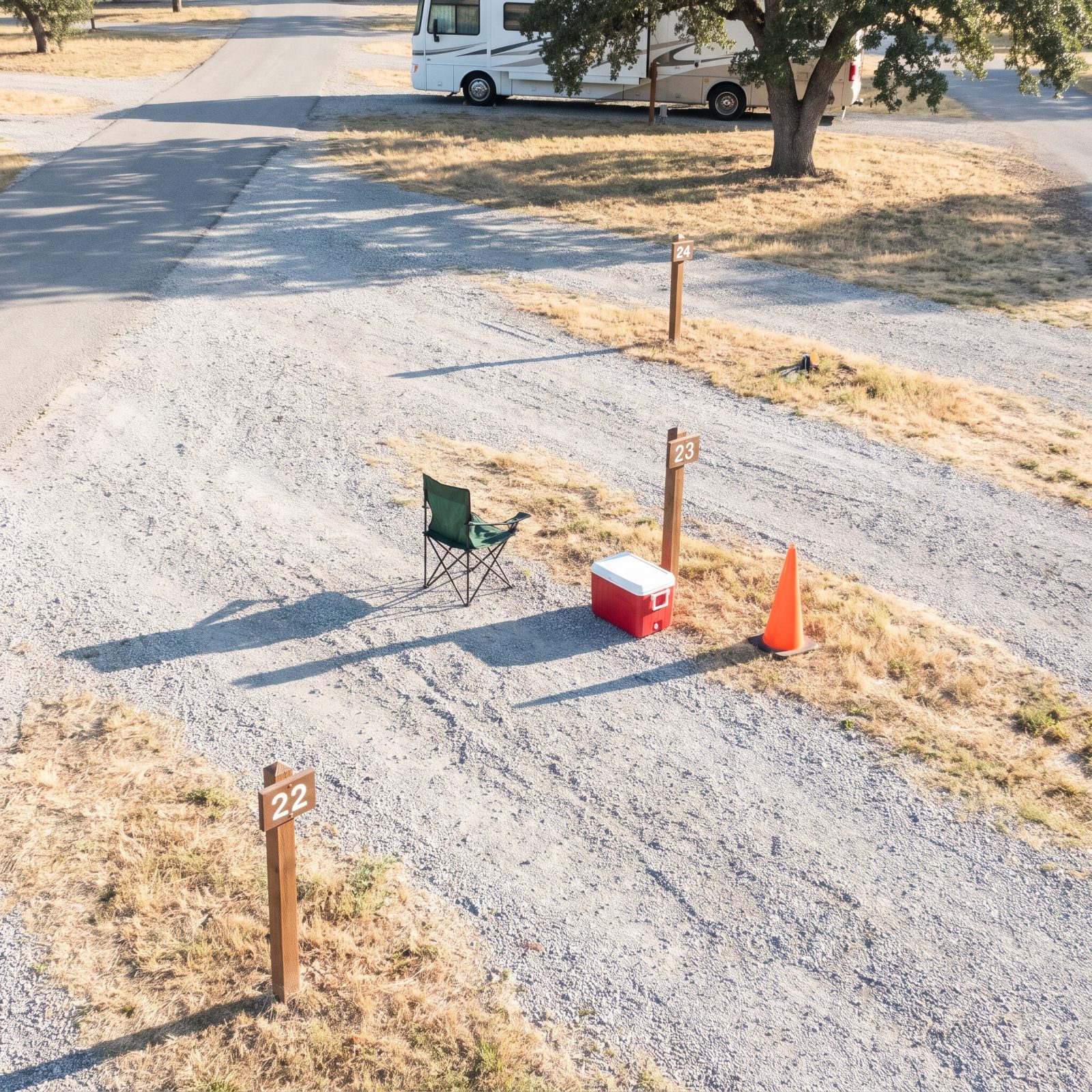
Site-squatting is the camping version of saving four seats at a crowded concert. You roll into a full park, every pad taken, and there’s a lone lawn chair holding down a prime lakeside spot that’s been empty since you arrived.
Most parks assign sites at booking now, so the gray-area move is “holding” an extra pad for friends who maybe, possibly show up Friday. If they haven’t paid for it, it isn’t yours to guard. A rig circling with nowhere to go is a real problem. Your hypothetical guests are not.
Park where you’re paid up. Let the rest go.
6. Rinse the Dump Station Hose and Pad When You’re Done
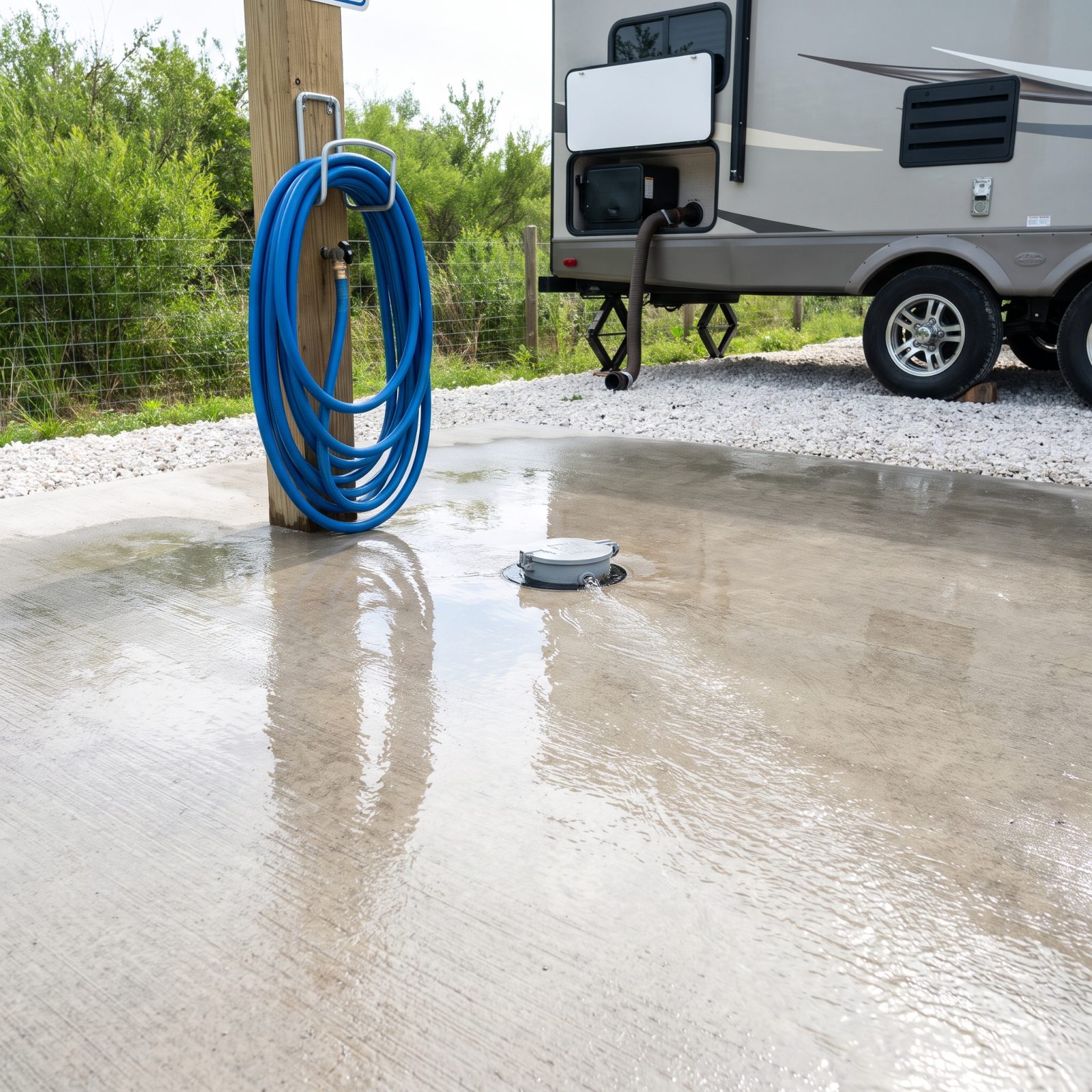
Nobody talks about the dump station until they’re standing in someone else’s mess. The hole has a splash radius, and the next person in line is often rolling in within minutes of you pulling out.
Wear gloves, use the station’s rinse hose (never your drinking-water hose — I will die on this hill), and hose down the pad and the inlet when you finish. Thirty seconds of effort keeps the whole area from turning into a place everyone dreads. Leave it cleaner than the rig ahead of you left it for you. That’s the deal, start to finish.
5. Don’t Fire Up the Diesel at 5 a.m. and Let It Idle
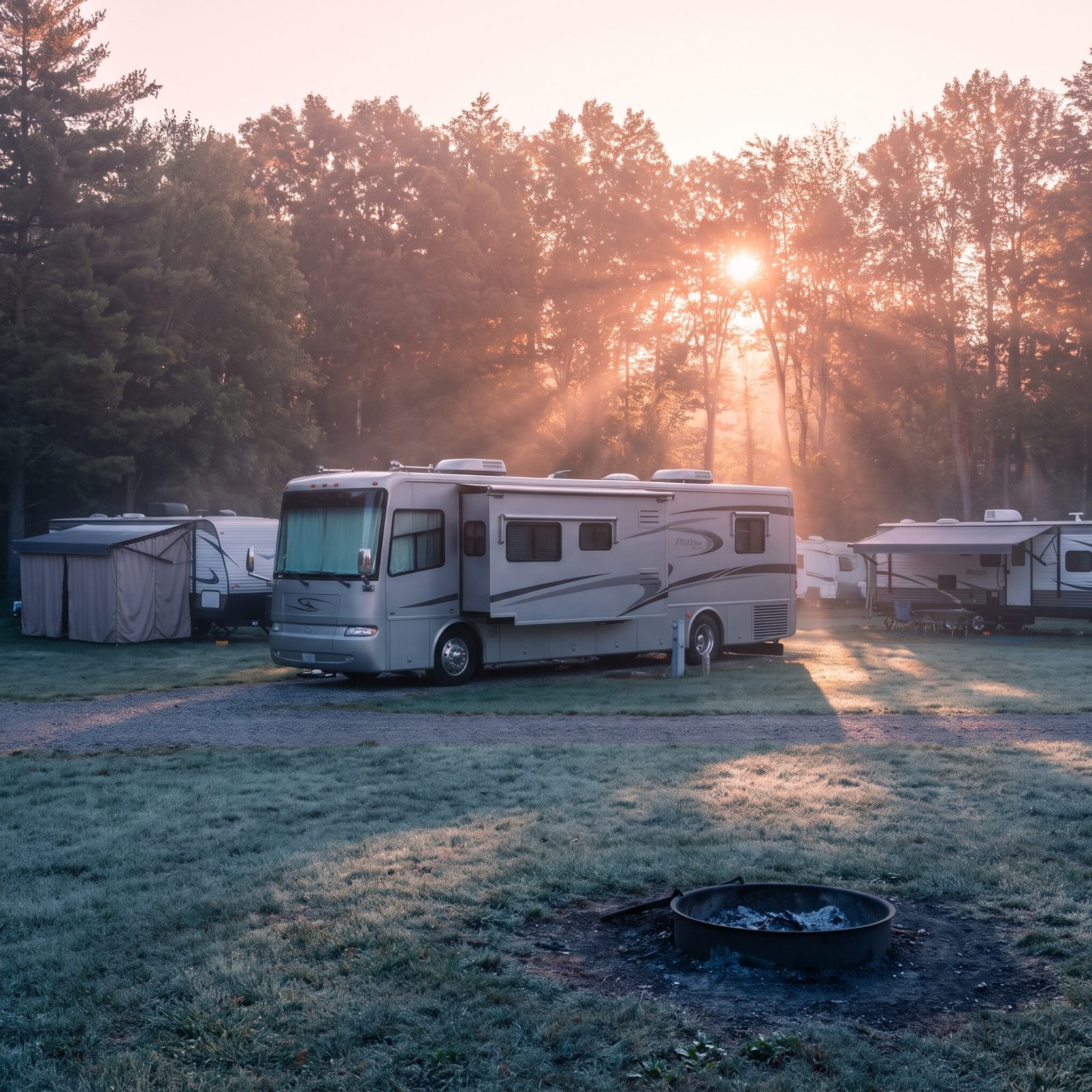
Sound carries across a campground like it owns the place.
A big diesel pusher at idle is a dull roar that rattles through thin trailer walls two sites over, and early departures are where beginners lose the room. Yes, some folks warm the engine. A couple of minutes is courtesy. Ten minutes of rumble while you finish your coffee is not.
Early-bird type? Do the loud stuff fast, keep generator hours to posted windows, and roll out quiet. The people still asleep were up late at the fire. Let them have the morning.
4. Wave Hello, Then Read the Room on Whether They Want to Chat
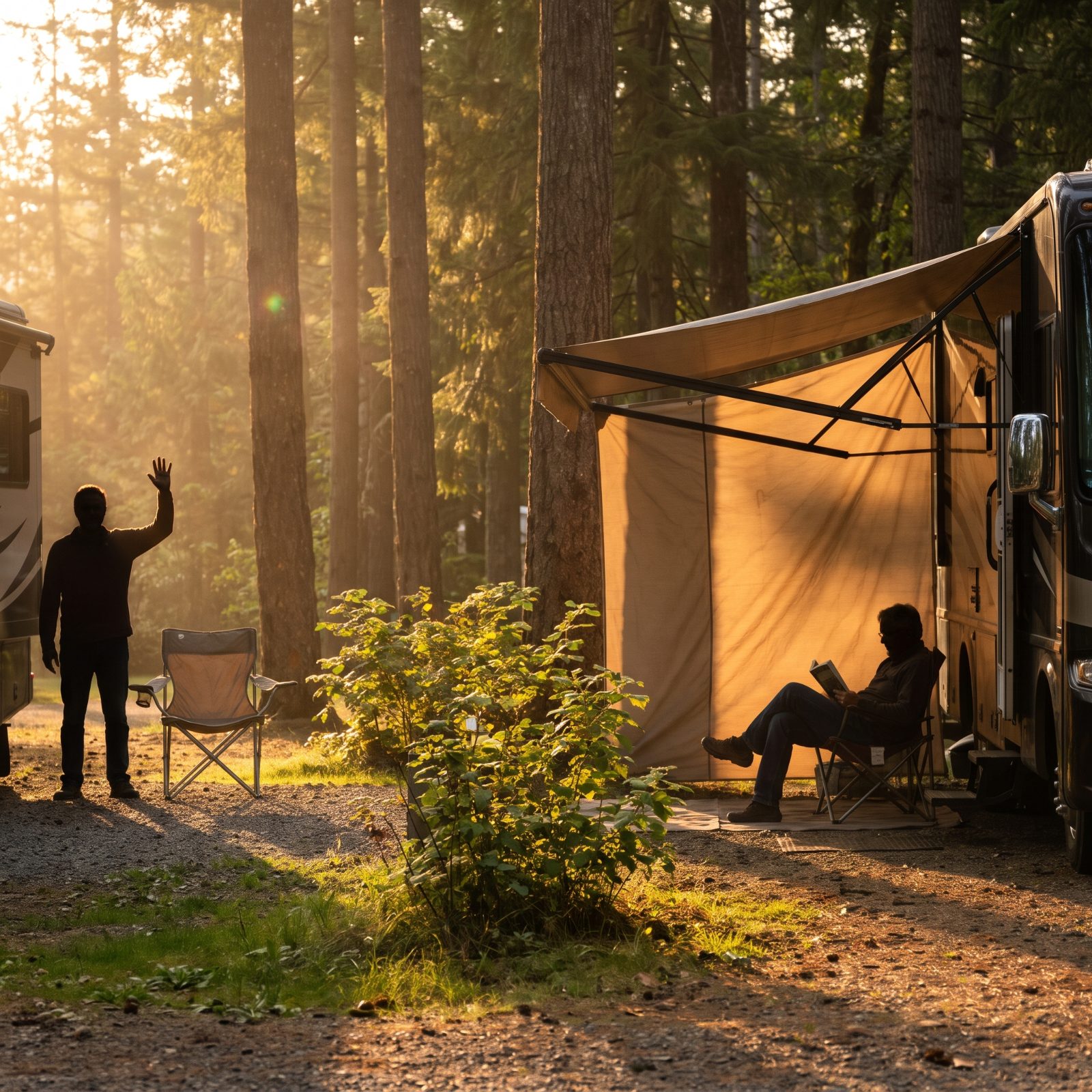
The campground wave is real and it’s lovely. A nod, a lifted hand, a “how’s it going” as you pass. That’s the whole of what’s required.
Newcomers overshoot by mistaking friendliness for an open invitation. Some people are out here for pot-luck energy and card games. Plenty of others came specifically to not talk to anyone, and your rig parked eight feet away is already more company than they wanted.
Watch the cues. Earbuds in, book open, back turned to the loop — those are polite stop signs. The best neighbors are the ones you could happily share a fire with or never speak to, and both are fine.
3. Don’t Wash Your Rig at the Site Where It’s Posted as Banned
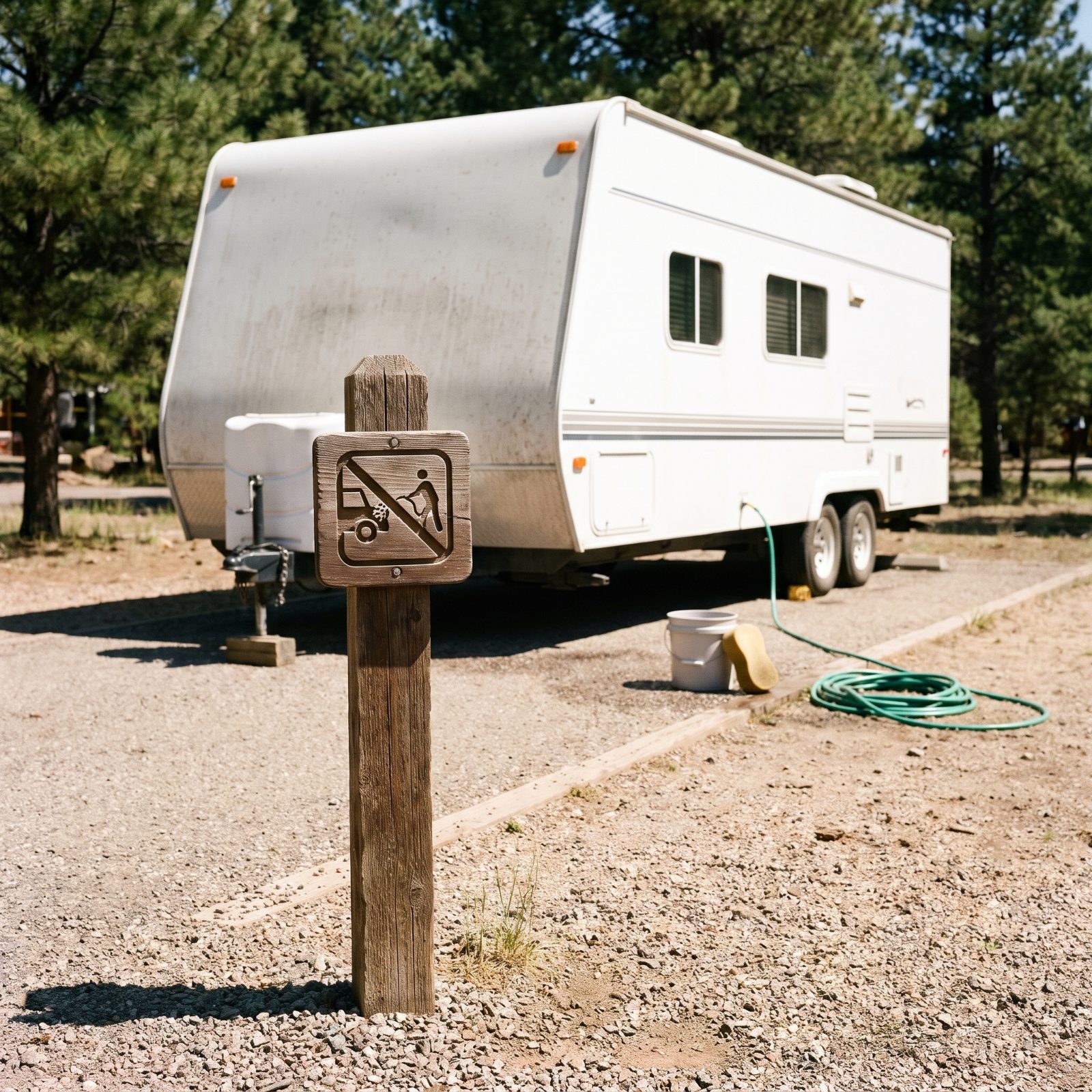
A lot of parks ban rig washing at the site, and it isn’t them being fussy. Many run on septic systems or wells, and soapy runoff plus gallons of water on gravel pads is a real headache for the ground and the water table.
Check the rulebook they handed you at check-in. If washing’s not allowed, it’s not allowed just because you drove far and it’s dusty. Some parks have a designated wash bay. Some will point you to the truck stop down the road.
2. Leave the Bathhouse the Way You’d Want to Find It at Midnight
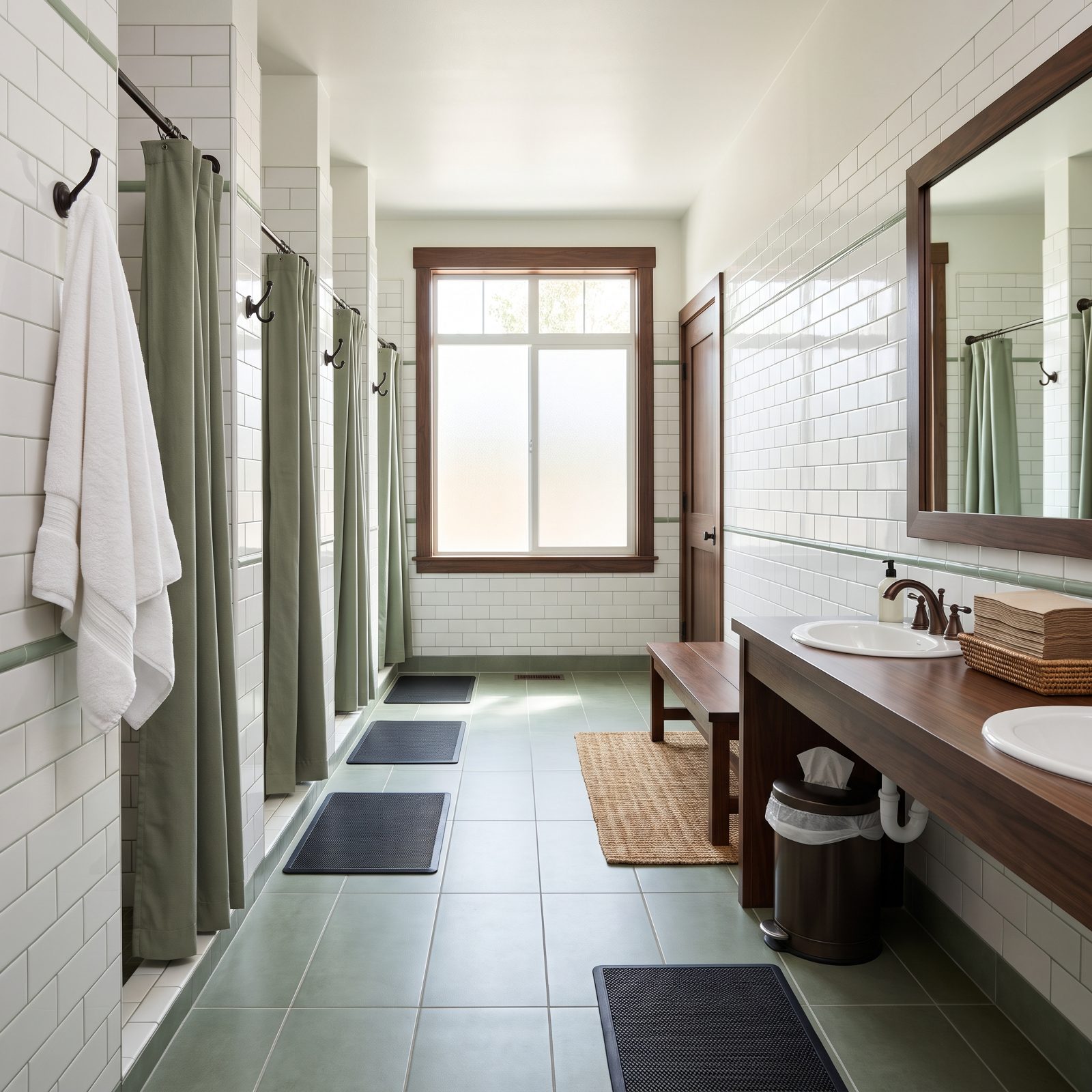
You’ve walked into a campground shower at the wrong moment — hair in the drain, a puddle somebody left, the last of the toilet paper gone and nobody flagged the host. It sets the tone for the whole stay.
The bathhouse is shared ground, and there’s no cleaning crew circling every hour. Rinse your stall. Don’t leave your shampoo bottles homesteading on the shelf. If you used the last of something, say something. The night-shift arrival at midnight with a flashlight and a toddler is counting on the person before them to have been decent.
1. Crawl Through the Loop at 5 MPH Even When You’re Running Late
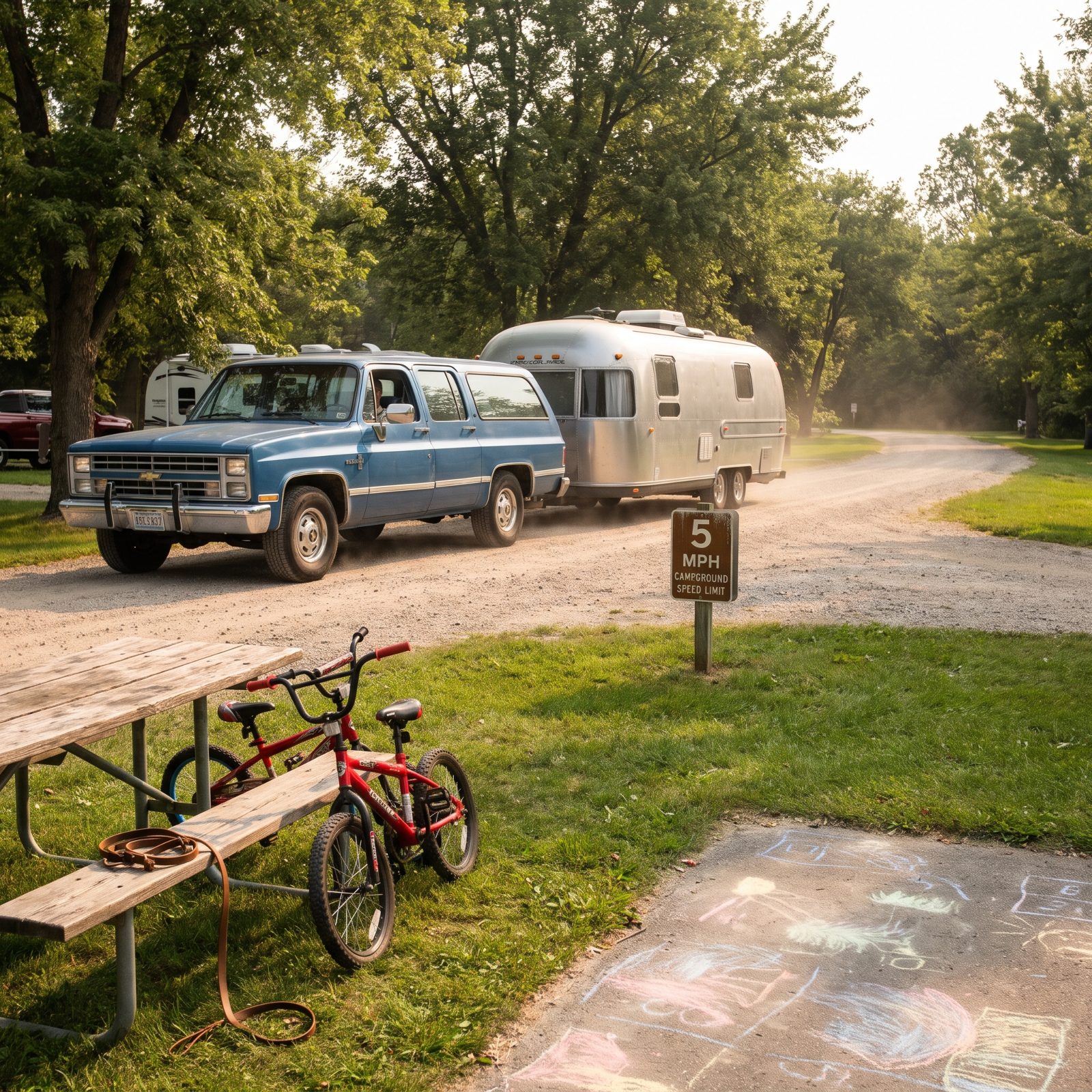
Campground speed limits usually sit around 5 to 10 mph, and they’re not a suggestion.
Loop roads are full of things that dart: kids on bikes, dogs off a cue, a retiree stepping backward to photograph a bird. Push it on gravel and you throw dust over every open window and awning for three sites in every direction. Nothing marks a newcomer faster than a rig barreling through at highway brain.
Slow is the entire personality of a good campground. You chose this over an interstate. Drive like you meant it.
Nobody has ever regretted driving too slowly through a campground loop. Plenty have regretted the opposite.