
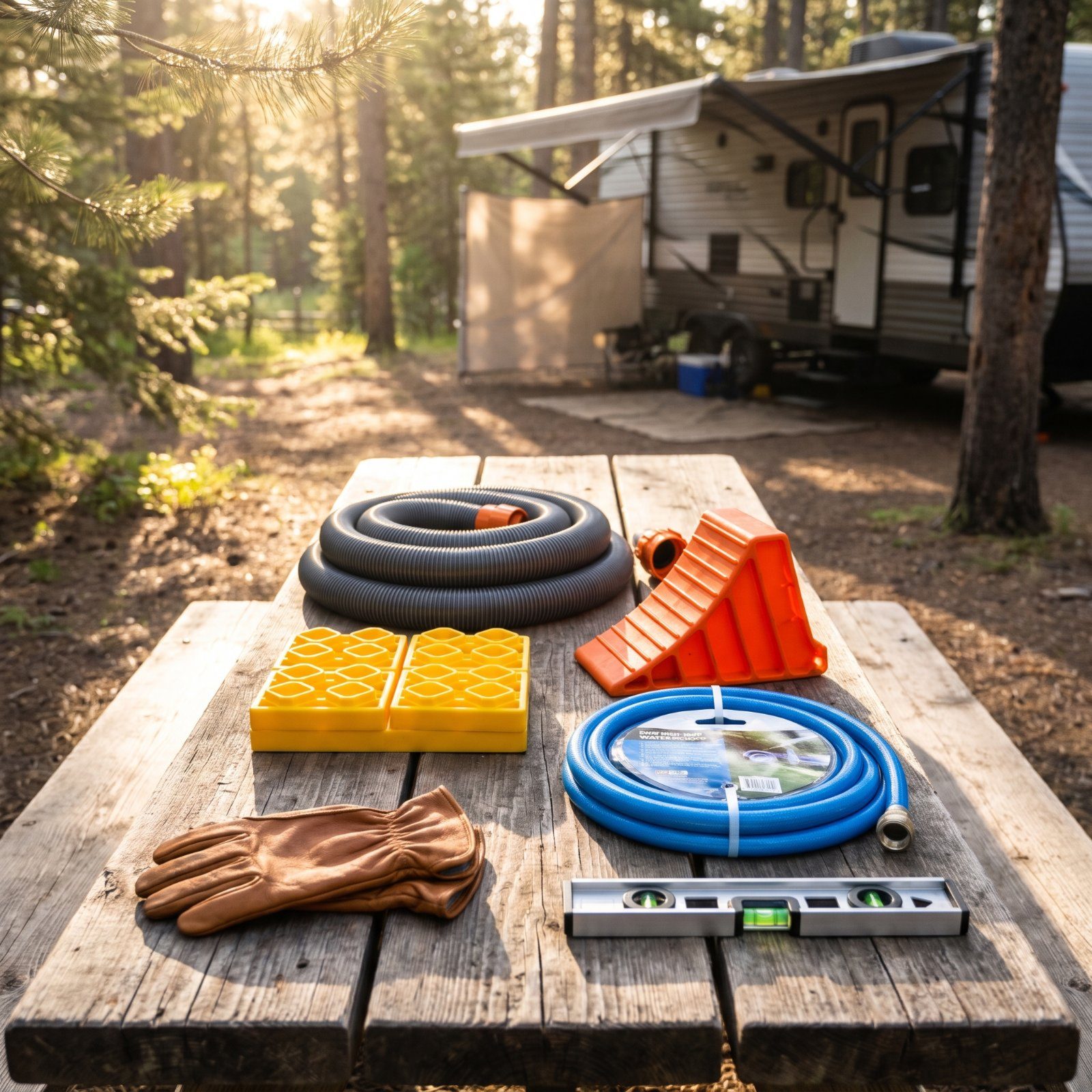
You pull into the loop late on a Friday, and within about four minutes you can read the whole place. The rigs that have been lived in. The rigs that come out twice a summer. Nobody announces it — the tells do the talking. A hose held the wrong way, a stack of blocks about to slide, an awning flapping while the sky turns the color of a bruise. None of this makes anyone a bad person. We all started somewhere, and every full-timer out there was a nervous weekender once. These are the habits that quietly give the game away.
Please note that some of the images in this article were created with the assistance of AI.
27. Handling the Sewer Hose With Bare Hands
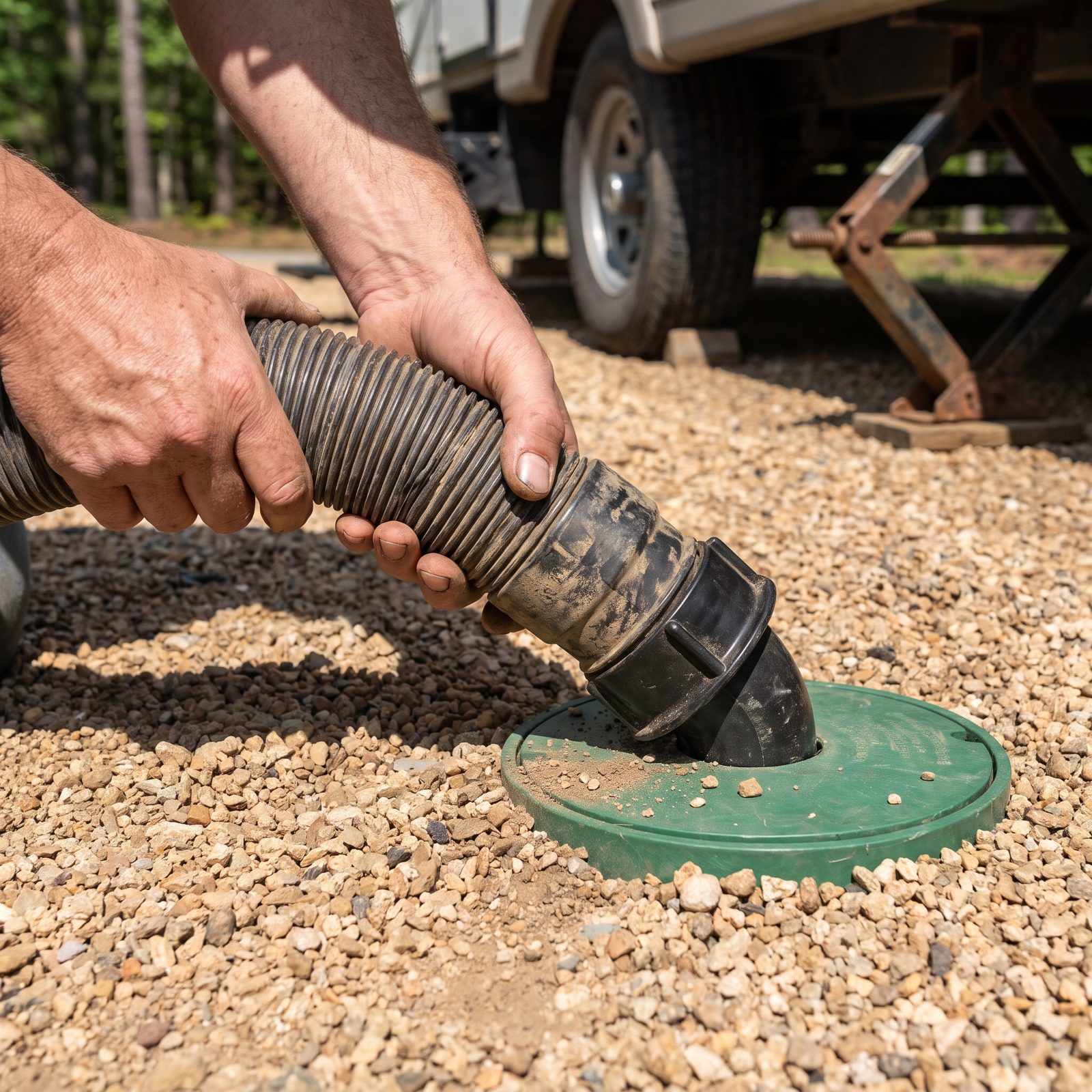
Nothing clears a crowd faster. The person who grabs the sewer hose with naked fingers is telling you they haven’t done this enough times to be scared of it yet.
Full-timers keep a dedicated pair of gloves clipped near the wet bay, and they treat the gray-water end and the black-water end like two different countries that don’t share a border. One set of hands never touches the drinking side. Most of us learned this the slow way, and we’ll spare you the details.
26. Stacking Leveling Blocks Into a Wobbly Tower
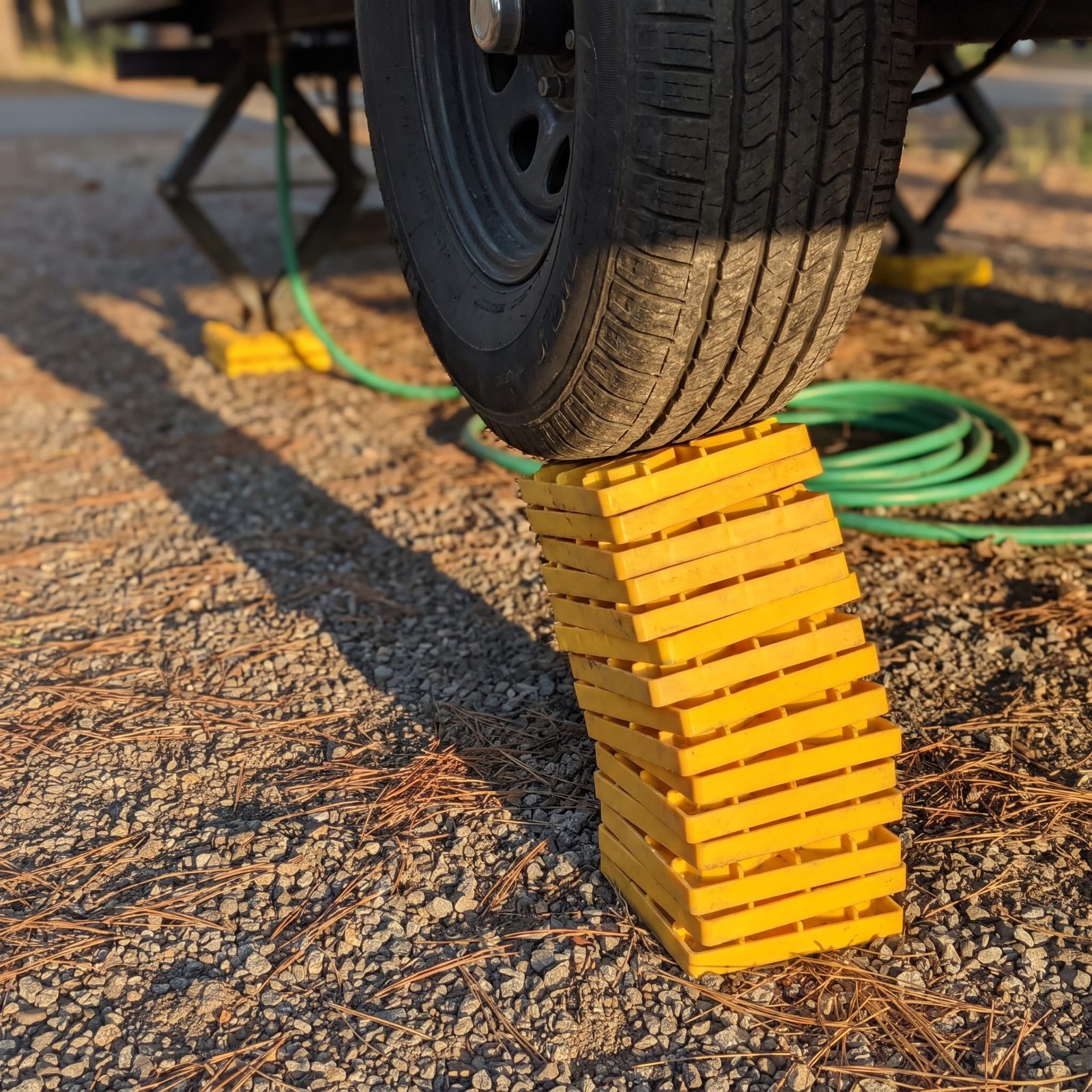
Leveling blocks want to be a pyramid. Wide at the bottom, narrowing as they climb, with the tire sitting squarely on top and nothing hanging off the edge.
The weekend tell is a skinny tower the exact width of the block, the tire perched like a coin balanced on a stack of poker chips. It holds right up until it doesn’t, usually at two in the morning when the slide comes in a little heavier than the ground expected.
Stair-step them. Drive on slow. Your rig thanks you by not shifting in the night.
25. Backing In Solo While Shouting Out the Window
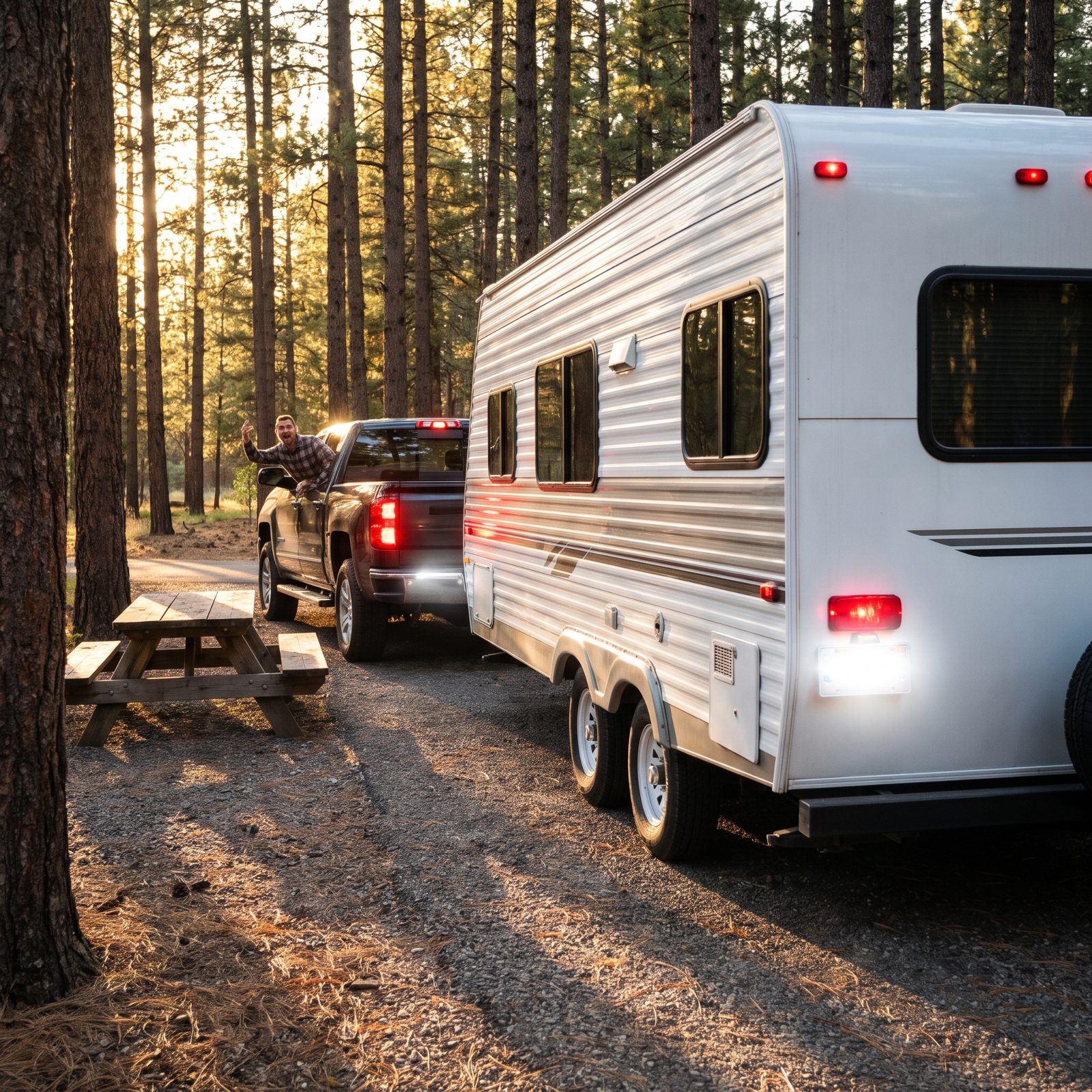
You can hear this one three loops over. The engine revving, the window down, the increasingly loud suggestions directed at someone who cannot possibly hear them over the engine.
Experienced couples go quiet. They work out hand signals ahead of time, or one person stands at the back corner and the other watches the mirror. Some use walkie-talkies and skip the hollering entirely.
The calmer the backup, the longer the relationship, is a joke that stops being a joke around year three of full-timing.
If you learn one campground skill before you leave the driveway, make it this one. Practice in an empty lot. It’s free and nobody is watching.
24. Rolling In With a Rig That’s Never Seen Mud
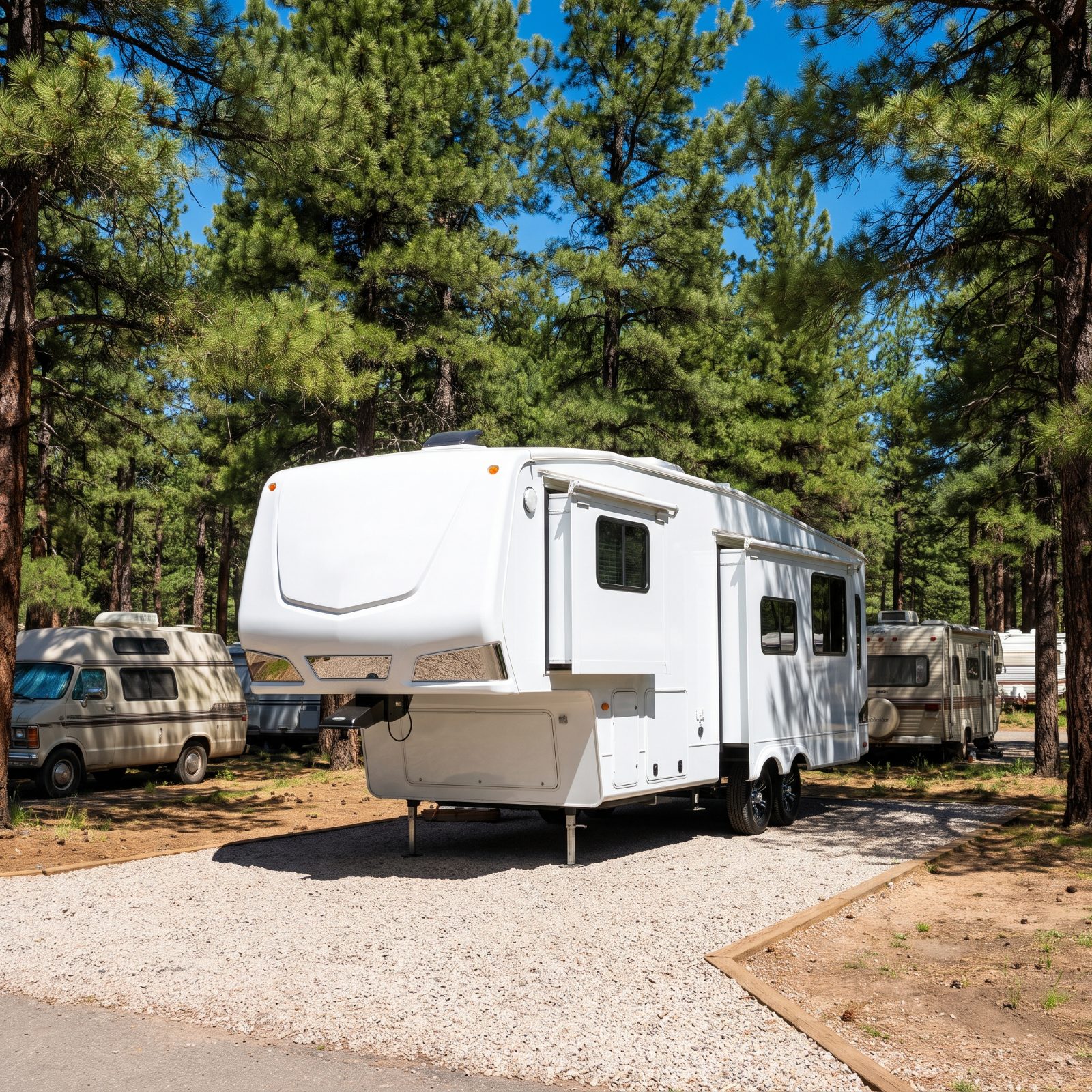
A rig with zero road grime isn’t a flex. It’s a confession.
No bug spray baked onto the front cap, no faint dirt line along the bottom edge, tires still that brand-new black. It means this thing spends most of the year in a driveway or a storage lot. There’s nothing wrong with that. But the veterans notice, the way a sailor clocks a boat that’s never left the marina.
The irony is that a little honest dirt earns more respect out here than a wax job ever will.
23. Gear Still Sealed in Its Original Packaging
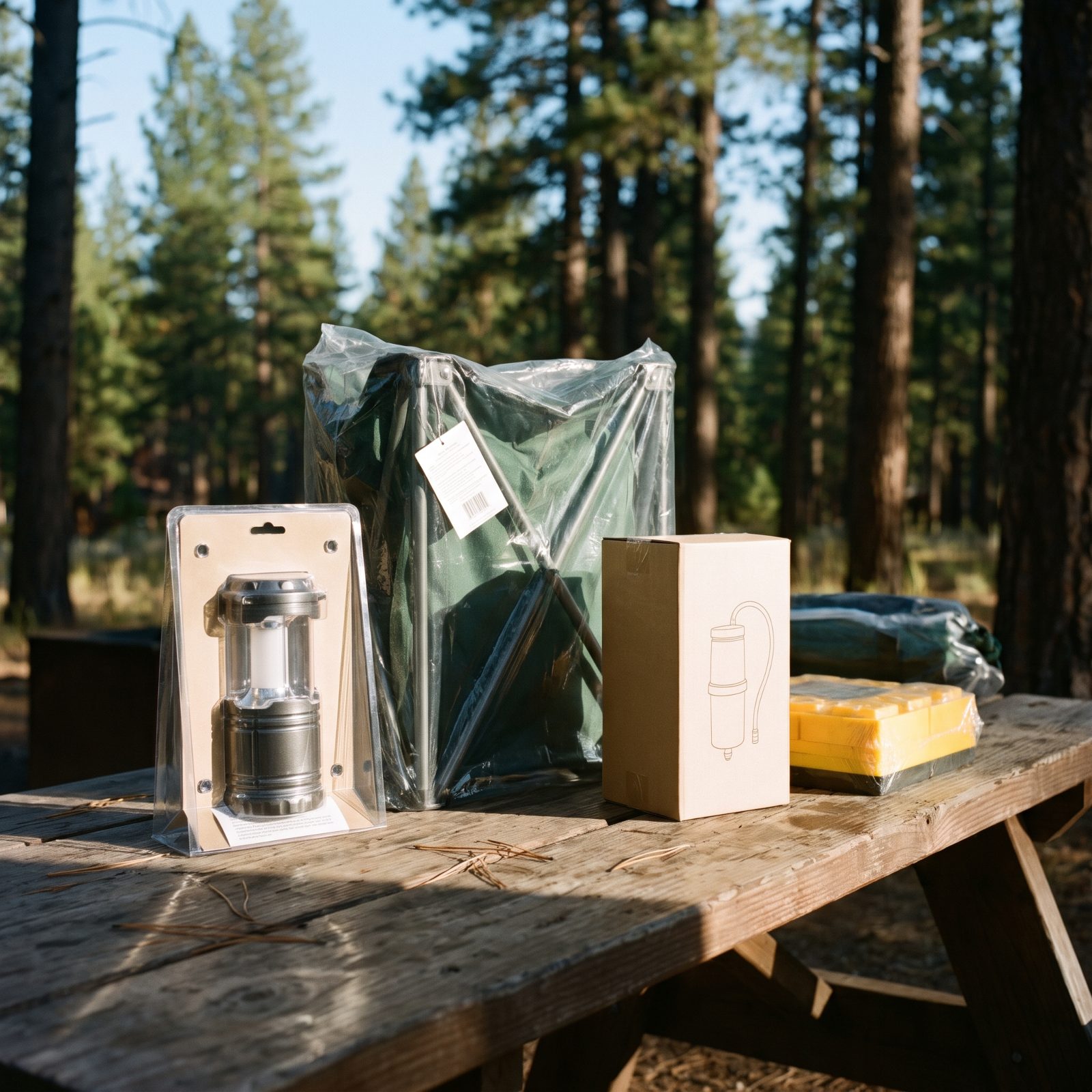
You can tell a lot by what’s still shrink-wrapped. The lantern in its blister pack, the chair with the tag flapping, the surge protector someone bought on the way out of town and hasn’t figured out yet.
Full-timers have broken-in gear. Scuffed chairs, a lantern with a dead spot in the switch they’ve learned to jiggle, a water filter they’ve replaced twice. Everything has a story and most of those stories are mildly annoying.
22. Leaving the Awning Out When the Wind Comes Up
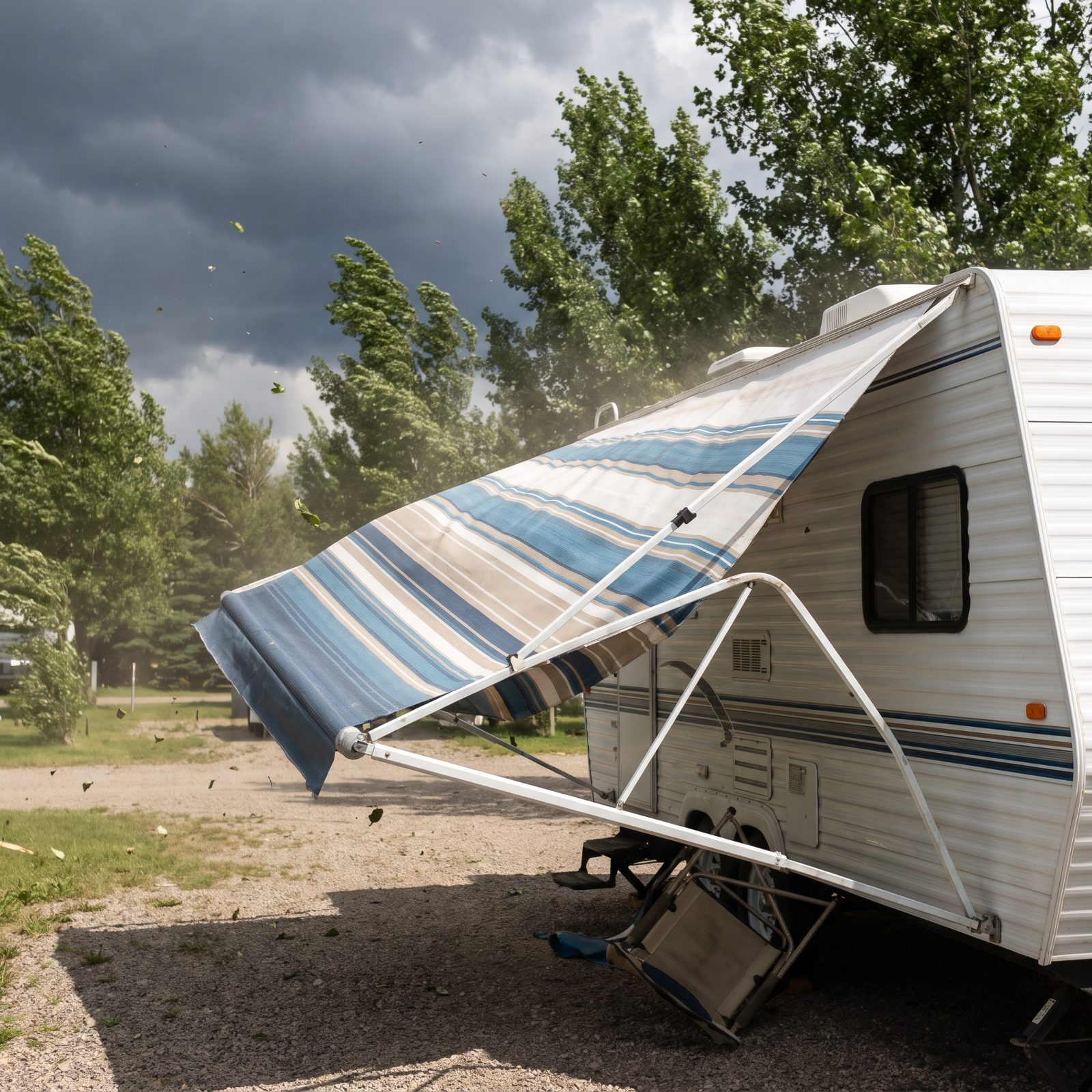
An awning is the first thing experienced campers retract and the last thing weekenders remember, usually right as it’s folding itself inside out.
The giveaway is a gust rolling through the loop while one awning stays stubbornly out, arms flexing, fabric snapping like a sail. These things are expensive, and a strong gust can peel one off the rig and take a chunk of the wall along with it.
The rule most veterans live by: if you’re leaving the site or going to sleep, bring it in. Wind shows up without an appointment.
21. Lighting Up the Site Like a Used Car Lot
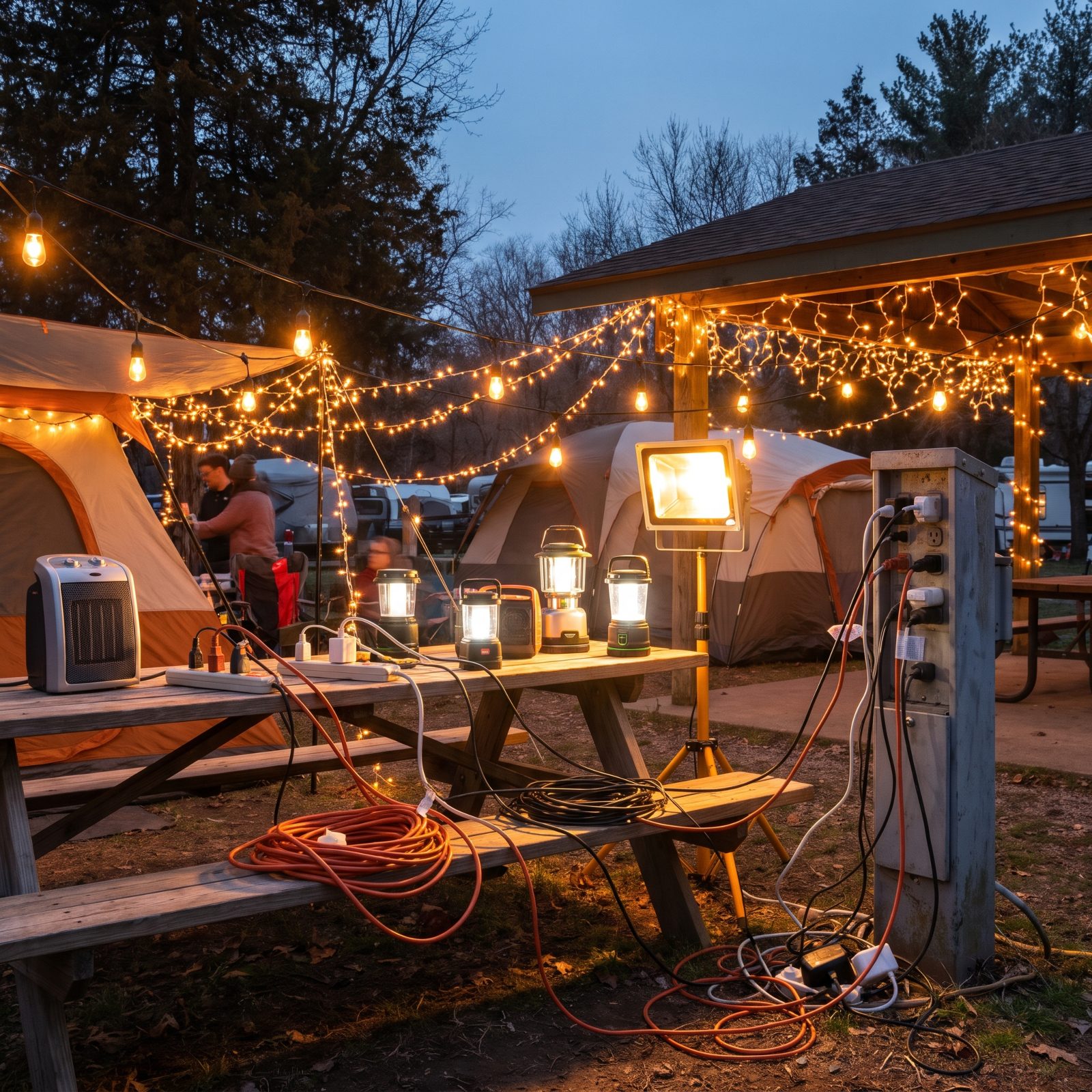
Thirty amps goes faster than you’d think. The weekend tell is a site lit up like a carnival, string lights and a space heater and the electric kettle and the air conditioner all fighting over the same pedestal.
Then the breaker trips. Someone goes out in slippers to reset it, and it trips again.
Full-timers run a mental tally of what pulls what. The AC alone can eat most of a 30-amp hookup. You learn not to run the microwave and the hair dryer at the same moment, usually after you’ve already learned it the hard way.
20. A Rig Sagging Under Everything You Own
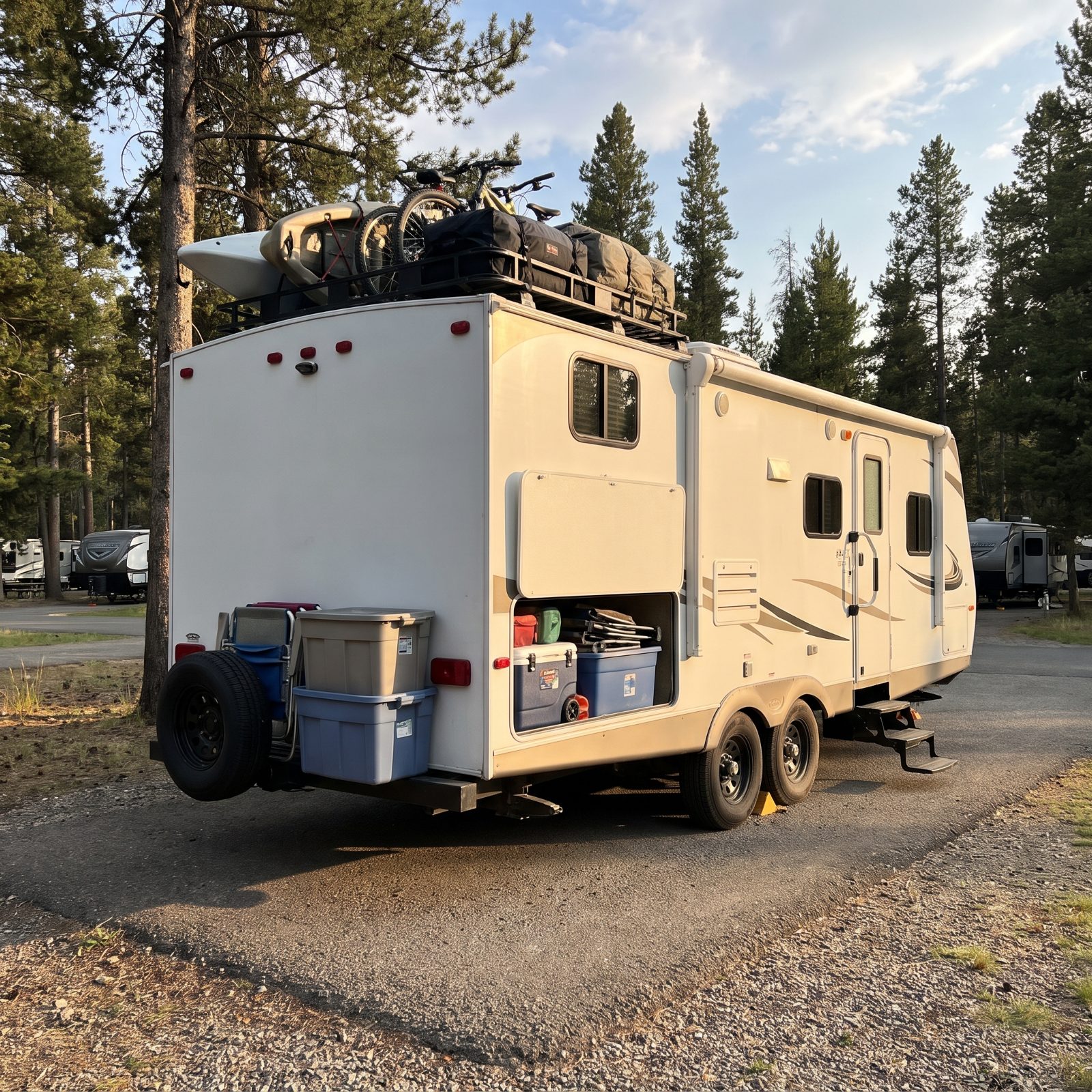
A rig can sit level on full tires and still be carrying too much. You see it in the pile, the roof rack stacked with a kayak, bikes and stuffed duffels, totes bolted to the back bumper beside the spare, the storage bay crammed with coolers and bins, the whole thing loaded like it’s bracing for every contingency.
New campers pack for every contingency. The full-timer has already thrown out the stuff they never used, twice, because weight is fuel and tire life and brakes and the difference between a smooth tow and a white-knuckle one.
Every rig has a weight rating on a sticker near the door. Most people never read it. Read it.
19. No Wheel Chocks Anywhere In Sight
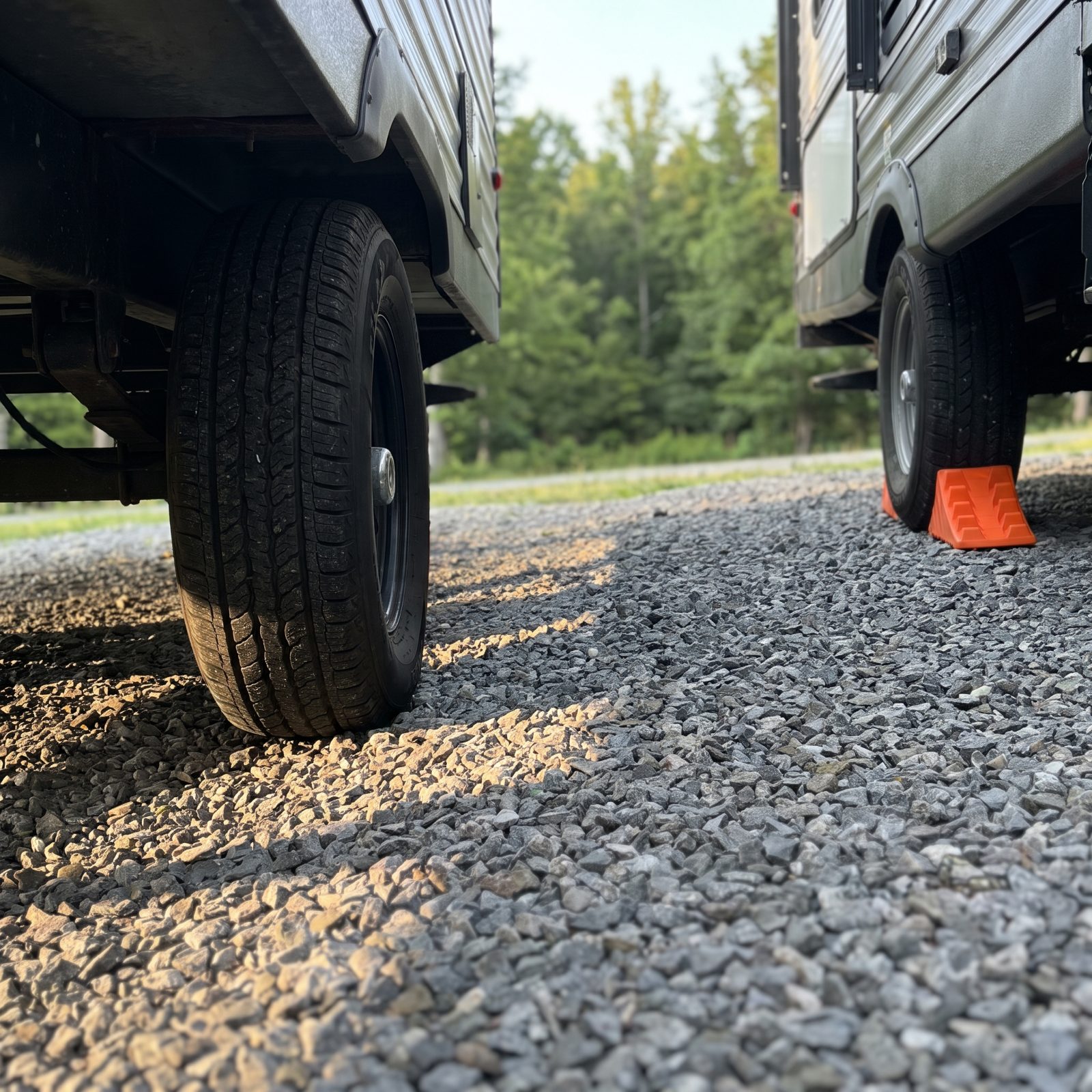
Chocks are cheap insurance that most weekenders skip. The tell is a trailer parked on anything but dead-flat ground with nothing wedged against the tires.
A camper can creep. Not fast, not dramatically, just enough to put a scare into you when you feel it shift as you step inside. On a slope it’s worse than a scare.
Experienced folks chock before they unhitch, every single time, even on ground that looks level. Especially on ground that looks level, because it rarely is.
18. Drinking From the Same Hose That Fills the Tank
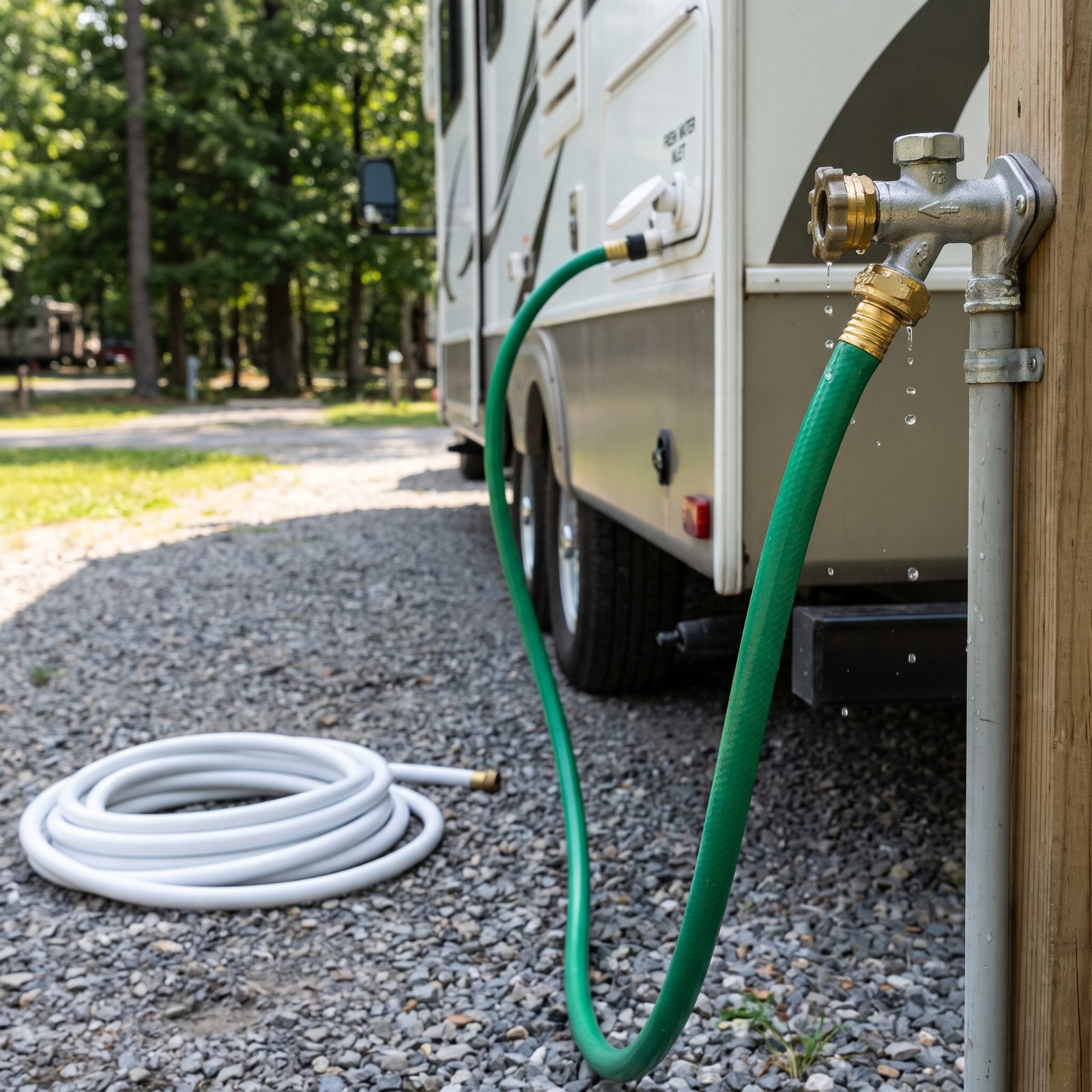
Green garden hose, straight from the hardware store, hooked to the fresh water inlet. That’s the one that makes the veterans wince.
Standard garden hoses aren’t made for drinking water, and they can leave your coffee tasting faintly of warm plastic and worse. The potable ones are usually white or blue and say so right on the label.
Keep the drinking hose separate from everything else, and never, ever let it touch the sewer side of the rig.
17. The Generator Still Growling at 10:30 PM
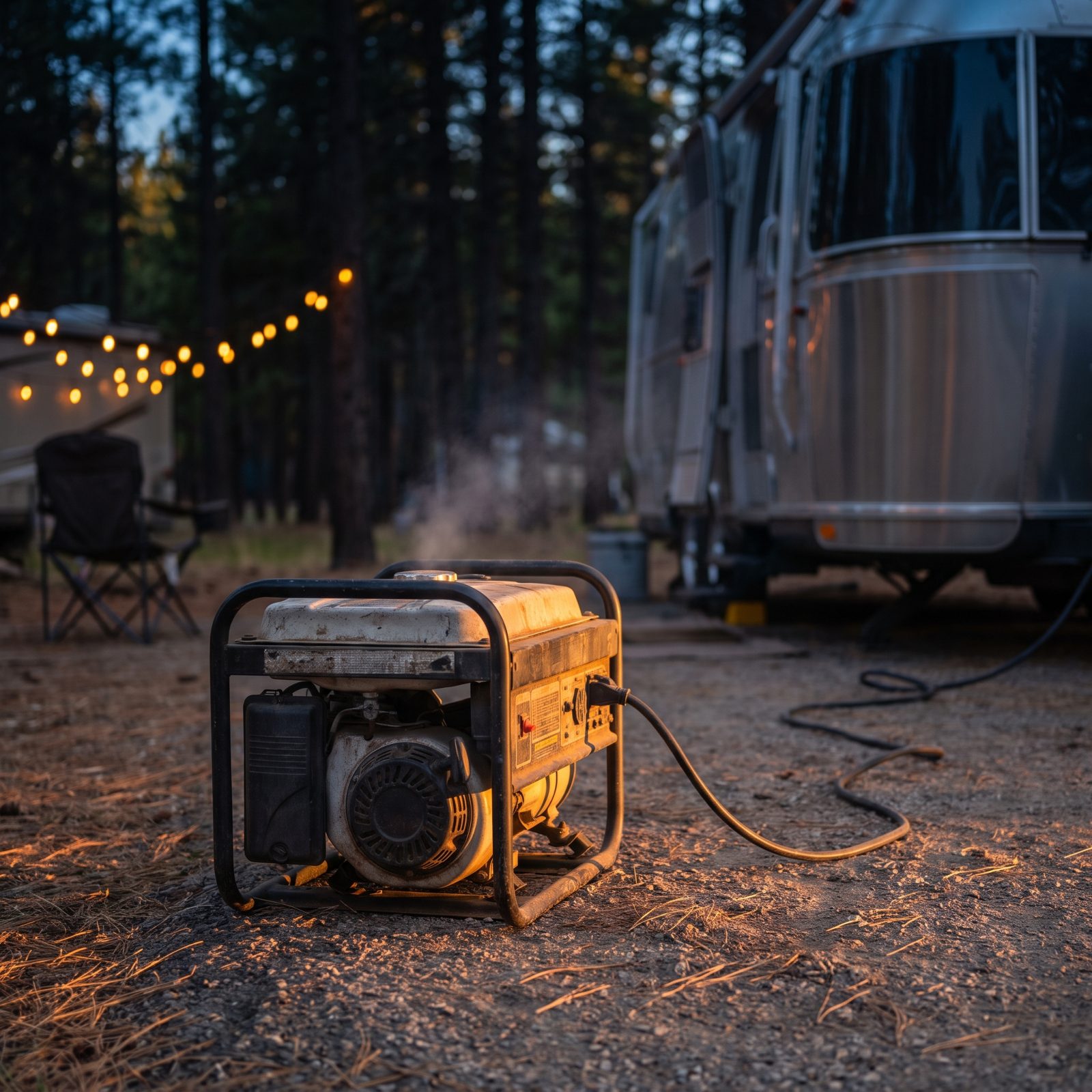
Quiet hours run 10 PM to 6 or 7 AM, posted right at the gate. Run your generator past that and you’ve announced yourself to the entire loop. People in RVs came for the quiet. A generator carries farther at night than you’d think, especially the cheap open-frame kind that sounds like a lawnmower having a bad day.
Veterans switch to battery and solar overnight, or they top off the batteries at 8 PM and shut it down. If you must run one, an inverter model hums instead of roars. Nobody will thank you for it. But nobody leaves a note on your windshield either.
16. Camp Chairs and a Rug Creeping Into the Next Site
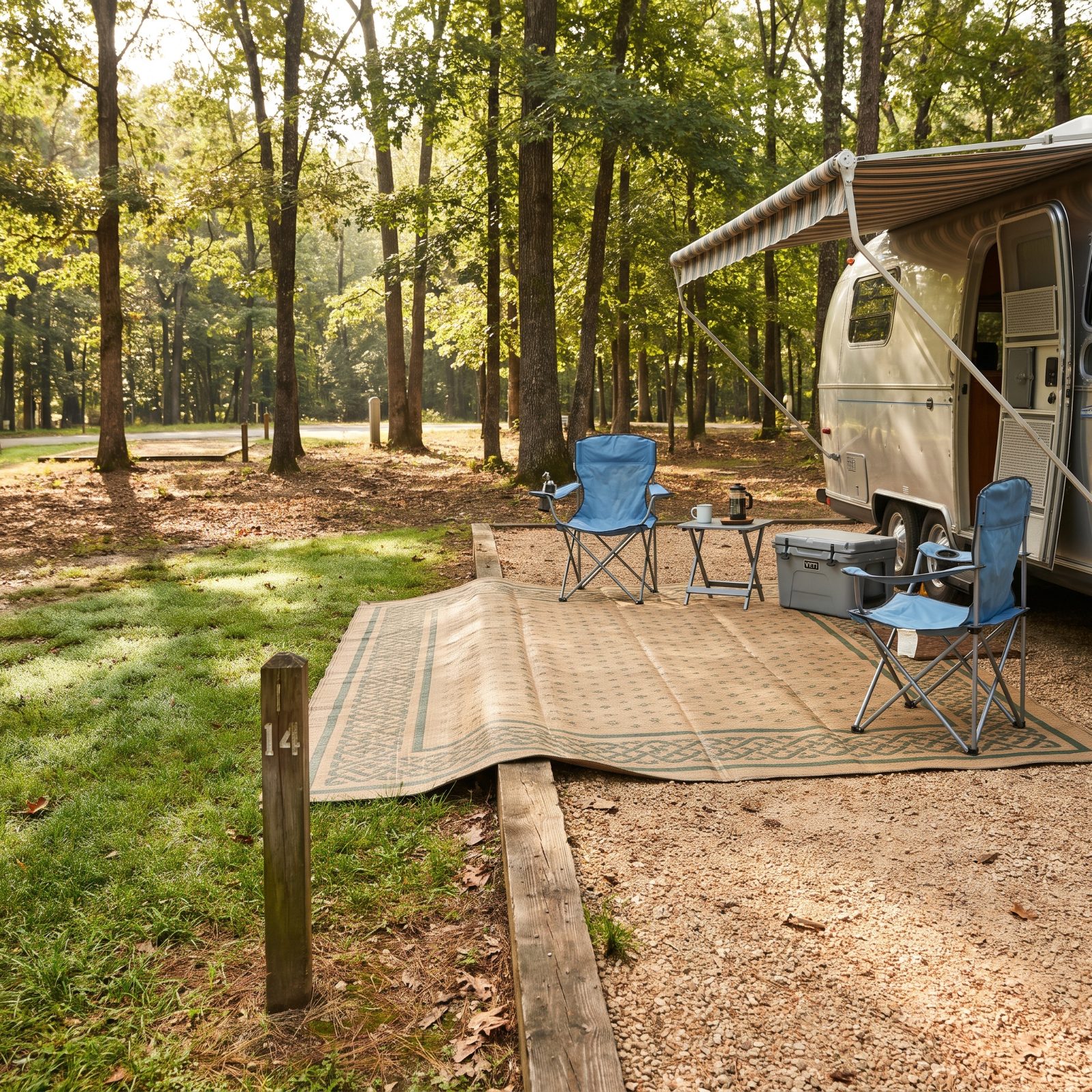
Every site has an invisible line, and veterans can see it from across the loop. Your pad, your picnic table, your patch of grass — that’s it. When the chairs, the rug, the firewood stack, and the dog run all start bleeding into the empty site next door, you’re treating the campground like your backyard. It isn’t. Someone’s booked that spot for tomorrow.
The giveaway is a braided outdoor rug staked a foot past the marker post. Keep your footprint inside your own lines and you’ll never catch the side-eye at the dump station.
15. Chasing the Instagram Shot Instead of Just Sitting Down

You finish setting up camp, and before you’ve even sat in a camp chair, the phone’s on a tripod on the picnic table, framing the rig against the sunset. Nothing wrong with a good photo. But anyone who’s lived on the road notices who spends the first quiet morning staging the coffee and who spends it actually drinking the coffee.
The site that photographs best is rarely the one lived in hardest. The people with the coziest campsites have them because they quit performing them years ago. Get the shot in two minutes, then put the phone face-down and watch the sun go down.
14. Pulling Out With the Entry Steps Still Down
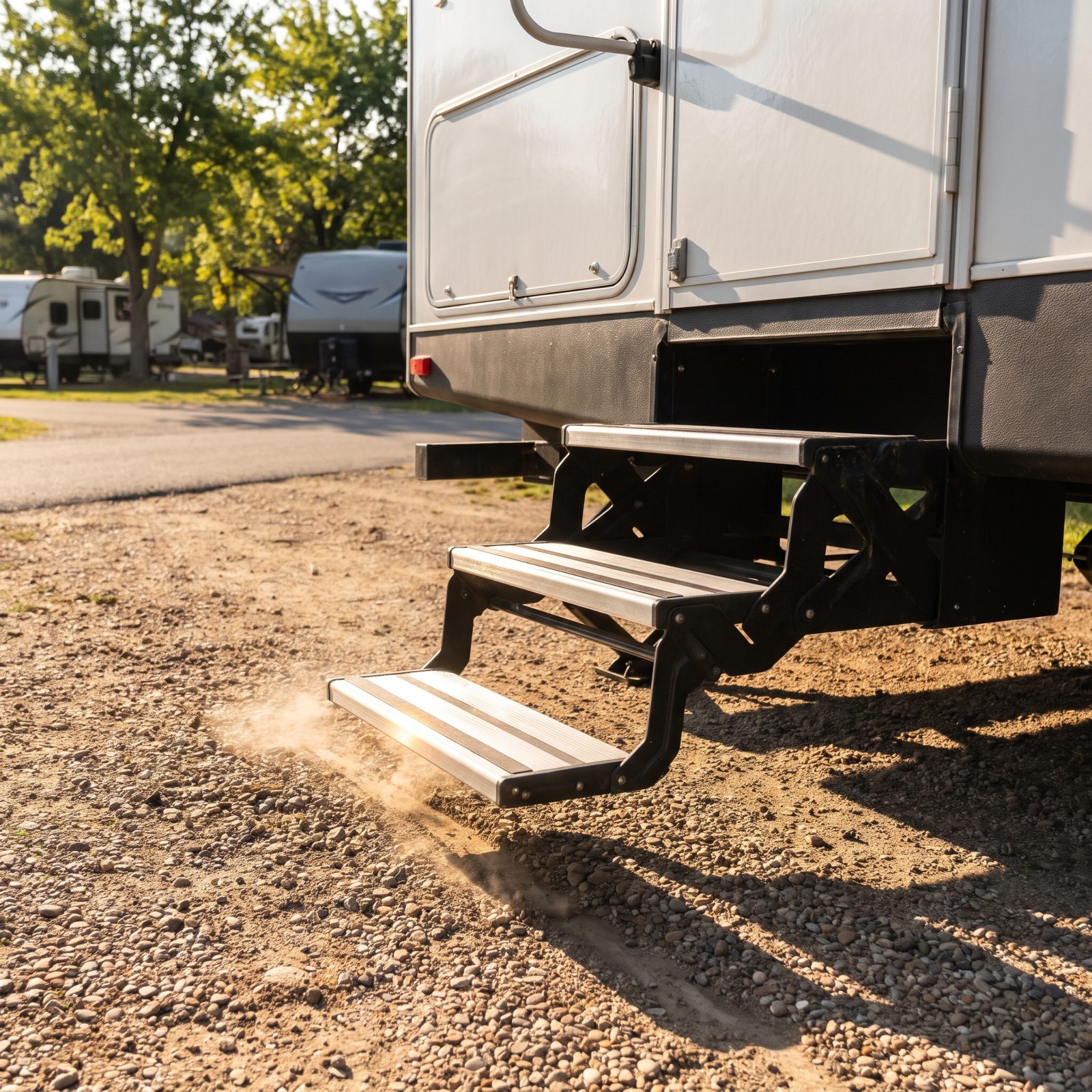
This one isn’t just a tell — it’s a wallet injury waiting to happen. Manual steps tucked up, electric steps retracted, every single time before you move the rig. The sound of aluminum folding into a curb at 5 mph is unforgettable, and the repair bill after is worse.
Veterans build it into a walkaround they could do asleep: steps, chocks, cords, antenna, hitch. Tape a reminder to the steering wheel until the habit sticks. There’s no shame in a checklist, and plenty of shame in a bent step frame scraping down the exit road.
13. The TV Blasting Through Those Paper-Thin Walls
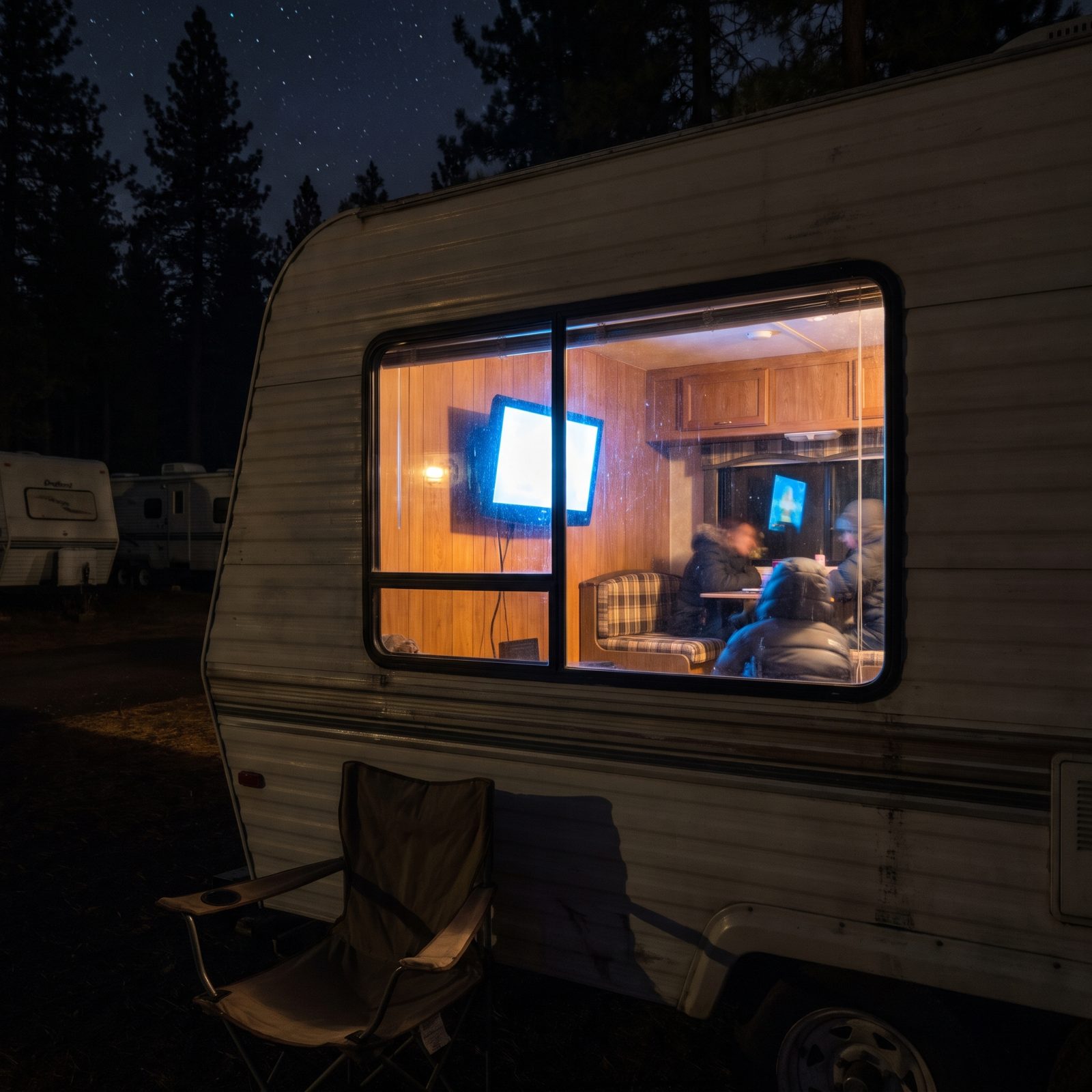
RV walls are an inch of foam and a sheet of fiberglass. Whatever you’re watching, your neighbor is watching too, want to or not. The giveaway is the game on full volume with the windows cracked at nine at night.
Regulars keep a set of bluetooth headphones hanging by the door for exactly this. Sound travels in a campground like it never does at home. If you can hear your neighbor sneeze, they can hear your late-night murder documentary.
12. The Gray Tank That Floods After One Long Shower
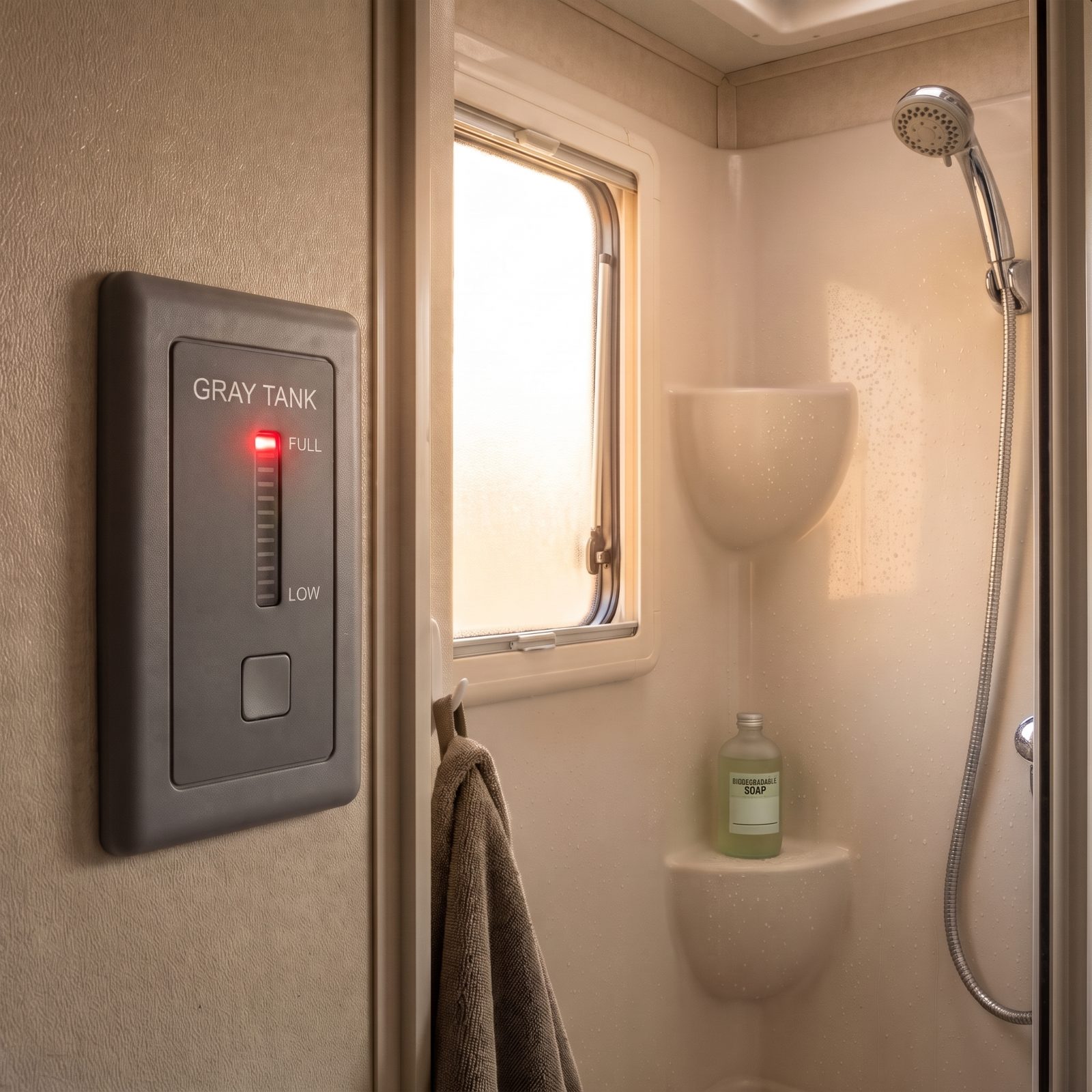
A home shower runs as long as you like. An RV gray tank fills up fast — a few good long showers and it backs up into the pan and the whole rig smells like a drain. Weekend campers learn this the hard way, usually Saturday night.
The move veterans use is the Navy shower: water on to rinse, off to soap, on to rinse again. Two minutes of actual flow. You’ll stretch the tank across a long weekend and never watch the gray gauge blink red.
11. Plugging Straight Into the Pedestal With No Surge Protector
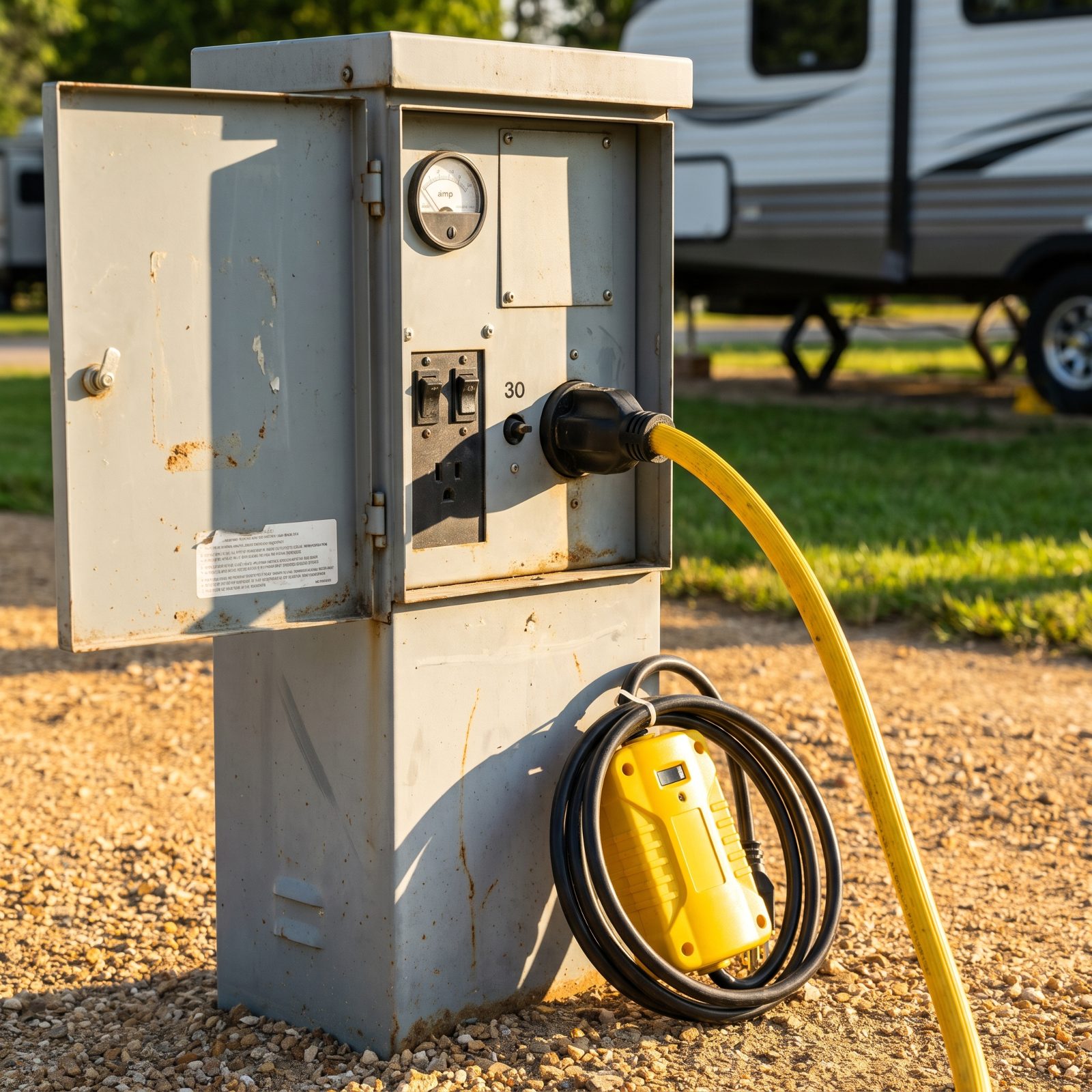
Campground power is a gamble. Old wiring, overloaded circuits, a neighbor’s A/C cycling on a hot afternoon, a storm sending a spike down the line — any of it can cook your converter, your fridge board, and your air conditioner in a single afternoon.
A full-timer never plugs in bare. A 30-amp RV surge protector that reads voltage and flags miswired pedestals runs around a hundred bucks. That’s a rounding error against a fried control board. Plug it into the pedestal first, let it read the power, then plug the rig into it.
10. The Mid-Weekend Panic Over a Full Black Tank
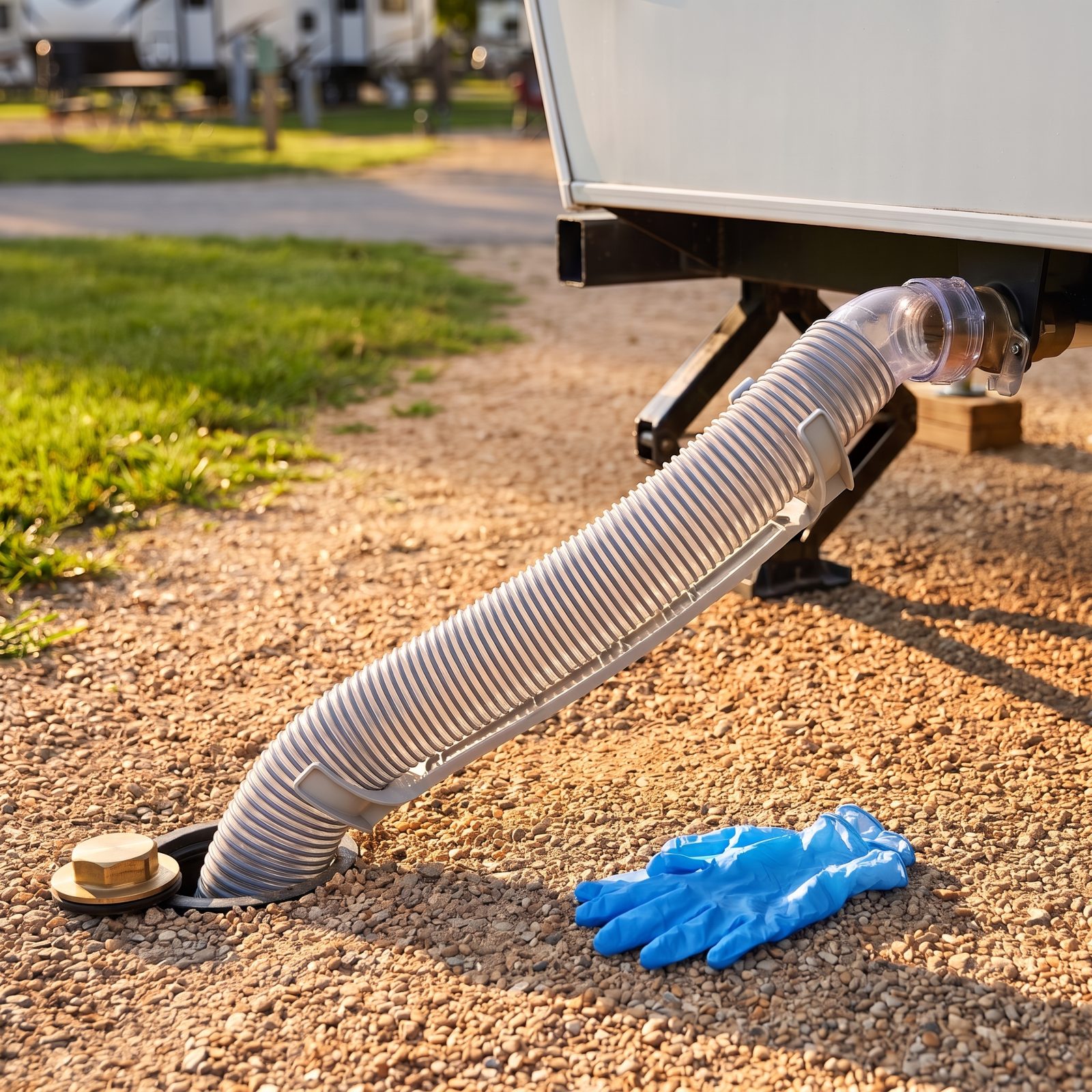
Friday you don’t think about the black tank at all. Sunday morning you’re staring at a full gauge, a sewer inlet right there at your site, and a 10 AM checkout. That’s the weekend camper’s Sunday scramble, right there.
Here’s what the regulars know: keep the black valve closed until the tank reads two-thirds full, then dump all at once so the rush of water carries the solids out. Dribble it out as you go and you build the dreaded pyramid. And since your site has its own sewer inlet, get the hose hooked up on arrival — not when the gauge is screaming.
9. Towing With Mirrors Never Adjusted for the Trailer
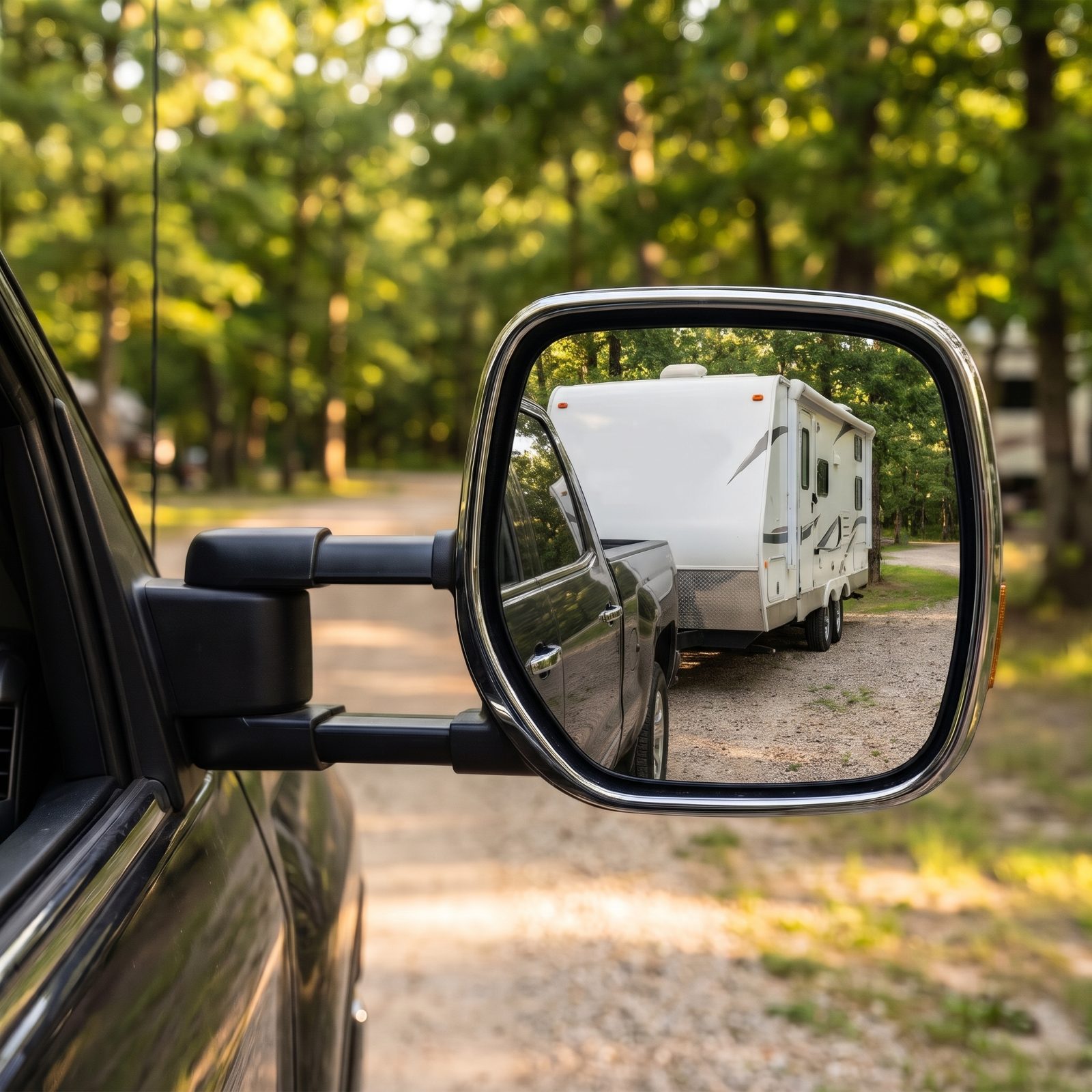
Factory mirrors are set for an empty truck. Hitch up a wide trailer and your blind spot swallows an entire lane. A weekend tower pulls out of the driveway, never touches the mirrors, and merges on faith.
Extend the tow mirrors or clip on a set, then adjust so you can see the full length of the trailer down to the rear tires. You want a sliver of the trailer in the inner edge and clear road in the outer. Thirty seconds in the parking lot. Saves a sideswipe on the highway.
8. Rolling In With the Propane Tank Already on Empty
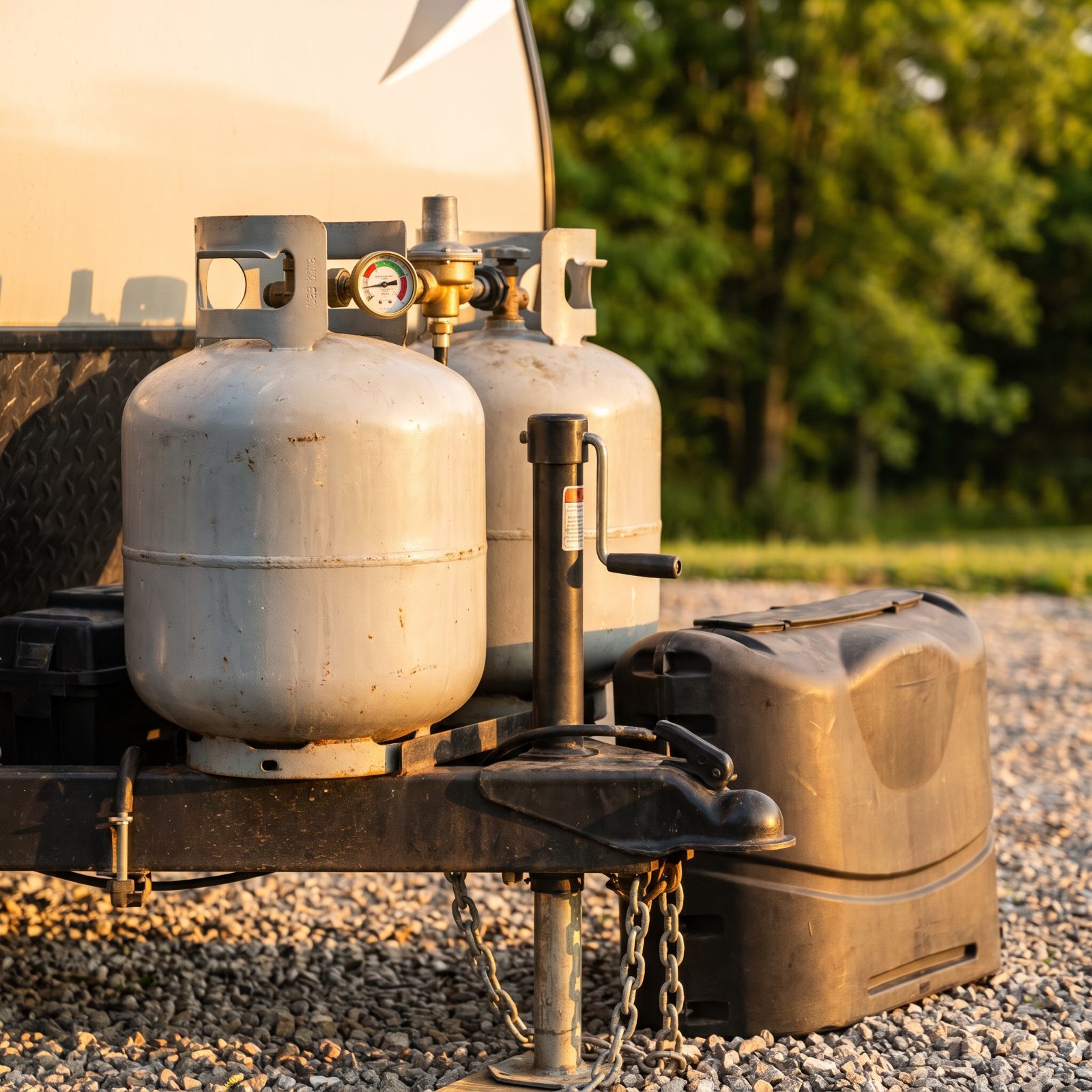
Propane runs the fridge, the furnace, the water heater, and the stove. Show up Friday with a tank already in the red and your first cold night ends with the furnace clicking off at 3 AM. Nothing wakes a camper faster than the furnace dying in the dark.
Veterans carry a second tank and keep an eye on the little dial gauge on the brass fitting. When the needle drops into the red, they hook the hose to the spare. You finish the weekend warm and swap the dead one on the way home. A magnetic propane level gauge costs a few bucks and ends the guessing for good.
Check it before you leave the driveway, not when the pancakes are half-cooked.
7. Packing a Week of Groceries for Two Nights Out
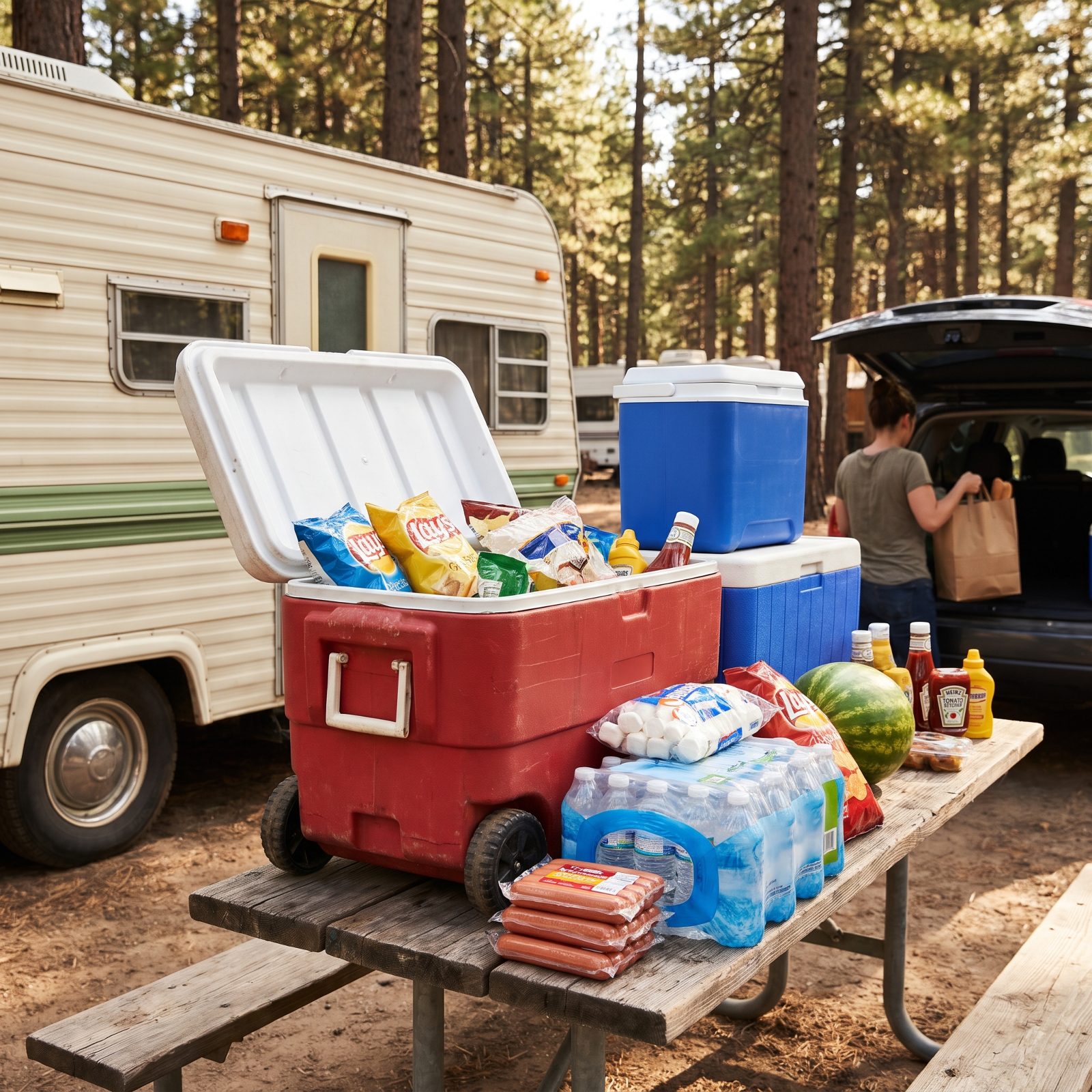
Two nights. Enough food for a small siege. There’s the cooler that needs two people and a prayer to lift onto the table, the second cooler for overflow, and the loaf of bread that’ll go home squashed and half-eaten.
Full-timers pack light because they shop constantly — there’s always another grocery store down the road, and you don’t stockpile when the kitchen moves with you. Weekend campers treat every trip like crossing the Donner Pass. We get it. We’ve all done it. Nothing kills a Sunday faster than hauling home three pounds of unopened ground beef you were too full to cook.
6. Building a Bonfire in a Ring Made for a Campfire
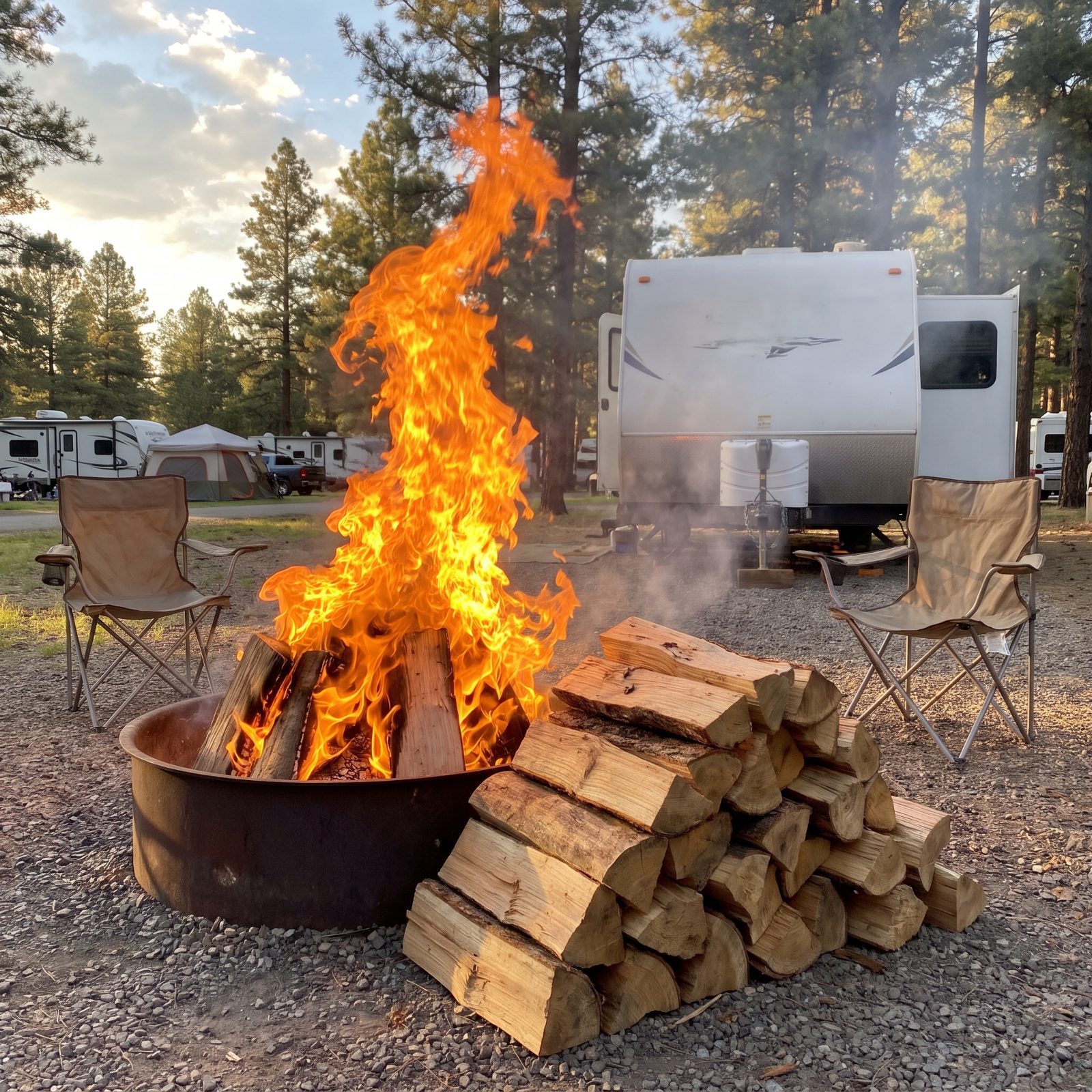
A fire you can feel from the next loop over. Flames clearing the rim, smoke rolling straight into the neighbor’s open window, a stack of wood beside it like they’re settling in for winter.
A big fire isn’t a better fire. It’s just hotter to sit near, harder to cook over, and a faster way to burn through a whole bundle of wood in one night. Experienced campers keep a modest flame going, add a log when it needs one, and sit close. A tidy little fire says you plan to be here a while and you’ve learned there’s no prize for the biggest blaze.
5. Kids and Dogs Treating Every Site Like a Shortcut
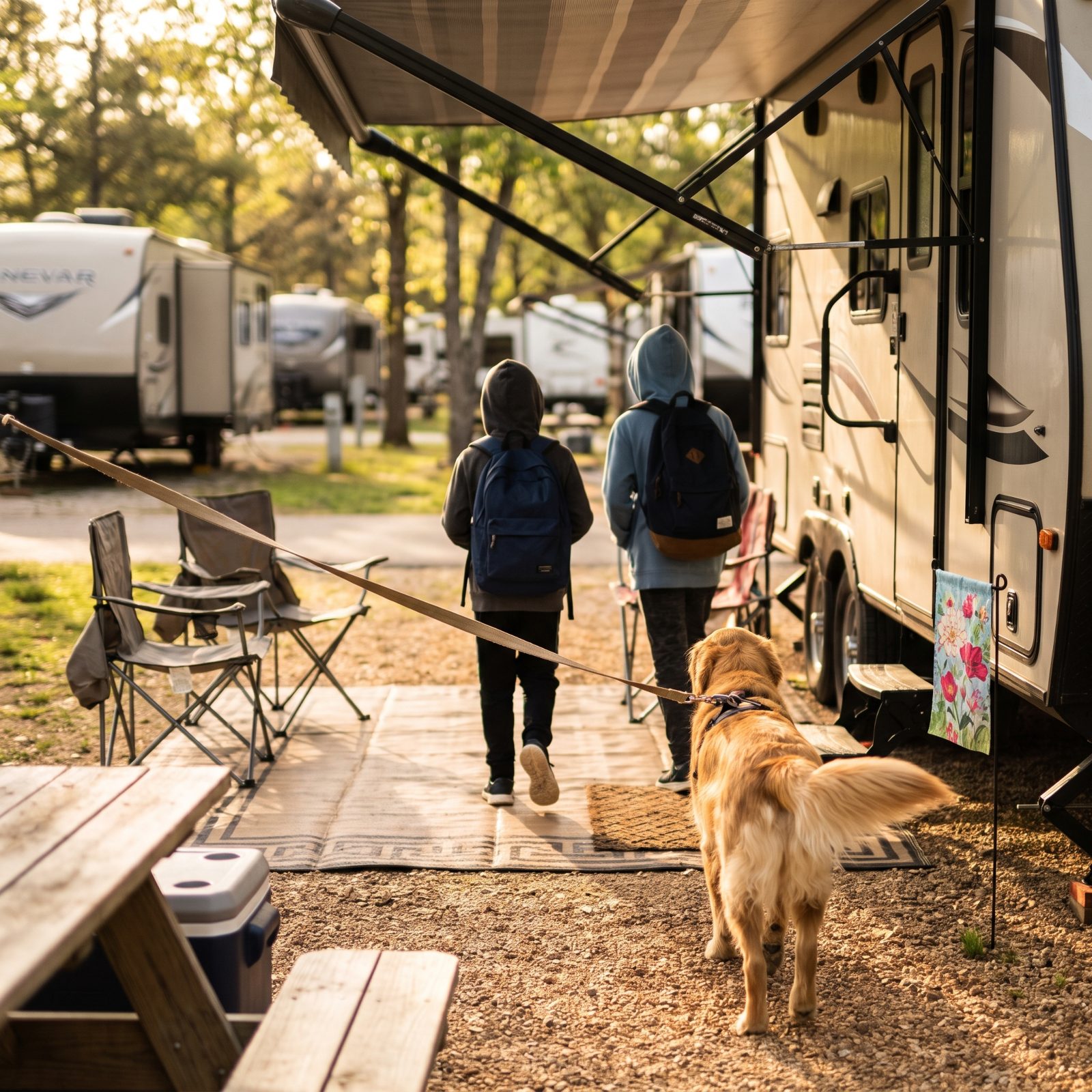
Every site has an invisible fence, and full-timers see it. The edge of your pad, your awning line, your doormat — that’s your yard, and you walk around it, not through it.
Weekend families haven’t absorbed this yet. Kids sprint the shortest line to the bathhouse, straight across three strangers’ living rooms. Dogs follow a scent onto somebody’s outdoor rug. It’s not rude, just new. But a seasoned camper notices instantly, because out here your campsite is the only private space you’ve got.
4. The Late-Checkout Scramble at the Gate
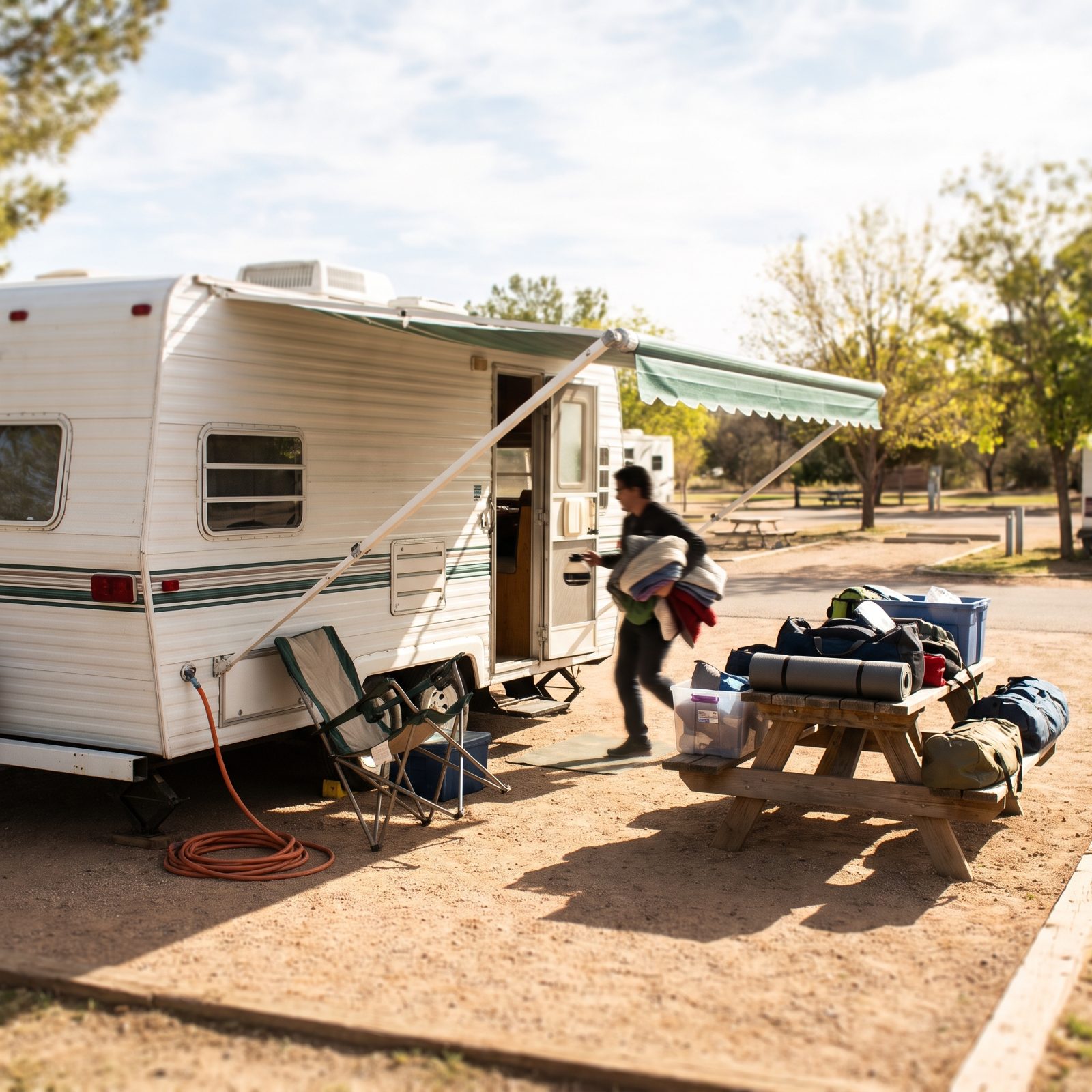
Eleven a.m. checkout, and at 10:52 the awning’s still out, the hose is still hooked up, and somebody’s frantically chucking chairs into the truck bed while the next camper idles at the gate.
Full-timers break camp like a pit crew because they do it constantly, and they start the night before. Chairs stowed, awning in, anything that isn’t sleeping-and-coffee already packed. Weekend campers wake up to coffee and a view, then remember checkout exists. I’ll say this gently: your neighbor with the next reservation is watching the clock too, and the scramble is contagious.
3. Dumping the Tanks in the Wrong Order
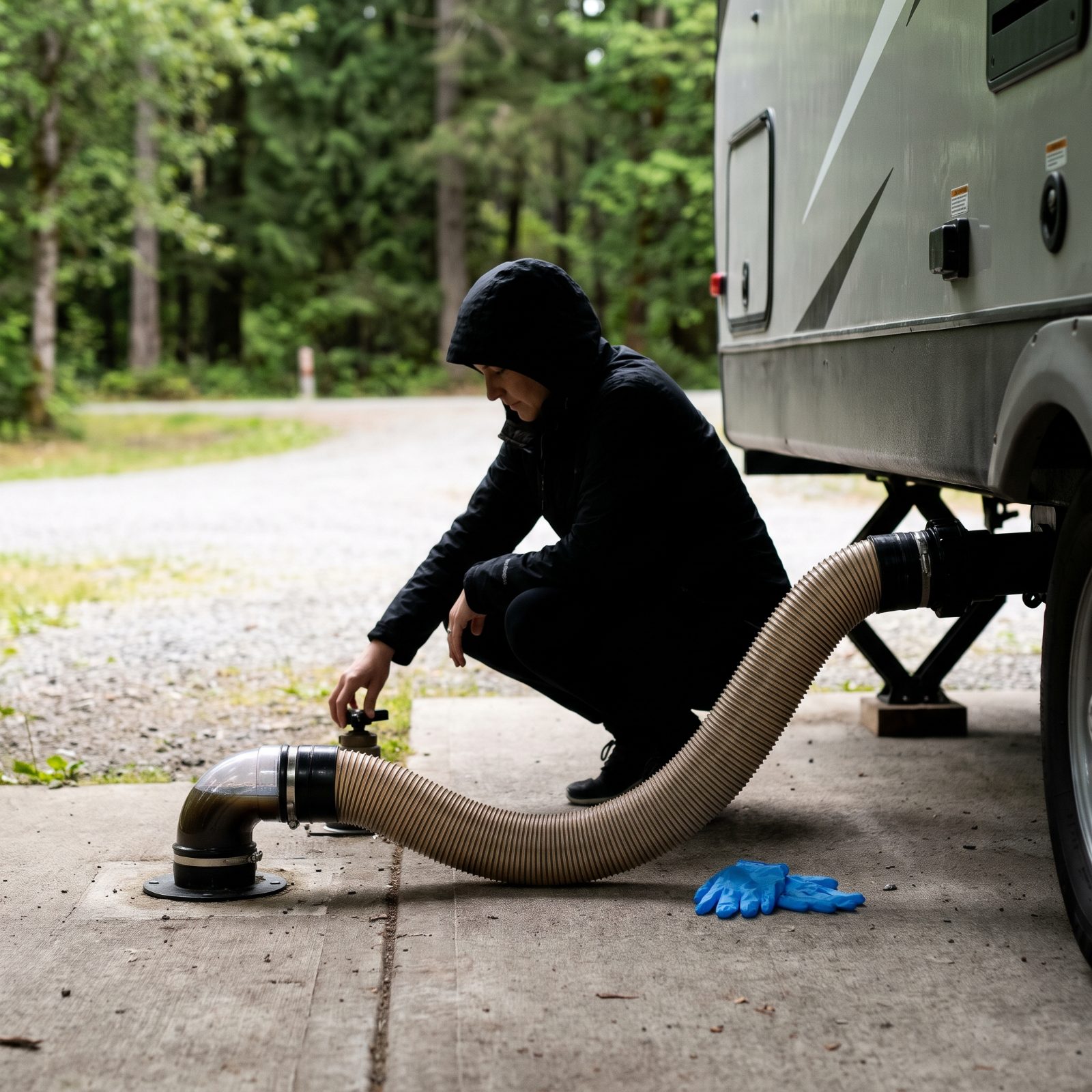
Black first, then gray. Always. The gray water flushes the hose clean on its way out, which is the whole reason for the order, and the person who learns it the hard way only learns it once.
Weekend campers get the sequence backward, or dump both at once, or forget gloves, or pull the hose before the black tank’s fully done. None of it ruins your day. But a full-timer standing in line behind you clocks every move, because they’ve made each mistake personally and remember exactly how.
- Hose connected and secure at both ends before you touch a valve.
- Black tank first, let it run fully empty.
- Gray tank second to rinse the hose.
- Gloves on the whole time, and don’t skip them because “it’s a quick one.”
2. The Elaborate Outdoor Kitchen That Never Got Used
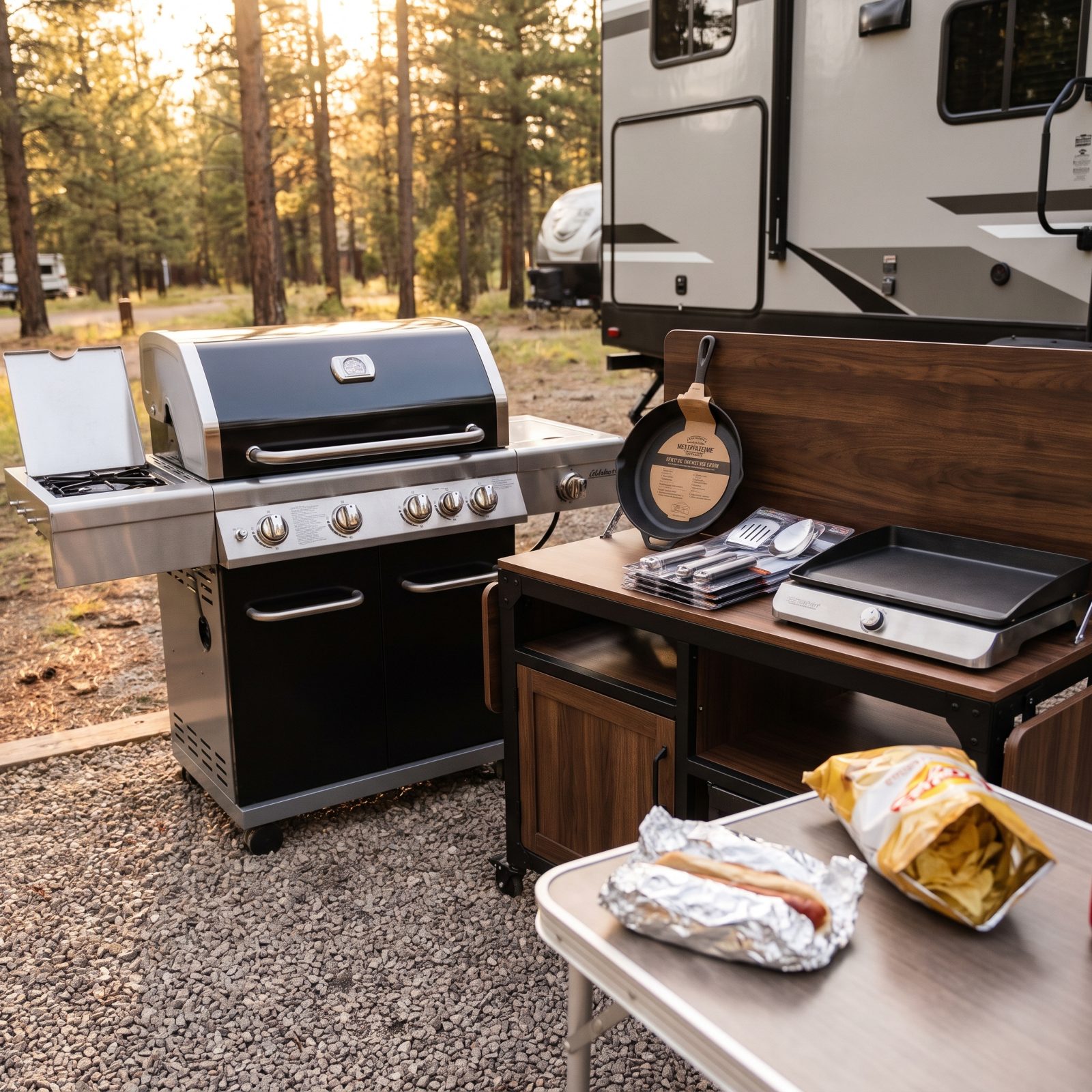
The full setup. Six-burner grill, folding prep station, griddle, a cast iron collection with half the tags still on. Deployed proudly Friday evening. Barely touched by Sunday.
You’ve seen this site. The gear cost more than a whole season of campsite fees, and dinner was still hot dogs and a bag of chips because setting all of it up and cleaning all of it up ate the evening you came here to enjoy.
Full-timers cook with one pan and a two-burner. Less to haul, less to wash, less to store in a rig where every cubic inch is spoken for. The fancy kit isn’t wrong — it’s just unused weight pretending to be a hobby.
1. Asking a Full-Timer Where the Nearest Walmart Is
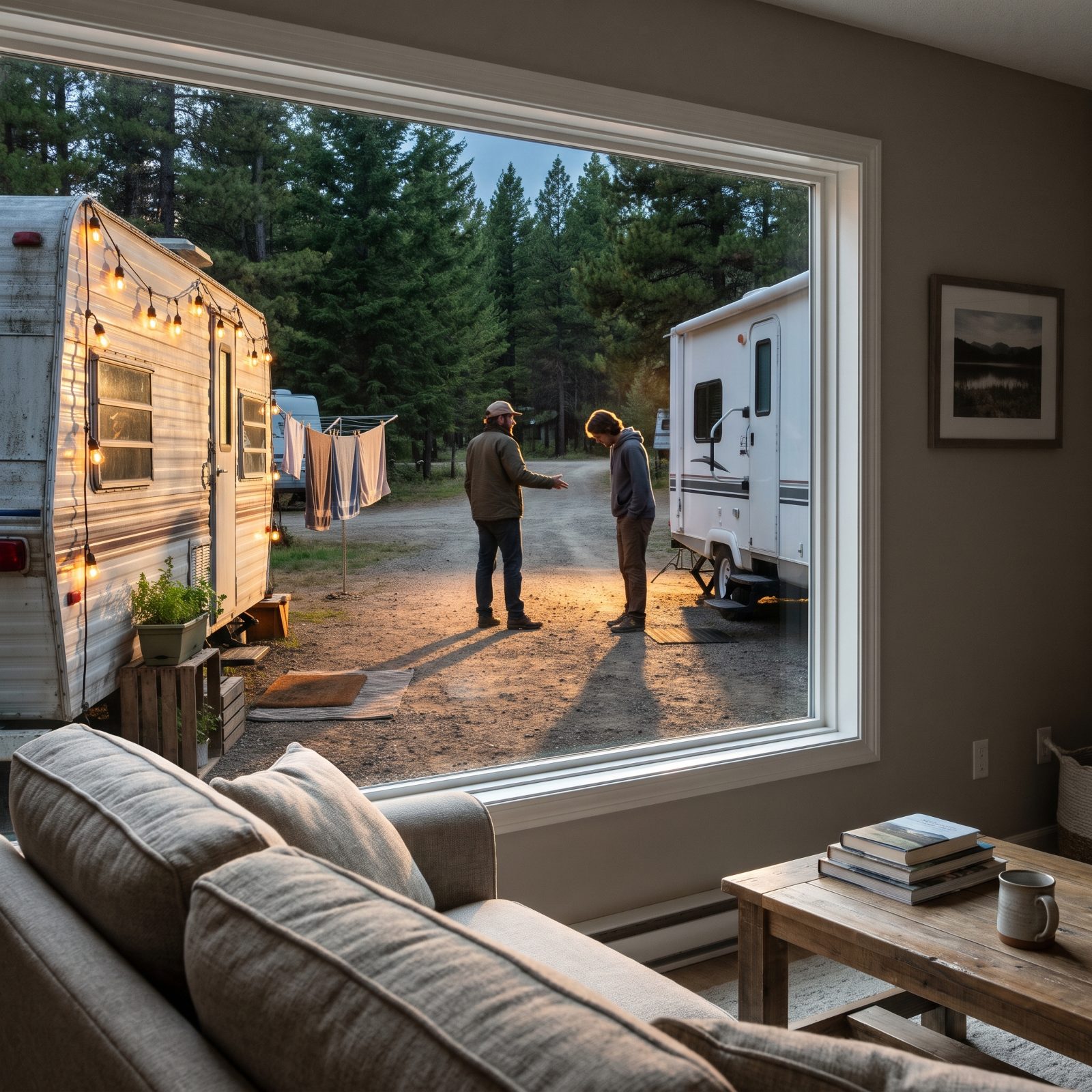
A friendly question, and a dead giveaway. Full-timers don’t ask where the Walmart is — they’ve got the app, the overnight-parking knowledge, and a mental map of every grocery run within forty miles of wherever they landed.
The question isn’t dumb. It’s that the people who live out here already have the answer and twelve better ones, because supply runs are just Tuesday. The weekend camper asks because they’ve never had to think about it before now.
Honestly? The real pro move is to ask anyway. Full-timers love being useful, and the ones with string lights and an herb planter outside their door will cheerfully draw you a map to the good grocery store, the dump station with no line, and the diner locals actually eat at. That last one is worth more than any of the tells on this list.