
You measure every parking garage with your eyes now, and you can’t help it. The clearance bar at the mall entrance catches your attention the way a stop sign catches everyone else’s. You did the math before you even registered you were doing it. That’s RV life for you. It rewires a person, and long after you’ve unhooked and gone back to regular errands, the habits stick. You still back into spots. You still notice which patch of grass sits dead level. These are the small tells — the quiet instincts that give you away in a grocery store parking lot.
Please note that some of the images in this article were created with the assistance of AI.
31. You’ve Named Your RV (And You Mean It)
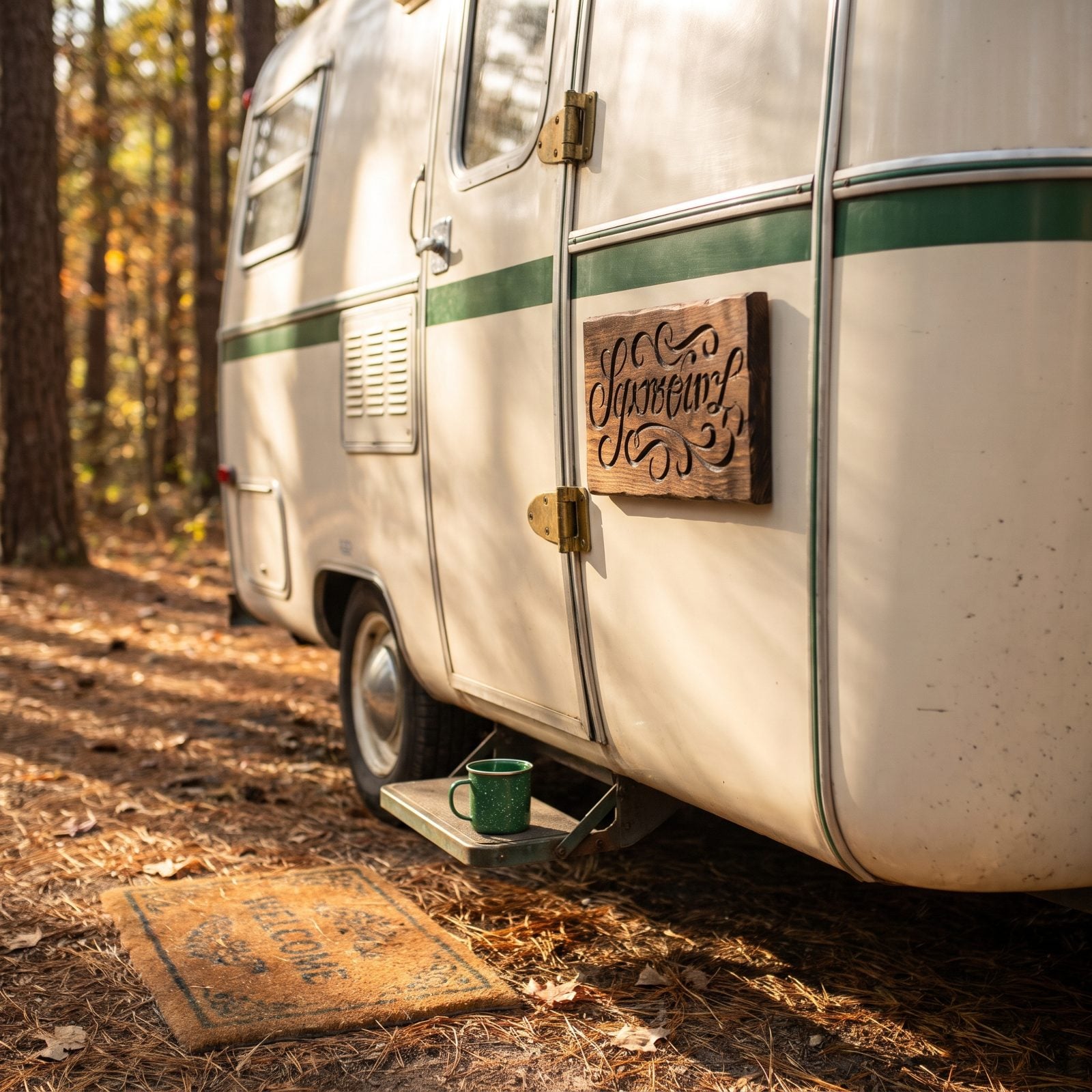
A boat gets a name. A horse gets a name. And somewhere along the line, your rig earned one too.
Nobody decided this on purpose. One day you were calling it “the camper,” and the next you were saying “Betsy’s acting up on hills again” with a straight face and total sincerity. The name usually shows up after the first real trip — the one where something went wrong and the rig got you home anyway.
You’ll deny it means anything. It means everything.
30. You Back Into Parking Spaces Without Thinking
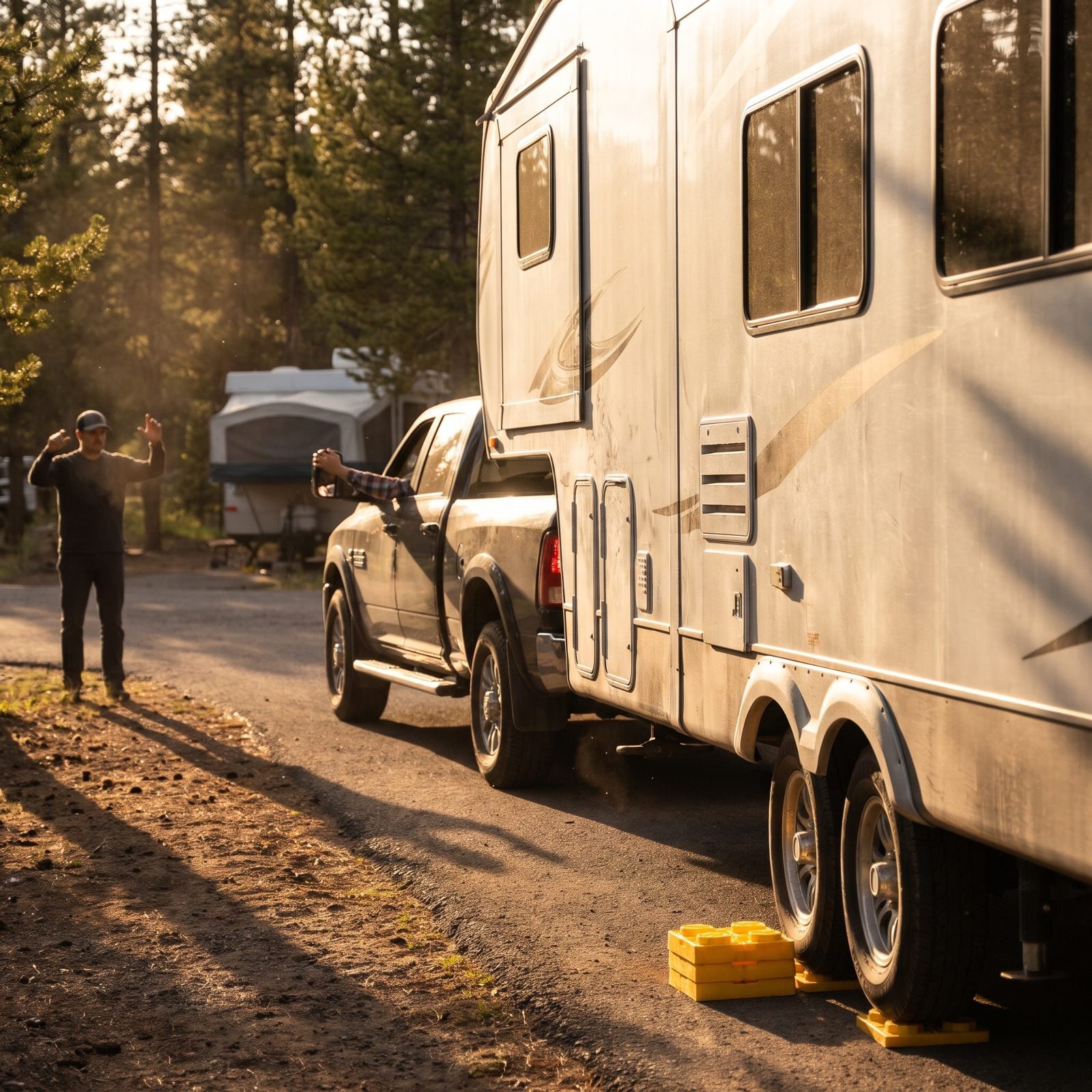
You’ll do it in the grocery store lot, the library, your own driveway with nothing hitched behind you at all. Backing in just feels right now, like your hands learned a thing and flat refuse to unlearn it.
There’s logic to it with a rig, sure. You want the nose pointed out for an easy exit, and you want the door opening onto your site instead of the road. But the habit doesn’t bother checking whether you’re towing — it just takes over.
People in the next spot watch you reverse a sedan with the precision of a bus driver and wonder what your deal is. Your deal is forty nights of practice.
29. You Know Your Rig’s Height by Heart
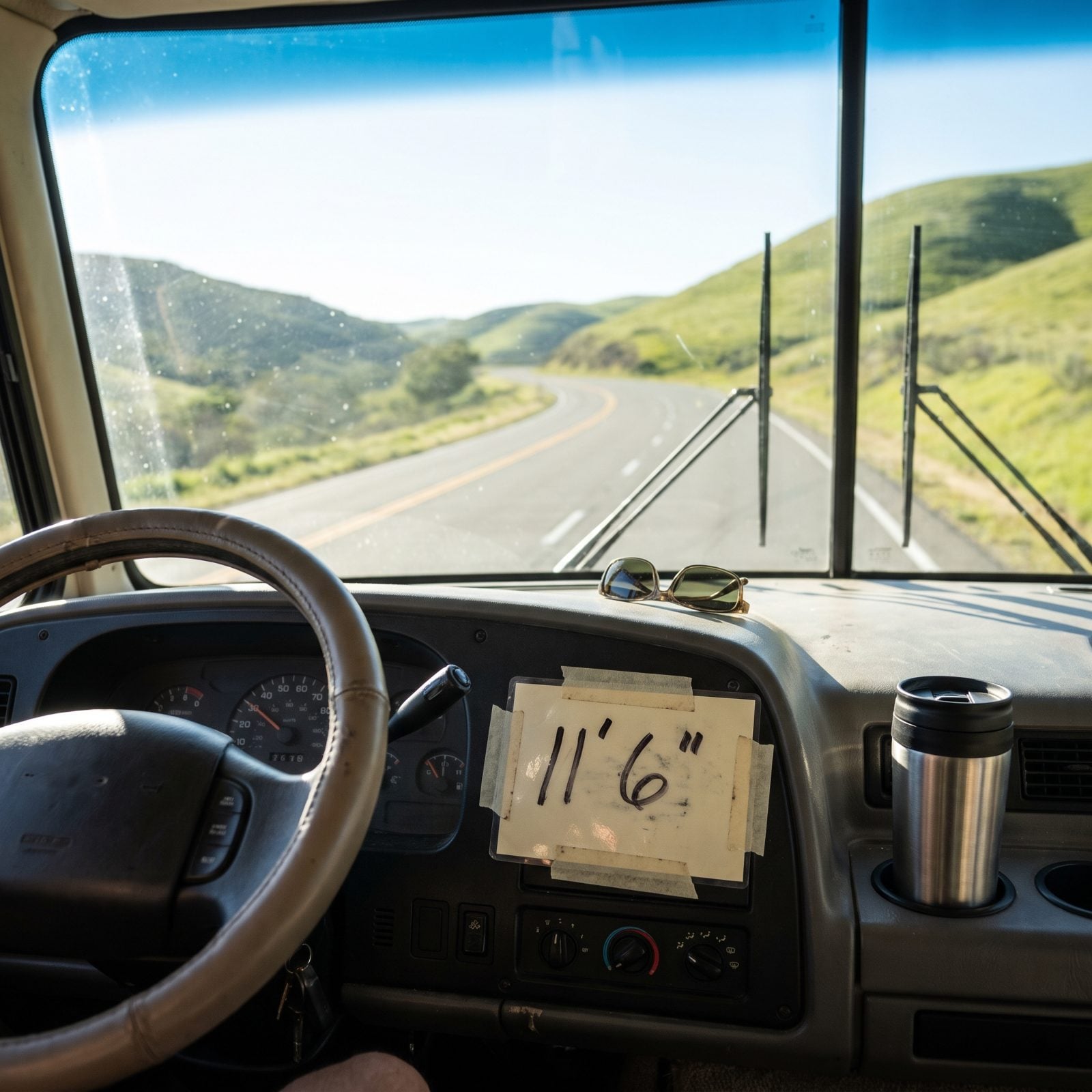
Ask a true RVer their height and they’ll give you the rig’s. In feet and inches, immediately, no hesitation.
It’s one of those numbers that burns into your brain the first time you creep up on a questionable overpass and realize you genuinely don’t know whether you’ll clear it. That cold little drop in your stomach is a once-in-a-lifetime teacher. After that, the number lives with you forever — usually written on a card above the visor, because trusting your memory at 60 mph is how people end up on the evening news.
28. You Scan for Low Bridges Like a Hawk
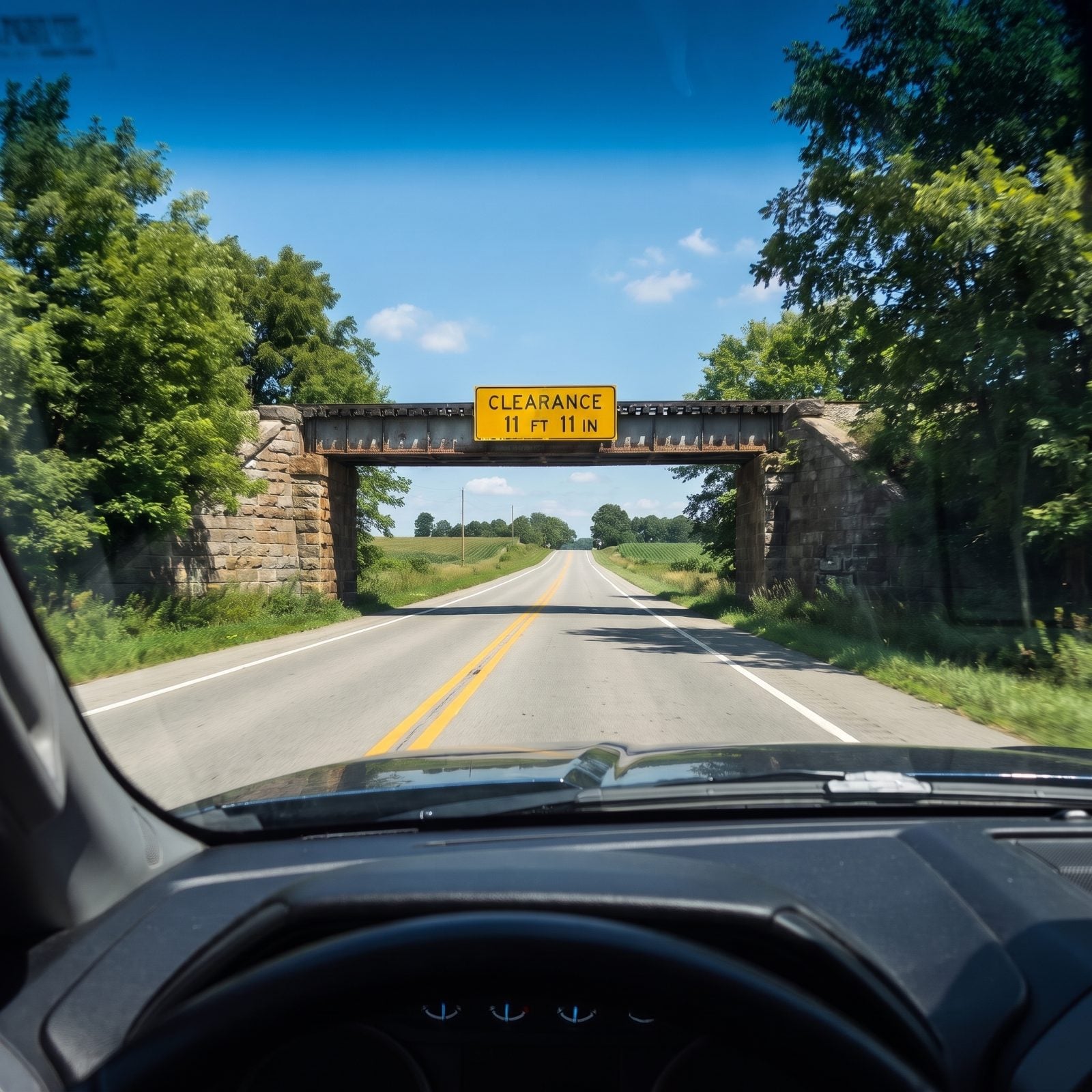
Every yellow clearance sign pings your radar now, even in the car, even when it couldn’t possibly matter. You squint at it, check those crisp numbers against your rig’s height, and if anything seems off, you don’t guess — you slow down and find the real height before you commit. Easy as breathing.
This habit has a dark origin story for a lot of folks. The “can opener” bridges — the ones with their own viral video genres — exist because somebody trusted their luck instead of their numbers. You will never be that somebody. You’d sooner add an hour to the drive than gamble a roof.
27. You Can Hitch a Trailer Without Saying a Word
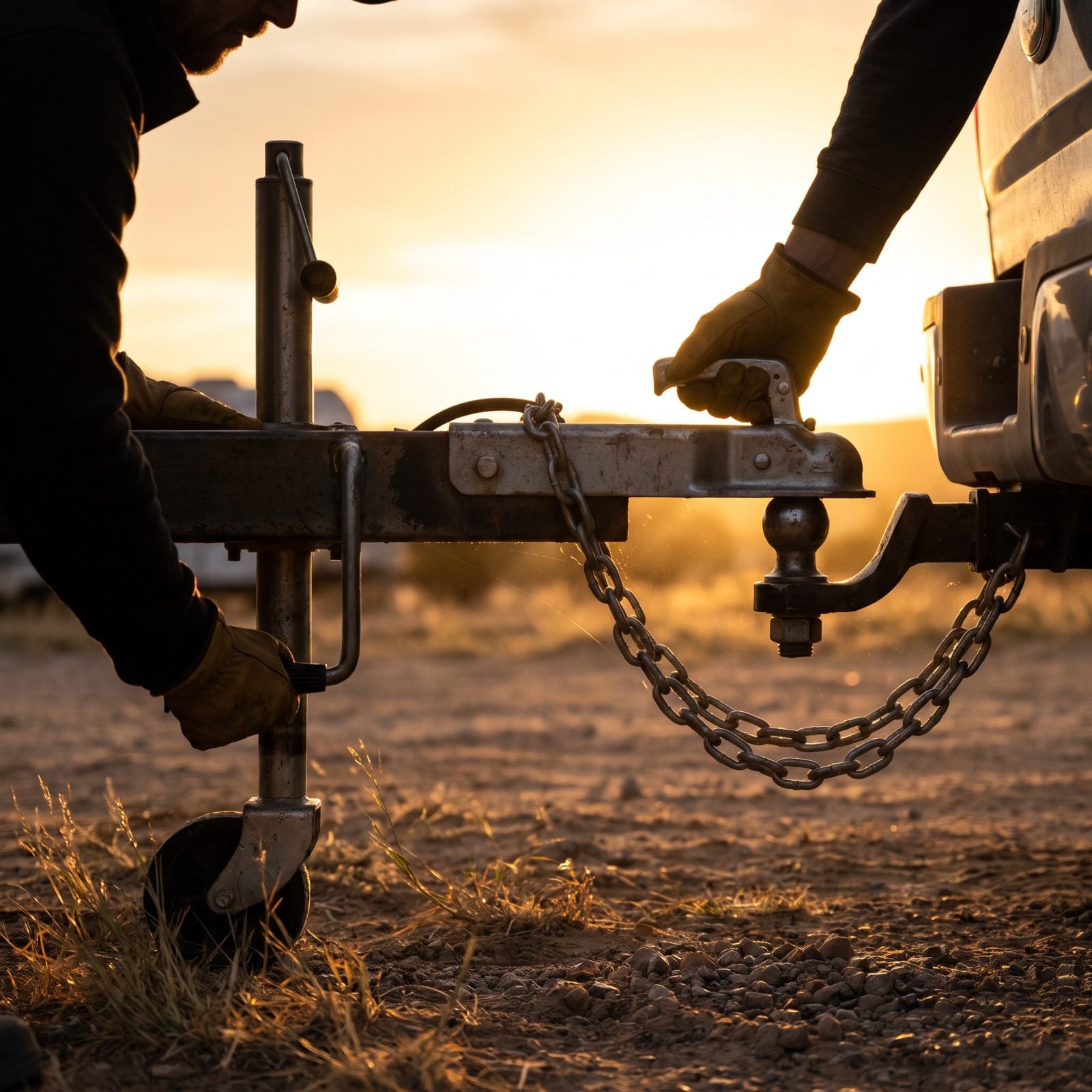
There was a time this involved yelling. We’ve all witnessed it play out at a campground — two people, a trailer, and a volume that carries clean across three loops.
But seasoned pairs go quiet. A raised flat palm. A slow circling finger. A fist that means stop right there. The whole hitch happens in a vocabulary of hand gestures nobody ever taught you, worked out over a dozen awkward tries until it clicked.
Watching an experienced team couple up is genuinely satisfying. No arguing, no drama — just two people who’ve done this enough to trust each other’s hands over their own mouths.
26. You Wave at Other RVers on the Highway
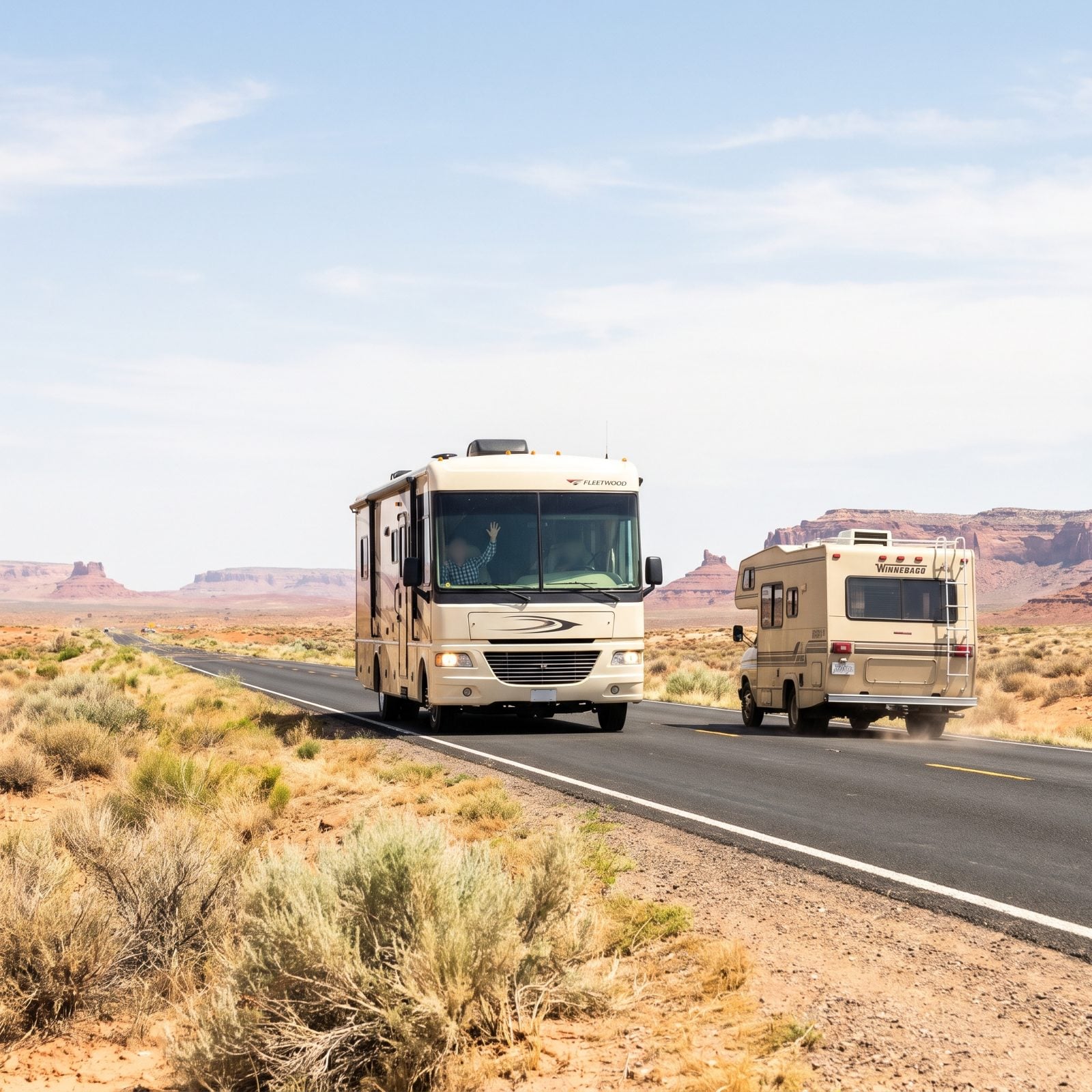
Somewhere out there is an unspoken club, and you joined it without filling out a form.
You spot an oncoming rig and your hand lifts off the wheel on its own. A two-finger salute, maybe a full wave if you’re feeling generous. They wave back nine times out of ten, and that tiny exchange between strangers who’ll never meet carries more warmth than it has any right to.
It’s a holdover from a slower time, when the road felt smaller and everyone out on it was a little bit kin. The wave survives because RVers still feel that pull. You’re all chasing roughly the same thing.
25. You Dream About Boondocking Spots on Google Maps

Most people use satellite view to scope out a restaurant. You use it to hunt for a flat clearing off a forest road three hours from anywhere, where the cell signal probably dies — and dying signal is the appeal, not the drawback.
You’ve got pins saved. A whole folder of them. Spots you’ve never visited and maybe never will, but studying them scratches an itch. That dead-end spur near the river. The BLM parcel with a turnaround wide enough for your rig.
24. You Scout for Flat, Level Ground Everywhere You Go
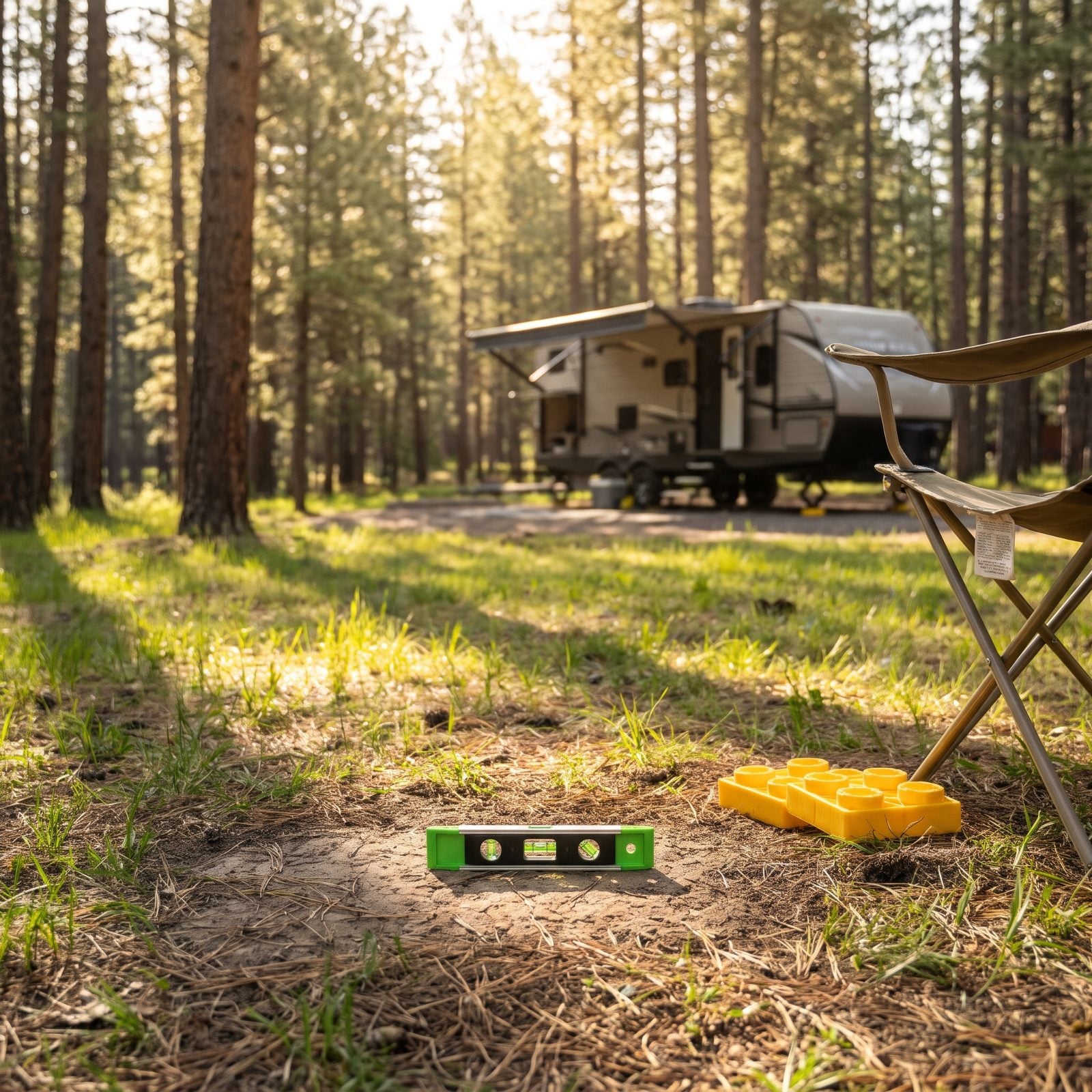
You can’t look at a patch of open ground anymore without sizing it up. A friend’s backyard, a city park, the gravel lot behind a brewery — your brain runs the check automatically. Is that level? Could a rig sit there?
It’s funny until you remember why. Sleeping in a trailer that’s off level is miserable. Your blood pools weird, the fridge sulks, and everything on the counter migrates to one end overnight. One bad night cured you forever, and now you read terrain the way other people read weather.
23. You Celebrate Finding a Pull-Through Site
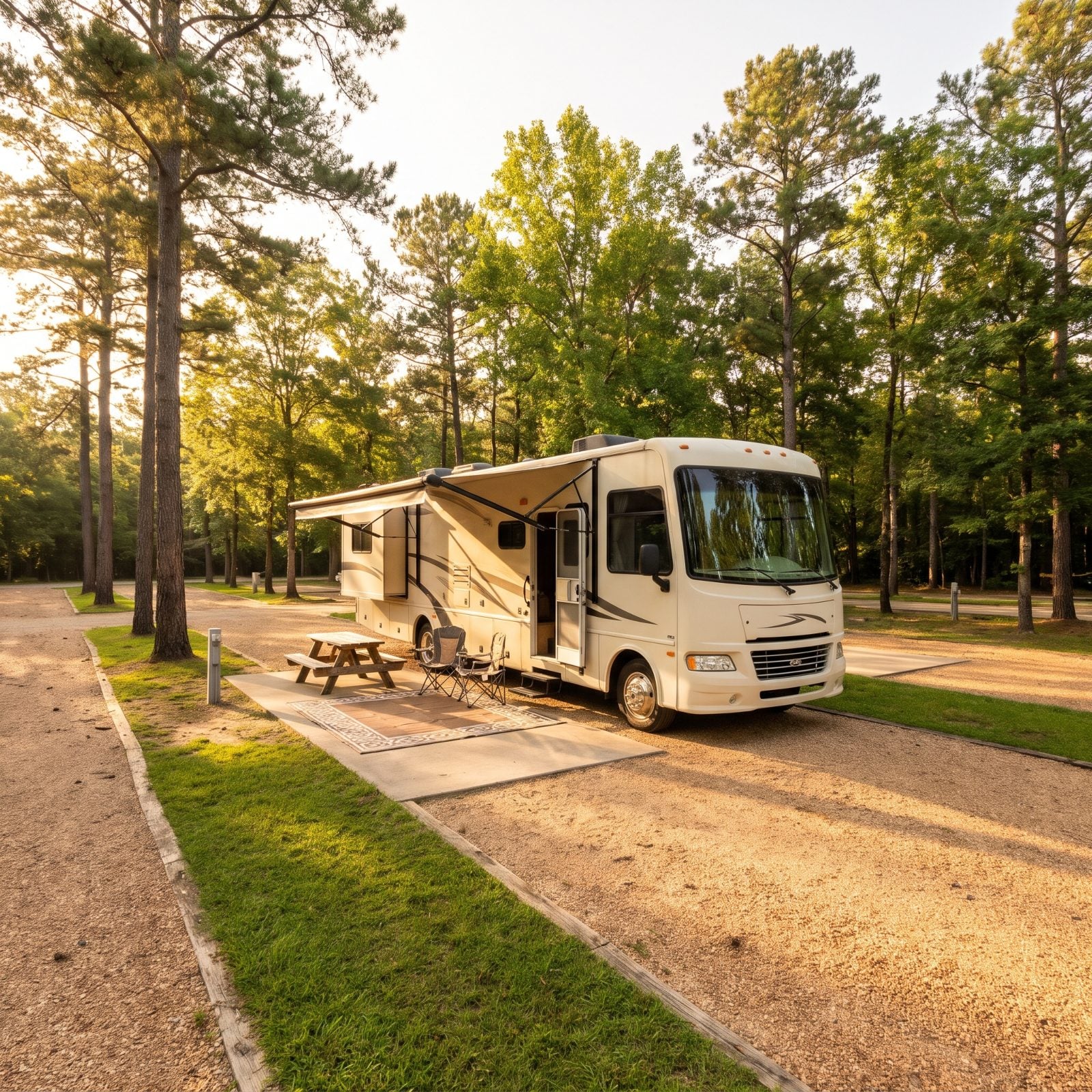
Pull in. Unhook. Done. No reverse, no spotter, no three-point shuffle in front of an audience.
To a non-RVer this means nothing. To you it’s a small lottery win, and seeing “pull-through available” in a reservation listing brings on actual relief — the kind that makes you book immediately before someone else snags it.
The best ones let you roll out the next morning without even considering a backup. You just ease forward into your coffee and the day. That kind of easy is worth a few extra dollars, and you’ll happily hand them over.
22. You Judge Rest Stops by Their Overnight Potential
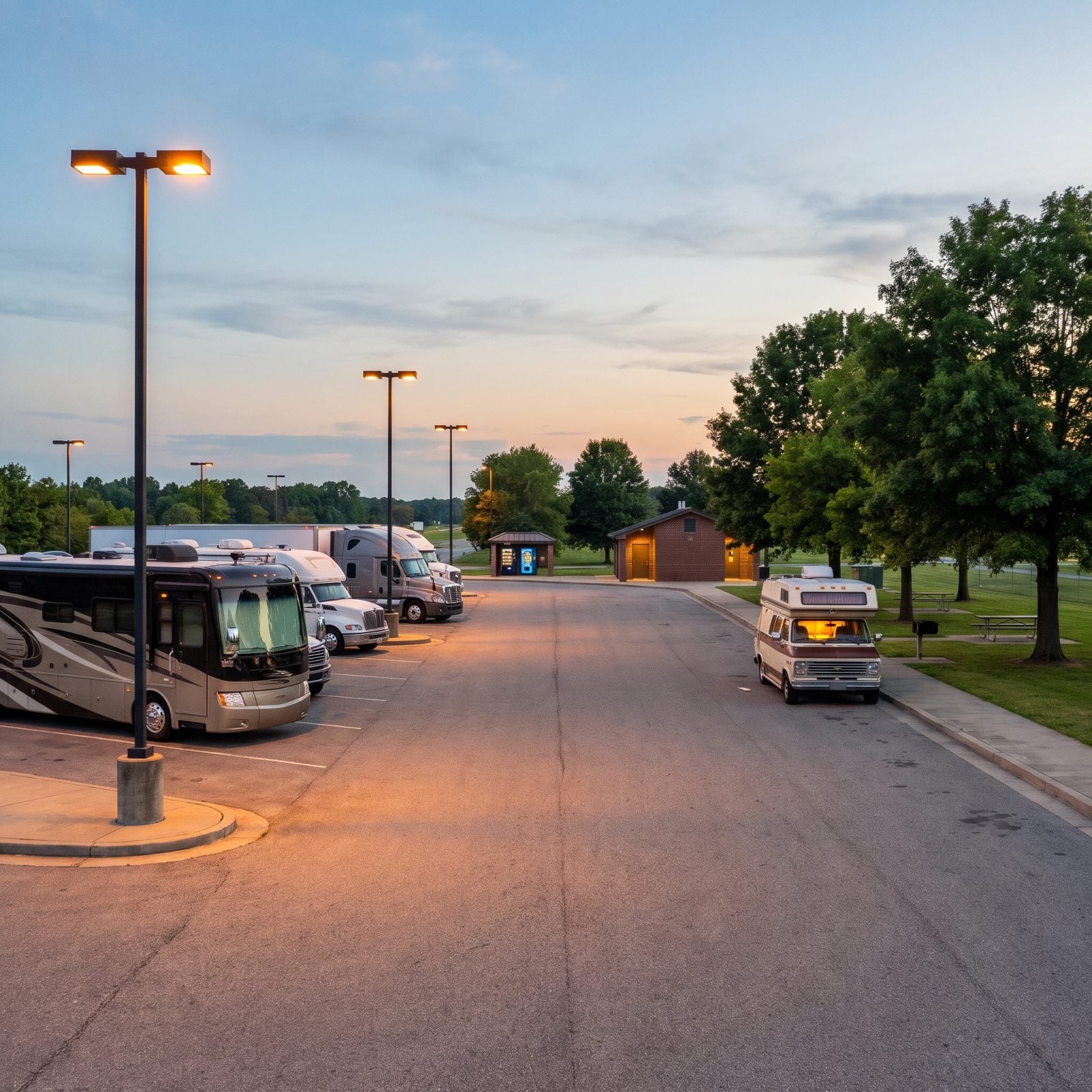
Everyone else pulls into a rest stop to pee and leave. You pull in and assess.
Is it quiet? Well lit? Are there other rigs parked for the night, which tells you it’s tolerated here? How far from the interstate roar are those back spaces? You size it up like a scout, because somewhere down the road you might need exactly this kind of place, and you file the good ones away.
Rules vary by state. Some rest areas ban overnight parking outright while others quietly allow it for safety’s sake. The true RVer knows the difference between stopping to rest and setting up camp, and respects the line between them.
21. You Know the Difference Between 30-Amp and 50-Amp Hookups
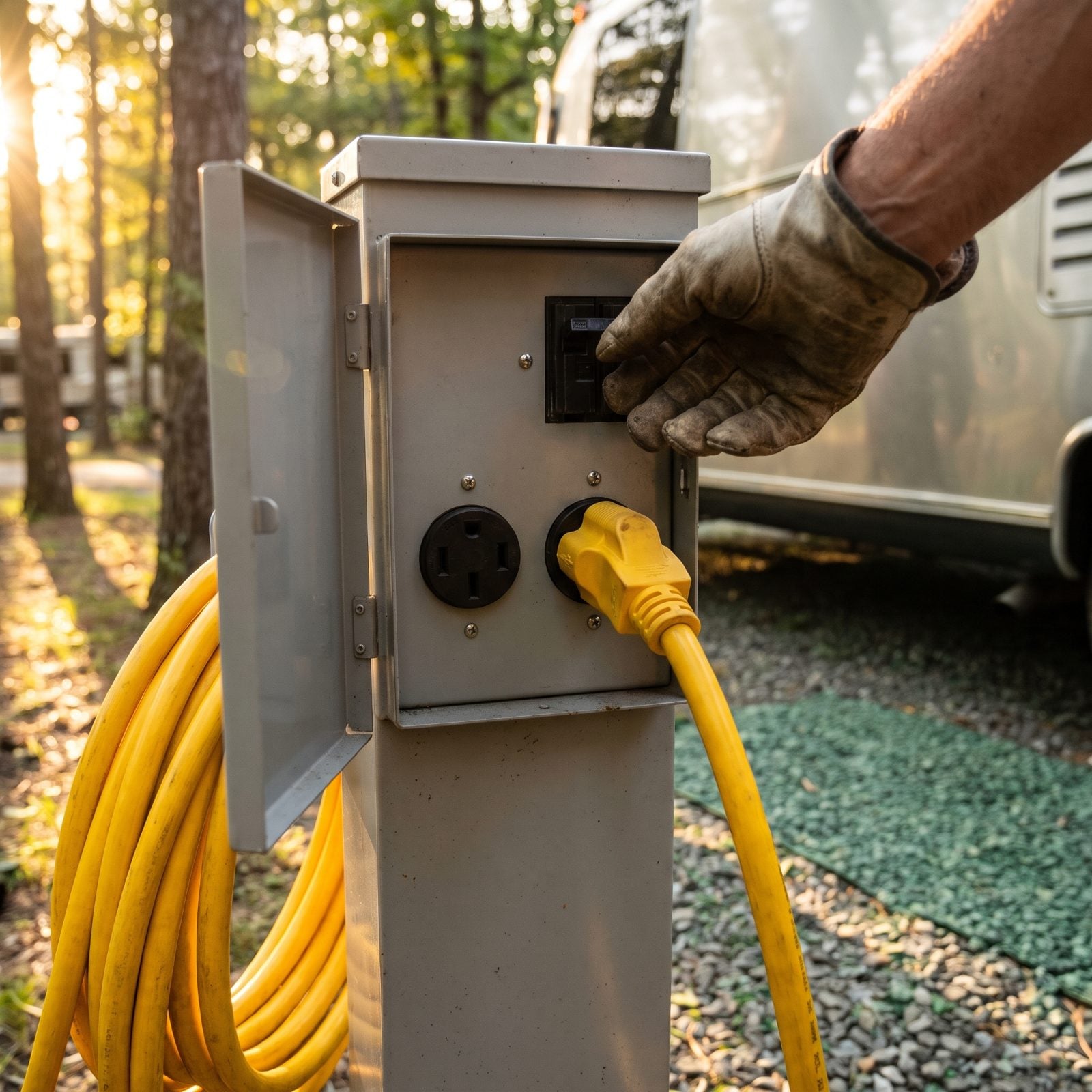
You can spot a 30-amp from a 50-amp plug across a crowded power pedestal, and you feel a little smug about it. The 30-amp has three prongs. The 50-amp has four and runs two legs of 120 volts, which is why the big rigs with two air conditioners need it.
Get this wrong and you either trip a breaker all weekend or fry something expensive. So you keep a dogbone adapter in the bay for both. Plenty of us have learned the hard way that plugging a 50-amp rig into 30-amp service with a cheap adapter means choosing between the AC and the microwave. You cannot have both. Welcome to the club.
20. You Plan Trips Around Dump Stations and Fresh Water
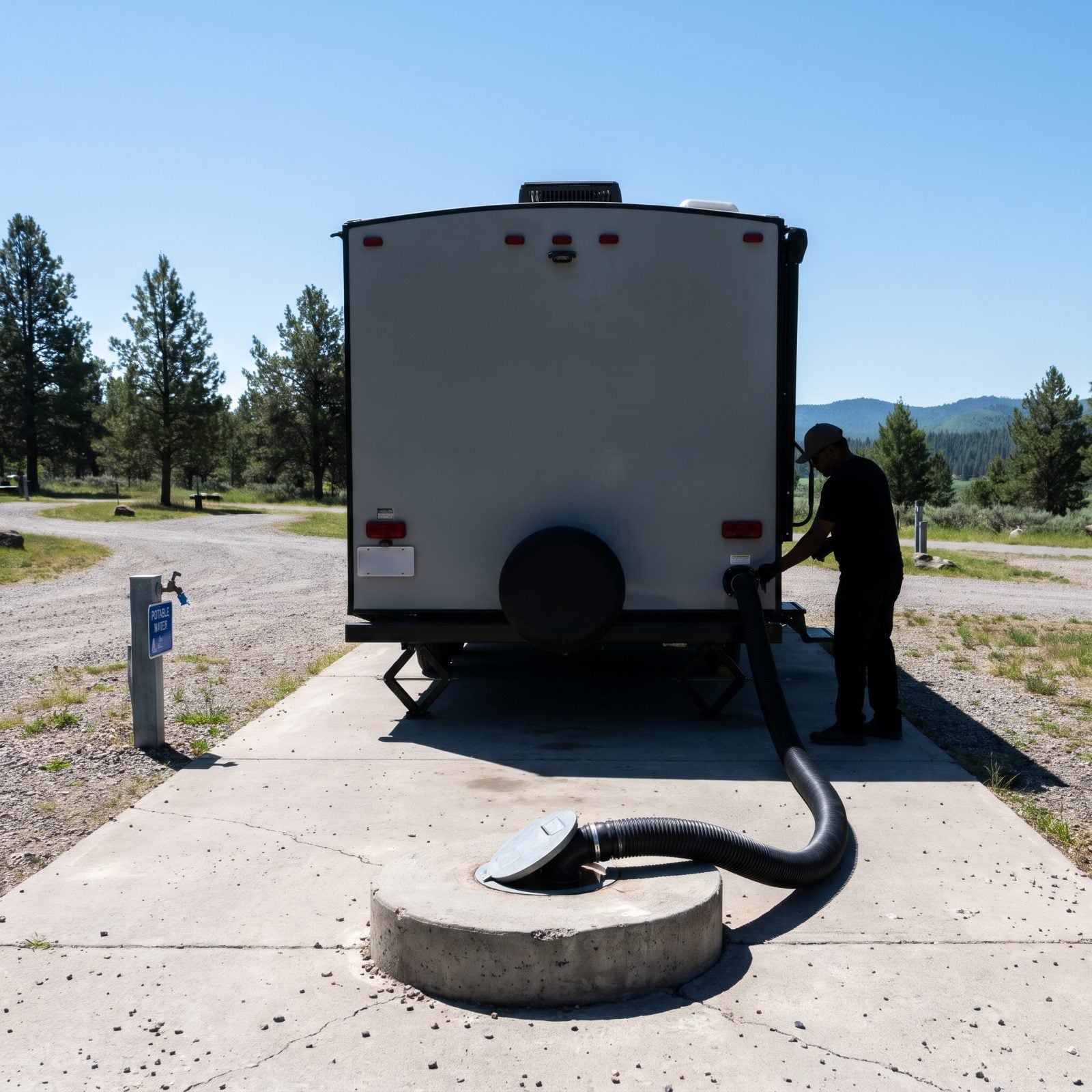
Your route home has a secret second map laid over it, one that marks every reliable dump station and fresh water fill between here and the driveway. Non-RVers plan around food. You plan around holding tanks.
You know the free dump at the rest stop two exits past the lake, and which Flying J has the good water pressure. And you’ve absolutely pulled into a sketchy campground, paid the day-use fee, and left twenty minutes later with empty tanks and a full fresh supply. That’s not weird. That’s logistics.
19. You Own More Leveling Blocks Than Dinner Plates
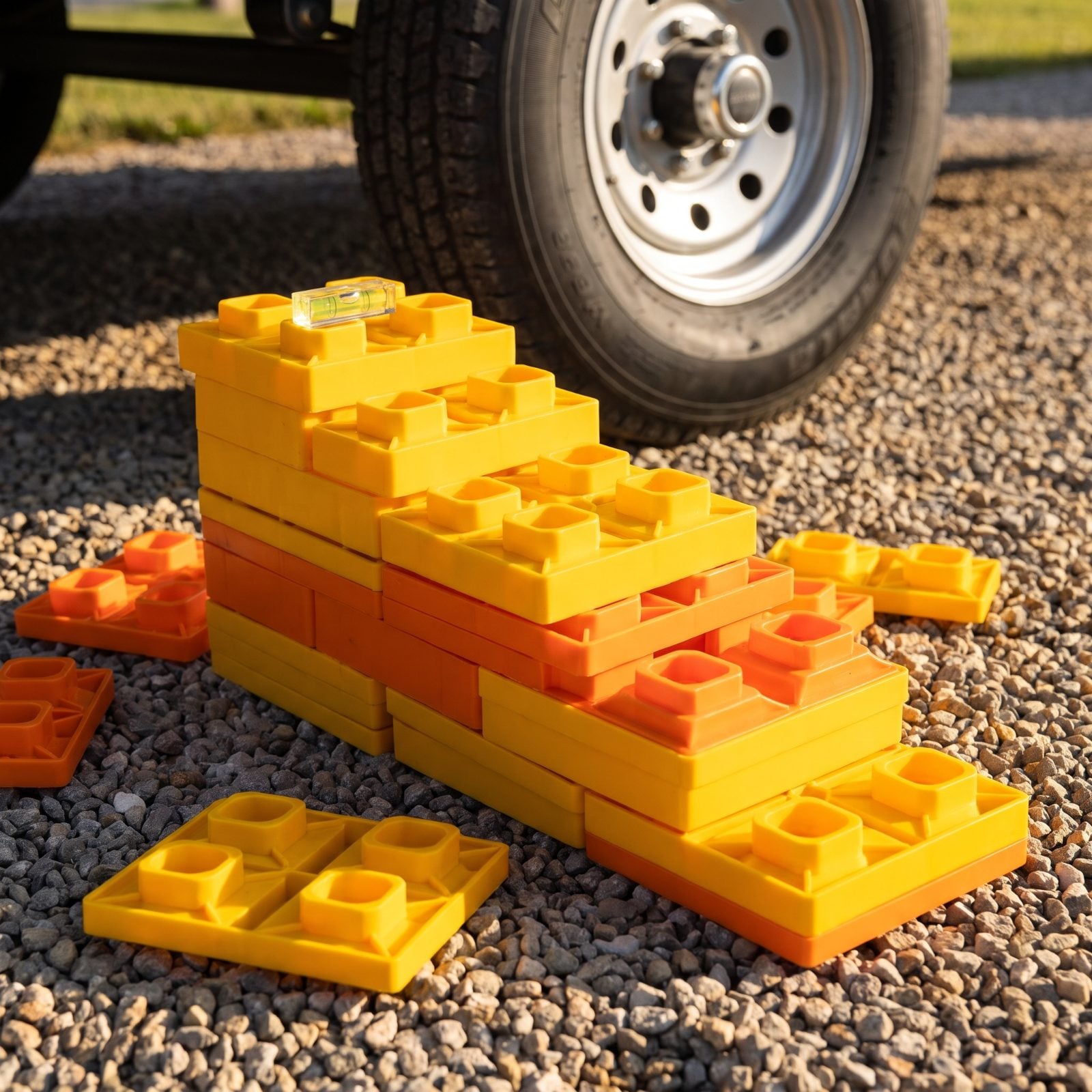
Count the blocks in the storage bay, then count the plates in the cabinet. If the blocks win, you’re one of us.
A rig that isn’t level makes the fridge sulk, the shower drain pool, and your sleep go sideways. So you hoard blocks the way some folks hoard mugs — the interlocking kind, the ramp kind, the flat squares you slide under the jacks. And you’ve learned, painfully, that a campsite that looks flat almost never is.
18. You Have a Favorite Brand of Toilet Paper That Dissolves Fast
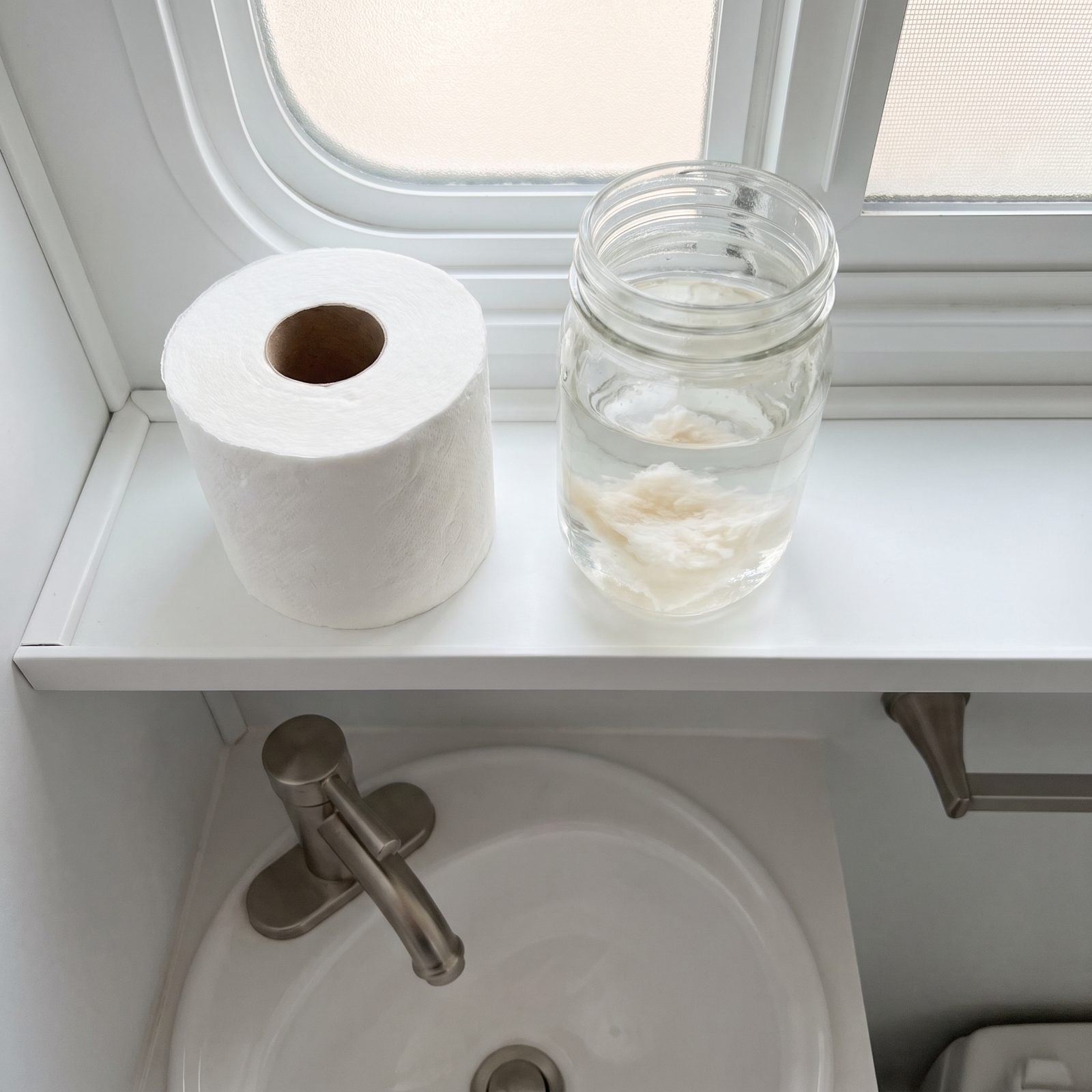
You have opinions about toilet paper now. Strong ones. The non-RV crowd has no idea this is even a category of concern.
Regular household paper sits in your black tank like a grudge and clogs the works, while RV-rated or septic-safe paper breaks down fast and saves you a backup you really don’t want to deal with. The quick test everyone eventually does: drop a square in a jar of water, shake it, watch how fast it falls apart. If it turns to mush, buy a case. Your sensor probe and your sanity will thank you.
17. You Get Excited About a New Water Pressure Regulator

A new water pressure regulator arrives and you turn it over in your hands like it’s a pocket watch. The brass one with the gauge, the adjustable kind. You’re genuinely pleased, and you know exactly how that sounds.
Campground water pressure is a liar. Some parks run it so high it’ll blow a fitting behind your shower wall, and you won’t know until the floor is wet. A regulator caps it around 40 to 50 PSI and keeps your plumbing calm. Cheap plastic ones work fine. But the brass ones with a gauge let you watch the number, which, if you’re honest, is half the fun.
16. You’ve Mastered the Art of the One-Pot Camp Meal
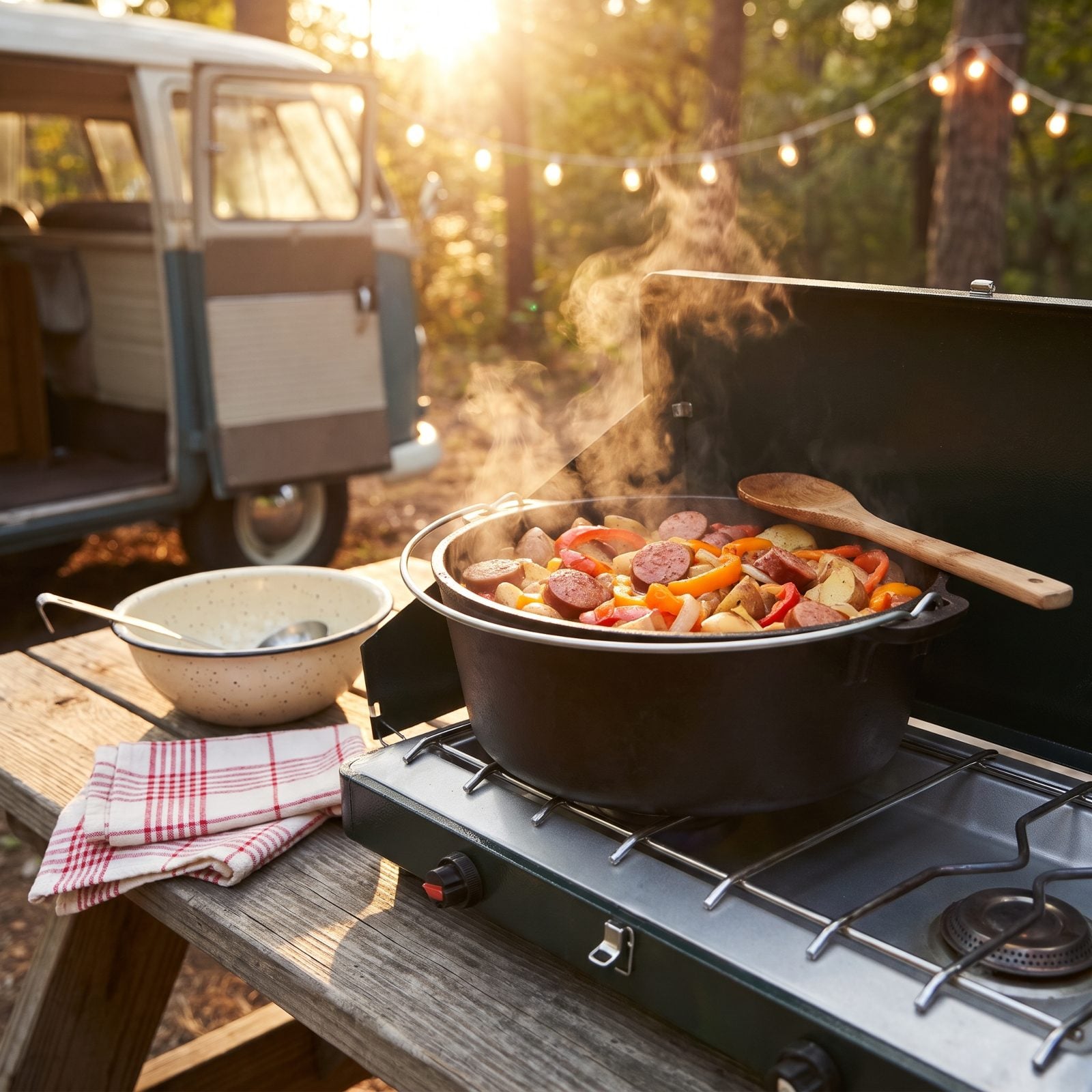
One pot in, one pot out, one pot to wash. That’s the whole philosophy, and you live by it.
When your kitchen is the size of a phone booth and your water supply is a number you watch, a meal that dirties three pans is practically a crime. So you got good at the Dutch oven. Sausage and potatoes. A skillet of everything. Chili that tastes better on night two. The real tell? You cook this way at home now too, just because it’s easier.
15. You Keep a Spare Fuse Kit in the Glovebox
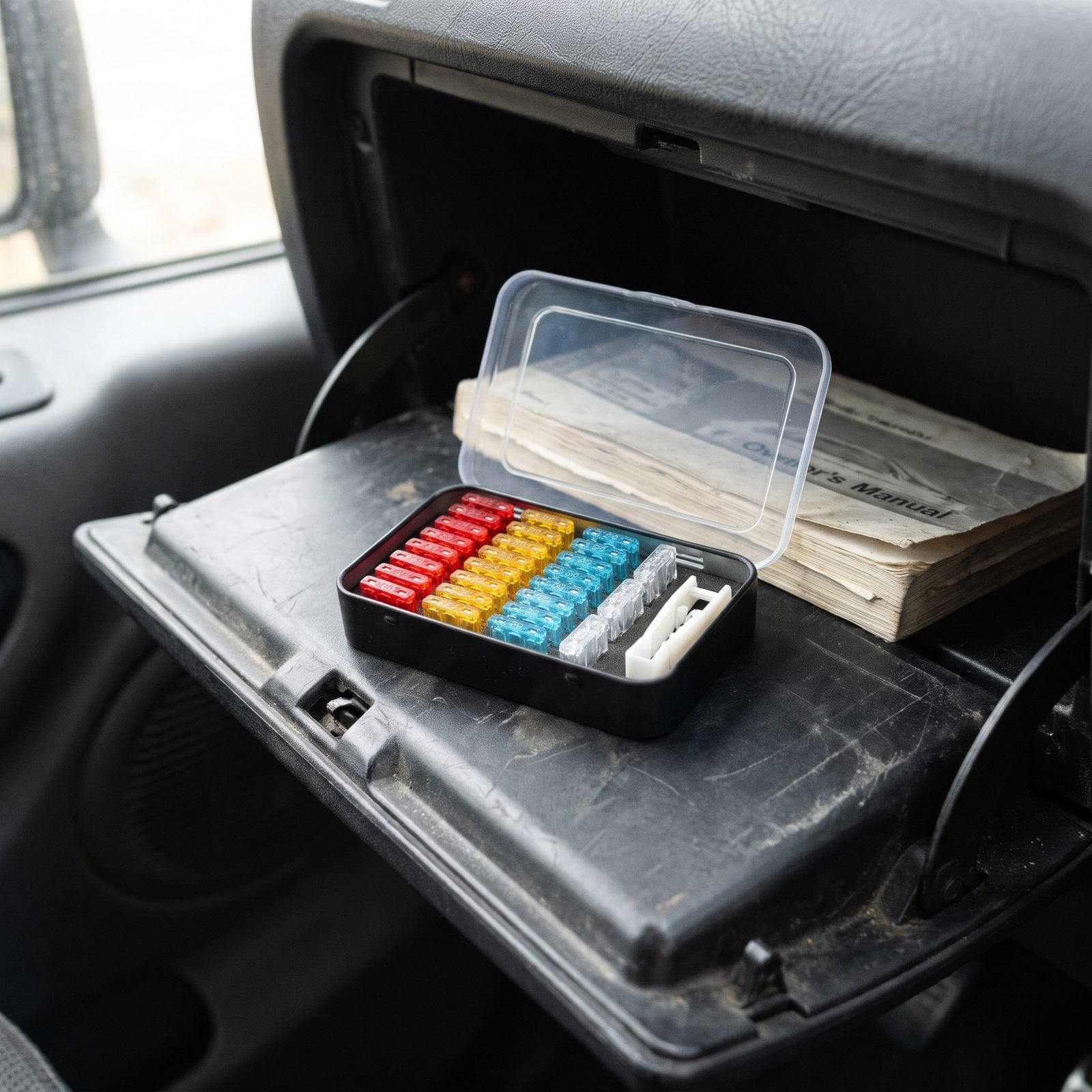
Something small dies in your rig and your first move isn’t panic — it’s the glovebox. You’ve got the little kit with the color-coded blades and the plastic puller, and you know a dead 12-volt outlet or a dark tail light is usually a two-minute fix, not a tow.
Nothing in an RV fails at a convenient time. The fuse goes on a Sunday, forty miles from the nearest parts store. A cheap assortment turns that into an annoyance instead of a trip-ender. Plenty of RVers ignore this advice for a season and spend one memorable evening driving by flashlight. Don’t be one of them.
14. You Measure Gas Mileage in ‘Per Tank of Water’
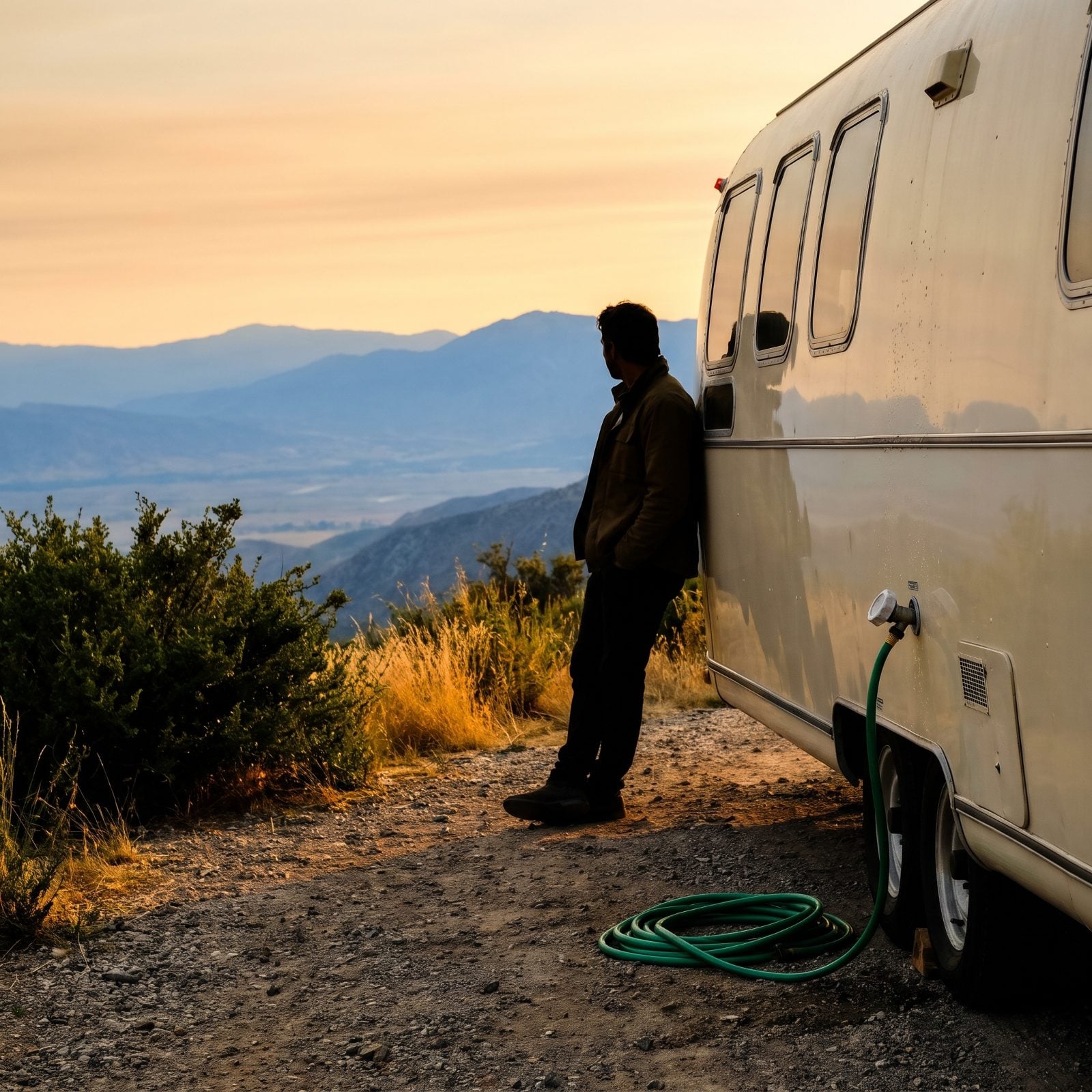
Regular drivers think in miles per gallon. You think in how many days of water, how many nights off-grid, how far between dumps. The gas number matters, sure — but it’s not the one that runs your day.
You’ve caught yourself doing mental math at the sink: shorter shower today, we want three more nights before we fill. That’s not deprivation. That’s the appeal. The rig taught you what your tanks actually hold, and now you measure freedom in gallons, not gallons per mile.
13. You Carry Spare Sewer Hose Connectors Just in Case
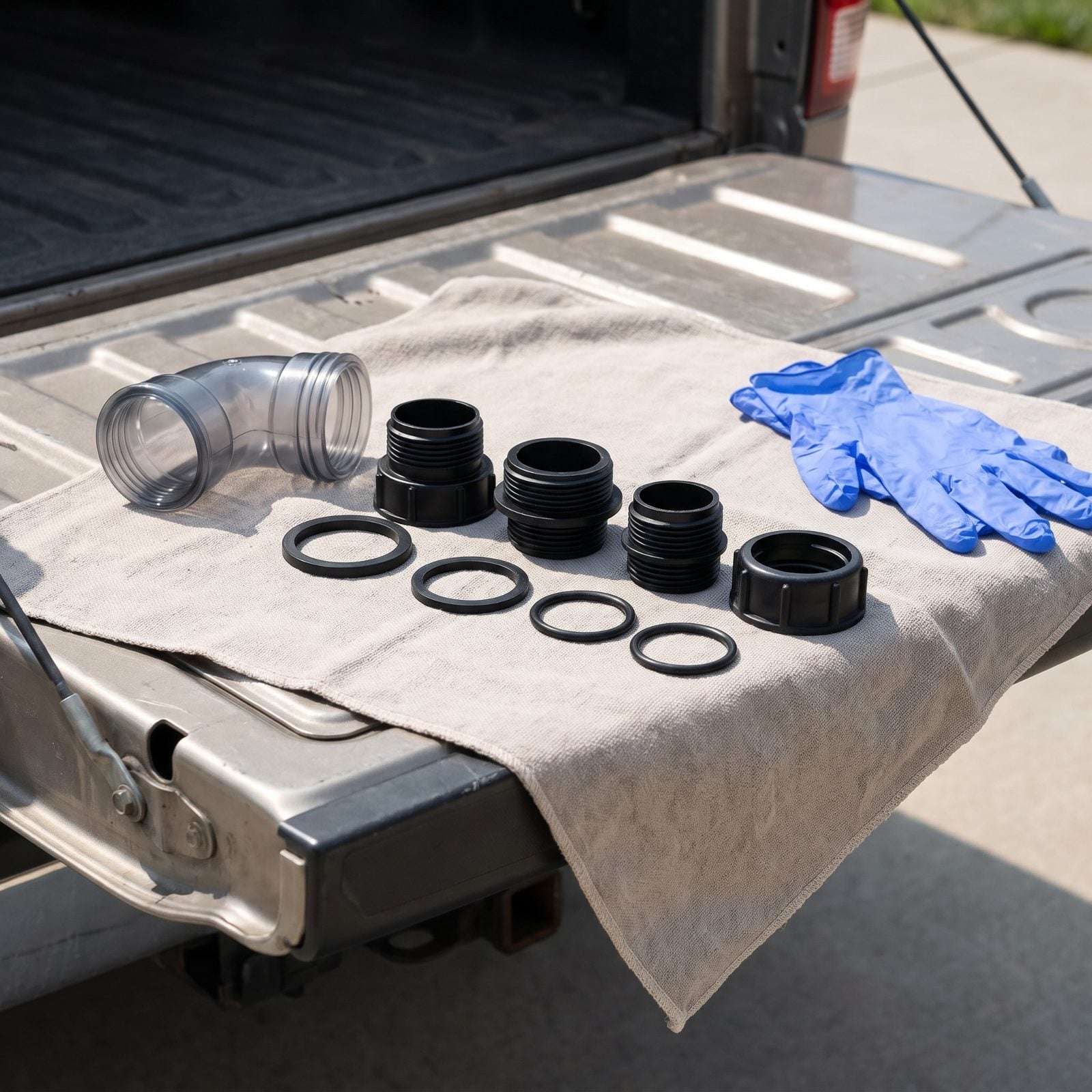
Somewhere in your rig is a little bag of sewer connectors you hope you never open. The clear elbow, the spare bayonet cap, the threaded adapter that fits the oddball inlets. You carry them because you’ve seen what happens when you don’t.
Nobody tells you this until your first ugly night: dump station inlets are not standardized. The connector that seated perfectly at your home park might not seat at the next one. A few cheap backups turn a potential disaster into a shrug. This is the least glamorous gear you own, and it might be the most important.
12. You Can Fix a Slide-Out With Duct Tape and Patience
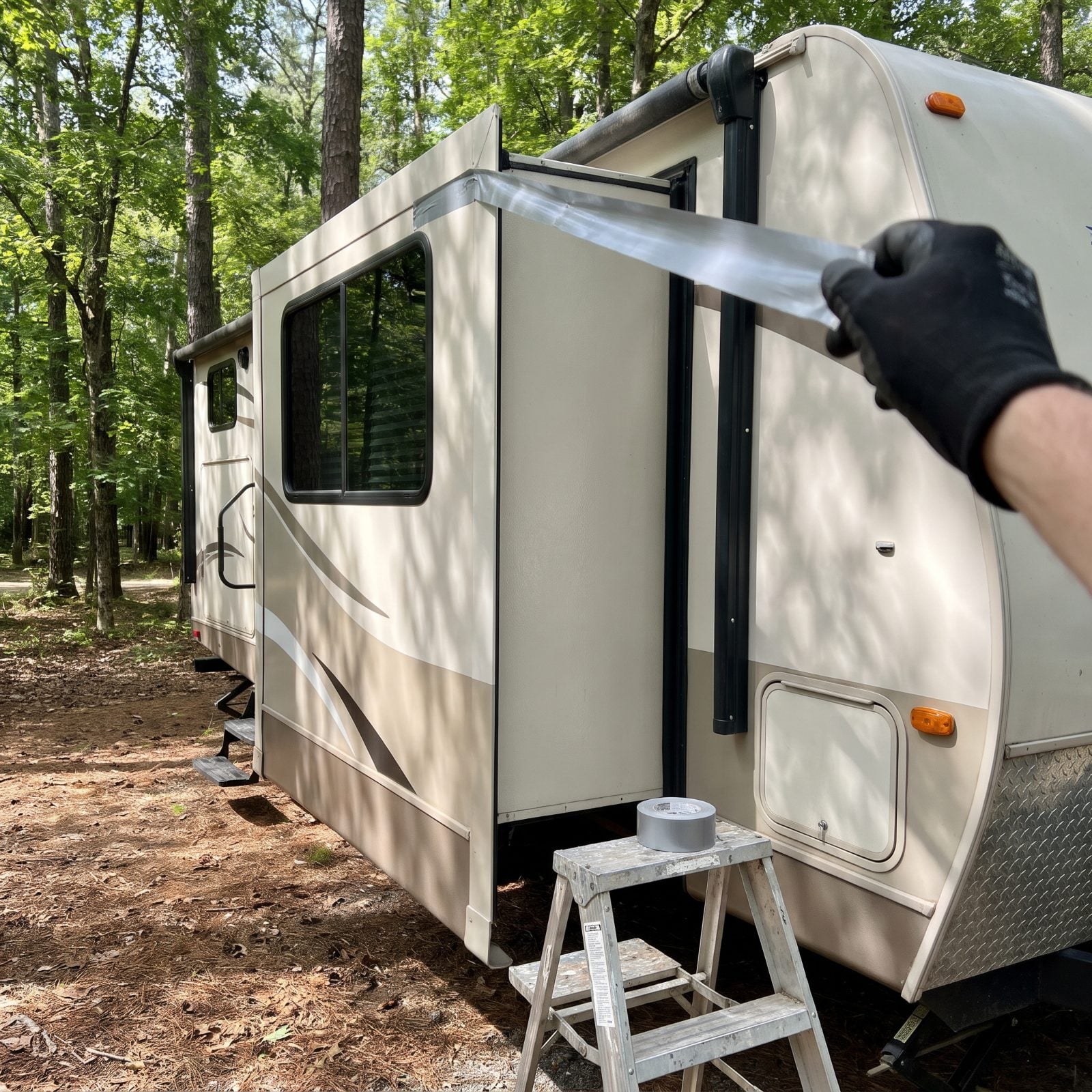
A slide-out acts up and you don’t call a dealer. You call on patience, a roll of duct tape, and a quiet word of encouragement to the motor.
Slides are temperamental creatures. The seal pulls loose, the track sticks, something groans halfway out and refuses to commit. A true RVer has learned the rhythm: clean the track, lube the seal, tape the flap that’s gone rogue, and never, ever force it. The fix is rarely elegant. It just has to hold until you get home.
You’ve spent an hour coaxing a slide back in while the campground emptied around you. And you got it. That stubborn little win is about the most RVer thing there is.
11. You Keep a Running List of Favorite Campgrounds
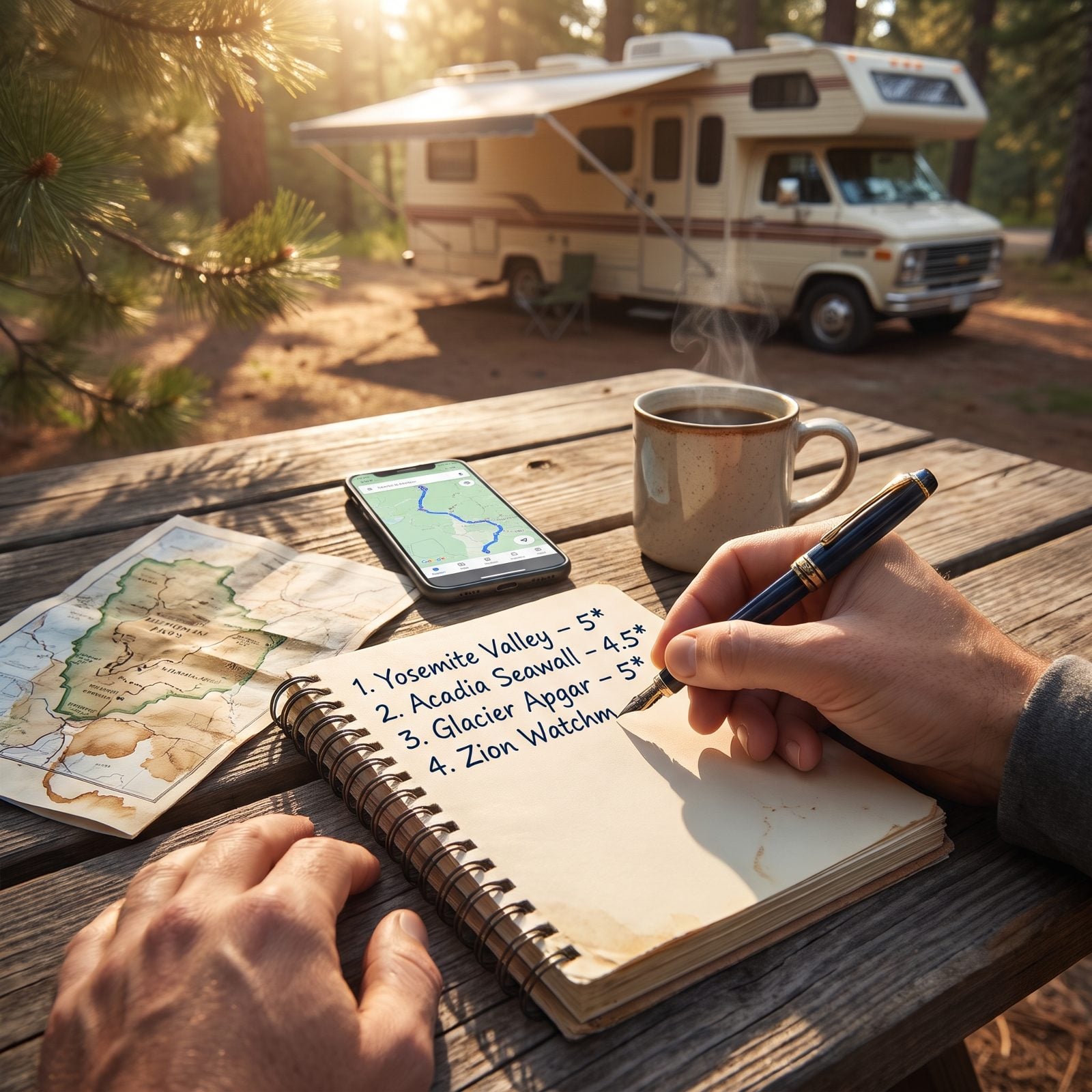
You don’t just remember good campgrounds. You rank them. There’s a system, even if you’d never call it that out loud. The one with the shaded back row and the clean bathhouse sits near the top, while the one with the slanted pads and the train tracks fifty feet away got a quiet strike through its name years ago.
Everyone’s list lives somewhere different — a phone note, a battered spiral book, a spreadsheet that’s gotten genuinely out of hand. What matters is that you consult it before anyone suggests a trip. You already know where you’re going. You’ve known for months.
10. You Check Tire Pressure Before Every Departure
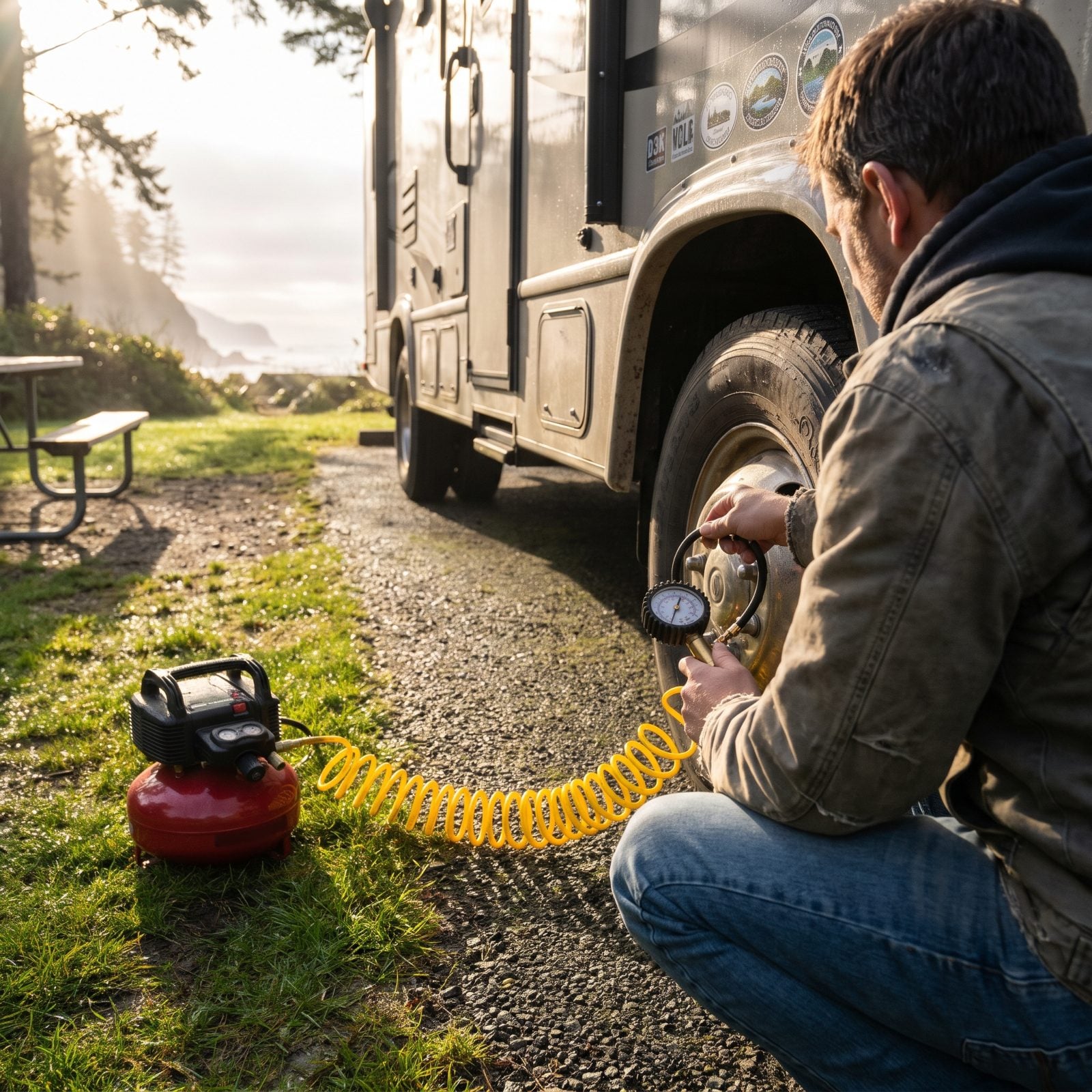
A blown trailer tire at 65 miles an hour is the kind of noise you only need to hear once. After that, the gauge becomes gospel.
You check cold, before the sun’s had a chance to warm the rubber and throw your numbers off, and you know your door-jamb sticker PSI by heart. You’ve caught a slow leak before it became a shredded sidewall on the shoulder of some interstate with no shade for miles. This habit looks obsessive to people who’ve never towed anything. To you it’s just the cheapest insurance there is.
9. You Own a Collapsible Everything

Cabinet space is the one thing an RV never gives you enough of, so you’ve gone to war on anything that refuses to flatten.
The silicone collapsible bucket. The folding kettle. The flat-pack dish rack that squashes down to an inch. If it collapses, you probably own it, and you felt a small rush of victory the day it arrived.
Does any single one save that much room? No. Together, though, they’re the difference between a cabinet that closes and one that explodes when you hit a bump.
8. You Watch RV Walkthrough Videos for Fun
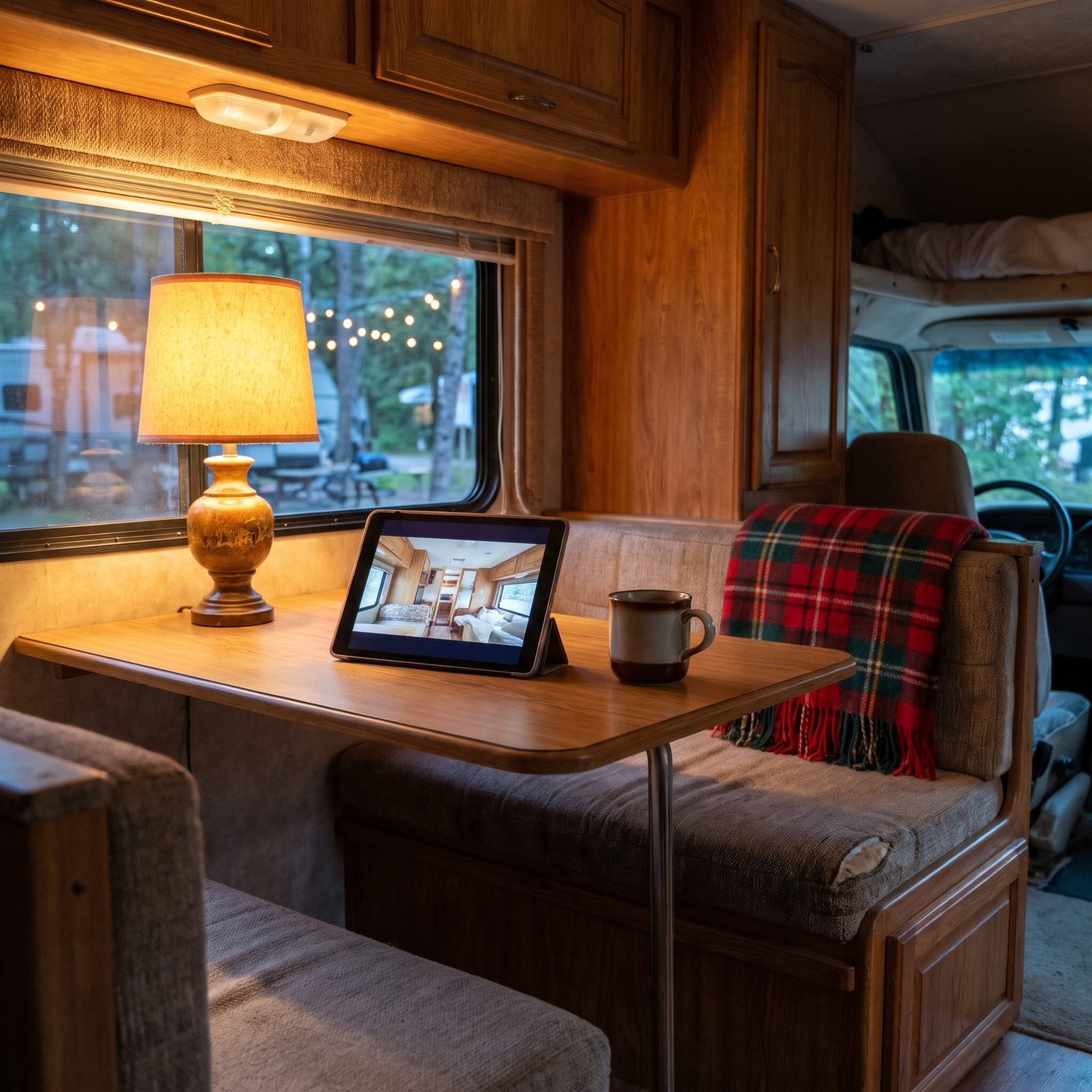
You have a rig. You’re not shopping. And yet there you are at nine at night, watching a stranger open every cabinet in a floorplan you will never buy.
It’s not really about the coach. It’s the small ideas — how someone mounted a paper towel holder sideways, where they hid the surge protector, the clever thing they did with the pantry that you’re now going to steal.
7. You’ve Perfected Your Setup Routine to Under 15 Minutes
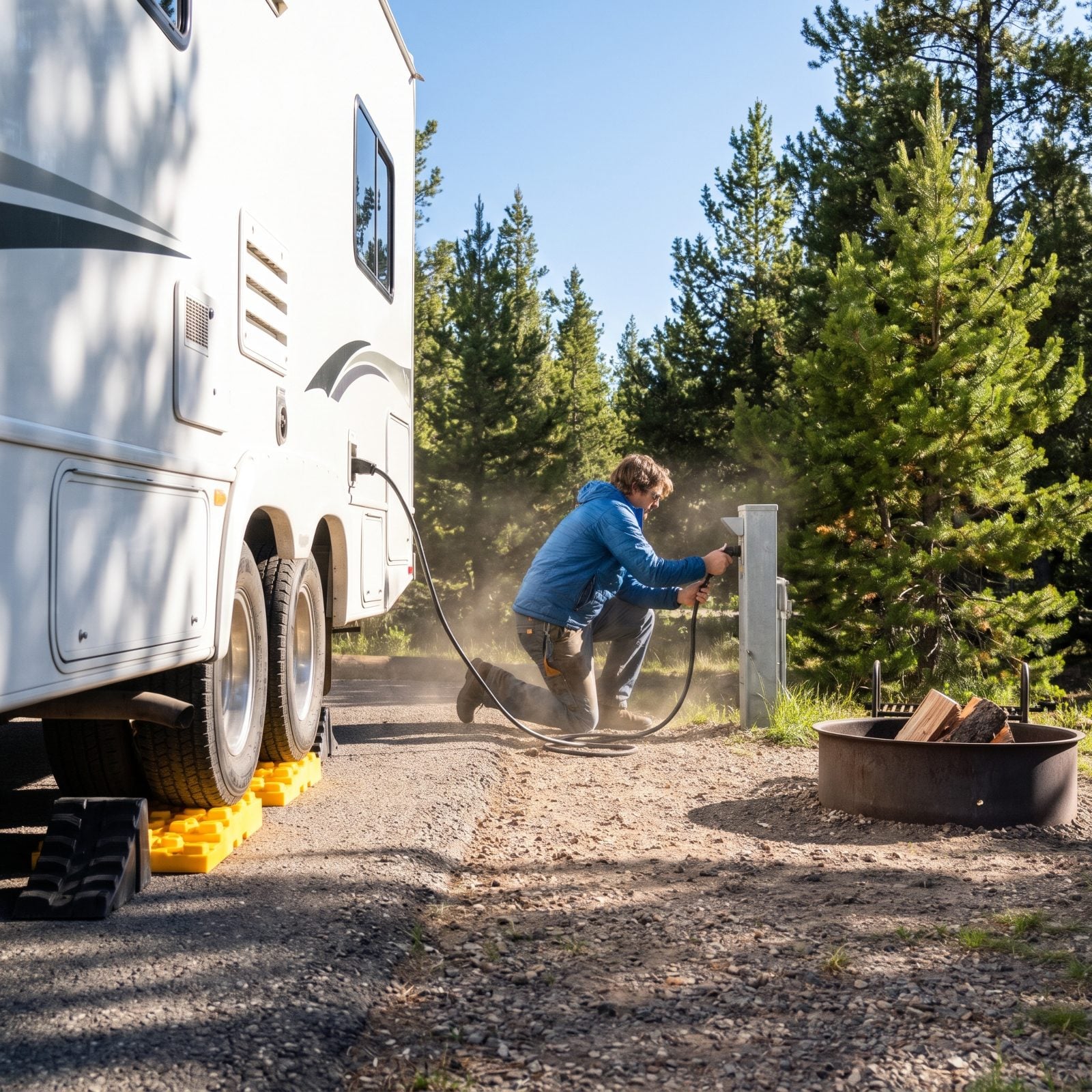
Pull in. Chocks. Level. Unhitch or jacks down. Shore power. Water. Awning if the sky allows. Done.
You don’t think about the order anymore because your hands already know it. The first few times took an hour and some muttering, but now you can run through the whole thing in fading light after a long drive without losing your temper — which is really why it matters.
The giveaway? The new neighbor still fumbling with their leveling app forty minutes later while you’re already in a chair with a drink.
6. You Stock More Bungee Cords Than You’ll Ever Use
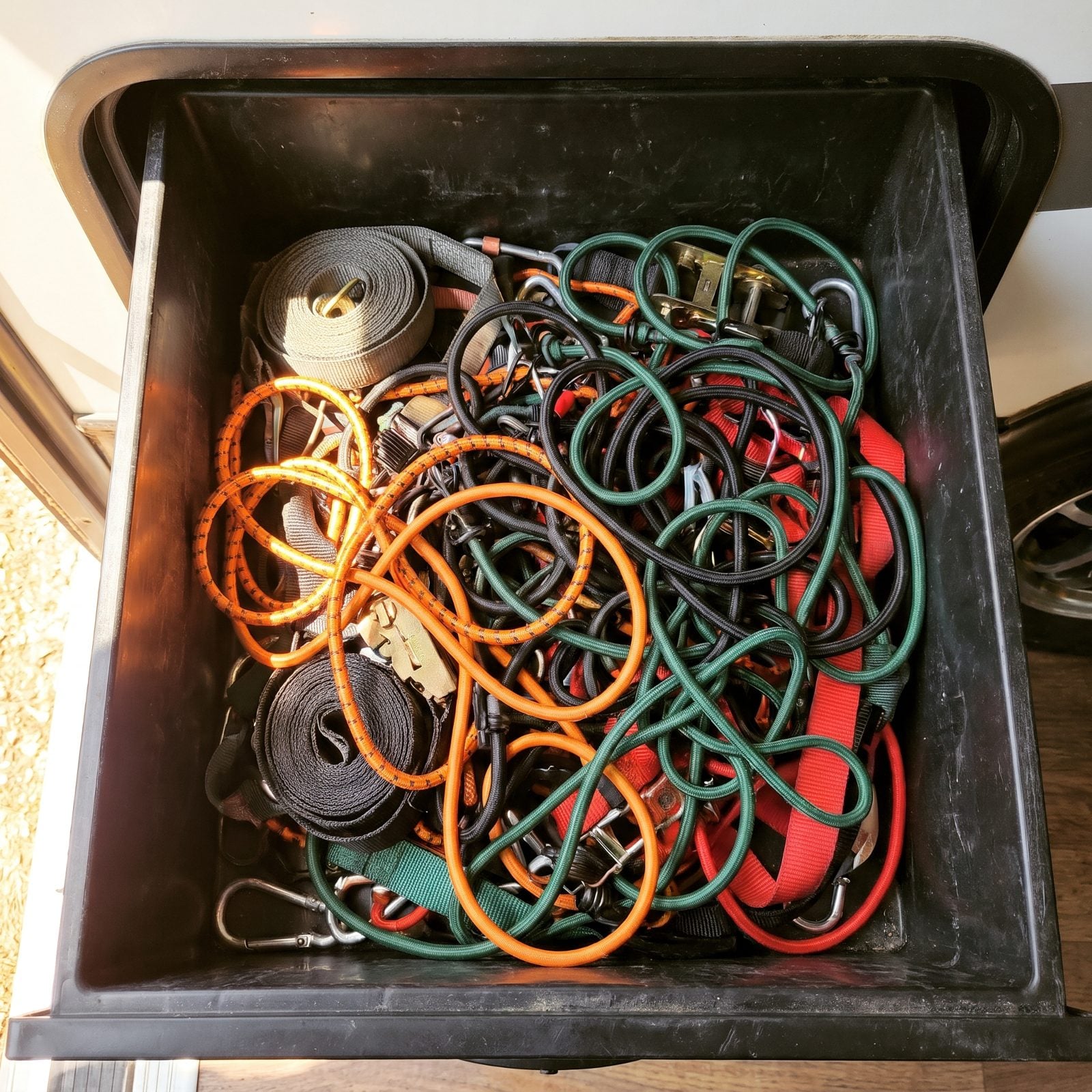
Somewhere in your rig is a nest of bungee cords you could not fully account for if asked. Short ones, long ones, one with a hook that’s bent at an angle you keep meaning to replace.
Realistically, you use maybe three on any given trip. But the day you need a fourth to keep a cabinet shut on a mountain pass, you’ll be deeply grateful to past-you for the hoarding. A bungee cord assortment is one of those purchases you never regret and never finish.
5. You Keep the Awning Out Just Long Enough to Avoid Wind
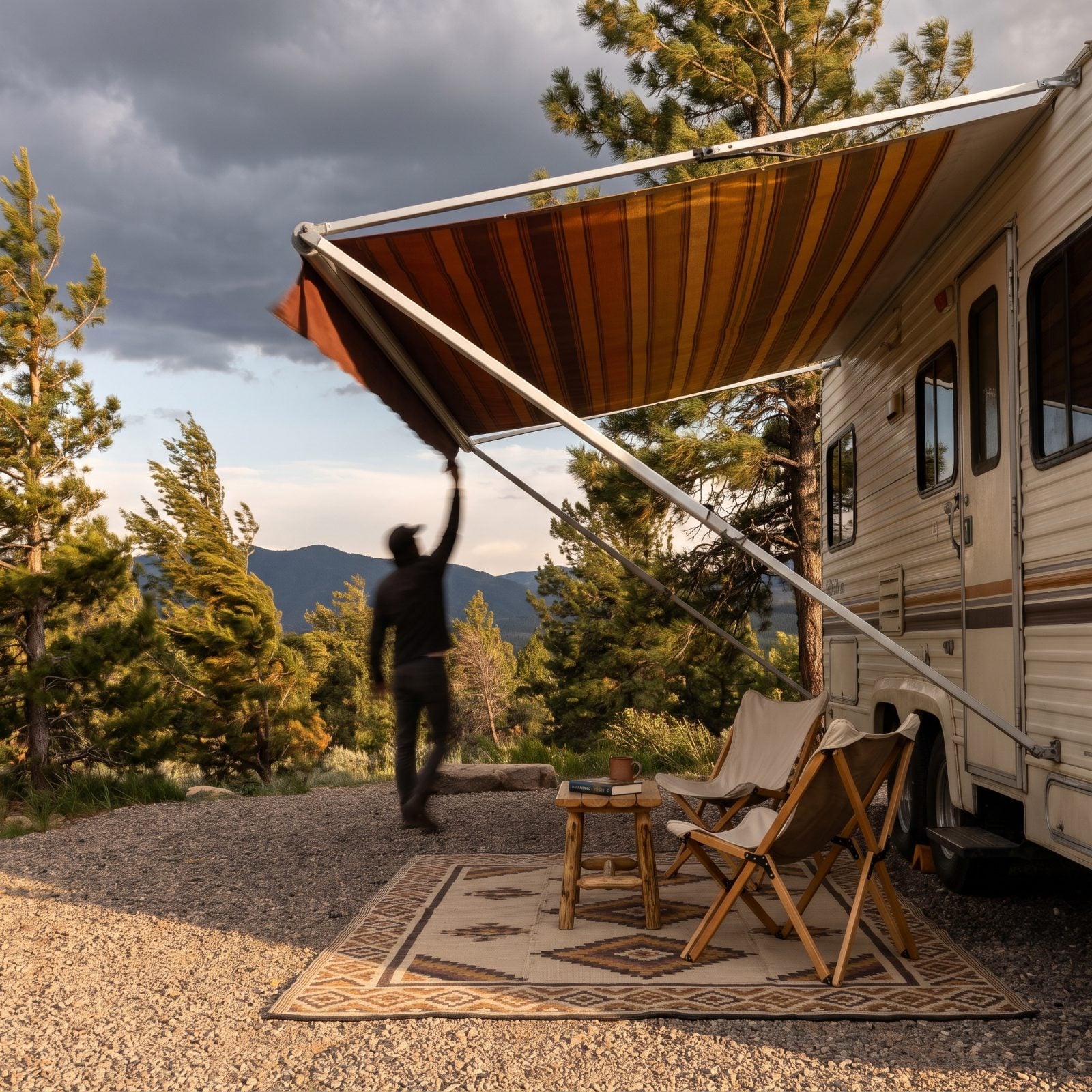
An awning is the fastest thing to destroy on your whole rig, and you learned that the way everyone learns it — through a story, hopefully someone else’s.
So you’ve developed a sixth sense for wind. The flags start snapping, the trees pick up a certain hiss, and you’re already on your feet. Out in the evening, in by the first real gust, rolled up tight the second the sky looks moody. You’d rather lose the shade than watch a gust fold forty pounds of aluminum over your roof.
4. You Know Exactly How Much Your Holding Tanks Hold
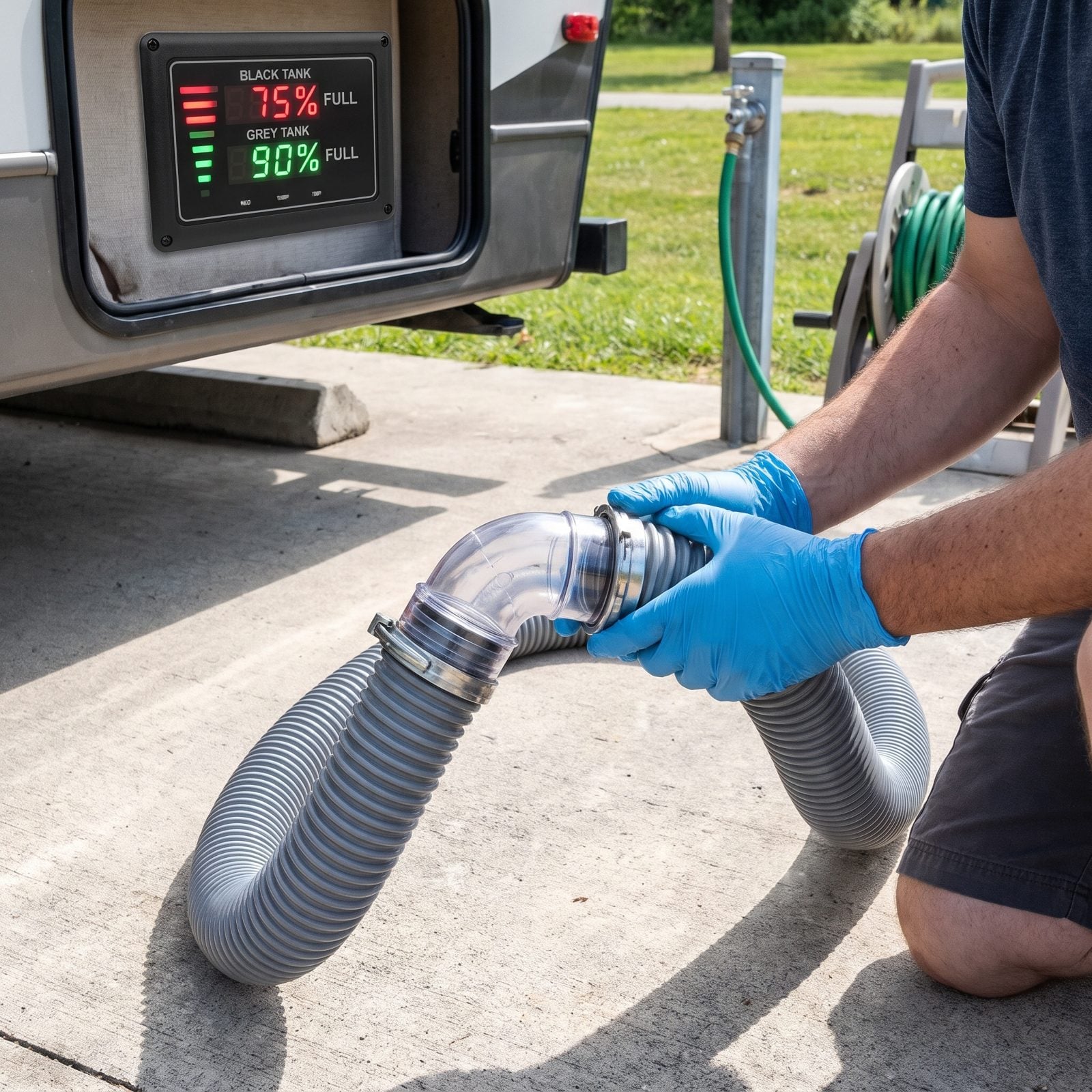
Gray: forty. Black: thirty. Fresh: forty-four. You rattle these off like a phone number you’ve had since childhood.
This isn’t trivia — it’s how you plan. You know how many days of boondocking your tanks buy, how many showers before gray starts getting tight, and the exact moment the sensor that always reads wrong is actually telling the truth. People who’ve never owned an RV think it’s an odd thing to have memorized. You know it’s the difference between a relaxed week and an emergency dump station run at dawn.
3. You’ve Converted a Skeptical Friend Into a Fellow RVer
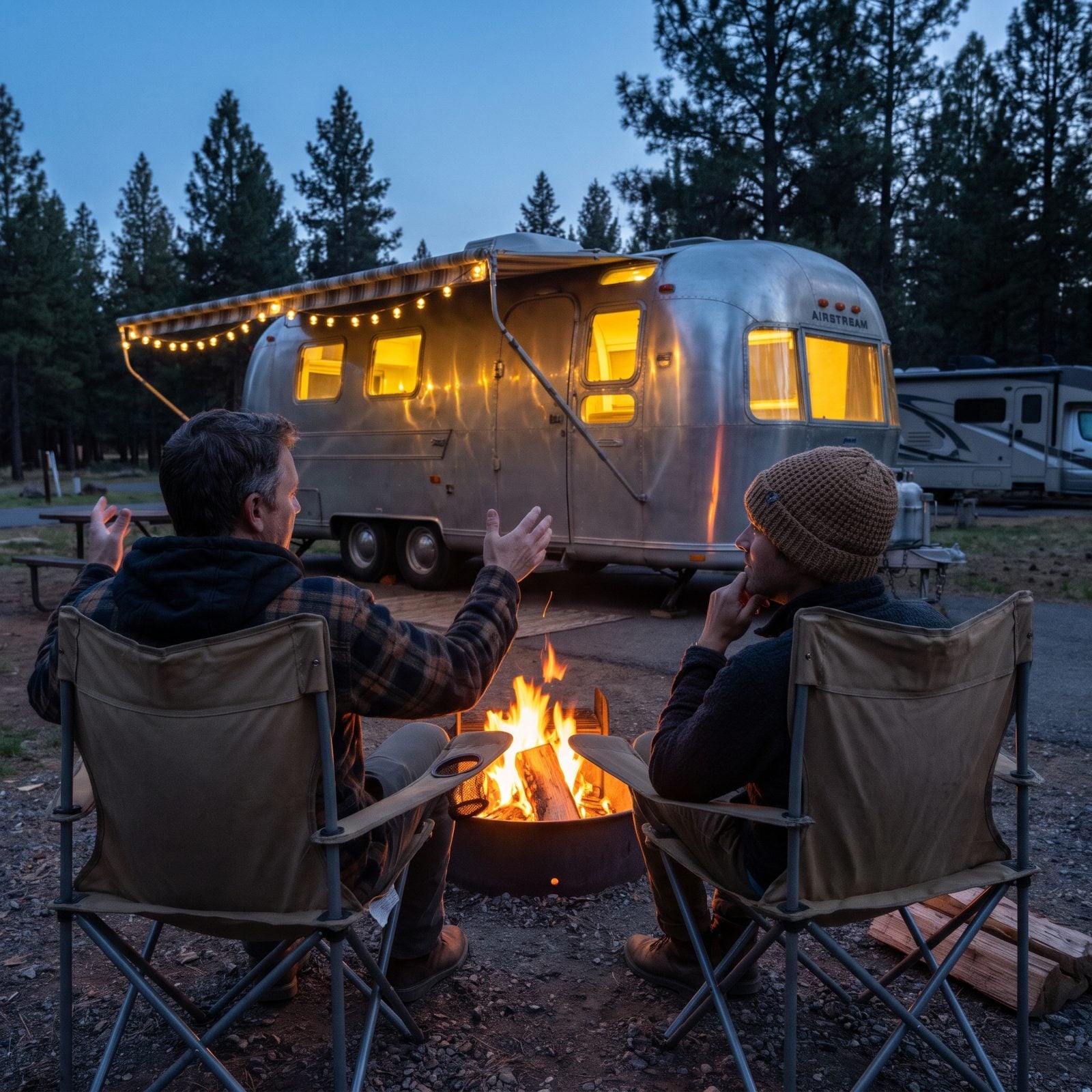
It starts with pity. A friend who swore they’d never sleep in “a van thing” agrees to one weekend, mostly to humor you.
Then the campfire happens. The slow morning with coffee and birdsong happens. The part where there’s no traffic and no schedule happens. By Sunday they’re asking what you paid and whether yours was hard to tow.
Six months later they’ve got a rig in the driveway and they’re texting you campground recommendations. You did that. Feel a little proud — we certainly do every time it works.
2. You Treat a Full Propane Tank Like a Small Victory
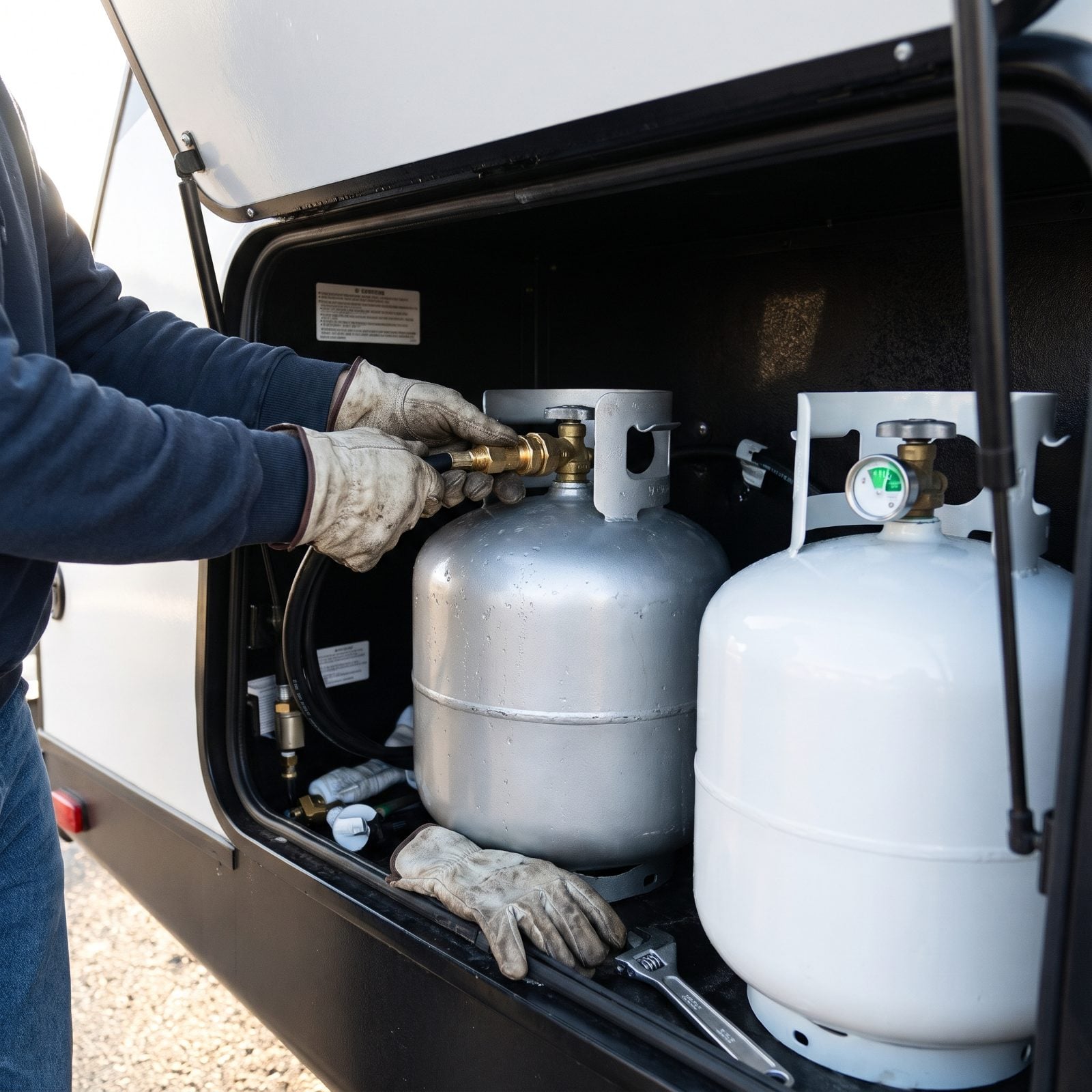
There’s a specific satisfaction in a topped-off propane tank that non-RVers will never understand.
It means hot showers. A working fridge on travel days. Heat when the mountain night drops into the thirties and the furnace kicks on at three in the morning. You’ve run out mid-trip exactly once, which is the number of times it takes to never do it again. Now you fill before you’re close to empty, you keep a spare, and the sight of that needle sitting fat in the green corner feels like money in the bank.
1. You Keep Camp Chairs Ready by the Door
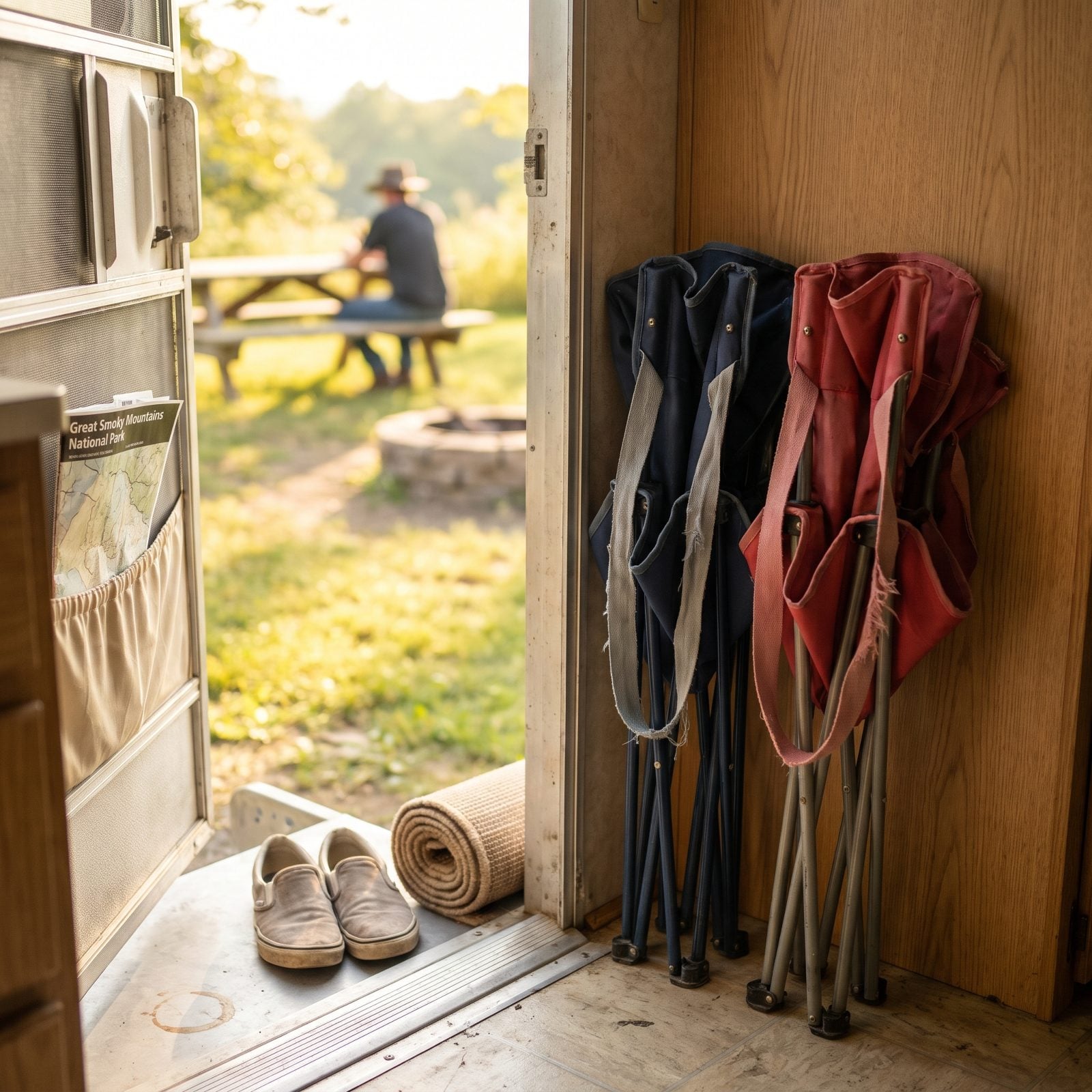
The chairs never make it back into the storage bay. Not really. They live propped by the door, straps loose, ready to grab the second you roll to a stop — because the whole thing is about sitting outside, and nobody who means it wants to dig through a packed basement to find somewhere to park.
You can spot a real RVer by how fast those chairs come out. Pull in, chock the wheels, and before the awning is even cranked, two of them are facing the view. We’ve unpacked a chair at a highway rest stop just to drink coffee in the sun. No shame in that.