
A 40-foot coach backing into a site built for a pop-up is its own kind of comedy, and you’ve watched it happen. The patient spotter, the branch scraping the slide, the awning clearance nobody measured until it was too late. State parks get a reputation for tight loops and short pads, and plenty of them earn it. But every state has at least one that gets big rigs right: paved pads with room to open both slides, honest length limits, full hookups where you least expect them. These are the ones worth the drive.
Please note that some of the images in this article were created with the assistance of AI.
37. Alabama: Gulf State Park Campground, Full Hookups Minutes From the Gulf
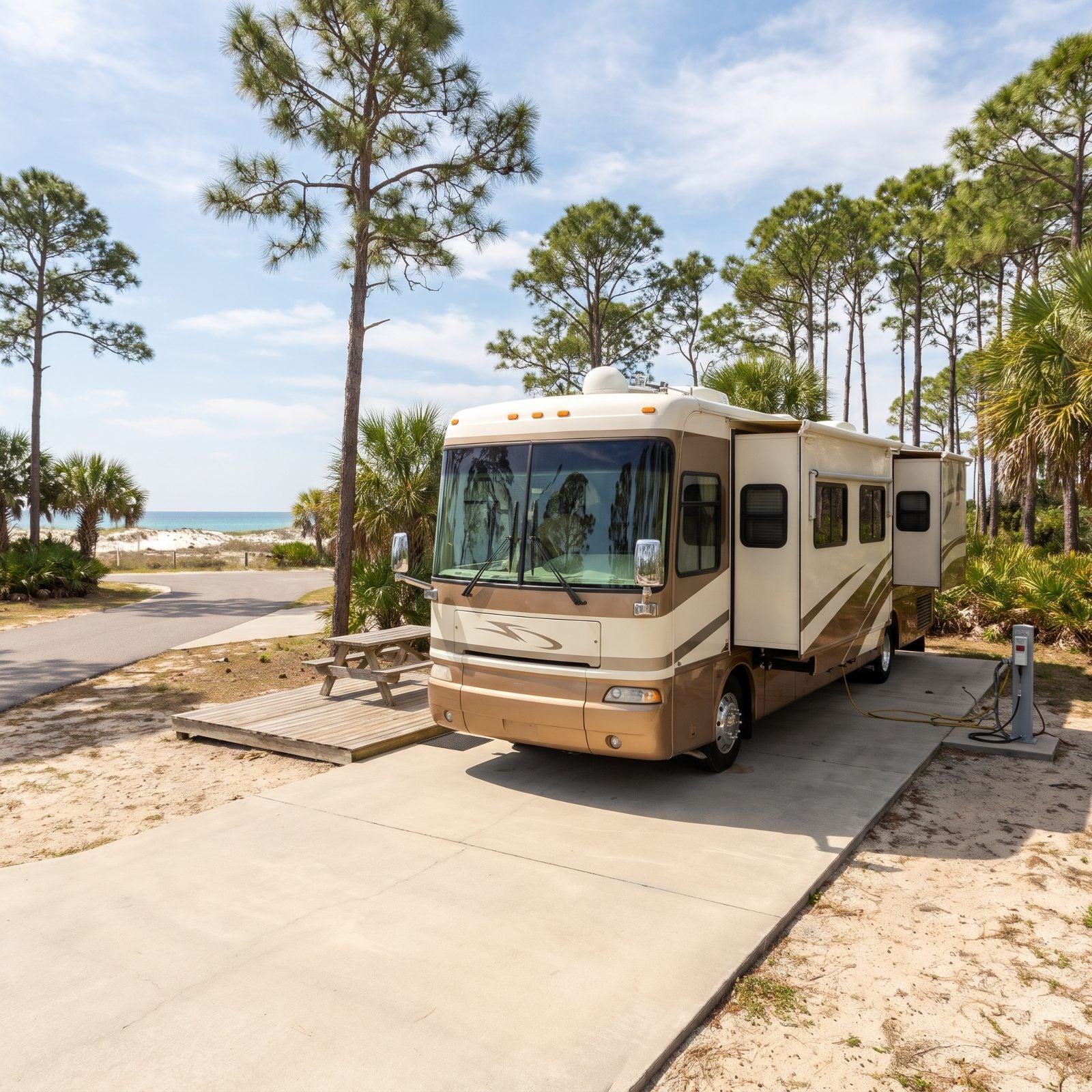
Gulf State Park runs close to five hundred sites, and a big chunk of them are full hookup with concrete pads that handle a 40-footer without drama. You’re a short drive from the beach, which is the whole point. The loops sit far enough apart that you can run both slides and still see your neighbor without being in their kitchen.
Book early for spring and fall. Snowbirds know this place, and the good pull-throughs vanish eleven months out. Summer? Hot and humid in a way that makes those full hookups feel less like luxury and more like survival gear for the AC.
36. Colorado: Chatfield State Park, Big-Rig Full Hookups a Half Hour From Denver
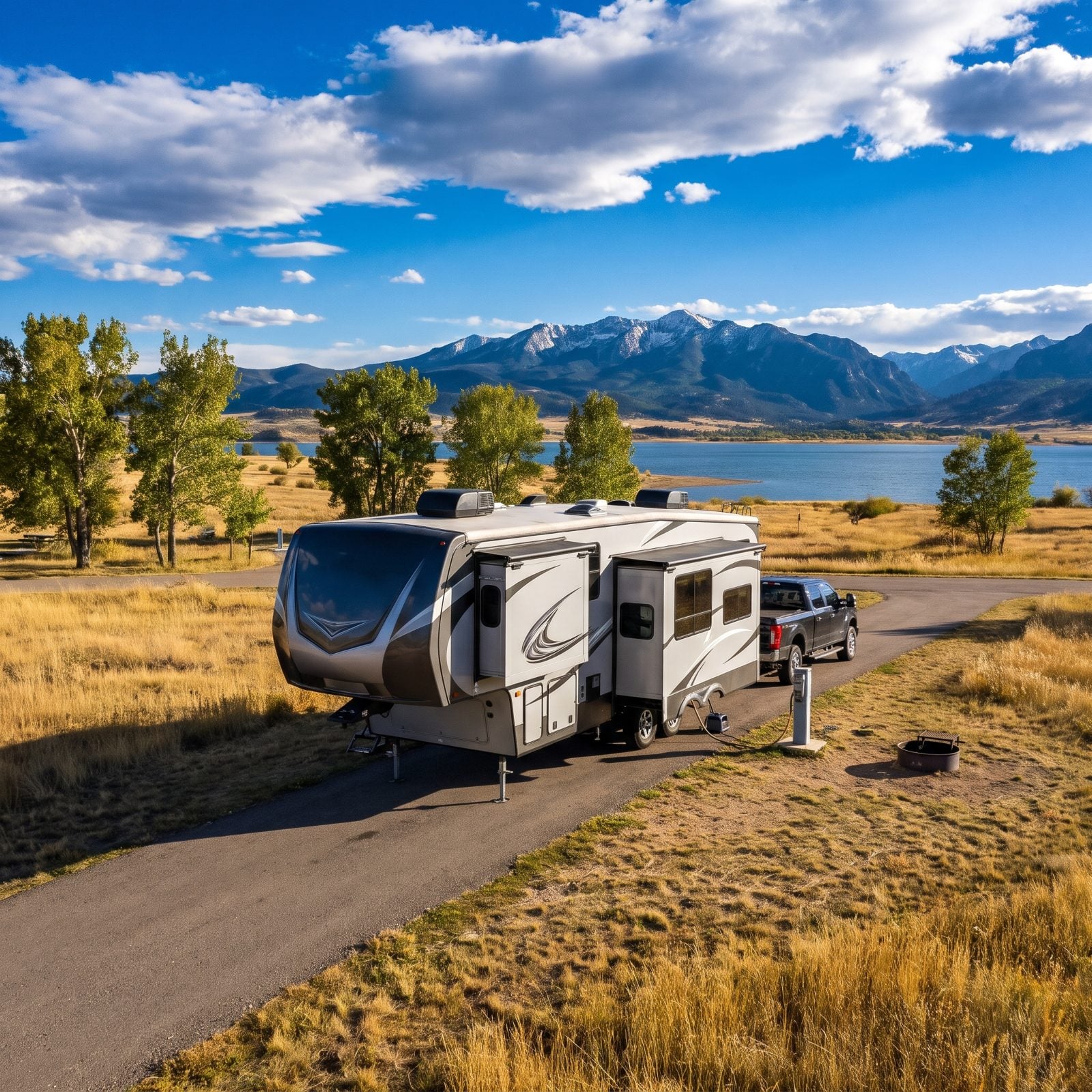
Thirty minutes from downtown Denver and you’ve still got full hookups and pads long enough for a fifth-wheel with a dually in front. Chatfield is the rare metro-adjacent park that didn’t shrink its sites to cram more in. The reservoir, the marina, the Front Range sitting right there on the skyline: it earns its spot.
I’ll level with you. The sites nearest the water are the ones everyone fights for, and they book out fast on holiday weekends. Go for the ones a loop back. Same hookups, more trees, and you’re not parked in a parade route.
35. Oregon: Fort Stevens State Park, Full Hookups Near Beaches and a Shipwreck
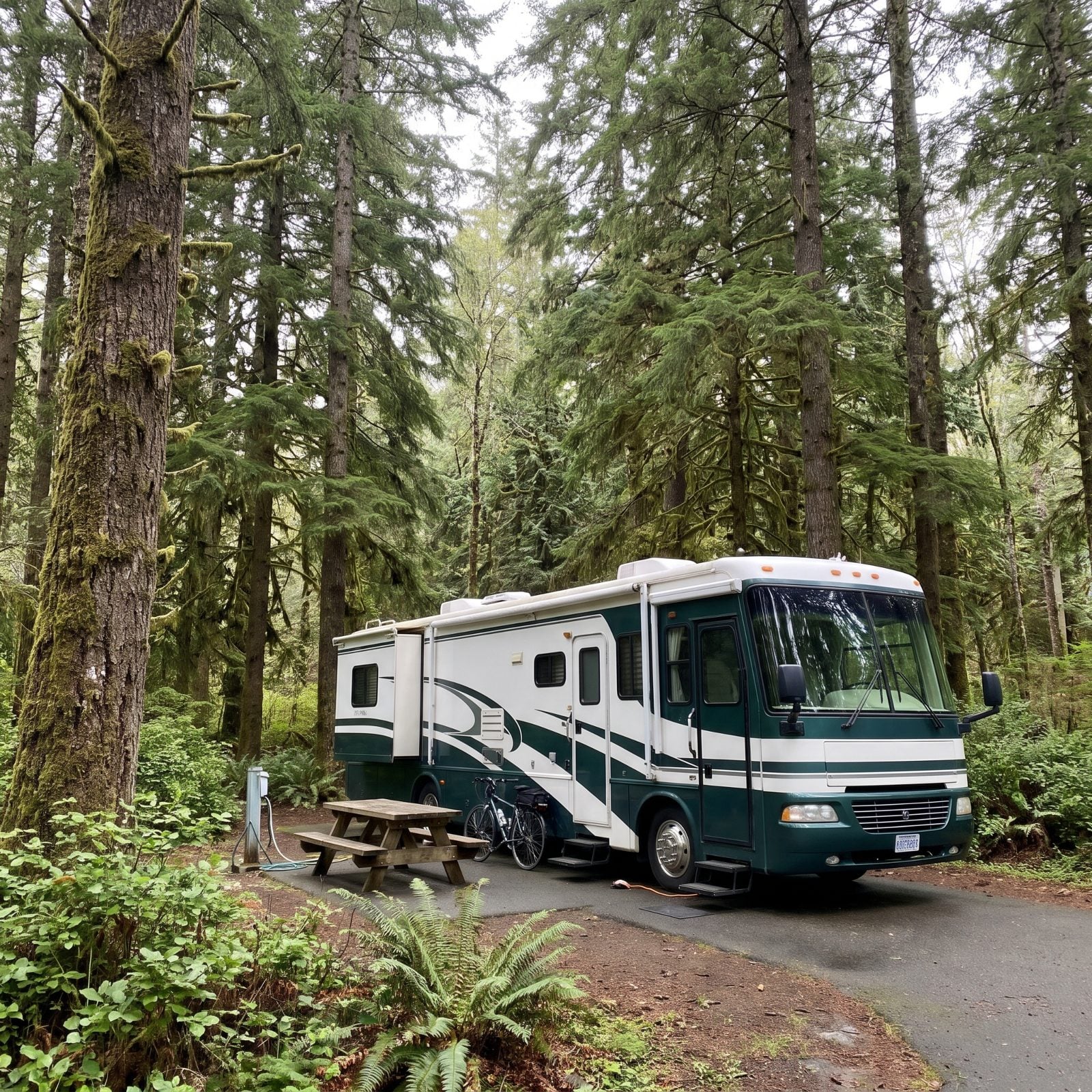
Fort Stevens is one of the biggest campgrounds on the West Coast, and it hides a surprising number of full-hookup sites long enough for a 38-foot coach under the spruce canopy. You’re minutes from the beach where the Peter Iredale wreck has been rusting into the sand since 1906. At low tide you walk right up to the ribs of it.
The trade-off is the trees. They buffer the wind and look like a postcard, but tall rigs need to watch overhead clearance on a few of the older loops. Reserve well ahead for summer; Oregonians treat this coast as their own.
34. Utah: Wingate Campground at Dead Horse Point, Long Paved Sites Over the Colorado
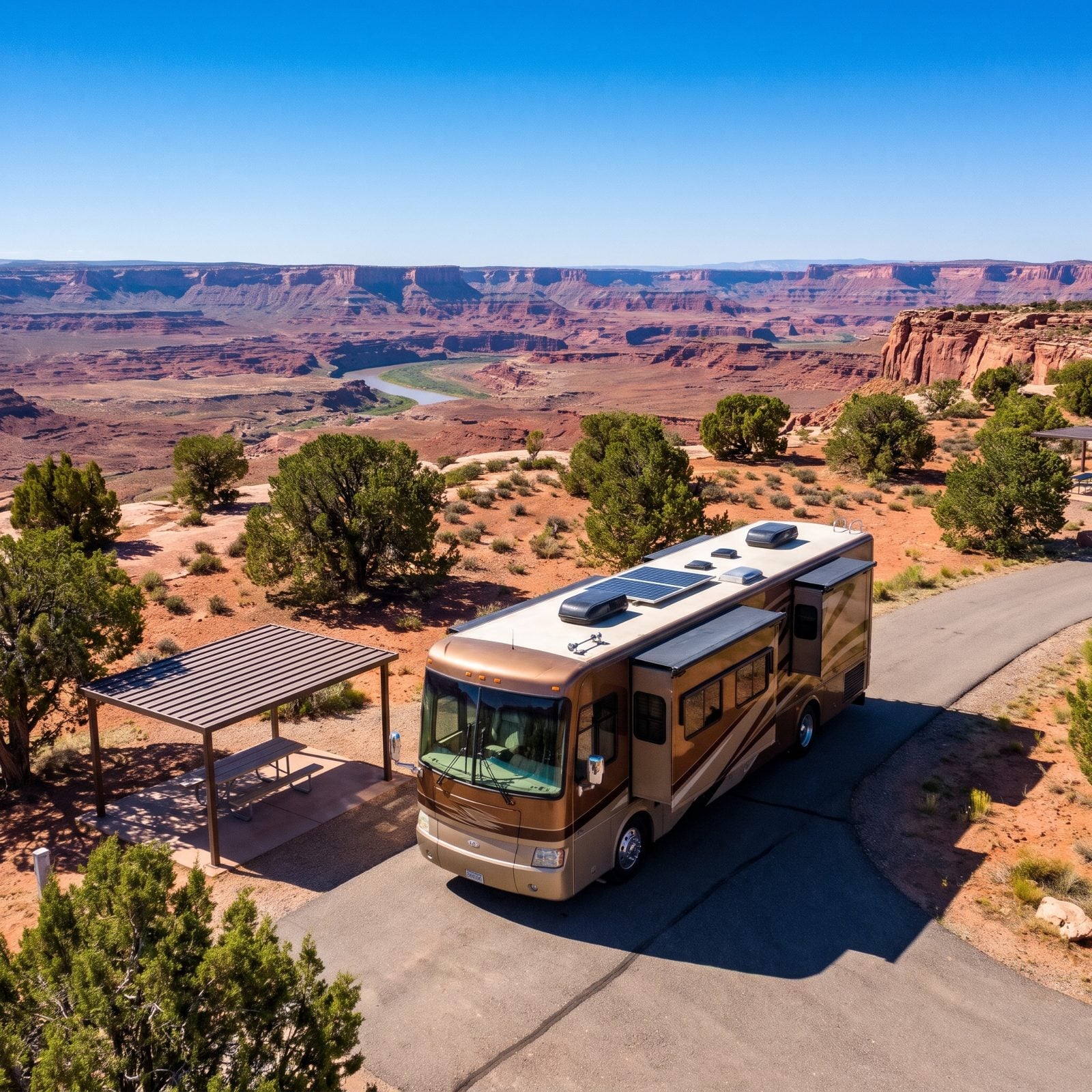
Wingate is the newer loop at Dead Horse Point, built with modern rigs in mind: long paved pull-throughs, electric at the pads, shade ramadas over the tables because this is the desert and shade is not optional.
You’re parked on a mesa two thousand feet above the Colorado River, with the same view that gets photographed from the overlook, minus the crowd. There’s no water or sewer at the sites, so fill up and dump at the park facilities. It books out months ahead. Worth every bit of the planning.
33. Arizona: Kartchner Caverns State Park, Roomy Desert Sites Built for Big Rigs
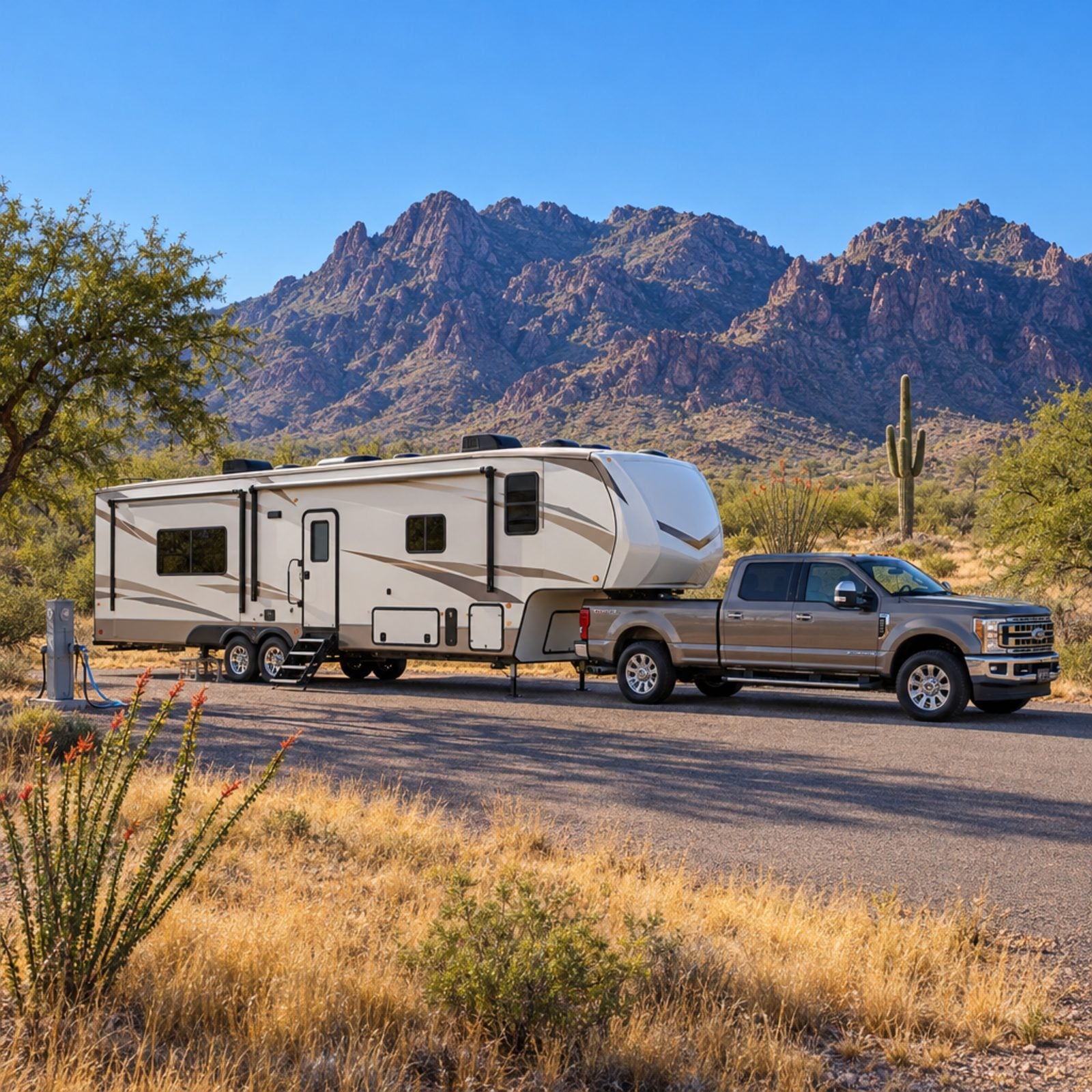
Kartchner’s campground was laid out with real room between sites, which makes maneuvering a 40-plus-foot rig feel almost relaxed. Electric and water at the pads, a dump station on the way out, and the sites sit in open desert grassland with the Whetstones standing guard.
The cave tours are the draw, so book those the second you reserve the site. They cap daily numbers and sell out. Fall through spring is your window. Summer in southern Arizona tests your air conditioner’s will to live.
32. Georgia: Skidaway Island State Park, Pull-Through Sites Under the Live Oaks
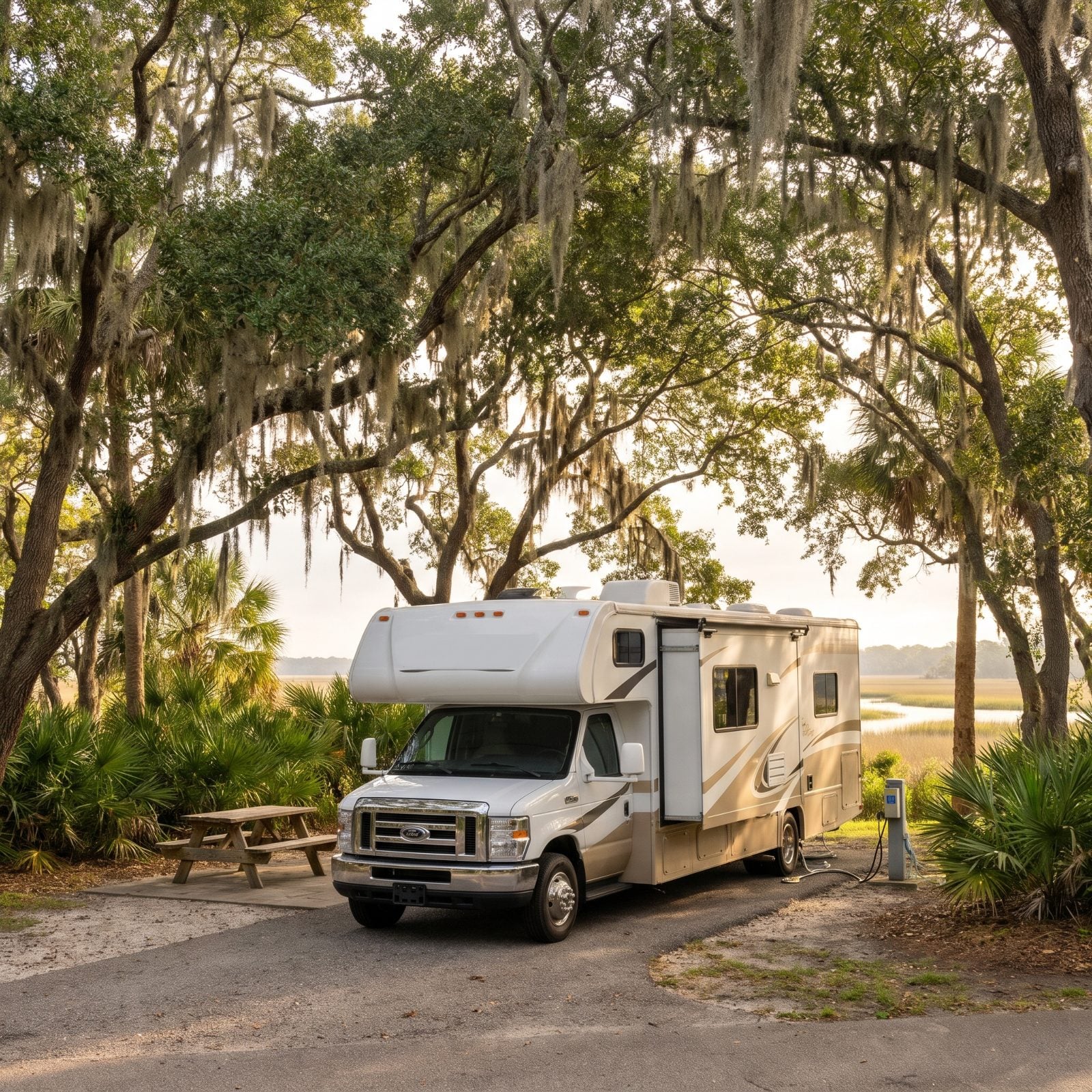
The live oaks at Skidaway are the kind that make you turn the engine off and just sit there a minute. Spanish moss hanging low, the canopy arching over pull-through sites that handle a mid-size coach comfortably. Water and electric at the pads, salt marsh all around, and Savannah’s historic district a twenty-minute drive.
A few sites take longer rigs than you’d guess from the setting, but call ahead and confirm the exact length on the one you want. Those oak limbs are low and generous, which is lovely right up until a tall slide topper argues with a branch.
31. Alaska: K’esugi Ken at Denali State Park, Long Sites Facing the Mountain
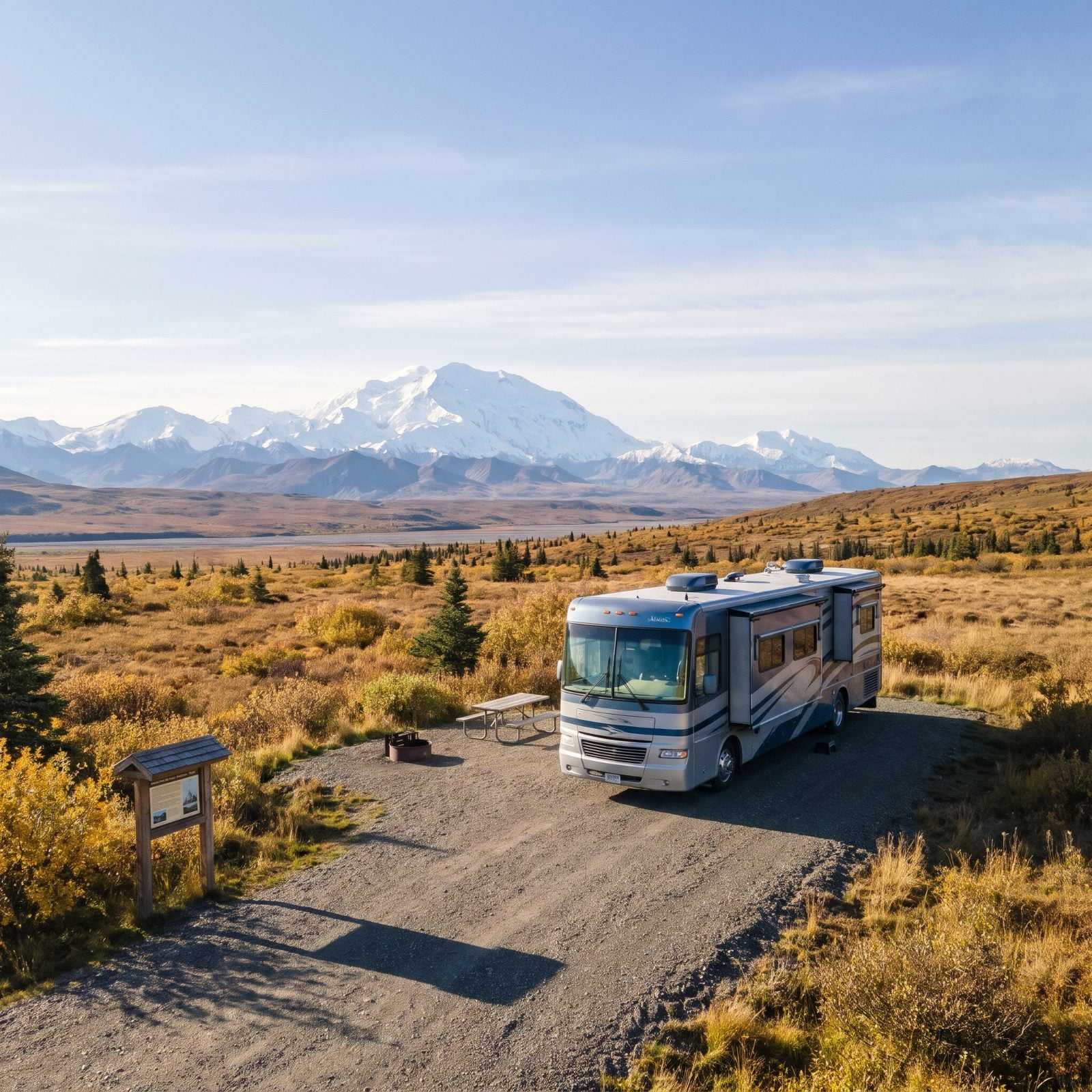
Alaska is not a hookup state, and that’s the first thing to make peace with. K’esugi Ken is one of the best-built campgrounds in the system. Long gravel pull-throughs that take a 38-foot rig easily, and electric at a number of sites, which is almost unheard of up here.
The payoff is the view. On a clear day Denali fills the whole valley across from you, and clear days are the gamble. The season is short, roughly late May into September, and the drive there is part of the point. Dump and water are at the park, not the pad, so plan to be self-contained between the big tanks.
30. Pennsylvania: Jamestown Campground at Pymatuning, Long Lakeside Sites by Ohio
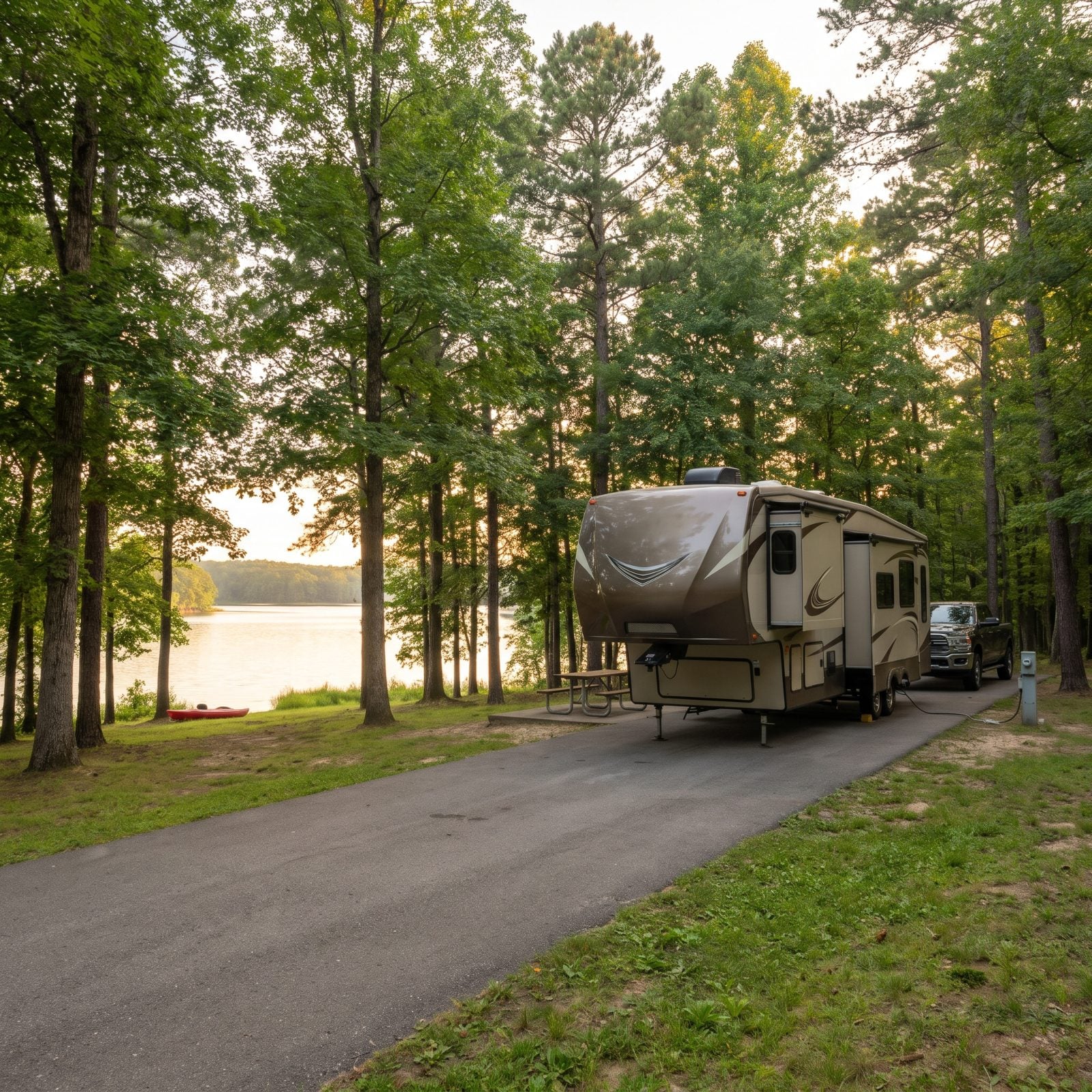
Pymatuning is one of Pennsylvania’s biggest reservoirs, straddling the Ohio line, and the Jamestown loop has long lakeside sites that take a full-size fifth-wheel. Electric at the pads, with water and a dump station in the park. The lake is the whole deal here: fishing, kayaking, and the famous spillway where the ducks walk on the backs of the carp. Yes, really.
Shoulder season is quieter and the sites open up. Summer weekends fill with families, which is charming or chaotic depending on your tolerance for cornhole at nine a.m.
29. North Dakota: Fort Abraham Lincoln State Park, Full-Service Sites on the Missouri
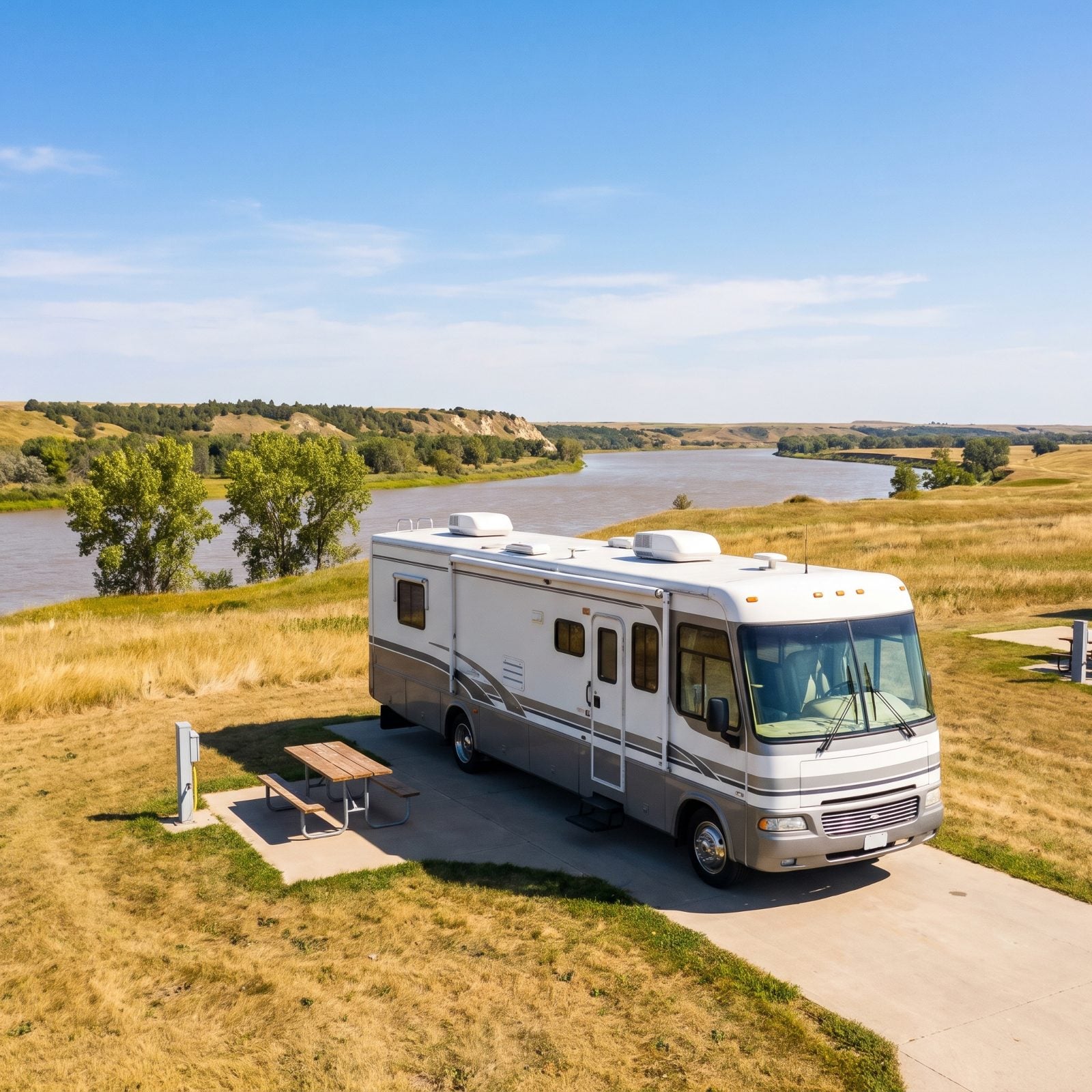
Fort Abraham Lincoln sits right on the Missouri River just south of Mandan, and the campground runs full-service sites with pads that swallow a big coach with room to spare. The history is thick here. This was Custer’s last post before the Little Bighorn, and the reconstructed buildings are a short walk.
What surprises people is how open and uncrowded it feels. North Dakota isn’t fighting for campsites the way the coasts are, so you can often book closer in and still land a good pad. The river at sunset makes the whole detour worth it.
28. Missouri: Echo Bluff State Park, Full Hookups Deep in the Ozarks
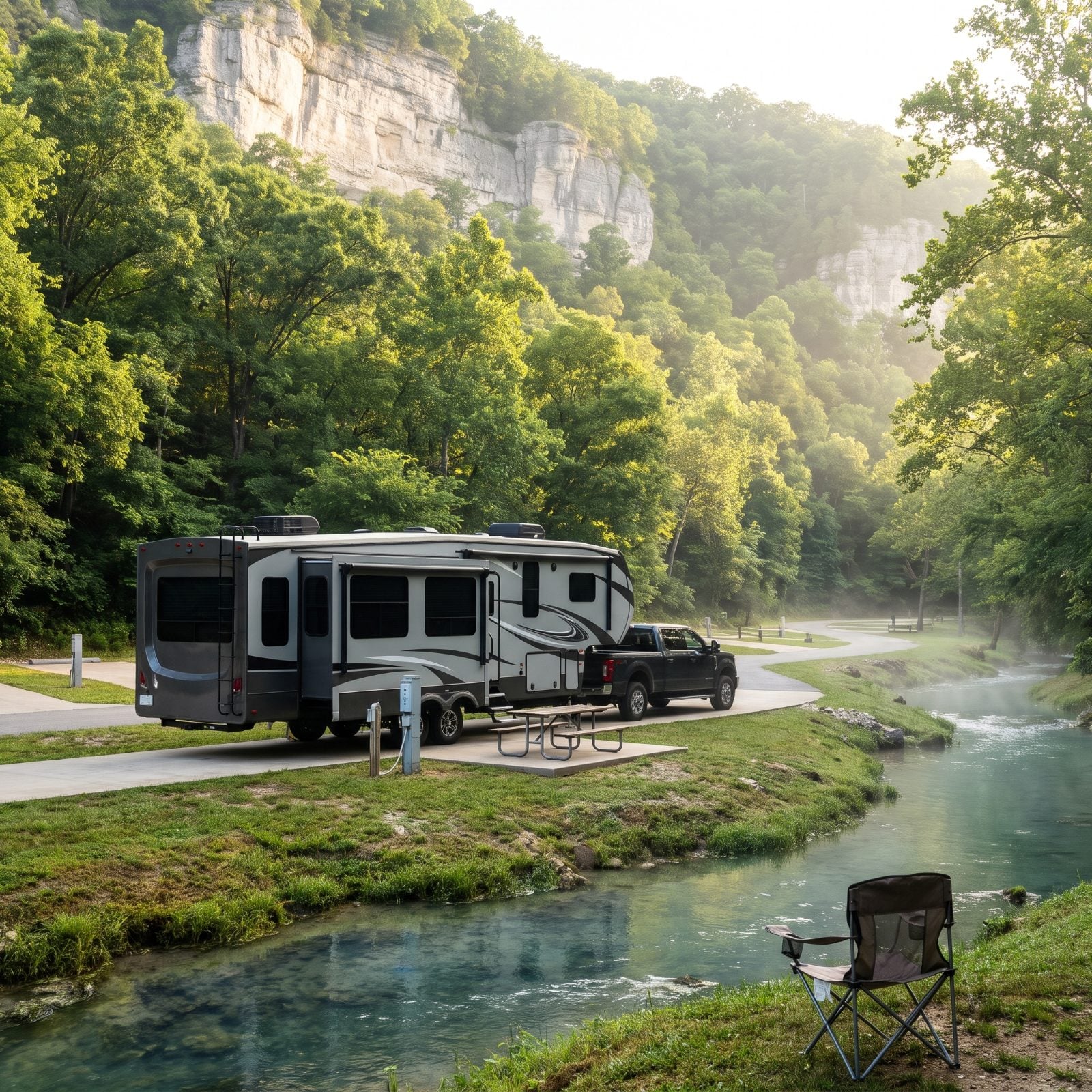
Echo Bluff is new by state-park standards, which means the campground was designed for the rigs people actually own. Long paved full-hookup sites, a dramatic limestone bluff over Sinking Creek, and a lodge for when it rains and you’ve had enough of the awning.
This is float-trip country. The creek runs cold and clear, the hills are thick with oak and hickory, and the whole valley feels tucked away despite the modern amenities. Reserve ahead for summer weekends; word has gotten out. Come midweek in September and you’ll practically have the bluff to yourself. That’s the move.
27. Nevada: Atlatl Rock Campground at Valley of Fire State Park
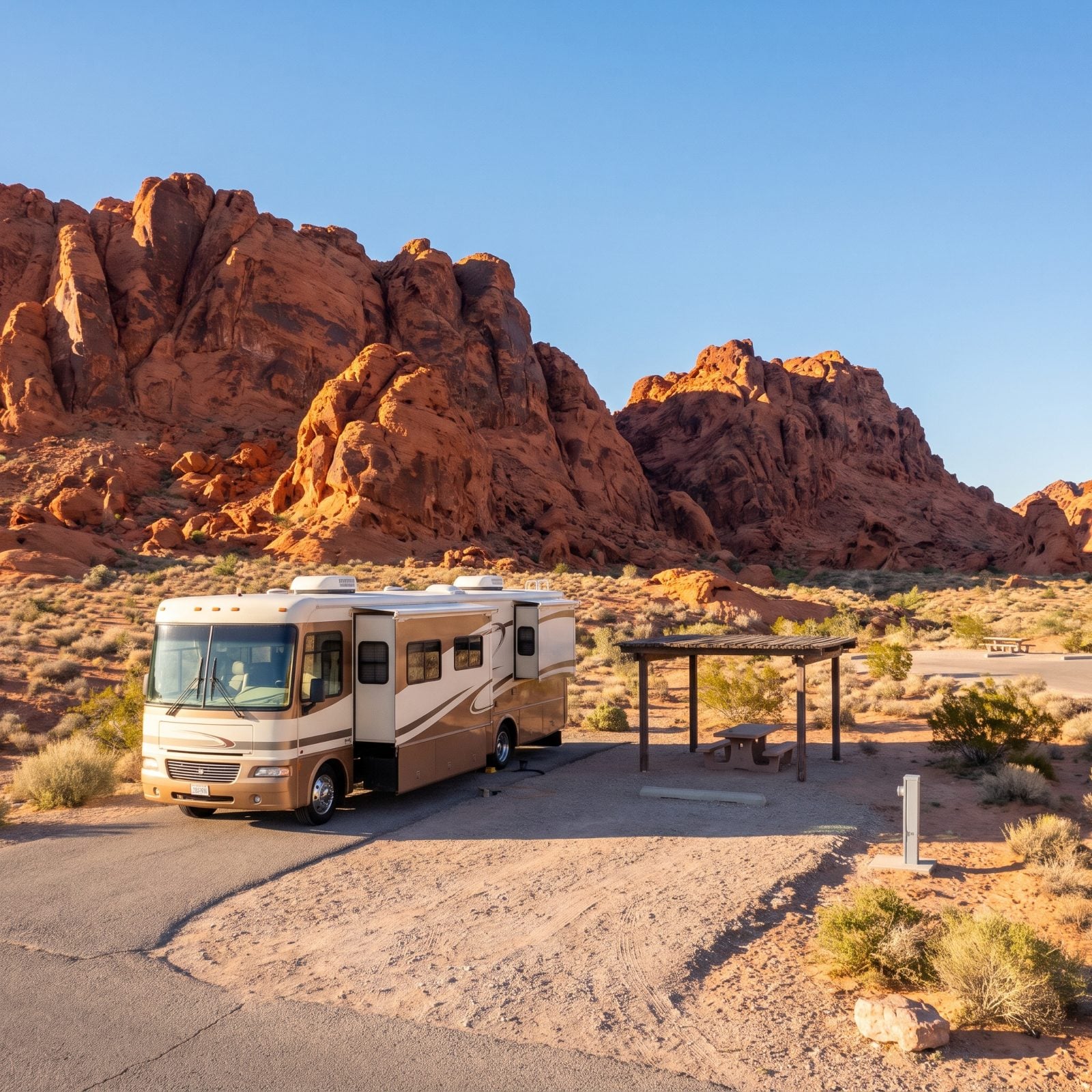
The red rock here looks lit from inside. Come afternoon, the Aztec sandstone walls behind Atlatl Rock turn the color of a hot stove, and your rig parks right under them.
The oversized sites in this loop swallow rigs well past 35 feet, and the pads run wide enough that you’re not negotiating with your neighbor’s awning. Those shaded ramadas over the tables? A gift when the desert cooks. You get electric and water hookups at the larger sites but no sewer, so plan your tanks accordingly.
Book early. Valley of Fire fills months out, spring and fall especially, because summer heat out here is no joke and everybody knows it. Reservations run through the Nevada State Parks system.
26. Kentucky: Kentucky Horse Park Campground in Bluegrass Country
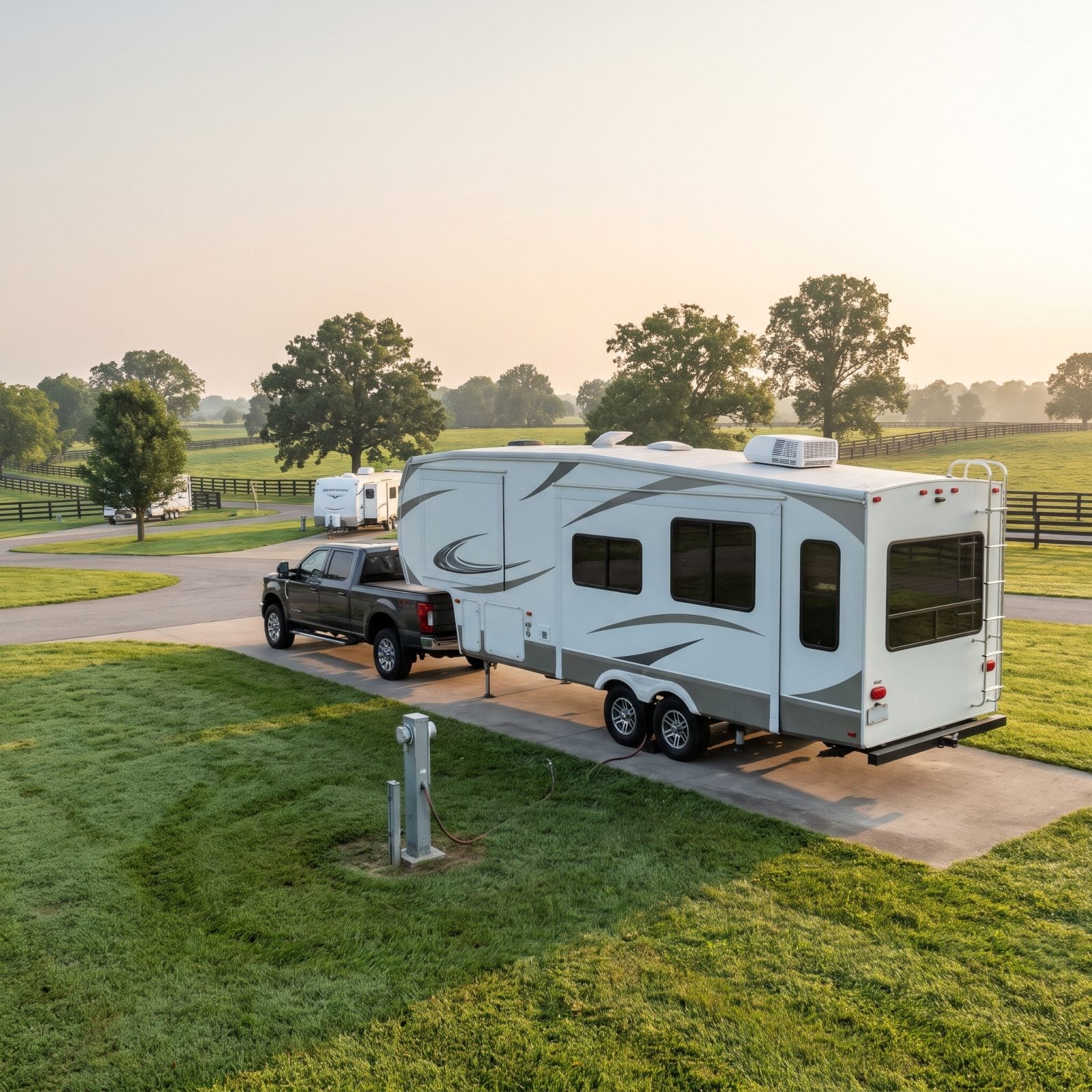
Most people come for the horses and leave talking about the campground. The loops run flat, paved, and roomy, with full hookups at the big-rig sites — rare for a place this scenic.
You’re parked in actual bluegrass country. Horse pasture and plank fencing fill the window, and the park’s museums and daily shows sit a short walk away. Pull-throughs take long rigs without drama.
Reserve ahead during horse-show season, which runs heavy spring through fall. Plenty of RVers passing down I-75 stop here too, so a weekday arrival gives you the best shot at the premium sites.
25. New Mexico: Elephant Butte Lake State Park
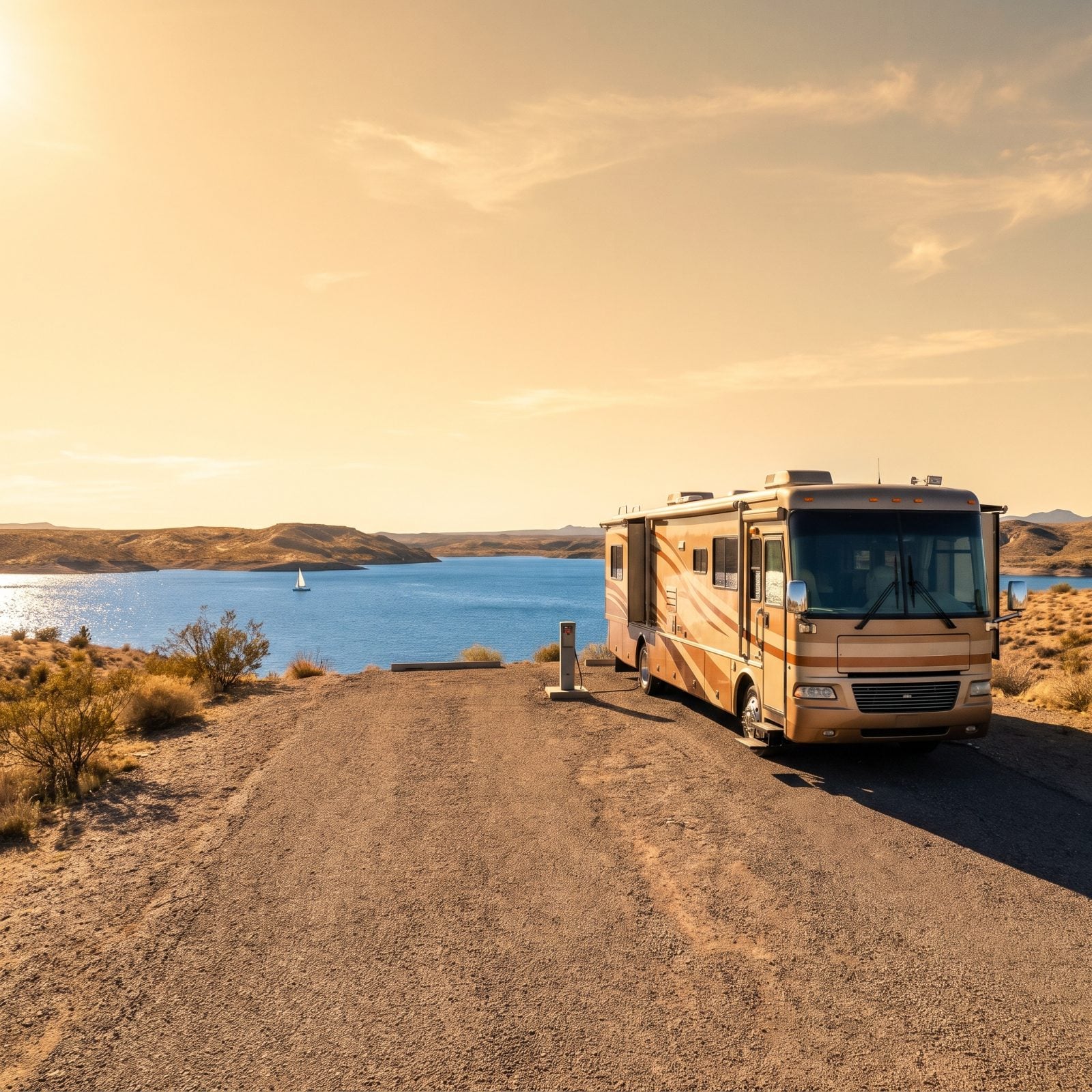
This is the biggest body of water in New Mexico, and the campground sits right on it. The developed sites are wide open, built for sun and space, with electric and water hookups at the larger loops.
Big rigs do fine on the paved and gravel sites, and the sheer scale of the place means you rarely feel crowded. The lake dominates everything. Boaters, anglers, and folks who just want to watch the water turn pink at sunset all end up here.
Reservations are smart on summer weekends and holidays. The rest of the year — fall and early spring especially — you can often roll in and find a good spot.
24. Ohio: East Harbor State Park Near Lake Erie
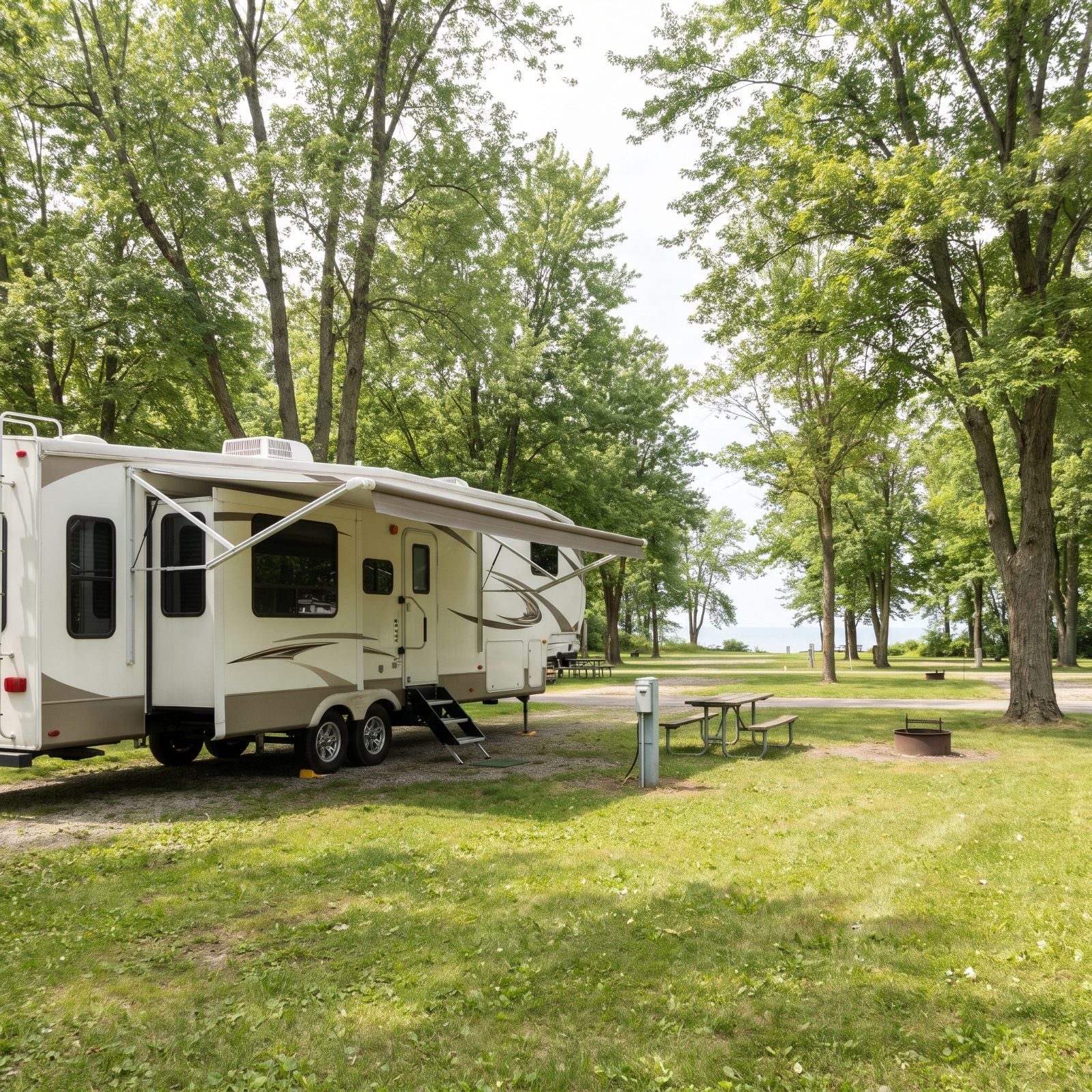
Hundreds of electric sites. That volume is why this place anchors northern Ohio’s RV scene — you can usually land something even on a busy summer weekend, and the big loops near the marshes take longer rigs comfortably.
You’re a short hop from Lake Erie, the beach, and the Marblehead area, with Cedar Point close enough for a day trip. Sites run mostly level with electric hookups, and a central dump station and water fills handle the rest.
Mosquitoes near the marsh in midsummer are real. Pack the repellent and thank me later.
23. Idaho: Farragut State Park Gilmore Campground
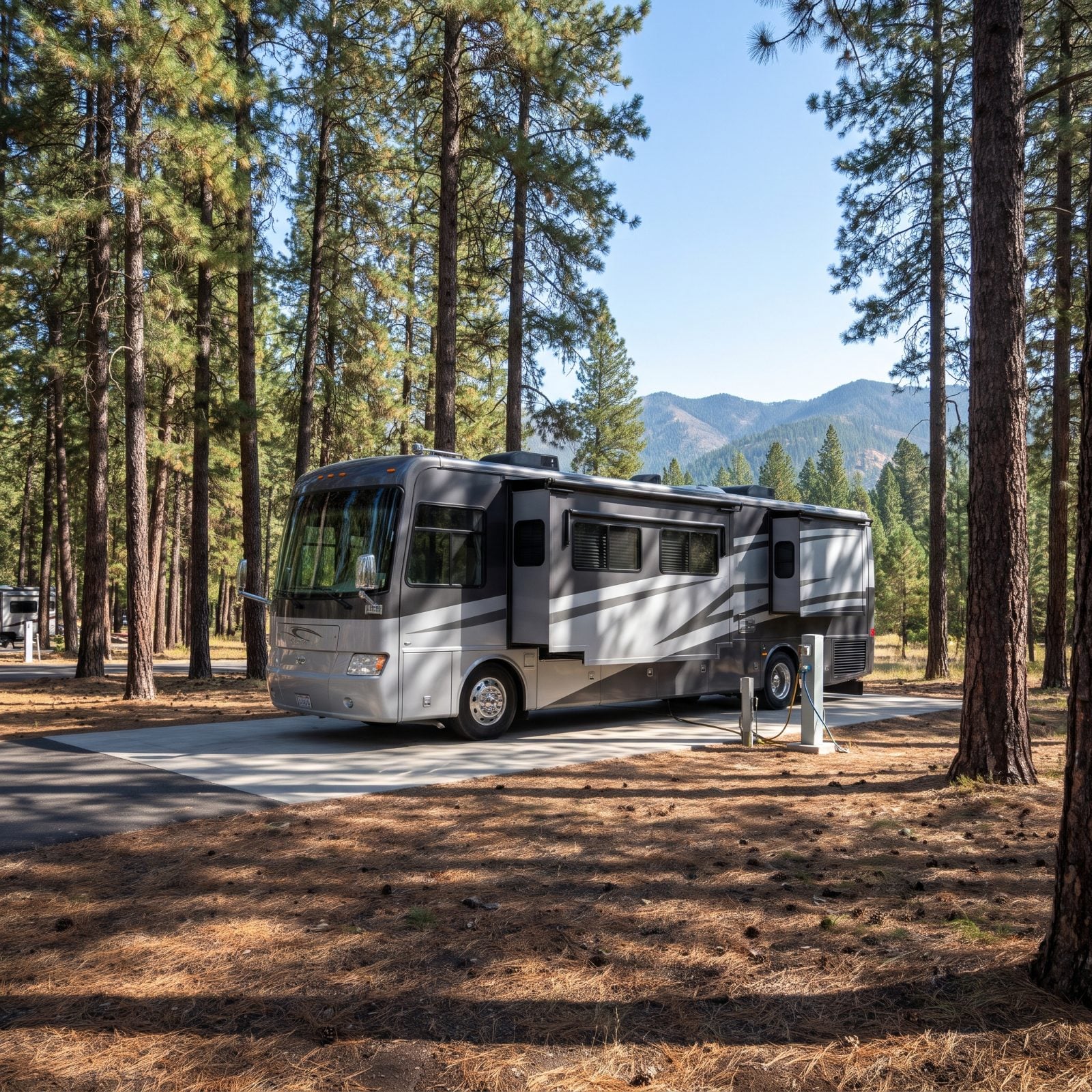
Tucked under big ponderosa pines near the southern tip of Lake Pend Oreille, Gilmore Campground has some of the roomiest paved sites in the Idaho state system. The lanes are generous and the pines give real privacy between neighbors.
Many sites here come with full hookups, a genuine luxury for a mountain park. Long rigs maneuver fine on the paved loops.
Farragut was a naval training base in World War II. You’re camping on ground where sailors learned to swim in a landlocked mountain lake.
Summer weekends book out fast with locals from Coeur d’Alene and Spokane. Reserve early through the Idaho State Parks system, and think about a shoulder-season trip — the lake goes quiet and the sites come easy.
22. Nebraska: Eugene T. Mahoney State Park
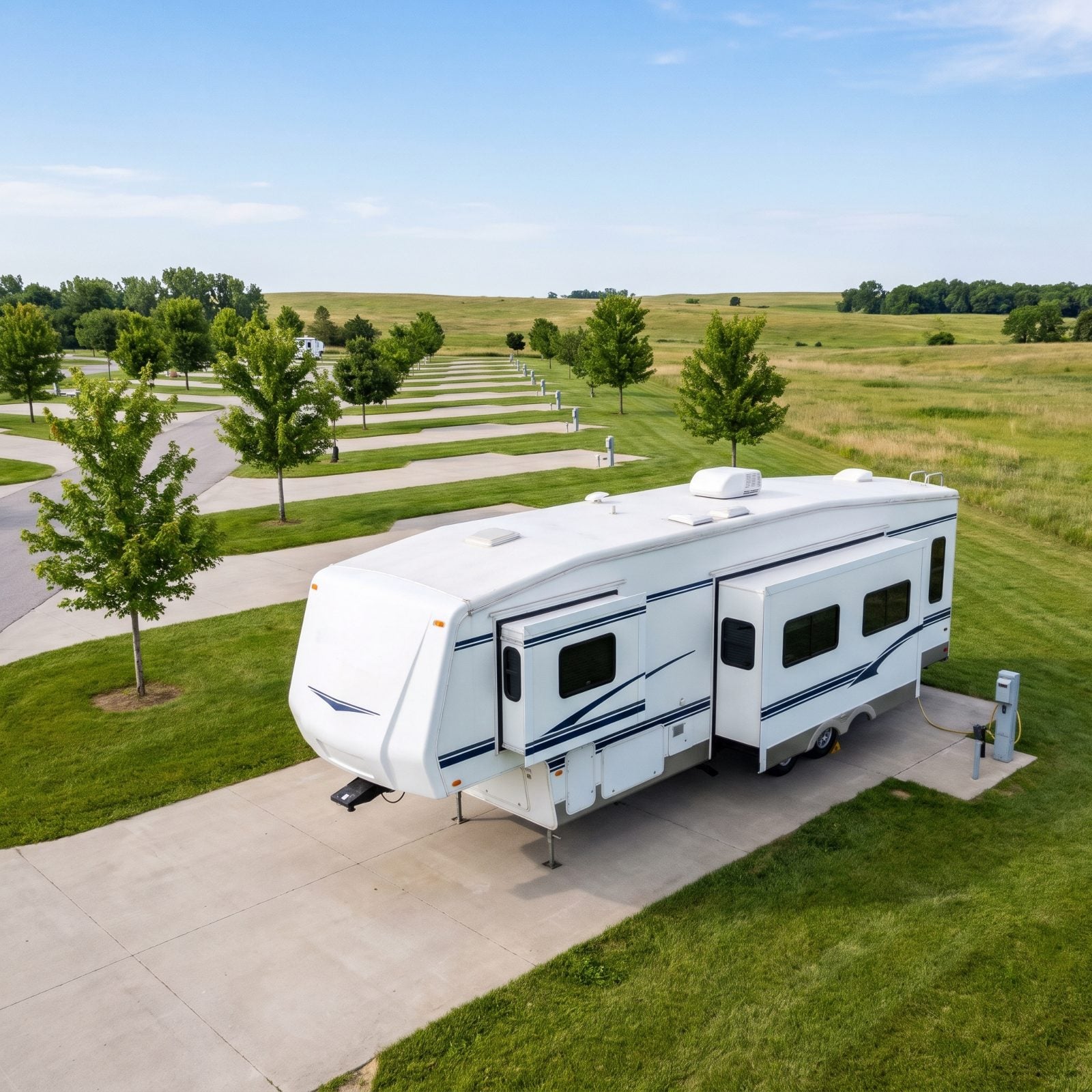
Sitting right between Omaha and Lincoln off I-80, this is the easiest big-rig state park entry in Nebraska. Paved sites, level pads, a layout built for the kind of long rigs that would scrape their way into an older campground.
It’s a resort-style park. A lodge, an observation tower, pools, trails — plenty to do without ever starting the engine. Full hookups at the premium sites make a multi-night stay painless.
Easy interstate access means it fills with cross-country travelers in summer. Book ahead if you’re passing through on a holiday weekend, because this spot is a favorite overnight stop between the coasts.
21. Iowa: Honey Creek State Park Beside Rathbun Lake
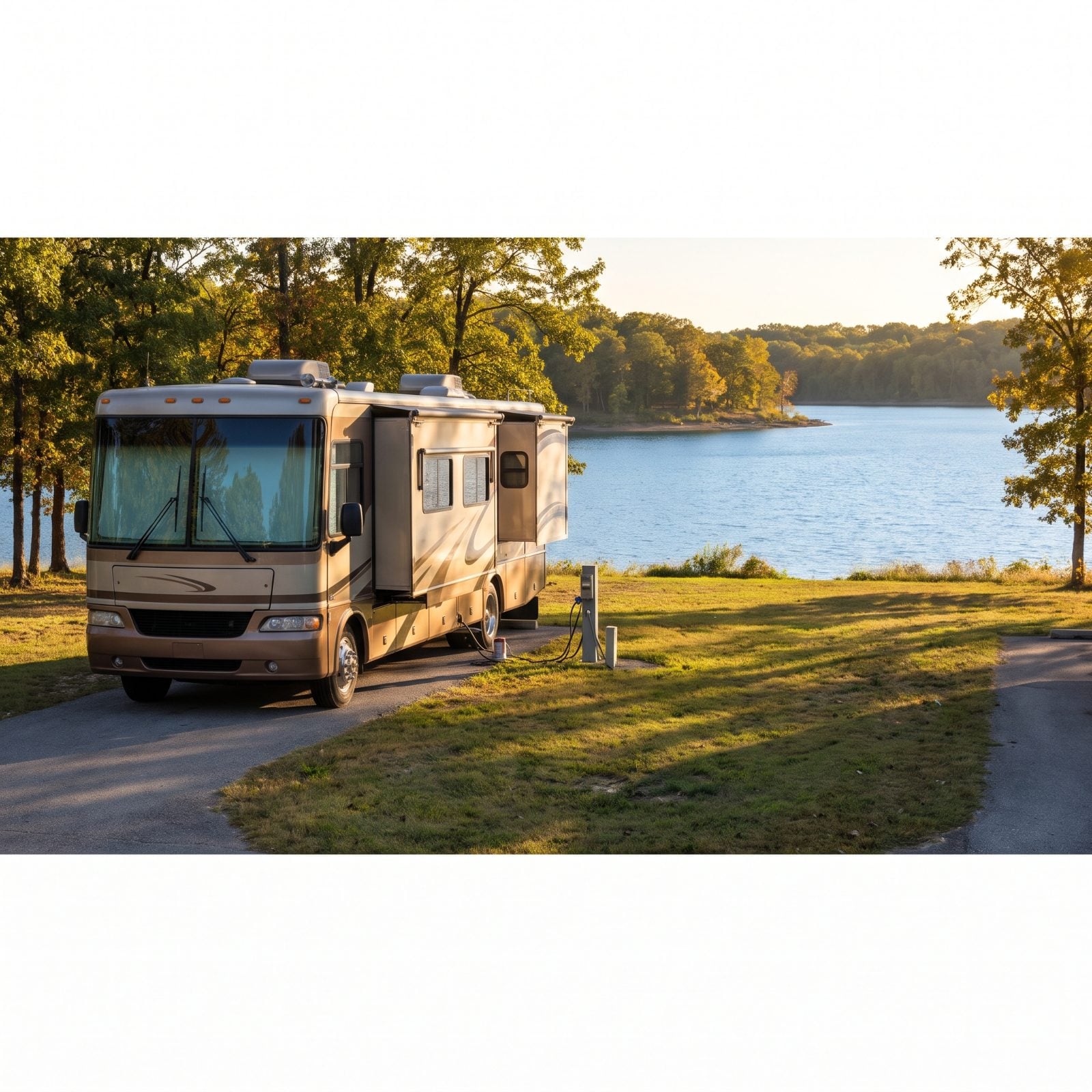
Full hookups beside one of Iowa’s biggest lakes. That’s precisely what big-rig owners hunt for in the Midwest, and the modern sites here run full-service with sewer at the pad, so no mid-stay dump runs.
Rathbun Lake is the draw — fishing, boating, and quiet water that glows at sunset. The sites are level and roomy, and the surrounding oak woods keep things cooler than the open prairie.
20. Louisiana: Fontainebleau State Park on Lake Pontchartrain
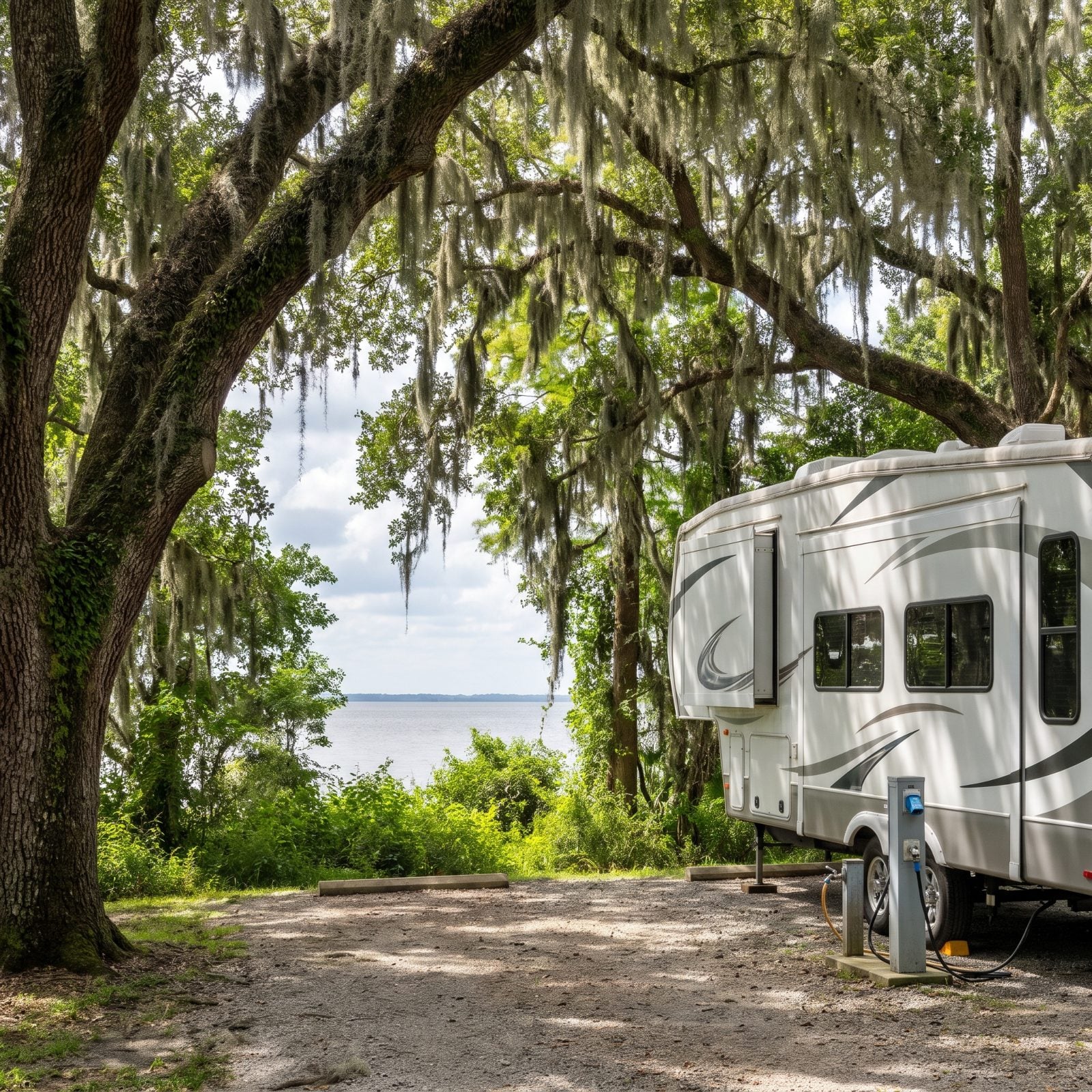
Camping under live oaks dripping with Spanish moss, a short drive from New Orleans. Fontainebleau sits on the north shore of Lake Pontchartrain, and the premium loops offer full hookups with sites long enough for big rigs.
Hard to beat the combination — a real Louisiana setting, lake access, a sandy beach, and a quick causeway run into the city when you want beignets and jazz.
Summer brings heat, humidity, and bugs, so spring and fall are the sweet spots. Reserve through the Louisiana State Parks system, and ask about the larger lakeside sites when you book, since not every pad fits a long rig.
19. Tennessee: Fall Creek Falls State Park
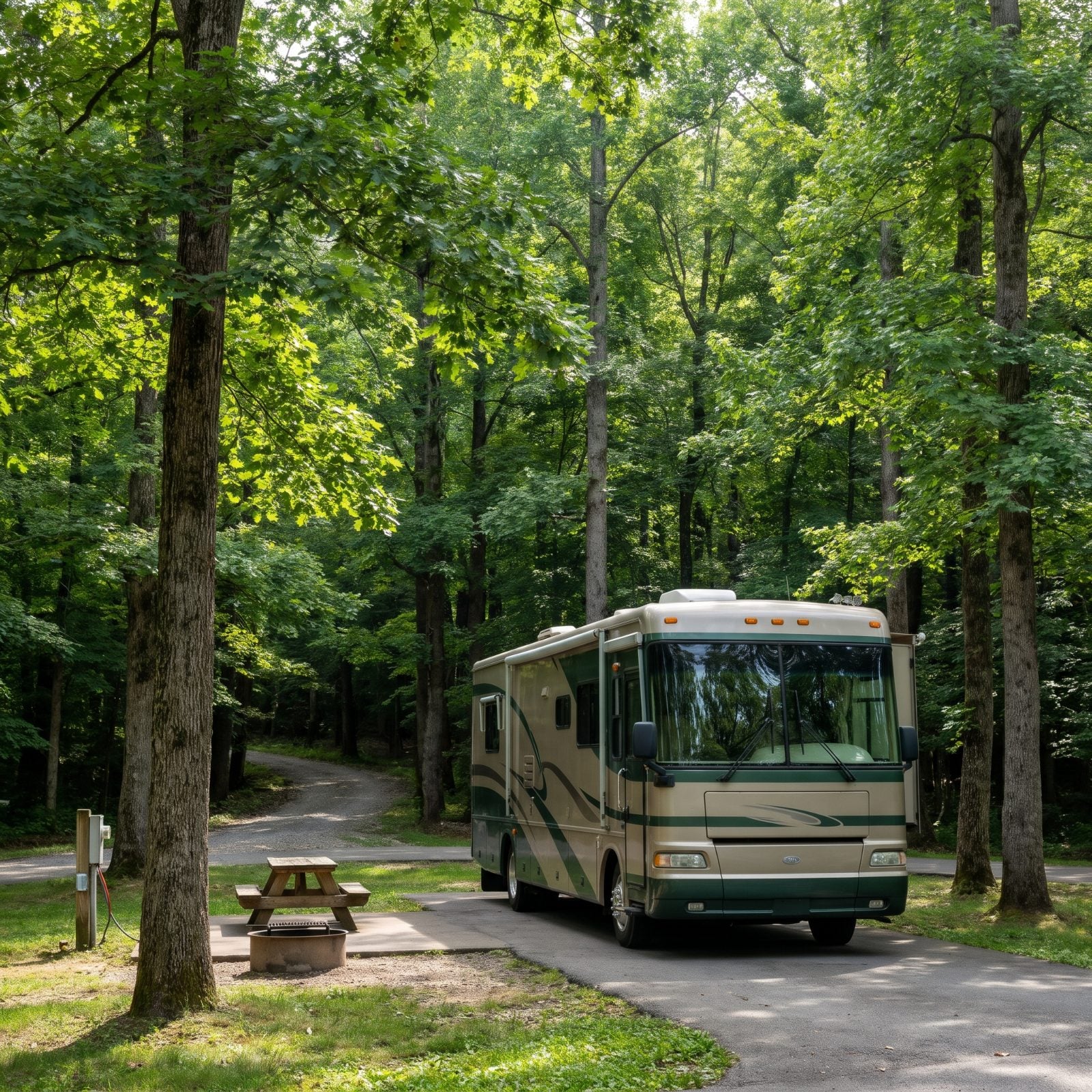
On the Cumberland Plateau, this is Tennessee’s big one, and the campground lays out long paved sites that handle rigs over 35 feet. Hardwood forest wraps around you, with the park’s namesake 256-foot waterfall and gorge trails close by.
Electric and water hookups at the larger sites, a modern campground layout, and enough room to level a long rig without a fight.
Busy nearly year-round, this park turns downright brutal to book during fall foliage season. Reserve well ahead through the Tennessee State Parks system if you want a leaf-peeping trip, because those weekends sell out fast and the gorge in October earns every bit of the planning.
18. Kansas: Eisenhower State Park
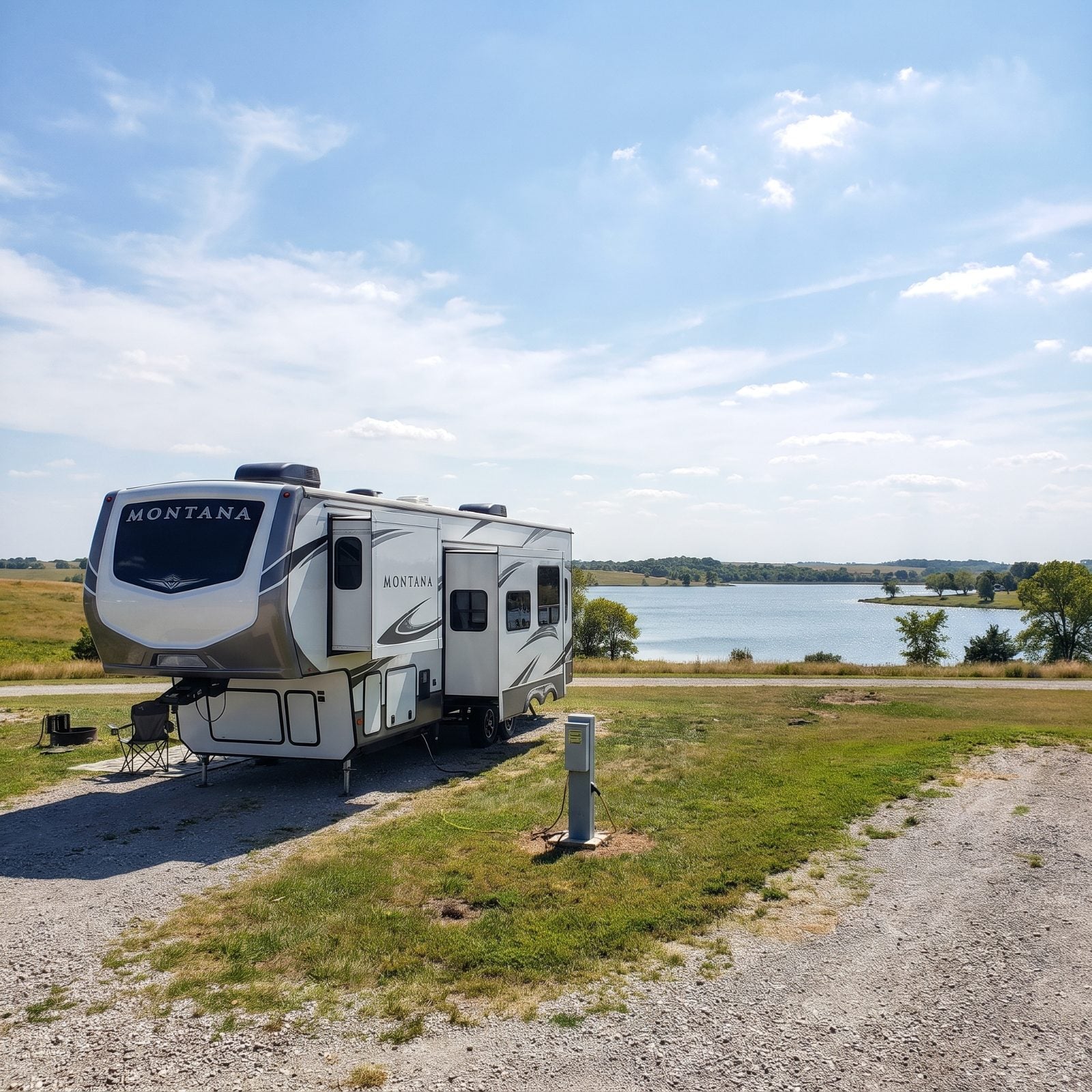
Built with room to spare. The sites at Eisenhower, on the shore of Melvern Lake, are open and generous — made for the larger rigs that struggle in tighter eastern-Kansas parks.
Electric hookups at the developed loops, easy access on wide gravel lanes, and big prairie sky over the water. Boating and fishing pull people in all summer, yet the open layout leaves plenty of elbow room even when it’s busy.
You’ll need a Kansas vehicle permit on top of your camping reservation, so factor that in. Weekdays and shoulder season stay quiet here — half the appeal if you’ve had enough of packed lakefront loops.
17. Arkansas: Lake Fort Smith State Park, Full-Hookup Sites in the Boston Mountains
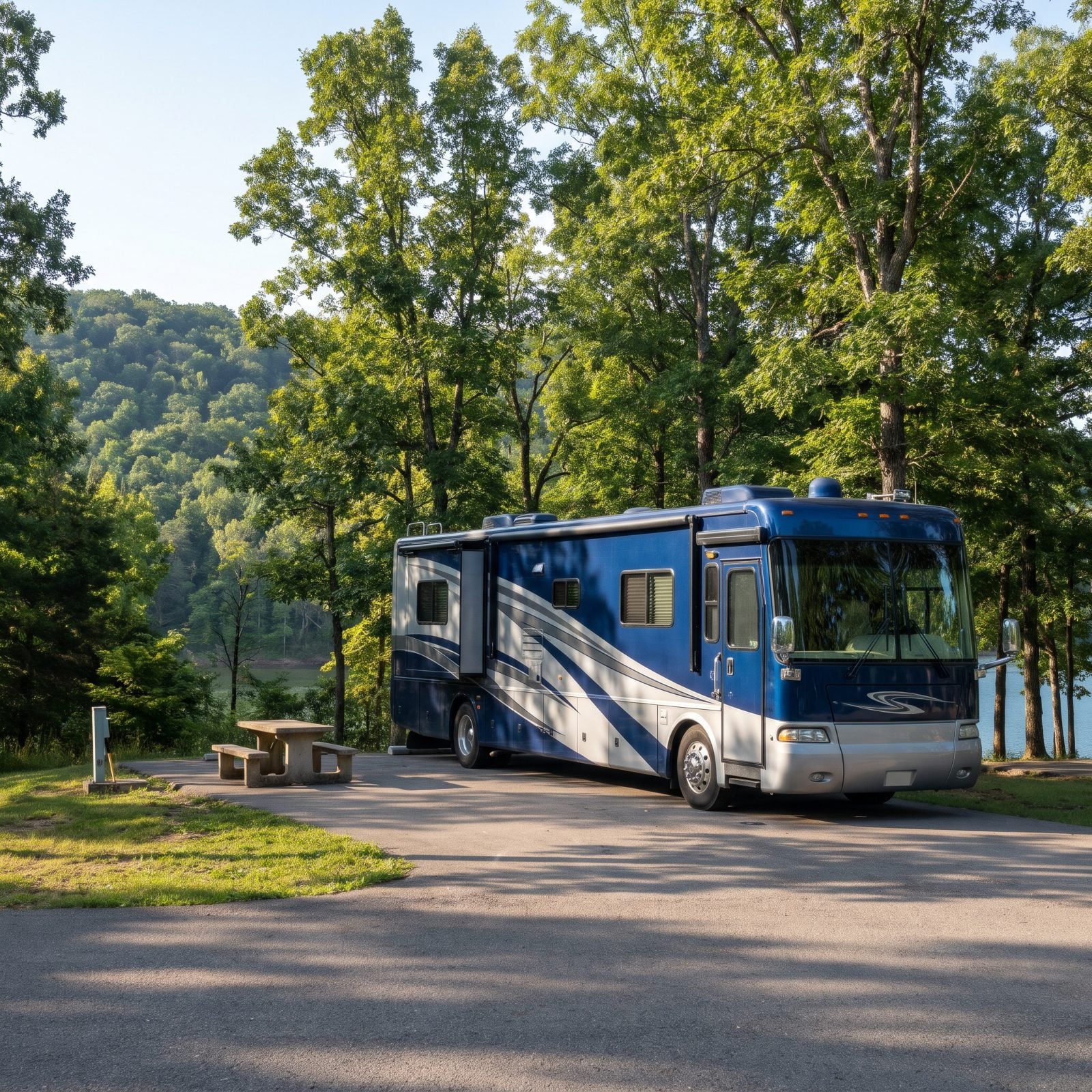
Lake Fort Smith sits in the Boston Mountains, the most rugged stretch of the Arkansas Ozarks. The campground offers full-hookup sites with water, sewer and electric, so a long rig can settle in for a week without hunting for the dump station. It’s an easy run off I-49, which matters when you’re towing up into hill country and would rather not test your brakes on a goat-path county road.
The lake is the centerpiece, ringed by forested ridges that turn rust and gold in late October. Hikers take note: the park is the western trailhead of the Ozark Highlands Trail, so you can walk a few miles of serious backcountry and still be back at the coach for dinner. Spring brings dogwoods and fewer crowds than fall foliage weekends.
16. Oklahoma: Lake Murray State Park, Big-Rig Loops Around Clear Blue Water
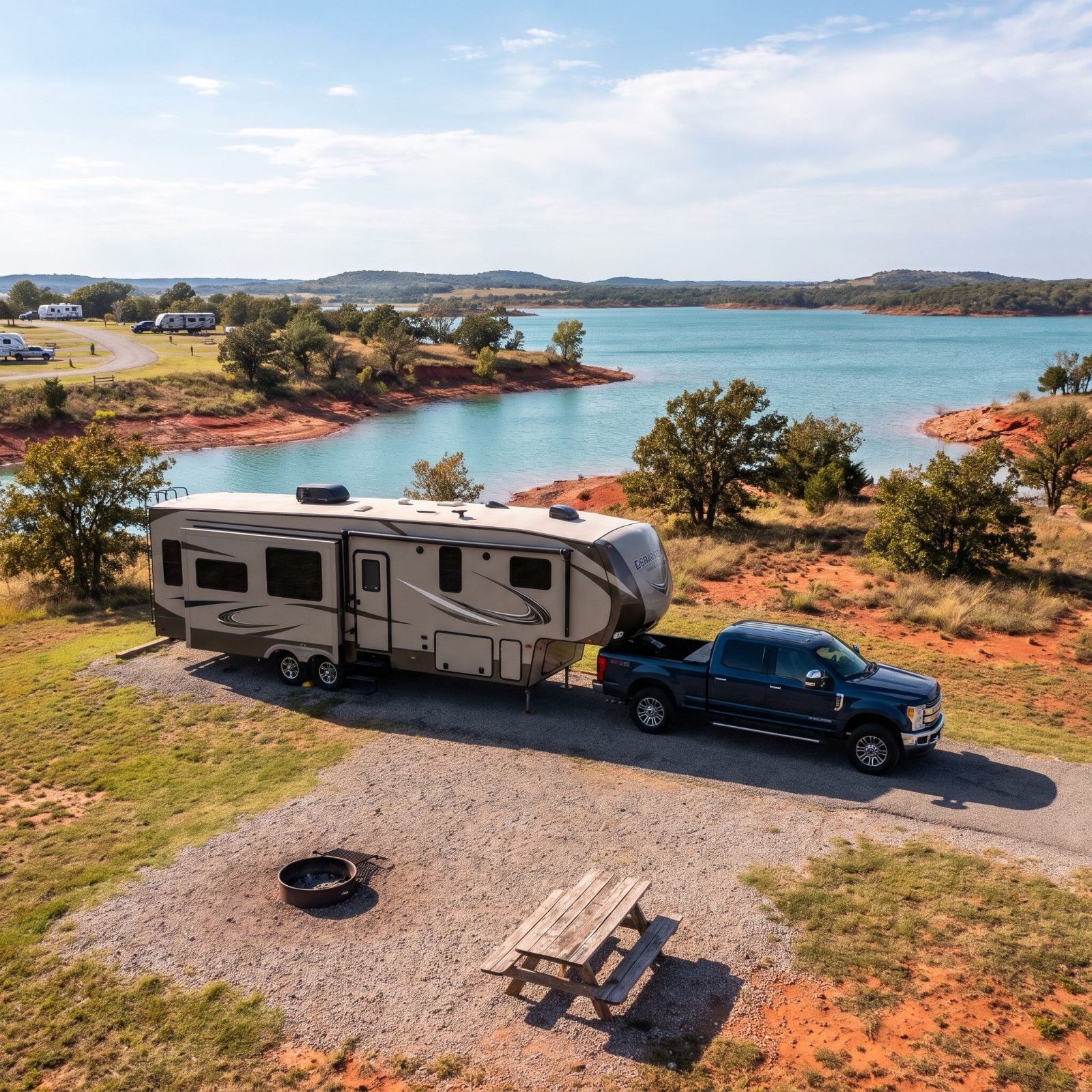
Lake Murray is one of Oklahoma’s oldest state parks, built with Civilian Conservation Corps muscle in the 1930s, and it’s big enough to spread several campgrounds around its shoreline. Many loops offer full hookups, and the larger pull-through sites give a 40-footer enough room to swing in without a three-point turn. It’s just off I-35 near Ardmore, so getting there doesn’t involve any winding backroad heroics.
The water is the surprise. The lake runs clear and blue in a part of the country where most reservoirs look like chocolate milk. Bring the kayak, the fishing rods, or just a chair at the shoreline. Spring and fall are prime. Summer turns hot and fills up with boaters on weekends.
15. Massachusetts: Scusset Beach State Reservation, RV Sites Beside the Cape Cod Canal
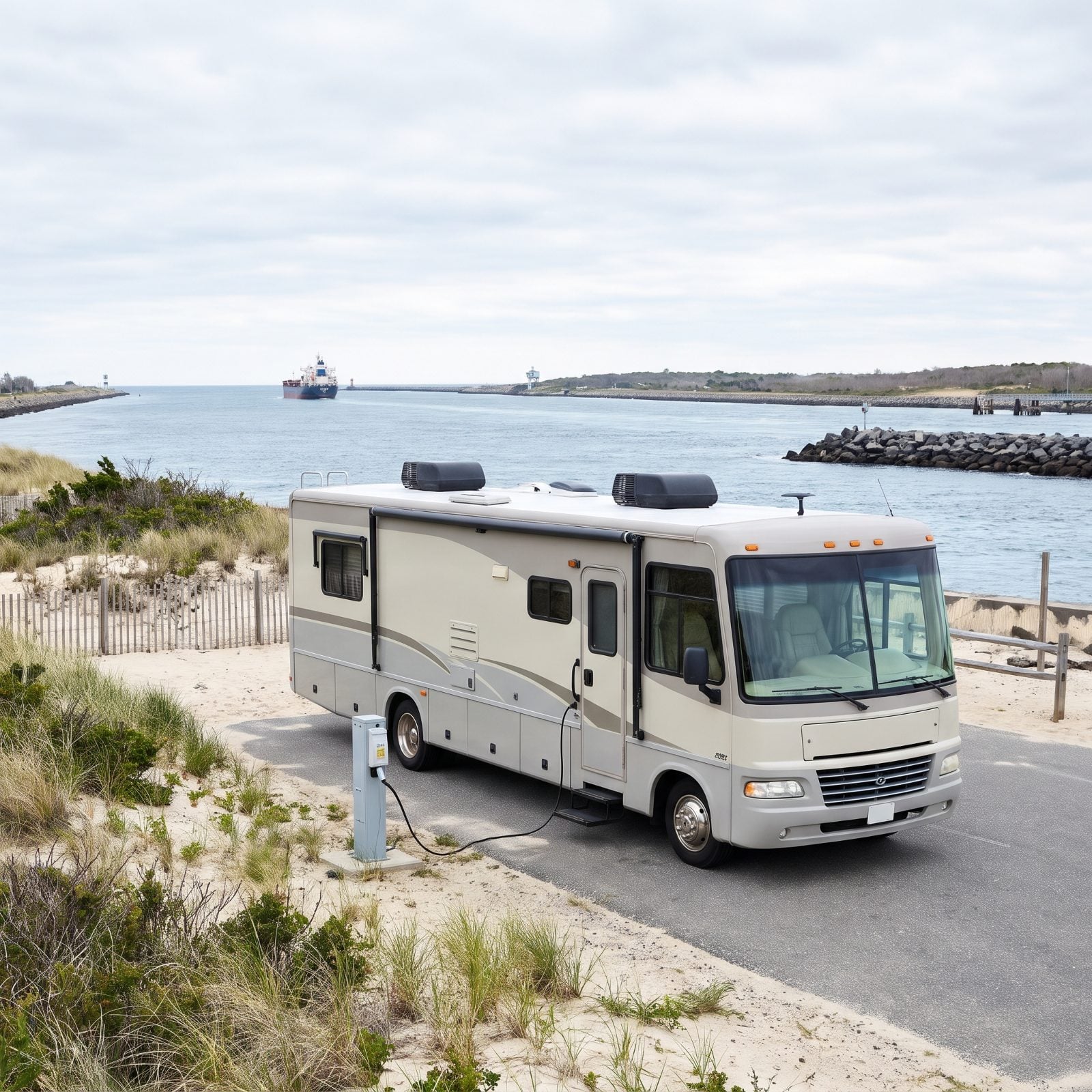
Scusset Beach sits on the mainland side of the Cape Cod Canal, right where it opens into Cape Cod Bay. That location is the trick: you get Cape access without dragging a big rig across the Sagamore Bridge in summer traffic. The RV campground offers electric and water hookups, and the open layout makes it far friendlier to long coaches than the wooded, cramped loops elsewhere on the Cape.
The canal itself is the entertainment. Freighters, tugs and fishing boats slide past close enough to wave at, and the paved service road along the bank is perfect for bikes. Anglers line the jetty for striped bass. The beach on the bay side is a short walk from your site. Reserve early, because summer weekends go fast.
14. Maryland: Rocky Gap State Park, Long Sites Between a Lake and the Mountains
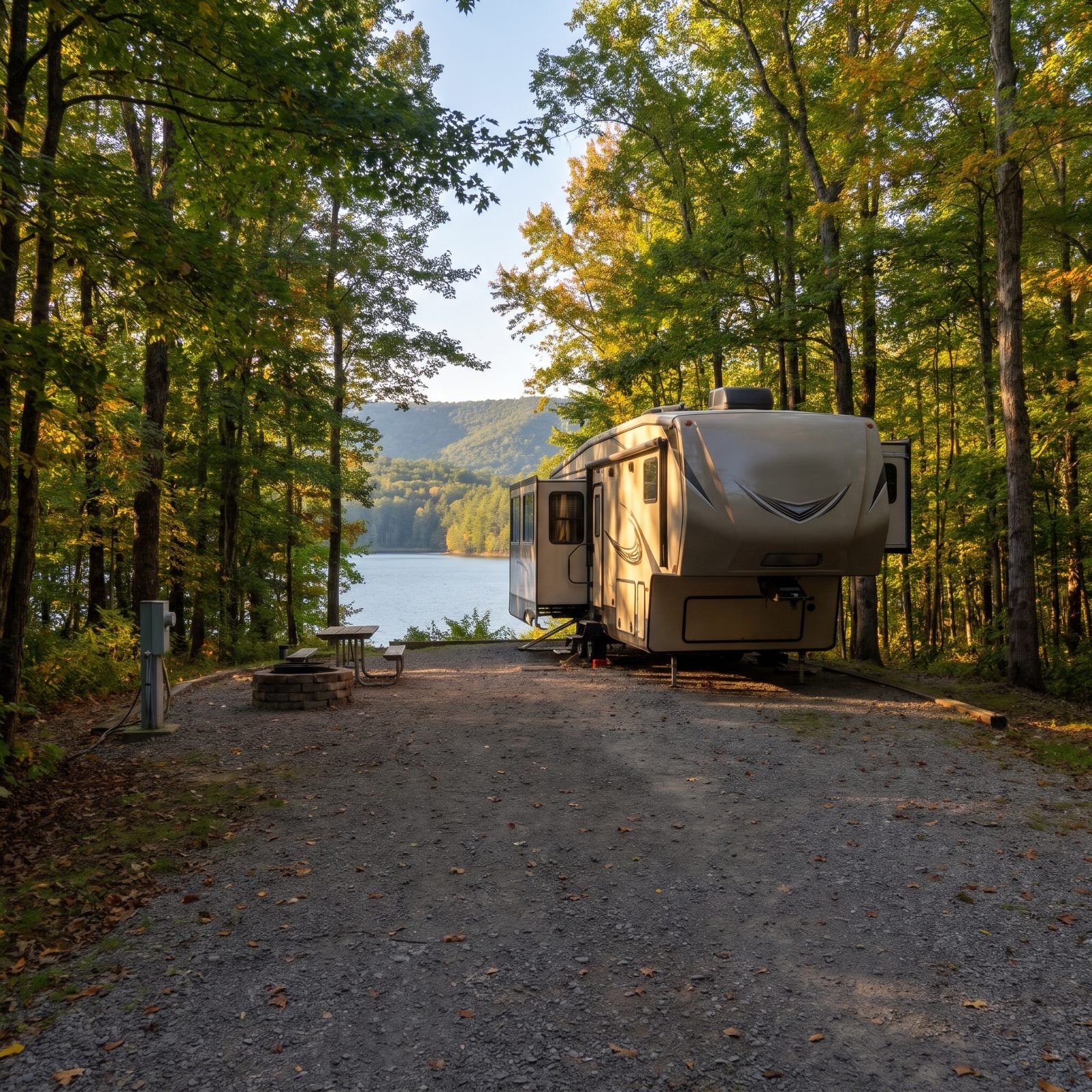
Rocky Gap sits in western Maryland’s mountains just off I-68 near Cumberland, which means you can roll a big rig straight in from the interstate without threading any hairpin county roads. The campground is large, with electric sites spread across several loops, and the longer pads give you room to open slides and still set out the chairs.
Lake Habeeb is the reason to stay. The water is clear, the swimming beaches are sandy, and Evitts Mountain rises steeply right behind it. Hike the gorge trail along Rocky Gap Run for waterfalls and hemlock shade. The resort and golf course next door handle the rainy-day backup plan. Fall foliage here is excellent and books out accordingly.
13. Minnesota: Lake Bemidji State Park, Wooded Electric Sites With Room to Maneuver
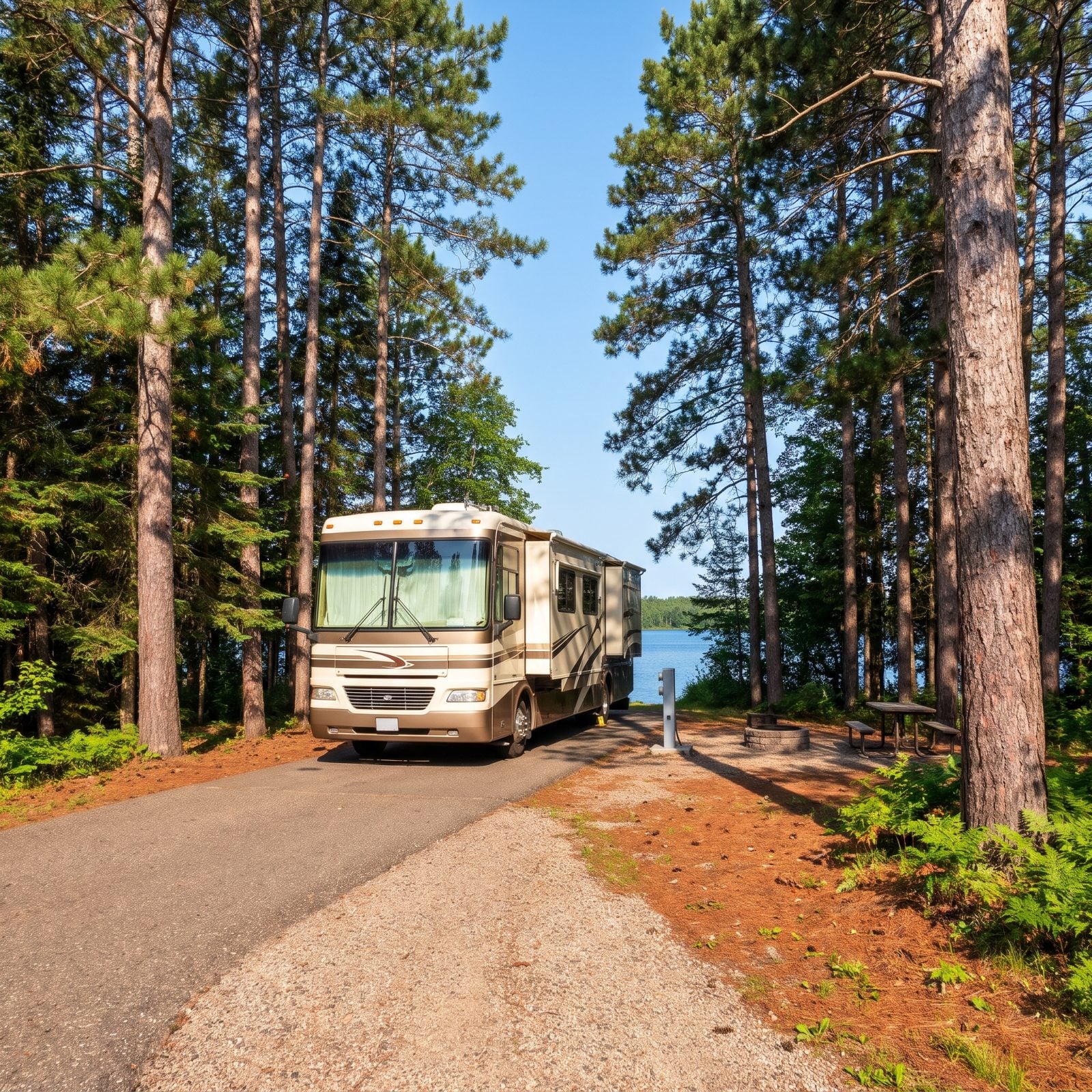
Lake Bemidji State Park sits in the northern Minnesota pine woods on the shore of the lake the Mississippi flows through on its way from Itasca. The campground is wooded but laid out with enough swing room that a longer rig can back in without trimming the trees. Electric sites are your target here, and they’re worth reserving early for July.
Walk the boardwalk into the bog to see pitcher plants and orchids you won’t find anywhere near home. The Paul Bunyan State Trail connects to the park, so bring the bikes. Town is minutes away for groceries and the obligatory photo with Paul and Babe. Bug spray is not optional in June.
12. Michigan: Ludington State Park, Large-Rig Access Between Lake Michigan and Hamlin Lake
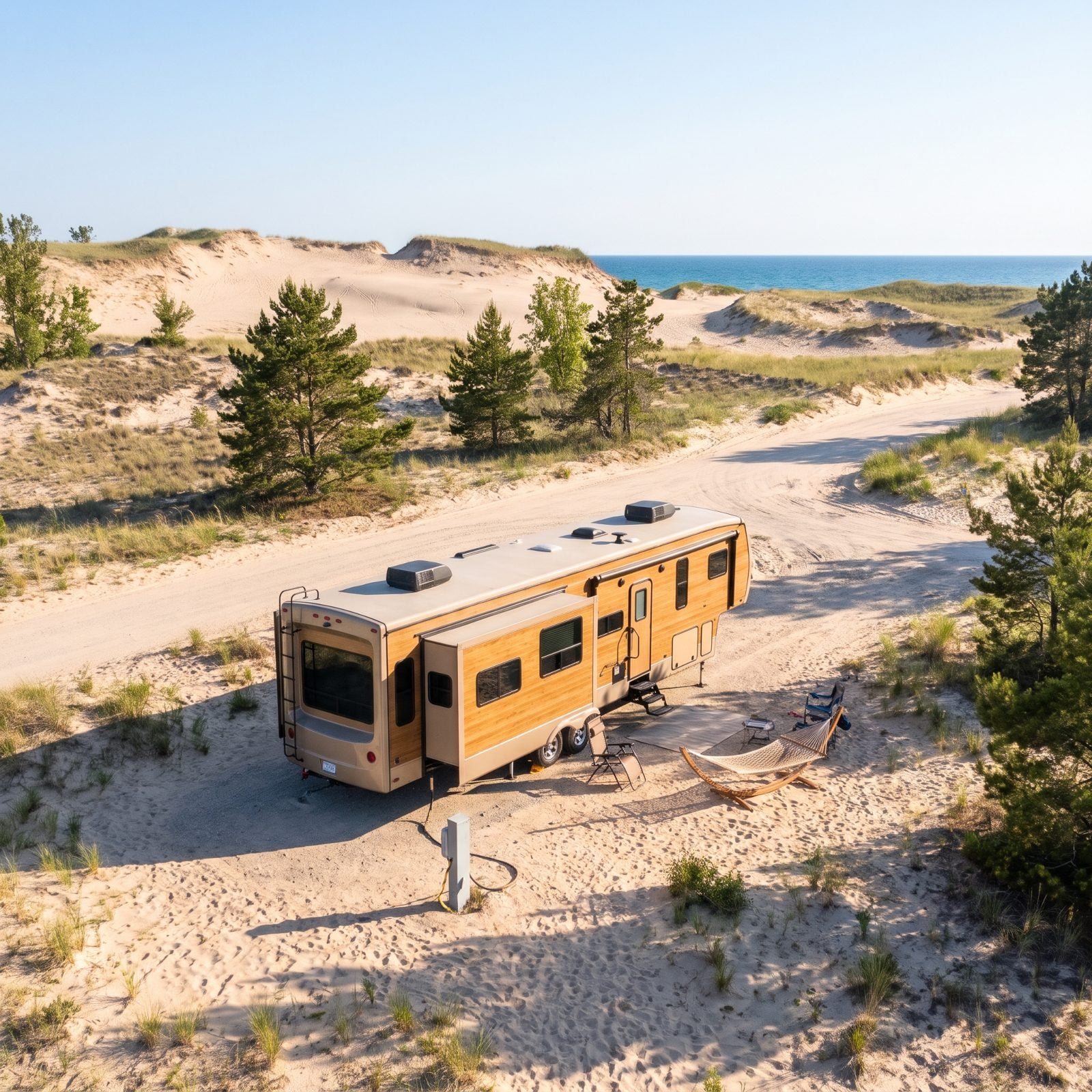
Ludington is Michigan’s most beloved state park for a reason. It sits on a strip of dunes and forest between Lake Michigan and Hamlin Lake, so you get big-water sunsets on one side and calm paddling on the other. The park has multiple campgrounds, and the larger electric sites can handle long rigs if you pick carefully when booking. Check the posted length for each site before you commit.
The drive in along the shoreline is pure scenery. Once you’re parked, hike or bike out to Big Sable Point Lighthouse, canoe the Hamlin Lake trail, or float the short Big Sable River on a tube. Summer sites disappear the morning the reservation window opens six months out. Set a reminder.
11. Montana: Lewis and Clark Caverns State Park, Big-Rig Camping Beneath Limestone Cliffs
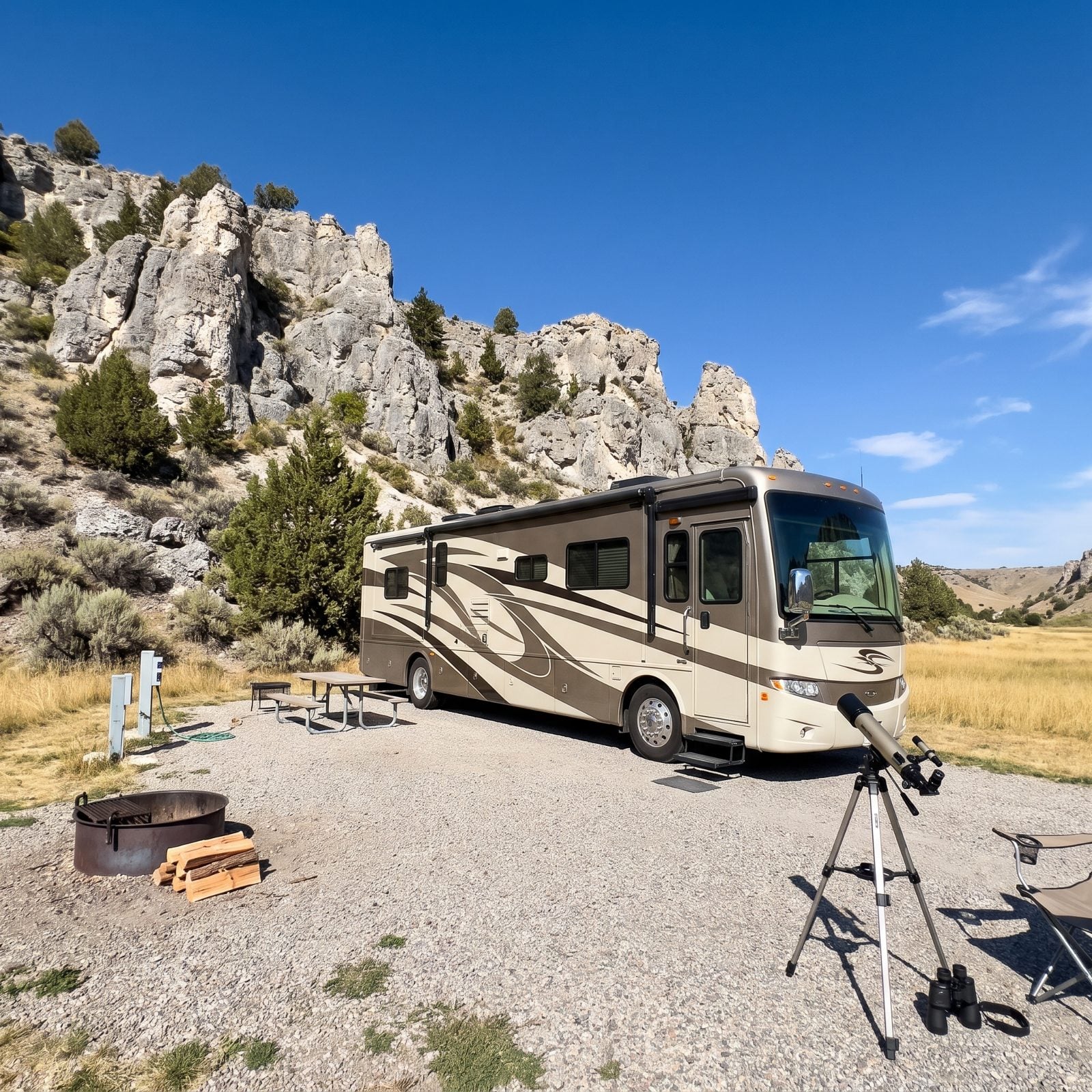
Lewis and Clark Caverns was Montana’s first state park, and the campground sits low near the Jefferson River with limestone cliffs rising above it. Long, open sites with electric hookups make it workable for big rigs, and the location between Three Forks and Whitehall keeps it close to the interstate.
The caverns are the main event: guided tours through a richly decorated limestone cave during the warmer months. The road up to the cave visitor center climbs and winds, so leave the coach at camp and drive the toad up. Fun irony: the expedition the park is named for paddled right past and never knew the caves were there.
10. North Carolina: Medoc Mountain State Park, Extra-Long Sites in a Quiet Piedmont Forest
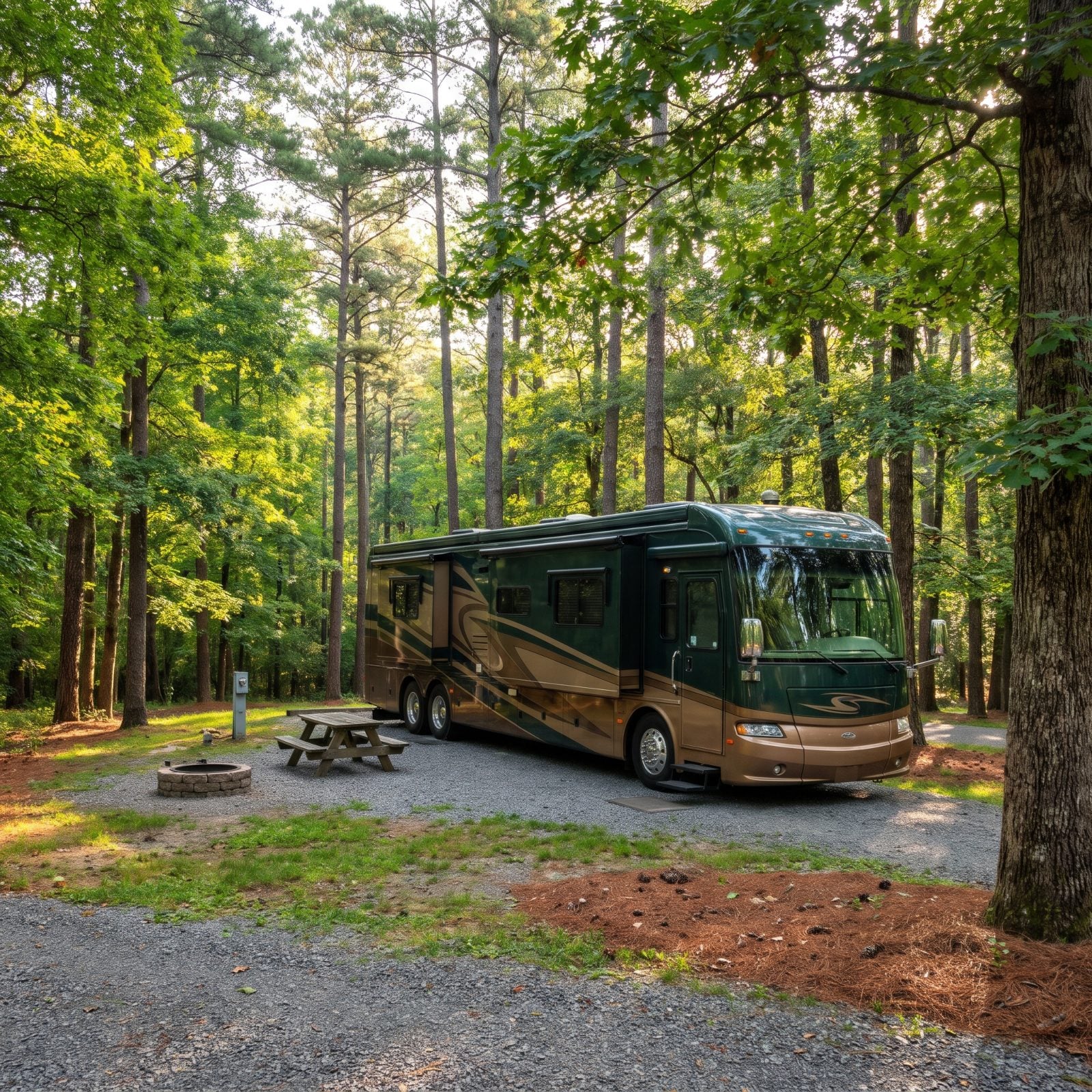
Medoc Mountain is a low granite ridge in North Carolina’s eastern Piedmont, worn down from something far grander millions of years ago. The campground offers long sites with electric and water, and it rarely fills the way the coast and mountain parks do. For a big rig, that means easy booking and room to park without a fight.
The name comes from a nineteenth-century vineyard on the property, named after the famous French wine region. Today it’s hardwood forest, hiking and horse trails, and Little Fishing Creek for paddling and fishing. It’s a short hop off I-95, which makes it an ideal stopover on the long north-south haul. Stay two nights instead of one.
9. New Hampshire: Hampton Beach State Park, Oceanfront Sites for Self-Contained RVs
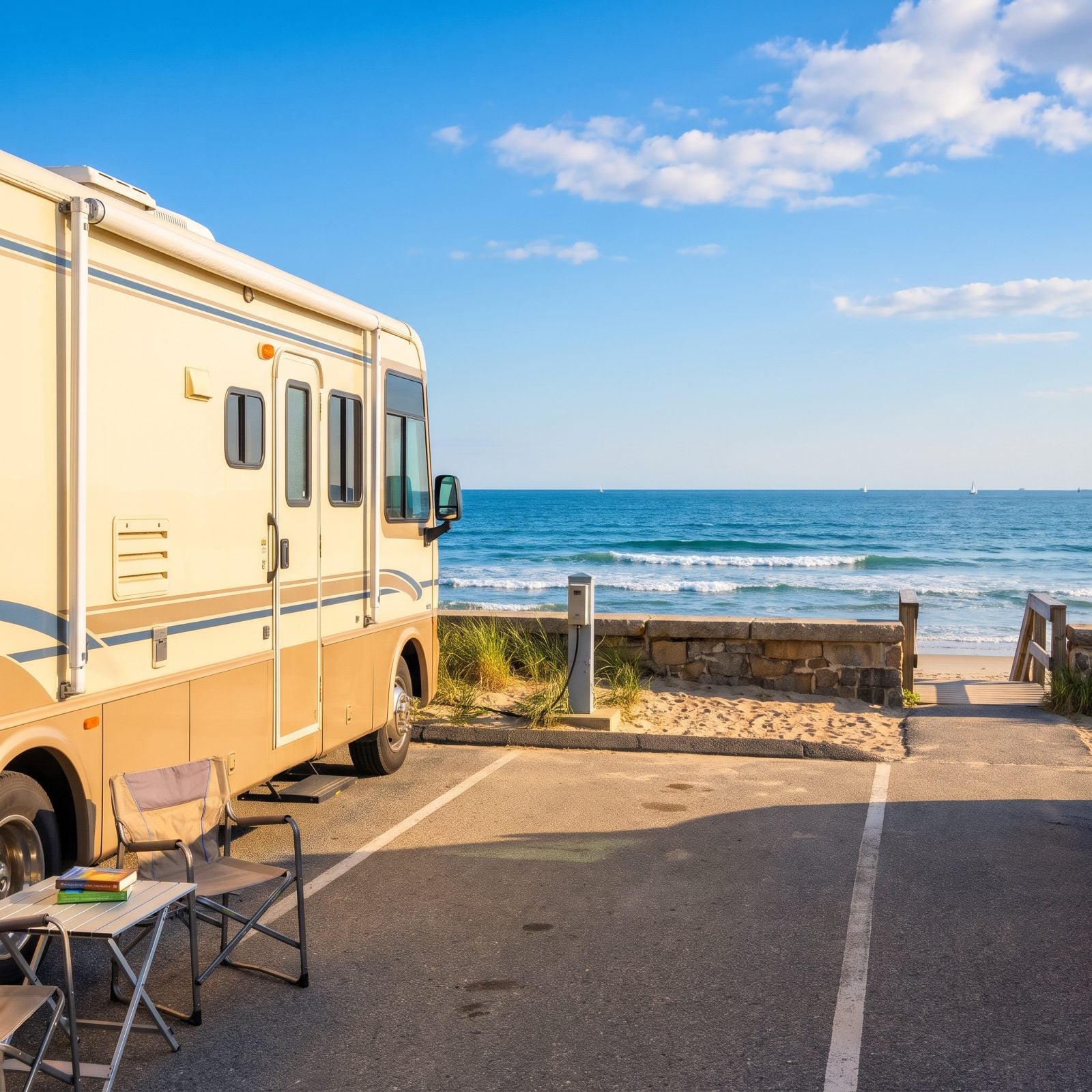
Hampton Beach State Park has an RV campground right on the New Hampshire seacoast, and the catch is simple: it’s for self-contained rigs only, no tents. The sites are full hookup and paved, laid out more like a seaside lot than a wooded loop. Not scenic in the forest sense, but you wake up to the Atlantic, and that’s the point.
Hampton Harbor and the mouth of the Hampton River border the park, and the busy boardwalk strip of arcades, fried clams and saltwater taffy is a short walk north. Sites are limited and summer reservations go almost immediately. September is the sweet spot: warm water, fewer crowds, and the beach still feels like summer.
8. West Virginia: Beech Fork State Park, Full-Hookup Sites Along a Wooded Lake
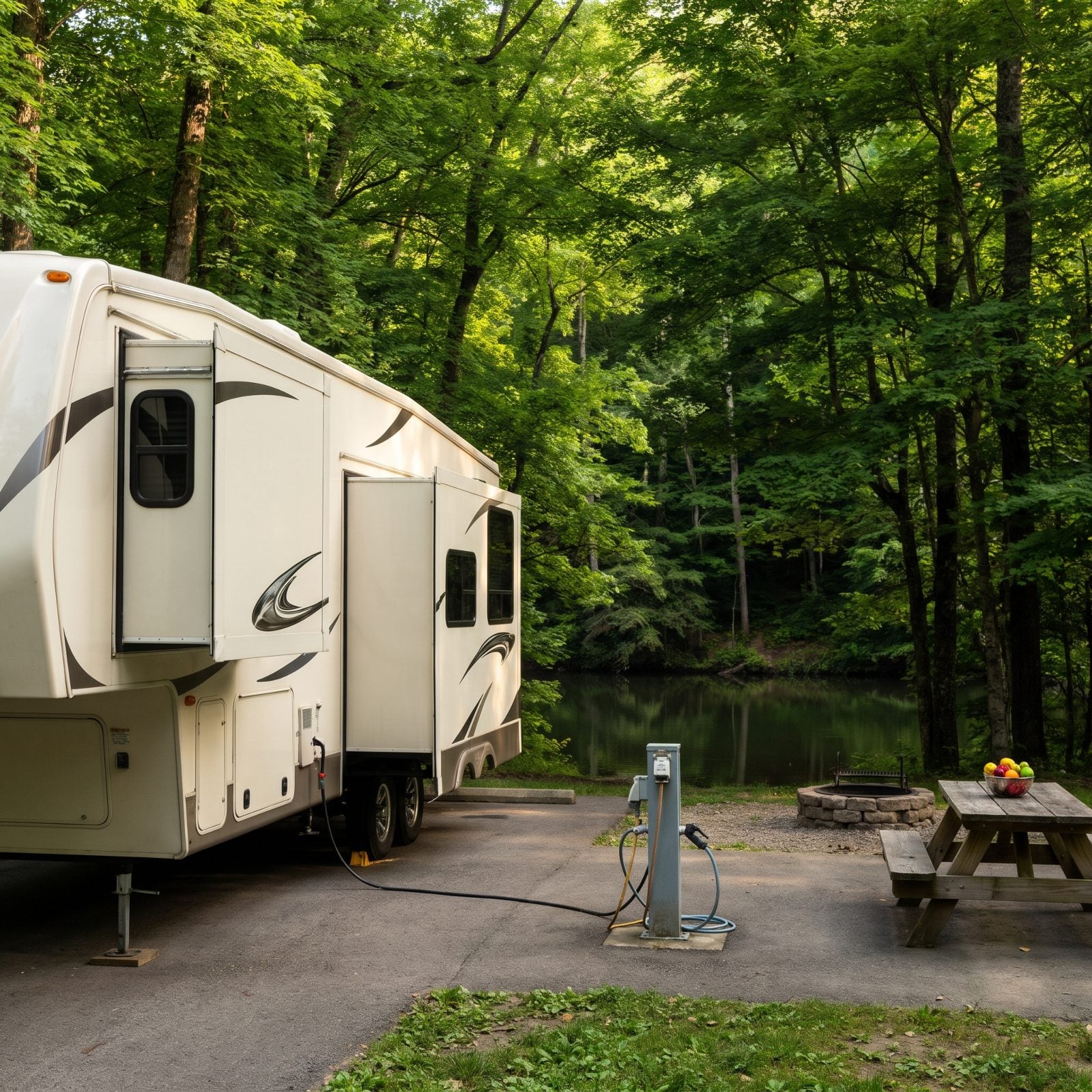
Full hookups at a state park are rarer than the brochures let on, and that’s exactly what makes Beech Fork worth the drive into southern West Virginia. Several sites in the Lakeview and Four Coves areas carry water, sewer, and electric right at the pad. Settle in for a week and never make a single dump-station run.
The roads twist and the grades are real. That final approach is Appalachian in the way that makes you glad you checked your brakes before you left the highway. Longer rigs fit on select sites but not all of them, so read the individual listings instead of trusting the loop name — I’ve seen folks trust a loop name and end up jackknifed at the entrance. Your reward is a wooded lakeside spot where the loudest thing all evening is a bass hitting the surface.
7. Wisconsin: Kohler-Andrae State Park Campground, Electric Sites Near Lake Michigan Dunes
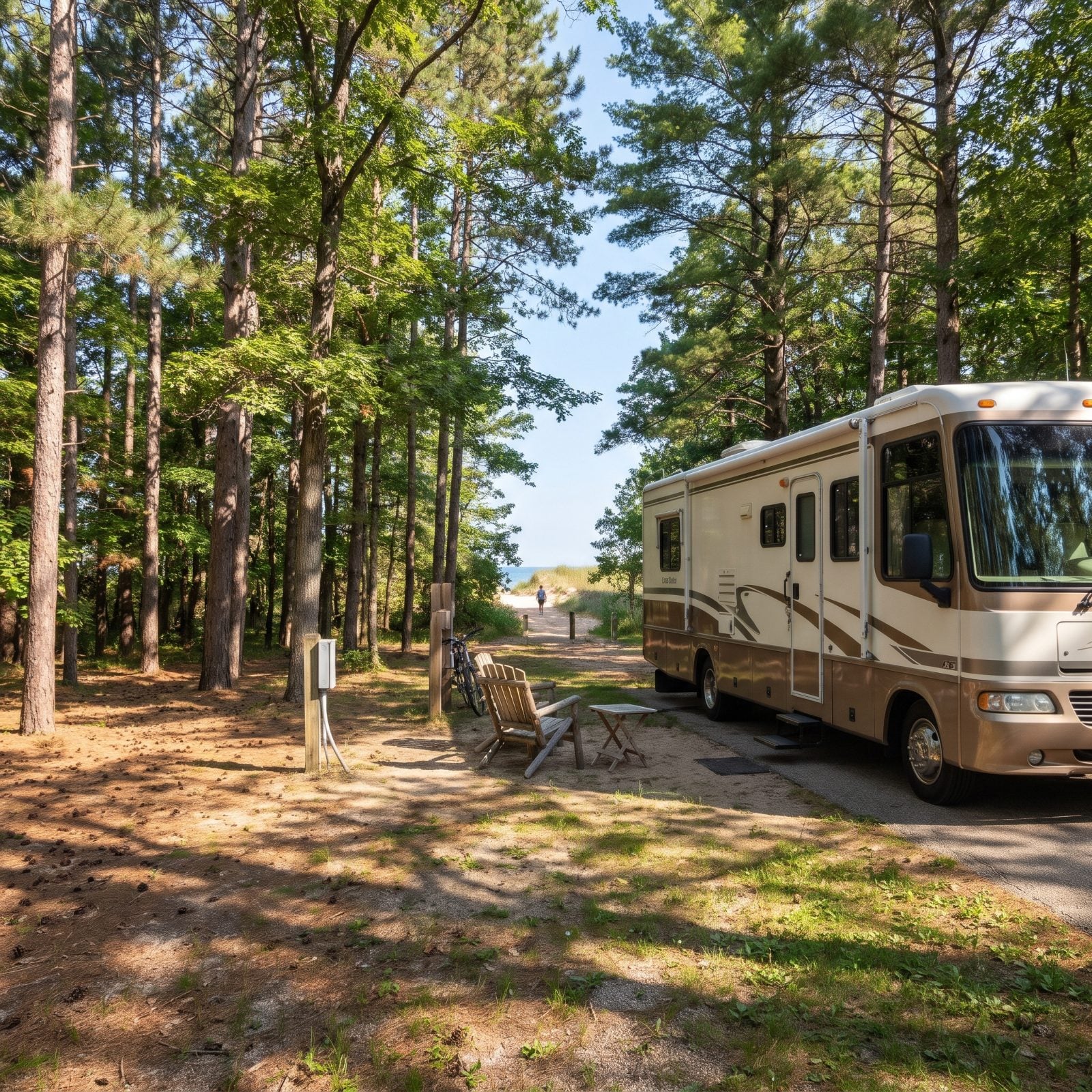
Most people who camp here never make it to the Sanderling Nature Center, which is a shame, because the interpretive boardwalk out to the dunes is the whole reason to pick this park over the dozen others closer to Milwaukee.
The campground runs electric-only, so fill your water before you roll in and dump on the way out. Plenty of sites take rigs in the 40-foot range, but they’re not uniform, and the photos on the reservation site are more honest than most — read the length notes per site. Book through the Wisconsin DNR system up to eleven months out. Summer weekends near the beach access go fast.
6. Wyoming: Boysen State Park Tough Creek Campground, Open Sites With Reservoir and Mountain Views
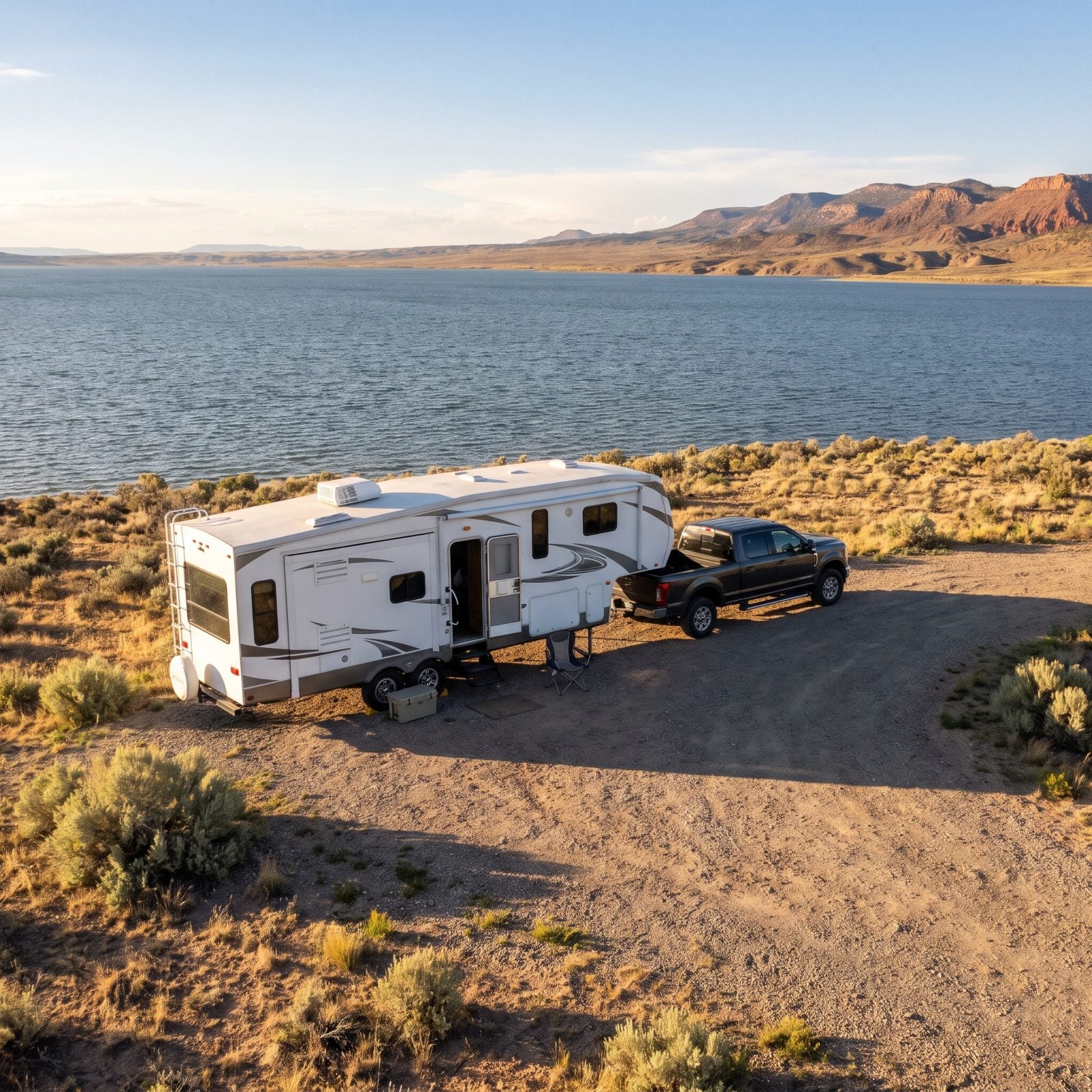
Shade is a rumor out here. Tough Creek sits on a spit of open ground poking into Boysen Reservoir, and the sites are wide and flat with easy pull-through access for long rigs. That openness is the trade: sunrise over the water is worth every degree your coach gains by noon.
Hookups are limited, so treat this as near-boondocking with a fresh-water fill and a dump station rather than a full-service stay. And the wind off the reservoir? A real thing. Stake down anything you care about.
Fishing is the draw for most. Walleye, mostly. The Wind River Canyon drive just north of the park is the detour nobody tells you about until you’ve already left.
5. South Dakota: Game Lodge Campground at Custer State Park, Big-Rig Sites Near the Wildlife Loop
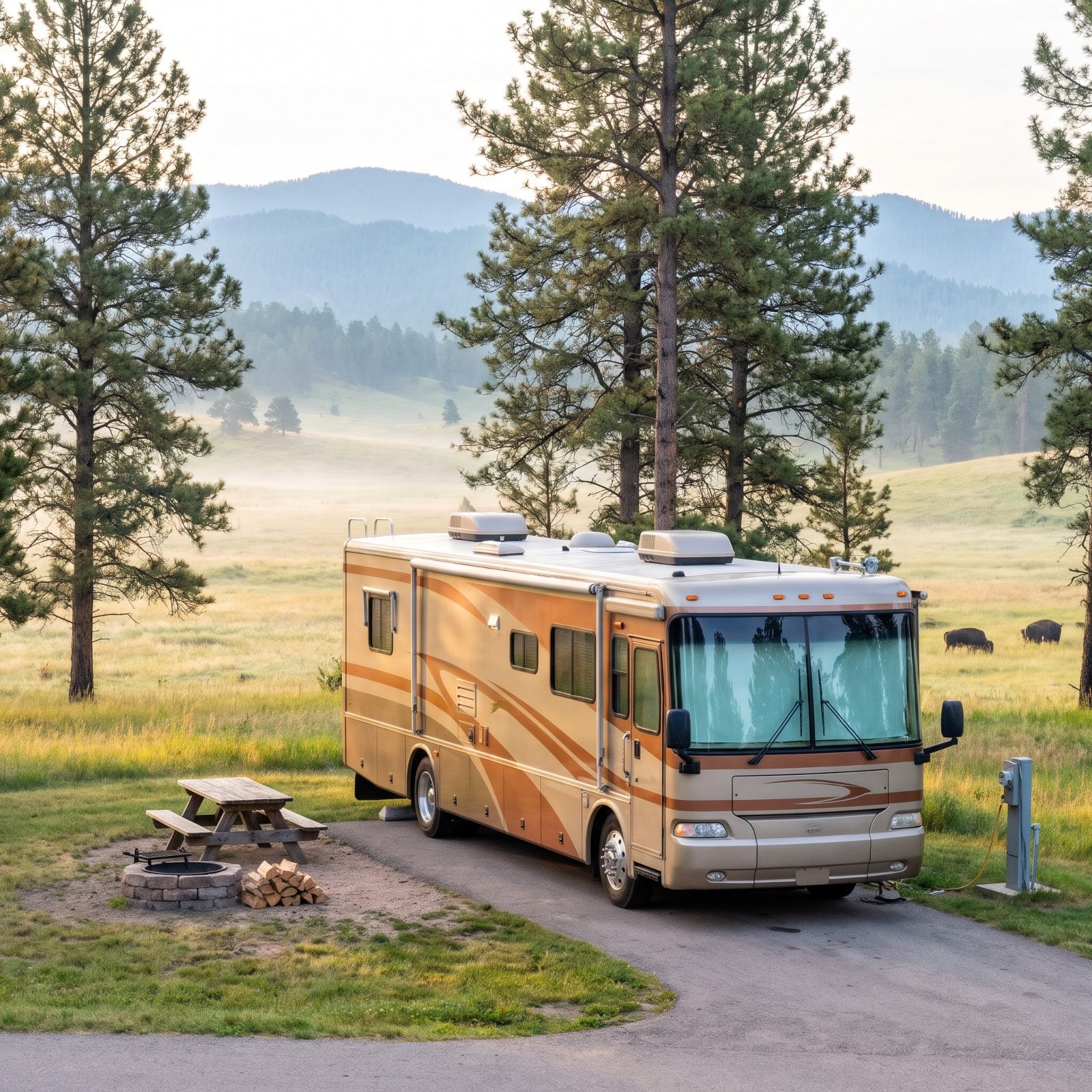
The bison will walk through your campsite. Not a maybe. The Wildlife Loop Road runs just south, and the herd does not read the campground map.
Game Lodge is the one at Custer built with bigger rigs in mind. The pull-through sites are long and reasonably level, with electric hookups on the premium loops. Reserve through the South Dakota state park system. Understand that this is the park’s flagship campground near the lodge and visitor center, so it books out early for the Buffalo Roundup in late September.
One thing people get wrong: they rush the Needles Highway in daylight traffic. Drive it at seven in the morning instead — granite spires, nobody else around. That’s the version you remember.
4. Texas: Palo Duro Canyon State Park Juniper Campground, Large Sites Beneath Towering Canyon Walls
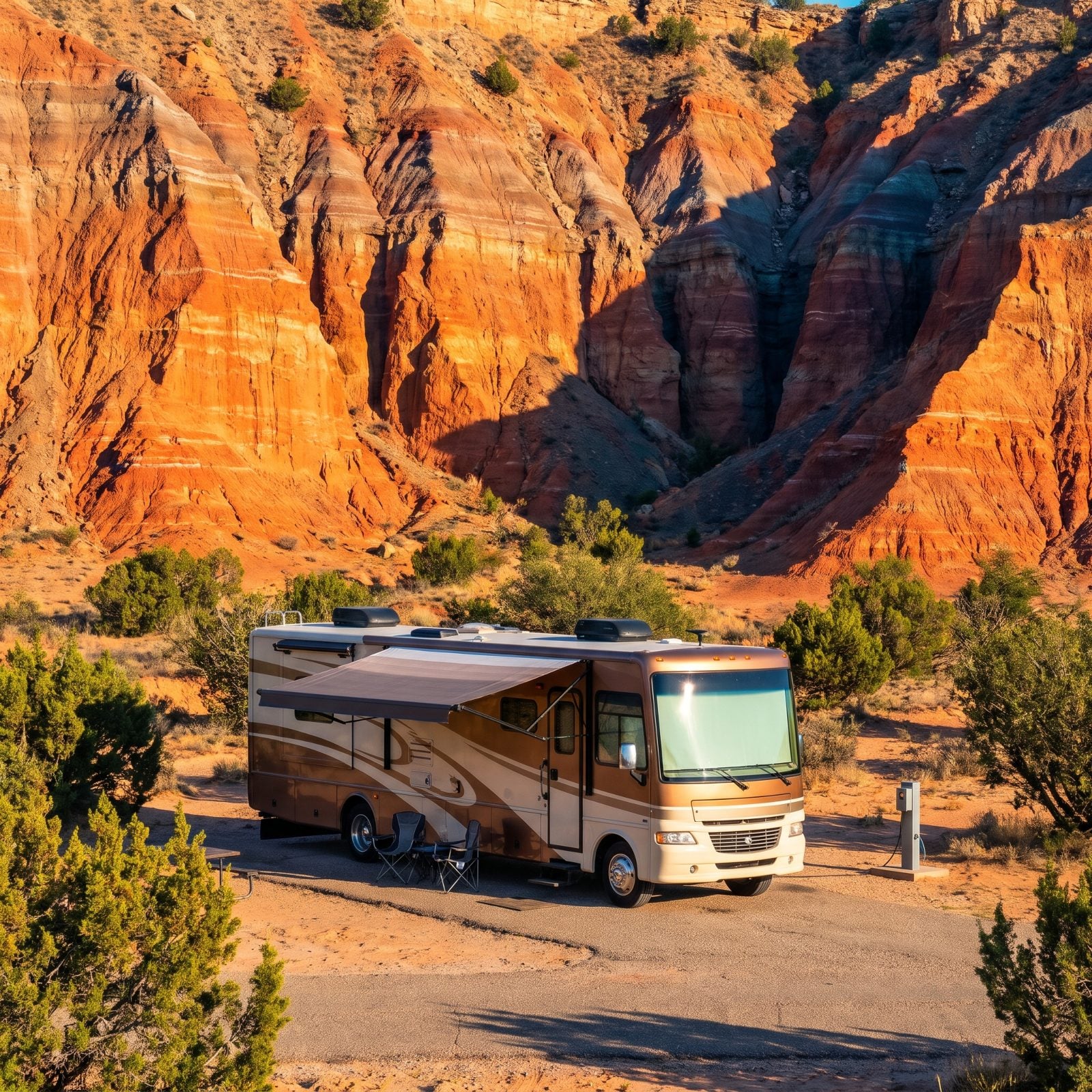
You drive down into this one. The road into Palo Duro drops hundreds of feet to the canyon floor, grade and switchbacks included, so take it slow in a long rig and ride your gearing instead of your brakes.
Juniper sits on the floor with electric and water sites that handle bigger coaches, framed by walls that go copper at sundown. Reserve through Texas Parks and Wildlife up to five months out. Summer is brutal here — heat sits in the canyon like a lid — so spring and fall are the smart windows.
Everyone shoots the Lighthouse formation. Fewer people bother with the quiet CCC-built structures scattered around the rim, and those are half the park’s real story.
3. Florida: Gregory E. Moore RV Resort at Topsail Hill Preserve State Park, Big-Rig Luxury Near the Beach
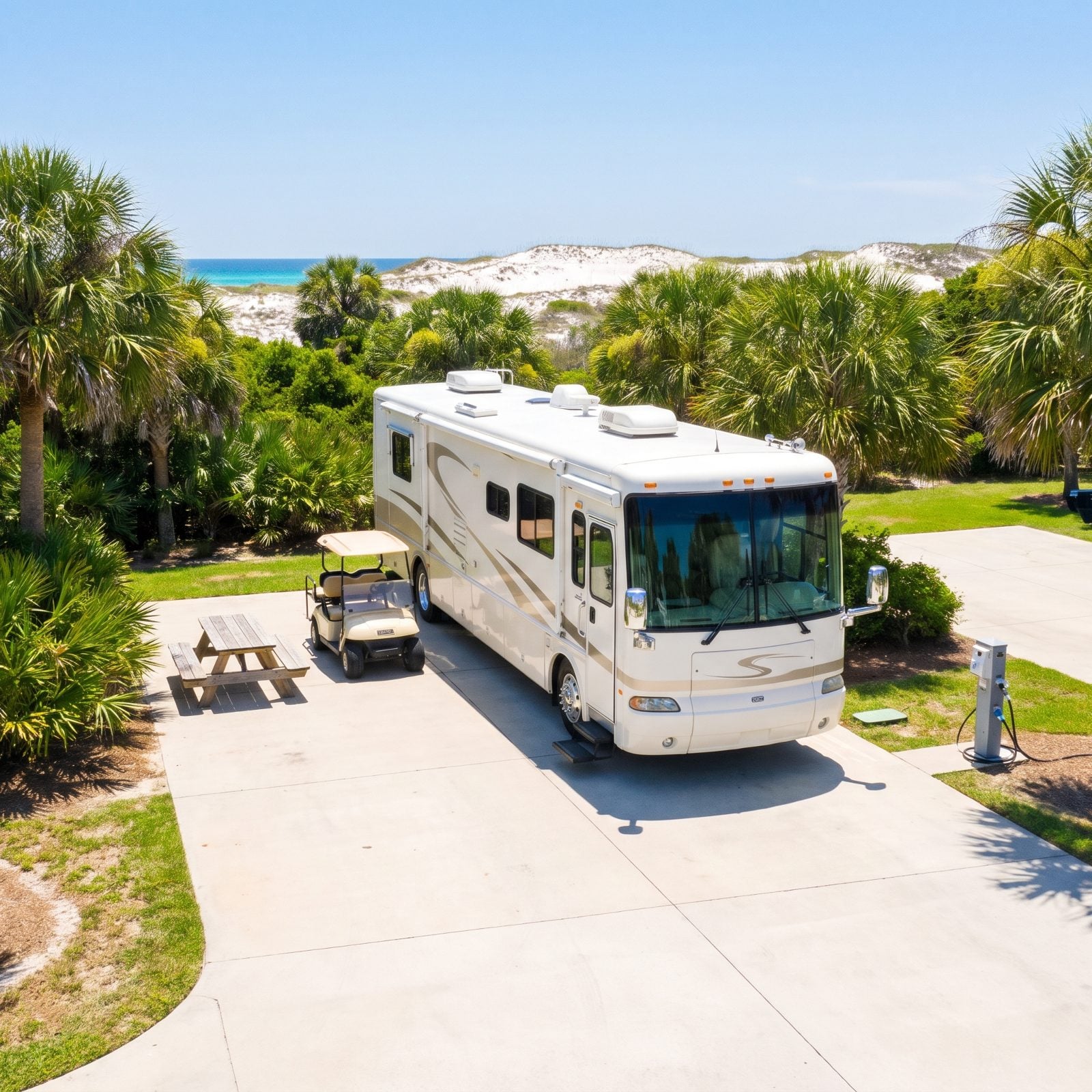
This is the state park that forgets it’s a state park. Topsail Hill wraps a genuine RV resort inside a preserve, and the big-rig sites come with full hookups — sewer, 50-amp, paved pads, and a tram that runs you out to the beach so you’re not hauling chairs across the dunes.
The catch is the booking. Florida’s reservation window opens eleven months out and this place is on everyone’s snowbird list, so the winter months get snapped up the morning they release. Set an alarm.
What surprises first-timers is the preserve itself. Rare coastal dune lakes, old-growth longleaf, and some of the quietest white sand on the Panhandle, all behind a gate.
2. New York: Letchworth State Park Campground, Select Long Sites Near the Grand Canyon of the East
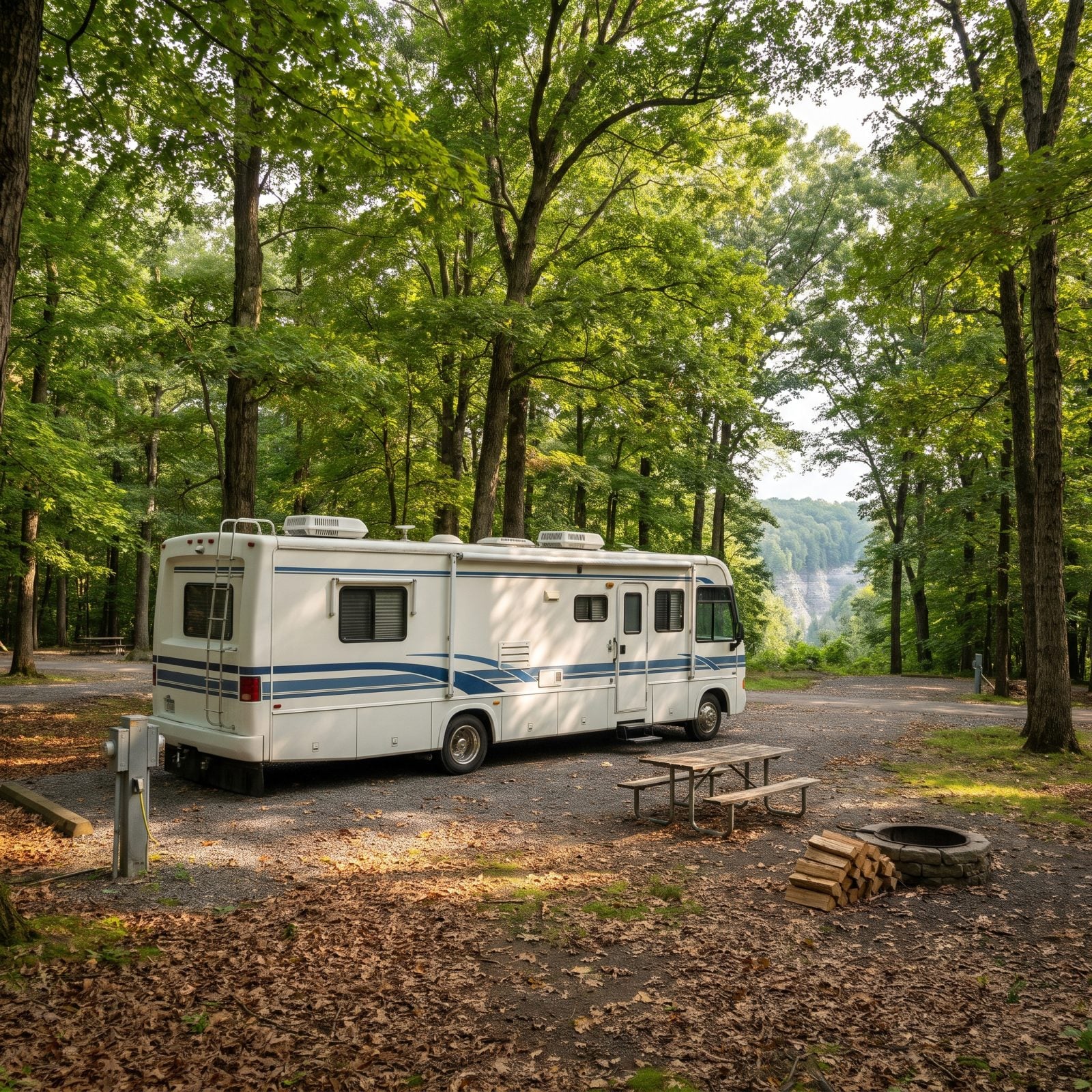
Letchworth earns the Grand Canyon of the East nickname honestly. Three major waterfalls, a gorge that drops hundreds of feet, and seventeen miles of it to drive. The campground sits up in the woods, but from select sites you can glimpse the gorge’s cliff walls right through the trees, with the full views a short drive away.
Now the honest part. This campground was built for a smaller era of camping. Plenty of sites simply won’t take a 35-plus-foot rig, and the ones that will are specific. Filter hard on the New York state reservation site and read every length note before you commit.
The Middle and Lower Falls at golden hour, with the old Glen Iris Inn above, is the shot. Go early. The day crowds are no joke.
1. Washington: Deception Pass State Park Cranberry Lake Campground, Select Long Sites Near the Salish Sea
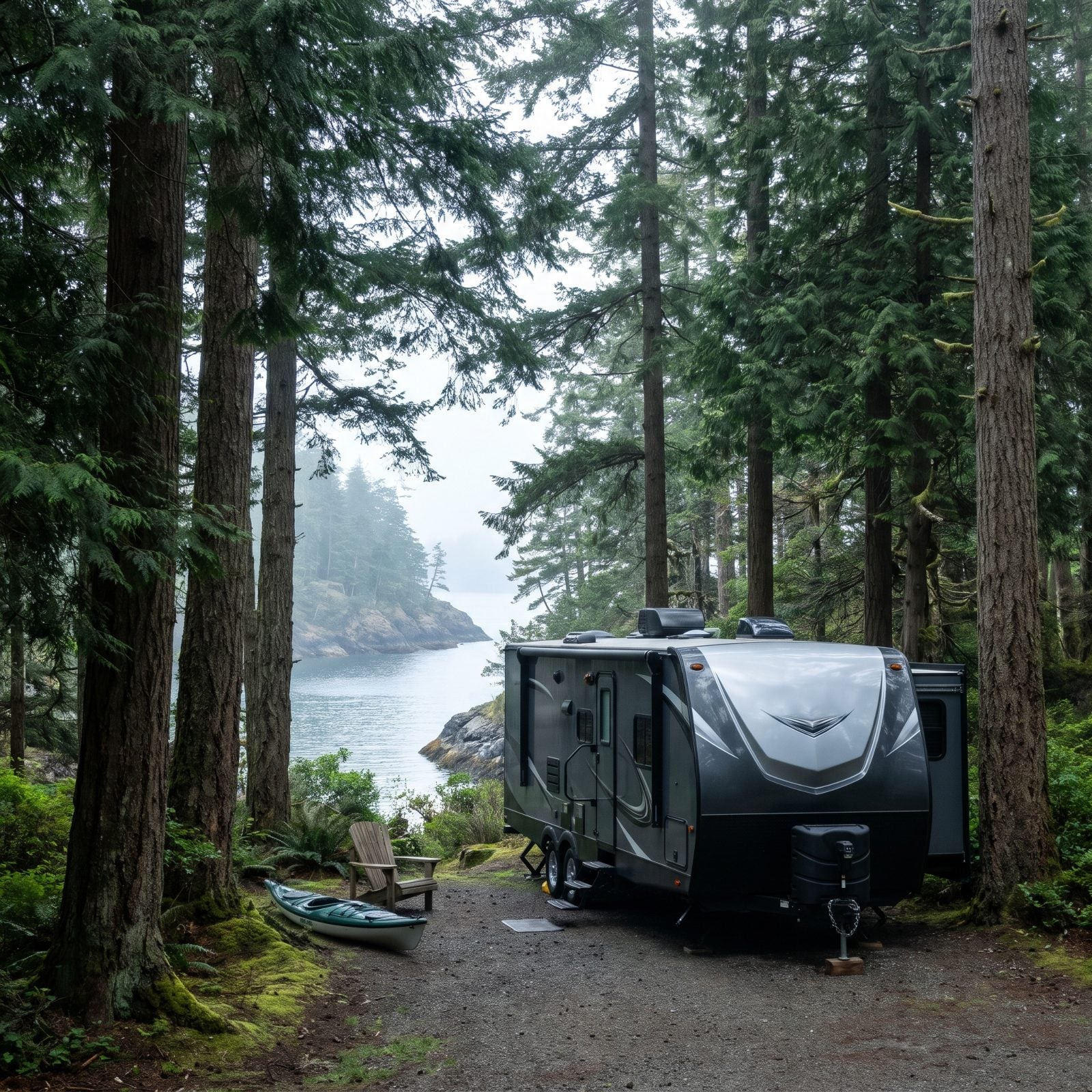
The firs here are enormous, which is both the appeal and the warning. Cranberry Lake’s roads wind through old forest, and the tight turns and overhead branches mean only select sites realistically fit a longer rig. Measure your rig, then measure it again against the site notes.
Book through Washington State Parks up to nine months out. This is one of the most visited parks in the state, and the summer weekends near the water go the day they open.
What nobody mentions until you’re standing on it: the bridge. Deception Pass Bridge spans a gap where the tide rips through like a river. Walk out and look down at the whirlpools. It’s the kind of thing that makes the whole drive worth it.