
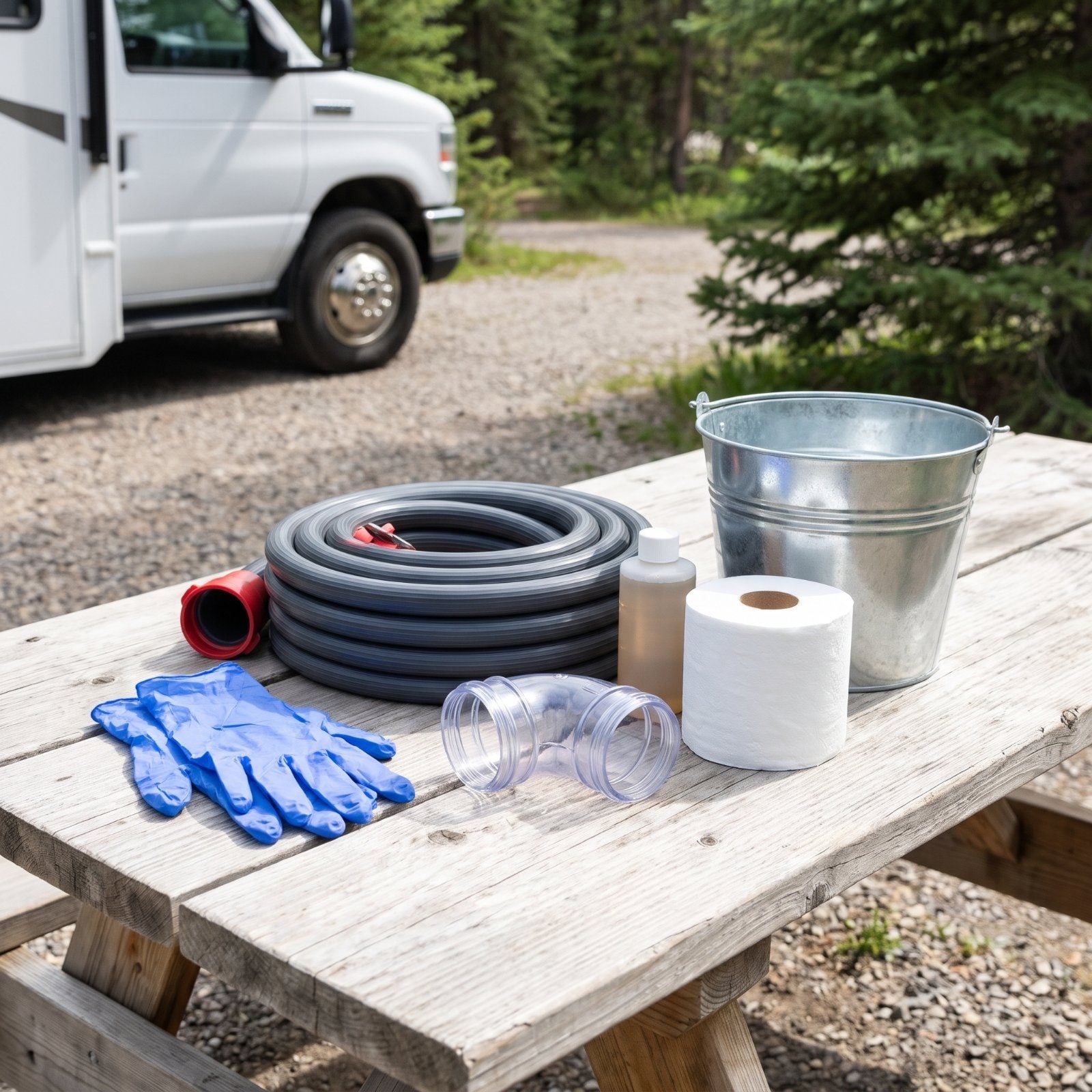
Nobody warns you that your first real conversation as an RV owner will be about sewage. You buy the rig for sunsets and campfires, and three days in you’re standing at a dump station wondering if you did something catastrophically wrong. Everybody jokes about the black tank. Nobody explains it. So here it is, straight: the stuff you were too embarrassed to ask the salesperson, the stuff the forums bury under arguments, the stuff you only learn the hard way. No lectures. Just the answers that keep your tank working and your campsite breathable.
Please note that some of the images in this article were created with the assistance of AI.
27. Can You Use an RV Toilet While Driving?
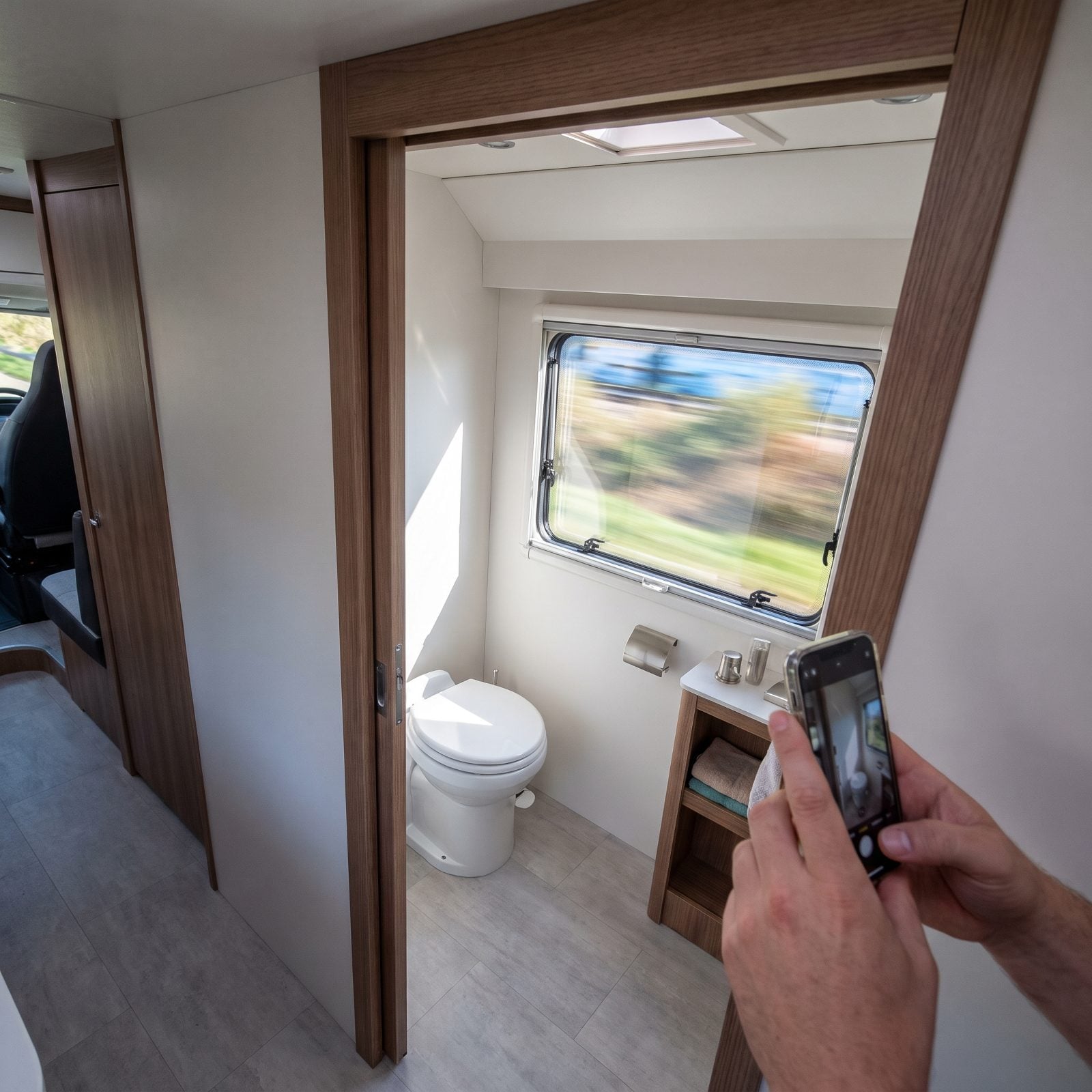
Short answer: yes, you can. Nothing bad happens. The toilet doesn’t need to be parked to work, and the tank couldn’t care less whether you’re sitting still or doing 60 on the interstate.
Here’s what nobody mentions, though — it’s a balance problem, not a plumbing one. A moving rig lurches, and standing over an open bowl with your foot on that pedal while the whole thing pitches sideways is not where you want to be caught off guard. Passengers should be belted while you’re rolling anyway, so most folks just wait for the next stop. Use it if you must. Just don’t flush and brace at the same time.
26. Why Can You See Straight Into the Black Tank?
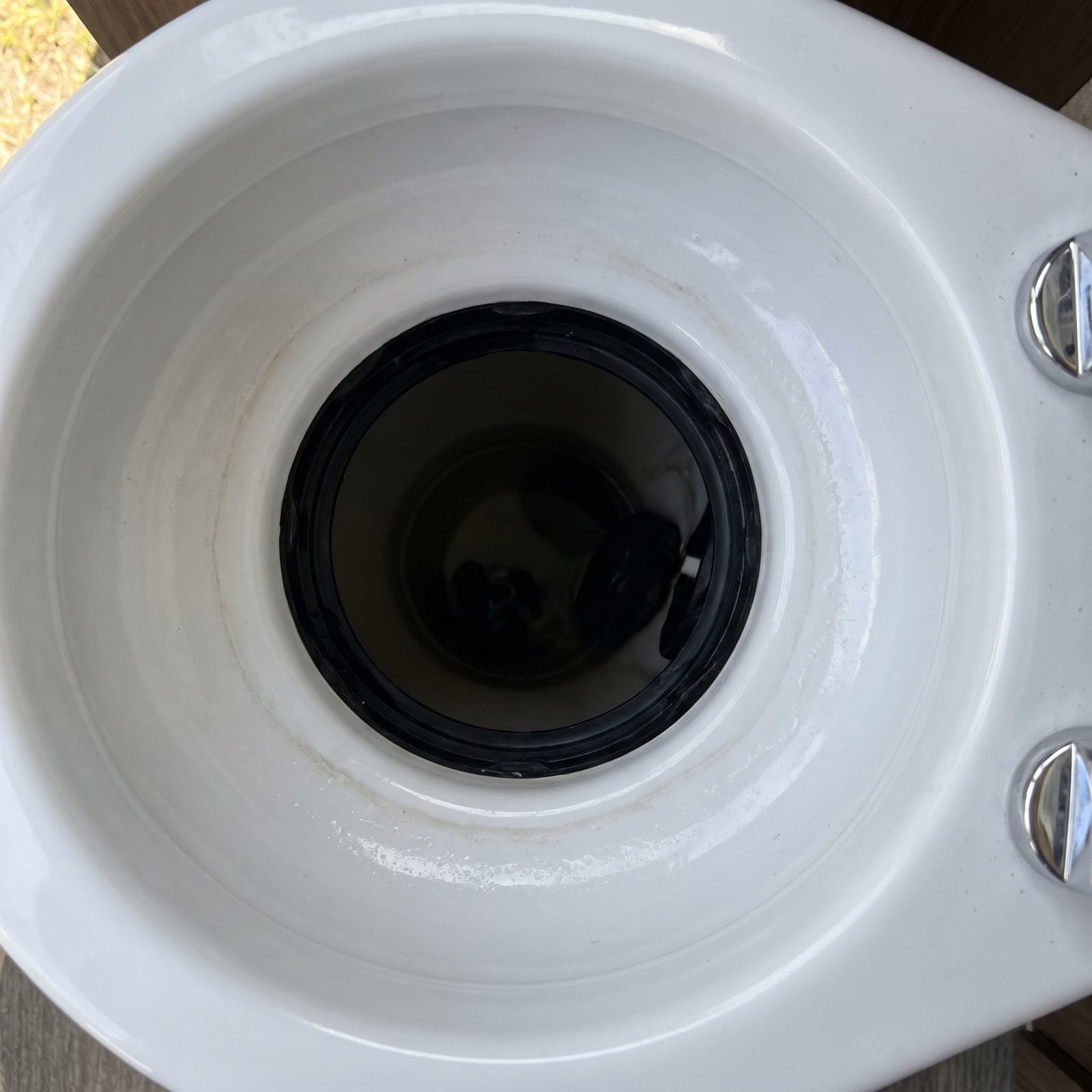
You press the flush pedal, the flap at the bottom of the bowl swings open, and suddenly you’re staring down a dark hole into the tank. First-timers panic. This is normal.
A home toilet has that curved trap full of standing water. An RV toilet uses a hinged flap (or ball valve) with a rubber seal that closes off the tank completely, so the moment it opens you get a direct line of sight straight down. The design working as intended.
What keeps the smell out is the seal, not a water trap. Keep the rubber gasket clean and the lid snapped shut and you’ll never smell a thing.
25. Should You Keep the Black Tank Valve Open at Full Hookups?
No. Keep it closed until the tank is nearly full, then dump.
I get it — leaving it open and letting everything drain away continuously feels like the convenient move. It’s also the single most common black tank mistake there is. Leave the valve open and the liquid drains off instantly while the solids stay behind, dry out, and build into a cone of cement at the bottom of your tank. RVers call it the pyramid. You do not want the pyramid.
Solids need a big slug of water behind them to flush out, so let it fill to roughly two-thirds, then open the valve and let gravity do the work. Gray water valve, leave open if you like. Black, never.
24. How Can You Tell How Full the Tank Is When the Sensors Lie?
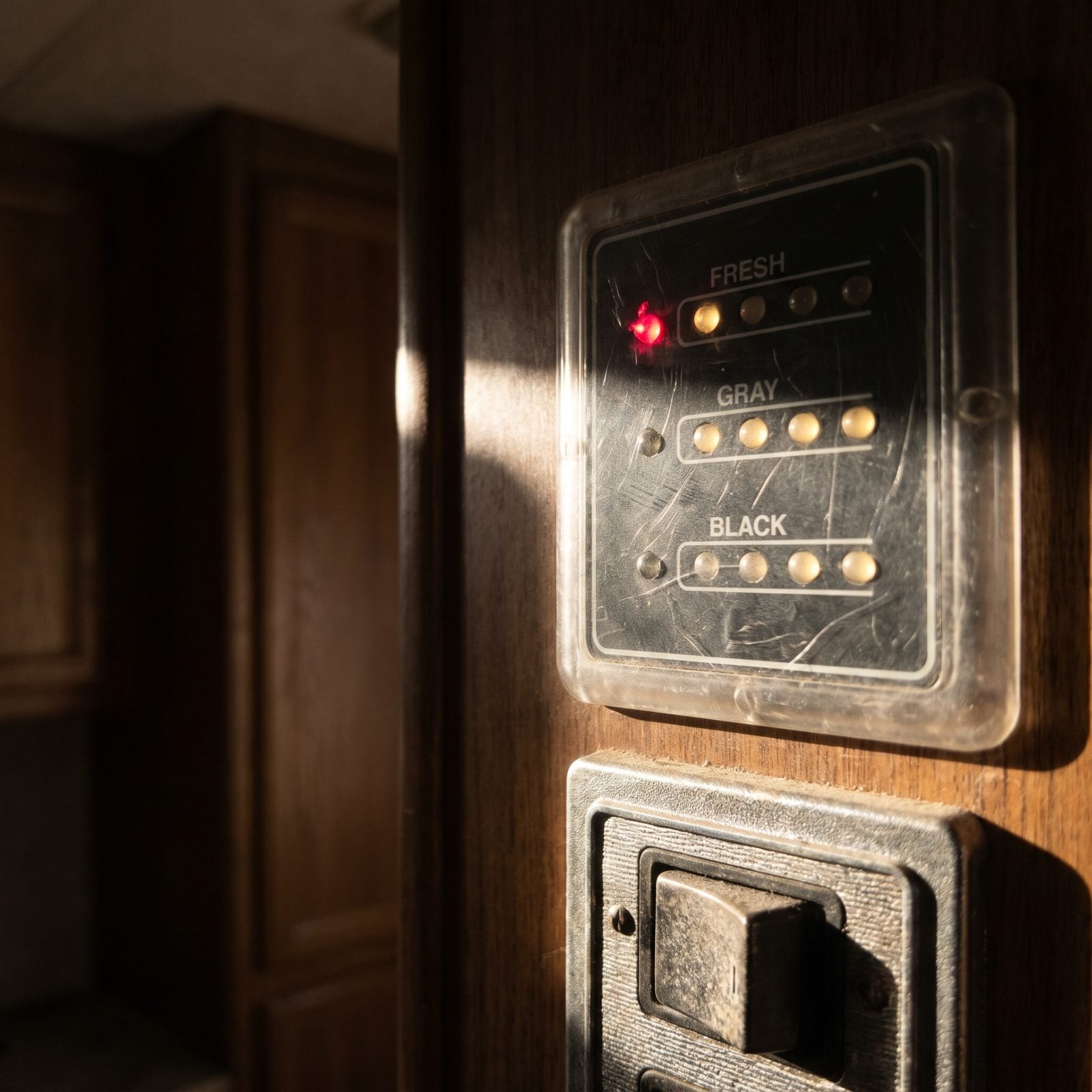
Your tank monitor is lying to you, probably by a lot. Those probe-style sensors sit on the tank wall, and the second toilet paper or residue clings to them they read full forever, or flip between a third and empty with no logic at all.
Trust your ears and your habits instead. A near-empty tank sounds hollow when you flush; a full one sounds muffled and close. Count days and people, too. For most couples, three or four days is dumping time regardless of what the lights claim.
23. Do You Really Need Special RV Toilet Paper?
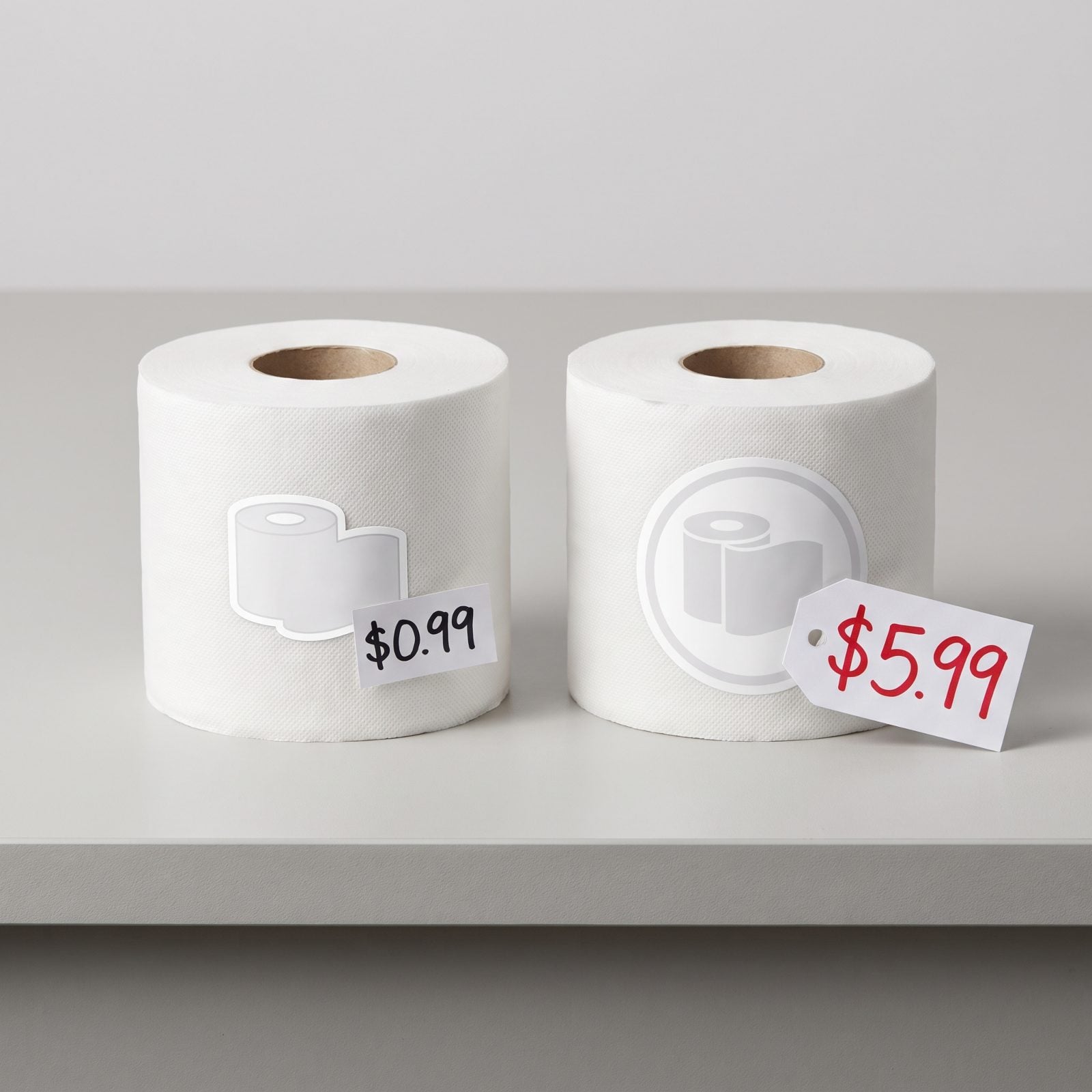
Mostly no — and the RV-labeled stuff is often a markup on the exact same product. What actually matters is that the paper breaks apart fast once it hits water. Thick, quilted, lotion-infused bathroom tissue holds together and clogs tanks and sensors.
Here’s the home test: drop a square in a jar of water, shake it, and watch what happens. Plenty of cheap, thin one-ply grocery brands fall apart beautifully and cost a fraction of the RV-branded rolls.
Use less than you think you need, flush with plenty of water, and ordinary thin paper will serve you fine. I’ve run the budget stuff for years without a single issue.
22. Can You Flush Wipes Labeled “Flushable”?
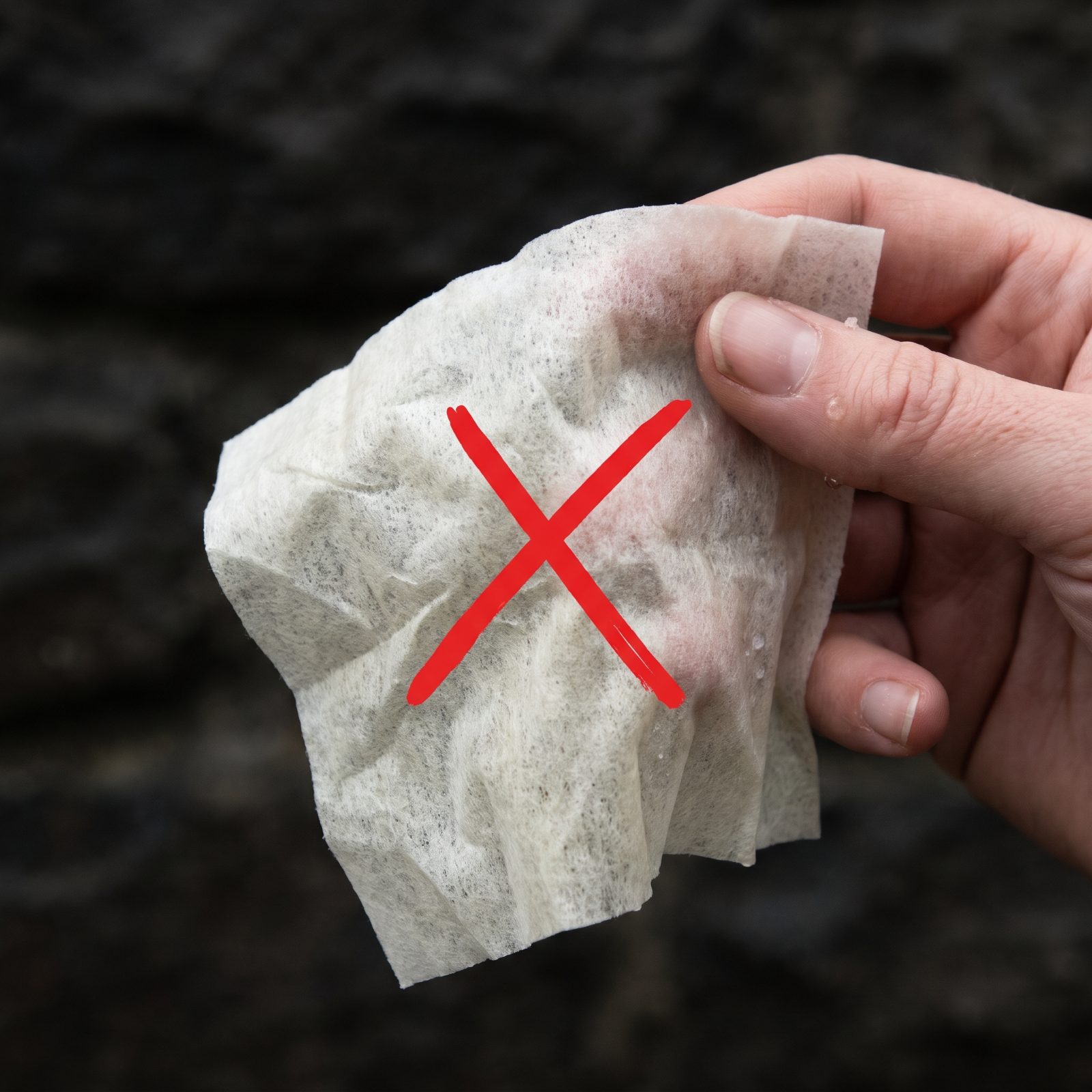
Absolutely not, and I’ll die on this hill. “Flushable” is a marketing word, not a plumbing promise. Those wipes don’t break down the way toilet paper does — they hold together, wrap around solids, and build a dense mass your dump flush can’t budge.
RV plumbing is less forgiving than a house, and a clogged black tank is a genuinely miserable afternoon. Keep a small lidded trash can in the bathroom and toss wipes there. Same goes for paper towels and tissues. If it isn’t thin toilet paper, it goes in the bin.
21. Can Feminine Hygiene Products Go Into the Black Tank?
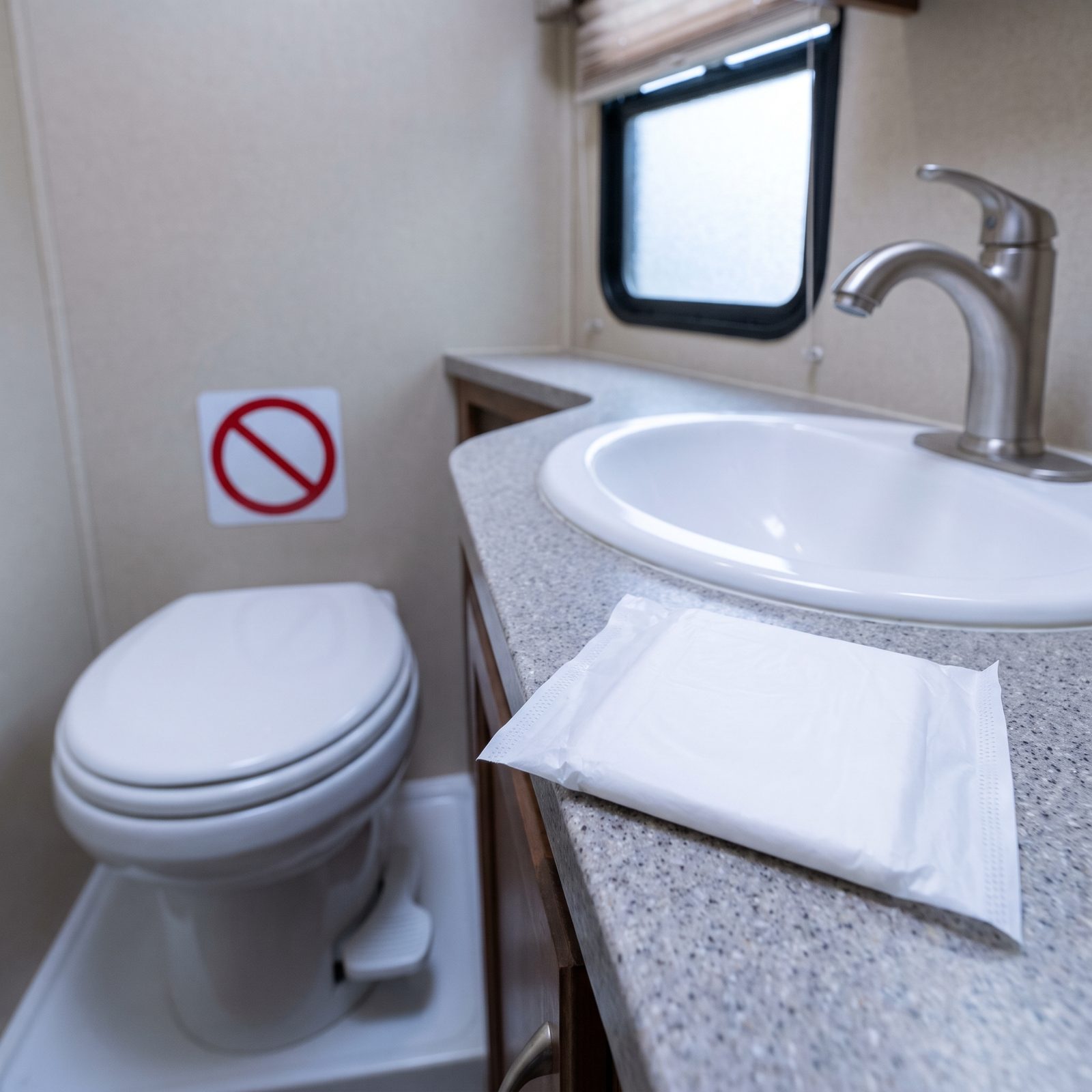
No. Nothing cotton, nothing with plastic, nothing built to absorb and expand. These products are designed to hold their shape and soak up liquid — the exact opposite of what you want sliding through a narrow tank outlet.
They don’t dissolve, they snag on the blade valve, and they’re a classic reason a tank won’t fully empty. A lined, lidded bin in the bathroom handles everything. Same system most people already run at home, just a little closer to the toilet.
20. Do You Need Gloves to Dump the Black Tank?
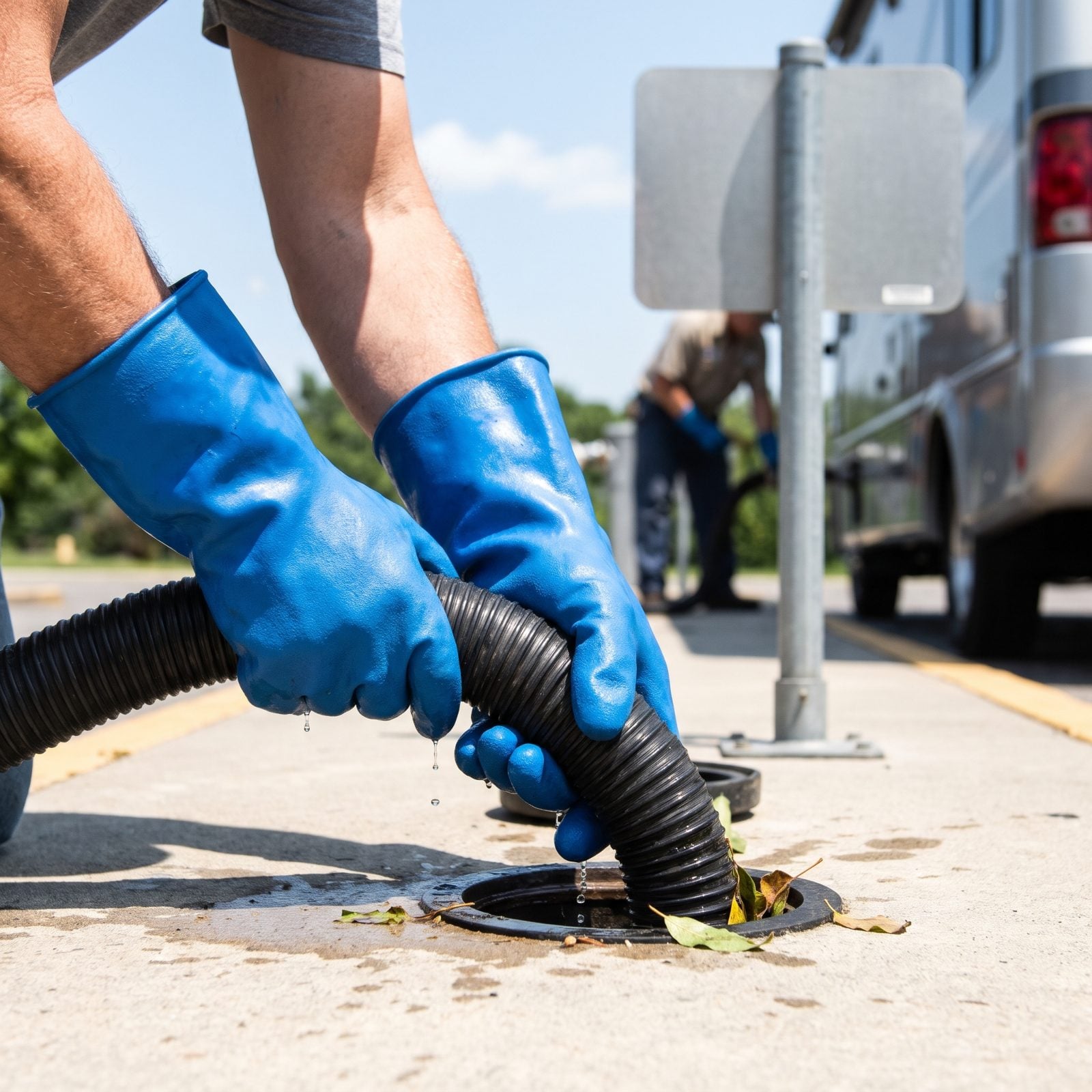
Yes. Non-negotiable. Anyone who tells you they dump bare-handed is either lying or someone whose camper you should never borrow.
Reusable heavy-duty rubber gloves with long cuffs run a few dollars a pair and one pair lasts a whole season. Keep them in the same bay as your hose so you’re never tempted to skip them because they’re buried under the lawn chairs. True confession: I got sloppy about this exactly once, early on, and spent the rest of that afternoon scrubbing my hands like a surgeon. Learn from that instead of repeating it. Rinse and disinfect them when you’re done, then stow them with the hose.
19. How Do You Prevent the Sewer Hose From Popping Loose?
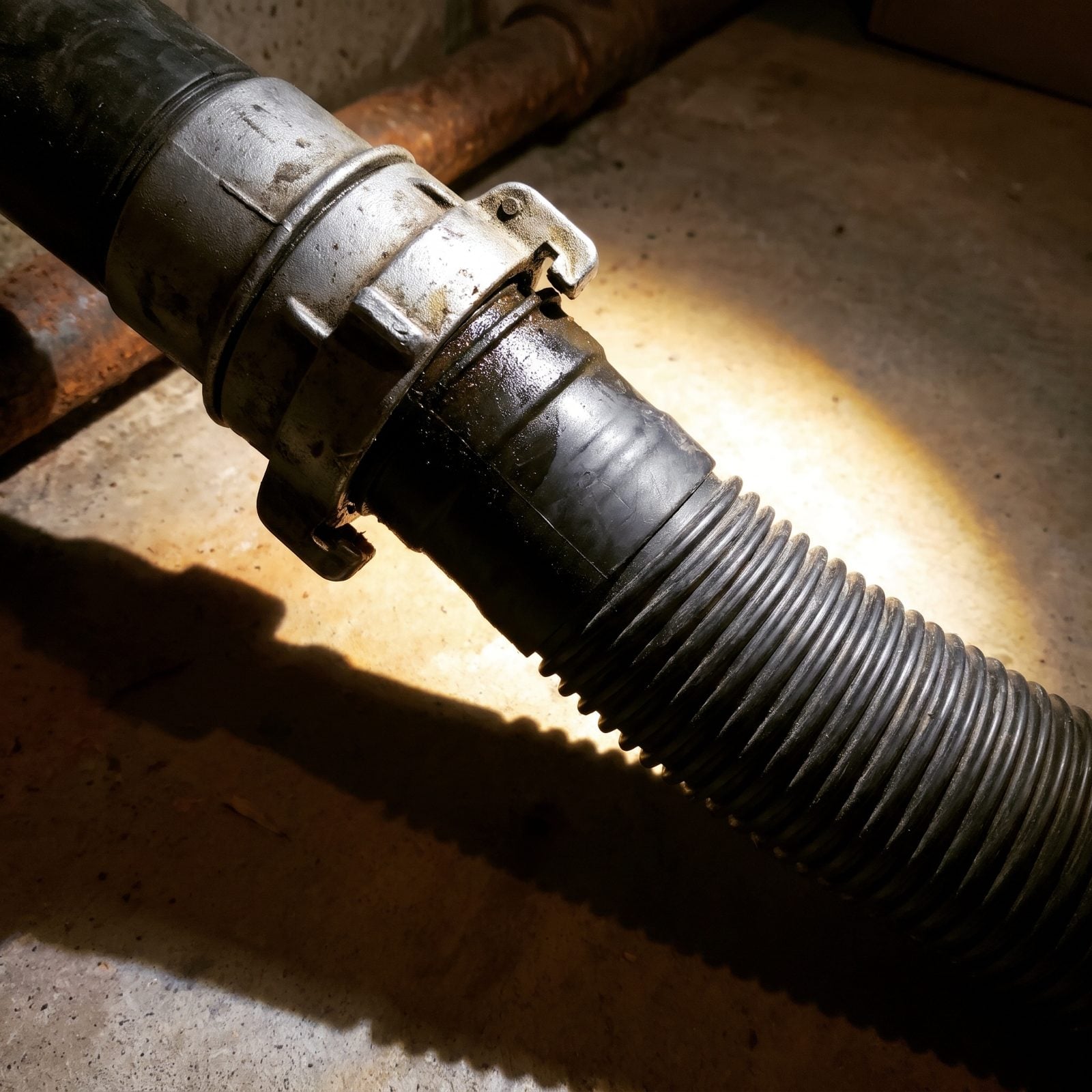
Two culprits: a loose connection and a hose with no support.
The RV bayonet end pops because people half-turn it. Commit to the full quarter-turn until it locks. The dump-station end pops because the hose kicks and bucks when water surges through it, especially on a fast black dump. A ground inlet with a threaded ring solves it. No ring? A donut weight over the connection holds it down.
And give the hose a downhill slope with a support stand so water keeps moving instead of pooling and surging. Pooled water is what creates the pressure spike that blows a fitting loose.
18. How Do You Know When the Tank Is Completely Empty?
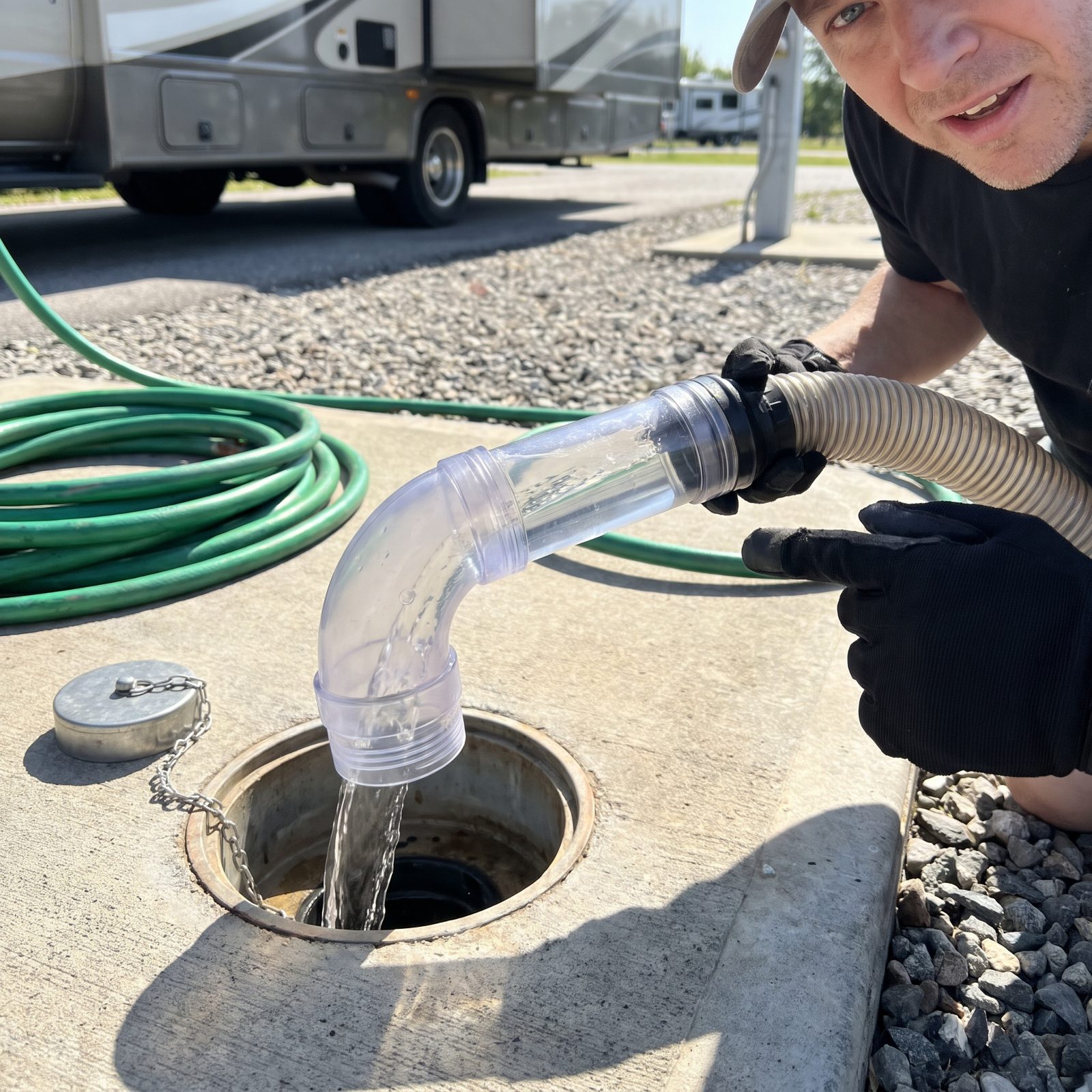
Your tank monitor will lie to you. That’s not pessimism, it’s just how they work.
Those probe sensors inside the black tank get coated in residue and gunk, and a crusted sensor reports a tank as one-third full forever even when it’s bone dry. Don’t trust the panel as gospel. Trust the clear elbow and your ears instead. When the water gushing through that elbow runs crystal clear, with no solids or tint left, the tank is empty. A black tank flush cleans those sensors over time, which is one more reason to run one. Give the gray-water rinse a minute afterward to carry the last of it out.
17. How Do You Rinse a Sewer Hose After Dumping?
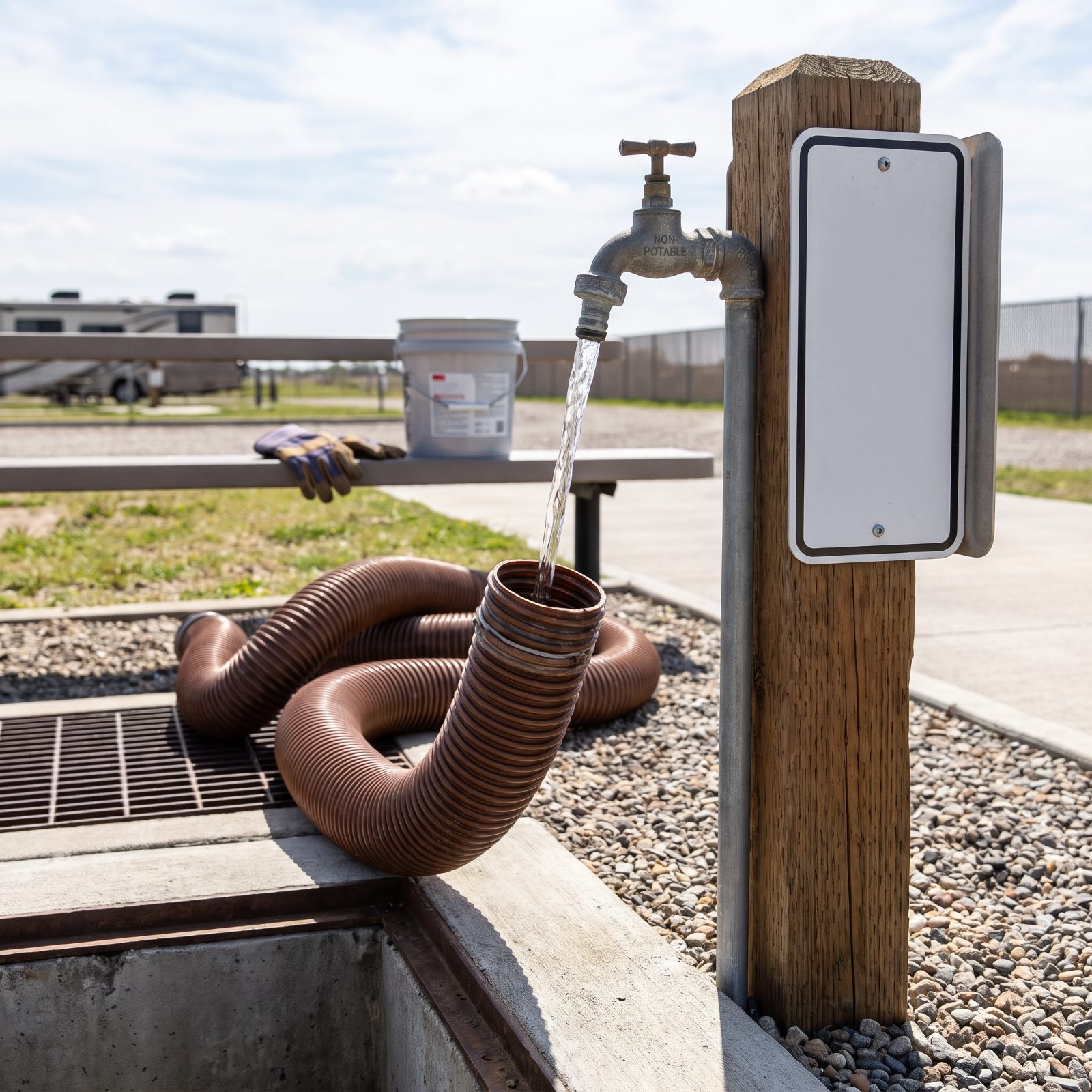
Most dump stations have a non-potable rinse spigot right there for exactly this. Use it, and use only that one.
Run clear water through the hose until it comes out clear, flushing from the RV end toward the dump inlet so everything goes where it belongs. Many rigs also have a dedicated black-tank flush connection you can hook a hose to for rinsing the tank itself, not just the hose. Never, ever use your fresh-water drinking hose for any of this. Keep a separate, clearly different-colored hose for rinse duty so there’s no mix-up on a tired evening.
16. Can Fresh-Water and Sewer Equipment Share a Storage Bay?
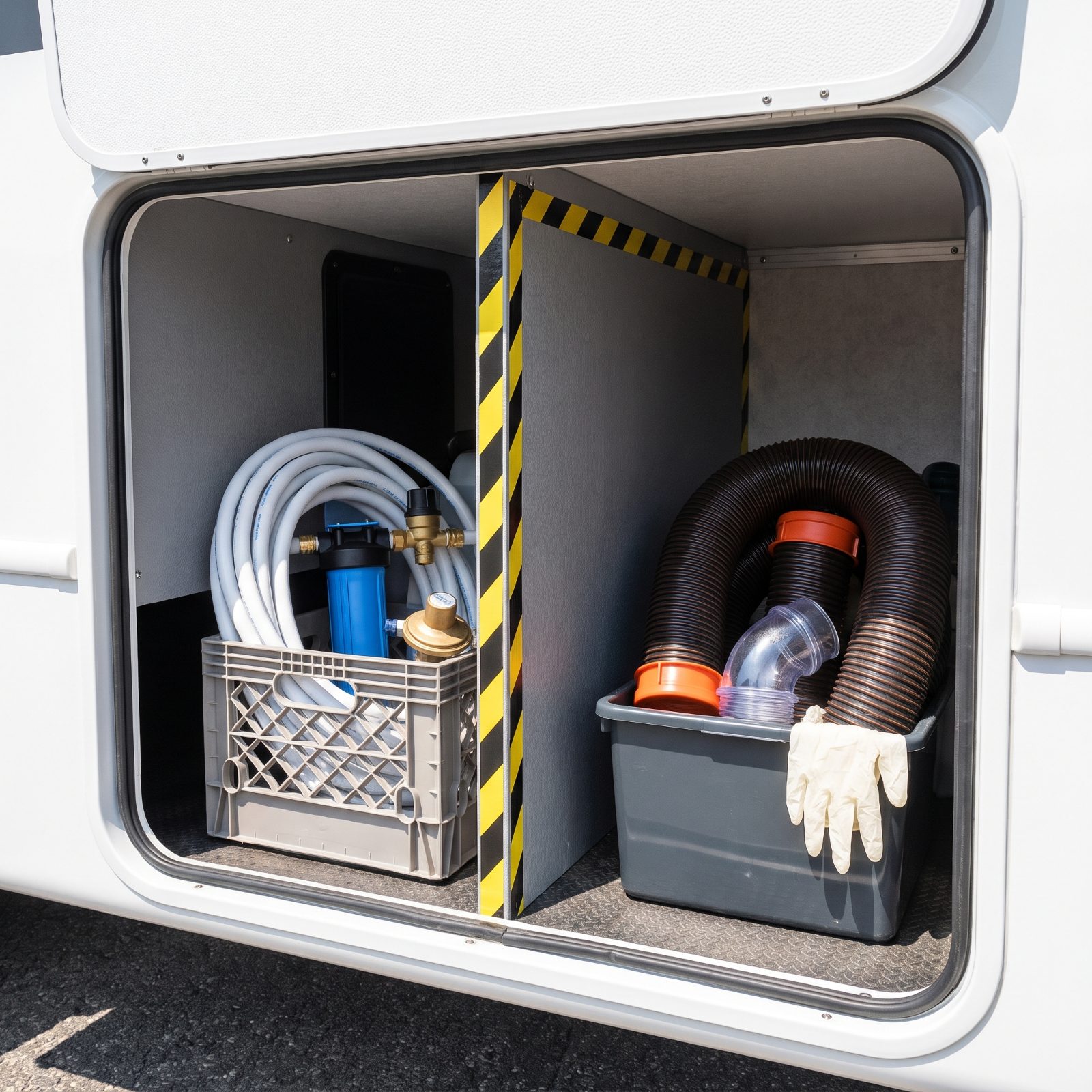
Technically yes. Practically, please don’t, and if you must, keep them on opposite ends with a hard divider between them.
Cross-contamination is the whole concern. Your white drinking-water hose and your sewer hose living side by side in the same bay is an accident waiting to happen on a dark night when you’re grabbing by feel. Color-code everything. White or blue for potable water, a dedicated dark or green hose for waste. Keep the sewer hose and its fittings on their own side of the divider, well clear of the water gear, even inside a shared bay. I keep mine in separate bays entirely, and I sleep better for it.
15. Do Black Tank Treatments Actually Work?
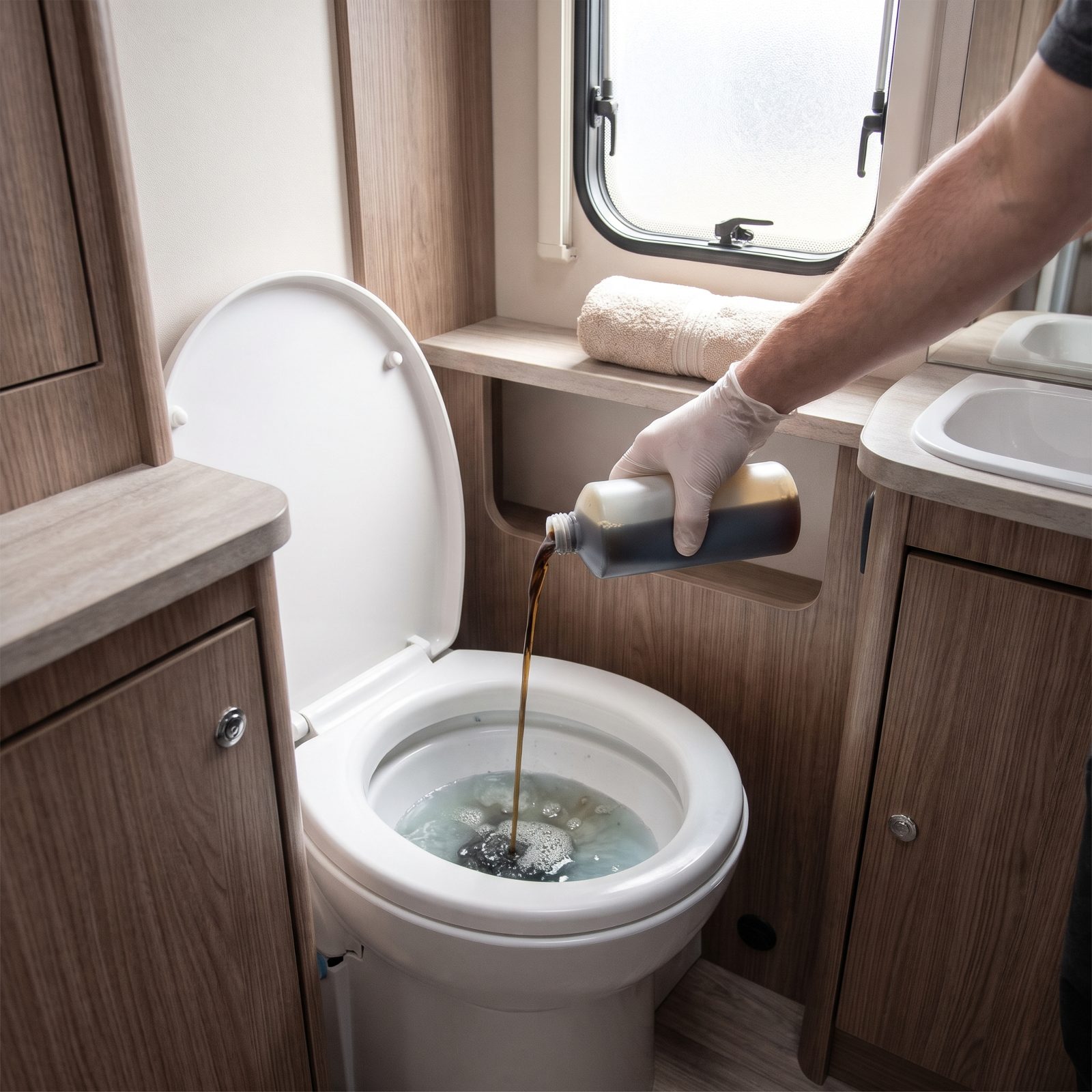
Treatments do real work — just not the work the marketing implies. The enzyme and bacteria formulas break down solids and tame odor. They won’t magically keep your sensors clean or dissolve a clog you already created. Call them help, not a miracle.
Here’s what we learned the slow way. The single biggest factor in a happy black tank is water, not the blue stuff, so add a few gallons after every dump and give your solids something to float in. The treatment finishes the job that water starts.
14. Can You Use Household Bleach in a Black Tank?
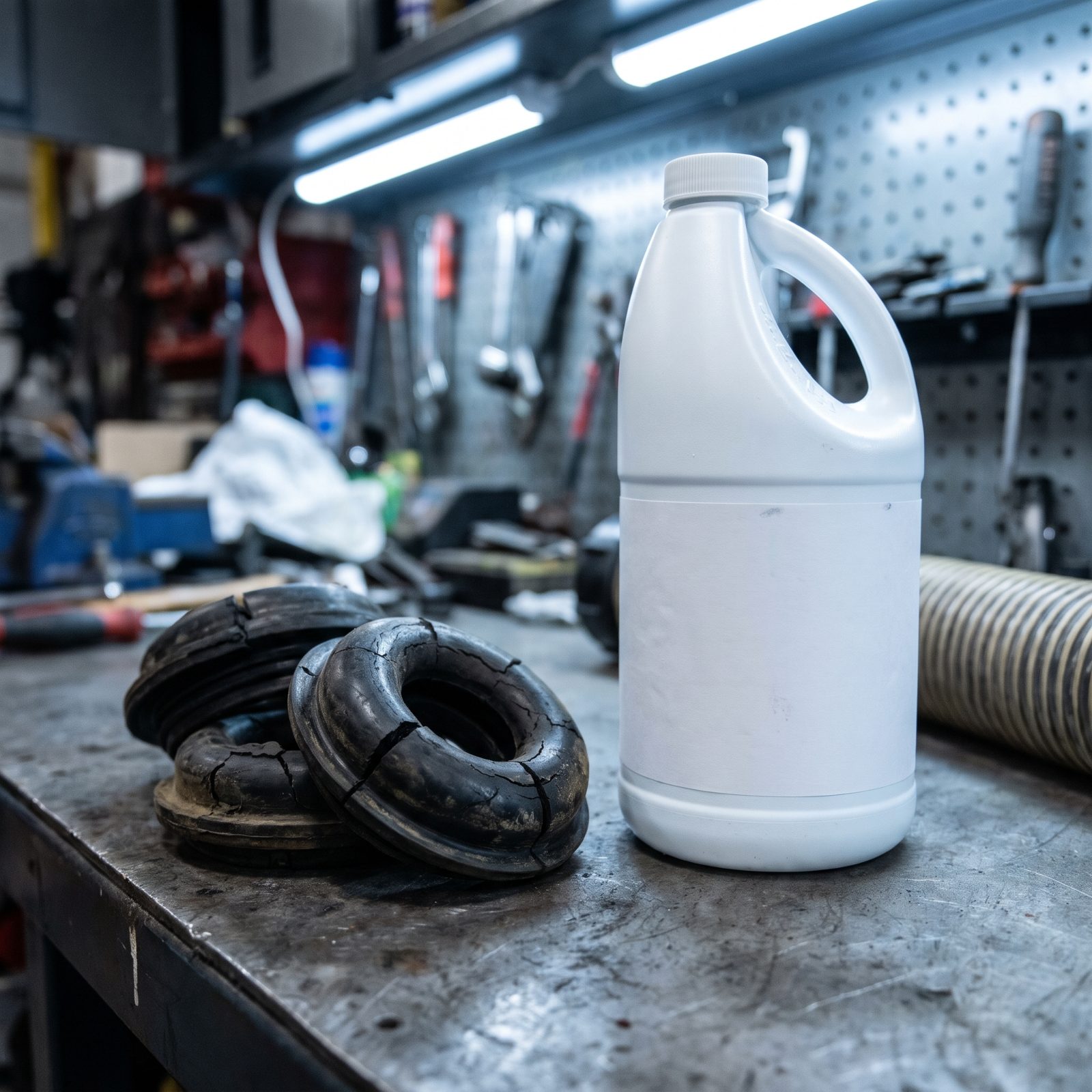
You can. You probably shouldn’t make a habit of it, though, because bleach is harsh on the rubber seals, the valve gaskets, and the plastic your tank is made from. A one-time heavily diluted rinse to knock out a stubborn smell won’t ruin anything, but a regular bleach routine will shorten the life of parts that are a genuine pain to replace.
And never mix it with other cleaners. The fumes in a closed RV bathroom are no joke. We’d rather have a mild smell than a chemistry experiment in a space the size of a phone booth.
13. Does the Ice-Cube Tank-Cleaning Trick Really Work?
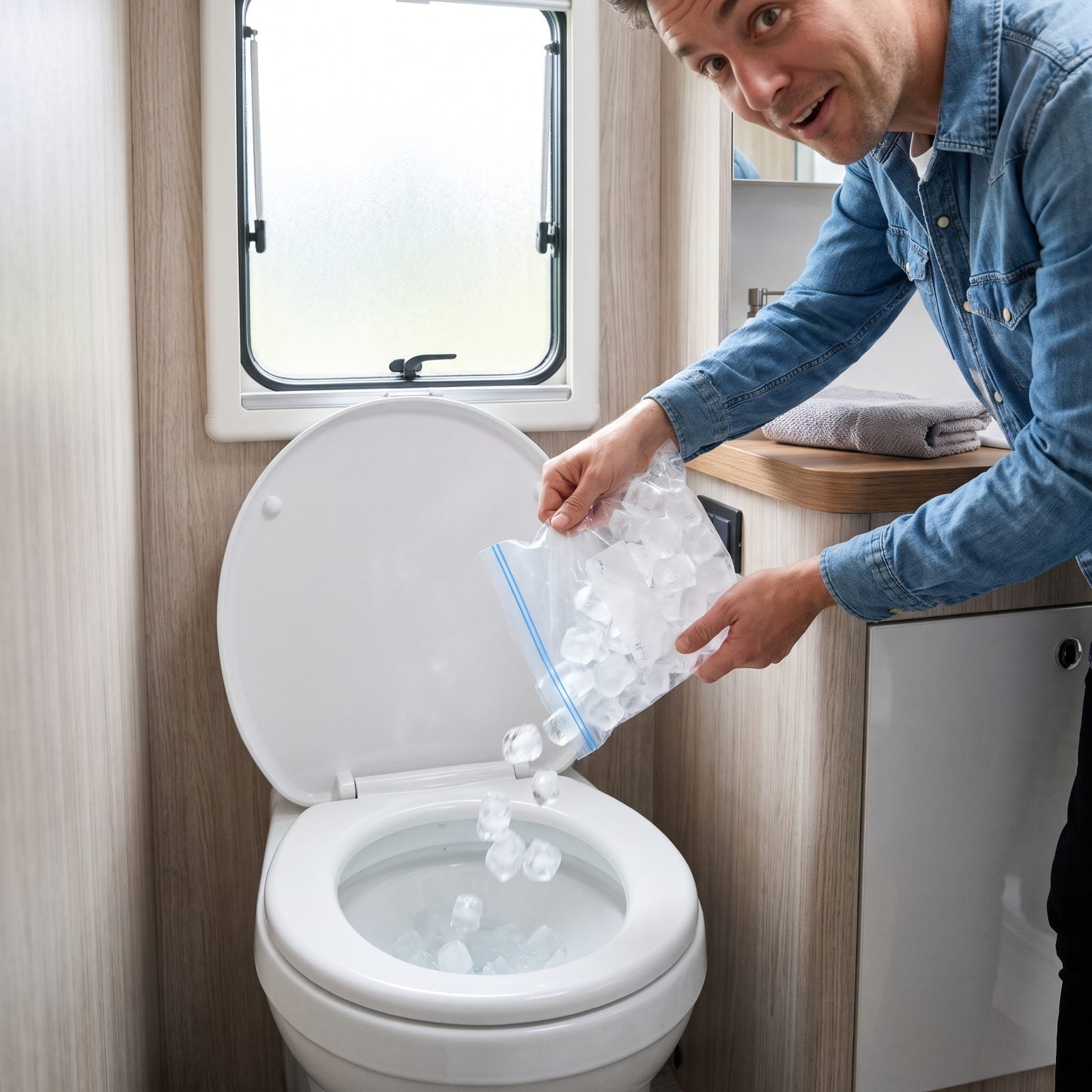
It works better than it has any right to. The idea is dead simple: dump a bag or two of ice cubes plus a few gallons of water into a mostly empty tank, then drive. As you corner and stop, the ice tumbles around and scrubs the sensors and tank walls like a slow-motion washing machine.
It won’t clear a real clog, and it won’t replace a proper flush. But for scraping gunk off a fouled sensor so your monitor reads true again? Cheap and genuinely effective. Grab a bag at the next gas station and let the drive do the labor.
12. Why Does the RV Smell Like Sewage Inside?
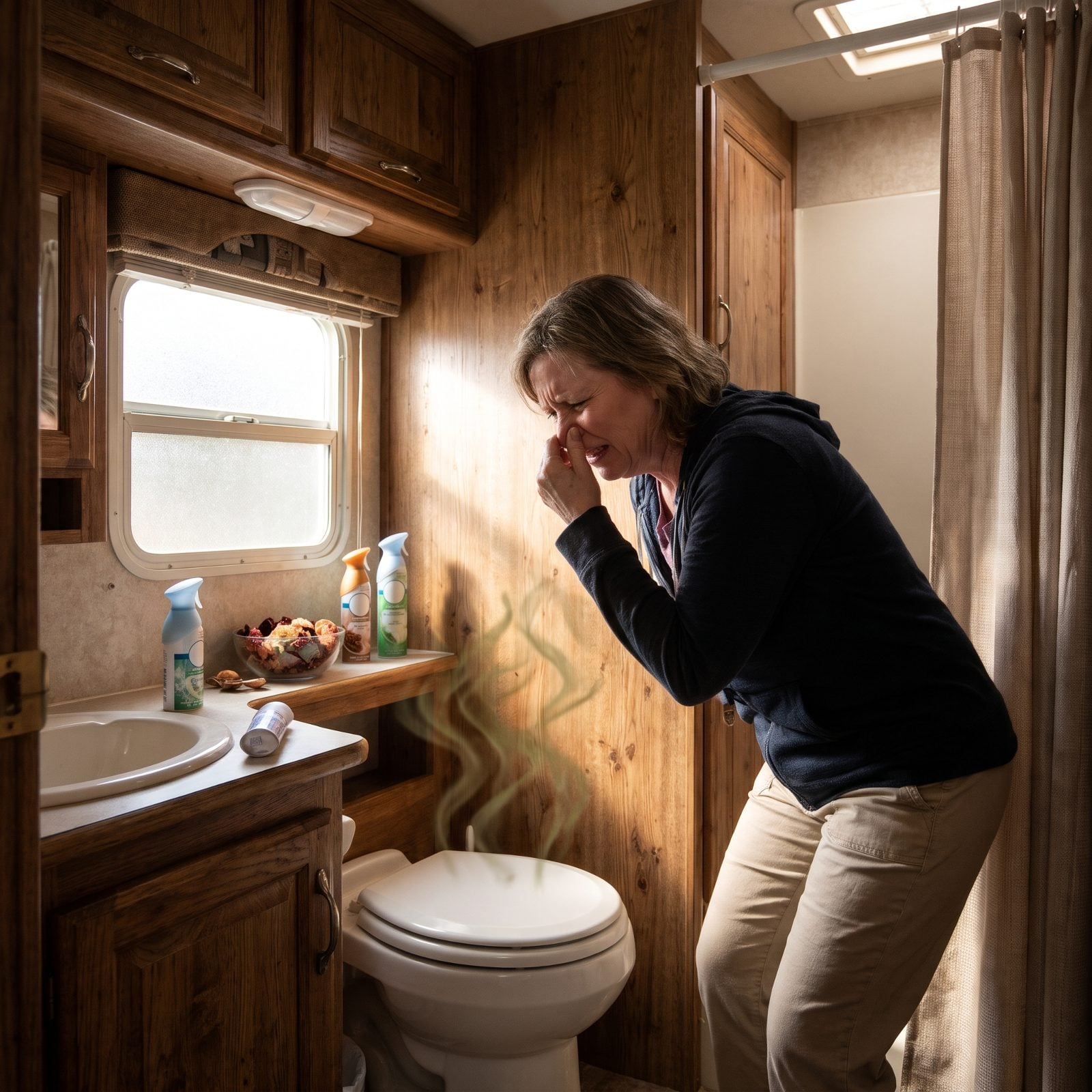
An indoor sewage smell almost always means air is coming back the wrong way. The usual suspects, in order of likelihood:
- A dry bowl seal letting tank gas rise straight up.
- A clogged or capped roof vent pipe that can’t breathe out the top.
- A loose or cracked toilet flange seal at the floor.
Start with the cheapest cause. Run the roof vent fan while you investigate — it pulls odor out instead of letting it settle into the cushions. A lingering smell soaks into soft furnishings fast, and that’s the part that haunts you long after the tank is clean.
11. What Is a Black Tank Pyramid?
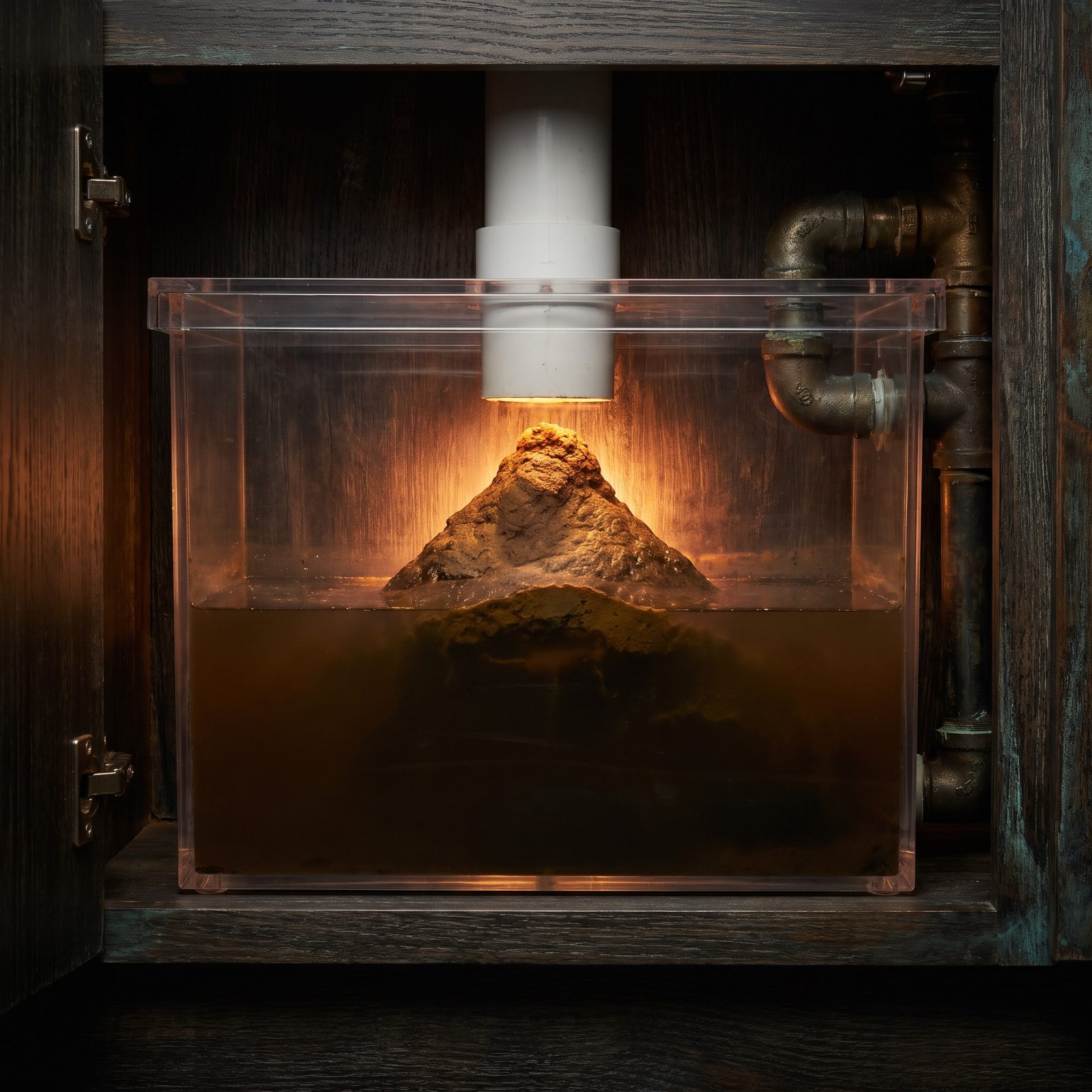
A pyramid is exactly what it sounds like: a cone of solids that builds up directly under the toilet drop and keeps growing until it reaches the bowl. It happens when you flush with too little water, so waste piles in place instead of spreading out and draining.
Once it’s bad enough you’ll feel the flush back up, and no amount of treatment will dissolve a dried mound. Prevention is the whole game here. Flush with plenty of water, keep the black valve closed until the tank is nearly full, then dump all at once so the rush of liquid carries everything out.
10. How Can You Clear a Clogged RV Toilet?
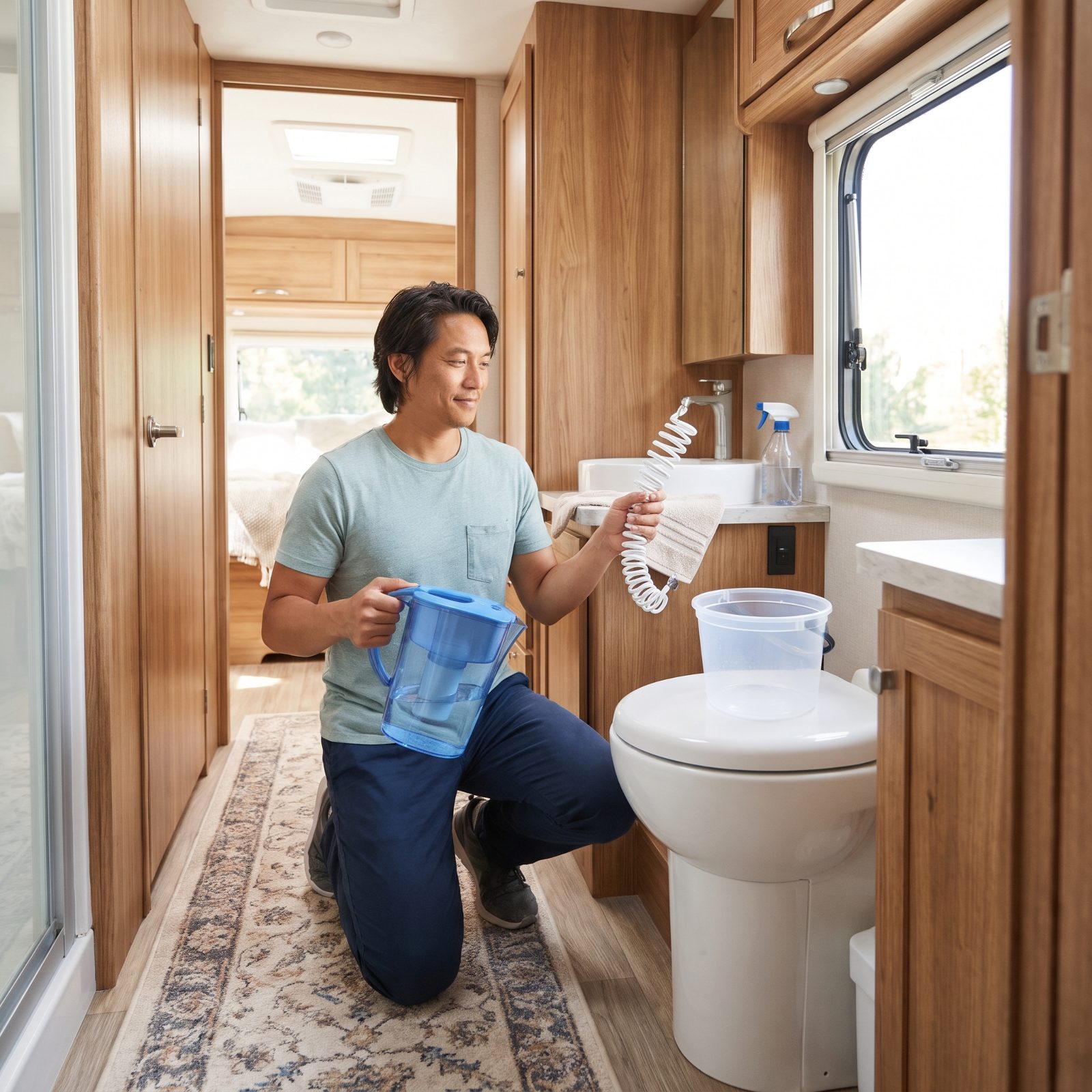
Start gentle and escalate only if you must. The first move is water and time: fill the tank partway with fresh water, add a strong dose of enzyme treatment, and let it soak overnight or while you drive. Soaking dissolves far more than brute force ever will.
Still stuck? A flexible tank-rinsing wand fed down through the toilet can break up a stubborn blockage with water pressure. Don’t reach for a hard plastic snake that could gouge the tank, and skip the standard home-drain plunger — the mechanics are different and it usually just makes a mess.
9. Why Is Liquid Dripping From the Sewer Cap Before You Dump?
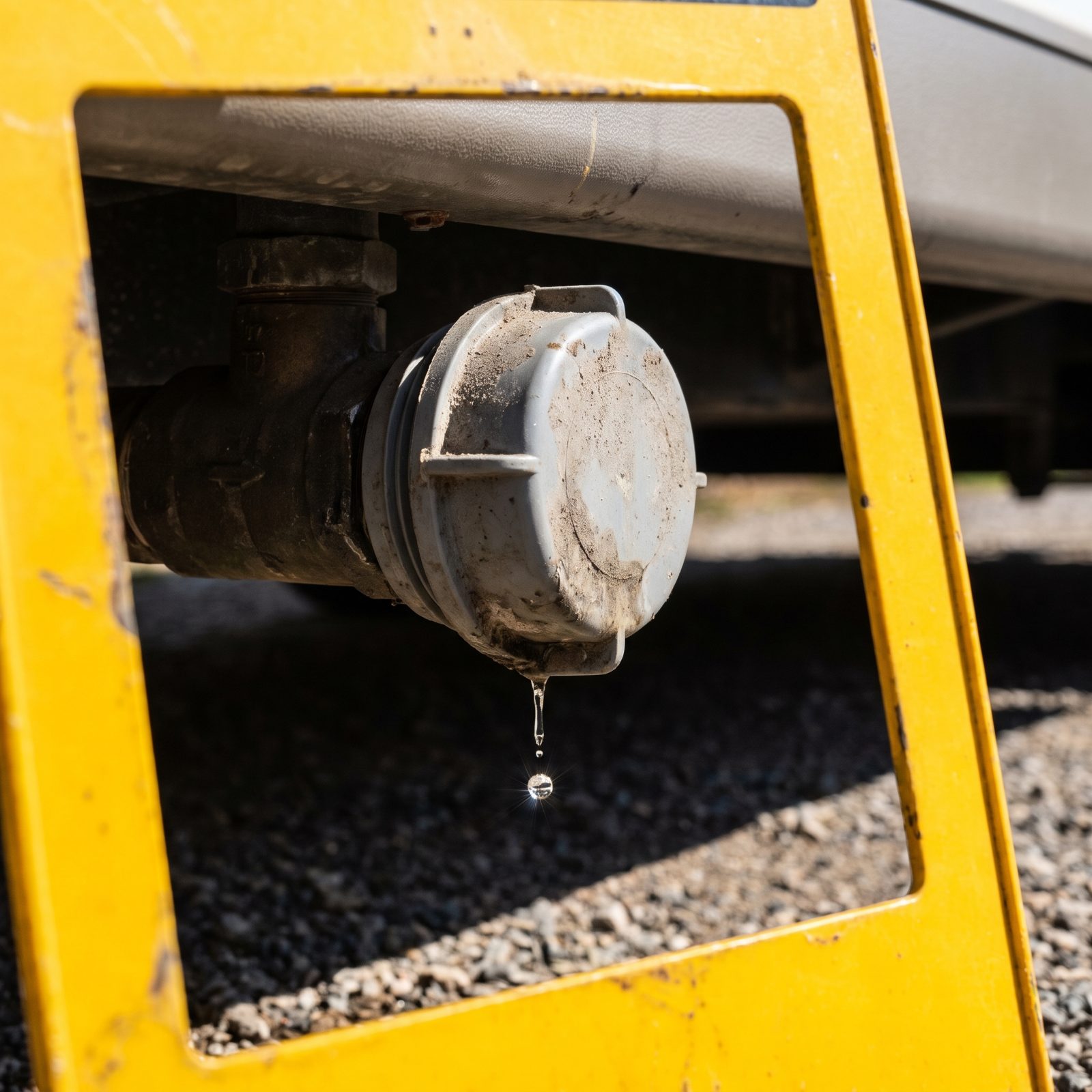
That drip is your early warning that one of your dump valves isn’t sealing all the way. The blade valve is supposed to hold everything behind that cap until you’re hooked up and ready. When it seeps, liquid pools against the cap and greets you the moment you unscrew it.
Point the cap away from your face and open it slowly, gloves on. A seeping valve usually means grit or debris caught in the blade seal. Running water through it can clear minor cases, but a valve that won’t stop seeping needs replacing before it fails entirely at the worst possible moment.
8. What Should You Do If the Sewer Hose Leaks Mid-Dump?
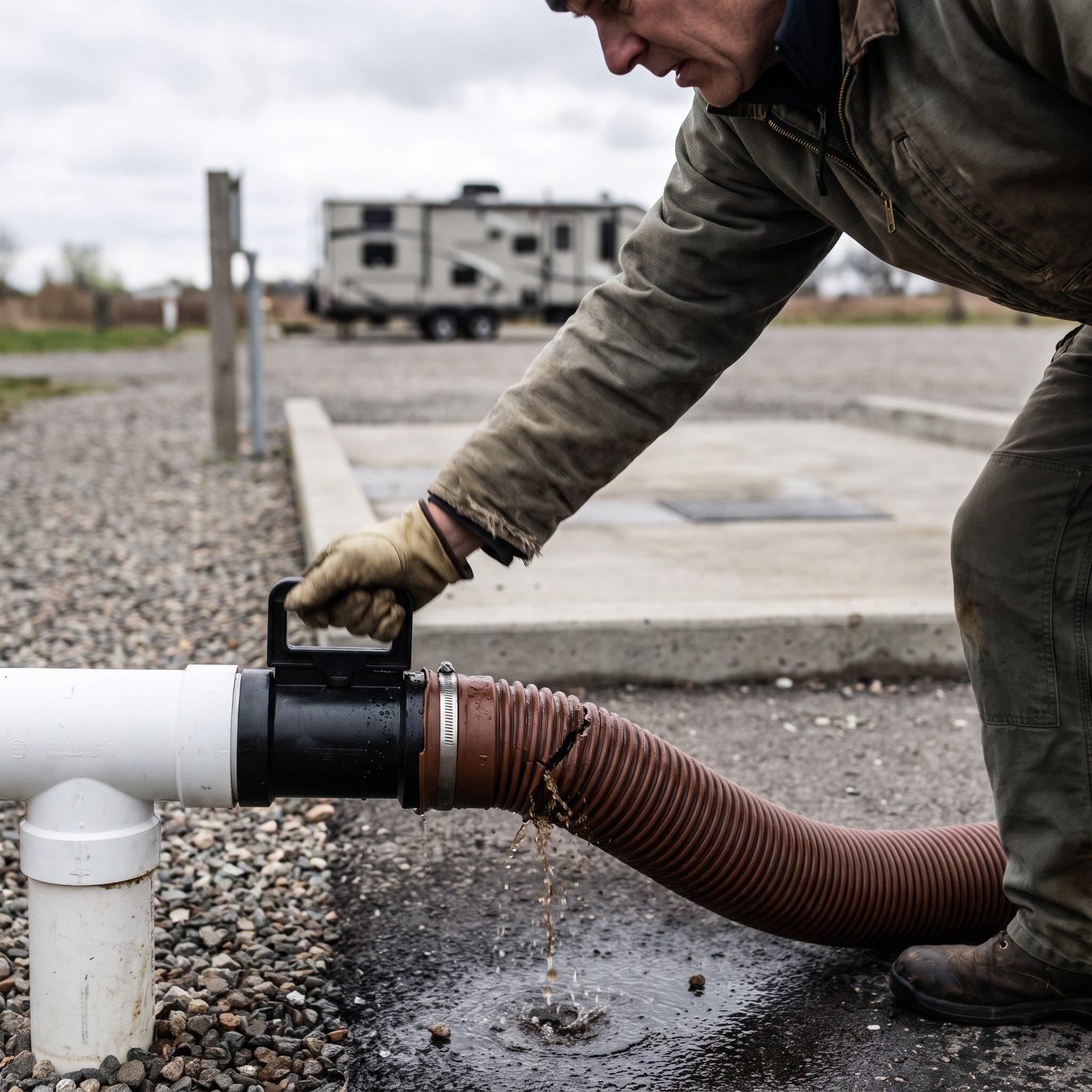
First, stay calm and close the tank’s blade valve to shut off the flow. Stopping the flow buys you time to deal with the leak without a growing problem at your feet. Then hunt down the failure point — usually a cracked hose, a loose hose clamp, or a connection that popped apart under pressure.
Prevention beats panic every time. Check your hose for cracks before every trip, snug the clamps on both ends, and keep the whole run sloping downhill so nothing backs up. We carry a spare hose and a few extra clamps in a sealed bin, because the failure never happens at home where the hardware store is close.
7. Is It Acceptable to Dump Into a Campground Toilet?
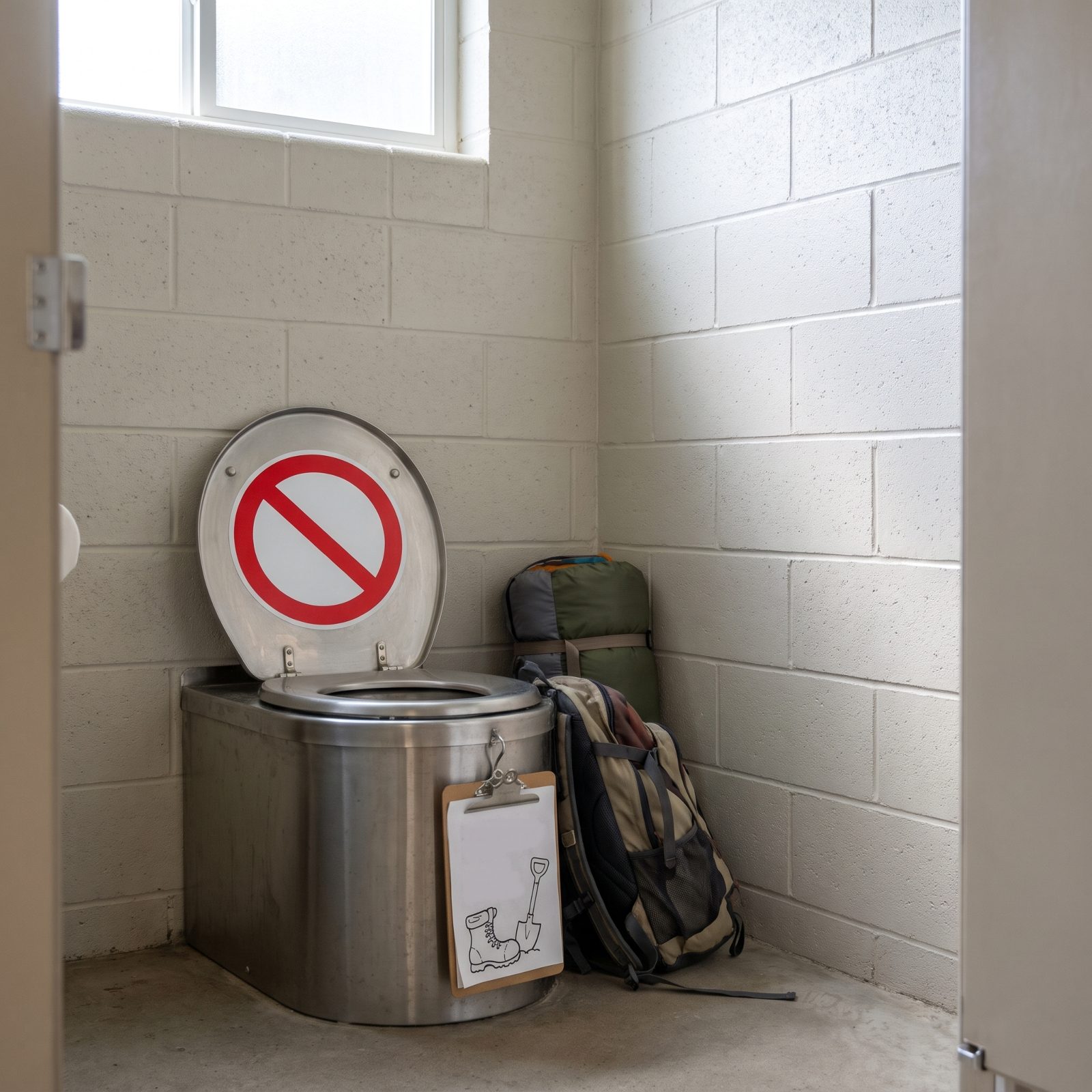
Short answer: no. And the folks running the campground will not love you for it. A flush toilet in the restroom block is built for one person at a time, not for the contents of a 30-gallon holding tank arriving all at once. You’ll jam the line, and you’ll be the reason the whole bathhouse gets closed for the afternoon.
Boondocking with a portable waste tote? Roll it to the actual dump station, not the restroom. The tote exists precisely so you don’t have to move the whole rig. Use it that way.
6. How Do You Handle a Black Tank Overflow?
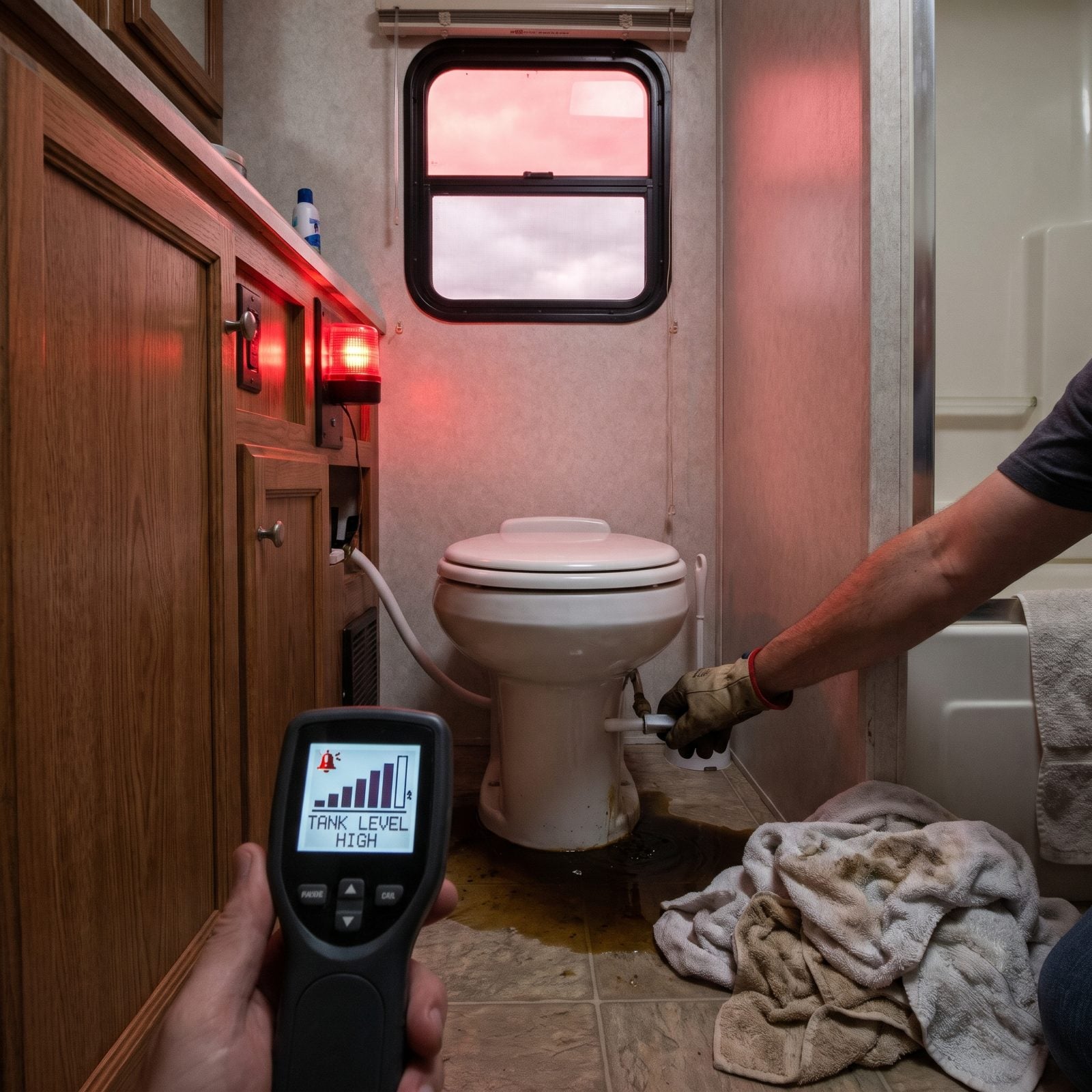
An overflow usually means the tank went too long without a dump, filled past the toilet, and now it’s backing up into the bowl. That’s the moment you learn the vent pipe and the monitor exist for a reason.
First move: stop adding water, close everything, and confirm the blade valve is actually shut. Then get the tank to a dump station and drain it before you touch anything else. Don’t flush, don’t rinse, don’t panic.
Most overflows aren’t mysteries. They’re a valve somebody forgot about, or a sensor reading low because of buildup. If your monitor claims a third full and the toilet disagrees, believe the toilet.
5. Can You Put Food Scraps Down an RV Toilet?
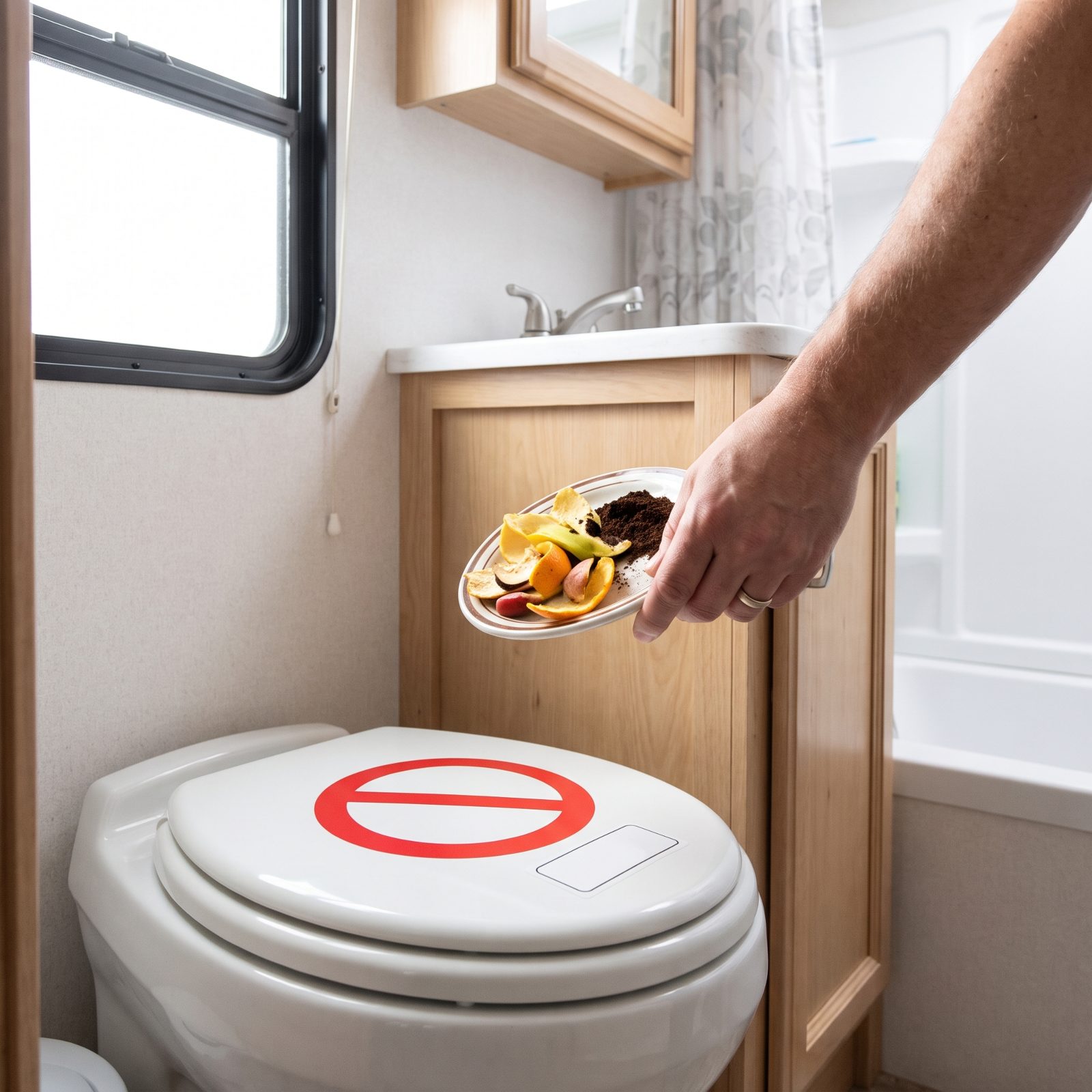
No. An RV toilet isn’t a disposal, and the tank isn’t a composter.
Food scraps don’t break down the way waste and RV-safe paper do. They sit, they rot, and they feed the exact bacteria that turn your tank into a smell no amount of flushing fixes. Grease is even worse — it coats the sensors and the walls and never fully leaves.
The only things going down that toilet are what came out of you and thin, fast-dissolving toilet paper. Scraps and everything else go in the trash. I know hauling a bag of leftovers out to the dumpster feels wasteful. Haul it anyway.
4. How Much Toilet Paper Is Too Much Per Flush?
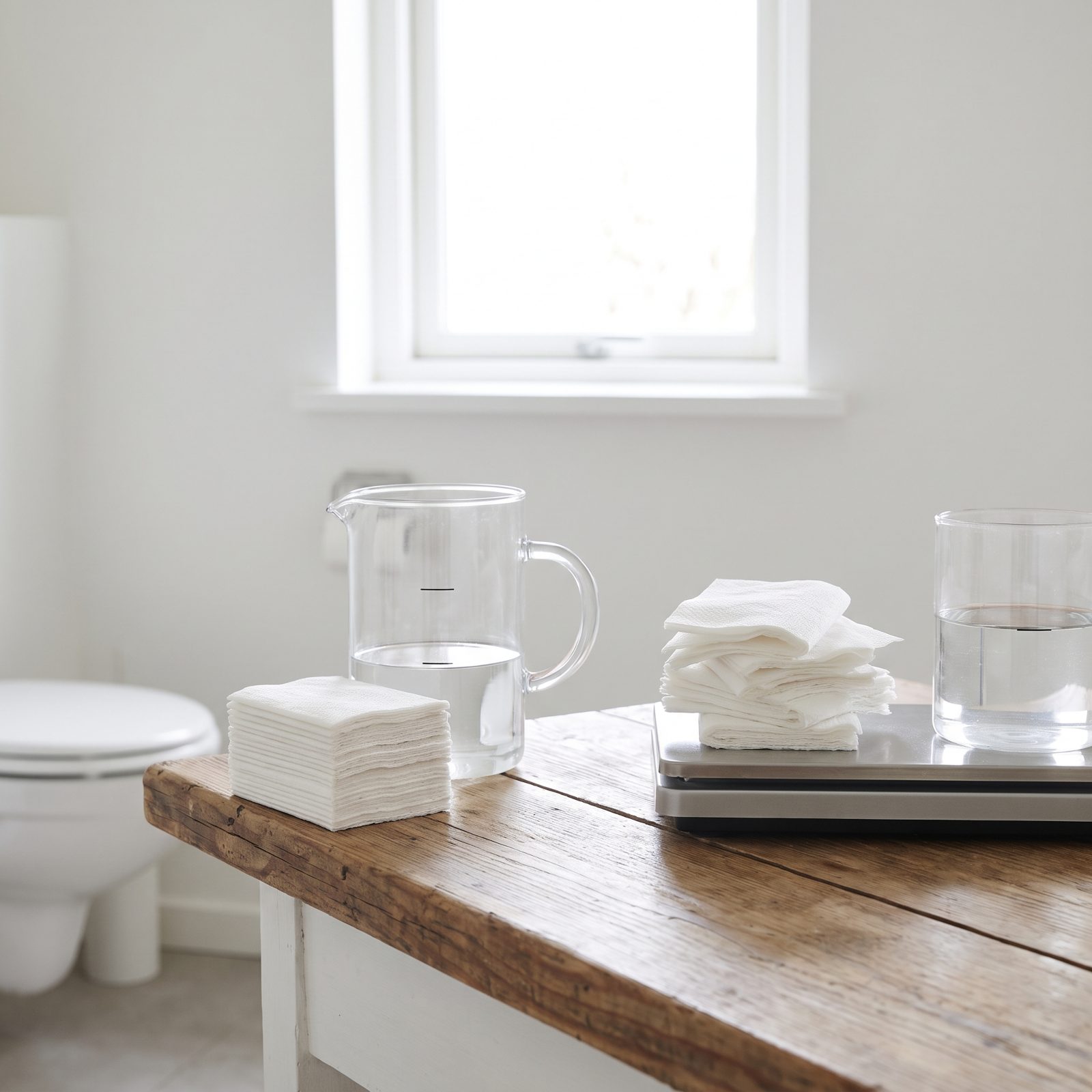
There’s no magic square count, but there is a simple rule: the paper should never outnumber the water. A few folded squares per wipe followed by a solid flush is fine. A fist-sized wad sliding into the bowl in one go is where trouble starts. Paper that enters the tank in a clump stays a clump, and clumps are what snag on sensors and stack up into the kind of buildup nobody wants to deal with.
If a visit calls for more than a modest amount, split it up. Flush partway through, hold the pedal a couple of extra seconds to send more water down, then finish. Two light flushes beat one heavy one every time. And if you see paper lingering at the bottom of the bowl after the flap closes, that’s your sign the last flush was overloaded.
3. Should You Fill the Toilet Bowl Before Using It?
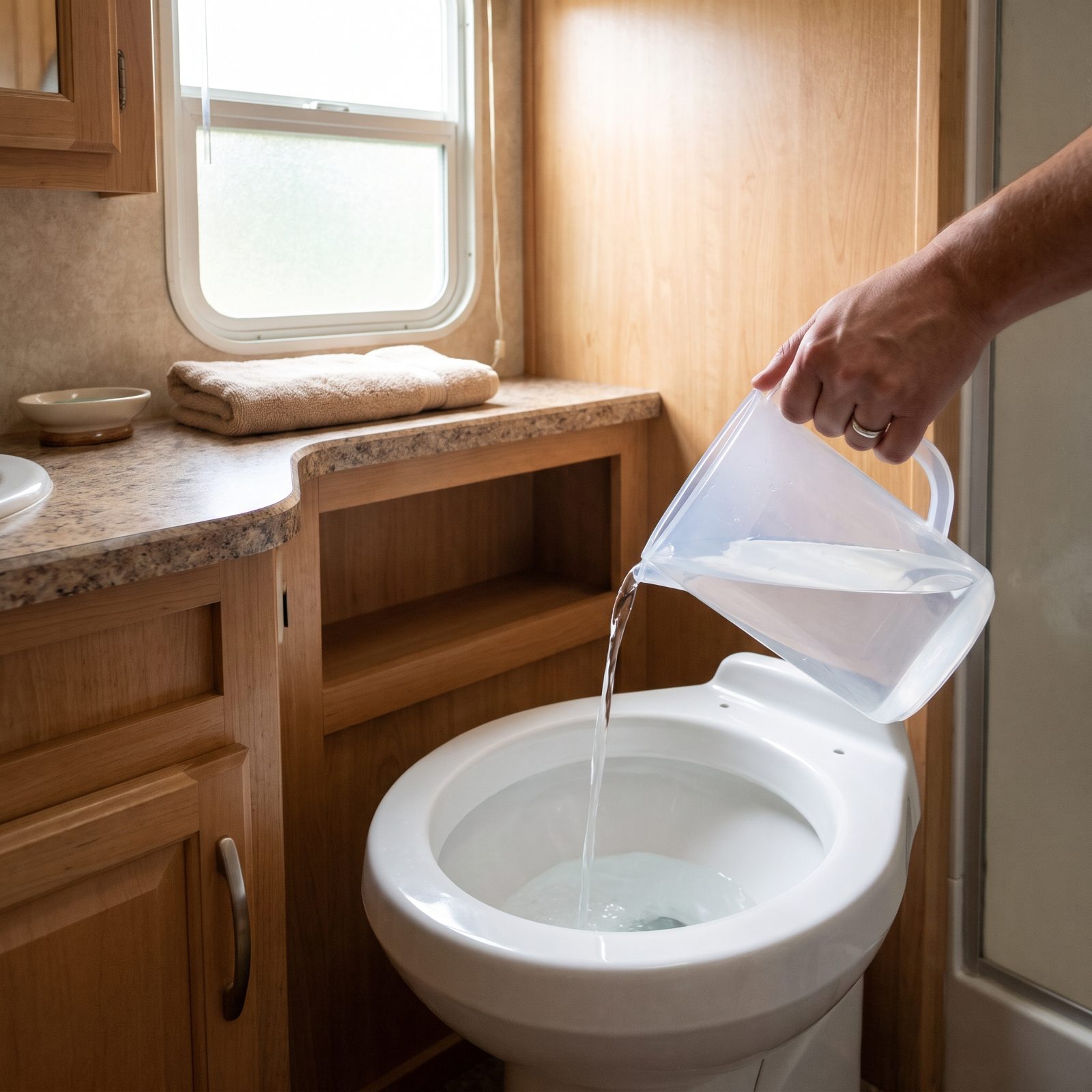
Yes, and it’s the single habit that keeps your tank from turning on you.
An RV toilet only adds the water you tell it to. Hold the pedal halfway and water trickles in; press it all the way and the flap opens to drop everything down. A bone-dry bowl means solids land in a dry tank and start building that dreaded pyramid.
Put an inch or two of water in the bowl before solids, then a good rinse after. That water is what carries things down and keeps the sensors honest. Your fresh and gray tanks are plenty big to cover it, and your nose will thank you at the next dump.
2. Is It Safe to Use a Household Plunger in an RV Toilet?
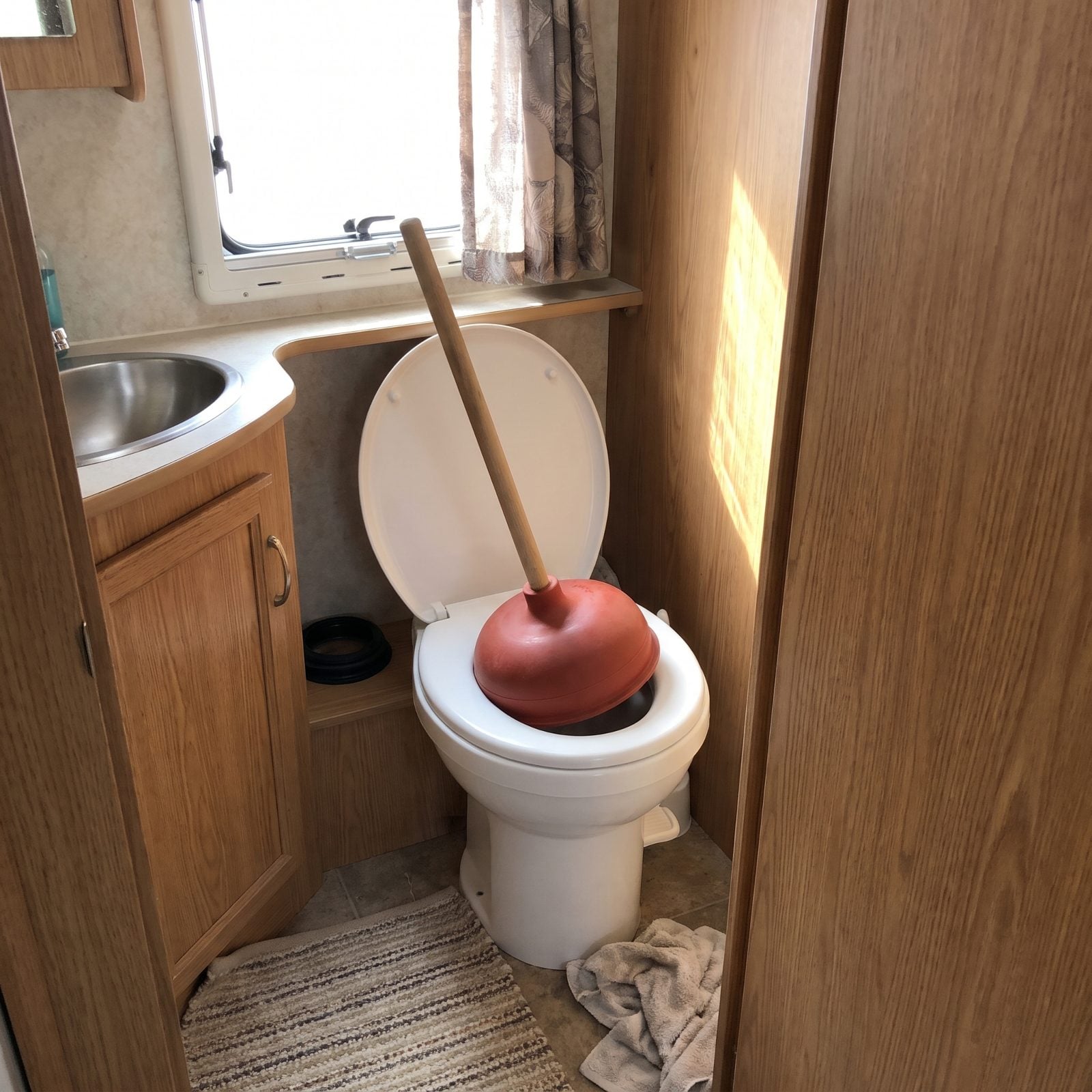
You can, but a standard household plunger mostly won’t do much in the narrow trap of an RV toilet. The geometry is different, and there’s less to grab onto.
Most RV clogs aren’t in the toilet at all. They’re in the tank, where solids dried out because the bowl went down empty one too many times. Plunging a full tank just shoves water around. What actually fixes it is water and time: fill the tank, add treatment, drive a few miles so it all sloshes, then dump.
If you do reach for a plunger, grab a small flexible one and use gentle pressure. Never force anything down there — a cracked toilet flange out on the road is a far worse day than a slow drain.
1. Can You Legally Dump an RV Black Tank at Home?
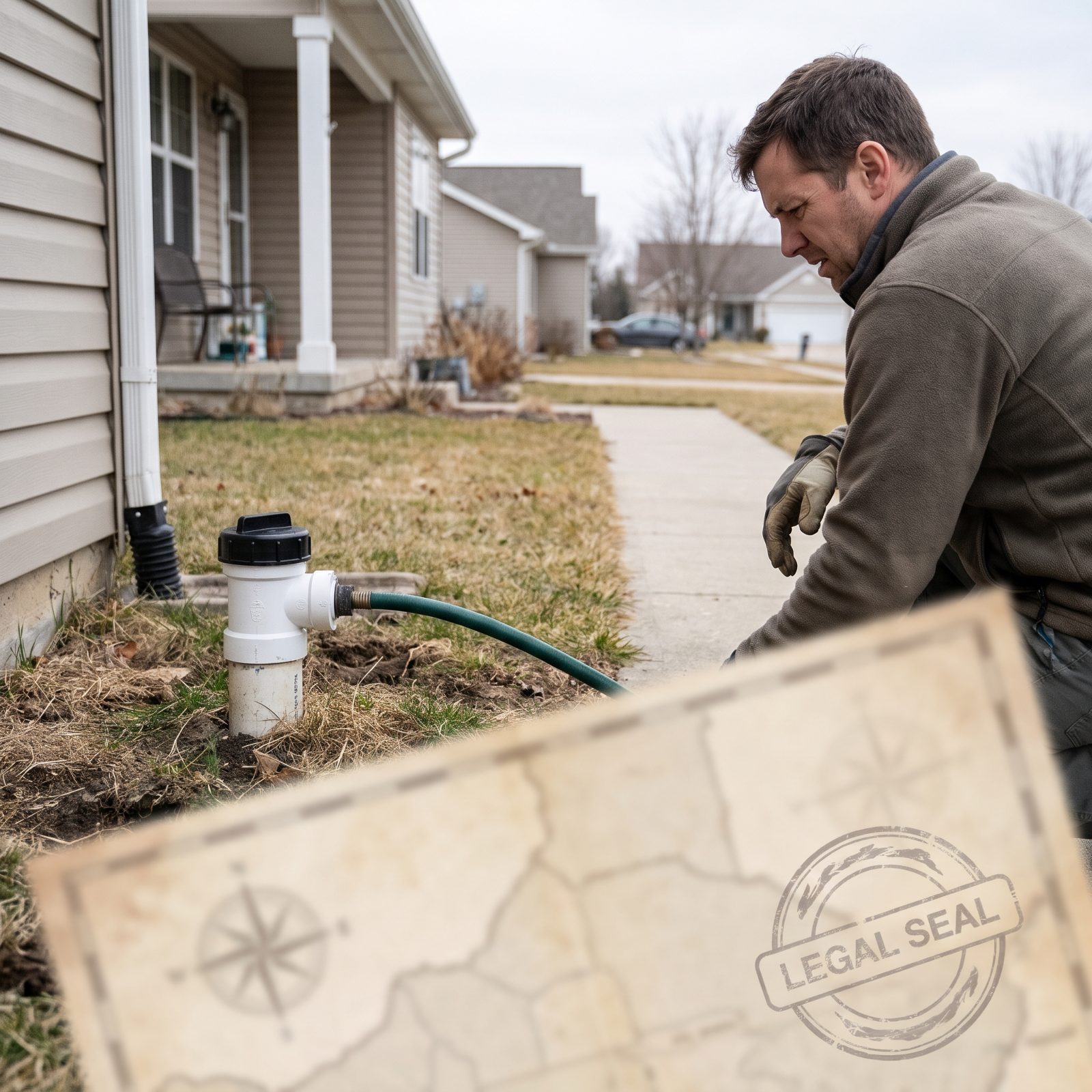
Sometimes. It depends entirely on where you live and what you’re connecting to.
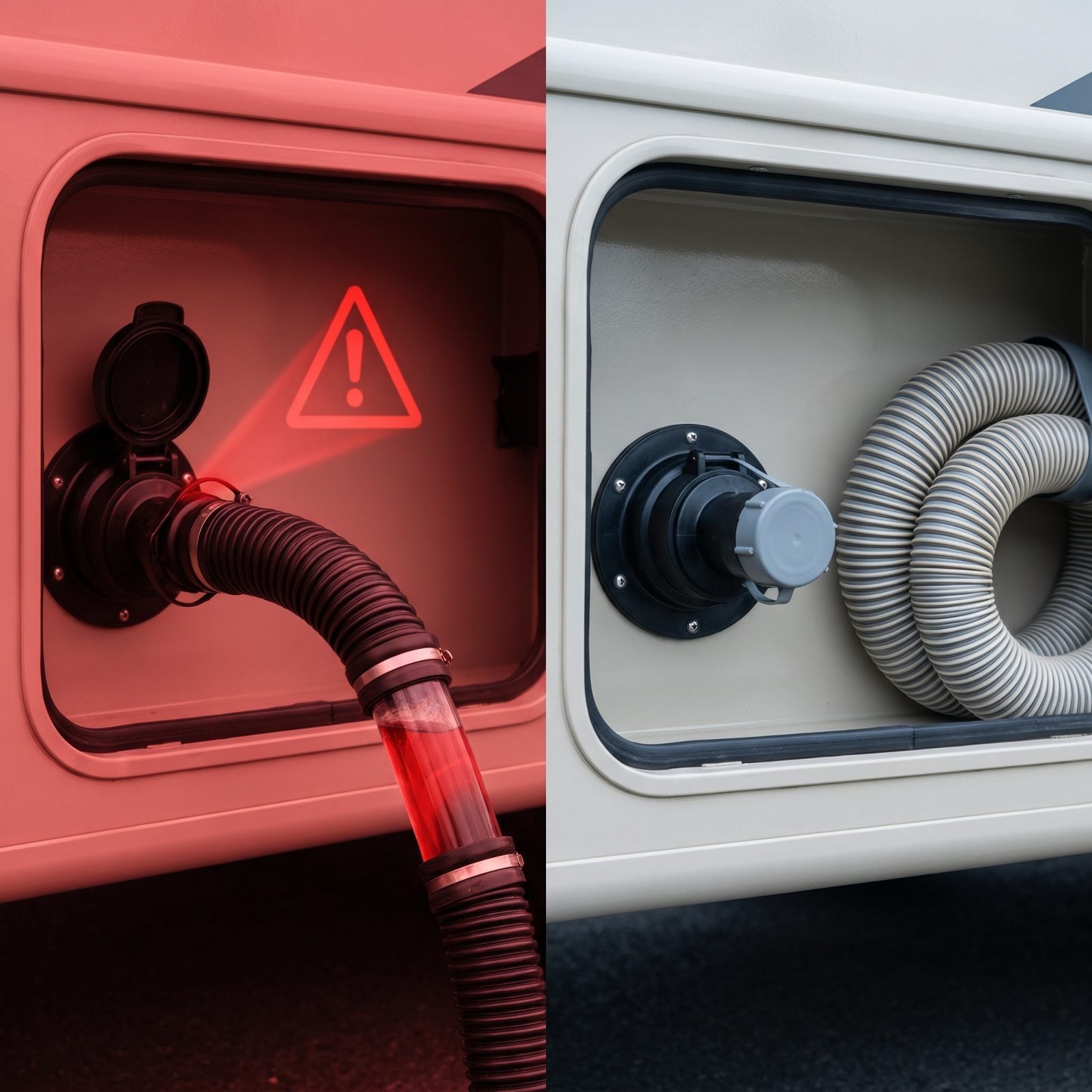
House on a municipal sewer? Many areas let you dump into a proper cleanout with the right fittings: an open cleanout, a real RV sewer hose and an adapter. A garden hose rigged to a closed cleanout lid, like the one pictured, won’t do the job. A septic system is riskier, because RV tank treatments can kill the bacteria the septic relies on, and a sudden surge of volume can overwhelm the whole setup.
What’s almost never legal anywhere: dumping onto the ground, into a storm drain, or into anything that isn’t an approved sewer connection. Rules shift from state to state and even town to town, so a quick call to your local wastewater authority beats a fine.