
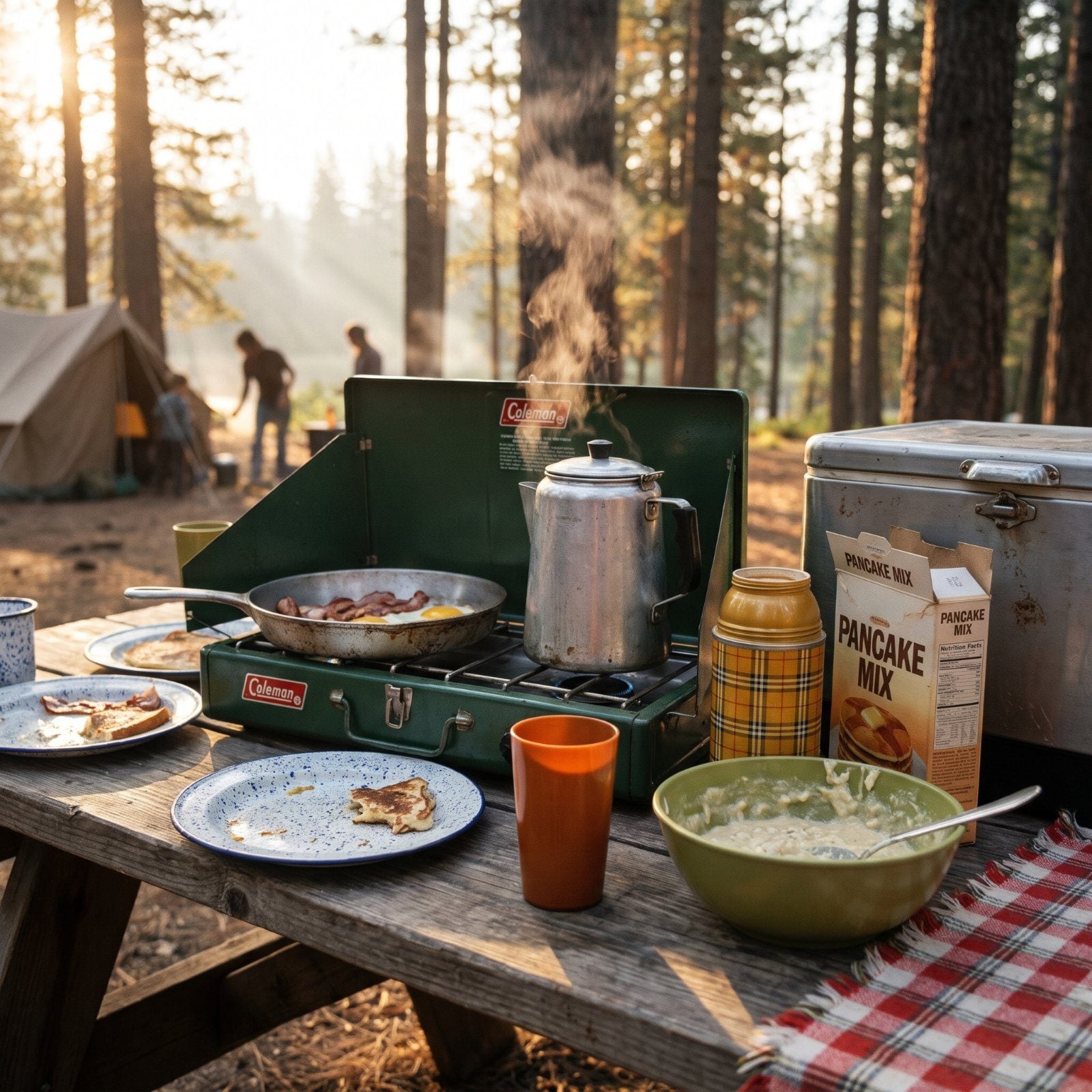
That blue flame roaring under a cast-aluminum skillet at 7 a.m., the smell of bacon cutting through pine air and leftover campfire smoke. The percolator ticking away on the second burner. A whole family in flannel waiting on paper plates while Dad flipped something that was mostly grease and nostalgia. Breakfast at the campsite ran on canned goods, boxed mixes, and whatever stayed good in the cooler by day three. The ones below built mornings nobody wanted to end.
Please note that some of the images in this article were created with the assistance of AI.
35. One-Skillet Bacon and Eggs Fried in the Drippings
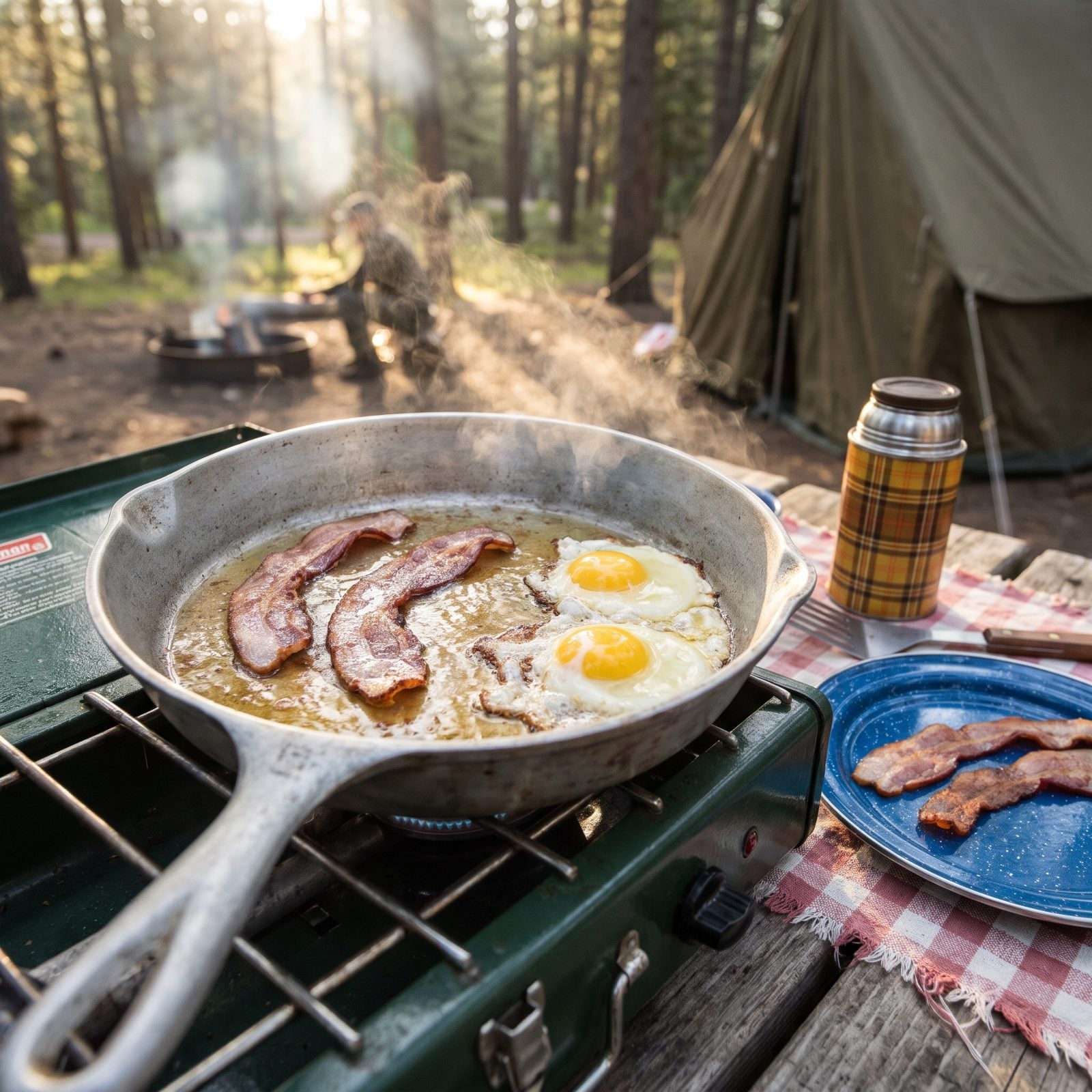
You started with the bacon because everything else depended on it. Lay the strips in cold, let them render slow, and by the time they curled crisp you had a skillet half-full of amber drippings nobody in their right mind poured out.
The eggs went straight into that fat. Whites browned lacy at the edges, yolks stayed loose, and the whole thing tasted like smoke and bacon and the inside of a tent. One pan, one burner, one metal spatula doing double duty. Dad guarded that skillet like it owed him money.
As a chef and restaurant owner puts it, “If you put it in a pre-heated or hot pan, you risk burning the bacon before completely rendering the fat”
34. Canned Corned Beef Hash Topped With Runny Eggs
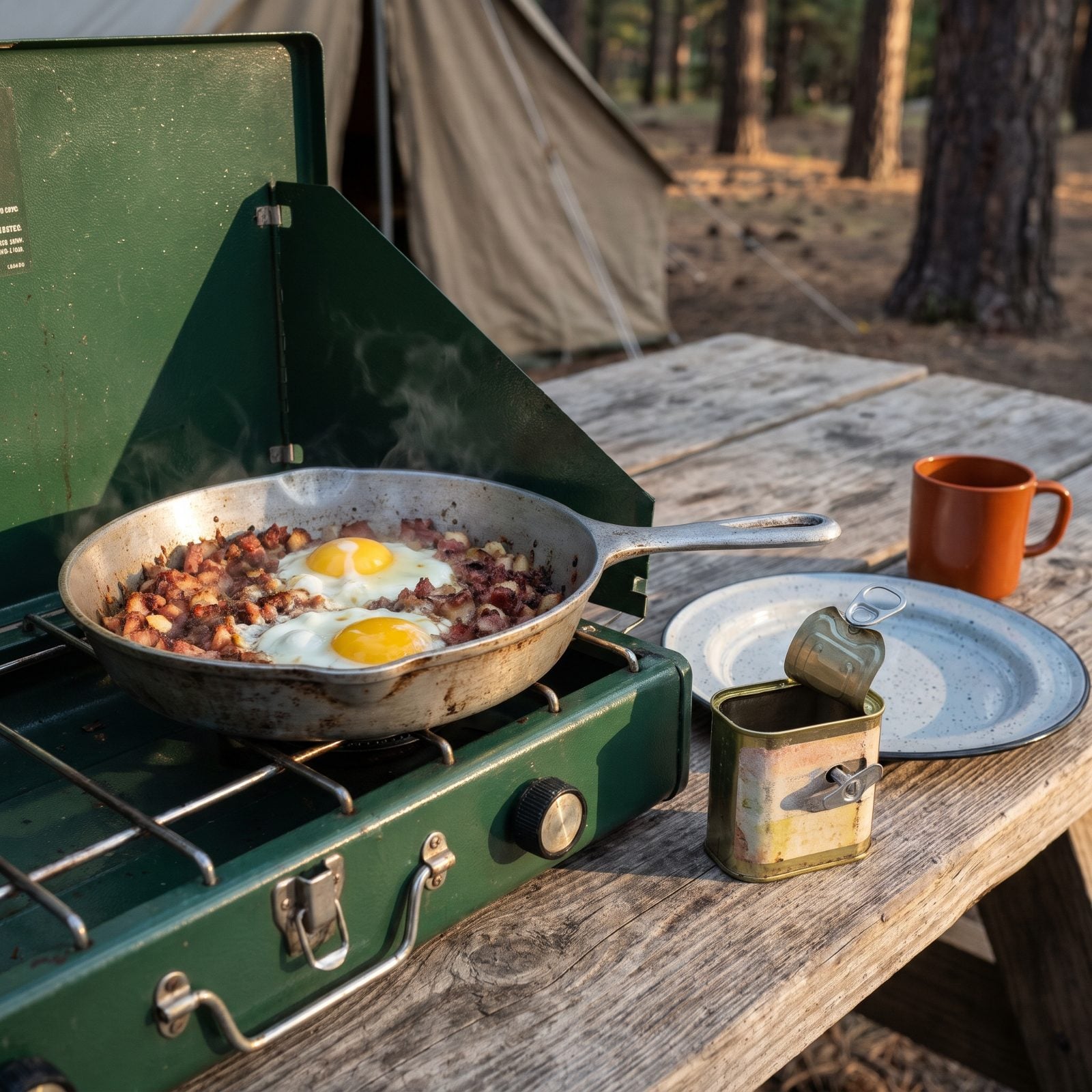
The trick was patience, and patience ran thin with kids whining about the lake. You dumped the tin into a hot skillet, pressed it flat, and then walked away long enough for a crust to build on the bottom. Scrape too soon and you got mush. Wait it out, though, and you got that brown, craggy edge the whole table would fight over.
Two eggs cracked right on top. Lid improvised from a pie plate. The yolks ran down into the hash and that was that. Nothing fancy about it — just hot, salty, and exactly right at 7,000 feet.
33. Bisquick Pancakes With Imitation Maple Syrup
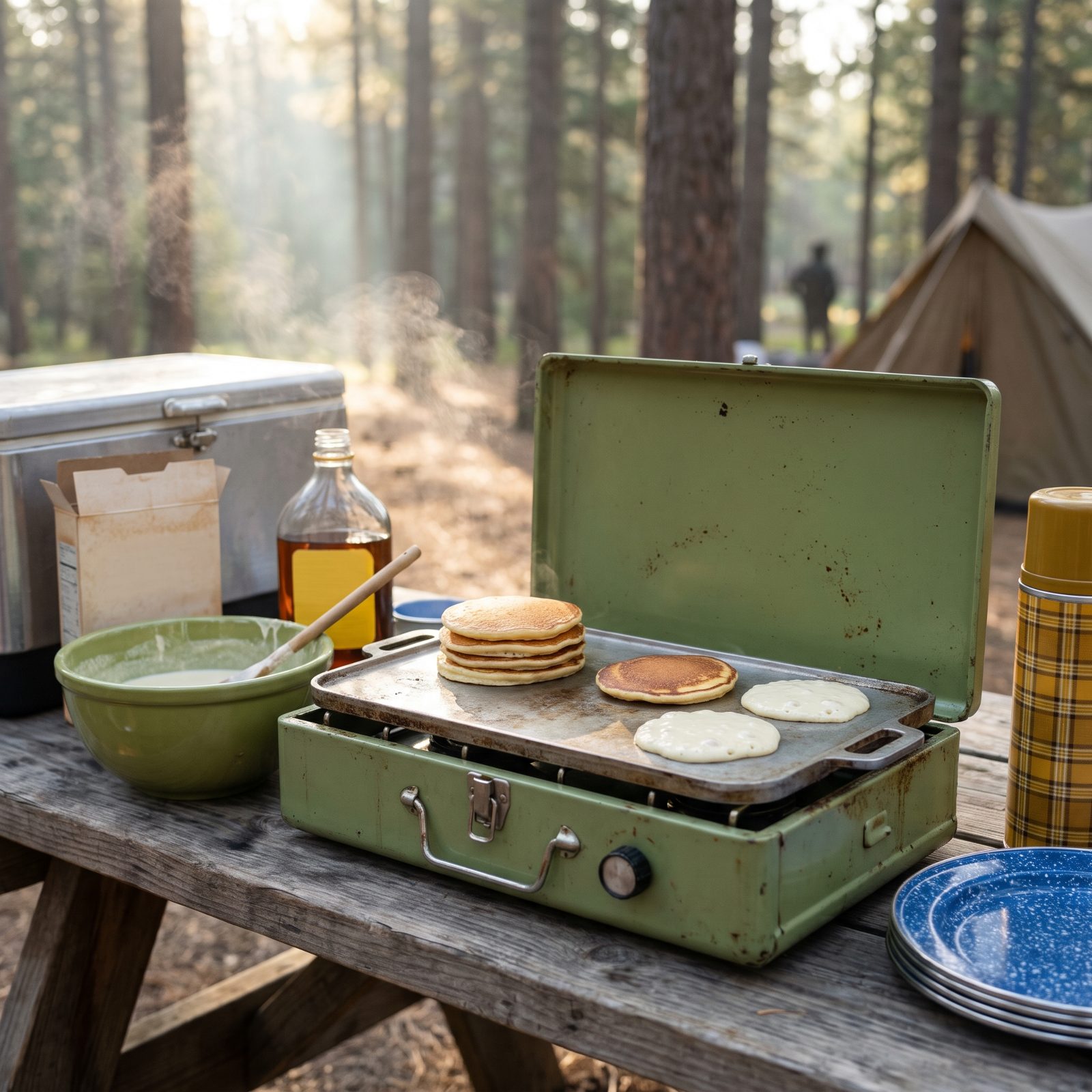
Nobody measured anything. You tipped the box into the avocado bowl, splashed in cooler water and a wobbly egg, and stirred until the lumps mostly gave up. Lumps were fine. Lumps were authentic.
The griddle had to be hot enough to make a drop of water skip across it. First pancake always sacrificed itself — pale, sad, eaten standing up by whoever was cooking. After that they came off golden, and the “maple” syrup, which had never once met a maple tree, went on thick and warm from sitting near the burner.
32. Creamed Chipped Beef on Toast
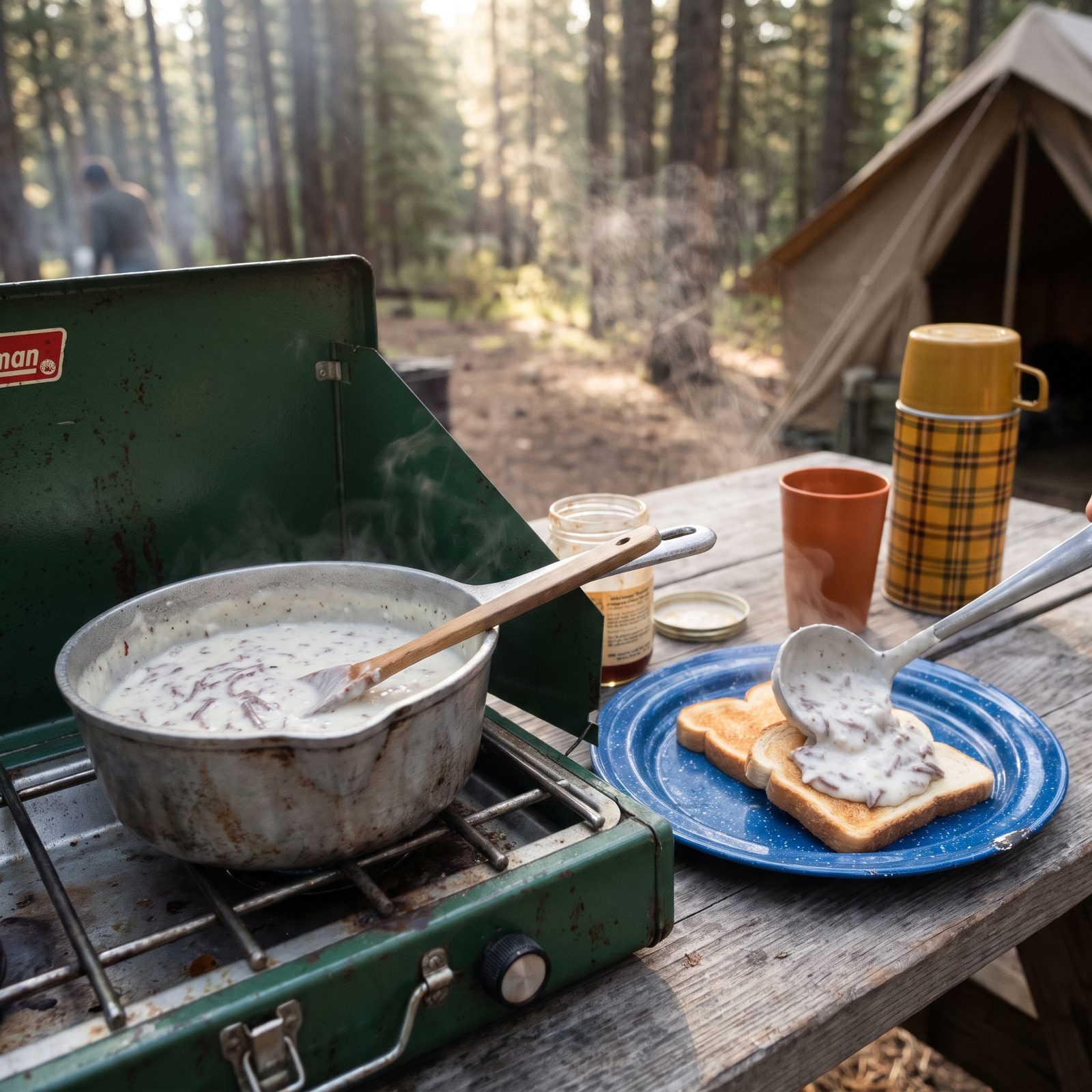
It had a barracks nickname nobody dared say in front of Grandma, and the men who’d served smirked every single time somebody ladled it out. The dish itself was gentle: dried beef rinsed of some of its salt, torn into shreds, folded into a white sauce built from flour, a lump of margarine, and powdered or canned milk.
Ladled over toast gone golden on the griddle, it stuck to you right through a morning of fishing. Cheap, filling, nostalgic in a way that sneaks up on a person. I still crave the stuff, and I don’t fully understand why.
31. Spam and Potato Breakfast Hash
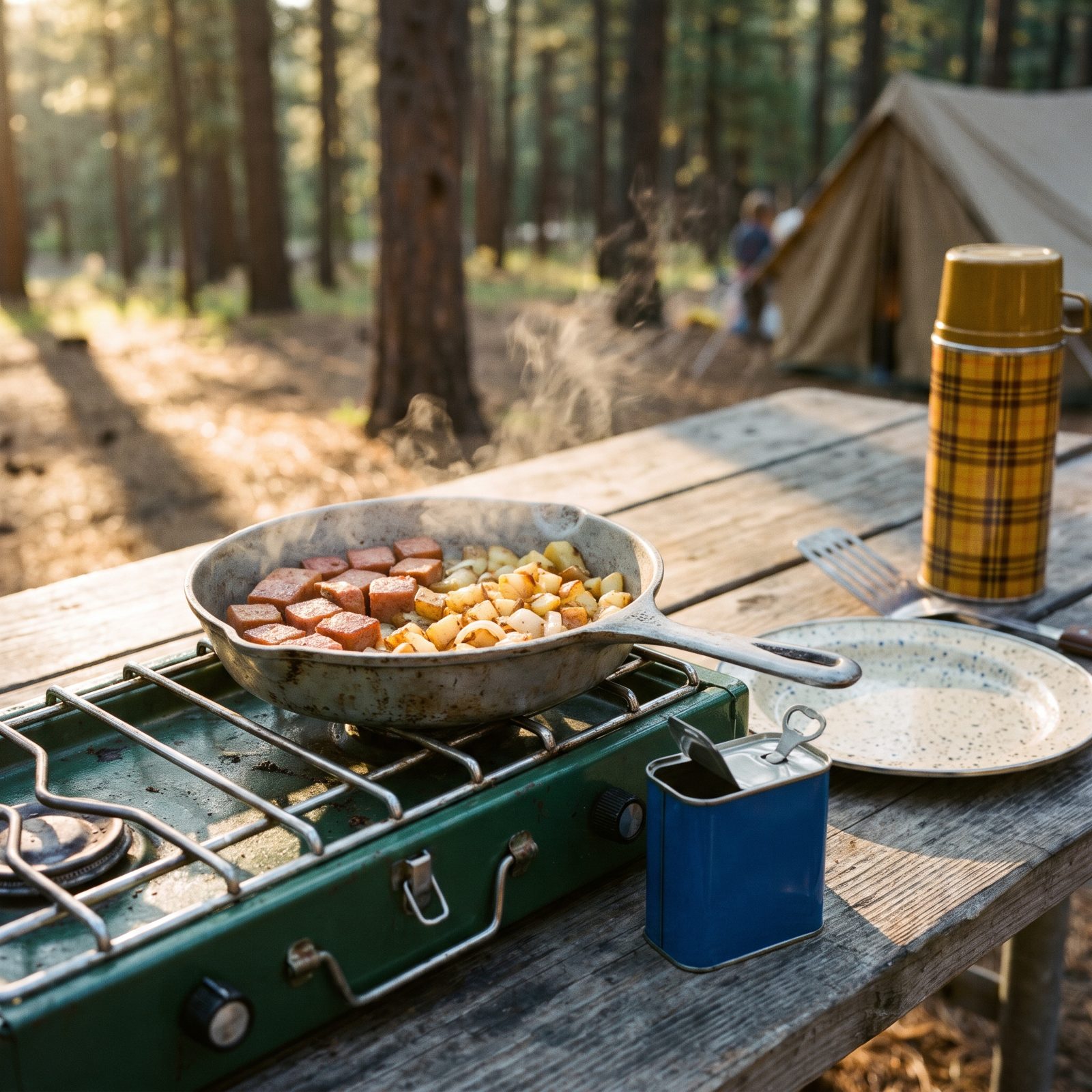
The can opened with that little twist key, and half the fun was winding it right.
Spam cubed up and hit the hot skillet, edges going mahogany and almost candied from its own fat. Potatoes went in to crisp alongside, soaking up everything. If somebody remembered an onion, that went in too, and the whole site started smelling like a diner that had been airlifted into the woods.
Shelf-stable, dent-proof, cooler-optional. Here was the meat that never worried you on day four of a trip, which is exactly why it rode along on every single one.
30. Egg-in-a-Hole Made With White Sandwich Bread
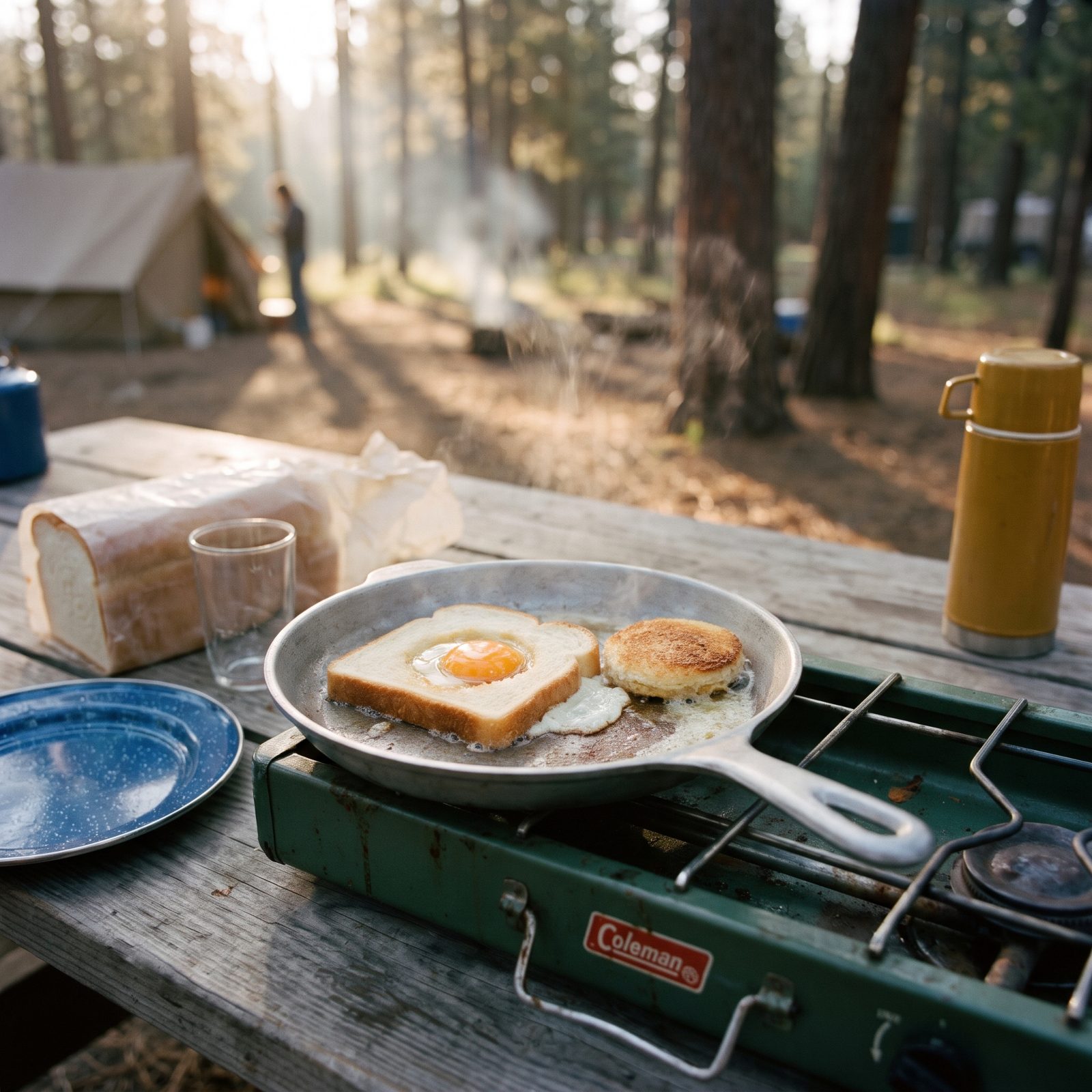
A juice glass pressed into the bread made the hole, and the little round plug got toasted on the side for dipping.
This was the one kids were trusted to “help” with — which really meant one adult hovering with a spatula the entire time. Butter in the skillet, bread down, egg cracked into the hole, flip when the underside went gold. Time it right and the yolk stayed loose, and dunking that toasted circle into it was the reward.
A dozen names for it, depending on whose grandmother taught you. The method never budged.
29. Sausage Gravy Over Skillet Biscuits
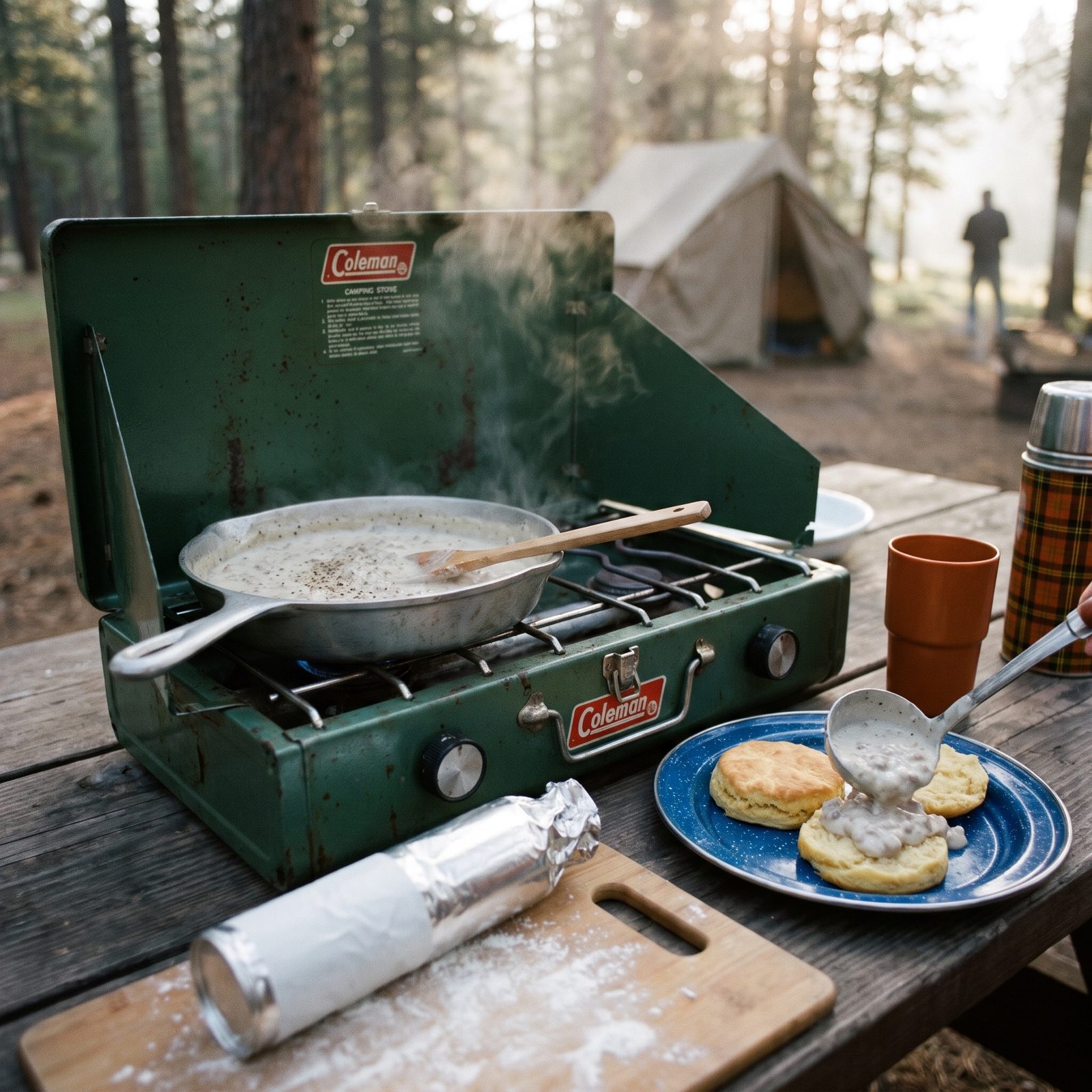
The biscuits came from a cardboard tube you cracked against the picnic table edge, and that pop still makes people jump. They baked in a covered skillet over a low flame, which took watching, because the bottom wanted to scorch while the top stayed pale.
Meanwhile the sausage browned in a second pan, a spoon of flour stirred into the grease, then milk poured in to loosen it all into gravy. Black pepper, lots of it. Split a biscuit, drown it, done.
28. Powdered Eggs With Shelf-Stable Bacon Bits
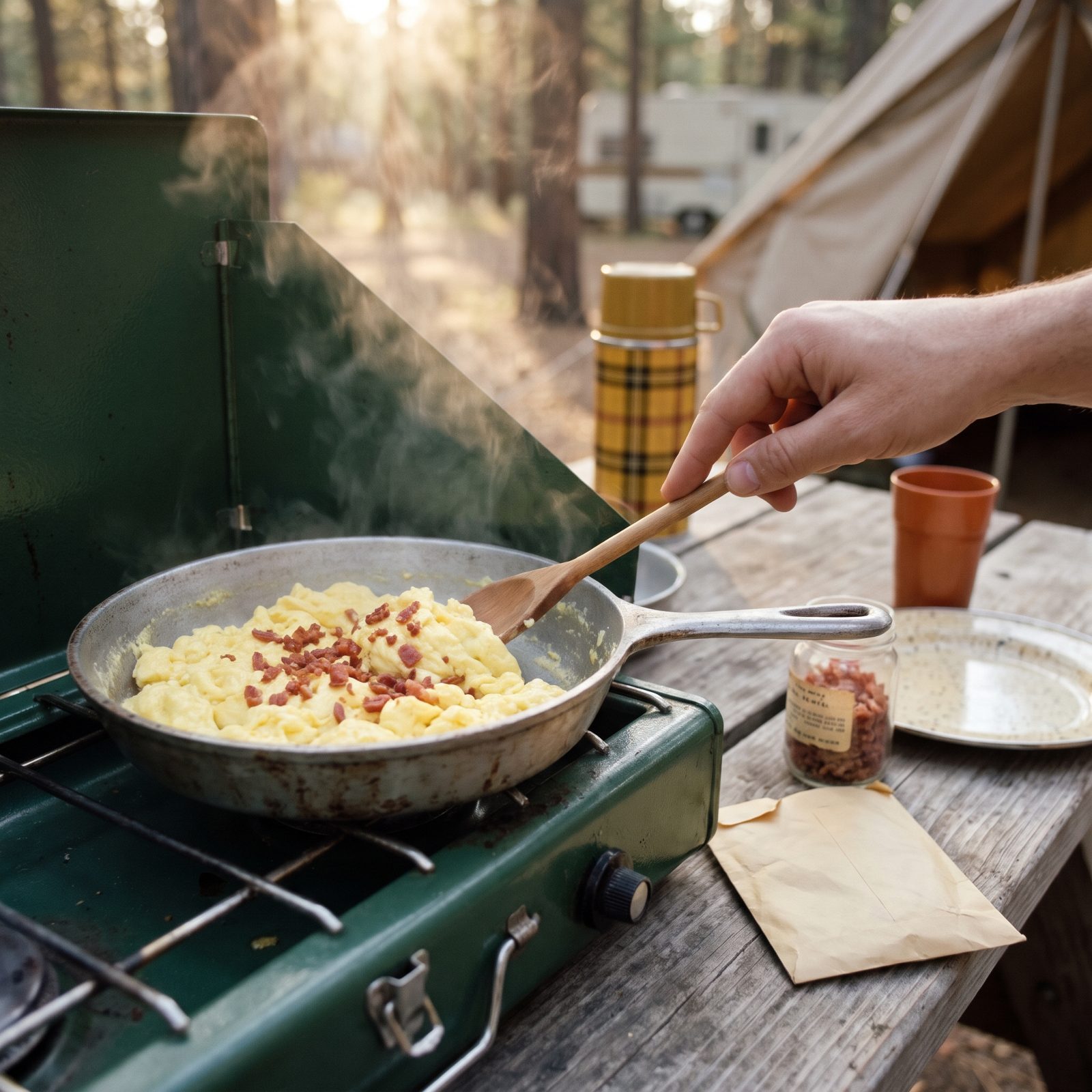
These were the eggs you packed when the cooler ice was a gamble and the real eggs were a gamble right behind it. Powder and water, whisked up in a tin cup, poured into a buttered skillet.
They scrambled up a shade too even in color and a little bouncy, honestly not the finest eggs anyone ever ate. But a handful of those bright-red shelf-stable bacon bits rained over the top, and suddenly nobody cared. Camp food got graded on a curve, and these passed every time.
27. Vienna Sausage Scrambled Eggs
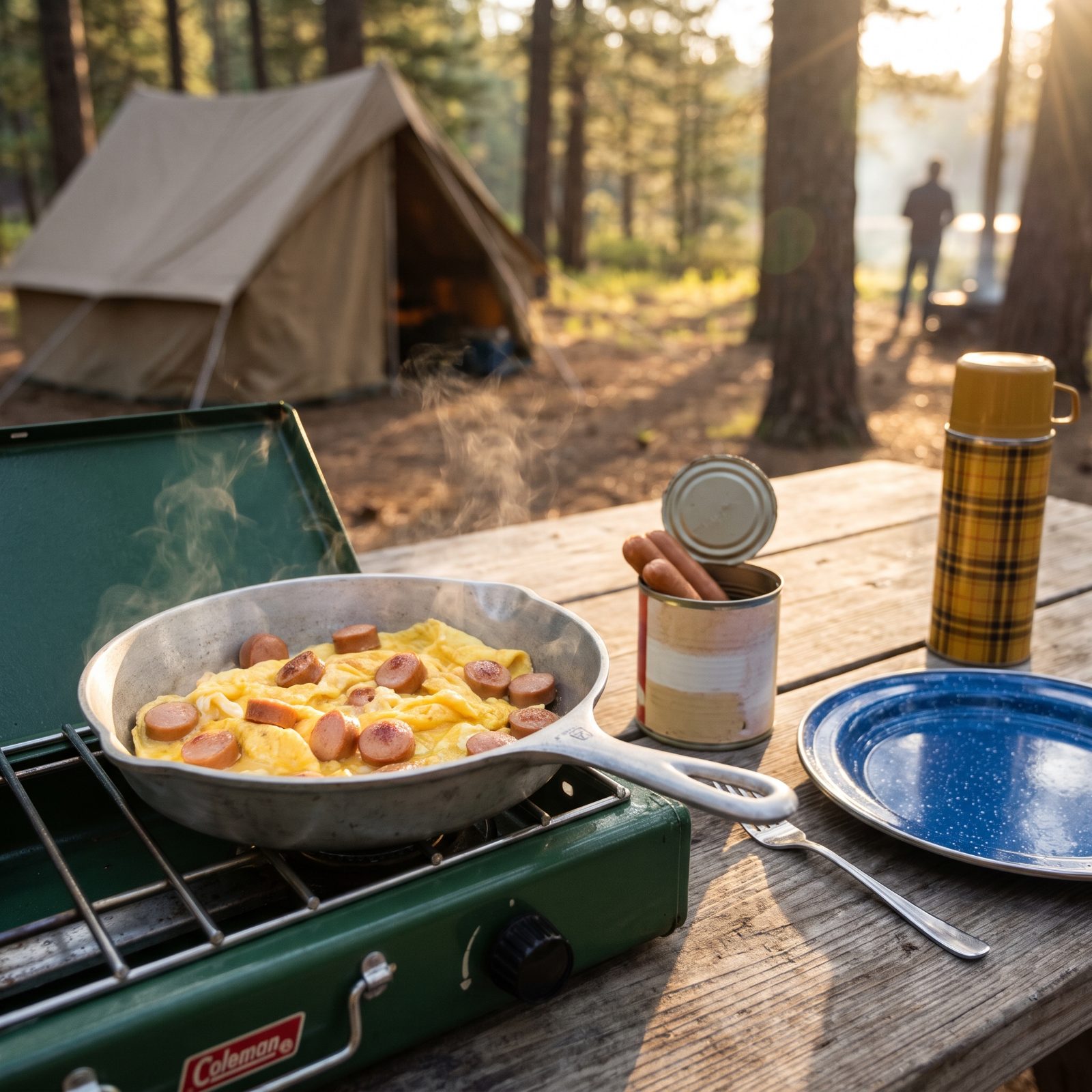
The squat little can, its lid still hinged where the can opener left it, held stubby sausages packed tight in a jelly nobody wanted to look at too closely.
You drained them, sliced them into coins, browned the cut sides, then poured beaten eggs over and dragged everything into soft curds. The sausages picked up a faint crisp, the eggs stayed loose, and the whole thing was ready in about four minutes flat.
Fast was the point. Somebody always had a reason to get on the water early, and this fed the whole picnic table before the mist burned off the lake. Not every one of these dishes survived into our modern coolers. This one still earns a spot when the morning’s short and the appetites aren’t.
26. Ham Steak With Skillet-Browned Pineapple Rings
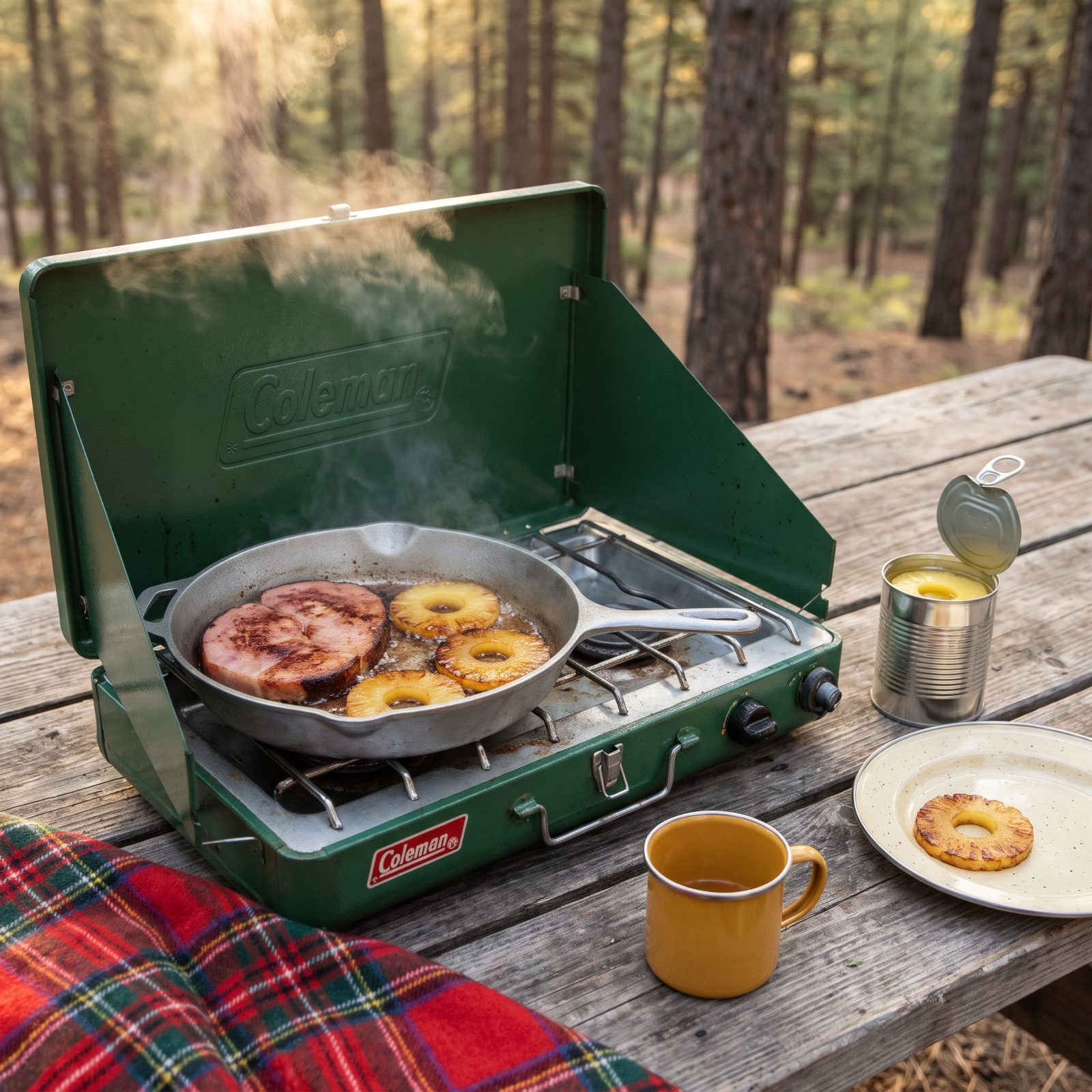
Pop the can, drain half the syrup into the grass, and lay the rings right in the ham fat. That was the whole recipe. The sugar in the pineapple hit the hot aluminum and caught fast, so you learned to flip quick or eat them black.
A ham steak was the splurge breakfast — the one that meant you’d made good time the day before and the cooler was still cold. Sweet, salty, a little smoky from the stove. You ate it off a speckled enamel plate with the pineapple ring sitting right on top like it was decorated.
25. Denver Omelets Cooked in a Folding Camp Skillet
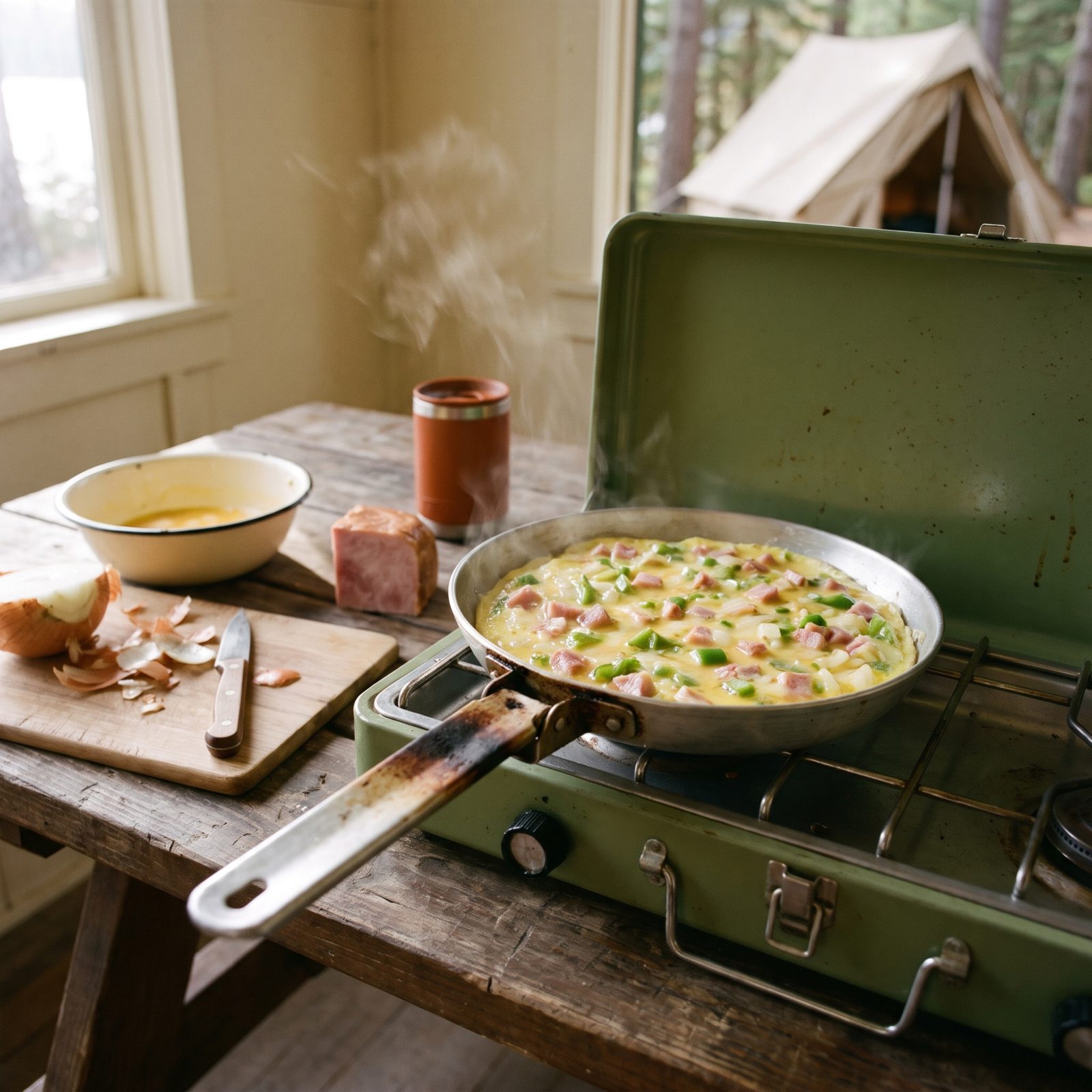
The skillet was nothing fancy. Two hinged halves with long, scorched handles — pour in the egg and veg, let it set slow and flat, and you’d cook the whole omelet through without the flop-and-pray maneuver that wrecked so many camp breakfasts.
Ham, onion, green pepper, done. Somebody always chopped the onion too big and somebody always complained. You’d cut the finished omelet into wedges right in the pan and slide them onto plates one at a time. First one up got the crispiest edge.
I’ll admit I burned more than one of these to leather before I figured out the Coleman runs hotter on the left burner. Nobody tells you that. You just learn it the hard way, usually with a crowd watching.
24. Velveeta Cheese Omelets
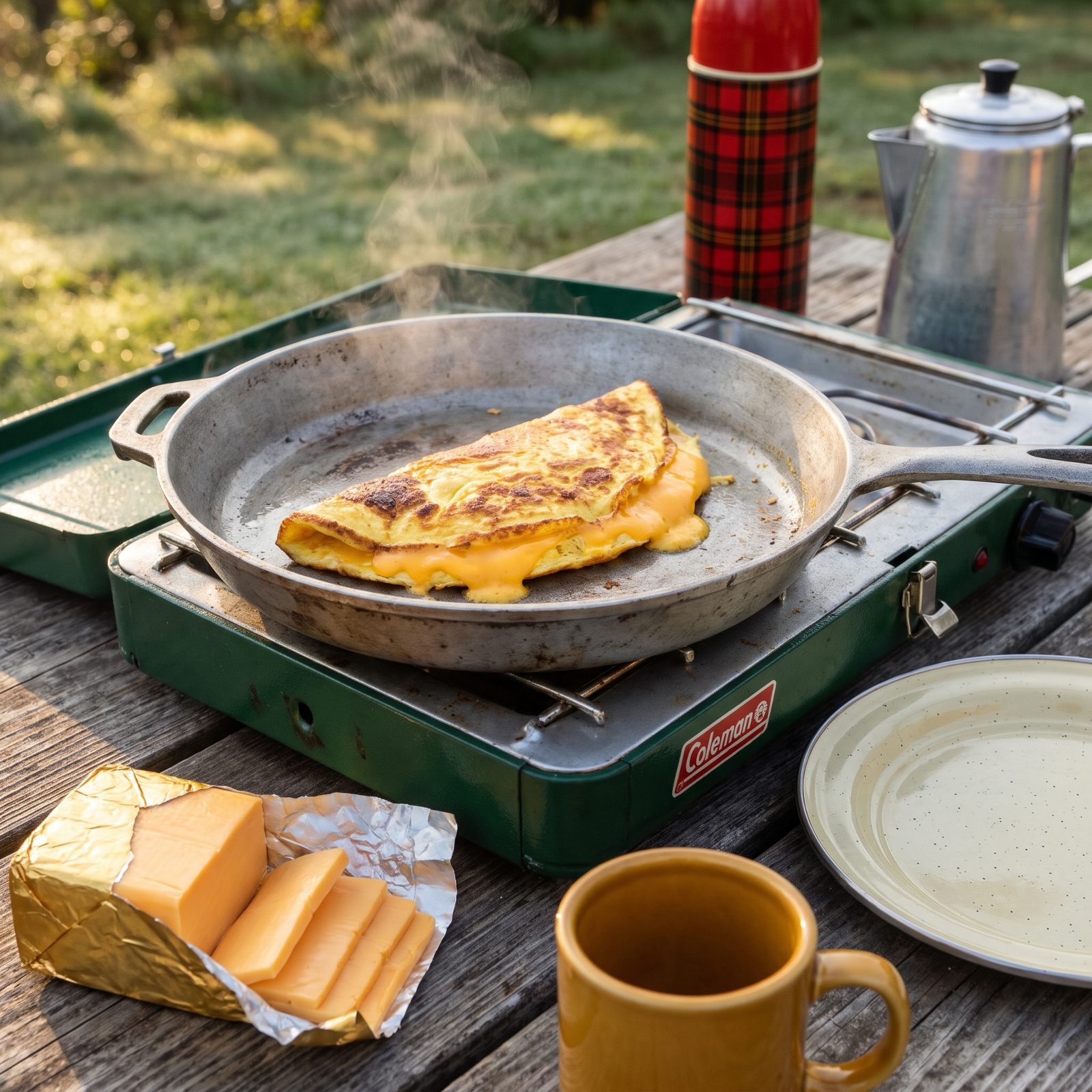
This was the cheese that never let you down. It didn’t need a cooler, it didn’t crumble, and it melted into something closer to lava than cheese. A couple of slices dropped on the eggs and folded over, and by the time you plated it the stuff was still sliding out the sides.
Not fancy. Nobody pretended it was. But at seven in the morning in a damp sleeping bag, a hot cheese omelet off the Coleman was exactly right, and the kids ate it without a single complaint.
23. Crisp Scrapple With Fried Eggs
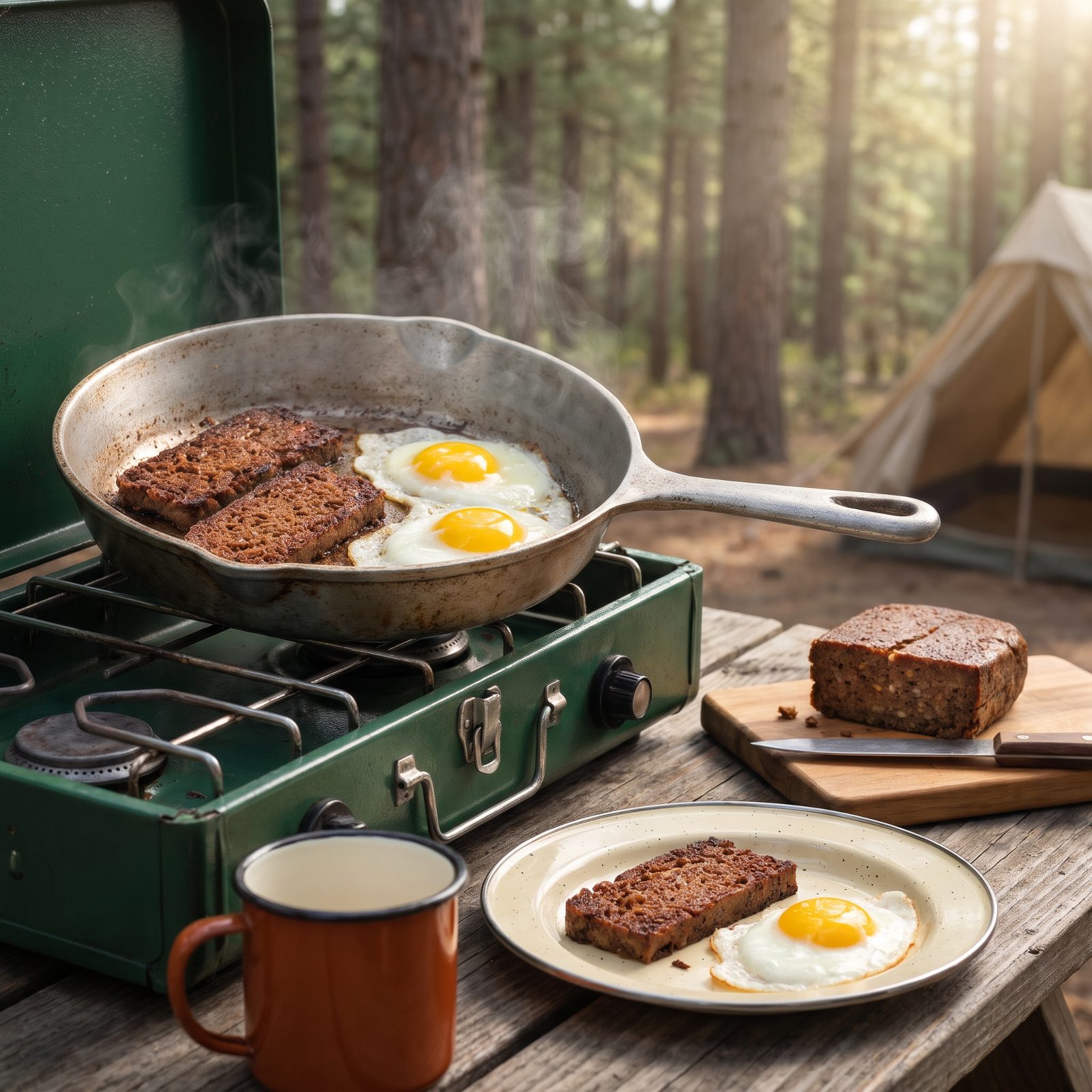
Scrapple needs patience, and camp breakfast rarely has any. Slice it thick, lay it in a dry hot skillet, and leave it alone. Flip it too soon and it falls apart into mush. Wait, and the outside goes crackly-crisp while the middle stays soft.
Serve it beside a fried egg, sunny side up with the yolk left whole and golden, and you had a Mid-Atlantic tradition that split families right down the middle. You either grew up on it and loved it, or you stared at the dark brown loaf and asked what exactly was in there. Better not to ask, honestly.
As a meat shop owner puts it, “avoid flipping the scrapple multiple times, as moving it around more than necessary leads to it crumbling or starting to fall apart.”
22. Country Ham, Red-Eye Gravy and Grits
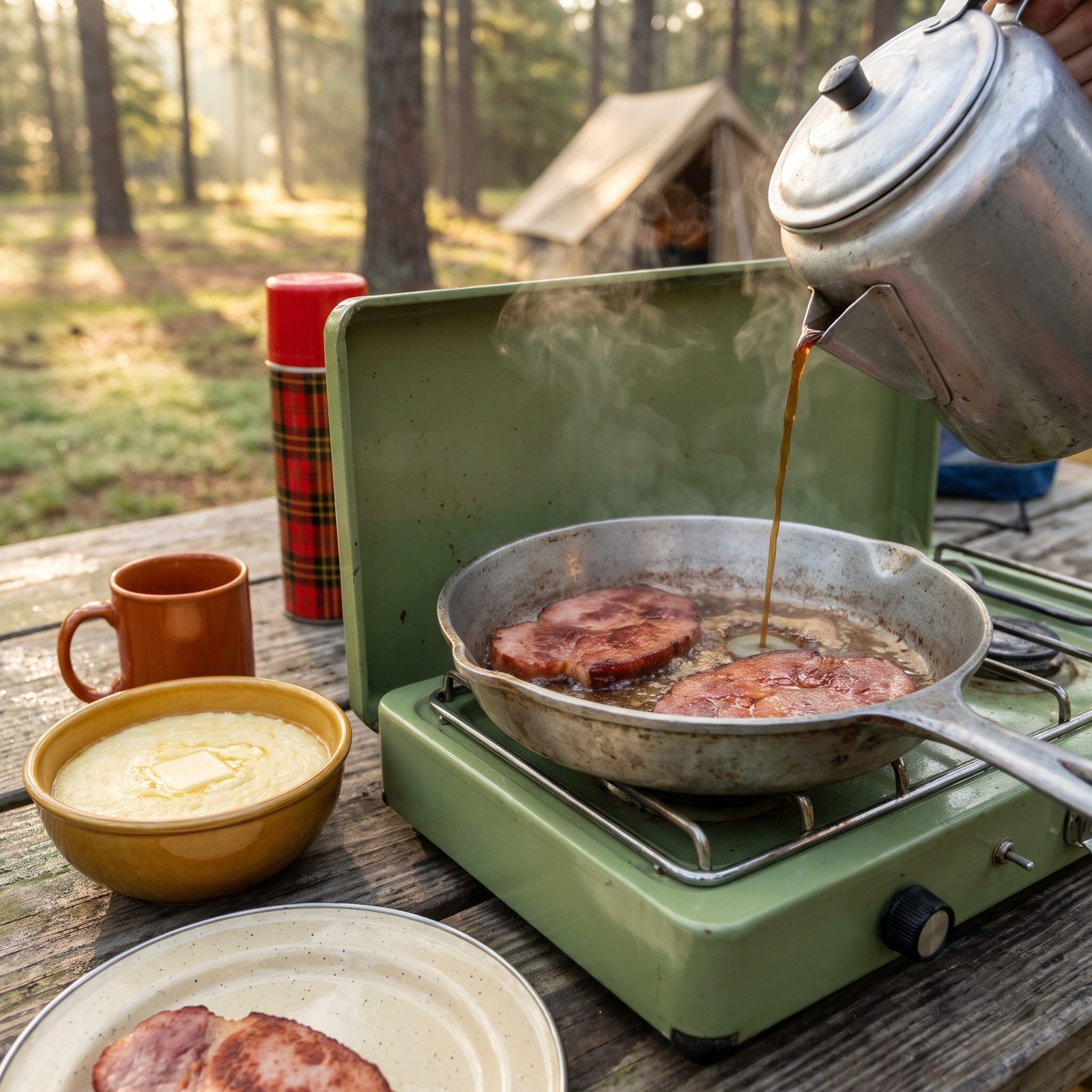
You pour the coffee straight into the ham pan. That’s the whole secret, and it sounds wrong until you taste it. The drippings and the black coffee cook down into red-eye gravy — thin and sharp and a little bitter — and you spoon it over grits gone glossy with butter.
Country ham is murderously salty, the kind that makes you reach for the water jug, so the mild grits underneath aren’t optional. They’re the referee.
The percolator did double duty: your coffee and your gravy came out of the same pot.
A Southern campsite breakfast through and through, slow and salty and worth the wait. It’s the one I still make at home when it’s raining and I want to feel eleven years old again.
21. Bacon-Strip Pancakes Cooked Right on the Griddle
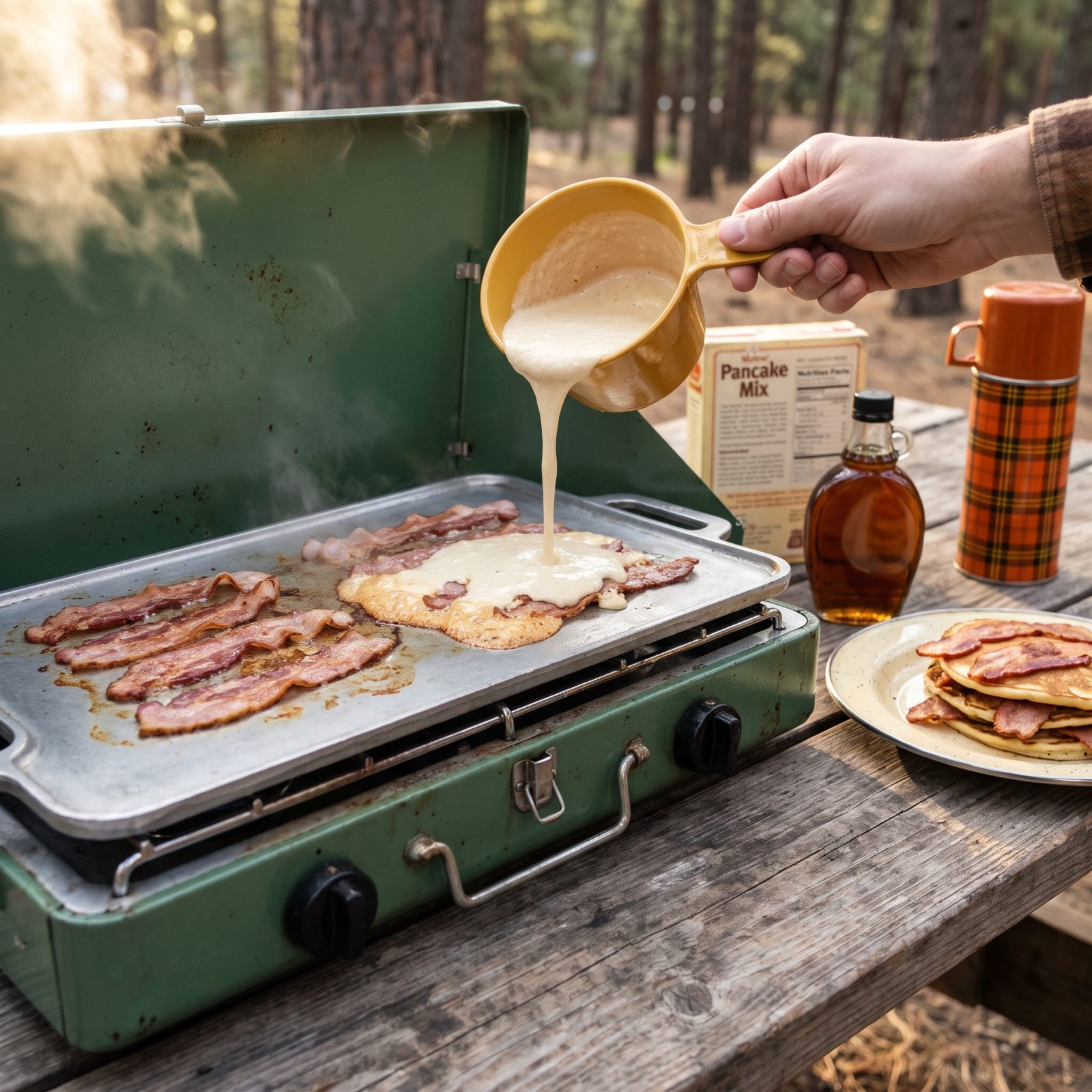
Lay the bacon down first, let it get going, then pour the pancake batter right over the top of the strips so the bacon cooks into the pancakes. One flip and you stacked the pancakes, each one studded with bits of bacon cooked right in.
The mix was Bisquick or Aunt Jemima, dumped in a bowl with water or canned milk, stirred with a fork until it was mostly smooth. Lumps were fine. Lumps were traditional.
20. Batter-Fried Apple Ring Pancakes
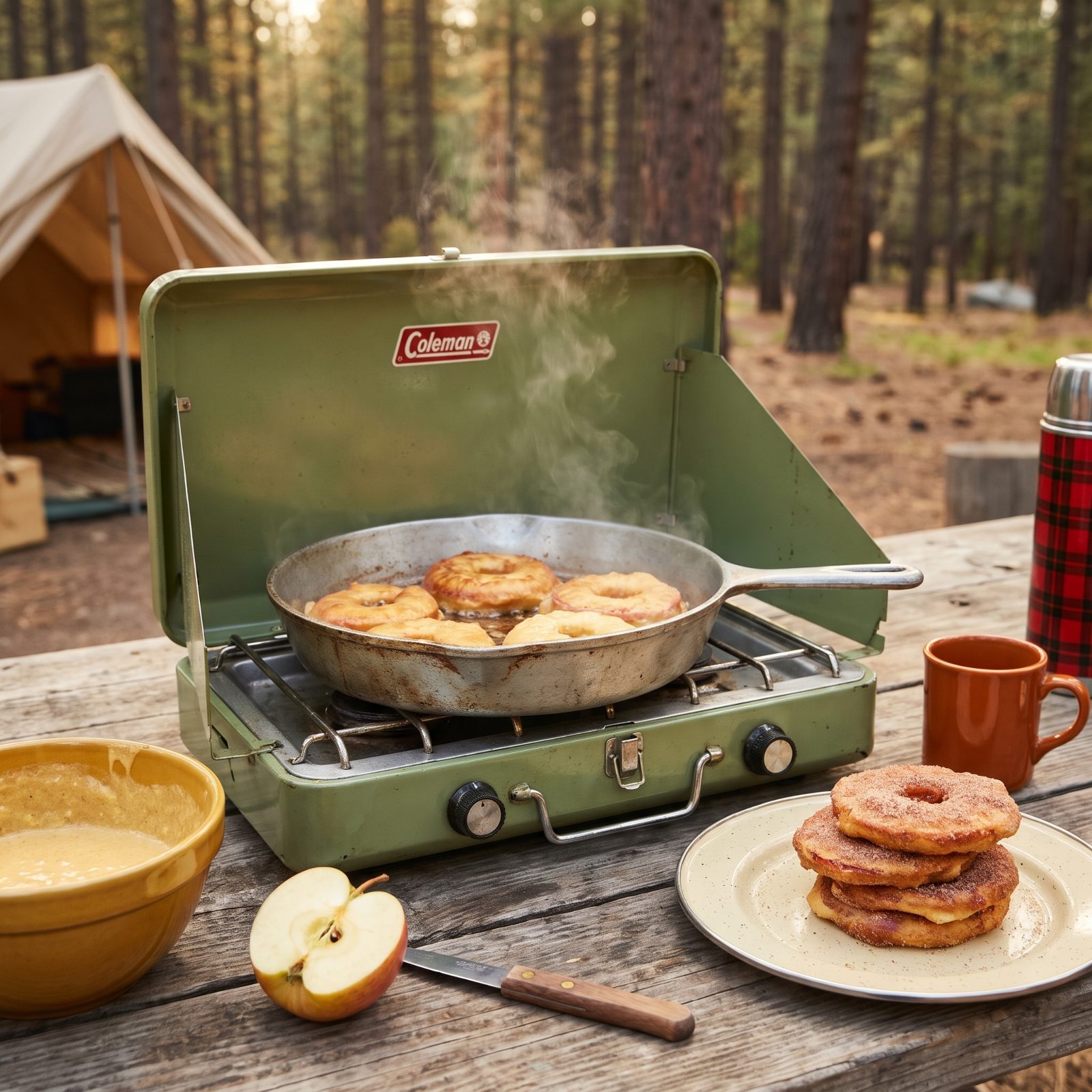
Core an apple, slice it crosswise into rings, dunk each one in leftover pancake batter and drop it in the fat. The ring held its shape, the batter went puffy and gold, and the apple inside steamed soft and sweet.
Dust them with cinnamon-sugar and you had a fritter, basically, cooked on a two-burner stove in the middle of a state park. Kids thought it was dessert for breakfast, which it mostly was. A good way to use up the apples before they went soft in the bottom of the cooler.
19. Stale-Bread French Toast With Powdered Sugar
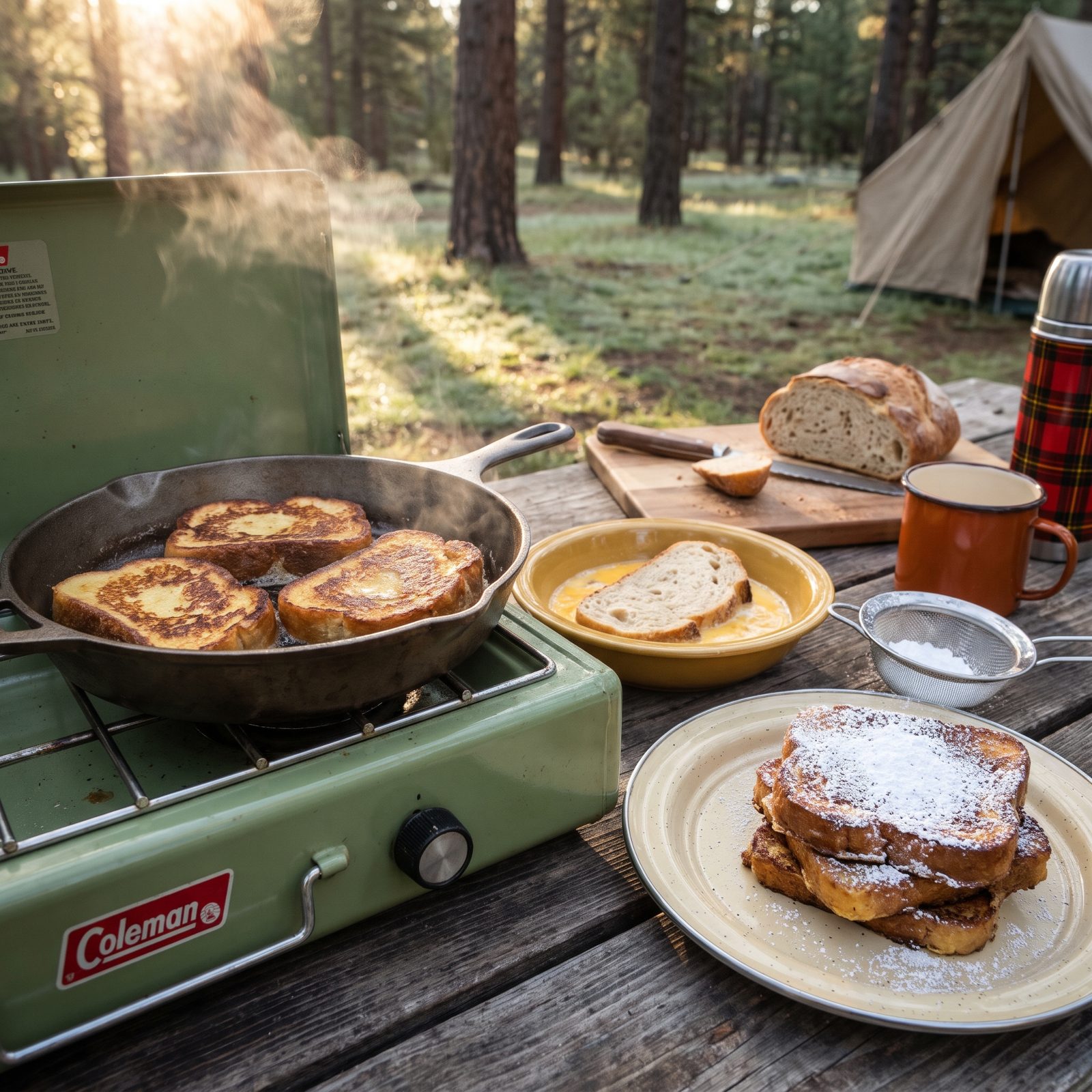
Day-three bread was the whole point. The loaf had gone stiff in the cooler, and that’s exactly what you wanted — fresh bread turns to paste in the egg, while stale bread drinks it right up without falling apart.
Eggs, a splash of canned milk, maybe cinnamon if someone remembered it. Soak, fry till golden, and bury the whole thing under a snowstorm of powdered sugar shaken through a little fine-mesh sieve.
18. Skillet Cinnamon-Sugar Toast
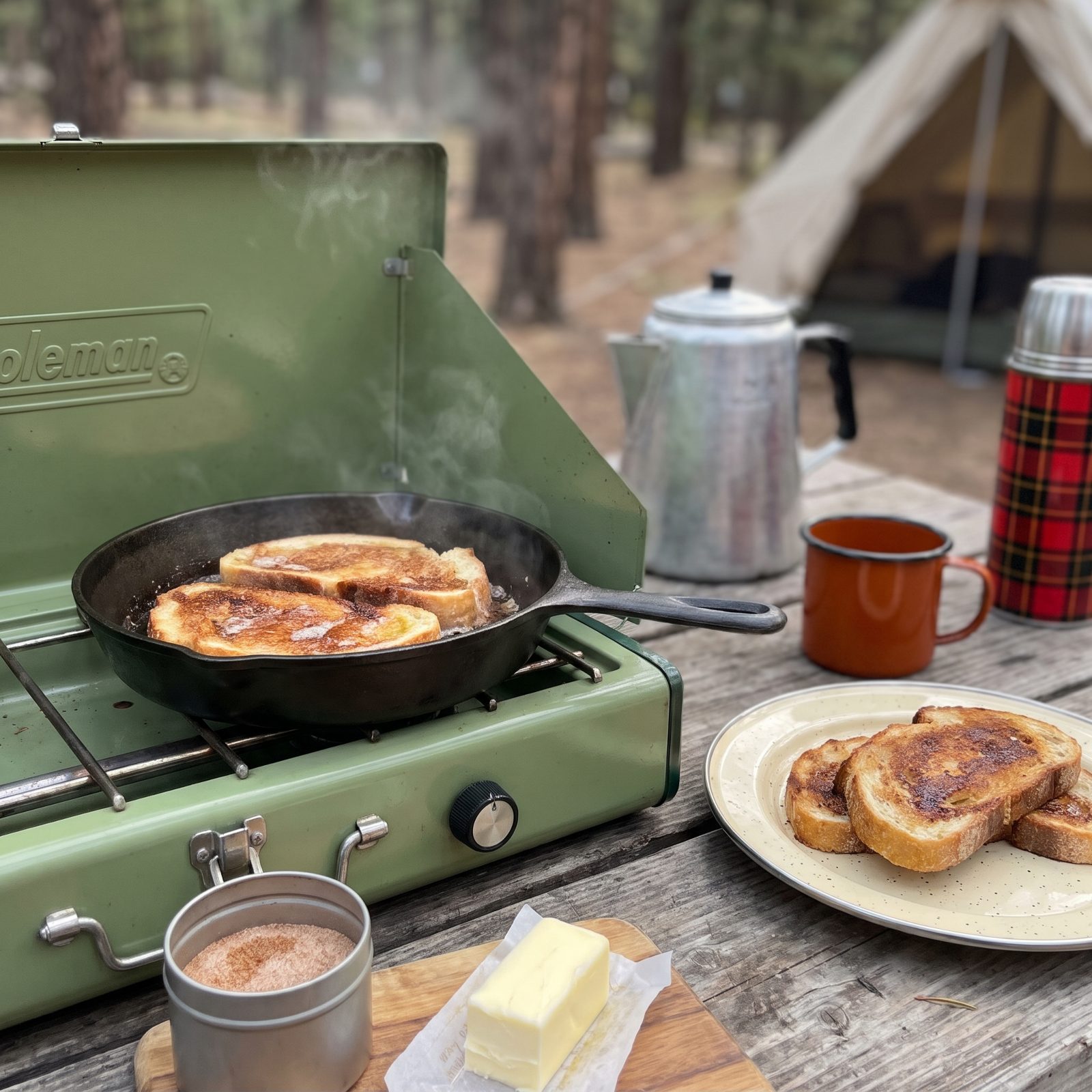
The last-slice breakfast. When the eggs were gone and the bacon was gone and somebody was still hungry, you buttered a slice of bread, laid it in the skillet butter-side down, and shook cinnamon-sugar over the top while it toasted.
The sugar half-melted into the butter and went a little crunchy at the edges. Thirty seconds of work, no recipe, no mix, no can. Just the thing you made to stretch one more breakfast out of an almost-empty cooler before you broke down the tent and hit the road.
17. Camp-Toaster White Bread With Grape Jelly
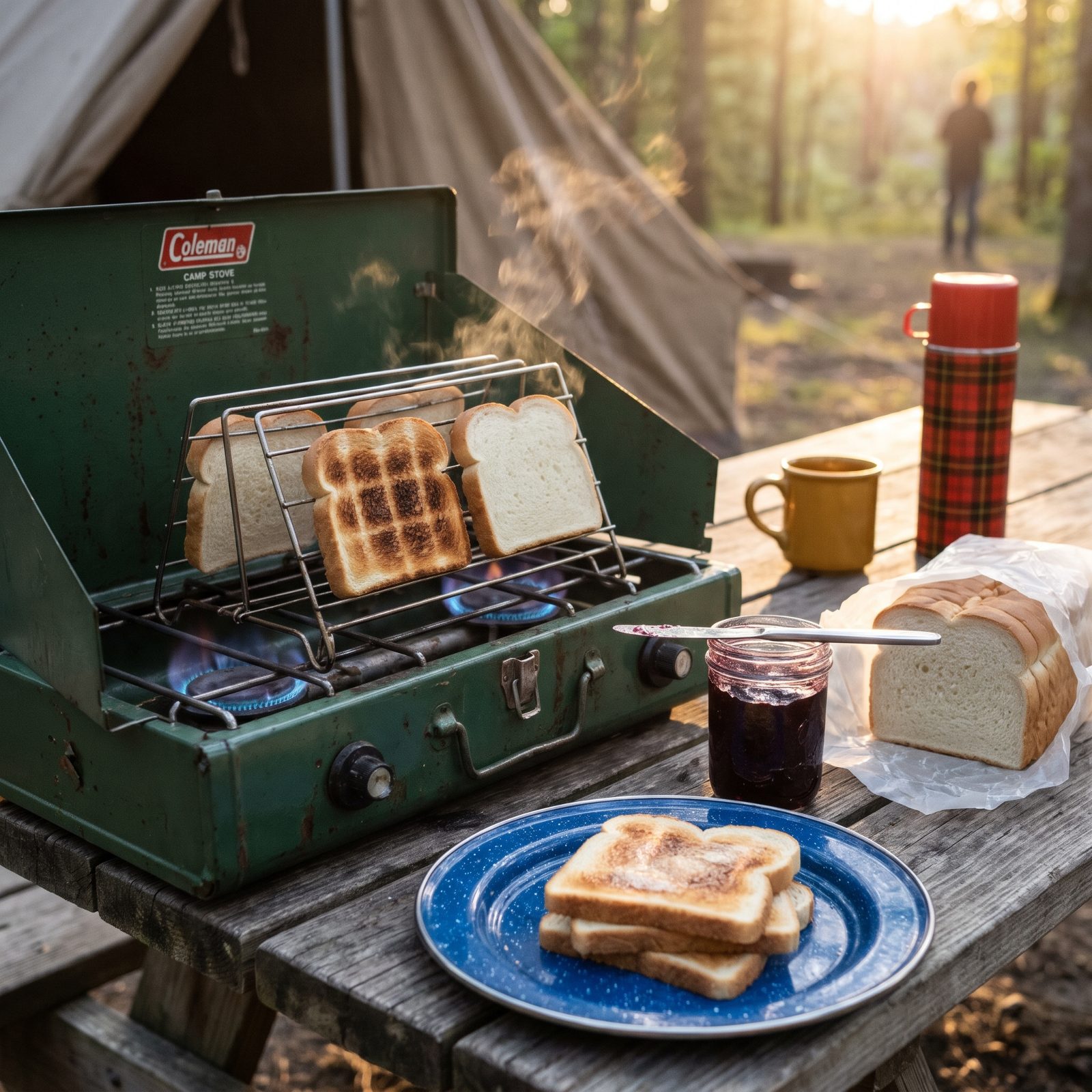
You flipped them with your fingers and burned yourself every single time. The folding tin toaster was a camping miracle — a little wire pyramid that sat right on the Coleman burner and turned white bread into toast with stripes across it. One side always went too far.
Then came the grape jelly, that glossy purple stuff from the jar that tasted like no actual grape on earth, smeared thick on hot bread with the butter still sliding around. First food of the day, usually eaten standing up near the fire because the picnic bench was soaked with dew.
16. Covered-Skillet Biscuits With Strawberry Jam
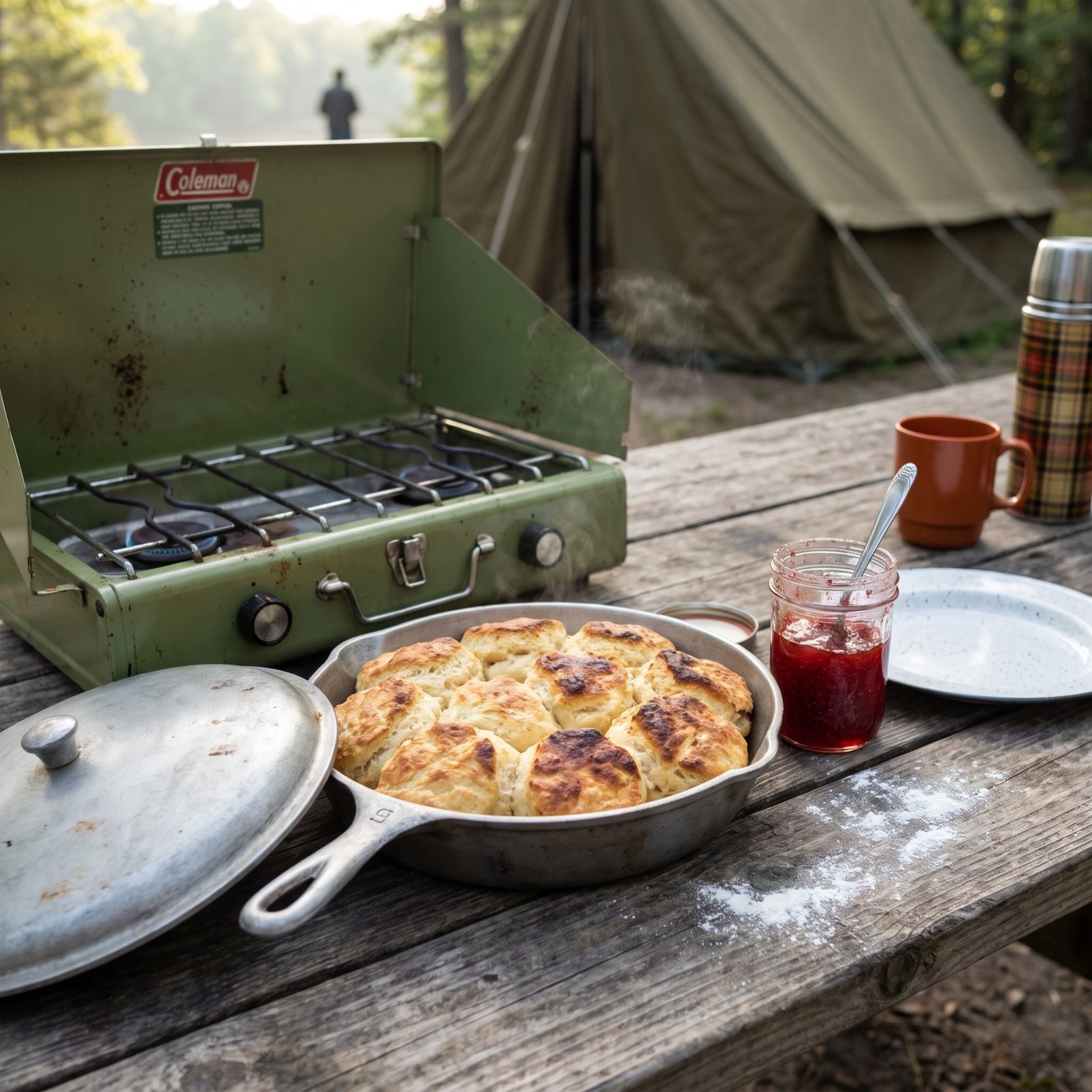
No oven, no problem. You dropped biscuit dough into a greased aluminum skillet, clapped the lid on, and set it over a low Coleman flame. Patience did the work, plus a quarter-turn of the skillet every few minutes so the bottoms didn’t scorch while the tops rose.
Lift the lid and there they were, deeply browned in patches and lopsided, the camping version of real biscuits. Strawberry jam melted into the warm crumb. Honestly? Better than anything the oven at home made, probably because you were starving and cooking on a camp stove in the open air.
15. Bisquick Coffee Cake Baked in a Covered Skillet
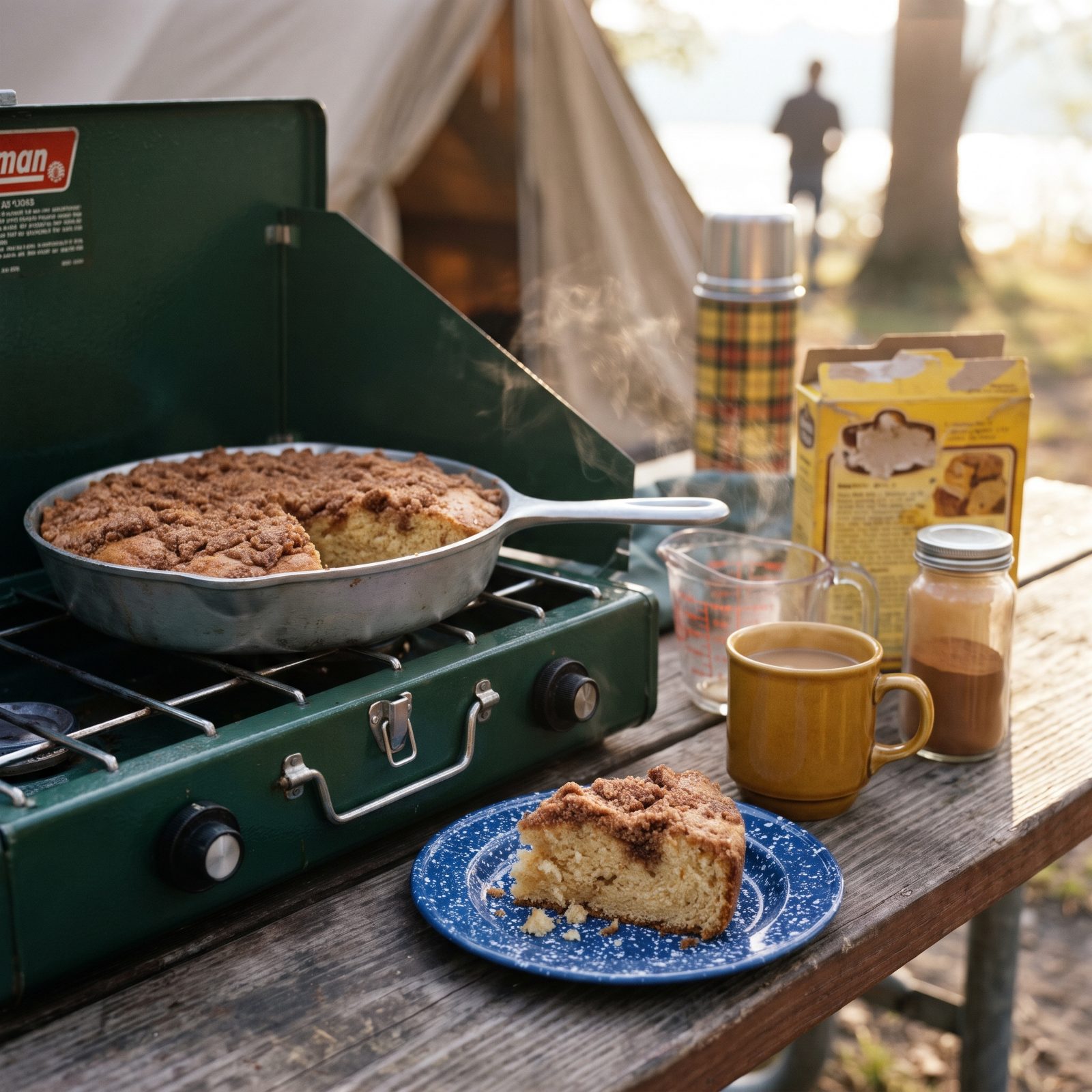
Somebody always packed the box of Bisquick, and on the slow mornings it became coffee cake. You mixed the batter right in a cup, poured it into the skillet, scattered cinnamon and brown sugar over the top, and covered it low and slow until the middle set.
It smelled like a Sunday kitchen, out in the middle of the woods. The edges crisped, the top went crackly, and the whole thing came out breathing cinnamon.
Cut into warm wedges and eaten with coffee that had grounds floating in it. The grounds were part of the experience.
14. Fried Cornmeal Mush With Syrup
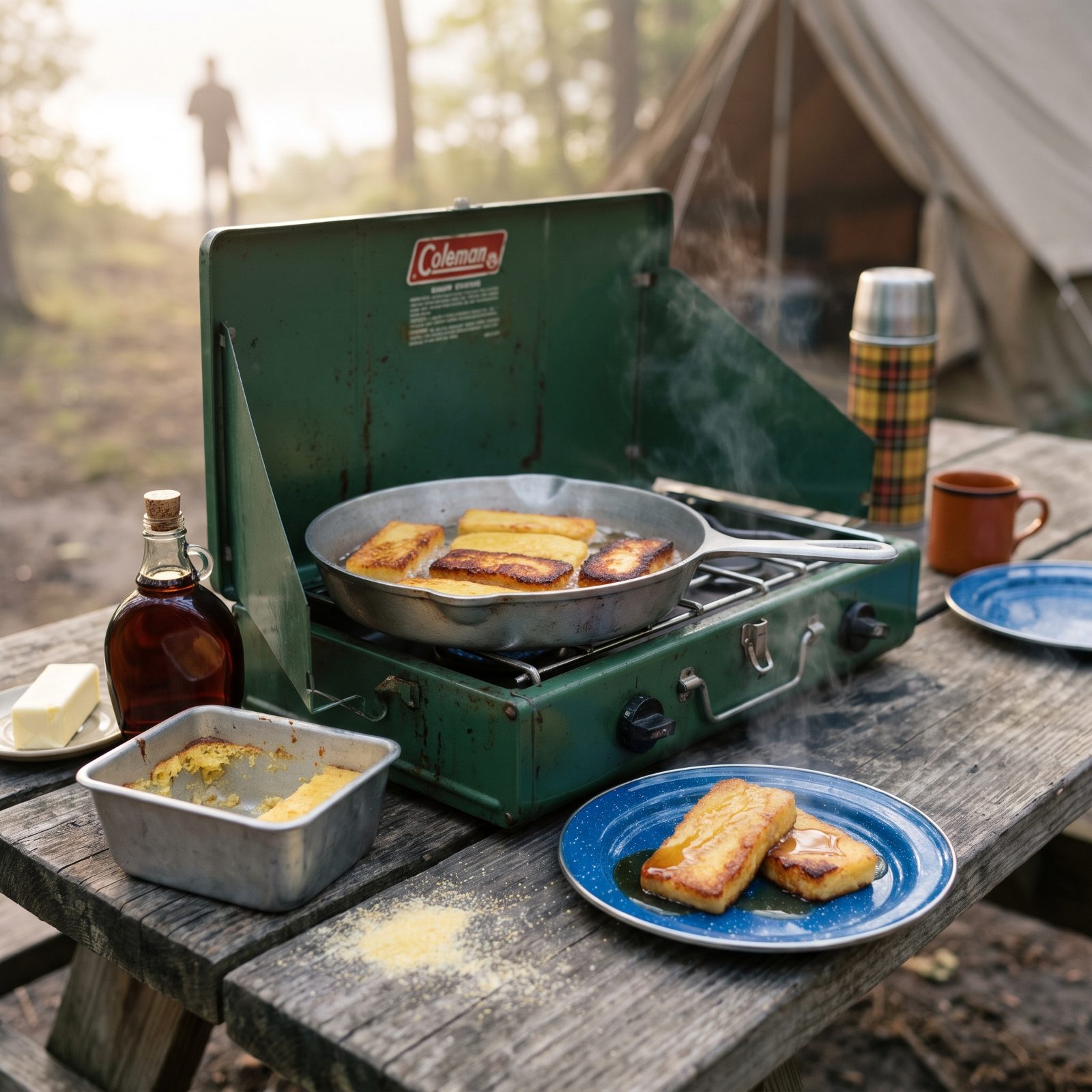
This one took planning. You cooked the cornmeal into a thick mush the night before and pressed it into a loaf pan to set up overnight in the cooler, and come morning it had firmed into a solid brick you could slice.
The slices hit the bacon-greased skillet and crackled. You fried them until the outsides went crisp and golden while the insides stayed soft and creamy, then drowned them in syrup. Cheap, filling, a little old-country. Grandparents swore by it.
13. Leftover Rice Cereal With Cinnamon and Milk
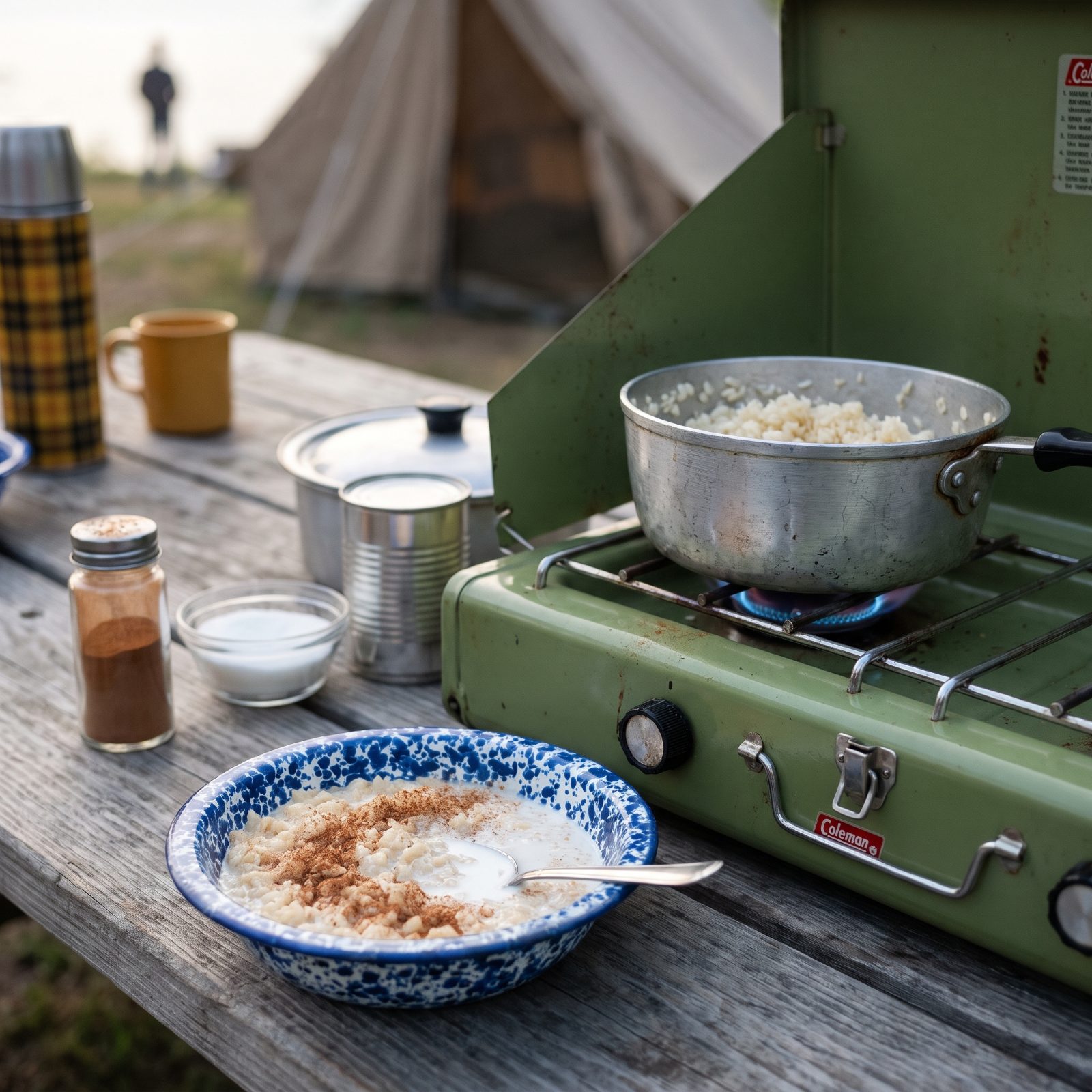
Nothing got thrown out at a 1970s campsite. Last night’s pot of rice became this morning’s breakfast, reheated with a little milk and a heavy shake of cinnamon until it went soft and sweet.
Thrifty, warm, and gone in about four minutes. Not fancy, and nobody pretended it was. But a hot bowl of cinnamon rice on a cold morning hit a spot that cold cereal never could.
12. Stewed Prunes With Buttered Toast
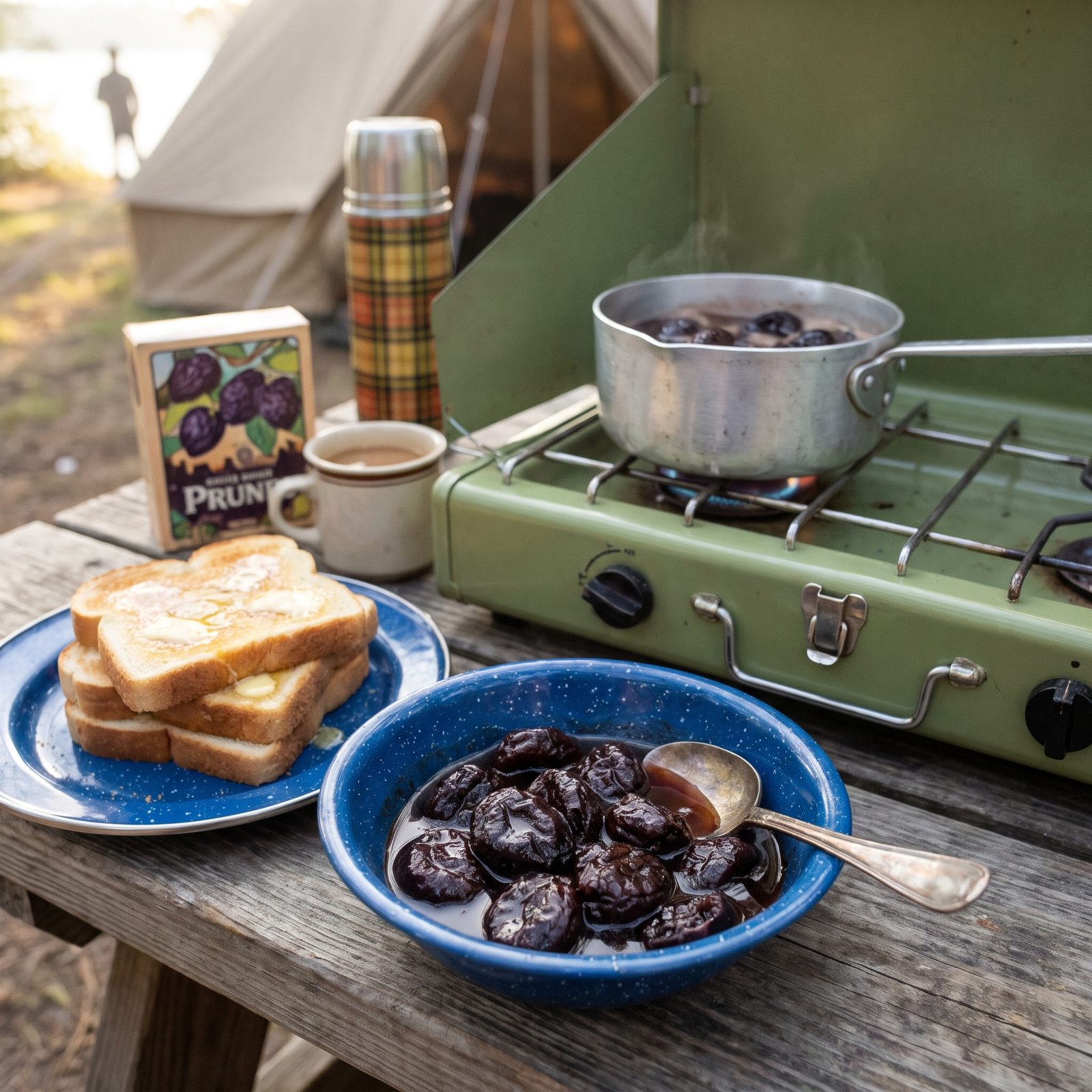
Grandparents’ breakfast, and the kids made faces. Dried prunes simmered in a little water until they plumped up glossy and dark in their own syrup, served alongside white toast slathered in butter.
There was a practical reason this showed up on camping trips, and if you know, you know. Beyond that it was genuinely good — sweet and tangy, the syrup sopped up with the toast. The grown-ups ate it without apology while the children held out for the chocolate cereal.
11. Onion Home Fries Fried in Bacon Grease
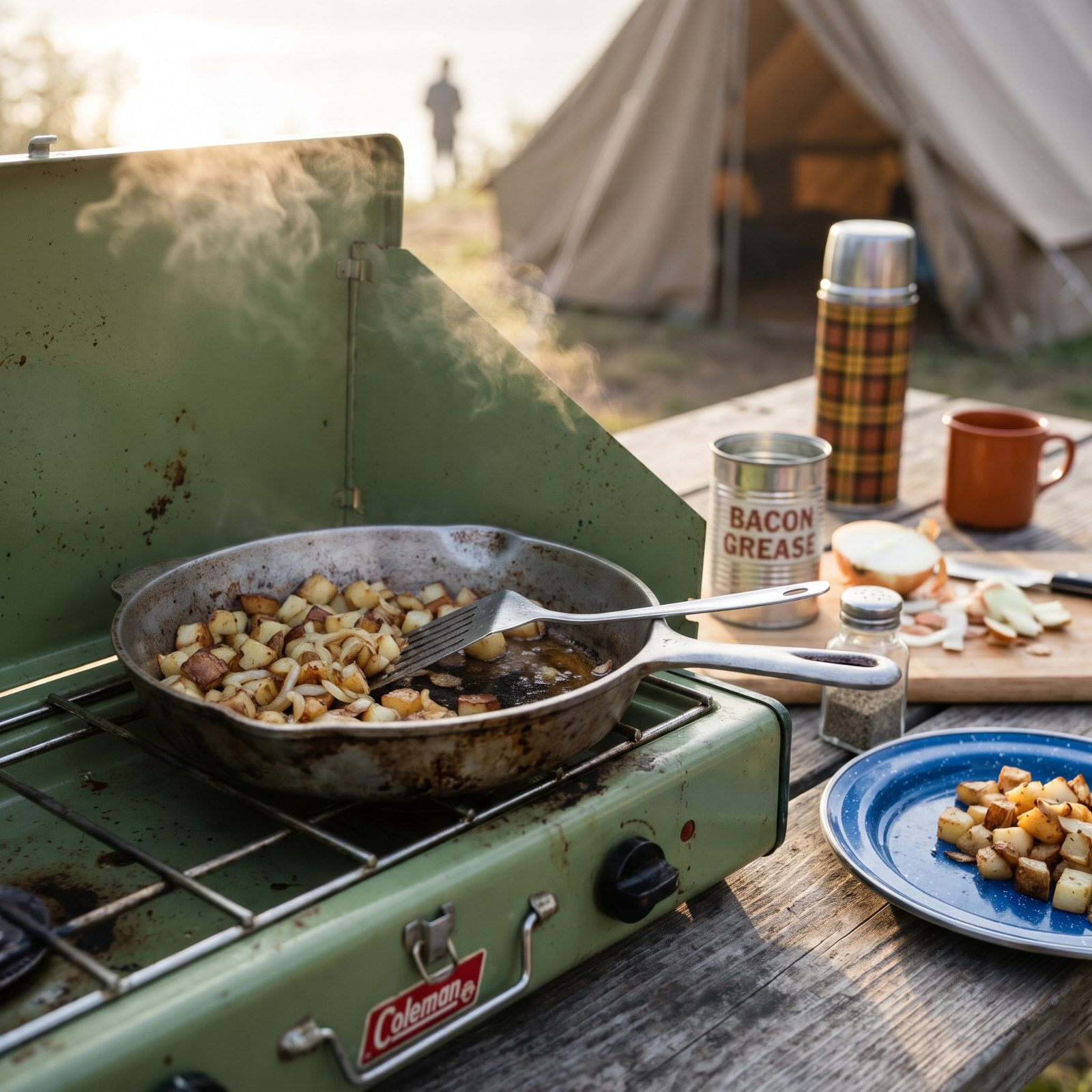
The bacon fried first, always, and nobody poured that grease out. It went back in the skillet and became the reason the potatoes tasted the way they did.
Diced potatoes and a whole sliced onion hit the hot fat, and then you left them alone — no stirring, so a real crust could form. Salt, pepper, and the patience to flip only when the bottoms went brown and crunchy. The onions went sweet and caramel-soft between the crispy potato chunks. This was the breakfast that pulled sleeping teenagers out of the tent by smell alone.
10. Leftover Mashed-Potato Pancakes
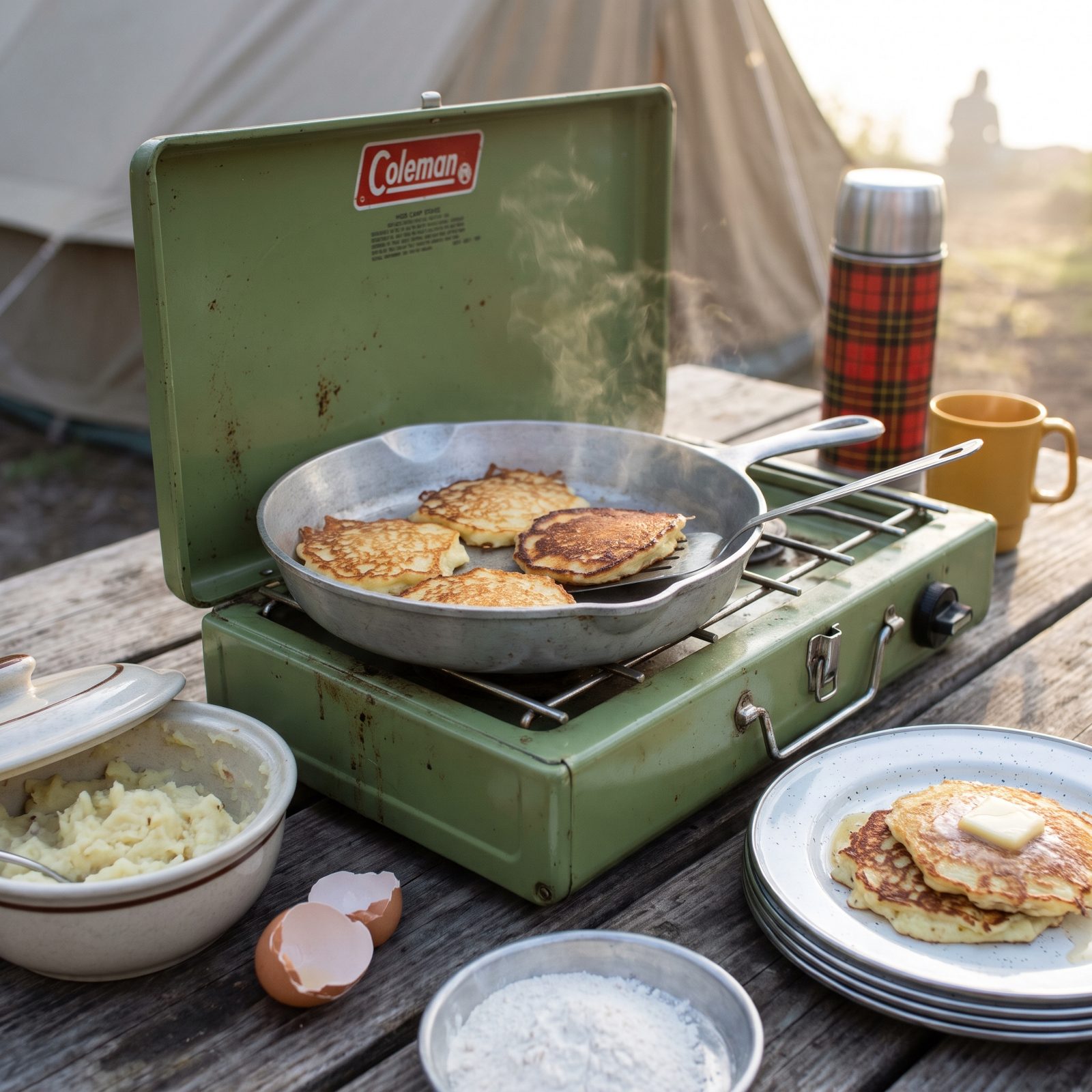
The last of last night’s mashed potatoes never stood a chance. You mixed in an egg and a shake of flour, flattened spoonfuls into the hot greased skillet, and fried them until the edges went lacy and crisp.
Crunchy outside, creamy inside, better than they had any right to be. Some families topped them with jam, some with a little salt, some ate them plain off the spatula before they even made it to a plate. The campsite ran on this kind of thinking: cook extra at dinner, eat it fried at breakfast. Waste nothing, and the woods will feed you fine.
9. Molasses-Sweetened Breakfast Beans With Bacon
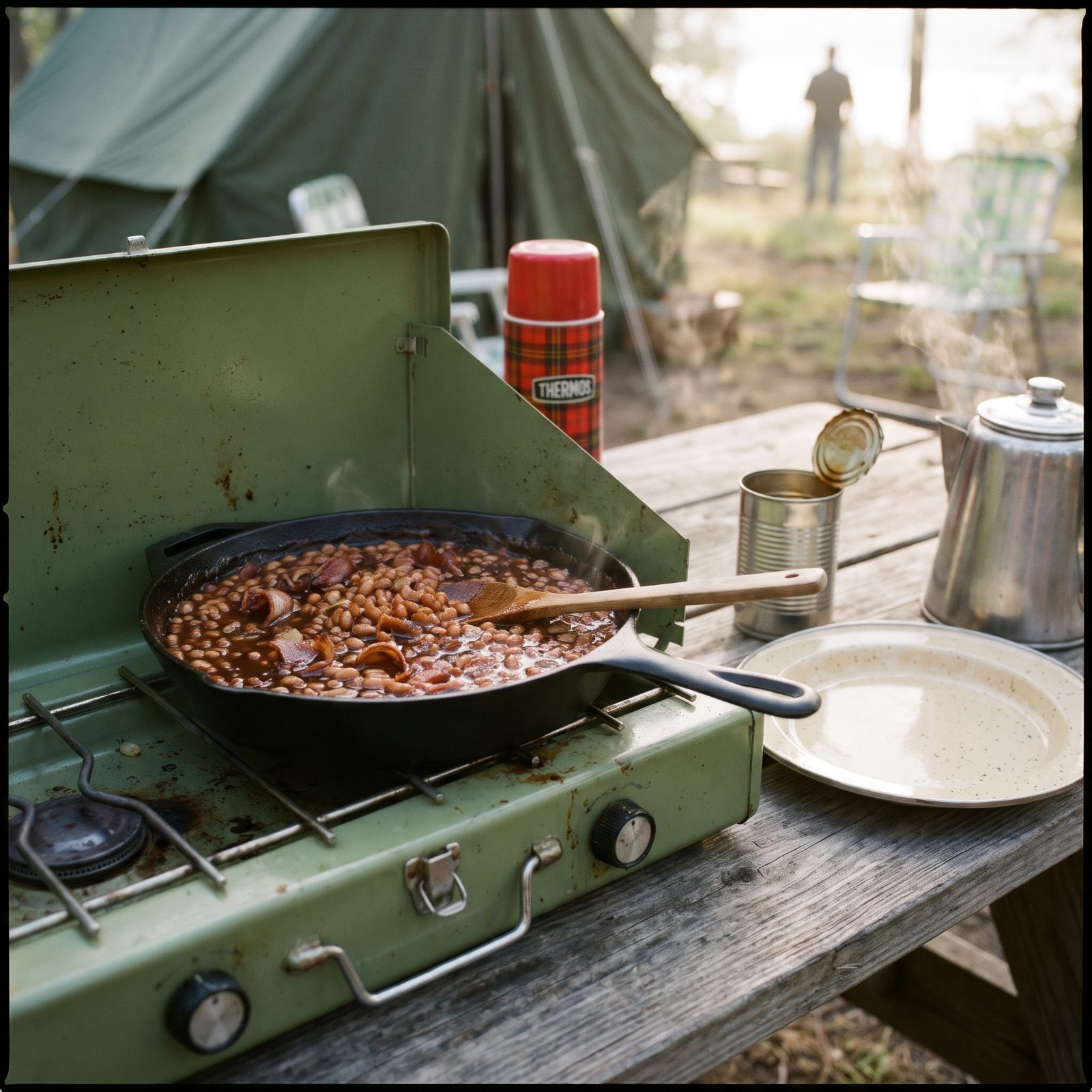
Beans for breakfast threw a lot of people — until they tasted them. A can of pork and beans dumped in the skillet, a long squeeze of molasses, and whatever bacon ends didn’t make it onto the plate. You let the whole thing go thick and sticky over a low flame while the coffee perked.
It bought you the whole morning. Beans don’t care if you forgot them for ten minutes while you untangled a fishing line. They just sat there getting better.
8. Salmon Patties With Fried Eggs
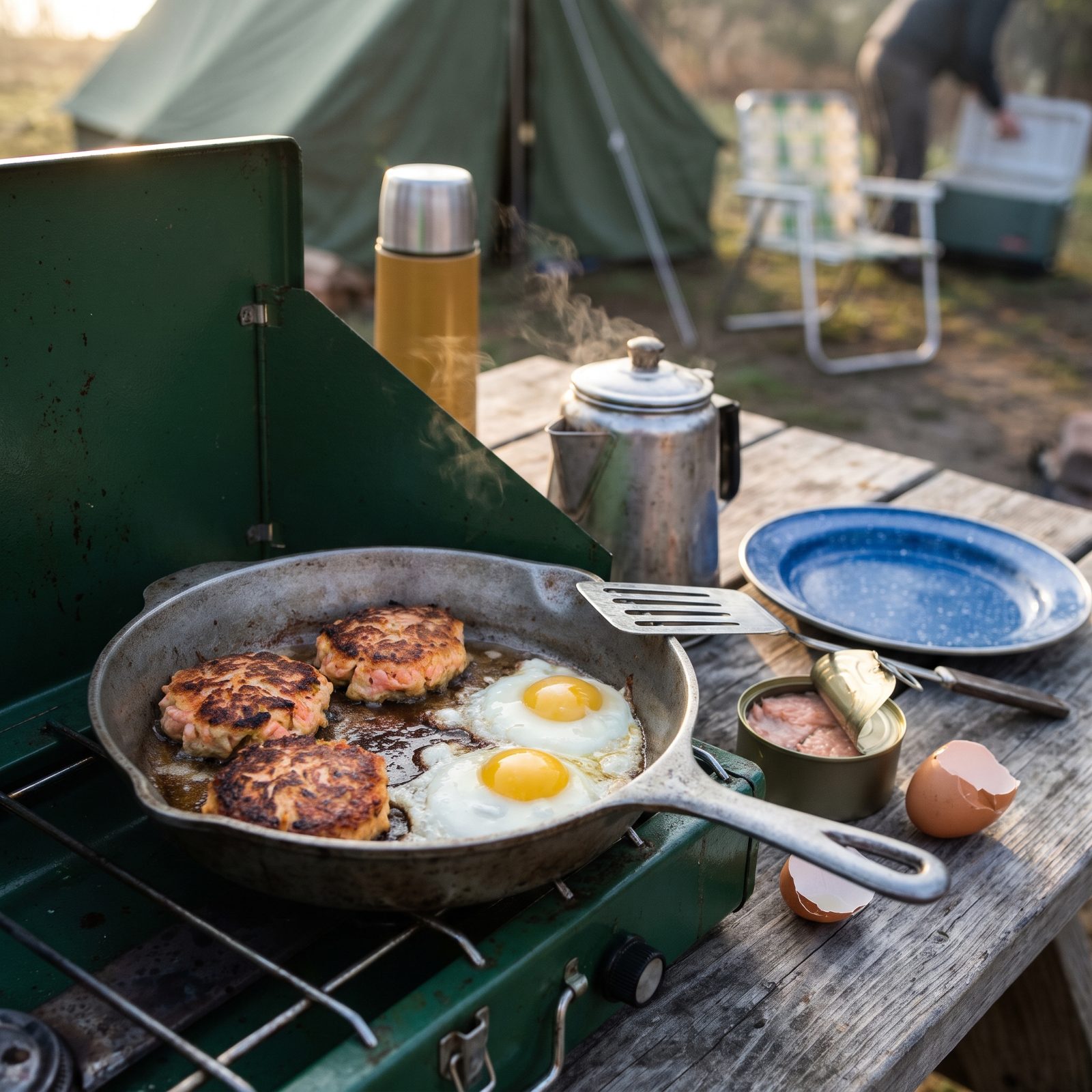
A can of salmon, a cracked egg, a fistful of crushed crackers, and you had patties. The trick was patting them flat so the edges caught that lacy crisp in the bacon grease still pooled in the pan.
Slide a couple of fried eggs alongside, yolks whole, and break them over the salmon as you go. I’ve met people who turn their nose up at canned fish, then eat three of these before they remember they were being difficult.
7. Fried Apples With Sausage Links
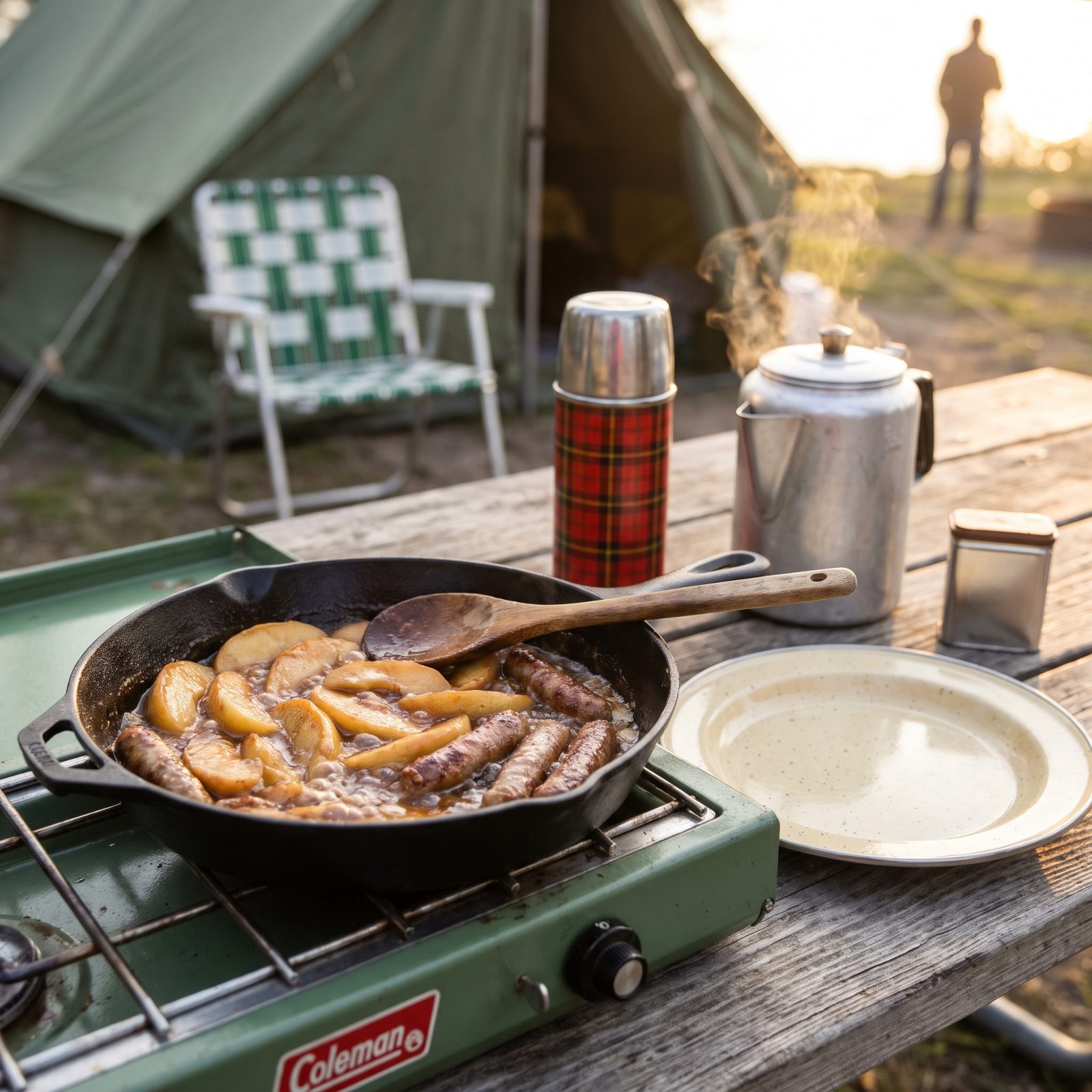
Butter, apple slices, a heavy shake of cinnamon and sugar, and you stood over the skillet stirring until the whole thing went to syrup. The sausage links went in to finish, picking up the sweet glaze so every bite landed half breakfast, half dessert.
Nobody measured anything. You tasted with the spoon, burned your tongue, added more sugar anyway.
6. Warm Canned Peaches With Cinnamon Toast
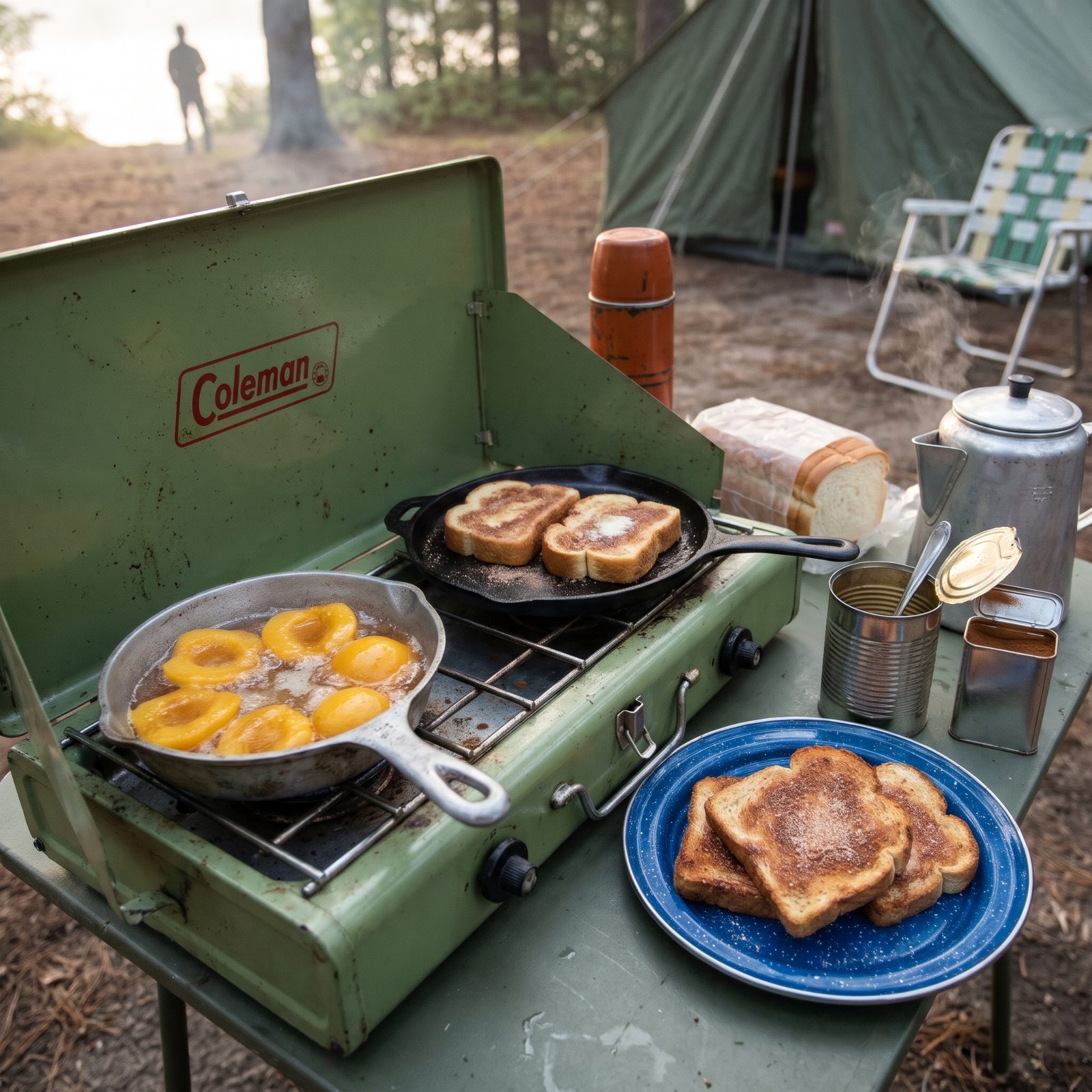
The peaches came from a can about the size of your fist, tipped straight into a little pan to warm in their own syrup. Over on the other burner, the toast griddled — buttered thick, showered with cinnamon sugar until the edges caramelized.
Spoon the warm peaches over the toast, or keep them separate. The camp was divided and both sides were right. This was the breakfast for the morning after a long drive, when nobody had the energy for anything that spattered grease.
5. Hot Biscuits With Old-Fashioned Chocolate Gravy
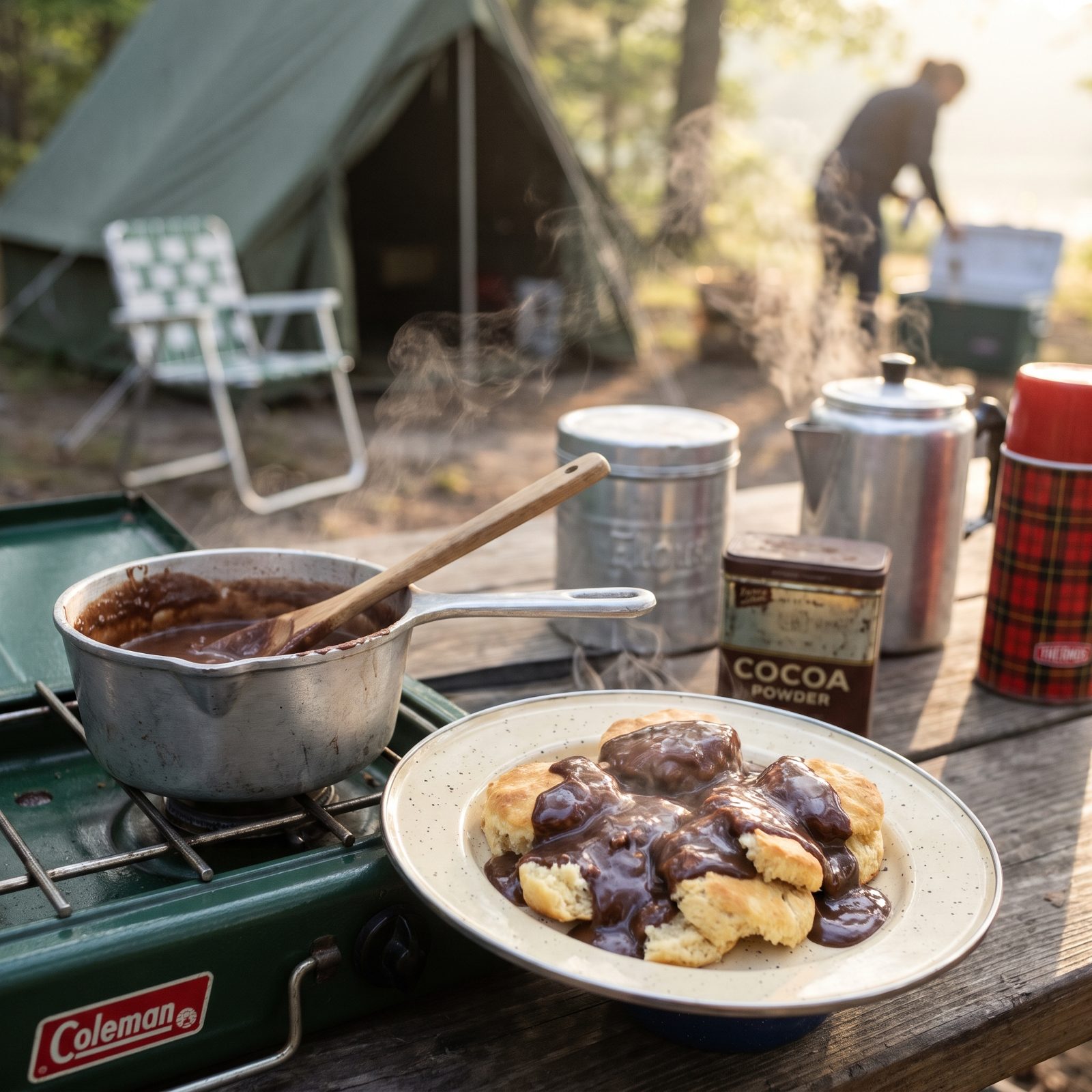
This one came out of the South and converted everyone who tried it. Cocoa, sugar, flour, and a little milk whisked in a saucepan until it went thick and glossy, then poured over biscuits hot enough to steam your fingers.
The biscuits came from a can that popped like a firecracker when you peeled the label. Chocolate gravy on top made kids believe camping was the greatest invention going. I will die on the hill that it beats pancakes.
4. The Frugal Saltine-Cracker Omelet
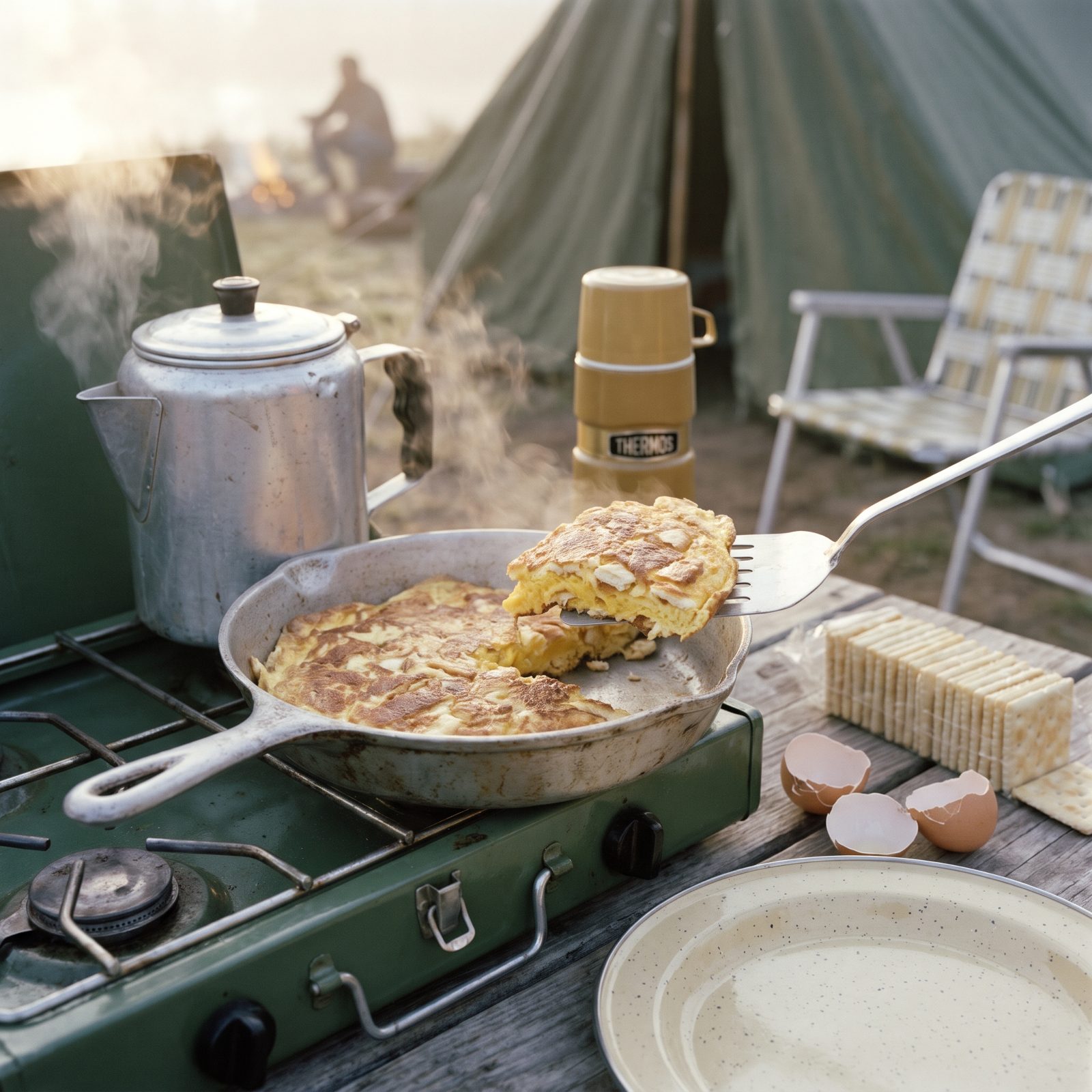
Run low on eggs with a tent full of hungry kids and this was the move. Crushed saltines soaked in a little milk, then folded into the beaten eggs, stretched two eggs into a skillet that fed four.
The crackers soften into something almost custardy and bulk it out without anyone feeling cheated. A Depression-era trick that never left the family recipe box — and it showed up at campsites long after it needed to.
3. Goldenrod Eggs in Cream Sauce Over Toast
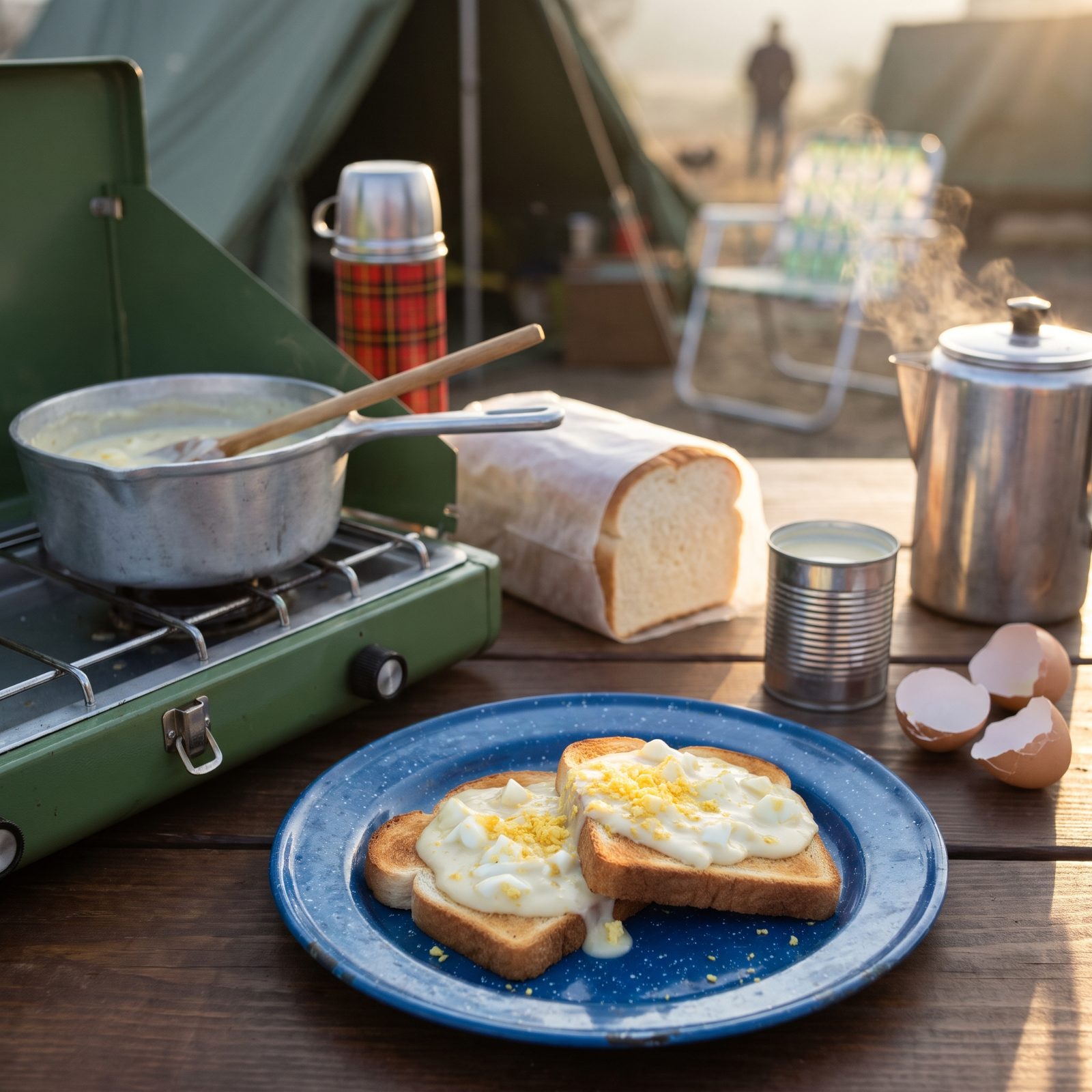
Goldenrod eggs sound fancy and cost almost nothing. You boiled eggs the night before over the fire, then in the morning made a white sauce from evaporated milk and flour, chopped the whites in, and spooned the whole creamy business over toast.
The yolks got grated on top like yellow snow — which is where the name comes from. Military mess halls ran on this, and plenty of dads learned it there before they ever owned a Coleman. It stuck to your ribs through a whole morning of hiking.
2. Deviled Ham and Scrambled Egg Toasts
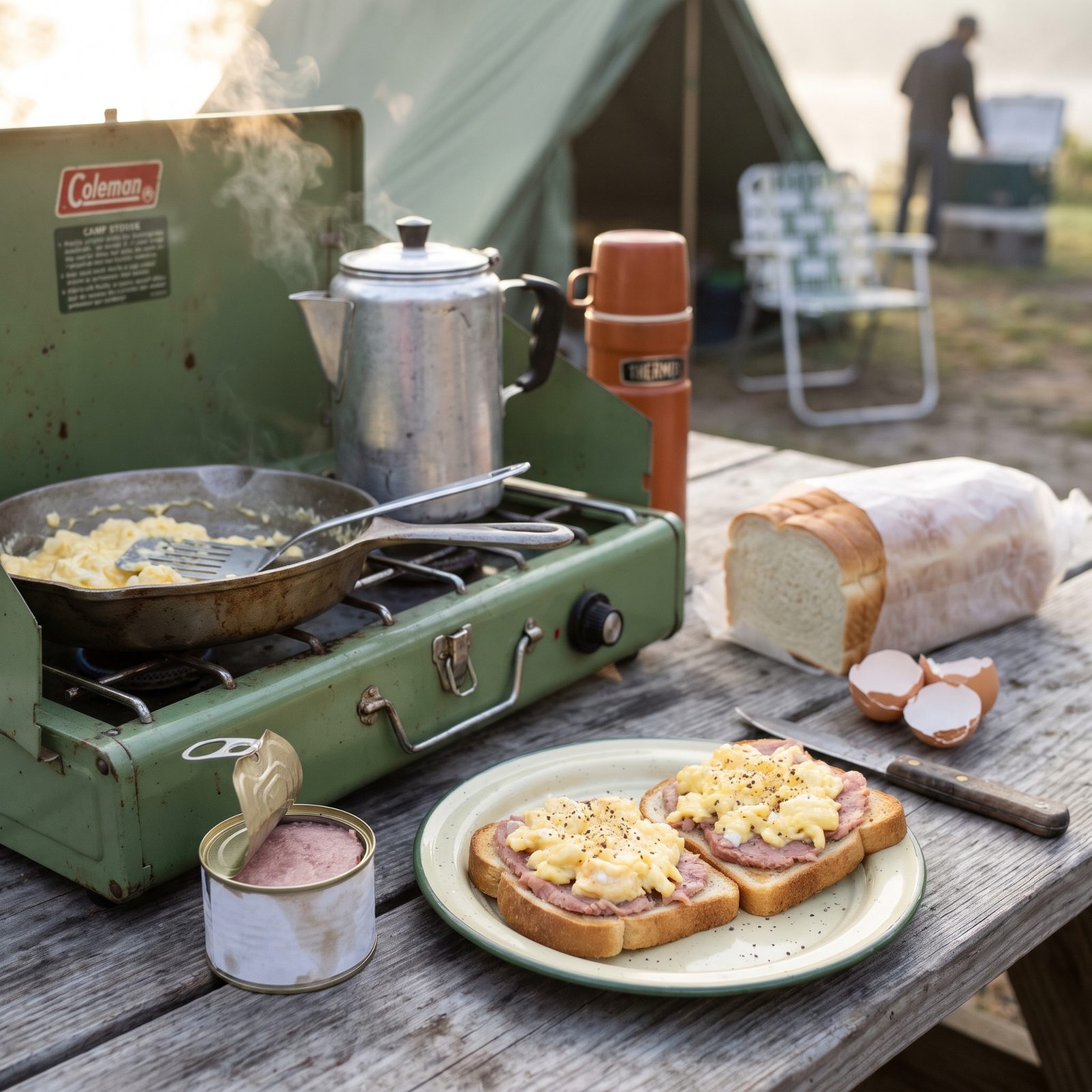
That little can with the paper wrapper, peeled back to show the pink paste inside, did a lot of heavy lifting on camping trips. Spread thick on toast, topped with soft scrambled eggs, and you had protein that didn’t need refrigeration until you opened it.
Salty, savory, gone in four bites. The kind of breakfast you ate standing up because the morning fishing wasn’t going to wait.
1. Canned-Biscuit Camp Doughnuts
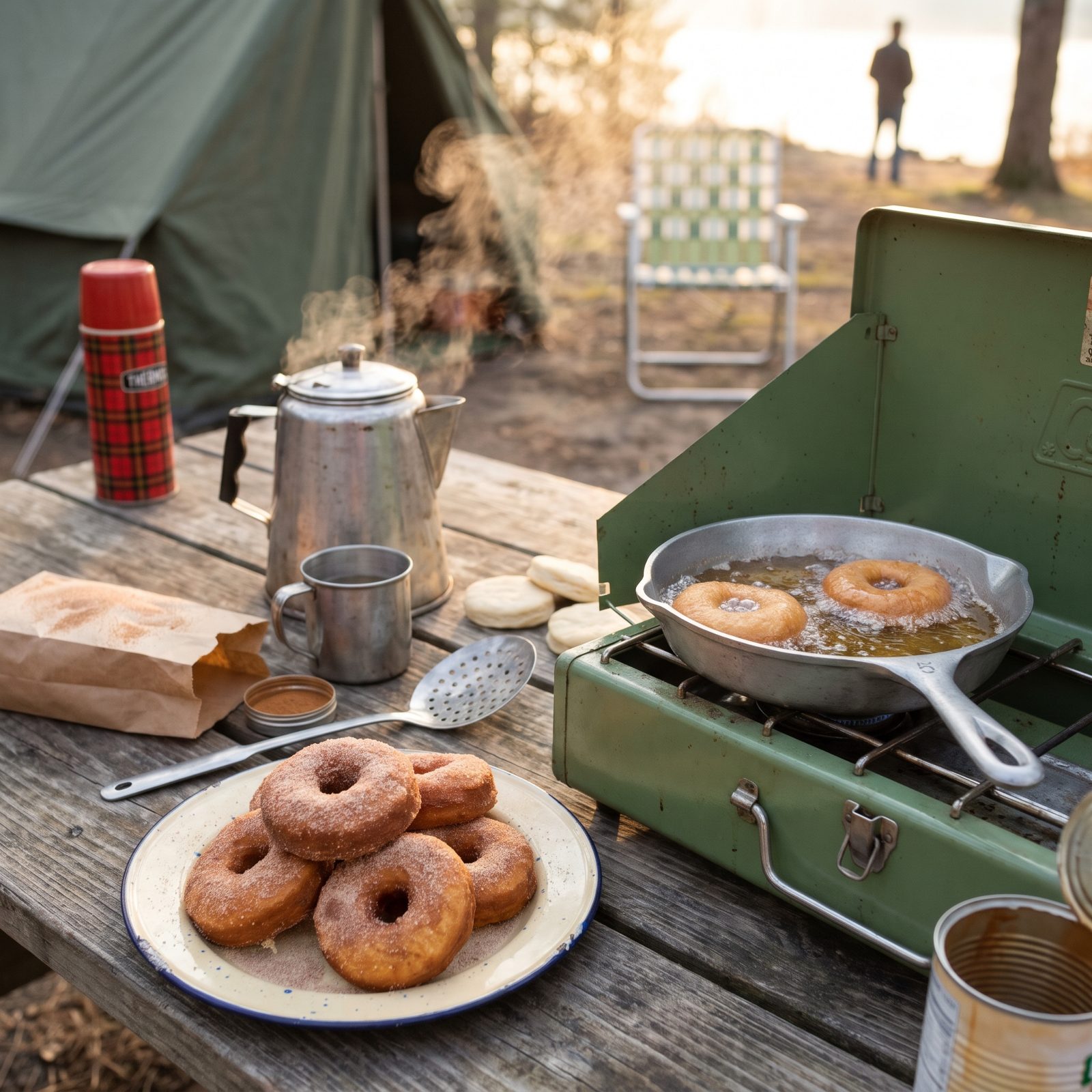
You poked a hole in the middle of each refrigerated biscuit, dropped it into a skillet of hot oil, and watched it puff up golden in under a minute. Out they came, straight into a paper bag of cinnamon sugar, shaken until coated.
The holes you punched out got fried too — little nuggets the kids fought over. Usually the last breakfast of the trip, the one where the cooler was nearly empty and a single can of biscuits turned into a dozen reasons to never want to go home.
Commenting on a canned-biscuit doughnut recipe, a longtime scout troop volunteer writes: “Learned to make these when I was a scout in the late 60’s and early 70’s. On my 25th year of making these every April on our troops Great Sand Dunes campout.”