
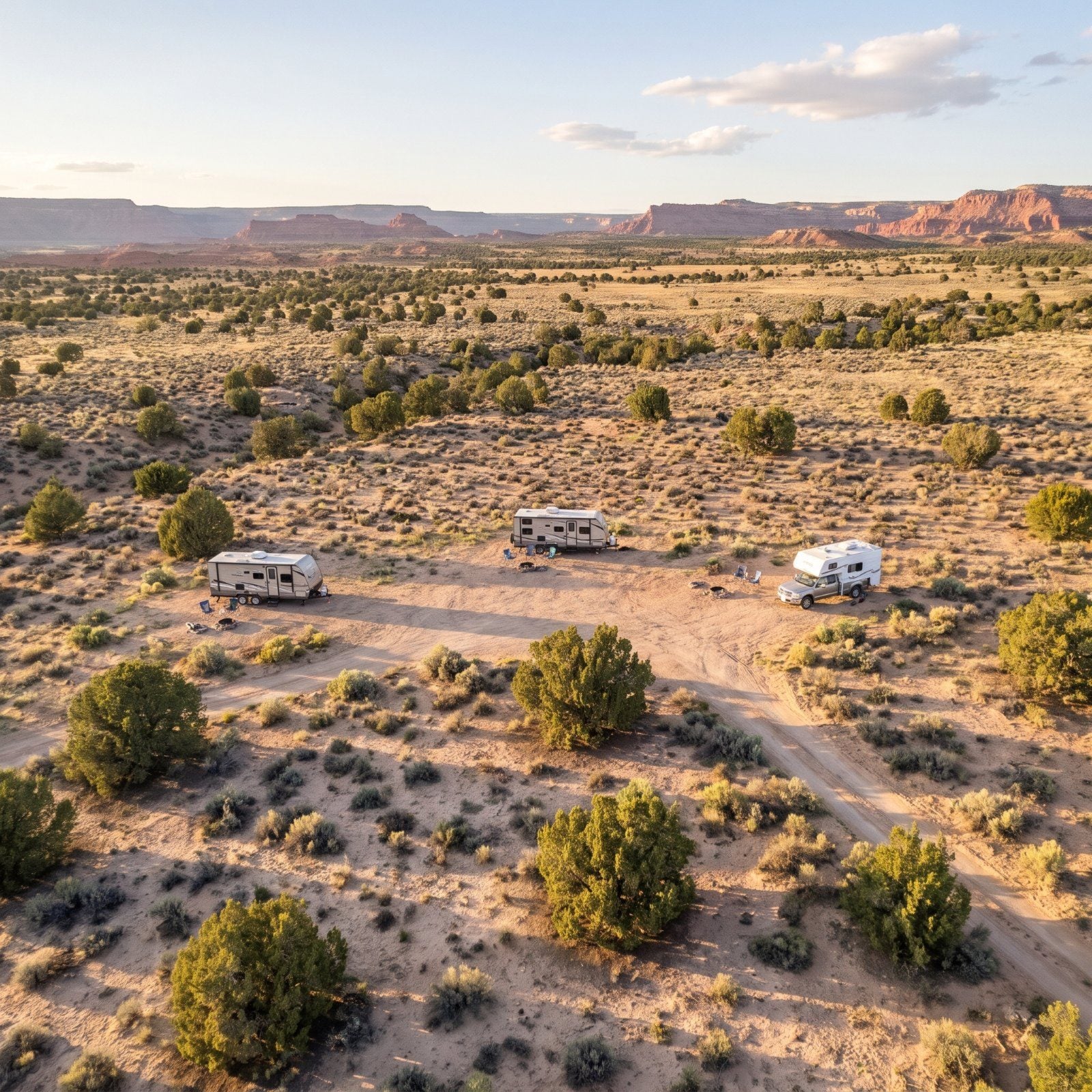
The best dispersed sites are free, quiet, and wide open. They stay that way because most people treat them right. But a few habits, harmless enough in someone’s mind, are the exact ones that get roads gated and whole areas shut to camping. The fixes cost nothing. They take about thirty seconds of thought. Here are the behaviors that make land managers reach for the closure signs, and the better move for each one.
Please note that some of the images in this article were created with the assistance of AI.
41. Saving Sites With Empty Chairs
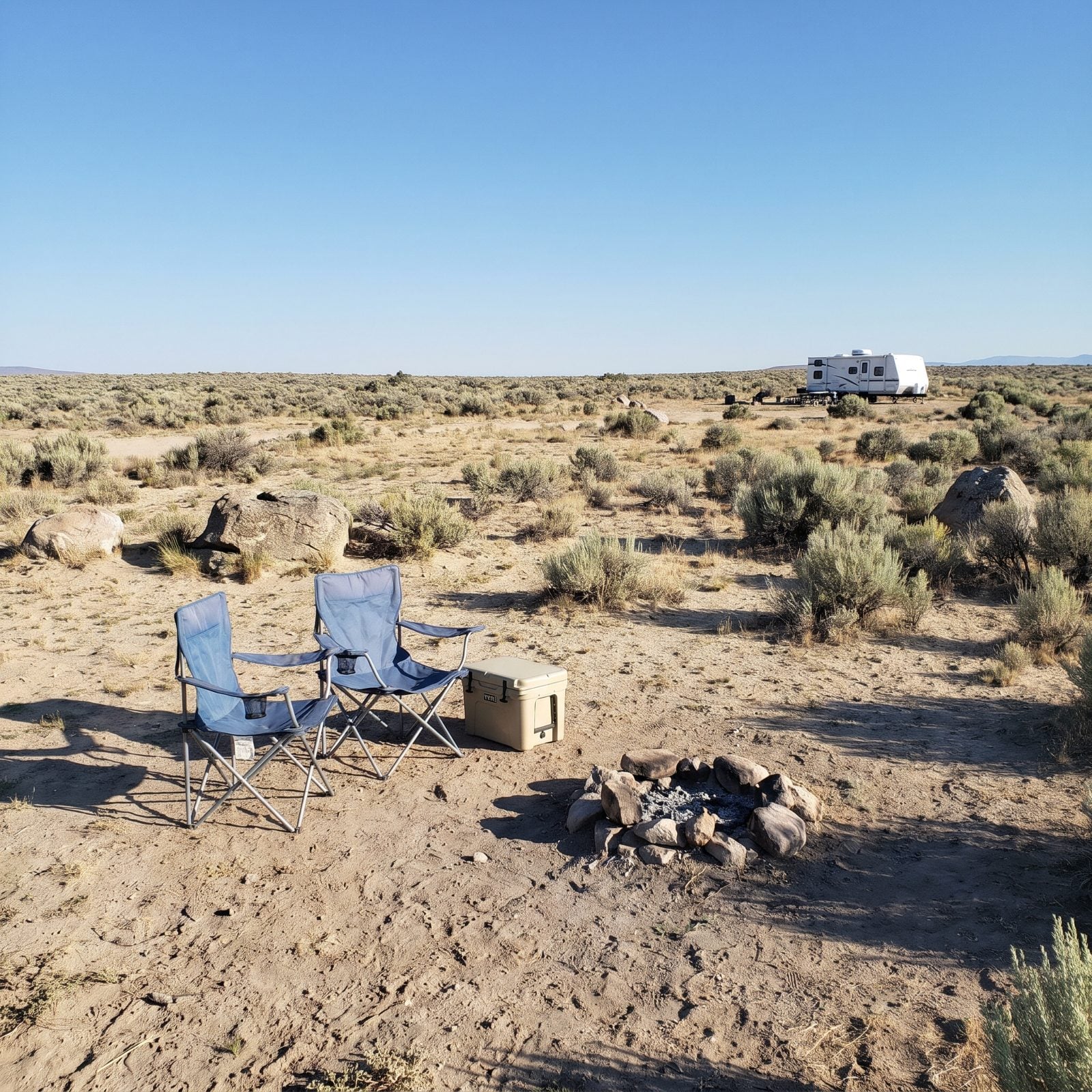
Two camp chairs and a cooler, parked on an empty flat spot, no rig of their own, just someone else’s trailer parked across the road. You know the message: this one’s mine, I’ll be back later.
Here’s the trouble. On public land, you can’t hold a dispersed site you’re not occupying. A pile of gear on bare ground isn’t a reservation, it’s just litter with a purpose. And the camper who finds it has no way to know whether you’re coming back in an hour or never.
Occupy the site or leave it open. Out exploring for the day and want to keep your spot? Keep your rig there. The rig is the claim. Everything else is wishful thinking.
40. Parking So Close You Block Someone’s View
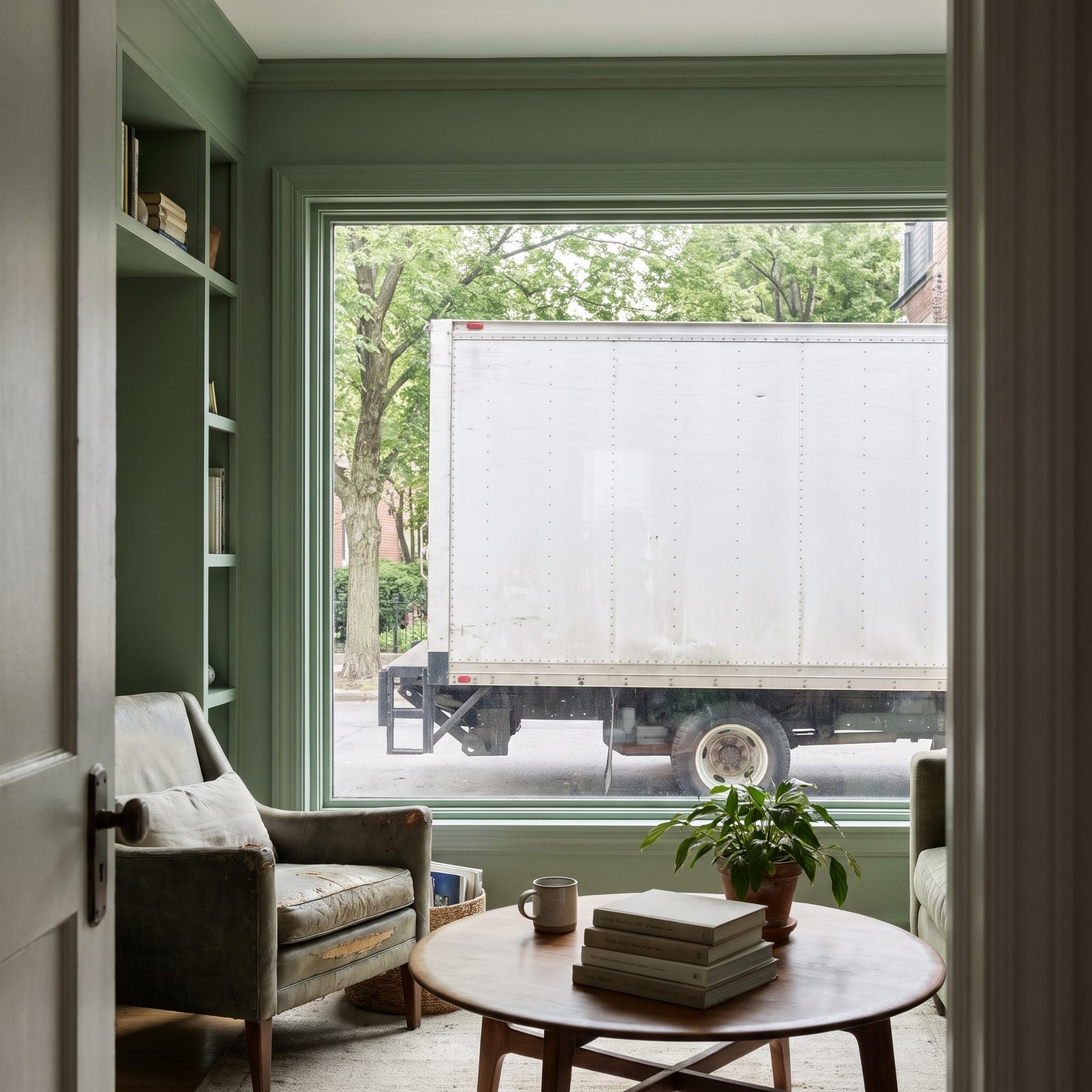
The whole reason people love a front room with a big street-facing window is the light and the view. So when you pull in and park your truck broadside dead in front of someone’s window, blotting out the street and the brick townhouses across the way, you’ve taken the one thing that room was made for.
Feels minor to you. To them, you’ve walled off their daylight, and that’s the quickest way to turn a friendly wave into a cold shoulder.
Before you point your rig anywhere, look at whose windows line the curb and what they’re facing. Position yourself so the homes along the street keep an open sightline. There’s almost always a spot that works for everyone if you take a slow lap first.
39. Parking in a Turnaround
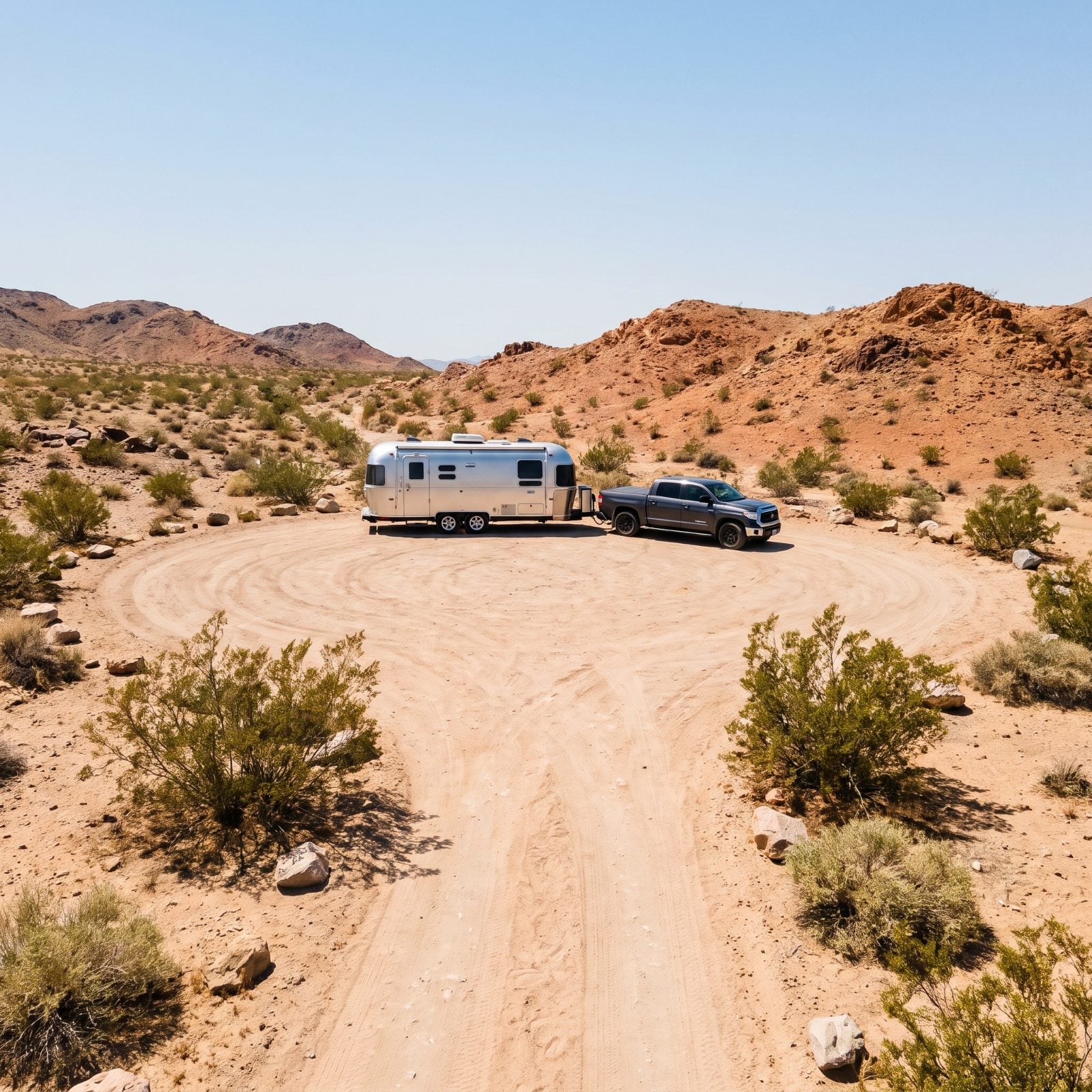
A wide circle of packed dirt at the end of a two-track looks like a perfect flat pad. It usually is. It’s also the only place a big rig can turn around.
Camp in a turnaround and you’ve trapped everyone behind you. The next trailer down that dead-end road has to back out a quarter mile in reverse, which is miserable and flat-out dangerous on soft dirt.
So leave turnarounds empty. If a spot looks like a loop, a bulb at the end of a spur, or a wide bend clearly used for three-point turns, keep moving. Those spaces belong to everyone.
38. Setting Up Across a Two-Track
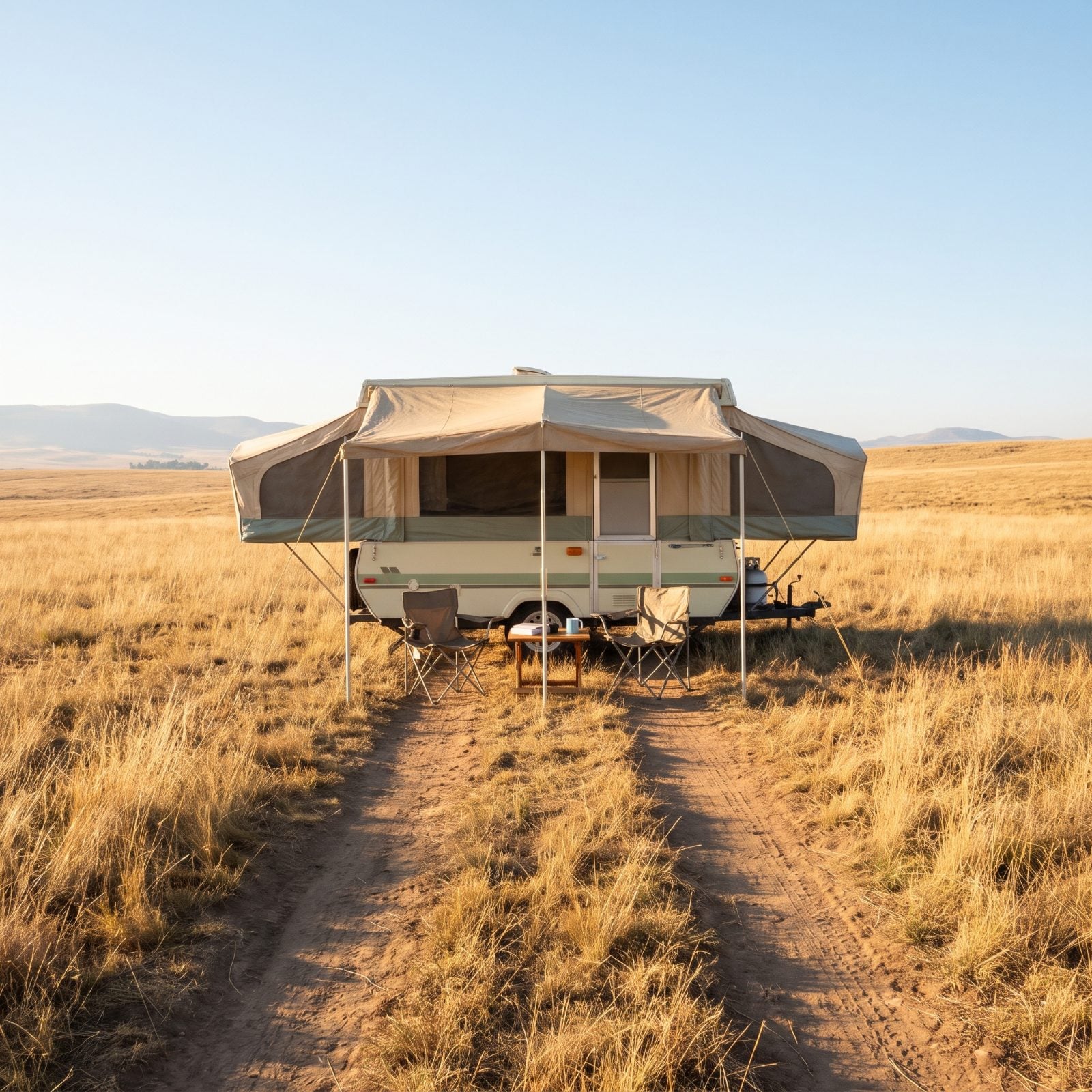
A faint two-track runs right through a nice grassy flat, so you set up straddling it. To you it looked unused. To the rancher, hunter, or camper who relies on it, you just parked a trailer across their driveway.
Those tracks exist for a reason. Block one and people have to drive around you, flattening fresh ground and widening the scar, which is exactly the kind of damage that gets an area closed.
Camp alongside a two-track, never on it. Set your rig, awning, and chairs fully off the ruts so anything that needs to pass can do it without carving a new line through the grass.
37. Cutting Through Another Camper’s Site
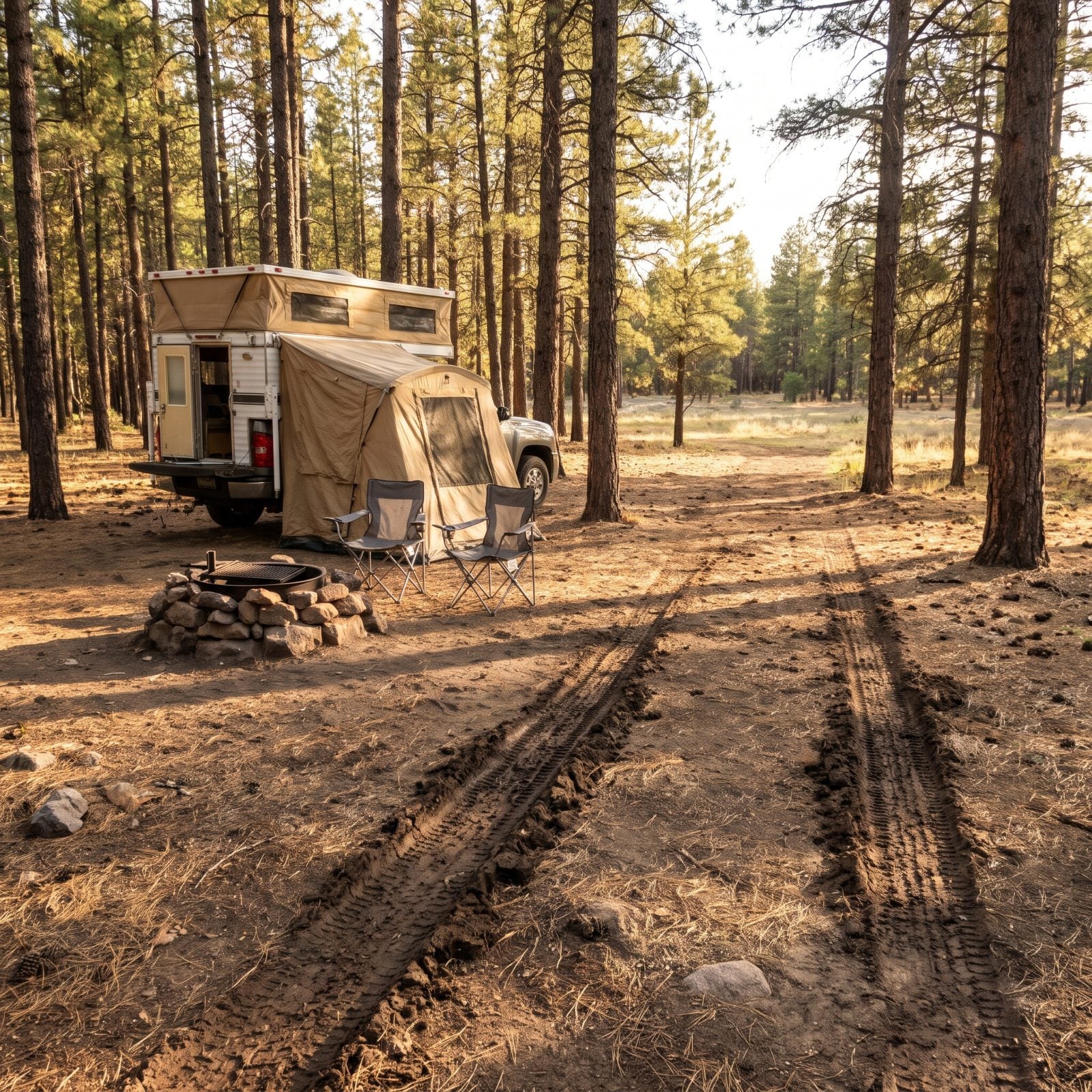
The open clearing you want sits just past someone else’s camp, and the easiest line runs right through their setup. So you drive it, rolling past their fire ring and chairs like it’s a thoroughfare.
That’s a stranger’s living room. Nobody wants a truck crawling six feet from their coffee at seven in the morning, and your tires churn fresh ruts across ground they’ve worked to keep intact.
Take the long way. Even if it means a wider, bumpier loop, give occupied camps a berth. A little patience on the approach says more about you than anything you’ll do once you’re parked.
36. Moving Between Nearby Sites to Reset the Clock
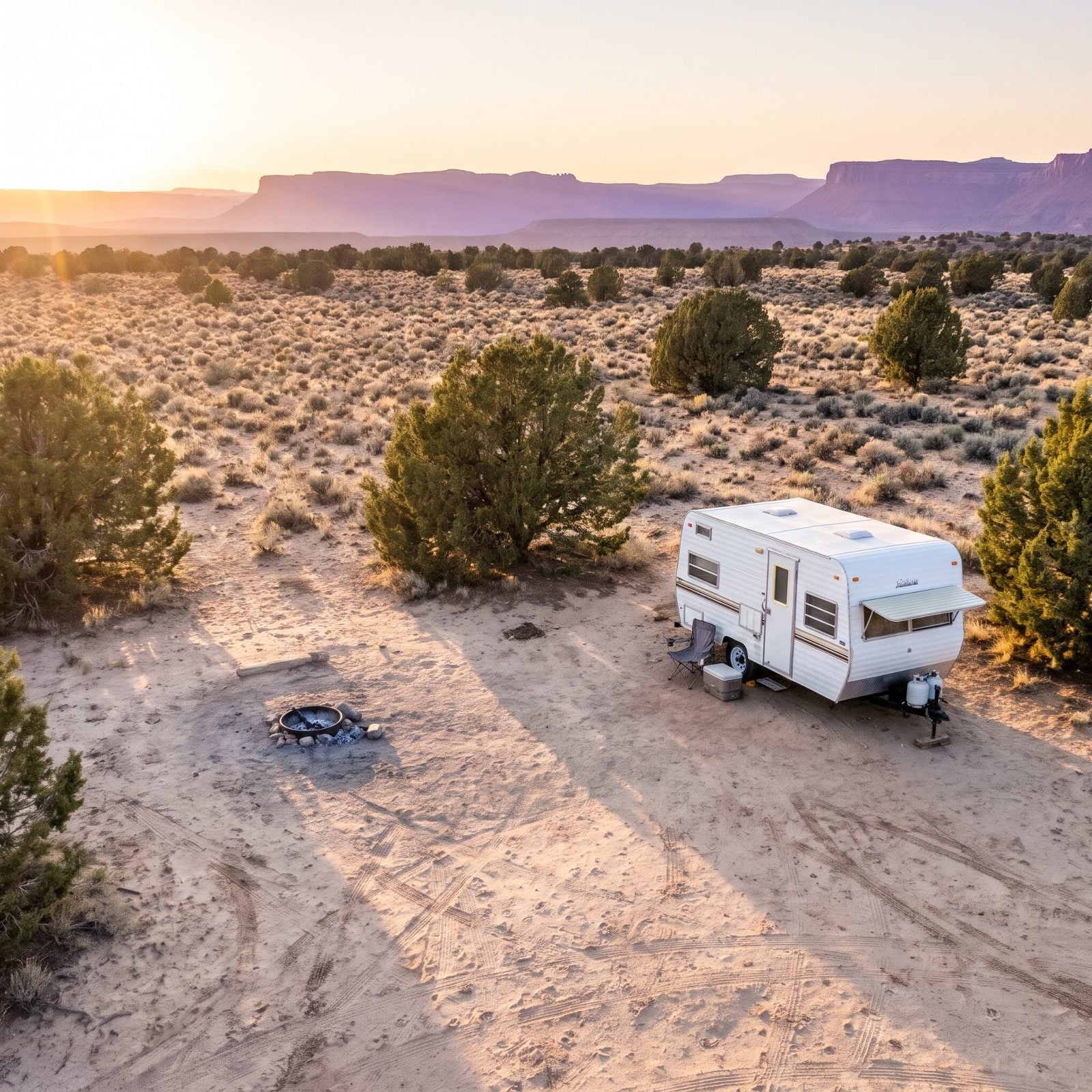
You’ve hit the 14-day limit, so you pull forward a hundred yards to the next flat spot and call it a new site. Technically a new location, sure. Everybody knows what you’re doing.
Stay limits exist to keep public land from turning into someone’s free permanent address, and to give the ground time to recover. Shuffling between adjacent spots skips that recovery entirely and reads as exactly the squatting the rule was written to stop.
When your time’s up, actually move on. Most areas require a real distance before you can start a new stay in the same district, often measured in miles rather than yards. Rotating in place isn’t resetting the clock, it’s gaming it, and rangers have seen the trick more times than you have.
35. Ignoring Posted Stay Limits
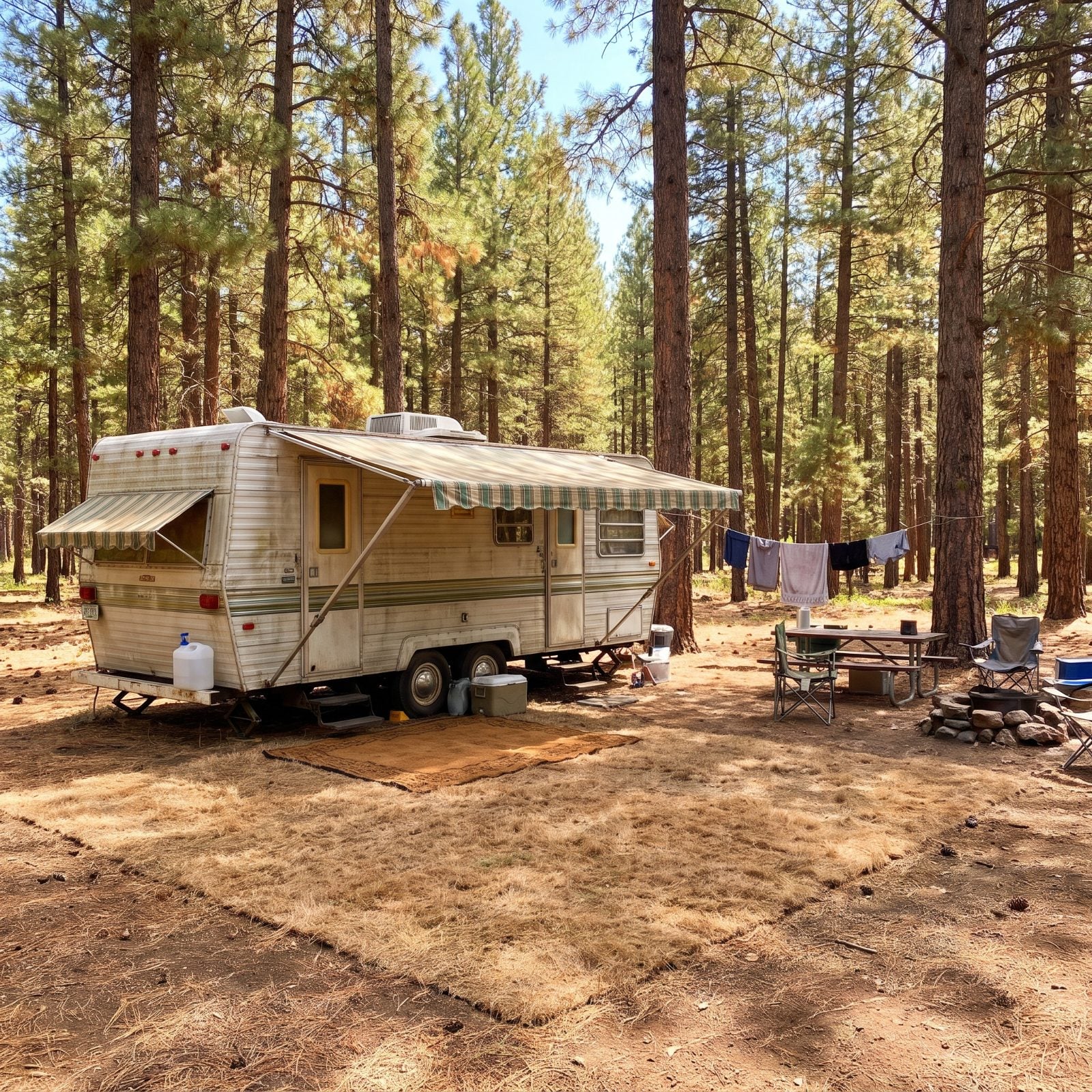
The spot is perfect, the weather’s holding, and nobody’s checking. So you stay a week past the posted limit, figuring one rig won’t matter.
It matters because that limit is the whole reason the spot is still legal to camp on. When land managers see rigs parked for a month, they don’t send a warning, they gate the road. Every long-stay abuser is spending a shared resource the next person never gets back.
Read the sign at the entrance. Set a reminder on your phone for a day before your limit’s up. Pack out on time, every time. The rule isn’t the enemy. The closure that follows the broken rule is.
34. Building a New Spur Road
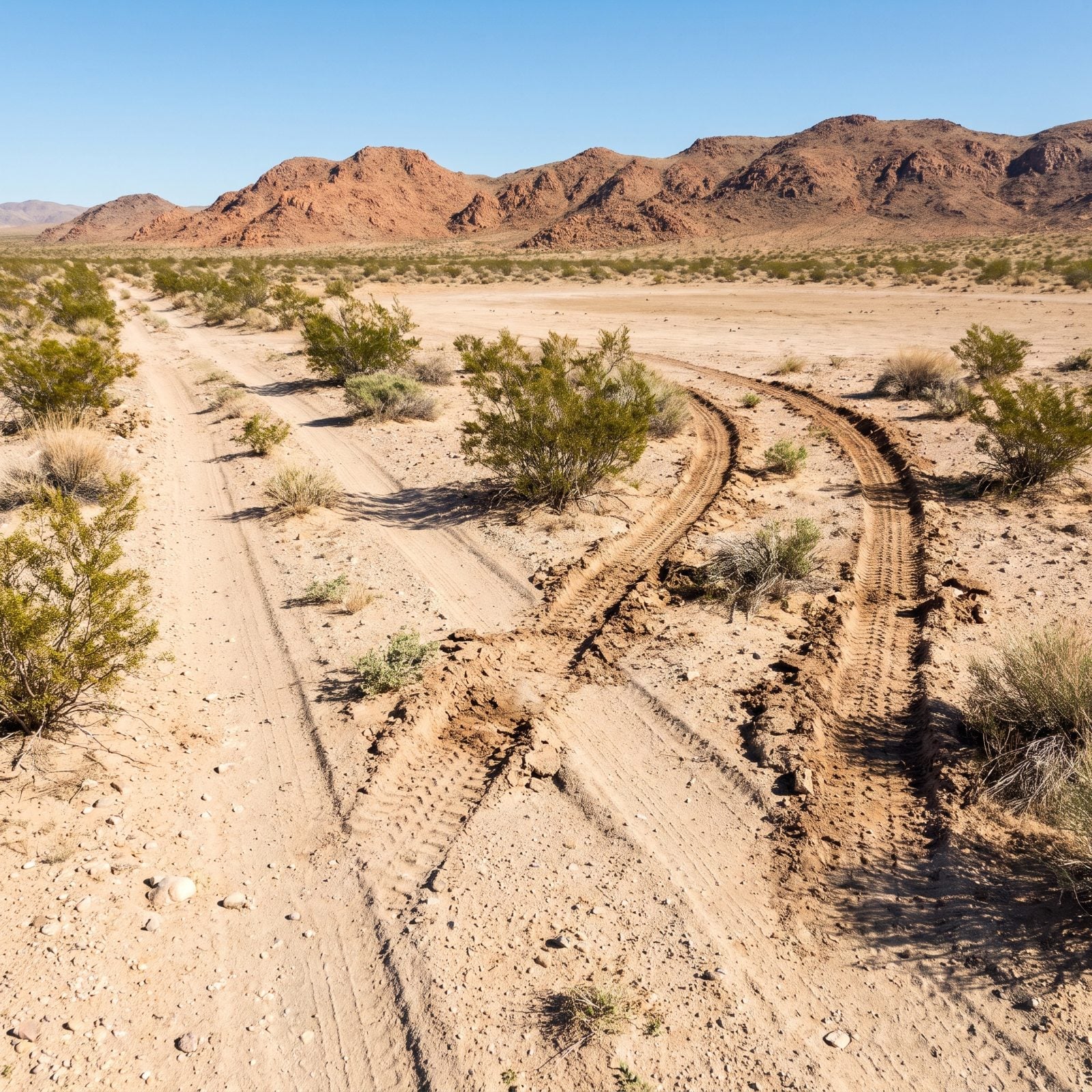
You spot a better flat a little ways off the existing track, so you point your rig at it and drive, cutting fresh ruts across ground no one’s touched. Congratulations, you just built a road.
And this is the worst one on the list. In the desert, a single pass can leave scars that stay visible for decades, and the tracks you leave invite the next person to follow. One rig becomes a braided mess of ruts, which is precisely the damage that gets entire areas closed to camping.
Camp only on ground that’s already been driven and cleared. If a flat has no tracks leading to it, there’s a reason, and it isn’t yours to create. Stick to the existing spurs, every single time.
Warning about what tires do to the living crust on desert ground, a desert soil ecologist said “It’s really easy to damage a dryland soil, you can basically do it in seconds with your Jeep”
33. Driving Around a Closed Gate
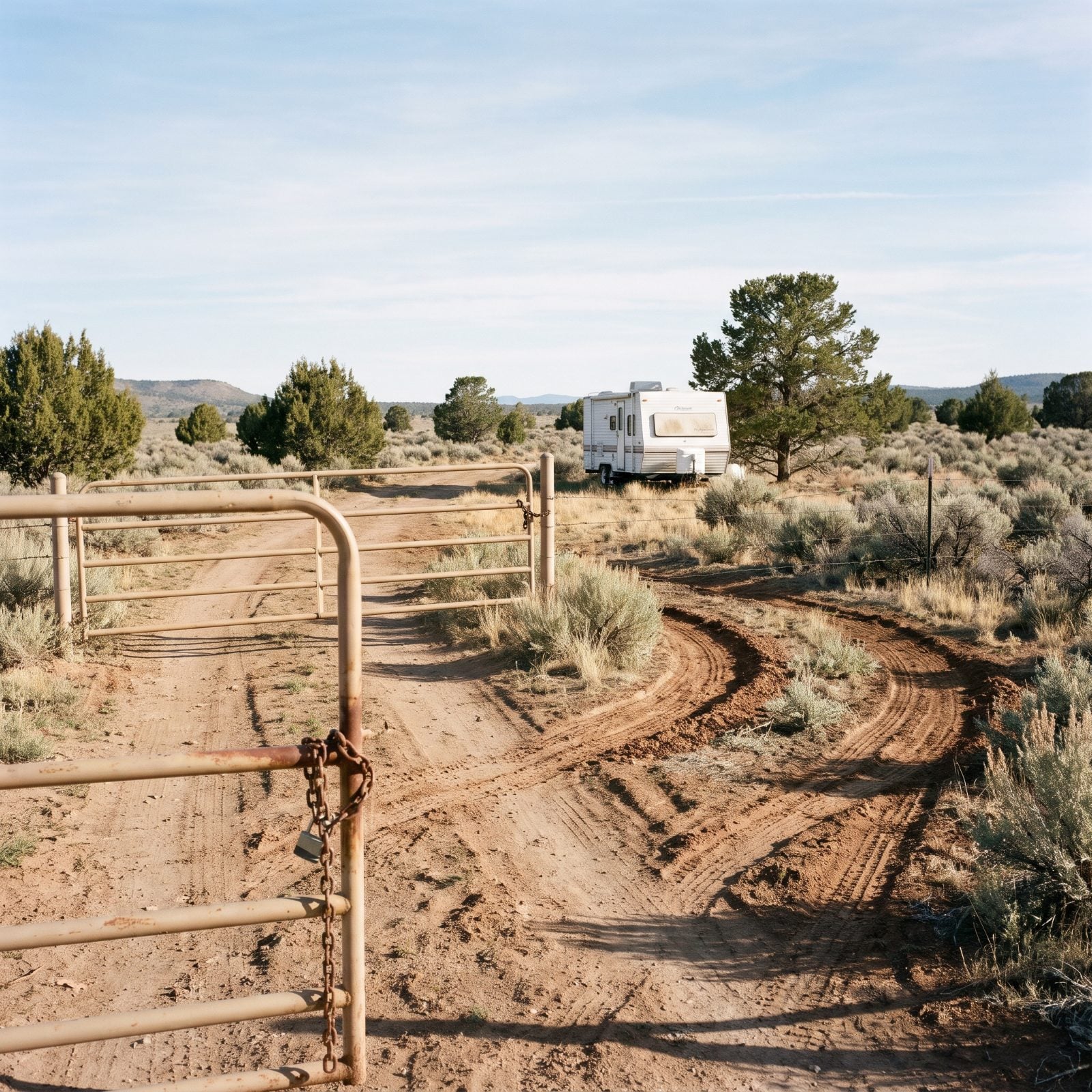
A closed gate on a forest road or BLM track is a sentence, not a suggestion. Yet people pull up, see it chained, and steer around the end through the brush because the two-track clearly keeps going. Feels harmless.
It isn’t. That gate might mark a grazing allotment, a washed-out crossing, a fire closure, or private ground stitched into public land like a quilt. Go around it and you’re trespassing — and you’ve just handed a land manager one more reason to close the whole area to camping.
So turn around. A locked or closed gate means that route is off-limits to you, full stop. Think it’s a mistake? Note the road number and call the district office before you touch it, not after.
Describing the trespassers he runs into every season on ground that mixes private land and public lease, a cattle rancher said “They miss signs. They go around gates. They don’t close gates”
32. Assuming Every Dirt Pullout Is Public Land Open to Camping
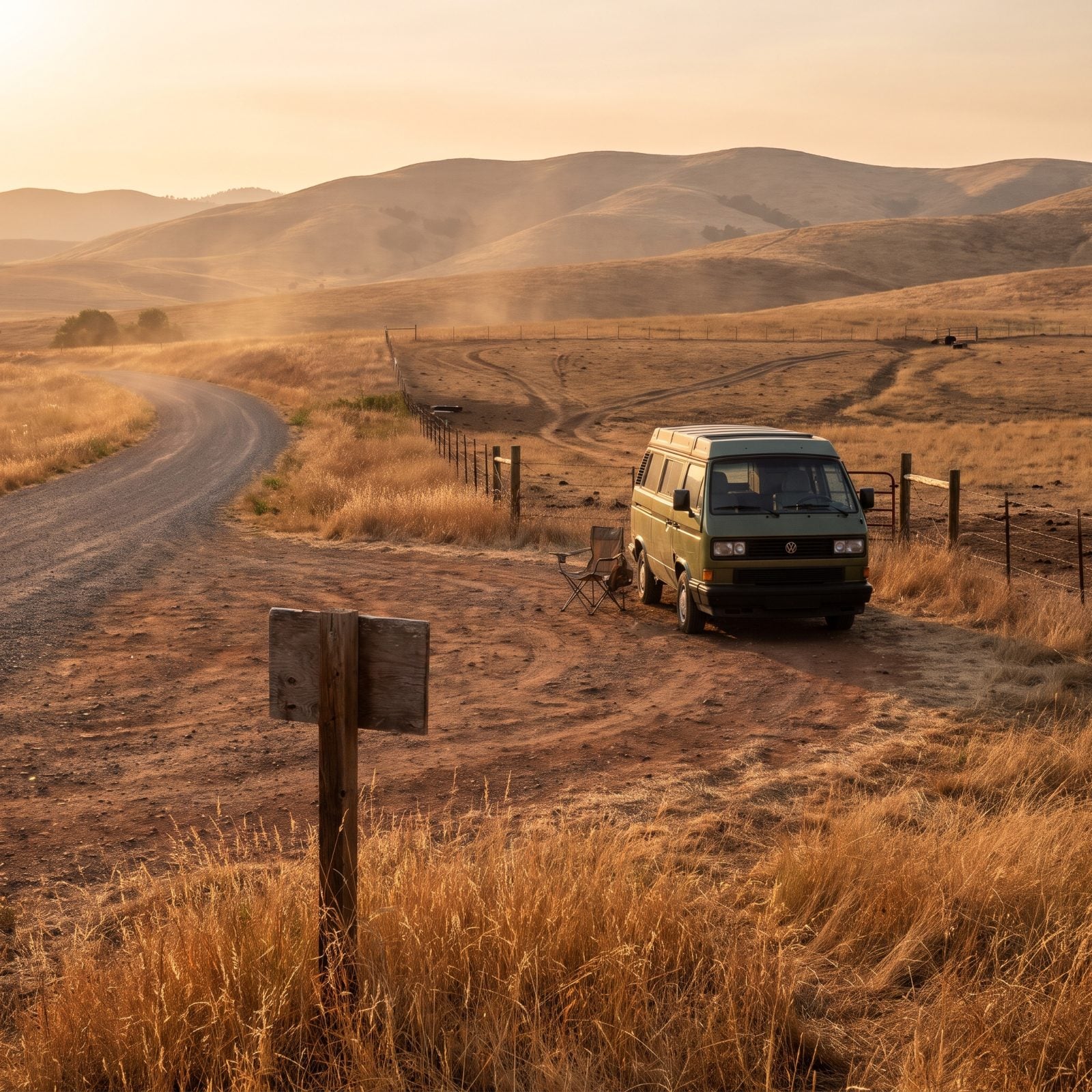
Just because a flat patch of dirt is easy to pull onto doesn’t mean it’s yours for the night. Land out West is a patchwork — public, private, state trust, leased grazing, all jammed together with no obvious seams on the ground.
Park on the wrong square and you’re the uninvited guest on someone’s ranch, or you’re sitting on state land that requires a permit you never bought. Enough of that, and the posted signs multiply for everyone.
Pull up the maps before you commit. The onX Offroad or Gaia GPS layers show public and private boundaries in color, and a free BLM or Forest Service motor vehicle use map tells you which roads allow dispersed camping.
31. Failing to Check Tribal-Land Regulations
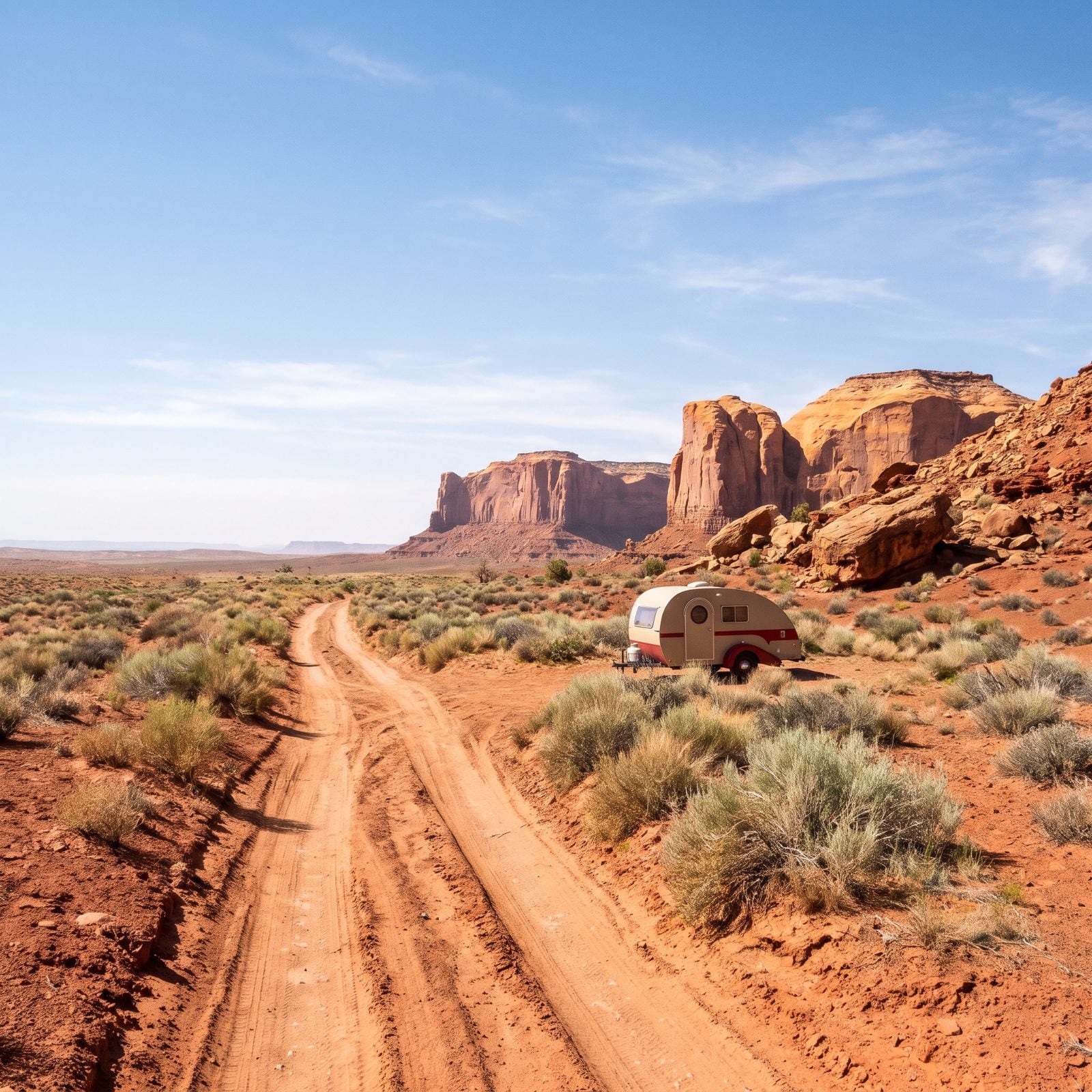
Reservation land looks like every other wide-open stretch of the Southwest from behind the windshield. It is not. Tribal nations are sovereign, with their own permits, their own rules, and their own sacred places that aren’t marked for outsiders.
Camp there without permission and you’ve trespassed on a nation, sometimes on ground that matters deeply to the people who live there. That’s a different weight than a BLM slip-up.
Before you roll into reservation country, find the tribe’s official website or call the tribal office. Many require a recreation or camping permit, and some areas are closed to visitors entirely. A phone call clears it up in five minutes.
30. Leaving Gates Open Behind You
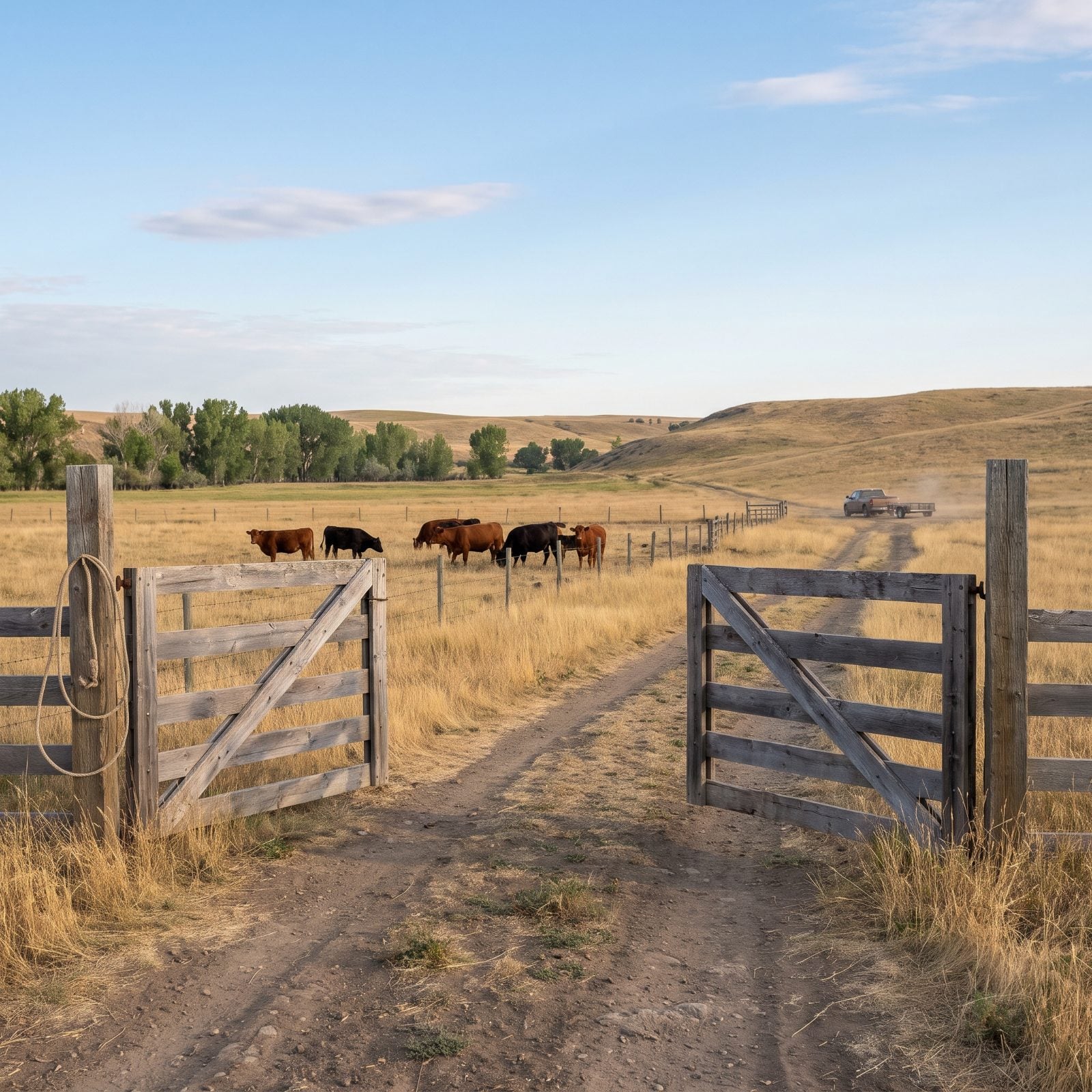
You open a gate to drive through, then in the shuffle of finding camp you forget to close it. Simple mistake. The consequences land on somebody else.
An open gate lets cattle drift onto highways or mix with the wrong herd, and a rancher can spend days rounding up animals that wandered because a camper didn’t look back. That rancher is often the whole reason the area stays open to camping.
The rule is old and perfect: leave every gate as you found it. Open means leave it open, closed means close it behind you — latch and all. If you opened it, you close it.
29. Refusing to Yield to Working Ranch Traffic
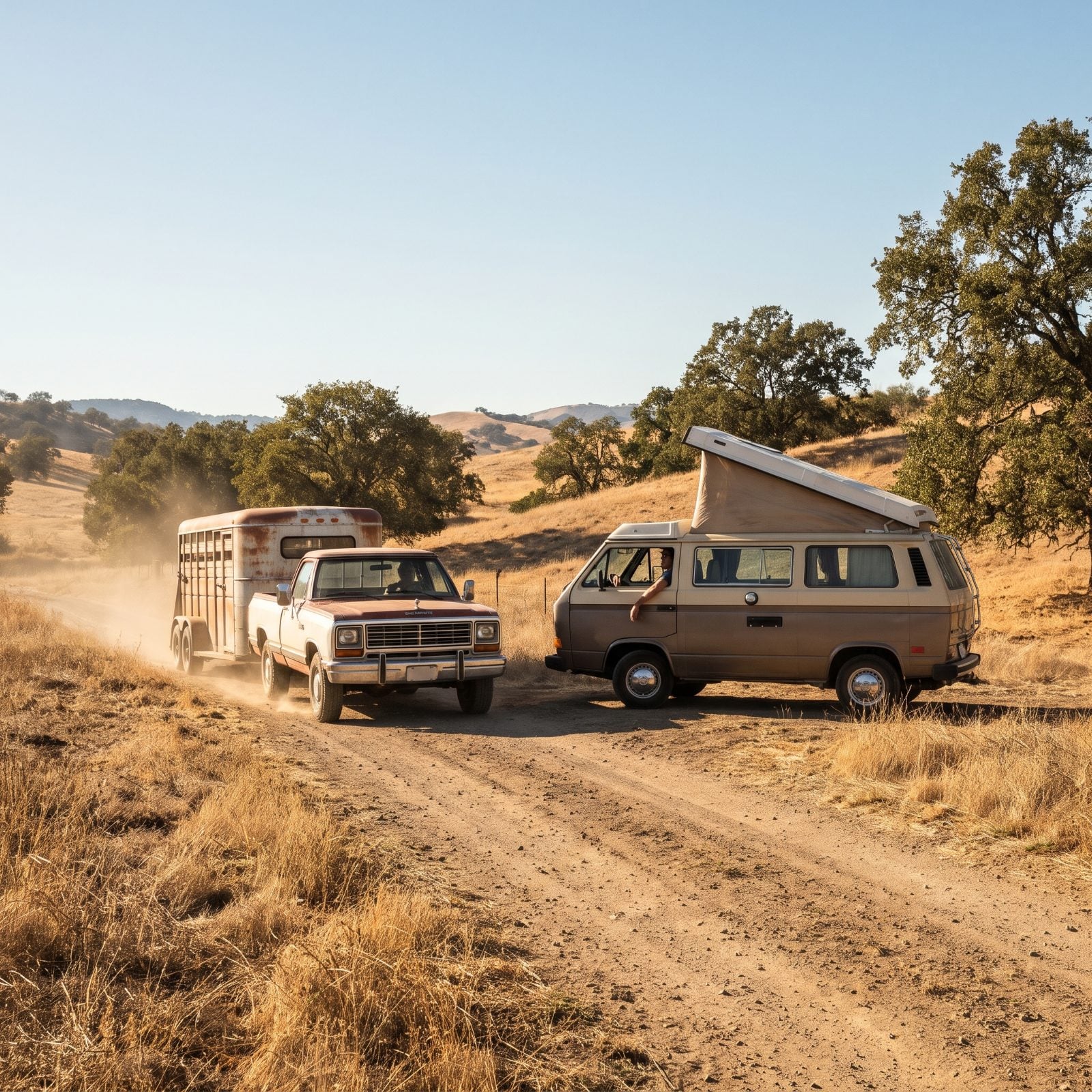
That dirt road you’re treating as scenery is somebody’s commute and somebody’s workplace. The rancher hauling a trailer full of cattle, the hand running equipment out to a far pasture — they’re on the clock, and they know this road better than you ever will.
Plant yourself in the middle of it, creep along, or make them wait while you figure out your turn, and you’ve turned a working route into a frustration for the one group of folks whose goodwill keeps dispersed camping alive.
Pull over and give them the road. Working traffic has the right of way out here, every time. A wave and a wide shoulder cost you nothing and buy a lot of patience for the next camper.
28. Speeding and Raising Dust Through Occupied Camps
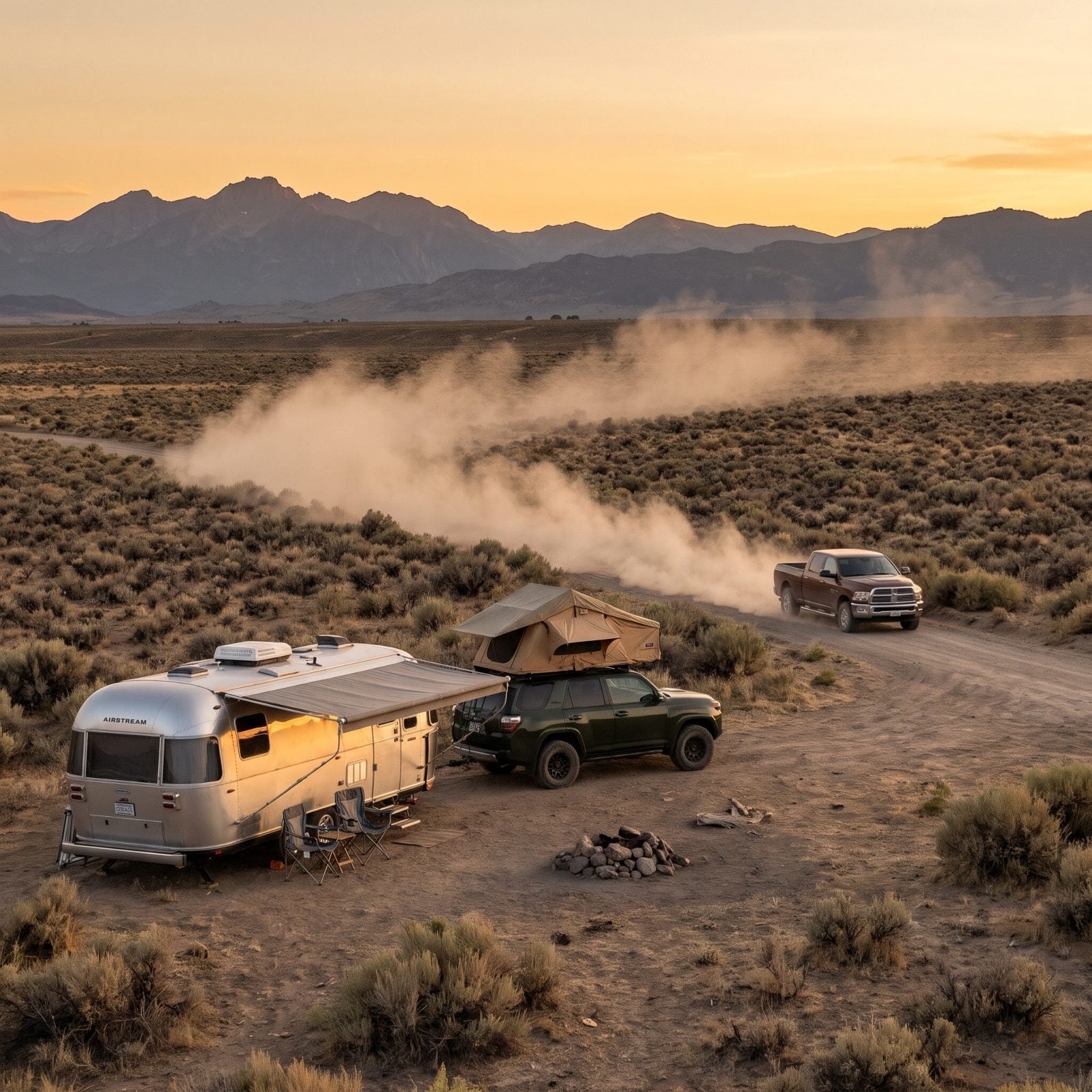
Barreling down a camp road at 40 throws a dust cloud that settles on every chair, table, tent, and open window for a quarter mile. People came out here for clean air, and you just coated their dinner in powder.
Dust hides things, too — the kid chasing a ball, the dog, the slow-moving rig backing into a spot. Speed plus a brown-out is how dispersed camping earns its bad reputation.
So crawl through occupied areas. Ten to fifteen miles an hour keeps the dust low and gives you time to stop. Treat camp roads the way you’d treat a quiet neighborhood street, because for a few nights that’s exactly what they are.
27. Crossing Soft Ground After Heavy Rain
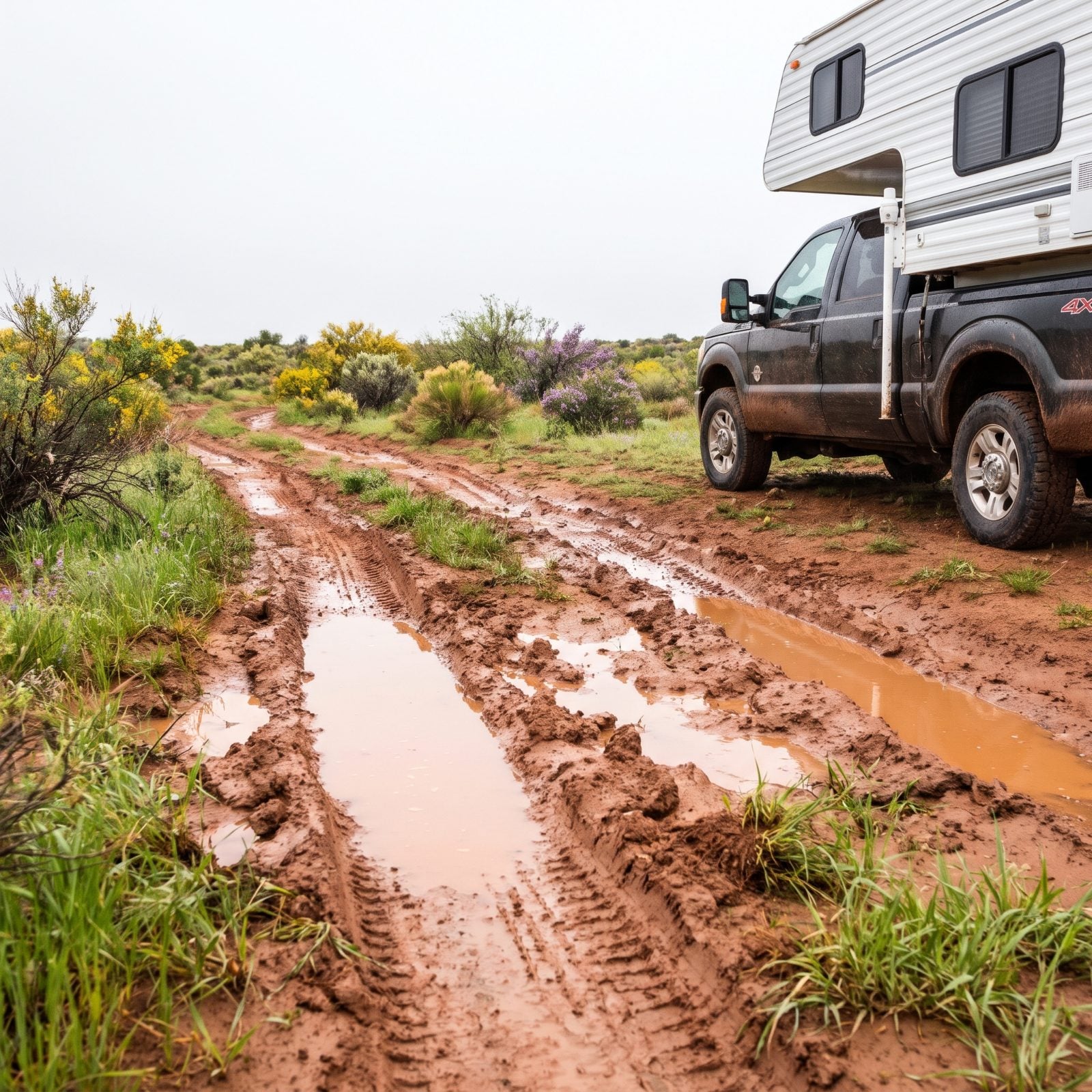
Wet dirt roads are a trap dressed up as a shortcut. The ground looks drivable, you commit, and halfway through the truck sinks to the axles while the ruts you carve set hard as concrete when it dries.
Those scars last for years. Land managers see the damage, and the next thing posted is a seasonal closure that locks everyone out until the road gets fixed.
Wait it out. If the road is soft, muddy, or holding water, park on firm ground and let it dry — in the desert that’s often just a day of sun. Nothing out here is worth a buried rig and a ruined road.
26. Crushing Vegetation to Level the Rig
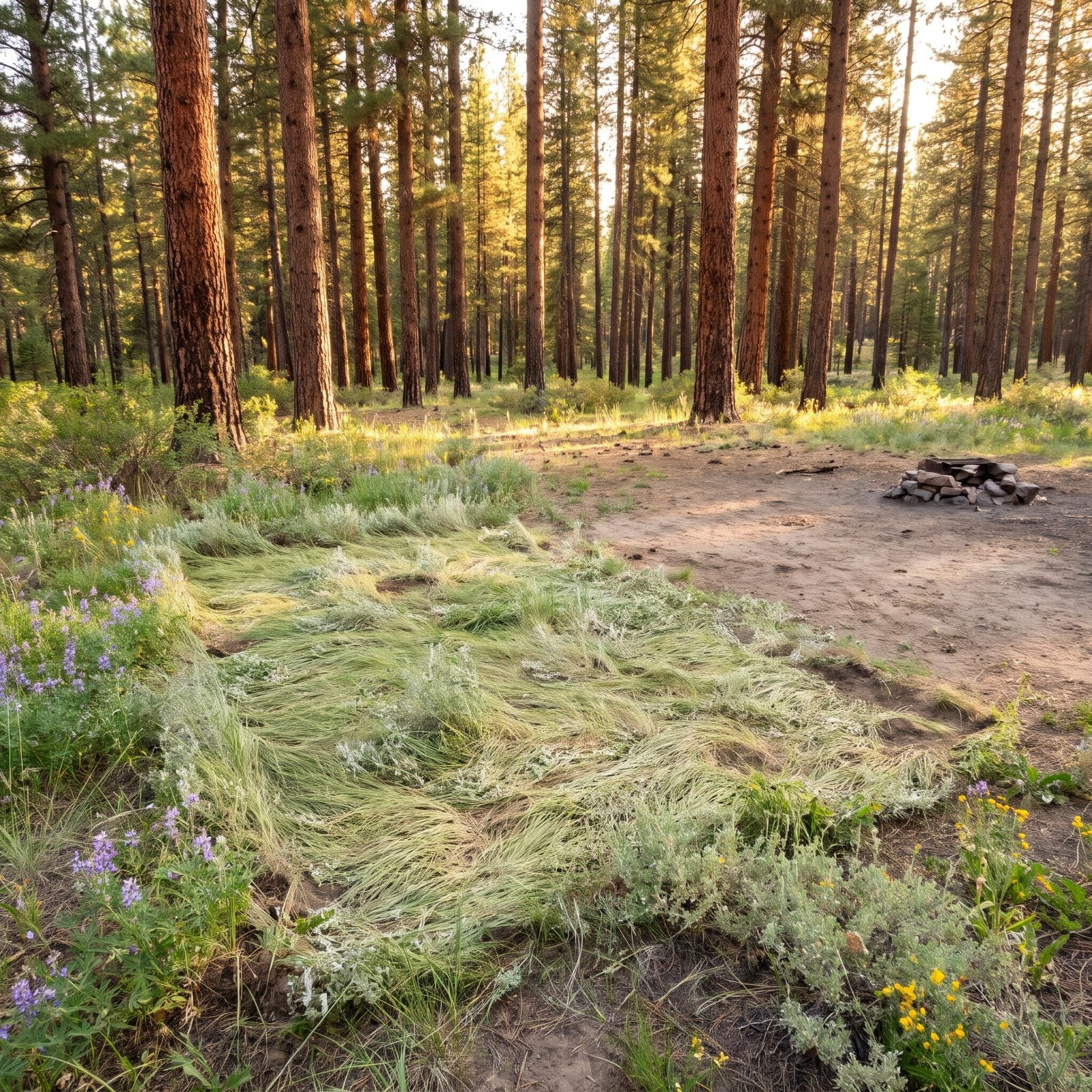
The ground slopes, you want level, so you pull onto the green meadow and flatten a patch of grass and seedlings to park flat. Feels like a reasonable trade.
But fragile desert and alpine plants can take decades to come back, and a crushed meadow becomes the next camper’s spot too, until a lovely place is bald dirt and a fresh set of ruts.
Camp on surfaces that can take it: bare dirt, gravel, rock, or a spot that’s clearly been used before. Slide stacking leveling blocks under the tires to handle the slope instead of bulldozing a living patch of ground.
25. Setting Up Too Close to Water
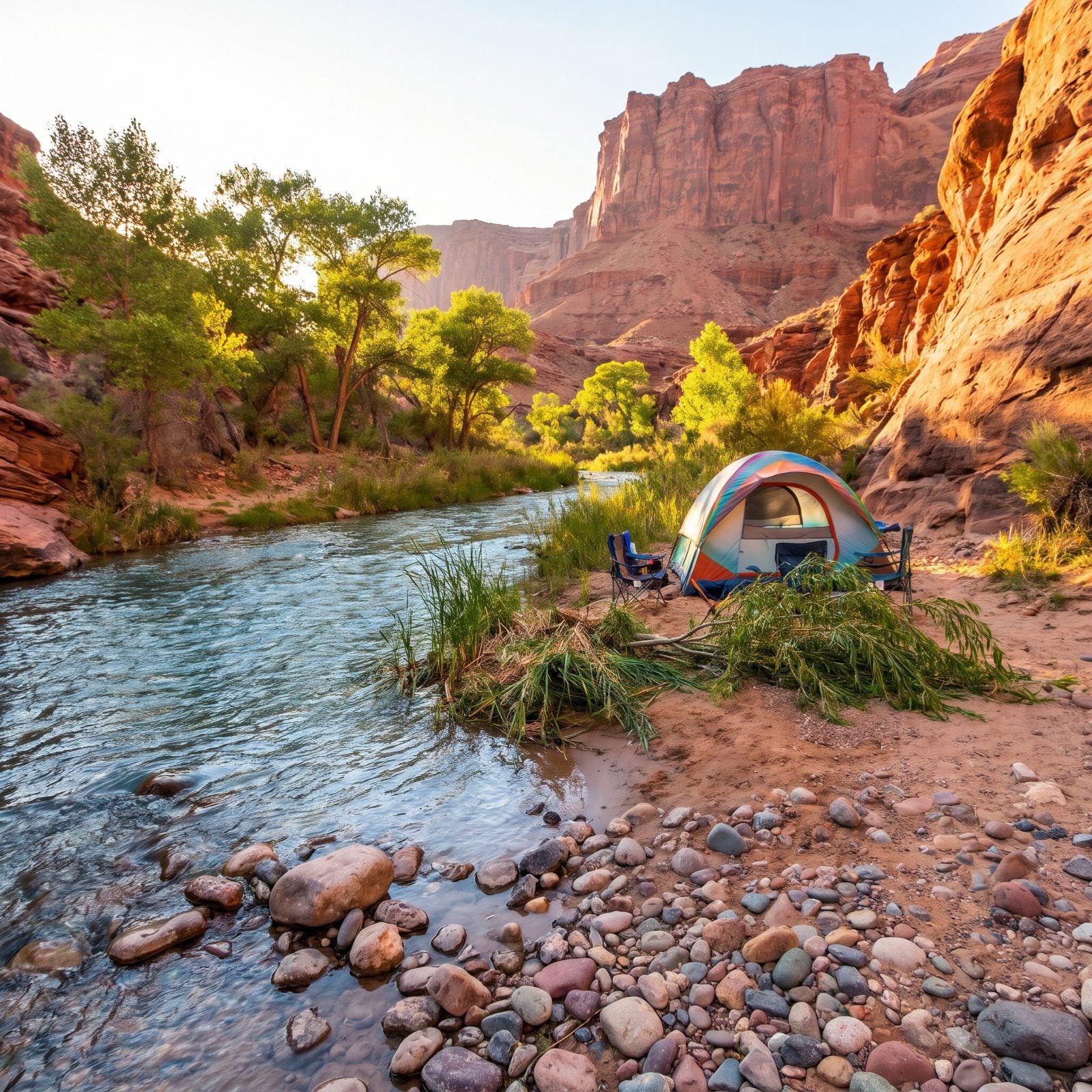
A creek-side site is the prize everyone wants, so people nose the rig right up to the bank. Trouble is, that water is the lifeline for every animal and plant for miles.
Park on the edge and you trample the greenbelt, your gray water and soap run straight in, and you block the wildlife that comes to drink. In dry country, that strip of green along the water is the most sensitive ground there is.
Camp at least 200 feet back from any stream, spring, or lake, and walk your water up the hill to camp instead of camping on top of the water. The spot is less convenient and far better for everything that lives there.
24. Blocking Wildlife or Livestock Access to Water
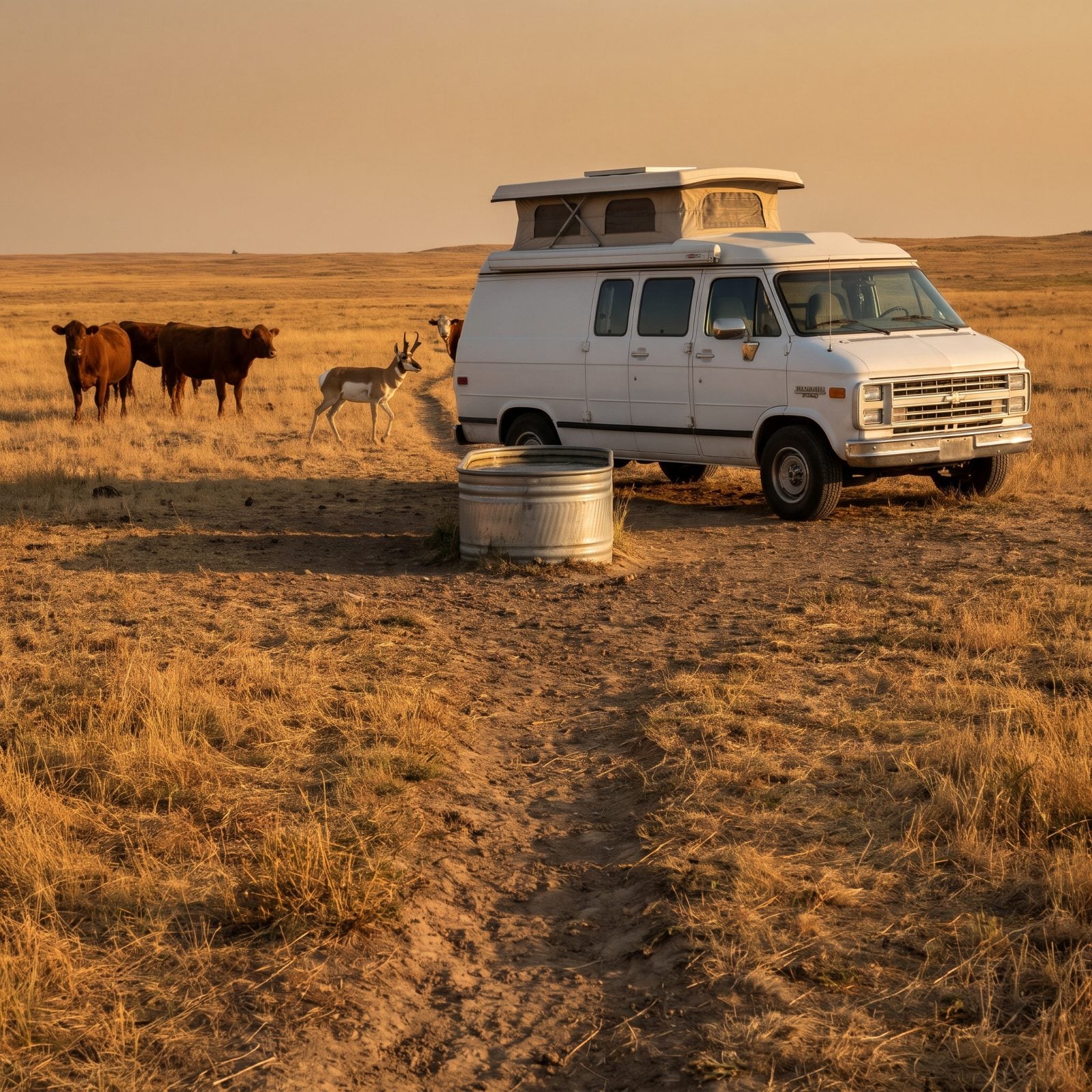
Out in dry country, a stock tank, a seep, or a muddy spring might be the only water for miles, and animals travel worn trails to reach it on a schedule older than any of us.
Park your rig across that trail or crowd the tank, and thirsty cattle, deer, and pronghorn get turned away from the one place they can drink. In a dry summer that isn’t an inconvenience to them. It’s serious.
Keep well clear of any water source and the trails leading to it. Give animals an open path to drink, especially overnight when most of them come in. Pick a spot where your presence changes nothing about who gets to the water.
23. Letting Dogs Roam Off Leash
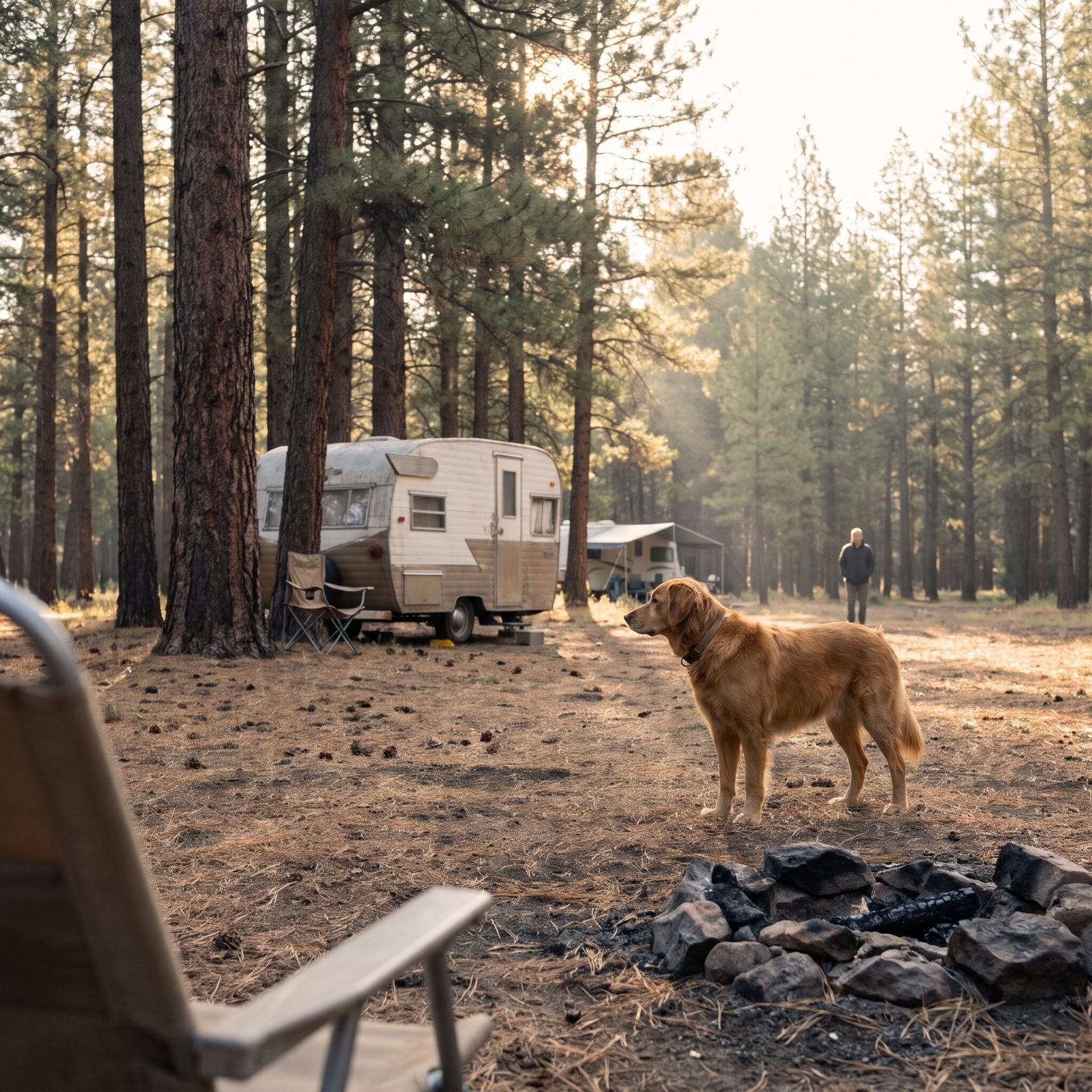
Your dog is friendly, and you know it. The family two sites over — leashed terrier, a toddler underfoot — has no way to know that, and a loose dog bounding into their camp reads as a threat long before it reads as a sweetheart.
Dispersed land has no fence, no neighbor’s yard, no obvious line marking where your space ends. Add wildlife, porcupines, and other dogs to the mix, and there’s a real chance your buddy chases something into country you’ll never follow him into.
So keep a long tie-out line or a heavy duty ground stake at camp and a leash on walks. Your dog gets freedom inside your own footprint, and nobody else has to guess.
22. Ignoring Continuous Barking

Sound travels differently out here. A bark that would vanish in your backyard rolls clean across the quiet dunes and lands square in somebody’s open window. Ten solid minutes of it every time something rustles in the dune grass? Exhausting — especially for the people who can hear it and have never met you.
Nonstop barking usually means a bored dog, an anxious dog, or one watching too much through the window. Bring him away from the glass, settle him in his bed, give him something to do, and never leave him tethered outside alone for hours. Step out of the rig and the dog settles in his bed or comes with you. A quiet camp is the easiest good reputation you’ll ever earn.
21. Leaving Pet Waste on the Ground
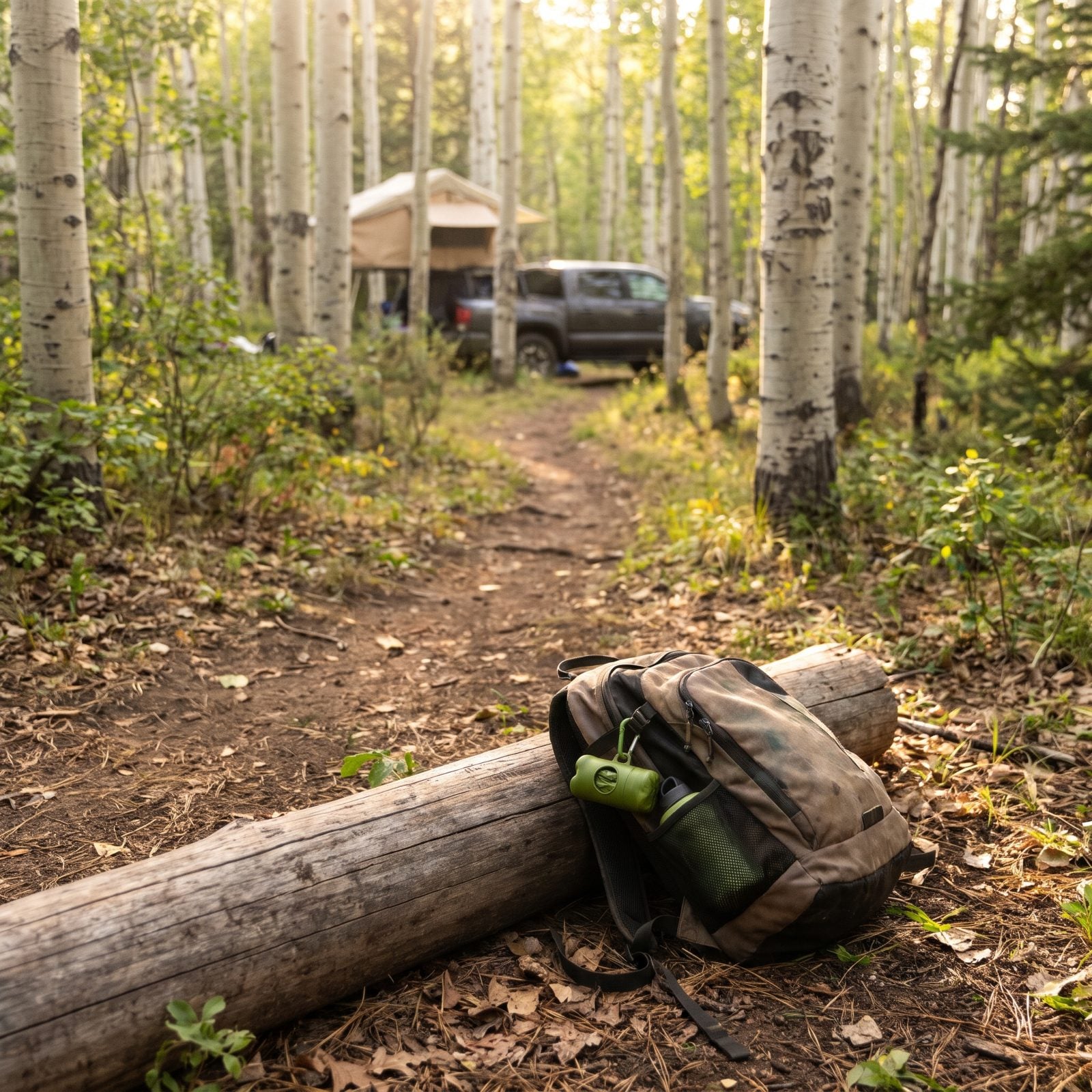
Here’s the myth that needs to die: dog waste is natural, it’ll break down, it’s basically fertilizer. Nope. Your dog eats processed food, and what comes out carries bacteria and parasites that have no business in a watershed. It sits for weeks on dry ground, washes toward creeks when it rains, and the next camper steps in it.
Bag it. Every time. Then pack the bag out — don’t chuck it behind a bush and pretend it’s gone. A sealed container or a hanging holder on the ladder keeps it out of your nose until the next trash stop.
20. Running a Generator During Quiet Hours
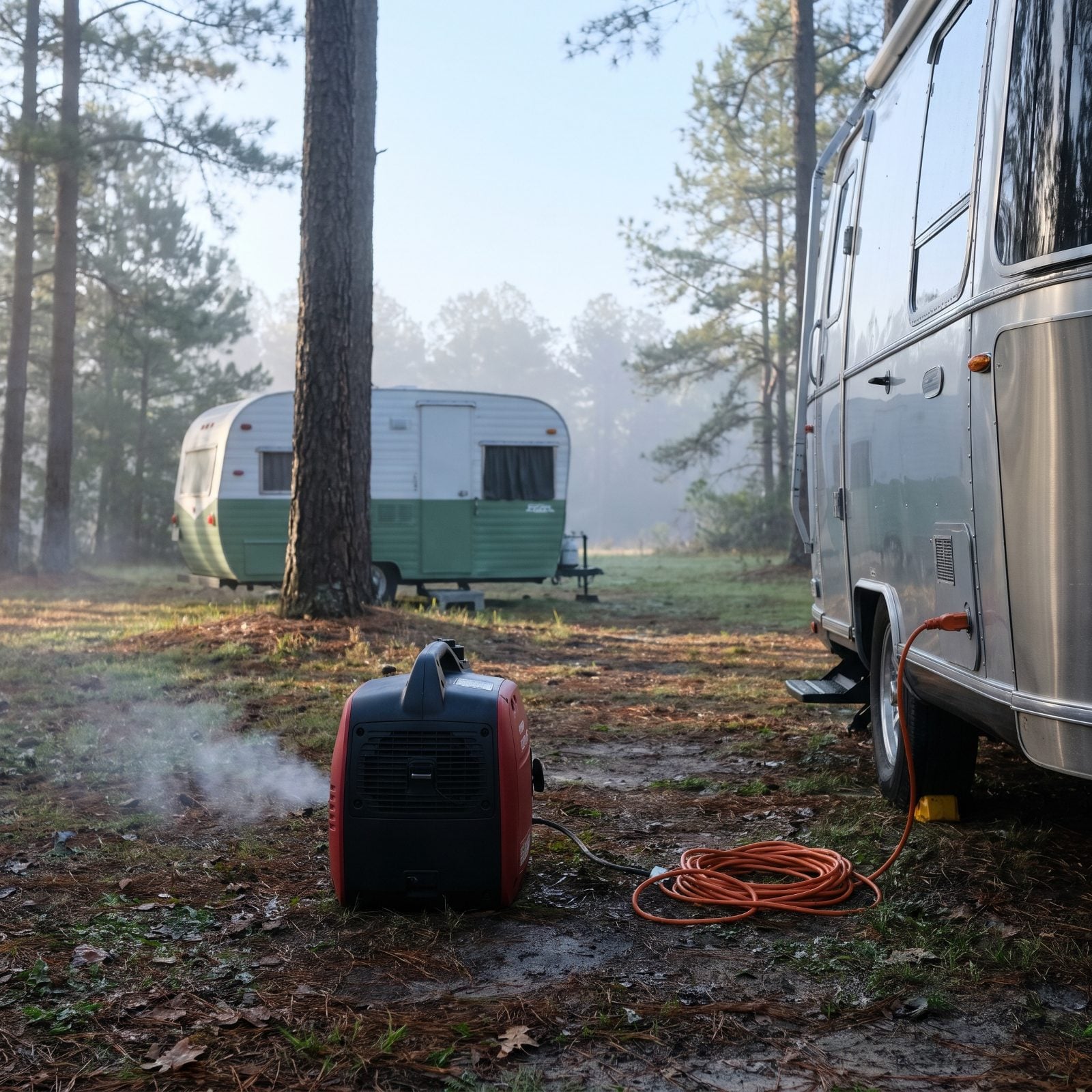
You’re up at five, coffee’s going, and the generator kicks over with that steady drone. Trouble is, the folks parked near you drove all the way out here specifically so they wouldn’t hear an engine at five in the morning.
Most public land posts quiet hours, usually 10 p.m. to 6 a.m., and even where nothing’s posted the courtesy holds. A generator carries for hundreds of yards in still morning air.
Run it mid-morning through late afternoon, when folks are awake and out. Better yet, pair a small battery bank with a portable solar panel so your quiet needs — charging phones, running the fridge — never touch the engine at all. I switched most of my daily draw over to solar, and honestly the silence alone was worth it.
19. Flooding Nearby Sites With Exterior Lights
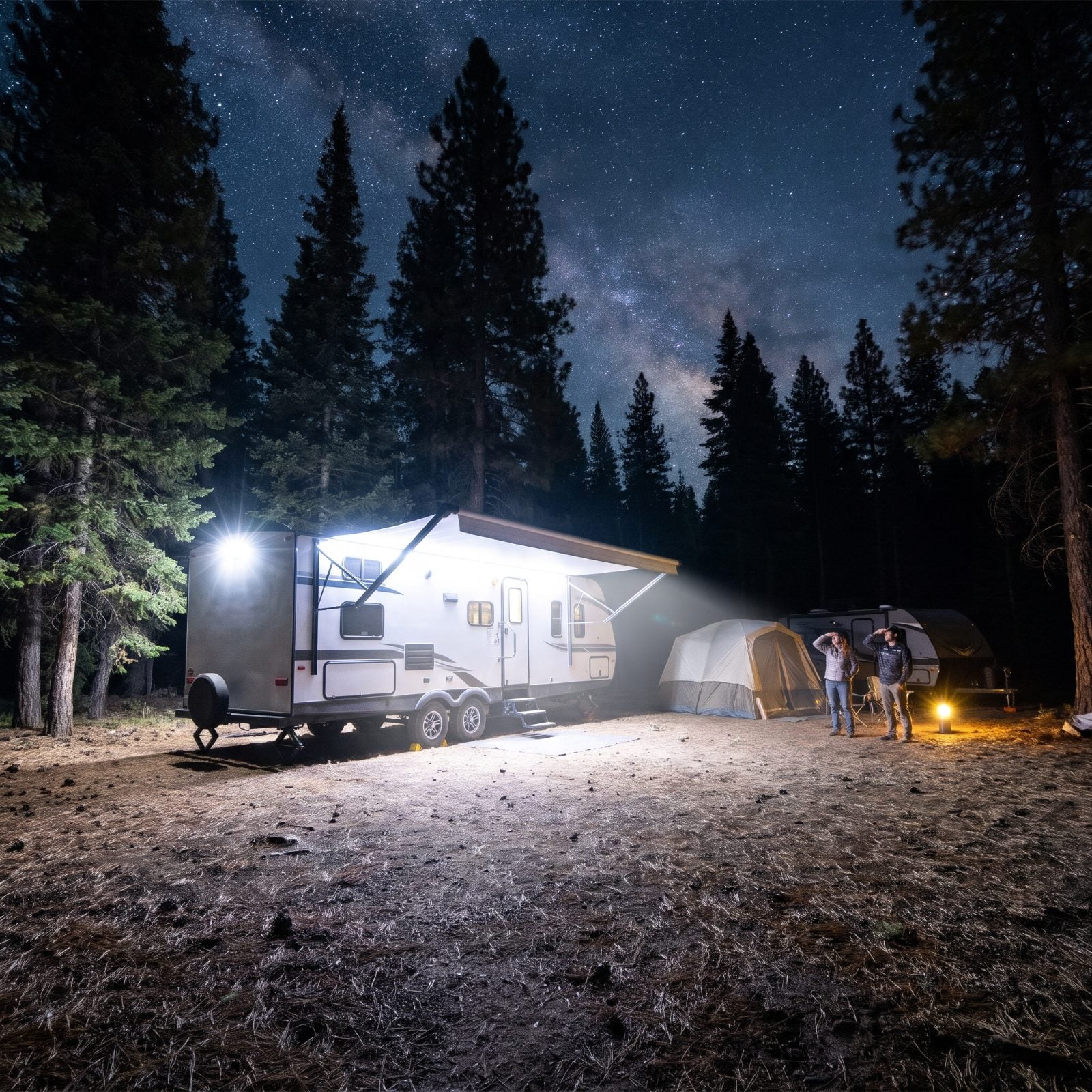
One of the quiet joys of boondocking is a sky dark enough to see the band of the Milky Way with your naked eye. Then the rig next door clicks on a wall of exterior LED floodlights and the whole basin washes out to a dull gray.
Those bright white porch lights do more than annoy. They kill everyone’s night vision, scrub out the stars, and throw off the nocturnal critters that make the place feel wild in the first place. Switch to a low warm lantern inside your own camp, point any task light down at your own feet, and shut the floods off once you’re settled. A warm amber camp lantern gives you plenty to cook and read by without bleaching the night for a half mile around.
Explaining what protecting the night sky actually asks of people, a national park dark-sky ranger said “It’s about smarter lighting, so lighting only what you need when you need it”
18. Playing Outdoor Music Across the Basin
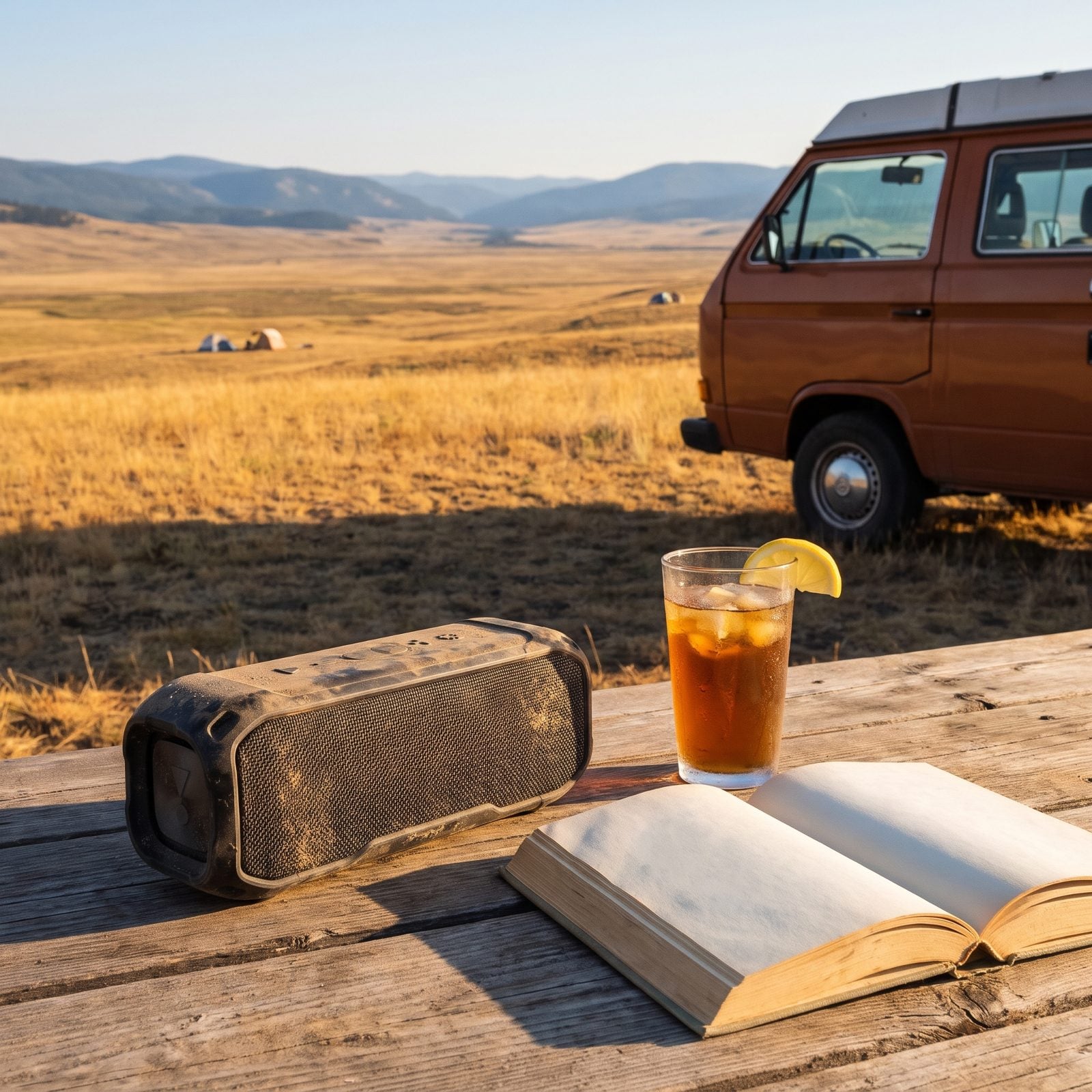
Your playlist is great. That’s not the issue. The issue is a Bluetooth speaker cranked up on the tailgate, carrying across an open basin like a radio station nobody out here tuned to on purpose.
People drive hours to dispersed sites for wind, birds, and the sound of a creek — not your afternoon mix. Sound is the one thing out here you can’t fence.
Keep the volume low enough that it dies at the edge of your own camp. Want it louder? That’s what headphones are for. My own test: if I can hear my music standing over at the neighbor’s fire ring, it’s too loud.
17. Flying a Drone Over Other Campers
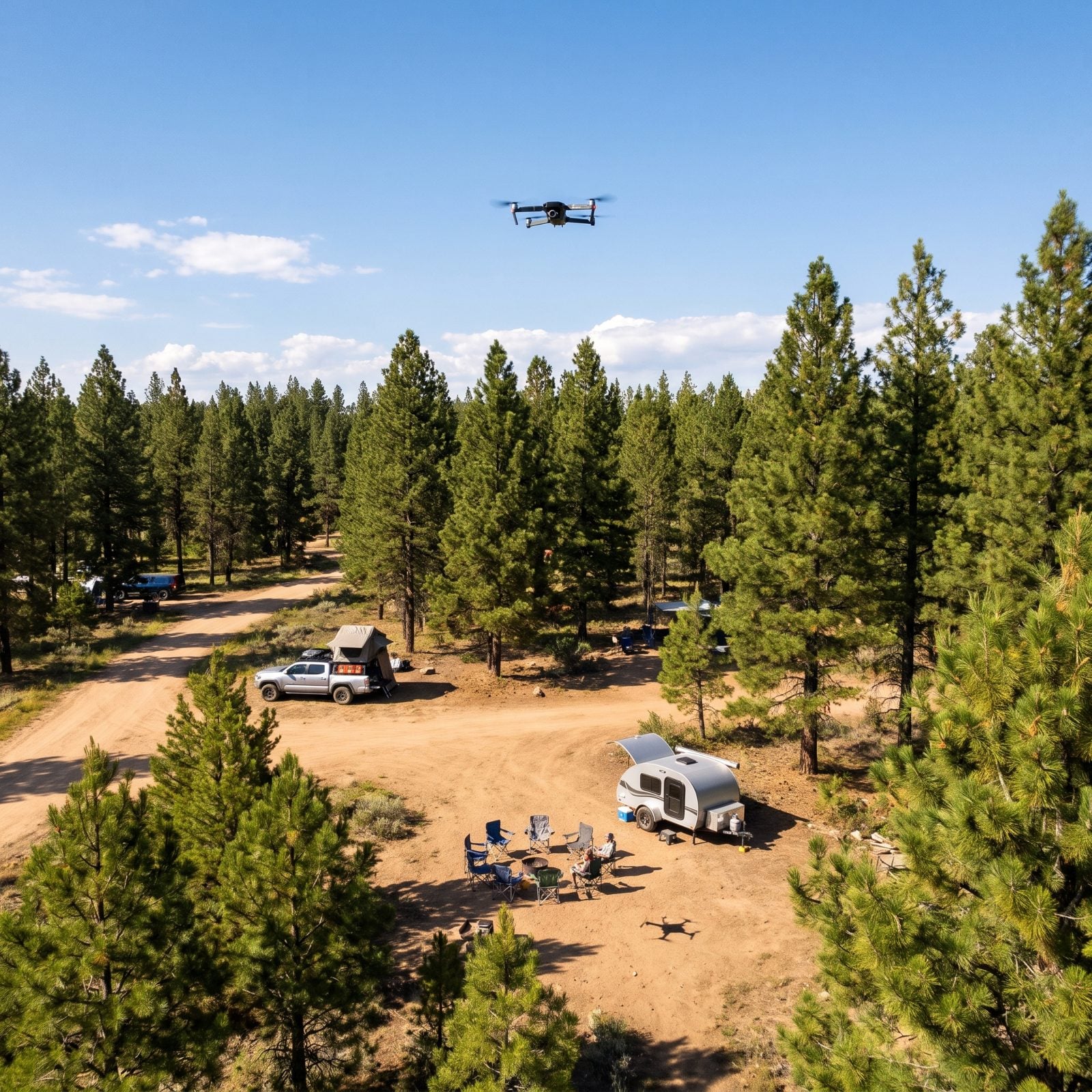
A drone buzzing low over the next camp is just the modern version of peeking over the fence. People came out to the backcountry for privacy, and that high whine overhead feels like surveillance — because, well, it kind of is.
Past the creep factor, drones are flat-out banned in every national park and most wilderness areas, and they rattle wildlife badly. The fines are real.
Launch from a spot well away from other camps, keep it over open ground you’ve got to yourself in that moment, and never hover above someone else’s rig. And check the regs for the specific land you’re on before you unpack the thing.
16. Shooting Near Occupied Camps
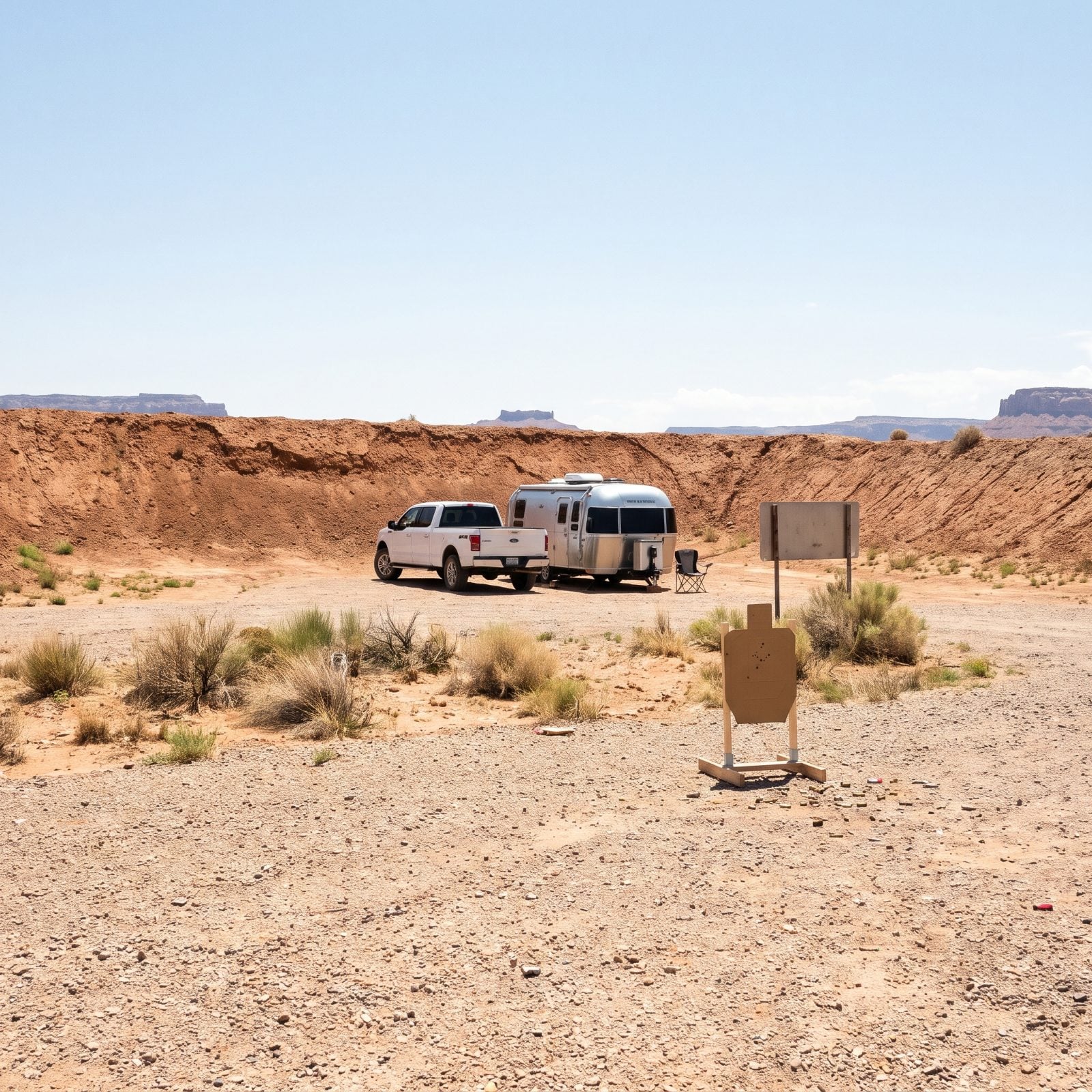
Target shooting is legal on a lot of public land, and plenty of folks do it responsibly. The problem is the camp that strings up a makeshift range with occupied sites sitting inside the fan of fire, or shoots toward a ridge where nobody can see what’s waiting on the far side.
A rifle round travels well over a mile. “I was aiming away from them” is not a plan.
Walk your surroundings first. Shoot only with a solid earthen backstop, clear empty country behind it, and real distance between you and every camp, road, and trail. Anyone within earshot is going to have their day wrecked by the noise alone, so put serious ground between you. When in doubt, don’t.
15. Building a Fire During Restrictions
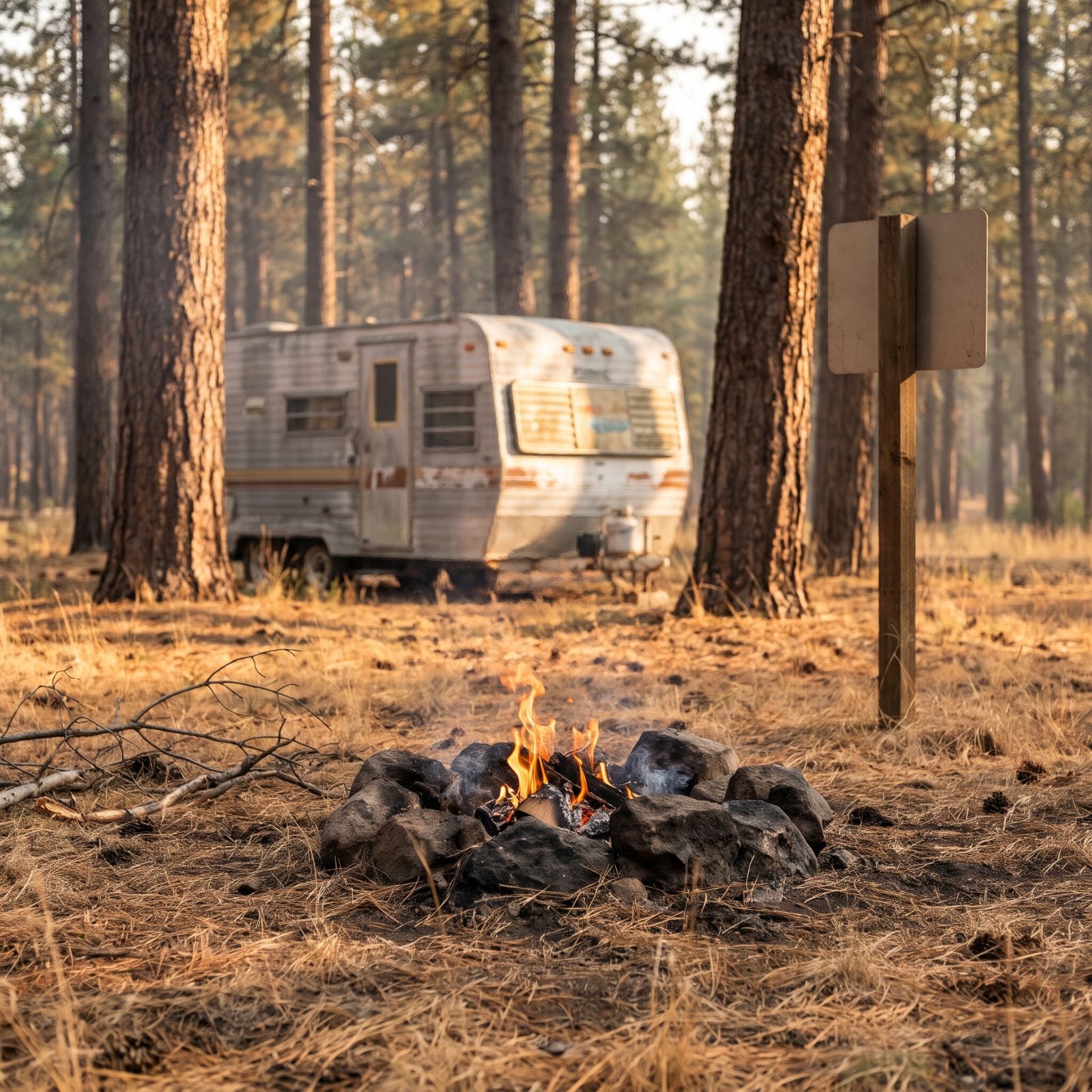
A fire ban isn’t a suggestion posted to annoy you. It means the duff is cured, the humidity’s in the single digits, and one ember on the wind becomes a headline. Light up anyway during a Stage 1 or 2 restriction and you’re how the rest of us lose access to whole districts.
Check the ranger district website or call the office before you strike a match. When a ban’s on, cook on a propane stove you can shut off with a valve and save the flames for a trip when the forest can take them. I’ve eaten plenty of good dinners by lantern light instead. Nobody died of it.
14. Walking Away From a Burning Campfire
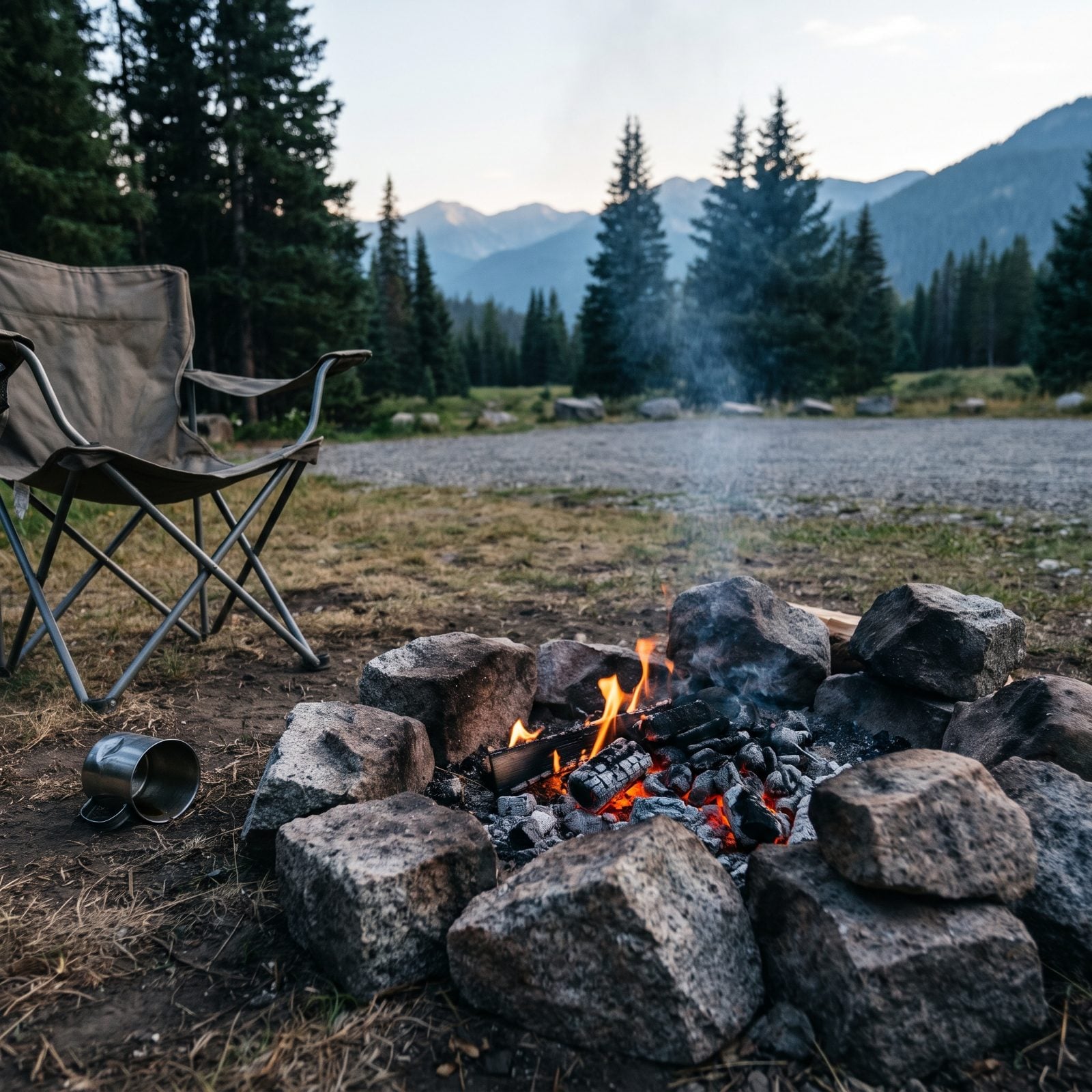
You step away for ten minutes to grab water from the rig. That’s all it takes. Wind picks up, an ember lands in cured grass, and a fire that was handled becomes a fire that’s running.
Most human-caused wildfires on public land trace back to exactly this kind of ordinary distraction — somebody stepped off to do one quick thing. So drown it, stir it, drown it again. Pour water until the hissing stops, rake the coals, pour more, then put the back of your hand near the ashes. If you feel heat, it isn’t out. Cold to the touch or it stays lit. That’s the whole rule.
13. Starting a Second Fire Ring
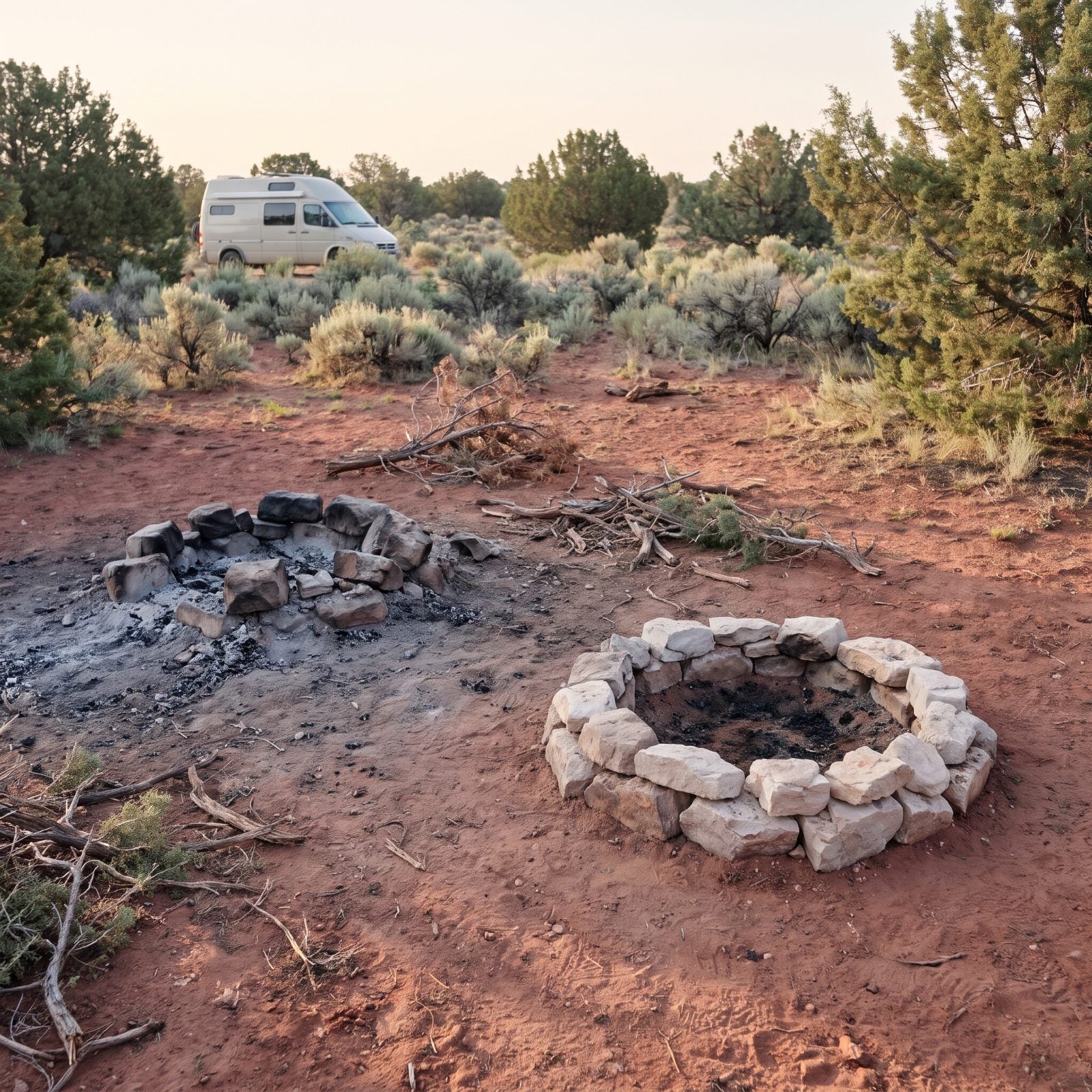
One campsite does not need three burn scars. You roll into a spot, there’s a perfectly good fire ring twenty feet away, and instead of using it you stack up fresh rocks right where you parked. Now the next camper sees two blackened circles and figures a third won’t hurt.
That’s how a quiet pullout turns into a moonscape of char marks that the Forest Service eventually gates off. Use the existing ring. If there’s a decent one within sight, it’s yours. Building a new one only makes sense where none exists, and even then you scatter the rocks and pack out the ash when you leave.
12. Burning Trash in the Fire Pit
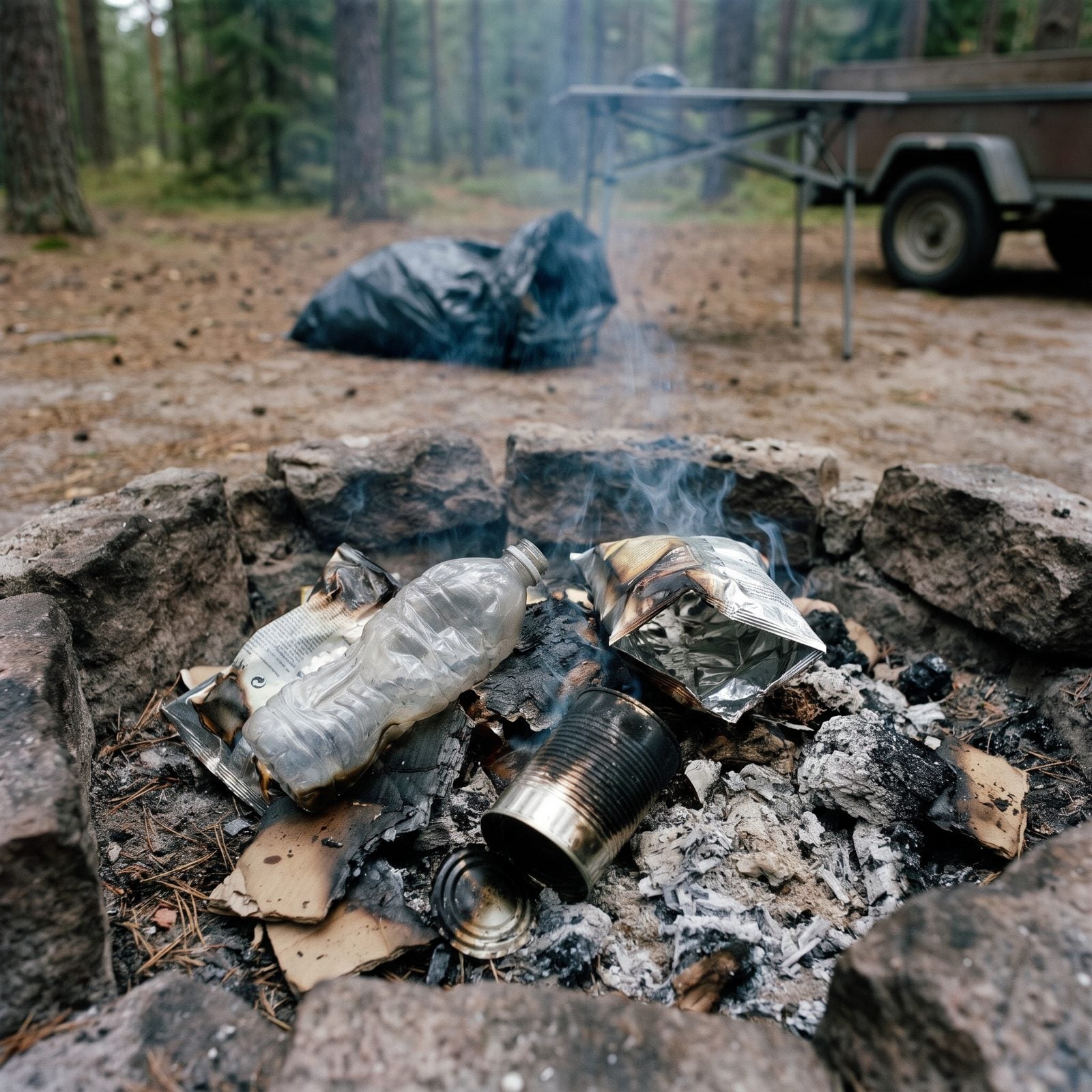
Plastic and foil don’t burn clean. They melt, they stink, and they leave a crust of warped junk in the ashes that the next person has to look at — plus fumes nobody downwind asked to breathe.
A fire pit is for wood. That’s it. Food packaging, bottles, cans, wet wipes — all of it goes in a trash bag and rides out with you. Keep a dedicated garbage bag hung on the ladder of your rig so there’s no excuse to feed the fire a potato chip bag at eleven at night.
11. Cutting Live Trees for Firewood
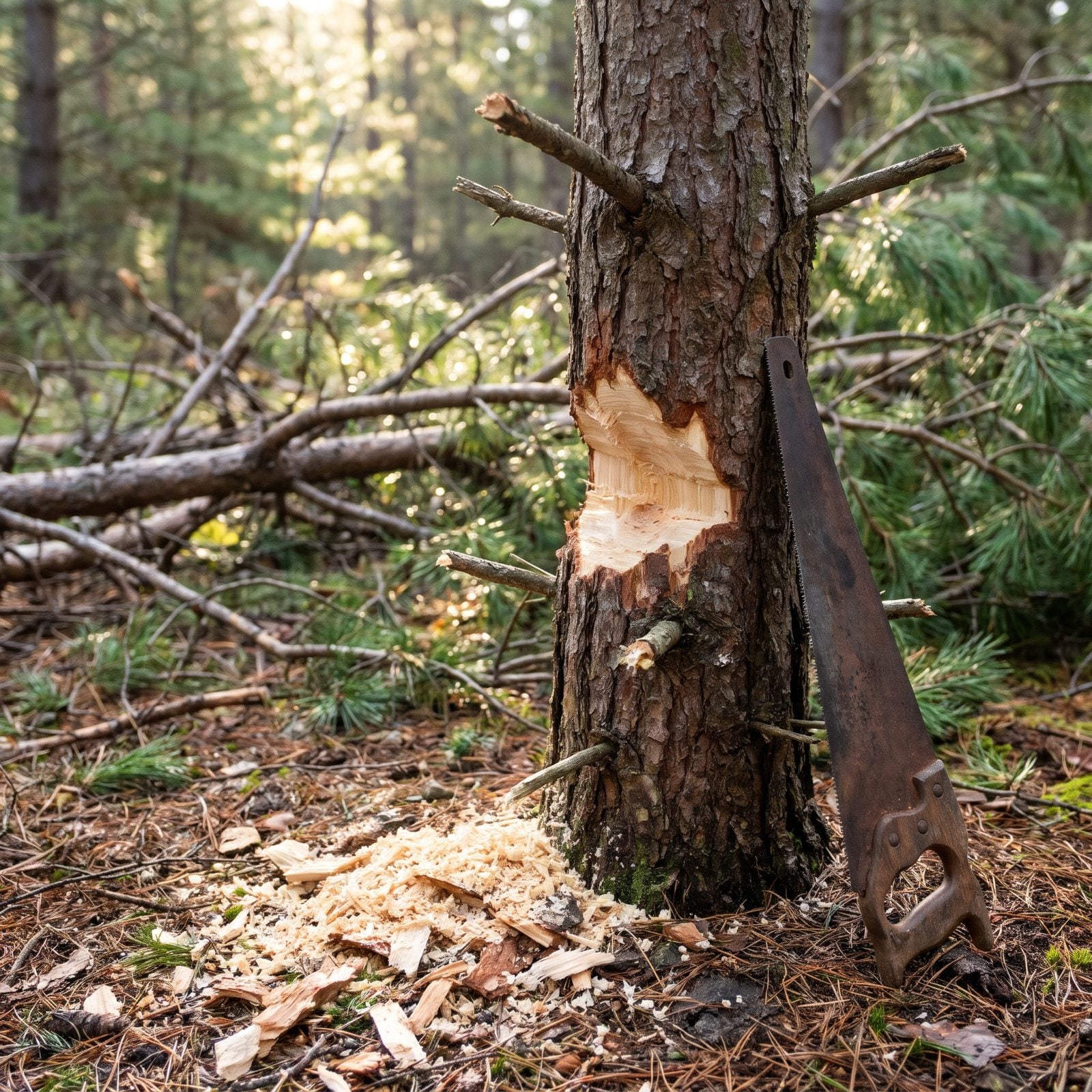
Green wood is a terrible fire anyway. It hisses, it smokes, it won’t catch — so cutting a live sapling gets you a miserable smolder and a scarred tree that takes decades to recover, if it recovers at all. And in most forests it’s flatly illegal.
Dead and down wood is lying all over the ground for free, already seasoned, already ready to burn. Gather that. Better yet, buy a bundle of firewood local to the area where you’re camping and bring it in. Hauling wood across state lines spreads emerald ash borer and other pests, so keep it close to home and keep the living trees standing.
10. Leaving Foil and Glass in the Ashes
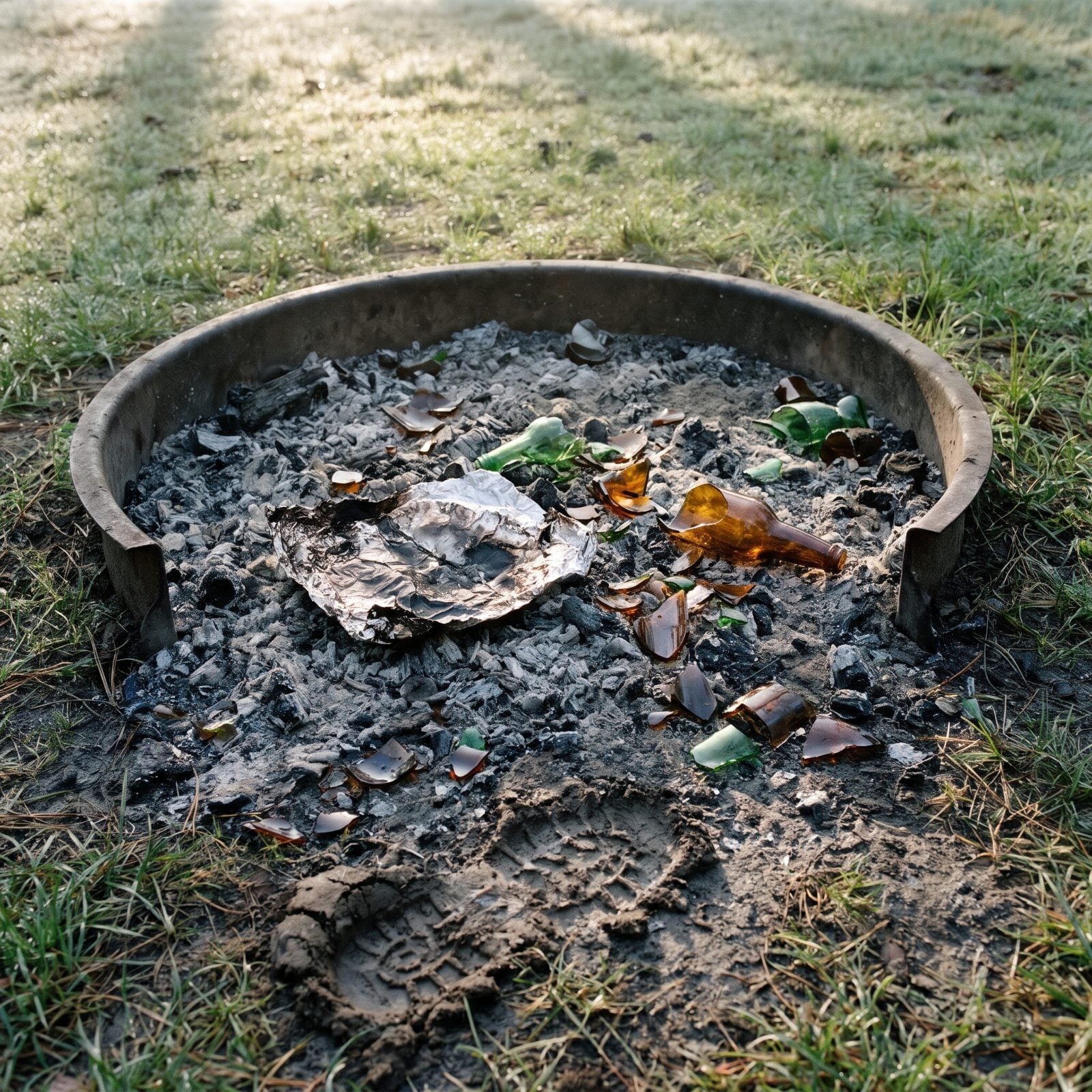
Glass doesn’t burn. It shatters into clear and green shards that bury themselves in the ash, waiting for a barefoot kid or a dog’s paw. Foil balls up into sharp little wads that do the same.
When you break down camp, sift the fire ring. Pull out every scrap of foil, every bottle fragment, every melted bit, and bag it. The ring should hold nothing but clean grey ash when you walk away. A cheap pair of welding gloves and two minutes of poking through the cold ashes is all it takes — and the next family that rolls in will never know how close they came to a trip to urgent care.
9. Dumping Gray Water Beside Camp
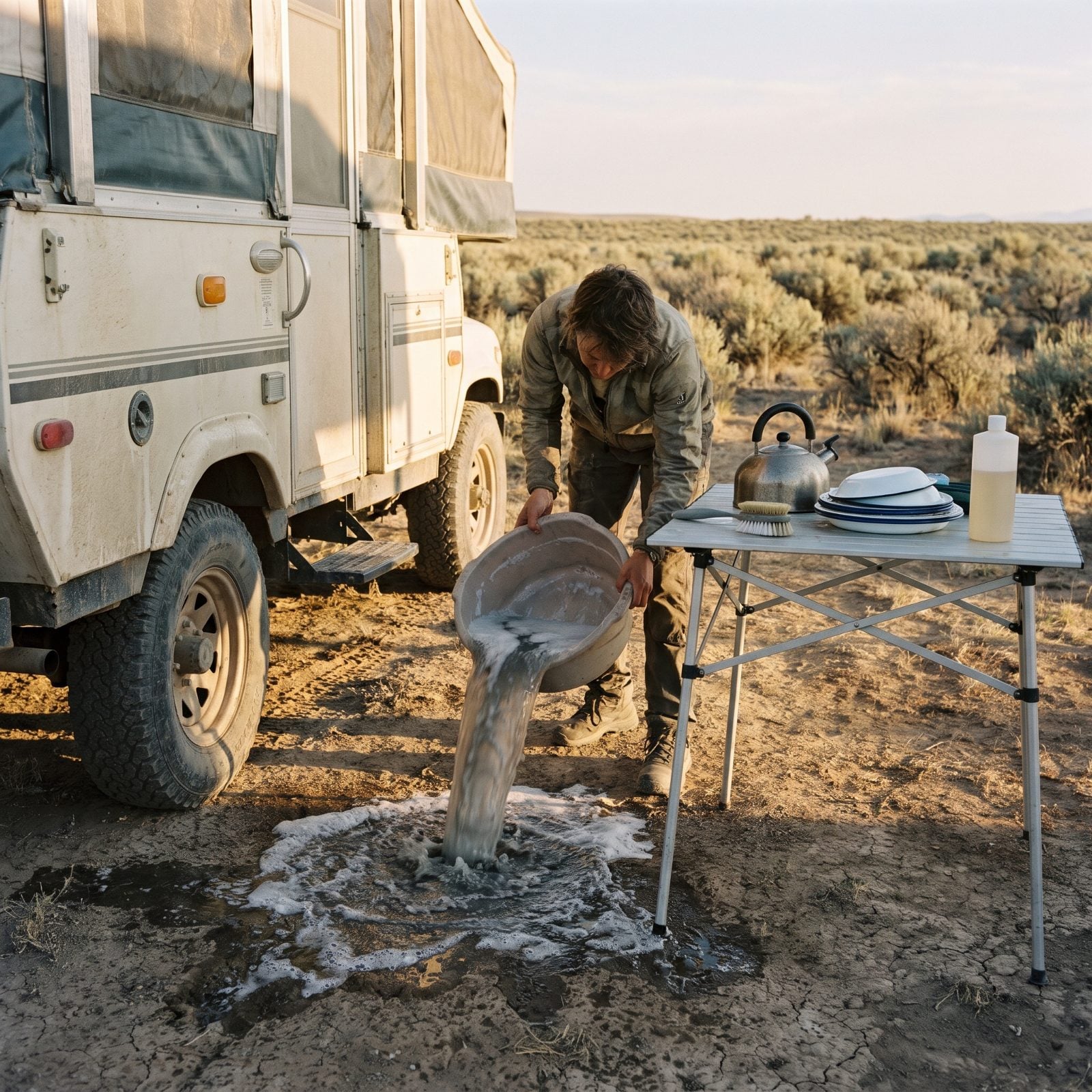
That soapy dishwater you fling behind the trailer doesn’t just vanish. It draws animals, it leaves grease and food smell in a ten-foot radius, and the next camper pitches a tent right in the slick patch you made.
Scatter gray water wide and far from camp, well back from any creek or lake, and use biodegradable soap in small amounts. Strain the food bits out first so you’re not broadcasting dinner scraps. Better still, catch it in a jug and haul it to a proper dump station when you resupply. Your gray tank holds more than you think if you’re careful at the sink.
8. Letting Food Scraps Scatter Outside
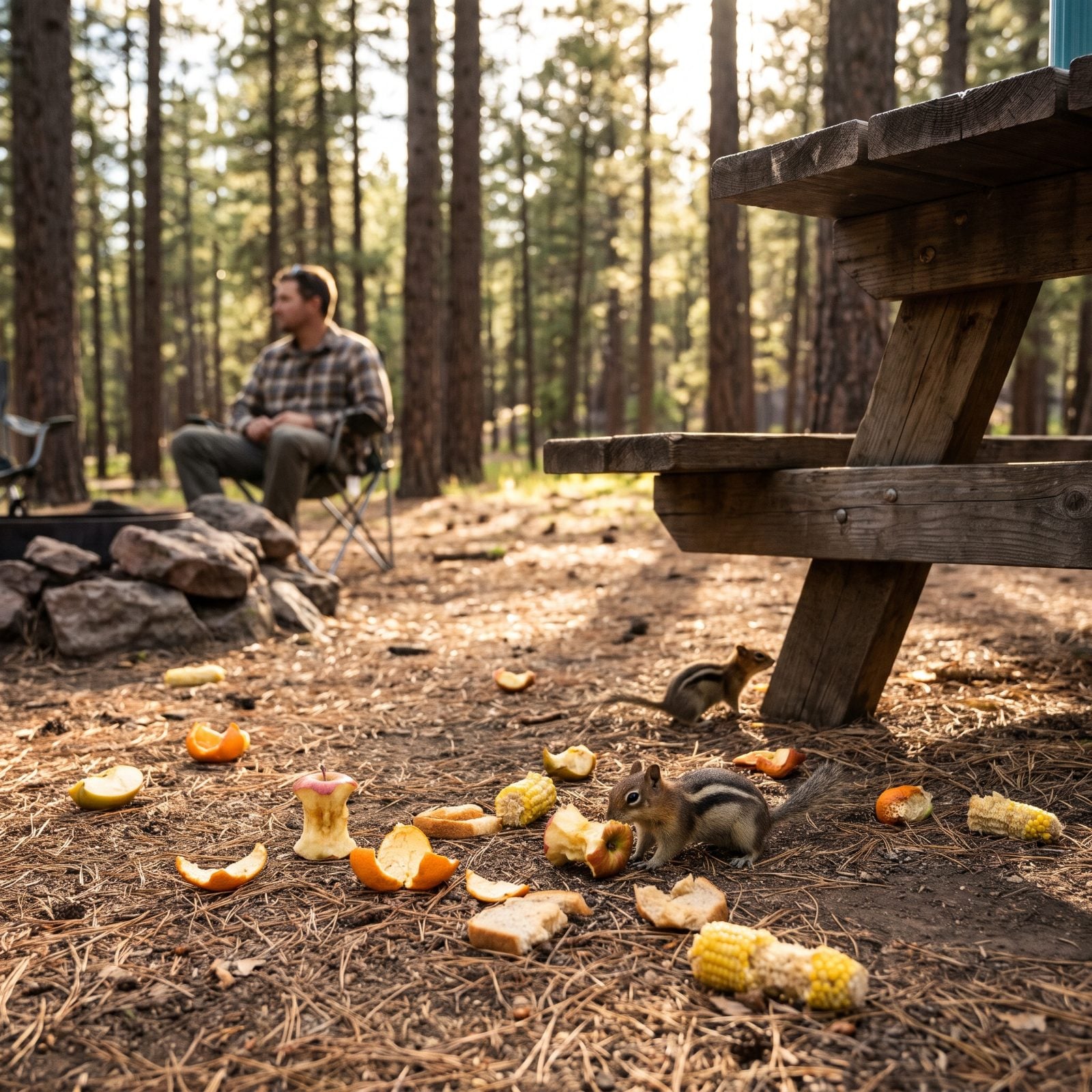
Apple cores and orange peels feel harmless. They’re natural, right? They’re also candy to every squirrel, jay, raccoon, and bear within smelling distance — and once wildlife learns that campsites mean easy food, that animal becomes a problem that usually ends with it being destroyed.
A fed animal is a dead animal. Rangers say it constantly because it’s true. Pack out every scrap, peels included. Citrus and eggshells take years to break down in dry country anyway. Keep a sealed scrap container or a dedicated trash bag, and do a sweep of the ground under your table before you pull out. Leave the site cleaner than the squirrels would like.
After closing a stretch of dispersed sites because campers left food out unsecured, a national forest district ranger said “The bears were becoming too comfortable, especially around the campers”
7. Dumping Black Water on Public Land
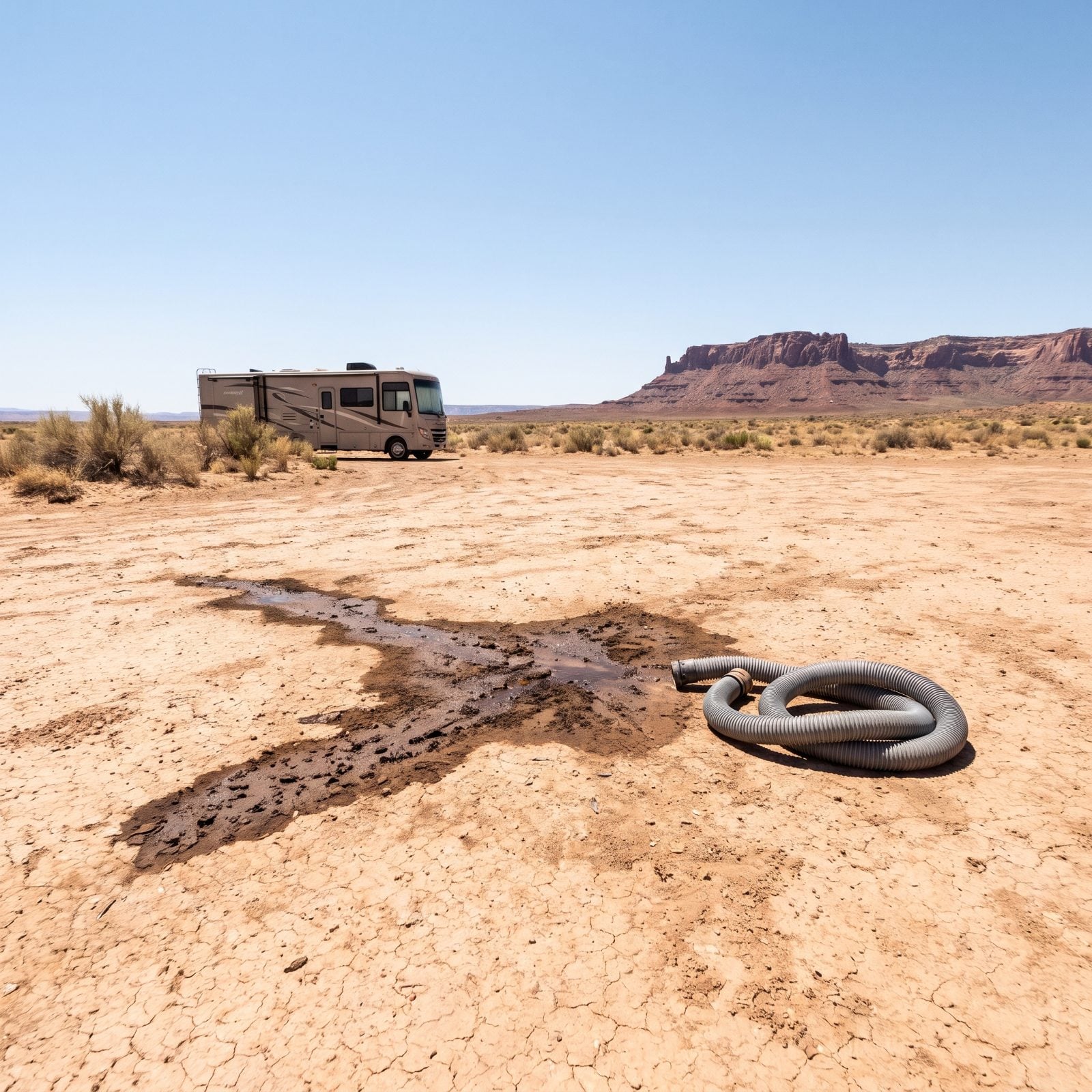
This is the one that gets whole areas closed to camping. Emptying a black tank onto the dirt is a human health hazard, a federal offense in most places, and the fastest way to turn a free dispersed spot into a gated, no-overnight zone with a chained post.
Black water goes to a dump station. Period. There is no clever boondocking workaround — don’t let anyone tell you otherwise. Flying J, Pilot, state parks, many RV parks, and Sanidumps.com will point you to the nearest one, often for free or a few dollars. Plan your tank around resupply stops the same way you plan fuel. If you can track your gas gauge, you can track your tank, and everyone behind you keeps their access.
6. Leaving Toilet Paper in the Open
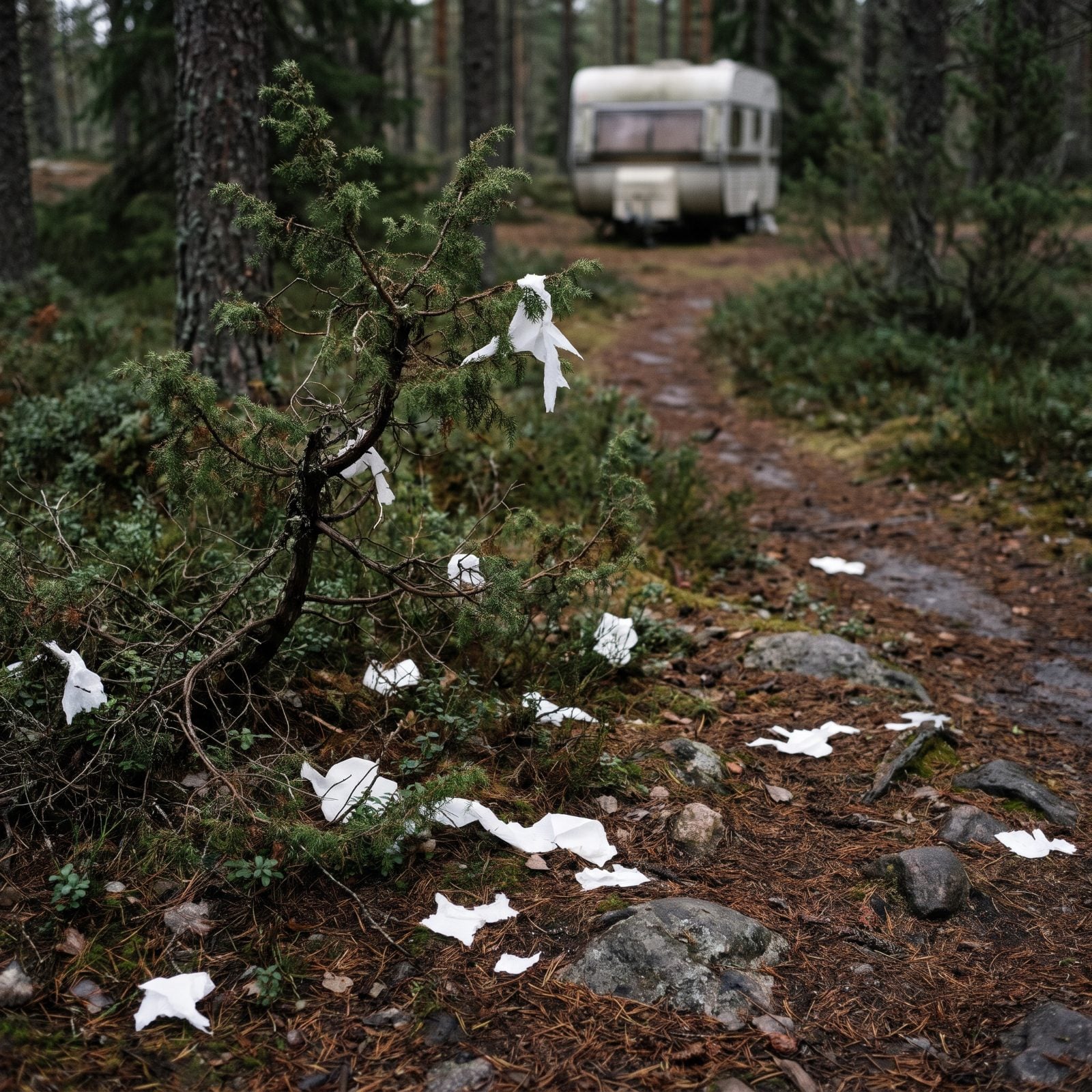
White paper blooming behind every bush is the calling card of a bad dispersed camper. It doesn’t break down fast, animals dig it up, and it turns a quiet forest edge into something that looks like a rest stop went feral.
Dig a cathole six to eight inches deep, well back from water and camp, do your business, and pack the used paper out in a sealed zip bag. I know, nobody wants to. Do it anyway. A gallon zip bag lined with a second one and a little baking soda handles it, and you’ll never leave a white flag flying in the brush again. That’s the one habit that separates campers the rangers trust from the ones they close gates on.
5. Lathering Up With Soap Right in the Creek
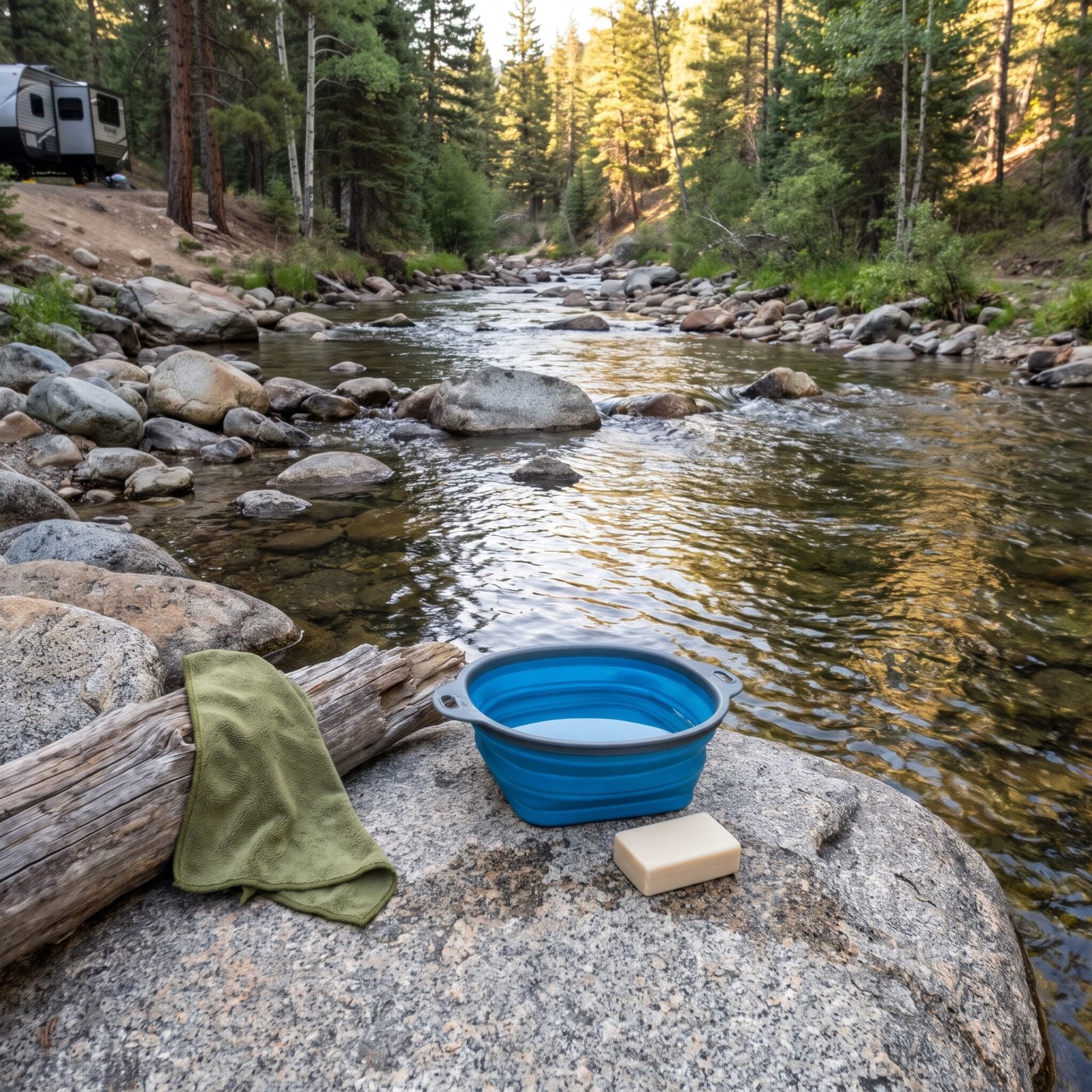
That cold stream looks like the perfect bathtub after three days off-grid. It isn’t.
Even soap labeled biodegradable is only safe once it filters through soil, not when it hits moving water head-on. Dumped straight into a creek, it feeds algae, harms fish, and taints the drinking water for the deer, the frogs, and whoever’s camped downstream.
Haul water out in a basin, walk a couple hundred feet from the bank, and wash there. Scatter the gray water across soil so the ground does the filtering. I use a two-gallon collapsible bucket and a tiny bottle of Dr. Bronner’s, and honestly I feel cleaner this way than crouching in a freezing river ever made me.
4. Leaving Your Trash as a Gift for the Next Arrival
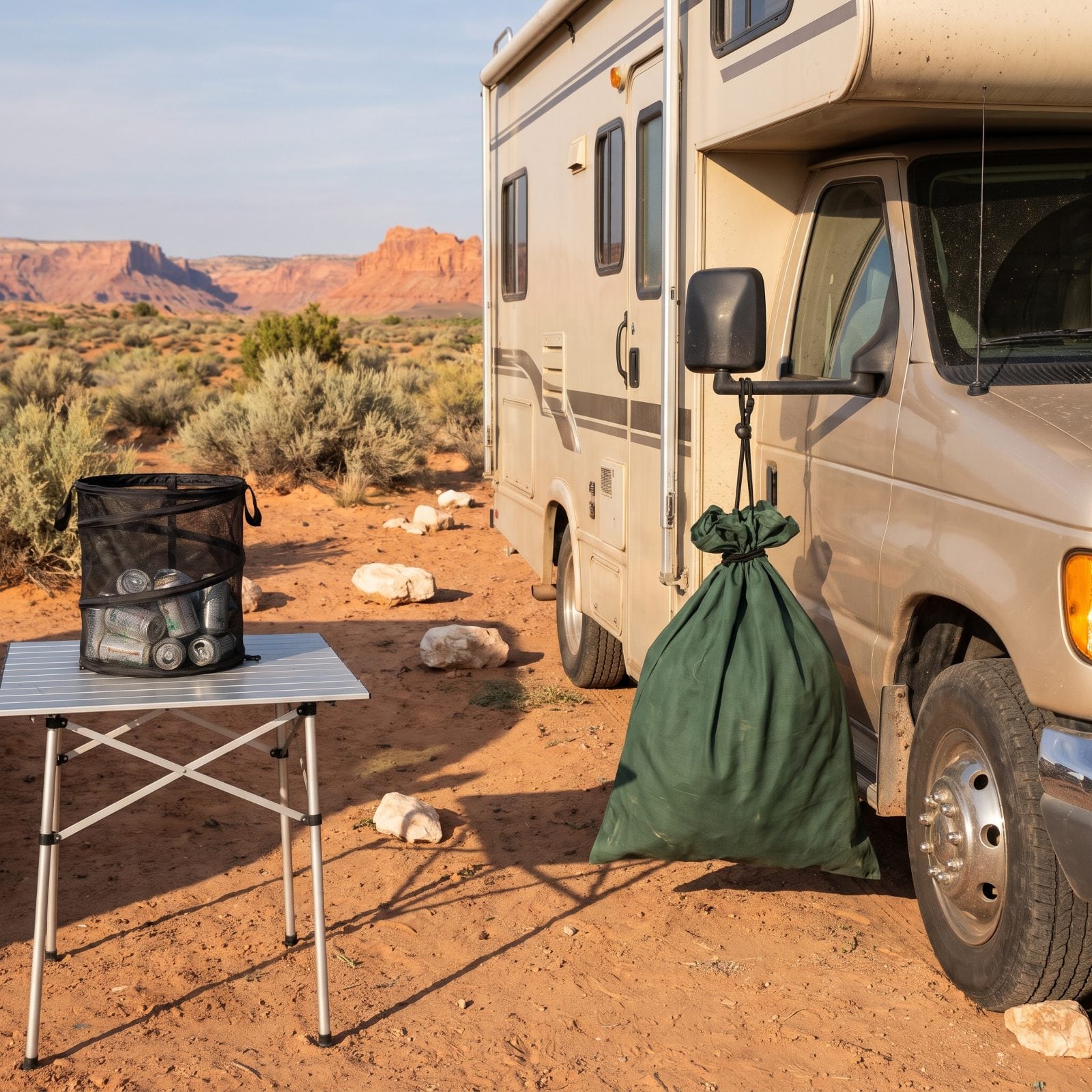
Here’s what the next arrival should find instead. At this desert spot, empty cans go into a pop-up mesh bin on the camp table, and everything else goes into a cinched green bag hung from the RV’s mirror arm, off the ground and ready to haul out. Nothing is scattered in the brush and nothing is left for someone else to deal with.
Trash draws scavengers, teaches bears to raid camps, and hands land managers every reason to gate the road. Dispersed camping stays free because enough of us keep it clean. One slob undoes that for a whole county.
Pack a dedicated trash bag, bag it as you go, and do a slow walk-around before you drive off. Pick up the stuff that isn’t even yours. I hang a drawstring bag off the side mirror and keep a collapsible mesh bin for cans for exactly this.
Reacting to a huge trash pile left behind at lakeside campsites, a national forest spokesperson said “They have come to this common land that we all share and left behind their garbage.”
3. Walking Away From a Busted Chair or Collapsed Canopy
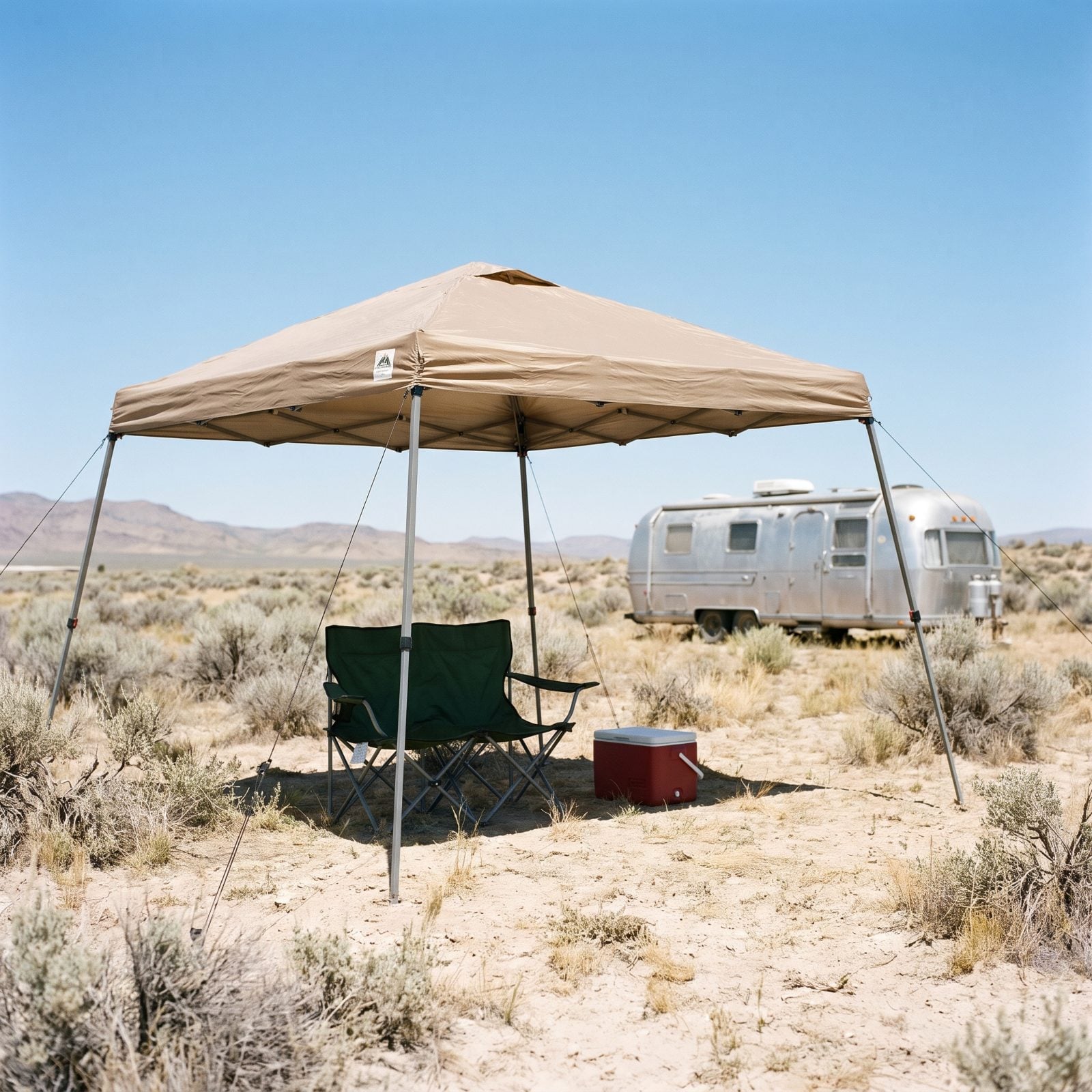
A tan pop-up canopy, a folding camp chair, and a cooler make a fine shady spot beside the trailer. But one gust can fold an unstaked canopy into a twisted metal pretzel. A cheap chair can snap a leg. When gear breaks, the temptation is to toss it in the brush and tell yourself the wind blew it there.
That gear doesn’t decompose. Nylon, steel poles, and plastic sit for decades, snagging wildlife and turning a scenic pull-off into a junkyard. Half the trashed-out sites you’ve seen started with one abandoned canopy.
Stake out every guy line, like the ones holding this canopy upright, so it never gets that far. If something does break, break it down and haul it out. A canopy frame folds flat enough to slide into a truck bed or the trailer. If it’s genuinely done, drop it at a dumpster on your way through town. Cheap gear is your bill, not the desert’s.
2. Building Rock Rings and Little Yard Decorations
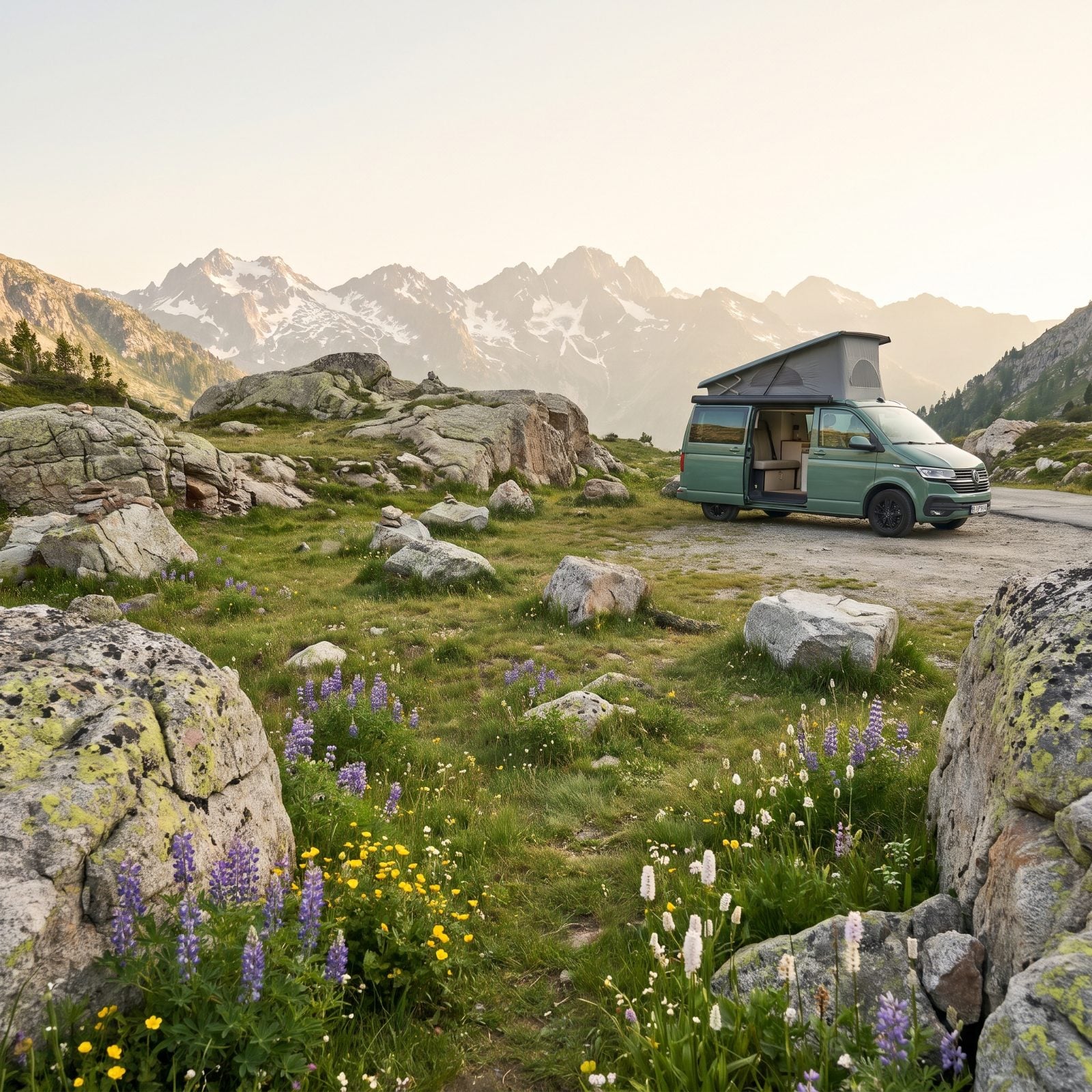
Someone always decides the site needs improving. Up go the stacked cairns, the rock borders around the fire, the little pebble pathway, the rock-outlined parking spot like it’s some suburban cul-de-sac.
What nobody mentions: moving rocks tears up the microhabitat underneath. Insects, salamanders, and lichen that took decades to grow all live on and under those stones. Pull them into a decorative circle and you’ve bulldozed a tiny ecosystem for a border nobody asked for.
Leave the rocks where they lie. If there’s already an established fire ring, use that one instead of building a second. Best campsite there is? The one that looks like you were never there.
1. Carving Your Initials Into Trees and Boulders
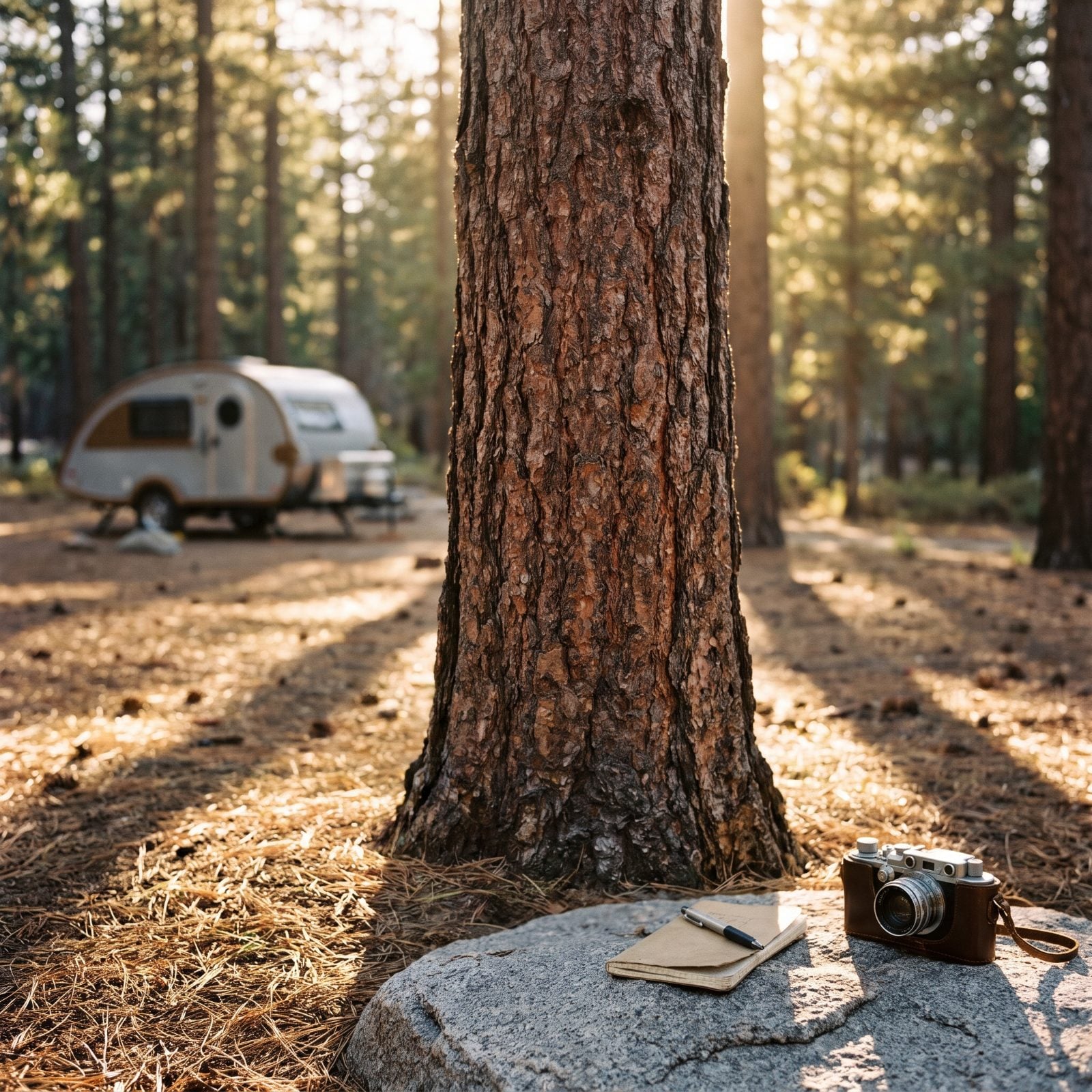
A pocketknife and a soft trunk, and suddenly your initials are gouged into a tree that was growing before your grandparents were born. People figure it’s harmless. It’s the opposite.
Cutting through bark opens the tree to disease, insects, and rot, and that scar never fully heals. Carving into rock is flat-out vandalism on public land, and on federal ground it can carry real fines. Nobody who finds it thinks of you fondly. They just figure you ruined the view.
Want to mark the moment? Take a photo. Keep a camp journal. Write the date and the site in a notebook you’ll actually reread in ten years. The forest keeps no souvenirs, and it shouldn’t have to keep yours.