
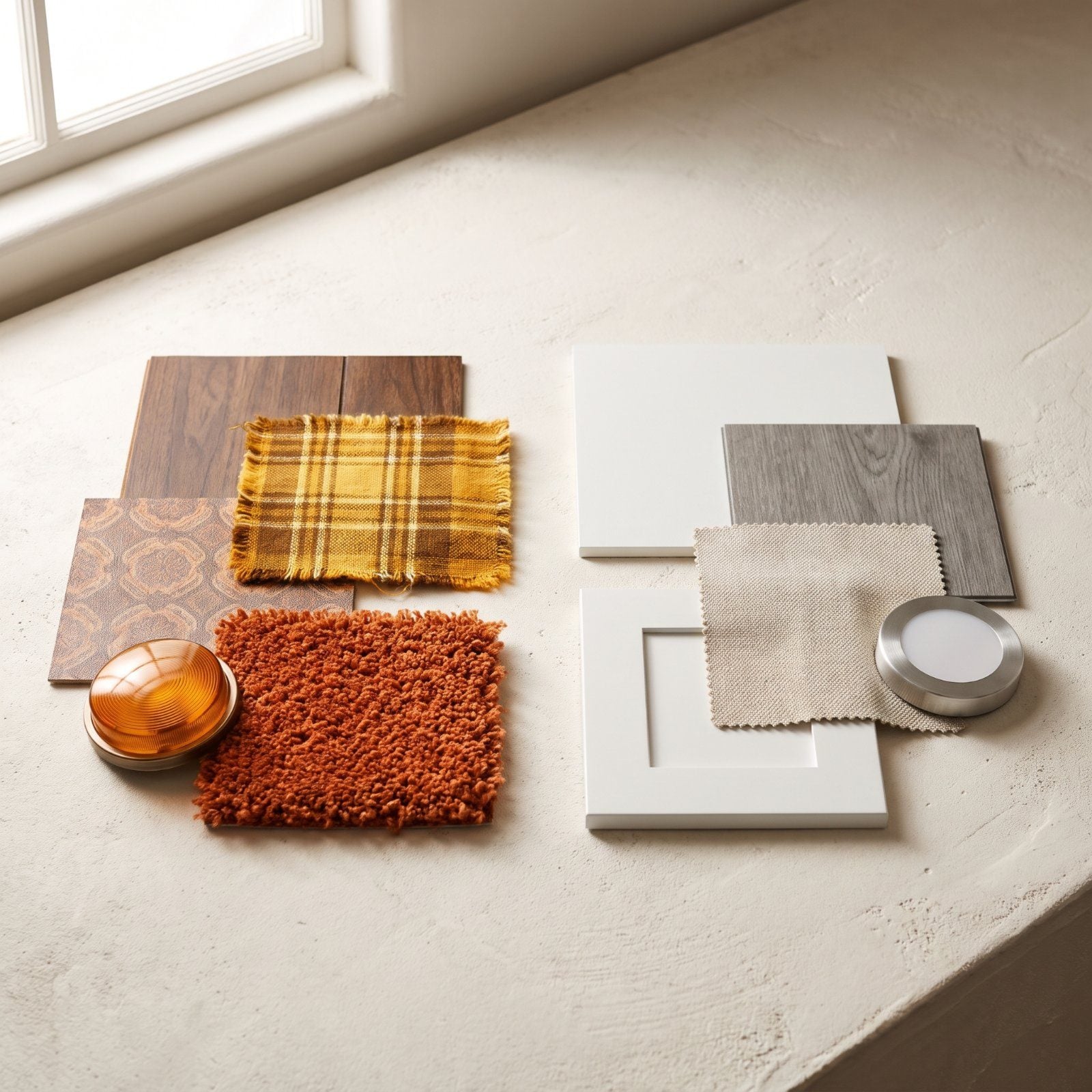
The smell hits first — warm vinyl, a little propane, and that specific mustiness that lived inside every travel trailer built before cable TV. The 1980 RV was a brown cave on wheels, and we loved it anyway. Park one next to a modern rig, though, and the difference turns almost comical. We pulled the same features from both eras and set them side by side. Some of these you’ll miss. Most of them you absolutely will not.
Please note that some of the images in this article were created with the assistance of AI.
Faux-Wood Wall Paneling vs. Bright Composite Walls
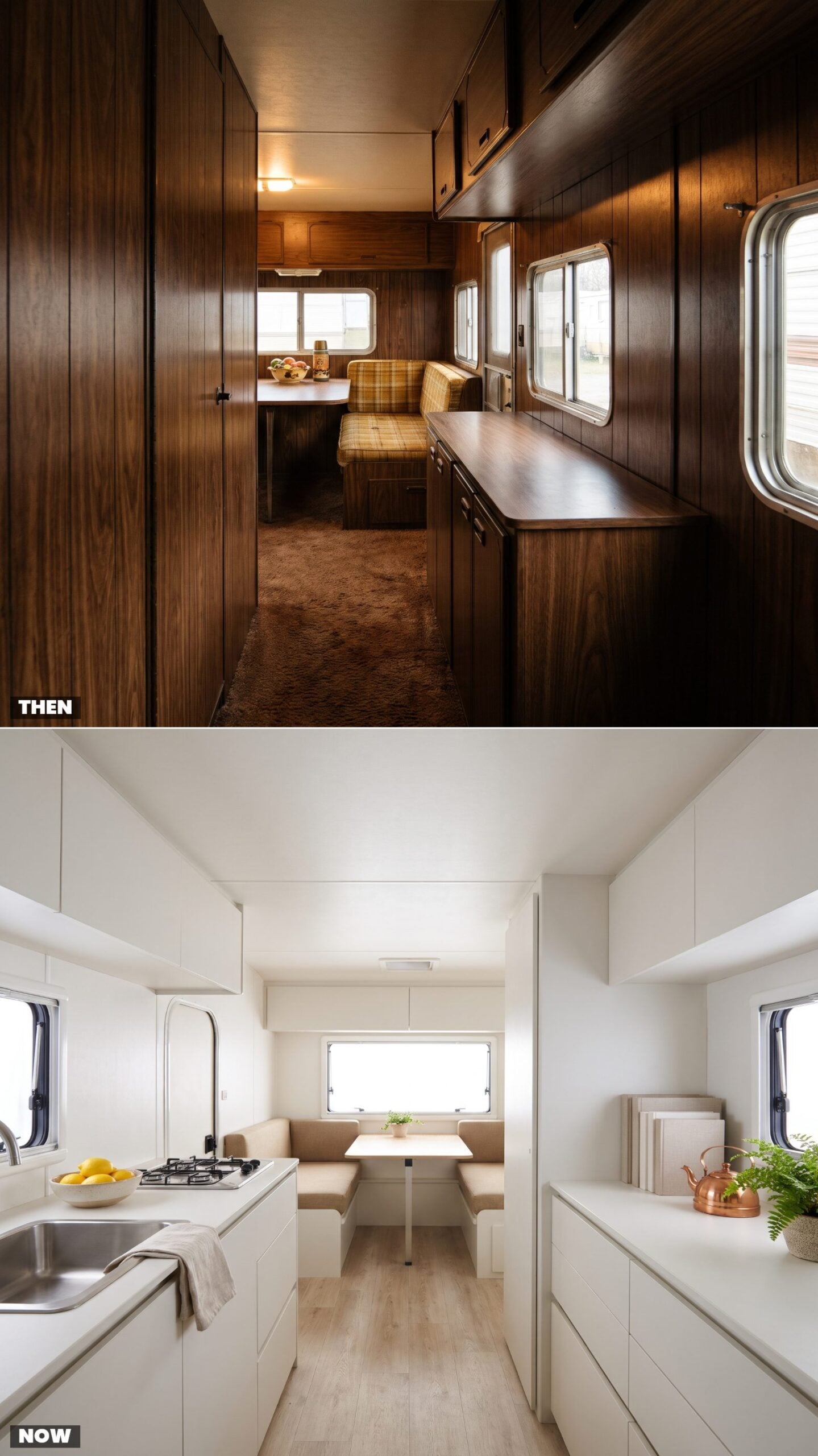
Every trailer built around 1980 had the same walls: thin paneling printed to look like walnut, glossy seams running floor to ceiling, the whole thing making a 24-foot rig feel like the inside of a cigar box. Sunlight came in and died on contact.
Modern composites flipped the mood entirely. Bright white panels bounce light instead of swallowing it, and the seams practically disappear, so the same square footage feels twice the size. The white composite wall panels weigh less too, which your tow vehicle quietly appreciates.
Harvest-Gold and Brown Palettes vs. Warm Modern Neutrals
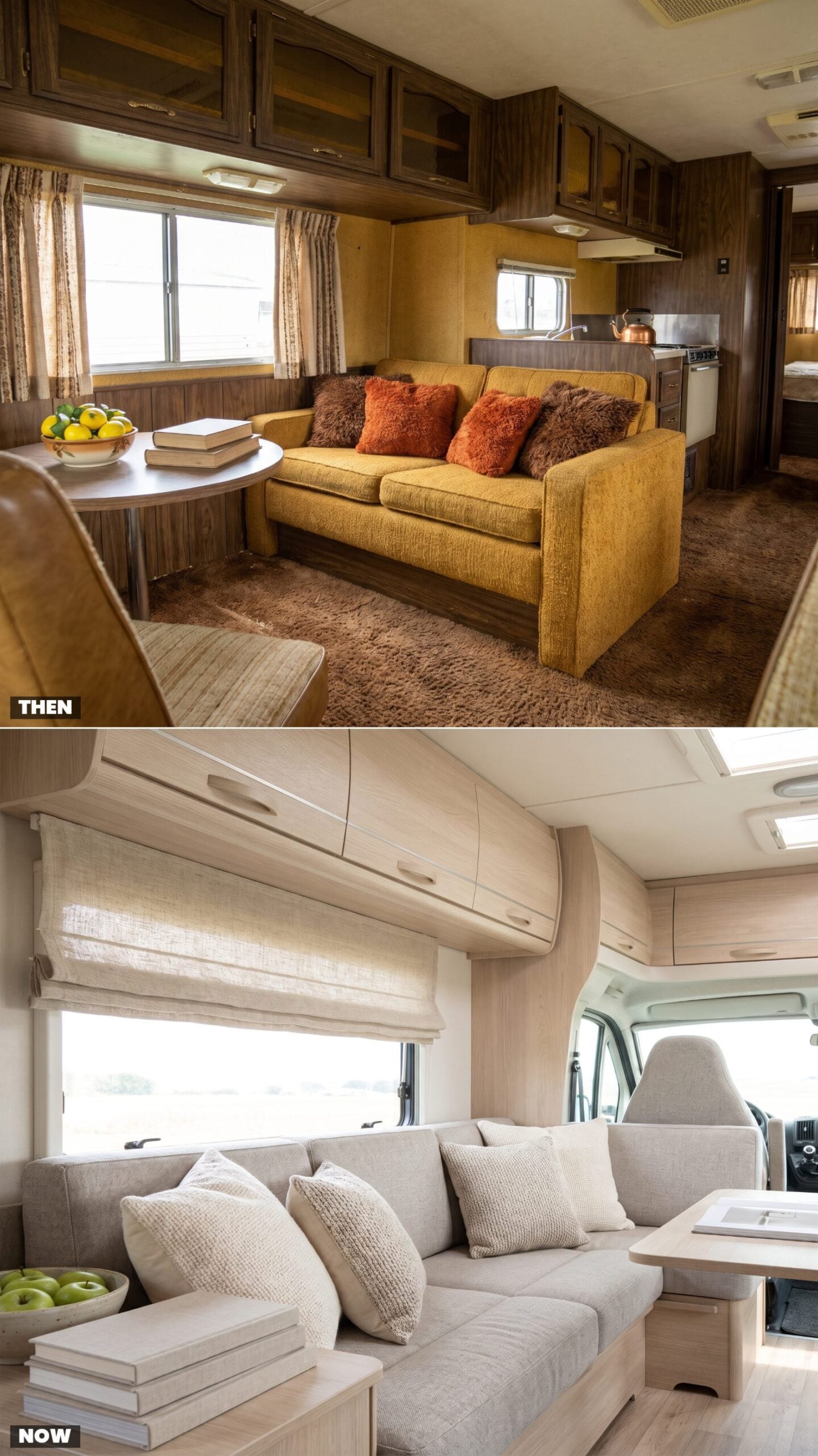
Harvest gold wasn’t a color so much as a mood, and the mood was 1980. Pair it with chocolate brown cabinetry and mustard pillows and you had an interior that felt like a late-autumn sunset — all day, every day, whether you wanted it or not.
Today’s rigs run on warm neutrals: greige, oatmeal, cream, soft wood tones. Calm instead of heavy, and they photograph beautifully, which matters more than it should now that every campsite ends up online. A set of oatmeal linen throw pillows does more for a modern interior than a whole brown sofa ever did.
Shag Carpet and Sheet Vinyl vs. Waterproof Luxury Vinyl Plank
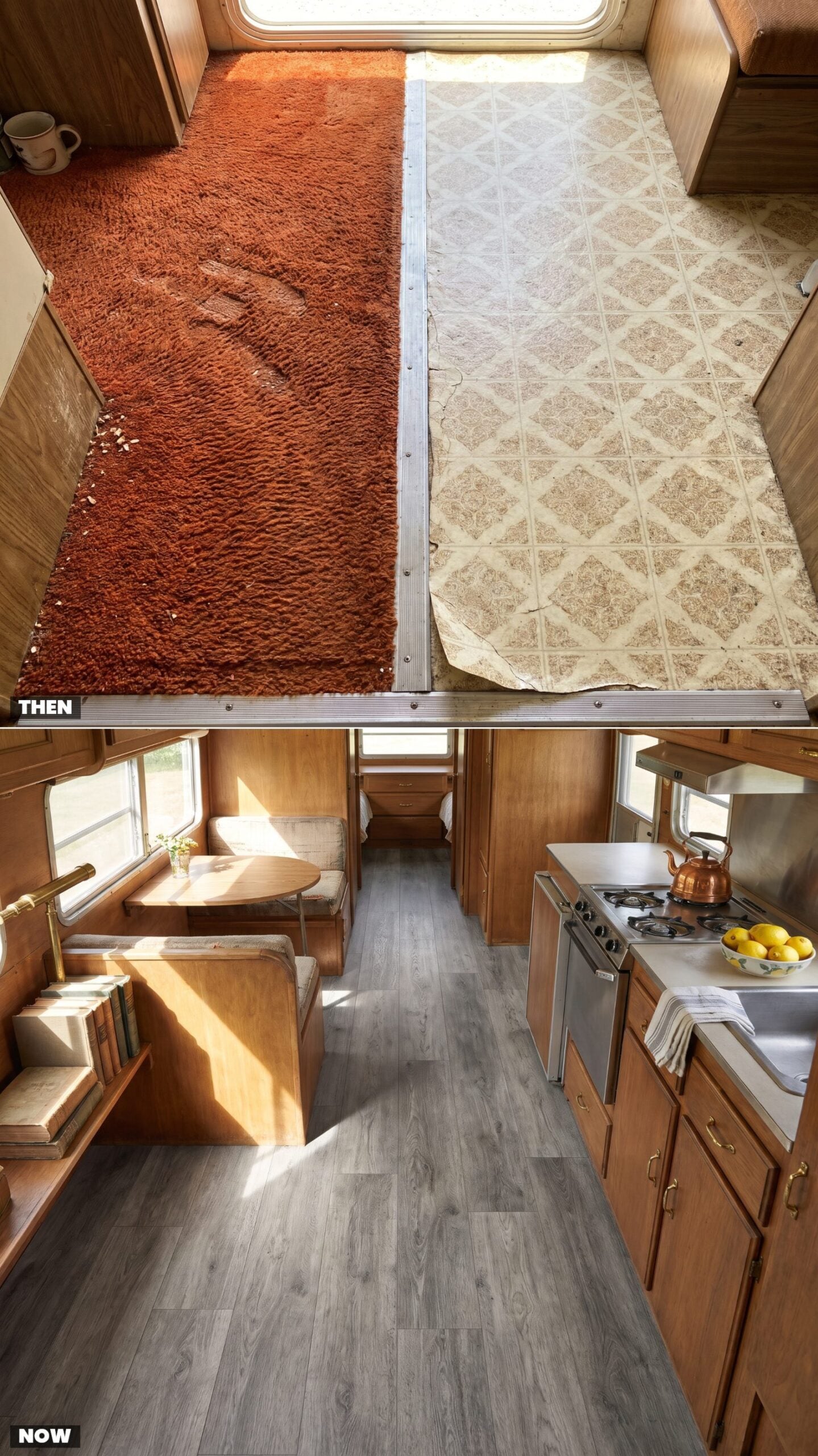
Shag carpet in a camper was a trap. It looked cozy for about one weekend, then became a permanent archive of sand, cracker crumbs, and whatever your shoes dragged in from the campground gravel. Vacuuming did almost nothing — you just learned to live with it.
Luxury vinyl plank changed the math completely. One continuous waterproof surface, wood-grain look, and you wipe it down in thirty seconds. Spill your coffee on the way to the lake and it’s a non-event. I’ll never understand why it took so long.
Padded Vinyl Ceilings vs. Clean Seamless Ceiling Panels
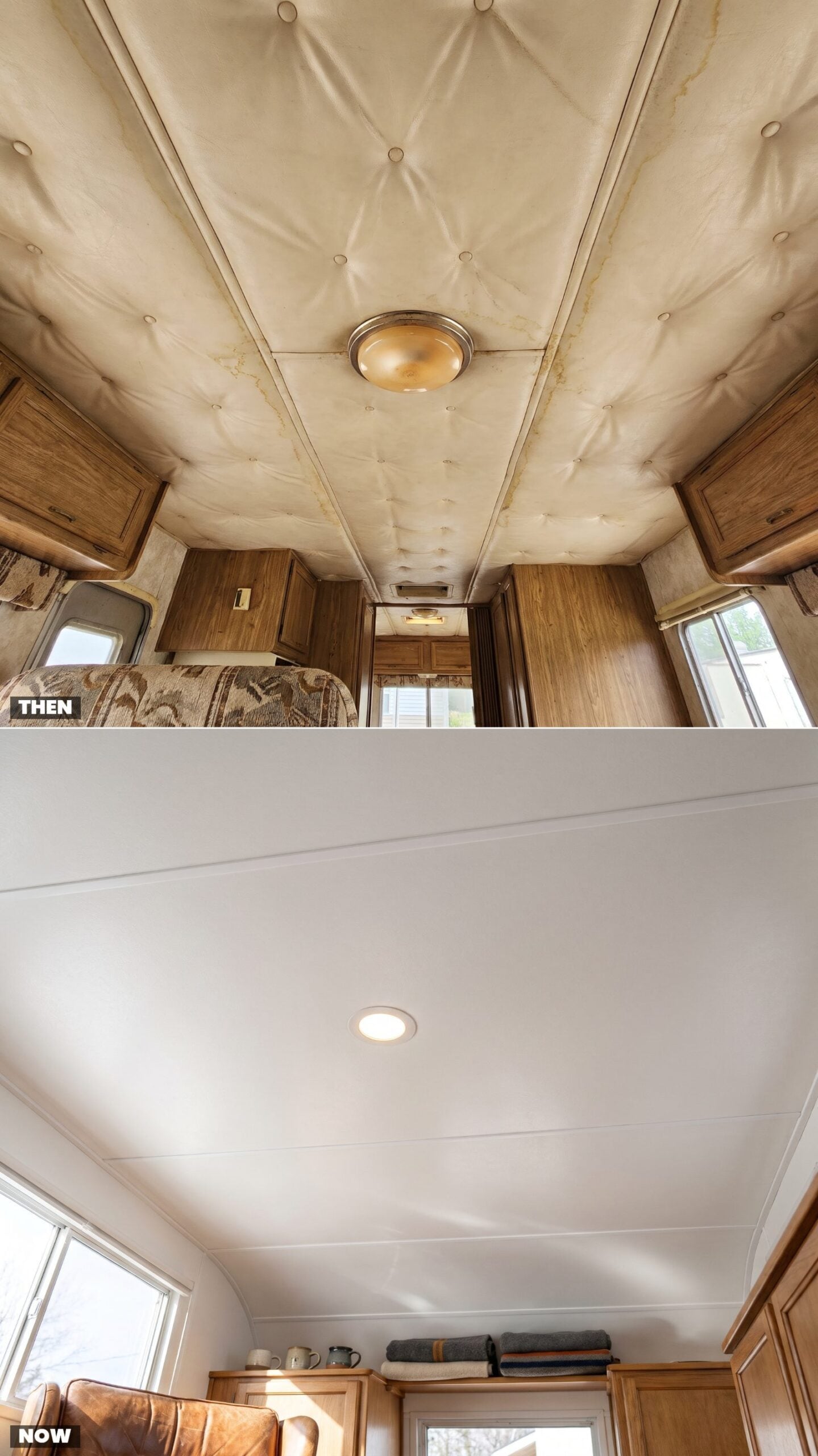
The padded vinyl ceiling was supposed to feel plush. Mostly it just sagged. Give it a few hot summers and a roof leak nobody caught in time, and the quilted headliner started drooping like a wet tent, yellowed around the edges and sad in the middle.
Modern ceilings are flat, seamless, bright white — no tufting, no sag, no mystery stains, just a clean surface overhead that makes the whole cabin feel taller. It’s one of those upgrades you don’t notice until you climb back into an old rig and remember what you escaped.
On drooping vinyl and fabric ceilings, a longtime RV parts supplier warns “But don’t assume a sagging finish means the backing is fine. Lift only enough material to inspect beneath it.”
Patterned Laminate Counters vs. Solid-Surface Worktops
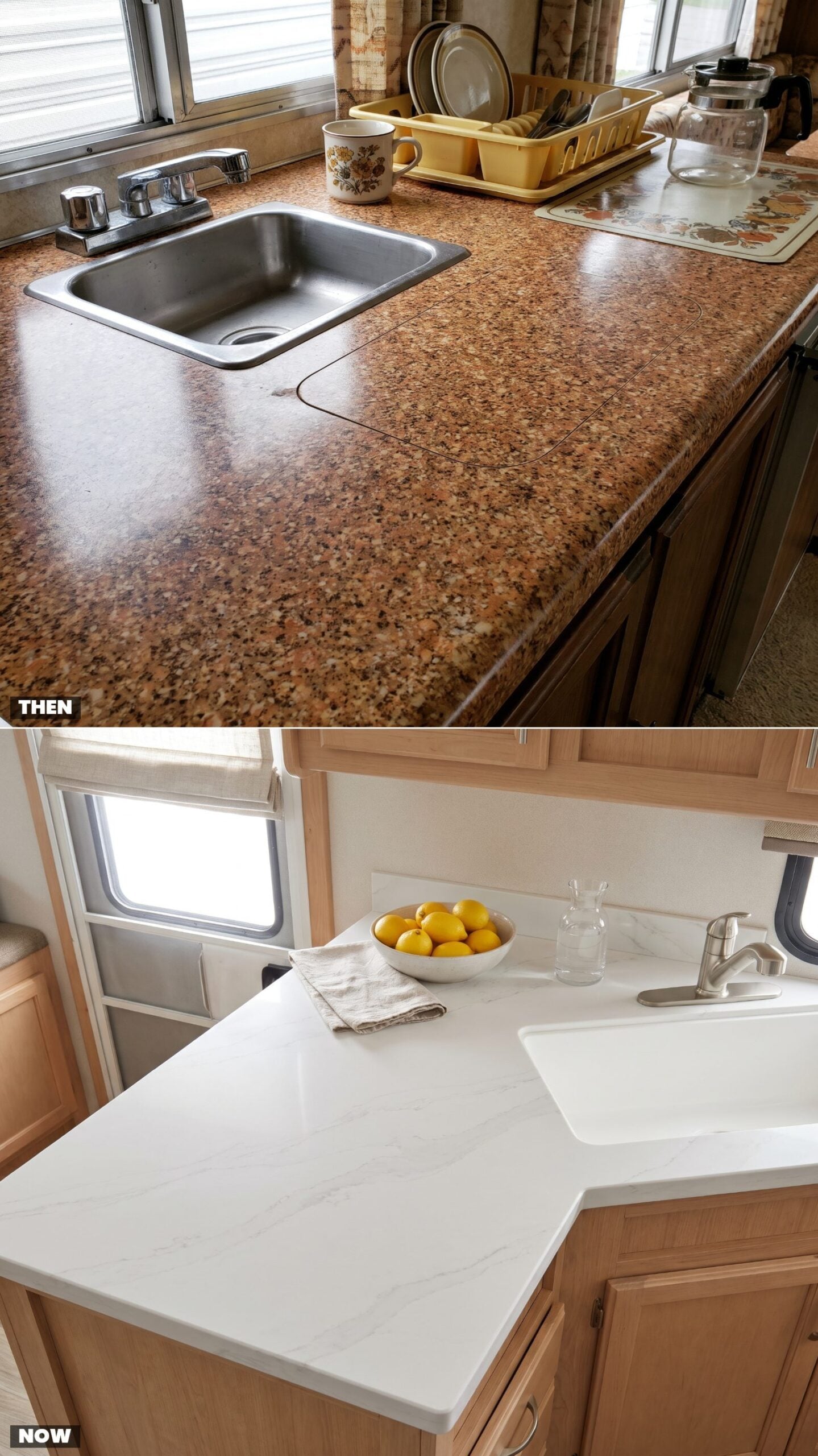
That speckled brown-and-orange laminate was designed to hide stains, and it did — mostly by being so busy you couldn’t tell a stain from the pattern. The rolled front edge collected grime in its little crease, and the seam by the sink was a slow-motion water-damage countdown.
Solid-surface worktops are a different world. No seam, integrated sink, nonporous, wipe-clean after a messy camp dinner. The quiet white-and-gray look also makes a tiny galley feel calmer, which you’ll want after a long driving day.
Plaid Velour Upholstery vs. Stain-Resistant Performance Fabric
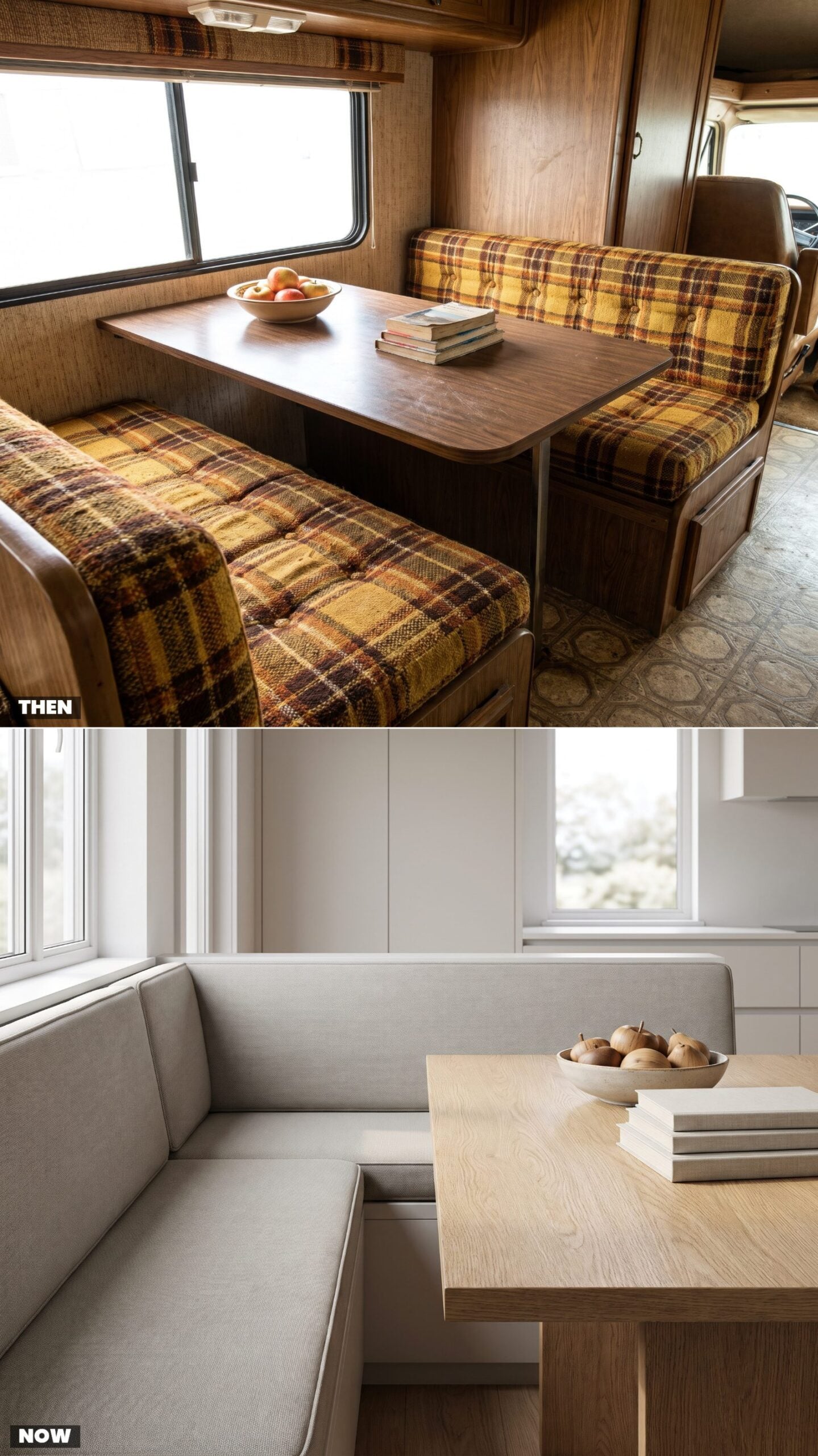
Plaid velour was the uniform of the 1980 dinette — harvest gold, rust, and brown woven into a pattern that could hide a decade of ketchup. It felt soft for about a season, then the pile matted down and held onto every smell the campground had to offer.
Performance fabric is the upgrade I’d push hardest. Spill-resistant, wipe-clean, and it holds up to wet dogs, sandy kids, and spilled wine without flinching. A dinette wrapped in oatmeal performance fabric still looks sharp three seasons in.
Floral Café Curtains vs. Blackout Roller Shades
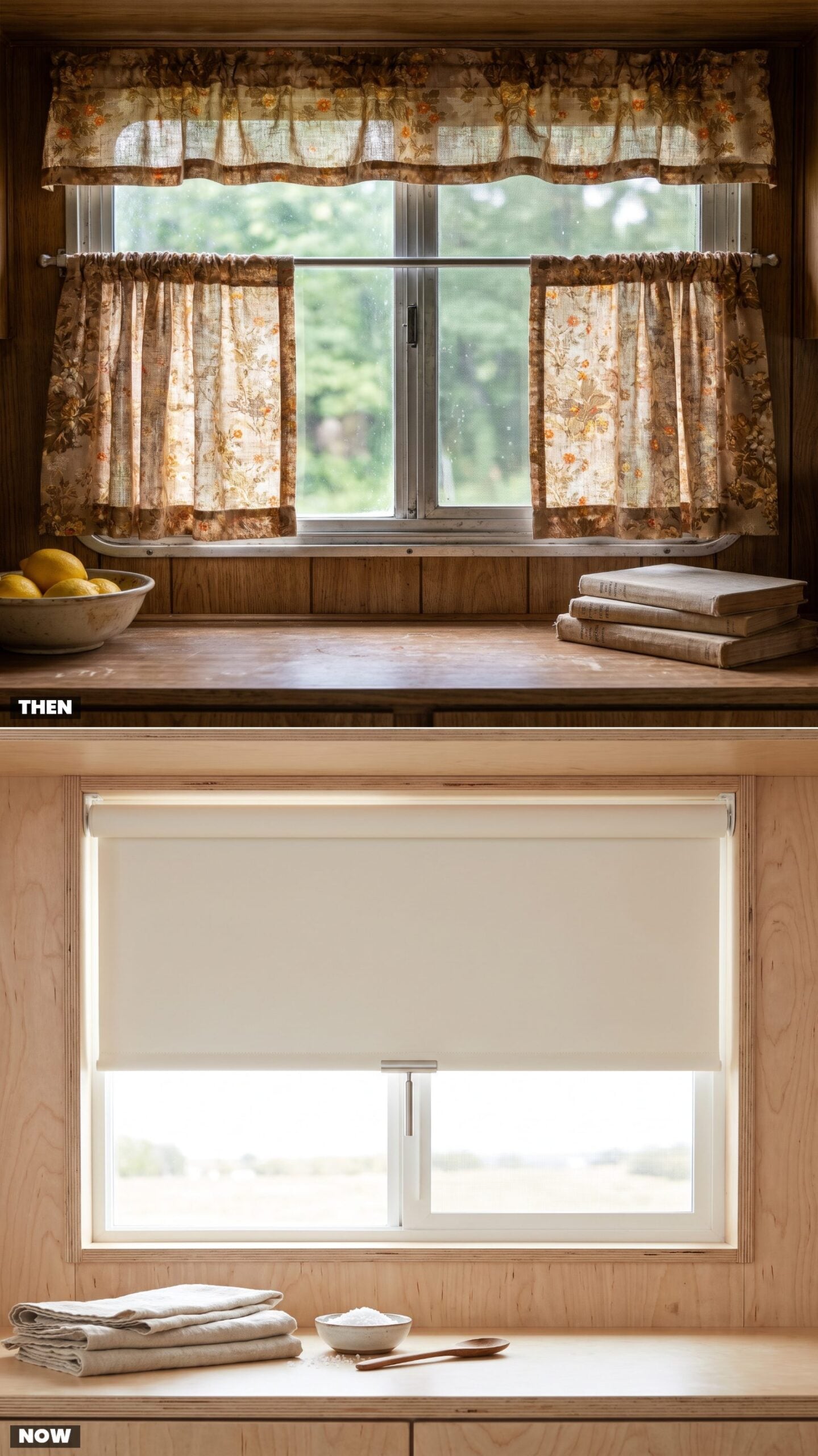
Floral café curtains with a matching valance were peak 1980 coziness, and they did absolutely nothing. Thin fabric, little flowers, zero blackout. Park next to a bright security light and you’d be squinting at 3 a.m., wondering why you felt like you were sleeping in a store window.
Roller shades solved the real problem. Blackout fabric means an actual dark cabin for sleeping, and a simple pull replaces a tangle of rods and clips. They tuck flat against the window for travel, too. Less fuss, more sleep.
Incandescent Dome Lights vs. Dimmable LED Fixtures
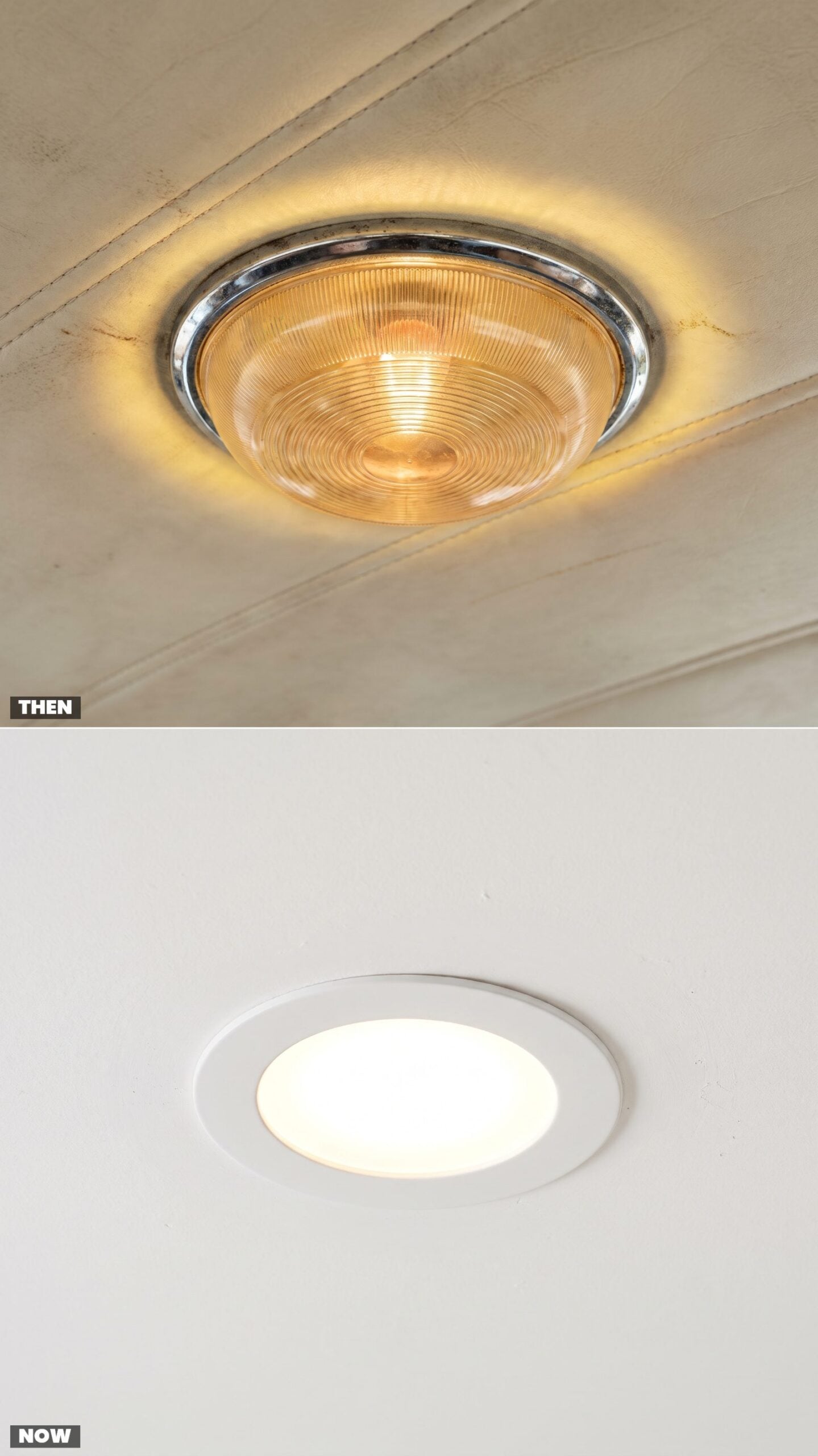
The old dome light did one thing: a weak amber puddle too dim to read by and too hot to touch. It drained the battery fast enough that boondocking past dark felt like a countdown.
LED fixtures run on a fraction of the power, last for years, and dim to whatever mood the evening calls for. Read, cook, or wind down without draining the house battery. For anyone who camps off-grid, this single swap is one of the biggest quality-of-life upgrades going.
Jackknife Sofas vs. Power-Reclining Theater Seats
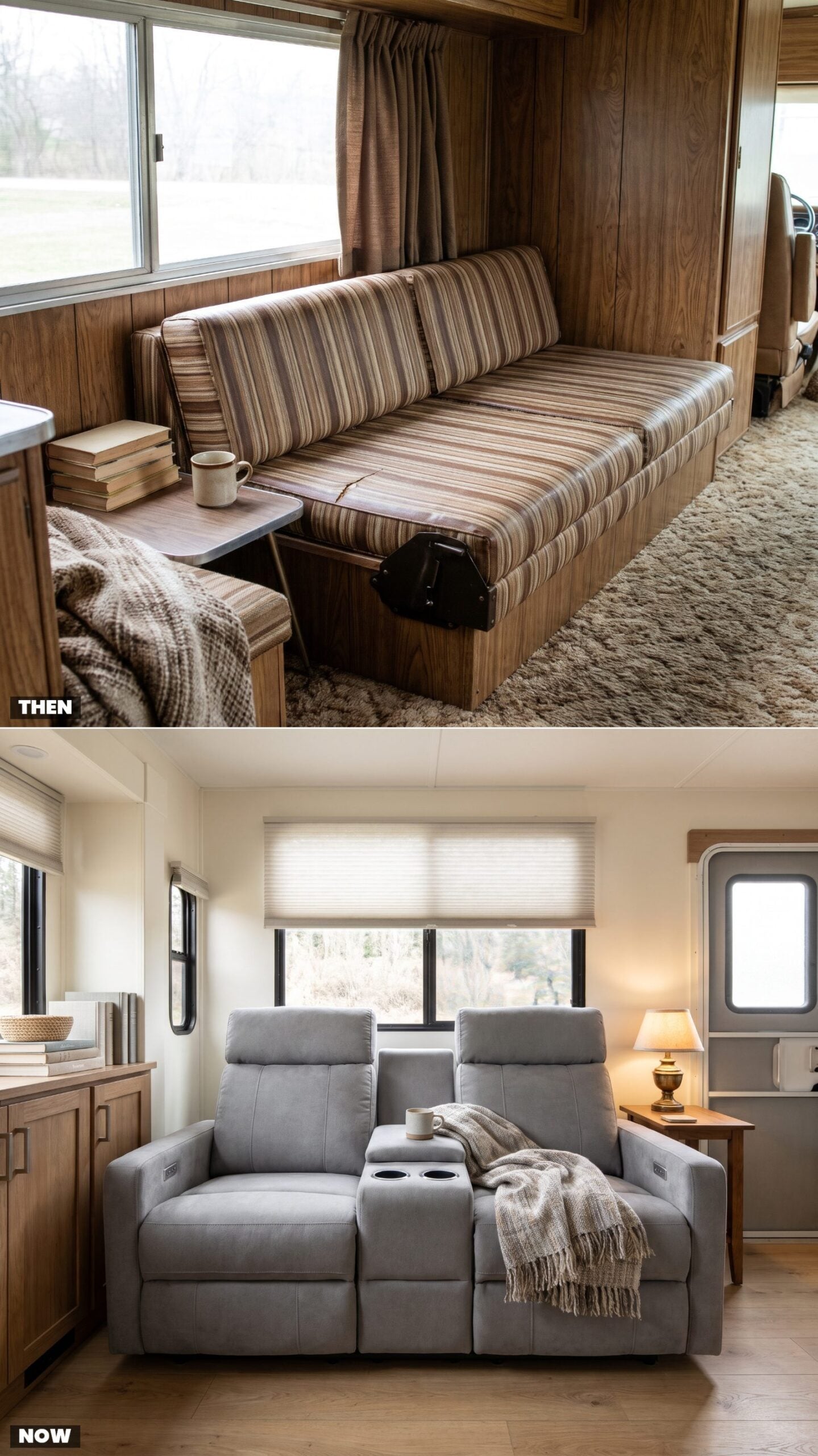
The jackknife sofa was a feat of compromise. Sit on it and the thin foam offered about an inch of mercy before you felt the frame. Fold it flat for a bed and you got a hinge bar right under your spine. Comfortable was never on the menu.
Theater seats are the end-of-day reward now — power recline, lumbar support, cup holders, a console between them for the remote and a drink. After a full day behind the wheel, dropping into a real reclining seat feels like a small act of self-respect. The old jackknife never once did that.
Fixed Vinyl Booths vs. Freestanding Dining Furniture
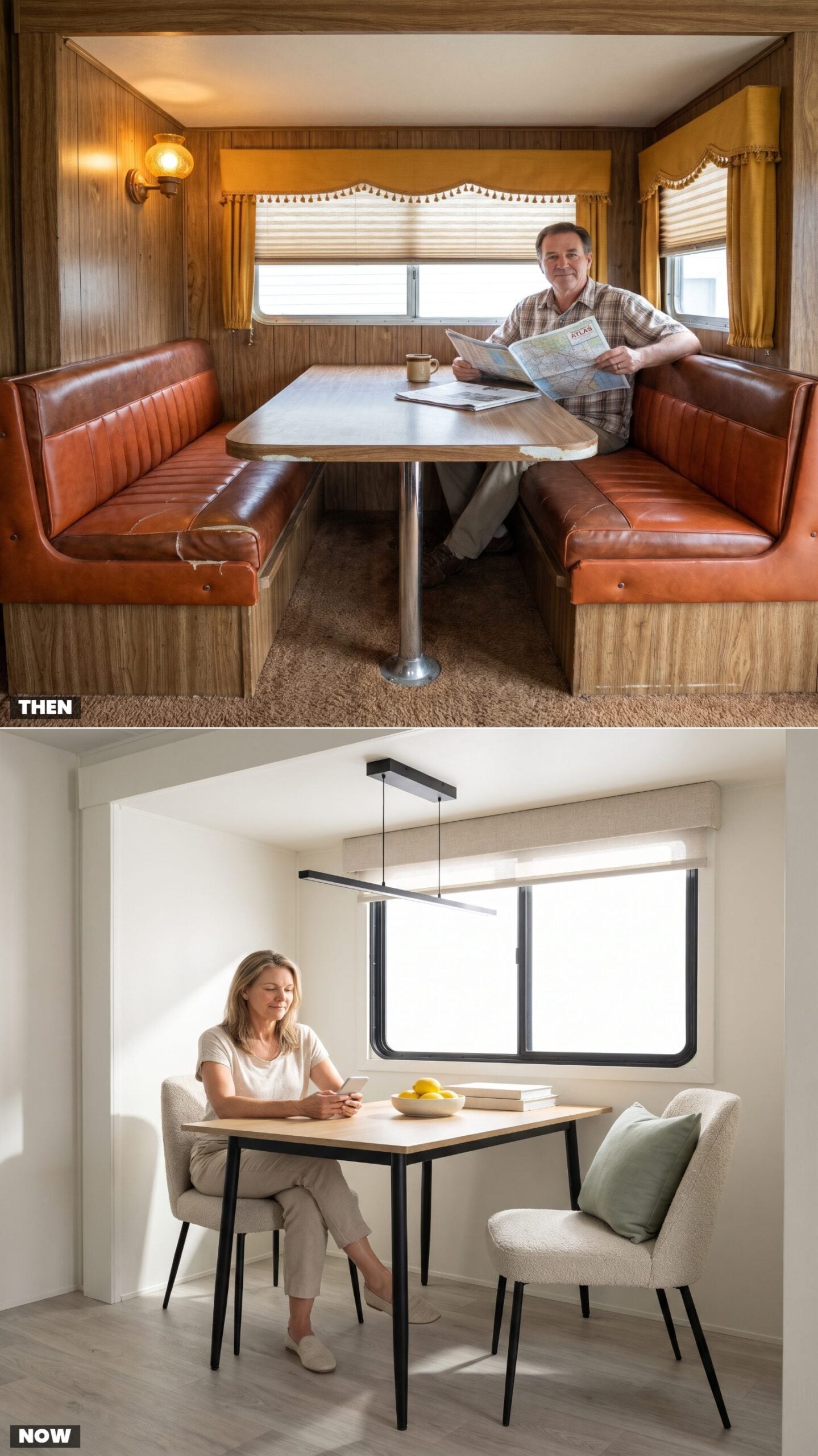
The old dinette booth was a committee decision nobody got to vote on — bolted down at the factory, upholstered in that burnt-orange vinyl that squeaked when you slid across it, and about as kind to your lower back as a church pew. You ate there because that’s where the table was. Full stop.
Now the dinette walks. Freestanding chairs you can pull up to the fire, a light oak dining table you can shove aside for a card game, cushions you’d actually buy for a house — the whole thing moves with your evening instead of pinning you to one corner.
Rigid Vinyl Captain’s Chairs vs. Swiveling Ergonomic Cab Seats
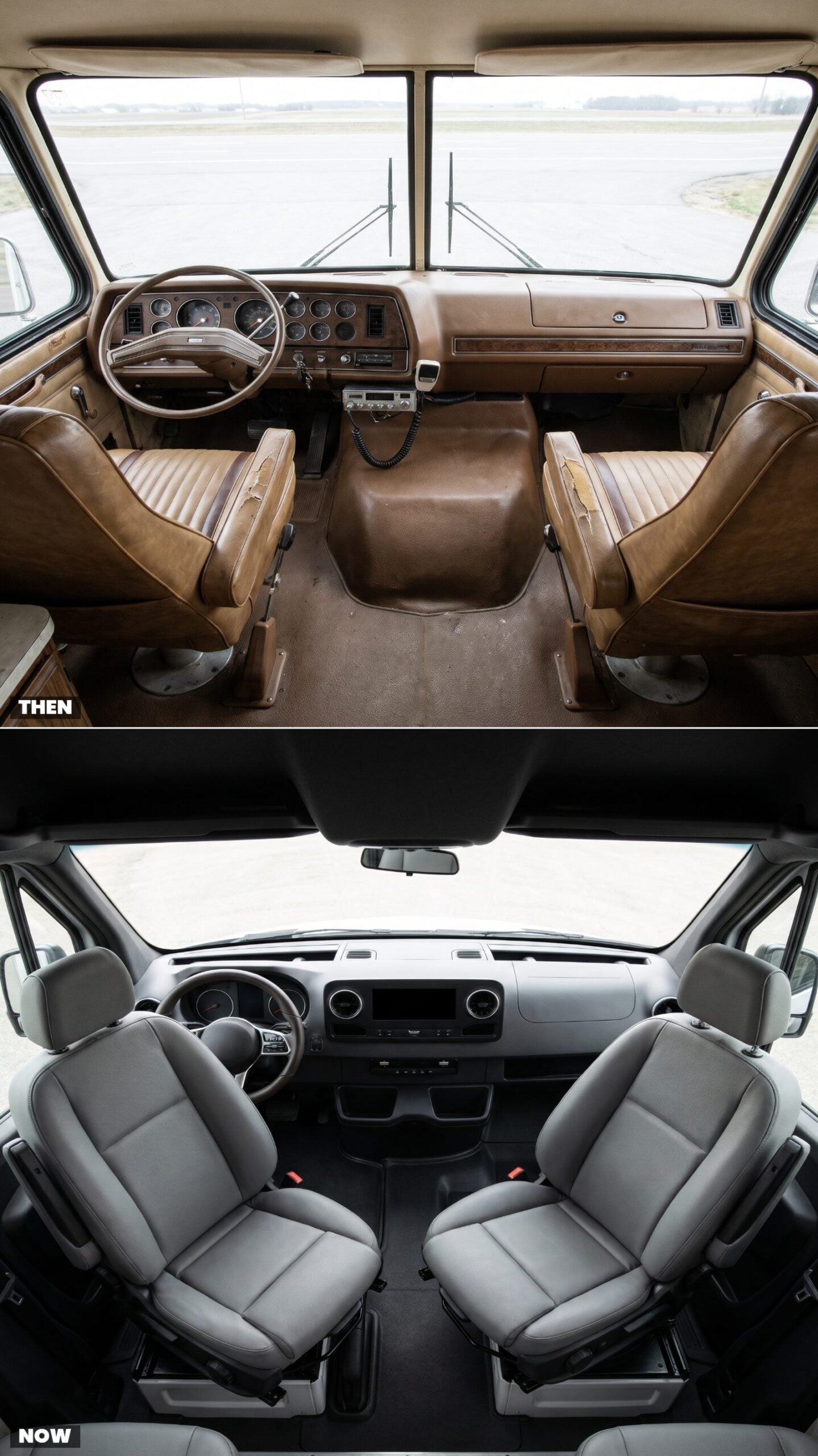
Those old captain’s chairs earned the name by sounding important, not by being comfortable. Square backs, ribbed vinyl that stuck to your legs in July, zero give after hour three of a long haul — and they faced forward forever, because the base didn’t turn. You drove in them, and that was the whole relationship.
Swivel the modern cab seat around to face the living room and the front of the rig becomes two of your best lounge chairs the second you park. Lumbar support. A real headrest. Grey leatherette that doesn’t glue itself to your skin. I’ve spent nights parked somewhere pretty, coffee in hand, chair turned around, and understood exactly what we were missing all those years.
Corner Double Beds vs. Walk-Around Residential Queens
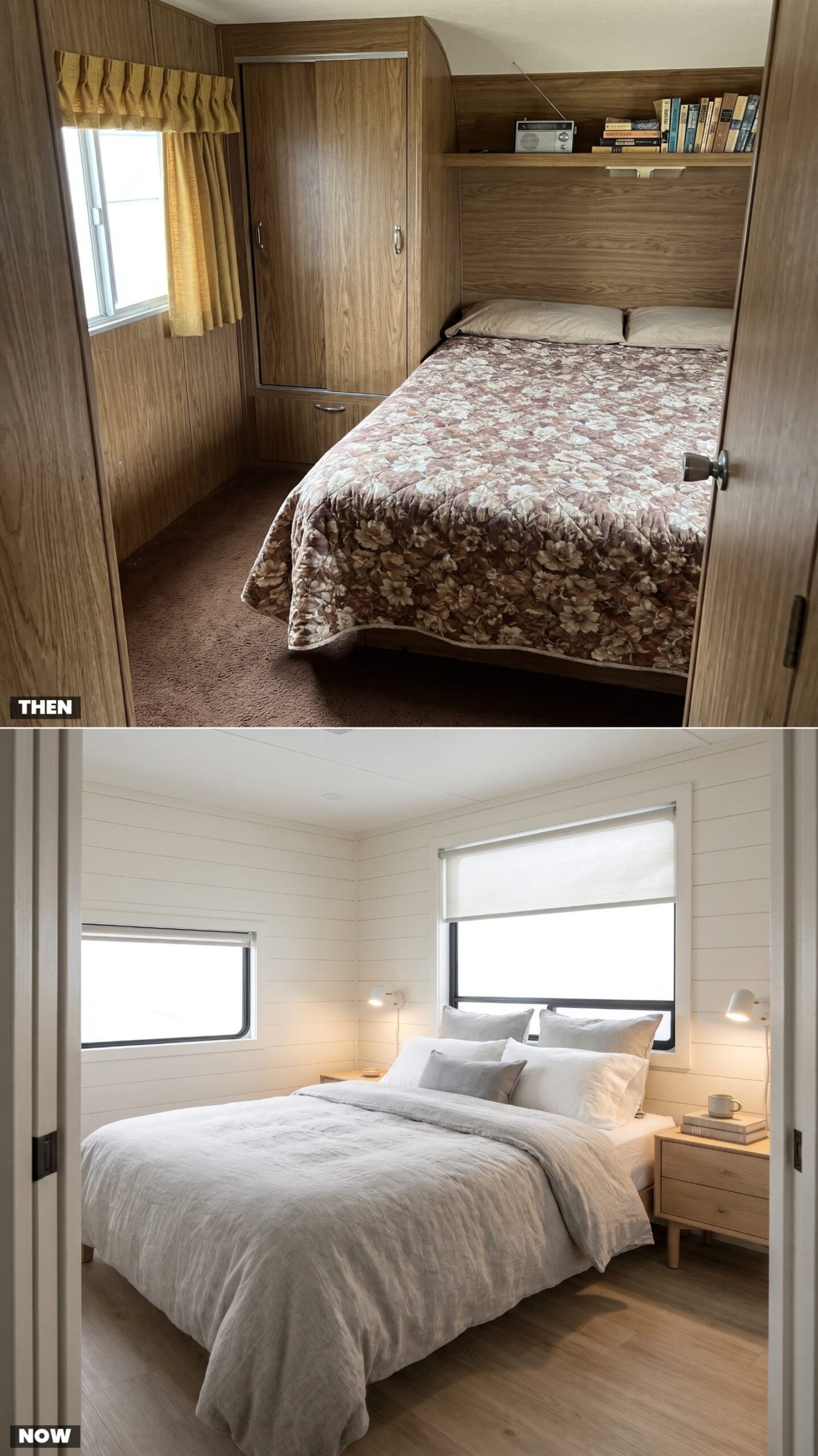
Climbing into bed in 1980 meant one person scaled over the other, every single night, because the mattress was jammed into a corner with walls on two sides. The brown floral bedspread didn’t help, and neither did the foam that had long since surrendered.
Walk-around queens changed the math. Get in from either side, make the bed without crawling across it, actual floor to stand on while you dress — and the bedding reads like a guest room now, not a camp cot.
Open Bunk Shelves vs. Private Bunkhouse Pods
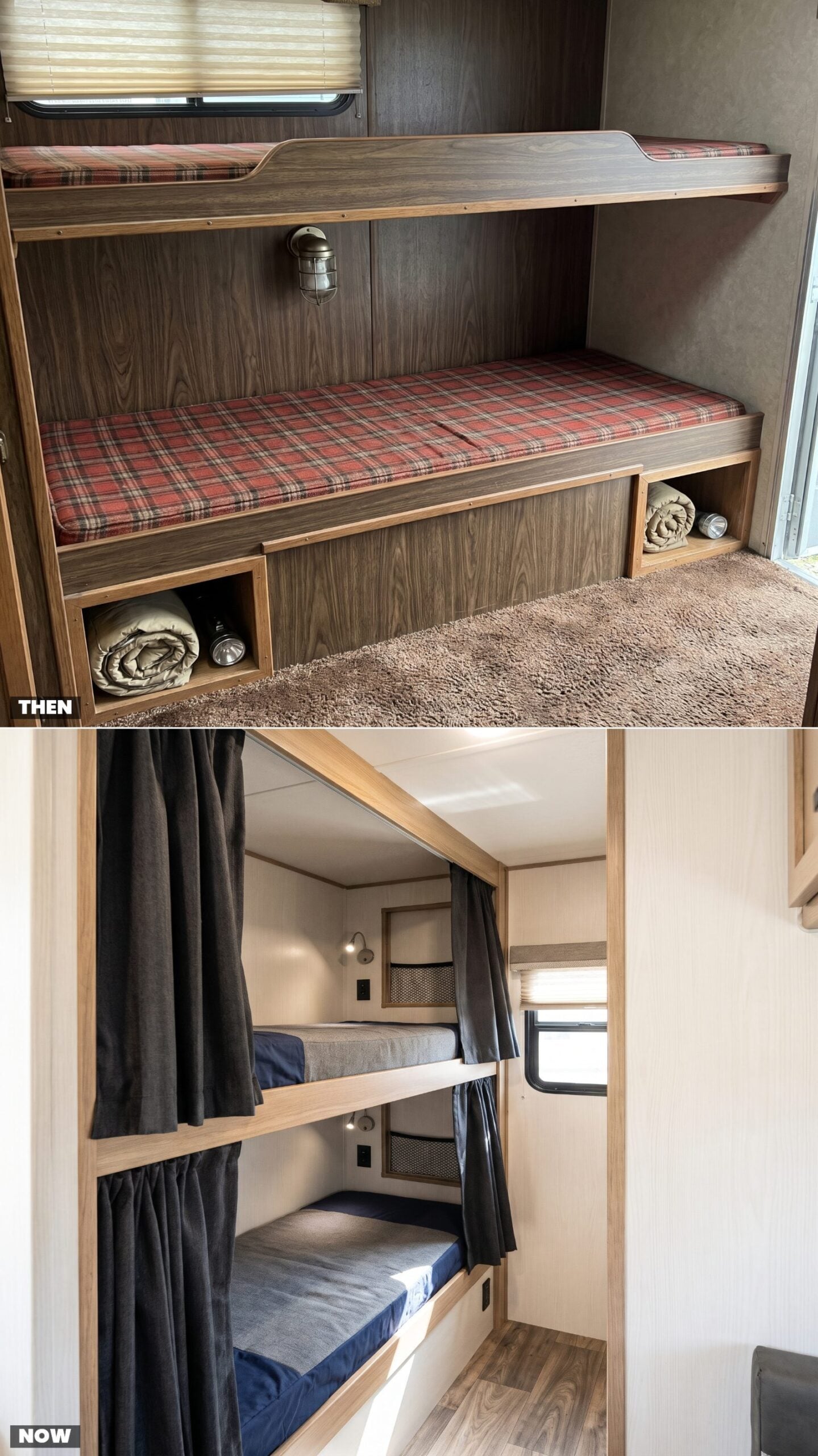
Kid bunks in 1980 were shelves with ambition. A padded platform, a low rail so nobody rolled out, a plaid foam pad that smelled faintly of every campground it had ever visited. No curtain, no light of your own, no corner to call yours — you slept where you were put.
Each sleeper gets a private box in the modern bunkhouse pod. A blackout curtain pulls across, a little reading light clicks on, a USB port keeps the tablet alive, and a mesh pocket holds the stuff that used to end up on the floor. For families, that’s the difference between bedtime and a standoff.
Accordion Vinyl Dividers vs. Solid Pocket Doors
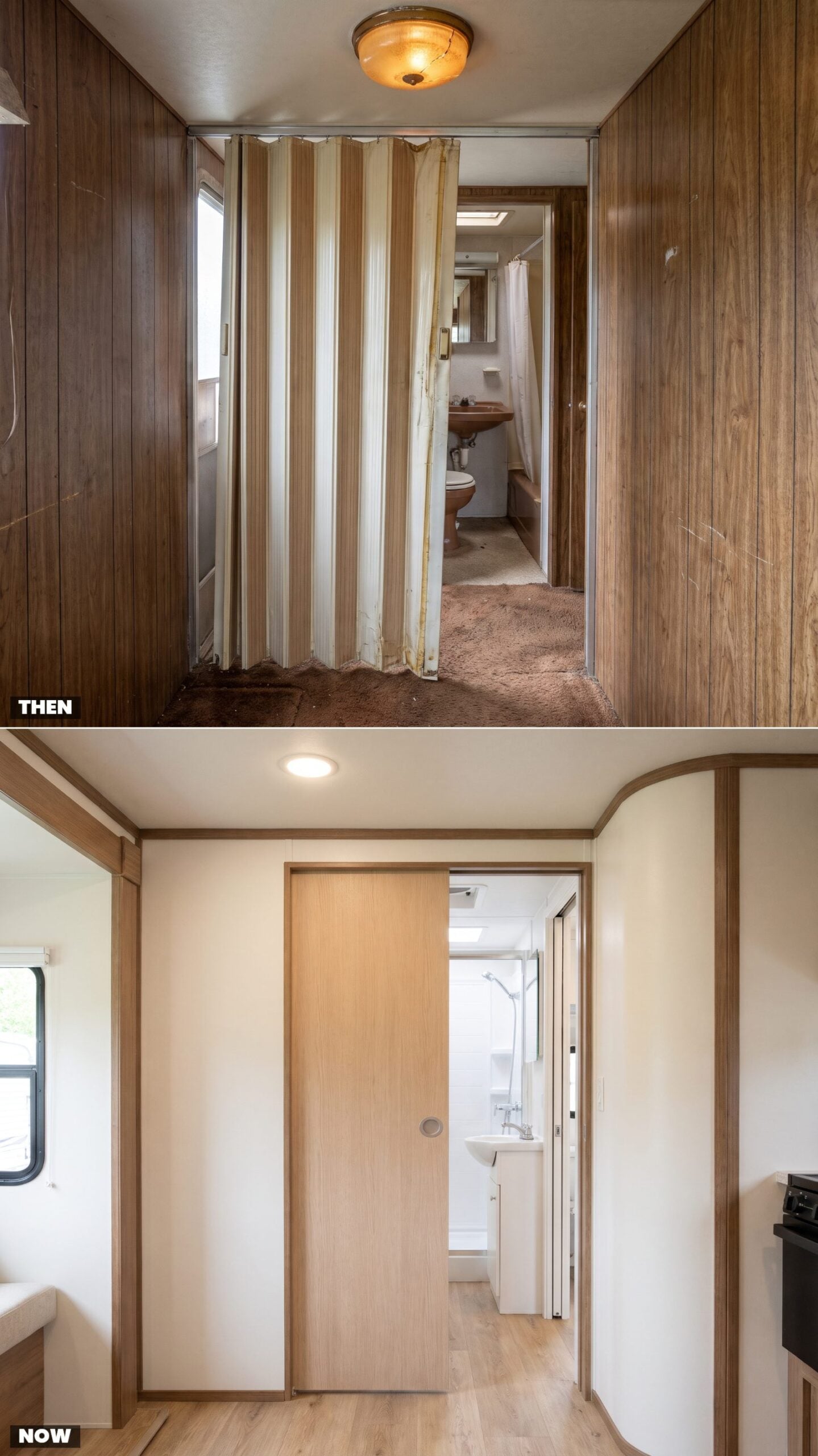
You remember the accordion divider. That flimsy ribbed vinyl that pleated across the hallway on a chrome track, sagged in the middle, and latched with a magnet that gave up around year two. It offered the suggestion of privacy and nothing more. You could hear everything — and so could everyone.
The solid pocket door slides into the wall and disappears, giving you real separation without stealing swing-space you don’t have. Pale oak, a flush handle, a quiet glide. It’s the single upgrade that makes a small rig feel like it has actual rooms instead of zones.
Shallow Stainless Kitchen Sinks vs. Deep Residential Basins
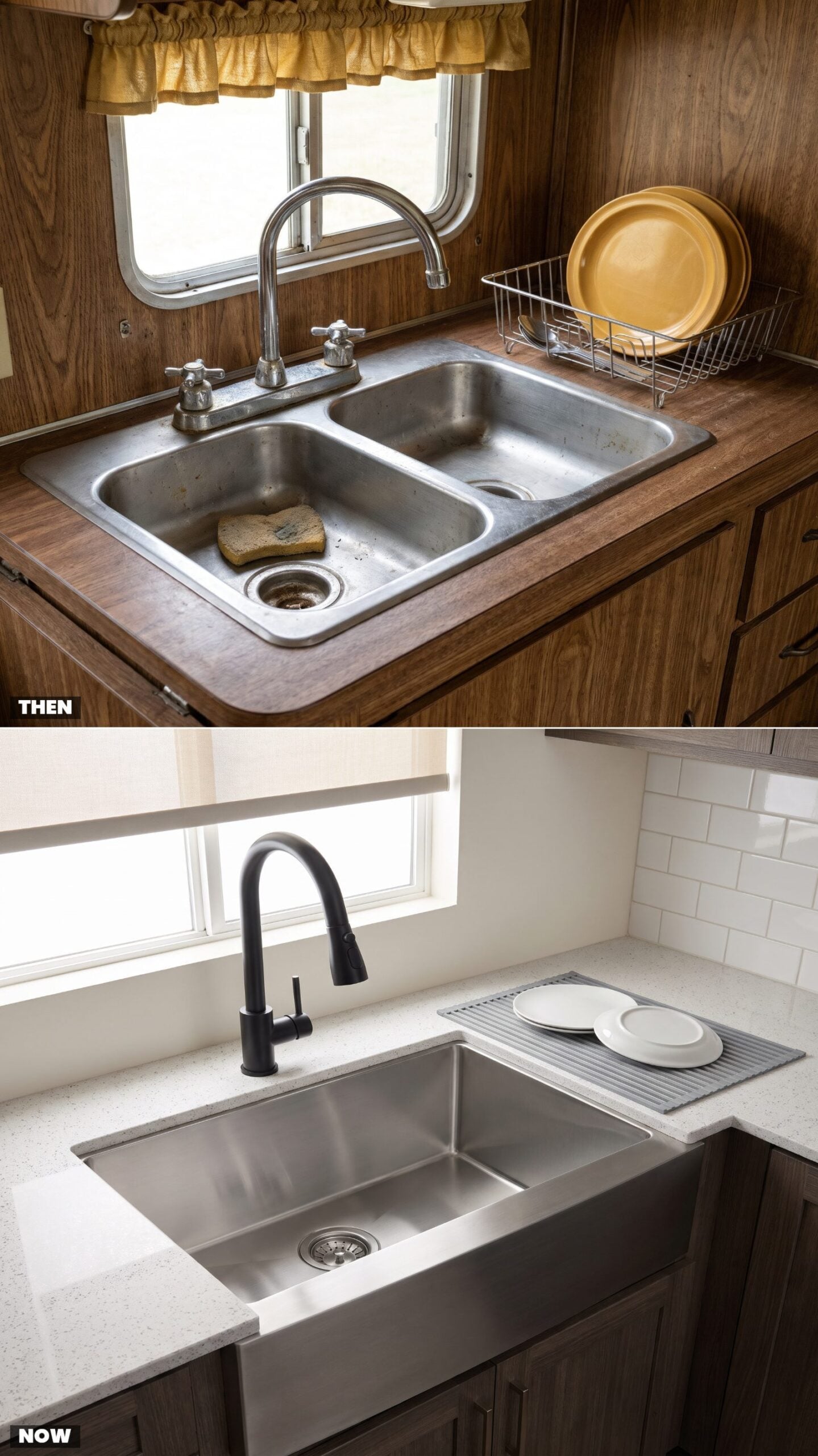
The old sink was built to the minimum — two tiny shallow bowls in stamped stainless so thin it flexed when you leaned on it, a chrome faucet that couldn’t reach the far bowl, and barely enough depth to rinse a dinner plate without water flying everywhere. Wash a stockpot? Good luck.
Deep residential basins finally gave RV kitchens room to actually clean up. One big bowl, high sides, a pull-down faucet that reaches every corner. You can soak a roasting pan or hide a pile of dishes under a cutting board when guests pull up. Small change, enormous relief.
Three-Burner Propane Cooktops vs. Induction and Hybrid Cooktops
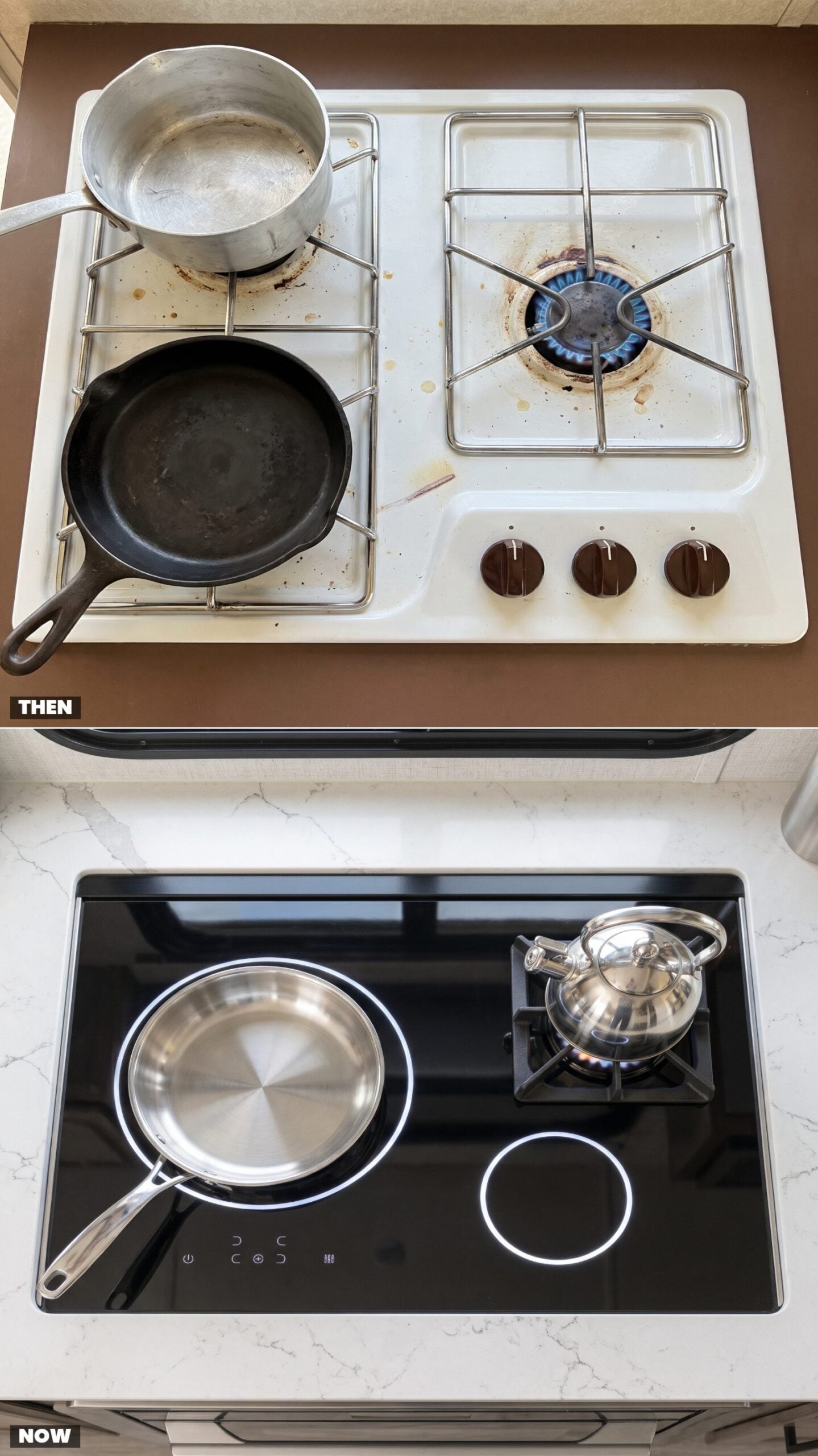
Three burners, open flame, a book of matches on the windowsill. The 1980 propane cooktop cooked everything, which was its charm and its flaw. It threw real heat, warmed the cabin whether you wanted it to or not, and left scorch marks on the white enamel that no amount of scrubbing ever fully erased.
Hybrid cooktops hedge the bet. The flat induction surface boils water fast and wipes clean in one swipe, while a single gas burner stays in play for the times you’re off-grid and want flame without draining the battery. When it cools, that glass top doubles as counter you didn’t have a second ago.
Countertop Microwaves vs. Built-In Convection Microwaves
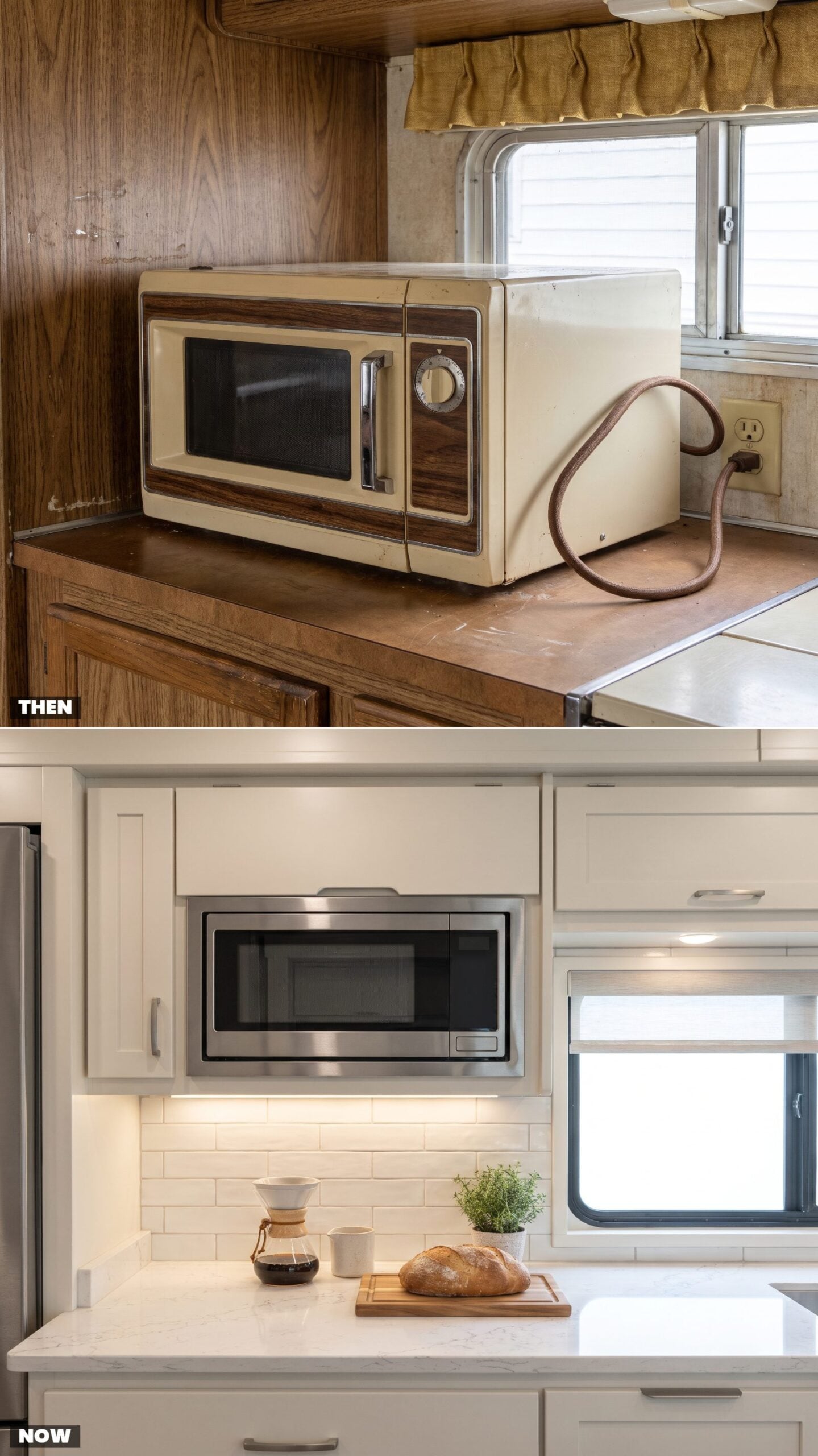
When a microwave finally landed in the RV, it landed on the counter and never left. Beige, boxy, a dial you turned like a kitchen timer, and it swallowed most of the only workspace you had. You cooked around it, because moving it meant unplugging a cord that lived behind the toaster.
Built-in convection units tuck up into the cabinetry and hand your counter back. They reheat, they bake, they crisp a frozen pizza like a real oven, and the front sits flush so nothing rattles loose on a rough road. Clearing that counter was the quietest, most satisfying fix in the whole galley.
Wood-Paneled Absorption Refrigerators vs. 12-Volt Compressor Refrigerators
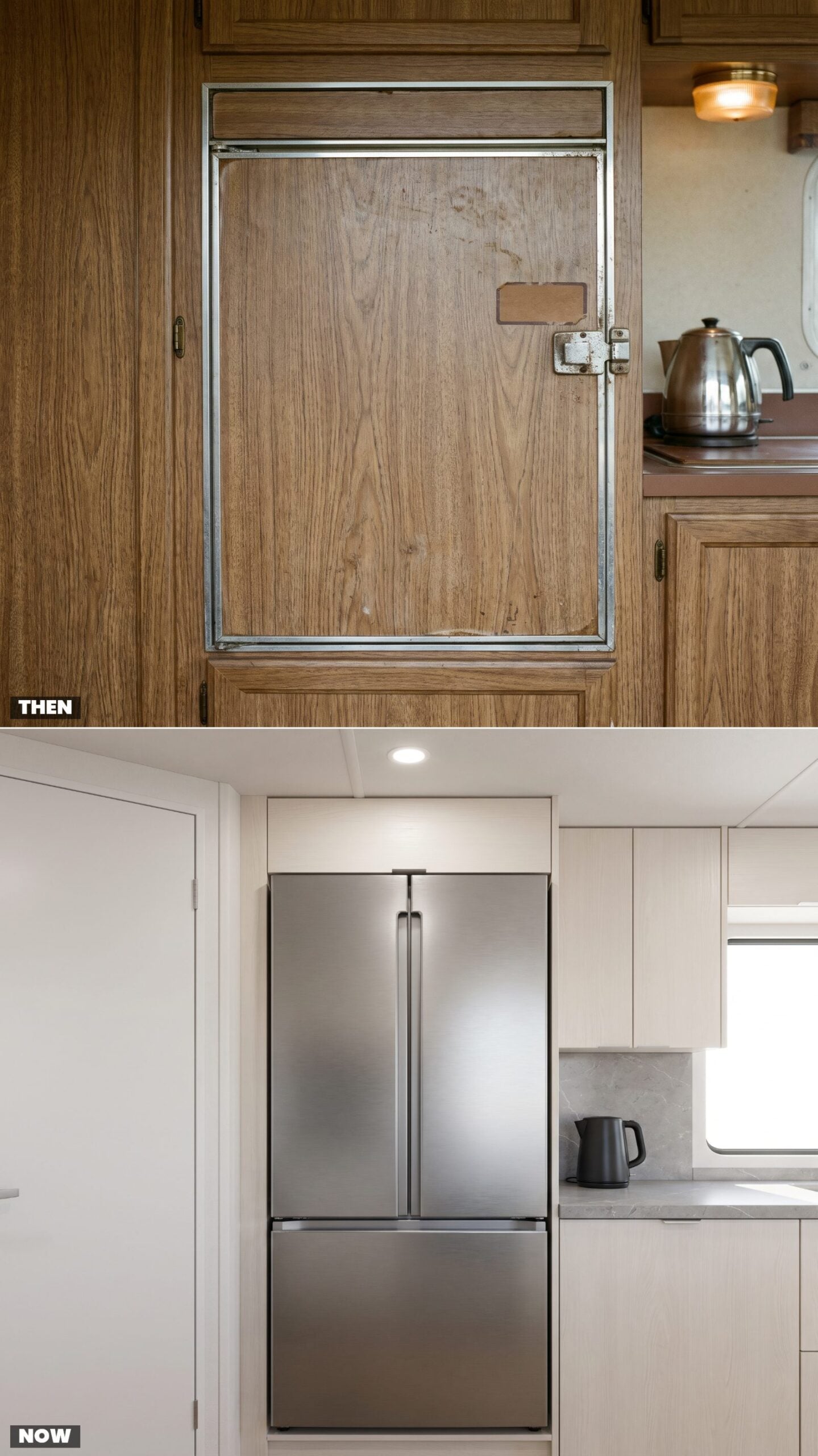
The absorption fridge was a marvel and a headache in one squat box. It ran on propane or shore power, kept your milk cold-ish, and demanded you park dead level or it would sulk and quit cooling entirely. The faux-wood door blended into the cabinets so well you’d sometimes forget which panel opened.
Full-timers talk about the 12-volt compressor fridge with actual feeling in their voices. It cools like the one in your kitchen, doesn’t care if you’re a few degrees off level, and runs happily off the battery and solar while you’re boondocking. More space inside, a real freezer, and no propane sweating.
Faux-Tile Vinyl Backsplashes vs. Residential-Style Tile
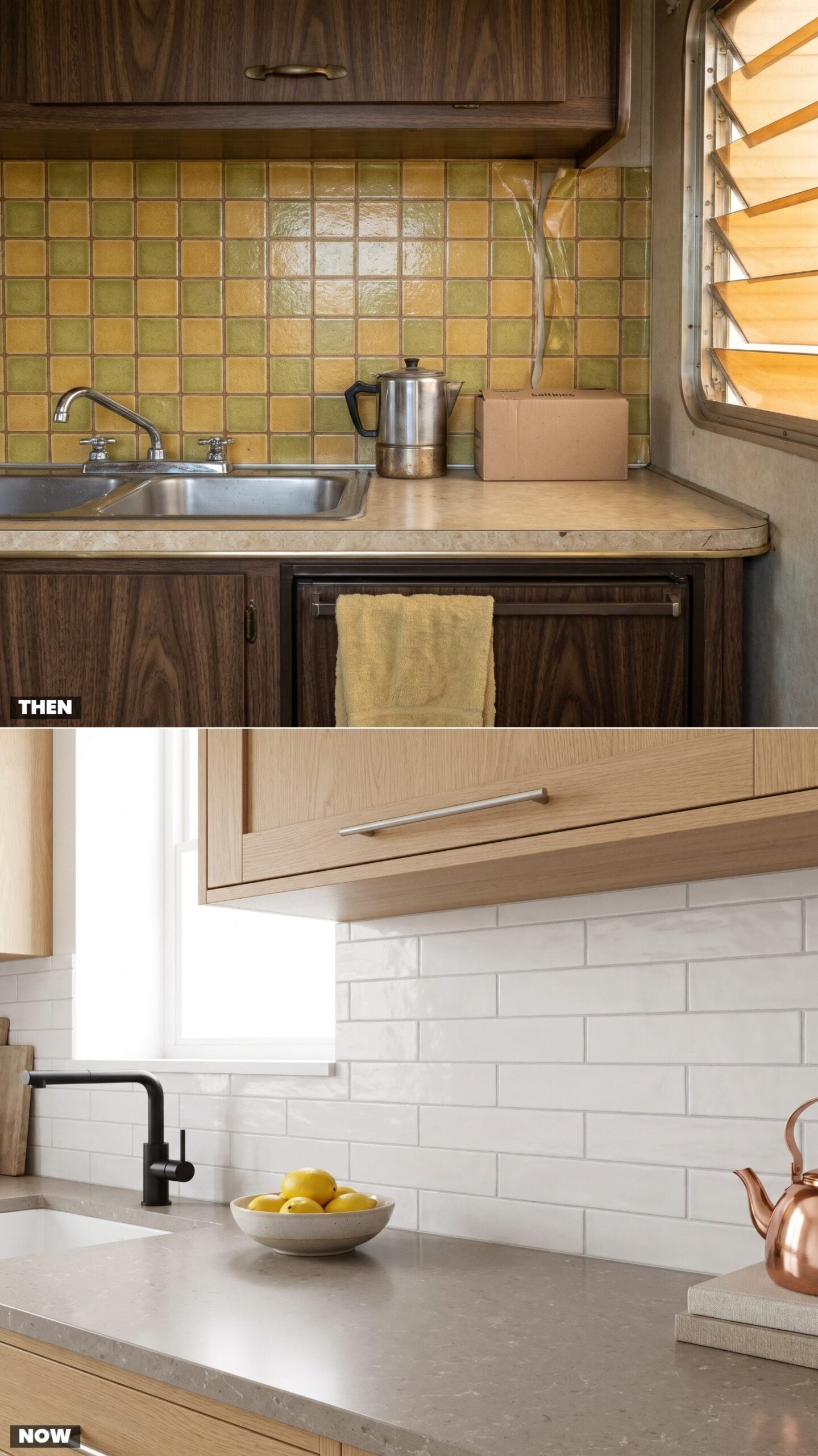
That faux-tile vinyl was never fooling anyone. You ran your thumb over it and felt flat plastic where grout should be, the printed shadows catching light at the wrong angle. In 1980 it was the right call anyway — light, cheap, and it wiped clean after a bacon breakfast. The seams always lifted eventually, usually right by the sink where the splash got worst and the heat from the stove did a slow number on the adhesive.
Now you get actual tile. Real white subway tile set into thin grout, the kind that survives a decade of road vibration if it’s bedded in a flexible adhesive. It reads like a kitchen, not a kit.
Compact All-in-One Bathrooms vs. Separated Residential-Style Baths
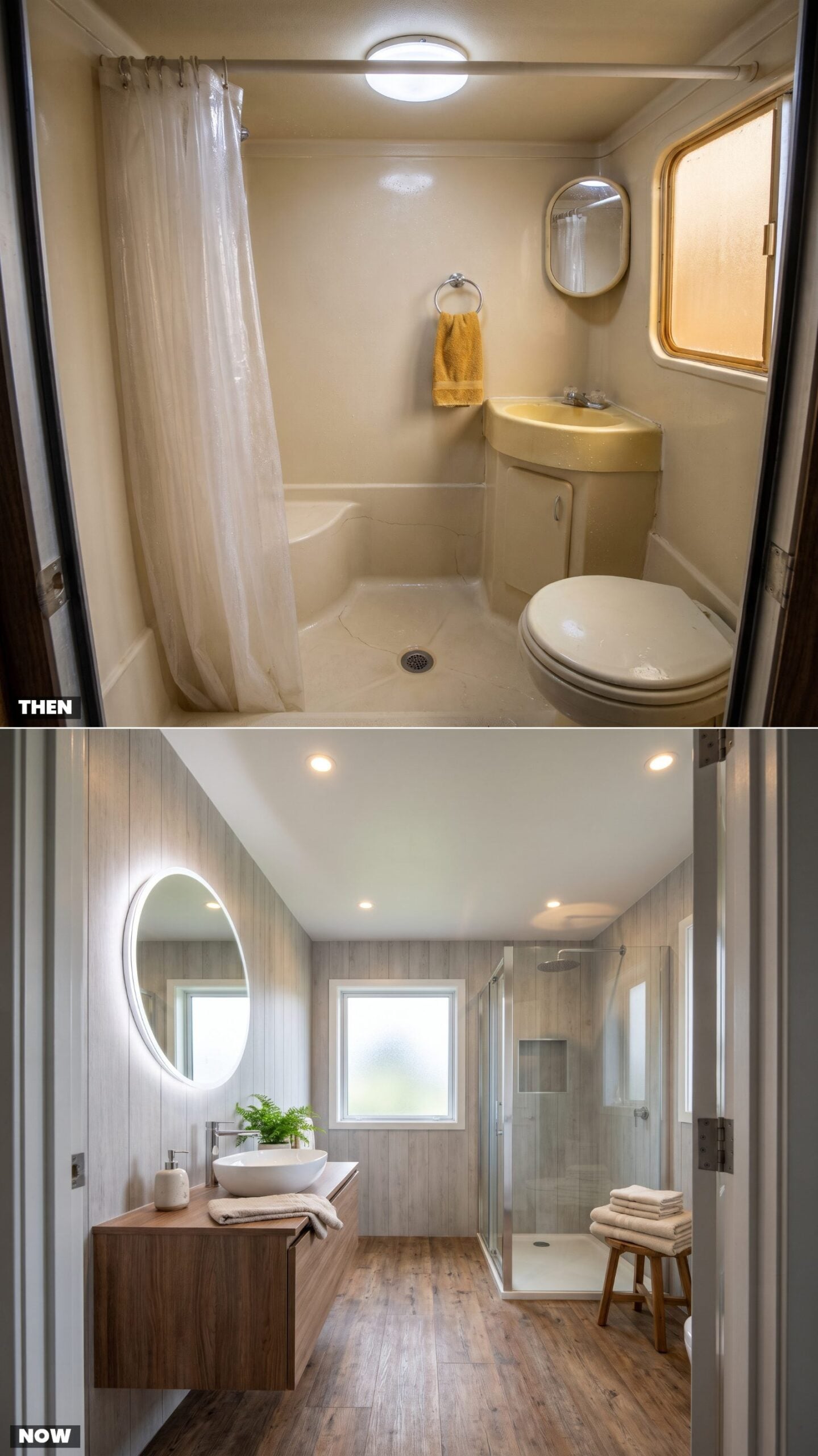
The wet bath crammed a shower, a toilet, and a sink into one phone-booth of fiberglass. You showered standing over the toilet, and everything in the room got soaked, every single time. The towel you hung never fully dried. Functional? Sure. Pleasant? Not once.
Modern coaches split the bath into a real room — toilet and vanity on one side, a shower you can close off on the other. Same square footage, smarter geometry. And you can brush your teeth without standing in last night’s shower water.
Plastic Gravity Toilets vs. Porcelain Macerating Toilets
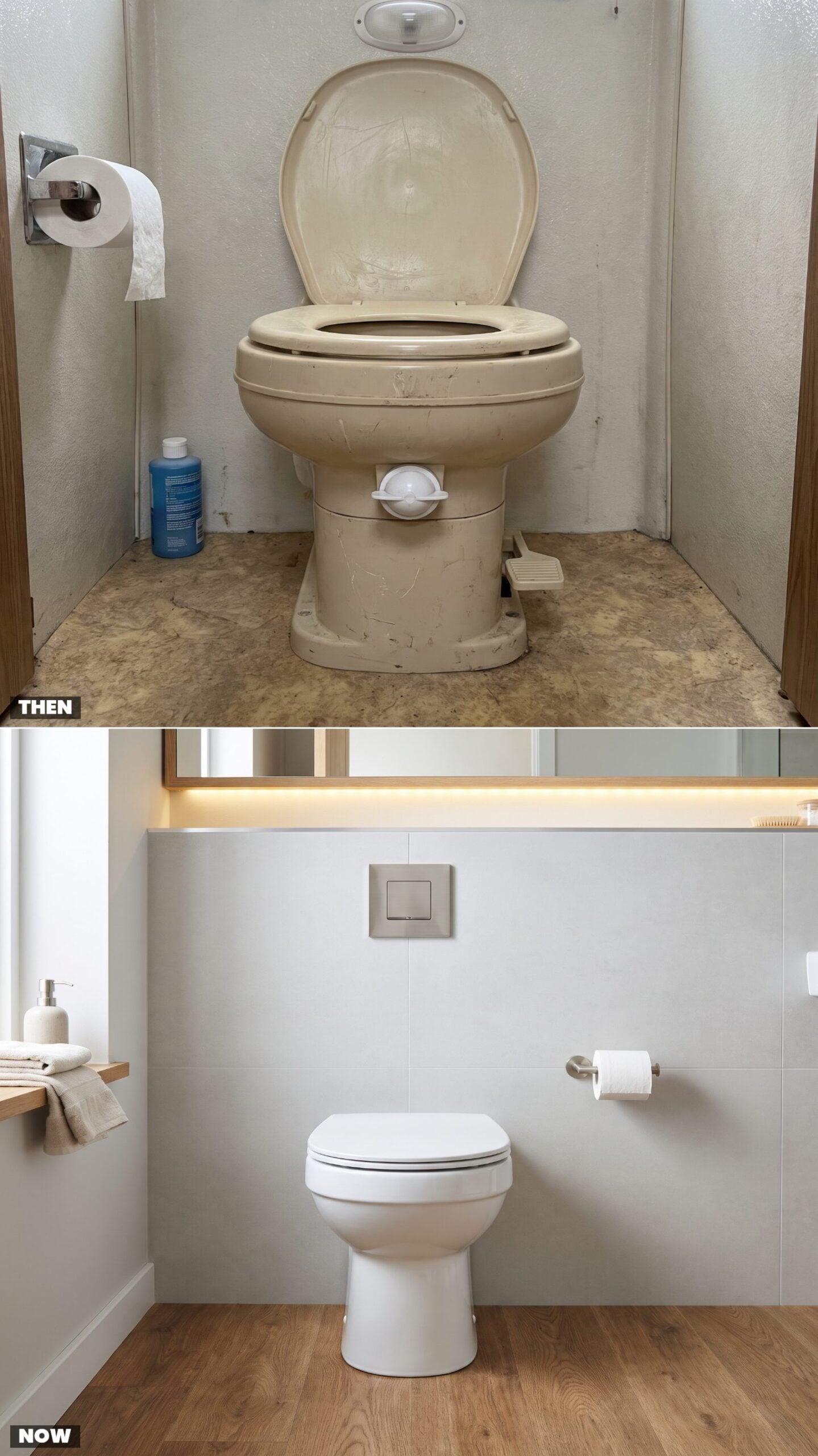
You pressed the foot pedal, a plastic ball valve dropped open, and gravity did the rest straight into the tank below. Light, loud, and forever at the mercy of a rubber seal that dried out and let the smell drift up. And the bowl stained no matter how much blue chemical you poured in.
Today’s porcelain macerating toilets grind and pump waste to a tank that doesn’t have to sit directly underneath. The bowl cleans like the one at home.
Shower Pans With Curtains vs. Glass-Enclosed Showers
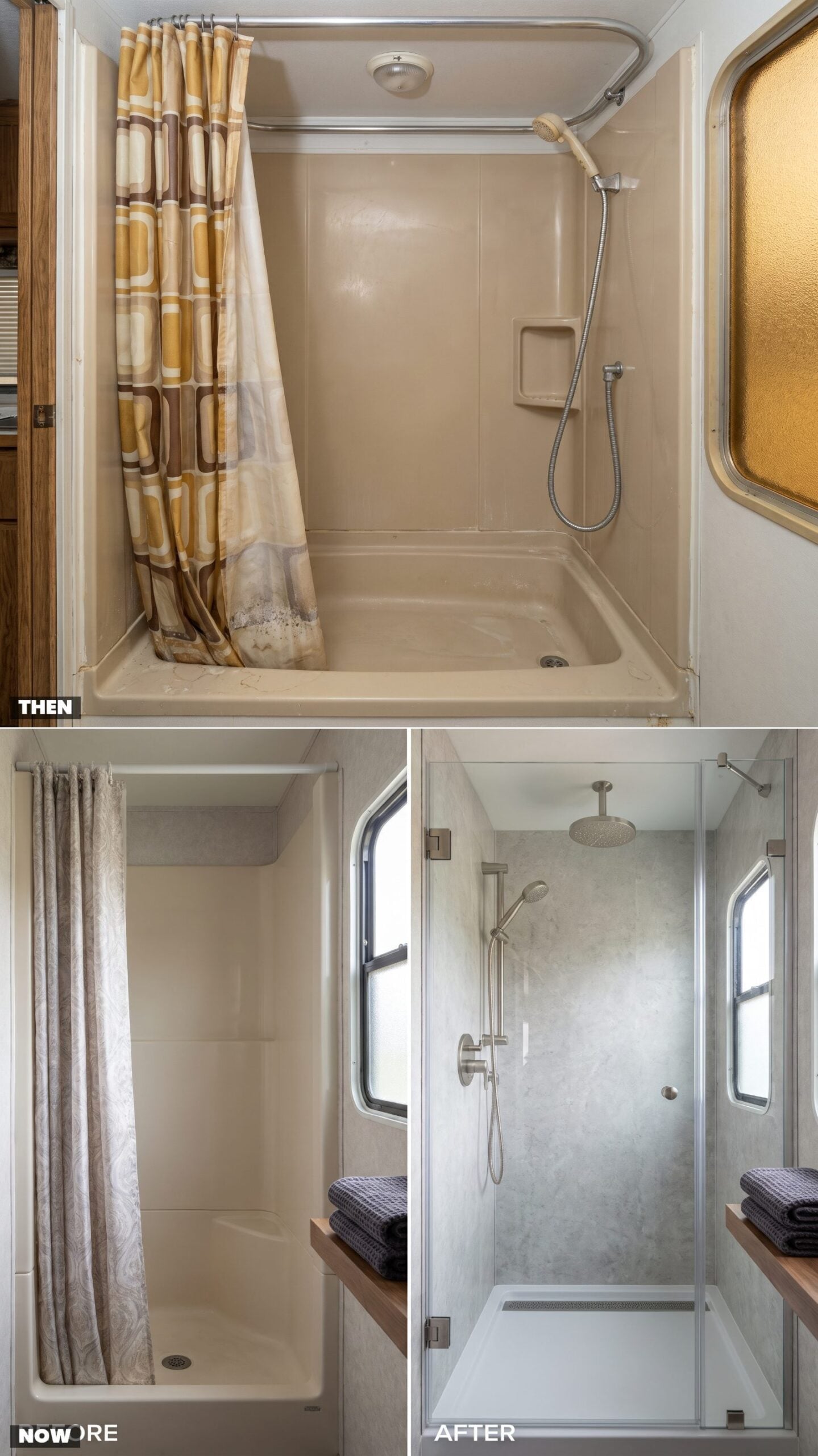
The shower curtain in a moving home was its own small war. It billowed inward the second the water hit, clung to your arm, and wicked water right onto the floor. By year three the hem wore a gray mildew line no scrub brush could win. And the pan was so shallow your toes just stood in a puddle.
Glass enclosures changed the whole feel. Water stays put, the curtain stops attacking you, and a frameless panel makes a tight stall feel twice its size because your eye reads straight through it to the wall.
Tiny Molded Vanities vs. Storage-Rich Floating Vanities
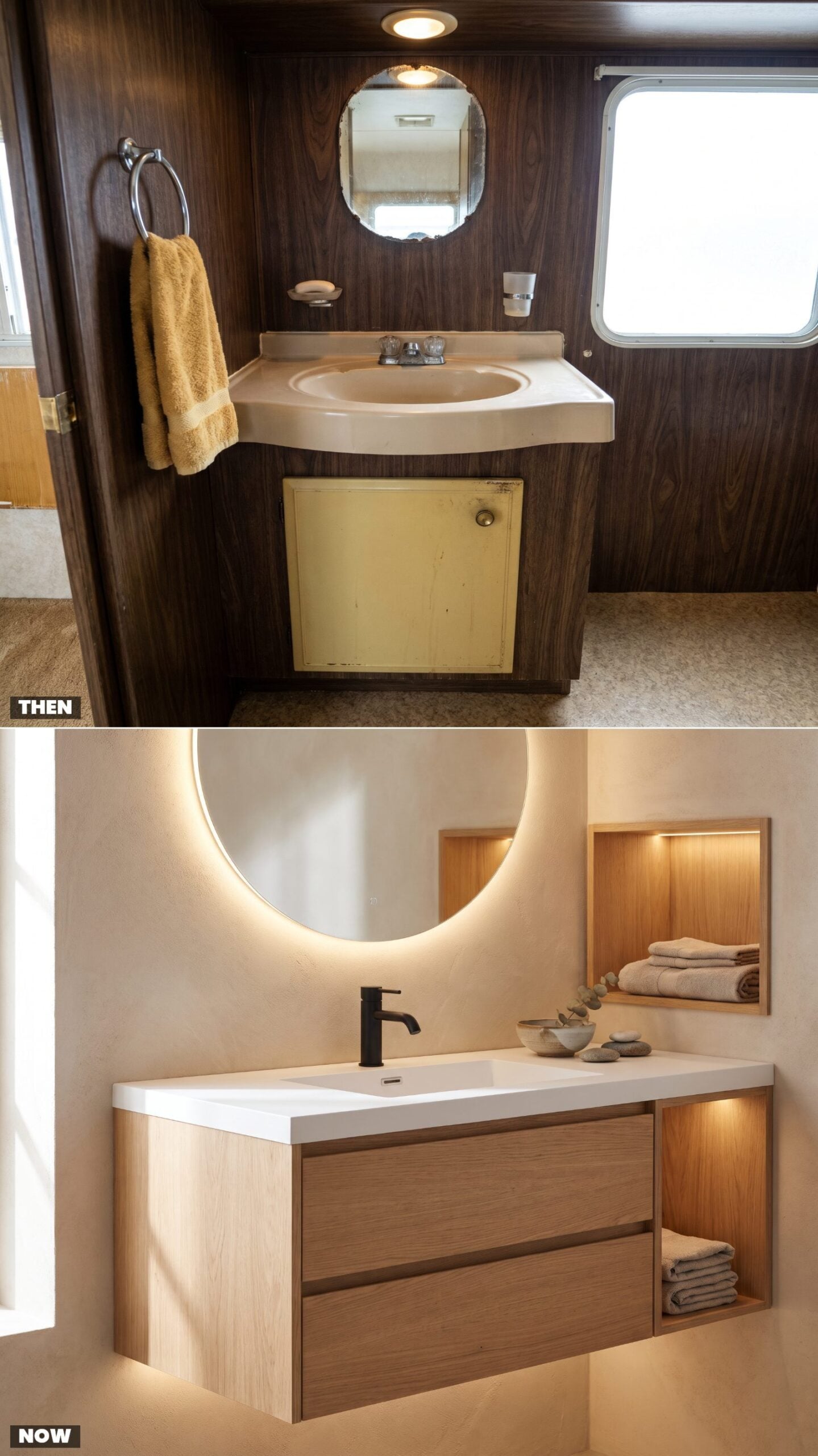
The molded vanity gave you a sink and almost nothing else. One flimsy door opened onto a dark cavern where the plumbing lived, and whatever you crammed in there rattled loose every mile of washboard road. Counter space topped out at a bar of soap and maybe a toothbrush cup.
Floating vanities flipped the math. Soft-close drawers that actually stay shut, a wider counter, open air underneath that lets the room breathe. In a rig where every cubic inch is spoken for, that’s a real win.
Boxy CRT Televisions vs. Wall-Mounted Smart TVs
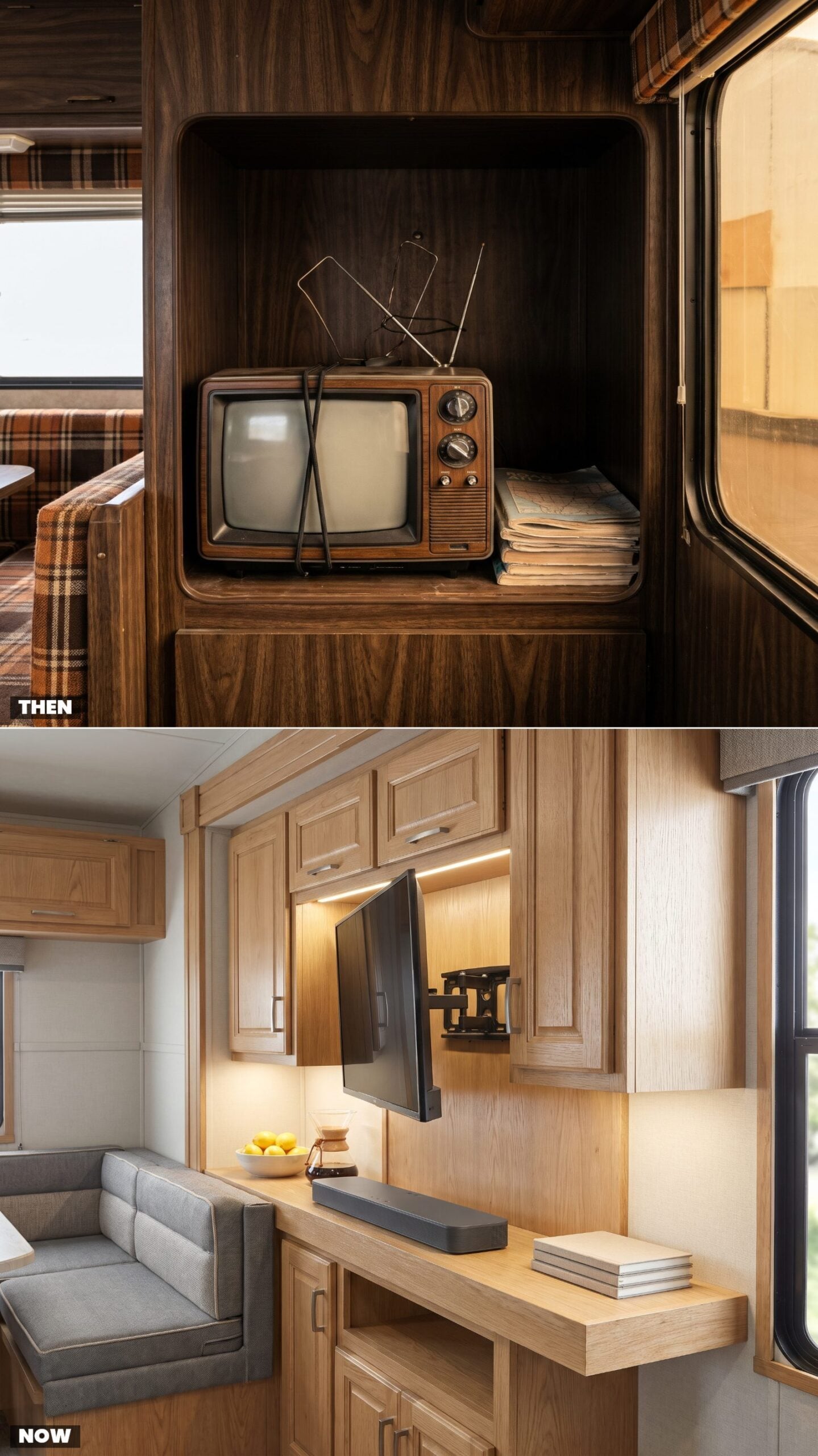
That CRT weighed a ton and ate space like it was being paid to. You strapped it in with a bungee so it didn’t launch across the cabin on a hard stop, rotated the rabbit ears toward whatever town you were near, and accepted snow and static as the price of admission. One watchable channel on a good night.
Flat smart TVs mount flush on a locking arm and stream whatever you want off a cellular signal, reclaiming the whole cubby the old box used to hog.
The CRT didn’t just show you TV. It reminded you, every single stop, that you were a long way from a good antenna.
Direct-Blow Rooftop Air Conditioners vs. Ducted Ceiling Climate Systems
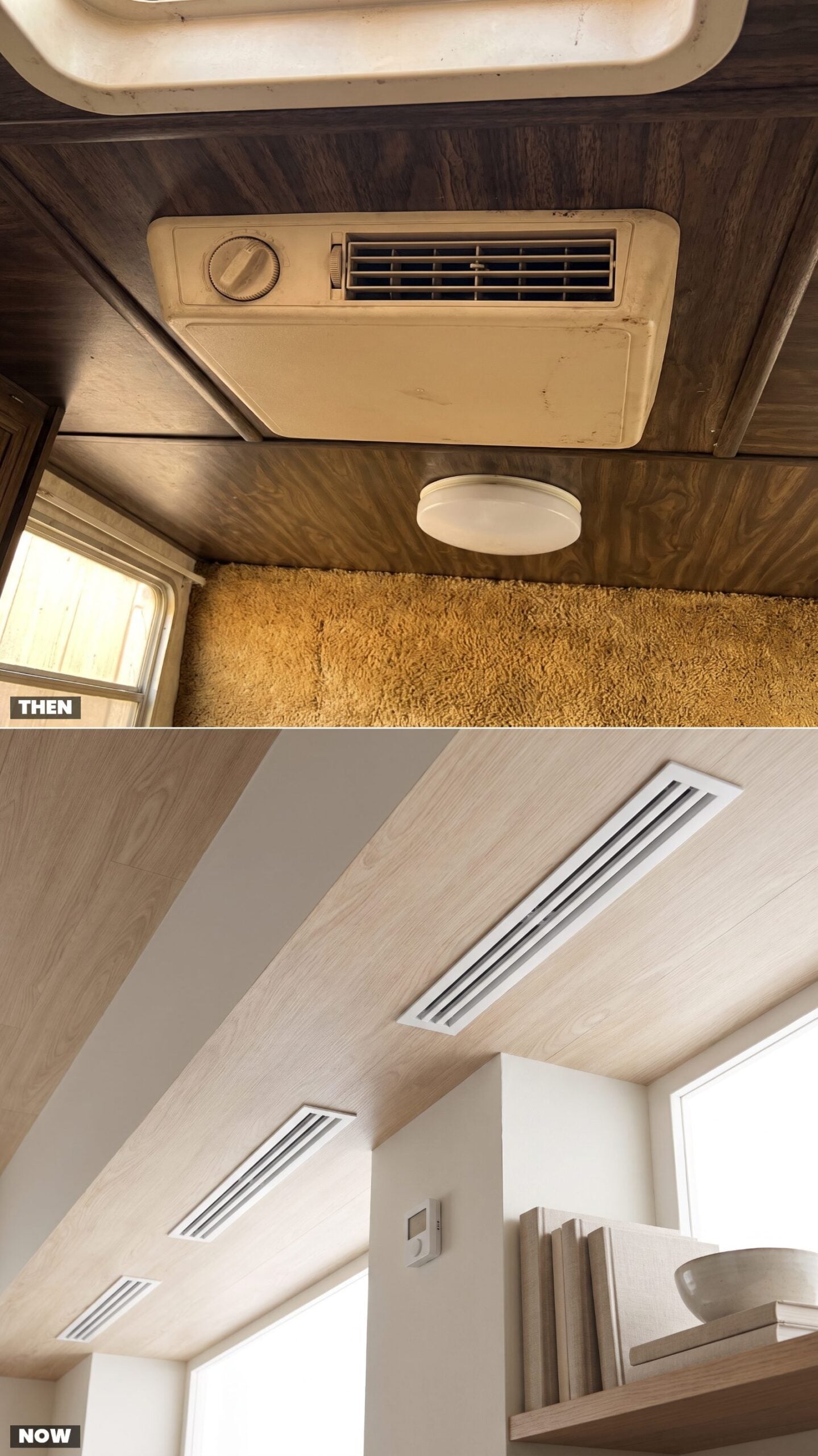
The 1980 rooftop unit was a beige box that hung down into the cabin and blasted cold air straight at whoever was unlucky enough to sit beneath it. Front of the coach froze while the bedroom stayed a swamp, and the rotary knob offered roughly two settings — off and arctic. On a July afternoon in Arizona, it was a one-room answer to a whole-rig problem.
Ducted systems now hide the guts above a flush ceiling and push cold air through slim vents spread end to end. Even temperature, quieter run, and nothing dangling over the dinette.
The Cold Dinette Corner vs. the Built-In Electric Fireplace
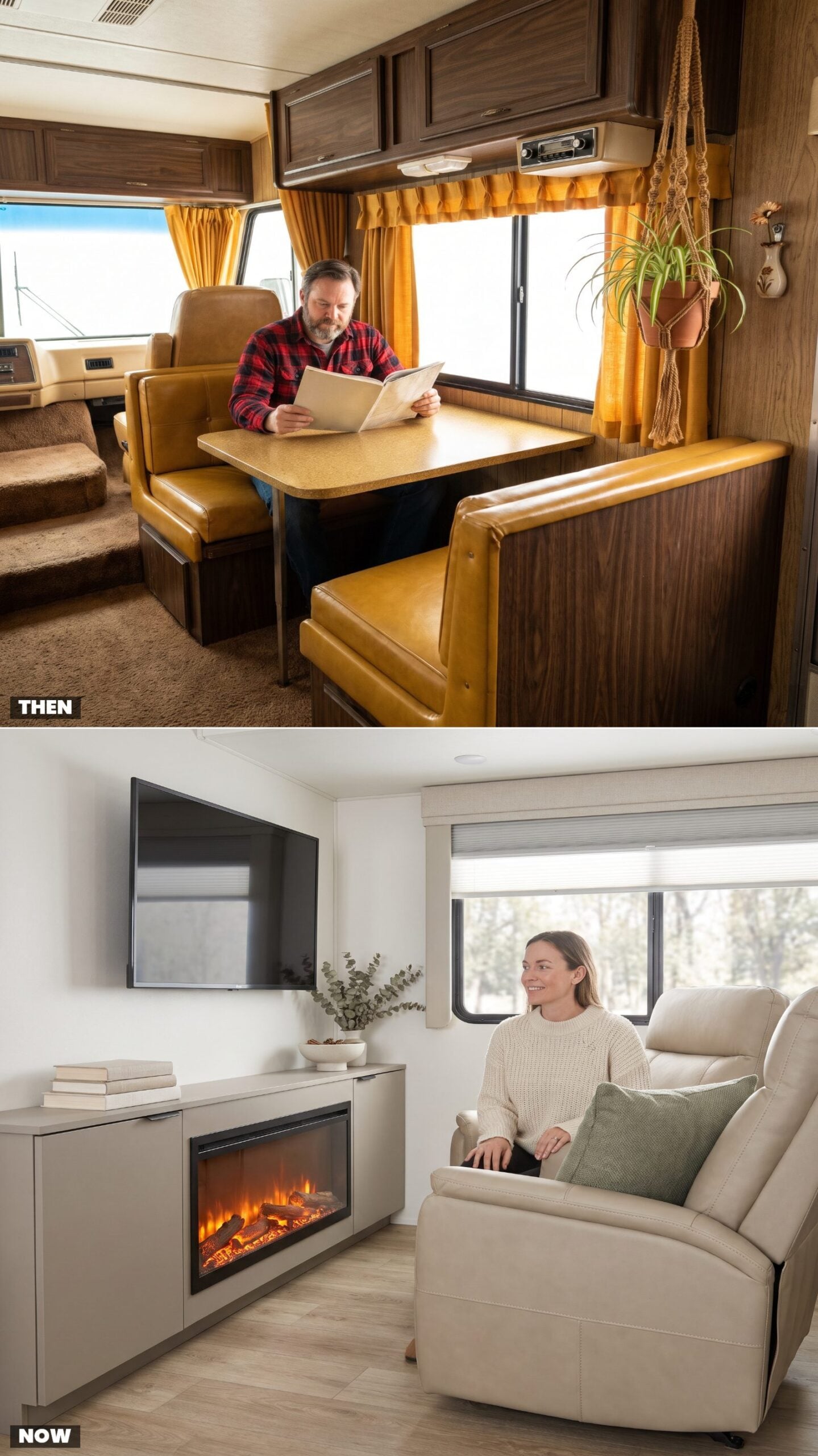
Nobody in 1980 warmed their toes by a fireplace inside a motorhome. You had a propane furnace that roared like a hairdryer, and a dinette corner that stayed cold until it finally wasn’t. Ambiance came from the amber curtains and whatever tape was in the cassette deck.
Now a recessed electric unit throws a flicker of orange across the floor while you park for the night. No fuel, no smoke. Just a glow you click on with a remote, faking the campfire feeling without making you leave the couch — which I have mixed feelings about but won’t pretend I haven’t used.
Snap-On Cab Curtains vs. Powered Windshield Shades
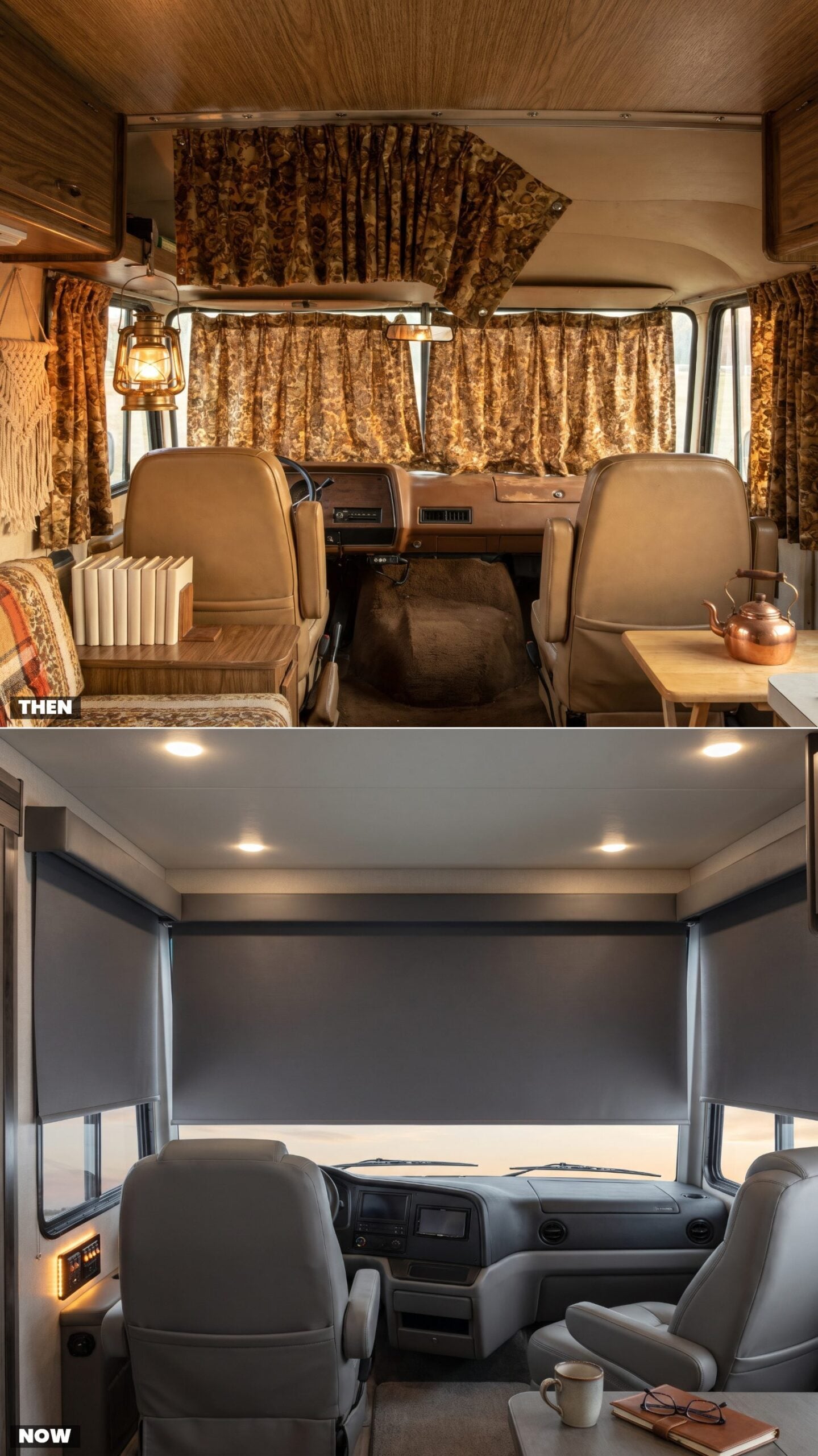
You snapped the cab curtains up every single night. Metal stud, fabric loop, metal stud, all the way across — and the one in the corner always popped loose by morning. The print was floral, the fabric was heavy, and the gap let a sliver of parking-lot light hit you right in the eyes.
Press a button now and a shade rolls down over the whole windshield. No snaps, no sagging corner, no fumbling in the dark. Sounds like a small thing until you’ve done the snap routine three hundred nights in a row.
The Raised Engine Doghouse vs. the Flat Walk-Through Cab
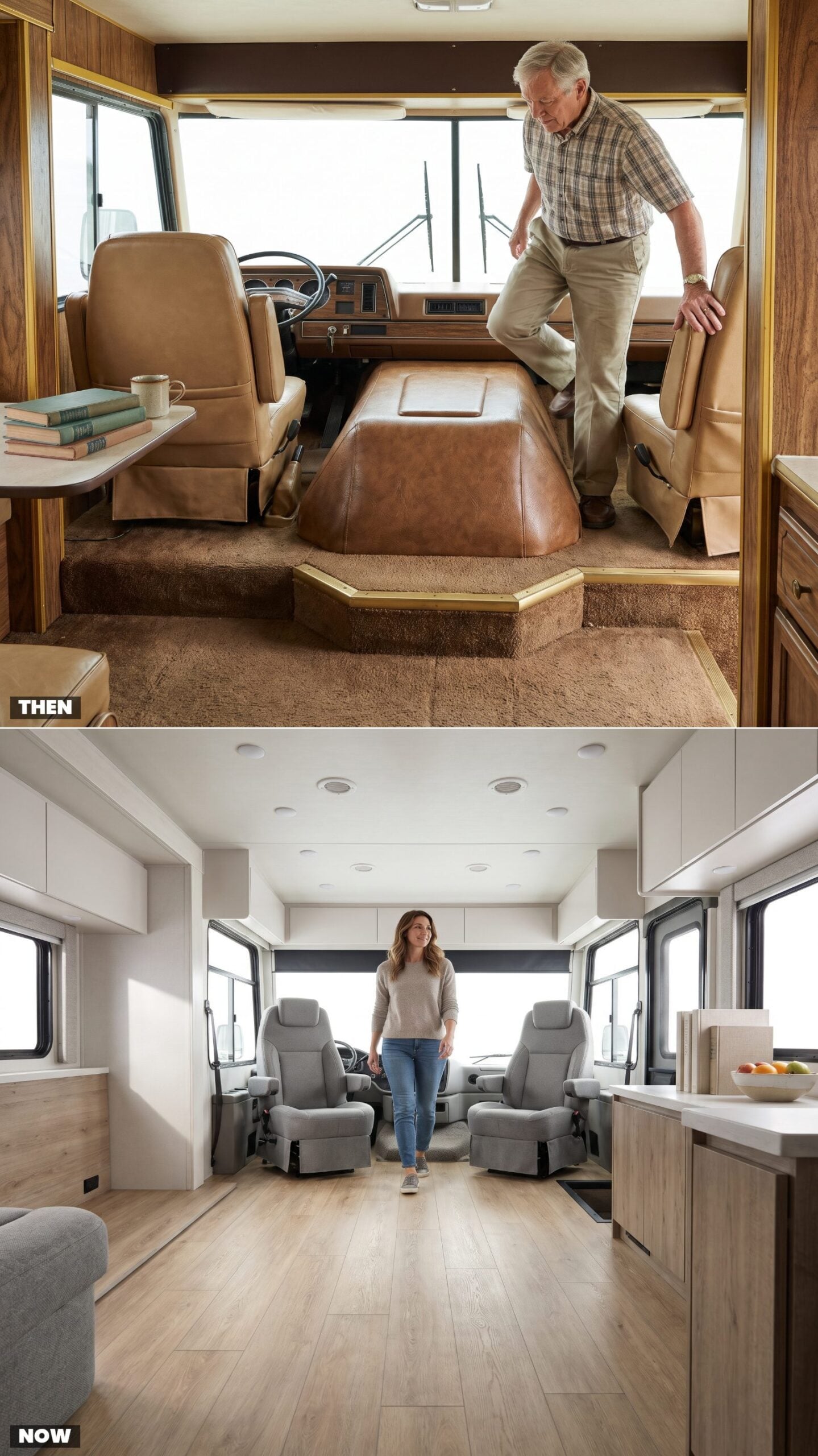
The doghouse. That hump of engine cover wedged between the front seats, upholstered to match and warm to the touch after a long drive. You stepped over it to reach the cab, and if you forgot it was there, it caught your shin.
Modern rigs run the floor flat from the couch straight to the driver’s seat. Diesel pushers moved the engine to the back, and front-engine gassers tuck the heat away better, so you walk through now instead of climbing over. My shins approve.
Fixed Narrow Living Room vs. Opposing Slide-Out Rooms
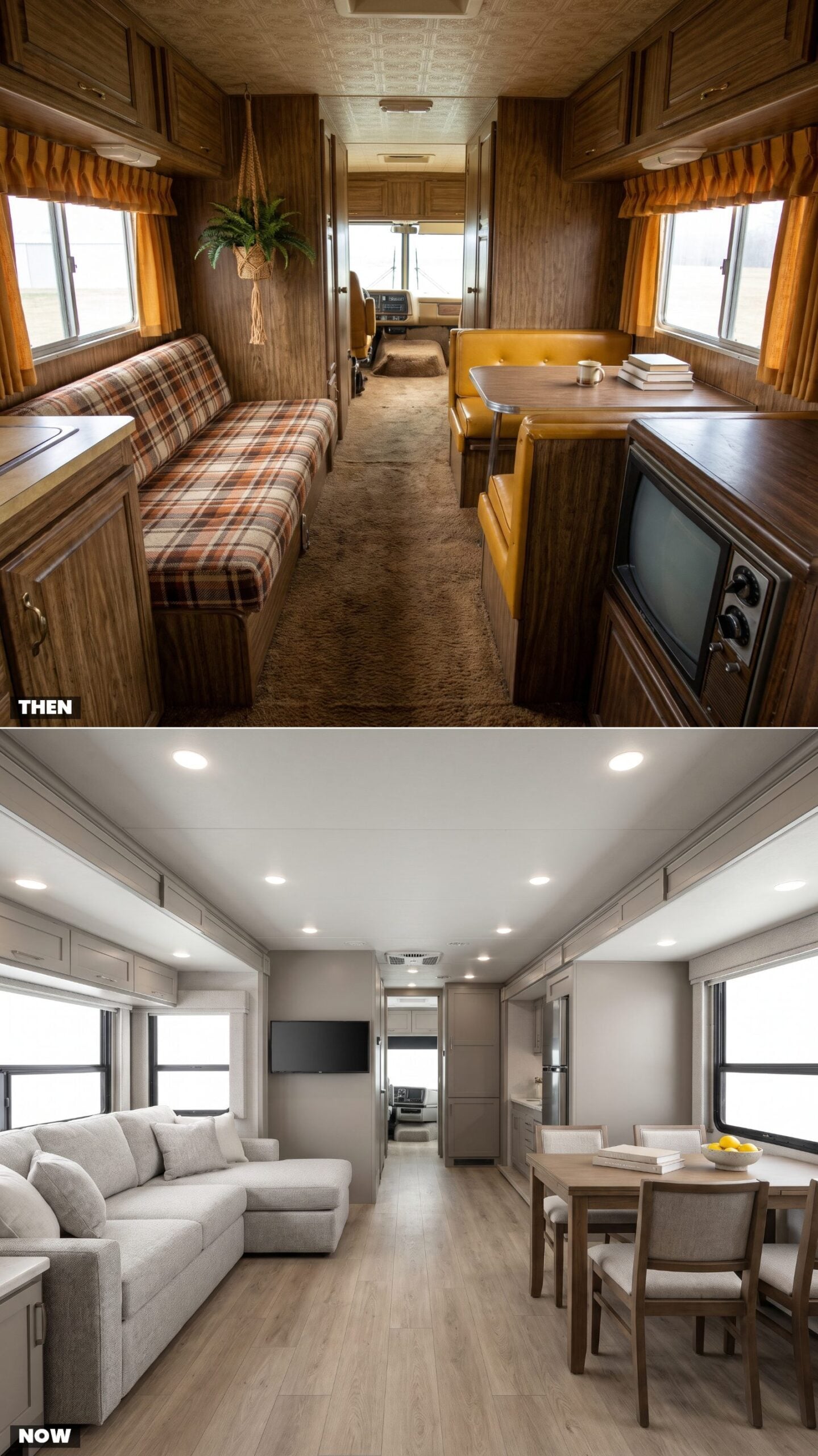
In 1980 the living room was whatever width the box happened to be, and the box was narrow. Sofa on one wall, dinette on the other, and a center aisle you turned sideways to pass another person in. There was no stretching it — you lived in the footprint the chassis handed you.
Opposing slide-outs changed the whole math. Park, hit the switch, and both walls glide outward until the room is nearly twice as wide. Suddenly there’s floor to stand on and furniture that isn’t bolted shoulder to shoulder. The first time you watch a wall move, it feels like cheating.
Boxed-In Rooms vs. the Open-Concept Coach
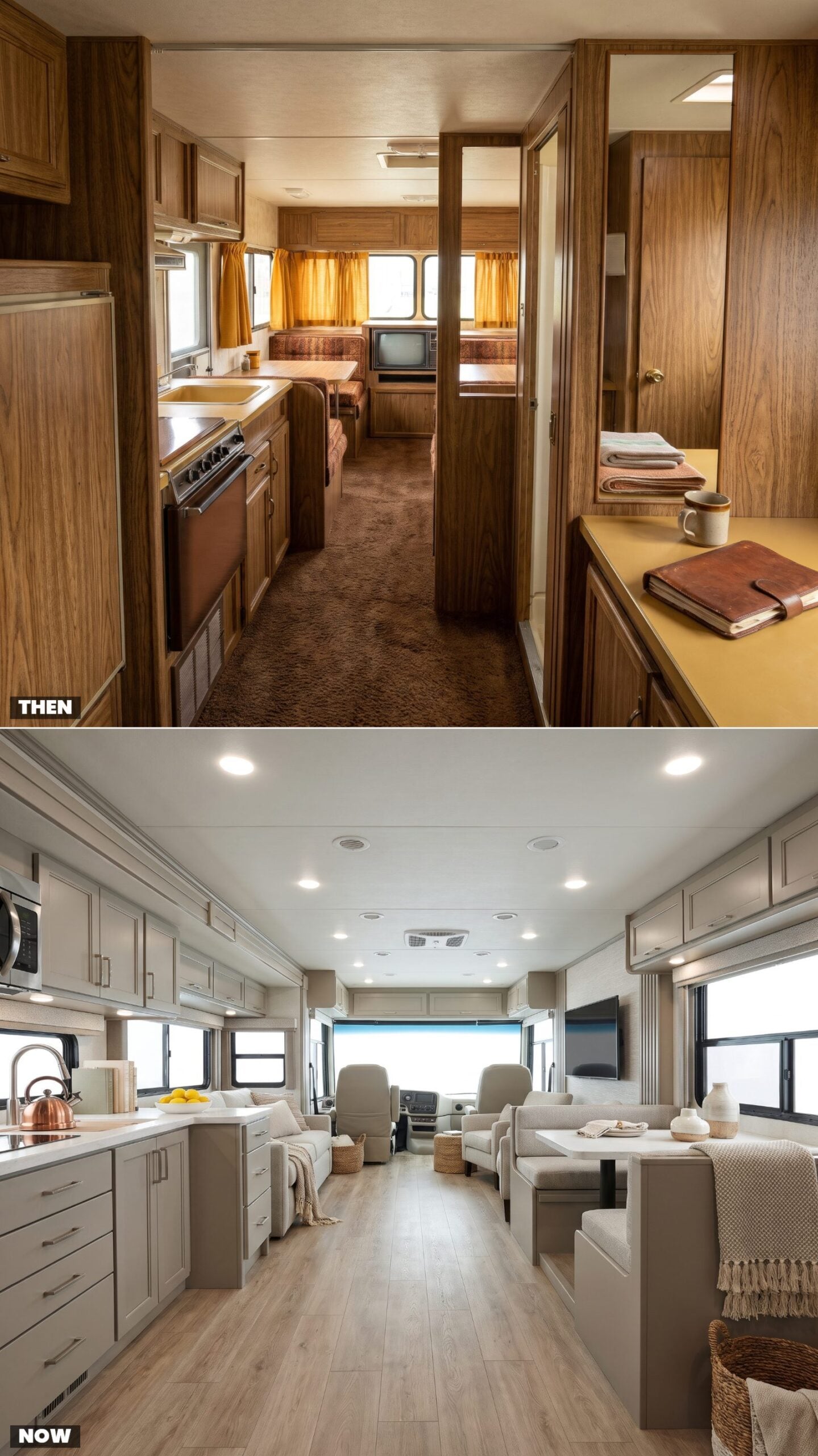
Old coaches were a string of little rooms. A door to the bedroom, a door to the bath, a galley pinched between cabinets, a dinette boxed into its own corner. Every space had a wall, and every wall made the whole thing feel smaller than it was.
Knock out the dividers and you get one long open room instead. The kitchen, the couch, and the dinette all share the same air and the same clear line to the windshield. Light travels the full length now rather than dying in a hallway. It makes a 35-foot rig feel closer to 40.
The Head-Ducking Roofline vs. Seven-Foot Ceilings
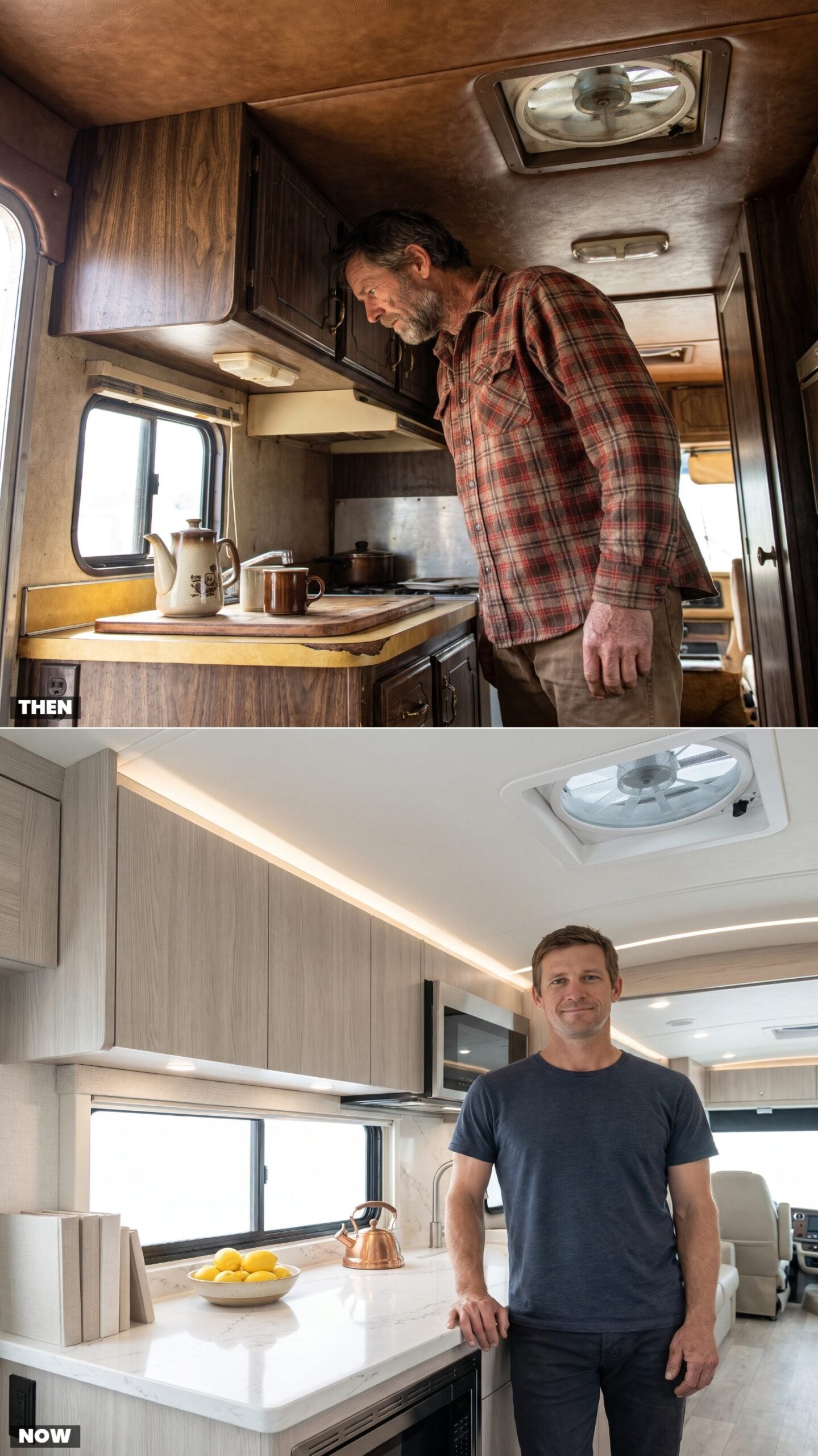
Tall folks remember the 1980 ceiling, mostly from hitting it. Rooflines sat low to cut wind and weight, so anyone over six foot walked the galley in a permanent slight crouch. You learned where the vent fan was by cracking your skull on it exactly once.
Seven-foot ceilings are standard in plenty of modern coaches. You stand up straight, cook without stooping, and the extra air overhead lets the whole interior breathe. It’s the kind of upgrade you don’t notice until you climb into an old rig and smack your head again.
The Corridor Galley vs. the Residential Kitchen Island
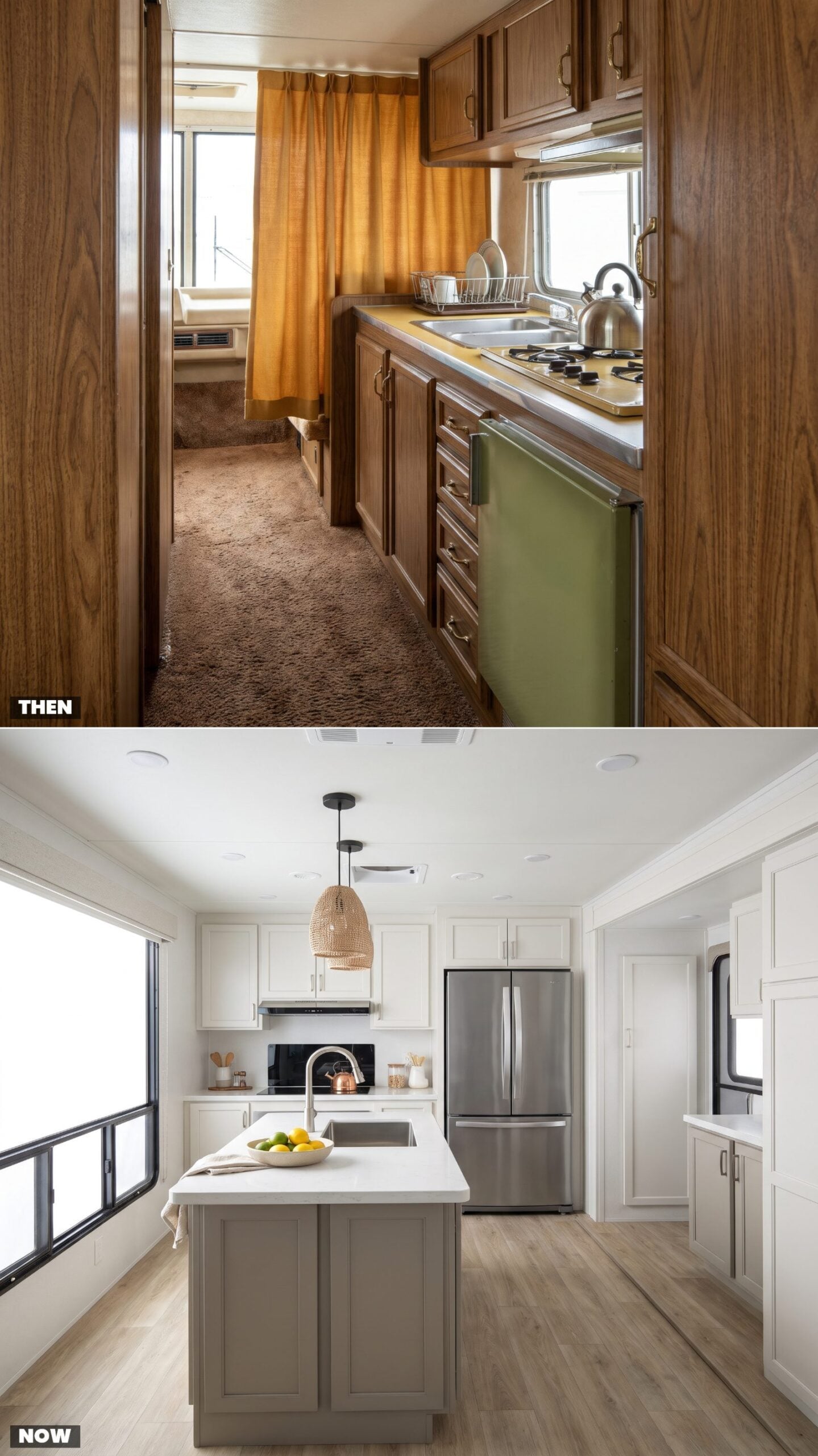
The 1980 galley was a hallway with a stove in it. One wall, three burners, a sink the size of a mixing bowl, and an avocado fridge you had to crouch to reach. Two people could not cook in it. One person could barely turn around.
Slide-outs made room for an island, and that island changed everything. Counter space on two sides, a real sink, a fridge you don’t have to kneel at, and somewhere to set a cutting board without shuffling things around first. Camp cooking stopped being a one-person job.
An island in an RV sounded absurd in 1980. Now it’s the feature that sells the whole coach.
The Folding Dinette Desk vs. a Built-In Work Station
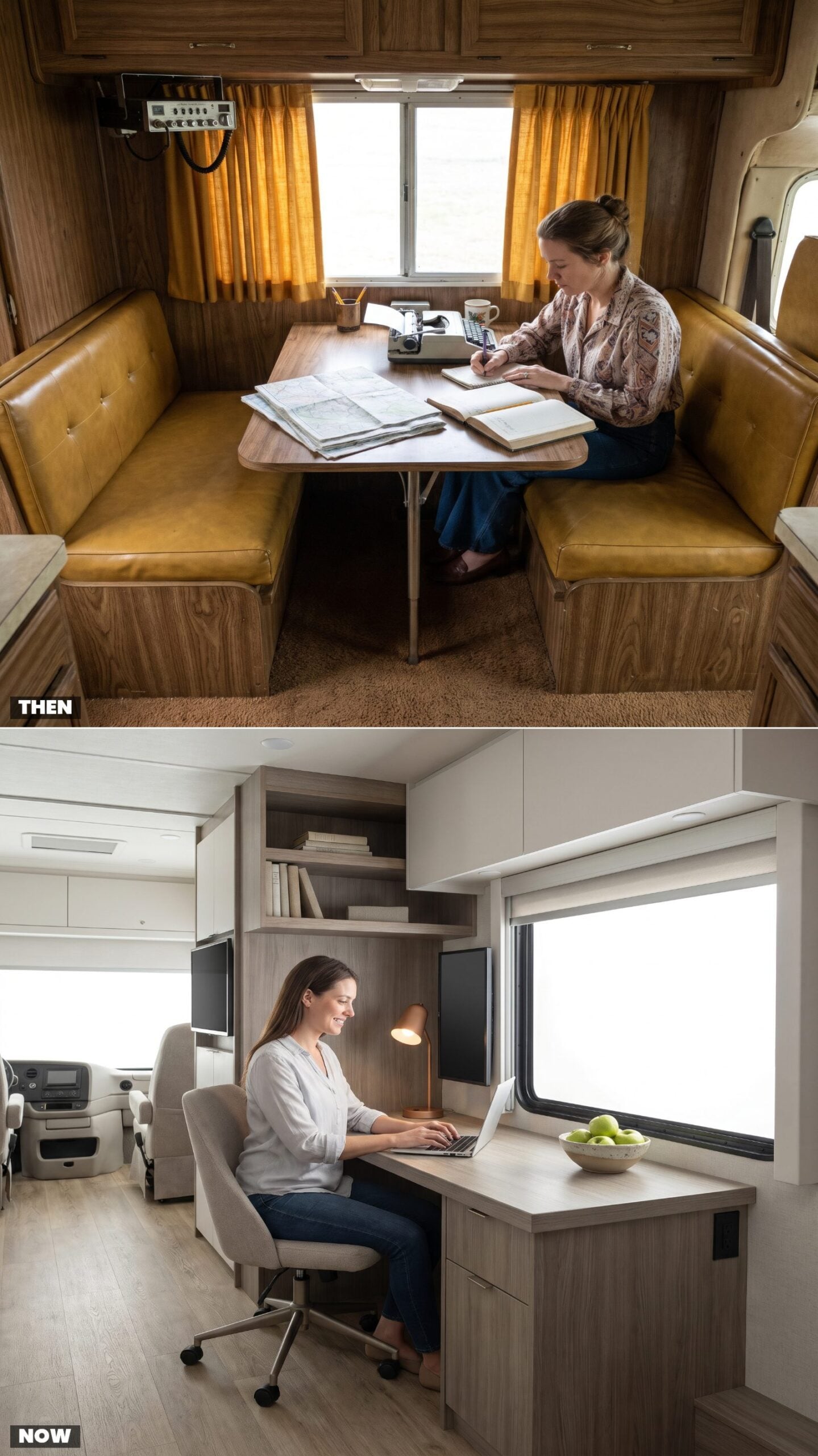
Need to work in a 1980 motorhome? You cleared the dinette and made do. The table folded up and down, the benches were vinyl, and your elbows fought the salt shaker for space. Nobody designed that table for a full day of anything.
Full-timers changed the ask. Plenty of modern coaches now build in a real desk: fixed top, task chair, a spot to run a cable, shelves overhead. You take a call, run a monitor, and close the laptop without packing up your whole dinner setup. The road office is a genuine thing now.
Smoked Mirror Accent Panels vs. Full-Length Frameless Mirrors
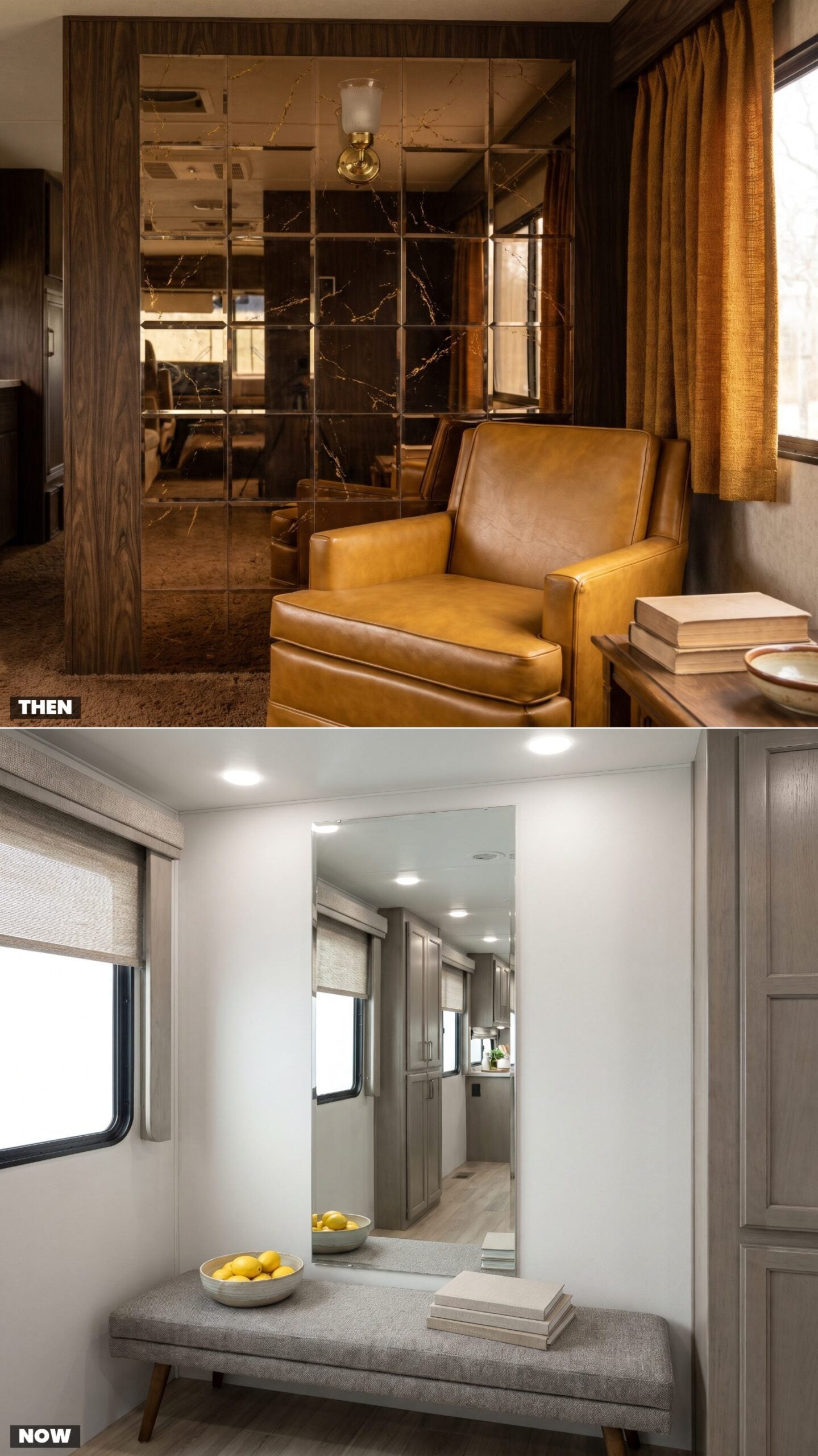
Smoked mirror tiles were the height of 1980 taste. Bronze-tinted, beveled, sometimes gold-veined, glued to a wall panel to make the box feel fancier. They gave you a dim, coppery reflection and swallowed what little light the coach had.
The modern move is one clean full-length mirror, frameless and flush to the wall. It throws real light back into the room, doubles the apparent space, and actually lets you see your whole outfit before you step out at the campground. Clear beats bronze. I don’t miss the tiles.
1980 Class C Cabover Bunks vs. Modern Molded Cabover Suites
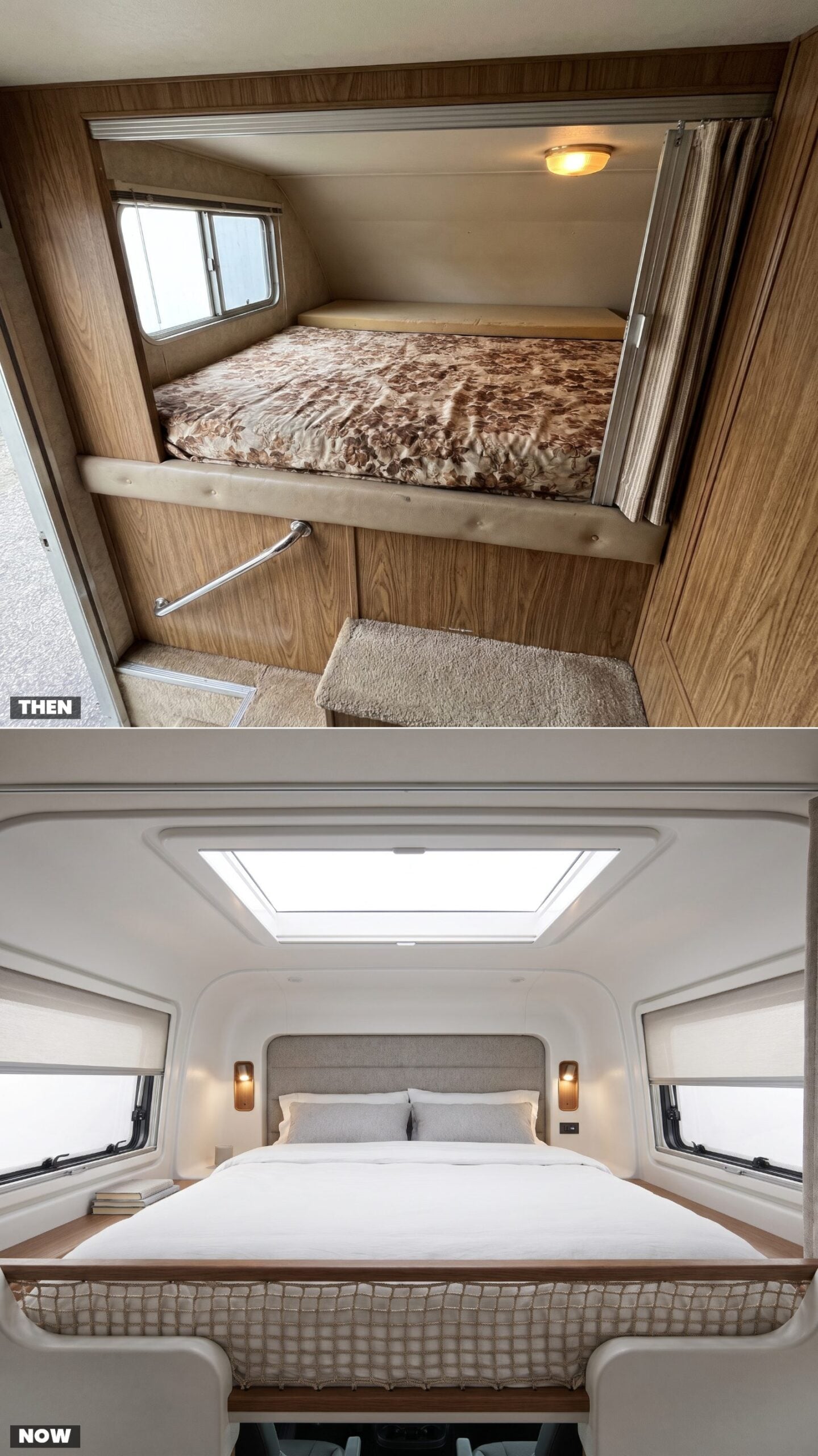
Ask anyone who was a kid in a 1980 Class C and they’ll tell you the exact same thing. That cabover bunk was the best seat in the whole rig. You scrambled up, yanked the thin curtain across its rattly little track, and watched the road signs slide past through a crank window the size of a paperback. The mattress? Two inches of foam over plywood. The bedspread was brown floral polyester, because in 1980 everything was.
Modern molded cabover suites treat that same airspace like an actual bedroom. A full residential mattress tucks inside a smooth fiberglass surround, and above it there’s a skylight, a pair of reading sconces, a USB port for your phone, and a real safety rail instead of a curtain held up by hope and static cling.
1980 Fifth-Wheel Front Bedrooms vs. Modern Split-Level Front Lounges
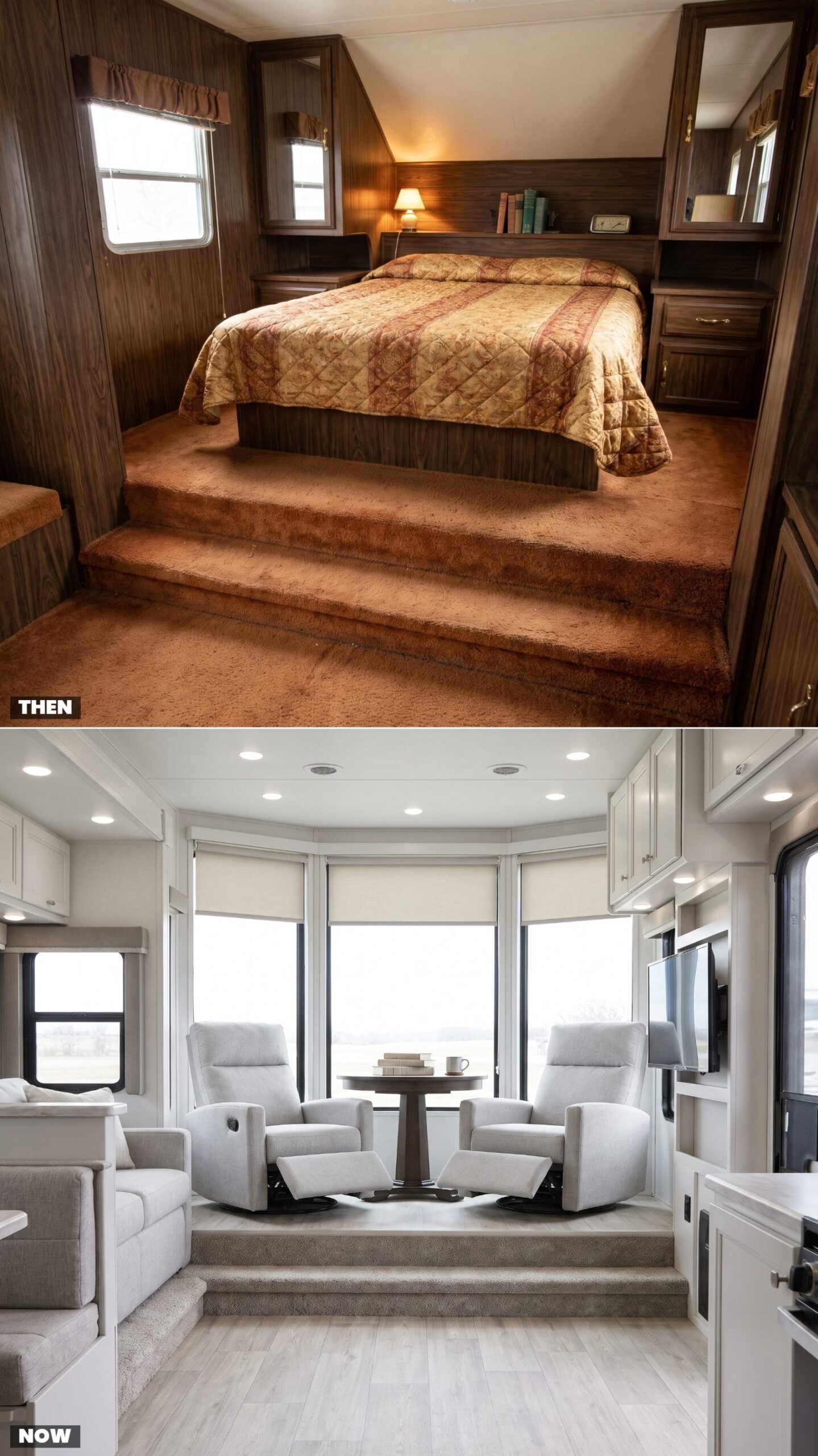
For decades, that raised nose on a fifth-wheel meant one thing and one thing only. The bedroom lived up front. In 1980 that was a queen bed under a gold-and-rust quilted spread, dark paneling leaning in around you, and a lone side window wearing a brown valance. You climbed the step, you slept, you climbed back down for coffee in the morning. Practical, yes, if a touch cave-like.
Then the split-level front lounge came along and flipped the whole thing upside down. Now the elevated nose is where you sit, not where you sleep. Tall front windows stretch clear across the cap, two recliners square off over a pedestal table, and you get the finest view in the rig while the bed slips off to the rear where nobody minds it being tucked away.
Putting the lounge where the bedroom used to be turned the dead nose space into the room everyone actually wants to be in.