
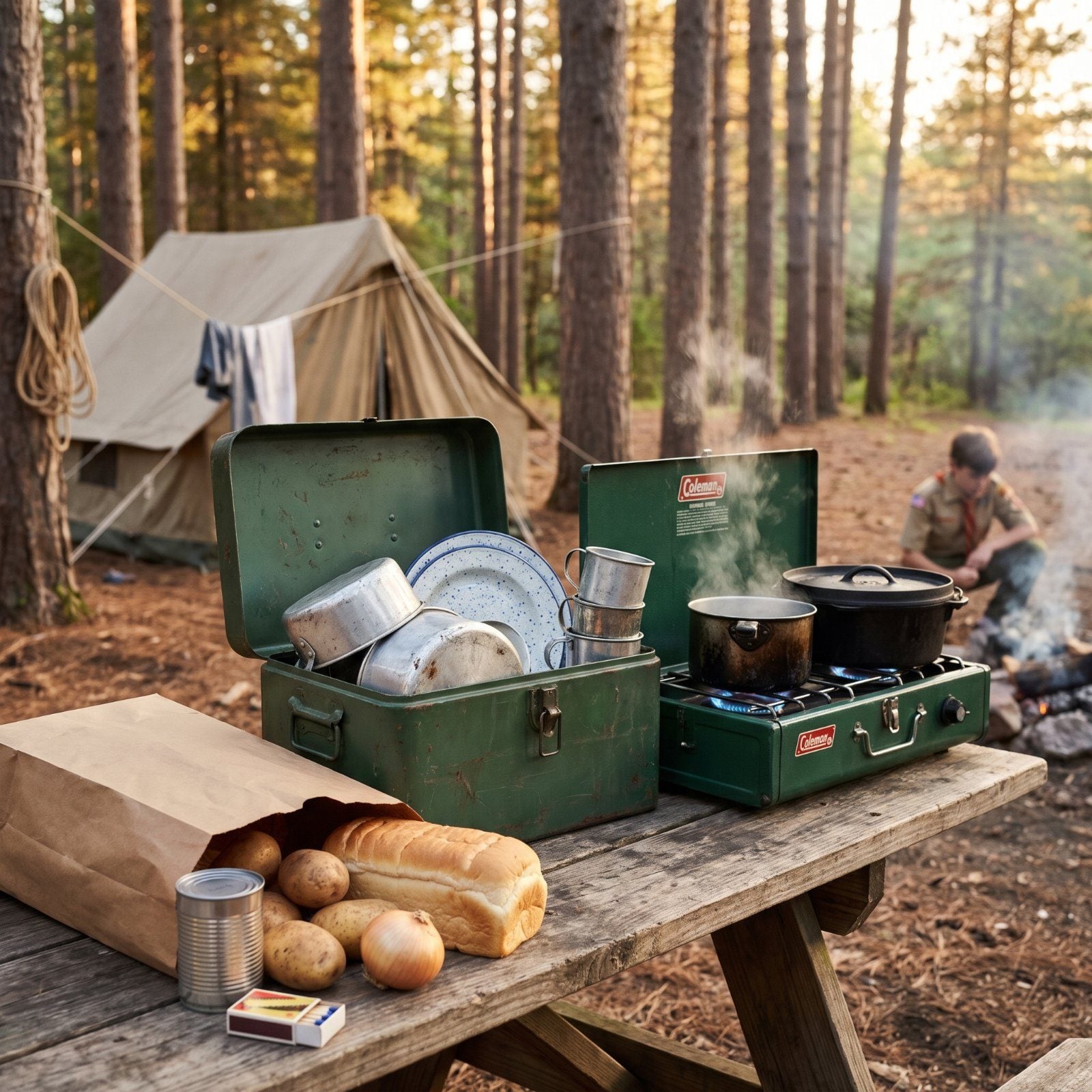
The smell hits first. Woodsmoke in your sweatshirt that won’t wash out for a week, the tang of charring onions, grease dropping onto coals with a hiss. Somewhere a patrol leader is arguing about whose turn it is to scrape the pot. Supper at a Scout camp back then wasn’t fancy — it came out of a dented metal box and a brown grocery bag, cooked over a fire you built yourself. These are the meals that fed a thousand muddy, happy kids, and the ones below still live in our noses.
Please note that some of the images in this article were created with the assistance of AI.
23. Hamburger-and-Potato Hobo Packets
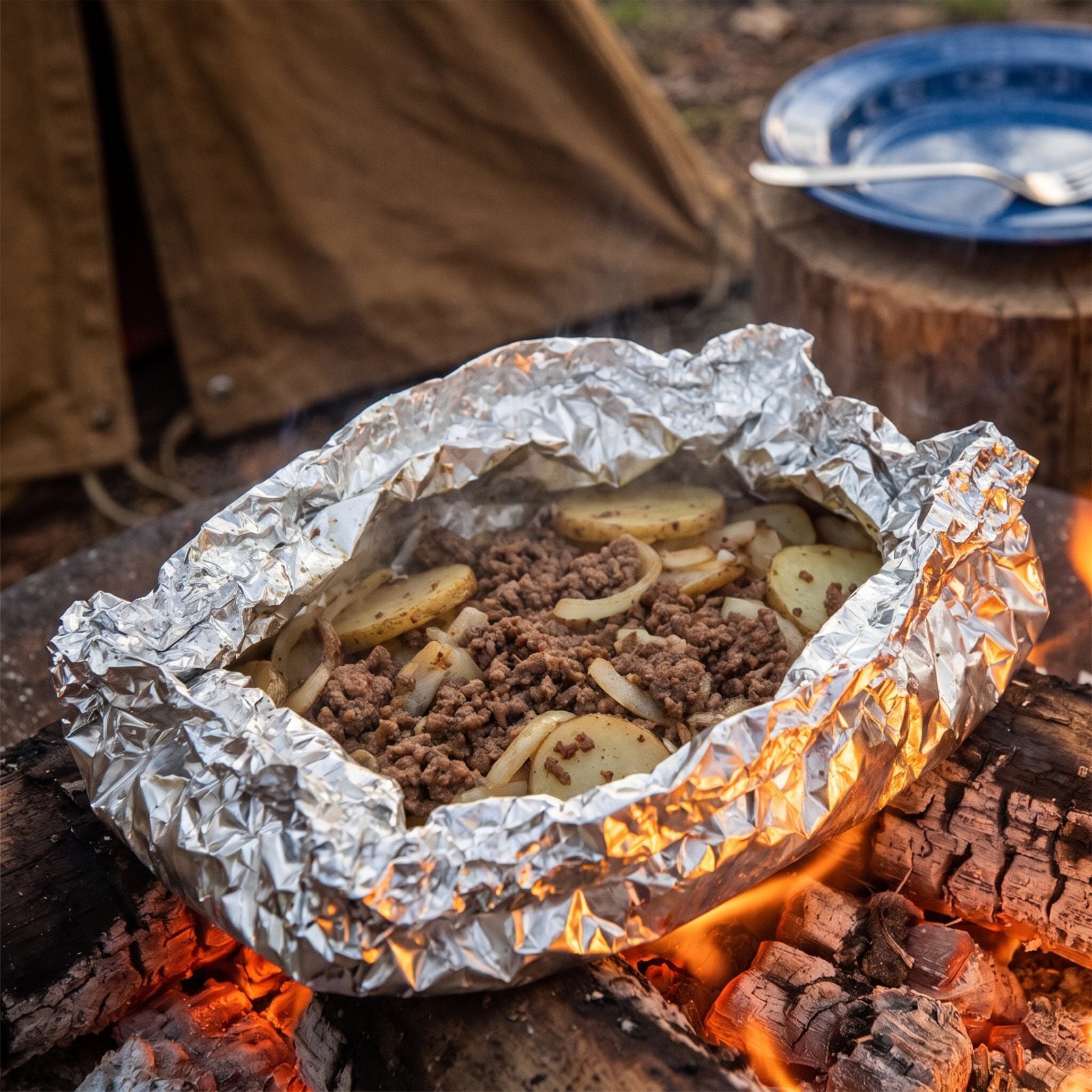
You built it yourself and that was half the magic. A fistful of ground beef, sliced potatoes, a handful of onion, salt, pepper, and a square of foil folded into a little silver pouch with the edges crimped so nothing leaked. Someone always poked a hole in theirs and watched the juice run into the fire.
Then you buried it in the coals and waited, which for a hungry twelve-year-old felt like a geological age. You pulled it out with a stick and a glove, burned a finger anyway, and ate straight from the foil. The potatoes nearest the metal got a little scorched. Those were the best ones.
22. Patrol Mulligan Stew With Donated Vegetables
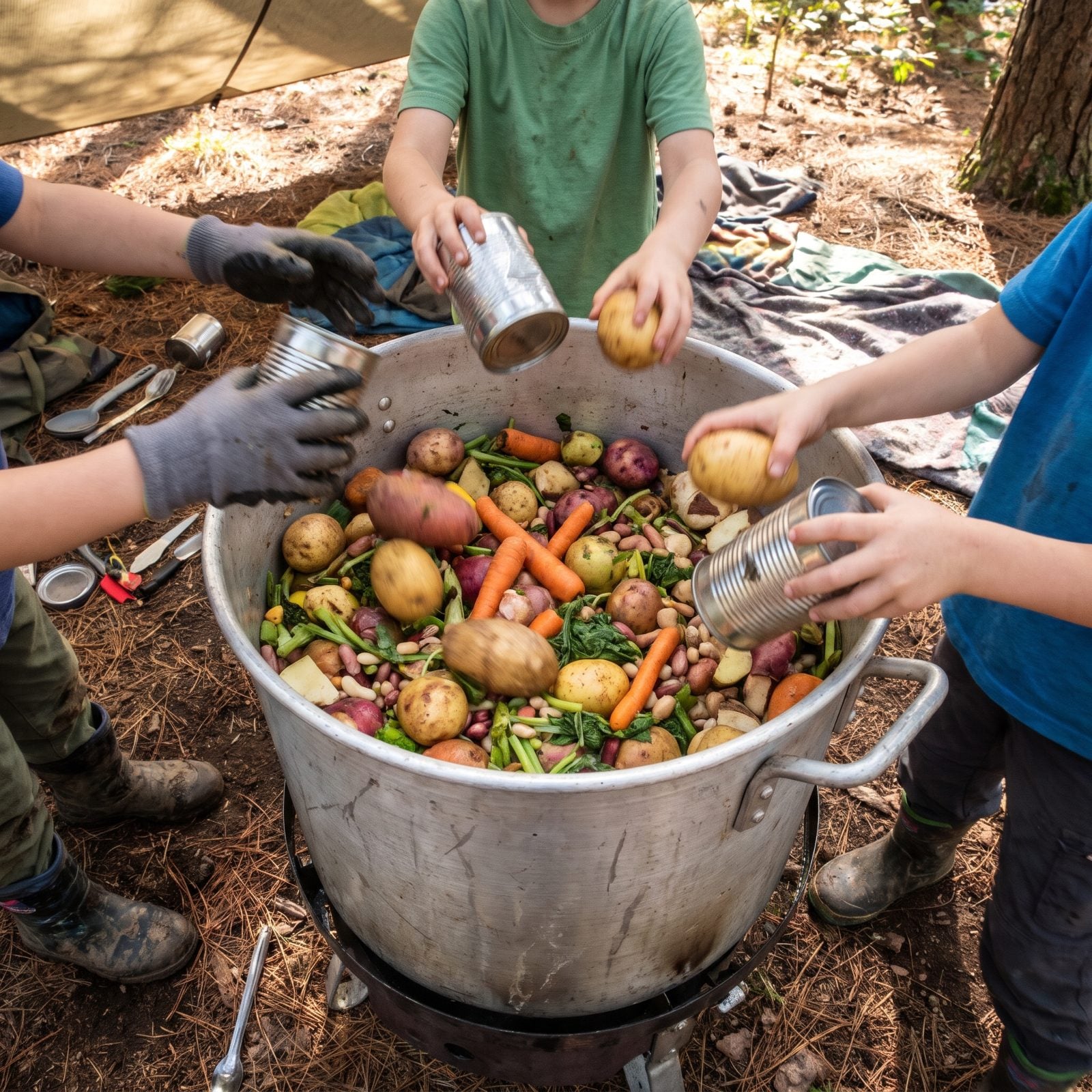
Everybody threw something in — that was the whole idea. One kid brought carrots from his mom’s garden, another emptied a can of corn, and somebody’s dad donated a package of cheap stew beef that nobody asked questions about. It all went in the pot and got stirred by whoever walked past.
No two mulligans ever tasted the same. Some years it leaned heavy on potatoes and went gluey. Other years it was mostly broth and you filled up on bread. Didn’t matter. You ate it standing up with a spoon that someone else had licked an hour earlier, and it warmed you to the boots.
Tracing the dish back to the Great Depression, one professional chef explains that “Each person was responsible for gathering an ingredient and adding it to the stew, which was shared amongst those people.”
21. Patrol-Box Spaghetti With Meat Sauce
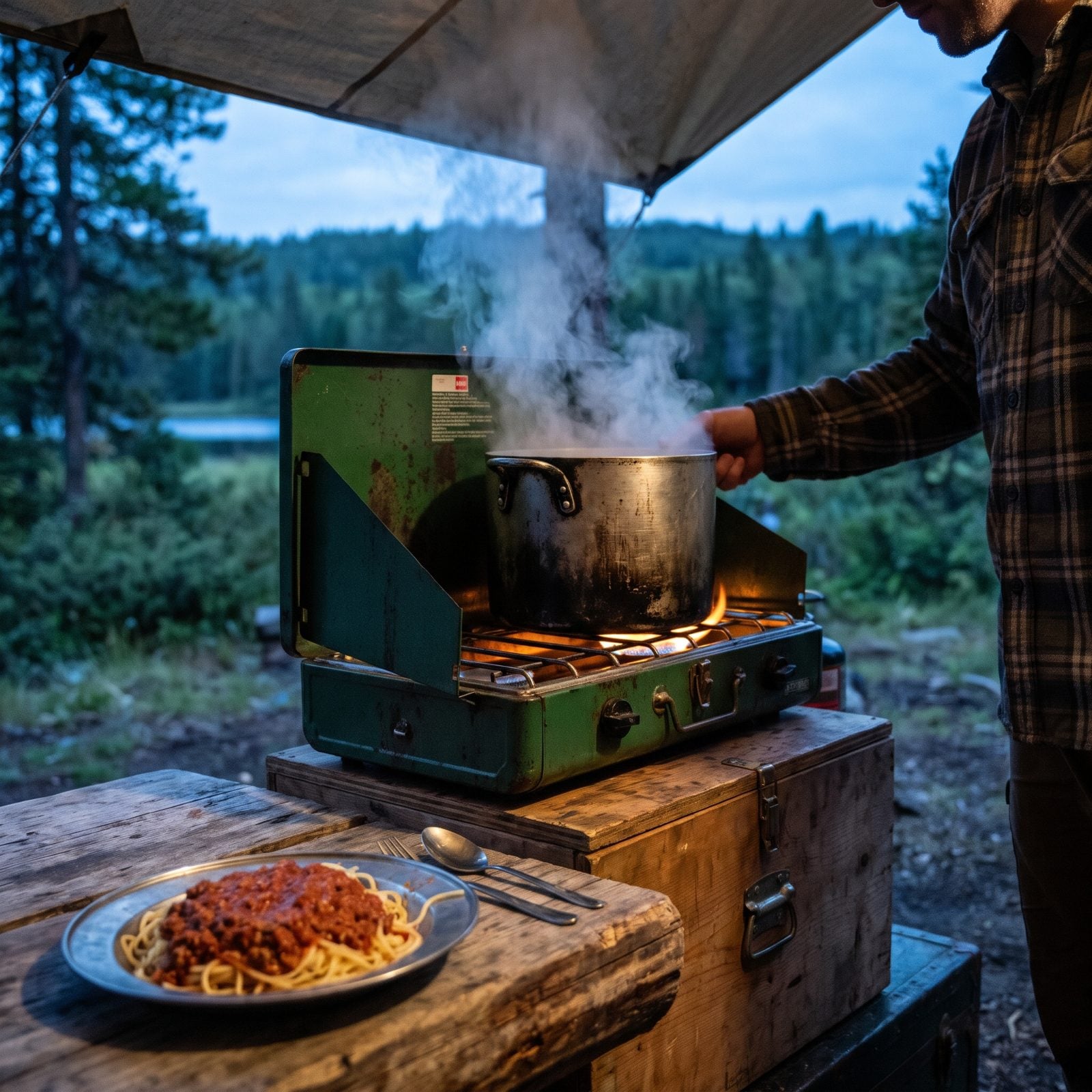
Boiling water at a campsite is its own small saga. The pot took forever, somebody knocked it once, and by the time the spaghetti went in, half the patrol had wandered off to throw pine cones. The noodles always came out soft. We called it done and nobody complained.
The sauce was a jar poured over browned ground beef, heated ahead of time and ladled straight over the noodles in thick red spoonfuls. You shook green-tube parmesan on top until the shaker ran out. It stuck to the enamel plates, it stuck to your fingers, and the leftover sauce got sopped up with torn white bread. A patrol ate it elbow to elbow on a log.
20. Campfire Hot Dogs With Canned Beans
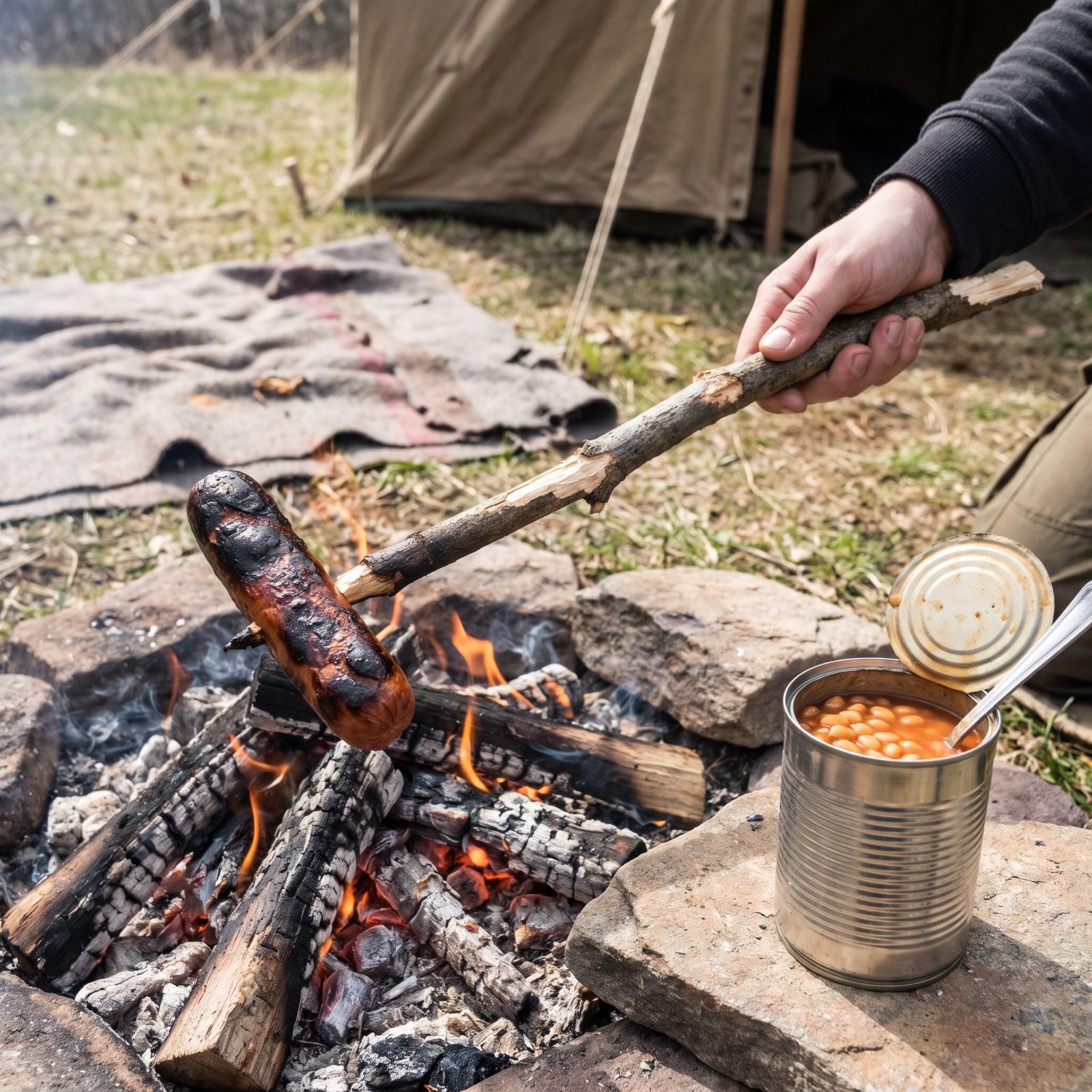
This was the lazy night and everyone knew it. Roast a hot dog on a stick you whittled too sharp, let it blister and split over the coals, drop it onto a soft white bun, and squeeze a wobbly line of mustard down the middle. The beans came straight from the can into a pot shoved onto the coals until they bubbled and formed a skin on top.
Half the fun was the fight over cooking technique. The patient kids turned theirs slow and golden. The rest of us jammed ours deep into the flames, caught them on fire, blew them out, and declared the char to be flavor.
19. Dutch-Oven Chicken Pot Pie
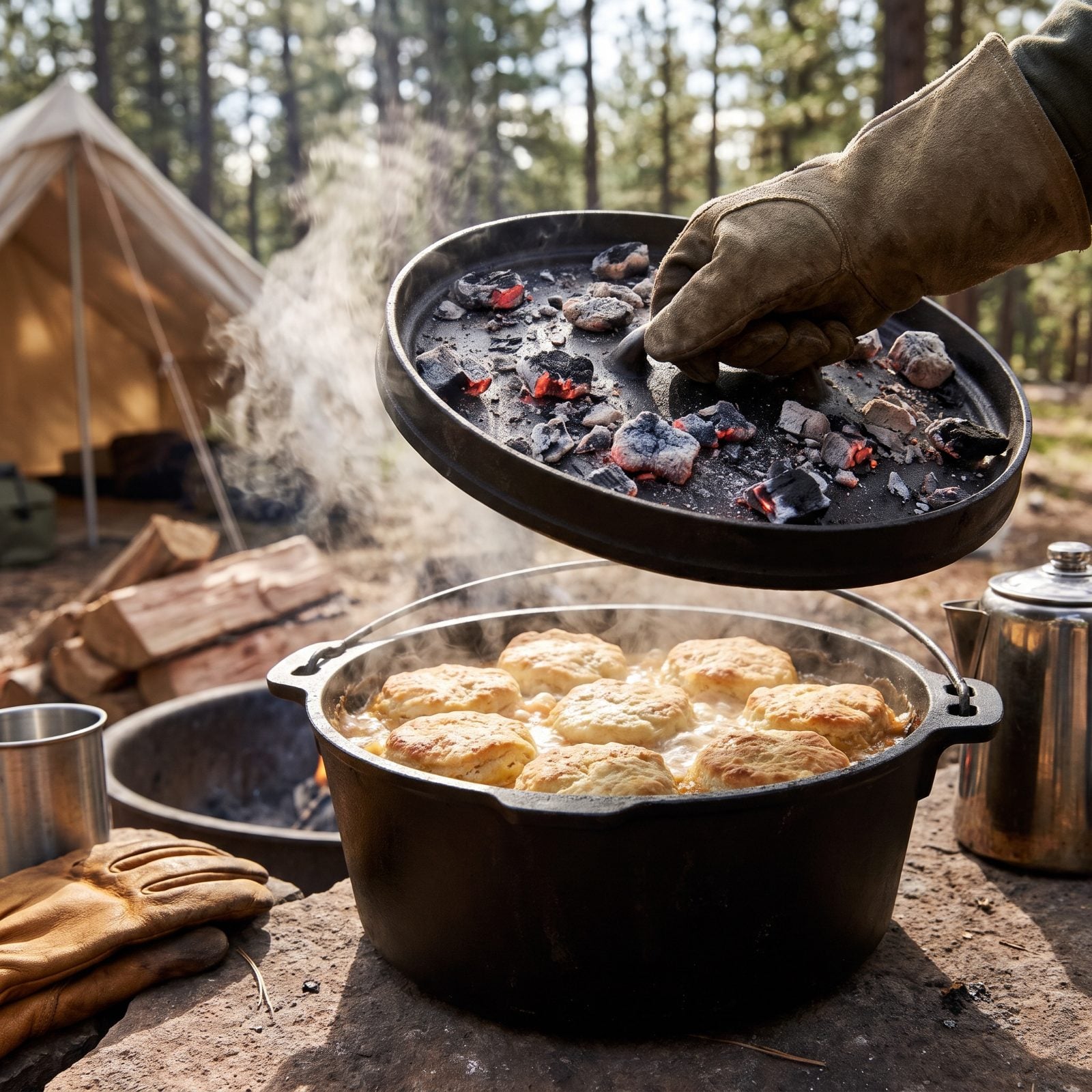
The Dutch oven was the patrol’s heavy artillery, and chicken pot pie was the proof you’d leveled up. You stirred a can of cream-of-chicken soup into cooked chicken, a bag of frozen vegetables, and some milk, then dropped refrigerator biscuits on top and clamped the lid. Coals went underneath and more coals went on top, which was the part nobody could ever count right.
You weren’t allowed to peek, so of course you peeked. Twenty minutes in: a cloud of steam, a golden biscuit crust browning unevenly, gravy bubbling up through the gaps. When the leader finally said it was ready, the whole patrol leaned in. First real meal half of us ever cooked that didn’t come from a can, and it felt like an accomplishment, because it was one.
A Dutch oven turns a bunch of twelve-year-olds into cooks, one burned biscuit at a time.
18. Sloppy Joes From a Blackened Pot
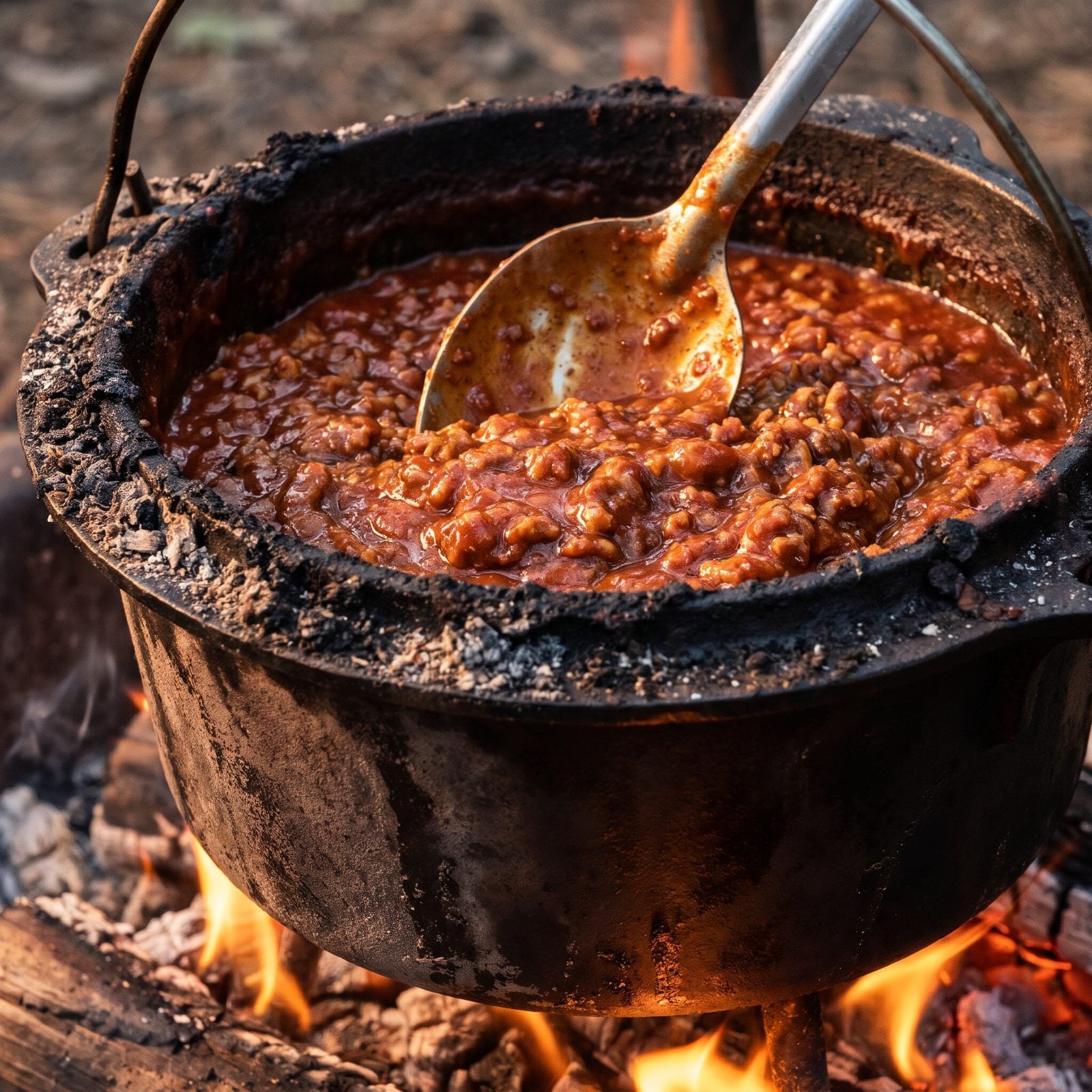
The pot for sloppy joes never got clean. It wore its char like a badge, black up the sides, and no amount of scrubbing with cold creek water and a wad of grass ever cut it. We just cooked in it again.
Brown the beef, dump in the can of sauce, stir until it goes glossy and thick, then spoon it onto a bun that immediately gives up and goes soggy. You ate it leaning forward over the plate so the drips missed your shirt. They never missed your shirt. By the end of the weekend every uniform had a faint orange sloppy-joe ghost on it, and that was just part of the look.
Writing about cooking with cast iron over a campfire, a materials scientist who cooks warns that “Your pan will get blackened on the bottom and sides. This is just cosmetic, but it can transfer to other gear.”
17. Boxed Macaroni and Cheese With Sliced Franks
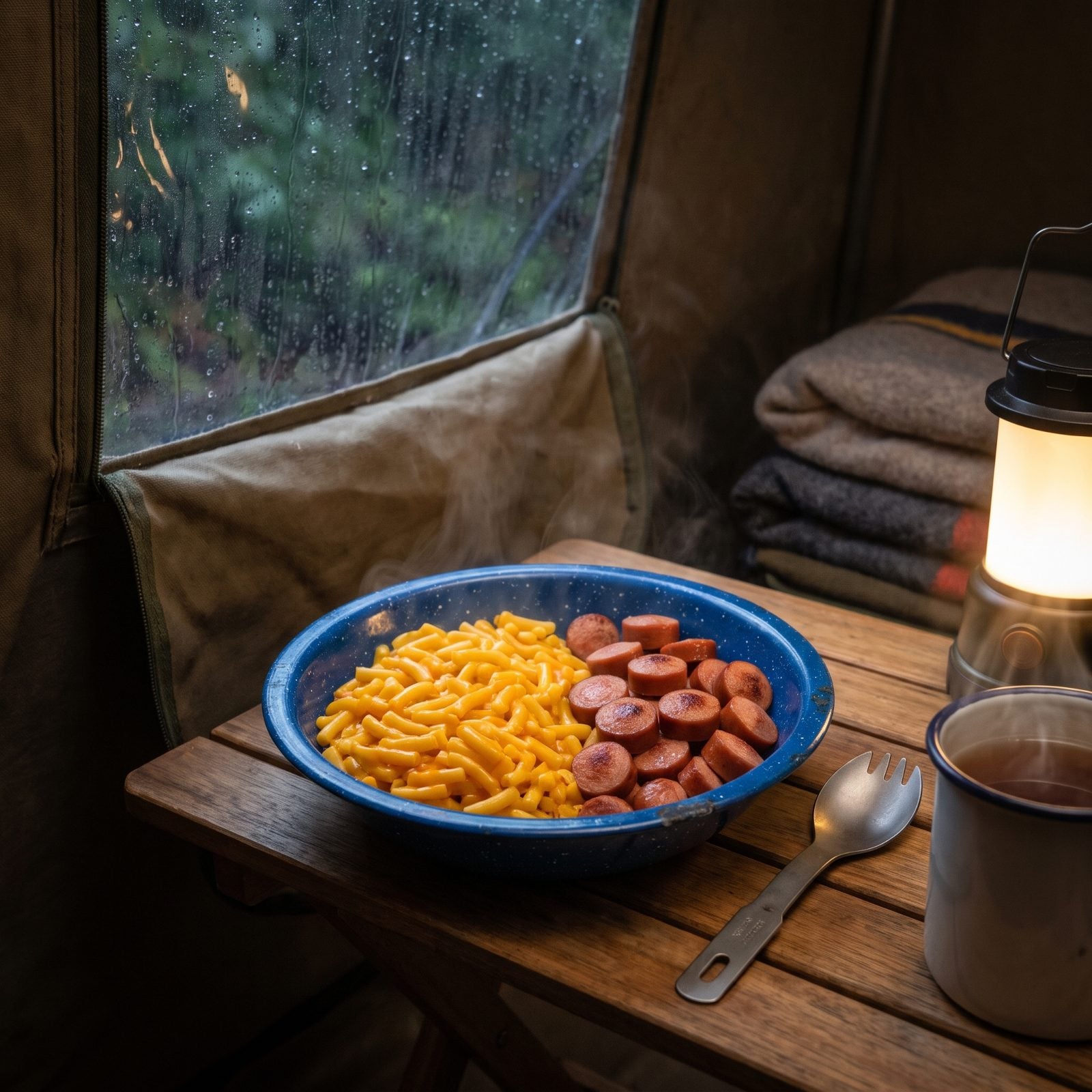
The ten-minute hero of every tired patrol. When the weather turned and nobody had energy for a real cook, you tore open the blue box, boiled the macaroni, drained it mostly, and stirred in margarine, a splash of milk, and that little foil packet of radioactive-orange cheese powder.
The upgrade was sliced franks. You cut a couple of hot dogs into coins and dropped them in, and suddenly it was a meal with protein and everyone felt very grown up about it. It came out neon, gluey, and warm, and on a cold wet night it tasted better than anything your mother ever made. We will not be taking questions on that.
16. One-Pot Chili From Canned Ingredients
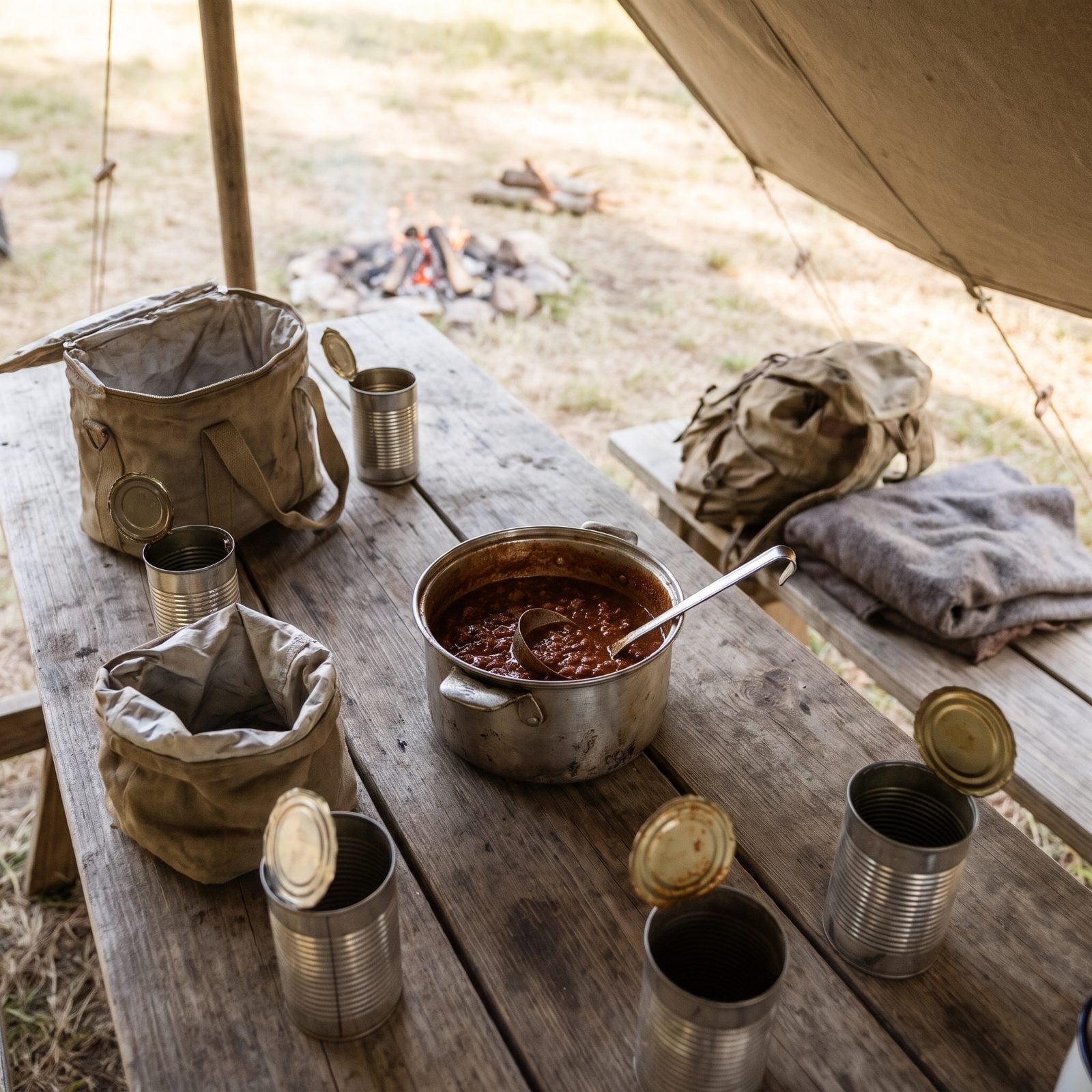
The last-night meal, usually, when the cooler was nearly empty and every can left in the patrol box got conscripted. Brown a pound of ground beef, dump in kidney beans, a can of diced tomatoes, a can of sauce, and a packet of chili seasoning, then set it on the grate over the fire to thicken while you broke camp around it.
It got better the longer it simmered, which was lucky, because dinner was always late. You ladled it into enamel bowls, crushed a sleeve of saltines on top, maybe scattered shredded cheese if someone’s family sprang for it, and ate it with your knees up by the fire on the final cold night. Nobody said much. The weekend was ending, the fire was dying down, and a hot bowl of chili in your hands was enough. That’s the one we still think about.
15. Campfire Ham and Scalloped Potatoes From the Box
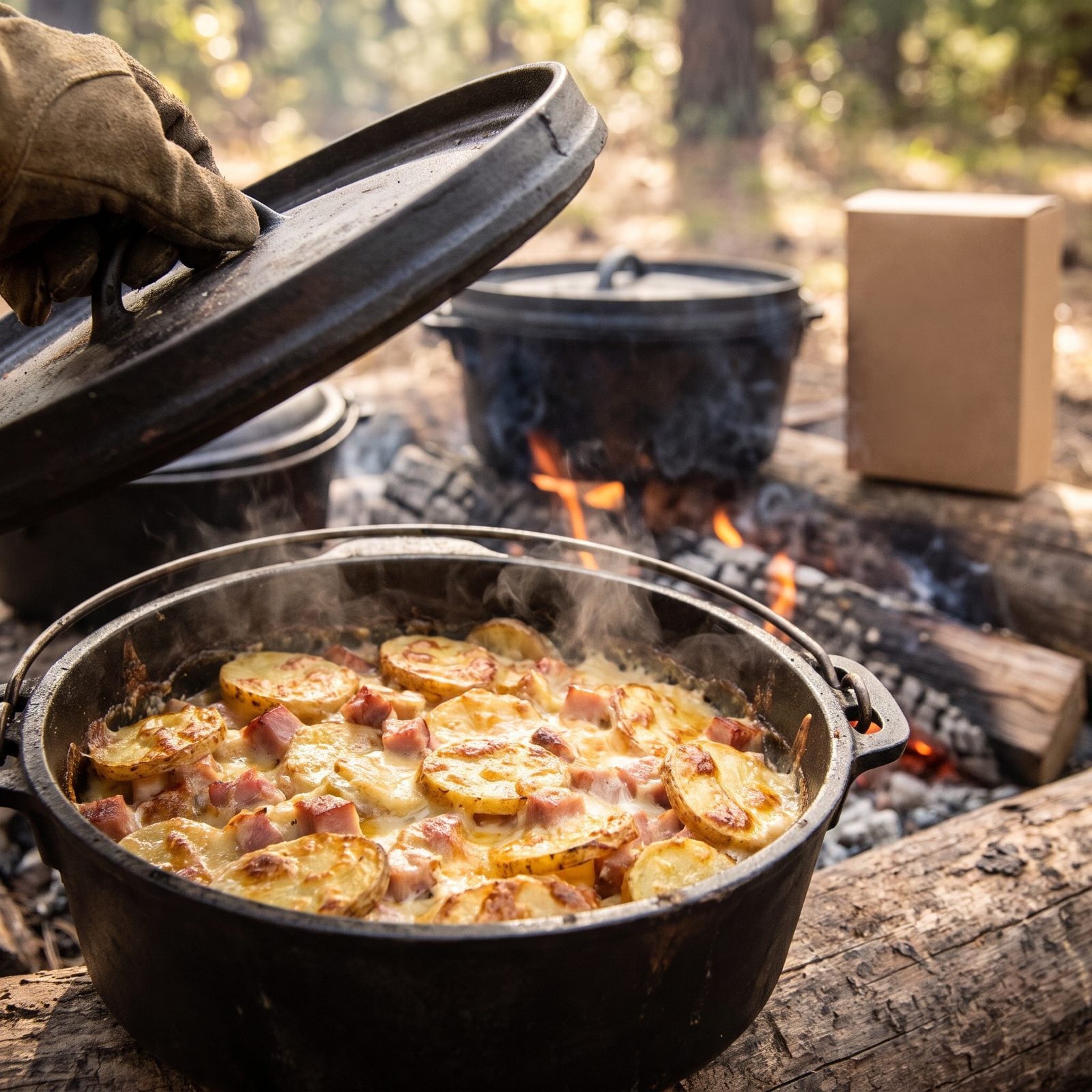
This was the showoff meal, the one the patrol with the serious Dutch oven made while everybody else boiled water. Boxed scalloped potatoes, the kind with the little pouch of powdered sauce, dumped over cubes of canned ham and buried under coals until the top went brown and crackly.
The magic was the lid coals. Get them right and the potatoes browned up beautiful. Get them wrong and you had either soup or a scorched disc welded to the bottom of the pot. We ruined more than one before we learned to count the briquettes.
14. Hamburger Helper Straight Off the Patrol Stove
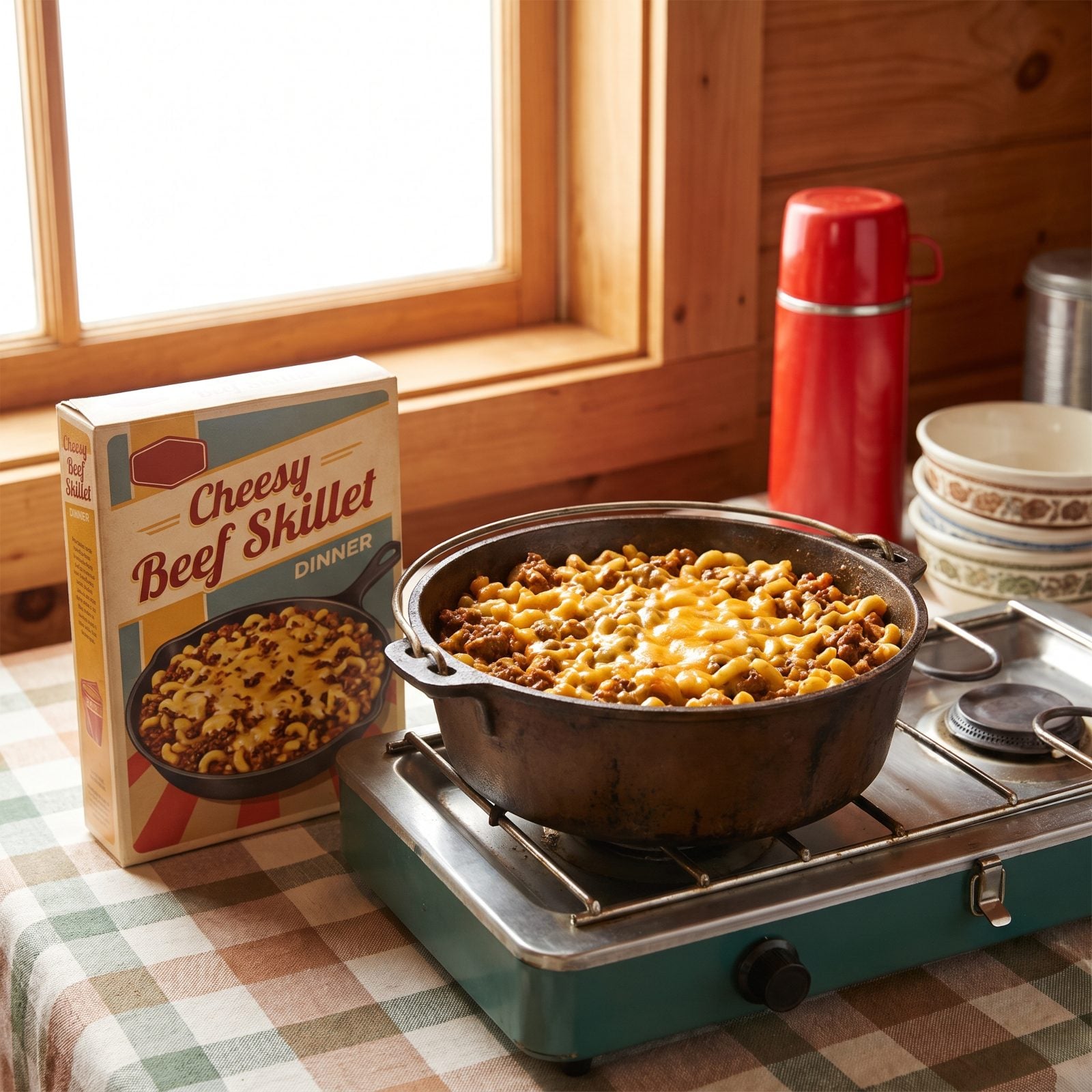
One pound of ground beef, one box, one pot, done. Hamburger Helper was the great equalizer of the patrol stove because you literally could not mess it up, which made it the first real meal a lot of us ever cooked without a parent breathing down our necks.
The cheeseburger macaroni one ruled the mess kit. You’d brown the beef, dump the pasta and the sauce packet, add water, and stir until the whole pot went orange and glossy. Served on an enamel plate, eaten before it had any business being cool enough.
13. Tuna Noodle Casserole Baked in the Dutch Oven
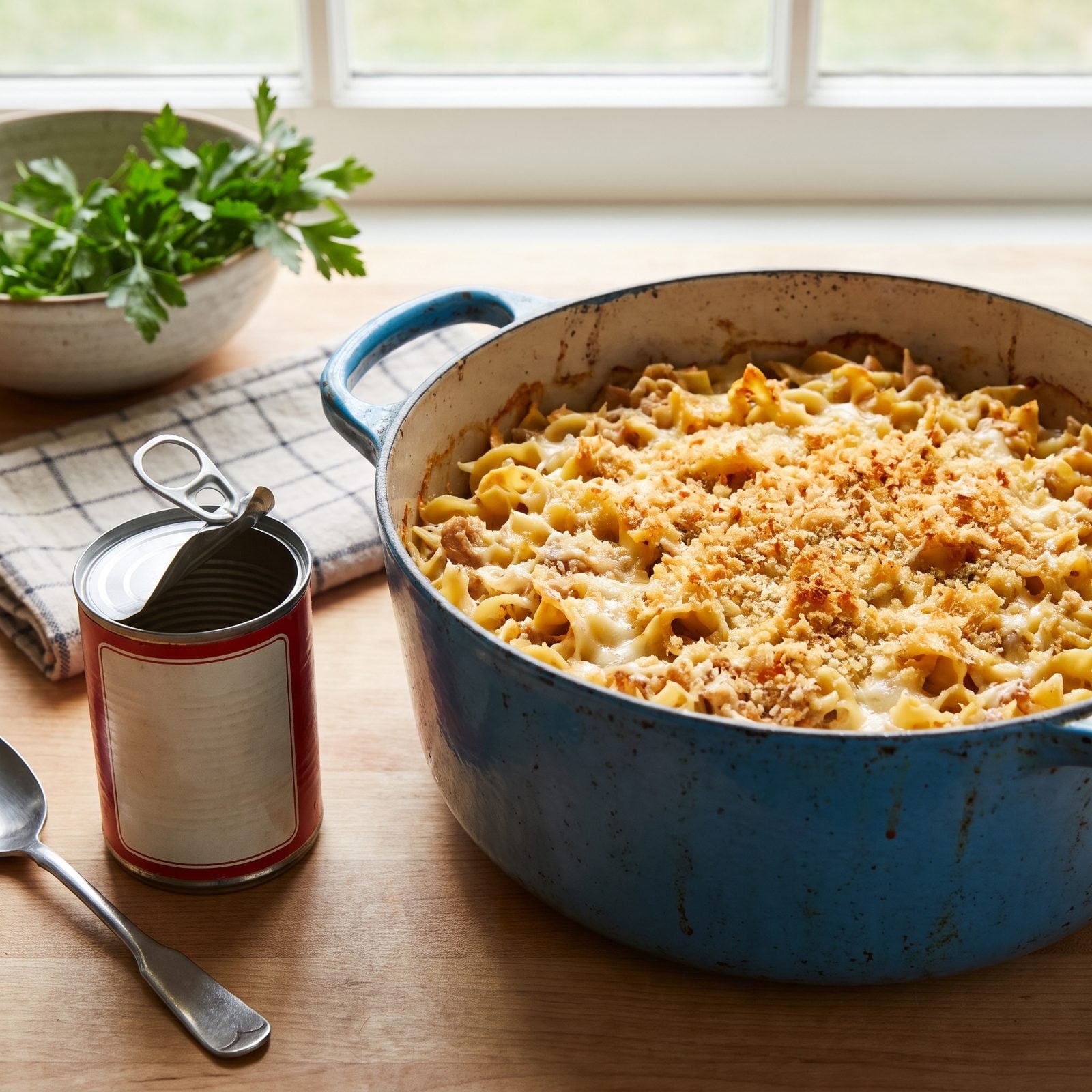
Cream of mushroom soup did a lot of heavy lifting in camp cooking, and nowhere more than here. Egg noodles, a couple cans of tuna, the condensed soup straight from the tin, and a handful of breadcrumbs scattered on top for crunch.
It smelled like a church basement supper carried out to a picnic table, which was exactly what made it comforting on a cold night. The crumb topping going golden under the lid coals was the tell that someone in the patrol actually knew what they were doing.
12. Corned Beef Hash With Fried Eggs on Top
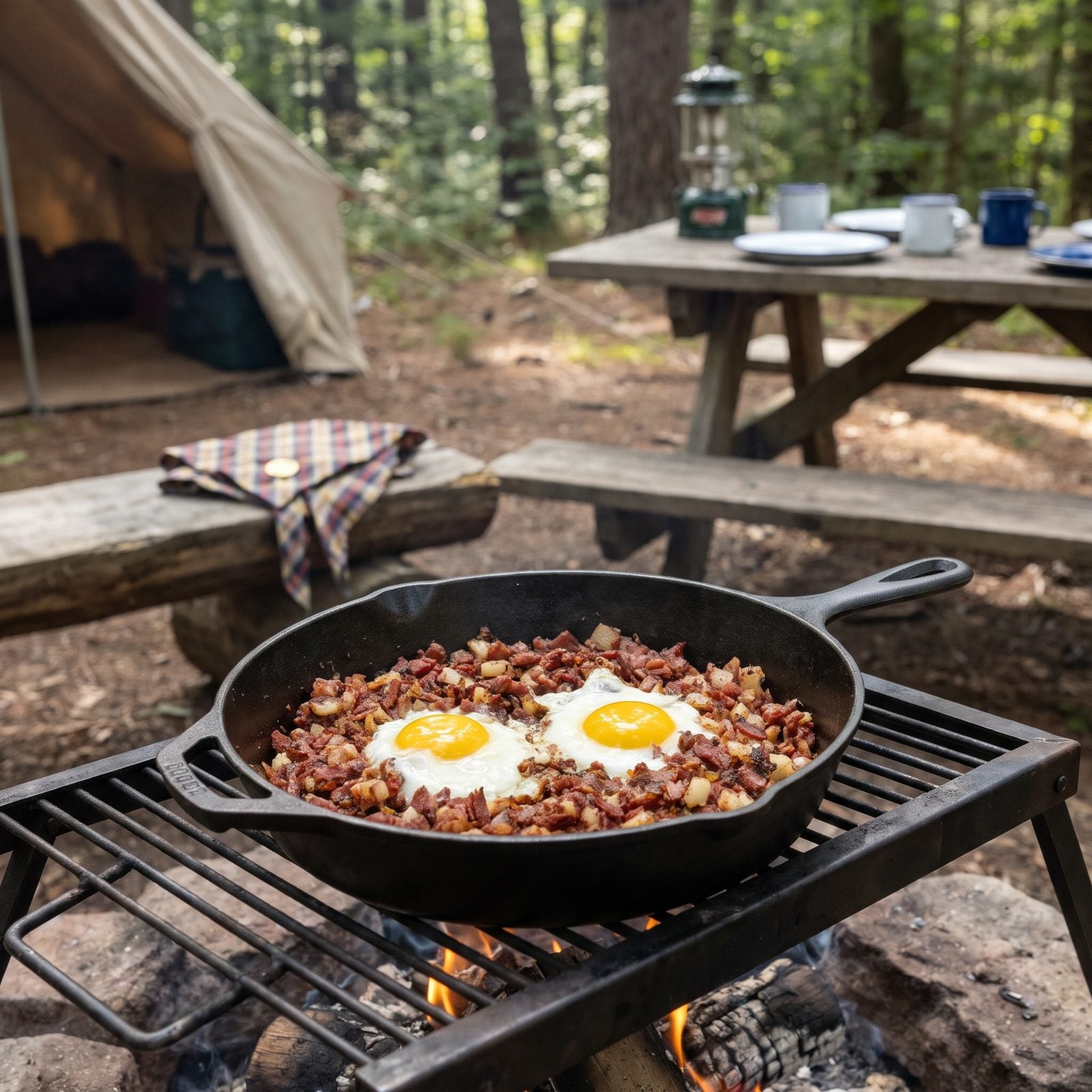
Technically a breakfast, practically a supper when the patrol ran out of other ideas. A can of corned beef hash dumped into a hot skillet and left alone long enough to crisp on the bottom, then topped with a couple of fried eggs because somebody always had eggs left over.
The move was patience. You had to leave it be long enough for the crust to form, no poking. Runny yolk broken over the top, scraped up with the edge of a slightly burnt enamel plate. Cheap, filling, and better than it had any right to be.
11. Ground-Beef Goulash With Elbow Macaroni
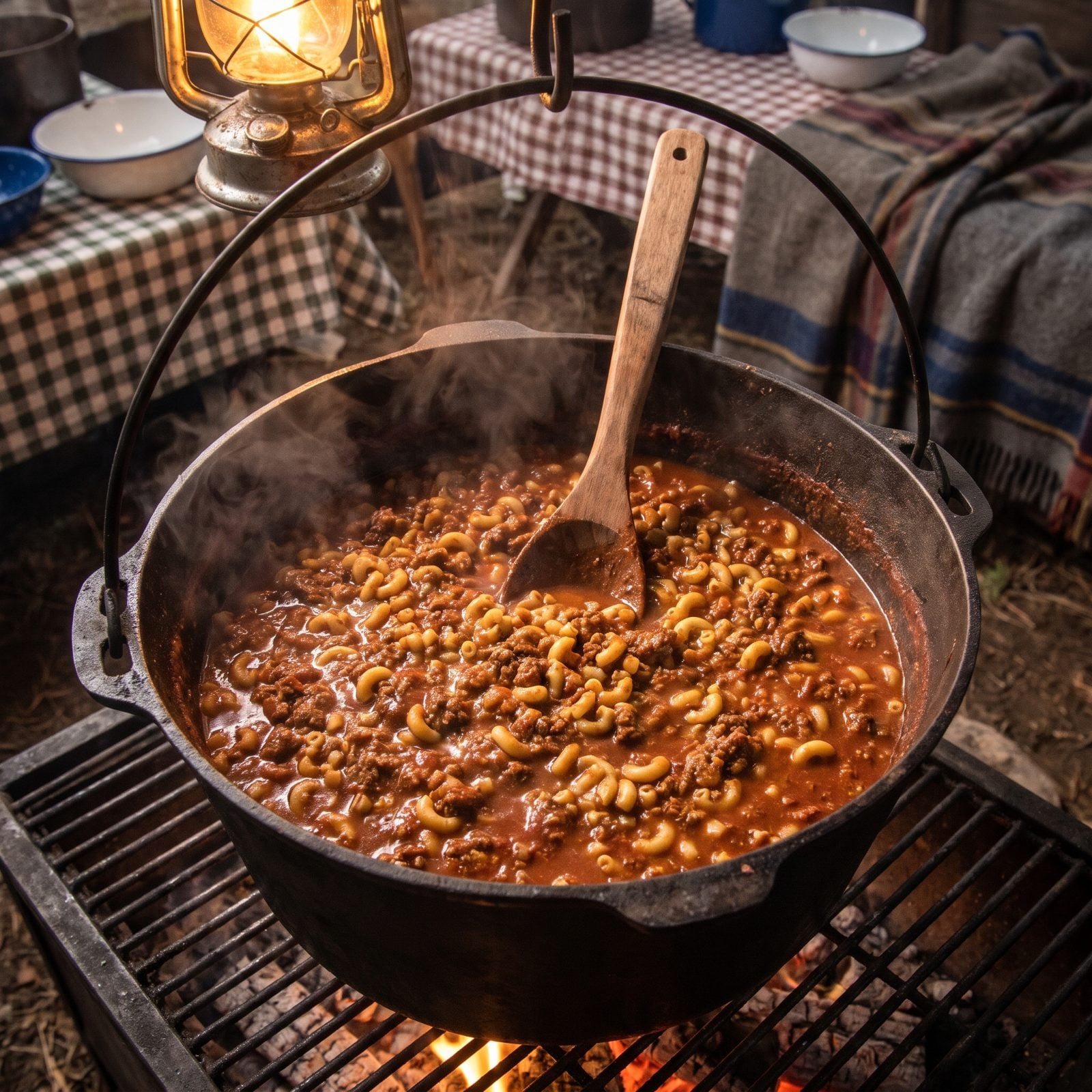
The feed-the-whole-troop pot. American goulash, which is to say ground beef, elbows, a can or two of tomatoes, and whatever seasoning the quartermaster remembered to pack, cooked down into a thick red mess that stretched to feed anybody who wandered over with a plate.
It was never the same twice. Some nights almost soup, some nights it set up like a brick. A scattered shake of garlic salt and a slice of white bread to mop the plate, and that was a good supper after a day of hiking.
10. Sausage Links With Canned Sauerkraut
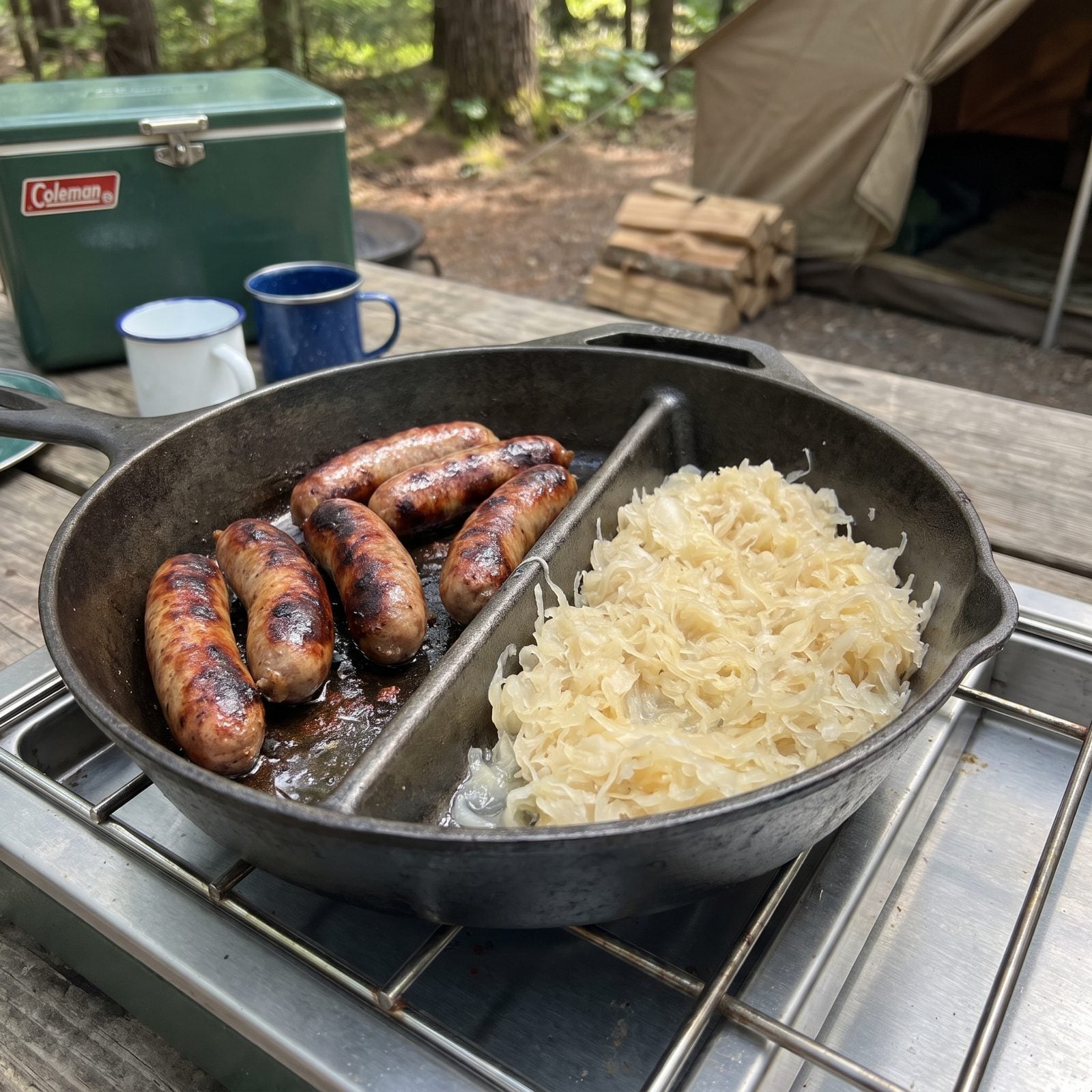
This one split the campsite clean down the middle. Half the patrol loved it and half of us pushed the kraut to the edge of the plate. Browned sausage links on one side of a divided skillet with a whole can of sauerkraut warmed on the other, each kept to its own half until the tang mellowed and the links glistened.
The smell announced it across the whole camp. Nobody was neutral about supper on sauerkraut night. The leaders who grew up on it ate seconds while the rest of us filled up on bread.
9. Chicken and Rice Cooked in One Pot
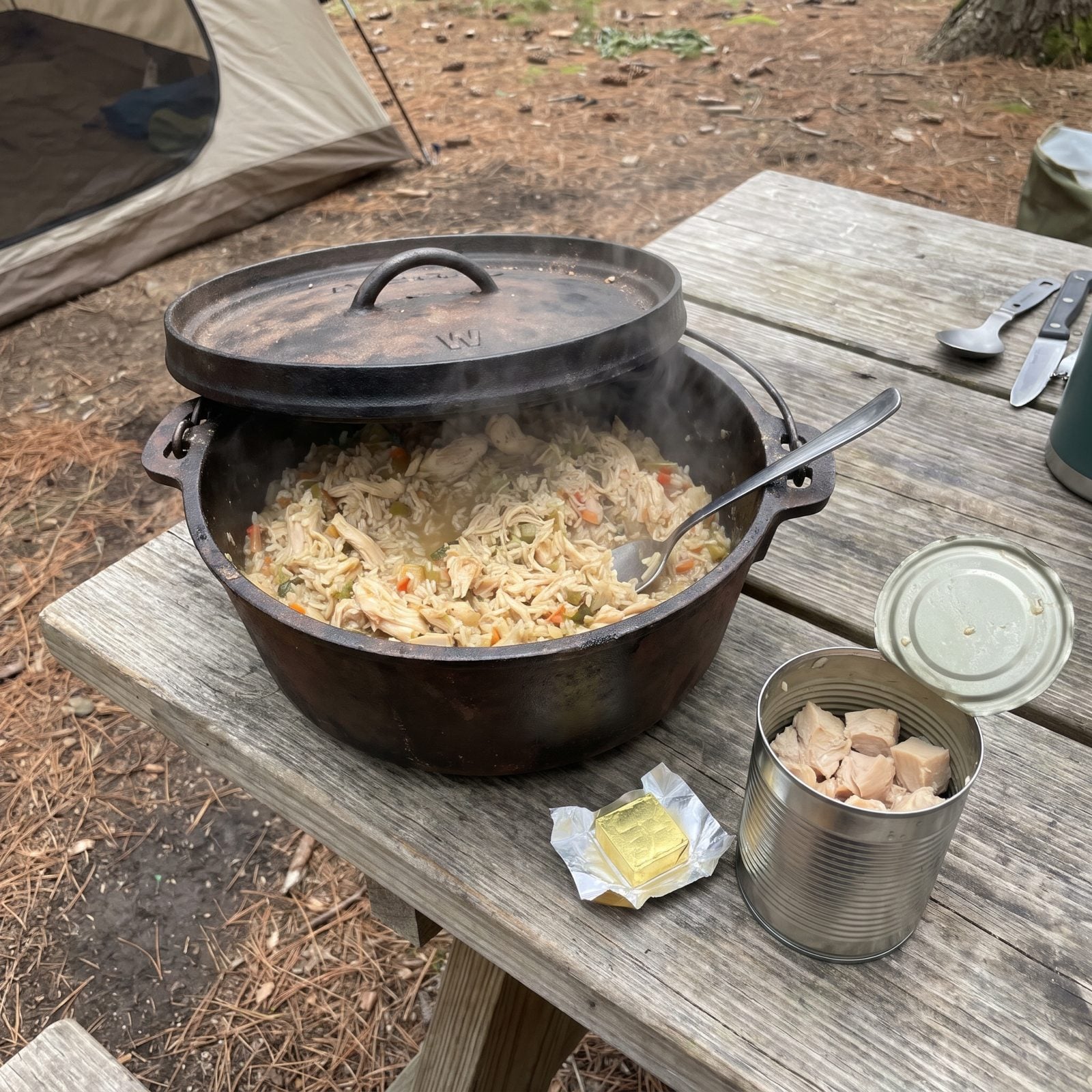
The thrifty patrol’s meal. A can of chunk chicken, rice, water, a bouillon cube if someone thought ahead, all simmered in one pot until the rice drank up the liquid. Minimal cleanup mattered when the dish pit was three plastic tubs and a pot of boiling water.
Getting the rice right was the tricky part. Too much water and it was mush, too little and the bottom scorched while the top stayed crunchy. When it came out fluffy, the cook got nods around the fire, which was about the highest praise a twelve-year-old could earn.
8. Skillet Salisbury Steak With Instant Gravy
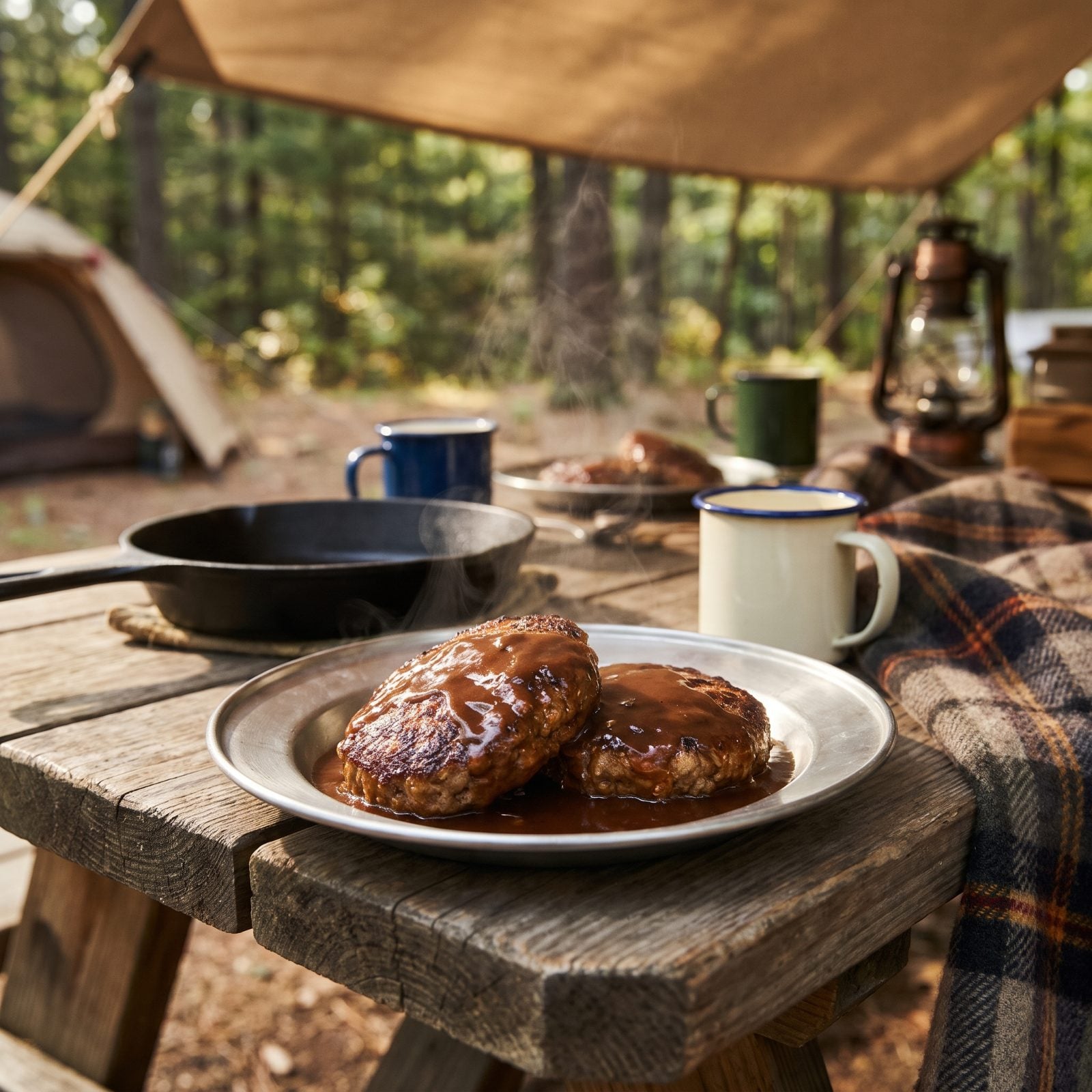
Camp food doing its best diner impression. Patties shaped from ground beef, browned in the skillet, then drowned in gravy made from a packet whisked with water until it thickened into something brown and glossy.
Paired with instant mashed potatoes from a box, this was the meal that made you feel like the troop had its act together. The gravy packet was the secret weapon. Lightweight, cheap, and it turned plain beef into a supper worth lining up for.
7. Creamed Chipped Beef Over Toast
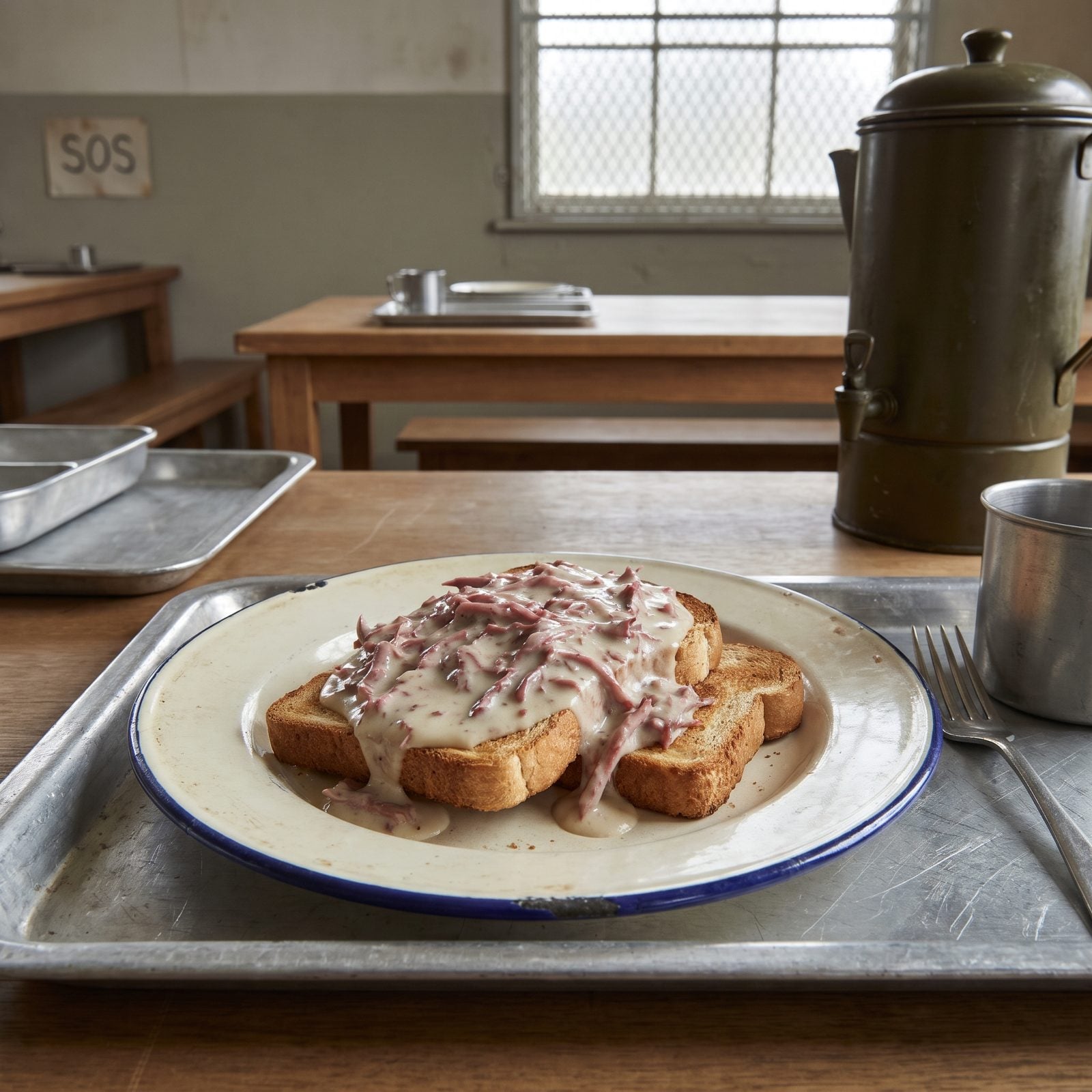
The old Army breakfast that found its way into every Scout handbook, usually under a nickname the leaders snickered about and we eventually figured out. Thin dried beef from a jar, torn into a white gravy of butter, flour, and milk, then ladled over toast until the plate was a puddle.
Salty, rich, and filling in a way that stuck to your ribs through a cold morning. It looked like nothing and tasted like comfort. The leaders who’d been in the service always ate it with a particular kind of grin.
Looking back at how the dish fed soldiers, a military food history writer notes that “In garrison situations, the Army SOS would be served over toast. In field-based scenarios, the SOS would be put atop baking powder biscuits.”
6. Chili Mac With Crushed Corn Chips Scooped Straight From the Patrol Box
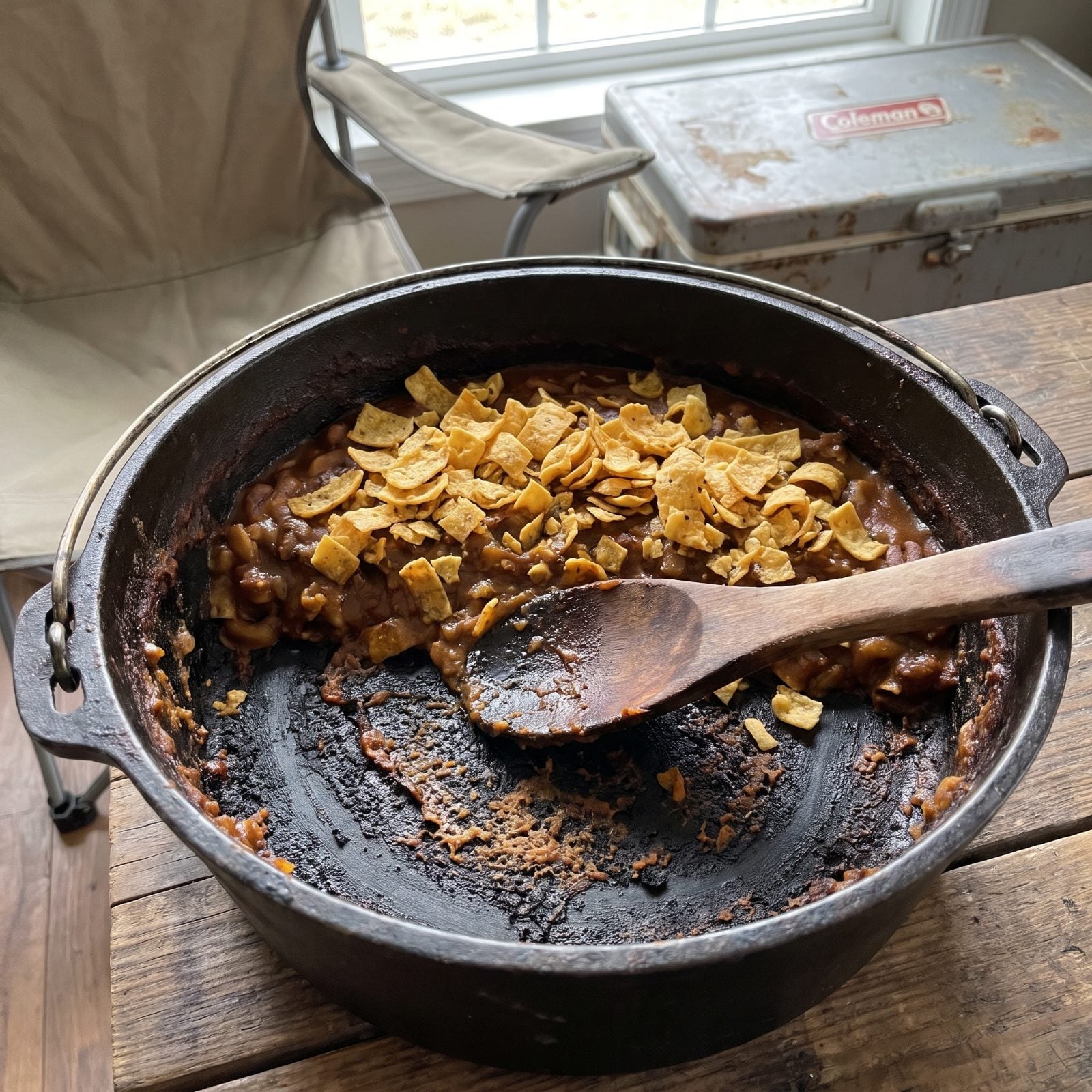
Nothing said supper was ready at a Scout camp like the sound of a wooden spoon dragging across the bottom of a scorched cast-iron Dutch oven. Chili mac was the great equalizer. You browned the ground beef, dumped in two cans of chili beans and a box of elbow macaroni, then let it all go soft and sloppy over the crackling wood fire in a folding camp stove.
Nobody taught you the corn chip trick — you just figured it out. You crushed a handful of Fritos right over the pot and scattered them across the chili mac, so the chips stayed half-crunchy and half-melted into the sauce. We fought over the bag.
5. Skillet Pork Chops With Canned Apples (the Fancy Night)
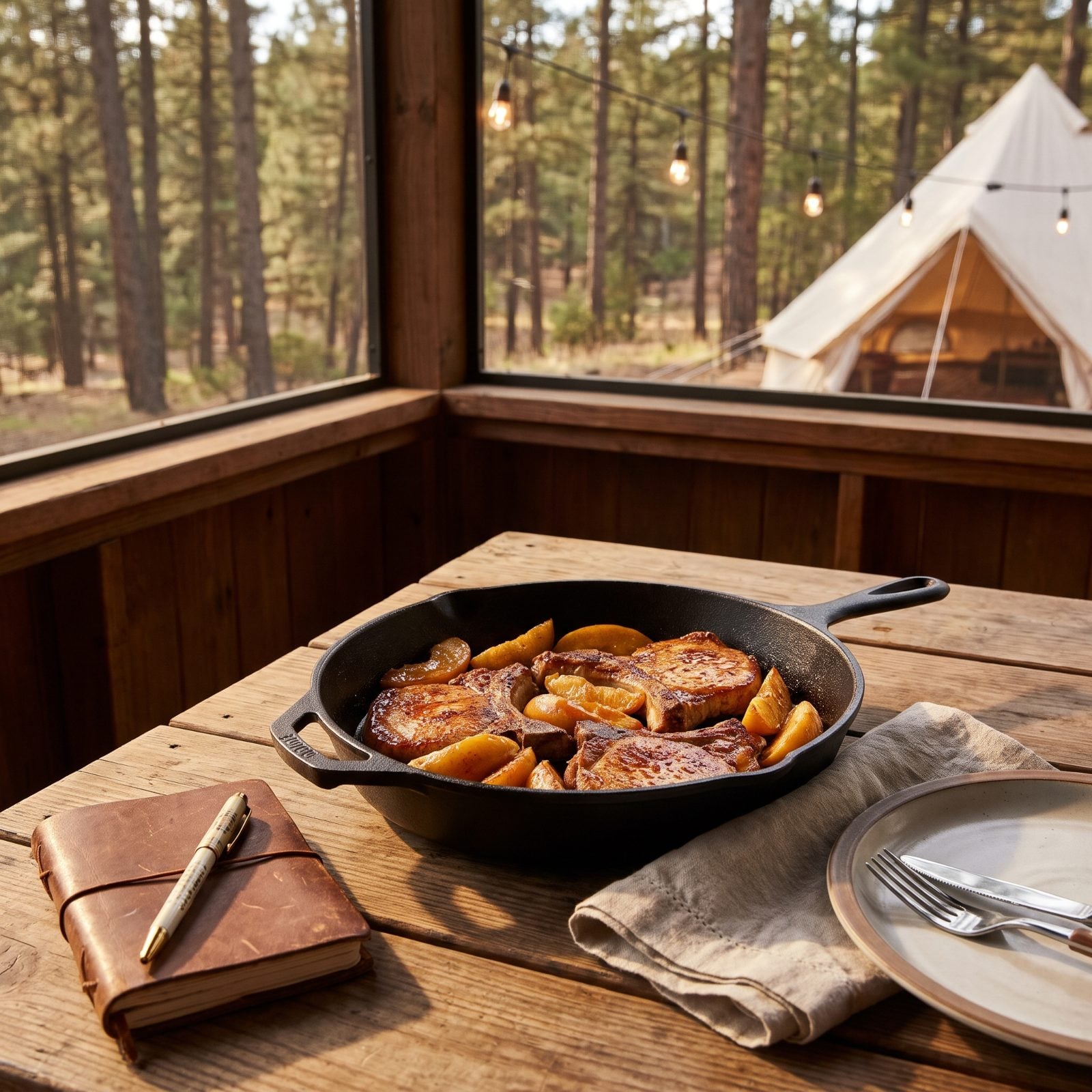
This was the meal that made your patrol feel like it had graduated. Pork chops in a cast-iron skillet, seared until the edges went dark, then a can of sliced apples dumped right in with a shake of cinnamon and a knuckle of margarine. The apples went jammy, the pan smelled like a pie, and suddenly a bunch of boys in muddy sneakers were eating something that tasted like Sunday dinner.
Honestly, half the batch always came out gray and overcooked because somebody wandered off to whittle a stick. Didn’t matter. You poured the apple juice over the chop and it fixed almost everything.
4. Campfire Pizza on English Muffins, Toasted Over the Coals
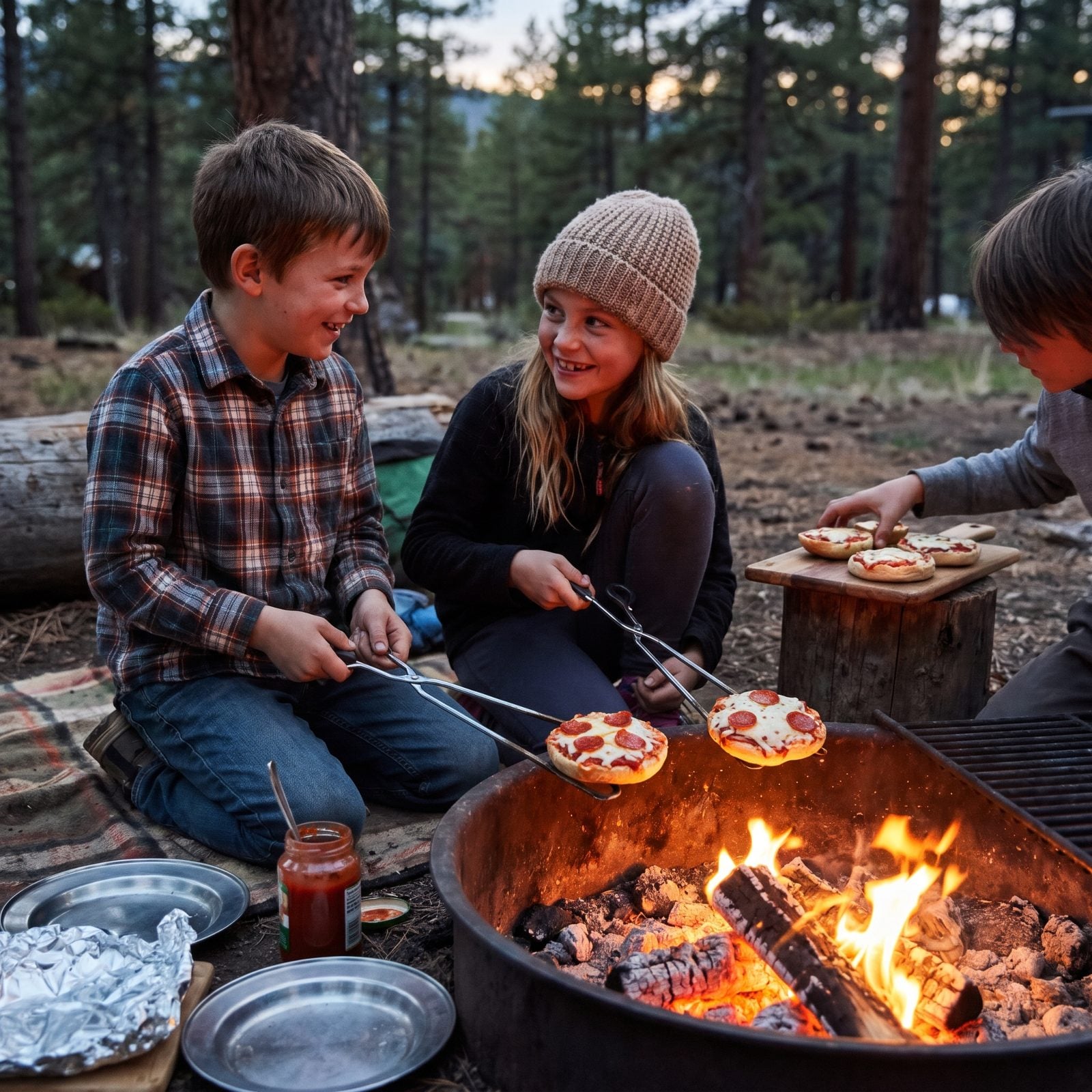
Half the fun was that it felt like getting away with something. Pizza? At camp? Over a fire?
You split an English muffin, spooned on sauce from a jar, piled shredded mozzarella and a few pepperoni slices on top, then gripped the whole thing in a pair of long tongs and held it out over the coals. The cheese bubbled, the muffin edges charred, and if you looked away for ten seconds the bottom went straight to carbon. We learned to hold the ones that needed a slower melt out over the cooler side of the fire.
Making campfire pizzas with her family on the road, one RV owner says “With English Muffins, pizza sauce, and mozzarella cheese as your primary ingredients, the sky’s the limit with your personal pizza.”
3. Campfire Shish Kebabs Threaded on Long Metal Skewers
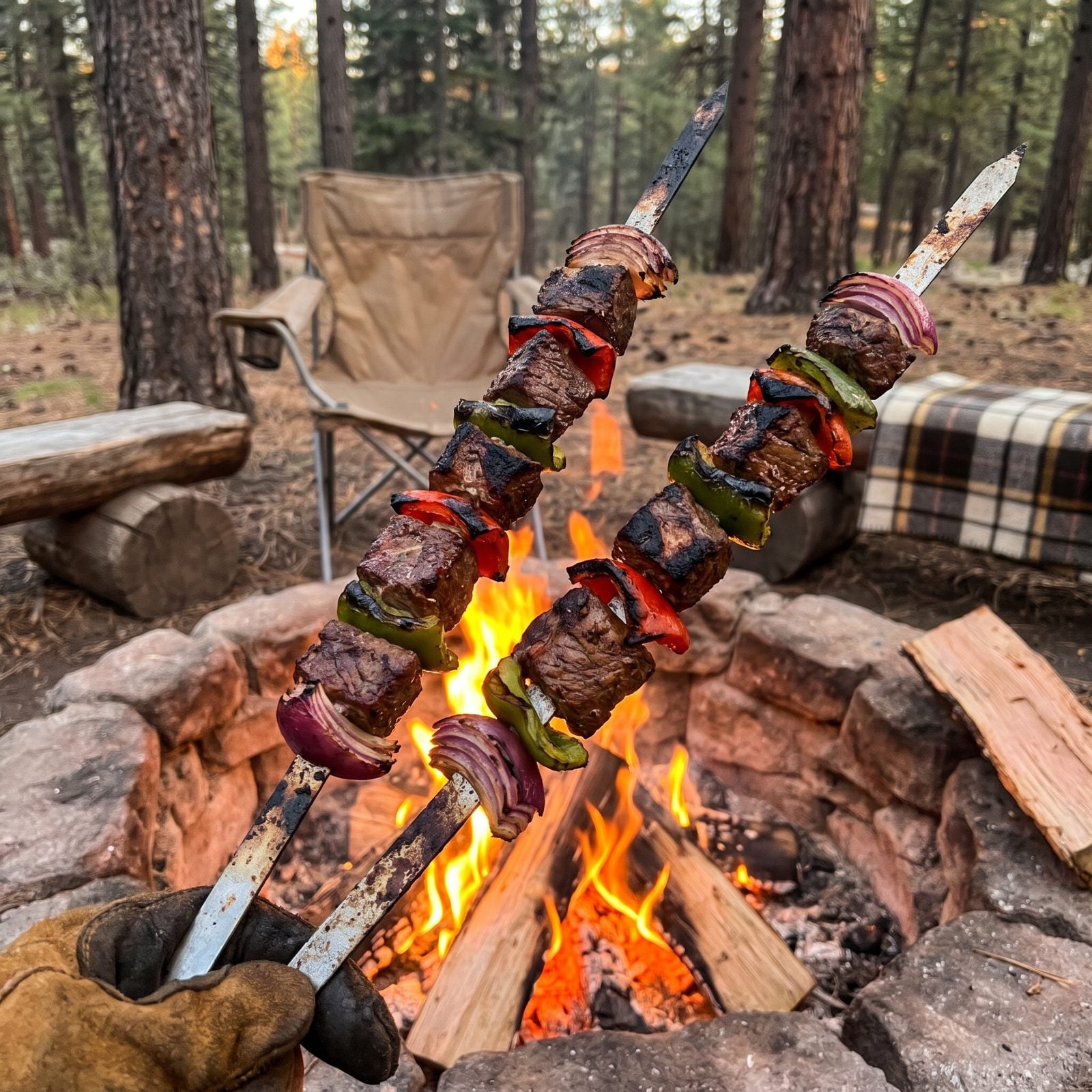
The skewers themselves were half the fun. Long, flat metal ones that lived in the bottom of the patrol box, bent from years of boys using them as swords, prod sticks, and marshmallow forks.
You cubed round steak, chopped a green pepper and an onion, speared a few cherry tomatoes on the end, and if your patrol had its act together, soaked it all in Italian dressing beforehand. Then you laid them over the coals and turned them with a stick, watching the onions blacken while the tomatoes threatened to slide off into the fire. Most of them did. You ate what survived standing up, pulling it off the hot metal with your teeth and burning your fingers anyway.
2. Dutch-Oven Lasagna Layered With Cottage Cheese
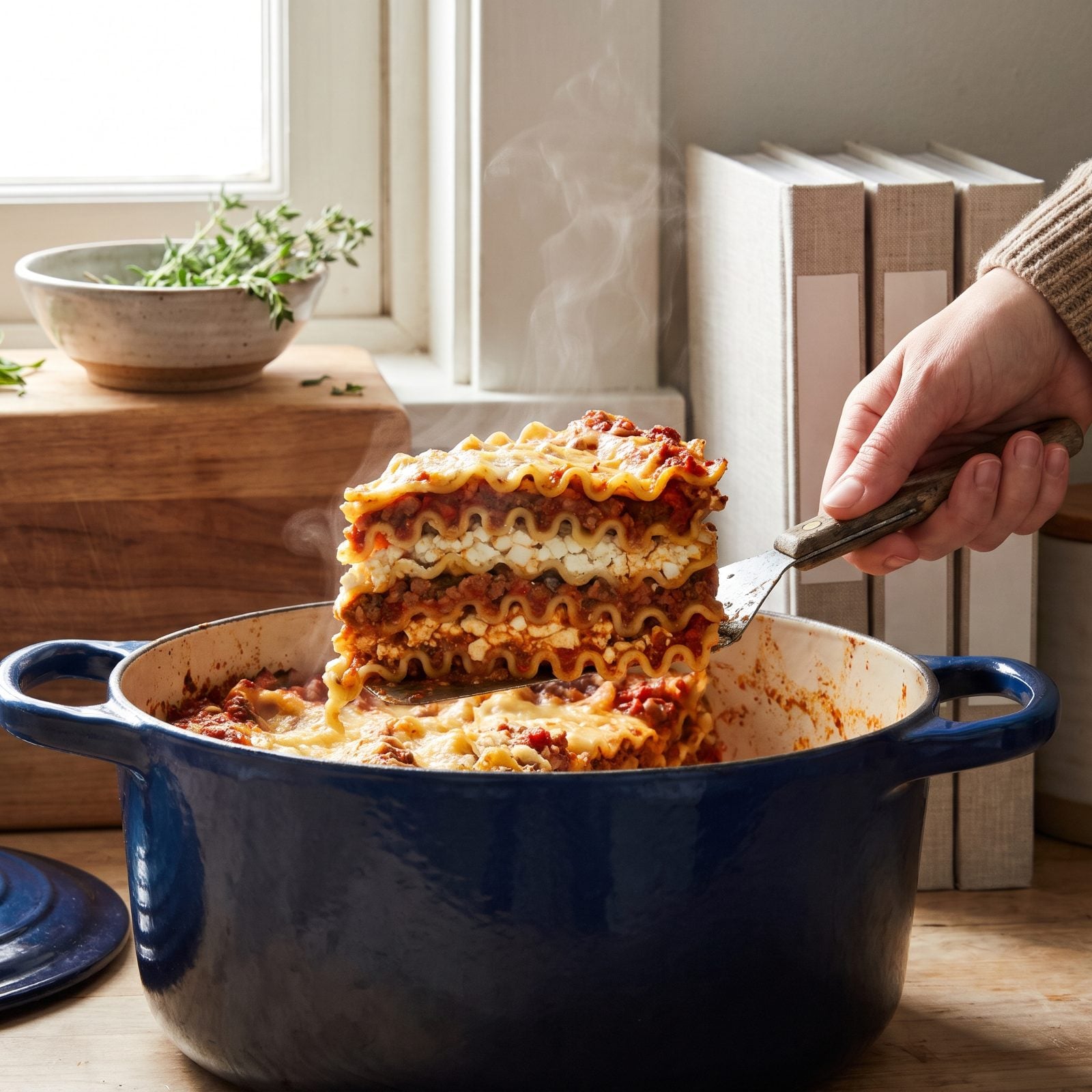
This was the dish that separated the serious patrols from the hot-dog crowd. Dutch-oven lasagna meant someone in your troop actually knew how to work a Dutch oven — low, steady heat, the lid on until near the end, a quarter turn every fifteen minutes so nothing scorched on one side.
The cottage cheese threw everybody the first time. No ricotta at the corner grocery, so you used what was cheap and already in the fridge, and it worked fine. Jarred sauce. No-boil noodles before no-boil noodles existed, which meant you just hoped. A tub of cottage cheese smeared between the layers and a bag of shredded mozzarella on top.
You pulled the lid, steam drifted up into the pines, and the whole campsite went quiet.
A Dutch oven that turns out lasagna on the kitchen counter is the closest thing a twelve-year-old gets to magic.
For a camp Dutch-oven lasagna, a cast-iron cooking blogger advises: “Swap the ricotta for cottage cheese if you want something more budget-friendly. It still gives you that creamy layer, just with a slightly different texture.”
1. Dutch-Oven Peach Cobbler, the Grand Finale of Supper
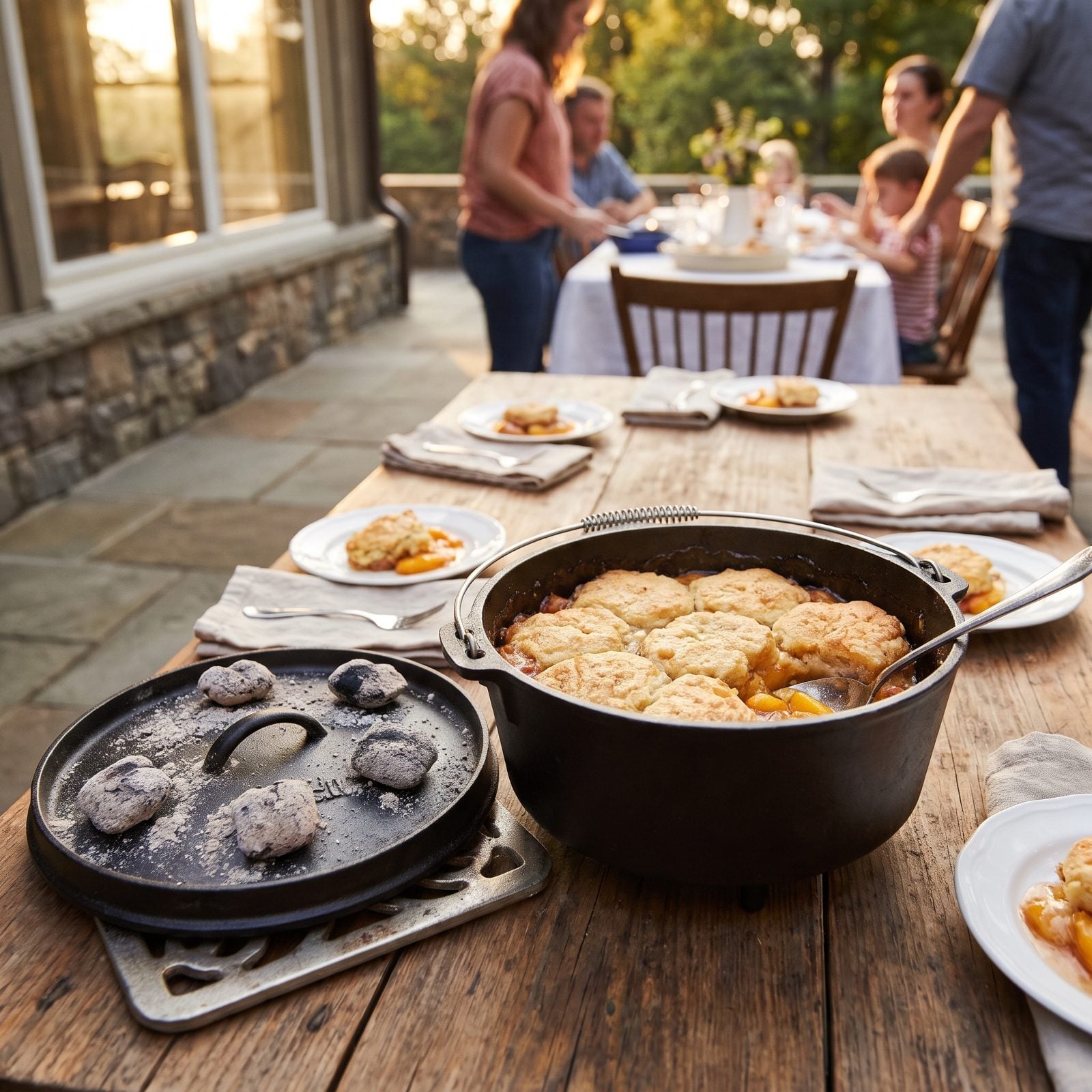
Everybody has a food that drops them straight back to being twelve years old. For a lot of us it’s this one.
The recipe was almost too simple to believe. Dump two cans of sliced peaches in the Dutch oven, juice and all. Drop spoonfuls of biscuit dough over the top — no rolling, no cutter, nothing. Dot it with pats of margarine, drop the lid, pile on the coals, and walk away. The dough puffed up over the peach syrup into round golden biscuits with a gooey fruit layer bubbling underneath.
You ate it off the same white plate you’d had supper on an hour earlier, barely wiped. Nobody cared. You sat at the picnic table with the patrol around the fire and the sun going down, spoon in hand, peach steam on your face, and for a few minutes the whole world was exactly the right size.