
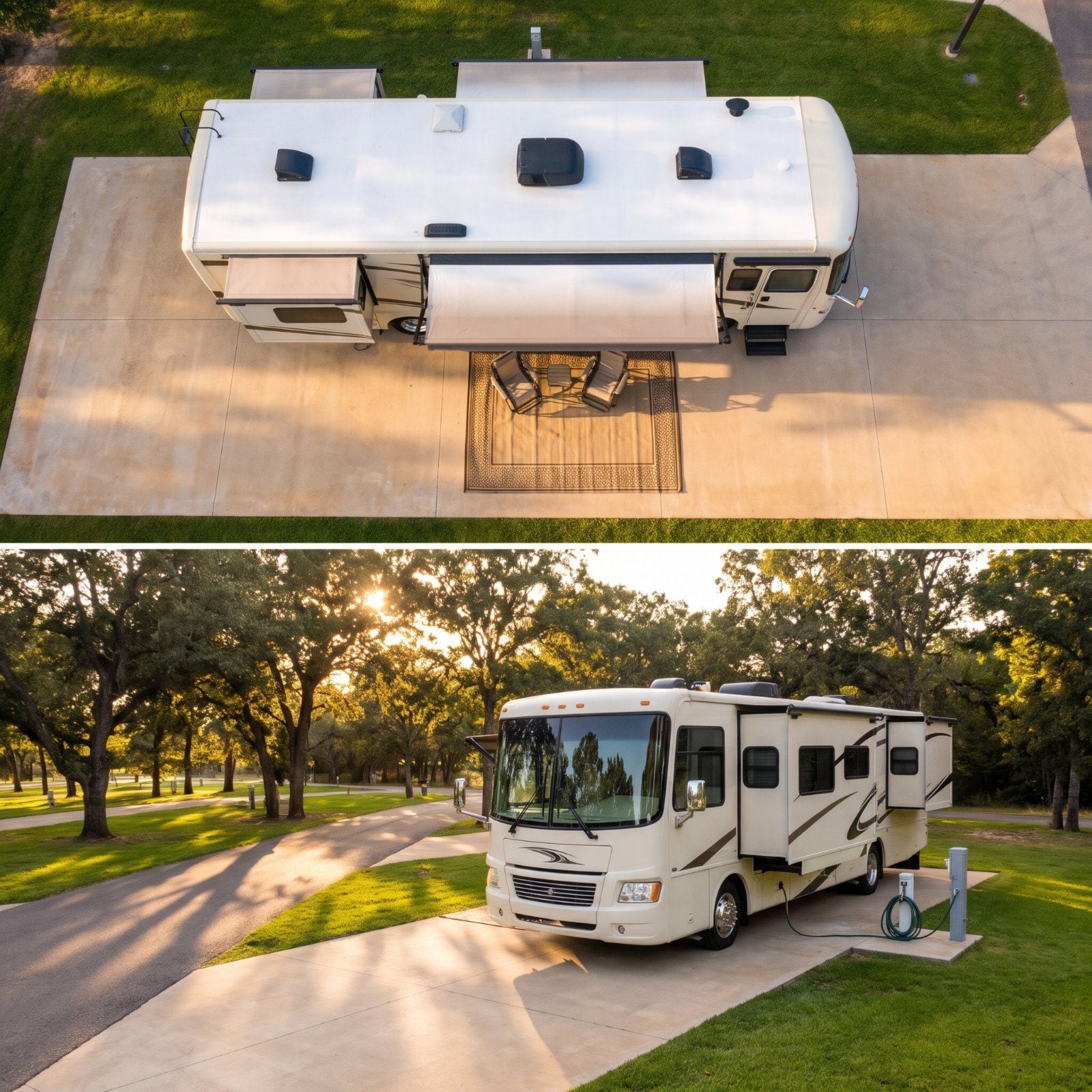
The brochure photo is always the lake. The thing that saves your evening is never the lake. It’s whether the pad sits level enough that your fridge runs right, whether the Wi-Fi reaches past the office, whether you can deploy your slides without the awning kissing the neighbor’s mirror. We’ve booked the pretty sites and the practical ones, and practical wins every time. The features below are what turn a frustrating arrival into a quiet one. Pay attention when you book and you’ll spend your first hour relaxing instead of troubleshooting.
Please note that some of the images in this article were created with the assistance of AI.
50-Amp Full Hookups Right at the Pad
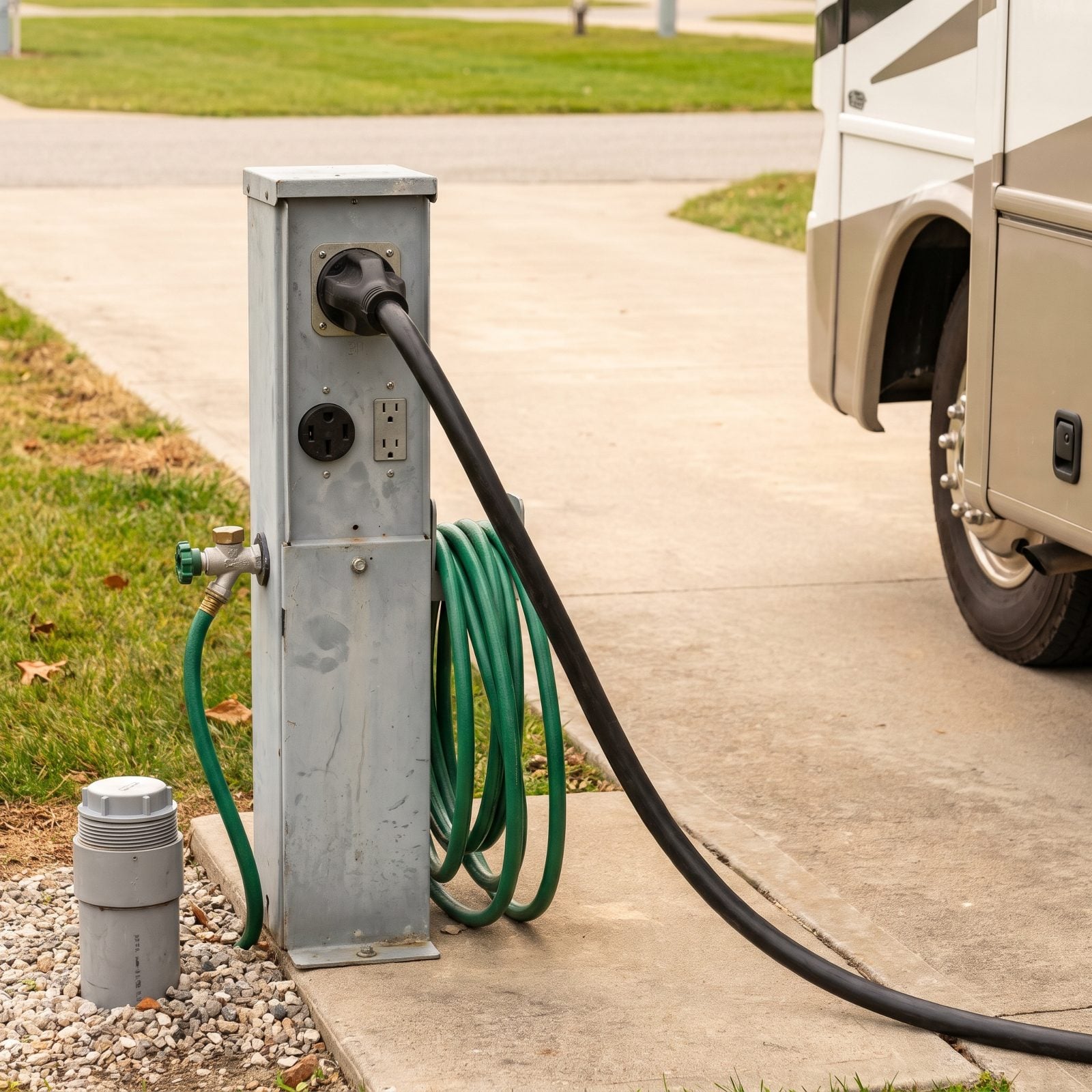
Thirty amps and fifty amps are not the same conversation. Thirty gives you one air conditioner working hard and a lot of math about what else you dare run. Fifty lets you run two ACs, the microwave, the water heater and the coffee maker without tripping a thing. Got two roof units? You want the fifty, full stop.
The detail nobody mentions is that a full hookup means sewer at the site too, not just a dump station on your way out, and that changes how you live. Long showers stop being a budget item. You stop counting flushes.
A Concrete Pad That’s Actually Level
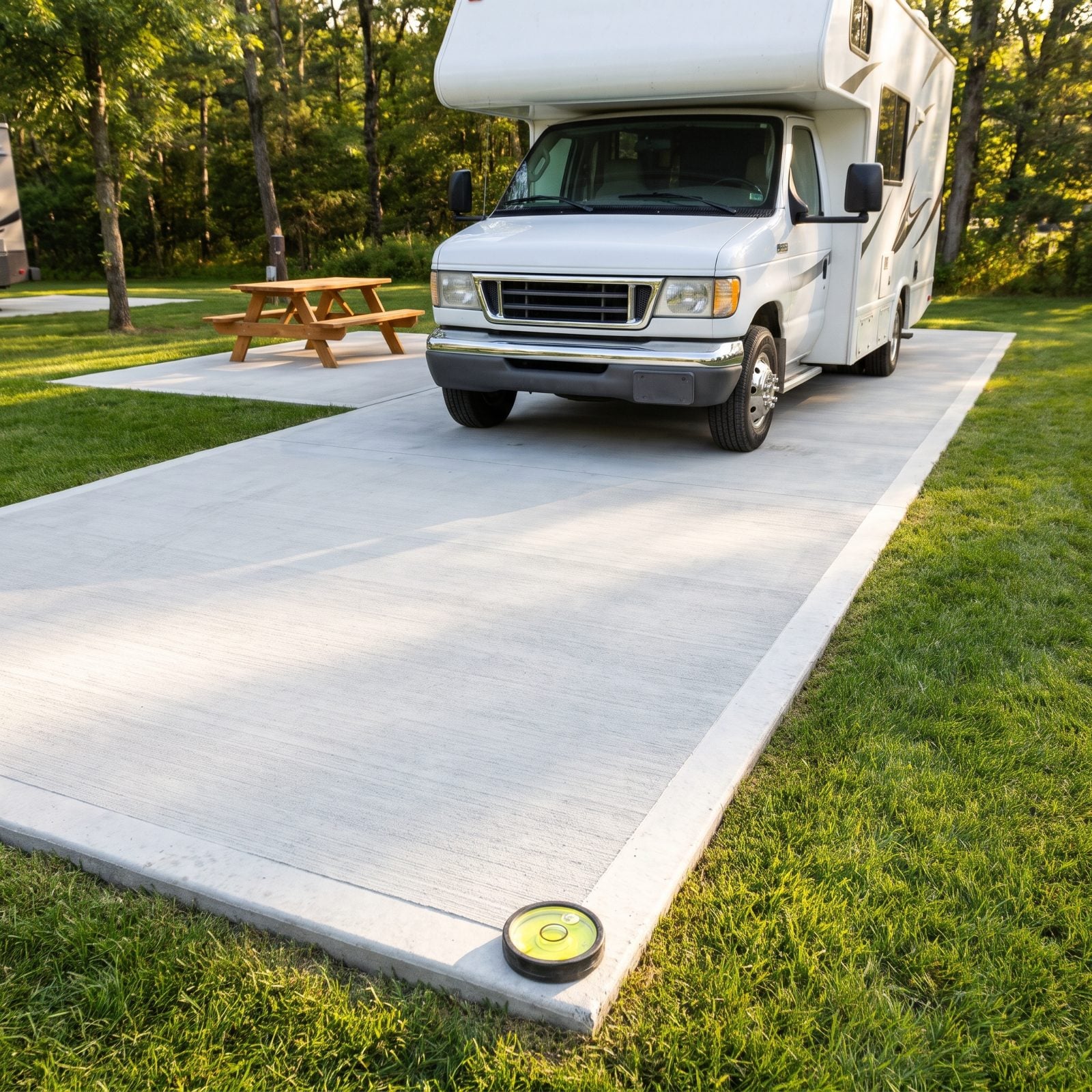
We’ve chased a bubble across a gravel site in the dark, stacking blocks under one tire while the other three kept sinking. Never again if we can help it. A level concrete pad means you pull in, set your jacks, and you’re done — fridge running correctly because absorption units hate being tilted, shower draining, eggs not rolling off the counter.
Gravel settles and ruts out over a season. Concrete holds its grade. When a park advertises level concrete, somebody did the work so you don’t have to.
Pull-Through Sites Long Enough to Leave the Toad Hooked Up
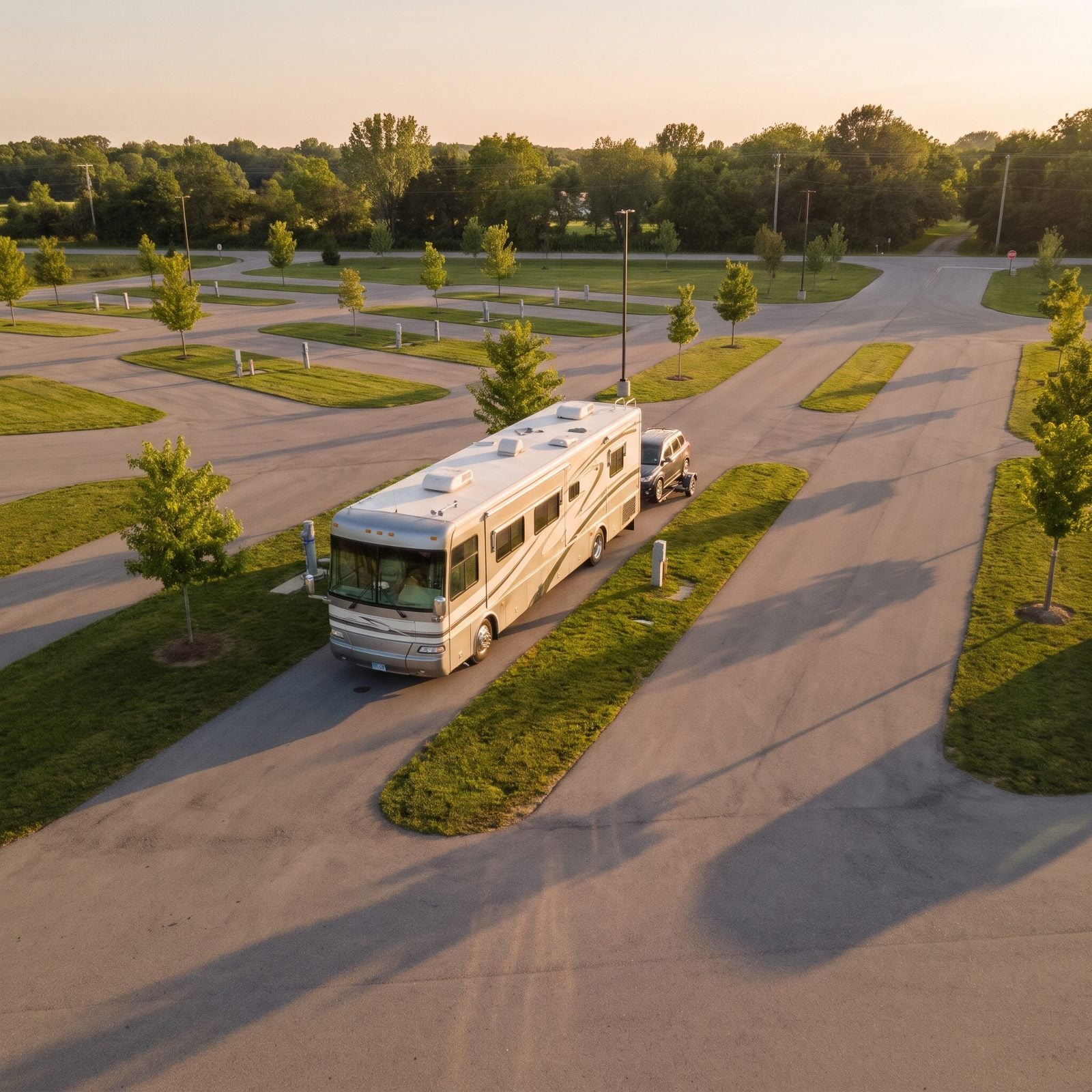
You never have to back up. That’s the headline for anyone who tows. A true pull-through means you drive in one end and leave the other, and if the site is genuinely long, your car can stay loaded on its trailer right behind the coach the whole stay.
Here’s where parks oversell it. A “pull-through” at 55 feet is fine for a 30-foot trailer and useless for a 40-foot coach pulling an SUV on a car trailer. Add your rig and your toad, tack on ten feet of breathing room, and ask the park for the real length before you book.
Extra-Wide Sites With Room for Every Slide
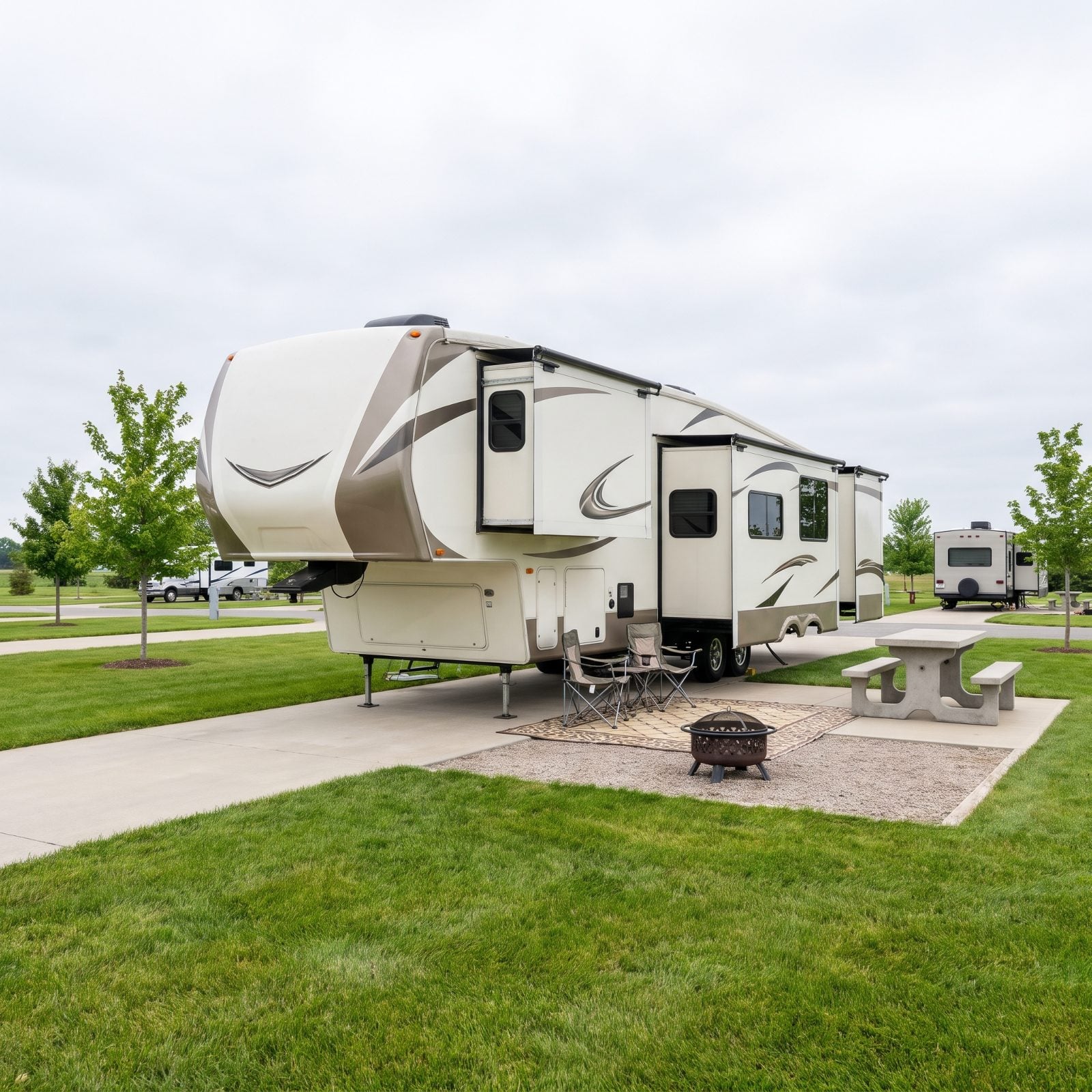
Slides are wonderful until the site is too narrow for them. Big fifth wheels and Class A coaches can push out four or five feet on each side, and a tight site turns your awning into a weapon aimed at the neighbor’s mirror.
Width also decides whether your outdoor space is actually yours. A wide site gives you a patio, a grill area, a place for the dog — not a strip of grass you share by accident. Ask for the pad width if you run slides on both sides. Twenty feet of pad is comfort. Twelve is a negotiation.
Big-Rig Roads That Don’t Make You Hold Your Breath
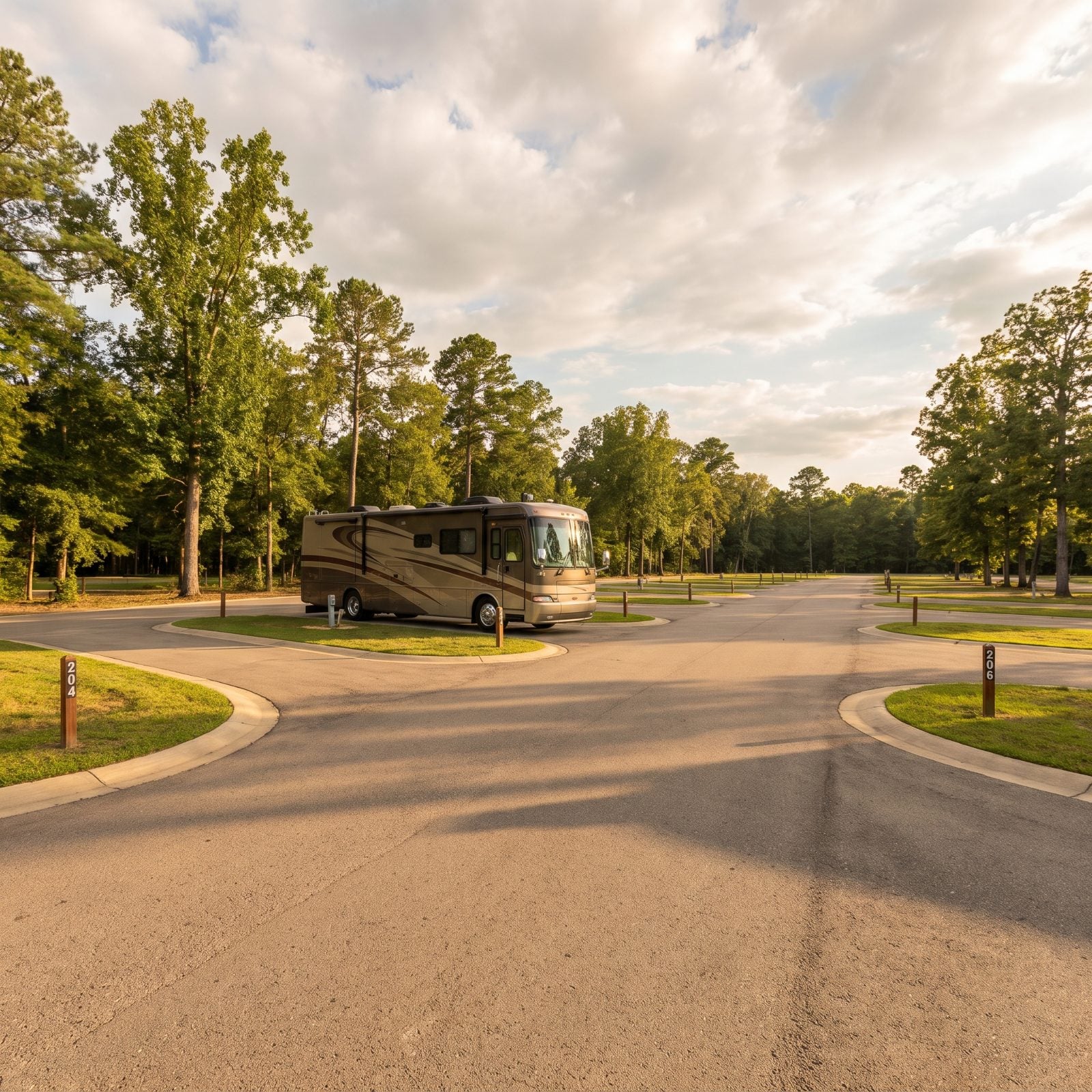
You can feel a badly designed park within thirty seconds of the entrance. Low branches scraping the roof. A gatehouse turn so tight you cut it in two pumps. A loop that dead-ends with nowhere to swing a 40-footer around.
Big-rig-friendly means the roads got laid out by someone who’s actually driven one — wide radius corners, overhead clearance, pull-outs where you can let oncoming traffic pass. If the reviews mention “tight” even once, believe them. The nicest campground in the world isn’t worth a cracked AC shroud from a maple nobody trimmed.
Wi-Fi That Reaches All the Way to the Back Loop
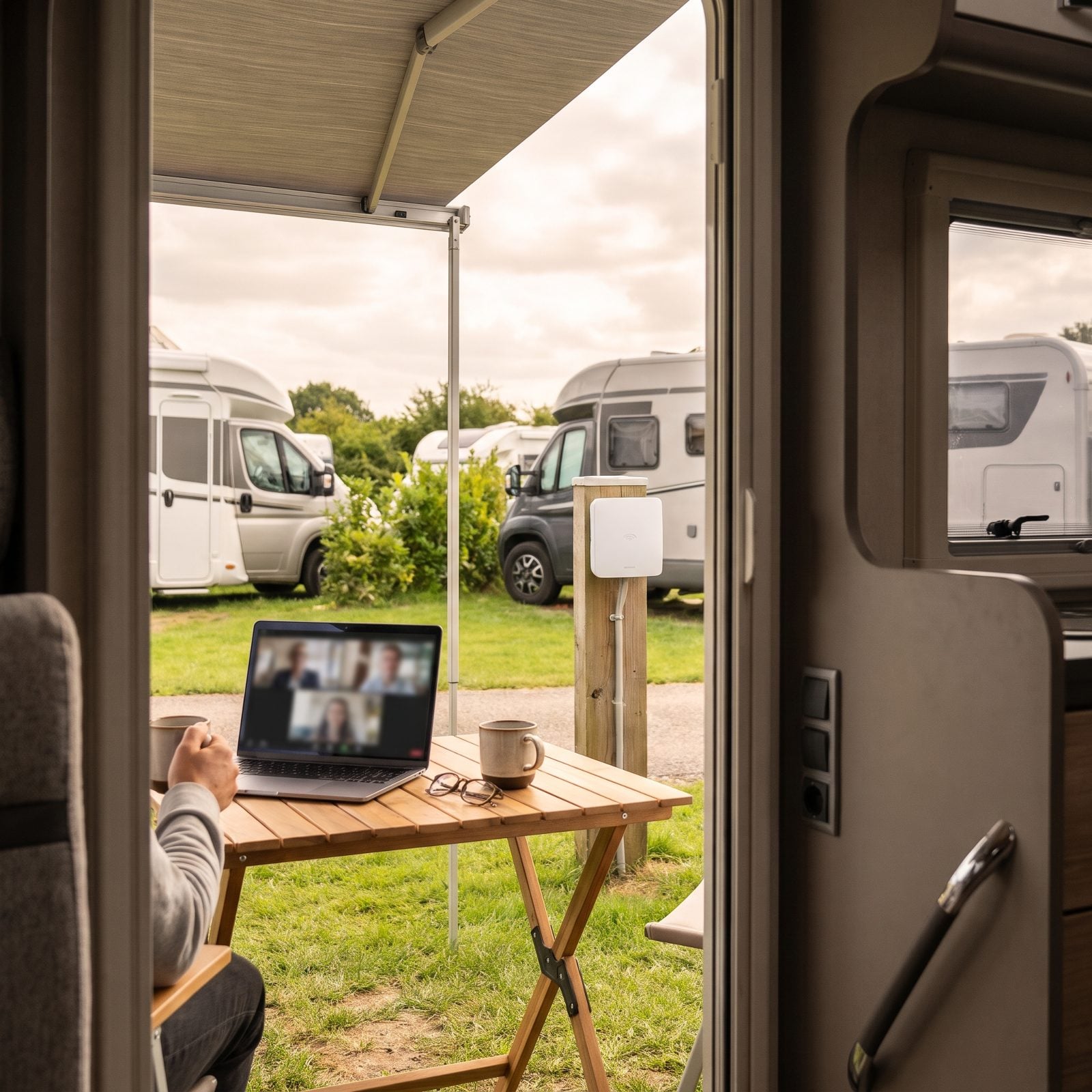
Campground Wi-Fi has a bad reputation and it earned most of it. The usual setup is one router bolted to the clubhouse, so if you’re parked in the back loop you get a signal that loads a weather page and then quits on you.
What you want is a park that mentions access points scattered through the sites, or fiber run to the pad. That’s streaming a movie versus staring at a spinning wheel.
If a park charges extra for “premium” Wi-Fi, that’s usually your clue the free tier is for show.
Working on the road? Never trust the park as your only connection. Bring your own hotspot as backup and treat good park Wi-Fi as a bonus, not a plan.
A Campground That Actually Boosts Weak Cell Signal
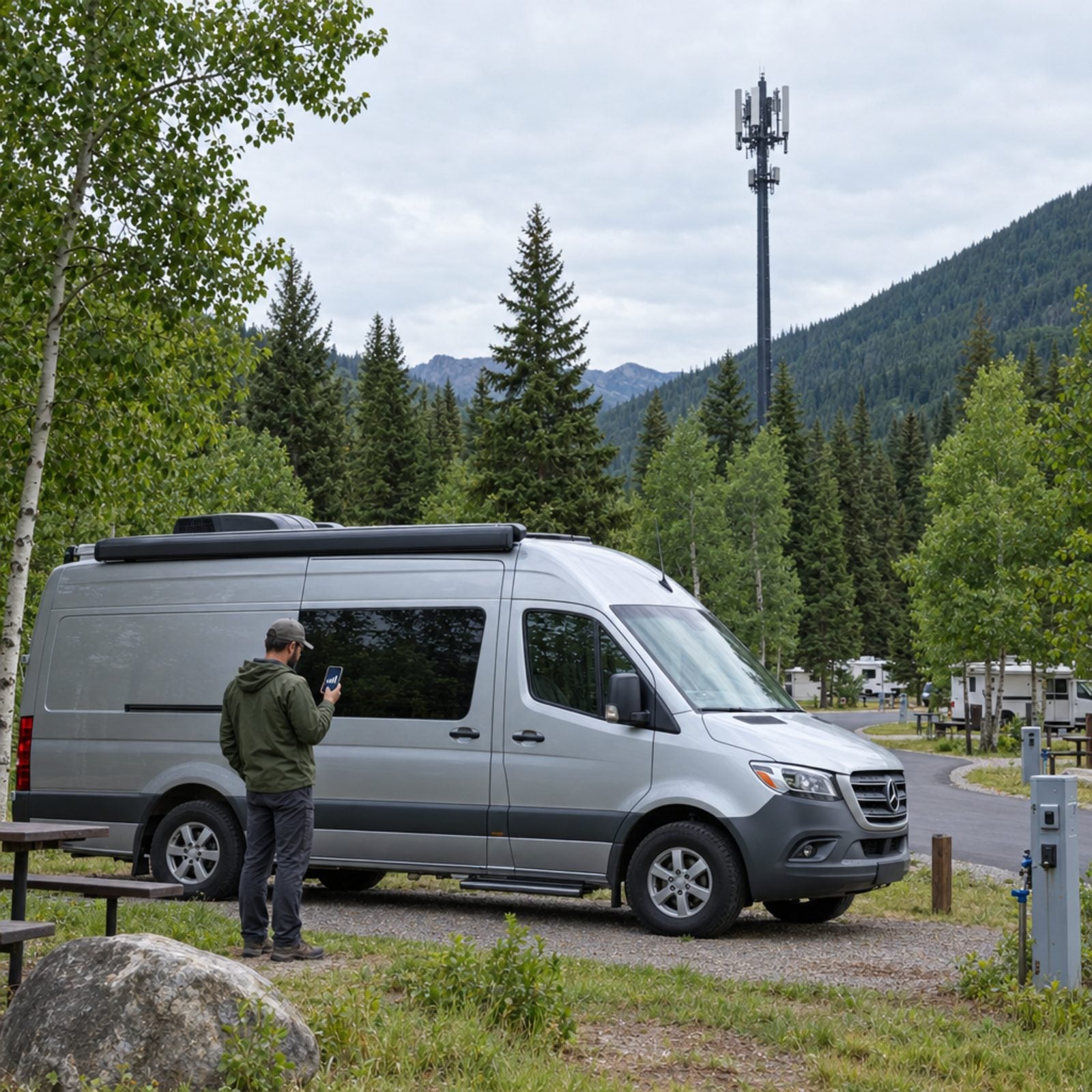
Pretty places and cell towers rarely get along. The canyon that gives you the view is the same canyon that eats your bars, and a park tucked in the trees by a river is exactly where your phone goes to die.
Some campgrounds now run a cellular repeater that pulls a weak signal off the ridge and rebroadcasts it across the grounds. Quietly one of the most useful things a remote park can offer. If you lean on a phone for navigation, work, or an emergency, a park with signal boosting beats a park with a better sunset. We say that as people who missed a ferry because a “no signal” park swallowed a text whole.
Filtered Water That Comes Out With Real Pressure
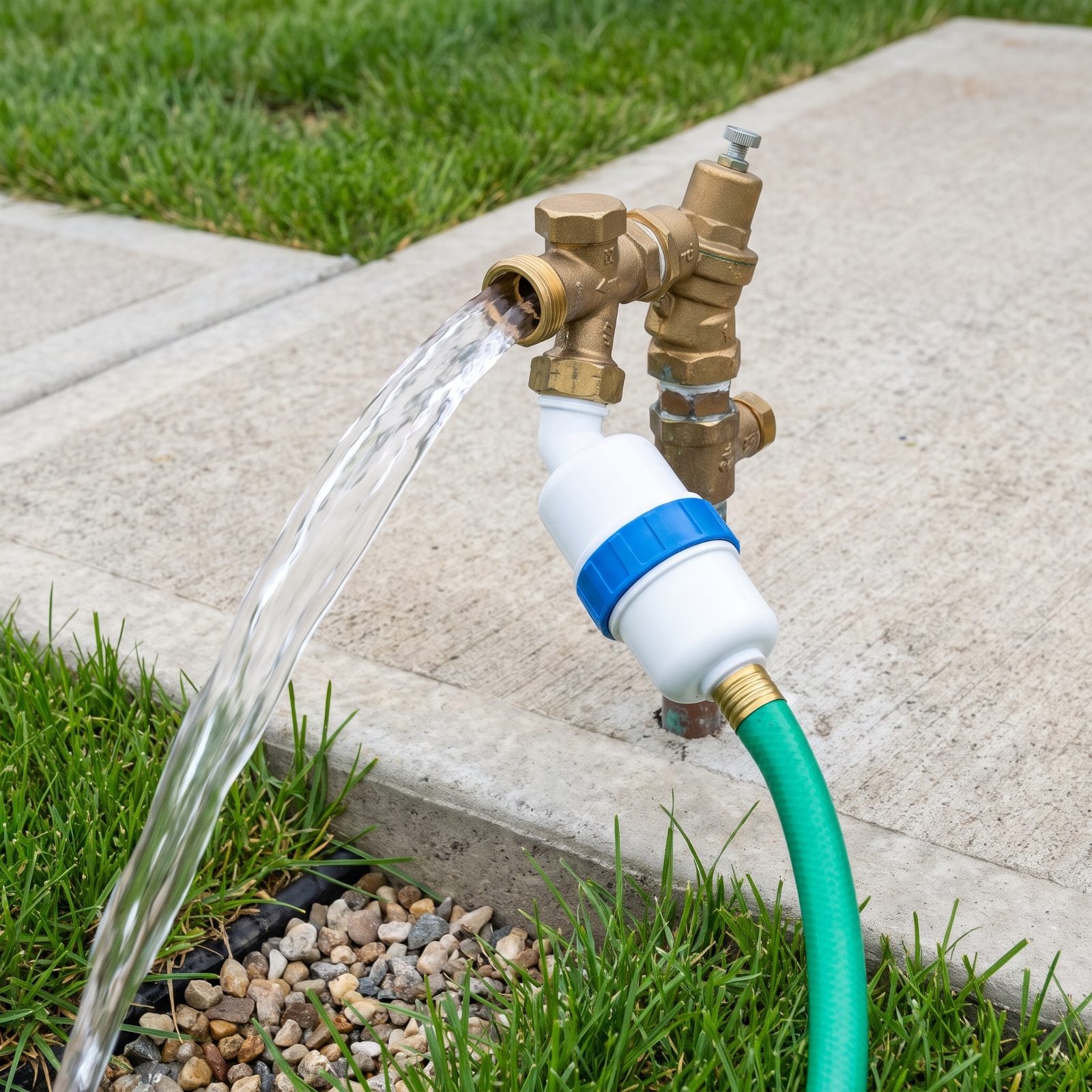
Low water pressure is the quiet thief of a good shower. You turn it on expecting rain and get a trickle, and that’s on a good day. On a bad day the park’s water tastes like a garden hose that baked in the sun all afternoon.
A park with filtered water at proper pressure means you’re not babying an undersized pump or drinking something that tastes off. Run your own inline water filter and a brass pressure regulator anyway. Parks vary, and a sudden spike can blow a line inside your rig faster than you’d believe.
Mature Shade Trees Parked Right Over Your Roof
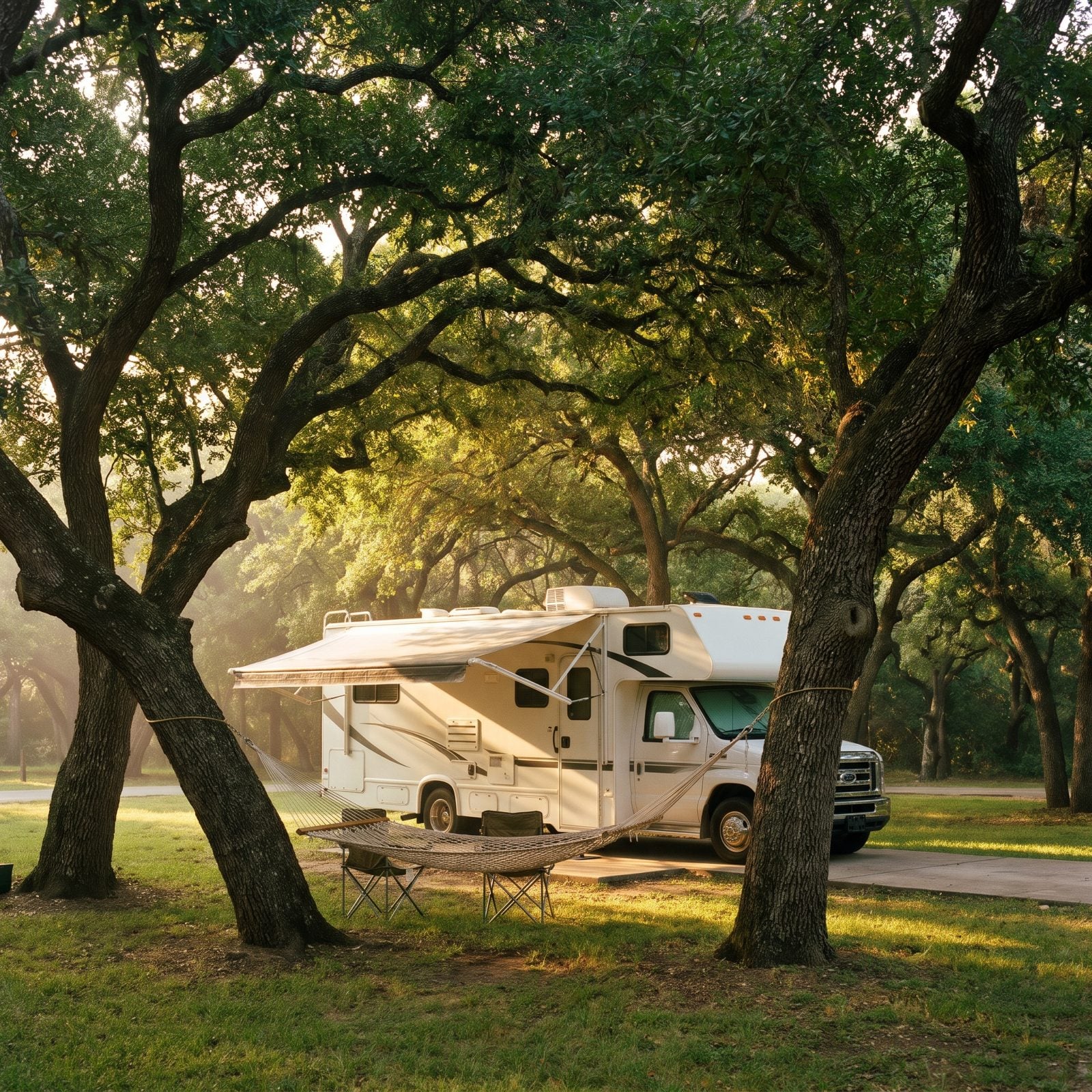
Shade is free air conditioning. A rig baking in full afternoon sun can run hot enough that your ACs never catch up, and if you’re metered, the electric bill climbs right along with the temperature. Park that same rig under a mature oak and the roof stays a good deal cooler, the units cycle off, and the inside stays livable.
The catch nobody warns you about: trees mean sap, pollen, bird droppings, and the occasional dropped branch. I’ll take all of it for the shade. Just know your awning and roof will need a rinse more often, and don’t park a satellite-dependent rig where the canopy blocks your sky.
Landscaped Buffers That Give You Actual Privacy
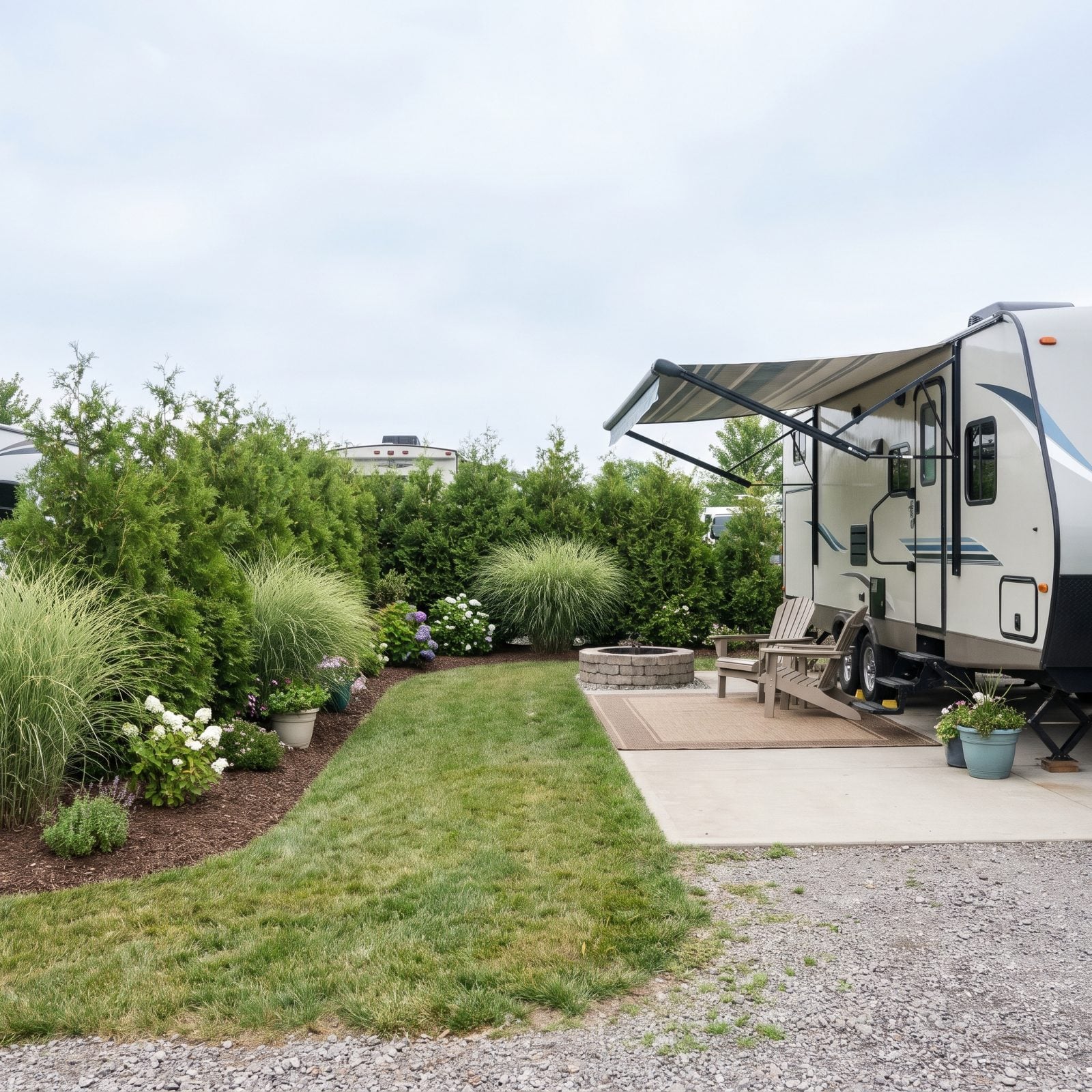
The worst campground feeling is sitting at your fire while the neighbors sit at theirs, close enough to hear every word, with nothing between you but twelve feet of grass. You end up talking in a library voice at your own campsite.
Landscaped buffers fix that. A hedge, a run of ornamental grasses, a planted berm between pads turns a parking lot into a set of little outdoor rooms. You can leave your blinds up. You can let the kids run without them landing in someone’s lap. And honestly, it’s the thing that separates a resort that thought about your evening from one that just crammed in as many sites as the lot would hold. When a park bothers to plant between pads, they’re telling you they expect you to stay a while.
Private Fenced Campsites That Let the Dog Off the Leash
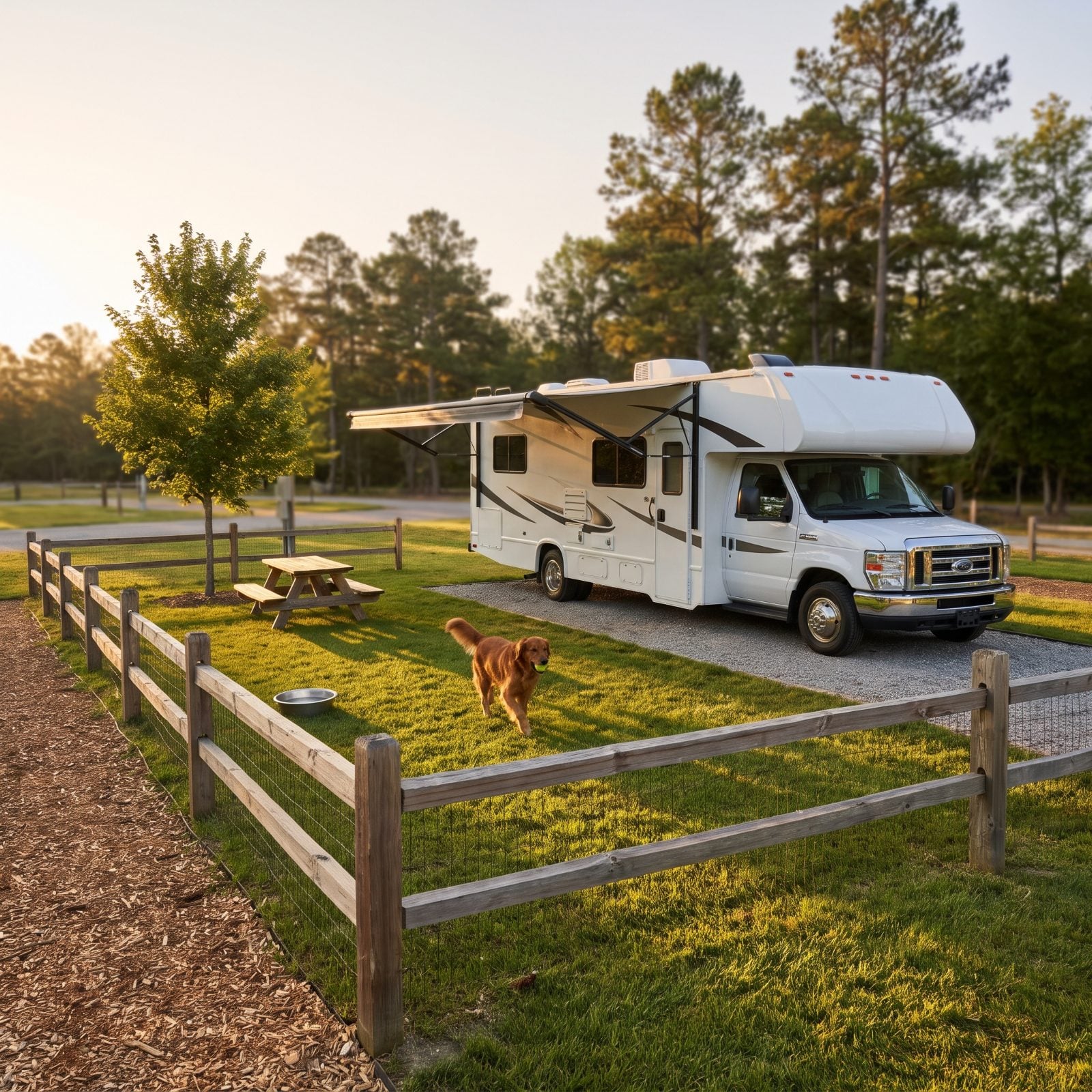
A fenced site is the difference between a relaxed evening and a two-hour game of chase-the-dog through a stranger’s campsite. You unclip the leash, pour a cold drink, and actually sit down.
Fences run small, usually a low rail or chain-link around the pad. They won’t hold a determined jumper, so size up the escape risk before you trust it. But for most dogs it means a yard again, and after weeks on the road that matters more than you’d think.
Climate-Controlled Bathhouses You’d Actually Want to Use
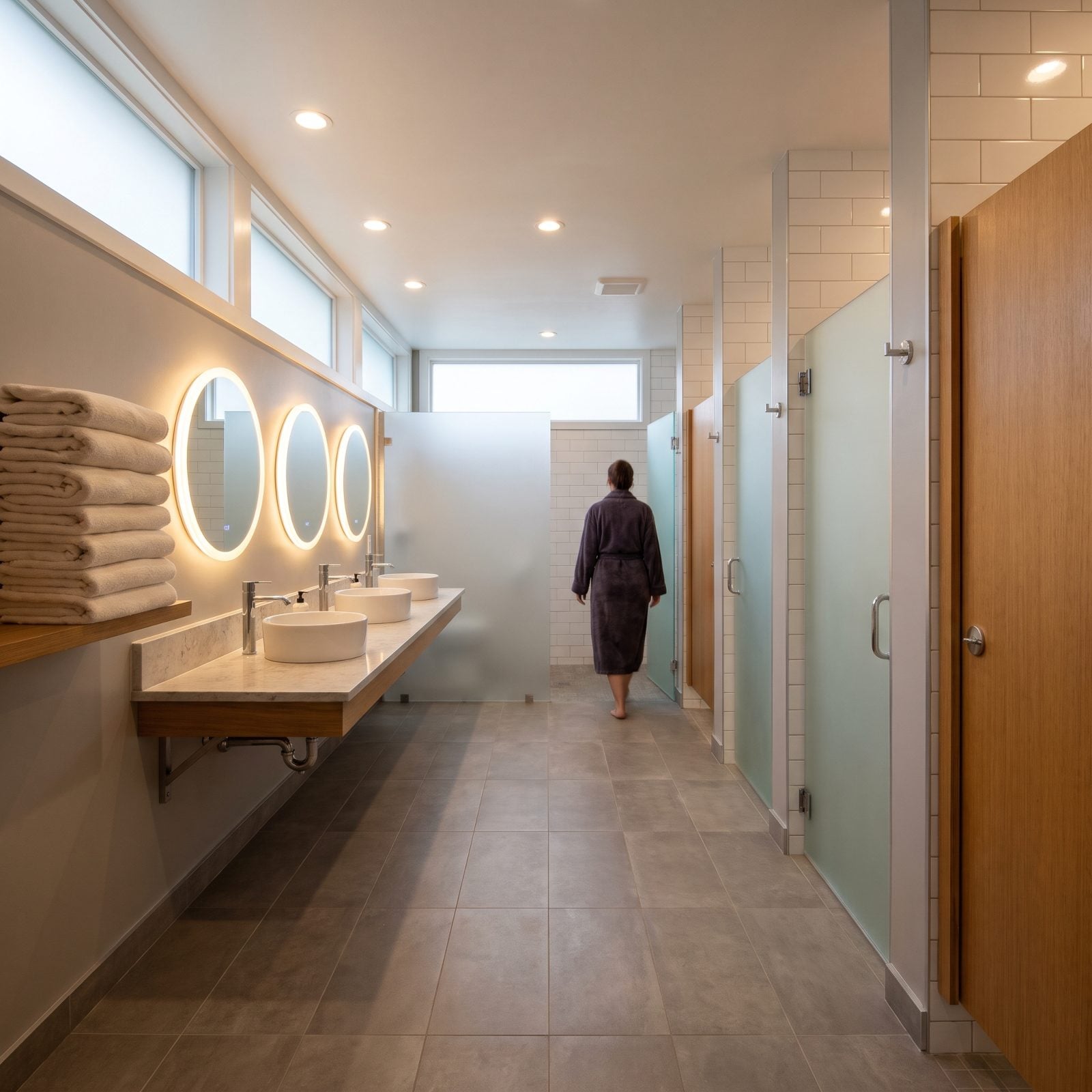
You can judge an entire campground by its bathhouse, and most people do. A spotless, heated one tells you management actually cares.
What you want: floor drains that work, hot water that stays hot past the third shower, and heat in the shoulder seasons, because a cold tile floor at 6 a.m. will wreck your morning. The good ones feel closer to a nice gym locker room than a gas-station restroom.
Private Family-Style Bathroom Suites With a Door That Locks
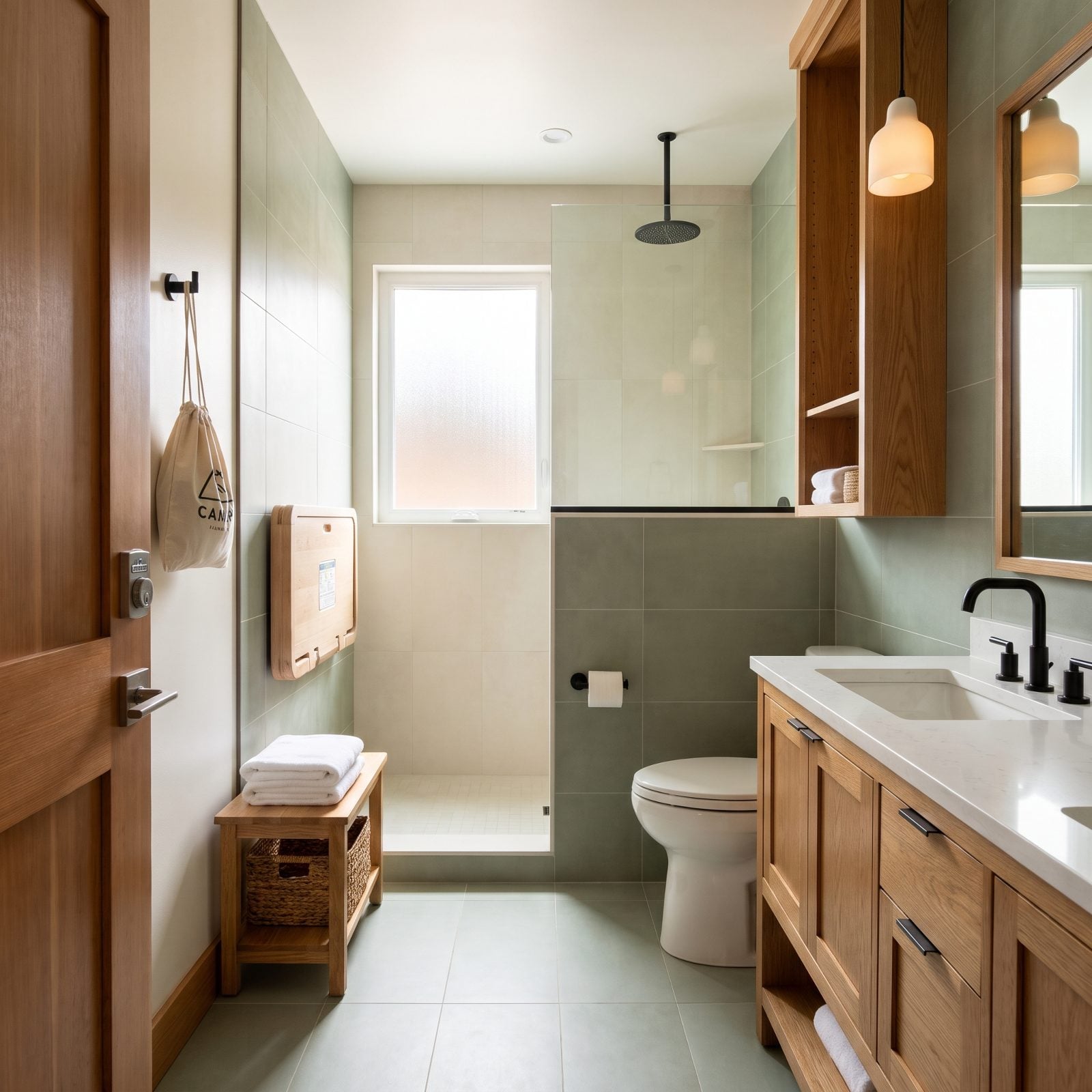
The quiet luxury of a camping trip is a room with a lock on it. No flip-flops, no waiting, no coordinating three people through one shared stall.
Family suites give you a whole private bathroom: shower, toilet, sink, a bench to set a kid on while you sort out the chaos. Parents of small children will pay extra for this and never regret it. Couples like them too, honestly. There’s something civilized about a trip where you get to shower like a grown-up.
A Laundry Room With Enough Machines to Beat the Rush
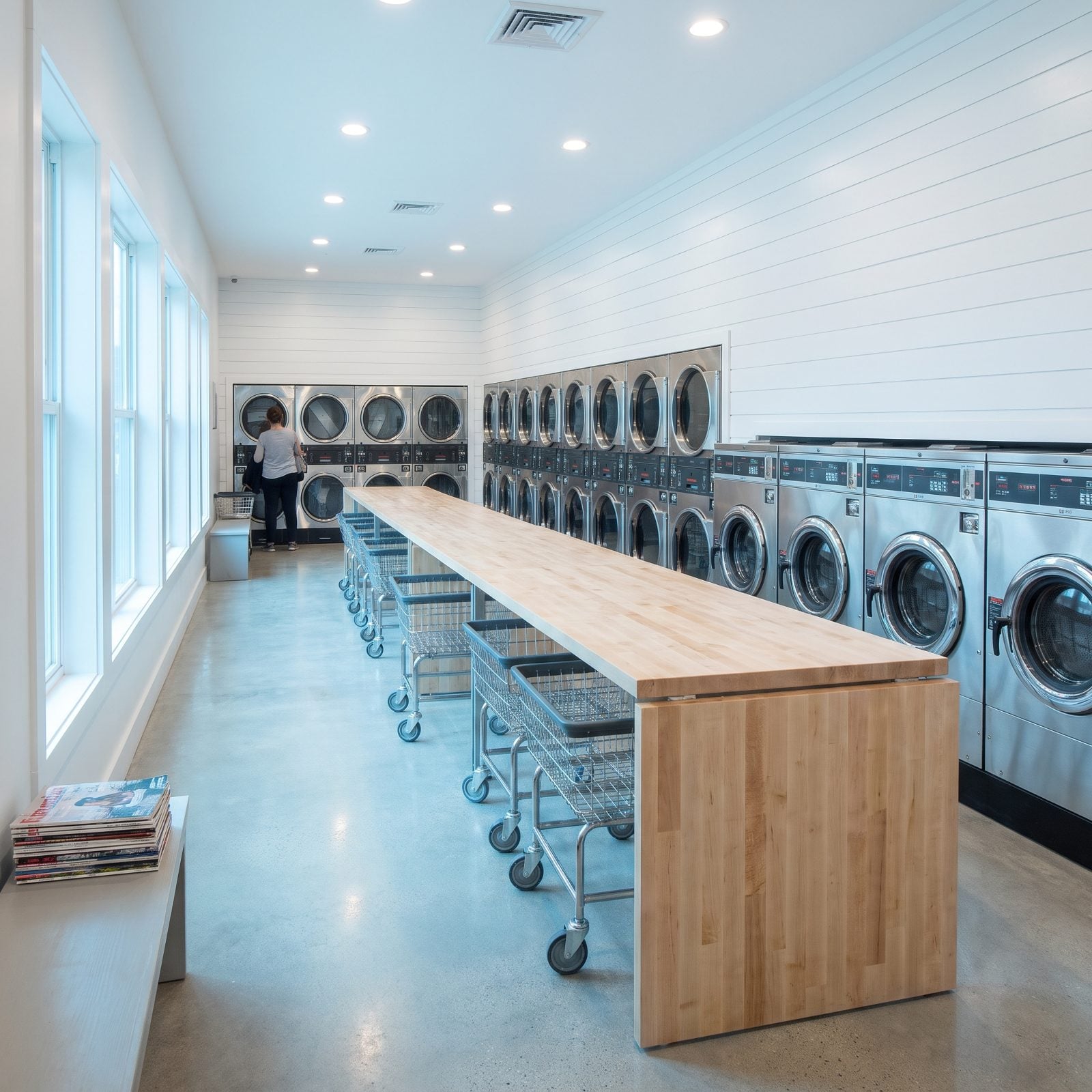
Four machines for a two-hundred-site park is a declaration of war. You’ll spend a Sunday morning circling like it’s a mall parking lot.
A real laundry room has enough washers that you’re not standing guard, dryers that actually dry in one cycle, and a folding counter big enough to work on. Bonus points for a card reader so you’re not hunting quarters late at night. We have driven out of our way for a campground specifically because the last one made us do laundry in two shifts.
A Heated Resort-Style Pool That Stretches the Swim Season
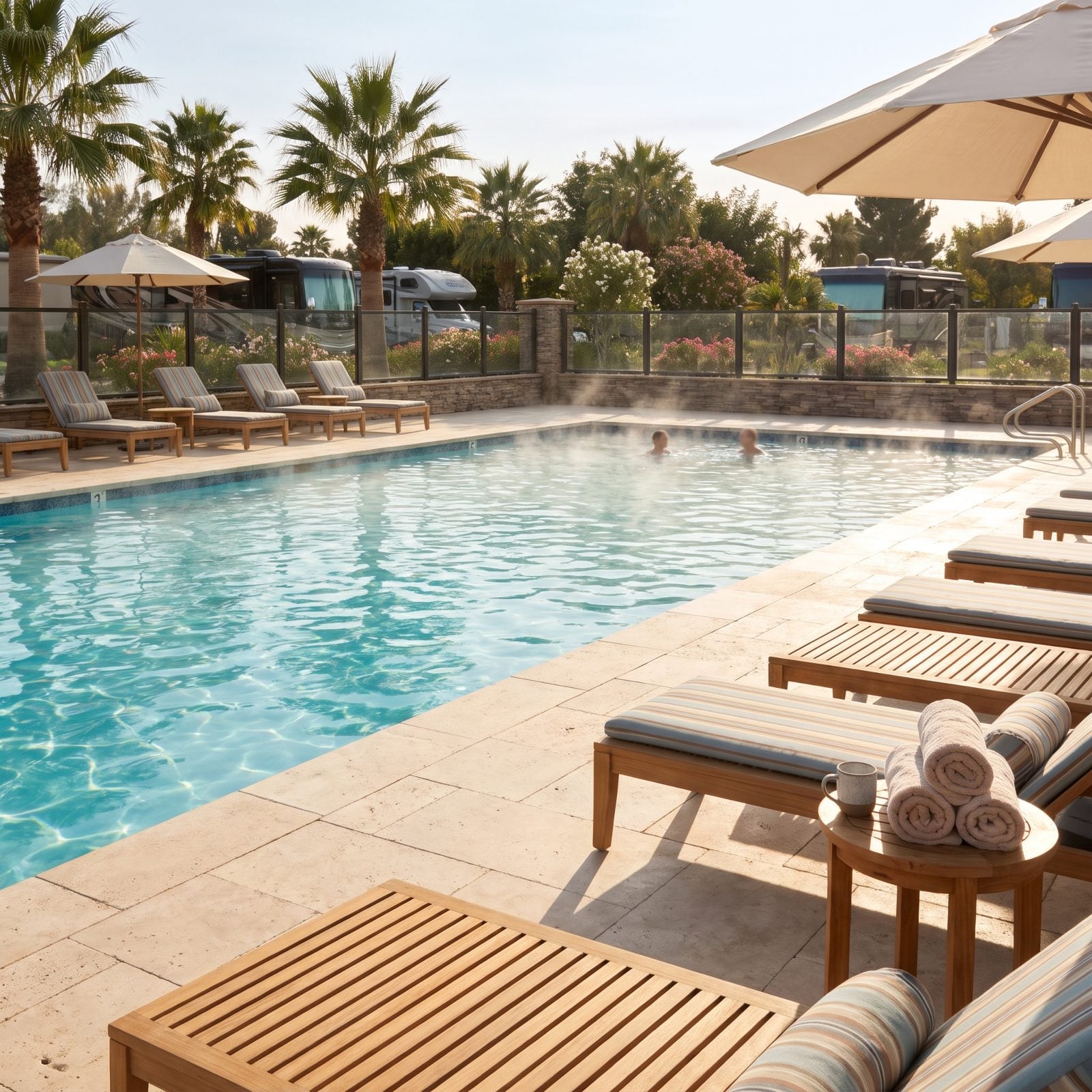
A heated pool is what turns a nice campground into a destination. The water’s warm in May and still warm in September, so the swim season runs long past when the cold ones empty out.
Look for a deck with real lounge chairs and some shade, not a slab of concrete and a chain-link fence. The resort-style ones feel like a vacation. The afterthought ones feel like a motel pool nobody bothers to check the chlorine on, and you’ll know which is which the moment you walk up.
A Communal Hot Tub for the End of a Hiking Day
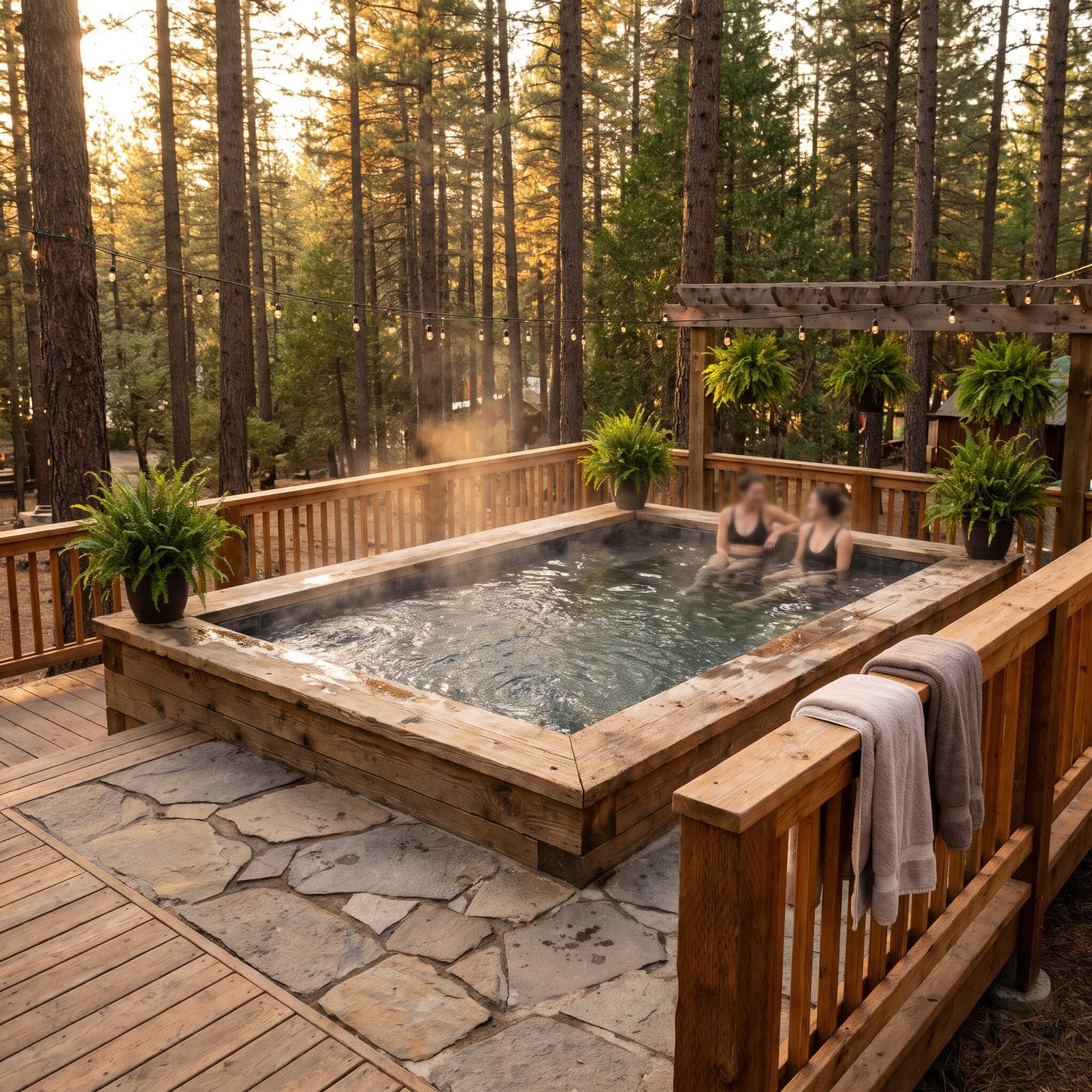
After a full day on the trail, a hot tub isn’t a luxury. It’s maintenance for your knees.
The good ones hold a crowd without feeling crowded, stay properly hot, and get wiped down more than once a day. A communal tub is also where you meet people, the one spot in a quiet campground where strangers end up swapping trail notes. Soak early or late if you want it to yourself. After about eight it becomes the social hub, and the conversation is half the reason you went down there.
A Clean Swimming Beach Right at the Waterline
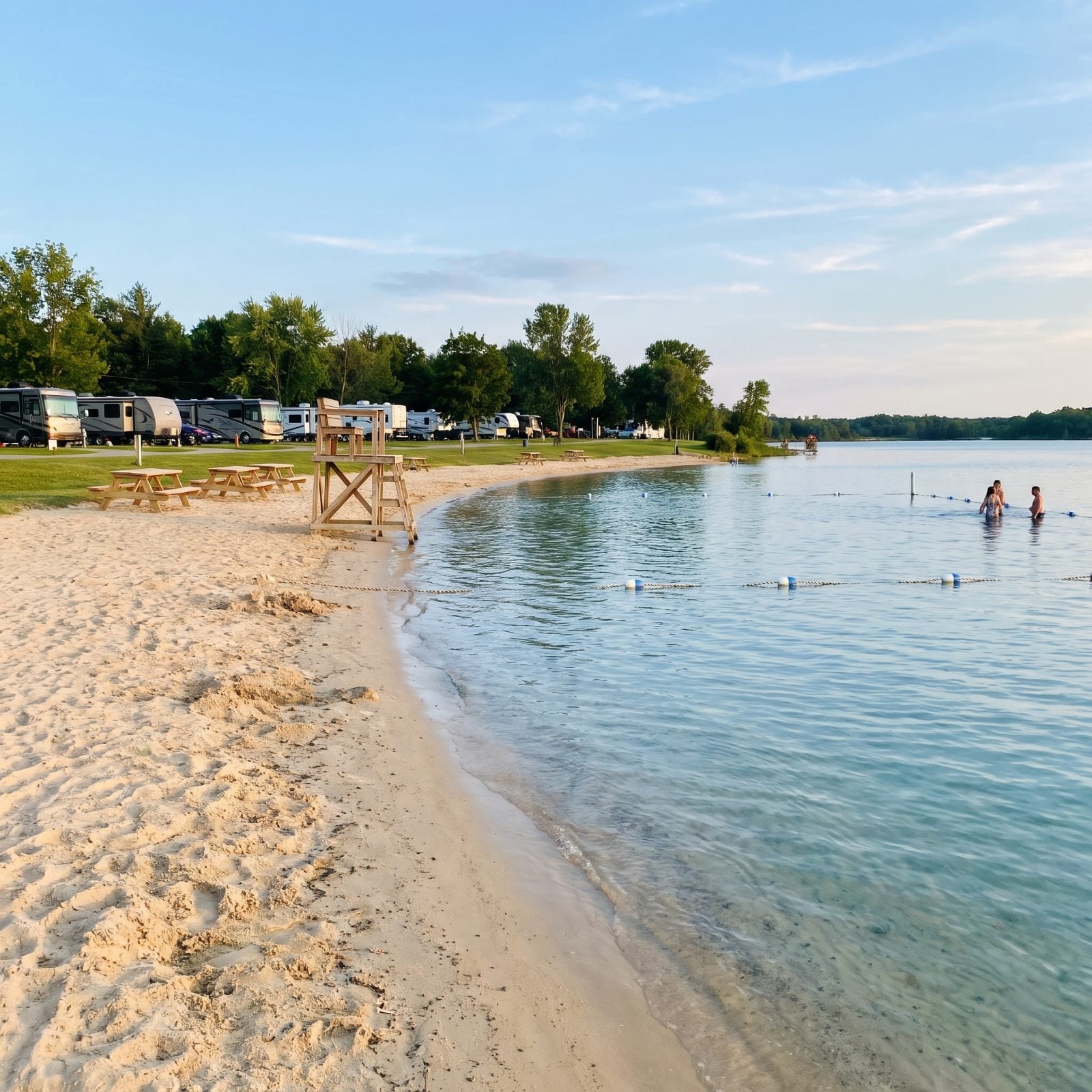
A real swimming beach at your campground changes the whole shape of a day. The kids disappear to the water right after breakfast and you don’t see them until lunch.
Clean is the word that matters. Raked sand, roped swim area, water tested regularly, no weed line and no mystery film on the surface. Ask about the last water-quality report if the lake looks off. A green tinge after a hot spell can mean algae, and there goes your swim day.
An Easy-Access Boat Ramp You Can Launch Solo
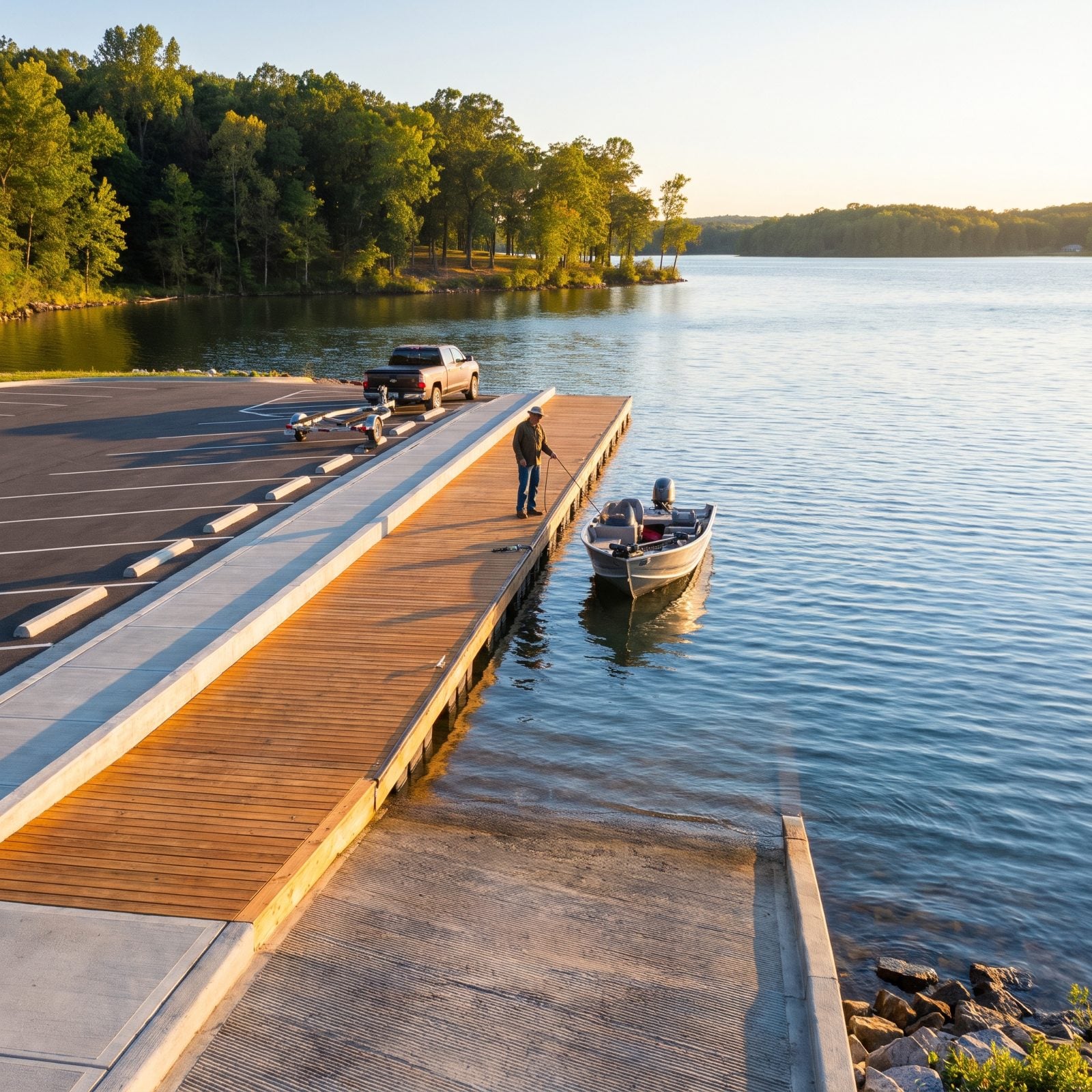
If you tow a boat, the ramp is the whole decision. A steep, cracked, single-lane ramp with no courtesy dock will have you backing into the water in front of an audience, sweating.
What you want is a wide concrete ramp with a gentle grade, a dock you can tie off to, and trailer parking that doesn’t demand a three-point turn. The good ones let one person launch and retrieve without a second set of hands. Nobody mentions that detail until you’re stuck doing it alone at dawn.
Kayak and Paddleboard Rentals Steps From Your Rig
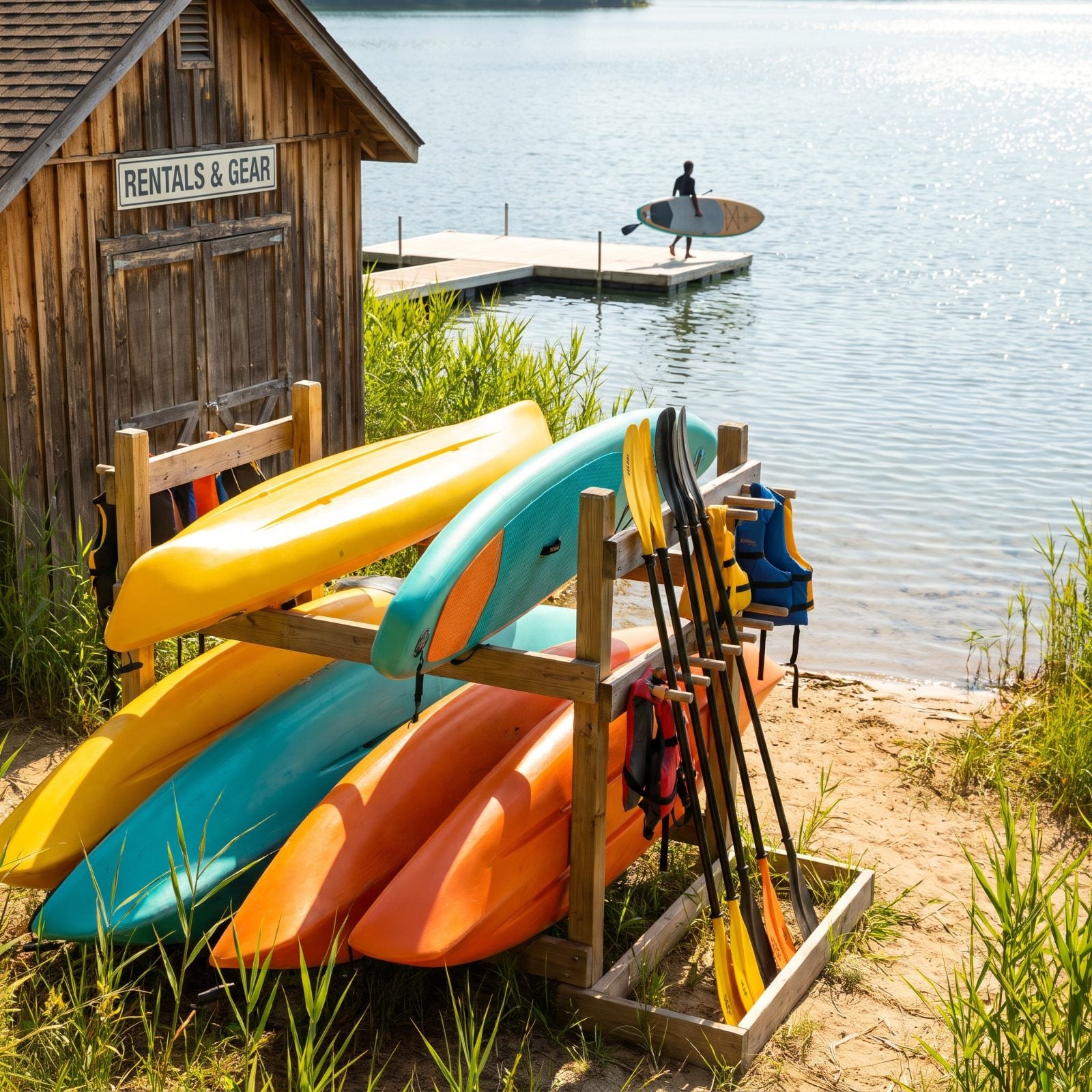
On-site rentals mean you don’t have to haul a kayak across the country just to use it twice.
You pay by the hour or the day, grab a boat and a vest, and you’re on the water in ten minutes. No roof rack, no strapping down, no finding somewhere to store it. For anyone who likes paddling but doesn’t want to own the gear, that’s reason enough. Check the vest condition and whether they include a leash on the paddleboards. Good outfits do. The bare-minimum ones hand you a board and point at the water.
Scenic Trails That Start at the Edge of the Campground
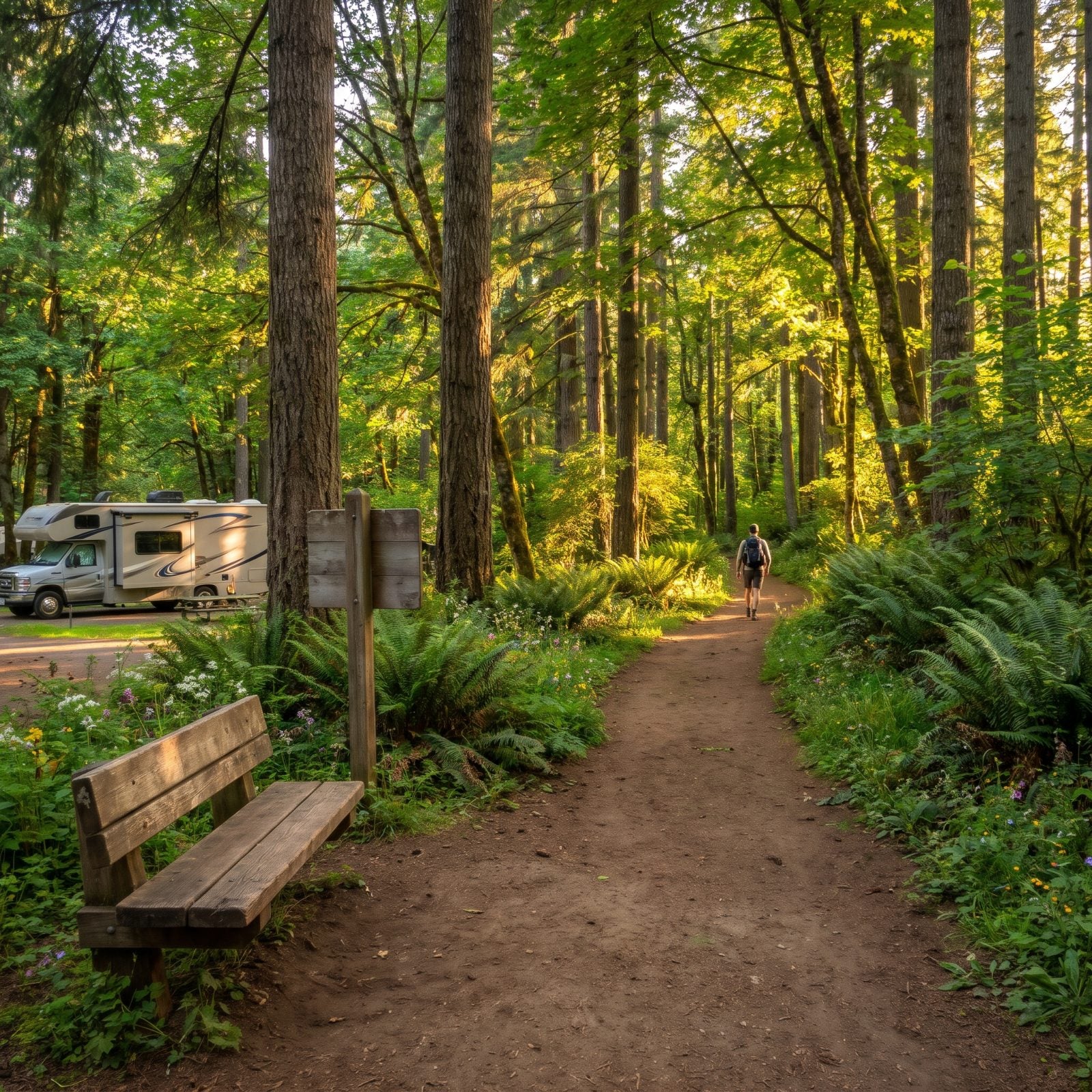
A trail that starts at the campground is the amenity that costs the park almost nothing and pays you back every single morning.
No driving, no trailhead parking fee, no fighting for a spot. You roll out of the rig with a coffee and you’re walking. The best ones offer a short loop for a pre-breakfast stretch and something longer for a real day out. Ask at check-in which trails leave straight from the grounds. Plenty of parks have one and never think to mention it, and it’s usually the quietest, prettiest hour of your whole stay.
A Spacious Off-Leash Dog Park
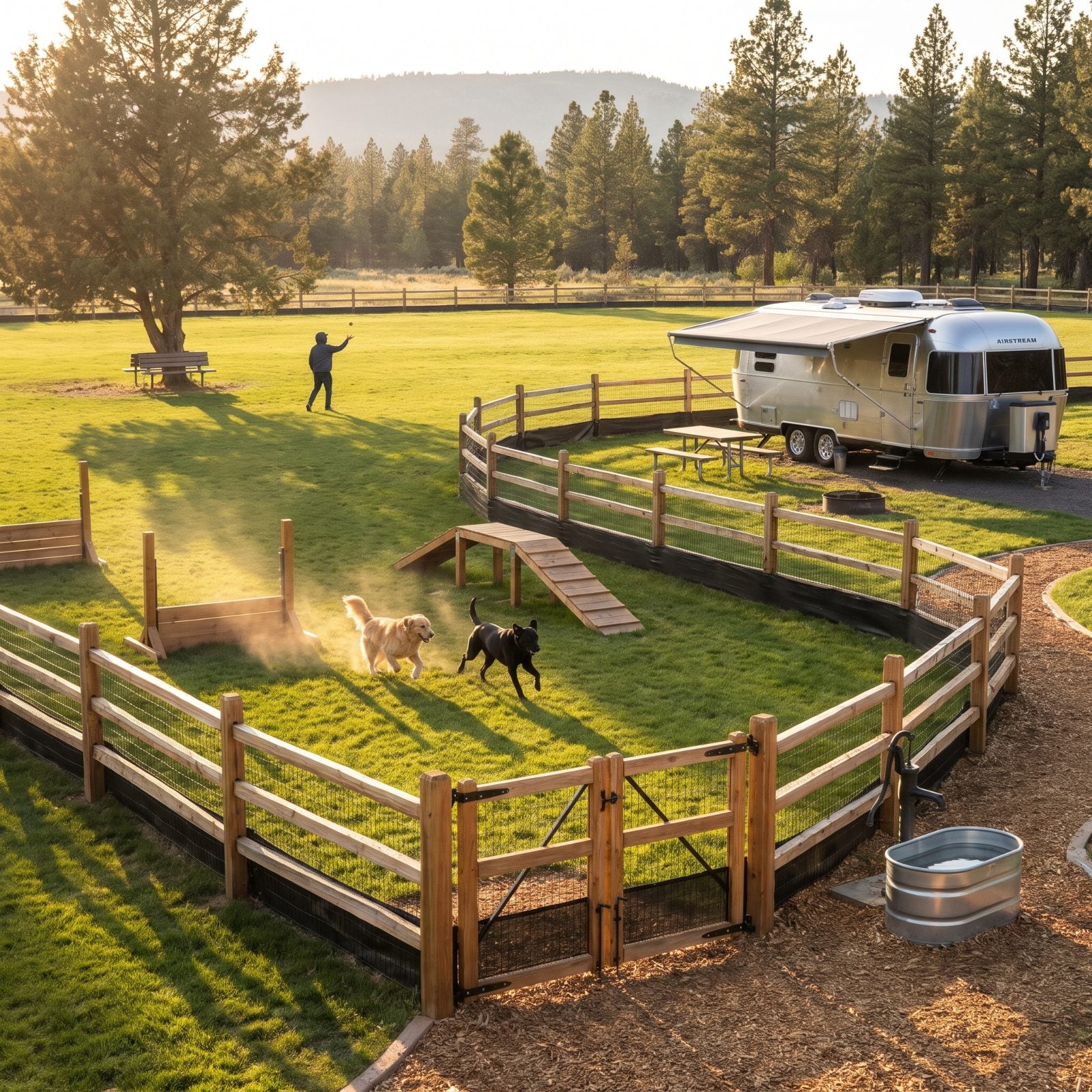
A fenced dog park is the difference between a relaxing night and a leash wrapped around a picnic table leg while your dog loses its mind over a squirrel. Travel with a dog long enough and you learn the math: a tired dog is a quiet dog, and a quiet dog means you actually get to sit down after setup.
Look for double-gated entries and a water station. The good ones separate big dogs from small, which spares you the standoff nobody enjoys. Acreage matters more than agility toys — dogs want room to sprint, not a plastic tunnel.
A Self-Service Dog-Washing Station
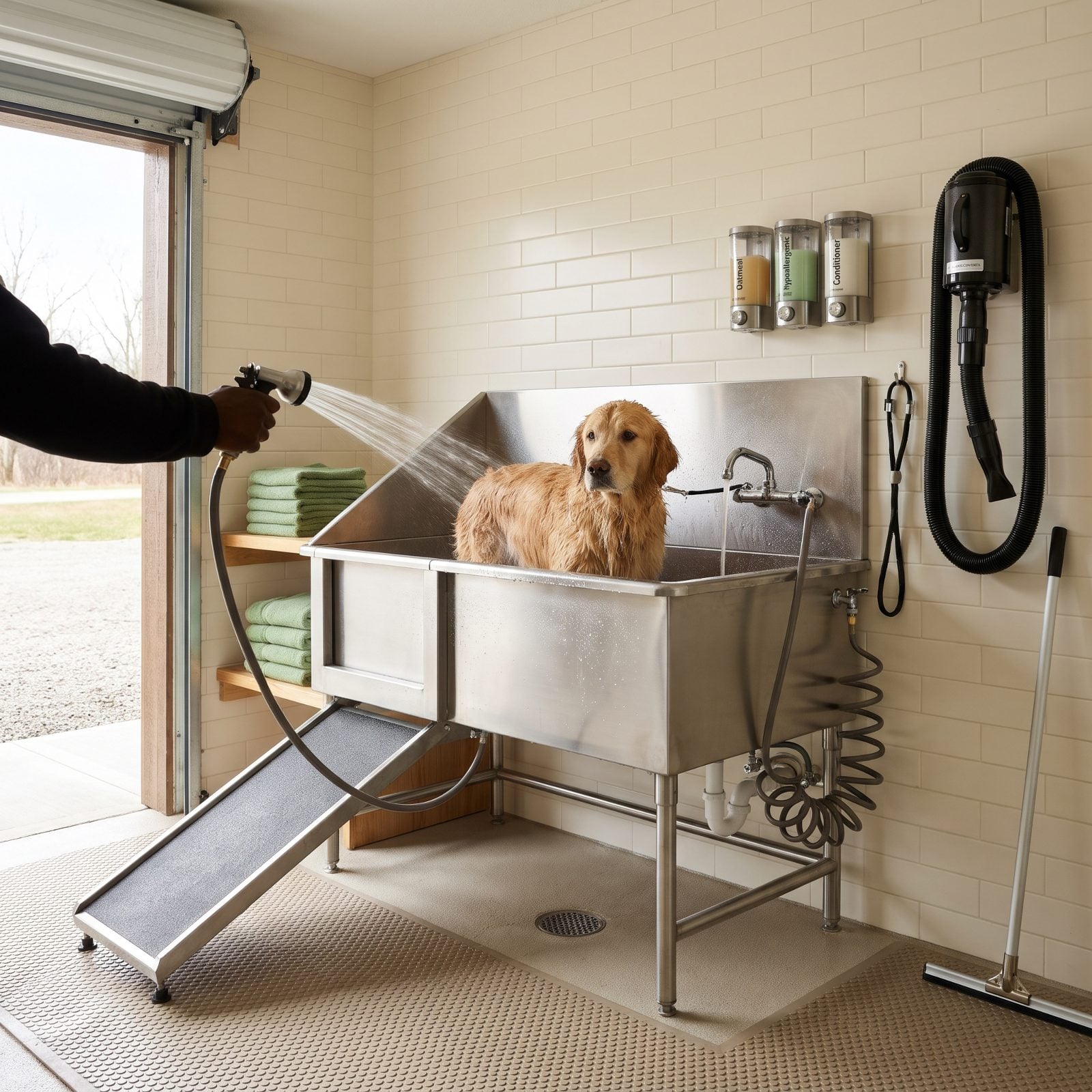
Nobody warns you about the smell of a wet dog inside a 30-foot trailer after a muddy hike. I have lived it. A dedicated wash bay with a raised stainless tub saves your back, your shower, and your sanity.
That raised tub is the feature that earns its keep. Bending over a floor-level basin to wrestle a soapy 70-pound dog is a young person’s game, and most of us aged out of it years ago. Give me a grooming tether, a warm-water sprayer, and a mounted dryer, and a forty-minute ordeal shrinks to ten.
A Shaded Modern Playground
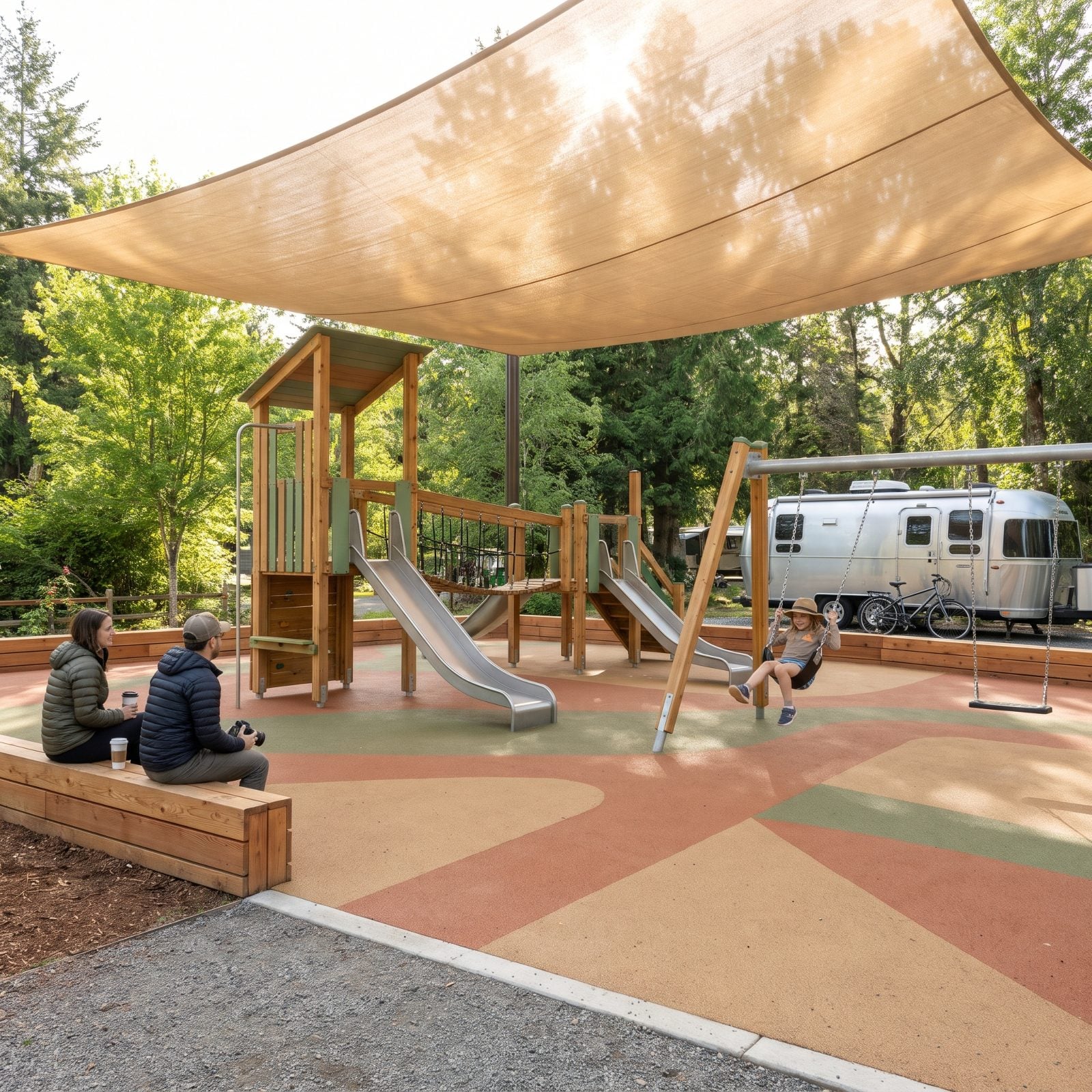
Shade is the feature parents actually book for. A metal slide in full July sun is a branding iron, and every kid finds that out exactly once. Hang a shade sail or plant real trees over the play area and the whole thing stays usable through a long afternoon instead of cooking by ten in the morning.
The best modern playgrounds sit within sight of a cluster of sites, so you can watch from your awning with coffee in hand. Poured rubber surfacing beats gravel — fewer scraped knees, fewer tears before dinner.
Well-Maintained Pickleball Courts
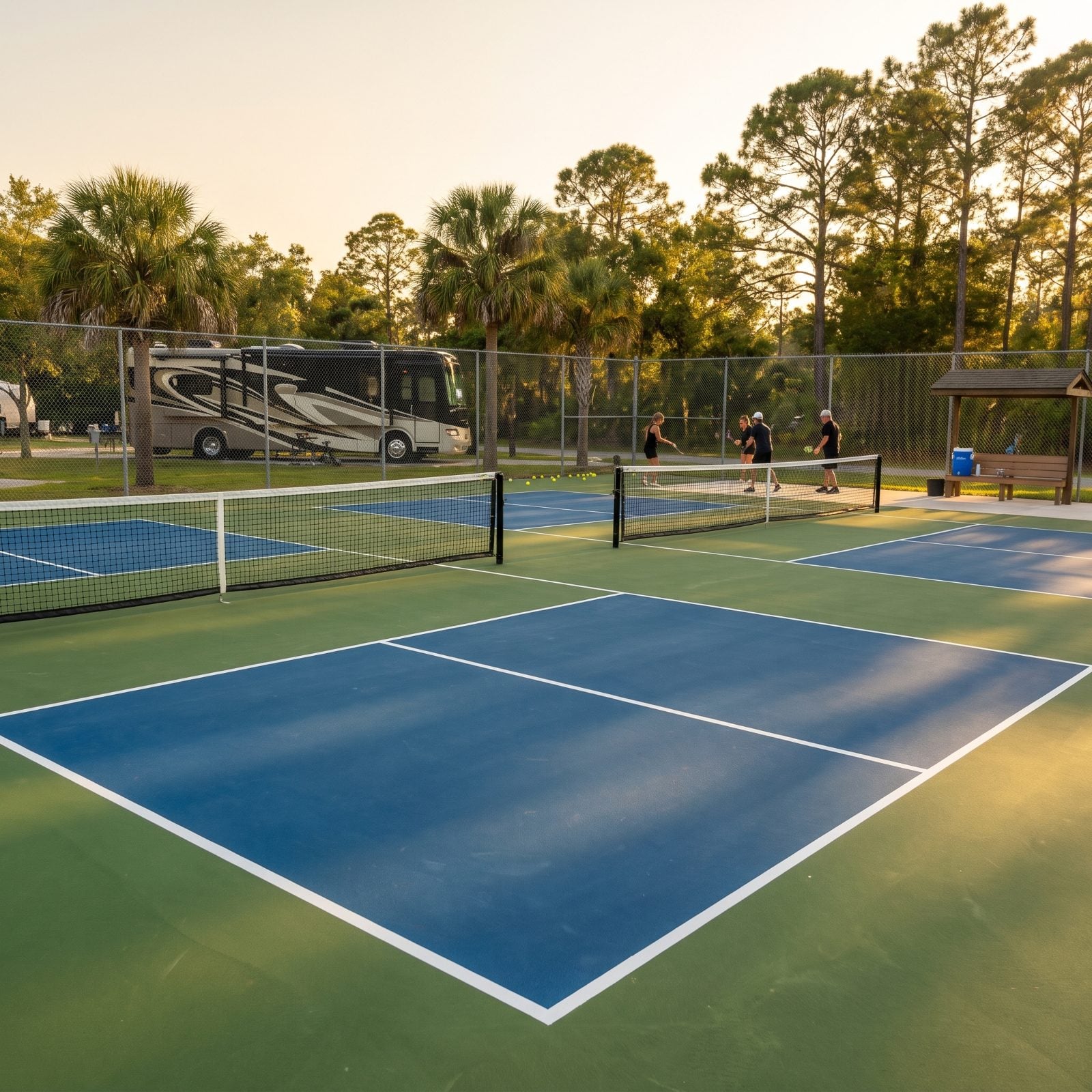
Pickleball took over campgrounds the way it took over everything else, and it’s the rare amenity that actually gets used by the 55-plus crowd it was supposedly built for. A good court costs little to maintain and pays off socially. People meet their neighbors over a game faster than they ever will at the dump station.
Check for a real acrylic surface, not a repurposed faded tennis court with tape lines slapped down. The difference shows up in your knees. And if the park posts open-play hours? Go. That’s where the whole social scene lives.
A Quiet Coworking Lounge
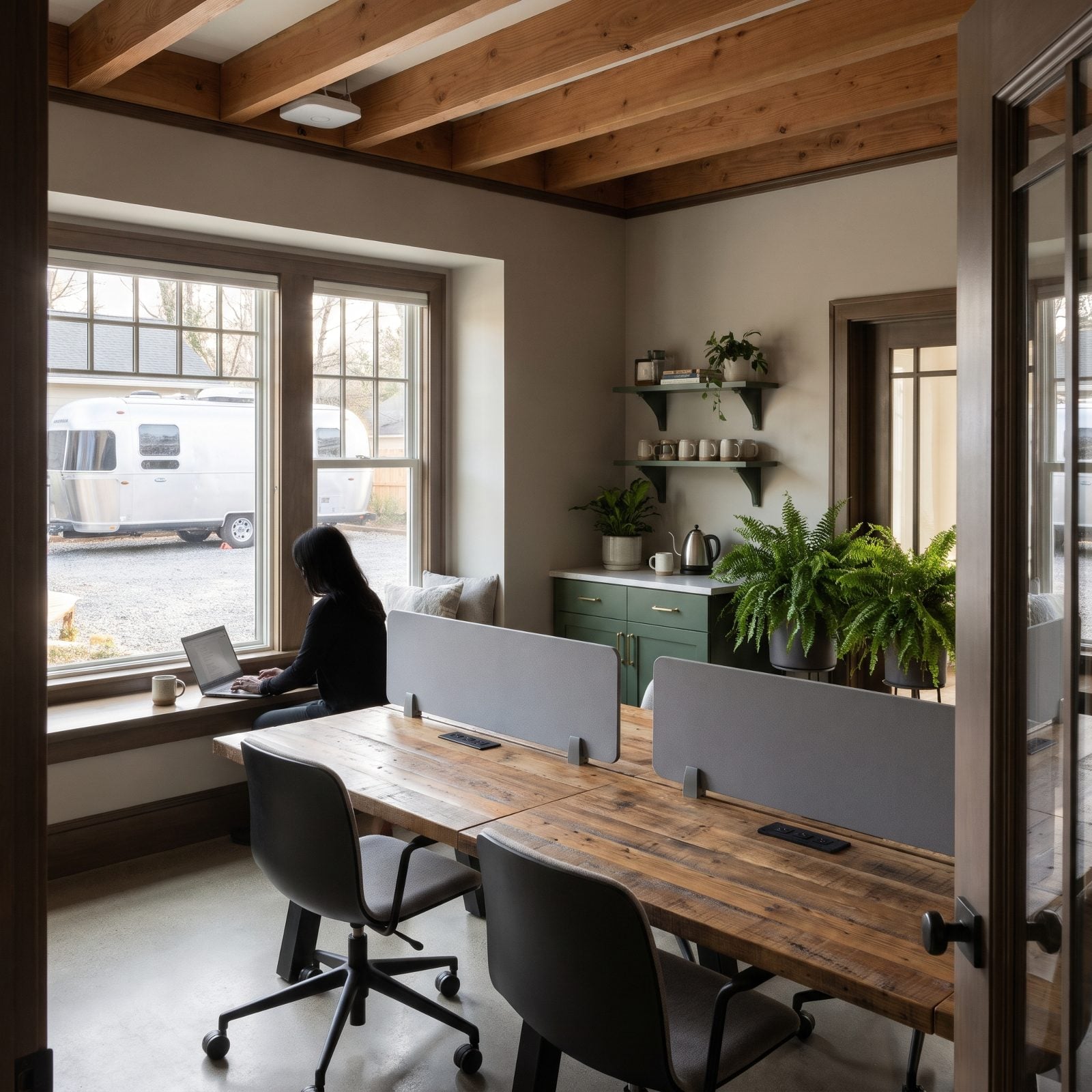
Full-time RV life runs on one thing: reliable internet. Your cellular hotspot works great until forty people show up for the weekend and the tower chokes. A proper coworking lounge with hardwired WiFi is the quiet insurance policy that lets you take the video call without sweating the bars.
But the real draw is the silence. Working from your rig means working next to the dishes, the dog, and whatever your partner is watching. A room with a door, a big table, and outlets that actually work is worth more than a pool to anyone who files invoices for a living.
An On-Site Restaurant
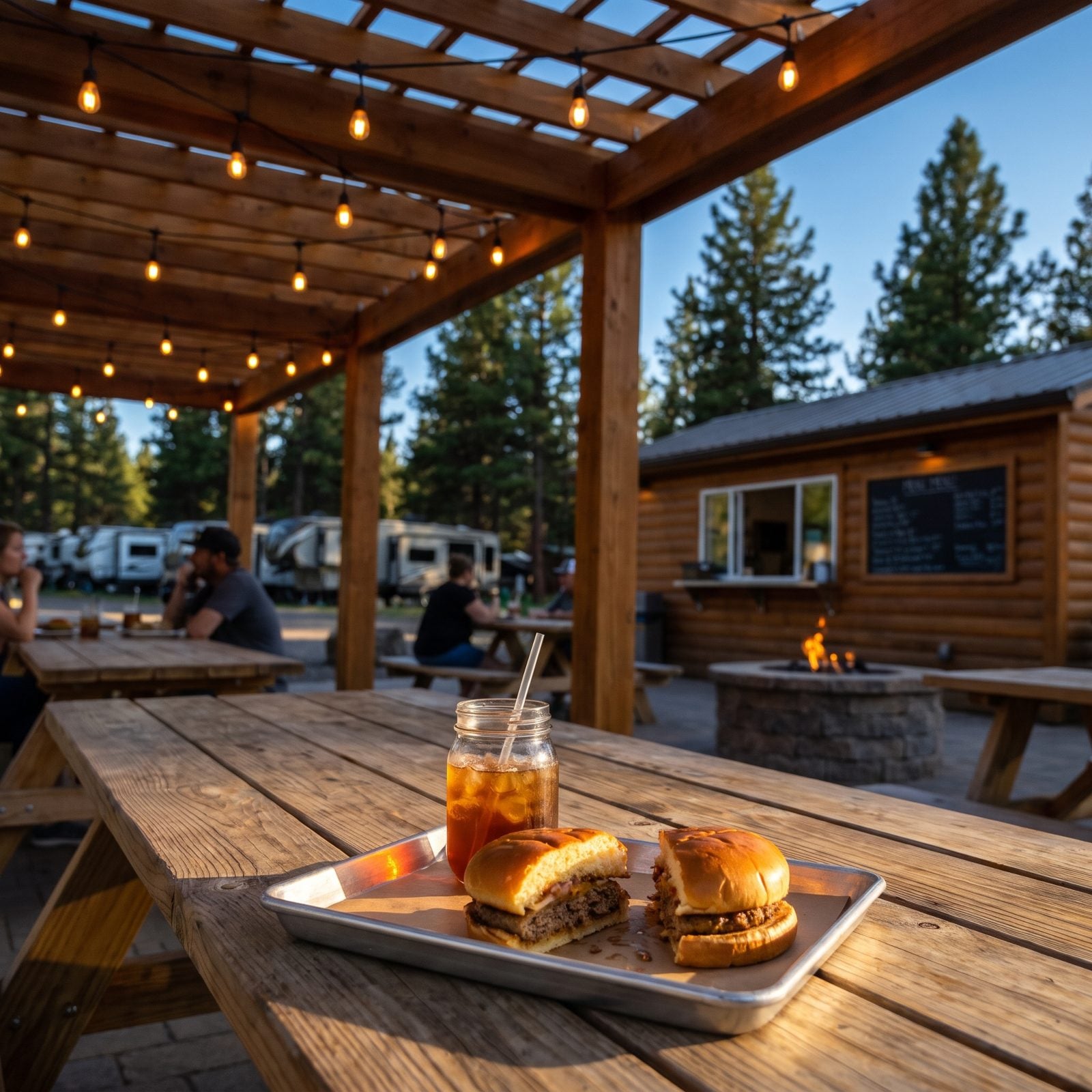
Some nights you just don’t want to cook. You’ve driven 300 miles, leveled the rig, run the slides out, and the griddle can stay in the cabinet, thanks. An on-site restaurant, even a modest one, is a gift on arrival night.
Don’t expect fine dining. Expect burgers, pizza, a decent breakfast, and a bar where people actually talk to each other. That’s the sweet spot. Honestly, the parks that nail a wood-fired pizza night build more loyalty than any pool or splash pad ever will.
A Well-Stocked Camp Store
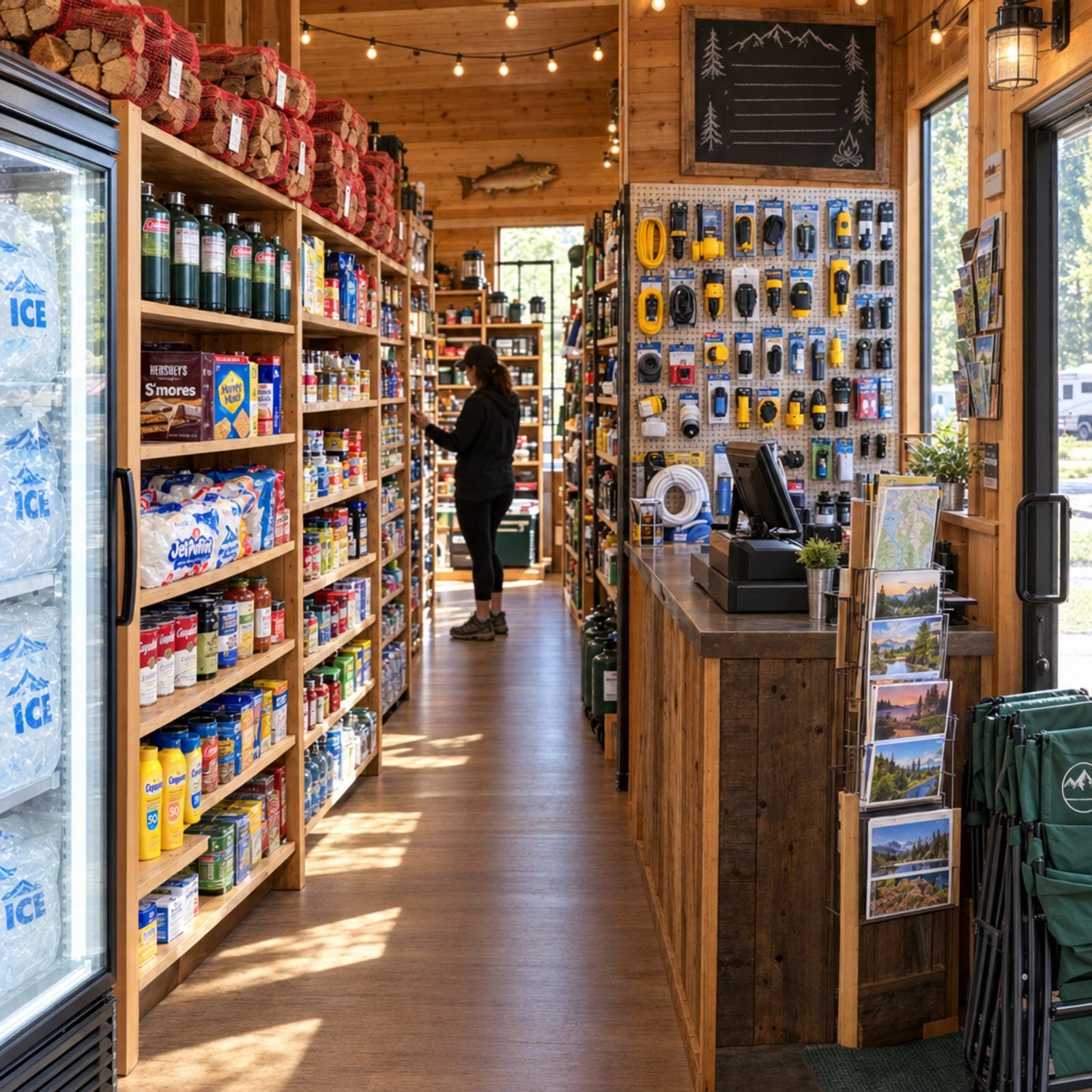
You will forget something. Everyone does. The sewer hose adapter, the 30-to-50 amp dogbone, a bag of ice, the one wrench you need at 6 p.m. on a Sunday. A camp store that stocks the real stuff saves a 20-mile round trip into town.
The great ones go beyond snacks and carry the specific parts that fail you: adapters, hose fittings, a replacement water regulator. Firewood that’s actually dry. Ice that isn’t half-melted. A store that gets this right has clearly been run by someone who’s owned a rig and knows exactly what breaks at the worst time.
On-Site Propane Refills
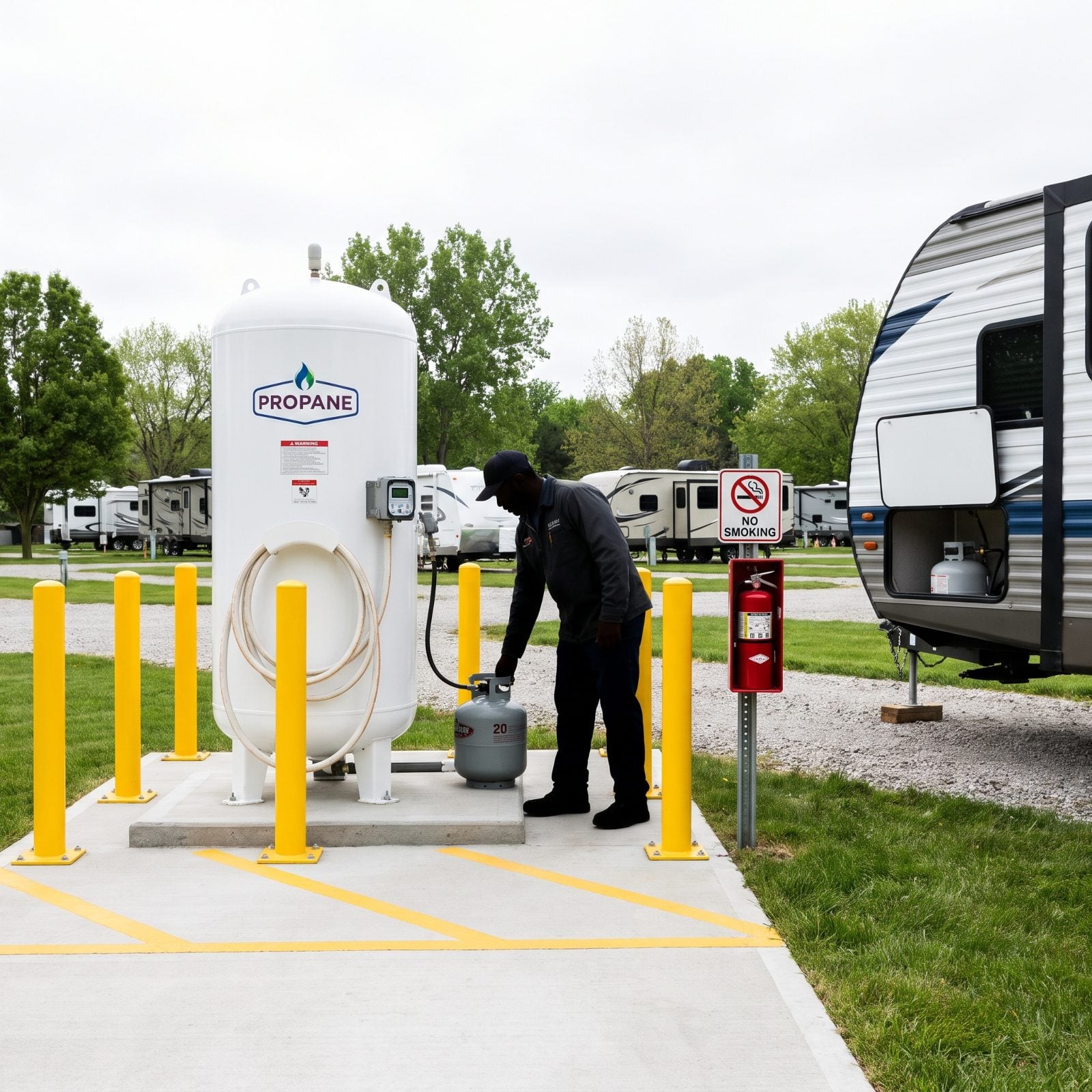
Running out of propane mid-cook is a special kind of frustrating. On-site refills mean you never have to unhitch, drive to a hardware store, and hope the kid at the counter knows how to fill a tank. You roll your bottle up, they fill it by weight, you’re back at the grill in ten minutes.
Filling beats exchange every time. Those swap cages shortchange you on the fill, so you lose the propane you already paid for. A refill tops you off and costs less per gallon besides.
Electric-Vehicle Charging Stations
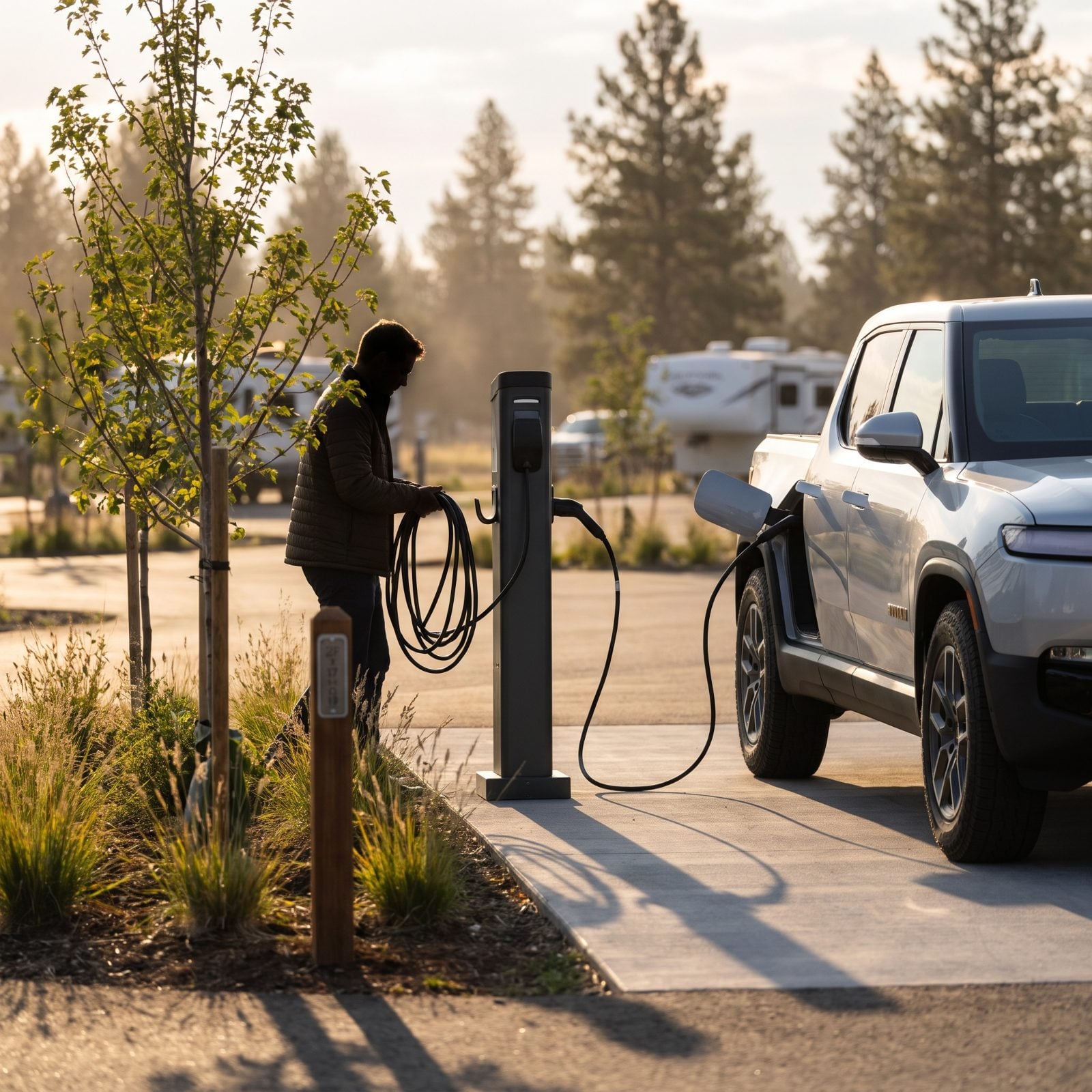
This one’s newer, and it’s quietly becoming a deciding factor for anyone towing with an EV or carrying one on a toad. Finding a Level 2 charger at your campground means you top up overnight while you sleep, instead of white-knuckling the next leg to some distant fast charger.
Ask whether the charger sits on your site or in a shared lot, because shared ones grow a queue on busy weekends. And check the connector type before you book. Nothing worse than pulling in with the wrong plug and a half-dead battery.
Curbside Trash Collection
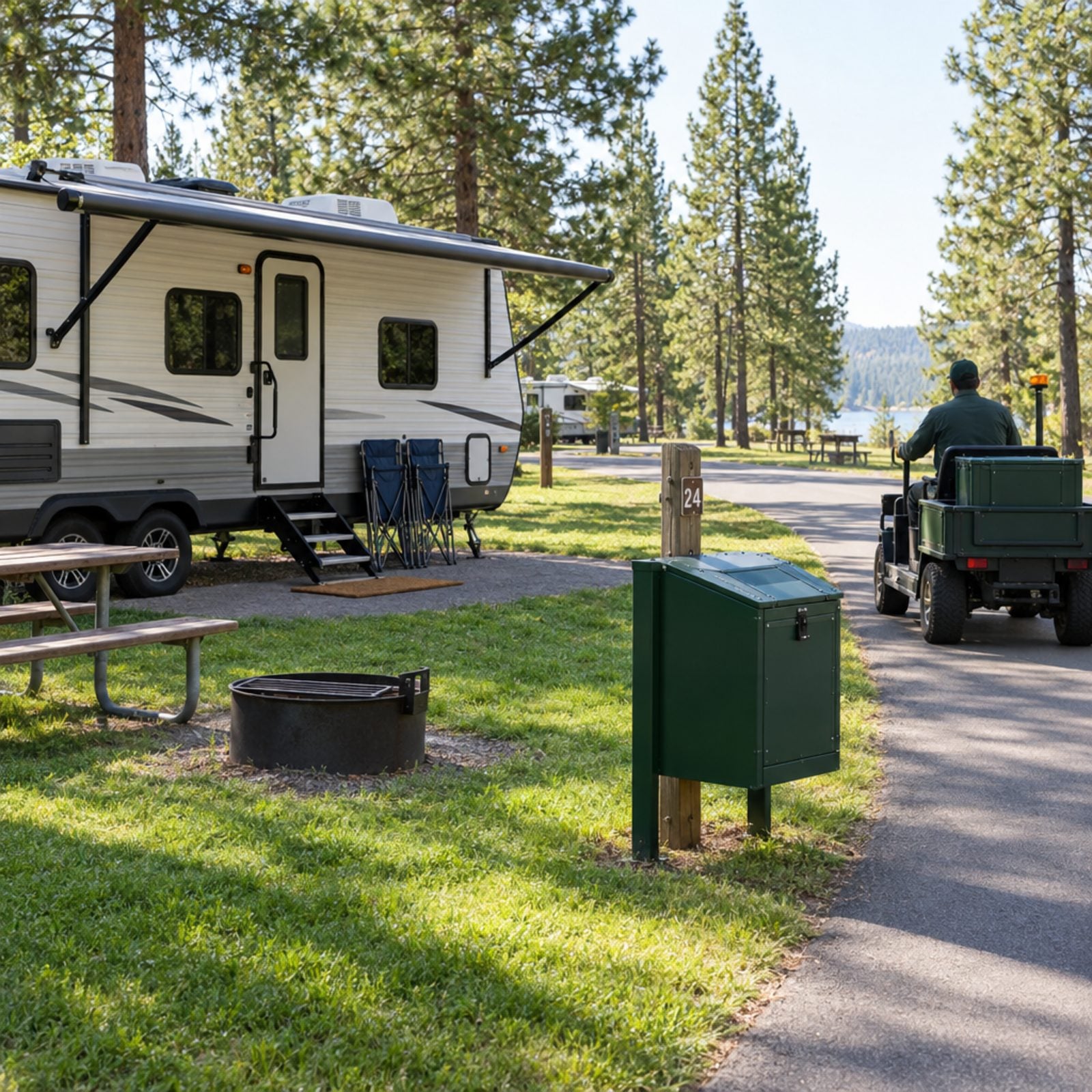
The least glamorous amenity on this list, and one I’d happily pay extra for. Hauling a bag of trash to a dumpster across the park, in the rain, after dark, is the small daily chore that wears on you. Curbside pickup means you set it by your post in the morning and forget it.
In bear country it matters even more. A park that runs curbside collection with proper bear-resistant bins is a park that cares whether your site becomes a midnight raccoon buffet. That one detail tells you how the whole place is run.
A Dedicated RV Wash Bay
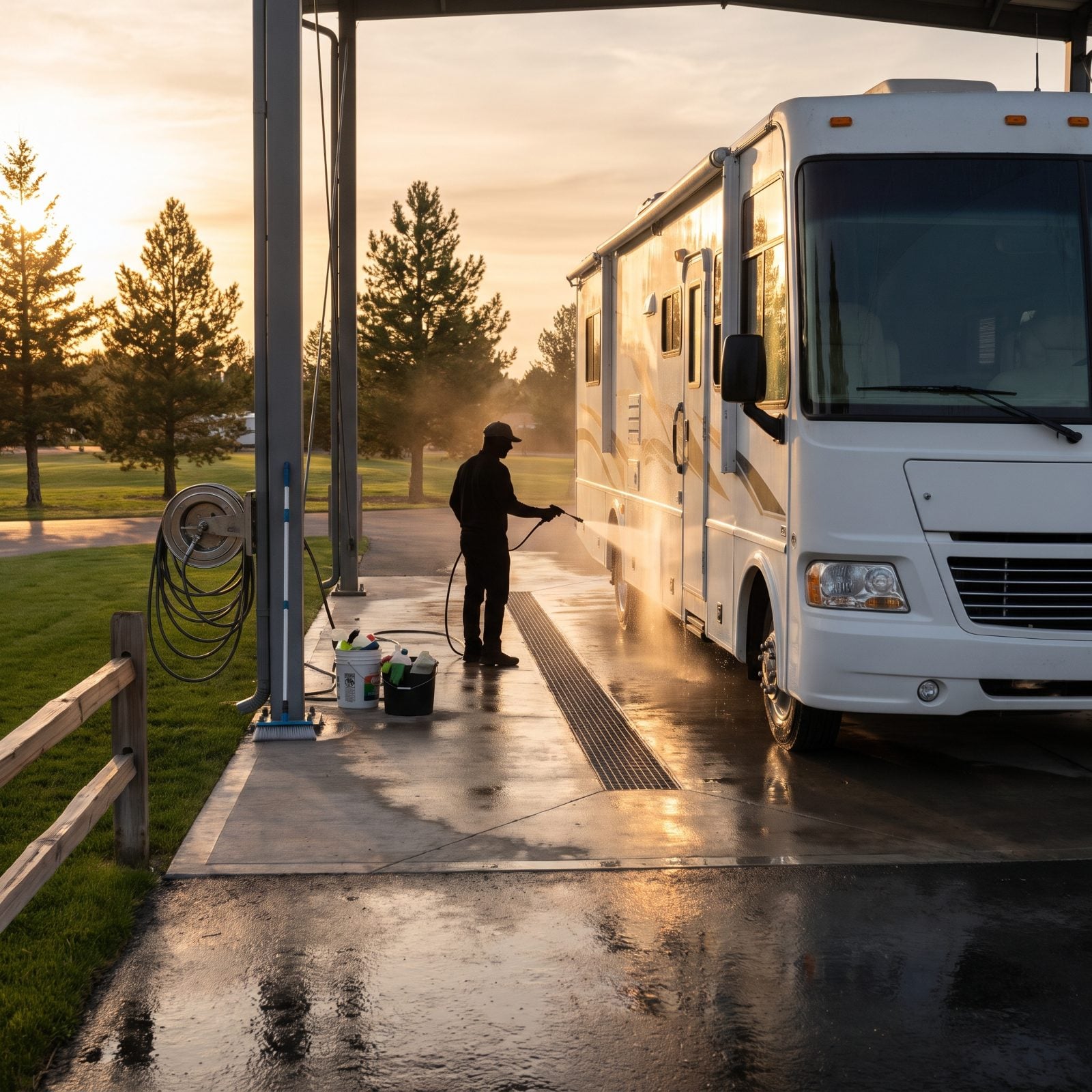
Try washing a 34-foot coach in a regular campsite and you learn two things fast. Your water pressure is garbage, and the soap runs straight into the grass where you’re not supposed to dump anything.
A proper wash bay fixes both. You get a pressurized spigot, a slab that drains to an oil-water separator, and enough room to actually reach the roof with a telescoping brush. Some charge five or ten bucks, some fold it into the nightly rate. Either way it beats rolling into a truck stop automatic that scrapes your awning arms.
An On-Site RV Technician
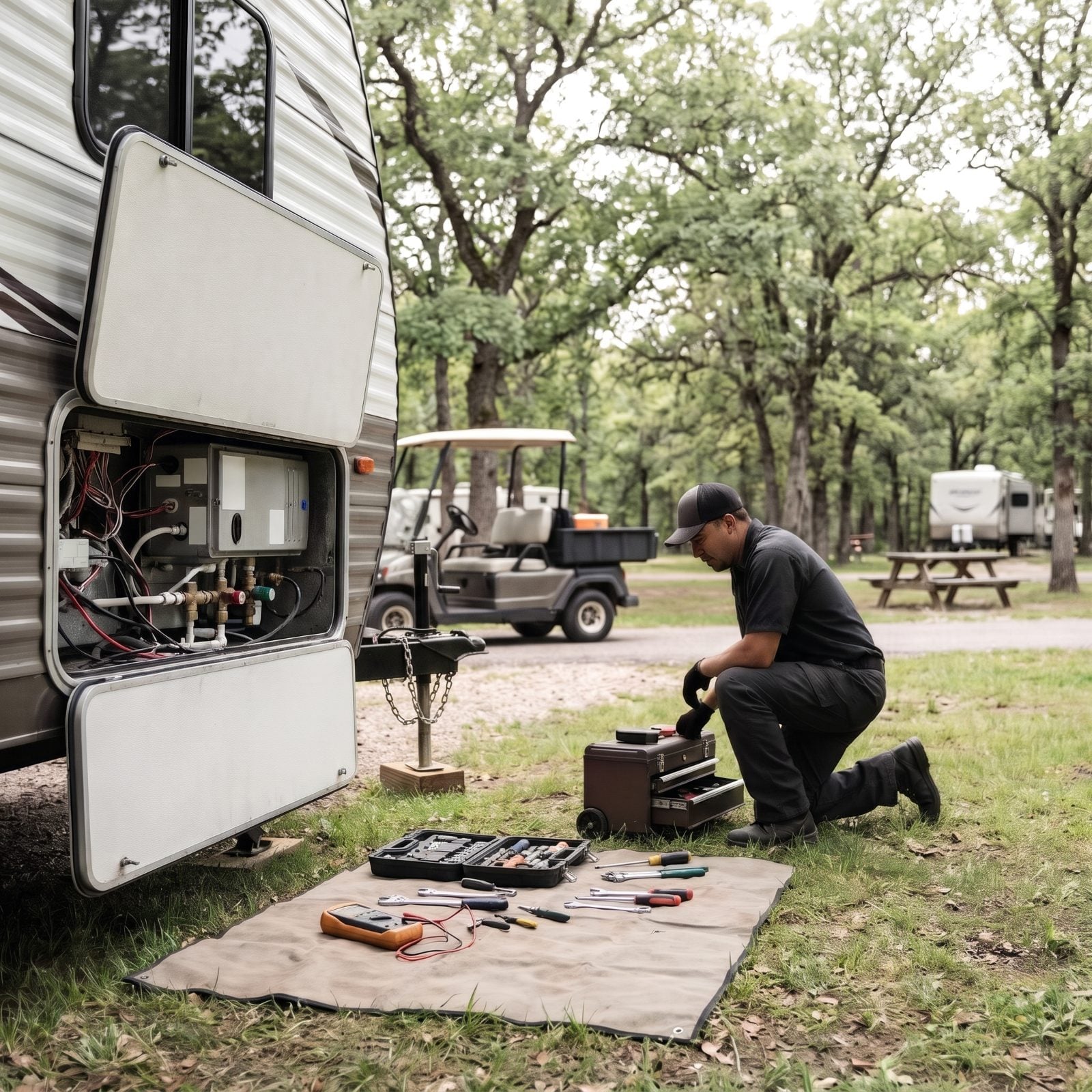
Nothing kills a trip faster than a slide that won’t come in on the morning you’re supposed to leave.
A campground with a tech on staff, or one on call within an hour, is worth more than a pool and a putting green combined. These folks fix the stuff that strands you: failed water heaters, dead inverters, a jack motor that quit, a converter that stopped charging. The alternative is towing to a dealer with a three-week backlog.
Call ahead and ask what they actually handle. Some do minor repairs only. The good ones carry common parts for the big appliance brands and can get you moving same day.
A Campground Shuttle to Nearby Attractions
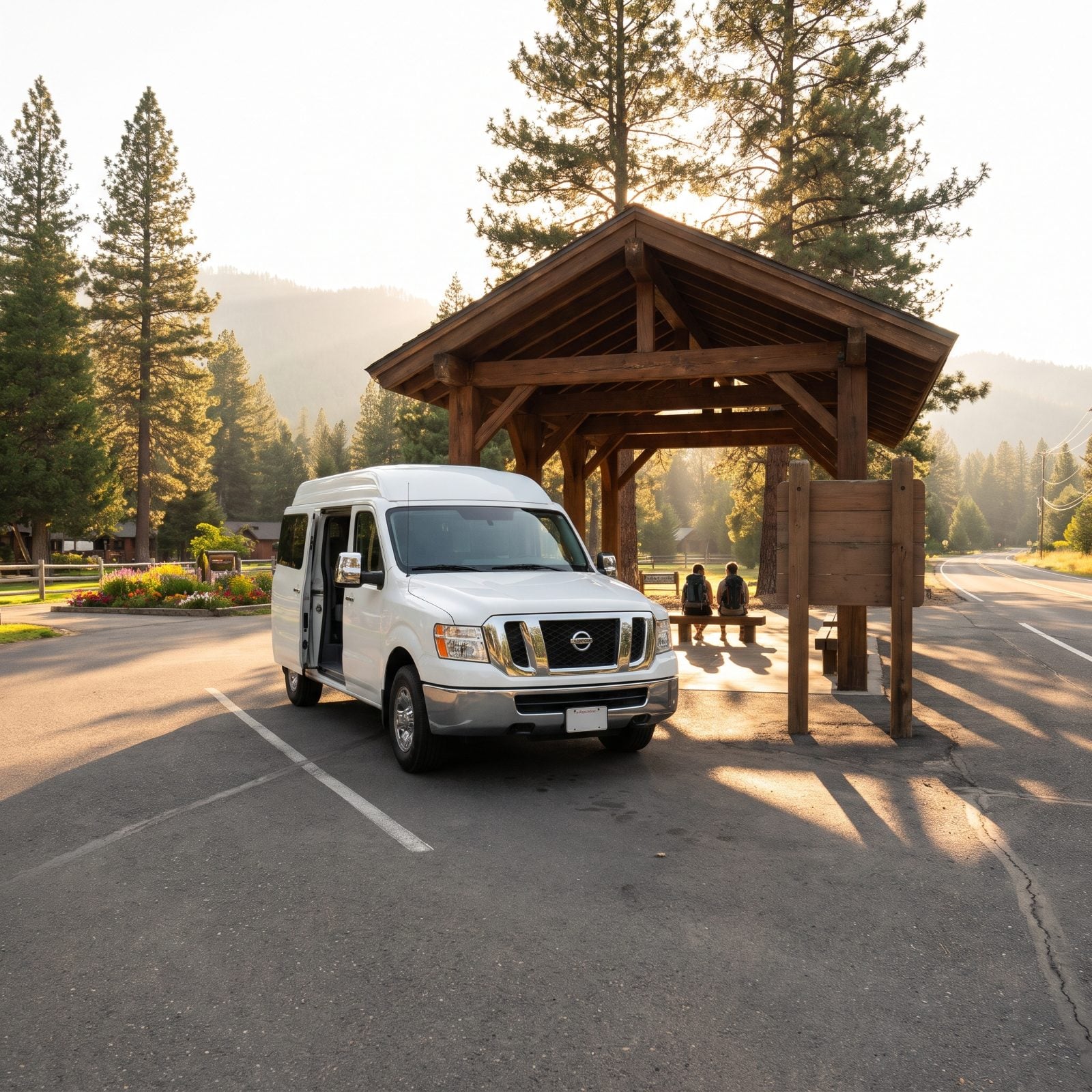
The dirty secret of big RVs is how much you dread unhooking them.
You get set up, get level, run the slides, hook the water and power — and now the last thing you want is to break it all down to drive into town for dinner or a trailhead. A shuttle means you don’t have to. Park once, stay parked, and let someone else handle the narrow streets and the parking you’d never fit into anyway.
National park gateway towns and lakeside resorts run these most often. Check the schedule before you book, because “shuttle available” sometimes means twice a day in peak season and never in May.
An On-Site Severe-Weather Shelter
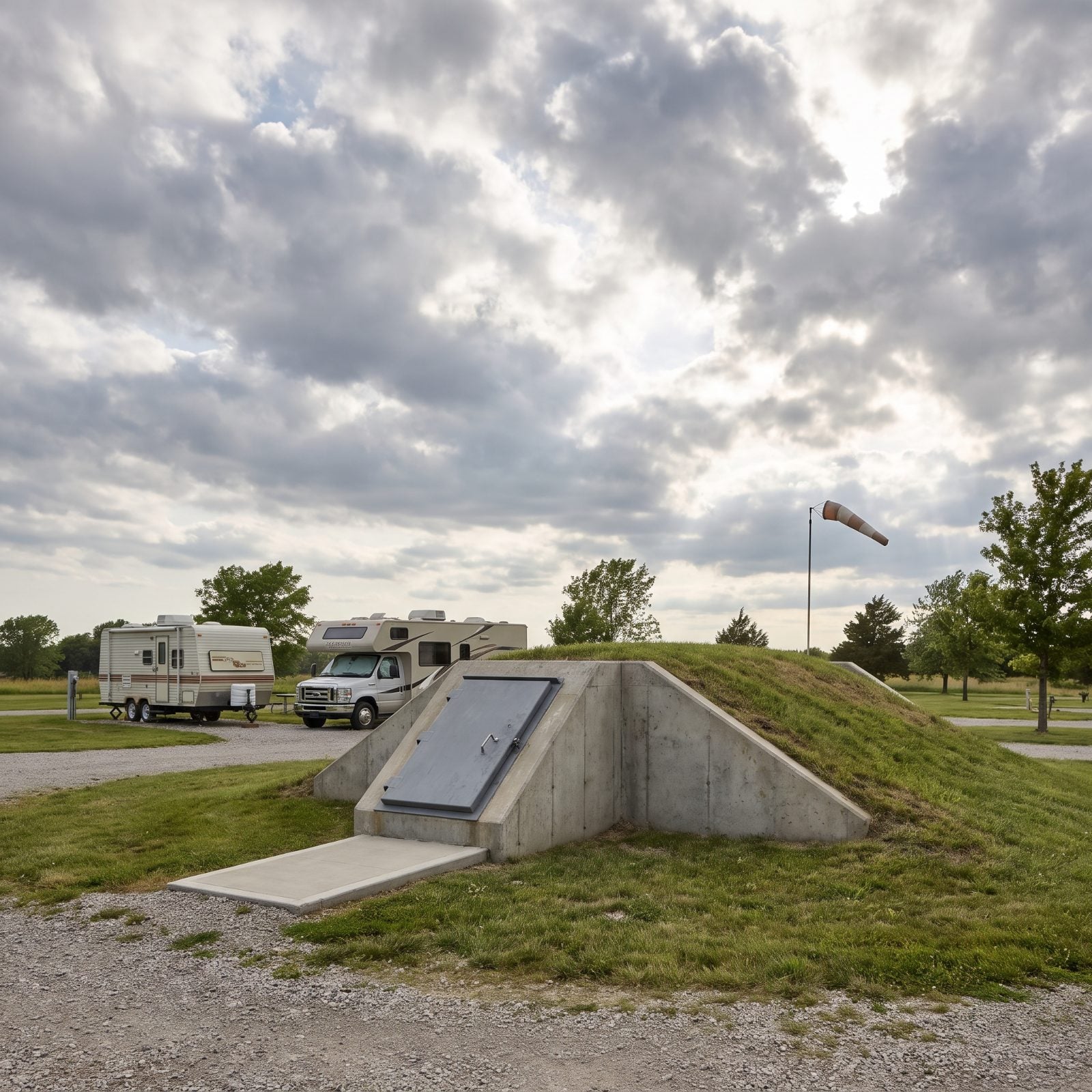
An RV is a lot of things. A tornado shelter is not one of them.
A box on wheels with thin walls and big windows is one of the worst places to ride out severe weather, and if you camp through Tornado Alley or the Plains in spring, you already know the sick feeling of watching a wall cloud build with nowhere to go. Campgrounds in those regions with a hardened shelter — or even a sturdy cinderblock bathhouse designated for it — deserve your booking money.
Ask where it is when you check in. Don’t wait until the sirens go off to go looking for it in the dark.
Gated Entry With Overnight Security Patrols
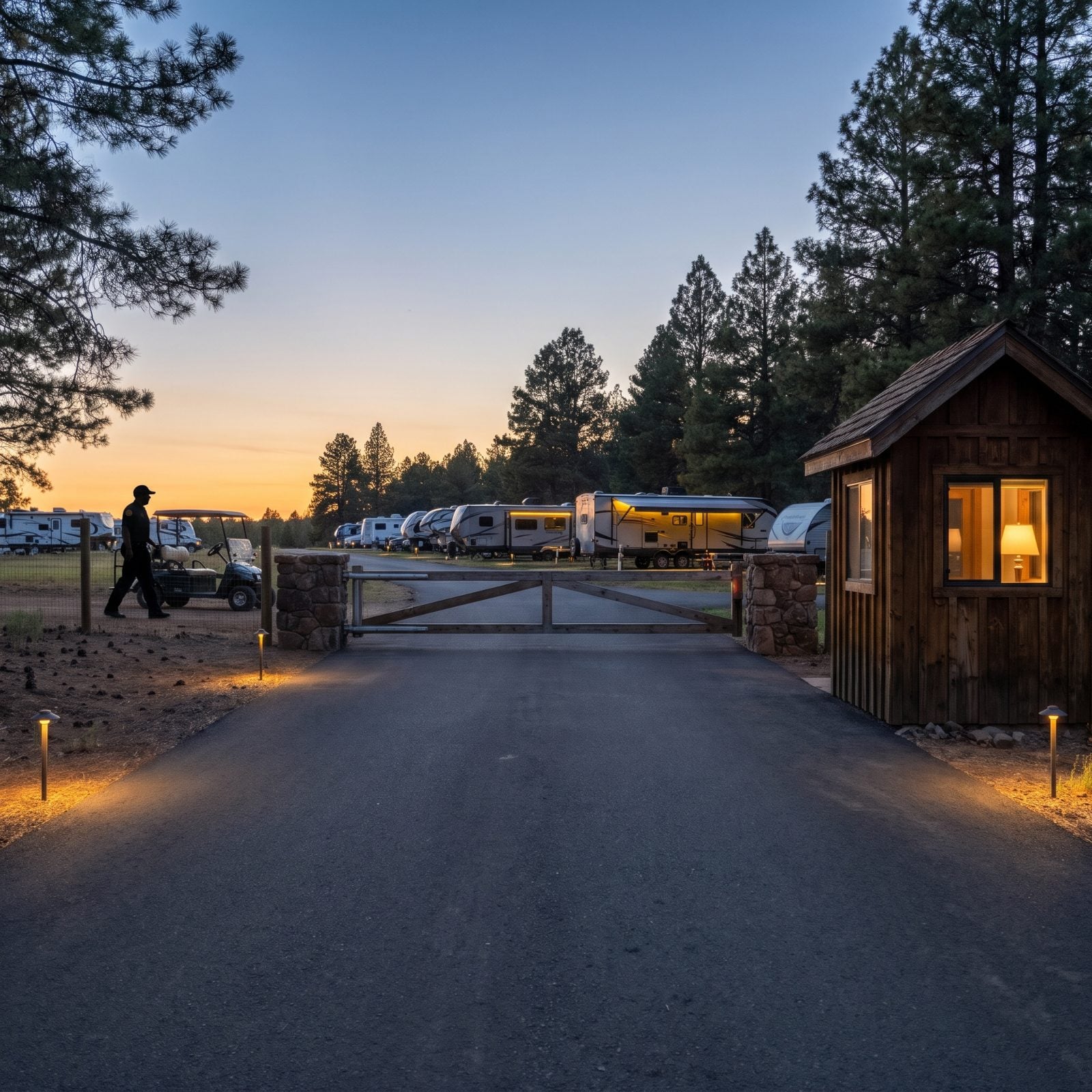
You sleep differently behind a gate. There’s no pretending otherwise.
A code or a key fob at the entrance, plus someone making rounds after dark, means the casual walk-through traffic stops at the fence. For solo travelers, full-timers with an expensive rig, and anyone who’s had a toolbox walk off a picnic table, that’s real peace of mind, not a marketing line. It also keeps out the 2 a.m. headlights of someone who missed the turnoff and decided your empty-looking loop was the highway.
Freeze-Protected Hookups for Winter Camping
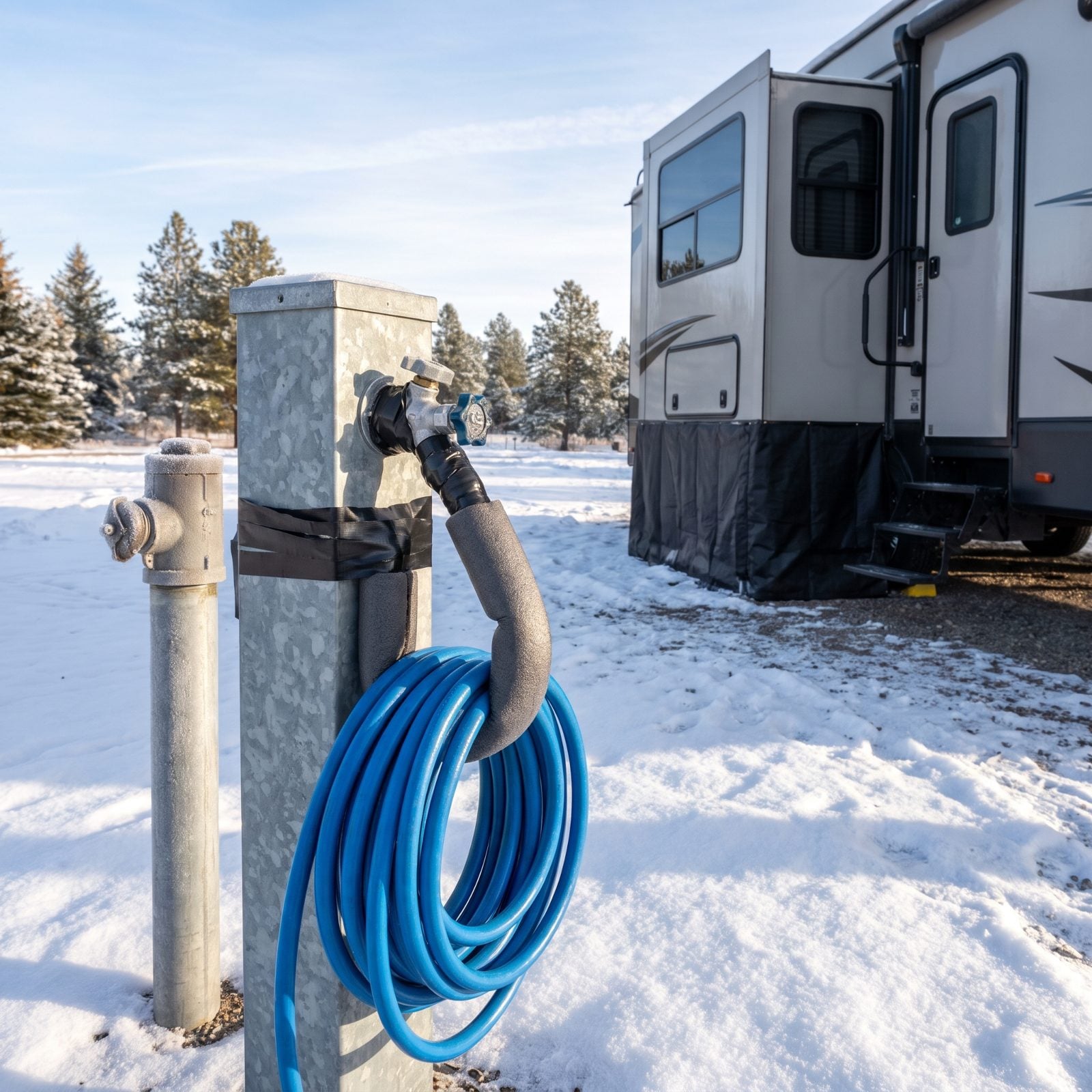
Most campgrounds shut the water off the first hard frost and hand you a jug.
A park built for winter runs freeze-protected hydrants, heat-taped risers, and sometimes heated hose connections, so you keep full hookups when it’s 15 degrees out. That’s the difference between actual winter camping and a miserable week of hauling water and sponge baths.
Chasing ski season or snowbirding somewhere that still dips below freezing at night? This is the feature that matters most. Pair it with skirting around your rig and a heated drinking hose of your own, because the park protects its plumbing — not the exposed line running to your door.
Generator-Free Quiet Camping Loops
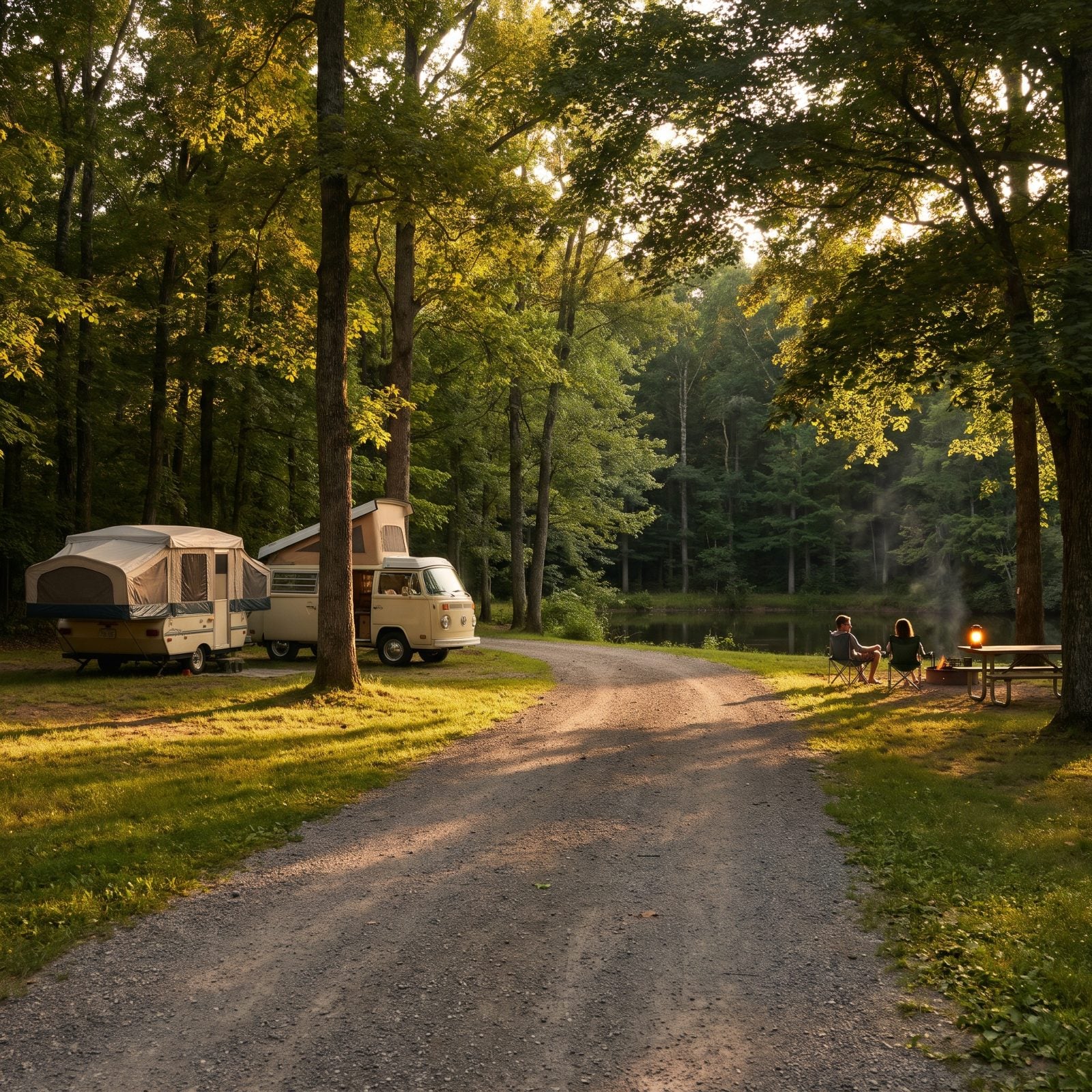
Nobody tells first-timers this: the loudest thing in a campground is rarely nature.
It’s the rig two sites over running a generator from dawn to dark so somebody can keep the air conditioner and the satellite TV going. A designated no-generator loop solves it. You get the hum of wind in the trees and the fire crackling instead of a small engine droning through your evening.
These loops are magnets for tent campers, solar setups, and small vans that don’t need shore power. If you’ve gone off-grid with batteries and panels, this is your tribe. Book it early. Quiet is in short supply, and the people who want it book ahead.
Waterfront Campsites
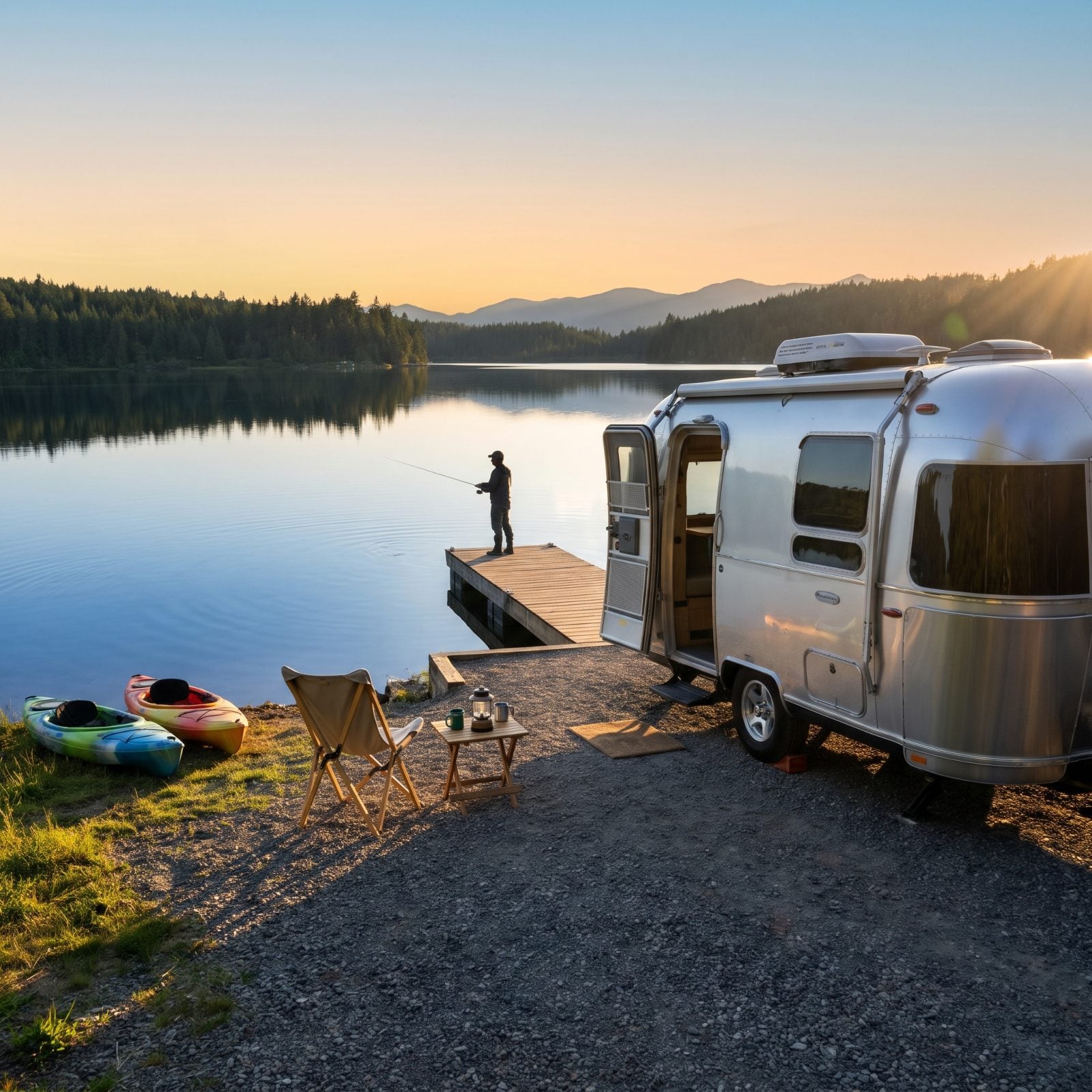
A waterfront site is the one amenity that pays you back every single morning.
You open the door to flat light on still water, a loon somewhere out of sight, coffee that tastes better because of the view. Fish off your own dock, launch a kayak without hauling it anywhere, swim without a drive. It’s the premium that justifies itself.
Two warnings from people who’ve learned the hard way. Lakefront sites run buggy at dawn and dusk, so bring screens and repellent. And confirm the pad is level and the back-in isn’t a 45-degree nightmare with the water two feet behind your bumper.