
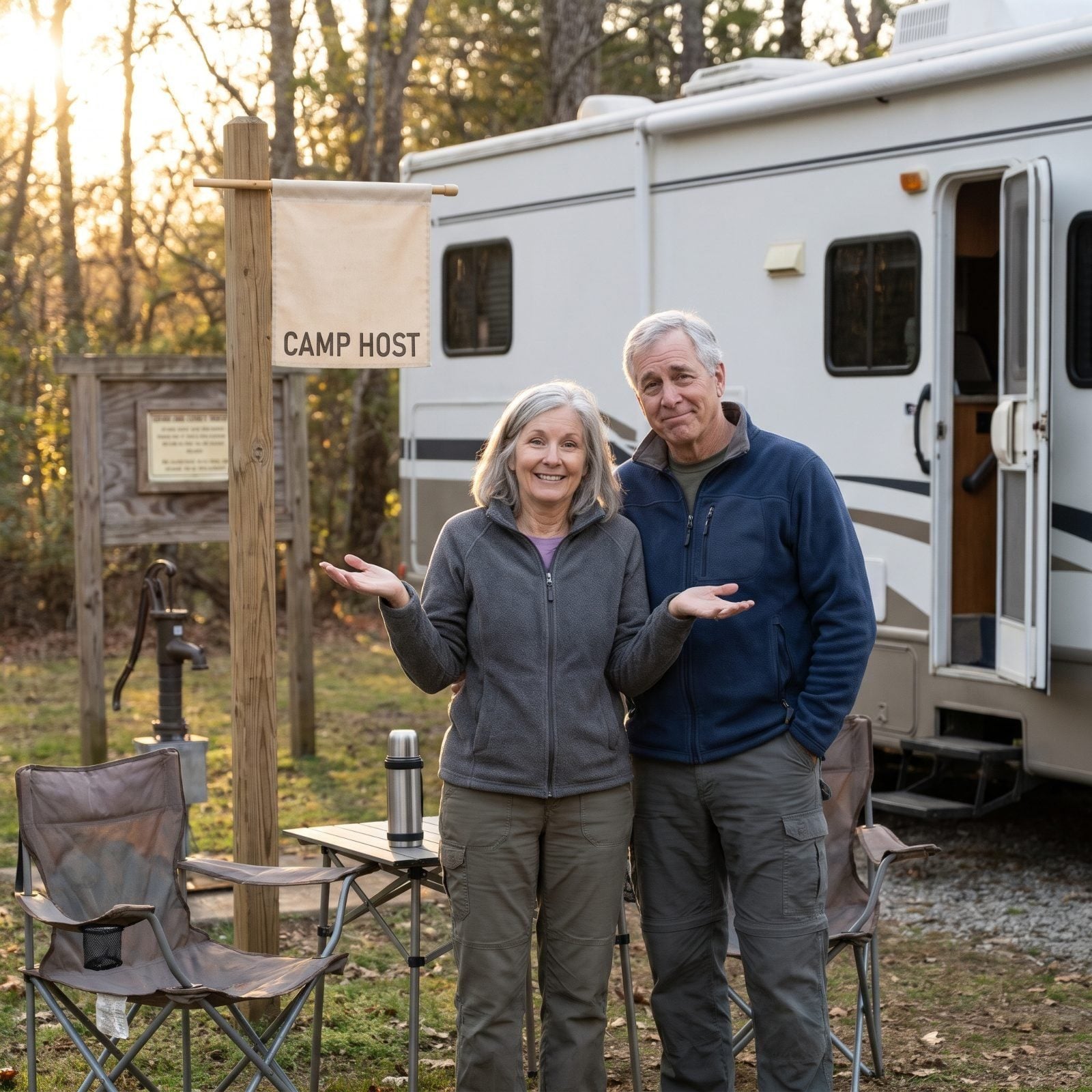
A reservation confirmation feels like a promise. It isn’t. It’s closer to a receipt that says you paid for a parking space in a field, and the exact space gets decided by somebody at a desk you’ll never see, working off a map you’ll never look at. We’ve pulled into enough campgrounds to learn that the booking screen hides more than it shows. Rates move. Site numbers slide. A field on a form that nobody explains can leave your rig hanging off the pad. Here’s what’s actually happening behind the counter, and how to stop it from biting you.
Please note that some of the images in this article were created with the assistance of AI.
37. Booking Direct Can Unlock Rates and Flexibility the Big Platforms Hide
The booking platforms take a cut, and that money comes from somewhere. Call the campground directly and sometimes you’ll get a lower nightly rate, sometimes a site they held back from the online inventory, and almost always a human who can bend a rule the software can’t.
I once talked an owner into a one-night stay that the website flat refused to sell. The platform enforces a two-night floor. The owner picking up the phone does not care.
36. Campground Rates Move With Demand, Just Like Hotel Rooms
The budget site you remember from last spring can read a good bit higher on a sunny Saturday in July, and nobody did anything wrong. Dynamic pricing landed in the RV world a few years back, especially at the bigger private parks and resort chains. Weekends cost more, peak season costs more, and a festival in the next town over costs more still.
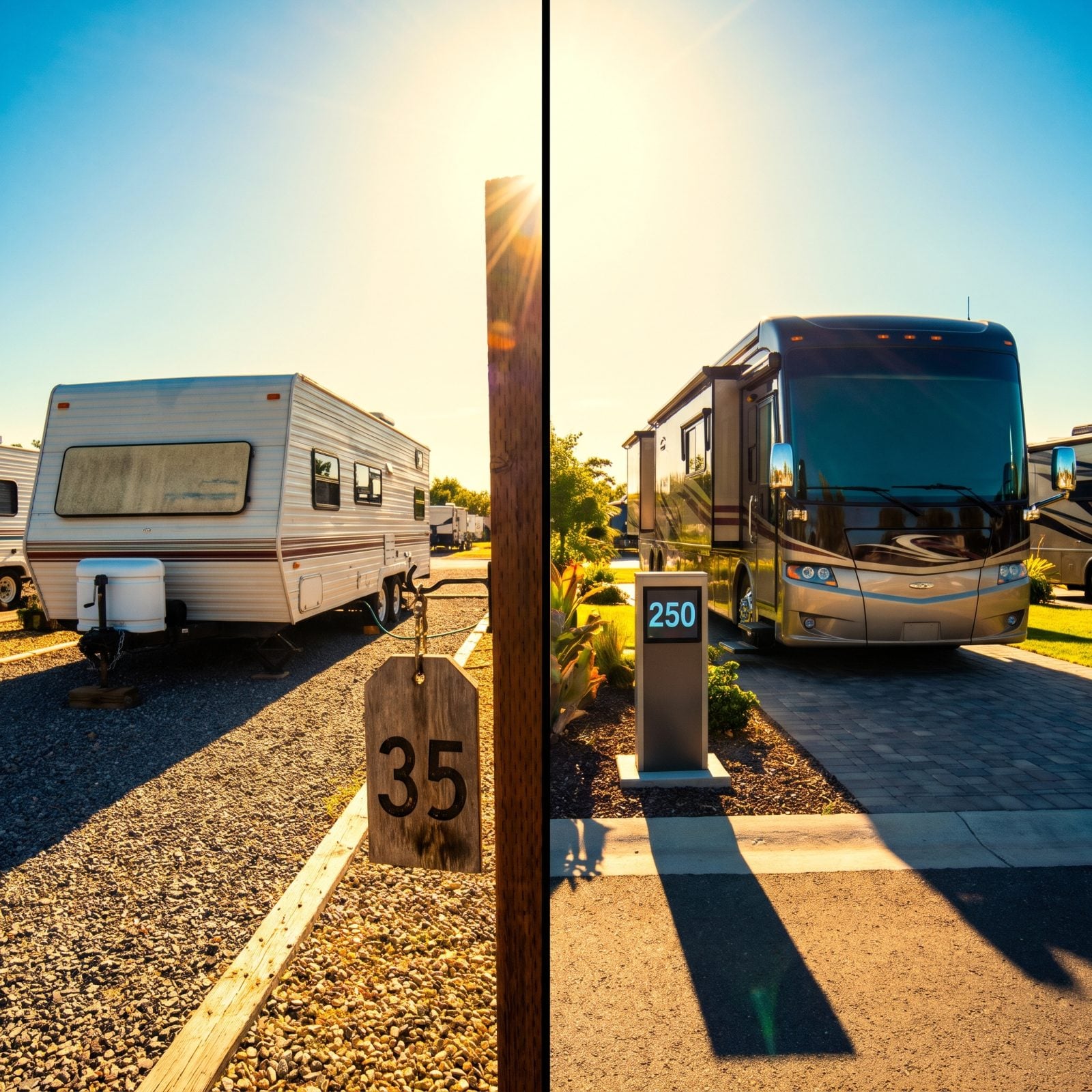
Watch the number before you commit. A plain gravel site next to a small travel trailer might run $35, while a landscaped paver pad that fits a big Class A motorhome can hit $250. Amenities set the starting price, and timing pushes it higher still.
35. Holiday Weekends Usually Come With a Minimum-Stay Trap

Try to book just Saturday of a long weekend and the system will often slap you with a two or three-night requirement. Fourth of July, Memorial Day, Labor Day, those are the big ones. The park isn’t being greedy for sport. A short stay over a holiday means a prime site sits half-empty when thirty people wanted it.
Plan for it. If you only want one night of the weekend, call and ask whether they’ll ever release single holiday nights closer to the date. Some do once the long-stay bookings fill in.
34. Canceled Sites Reappear Online With No Warning at All
That bucket-list park that’s been booked solid for months? Cancellations drop back into the pool constantly, and they don’t send up a flare when they do. Plans fall apart, weather spooks people, a rig breaks down the night before.
So be stubborn about it. Check the site at odd hours, especially a few days out when cancellation deadlines pass and refund-or-forfeit decisions force people’s hands.
33. A No-Show Can Cost You the Whole Reservation After One Night
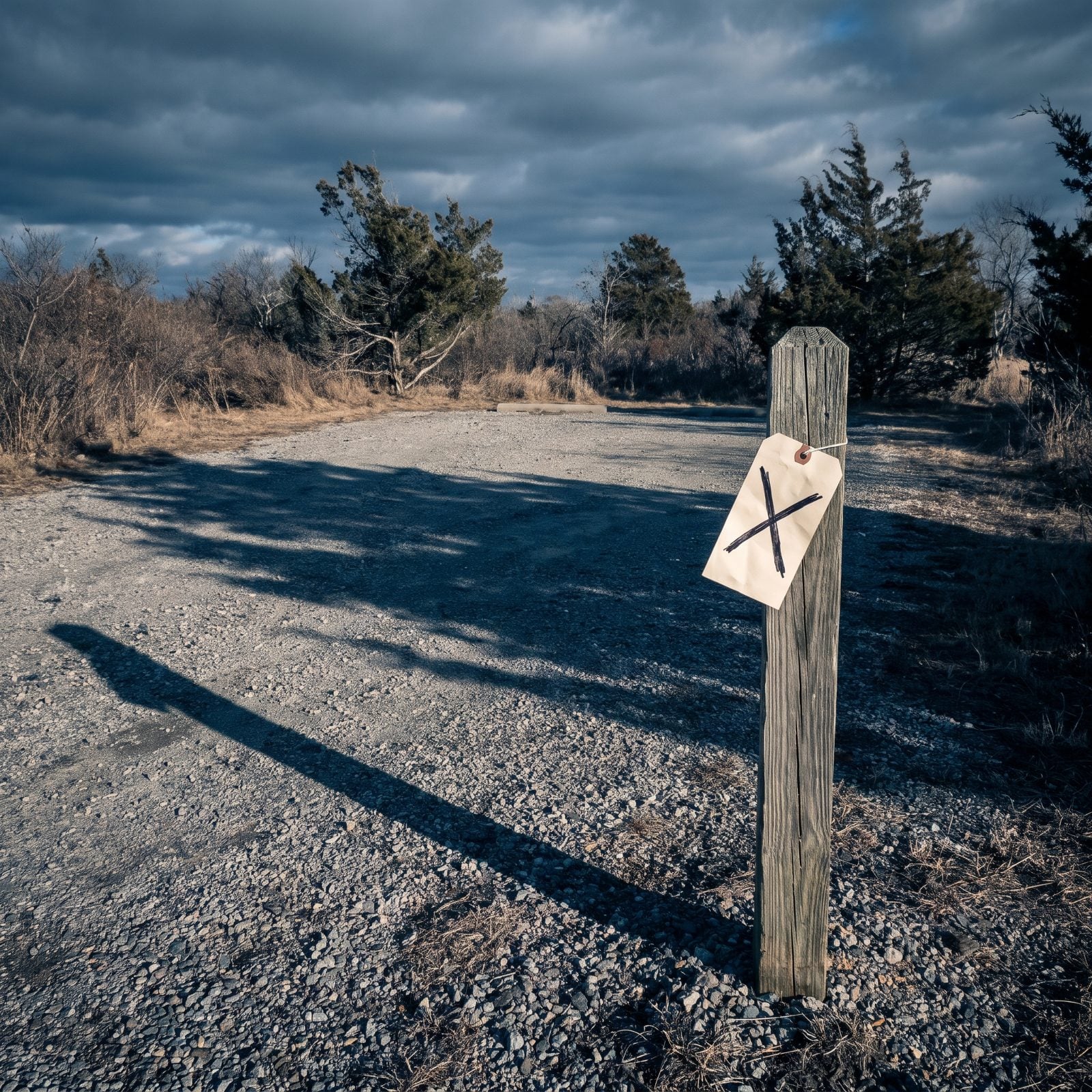
Running a day behind and figuring you’ll just show up tomorrow? Risky. Plenty of parks run a no-show policy that releases your entire multi-night booking if you don’t arrive or call by a set hour on day one. They keep the first night’s charge and resell the rest.
From their side it’s survival. An empty pad over a busy weekend is lost money they can’t claw back. One phone call protects you. Tell them you’re late, you’re coming, and nine times out of ten they hold it.
32. A Late Checkout Jams Up the Next Camper’s Arrival
Checkout at 11, check-in at 1, and those two hours aren’t padding. That window is when staff inspect the site, deal with hookups, and sometimes mow or rake. Linger past checkout and you don’t just annoy the office, you shove the whole domino line back.
The camper waiting on your pad gets held at the gate. The desk scrambles to put them somewhere else. And if you ever wonder why you got parked somewhere different from your booking, a late departure upstream is a common reason nobody mentions.
31. The Rig Length Field May Need Your Hitch and Rear Carrier Too
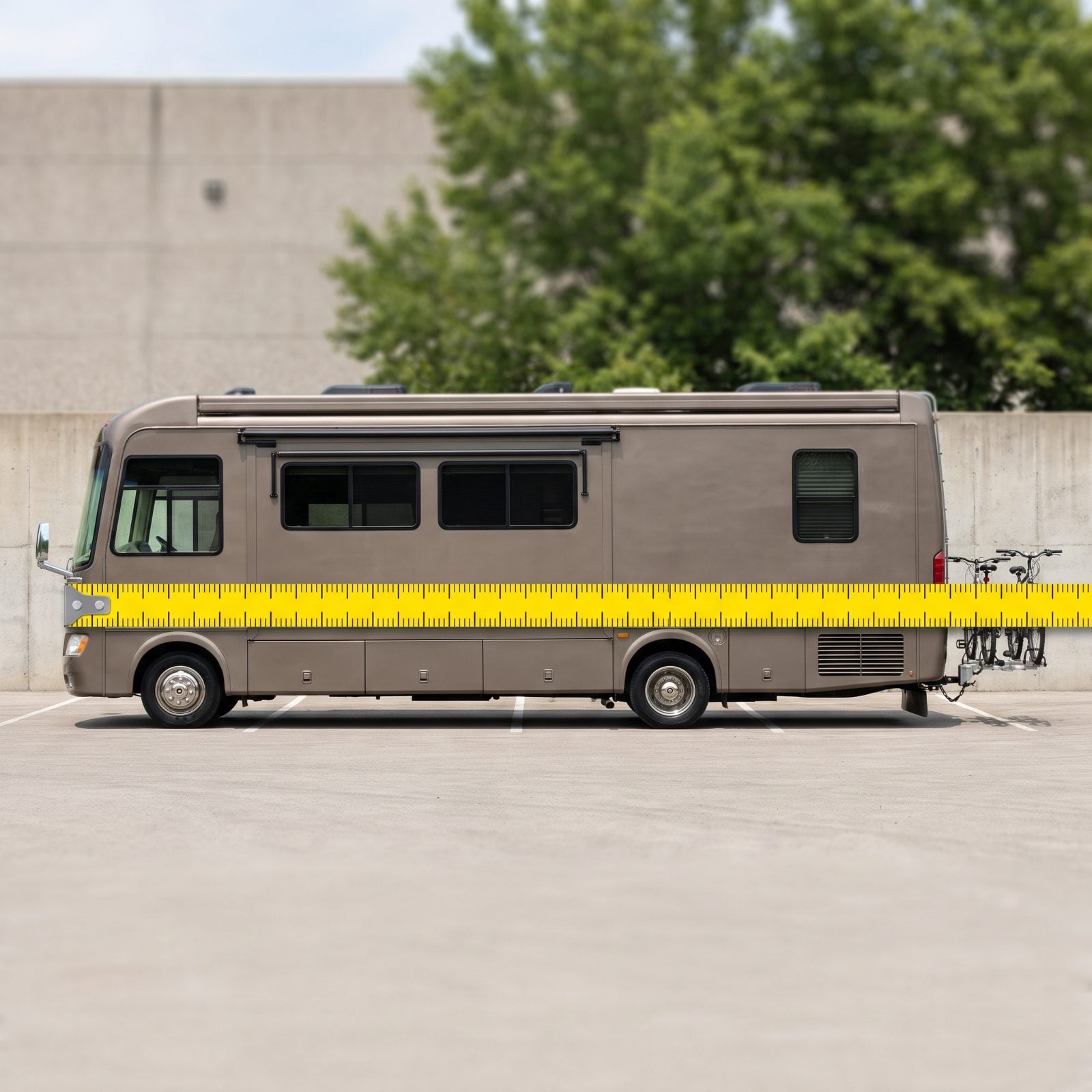
That little “rig length” box on the booking form is trickier than it looks. People punch in the number from the brochure, which measures the trailer box alone. The pad doesn’t care about the brochure. It has to fit everything: tongue, hitch, rear bike rack, cargo carrier, the works.
Measure bumper to bumper of the whole setup, carrier and all, including the tow vehicle if it has to stay hooked up. A 32-foot trailer can be a 48-foot problem. Undersize the number and you’ll arrive to a site that physically cannot hold what you drove in on.
30. Slide-Outs Can Make a Long Site Unusable
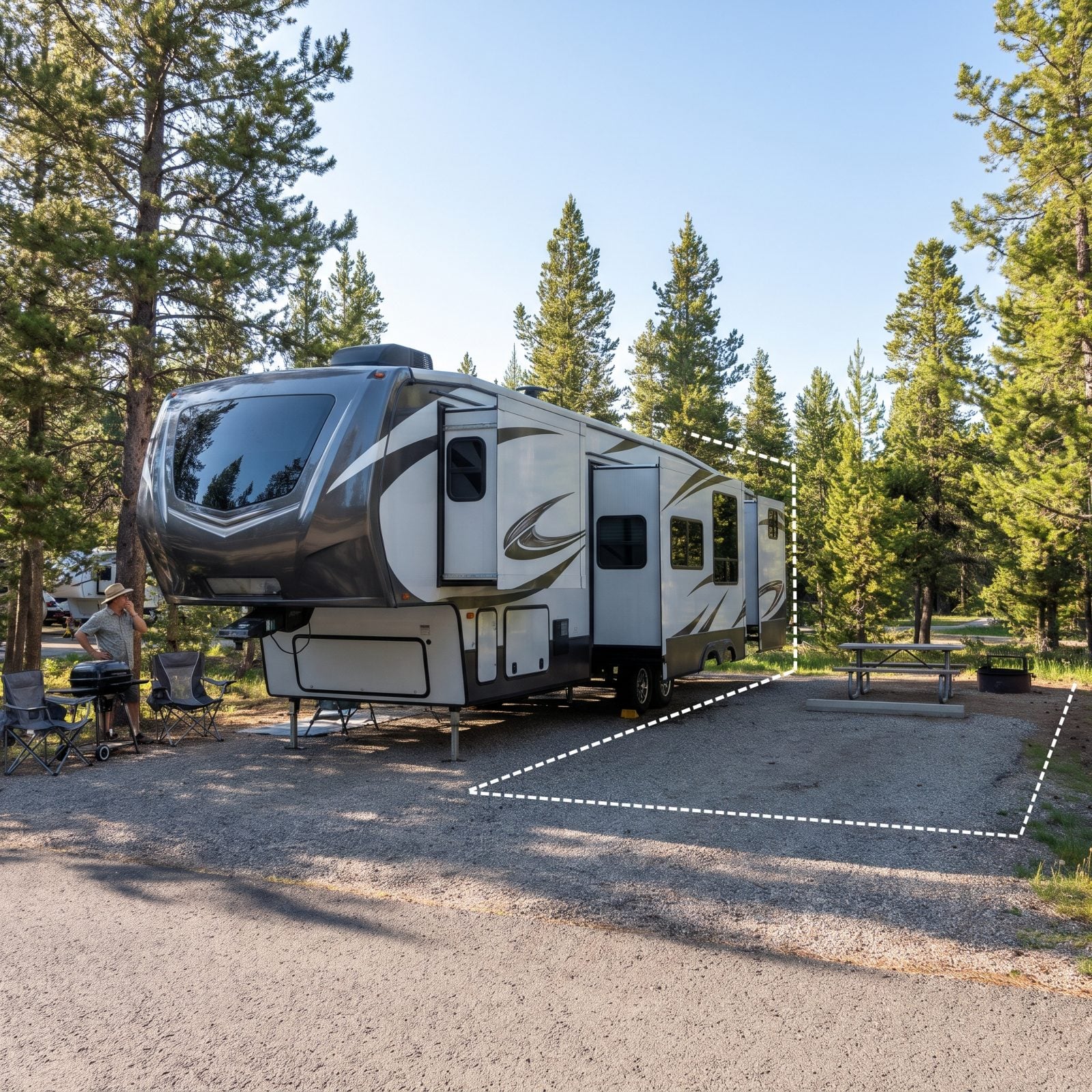
Length is only half the math. A site can be plenty long and still useless once your slides push out two or three feet on each side into a tree, a fence, or the neighbor’s picnic table.
Nobody at the desk knows your slide configuration unless you tell them, and the booking field asks for length and almost never for width with the slides open. So if your rig spreads out wide, mention it, and squint at the site photos for trees hugging the pad edge. I’ve watched a perfectly long site turn into a no-go because a slide had nowhere to go but into an oak.
29. A Big Rig Can Fit While Its Tow Vehicle Has Nowhere to Park
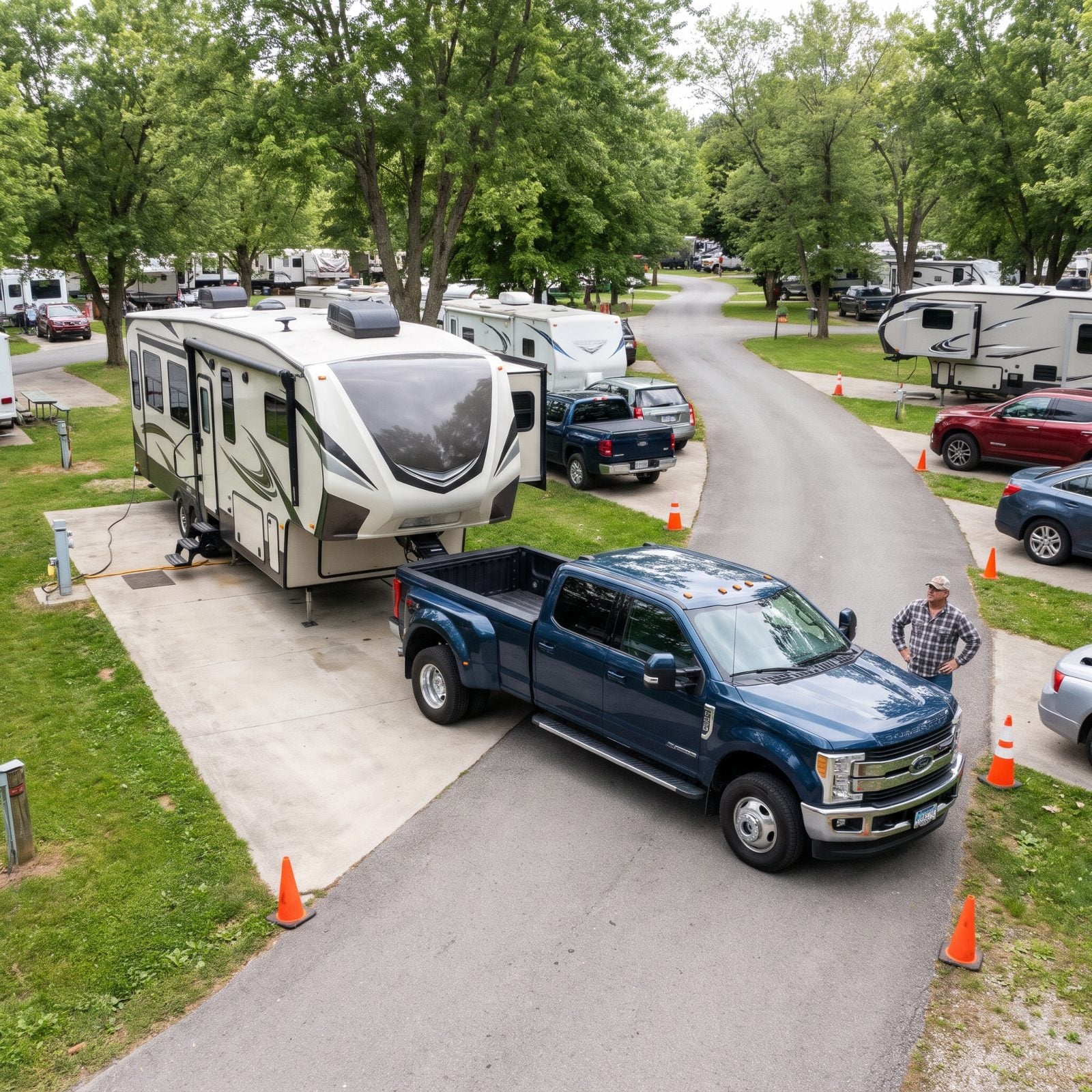
The rig fits the pad. That’s the part everybody checks. What nobody checks is where the truck goes once the trailer is unhooked.
On a lot of sites, your 50-foot footprint on paper becomes 70 feet in real life once you add the tow vehicle, and there’s no room to tuck it alongside. Some parks make you park overflow trucks in a separate lot. Sometimes for a fee. Sometimes a five-minute walk away in the dark, which is a joy when you’ve forgotten something and have to hike back.
Ask about tow-vehicle parking when you book — it’s the single question that saves the most arguments at check-in, and I’ve watched it ruin an otherwise fine first night.
28. The Golf-Cart Escort Is Partly There to Keep You From Hitting Things
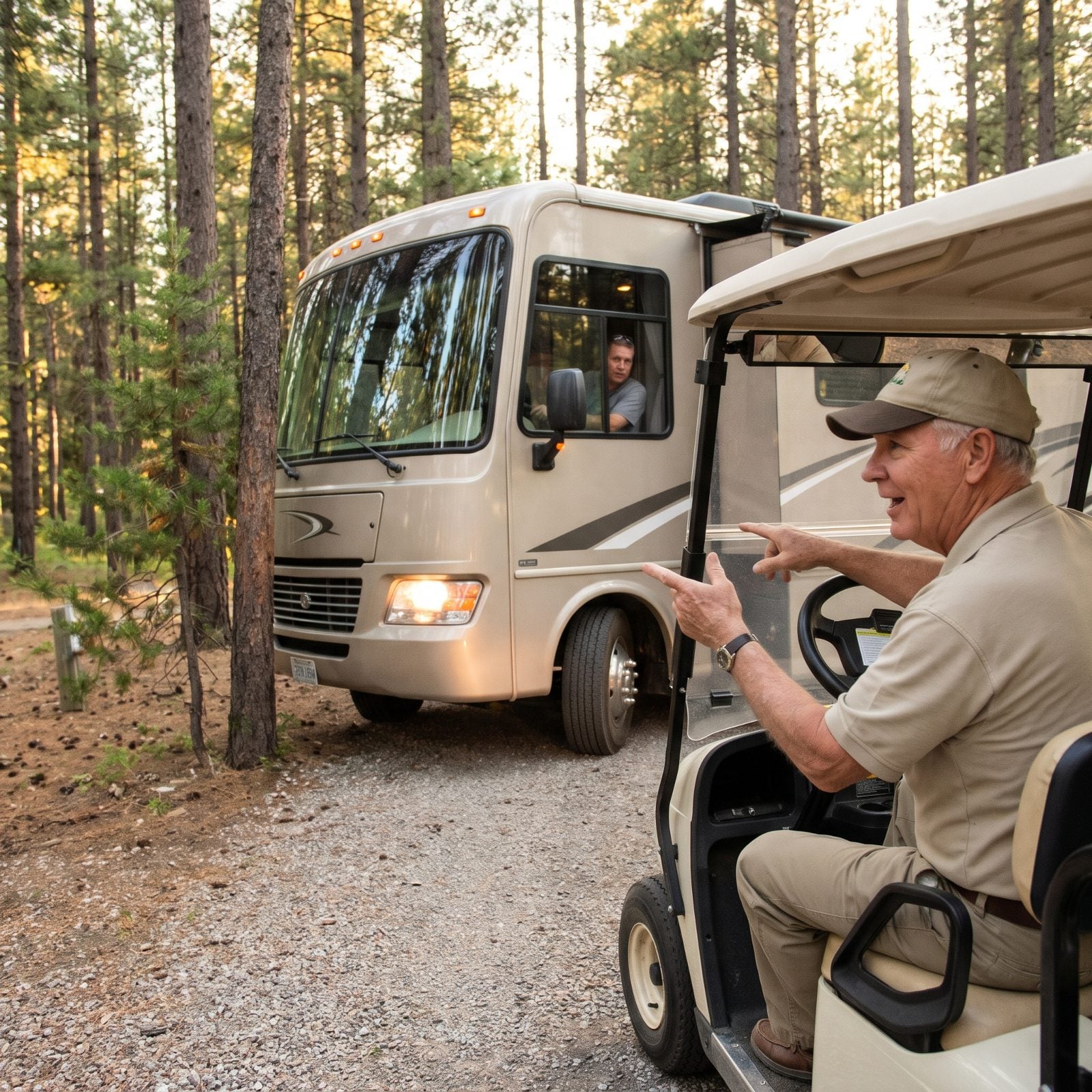
You pull in, and someone hops on a cart and says they’ll walk you to your site. Friendly gesture. Also insurance.
Those escorts exist because backing a rig into a tight loop at dusk is how pedestals get clipped, low branches get torn off, and septic caps get cracked. A sheared-off power box can mean a whole section loses hookups until an electrician finally shows up, which around here is never soon. The escort is cheaper than the repair, and the park knows it.
Let them guide you. Nobody’s judging your backing — they’ve seen worse, and they’d rather spend ten minutes on the cart than a week waiting on parts.
27. Front-Desk Notes Quietly Remember Your Favorite Site
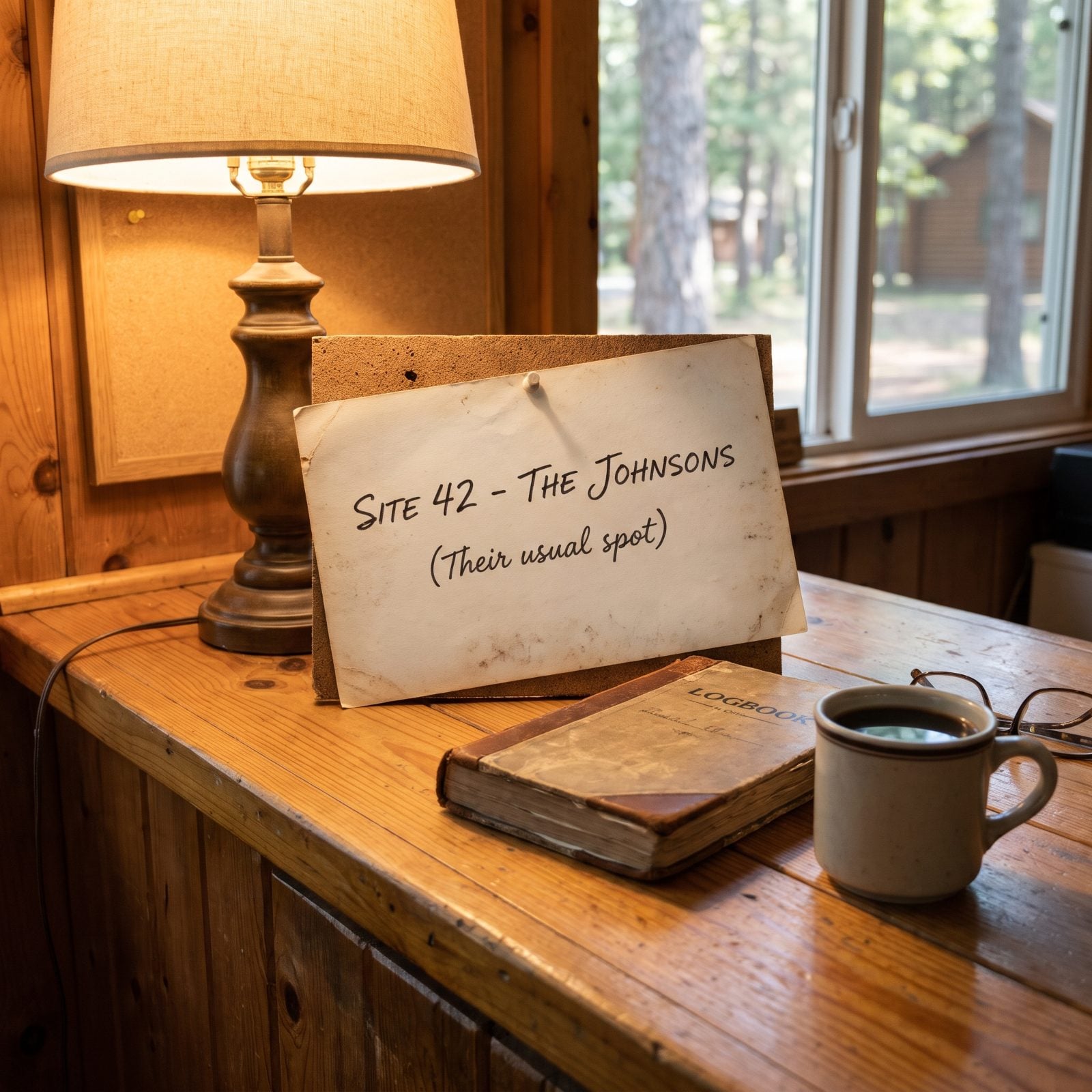
Good parks keep a memory on you, and it works in your favor.
Return enough times and your profile picks up notes: prefers shade, hates being near the bathhouse, wants the pull-through on the end because the dog’s reactive. A reservationist who sees all that can hand you the same site you loved last time without you asking twice.
But here’s what most folks miss. Those notes only exist if someone tells the desk. Mention your preferences out loud, politely, every single stay — that’s how the note gets written in the first place.
26. The Ten-Year Rule Is Usually About How the Rig Looks, Not Its Birthday
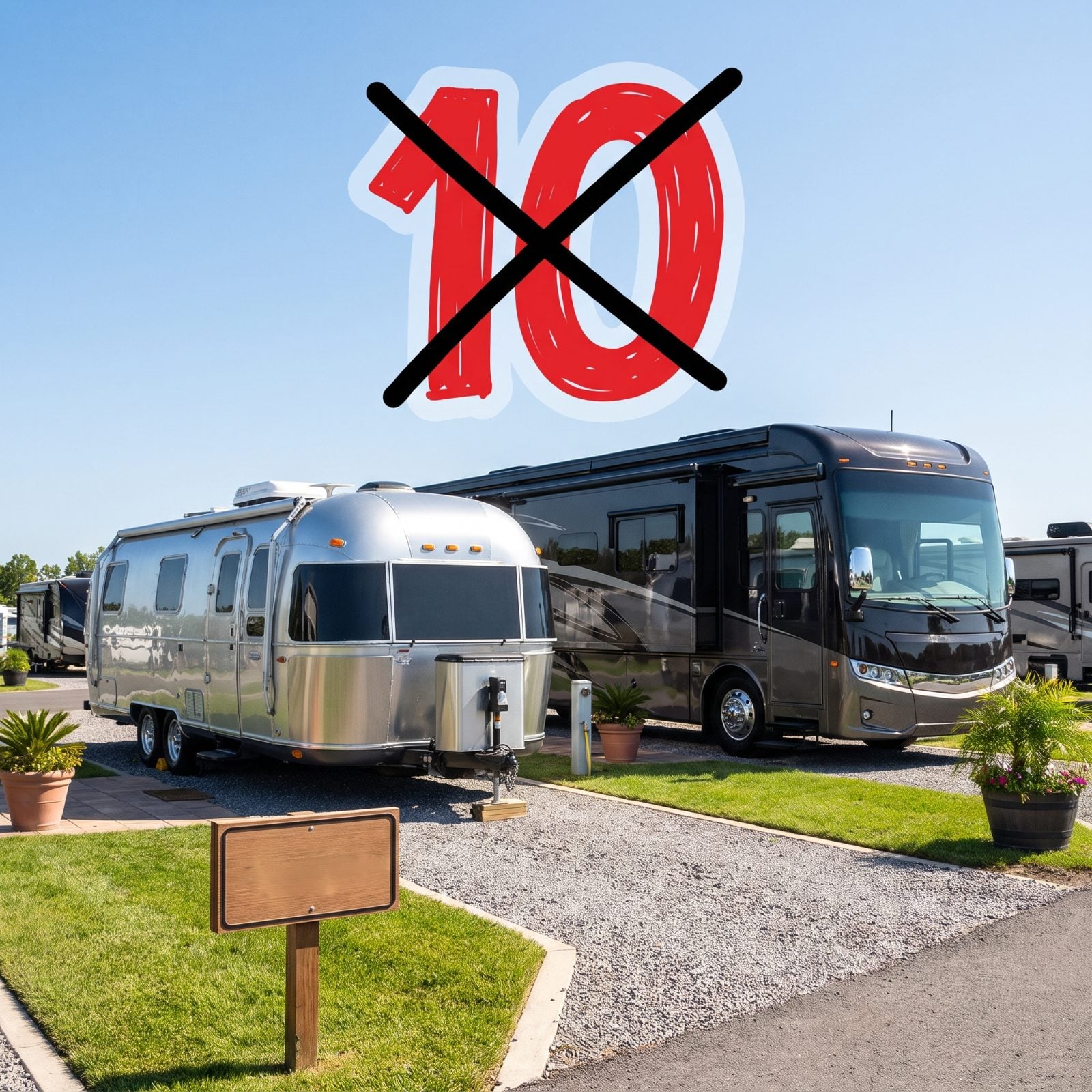
The ten-year rule scares people, and it shouldn’t scare the ones it’s aimed at protecting.
Plenty of upscale parks say they won’t take rigs older than ten years. In practice, most will wave in a clean, well-kept 2009 unit and turn away a streaked, delaminating 2019 one. The age line is a filter; condition is the real test. Send a few current photos when you book an older rig and you’ve usually settled it before anyone squints at the odometer.
The rule is written in years because years are easy to type. It’s enforced on appearance because appearance is what the neighbors see.
A fresh wax job and some decal cleanup has talked more rigs through that gate than any argument ever will.
Commenting in a debate over the ten-year rule, a longtime RV park owner wrote: “Have owned my RV park for 20 years and always stressed to my personnel handling reservations, “it’s the condition of the RV, not the age”.”
25. Your Day Guests Can Owe a Fee and Lose Their Parking Spot
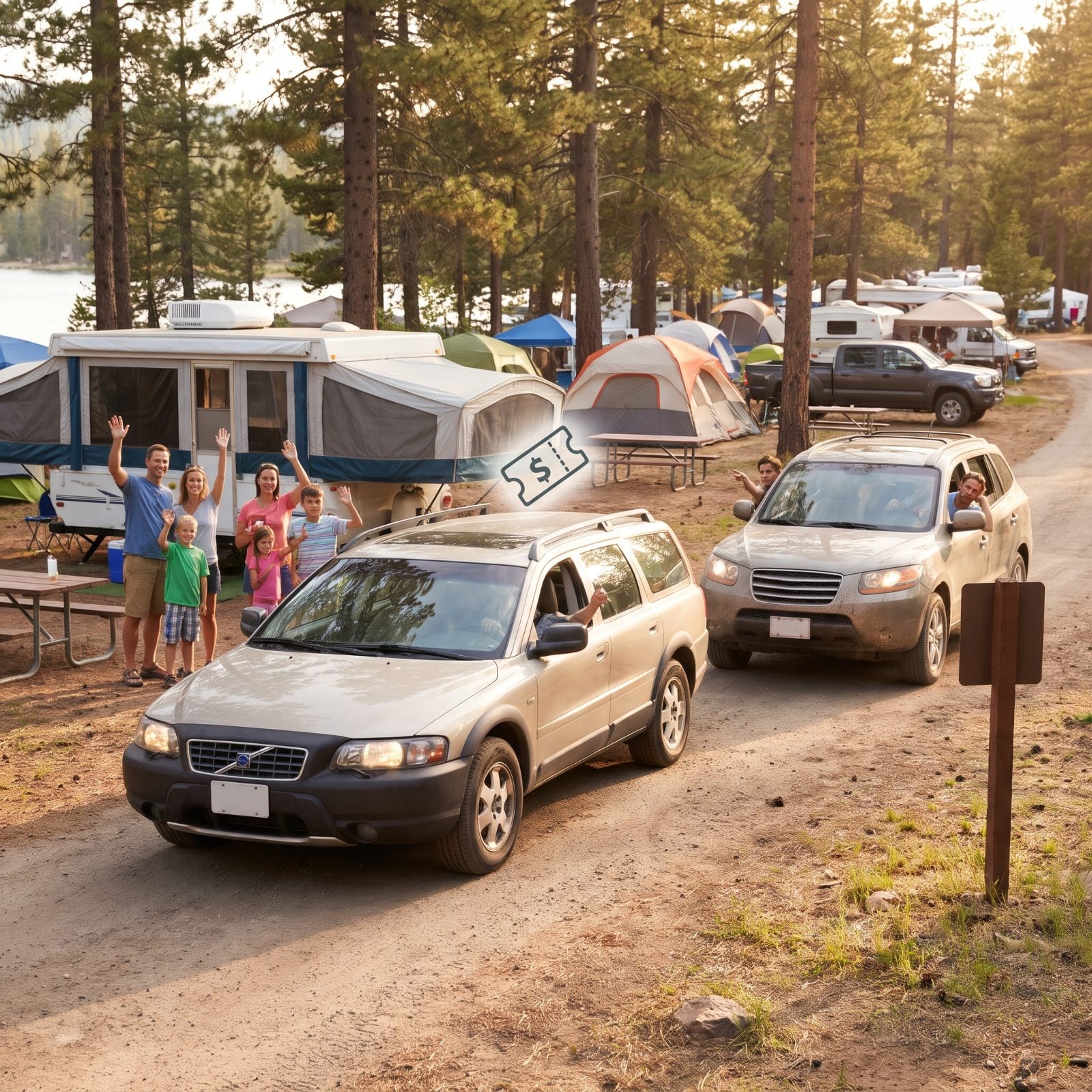
Grandkids coming for the afternoon. Friends swinging by for dinner. Lovely idea, and often a line item.
Many parks charge a day-visitor fee per head and cap how many cars can come in. Those extra vehicles frequently can’t park at your site at all — they land in a visitor lot and your people walk in.
Tell guests before they arrive so nobody’s fuming at the gate. Call ahead and the desk can log the visitors, which usually speeds the whole thing up.
24. That Occupancy Limit Isn’t Arbitrary, It’s the Septic Tank Talking
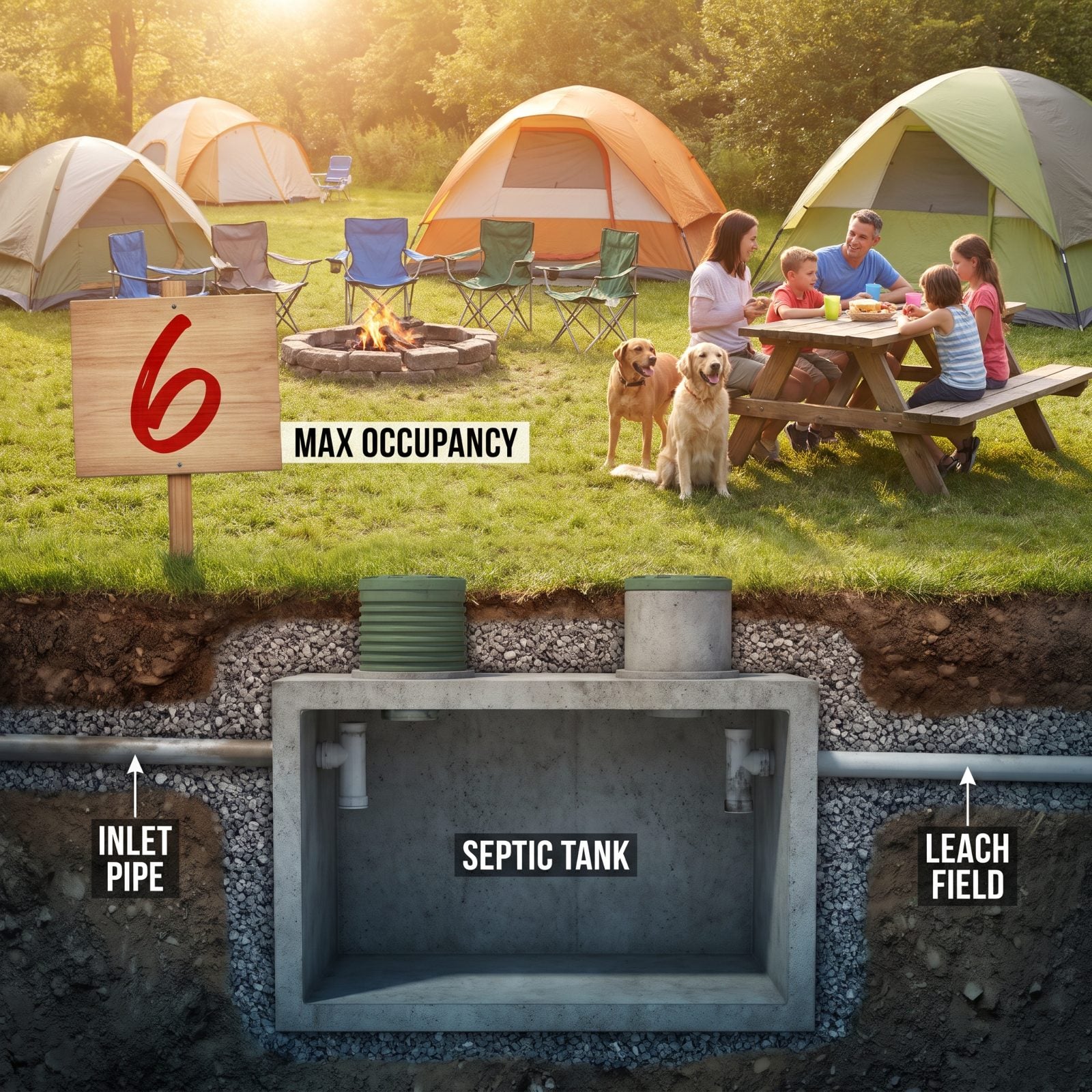
Six people max per site sounds like the park being stingy. It’s usually plumbing.
Occupancy caps often trace back to fire-code spacing or the capacity of an aging septic field that was never built for twelve people showering on one pad. Overload it and sites back up, which ruins everyone’s weekend, not just yours.
Got a big family gathering coming? Book two adjacent sites instead of stuffing one. Costs more, sure, but it keeps you inside the rules and keeps the drains working.
23. The Monthly Rate Looks Cheap Until the Electric Meter Catches You
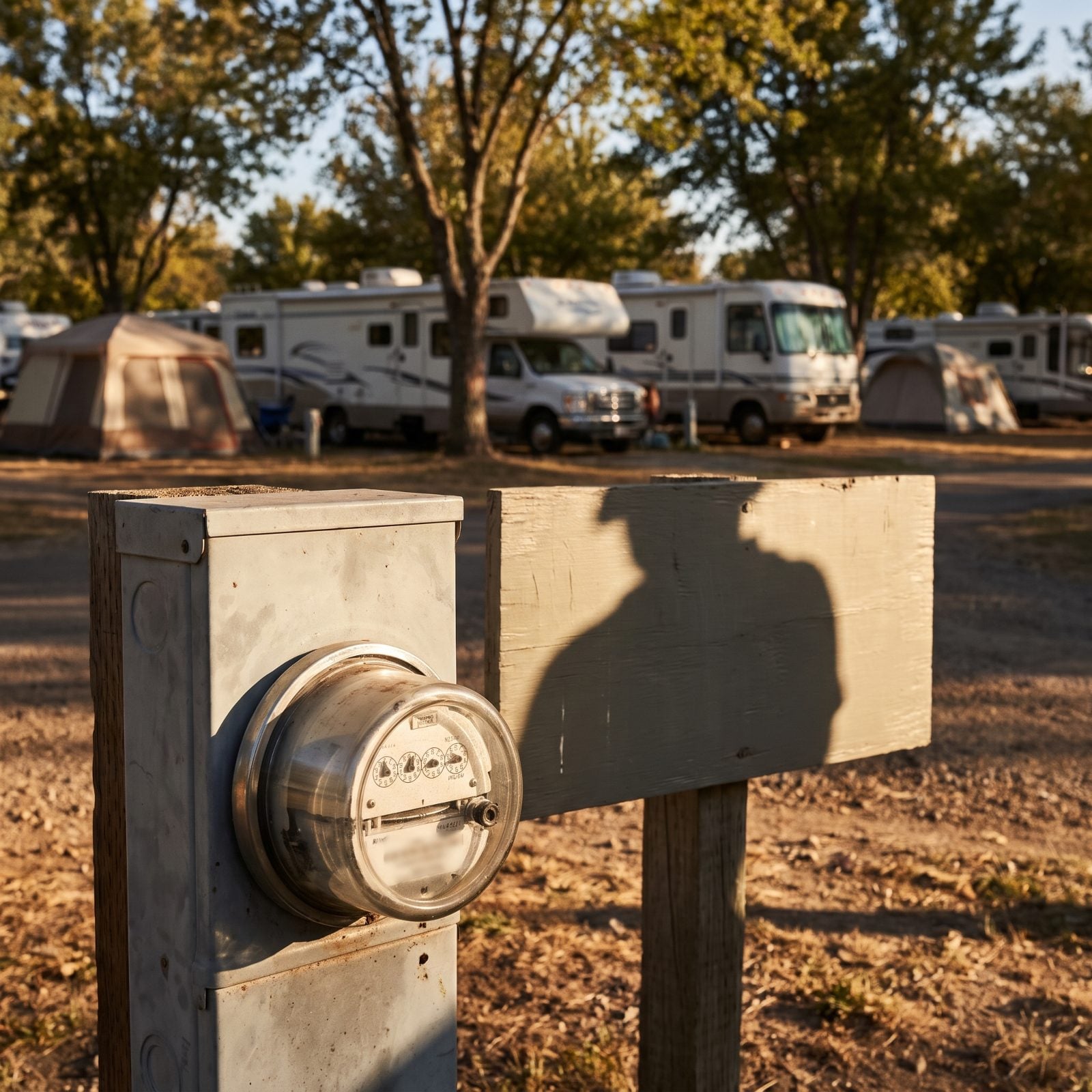
Monthly rates are a trap of math, not malice.
That cheap-looking monthly site sounds like a steal next to nightly pricing. Then you read the fine print: electricity is metered separately and billed on top. Run two AC units through an Arizona July, or electric heat through a Montana February, and the power bill can rival a house.
Ask flat out whether electric is included or metered before you sign. If it’s metered, ask what a typical bill runs for your season. Summer and winter are the ones that bite.
22. Settling In For Months? Expect a Credit or Background Check
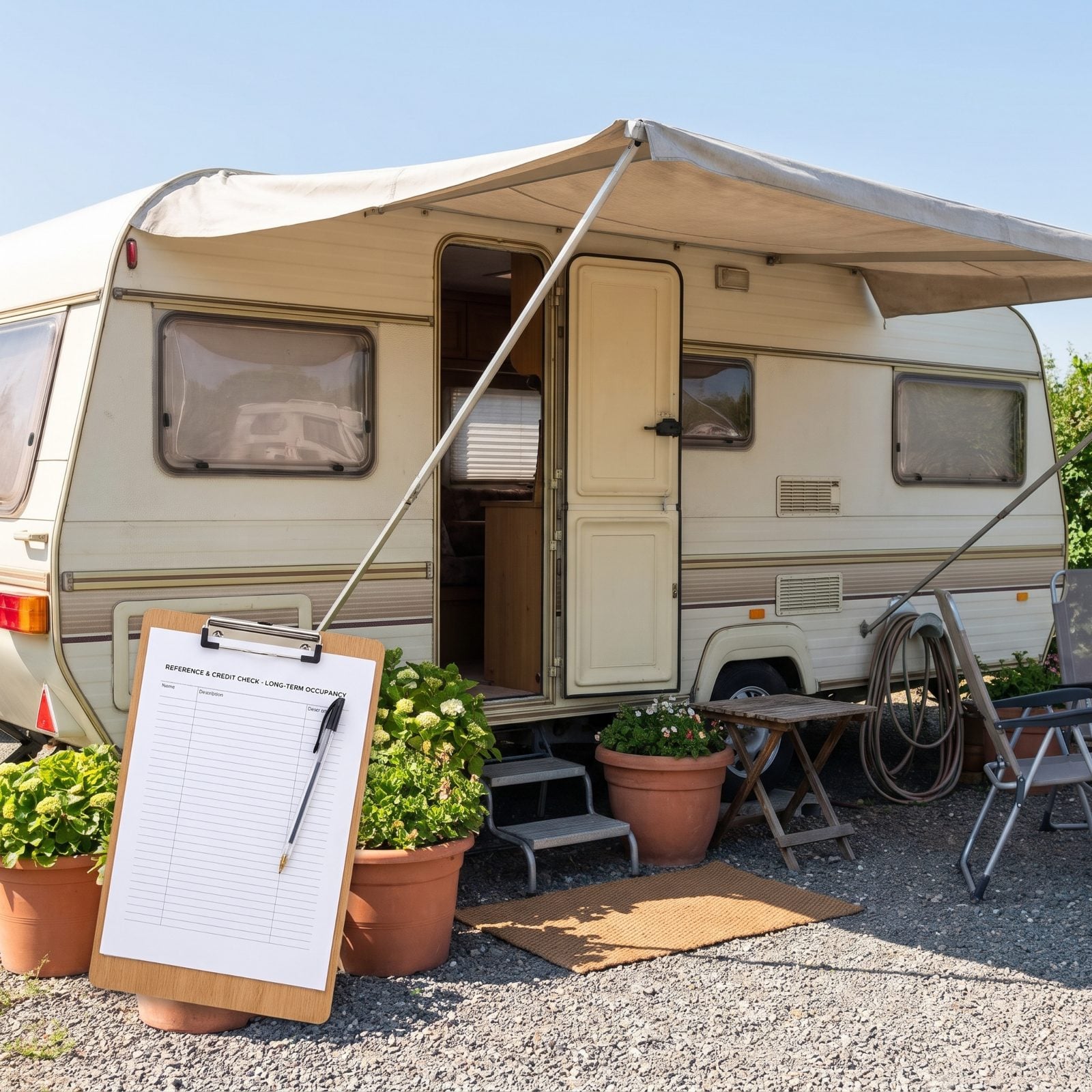
A weekend needs a credit card. A six-month stay sometimes needs a reference.
Once you cross into extended-stay territory, a lot of parks treat it more like a lease than a reservation. Expect an application, maybe a credit pull, sometimes a background check, occasionally proof of insurance on the rig. It blindsides full-timers who assumed it’d be the same quick swipe as a nightly booking.
None of it is personal. The park is renting you a slice of real estate for a long stretch and wants to know who’s moving in next to the family three pads down. Have your documents ready and it’s a short conversation instead of a long one.
21. Campground Wi-Fi Is Shared Infrastructure, Not Home-Grade Internet
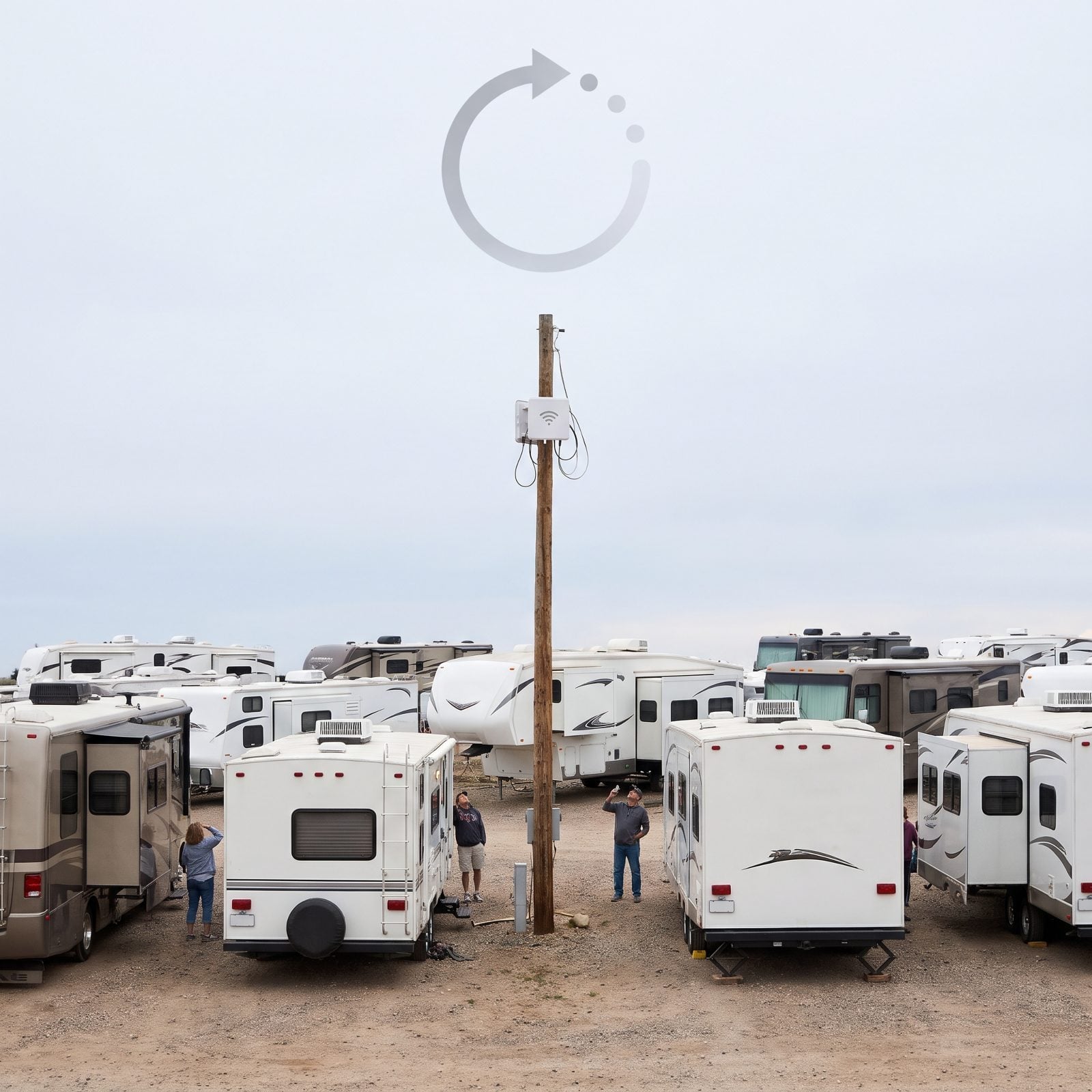
That one antenna on the pole is splitting its bandwidth across every rig in the loop. At 9pm, when the whole park is streaming, you’re sharing a garden hose with the entire row.
I stopped being annoyed about this years ago. Campground Wi-Fi is for checking email and pulling up a weather radar — not uploading video, and definitely not a work call that actually matters. A bonus, never a plan.
Need reliable internet? Bring your own. A cellular hotspot on a decent carrier will beat park Wi-Fi almost everywhere, and you won’t be at the mercy of whoever just started a four-hour movie two sites over.
20. Cell-Service Claims Can Be Accurate for One Carrier and Useless for Another
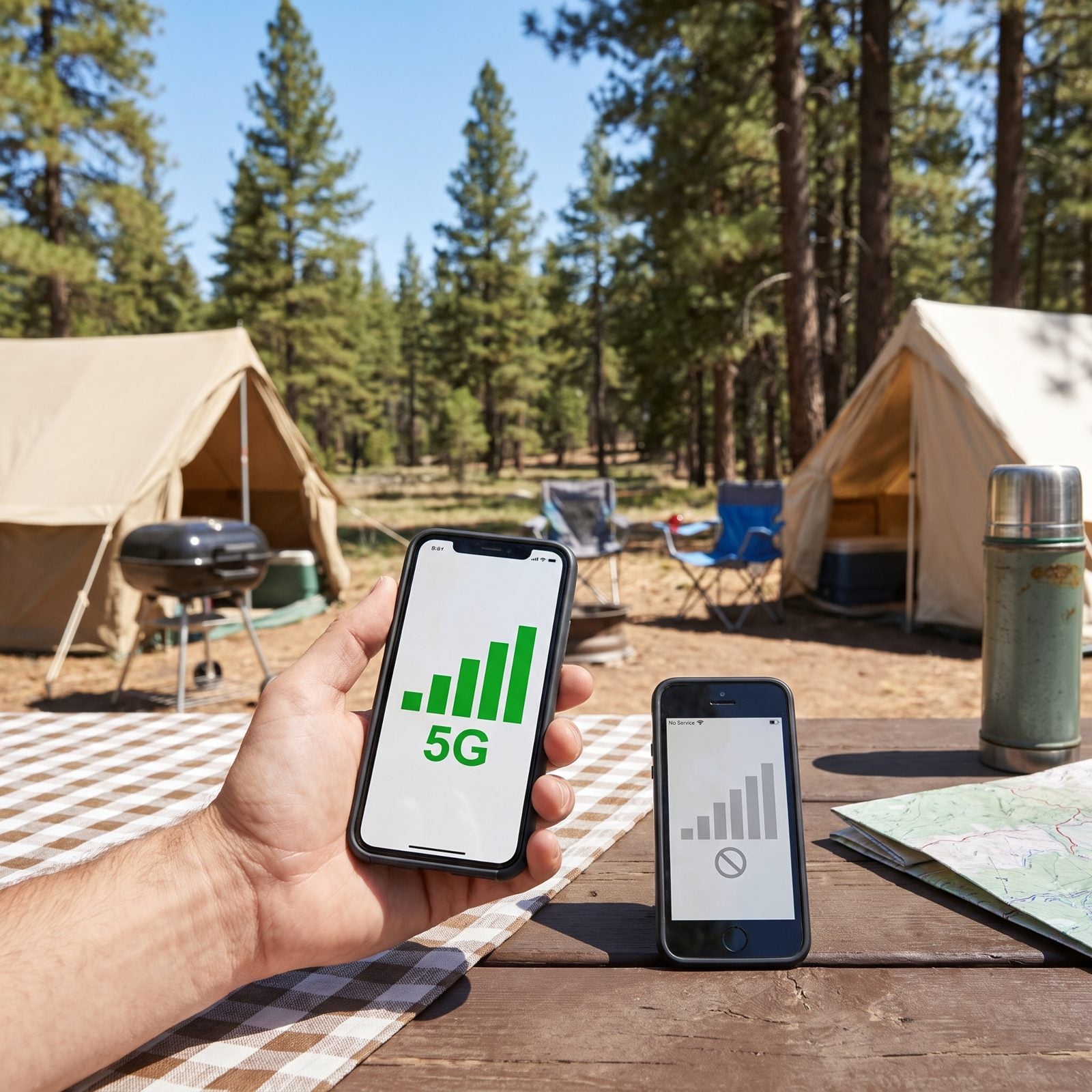
A campground promising “good cell service” usually means good on whatever carrier the owner happens to use. Show up on a different network and you might be hiking to the dump station just to send one text.
The desk isn’t lying. They genuinely don’t know how your phone behaves out there — they’ve never stood on your exact site with your exact plan.
19. A Shaded Premium Site May Be Terrible for Satellite Reception
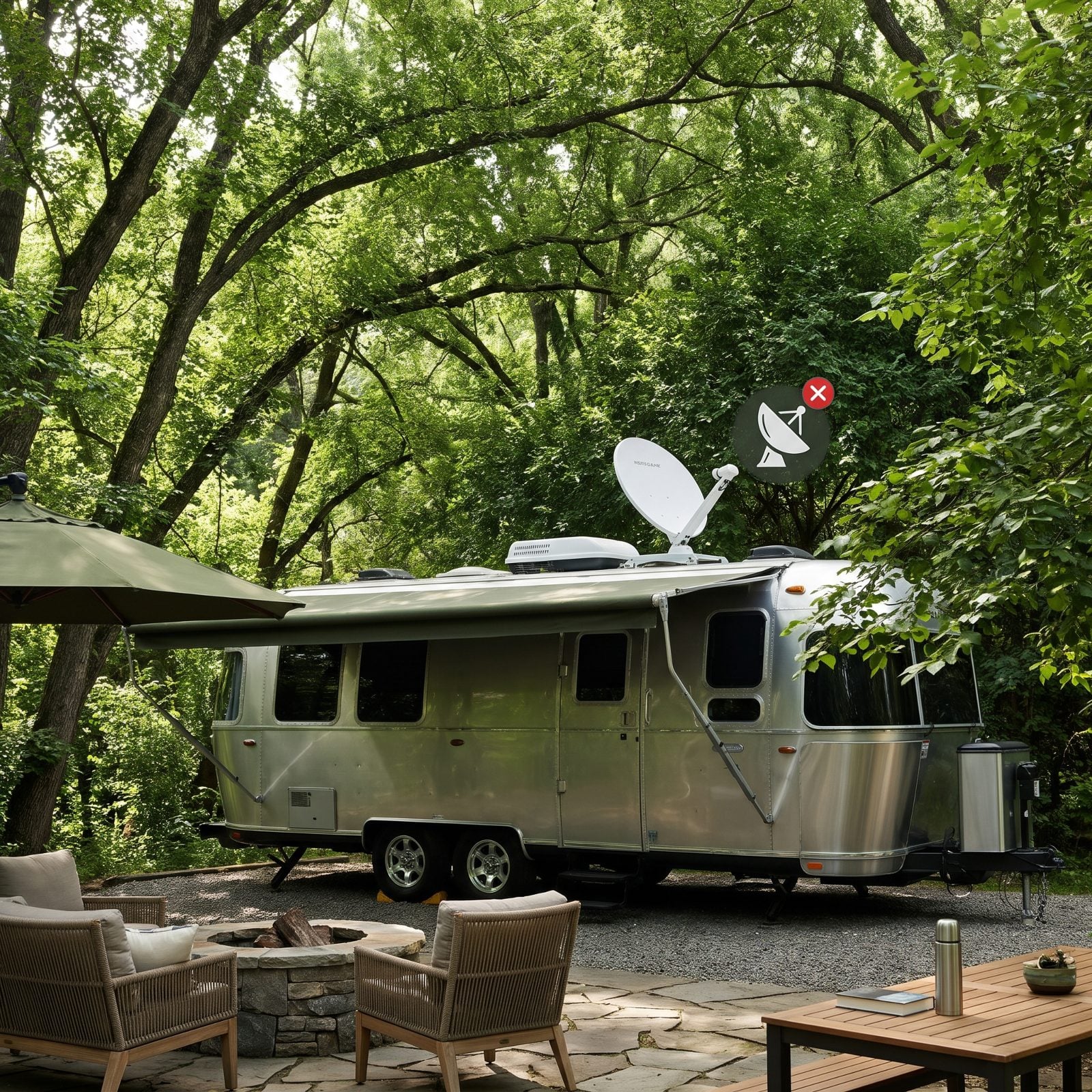
The shaded corner site everyone fights over — cooler in July, leafy, private — is the same site that drops your satellite signal every time the wind nudges the branches.
Satellite TV and Starlink both want a clean view of the sky. Big mature trees are exactly what makes a premium site feel special, and exactly what blocks the dish. Annoying, but there it is.
If staying connected matters more than shade, ask for an open pull-through and skip the postcard spot. You can’t have the canopy and the clear sky at once.
18. Water Pressure Can Change Dramatically With Campground Demand
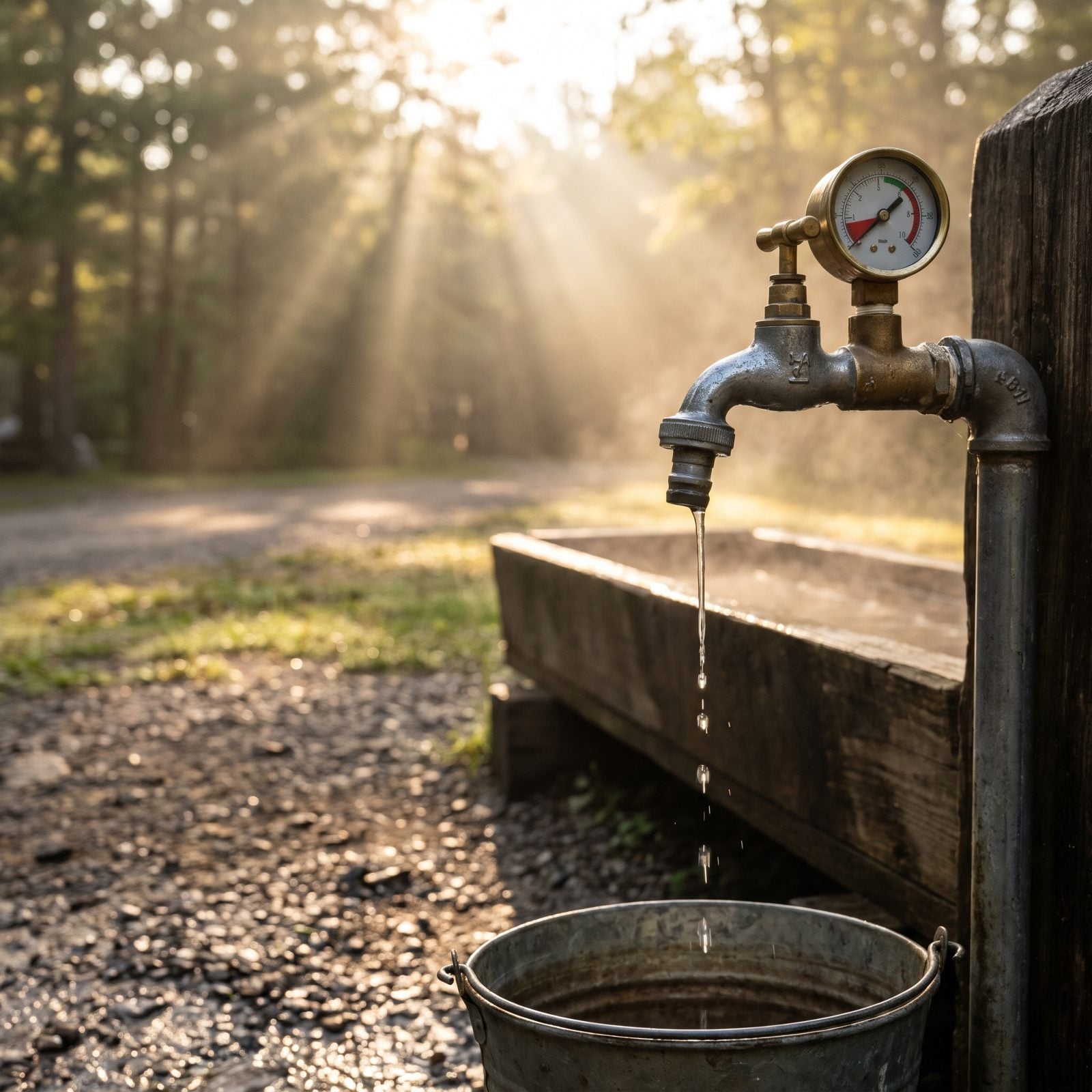
Morning in a campground is rush hour for water. Everyone showers, fills tanks, and rinses dishes in the same window, and your flow drops to a trickle right when you want it most.
Then the pendulum swings. Some parks run pressure high enough to blow a fitting or a toilet valve once demand drops off. Either extreme can ruin your day.
A simple inline regulator handles the spike side for a few bucks. The low-flow mornings you just plan around — shower at 10am like a civilized person.
17. A Full-Hookup Site Can Still Have an Awkward Uphill Sewer Connection
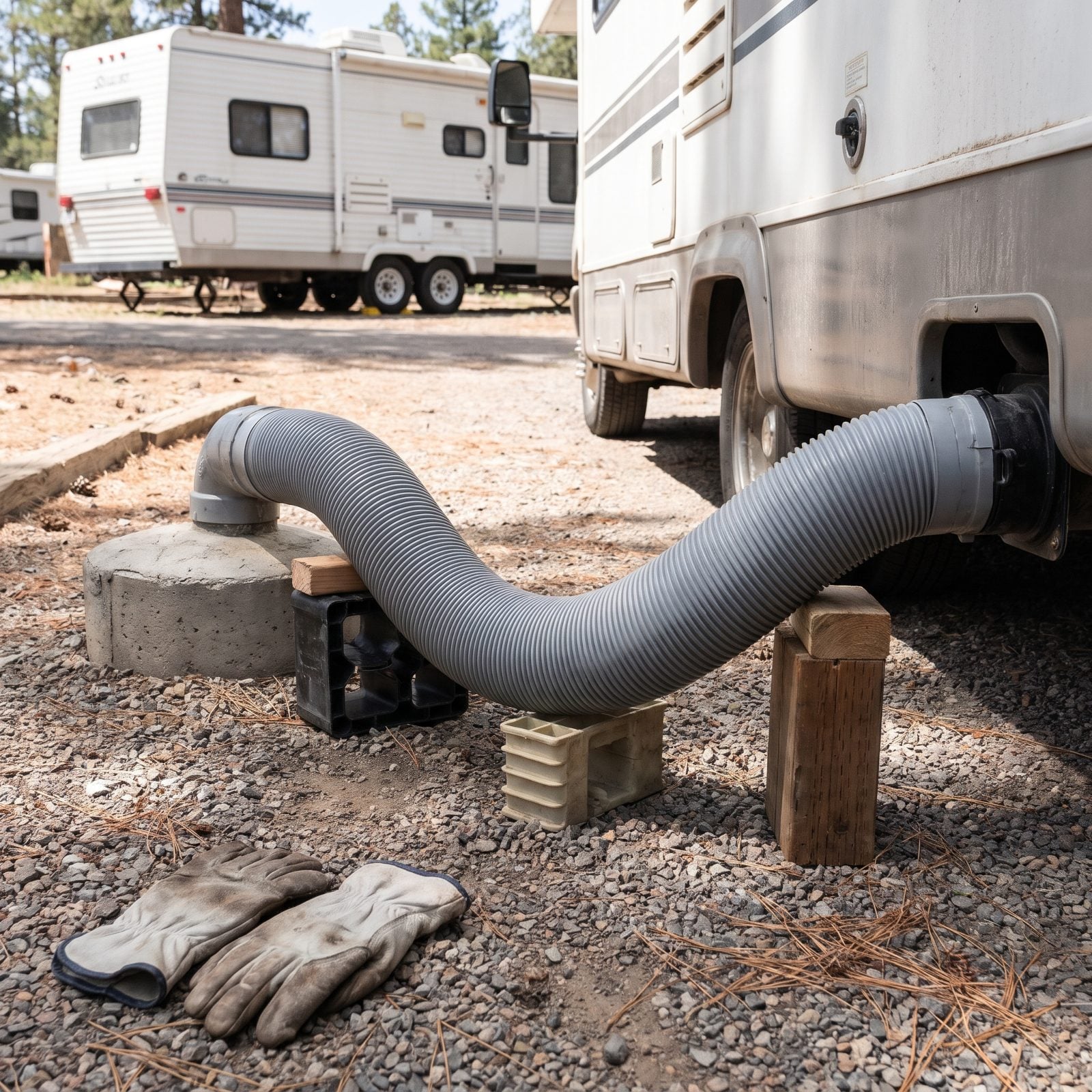
“Full hookup” tells you the sewer exists. It doesn’t tell you the inlet sits uphill from where your rig parks — and waste water does not run uphill as a favor to you.
Nothing drains, everything backs up, and you burn twenty minutes propping the hose on supports trying to coax a slope that isn’t there.
16. Certain Tank Treatments Can Damage a Campground’s Septic System
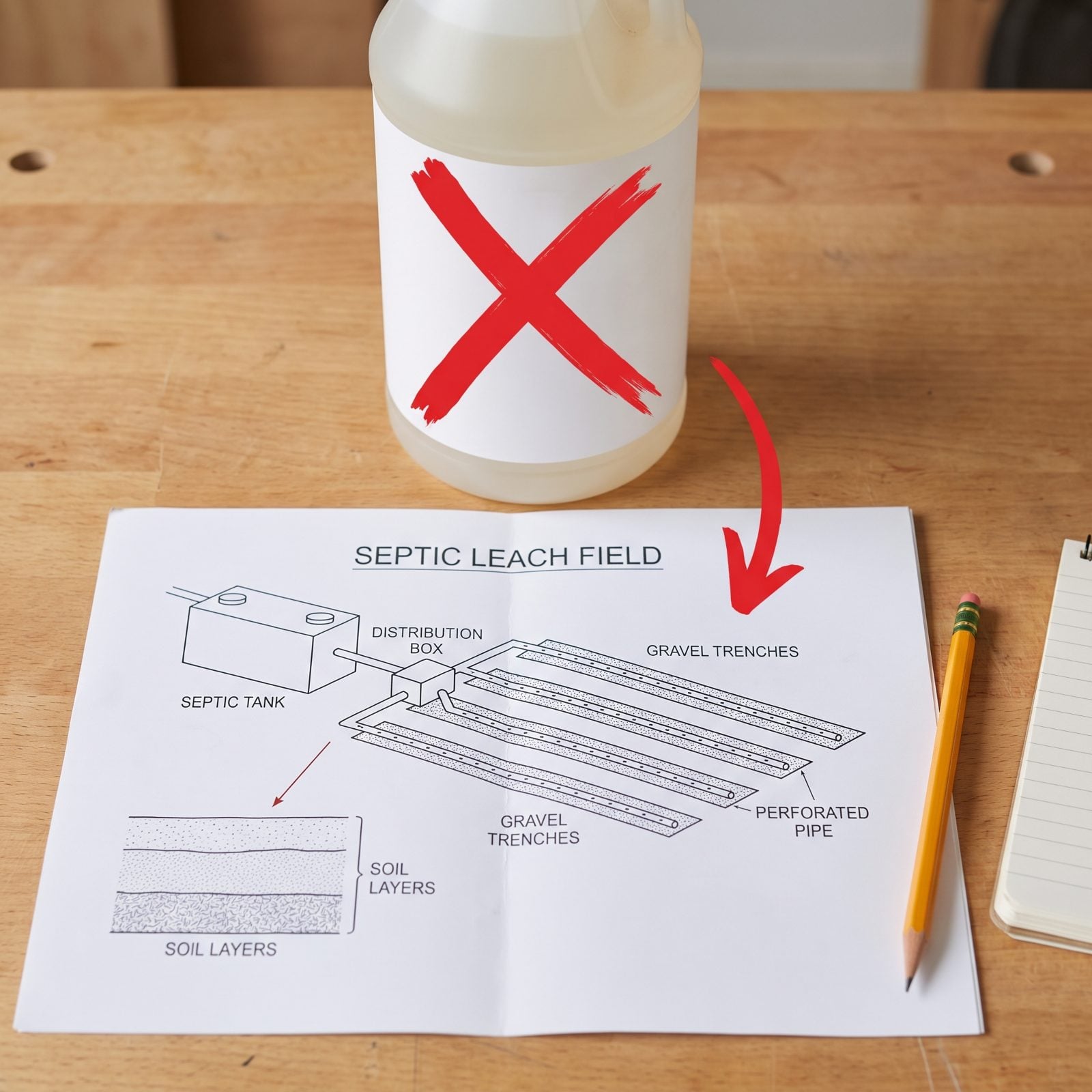
Most campgrounds run on septic, not city sewer. The old formaldehyde-based tank chemicals that kill odor also kill the very bacteria a septic system depends on.
Dump enough of that stuff and the park’s drain field clogs. That’s why plenty of campgrounds now ban certain treatments outright.
Switch to an enzyme or bacteria-based treatment. Gentler on their system, legal everywhere, and honestly it handled odor better than the harsh stuff ever did in my tanks.
Pushing for a statewide ban on formaldehyde tank products, a campground association director warned that “State officials are aware of several California campgrounds that have experienced septic system failures that took place as a result of formaldehyde-laden waste being dumped into their systems over the past two decades”
15. A Pool Can Close Immediately After a Failed Chemistry Test
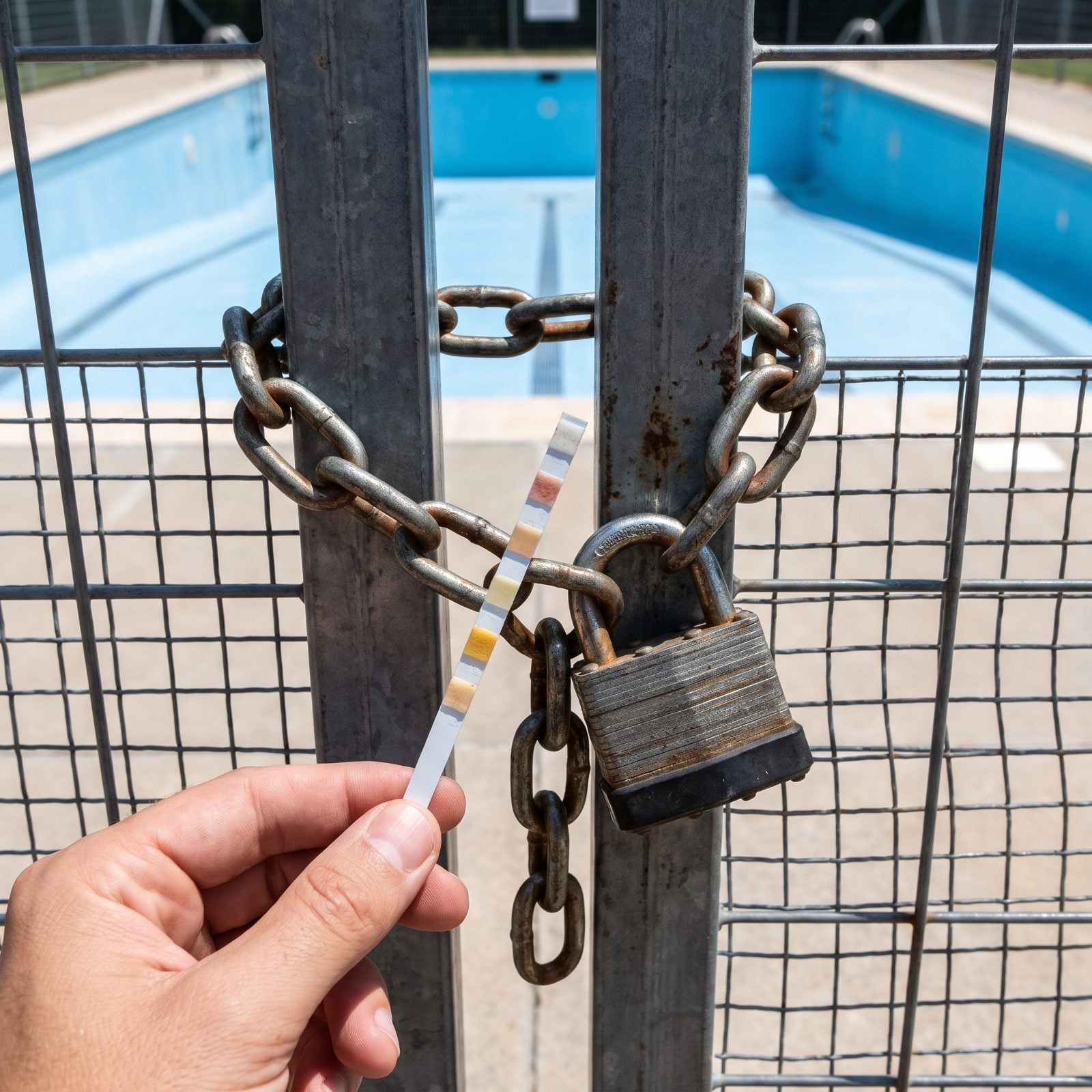
A pool that fails its chemistry test can be chained shut on the spot — and if the water can’t be brought back into balance, it may be drained right down to the bare floor. A failed chlorine or pH reading gives the staff zero choice — health codes require closing until the water is corrected or replaced and the numbers come back in range.
It isn’t the desk being difficult. It’s the law. And they’ll absorb the complaints anyway.
14. Website Photos May Predate Tree Loss, Renovations or Site Reconfiguration
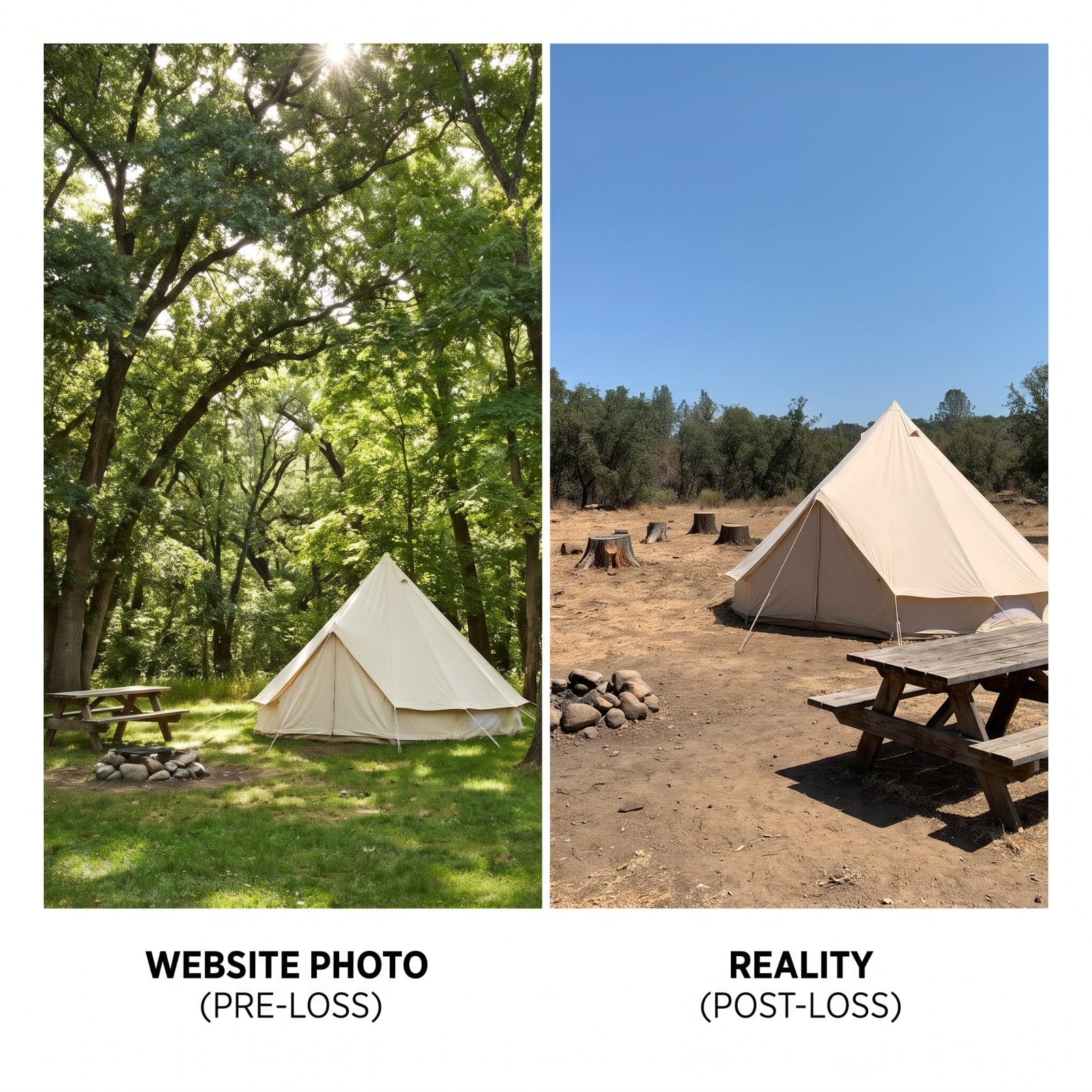
The leafy, private site in the gallery might have lost its shade trees to a storm three summers back. Campgrounds rarely update photos after losing trees, and almost never after a site gets renumbered or regraded.
So you arrive expecting a forested nook and find a sunny gravel pad with a fresh stump where the oak used to be.
Call ahead and ask what the site looks like today, not what it looked like when the photographer came through.
Recent reviews and user-posted photos tell the truth the brochure won’t. A storm doesn’t wait for the marketing team to catch up.
13. The Propane Pump Only Works When a Certified Person Is On the Clock
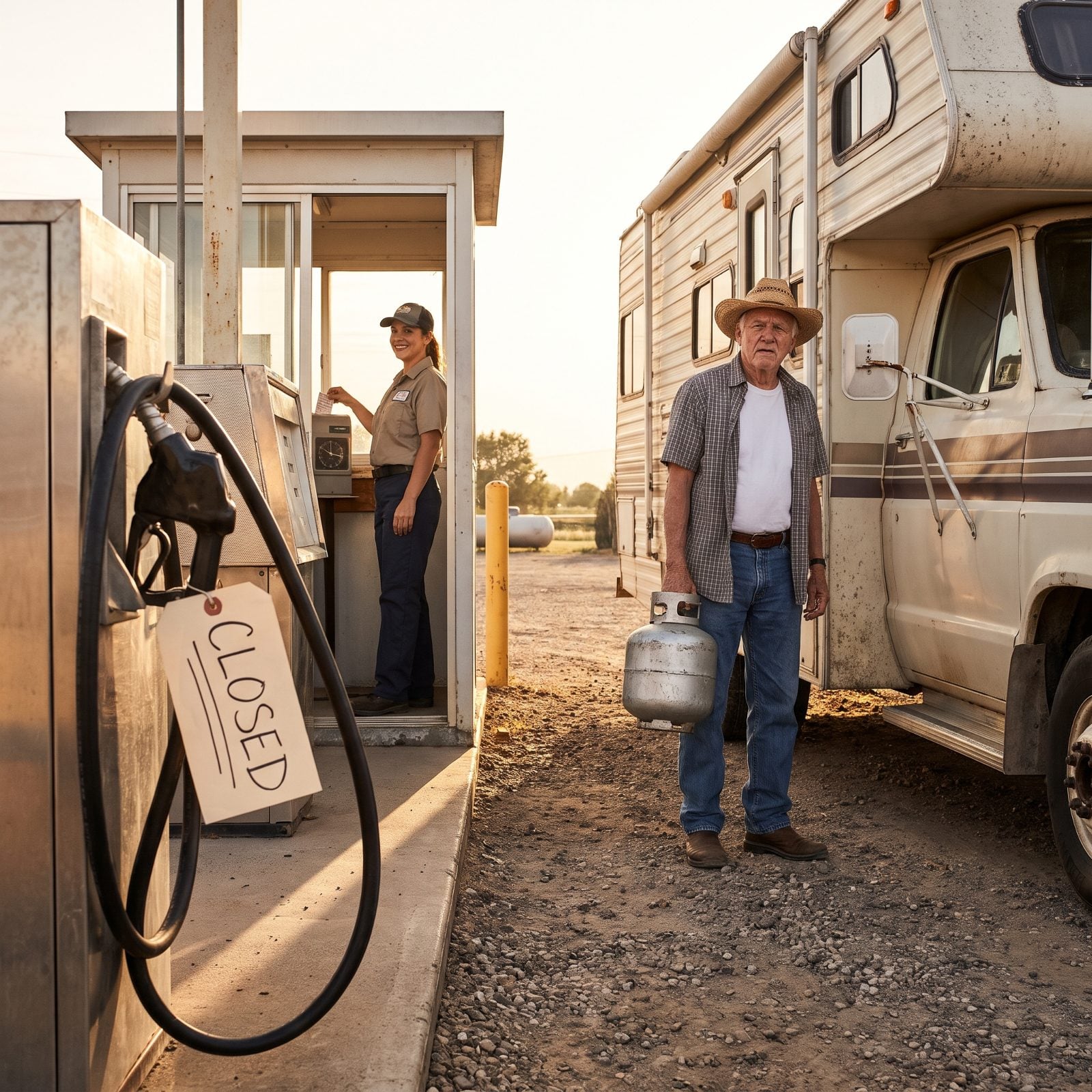
The sign says propane refills available. The reality is that somebody with a hazmat certification has to physically run that pump, and that somebody has lunch, days off, and a second job filling potholes down at public works.
Small campgrounds often have exactly one certified person. When they’re out mowing section G, your tank waits. Call ahead and ask when the propane person is actually working, not just when the office is open. Those are two different hours.
12. The Keypad at the Gate Keeps Cars Out, Not Everyone Else
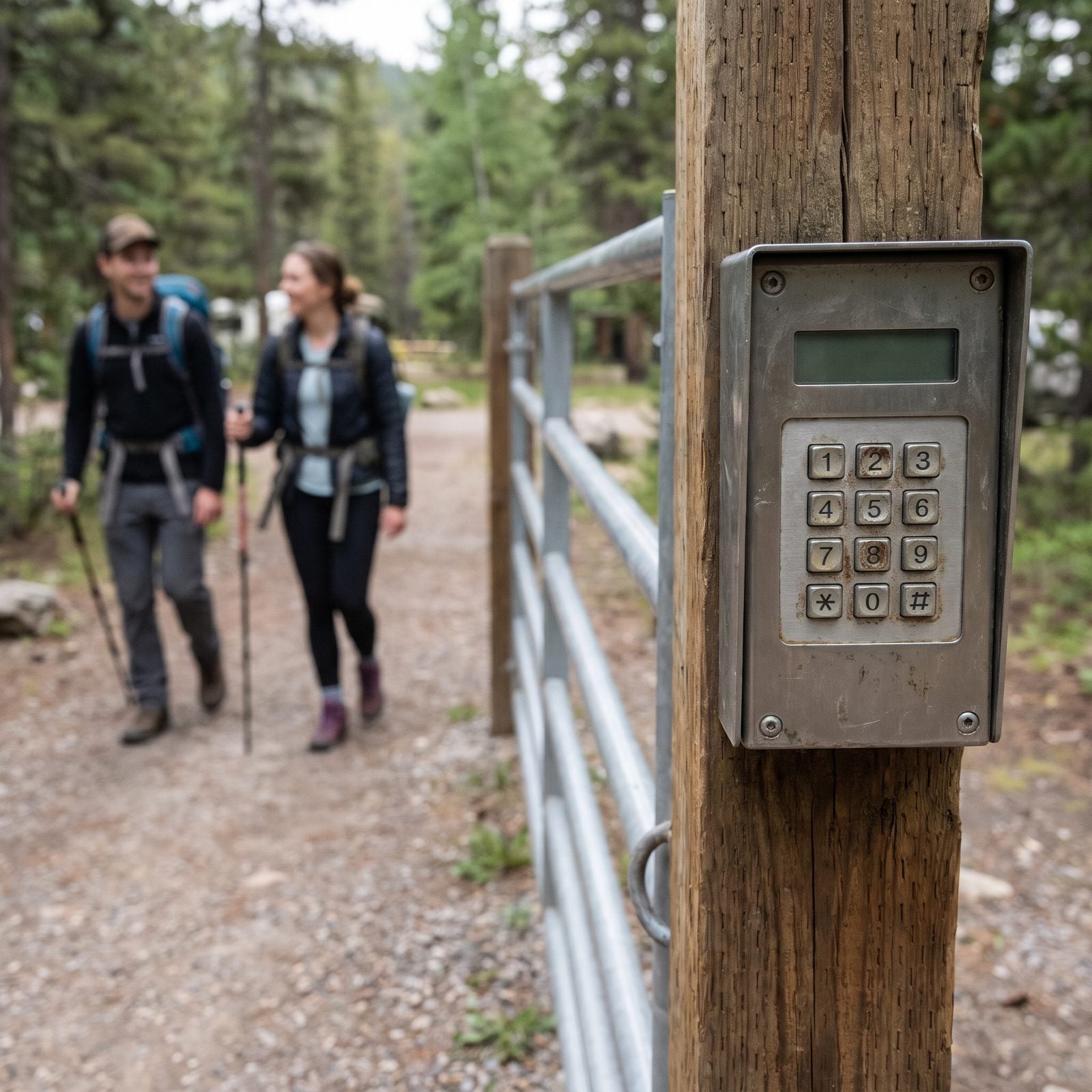
A gate code feels like a moat. It’s really a speed bump for vehicles, and nothing more.
Most campground gates control who drives in. Somebody on foot can walk around the gate, slip past the gatepost, or just stroll in behind the car ahead of them. A code deters casual traffic and slows a thief down, but it doesn’t lock the place like a vault.
Lock your rig. Bring the bikes inside or cable them. And don’t leave the generator sitting unchained in site 44 because that wooden gate made you feel safe — I’ve watched people get burned trusting it.
11. The Camp Host Can’t Always Fix Your Problem, No Matter How Nice They Are
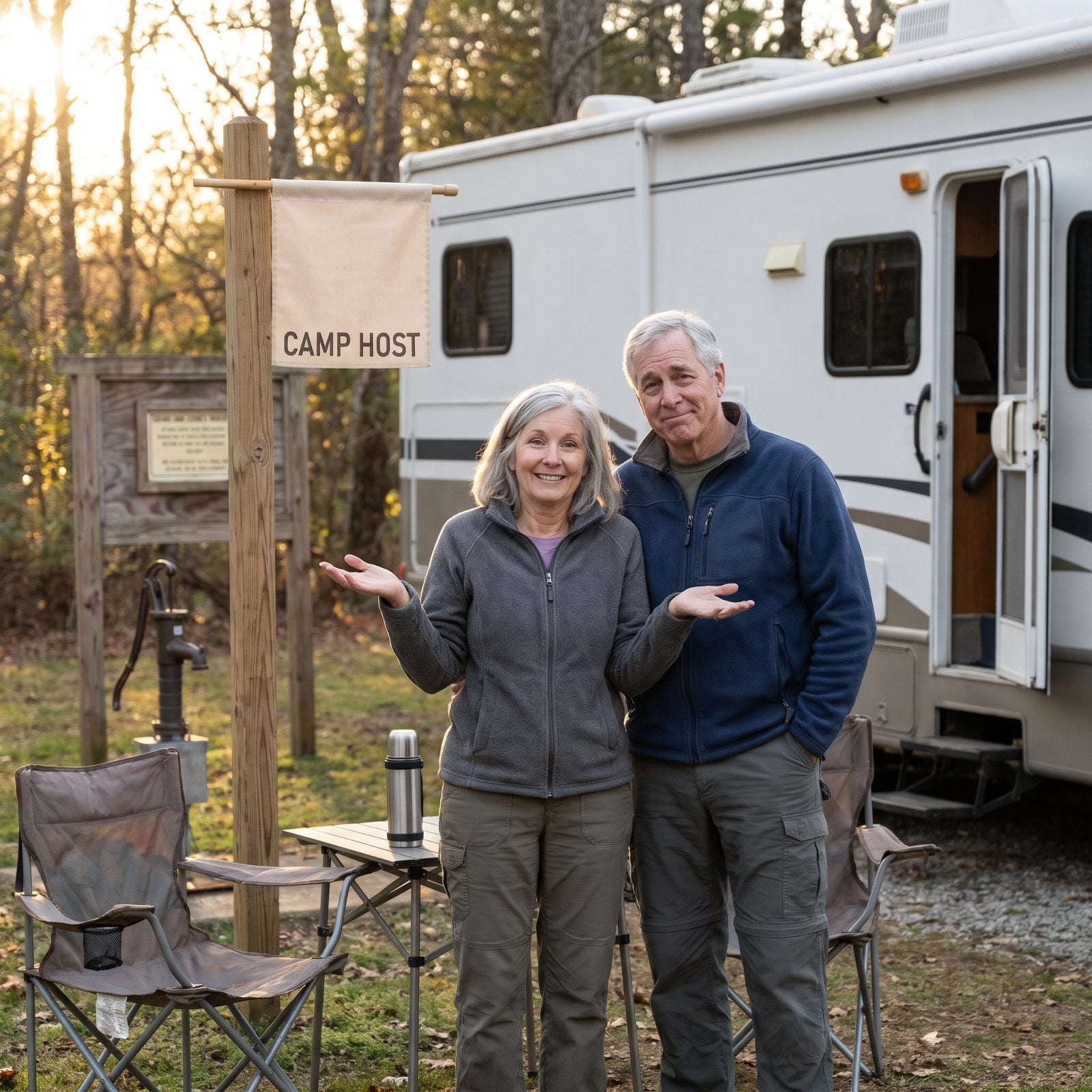
The camp host is often a retired couple who get a free site in exchange for pointing out the dump station and selling bundles of wood. That’s the deal. They’re neighbors with a radio, not managers with authority.
Refunds, site swaps, rate disputes, the serious complaints — those all go to the main office, and the host usually can’t override a bit of it. So be kind to the host and save the business questions for the folks who actually sign the checks.
The host can tell you where the ice is. The office decides whether you get your money back.
10. Quiet Hours Are a Sign, Not a Patrol, Until Somebody Calls It In
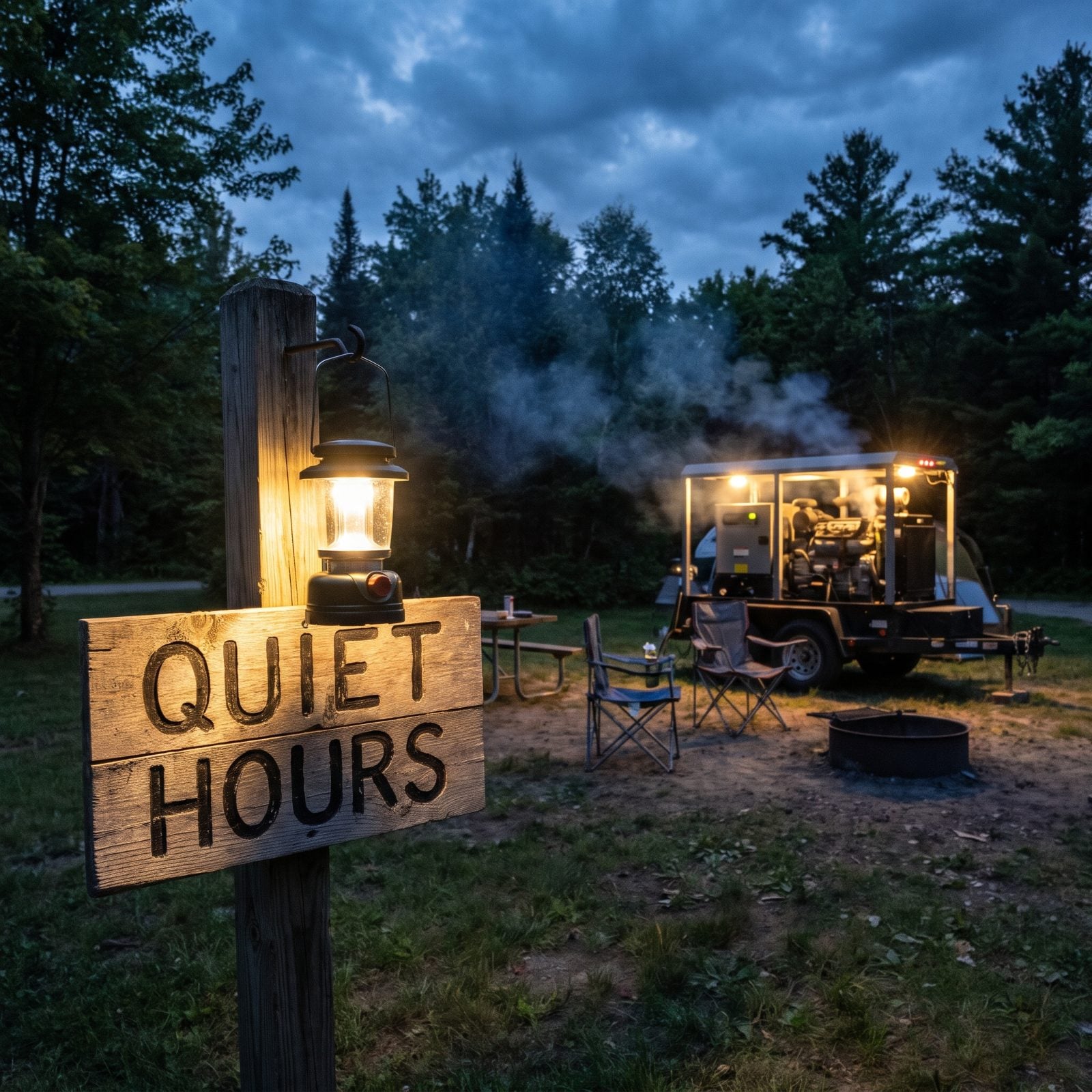
Ten o’clock comes and the generator next door is still roaring. Where’s the enforcement?
Nobody says this part out loud: most quiet-hour rules run entirely on complaints. There’s no ranger driving the loop with a decibel meter at 10:01. A host or night attendant knocks only after a neighbor reports the noise, so if the racket is keeping you up, staring at the sign won’t do a thing. A polite call to the after-hours number will.
9. The Front Desk Knows Exactly Which Sites Hear the 2 A.M. Freight Train

Online booking shows you a grid of green dots. It won’t tell you that site 7 backs onto the dumpster, site 12 catches highway hum all night, and the whole D loop rattles when the 2 a.m. freight rolls through on the far side of the trees.
The people at the desk know every bit of it. They just can’t type it into the reservation system without starting fights over who landed the good spot.
8. Book a Rally Weekend by Accident and You’ve Changed Campgrounds Without Moving
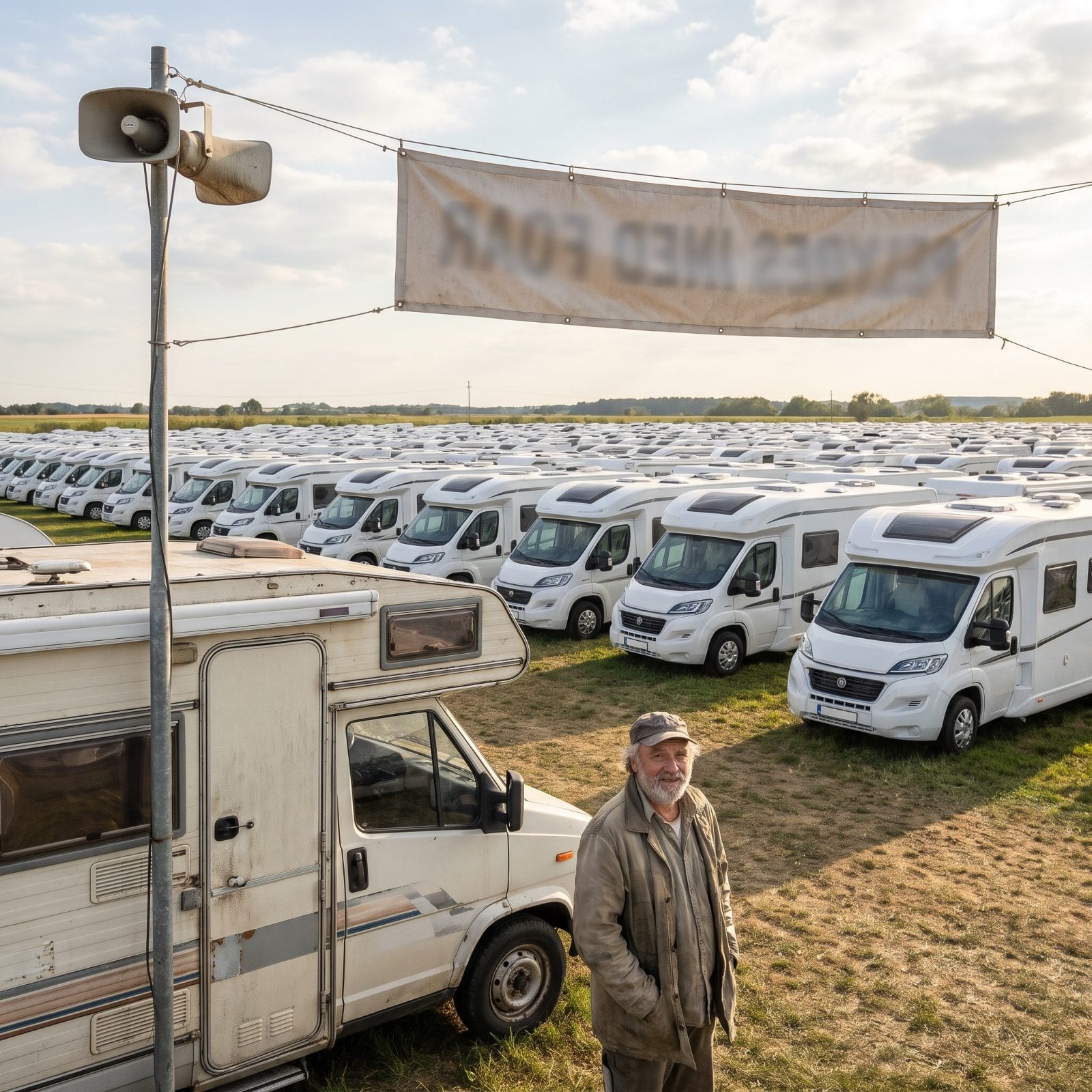
You pictured a quiet weekend by the lake. Instead you rolled into a field of matching rigs, a PA system, a weathered banner too faded and blurry to read, a potluck, and a 7 a.m. coffee social going off right outside your window. Surprise — it’s rally weekend.
Big clubs book entire campgrounds months out. The quiet family park becomes a reunion overnight, packed with friendly strangers who all know each other and have no idea who you are. It’s a blast if you came for it, and a very long weekend if you didn’t.
Ask before you book: any large groups or rallies that week? One sentence. Saves the whole trip.
7. The Irrigation System Doesn’t Care That Your Rug Is Out
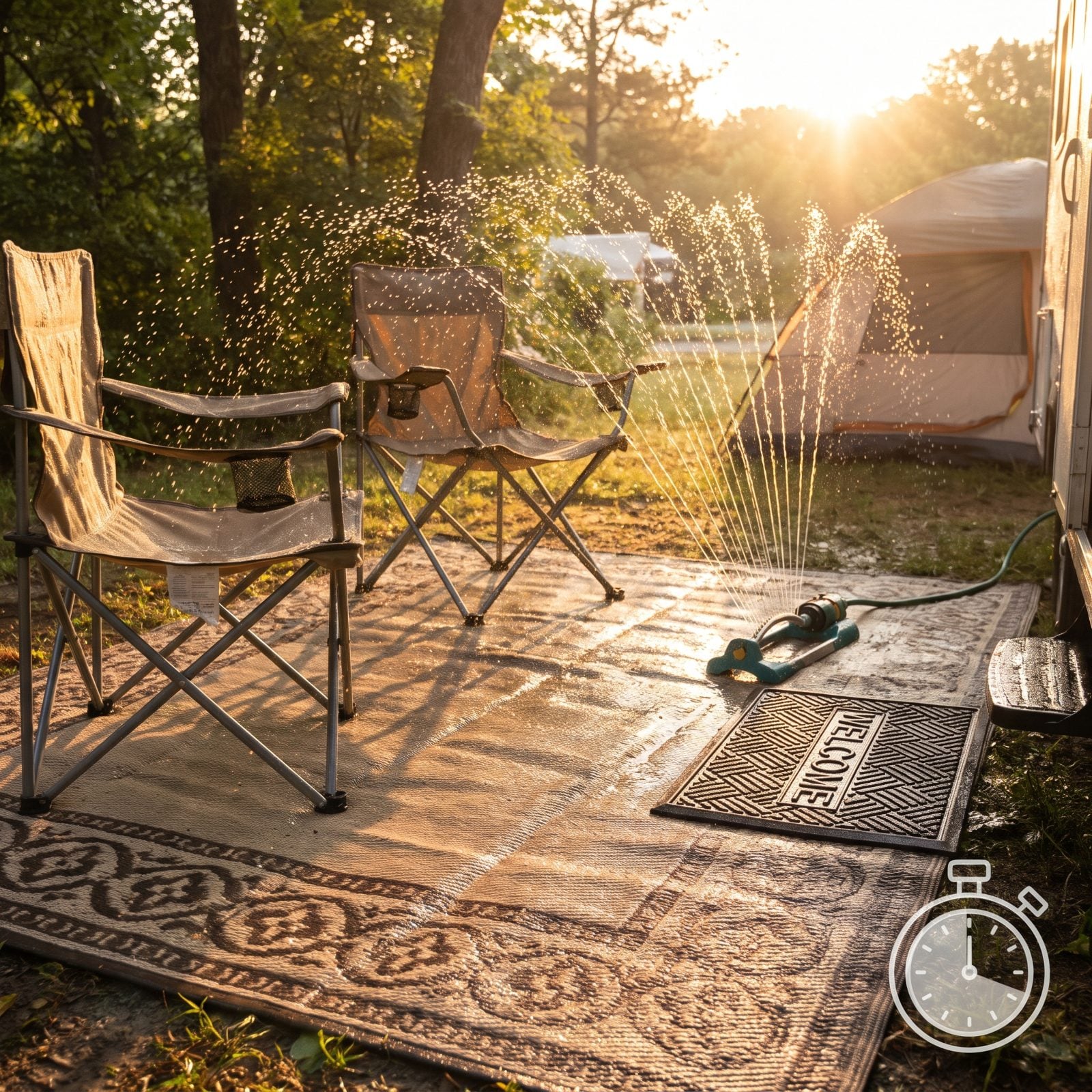
Grassy sites look lush for a reason. Somebody waters them, usually on a timer set for an hour you’d much rather be asleep.
Some parks still use portable oscillating sprinklers on hose timers, set down wherever the hose reaches, even on your rug. They kick on around 4 or 5 a.m. and run their cycle whether or not your patio rug, your chairs, and your open awning window happen to sit right in the arc. You wake to a soaked rug and a wet mattress through the screen.
6. Tell the Desk About the Broken Hookup Before You Leave, Not in the Review
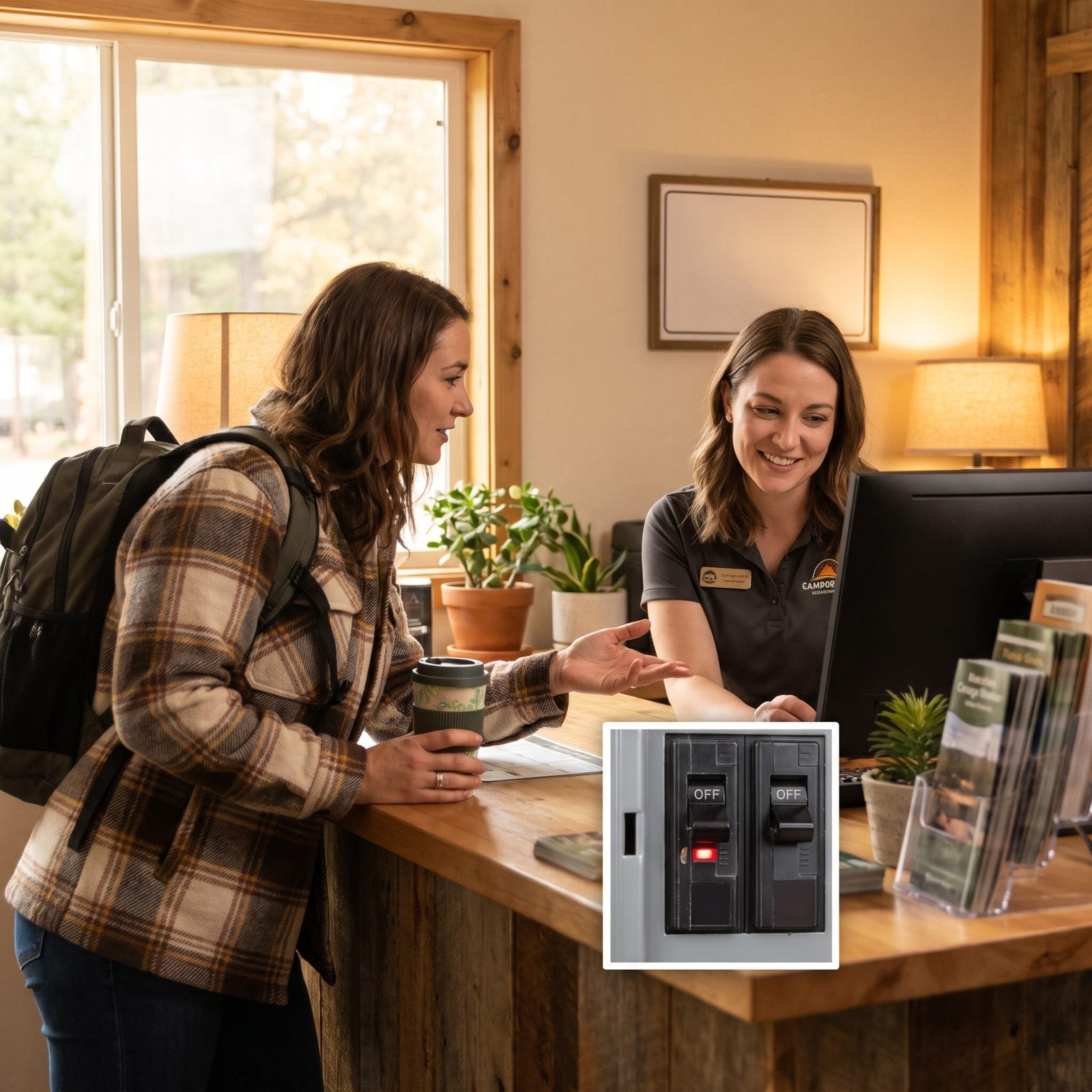
The water pressure was lousy, the 50-amp breaker kept tripping, and you stewed about it all weekend. Then you drove off and left a one-star review.
The office had no idea. Staff can’t fix a pedestal nobody told them about. Report it while you’re still there and they can reset a breaker, send someone out, or move you to a working site — most will knock a little money off too.
A problem reported at the desk gets solved. A problem saved for the review just lands the next camper in that same busted site next week.
5. Rain in the Forecast Won’t Usually Get You Out of the Cancellation Policy
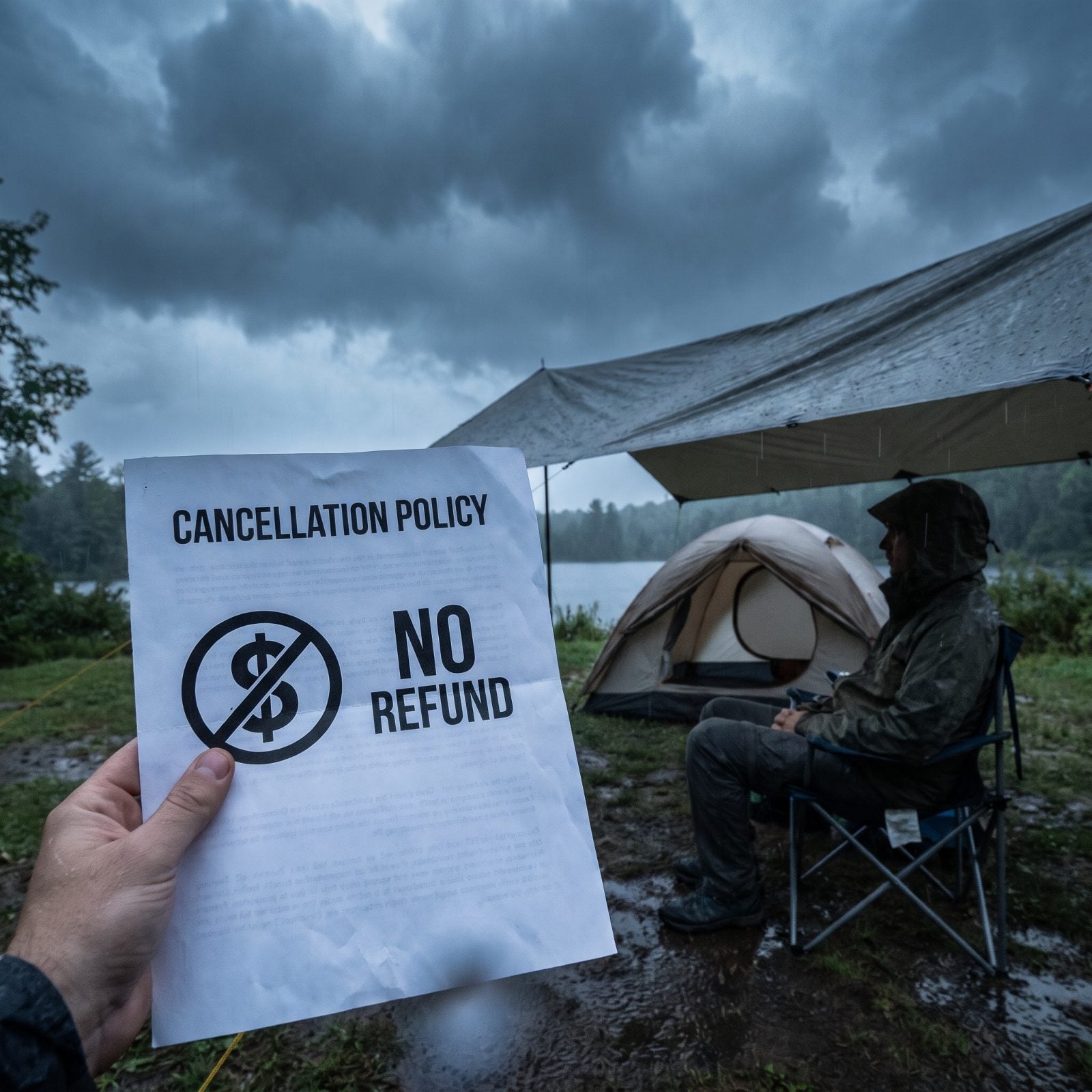
A storm’s coming and you want your deposit back. Reasonable. Also usually not how it works.
Most cancellation policies run on calendar deadlines, not the radar — seventy-two hours out, seven days out, whatever the terms spell out. Bad weather rarely counts as a qualifying reason, because every campground would empty out at the first gray cloud. Private resorts tend to be stricter than state parks.
4. Low-Lying Sites Close After Rain While the High Ground Stays Open
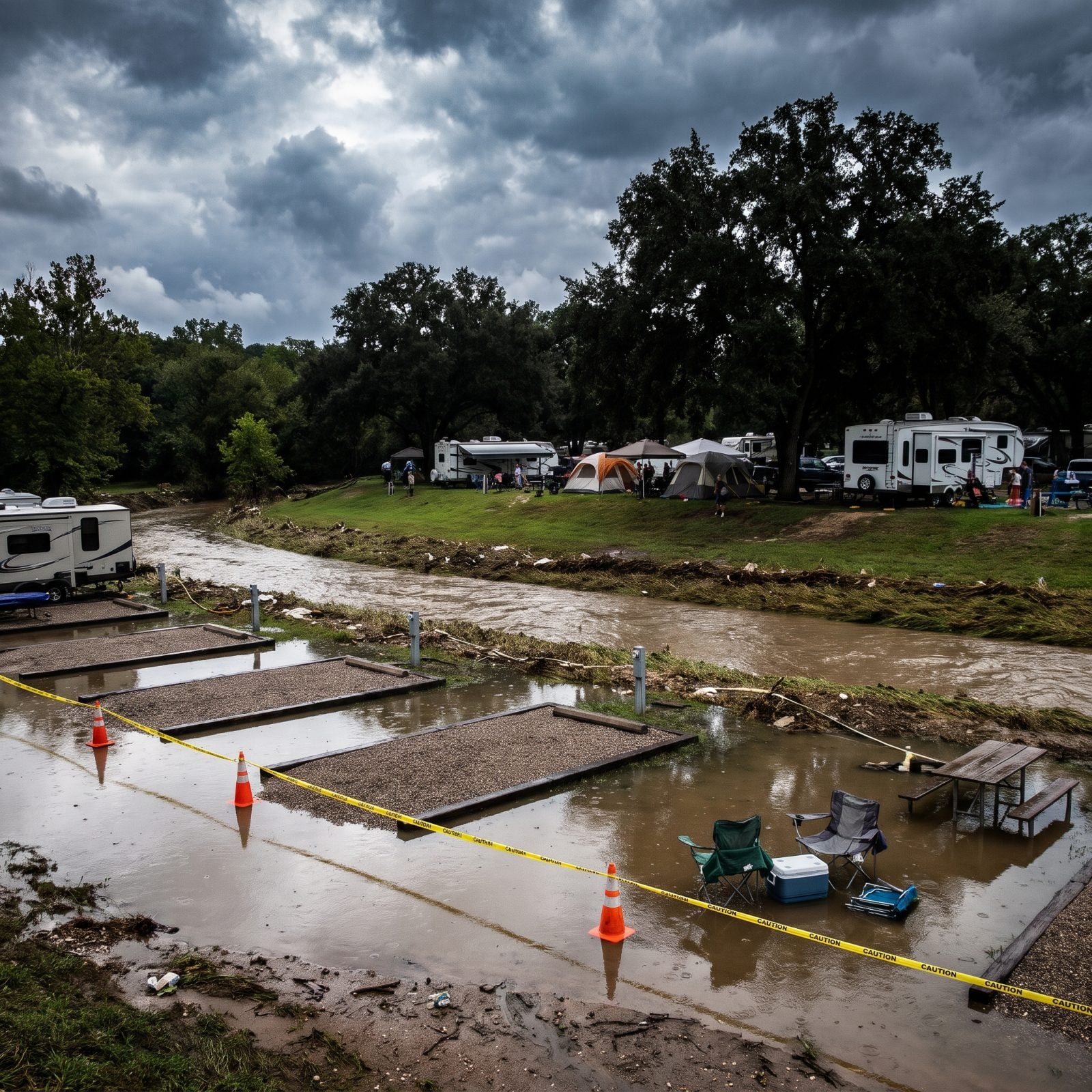
The sites down by the creek rent for less, and now you know why. After a storm, plenty of parks pull the low pads out of inventory for a day or two so the water can drain and the gravel firms back up before some poor rig sinks axle-deep into it. The desk isn’t being difficult. They’re saving you a tow bill.
Here’s where folks get tripped up. The booking site often still shows those sites as available, because the overnight closure happens by phone or by a cone on the pad, not in the software. So you roll in with a confirmation for site 11, the person at the counter quietly moves you to higher ground, and they act like it’s routine — because it is.
3. A Time-Stamped Arrival Photo Settles a Damage Charge Before It Starts
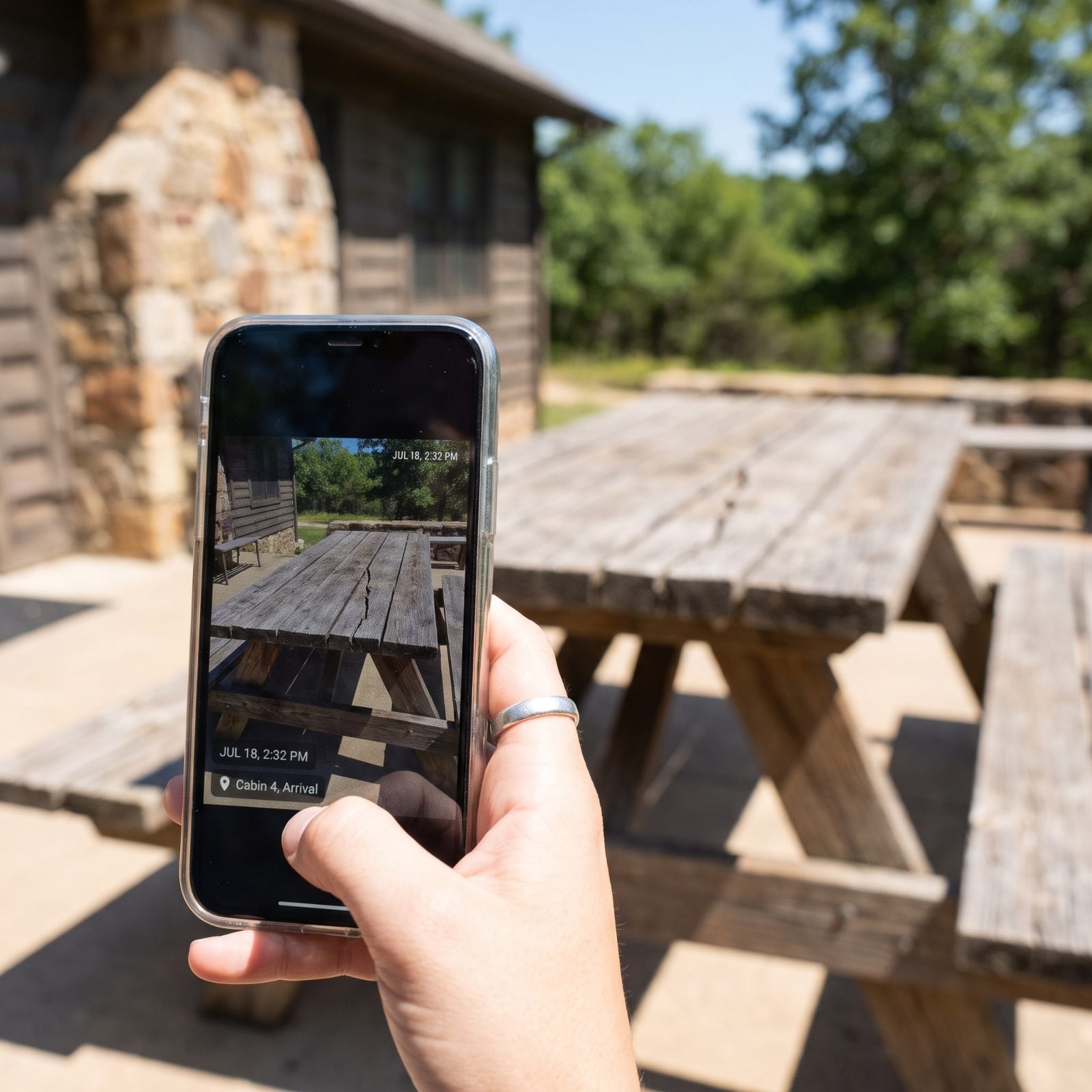
The picnic table was already cracked when you got there. You know that. Proving it three days later, when a damage note shows up on your receipt, is the hard part.
Thirty seconds walking the site with your phone fixes it. Snap the table, the fire ring, any ruts in the pad, the pedestal cover if it’s dangling. Most phones bake the time and GPS right into the file, so a dispute stops being your word against theirs and becomes a photo with a date on it. The good parks love this because it covers them too. The ones that push back? They’re telling you something.
The photo you take in thirty seconds is the argument you don’t have to have at checkout.
2. Your Dog’s Breed Ban Probably Isn’t the Manager’s Opinion
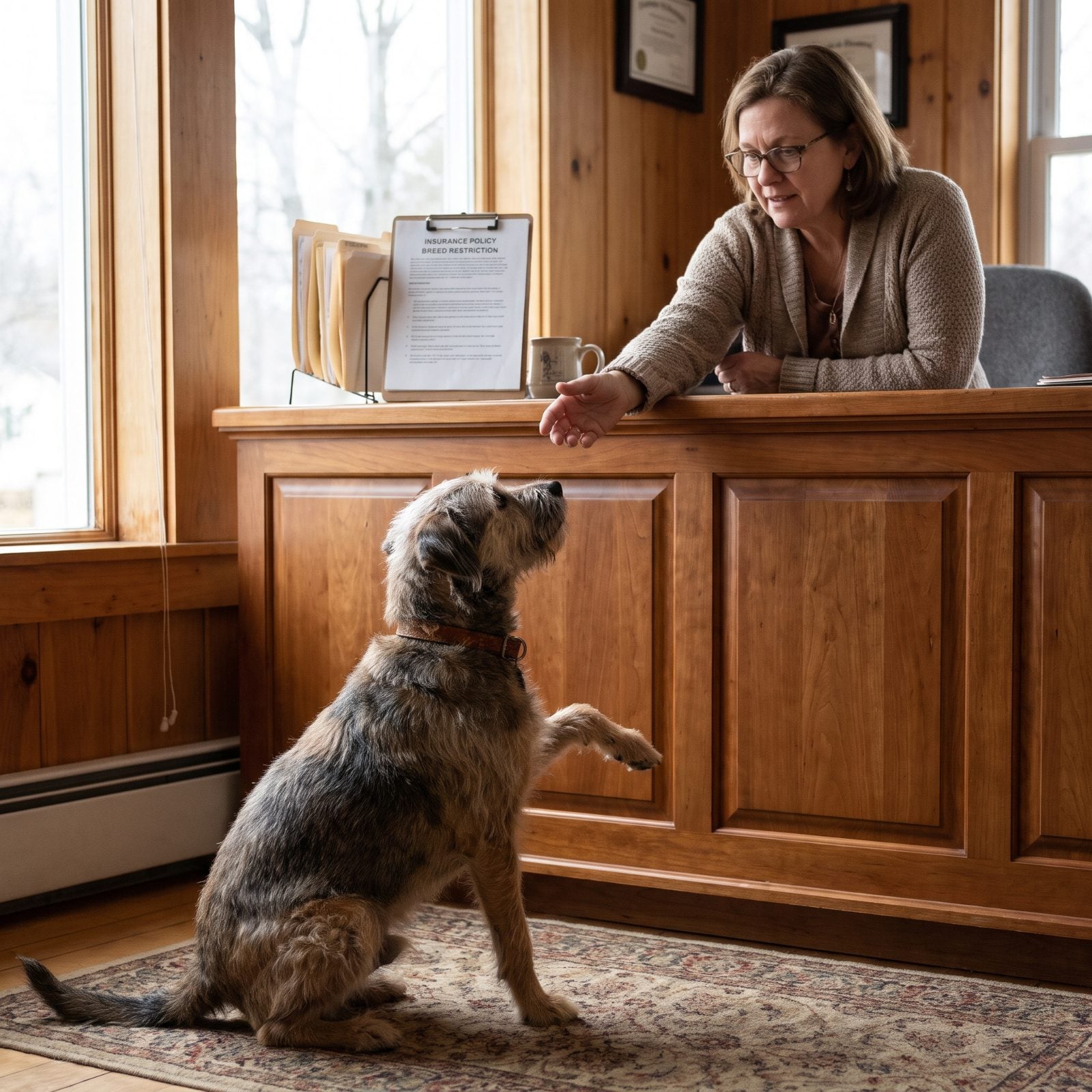
You’ve argued pet policy with a front-desk person who clearly felt bad about it. That’s the tell. The restriction usually isn’t theirs.
Most breed bans at private campgrounds come straight out of the park’s liability insurance policy, which names the excluded breeds and makes coverage conditional on enforcing them. Others trace back to a county or municipal ordinance. Either way, the person at the counter can’t wave off a rule that an insurer or a local code wrote, no matter how gentle your senior lab mix happens to be. Lean on them and you’re asking one employee to gamble the whole park’s coverage over a single reservation. Not going to happen, and you wouldn’t want it to.
1. Shore Power Goes Down and the Quiet-Hours Generator Rule Still Holds
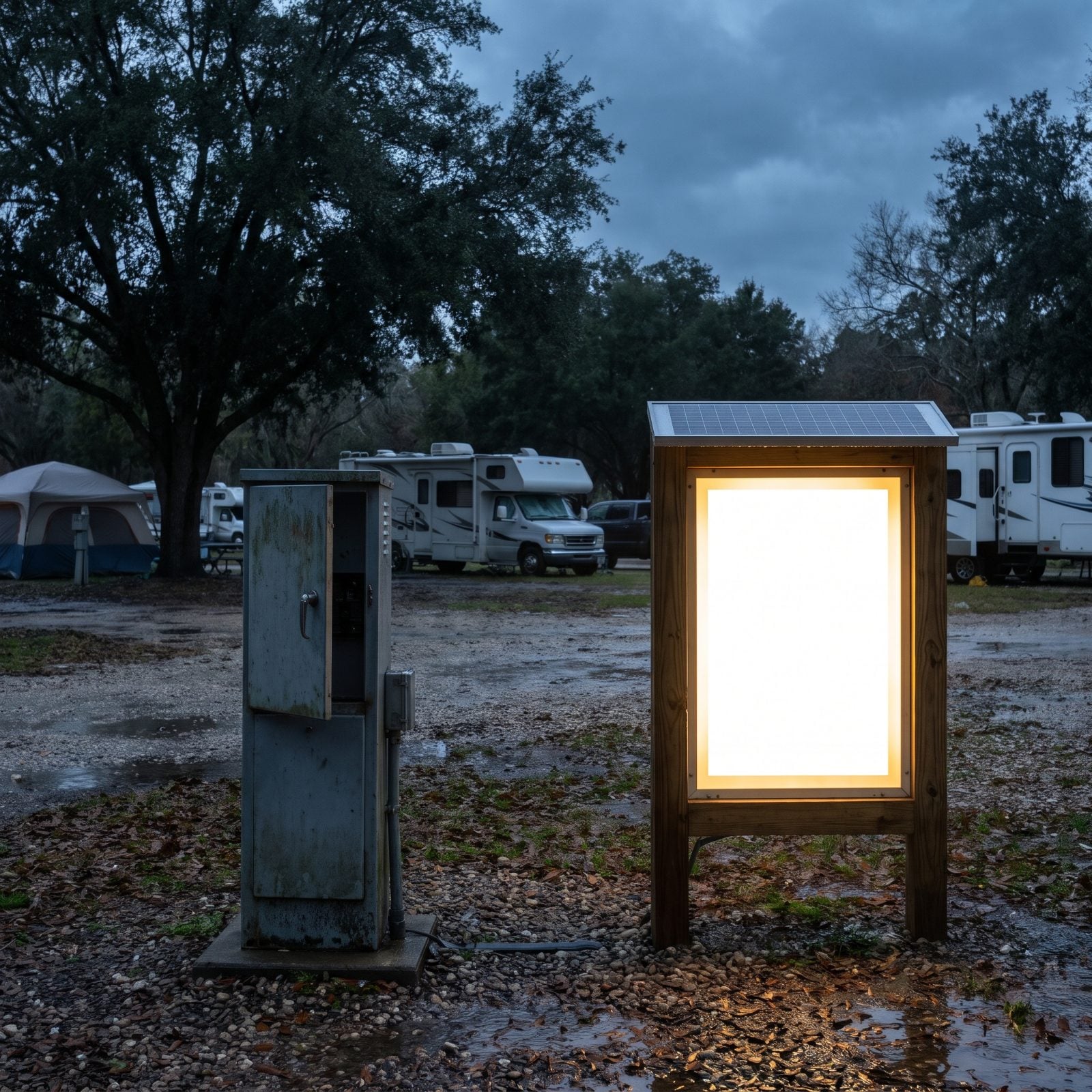
The park loses power, the pedestal goes dead, and you figure that’s your green light to run the generator all night. It isn’t.
Quiet-hours generator rules apply no matter why the shore power dropped. The posted window — often something like morning to evening in many parks — exists to protect the neighbors’ sleep, and your bad luck with the grid doesn’t rewrite it. So you catch the outage and the generator ban at the same time, which feels deeply unfair at 11 p.m. with a fridge starting to warm up.
Which is exactly why a decent battery bank earns its keep. Enough stored power to run the fridge and a few lights overnight turns an outage into an inconvenience instead of a midnight standoff with a camp host. I ran generators for years before I finally did the math on a couple of batteries. I was wrong to wait that long.