
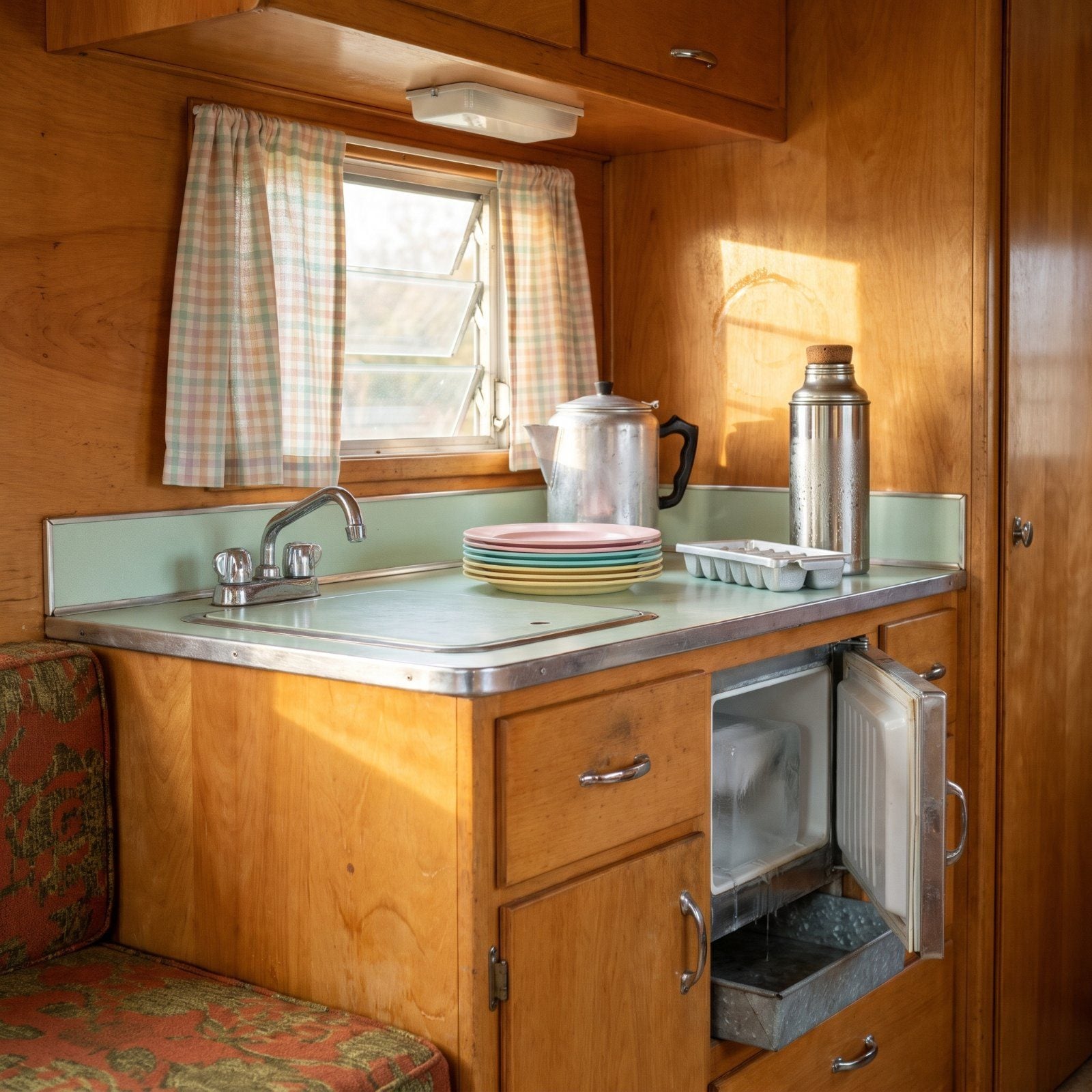
The smell hits first. Wet wood from a melting block of ice, cold propane, coffee scorching itself on a chrome range. Open the door of any 1960s travel trailer and you walked into a tiny galley where nothing plugged in and everything had a crank, a lever, or a pilot you lit with a match. We kept food cold with a hunk of ice from the camp store and pumped our own water by hand. The things below ran that whole life.
Please note that some of the images in this article were created with the assistance of AI.
25. The Block-Ice Icebox With a Drip Pan You Had to Empty
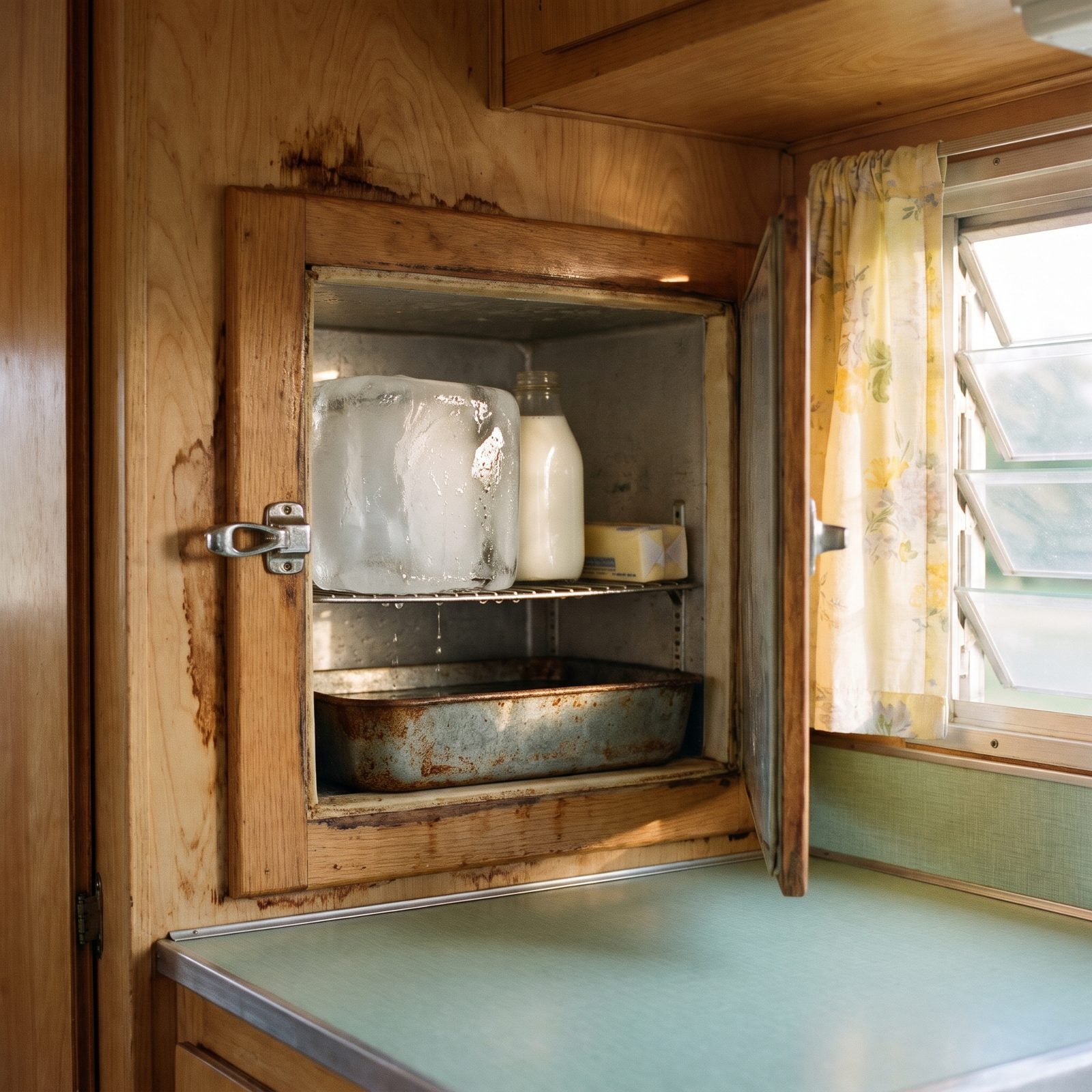
You bought the ice at the camp store office, a wet grey block wrapped in newspaper, and you hustled it back to the trailer before it shrank. It went on the wire rack right beside the milk bottle and the butter, and the cold spread through the one little compartment as best it could.
Nobody wanted the drip pan. A shallow galvanized tray slid underneath and filled while you slept. Forget it and you had a puddle on the galley floor by morning. Remember it, and you were carrying a sloshing pan to the bushes at six a.m. in your socks.
24. The Hand-Pump Faucet You Worked Like a Jack Handle
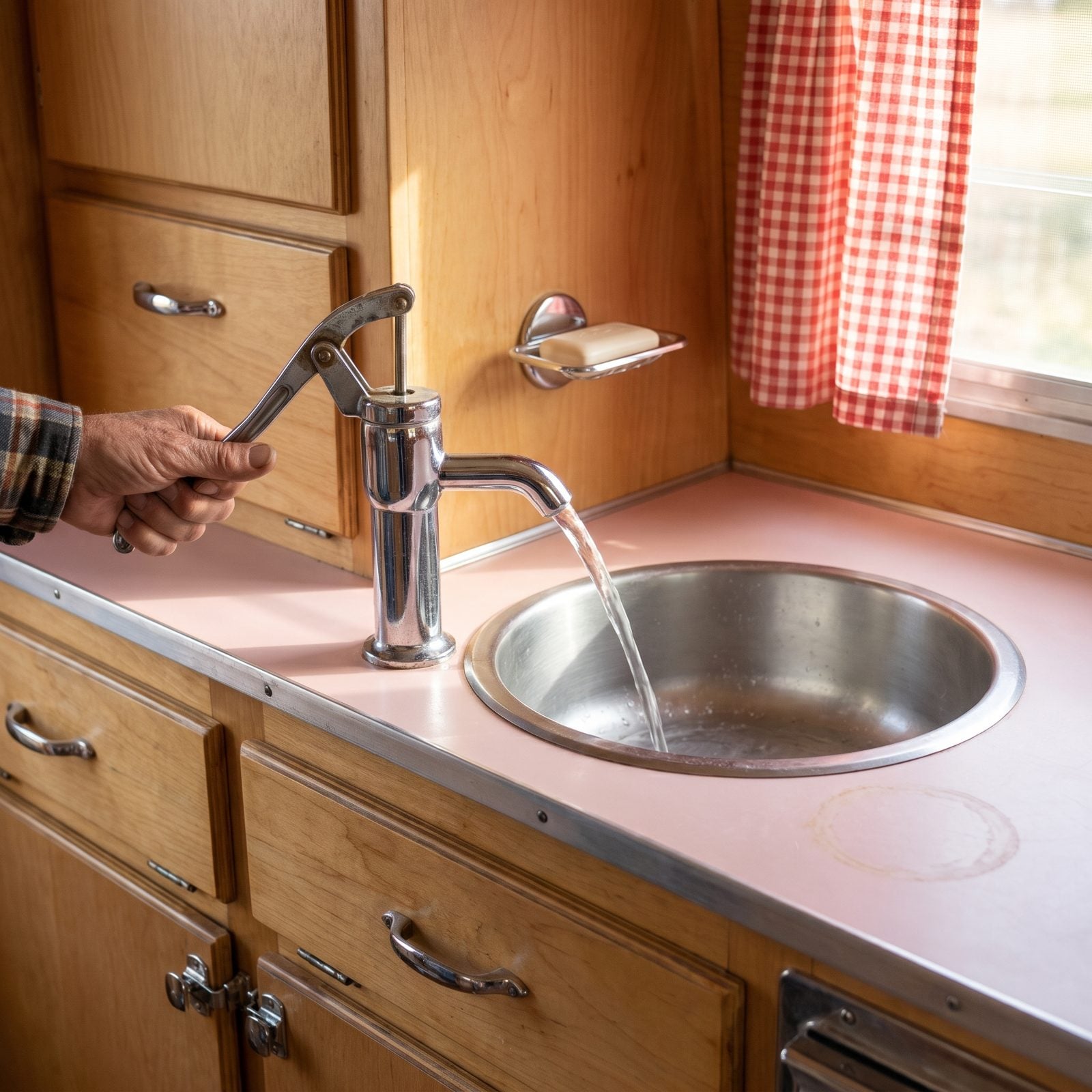
No water pressure meant no water until you earned it. You grabbed the chrome lever, worked it up and down, and after three or four strokes the pump caught and water coughed out of the spout. Fill a pot, and your arm knew it.
It drew straight from the onboard tank, no electricity involved, which is exactly why it never failed you. Wash dishes for a family of four this way and you understood why nobody ran the tap just to rinse a spoon. Every stroke was water you’d pumped yourself.
23. The Exterior Gravity-Fill Neck You Topped Off With a Hose
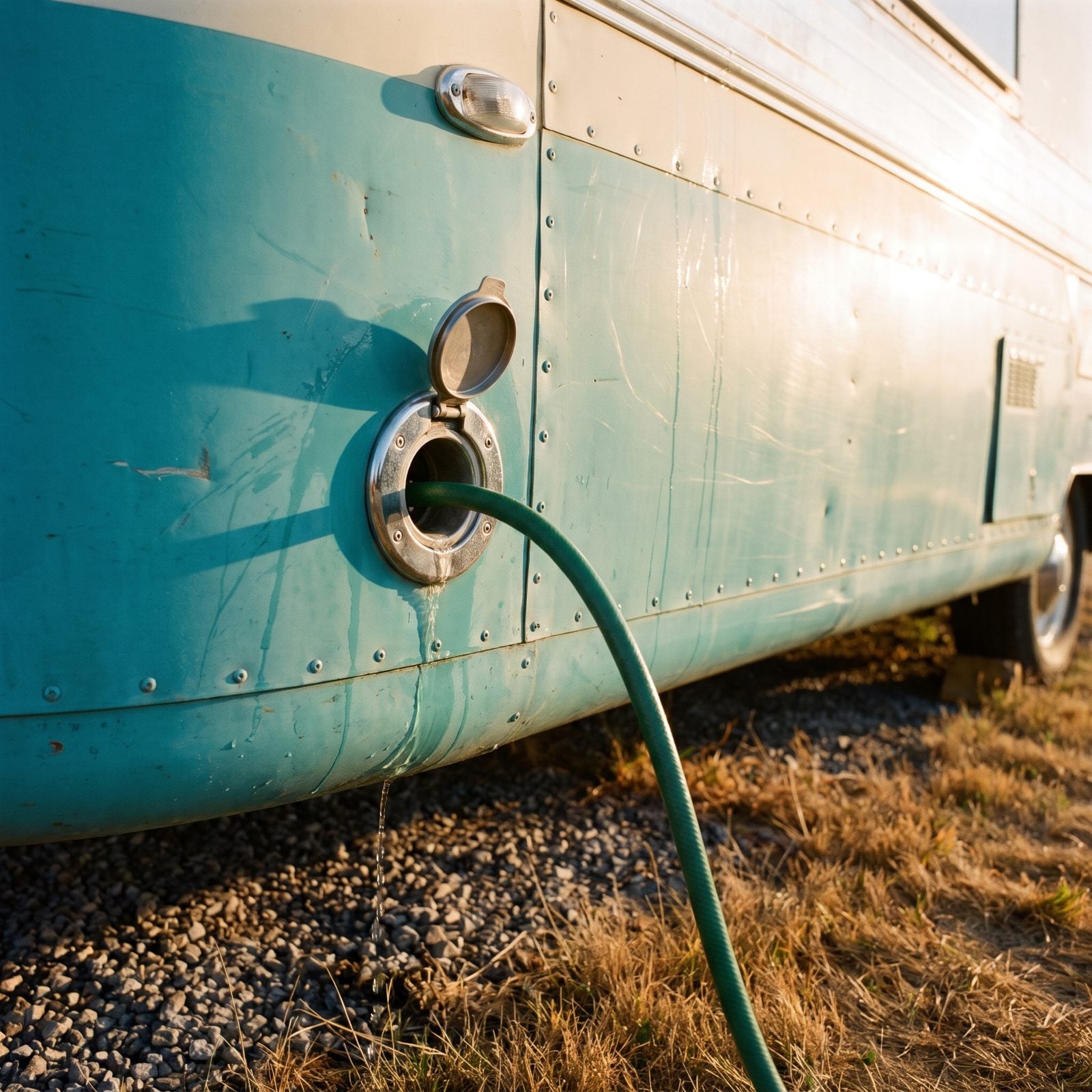
On the outside skin, usually near the front, a little chrome-rimmed cap flipped open to a filler neck. You ran a garden hose from the campground spigot and let gravity do the rest, watching for the overflow dribble down the aluminum that told you the tank was full.
There was no pressurized city-water connection like trailers have now. You filled the tank, then you pumped what you needed by hand inside. Top it off at every stop. Once it ran dry at a dry campsite, you were driving to find water.
22. The Propane Range You Lit With a Wooden Match
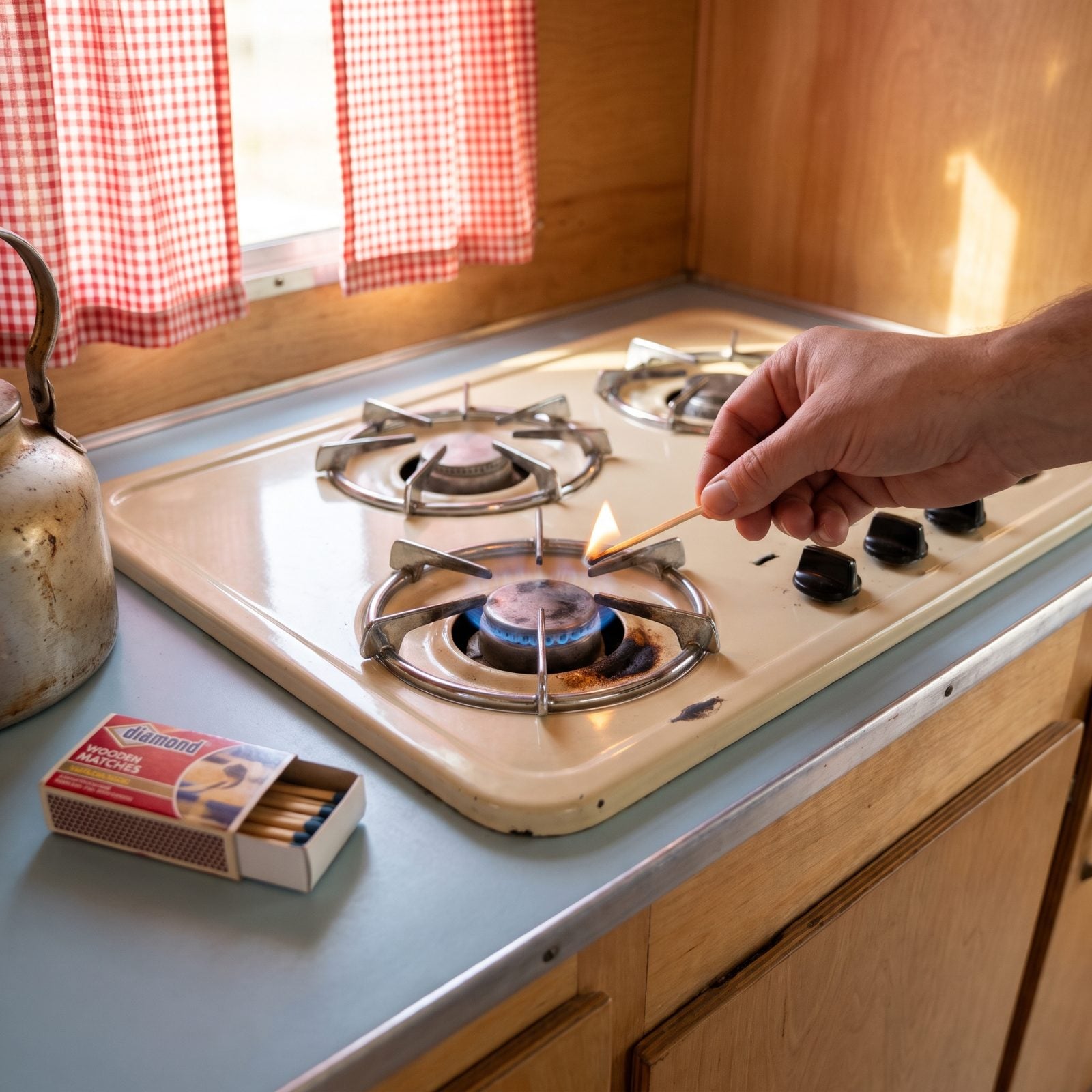
There was no clicking igniter. You turned the knob, heard the propane hiss, and touched a wooden match to the burner. It lit with a soft whump and a ring of blue, and if you waited too long you got a louder whump that singed your knuckle hair. You only did that once.
The box of kitchen matches lived in a drawer or clipped to the wall, as essential as the pot you cooked in.
21. The Stovetop Percolator With the Little Glass Knob on Top
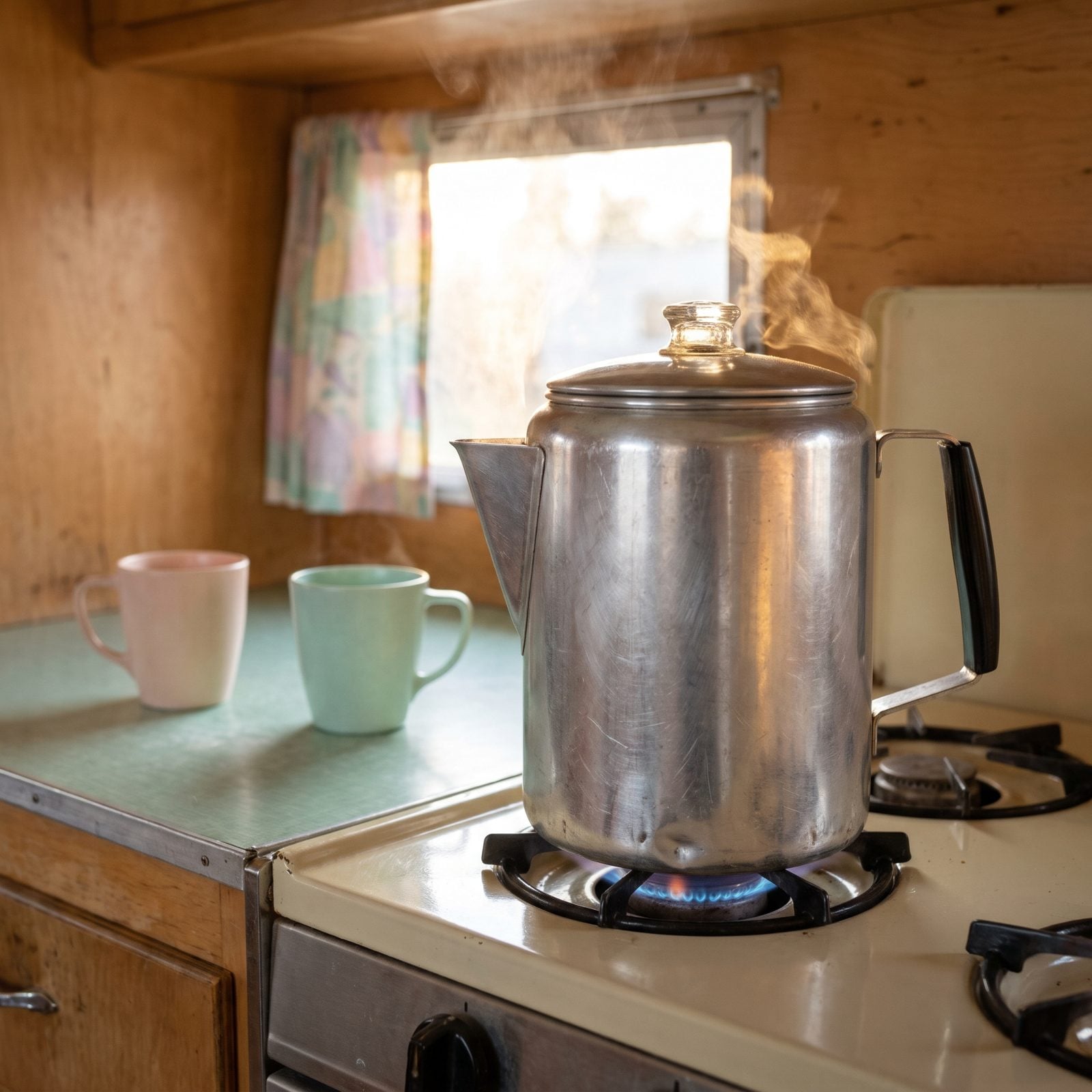
Morning in the trailer sounded like a percolator finding its rhythm. You watched the little glass knob on top of the aluminum lid, and when the coffee started bubbling up into it in amber bursts, you counted the minutes by how dark each splash got. Too pale, let it go. Dark and steady, cut the flame.
It was aluminum, it dented, and it made coffee strong enough to float the spoon. No filters, no pods, just grounds in the basket and patience at the stove.
Even though he finds percolator coffee bitter, a former barista who founded a home-coffee site concedes that “Percolators can be good when you need to make a large batch of coffee and don’t have electricity”
20. The Wall-Mounted Church Key That Opened Everything
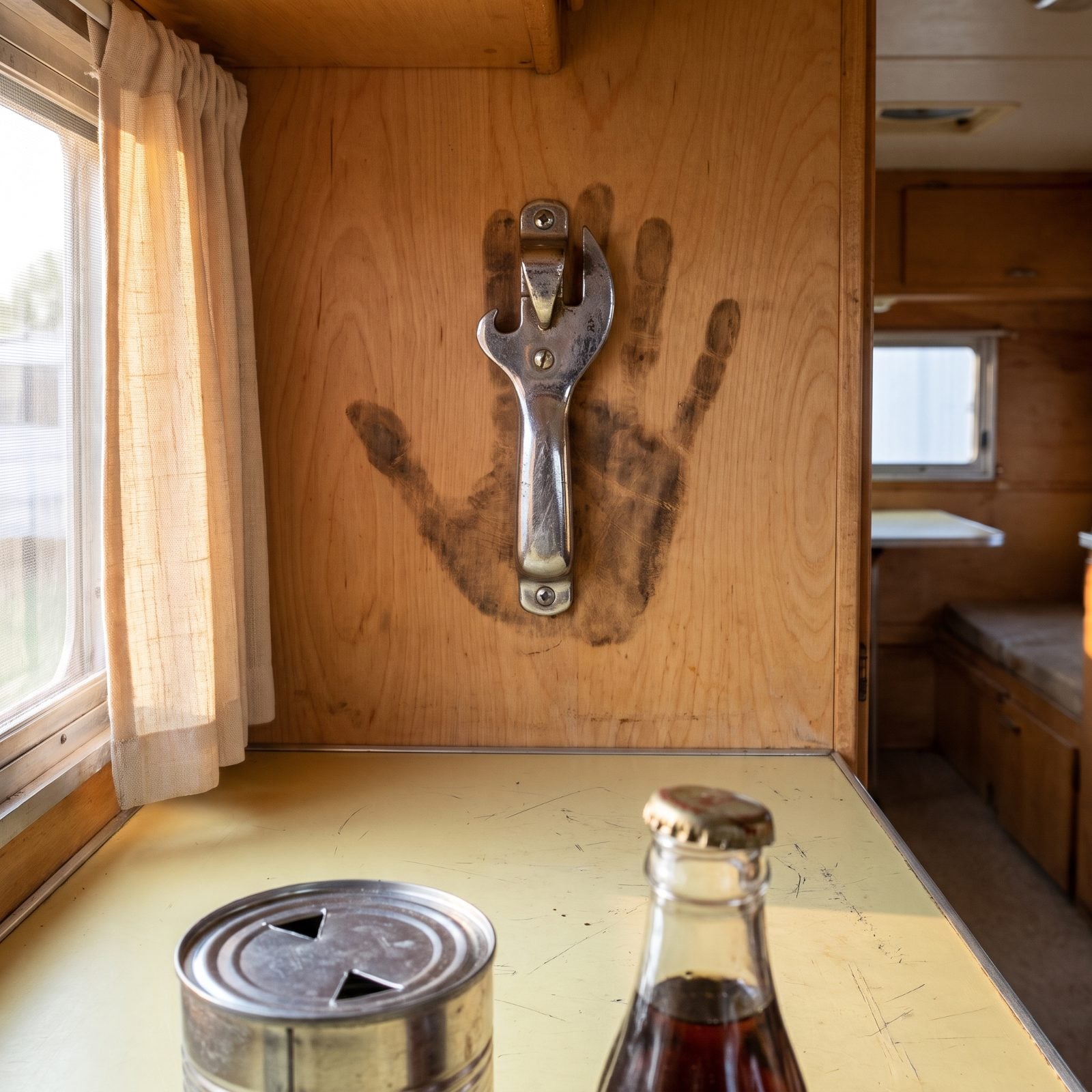
Before pull-tabs, you punched. The opener hung on a little screw-mount by the counter, a pivoting strap riveted to a wrench-like body with a rounded handle, and it handled two jobs: the notched hook bit triangle holes in juice and beer cans, the swinging strap pried caps off soda bottles.
Two holes in a juice can, one to pour and one to let air in, or it glugged all over the Formica. Every kid in the trailer learned that the hard way at least once.
19. Melmac Plates and Those Divided Dinner Trays
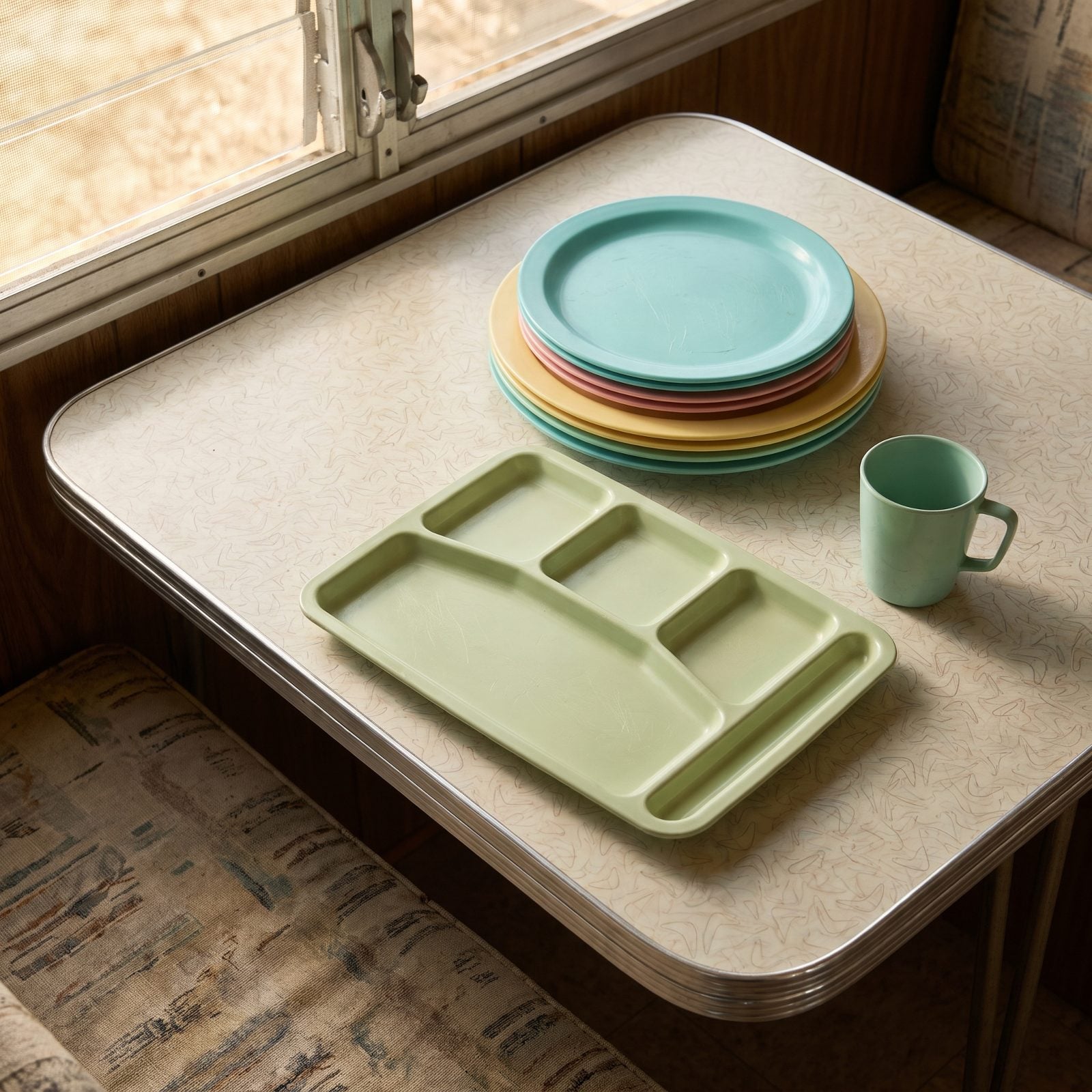
They never broke. That mattered when you were driving over washboard gravel to the campsite. Melmac came in pastel sherbet colors, turquoise and buttercup and dusty pink, and the plates had a satisfying weight and that faint chemical smell when they were new.
The divided trays were the genius move. Beans stayed out of the Jell-O, meat stayed out of the applesauce, and the whole plated dinner washed up in a single hand-pumped rinse. Scratch them up over the years and they still didn’t chip. We fed a lot of campground dinners on these.
Explaining why the plates survived decades of use, a certified personal property appraiser writes that “Melamine, composed of nitrogen, carbon, and hydrogen, combined with formaldehyde and exposed to extreme heat, creates a moldable material that, when cooled, becomes indestructible and dishwasher safe.”
18. The Aluminum Ice Trays With the Lever That Froze Your Fingers
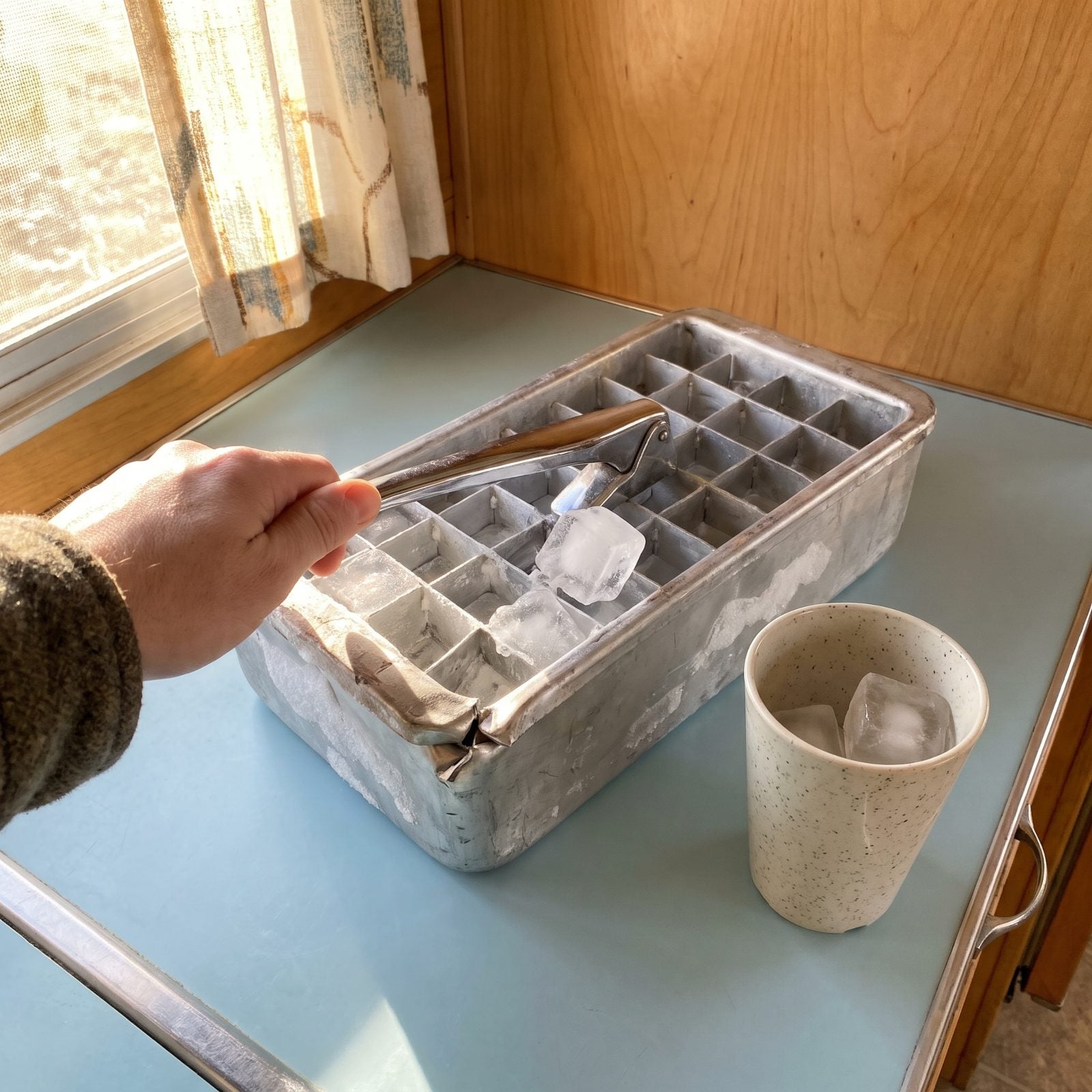
These lived in the tiny freezer box of a propane refrigerator, in the rigs lucky enough to have one. You ran the tray under the hand pump, set it to freeze, and later yanked up the chrome lever to crack all the cubes loose at once with a sharp metallic crunch.
The lever worked great. The aluminum tray itself was so cold it stung your bare fingers, so you learned to grab it by the handle only. One wet thumb on the frosted metal and you were stuck for a second too long.
17. The Glass-Lined Thermos With the Cork Stopper
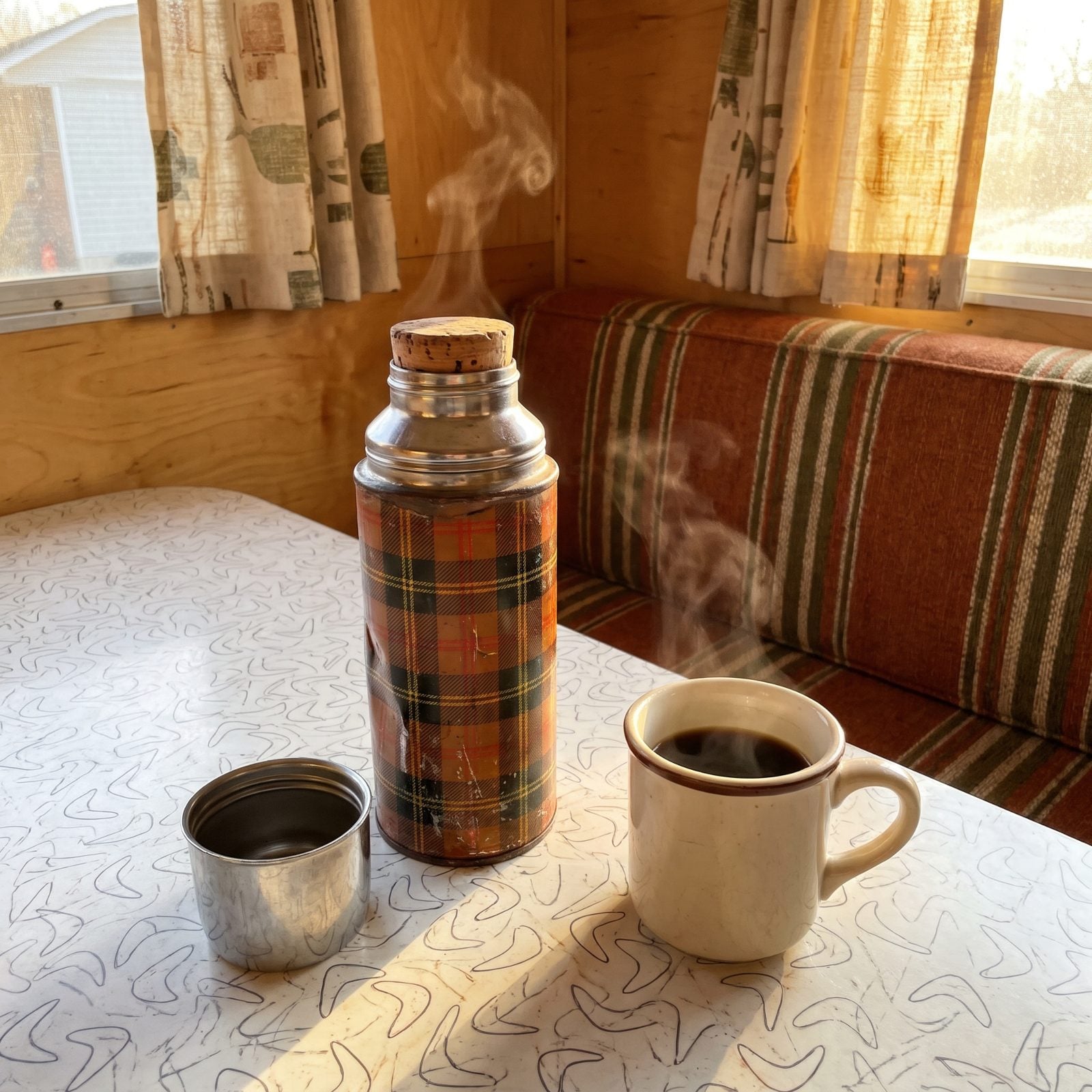
You filled it with coffee at breakfast and it kept it hot clear through a morning hike or a long drive to the next campground. The lid unscrewed to become a cup, and under it a cork stopper sealed the vacuum, which you pressed in with the flat of your hand.
The catch was the glass liner inside. Drop the thermos on a boat ramp or a gravel pad and you’d hear it shatter with a muffled tinkle, and from then on it rattled and kept nothing hot. We treated them gently and still went through a few.
16. The Steel Cooler With the Locking Latch and Bottle Opener
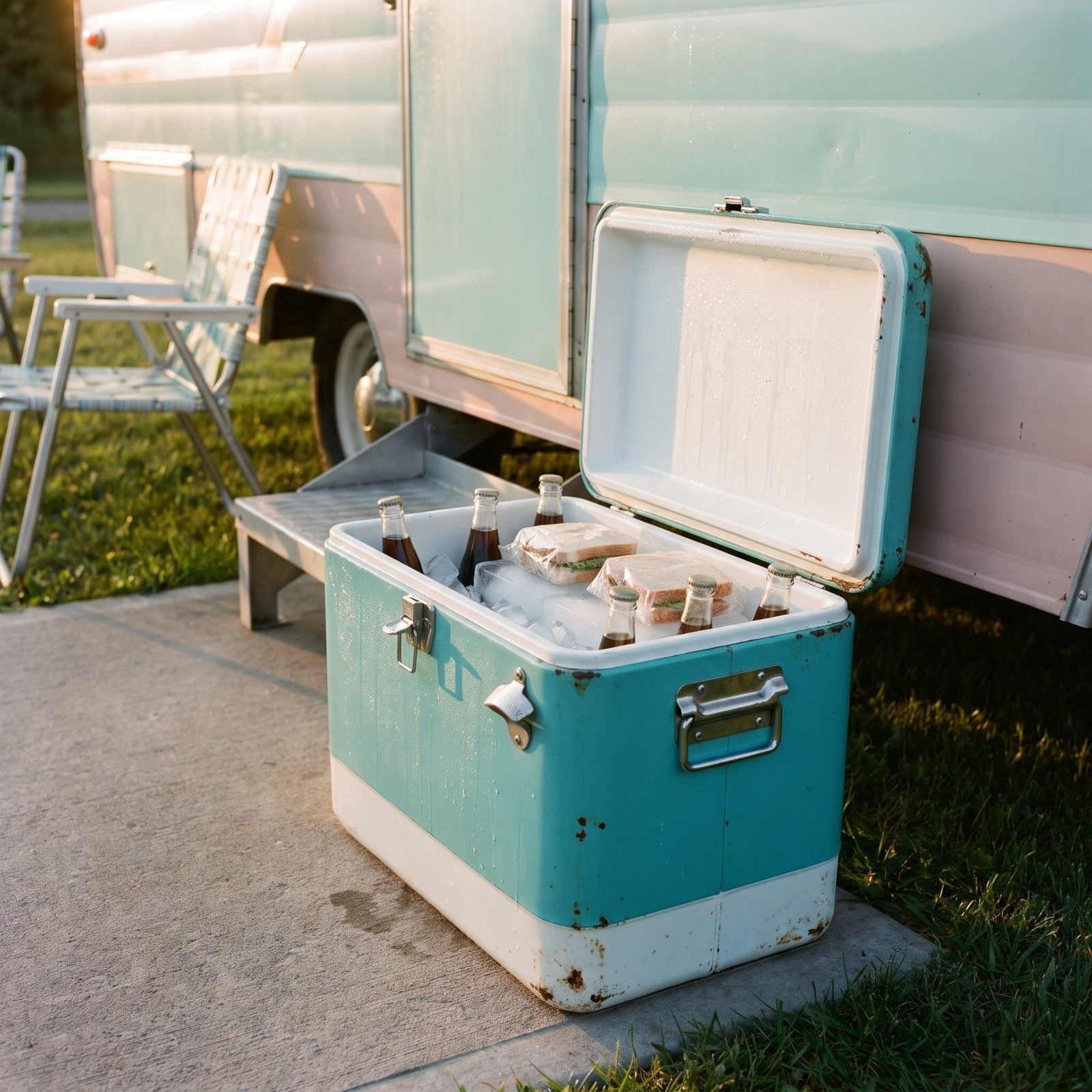
Before plastic coolers, you hauled steel. The body was painted enamel, turquoise or red, with a chrome locking latch that clamped the lid down tight for the trip and a little bottle opener riveted right to the side so you never hunted for a church key.
It weighed a ton empty and a small fortune full of ice, and the enamel chipped at the corners and rusted where it chipped. But it sat in the sun by the trailer step all weekend, kept the pop cold, and doubled as a seat when every lawn chair was taken. We kept ours for years, dents and all. It’s the one piece on this list we’d actually load up and use again tomorrow.
15. The Propane Gas-Mantle Wall Lamp That Hissed Through Dinner
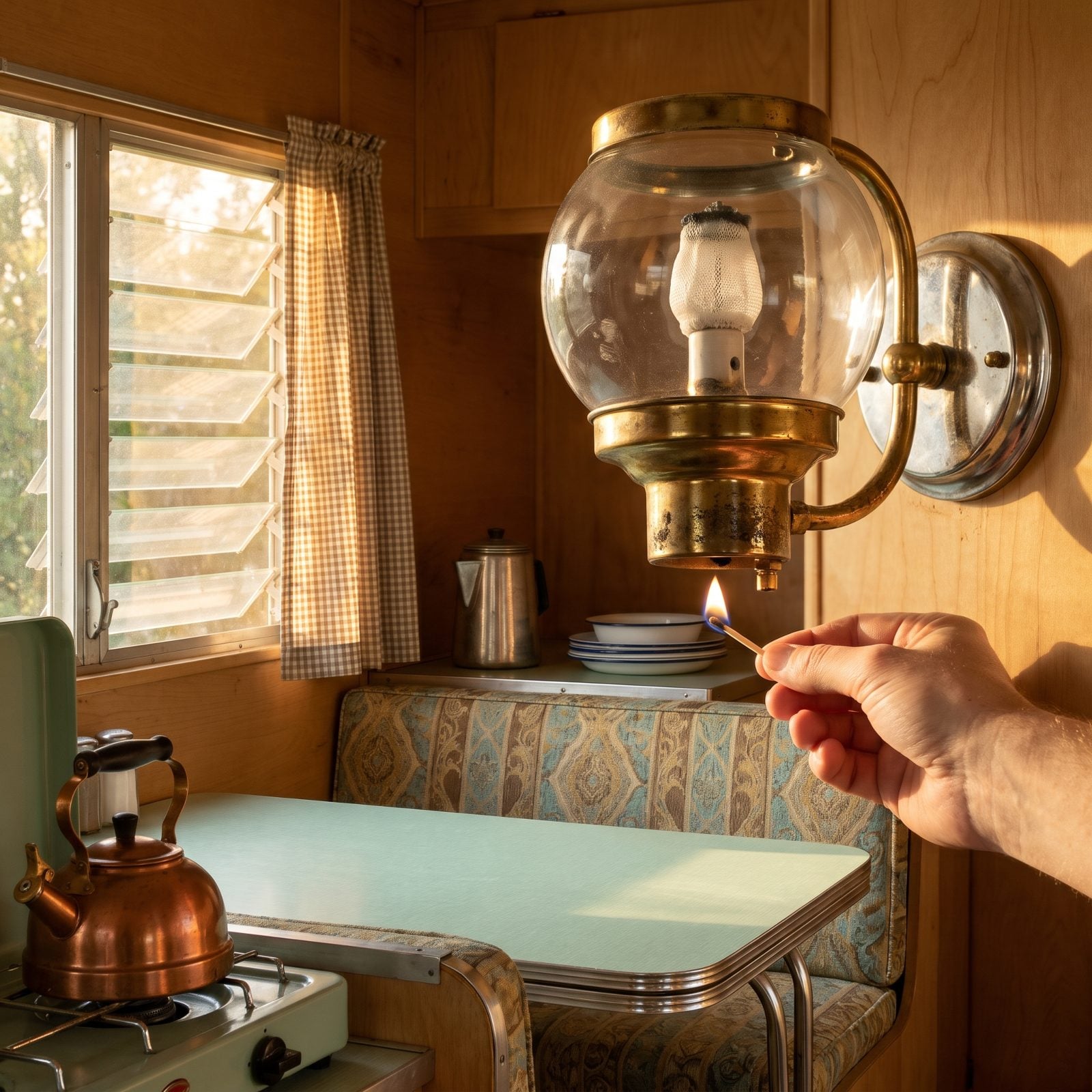
That hiss is the first thing anyone remembers. A gas-mantle lamp didn’t click on; it had to be coaxed. You’d open the valve, hold a match close, and wait for the mantle to catch with a soft whump before it settled into that steady glow.
The light ran warmer than any bulb, almost buttery, and it threw just enough to read a map or deal a hand of cards. And you learned fast that a bumped mantle turned to ash — one careless elbow and that fragile little sock of fabric crumbled, which is why most families kept spares rattling in a drawer.
14. The Panel of Screw-In Electrical Fuses Behind the Cabinet Door
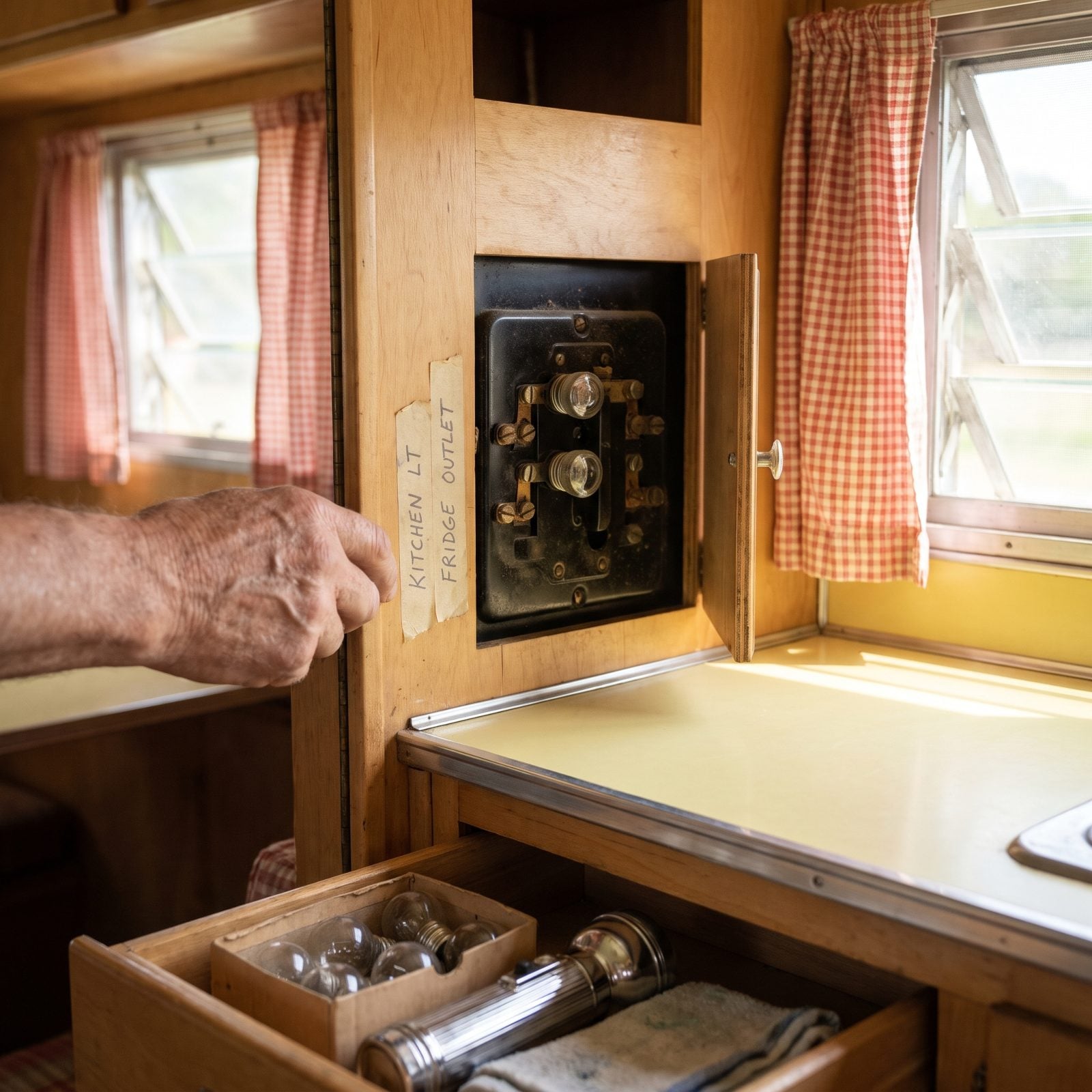
No breakers to flip back then. When something went dark, you went hunting for the little cabinet door hiding the fuse panel — a row of round glass fuses screwed in like tiny jars.
You held each one up to the light looking for a snapped filament or a scorched window, then dug through the spares box hoping you had the right amperage and twisted a fresh one in. Smart trailer owners taped a couple of extras right next to the panel. Plenty of us got stranded in the dark more than once because we didn’t, and we deserved it.
Writing about older electrical panels, a home inspector notes that “Screw-in type fuses—the round ones with a clear window in the center so you can tell when they are blown—are the only kind that are problematic.”
13. The Hardwired Shore-Power Cord Fed Through a Hull Hatch
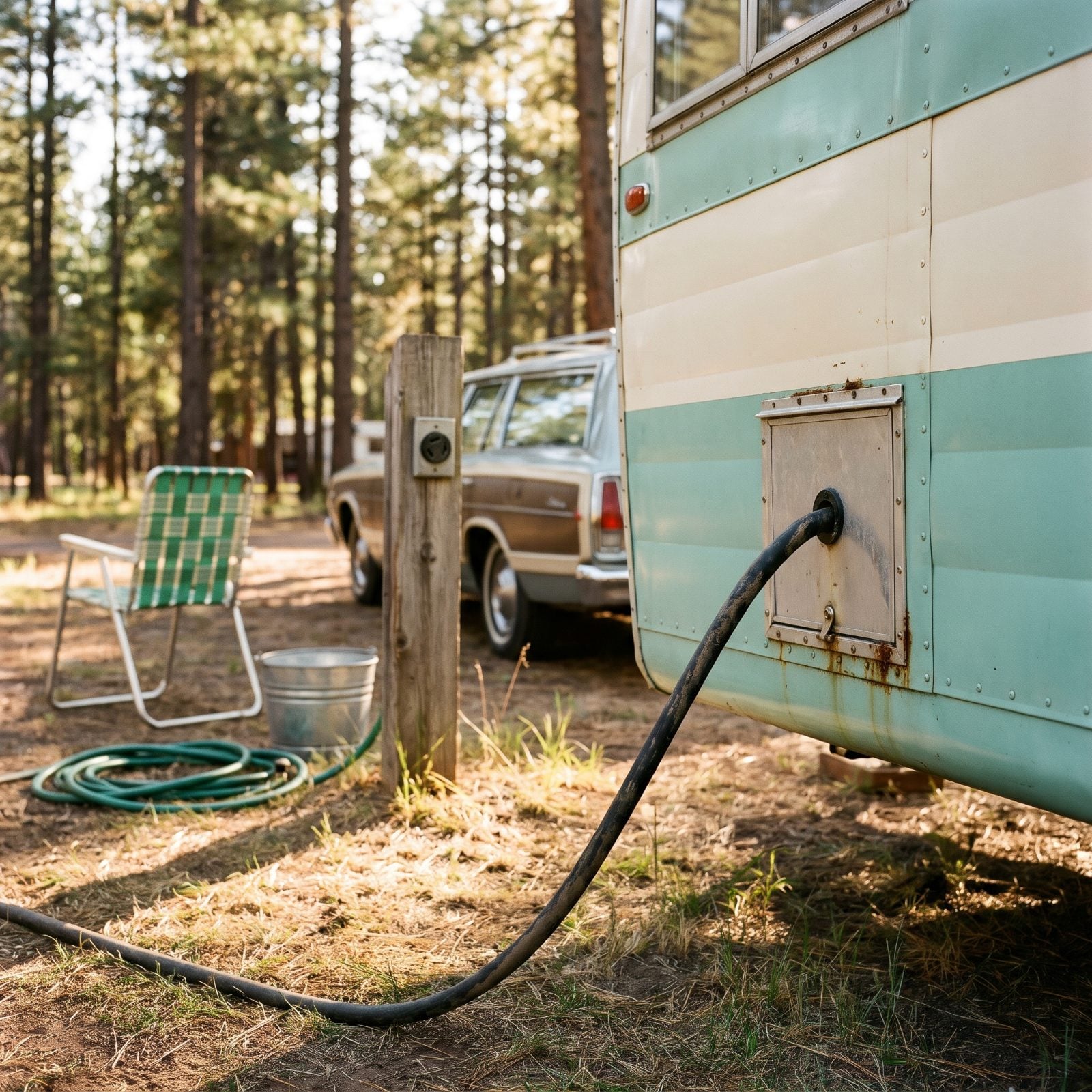
There was no tidy twist-lock inlet in 1964. Your shore-power cord was more or less permanently wired inside, and you fed the loose end out through a little hatch in the skin whenever you reached a site with a plug.
You’d run it across the grass, hope the campground post actually worked, and pray nobody tripped over it in the dark. Crude by any standard you’d use now. But when that one bare bulb flickered to life off park power, it felt like real luxury after a string of nights on battery and propane alone.
12. The Gravity-Fed Floor Furnace That Warmed Your Socks First
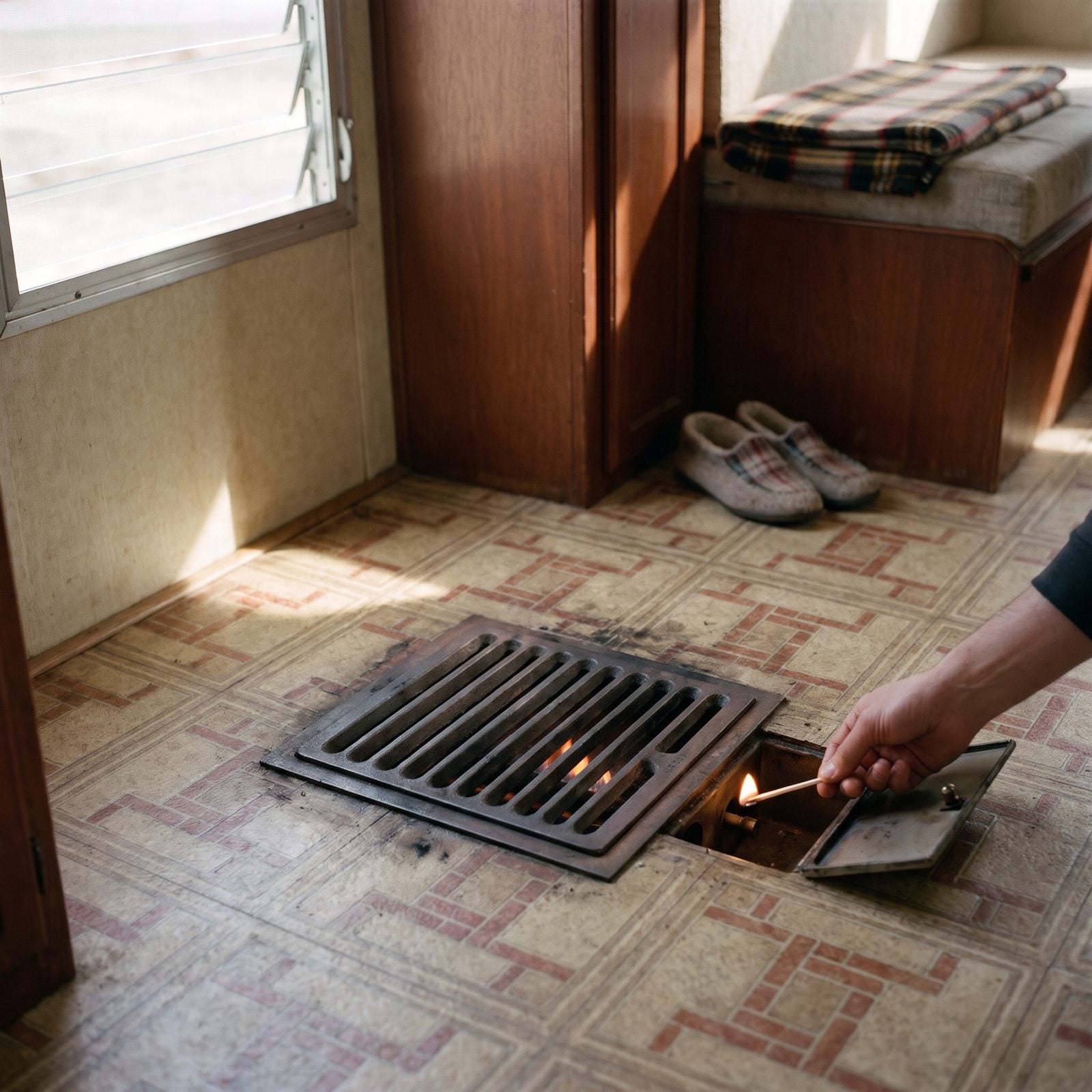
You felt it through the floor before you felt it anywhere else. A gravity furnace had no fan and no ductwork to speak of, just heat rising lazily off a grate set into the linoleum, so your feet got toasty while your head stayed cold — exactly backward from how you’d want it. Lighting the pilot meant getting down on your knees with a long match and a steady hand.
11. Hand-Cranked Jalousie Windows You Opened One Slat at a Time
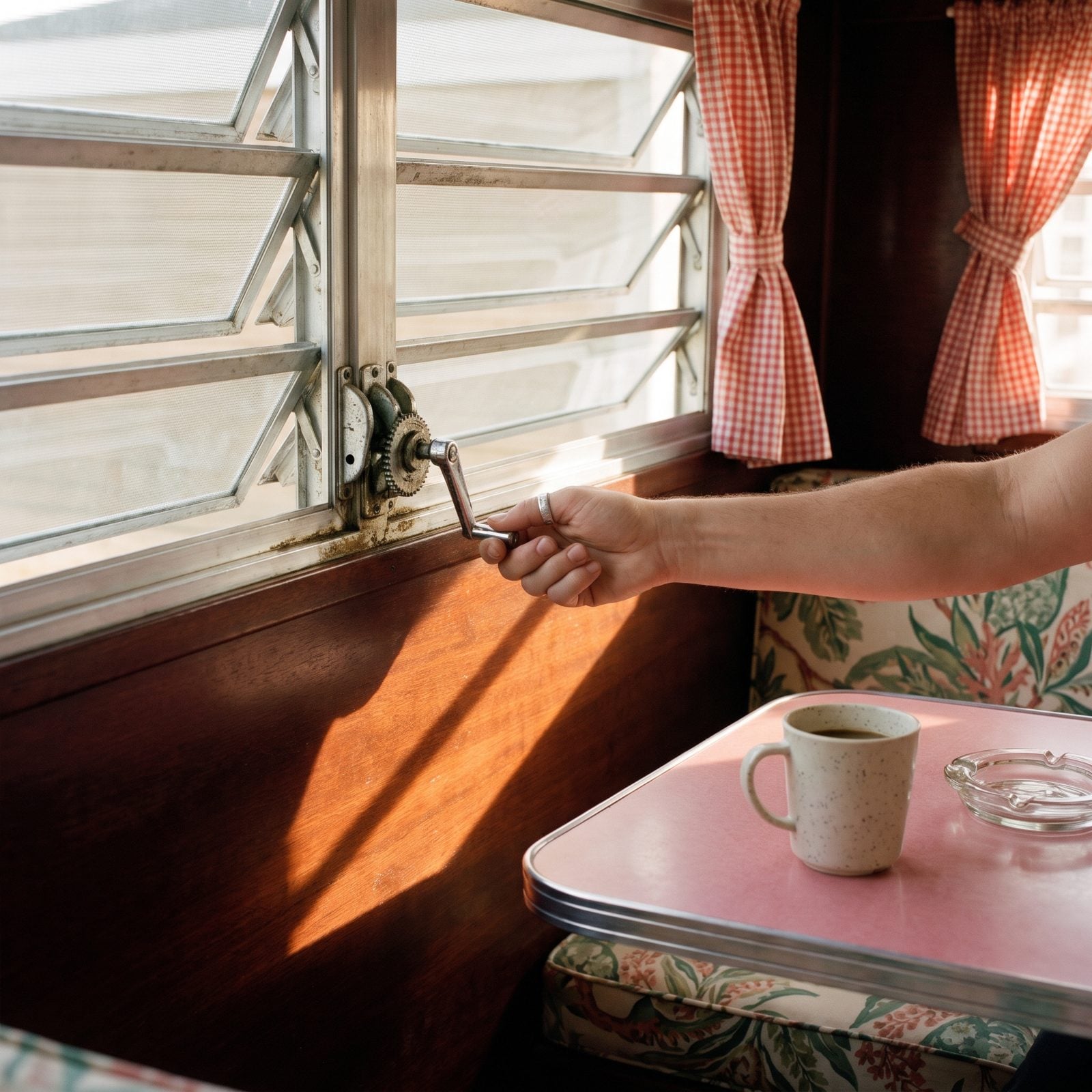
Crank the handle and the slats tilt open together like a venetian blind made of glass. Jalousie windows were the trailer’s answer to ventilation, letting you catch a cross breeze even in a light rain because the angled panes shed water away from the inside.
That little chrome handle took a few full turns to open all the way, and the gears had a gritty, satisfying resistance to them. They never sealed well — drafts in winter, the occasional mosquito in summer — but on a warm night with the slats wide open, you got air moving through the whole cabin.
Listing the advantages of jalousie windows, a window company general manager points out that “When slightly open, the angled slats can shed a passing shower better than an open sliding window.”
10. The Canvas Awning You Assembled Pole by Pole, Rope by Rope
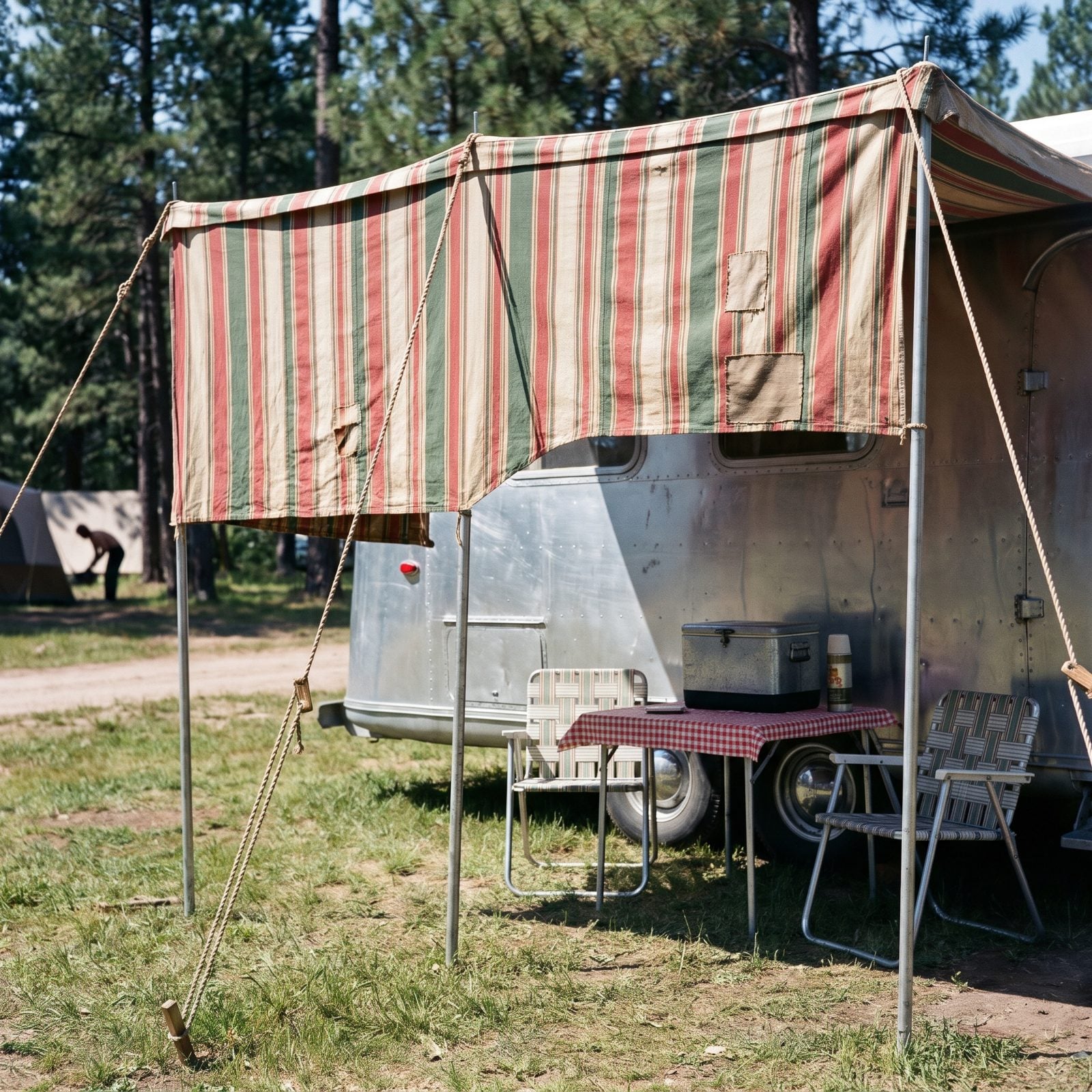
This was a two-person job and a test of patience. The awning fabric slid into a track along the trailer’s edge, then you spent a good while planting poles, running guy ropes, and driving stakes until the whole thing stood taut.
Get one rope too loose and the canvas sagged and pooled water. Get a stake wrong and the whole structure leaned like it was tired. Once it was up, though, that striped canvas became the family’s outdoor room — the shady spot where card games happened and lunch got eaten away from the bugs.
9. The Built-In Metal Dinette Ashtray Nobody Thought Twice About
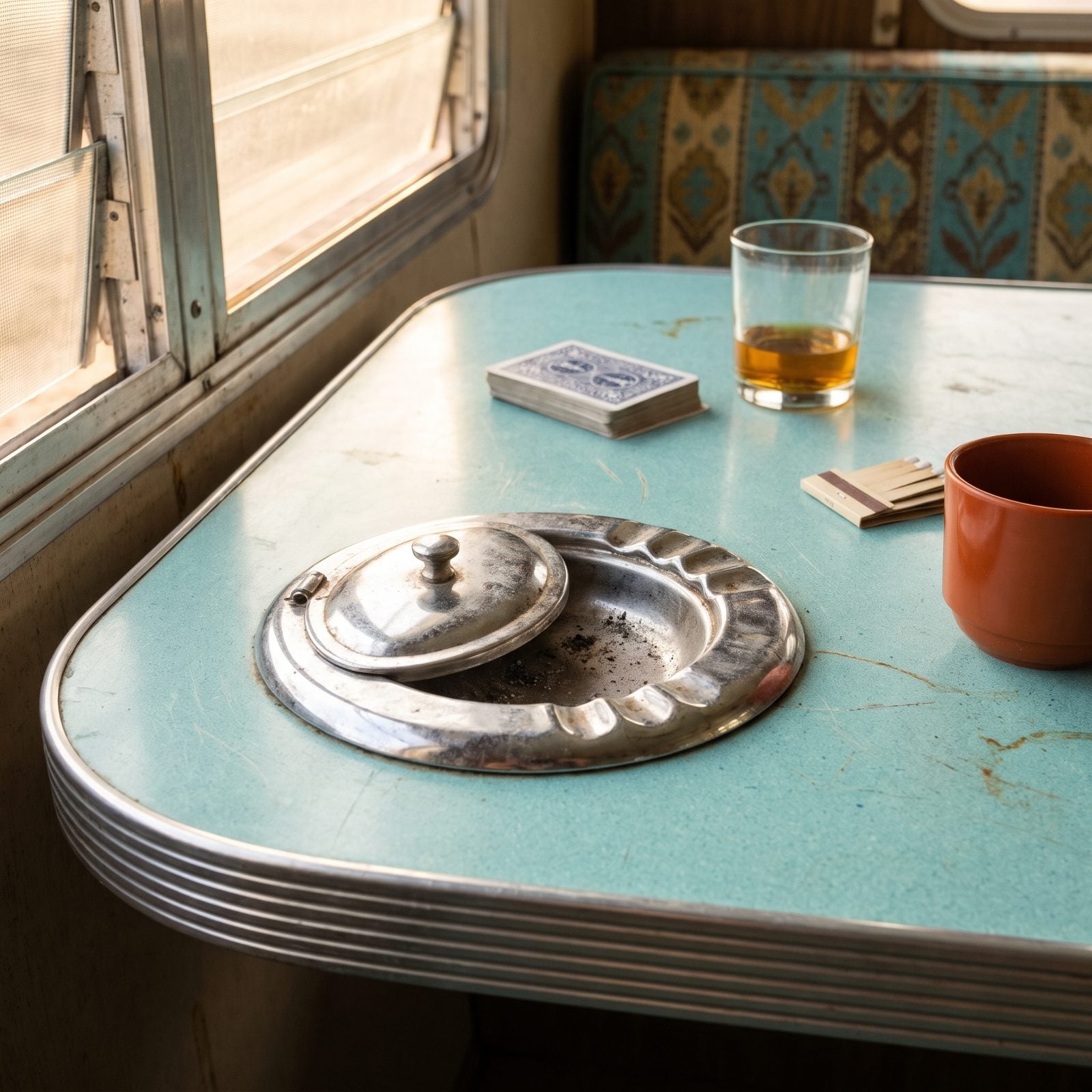
Every dinette had one, usually set right into the Formica edge where you’d rest your elbow. A swivel lid, a scalloped rim for the cigarette, a little chrome well to tap your ash into — as standard as the salt shaker.
Hard to picture now. A smoking fixture built into the family vacation furniture tells you exactly how different those road trips were: windows cranked, radio on, a haze hanging over the card game. The ashtrays outlived the habit by decades, still bolted into trailers long after nobody used them.
8. The Portable Black-and-White TV With Rabbit Ears Taped to Catch a Signal
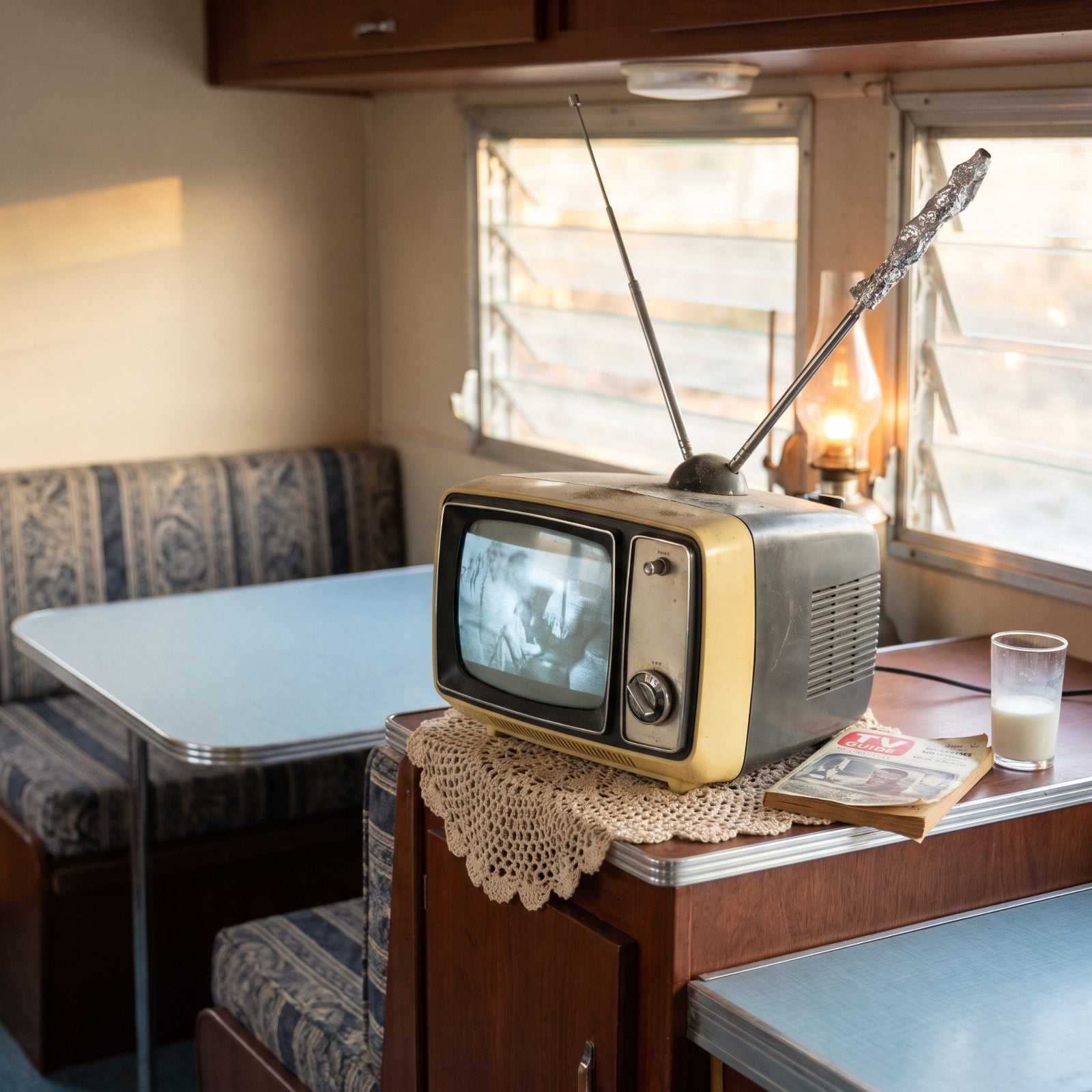
Half the fun was never the program. It was the ritual of getting a picture at all — standing there slowly rotating the rabbit ears, foil wrapped around one tip, while someone on the dinette bench called out “there, hold it, no, back a little.”
Reception depended entirely on where you parked. A hilltop campground might pull in two fuzzy channels; a valley gave you snow and static. You watched whatever came through, grateful for it, and you accepted that whoever found the clear signal had to stand near the antenna for the rest of the broadcast.
7. The Folded Paper Road Atlas Living in the Glove Compartment
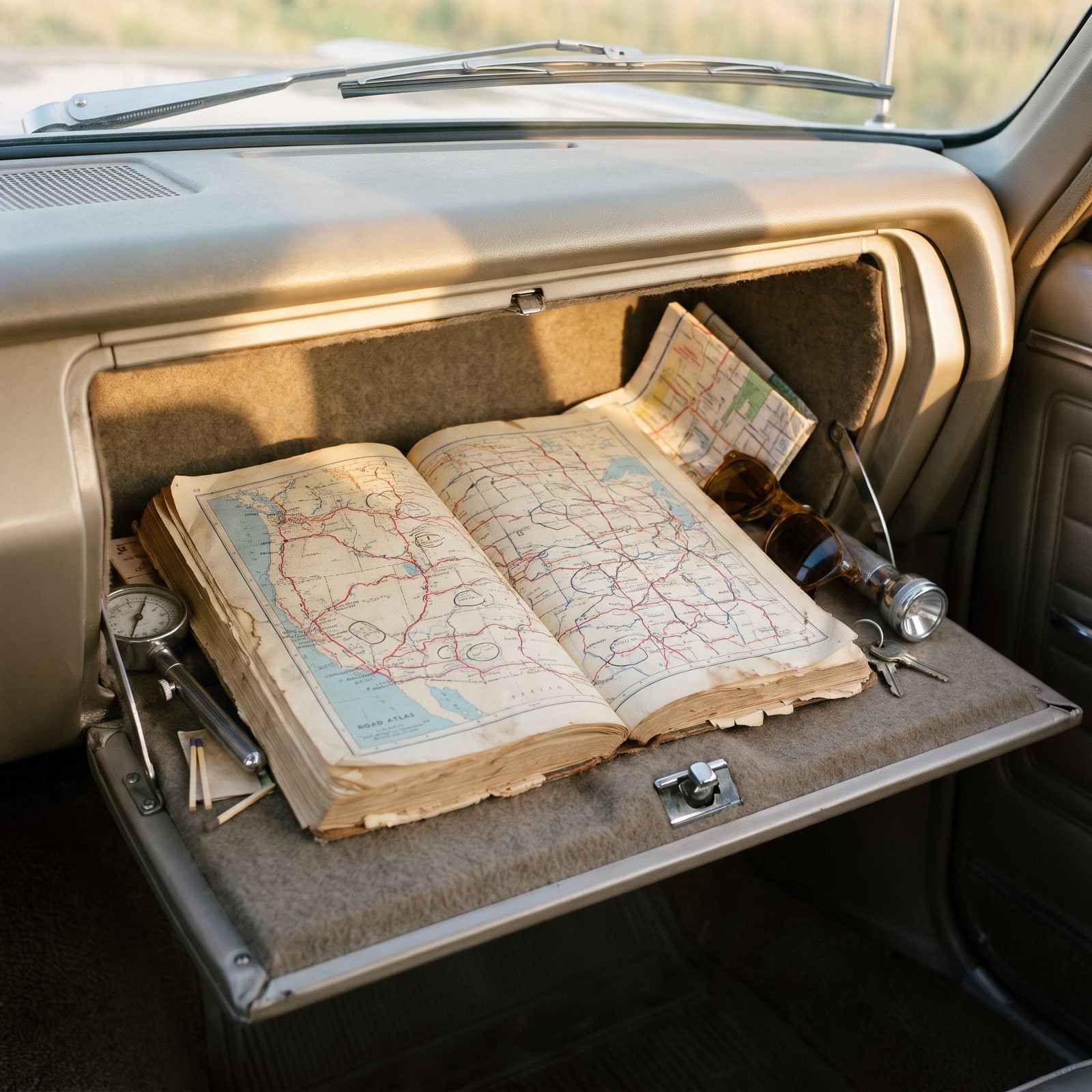
Soft at the folds, coffee-ringed on the cover, pencil circles around the towns you meant to reach by nightfall. The road atlas was the single most important object in the vehicle, and it never left the glove box except to get spread across somebody’s lap.
Navigation was a full-contact sport. The driver drove, the co-pilot read the map aloud and refolded it badly, and an argument over a missed turn could simmer for fifty miles. No voice told you to recalculate. You just backtracked, refolded the map wrong again, and kept going.
6. The Printed Woodall’s or Trailer Life Campground Directory Thick as a Phone Book
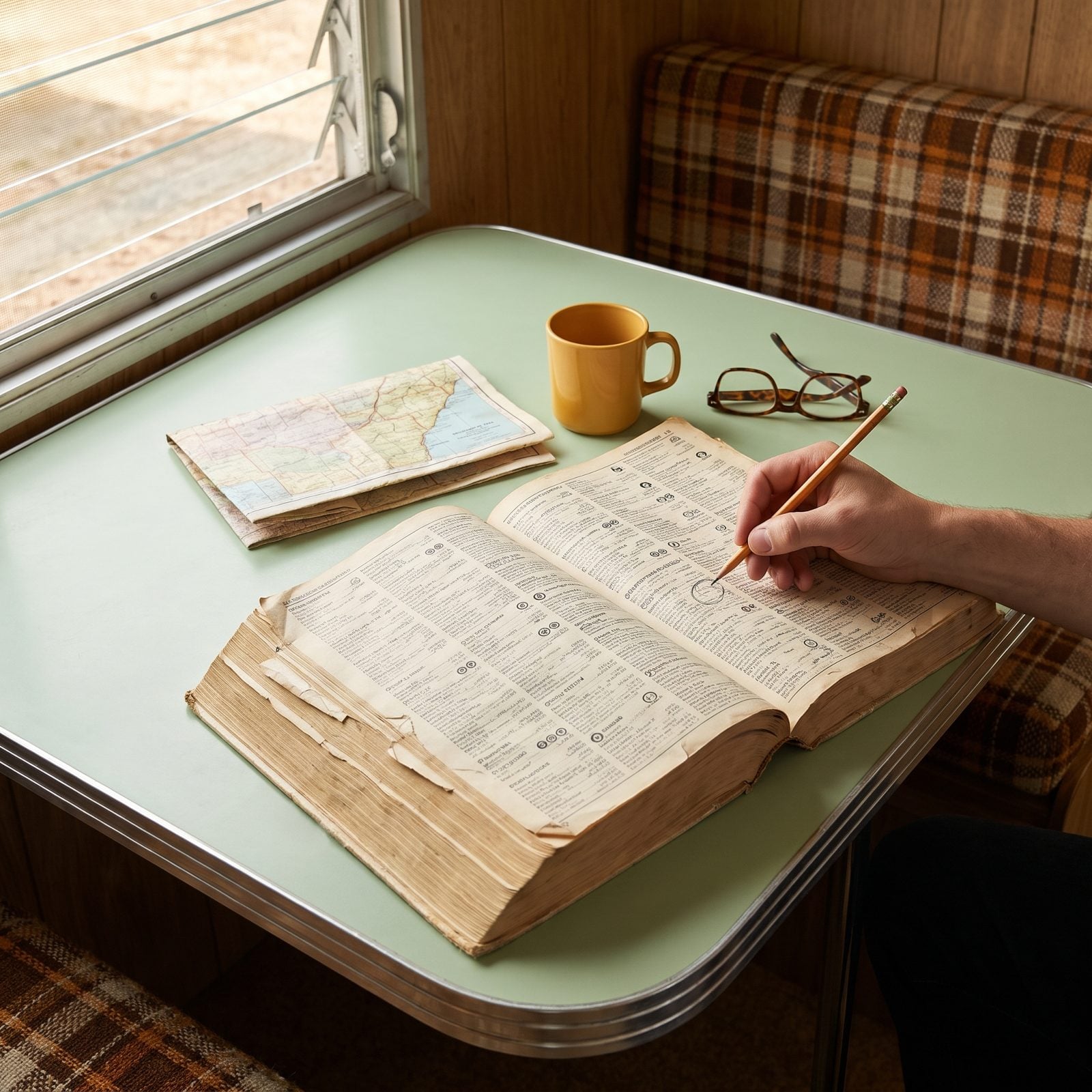
Before you left home, you planned the whole trip across this book. Thick as a city phone directory, packed with tiny-print listings and a legend of symbols for hookups, showers, a dump station, maybe a swimming hole if you were lucky.
You’d sit at the dinette the night before each leg, pencil in hand, circling candidates and guessing at distances. No reviews. No photos beyond the occasional small line drawing. You trusted a row of symbols and the owner’s description, then learned the truth when you pulled in after dark.
5. Clamp-On Towing Mirrors With Metal Straps
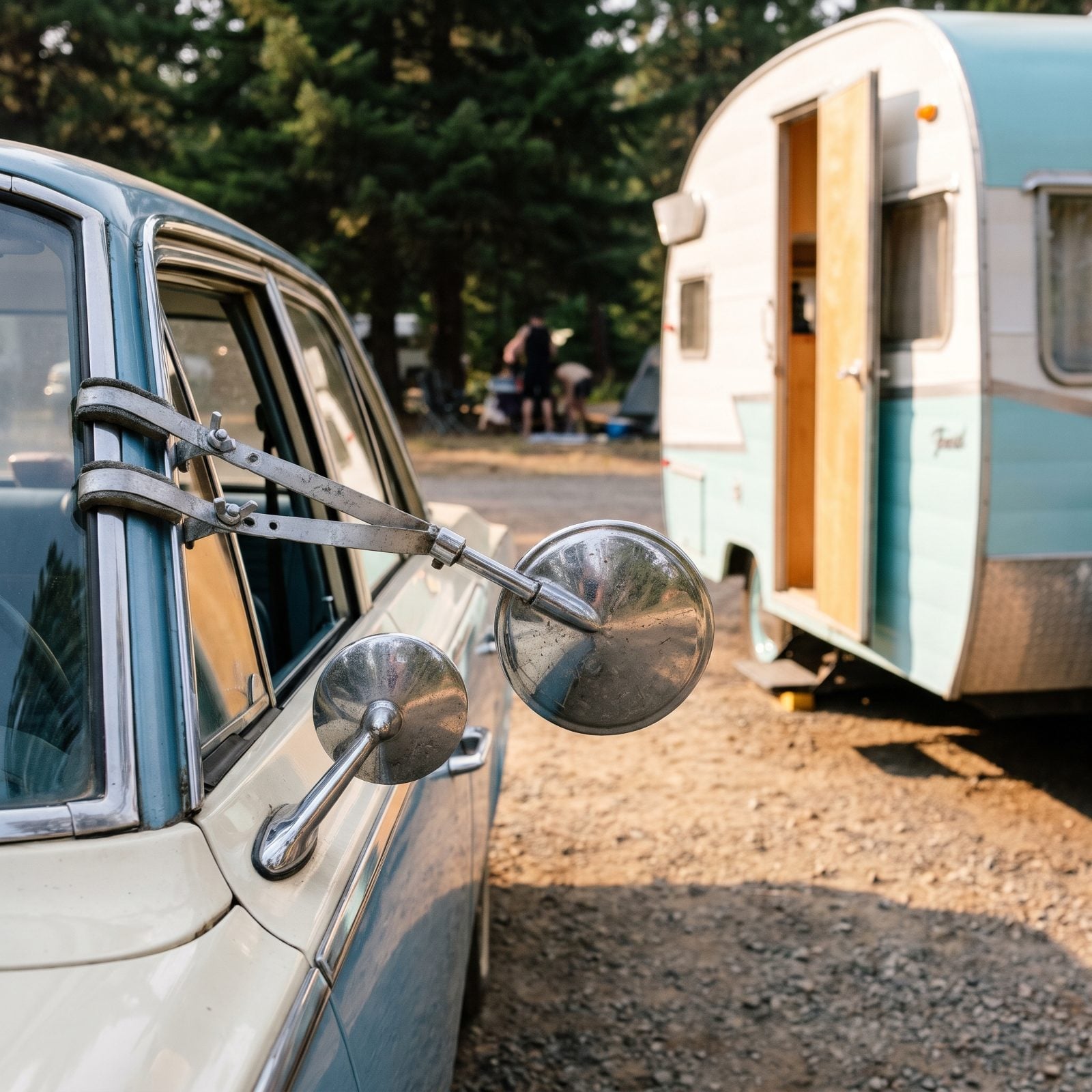
You bolted these on before every long haul, and you checked them twice because a loose strap meant you were towing blind. A round or rectangular chrome head sat on a hinged arm, cinched to the door with two padded metal straps and a wing nut you tightened by hand until your knuckles went white.
They buzzed, and they drifted a few degrees every fifty miles of washboard road. So at a gas stop you’d reach out the window, crank them back into place, and squint down the flank of the trailer to catch that sliver of the lane behind you.
4. A Canvas Evaporative Water Bag Hung Outside
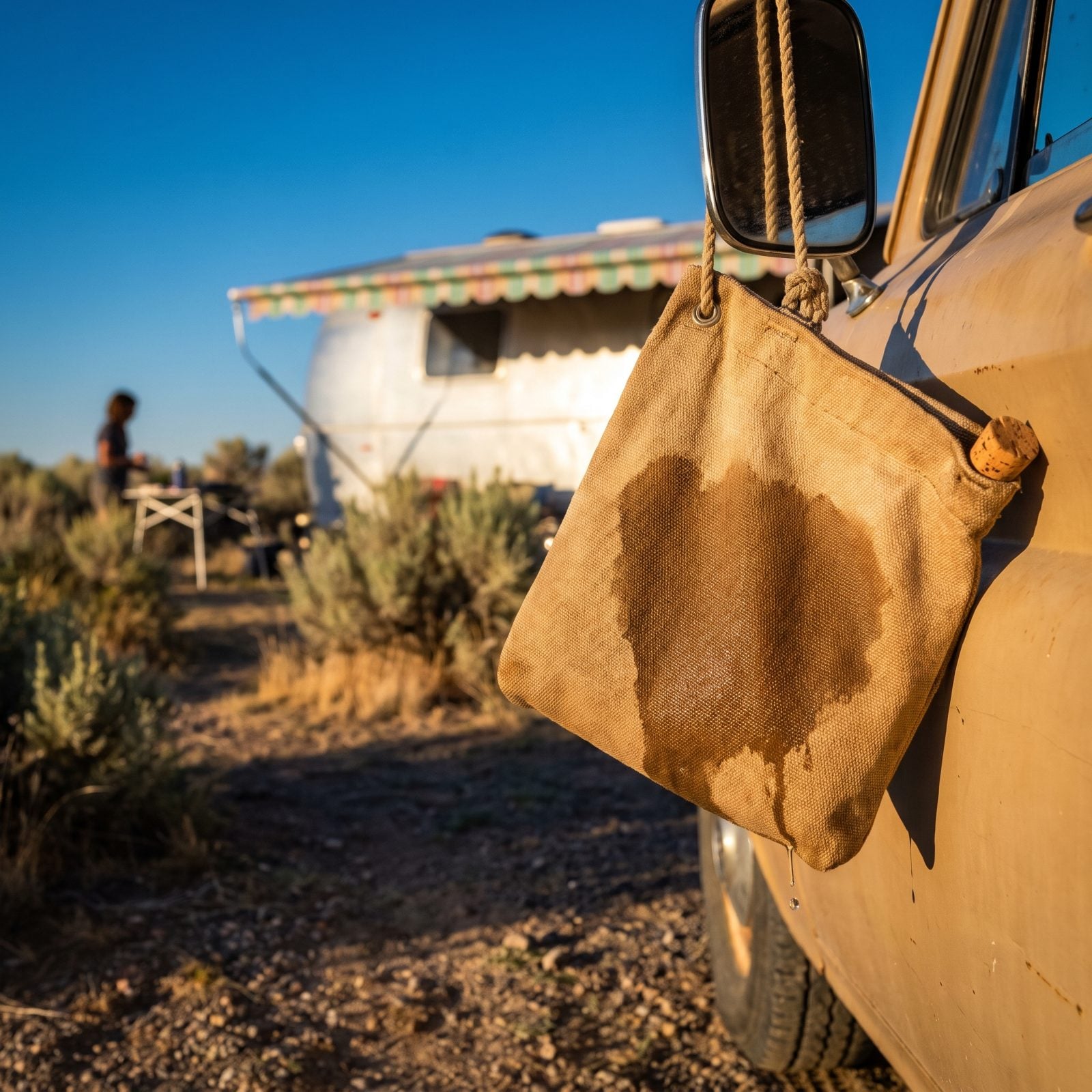
You hung it off the bumper or the mirror and let the wind do the work. A flat canvas bag, filled from the last good tap, sweating water through its own weave so evaporation pulled the heat out. Thirty, forty miles down a hot highway and the drink inside came out startlingly cool.
It smelled faintly of wet canvas and whatever town you’d filled it in. Out West, where the next spigot might be an hour away, this bag was the difference between a comfortable afternoon and a cranky one.
Describing the canvas water bags drivers hung from the bumper, a regional history museum explains that “As water seeped slowly to the surface, it evaporated and cooled keeping the water about 12 degrees cooler than the air.”
3. A Pump-Up White-Gas Coleman Lantern
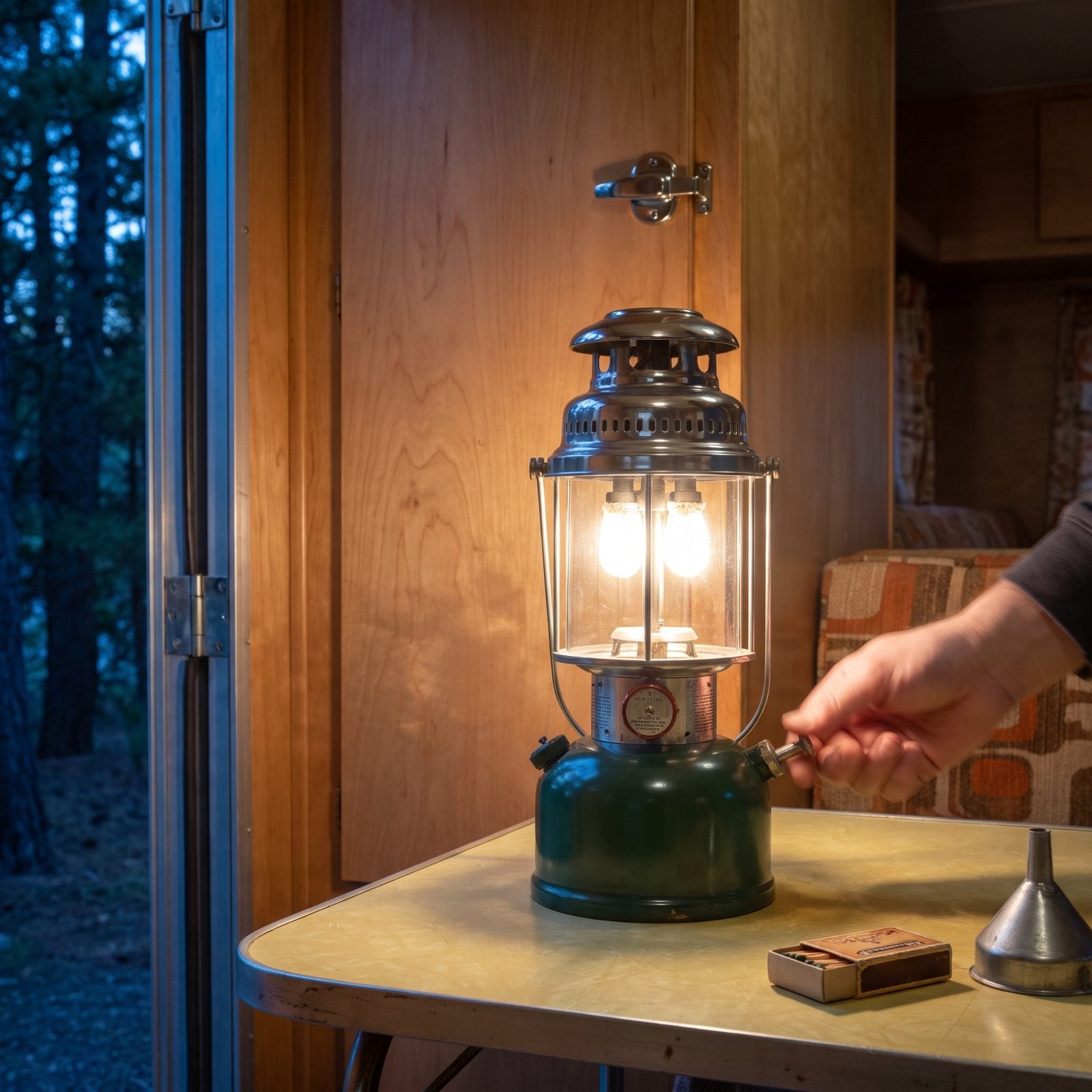
First you pumped it. Thirty, forty strokes until the tank felt firm under your thumb. Then you lit a match, opened the valve, and the mantles caught with a soft whump and a hiss that would be the soundtrack of the whole evening.
The light it threw was white and almost too bright, chasing the dark back past the picnic table. You never set it on anything that could scorch, and you never touched the globe while it ran.
That hiss is burned into anyone who grew up at a campsite. Cards on the table, moths tapping the glass, somebody reaching over to give the pump a few more strokes when the glow started to sag.
2. A White-Gas Camp Stove With a Separate Fuel Tank
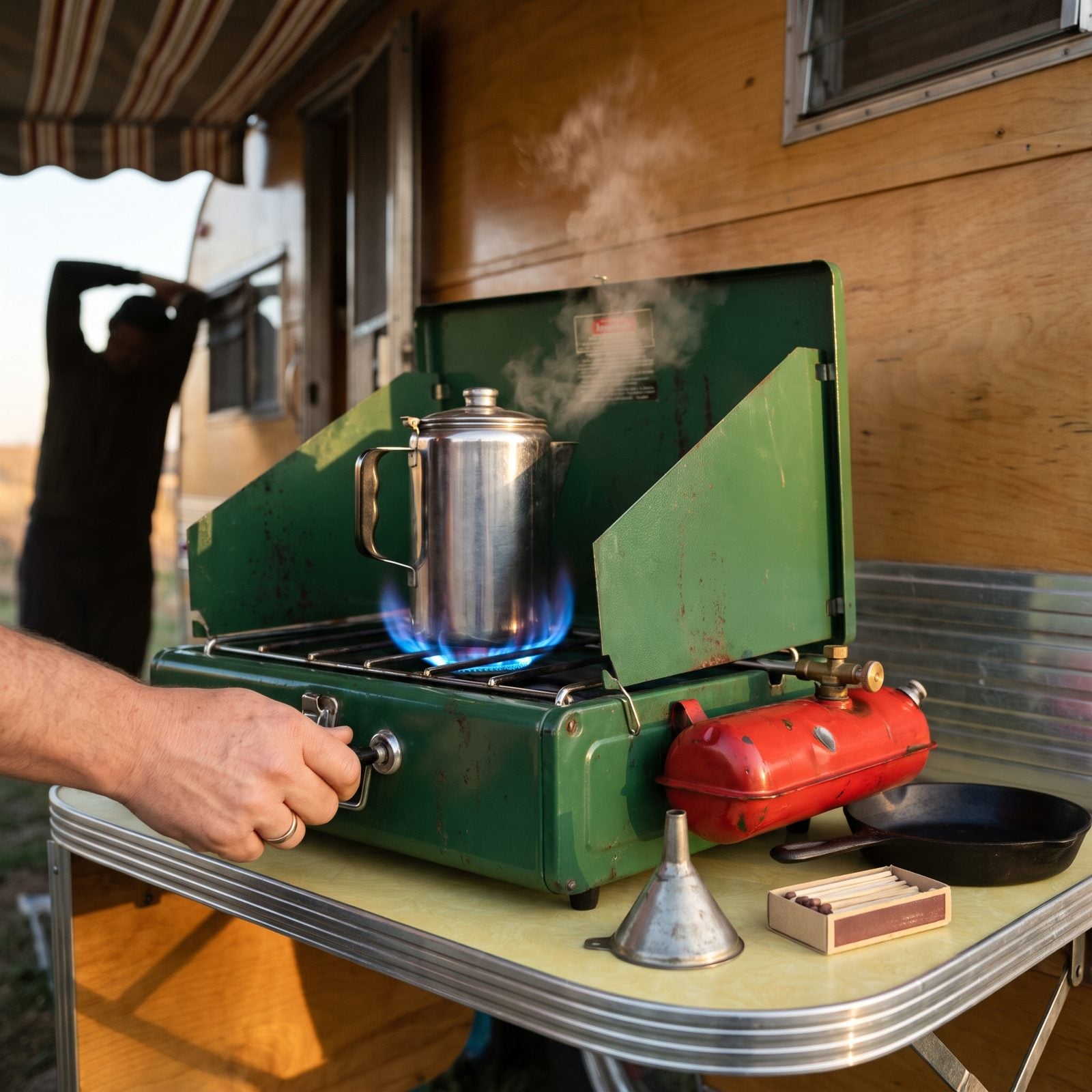
Coffee started with a pump and a prayer. This was the two-burner that fed a whole family on the road, and it ran on white gas — same fuel as the lantern — from a separate red tank you clipped to the side and pressurized by hand.
You primed it, lit it, and watched the flame settle from a yellow sputter into a steady blue ring. The hinged lid folded up into a windscreen so a breeze off the lake didn’t blow out your eggs.
Three reasons it earned its spot in every trailer:
- One fuel for both the stove and the lantern meant one can to carry and refill.
- The separate tank let you refuel without tipping the whole stove.
- It threw real heat, enough to bring a percolator to a boil before the dew burned off.
1. An Aluminum Lawn Chair With Woven Webbing
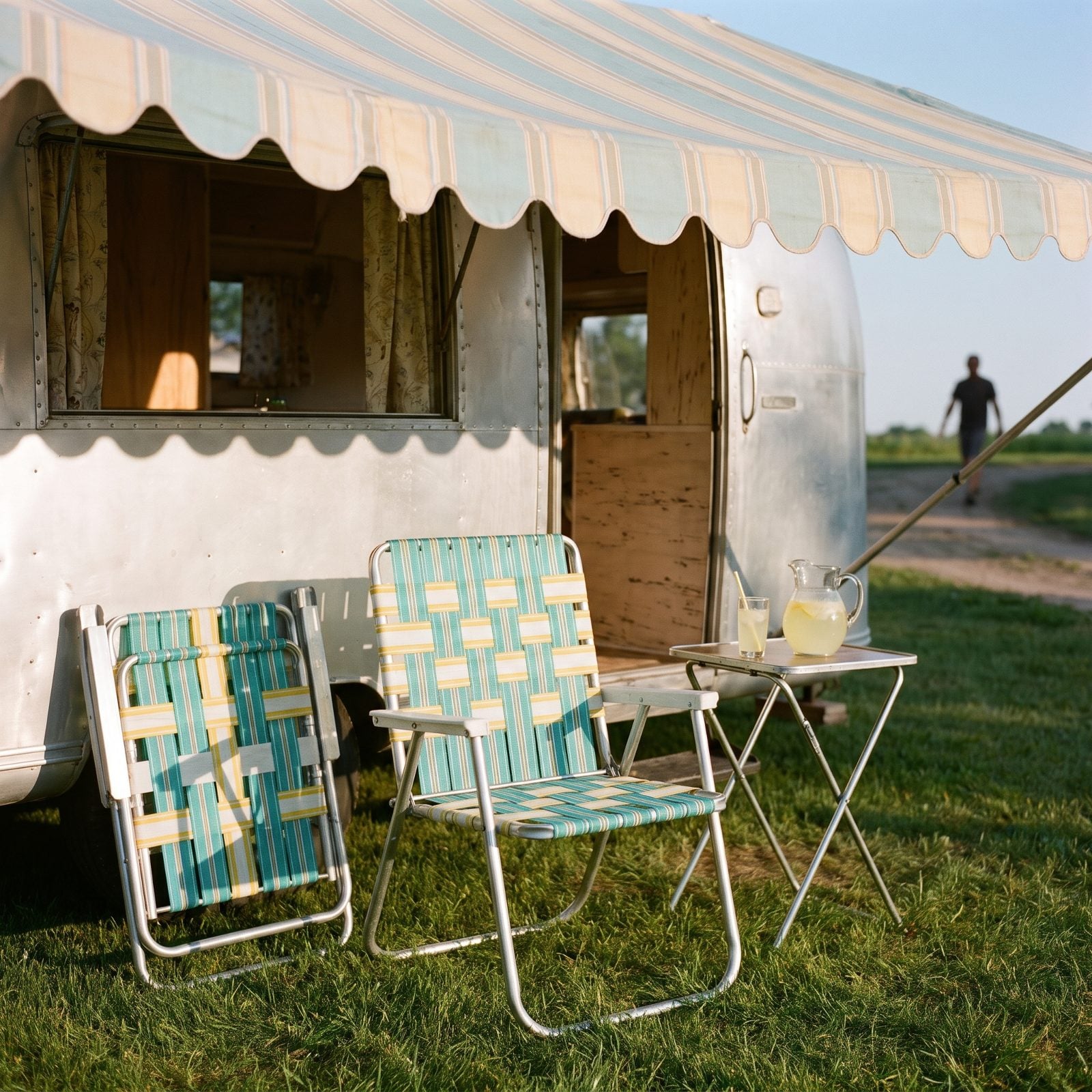
You could hear it before you sat in it — that faint creak and groan of aluminum tubing, the webbing stretching under your weight, the whole thing settling with a little bounce. Turquoise, yellow and white straps woven in a basket pattern, bright as a beach ball.
They folded flat against the side of the trailer and weighed almost nothing, which is why every rig carried four. The webbing frayed at the rivets, the back legs sank into soft grass, and the aluminum got hot enough in direct sun to make you yelp.
Still, this was the throne of the campsite. You pulled one up to the fire, leaned back until the frame protested, and watched the sky go orange over the lake. Nobody ever threw them out. They just kept re-webbing them, summer after summer.