
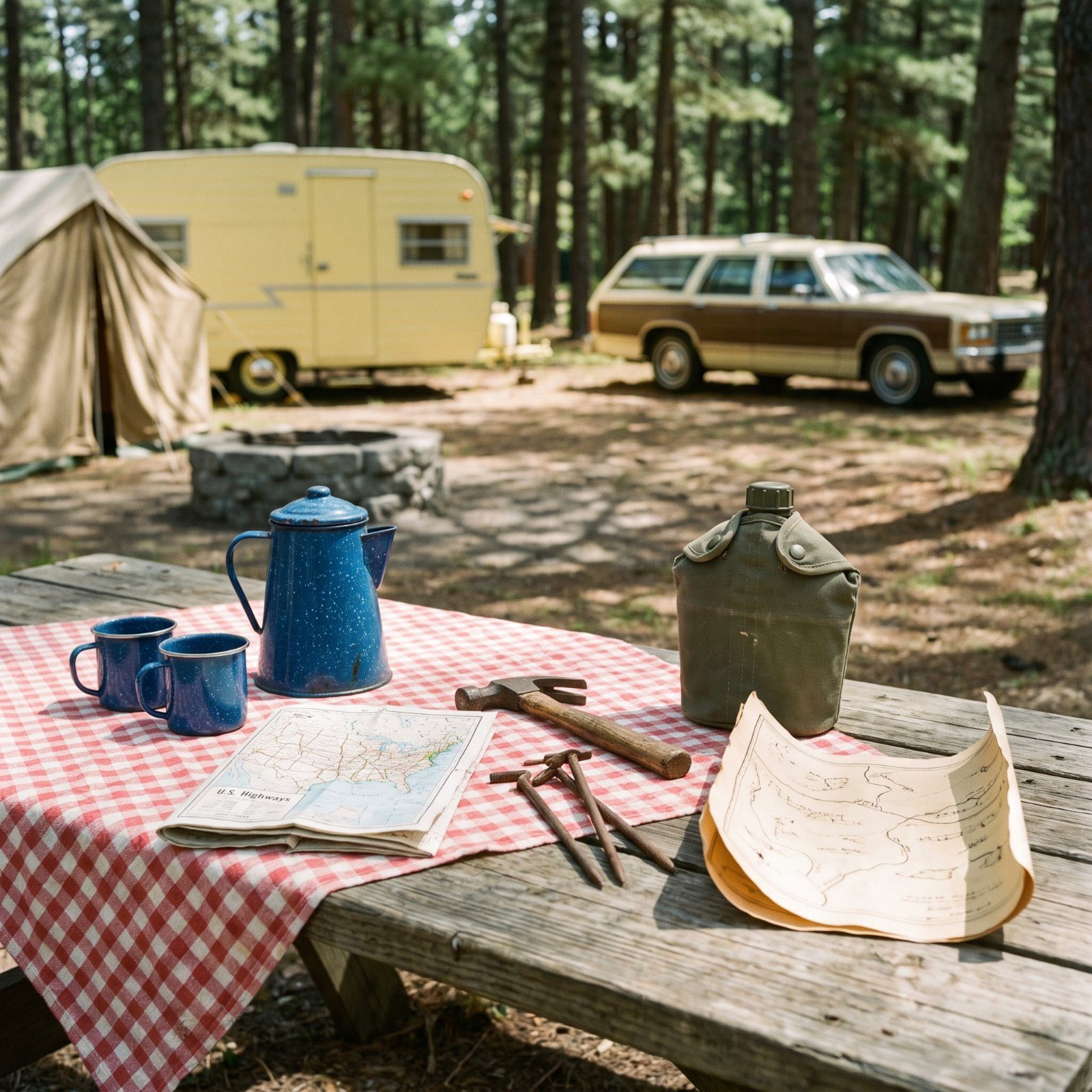
The thump of a mallet on a tent stake, three sites over. Bacon grease popping over a stone ring before the dew had burned off. In the 1960s you didn’t book a campground, you found one, and the finding was half the trip. No screens, no confirmation numbers, no reviews. Just a ranger in a booth, a gravel loop, and a set of customs nobody printed anywhere but everyone somehow knew. Here’s what held those summer loops together.
27. Choosing an Empty Site Without an Online Reservation
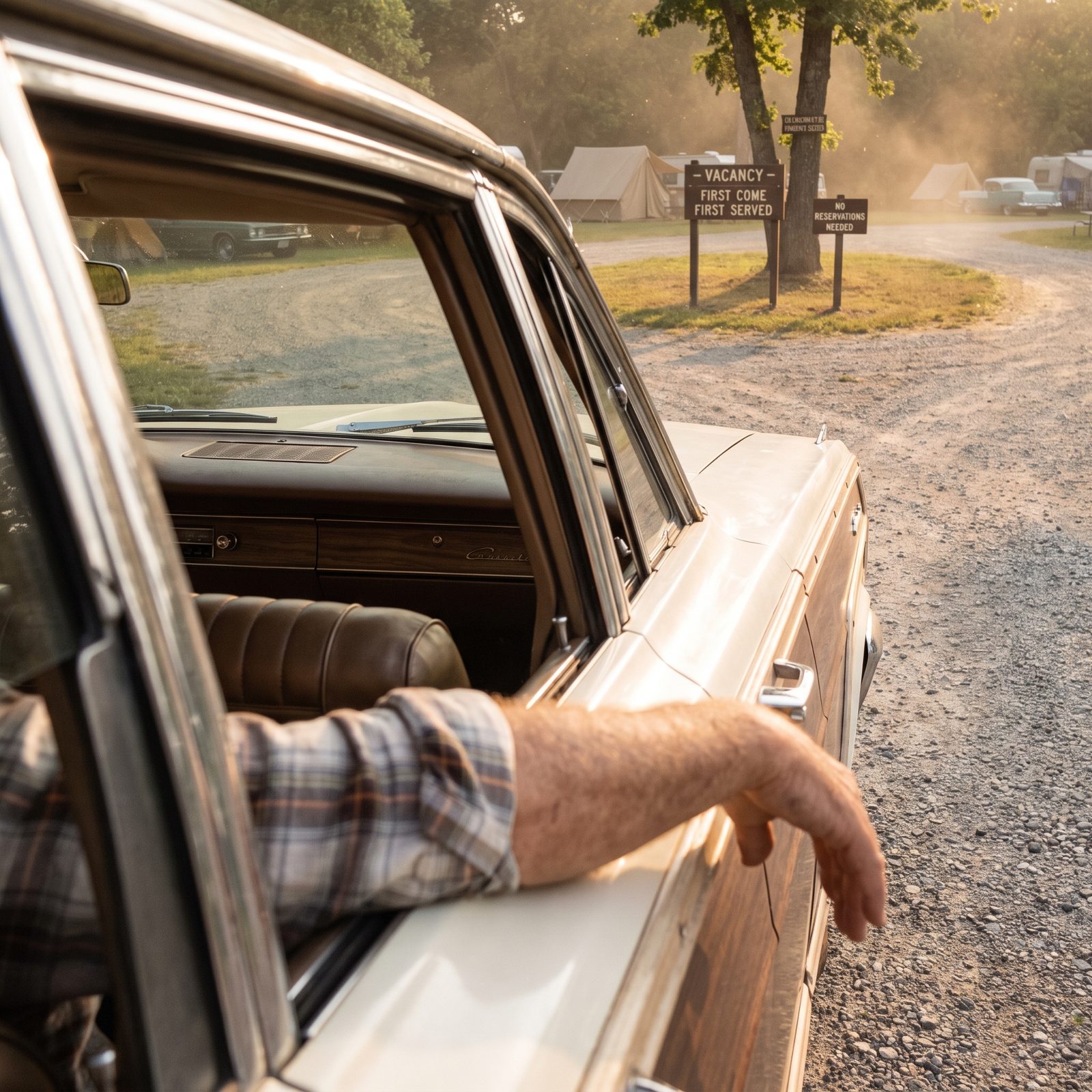
You drove the loop at a crawl. First pass to scout, second pass to decide, and Dad’s elbow out the window the whole time like he was appraising horses. A good site had shade by afternoon, a level spot for the trailer, and enough distance from the pump that you weren’t listening to it clank all night long.
Nobody held it for you. You pulled in, you claimed it, that was the deal — the whole thing ran on the honest assumption that the first wagon to the fire ring got the spot.
26. Registering With a Ranger in a Little Entrance Booth
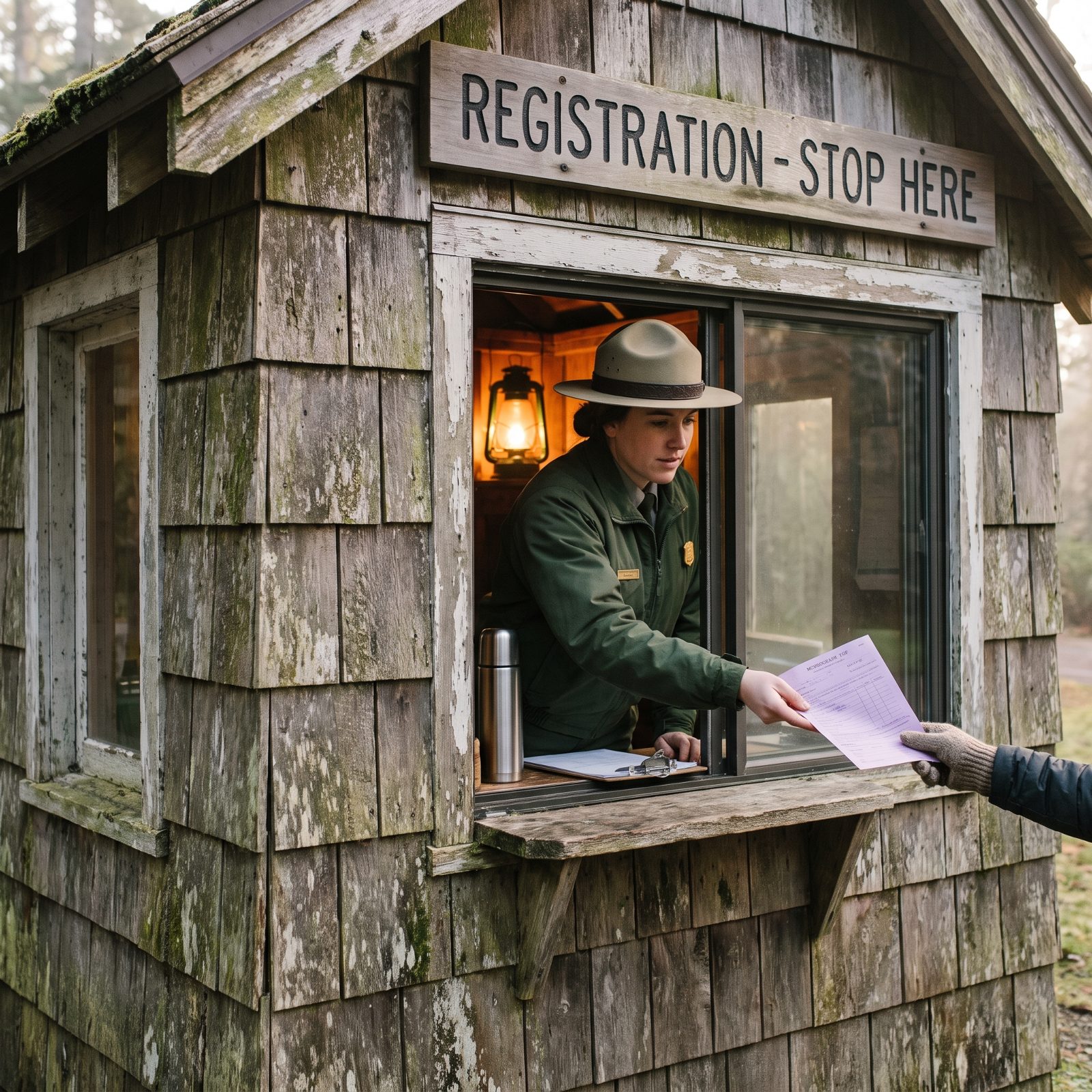
The booth was barely bigger than an outhouse, and it always smelled faintly of coffee and mimeograph ink. You pulled up, the ranger slid open the window, and you got the full rundown: quiet hours, where the firewood was, which loop still had open sites.
He wrote your name and plate in a ledger with a pencil he kept behind his ear. A couple dollars in cash, a folded receipt, clipped to your windshield or your tent pole. That little slip of paper was the only proof you belonged there, and it was plenty.
25. Getting a Hand-Drawn Campground Map
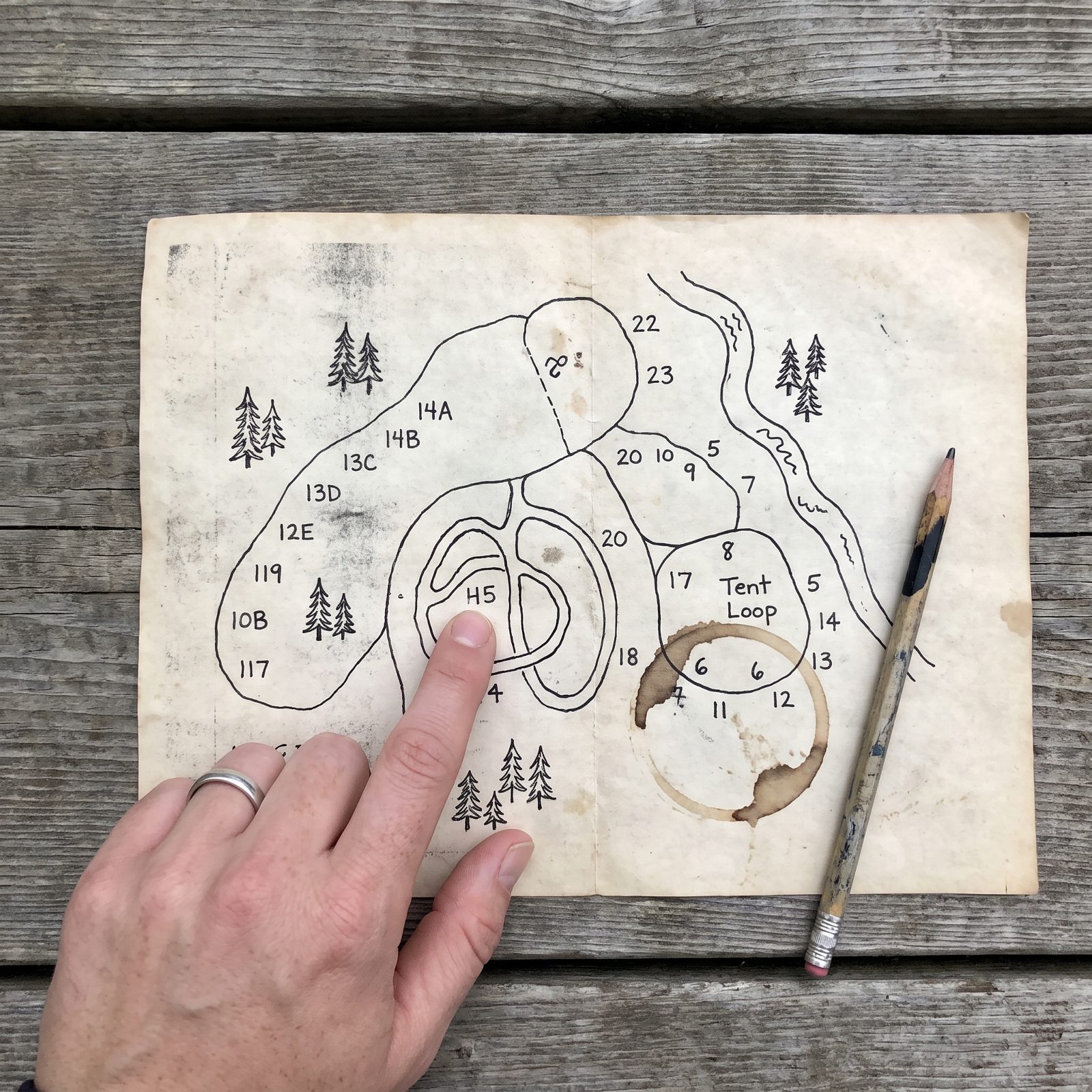
No glossy fold-out. No QR code pinned to a kiosk. The ranger handed you a photocopied sheet that somebody on staff had clearly drawn by hand — loops looping a little crooked, the water pump marked with an X, the restrooms a tiny square with an R inside.
You spread it on the hood of the car and navigated by it like treasure, counting sites aloud as you rolled. Half of them were already full by the time you got there, which is how you learned to read a campground map faster.
24. Saving a Campsite With a Tablecloth on the Picnic Table
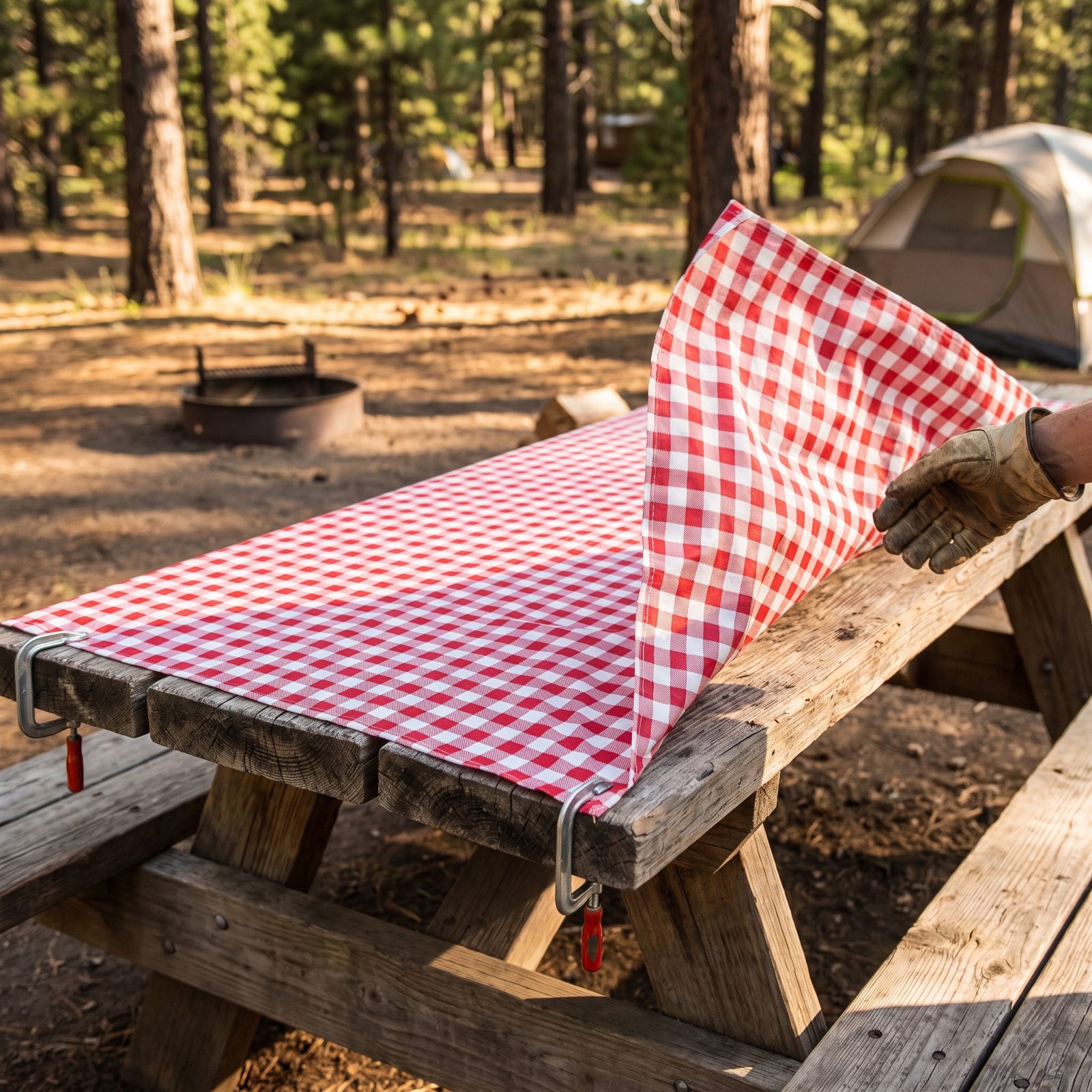
A checkered tablecloth was a flag of ownership. You might not pitch the tent for another hour, but the minute you threw a cloth over the picnic table and set a stone on each corner, that site was spoken for.
Everyone understood it. No note, no sign, no need. An empty table meant open, a dressed table meant taken, and in fifteen years of summer loops I never once saw anybody argue with a tablecloth. Try printing that kind of trust on a reservation confirmation.
23. Borrowing a Hammer From the Campers Next Door
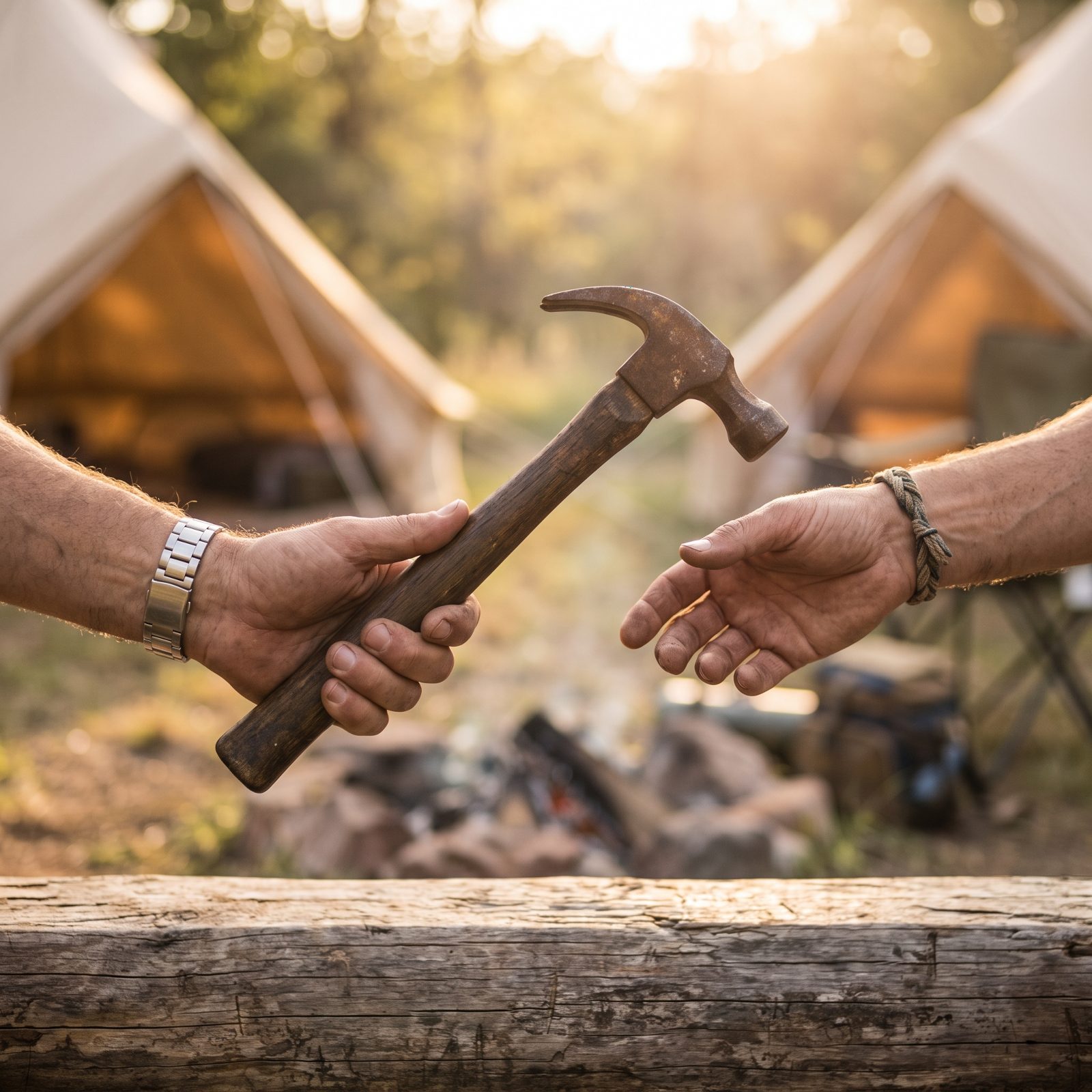
Somebody always forgot the hammer. Or left it on the garage bench, or lost it under the back seat with the folding chairs. And it was fine, because the family one site over had one, and lending it was just what you did.
You walked over, asked, and nine times out of ten they came back with you to help drive the stakes. The hammer came home with a cup of coffee attached and the start of a conversation that lasted all weekend. Favors were currency out there, and everybody kept a running balance nobody wrote down.
22. Helping a New Arrival Back Into Their Site
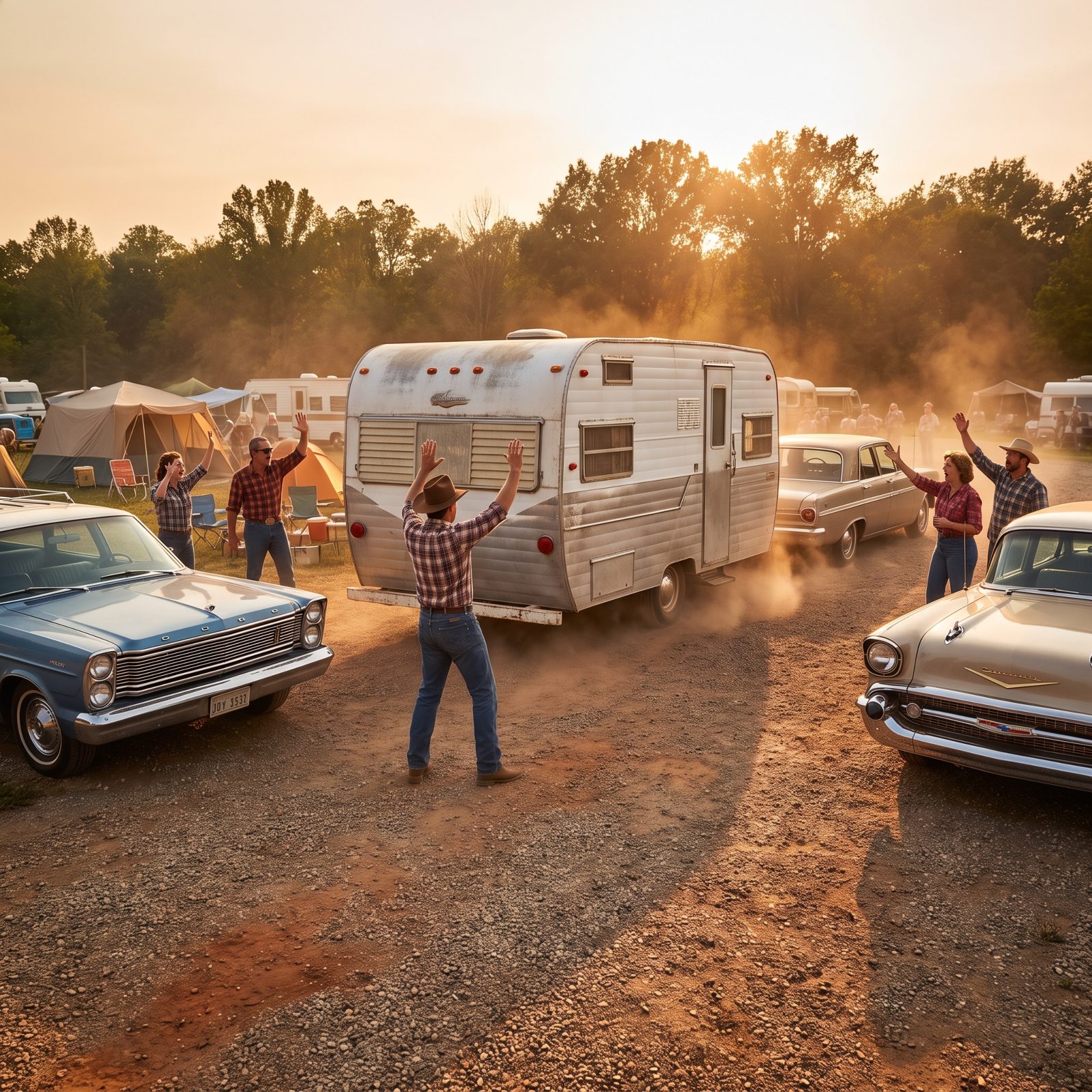
Backing a trailer into a tight gravel site was a spectacle, and it drew a crowd. Not to gawk — to help. By the time you’d made your second cut of the wheel, a neighbor was already standing behind you waving you back with both hands.
“Come on, come on, cut it hard, STOP.” Half the loop could hear it. Nobody honked, nobody rolled their eyes. They’d all been the one sweating behind the wheel, and they’d all be it again next summer.
21. Knowing Campground Neighbors by Their Home-State License Plates
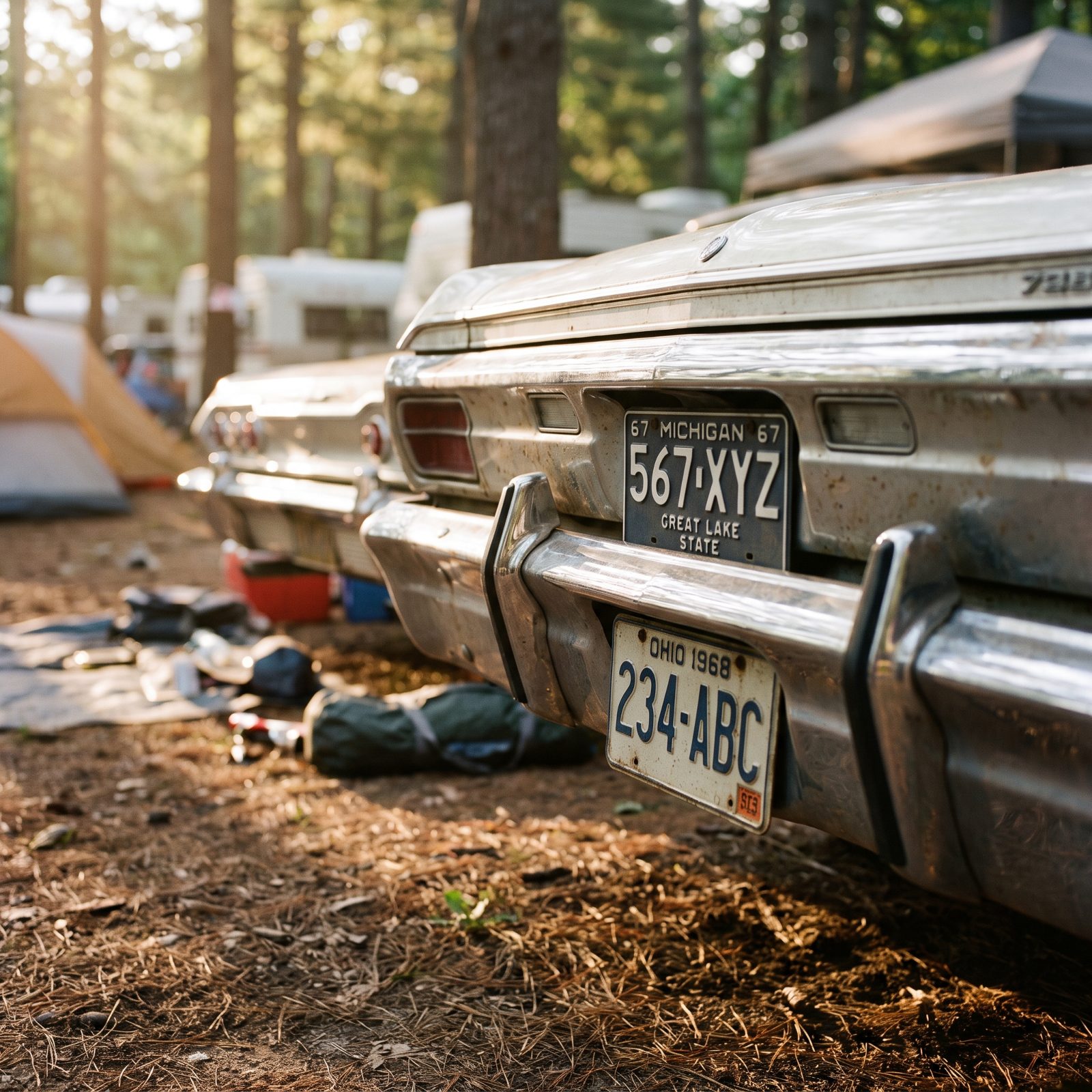
You never learned their last names. You learned their plates. The Ohio folks two sites down, the Michigan family by the pump — half the loop went by state, and you’d nod to “Illinois” at the restroom without ever once exchanging a surname.
A plate from far away earned a little respect. Somebody drove a long way to sit by this same fire ring you did, and that was worth a wave. By Sunday you were genuinely sorry to watch Pennsylvania pull out of the loop.
20. Sharing Local Road Advice Over the Hood of a Car
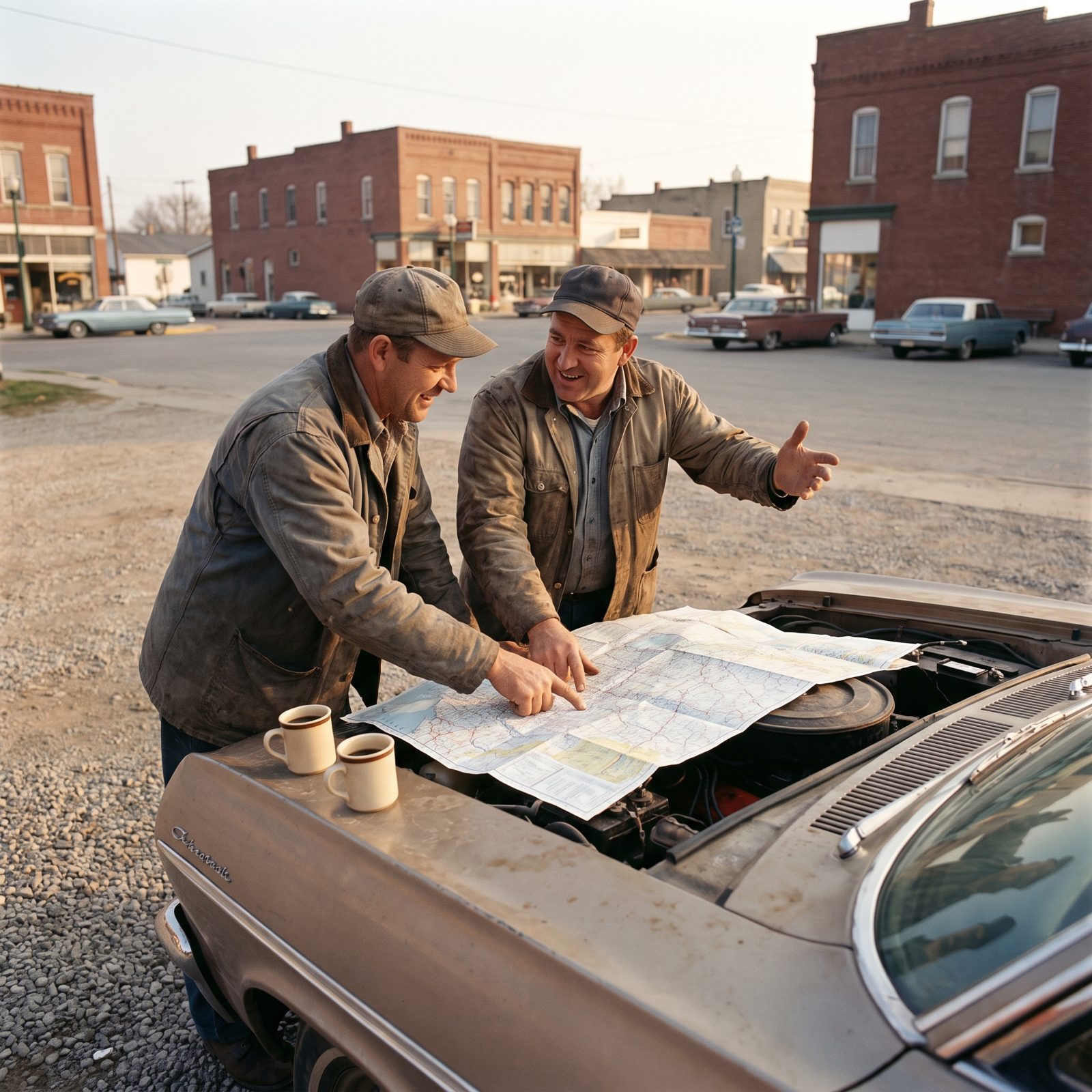
The hood of the car was the conference table. You’d mention where you were headed next, and before you finished the sentence somebody had their map out and spread across the chrome.
“Don’t take 40, it’s torn up past the river. Cut north here, prettier anyway, and there’s a diner at the junction that does a blue-plate for a dollar.” This was the entire internet, right there, dispensed by a man from Indiana who’d driven it last Tuesday. You wrote the directions on a matchbook and trusted them with your life, and they were nearly always right.
19. Passing Along the Newspaper After Breakfast
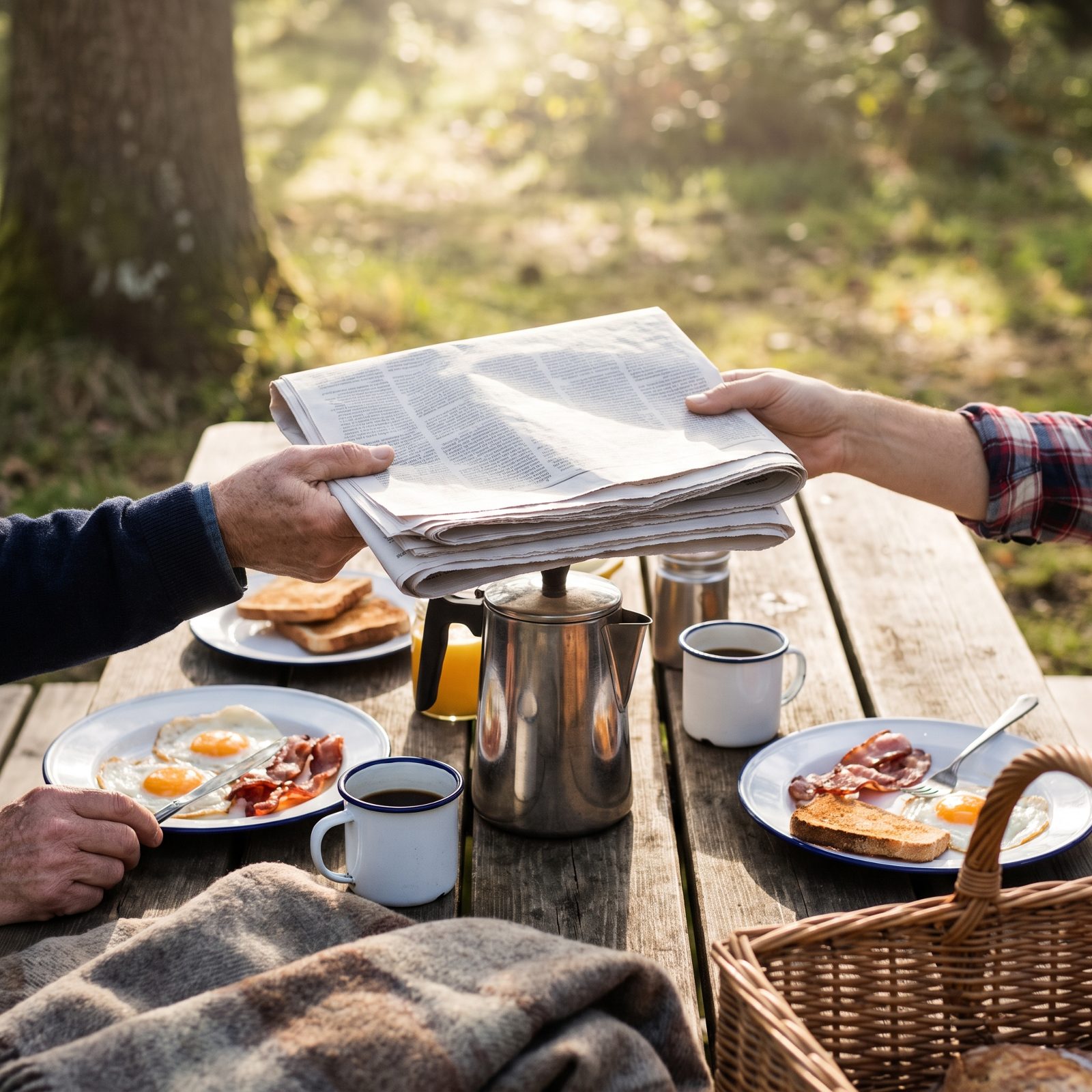
Somebody always made the drive into town for a paper, and one copy did the whole loop. You read it over your eggs, folded it back up, and carried it to the next site, where it got read again, then passed on again.
By noon that paper had visited six families and come back soft and creased and smelling faintly of bacon. Then it went in the fire ring as kindling. One newspaper, fully used, nothing wasted. We could stand to remember that one.
18. Sending Children to Fill the Water Jug
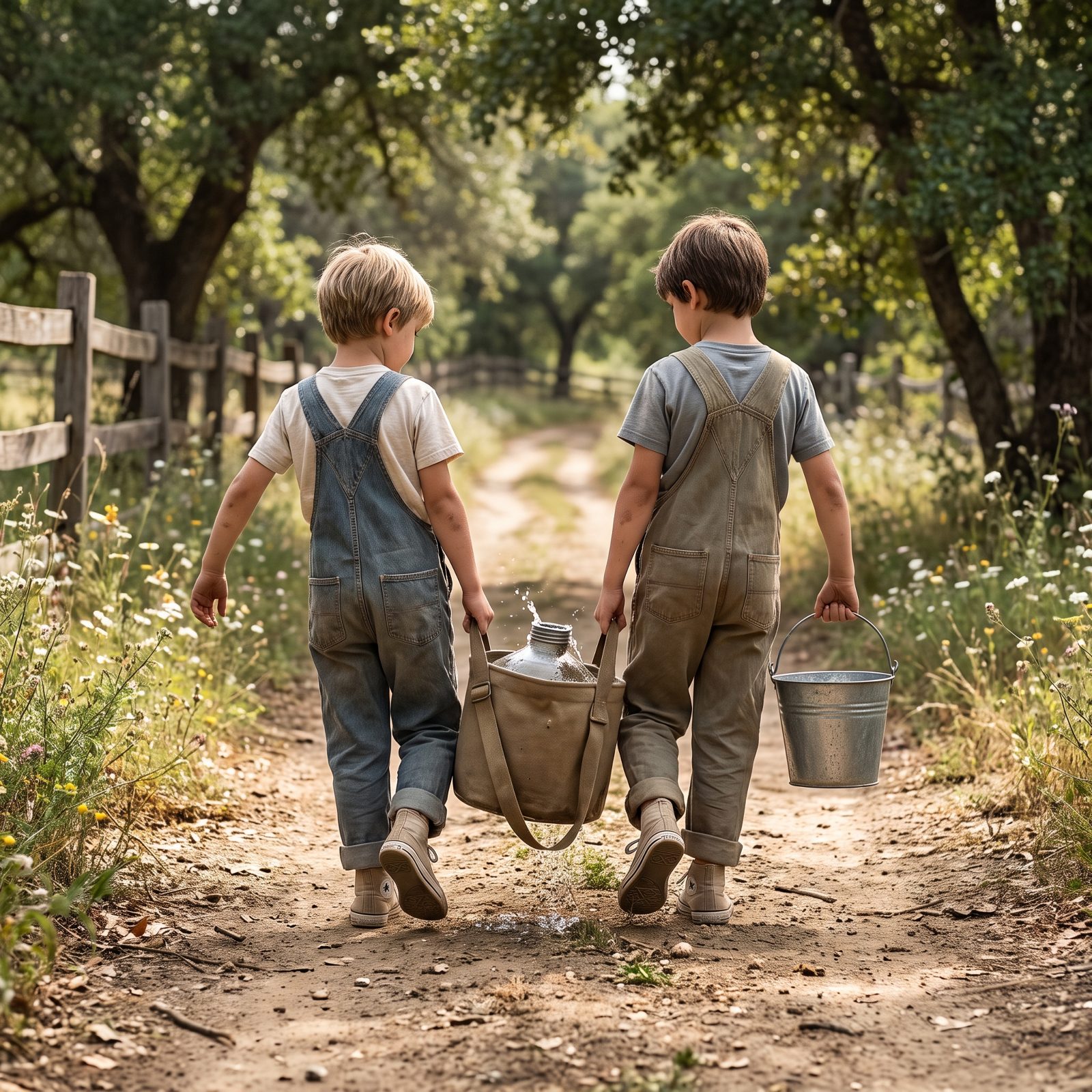
The water jug ran dry around mid-morning, and that was a job for the kids. You handed them the jug, maybe a metal pail too, and pointed toward the pump. It got them out from underfoot and taught them the geography of the loop.
Working that iron pump handle took real effort, and the first gush was always warm before it ran cold. You came back slower than you left, water sloshing against your legs the whole way, feeling like you’d done something that mattered. Because you had. That jug was the whole camp’s drinking water, and you carried it.
17. Washing Dishes in an Enamel Basin on the Picnic Table
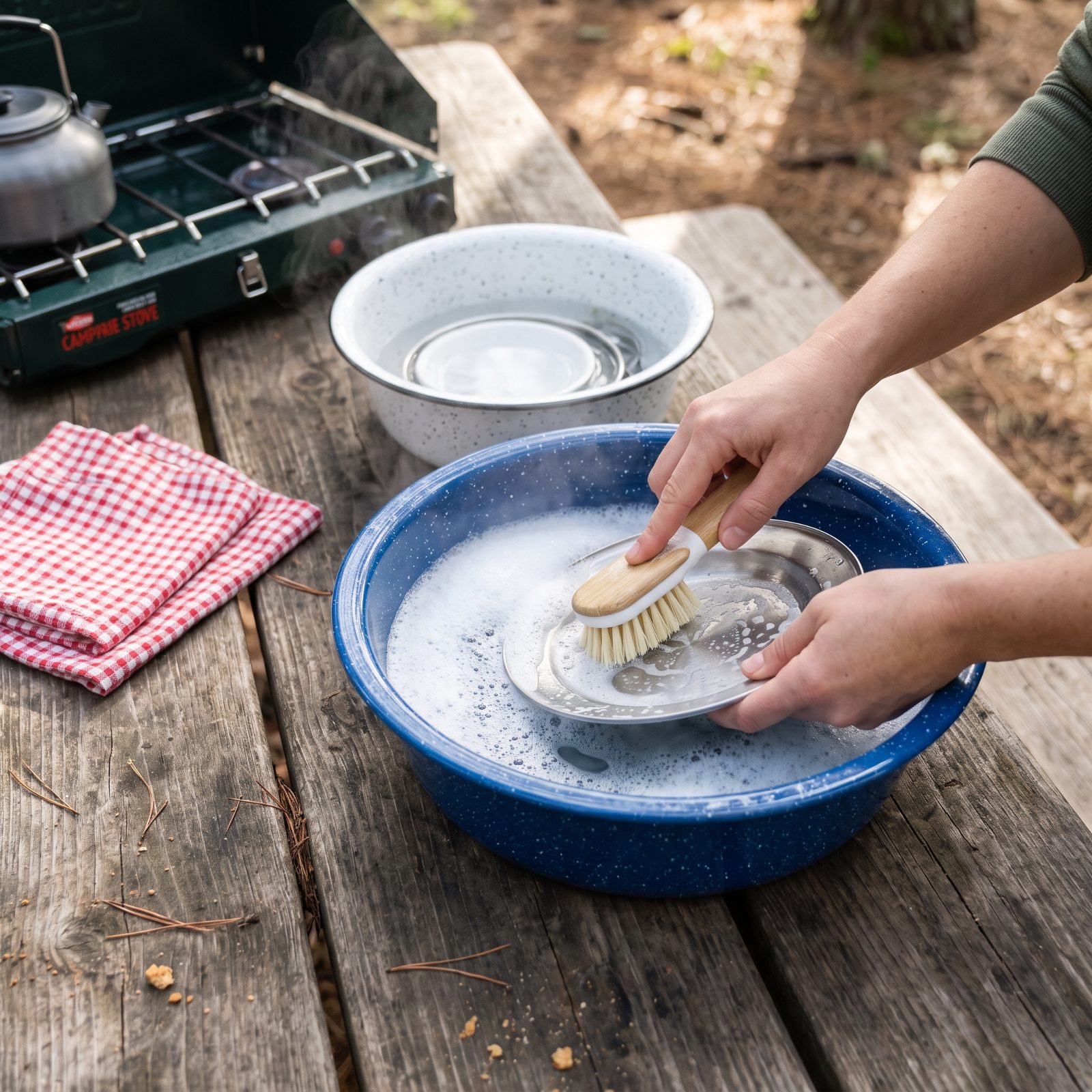
Two basins, really, if your family was organized about it. One for wash, one for rinse, both heated on the camp stove or over the coals because nobody trusted the cold spigot to cut grease off a cast-iron plate. The enamel plinked when you stacked the plates, and that sound meant breakfast was over and the day could officially start.
Everybody had a job. One person washed, one dried with a flour-sack towel, one hauled the greasy water off to the dump spot well away from the tent. You learned fast that leaving dishes overnight invited raccoons, and a raccoon in your enamelware at 2 a.m. was a lesson you only needed once.
16. Sweeping the Dirt Around the Tent or Trailer
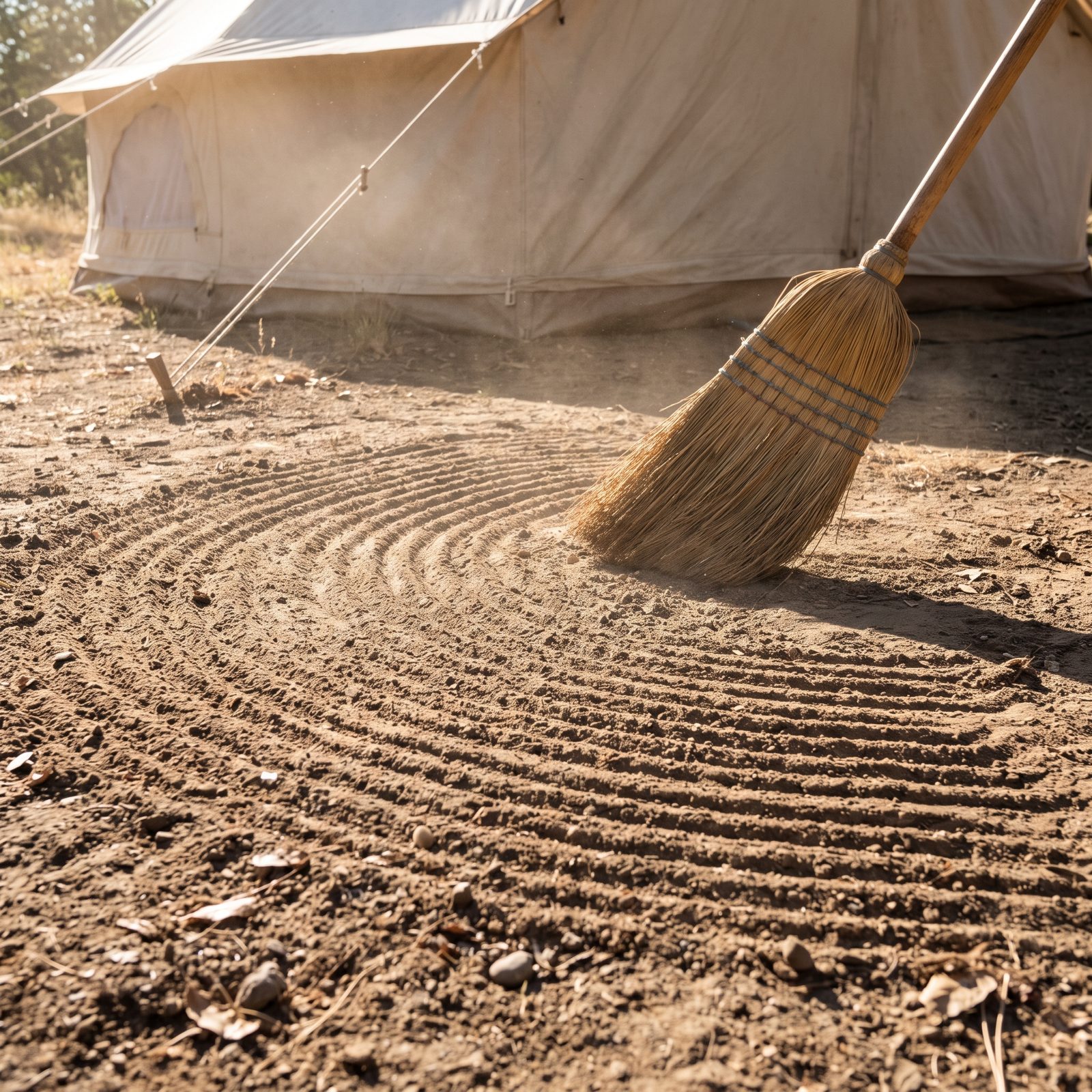
You swept dirt. That sentence confuses anyone who didn’t grow up doing it, but every camping family understood the logic. A swept patch of ground around the tent meant fewer pine needles tracked onto the bedrolls, fewer pebbles under the air mattress, and a tidy boundary between “our site” and “the woods.”
The broom came from home, usually the second-best one your mother would surrender for the summer. Somebody swept every morning once the dishes were done. It did almost nothing in any practical sense, and everyone did it anyway, because a swept campsite announced that a family who cared lived here.
15. Building a Campfire With Wood Gathered Nearby
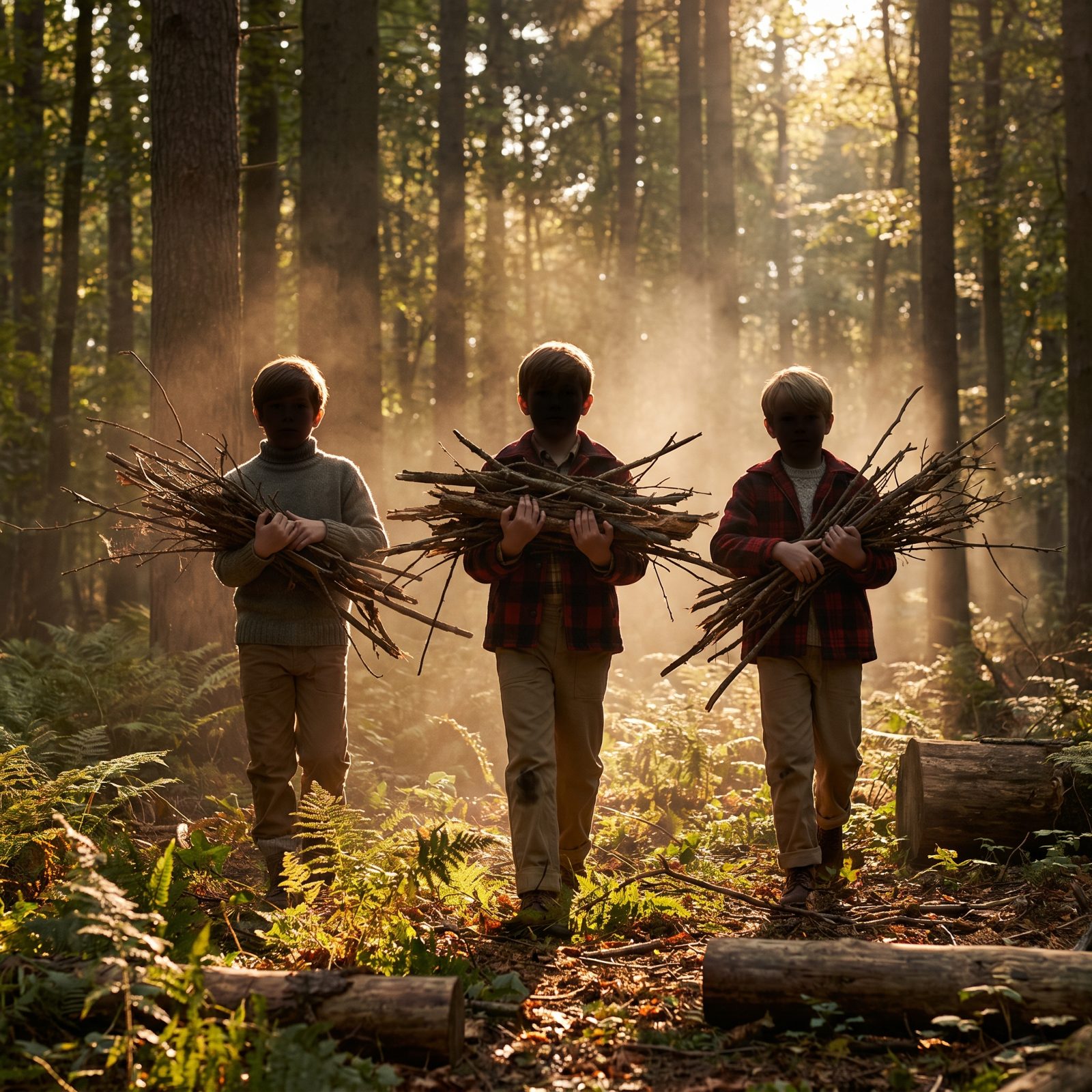
Gathering wood was the kids’ job, and it was treated with real seriousness. You fanned out from the site with a sibling, hauling back armloads of deadfall and sorting it into tinder, kindling, and the big stuff by some instinct nobody formally taught you. Dry pine made the best kindling. Everybody knew that by age eight.
The fire-builder of the family, usually Dad or Grandpa, held strong opinions about the structure. Teepee or log cabin, never just a heap. He’d crouch down and coax the first flame with a single match and a scrap of newspaper, and if he got it going on the first try he’d act like it was nothing. It was not nothing, and we all knew it.
14. Cooking Supper in Cast-Iron Pans Over Coals
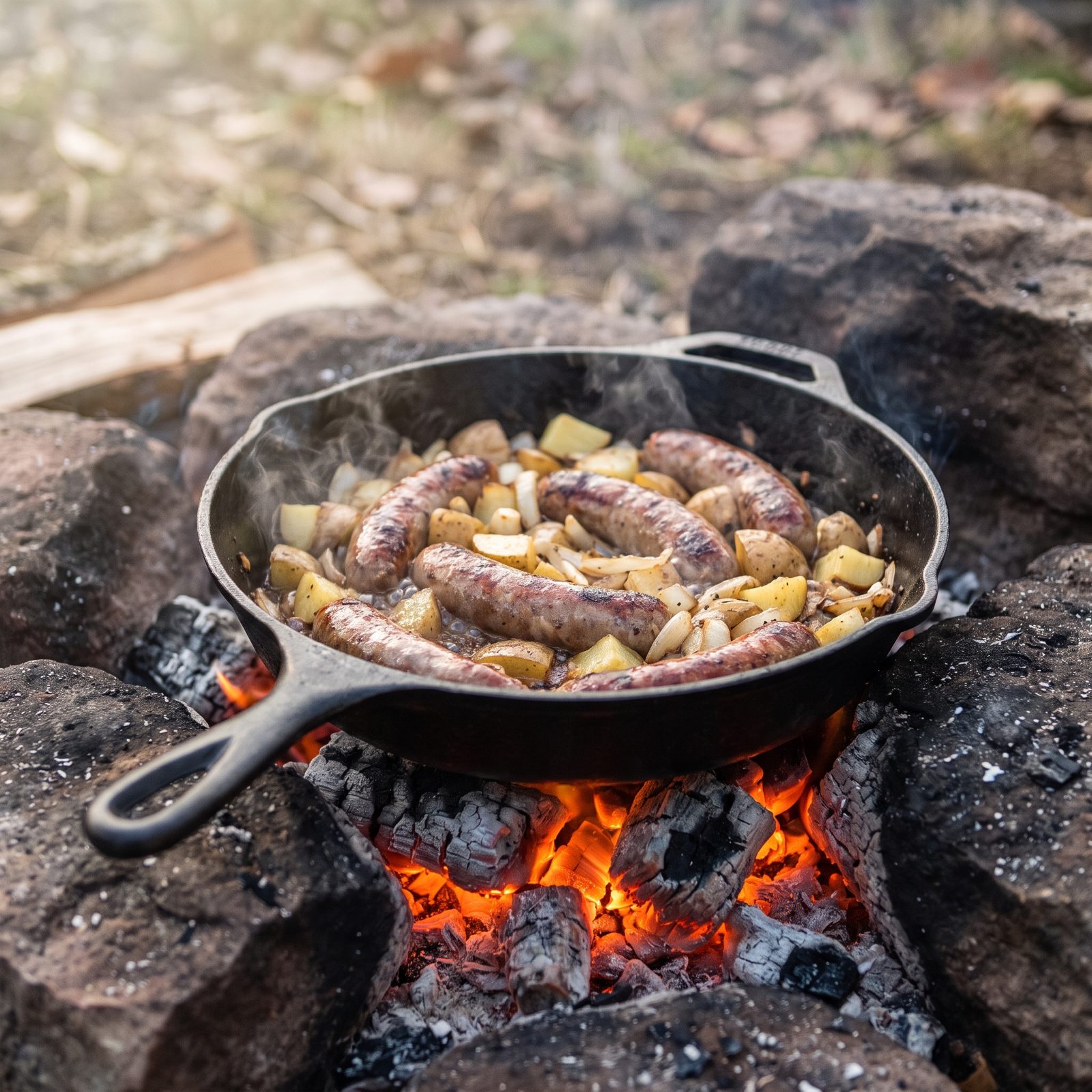
Flames don’t cook, coals do, and that was the first rule of camp supper. You let the fire burn down to a low orange bed, raked some to the side, set the grate over it, and gave the heavy black skillet a minute to come up to temperature. The smell carried three sites over — bacon grease, onions, potatoes browning in iron that had cooked ten thousand meals before this one.
That skillet never saw soap. It got wiped out, maybe rinsed with hot water, oiled, and tucked back in the box. Mess with the seasoning and you’d hear about it.
Supper over coals tasted better than the same food at home, and nobody could ever fully explain why.
13. Making Popcorn in a Foil Pan Over the Fire
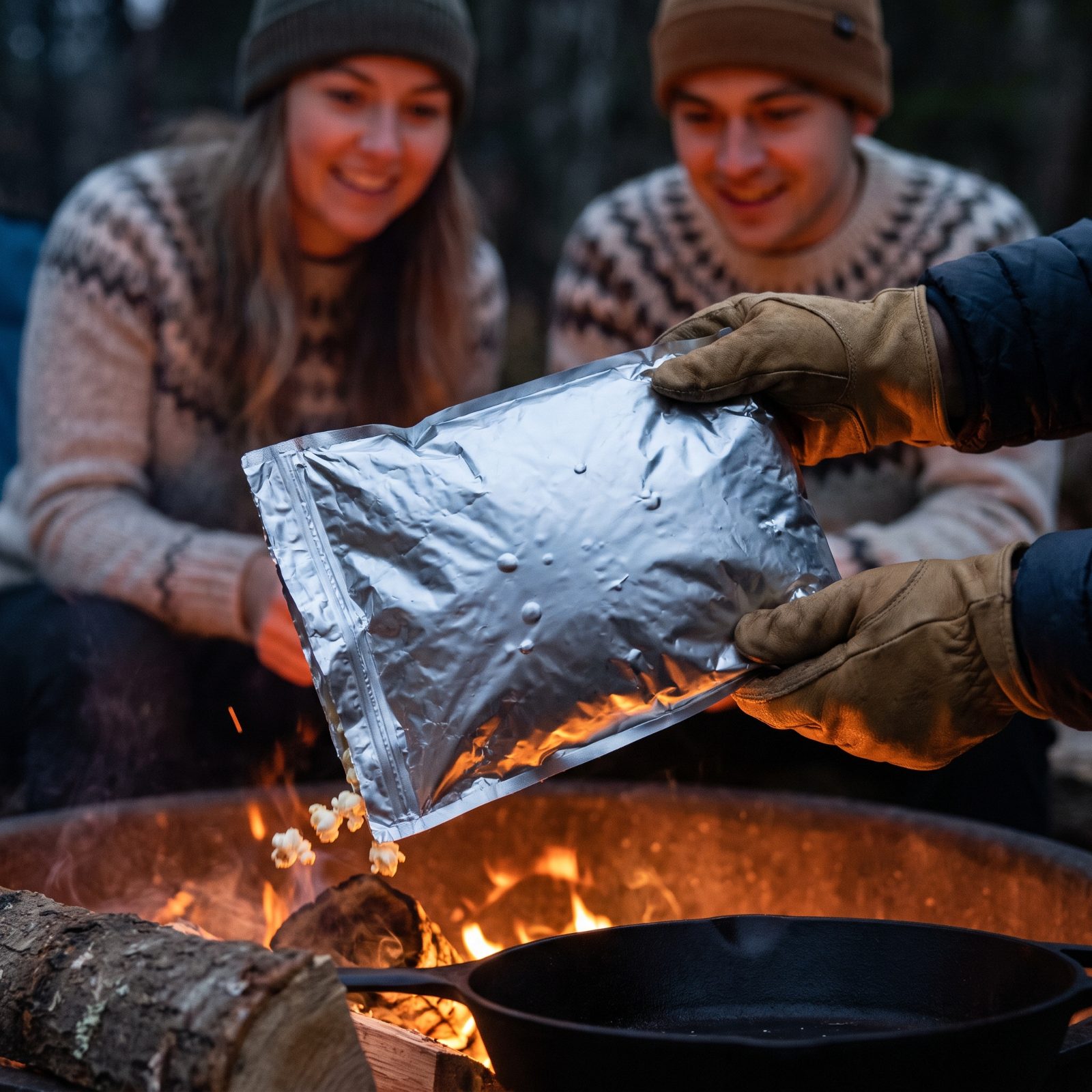
Before the Jiffy Pop heyday, families improvised. A square of heavy-duty foil, a spoonful of oil, a handful of kernels, and you crimped it into a loose pouch around a long handle. Then came the part the kids fought over: holding it over the coals and shaking it steadily so nothing scorched.
The foil ballooned up as the corn popped, swelling into a lopsided silver dome while everyone gathered close and called out counts. You tore it open carefully to dodge the steam, dumped it into an enamel bowl, and salted it with whatever was on the table. Last event of the night, every night, before the fire died down.
12. Brewing Coffee in a Blue-Speckled Enamel Percolator
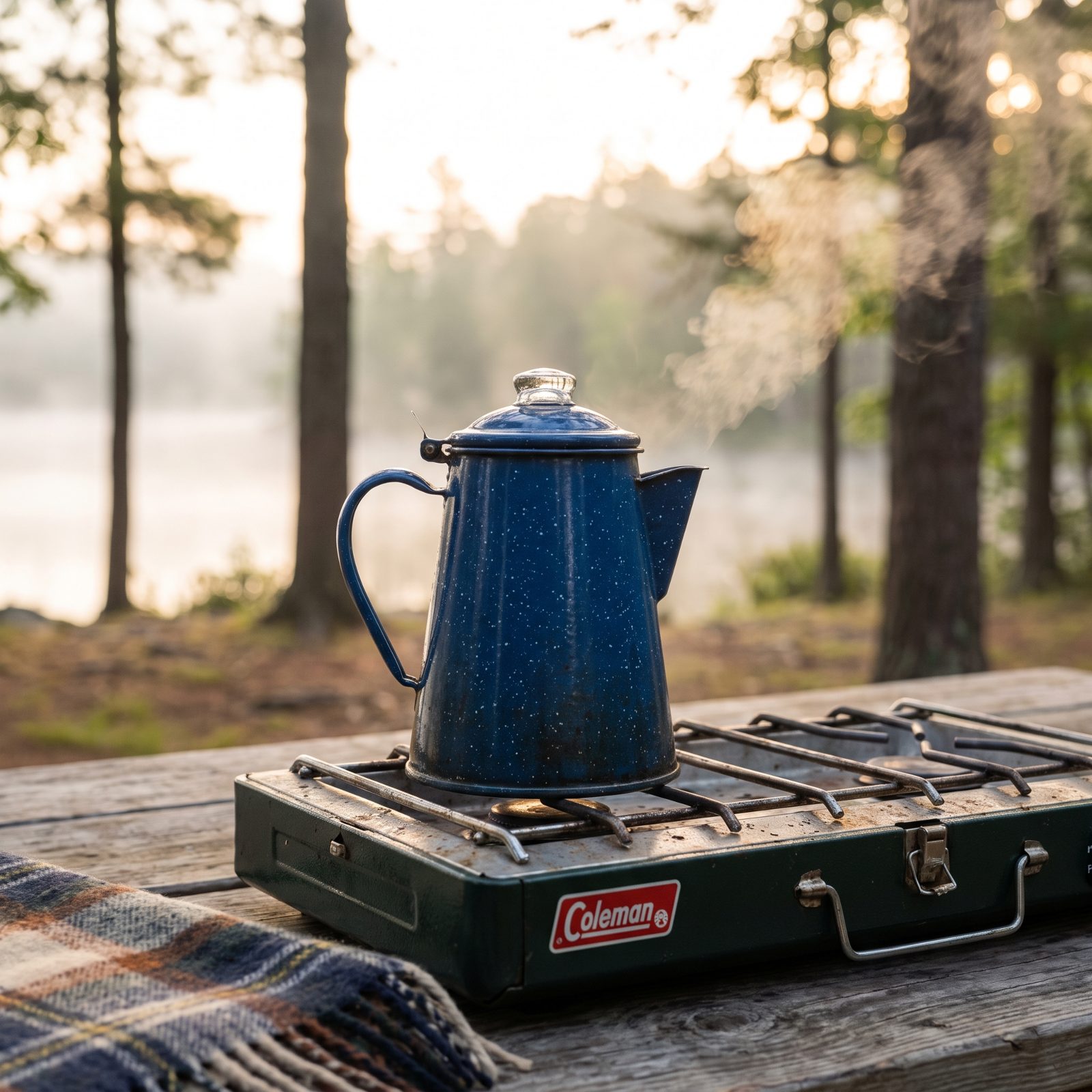
The percolator was the sound of morning. That rhythmic burble as the water climbed the stem and splashed through the little glass knob — slower at first, then urgent, then settling into a steady perk that told the whole family the coffee was almost ready.
It made terrible coffee by any modern standard. Over-extracted, gritty if you poured the last cup, strong enough to stand a spoon in. Grandpa drank it black and swore it was the best he ever had, and out there, breathing pine air at six in the morning with frost still on the station wagon, he wasn’t entirely wrong.
11. Buying Block Ice for a Metal Ice Chest
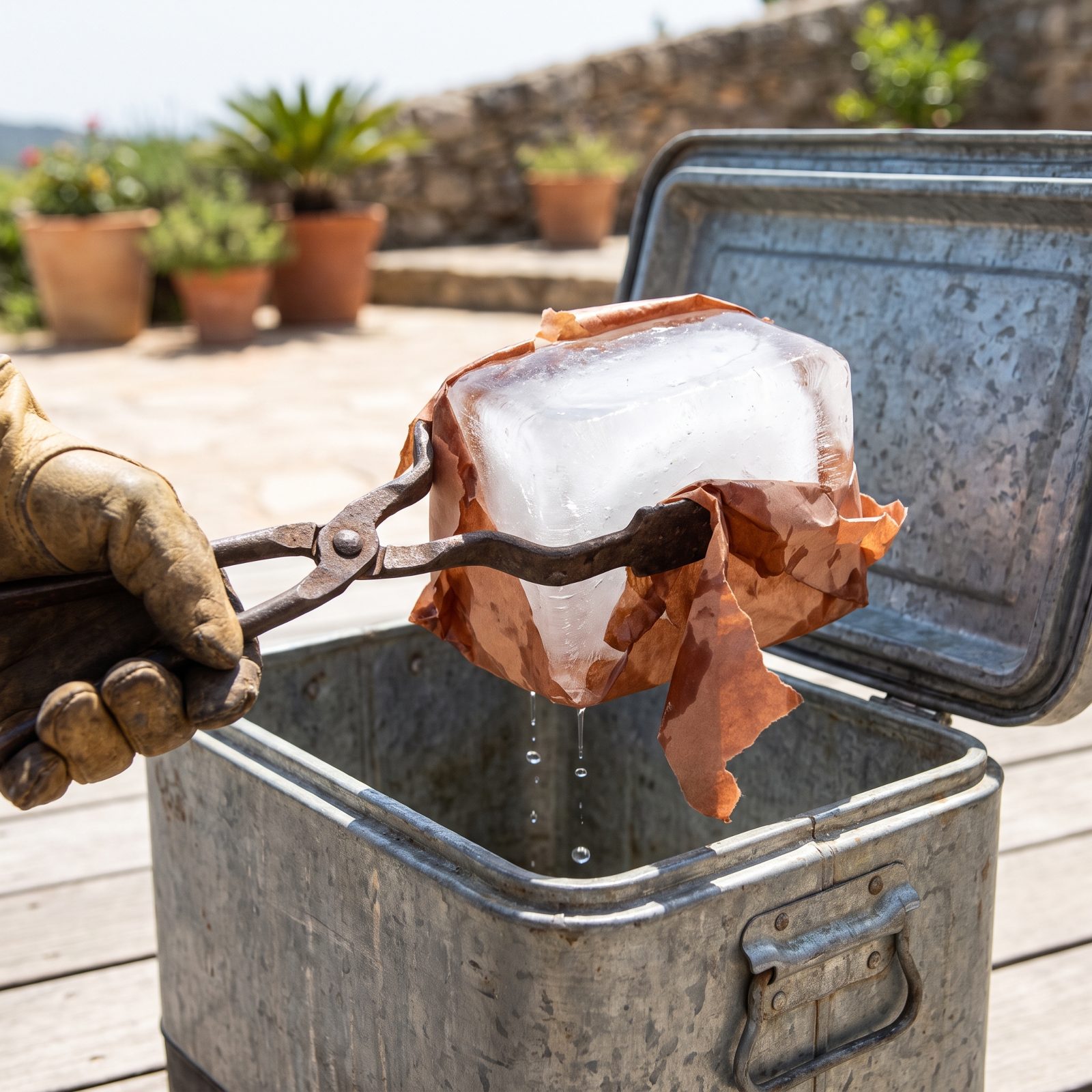
A block of ice outlasted cubes by days, and every seasoned camper knew it. You’d buy one wrapped in brown paper from the campground store or a filling station on the way in, lift it with tongs or just bear-hug it against your shirt, and wedge it into the metal chest among the milk, the eggs, and the bottles of pop.
Draining the meltwater was a daily chore nobody enjoyed — you tipped the whole heavy chest sideways while somebody held the food in. Lukewarm pop by the last day of the trip was just how it went. You drank it anyway, and it tasted like summer.
10. Walking to the Pay Phone Near the Ranger Station
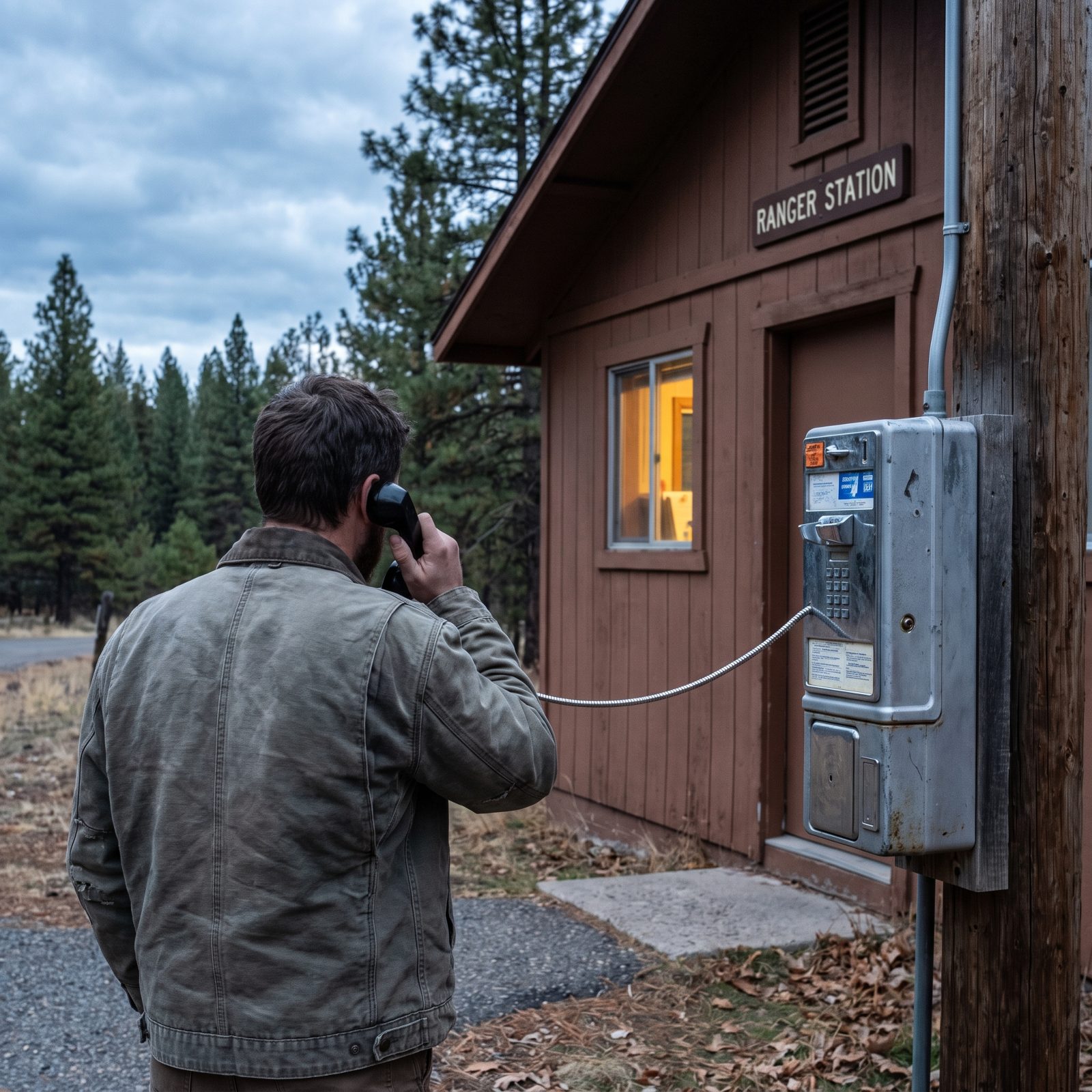
You didn’t call home to chat. You called because it was Sunday night and Grandma worried, or because somebody had to check in with the office, and it meant a walk down the gravel road with a pocket full of coins to the one pay phone the whole campground shared.
There was often a short line — people shifting their weight, pretending not to listen. The operator came on. You fed in dimes and quarters when she told you to, talked fast, and hung up before the next batch of coins was due. Then you walked back to your fire, and for the rest of the trip the outside world could wait.
9. Mailing Picture Postcards From the Campground
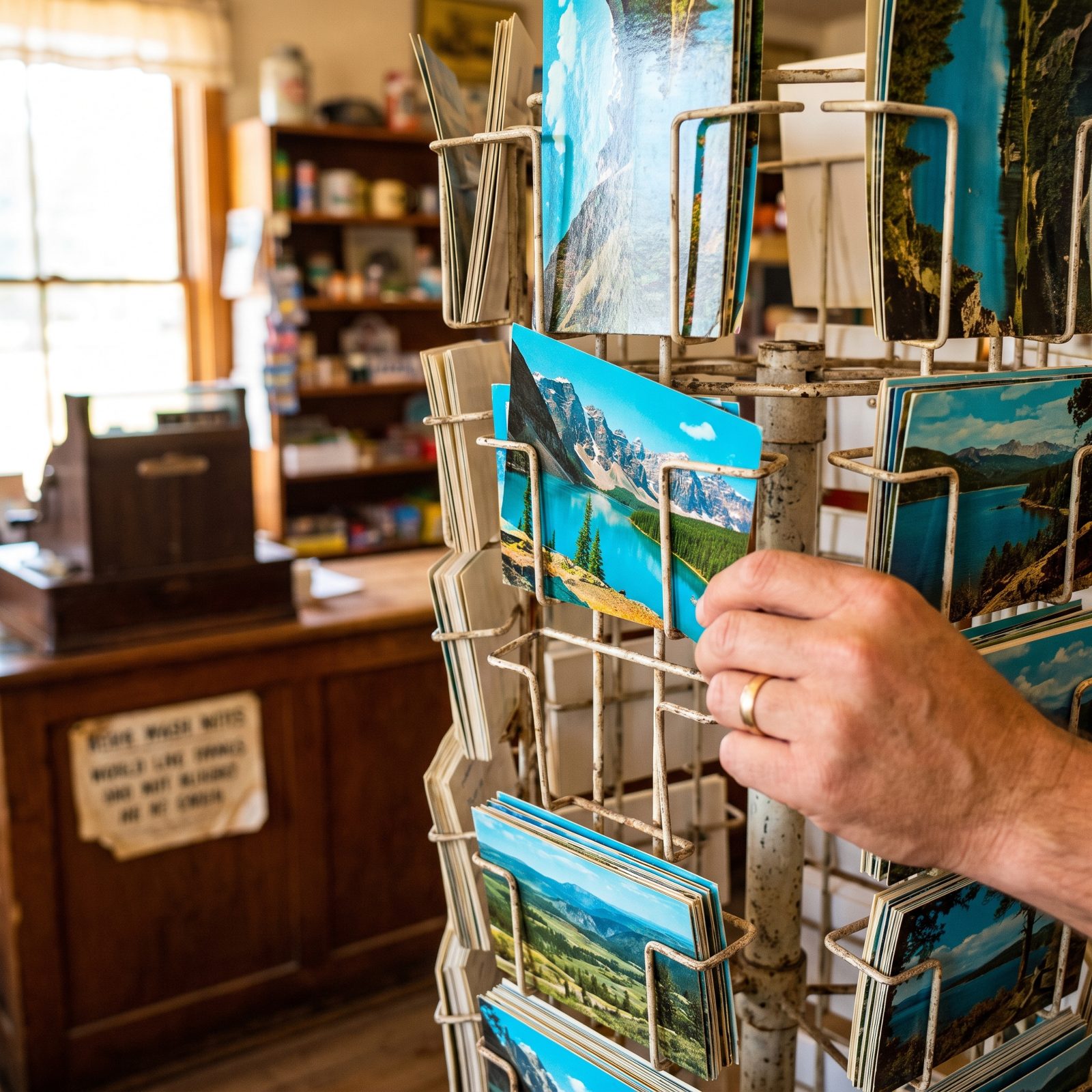
The campground store sold them in a squeaky wire rack by the register. Oversaturated photos of the lake, the mountains, a grinning cartoon bear, each one a nickel. You bought a handful, borrowed a pen, and hunched over the picnic table to squeeze a whole vacation into the little lined box on the back.
“Weather great. Caught three fish. Wish you were here.” You meant it, mostly. Then you dropped them in the campground’s little mail slot, knowing they’d beat you home by a day or two, which was half the fun. Grandma got the mountain scene. Your best friend got the bear.
8. Tuning In a Baseball Game on a Transistor Radio After Sunset
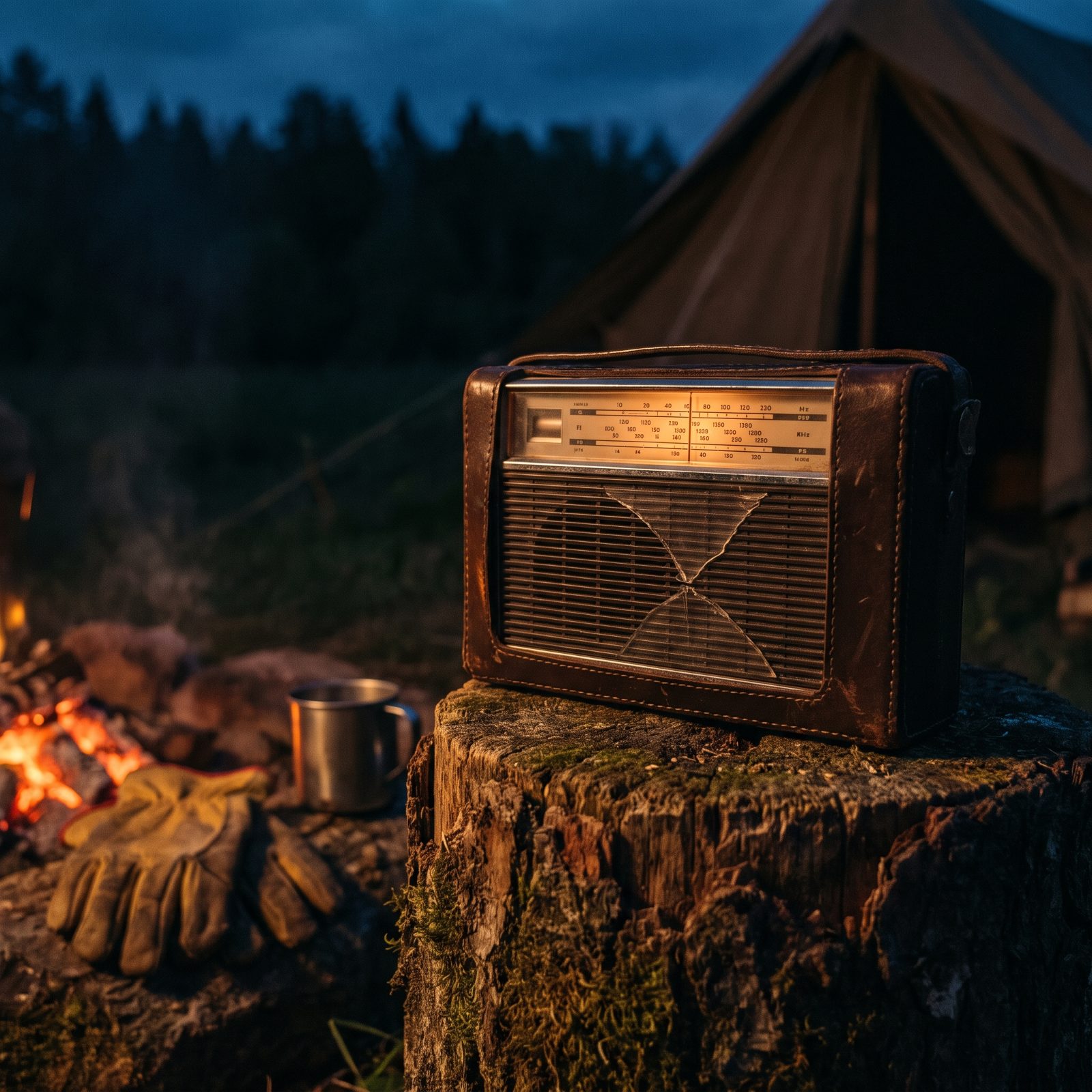
When the fire burned down to coals, the radio came out. A little transistor set in a cracked leather case, no bigger than a sandwich, and the whole evening came down to how good the reception was. You’d angle the antenna, turn slowly through the static, and then — faint and distant — a broadcaster’s voice carrying a ballgame from a city hundreds of miles away.
Everyone went quiet. The crackle came and went as the signal drifted. Somebody would shush you if you talked over the pitch count. The score barely mattered. What mattered was sitting in the dark around the embers, that small voice floating up into the pines, the day winding all the way down until the batteries or the bugs finally sent everyone to the tent.
7. Playing Cards Under a Gas Lantern
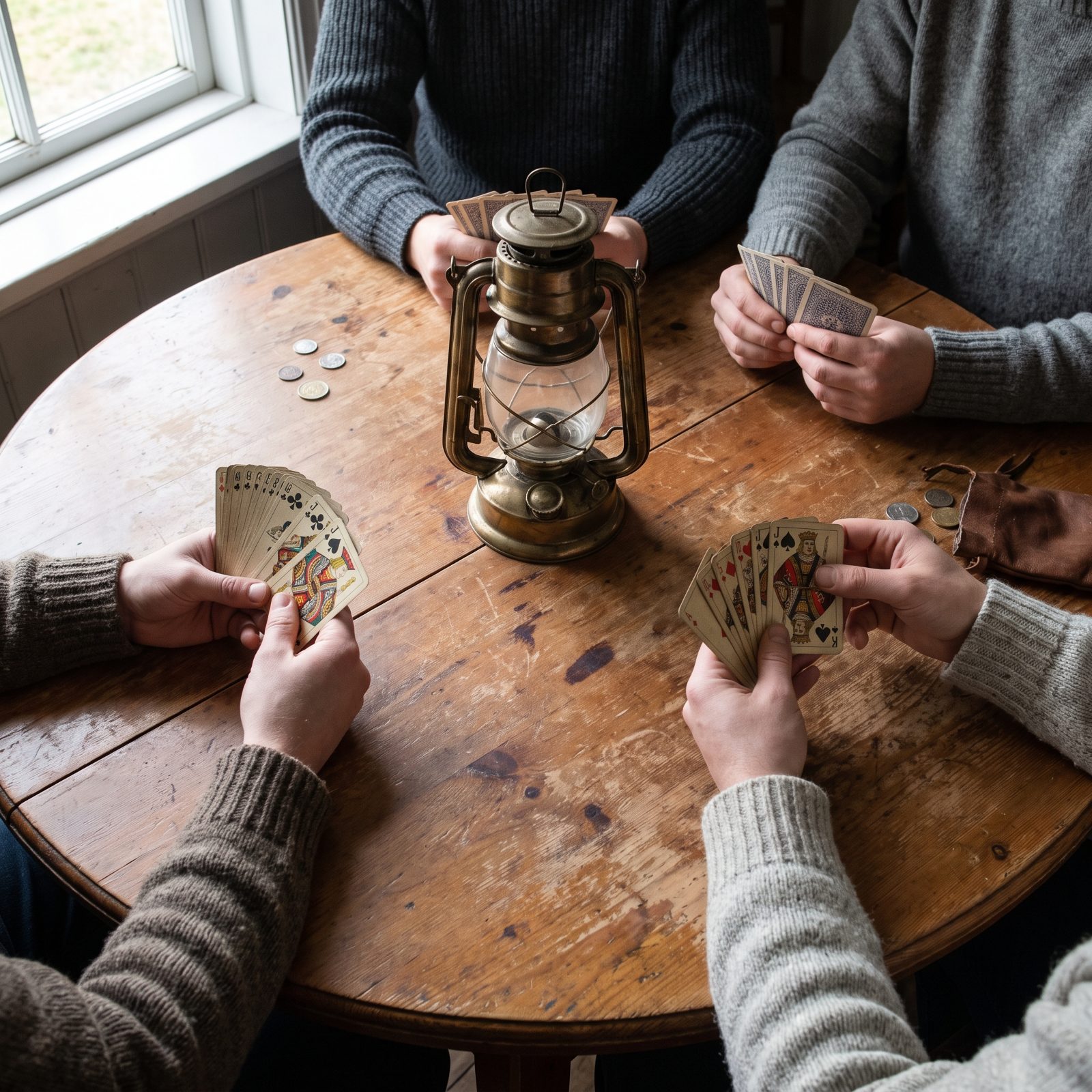
Once the sun dropped, the lantern came out and the cards came with it. That hiss of a Coleman pumping up to full brightness was basically the dinner-after-dinner bell — gather round, somebody’s dealing. Pennies and matchsticks stood in for real money, and the stakes stayed low enough that nobody went home sulking.
Gin rummy. Hearts. Whatever Grandpa insisted on. The light only reached so far, so you leaned in, elbows on the table, moths bouncing off the glass above your head. There was a whole world beyond that little pool of amber and none of it mattered until morning.
6. The Campground Singalong Led by Someone With a Guitar
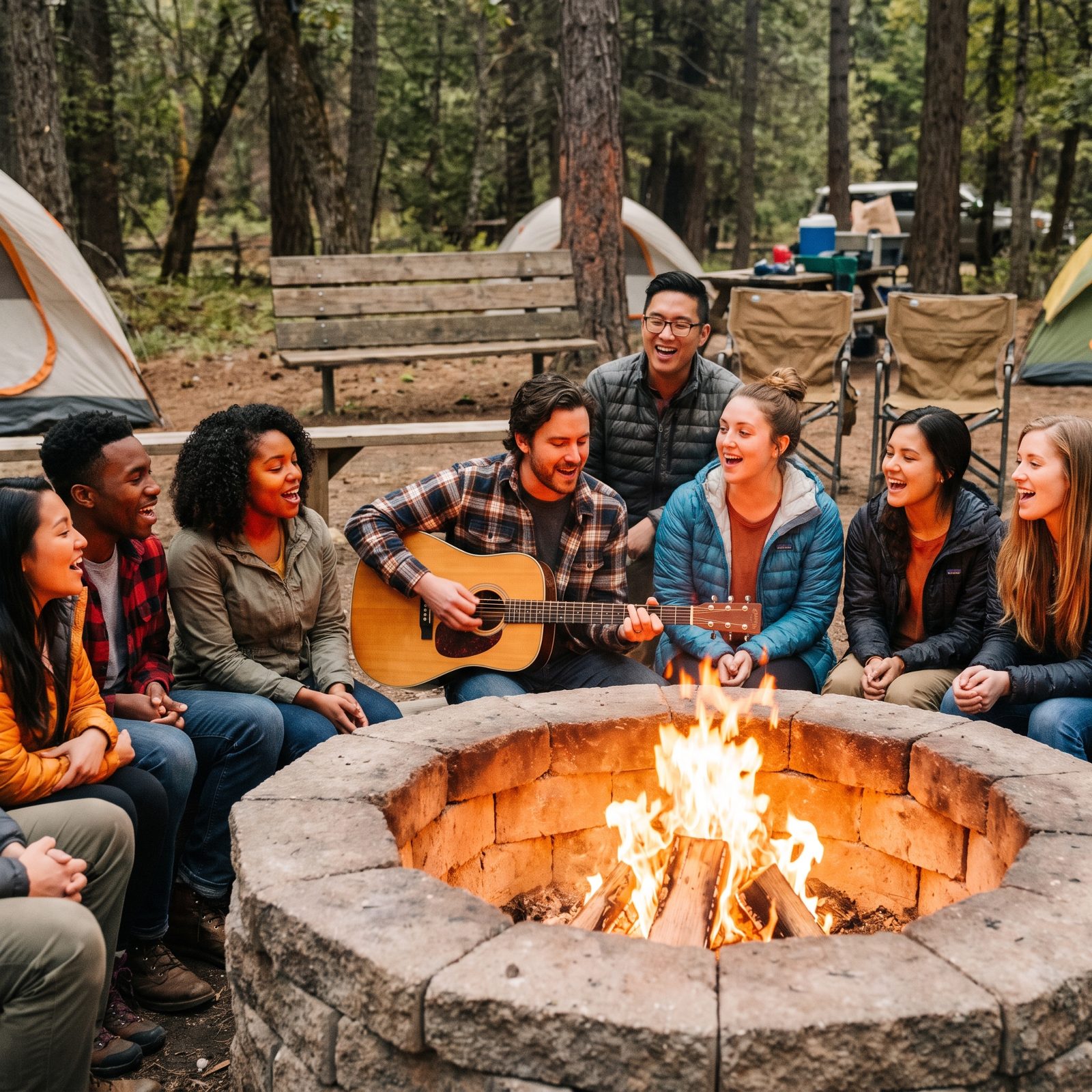
There was always one. Every campground had a guy — or a girl, or an aunt — who knew four chords and wasn’t shy about it, and the minute a guitar came out of the car the circle around the fire got a little tighter. Nobody auditioned. You just started playing, and people drifted over.
The songs weren’t fancy. Old folk tunes, hymns, whatever everyone half-remembered from the radio. Half the group hummed because they didn’t know the words, and the kids fell asleep against their parents before the second verse. It wasn’t a performance. It was more like everybody agreeing, without saying so, to stay up a little longer.
5. Vacation Slides at the Recreation Hall
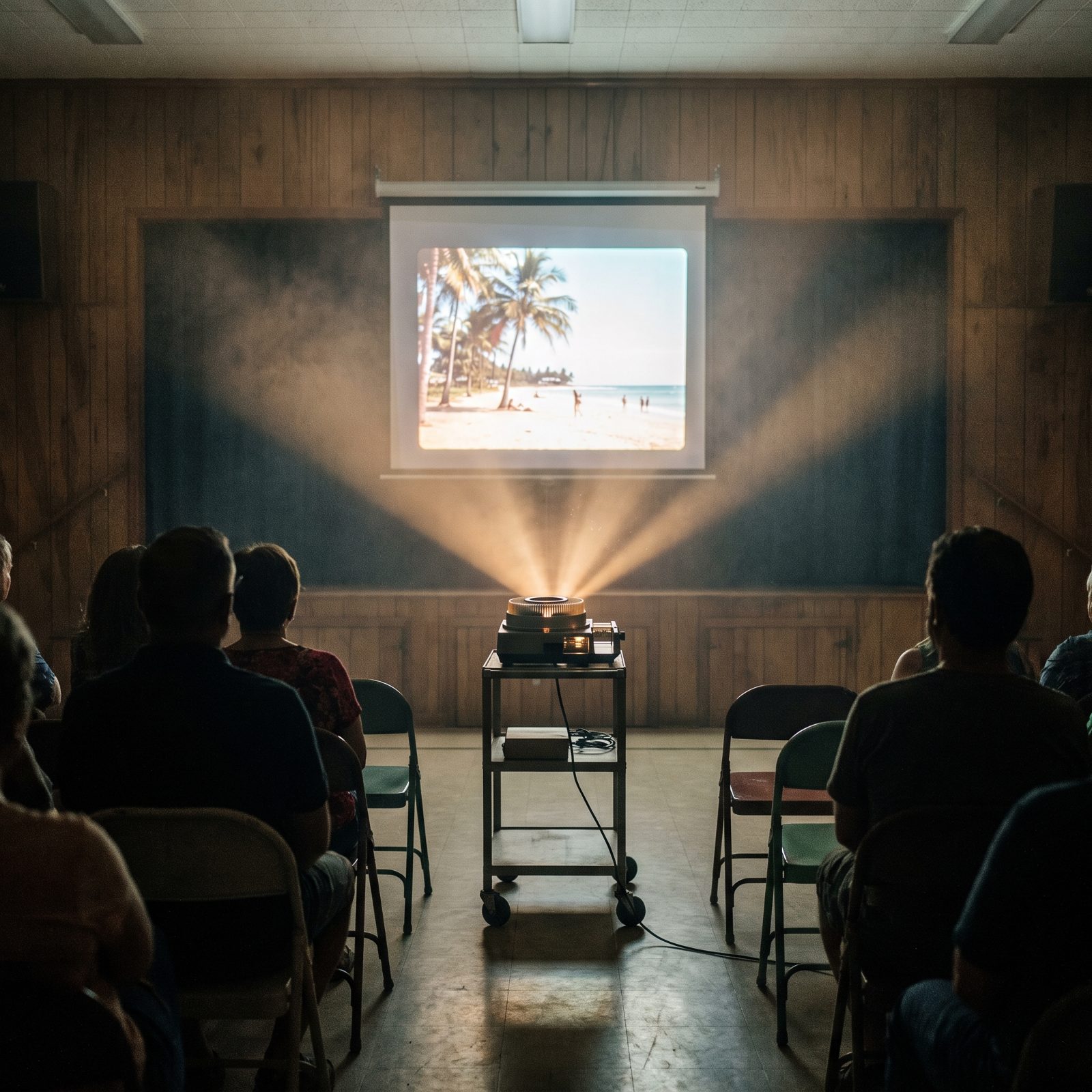
Somebody always brought the carousel. Rainy night, the rec hall doubled as a theater, and if your family had been anywhere interesting that summer, the whole campground got to see it one washed-out slide at a time.
The projector whirred and clicked, the fan hummed, and every few frames came that satisfying chunk as the carousel rotated. There’d be a blurry one upside down, a thumb across the lens, Aunt Marge with her eyes shut — and those always got the biggest laughs. Honestly? The bad slides were the best part. You’d never admit your own trip photos were half mountains and half somebody blinking, but everybody’s were, and sitting there in the dark watching proof of it felt oddly comforting.
4. Ranger Talks Around a Stone Fire Ring
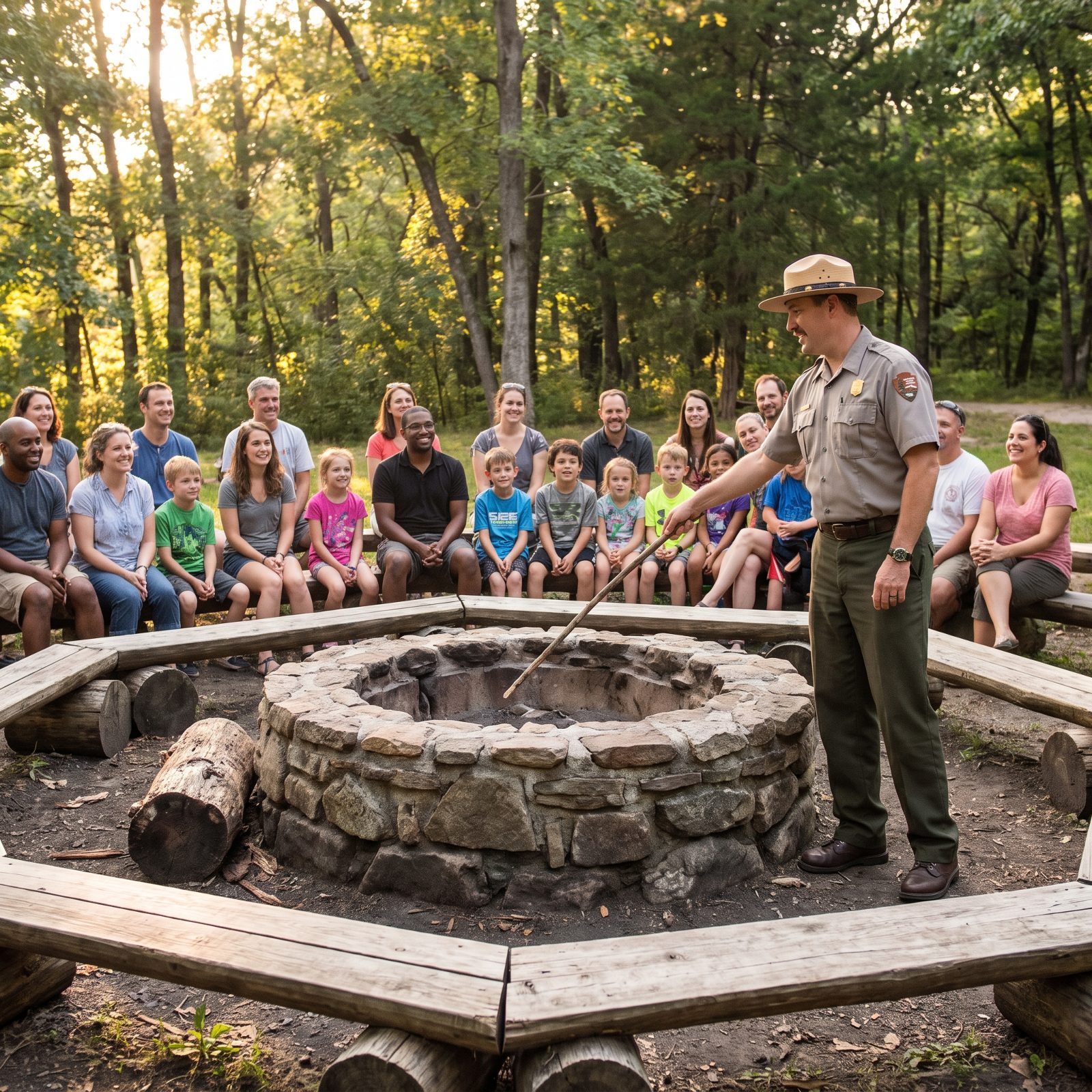
The evening ranger program was free entertainment and nobody treated it that way — everybody showed up like it was the main event of the trip. The ranger stood by the fire in that flat-brim hat and talked about bears, or the stars, or how the canyon got carved, and the kids sat cross-legged up front with their mouths half open.
You learned something, sure. But the real draw was sitting in the dark with fifty strangers and a crackling fire, listening to one person who clearly loved the place describe exactly why. These talks still happen, by the way. If you’re camping in a national park and skip the amphitheater program, you’re missing the best thing on the schedule.
3. Bicycles Until the Dinner Bell Rang
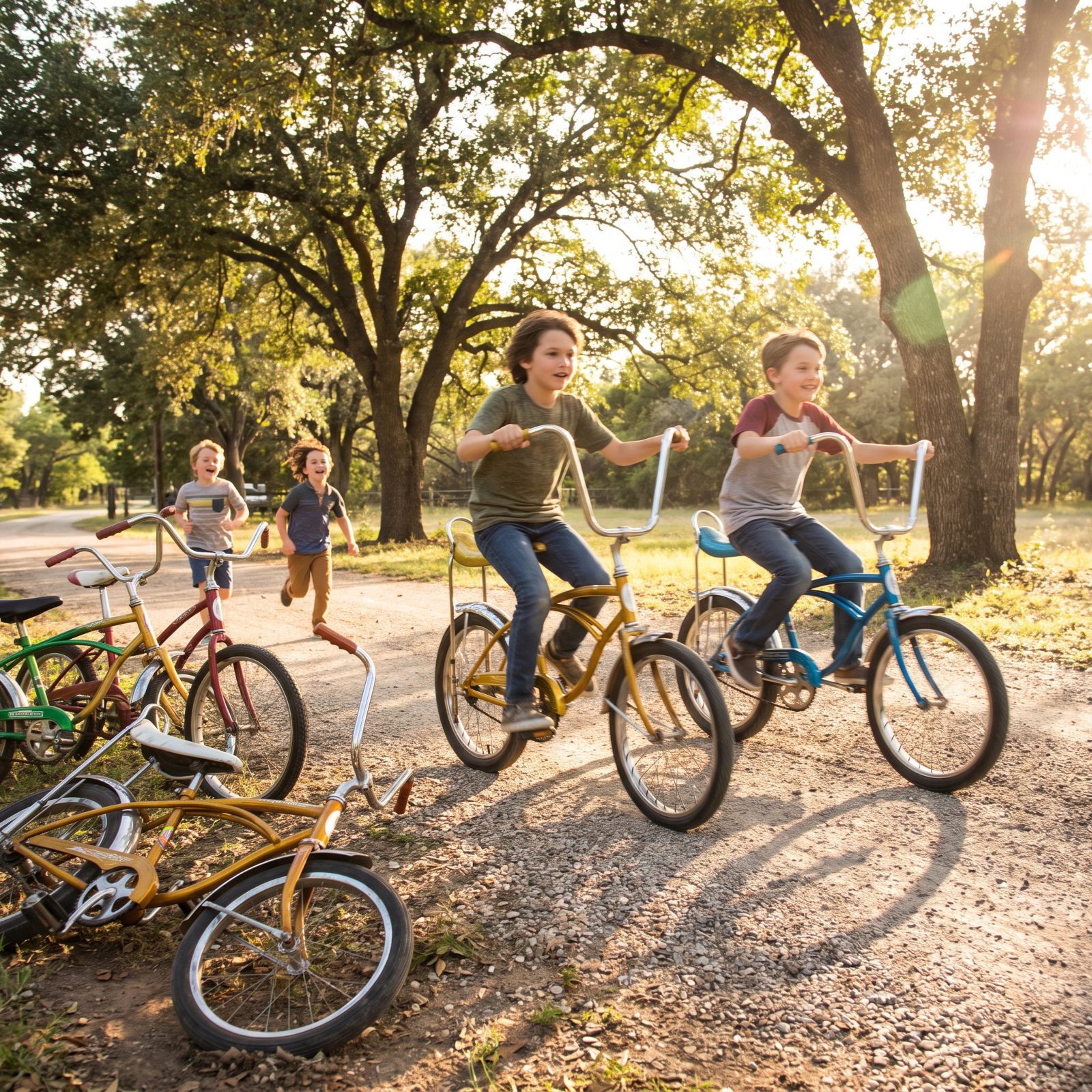
The loop road was the whole kingdom. Kids ditched their bikes at dawn and didn’t touch down again until somebody’s mom banged a spoon on a pot, and in between they just… rode. Up the hill, down the gravel, past the restrooms, around again.
No helmets, no phones, no parent hovering at the edge of the campsite checking a watch. The rule was loose and ancient: be back when you hear the call for dinner. That was it. A coaster-brake single-speed and a packed-dirt lane, and a whole afternoon stretching out ahead with nothing scheduled in it. Try selling that freedom to a kid today. They might not believe you.
2. Signing the Campground Guest Book Before Heading Home
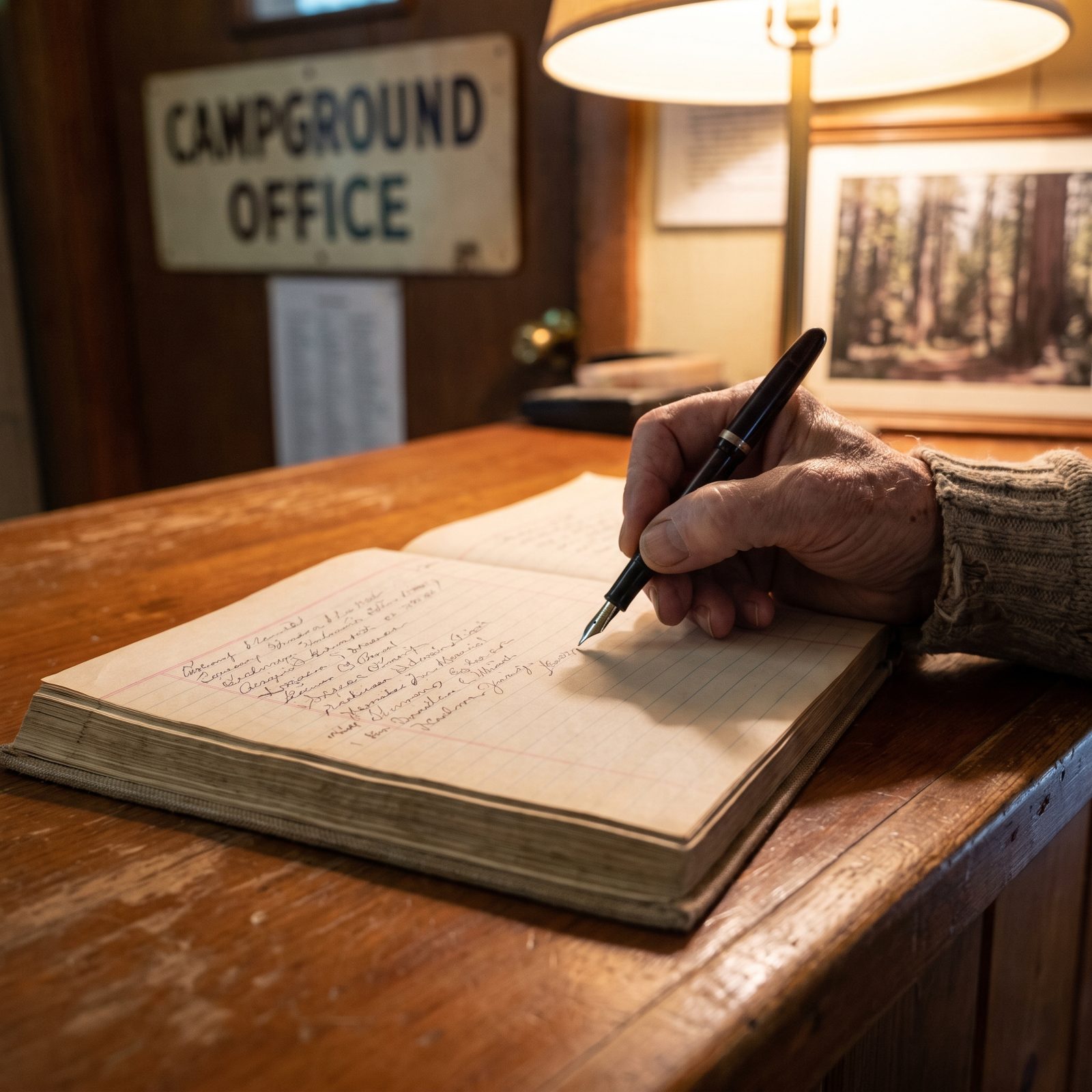
On the way out, you stopped at the office and signed the book. Name, hometown, maybe a line about the trip if you were feeling sentimental — “Best week all summer,” that kind of thing.
It sounds like nothing. A ledger on a counter next to a bell and a cup of pencils. But those books filled up with handwriting from all over the country, and flipping back a few pages while you waited was its own small pleasure — folks from three states over who’d slept in the exact spot you just packed up. A review app does the same job now and does it better, in a way, except nobody’s grandkid is ever going to find that review in a drawer forty years later and read it out loud.
1. Leaving Extra Firewood for the Next Family
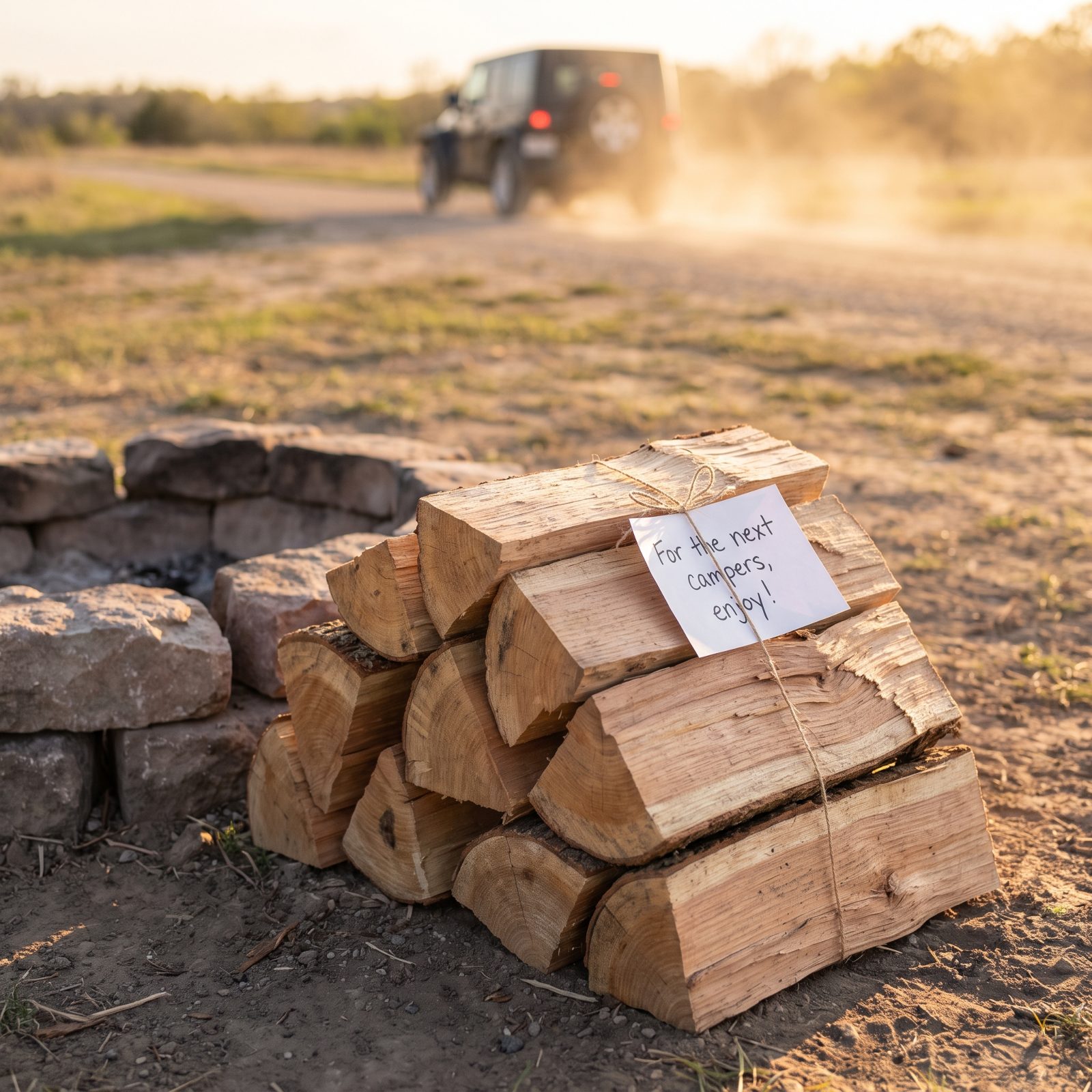
Here’s one that never really went away, and good. You bought more wood than you burned, so instead of hauling the extra home or letting it get rained on, you stacked it neat by the fire ring for whoever pulled in next.
Maybe a little bundle of kindling tied off with twine on top, if you were the organized sort. The new family rolled in tired, found dry wood waiting, and never knew whose it was. That’s the part I like. No note, no credit, no transaction — just a quiet assumption that the next person deserved a decent first night. Camping ran on a hundred little arrangements like that, people looking out for strangers they’d never meet. Still does, most places. Pass it on.