
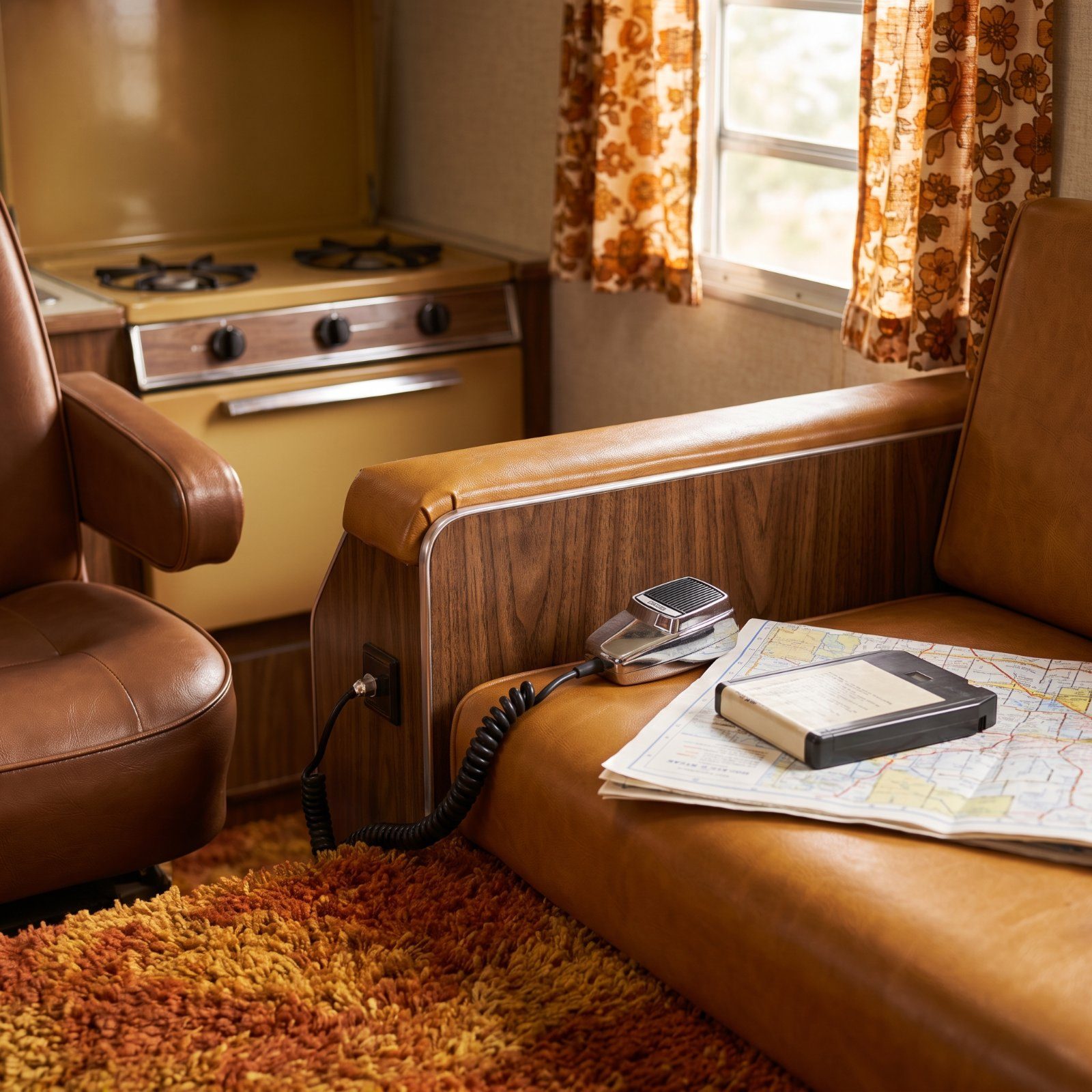
The smell hit you first. Hot vinyl, old carpet, and a faint whiff of gasoline from the big V8 breathing somewhere between the front seats. Then came the rituals: pull the choke, flip on the CB, hunt down a highway station on the AM dial while the shag quietly absorbed every spilled grape soda. A 1970s motorhome asked you to drive it, not just steer it. Strange controls. Loud colors. Appliances built like tanks. Here’s what riding in one actually felt like.
31. The Removable “Doghouse” Engine Cover Wedged Between the Front Seats
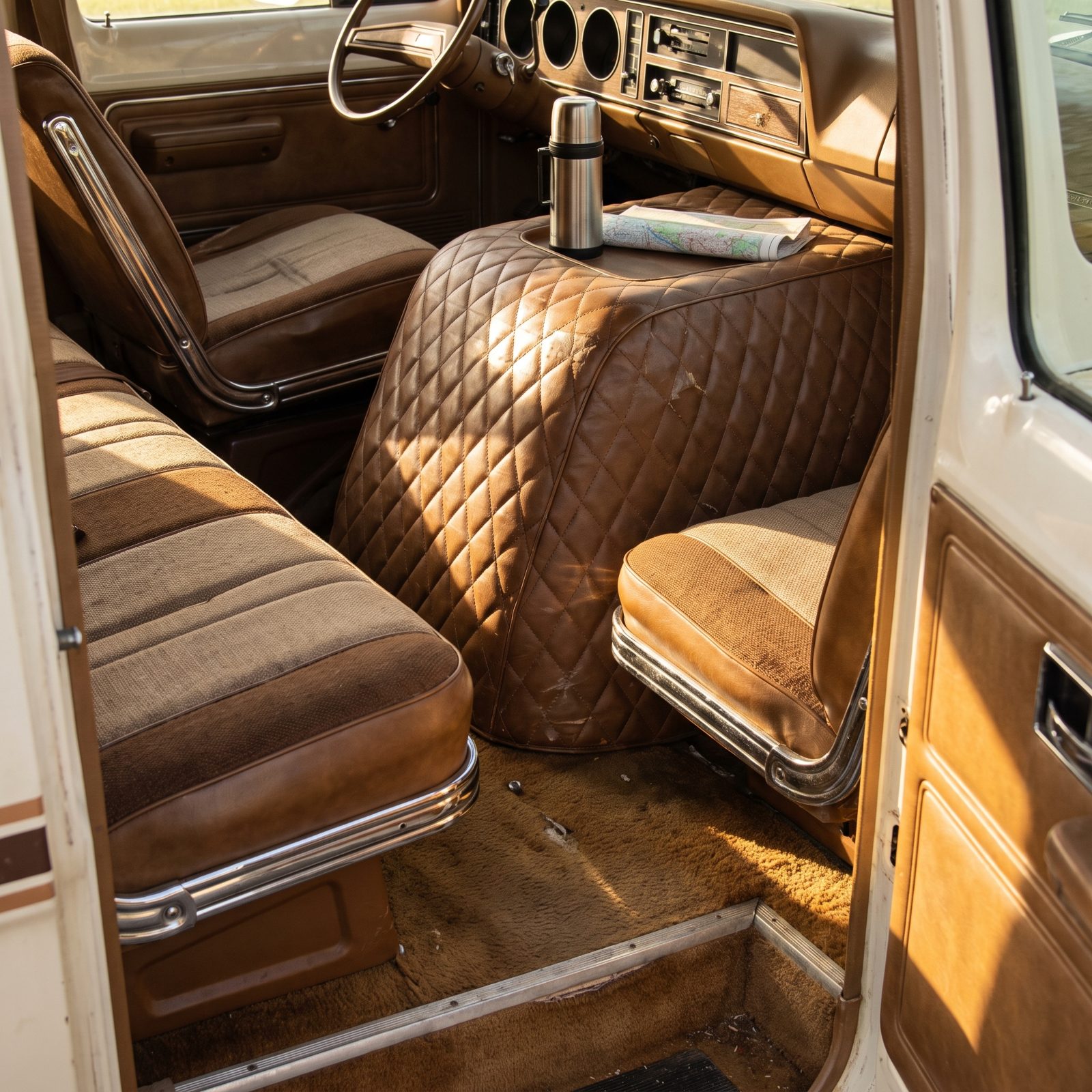
You felt it before you understood it. On a long summer climb, heat would radiate up through that padded box between the seats until the front of the rig felt like a sauna. That was the engine. In most Class A motorhomes of the era, the V8 lived right there in the cab, hidden under an upholstered lid everyone called the doghouse.
It doubled as a shelf for maps, a lap table for the kid riding shotgun, and a footrest. Changing a belt meant popping the latches and leaning in over the hot block at a rest stop. Nobody loved it. Everybody lived with it.
30. An Eight-Track Player Within Easy Reach of the Driver
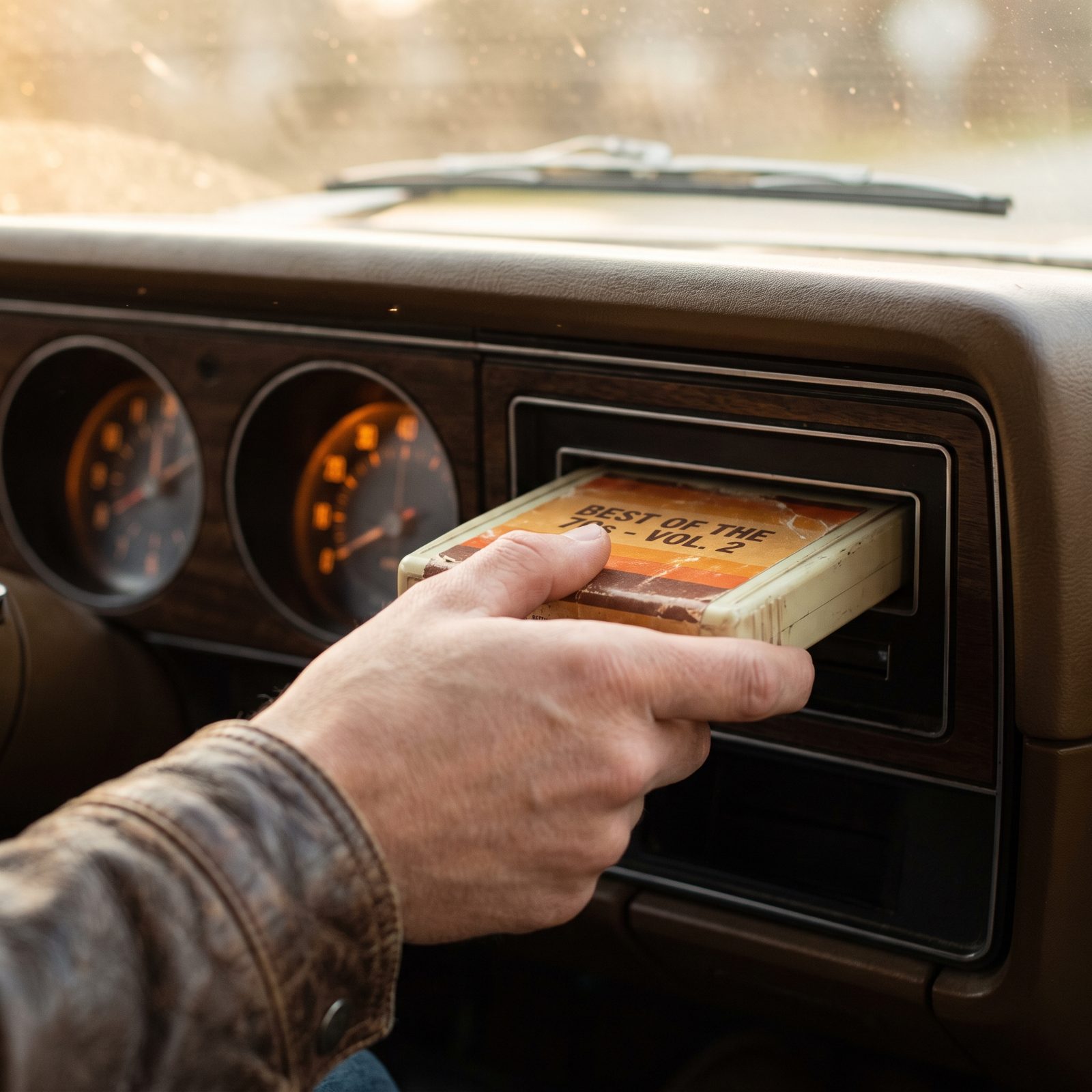
Highway music came in chunky plastic bricks. You’d slide the cartridge in, hear that satisfying mechanical clunk, and the speakers would crackle to life somewhere on side two.
Then the famous flaw. Mid-song, right at the good part, the player would ka-chunk and switch programs, splitting a track clean in half. You learned which albums had the painful cuts. The tapes lived in a shoebox or a special case that slid under the passenger seat, warping slowly in the summer heat until they played a little slow.
29. Shag Carpet Running Right Through the Living Area
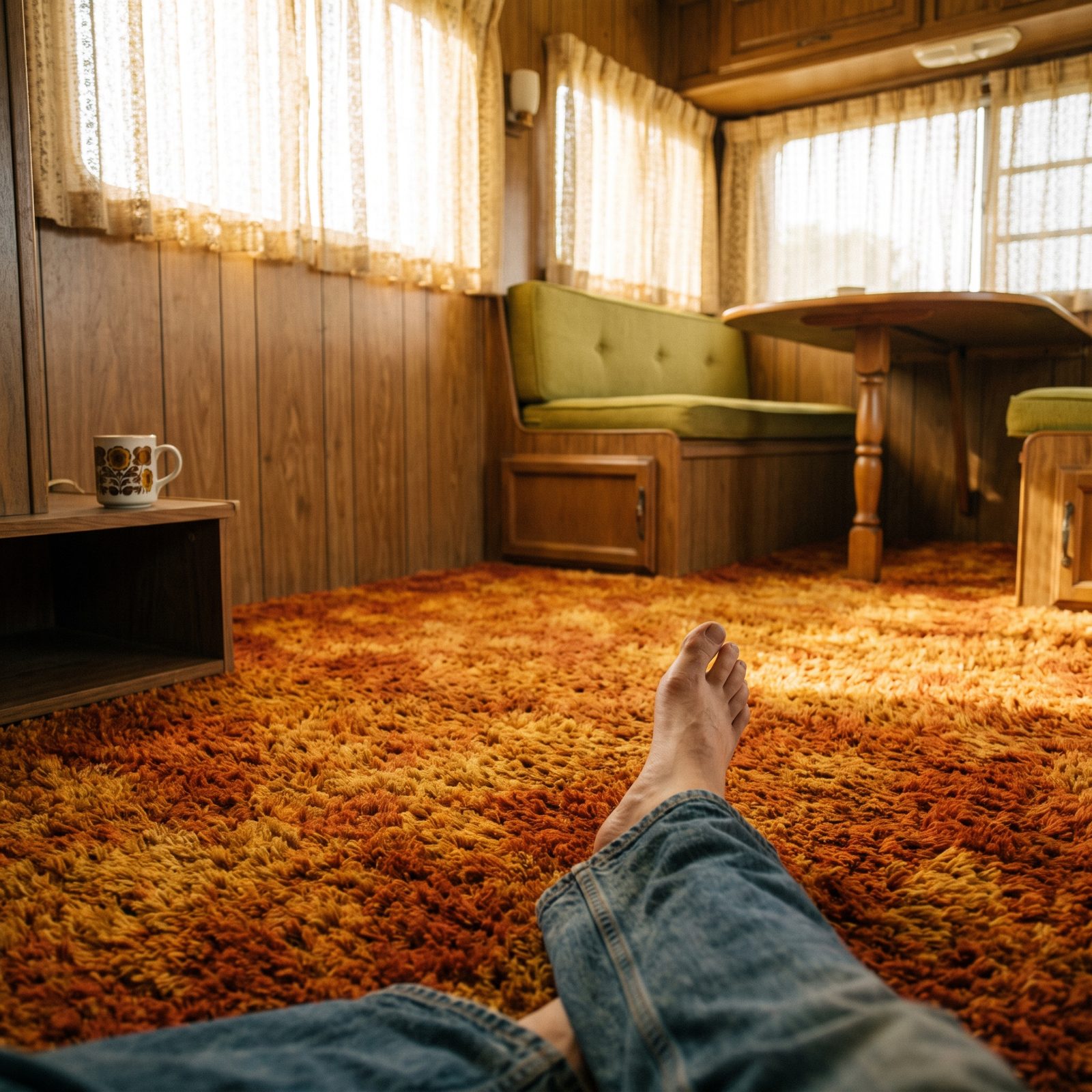
Every crumb lived forever down in that pile. Shag was never a practical floor and nobody pretended it was. It just felt right under bare feet, warm in the morning before the furnace caught up.
The colors were earthy and loud at once: rust, harvest gold, a brown the catalog probably called “autumn.” Vacuuming it meant a special rake, which half the owners never bought, so you fluffed it by hand before company came. I’d argue it’s the single most 1970s thing in these coaches. Look at a swatch of it and you can smell the whole decade.
28. A Headlight Dimmer Switch Mounted on the Floor
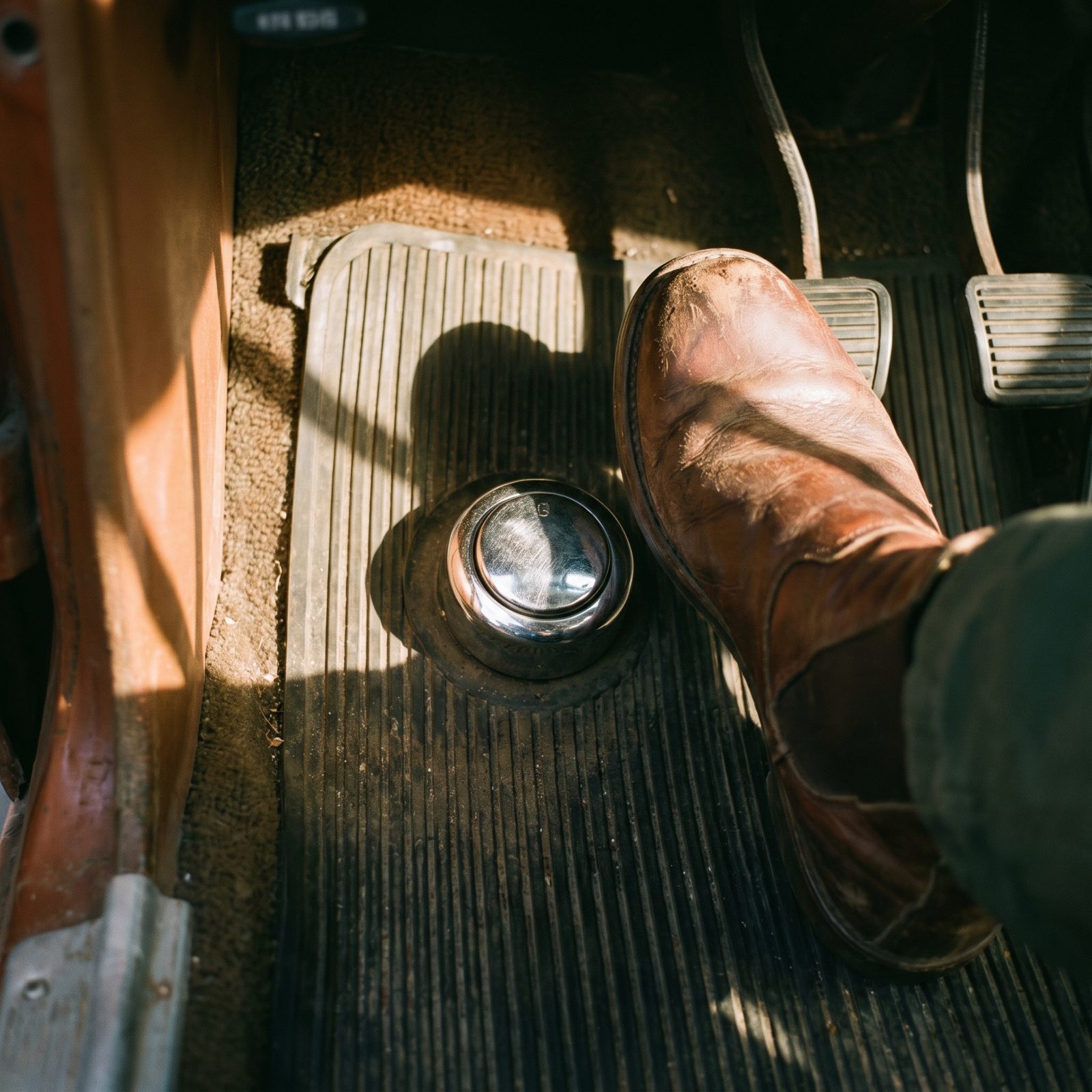
You tapped it with your left foot. That little metal button on the floor, just past the clutch or beside the brake, flipped your headlights between low and high beam. Every time an oncoming rig flashed you on a dark two-lane, your heel went searching for it in the shag.
Oddly satisfying, too. A solid mechanical clunk, no column stalk, no fingers leaving the wheel. The downside showed up at night, when carpet fuzz worked into the contacts and your high beams got moody. A good stomp usually fixed it.
27. Harvest-Gold Appliances, Avocado Upholstery, and Orange-Brown Curtains
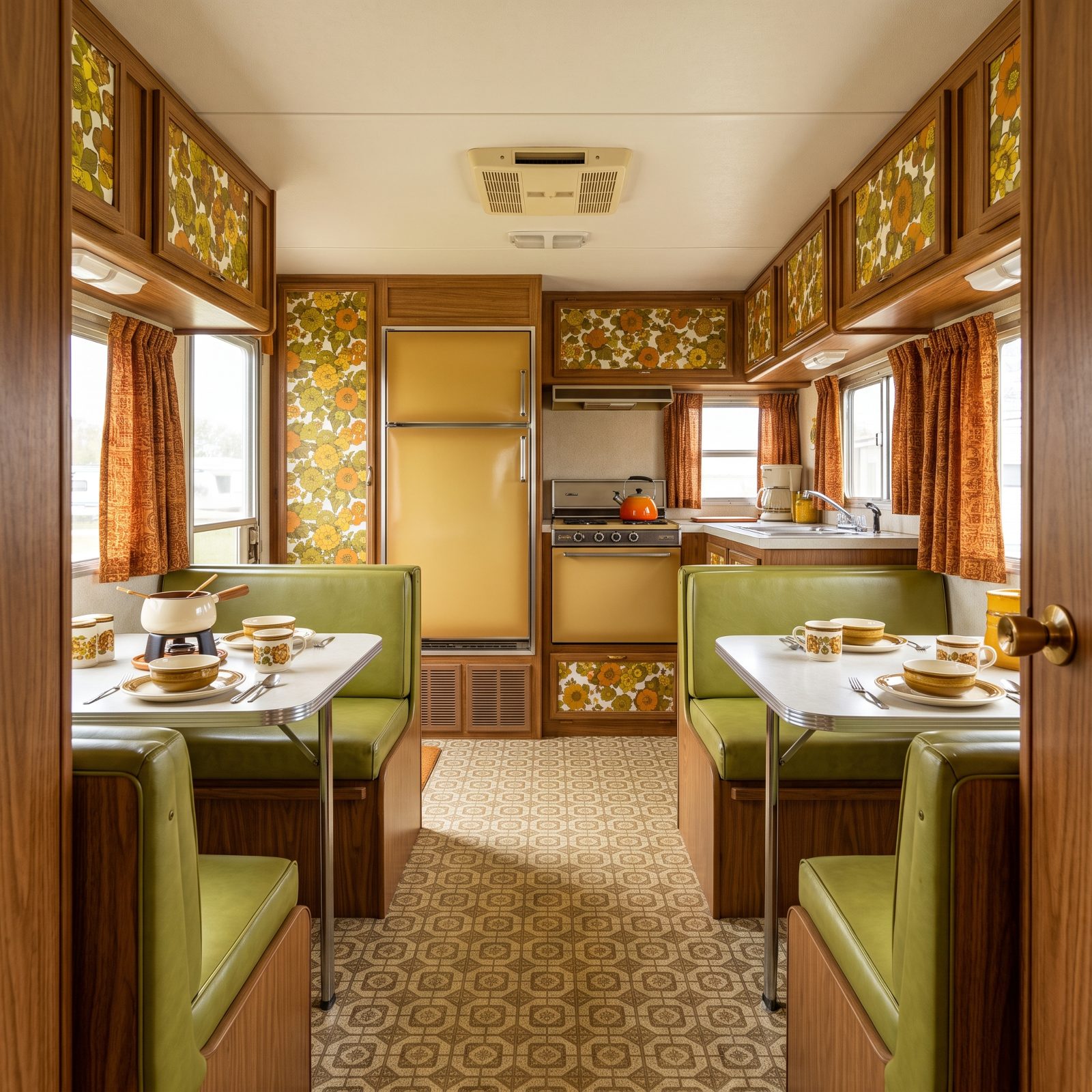
The color scheme was the whole aesthetic, not an accident. Open the door of a 1976 coach and the palette hit you all at once: a gold stove, an avocado dinette, curtains the color of a Thanksgiving tablecloth.
These appliances were small and heavy and ran on propane. The fridge barely held a weekend’s milk and cooled by catalytic magic you lit with a match. The stove had two burners and a grate you could jack a car with. Buyers chose their shade of earthy the way you’d pick paint today, straight from the factory “decor packages.”
26. A CB Radio Bolted Under the Dashboard
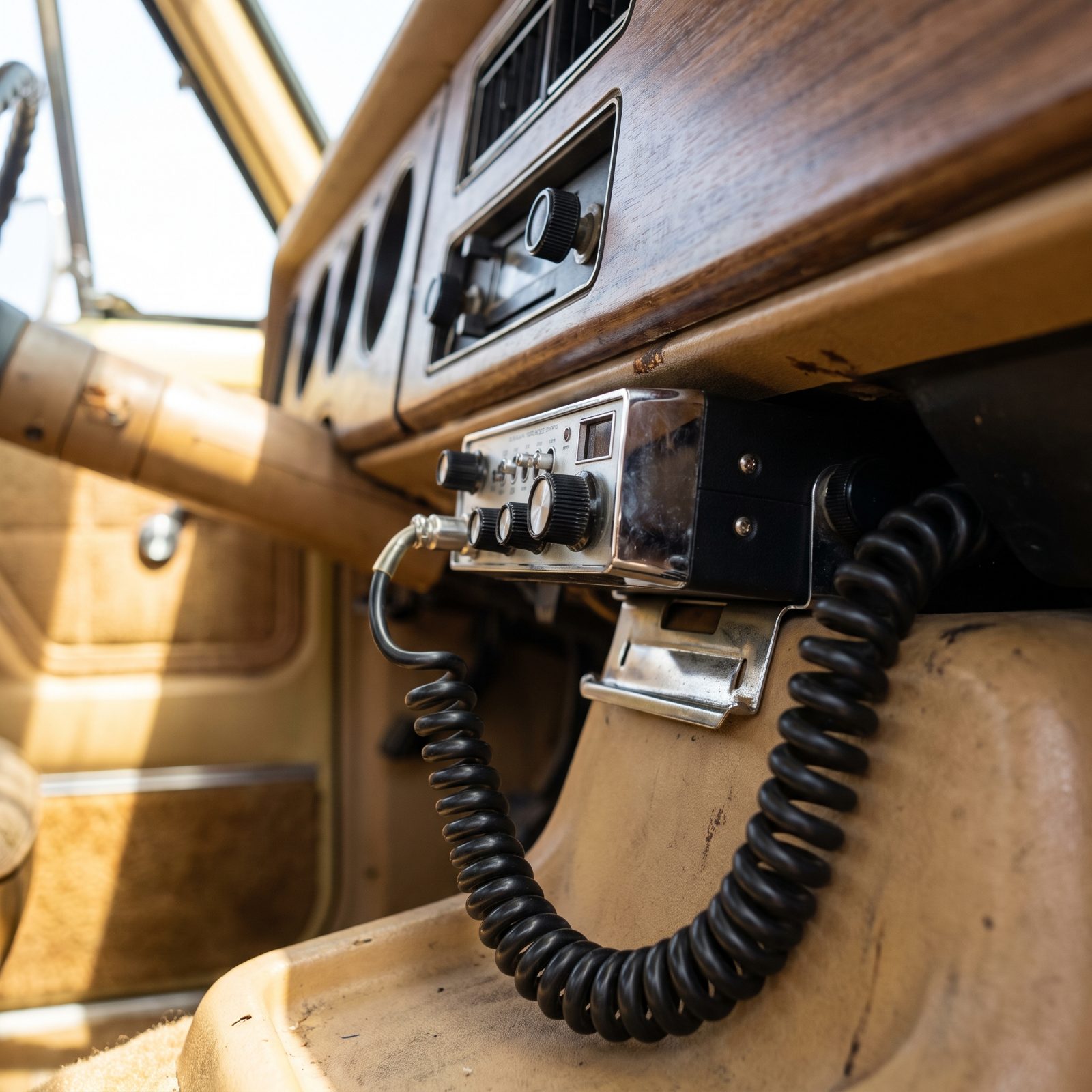
The handset hung from a chrome clip, cord coiled like a spring. Click the button and the whole highway opened up.
This was the internet before the internet. Truckers warned you about the smokey parked up ahead. Fellow campers passed word about a flooded site or a diner worth the exit. Everyone picked a handle and used it with a straight face. Channel 19 was the working lane, channel 9 was for trouble.
I’ll admit the lingo got silly. But on a dark stretch of Nevada with nothing on the AM dial, that crackle of another voice was genuine company. People miss it more than they expect to.
25. A Dashboard Covered in Woodgrain Plastic
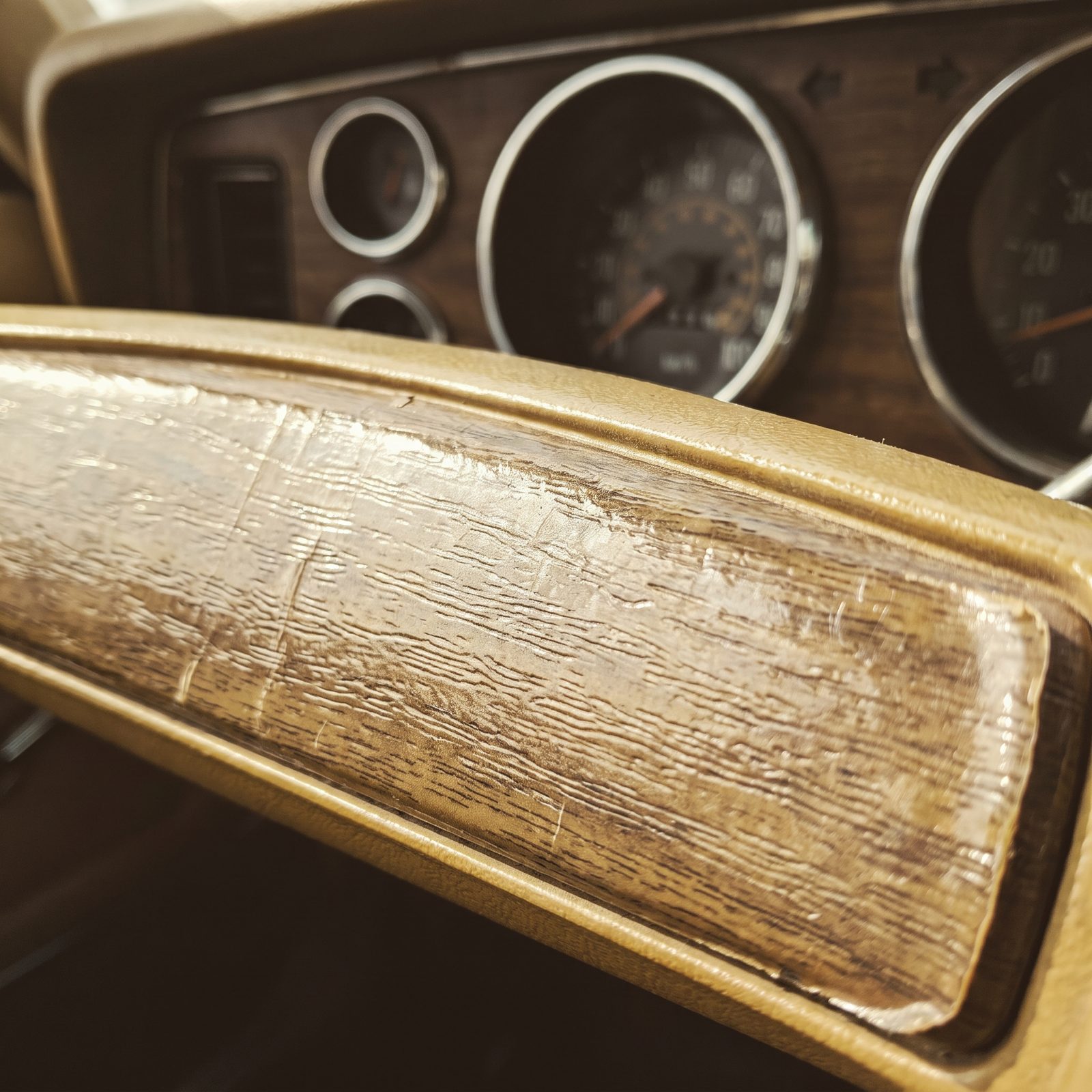
It fooled absolutely no one, and that was fine. The dash was a sheet of plastic printed to look like walnut, grain and all, wrapped across the gauges and glued down at the edges.
In the sun it got warm and faintly sticky, and after a decade the top edge would start lifting at the corners where the adhesive gave up. You’d press it back down a hundred times. Still, it gave the cab a warmth that gray plastic never managed. Paired with the shag and the vinyl, the fake wood pulled the whole cockpit together into something that actually felt homey.
24. Swivel Captain’s Chairs Dressed in Brown Vinyl
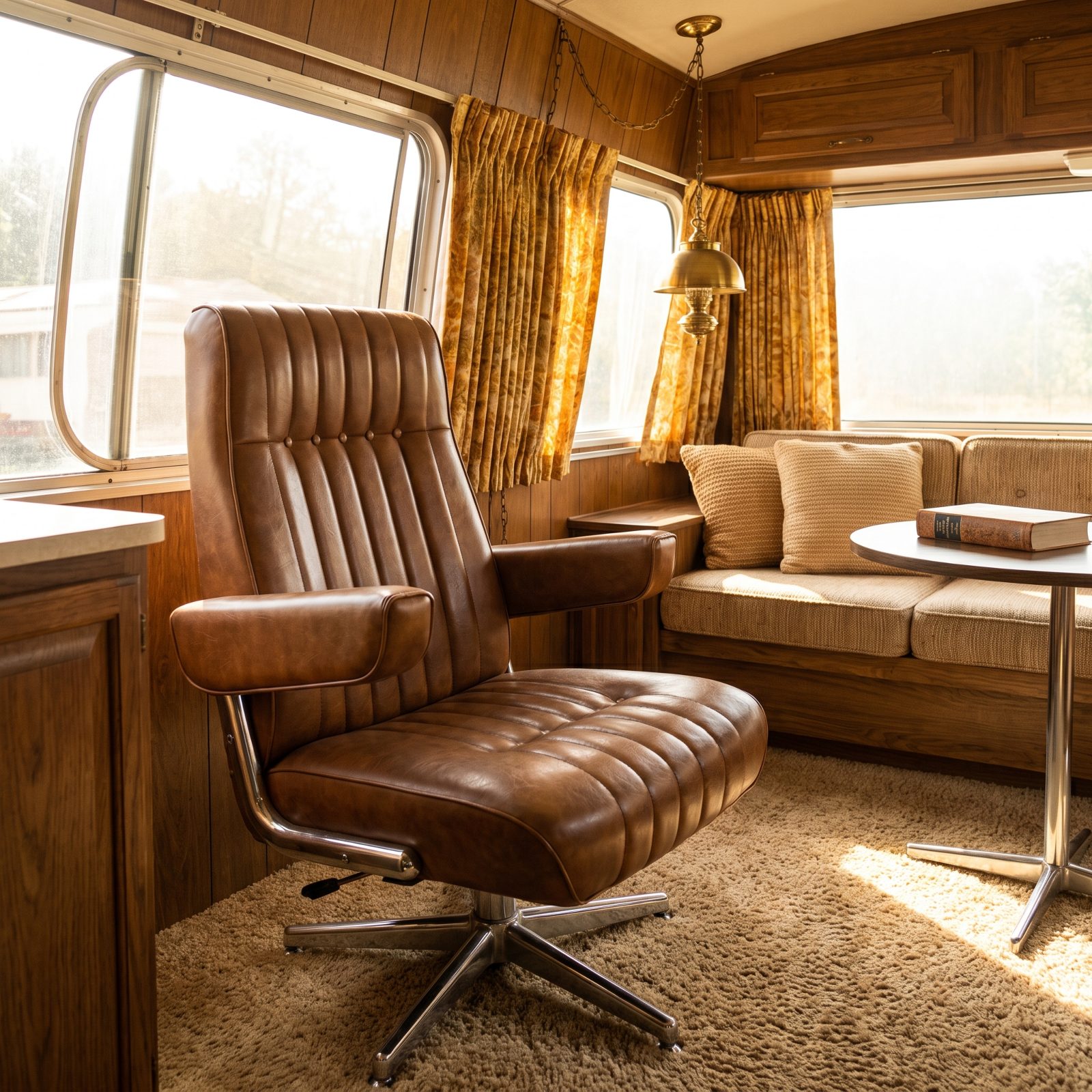
Pull a lever, give it a shove, and the driver’s seat spun a full half-turn to face the room. That swivel was the magic trick of the whole coach. Parked at camp, the cab seats became living-room chairs, and the front of the rig joined the party.
They were covered in brown vinyl that squeaked when you shifted and burned the backs of your legs on a July afternoon. A towel on the seat was standard summer equipment. Comfortable? Debatable. But swinging that chair around at the end of a driving day, coffee in hand, feet up on the doghouse, was the closest a motorhome got to a recliner.
23. A Giant, Thin-Rimmed Steering Wheel
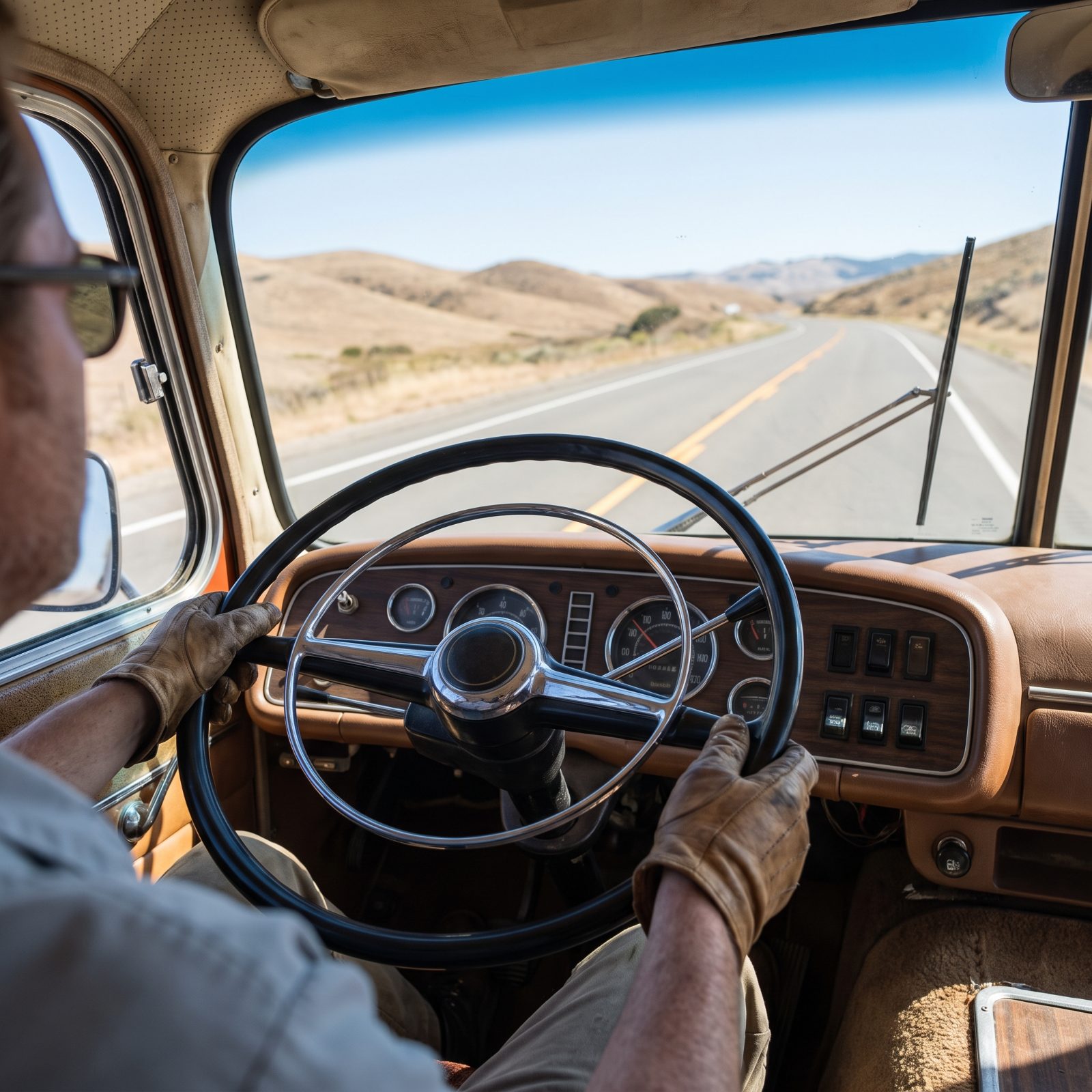
It looked like it belonged on a city bus. The wheel was enormous, often close to two feet across, with a thin hard rim that gave your palms nothing to grip.
That size was mercy, not style. With no power steering on many rigs and a nose full of heavy V8, you needed every bit of that leverage just to muscle the thing into a parking spot. Backing into a tight campsite meant big arm-over-arm turns and a lot of sweat. You drove with your whole upper body, and by the end of a long day your shoulders knew it.
22. A Choke Knob You Pulled on Older Gas Engines
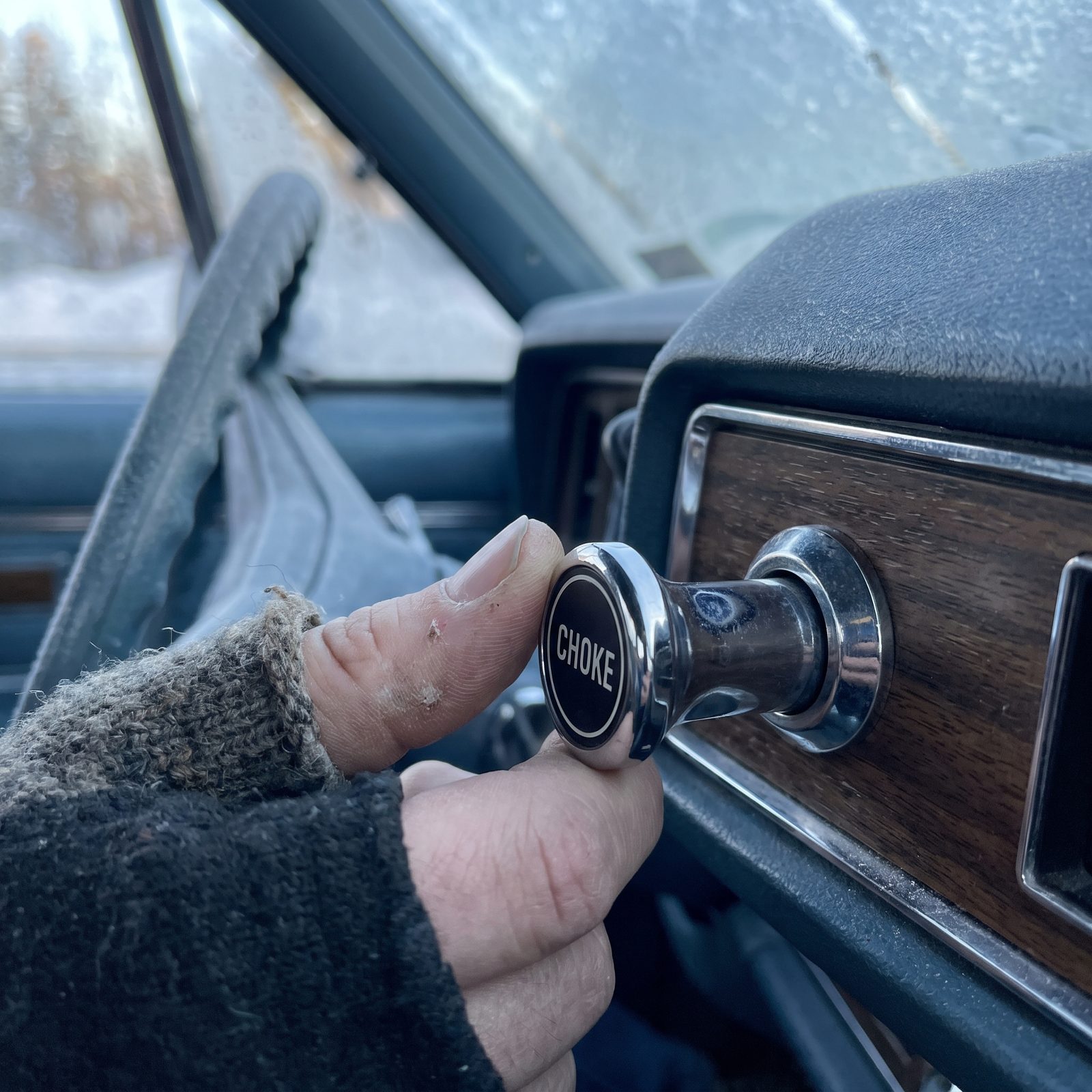
Cold mornings had a sequence, and you learned it fast. Pump the gas a couple times, pull the choke, turn the key, and listen to that big carbureted V8 catch, cough, and settle into a fast, lumpy idle.
Then the real skill: easing the choke back in as the engine warmed, a little at a time, so it wouldn’t stall or run rough and black-smoke the campground. Push it in too soon and you killed it. Leave it out too long and you dumped raw fuel and fouled the plugs. Getting one of these rigs started was a small ritual you felt proud of once you had the feel for it. Fuel injection eventually made the whole dance obsolete, and honestly, nobody who ever flooded one on a frosty morning is sad about that.
21. The Vacuum Gauge That Ruled Every Right Foot
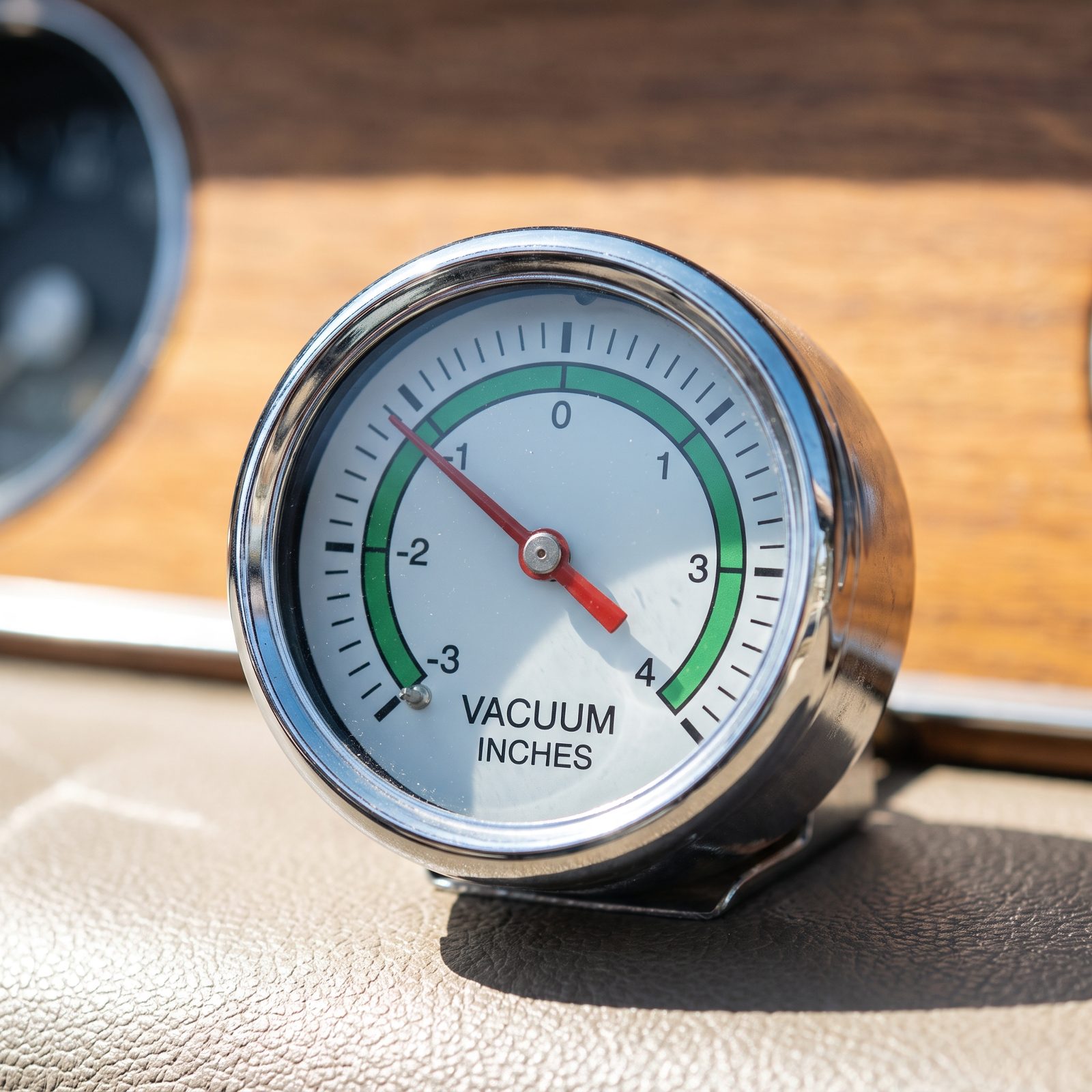
You learned to drive by that little needle. It sat right in your eyeline, and keeping it in the green meant you were sipping fuel instead of gulping it. Lift off the gas and the needle swings up and you feel like a genius; stomp the pedal climbing a grade and it drops, and you can practically hear the dollars leaving the tank.
These things showed up everywhere after the 1973 gas crisis, back when a 440-powered motorhome getting six miles to the gallon suddenly mattered a great deal. Driving one became a game you played with your own foot.
20. The Ammeter Whose Needle Made You Sweat
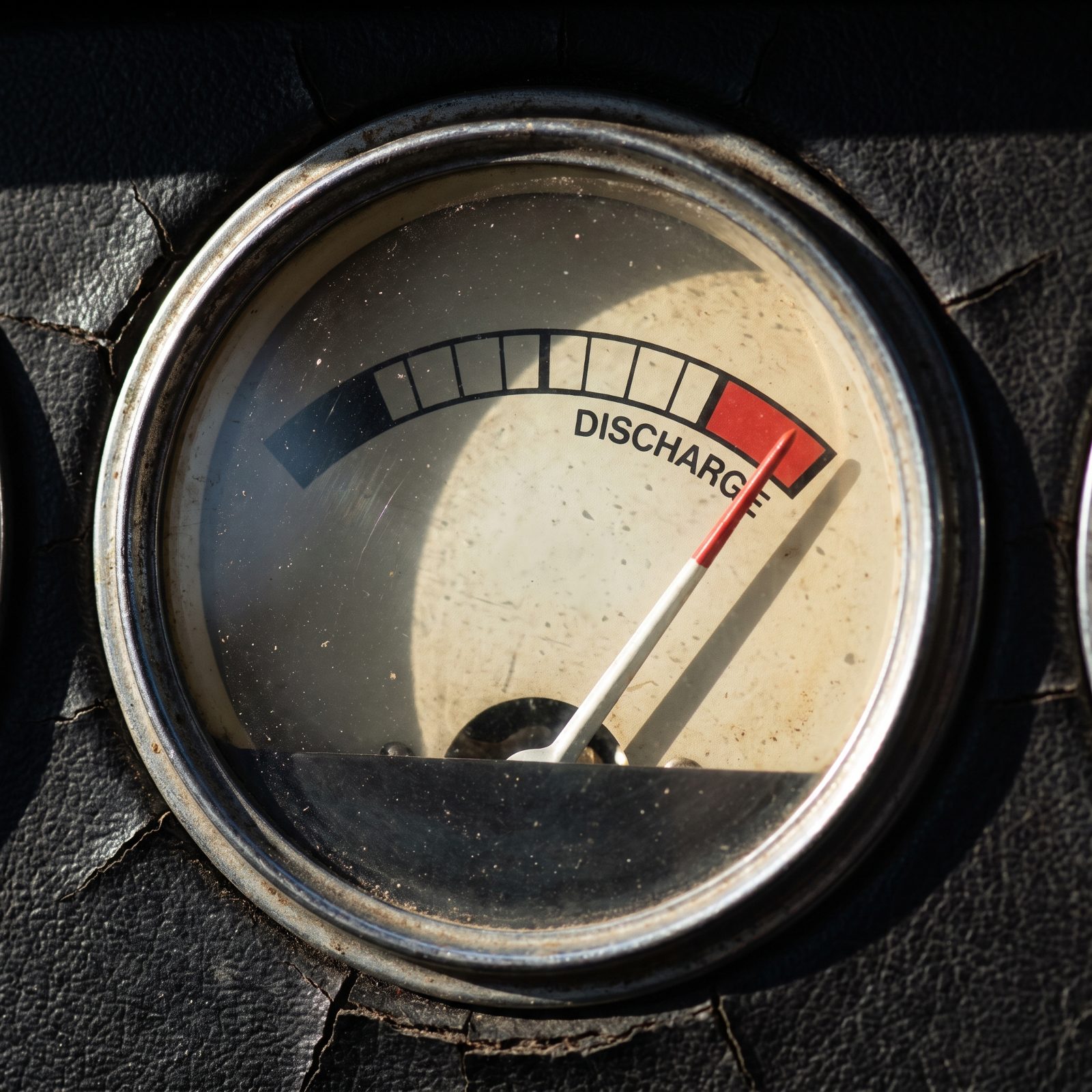
Zero was the dream. The ammeter swung left when your battery was draining and right when the alternator was pushing charge back in, and every owner I’ve talked to from that era watched it like a hawk. Flick on the headlights and the heater fan together, and the needle dipped into discharge — and that dip meant a lecture from whoever was riding shotgun.
Modern rigs hide all of this behind a voltmeter or a phone app that tells you everything’s fine. Back then? A raw, twitchy needle and your own nerves. I kind of miss how honest it was.
19. The Paper Atlas Jammed Between the Seats
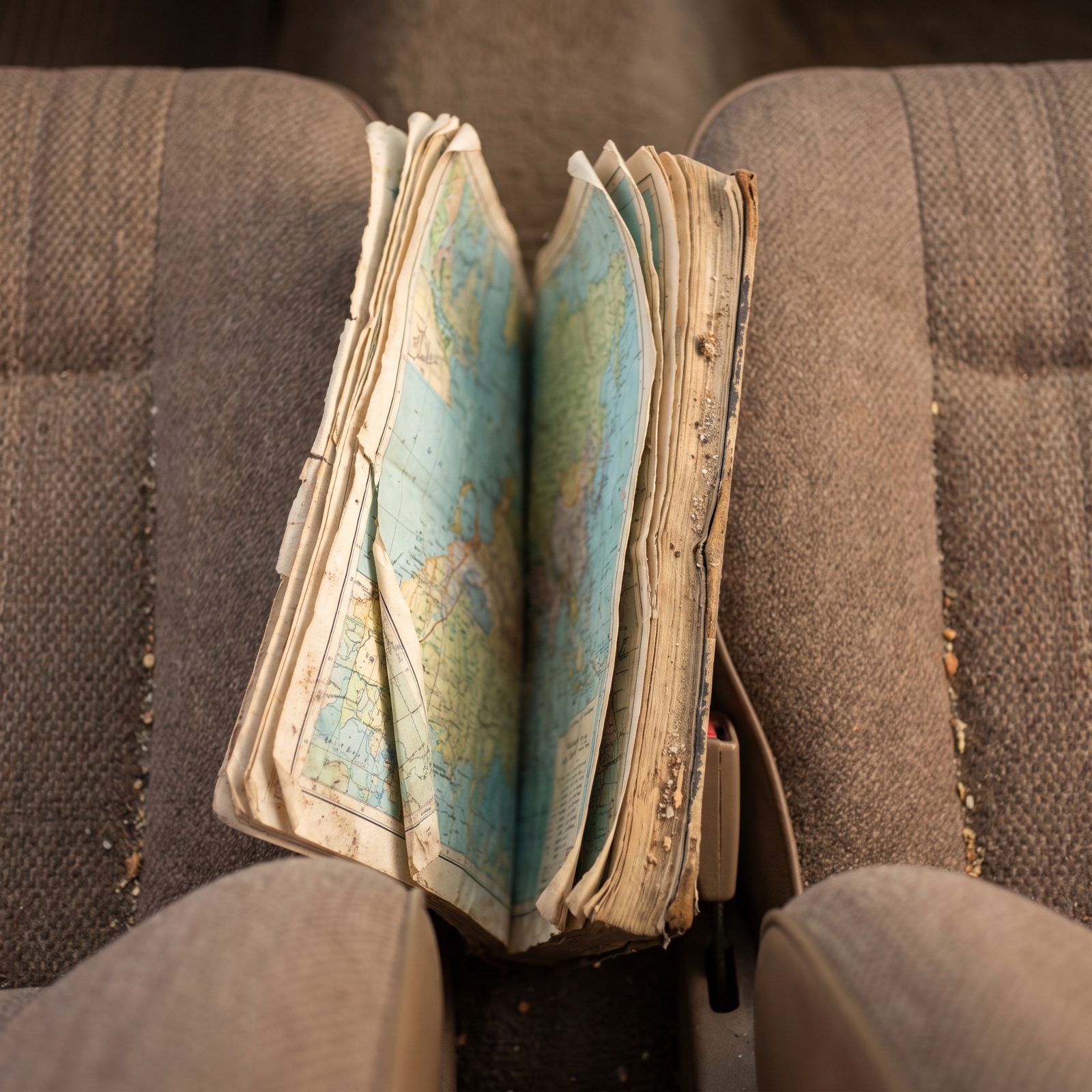
It lived in the gap between the seats, spine cracked, corners gone soft from a thousand hands. The paper highway atlas was your GPS, your trip planner, and your argument settler all rolled into one, and somebody in the passenger seat held it open with a thumb pressed on your current location, calling out exits before they came.
You highlighted the route the night before at the campground and dog-eared the pages for the states you’d cross. And when you got lost — you got lost — you pulled into a gas station and asked a human being.
18. Backing Up With Mirrors and a Spotter Who Yelled
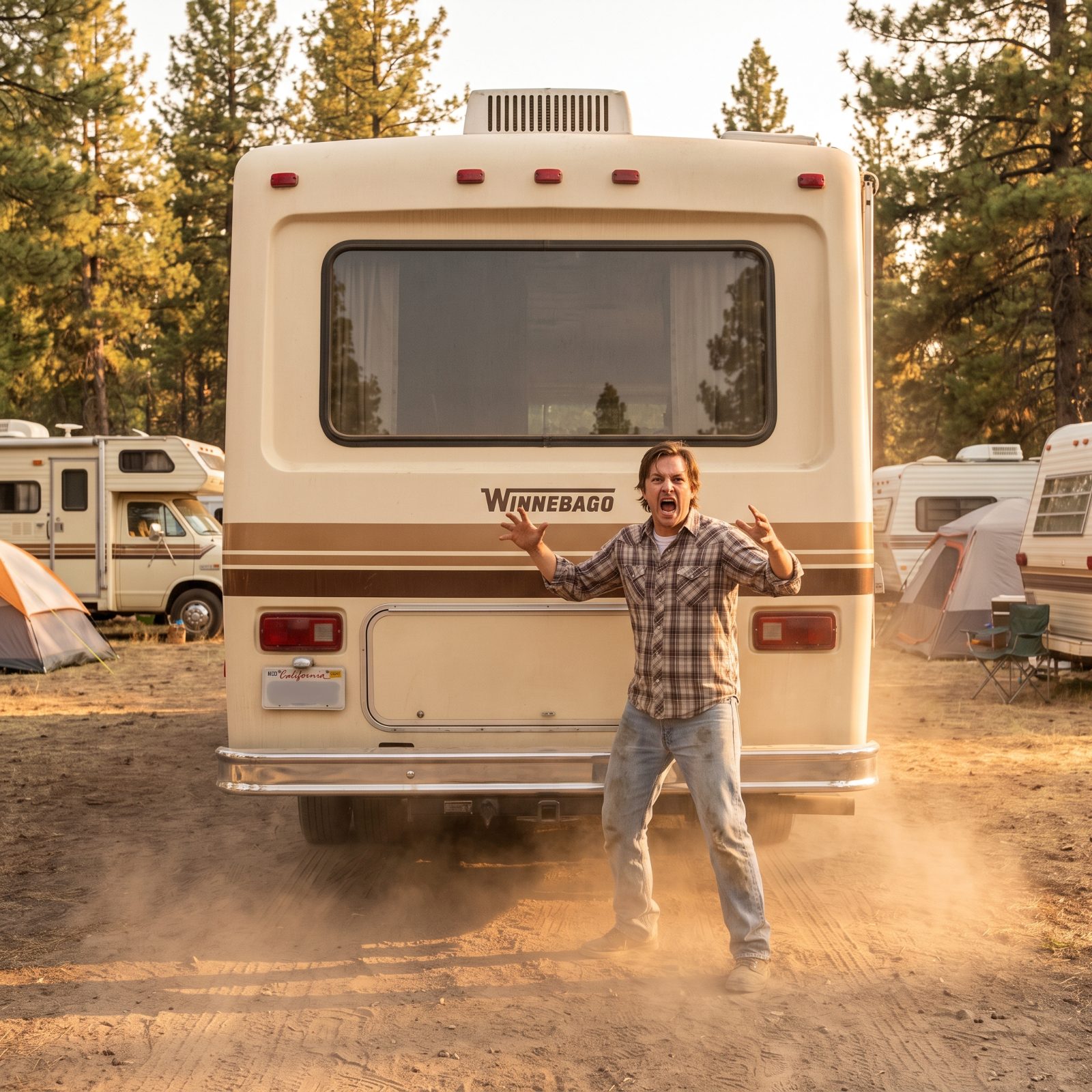
There was no camera. There was your wife, standing twenty feet behind the rig, waving her arms and mouthing words you couldn’t hear.
Wedging a 1970s motorhome into a shaded campsite was a two-person operation and a test of a marriage. You had the big chrome West Coast mirrors, the window cranked down, and a spotter whose hand signals never quite matched what you did with the wheel. Somebody always yelled. Somebody always said “I told you to stop.” Then you both sat down for dinner and never spoke of it again.
17. The Converter That Hummed You to Sleep
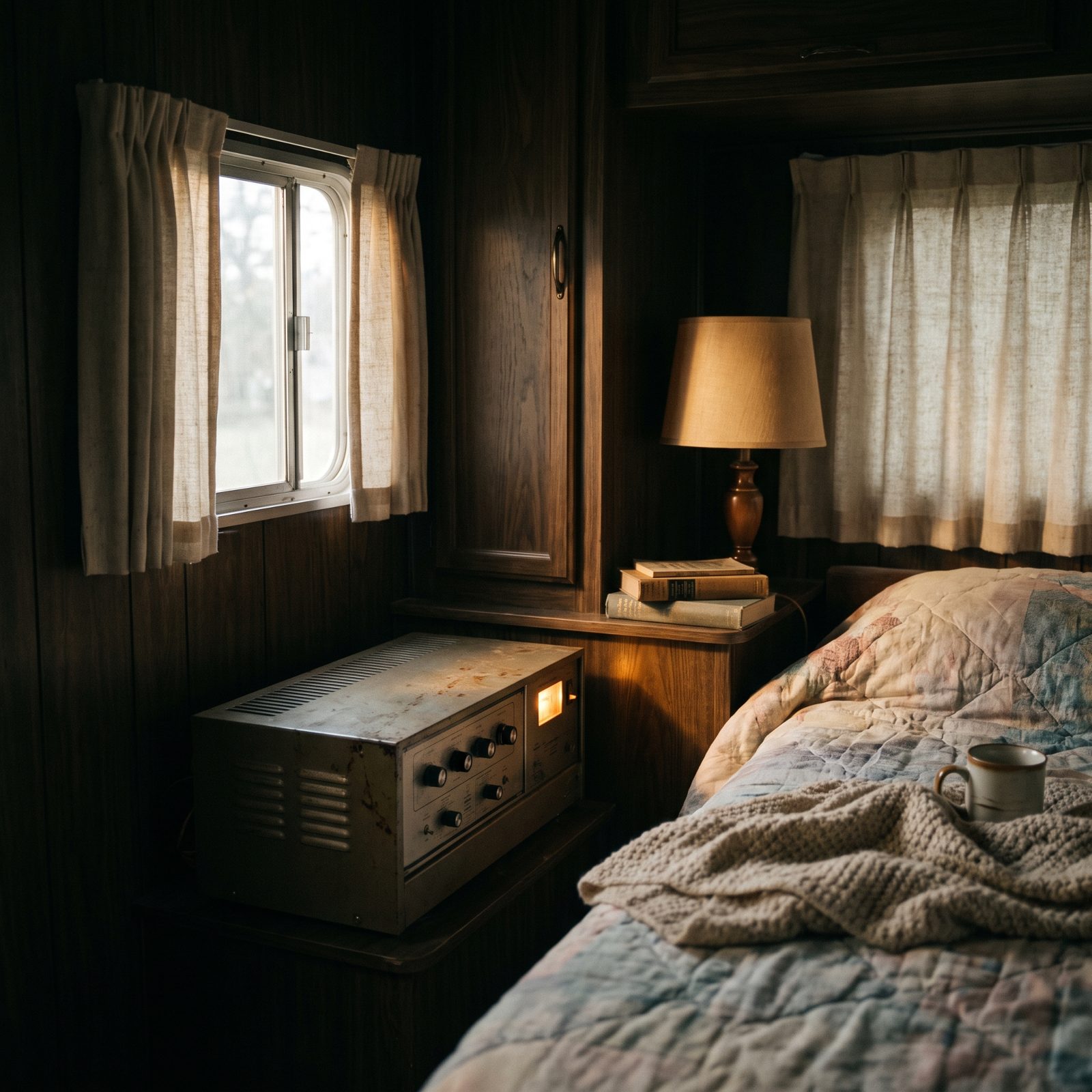
Plug into shore power at the campground and the converter kicked on with a low electrical hum that never, ever stopped. It lived in a cabinet behind the dinette — a heavy metal box with a fan, turning campground current into twelve volts for your lights and your water pump.
By the second night you stopped hearing it. By the third you couldn’t sleep without it. That steady hum became the sound of being hooked up, settled in, nothing left to do but read by the orange glow of the reading lamp until your eyes gave out.
16. Glass Screw-In Fuses You Kept Spares Of
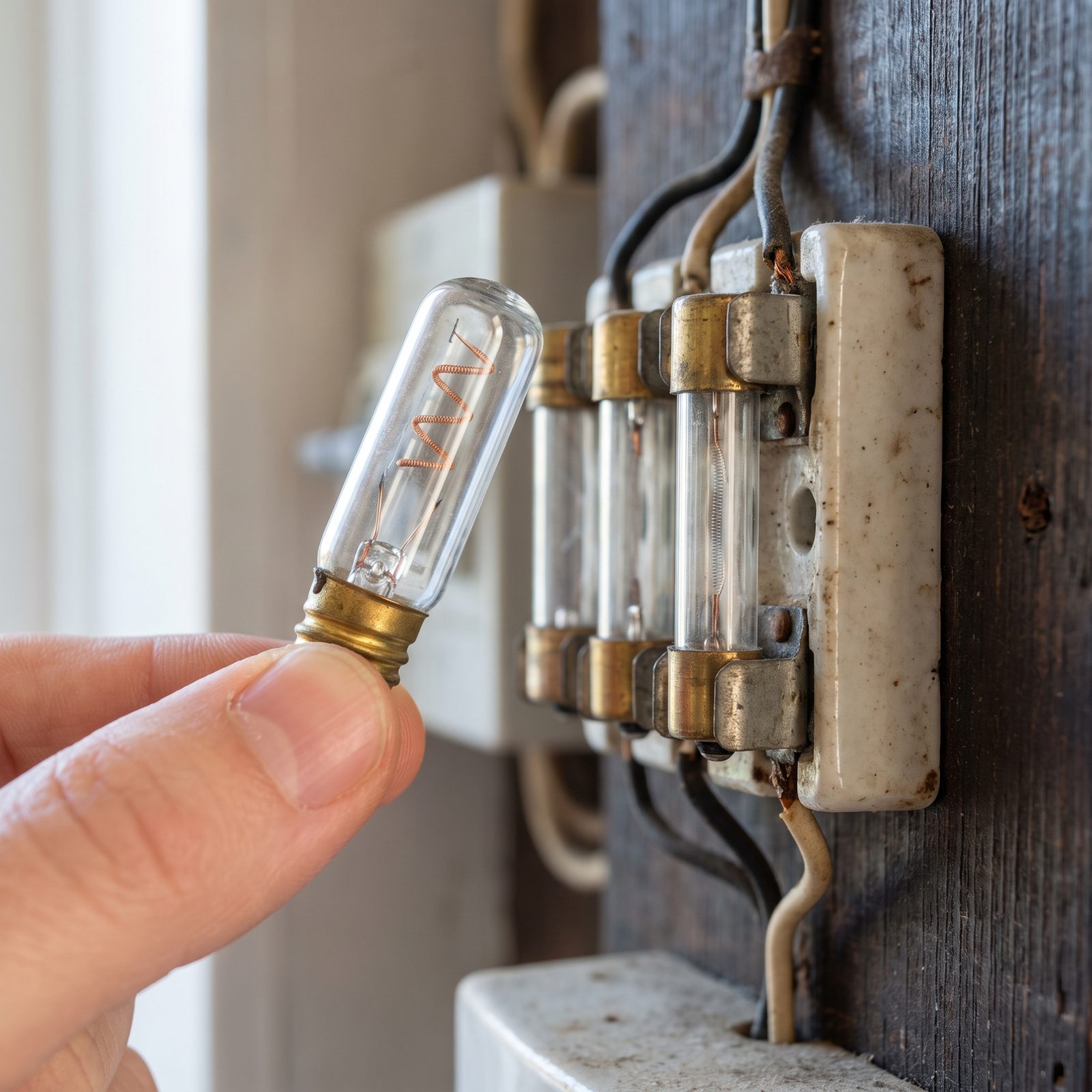
No breakers to flip. When something shorted, a little glass cylinder quietly gave its life and you sat in the dark until you found the culprit. You could spot a blown one by holding it up to the light and looking for the broken thread of filament or that telltale smoky stain inside the glass.
Every careful owner kept a box of spares in a drawer, sorted by amperage. Replacing one in the dark, fingers fumbling at the panel, was a rite of passage.
15. Lighting the Fridge Pilot From a Crouch Outside
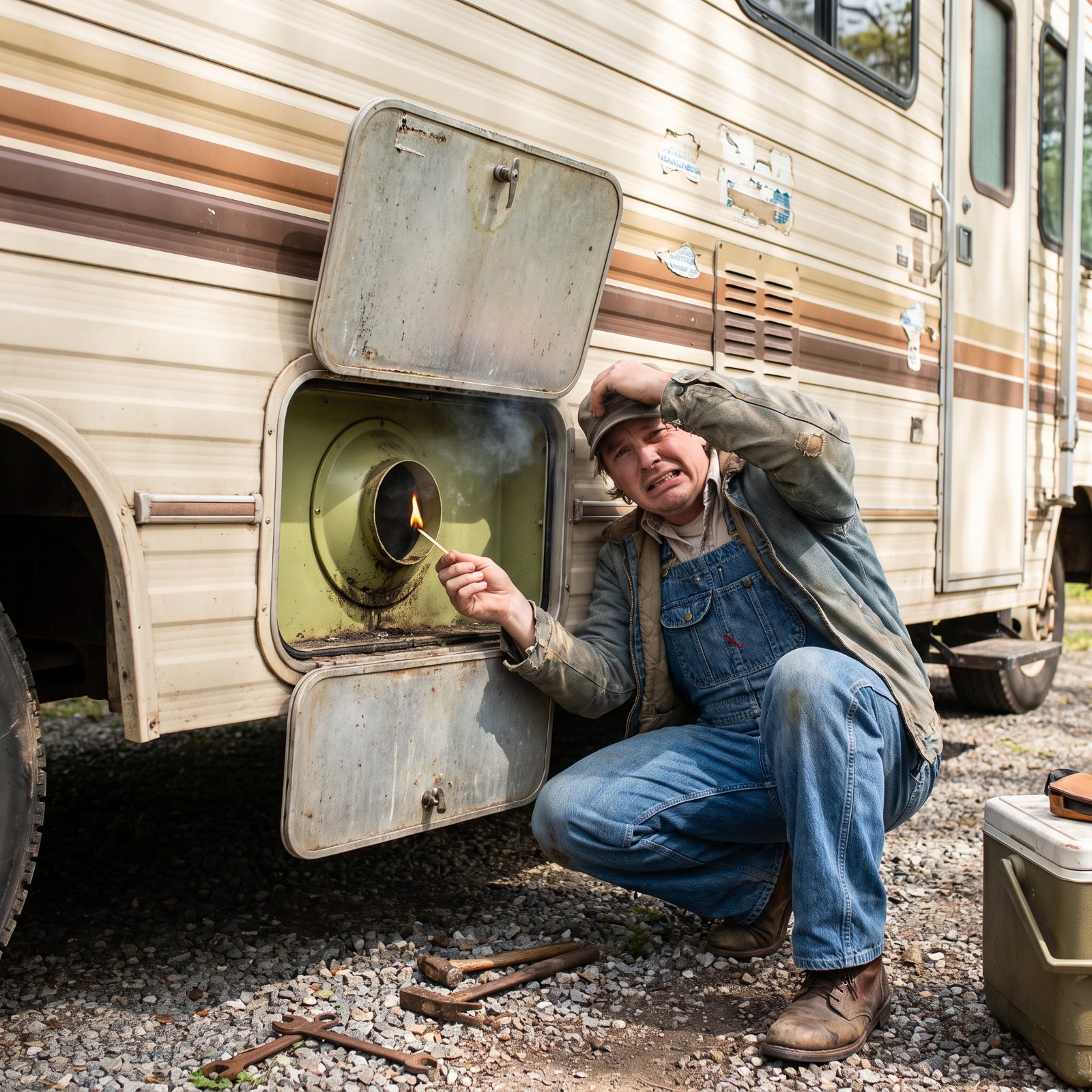
Here’s a sentence that would horrify a modern RVer: you lit your refrigerator with a match, from outside, crouched in the dirt. The absorption fridge ran on propane, and its pilot flame lived behind a vent panel on the exterior wall.
You’d open the little door, turn the gas knob, hold a match to the burner, and pray the wind held off for three seconds. Half the time it didn’t. Four matches, one singed fingertip, and finally — the blue flame catches. Then you’d wait twenty minutes to feel whether the inside was getting cold. If it wasn’t, back to the dirt you went.
14. A Match for Every Stove Burner, Every Time
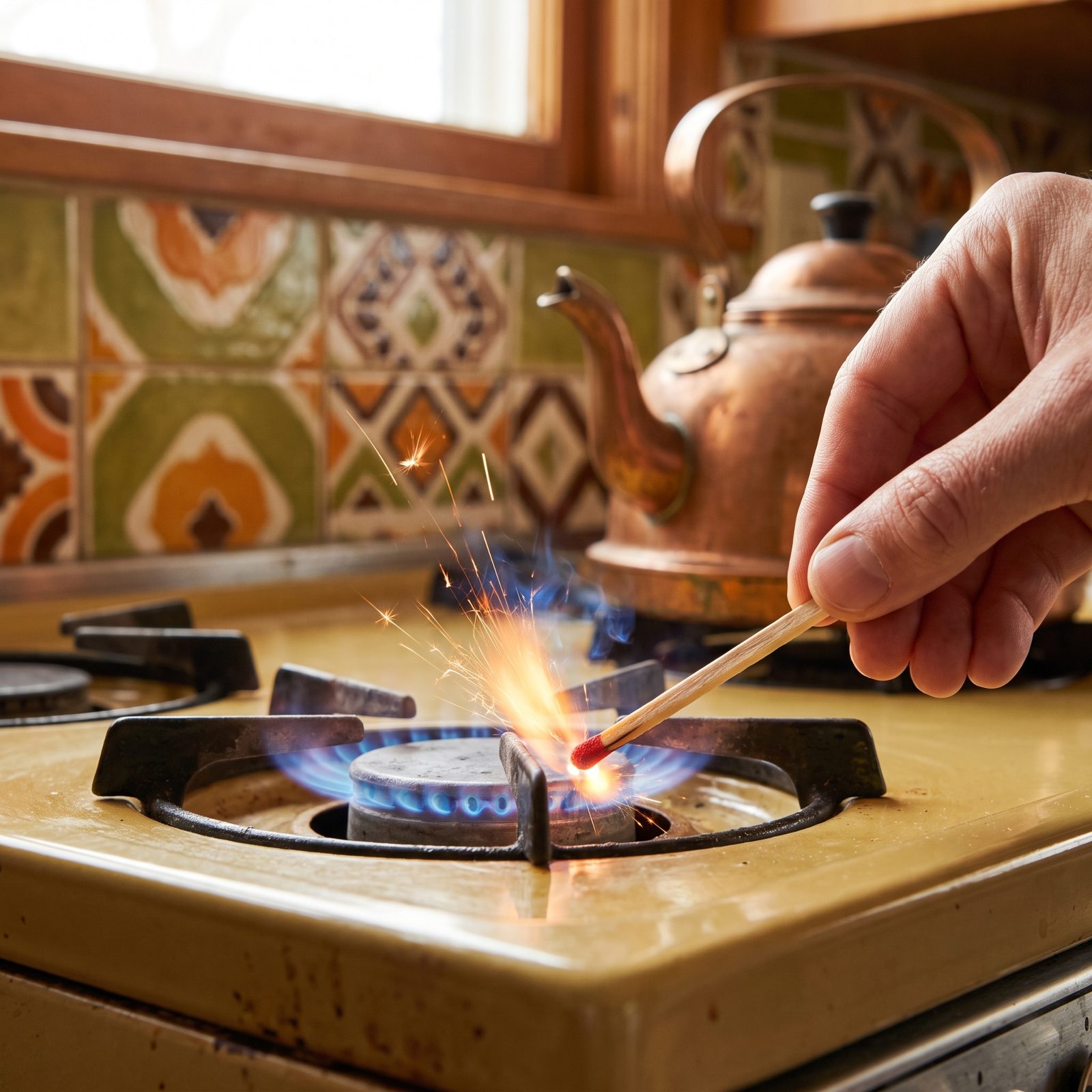
No clicking igniter. Just you, a box of wooden matches, and the hiss of propane you didn’t want building up for too long. Morning coffee started with striking a match, holding it low to the burner, and twisting the gas knob at the same moment with your other hand.
You got fast at it. You had to. The percolator wasn’t going to light itself, and nobody was pleasant until the coffee was going.
13. The Dinette That Became a Bed, If You Fought It
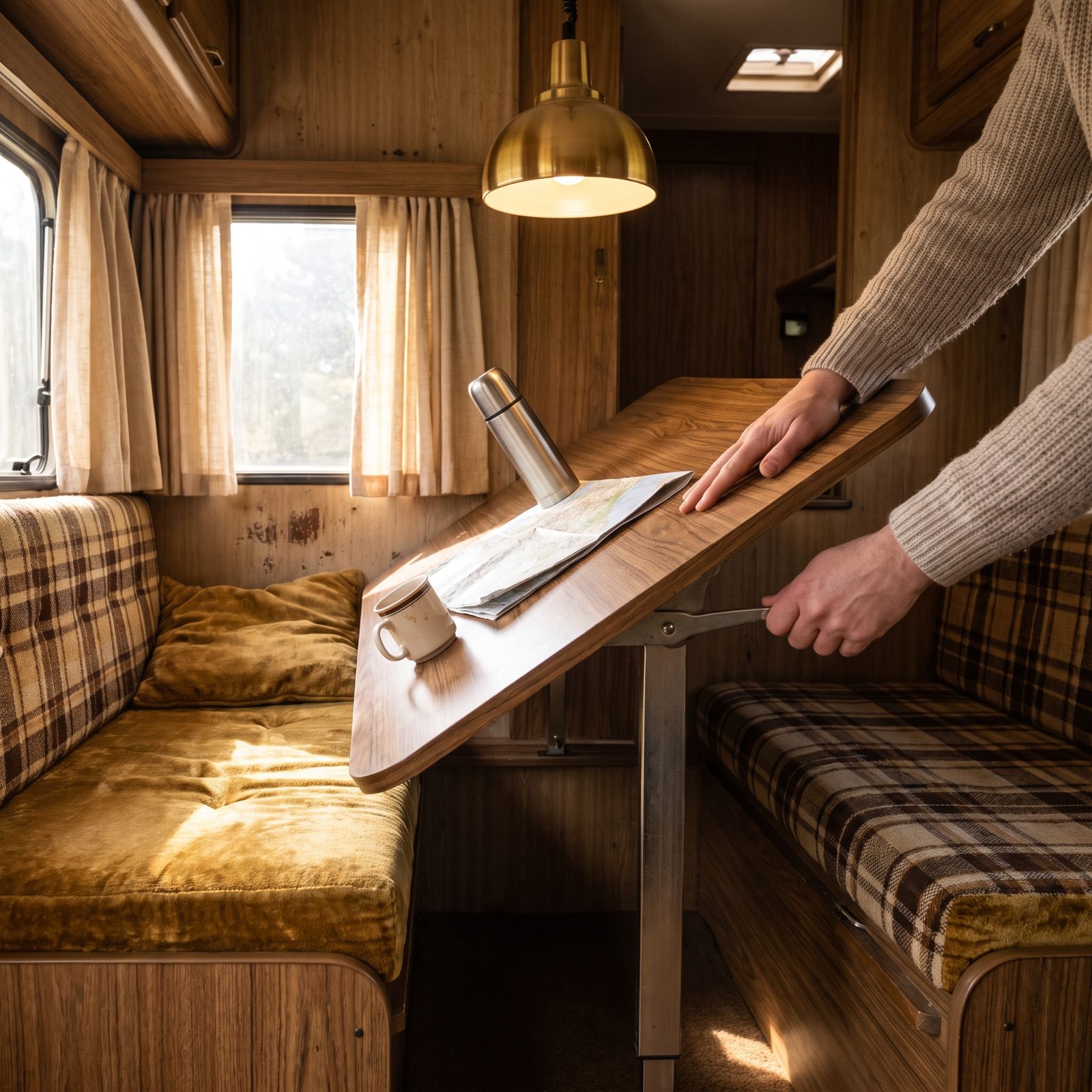
Every night the dinette performed its reluctant transformation. You dropped the table onto its support until it sat level with the bench seats, then rearranged the loose cushions to bridge the gap. In theory, a bed. In practice, a landscape of seams and shifting foam.
Whoever slept there rolled into the crack between cushions by 2 a.m. The support worked itself loose if you turned over too hard. And in the morning you did the whole thing in reverse before anyone could sit down for breakfast.
12. Faux-Wood Paneling Running Floor to Ceiling
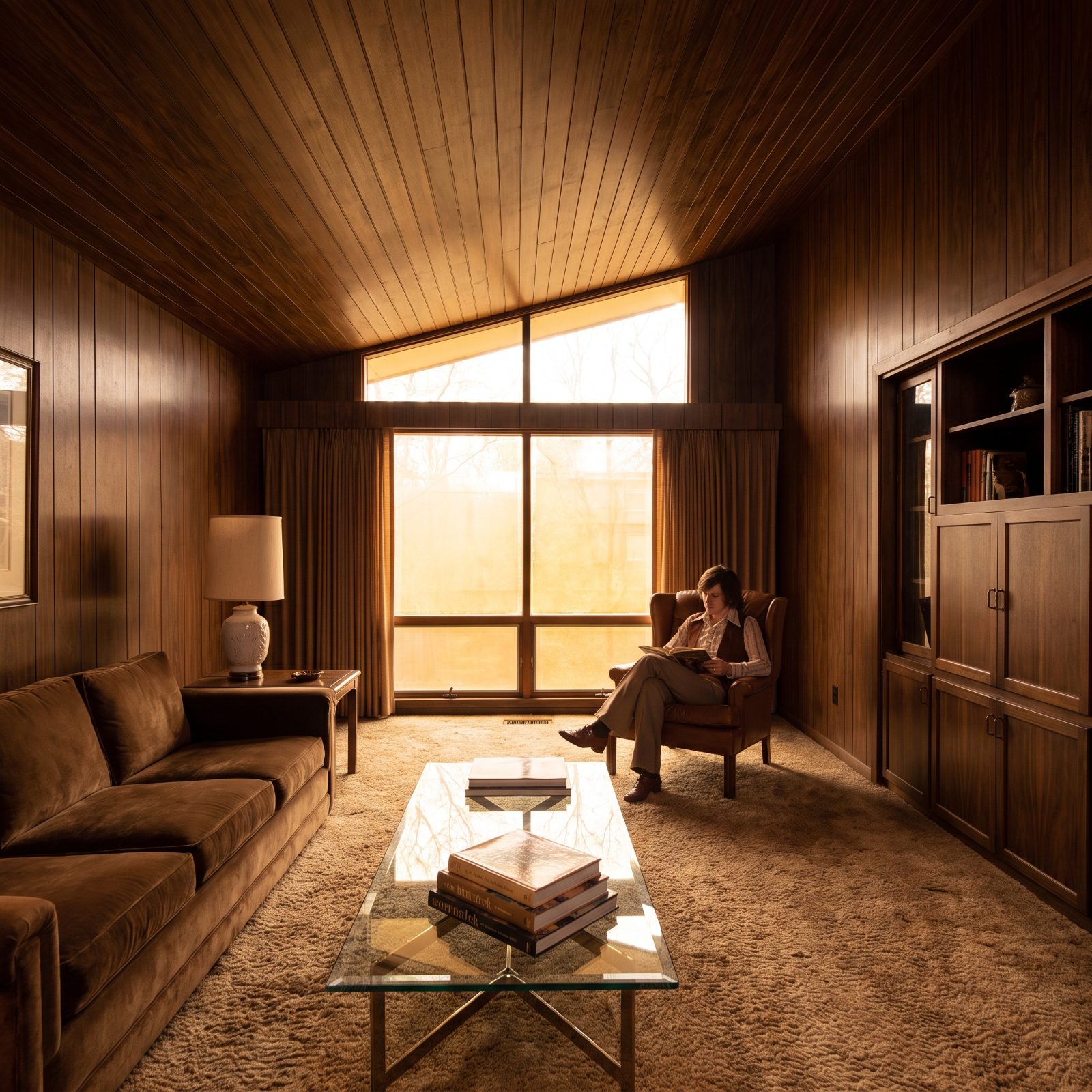
Step inside and the whole world turned brown. Faux-wood paneling climbed every wall, wrapped around the cabinets, and framed the windows, all of it printed to look like walnut and fooling nobody. But it didn’t need to fool you. It just needed to feel warm, and it did.
That paneling is the single strongest memory most people have of these rigs. It soaked up the afternoon light and threw it back amber and cozy. It hid scratches. It hid fingerprints. It made a fourteen-foot box feel like a den, and the earth-tone plaid curtains matched, because of course they did.
You can keep your white shiplap and gray vinyl plank. There was something about that brown cave of a motorhome that felt like a hug with wheels. I’d take a weekend in one tomorrow.
11. Pleated Vinyl Privacy Doors Instead of Solid Doors
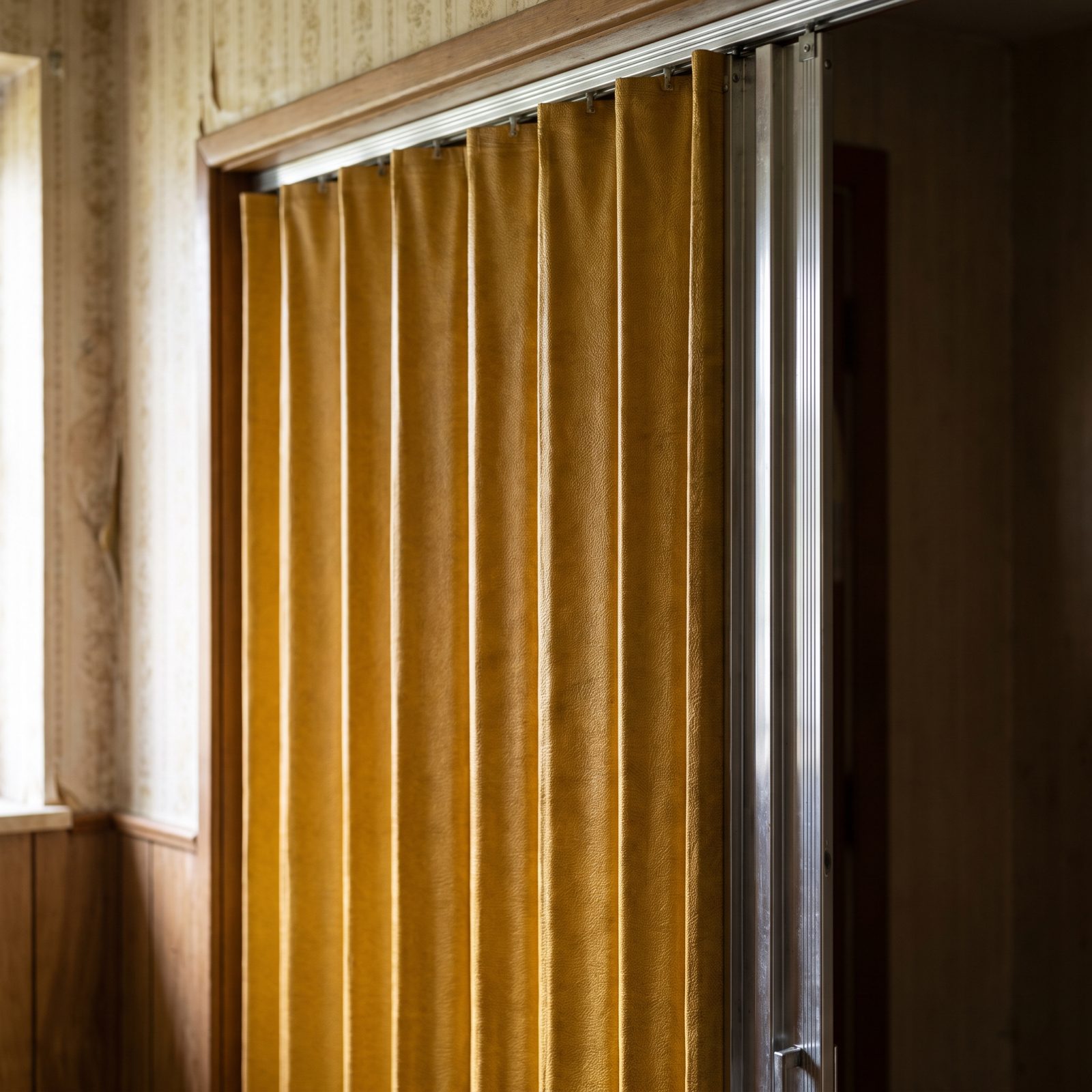
You didn’t shut the bedroom door so much as drag it. Pleated vinyl, usually harvest gold or a sad shade of cream, zipping along a track with a sound like someone slowly shuffling cards.
It gave you the idea of privacy without any of the reality — you could hear everything. The latch was a little magnet that gave up at the first bump in the road, so the door drifted open on its own somewhere around mile 40.
Solid doors cost space and weight, two things a motorhome never had to spare, so the vinyl accordion won. I’ll say this for it: nothing folded flatter, and nothing was easier to wipe down after a kid got jam on it.
10. A Bathroom Sink Molded Into the Shower Compartment
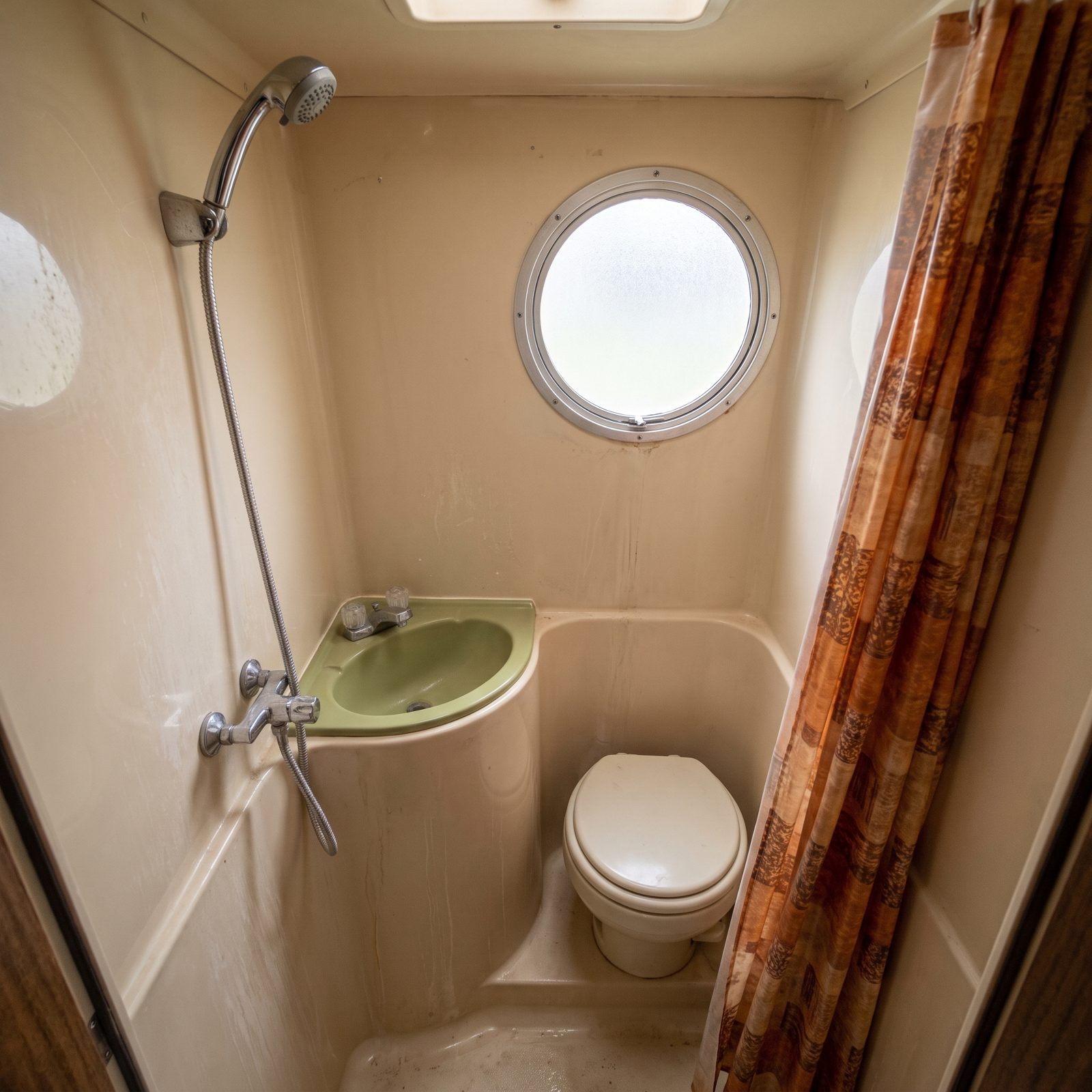
The wet bath made one tiny box do three jobs. Sink, shower, and toilet, all crammed into a molded fiberglass pod the color of an avocado — and when you ran the shower, everything got wet. The toilet paper. The sink. Your spare towel if you forgot to move it.
The sink was often molded right into the shower wall, a shallow oval you could barely fit two hands in. You brushed your teeth and showered in the same square foot.
It worked, mostly, if you accepted that drying off meant mopping the whole room first. We’ve softened on this since. Everyone wanted their own space eventually.
9. Tank Levels Guessed From Unreliable Indicator Lights
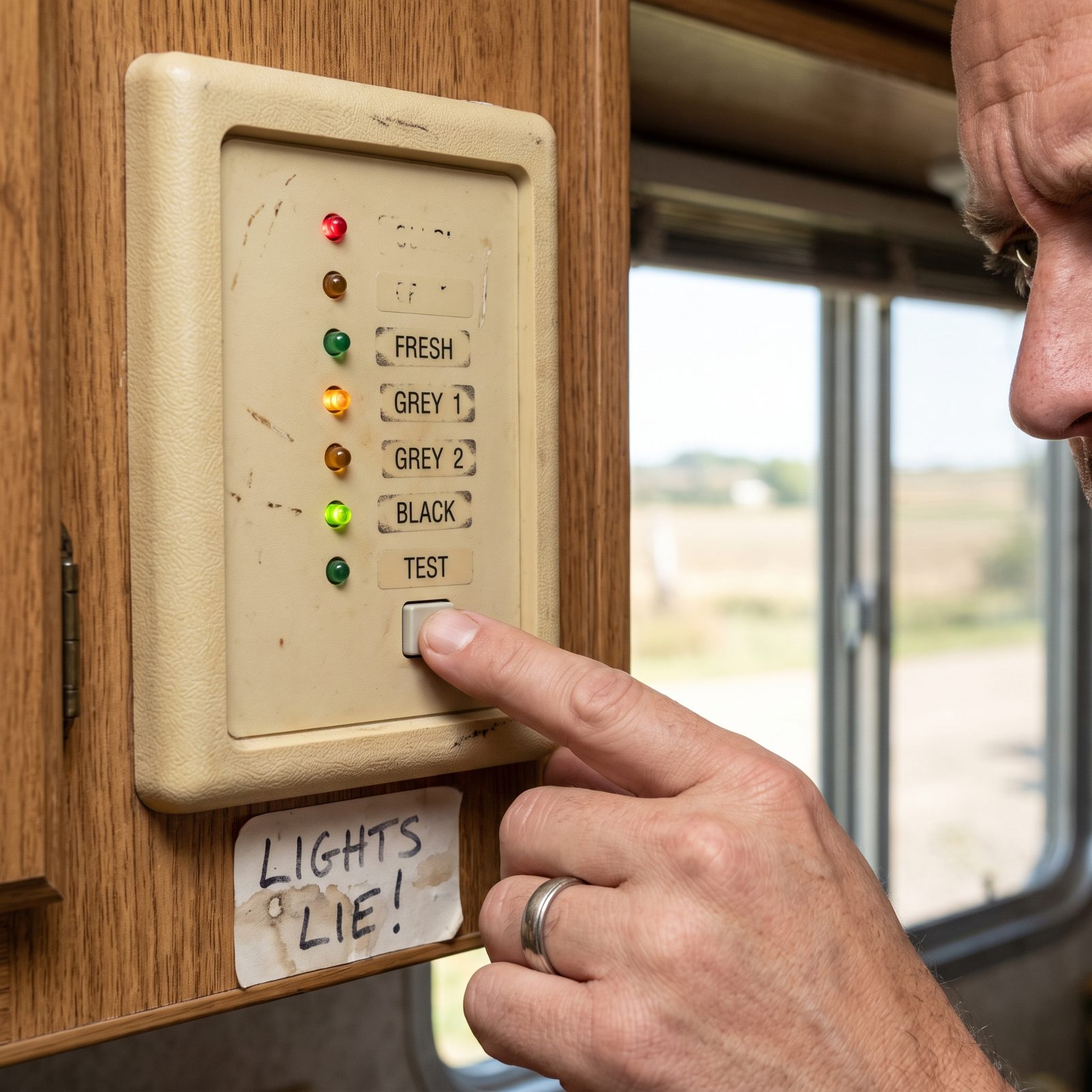
Those little lights lied to your face.
You pressed the button, the panel blinked, and a light somewhere between a third and two-thirds would come on. That was your entire relationship with the holding tanks. A probe inside the tank crusted over with the first week of real use, and after that the readings were pure fiction.
So you learned to go by feel — by the sound the fresh pump made when it started gulping air, by how the step felt underfoot when the gray tank was getting full. You stopped trusting the panel and started trusting your gut, which was somehow more reliable.
8. A Sewer Hose Stored in the Rear Bumper
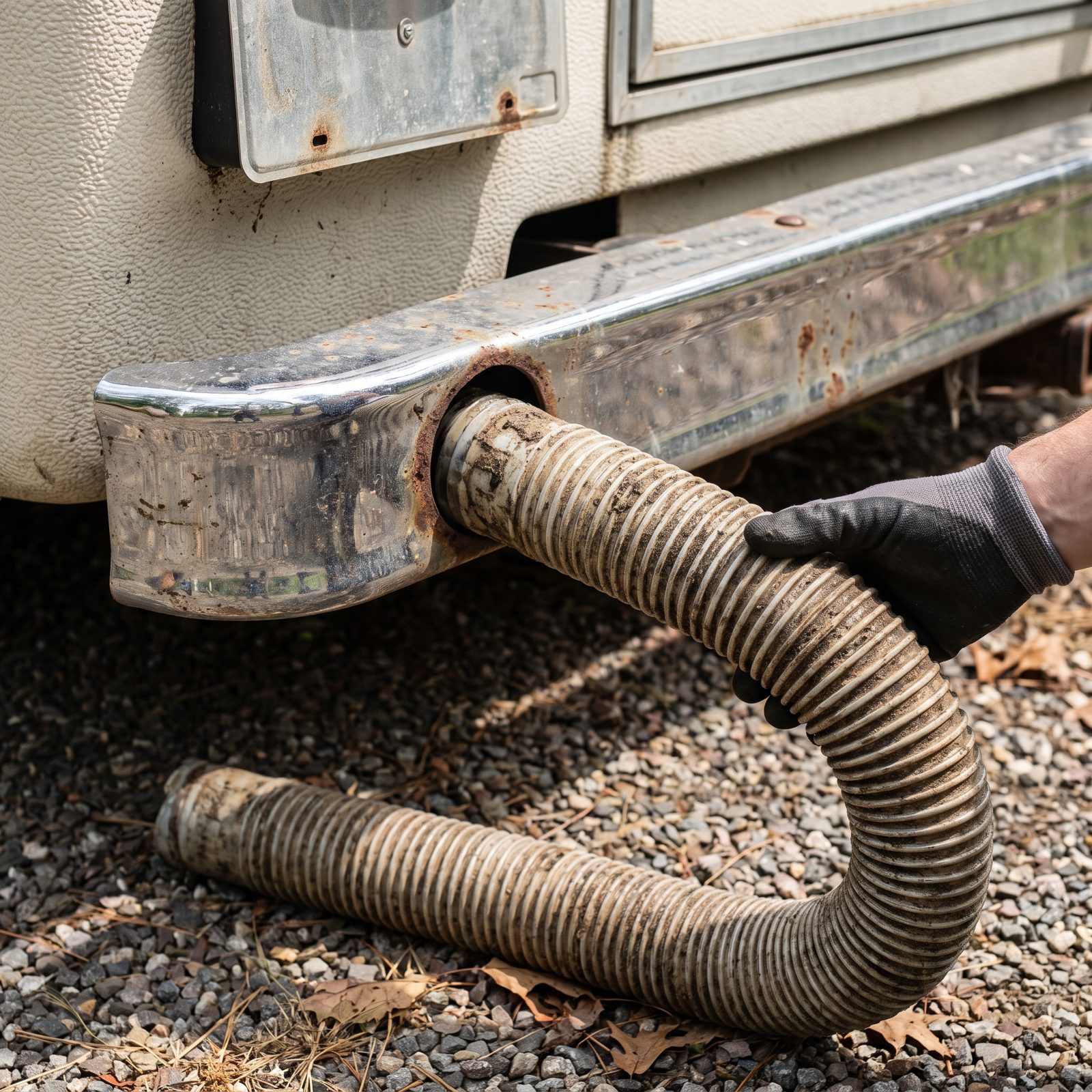
Somebody at the factory figured the hollow steel bumper was free real estate, so that’s where the sewer hose lived. You popped off a plastic end cap and slid the whole coiled mess in like a gross little scroll.
The problem showed up fast. Water got in. The hose never fully dried. And the cap had a habit of vibrating loose on the highway, so you’d lose it at 55 and discover your hose was now a roadside souvenir somewhere back near the last exit.
Clever, cheap, and faintly horrifying once you thought about it too long. I still see rigs doing this today, and I still wince.
7. Manual Leveling With Wood Blocks and a Bubble Gauge
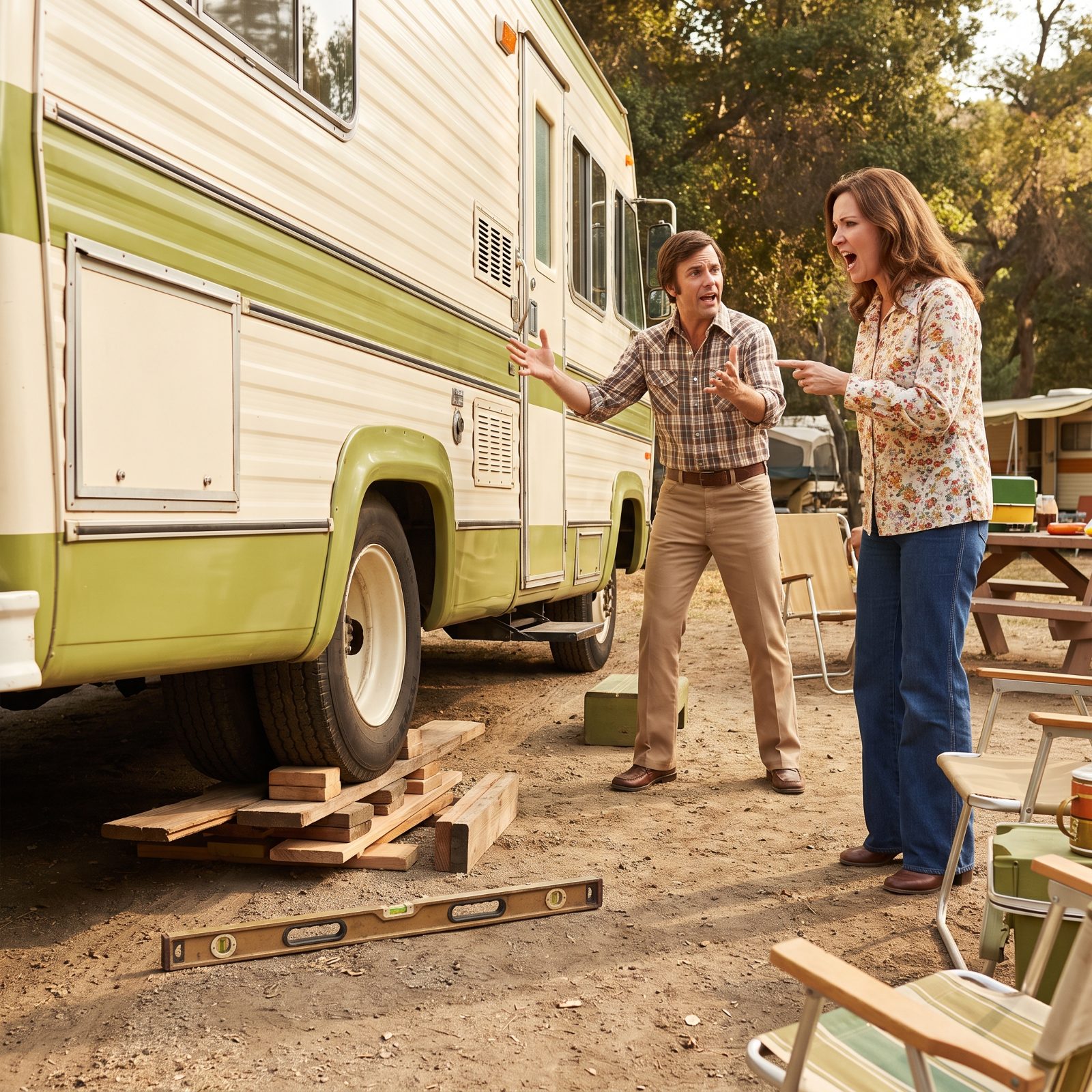
Leveling was a two-person shouting match conducted across a campsite.
One person stood inside watching the little round bubble glued to the counter. The other crouched by the tire, ready to drop wood blocks. You’d ease the rig forward, someone would yell “stop,” the bubble would still be off, and you’d do it all again.
The wood blocks were a motley crew — cut-offs from a deck project, a chunk of two-by-six, sometimes a flat rock in a pinch. You carried them in a milk crate and they got chewed up every season.
Why bother? Because the propane fridge wouldn’t cool right if the rig sat crooked, and nobody slept well with their head below their feet. Getting it level felt like a small victory every single night.
6. Metal Roof Racks Loaded With Lawn Chairs and Luggage
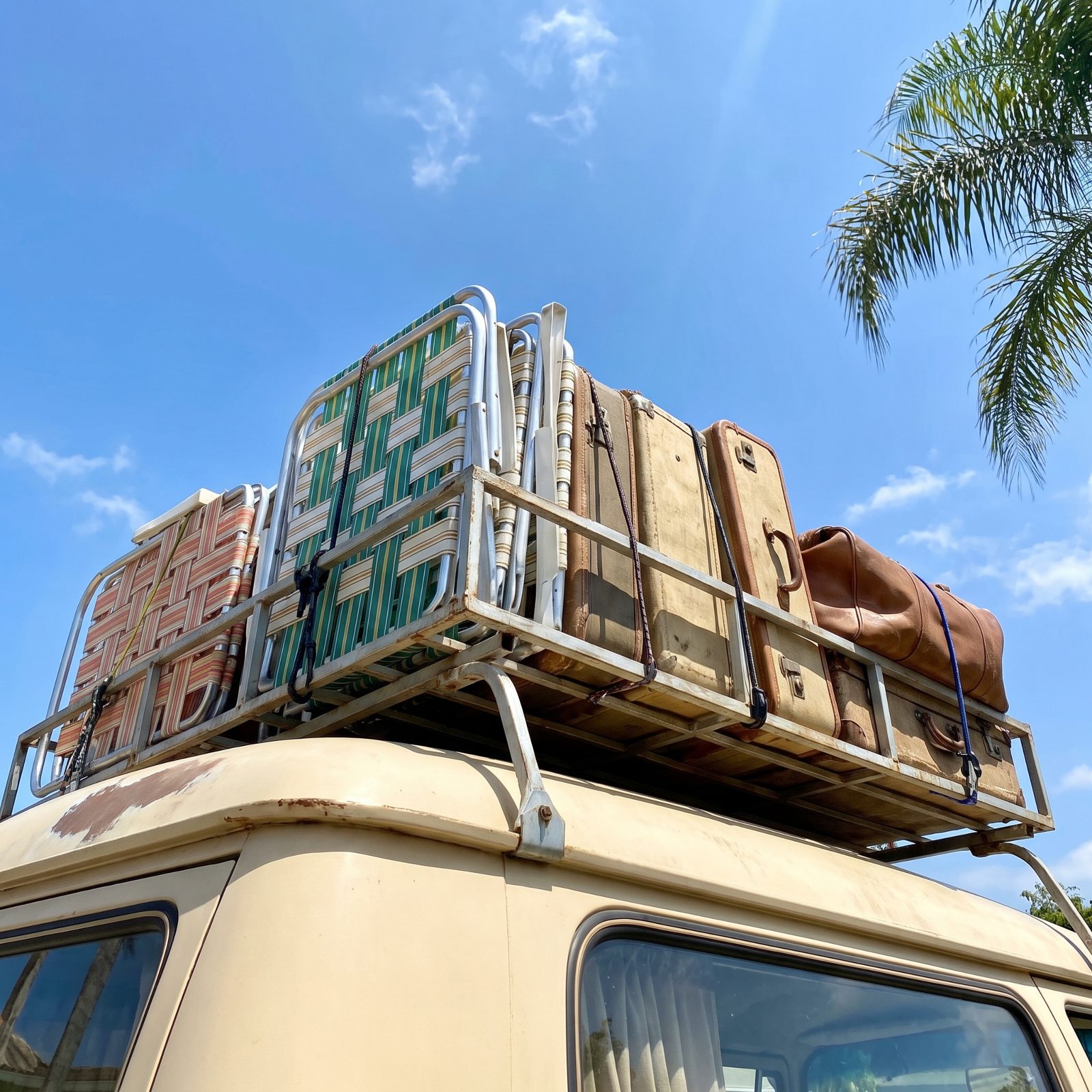
The roof rack was overflow parking for everything that didn’t fit anywhere else. Aluminum-frame lawn chairs with woven nylon webbing in orange and yellow, a hard-shell Samsonite, a rolled canvas tent — the whole mess lashed down with bungees and a length of clothesline because you ran out of bungees.
You climbed the ladder bolted to the back, loaded the top, and spent the first fifty miles listening for the one thing you forgot to secure. There was always one thing.
5. Louvered Windows That Stayed Open During Light Rain
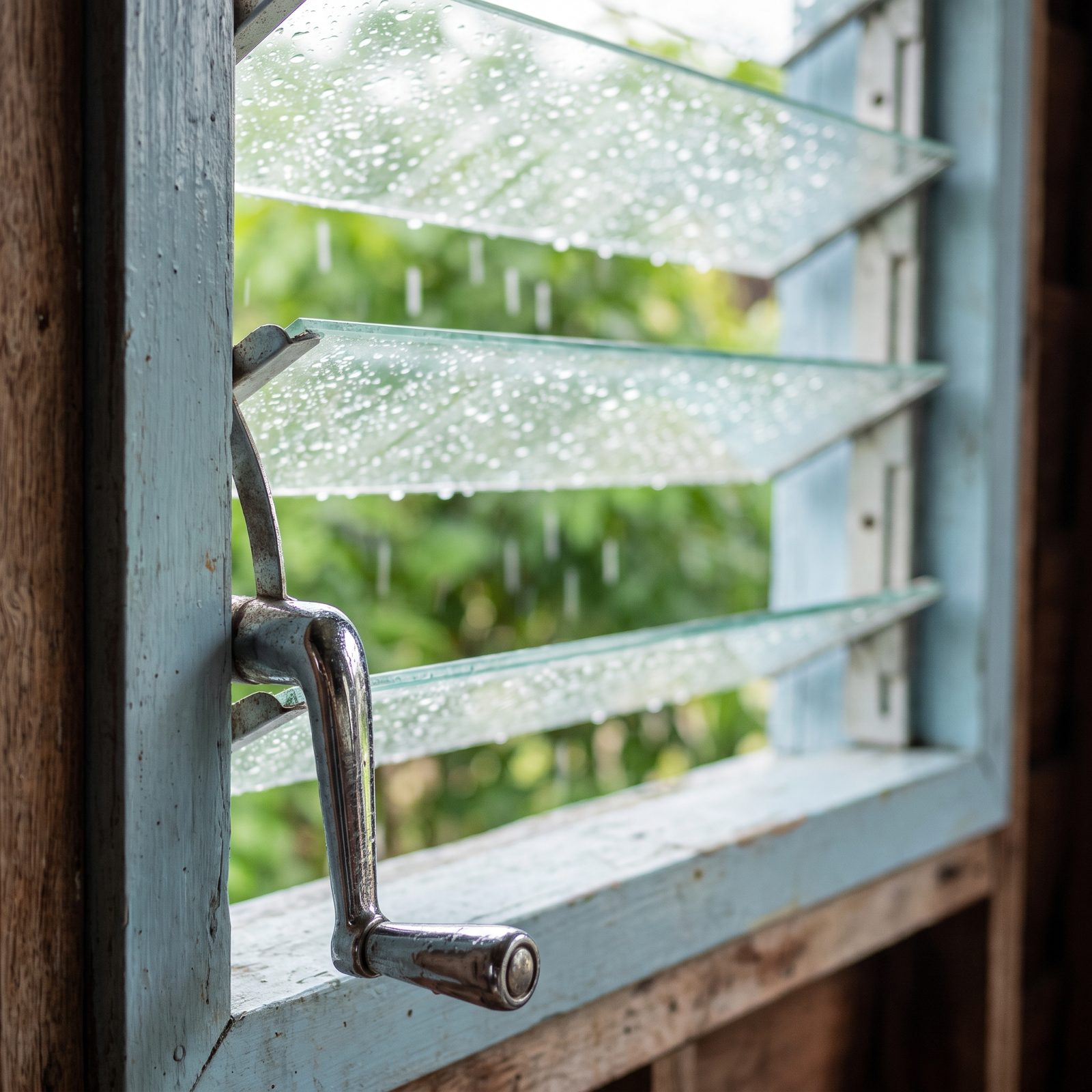
Jalousie windows. Rows of glass slats you cranked open with a little chrome handle, and the beauty of them was that the angled slats shed a light rain while still letting air through. You could sleep with them open through a drizzle and stay dry.
A real downpour, though, found its way in. You’d wake up to a wet windowsill and crank them shut fast, feeling the breeze stop and the air inside go thick and warm.
They sealed terribly against cold and leaked when they got old. But on a soft summer night with the crickets going, cranked halfway open, there wasn’t a better window ever put in a camper.
4. Cruising at 55 MPH and Calling It a Good Day
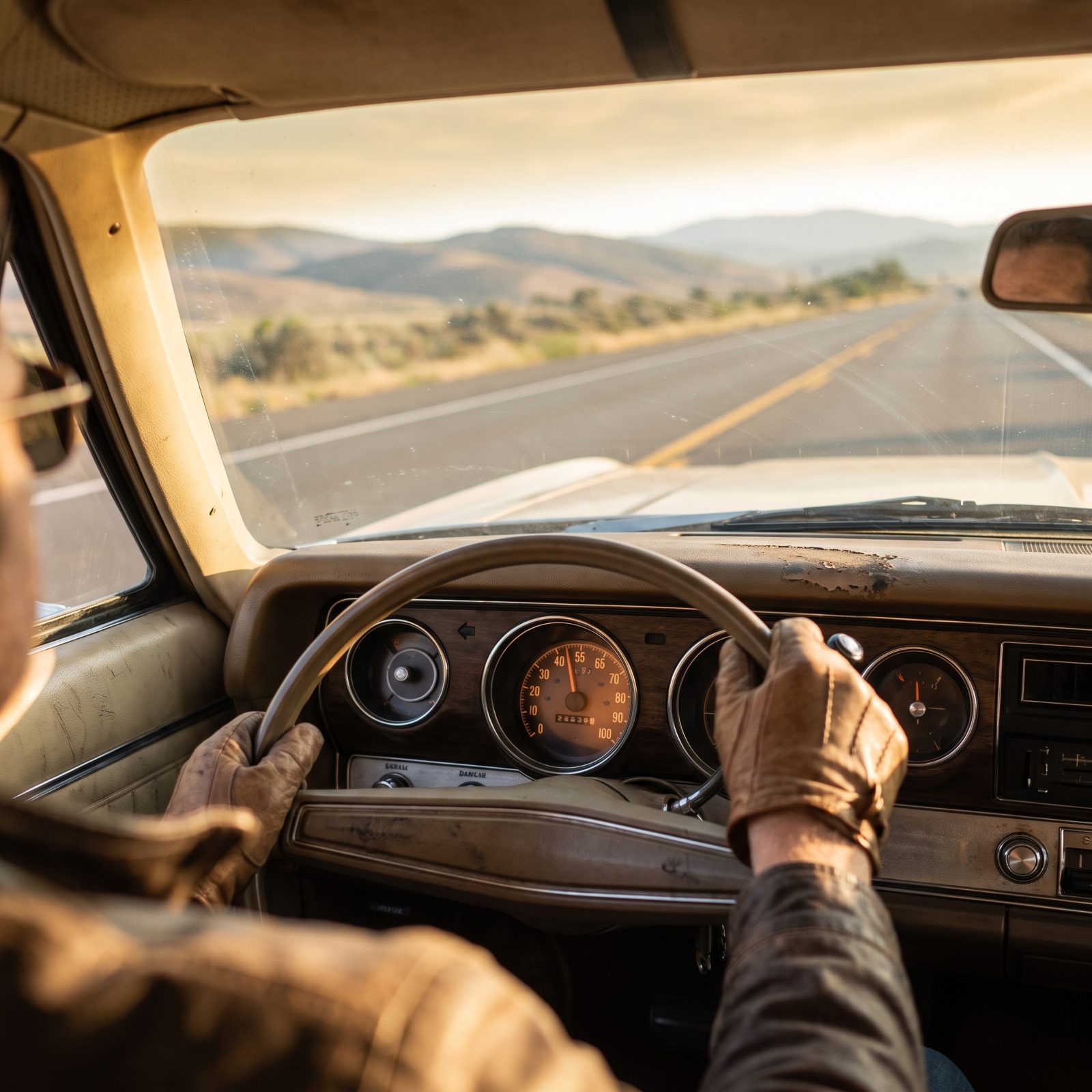
Nobody was in a hurry, because the rig wouldn’t let them be.
A big block V8 hauling that much weight settled into about 55 and stayed there. Push it harder and the gas gauge dropped like a stone while the engine started making noises you didn’t want to hear. So you backed off, set an elbow on the armrest, and let the road come to you.
The 55 limit arrived in ’74 with the oil crunch, and for a motorhome it barely registered as a sacrifice. These things were never going fast anyway.
3. Vapor Lock on a Hot Mountain Grade
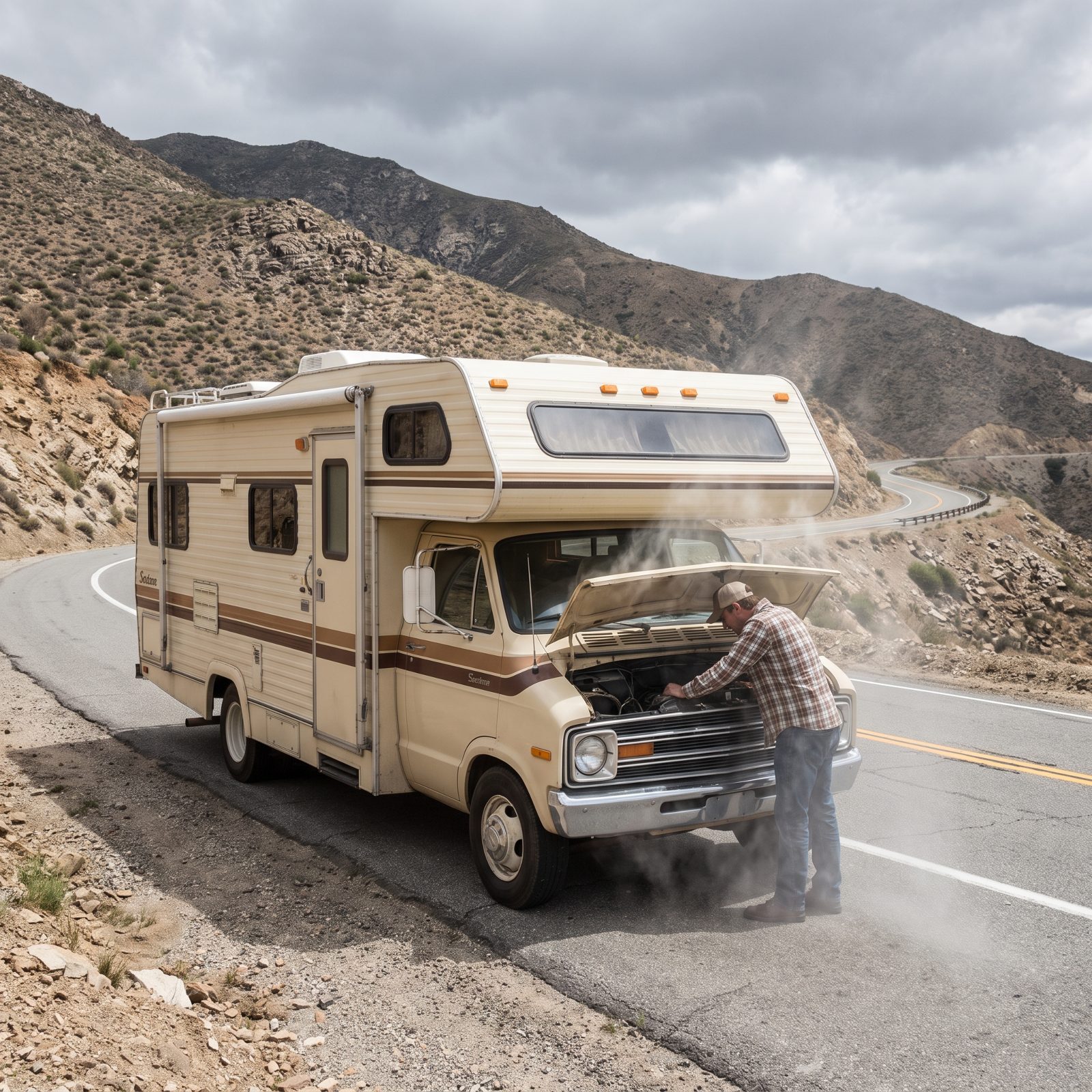
You’d be two-thirds up some pass, engine straining, when the thing just quit pulling. Sputter, cough, dead. Vapor lock. The gas got so hot in the fuel line it boiled into vapor, and the mechanical fuel pump couldn’t pull vapor.
So you pulled over, popped the hood, and waited. Sometimes you draped a wet rag over the fuel line, and sometimes you just sat in the shade and let it cool while the whole family stretched their legs on the shoulder and pretended this was part of the plan.
Fuel injection eventually killed vapor lock for good. But on a hot grade in July, in a carbureted rig, it was a tax you paid for the view.
2. Campground Reservations Made by Telephone or Postcard
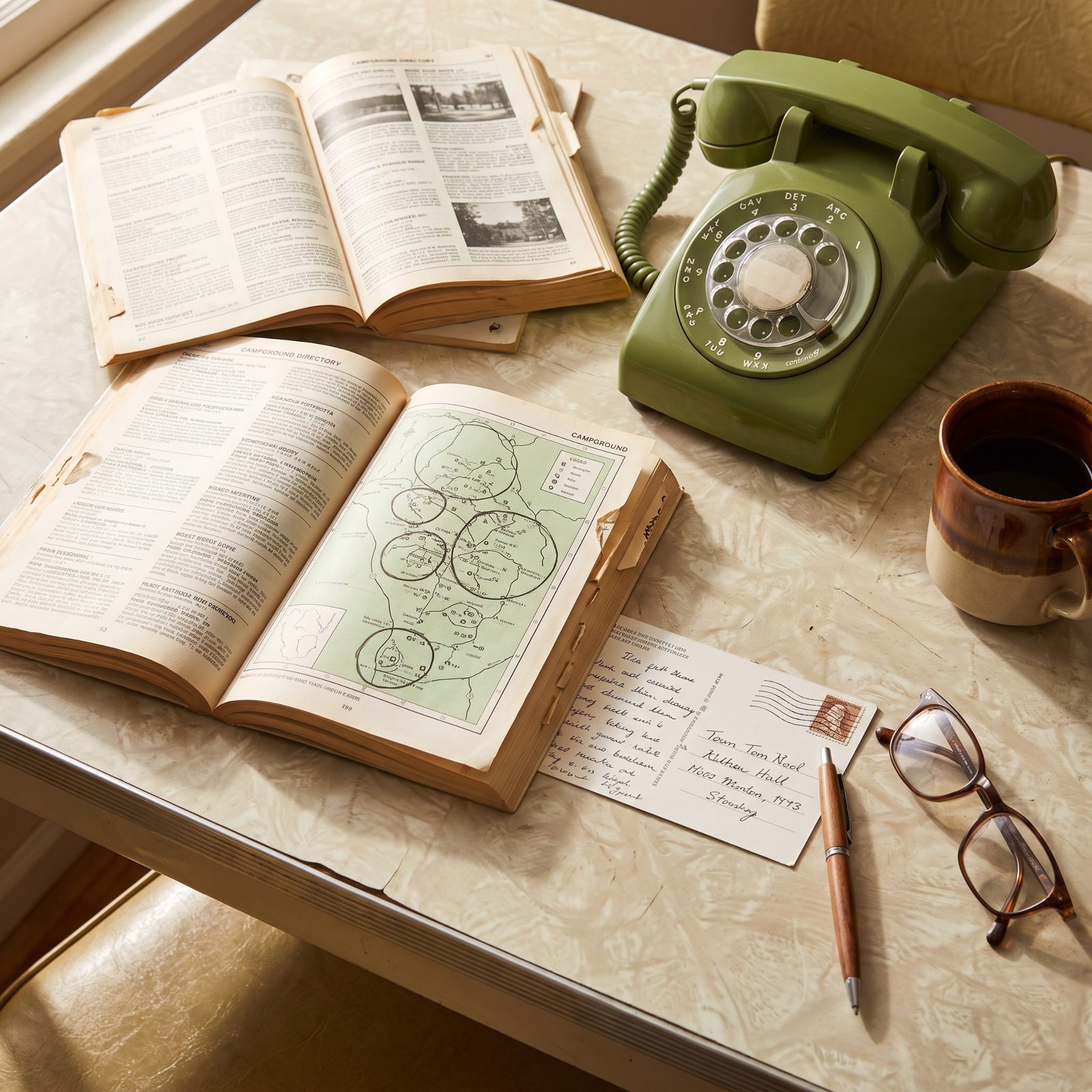
Planning a trip meant the kitchen table and a stack of directory booklets. You flipped through the KOA guide, found a spot that looked right, and either dialed the number on the rotary phone and hoped someone answered, or you mailed a postcard requesting a site and waited a couple of weeks to hear back.
Half the time you just showed up. Rolled in around four, asked the host if there was anything open, and took whatever gravel pad they pointed you to. There was a looseness to it that’s gone now.
No app telling you a site was booked months out. No frantic refreshing at midnight to grab a reservation. You wrote a postcard, you trusted it would work out, and most of the time it did.
1. Kids Asleep in the Cab-Over While the Whole Rig Rolled Down the Interstate
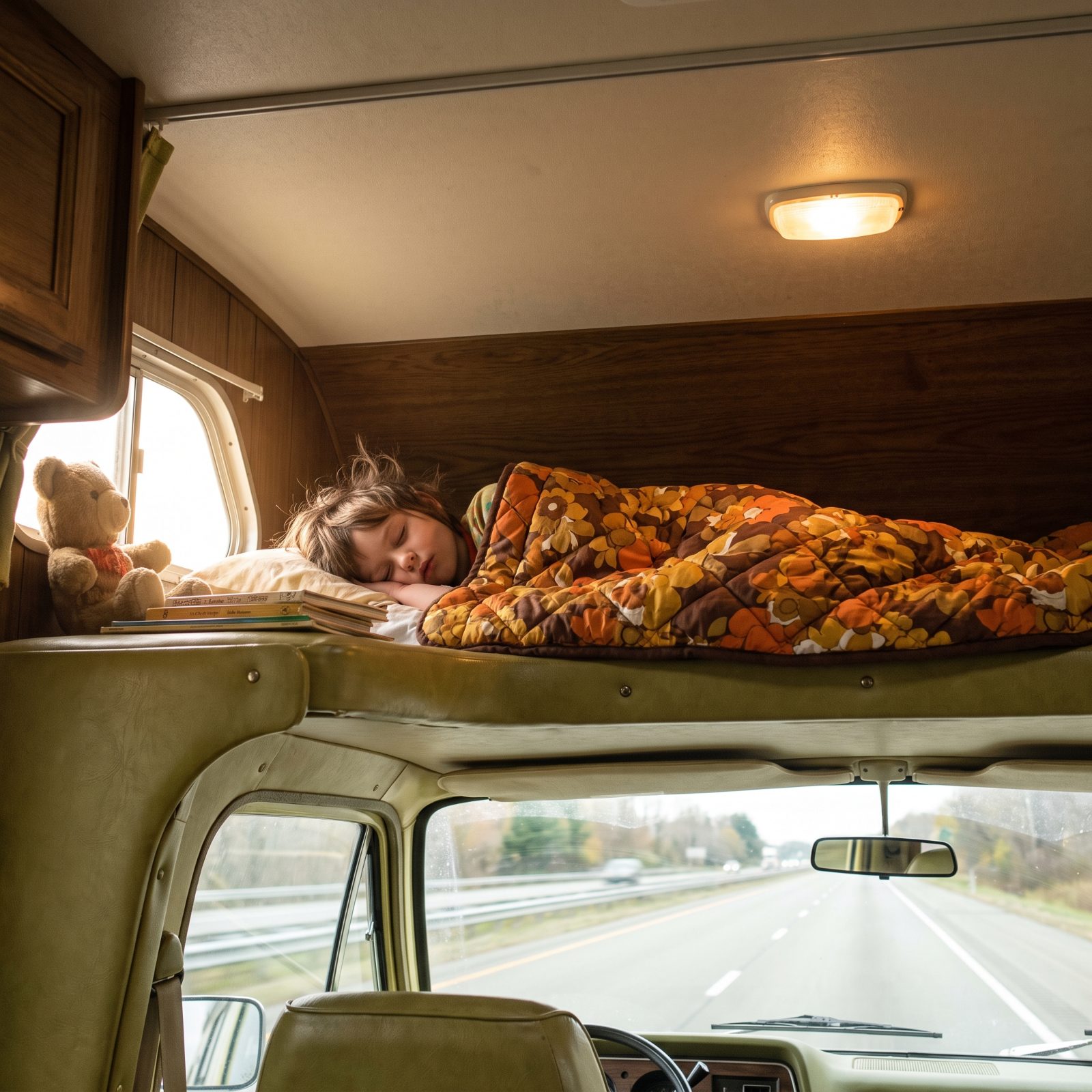
Up there, above the cab, was the best seat in the house if you were eight years old. The cab-over bunk — a little padded cave with its own window, its own weather, and the engine humming straight up through the floor to rock you to sleep somewhere outside Barstow.
Nobody was buckled in. You climbed the carpeted step, wriggled into the sleeping bag, and watched telephone poles tick past until they stopped meaning anything. Dad glanced up in the mirror now and then. That was the whole safety system, such as it was.
What stays with you is the sound. Road noise rumbling underneath, wind combing over the roof, a transistor radio drifting between stations, and your folks talking low up front, convinced you were already gone. You usually were.