
Ask anyone who’s worked a registration window during a Friday rush and you’ll hear the same thing. The headaches almost never come from the big dramatic campers. They come from small, forgivable habits nobody realizes are a problem. Good news: every one of these has a fix that takes thirty seconds and costs you nothing. Do them and you become the site the staff hopes books again. Here are the habits worth dropping, and the easy swaps that earn you a wave at the gate.
Please note that some of the images in this article were created with the assistance of AI.
44. Rolling In Hours Before Check-In and Expecting a Spot
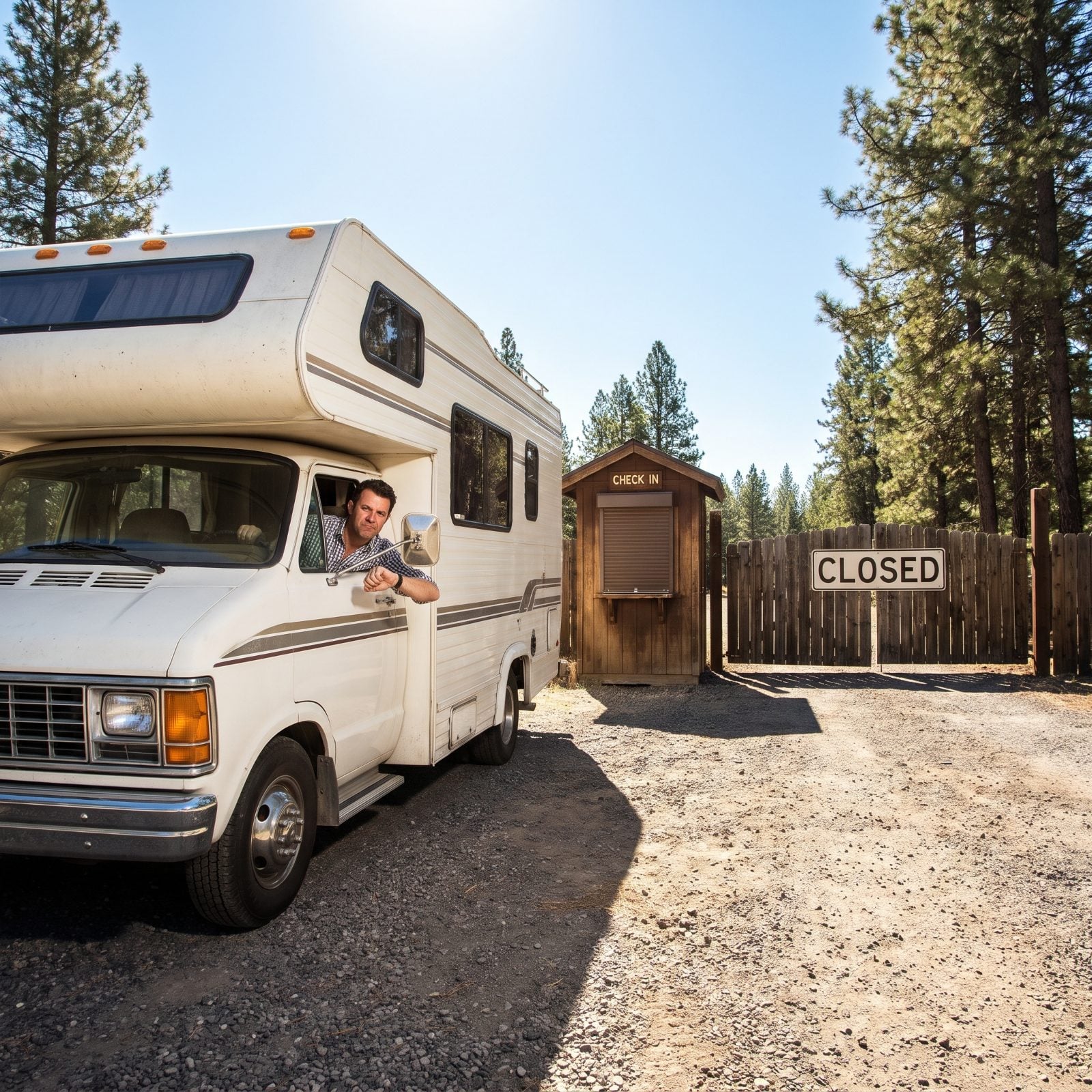
You left early to beat traffic and made great time. Now it’s eleven in the morning, you’re parked at the gate, and you want your site. What nobody tells you is that the site still has somebody in it. Housekeeping hasn’t scrubbed the fire ring, the sewer connection hasn’t been checked, and the previous camper has until checkout to pack up without being rushed out the door.
Arrive hours early expecting entry and the staff has to either stall you or hassle a paying guest. Both are bad.
Call ahead and ask if early entry is possible. Sometimes there’s a free site you can slide into. If not, you’ll get pointed to a staging lot or a nearby overlook where you can make coffee and wait in peace.
Writing on an RV forum, a campground owner explains that “if you call us and ask if you can check in early, we will allow it if the site has been vacated by the previous occupant and the area has been properly cleaned and mowed/weedeated.”
43. Showing Up After the Office Closes With No Heads-Up
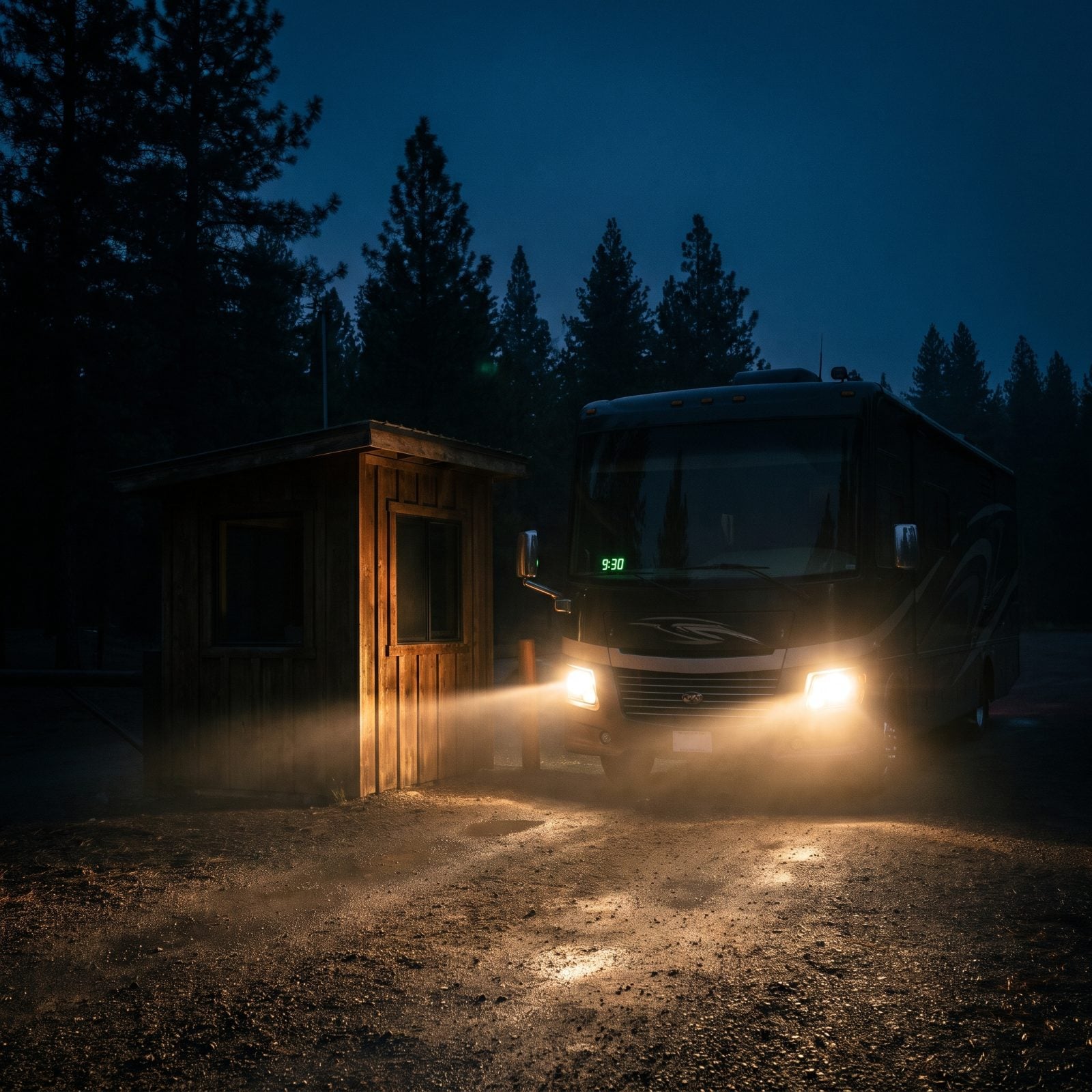
Construction on I-40, a long dinner stop, one wrong turn, and suddenly it’s nine-thirty at night and you’re coasting into a campground where every window is dark. You figure you’ll just find an open spot and sort it out in the morning.
From the staff side, you’re a mystery rig parked on the grounds with no paperwork, maybe sitting on a site someone booked for tomorrow. The morning person walks in to a puzzle they have to unravel before coffee.
One quick call during business hours fixes all of it. Most campgrounds run a late-arrival routine. They’ll leave your site number, a map, and sometimes a welcome packet in an envelope by the office door. You glide in, park on your assigned pad, and nobody loses sleep.
42. Driving Straight to a Site Without Stopping at Registration
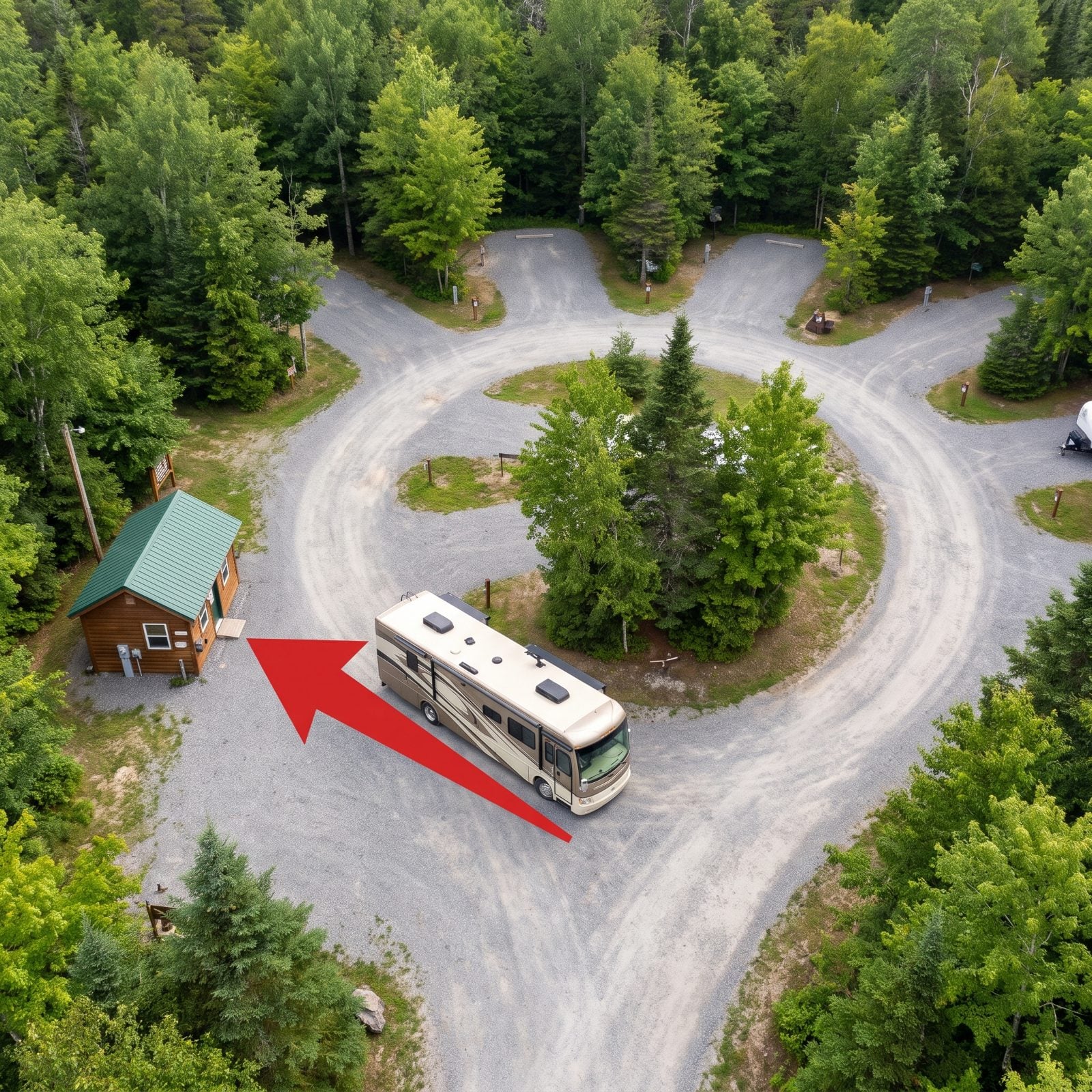
This one feels harmless and causes the most chaos. You see the loops, spot what looks like an empty pad, pull right in, and start leveling. Trouble is, that site might be double-booked in the system, held for an incoming rig, or flagged for a repair you can’t see.
Skip registration and the office doesn’t even know you’re on the grounds. Storm warning? Gate lockdown? A package waiting for you? They’ve got no way to reach you.
Stop at the office first. Check in, confirm your pad, grab the current map. Five minutes, and it saves you the deeply awkward moment of being asked to move a trailer you already chocked and unhitched.
41. Vanishing on a Reservation Without a Word
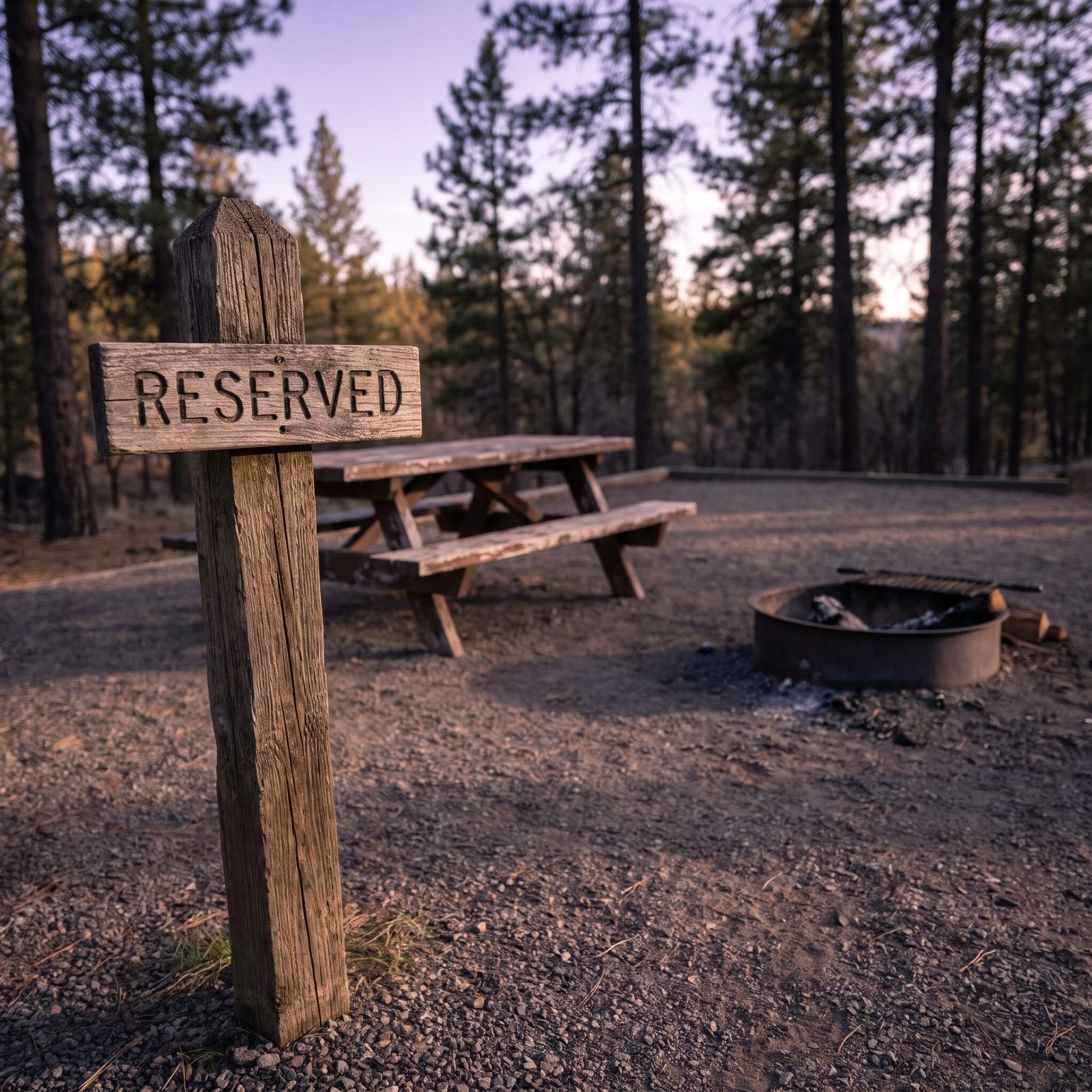
Plans fall apart. The grandkids got sick, the truck threw a code, the weather turned ugly. So you just don’t show, and you let the reservation die quietly.
Meanwhile that no-show site sits empty all weekend while a dozen other campers called hoping for exactly that spot. The campground loses the booking, the waitlist loses the site, and you often lose your deposit anyway.
The moment your plans change, cancel. A thirty-second phone call or a few taps online frees the site for someone who’d love it, and most places are far kinder about refunds when you give them notice. A little warning turns a dead loss into a save for everyone.
40. Quietly Bringing More People Than You Booked For
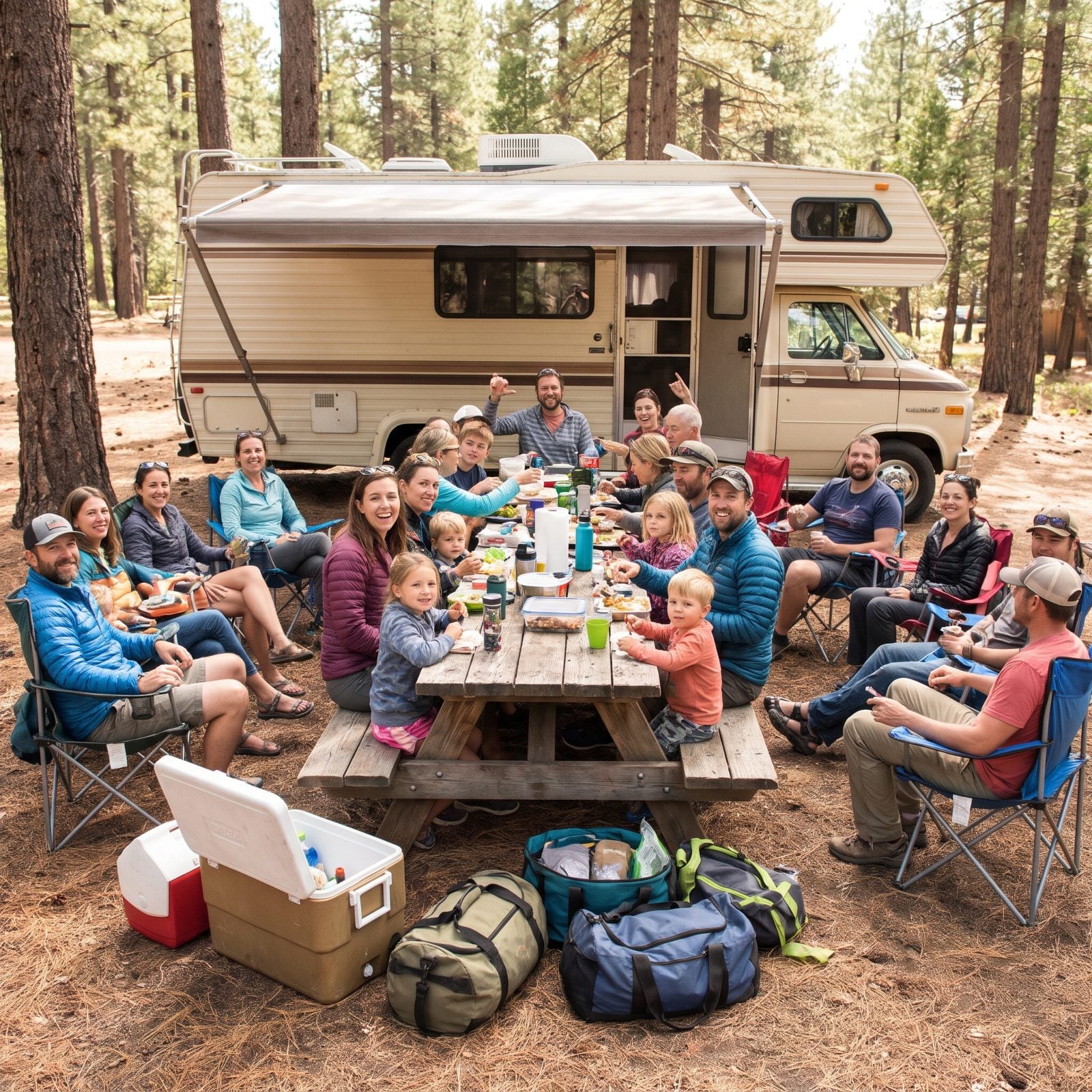
The site says max of six. Your crew is actually thirty-odd, because the neighbors, the cousins, and their kids all decided to join last minute. What’s a few more camp chairs around the picnic table?
Occupancy limits aren’t the campground being stingy. They’re tied to septic capacity, parking, fire codes, and the simple fact that the family in the next site paid for quiet, not a block party. Extra unregistered guests throw all of that off, and the staff are the ones fielding the complaints at ten p.m.
Register everyone. If your group grew, call and ask about an extra-guest fee or a second adjacent site. Most campgrounds will happily sort it out before you arrive. Honesty here costs a few dollars and buys you a weekend with zero knocks on your door.
39. Sneaking a Second and Third Vehicle Onto One Pad
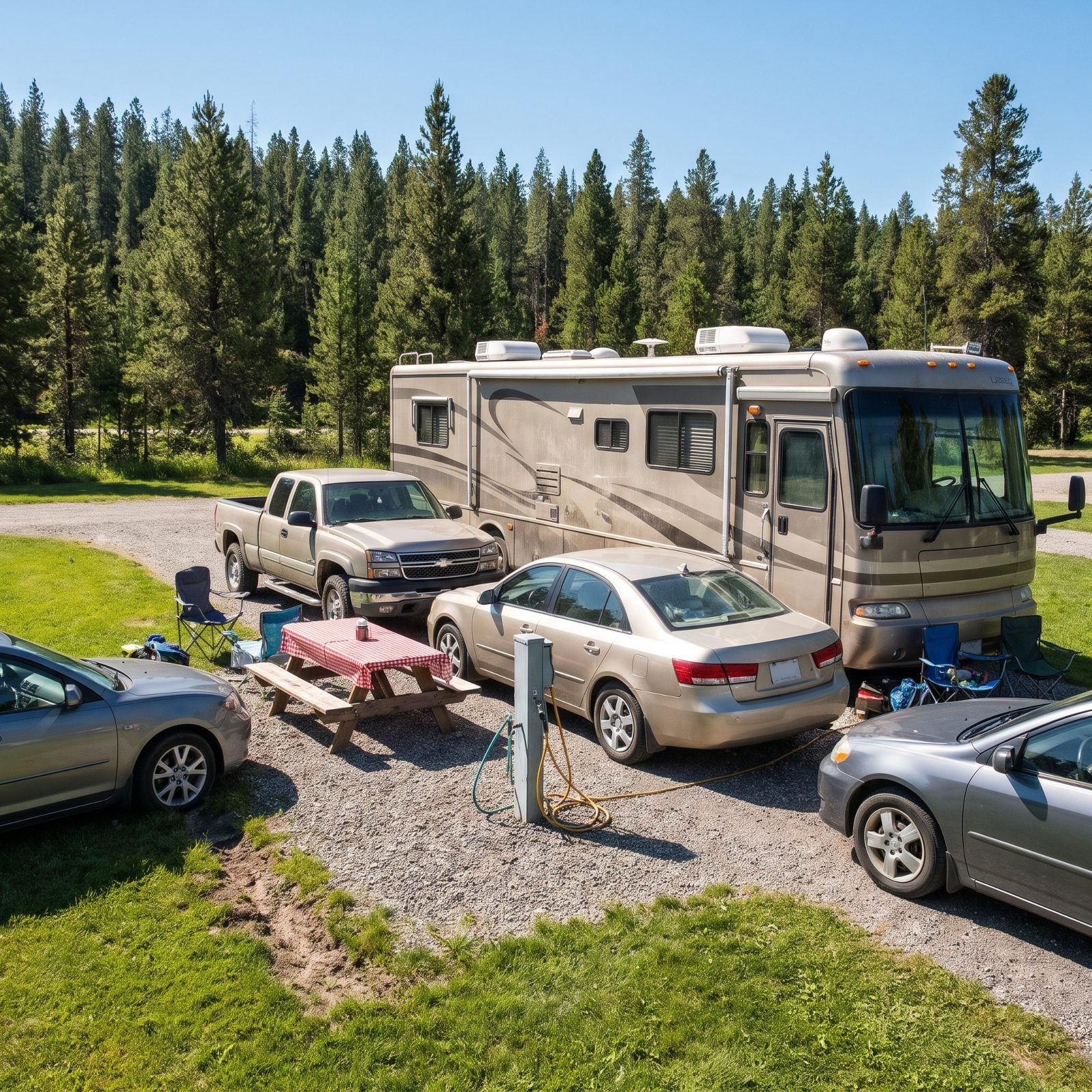
Each site fits one rig and usually one car. That’s the math. When the kids caravan in their own cars and everyone crams onto the pad, you end up blocking the fire ring, crushing the grass, and leaving a bumper hanging into the road where the next big rig has to swing wide.
And so the staff spend their evenings asking people to move cars nobody wants to move. Exactly the errand nobody signed up for.
Nearly every campground has overflow parking for this. Ask where it is when you check in, drop the extra vehicles there, and keep your site clear. Your pad stays tidy, the loop stays passable, and the host doesn’t have to play traffic cop after dark.
38. Booking a Site Type That Doesn’t Match Your Setup
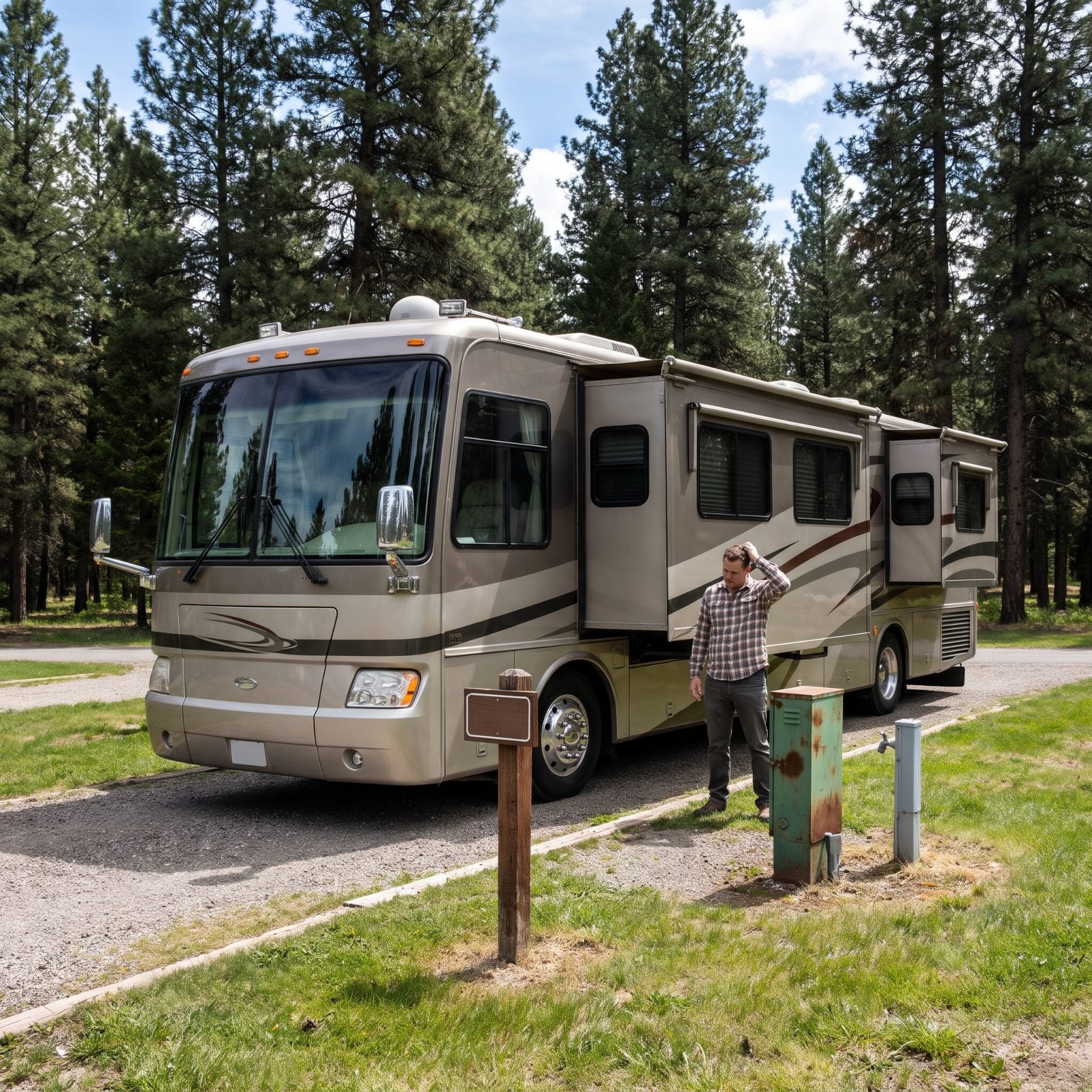
You booked whatever was cheapest and figured a site is a site. Then you arrive with a forty-footer and a fifty-amp need, and the pad you reserved has a water spigot and nothing else.
Now the office is hunting for a full-hookup site at peak season, which may not exist, and you’re stuck running a generator you’d rather not fire up.
Before you book, know your three numbers: length, amp draw, and whether you need water, electric, and sewer or can get by with partial. Call and confirm the site actually has them. Tell them you’re a big rig with slides if you are. The right pad booked ahead beats the wrong pad sorted out under pressure, every single time.
37. Swapping to a Site You Like Better Without Asking
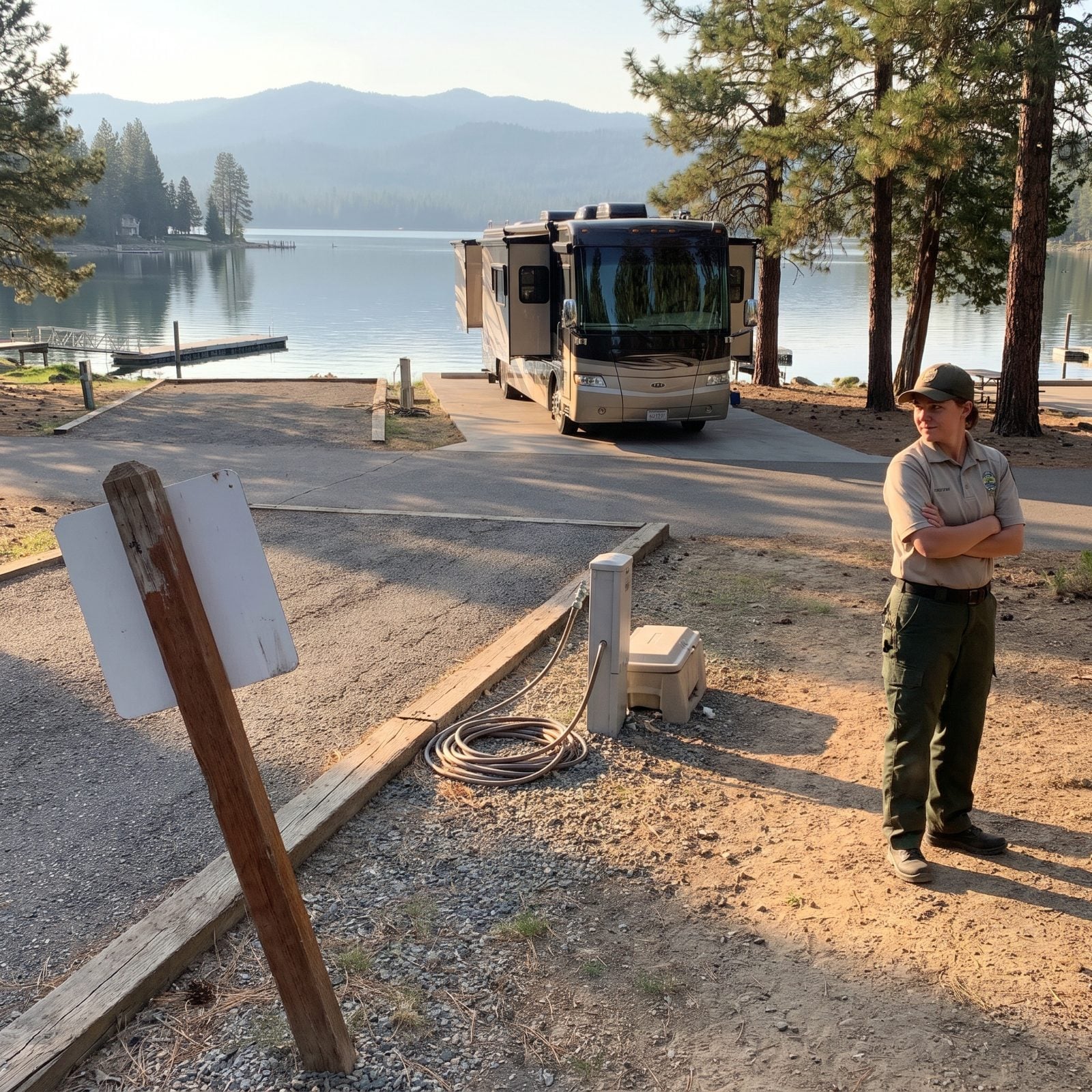
You check in, drive to your assigned pad, and spot a nicer one two loops over with a lake view and nobody on it. So you just move there. Who’s going to notice?
The office, that’s who, usually the hard way. That empty dream site is often held for an incoming guest, which means when they arrive, you get asked to relocate a fully set-up camp. Awnings in, slides retracted, the works.
See an open site you love? Pop into the office and ask. Half the time they’ll move you with a smile. The other half there’s a reason it’s empty, and you’ll be glad you asked before you leveled. One conversation beats one very public teardown.
36. Hate: Speeding Through the Loops, Love: Keeping to the Posted Limit
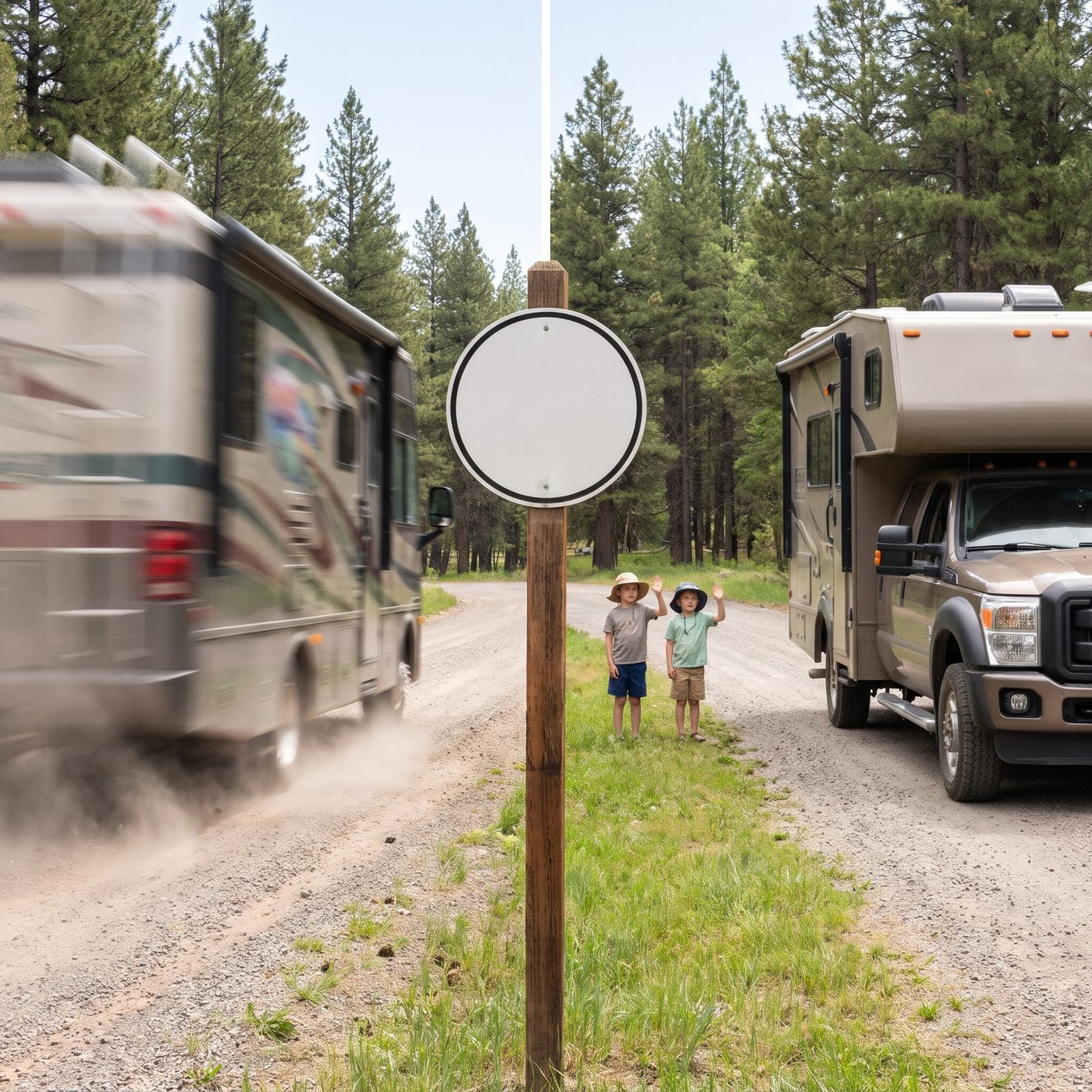
The gravel crunch of a rig doing twenty through a loop built for five is a sound every ranger knows by heart. Kids chase balls across those roads, dogs slip leashes, and someone always backs out a bike without looking.
Speeding turns a quiet loop into a near-miss, and staff spend their afternoons flagging down the same few rigs. The posted limit usually sits around walking pace for a reason.
So roll in slow. Idle through, let the transmission do the work, and treat every blind site entrance like a kid is about to step out of it. Because one eventually will.
35. Hate: Parking on Grass, Love: Keeping Every Tire on the Pad
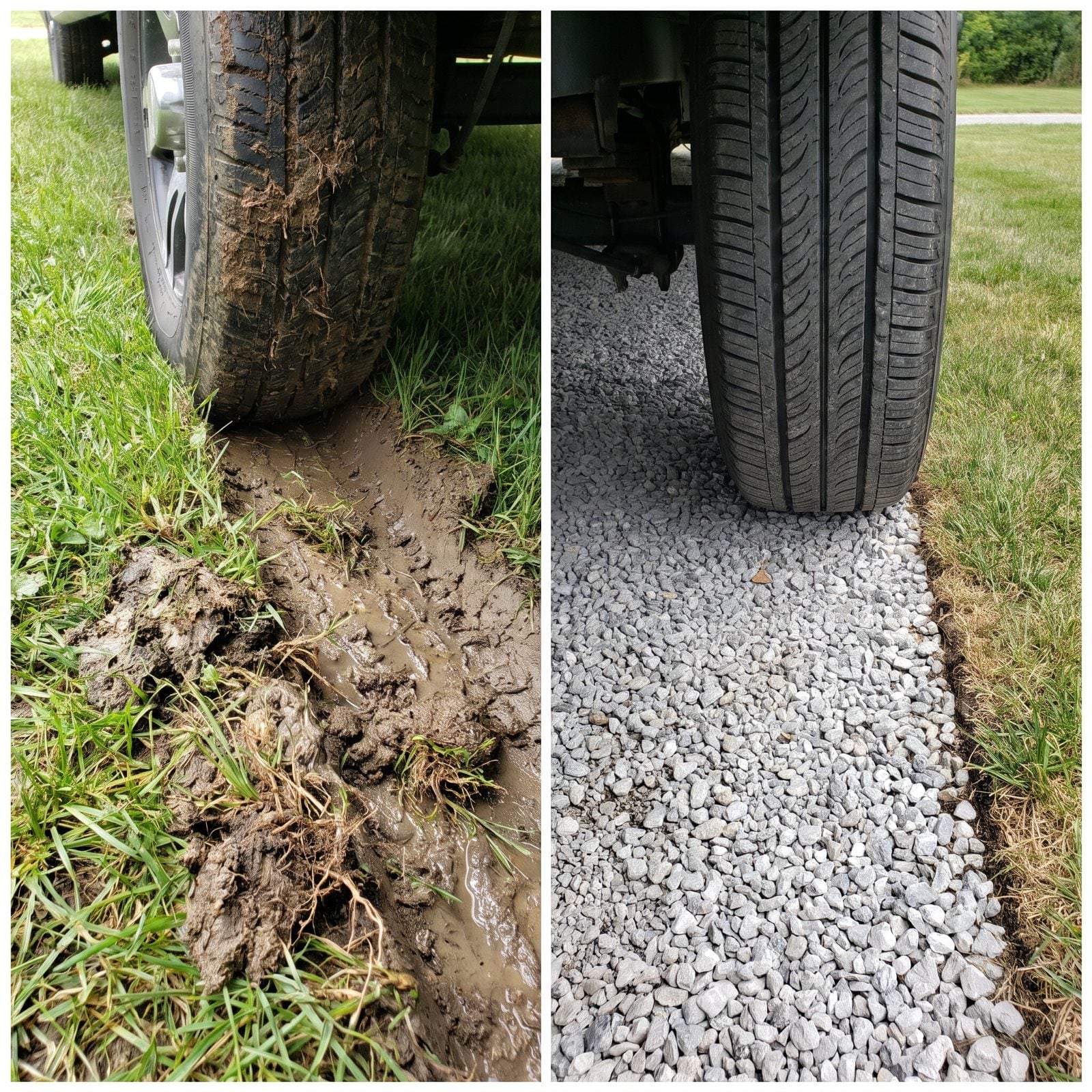
Grass looks like free real estate when you’re trying to square up a long fifth wheel. It isn’t.
Tires on turf compact the roots, kill the green in the shape of your rig, and leave ruts the mud never quite forgives. Campgrounds pour real money into keeping those sites livable, and the brown stripes left behind take a whole season to grow back.
Stay on the pad. If your rig runs longer than the gravel, call ahead and ask for a pull-through or an end site instead of letting the back axle drift onto the lawn. The pad is sized for a reason, and it’s almost always bigger than it looks once you stop fighting it.
34. Hate: Taking Over a Neighboring Site, Love: Staying Inside Site Boundaries
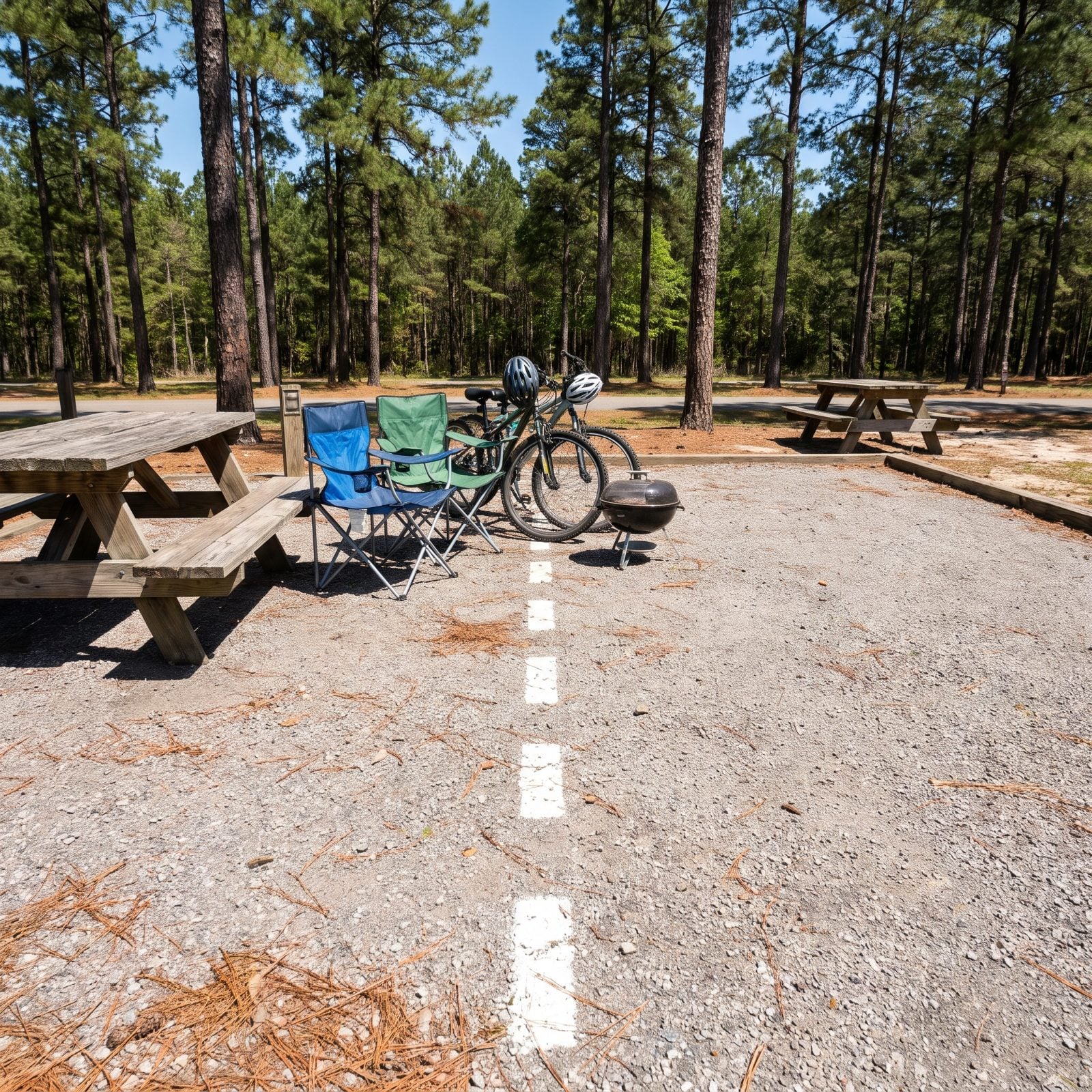
You know the setup. One site’s chairs, bikes, grill, and second canopy slowly creep across an invisible line until the empty neighbor’s spot is basically an annex, and then that neighbor rolls in at nine at night and now the staff are mediating a border dispute by flashlight. Those lines exist so every camper gets what they paid for.
Picture your footprint. The site number post, the buffer shrubs, the edge of your own pad, that’s your room. Keep the awning, the overflow table, and the kayak rack inside it. Need more space? Book a double or a premium site rather than annexing the empty one next door on the gamble that nobody’s coming.
33. Hate: Cutting Through Occupied Campsites, Love: Using Marked Paths
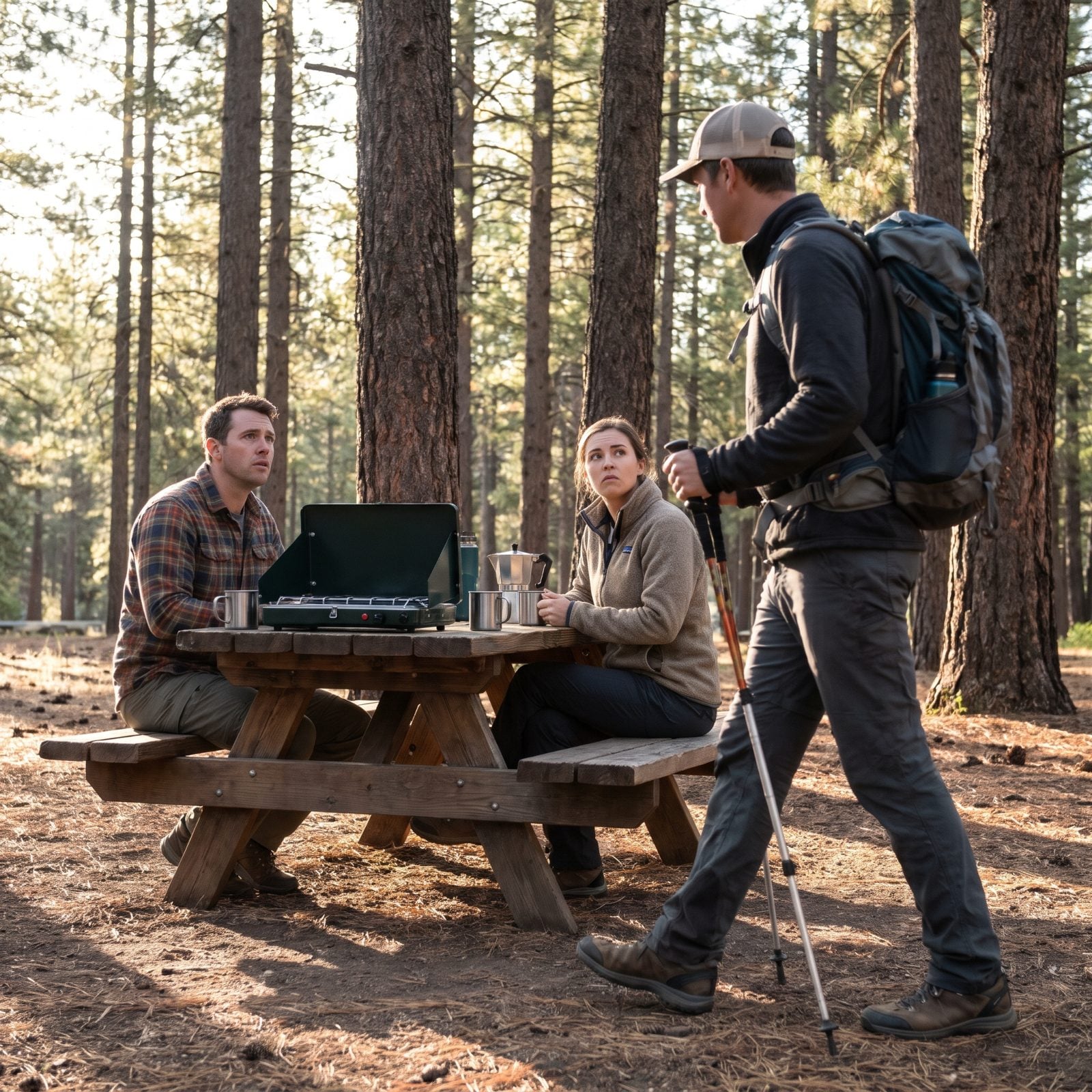
Nobody wants to look up from their coffee and find a stranger strolling through their campsite toward the bathhouse. It’s the camping equivalent of someone walking through your living room to reach the kitchen.
Shortcuts across occupied sites wear a dirt trench through the grass, spook pets, and stir up exactly the kind of Saturday-morning tension staff get pulled into.
Use the marked paths, even when they add thirty seconds. They’re placed to keep foot traffic off private sites and off the fragile ground between them. Teach the kids the route to the restroom on night one, flashlight and all, so the midnight trip doesn’t carve a new trail through someone’s dinner setup.
32. Hate: Relocating the Fire Ring, Love: Leaving Fixed Features in Place
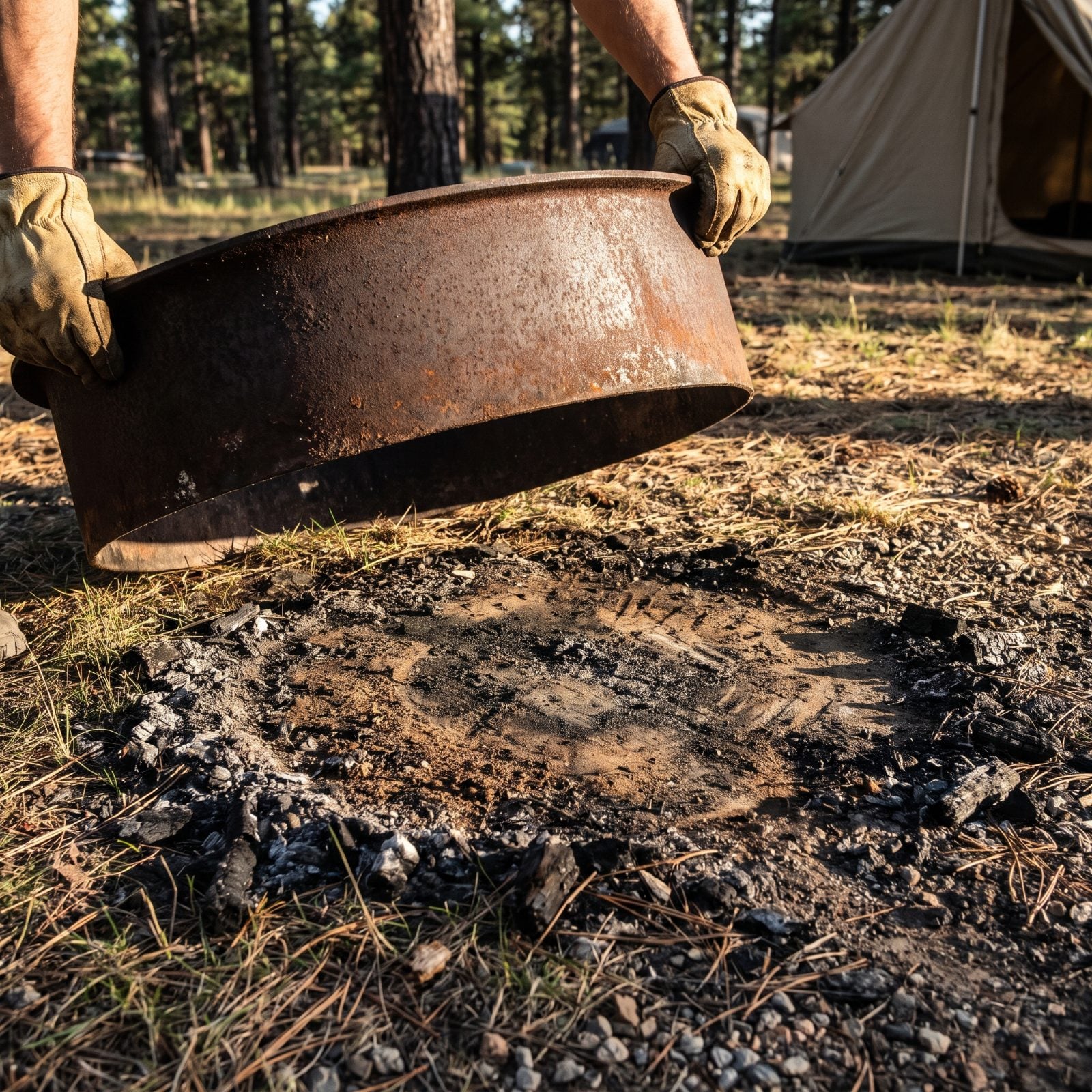
That fire ring looks movable. It isn’t meant to be.
Rangers place rings at a deliberate distance from tents, rigs, picnic tables, and the low branches overhead. Drag it ten feet closer to your chairs and you’ve put an open flame under a tree canopy, which is exactly how a campground ends up on the evening news.
Leave the ring where it sits and arrange your chairs around it instead. Same goes for bolted-down tables and tent pads. Somebody positioned these features thinking about fire spread and clearance, not your convenience. Work with the placement.
31. Hate: Borrowing Landscaping Rocks for Leveling, Love: Bringing Proper Blocks
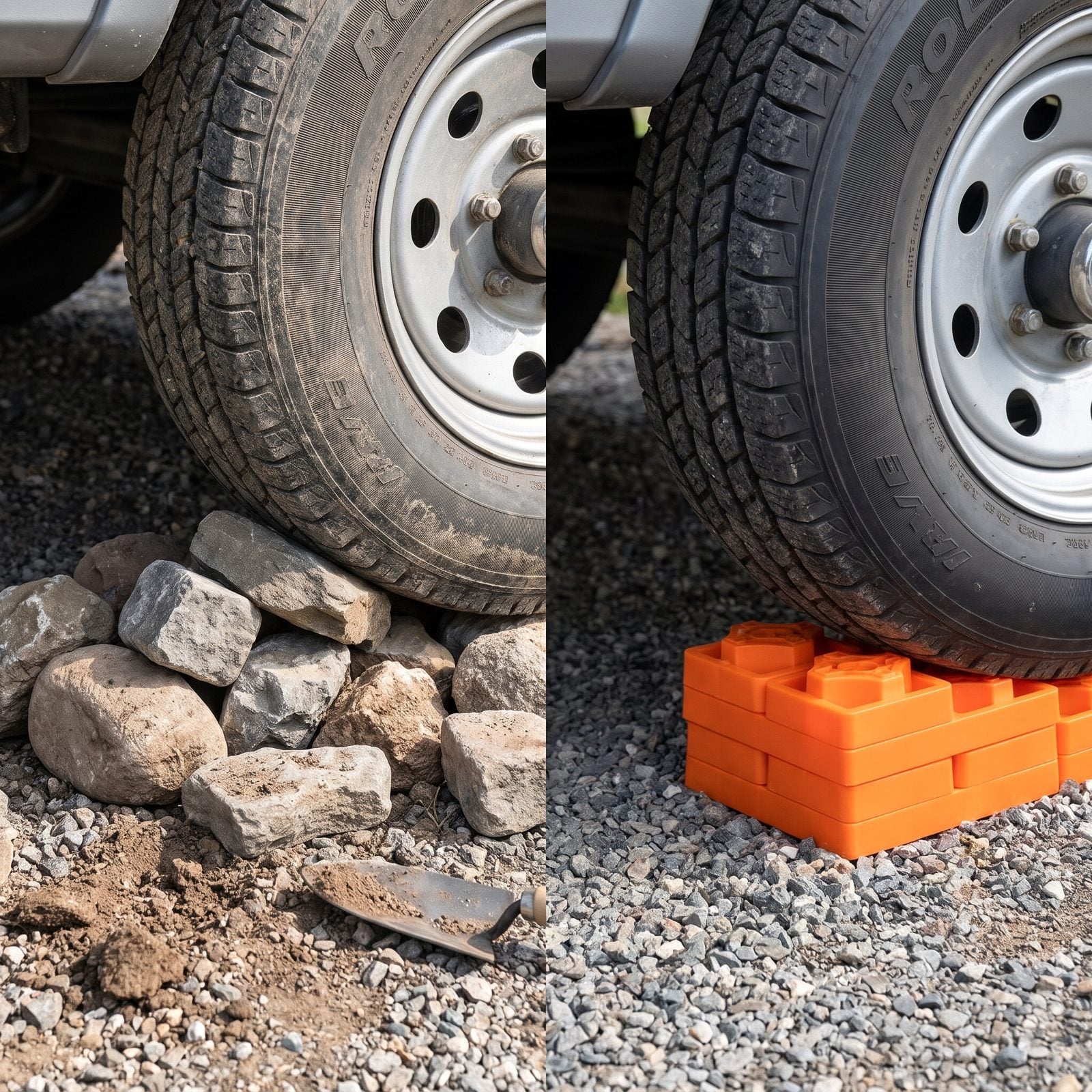
The impulse makes sense. Your rig’s leaning, there’s a tidy row of landscaping rocks right there, and they look about the right size to shim a tire.
Pull those rocks and you’ve wrecked a border the grounds crew installed on purpose, usually to control erosion or edge a path. Worse, river rocks squirt out sideways under a loaded tire and your rig shifts at two in the morning.
Carry real leveling blocks. A stack of interlocking orange leveling blocks lives in a milk crate in the bay and costs less than a tank of gas. Add a wheel chock and a bubble level and you’ll never eye up the landscaping again.
30. Hate: Driving Stakes Without Checking, Love: Avoiding Buried Utility Lines
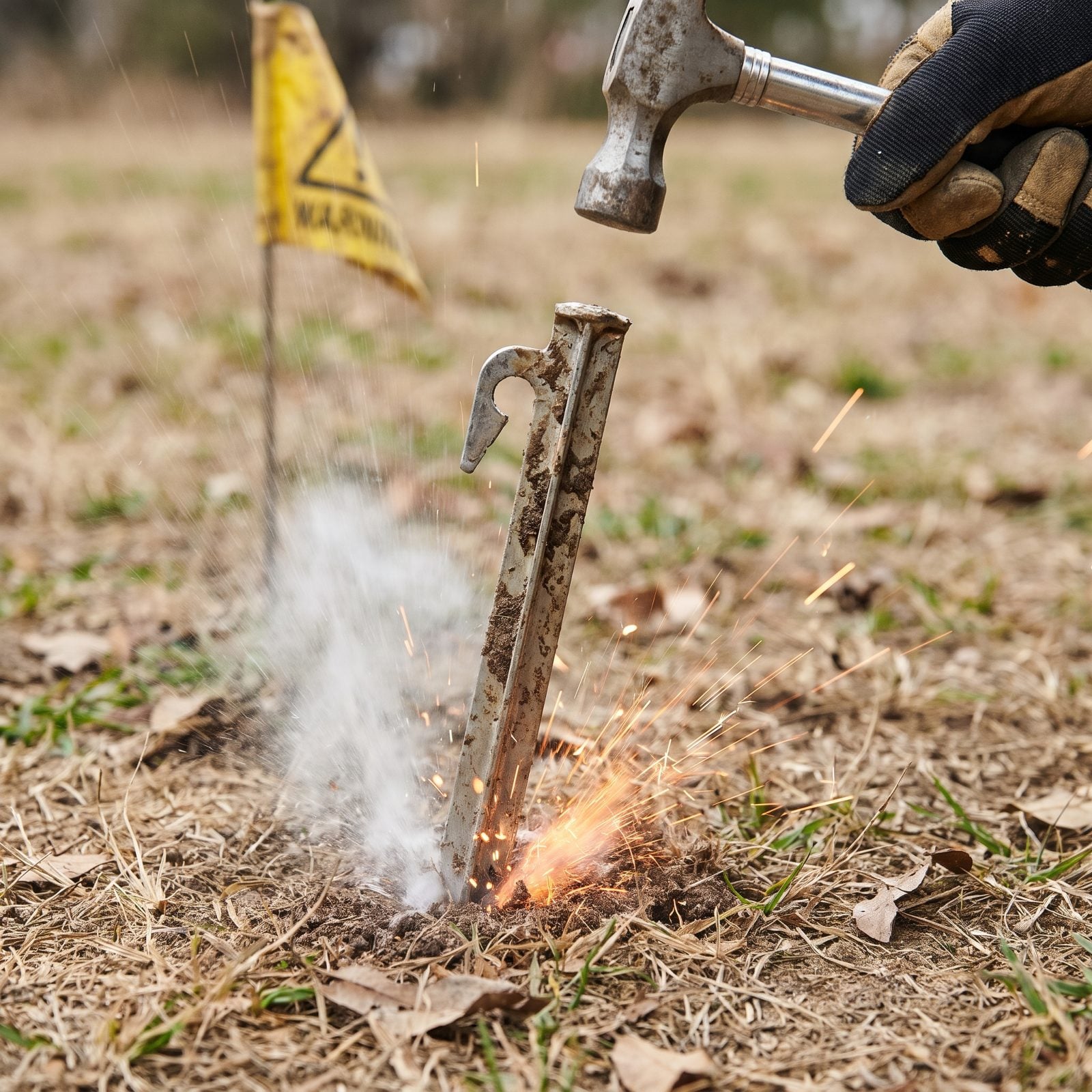
An awning tie-down stake doesn’t look dangerous. Then it punches through a shallow water line or clips low-voltage wiring, and suddenly you’ve flooded your own site or knocked out power to the whole loop.
Buried utilities at campsites sit surprisingly shallow. Staff then spend their evening digging, capping, and apologizing to everyone downstream of the break you made.
Look before you swing. Pedestals, spigots, and sewer connections tell you roughly where the lines run, so stake away from them. Note any marker flags, and if you’re unsure on a wired site, ask the office where it’s safe to drive stakes. Thirty seconds of caution beats a trenching bill.
29. Hate: Smothering Grass With Oversized Mats, Love: Using Ground-Friendly Mats
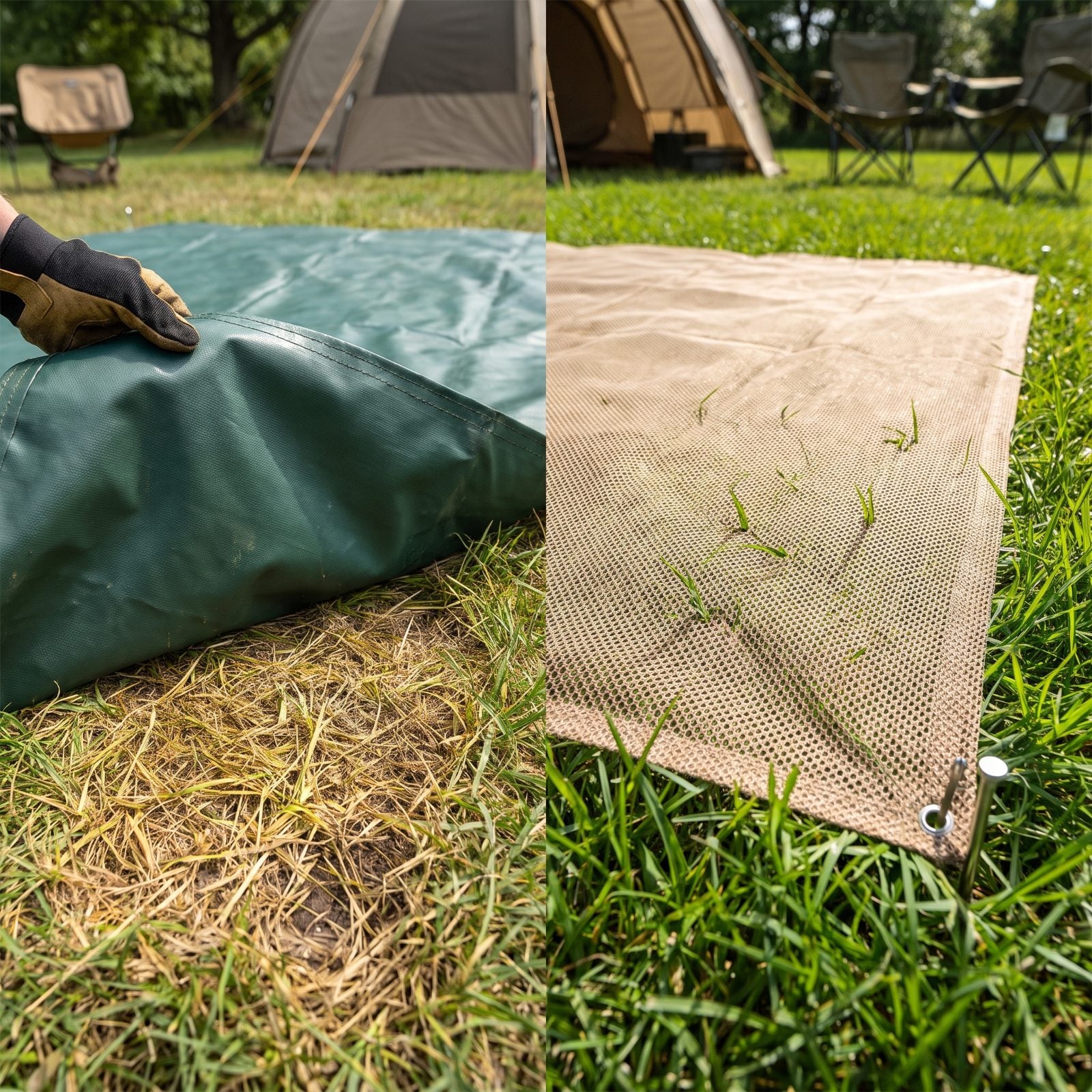
A solid vinyl tarp the size of a two-car garage does one thing to the grass under it: kills it. No light, no air, and after a long weekend you’ve left a yellow rectangle for the next camper to stare at.
Grounds crews notice these. Some parks have started banning solid mats outright over the bald patches they leave behind.
Go with a woven, breathable mat sized to your actual setup, not your ambitions. A woven outdoor RV mat lets light and water through so the turf survives your stay. Cover the walking zone by the door and the chairs, skip the full-site carpet, and the grass thanks you by still being green when you leave.
28. Hate: Sawing Off Branches for Clearance. Love: Just Asking for a Bigger Site.
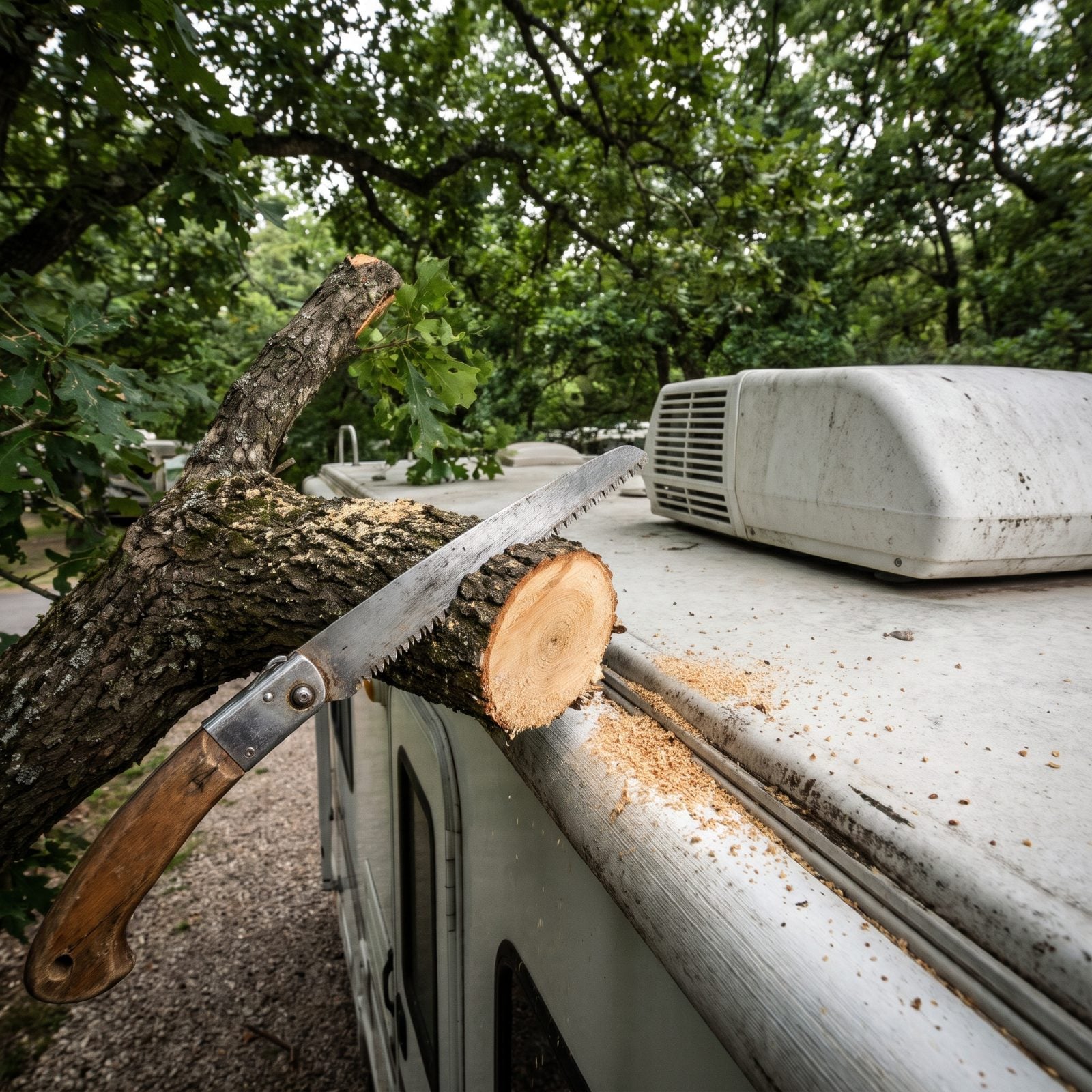
You pull in, the branch clips the AC shroud, and a folding saw suddenly feels like the obvious fix. It isn’t. That oak took decades to grow, and the campground planted the site around it on purpose. Cut it and you earn yourself a fine while the tree gets a wound that invites rot.
Walk up to the office first. Tell them your rig height — usually painted right on the ladder or stamped on the spec sheet — and ask for a site that fits. Most parks keep a few high-clearance pull-throughs open for exactly this. Five minutes at the desk beats a dead branch and an awkward conversation at checkout.
27. Hate: Hammering Hooks Into Trees. Love: Hanging Everything on a Stand.
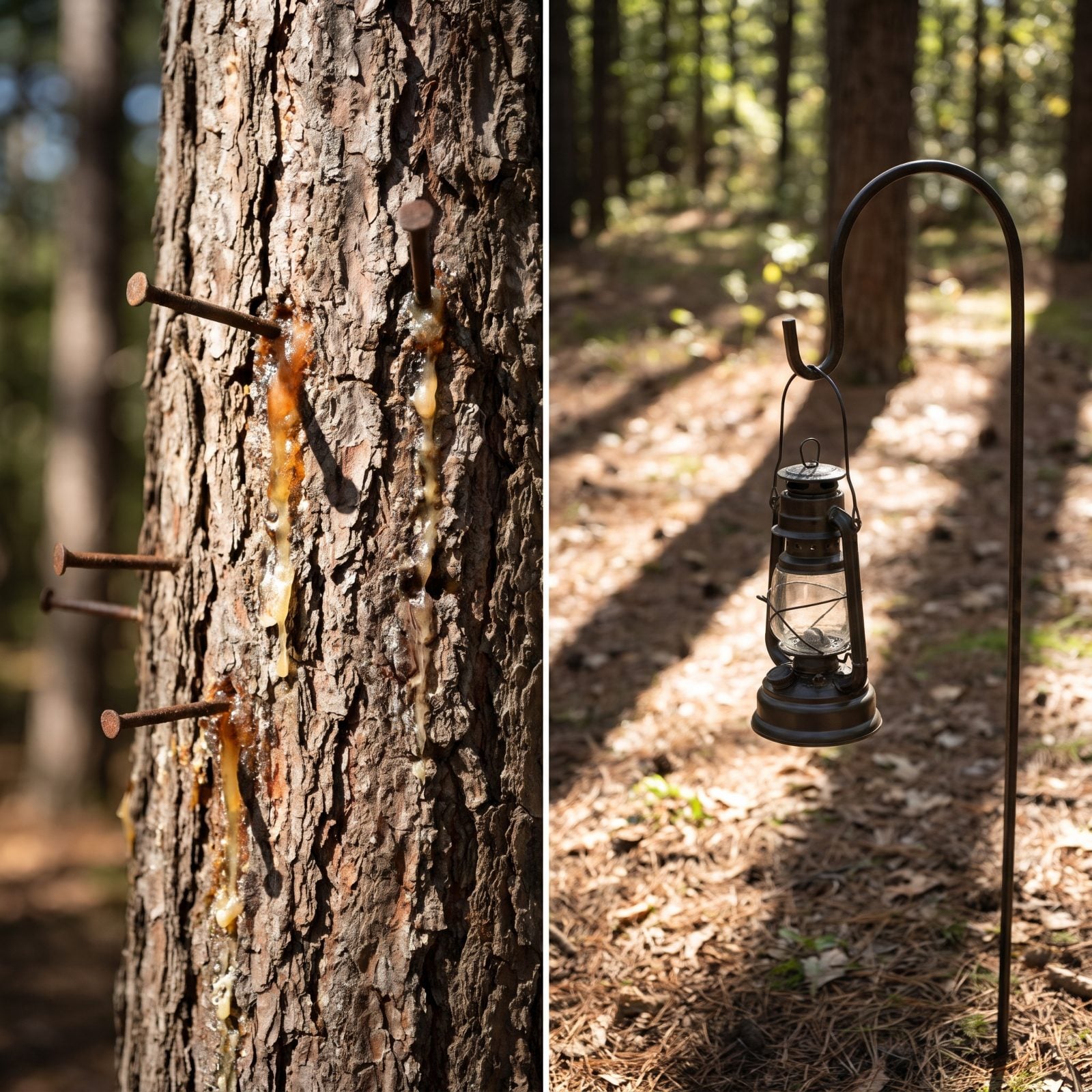
A nail in a tree never comes back out alone. It brings a scar, an entry point for insects, and sometimes a lawsuit when a future camper grabs a rusty hook headfirst. Staff hate peeling your decorations off a trunk after you leave, because by then the damage is already done.
Bring a freestanding light stand or a couple of weighted poles instead. Collapsible steel string-light poles pack flat in a storage bay and hold a whole run of bulbs without touching bark. Your site looks just as festive. The pine behind it gets to keep its skin.
In advice on hanging decorations, a certified arborist warns that large nails damage trees and can leave them open to pests, disease or fungal growth.
26. Hate: Tossing Chips to the Chipmunks. Love: Watching Them Earn Their Own Lunch.
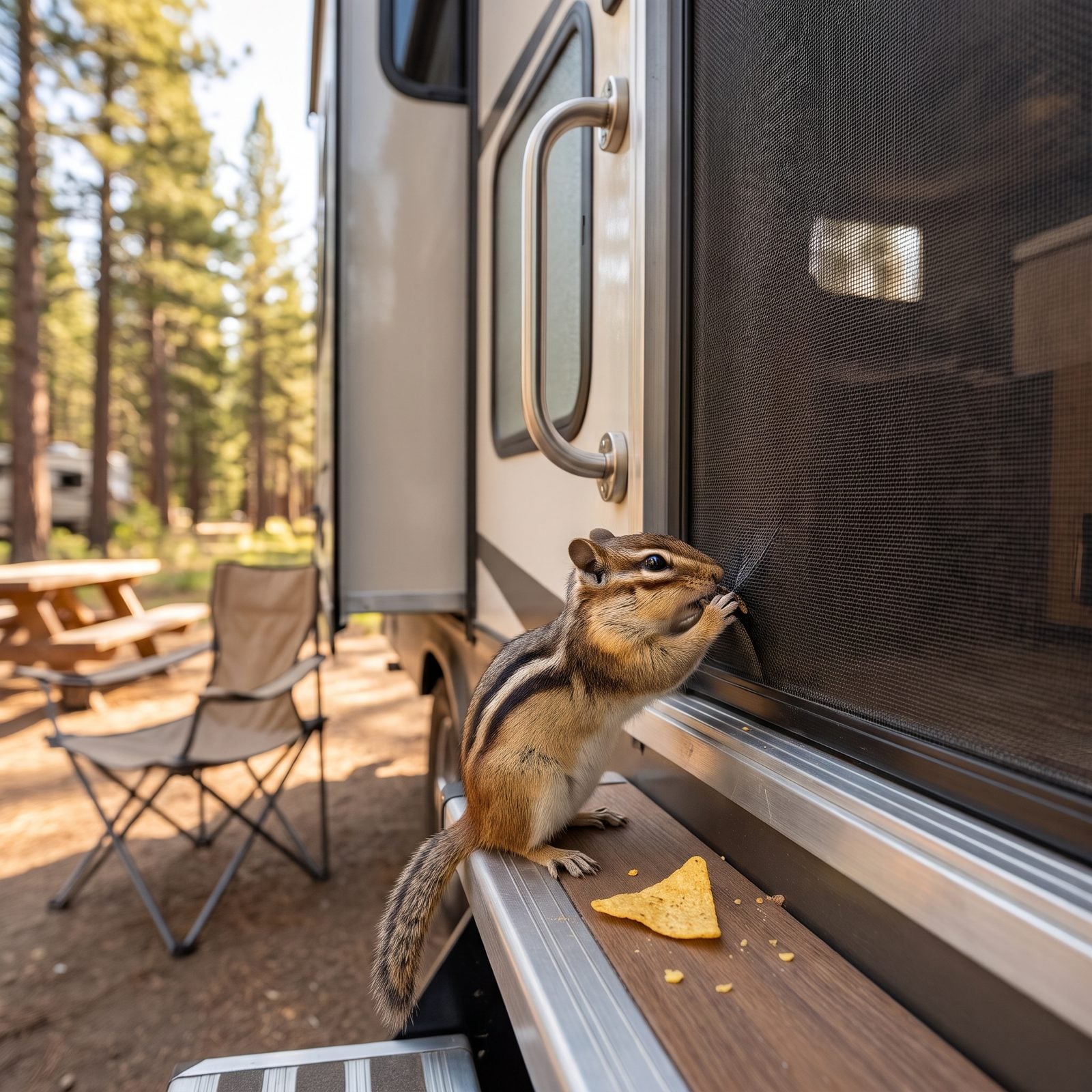
Those cheeks are cute until the chipmunk starts gnawing through a screen door to get at the trail mix it now expects. A fed animal is a dead animal, as the ranger signs put it, and the ones that lose their fear of people get relocated or put down. That’s the real cost of a handful of crackers.
Keep a pair of compact binoculars on the table and watch them work. A chipmunk stuffing its face with wild seeds beats one begging at your feet, and nobody has to clean up the aftermath.
During a ranger-led talk, a national park ranger called cute rodents the most dangerous animals in the park, especially ones that people have fed.
25. Hate: Leaving the Cooler Out All Night. Love: Locking Up Every Last Crumb.
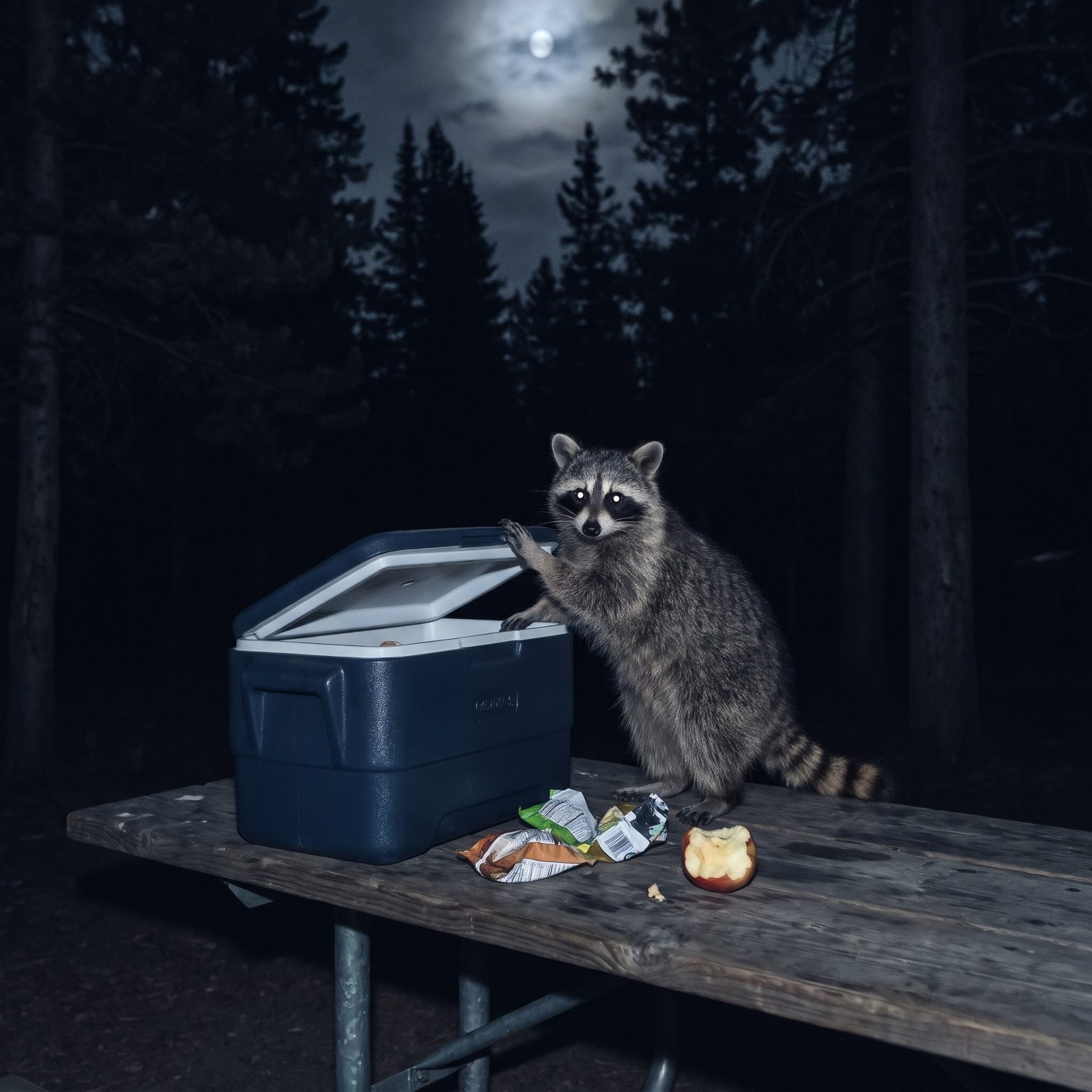
Say you leave a sealed cooler on the table, figuring a lid is plenty. Around two in the morning a raccoon flips it, a bear in bear country does a lot worse, and now there’s trash scattered across three sites and a frightened neighbor on the phone to the office. One careless night, everybody’s problem.
Treat anything with a scent as bait — food, dish soap, toothpaste, the dog’s kibble, even scented wipes. At dusk it all goes into the bear locker or back inside a locked RV. Wipe the table down so there’s nothing left to sniff out.
The rule isn’t “hide the food.” It’s “leave the site smelling like nothing.”
24. Hate: Wiring Up a Frankenstein Adapter. Love: Using the Right Plug for the Job.
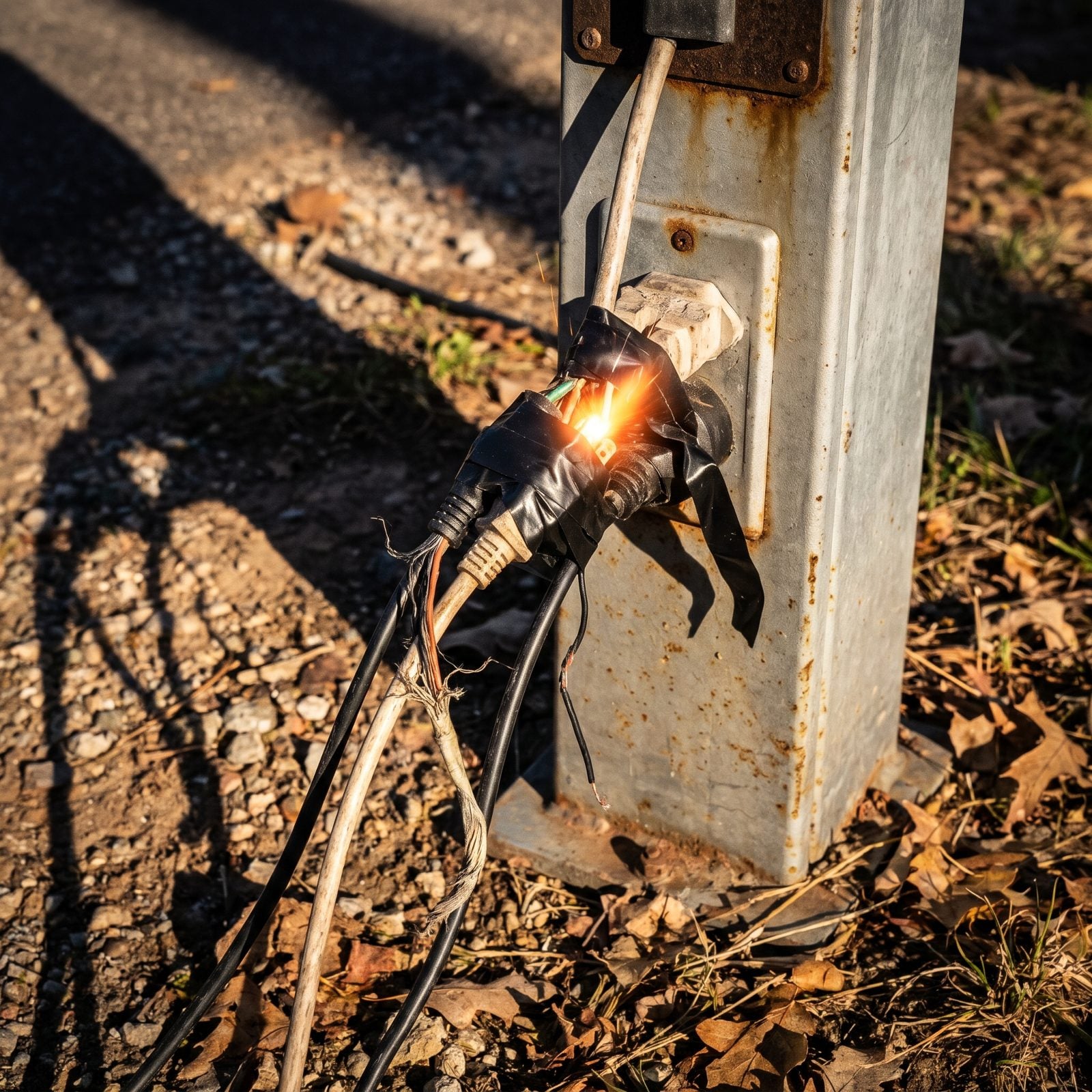
That taped-together splice everybody brags about on the forums will cost someone their RV. Homemade adapters melt, backfeed the pedestal, and occasionally trip the whole loop at 1 a.m. when your neighbor’s AC kicks on. Maintenance crews can usually spot the scorch marks, and they do not find them funny.
Buy the right dogbone and be done with it. A listed 50-amp to 30-amp adapter runs about twenty bucks and carries a UL rating for a reason. Match the amperage, lock the connection, let the breaker do its job. Plenty of campers who ran a sketchy pigtail for a summer still think about how lucky they were.
23. Hate: Stretching Your Cord Across the Road. Love: Keeping the Trip Hazard on Your Own Pad.
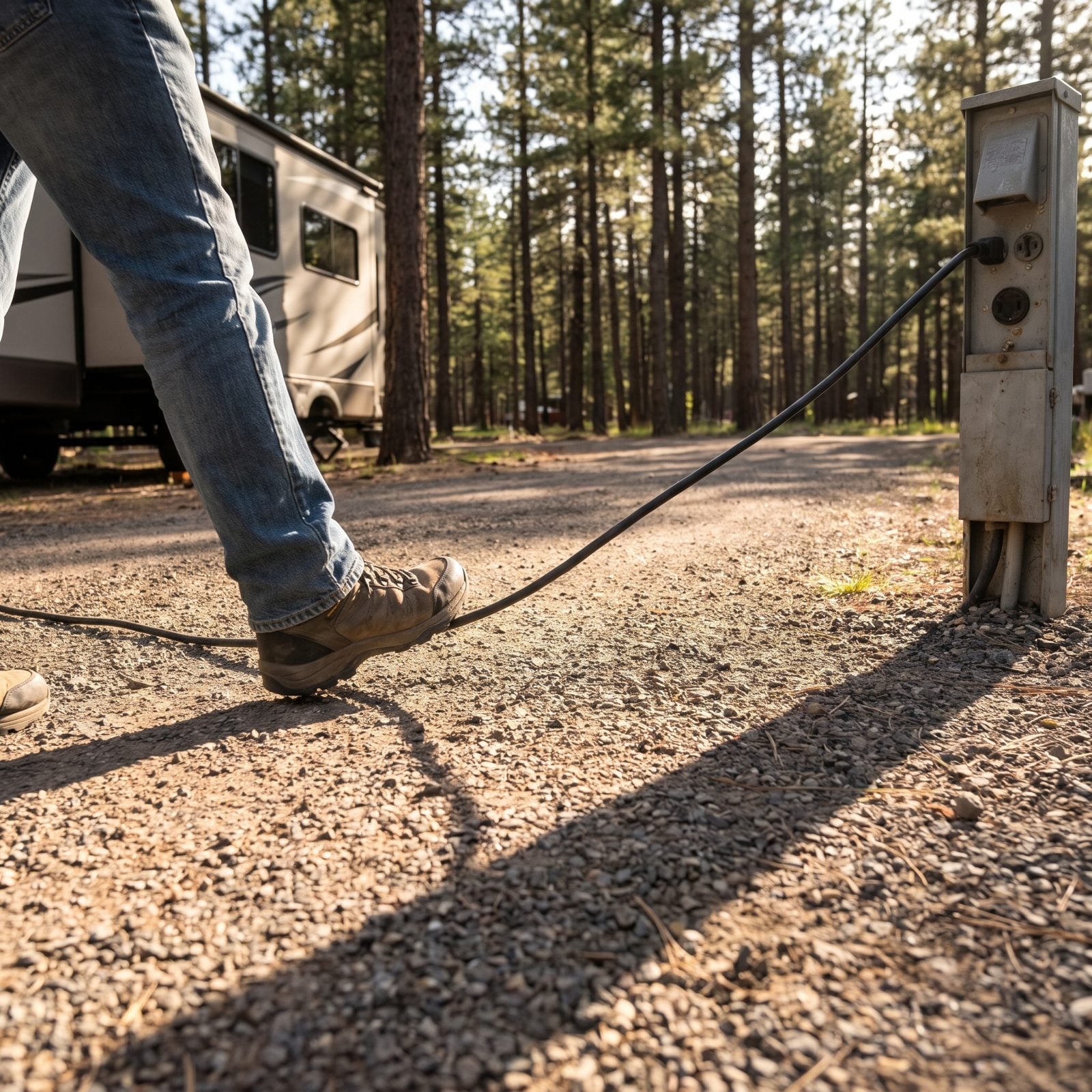
You’ve watched someone’s power cord sag across the loop road like a tripwire, and you’ve probably caught a toe on one in the dark yourself. It’s the single most common injury a campground host deals with, and when a kid on a bike goes down over your hose, that one’s on you.
Route everything along your own site edge, hugging the curb, nowhere near the shared path. If a cable absolutely has to cross a walkway, drop a cable protector ramp over it so feet and tires glide right across. Two minutes of work, and a stranger keeps their ankle intact.
22. Hate: Hosing Down the Rig at Your Hookup. Love: Reading the Water Rules First.
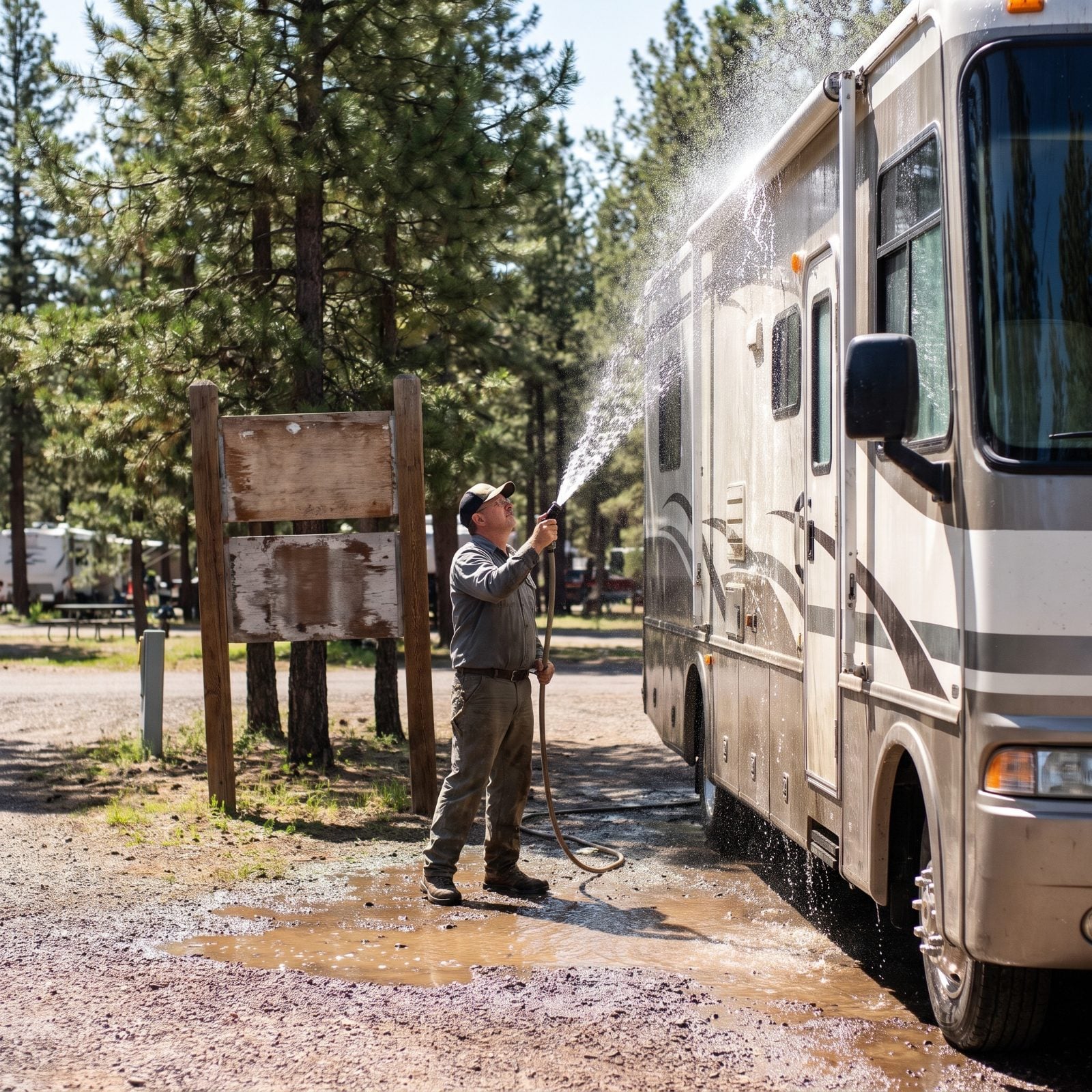
A full RV wash can burn through a couple hundred gallons, and plenty of parks sit on a well or a drought restriction that makes that a real problem. Do it without asking and you can soak your site into a mud pit while draining a shared tank the whole loop depends on.
Stop at the office and ask before you uncoil the hose. Some parks ban washing outright, some allow it on certain days, and some point you to a dedicated wash bay down the road. If it’s a no, a waterless RV wash spray and a microfiber cloth handle the road grime without a single gallon down the drain.
21. Hate: The Sewer Hose That Weeps. Love: A Connection That Actually Seals.
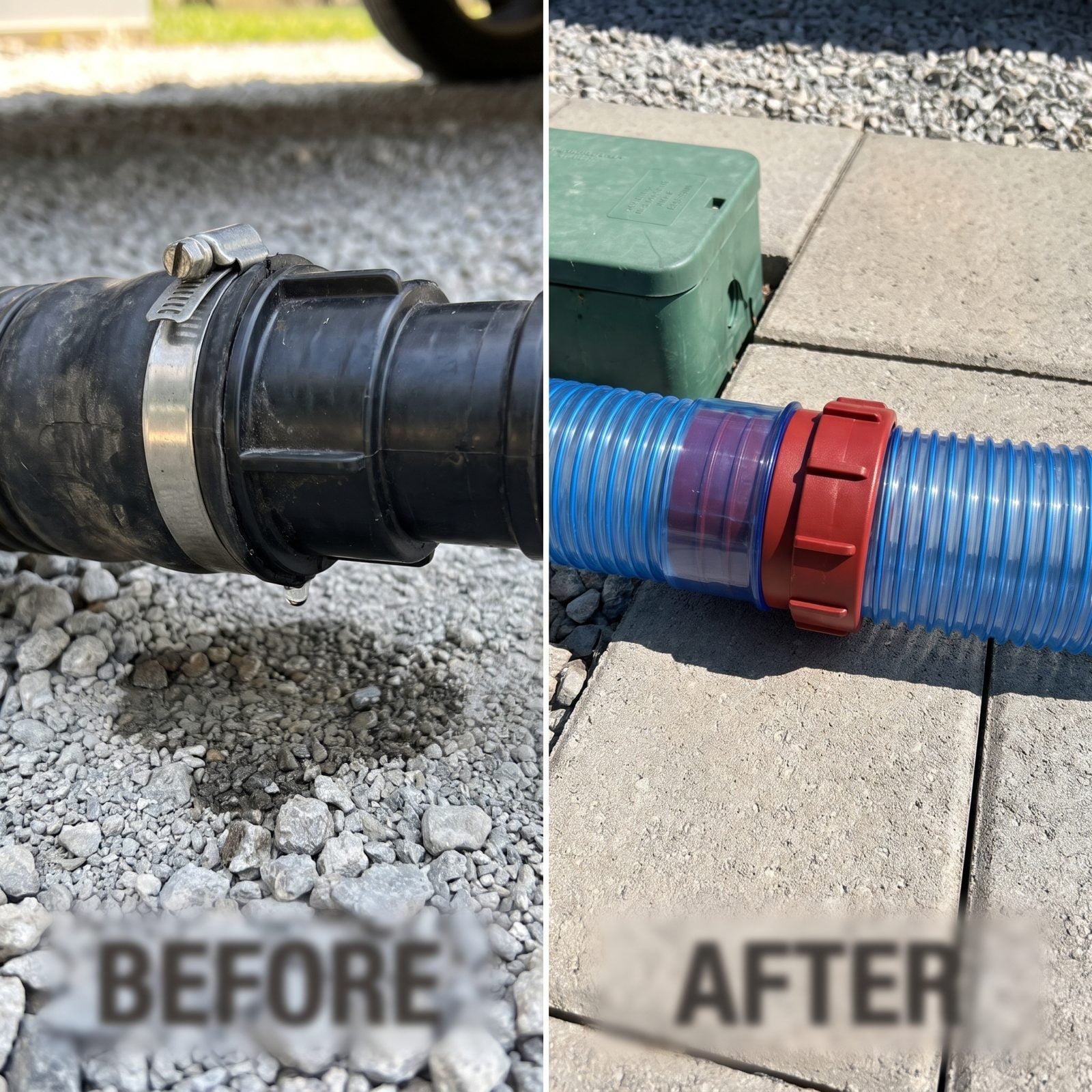
A sewer hose that drips at the fitting leaves a stain, a stench, and a biohazard the next camper inherits at your pad. Staff can smell a leaky connection from across the loop, and cleaning up after one is nobody’s idea of a good shift.
Make it seal. Twist the bayonet lugs until they lock, seat a rubber donut in the park’s sewer inlet, and set the hose on a sloped support so gravity does the draining instead of letting waste pool halfway. A clear elbow lets you confirm it’s actually flowing before you walk away.
Gloves on, connection tight, dry ground when you’re finished.
20. Hate: Rinsing the Stinky Slinky at the Drinking Tap. Love: Finding the Tap Marked for Exactly That.
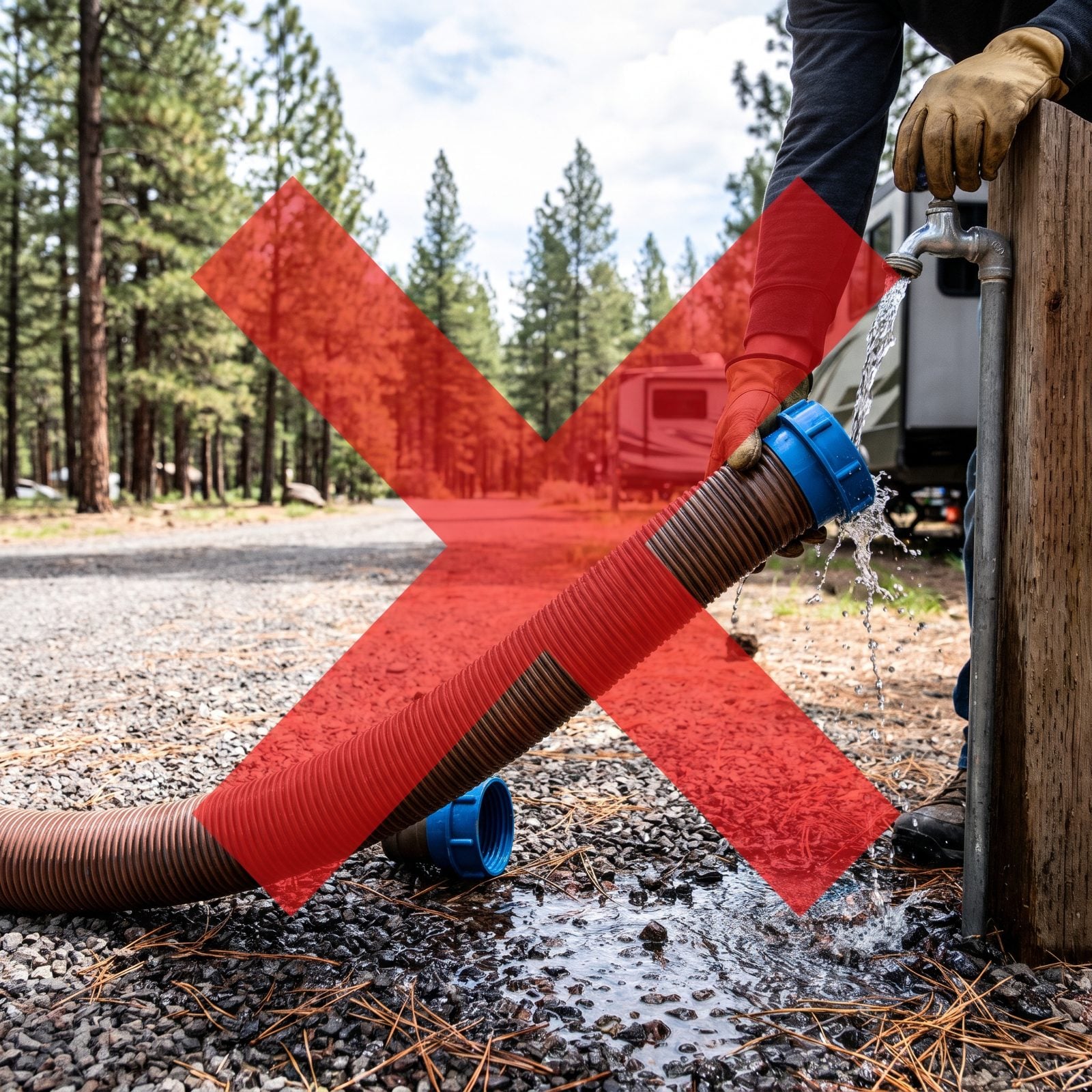
Rinsing a sewer hose at the freshwater spigot is how an entire campground ends up with contaminated drinking water. It’s the one move that can make dozens of people sick, which is why it’s the behavior staff react to fastest and most sharply. Fair enough.
Look for the second tap. Most dump stations have a separate non-potable rinse spigot, often a different color, set apart from the potable one for this exact job. Use that hose, never the drinking line. If you can’t find a marked rinse tap, ask — and keep a dedicated sewer rinse hose in your gray bay so your potable hose never touches the dirty work.
19. Hate: Dumping Dishwater on the Grass. Love: Carrying It to the Real Drain.
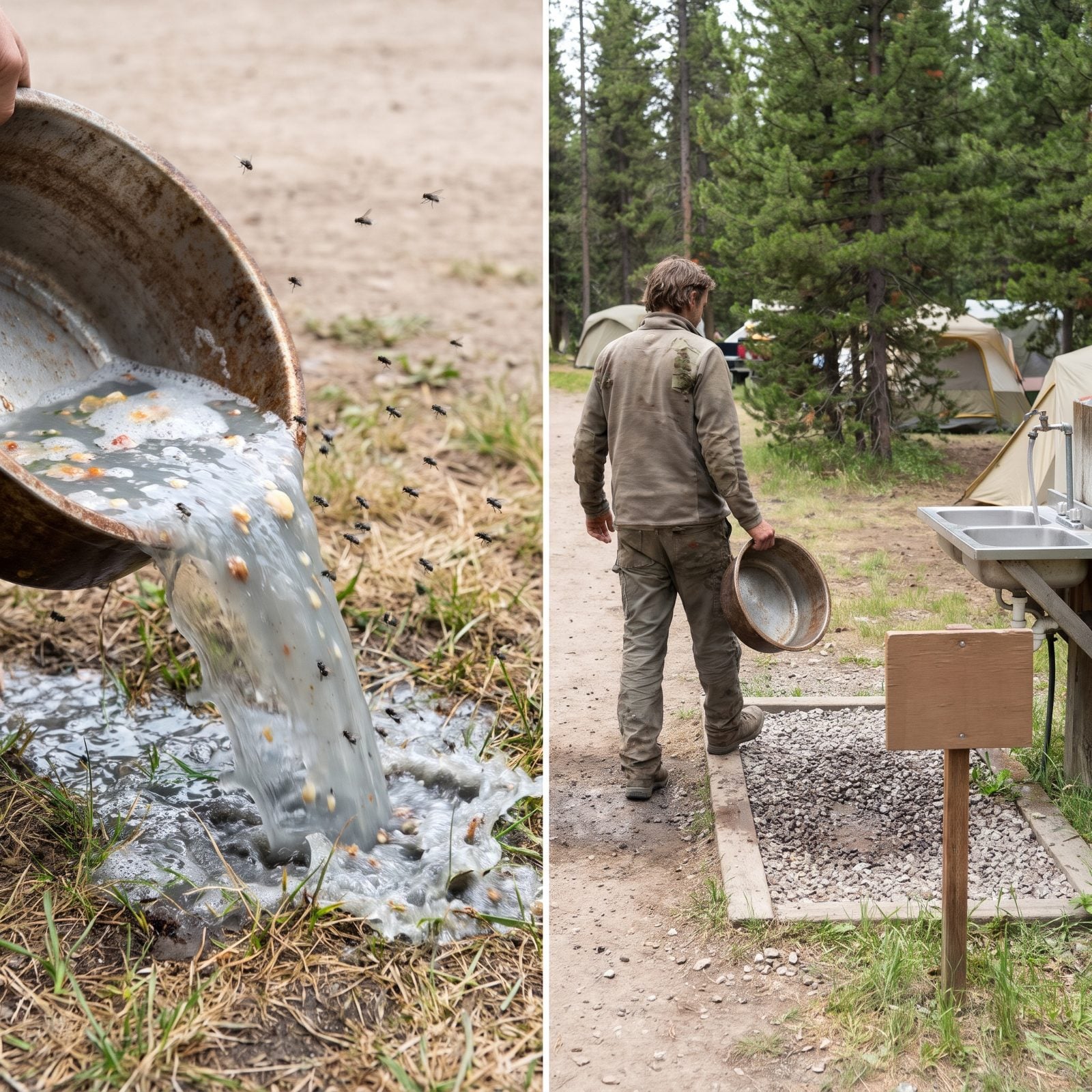
That pan of dishwater looks harmless hitting the grass. It isn’t. Soap, grease, and food bits kill the turf, draw flies, and leach into ground that a dry campsite host now has to reseed. Gray water is still waste, and in most parks dumping it on the ground is flat-out illegal for good reason.
Hold it until you reach an approved dump point. If your site has a sewer hookup, your gray tank drains right there. If it doesn’t, a wheeled gray water tote tank lets you roll the full load to the dump station without a single drop on the lawn.
The grass stays green, the flies stay gone, and the next camper on that pad never knows you were there — which, honestly, is the quiet goal of good camping.
18. Flushing Wipes Into the Campground Sewer
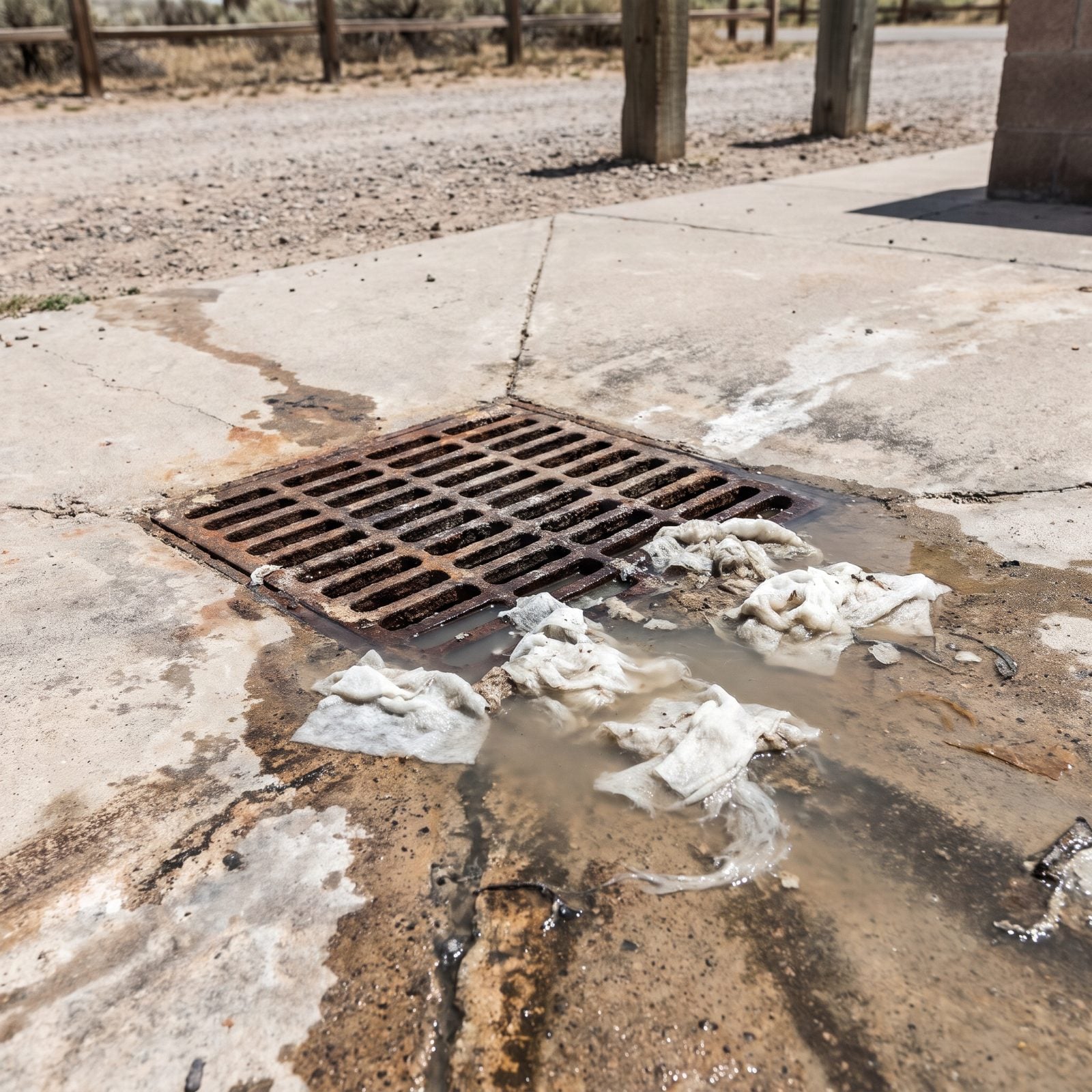
Those wipes that say flushable? They lie. They don’t break down like toilet paper. They float downstream, grab onto grease and roots, and build a wad the size of a basketball inside a campground’s septic line. Then staff spend a Saturday morning snaking a sewer instead of checking in happy campers.
Toss them in the trash. Every single one. Keep a small lidded bin in the RV bathroom so there’s zero temptation at 2 a.m. Baby wipes, makeup wipes, disinfecting wipes — the whole family goes in the garbage.
Warning about wipes labeled flushable, a sewer utility spokesperson put it bluntly: “Part of the problem is a lot of the packaging on wipes says ‘flushable.’ Well sure, they’re flushable. Your child can flush their toy down the toilet, but you shouldn’t. It’s costing everybody money”
17. Walking Away From a Sewage Spill at the Dump Station
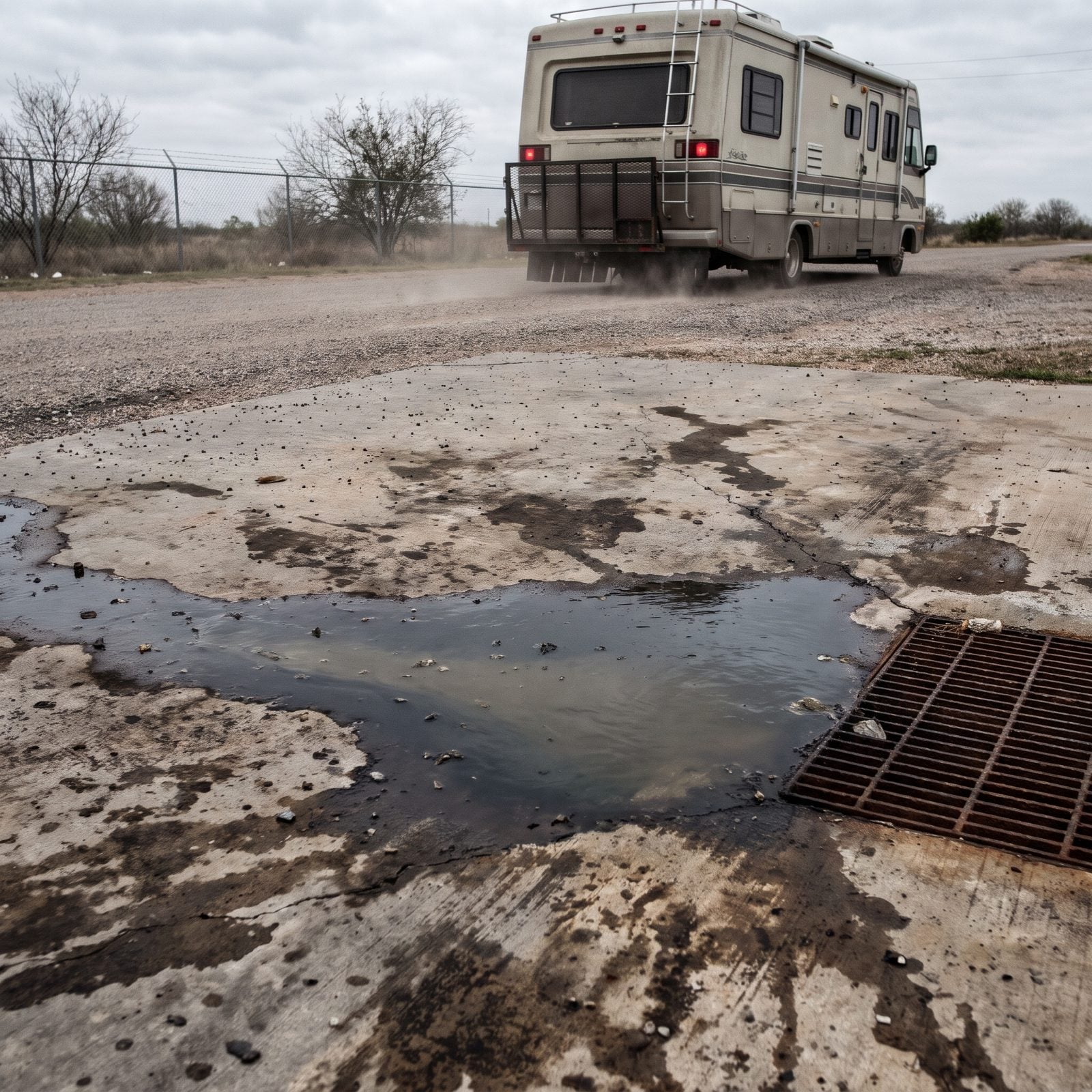
A hose pops loose, black tank water hits the concrete, and the camper quietly packs up and rolls out — leaving a biohazard for whoever walks up next. That’s the move that makes staff grind their teeth.
Accidents happen here. Everyone who has emptied a tank has had a near-miss, and the difference is what you do in the next sixty seconds. Rinse what you can with the non-potable hose, then go find an employee and tell them exactly what spilled and where. They’ve got the right disinfectant and the training for it. And honestly? Nobody is going to yell at you for an accident you own up to. They save the grumbling for the campers who vanish.
16. Leaving Trash Bags Stacked Beside the Dumpster
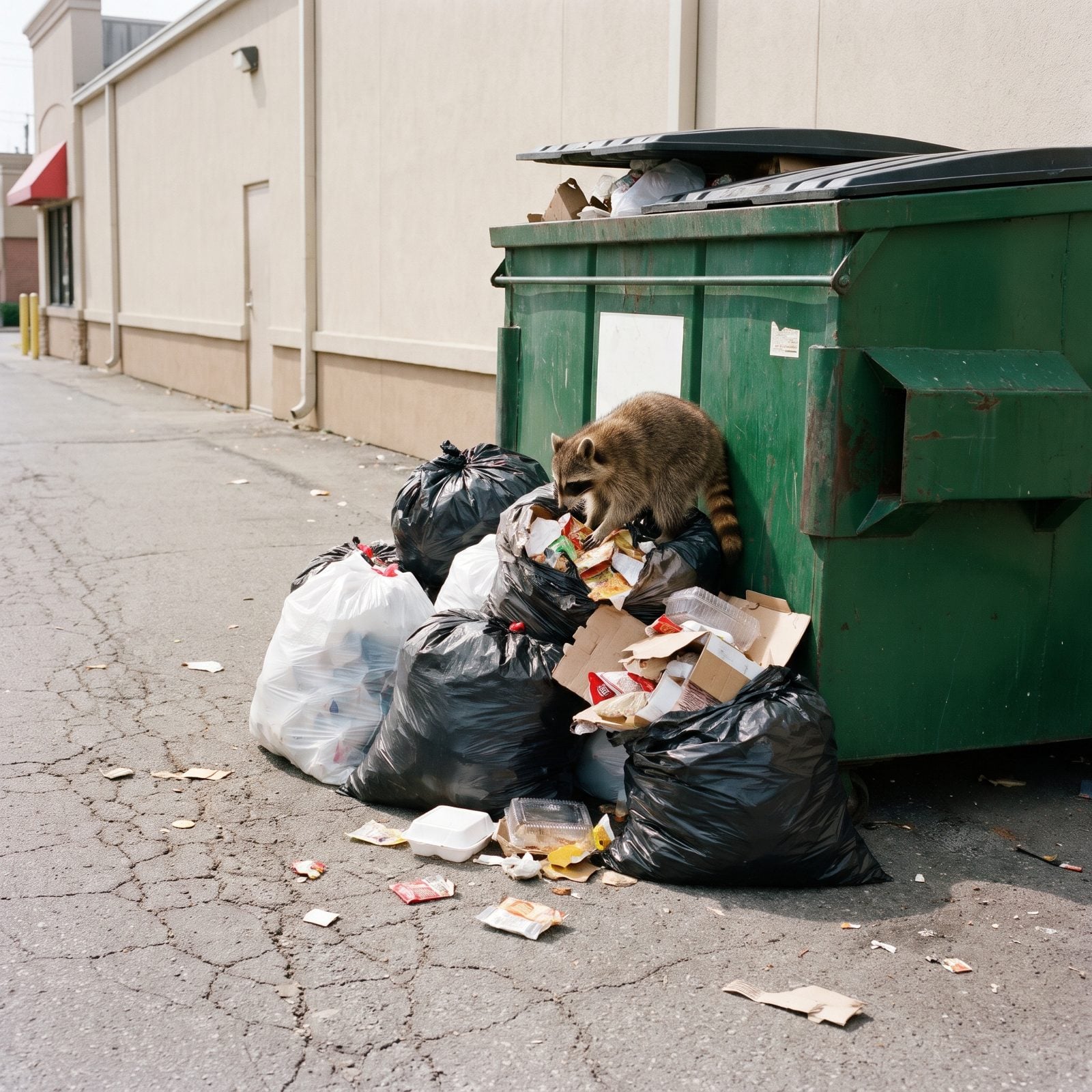
Bags left on the ground beside a full dumpster become a raccoon buffet by midnight. Come morning there’s torn plastic and coffee grounds scattered across thirty feet of asphalt, and staff are picking it up by hand before the store opens.
If the dumpster’s full, lift the lid and actually look — nine times out of ten there’s room if you push things down. Genuinely packed? Take your bag back inside and try again after the morning haul, or ask the office where the overflow goes. Setting it on the ground just feeds the wildlife and trains them to come back.
15. Abandoning Furniture and Rusted Grills at the Site
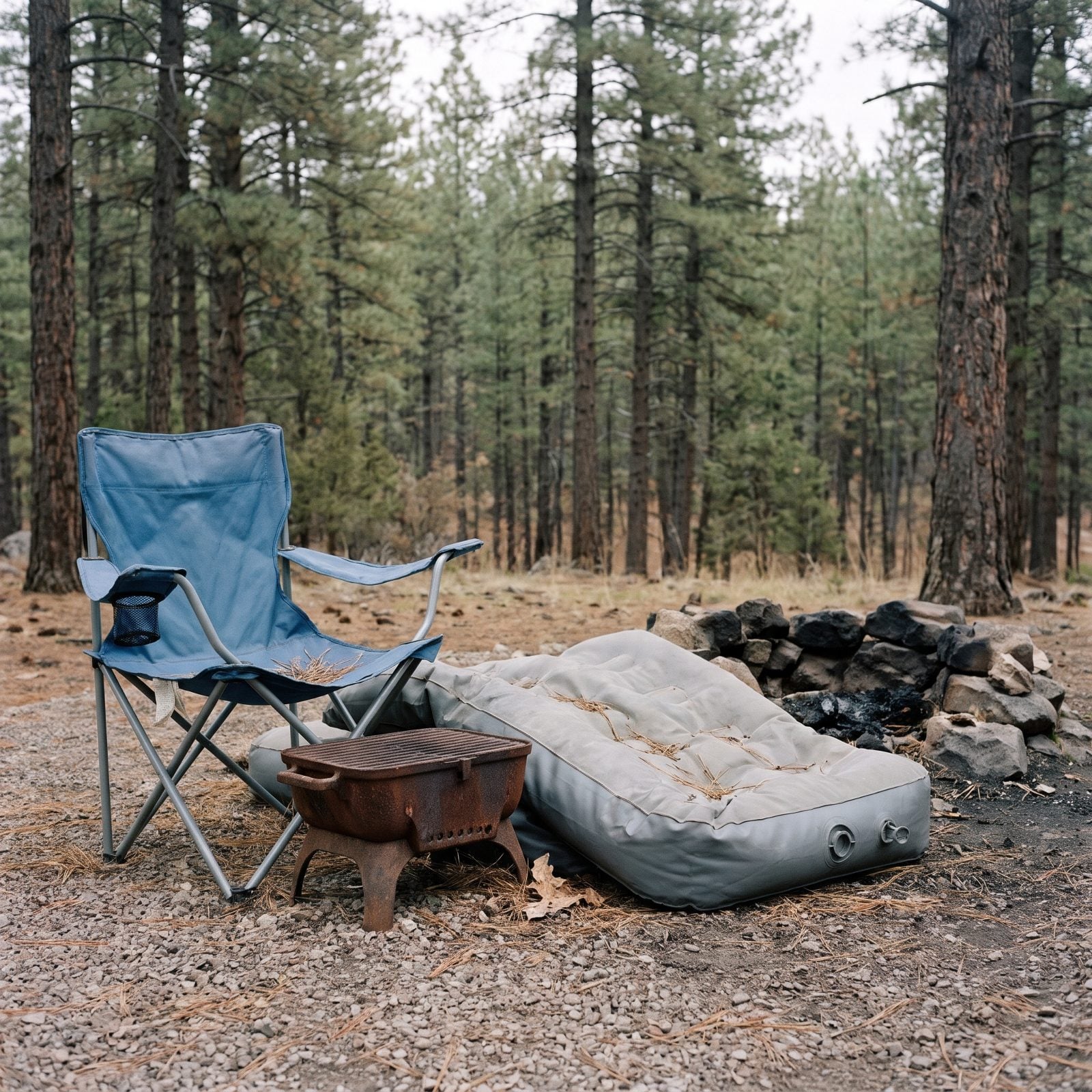
The faded folding chair, the rusted hibachi, the air mattress nobody wants to deflate and repack — they get left at the site like the campground is a free dump. It isn’t. Staff have to haul that junk out and often pay to dispose of it, so a cheap grill becomes a $40 problem that was never theirs to begin with.
You hauled it in, you can haul it out. If something truly died on the trip, break it down and take it home where your own waste pickup or transfer station handles it. A campsite dumpster is for a weekend of garbage bags, not for furniture you’re sick of.
14. Dropping Pizza Boxes and Food Scraps Into Recycling
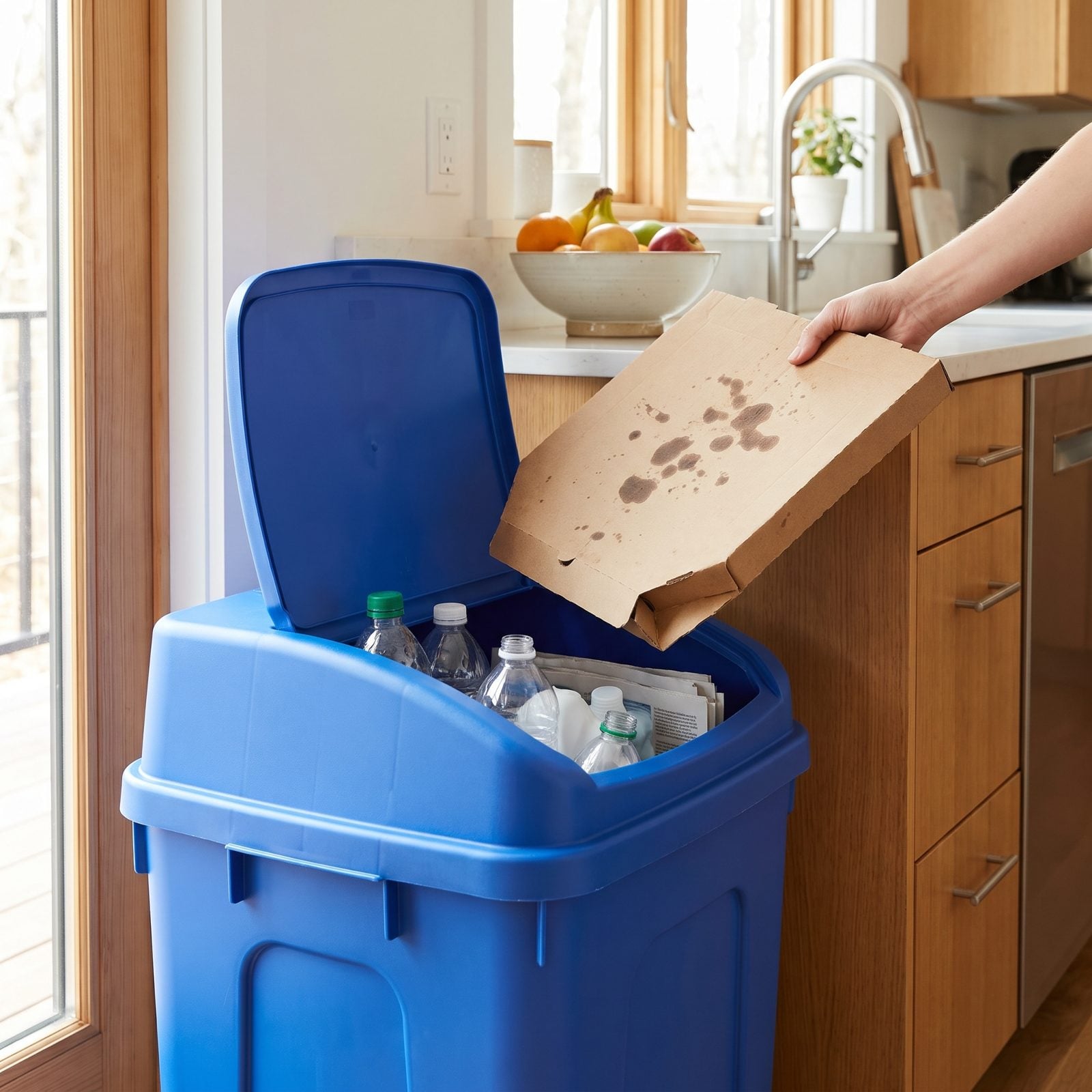
A greasy pizza box in the recycling bin can wreck a whole load. One soggy, food-soaked carton contaminates the clean cardboard around it, and the processing center sends the entire batch to the landfill. All that sorting, gone to waste.
Recycle only what’s clean and dry: rinsed cans, empty bottles, flattened cardboard with no grease. Scraps, grease, anything sticky — trash. And if a campground posts what it accepts, read it. Rules swing wildly by county, and the bin that takes glass at one park won’t touch it at the next.
13. Burning Garbage in the Fire Ring
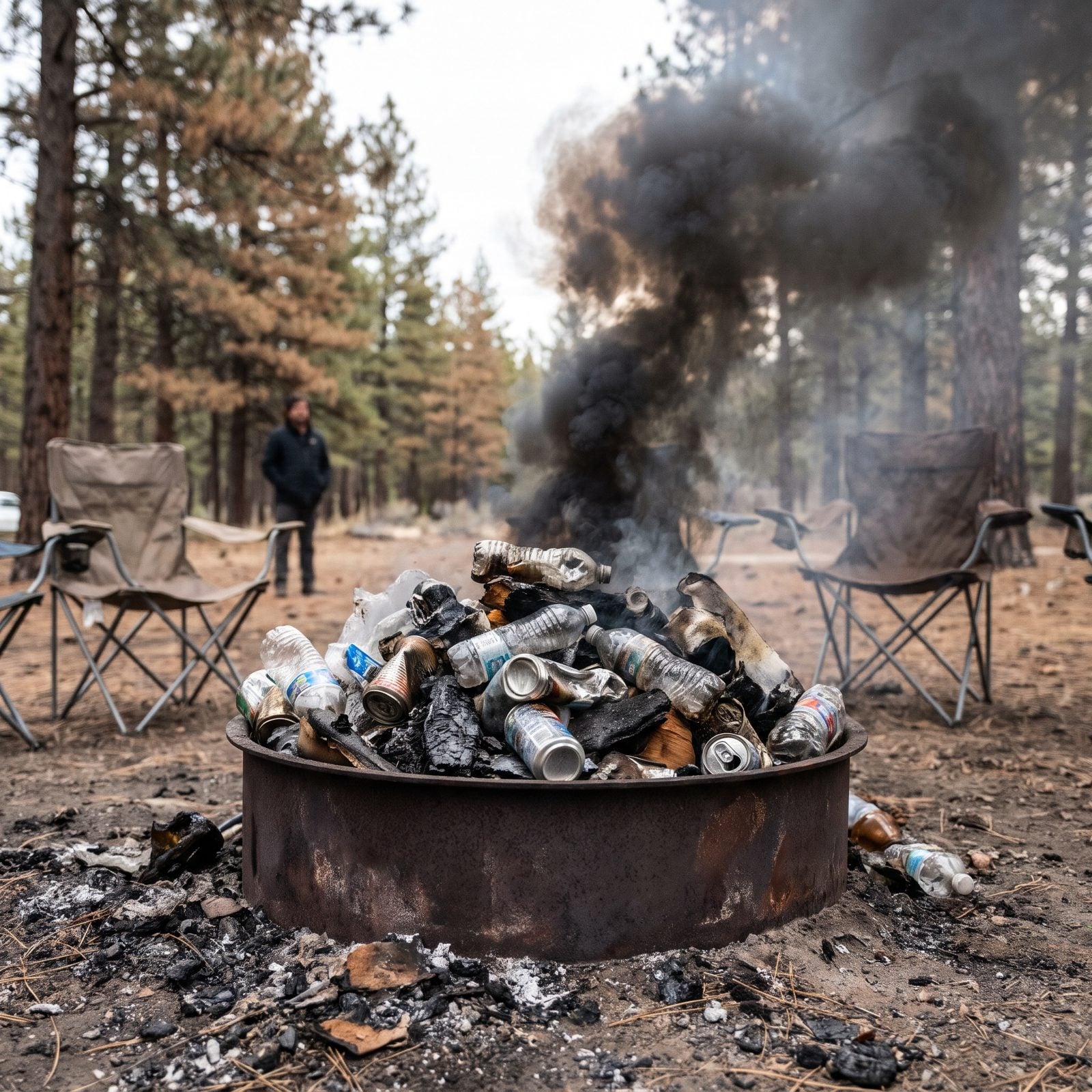
Plastic wrappers, foil, cans, diapers — all tossed in the fire ring like it’s a backyard incinerator. It smells toxic, it melts into the metal, and it leaves a cemented mess of half-burned foil and glass that staff have to chisel out before the next camper shows up.
A fire ring is for wood. That’s it. Bag your trash and walk it to the dumpster. Burning garbage releases genuinely nasty fumes, and your downwind neighbors are breathing every bit of it. Nobody drove four hours to smell somebody’s smoldering plastic over dinner.
12. Leaving a Campfire Burning While You Head to the Lake
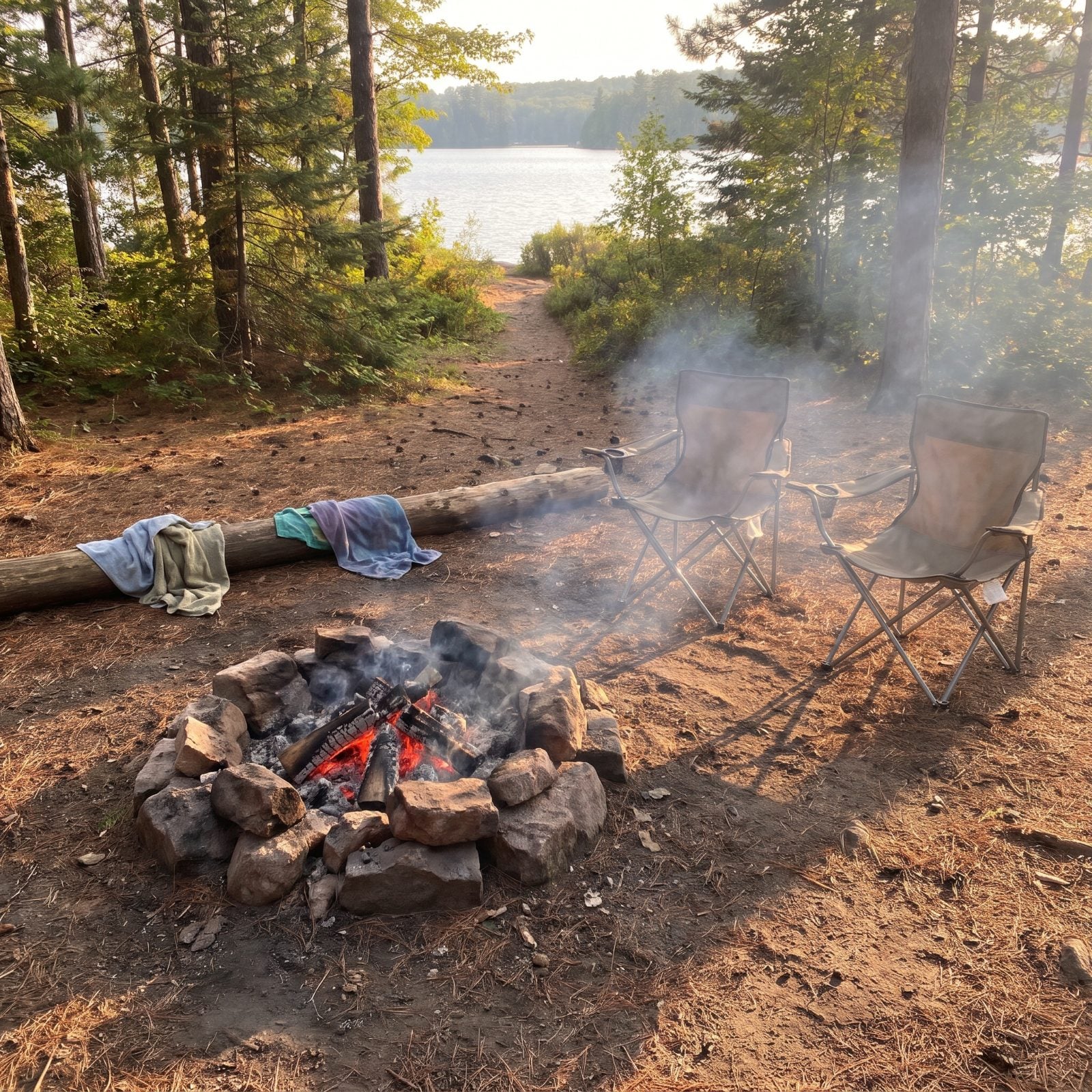
You figure the fire’s dying down, so you grab your towels and head to the water for an hour. A gust comes up, an ember hops the ring, and now dry pine duff is catching. That’s how campground wildfires start, and staff have watched it play out more times than they’d care to count.
Never leave a fire unattended — not even for ten minutes. Before you walk away, drown it. Pour water, stir the ashes with a stick, pour again, and keep going until it hisses silent and the coals are cool enough to touch. Cold to the touch, or it’s not out.
11. Lighting Up During a Posted Burn Ban
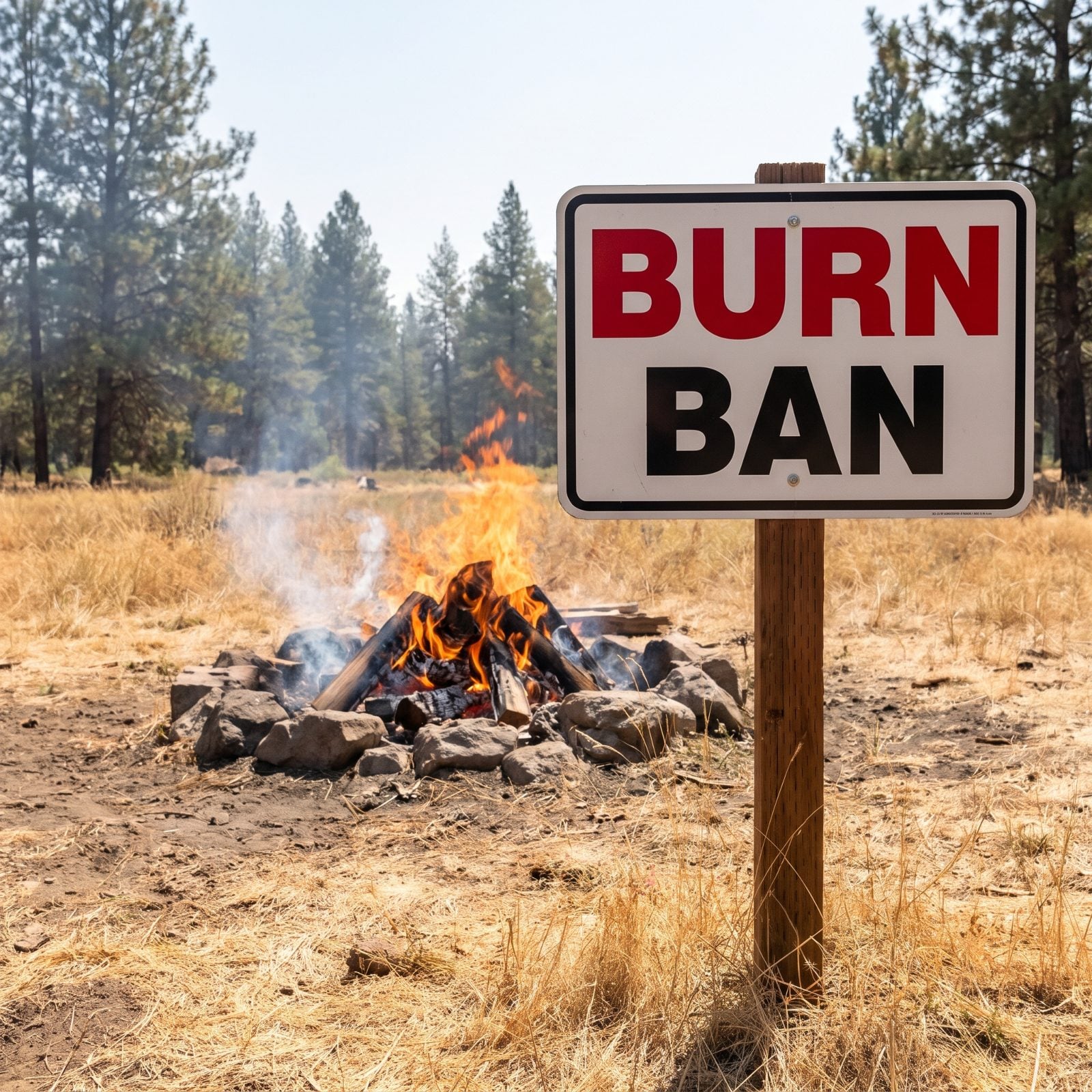
A burn ban is posted, the grass is brown and crackling, and someone lights a fire anyway because they drove all this way and they want s’mores. That one choice can put an entire forest — and every camper in it — at risk, and staff can’t be everywhere at once to stop it.
Check the restriction before you strike a match. The office knows, the kiosk usually posts it, and county websites update daily through fire season. When open flame is banned, a propane stove or a propane fire pit is almost always still fair game, since you can shut it off in a second. Marshmallows over a gas burner taste exactly the same anyway.
10. Hauling Firewood Across State Lines
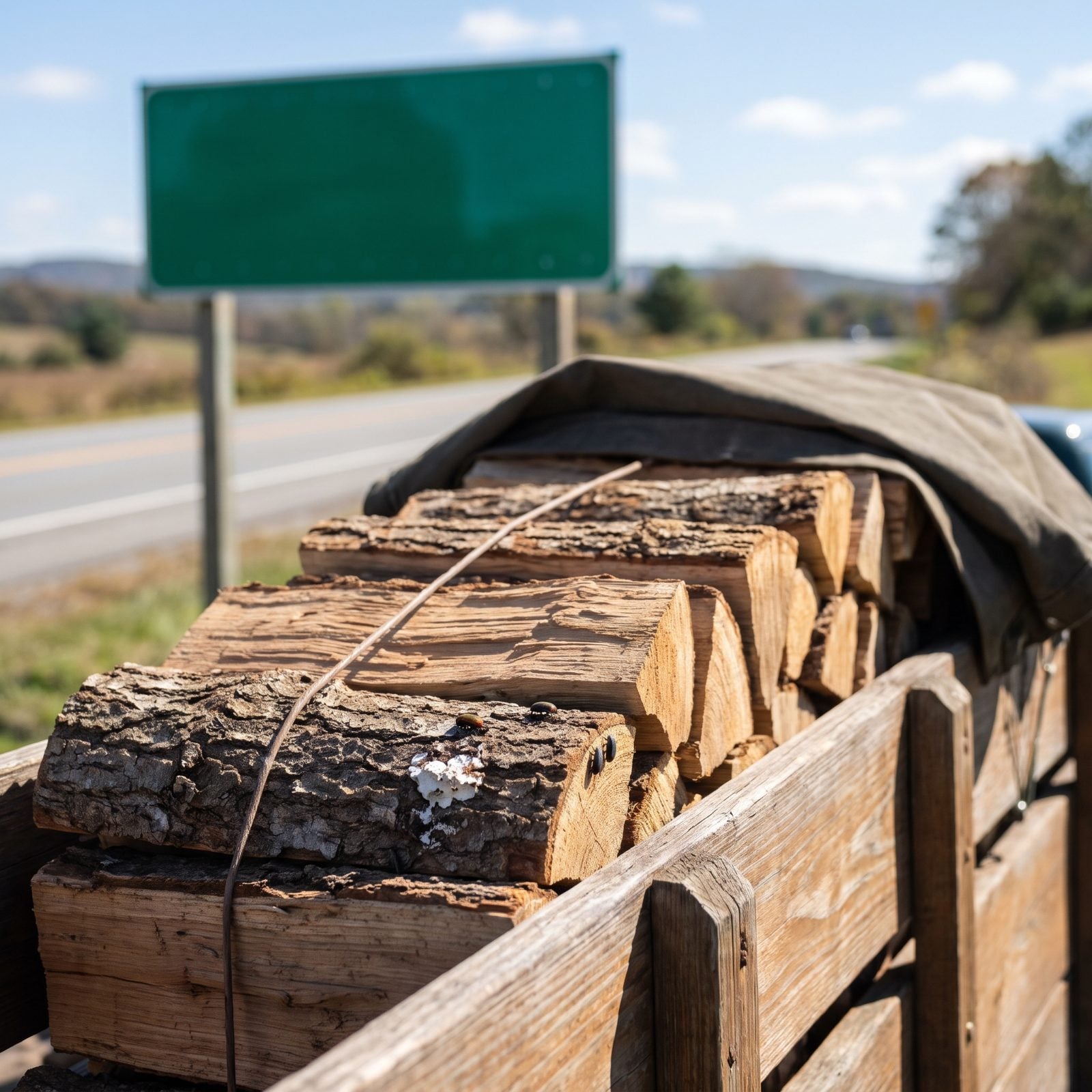
That bundle of oak from home riding in the truck bed feels thrifty. It isn’t. Firewood carries insects and fungus, and moving it even a short drive can introduce a bug that kills every ash or pine tree in the campground. The emerald ash borer tore through North America exactly this way.
Buy it where you burn it. Most campgrounds sell local wood at the store, and roadside stands near the park do too. Burn what you buy before you leave, and don’t carry the leftovers to the next park. There’s an old rule everyone in the parks service repeats — a short haul is already too far.
Writing on a University of California pest blog, a university pest-management educator cautions campers: “While you may not realize, bringing firewood from home for an outing or camping trip can jeopardize the health of our forests and open woodlands.”
9. Running the Generator at 6 a.m. (or Midnight)
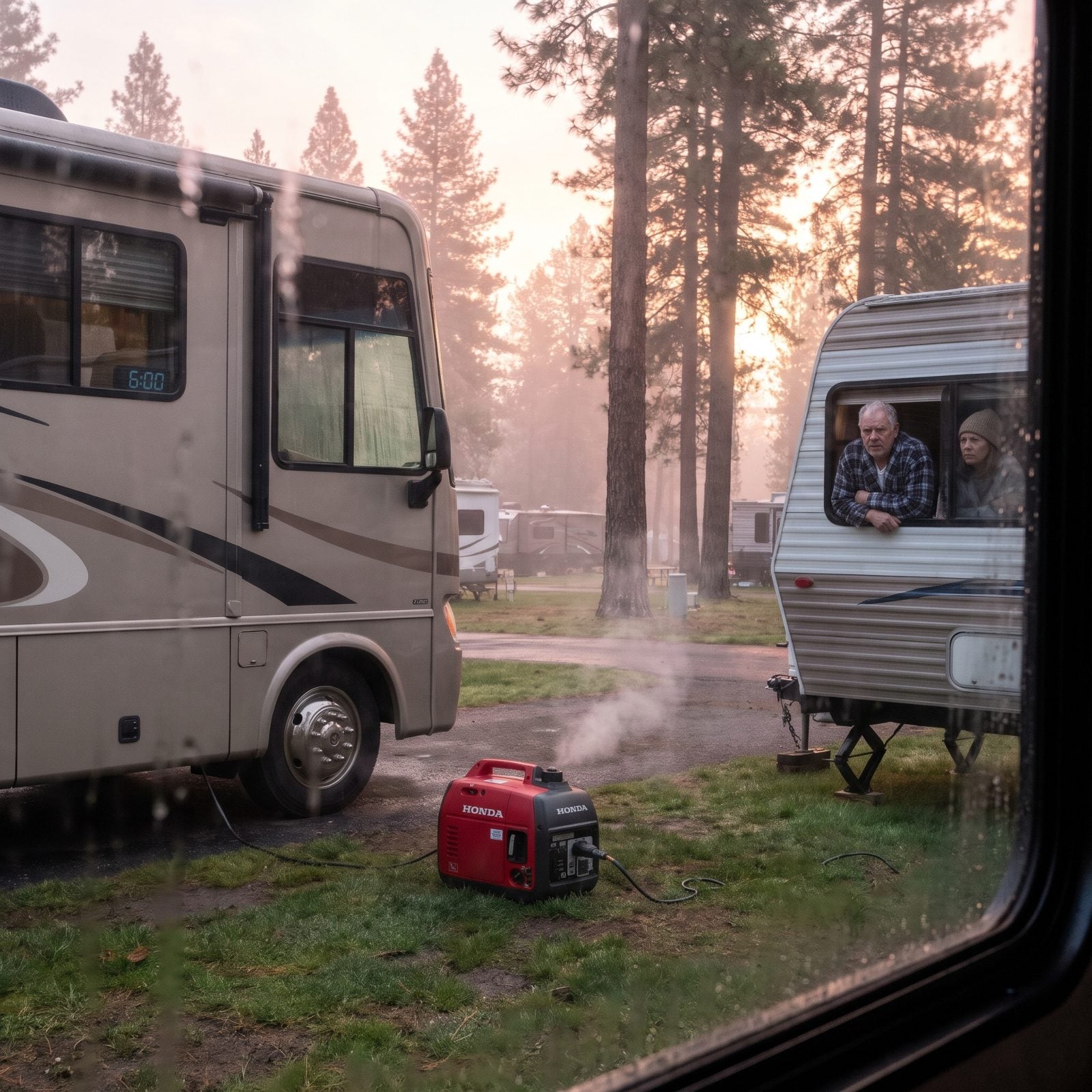
The generator fires up at six so the coffee maker runs, and the whole loop wakes to a droning hum through their thin RV walls. Or it’s still chugging at midnight while everyone next door lies there listening. Staff catch the complaints, and they’re the ones who have to come knock on your door about it.
Generator hours are posted for a reason — usually something like 8 a.m. to 8 p.m., or 10 to 10. Learn them at check-in and stick to them. If you need power overnight for medical equipment, say so at the office; they’ll usually help you find a spot or a workaround. Otherwise, a solar setup or a battery bank runs dead silent and keeps the peace.
8. Hate: Flooding Nearby Sites With LED Lights, Love: Using Warm, Downward Lighting
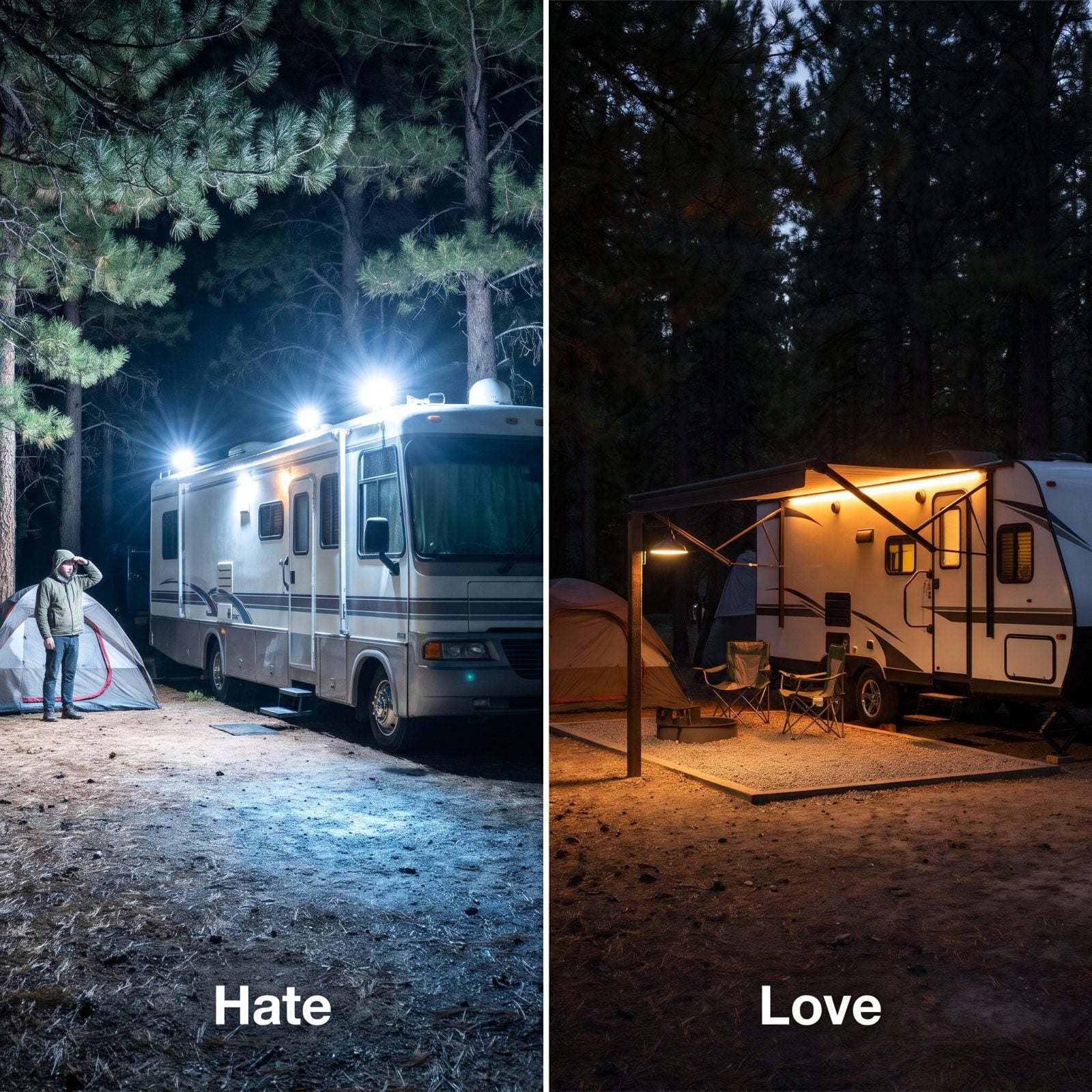
You’ve seen the rig lit up like a used car lot. Blue-white LED floods blazing off every corner, the whole site glowing cold enough to read by from four loops over.
Those bright exterior lights blast straight into neighboring windows and wash out the one thing most people drove hundreds of miles to see. The stars, gone. Hosts get stuck relaying the complaint, and it’s an awkward one, because the offender usually has no clue they’re the problem.
Swap the harsh stuff for warm white string lights and point your awning lights down, not out. Warm color, downward angle, and the glow stays on your own patio where it belongs. Your site stays cozy, the neighbors keep their dark, and the Milky Way shows up for everybody.
7. Hate: Letting Dogs Roam Off Leash, Love: Keeping Pets Under Control
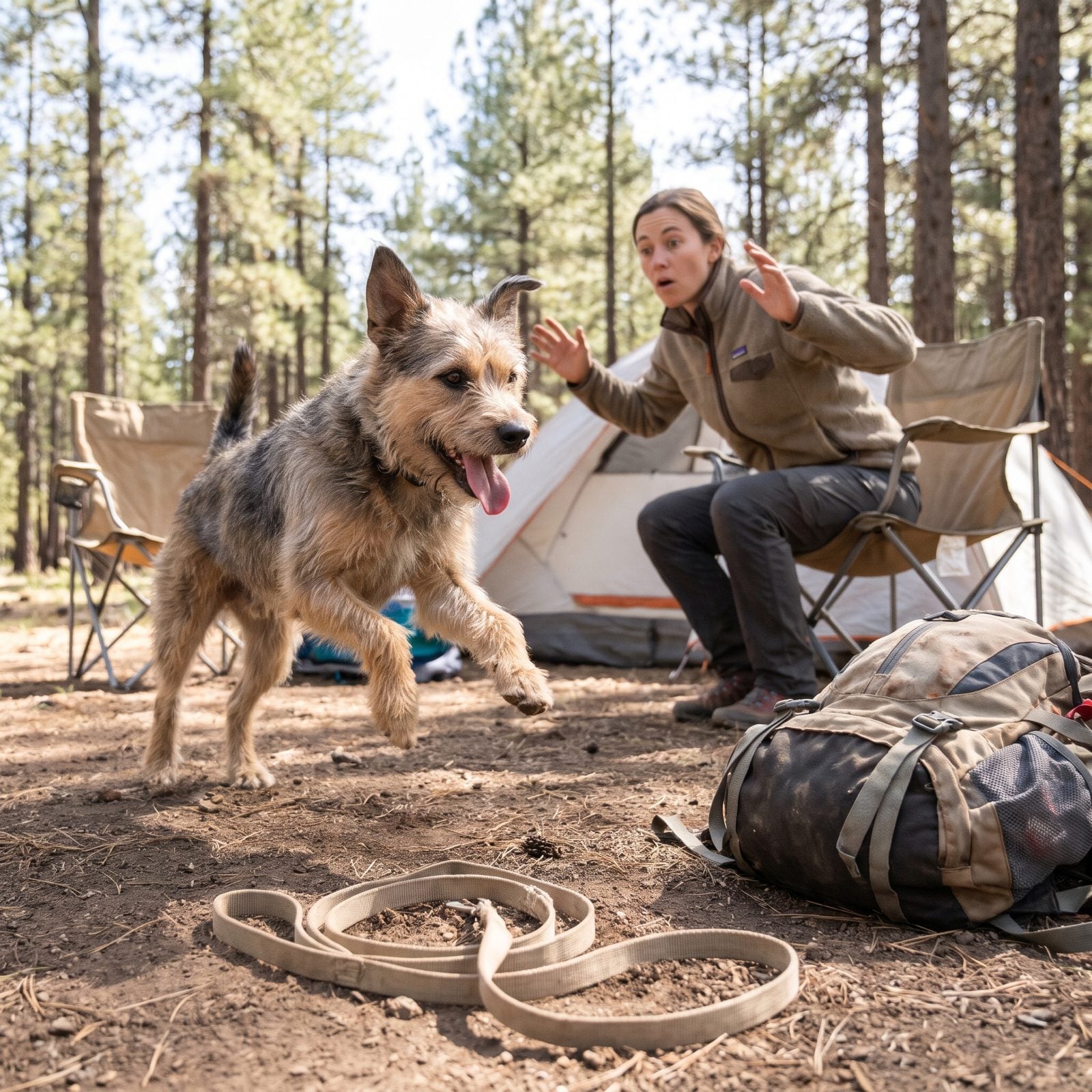
Most campgrounds post a six-foot leash rule, and it isn’t about distrusting your dog. It’s about the dog two sites down that bolts, the toddler on the bike path, and the wildlife your friendly lab would happily chase into traffic.
When a dog roams loose, staff can’t just look the other way. One incident, one bite, one spooked camper, and the host is filing a report instead of raking the fire pits. Loose pets are the fastest way to lose a campground’s pet-friendly policy for everyone.
A spiral ground stake tie-out gives your dog a generous circle of freedom while keeping the rule honest. Add a shaded water bowl and your pup has a proper camp spot. Hosts notice the campers who keep dogs leashed, and they remember them warmly.
6. Hate: Abandoning Pet Waste, Love: Bagging and Binning It Immediately
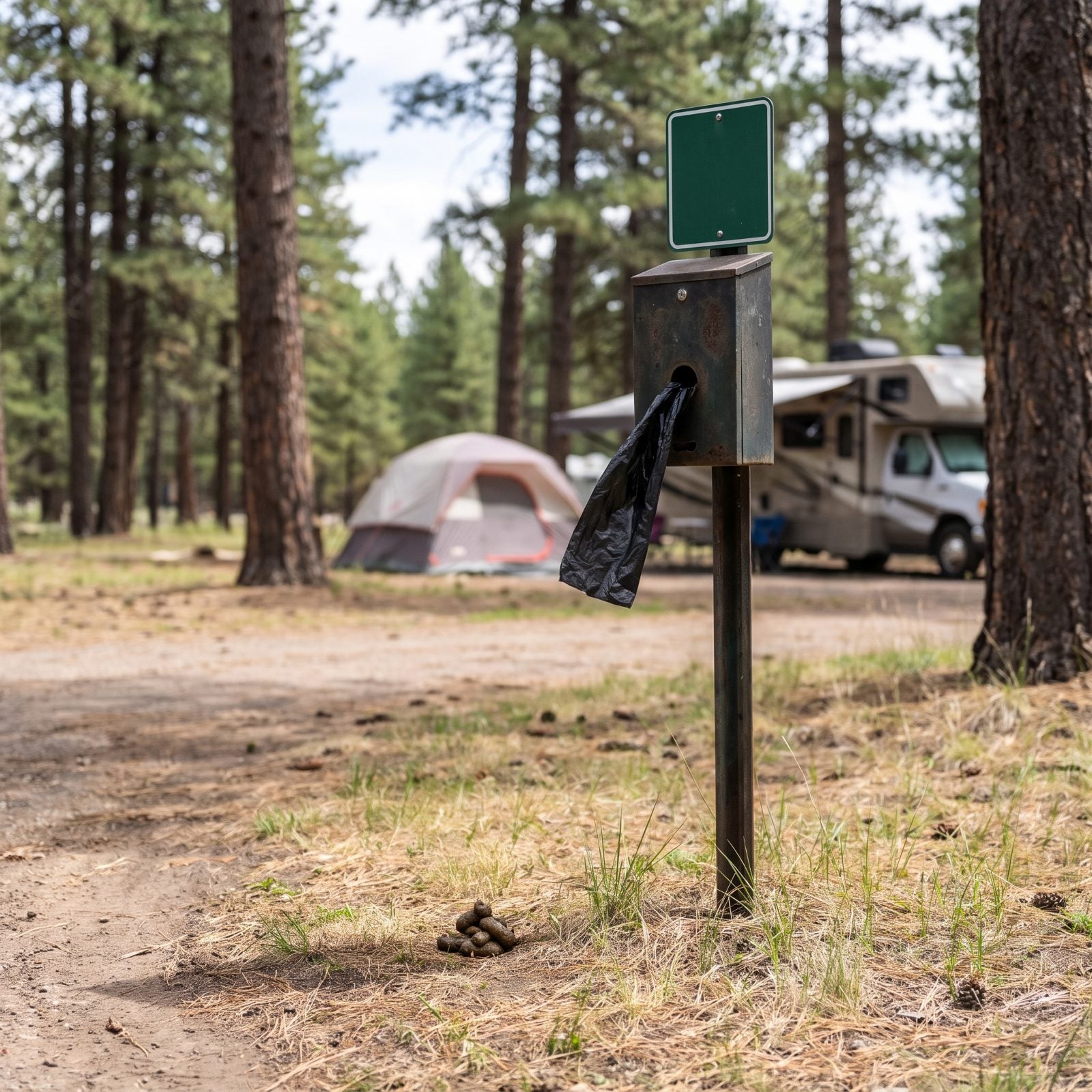
Nobody wants to talk about this one, so let’s be quick. The grassy strip between sites doesn’t clean itself, and the maintenance crew mowing it at 7am are the ones who find what you left.
Abandoned waste fouls the exact common areas kids play in and kills the grass hosts work hard to keep green. It’s also the complaint that gets the most eye-rolls at the office, because the fix is a plastic bag.
Clip a leash-mounted bag dispenser so you’re never caught without one. Bag it on the spot, walk it to the nearest station, done. Twenty seconds, and it’s the single easiest way to be the camper staff quietly appreciate.
5. Hate: Allowing Nonstop Barking, Love: Calming or Taking the Dog Inside
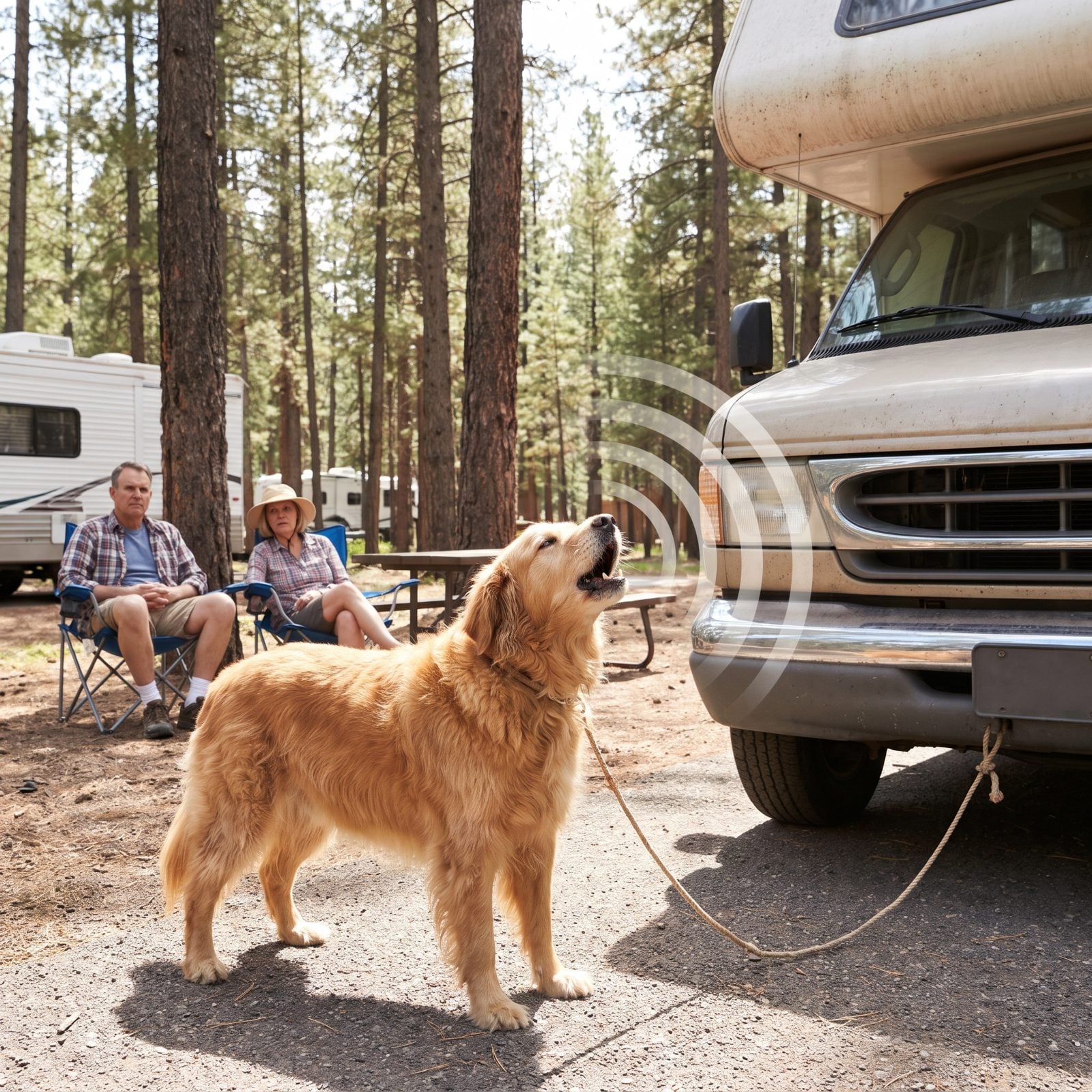
A bark or two is nothing. The problem is the dog left tied outside an empty rig while the owners head to the lake, barking at every squirrel, golf cart, and gust of wind for three straight hours.
That sound travels across the whole loop, and the host ends up fielding a dozen complaints about a dog whose owners aren’t even there to answer the door. Genuinely hard situation for staff to resolve.
If your dog’s an anxious barker when you leave, bring them inside the cool, quiet rig with a chew and the fan running. A tired dog from a long morning walk barks far less. And honestly? If your pup can’t settle when you step away, that’s worth knowing before you book a tight campground loop.
4. Hate: Racing Bikes Around Blind Corners, Love: Riding Slowly and Predictably
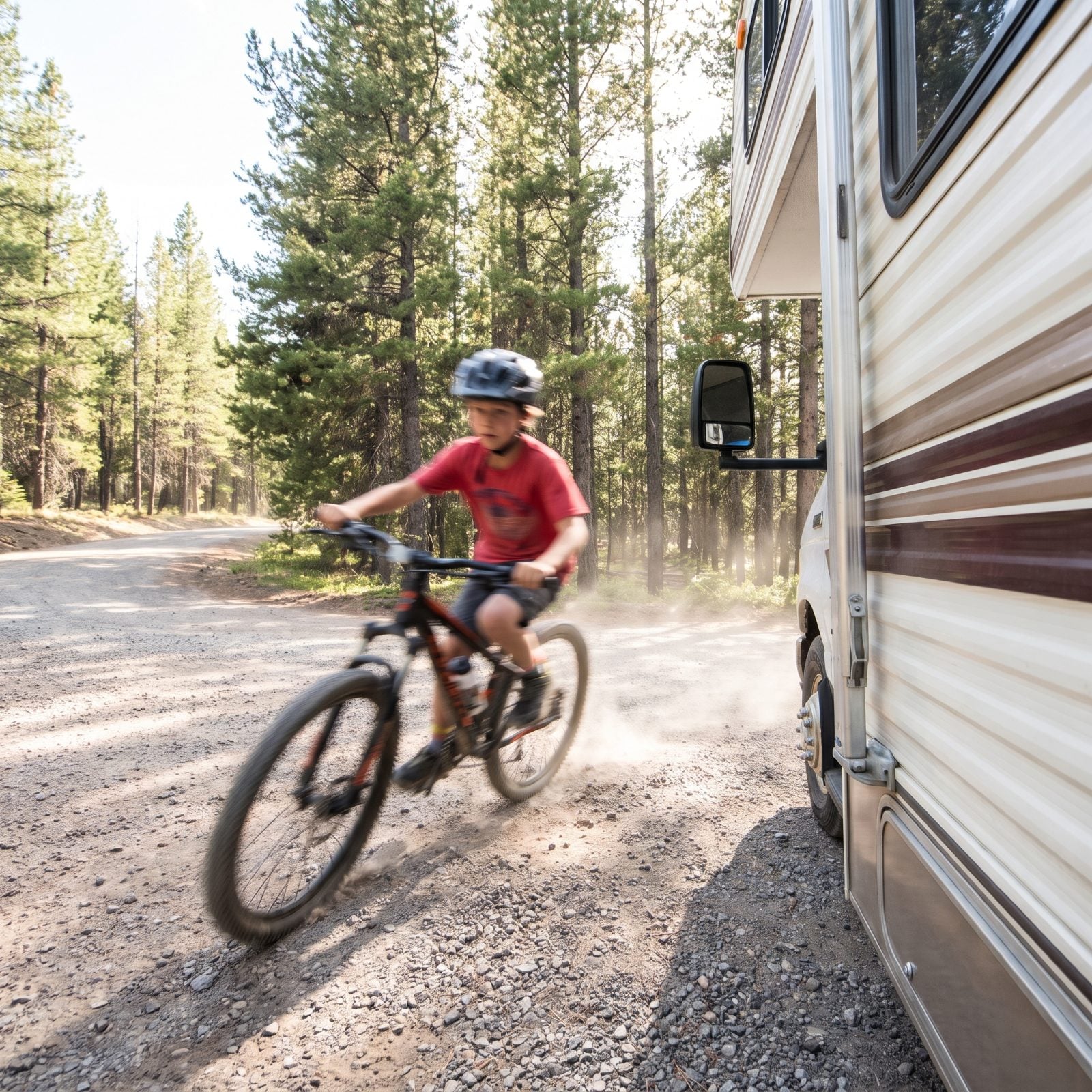
Campground roads bend around trees and parked rigs, and the kid who takes those corners at full tilt can’t see the family backing a trailer into site 14.
Near-misses like that are how a host’s afternoon turns into an incident report and a tense sit-down with worried parents. Gravel loops throw bikes, backing RVs, tow vehicles, and toddlers onto the same narrow lane, so blind speed is the thing staff dread most.
Keep to the right, slow at every bend, and ride like someone might be around the corner, because someone usually is. Teach the kids the same. Predictable riders are invisible to the office in the best possible way, and that’s exactly what you want to be.
3. Hate: Concealing Accidental Damage, Love: Reporting It Promptly
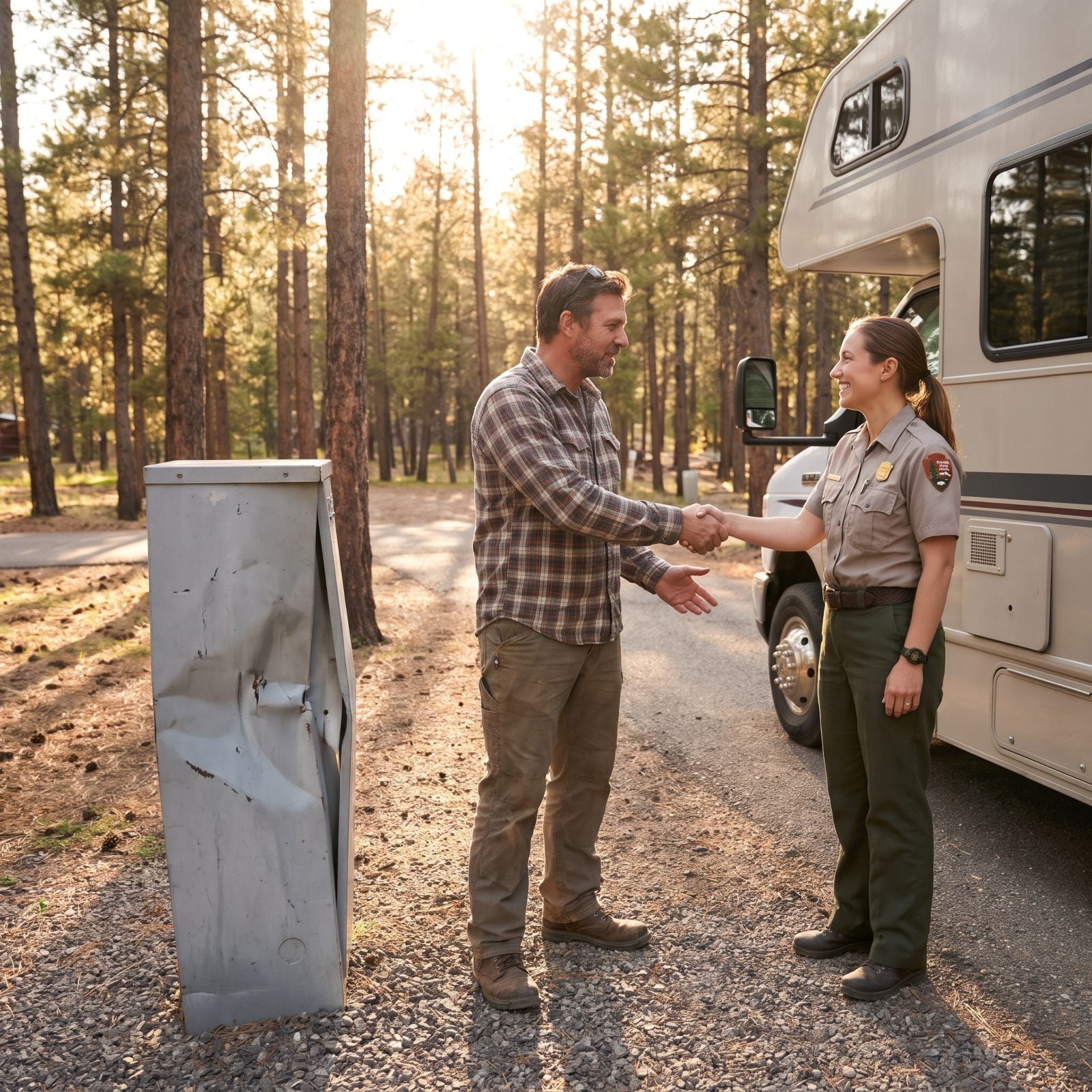
Stuff happens. You clip the electrical pedestal backing in, a slide-out catches a low branch, an awning arm bends in a gust. The accident isn’t the problem. Hiding it is.
Cover up the damage and let the next camper discover it, and someone plugs into a cracked pedestal or trips on a hazard nobody flagged. Staff lose the chance to fix it safely, and all that goodwill evaporates in a hurry.
The host who hears about it the same day is far friendlier than the one who finds it three weeks later.
Walk to the office and say what happened. Most campgrounds are remarkably understanding about honest accidents, and plenty won’t even charge for normal wear. The report protects the next person, and it protects your reputation at a place you might want to book again.
2. Hate: Staying Past Checkout Without Asking, Love: Requesting Extra Time Early
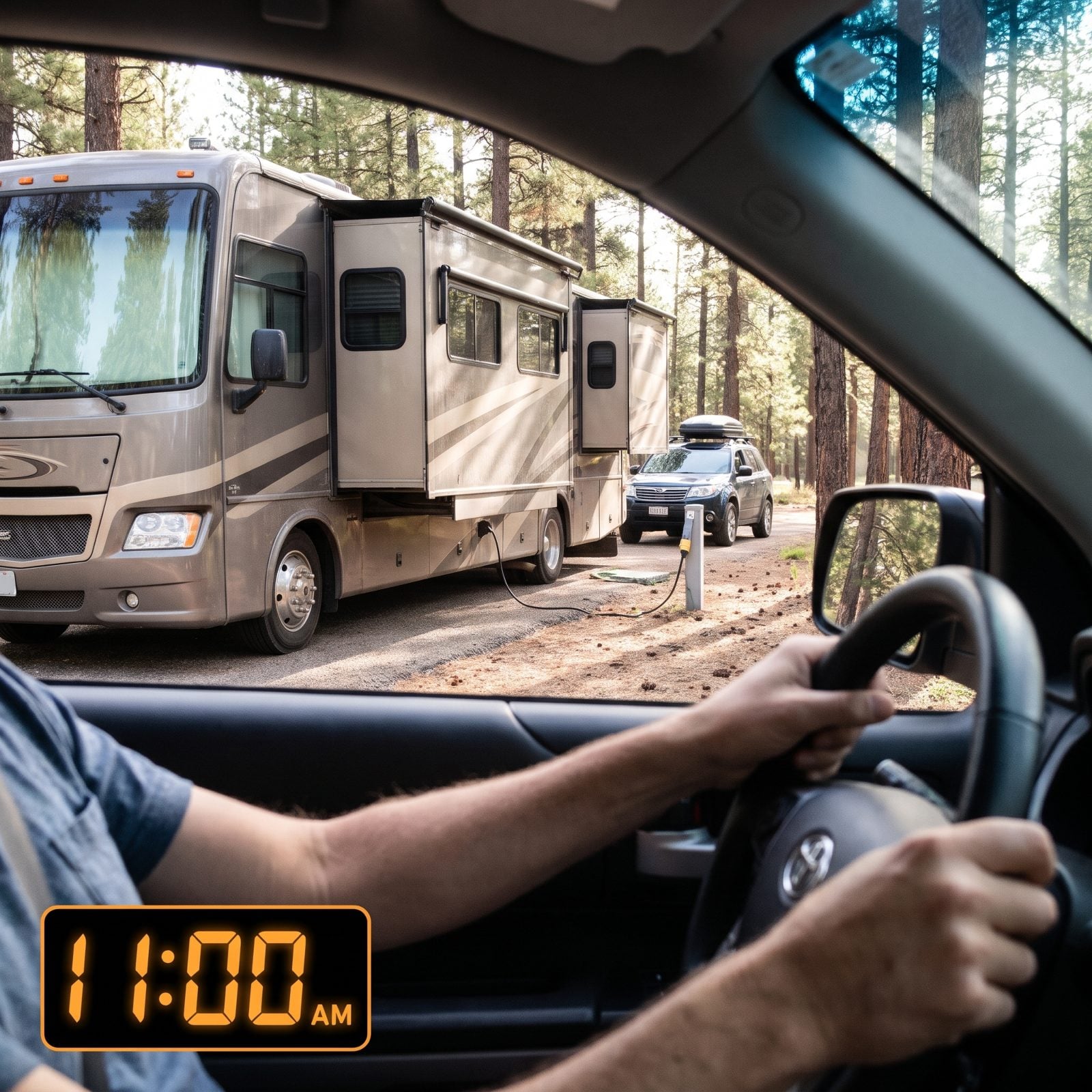
Checkout is 11am at most campgrounds, and it’s not an arbitrary number. There’s a family checking into your exact site at 1pm, and the crew needs that window to clean the pad and reset the fire ring.
Linger past checkout without a word and you’ve handed the host a logistics knot to untangle with two sets of campers at once. That’s the morning nobody at the front desk wants.
The move is almost comically easy: ask the night before or at breakfast. “Any chance of a late checkout tomorrow?” Half the time the site’s open and they’ll wave you off, no charge. The other half, they’ll tell you it’s booked, and now you both have a plan. Asking early is the whole game.
1. Hate: Departing With a Littered Campsite, Love: Doing a Final Walkaround
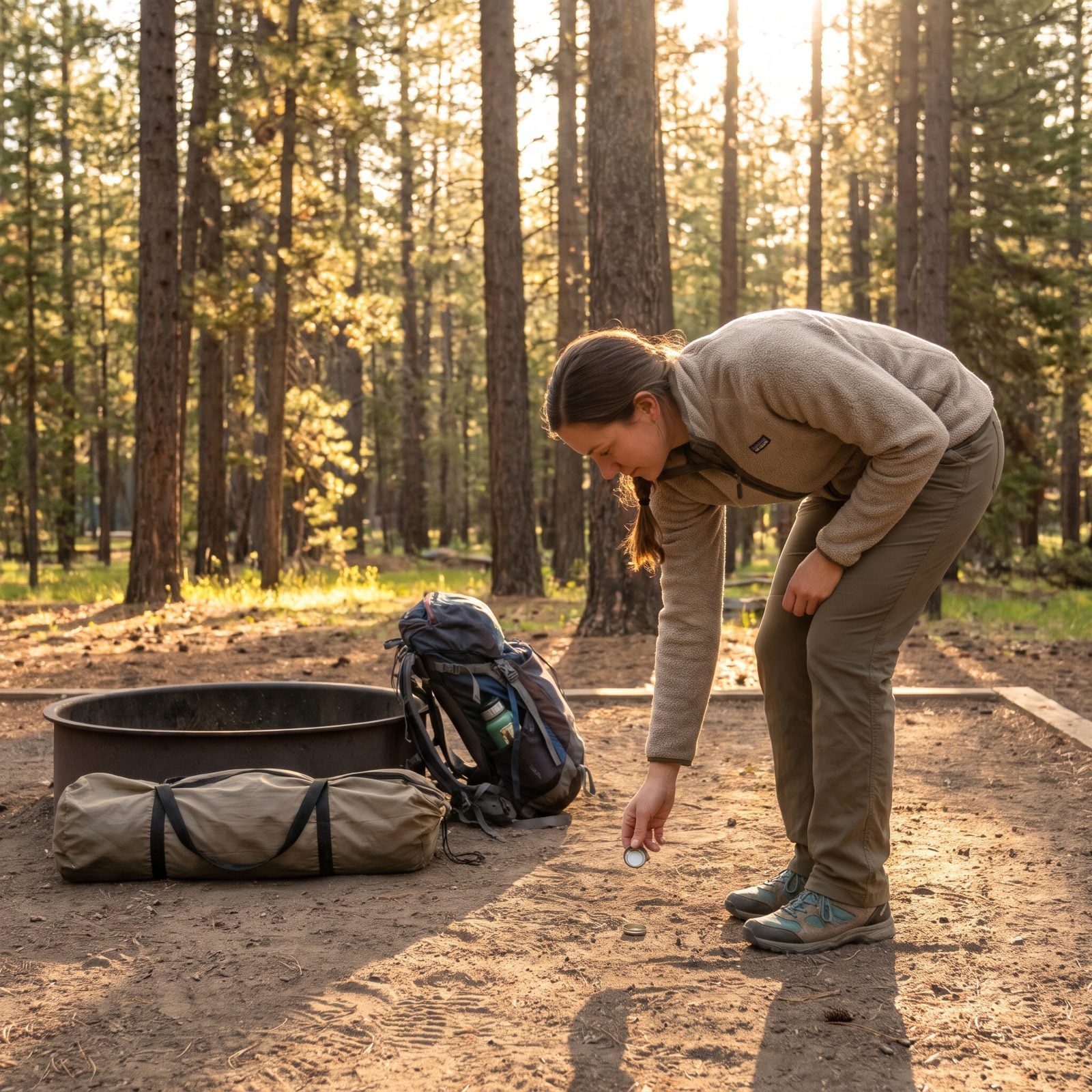
The hitch is on, the kids are buckled, the coffee’s in the cup holder. And that’s exactly when the bottle caps in the grass, the twist-tie by the fire ring, and the scrap of foil under the picnic table get left behind.
Small litter eats the most maintenance-crew time between guests, and it’s almost always the stuff a departing camper never bothered to look for. It also pulls raccoons and jays right into the next family’s site.
Before you pull out, do one slow lap of the pad. Check under the table, around the fire ring, in the grass where the cooler sat. Haul any firewood scraps to the bin and leave the ashes cold. A clean site is the quiet signature of a camper hosts hope comes back, and it’s the easiest reputation you’ll ever earn.