
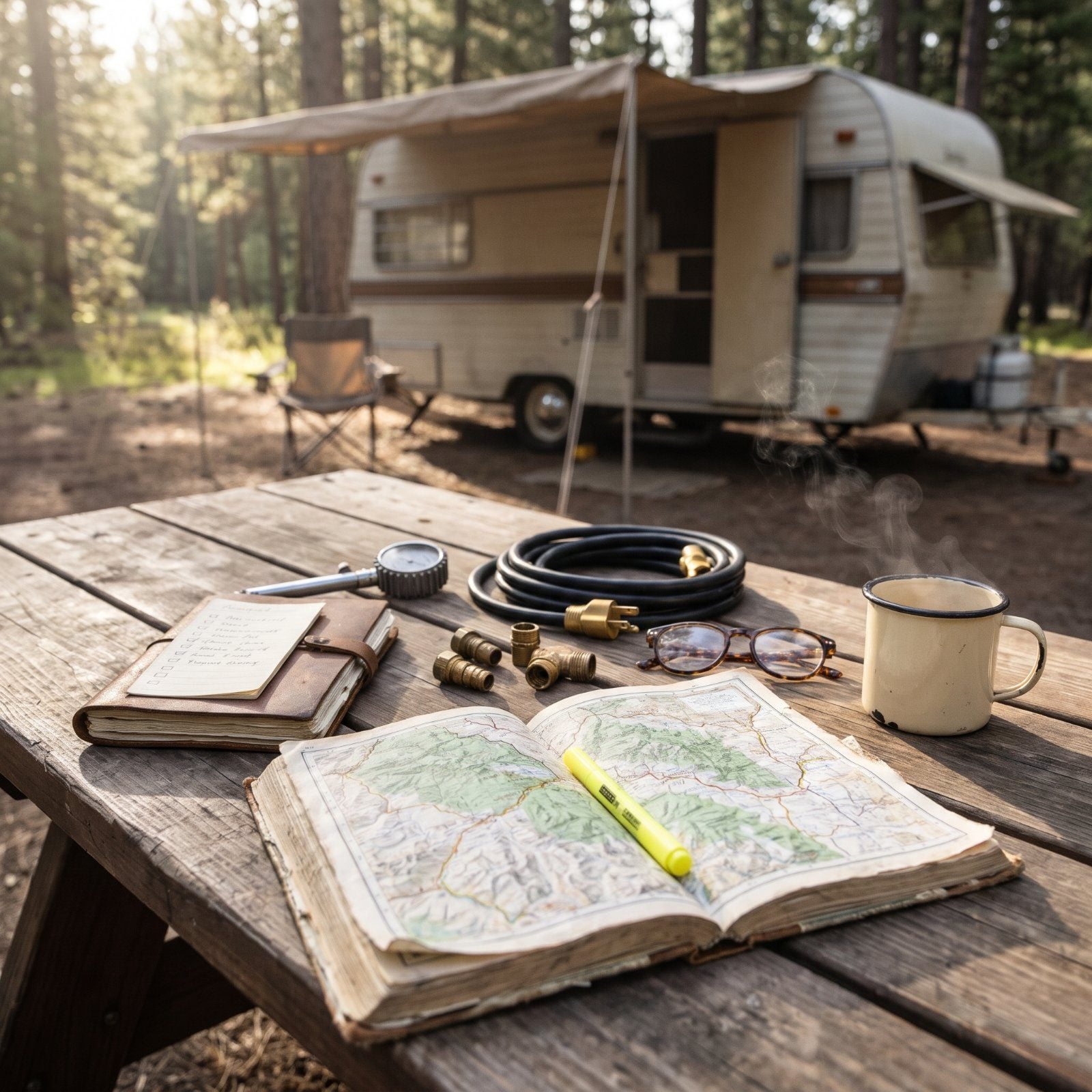
The first flat tire teaches you more than any salesman ever did. So does the first time you back into a wedge of a campsite in the dark while your partner waves a flashlight and insults your steering. Full-time RV life rewards the people who listened to the ones who went before them, and it punishes the ones who insist on learning everything the hard way. The lessons below come from folks who have logged years on the road and blown out bearings on the shoulder of a highway, yet still wake up glad they sold the house. Here is what they wish somebody had told them sooner.
Please note that some of the images in this article were created with the assistance of AI.
35. Pick a Floor Plan That Works on Rainy Days
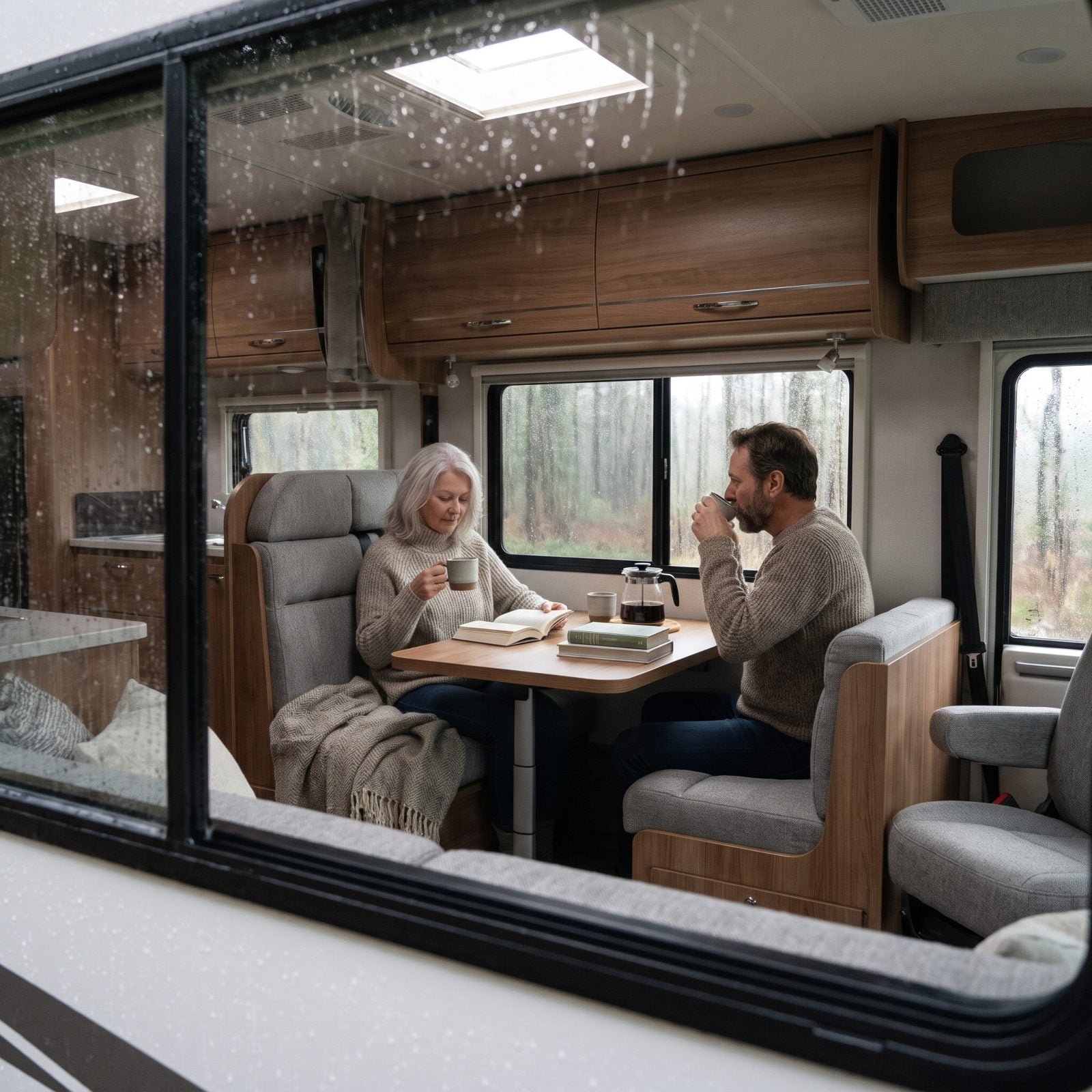
You will spend more days trapped inside than any brochure admits. Weather happens, and the rig that felt roomy at the dealership turns into a hallway the moment it rains for three days straight.
Here is the test nobody tells you to run. Can one person cook while the other reads without playing a constant game of excuse-me? Can you both slip past each other with the slides pulled in? Floor plans that only breathe when the slides are extended leave you miserable at rest stops and overnight parking. Look for a usable path from bed to bathroom to coffee pot with everything tucked tight.
34. Pay for an Independent Inspection Before Buying
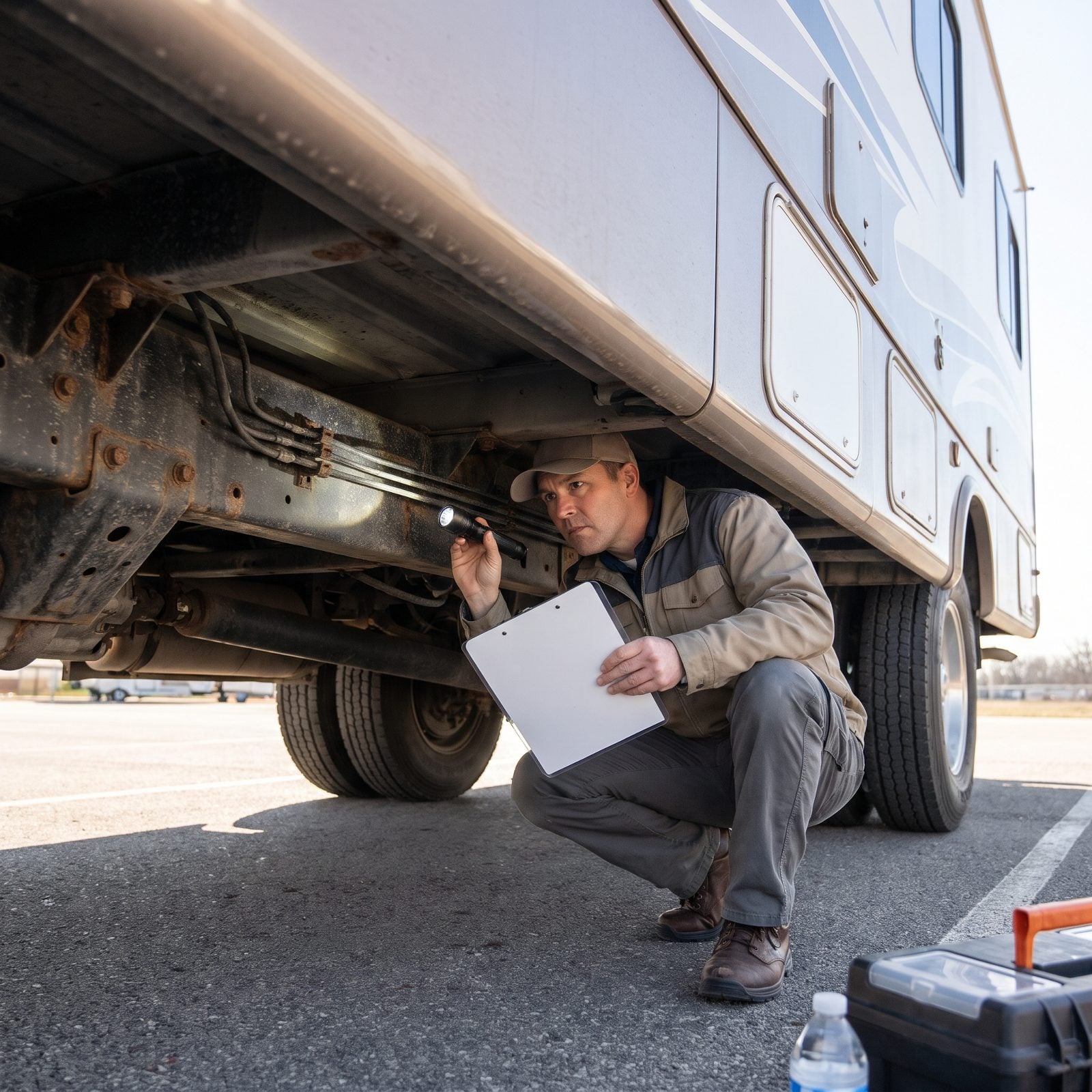
An independent inspection is the cheapest insurance in this whole hobby. A thorough one runs a few hundred dollars, and that money either gives you leverage at the table or buys you a clean exit.
Dealers inspect to sell. An inspector you hire works for you. He climbs the roof, drags the moisture meter across every seam, runs the appliances, and tells you what the showroom lighting was busy hiding. Water intrusion quietly destroys RVs, and by the time you can smell it, the walls have already gone soft.
Explaining why dealers don’t always welcome third-party checks, an independent RV inspector notes “Independent RV inspections can uncover issues that may slow down or even stop a sale.”
33. Trust the Payload Sticker, Not the Brochure
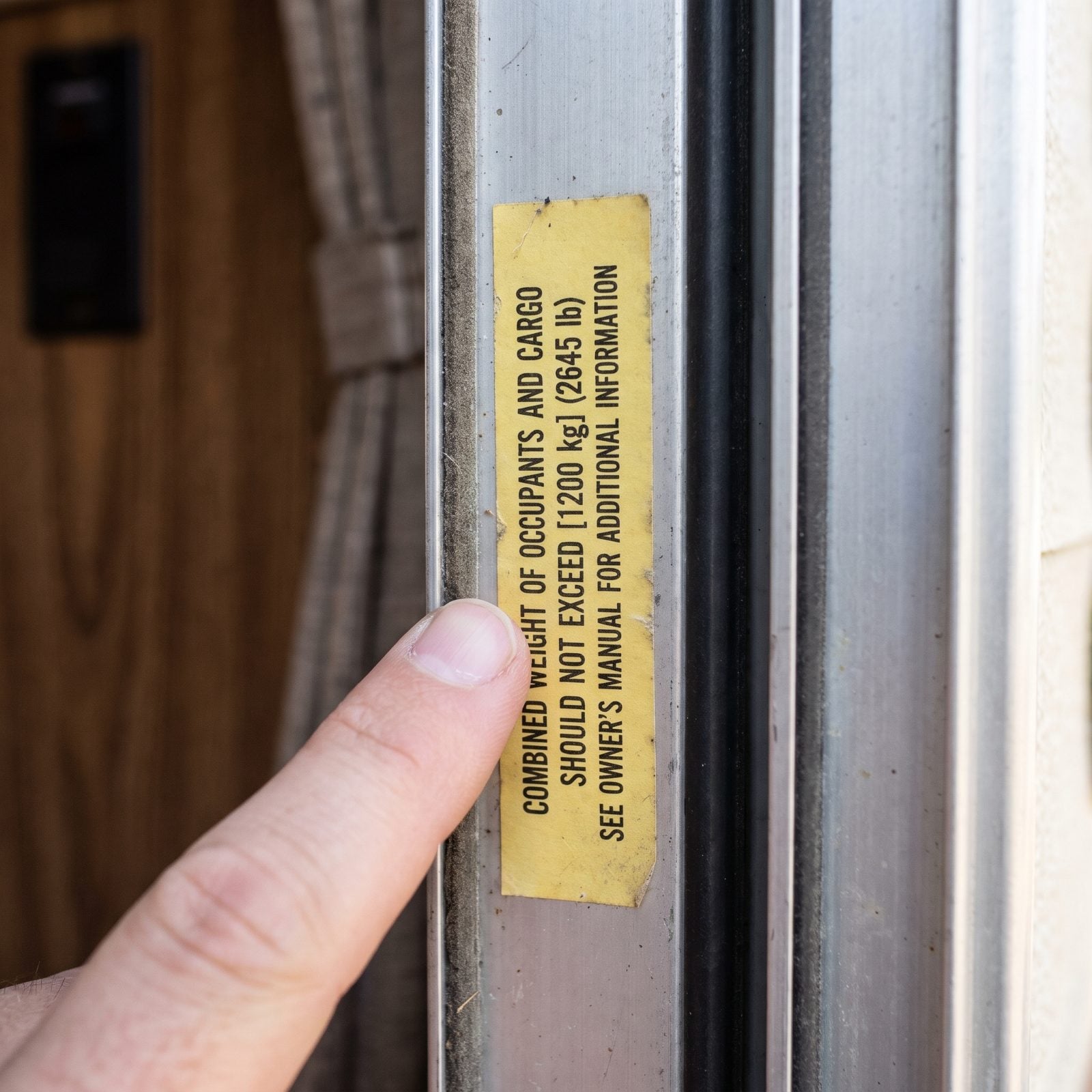
The brochure sells you a dream weight. That yellow sticker inside the doorframe tells you the truth.
What it lists is what you can actually carry after the factory already loaded the rig with options, propane, and water. People buy a trailer rated to tow fine, then pile on a thousand pounds of gear, fill the fresh tank, strap two e-bikes to the back, and suddenly they’re hundreds of pounds over before anyone climbs into the truck. Water weighs roughly eight pounds a gallon. Fill a forty-gallon tank and there’s three hundred-odd pounds you never planned for.
Read the sticker. Do the math. Physics does not care about your optimism.
32. Favor Serviceable Systems Over Fancy Features

The rigs loaded with touchscreens and app-controlled everything look great right up until something fails in a town with no cell signal and no dealer within two hundred miles.
Veterans learn to love the boring stuff. A manual water valve. A fuse you can swap yourself. A furnace you can actually reach when it sulks. When a part breaks, the question isn’t how impressive it was, it’s whether you can fix it in a gravel lot with the tools already in your bay. Fancy features pile on failure points and repair bills, while simple systems keep you rolling.
We’ll say it plainly: that slick automated panel is the first thing to strand you.
31. Arrive While There Is Still Daylight
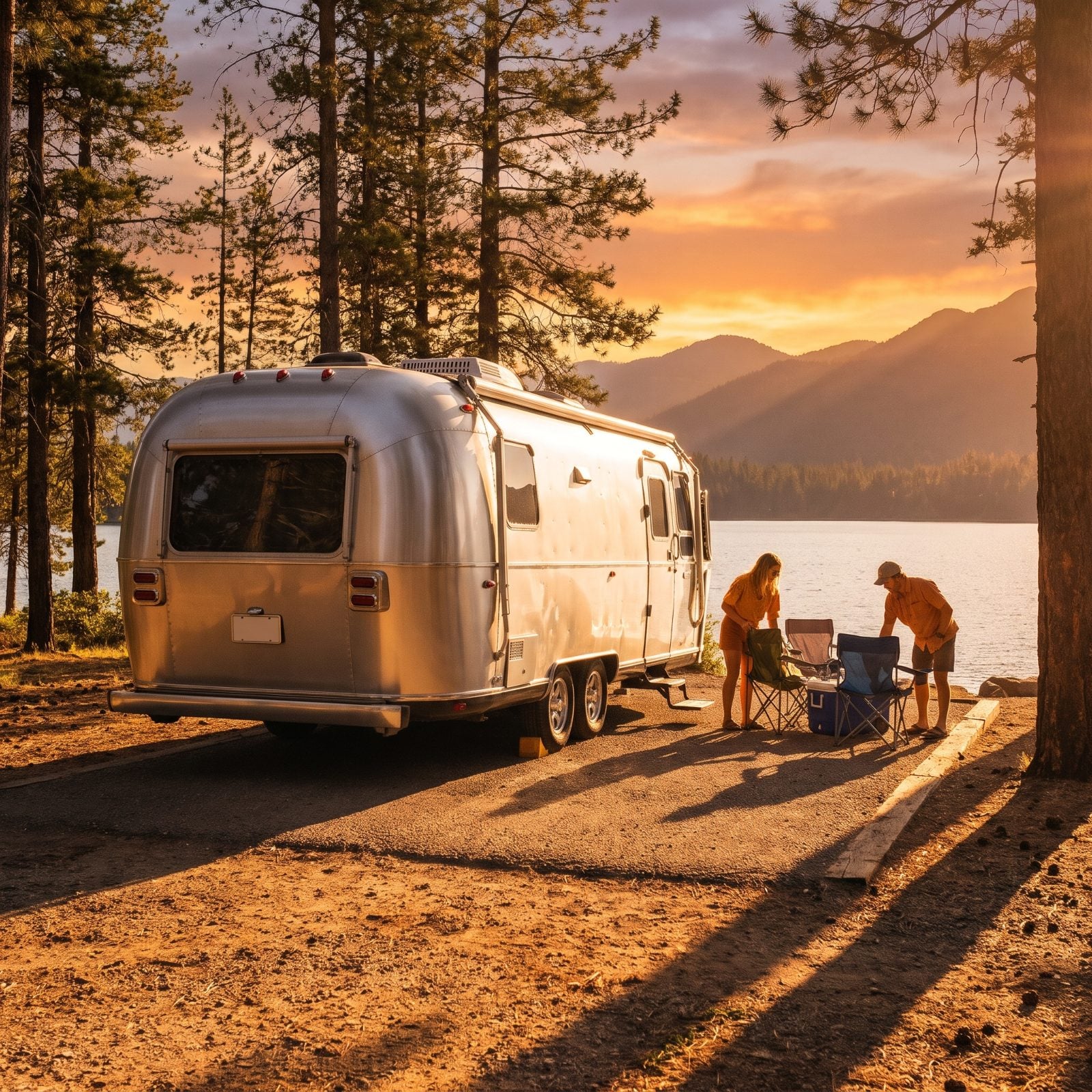
Everything is harder in the dark. Finding the site number, reading the hookup posts, judging the tree branches, backing into a slot you can’t fully see. Headlights flatten the world and hide the slope that’ll have you sleeping on a tilt.
So plan arrivals for well before sunset. Daylight lets you level, set up, and spot problems while you can still solve them, and it hands you margin when the drive runs long, which it always does.
30. Walk the Site Before You Back In
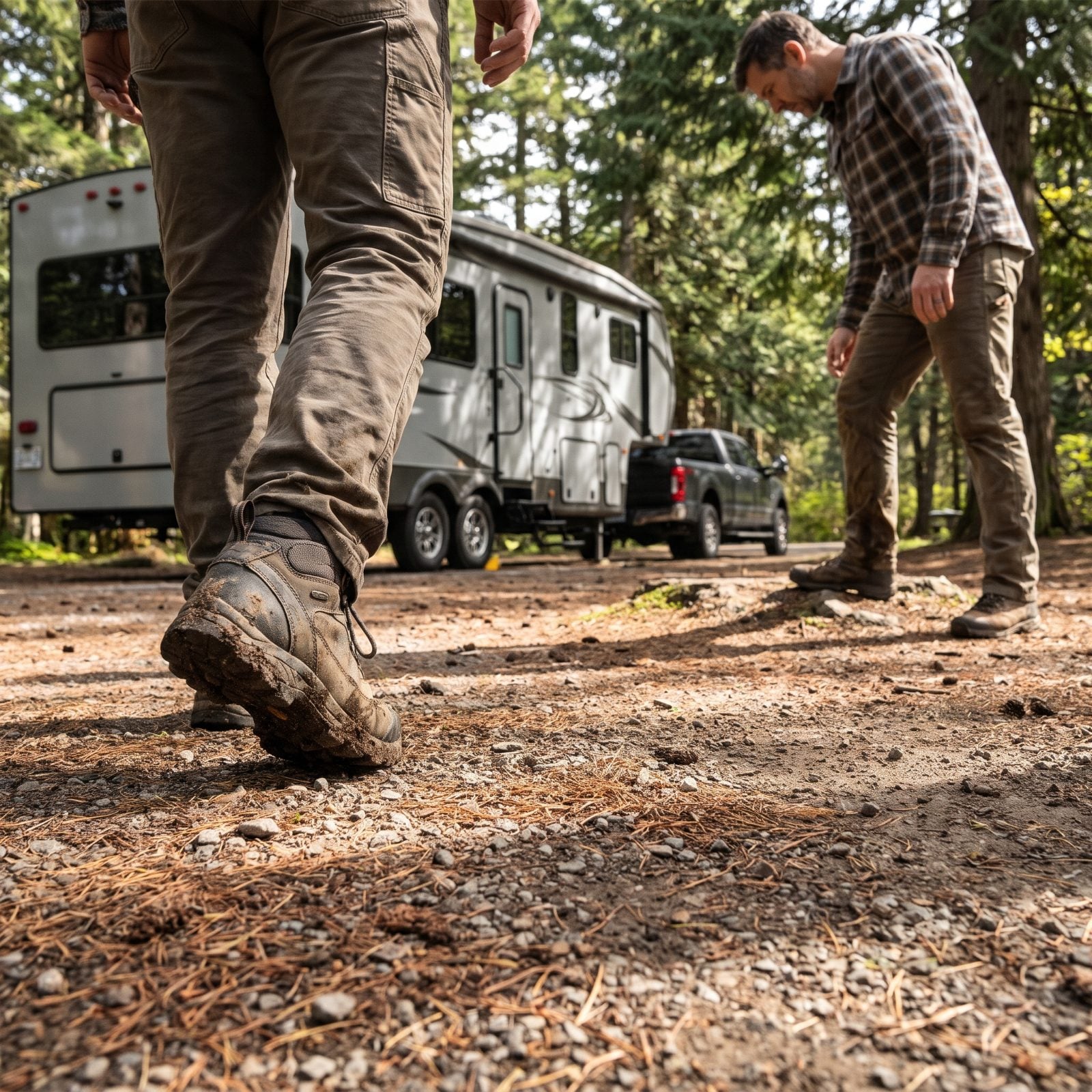
Thirty seconds on foot saves thirty minutes of regret.
Walk the site before you commit the rig to it. You’re hunting for low branches that will scrape your roof AC, a pedestal on the wrong side, soft ground that will swallow your jacks, a slope no leveling block can fix, and the rock nobody mentioned. Pace out the length while you’re at it. Plenty of sites advertised as big-rig friendly were measured by someone who’d never towed a thing.
Skip this step and sooner or later you’ll pay for it with a dented roof vent and a lot of swearing.
29. Keep Separate Arrival and Departure Checklists
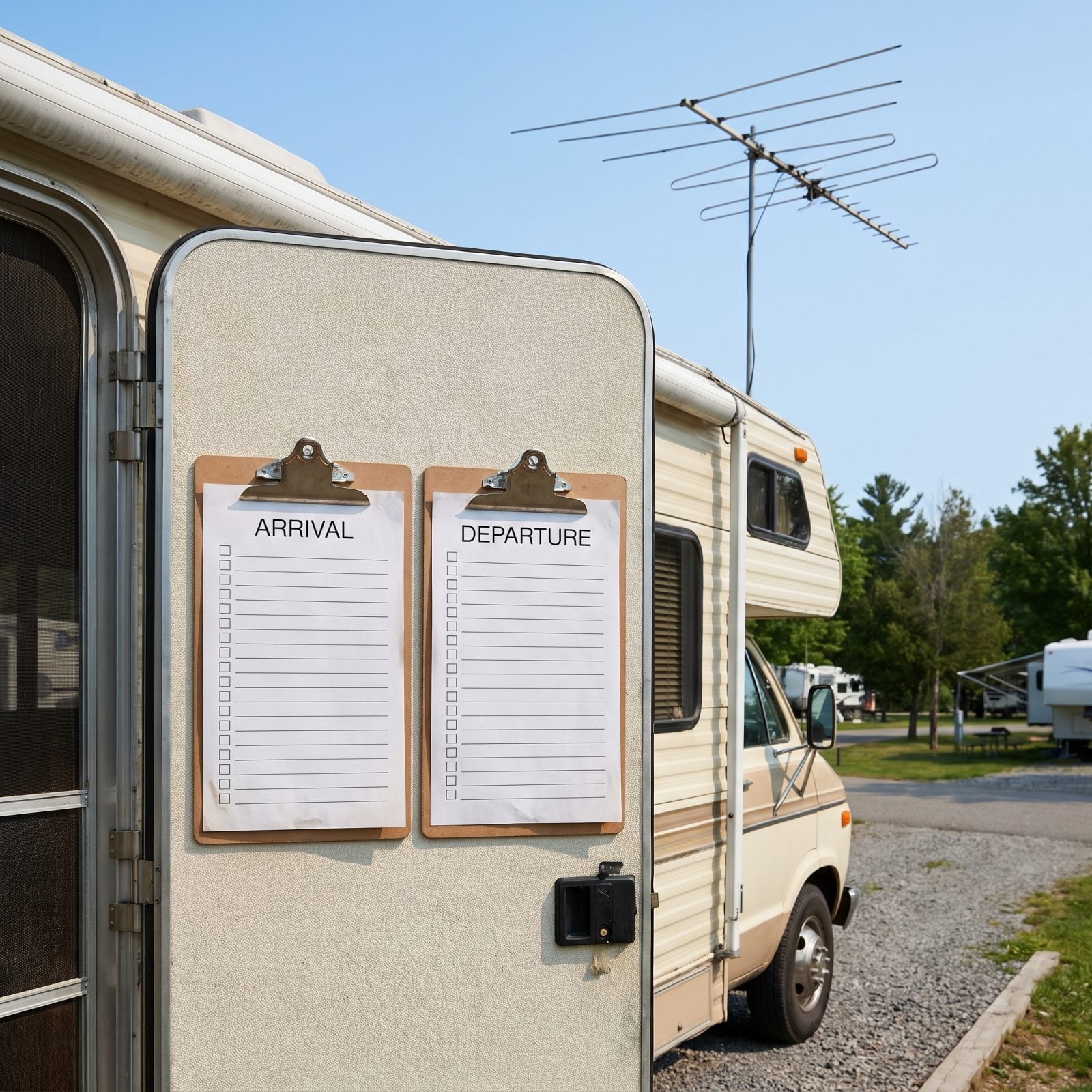
The expensive mistakes almost always happen at departure. Antenna still up. Steps still down. Power cord still plugged into a pedestal you’re about to drag down the road.
One list for arriving, one for leaving, and you run both every single time no matter how many years you’ve been at this. Complacency is what gets veterans, not inexperience. The hitch that locked itself a thousand times does not care that you were feeling confident on try number one thousand and one.
The driver who skips the checklist because they know it by heart is exactly the one who drives off with the awning out.
28. Let Bad Weather Cancel a Travel Day
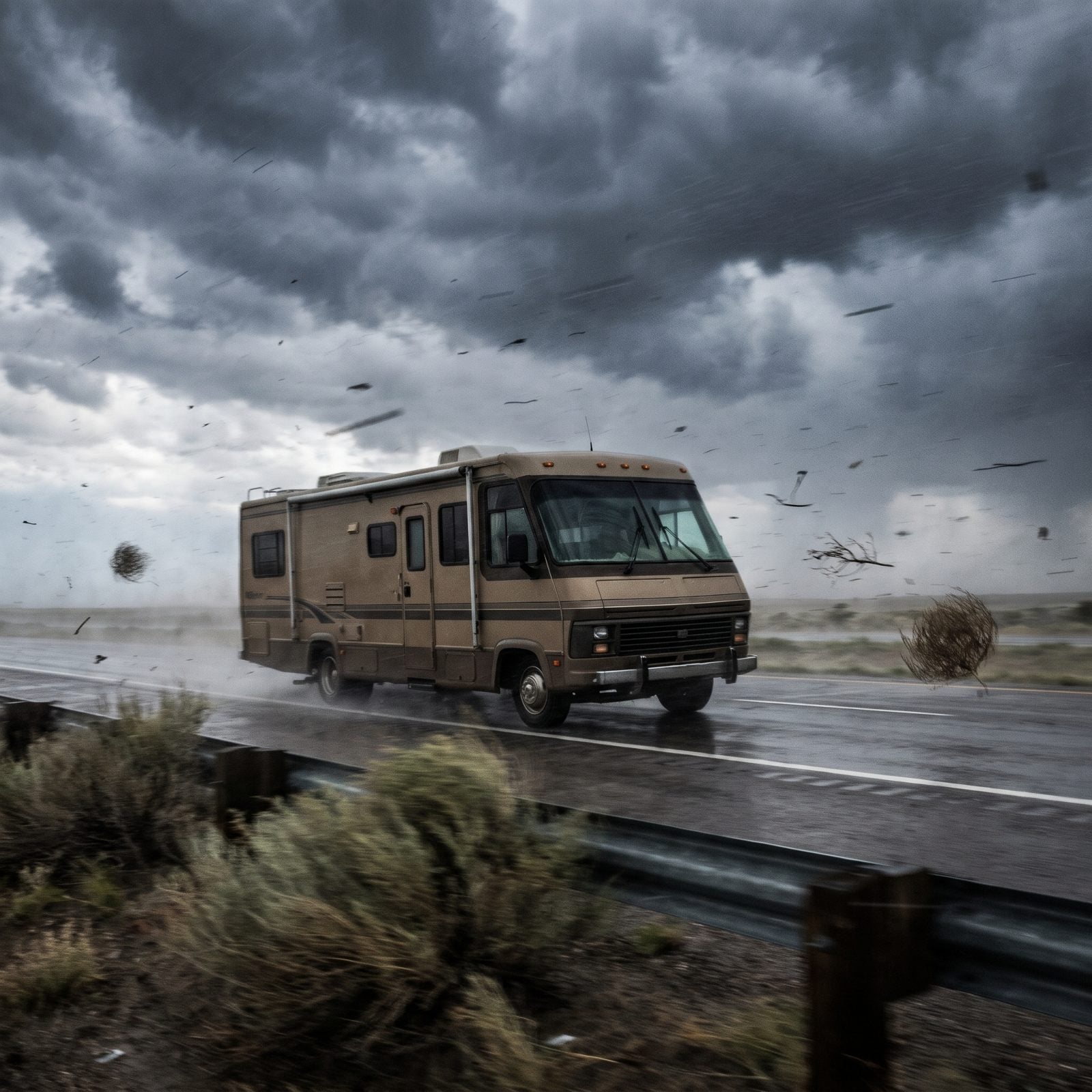
No campsite is worth a white-knuckle drive through crosswinds that try to steer the rig for you.
A tall box on wheels catches wind like a sail. Sustained gusts over roughly twenty-five or thirty miles an hour turn a high-profile rig into something that wanders lanes and wears you out inside of an hour, and ice or heavy rain only makes it worse. The whole appeal of this life is that you’re not on anybody’s schedule.
Pay the extra night. Stay put. The road will still be there tomorrow, and tomorrow it’ll probably be dry.
27. Check Low Clearances and Steep Grades Before Routing
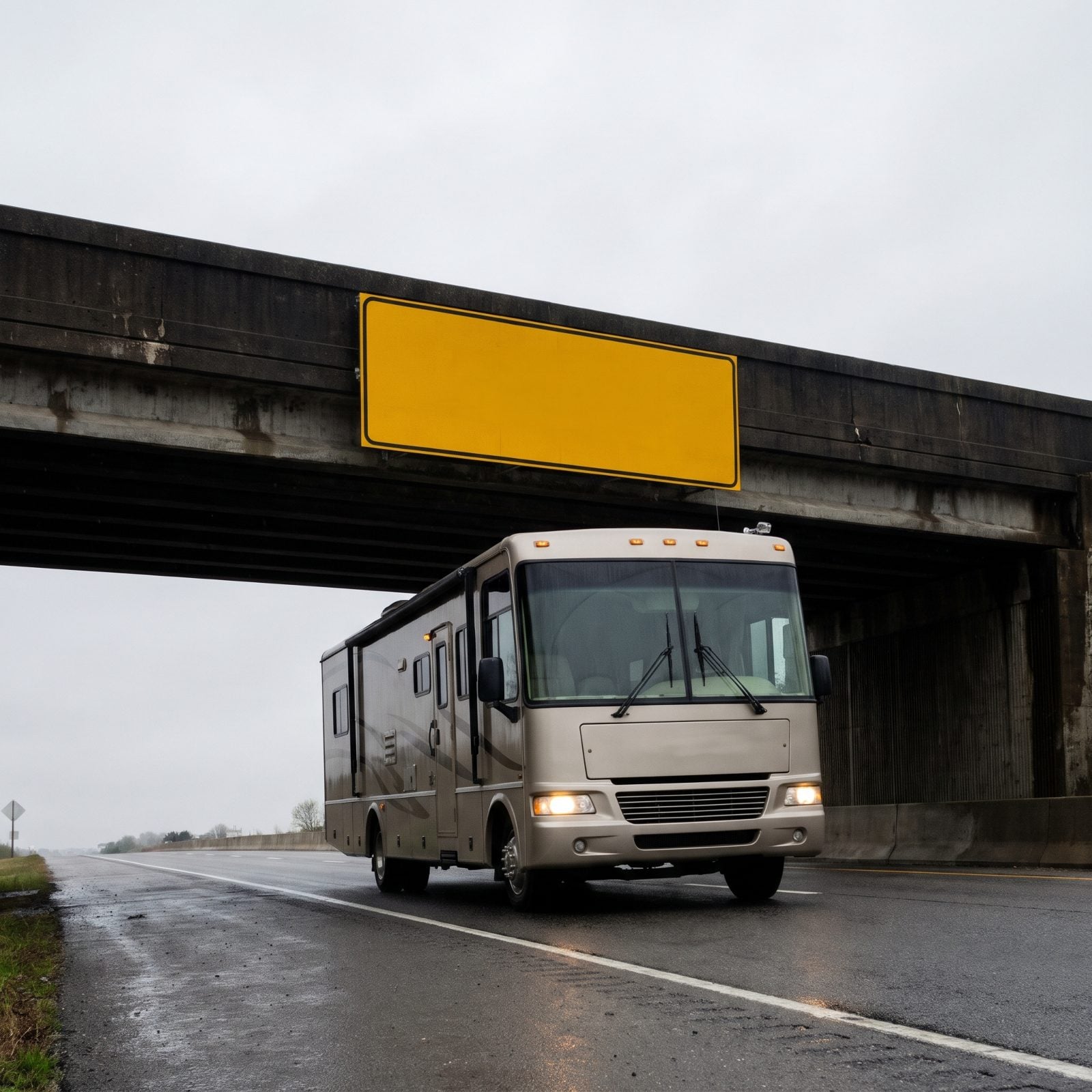
Your car GPS has no idea your rig stands thirteen and a half feet tall. It will cheerfully send you under an eleven-foot railroad bridge and peel your air conditioners off like the lid on a can.
Route with tools built for big rigs instead. Enter your true height, length, and weight, and the software steers you clear of low clearances, weight-limited bridges, and the mountain grades that cook brakes on the way down.
Three things to look up before every leg
- Bridge and tunnel clearances on your route, with a foot of margin
- Steep grades and the engine-braking plan for the descent, not just the climb
- Low branches and tight turns at your actual destination, which no map shows
26. Replace Tires by Age, Not Just Tread Depth
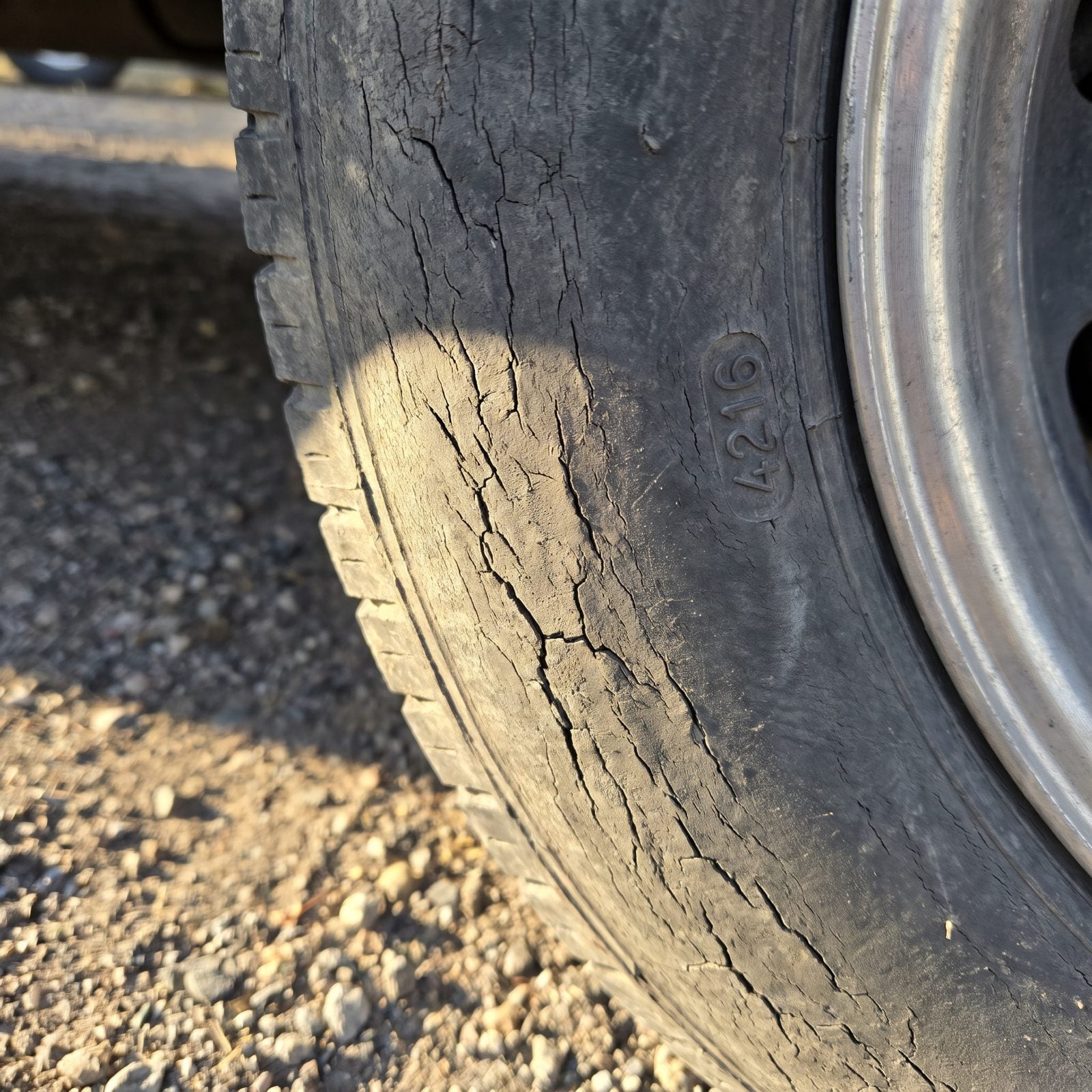
This is the one that gets people stranded. RV tires age out long before they wear out. A rig that sits for weeks between trips puts almost no miles on rubber that’s slowly baking in UV and oxidizing from the inside, so the tread stays deep while the rubber quietly gives up.
Most tire makers and RV techs will tell you to swap them somewhere in the five-to-seven-year window no matter how much tread is left. Check the DOT code on the sidewall. The last four digits are the week and year it was built. A tire with gorgeous tread and a 2017 date is a blowout waiting for the right hot afternoon.
25. Inspect Your Roof Seams on a Fixed Schedule
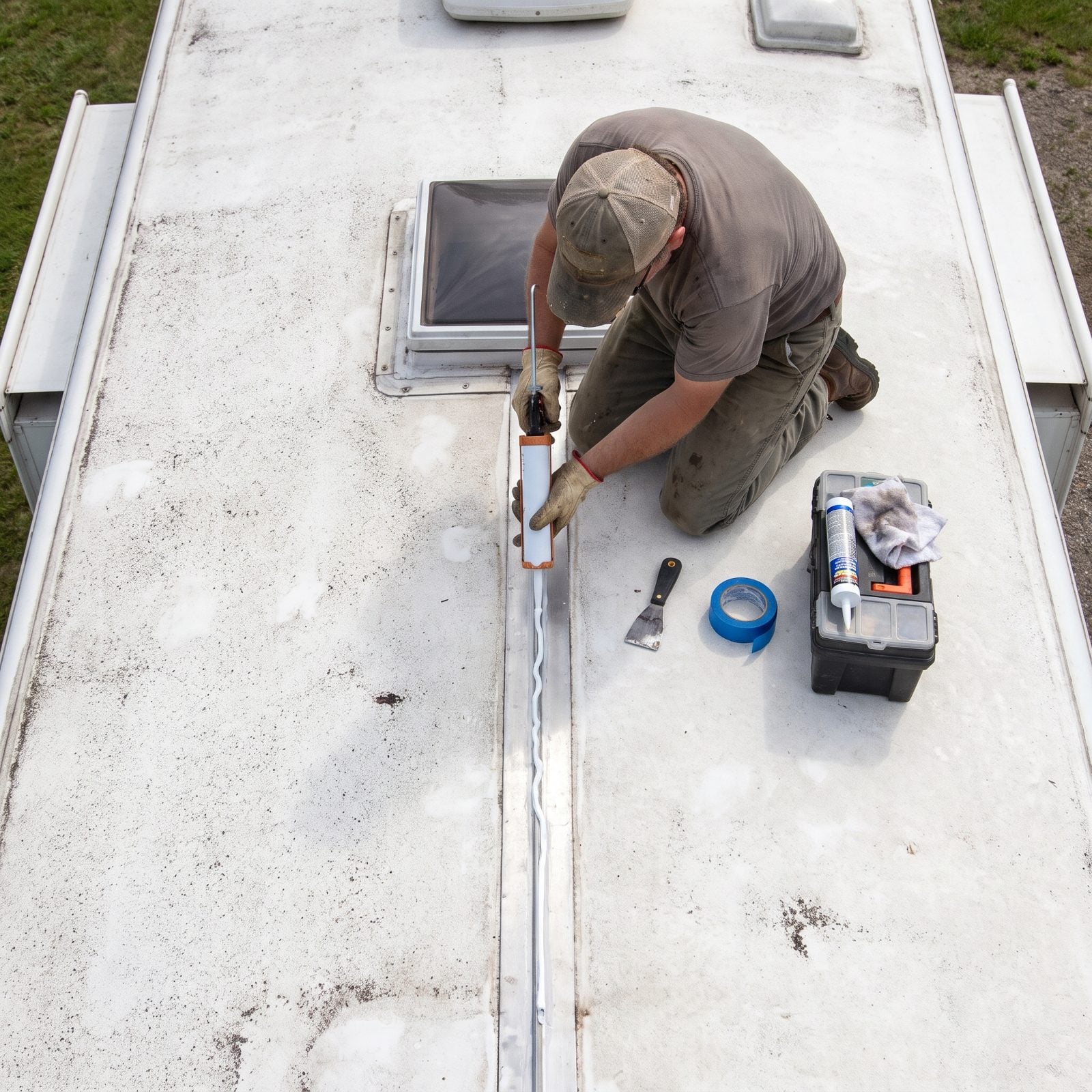
Water doesn’t knock. It finds a hairline crack in your roof sealant, slips into the ceiling, and you don’t know a thing until the headliner goes soft and brown over your bed.
Veterans get up on the roof every few months and after any long haul through heat or cold, hunting for cracked, pulled, or chalky lap sealant around every vent, skylight, antenna, and edge. A fresh bead of self-leveling sealant costs a few dollars. Rotted roof decking and a gutted interior rebuild runs into the thousands.
Do it on a cool morning so the roof isn’t a frying pan under your knees. And near the edge, tie yourself to nothing fancier than common sense.
On how often to check and reseal the roof, one RV repair shop owner says “Some manufacturers recommend every 30 days, others every 90 days. That number depends on use and weather conditions.”
24. Build a Repair Fund Before You Build an Upgrade Fund

New owners dream about solar, a bigger inverter, fancy gadgets. The road has other plans. It serves up a failed slide motor, a dead fridge, an axle issue — and it does this before you’ve had time to miss the gadgets.
Set aside money for things breaking before money for things getting better. Park a few thousand dollars somewhere you won’t touch it, because RV repairs land harder and faster than house repairs do.
23. Choose Roadside Assistance That Actually Covers Your Exact Rig
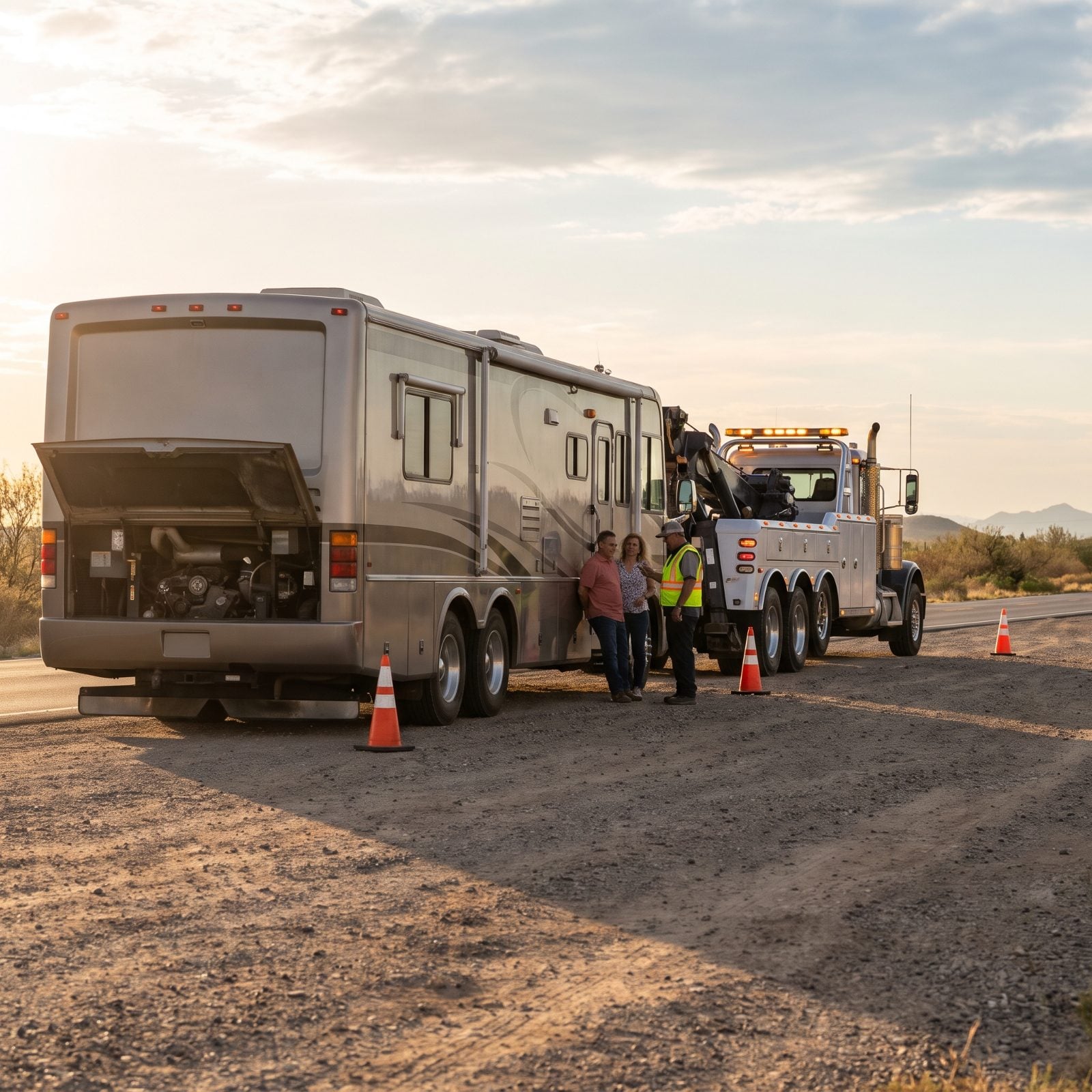
Plenty of roadside plans will happily take your money and then send a truck that can’t legally tow 20,000 pounds of motorhome. You find this out at the worst possible moment, usually while blocking a lane with traffic piling up behind you.
Read the fine print. Weight limits, length limits, whether they’ll haul you to a shop that can actually work on an RV instead of the nearest lot. Ask specifically if they cover your tow vehicle and your trailer as separate units.
A cheap plan that doesn’t fit your rig is worse than no plan at all. It hands you a false sense of safety right up until you need it.
22. Carry Spares for the Failures That Can Strand You
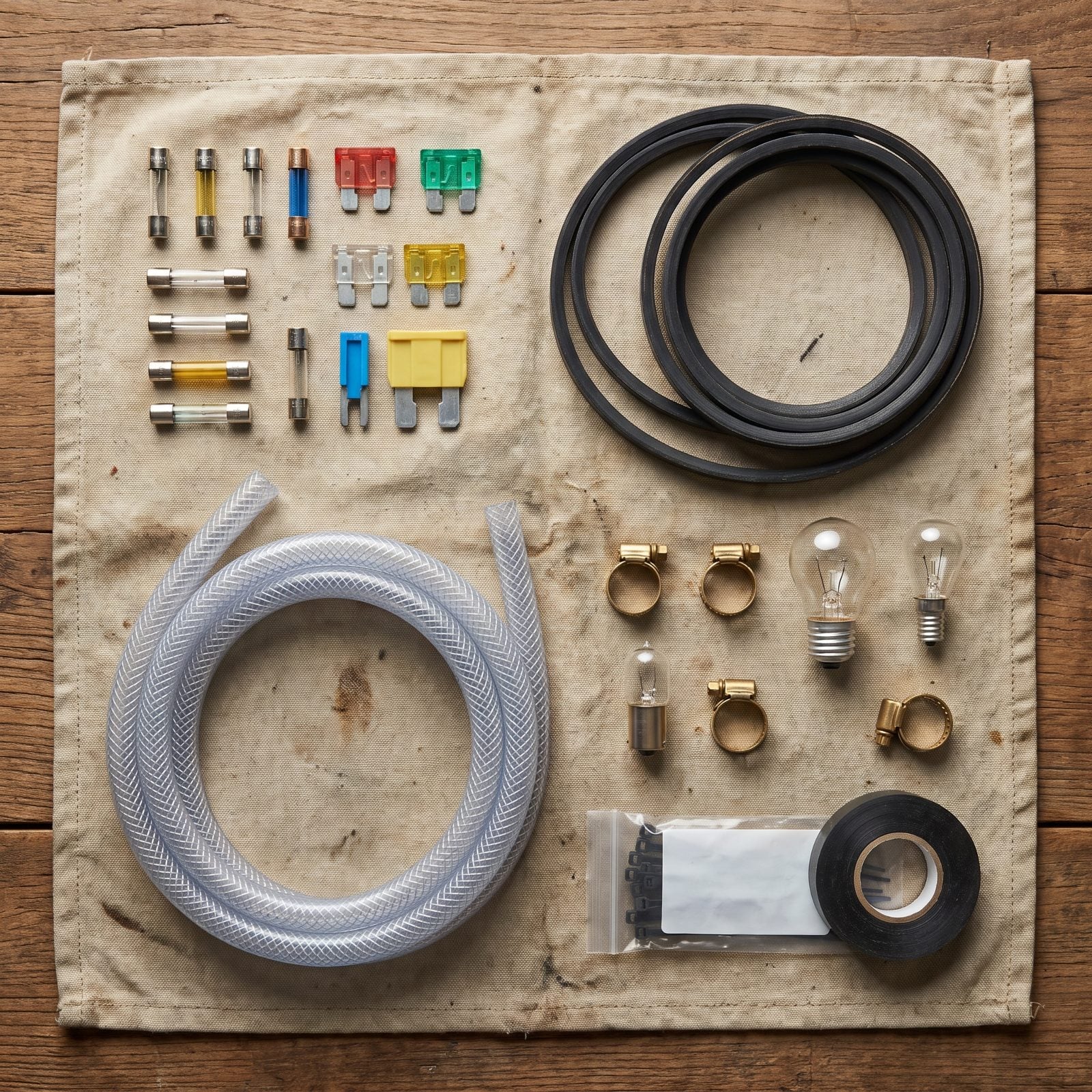
You don’t need a workshop in the basement. You need the handful of small, cheap parts whose failure ends the day. A dead water pump means no water. A blown fuse can kill the fridge. A failed belt on a motorhome leaves you parked.
Smart full-timers carry the spares that are light, cheap, and nearly impossible to source in a small town on a Sunday.
- Fuses in every amperage your panel uses
- A spare water pump and a length of hose
- Belts and filters specific to your engine
- Assorted electrical connectors and good tape
Half the value is the spare. The other half is knowing exactly where it lives when your hands are shaking a little.
21. Photograph Your Plumbing and Wiring Before Anything Goes Wrong
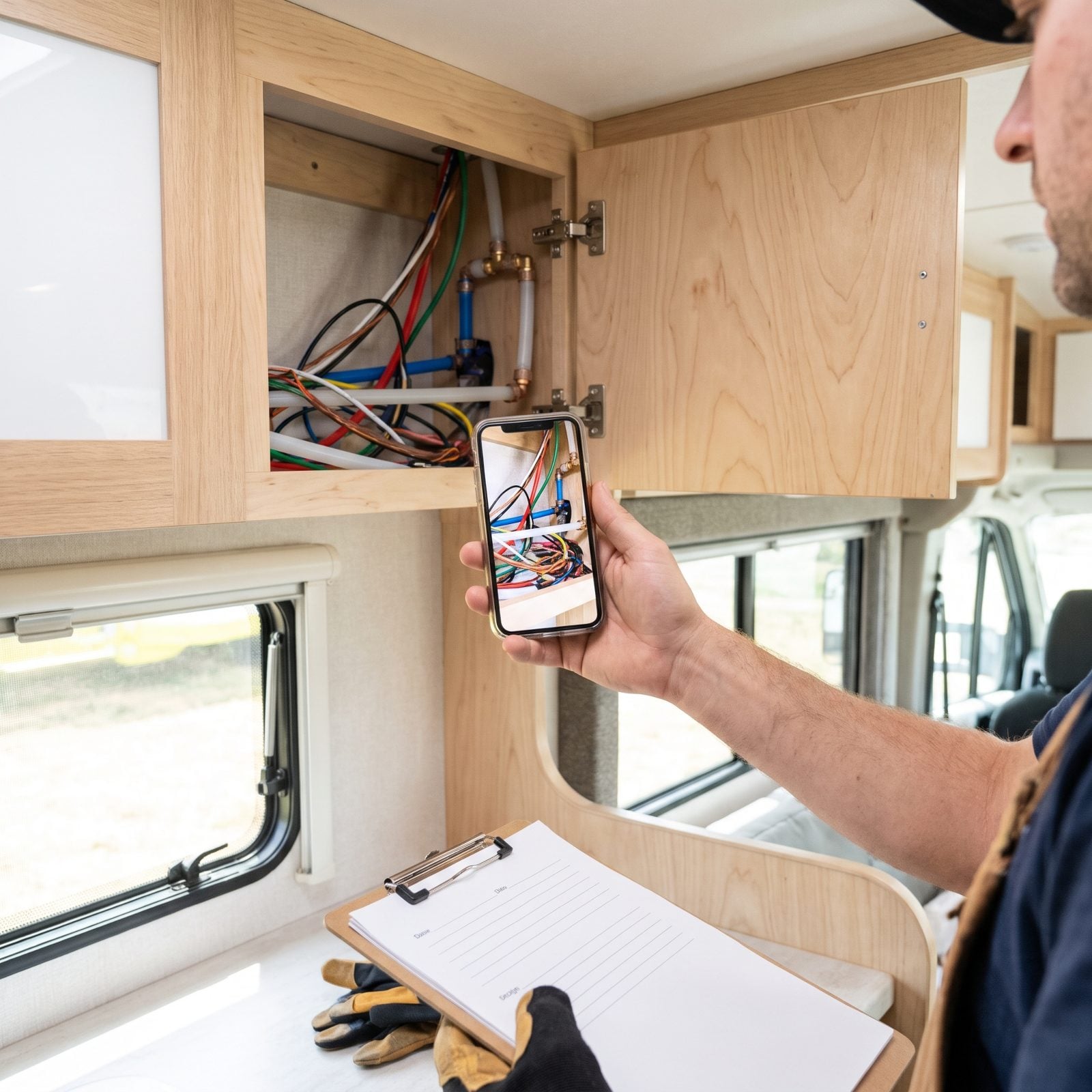
The day a line starts dripping behind a cabinet, you’ll be flat on your back with a flashlight trying to remember what connects to what. The version of you with a free afternoon could have made that easy.
Pull the access panels on a calm day and photograph everything — plumbing runs, the water pump, the fuse panel, wire colors, valve positions. Shoot wide, then close.
Those photos are worth their weight in aspirin when you’re troubleshooting at a campsite, or when a mobile tech asks you over the phone what you’re staring at and you can actually tell him.
20. Install a Water-Pressure Regulator at Every Hookup

Campground water pressure is a coin flip. One park babies you with a gentle flow. The next one slams your lines hard enough to burst a fitting while you’re out hiking, and you come home to a flooded floor.
A pressure regulator is a cheap insurance policy that lives on your hose. Many come with a built-in gauge, but a gauge only helps if its face actually shows a PSI scale. Make sure yours has readable numbers so you can dial it down to something your plumbing can live with.
Making the case for a regulator at every hookup, a veteran RV travel journalist explains “Many parks have aging infrastructure or utilities that were upgraded in pieces over the years, so pressure can differ from site to site within the same campground.”
19. Fight Condensation Before It Turns Into Mold

Two people breathing, cooking, and showering inside a small sealed box put a surprising amount of water into the air. On a cold night it all condenses on your windows and walls, and in the corners you never look at, it quietly becomes mold.
Veterans manage it every day without thinking about it much. Crack a vent while cooking and showering, run the roof fan, keep a small dehumidifier or a tub of moisture absorbers going through winter, wipe the windows when they fog.
Ignore all of this through a cold winter and you’ll find black spots creeping up behind the bedroom curtains. Air moving is the whole game. A rig that breathes stays dry, and a dry rig lasts.
18. Give the Black Tank Plenty of Water
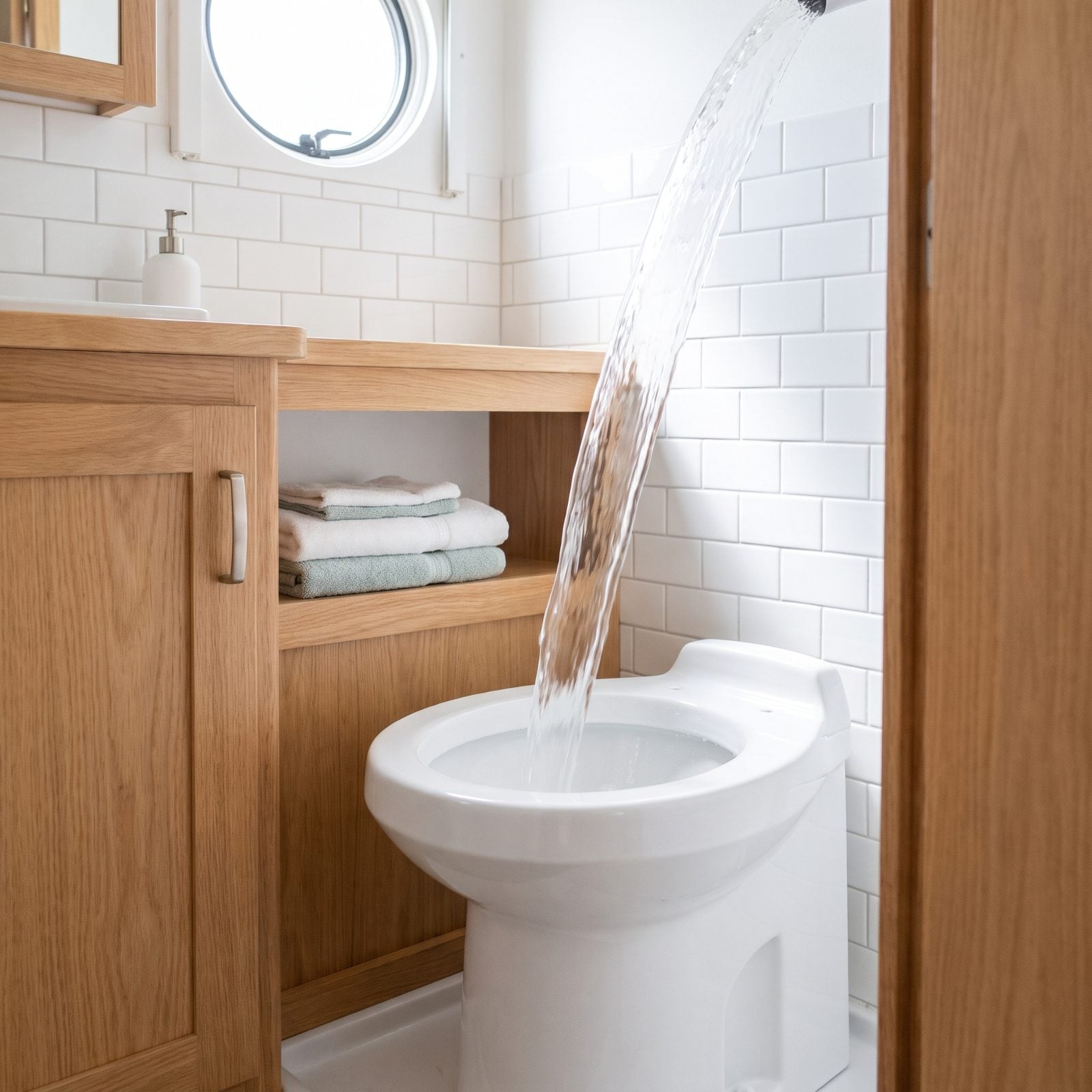
The number one cause of black tank trouble isn’t what goes in — it’s not enough water to carry it out. Flush with a gallon or two after every use, and never leave the valve open while you’re parked. An open valve drains the liquid and strands the solids, and those solids build into a cone that no amount of panic will clear.
So fill the bowl before you flush, then add a few gallons of fresh water after a dump. Your sensors read cleaner and your nose thanks you.
As a certified RV technician puts it, “Use plenty of water with every flush, use RV-safe treatments, and never leave the black valve open while hooked up at a campsite.”
17. Audit Daily Power Use Before Buying Solar
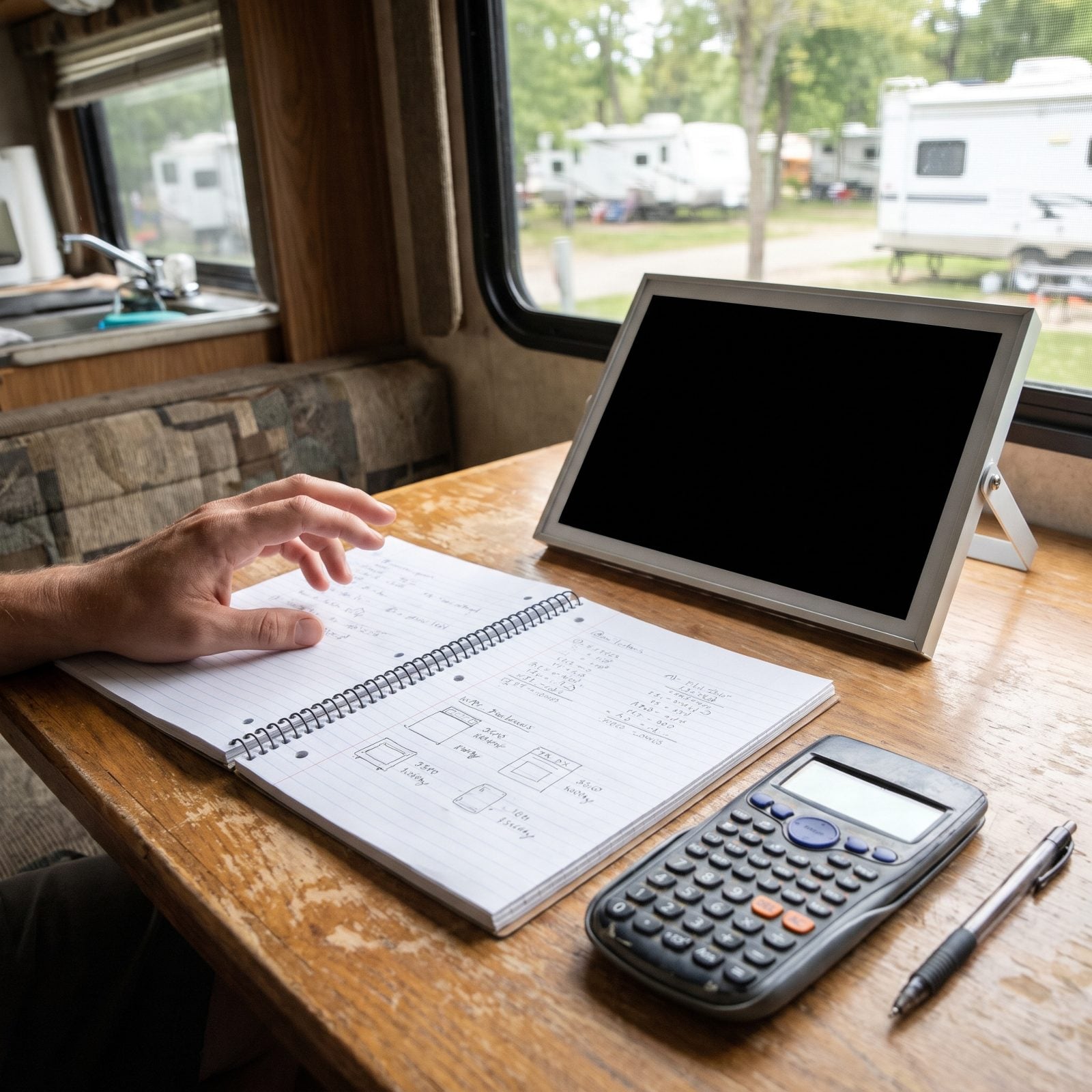
Everybody wants to talk panels. Almost nobody wants to run the math first, and the math is the whole game.
Spend a week writing down what you actually pull — the fridge, the fans, the laptop, the water pump, that coffee maker you swore you wouldn’t bring. Add it up in watt-hours, and that number tells you how much battery and how much panel you need. Guess instead, and you’ll either overspend on a roof full of glass you never use or come up short on the third cloudy day, running the generator at 7 a.m. while your neighbors glare across the dirt.
16. Test Smoke, Carbon-Monoxide and Propane Alarms Monthly

These alarms live in a box that bounces down highways and bakes in parking lots, so they fail more than the ones in your house ever did.
Hit the test button on all three the first of every month. The propane detector tends to give out after several years whether it still beeps or not, so know its date. A sealed box with a stove, a furnace, and a tank of gas earns a thirty-second check.
On the LP gas detector mounted near your floor, one RV repair shop cautions “These detectors have a finite lifespan — typically 5 to 7 years — and must be replaced when expired, even if they still appear to function.”
15. Upgrade the Mattress Before Cosmetic Decor
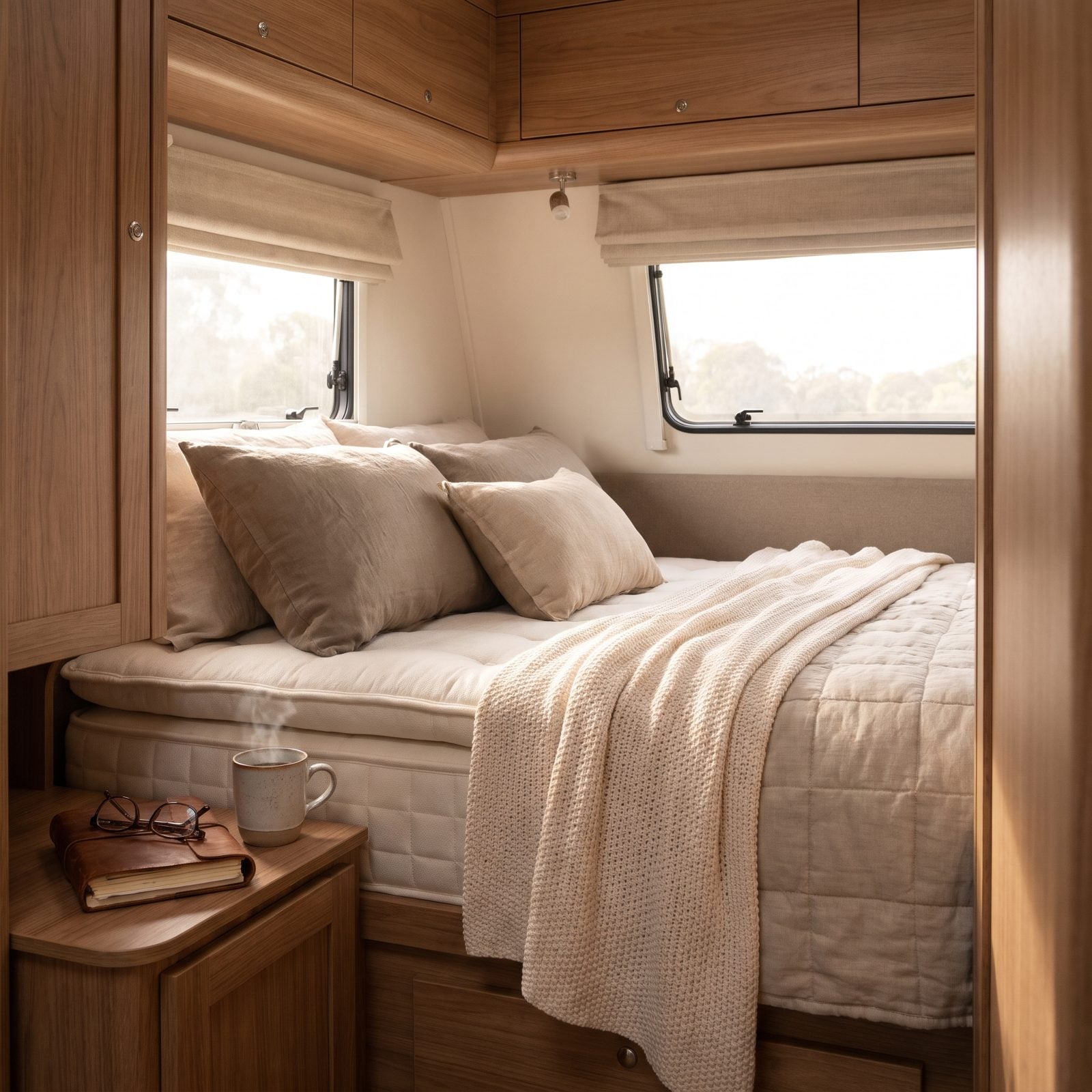
Factory RV mattresses are an afterthought — three or four inches of budget foam sized to fit the frame, not your spine.
You’ll sleep on this thing most nights of the year, so spend the money there before you drop a dime on throw pillows or a new backsplash. A decent replacement runs a few hundred dollars and pays you back every single morning your lower back doesn’t argue with you.
Measure first. RV bed sizes run short and odd, and a standard queen often won’t fit the way you’d expect.
14. Create One Ergonomic Seat for Real Work

The dinette looks fine for a day. Work from it for a month and your neck files a complaint.
Build one real workstation instead. Raise the laptop to eye level on a stand, add a separate keyboard, and get a chair that supports your back rather than a flat bench that doesn’t. You don’t need a whole office — you need one spot in the rig where your body stops fighting you after hour three.
13. Use a One-In, One-Out Rule for Belongings

A full bookshelf hides clutter. Then one day there’s nowhere left to put it.
The rule that keeps a shelf livable is boring and it works: something new comes in, something old goes out the same day. A new mug means an old one leaves, and a new book sends a finished one to the donation box. There’s only so much shelf to soak up the overflow, and every extra trinket crowds out the books, photos and mugs you actually love.
It feels strict for about a week. Then it just feels like breathing room.
12. Give Every Loose Item a Latching Home

Driving an RV is an earthquake on a schedule. Everything not pinned down becomes a projectile the first time you brake hard.
Give every single item a latching home before you turn the key — positive-latch cabinet doors, non-slip liner in drawers, tension rods to pin the fridge shelves, and a little museum putty under the things that rattle. The test is simple. Could you turn the whole rig upside down and have nothing hit the floor? That’s the standard a travel day demands.
11. Give Each Partner a Private Corner
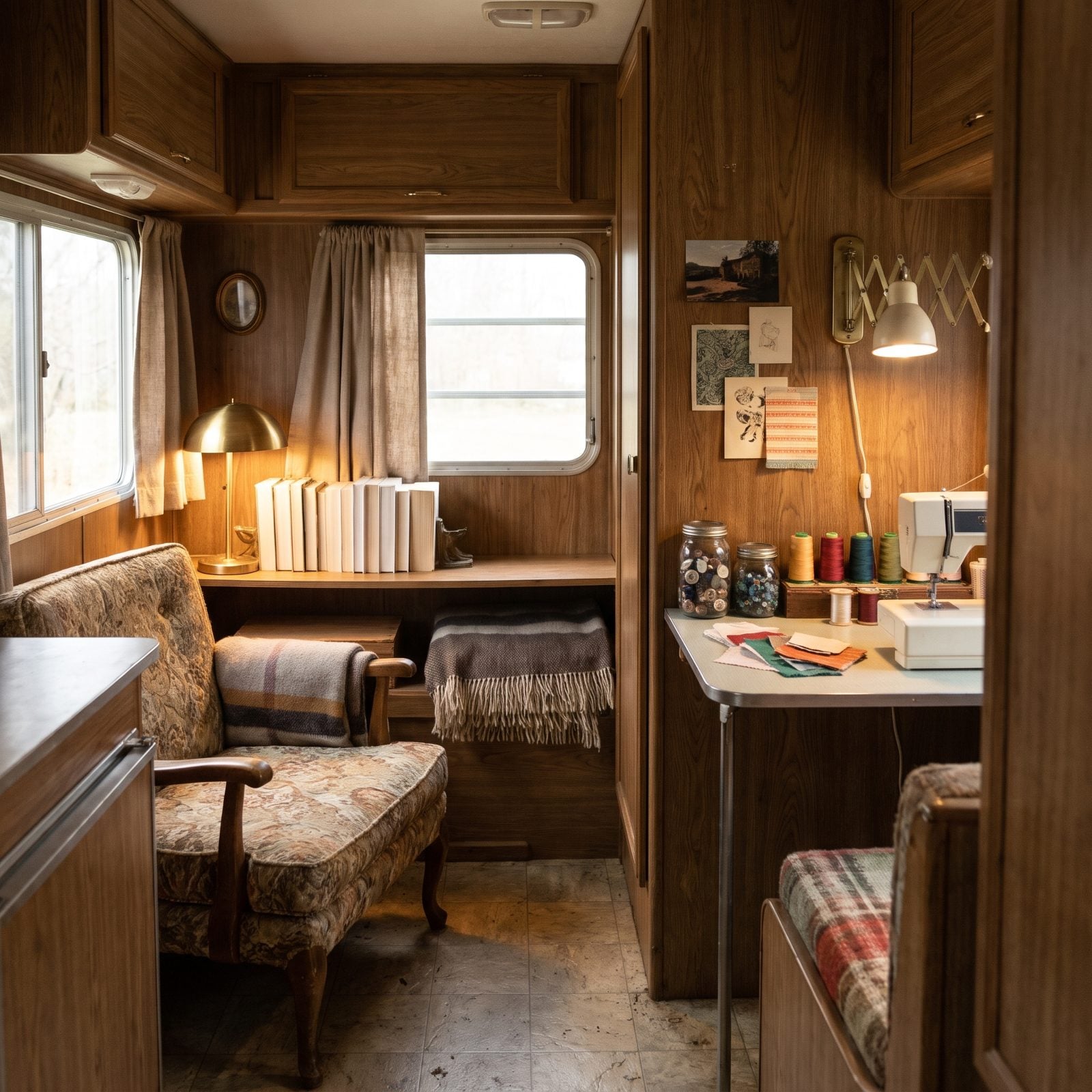
Two people in two hundred square feet is a lot of togetherness. The couples who last on the road don’t fight the small space — they carve out corners inside it.
One gets the reading chair by the window. The other claims the bay-side awning spot with a camp chair and headphones. A corner doesn’t have to be big. It has to be yours, with a door you can close or some signal that says I’m off duty for an hour.
Skip this step and watch what happens: the snapping starts by week three, and everybody blames the weather instead.
10. Pause Hard Conversations on Travel Days
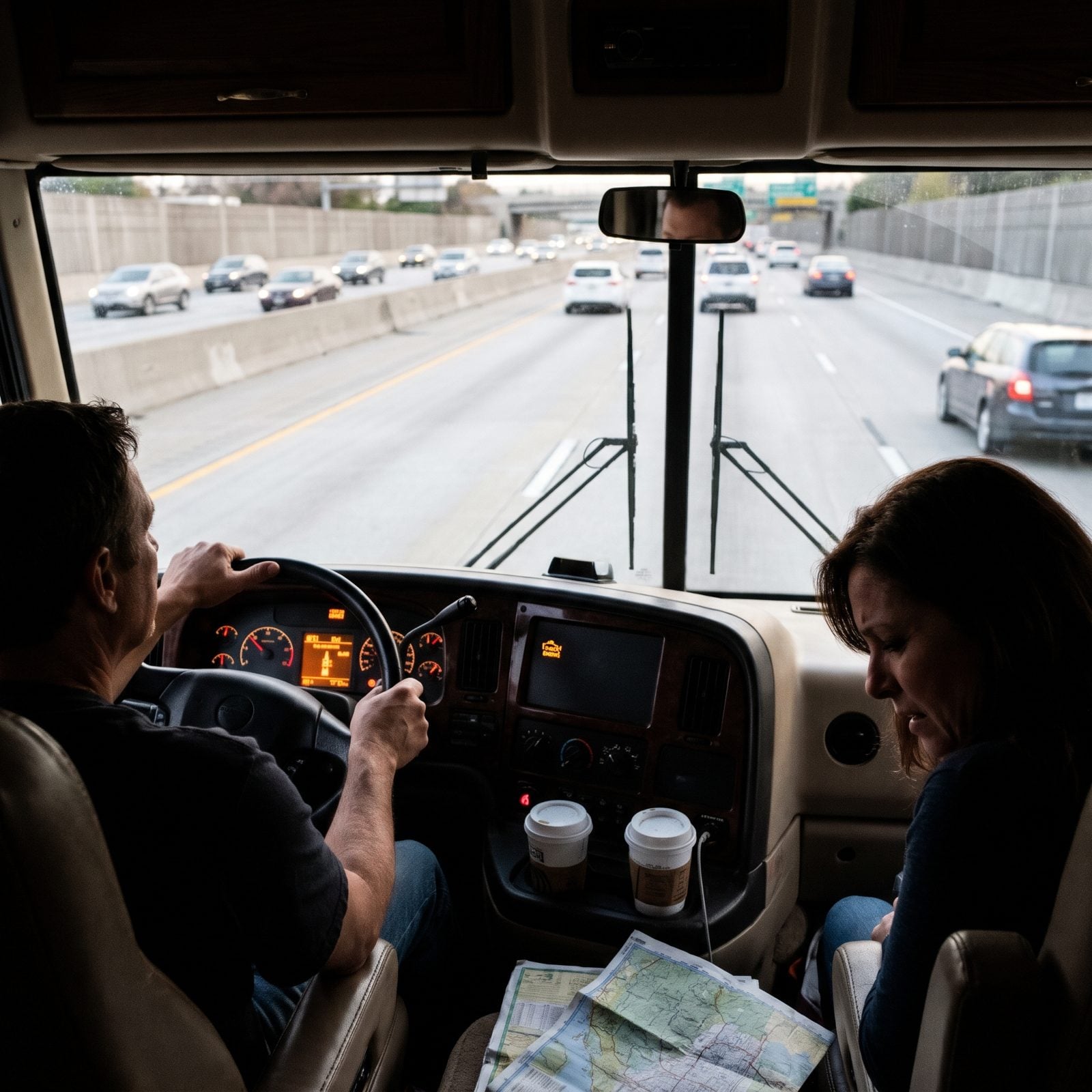
Travel days are the worst possible time to settle anything that matters. You’ve got narrow lane changes, a navigation app that cheerfully reroutes you into a dead-end, and a rig that handles like a nervous whale whenever the crosswind picks up. Throw a budget argument on top of all that and you’ve written yourself a recipe for a wrong turn and a slammed door at the fuel island.
Veterans learn to shelve the big stuff. Where to winter. Whether to sell the house back home. How long two people can honestly stand each other inside 300 square feet. That conversation belongs at the campsite with your feet on the ground — not while you’re doing 58 on a mountain grade.
9. Hold a Weekly Route, Budget and Maintenance Meeting
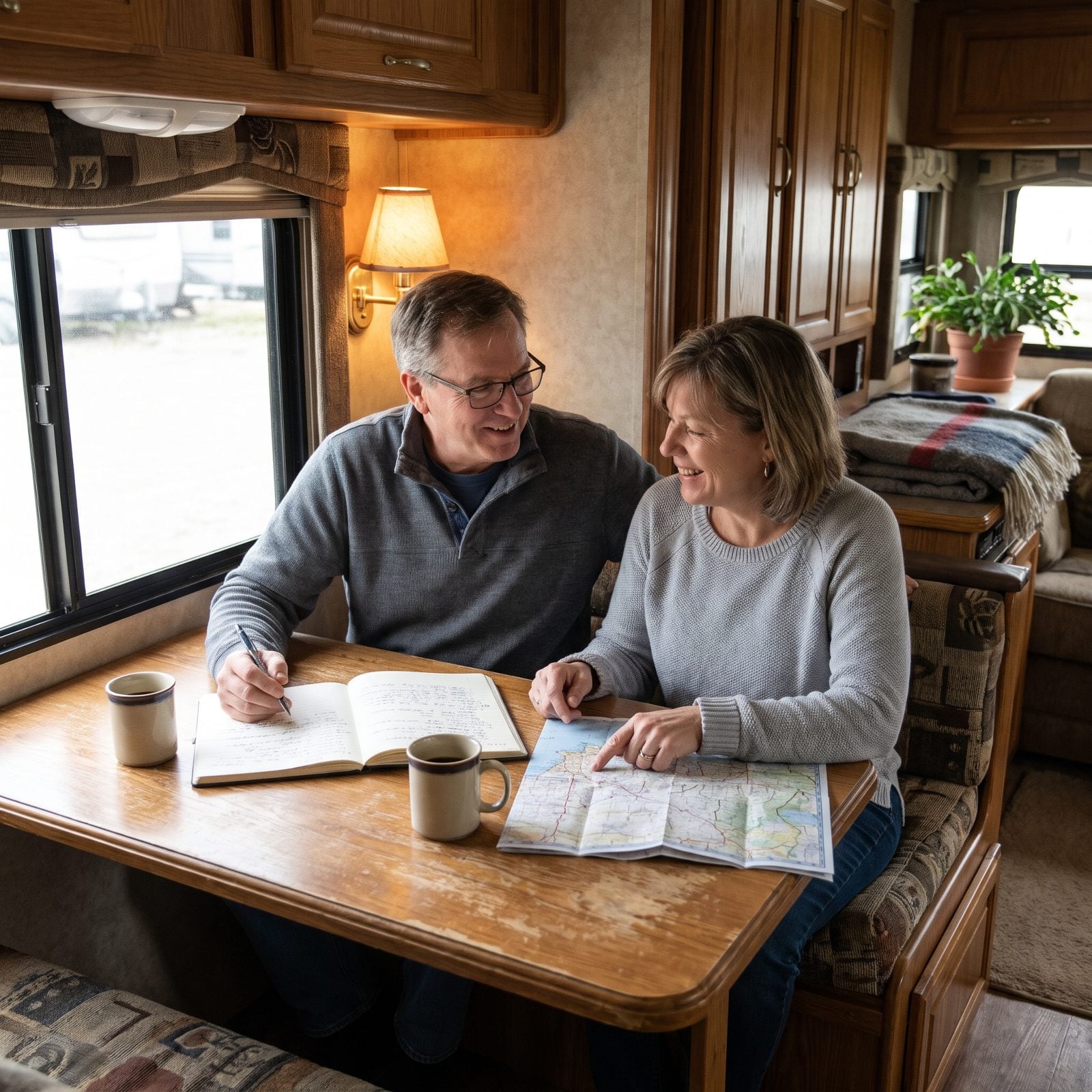
A good rhythm keeps the wheels from falling off, literally and otherwise. Once a week you sit down and cover three things — where you’re headed, what you’ve actually spent, and what on the rig needs eyes before it becomes a roadside problem.
Twenty minutes, tops. And it stops that slow drift where fuel creeps up, a soft spot on the roof goes ignored, and one person has been quietly carrying all the planning plus a growing lump of resentment.
- Route: next stops, fuel math, any low-clearance surprises.
- Money: what the week cost against what you planned.
- Rig: tires, seals, batteries, the weird noise from Tuesday.
8. Confirm Health Coverage Across State Lines
This is the one that bites quiet. Plenty of health plans pay like champs at home and turn stingy the second you cross a state line, and HMOs with narrow local networks are the classic trap waiting for travelers.
Before you go, find out what counts as in-network when you’re over a thousand miles from your regular doctor, how urgent care and ER visits get handled out of state, and whether your plan behaves in a genuine emergency anywhere in the country. Telehealth covers a sore throat. It does not cover a kidney stone in Montana.
7. Insure the RV as a Full-Time Residence
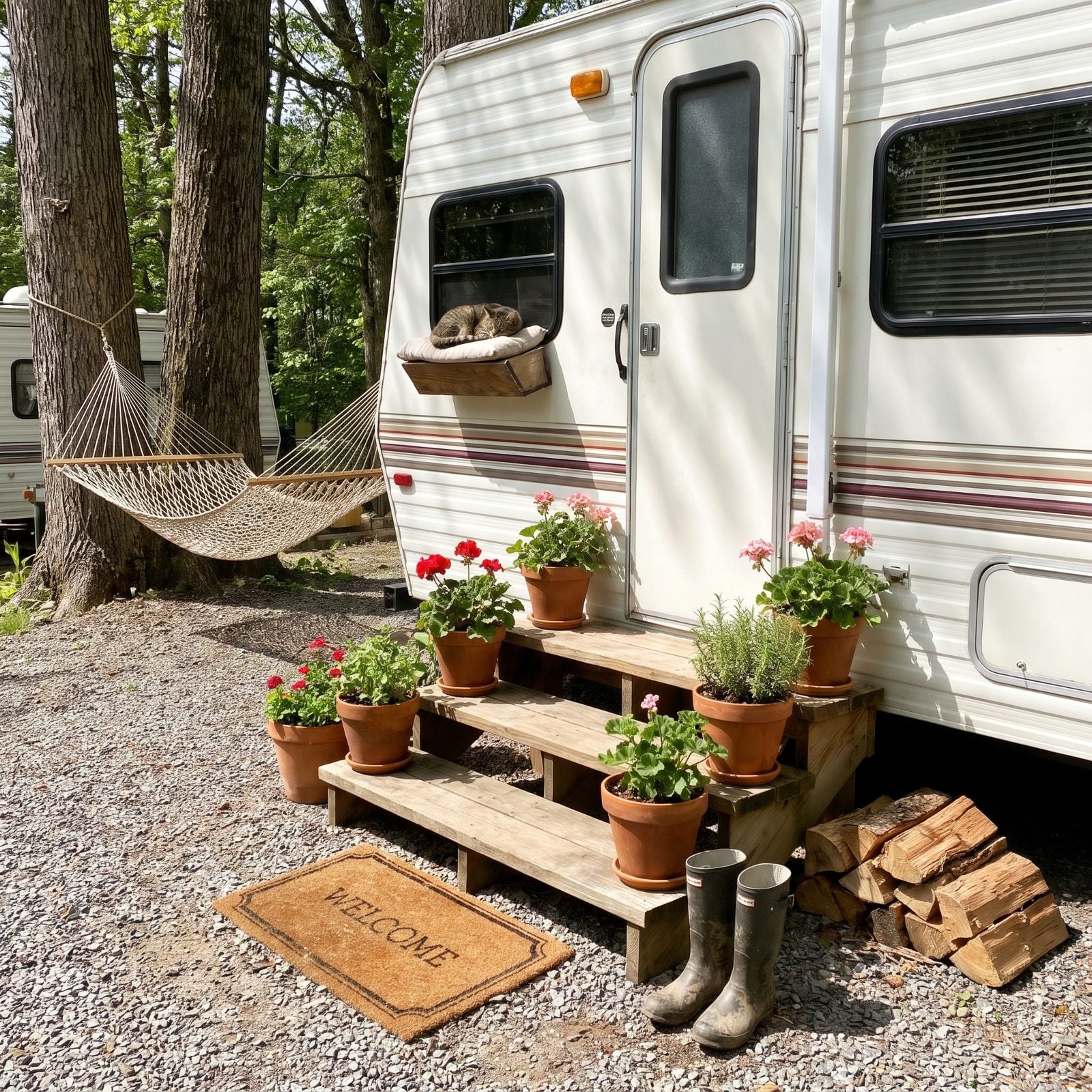
A standard RV policy assumes you’re a weekender who parks it in the driveway, takes it out a few times a summer, and stores it the rest of the year. When the RV is your actual house, that same policy has gaps right where your whole life happens to sit.
Full-time coverage is a different animal entirely. It treats the rig as a residence, which means it covers your belongings at real-world value, liability while you’re set up on a site, and loss of use if a repair knocks you out of your home for a few weeks.
Tell your insurer the truth about how you actually live. A claim is the worst possible moment to discover they thought you were camping twelve days a year.
6. Anchor Only Must-Have Reservations

Over-plan and you’ll spend the whole trip racing to the next booking you can’t cancel. Better move? Lock down only the dates that genuinely sell out, then leave everything else loose and breathing.
Nail the hard-to-get stuff. Popular national park campgrounds in summer, anything over a holiday weekend, that one specific site you’re driving across the country to see. Everything in between stays open, so a run of bad weather, a town you can’t bring yourself to leave, or a flat tire doesn’t detonate a rigid itinerary.
5. Test Boondocking Close to Services First
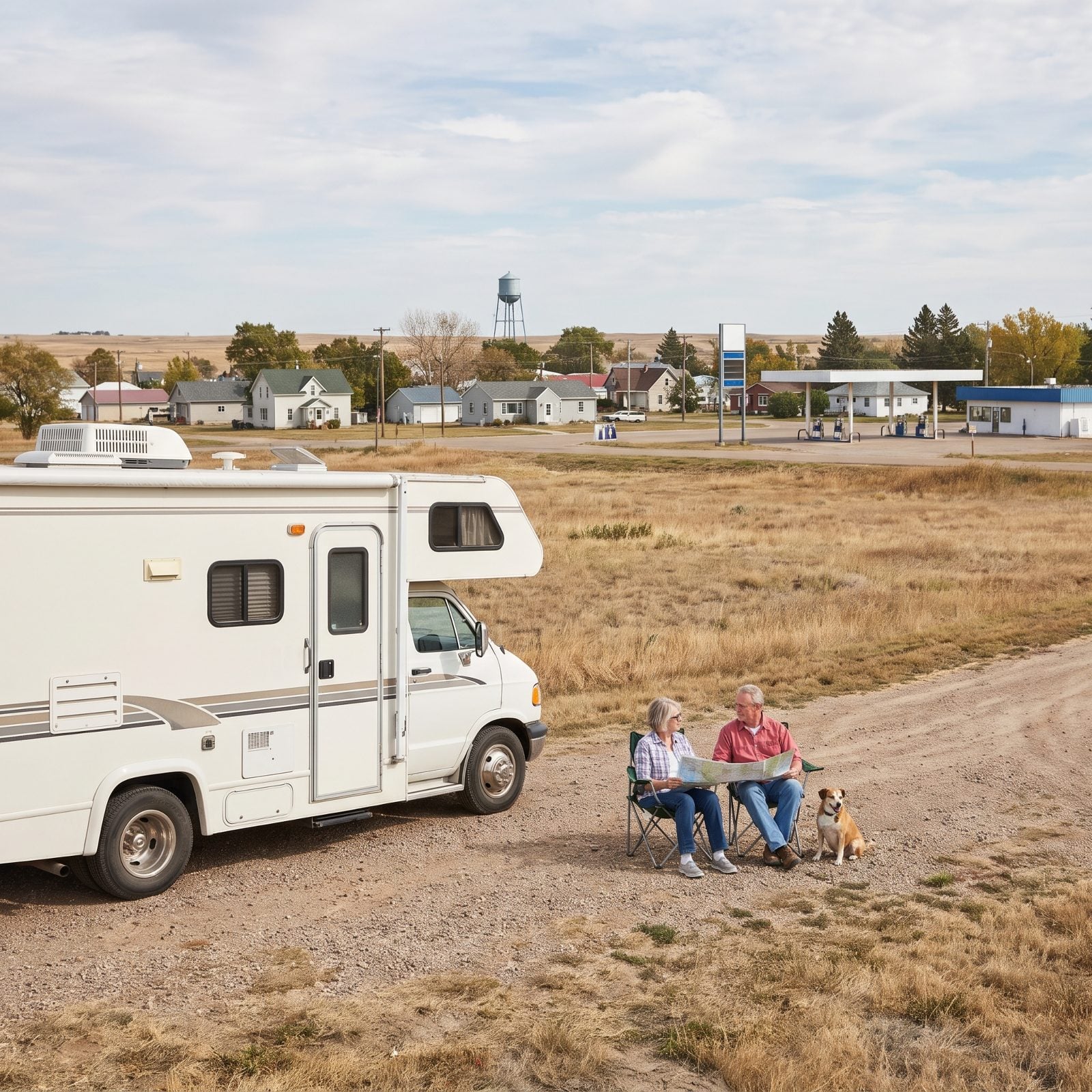
Everybody wants that dreamy free campsite twenty miles down a dirt road with no neighbors for miles. Go straight there and you’ll learn the hard way how fast your batteries die and how little water you actually packed.
Smart first-timers boondock close to town instead. Pick a spot within a short drive of a dump station, a grocery, and a hardware store, then run your systems hard for a few days and watch what happens. How well your solar keeps up. How long the fresh tank really lasts two people. How quickly the gray tank fills when you stop being careful. You find your real numbers while a fix is still fifteen minutes away.
Once you trust the rig and yourself, the remote stuff stops feeling like a gamble.
4. Learn the Rules Before Overnight Parking
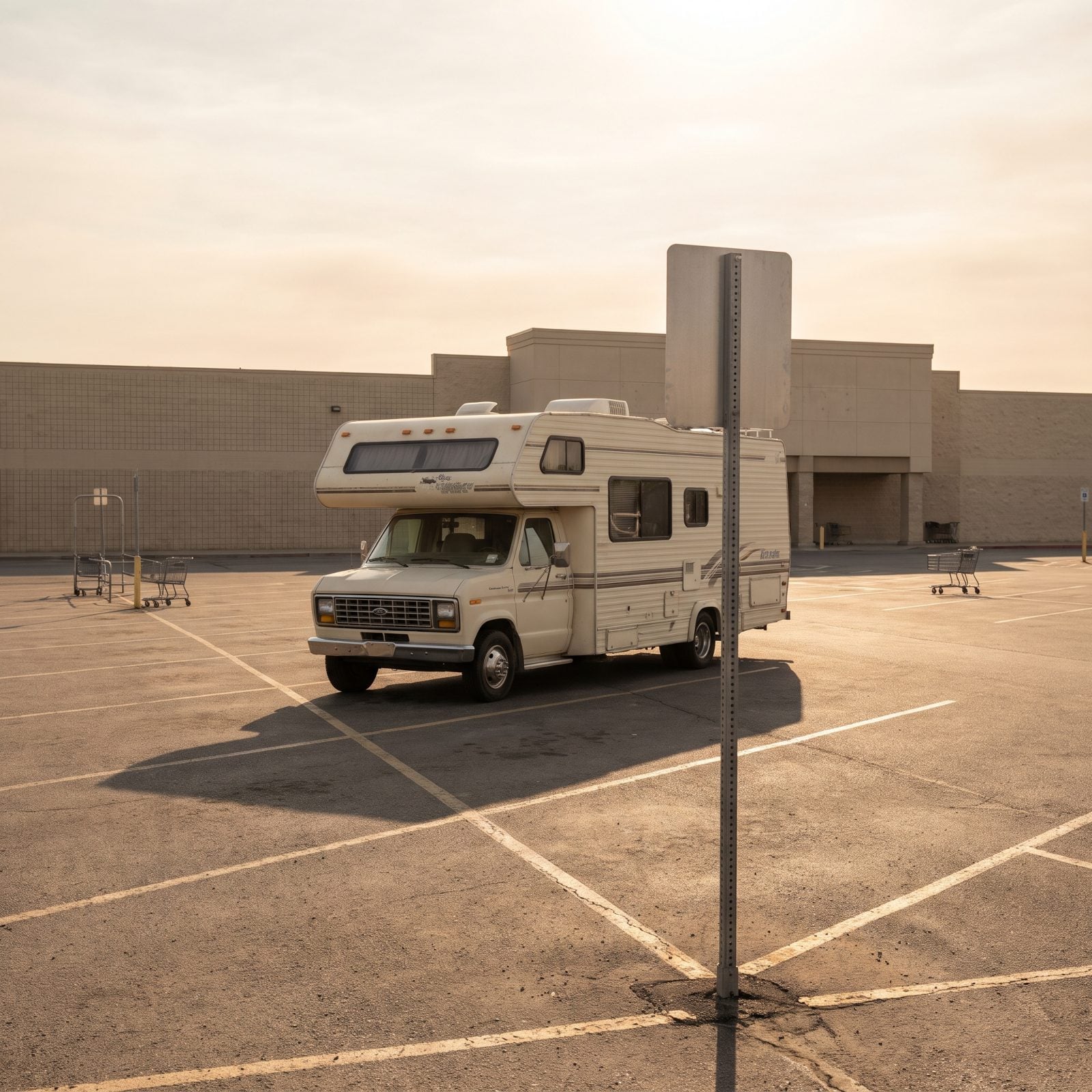
A free overnight in a parking lot is a privilege, not a right, and the rules shift block to block. Some stores welcome you. Some post signs banning it. And a few towns outlaw it citywide, with a fine already waiting on your windshield by morning.
The etiquette that keeps these spots open is simple enough: ask the manager, park where you’re told, arrive late and leave early, and don’t set up camp. No chairs, no awning, no grill going. You’re resting there, not moving in for the weekend.
3. Create Portable Holiday Traditions

Nobody warns you about the holidays. That first Thanksgiving a thousand miles from the usual table hits harder than you’d ever expect, and no amount of pretty scenery fills that particular hole.
So the travelers who last build small rituals that fit in a cupboard. A string of lights that goes up wherever you park. The same pancake breakfast every birthday. A tabletop tree that’s logged tens of thousands of miles and absolutely looks it. The tradition was never the dining room — it was the doing, and the doing packs down to the size of a shoebox.
Home quietly stops being a place and becomes a set of things you do together. That’s how a moving life starts to feel settled.
2. Build Community Through Repeat Rendezvous
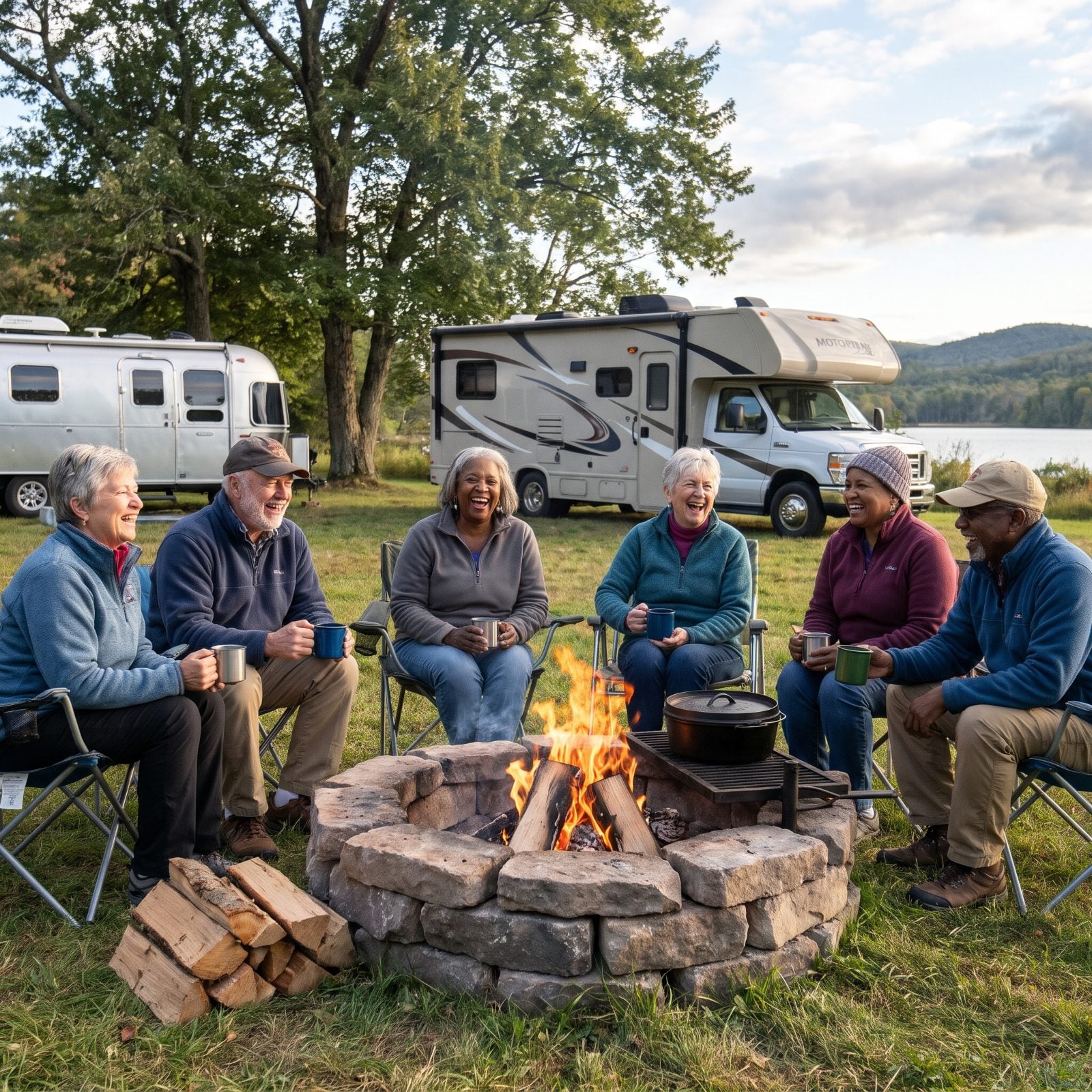
The road is full of friendly people you’ll never see again. Campfire friendships that last one evening are pleasant, but those people won’t be around when your truck spends a week in the shop.
The fix is repetition. Pick a few gatherings or places and keep coming back: an owners’ rally for your brand of rig, an RV club chapter that meets every spring, the same desert spot each winter, the campground where the same crew of volunteers turns up every summer. The first year you’re the new rig nobody knows. By the third, people save you a site, know your dog’s name, and hand over a torque wrench before you finish asking.
Most of the long-haul full-timers we know have built this kind of rolling neighborhood. It’s what keeps the lifestyle from getting lonely and makes it feel like home.
1. Travel Slowly Enough to Learn Each Place
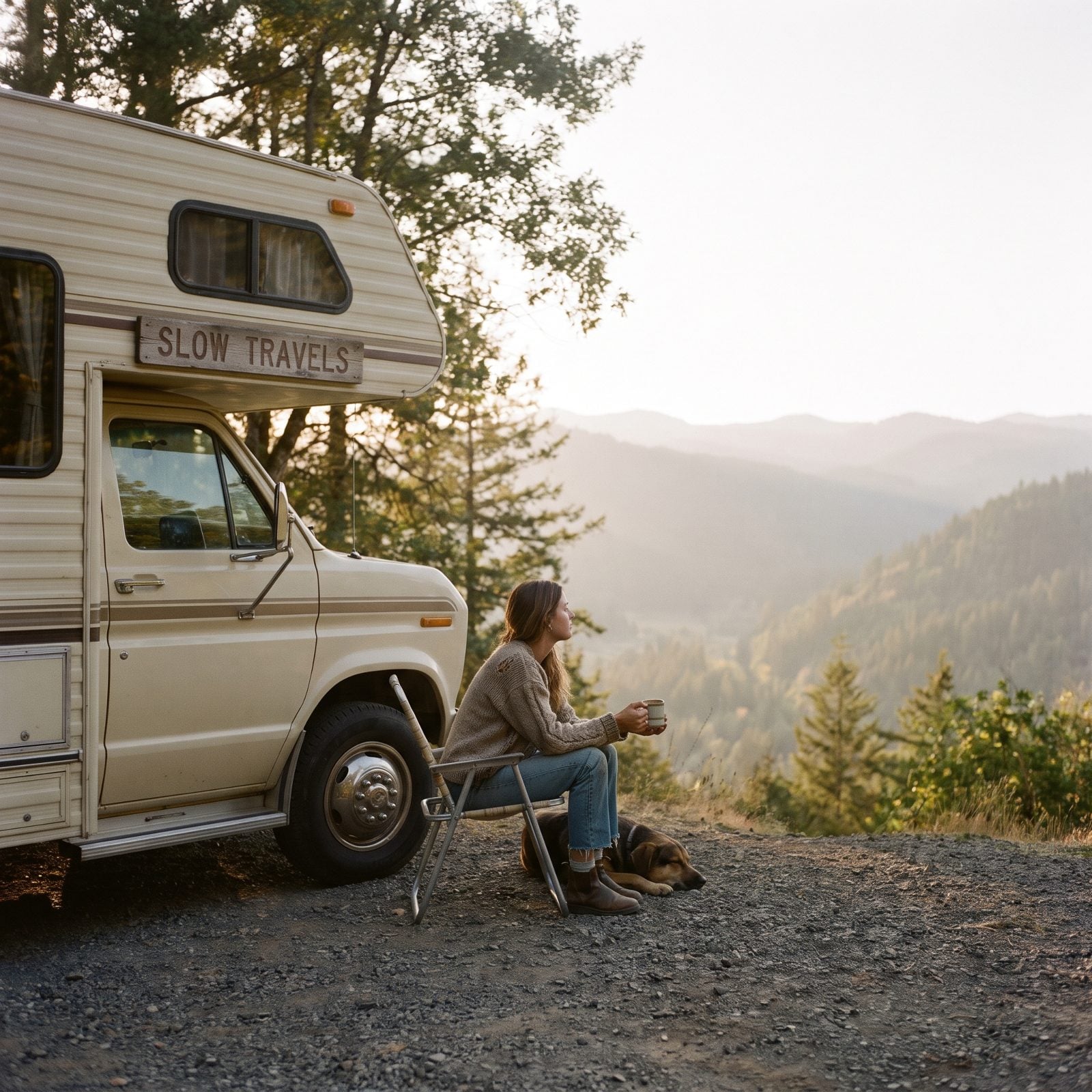
That first year, you cover ground like you’re being chased — a dozen states, more campgrounds than you can name, and a blur where the memories should be. You remember the interstate. Not much else.
Slow down and places start talking to you. Three weeks in one spot and you know which diner has the good pie, which forest road the locals use, and exactly when the light hits the canyon right. You find the stuff no review mentions, because reviews get written by people who stayed one night and left.
And there’s a money argument too. Weekly and monthly rates at RV parks run a lot cheaper per night than drive-up singles — often well under half. You burn less fuel, you wear the rig less, and staying put turns out to be the frugal move dressed up as the romantic one.
We got this wrong for a long stretch. We chased the next pin on the map like the trip was a checklist to clear, and the places we actually remember are the ones we almost skipped and then couldn’t bring ourselves to leave. Book fewer nights, stay somewhere longer. That’s the whole lesson.