
Water turning a wooden wheel is a sound you forget you’re missing until you hear it again. North Carolina kept more of these places than you’d guess: bridges roofed over a hundred years ago, mills still grinding corn on the same stones, farm sites that nobody got around to bulldozing for a subdivision. Most are free or close to it. And most sit down roads too narrow for anyone in a hurry, which is sort of the whole appeal. Pack a short leash, a camera, and some patience for parking. These are the stops that turn a drive across the state into a reason to slow down.
Please note that some of the images in this article were created with the assistance of AI.
11. Bunker Hill Covered Bridge, Claremont
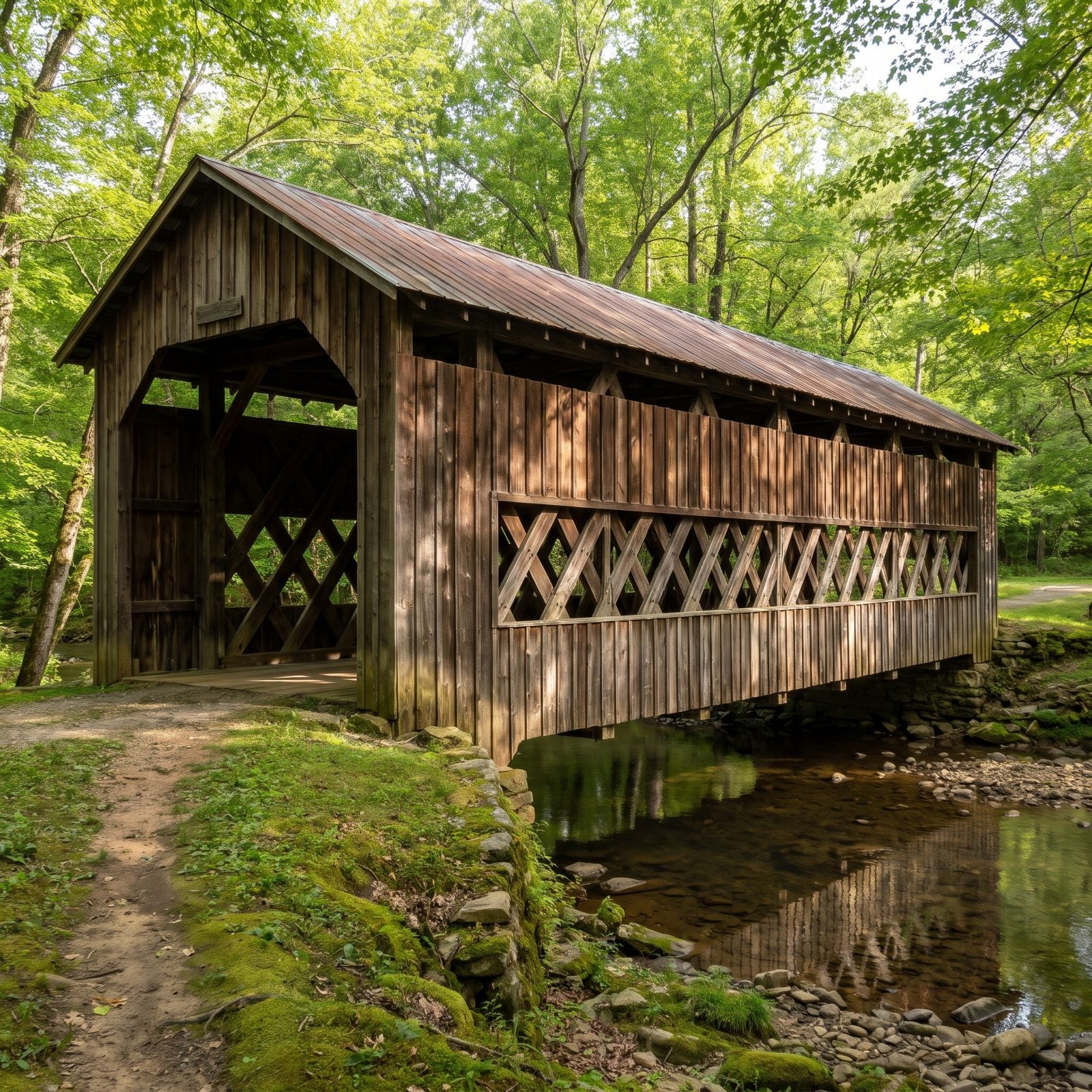
One of only two historic covered bridges left standing in the whole state. Andy Ramsour built it over Lyle’s Creek in 1895, covered it in 1900, and capped it with that tin roof in 1921. It’s the last surviving wooden version of the Improved Lattice Truss patented by General Herman Haupt, which earned it National Civil Engineering Landmark status in 2001.
Admission is free, open dawn to dusk, and there’s a short trail that’s part of the Carolina Thread Trail. From Statesville, head west on US 70, cross the Catawba River, and go 3.2 miles to the Connor Park sign.
10. Pisgah Covered Bridge, Asheboro
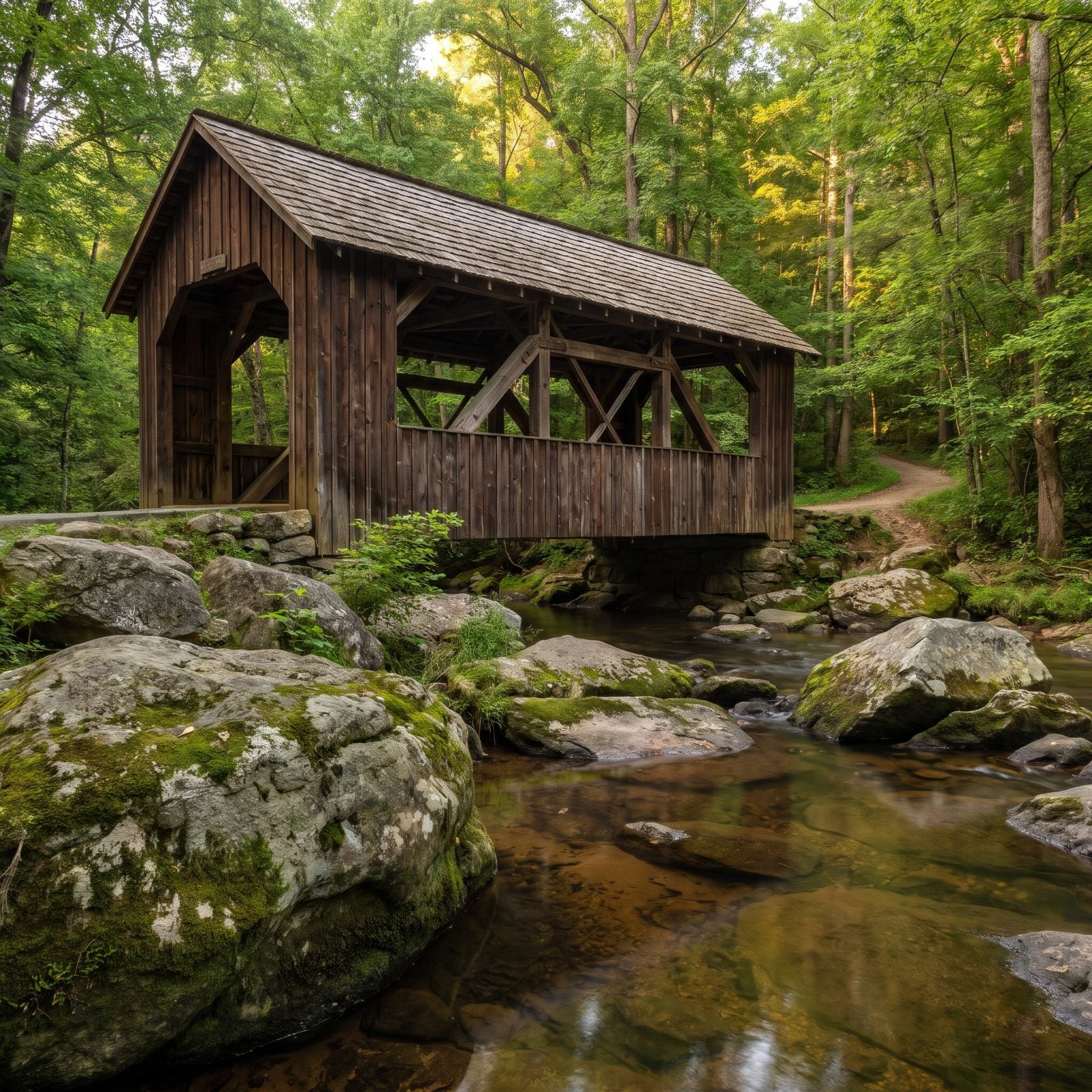
Built in 1911 for forty dollars. Read that again. The 54-foot span crosses the West Fork Branch of the Little River deep inside Uwharrie National Forest, and it’s the only covered bridge left in Randolph County, which once had more of them than any county in the state.
A flood tore it off its foundations on August 9, 2003, and they rebuilt it. There are picnic tables, public parking, and a quarter-mile walking trail at 6925 Pisgah Covered Bridge Rd. Take I-73/74 Exit 68 to Dawson-Miller Rd, then follow the signs. Pair it with the NC Zoo or the Seagrove potteries up the road.
9. Murray’s Mill Historic District, Catawba
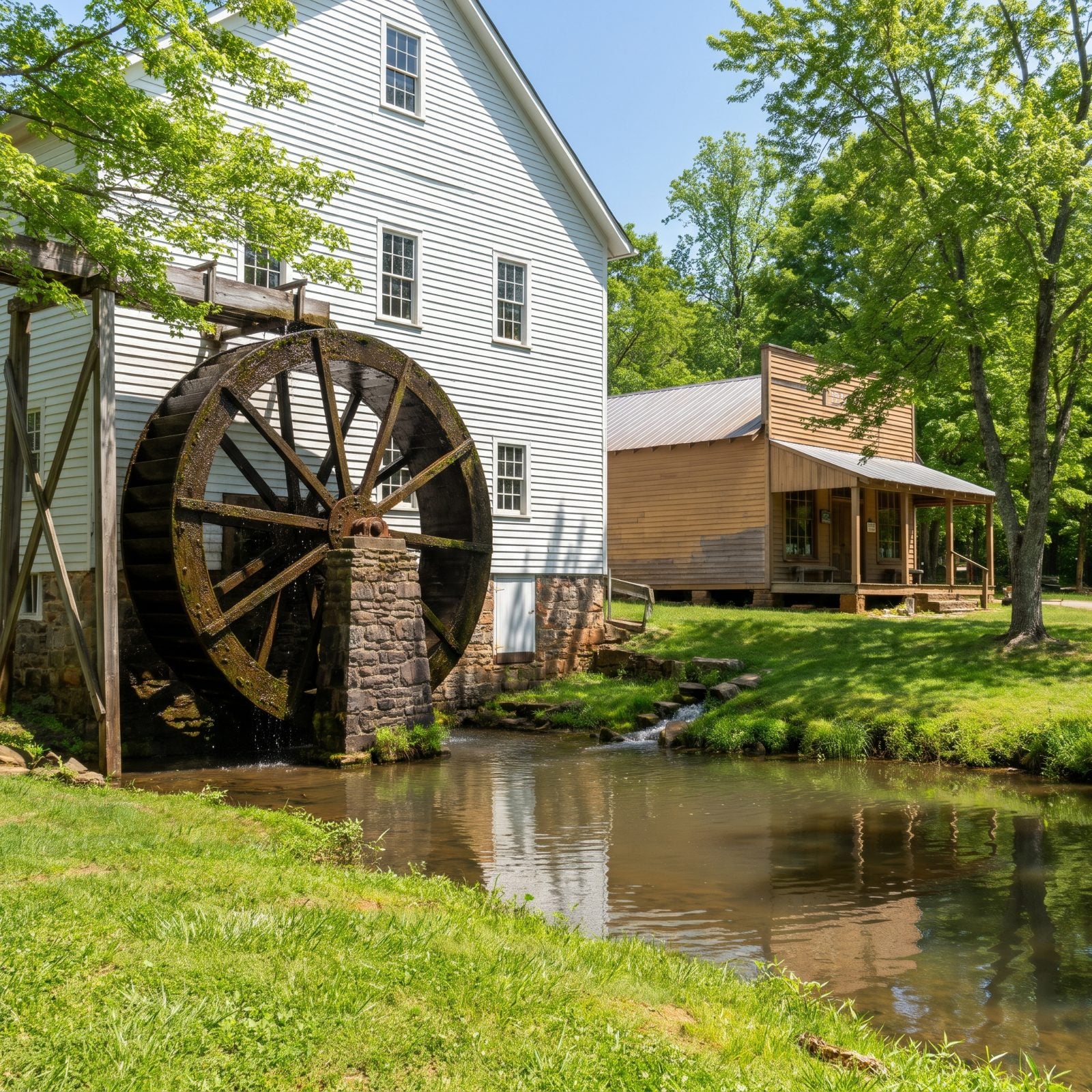
This one still works. A 28-foot waterwheel turns beside Balls Creek, and the site keeps the 1913 roller mill, the 1890s Murray & Minges General Store, an 1880s wheathouse, and the 1913 John Murray House all together.
The site’s own description calls it a ten-minute hop from I-40, which makes it one of the easier historic stops to reach without white-knuckling a back road. The store runs Wednesday through Sunday. Guided tours are $10, self-guided $7, and veterans get in free. More than three miles of trails stay open during daylight, and leashed dogs are welcome.
Address is 1489 Murray’s Mill Rd. It sits in the same county as Bunker Hill, so you can knock out a bridge and a working mill in an afternoon.
According to the historic site’s manager, during the mill’s 1920s and ’30s heyday farmers would “line up nearly two miles on either side of the mill for quality products, fair prices, and moonshine”
8. Old Mill of Guilford, Oak Ridge
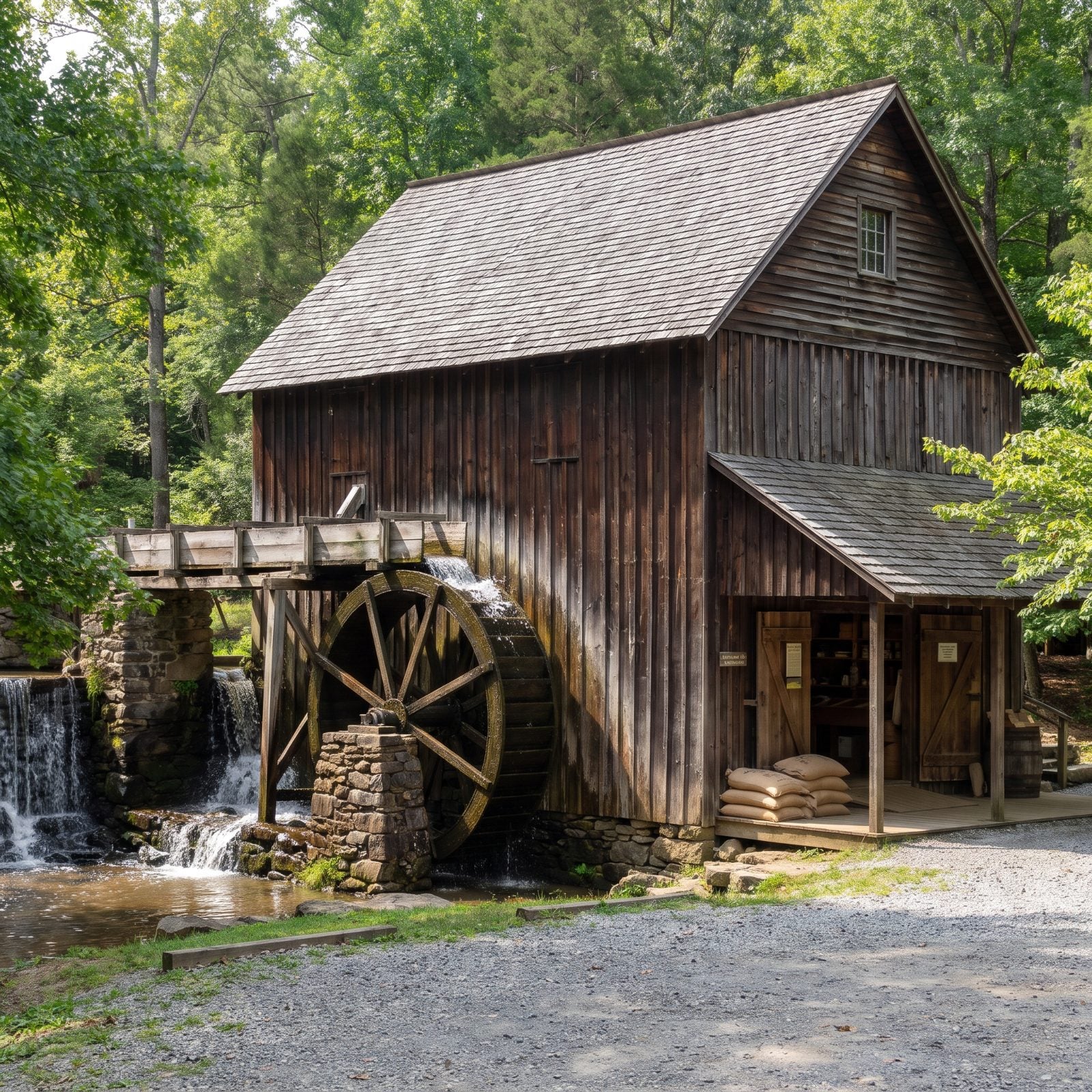
Founded in 1767 on Beaver Creek, back when it ground grain for the earliest settlers around here. It still turns out stone-ground cornmeal, grits, flour, and baking mixes, all sold in the on-site store.
A historical marker claims British troops seized the mill before the Battle of Guilford Courthouse. Make of that what you will. It’s on the National Register, sits at 1340 NC 68, and Spectrum News reported in December 2025 that it’s open 9 to 5, seven days a week.
Buy the grits here. Grits stone-ground at a mill whose roots go back to before the Revolution taste different, and there’s no pretending otherwise.
Describing how the cornmeal, grits and mixes reach the on-site store, a longtime mill owner says “Everything is hand bagged, and it’s done right here”
7. Historic Yates Mill County Park, Raleigh
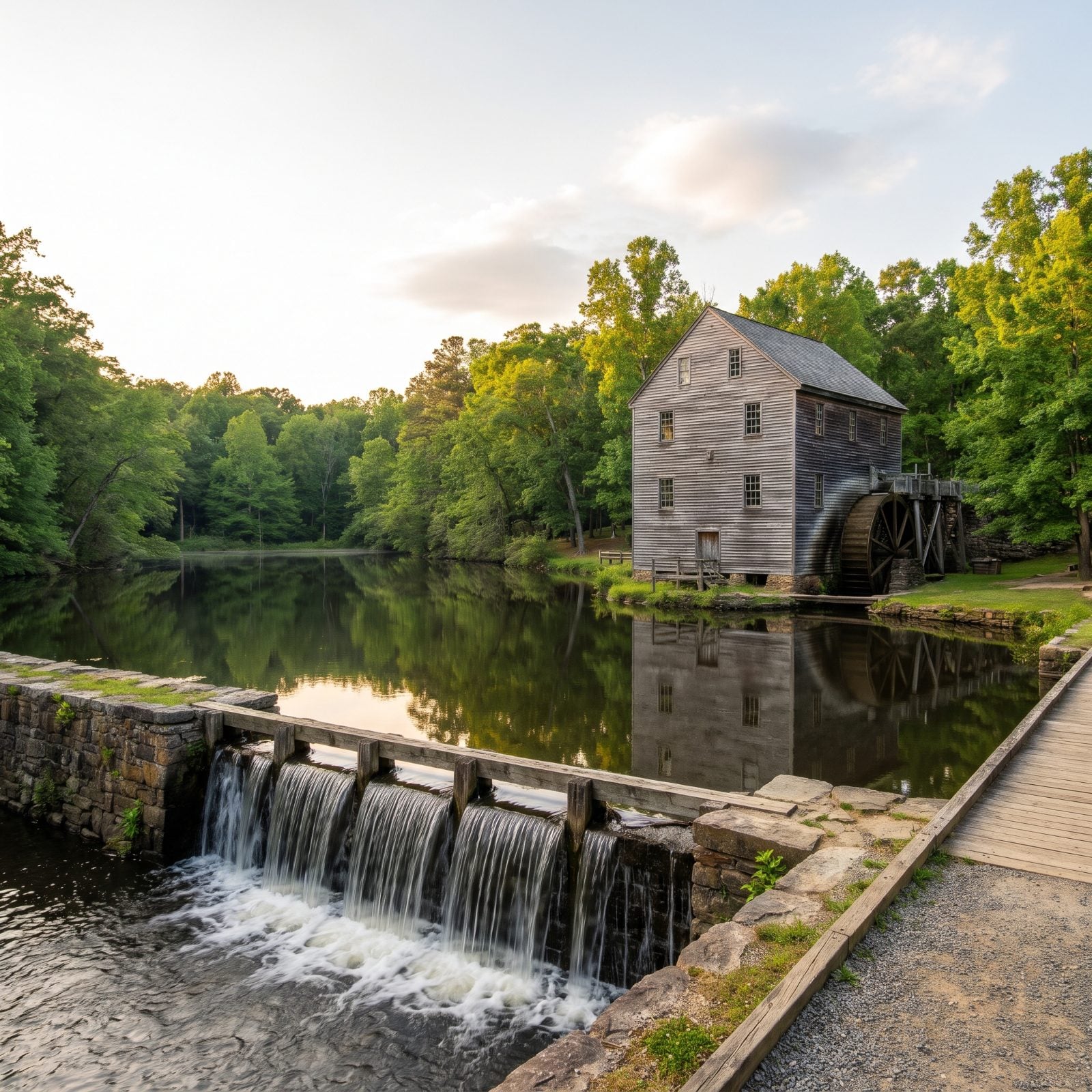
The last gristmill standing in Wake County, about five miles south of downtown Raleigh off Lake Wheeler Road. Wake County and NC State run it together, which is why you’ll find a proper visitor and education center alongside the mill and trails.
Guided tours happen on weekends, March through November, for a small fee. That millpond reflection alone is worth the pull-off, and the trails make for easy walking after a long drive has stiffened your legs.
After spending five years restoring the gristmill’s machinery, the head miller says “Everything that moves in the mill has my fingerprint on it”
6. Kerr Mill at Sloan Park, Mt. Ulla
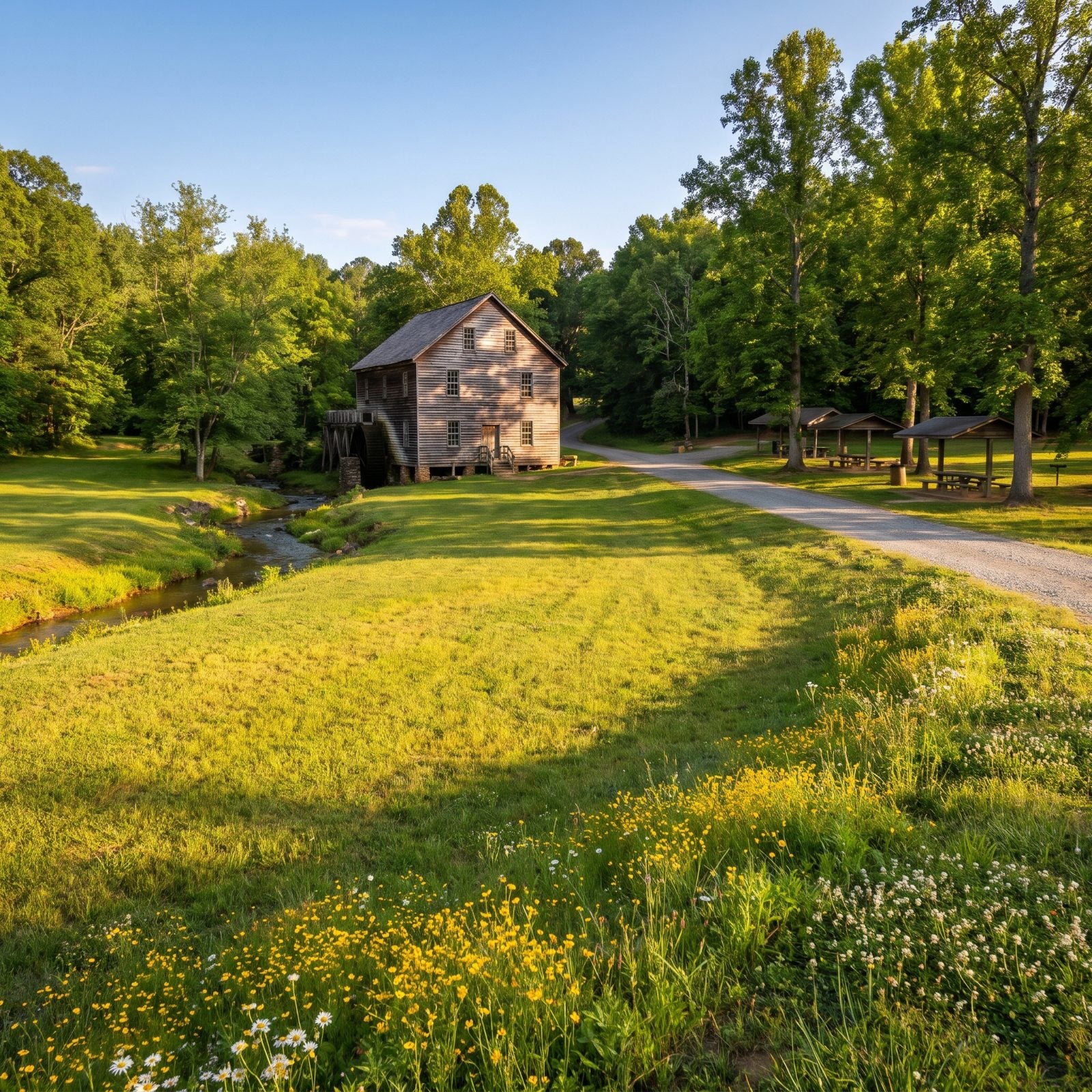
The Kerr family built this brick grist mill around 1823 (most sources credit planter Joseph Kerr). The last operators, James and Carrie Sloan, gave it and the surrounding land to Rowan County in 1973.
It anchors Sloan Park at 550 Sloan Road, open daily year-round. Roughly 100 acres, three miles of trails, five picnic shelters, and no admission fuss. Figure eight miles west of Salisbury off NC 150, a clean side trip from the Catawba County stops.
In a 2022 local news report, the park’s supervisor said the restoration of the Kerr Mill water wheel was only about halfway complete, with a trough, fencing and other additions still to be installed around the wheel.
5. West Point on the Eno, Durham
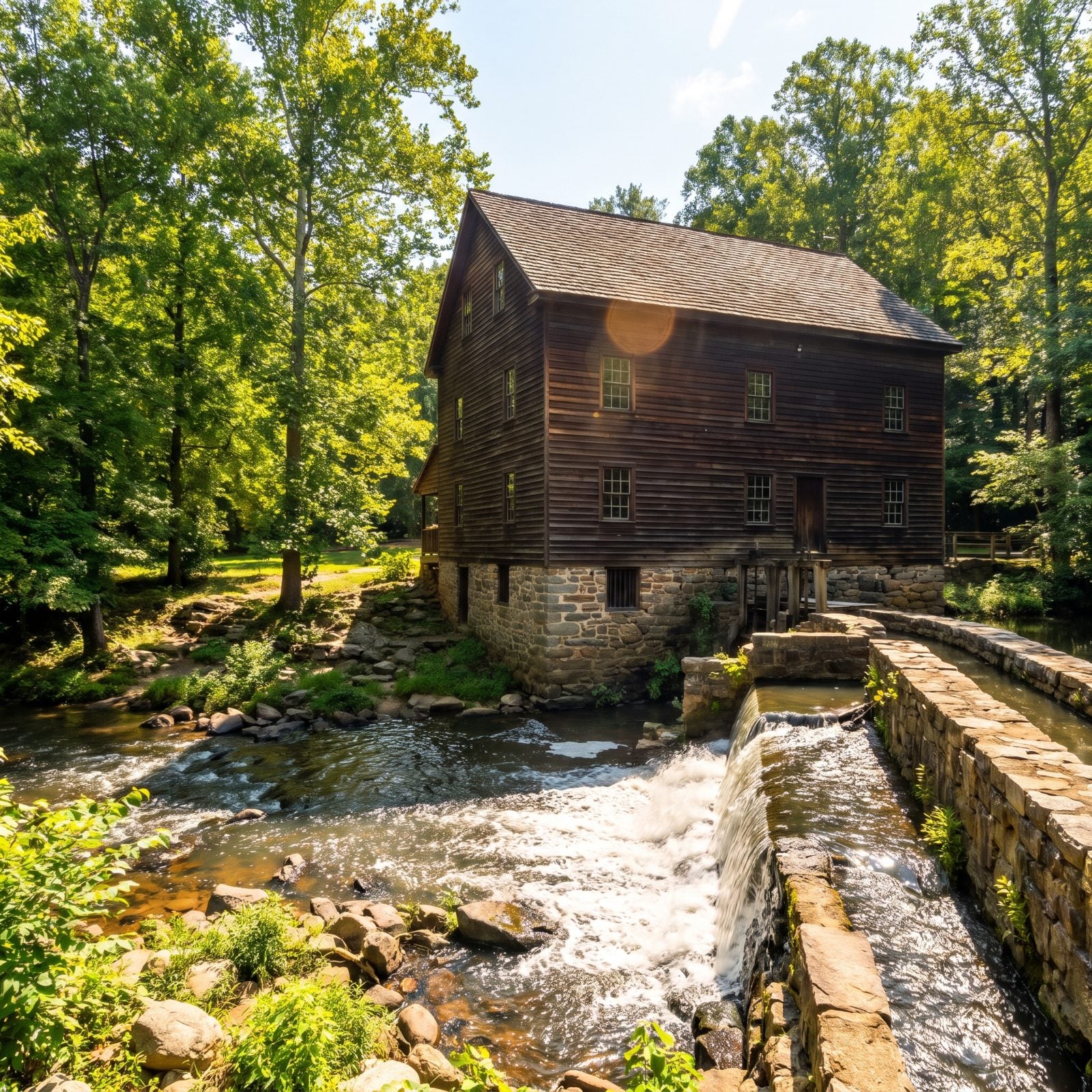
A Durham city park at 5101 N Roxboro St, open 8 a.m. to dusk. West Point Mill is the headliner, the best known of the 32 mills that once lined the Eno River. Three historic buildings open free from 1 to 5 p.m. on weekends, April through December.
Weekday tours can be booked at (919) 471-1623. Being inside city limits makes this the most RV-reachable stop on the list. No sketchy gravel approach required.
4. Bost Grist Mill, Concord
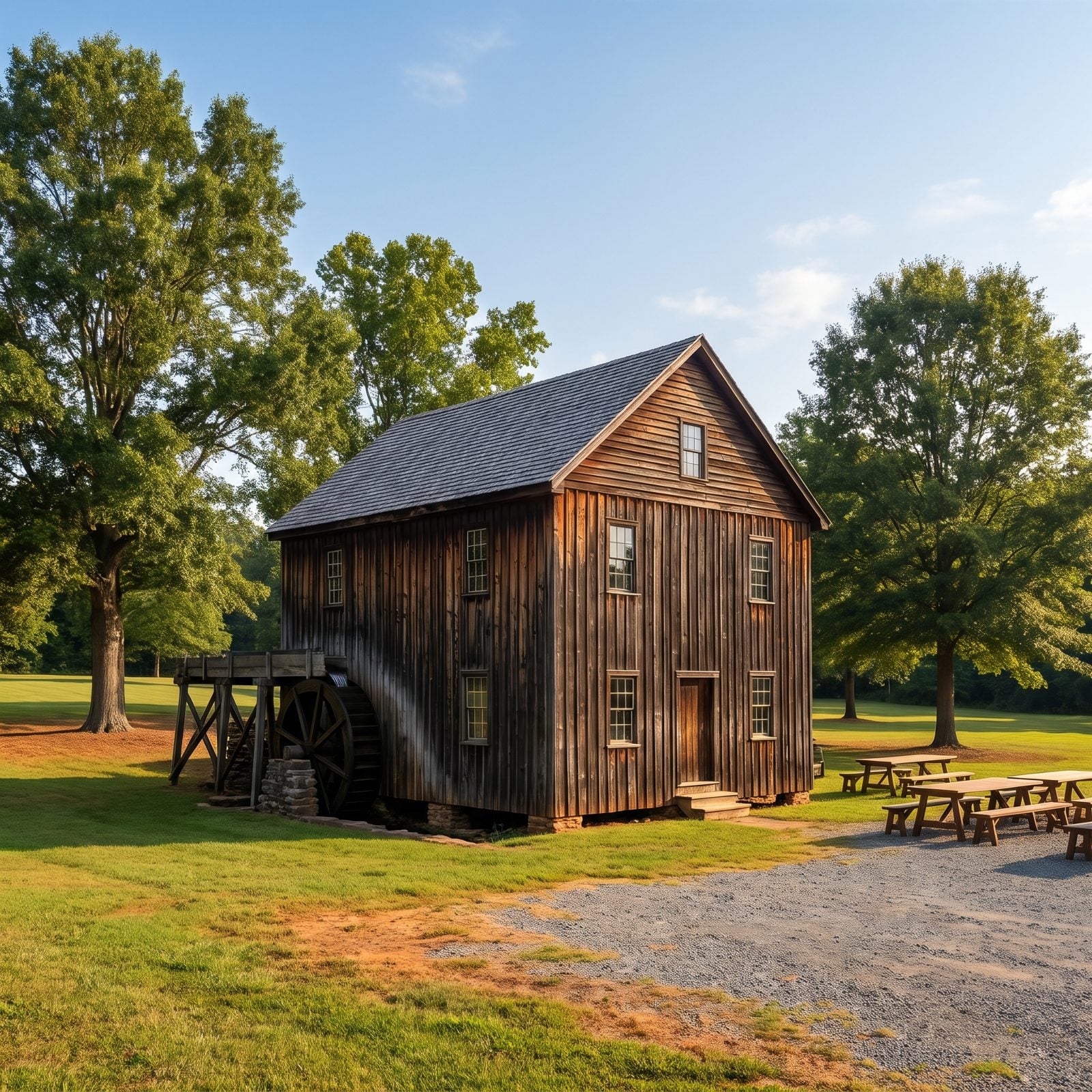
Built in the early 1800s, on the National Register, and still fitted with its original milling equipment. You can watch corn turn into cornmeal and grits on the same stones, using the same 1800s methods.
It’s a working history site with a calendar: Civil War reenactments, a Christmas open house, that sort of thing. Address is 4701 Highway 200, phone (704) 782-1600.
Call ahead for regular hours, because this one runs event-driven days rather than a steady daily schedule. Showing up unannounced is how you end up photographing a parking lot.
3. Linney’s Water Mill and Campground, Union Grove
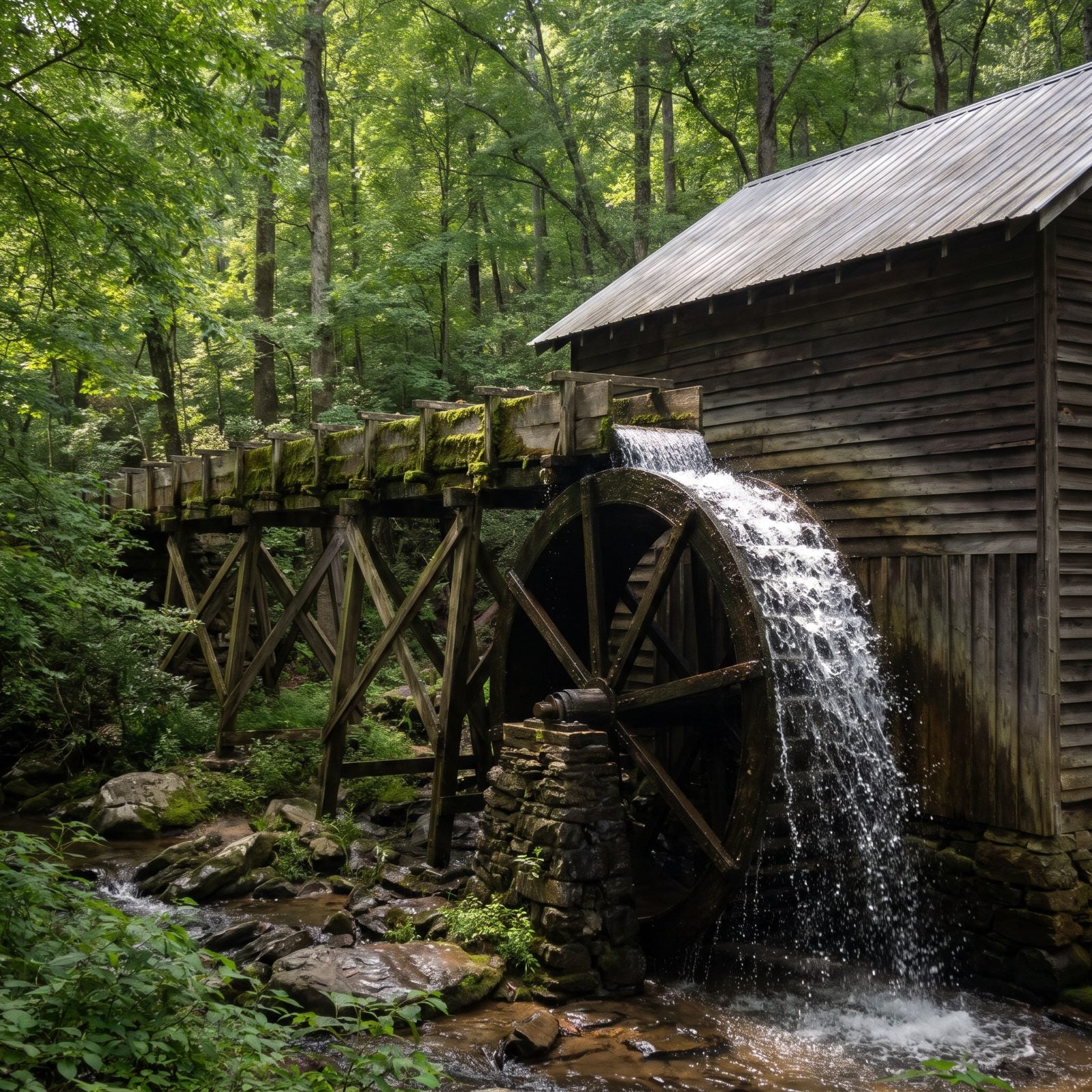
The only entry here with a campground on site. A water mill from 1936-37 on Rocky Creek in Alexander County, with a long wooden flume feeding a 19-foot overshot wheel that’s a sight on its own.
Address is 4635 Linneys Mill Rd, Union Grove, phone 704-592-2075. Listed hours are Tuesday through Friday, 8 to 5, and Saturday 8 to noon.
2. Francis Grist Mill, Waynesville
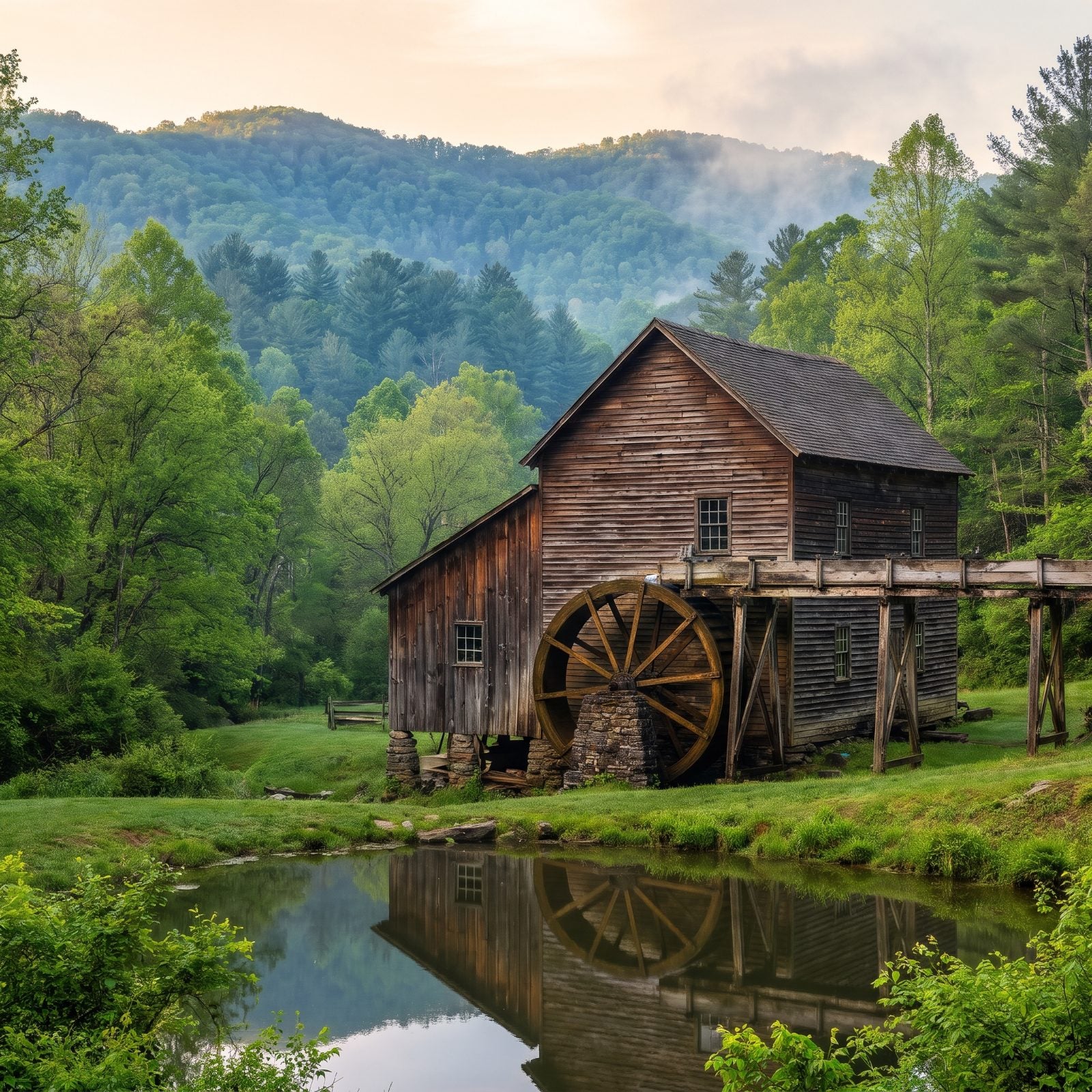
William Francis built this one in 1887 to serve the Francis Cove community just outside Waynesville, off Highway 276. An overshot wheel, a flume running from a mill pond, and a mountain backdrop you won’t find anywhere else on this list.
Now the catch. Visits are by appointment only, so call 828-456-6307 before you plan around it. The preservation society does hold public events, Cars and Cornmeal in May and Music at the Mill in September, if you’d rather time your trip to a crowd and a reason.
Address is 14 Hugh Massie Rd. Save this for when you’re already heading into the mountains, not as a cold drop-in.
Explaining why her family keeps the 1887 mill going, the mill’s family owner says “Every time that wheel starts up, I get cold chills.”
1. Cedarock Park: 500 Acres and a Waterfall That Snuck Up on Alamance County
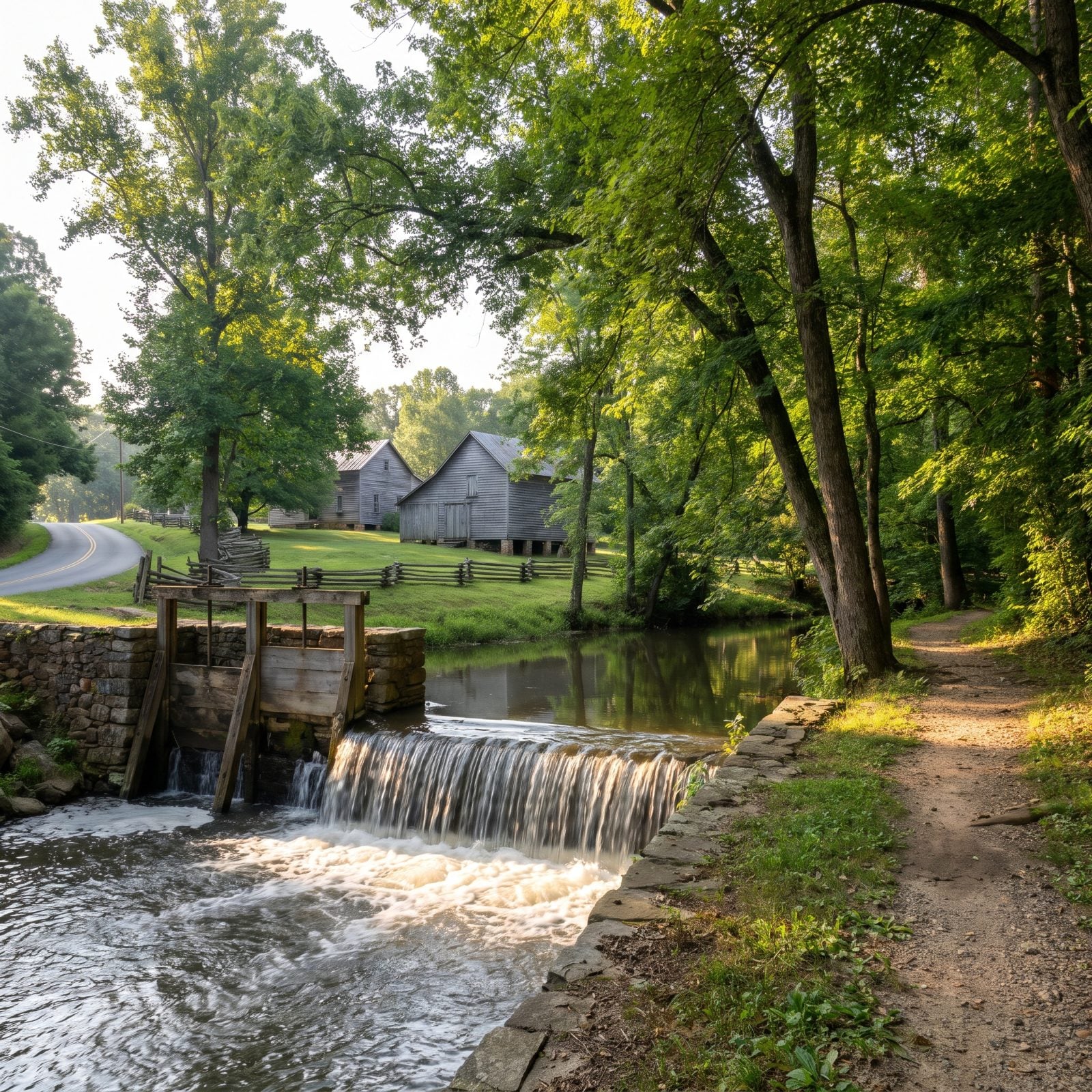
The waterfall is the surprise here. Nobody drives to Cedarock expecting one, which is exactly why it lands when an old mill dam on Rock Creek backs the water up and lets it tumble over in a low, steady sheet you can reach from either the Curtis Mill Trail or the Rock Creek Trail. It’s the kind of spot where you stop walking without deciding to.
The park opened in 1975 and runs about 500 acres, much of it (414 acres) a National Register historic district. John and Polly Garrett settled the farm at its center back in 1830, and the old buildings still read like a working homestead rather than some tidy museum diorama. Weathered, lived-in, the real thing.