
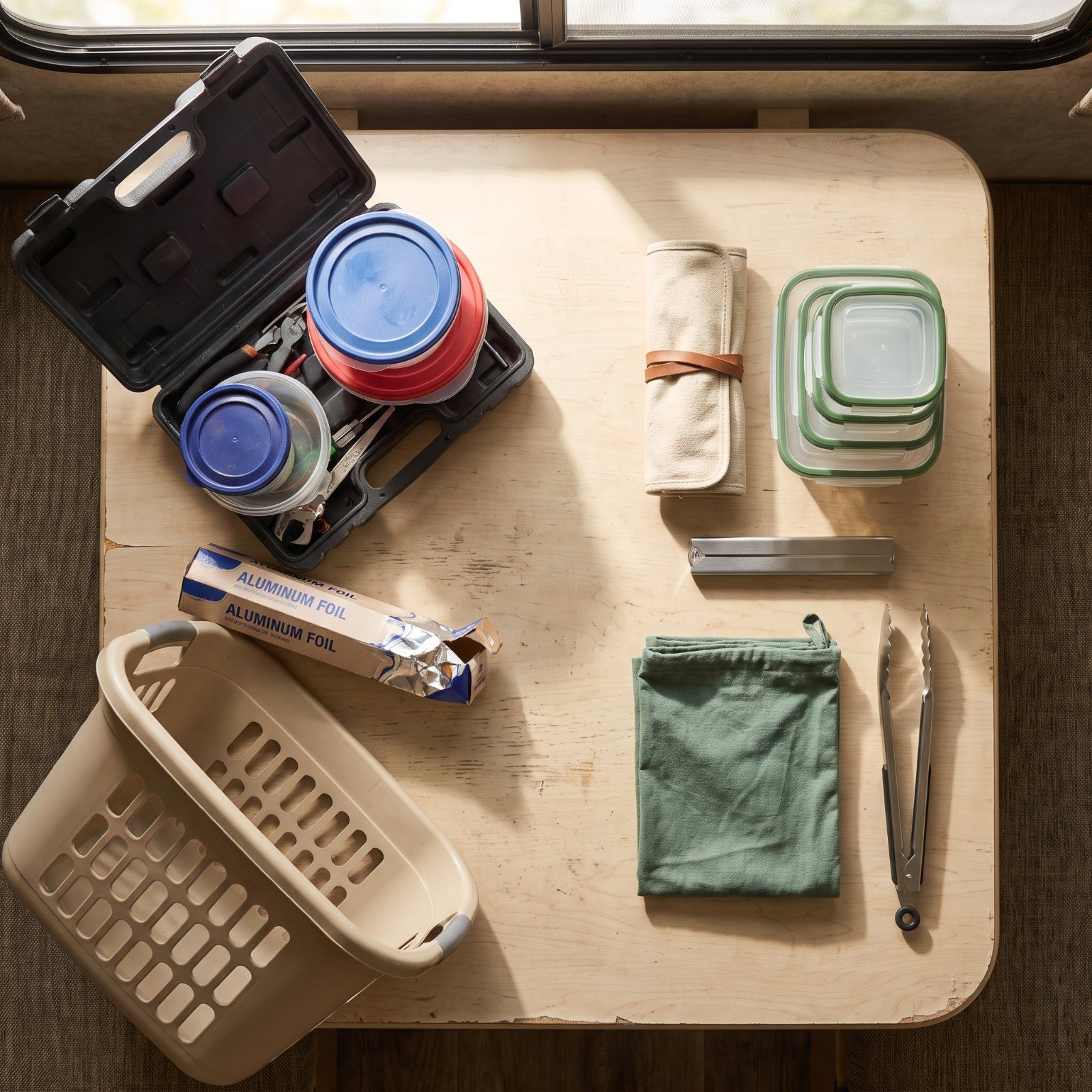
Open any new RVer’s basement compartment and you’ll find the same ghost: a giant blow-molded tool case holding six tools and a lot of air. Nobody warns you that half of what you load before your first trip never gets touched, or gets touched once and then rattles around for three seasons. Weight you tow. Space you bought and can’t use. The folks who’ve logged real miles figured this out the slow way, one cramped cabinet at a time, and here’s what they quietly left in the garage along with the smaller, lighter stuff they swear by now.
Please note that some of the images in this article were created with the assistance of AI.
39. Molded Tool Cases: Swap the Bulky Shell for a Compact Tool Roll
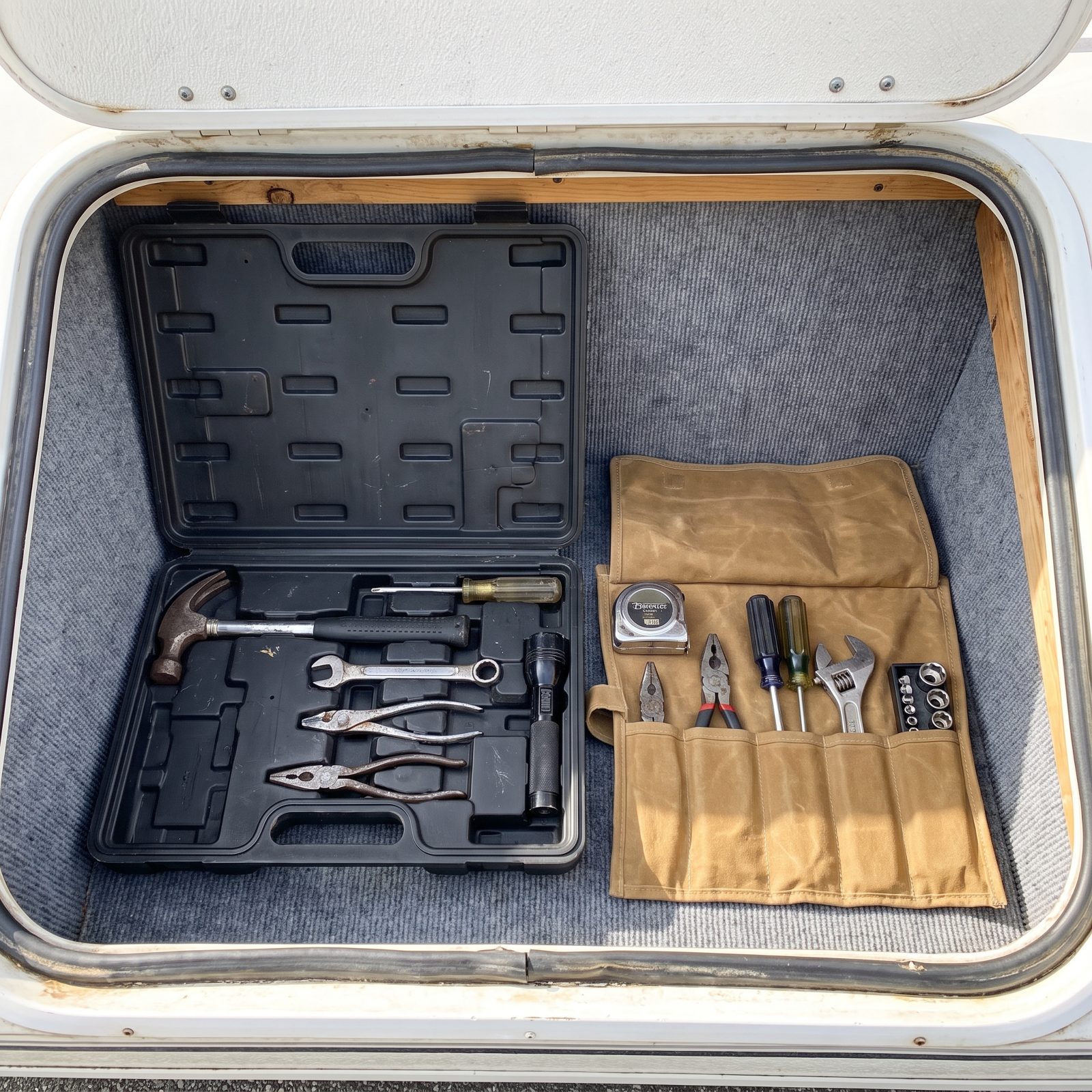
That hard case is mostly storing air. Molded cases are built around one specific tool layout, so you either keep the whole tray as dead weight or dump the tools loose, where they slide around and scratch everything they touch.
A waxed-canvas roll holds the tools you actually reach for on the road: tape measure, pliers, two screwdrivers, an adjustable wrench, a small socket set. It flattens against a compartment wall, weighs almost nothing, and unrolls on the picnic table so every tool is visible at a glance.
38. Round Containers With Orphan Lids: Commit to One Nesting Square Set
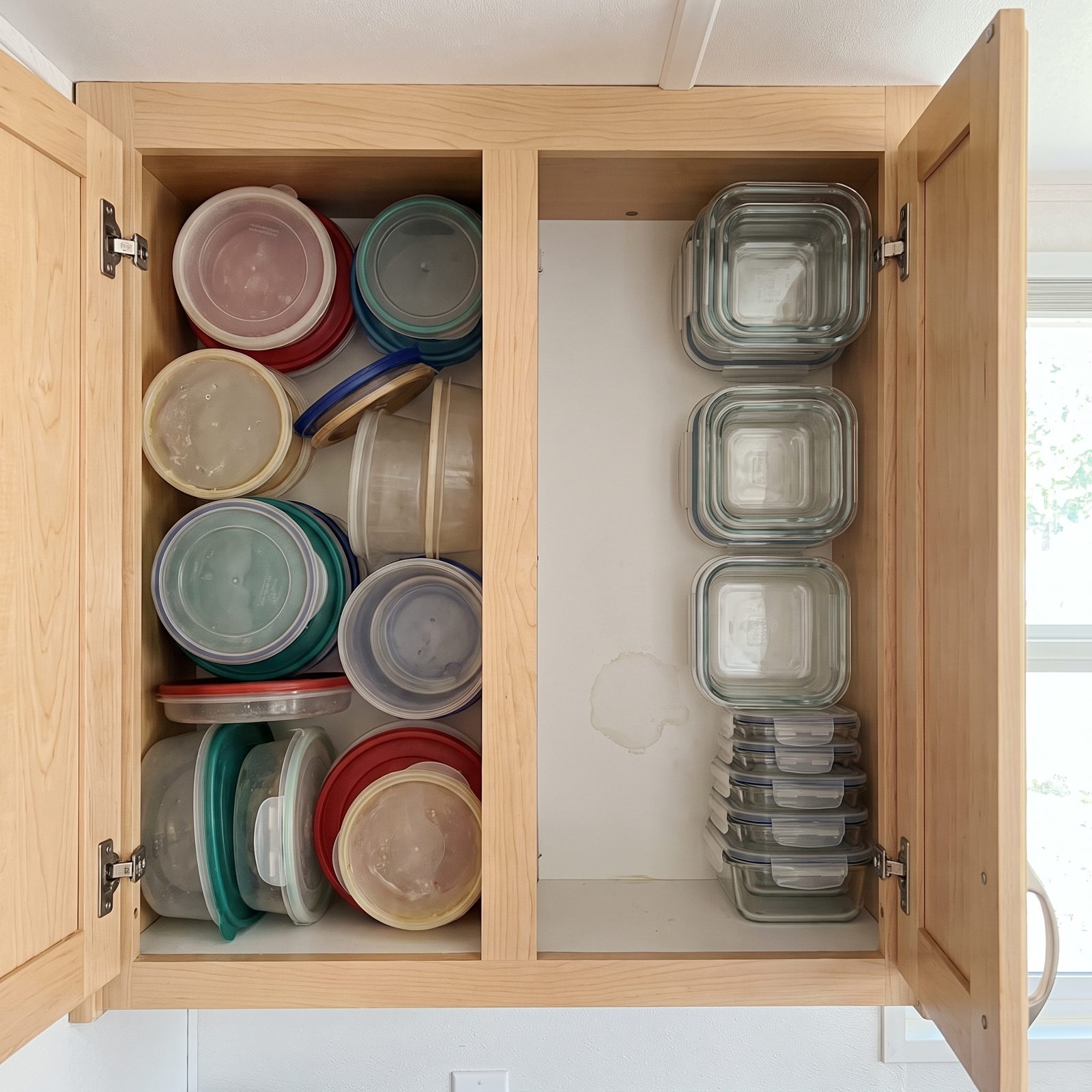
Round containers waste the corners of every shelf. Worse, the lids multiply like socks in a dryer until you’re standing there holding a bowl and auditioning four lids that all almost fit.
Square containers that nest together stack flush against the cabinet wall and leave no triangle gaps. Pick one set where every lid works across every size. One lid design, four bowls, zero guessing at ten at night when the leftovers are getting warm.
37. Cardboard Foil and Wrap Boxes: Switch to Flat Refillable Cutters
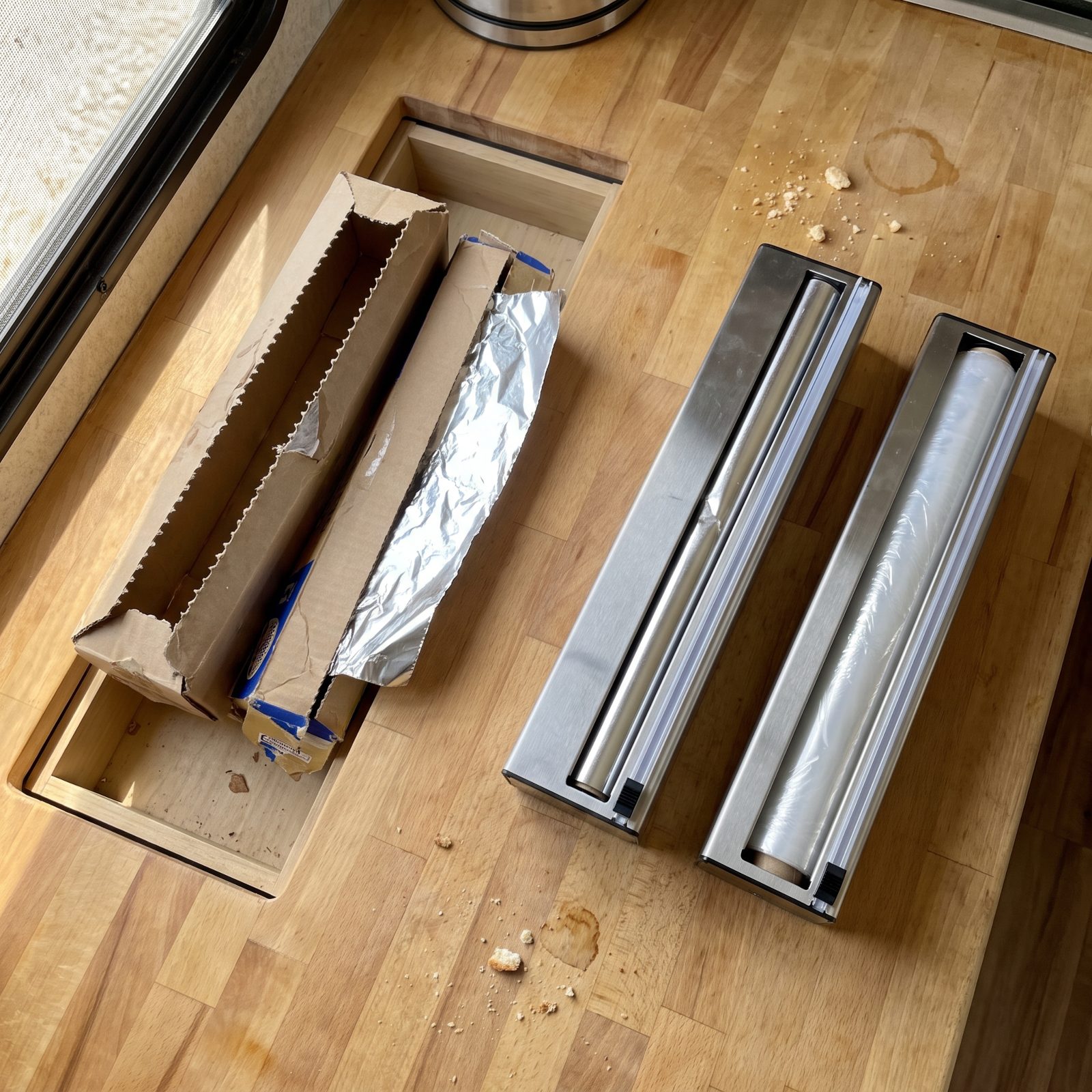
Cardboard foil and wrap boxes are the first casualties of RV humidity. The box goes soft, the serrated edge peels right off, and you end up tearing foil with your teeth over a campfire. Not a good look.
A flat steel dispenser holds the roll rigid, cuts clean every time, and refills when you run out. Mount it inside a cabinet door or lay it flat in a drawer and the boxes stop getting crushed under everything else.
36. Board Game Boxes: Move the Pieces Into Labeled Pouches
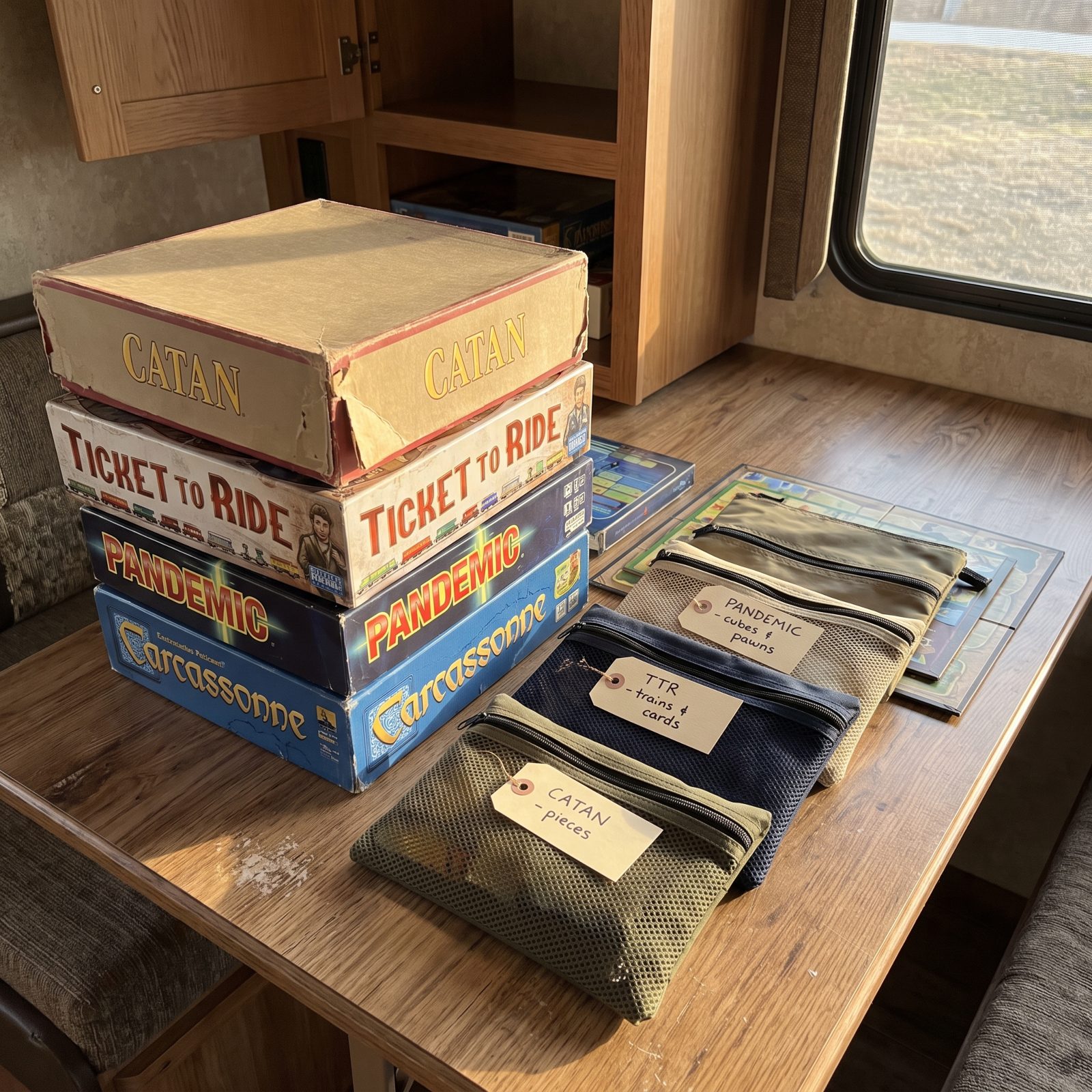
Game boxes are ninety percent empty space wrapped in cardboard that warps the first time a cooler sweats near it. Four or five of them eat an entire overhead cabinet, which is nuts when you think about it.
Labeled zip pouches hold the cards, dice, and pieces, and the folded boards slide flat behind them. A deck of cards, a travel cribbage board, a couple of dice games, all in one shoebox-sized footprint. You lose the pretty box art. You gain back a shelf you can actually use for something.
35. Appliance-Specific Charging Bricks: Consolidate to One Multiport Charger
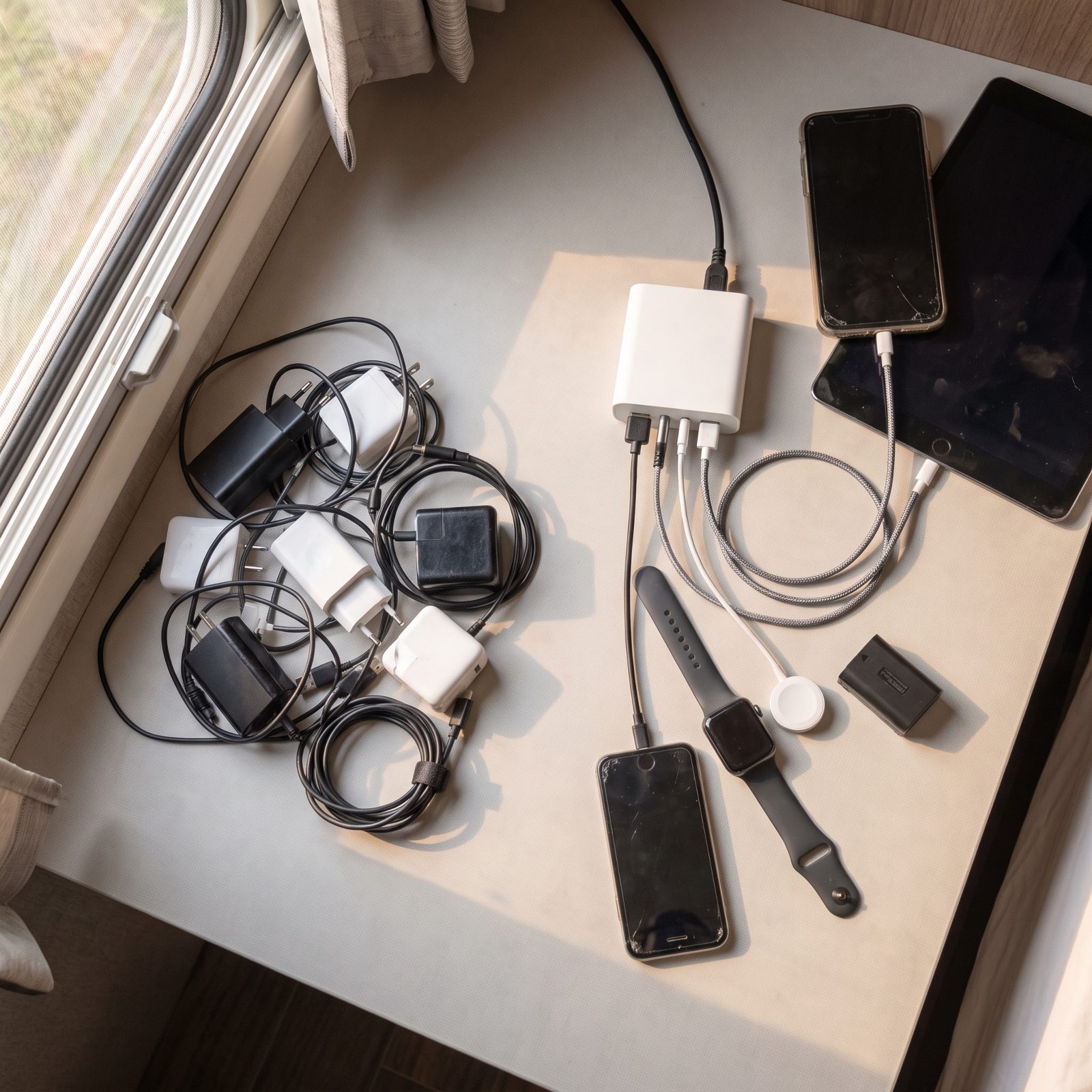
Every device arrives with its own brick, and before long you’ve got a drawer that looks like a snake pit. Most of those bricks are redundant anyway.
One multiport charger with enough wattage runs the phone, tablet, watch, and camera battery off a single outlet. RVs don’t have many outlets, and the ones they have are usually fighting with the coffee maker. Freeing up three plugs matters more than it sounds.
34. Hard-Sided Suitcases: Unpack and Leave the Empty Shells at Home
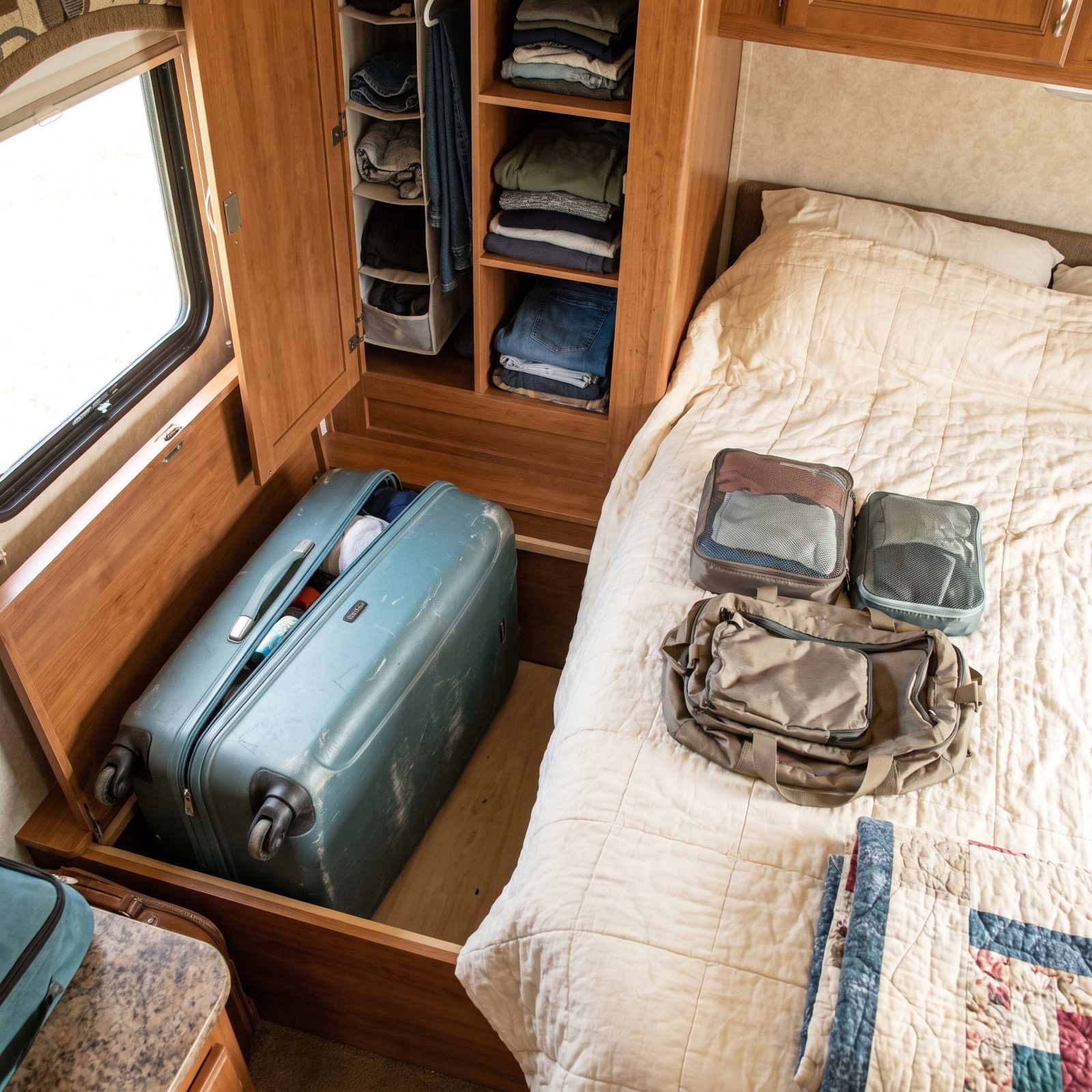
Here’s the trap. You drive to the RV, you unpack, and then the empty suitcase has to go somewhere. A hard shell doesn’t collapse, so it sits under the bed or in a basement bay as a rigid box full of nothing for the whole trip.
Unpack into the RV’s cabinets before you leave the driveway and carry your clothes in soft packing cubes or a duffel that folds down to nothing when empty. The RV is the suitcase now. You already paid for the closet space, so use it.
33. Printed RV Manuals: Keep Searchable Copies for Offline Access
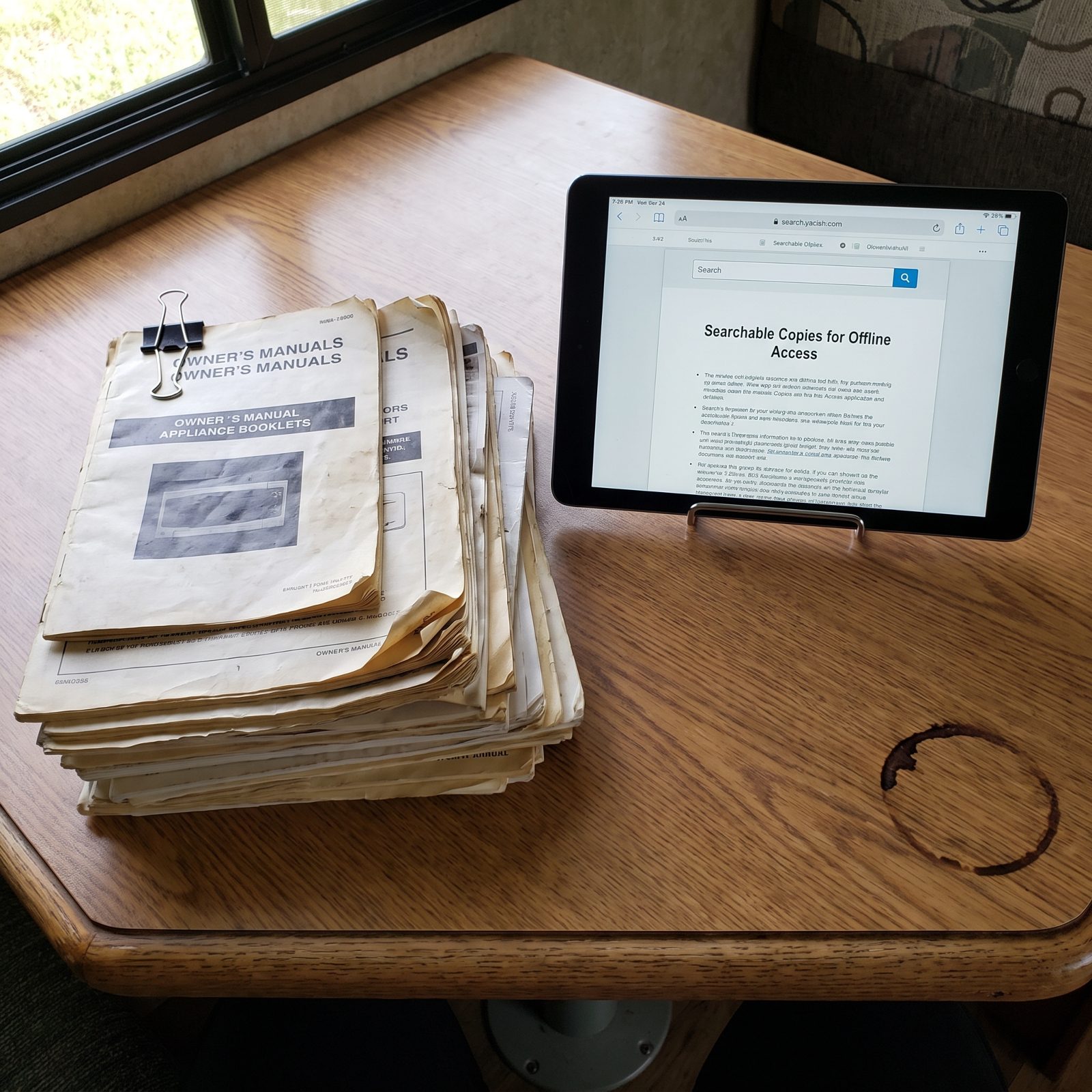
The furnace quits at 2 a.m., and of course that’s the one night you need the manual fast. Flipping through a binder-clipped stack of booklets by flashlight is nobody’s idea of a good time.
Download the PDFs for the rig, the fridge, the water heater, and the converter, then save them offline on your phone. Searchable text beats a glossary every time. And you’re not hauling a drawer of paper that curls in the heat and goes missing the moment you lend it to the neighbor.
32. Cased Grill-Utensil Sets: Pack Tongs and One Sturdy Spatula
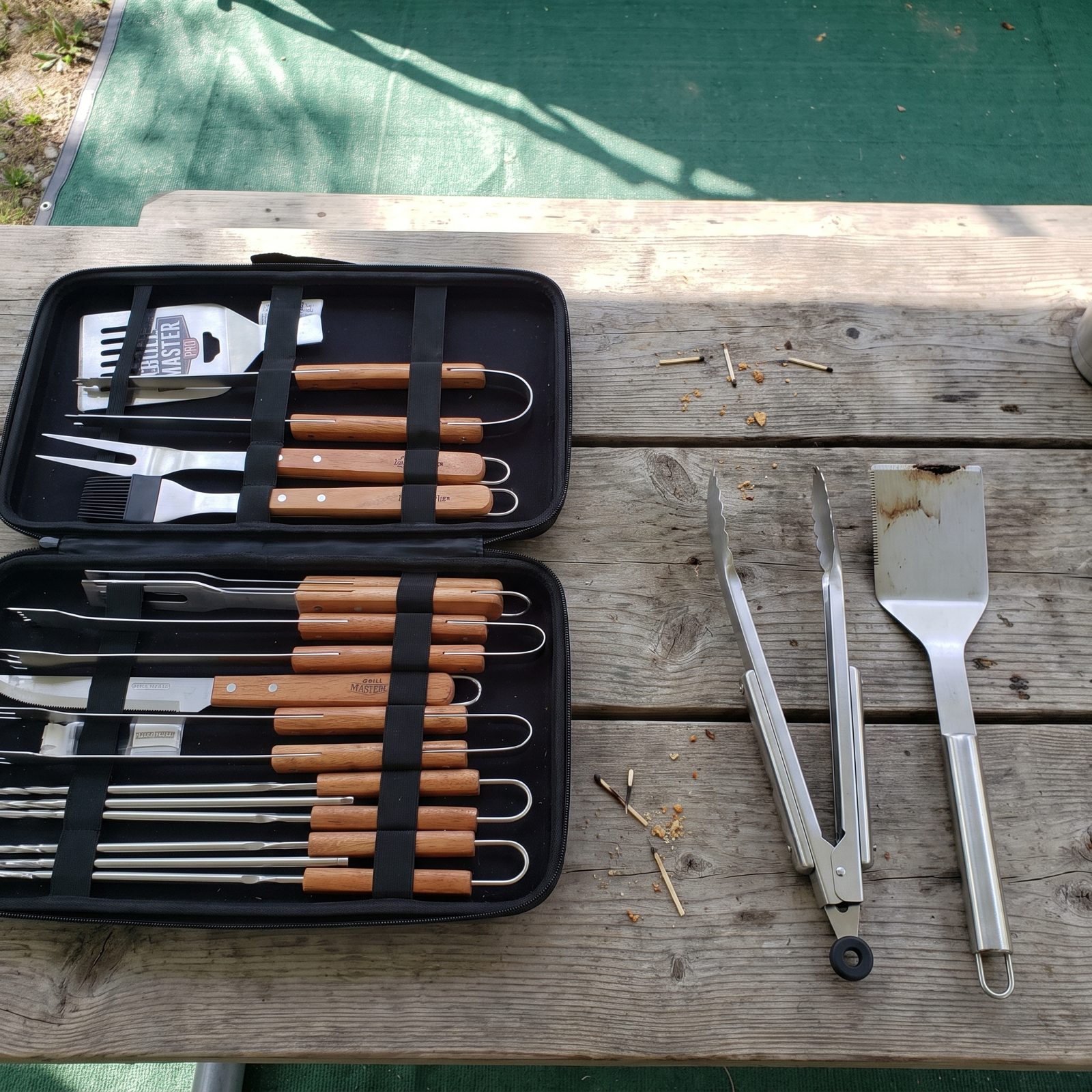
Those zippered grill sets come with a basting brush you’ll never use, a corn-cob fork, and a little salt shaker that’s decorative at best. The case is bigger than a hardback book, and most of it holds tools that stay spotless for years.
Good tongs and one wide, heavy spatula cover the vast majority of camp cooking. Tongs flip, turn, grab, and serve. The spatula handles whatever the tongs can’t. Everything else is a solution to a problem you don’t have.
31. Rigid Laundry Baskets: Hang a Collapsible Laundry Sack Instead
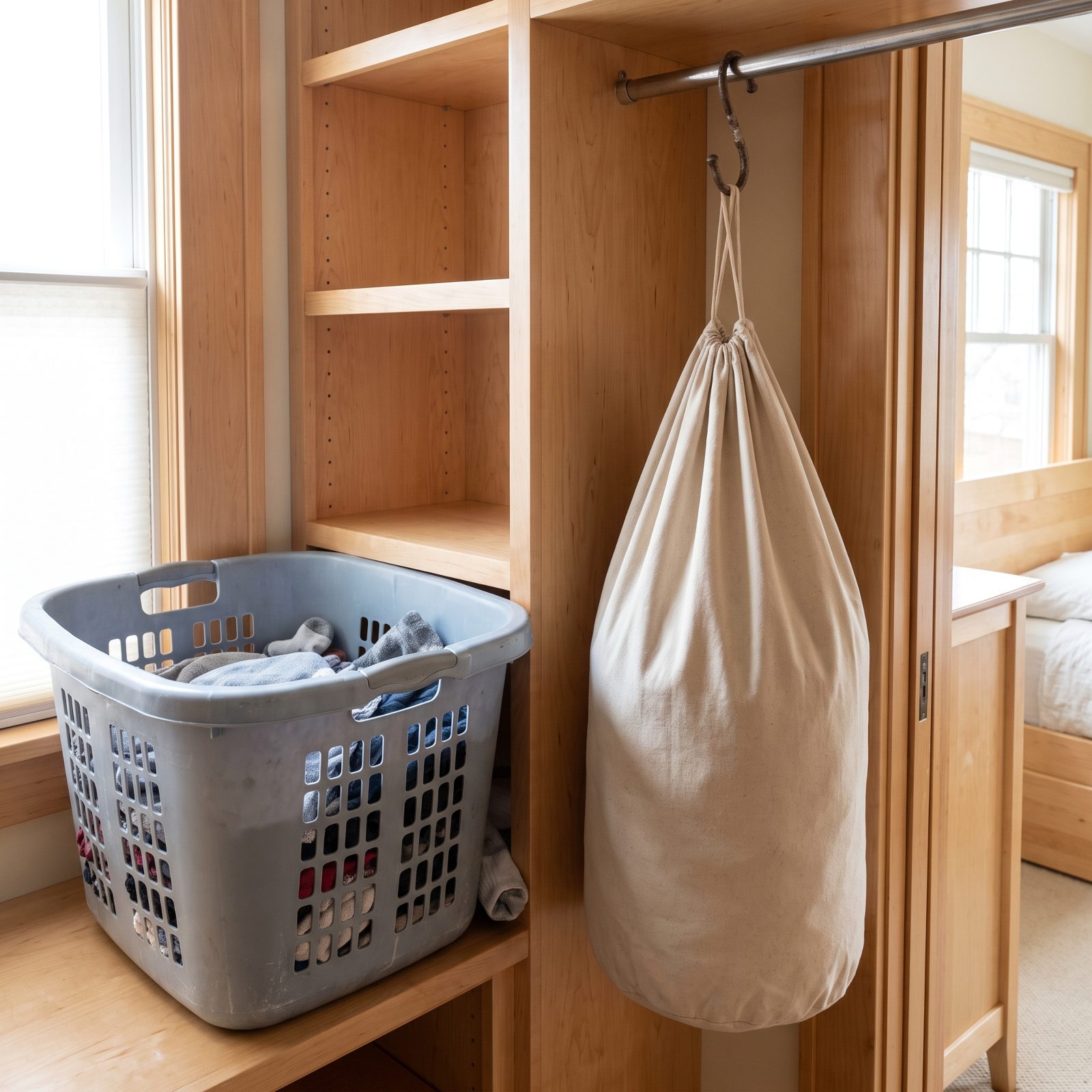
A rigid basket can’t flex to fit anything. It eats the same cubic footage empty as it does full, and in an RV closet that’s just offensive.
Hang a laundry sack over the closet rod and you’re finally using the vertical space nobody else bothers with. Empty, it’s a flat piece of fabric. Full, you unhook it, sling it over a shoulder, and walk straight to the campground laundry room. No awkward basket balanced on a hip through a screen door.
30. Countertop Knife Blocks: Store Essential Knives in Blade Sleeves
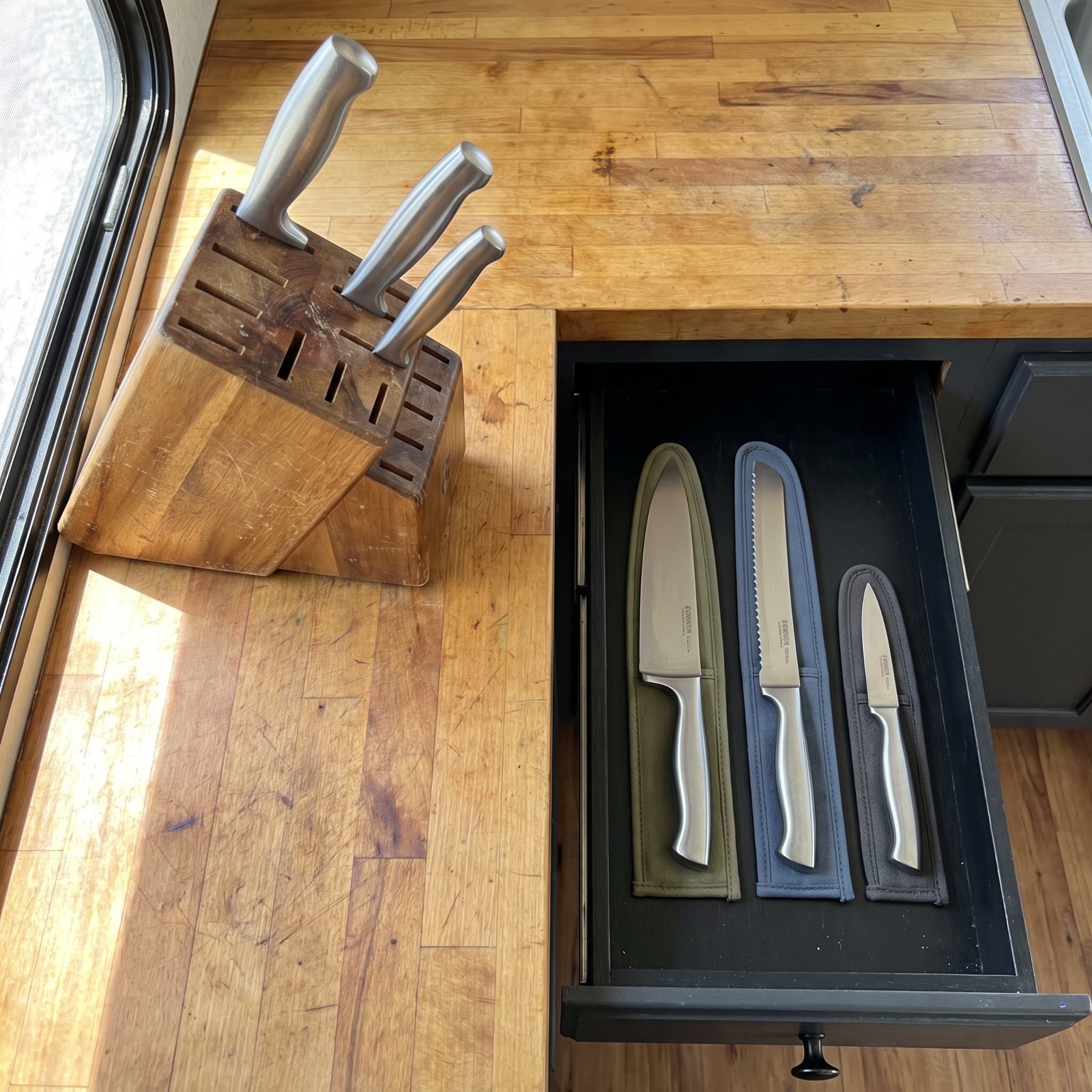
A knife block is a heavy wooden tower that owns a chunk of the one counter you have, and it topples the first time you take a sharp corner at speed. Half the slots sit empty anyway.
Slip the knives you actually cook with — a chef’s knife, a paring knife, a serrated one — into edge-guard sleeves and lay them flat in a drawer. The blades stay sharp, your fingers stay safe when you reach in, and your counter goes back to being counter.
29. A Salad Spinner: Dry Greens in a Clean Kitchen Towel Instead
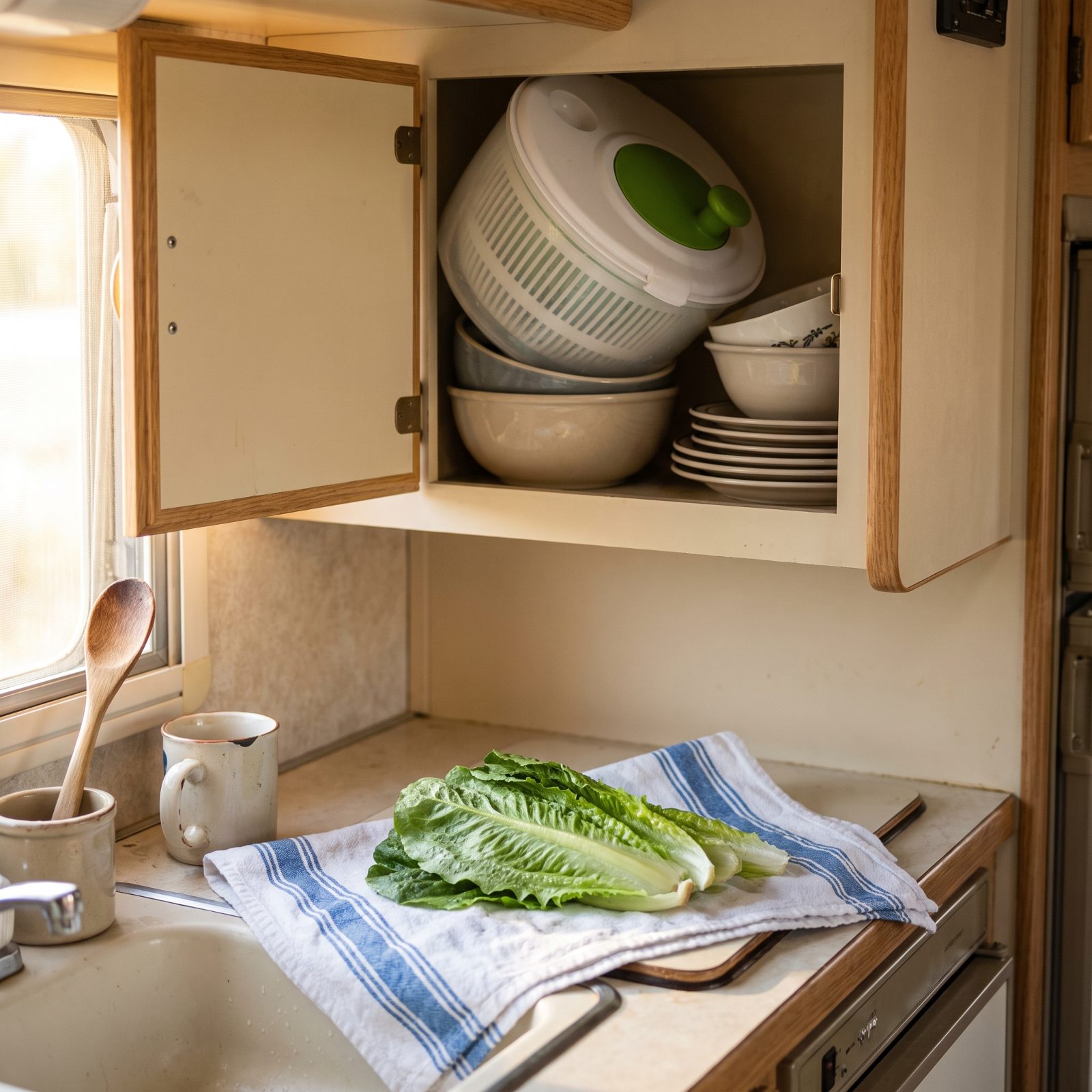
A salad spinner is the size of a basketball and does exactly one thing. In a rig where every cabinet inch is contested, that math never works out.
Toss your rinsed greens into the center of a clean kitchen towel, grab the corners, and swing it a few times outside the door. The water flies off and the leaves stay crisp. No bowl to nest, no lid to lose, no plastic cage that only ever holds air in your cabinet.
28. A Rigid Dish-Drying Rack: Switch to a Roll-Up Sink Rack
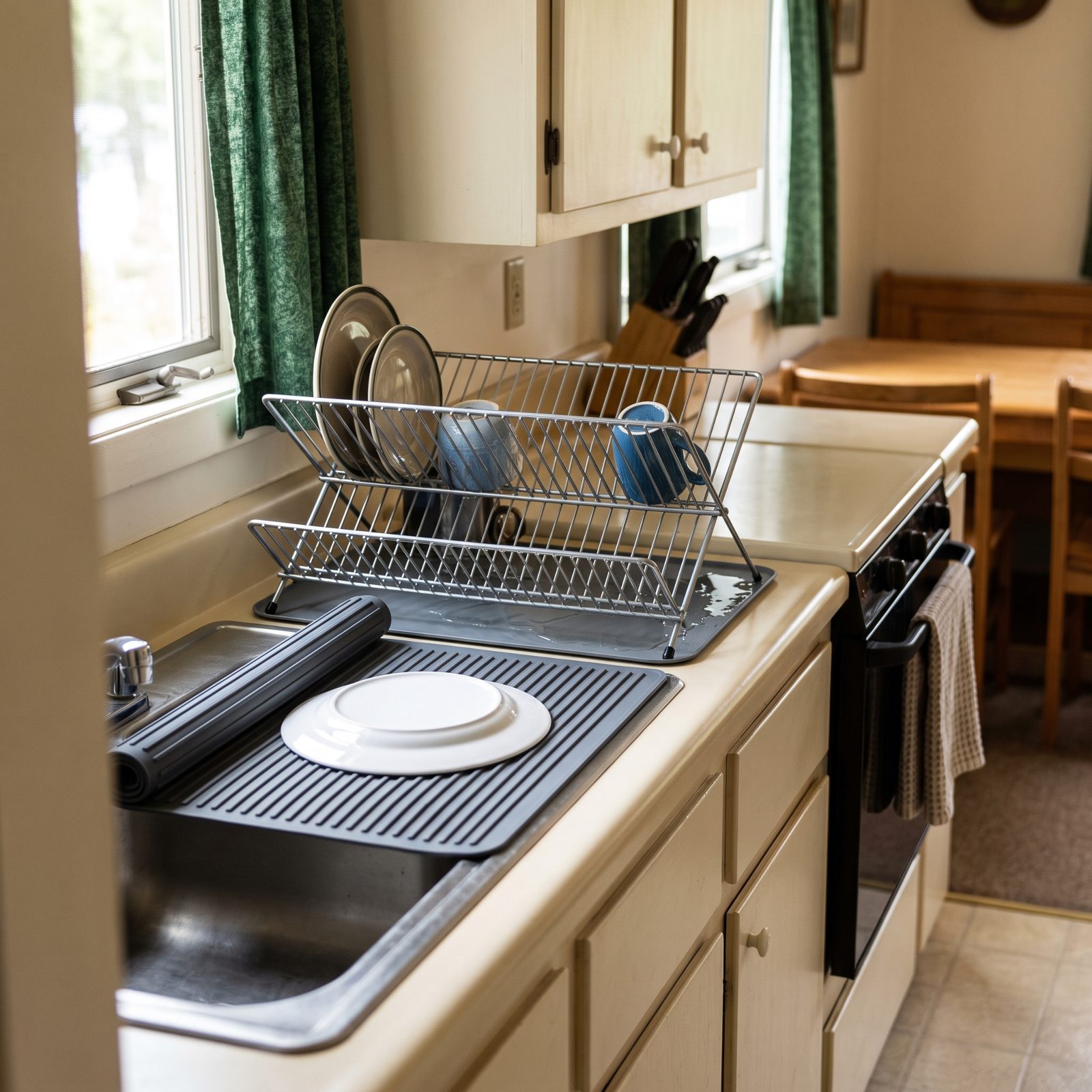
The rigid rack is a space hog that earns its keep for maybe twenty minutes a day. The rest of the time? It sits on your only real prep surface, dripping, sliding when you drive, refusing to fold flat.
A roll-up silicone rack solves all of it. Unroll it across the top of your sink and it holds a surprising stack of dishes, then rolls into a tube you can tuck behind the toaster. When you cook, it disappears and the counter comes back — and that reclaimed foot of workspace is worth more than the rack ever was.
27. A Household Trash Can: Hang a Bag Inside a Cabinet Door
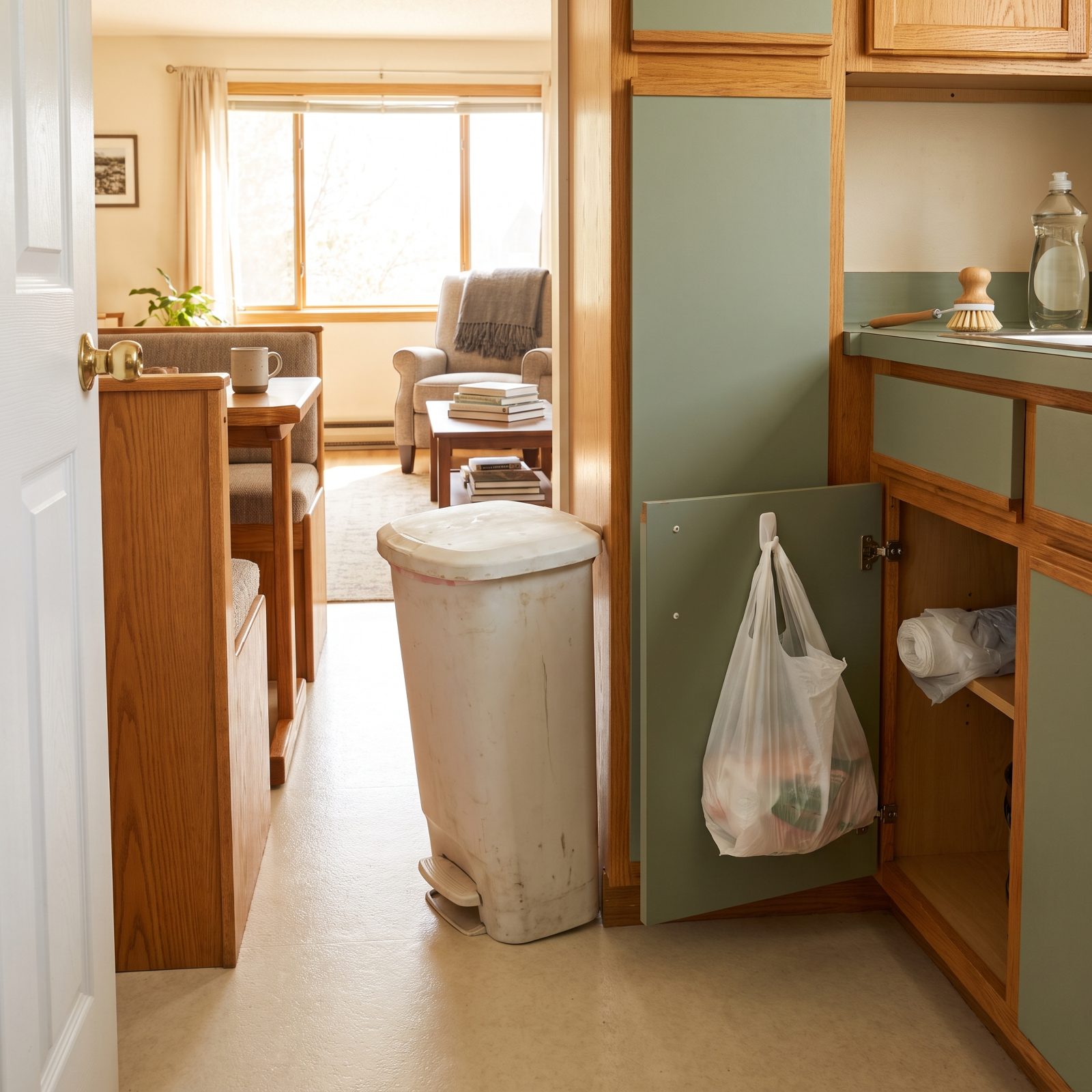
A full-size trash can is pure stolen floor space. It lives in the walkway because there is nowhere else, catches your shin every time you squeeze past the dinette, and tips over the second you take a corner too fast.
Hang a grocery bag on a hook inside a lower cabinet door and it takes the daily load off the can. The bag tucks away when the door closes, the lid is just the door, and when it’s full you knot it and swap it in five seconds. The bag itself takes zero floor space, and the old can goes back home.
26. Large Serving Platters: Serve Straight From the Cookware
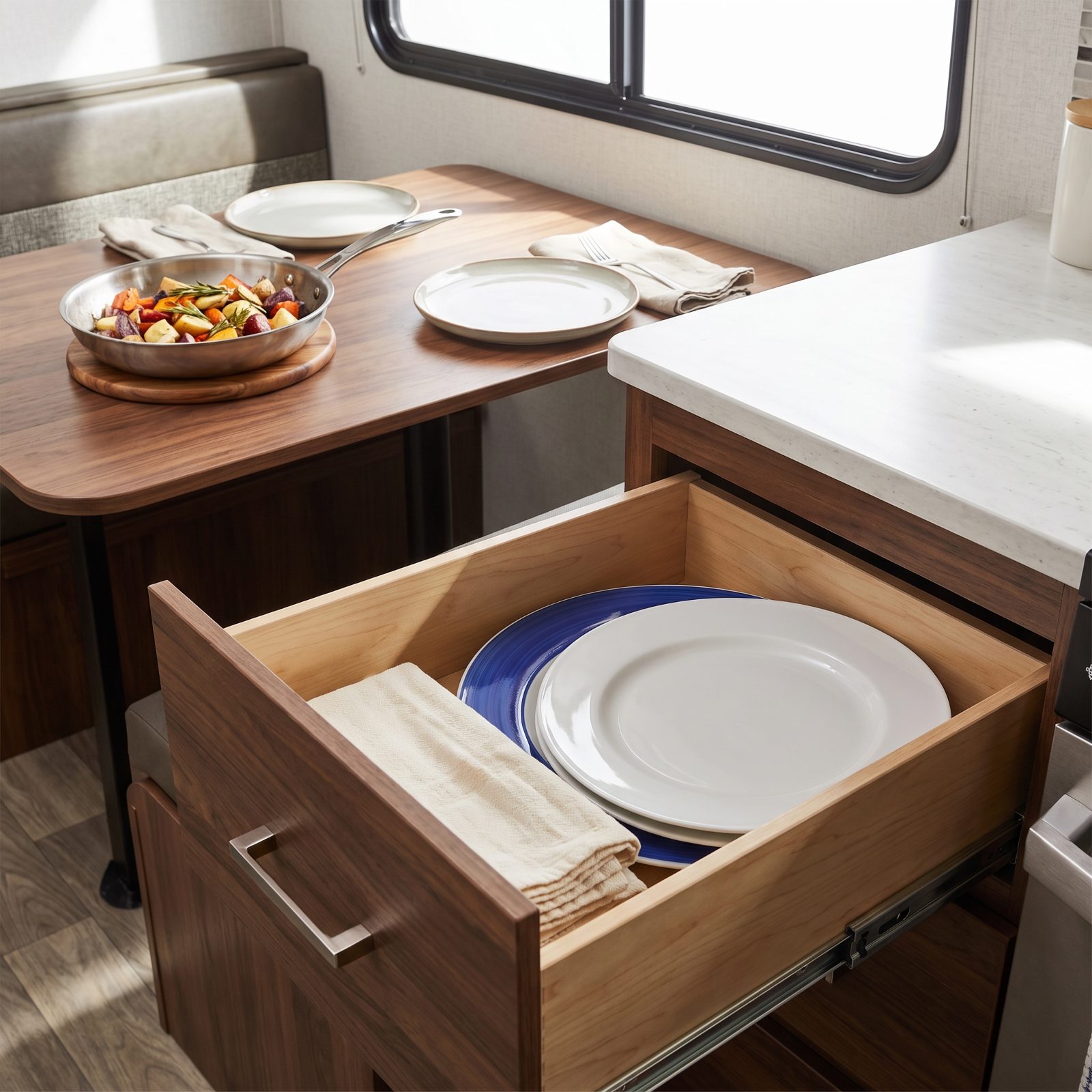
Platters are the drawer tyrants of RV kitchens. They don’t nest, they don’t stack with anything, and they crack if you pack them wrong. For food that gets eaten in four minutes anyway, the ceremony isn’t worth the square footage.
Set the skillet or the pot on a wood trivet and serve from it. Nobody at a campsite table minds. You skip the washing-up, the food stays hot longer, and you free a whole drawer for things you actually reach for every day.
25. Souvenir Mug Collections: Keep One Nesting Mug Per Traveler
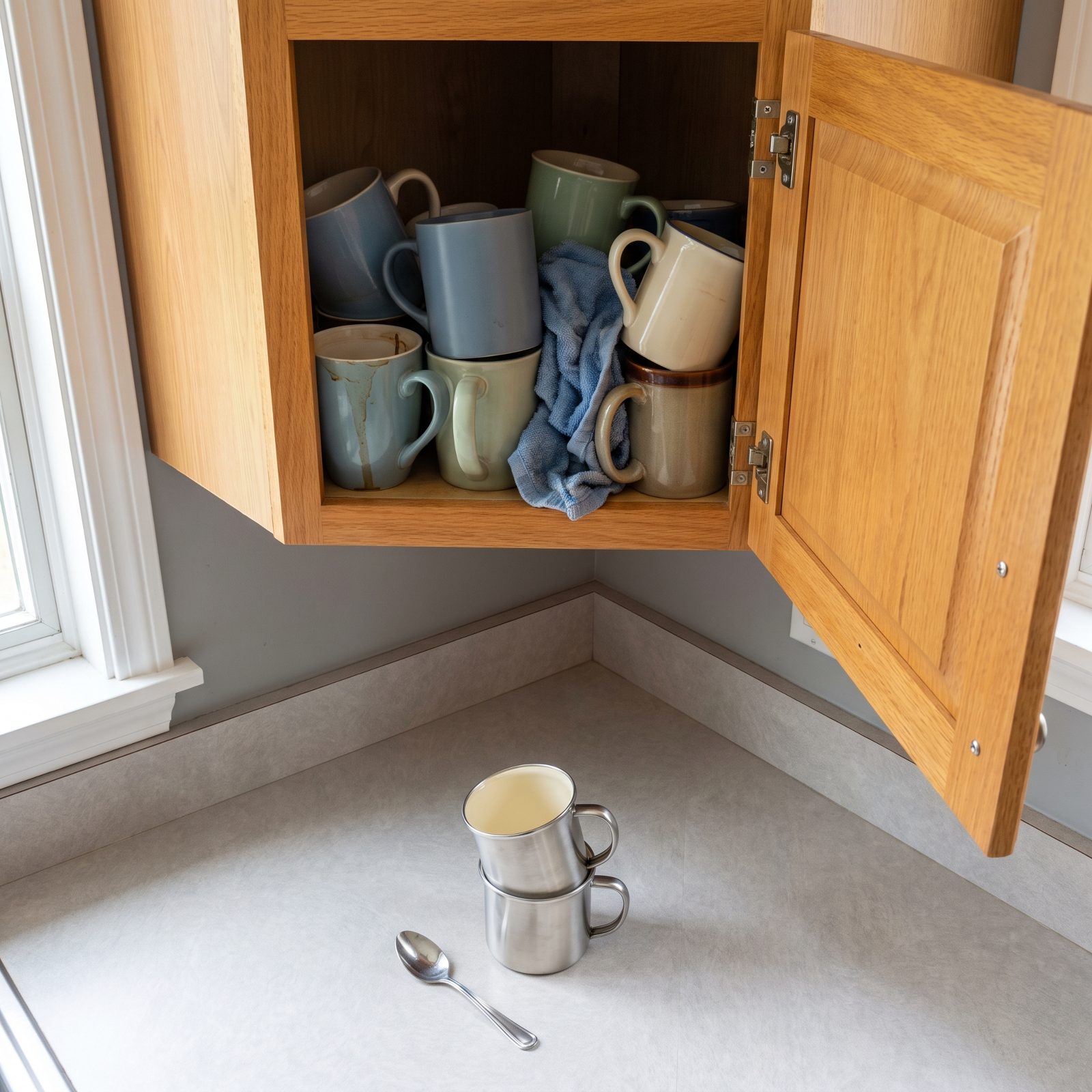
Every good trip ends with another mug — the gift-shop pottery, the diner logo, the one from that brewery you loved. They pile up until the cabinet sounds like a wind chime on every bump in the road.
Keep one stackable mug per person and photograph the rest at home. Nesting enamel or stainless mugs stack into the space of a single souvenir mug and won’t shatter when you brake hard. Honestly, your coffee tastes the same from a mug that stores flat.
24. A Cast-Iron Cookware Collection: Bring the One Pan You Actually Use
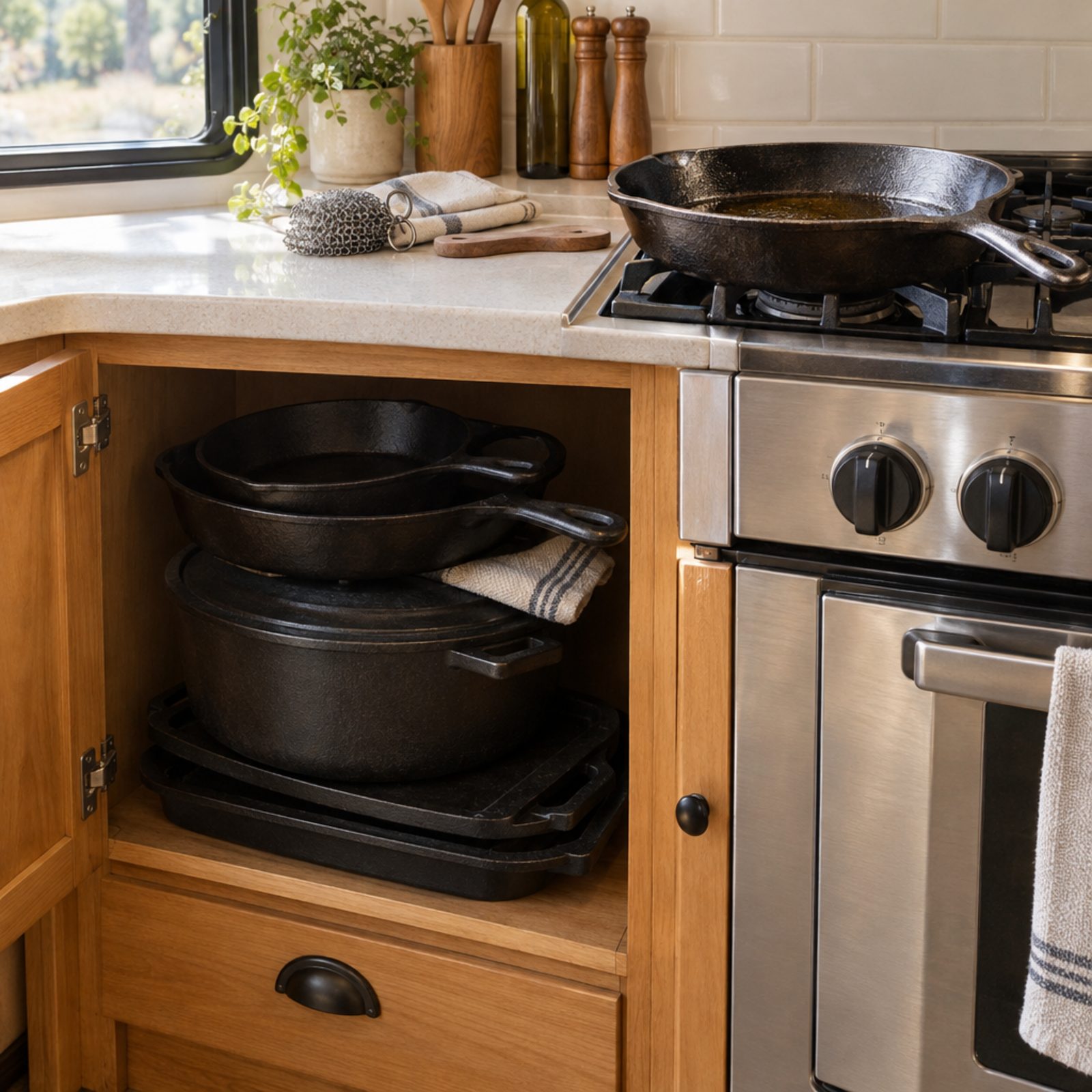
Cast iron is wonderful, and it’s also dead weight you carry down every mountain pass. A full set is a lot of pounds, all of it sitting low in a cabinet, all of it rarely touched past the one pan you reach for.
Bring the skillet you cook in every week. Leave the rest at home.
A single well-seasoned ten-inch pan handles eggs, chops, cornbread, and most of what a campsite dinner needs. The dutch oven is a fine dream until you’ve hauled it a thousand miles and used it twice.
23. Oversized Stockpots: Match the Pot to the RV Burner
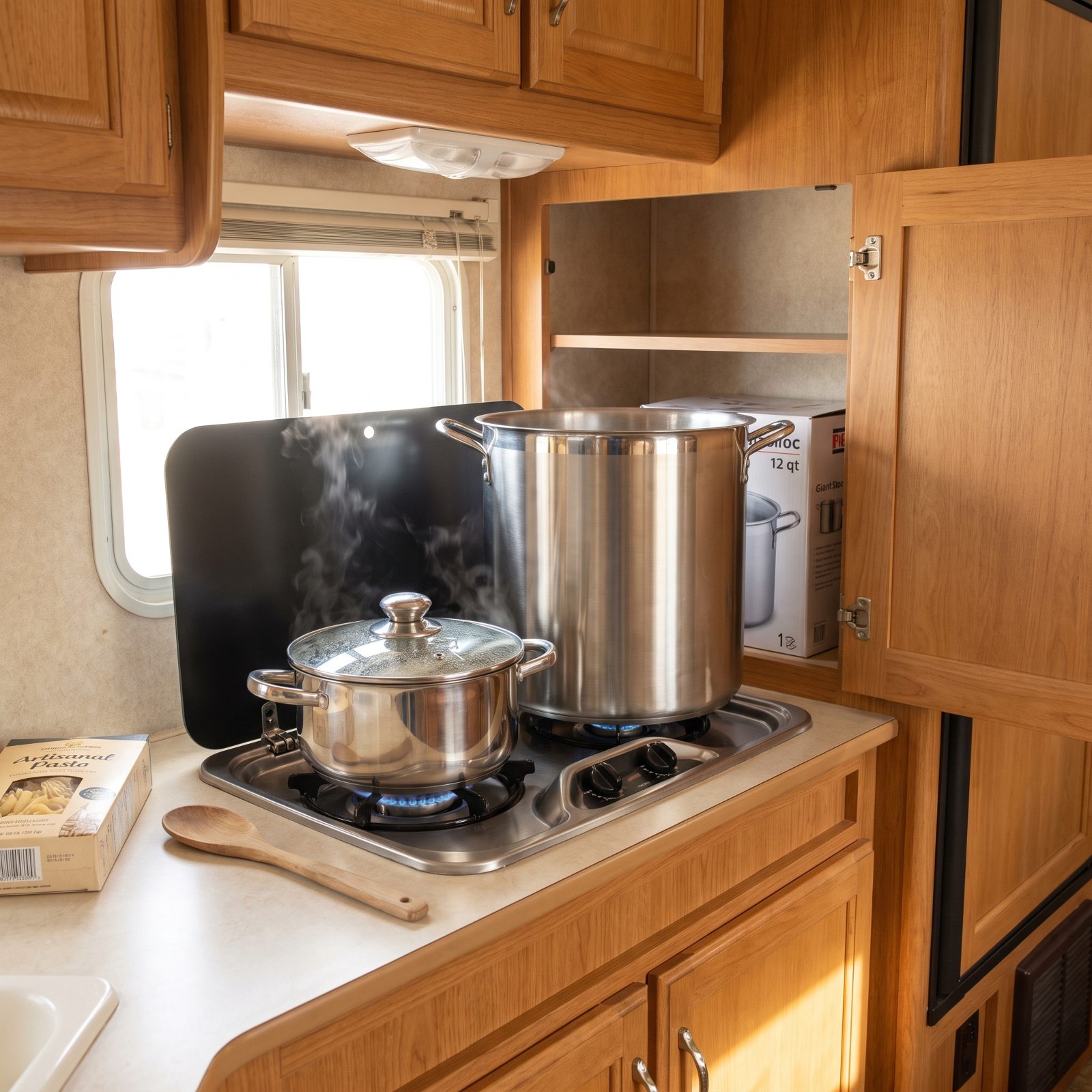
Bring the pot that fits the burner. An RV cooktop flame is small, and a huge stockpot just sits there overhanging the ring, heating in a lopsided circle while the handle fights you for counter space.
A mid-size pot cooks pasta for a crowd, holds soup for days, and tucks away where the stockpot never could. That giant one was built for a canning kitchen you don’t have on the road. Match your cookware to the stove you’ve actually got and the whole galley stops fighting you.
22. Cases of Bottled Water: Use the Freshwater System and a Filter
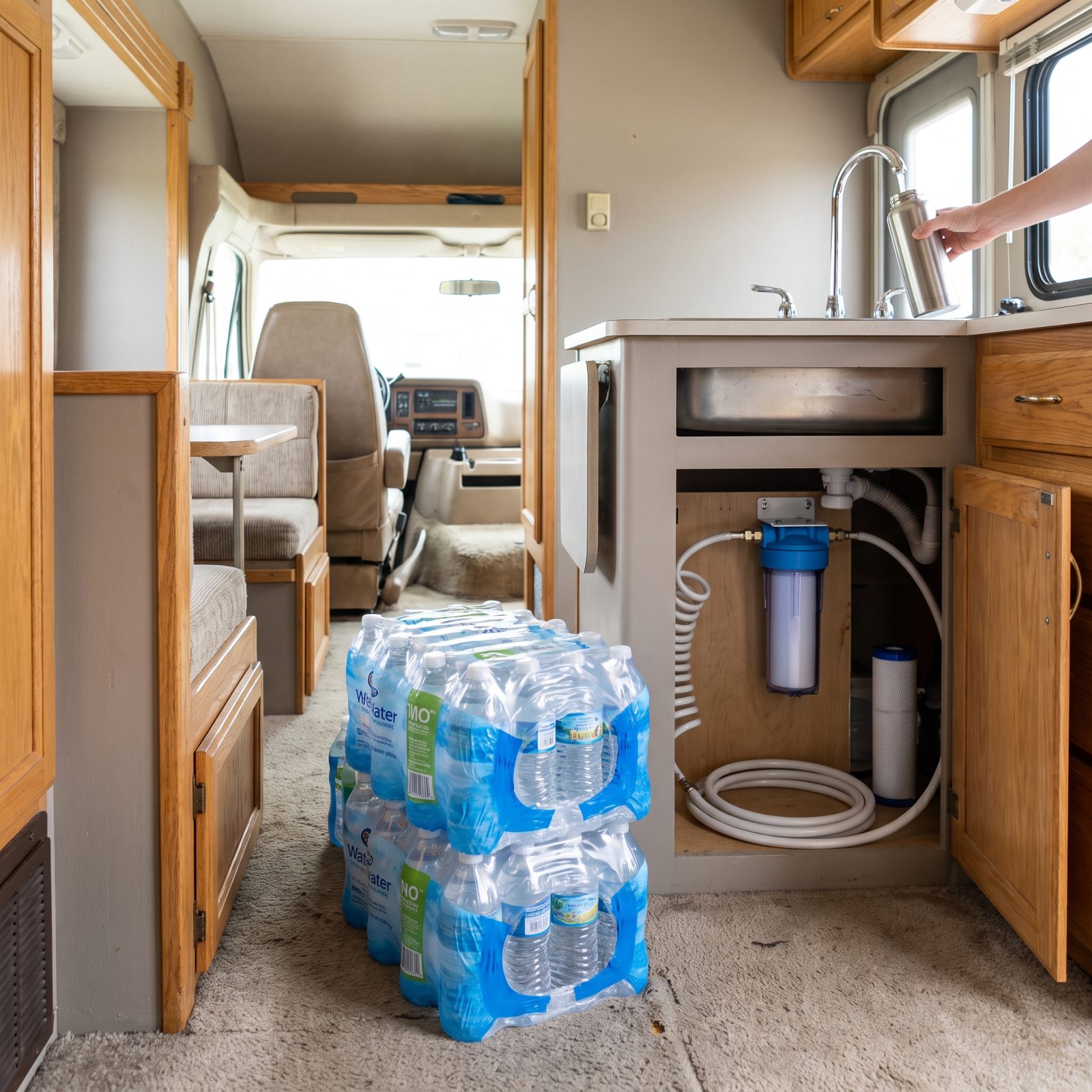
Cases of bottled water are heavy, bulky, and oddly shaped for a space that punishes all three. They slide around under the dinette, block the walkway, and leave you with a pile of empties to haul to a dumpster you can never find.
Your rig already has a freshwater tank. Add an inline filter at the hose and a drinking-water filter at the tap, and the water tastes clean for a few dollars in cartridges. Fill a stainless bottle and skip the shrink-wrapped tower by the door.
The best storage solution is the one that weighs nothing because it’s built into the rig you already own.
Keep a couple of emergency bottles if it helps you sleep. A few beats a few dozen.
21. A Large Backup Cooler: Let the RV Refrigerator Do Its Job
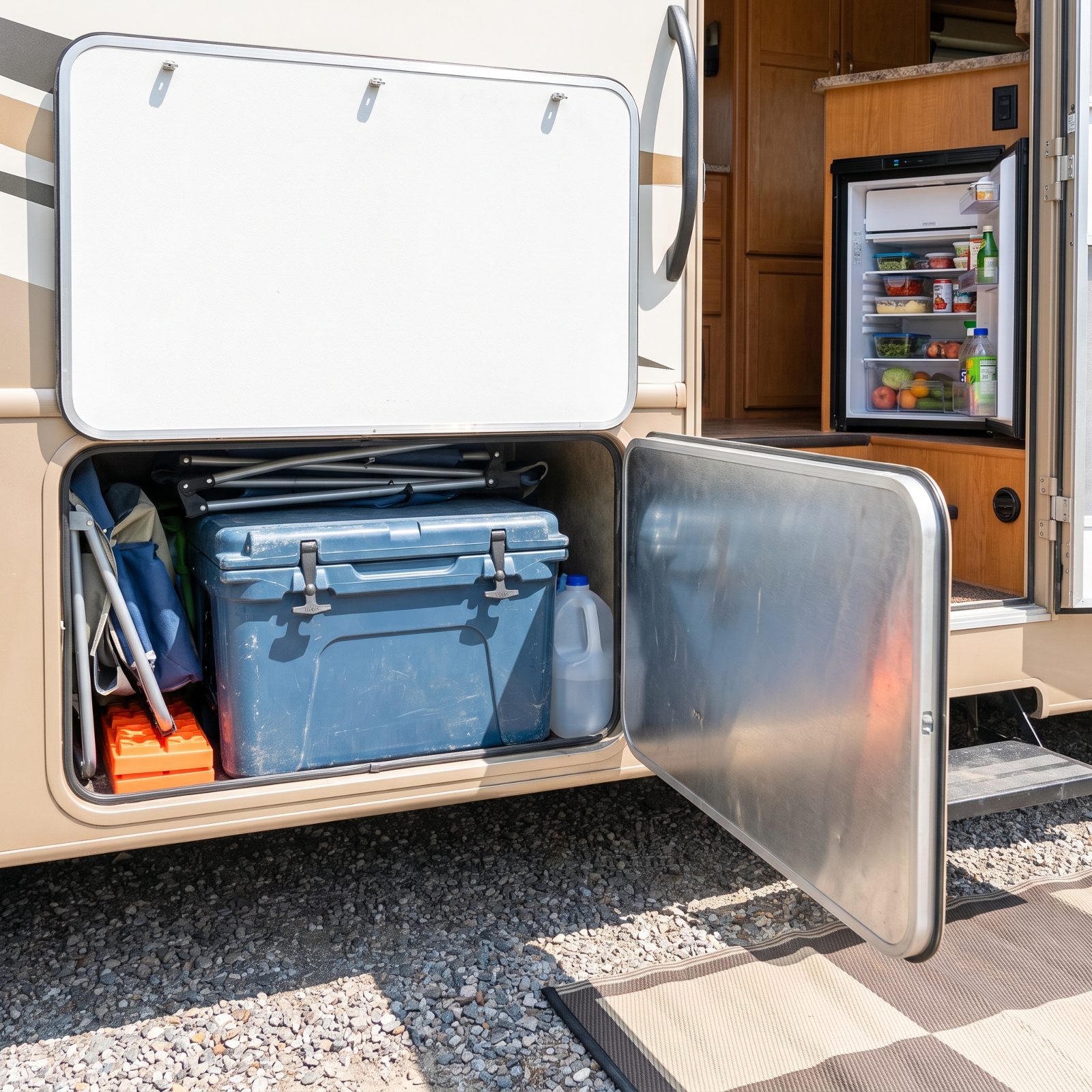
The giant cooler made sense for tent trips. In an RV, it’s a coffin-sized box swallowing your exterior bay for a job your fridge already does better.
Let the refrigerator handle the food. Need a little overflow for a cookout? A soft collapsible cooler folds to nothing and lives in a drawer. The hard-sided monster only ever gets used on the rare day you’re hauling ice for a party, and that day doesn’t come often enough to justify the bay.
20. A Countertop Ice Maker: Reclaim the Counter and Buy Ice as Needed
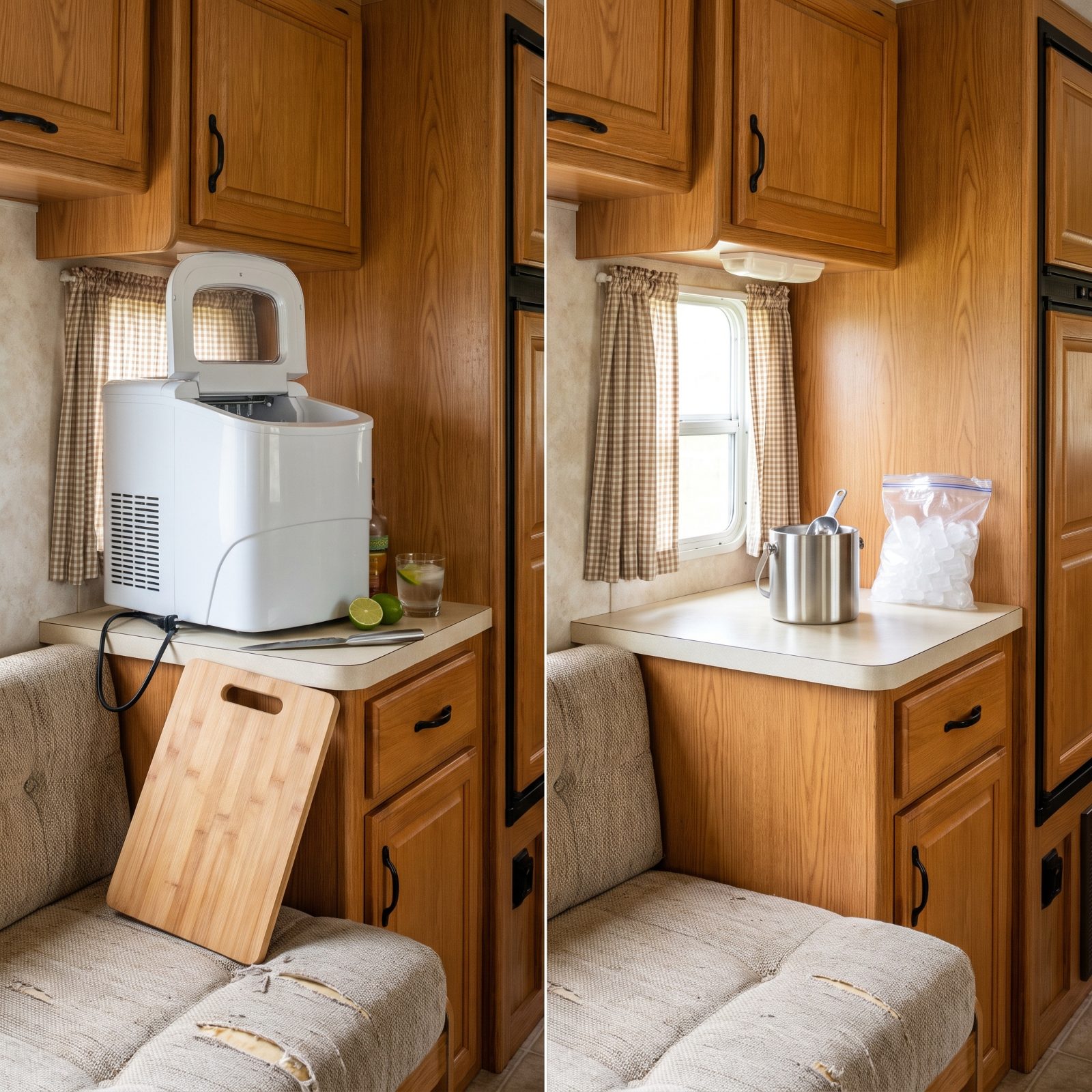
A countertop ice maker is a wonderful machine that eats the one surface you can’t spare. It runs loud, pulls real power off your battery when you’re boondocking, and holds the whole counter hostage for the sake of cubes.
Most campgrounds sell a bag of ice for a couple of dollars, and your freezer makes plenty for everyday use. An insulated ice bucket holds a bag through an evening of cold drinks and then stows away flat.
Give the counter back to the cutting board. That trade pays off every single meal.
19. Canned Food for Meals You’ll Never Actually Cook
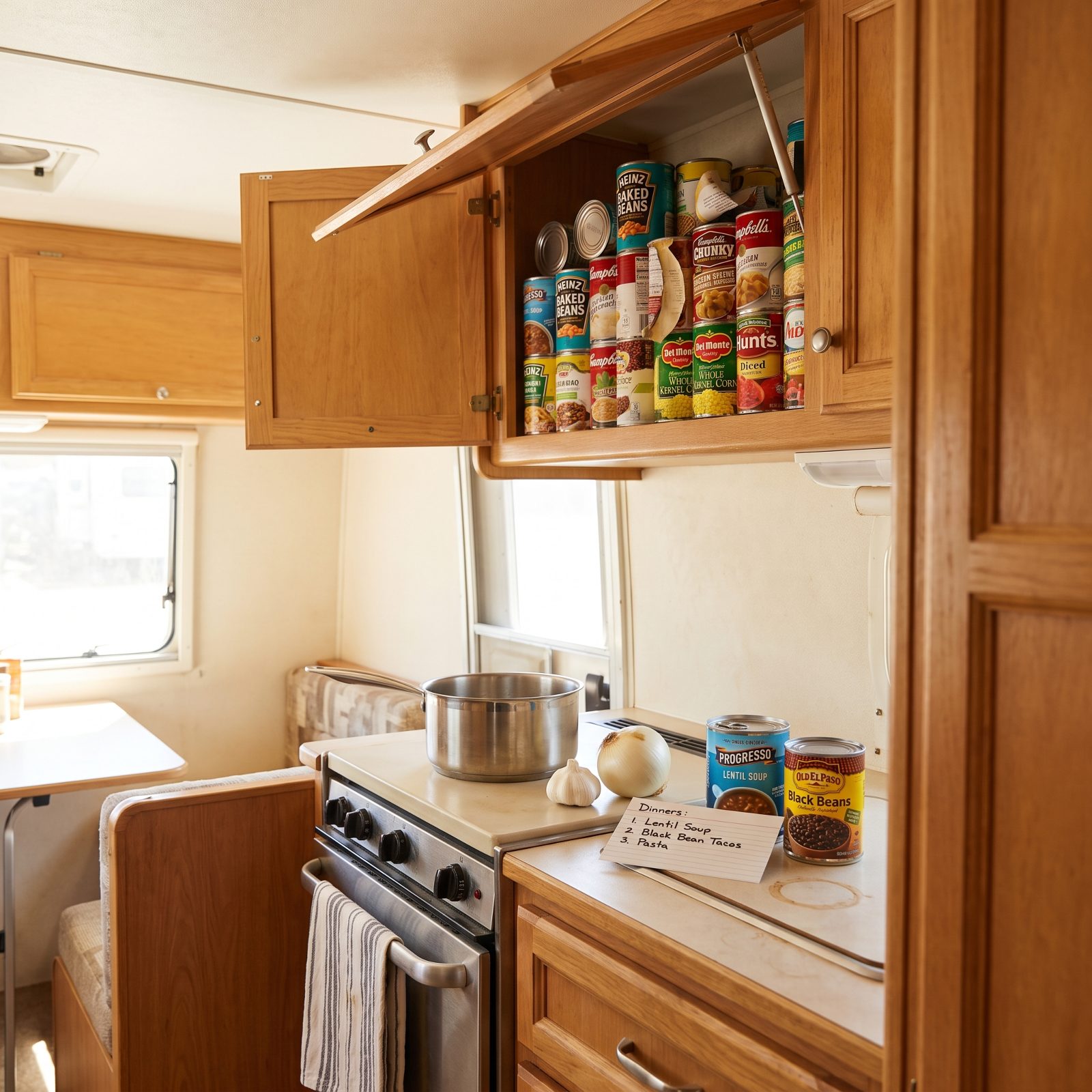
Everybody packs for the fantasy version of the trip — the one where you simmer chili after a long hike and bake cornbread in the little propane oven. Reality? You grill, you eat sandwiches, and you hit a taco stand two exits down. The cans survive the whole trip, rattling in the cabinet, adding dead weight.
Pack around the four or five dinners you’ll genuinely cook, and buy for those alone. A can of beans weighs about a pound. A cabinet full of them is thirty pounds of hope you’re hauling up every grade.
18. Warehouse-Size Pantry Packs You Bought to Save Money
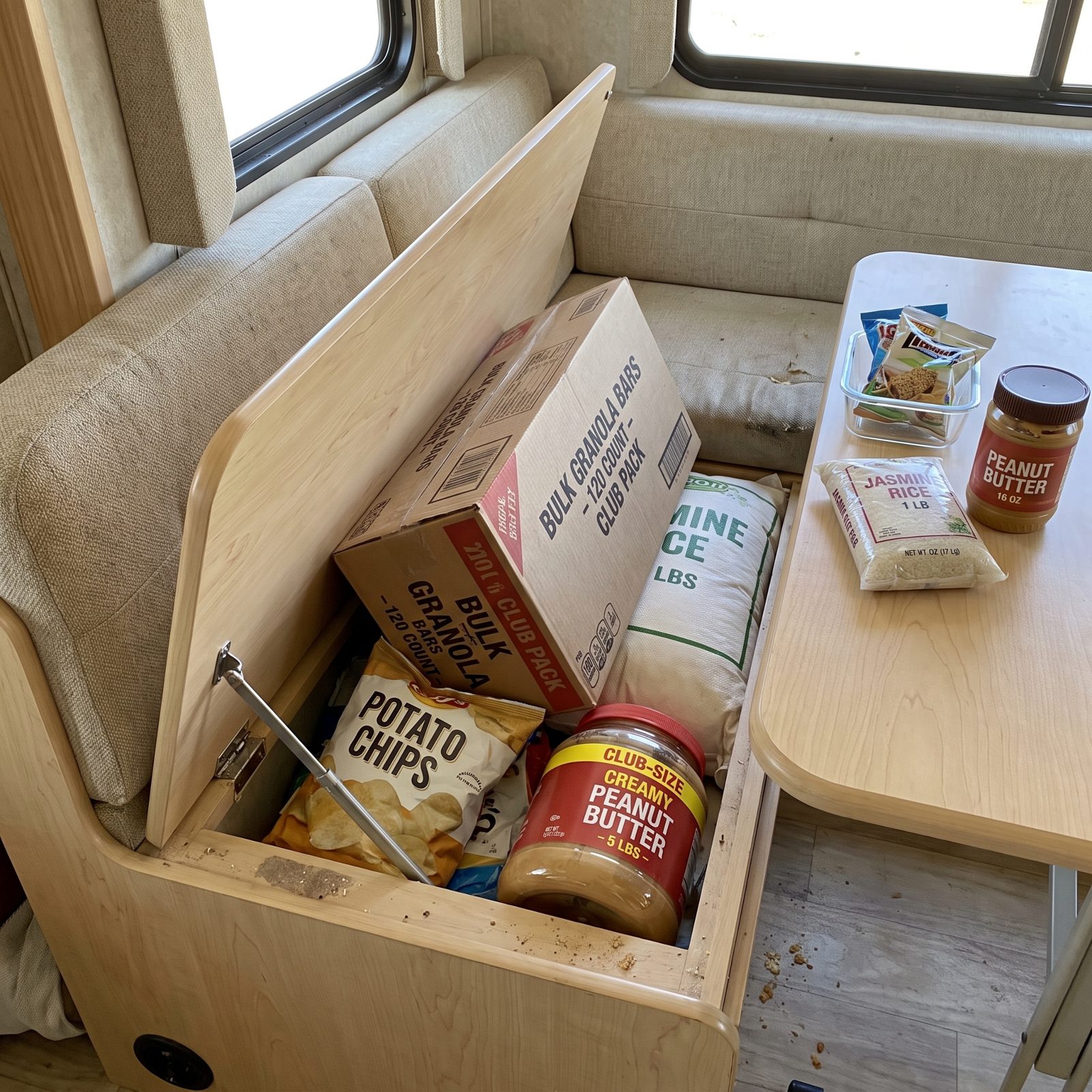
Buying in bulk makes sense in a pantry with square footage. In an RV it’s a trap. That club-size jar of peanut butter saves you a few bucks and costs you a full foot of under-bench storage you’ll fight over for the rest of the trip.
You’re never more than a day from a grocery store in this country, so restock along the route. Bulk savings evaporate the second you can’t find anywhere to put your shoes.
17. Paper Towel Multipacks That Swallow a Whole Cabinet
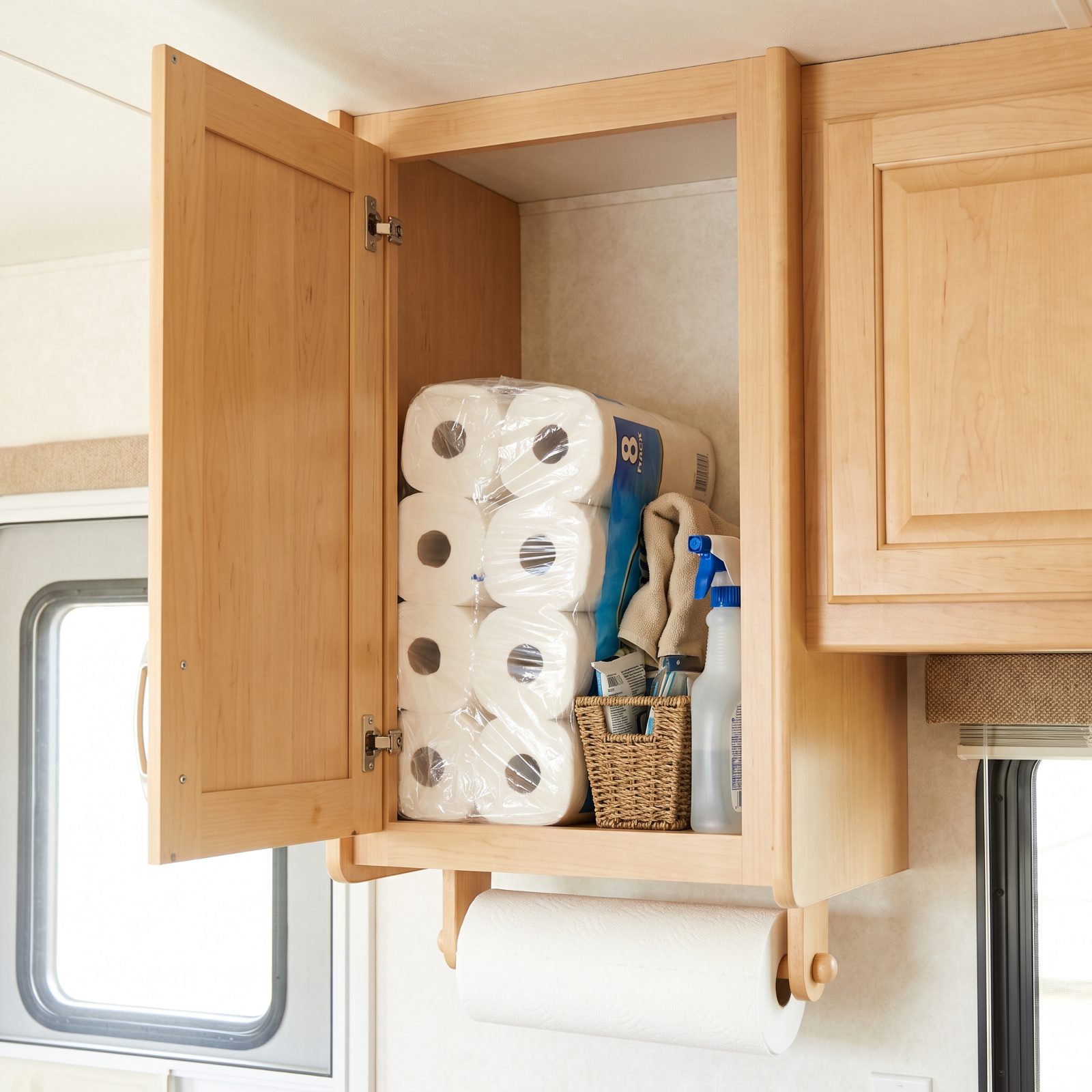
An eight-pack of paper towels might be the single most space-wasting thing most people load, and nobody notices until they’re hunting for somewhere to stash the one thing they actually need. That pack eats an entire tall cabinet.
Carry one roll and mount it. Buy another when it runs low — which, honestly, takes a while once you add a couple of real dish cloths to the rotation. Cloth handles the big messes. The roll handles the gross ones.
16. The Gallon Jug of Laundry Detergent
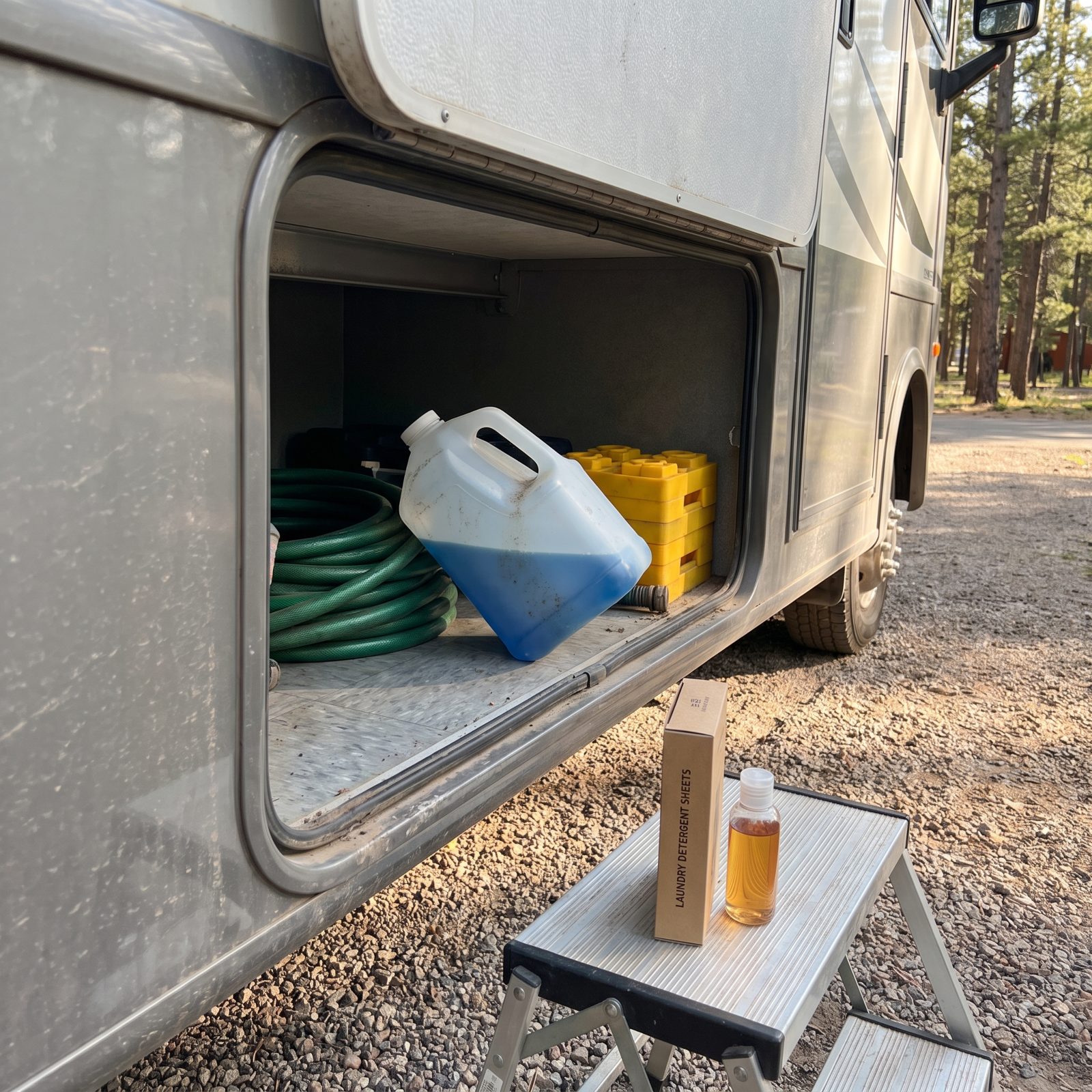
A full detergent jug weighs close to ten pounds and rolls around the basement bay like a loose bowling ball every time you brake. For a few loads at a laundromat? Absurd.
Detergent sheets weigh almost nothing and lie flat in a drawer. A tiny bottle of concentrate works too if you’re loyal to liquid. Either way you reclaim a chunk of the storage bay and stop hearing that jug thud around corners.
15. A Tower of Bath Towels
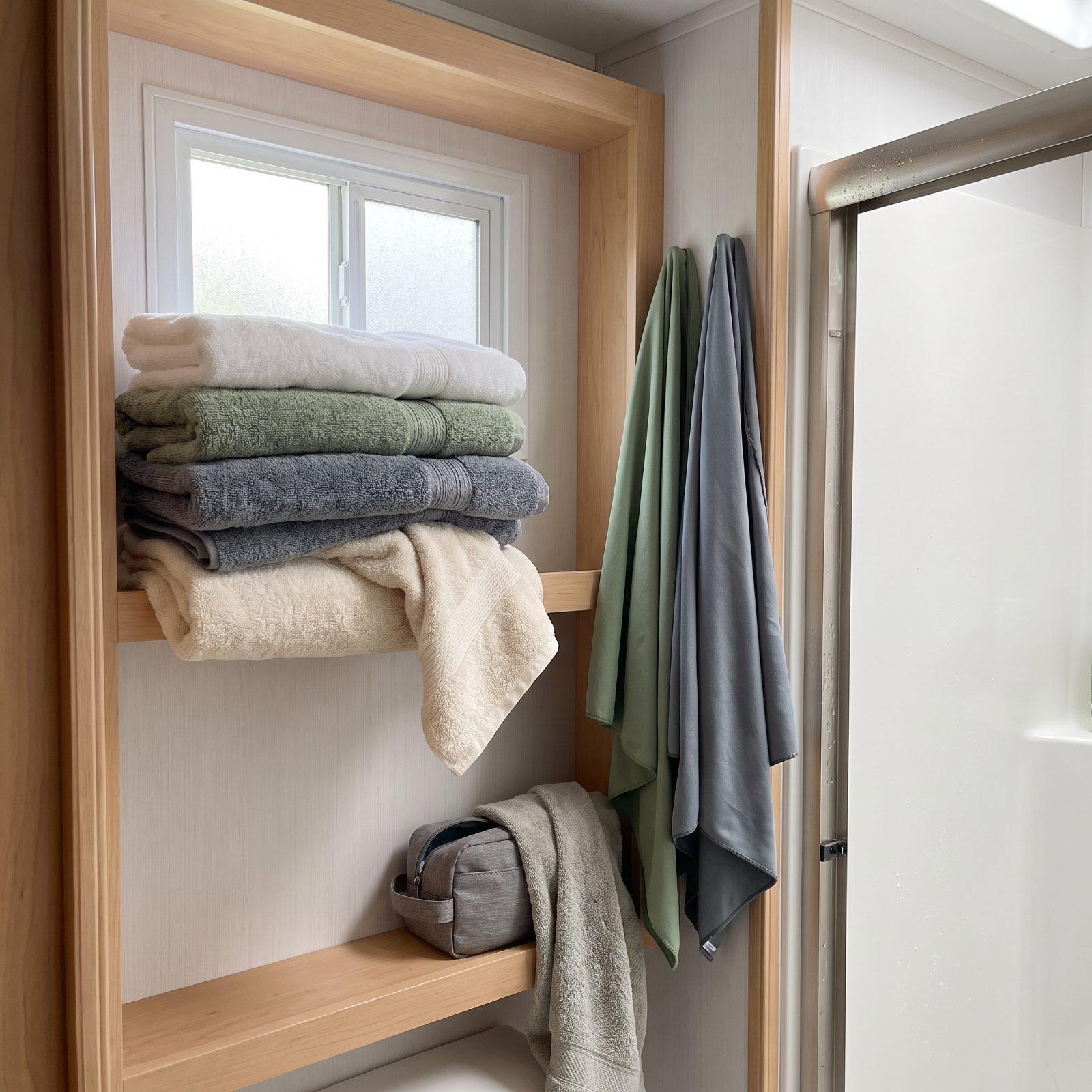
Thick cotton bath towels are a gift at home and a nightmare in an RV. They’re bulky, they hold water for a day, and in humid weather they turn sour and mildewed before they ever dry. Two of them fill a shelf.
One fast-drying towel per person, hung after every use, dries in a couple of hours and takes a quarter of the space. Yes, you give up the plush feel. In exchange you get back a shelf and lose the damp-laundry smell nobody warns you about.
14. Multiple Spare Bedding Sets
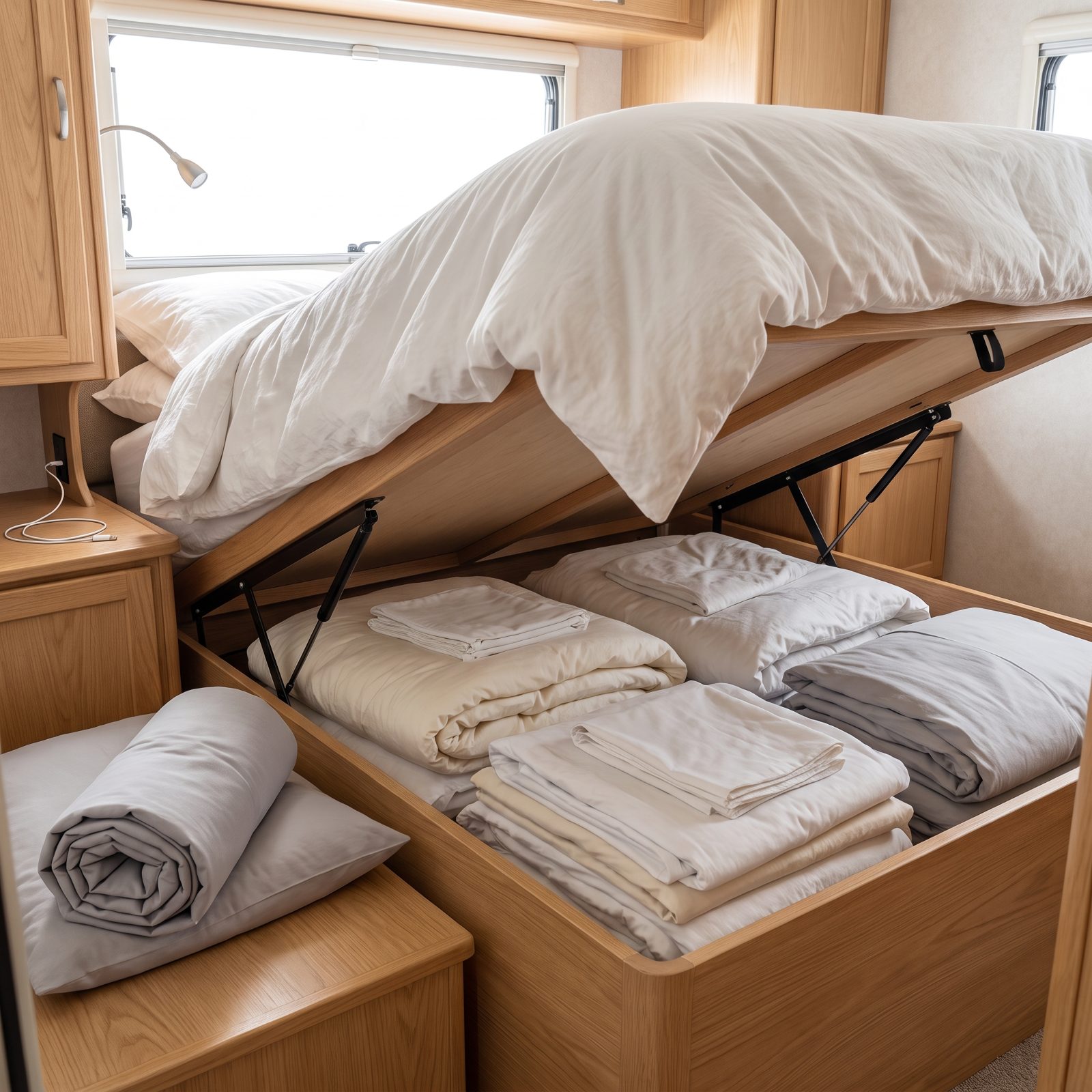
How many times are you going to strip the bed on a road trip? Once, maybe, if something spills. People pack three full sets anyway and surrender the entire under-bed cavity to bedding they’ll never unfold.
Keep one washable backup set. If disaster strikes, wash the dirty one and you’re covered. Under-bed space is the best storage in the whole rig — don’t blow it on linens you’re carrying out of fear.
13. Decorative Throw Pillows That Nobody Can Sit On
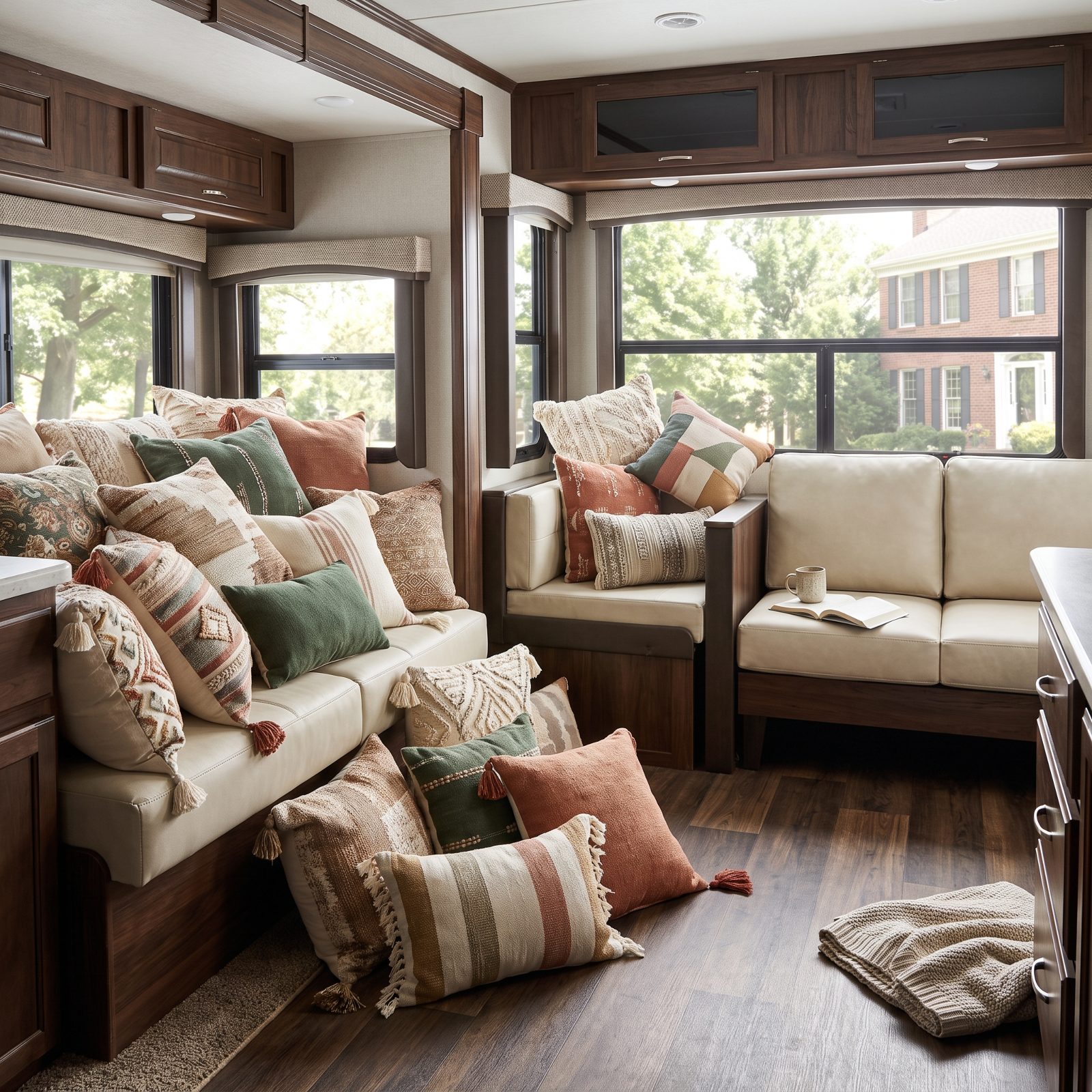
Those throw pillows look great in the dealership photos. In real life they migrate to the floor every single night so someone can sit at the dinette, and by morning they’re a trip hazard in the aisle.
An RV has roughly two horizontal surfaces people use: the bed and the dinette. Decorative pillows claim both. Keep the look to a single accent cushion if you must, and leave the seats usable. A pillow you move four times a day isn’t decor — it’s a chore.
12. Clothes for Every Possible Forecast
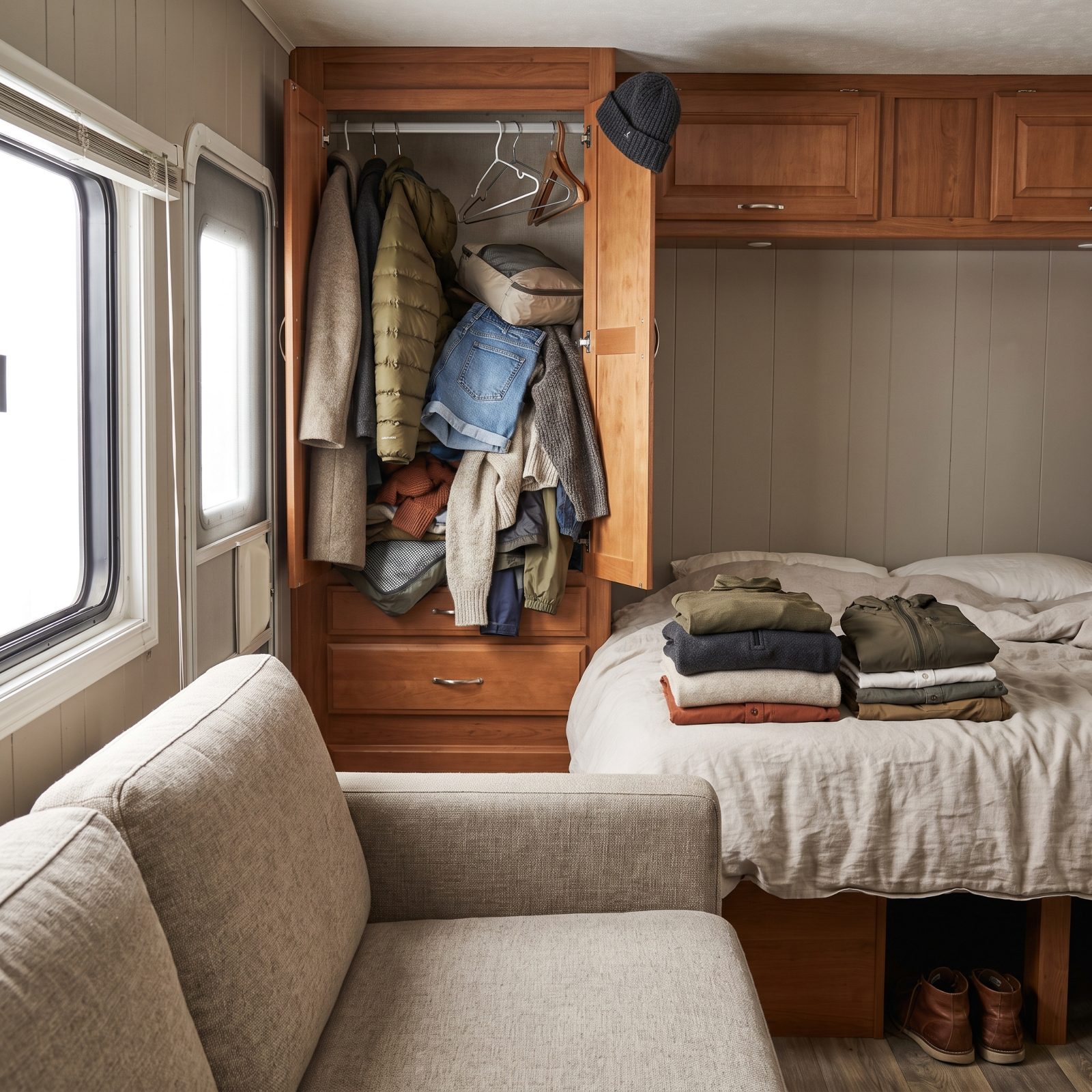
The instinct is to pack for the heat wave, the cold snap, and the freak rainstorm all at once. So the wardrobe ends up jammed with a parka you wear zero days and three outfits for weather that never shows.
Layers do the work of a whole wardrobe. A base layer, a fleece, and a packable shell carry you from a chilly morning through a warm afternoon into a downpour, and they fold into almost nothing. Wear the same versatile pieces on repeat and laundry becomes a non-event.
11. Shoes for Every Occasion
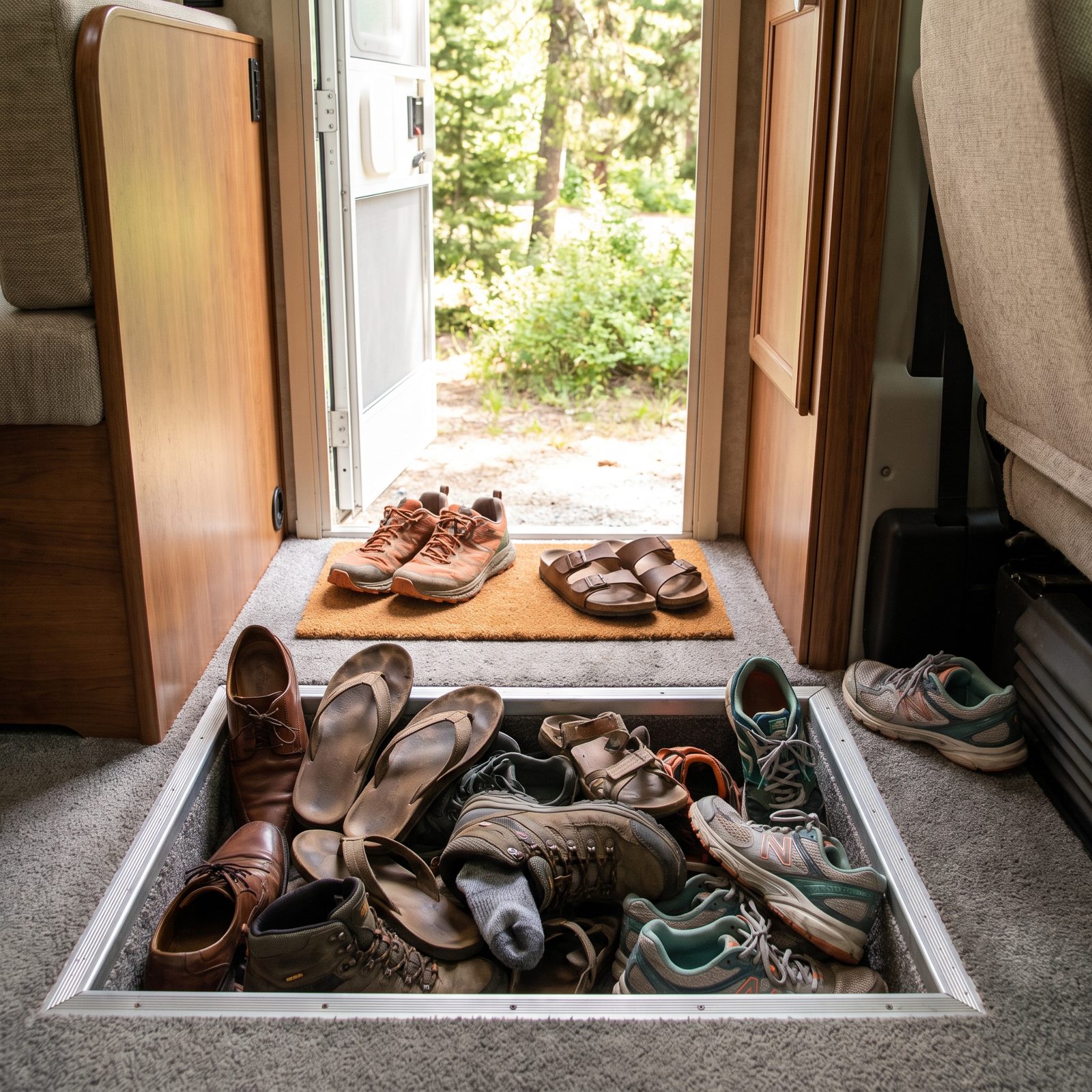
Shoes are the worst offender because they’re all air and awkward shape. Seven pairs turn the entry step into an obstacle course you curse every time you come in from a fire.
Most people genuinely need two: a grippy pair that handles trails and town both, and a slip-on sandal for the shower house and quick trips outside. Add one more only if you have a specific plan that demands it. The dress shoes you packed for a dinner that never happened go home untouched. They always do.
10. Stacks of Paperback Books
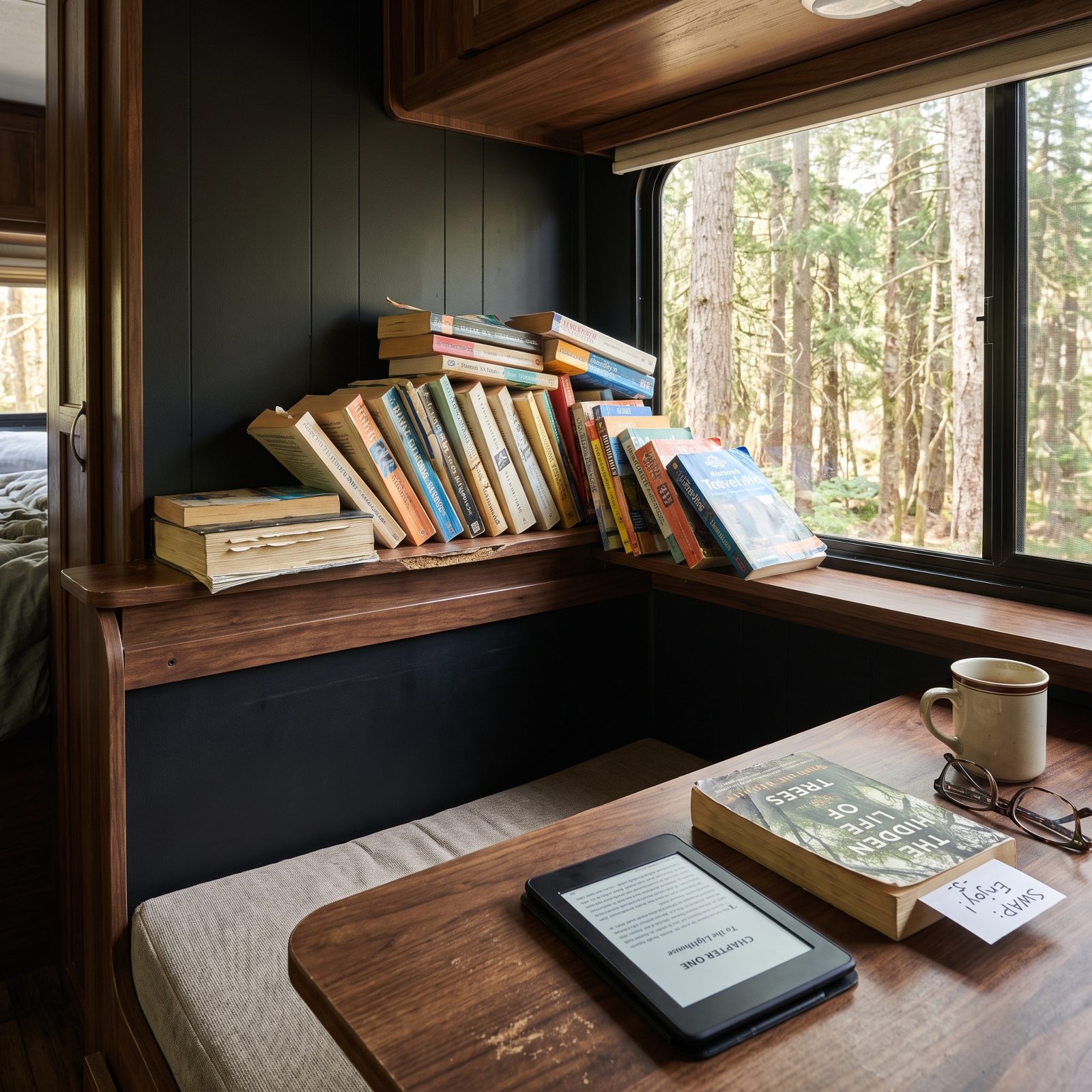
There’s real romance in a stack of paperbacks by the window, and nobody wants to hear this one. But a dozen books is easily eight pounds sitting on your best flat surface, and you’ll read maybe three before the trip ends.
An e-reader holds a whole library and weighs less than one paperback. Can’t give up paper entirely? Lean on campground book exchanges. You drop one, you grab one, and half the fun is seeing what the last traveler left behind.
9. The Desktop Printer You Swore You’d Need
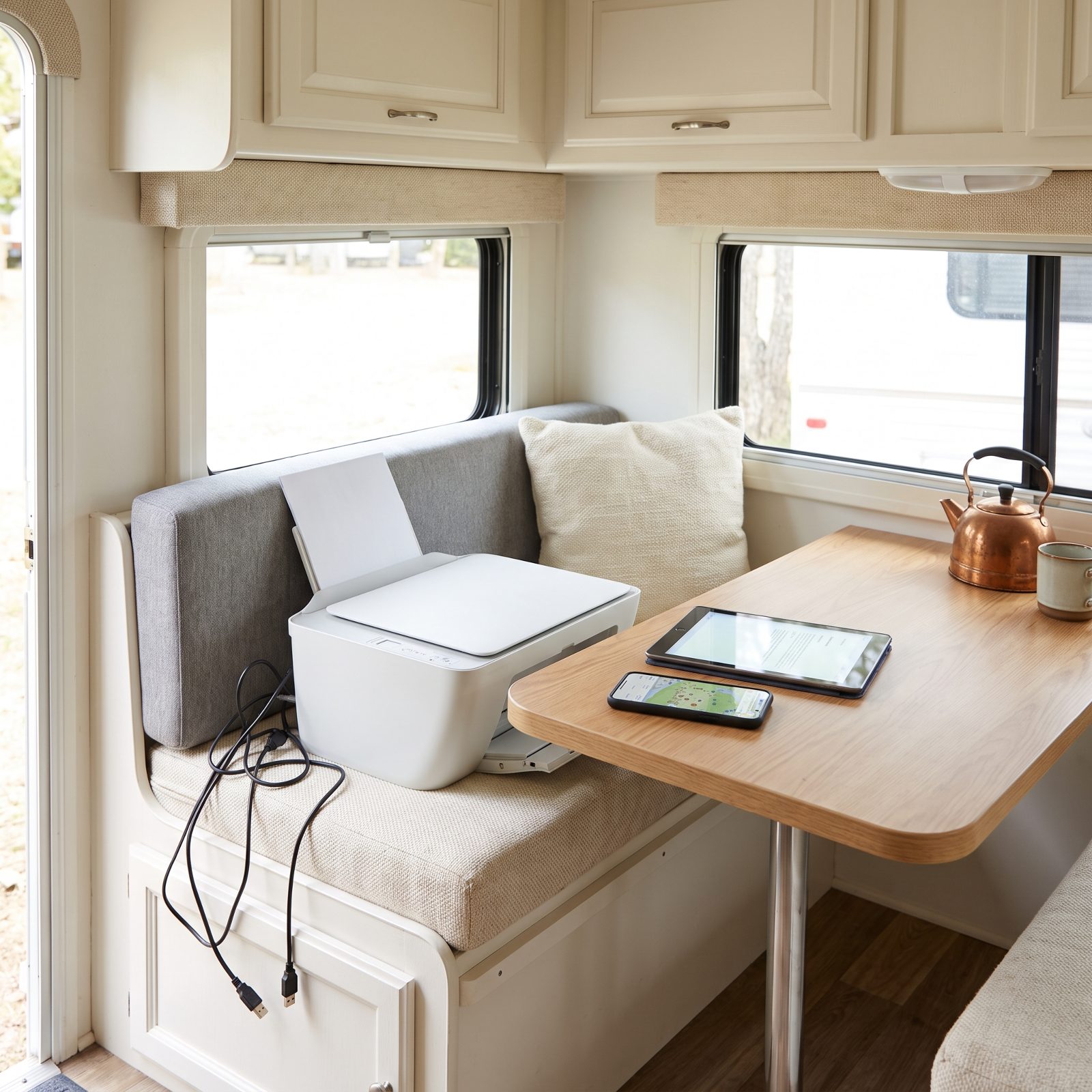
Nobody admits this, but that printer rides along for a whole season and prints maybe one campground reservation. It’s heavy, it hates humidity, and the ink cartridges dry out while you’re parked under pine trees doing nothing.
Store your documents on your phone and in a cloud folder — registration, insurance, campground confirmations, the lot. On the rare day you truly need paper, a library, a UPS Store, or the campground office will print it for a couple of bucks.
8. The Tank-Style Air Compressor Hogging a Compartment
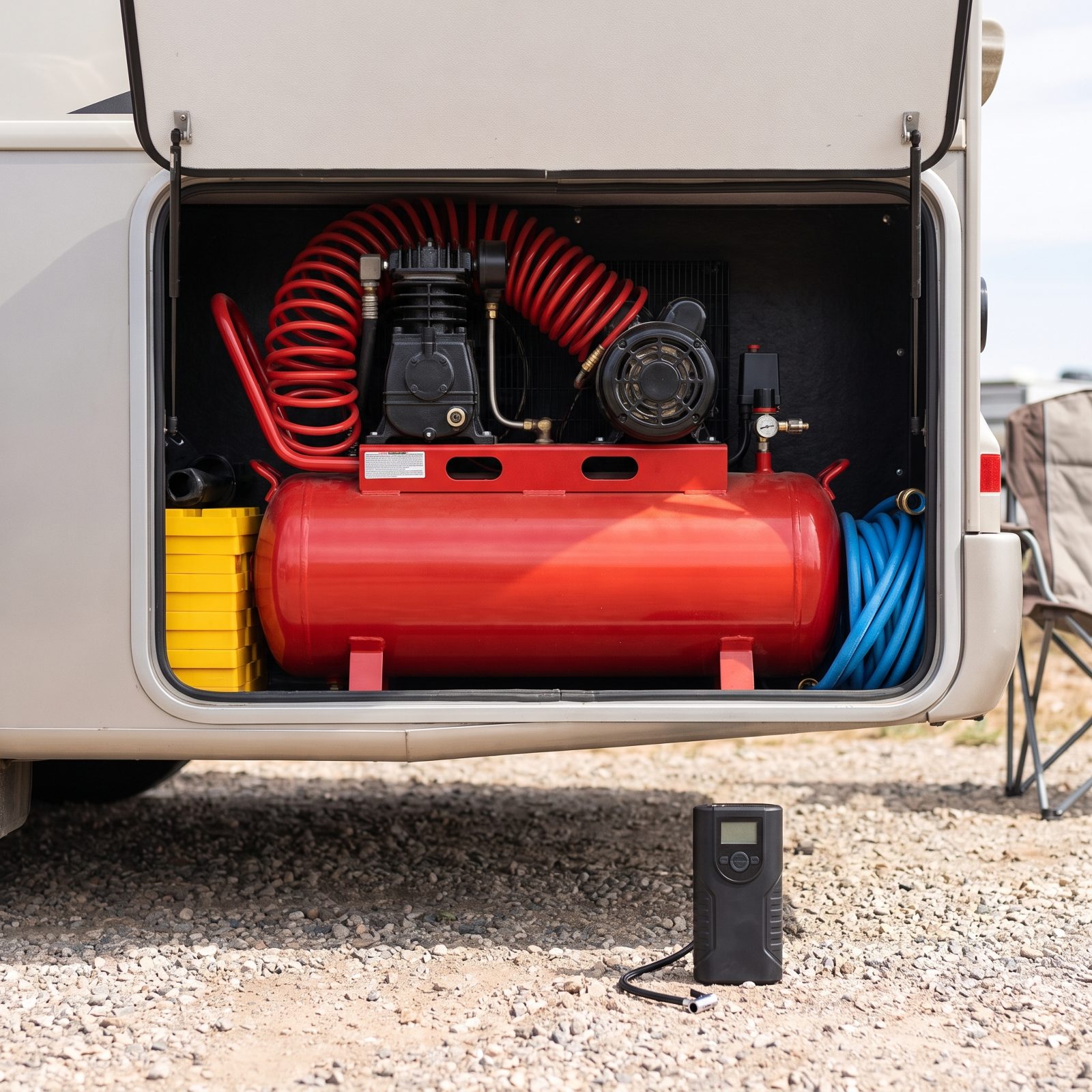
A full tank compressor is a wonderful thing in a home garage. In a storage bay, it’s a brick that steals the space your leveling blocks and sewer hose actually need.
A compact 12-volt digital inflator does the one job RVers reach for: topping off tires before a drive and airing back up after dropping pressure for sand or gravel. It runs off your battery, tucks into a shoebox-sized space, and reads PSI without you guessing. That big tank was solving a problem you don’t even have out on the road.
7. The Household Step Ladder That Won’t Lie Flat
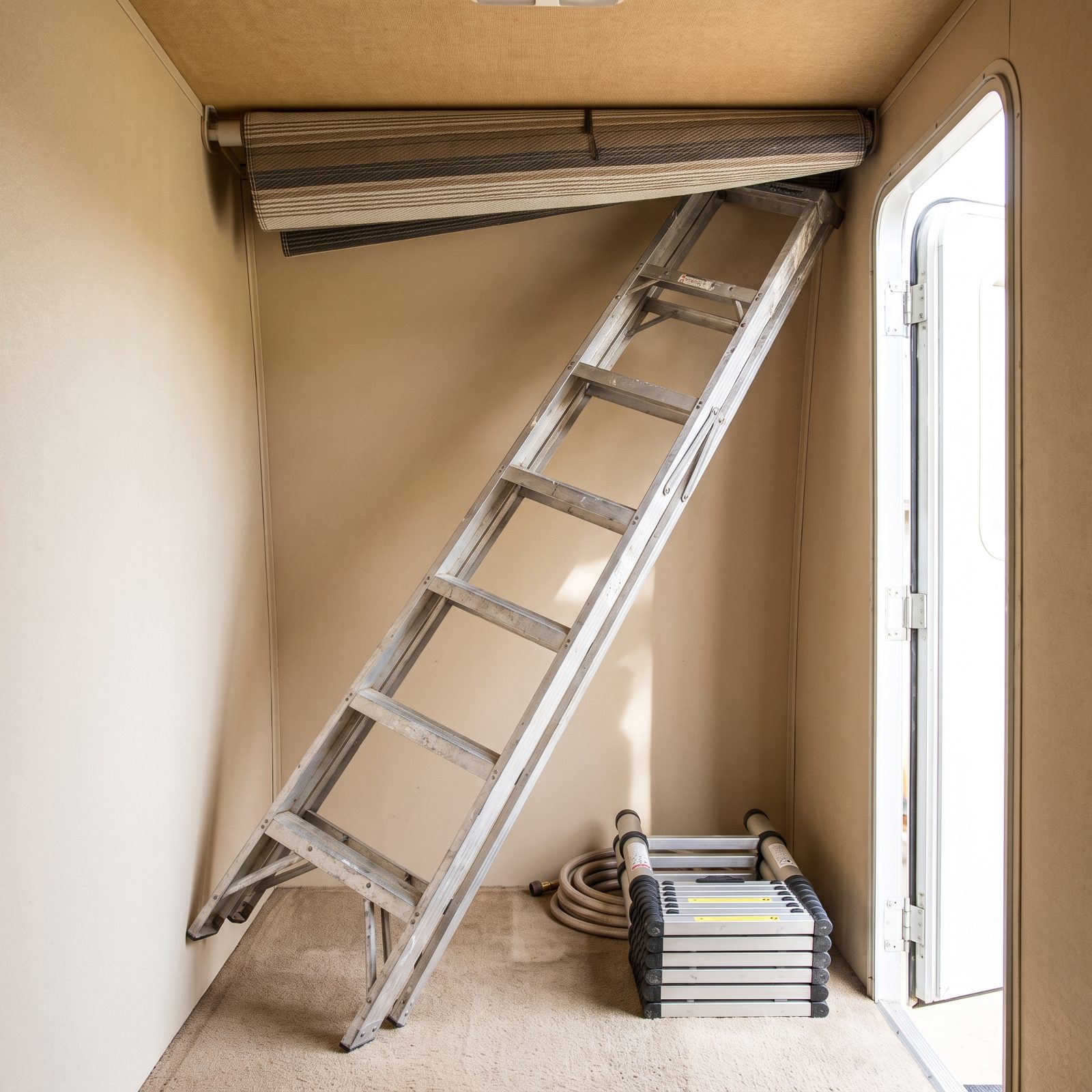
A step ladder that doesn’t collapse flat is a step ladder you’ll grow to resent. It bangs around, scratches the walls, and never finds a home in a rig built in inches.
A telescoping aluminum ladder folds down to about the size of a stack of books and extends tall enough to reach the roof, the awning, and the top vents. Size it to your rig before you buy, though. The one that reaches your gutters at home might come up embarrassingly short against a tall fifth wheel.
6. Firewood Hauled From Home
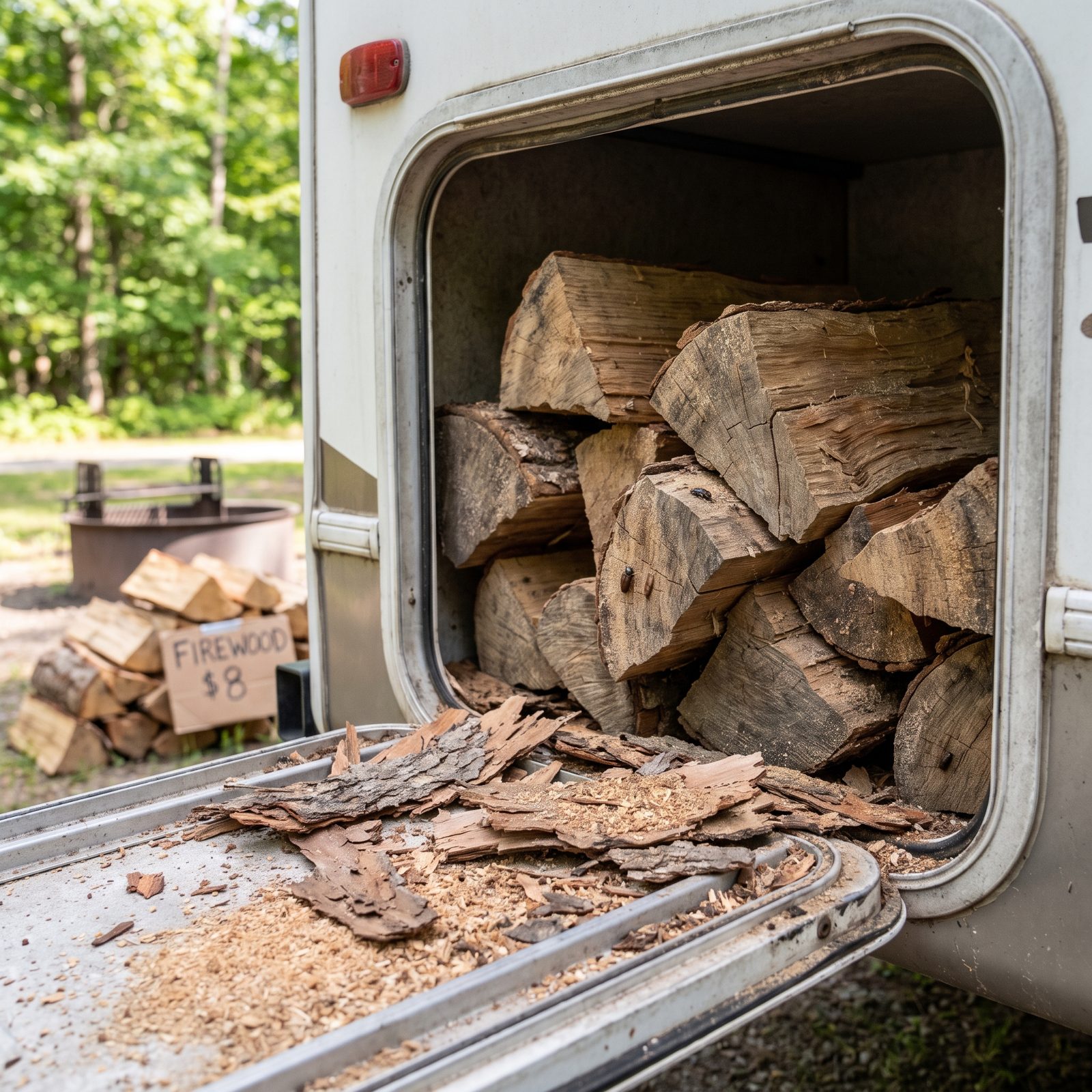
Firewood seems free when it’s sitting in your yard. It isn’t. It’s weight, it’s mess, and it can carry insects and tree diseases across state lines — which is exactly why most parks ask you not to move it.
Buy it where you burn it. Nearly every campground, host, or nearby gas station sells a bundle for a few dollars, and that money stays local. Your compartment stays clean. And you’re not the camper who accidentally imported emerald ash borer to a brand-new forest.
5. Guest Chairs for People Who Aren’t Coming
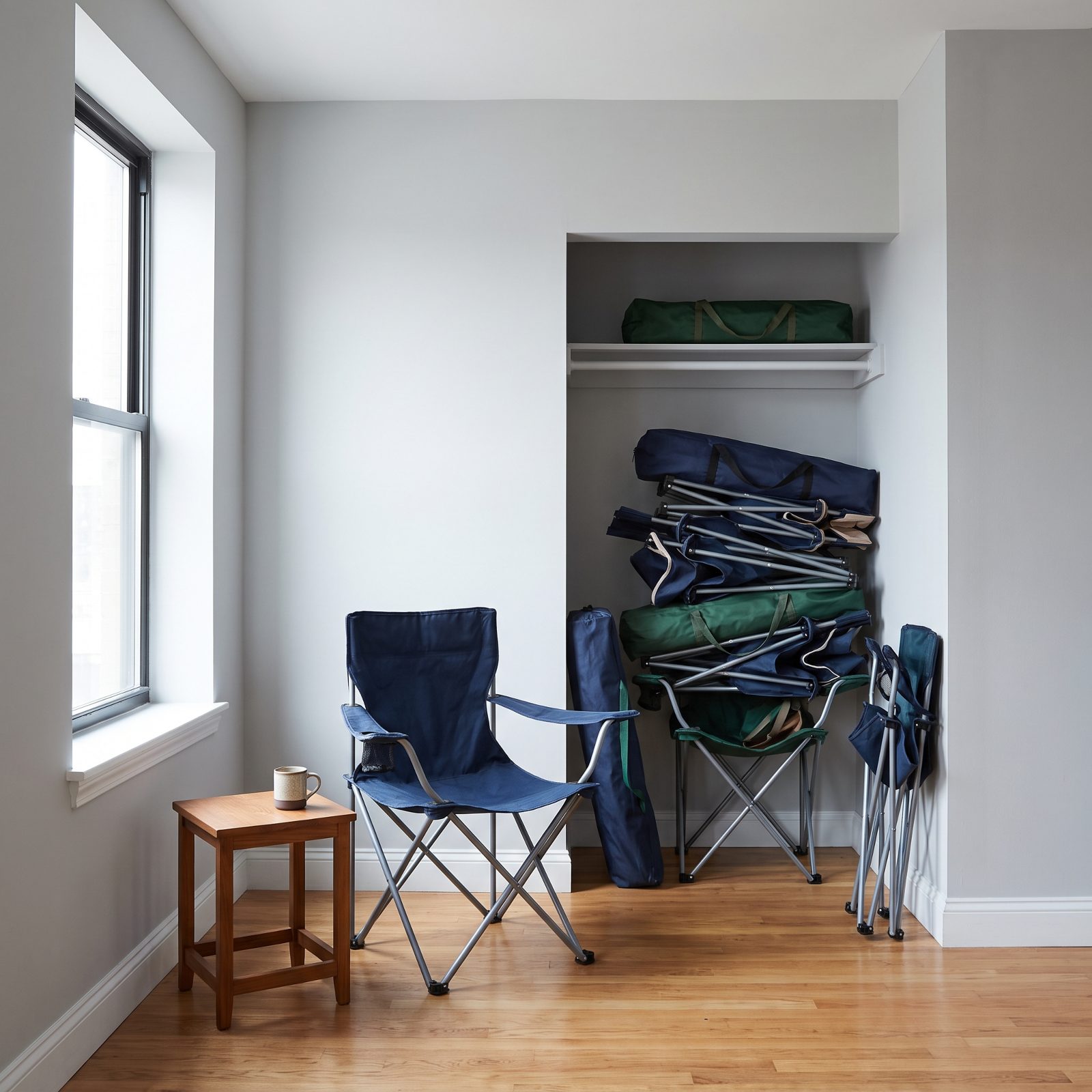
Count the people in the rig. That’s how many chairs you need.
Somehow most RVs end up carrying a chair for the sister who visits once a year and two “just in case” seats that have never once held a human being. They live in the bay soaking up the room you’d rather give to something you actually use. Pack seats for the real crew, maybe one spare, and let your neighbors bring their own. Everyone at a campground owns a chair.
4. A Second Folding Table You Never Unfold
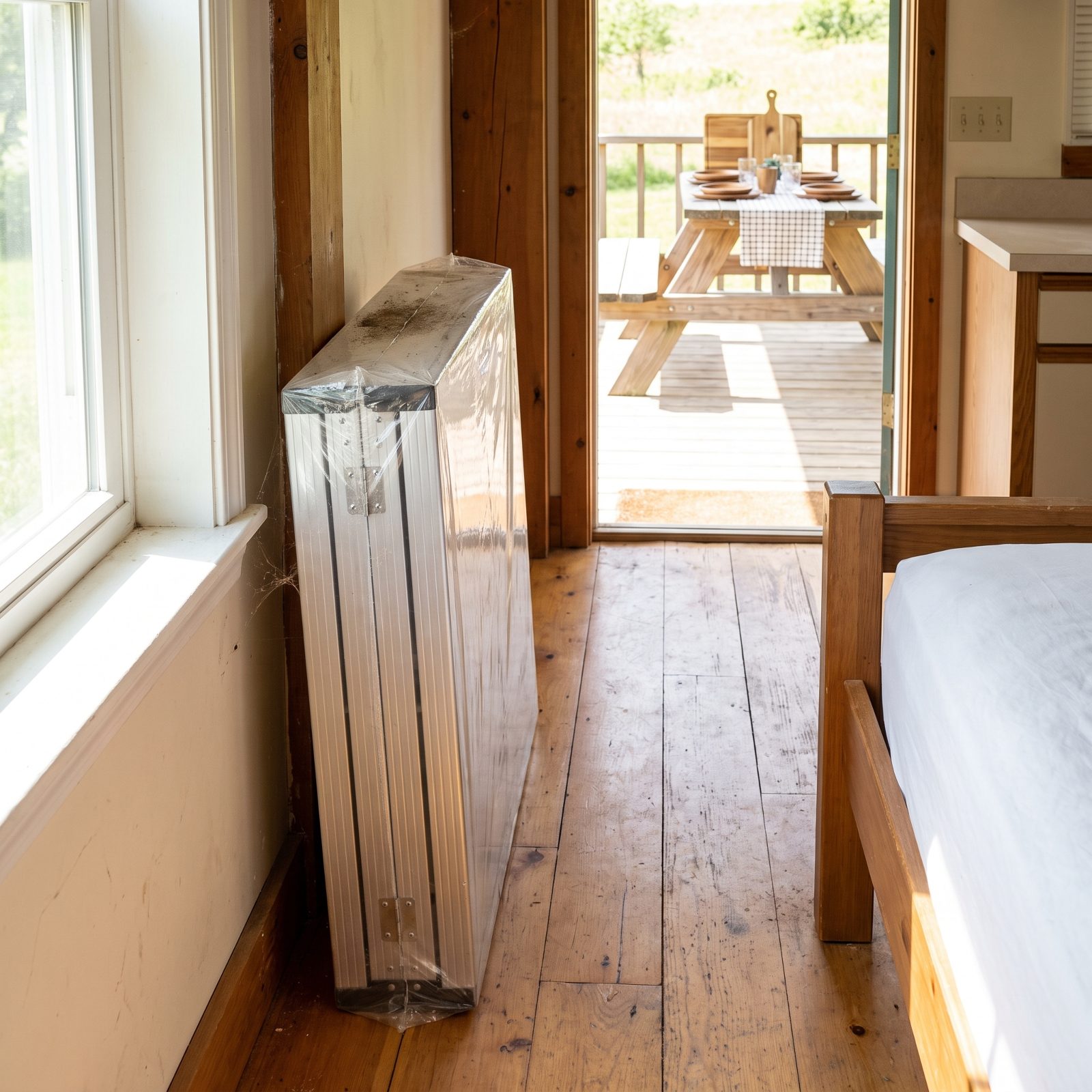
The second table is a phantom. You packed it picturing a sprawling outdoor spread, then realized almost every campsite already comes with a picnic table bolted into the ground.
Between that picnic table, your awning space, and the RV’s own counter, you’ve got more surface than you think. One good folding table earns its spot. The backup just rides under the bed for years — flat, forgotten, hogging the exact storage you keep wishing you had.
3. The Freestanding Screen Room That Lives in Its Bag
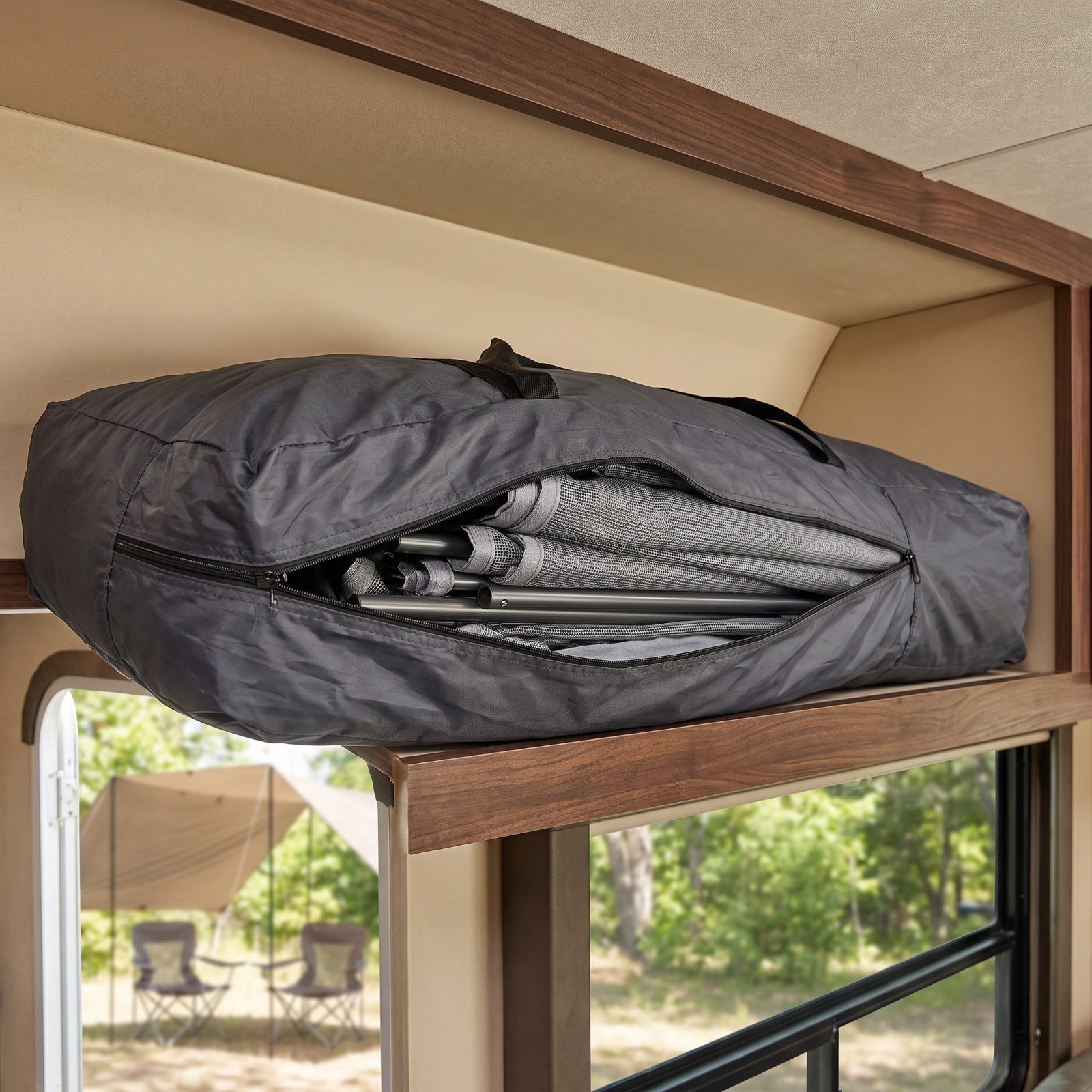
A screen room is heavenly in buggy, swampy country when the mosquitoes are at full strength. The rest of the year? It’s a hefty sack of poles you set up twice and curse while wrestling back into its bag in the wind.
It takes real time to pitch and strike, and the panels never fold down as small as they came. So keep it — but keep it at home. Load it only for the trips where the bugs genuinely earn it: gulf coast summers, deep woods, lake country in June. For a dry desert weekend, your awning is plenty.
2. Boxes of Patio Decorations
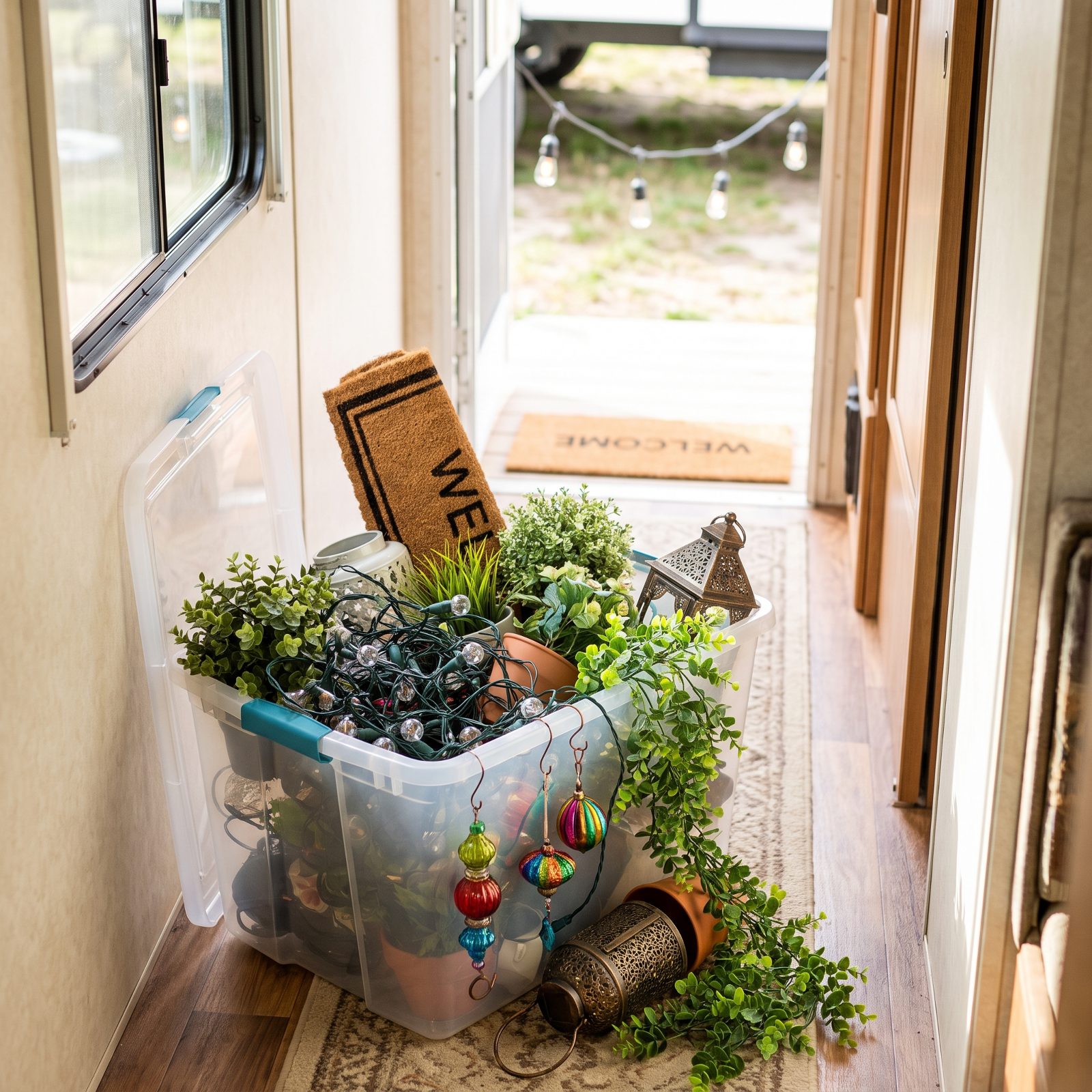
There’s a point where a decorated campsite tips from cozy into a yard sale. That tote of lanterns, flags, fake ferns, rugs, and ornaments adds weight, swallows a cabinet, and every single piece has to come back out and go right back in at teardown.
One string of lights and a doormat does more than a bin full of trinkets ever will. Simple reads as calm. And you’ll thank yourself at 7 a.m. on a travel morning when there’s nothing to unhang.
1. The Full-Size Backyard Grill
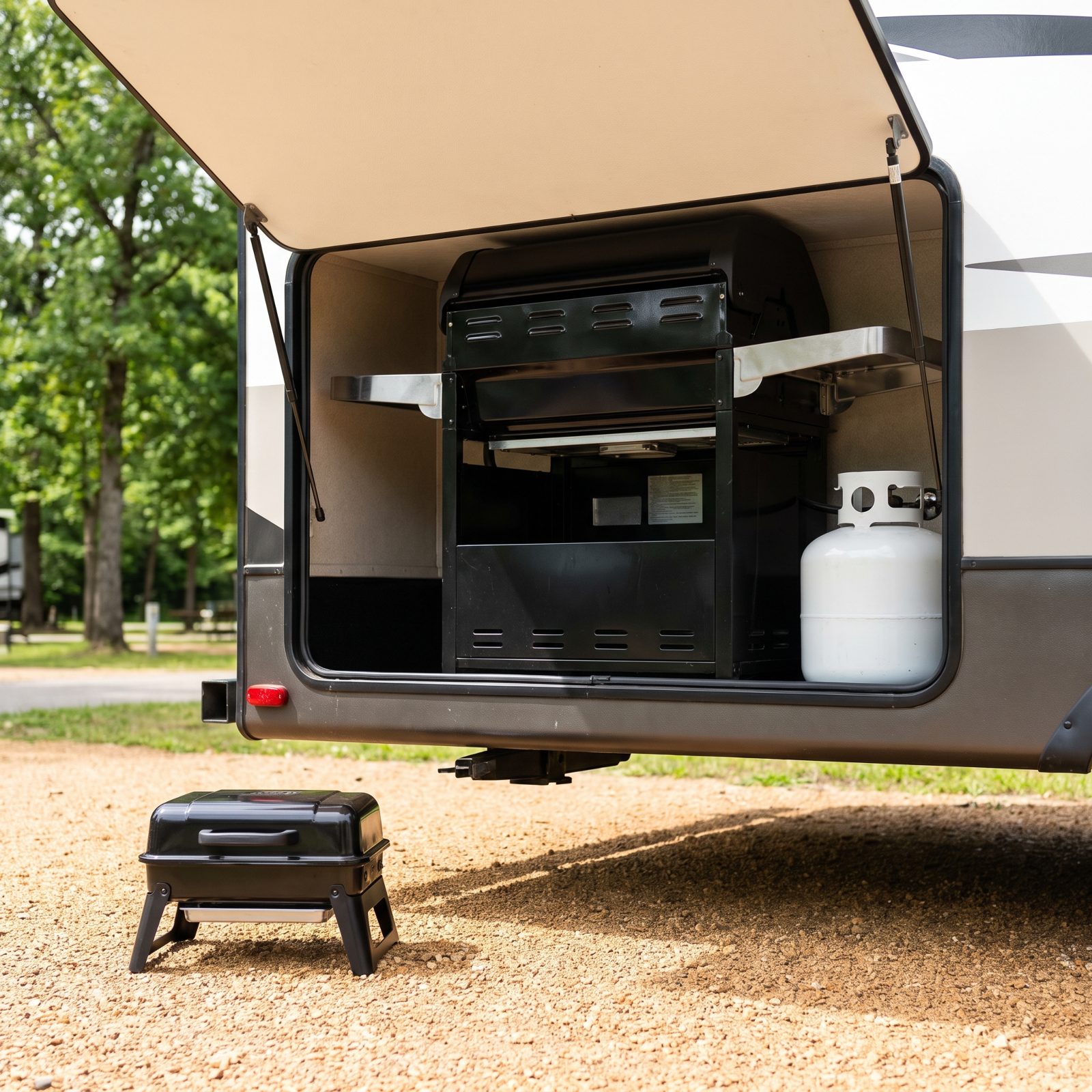
You’re cooking for two or four, not catering a block party. Yet the big backyard grill tags along, dominates the bay, and demands a full propane tank just to feed it.
A compact camping grill or a tabletop model handles everything an RV weekend throws at it — burgers, veg, the occasional steak. It fires off your existing propane, sits right on the picnic table, and leaves most of your compartment free for the gear you actually reach for.
The best RV upgrade is usually subtraction. Every pound you don’t carry is a pound you never have to level, tow, or trip over.
Cook smaller, store more, drive lighter. That’s the whole trade, and it’s a good one.