
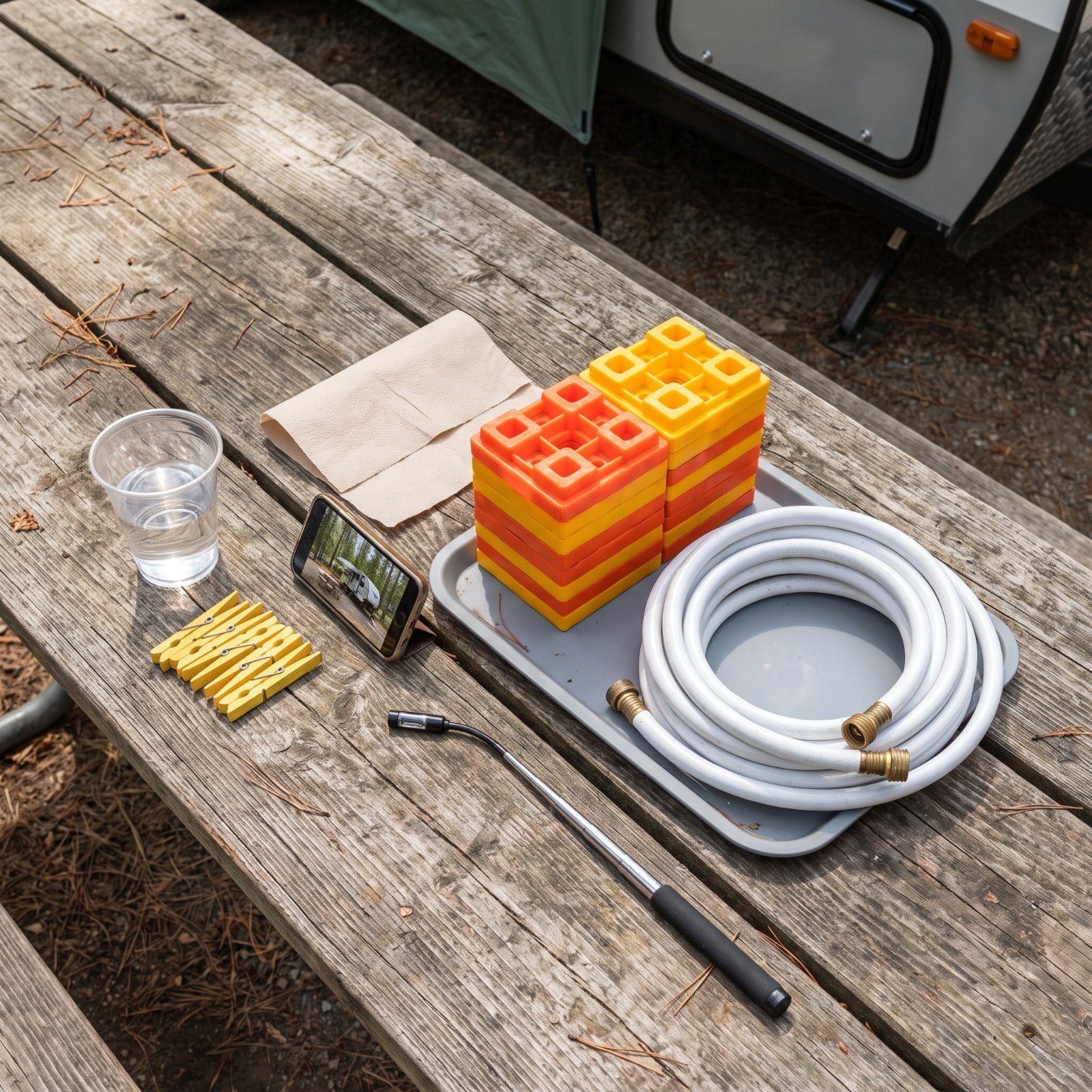
The best campers are the ones nobody notices. They pull in, they’re level in six minutes, they never once walk back to the hardware store, and when they leave the site looks like they were never there. That calm isn’t luck. It’s a stack of small, slightly strange habits built up over a lot of nights and a few expensive mistakes. None of these are gadgets to buy. Most cost nothing. A few will sound fussy until the first time one saves a soaked rug, a cracked slide, or a shin you’d rather keep. Here are the ones worth stealing.
Please note that some of the images in this article were created with the assistance of AI.
48. Slide a Dry Paper Towel Under Fresh-Water Joints to Expose Tiny Leaks
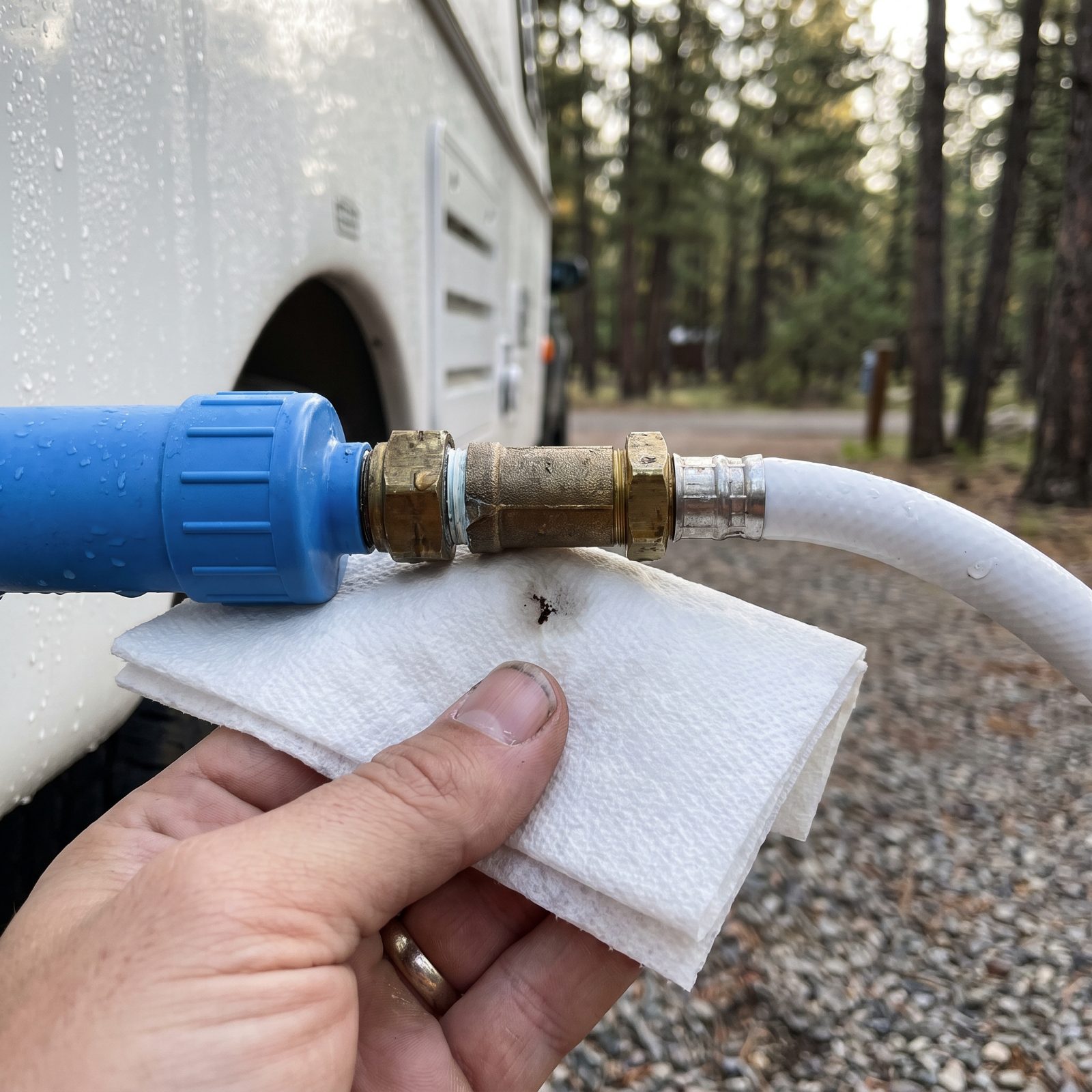
A real leak at a water joint is almost invisible until it isn’t. A hairline drip won’t puddle. It wicks down the hose and vanishes into the gravel, and then you spend the week blaming the ground for being wet.
Fold a dry paper towel, slide it under the connection right after you pressurize the line, and come back in ten minutes. A dark, spreading blotch means the washer’s shot or the threads aren’t seated. No spot? You’re good. Costs you one paper towel and the discipline to actually walk back and look.
47. Save Each Site’s Leveling-Block Recipe Beneath Its Photo
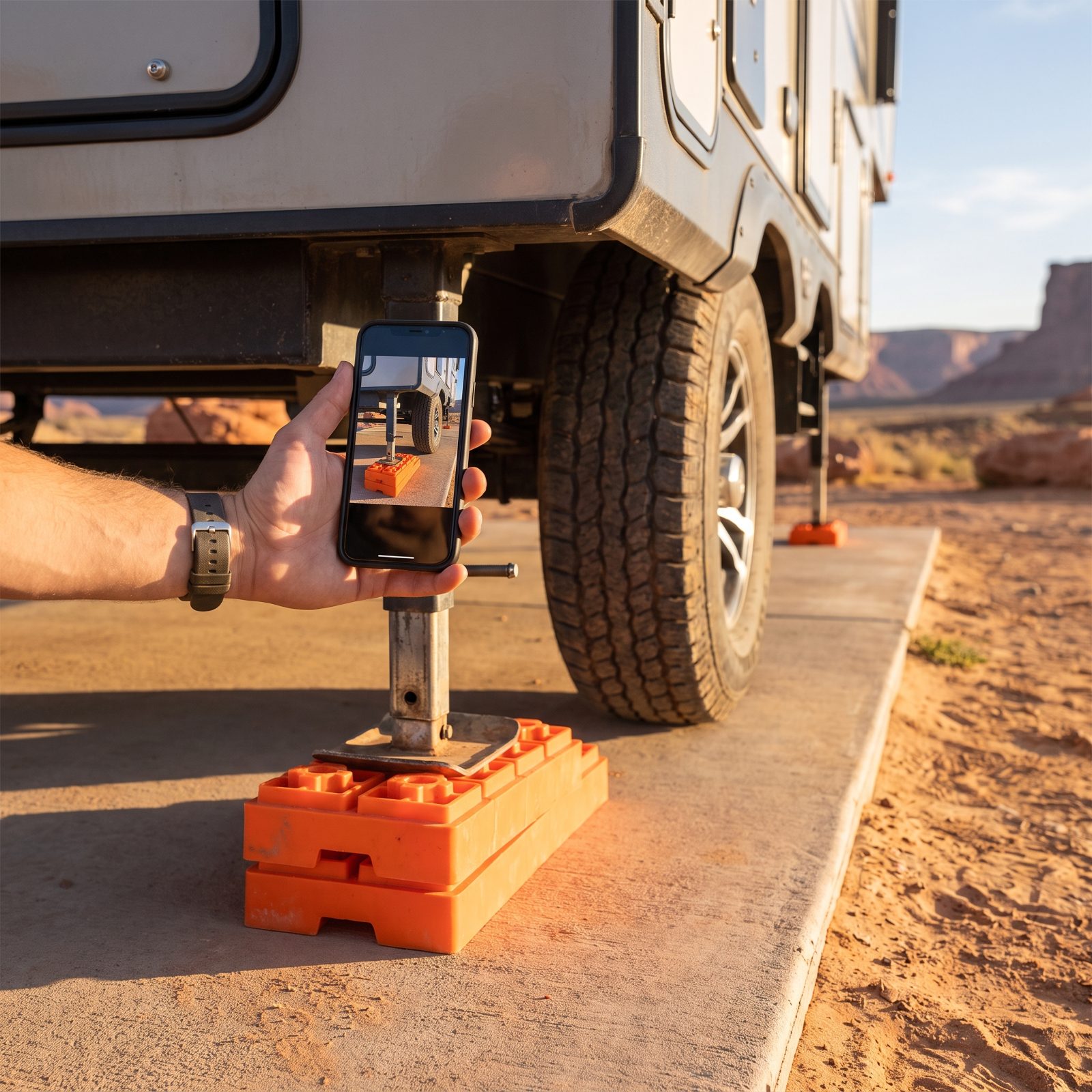
You’ll return to good campgrounds. Everyone does. And the site that needed two blocks under the curbside jack and nothing else is going to need exactly that again next year, because the pad doesn’t move.
Snap a photo of your leveling setup once you’re dialed in, then jot the recipe in the caption: “Site 44, two blocks under the curbside front jack, one under the rear jack.” File it in an album by campground. Next visit you skip the whole guess-and-check dance and nail it on the first pull-in. Fifteen seconds now against the crank-up, restack, crank-down shuffle later, while the neighbors watch.
46. Freeze a Coin on a Cup of Ice to Reveal a Power Outage
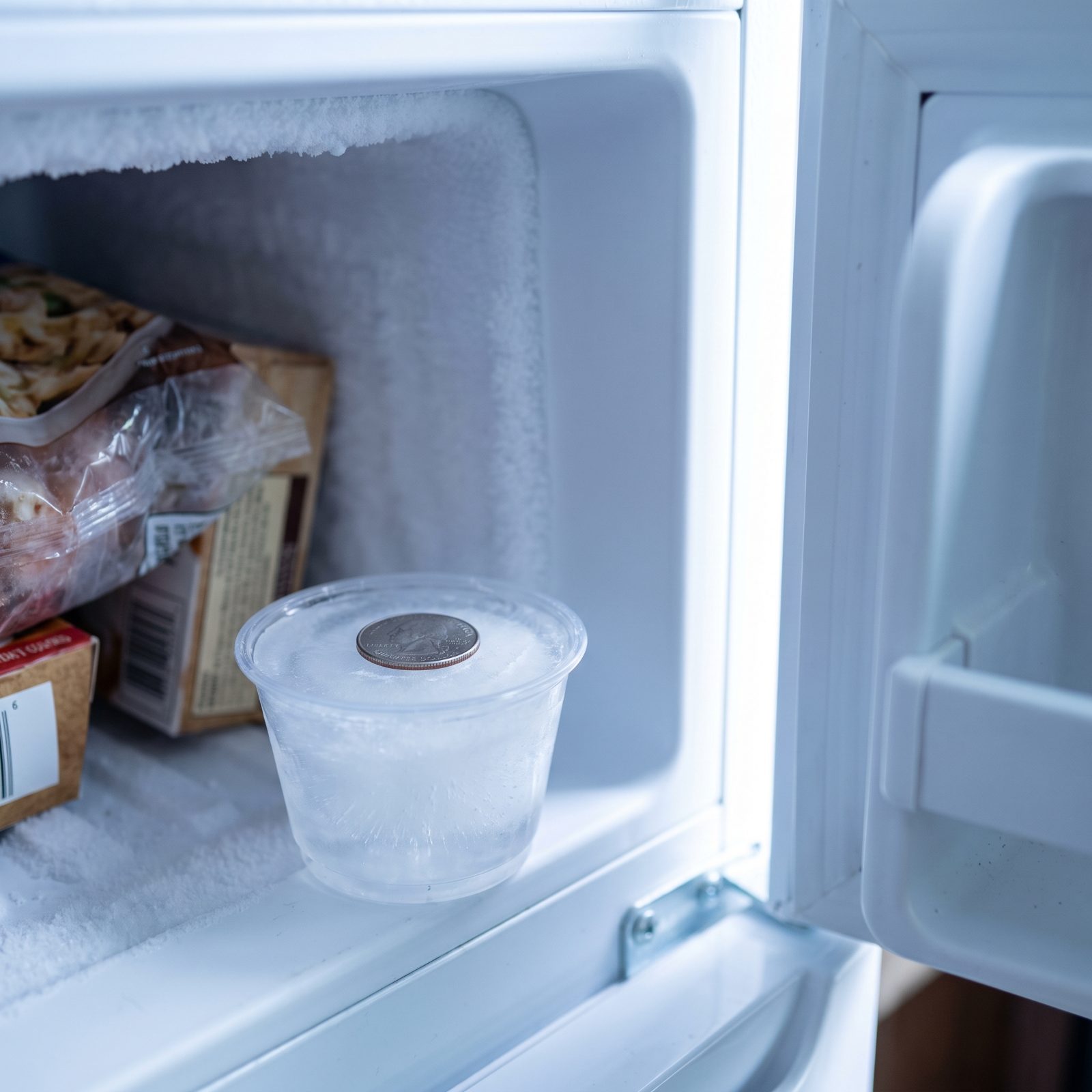
Freeze a cup of water solid. Set a coin on top. Put it back in the freezer and leave it.
Come back from a hike, and if the power sat off long enough for the food to thaw and refreeze, that coin will have sunk to the bottom. Coin on top, you’re fine. Coin in the middle or the bottom, your freezer took a trip to room temperature while you were gone and that chicken is a question mark. Old trick, and genuinely one of the smartest things in any rig. Campground pedestals trip more than anyone admits.
45. Clip Fluorescent Clothespins to Low Hitch Parts to Prevent Shin Strikes
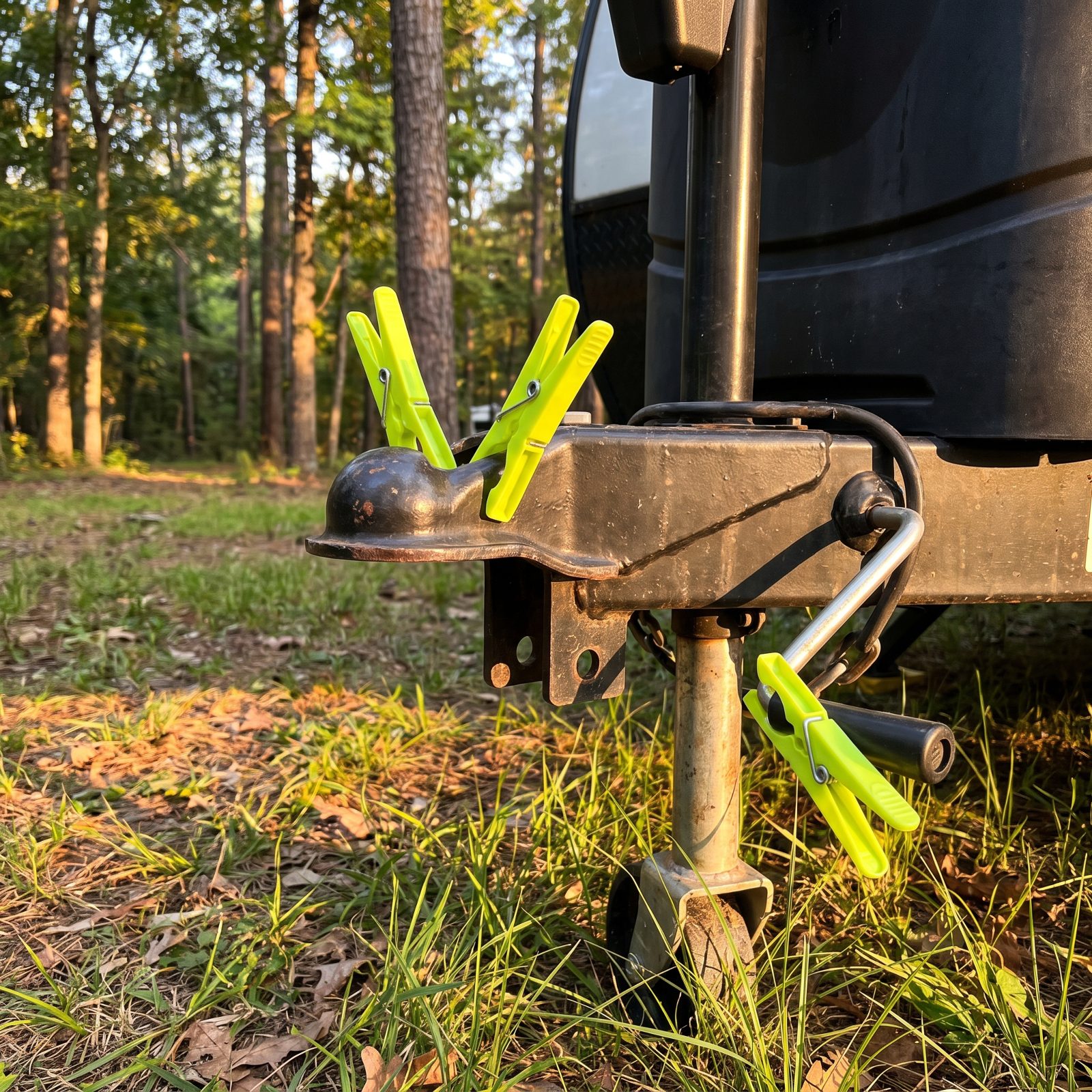
Everyone who tows has barked a shin on the same piece of hitch hardware in the dark. The jack handle. The sway bar. That hitch head poking out past the bumper where you forget it lives.
Clip a couple of fluorescent clothespins to those low, sharp bits. In daylight they’re a reminder, at dusk they’re a warning, and a bag of them runs about a dollar. Pull them off before you drive. Nobody tells you this until you’ve already got a bruise shaped like a ball mount, so consider this your heads-up instead.
44. Drop the Sewer Cap Straight Into a Dedicated Washable Tray
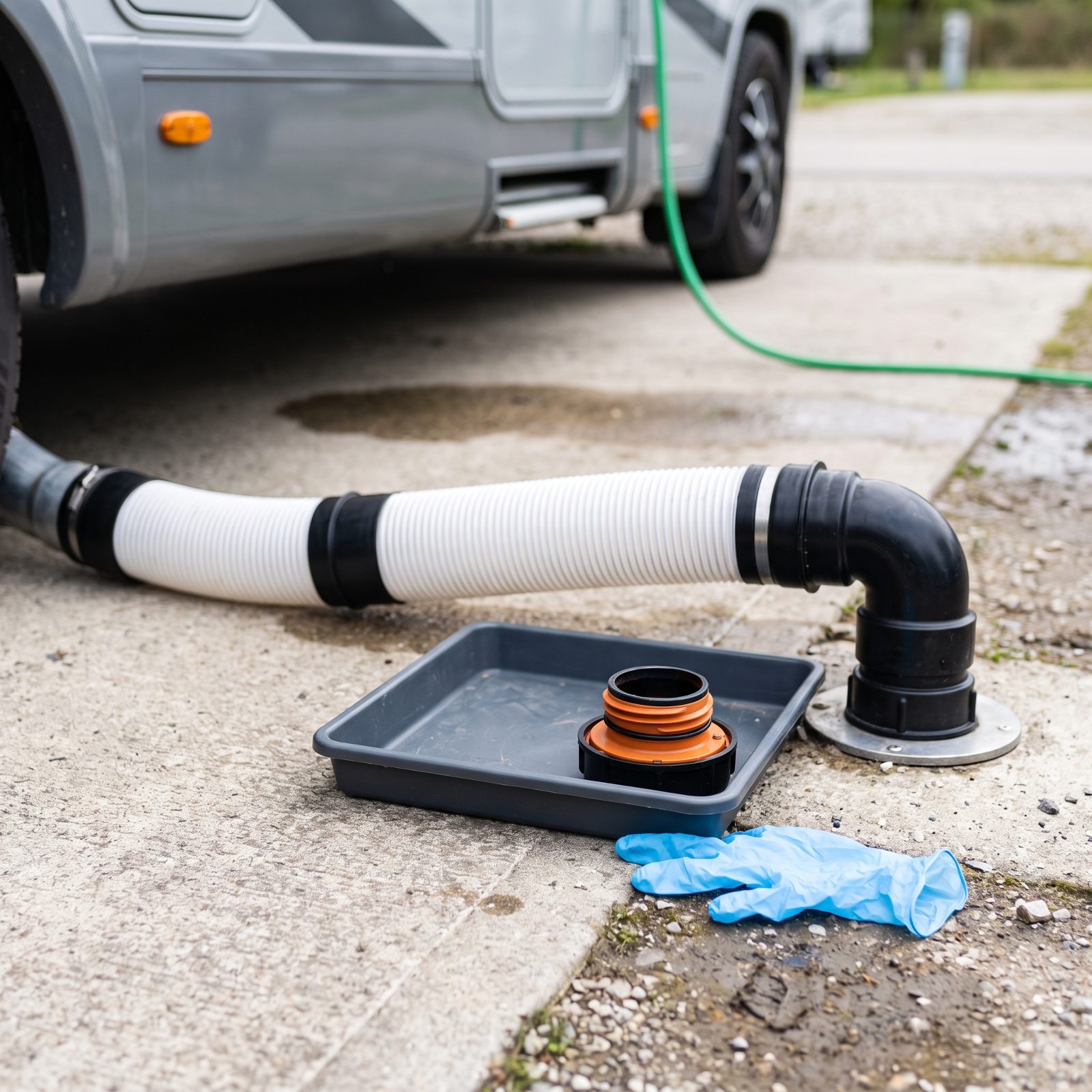
Here’s the one nobody wants to picture. You pull the sewer cap, your hands are full of hose, and the cap goes… where? On the grass. On the picnic table. In your other hand. All bad.
Keep one cheap plastic tray that lives with the stinky slinky and never touches anything else. The cap goes in the tray. The dirty fittings go in the tray. Used gloves come off last and go straight into the trash, not onto the ground. Everything gross gets quarantined to one washable surface you hose off at the dump station. Cross-contamination is what actually ruins your sanitation routine, and this habit draws a hard line nothing dirty gets to cross.
43. Inspect Slide Roofs With a Pole Camera Before Retracting Them
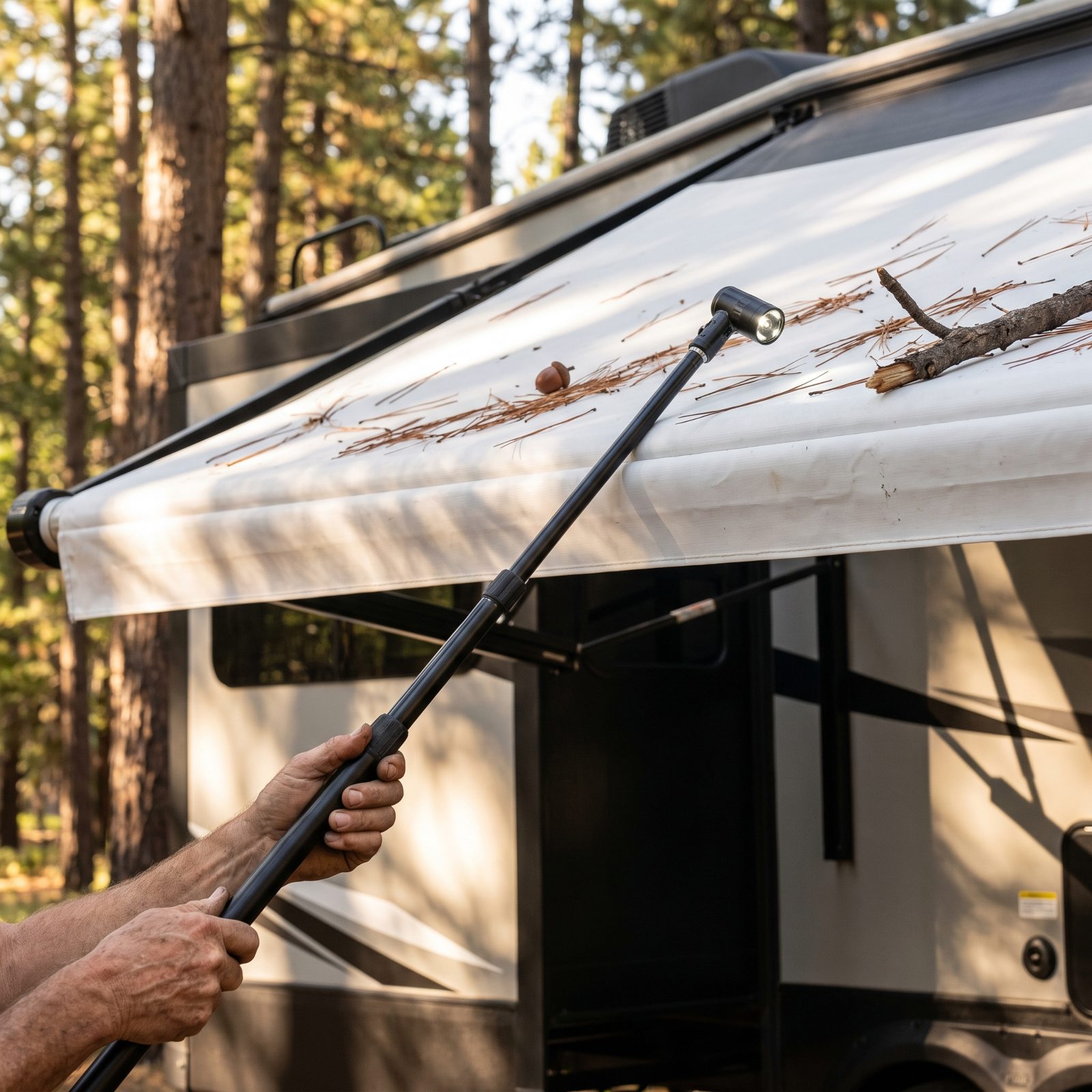
Slides retract whatever’s sitting on top of them. Pine needles, acorns, branches, a surprising amount of water pooled in the topper fabric. Most of it you can’t see from the ground, and by the time you hear the crunch the damage is already done.
A cheap extendable pole camera with a bright LED light on the end lets you reach up, light up the topper and check the slide roof in half a minute before you bring it in. Wooded sites are the worst offenders. One stubborn branch wedged against the seal can tear a topper or jam the whole mechanism, and that repair bill will wreck a trip faster than any rainstorm.
42. Leave an Empty Tote by the Steps for Last-Minute Loose Gear
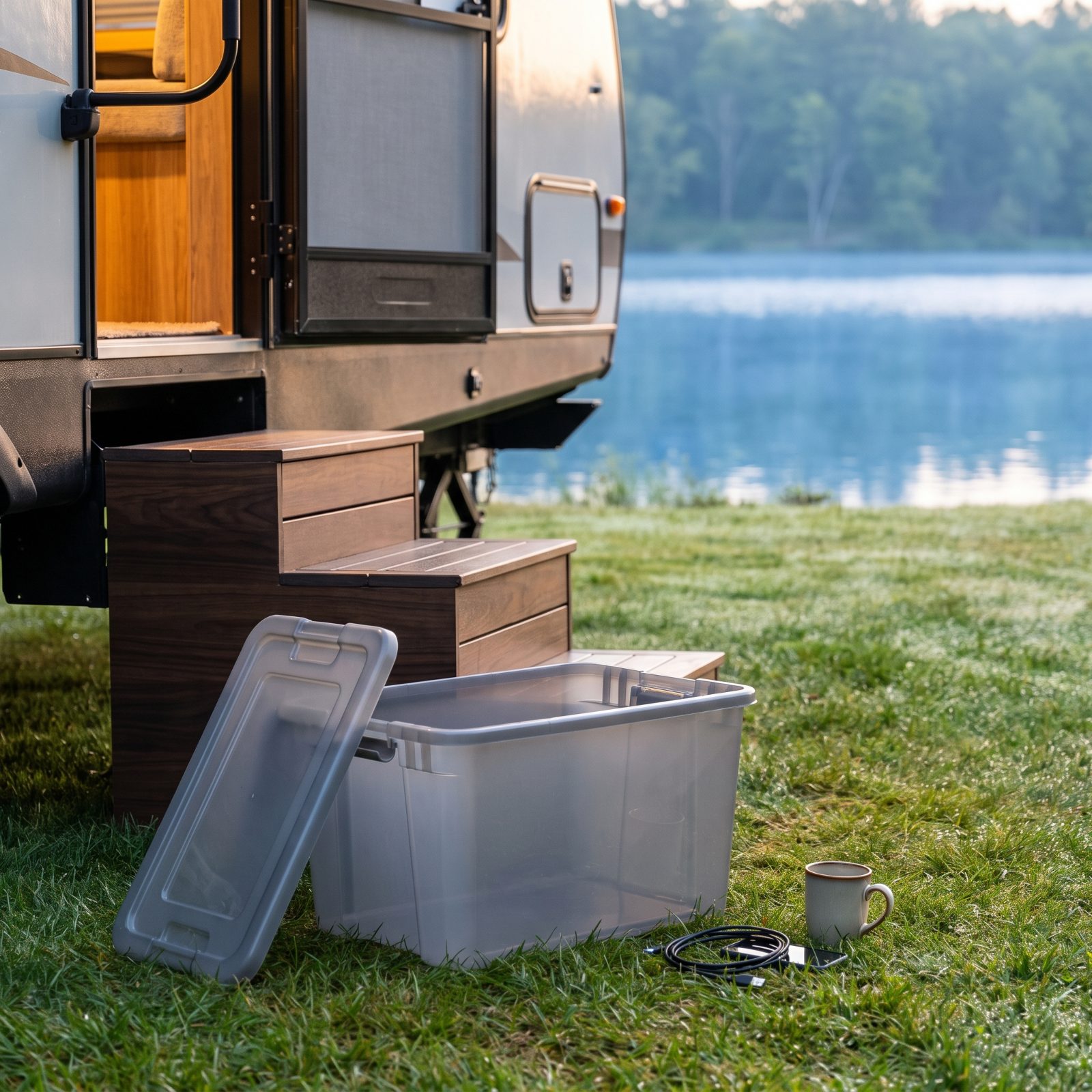
The things that get left behind on departure morning are never the big stuff. It’s the phone charger still plugged in by the bed. The dog bowl under the picnic table. The one shoe.
Set an empty tote by the steps the night before you leave. As stray gear turns up during the final walk-through, everything homeless goes straight in. The tote’s last job is to get loaded, so nothing orphan ends up abandoned on the ground. That’s the whole gap between a clean pullout and a sad U-turn forty miles down the road.
41. Run the Spigot Into a Clear Cup Before Connecting the Hose
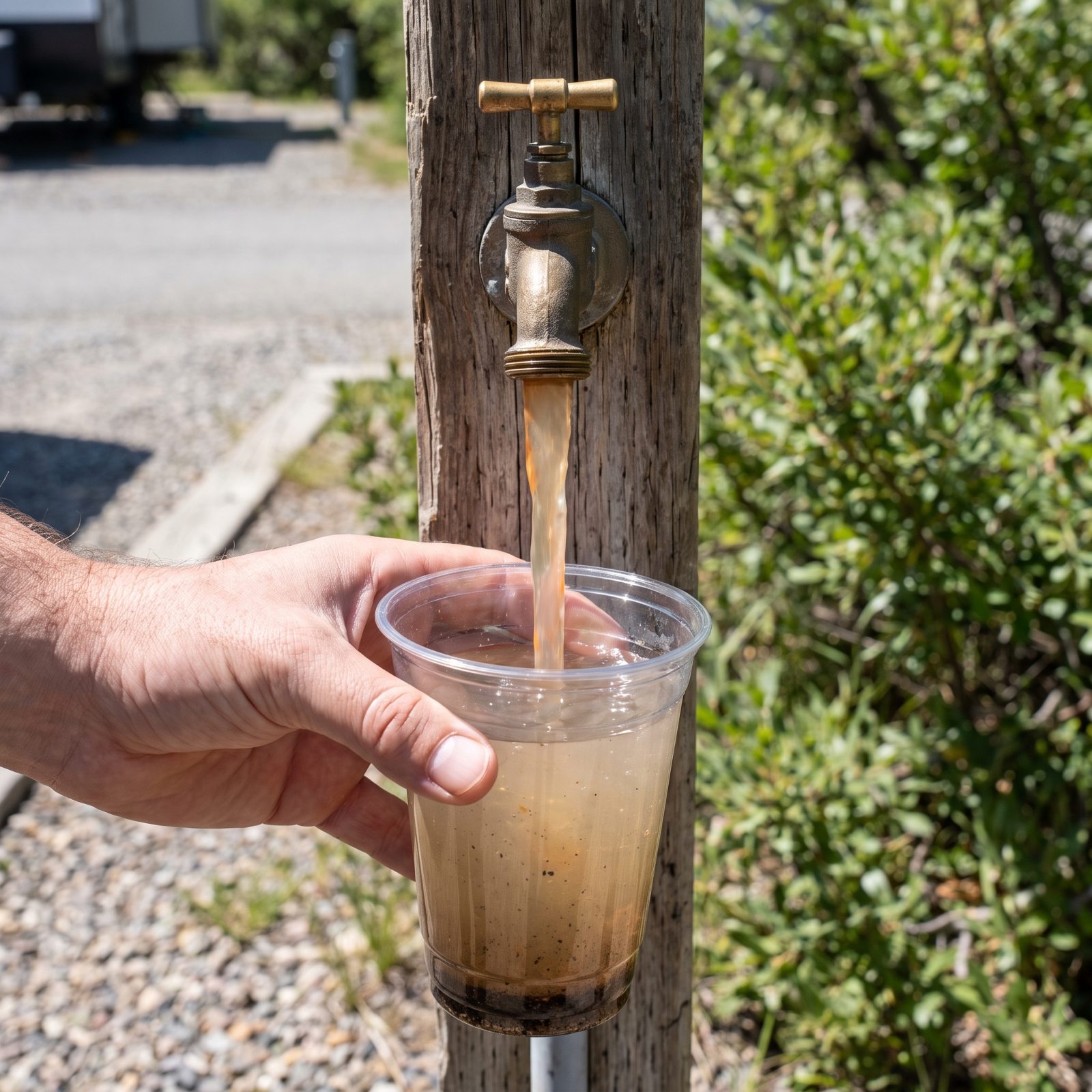
Campground water lines can sit unused for weeks. That first gush out of the spigot is where the rust, grit, and whatever-that-was has been living.
Crack the valve and run it into a clear cup for a few seconds before your hose ever touches it. Cloudy, orange, full of grit? Let it clear before connecting, or skip that spigot and run off your fresh tank. Flush straight into the hose and filter and you’re just shoving all that sediment into your system. One cup tells you everything.
40. Check the Fire Ring’s Smoke Path Before Positioning the Rig
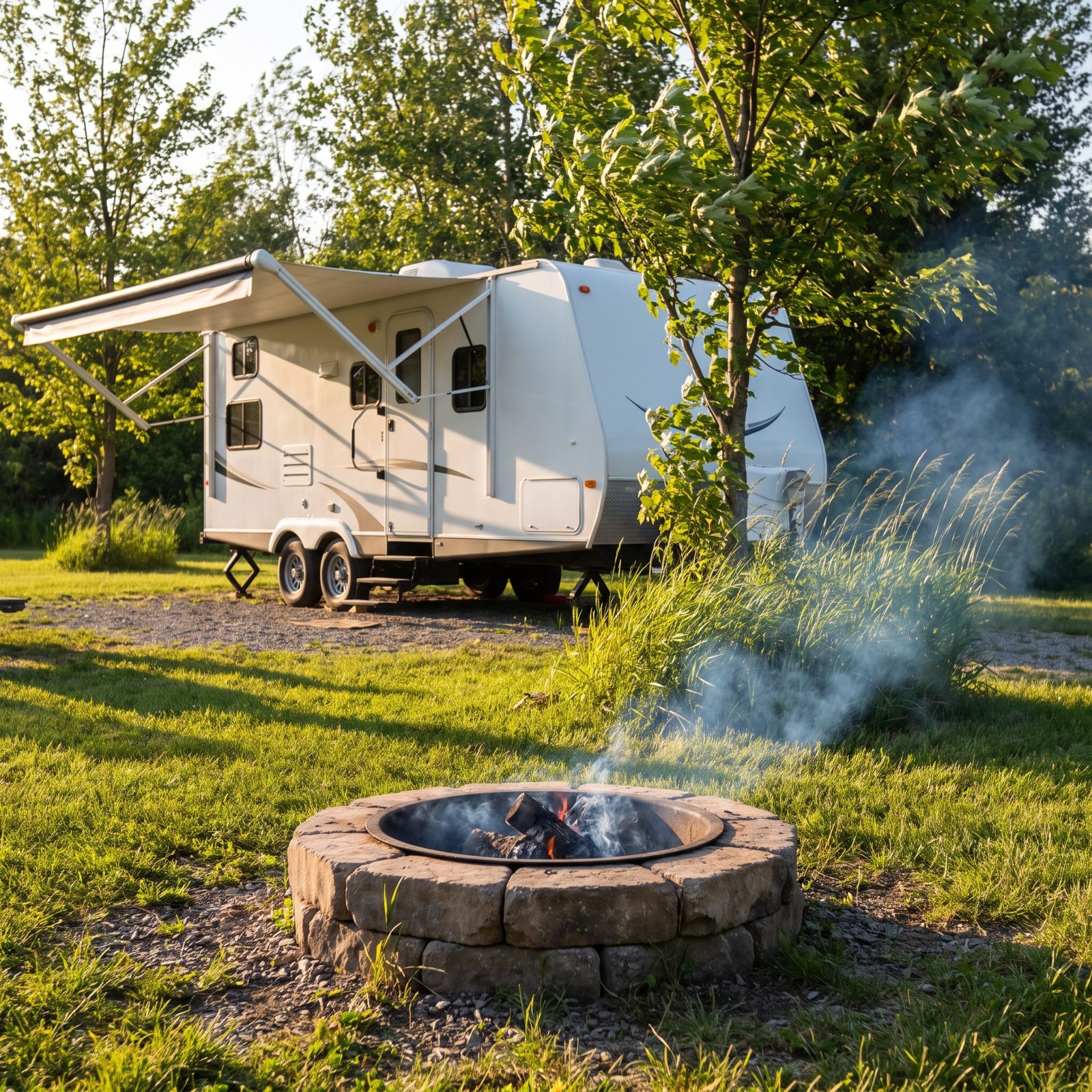
You park the rig, set up camp, light the fire, and then spend the whole evening eating smoke because the breeze runs straight from the fire ring into your awning and open windows.
Before you commit to how you back in, read where that smoke is headed. Wet a finger, watch the trees, notice which way the afternoon wind runs. Then put the door and awning side away from the drift. You can’t move the fire ring, but you absolutely get to pick which end of the trailer faces it. Smoke-flavored bedding is a self-inflicted wound.
39. Stand Camp Chairs on Edge Before Overnight Dew or Rain
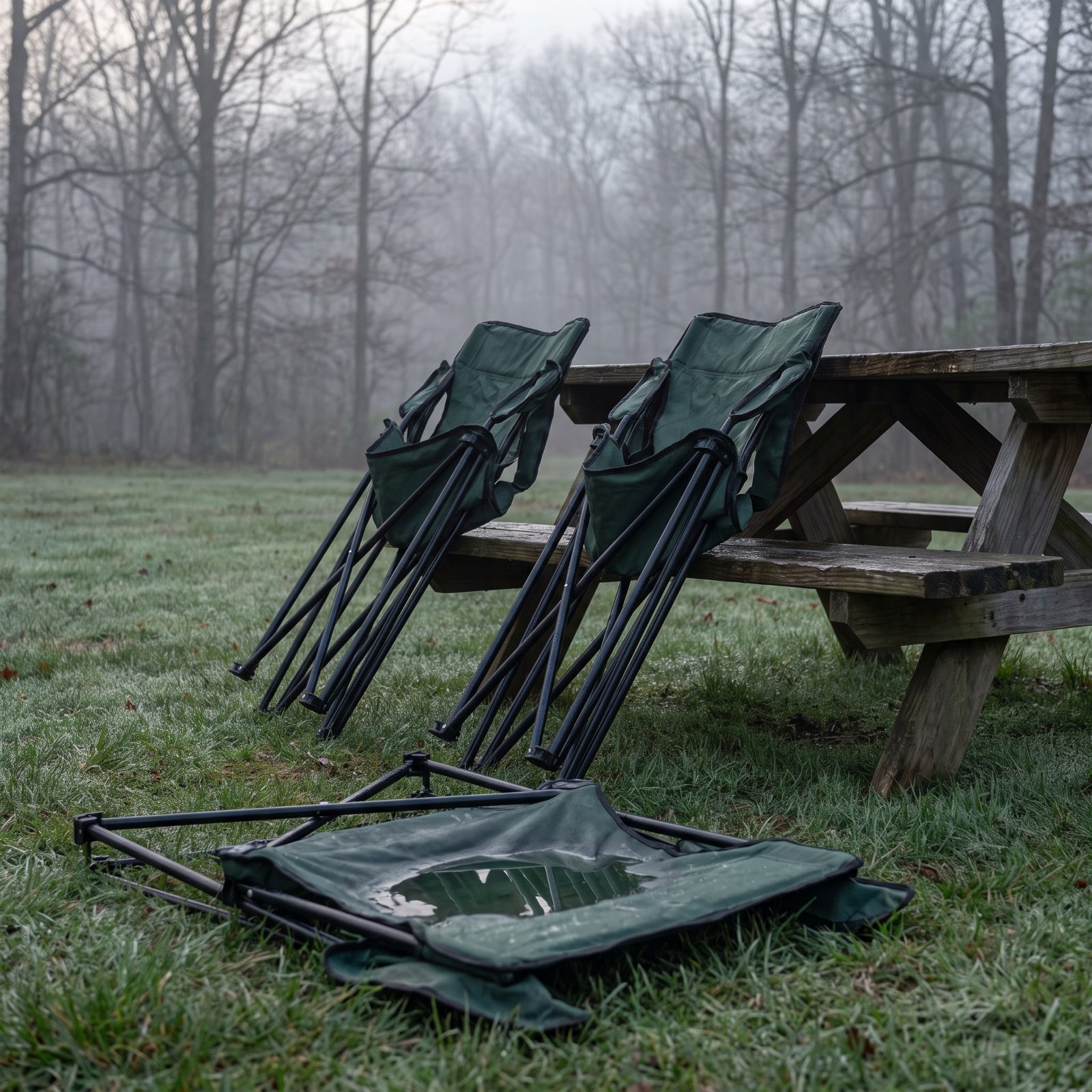
A flat camp chair collects dew like a bucket. You go to sit down with your coffee and the seat’s holding a cold puddle.
Tip them up on edge overnight, or lean them against the table so the fabric sheds water instead of cupping it. Come morning they’re dry and you’re not air-drying a chair while your coffee goes cold. Smallest habit on this list, and the one you’ll notice first, because a soaked seat at seven a.m. is a genuinely rotten way to start a day.
38. Inspect the Picnic Table’s Underside for Nests and Sticky Sap
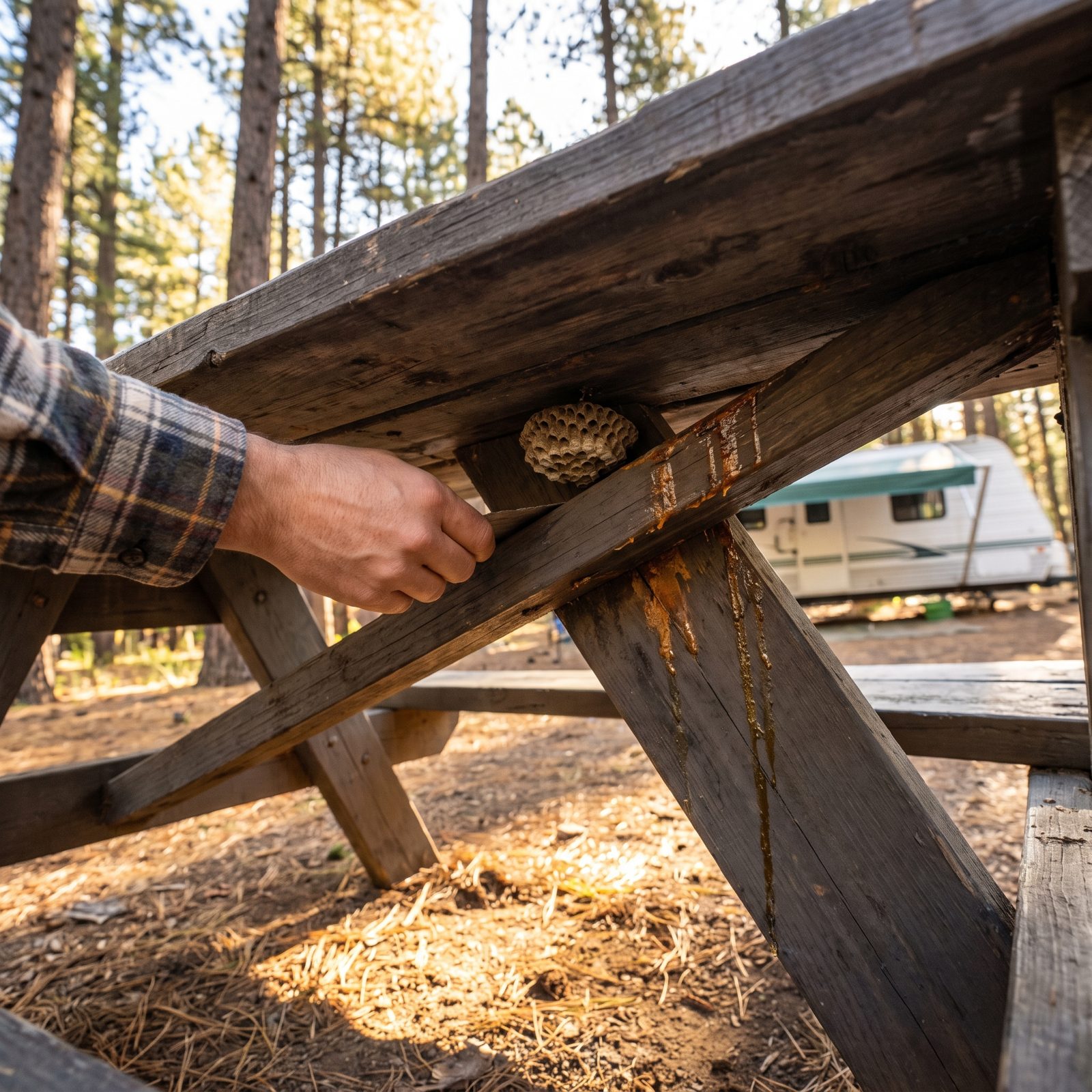
Most people slide onto the bench, set down their coffee, and never once look underneath. That’s how you end up with a wasp nest two feet from your elbow and sap all over your favorite jacket.
Run a hand along the underside of the tabletop and the lip of the benches before anyone sits. You’re hunting two things: papery nests tucked into the corners where the wood meets the frame, and those sticky amber runs that pine tables collect all summer long. Sap doesn’t come out of clothes. Ask anyone who’s tried.
37. Freeze Food Scraps in a Sealed Bag Until the Next Trash Run
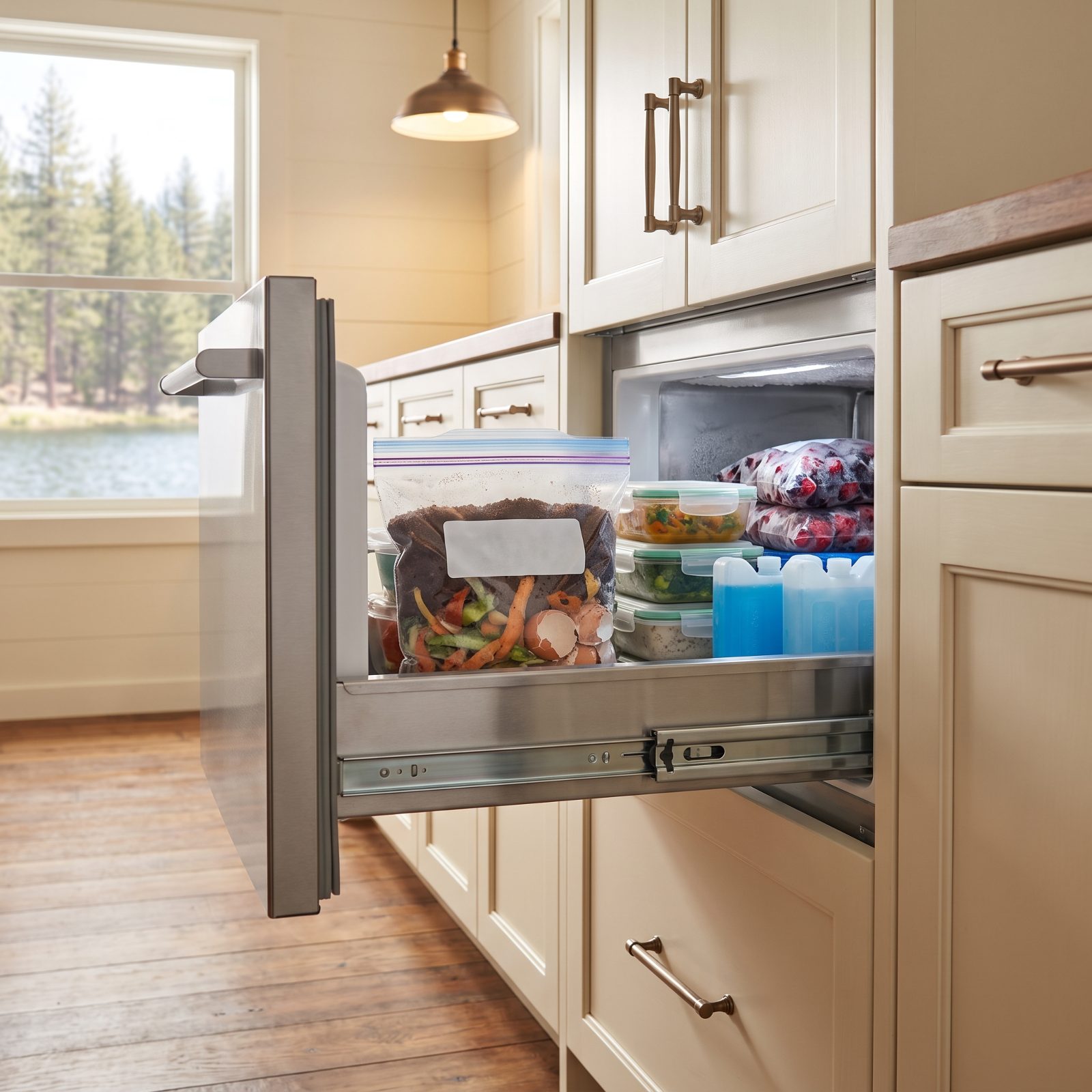
Food scraps in a camper trash bag turn into a smell problem fast, and a raccoon problem faster. The fix lives in your freezer.
Toss peels, grounds, and plate scrapings into a sealed freezer bag and stash it with the frozen goods. No odor, no bugs, no late-night scratching at the storage bay. On trash day you pull the bag out and walk it to the dumpster still frozen solid. Sounds odd until your first hot August weekend without it.
36. Catch Shower Warm-Up Water in a Basin for the Next Chore
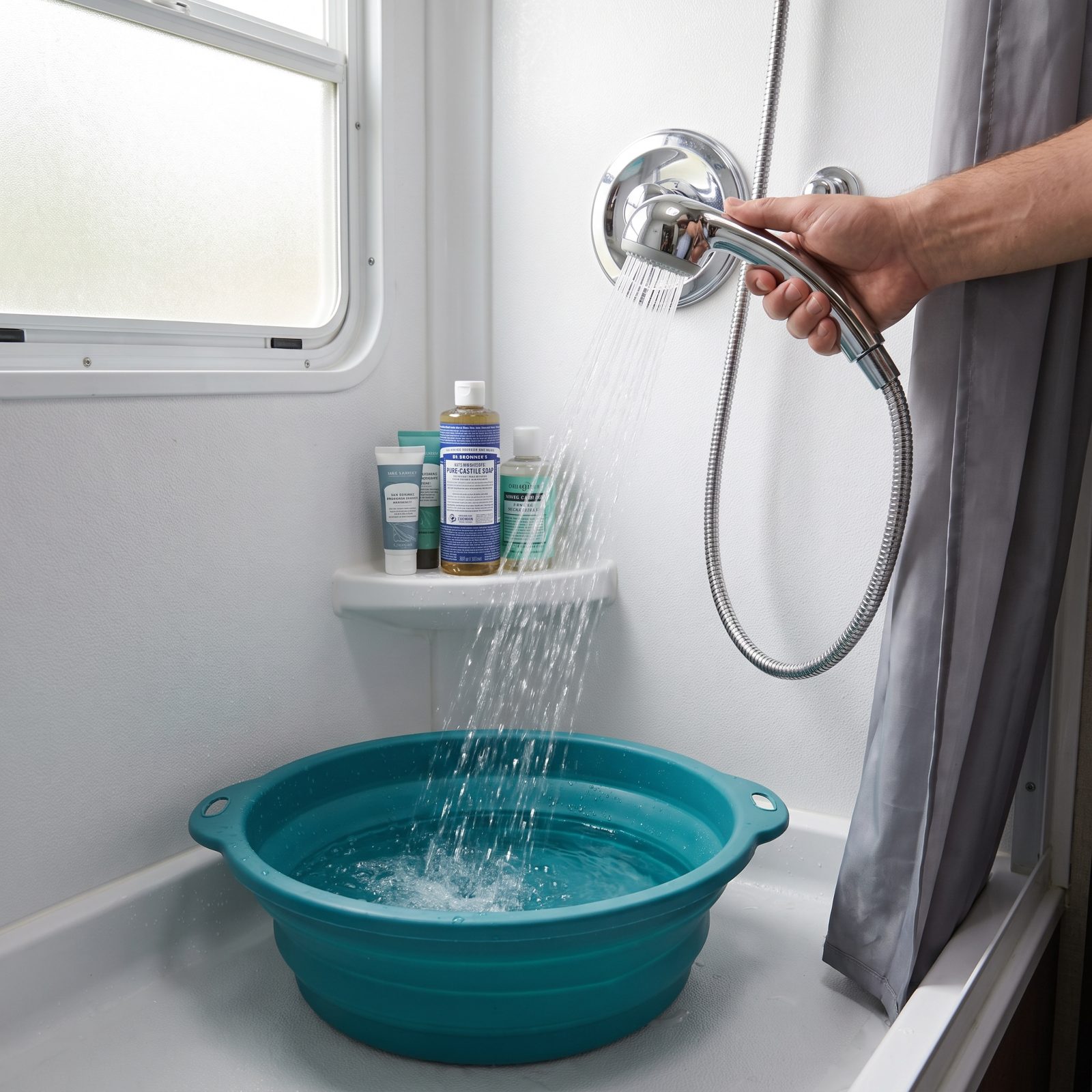
Your fresh tank is smaller than you think. Thirty, maybe forty gallons on a lot of rigs, and every shower starts by running cold water straight down the drain while you wait for warm.
Stick a collapsible basin or a small bucket under the shower head during that warm-up. You’ll catch more than you’d guess, a gallon or two most times, and that water flushes the toilet, rinses dishes, or tops off the dog bowl. Boondockers already know this cold. Hookup campers tend to learn it the first time they watch the fresh gauge drop days before they planned.
35. Photograph the Pedestal and Site Marker Before Hooking Up
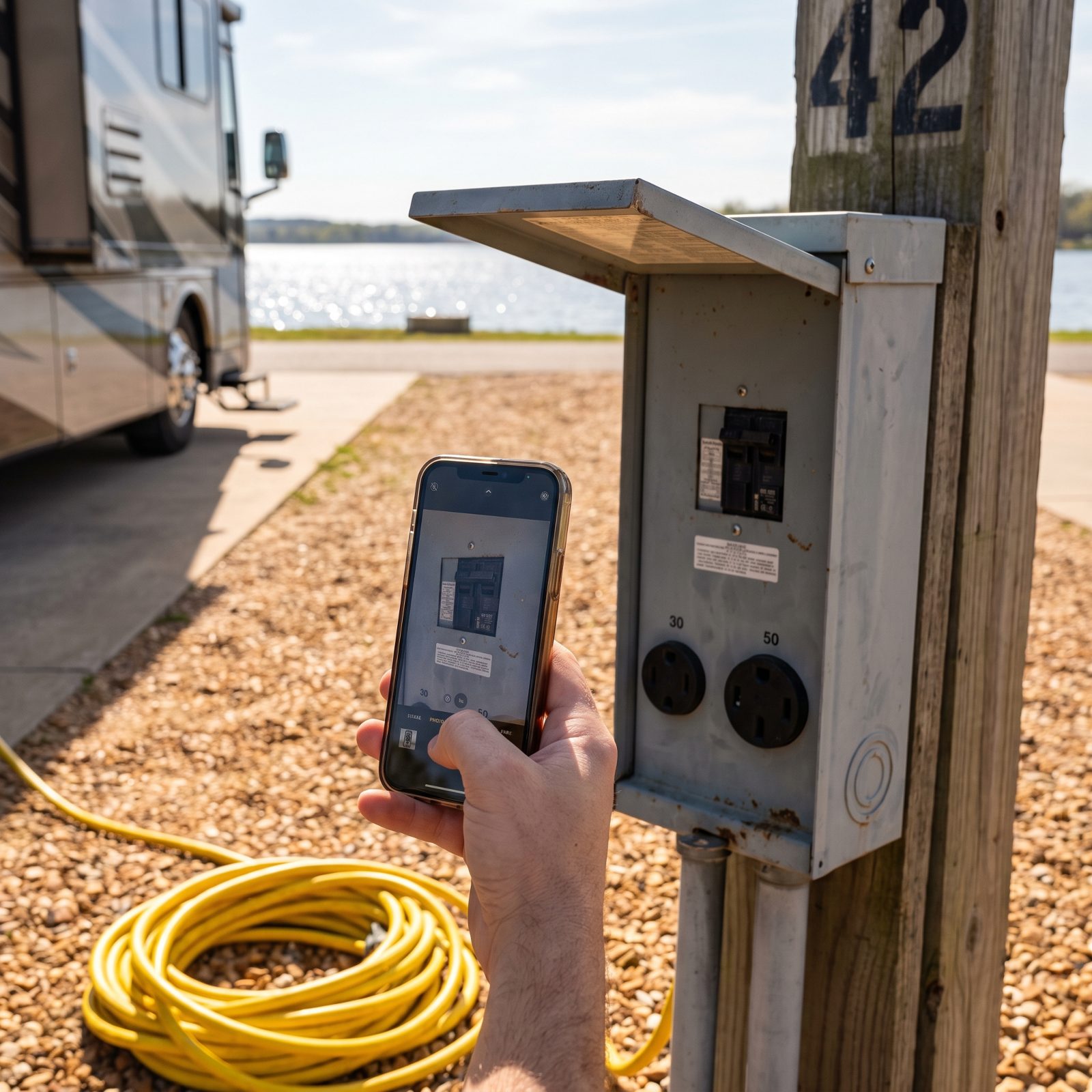
Snap a quick photo of the pedestal and the site-number post the moment you pull in, before you plug a single thing in.
Why bother? Two reasons. If a breaker trips or an outlet looks scorched, you’ve got a dated photo proving it was that way when you arrived, which matters if the office ever asks. And the site-number shot saves you a walk back to read a faded post when you’re confirming your reservation or ordering delivery to the site.
A ten-second habit that quietly settles arguments you didn’t know you’d have.
34. Hang the Departure Checklist on the Steering Wheel at Check-In
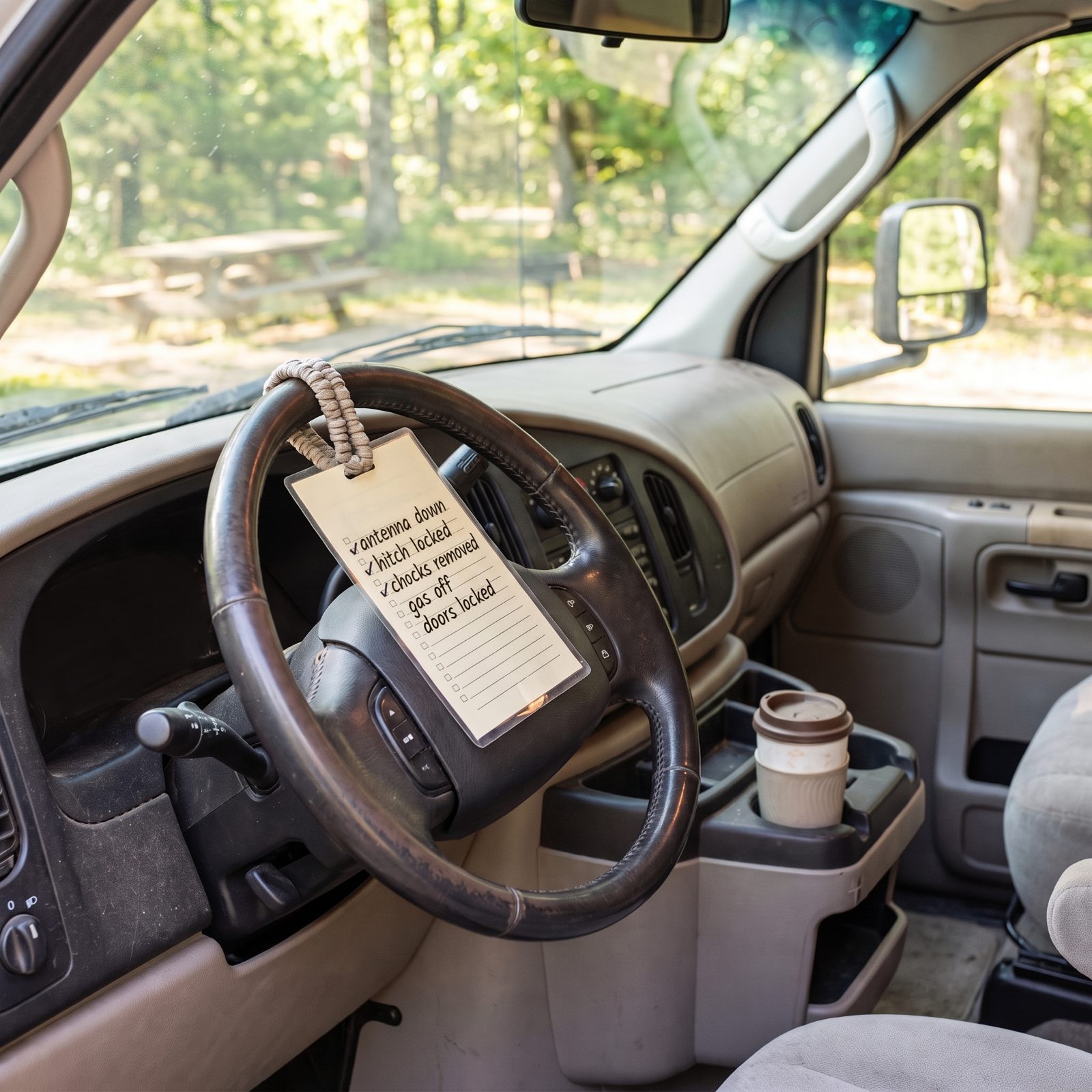
The most dangerous moment of any trip isn’t the highway. It’s the morning you leave, excited, a little rushed, running the whole teardown from memory.
Hang your departure checklist on the steering wheel the second you arrive, not the morning you go. You physically cannot drive off without seeing it and dealing with it. On the card: antenna down, hitch locked, chocks removed, gas off, doors locked. The wheel is the one spot in the rig you’re guaranteed to touch before you move an inch.
33. Clip an Antenna-Up Tag Directly to the Ignition Key
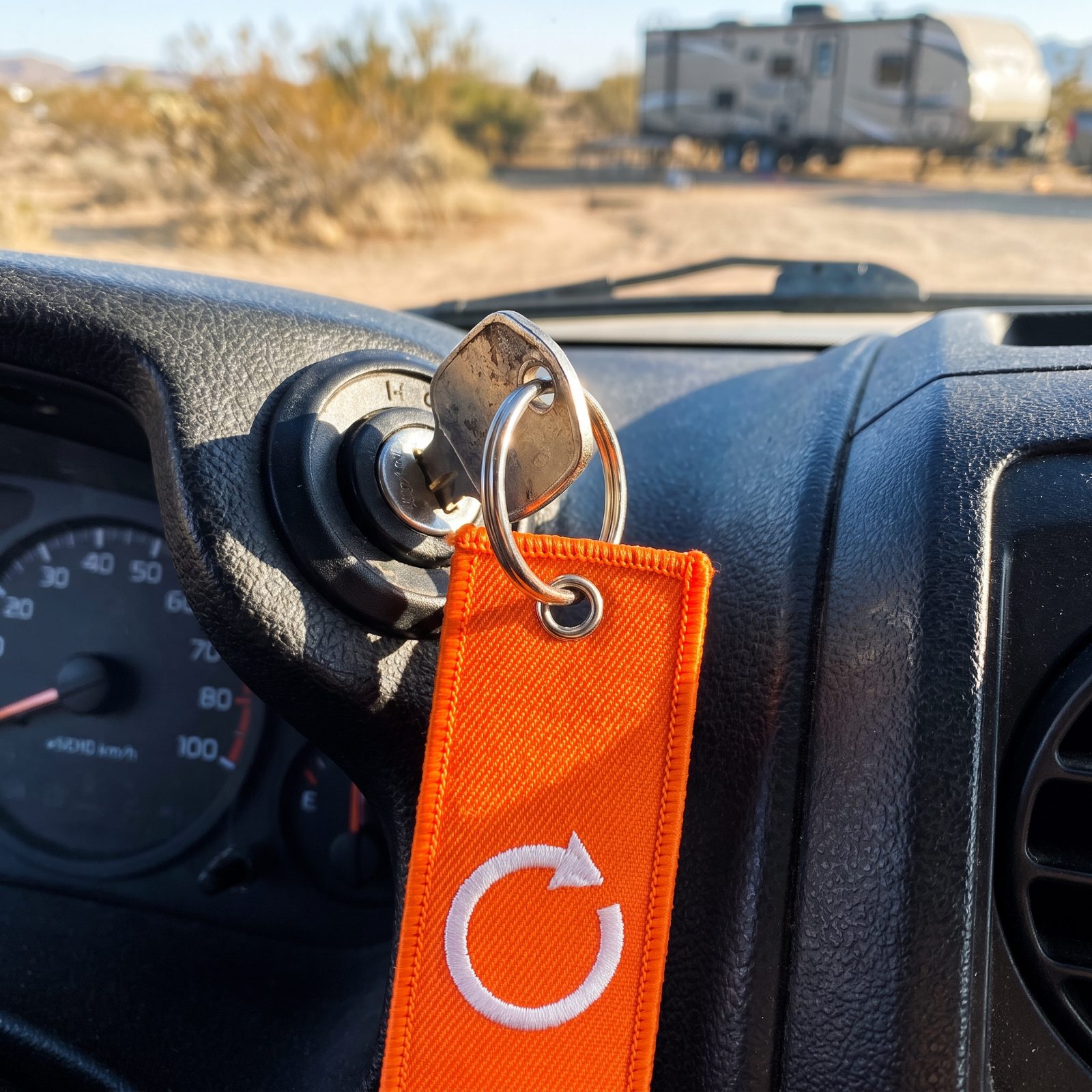
The crank-up TV antenna is the one thing a checklist keeps missing, because you raised it hours ago and forgot it was even up there.
Clip a bright tag to your ignition key whenever the antenna goes up. You can’t turn the key without handling the tag, and that handling reminds you to crank the thing down. Once it’s down, the tag goes back in the drawer. Simple loop. A snapped antenna from a drive-through tree branch runs real money, and this little flag makes forgetting almost impossible.
32. Drop a Map Pin on the Campsite Before Exploring on Foot
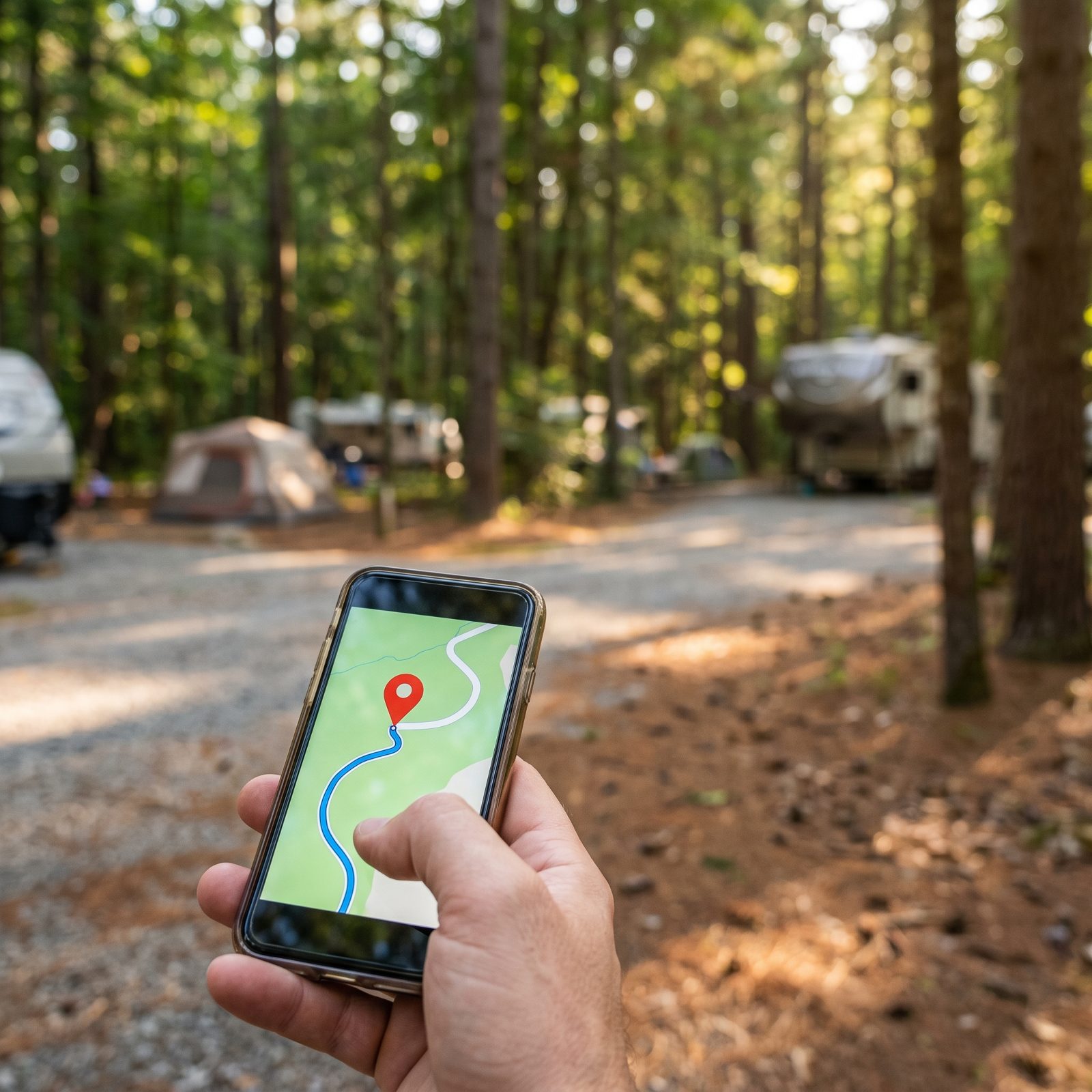
Big campgrounds all blur together once you’re forty sites deep on foot. Loop C, loop D, every pad a gray gravel rectangle with a camper that could be yours.
Before you wander off to the beach or the trailhead, drop a pin on your exact site in your phone’s map app. Now the walk home is a straight blue line instead of a guessing game at dusk. Feels like overkill until the first time you’re circling a loop in the dark, reading posts by phone flashlight, dead certain you parked right about here.
31. Screenshot the Campground Map Before Cell Service Disappears
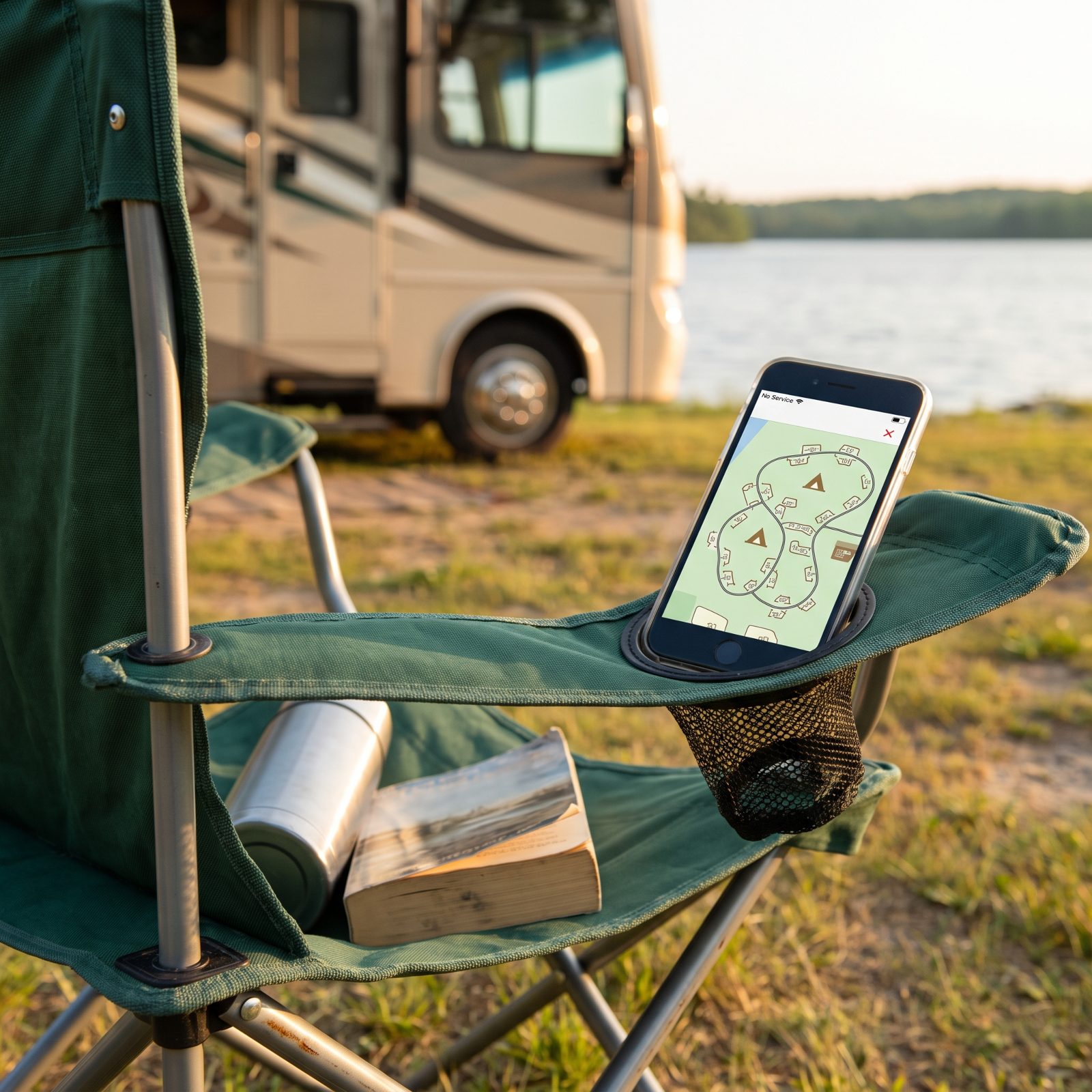
That campground map you studied online goes useless the moment your bars vanish, which at the good remote parks is right about the entrance gate.
Screenshot the whole thing while you still have service, driving in or even before you leave the house. Bathhouse locations, dump station, the trail that leaves from the back loop, the one road out. A saved image sits in your photos with zero signal required. People forget a loaded webpage dies the instant you lose connection. A screenshot lives forever. Grab it early.
30. Set the Weather App to the Campsite’s Exact Location
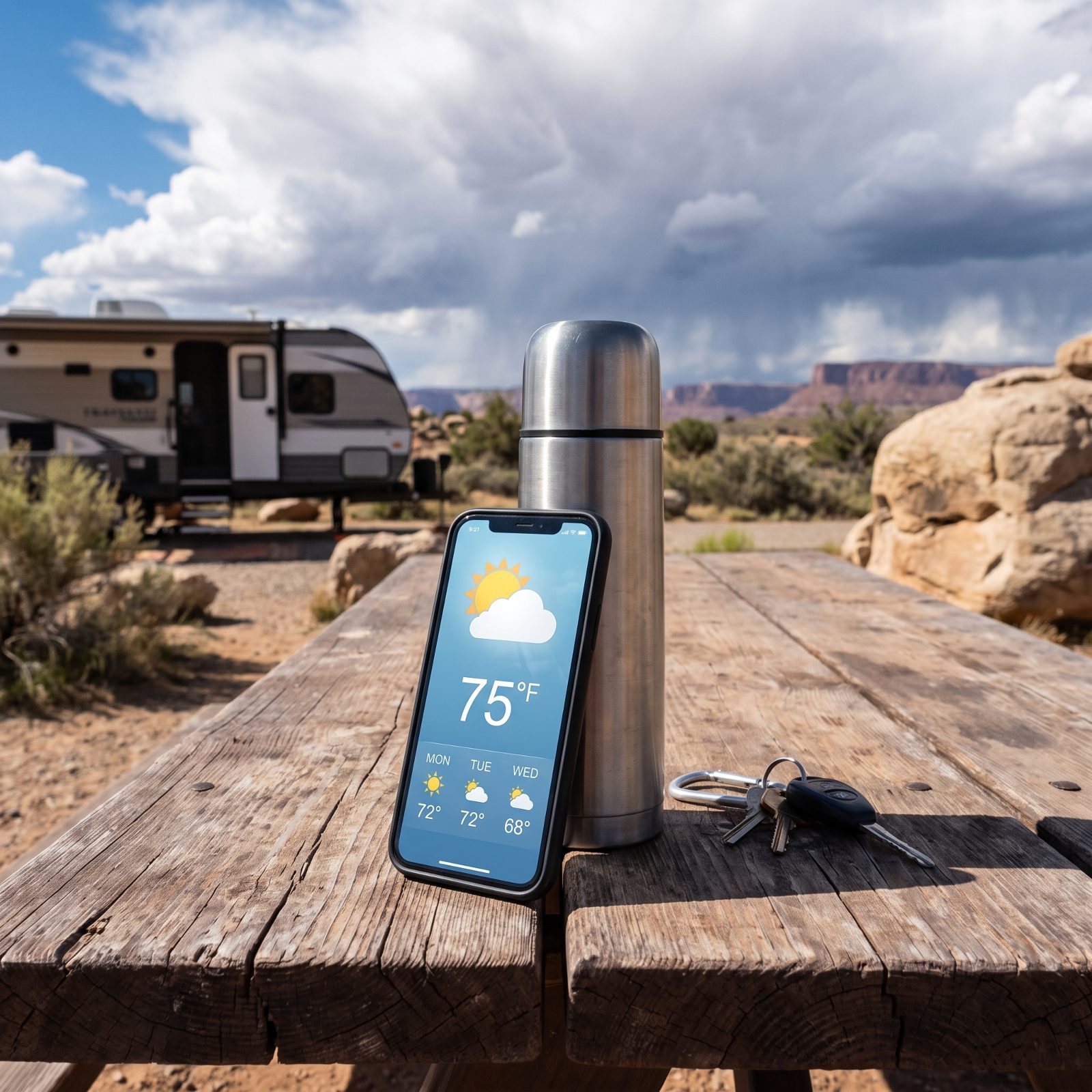
The forecast for the nearest town can be wildly wrong for where you actually are. Camp at the base of a mountain or out on a mesa and the weather thirty miles away in the valley tells you almost nothing.
Set your weather app to the campsite’s precise coordinates, not the town name. Elevation and terrain reshape wind, temperature, and especially the odds of a storm rolling in. Run slide toppers or a big awning? Knowing a real gust is headed for your exact spot is the difference between pulling things in early and repairing them later.
29. Mark the Future Slide Corners Before Finalizing the Parking Spot
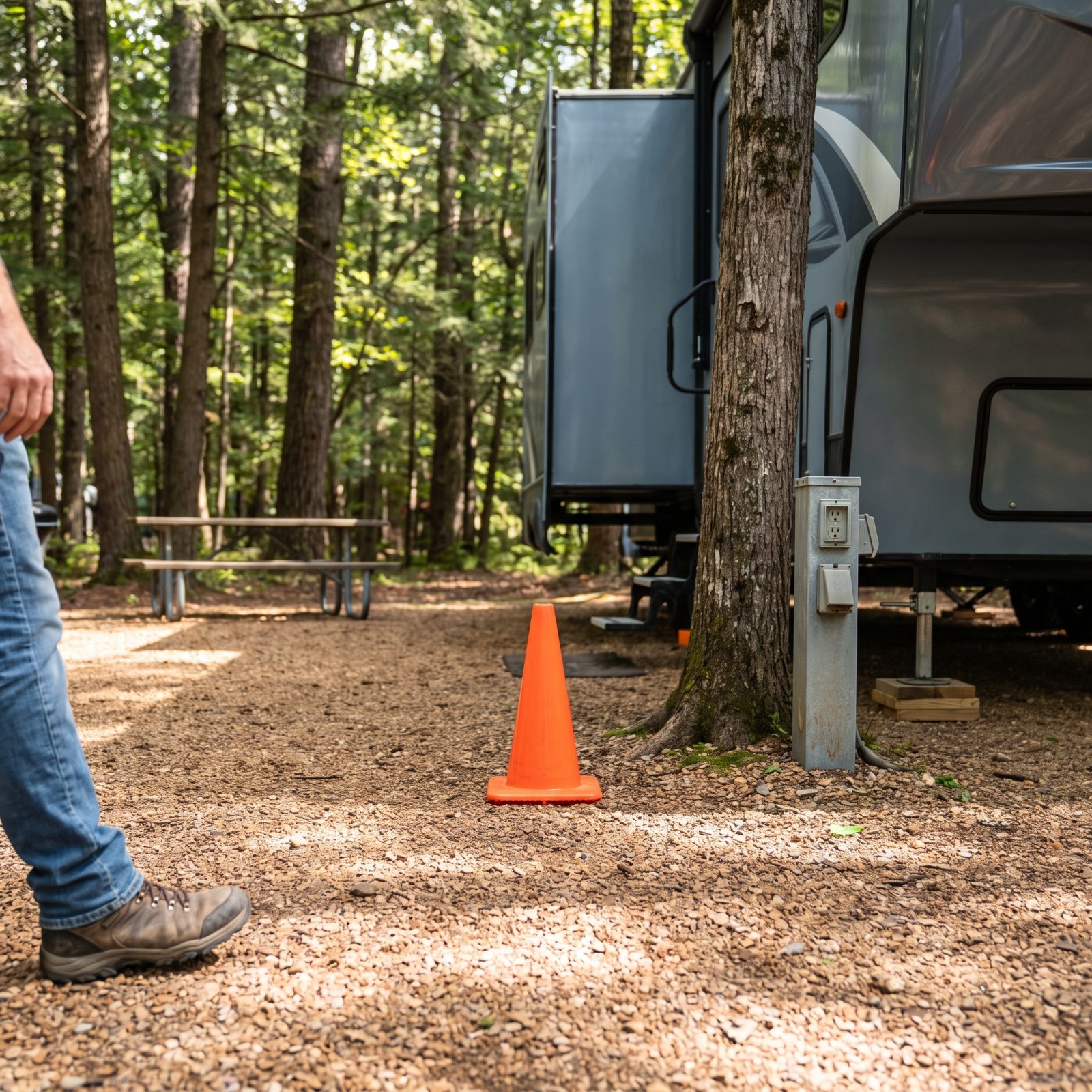
You park, level up, drop the jacks, hit the slide button, and the slide stops two inches from a tree. Now you’re resetting the whole thing. Been there.
Before you commit to the spot, walk the side where your slides push out and mark where the corners will land. A cone, a stick, a flip-flop, whatever’s handy. Then eyeball it against trees, the power pedestal, the picnic table, your neighbor’s awning. Slides reach out three feet or more, and the obstacle is always something you never spotted from the driver’s seat.
Thirty seconds of marking beats ten minutes of unhitching and repositioning. Go check your corners before you commit.
28. Leave a Drip Loop in the Shore-Power Cord During Wet Weather
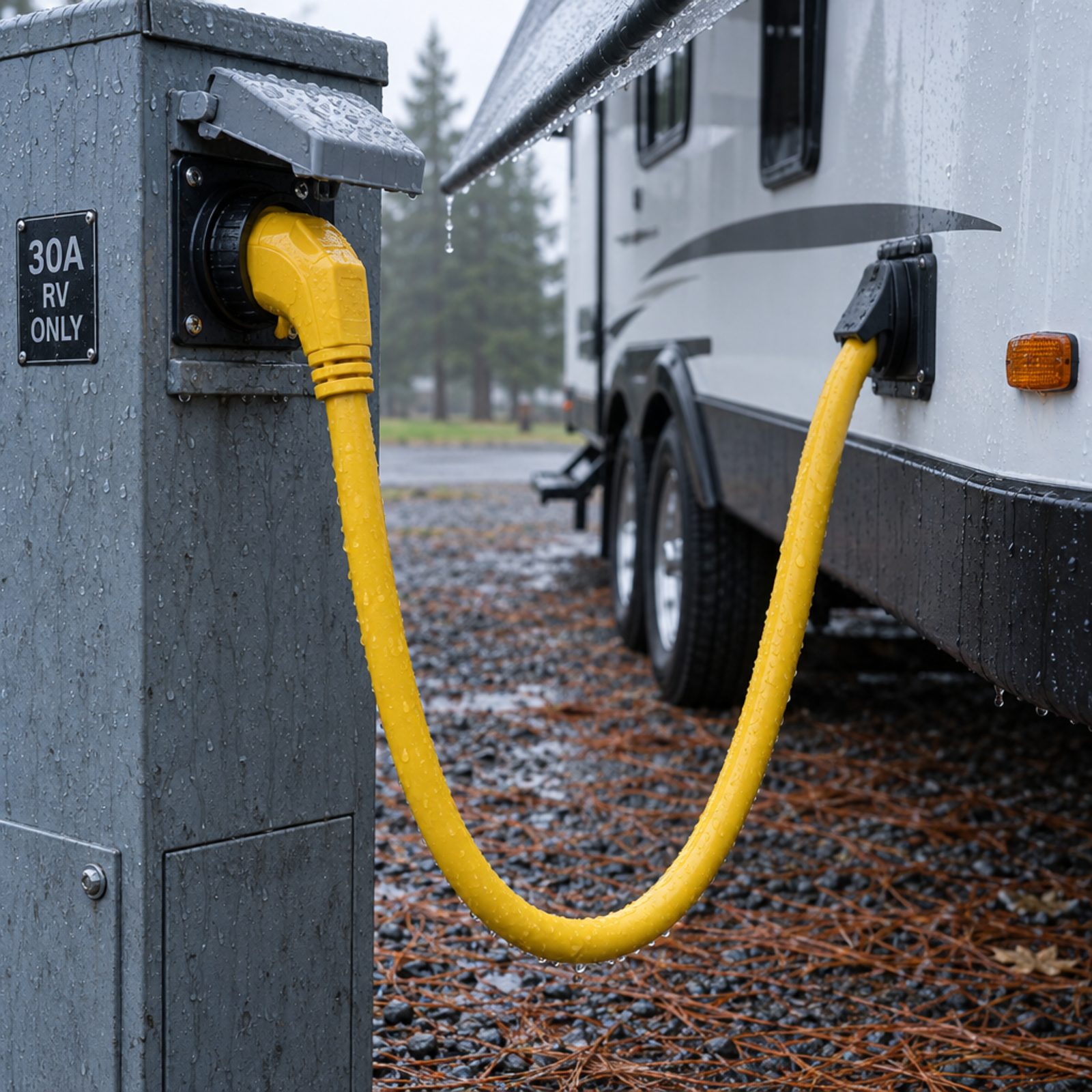
Water obeys gravity, not wishful thinking. A drip loop is just a deliberate dip in the cord so rain runs to the bottom of the U and drops off instead of tracking straight down the cable and into the pedestal receptacle or your RV inlet.
Costs nothing, takes two seconds, and almost everybody gets it wrong. People plug in tight and taut because it looks neater, which is exactly backwards in the rain. That tidy little line is funneling water straight toward live metal.
27. Keep Fresh-Water Fittings Capped Inside Their Own Clean Box
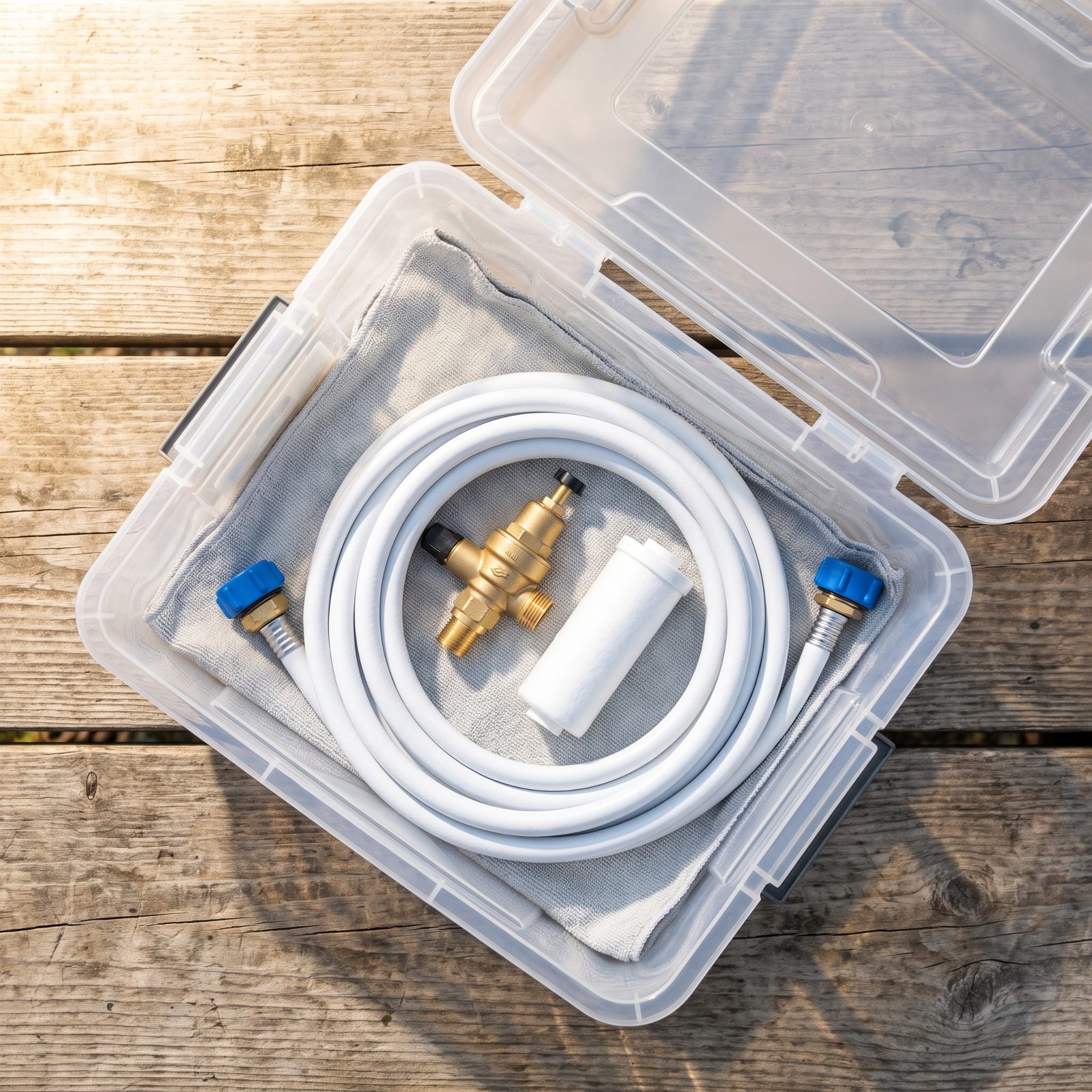
Nobody warns you about this until your first trip. The hose you drink from and the hose you dump with end up in the same storage bay, and they touch. Seasoned campers give the fresh-water gear its own sealed box and never, ever let the gray or black equipment near it.
Caps on the fittings keep road grit, spider nests, and whatever lived in your last campsite’s dirt out of the threads. A dedicated bin runs about fifteen bucks and it’s the single easiest way to stop cross-contamination before it starts.
26. Park Muddy Shoes in a Boot Tray Beneath the RV Steps
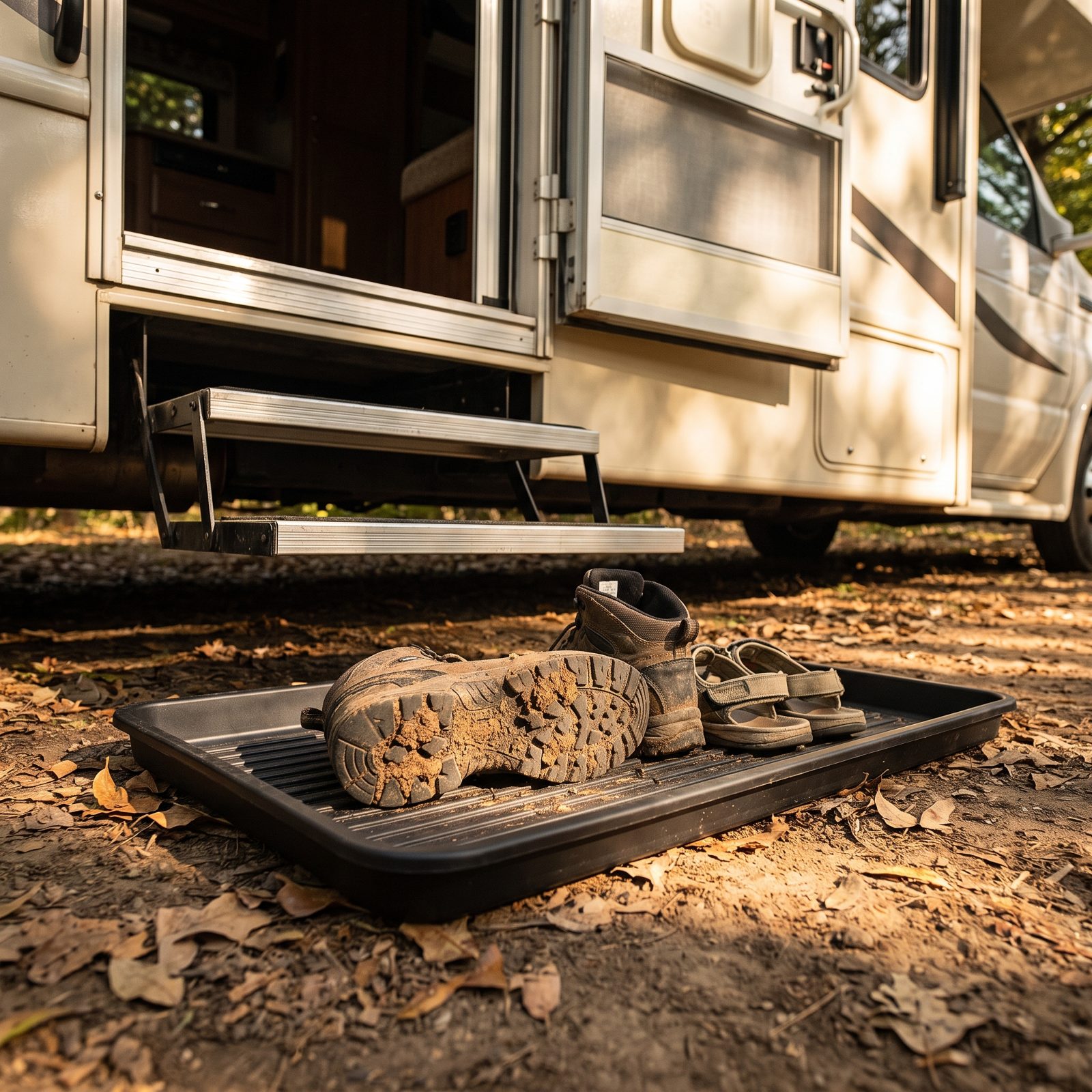
The mud always wins eventually. You can wipe your feet a hundred times and still track half the forest onto that two-inch strip of carpet by the door. A cheap boot tray parked right under the steps ends the argument: shoes come off outside, land in the tray, and stay there.
What makes it work is the lip around the edge. Flat mats just shove the dirt sideways. A tray with a raised rim holds the runoff, and come the end of the week you can hose the whole thing out.
25. Turn Outdoor Shoes Over and Shake Them Before Putting Them On
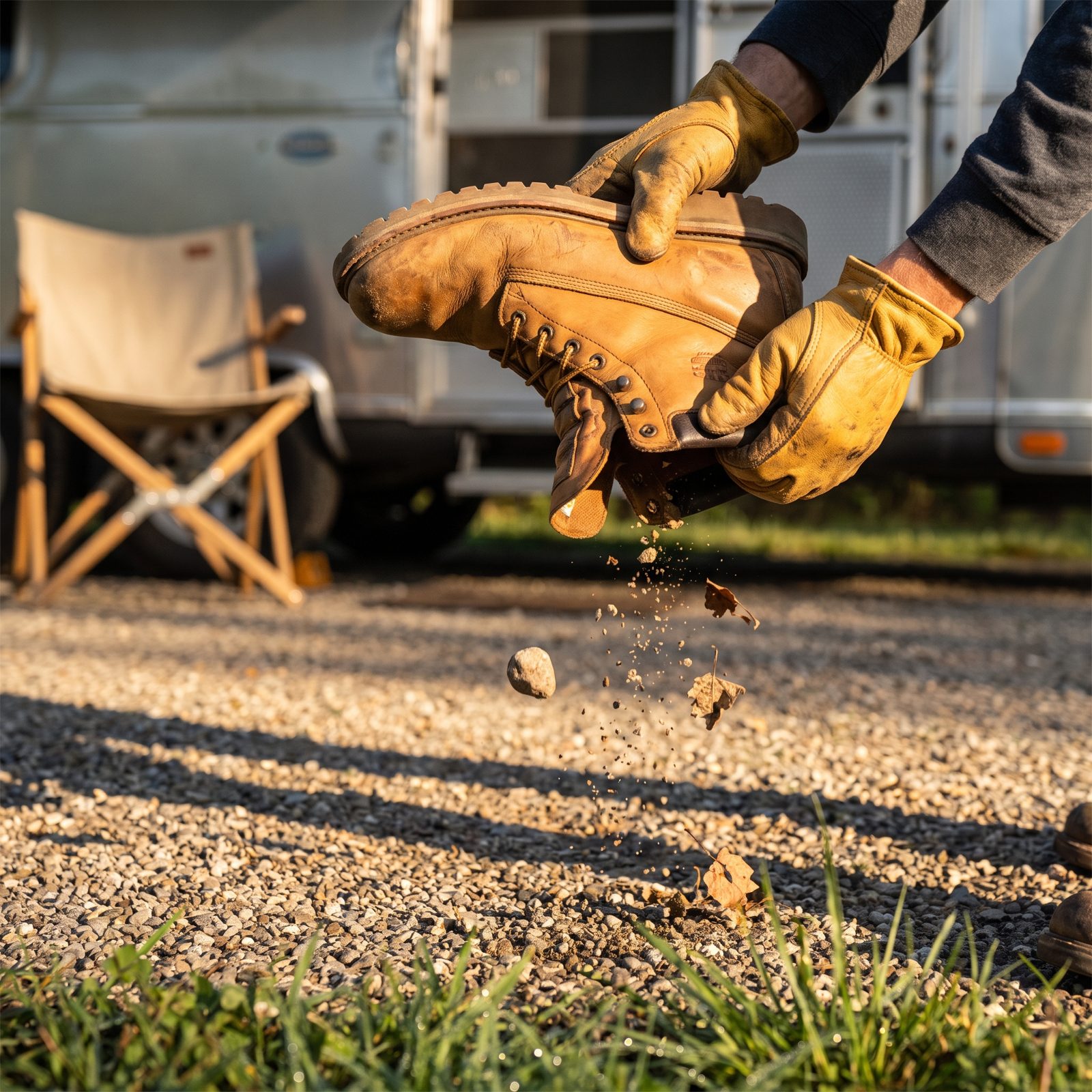
Scorpions, spiders, the occasional very annoyed wasp. In desert and warm-weather parks, a shoe left outside overnight is a cozy dark cave to the local wildlife, and they will move right in.
Turn them over, give them a hard shake, tap the heel on the step. Three seconds. Veterans in the Southwest do it on autopilot and never think about it again. Skip it once in Arizona, though, and you’ll do it every morning for the rest of your life.
24. Return the Headlamp to the Same Hook Beside the Door
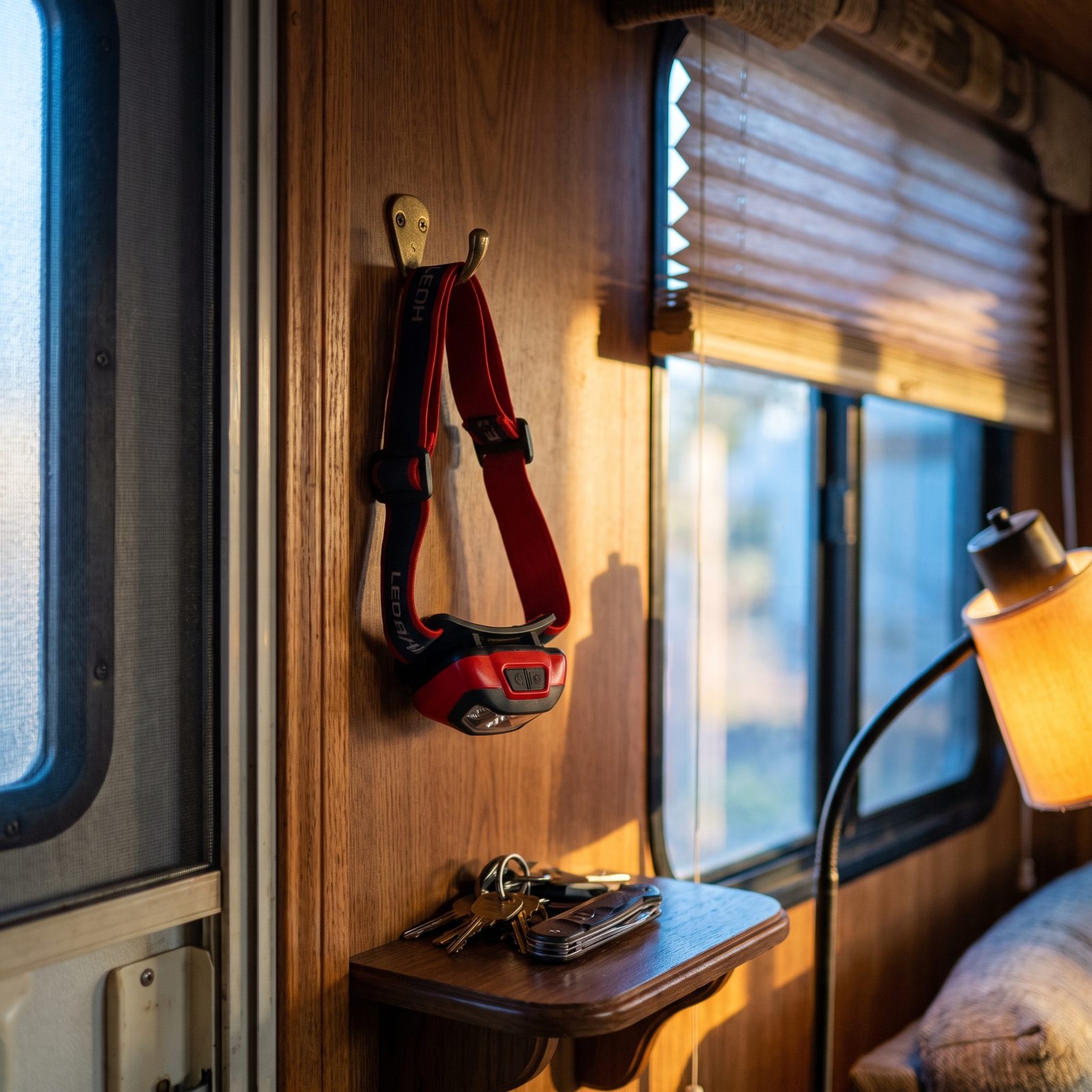
One hook. Always the same one, right where your hand lands when you walk in the door.
Fumbling for a light in a dark RV at 2 a.m. is how people step on the dog, miss the step entirely, or send a glass of water flying across the dinette. A headlamp beats a flashlight because it leaves both hands free for the ladder or the fridge latch, and parking it in one fixed spot means you never hunt. The hook costs a dollar. The habit is the whole trick.
23. Aim an Amber Step Light Downward Instead of Across the Campsite
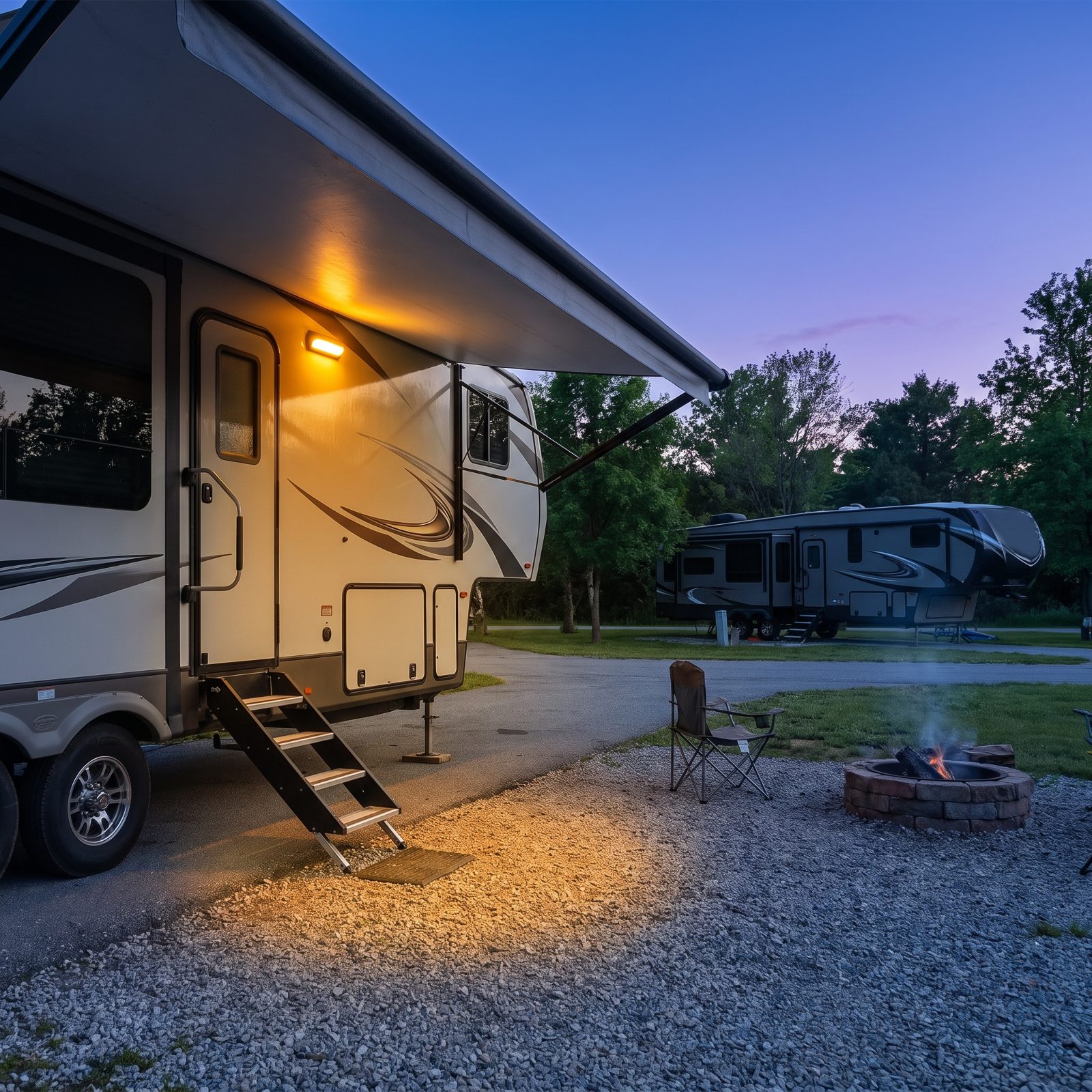
Bright white floodlights blasting across the campground are the fastest way to make enemies of every neighbor in sight. Two fixes, and you want both: go amber, and aim down.
Amber draws far fewer bugs than cool white. Pointed at the ground instead of out across the sites, it lights your own steps without turning your pad into a ballpark. Camp etiquette rewards you for it, and so do the moths, who’ll happily congregate on somebody else’s rig instead.
22. Wipe Window Tracks Each Morning Before Condensation Accumulates
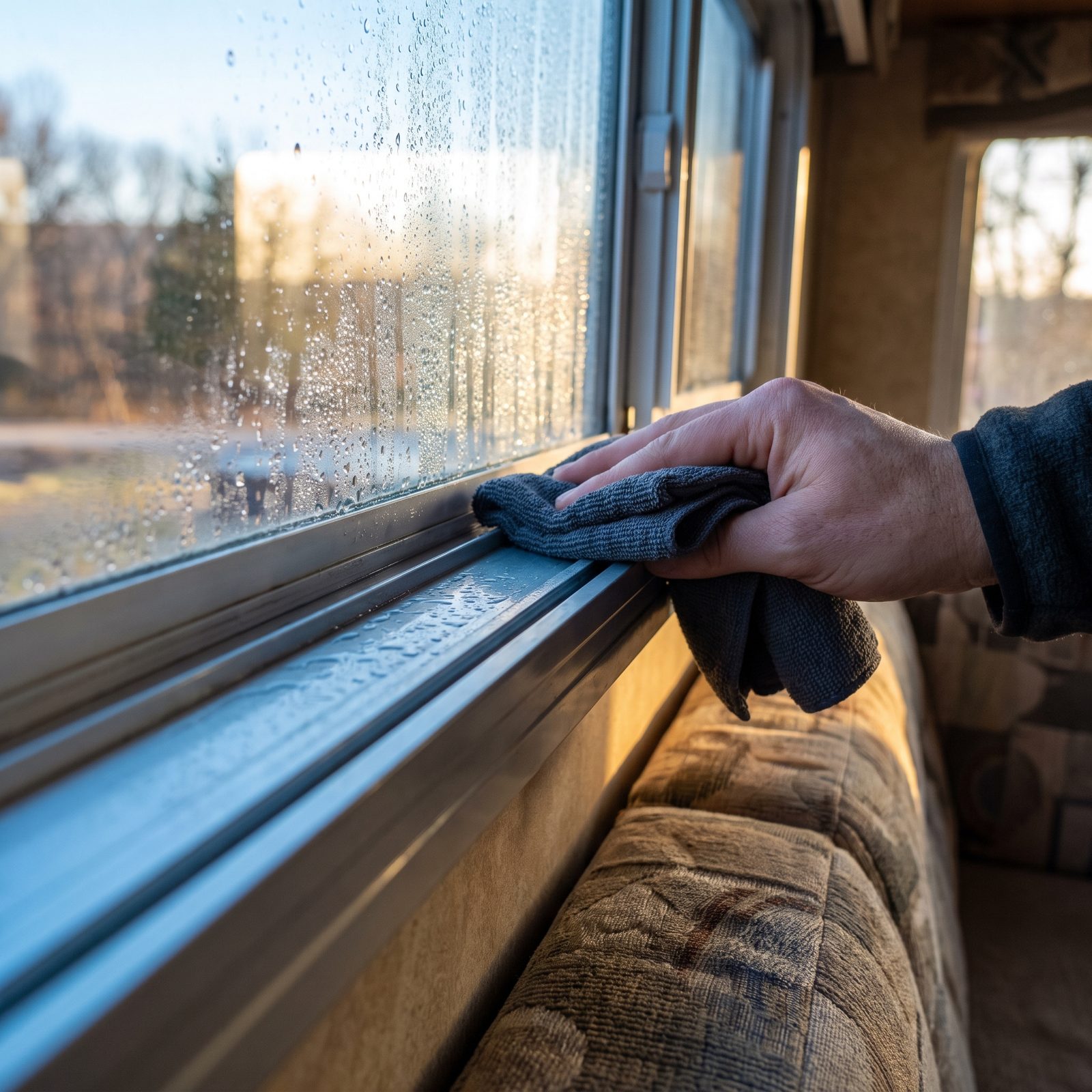
Two people sleeping in a sealed box breathe out a surprising amount of water overnight. It collects in the coldest spot it can find, and that’s almost always the window tracks and the aluminum frames.
Leave it and you’ll grow mold in a week, right there in the channel where nobody ever looks. A dry cloth, thirty seconds each morning before the water pools and soaks in, keeps the tracks dry and the frames from staining.
21. Crack a Roof Vent Before Running an Exhaust Fan
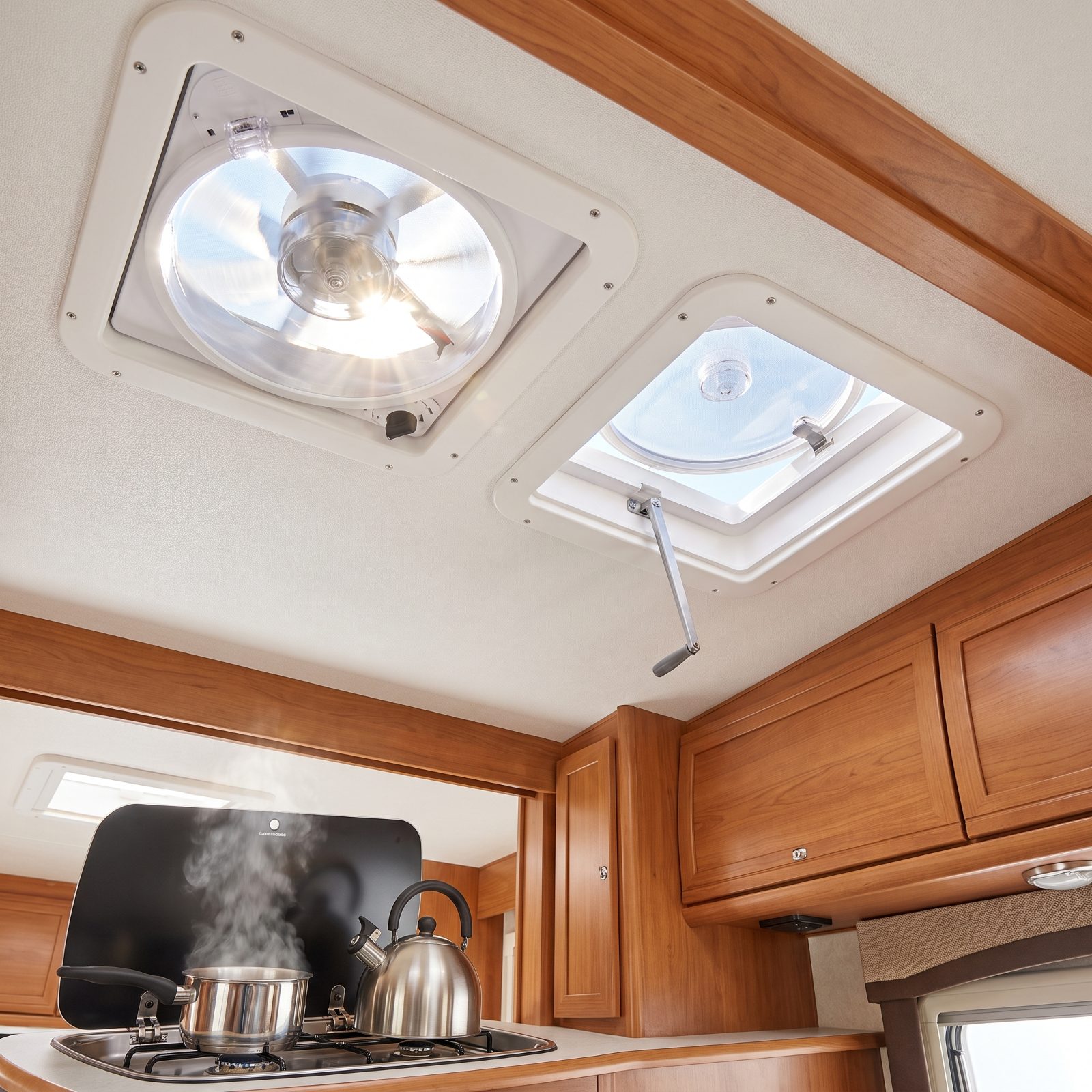
An exhaust fan can’t pull air out of a sealed can. Run it with everything shut and the fan just labors away while it starves for air, doing almost nothing for the steam off your pasta water or the lingering ghost of last night’s fish.
Crack a second vent or a window at the far end first. Now the fan has somewhere to draw from, and it actually moves air through the whole rig. Cross-ventilation, basically. Most new owners run the fan sealed up for a whole season before anybody sets them straight.
20. Open Sink-Cabinet Doors on Freezing Nights to Warm the Plumbing
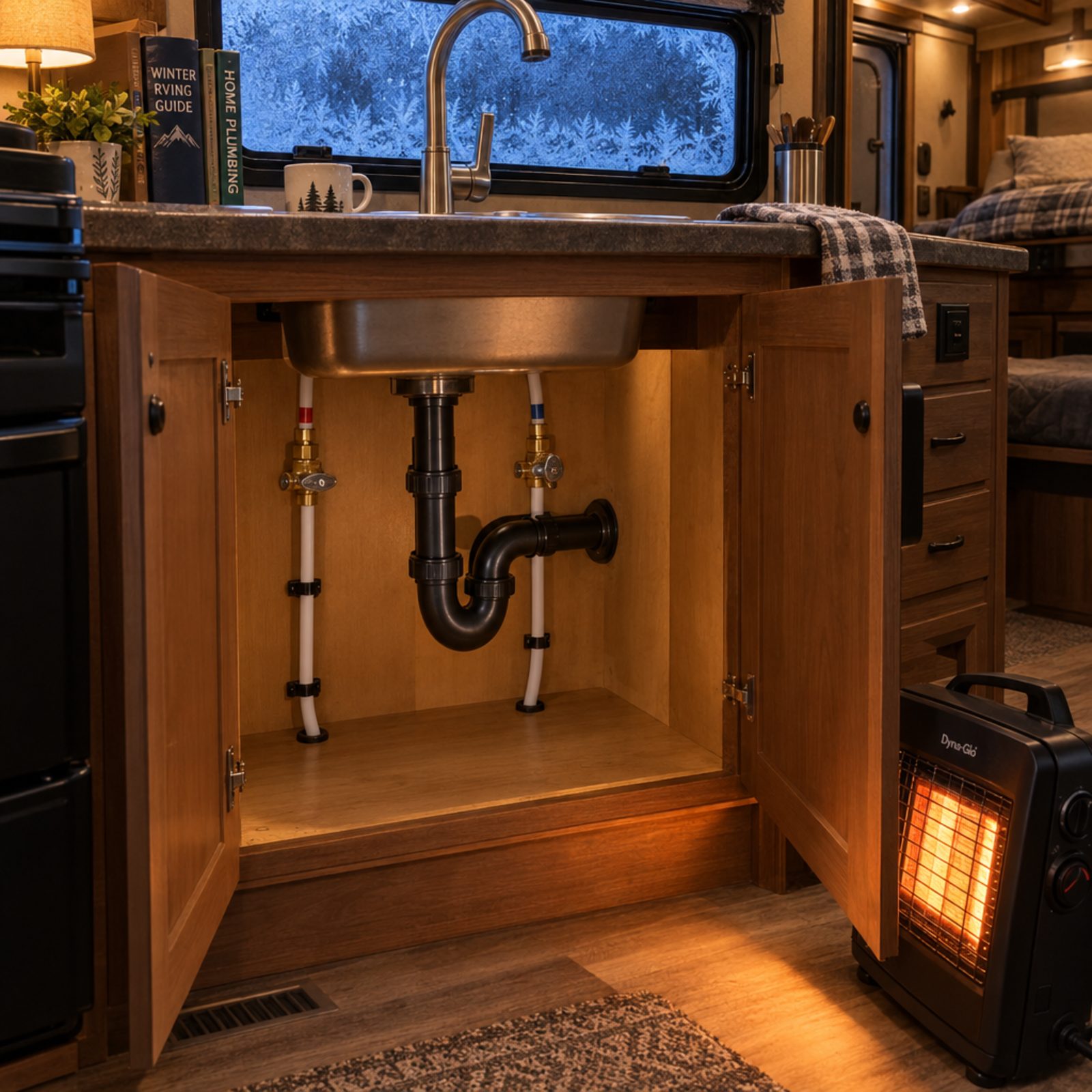
The pipes under your sink run along the outside wall, the coldest part of the whole rig. Those cabinet doors seal the plumbing off from your heated living space, which is fine right up until the temperature drops and those lines become the first thing to freeze.
Open the doors on a cold night and furnace air circulates around the pipes. Same move people pull in houses during a cold snap, same reasoning. Costs nothing, prevents a split line, and trust me, a split line buried in a wall is a repair you really don’t want.
19. Drain the Exposed Water Hose Before an Overnight Freeze
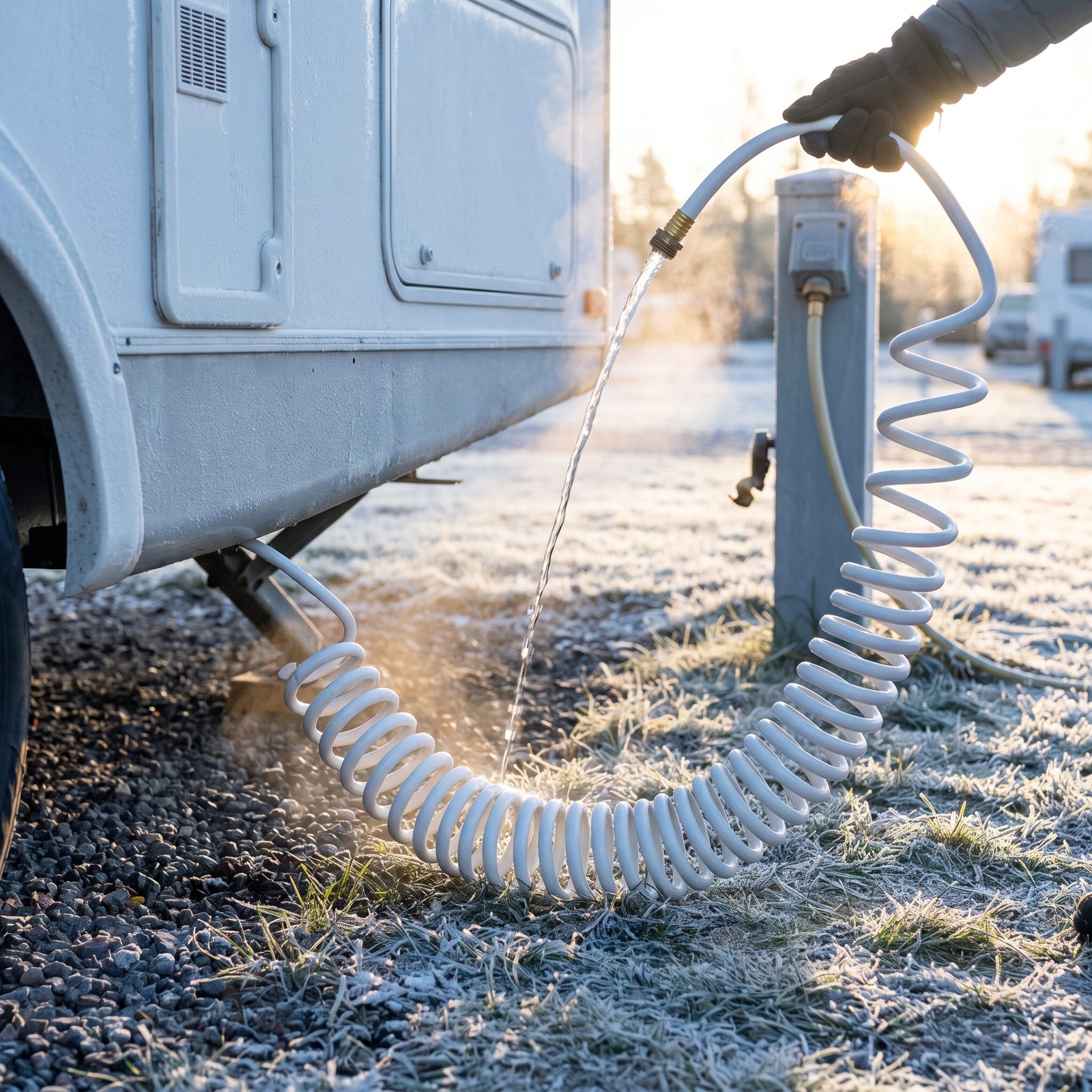
The hose running between the pedestal and your rig has zero protection. Water sitting inside it freezes solid long before anything inside the heated RV does, and ice expands, and that’s how hoses crack and fittings split.
Before a freeze, disconnect it, lift one end, and walk the water out. An empty hose can’t burst. Some folks fill the tank and run off the pump overnight instead, leaving the hose dry and coiled. Either way, remember this: the weak point is always the part nobody built to stay warm.
18. Keep One Labeled Jug of Drinking Water as an Untouched Reserve
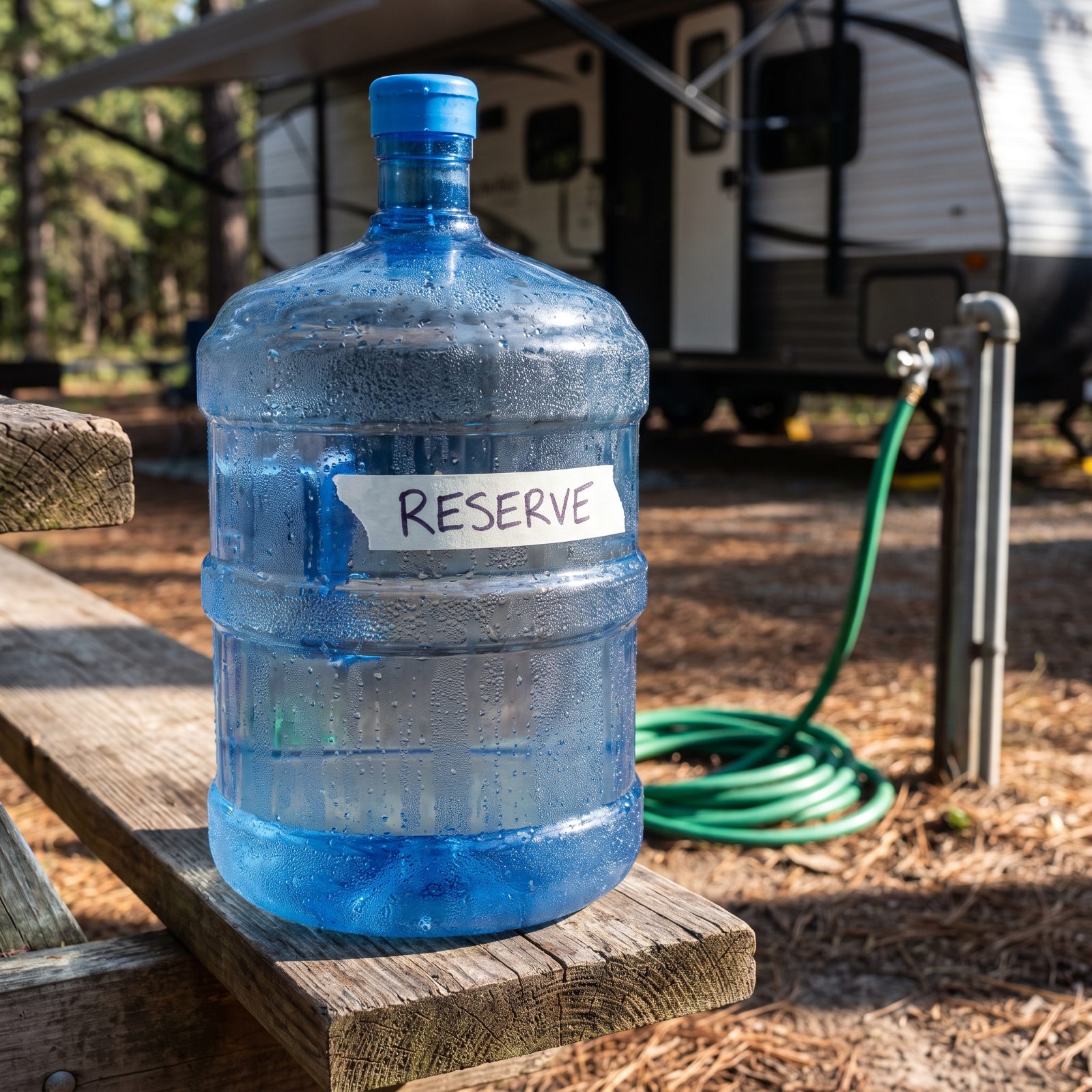
Most people treat their fresh tank like it is infinite, right up until it coughs air at 11pm and the campground spigot sits a quarter mile away in the dark. One sealed jug fixes that. Label it RESERVE, keep it out of the daily rotation, and suddenly you have water for brushing teeth, swallowing a pill, or getting a dog through a scorching afternoon after everything else runs dry.
Costs nothing. Saves the kind of midnight scramble nobody enjoys.
17. Clamp All Four Tablecloth Corners Before the Wind Finds Them
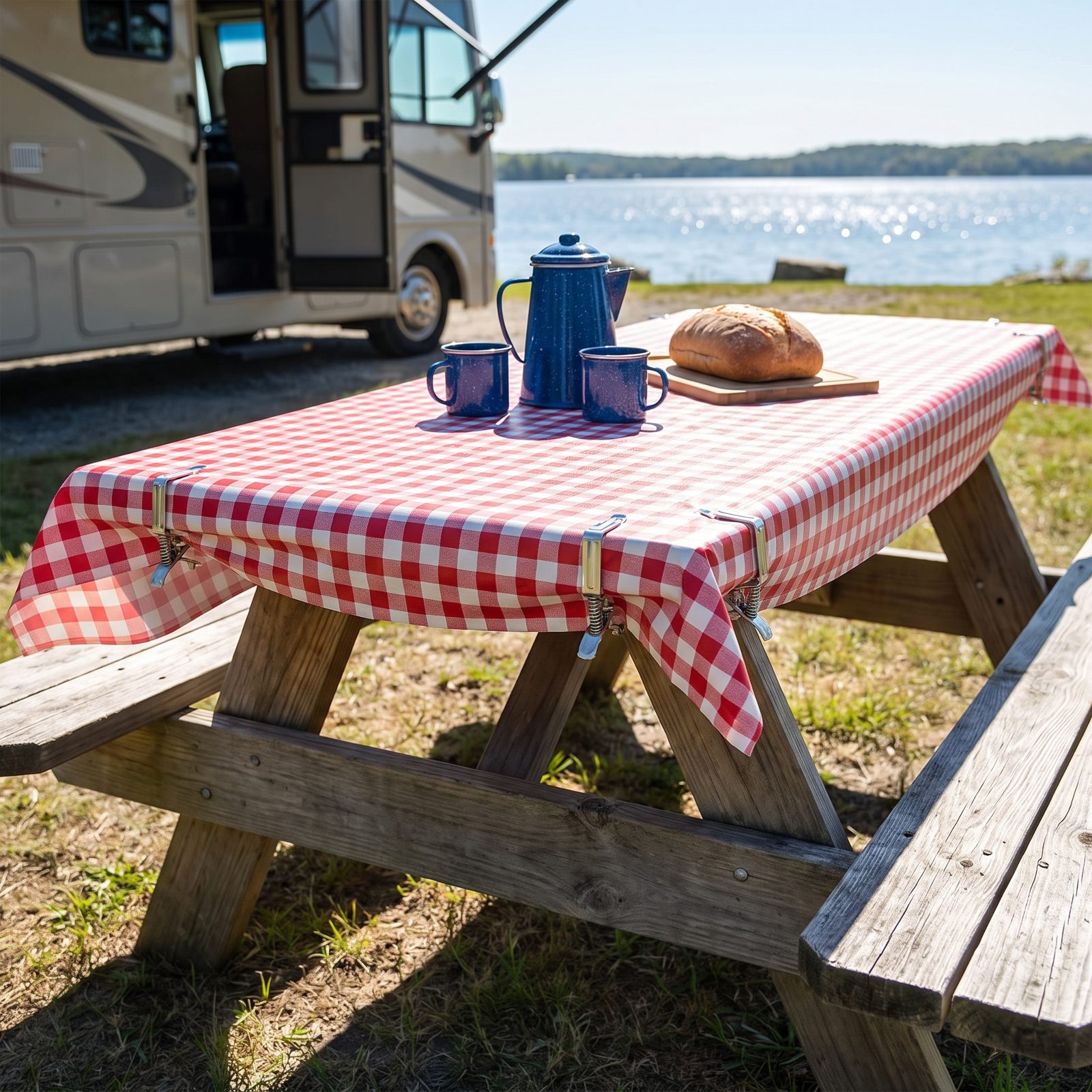
A gust does not wait for you to finish pouring the coffee. It grabs the far corner, flips the whole cloth, and now your ketchup is in the dirt and the napkins are three sites over. Four cheap spring clamps end that story before it starts.
Here is what the veterans know. Clamp it the second the cloth goes on, not after the food arrives, because by then the wind has already started testing the edges and you will be chasing a plastic plate across the gravel while your eggs go cold.
16. Set a Phone Alarm for the Campground’s Gate-Closing Time
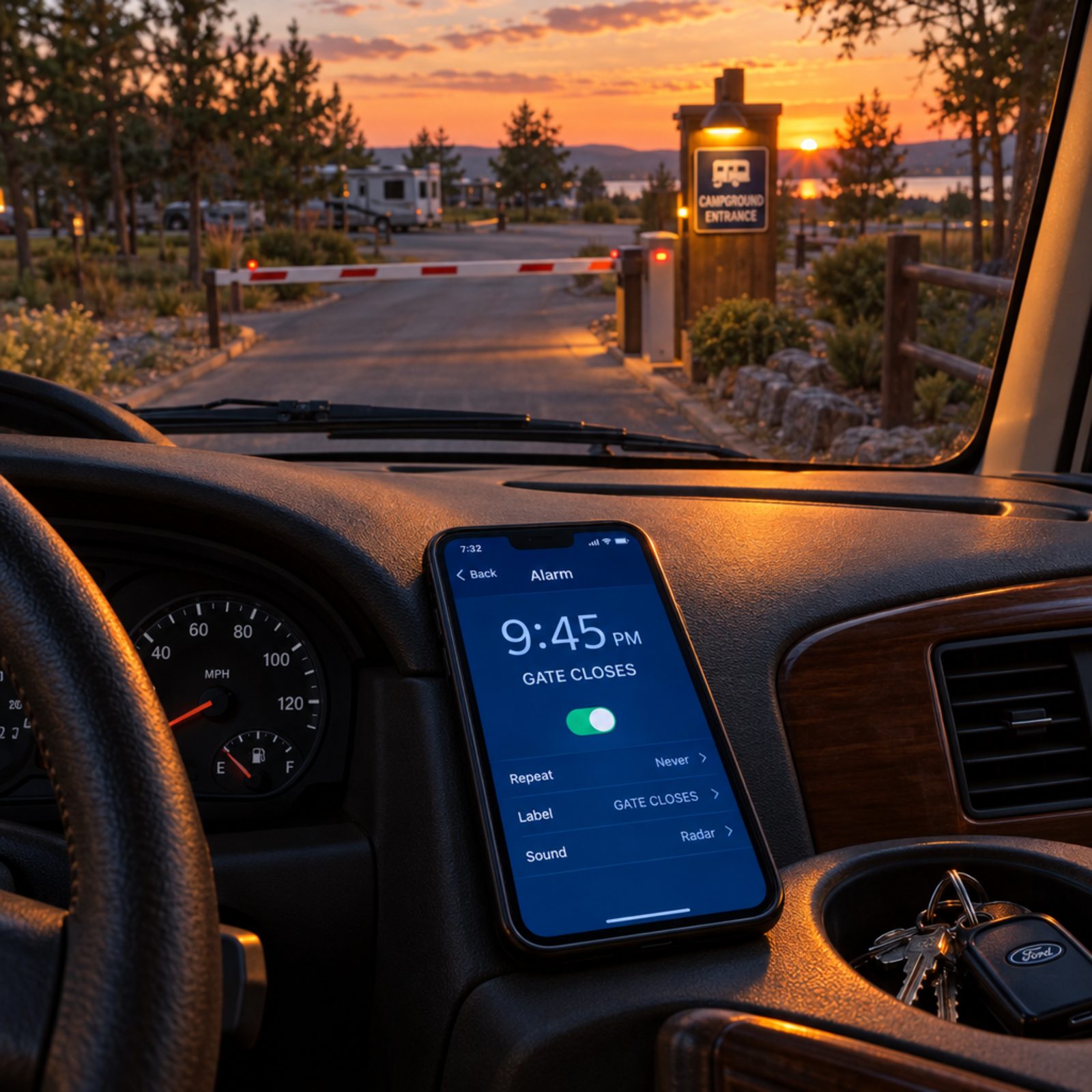
Plenty of state parks and private campgrounds lock the gate at a fixed hour. Miss it and you are sleeping in a parking lot outside the fence, or waking a very unhappy host at midnight.
The alarm takes ten seconds. Set it for fifteen minutes before closing so a grocery run or a sunset drive leaves you time to actually get back. Gate hours swing wildly from one park to the next, and the posted time at the kiosk is the one that counts, not whatever the website said three bookings ago.
15. Put Food-Preparation Tools Away Before Evening Insects Arrive
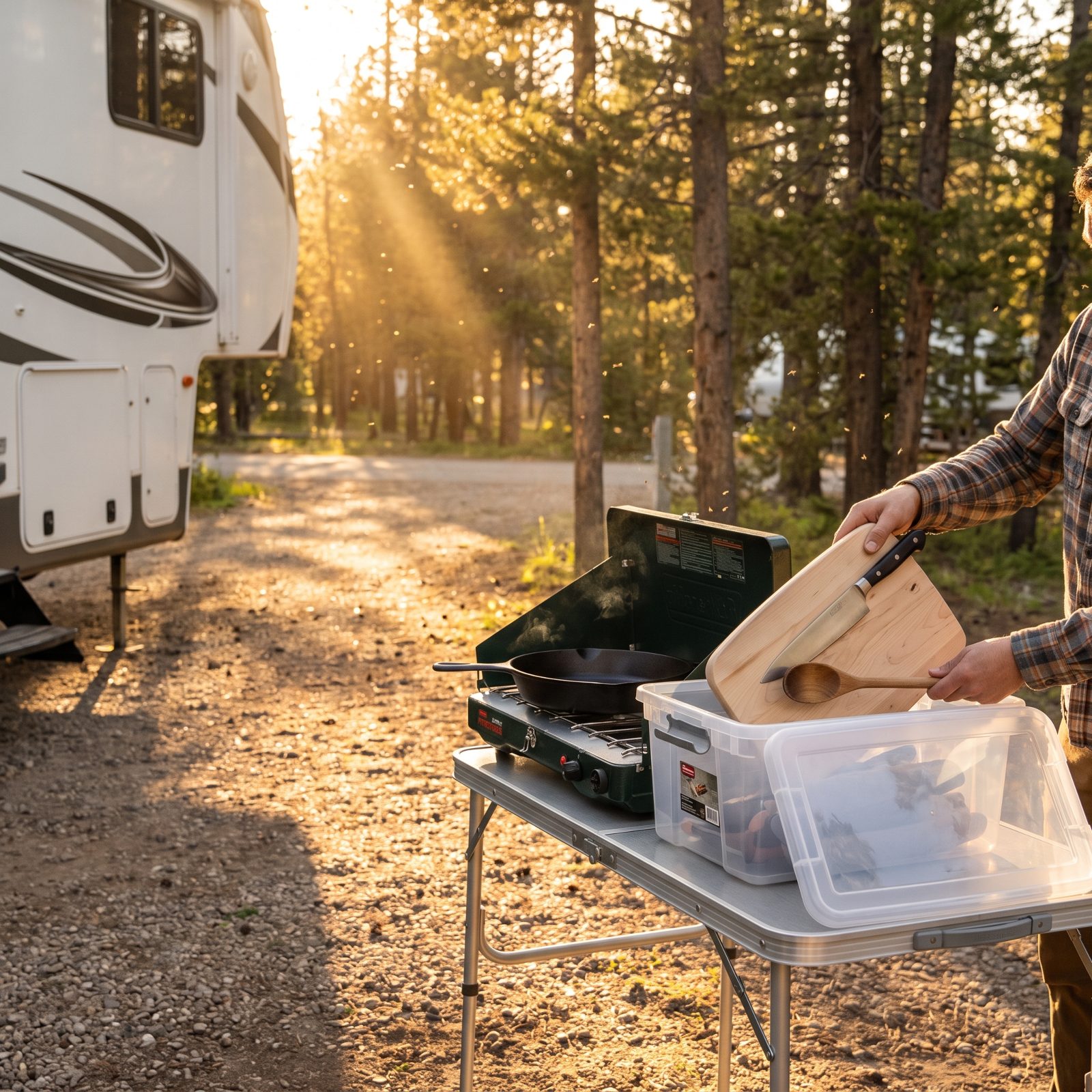
There is a window, right around when the sun drops behind the trees, when every mosquito and gnat in the county clocks in at once. Leave your knives, boards, and spoons out and they become landing strips.
Clean and stow the prep tools while there is still light. It feels early. It is not. Campers who do this eat dinner without swatting, and they never find a mystery bug baked into tomorrow’s pancakes.
14. Walk the Route to the Bathhouse Before Darkness Falls
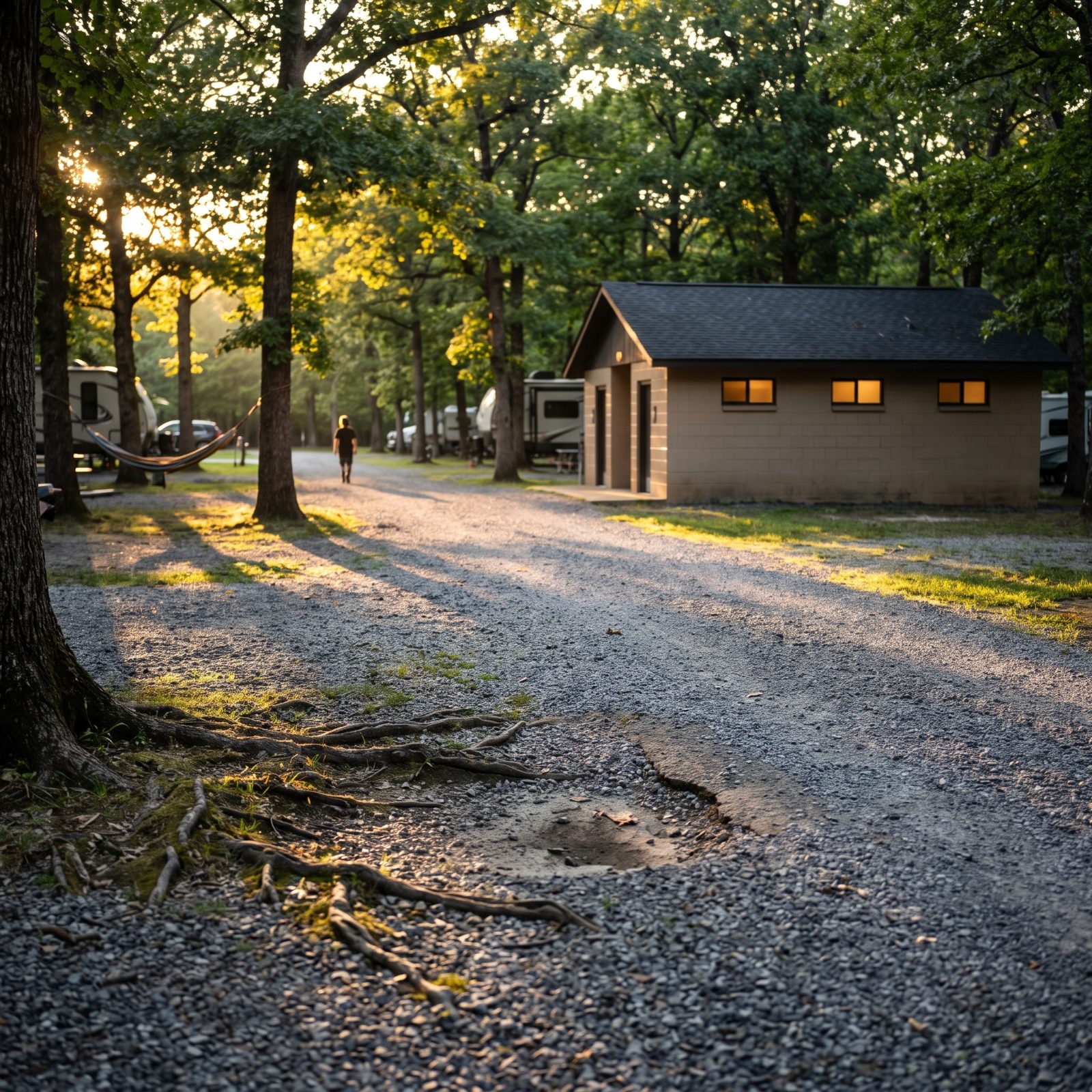
That path that looks flat and friendly at 4pm hides a tree root, a gravel dip, and a surprise step at 11pm when you are half asleep behind a dim flashlight. Walk it once in daylight and your feet already know the route.
Note where the lights are, which ones are burned out, whether that shortcut between sites actually goes through. A twisted ankle on day one of a week-long trip is a miserable way to learn the layout.
13. Ask the Camp Host Where the Nearest Storm Shelter Is
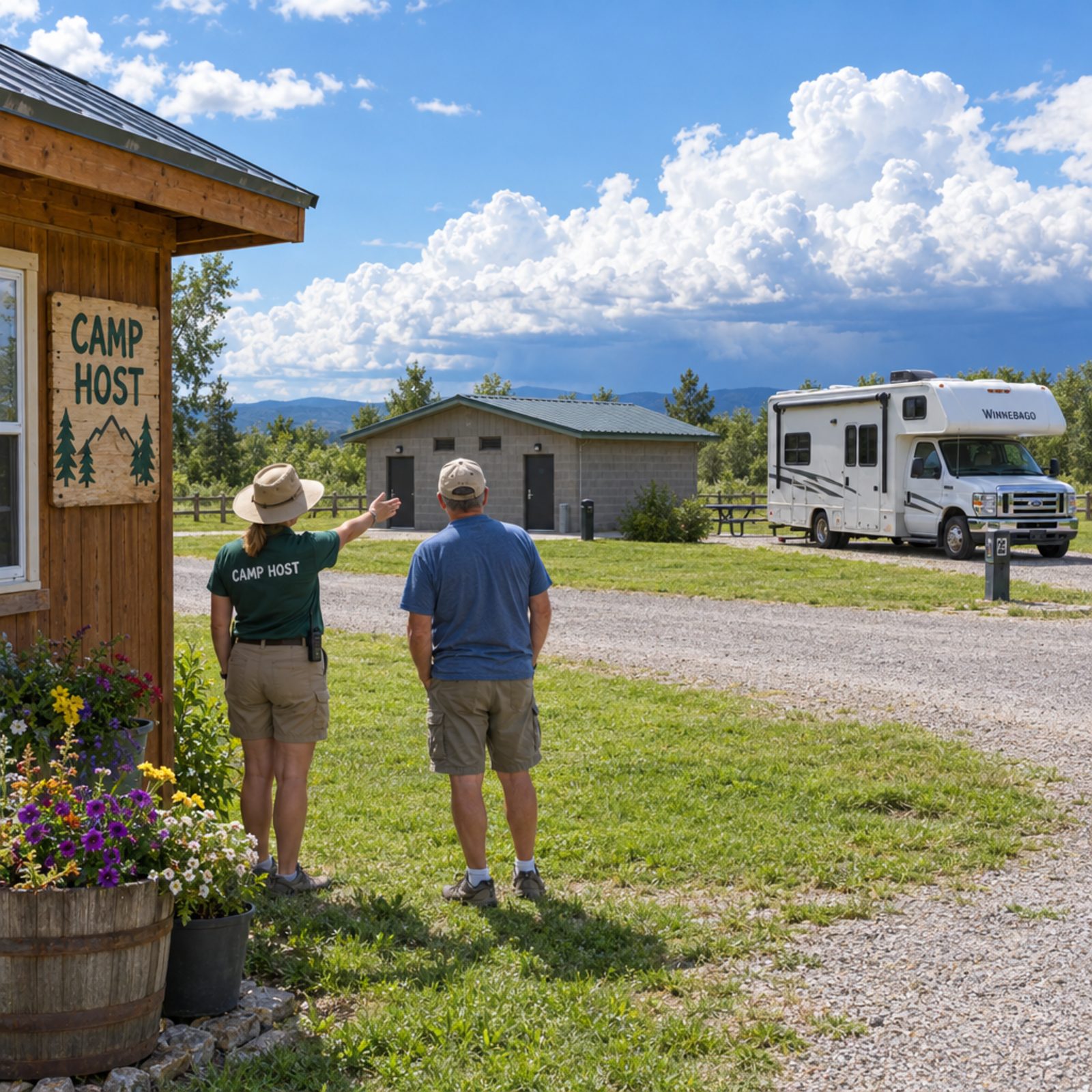
Nobody wants to think about this on arrival day. Ask anyway.
Weather turns fast across a lot of camping country, and a travel trailer is a poor place to ride out anything serious. The host knows which building is cinder block, where the low ground floods, and whether the park has a plan at all. Sixty seconds of conversation now beats fumbling for answers when the sky goes green and the radio starts beeping.
12. Count Every Ground Stake Both Going In and Coming Out
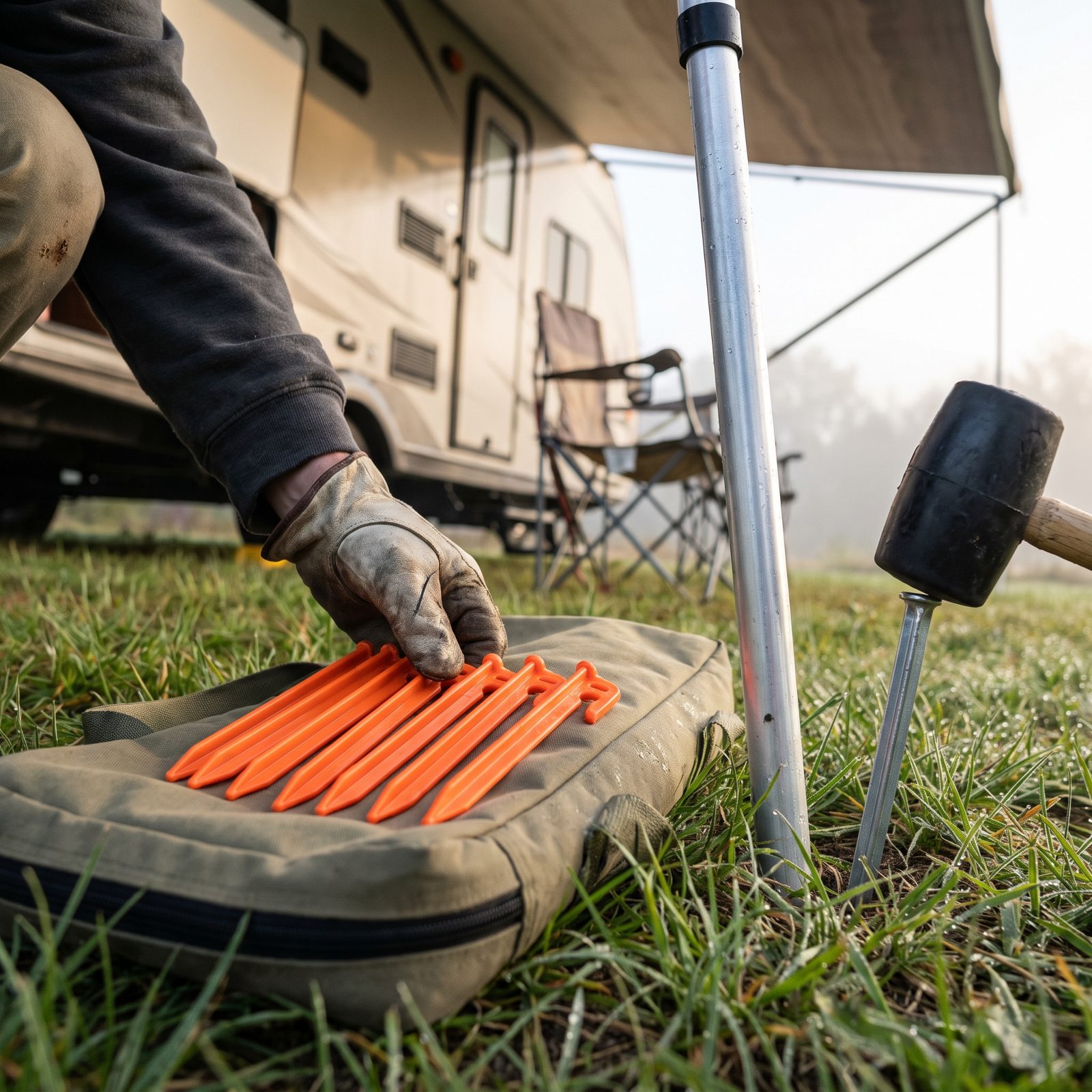
Count the stakes when you drive them in. Count them again when you pull them out. The two numbers have to match.
A stake left in the grass becomes a flat tire for the next RVer, a shredded mower blade someone has to replace, and maybe a slow leak you discover two hundred miles down the road. Smart campers keep stakes in a bright bag and know the count by heart, so a missing one jumps out before they roll.
11. Perform the Final Walk-Around in Opposite Directions With a Partner
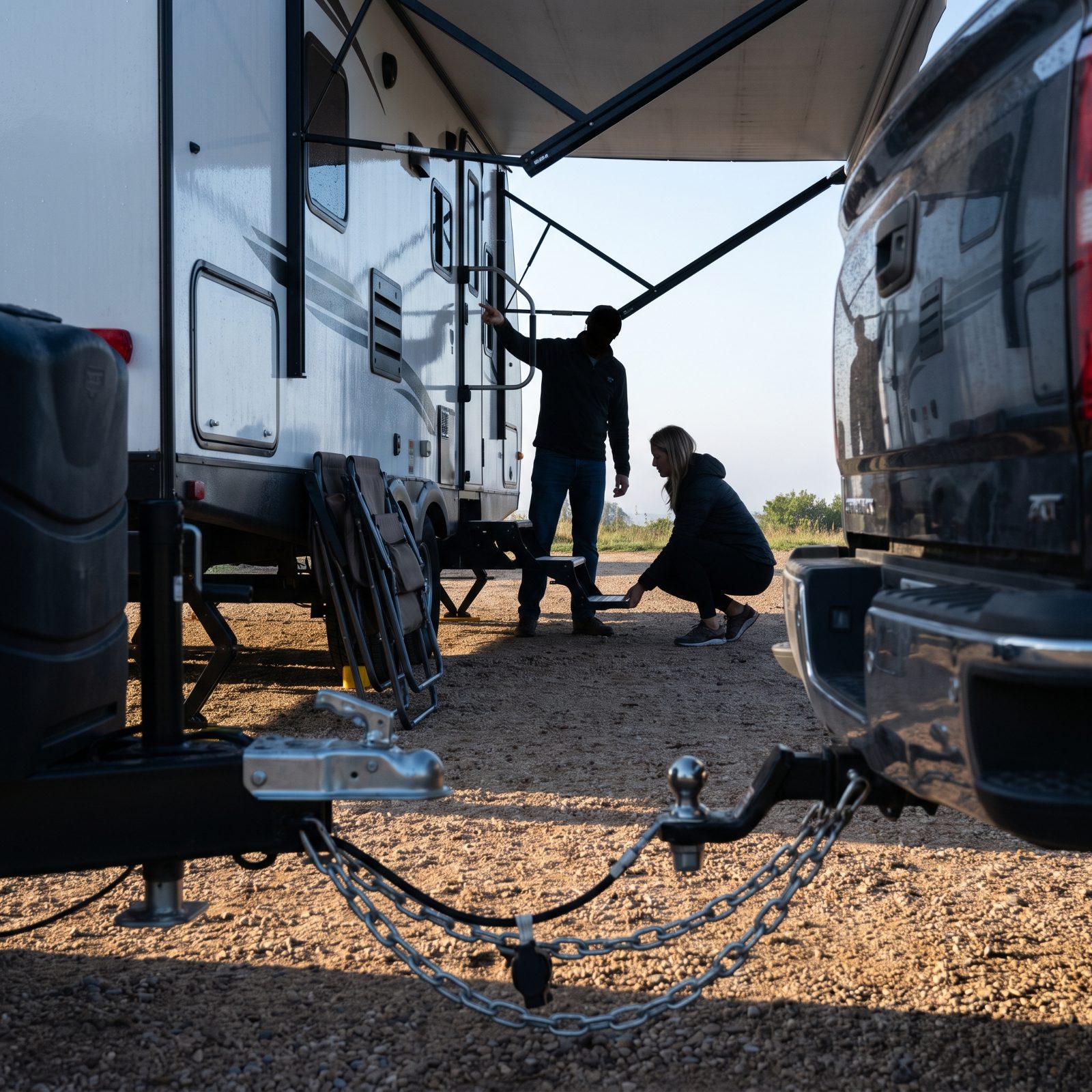
One person walking the rig alone sees what they always see and misses what they always miss. Two people circling in opposite directions catch each other’s blind spots.
One checks the awning latch, the door, the TV antenna. The other crouches to check the step, then the hitch lock, the chains, the breakaway cable. Compare notes at the entry step, trade a thumbs up, and nobody drives off with the power cord still plugged in. Which happens more than anyone cares to admit.
10. Clip the Dog’s Leash to Its Harness Before Opening the RV Door
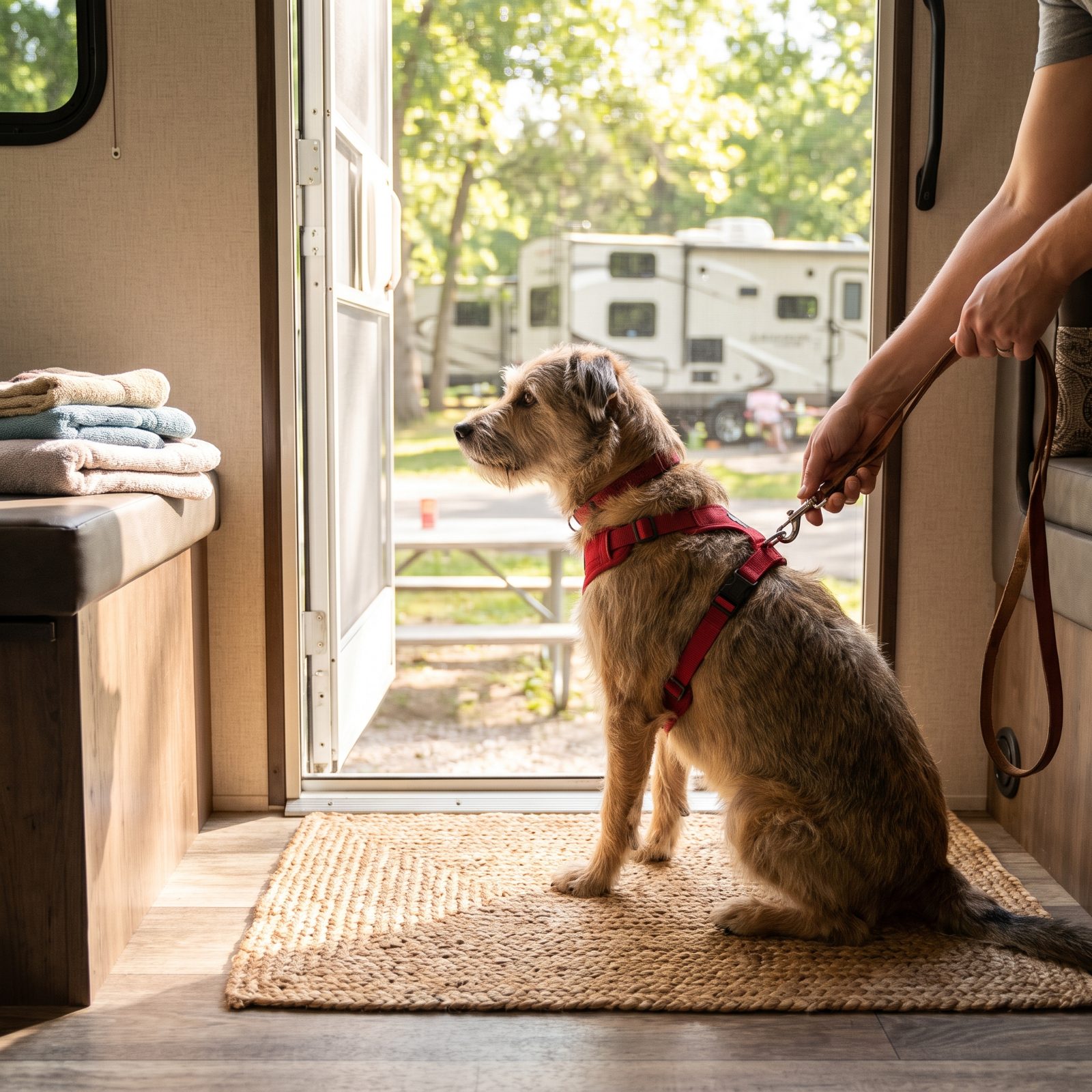
The door opens, a squirrel moves, and a loose dog is gone before you can say its name. Clip the leash to the harness inside, before the door cracks, and the one escape route is already closed.
Harness, not collar. A dog that bolts at full speed can slip a collar or wrench its neck, while a harness gives you control without the choke. Campgrounds are packed with new smells, new dogs, and wide-open space, which is exactly the recipe for a runner.
9. Make a Flashlight Pet-Waste Sweep Before Breaking Camp
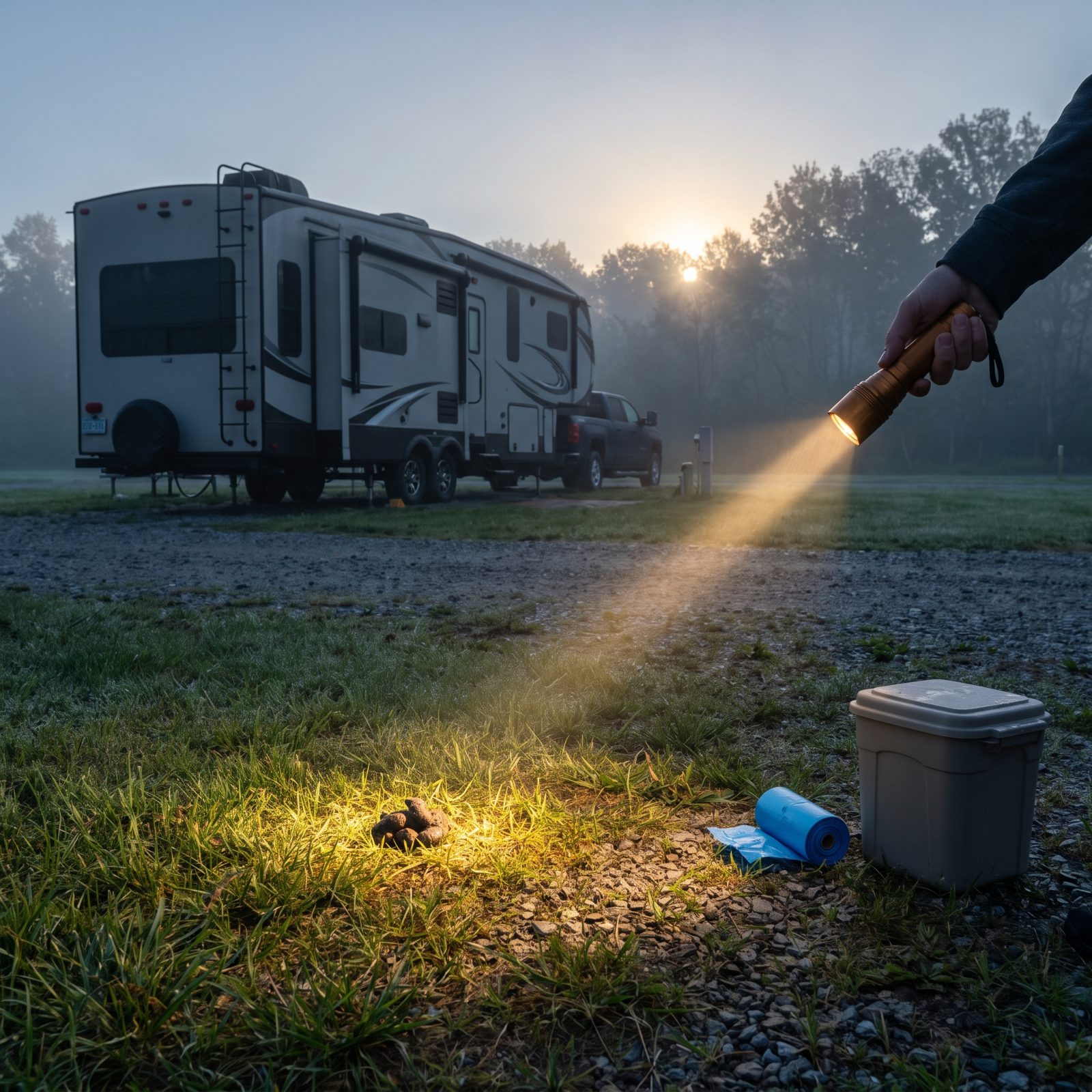
Dawn light flattens the ground until everything vanishes into the grass. A low, raking flashlight beam does the opposite, throwing shadows across the site and showing you exactly what the dog left behind in the dark last night.
Thirty seconds, one last sweep, and you leave the site cleaner than you found it. Hosts remember the campers who bother, and the next family in that spot never knows a dog was there at all. Do it. Every time.
8. Strain the Food Bits From Dishwater Before It Goes Anywhere
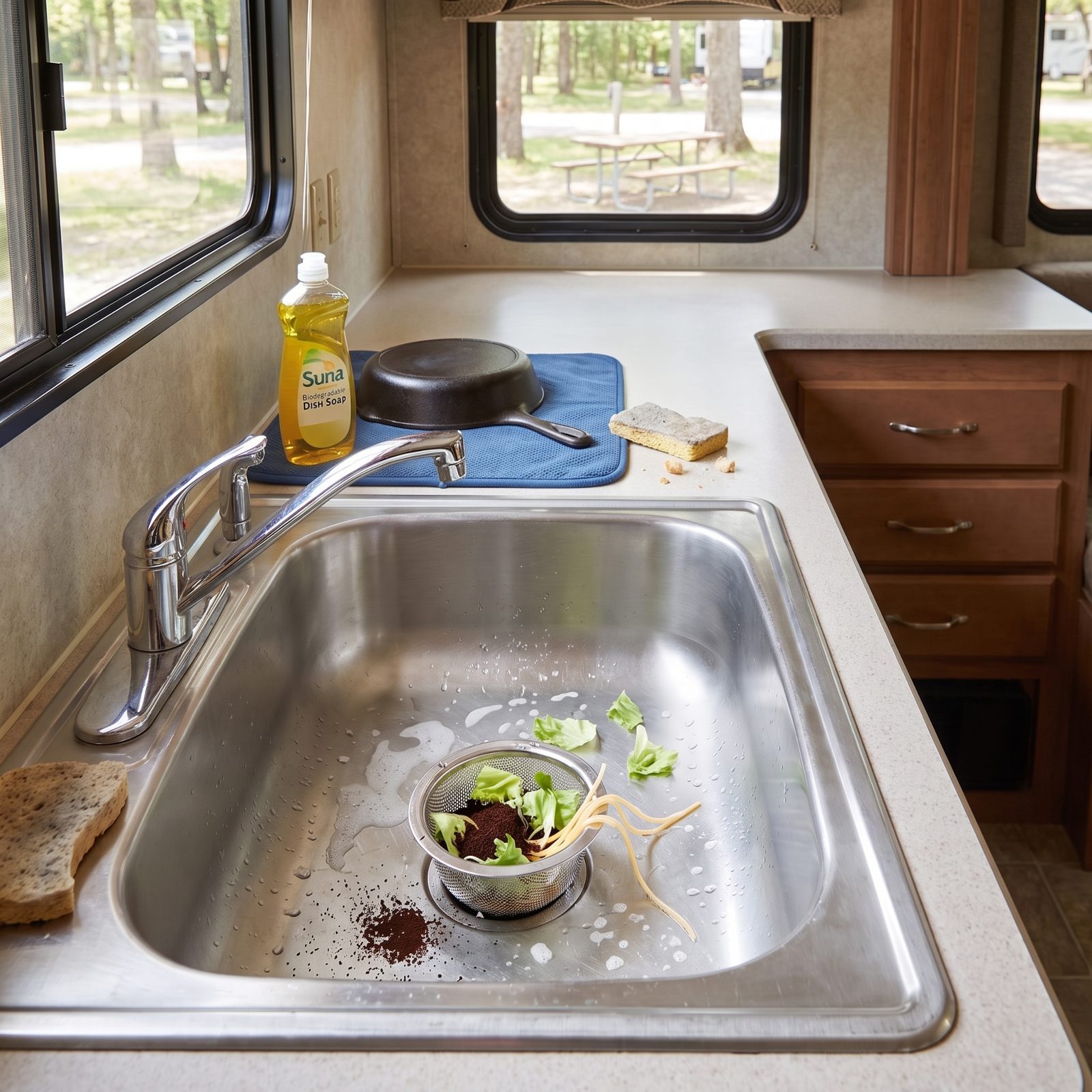
Gray tank clogs are rarely dramatic. They build over weeks, and then one day the water in your sink just sits there mocking you. Most of that gunk is food — noodles, grease, coffee grounds, the stuff you scraped off a plate without thinking.
A one-dollar mesh sink strainer catches it before it ever reaches the plumbing. Dump the strainer in the campground trash, not down the drain. Seasoned campers also wipe greasy pans with a paper towel first, because grease is the real tank killer — it coats everything and never leaves on its own.
7. Never Let the Sewer-Rinse Hose Touch a Fresh-Water Spot
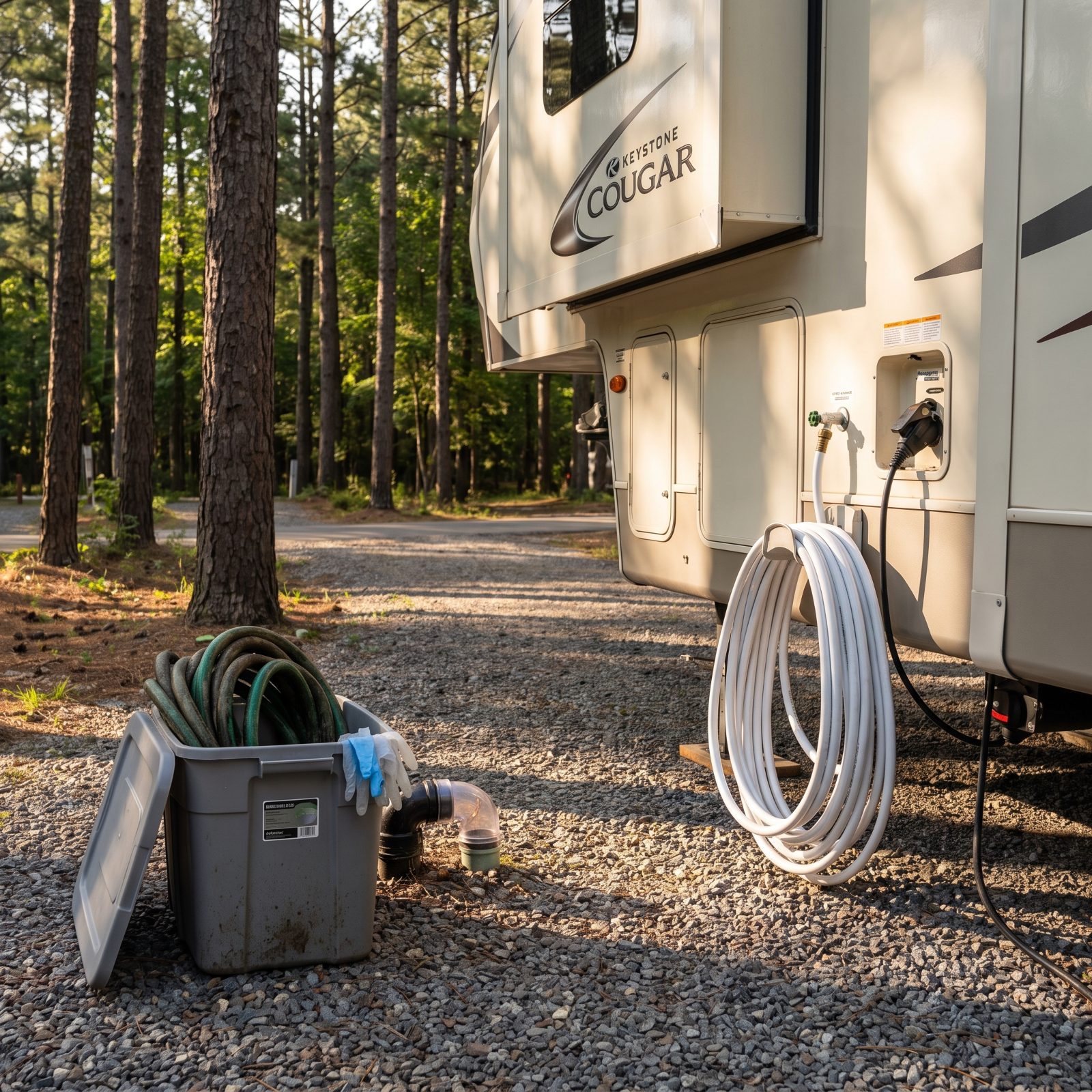
This is the rule that makes seasoned campers twitchy. The hose you use to rinse your sewer connection should live its entire life apart from anything that touches drinking water. Different color, different storage bin, different end of the campsite. No sharing hooks, no setting it down by the fresh-water spigot “just for a second.”
Cross-contamination here isn’t hypothetical — it’s how people get genuinely sick. Smart RVers buy a white drinking-water hose and a dark utility hose on purpose, so there’s no chance of a tired mix-up at dusk. Color coding your gear isn’t fussy. It’s the cheapest insurance you’ll ever buy.
6. Empty the Black Tank First, Then Rinse With Gray Water
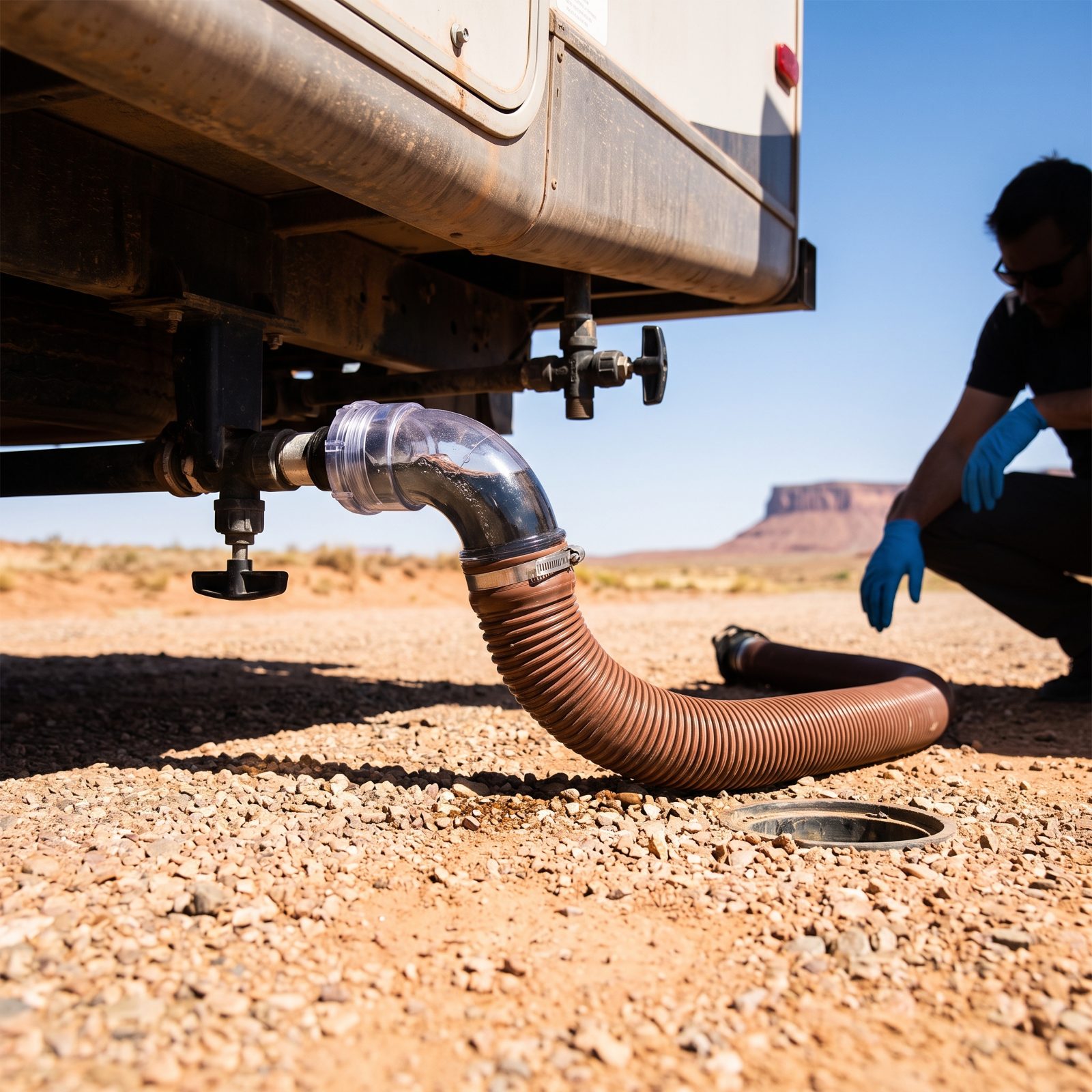
Order matters, and getting it backwards wastes your best cleaning tool. Black tank goes first. Pull that valve, let it drain, then close it. Only then do you open the gray.
Why? Gray water, full of soap and dishwater, flushes the hose clean on its way out. Dump gray first and you’ve thrown away the one thing that rinses the pipe for free — leaving you to scrub the sewer line by hand. A clear elbow fitting at the hose end lets you watch for the water to run clean, so you know when to stop. Unglamorous, sure. But it’s the difference between a two-minute job and a bad afternoon.
5. Bleed the Water Pressure Before You Crack a Hose Connection
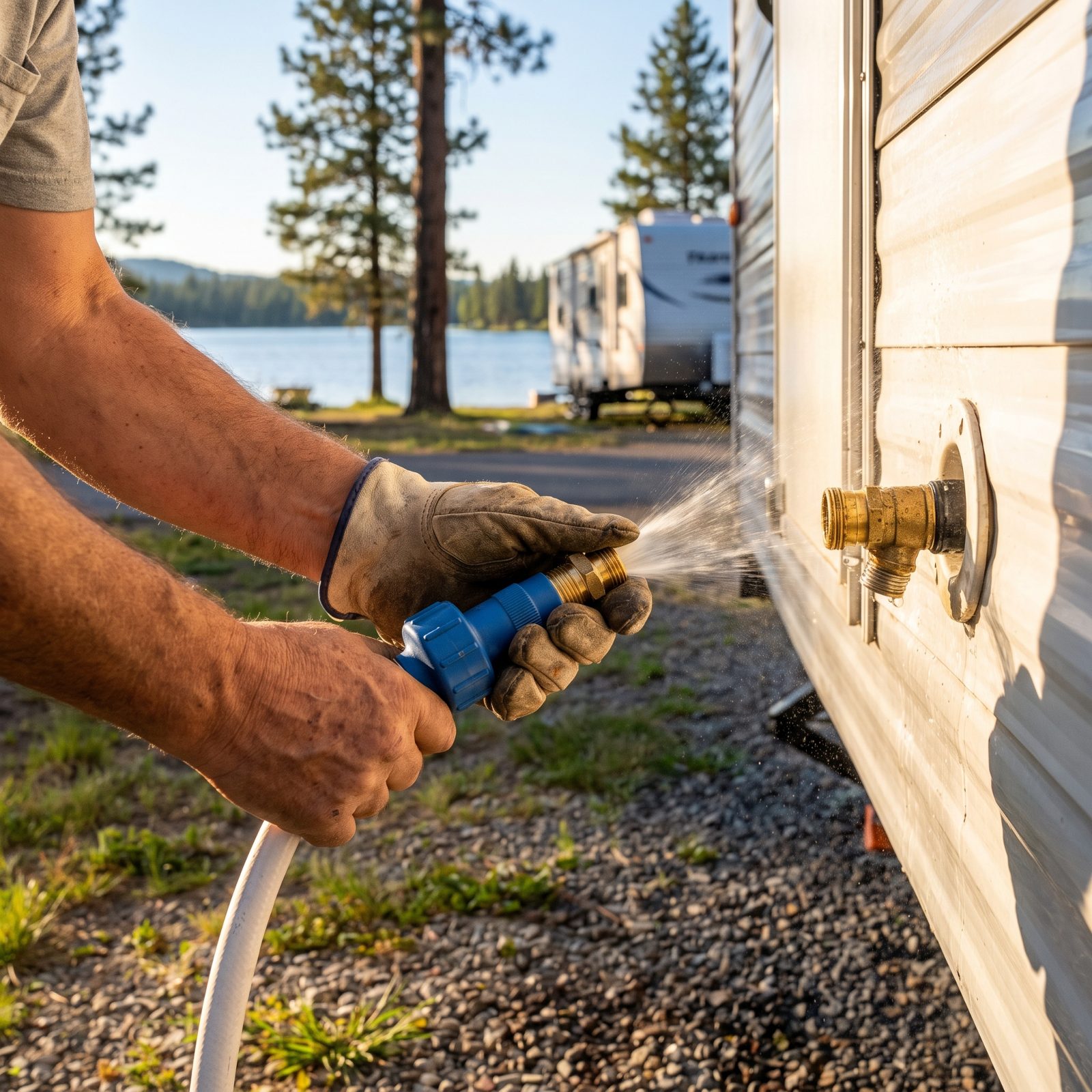
Ask anyone who’s unscrewed a pressurized hose: you get a face full of water and a brief moment of regret. The line stays charged even after you shut the spigot, especially if you run a pressure regulator — and you should.
The habit is simple. Shut off the water, then crack a faucet inside the rig for a few seconds to drop the pressure. The hose goes limp, and now the connection unthreads clean and dry. A good blue water pressure regulator protects your plumbing from campground spigots that run way too hot. It also holds pressure after shutoff, which is exactly why bleeding the line first saves you a soaking.
4. Shut the Campground Spigot Before You Leave for the Day
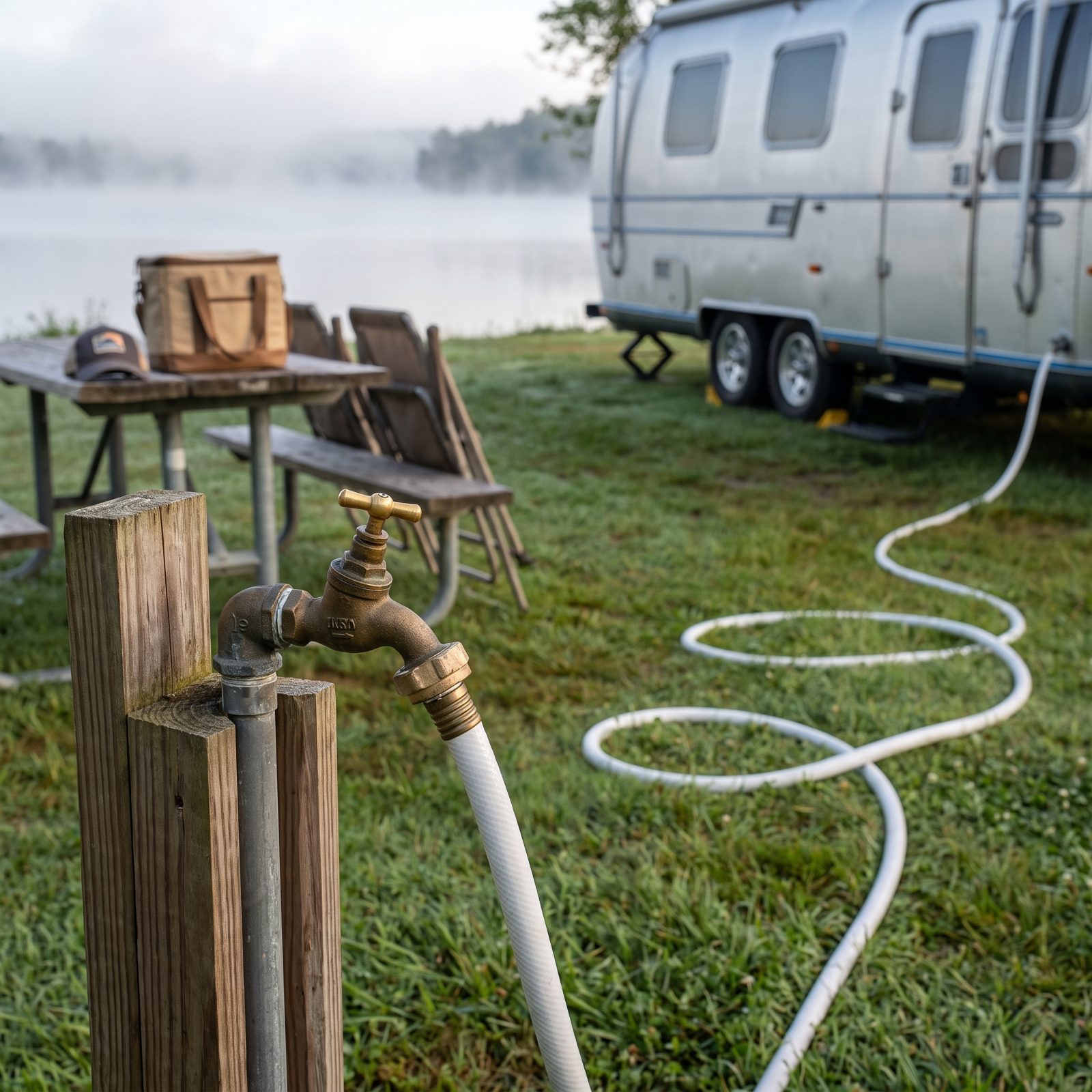
Hoses fail and fittings loosen. A connection that’s been fine for three days picks the exact afternoon you drive to the trailhead to start seeping, and you come home to a flooded compartment, a soaked underbelly, or a water bill the campground is not thrilled about.
Shutting off the spigot whenever you leave for hours costs you ten seconds. Your onboard water pump still pulls from the fresh tank if you want a working faucet while you’re gone, so you lose nothing. Full-timers do this without thinking about it. It’s the kind of habit you adopt the one time you don’t.
3. Roll the Awning In Any Time You Leave the Site
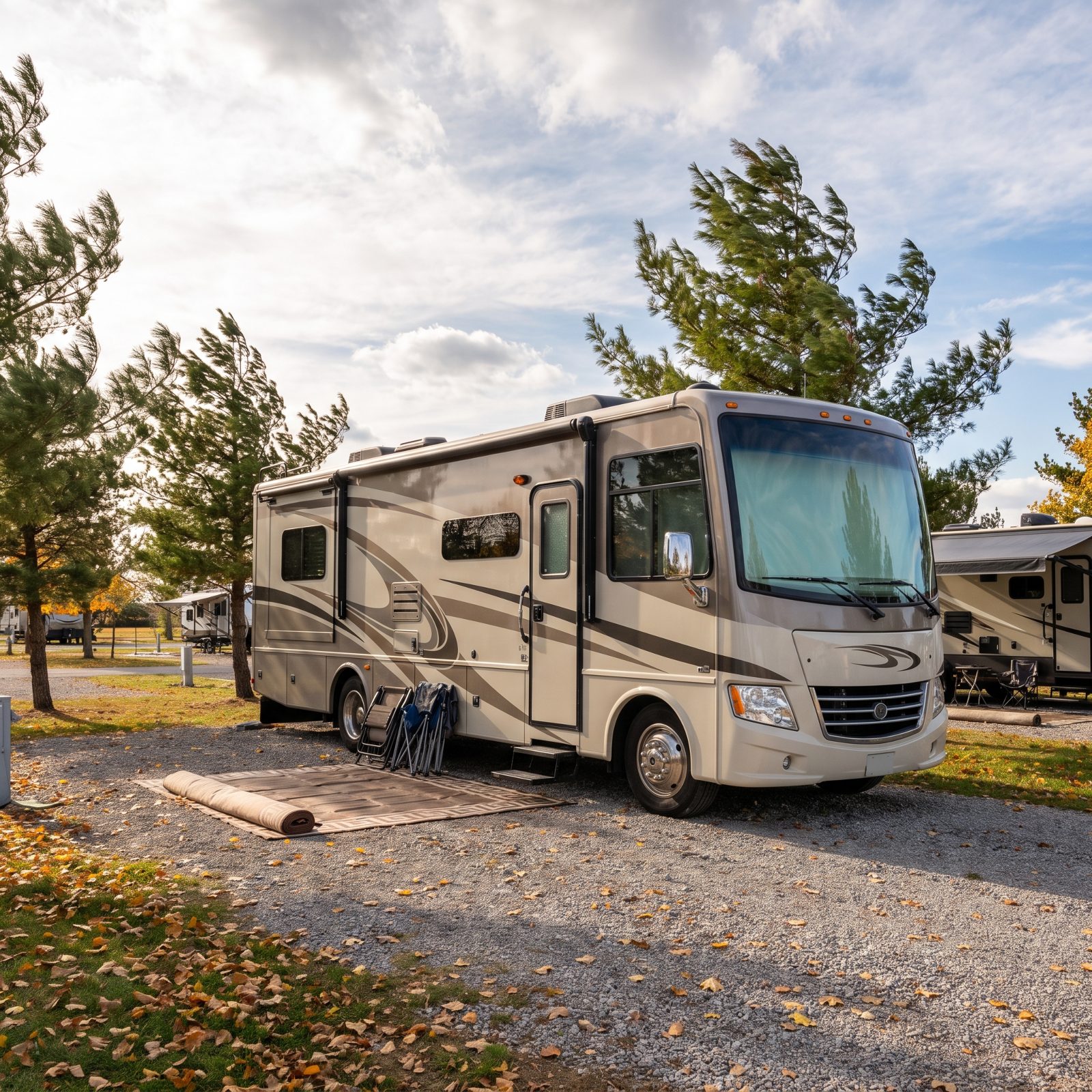
An awning is the single most expensive thing a sudden gust will destroy. Wind comes up fast in the afternoon, and a pop-up storm can roll in while you’re a mile away staring at a waterfall. One good gust catches the fabric like a sail and bends the arms, tears the vinyl, or rips the mount clean off the wall.
Repairs run into the hundreds, sometimes well past a thousand. Rolling it in before you leave — even on a calm-looking day — is the trade experienced campers never debate.
2. Hit the Campground Showers During the Dead Hours
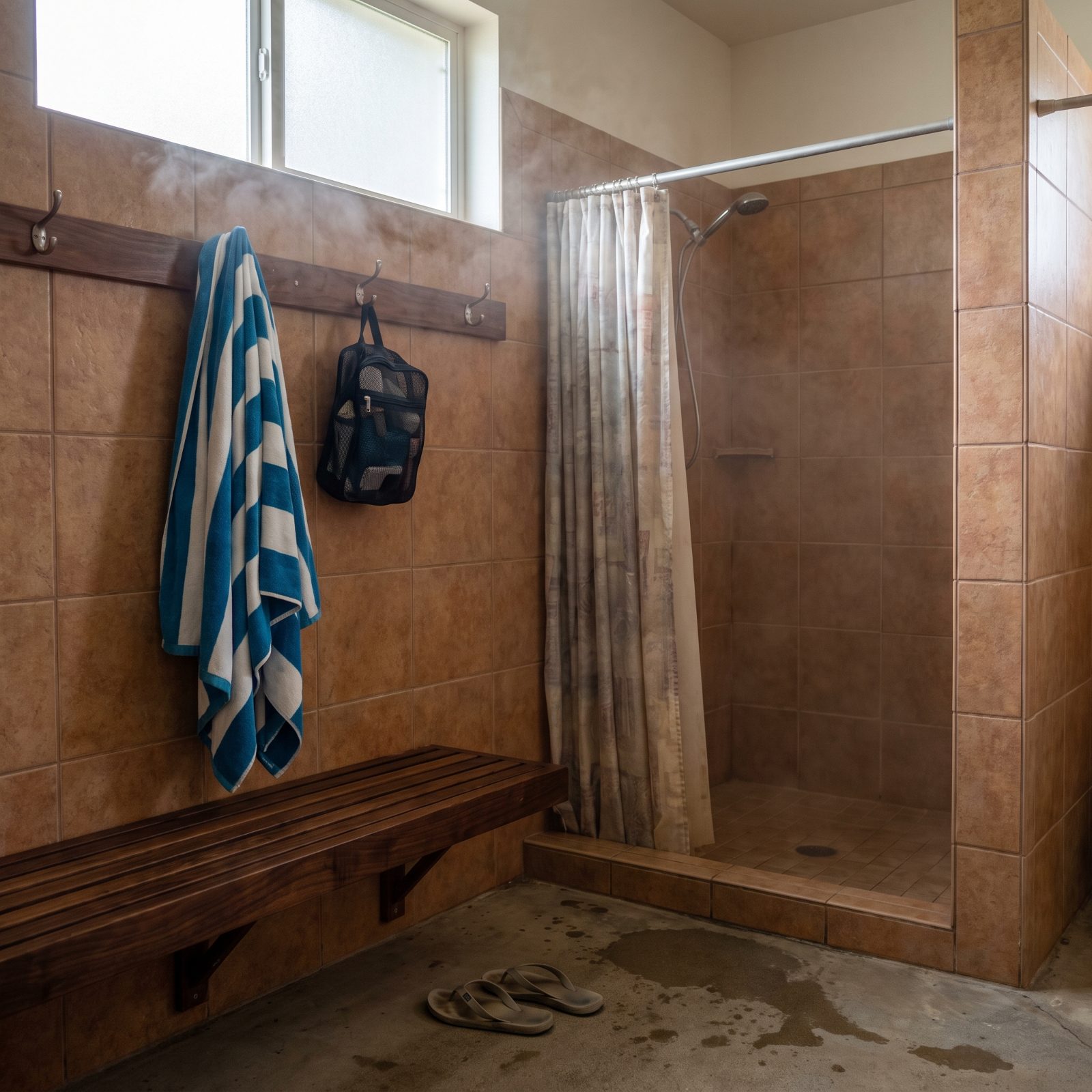
Everyone wants a shower at 7am before the drive and at 8pm after dinner, which is exactly when the hot water runs out and you’re standing in line in flip-flops. Go off-peak instead — mid-morning after the early crowd clears, or mid-afternoon when the campground empties out onto trails and lakes.
Better pressure, hot water that lasts, and an empty shower house to yourself. It also spares your own tanks. Every campground shower you take is gray water you didn’t put in your rig and fresh water you didn’t burn through. Keep a mesh shower caddy and quick-dry towel by the door so timing the slow hour takes no effort at all.
1. Flip the Pedestal Breaker Off Before You Plug In
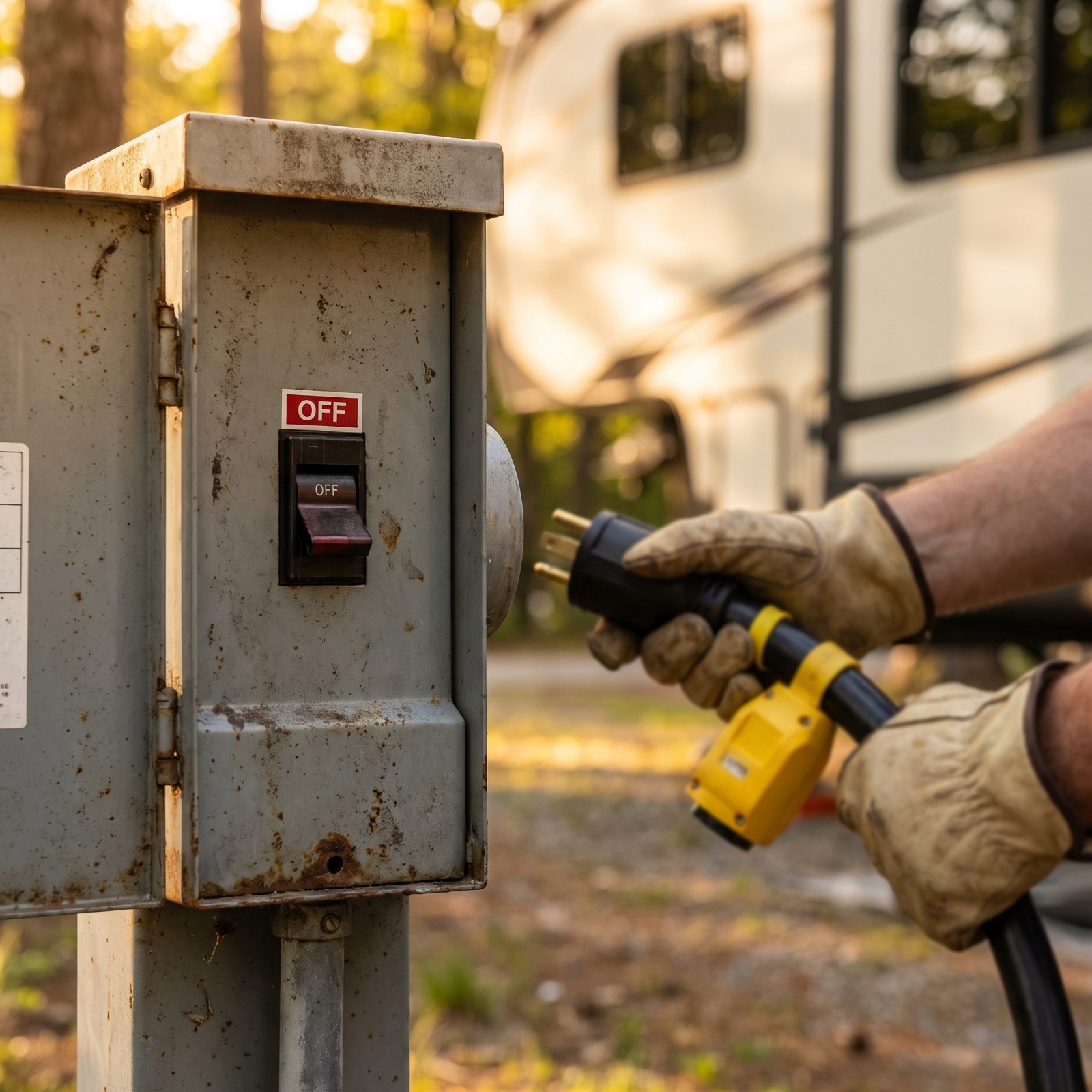
Plug a live 30 or 50-amp outlet and you send an arc across the contacts the instant metal meets metal. Do it enough times and you pit the contacts, scorch the outlet, and eventually get a connection that overheats under load. The fix is embarrassingly simple. Switch the pedestal breaker off, make every connection in your cord setup, then switch it back on.
No arc, no pitting, no slow burn. Same rule on the way out — kill the breaker before you unplug. Pair the habit with a RV surge protector and your rig’s electrical system stands a fighting chance against the mystery wiring in older campgrounds.