
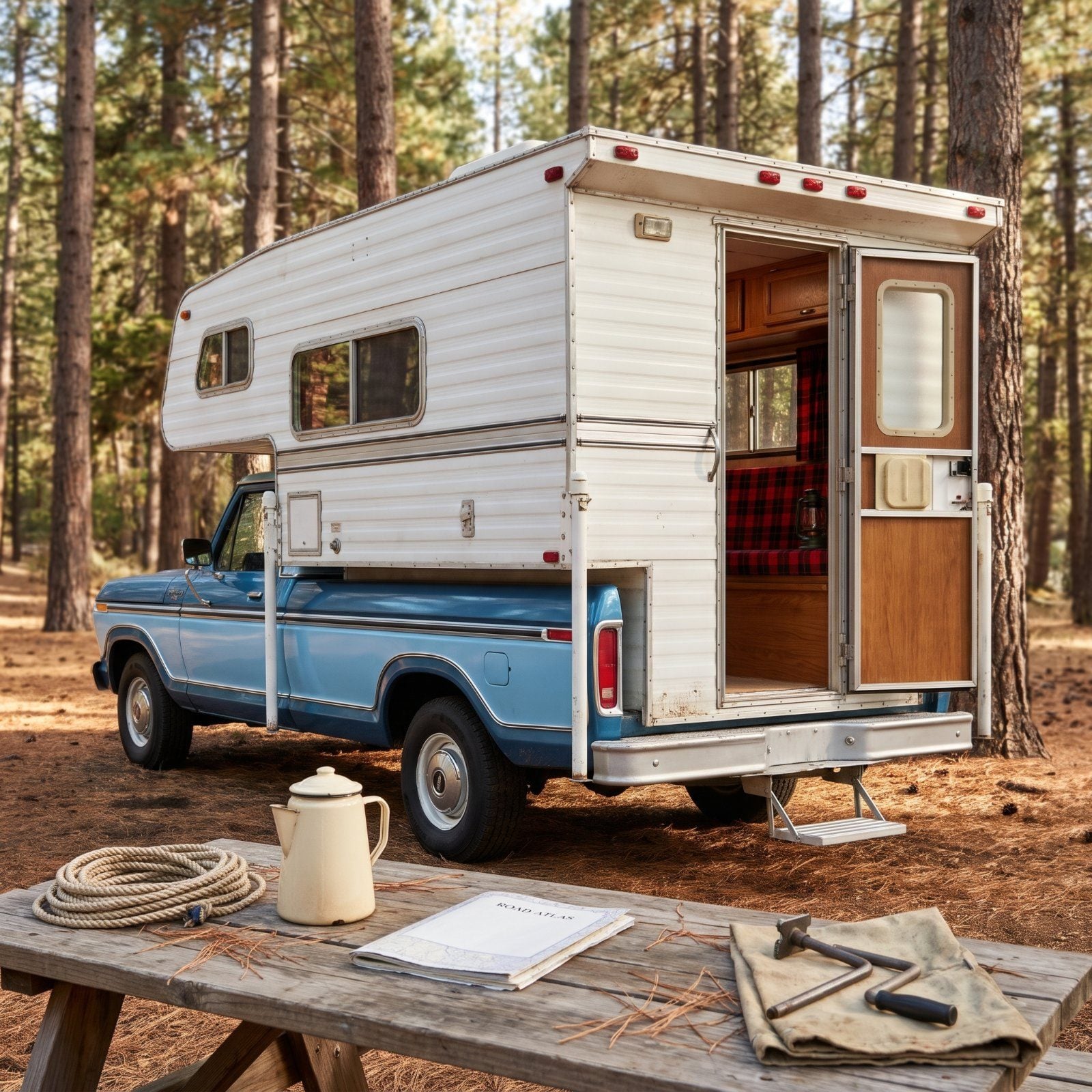
The smell hits first. Old plywood, a little propane, the faint sweetness of a canvas pop-top that spent August baking in the sun. Vintage slide-in truck campers were built by people who assumed you’d fix things yourself in a gravel lot with the tools already riding in your truck. Plaid cushions, aluminum trim, storage tucked into every square inch nobody else bothered to use. We pulled apart a few of the best-loved old ones to see which ideas the new builders quietly abandoned. They deserve a second look.
Please note that some of the images in this article were created with the assistance of AI.
34. Compact Campers That Fit an Ordinary Pickup
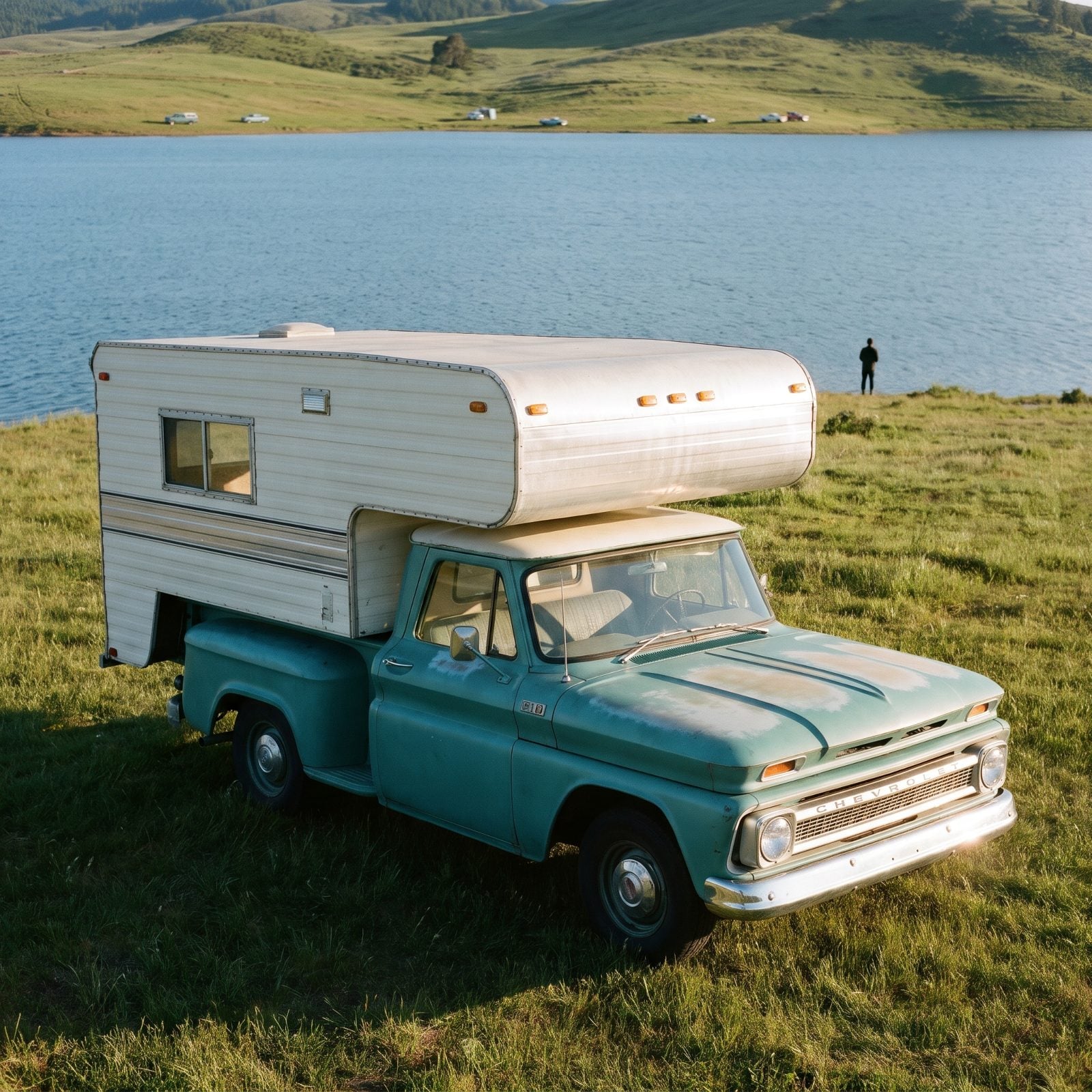
You could buy one, drop it in your half-ton, and drive off the same afternoon. No new chassis, no six-figure motorhome payment. The old slide-ins were sized for the truck already sitting in your driveway, which meant the barrier to entry was a weekend and a willing buddy to help lift.
Modern campers keep ballooning. Taller, heavier, demanding a dually and a diesel just to sit on. The vintage ones understood something the industry forgot: most of us already own the hard part. A camper that doesn’t require a second vehicle to carry it is a camper more people actually use.
33. A Pass-Through Window to the Truck Cab
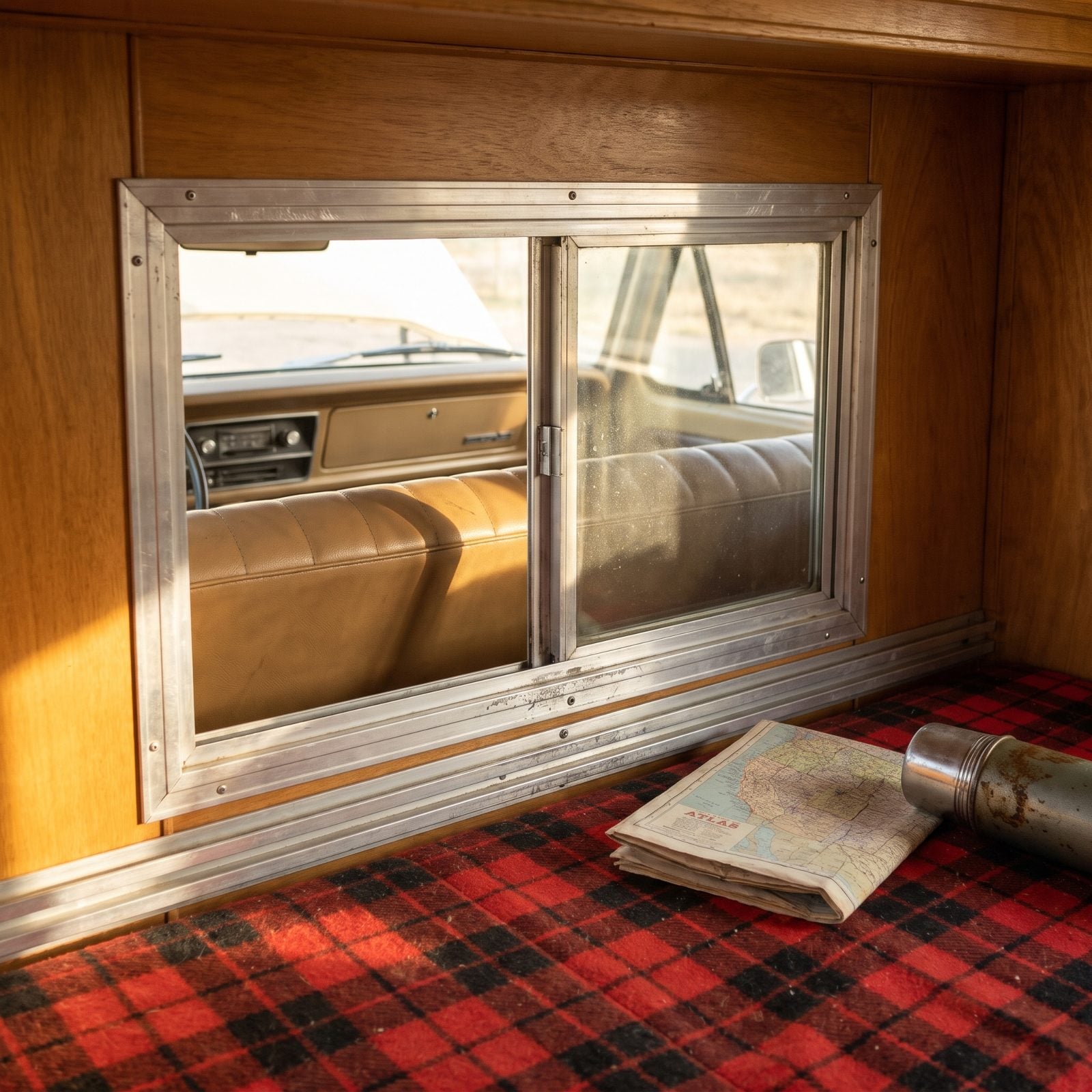
Somebody up front needs a snack. Somebody in back has the cooler. The pass-through window turned the truck and the camper into one connected space, and on a long haul that mattered more than any feature on the spec sheet.
You could hand a map forward, pass a sandwich back, talk without yelling over the engine. On a cold night you felt the cab’s warmth bleed into the cabover. Plenty of modern builds seal the camper off completely, treating the truck like a separate room you have to go outside to reach. The old window knew better.
Asked whether builders should bring back the feature, one truck camper owner said “While traveling, the pass-through windows allow heat or air conditioning from the truck to get into the camper, food to be passed through and other benefits.”
32. Flat Exterior Panels You Could Actually Repair
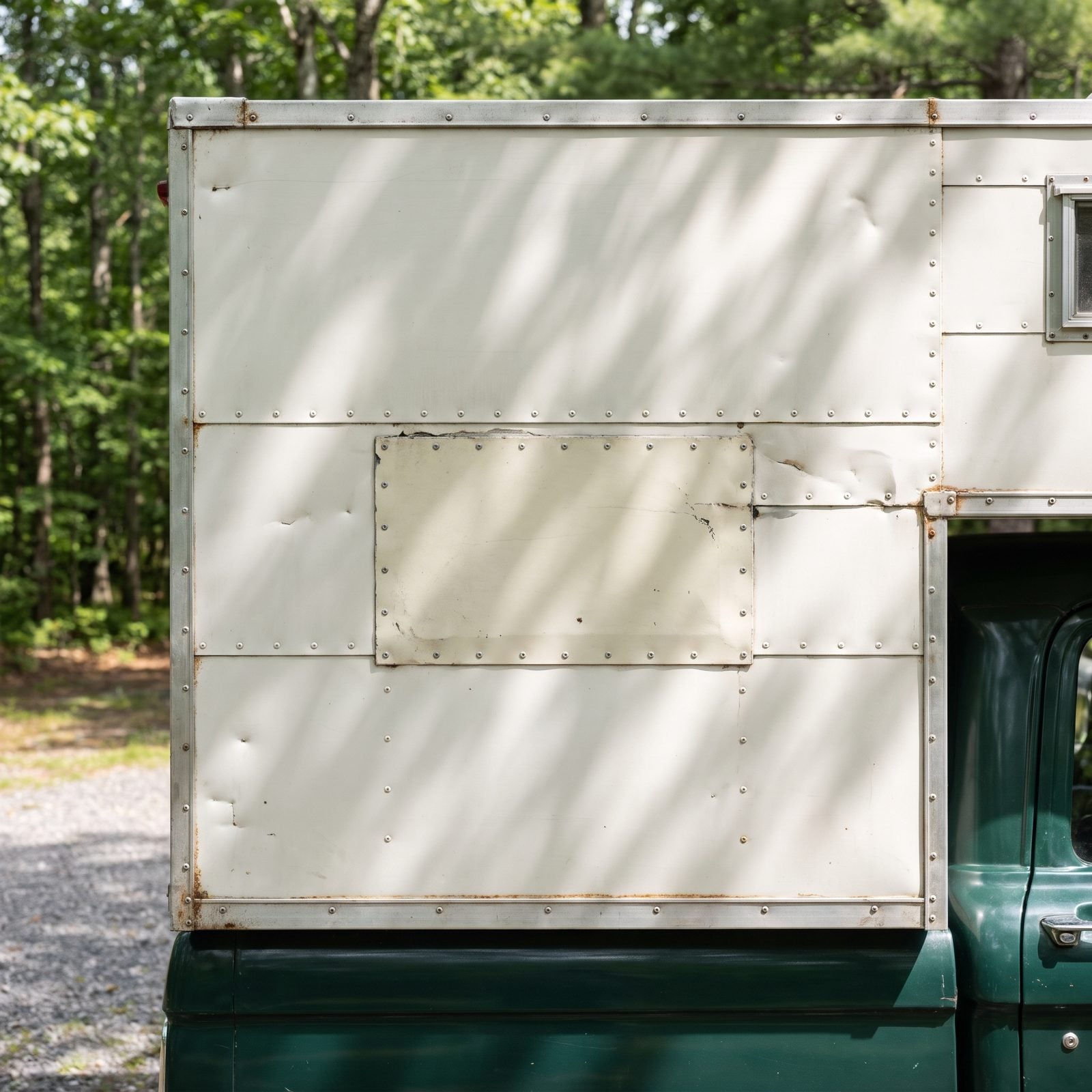
Ding the side on a tight trailhead and you weren’t calling a specialty shop for a molded fiberglass replacement. You bought a sheet of aluminum, drilled out some rivets, and patched it in the driveway. Flat panels forgave your mistakes.
The new curved fiberglass skins look sleek until you crack one. Then you learn the whole section is a single part, back-ordered, priced like it’s cut from something precious. There’s a quiet dignity in a camper built so an ordinary person with a rivet gun could keep it on the road for forty years.
31. Two-Burner Stoves With Nothing to Short Out
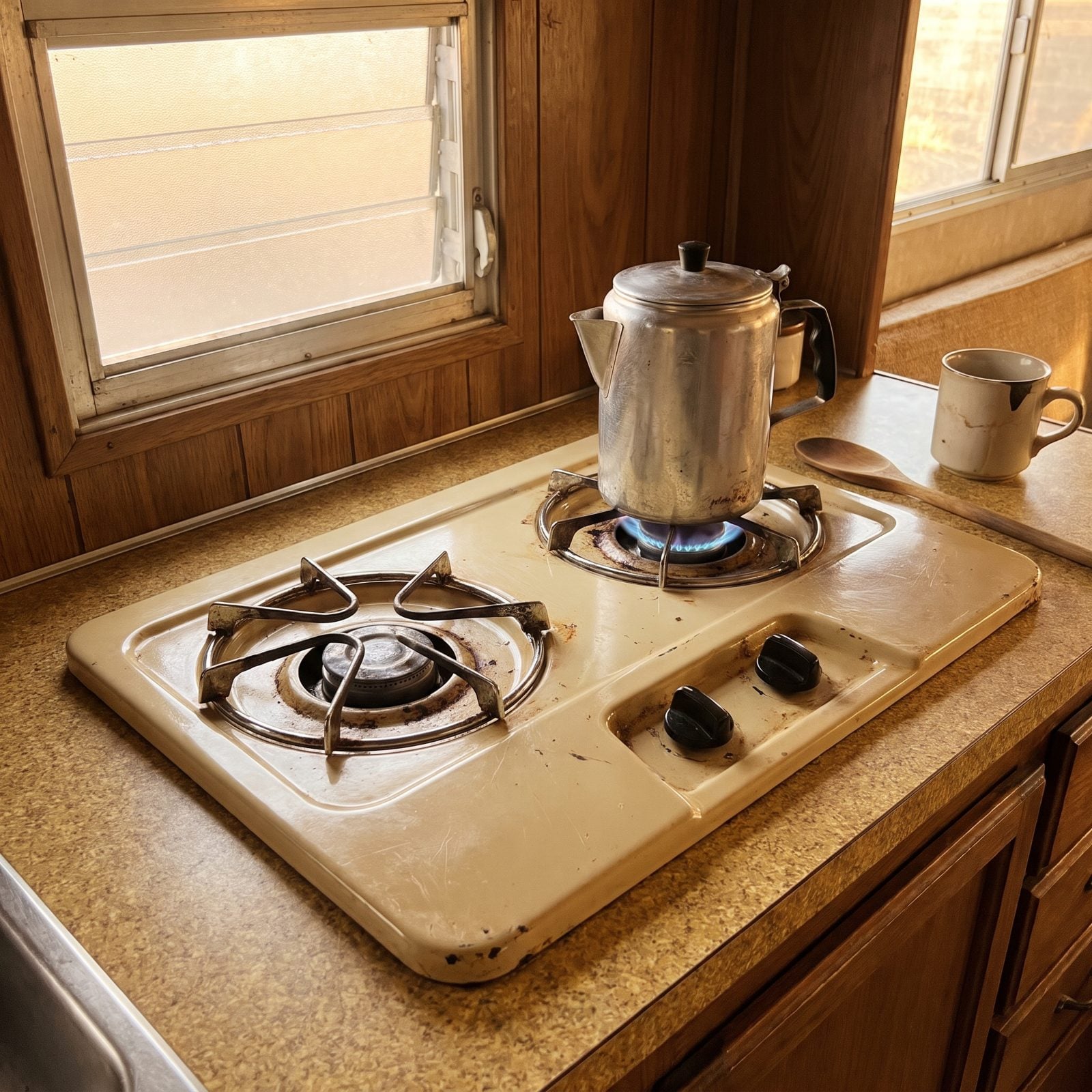
Match, knob, flame. That was the whole operation.
Vintage two-burner propane stoves asked nothing of a circuit board. No ignition module to fail at 7,000 feet, no touchscreen glitching when the humidity rose, no firmware. If a knob stuck you tapped it. If a burner clogged you cleaned the orifice with a pin.
I’ve watched a brand-new rig with an induction cooktop go useless the instant its control panel died. The whole kitchen, bricked. The old percolator-on-the-flame setup doesn’t care about any of that. It just makes coffee.
30. Dinette Benches That Swallowed Your Gear
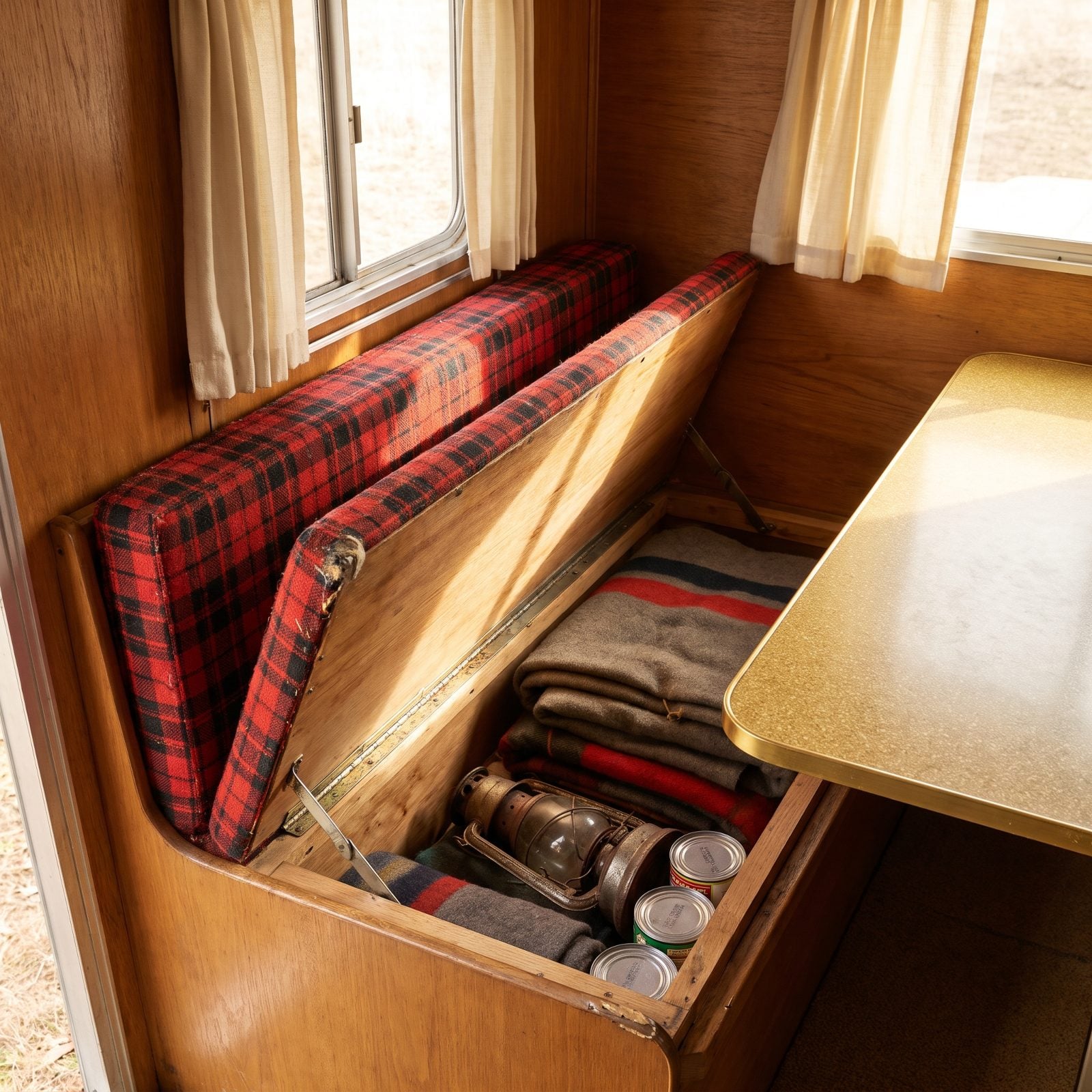
Lift the seat and there it was: a cavern. Blankets, canned chili, the spare lantern, that fishing reel you forgot you packed. Every dinette bench doubled as a storage trunk, and in a camper measured in inches, that doubling-up was everything.
Modern layouts love open space and slick cabinetry, then leave you wondering where to stash the heavy stuff. The old lift-up bench had no such confusion. Hinge, lid, a wood-lined well underneath, and it held a week of supplies without stealing a square foot of floor.
29. Hand-Pump Faucets That Needed No Power
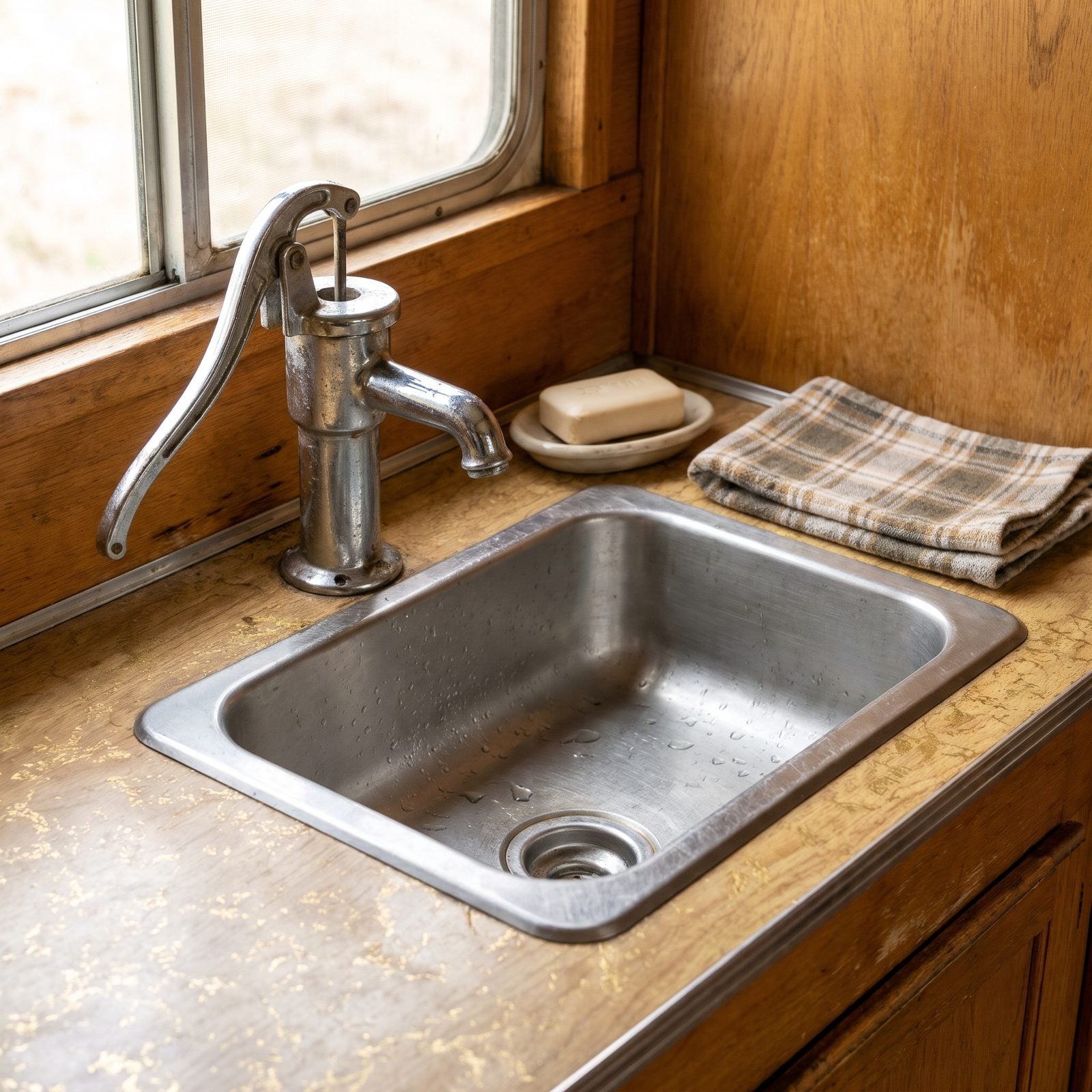
No 12-volt pump whining in the night, no pressure switch cycling on and off while you tried to sleep. You wanted water, you worked the lever, water came. That was the whole system.
There’s something honest about a faucet that can’t fail because there’s nothing in it to fail. Dead battery? Still works. Blown fuse? Still works. The hand pump ran on your own arm, which sounds primitive until you’ve spent a night listening to an electric pump cough itself to death in the dark.
28. Low Profiles That Cleared the Branches
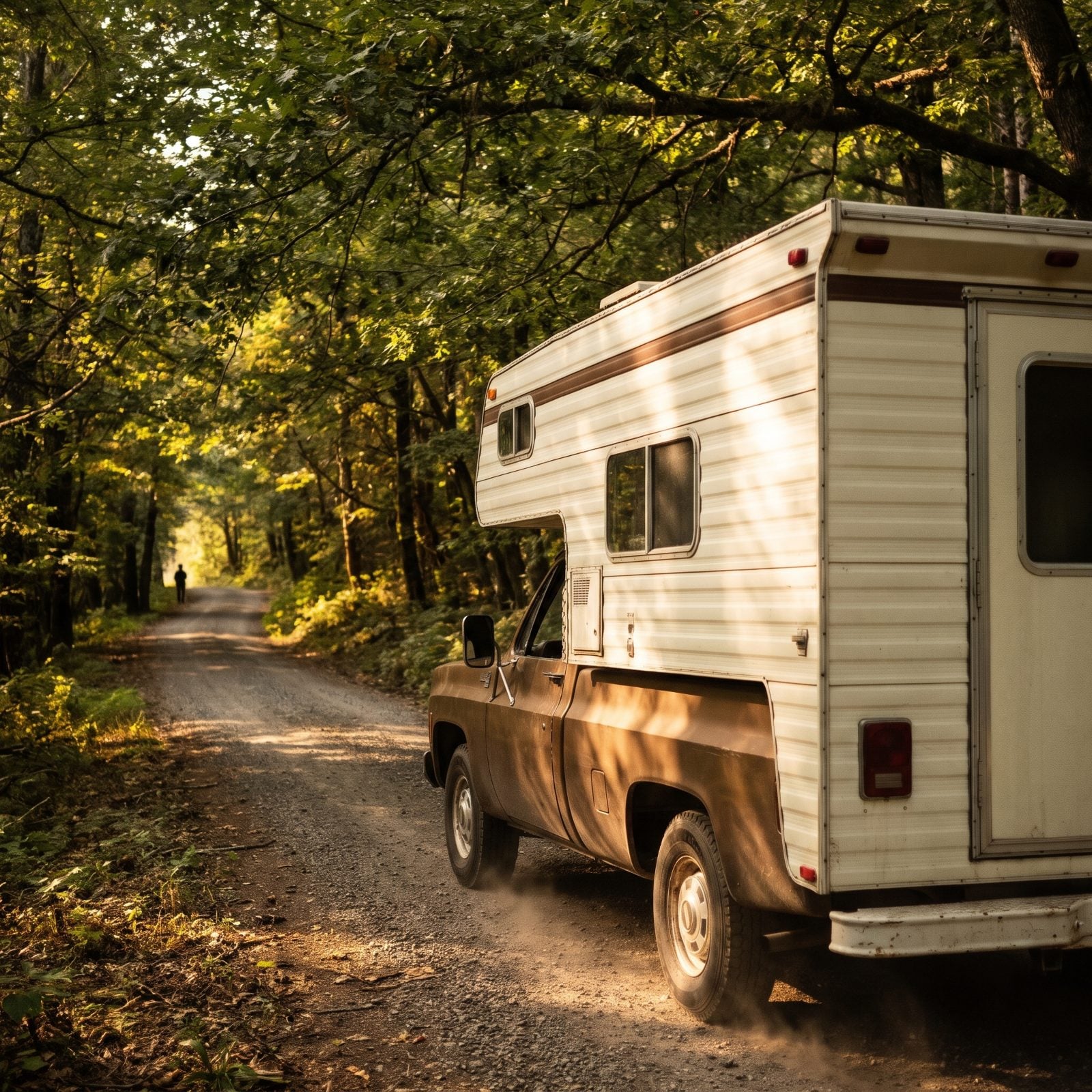
You know that scrape of pine against a tall RV roof, the one that makes everyone inside wince? The old low-slung campers mostly slipped right under, like this one with clear air between its roof and the canopy overhead. They sat close to the cab line, so forest service roads, drive-through redwoods, and that low campground entrance all passed without a scrape.
Height became a status symbol somewhere along the way. More standing room, more clearance underfoot, taller everything. The old builders traded a few inches of headroom for the freedom to go where the big rigs physically cannot. On a tight mountain road, that trade looks pretty smart.
27. Manual Camper Jacks With No Electronics to Fail
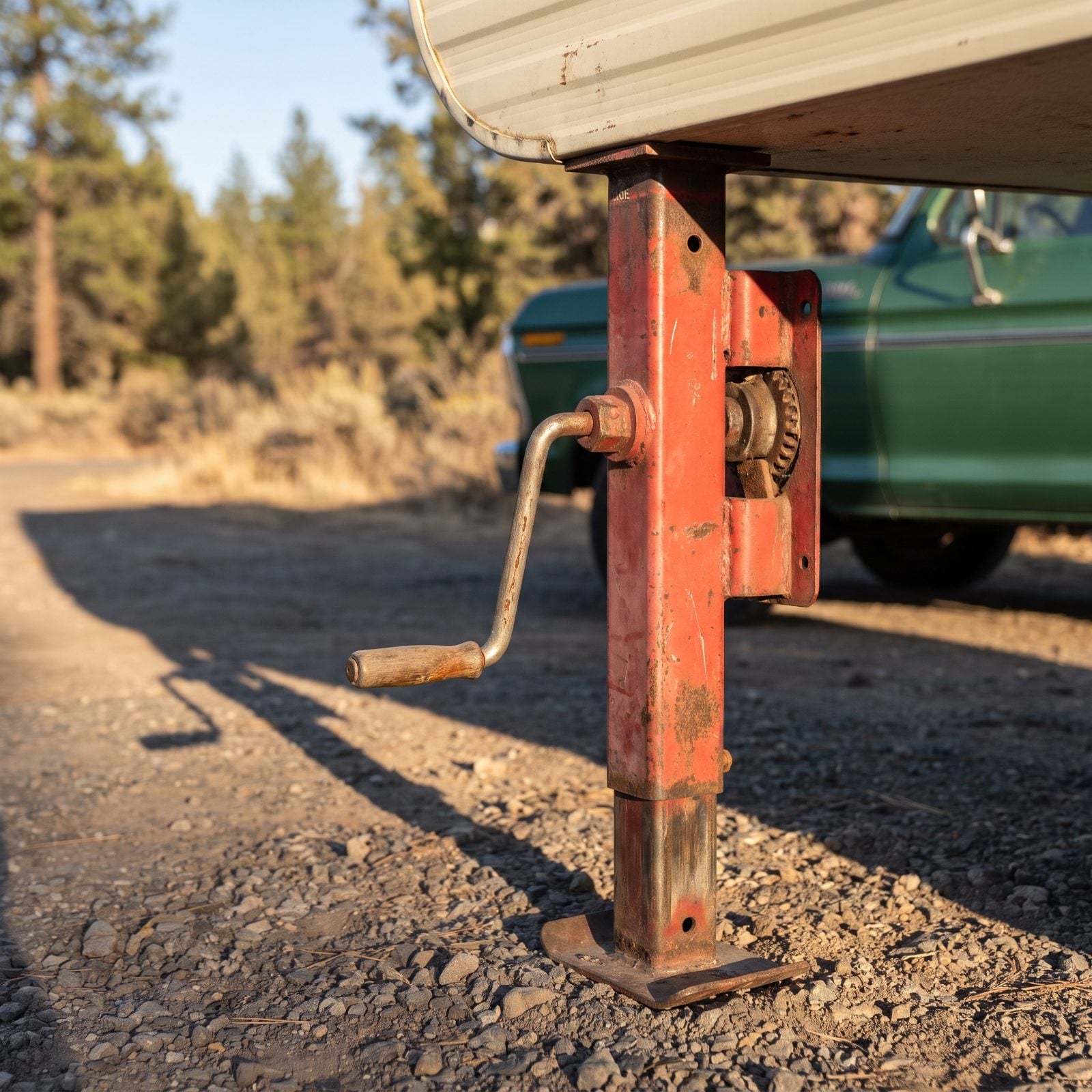
Crank the handle, watch the camper corner lift until it sits level. Four corners, a little sweat, done. The manual jacks had no motor to burn out, no wiring harness to corrode, no remote with a flat battery when you needed it most.
The electric jacks on new rigs are a genuine luxury right up until one quits with the camper half-raised and the others stopped cold. Then you’re stuck. Sure, the old hand-crank setup was slower and a workout. But I’ve never once seen one leave someone stranded in a lot at dusk, and I’ve watched the electric kind do exactly that.
Describing the day his electric camper jacks refused to budge, a longtime truck camper blogger explains that “The remote sits for long periods in the camper without use and the heat of the summer will invariably drain the batteries after a couple of months.”
26. Cabover Beds With Nothing to Break
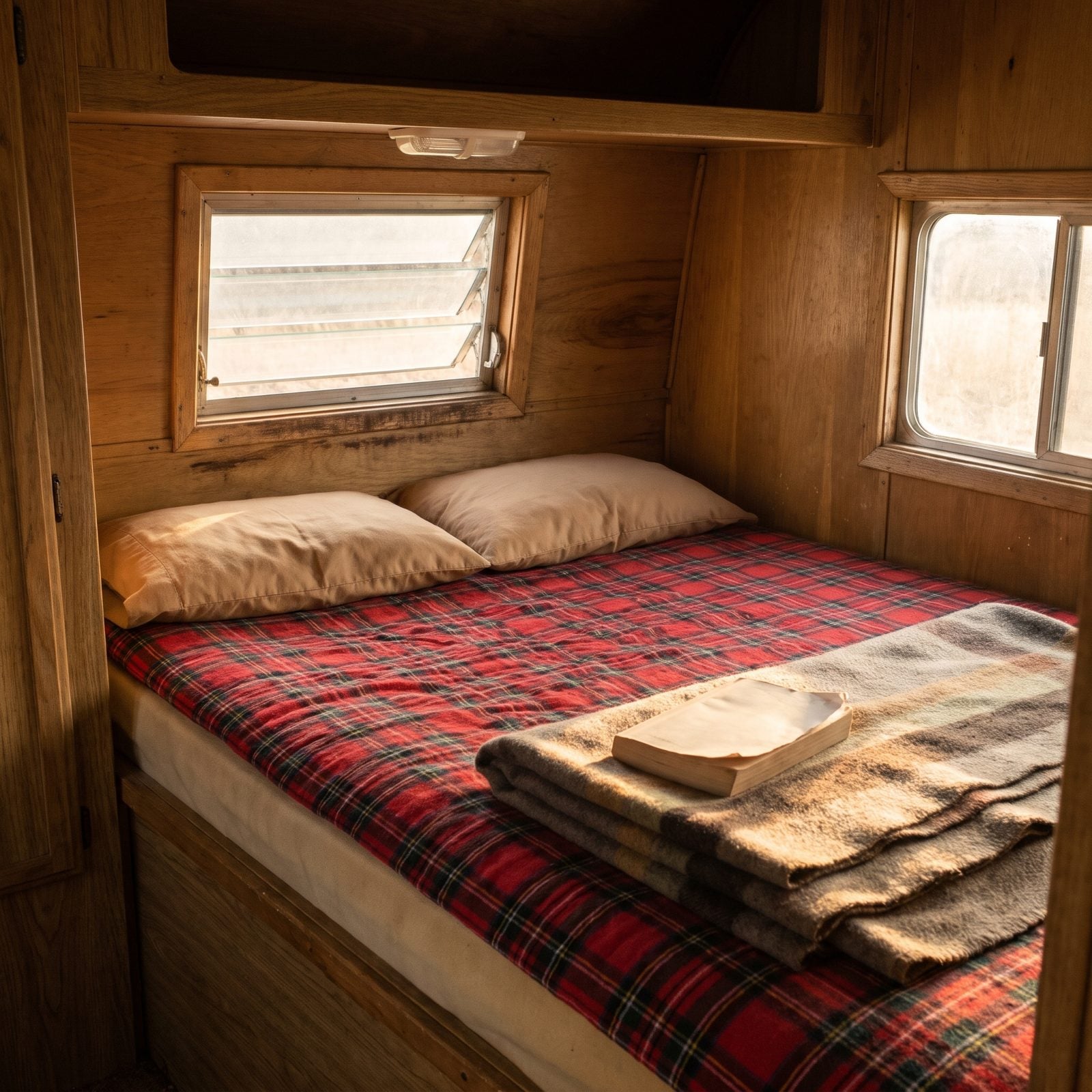
A mattress. A frame. That was the bed. You climbed up over the cab, pulled the plaid quilt up, and slept. No pump to inflate it, no motor to slide it, no actuator to grind itself apart after three seasons.
Walk through a new luxury rig and you’ll find beds that rise to the ceiling on electric lifts, fold into sofas at the push of a button, do everything but tuck you in. Every bit of it a future repair bill. The cabover bunk just worked, every night, for decades, because there was nothing in it that could stop working.
The simplest designs are the ones still on the road fifty years later. That’s not an accident.
I’ll say it plainly: the best feature a camper bed can have is no feature at all. Give me a foam slab and a window to watch the pines go dark, and I’ll sleep better than I ever have under a motorized headboard.
25. Opening Cabover Windows That Caught the Morning Breeze
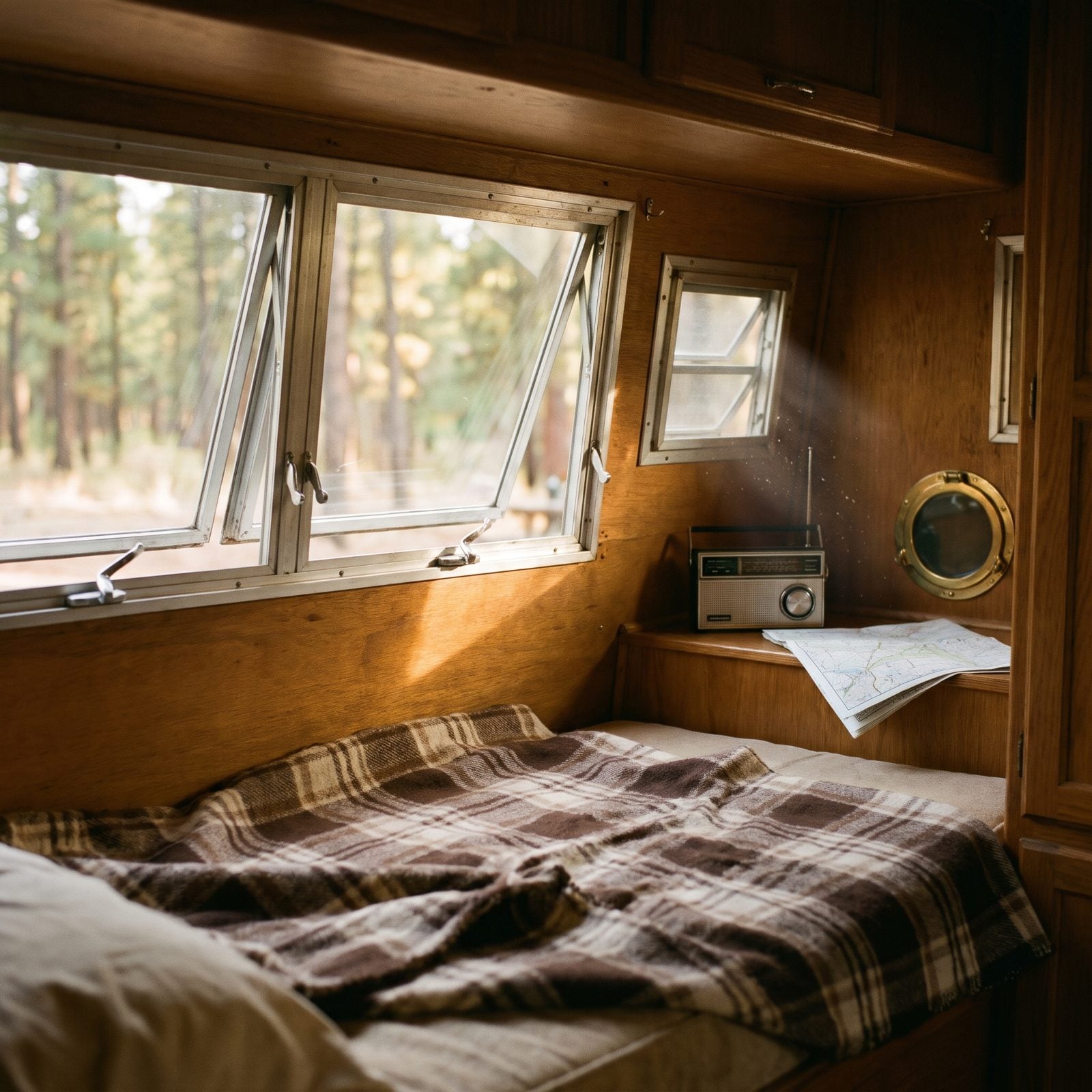
Crack those little cabover windows at dawn and the whole bunk changes, with cross ventilation flowing from nothing but hinged glass and chrome latches doing what they were built to do. The air that moves through a camper over the cab is the air you actually want, pulled up and out instead of sitting stale against your face.
Modern builds love to seal everything shut and let a vent fan handle the breathing. There’s a case for the old way, though. Windows you can reach from the pillow, open a crack on a cool night, no battery draw, no hum — I’ve slept better in a 1974 cabover with two propped windows than in anything with a thermostat and a wiring harness.
24. Narrow Bodies Built for Roads That Forgot About Pavement
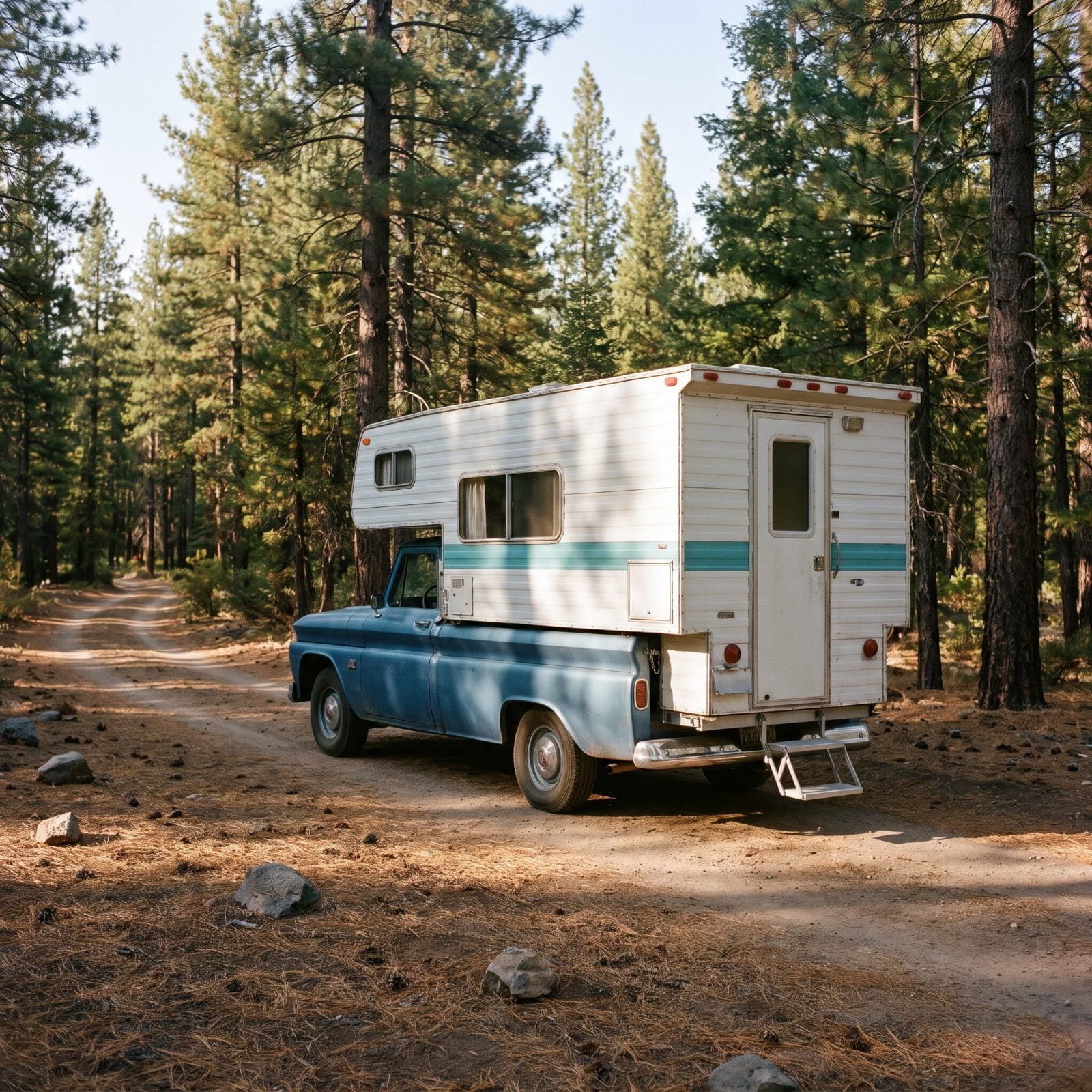
Old truck campers were narrow because they had to fit the bed of the truck and nothing wider. That constraint turned into a gift the moment the pavement ran out.
A narrow body threads forest service roads, squeezes between trailhead boulders, and tucks into campsites that a wide modern rig can only photograph from the overlook. You feel it on backroads the second you stop white-knuckling the mirrors. Width is what keeps most rigs chained to the asphalt — and these little campers never got the memo.
23. Pedestal Tables That Unbolted and Followed You Outside
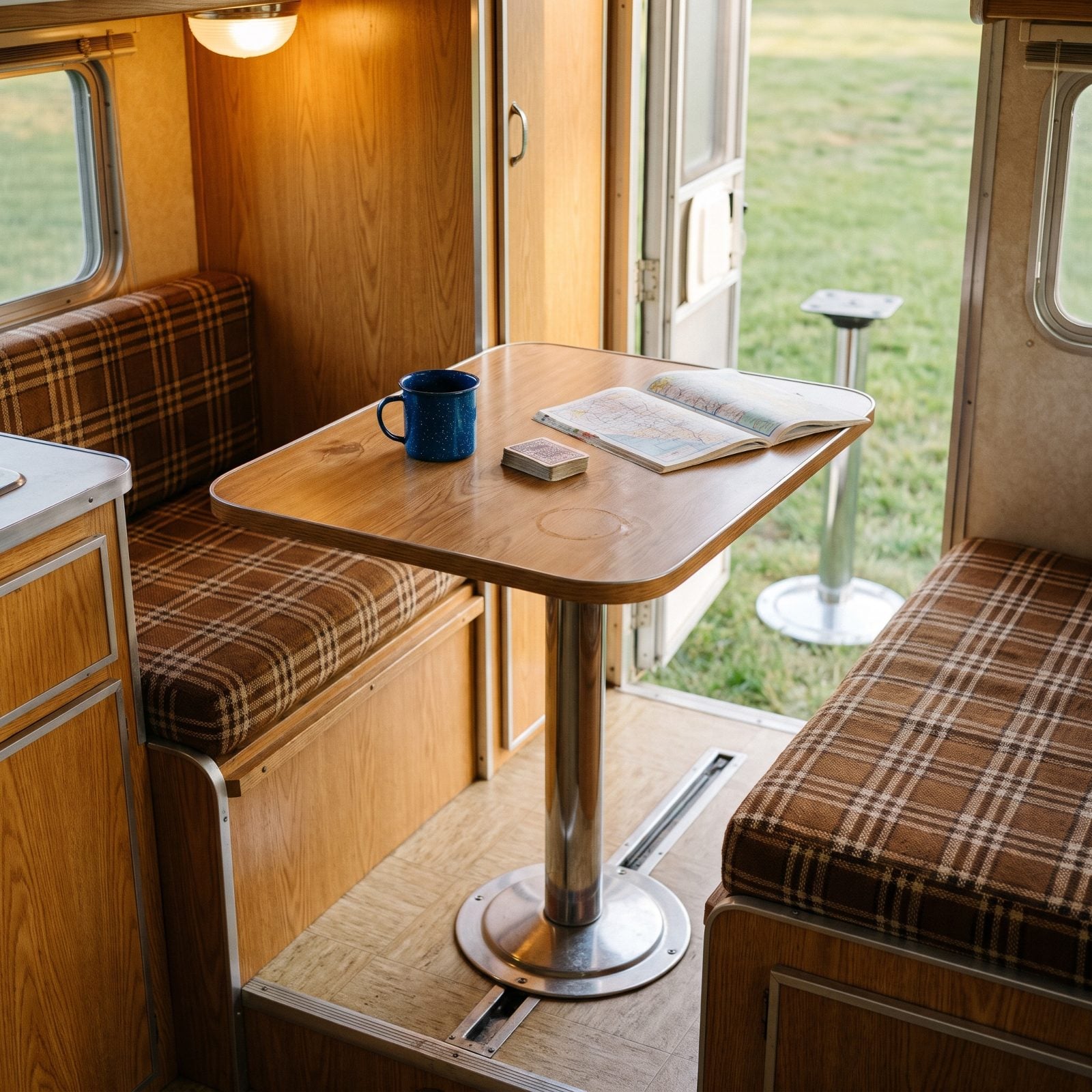
The genius of the old pedestal table was that it never really belonged to the dinette. One lift and the whole top came free of its chrome column, ready to drop into a second base socket bolted outside by the door.
Breakfast inside when it’s raining, cards outside when it’s not. Same table, two homes. Most of us don’t realize how clever that was until we own a rig where the table is welded to a single job. A table that goes outdoors doubles your living space, and the old builders pulled it off with a spring clip and a steel post — no app required.
22. Iceboxes With No Circuit Boards to Die on You
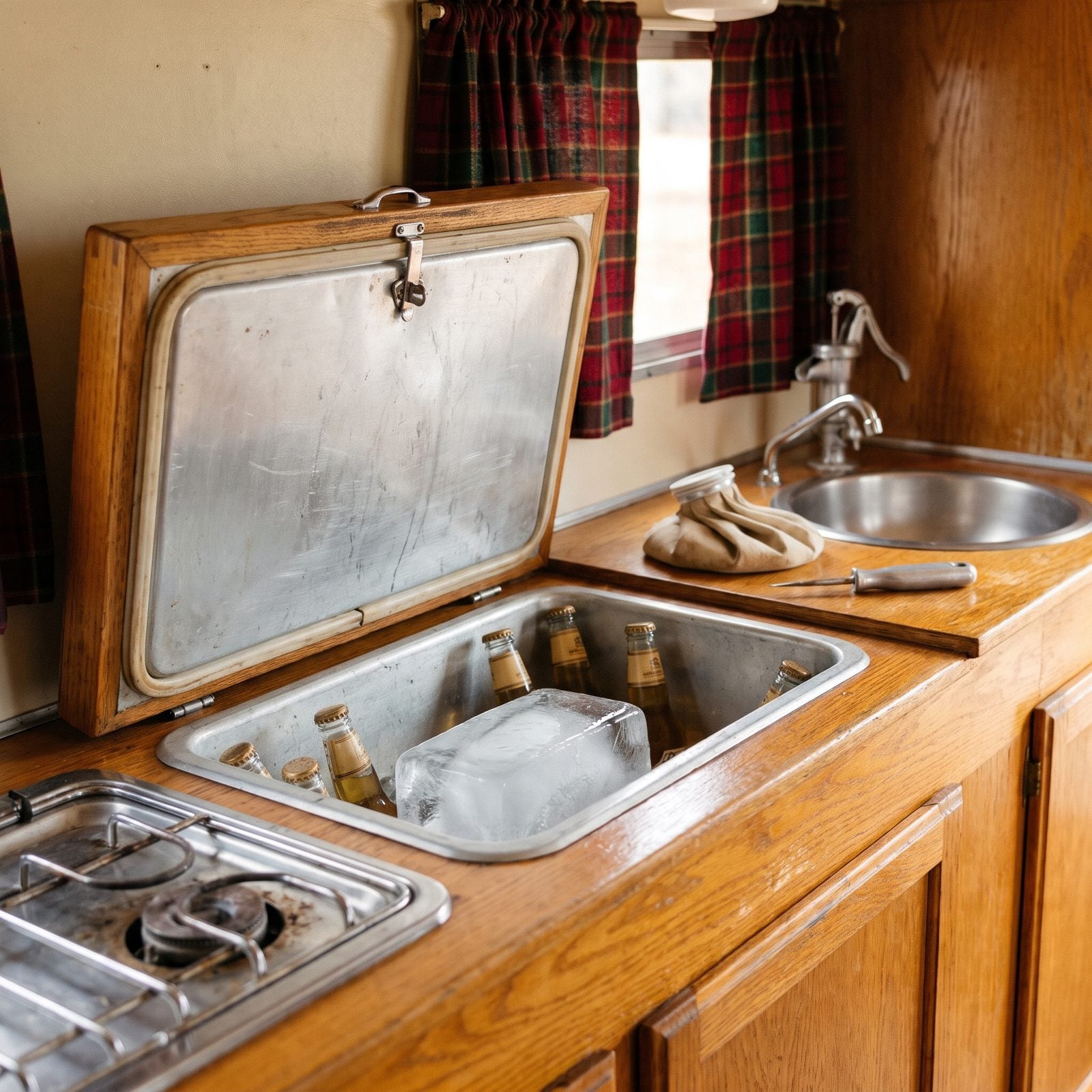
A block of ice, a well-sealed box, a drain for the meltwater — that was the whole appliance. No compressor, no control board, no cryptic fault code three seasons into ownership.
I’ve watched more than one modern 12-volt fridge brick itself over a bad sensor. Every time, I think about those old aluminum-lined iceboxes that only ever asked for ice. You topped them up at the camp store, drained the bottom in the morning, and that was it.
21. Printed Wiring Diagrams Glued Right Inside the Cabinet Door
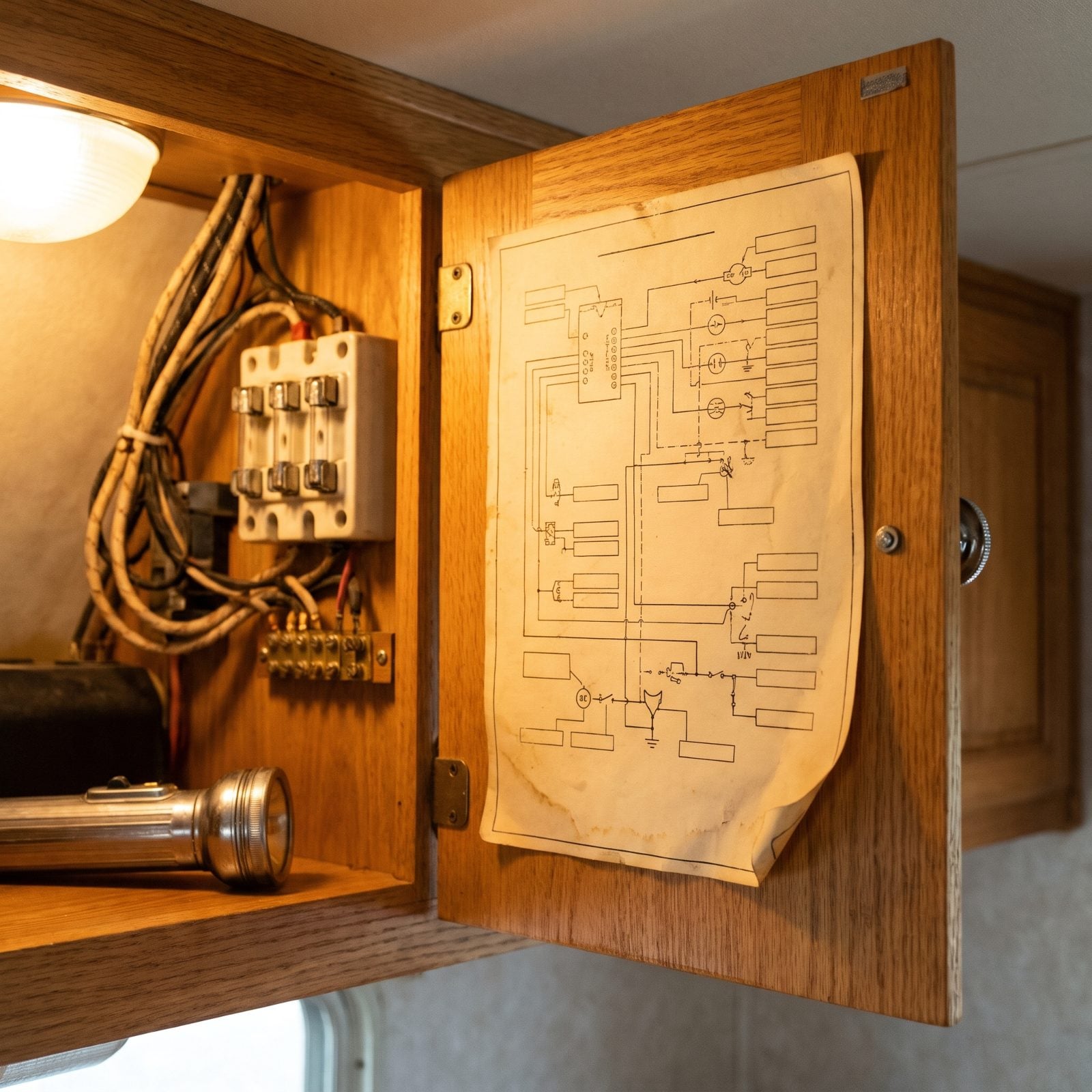
Open the cabinet by the fuse block and there it was: the entire electrical and water system drawn out on a single sheet, glued to the inside of the door. Every wire traced, every circuit drawn out — even if most of the faded labels have long since stopped making sense.
Try finding that in a new rig. Today you call a dealer, wait three weeks, and pray the tech has seen your model before. The old builders assumed you’d fix it yourself at a campground after dark — so they left you the map to do it.
A wiring diagram inside the cabinet is the manufacturer saying: we trust you to fix this.
20. Roof Vents You Cranked Open by Hand
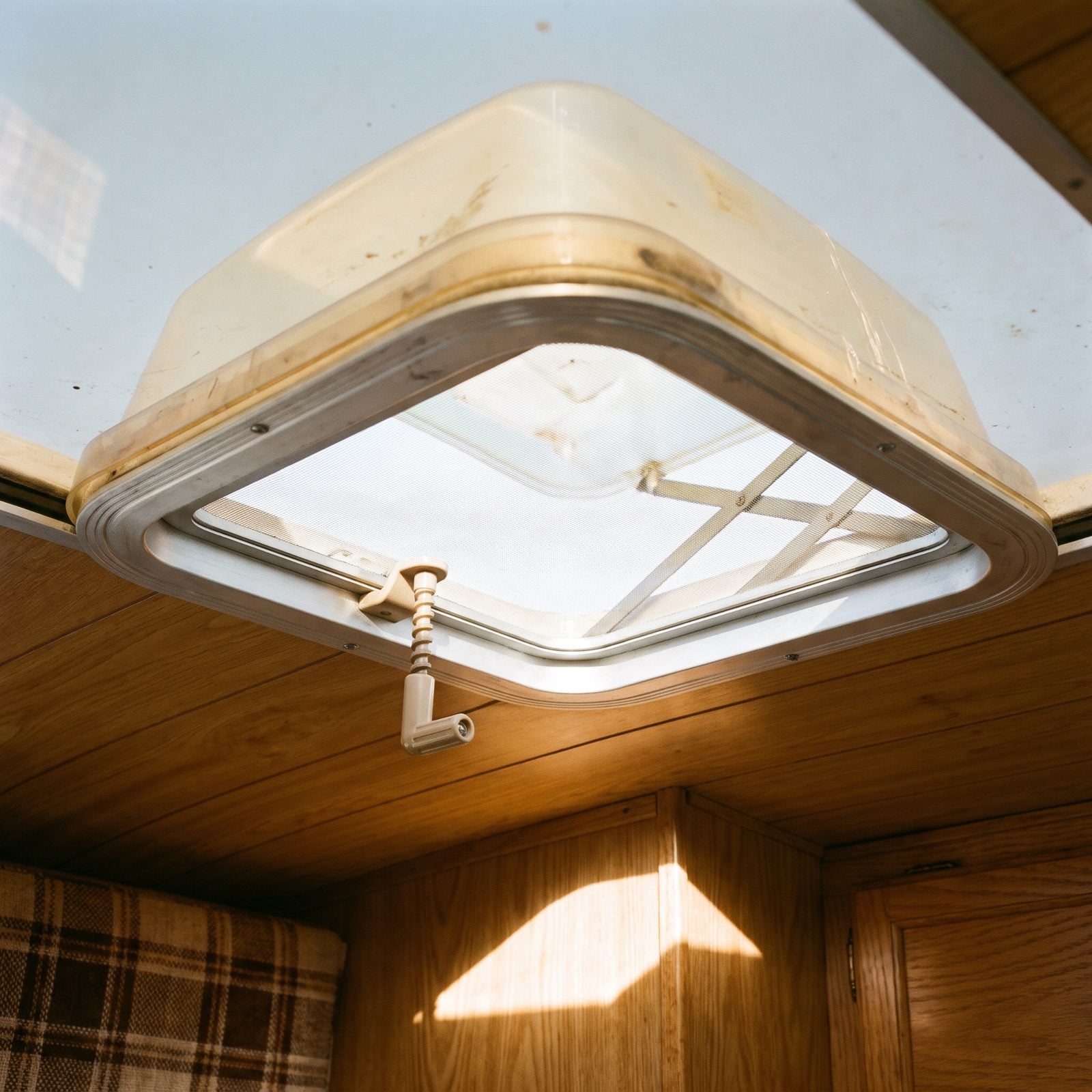
A crank, a scissor arm, a dome that lifted as far as you wanted it. Nothing to leave running and kill your battery while you slept.
Hand-cranked roof vents let the heat out the top the moment you opened them, and they never once needed power to do it. You set the opening by feel — cracked an inch in the rain, thrown wide on a hot afternoon. When the mechanism stuck, a drop of oil fixed it. Simple is a feature, and nobody built simpler ventilation than this.
19. Positive-Latching Cabinet Hardware That Held Through Every Pothole
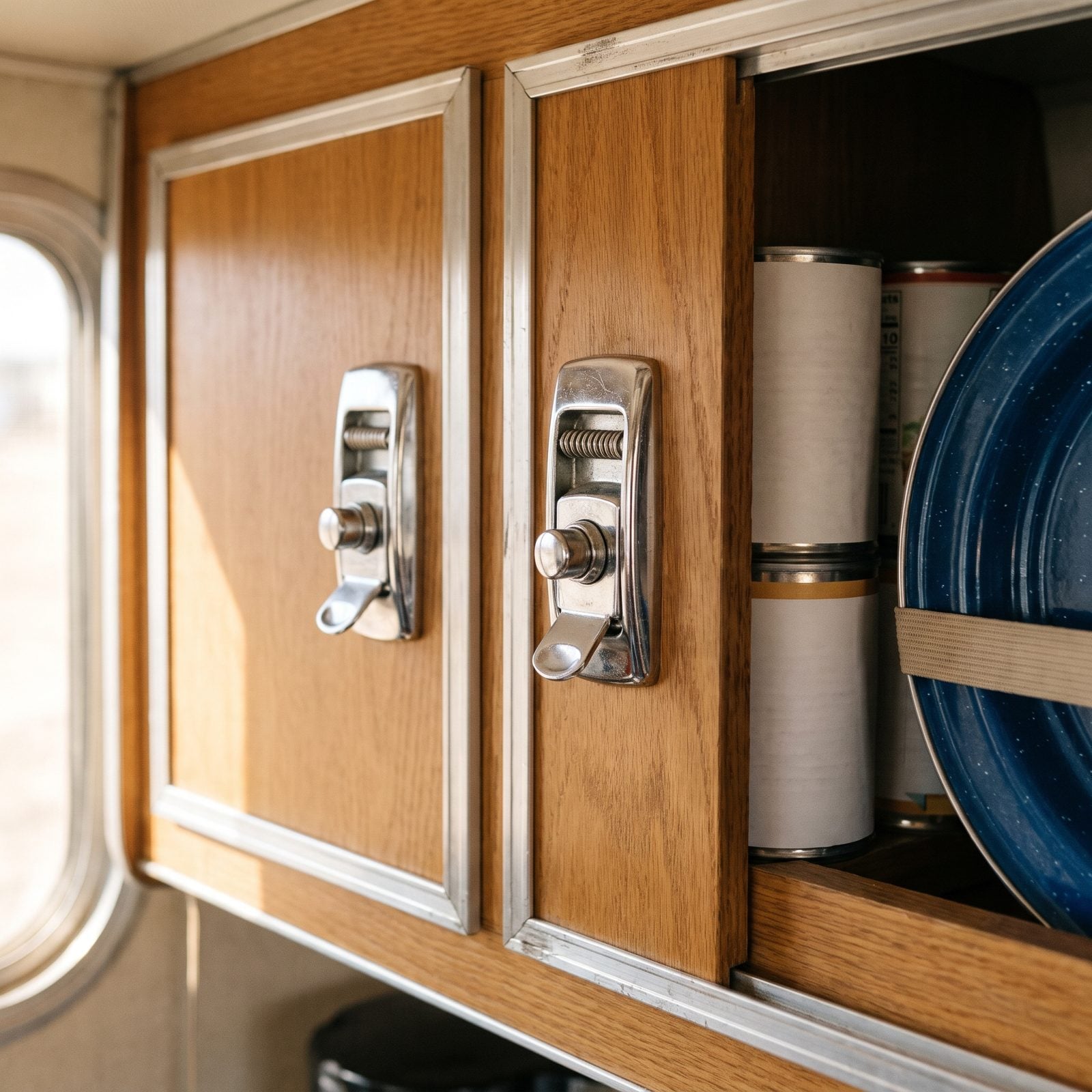
You knew the sound — a firm click as the chrome button snapped home. Those positive latches held the cabinet shut through washboard roads, mountain switchbacks, and the pothole you absolutely did not see coming.
Magnetic catches and soft-close hinges are lovely in a showroom. Hit a rough forest road and watch your cans roll across the floor. The old spring-button latches gripped like they meant it, and nothing opened until a human pressed that button on purpose.
18. Ovens Just Big Enough for a Small Casserole
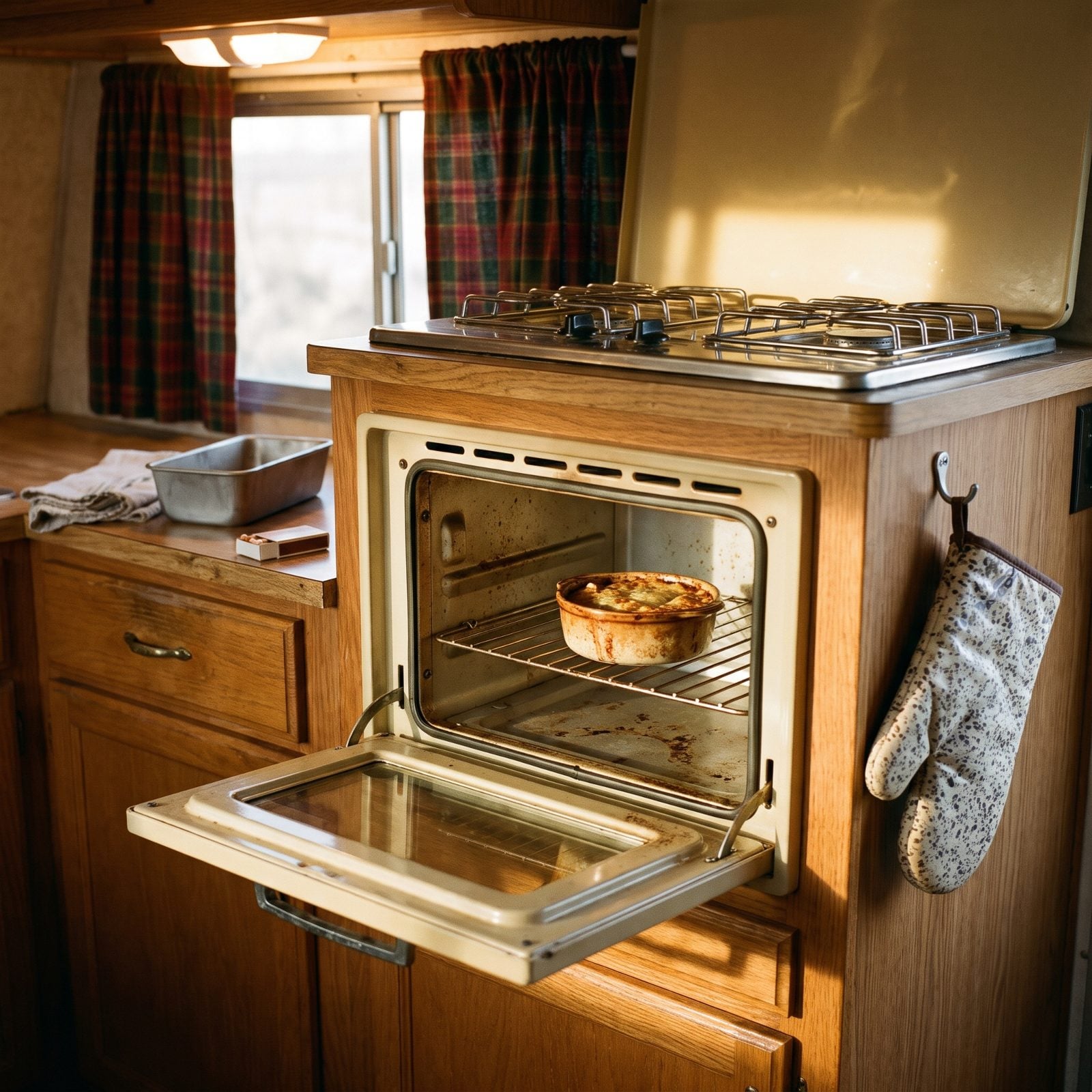
It fit one casserole dish, maybe a small roasting pan if you turned it just right. And that was plenty. A real propane oven in a camper you could nearly lift, baking a cobbler while the campfire burned down outside.
So many compact rigs today skip the oven entirely and hand you a microwave that needs shore power. The old builders found room for a real baking box in a camper half the size. On a cold night in a national forest with no hookups, a working oven beats any gadget you can name.
17. Portable Toilets You Could Actually Service Yourself
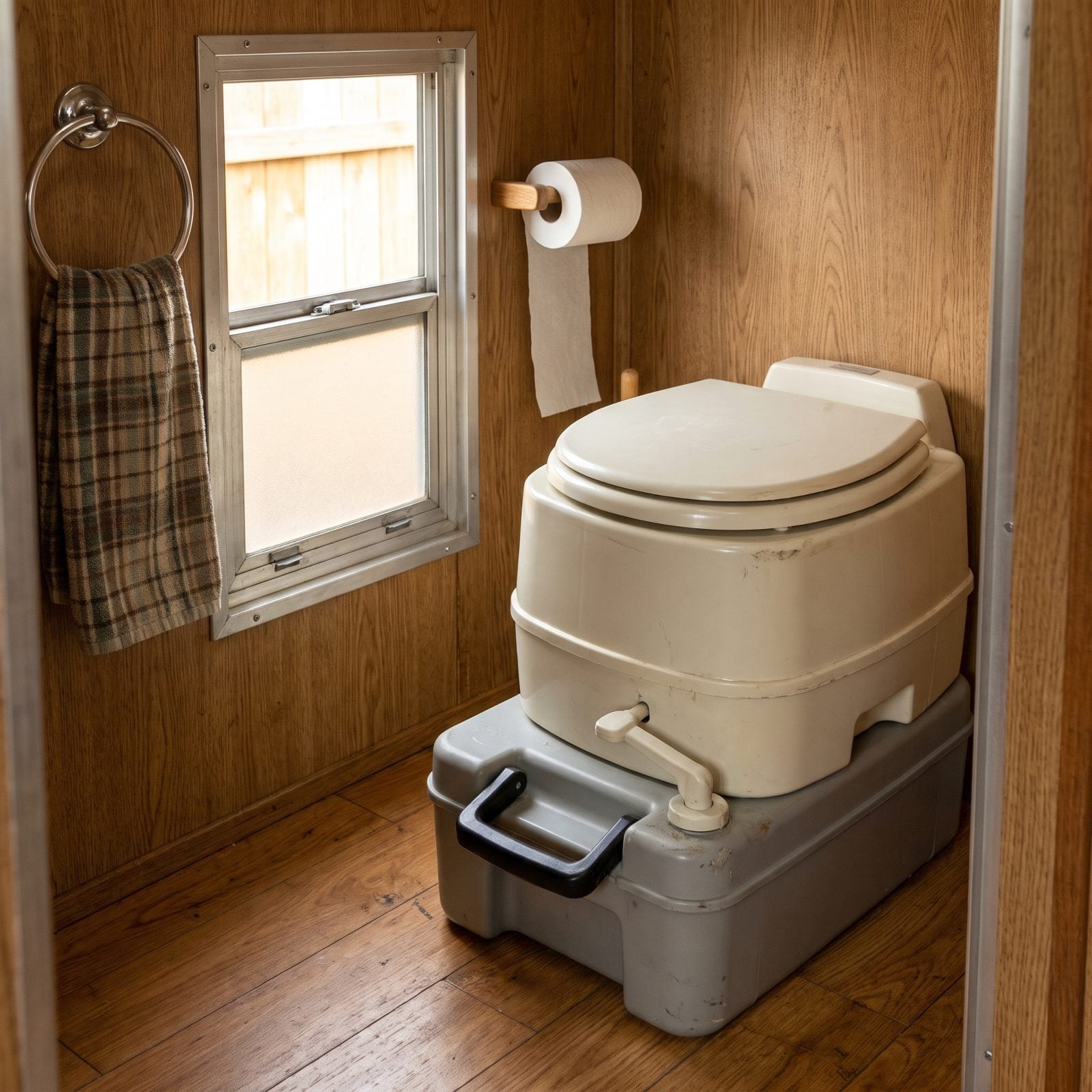
The whole bottom tank lifted out by a handle, carried to the dump station, emptied, rinsed, and slid back in. No black tank sensor lying to you, no macerator to clog, no mystery about what needed doing.
Modern waste systems have more failure points than the rest of the camper combined. The old portable units asked for nothing but a pair of hands and five minutes. For a small rig that boondocks, a toilet you can carry and empty yourself beats a built-in system you have to schedule your whole trip around.
As a veteran truck camper owner puts it, “having a cassette toilet means that you no longer have to deal with inaccurate black holding tank sensors”
16. Standard Fasteners Instead of Proprietary Clips
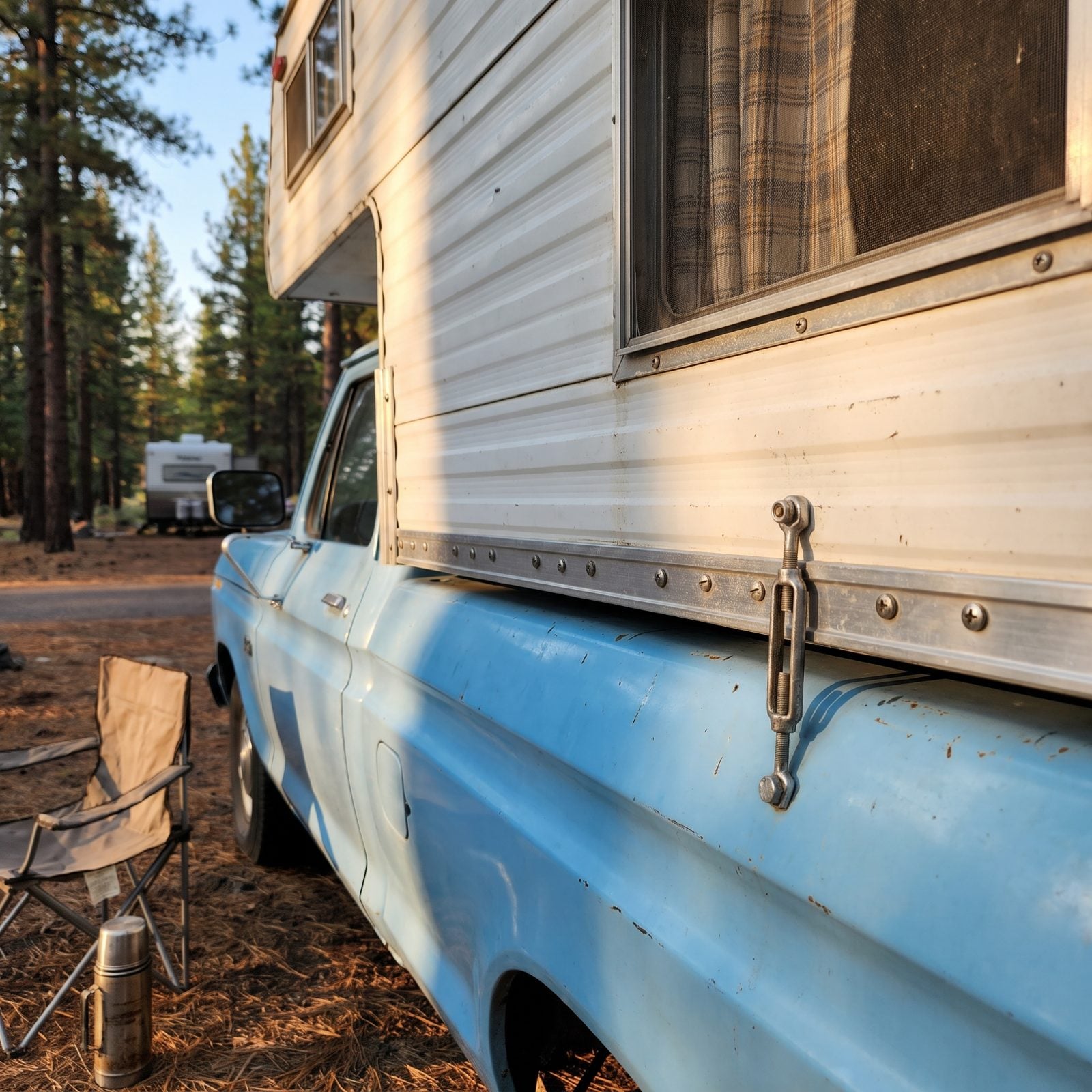
Pop open the exterior of an old Winnebago-era slide-in and you’ll find something that feels almost radical now: screws you recognize. Slotted heads, Phillips heads, the odd hex bolt. Nothing that needed a dealer’s special tool or a part number you had to beg for.
That mattered on a Tuesday night in a gravel lot when a panel started to buzz loose, because you reached into the same toolbox you used on the lawnmower and fixed it on the spot. No proprietary star-drive clip that snapped and left you stranded until a replacement arrived three weeks later.
Modern builders could learn from this. I’ve watched people fight a single plastic retention clip for twenty minutes — and that clip costs more to replace than a whole bag of stainless screws would. Standard fasteners age gracefully. You can inspect them, swap them, and tighten them with tools you already own.
15. Battery Boxes Owners Could Reach
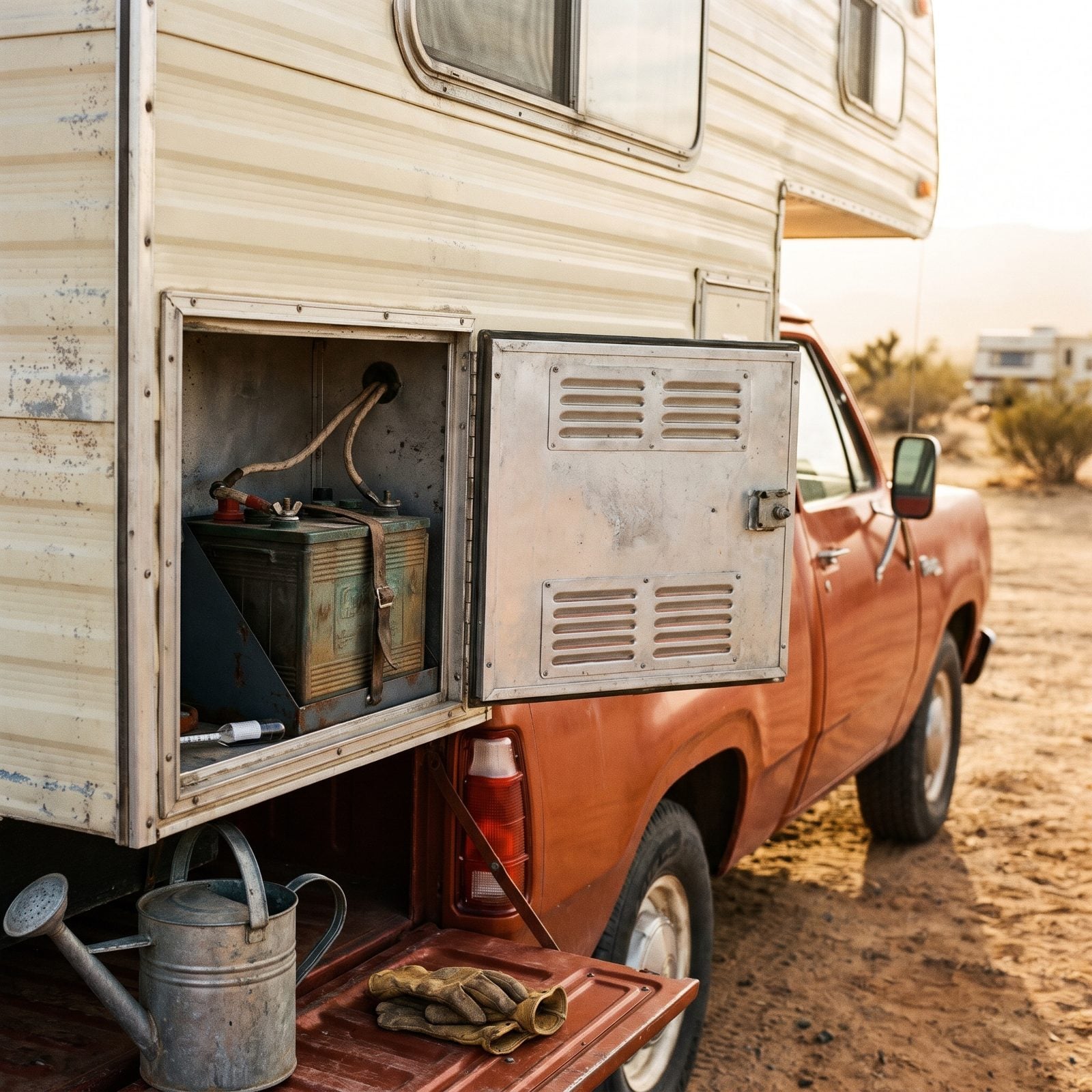
Checking the battery used to be a standing-up job. Flip the vented door, unclip the strap, and there it was at waist height, ready for you to top the cells, scrub a terminal, or swap it out in the dust of a desert pull-off.
Now the battery often lives in a sealed cavity under a dinette seat, behind a cushion, under a plywood lid held by eight screws. Fine, until the day it dies forty miles from anywhere.
A battery you can reach is a battery you’ll actually maintain.
I got lazy about this for years, letting a buried battery slide until it wouldn’t hold a charge. The old slide-ins never let you forget. The box sat right there, asking to be opened.
14. Storage Steps Into the Cabover
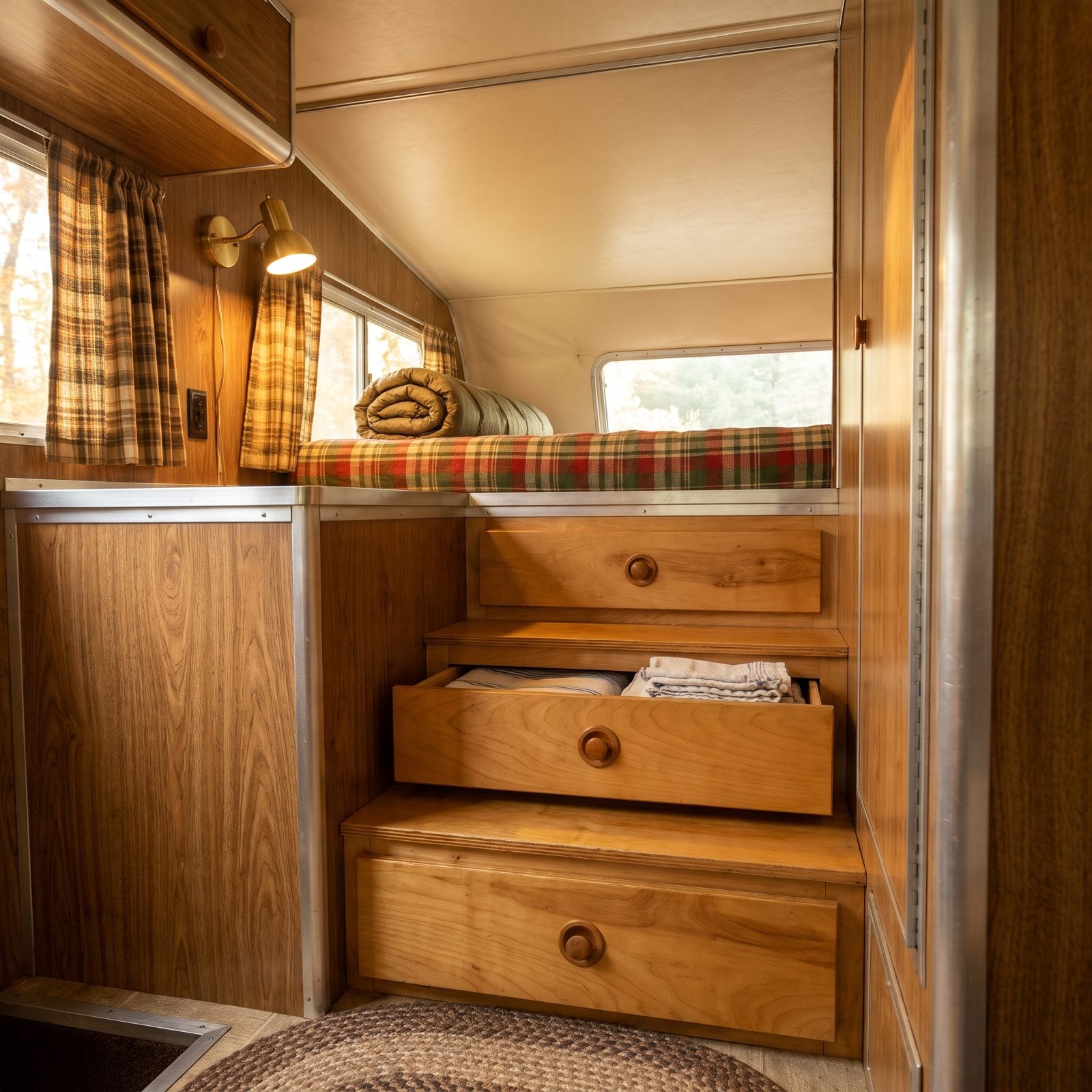
Every cubic inch worked double duty. Those little steps up to the cabover bed weren’t just steps. Pull the face of each riser and you had a drawer: one for socks, one for the flashlight and spare fuses, one for the paperbacks nobody would admit to reading.
In a floor plan measured in inches, the old builders refused to let dead space exist. A staircase is going there anyway, so why shouldn’t it hold your clean underwear?
13. A Broom Closet in a Tiny Floor Plan
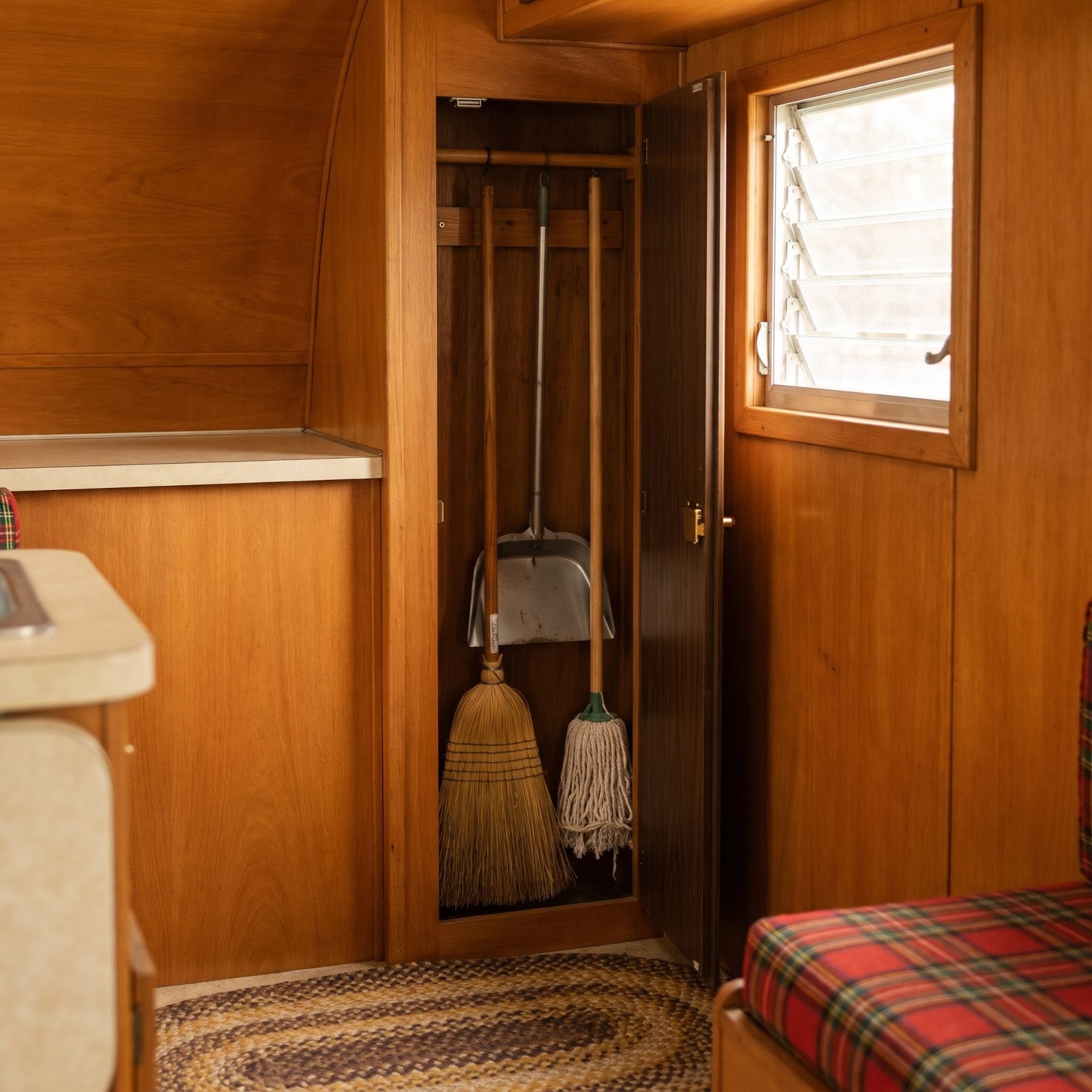
Who devotes real estate to a broom in a camper the size of a walk-in closet? The old builders did, and they were right.
Tucked beside the dinette you’d find a tall slot with a peg rail holding a straw broom, a mop and a dustpan, a positive-latch door keeping it shut over rough roads. Sounds like a luxury until you’ve tracked pine needles and campfire grit across a tiny floor and had nowhere sensible to stash the broom.
Modern designers chase big empty aesthetics and then wonder where the cleaning gear goes. Usually jammed behind the toilet. A dedicated closet kept the tools you use every single day where your hand expects them.
12. Plate Racks That Stopped Travel Rattles
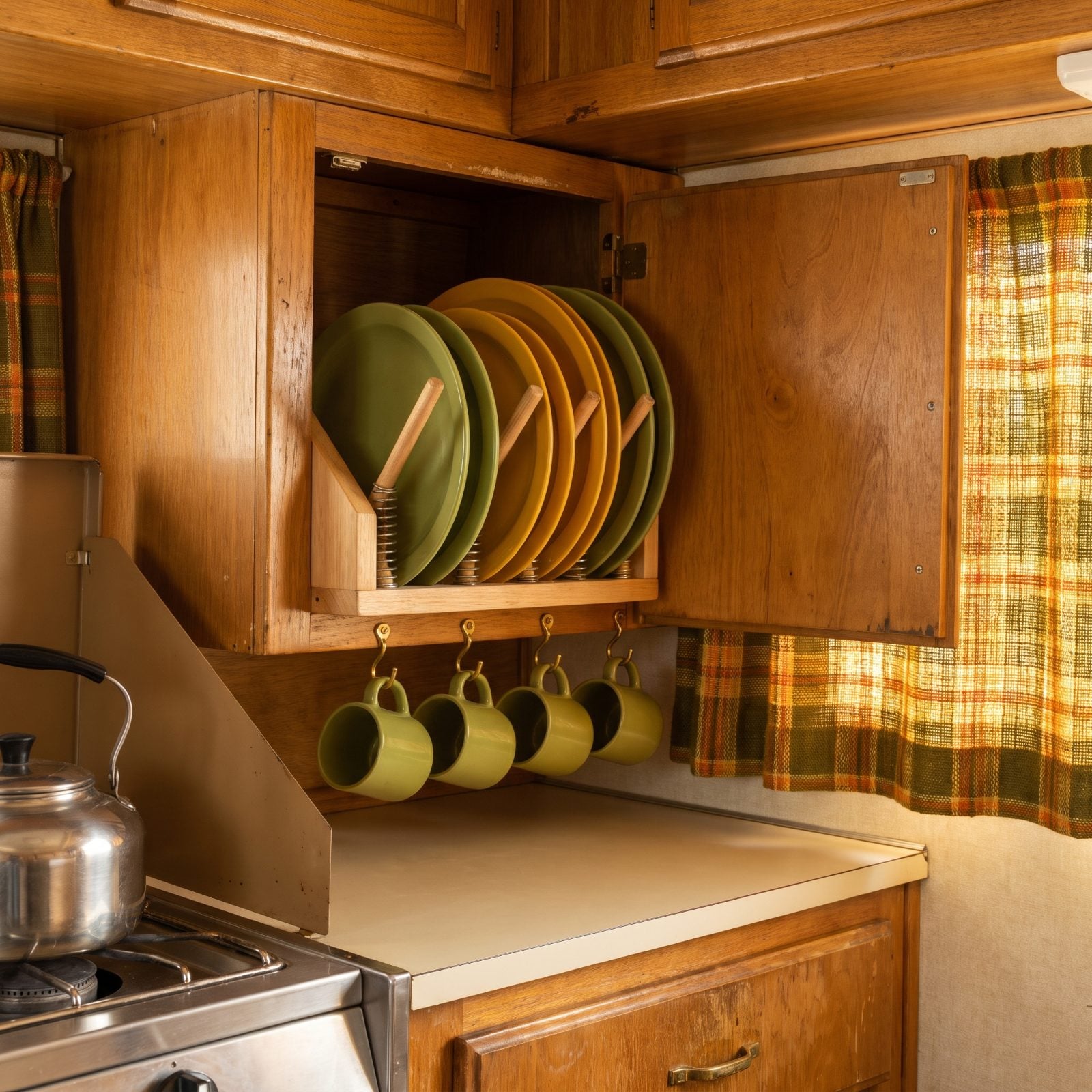
Stack plates flat in a cabinet and drive a forest road, and you already know the sound. That ceramic chatter, the slow creep toward the cabinet edge, the gamble on whether the door latch holds.
The old slide-ins solved it with a plate rack that held the dishes on edge, standing in a shallow wooden trough, separated by angled wooden dowels set on coiled springs. Nothing slid loose. You could take a rutted logging road to the lake and open the cabinet to find everything standing exactly where you left it, silent the whole way.
11. Countertops With Raised Spill Edges
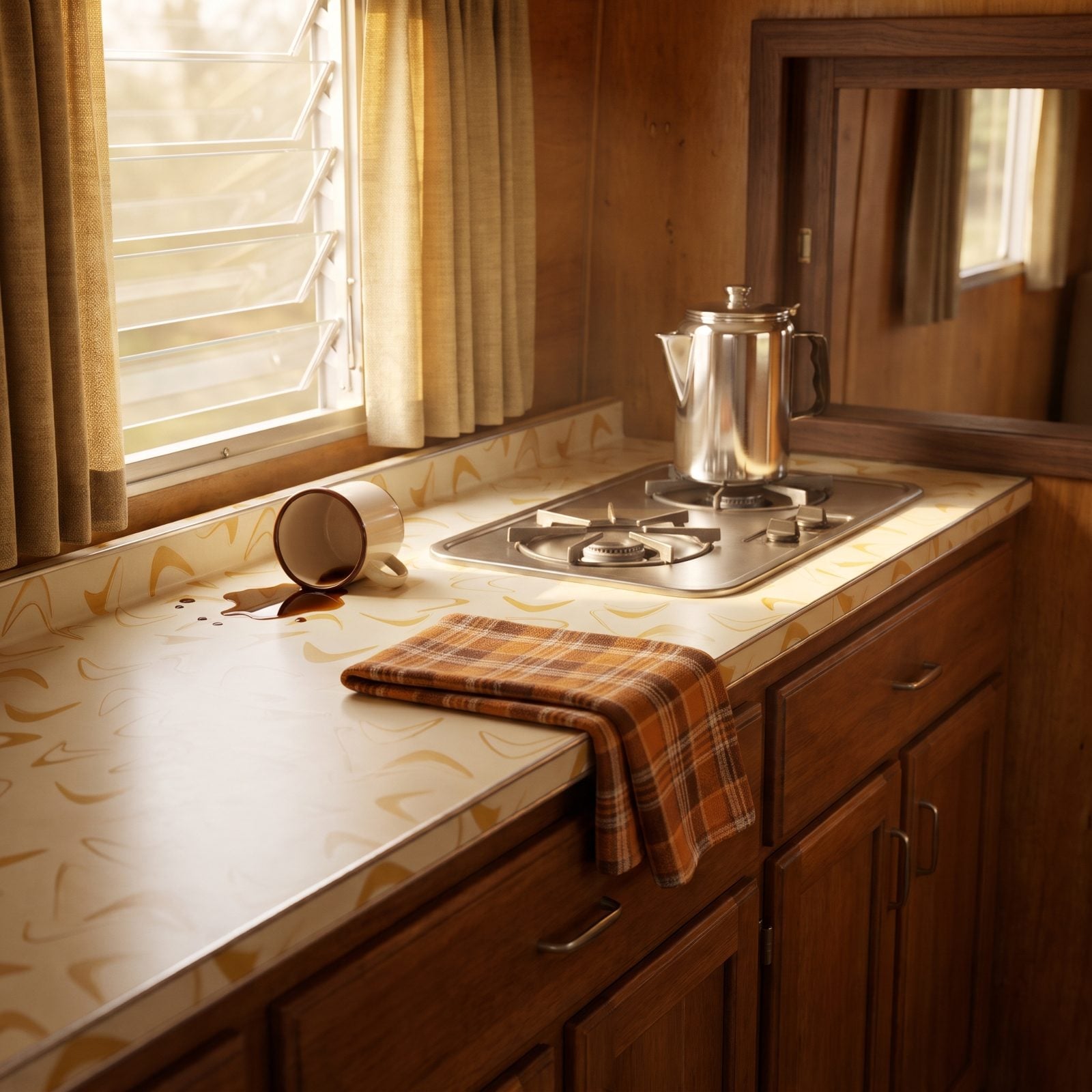
Coffee tips over. It always has. The difference is where it goes.
Old camper counters came with a raised lip around the edge, a little curb maybe half an inch high. Spill your morning cup on a mountain pullout and the mess pooled on the laminate instead of running off the front edge, down the cabinet face, and into the drawer where you kept the matches.
Flat-edged counters look sleeker in a brochure. On a vehicle that’s never truly level, that lip is doing real work, and I’ve mopped enough coffee out of a silverware drawer to appreciate the people who thought about gravity.
10. Folding Counter Extensions
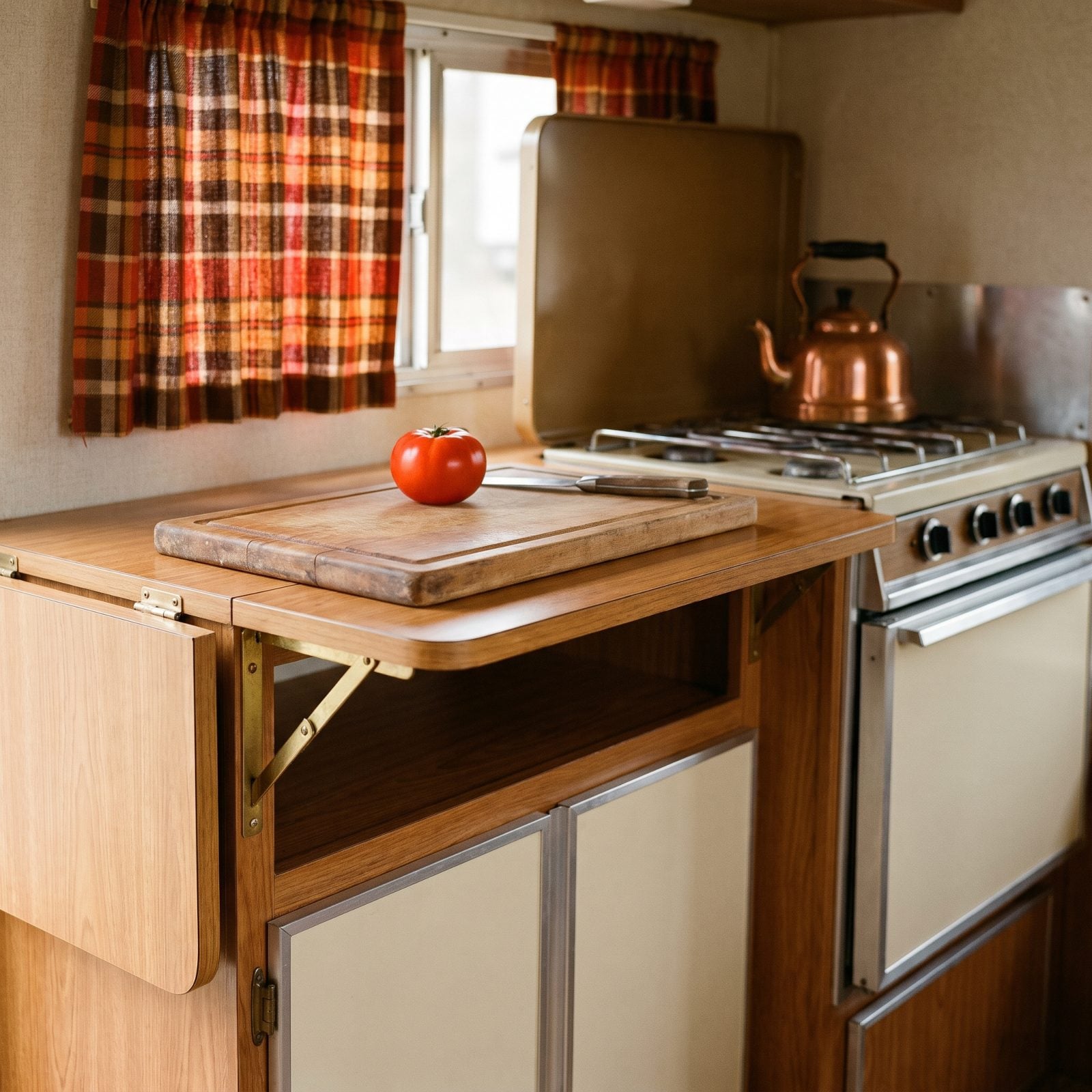
A galley counter the size of a cutting board doesn’t leave you much. So the old slide-ins gave you more, on demand, with a hinged flap that folded up and locked on a gate-leg bracket.
Cooking for two, you flipped it up and suddenly had somewhere to set the cutting board and the pot and the plate all at once. Driving down the road, you dropped it flat and reclaimed the aisle.
This kind of compact ingenuity never went out of style — it just got forgotten. A surface that appears when you need it and disappears when you don’t is worth more in a small rig than almost anything you could bolt in permanently.
9. Rounded Table Corners in Tight Aisles
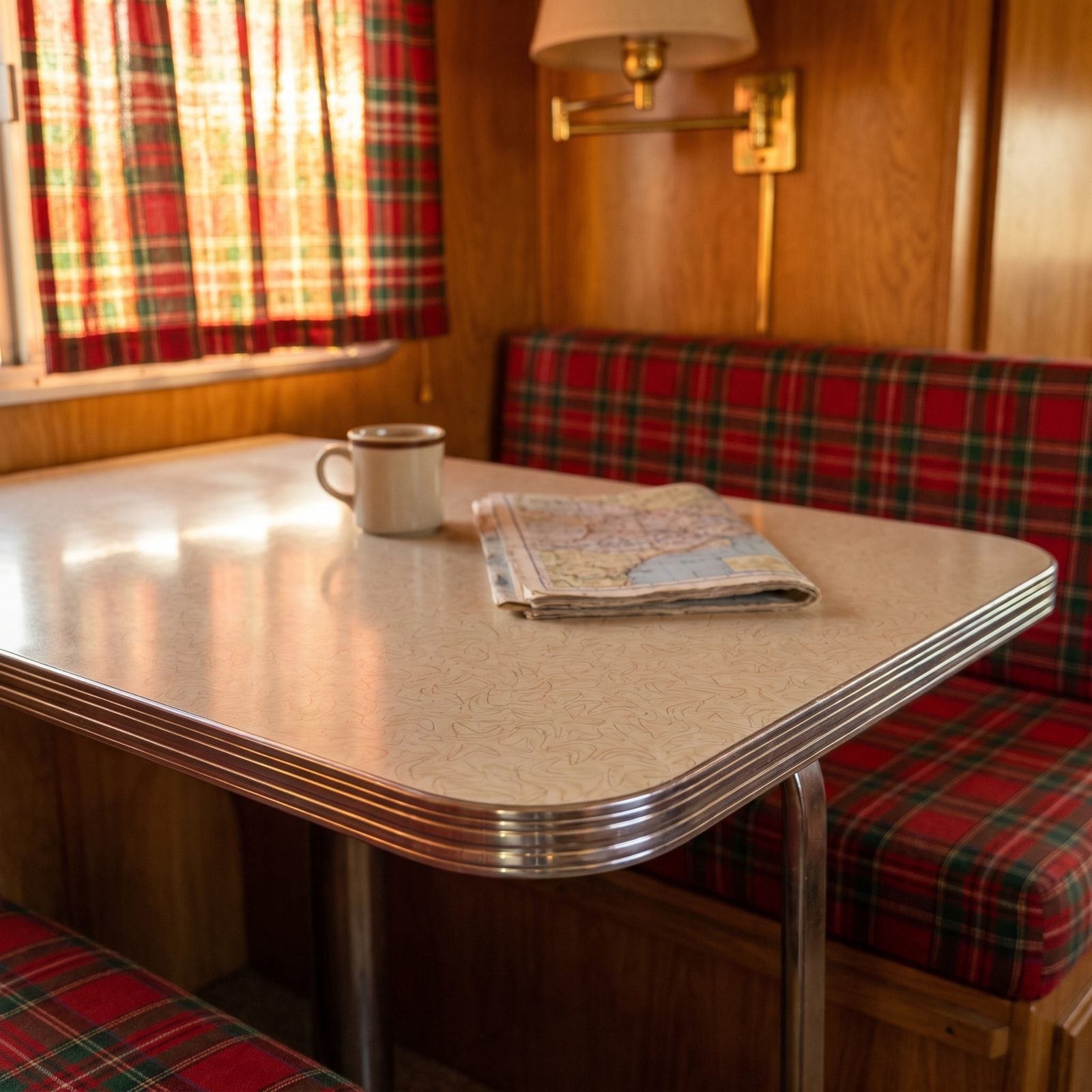
Anyone who has hip-checked a square table corner in a narrow camper aisle remembers the exact bruise. The old builders remembered it too, which is why so many vintage dinette tables wore softly rounded, bullnosed corners wrapped in a chrome band.
You slide past it a hundred times a day in a rig that tight. A rounded corner forgives the brush of a hip, a thigh, a sleepy kid at 6 a.m. heading for the door.
It reads as a styling choice, that rounded shape. Really it was a safety and comfort decision dressed up as midcentury flair, and both jobs got done at once.
8. Solid Plywood Drawer Boxes
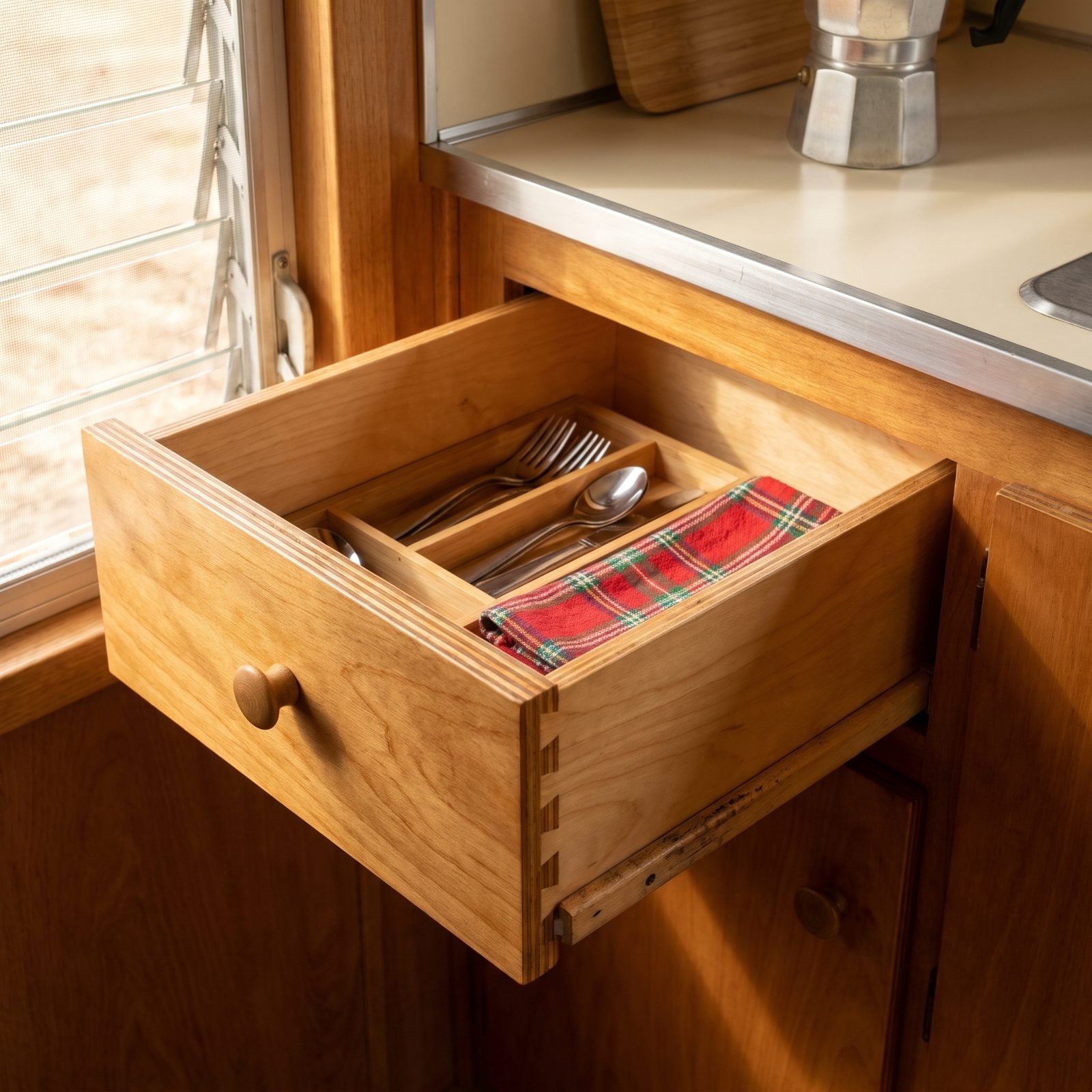
Pull an old camper drawer all the way out and feel the weight of it. Real plywood sides, dovetailed corners, a wood runner worn smooth by a decade of silverware. It thunks shut with the heft of something built to outlast the truck under it.
Compare that to the stapled particleboard and plastic slides in plenty of rigs rolling off the line now — the kind that sag and blow apart the first time you overload them with canned goods on a rough road.
Weight is the usual excuse, and sure, plywood is heavier. But a drawer that survives thirty years of washboard roads earns its ounces. The vintage slide-ins understood a camper is a vehicle that shakes itself apart a little every mile, and they built the insides to take it.
7. Durable Sheet-Vinyl Flooring That Took a Beating and Asked for More
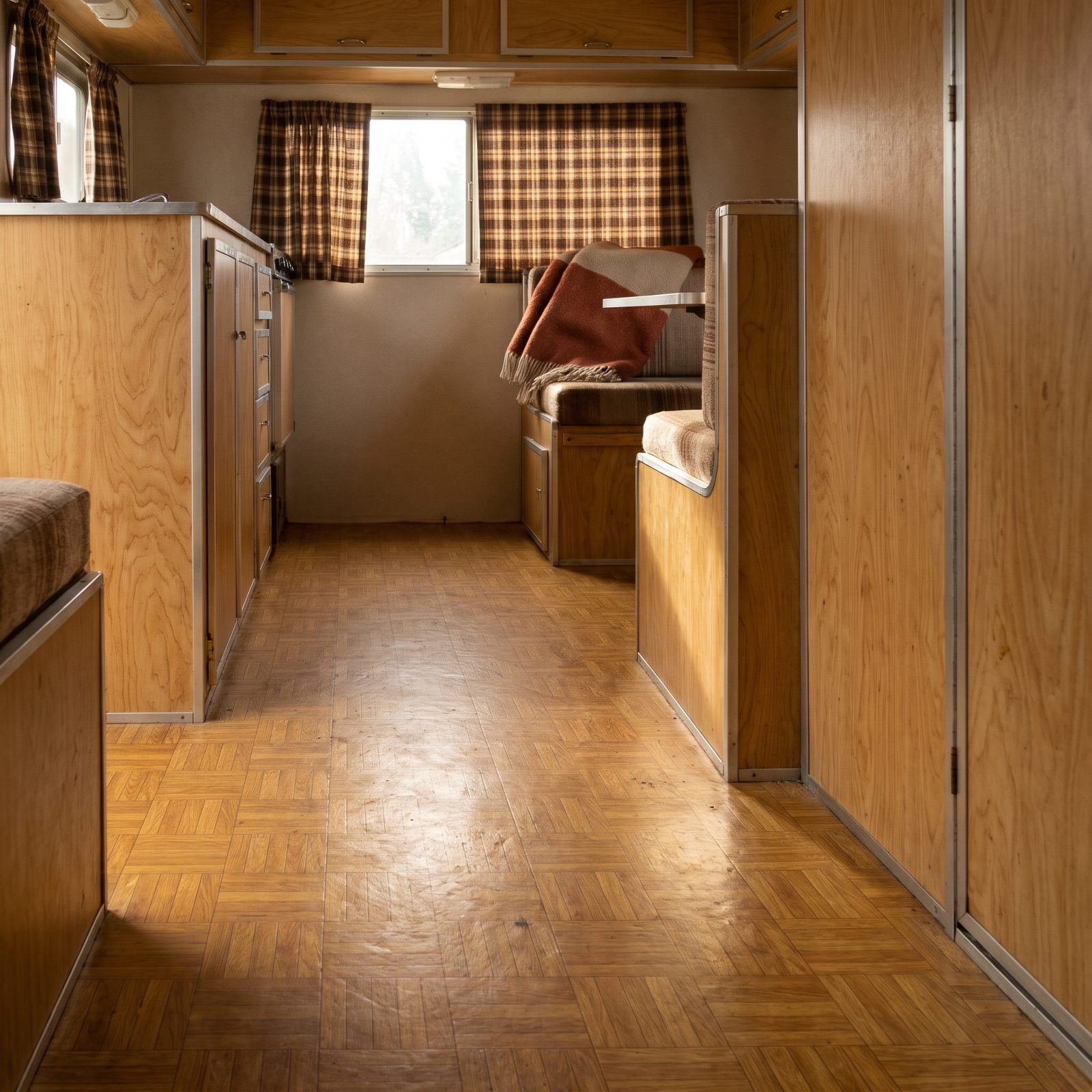
Drop a wet cooler on this floor and nothing happens. Track in campfire ash, sand from a lake day, mud off your boots — it all wipes up with one pass of a damp rag. Vintage truck campers laid vinyl tiles in a parquet pattern, square by square, and that tough waterproof surface is why so many of these floors are still intact fifty years later, visible seams and all.
Modern builders keep chasing click-together laminate and engineered planks that look great in the brochure and swell the first time your sink overflows. The old vinyl tiles just shrugged. Quiet underfoot, warm enough in socks, and it never once splintered.
6. Washable Upholstery Covers You Could Actually Throw in the Wash
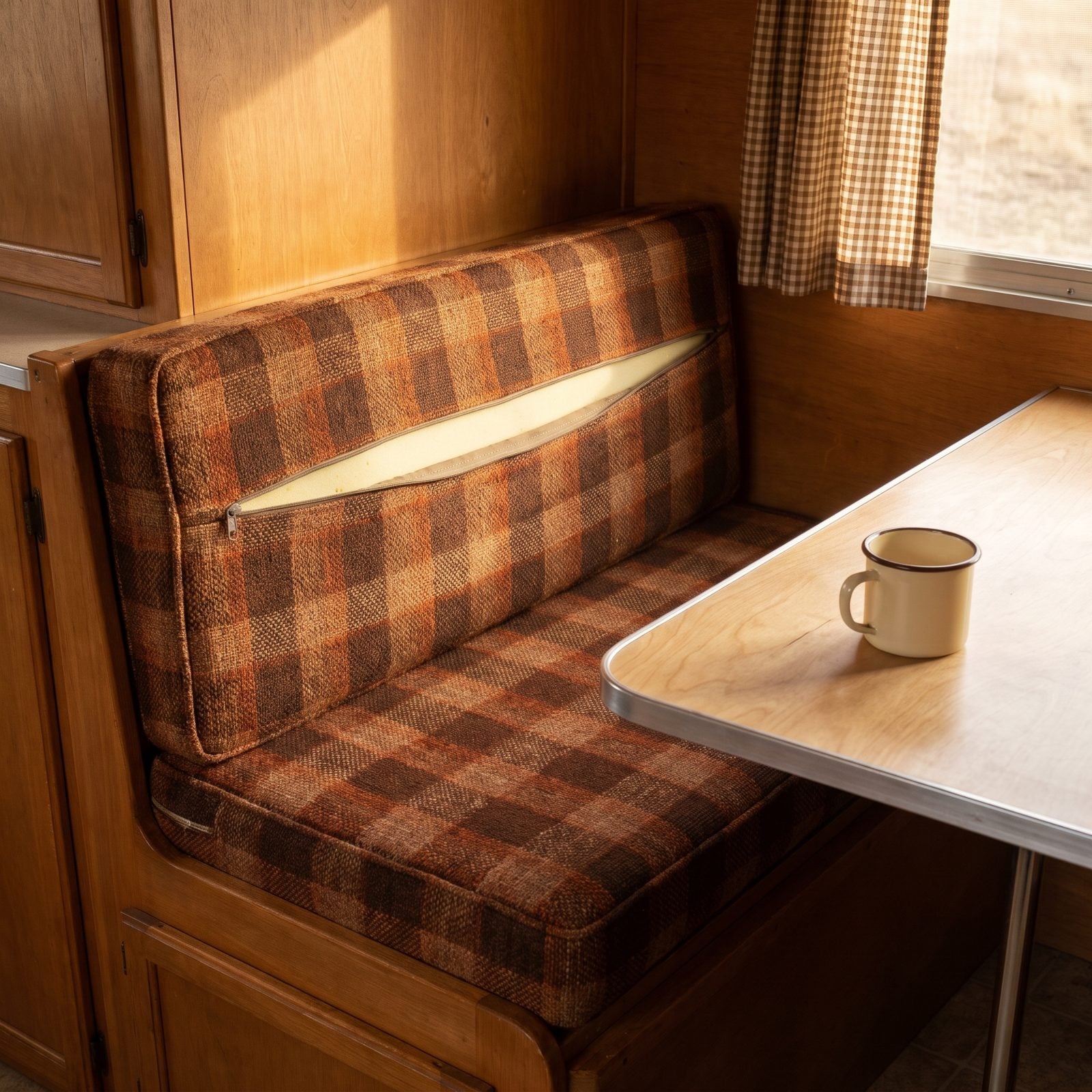
Zippers on cushion covers used to be standard, and I genuinely miss them. Spill wine, drop a plate of chili, let a kid with a melting Popsicle climb onto the dinette — none of it mattered. You unzipped the cover, washed it, zipped it back on. Try that with the glued-down upholstery on most new rigs.
The old plaid and tweed covers weren’t just wipeable. They came off entirely, and fabric that can survive a wash cycle lasts years longer because it never has to live with a stain it can’t shed.
5. Exterior Stripes With Genuine Personality
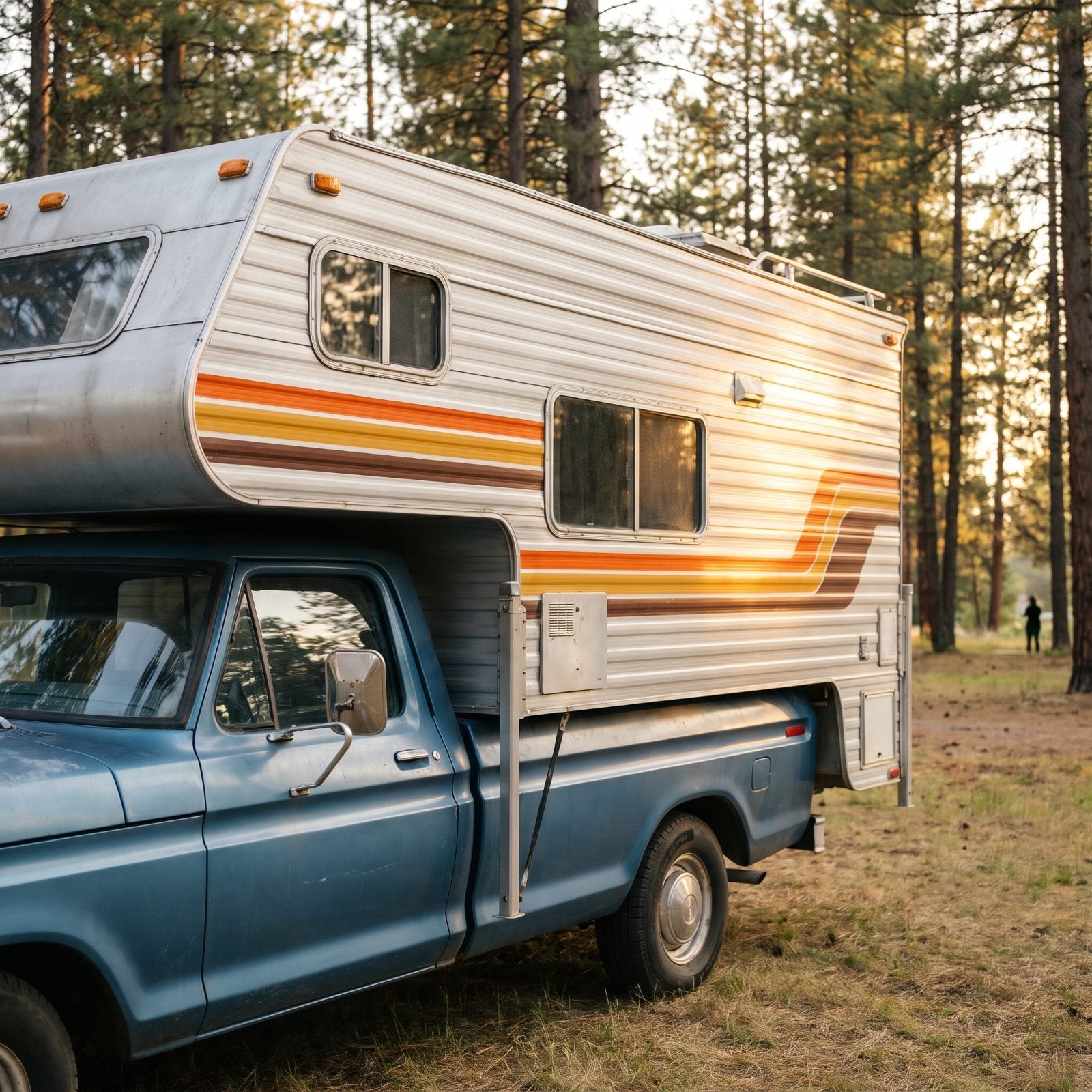
There’s a reason you can spot a 1970s camper from three campsites away. The exterior stripes meant something — a hard orange swoosh across brushed aluminum, a trio of gold-and-brown bands tapering toward the tail, graphics that had opinions.
Newer rigs went beige. Then beige with a timid gray squiggle. Then beige with a slightly different beige. Walk a modern RV lot and you’ll struggle to tell two brands apart.
Those old stripe packages gave each camper a face. People named these things. You don’t name a rig that looks like every other rig in the row.
4. Dinette Windows Set at Seated Eye Level
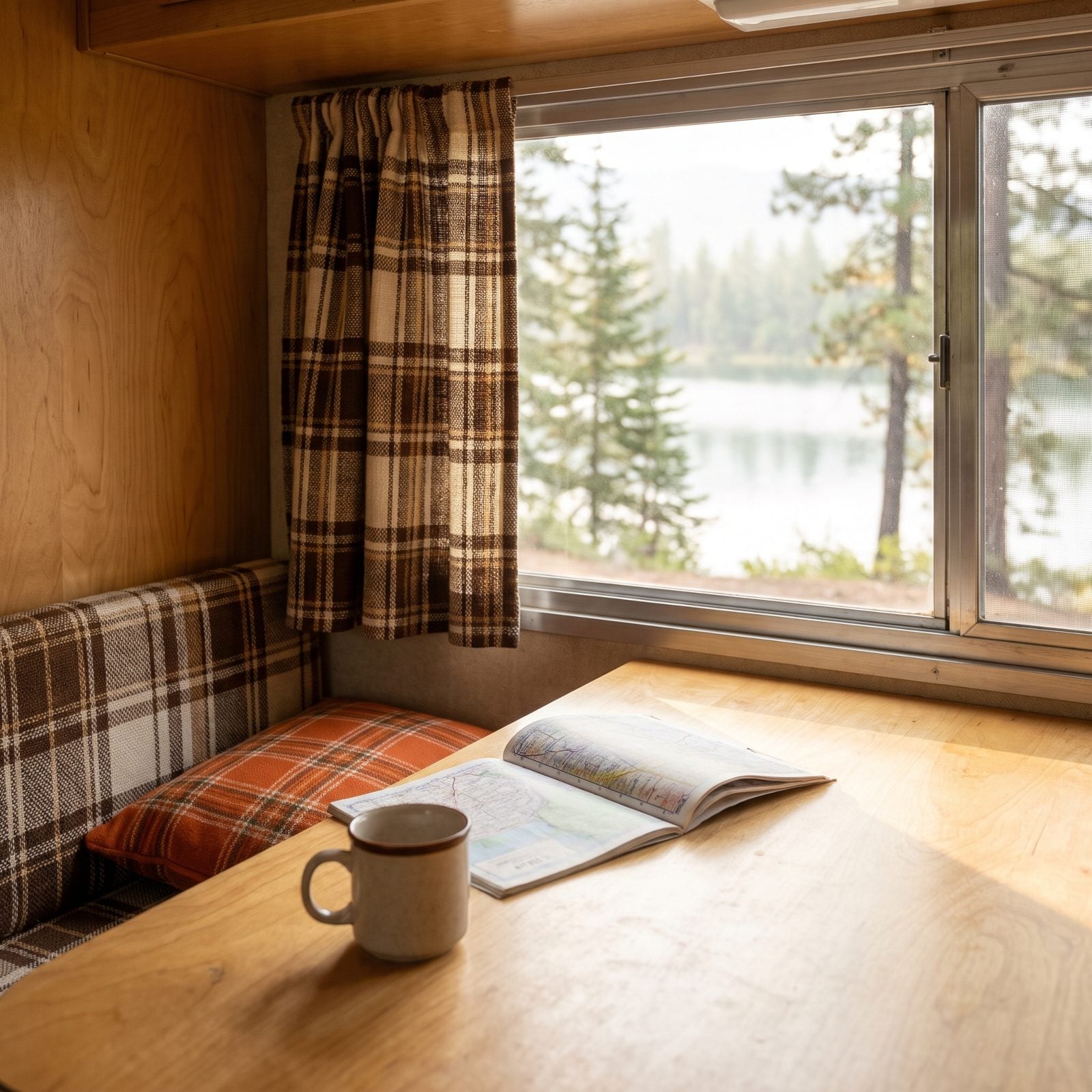
Sit down at the dinette in a good vintage camper and the window is right there, at the exact height your eyes land. Not up near the ceiling. Not down by your knees. Right at the view.
Somebody actually sat in these benches before signing off on the build. You could eat breakfast watching fog lift off a lake without craning your neck or standing up, and that kind of window placement is what separates a camper that feels like a box from one that feels like a porch you can drive.
I’ve been in newer rigs where the dinette window frames nothing but sky, and you realize nobody ever sat there to check.
3. Enough Wall Hooks for Every Wet Thing You Owned
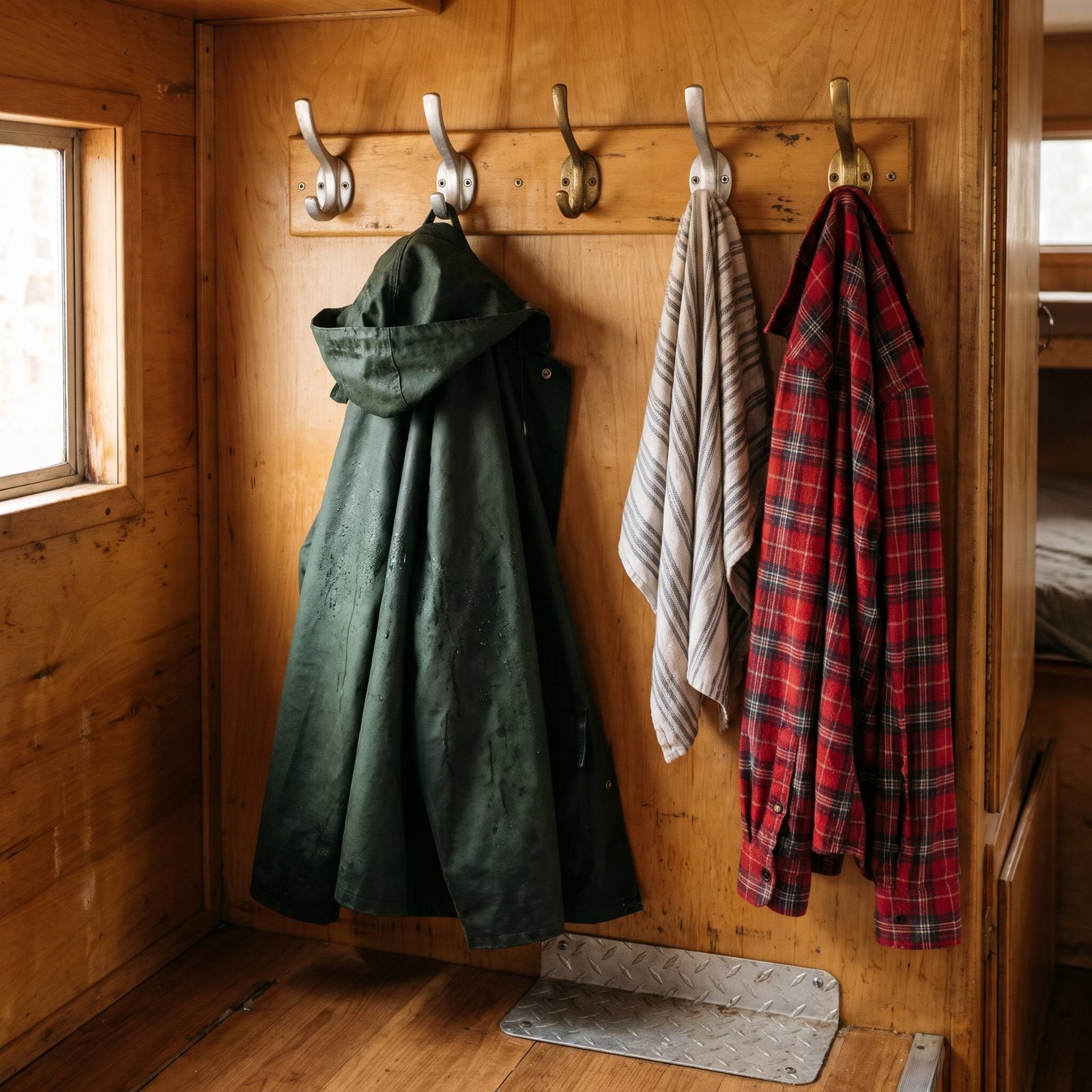
Come back from a rainstorm in an old camper and there was always somewhere to hang the dripping stuff. Hooks by the door, hooks over the bench, hooks you didn’t even notice until you had three wet things and needed all of them.
Wet clothes have to go somewhere. In the vintage rigs that somewhere was a solid metal hook screwed into the wall — not a flimsy adhesive hook that lets go at midnight with your only dry jacket on it.
2. A Roof Rack Built for the Genuinely Bulky Stuff
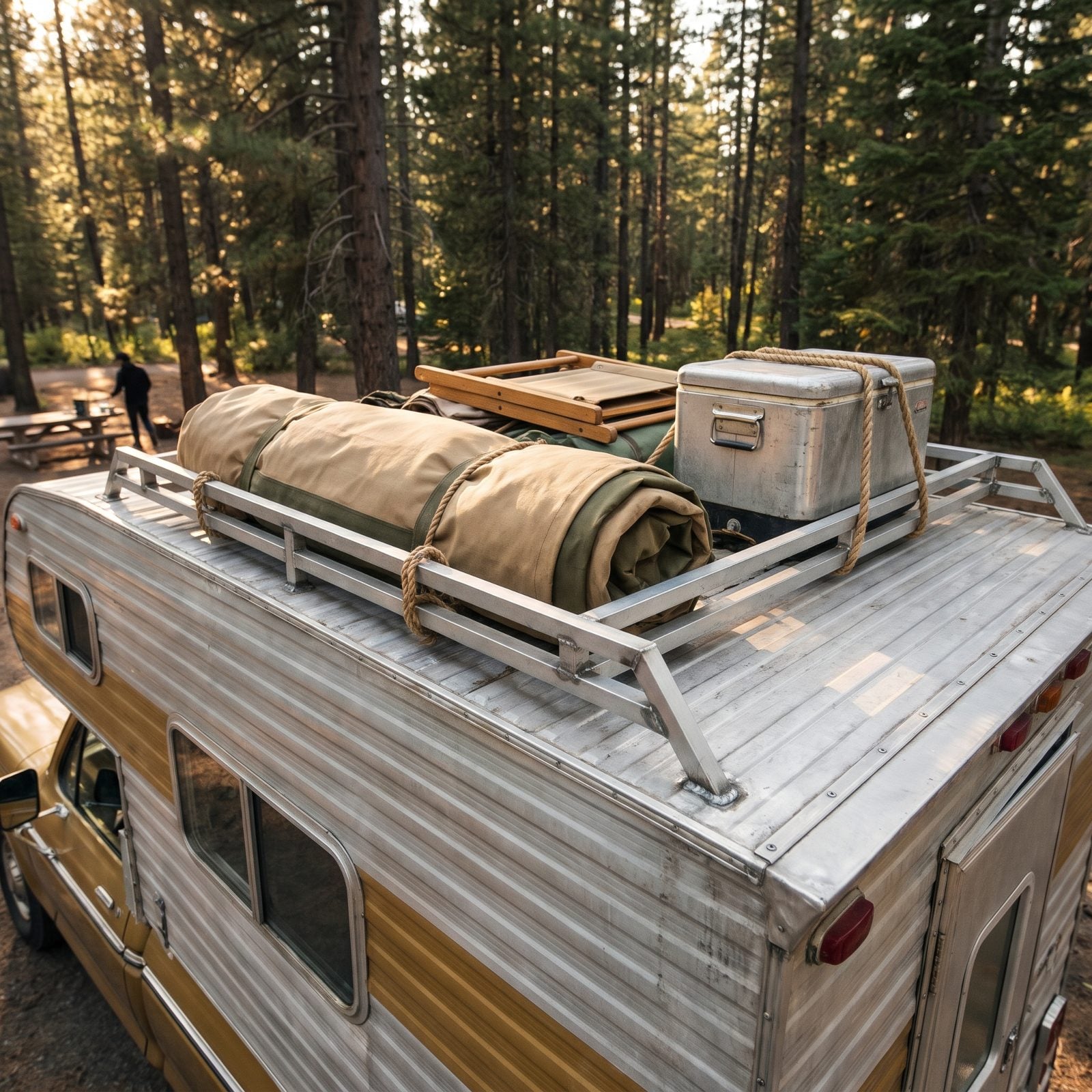
The old roof racks weren’t decorative chrome. They held a canvas tent, two folding chairs, a cooler, and whatever else wouldn’t fit inside — all lashed down with rope, and nobody worried about it.
A truck camper gives up a lot of storage to its own cleverness. So the roof became the overflow, and the vintage racks were welded aluminum built to carry real weight, not the token luggage bar you see today that warns you against putting anything heavier than a pillow up there. Bulky gear is the whole point of camping. You need somewhere to put the awkward stuff.
1. Rear Ladders That Came Standard, Not as a $400 Option
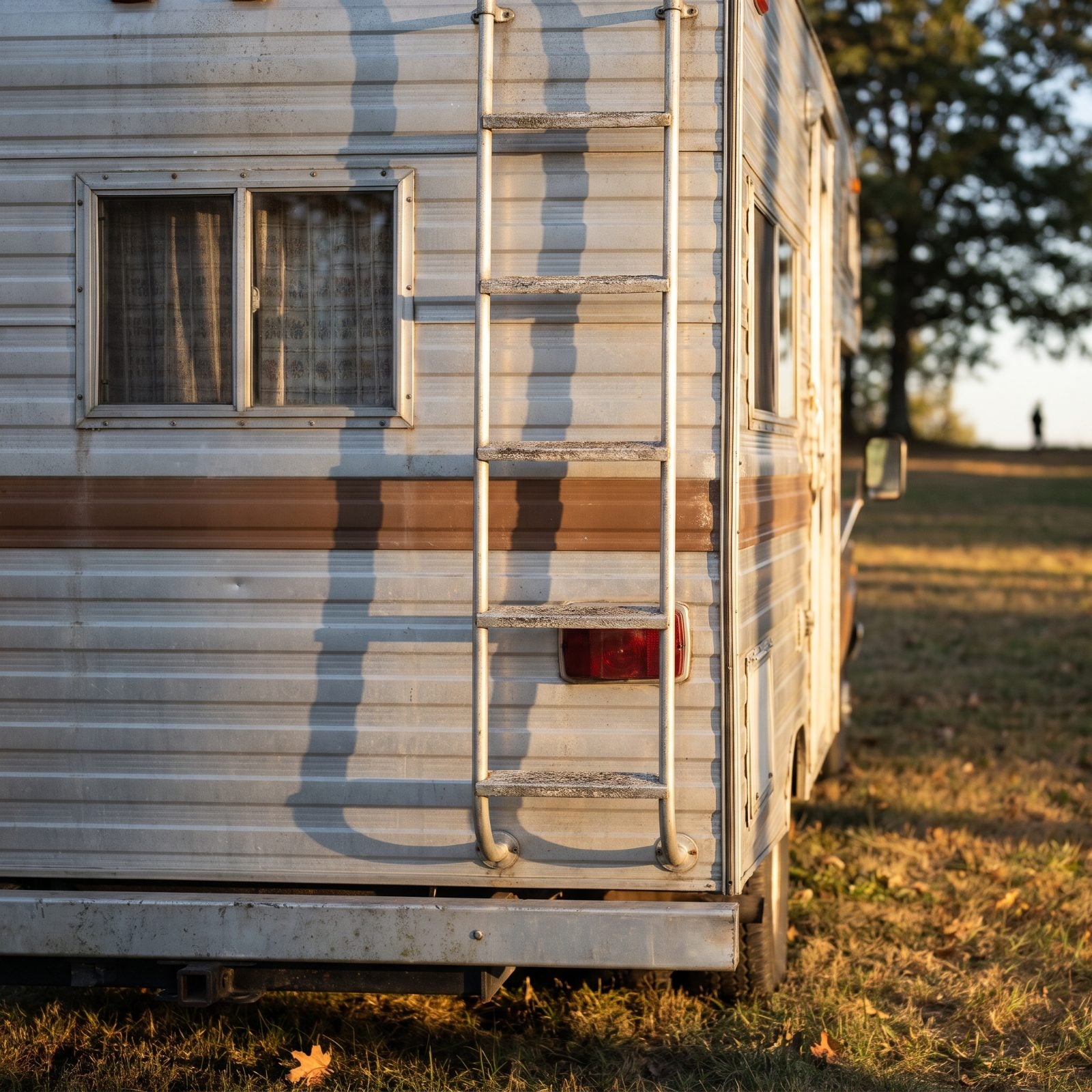
Every vintage camper had a ladder bolted to the back, and nobody treated it like a luxury. You needed the roof — to tie down gear, sweep off pine needles, patch a seam, check the vent after a hailstorm. So the ladder was just there.
Now a rear ladder is a line item. An upcharge. An accessory you order and someone installs with four lag bolts and a markup.
But here’s what a ladder actually tells you about a camper: the builder expected you to maintain the roof instead of ignoring it until it leaked. That’s a quiet vote of confidence in both the owner and the rig.