
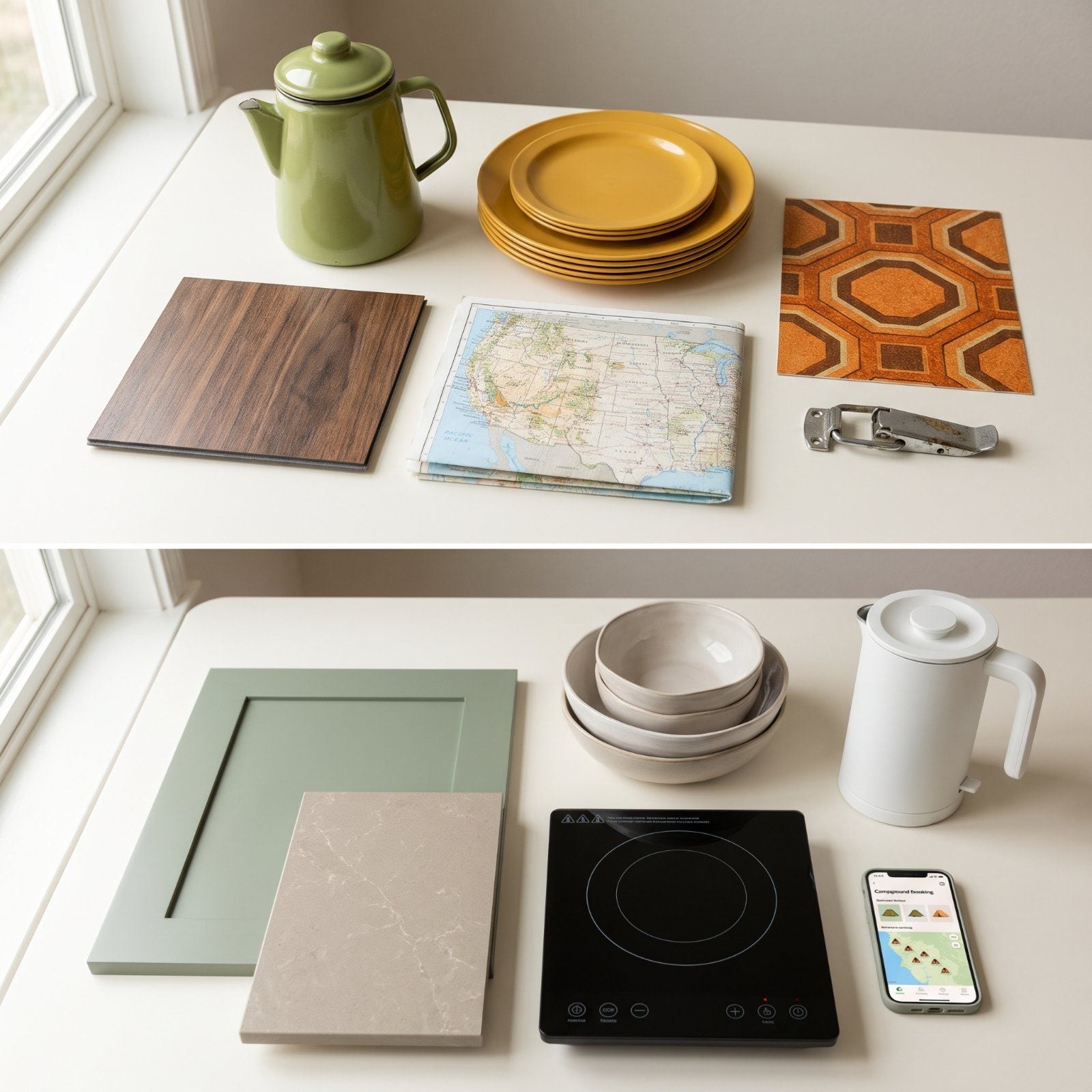
Step into a 1974 travel trailer and the color hit you first. Avocado green, before your eyes even adjusted to the dim galley light, then the smell of warm vinyl and percolator coffee. Dark, snug, built to survive a gravel road. We pulled apart the features everyone over fifty remembers and lined them up against what rolls off the lot today. The bones haven’t changed. Everything else has.
Please note that some of the images in this article were created with the assistance of AI.
48. Closed-Off Galley Kitchens vs. Open-Plan Living Spaces
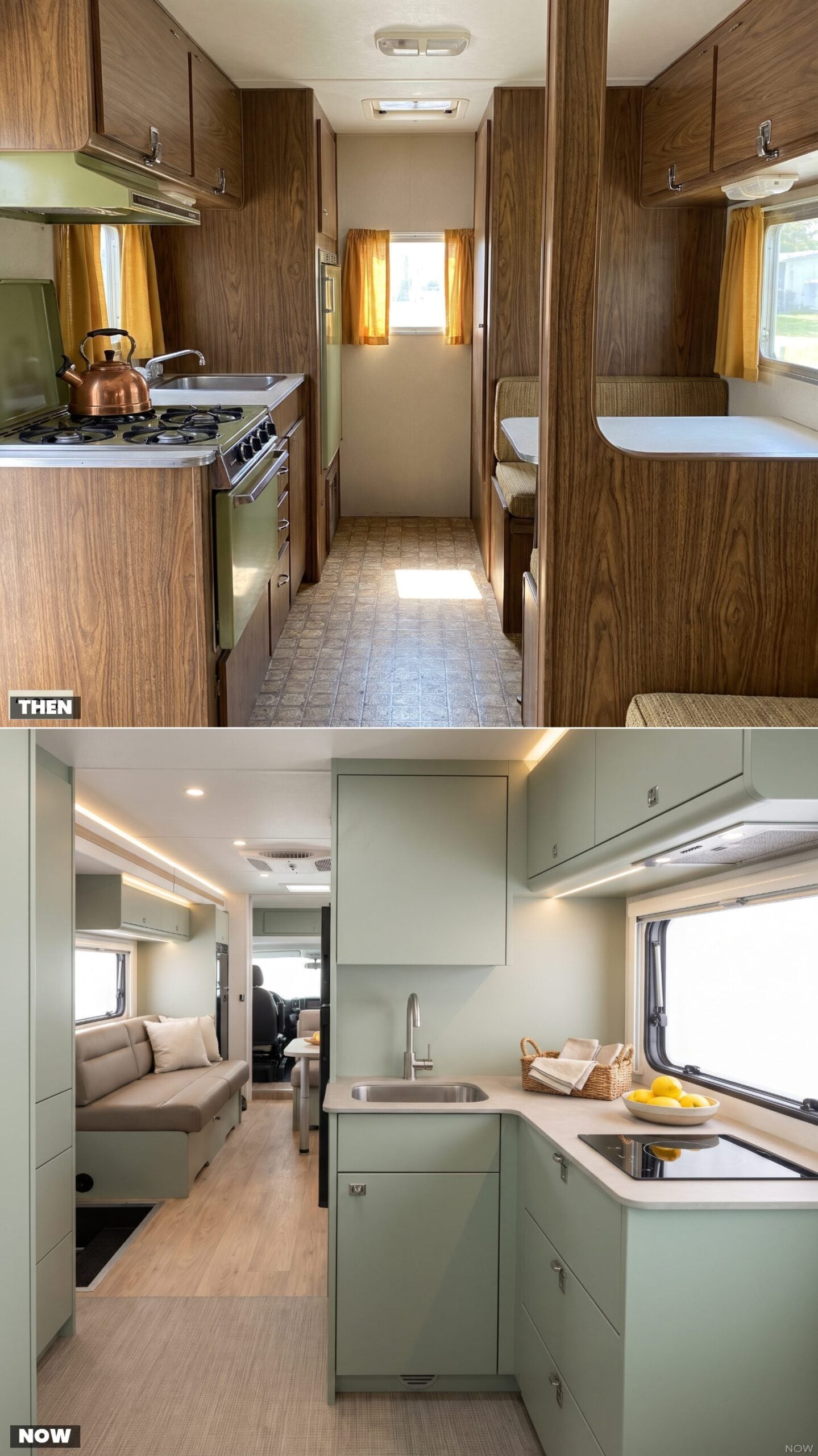
The 1974 galley was a hallway you cooked in, walls on both sides, a pass-through the size of a mail slot. If two people wanted in there at once, one of them was leaving. It worked the way a phone booth works.
Modern layouts knocked the walls out. Now the cooktop talks to the couch, and whoever’s chopping onions stays in the conversation. Same square footage, completely different feeling of space.
47. Avocado-and-Harvest-Gold Palettes vs. Warm Neutral Interiors
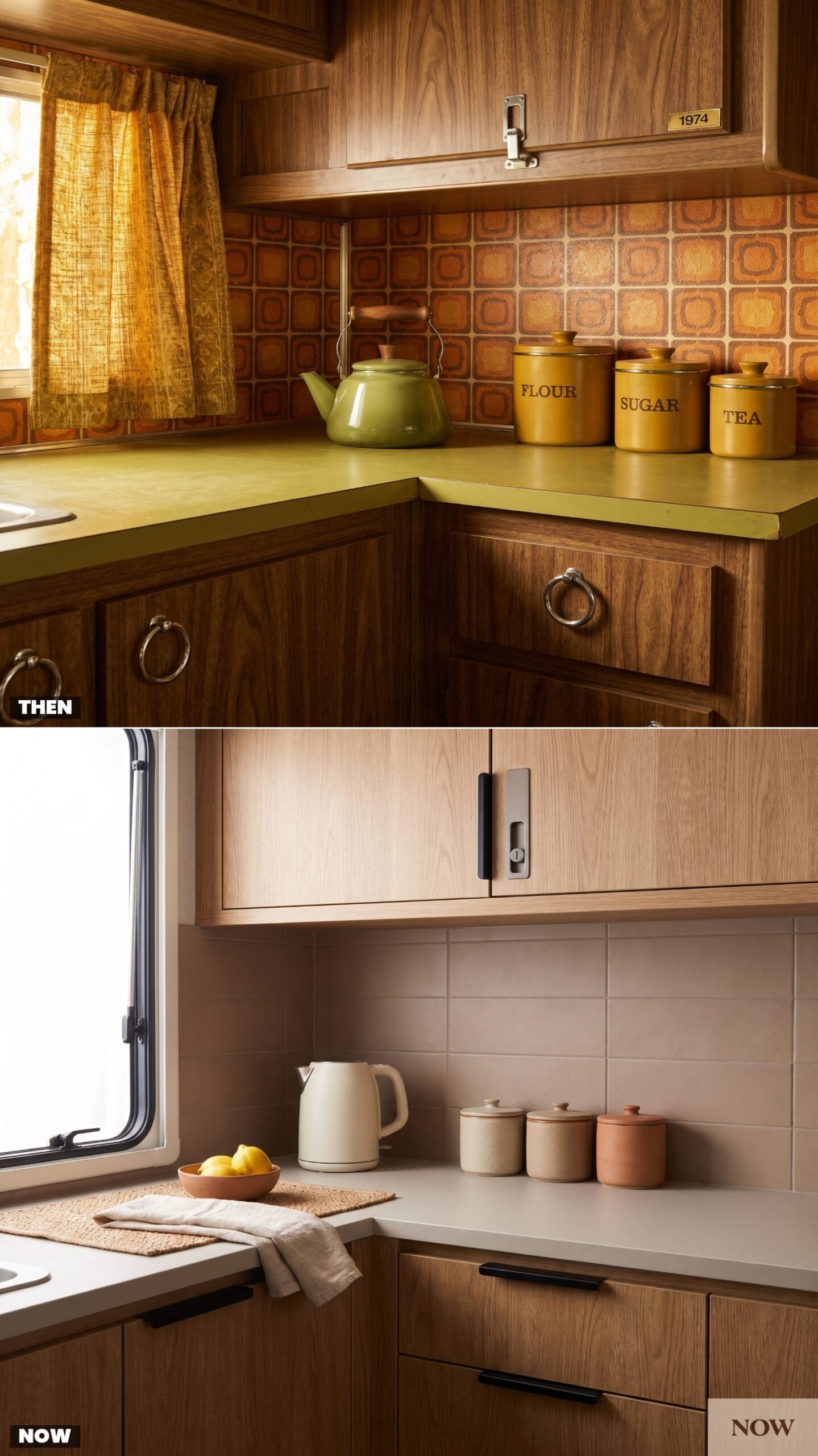
Avocado and harvest gold weren’t a choice, they were the law. Every brochure, every showroom, your neighbor’s Shasta, all glowing the same swampy green. You either loved it or you bought a lot of air freshener and learned to live with it.
The palette runs warm and quiet now. Greige, clay, oatmeal, the kind of neutrals that don’t fight you after eight hours of driving. Grab a cream enamel kettle and it still looks right in five years, which is more than the gold one ever managed.
46. Faux-Walnut Cabinetry vs. Matte Slab-Front Cabinets
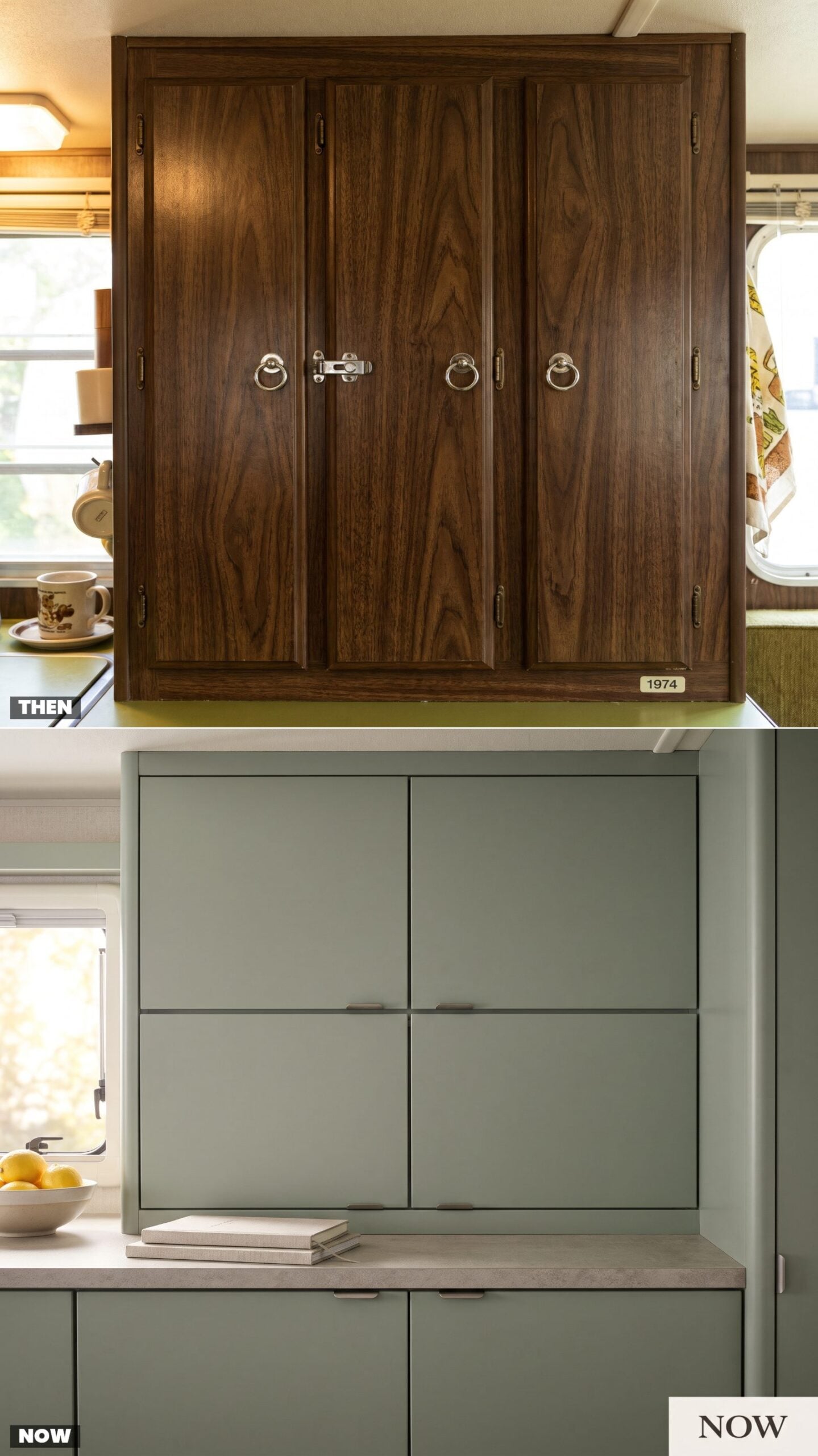
That printed walnut grain fooled nobody, and it wasn’t trying to. Tough, good at hiding fingerprints, and the chrome pulls held up to years of grabbing. Function first, honesty optional.
Matte slab fronts went the other way. No fake grain, no gloss, just a flat calm surface in sage green or warm clay. The latches are still in there, hidden now, because a rough road hasn’t gotten any smoother since 1974.
45. Patterned Laminate Counters vs. Seamless Solid-Surface Worktops
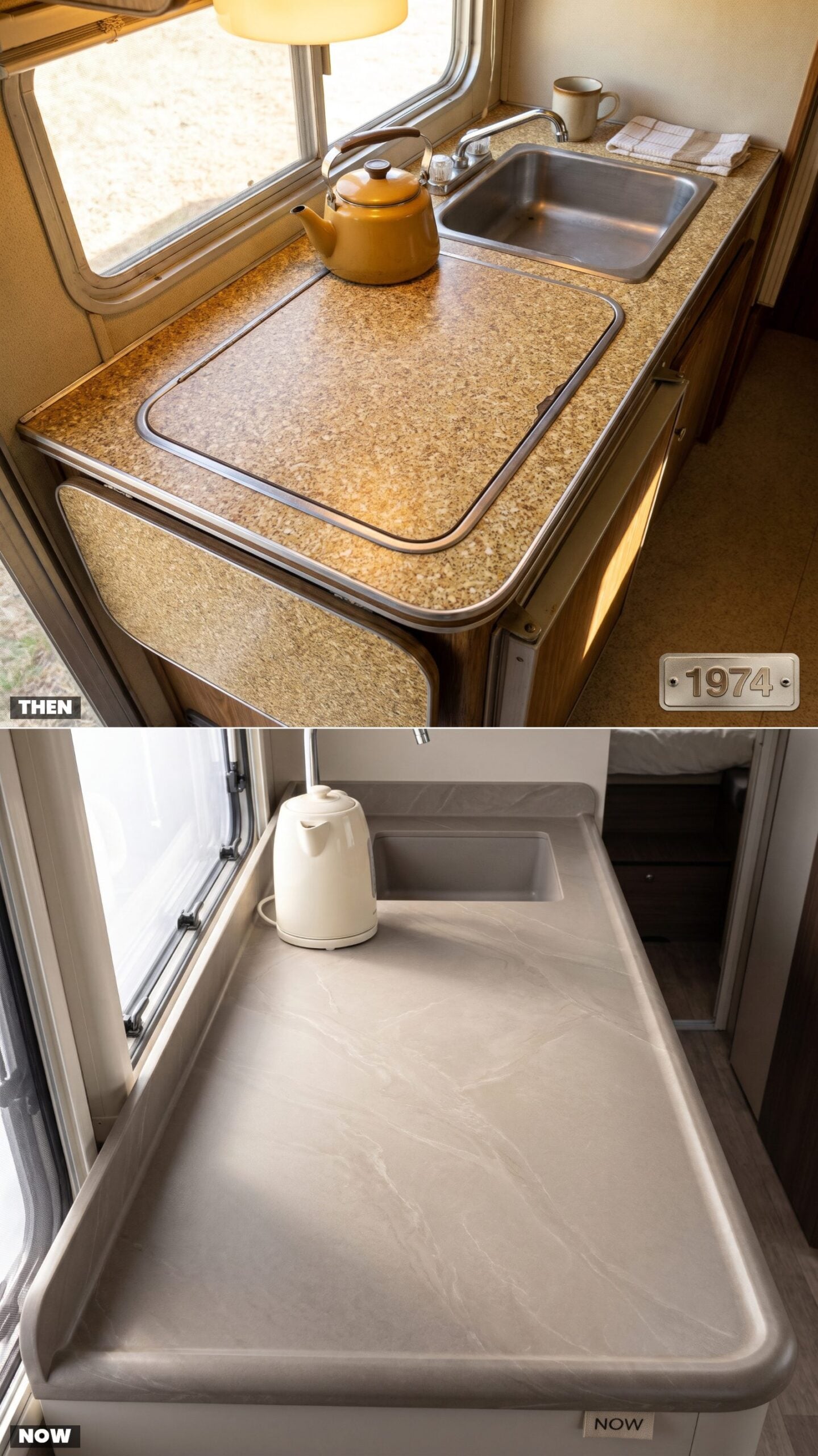
The old counters came loud on purpose. Speckles, boomerangs, gold flecks, all of it designed to hide crumbs and coffee rings between stops. The metal edge trim caught everything and rusted eventually, but it held the laminate down over washboard roads.
Solid-surface worktops dropped the pattern and the seam together. One smooth piece, an integrated sink, nothing for gunk to hide in. Wipe it once and you’re done. The old ones needed a toothbrush for that edge trim, and I say that as someone who spent a lot of camping trips not doing it.
44. Printed Vinyl Backsplashes vs. Lightweight Modern Tile
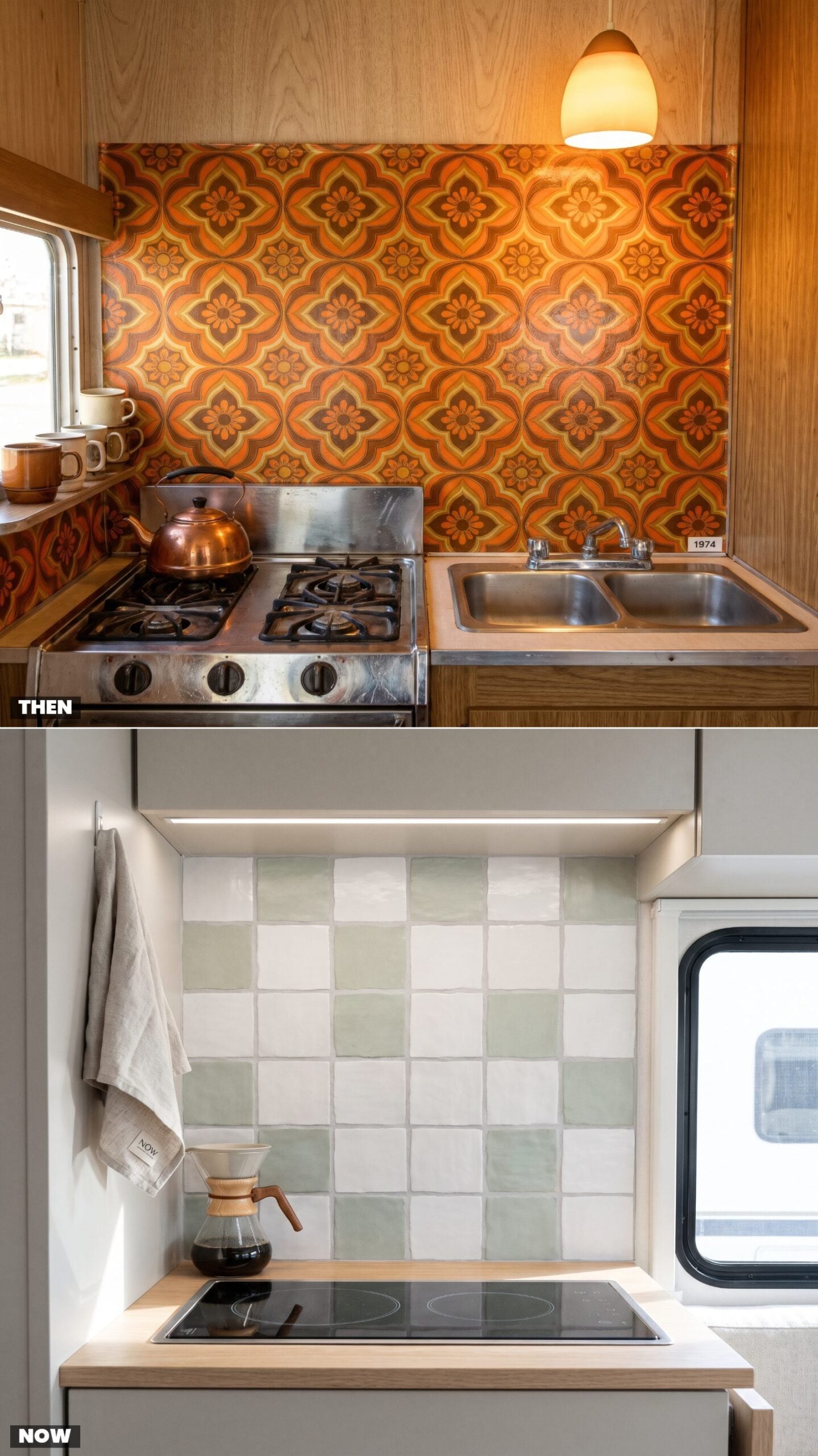
A sheet of printed vinyl tacked behind the stove, pretending to be tile. Orange flowers, brown diamonds, whatever was on the roll that year. It peeled at the corners after a couple of hot summers and curled up like old wallpaper.
Today’s lightweight tile is actually tile, or a convincing peel-and-stick version that won’t crack the frame with its weight. Clean grout lines, matte finish, and it shrugs off grease splatter.
43. Dark Wood-Effect Walls vs. Bright Washable Wall Panels
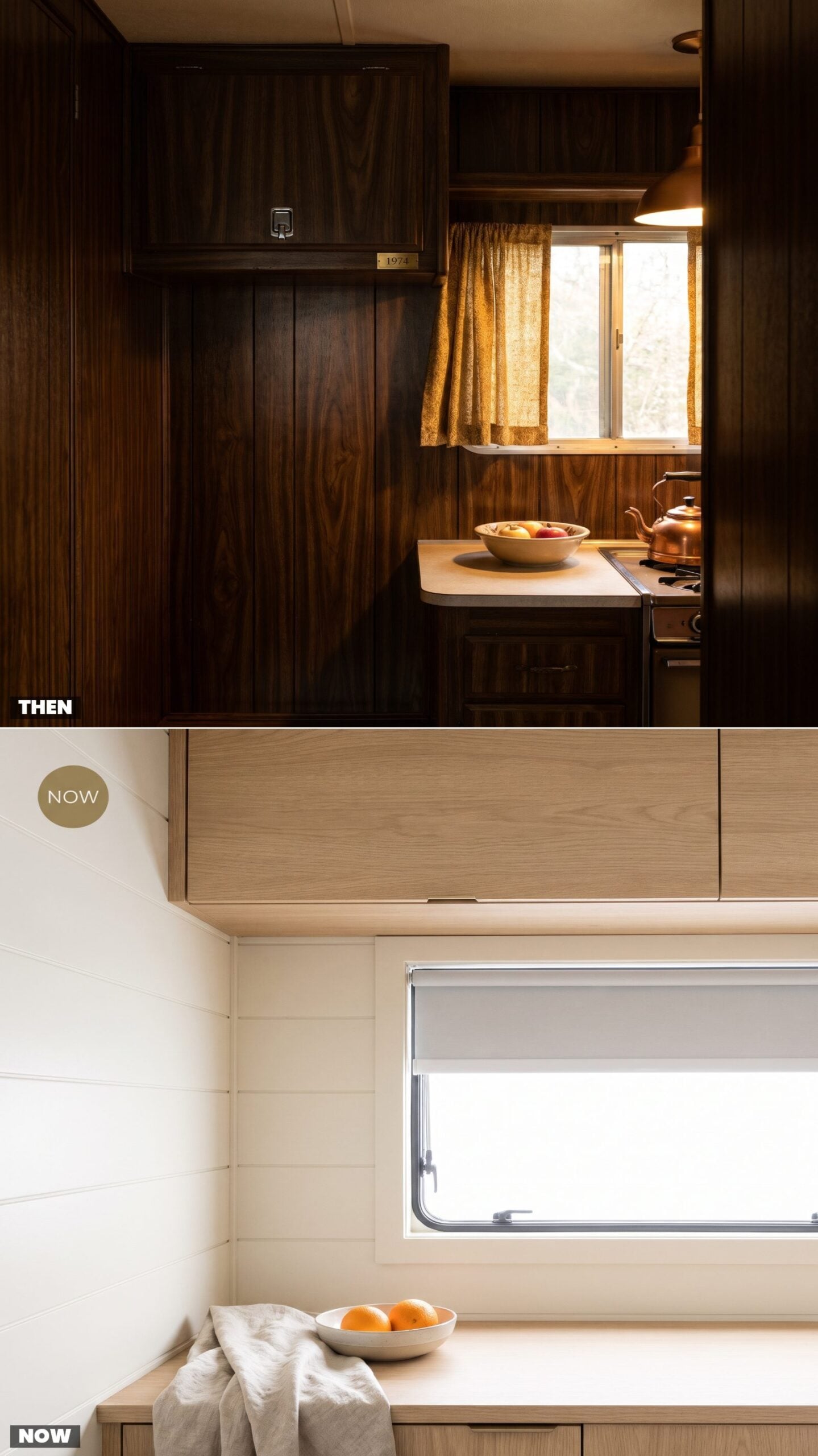
You know the wall. Dark wood-grain paneling floor to ceiling, drinking up whatever light made it through the little window. It felt cozy for about twenty minutes and then it just felt like a cave with a stove in it.
Bright washable panels flipped all that around. Warm white, smooth, wipeable, and they bounce light instead of swallowing it, so the whole galley feels bigger before you’ve moved a single thing. I’ll die on the hill that dark walls in a tight cabin are a mistake nobody has to keep making.
42. Sheet-Vinyl Floors vs. Waterproof Luxury Vinyl Planks
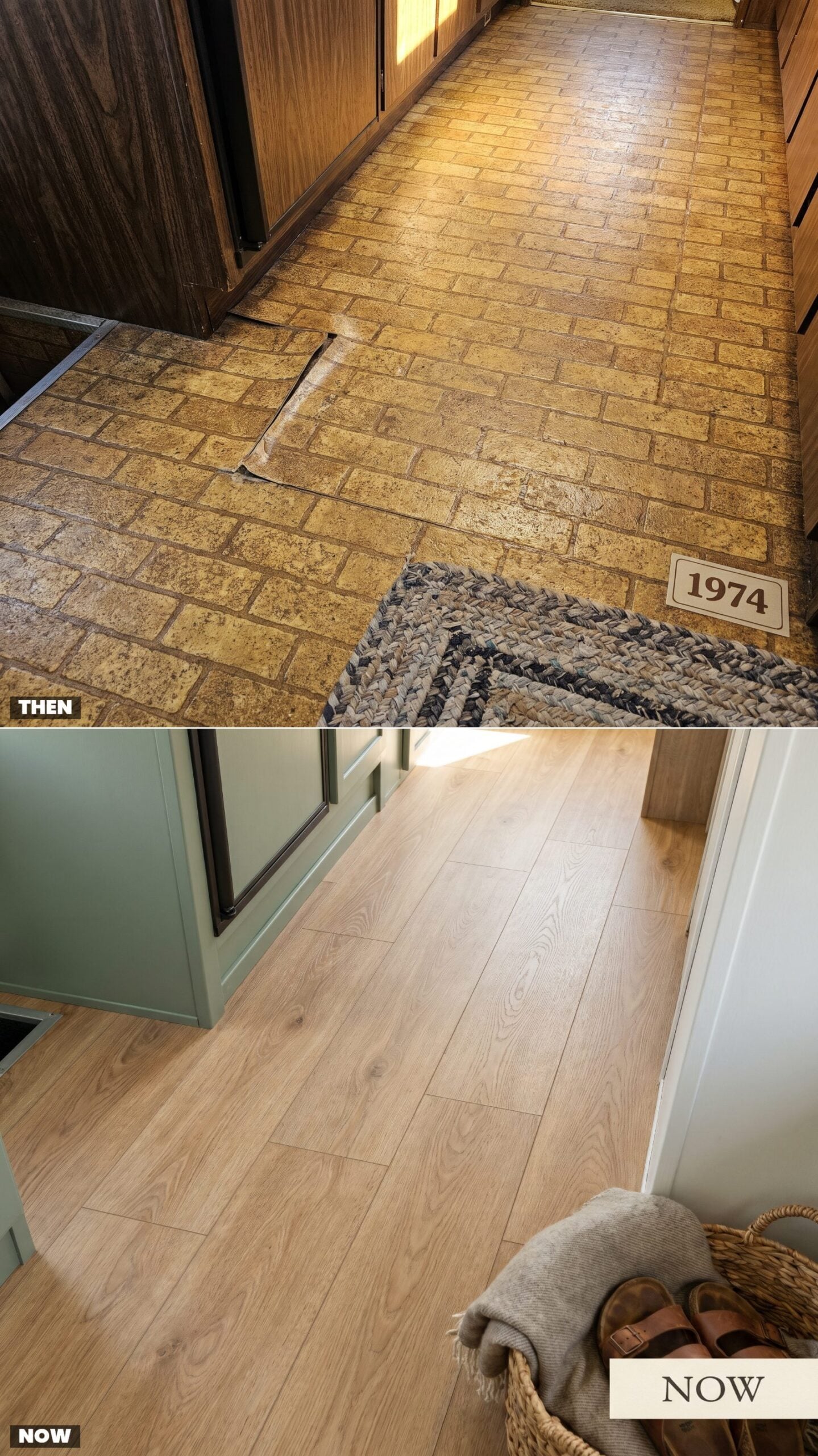
One big sheet of vinyl, faux brick or faux tile, rolled across the floor and glued down. It started lifting at the seams by the second season, and the walking lane wore to a dull gray stripe. Everybody’s childhood camper had that worn patch right in front of the sink.
Luxury vinyl plank fixed all of it. Waterproof, convincing wood-look, clicking together plank by plank so a spill or a slow leak doesn’t take out the whole floor. Knock over your coffee, wipe it up, no drama.
41. Louvered Jalousie Windows vs. Panoramic Insulated Windows
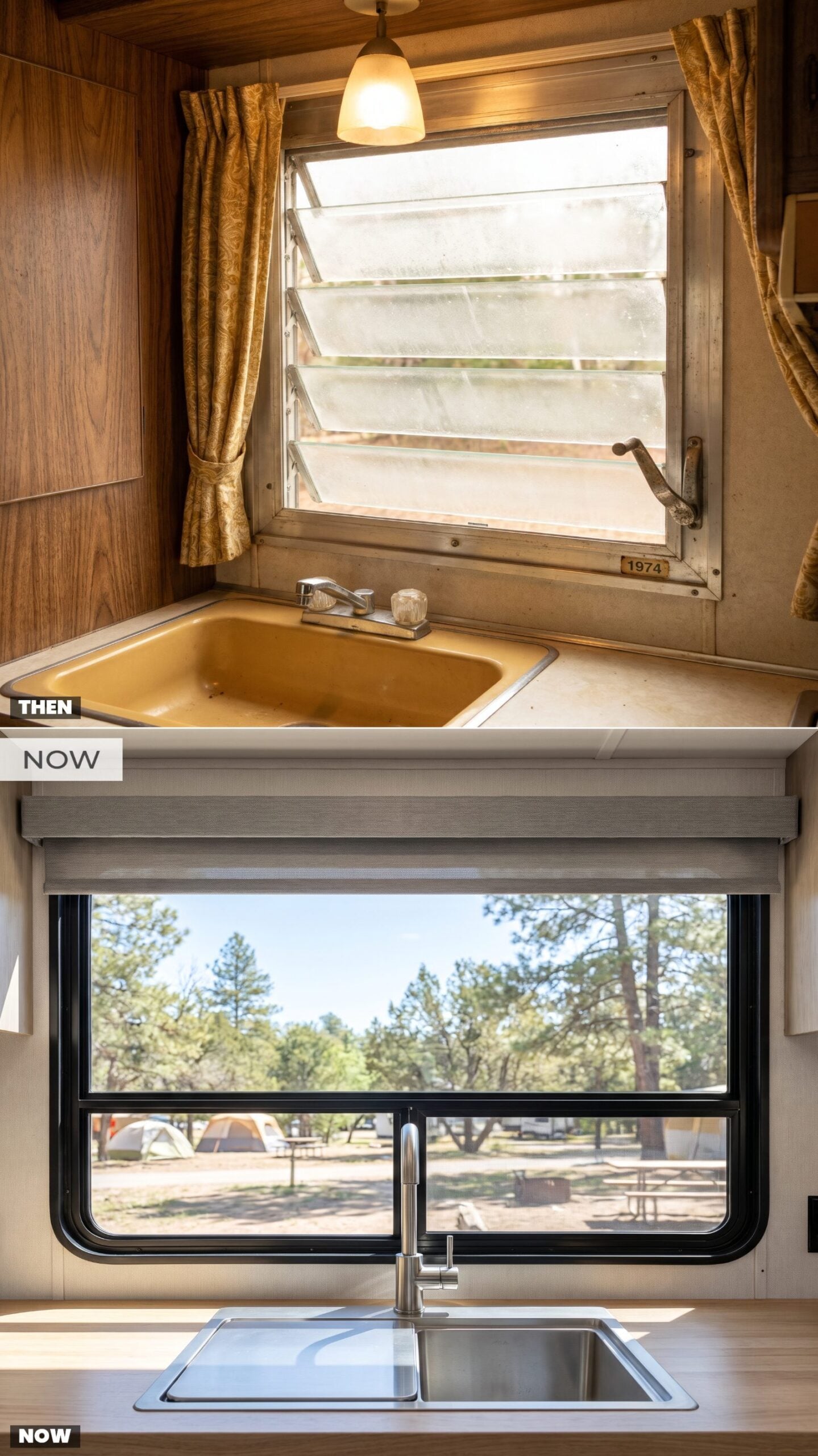
Jalousie windows were a clever idea that aged badly. Crank the handle, the glass slats tilt open, and you get a breeze. They also leaked air, fogged up, and never quite sealed, so every slat was a little draft come October.
Panoramic insulated windows trade the slats for one big clear pane and a real seal. Better view, steadier temperature, and you can actually see the lake while you wash dishes instead of squinting through six horizontal bars.
40. Printed Café Curtains vs. Blackout Roller Shades
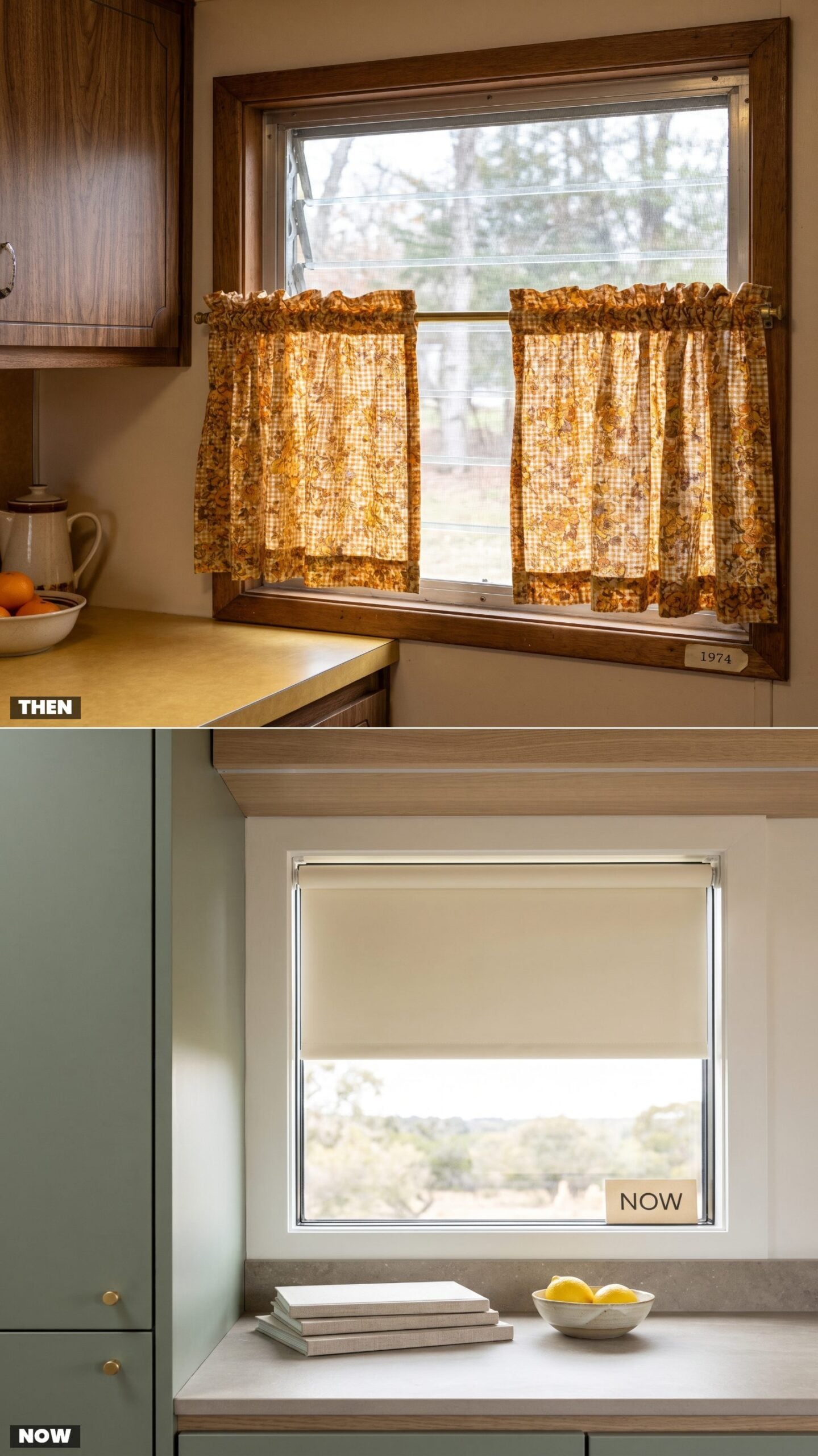
Printed café curtains were the final flourish, usually matching the exact gold-and-orange floral of everything else in the trailer. Cheerful at noon, completely useless at 6 a.m. when the sun crested the campsite and lit the whole place like a greenhouse.
Blackout roller shades solved what curtains never could. Pull it down and the galley goes dark, so you sleep past dawn even parked in a treeless lot. Flush-mounted, no ruffles, no fabric swinging around on a bumpy road.
39. Incandescent Dome Lights vs. Recessed LED Lighting
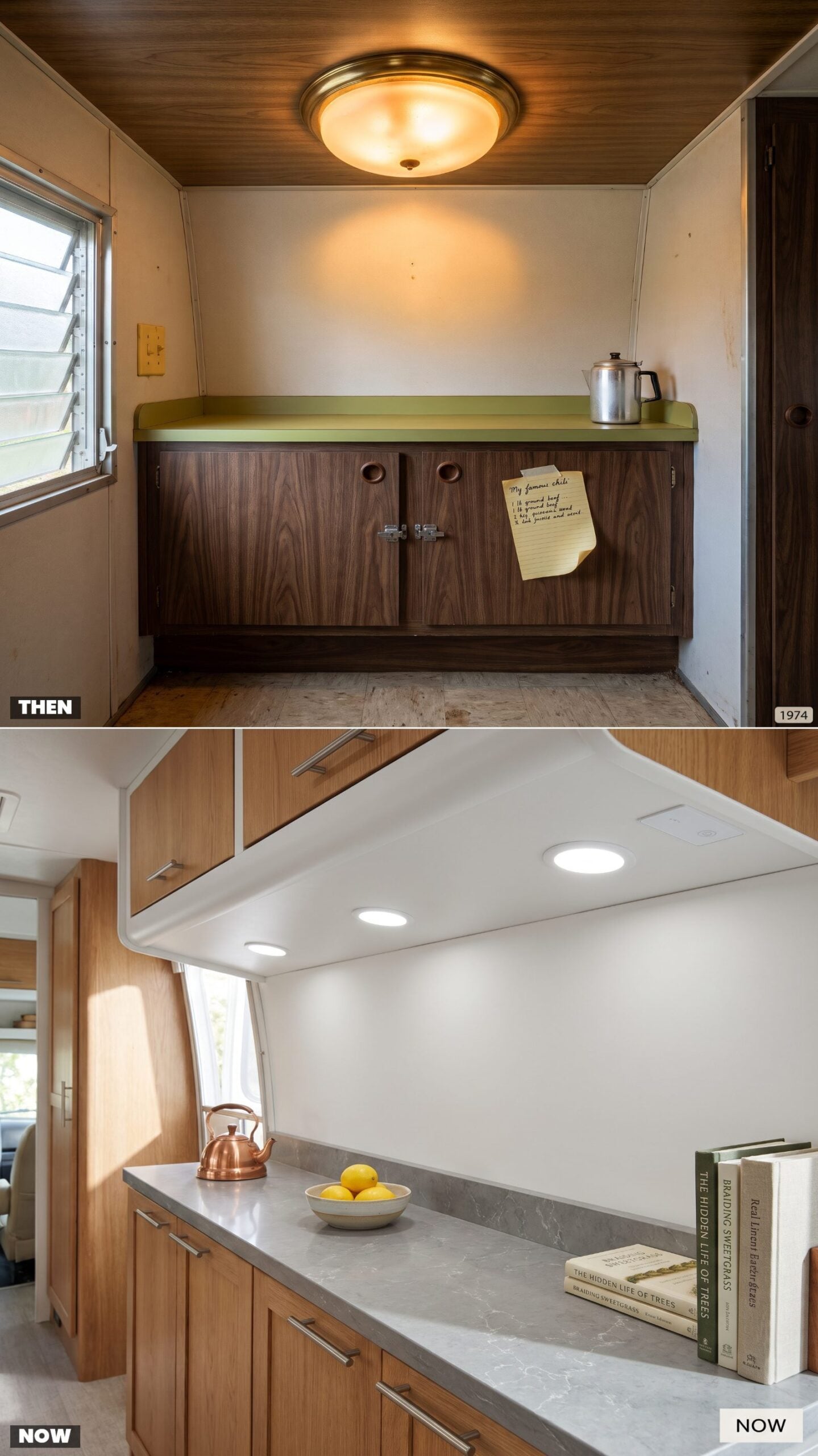
That hot amber dome light did two things well: it flattered the orange counters, and it cooked your fingers if you unscrewed it before it cooled. One bulb for the whole galley meant you chopped onions in a pool of shadow and swapped bulbs by feel while parked in the dark.
Now a row of recessed LEDs throws even daylight across the counter, sips battery instead of draining it, and dims when you want mood without heat. Same ceiling. You can actually see what you’re cooking.
38. Shallow Enamel Sinks vs. Deep Workstation Sinks
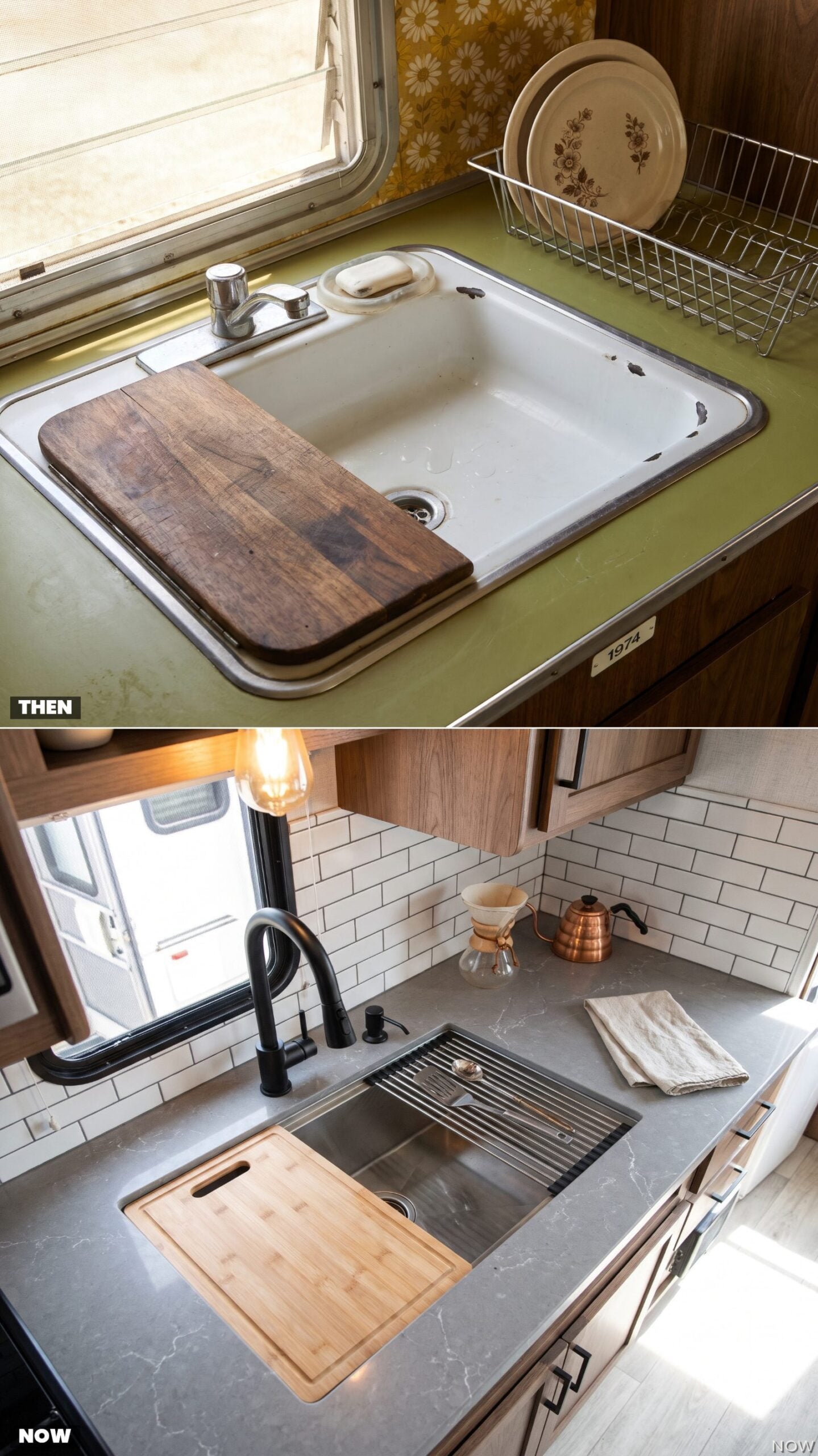
The old enamel sink was shallow enough that one stockpot blocked the whole basin and splashed the counter every time. Chip the coating and you earned a rust freckle that never went away. I’ve scrubbed those orange rings. They don’t come out.
Deeper and smarter, the modern workstation sink pulls triple duty: a cutting board slides along the integrated ledge, a drying rack rolls over the top, and the stainless shrugs off hot pans. More usable room, and it doesn’t steal an inch of counter footprint.
37. Two-Knob Faucets vs. Pull-Down Sprayer Faucets
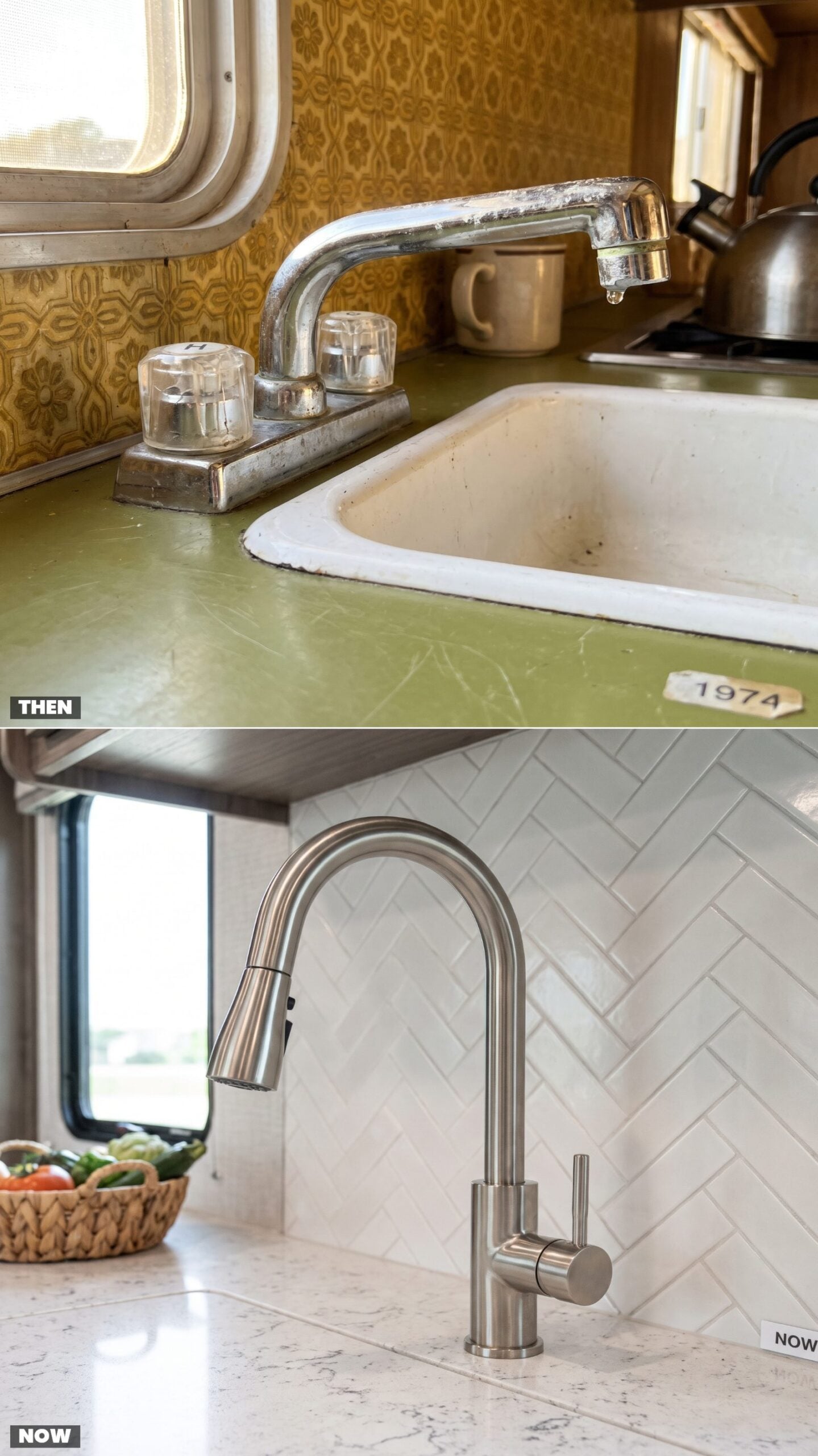
Two knobs meant a little dance every time you wanted warm water: crank the H, crank the C, wait, adjust, repeat, all while the pump cycled on and off. And that fixed spout couldn’t reach the far corner of the basin, so you rinsed a big pot sideways and hoped for the best.
One lever now sets temperature in a second, and the pull-down head stretches out to rinse anything. The magnetic dock snaps it back so it doesn’t rattle loose down the highway.
36. Pilot-Light Ovens vs. Digital Convection Ovens
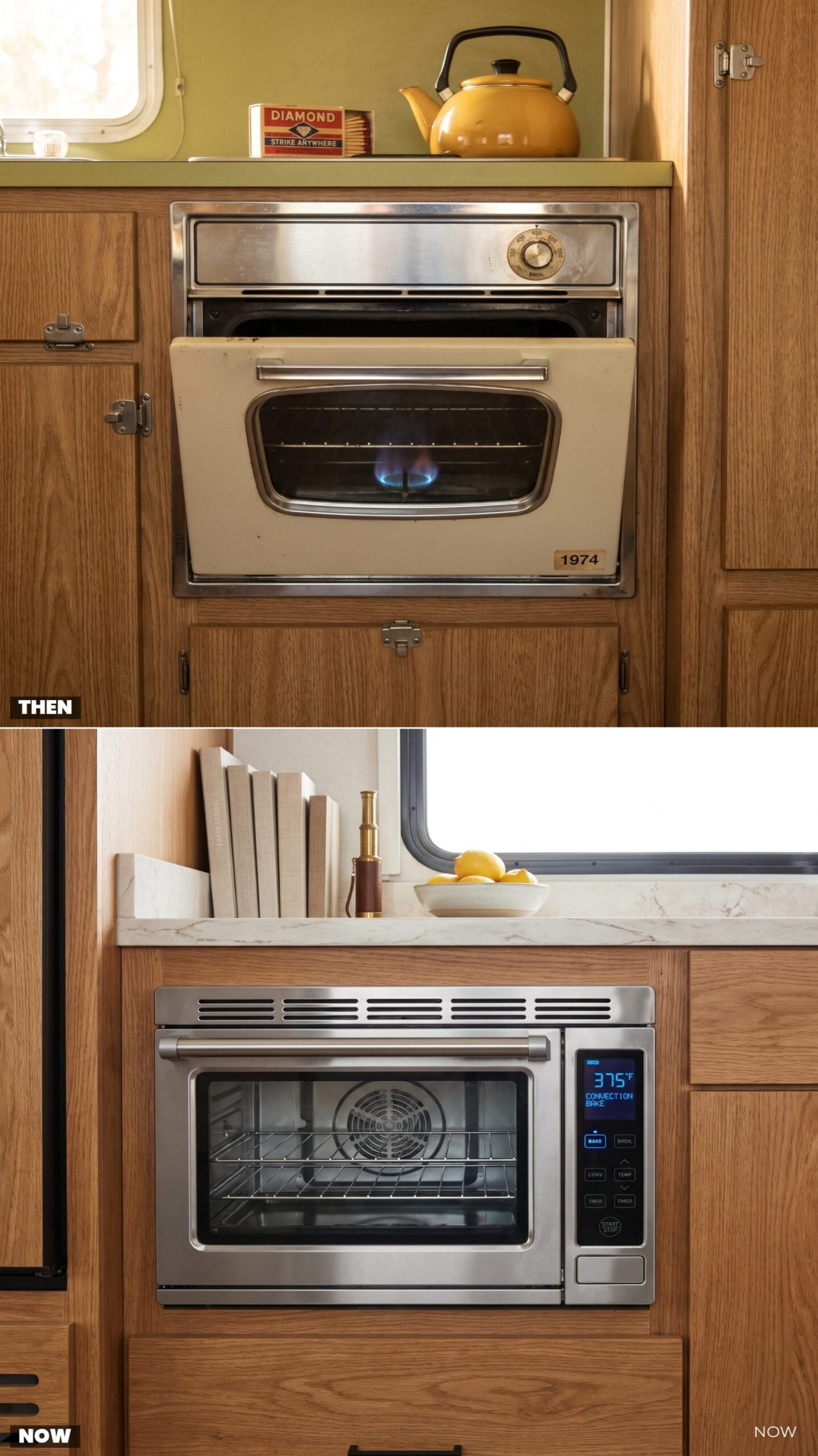
You lit the old oven on your knees with a match, chasing a pilot that liked to hide, and the thermostat was more suggestion than number. One side burned while the other stayed raw, so you learned to spin the pan halfway through. Every single time.
Digital convection ovens hold a real temperature and move hot air with a fan, so a tray of biscuits actually browns evenly. No crouching, no matches, no guessing whether 350 means 350 today.
35. Metal Vent Hoods vs. Low-Profile Extractor Fans
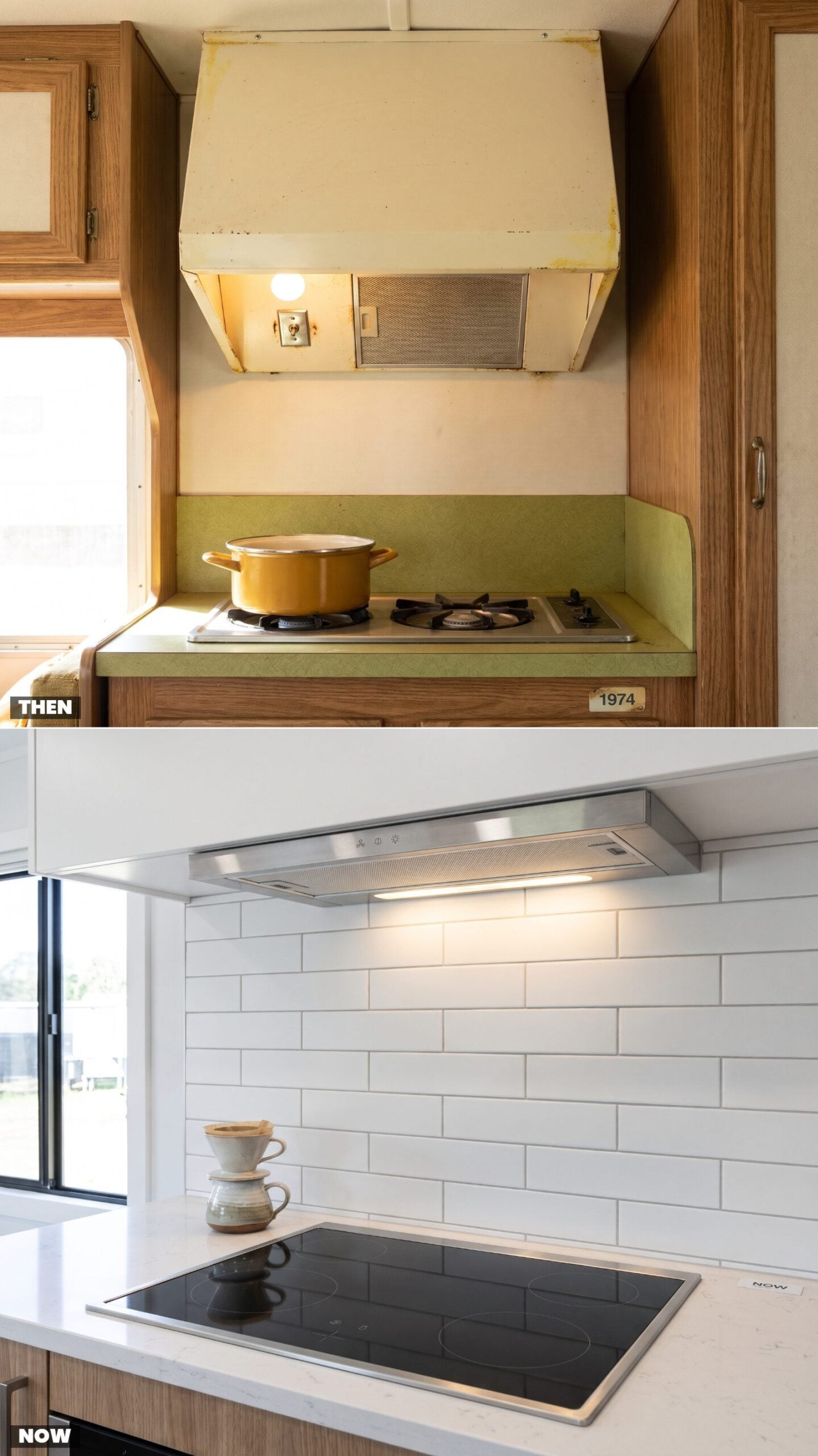
The old metal hood jutted out just far enough to crack your head on when you leaned over a frying pan. Its one bulb lit the pot and nothing else, and the aluminum filter went sticky and yellow after a single summer of bacon. Half the time the fan just rattled instead of pulling anything out.
Low-profile extractors tuck flat against the cabinets, light the cooktop with an LED strip, and actually move air. More headroom in a space where every inch counts.
34. Absorption Refrigerators vs. Efficient Compressor Refrigerators
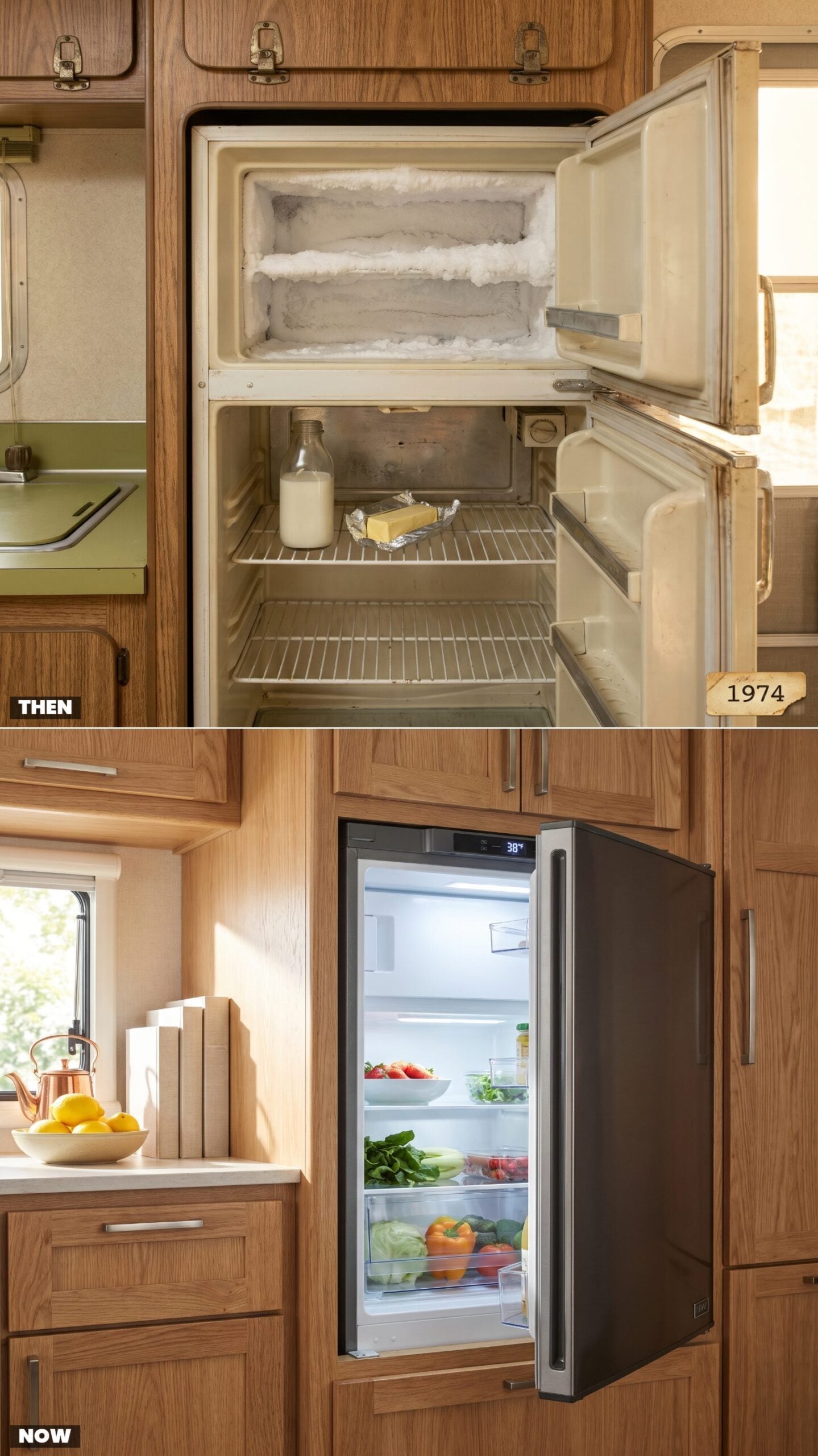
Absorption fridges ran on propane or shore power and demanded you park dead level or they’d sulk and stop cooling. The tiny freezer frosted over into an igloo you chipped at with a butter knife, and on a brutal July afternoon it fought just to keep the milk honest.
Compressor fridges don’t care if you’re parked on a slope, hold temperature in heat, and run efficiently off a battery and solar setup. Frost-free, lit, and shaped like a real refrigerator inside.
33. Bare Counter Space vs. Built-In Microwave Cabinets
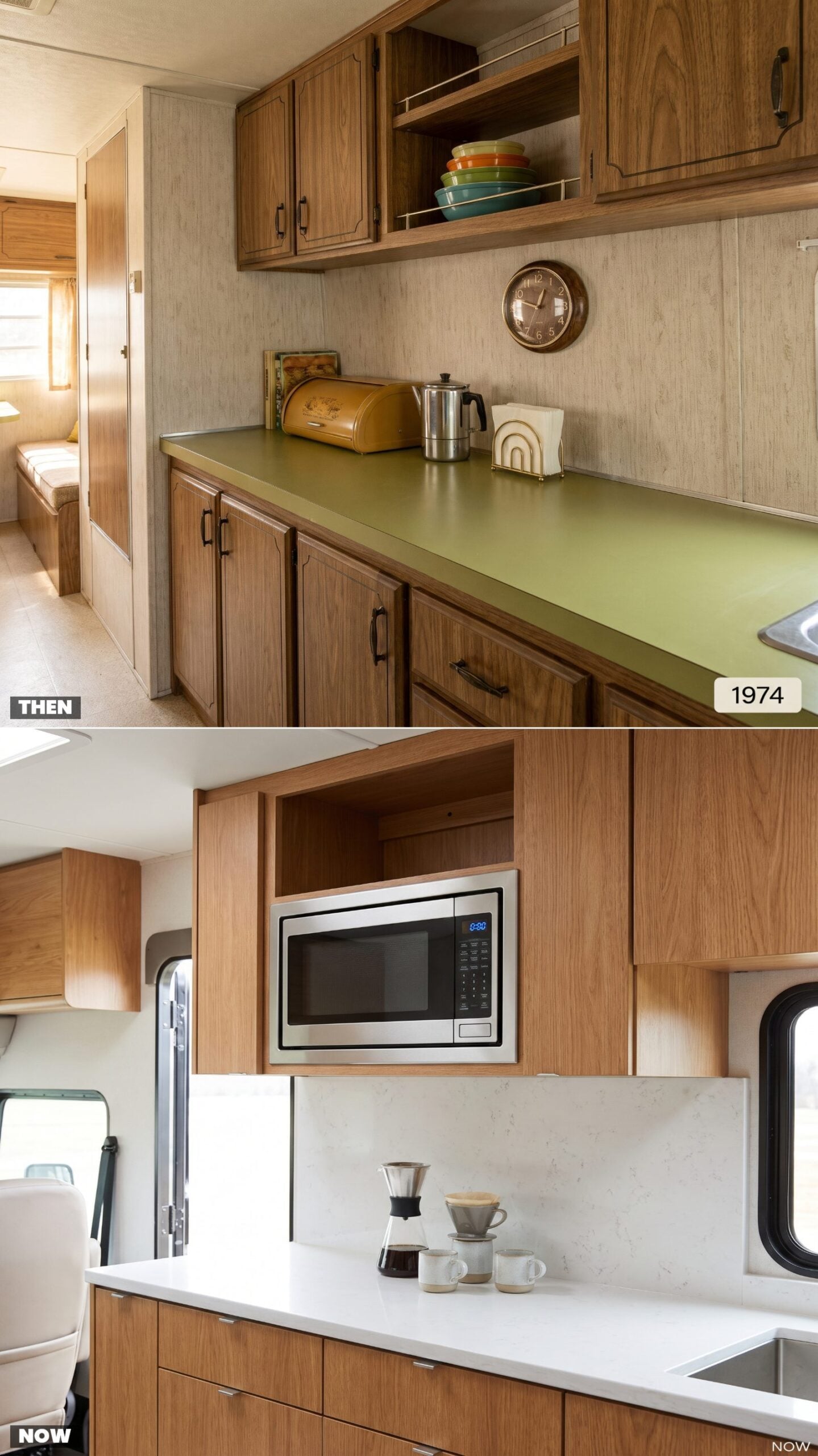
In 1974 the only way to reheat last night’s chili was back on the propane burner, and a microwave on the road was pure science fiction. So the counter stayed open, which sounds generous until you remember you also had nowhere to put one.
Modern layouts recess a compact microwave into an overhead cubby, keeping the counter free and the appliance off the road-vibration floor. You warm a mug of coffee without firing up the stove and baking the whole trailer in the process.
32. Stovetop Percolators vs. Compact Pod Coffee Stations
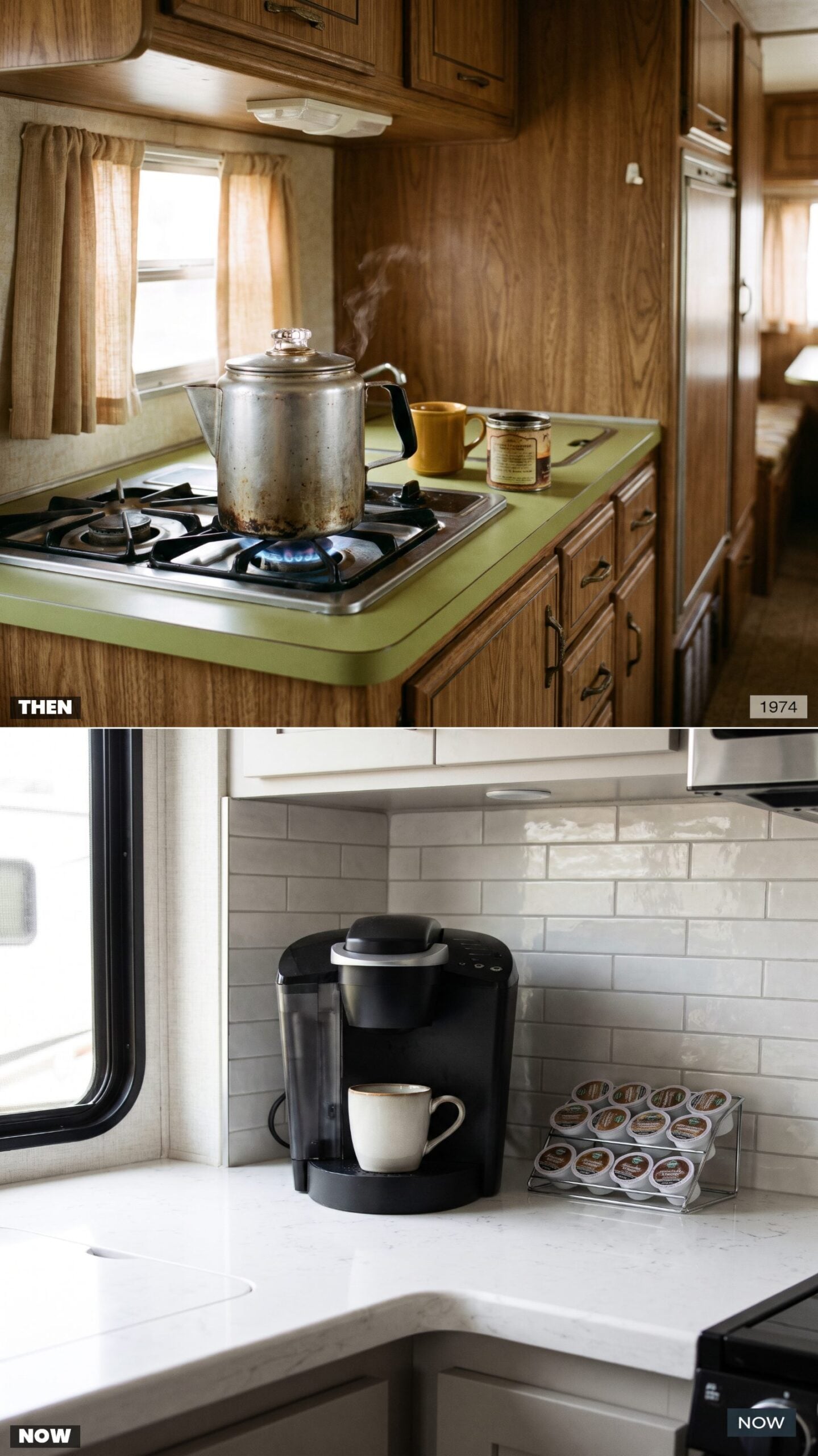
There’s a sound every old camper remembers: the percolator burbling against the glass knob at 6 a.m. while the propane hissed underneath. Watch the knob, catch it too late, and you got bitter coffee that chewed back. Too early and it was brown water. Timing it was a genuine morning skill.
A compact pod station does one cup, one button, no flame, no guessing. I’ll admit I miss the smell of the percolator. I do not miss scrubbing it.
31. Bulky Aluminum Pots vs. Nesting Induction Cookware
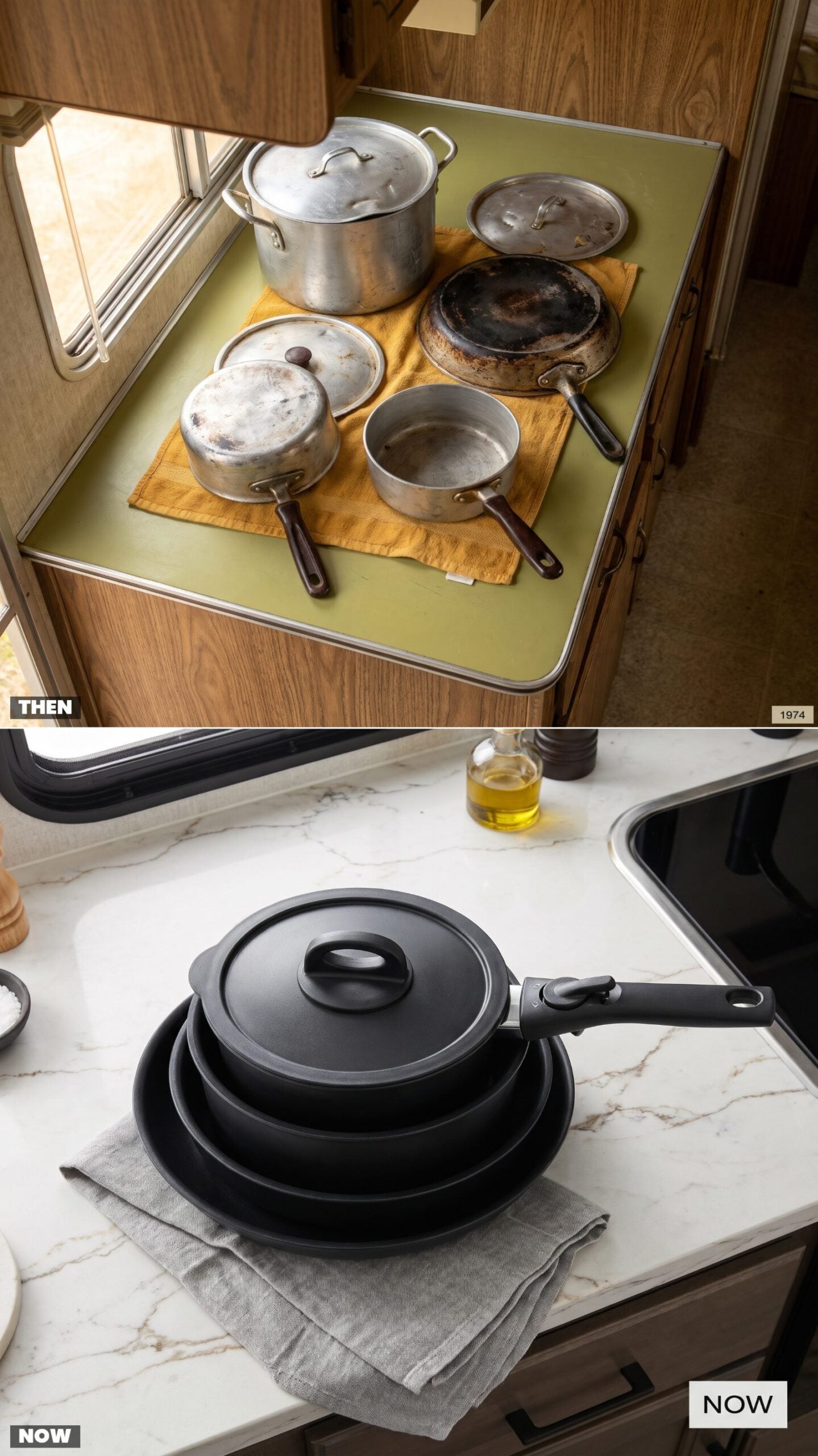
The old aluminum pots were light, sure, but they sprawled. Every pan had its own handle sticking out, nothing stacked flat, and the cabinet became a clanging jigsaw that announced every pothole. Loose Bakelite handles wobbled until one came off mid-pour.
Nesting induction sets collapse into one tidy tower with a single clip-on handle, so a full cookware kit lives in the space the old stockpot used to hog. Flat bottoms work on induction, heat fast, and stay quiet down the highway. Pack smart or the cabinet packs itself, loudly.
30. Floral Melamine Plates vs. Modern Unbreakable Dinnerware
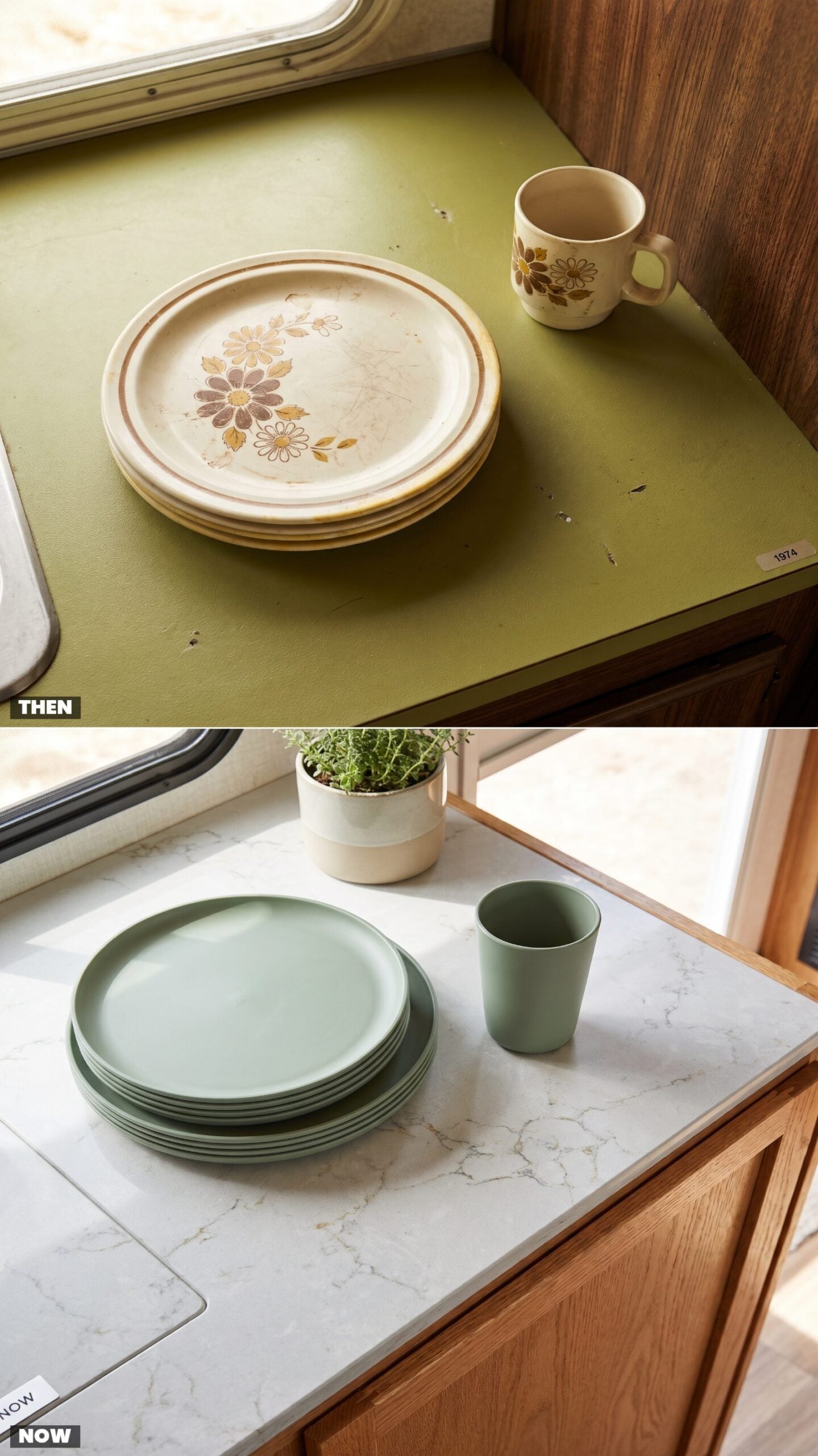
Everybody’s grandparents had these plates. Heavy cream melamine with a brown daisy border, scratched to a dull haze by a thousand forks, holding a faint stain of every spaghetti dinner since the Ford administration. They never broke. They also never looked clean again after year three.
Modern unbreakable dinnerware runs thinner and lighter, often from bamboo fiber, in colors that don’t shout for attention. It stacks tight, survives the drop from dinette to floor, and carries none of the ghost of decades-old sauce.
29. Cracked Vinyl Banquettes vs. Stain-Resistant Performance Upholstery
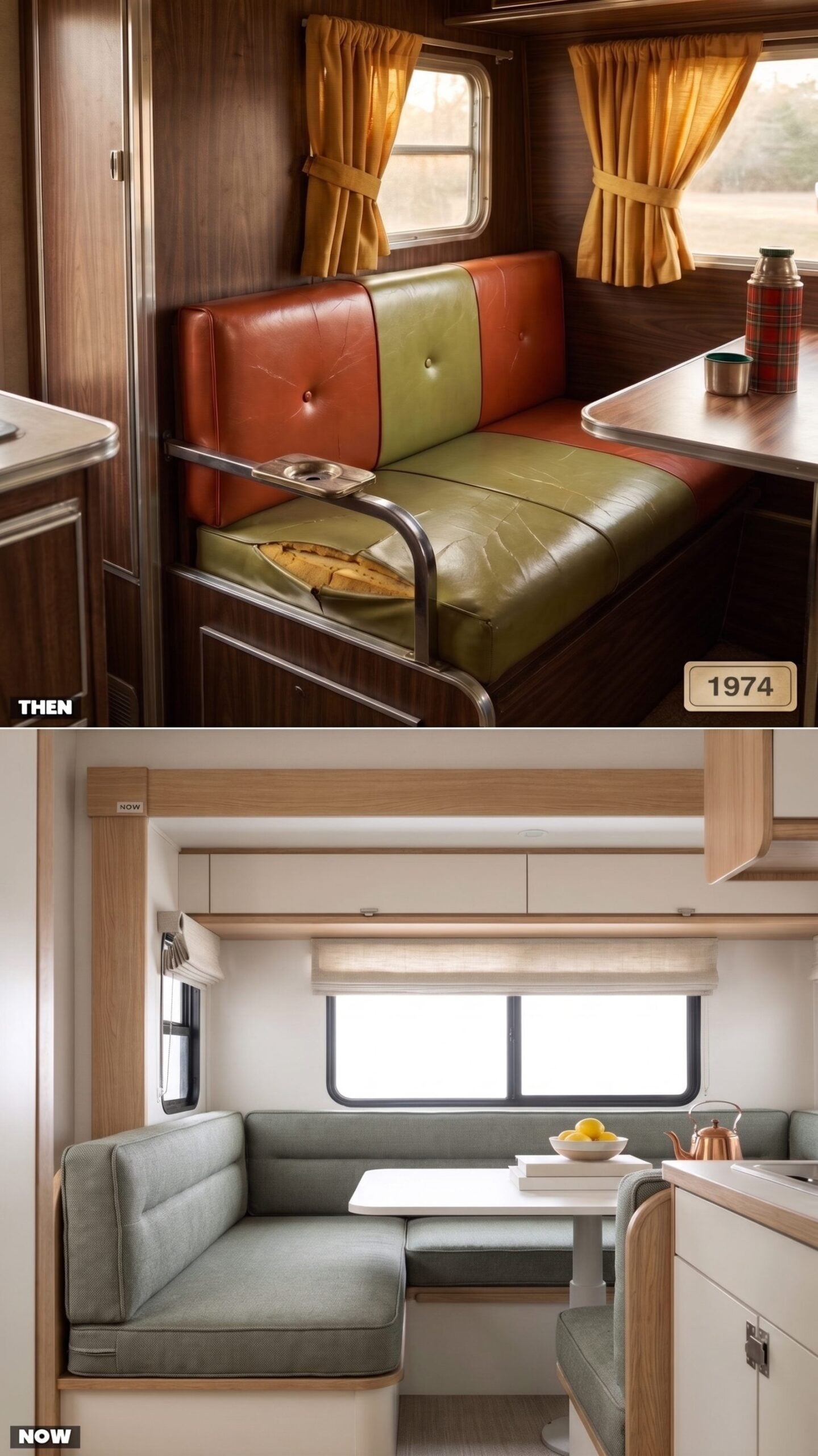
Summer heat and old vinyl never got along. By 1974 those glossy banquettes cracked along every seam, and if you wore shorts you peeled off the seat like tape while the foam underneath faded to the color of a cigarette filter.
Now the same bench wears woven performance fabric that shrugs off spilled coffee, ketchup, and the mud a kid tracks in after a creek walk. A grey-green performance fabric cushion wipes clean and still breathes, and the softer, taller backrests mean the dinette is somewhere you actually linger after dinner.
28. Formica Pedestal Tables vs. Convertible Multipurpose Worktops
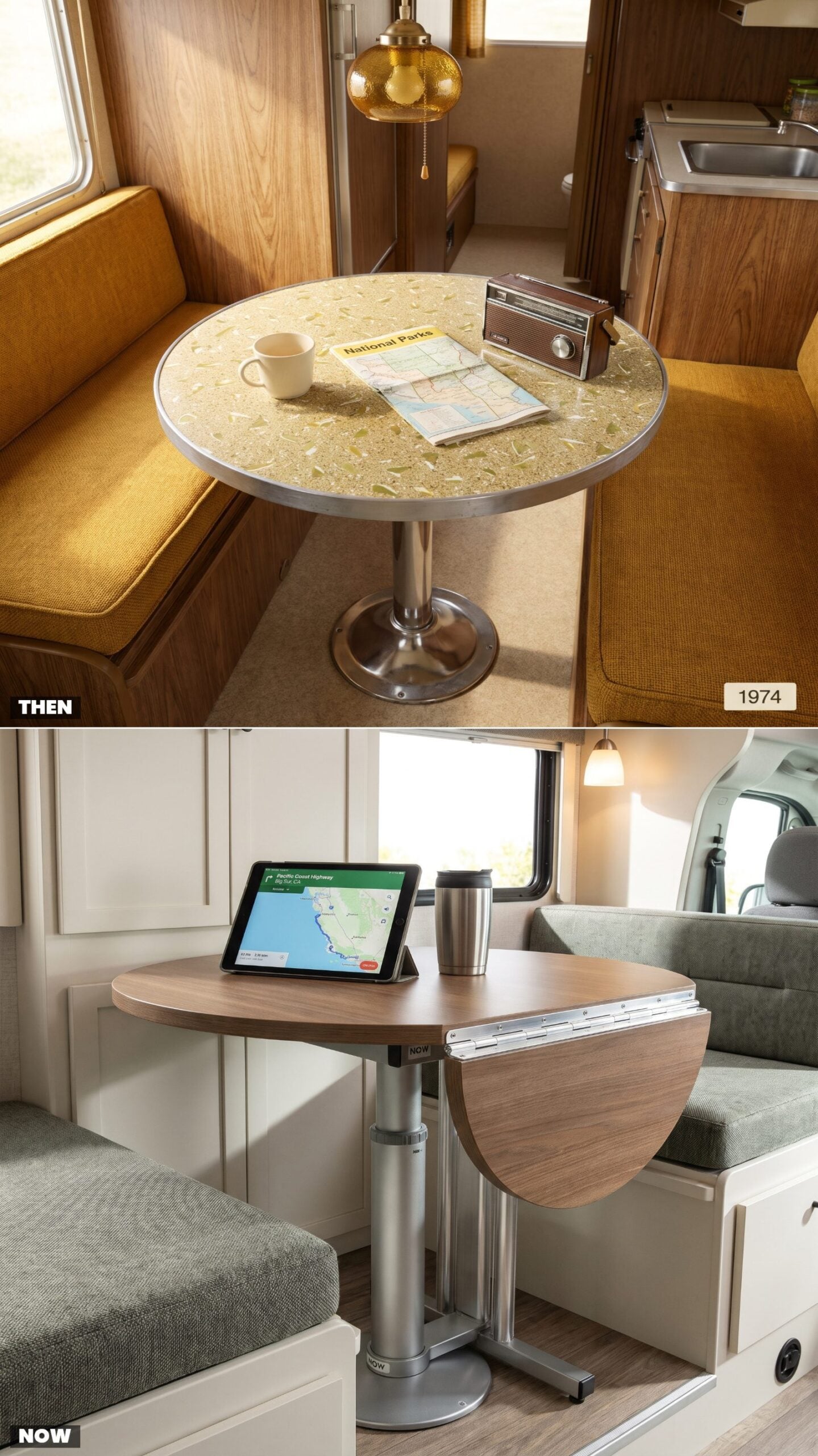
The Formica pedestal table did one job and did it loosely. That boomerang-patterned top rocked on its single chrome leg, every road seam reminding you it was only bolted to the floor — but it held the coffee, the map, and the card games, so nobody complained much.
Modern worktops flip, slide, and drop to become a desk, a prep station, or a second bed base. A wood laminate convertible RV table adjusts height and tucks away, which matters a lot when your square footage is measured in single digits.
27. Fixed Dinette Work Areas vs. Flexible Kitchen Islands
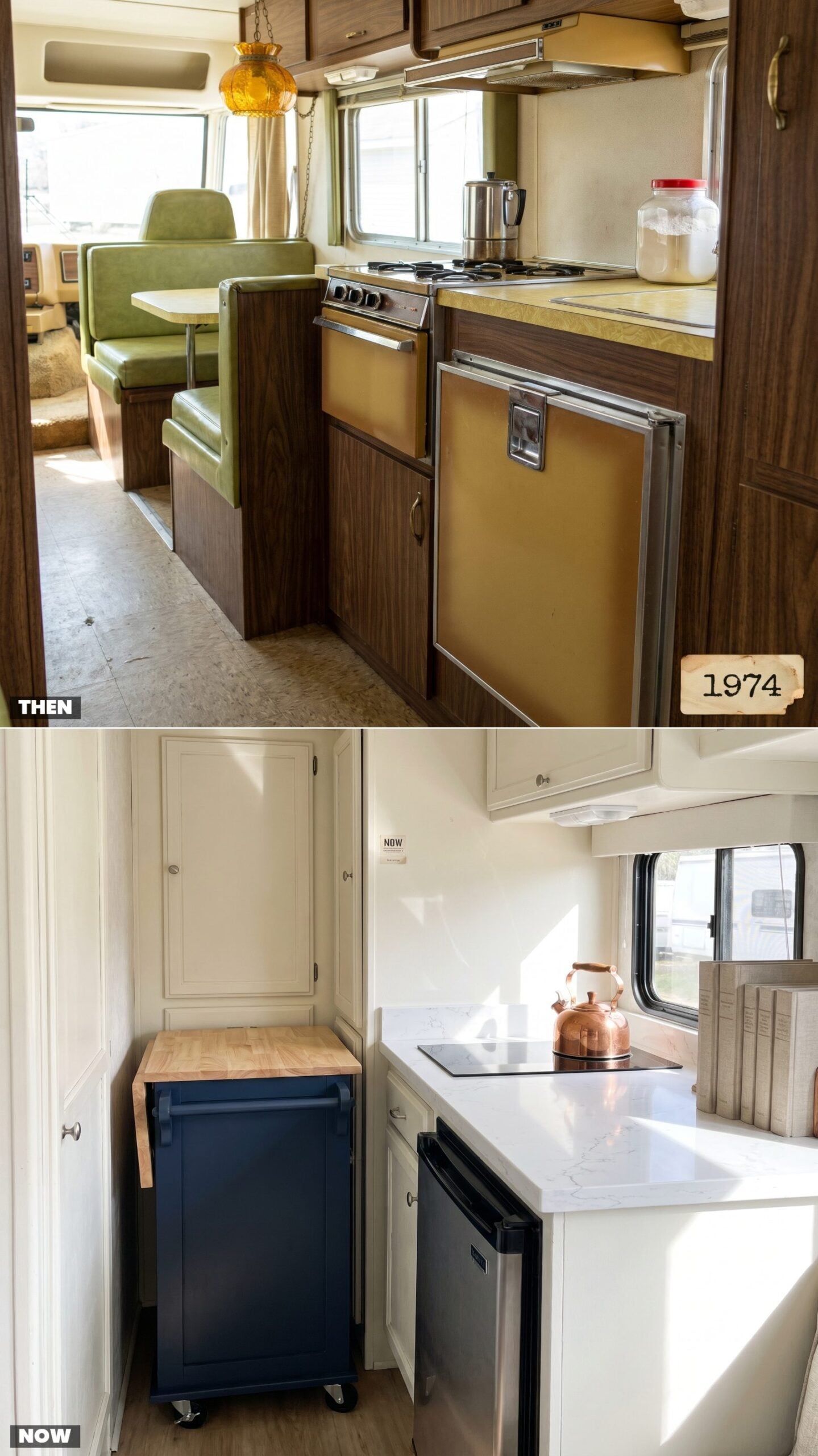
Everything in a 1974 rig was bolted down and permanent. The dinette lived where the factory put it, and if you needed more prep room, tough luck — you cooked in the four inches of yellow laminate between the sink and the stove.
Now a rolling island on locking casters moves where the work is. A navy butcher-block kitchen island rolls out for chopping and rolls back for walking space. Flexibility is the whole game when the kitchen is also the hallway.
26. Hinged Counter Leaves vs. Slide-Out Worktop Extensions
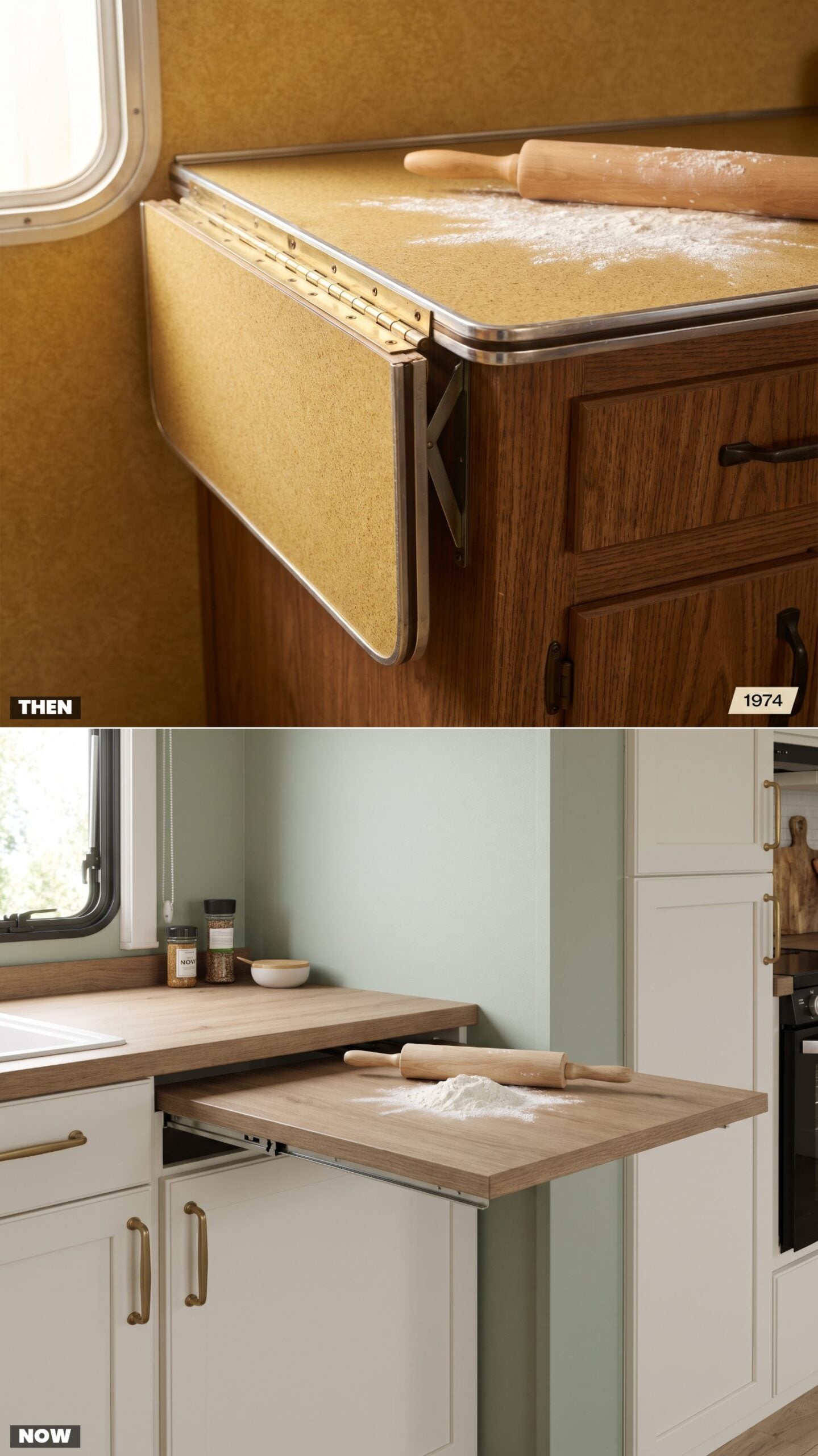
The hinged counter leaf was clever for its day. Fold it up on a brass piano hinge, drop the metal bracket into place, and you doubled your prep space — right up until it pinched a finger, sagged under a mixing bowl, or left a crumb-catching gap at the seam.
The modern version slides out on rails, flush and solid, no bracket to fumble for in the dark. Pull it when you need it; it disappears when you don’t. I’ve bruised a knuckle on the old kind more than once, so I’m firmly team slide-out.
25. Loose Chopping Boards vs. Fitted Sink-Cover Cutting Boards
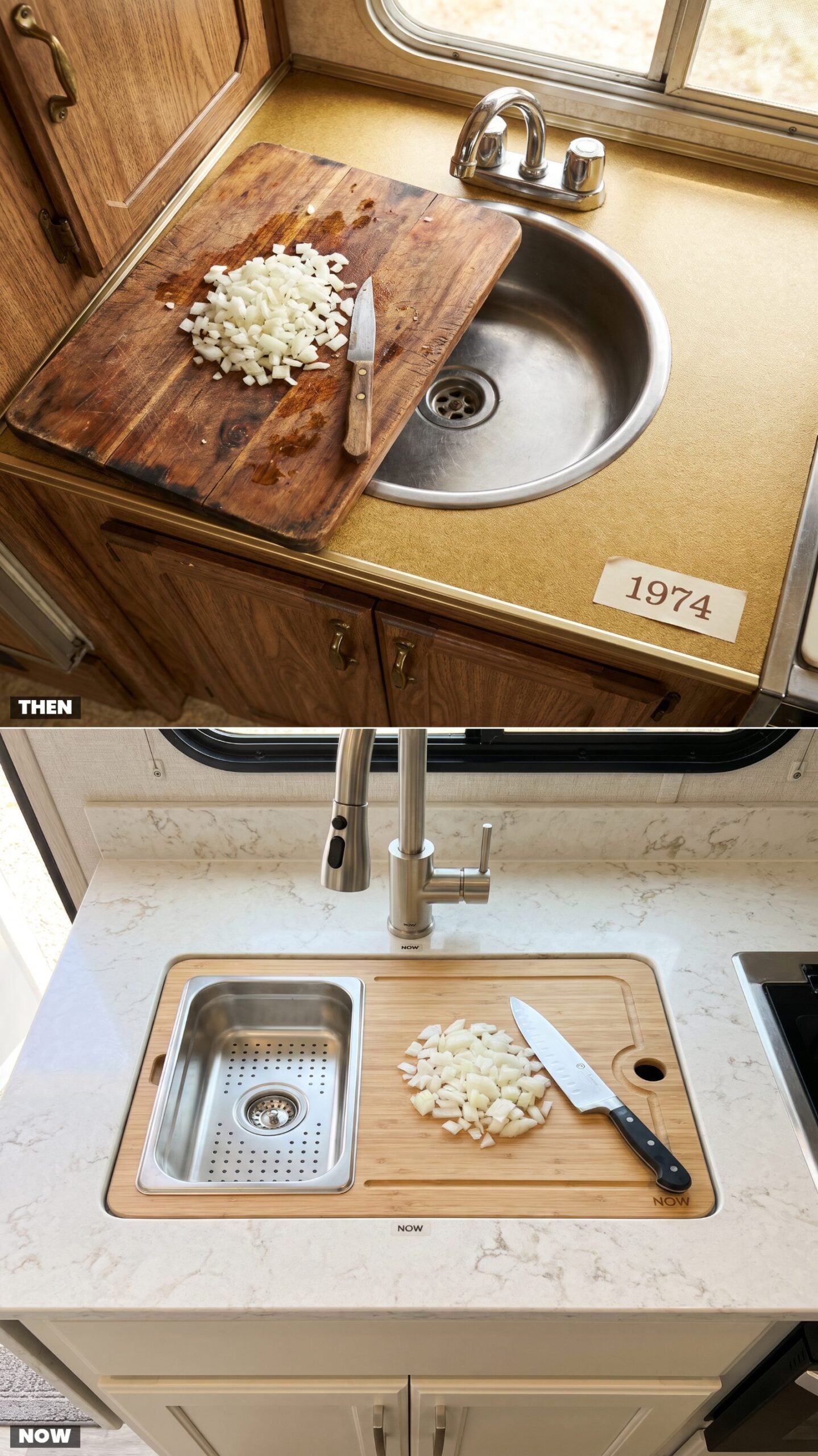
A loose board that slides every time you press down on it is how knuckles get nicked. Back in 1974 the thing balanced half over the sink and half on the counter, tipping every time the trailer did.
A fitted sink-cover board sits level across the bowl and hands back the counter you never had, with scraps dropping straight into the sink. A bamboo sink-cover cutting board with a colander insert turns a cramped galley into a real prep station.
24. Tea-Towel Drying vs. Roll-Up Over-Sink Drying Racks
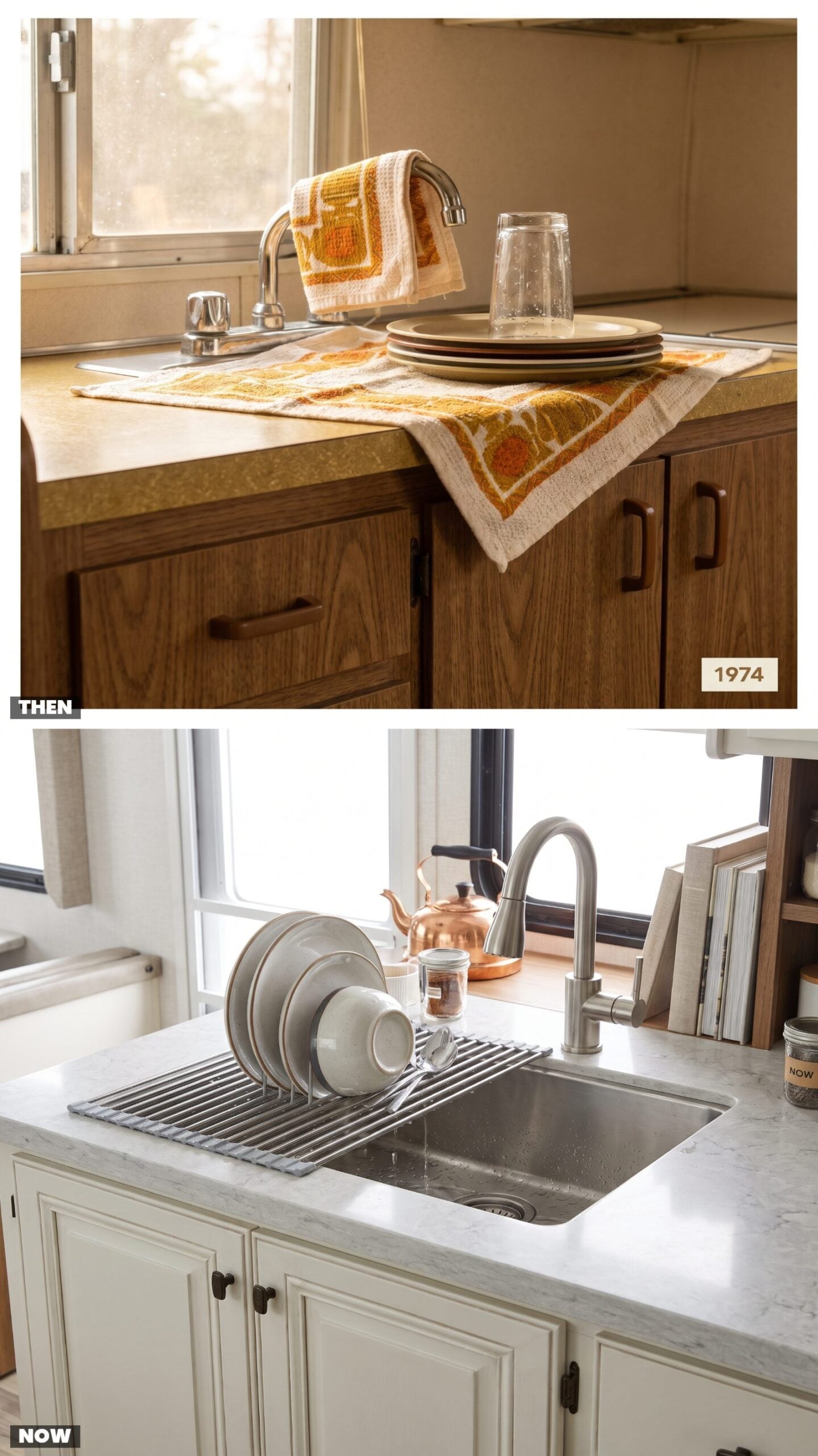
Drying dishes used to mean a damp tea towel spread over the only counter you had, plates stacked on top of it dripping toward the floor, and the whole thing smelling like last night’s casserole by morning.
A roll-up rack lays straight across the sink, holds the dishes upright, and drains into the bowl. Done, it rolls into a tube the size of a paperback. A roll-up over-sink drying rack is one of the cheapest galley upgrades going, and one I’d grab first.
23. Brass Cabinet Pulls vs. Positive-Locking Push Latches
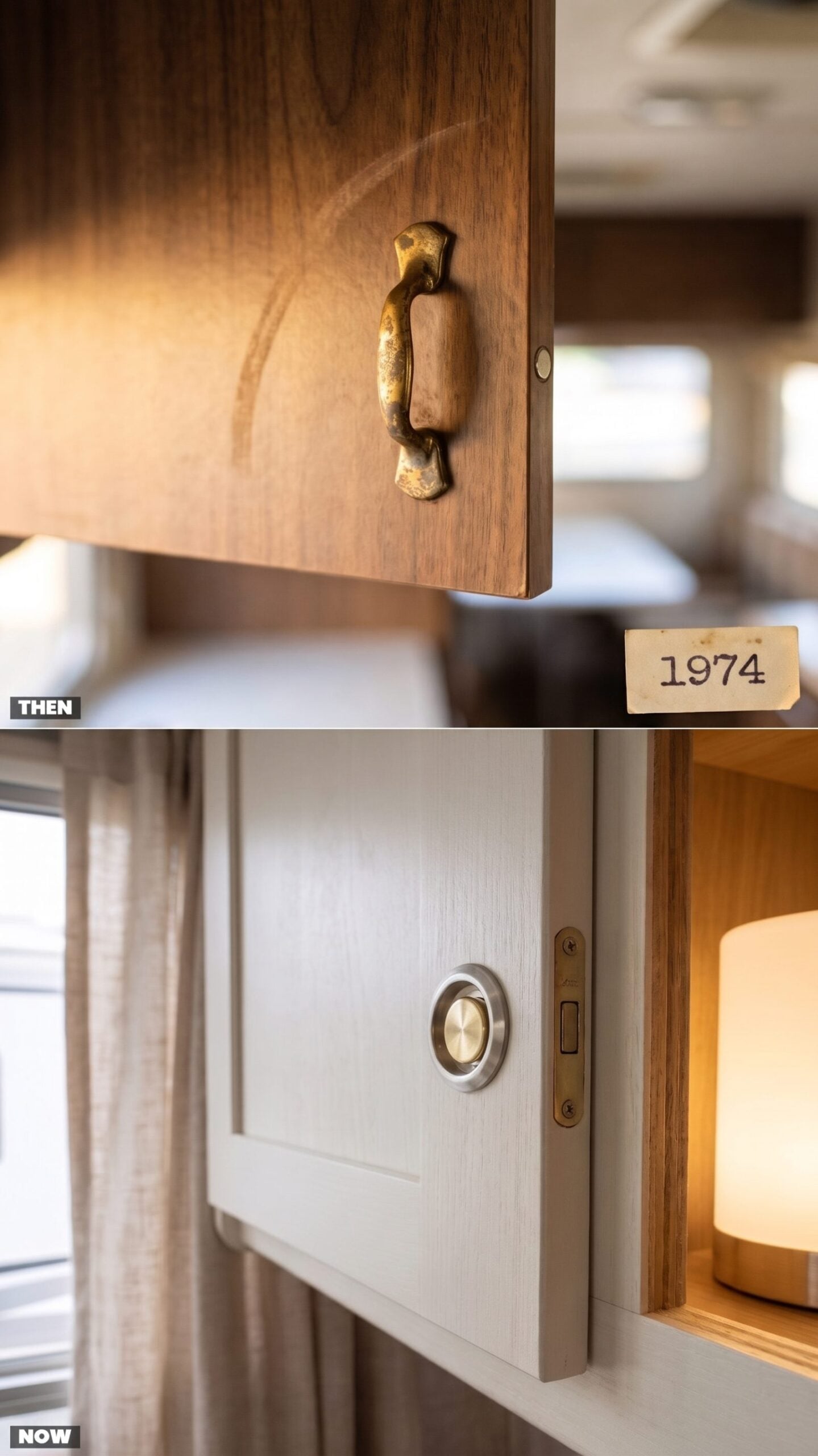
Brass pulls looked handsome in the showroom. On the road the magnetic catch behind them gave up around the first pothole, and you’d round a corner to every cabinet flinging open and raining cans on the floor.
Push latches lock positively. Press to open, press to close, and they stay shut through washboard gravel and hard braking. Less charming than tarnished brass, sure — but I’ve swept up enough spilled pantry to not miss the old way one bit.
22. Shallow Wooden Drawers vs. Full-Extension Soft-Close Drawers
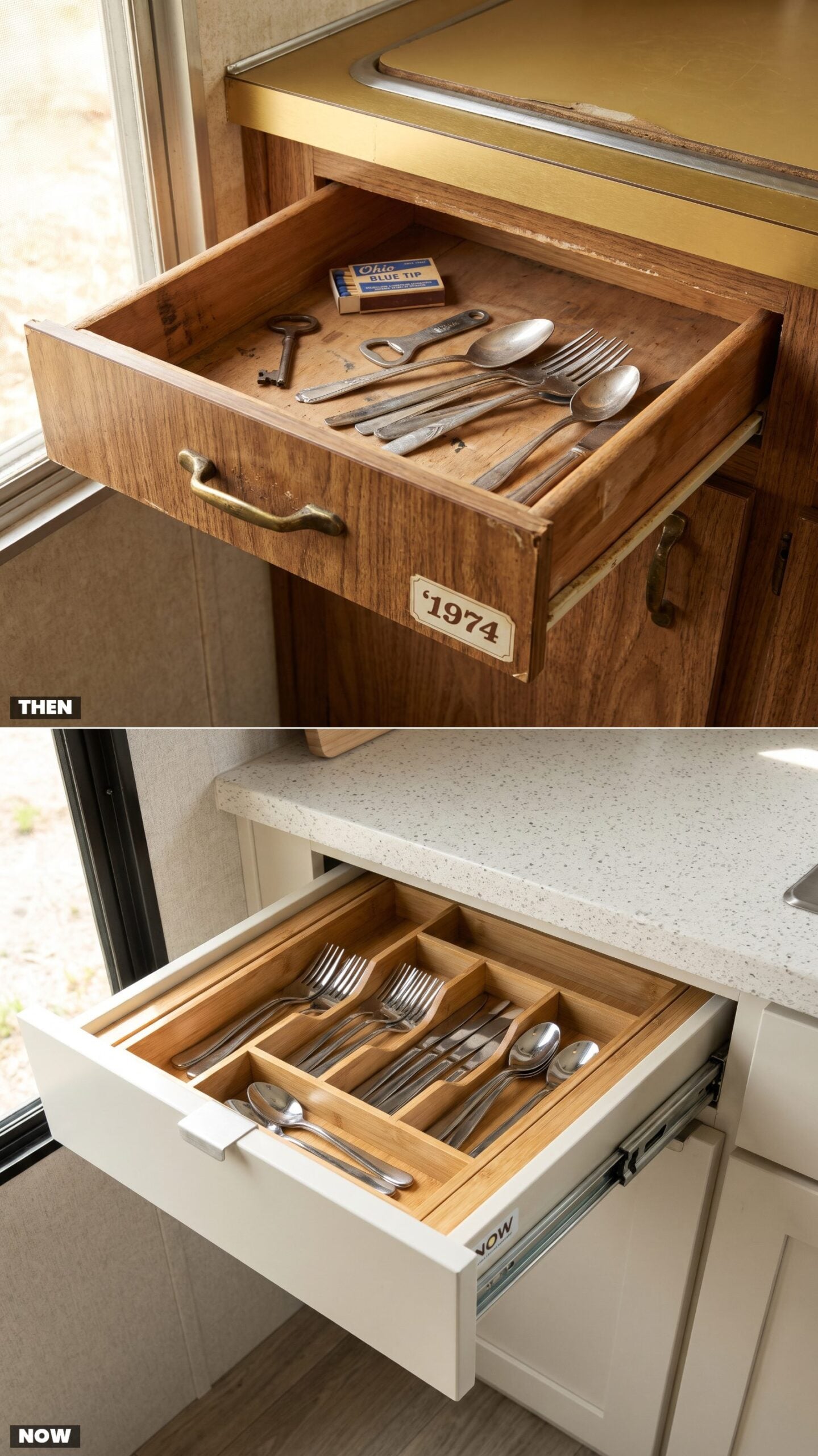
Shallow wooden drawers on wooden runners only pulled out two-thirds of the way before they stuck, which meant the back third was a mystery graveyard of bottle openers and loose matches you’d never see again.
Full-extension glides pull the whole drawer clear of the cabinet, soft-close so it doesn’t slam shut on a downhill grade. Add a bamboo flatware drawer organizer and everything has a spot. You’d be amazed how much storage you were never actually reaching.
21. Narrow Food Cupboards vs. Floor-to-Ceiling Pullout Pantries
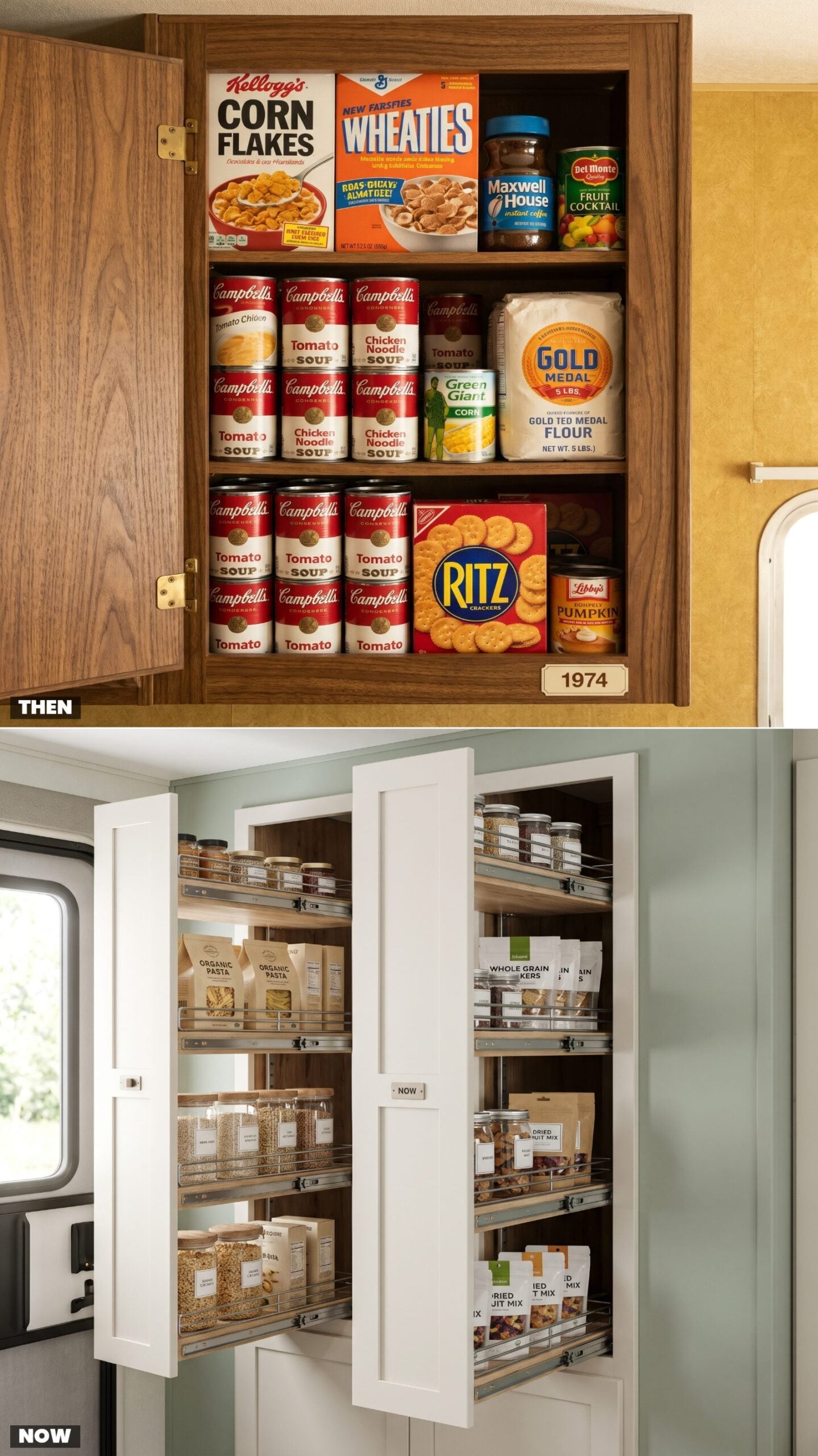
The old food cupboard was a deep dark cave with fixed shelves. You stacked cans two deep, forgot what lived behind the front row, and months later rediscovered a dented tin of peaches from three trips ago.
A floor-to-ceiling pullout pantry rolls the whole thing out into the light, reachable from both sides, nothing hiding in the back. It’s the single best storage change in the modern galley. Everything you own, visible in one pull.
20. Open Overhead Cubbies vs. Lift-Up Storage Cabinets
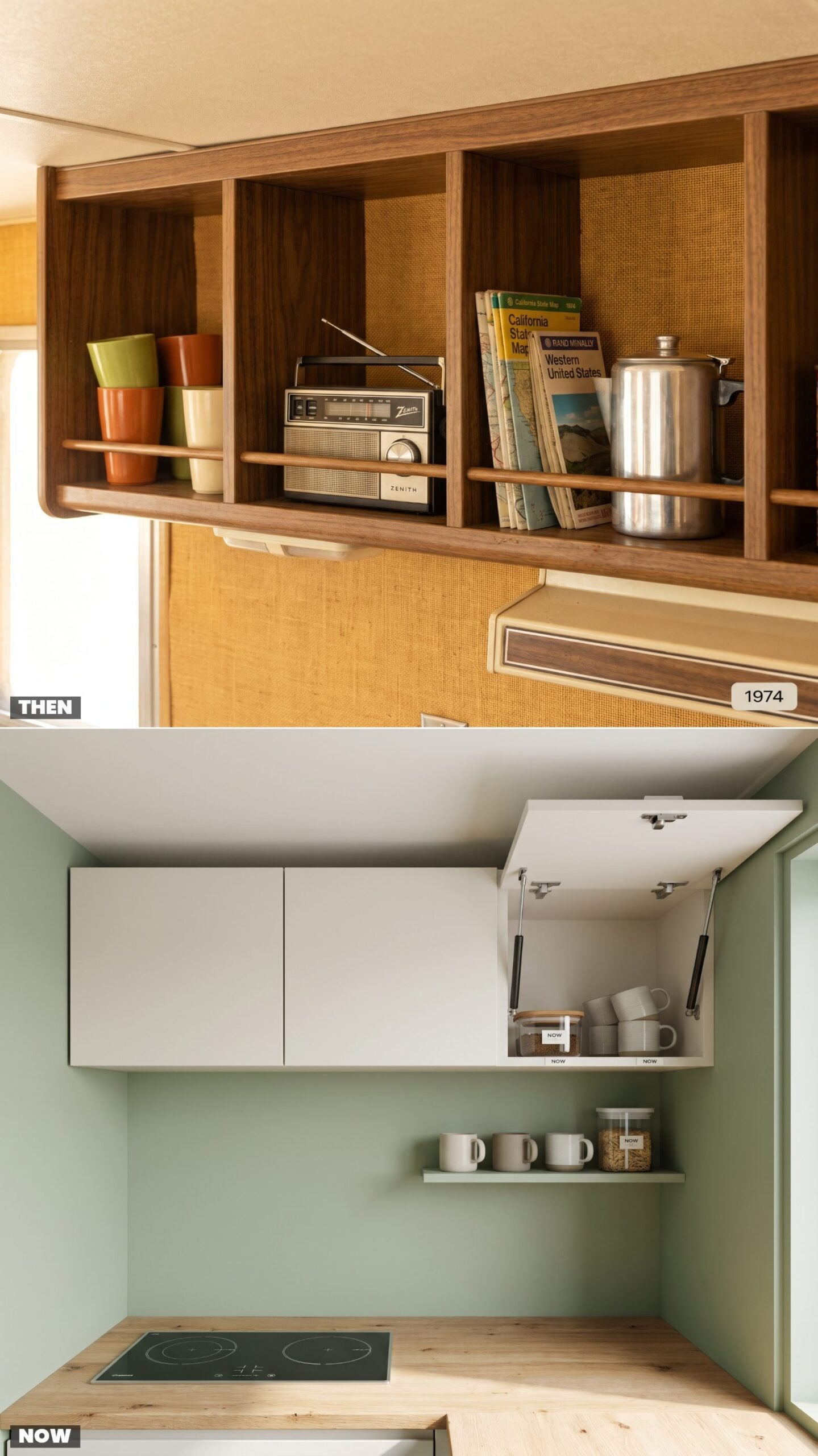
Open overhead cubbies kept everything in reach and nothing in place. A thin wooden rail was all that stood between your coffee mugs and the floor, and that rail lost most arguments with a hard stop.
Lift-up cabinets on gas struts open overhead and stay up on their own, hands free, then latch shut for travel so nothing becomes a projectile. Cleaner to look at, safer on the road — and the strut means no door swinging into your face while you reach for the flour.
19. Hard-to-Reach Upper Cabinets vs. Pull-Down Shelf Mechanisms
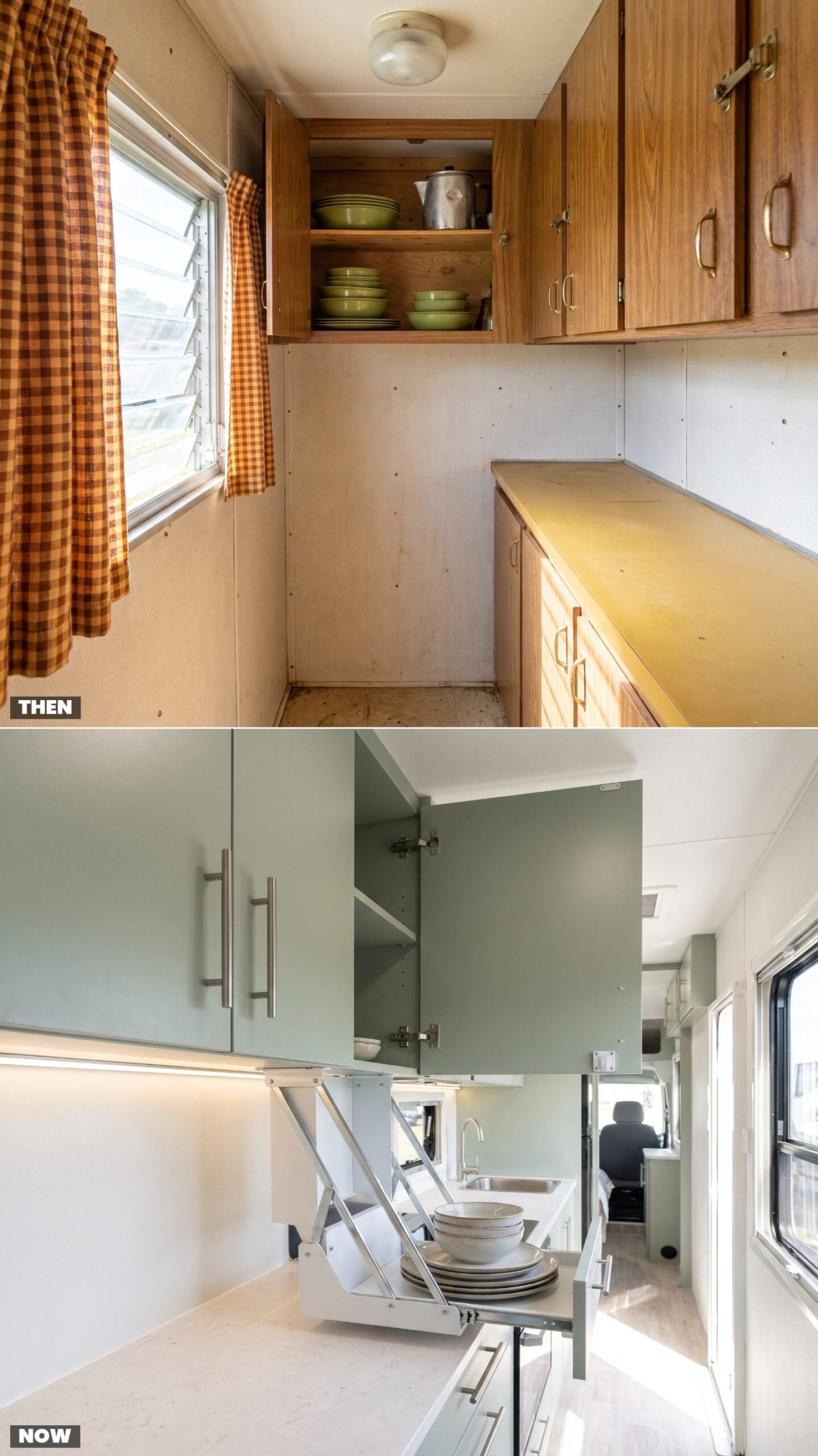
You remember the stretch. Standing on your toes in a swaying trailer, fingers fishing blind for a bowl shoved to the back of a shelf you could never quite see into, those 1974 uppers were built tall and fixed. Which meant the top eight inches of every cabinet was basically storage for things you’d forgotten you owned.
Now a pull-down mechanism brings the whole shelf to you, swinging forward and dropping to counter height, dishes and all. No stool. No guessing. No percolator avalanche onto the stovetop.
18. Blind Corner Cupboards vs. Swing-Out Corner Organizers
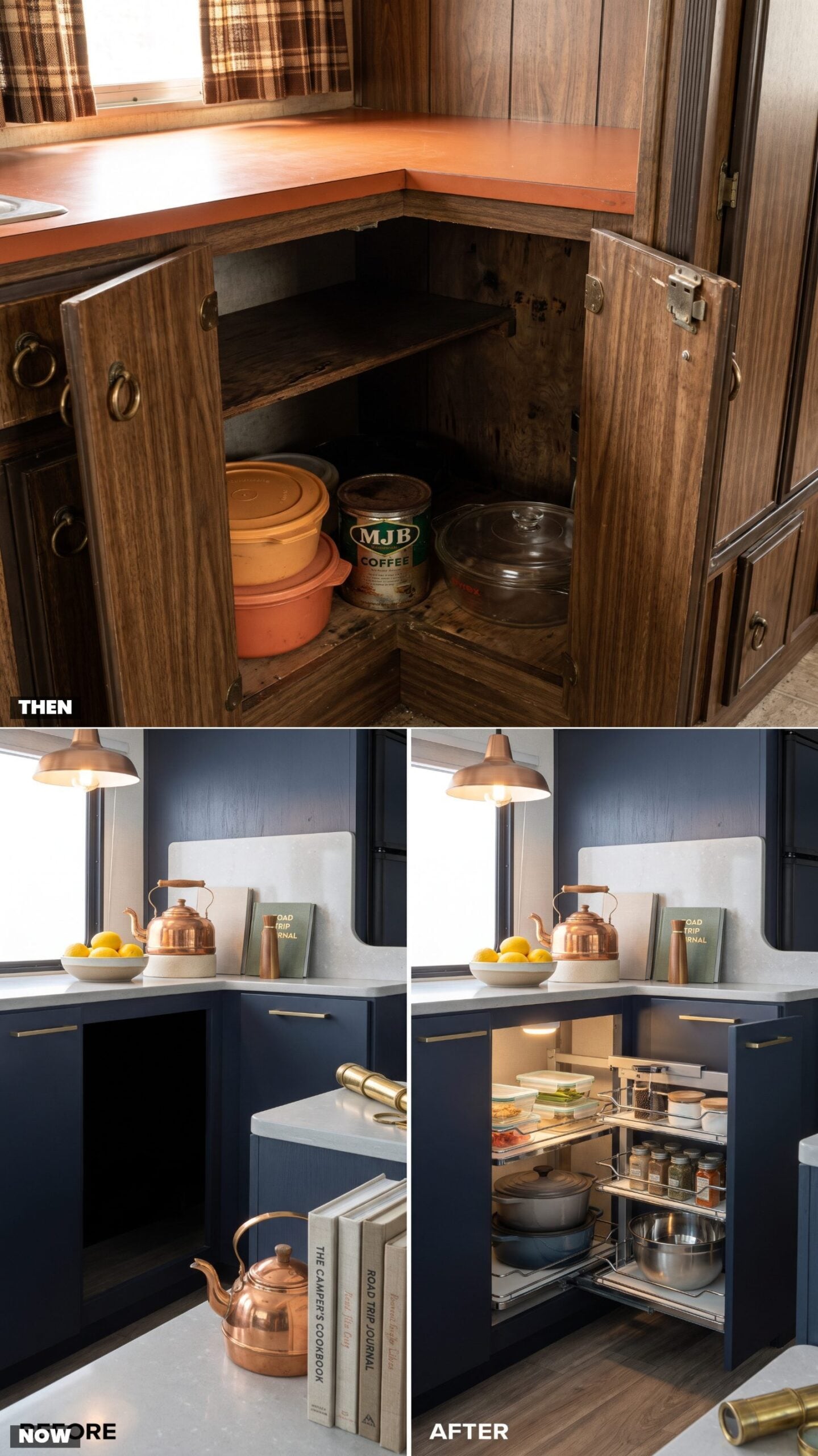
The blind corner was the black hole of the vintage galley. Whatever rolled into that back angle during a day of driving stayed there, lost to physics and bad lighting, and you’d end up buying a second can of something because the first one was entombed back there where no hand could reach.
Swing-out organizers fixed the geometry. The shelves rotate and glide straight out into the aisle, so the corner finally gives back what you put into it.
17. Unused Toe-Kick Space vs. Hidden Plinth Drawers
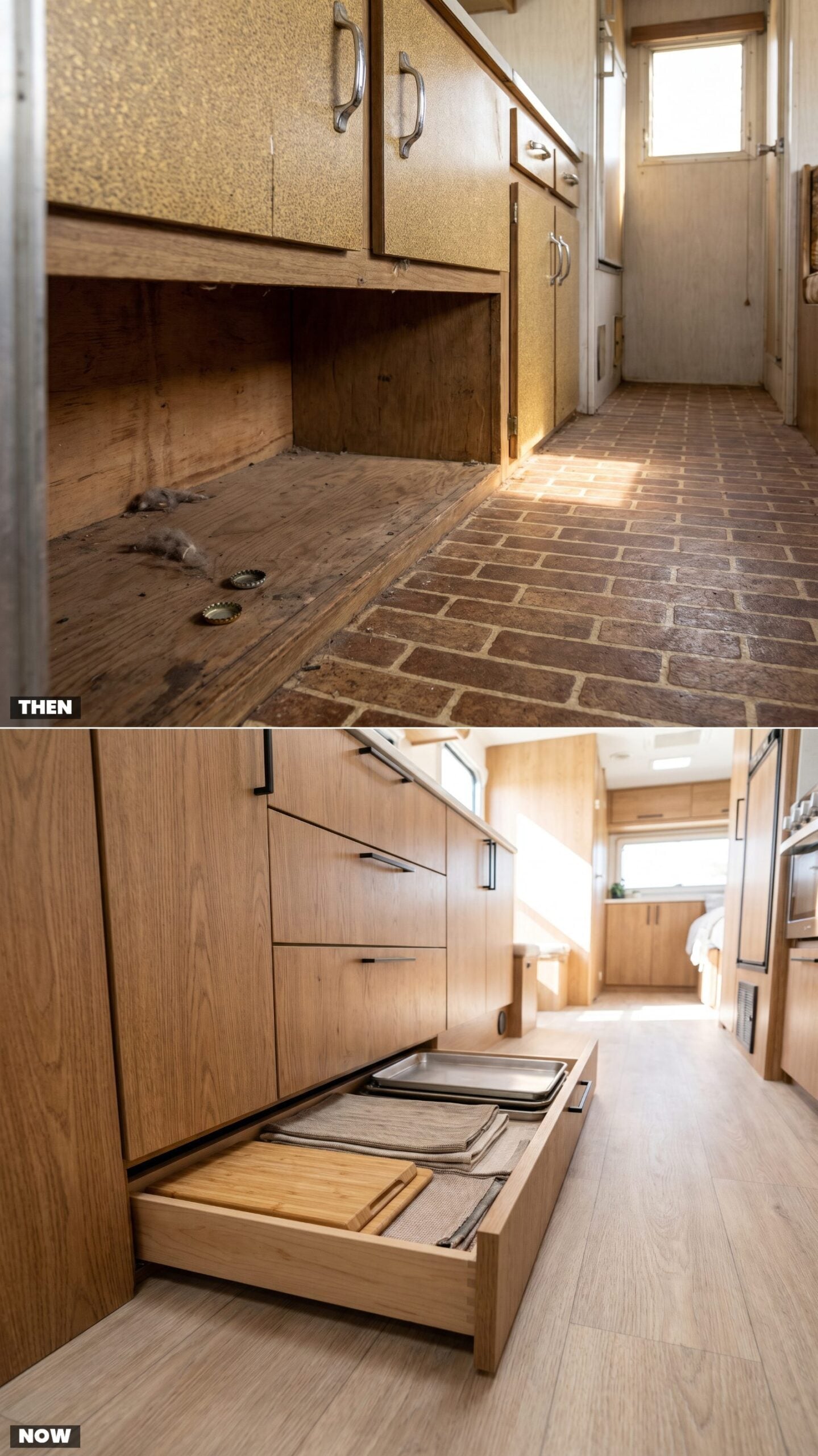
Nobody in 1974 thought twice about the toe-kick. It was just the shadowy gap under the cabinets where your socks ended up and the dust lived, and in a rig where every inch matters, that was a lot of wasted volume running the whole length of the galley.
Plinth drawers claim that forgotten strip. Push-to-open trays slide out at ankle height, swallowing the flat stuff that never fit anywhere else: cookie sheets, trivets, the folding cutting board.
16. Appliances Crowding the Counter vs. Concealed Appliance Garages
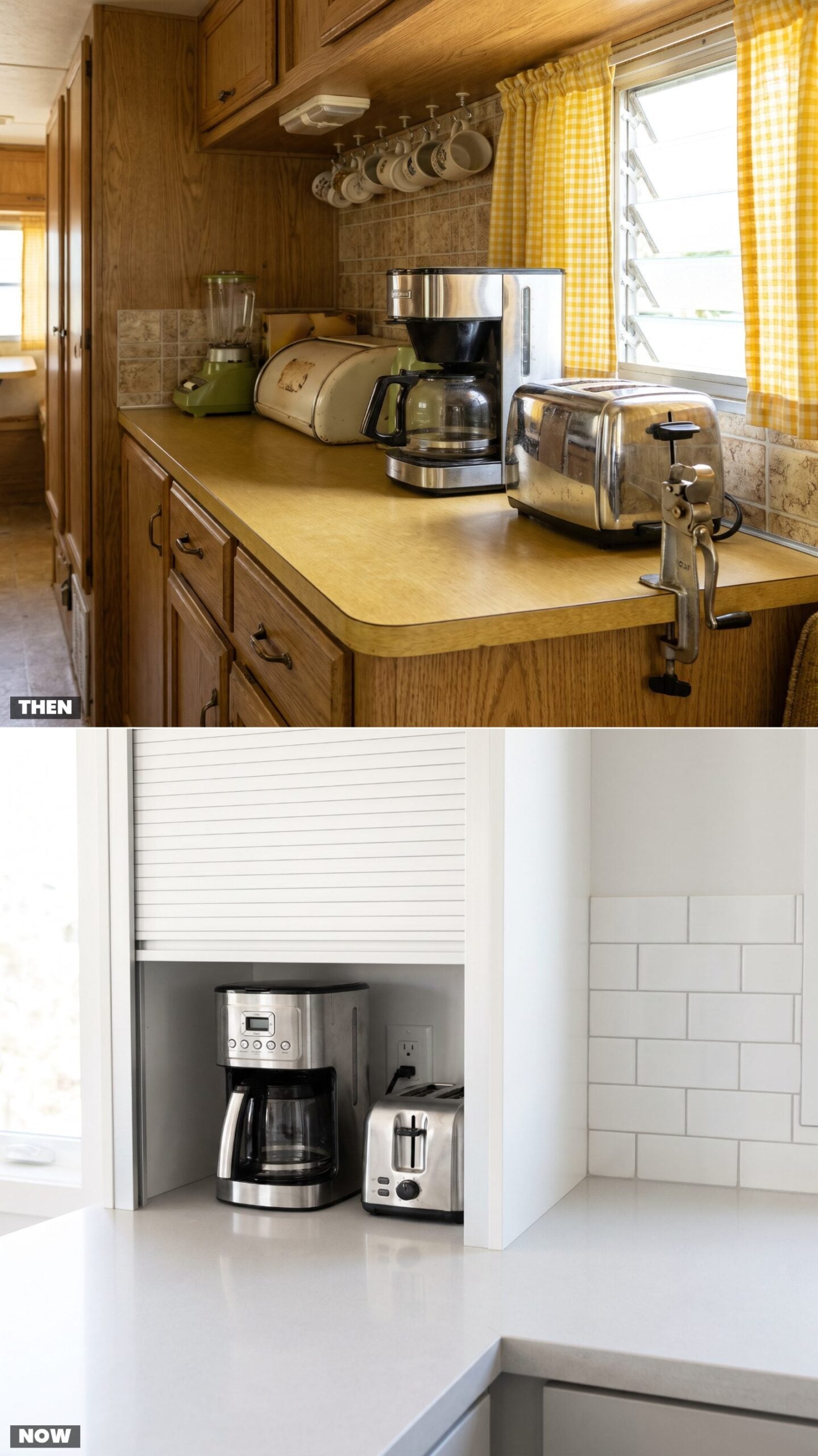
The vintage galley counter was an appliance parking lot. Coffee maker, toaster, can opener bolted to the edge, all of it living out in the open because there was nowhere else to stash it. You cooked around the gear instead of with it.
The appliance garage changed the math. A little tambour door rolls up to reveal the coffee maker and toaster already plugged in, then rolls back down to hand you your counter.
Clear counter, clear head. In a small rig, visible clutter feels three times louder than it would in a house.
15. Cluttered Sink Cabinets vs. Fitted Under-Sink Organizers
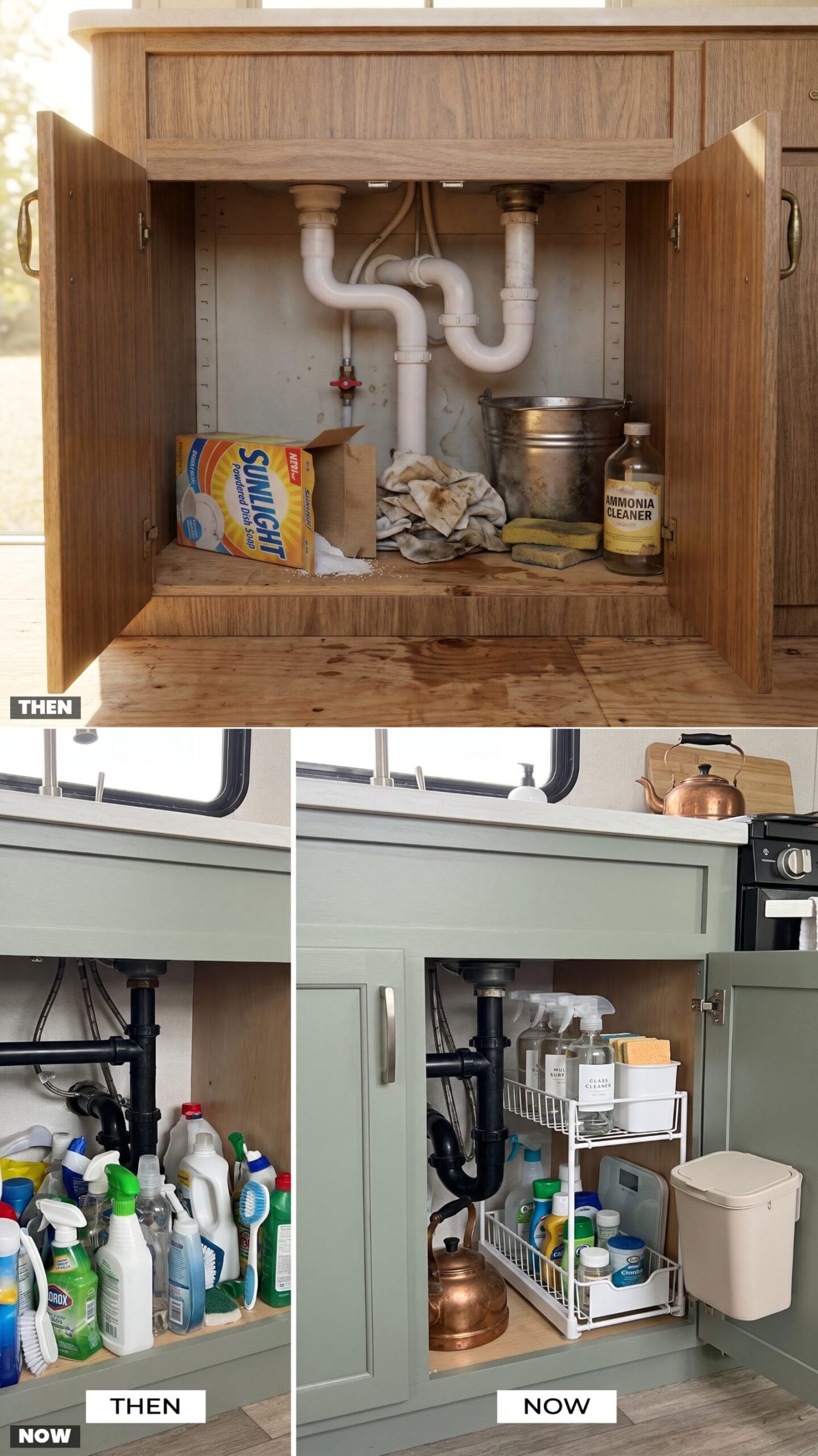
Open any 1974 under-sink cabinet and brace yourself. Pipes cutting through the middle, cleaning bottles tipped on their sides, a damp rag situation nobody wanted to investigate. The plumbing ate the space and the rest was chaos.
Fitted organizers work around the pipes instead of pretending they aren’t there. Tiered pull-outs clear the drain line, door-mounted caddies hold the spray bottles upright, and suddenly you can find the dish soap without a flashlight.
14. Wire Plate Racks vs. Adjustable Peg-Drawer Systems
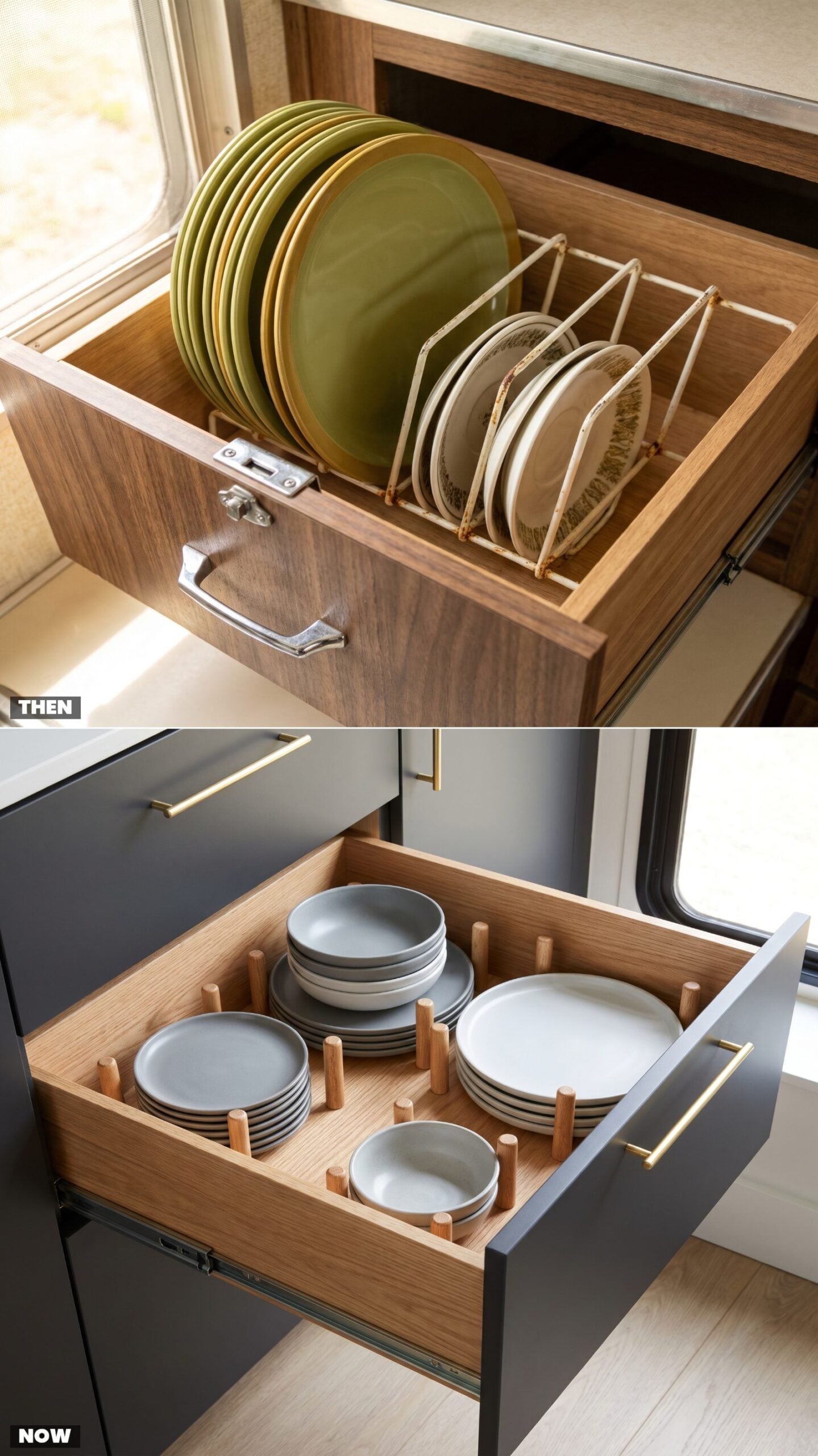
Those coated-wire plate racks only loved one size of plate. Buy a set that didn’t match the slots and you were wedging saucers in sideways, listening to them rattle every mile of washboard road. By year three the wire was rusting at the joints anyway.
Peg-drawer systems solved the one-size problem. Movable wooden pegs reposition to hug whatever you own, whether that’s dinner plates, bowls, or a lopsided stack of mugs, and everything stays put when the road gets rough.
13. Countertop Spice Tins vs. Dedicated Pullout Spice Storage
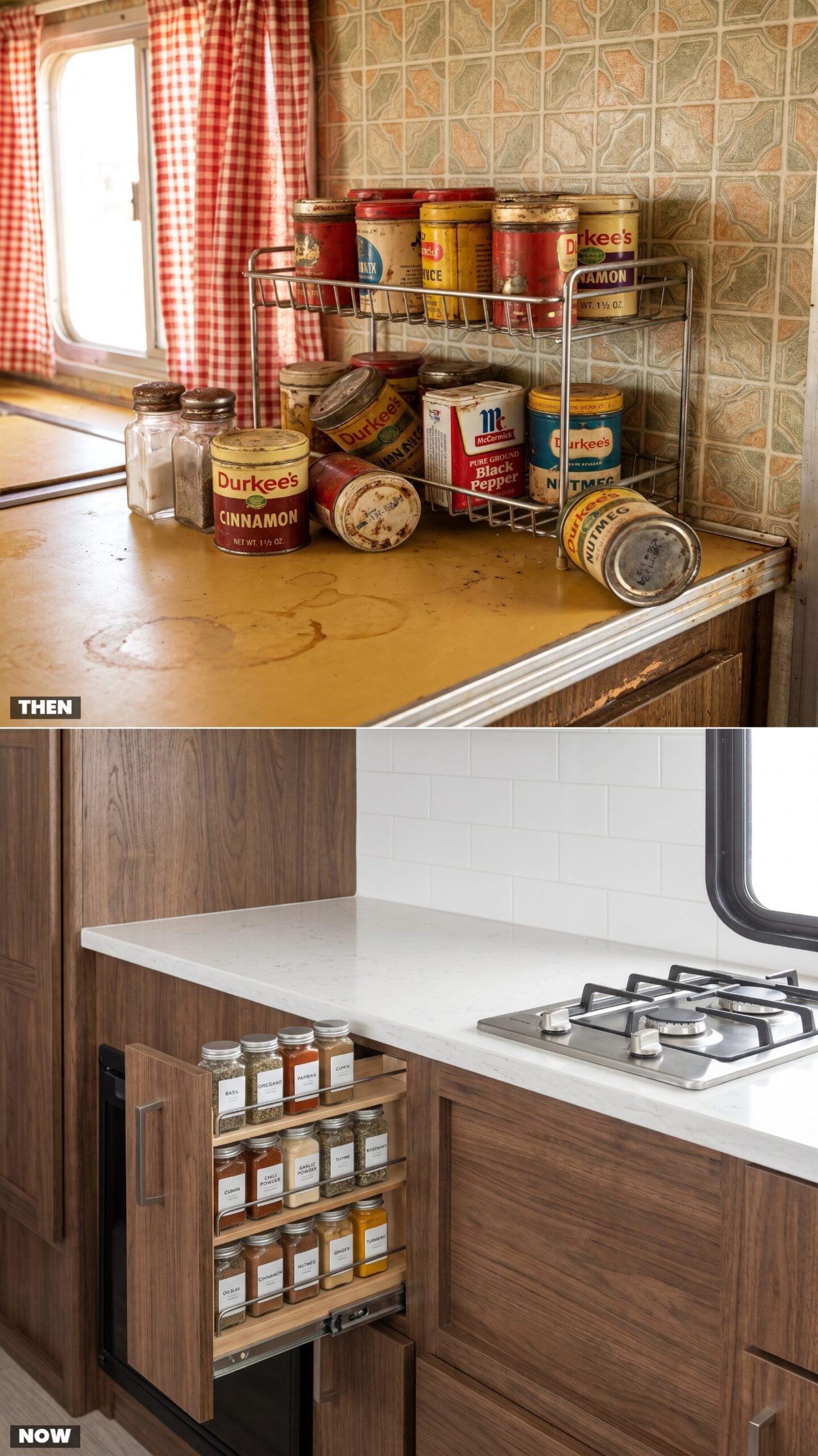
Spice tins lived on the counter in 1974 because they had to. A little stepped rack by the stove, a dozen round tins with labels slowly fading to nothing, and at least one that rolled off every time you took a hard turn. You smelled cumin before you found it.
A dedicated pull-out tucks all of that into a narrow slot beside the range. Jars stand upright on tiered rails, labels facing you, and the counter goes back to being a counter.
12. Swing-Top Trash Cans vs. Concealed Sorting Bins
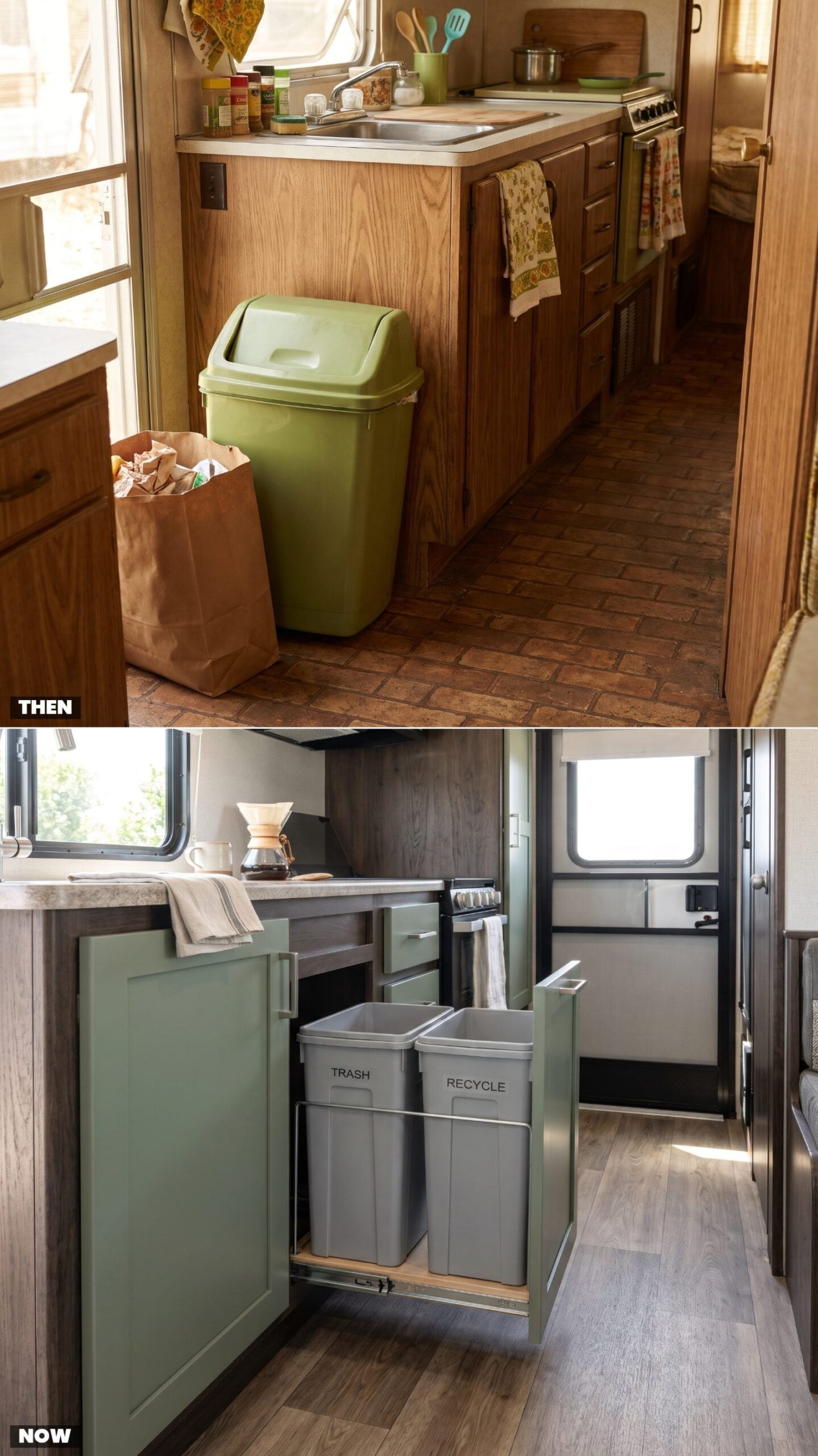
The swing-top can always ended up somewhere in the aisle, because there was no cabinet built to hold it. You’d clip it with your hip on the way to the bedroom and the lid would flap open at the worst moment. Classic.
Modern galleys hide the whole operation inside a cabinet. A pull-out slide carries two slim bins, one for trash and one for recycling, both out of sight and out of the walkway.
11. Screw-On Cup Hooks vs. Modular Galley Storage Rails
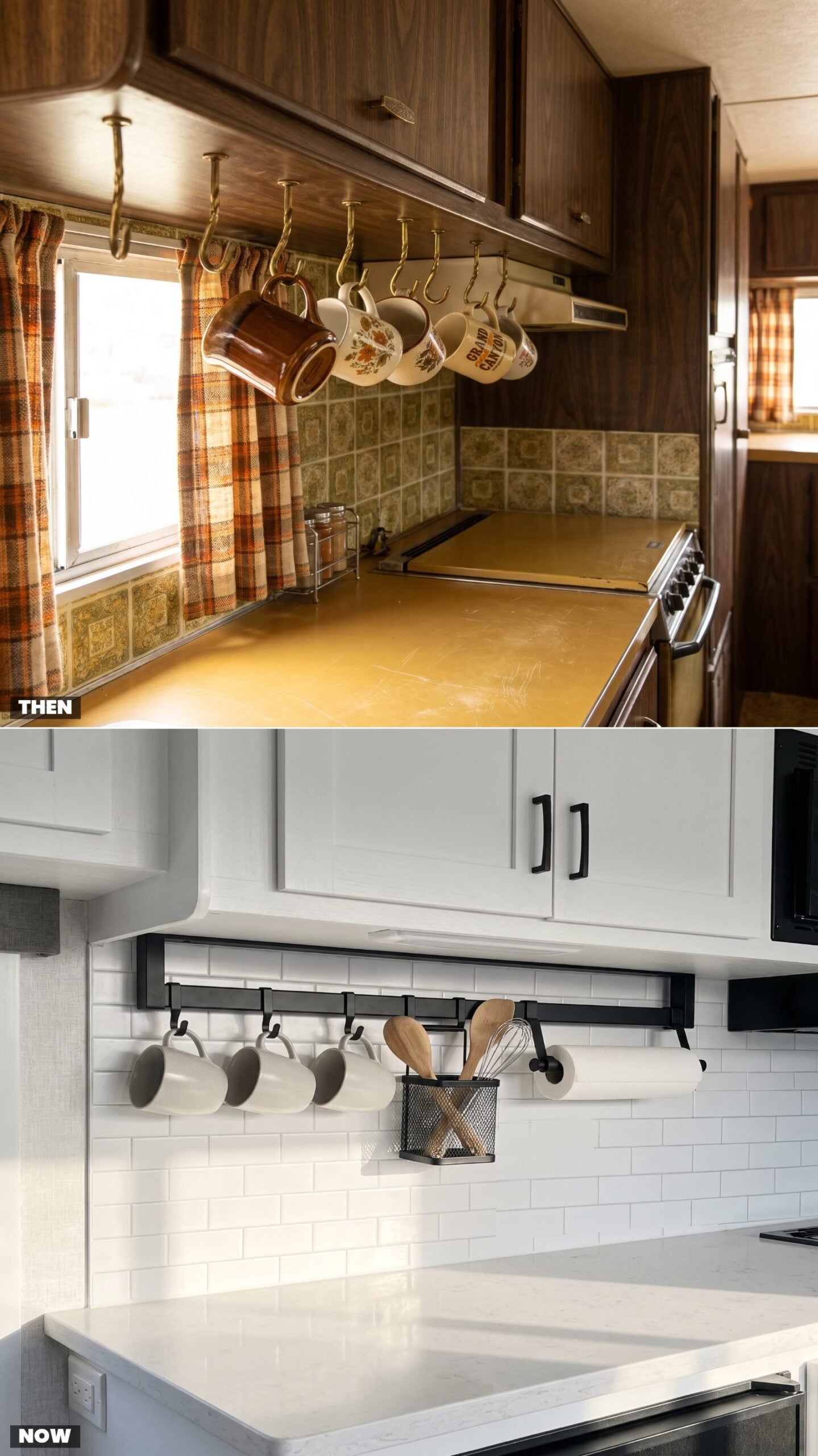
Cup hooks were the vintage answer to everything. Twist a few brass ones into the underside of a cabinet, hang your mugs, done. Trouble was they went in at whatever angle your screwdriver felt like, so the whole row looked a little drunk, and a rough road turned your mugs into wind chimes.
Rail systems bring order. One mounted bar takes evenly spaced hooks, a utensil basket, a paper-towel holder, all repositionable and all pulling from the same clean line.
10. Brooms Stored in the Shower vs. Dedicated Vertical Utility Closets
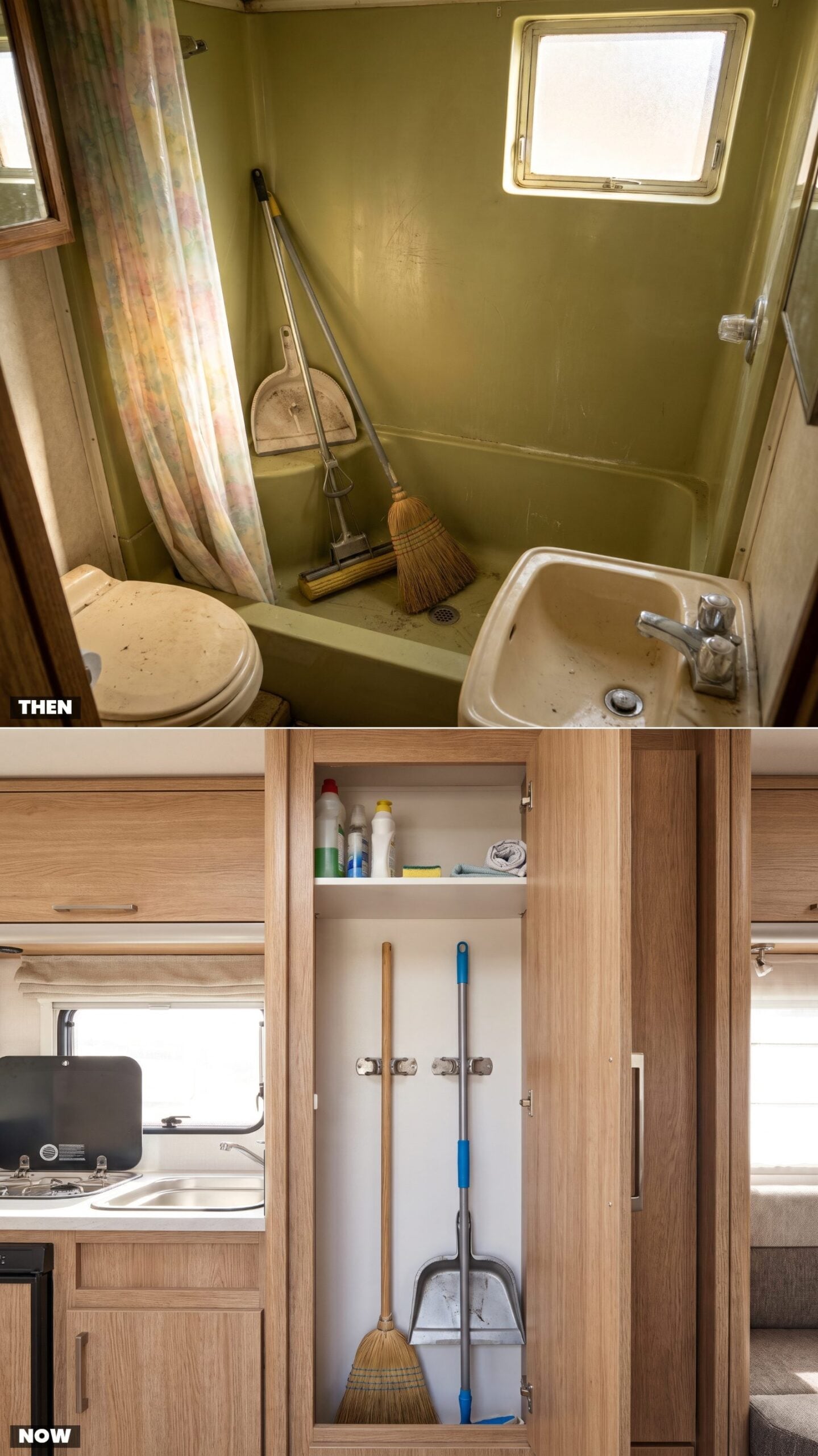
Every 1974 owner knows where the broom lived: propped in the corner of the shower, dripping, because the floor plan simply didn’t account for a broom. You moved it out to shower and moved it back in to get it out of the way. A whole little ritual of nowhere-to-put-it.
Modern layouts carve out a tall, skinny utility closet just for the long-handled stuff. Spring clips hold the broom and mop upright, a shelf above takes the sprays and refills, and the shower stays a shower.
9. Handwritten Recipe Cards vs. Mounted Digital Recipe Screens
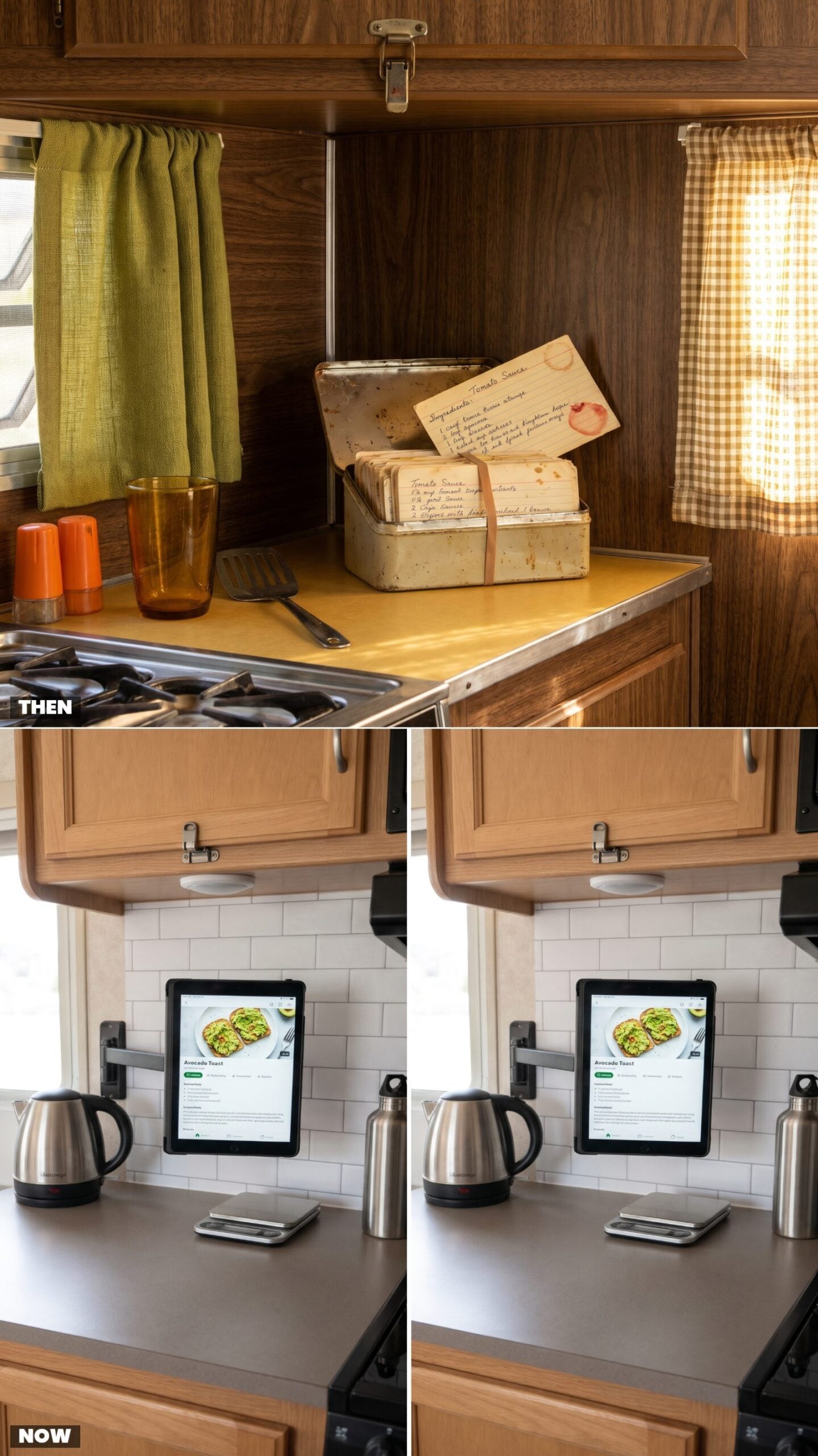
The tin recipe box was the heart of the 1974 camper. Cards in your mother’s handwriting, corners gone soft from decades of thumbing, a dried smear of chili where someone set the card down mid-stir. You cooked from memory and from ink, and if the rain got in, the ink ran and the recipe was gone for good.
Now a mounted screen does the remembering. Tap, scroll, double the servings without redoing the math in your head over a propane flame. Handy, sure. But nobody’s grandkids are going to find a USB drive in a drawer someday and get choked up over it.
8. Single Ungrounded Outlet vs. Multiple GFCI-Protected Sockets
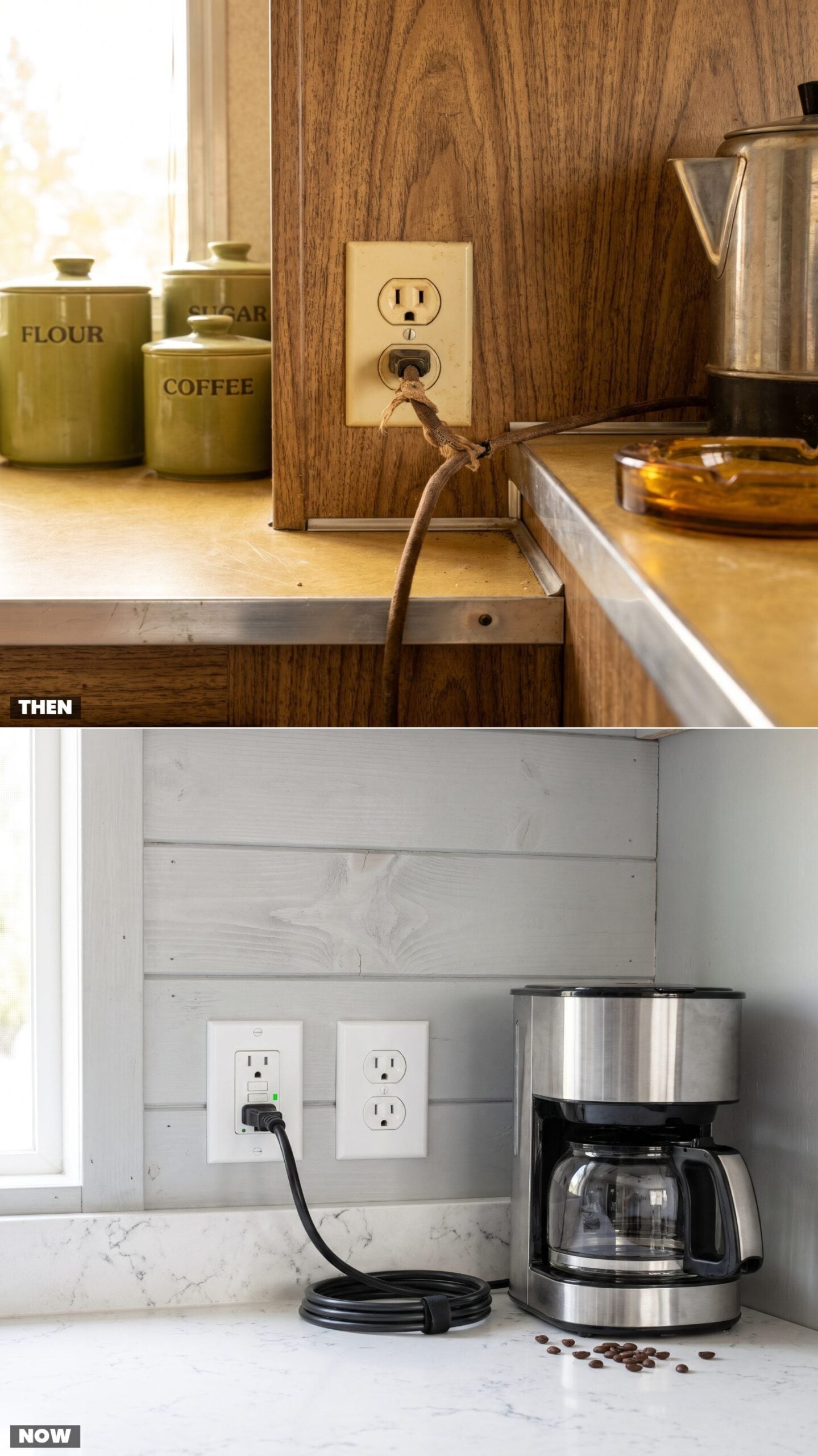
One outlet. Two prongs. No ground. That was the 1974 galley, and you unplugged the percolator to run the mixer because the system couldn’t do both and nobody expected it to. Cloth cords, a plate turning amber at the edges, and some unwritten law that told you never to touch the toaster with wet hands at the sink.
Today you get GFCI protection that trips in a fraction of a second when water and electricity get too friendly, plus a second socket so the kettle and the phone brick can live side by side. Less character, I’ll grant you. But a lot fewer close calls.
7. No Charging Area vs. Built-In USB-C Charging Ports
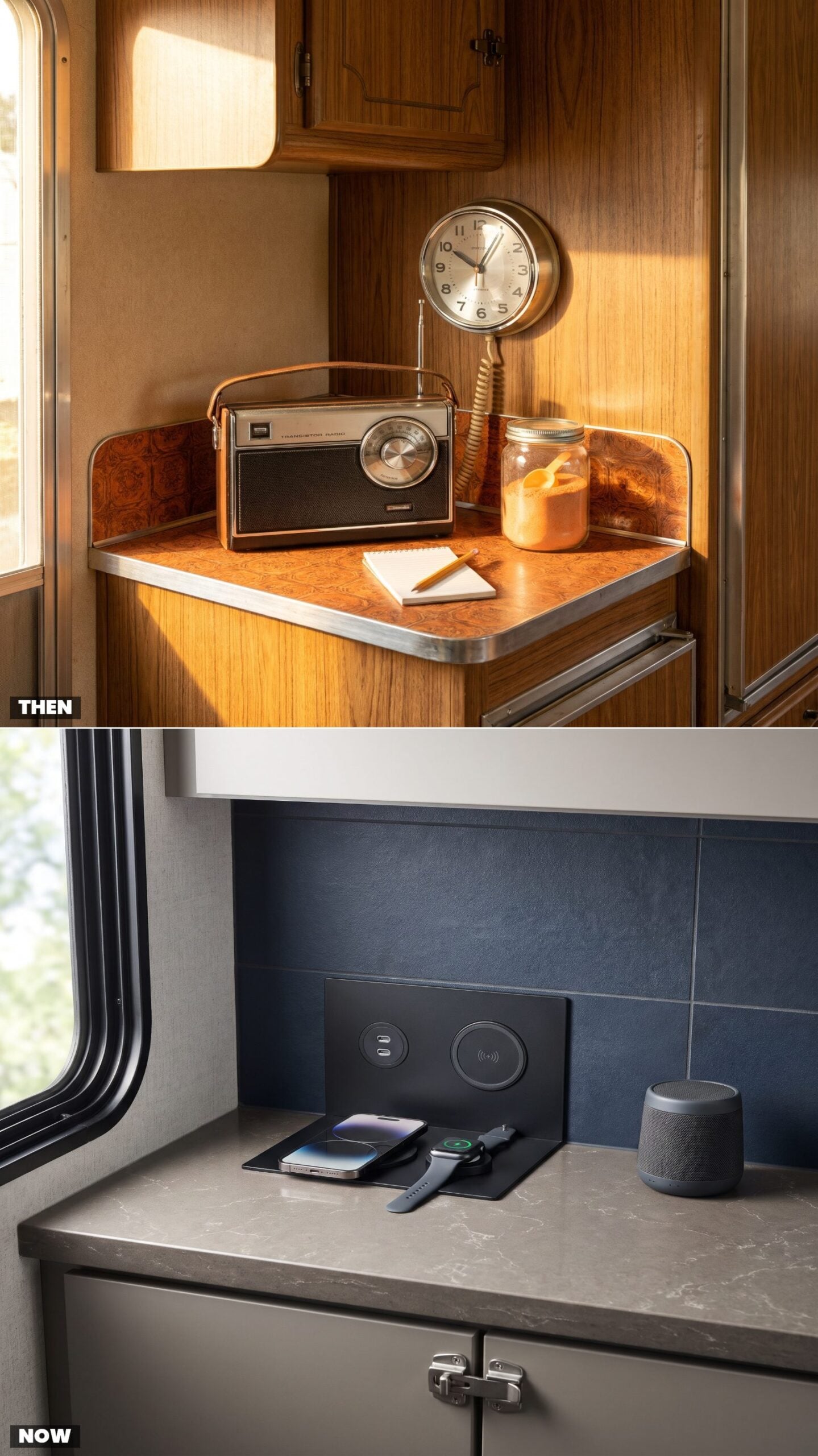
Nobody built a charging corner in 1974, because the only thing with a battery was the transistor radio, and that ran on a nine-volt you grabbed at the gas station. The counter held a radio, a clock, maybe a flashlight. Power meant plugging into a wall and staying put.
Now the backsplash has USB-C ports and a wireless pad, and the whole family’s devices top off overnight while you boondock in a parking lot. Progress, mostly. Though I’ll admit that radio pulling in a faraway AM station after dark had a kind of spell no phone has ever managed.
6. Rows of Rocker Switches vs. Central Touchscreen Controls
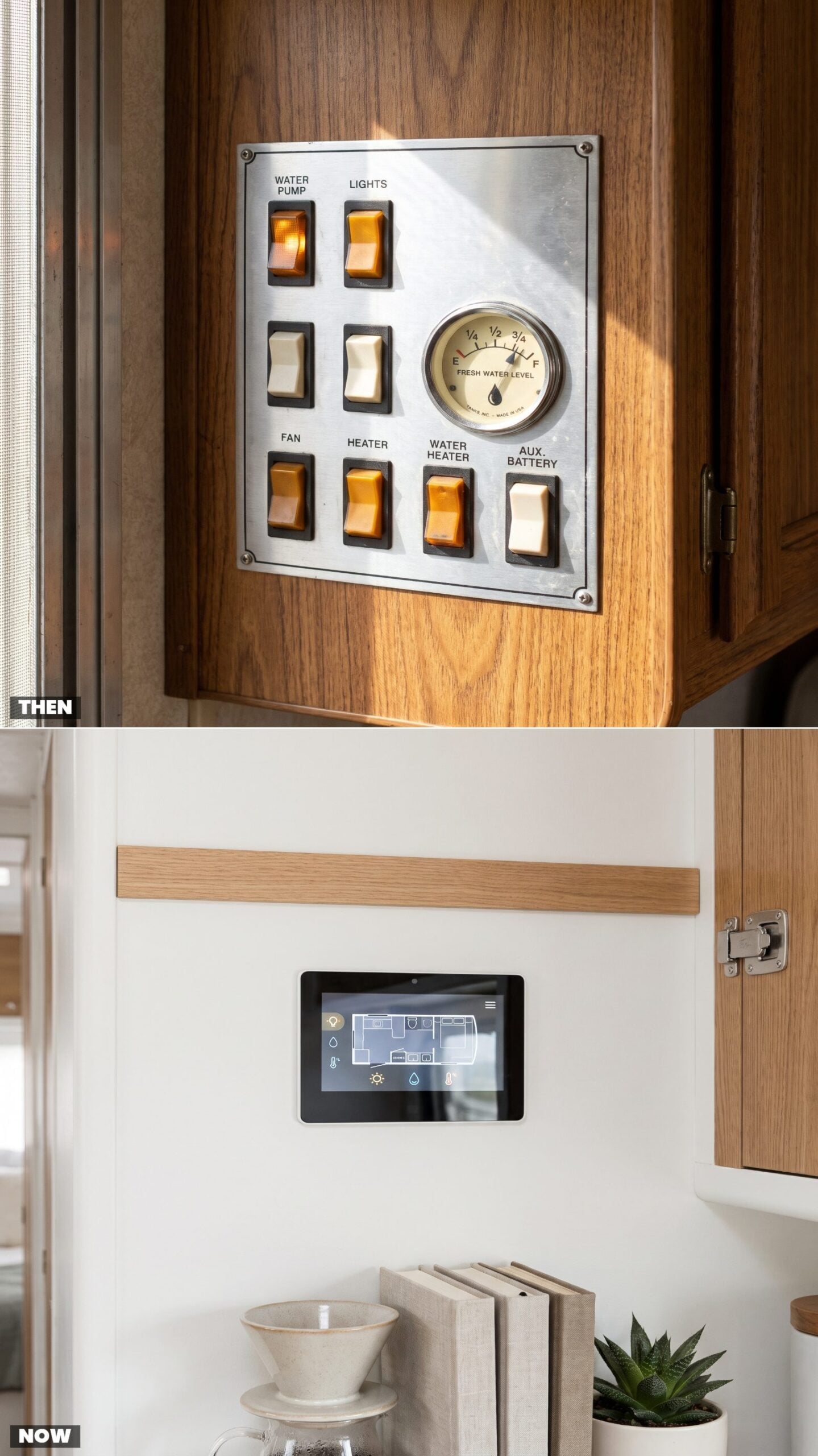
There’s a satisfaction to a wall of rocker switches no touchscreen will ever match. Every one labeled in little engraved caps, every one making a solid click, and you learned the panel by feel so you could flip the water pump in the dark without looking. The live ones glowed amber.
The modern version folds all of it into one glossy screen — tank levels, lights, climate, the furnace, all behind glass. Tidier, and it talks to your phone. But when that screen glitches out somewhere deep in the backcountry, you really miss a switch you could just flip.
5. Basic Analog Tank Gauges vs. Digital Water-Level Monitoring
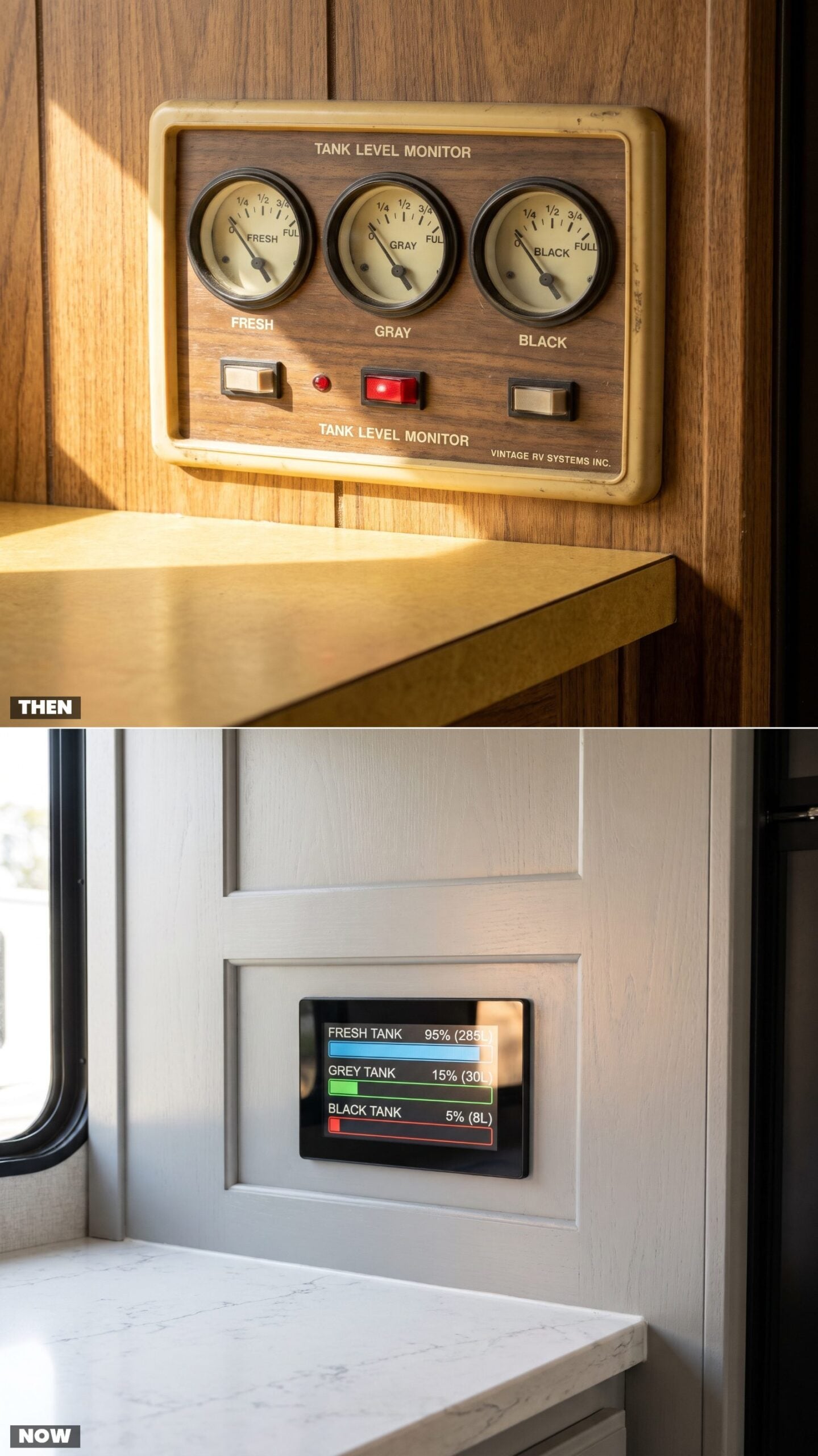
The old tank gauges were more suggestion than measurement. A needle wobbling somewhere between half and full, or four little lights where the one labeled FULL quit in 1979 and never came back. You learned to trust the weight of the trailer on the hitch over anything the panel told you.
Digital monitoring gives you a real percentage and a bar graph now, and some rigs ping your phone the moment the grey tank fills. You dump on a number instead of a hunch. Which is a mercy, because the hunch was wrong about half the time.
4. Tiny Storage Water Heaters vs. Tankless Hot-Water Systems
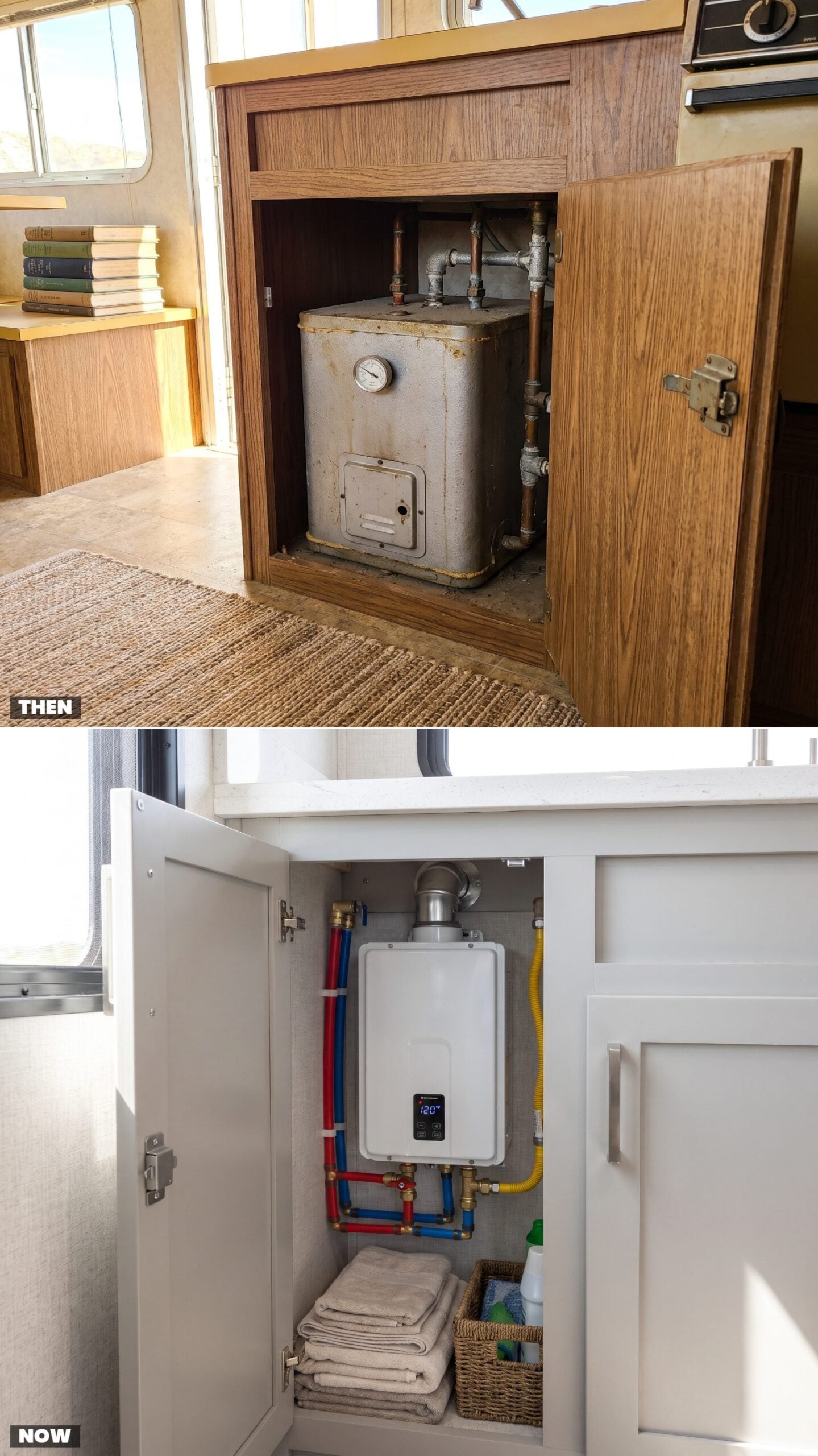
Six gallons. That was your entire hot water supply in 1974, and it took a good twenty minutes to heat on propane. The rule was iron-clad: whoever showered first got warm water, and whoever showered second got a bracing reminder to hurry up. Wash the dishes afterward and you were back to waiting.
Tankless units heat on demand now, endless hot water from a casing half the size, with a dial that lets you set the temperature to the degree. The old tank did teach a kind of discipline, I’ll give it that. Nobody misses the cold-shower lottery.
3. Direct Tank Water vs. Multi-Stage Drinking-Water Filters
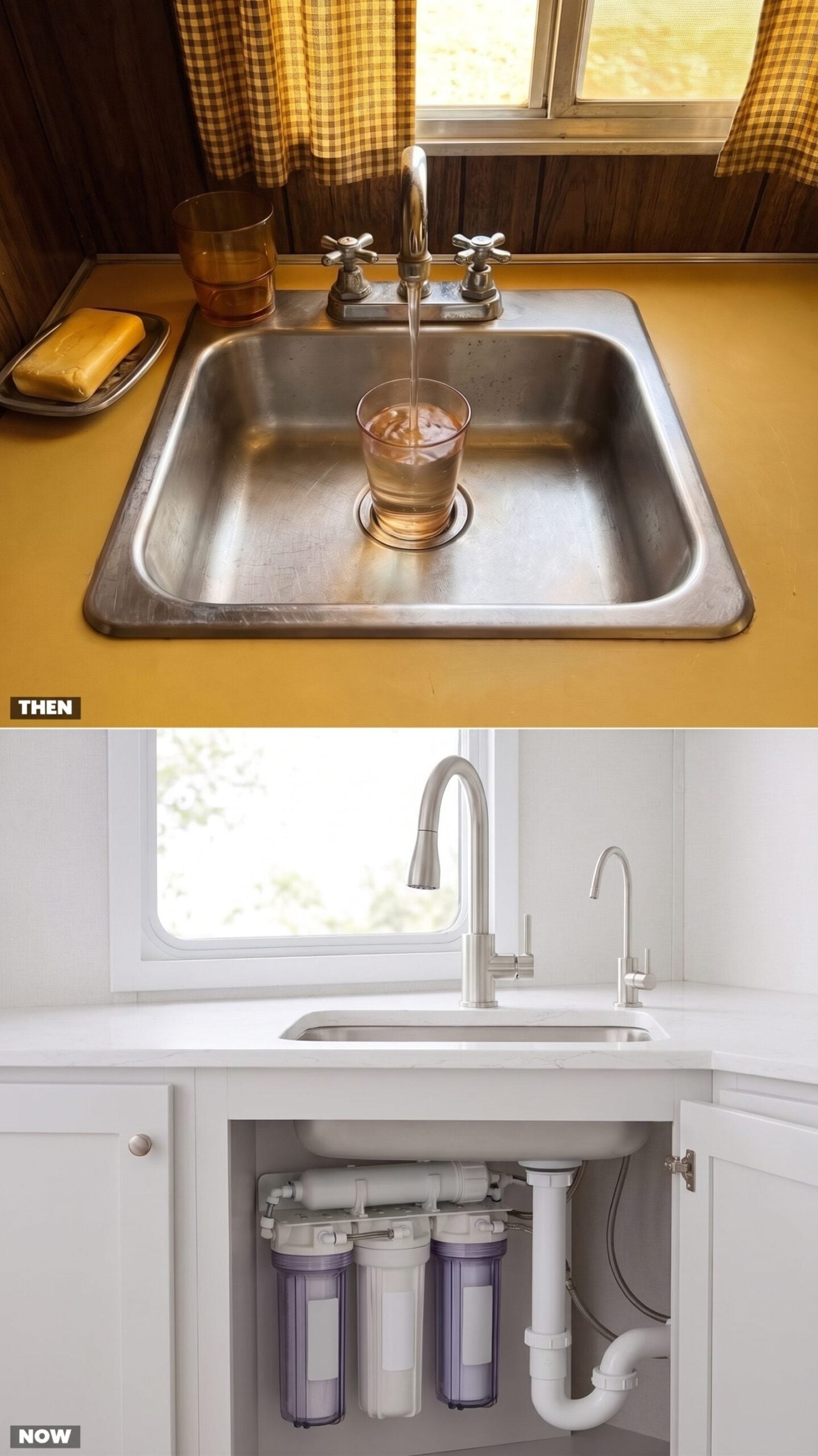
You drank whatever came out of the fresh tank, and the fresh tank tasted like wherever you’d last filled it. Some campgrounds handed you sweet well water. Others gave you a metallic tang no amount of Kool-Aid could cover. So you kept a jug of “town water” for coffee and crossed your fingers on everything else.
Now a multi-stage filter sits under the sink — sediment, carbon, sometimes more — with a dedicated tap for the clean stuff, so the water tastes the same in New Mexico as it does in Maine.
2. Passive Roof Vents vs. Thermostatic Powered Vent Fans
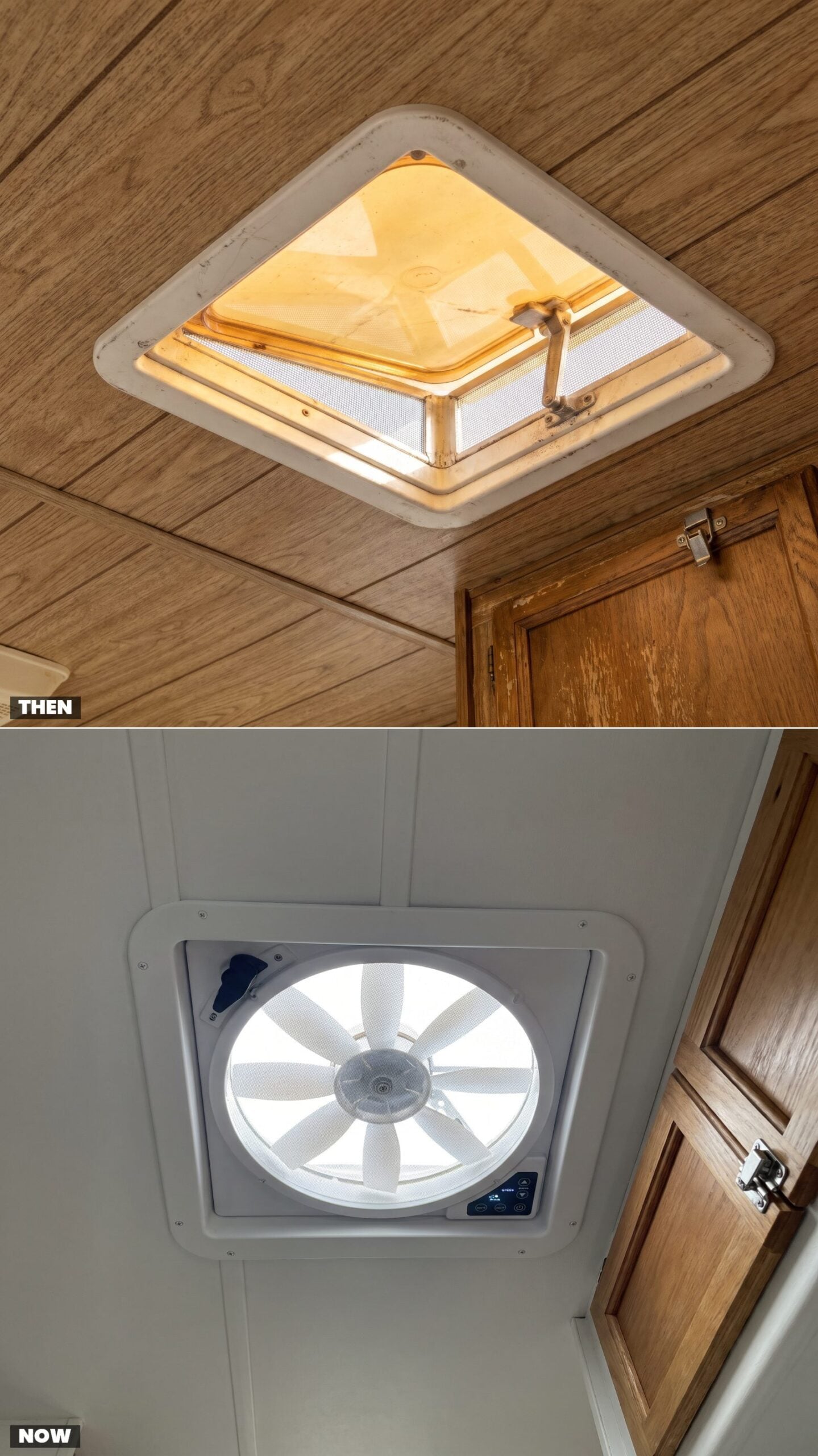
The 1974 roof vent was a plastic dome and a crank, and that was the ventilation plan start to finish. You cranked it open before frying bacon and prayed the breeze felt like cooperating. On a dead-still August night, that vent did approximately nothing while the whole family slowly cooked in the trailer.
Powered fans changed everything. A thermostatic fan kicks on by itself when the galley heats up, hauls the grease smell and the humidity straight out, and some reverse to draw cool evening air back in. Ten speeds and a remote. The crank handle belongs in a museum.
A good powered vent fan does more for comfort in a small camper than almost any other single upgrade, and most owners say they wish they’d installed one years sooner.
1. Propane Burner Grates vs. Flush Induction Cooktops
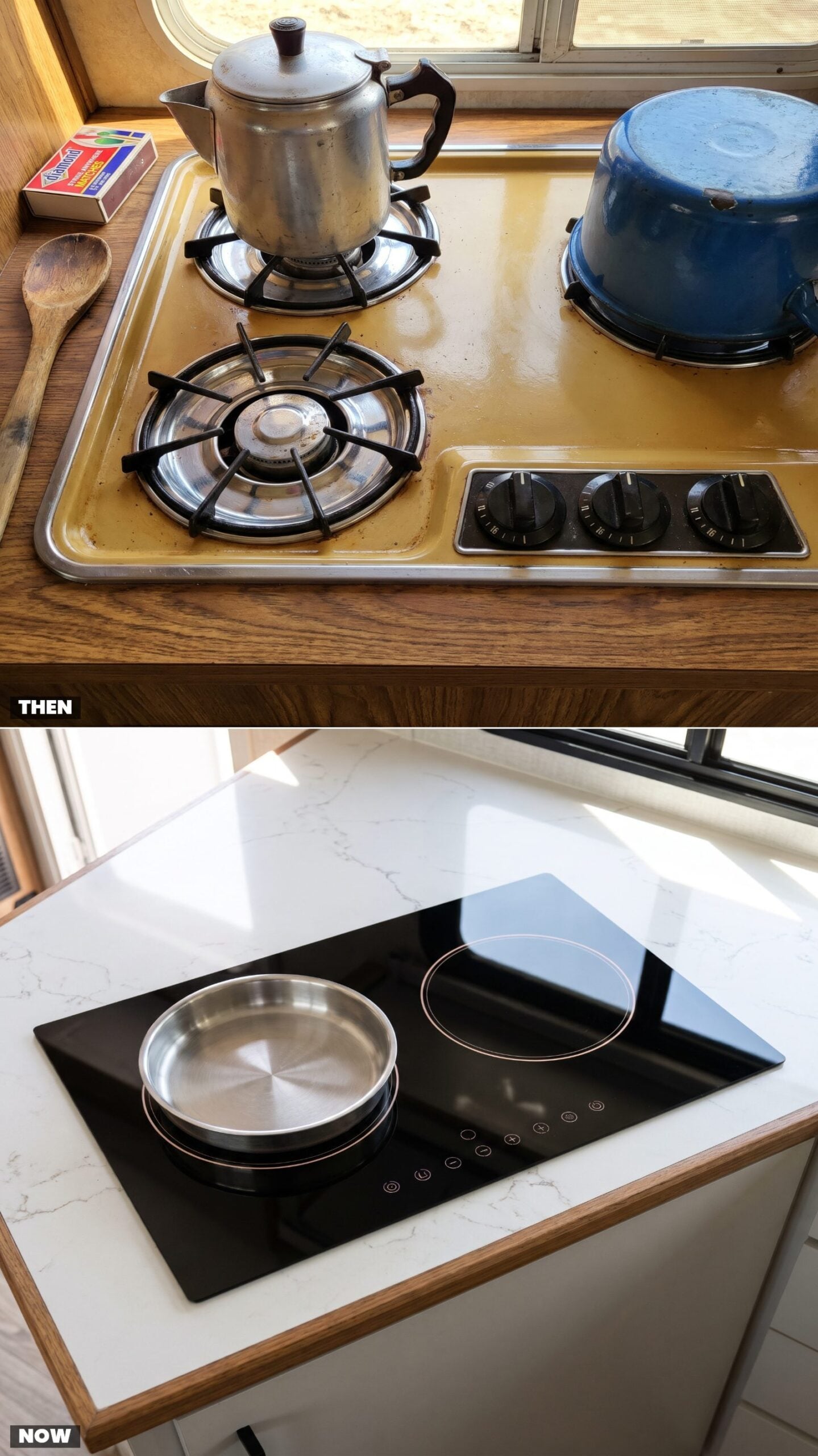
Cast-iron grates, chrome drip pans, and a box of strike-anywhere matches tucked in the drawer, because the piezo igniter either didn’t exist yet or didn’t work. The 1974 propane stove heated fast and heated hot, and it also coated the whole galley in a thin film of grease and soot you scrubbed off at every campground sink. By July the drip pans were a lost cause.
Induction flipped the whole thing on its head. A flat glass surface wipes clean in one pass, boils water faster than propane ever did, and stays cool enough around the pot that you won’t burn a hip squeezing past in a narrow aisle. No flame, no soot, no matches. I resisted it for years, then cooked on one for a week and came home a convert.