
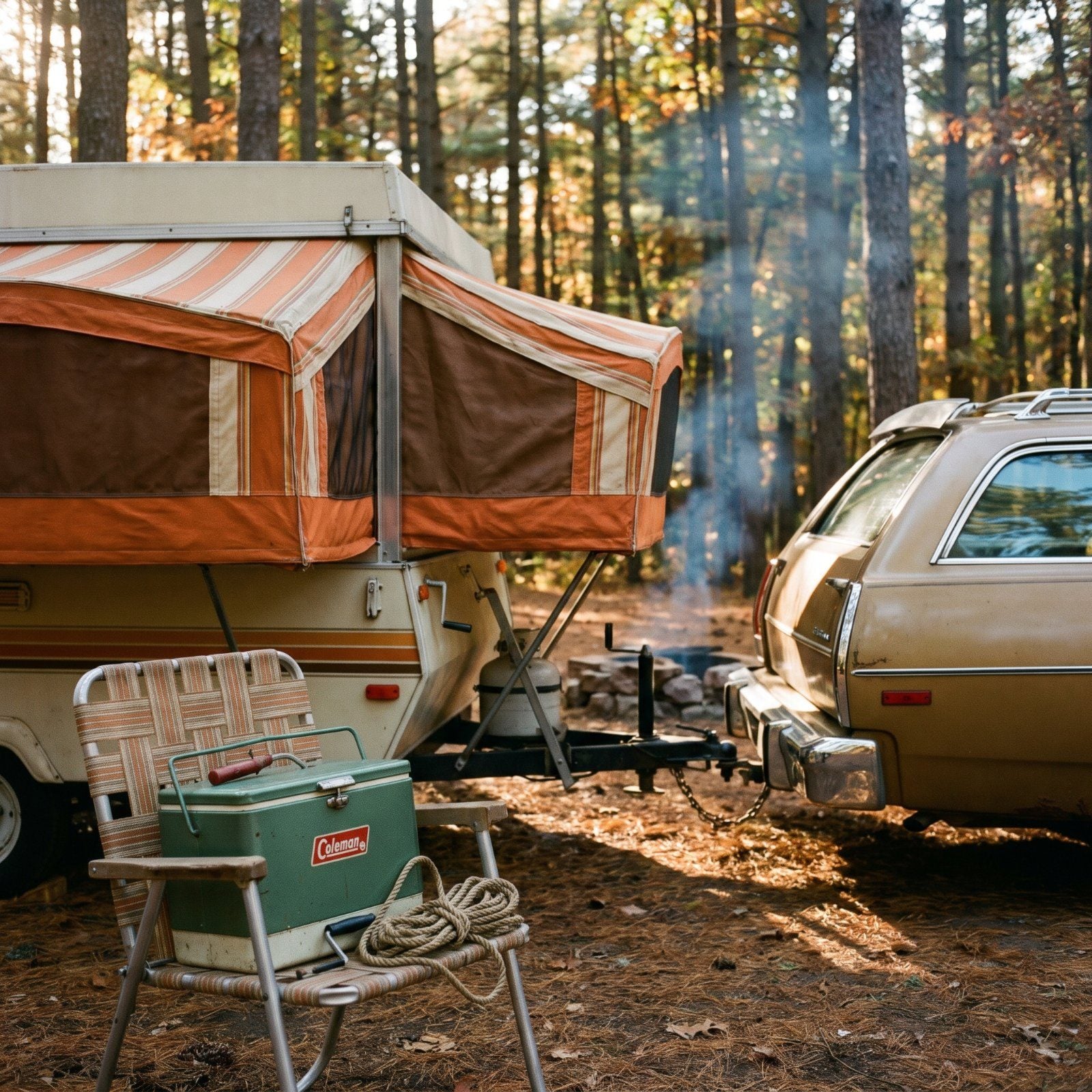
The smell hits first. Hot canvas, mildew that never fully left, and whatever bug spray your parents swore by. Then the crank started up, metal grinding against metal while the whole roof rose inch by inch and somebody shouted to watch the corner. A 1970s pop-up was half tent, half trailer, and entirely a family operation. Nobody set one up alone. Everybody had a job, even the kid whose only job was holding a pole and not letting go. We remember these campers in our hands more than our heads. Here are the parts that come flooding back.
Please note that some of the images in this article were created with the assistance of AI.
26. You Knew the Roof-Cranking Sound by Heart
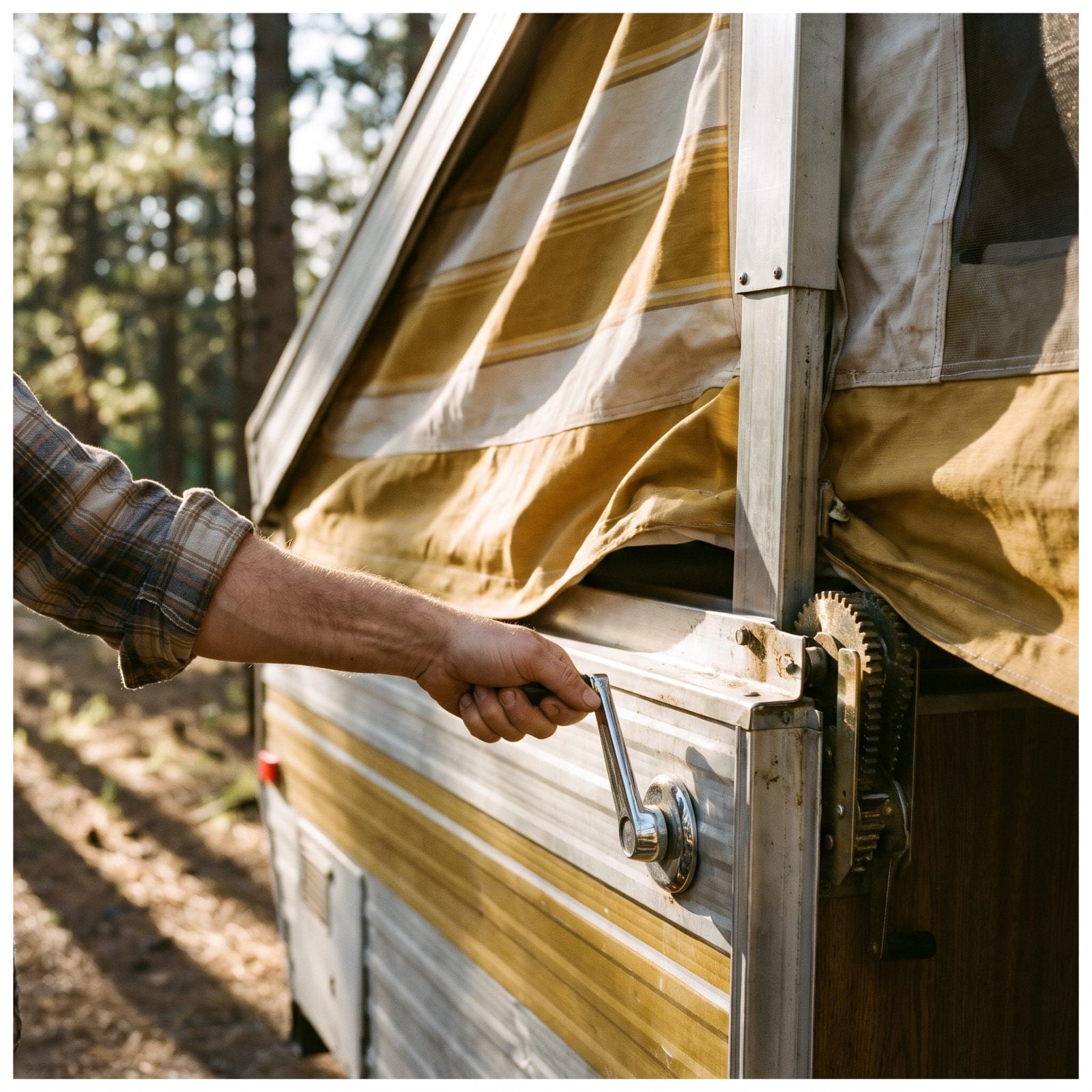
Every camper had its own voice, and the crank was the loudest part of it. That grinding ratchet carried across the whole campground. You could tell a Coleman from an Apache by the pitch of it. The roof went up in jerks, not a smooth climb, and somebody always counted turns out loud.
The trick nobody tells you: a stiff crank usually meant a dry lift mechanism, and Dad would mutter about it every single trip before doing nothing about it until the thing finally seized in July.
25. Every Roof Latch Had to Be Released Before Cranking
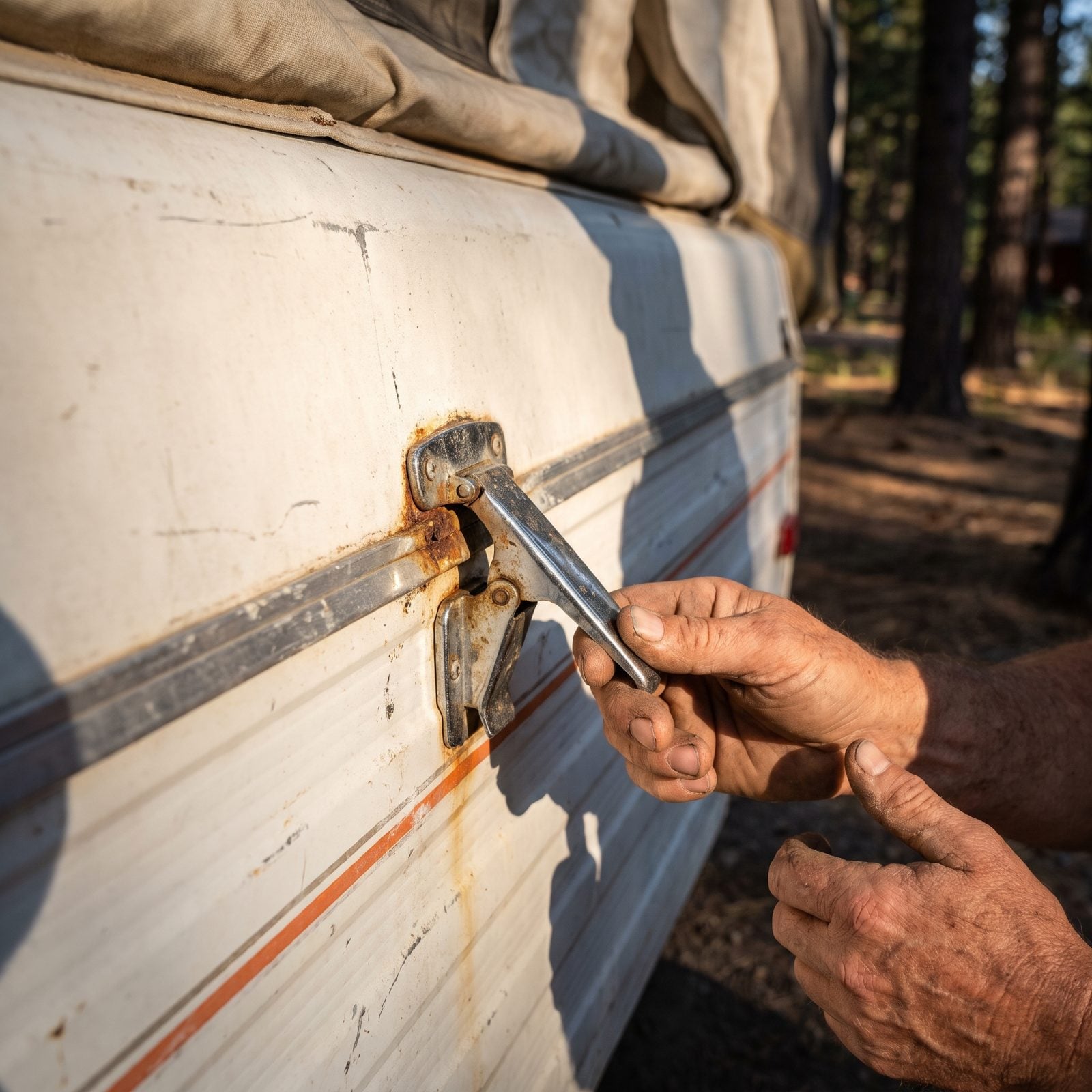
Forget one latch and the whole thing fought you. The roof would lift crooked, one corner jamming while the other rose, and a parent would bark “stop, STOP” while hunting for the latch you missed.
There were usually four, sometimes six, spaced around the body, and part of the ritual was walking the perimeter flipping each one open with that satisfying metallic snap. Kids got assigned the low corners. It felt like an important job. It was, honestly, the easiest job there was.
Walking new owners through pop-up setup, one RV dealer writes “Release the latches on the roof and slide the handle on the crankshaft. Begin turning it clockwise and keep going until you feel it stop.”
24. Shepherd’s Poles Held Up Your Bed
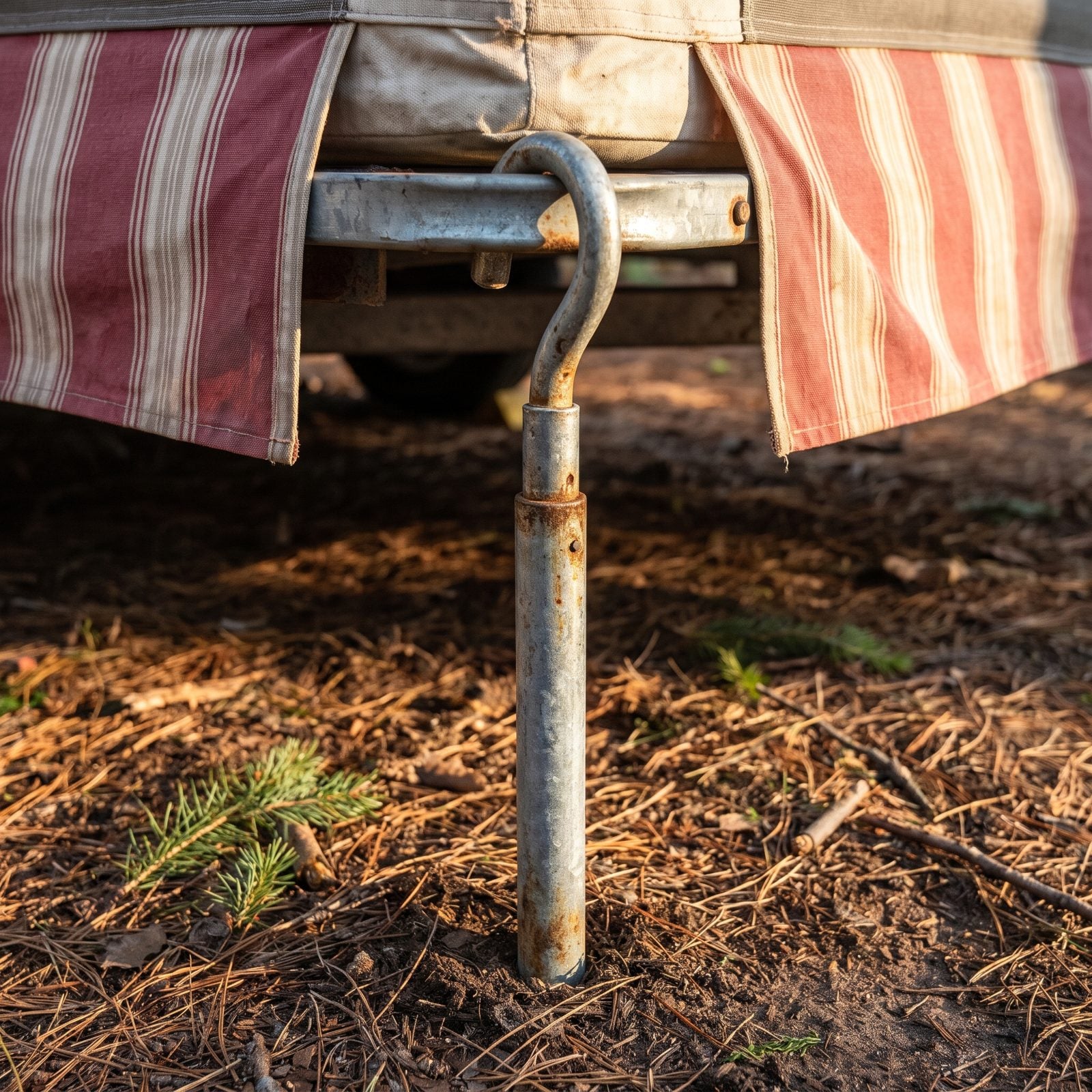
The hooked steel pole propped under the bunk was the single most load-bearing thing in a kid’s world. Shepherd’s poles, everybody called them, and you planted one or two under each extended bed so the whole platform didn’t sag under a sleeping body.
Here’s what comes back: roll too far toward the edge in the night and you could feel the pole give a little, then spend the rest of the trip convinced the bed would collapse. It never did. Simpler and sturdier than it had any right to be.
23. The Door Was Installed After the Roof Went Up
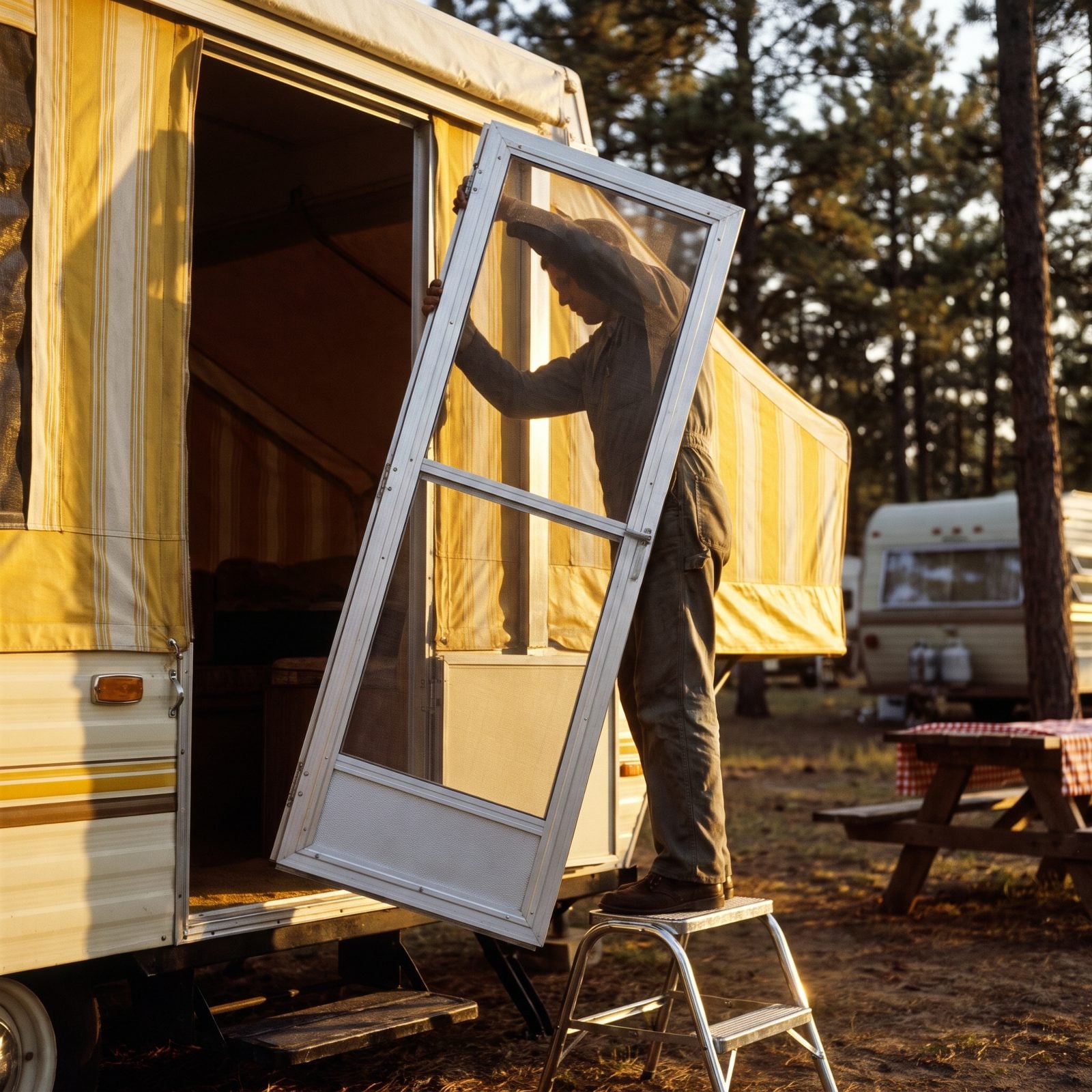
On a lot of these campers the door wasn’t attached until the roof was fully up. You stored a separate lightweight aluminum door inside, and once everything was raised and latched, somebody carried it out and hung it on the pins.
Until then the camper was wide open, just a canvas box you climbed into over the frame rail. The door going on was the signal that setup was basically done. Once you heard that spring-loaded screen slap shut for the first time, the camper was officially home for the weekend.
22. Snaps and Zippers Sealed the Canvas Around the Beds
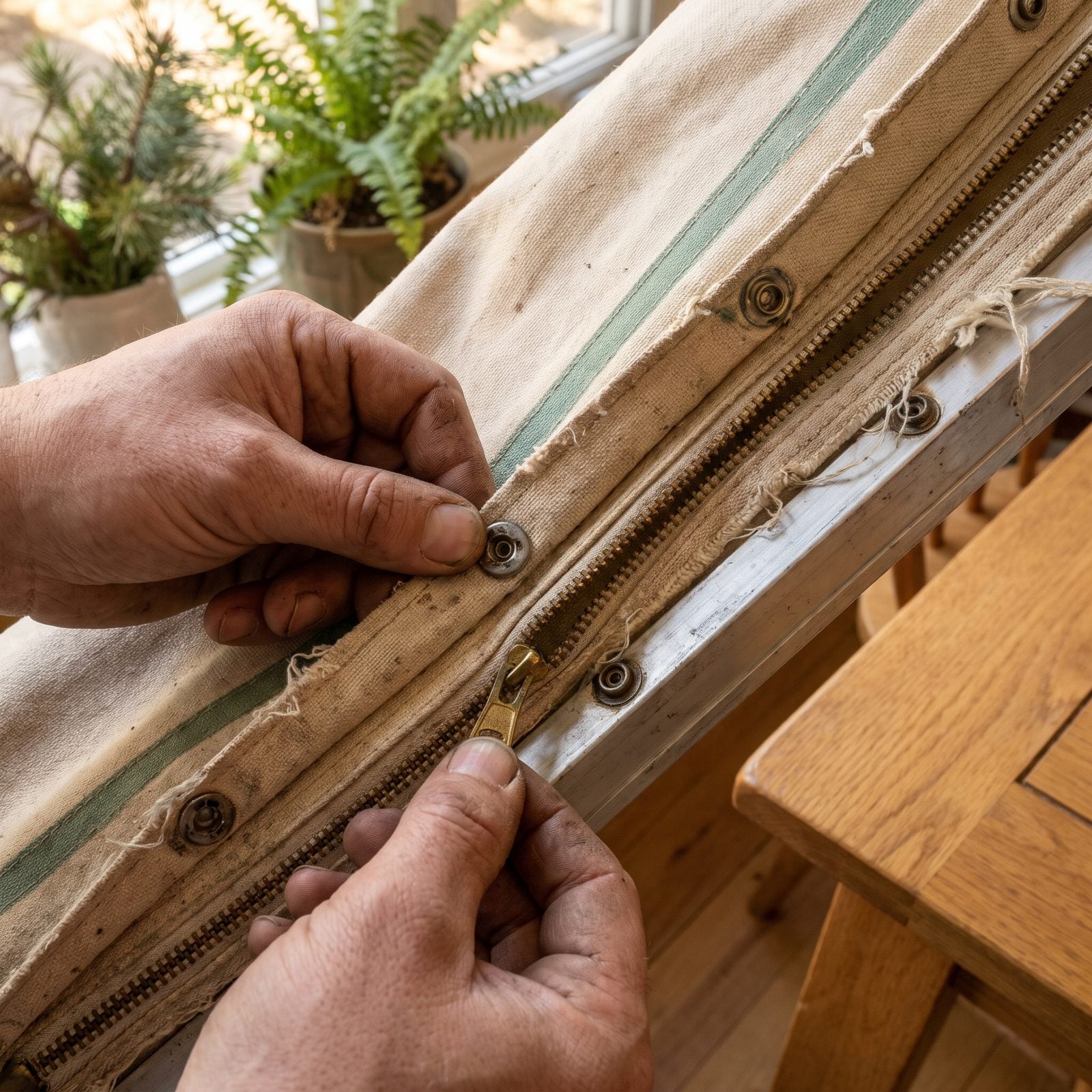
This was the fiddly part, and the part that decided whether you stayed dry. Rows of metal snaps and long zippers closed the canvas up tight around each bunk end, and if you skipped one snap, water found it.
Cold fingers, stiff fabric, snaps that hadn’t lined up since the Nixon administration. You pressed with your thumb until it bruised. And every family had that one window flap that never zipped right, patched with safety pins or just left loose and blamed for every mosquito that got in.
21. Scrap Lumber Served as Leveling Blocks
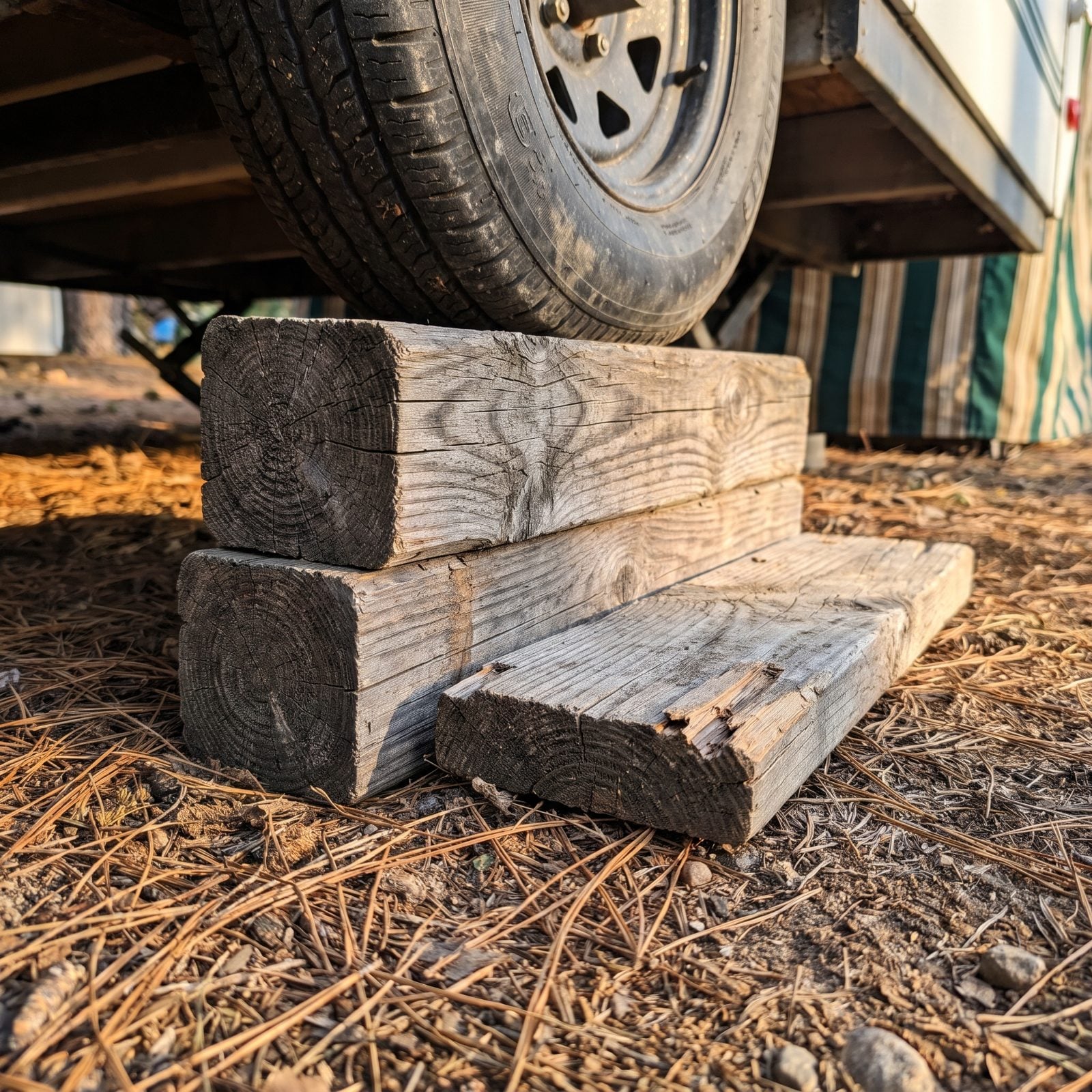
Store-bought levelers existed. Nobody in your family owned them. What you had was a canvas sack of scrap two-by-sixes cut to length, grey and splintery, living in the storage bin and smelling faintly of gasoline.
You drove up onto them an inch at a time while a parent crouched and waved you forward, then dropped a marble or a cup of water on the dinette to check level. That fight over whether it was “close enough”? Core part of every arrival.
20. Stabilizer Jacks Were Lowered by Hand
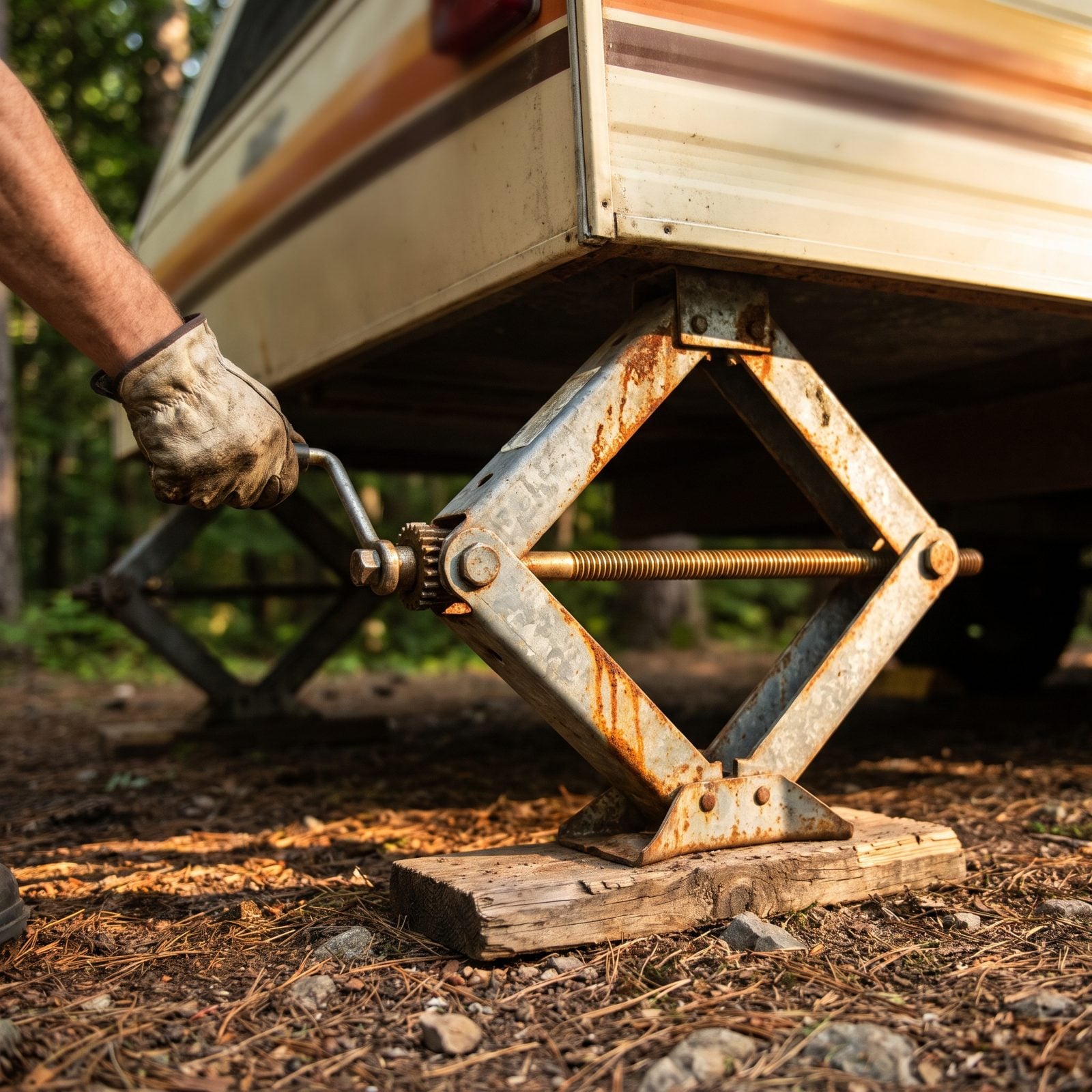
Four corner jacks, cranked down by hand until the camper stopped rocking. No power anything. You knelt in the dirt and turned until the jack foot bit into the ground, then gave it a quarter turn more just to be sure.
The reward was immediate. That sickening sway when you walked across the camper floor went still. Skip the jacks and the whole trailer bounced like a rowboat every time somebody rolled over, and you’d lie there listening to the floor creak all night instead of sleeping.
Explaining why stabilizer jacks exist at all, an RV dealership service team notes “When people walk around inside an RV, the frame naturally flexes. This can cause the camper to rock or bounce slightly.”
19. The Tow Vehicle Was Often a Station Wagon
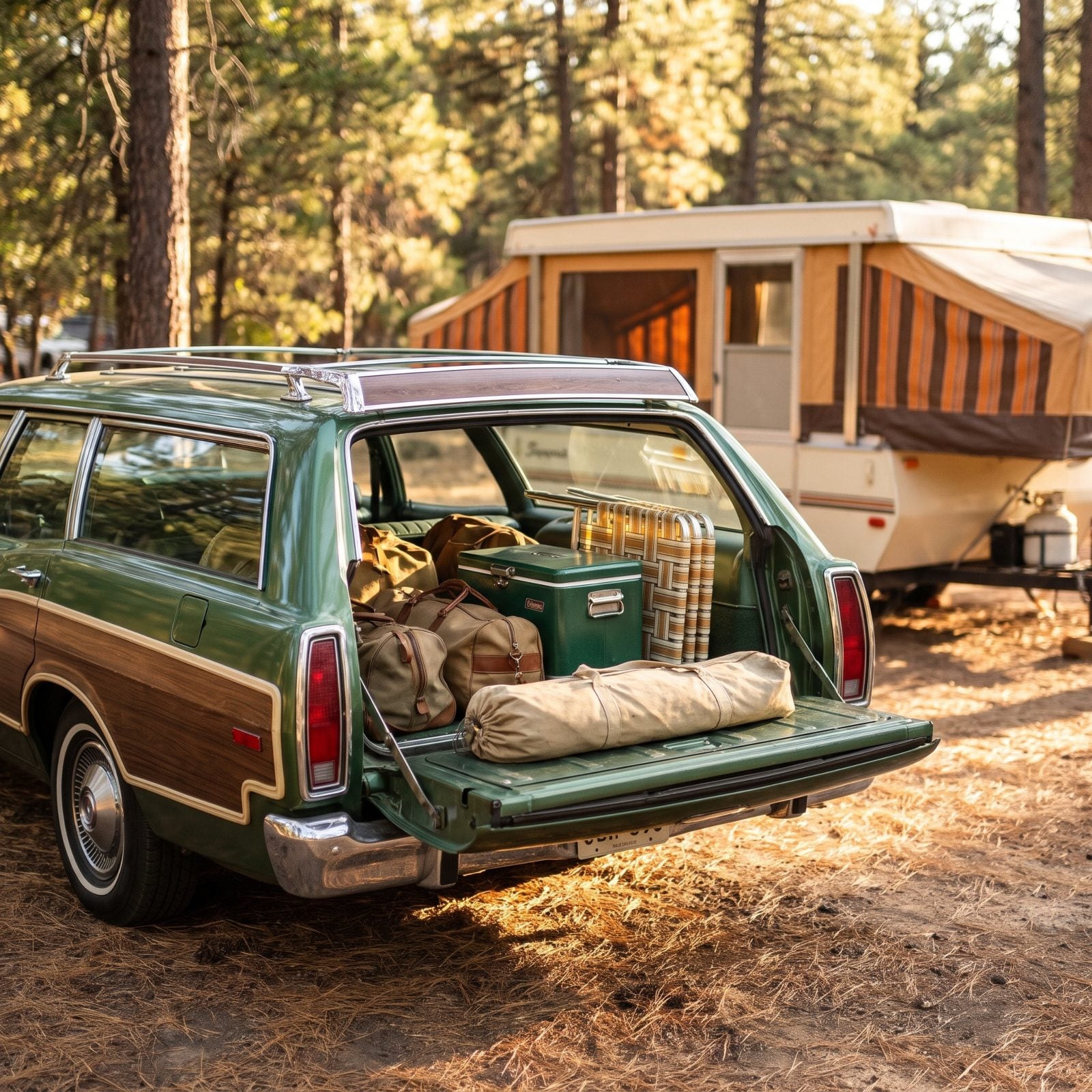
The wagon was the whole operation’s workhorse. Faux wood paneling, vinyl bench seats that scorched the backs of your legs, a cargo area packed to the headliner with sleeping bags, the Coleman stove, and a cooler wedged where somebody’s feet were supposed to go.
You rode in the way-back facing out the rear window, watching the camper sway behind you and the road unspool. No seatbelt back there, usually no second thought about it either. The wagon pulled that camper up every grade in low gear, engine groaning, and it always, somehow, got everyone there.
That’s the memory that lasts. Not the campground. The getting there, all of you crammed into a green wagon with a tent on wheels behind, headed somewhere you’d crank the roof up by hand.
18. The Canvas Had Its Own Unmistakable Smell
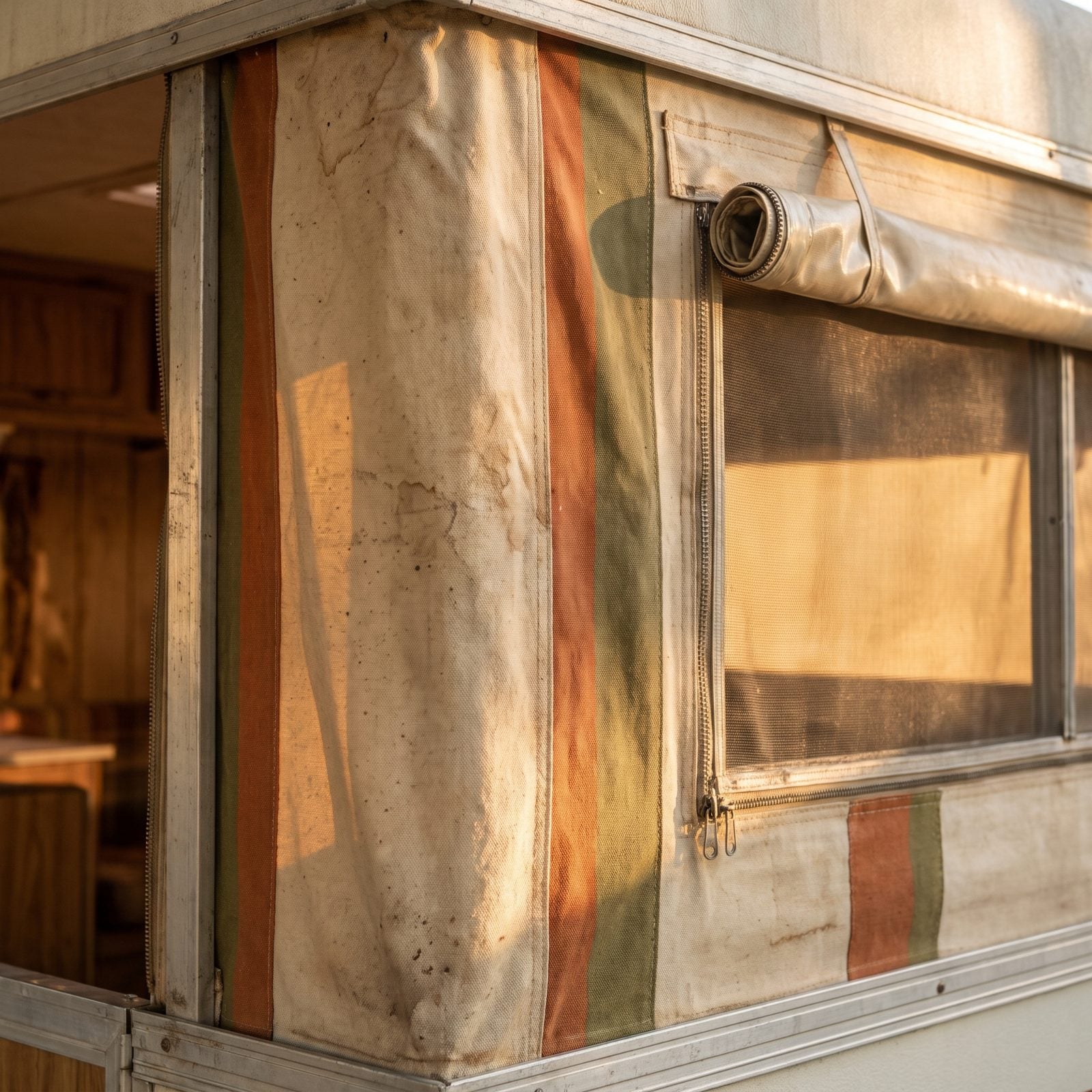
You’d know it blindfolded. That first unzip in the morning let out a smell that was equal parts hot cotton, old mildew, bug spray, and whatever had been cooked on the Coleman the night before. It lived in the canvas and never fully left.
Modern RVs smell like vinyl and air freshener, which is to say they smell like nothing. The pop-up smelled like a tent that had seen things. Sun-warmed duck canvas has a scent all its own, and once it hits you again at a campground forty years later, you’re ten years old and barefoot on cold grass.
17. Plaid or Floral Cushions Covered the Dinette
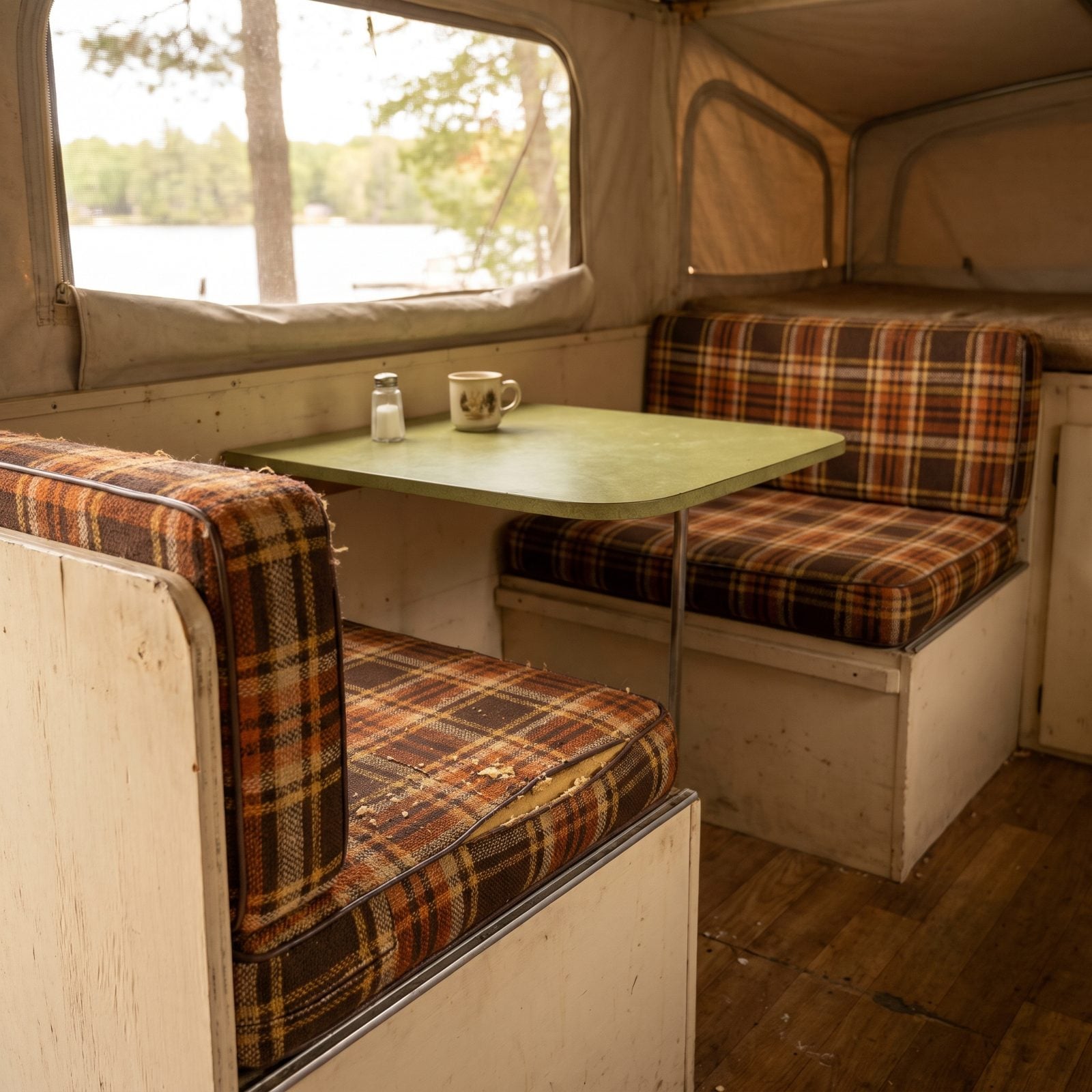
The upholstery pattern was decided by whatever was on the lot in 1974, and nobody loved it. Brown-and-orange plaid or a tired floral print, always in that scratchy woven fabric that itched the back of your legs in July and got a little fuzzier every October.
Spill a grape pop and it soaked right in. The busy pattern hid the stain, and that was the whole appeal of the stuff. Those cushions were built to outlast a pack of sticky kids, and they nearly did, though by the day the family finally sold the camper the fabric was torn and frayed, foam crumbling out of the seat, and still ugly.
16. Curtains Were the Only Bedroom Walls
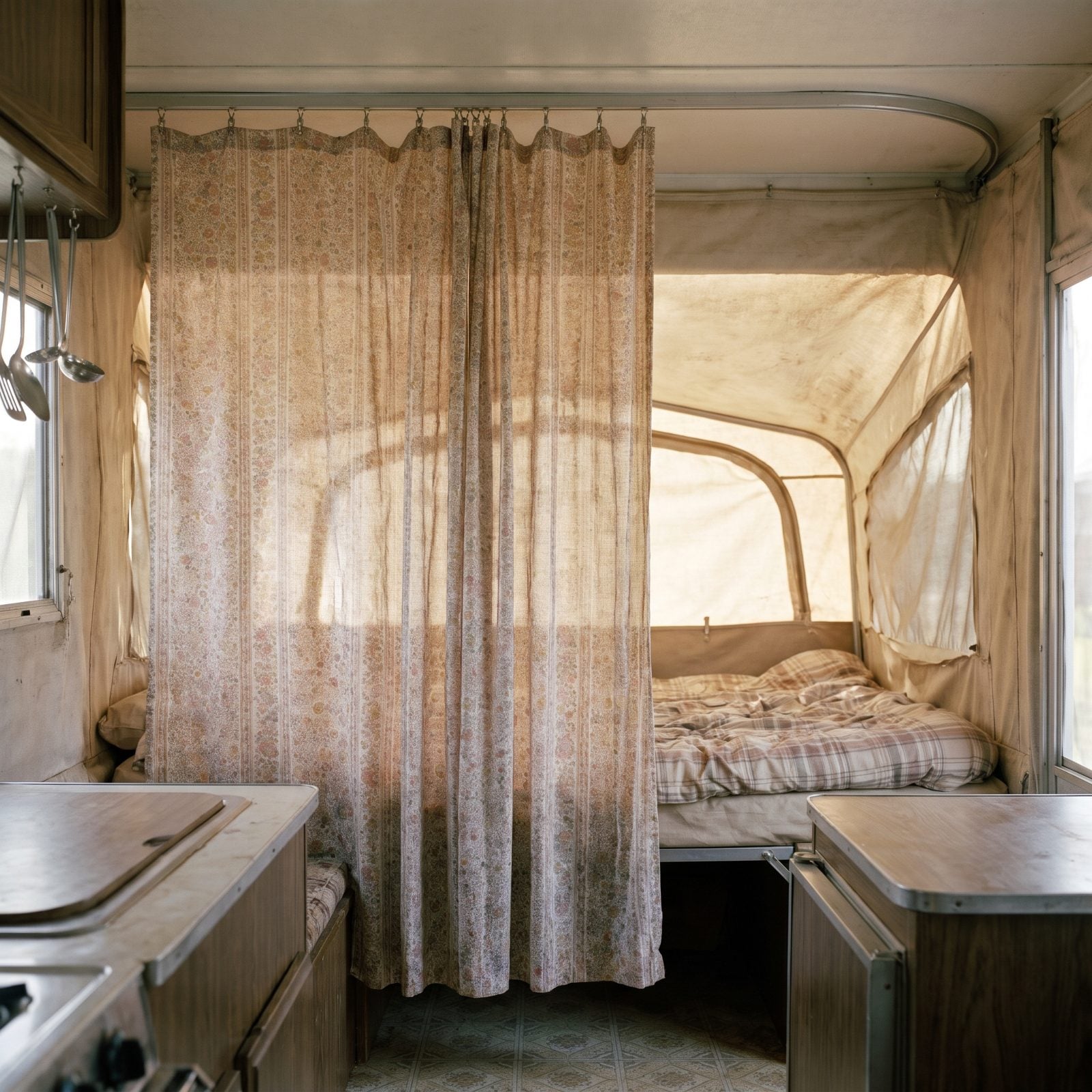
Privacy was a sheet of printed cotton on a bent metal rod. You slid it closed and that was your bedroom, sort of. It didn’t block sound, didn’t block light, and it sure didn’t block the smell of coffee at six in the morning.
But kids are easy. Pull that little floral curtain shut and the pull-out bunk became your own kingdom, a space nobody could technically see into, right up until a sibling yanked it open to announce that breakfast was ready.
15. Storage Space Hid Beneath the Bench Seats
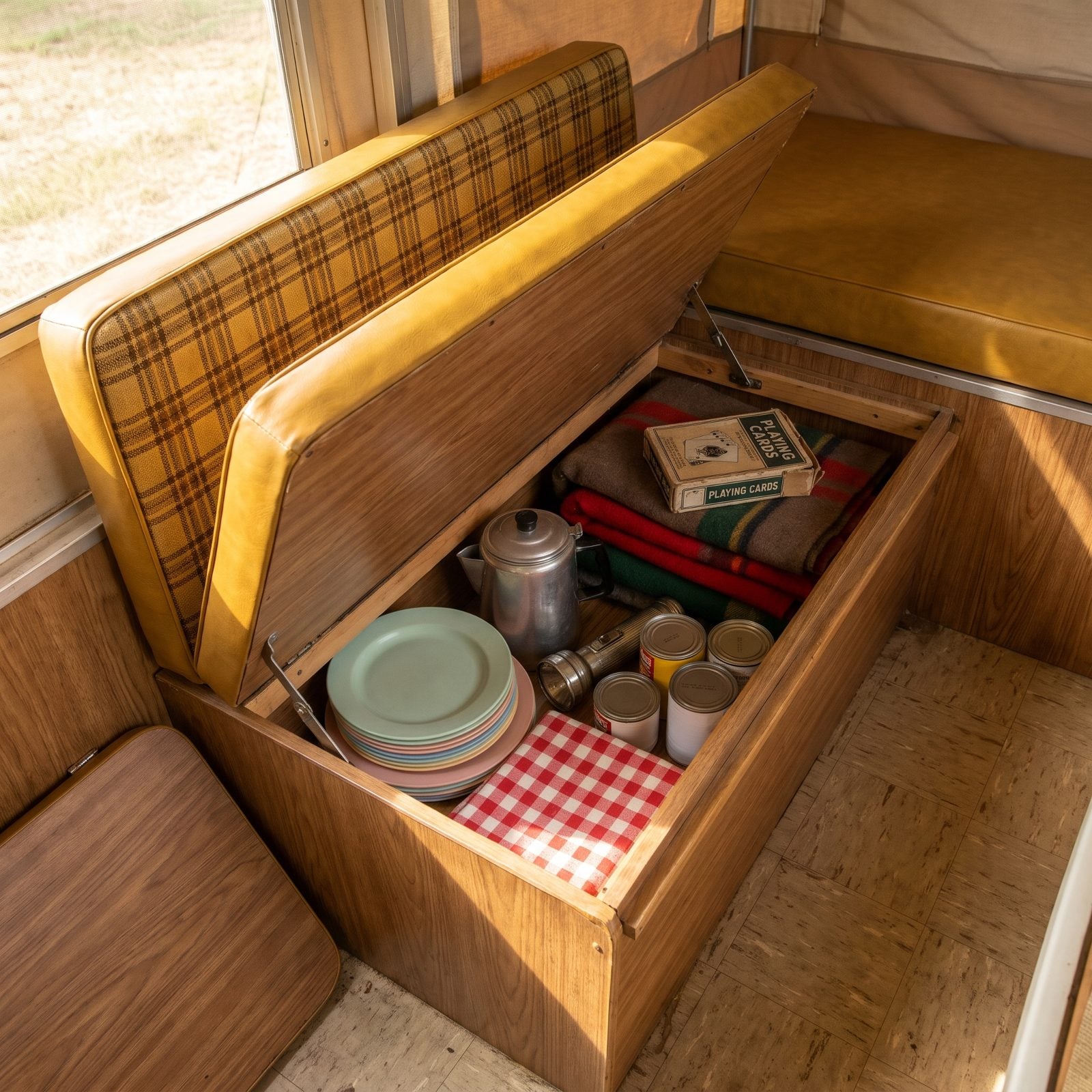
Lift the cushion, flip the plywood lid, and there it all was. Every bench seat was secretly a chest, and inside lived the entire kitchen: melamine plates, the percolator, a tangle of flashlights, playing cards, and at least one thing that rolled to the back and stayed lost until the following summer.
You learned fast that the game of Monopoly you wanted was always under the seat somebody was sitting on, which meant getting to it required the whole family to stand up at once. There was a system. The system was chaos.
14. Wind Made the Canvas Walls Billow In and Out
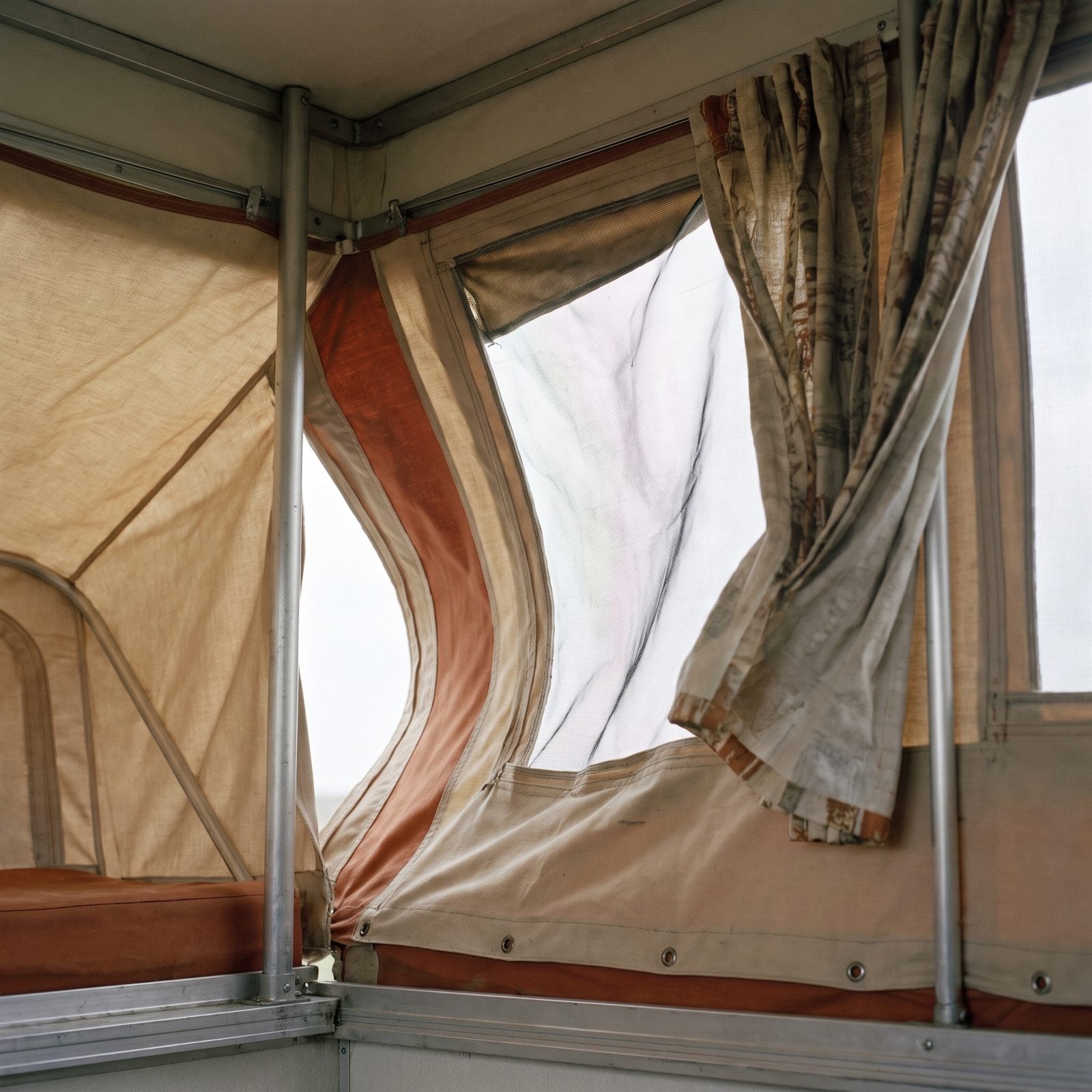
On a gusty night the walls breathed. The canvas would suck in, then balloon back out, pop and rustle, over and over, like sleeping inside a lung. The first time it happened you were sure the whole thing was coming down on top of you.
It never did. Those aluminum lift arms and frame rails held firm no matter how much the fabric flapped. But you’d watch the wall bow in six inches toward your bunk and spend a good hour convinced the weather had opinions about you personally.
13. Packing Wet Canvas Meant Reopening the Camper at Home
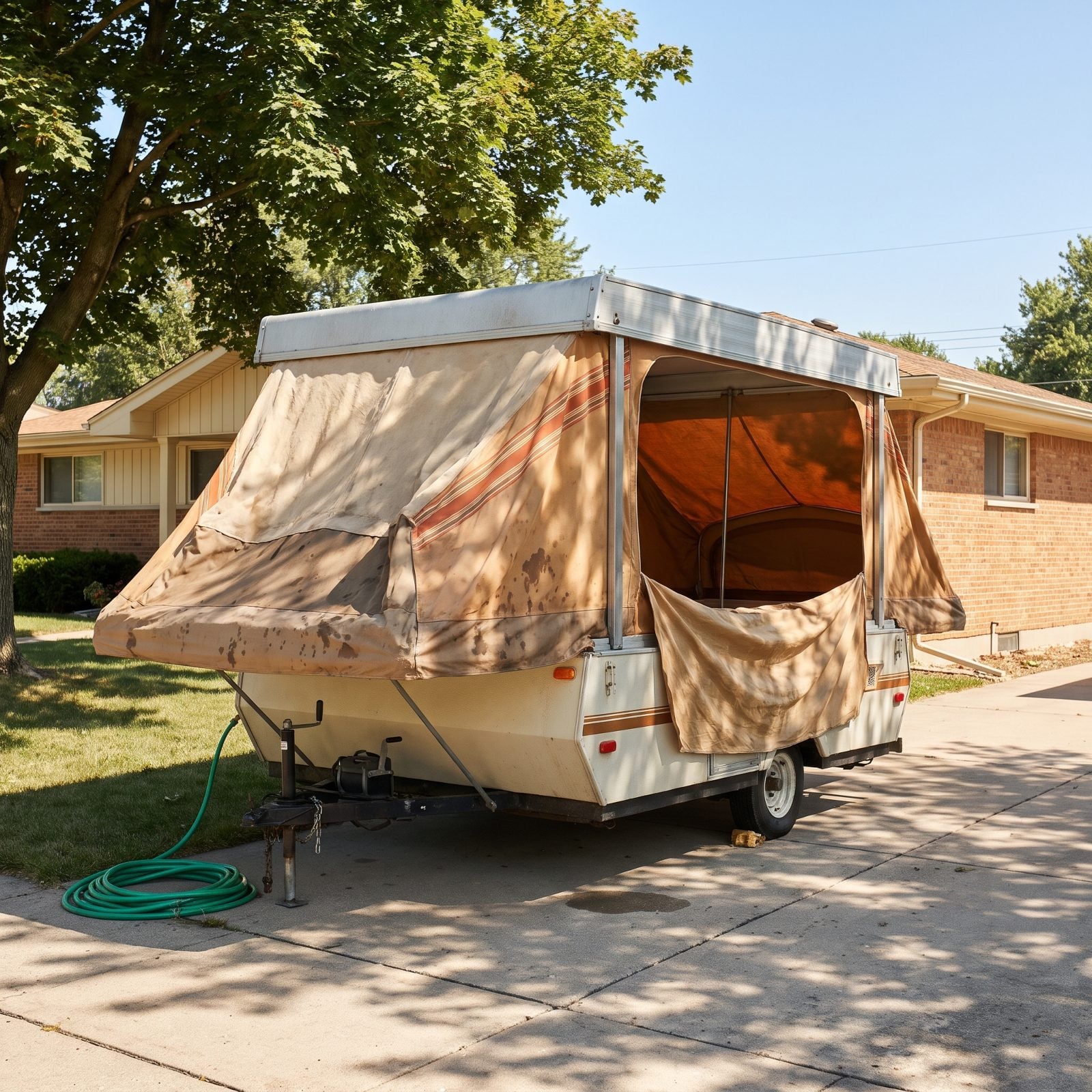
Here’s the rule nobody tells you until it’s too late: never fold wet canvas and walk away. Pack a damp pop-up on Sunday and by Wednesday you’ve grown a science experiment in the folds. Mildew, the real smell of summer’s end.
So the camper came home and went right back up in the driveway. Roof cranked, walls open, the whole rig airing out for a day in the sun while the neighbors wondered why you were camping in your own front yard. Least glamorous chore in camping, hands down, and completely non-negotiable.
In its canvas-care guide, an RV repair shop warns “Do not fold the camper if the canvas is damp. Even a little trapped moisture can create smell, mildew, and staining during storage.”
12. There Was Usually No Bathroom Inside
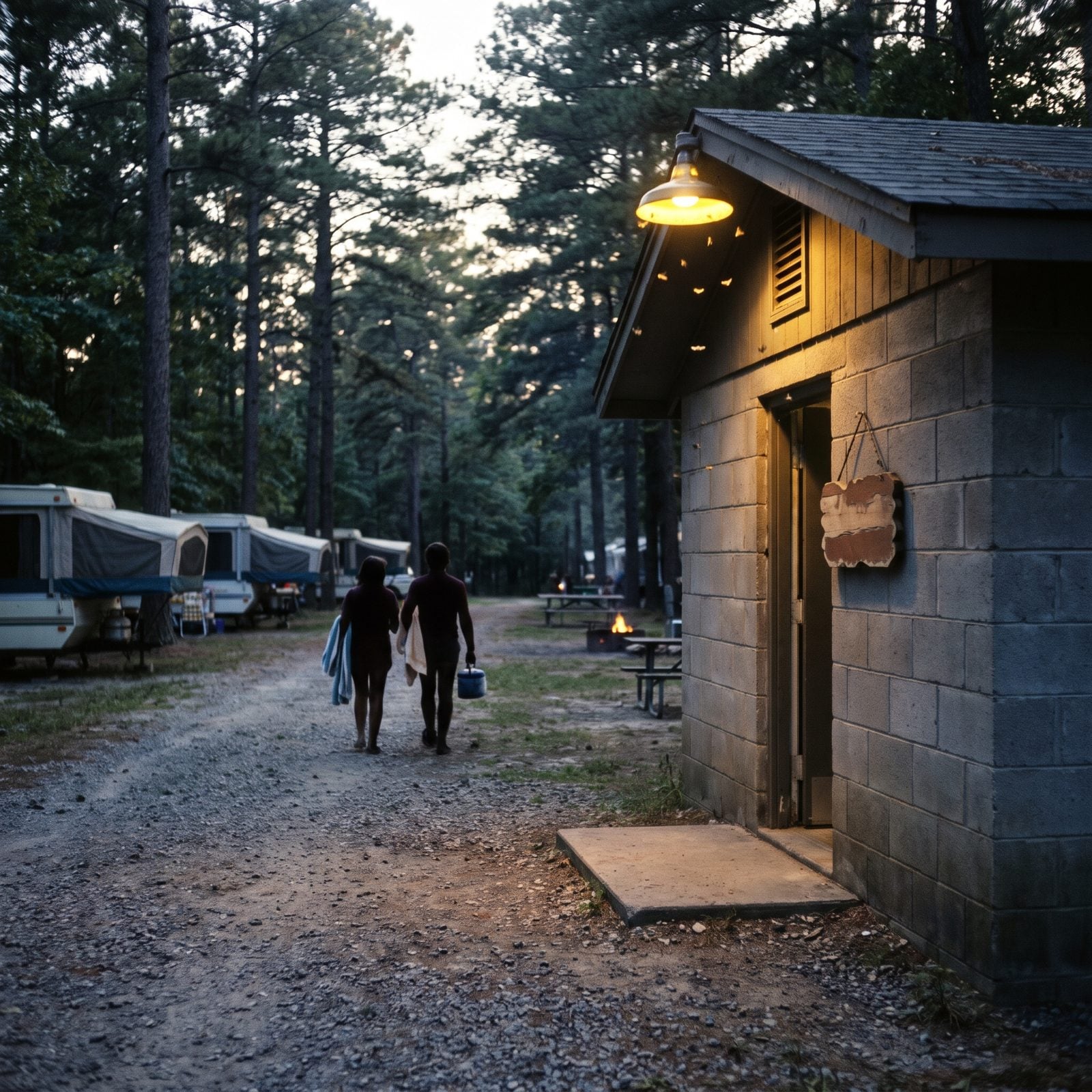
The pop-up kept you dry and fed, but it did not keep you plumbed. For most families the bathroom was a cinder-block building a short walk across the campground, shared with everybody else at the KOA.
You learned to time it. You learned which shower had hot water and which one didn’t, and you learned to carry your toothbrush, your towel, and a little bag of soap down a gravel path in flip-flops. Because the alternative was the woods, and the woods had mosquitoes the size of hummingbirds.
11. Midnight Bathroom Trips Required a D-Cell Flashlight
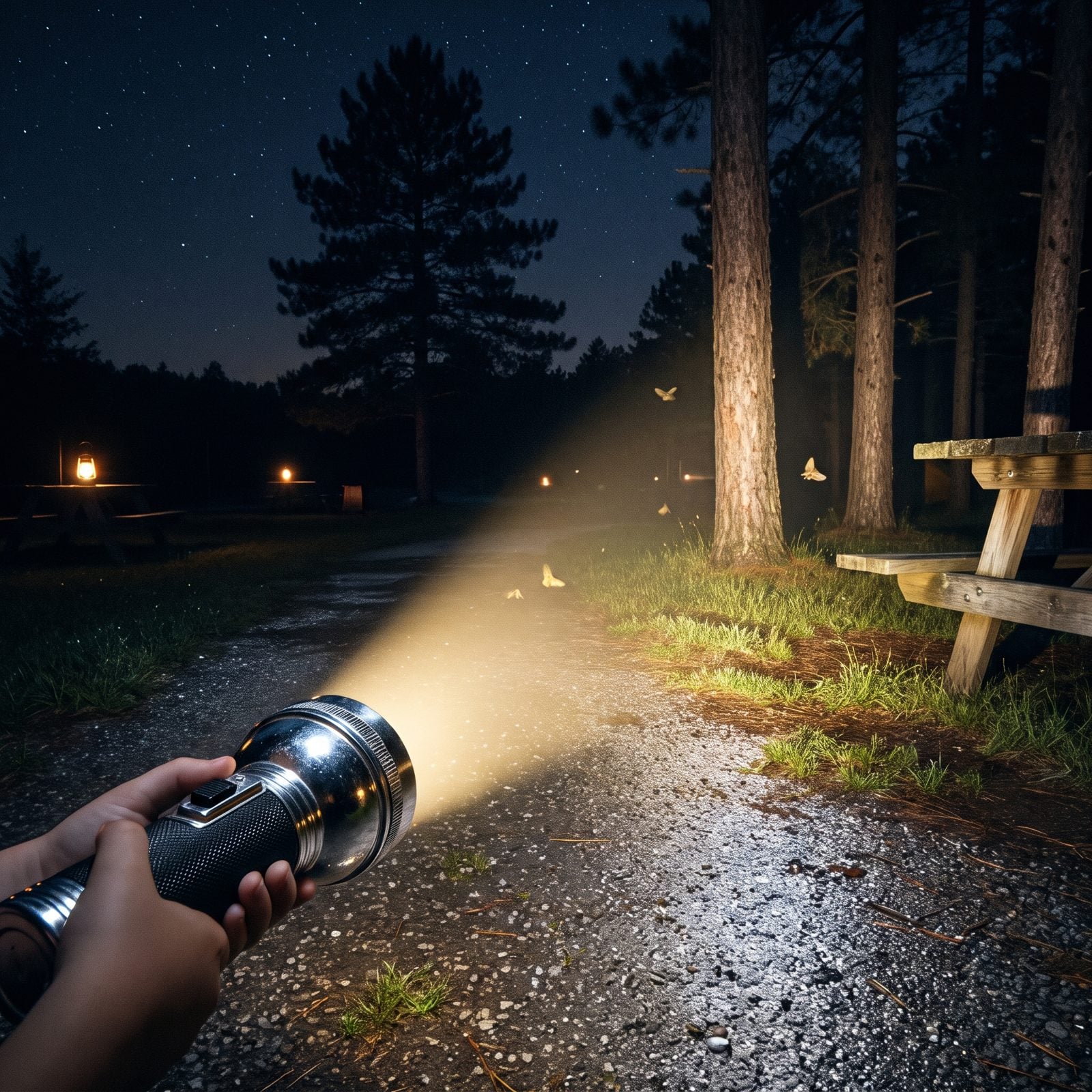
Needing the bathroom at night was a full expedition. You’d fumble for the heavy chrome flashlight, the one that took two fat D-cell batteries and weighed about as much as a brick, and point it down the path, where the picnic table sat in the dark and the tall pines beyond stood black against a clear, star-filled sky.
The beam turned the familiar campground into something else entirely. Every shadow was suspect. You’d move fast down that gravel path, swinging the light side to side, convinced something was watching, then make it back to the bunk, zip the sleeping bag up to your chin, and lie there waiting for your heart to settle.
10. Water Came From a Campground Spigot
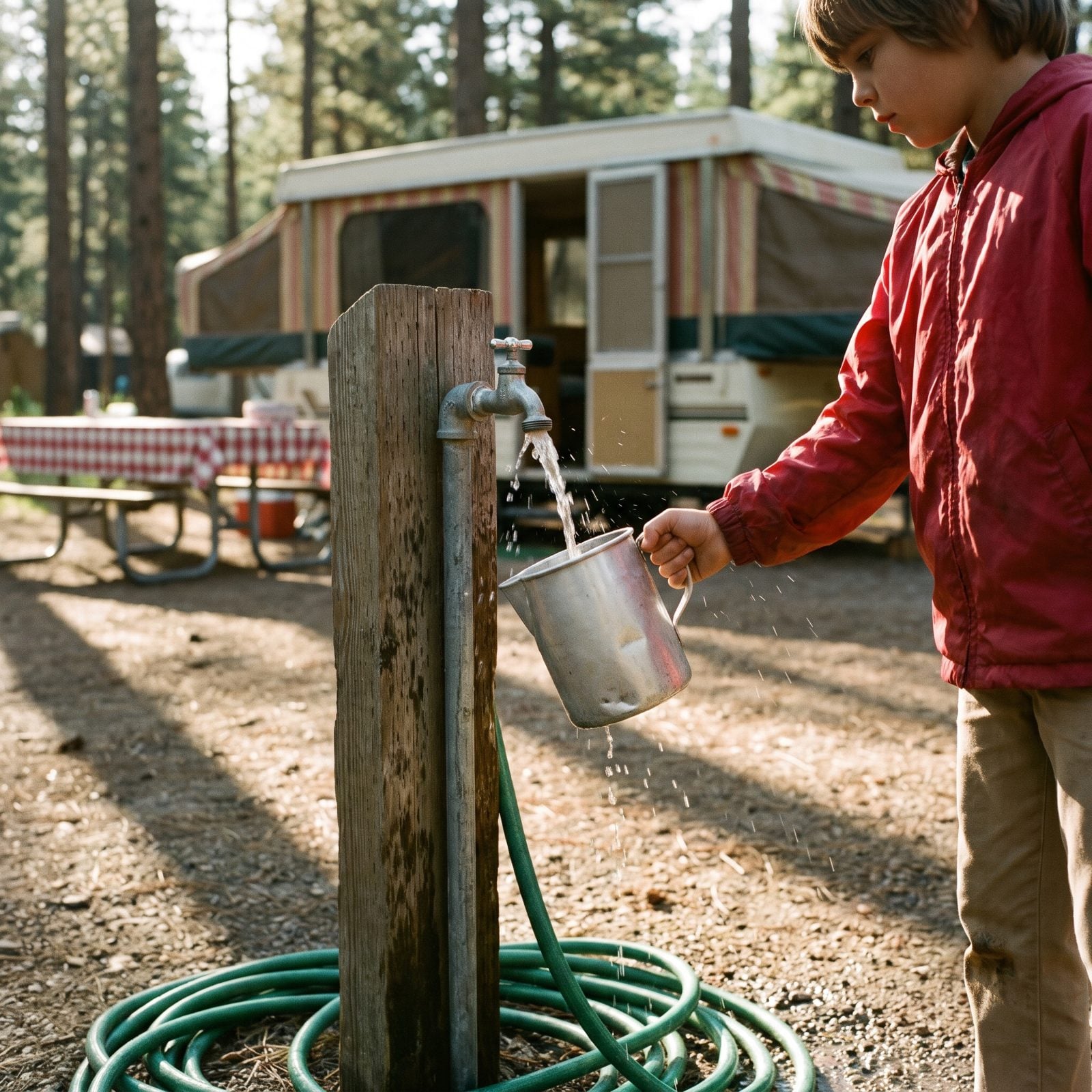
There was no tap in the camper. You walked to the water. The spigot sat on a post somewhere between your site and the restroom, and filling the jug got handed to whichever kid was closest.
On a July morning that water ran cold enough to ache your fingers, and it smelled faintly of iron. You carried it back slow so it wouldn’t slosh down your leg, and half of it did anyway. Nobody thought twice. That was just how you got water.
9. An Enamel Basin Became the Wash Station
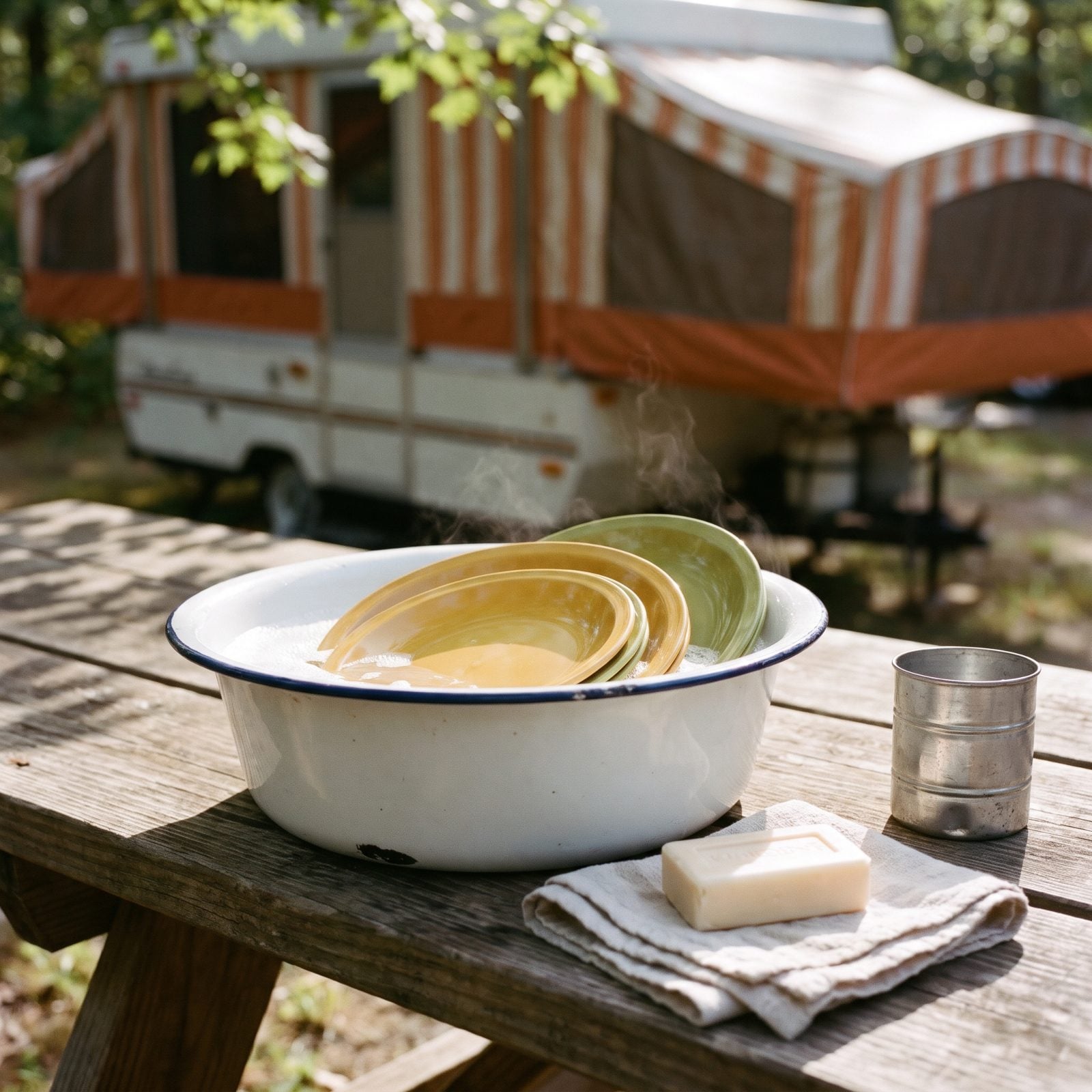
Dishes happened in a basin — one white enamel bowl with a blue rim, chipped where it had knocked against a hundred tailgates, doing the job of a whole kitchen sink.
You heated water on the stove, poured it in, and everyone rotated through: wash, rinse, stack on the towel. The enamel held heat long enough that the last plate still met warm water. When it was done, the basin flipped upside down to dry. Then it became a seat, a tray, or a hat if you were seven and bored.
8. A Gray-Water Bucket Sat Beneath the Sink Drain
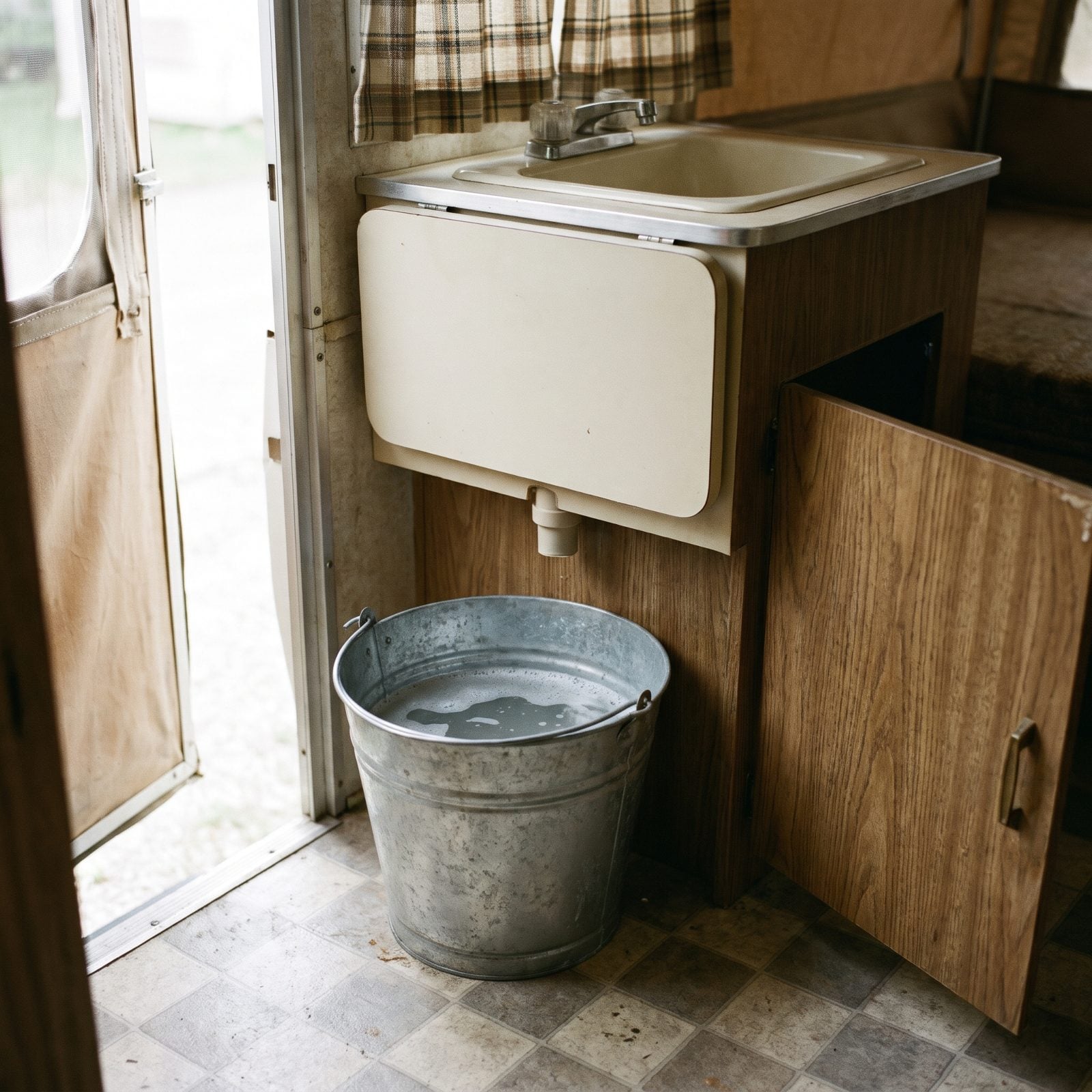
The sink drained through a short open drain stub straight down, with no trap and no plumbing attached. The bucket sat on the floor directly beneath it, catching every drop, and that bucket was somebody’s responsibility whether they wanted it or not.
You learned fast not to let it overflow. Carry it to the dump station or the designated pit, keep it level, don’t swing it — and the smell told you when you’d waited too long. It’s a humble piece of plumbing history most modern RVers never think about, with their automatic gray tanks and sensor panels beeping at them. We hauled ours by hand and watched where we stepped.
7. Replacing a Lantern Mantle Felt Like Delicate Surgery
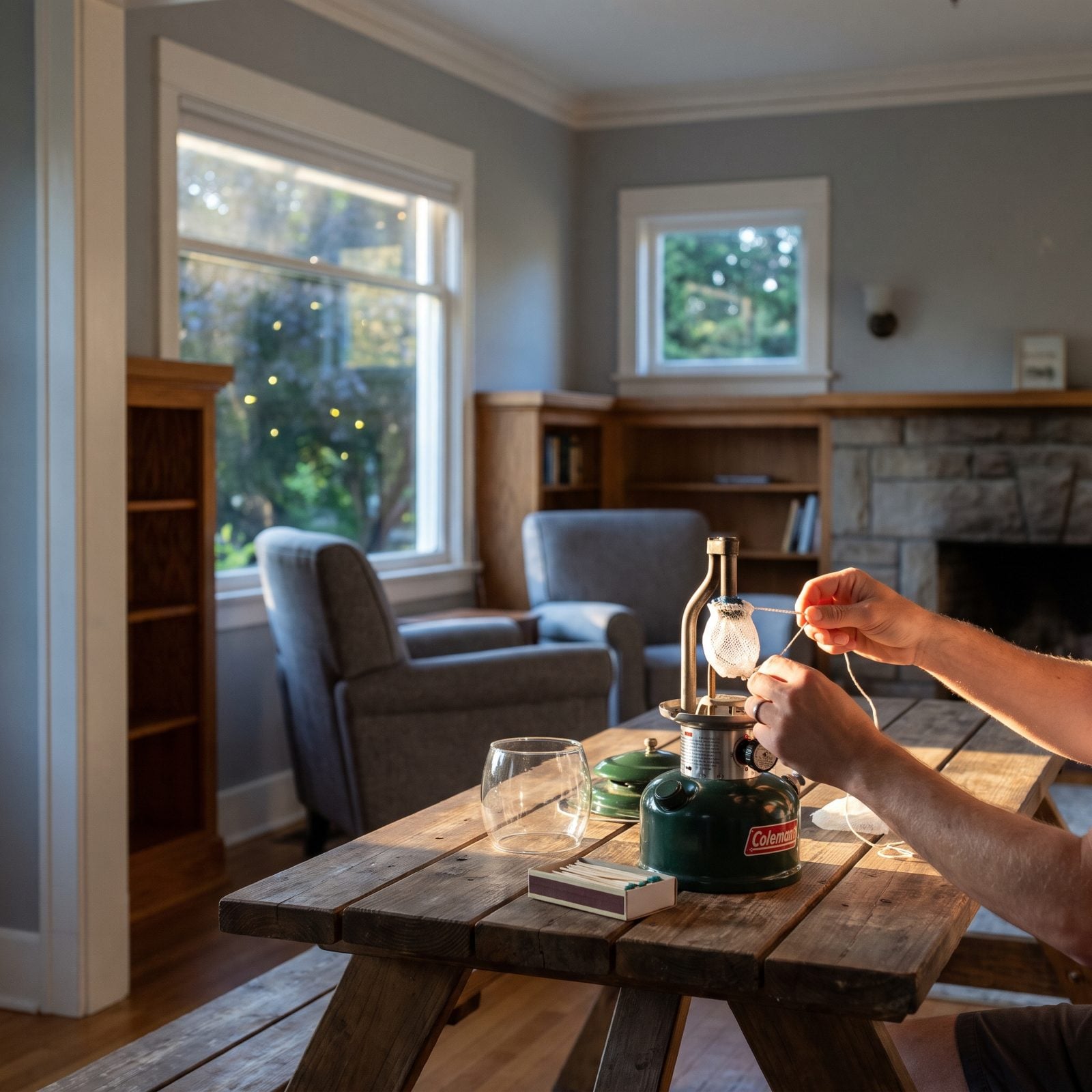
The lantern mantles were the most fragile things in camp — little white mesh socks you tied onto the burner, and the slightest wrong touch turned them to ash.
You’d light the new one and watch it flare and shrink into a stiff, ghostly shell more brittle than an eggshell. From then on, one bump against a tree branch while carrying it and the whole thing crumbled. We kept spares in the glove box and still ran out. I’ve seen grown adults hold their breath tying one on in the dark.
Once a new mantle has been burned off, a vintage lantern restorer cautions “It is very fragile so don’t touch or disturb it.”
6. Block Ice Kept the Cooler Cold Longer
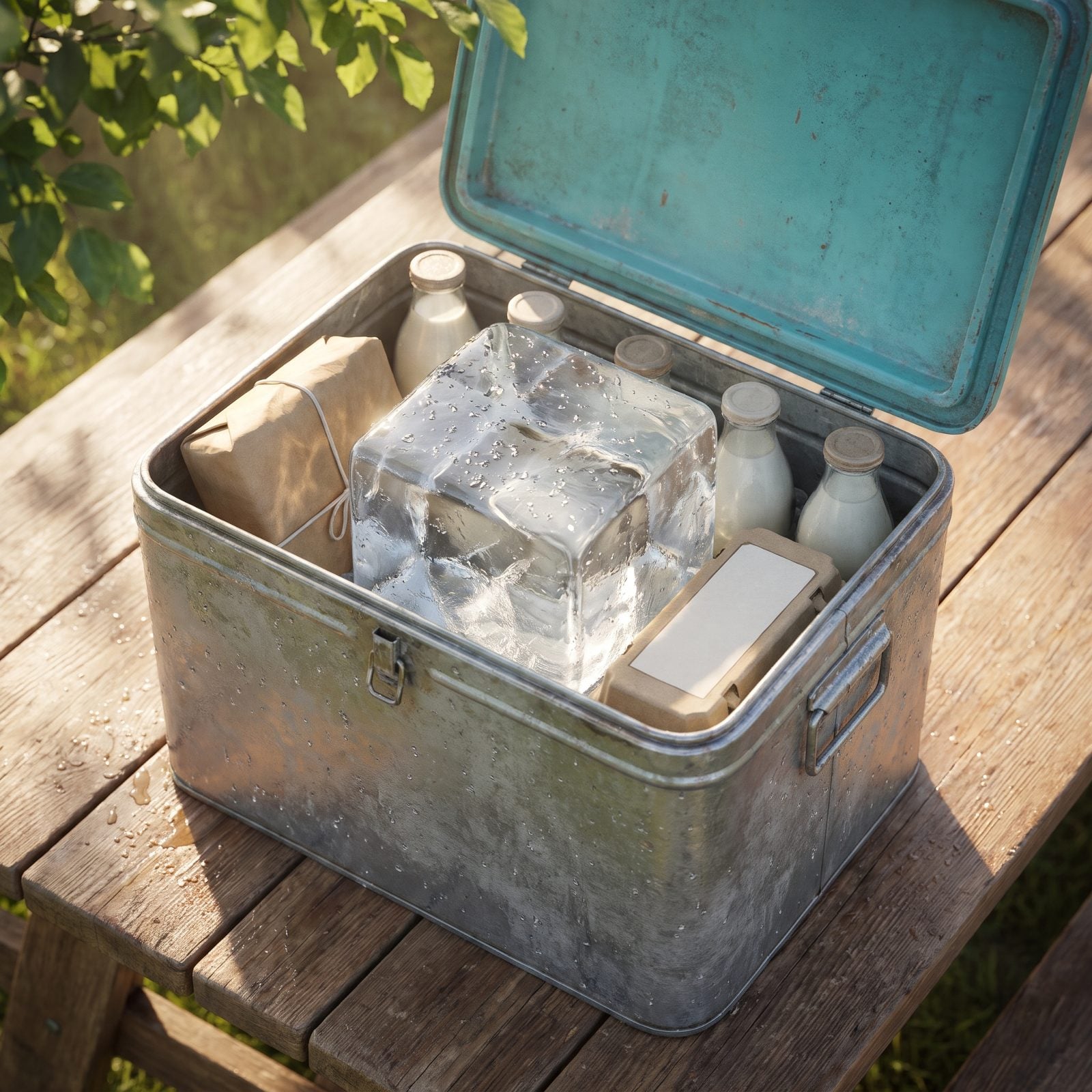
Cubes were for drinks at home. At the campground you bought a block — a solid ten-pound slab wrapped in paper — and it outlasted anything crushed.
Less surface area meant slower melt. A good block got you two, maybe three days before the meltwater rose up over the butter and you had to drain it. So you learned to pack smart: the ice in the middle, meat right against it, milk bottles and eggs tucked farther out where it was merely cool, not frozen.
After years of testing coolers on hot-weather trips, a longtime road-trip camper says “Cubed ice is best for more effectively chilling items, while block ice will last much longer.”
5. A Large Insulated Jug Supplied the Drinking Water
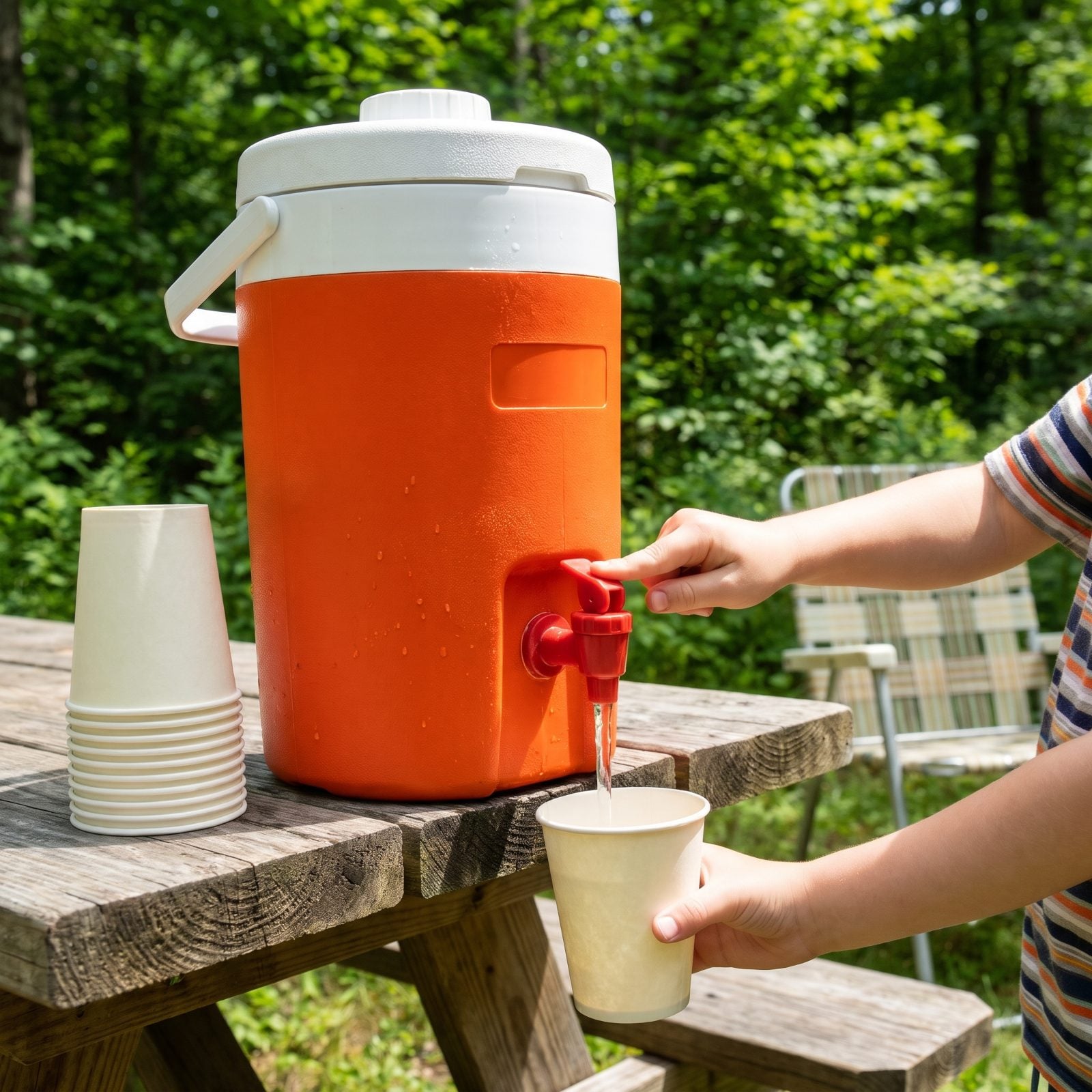
The orange cooler jug held the trip’s drinking water, and that push-button spigot was pure temptation for every kid in camp.
Fill it in the morning, set it on the table, and it stayed cool all day. The water tasted faintly of plastic and whatever was in it last — but after a hot afternoon of hiking, nothing was better. You’d push the red button, watch the stream arc into a little paper cup, and drink three in a row while your mother told you to slow down.
4. A Paper Road Atlas Guided the Entire Trip
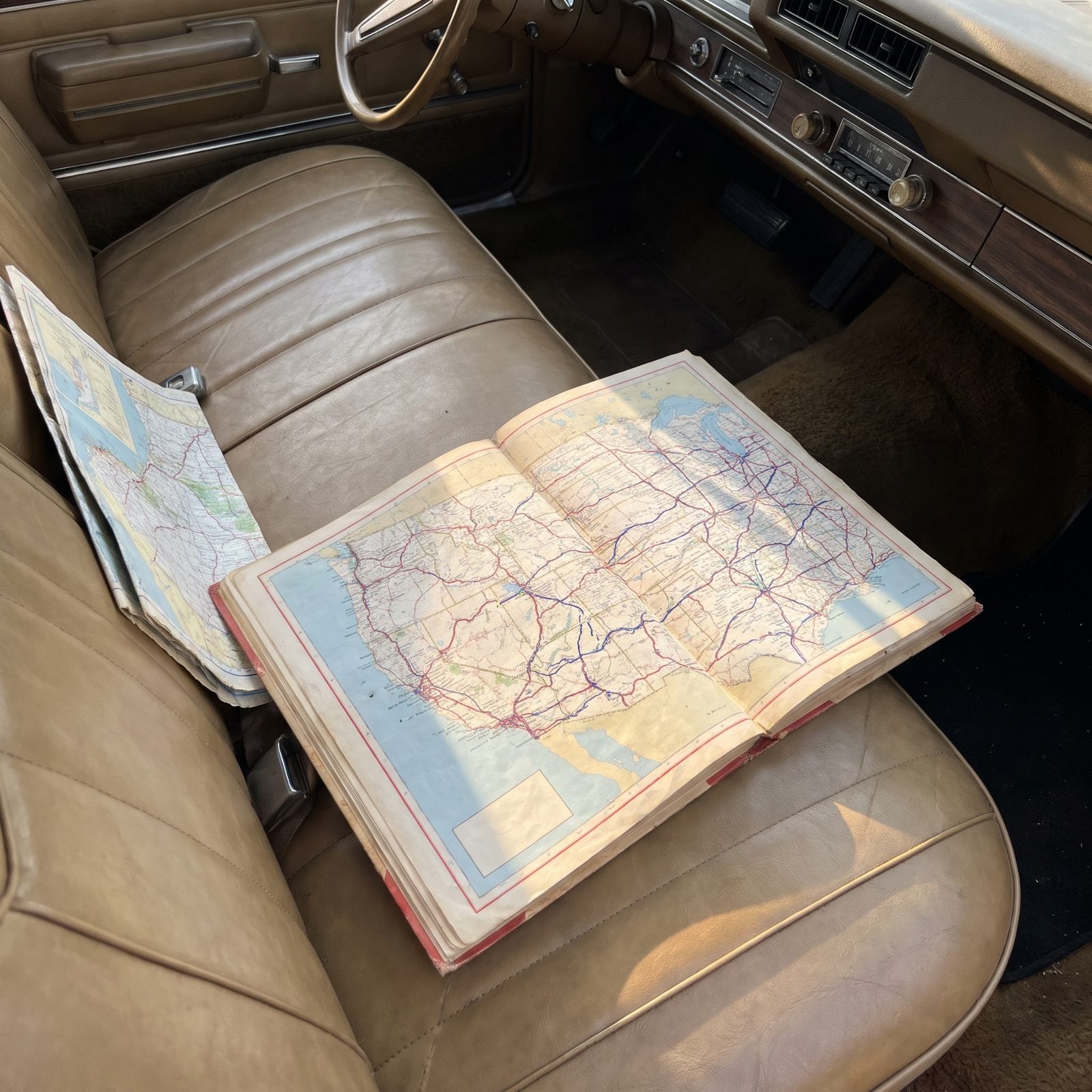
No voice told you where to turn. You had an atlas, soft at the folds from years of use, and a navigator in the passenger seat who called out exits with varying accuracy.
Someone traced the route in pen the night before. You measured distance against the mileage scale in the corner and guessed at arrival times that were always wrong. Miss a turn and you pulled into a gas station to re-read the whole page. We got lost plenty. Getting lost was half the trip, and honestly, I miss arguing about which way the map was supposed to face.
3. A Transistor Radio Supplied Campsite Entertainment
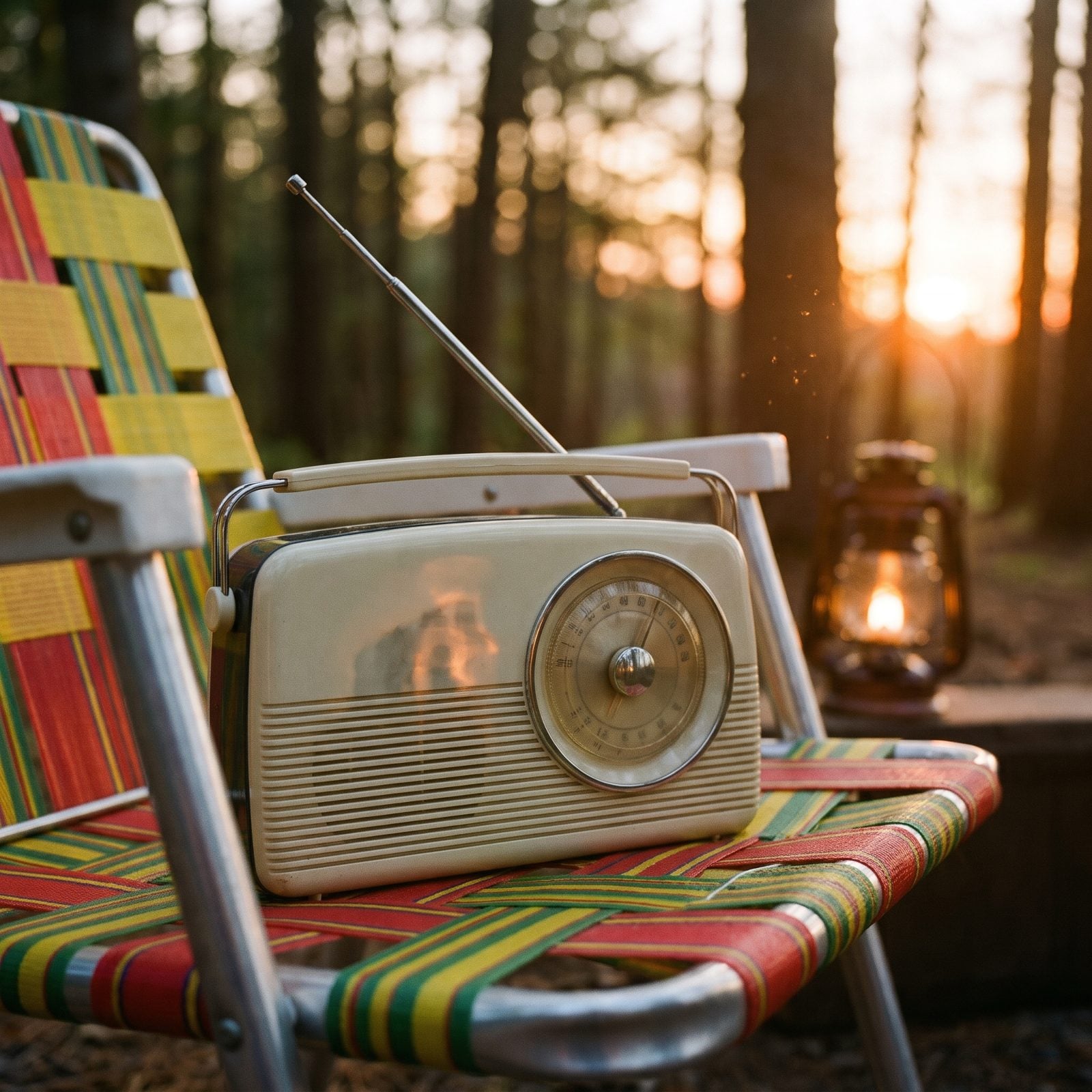
Evenings ran on whatever the transistor could pull in. You nudged the dial through static until a ballgame or a distant top-40 station came clear, and then nobody was allowed to touch it.
The signal faded with the light and the weather. A thunderstorm two counties over turned the whole thing to crackle. But on a good night, tucked into a webbed lawn chair with the lantern hissing and crickets going, that little speaker was the whole evening’s entertainment — and it was plenty.
2. Campground Loops Were Explored on Banana-Seat Bikes
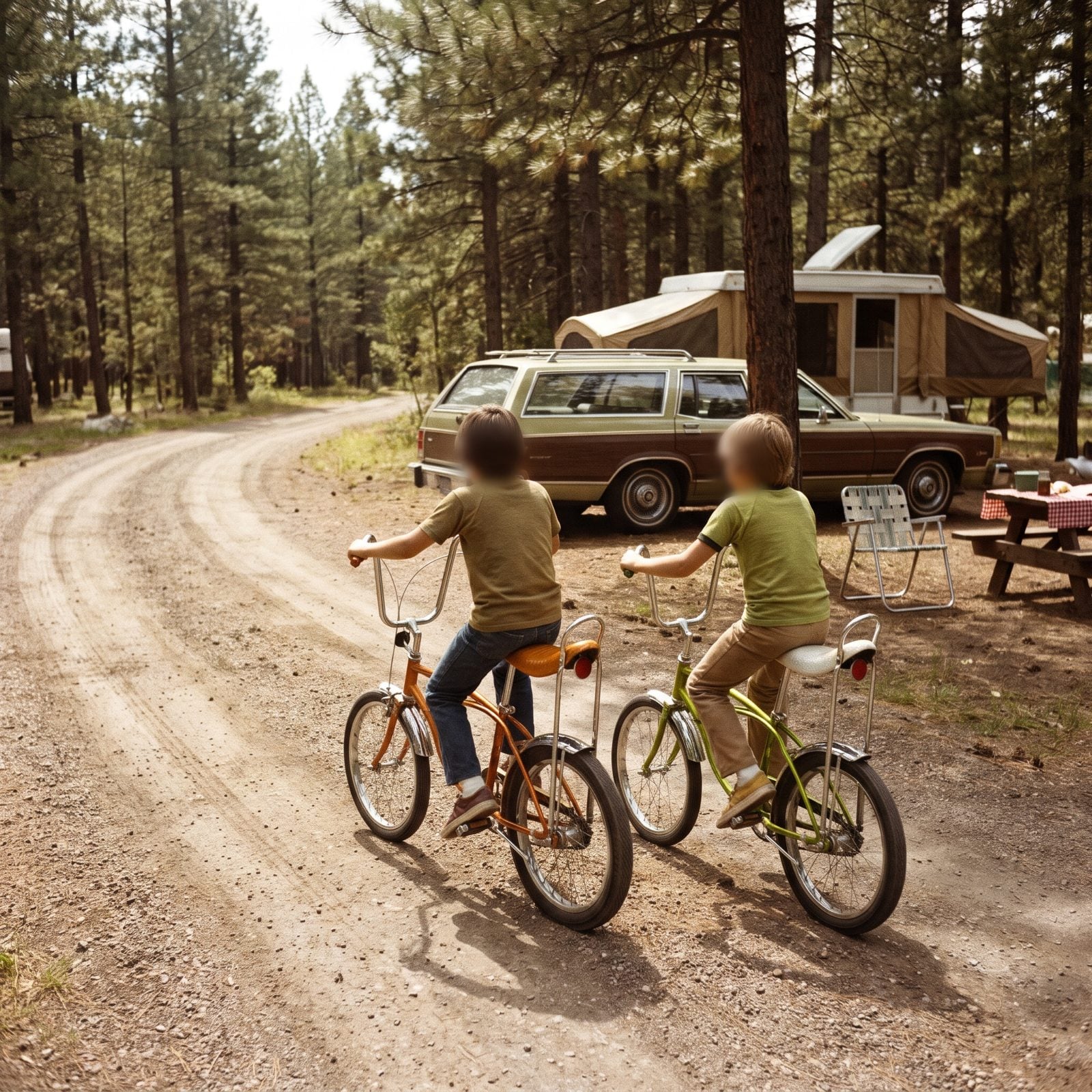
The bike was your car. The second camp was set you were gone, and the only rule was to be back when the smell of something cooking reached the far loop.
Banana seats were long enough for two, which they were not actually made for. You’d double a friend on the back, pump up the one real hill, then coast the whole loop with your feet off the pedals and sparks in your imagination. Streamers on the grips. A playing card clothespinned into the spokes so you sounded like a motorcycle — that card lasted about a day before it shredded.
You learned the whole campground by bike. Which loop had the good gravel for skidding, which family had a dog that chased you, where the ground dipped so you caught a little air by the bathhouse.
1. Vacation Photos Came From an Instamatic Camera
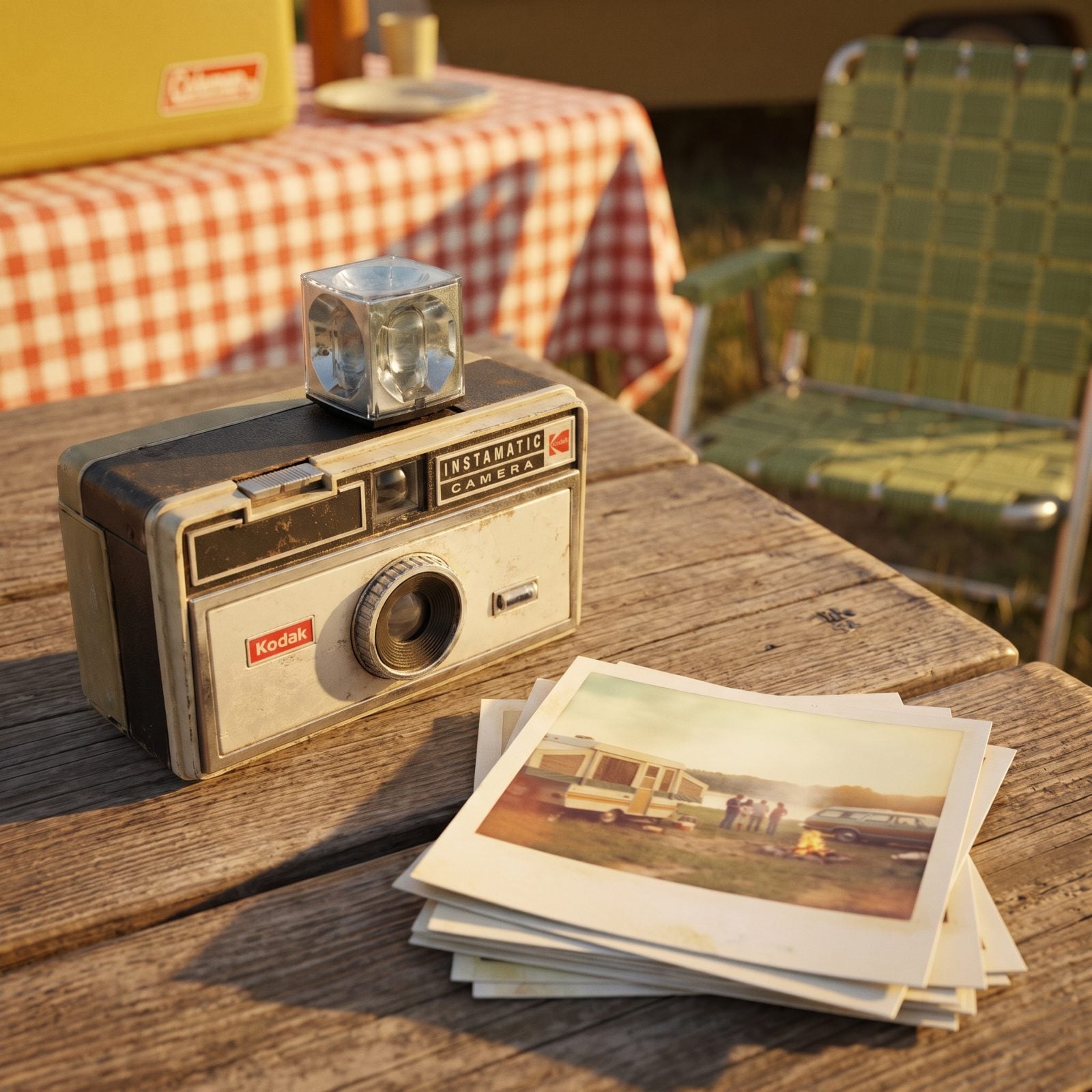
You got twelve pictures. Maybe twenty-four. And you didn’t see a single one until weeks after the trip ended.
The Instamatic made photography foolproof, which is exactly why a nine-year-old got handed one. Drop in the plastic film cartridge — no threading, no fuss. Twist the flashcube on top, and after four flashes you chucked the whole cube out. Every shot cost money you didn’t fully understand yet, so either you made them count or you blew three frames on your own thumb.
The results were gloriously imperfect. Heads cut off, the camper lopsided, everyone squinting into the sun because Dad always pointed you straight at it. A finger in the corner of the campfire shot.
Then the mail came. A paper envelope of square prints with white borders, warm and a little blurry, that faded orange over the years in a shoebox. You never got to delete the bad one. That’s why you still have it.
Recalling the 1963 debut of the 126 cartridge, a film photography writer explains that “all the user needed to do was pop the cartridge into the back of the camera, wind it a few times, and they were ready to shoot!”