
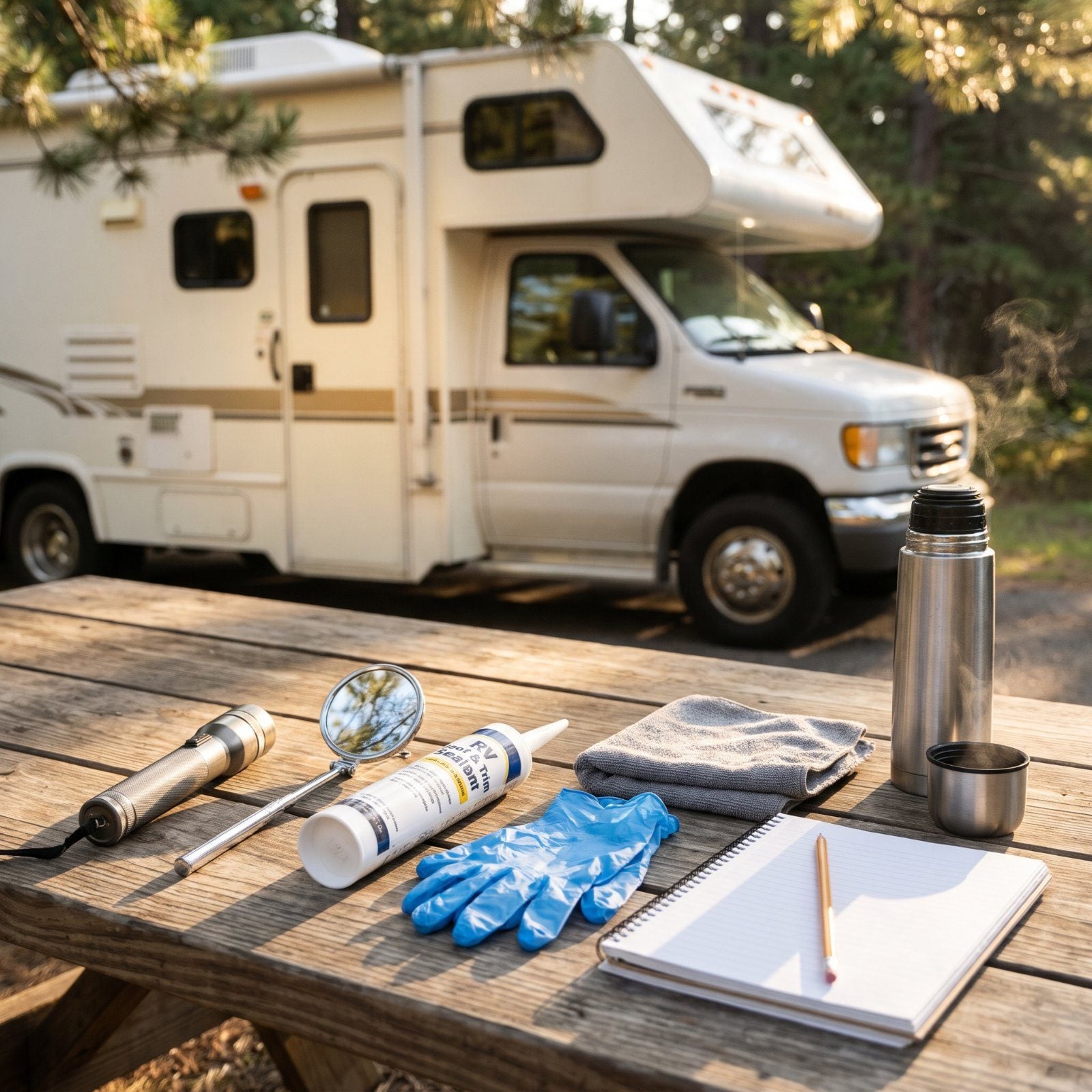
Walk any dealer lot long enough and you learn to read an RV before you climb inside. The outside tells on the owner. A rig that got wiped down, resealed, and parked under cover wears its history in straight panels and tidy caulk lines, while one that sat in the sun leaking for three winters wears that too, and no amount of interior staging hides it. The shell keeps water out and value in, so check it first. Put your eyes and hands on these in the first five minutes, before you ever smell the air inside.
Please note that some of the images in this article were created with the assistance of AI.
32. The Sidewalls Are Straight and Free of Ripples
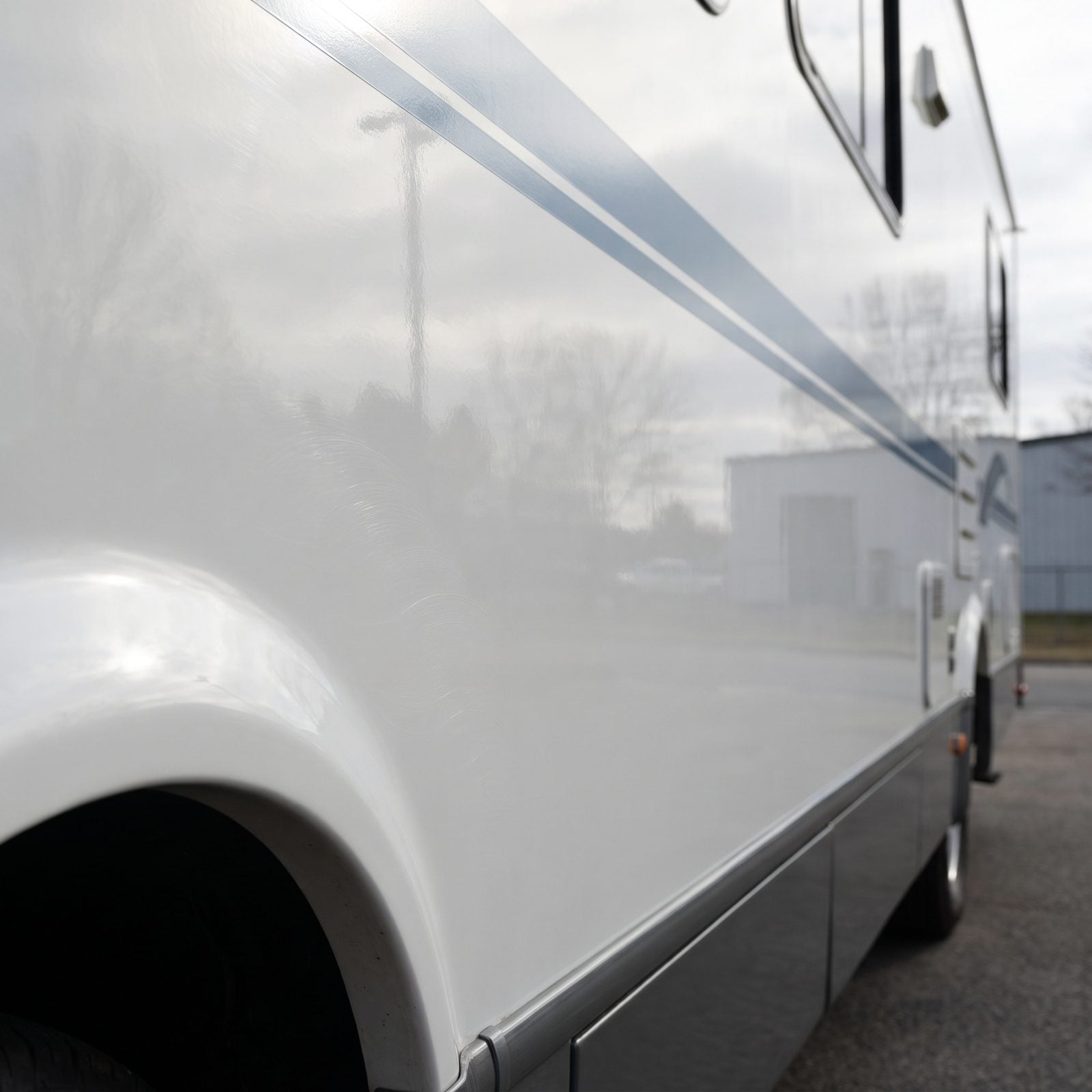
Run your eye down the sidewall from the front corner, like you’re sighting a rifle barrel. A flat panel reflects the world in one clean sheet. A panel that’s been soaking up water behind the fiberglass shows ripples, waves, or a spongy bulge, usually low near the wheel wells or around the seams where the wall meets the floor.
Delamination is the word dealers hope you don’t know. The fiberglass skin has let go of the backing underneath, and fixing it often costs more than the rig is worth. A straight wall says the owner kept the seams sealed and the water out. That’s the whole ballgame.
31. The Roofline Looks Straight From End to End
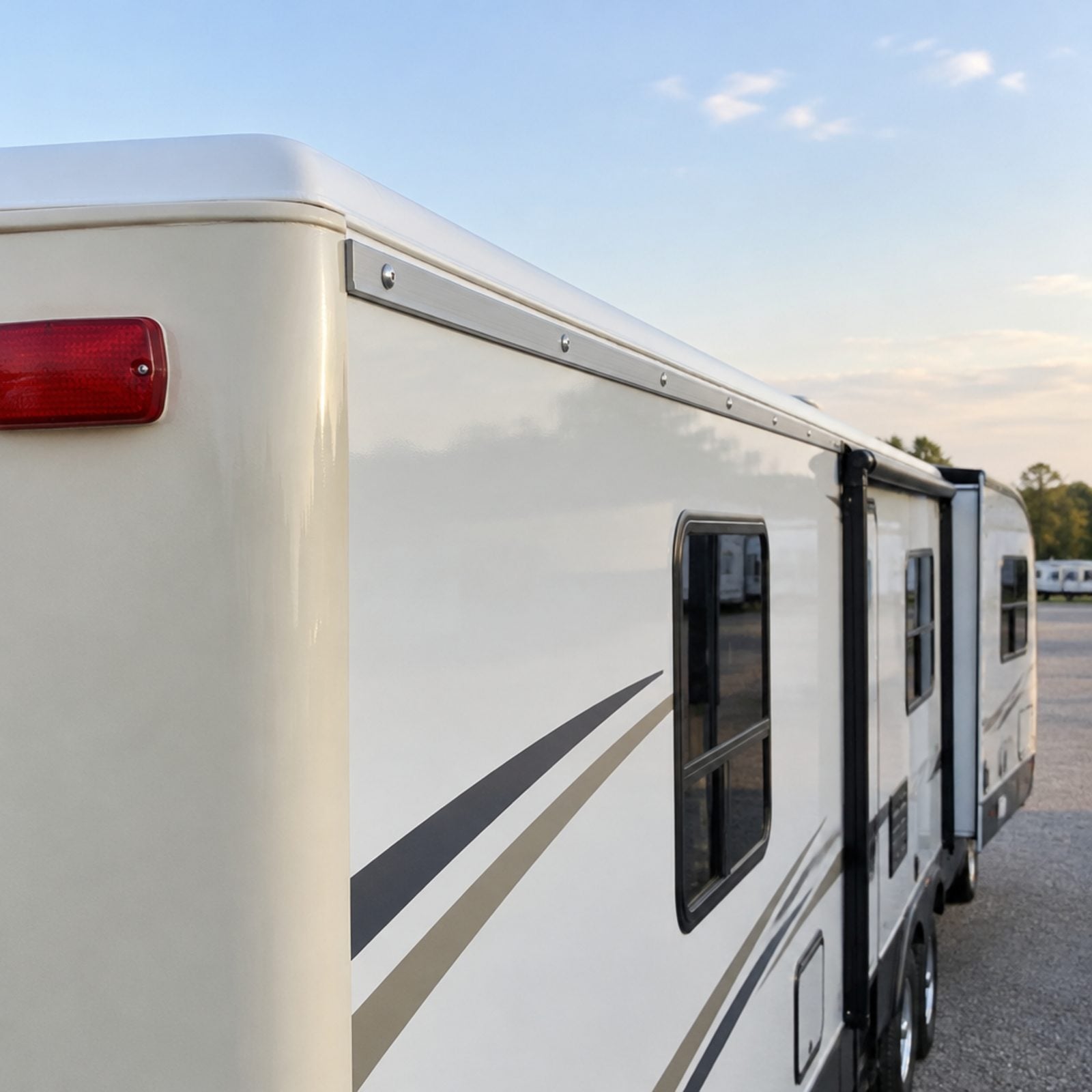
Stand at one back corner and sight along the top edge toward the front. The line should run flat and true. A dip in the middle or a sag over a slide-out means the roof structure has taken on water and softened, or the frame is just plain tired.
Plenty of rigs look perfect head-on but reveal a slow swayback the second you crouch at the corner. Trucks and trailers that hauled hard without ever getting the roof resealed carry that curve. It doesn’t lie. Four seconds, once you know to crouch, and there it is.
30. The Roof Membrane Lies Flat Without Bubbles
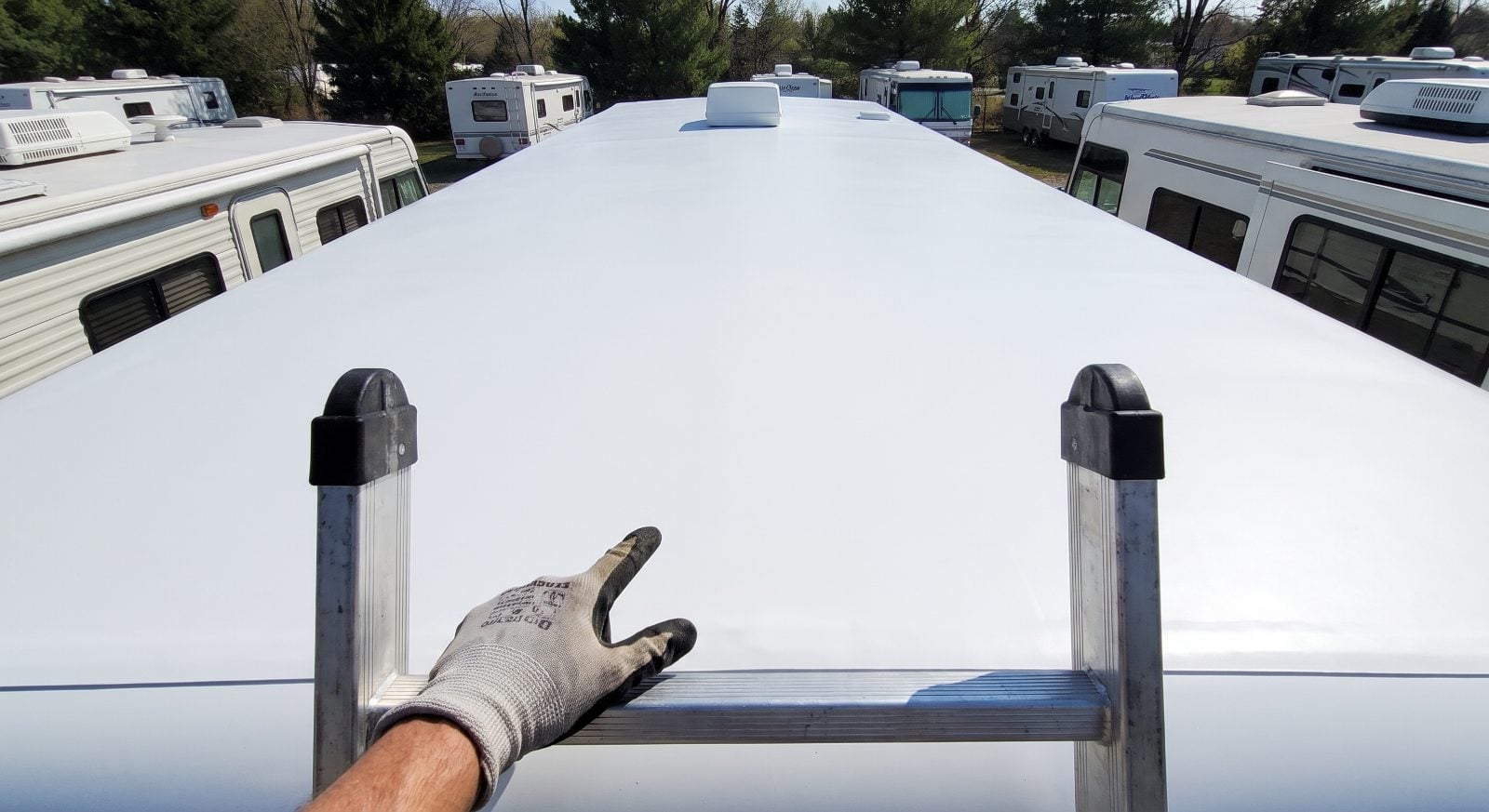
Get up on a ladder for this one. The rubber or TPO membrane should stretch flat and tight across the whole roof, hugging the plywood underneath like a drum skin.
Bubbles and wrinkles mean trouble. Either the glue has failed and the membrane is floating, or water got under it and is working away at the decking you can’t see. Press a soft spot with your palm. It should feel firm, like a kitchen floor, not a trampoline. Spongy give is the sound of money leaving your wallet.
29. The Roof and Cap Seams Have Neat, Continuous Sealant

Look up at the ceiling around the roof vent fan, the air-conditioner unit, and the gold light fixtures — that’s where a failing bead of sealant up top shows itself first. On a cared-for RV the cream ceiling panels stay clean and even, no stains, no sagging, no rust around the screw heads.
Here’s the tell nobody mentions. Look for slightly different shades of cream on the ceiling. Uniform, unmarked panels around the vent and AC mean somebody actually climbed up there and resealed on schedule — a spotless ceiling like this one is a gold star. Yellowed rings, bubbled panels, soft spots along the slide-out header? The roof hasn’t been touched in years, and water has had the keys the whole time.
28. The Window Sealant Is Smooth and Unbroken
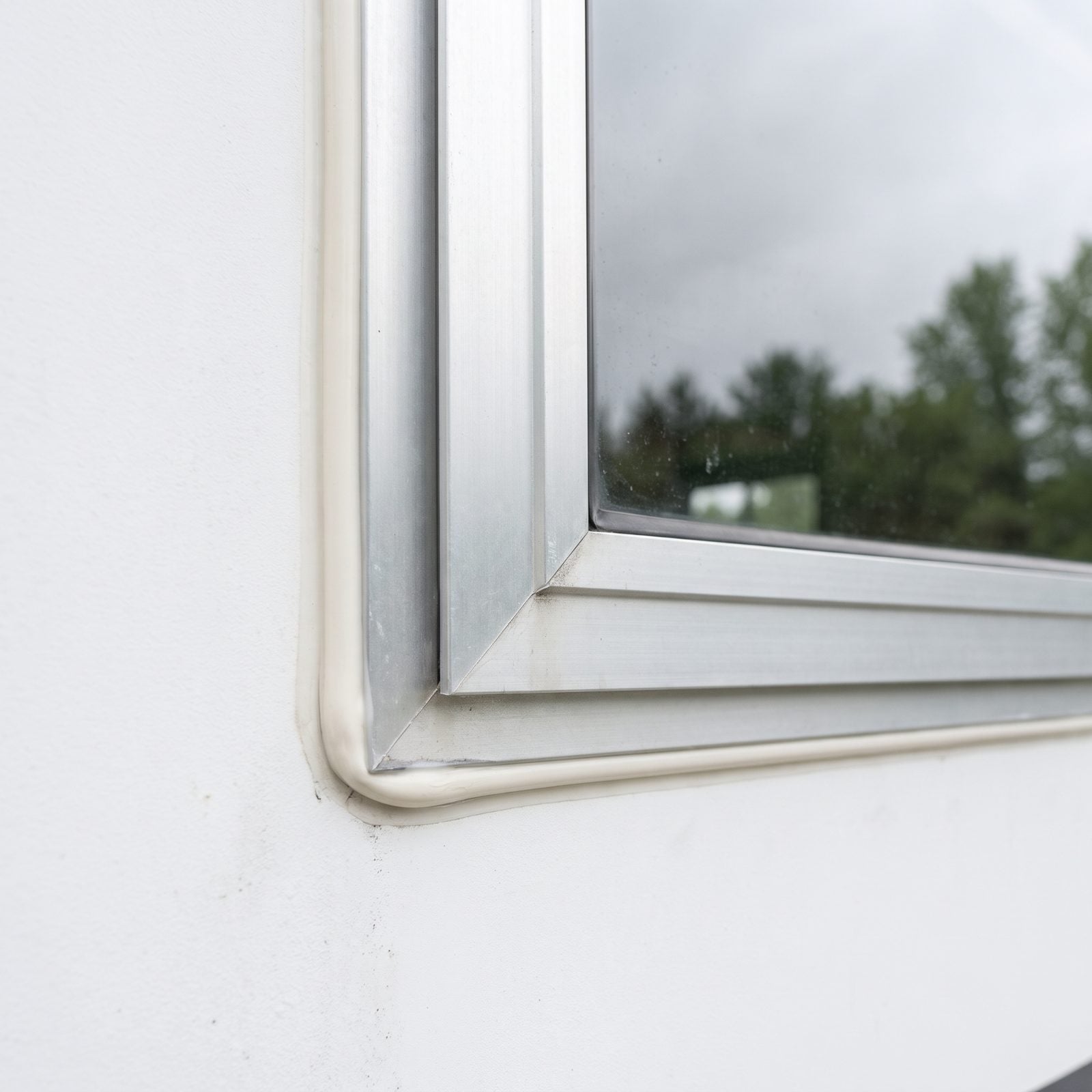
Windows are a favorite entry point for water, and the lower corners are where it sneaks in. From outside, each silver window frame should sit smooth and tight against the white wall, corners finished neatly, no gaps you could slide a fingernail into.
Then look at the exterior wall directly below the window. Dark vertical streaks or stained channels running down from a corner tell you water has been tracking there for a while. Pale, unmarked wall under a tight frame, like the panel beneath this window, is the pair you want.
27. The Exterior Corner Trim Sits Tight Against the Body
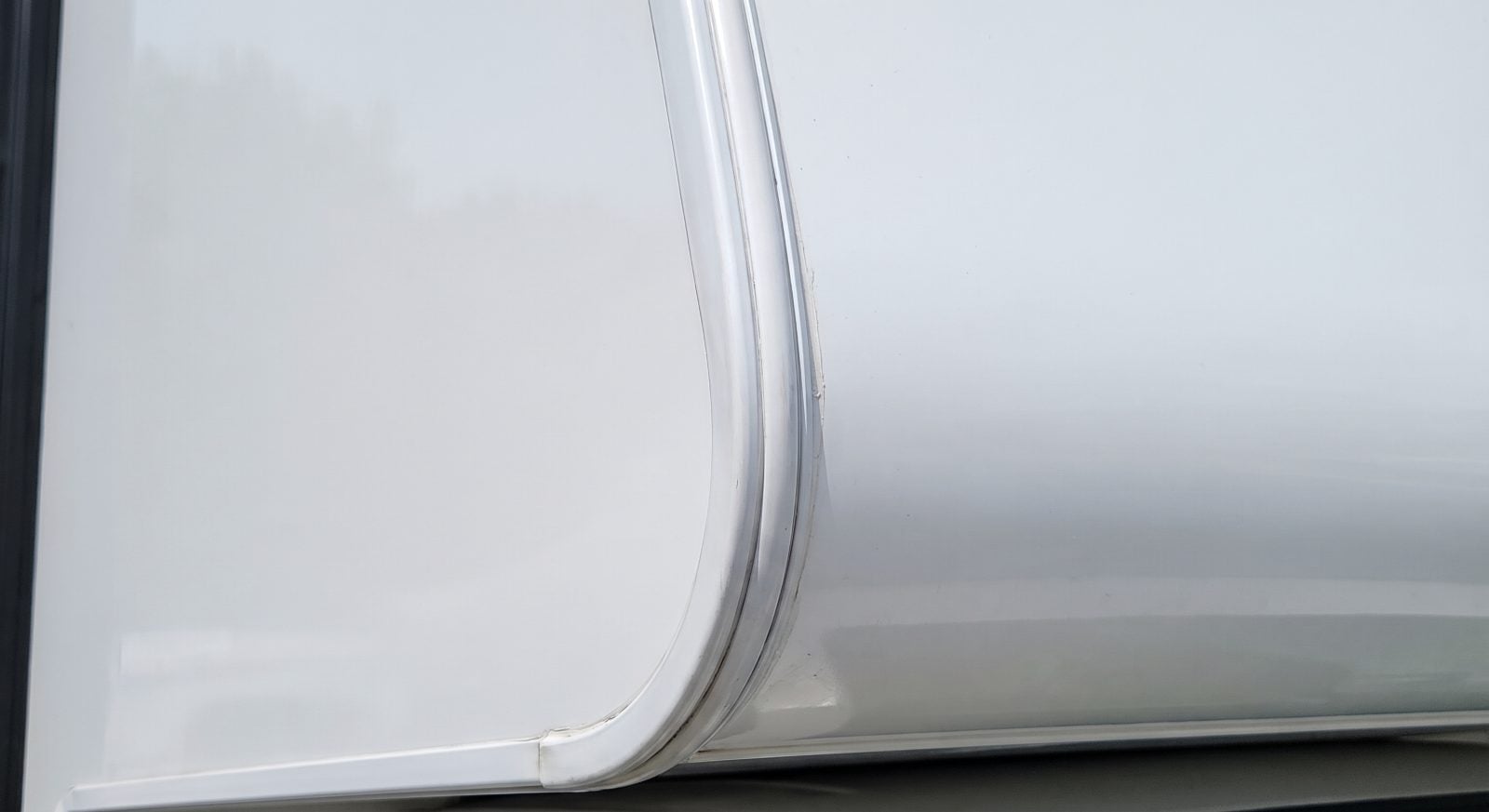
Those long plastic or aluminum trim strips covering the vertical corners aren’t decoration. They cap the seam where two walls join and hold sealant in place behind them. On a well-kept rig they lie flat and tight the whole length, every screw seated.
Trim that’s lifting, curling at the ends, or gapping away from the body means the fasteners worked loose and the seal behind failed. Give the ends a gentle tug. Snug is good. Floppy is a leak that’s been ignored, and ignored leaks rot the corners you can’t see.
26. The Rain Gutters Are Clear, With Downspouts Aimed Away From the Walls

Those little spouts at the bottom of the drip rail have one job: throw rainwater off the roof and away from the sidewalls. Clogged gutters and missing spouts let water sheet straight down the fiberglass, and over time that staining tells you nobody was paying attention up top.
Clear rails and spouts that still aim outward seem like a nothing detail. But small stuff is exactly what careful owners keep up with, and sloppy ones never bother. The details scale.
25. The Roof Vents Have Clean, Uncracked Covers
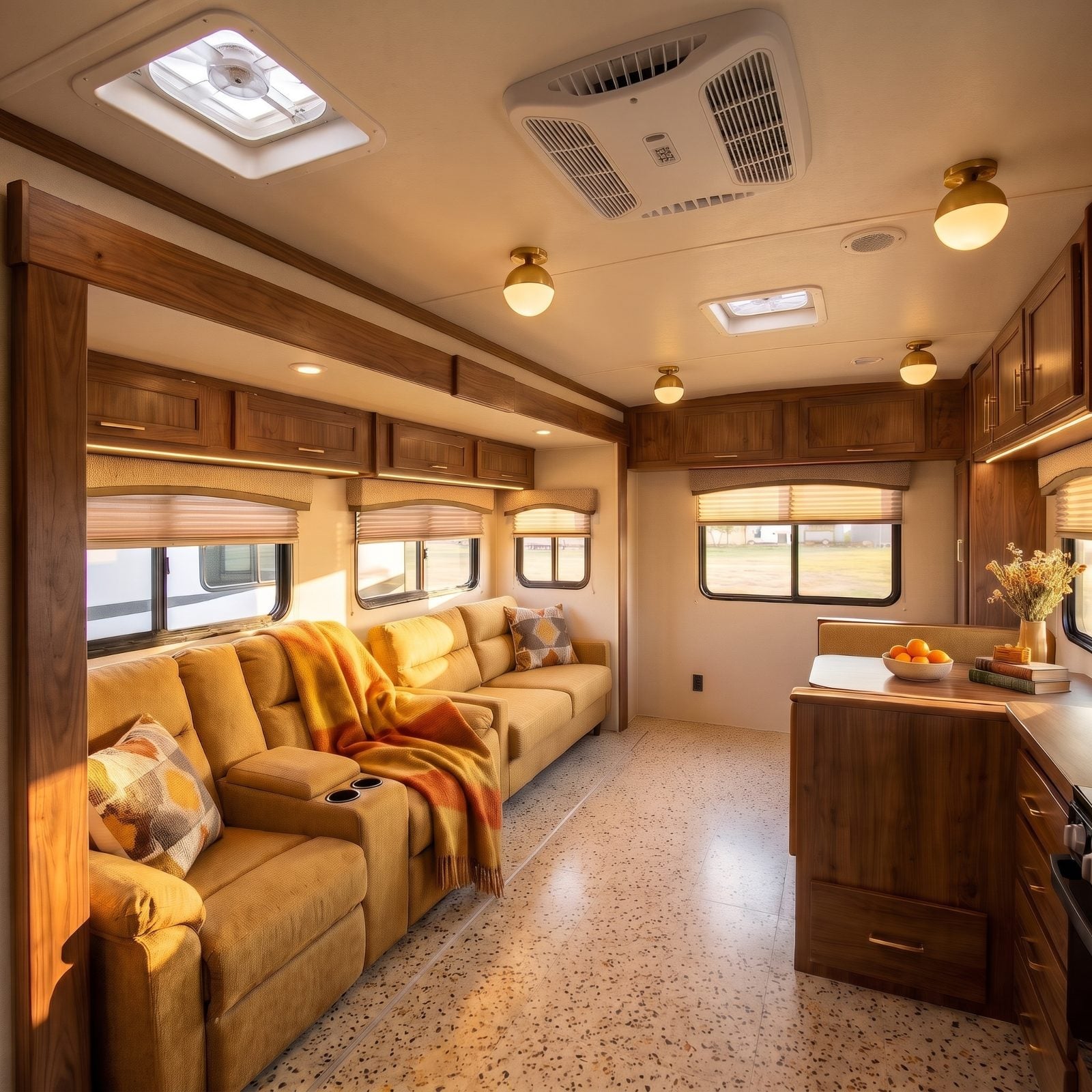
Vent covers live a hard life. Sun bakes them, hail cracks them, and a roof nobody protects pays for it. You can check from inside: look up at the vent from below. You want light coming evenly through the lid, an intact fan, and a clean white trim ring. The ceiling around it should have no water stains or sagging.
A cracked or missing cover isn’t a huge expense to replace — call it the price of a decent pizza. But it tells you the RV sat exposed, and that water had an open door into the ceiling. Cheap part, loud message.
24. The Air-Conditioner Shrouds Are Complete and Secure
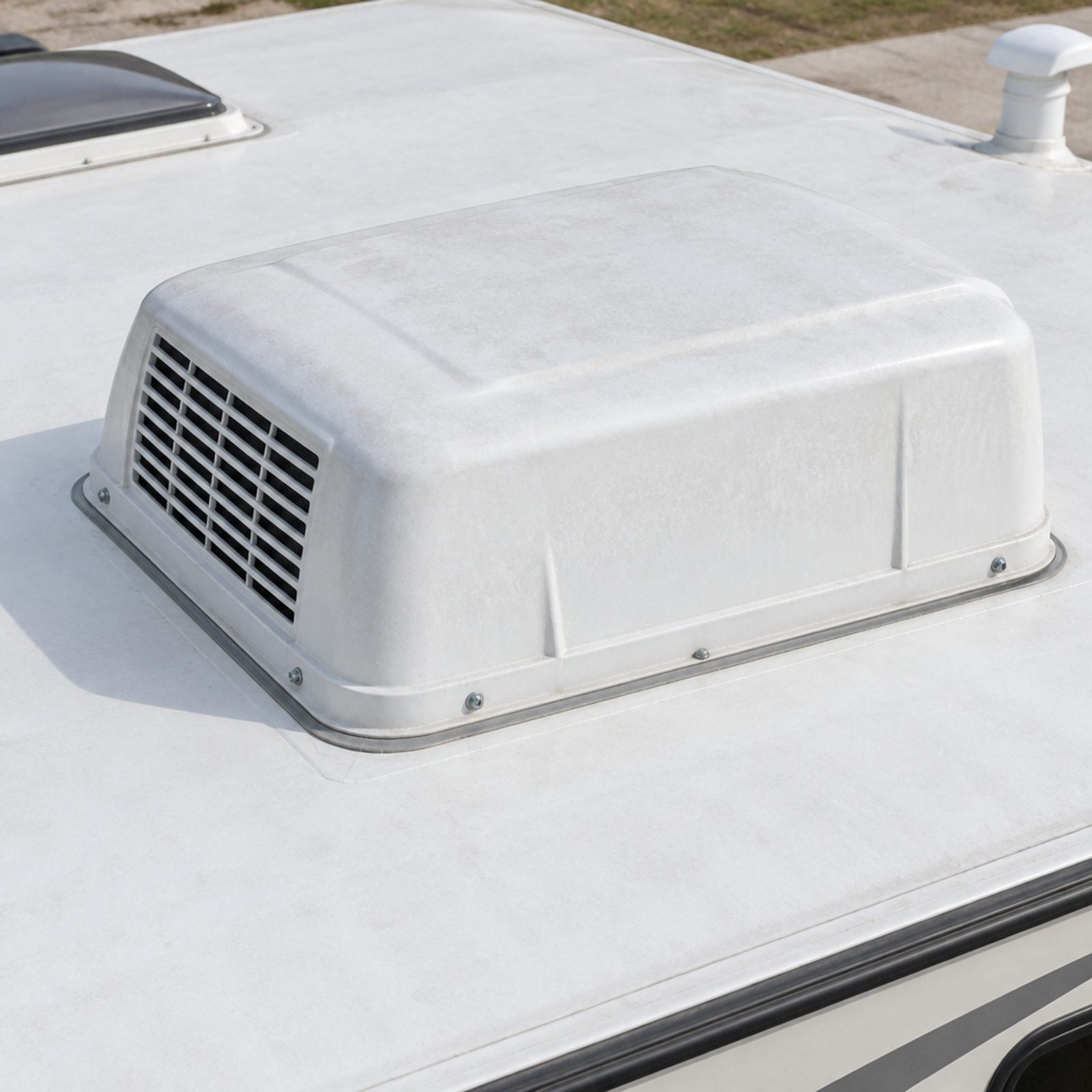
The plastic shroud over the rooftop air conditioner cracks and shatters under UV and wind, and a careless owner will just let it ride with a corner missing. On a maintained rig the shroud is whole, bolted down, sitting even.
Why it matters: a broken shroud lets weather into the AC guts and usually means the gasket underneath, the one sealing the unit to a fourteen-inch hole in your roof, got neglected too. Peek at that gasket if you can. It should look evenly squished, not dry-rotted. One good clue leads to the next.
23. The Awning Fabric Rolls Up Straight
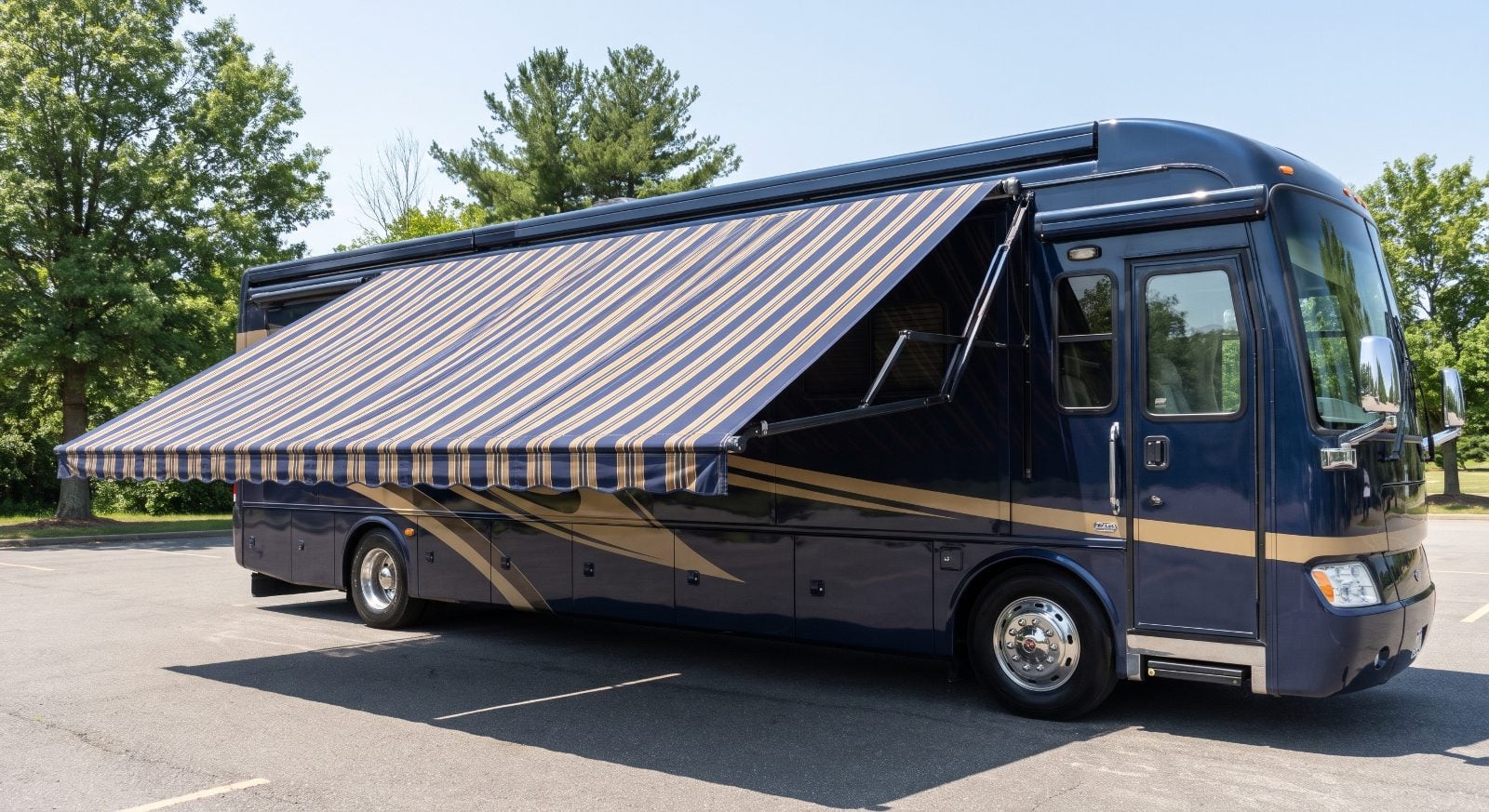
Next, the awning. Roll it out a foot or two and watch how it winds back up. A straight, even roll means the arms are square and the roller tension is right. A lopsided roll, a sagging belly, or fabric bunching to one side points to bent arms or worn hardware.
Then eyeball the fabric for mildew blotches and tears. A clean awning that stores straight is a small luxury, sure — but it’s also the last honest tell on the outside of the rig. Somebody who babied the awning babied the rest.
22. The Slide Toppers Are Taut and Undamaged
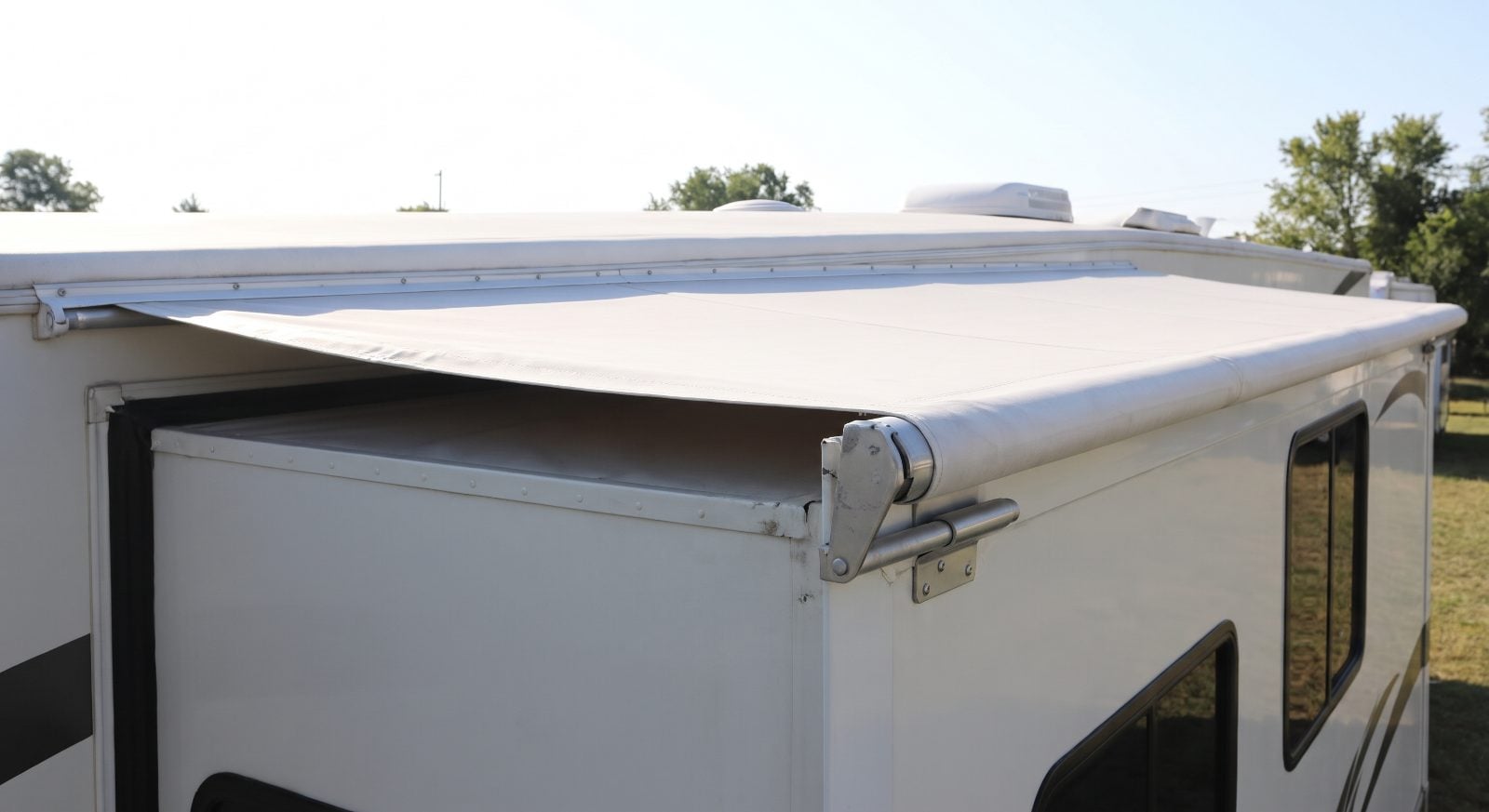
A tidy interior is easy to fall for. Before you do, step back outside and look up at the slide. The slide topper is the thing most buyers never think to check, and it quietly tells you how the roof got treated over the years.
You want fabric that pulls flat with no belly in the middle. A sag means water has been pooling up there for seasons, and that’s how leaks start. Cracks along the edge? The vinyl baked in the sun with nobody rotating or replacing it. But a taut, intact topper is proof somebody kept the slide clean and the roof dry.
Replacement runs a few hundred dollars installed. Not the end of the world, but it hints at what else got skipped.
21. The Slide-Outs Sit Square in Their Openings

Stand back ten feet inside the coach and study the wood trim framing the slide opening. Even lines all the way around, header to floor step, both sides — that’s what you want.
A slide whose header beam runs out of line with the trim, or whose floor edge sits higher at one end than the other, has sagged on its rails. Could be worn gears, could be a tired mechanism, could just be that it’s been run out and in a thousand times with no lube on the rails. Either way the seal won’t sit right, and a slide that doesn’t seal right lets weather in.
Square slides are calm slides. They’ve been operated gently and maintained on schedule.
20. The Slide Seals Are Supple and Properly Seated

Pinch the seal. It should give and spring back, soft like a broken-in running shoe, not stiff and chalky like an old tire left out in the sun.
Seals are rubber, and rubber dries out. An owner who conditions them a couple times a year keeps them flexible so they hug the slide and shed water. Skip that for a few seasons and you’re left with hard, cracking seals that let drafts, dust and rain sneak in around the edges.
Run your eye along the whole perimeter. No curling corners, no torn bulbs, no daylight showing through. A supple seal with a faint conditioned sheen is a tiny thing that quietly proves somebody cared.
19. The Entry Door Closes Without Being Lifted

Open it, close it, listen. A well-kept door swings true and latches with one easy push. The second you have to lift the handle a touch, or lean a hip into it to get it to catch, something has settled.
Doors sag when hinges wear or the frame flexes. And on a lot of rigs the door also carries a window, a screen, maybe a built-in shade, so there’s real weight hanging off those hinges every single day of its life.
A door that closes clean has been opened and closed carefully for years. A fighty one has been slammed, and slamming travels straight into the frame.
18. The Entry Steps Deploy Smoothly and Feel Stable
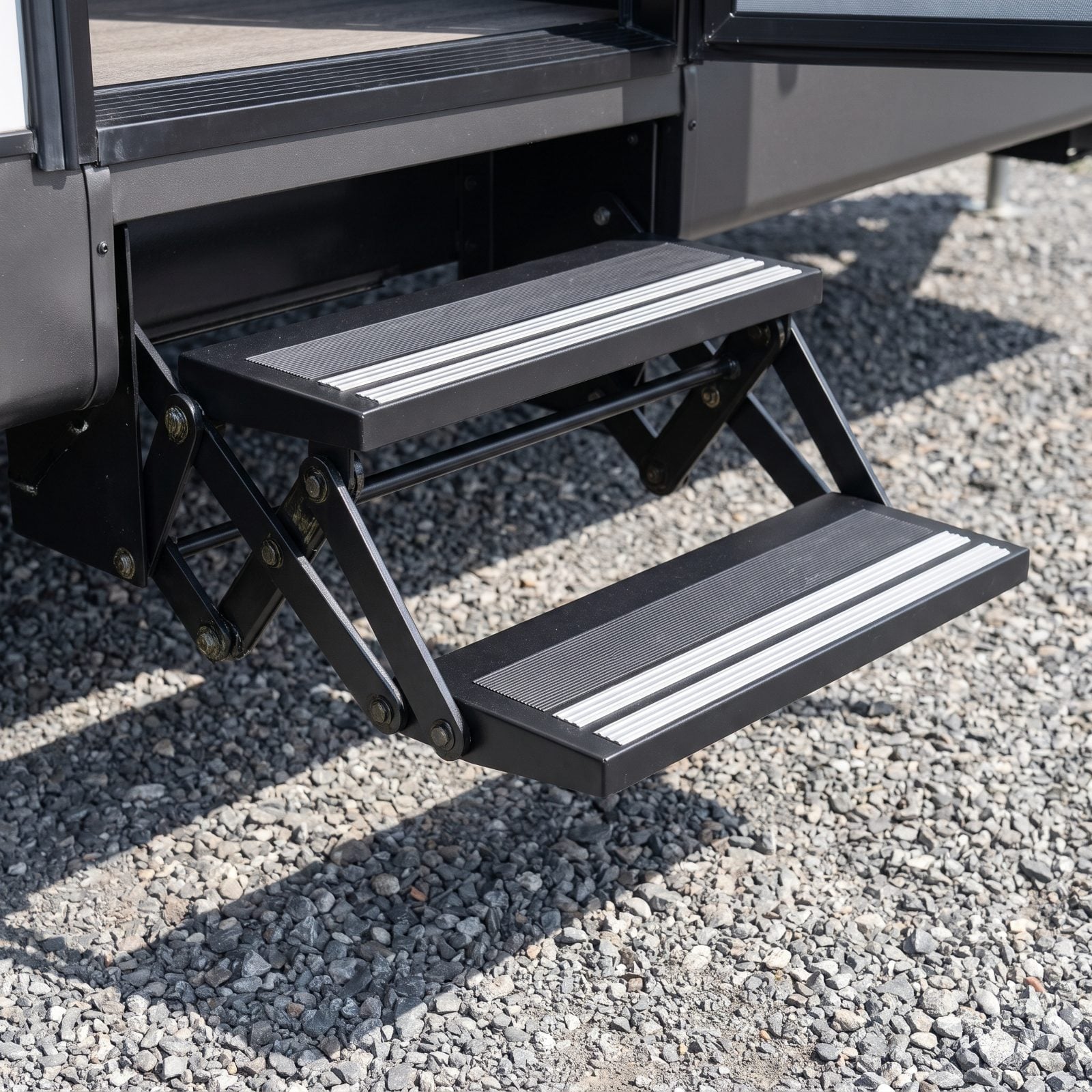
Climb the steps up and down. They should feel firm, not flex, and hold rock-solid when extended.
Entry steps live outside in road grit and spray, and they take the bottom of your boots every day. A wobble, a creaking tread, or a stiff, rusty pivot tells you they got no tightening and no attention. And here’s the part people forget — steps are the one spot on the rig where your full body weight lands every single morning. You feel a sketchy step before you ever see it.
17. The Baggage Doors Align Evenly

Cabinet doors are a quiet confession. When the fluted wood fronts in the galley line up flush, with parallel gaps and gold-pulled doors that close on the first try, the body is straight and the frame hasn’t twisted.
When one door sits proud, droops at a corner, or needs a shove to close, something has flexed underneath. That’s a bigger story than a stubborn door.
Check the hinges on the overhead cabinets while you’re in the galley — they should hold a door open on their own without creeping shut on your head. Tired hinges are cheap to replace. But worn hinges and crooked doors together point to a rig that’s been worked hard and patched little.
16. The Storage Bays Are Clean and Dry
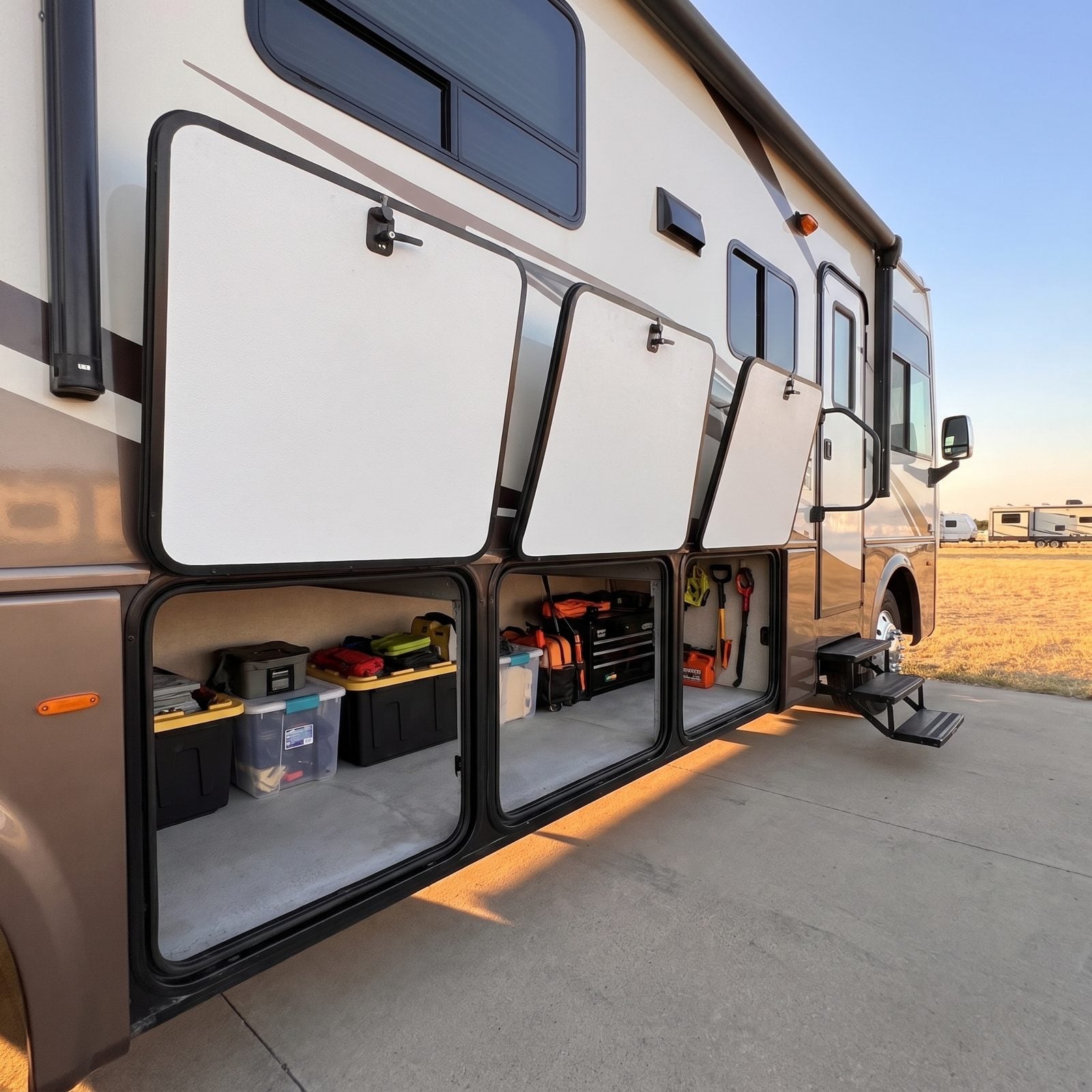
Open every bay and stick your head in. What you’re hunting for is boring: a clean, dry floor with no stains running down from the corners.
Water rings, rust streaks, a musty smell, or soft spongy spots in the floor all mean moisture has been getting in and sitting. The bays are the basement of an RV. Whatever’s gone wrong up top eventually shows up down here first.
15. The Frame Has a Clean Protective Coating
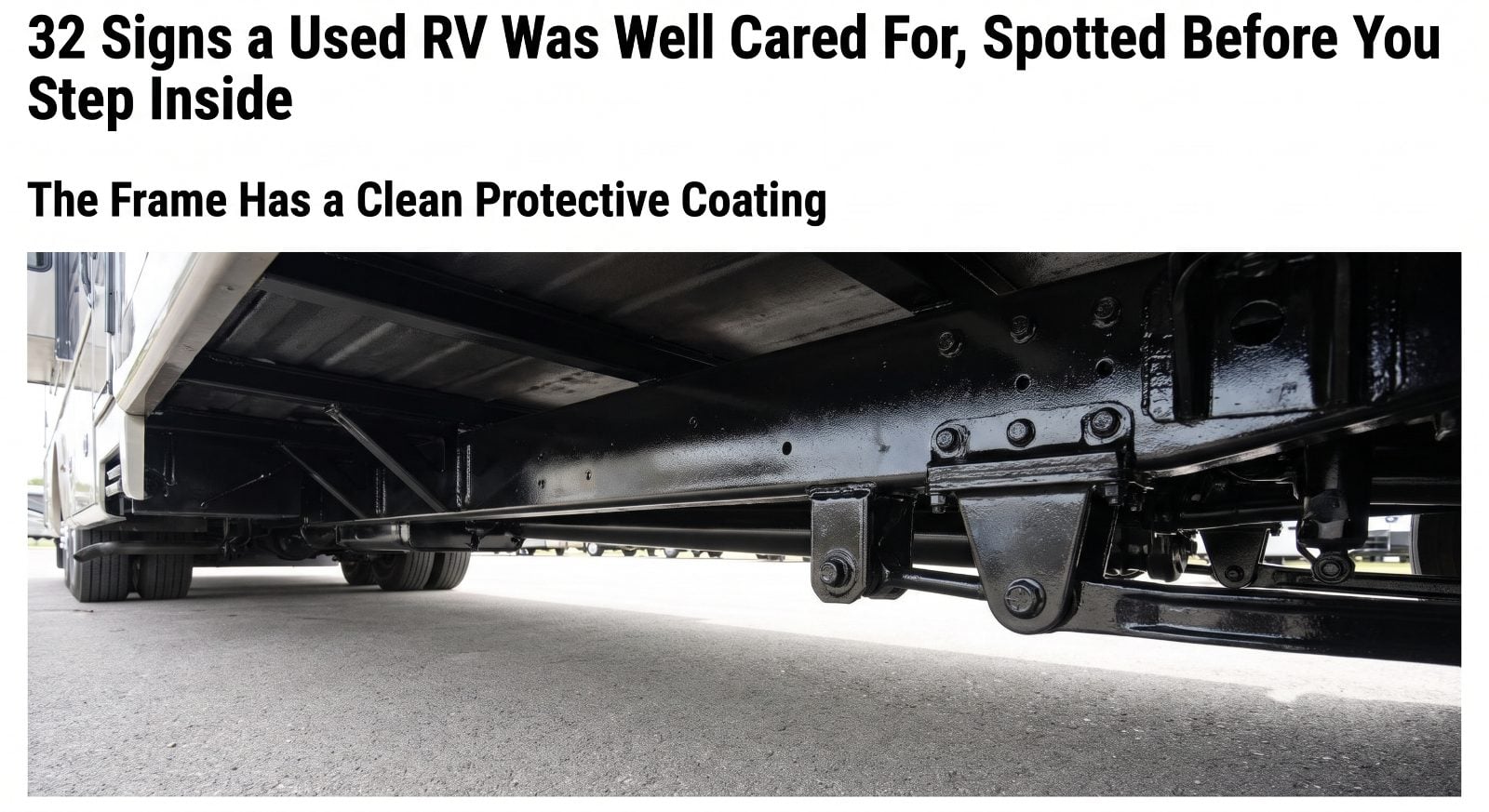
Get down and look at the frame. Not fun — bring a flashlight — but it’s the bones of the whole thing.
You want an even dark coating with no flaking and no orange rust pushing through, especially around the welds and bolt heads. Surface haze is normal on any rig that’s seen weather. Flaking scale, bubbling, or bright bare metal where coating peeled away? That’s the warning.
An owner who hit the frame with a coat of protectant every few years was thinking about the rig outliving them. Rust is patient. A clean frame just means someone was more patient than the rust.
14. The Underbelly Cover Is Properly Fastened
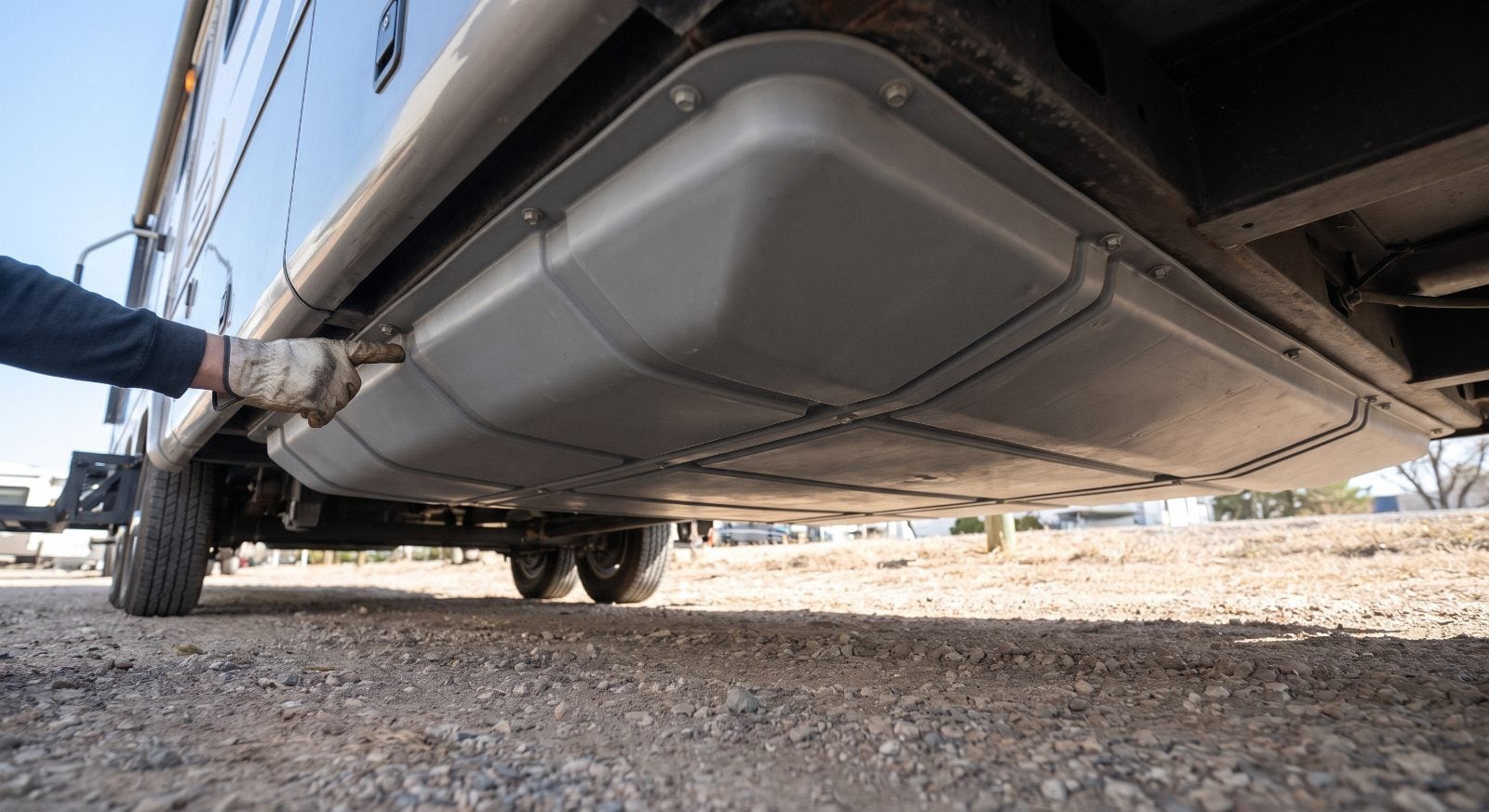
The belly pan is that gray panel sealing the underside, and it protects the tanks, the plumbing and the insulation from road spray, cold and mice.
Run your eyes along it. Fastened tight at regular spacing, no sagging pouches hanging down, no torn flaps, no gaping holes. A saggy or shredded underbelly means water has worked its way up in there, or an owner dropped the panel for a repair and hand-waved it back on.
13. The Leveling Jacks Are Dry Around Their Seals
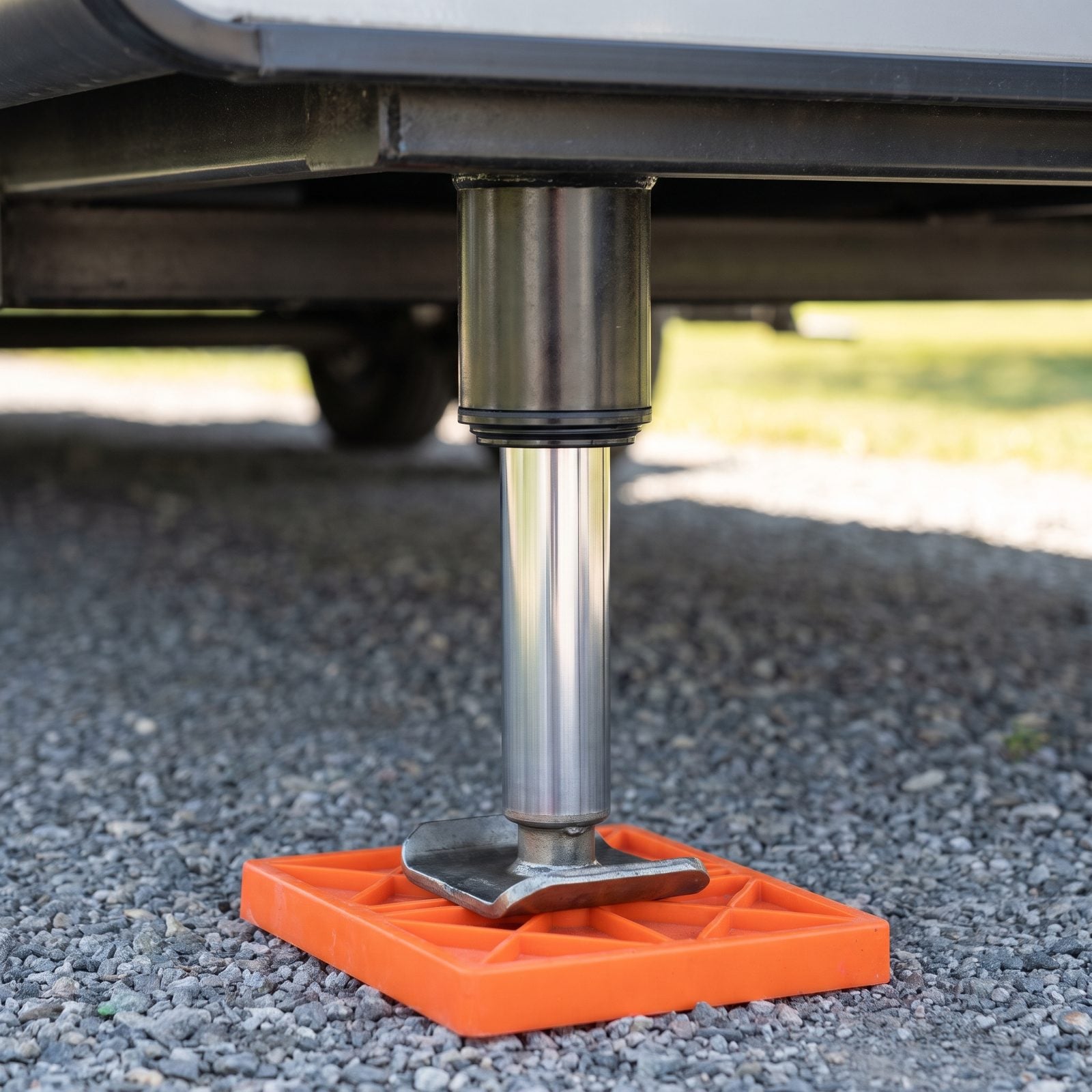
Now get down low. Look where each hydraulic jack ram slides into its cylinder.
Clean and dry is the answer. A ring of reddish fluid weeping down the shaft, or grime caked onto an oily film, means a seal is leaking. Jacks that leak will eventually sink overnight and leave you unlevel by morning — or worse, fail to lift at all when you’re trying to break camp in the rain.
Check the chrome ram itself too. It should be smooth, no pitting or deep scratches that chew through seals from the inside.
Dry jacks, straight frame, square slides — that’s a rig somebody looked after.
12. The Propane Cylinders Carry Current Certification Dates

Flip the collar on a propane cylinder and read the stamp. DOT tanks need recertification twelve years after manufacture, then every five years after that. An expired tank is more than a legal headache at the refill counter — it tells you the owner never bothered with the cheap, boring stuff.
Skip this check and you can end up turned away at a fill station on a Sunday, middle of nowhere, nearest alternative forty miles back. Current date, clean valve, intact dust cap. That owner was paying attention.
11. Battery Terminals Are Clean and Protected
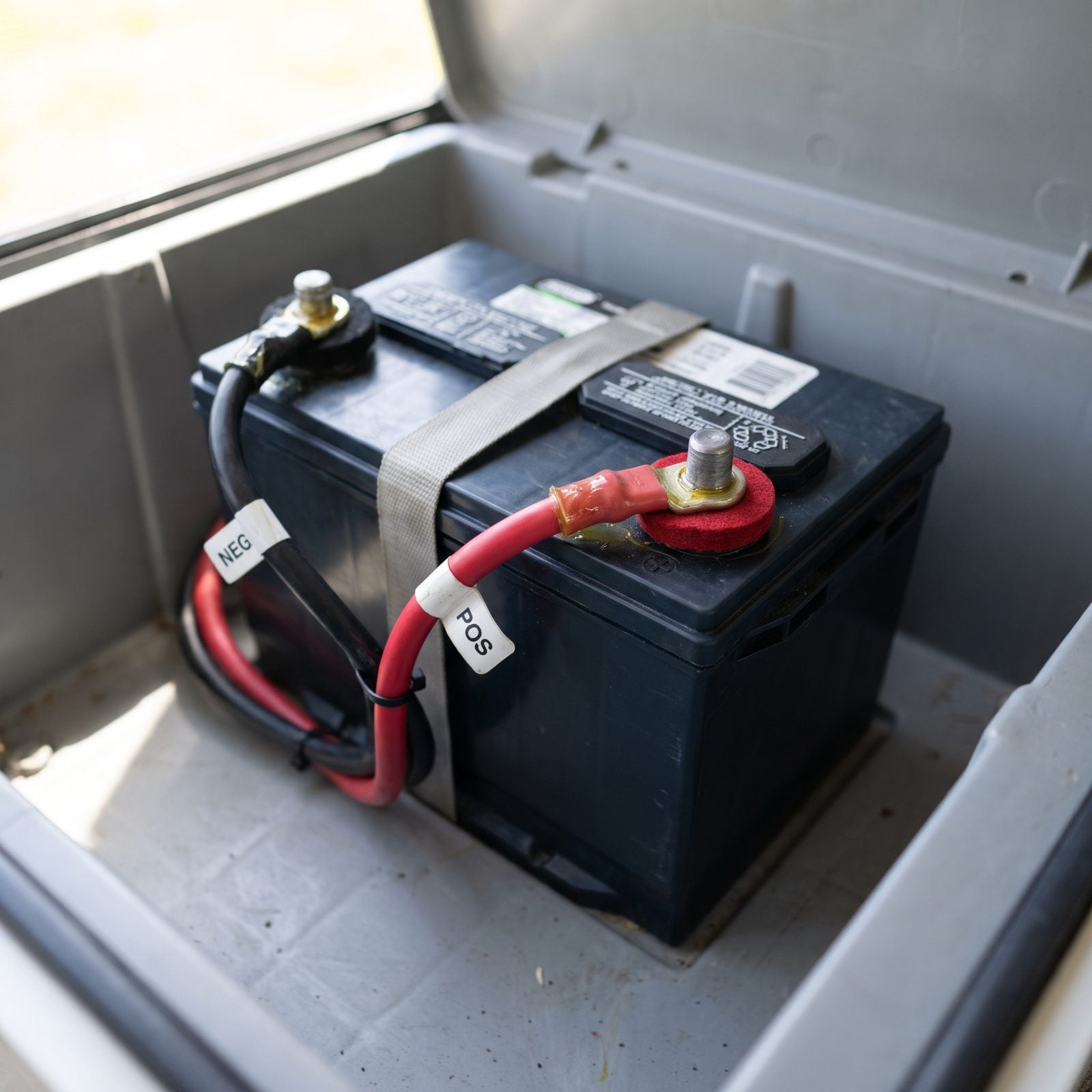
Corrosion is the tell. That crusty white-and-blue-green fuzz blooming around a terminal means slow neglect, and it eats connections until your lights dim and your pump sputters.
Clean lugs, a light smear of protective grease, cables routed without strain — those small habits mean someone opened this compartment more than once a year.
10. Exterior Wiring Runs Loomed and Clipped Up Tight
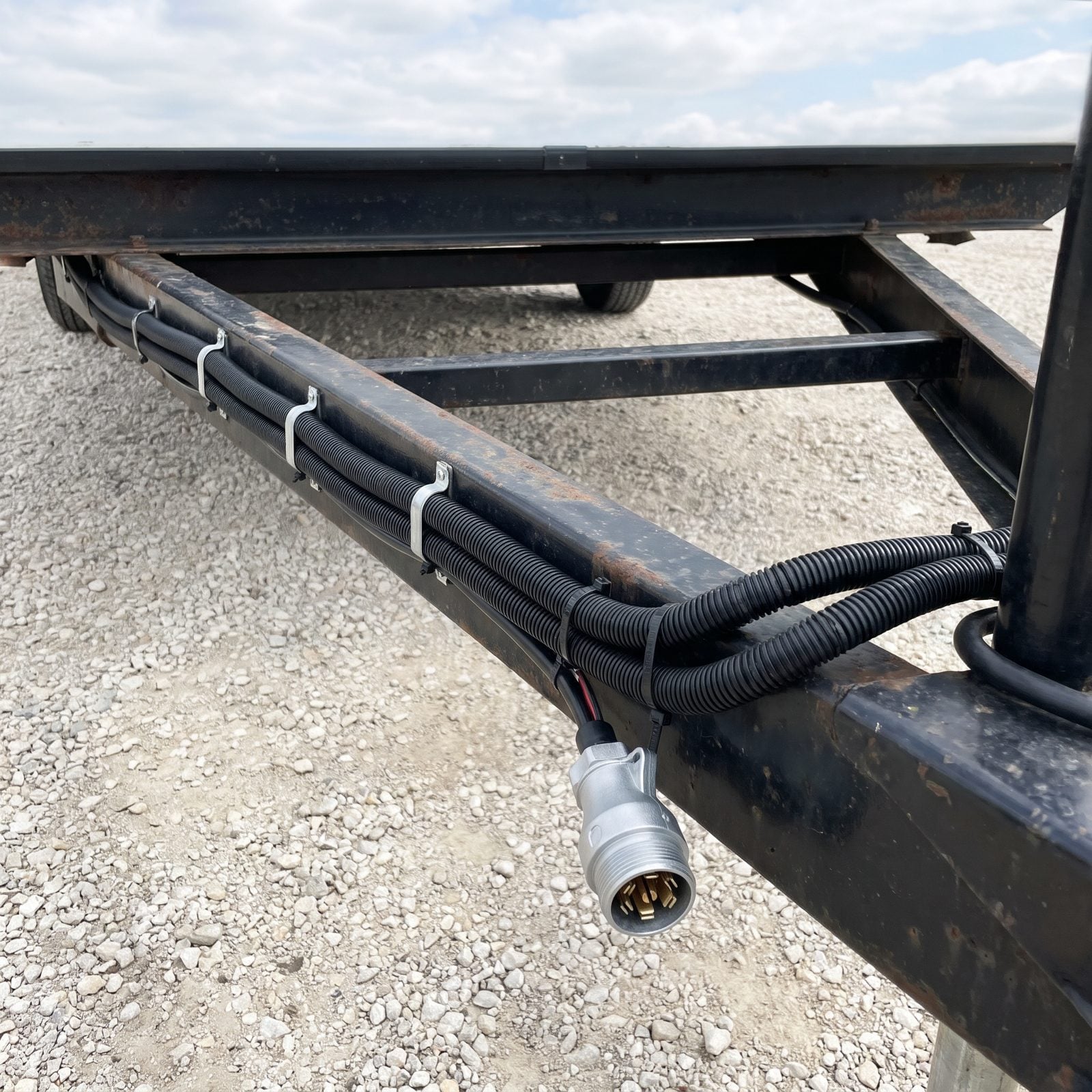
Crouch down and look along the frame rails and tongue. Wiring should hug the frame inside split loom, clipped at regular intervals, nothing hanging loose enough to snag on road debris or chafe against the framing on every mile of highway.
Loose zip ties, bare wire taped with the sticky stuff that always lets go, a bundle of red and black cables stuffed in like spaghetti — that’s road vibration winning. A tidy wiring run is the handwriting of an owner who crawled under there on purpose.
9. The Furnace Exhaust Shows No Heavy Soot Streaking
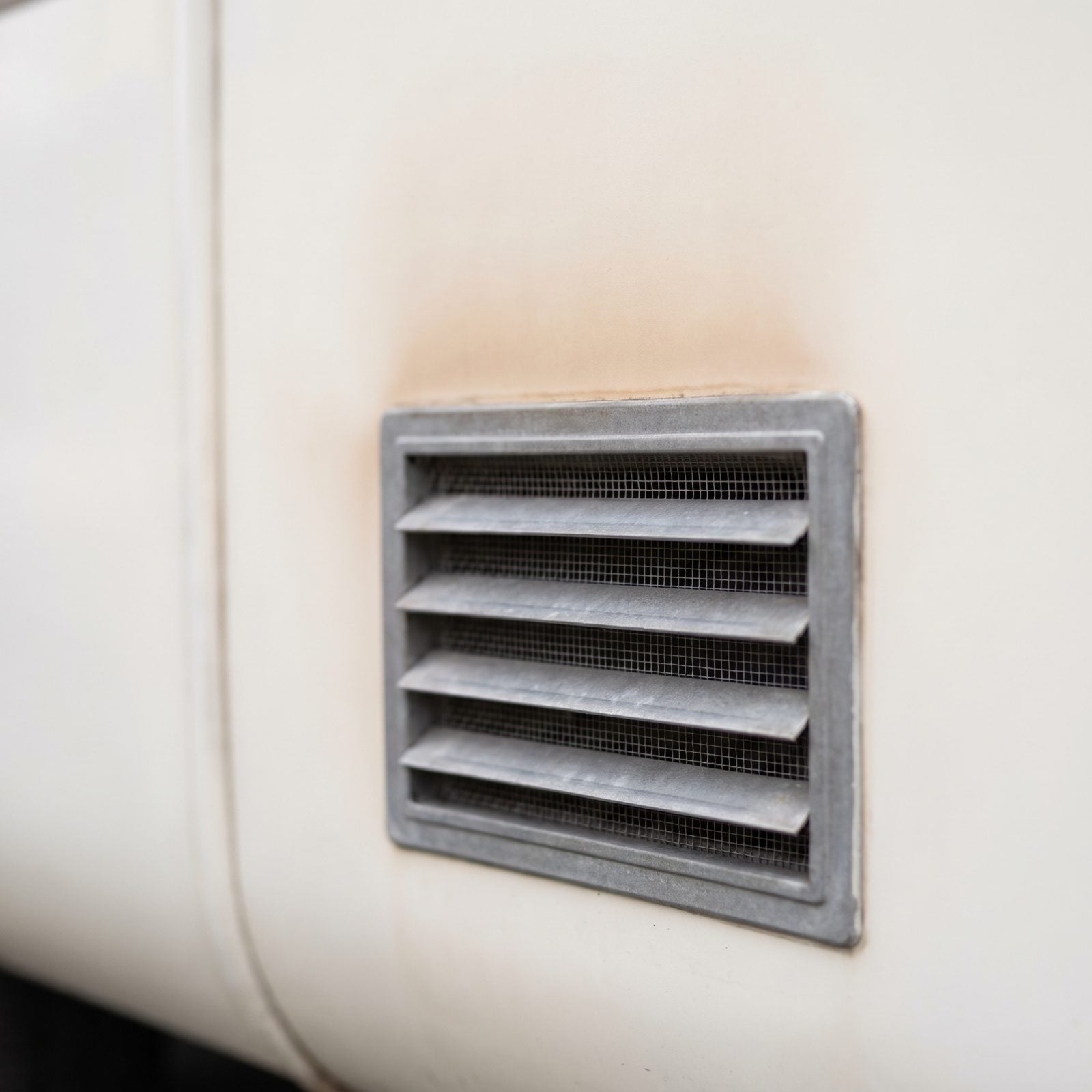
Find the furnace exhaust vent low on the sidewall and read the wall above it. A thin ghost of heat discoloration is normal. A thick black fan of soot streaking up the fiberglass is not.
Heavy soot means the furnace was burning rich, dirty, or starved for air, and that’s a combustion problem that can also mean carbon monoxide creeping where it shouldn’t. A clean vent with an intact screen says the burner was serviced and nothing built a nest in it over the winter.
8. The Waste Valves Pull Freely and Sit Dry

Ask to work the navy cabinet doors and the drawers under the marble island. The gold pulls should slide out and back with firm, even resistance — no grinding, no sticking halfway.
A drawer that won’t budge has a warped runner and a repair in its future. Worn patches on the blue velvet sofa and recliners, or scuffs along the wood floor, tell you the coach was lived in hard and rarely cared for. Plush upholstery, a clean countertop, a smooth pull. That owner respected the space they lived in.
7. All The Tires Match in Brand, Size and Load Rating

Walk the whole rig and compare the tires to each other. Same brand, same size, same load range letter stamped on every sidewall.
One oddball tire thrown on to get through a weekend is the budget talking. Mixed load ratings on the same axle is a genuine safety problem, because you’ve quietly lowered the weakest tire’s ceiling. A matched set means replacements got done right — all at once, by someone who actually read the sticker inside the door.
6. The Tire Date Codes Prove Timely Replacement
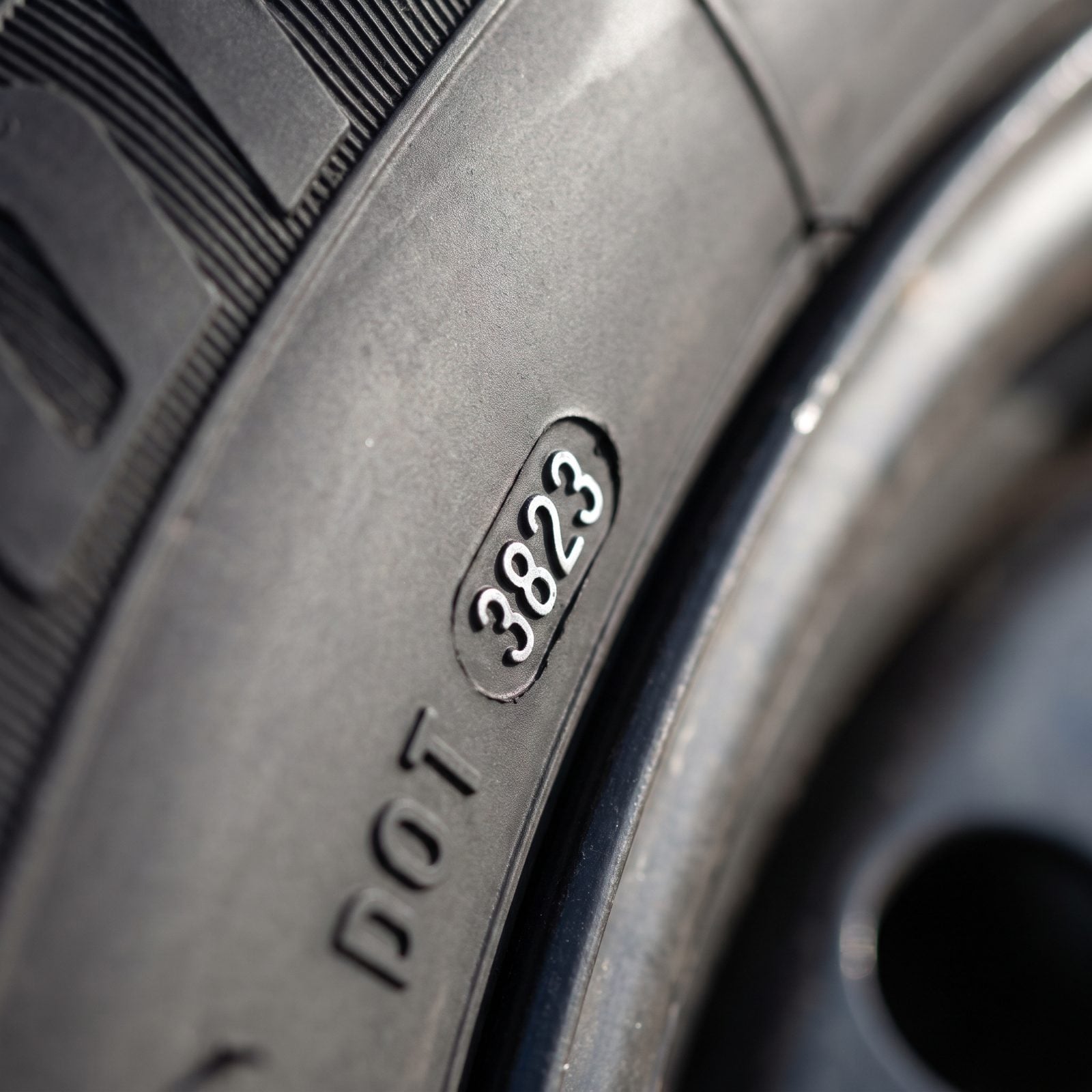
Every tire wears its birthday on the sidewall. Find the DOT code and read the last four digits: week, then year. “2219” means the twenty-second week of 2019.
Nobody tells first-time buyers this part. RV tires age out long before they wear out, and most should be swapped around five to six years in regardless of tread, because the rubber dries from the inside while the rig just sits there in the yard month after month, baking and stiffening while the odometer never moves.
Deep tread on a ten-year-old tire is not a good tire. It’s an old tire waiting for an interstate.
Recent date codes on a used rig tell you the owner knew that rule and acted on it.
5. The Sidewalls Are Free of Weather Cracking
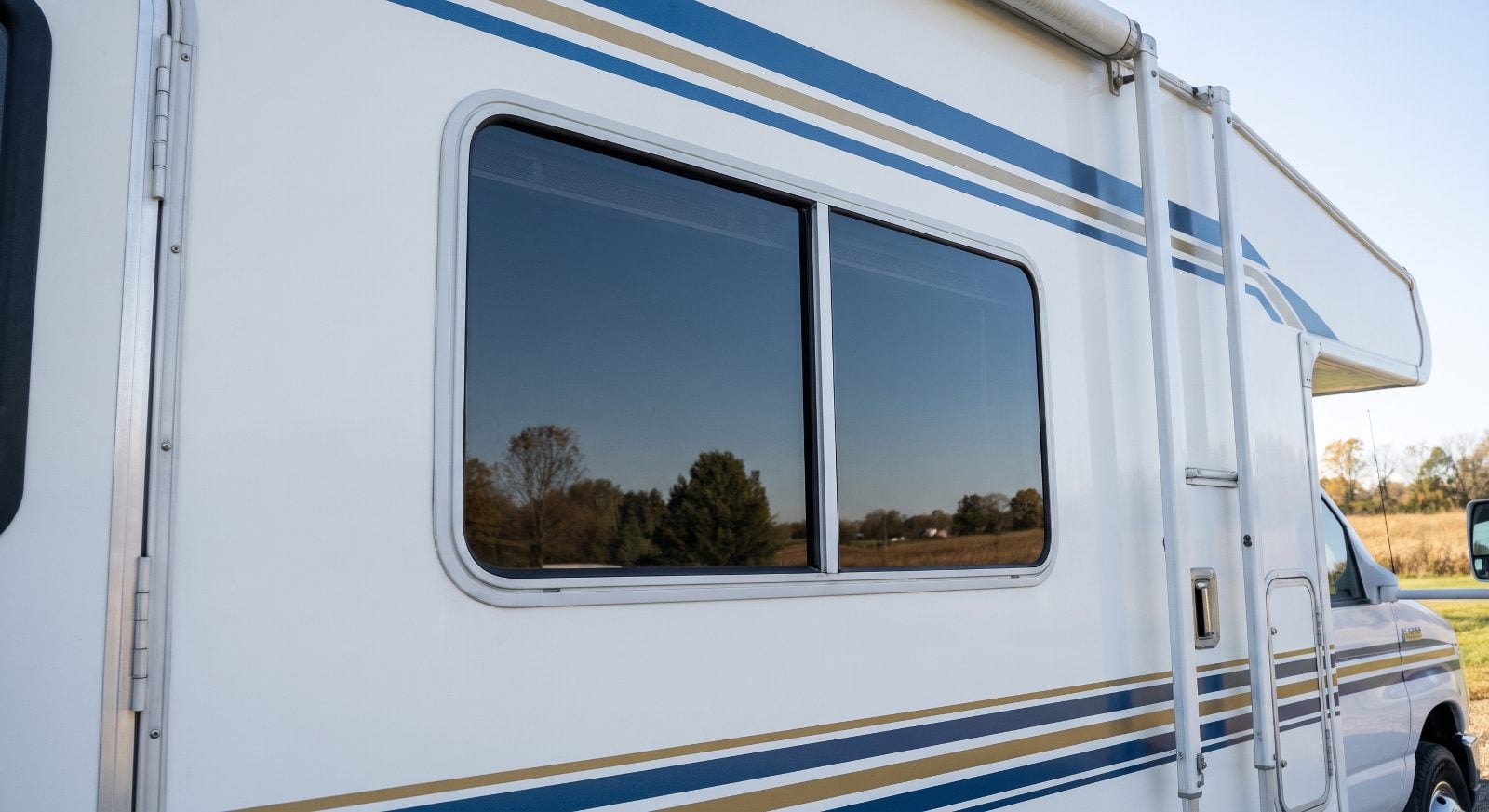
Run your fingers along the exterior sidewalls beneath the windows and around the rubber window gaskets set into the striped white fiberglass. You’re hunting for weather cracking — the fine spiderweb crazing in seals and trim that deepens into cracks you could slide a fingernail into.
Cracking means UV, heat and standing still have been chewing the seals and finishes. A rig parked under a cover, or one wiped down now and then with a UV protectant, holds smooth supple walls, gaskets and trim for years longer.
4. The Tread Wears Evenly Across Every Tire
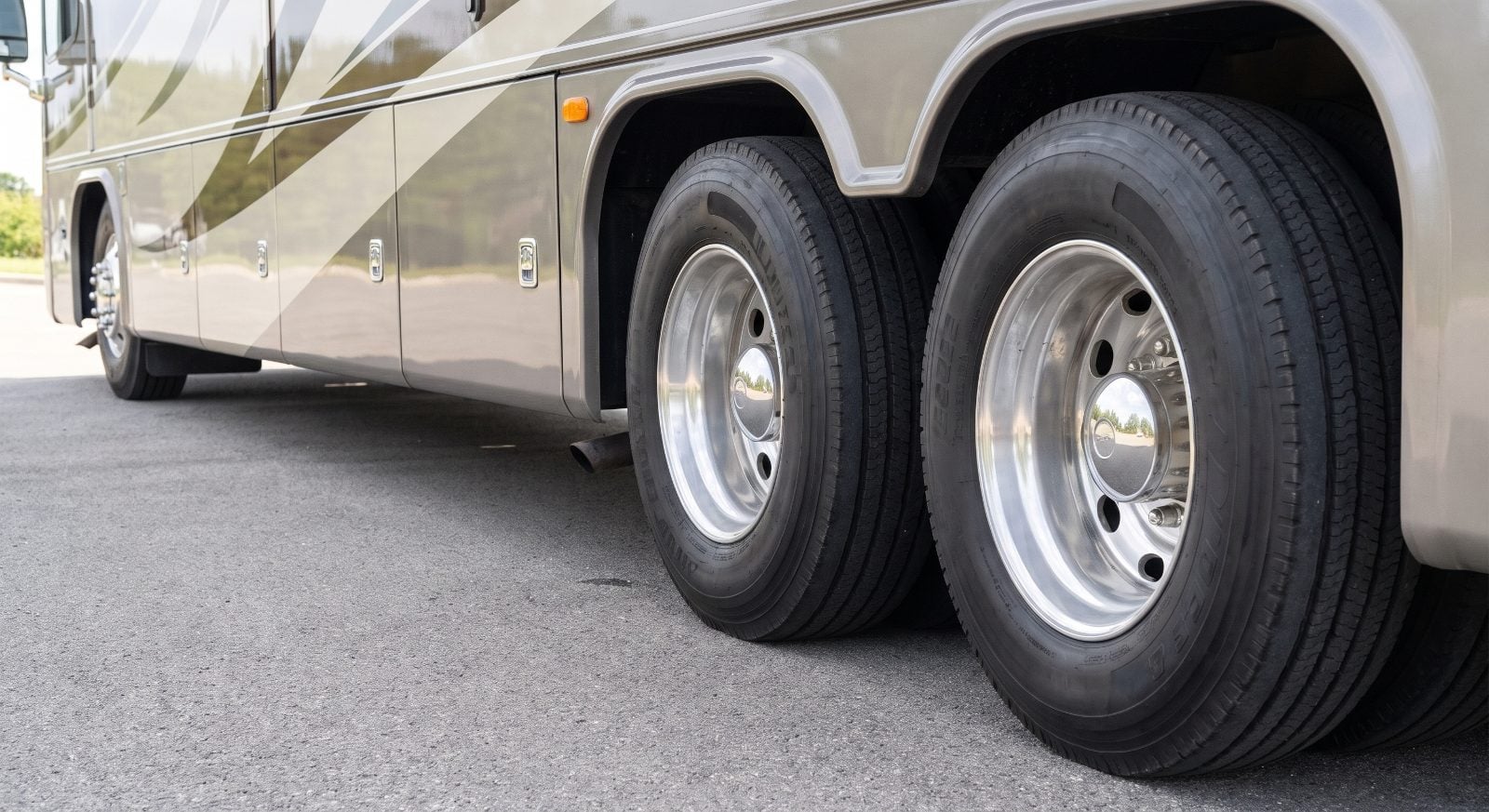
Crouch and look straight across each tread face. Even wear across the full width is what you want.
A worn center strip means chronic overinflation, while worn outer edges mean it ran soft for too long. Feathered or scalloped blocks point at alignment or suspension trouble — the expensive kind. Uniform tread is quiet proof the owner checked pressures cold and kept the axles true, instead of just topping off the air at a gas station once a summer.
3. The Suspension Sits Level on Both Sides

Step back and look at the whole rig side-on, parked on level ground. The frame should ride flat, with both sides sitting at the same height.
A corner that droops, or a gap between tire and fender that’s bigger on one side, points to a tired or broken leaf spring, a sagging equalizer, or a worn shackle bushing. Peek underneath for greased wet-bolts and springs that still have an arch left in them.
2. The Exterior Lights Have Clear, Intact Lenses
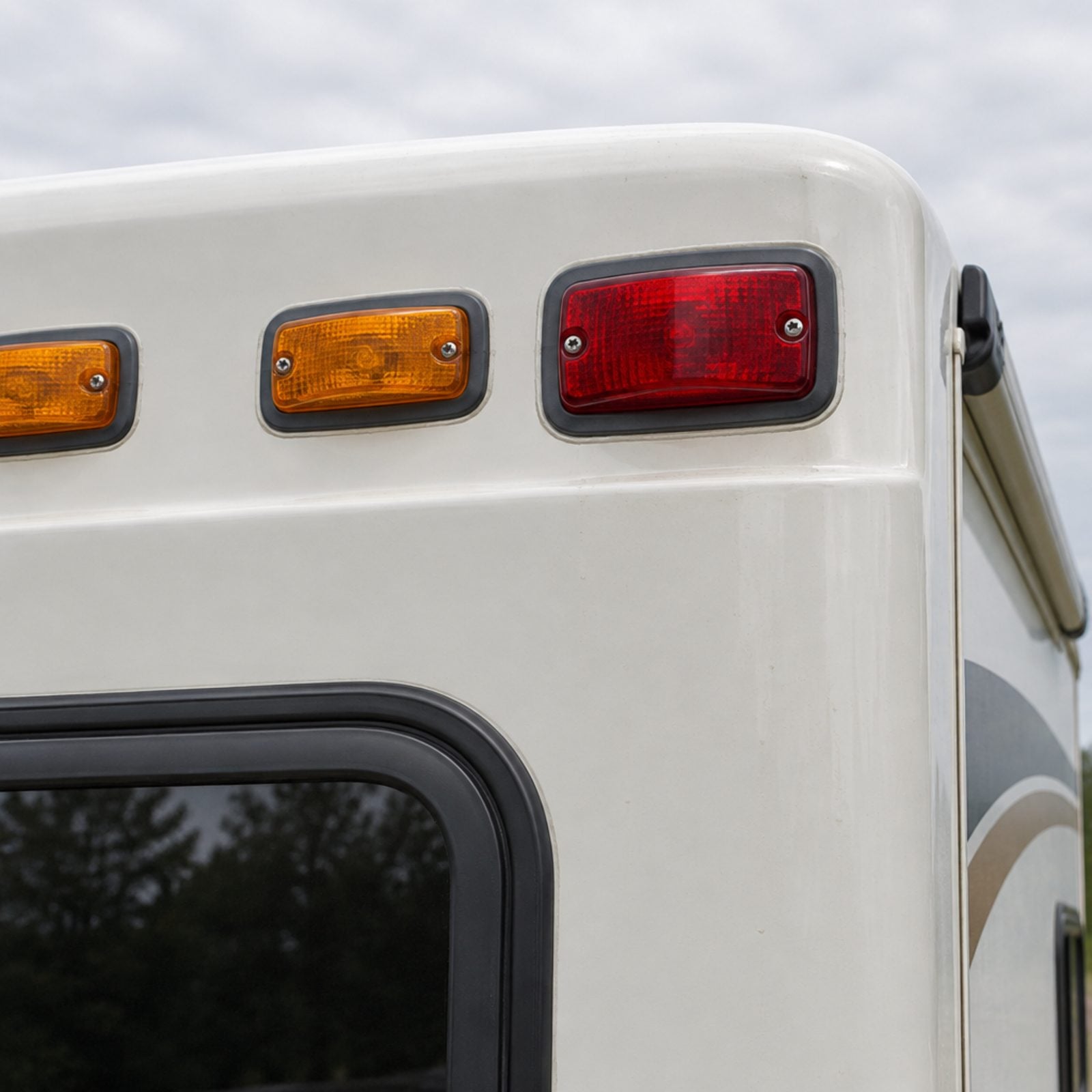
Start at the corners. Marker lights, clearance lights, the tail lamps — on an RV that got looked after, the lenses are clear enough to read the color of the bulb behind them. No cloudy haze, no hairline cracks spreading from a screw, no graveyard of insects fogging the inside.
Here’s why it matters more than it looks. A cracked lens lets water sit against the wiring, and water against wiring on a rig that lives outside is how a small problem becomes a brown stain on your ceiling two seasons later. Clear lenses say somebody replaced the cheap part before it cost them the expensive one.
Give each lens a light press with your thumb. Brittle plastic that flexes and clicks has been baking in the sun for years. Supple plastic held up, or it got swapped.
1. The Seller Has Organized Exterior Service Records

Paper is the clue nobody photographs for the listing, and it tells you the most. Ask to see the exterior service history and watch what happens. An owner who kept up with the roof hands you a folder. The one who didn’t hands you a shrug.
What you want to see, specifically:
- Roof reseal dates. Sealant has a shelf life, and a reseal every couple of years is the single best sign this rig stayed dry inside.
- Tire replacement by date, not tread. RV tires age out before they wear out, so a dated receipt beats a good-looking sidewall every time.
- Slide-out and seal lubrication notes. Dry seals tear. Lubed seals last.
We’ve walked away from rigs that looked spotless just because the owner couldn’t say when the roof was last touched. A tidy folder of boring receipts is worth more than a fresh wax job. Wax hides things. Receipts don’t — and honestly, give me the dull paperwork over the shiny paint any day of the week.