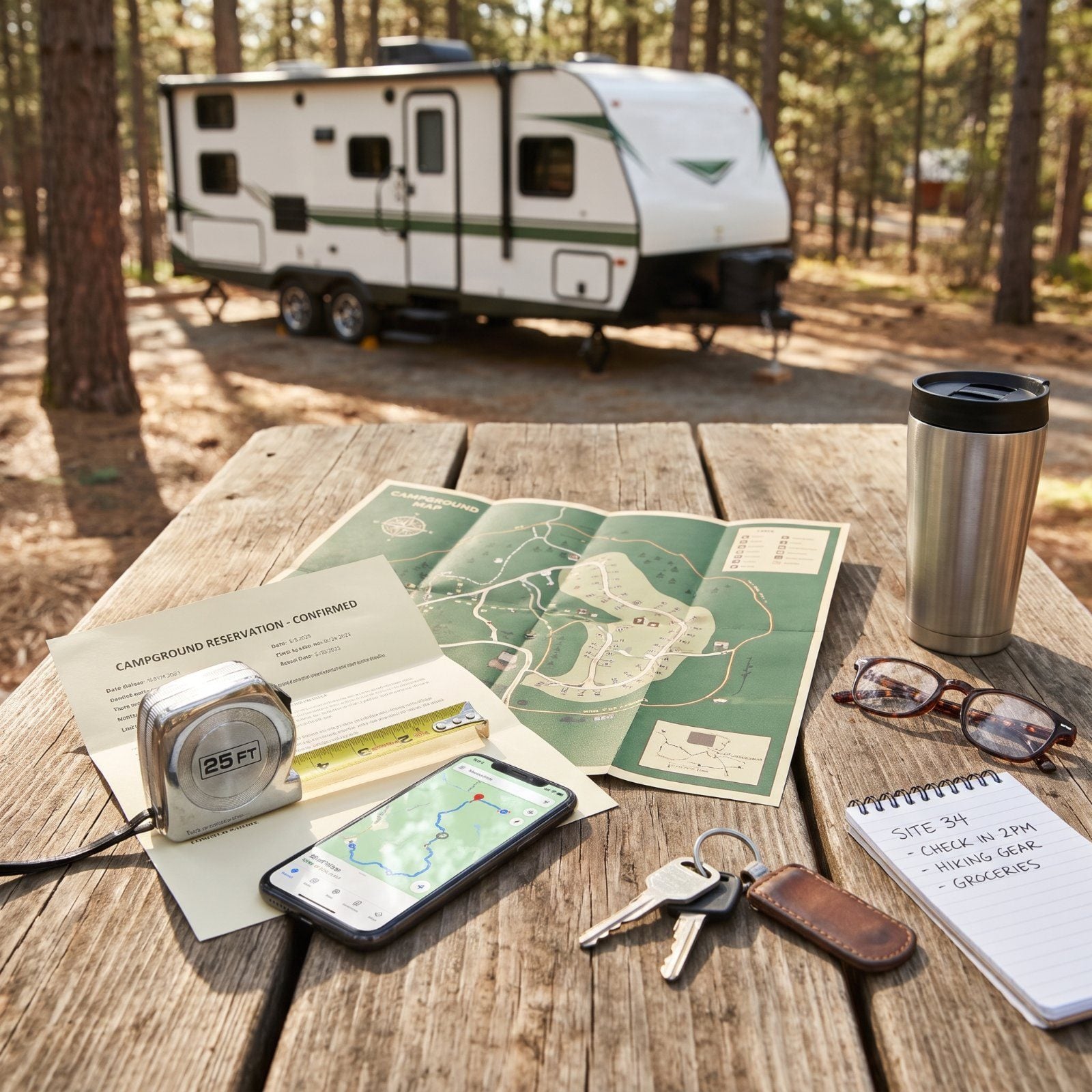
The worst arrival we ever watched happened at 9:40 on a Friday night. A fifth wheel, a gate code nobody had, a dead phone, three rigs stacking up behind it. The host wasn’t angry — just tired. And all of it was avoidable. Checking in well has almost nothing to do with being polite and everything to do with being prepared, and the folks in the office can read an unprepared rig before you’ve even stopped rolling. Run through the checks below before you leave home.
Please note that some of the images in this article were created with the assistance of AI.
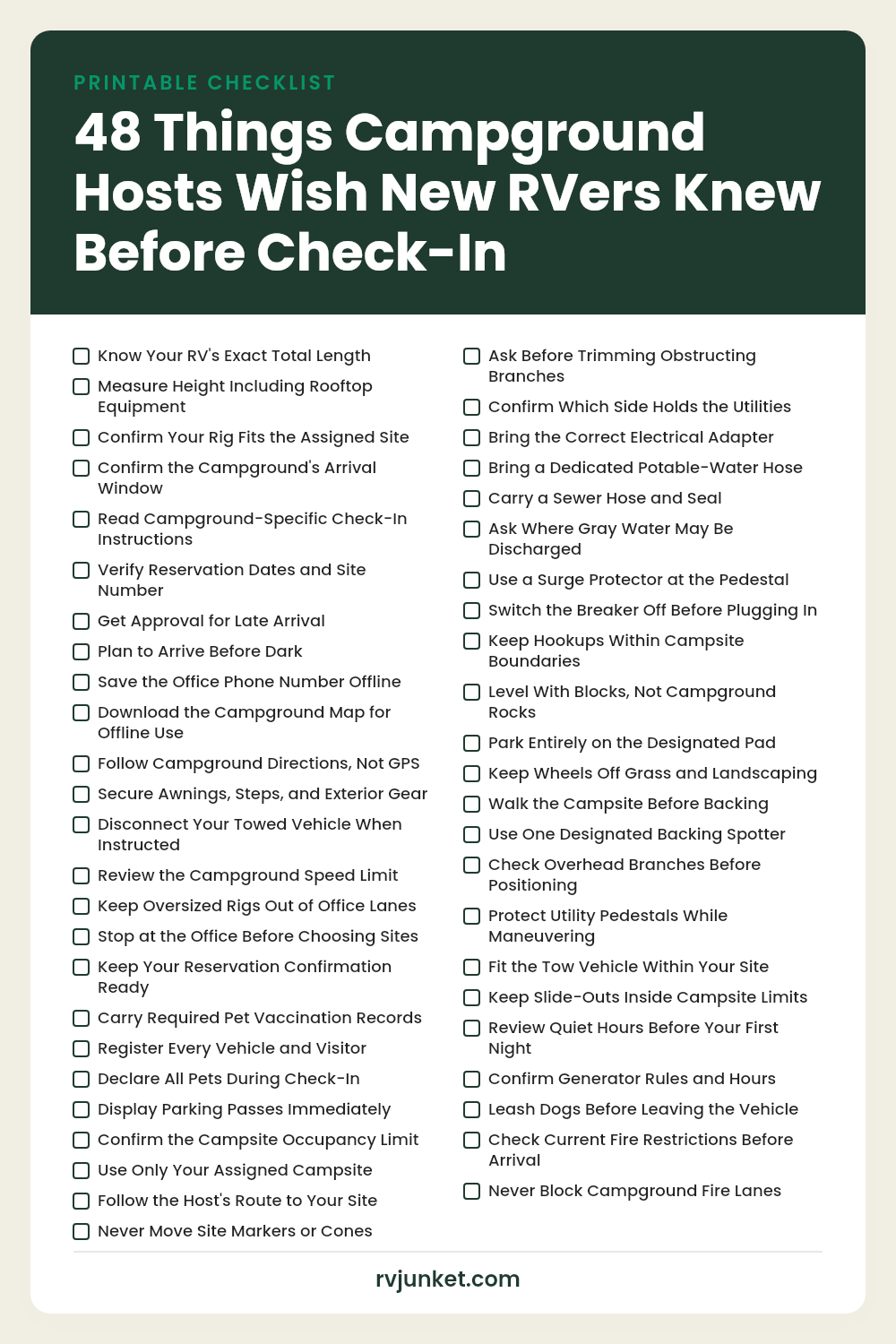
48. Know Your RV’s Exact Total Length
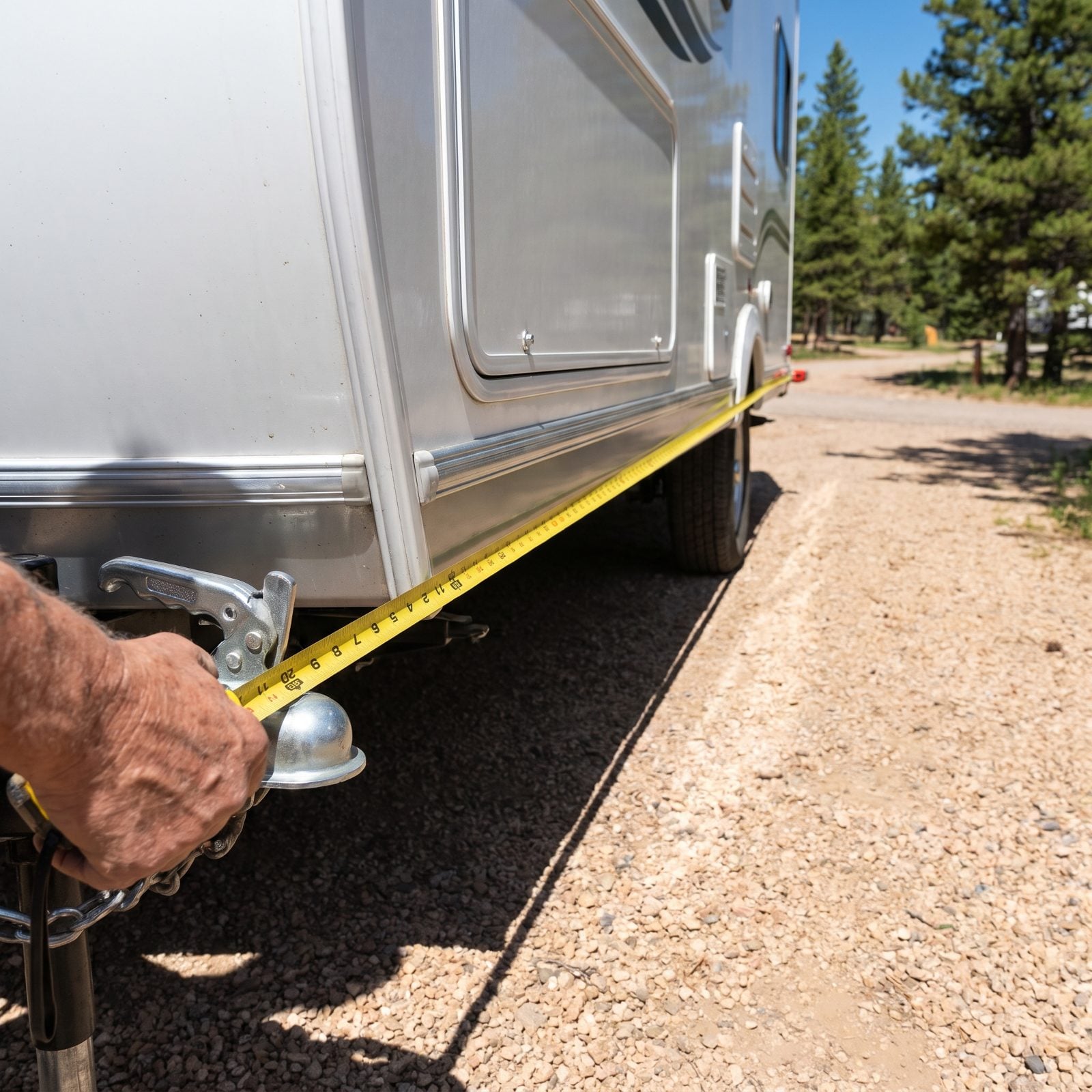
The length on the brochure is not the length that matters, because brochure length is usually body-only. Your real number includes the hitch, the ladder, the bike rack hanging off the back, and the spare tire. That extra two or three feet? It’s exactly what wedges you into a pull-through that was supposed to fit just fine.
Run a tape from the frontmost point to the rearmost point, with everything attached the way it’ll be when you roll in. Write that number down and keep it with your registration. When the office asks your length, give them the honest answer instead of a hopeful guess that leaves your tail hanging out in the fire lane.
47. Measure Height Including Rooftop Equipment
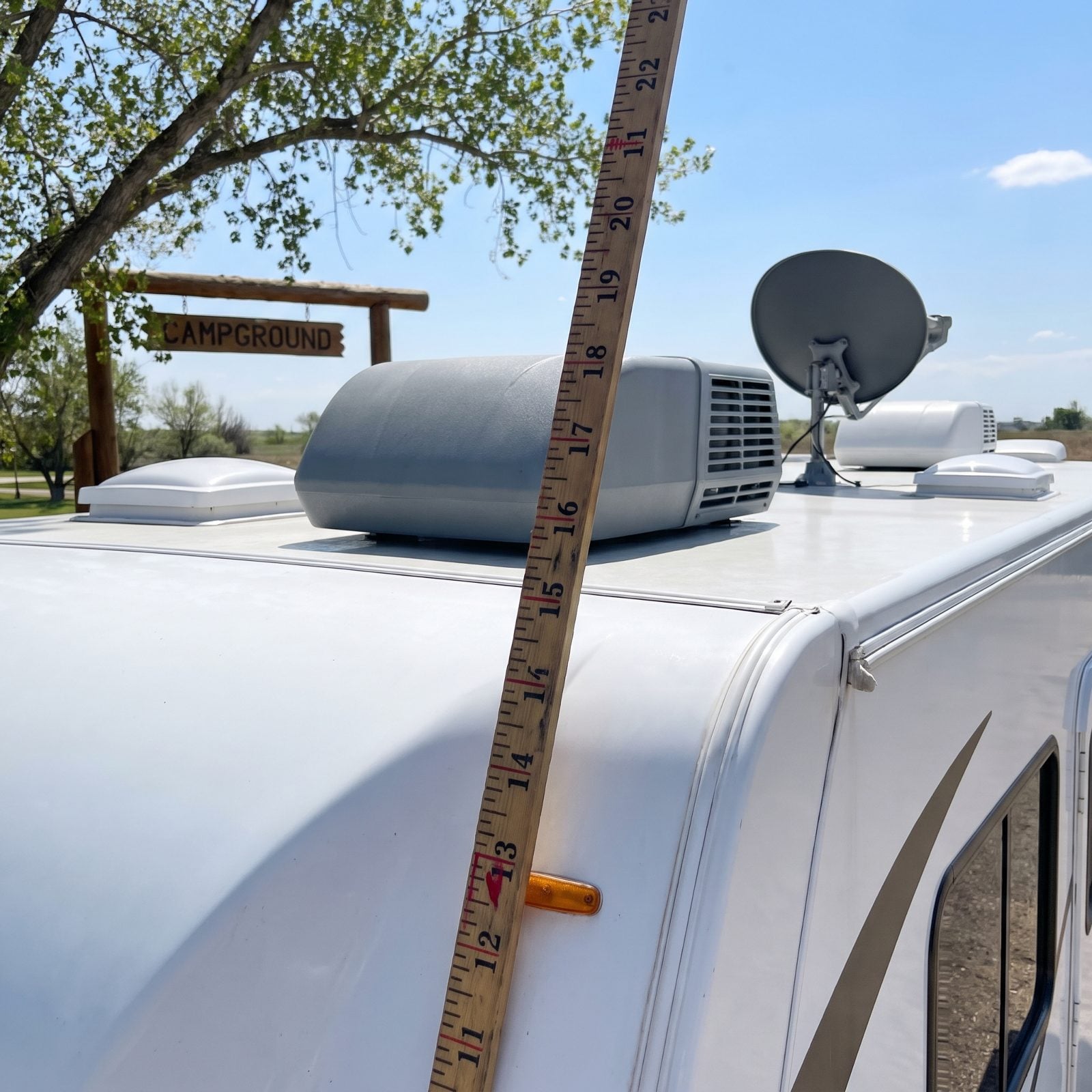
Clearance signs don’t care about your roofline. What decides whether you clear a low branch, a gas station canopy, or a bathhouse overhang is the measurement to the very top of whatever sticks up highest — usually the air conditioner shroud, sometimes a raised antenna or a satellite dome you forgot to fold down.
Measure to the tallest point and add a few inches of honesty. Tape that figure to the dash where your passenger can read it out loud at every clearance sign.
46. Confirm Your Rig Fits the Assigned Site
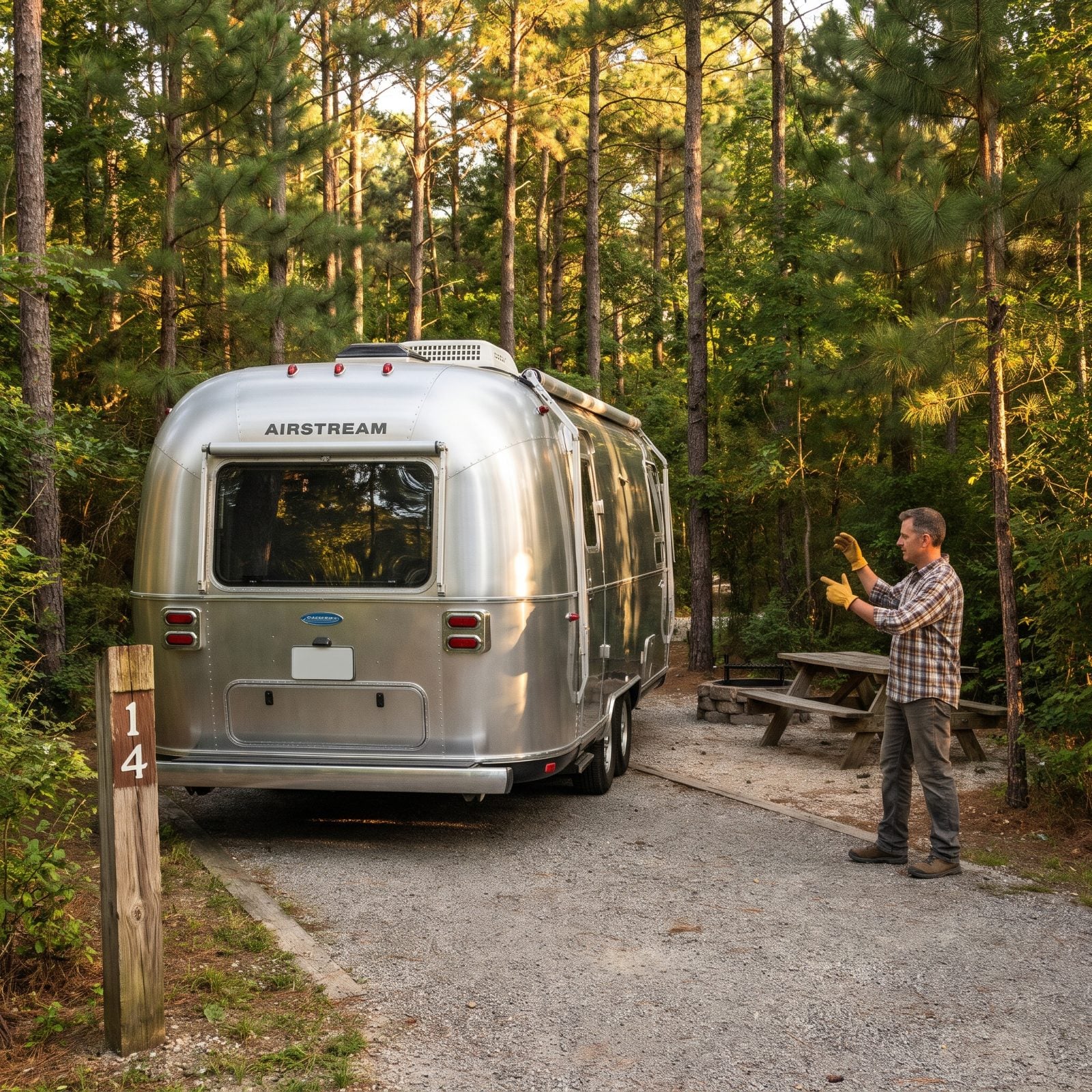
A site rated for 40 feet isn’t always usable for 40 feet. Pads get shortened by a stubborn boulder, a low tree, a steep slope, or a water spigot planted right where your slide wants to be. The listed length is the dream; the real pad is what you actually get.
If the campground posts site dimensions or photos online, study them before you book — not after you’ve driven six hours. And call to ask flat out: “Will a 38-foot fifth wheel with two slides on the road side actually fit site 22?” Hosts respect that question. What they don’t respect is the rig that shows up too big and blocks the loop while a crowd gathers to figure it out.
45. Confirm the Campground’s Arrival Window
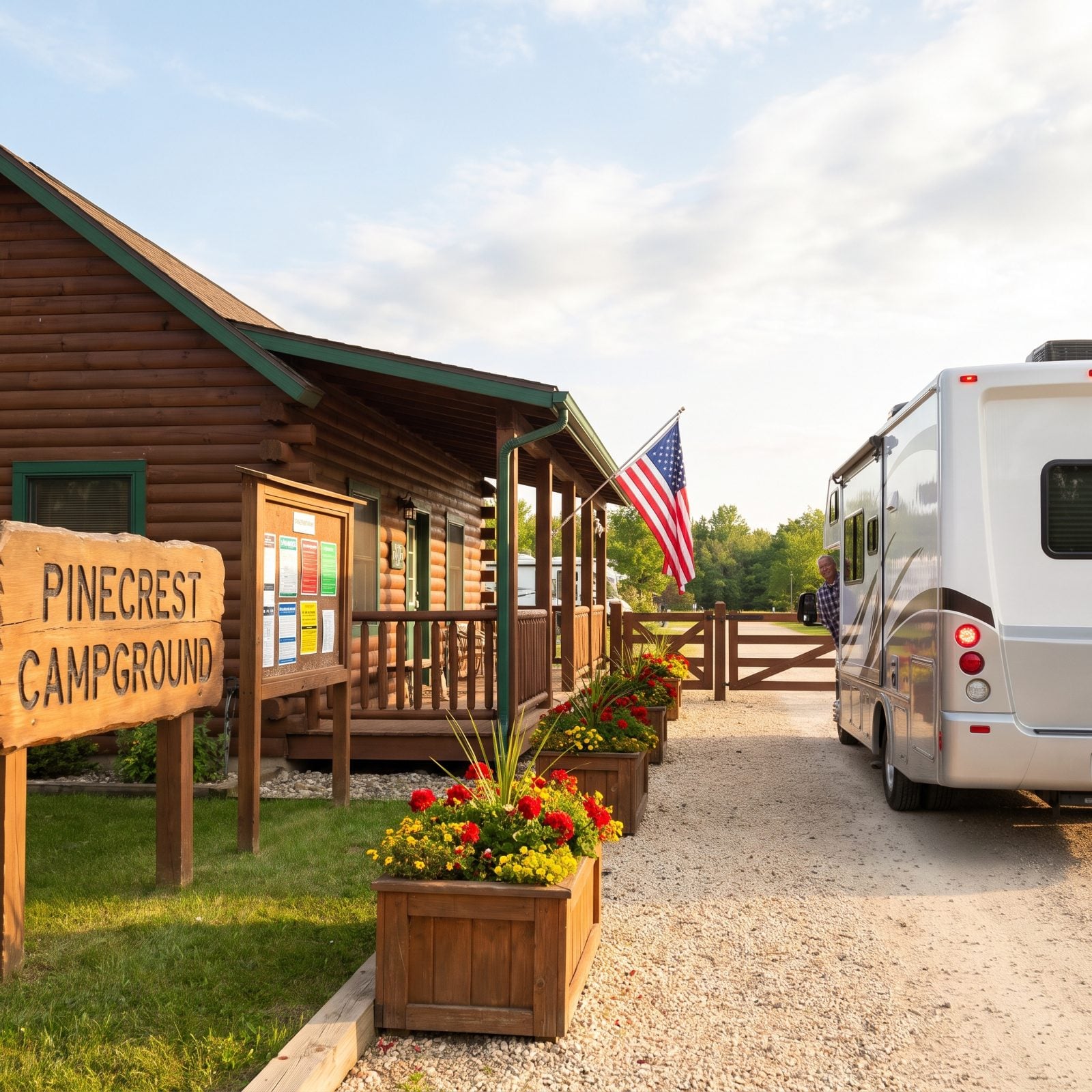
Check-in isn’t all day. Most campgrounds run a window — often something like early afternoon to early evening — and that window exists for a reason. The office needs daylight to walk you to a site, and the previous guest needs time to clear out and have the spot cleaned.
Roll in too early and your site may still be occupied, with no place to stash you. Roll in too late and the office is dark. Find the window on your confirmation email or the campground’s site and plan your drive to land inside it, not at the ragged edges.
44. Read Campground-Specific Check-In Instructions
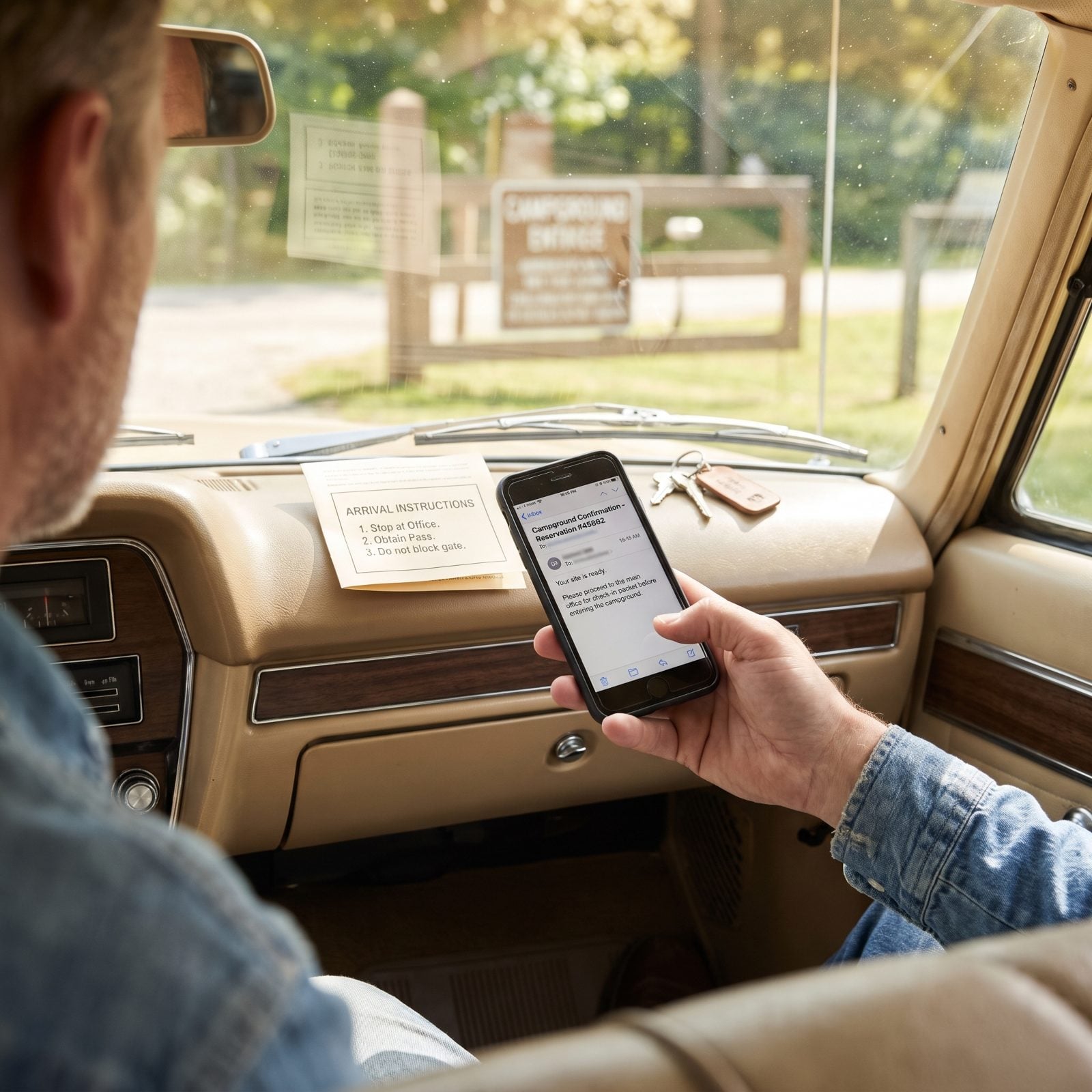
Every campground has its own quirks, and they’re almost always buried in the confirmation email. One wants you to text a number on arrival. Another has a gate code that only works after hours. A third tells you to park in the overflow lot and walk up, because the entrance road can’t handle a rig trying to turn around.
Pull over at the entrance and read the whole thing before you drive through the gate, not after you’ve already rolled past the office. Skimming is how people miss the note that says “do not use GPS, it routes trucks down a dead-end logging road.”
43. Verify Reservation Dates and Site Number
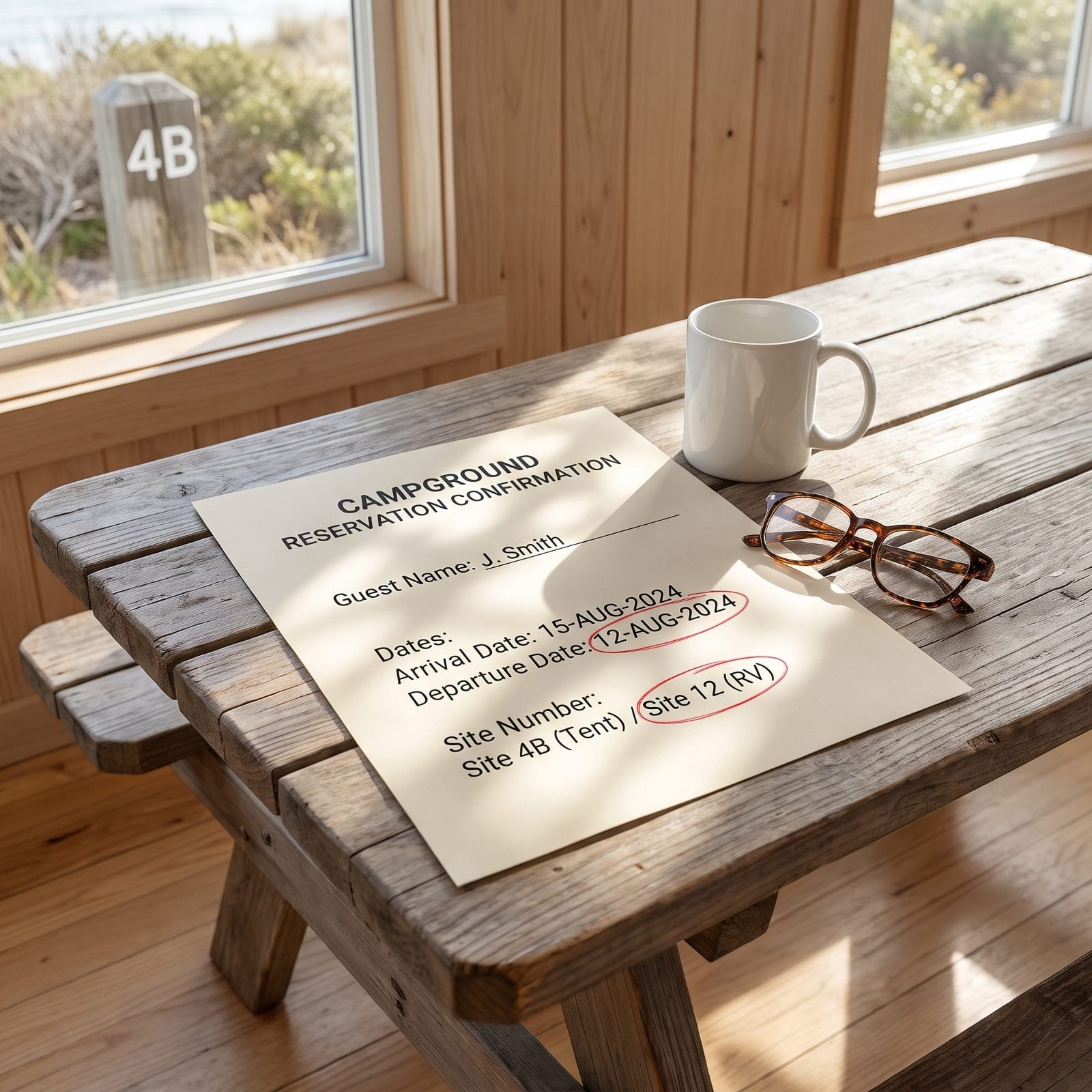
Book enough trips and the dates start to blur. You swore the reservation started Thursday. It started Friday. Now you’re rolling in a day early to a full campground with nowhere to go.
Pull up the confirmation and check both date fields and the exact site number. If the first date and the latest date read the same day, the sheet is showing zero nights instead of the stay you actually paid for. Booking-engine hiccups happen, and it’s a whole lot easier to fix a date a week out than to argue it at the gate while your spouse pretends not to know you.
42. Get Approval for Late Arrival
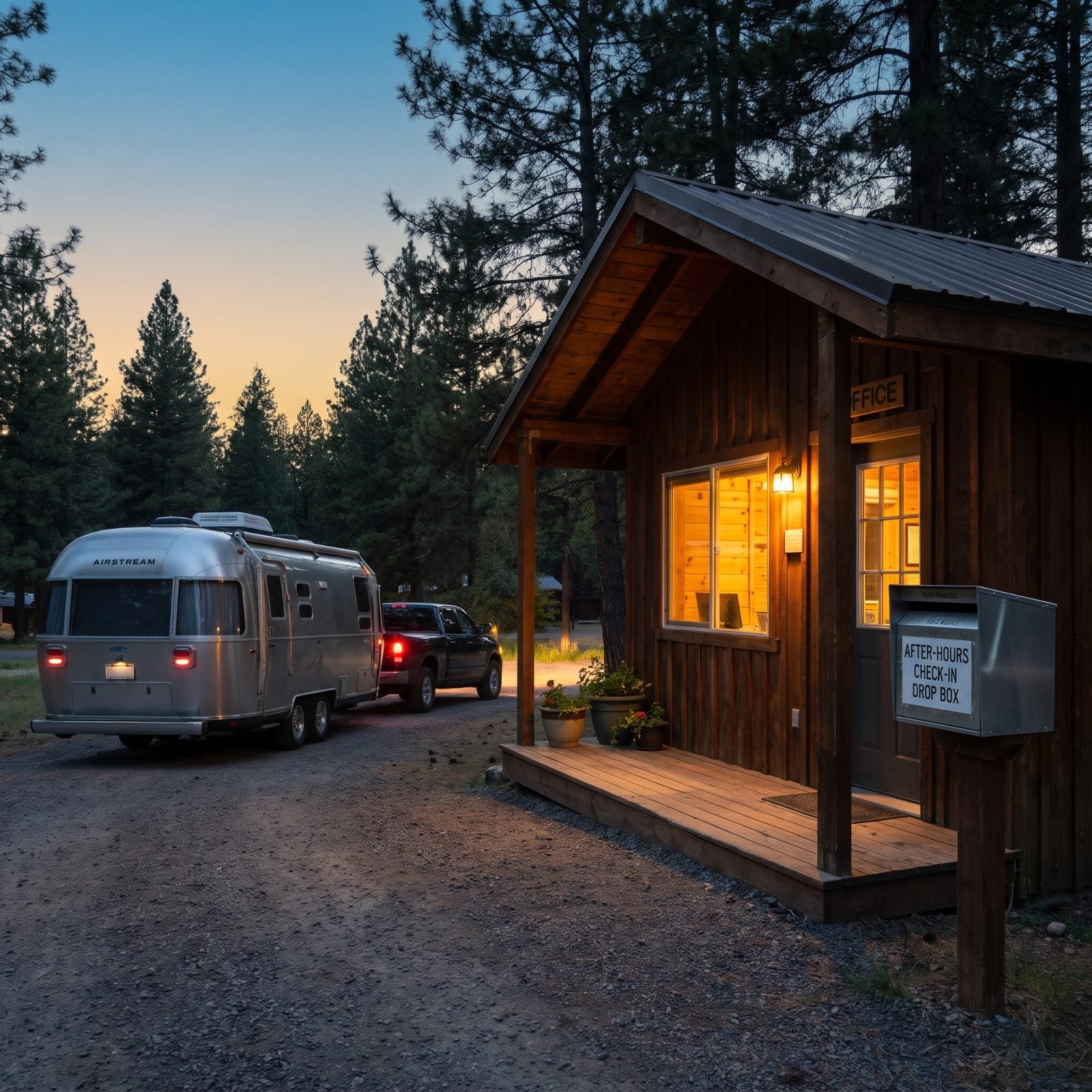
If your drive is going to blow past closing time, call ahead. Don’t just show up and hope. A quick phone call during business hours gets you the gate code, the self-check-in envelope location, and your site assignment written down somewhere you can find it in the dark.
Hosts are genuinely fine with late arrivals when they know you’re coming. What drives them up the wall is the surprise rig circling the loop at 11 p.m., high beams raking across every window in the place. Give them a heads-up and you’ll usually find your name on an envelope taped to the office door.
41. Plan to Arrive Before Dark
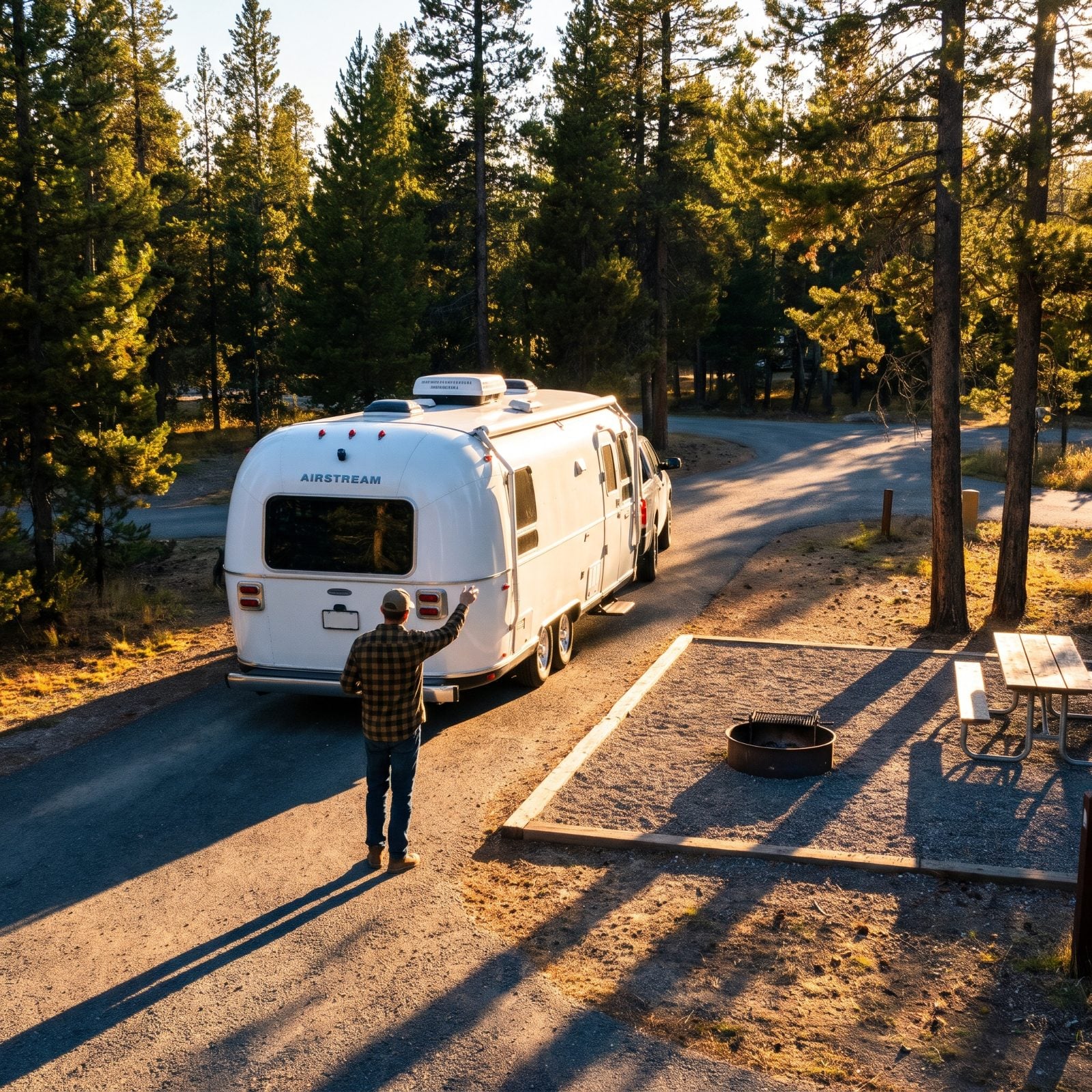
Backing a rig into a tight site in the dark is a special kind of misery. You can’t see the tree, the picnic table, the water hookup, or the drop-off at the edge of the pad. Your spotter is just a disembodied voice in the blackness, and your neighbors are trying to sleep while your reverse beeper serenades the whole loop.
Aim to roll in with at least an hour of daylight to spare. That hour lets you back in slow, level the rig, and find the hookups while you can actually see them. Build a buffer into your drive. Traffic, fuel stops, and lunch always eat more time than you planned.
40. Save the Office Phone Number Offline
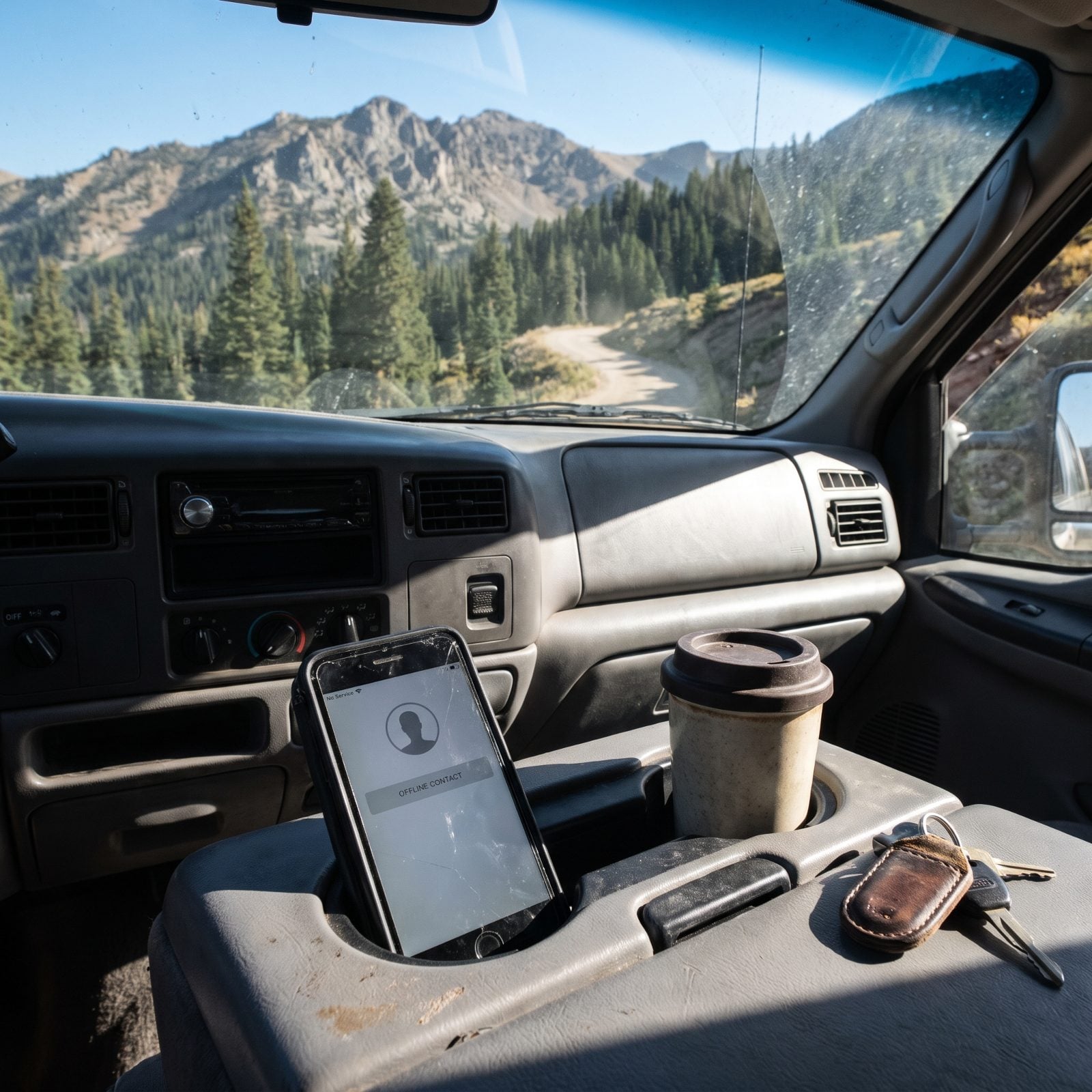
Here’s the cruel part: the last few miles to a good campground are often exactly where your signal dies. The scenic ones hide in canyons and forests with one bar if you’re lucky. And that’s the worst possible moment to go hunting for a phone number in a browser that refuses to load.
Before you leave the last town with real service, save the office number straight into your contacts. Jot it on a card in the glove box too, because a phone with a dead battery is a phone that knows nobody. Low-tech backup wins when the high-tech plan fails.
39. Download the Campground Map for Offline Use
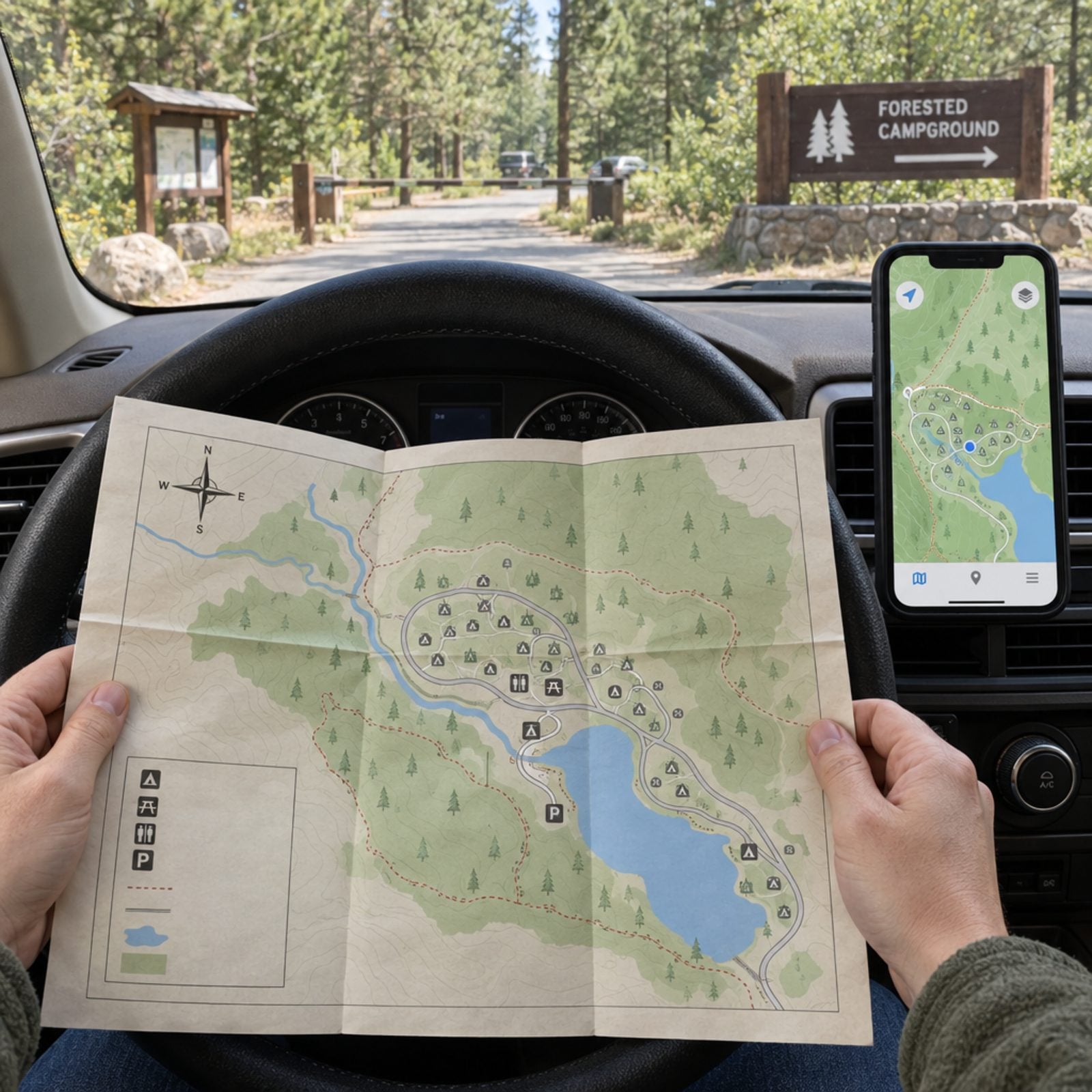
You’ve got your site number. Now you need to find site 47 inside a maze of unmarked loops, the office is closed, and your data isn’t working. A downloaded map turns that scramble into a two-minute drive straight to your pad.
Grab the campground map before you leave service — a screenshot or a saved PDF — and download the offline area in your map app while you’re at it. Knowing which loop you’re aiming for means you’re not making a 40-foot rig attempt a three-point turn between two occupied sites at twilight. The hosts will never know how smooth you looked. Which is exactly how you want it.
38. Follow Campground Directions, Not GPS
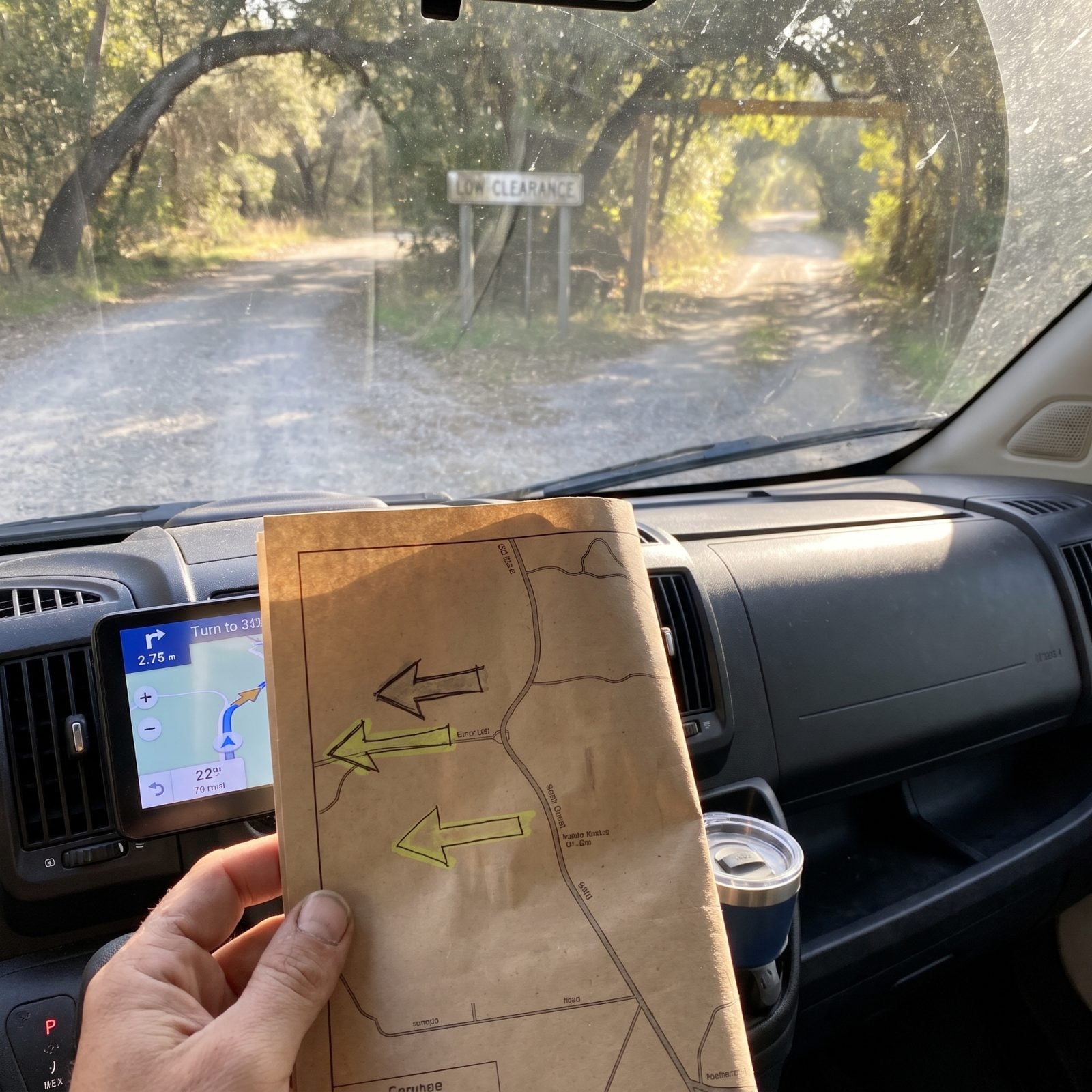
GPS doesn’t know your rig is thirteen feet tall. It will route you under a nine-foot railroad trestle with absolute confidence, and it’ll do it right after the campground sent you a perfectly good arrival sheet you skimmed and closed.
Most parks email directions for a reason — low branches, tight switchbacks, soft shoulders that swallow tandem axles, a bridge with a weight limit your motorhome laughs at until it doesn’t. Read those directions the night before. Not at the intersection with a line of traffic stacking up behind you.
37. Secure Awnings, Steps, and Exterior Gear
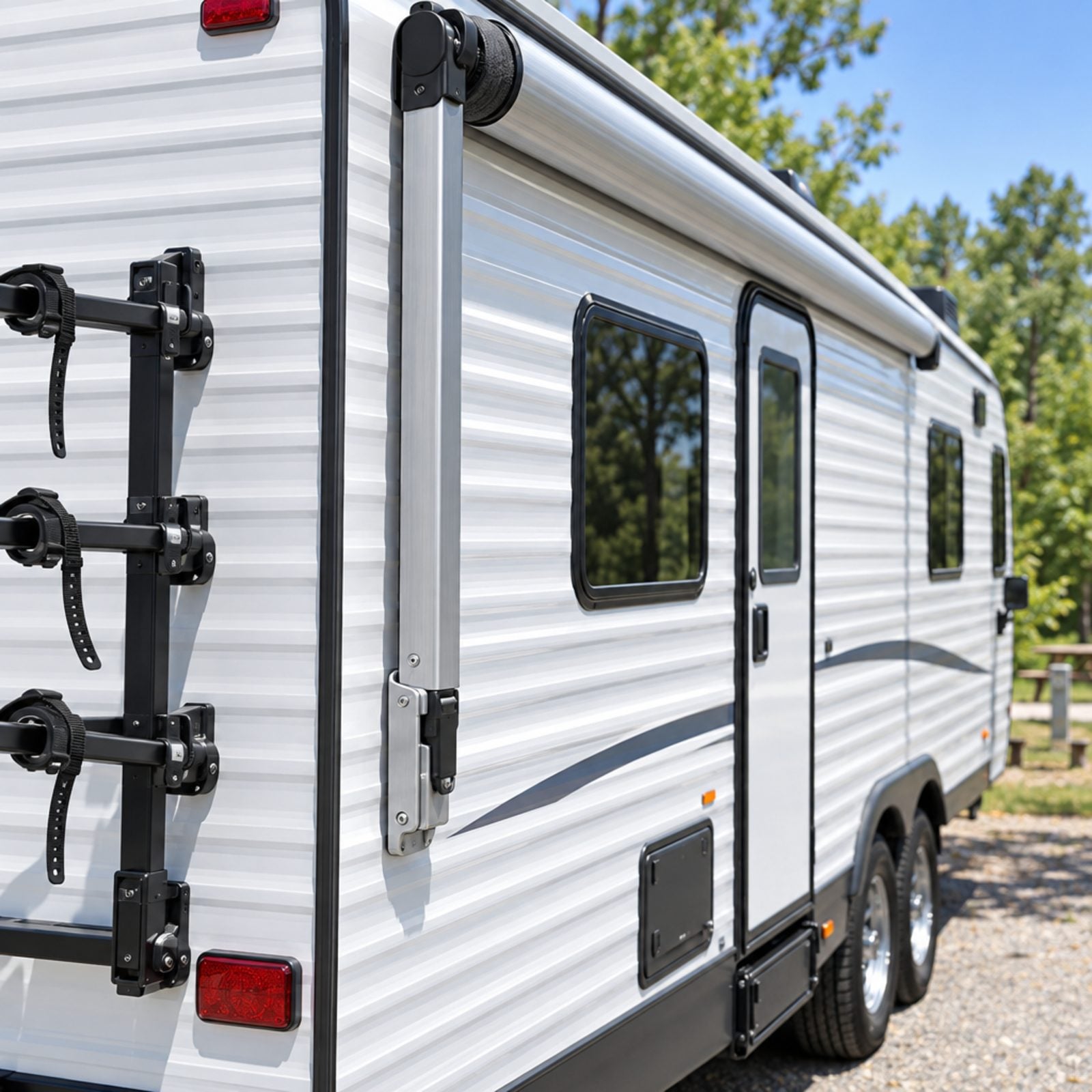
Nothing announces a rookie quite like an awning still flapping out while the rig creeps toward the check-in lane, slapping at the office roofline. It’s embarrassing, sure — but it’s also expensive the moment it catches a low branch and peels right off the side.
So walk the outside before you move an inch. Awning rolled and latched, steps retracted, antenna down. Any chairs, grills, or leveling blocks loaded, and bikes strapped so they don’t swing into the host as you ease past.
I once watched a folding step gouge a chunk out of a curb because somebody forgot. One slow lap of the rig prevents all of it.
36. Disconnect Your Towed Vehicle When Instructed
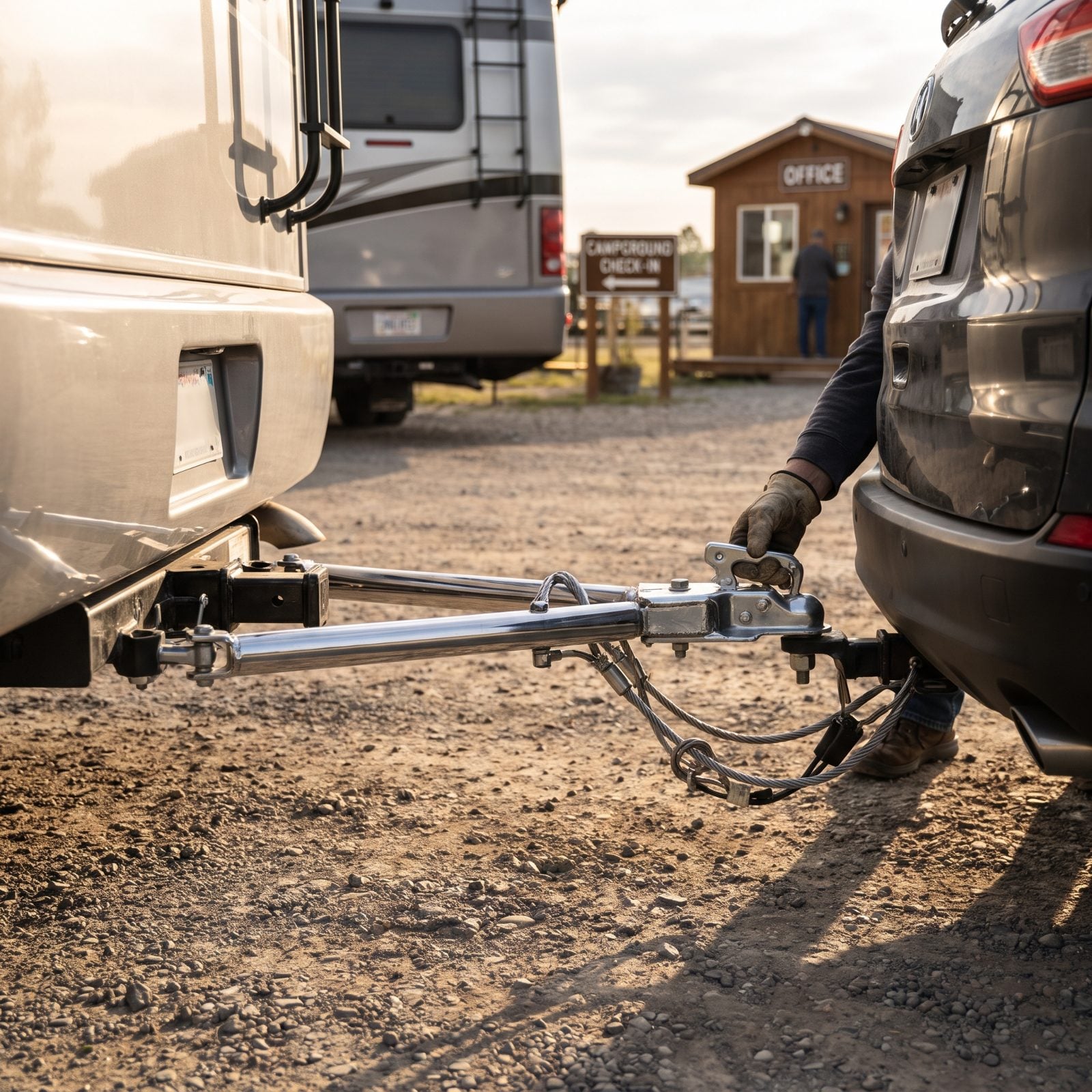
Your towed car turns a long rig into a very long rig, and some sites are just too tight to back into with the dinghy still hooked up. When a host says disconnect, they’re not being fussy — they’ve watched somebody jackknife a toad straight into a water spigot.
Pick the flat staging spot they point you toward. Unhook the tow bar, store the safety cables and breakaway cable, and keep a second set of hands or a wheel chock ready so nothing rolls on a grade.
35. Review the Campground Speed Limit
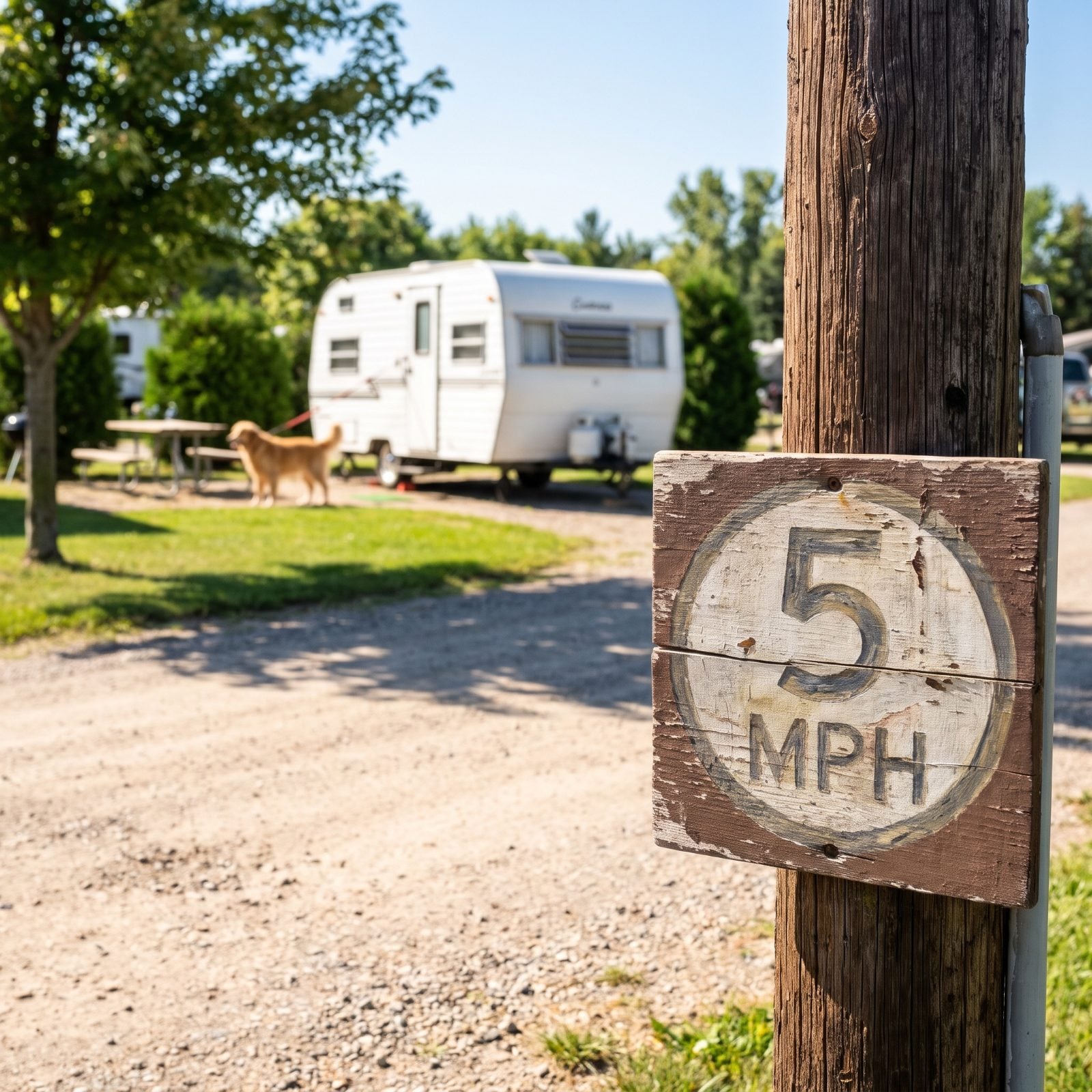
Five miles an hour feels absurd until a kid on a bike wobbles out from between two trailers. Those low limits exist on purpose: narrow lanes, blind corners at every site, pets off leash where they shouldn’t be, and gravel that kicks up to chip the rig behind you.
The posted number is real, and hosts enforce it. Dusting someone’s open-windowed site at fifteen is the fastest way to earn a reputation by lunch.
Roll in slow. You’re not late. You’re arriving.
34. Keep Oversized Rigs Out of Office Lanes
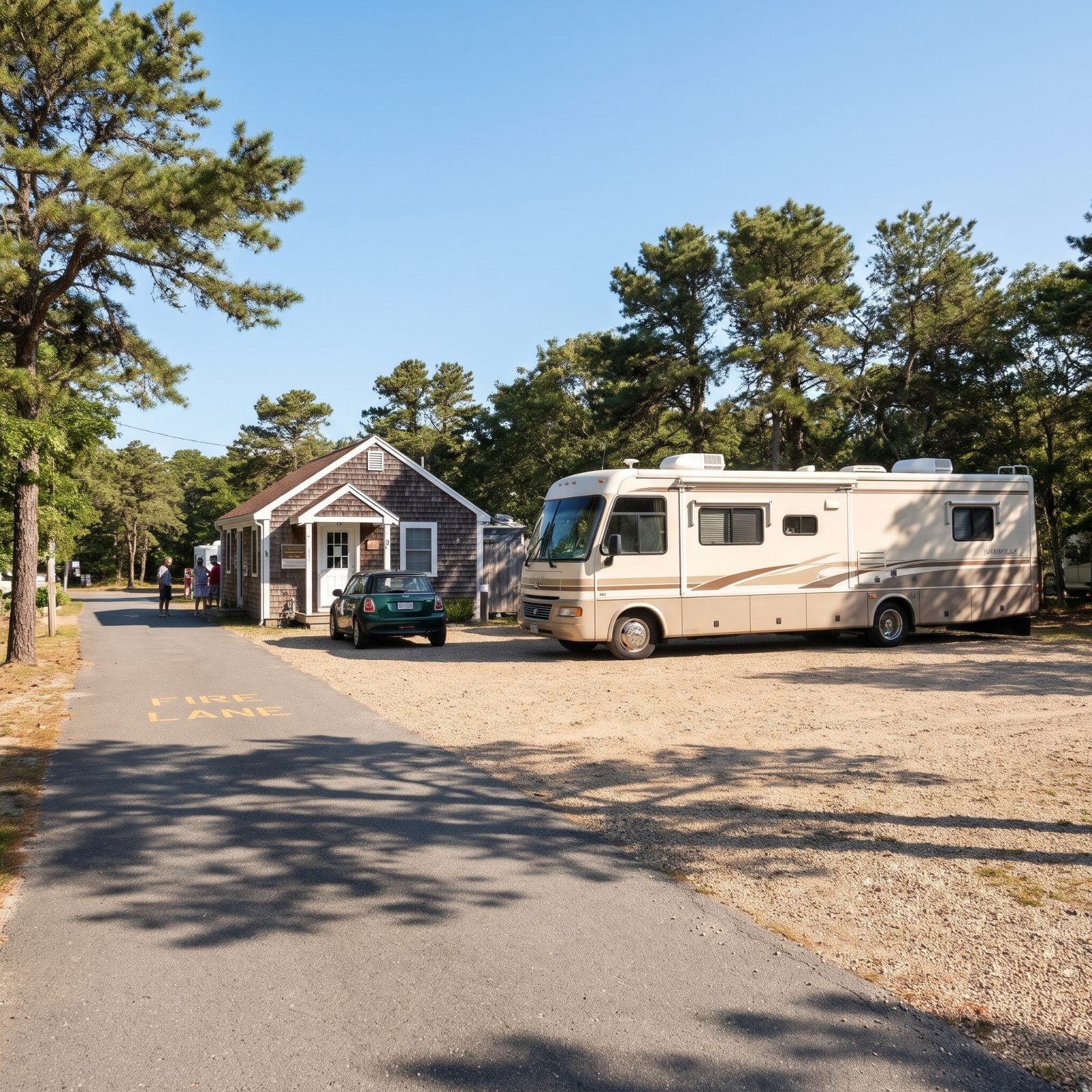
A forty-foot motorhome parked square in the check-in drive blocks every rig behind it and the fire lane the office is legally required to keep clear. Hosts hate this one. They’ll remember your plate.
Most parks have a pull-off or an oversized staging spot near the entrance. Leave the big rig there, walk up to the office on foot, and sort the paperwork without a traffic jam forming at your tail.
33. Stop at the Office Before Choosing Sites
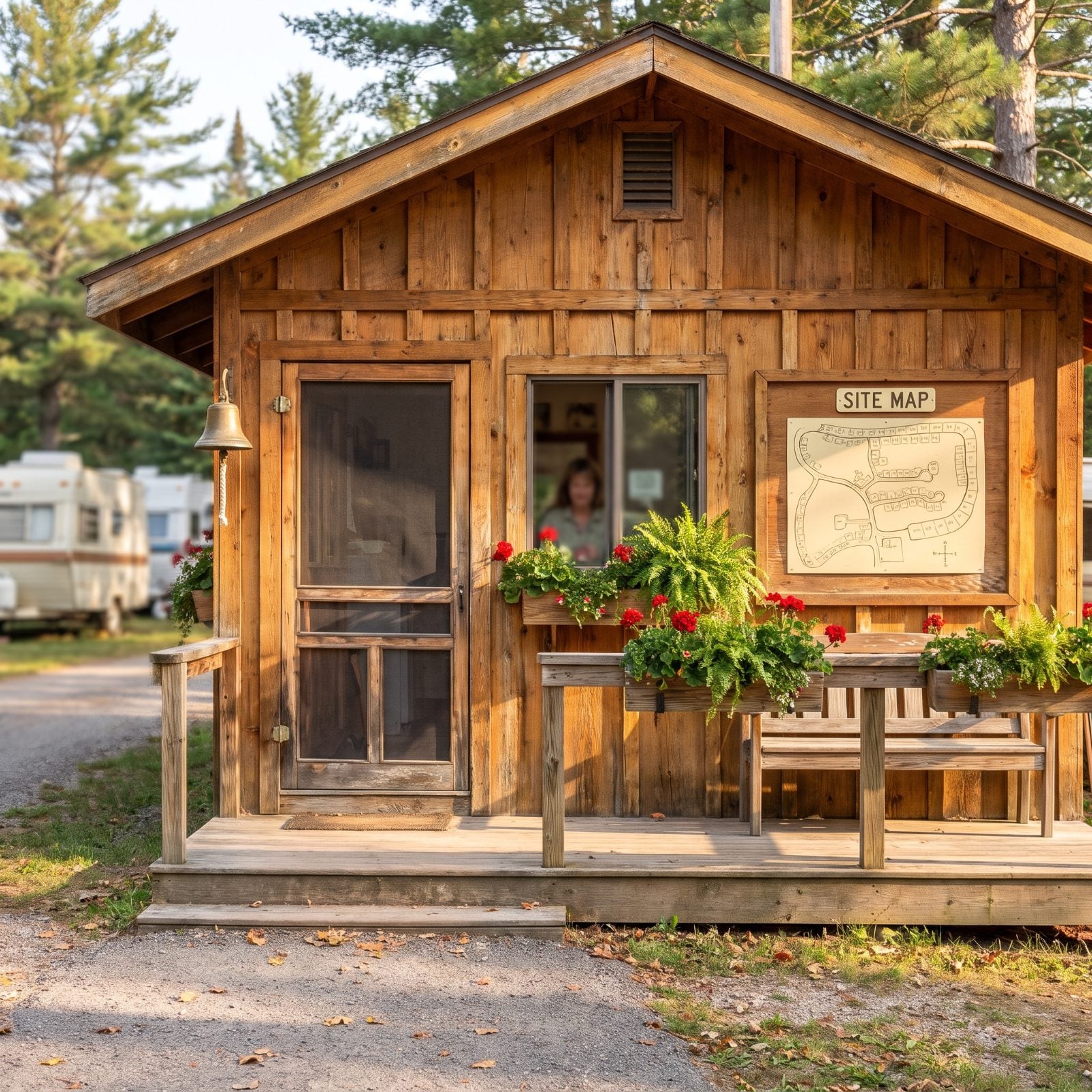
You spot the perfect lakefront pull-through and back right in. Turns out it’s reserved, the sewer hookup’s broken, and the host had you booked three rows over the whole time. Now you’re moving a rig you just leveled.
Nearly every park wants you at the office first, even when you reserved online. They assign the exact site, hand you the gate code, and flag anything you’d never spot from the road — a wasp nest, a soft pad, a tree they’re about to trim.
Check in first. Pick a site never. That’s their call, and it saves you a second setup.
32. Keep Your Reservation Confirmation Ready
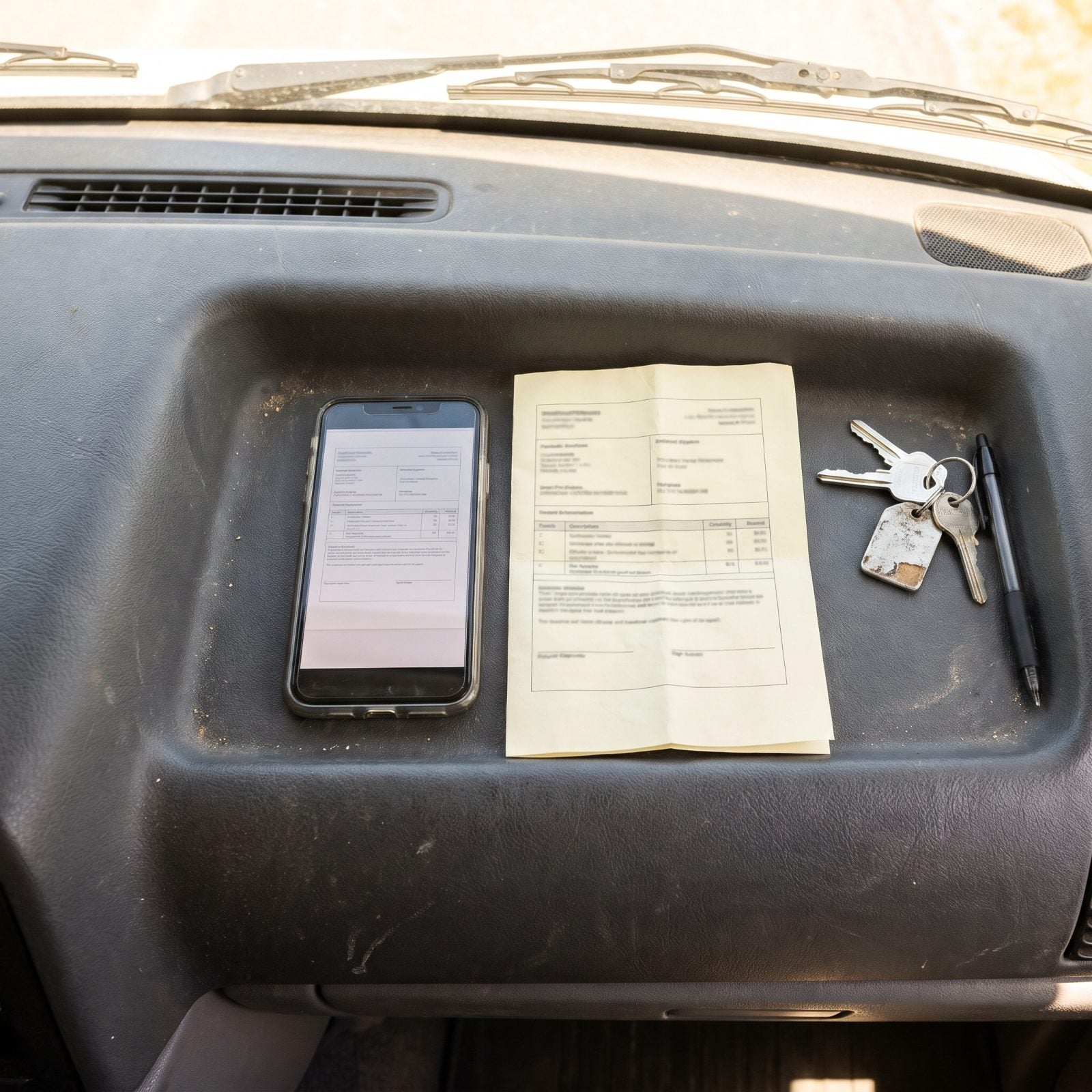
Phones lose signal exactly where campgrounds live. You pull up to a remote park, go to show your booking, and the email won’t load — one bar and a prayer.
Screenshot the confirmation before you leave cell range, then print one paper copy for the glovebox. Have the name, dates, and confirmation number right there, visible without digging through forty unread emails while the host waits.
31. Carry Required Pet Vaccination Records
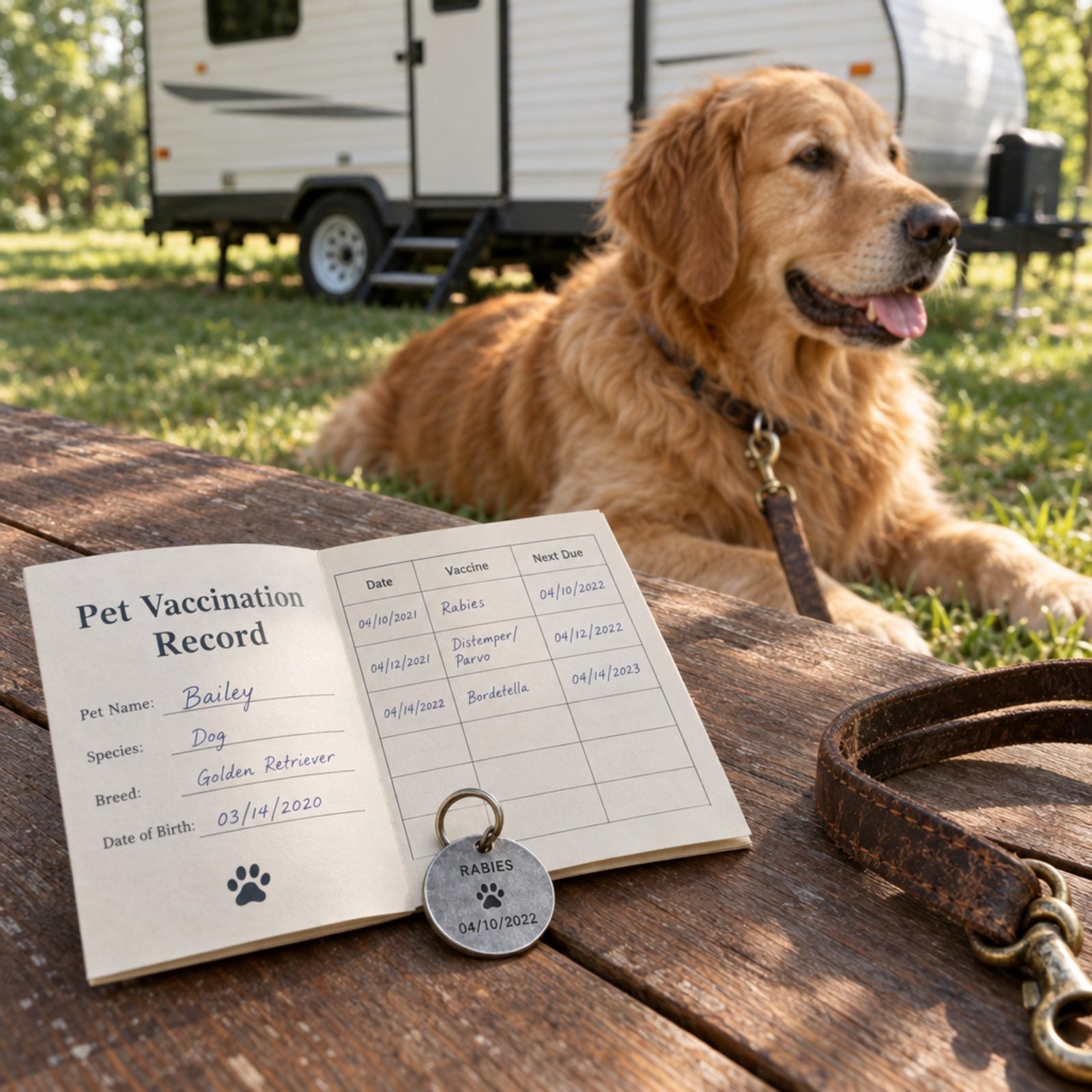
Some parks ask for proof of rabies vaccination before your dog sets a paw on the grass, and “it’s updated, I promise” won’t cut it. If there’s an incident down the road, that record is the thing that protects you and the dog both.
Keep a copy with you, not back home on the fridge. A photo of the rabies certificate on your phone covers most parks; a printed copy in the rig covers the picky ones.
I learned this the hard way at a gate in a dead zone, unable to pull up the photo I swore I had. Print one.
30. Register Every Vehicle and Visitor
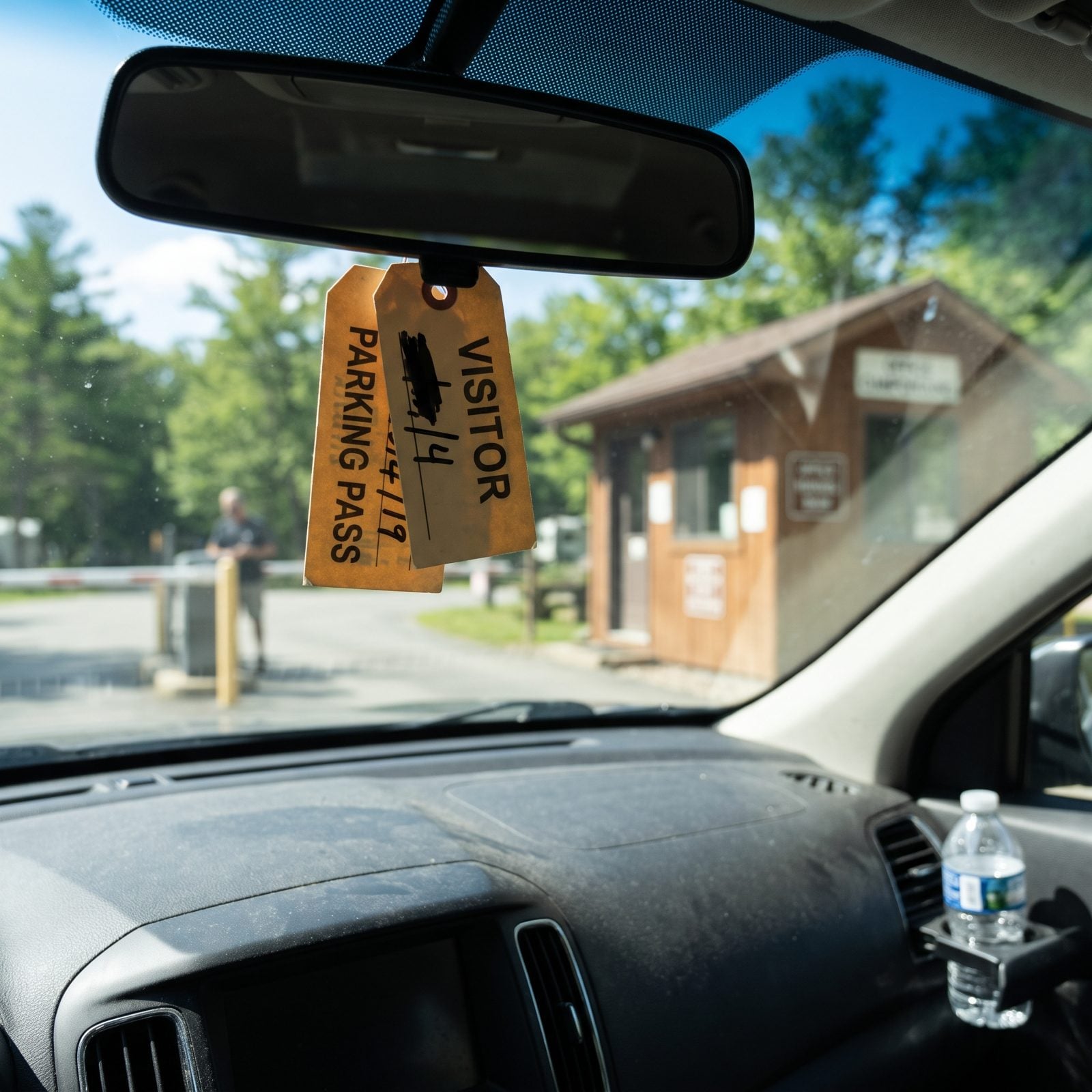
Your kids drive in for the weekend in a separate car, nobody tells the office, and now there’s a mystery vehicle parked at your site and a host trying to track down whose it is.
Parks register every car for good reasons — emergency contact, overnight parking limits, liability, and knowing exactly who’s on the grounds if something goes sideways at 2 a.m. List your tow vehicle, your toad, and anyone coming to visit.
Most places hand you a dashboard pass. Hang it where they can see it, and tell your guests to stop at the office first too.
29. Declare All Pets During Check-In
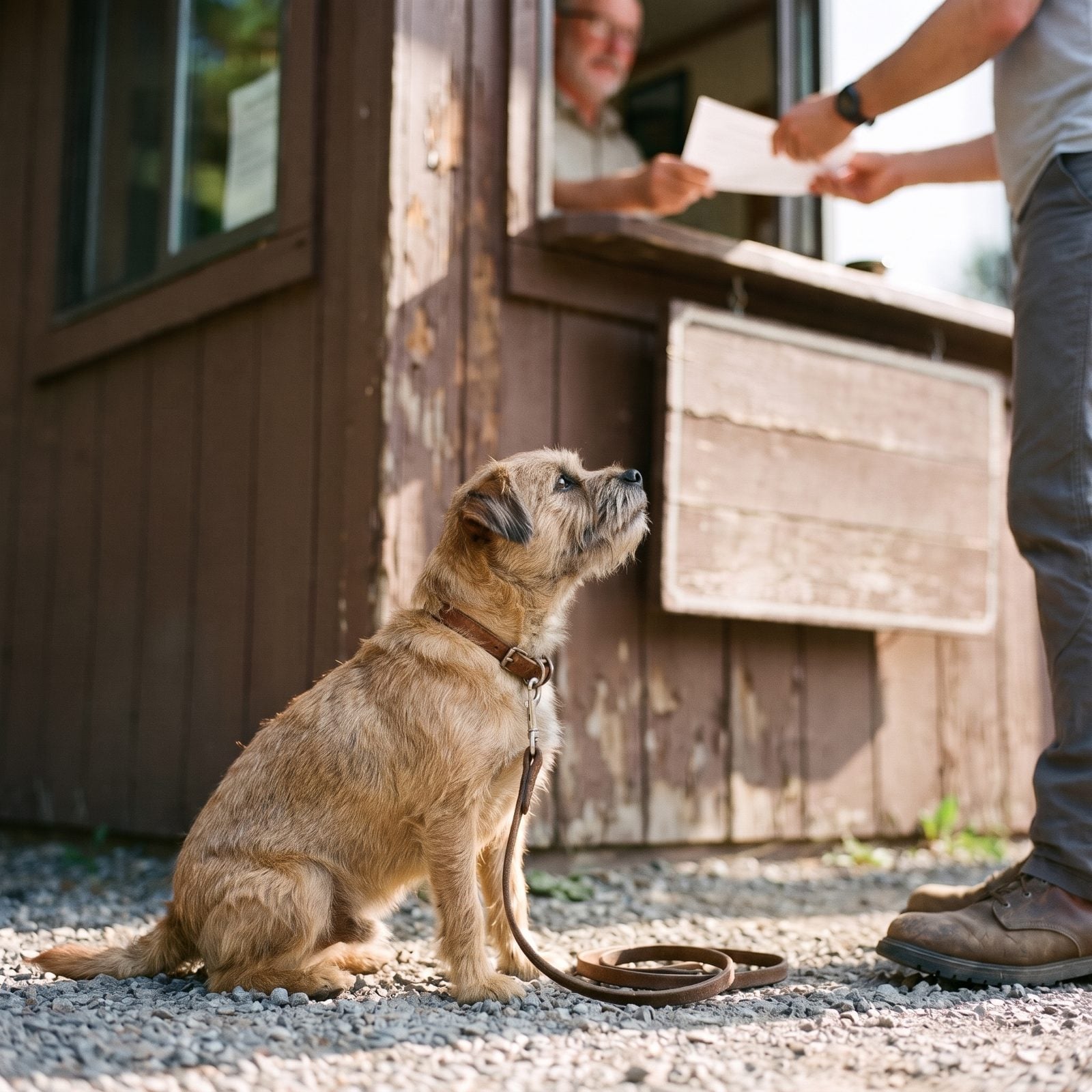
It’s tempting to leave the second dog off the form to dodge a pet fee. Don’t. Breed limits, pet-free sites, how many animals a site allows — all of it hinges on an honest headcount, and getting caught with an undeclared pet can mean eviction with no refund.
Declare every animal at check-in, including the cat nobody sees and the dog that “doesn’t really count.” Ask about leash rules, off-leash areas, and which loops welcome pets while you’re standing right there.
28. Display Parking Passes Immediately
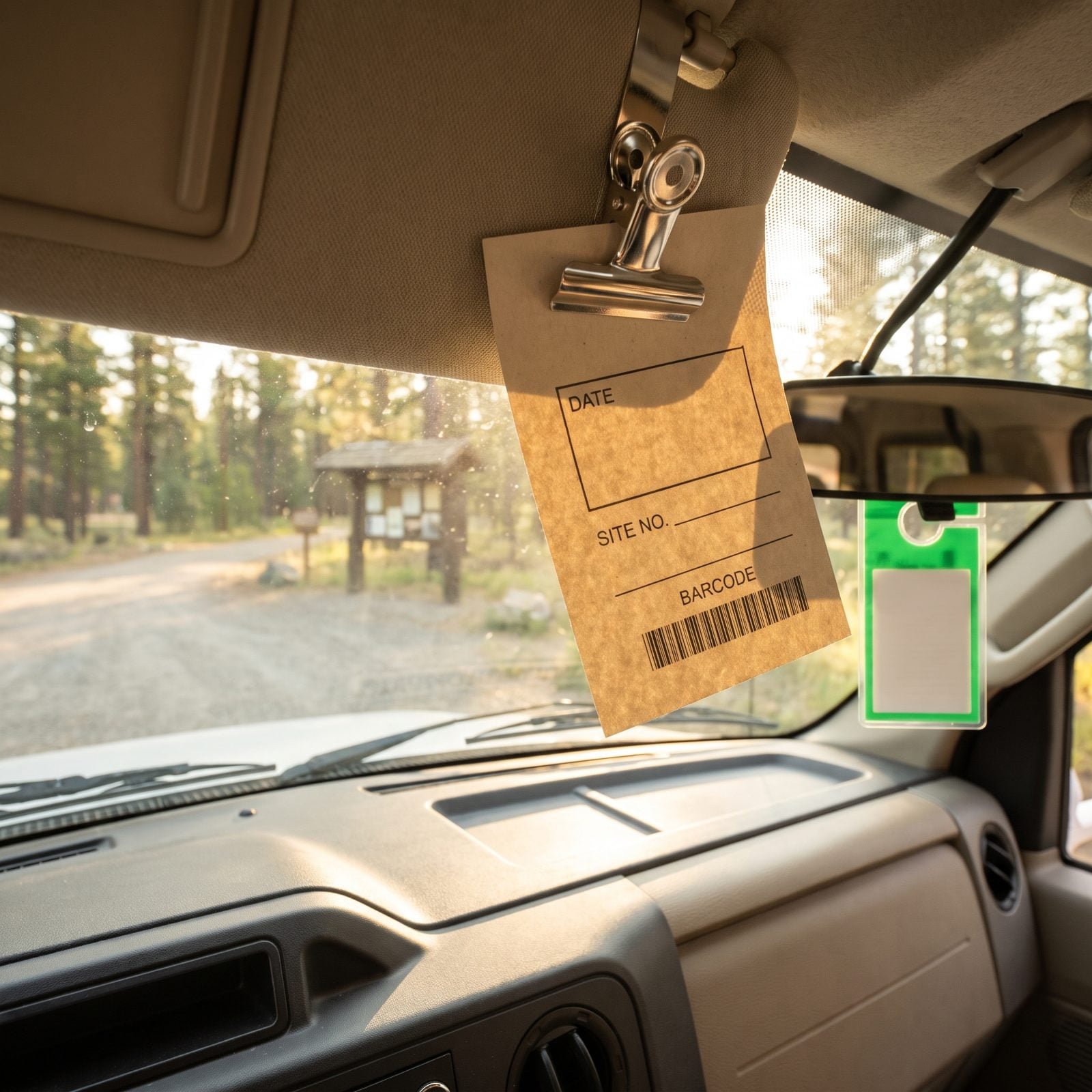
Nothing starts a stay on the wrong foot like a host walking the loop at dusk and finding a rig with no pass in the window. They assume you snuck in, and now they’re knocking on your door mid-dinner.
Hang it the second you park. Most campgrounds hand you a windshield tag or a dashboard slip at check-in, and they want it visible from outside — not buried in the glovebox with your registration and a handful of napkins. Make sure the number and date are easy to read. And don’t forget the tow car: vehicle passes go on its mirror or dash too, not just the coach.
27. Confirm the Campsite Occupancy Limit
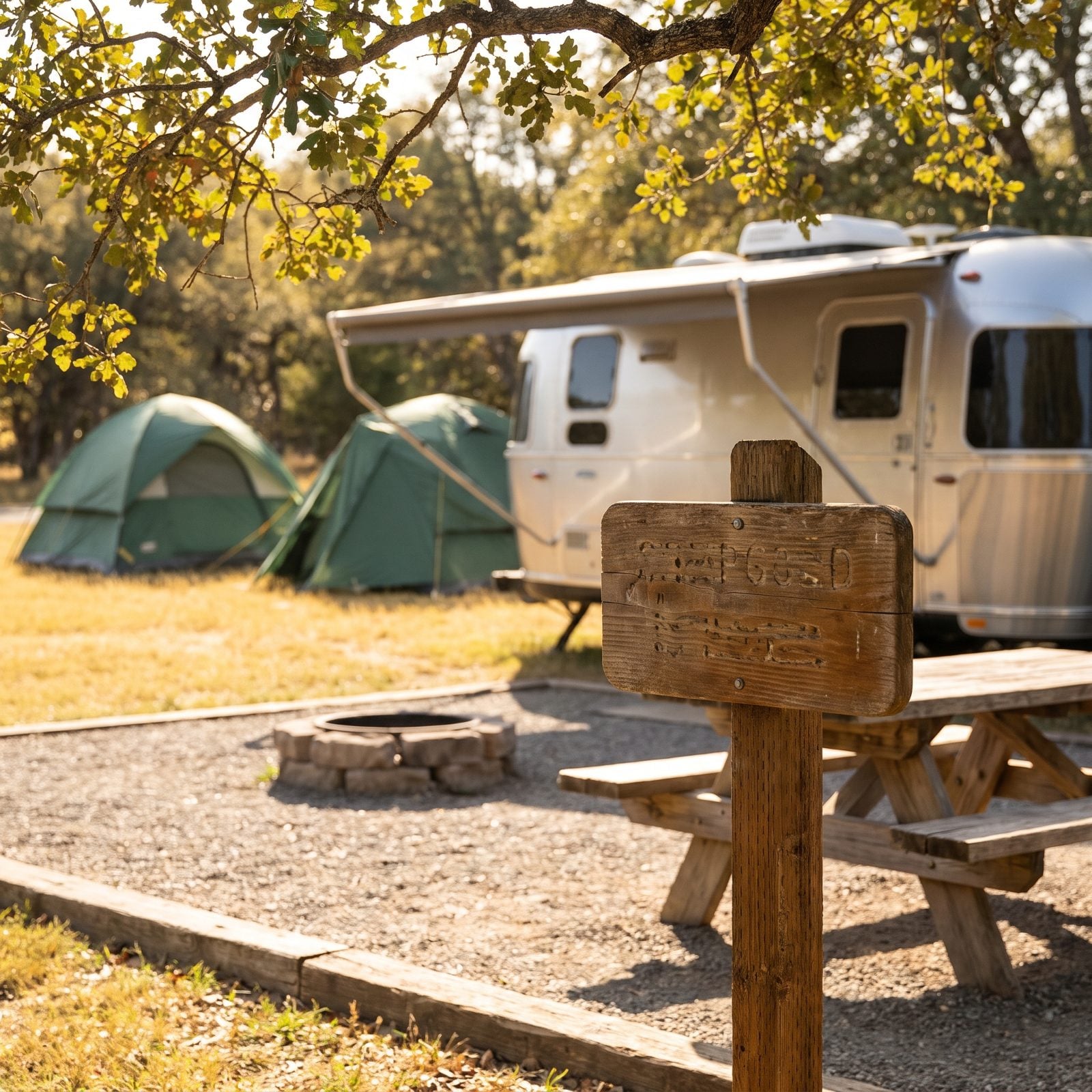
A campsite is sold as one unit. Most private parks cap it at two adults, a set number of kids, and one RV plus one vehicle — show up with your sister’s family planning to tent beside you, and you may owe a second-site fee or get turned away entirely.
Ask at the desk. Don’t assume. The limit covers people, vehicles, tents, and sometimes even dogs. I’ve watched folks squeeze three generations under one awning and genuinely not realize they’d broken the rules until the host wandered over, and that’s never a fun chat.
26. Use Only Your Assigned Campsite
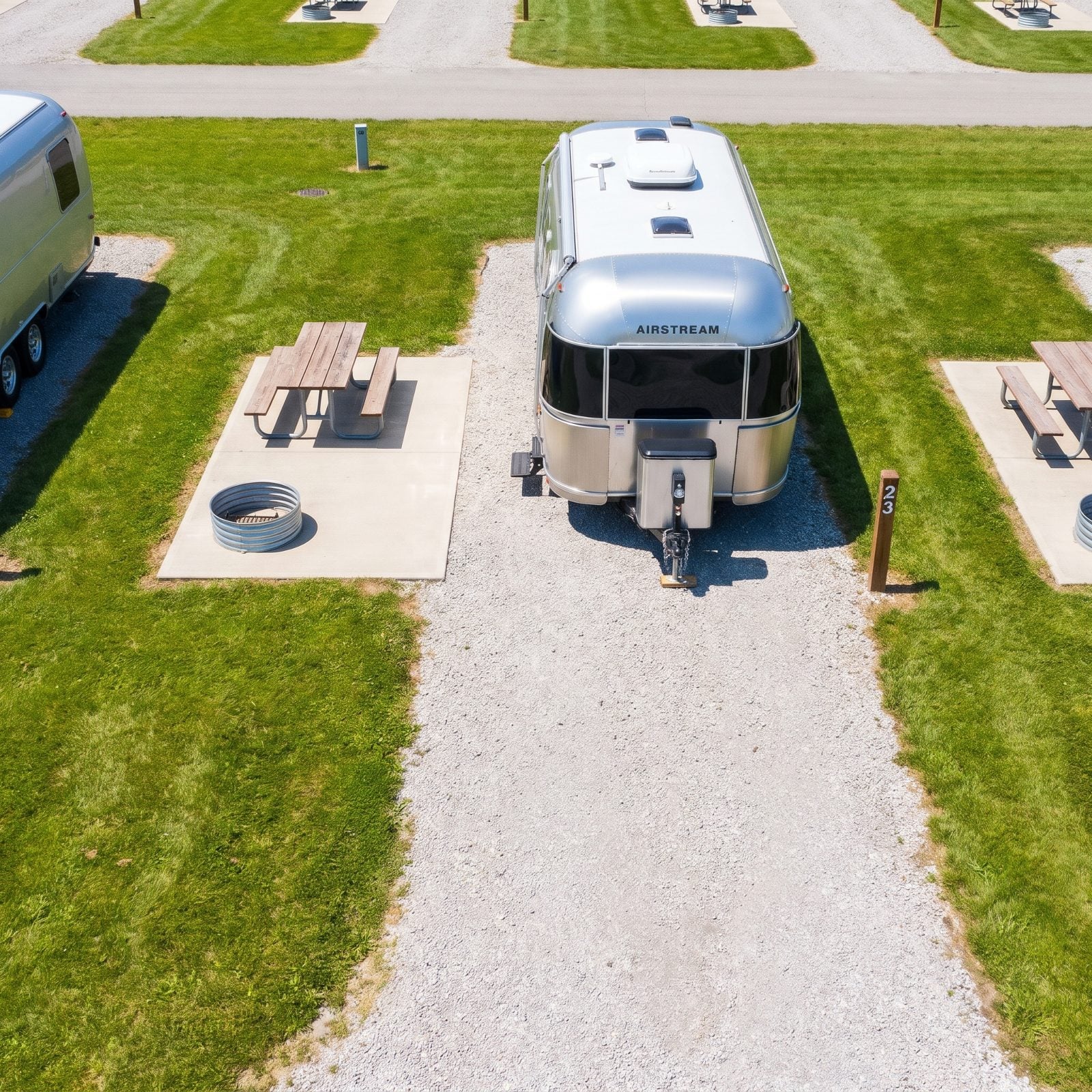
Your site has invisible lines, and your neighbors notice the moment you cross them. Parking the tow car on the grass buffer, running the dog’s tie-out into the empty pad next door, stringing a hammock between your tree and theirs — small stuff that stacks up into a complaint.
Keep everything inside your spur: rig, chairs, grill, bikes, feet. That empty site beside you might be booked for tonight. And cutting through other occupied sites to shave a few steps off the walk to the bathhouse? Fastest way there is to annoy a full loop. Stick to the roads and paths even when the shortcut looks obvious.
25. Follow the Host’s Route to Your Site
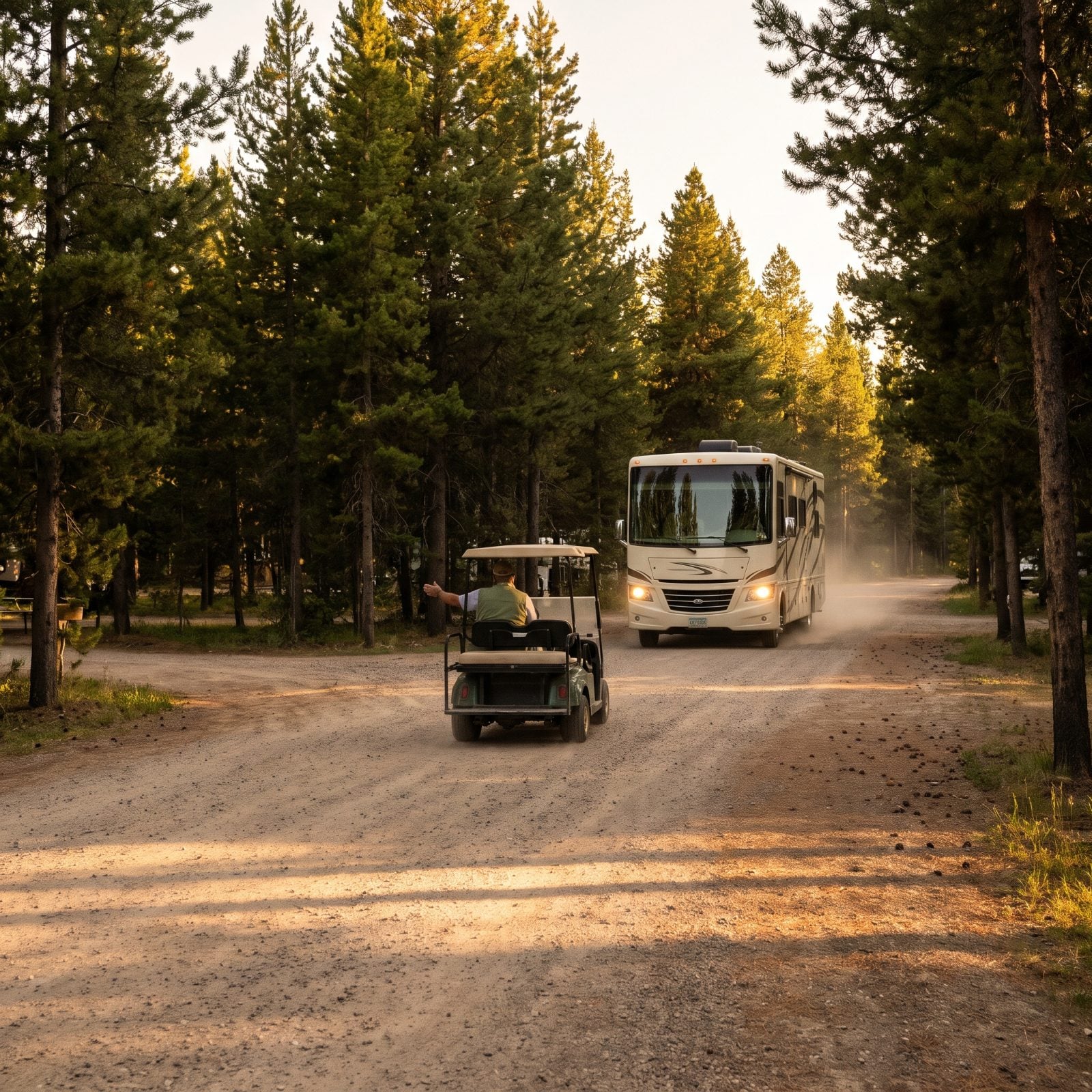
When a host drives a cart out to meet you and waves you along, there’s a reason they didn’t just point down the lane from the office. Big-rig campgrounds hide low branches, soft shoulders, tight switchbacks, and one-way loops that aren’t marked clearly from the entrance.
Go slow and watch their signals. The route they wave you down is the one your rig actually fits down, which is rarely the shortest line on the map. Cut the corner yourself and you might find a drainage ditch or a stone wall that eats a wheel.
24. Never Move Site Markers or Cones
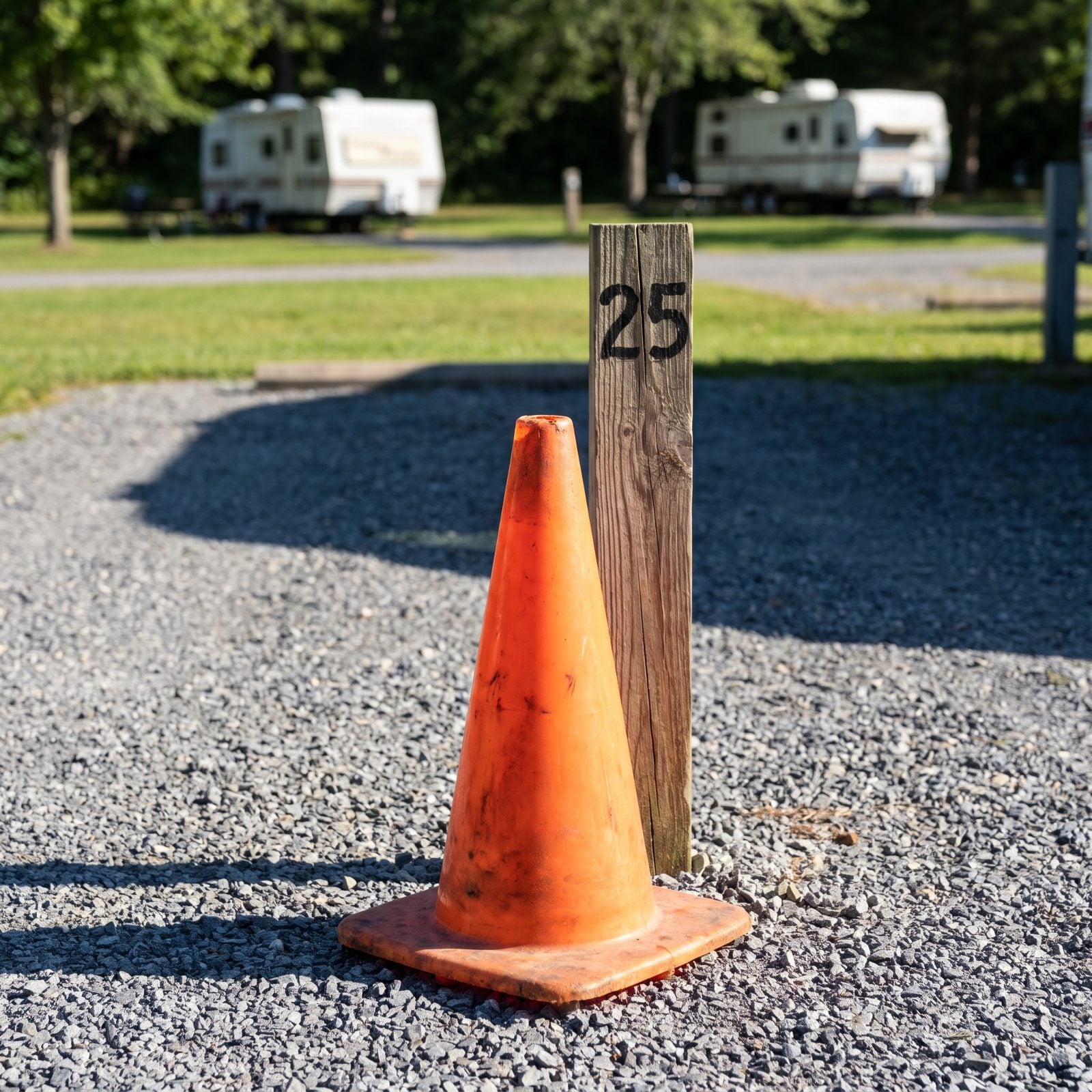
That cone on an empty pad isn’t litter. It flags a reserved arrival, a site being graded, or a spot held because the ground is soft. The wooden stakes mark the exact boundary surveyors set, and hosts use them to keep rigs off septic lines and power pedestals.
Leave them where they sit. Shift a cone to grab a better view and you’ve bumped someone who booked that spot weeks ago. Pull a stake because it’s in your way and the host loses the only reference point for where your awning can legally swing.
If a marker genuinely blocks your parking, ask the office to move it. Thirty seconds of their time beats an hour of yours undoing a mistake.
23. Ask Before Trimming Obstructing Branches
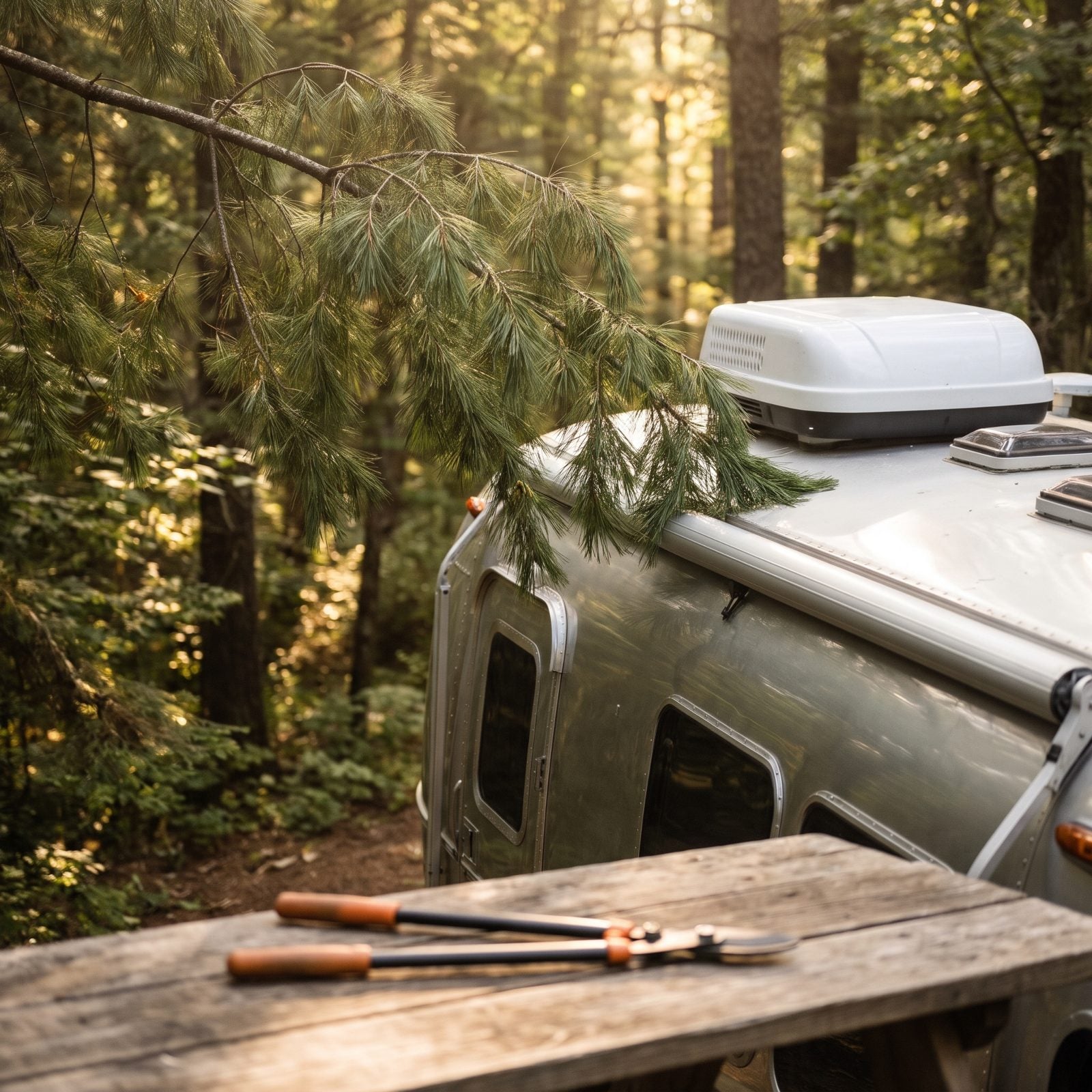
A branch scraping your AC shroud is annoying, sure, but those trees are campground property, often protected, sometimes decades old. Lop one without asking and you may be staring down a replacement fee that dwarfs a night’s stay.
Flag it at the office. Hosts would much rather send someone with a saw, or move you to a taller-clearance site, than catch guests pruning the canopy themselves. State parks run stricter still — cutting live vegetation there can carry an actual fine.
22. Confirm Which Side Holds the Utilities
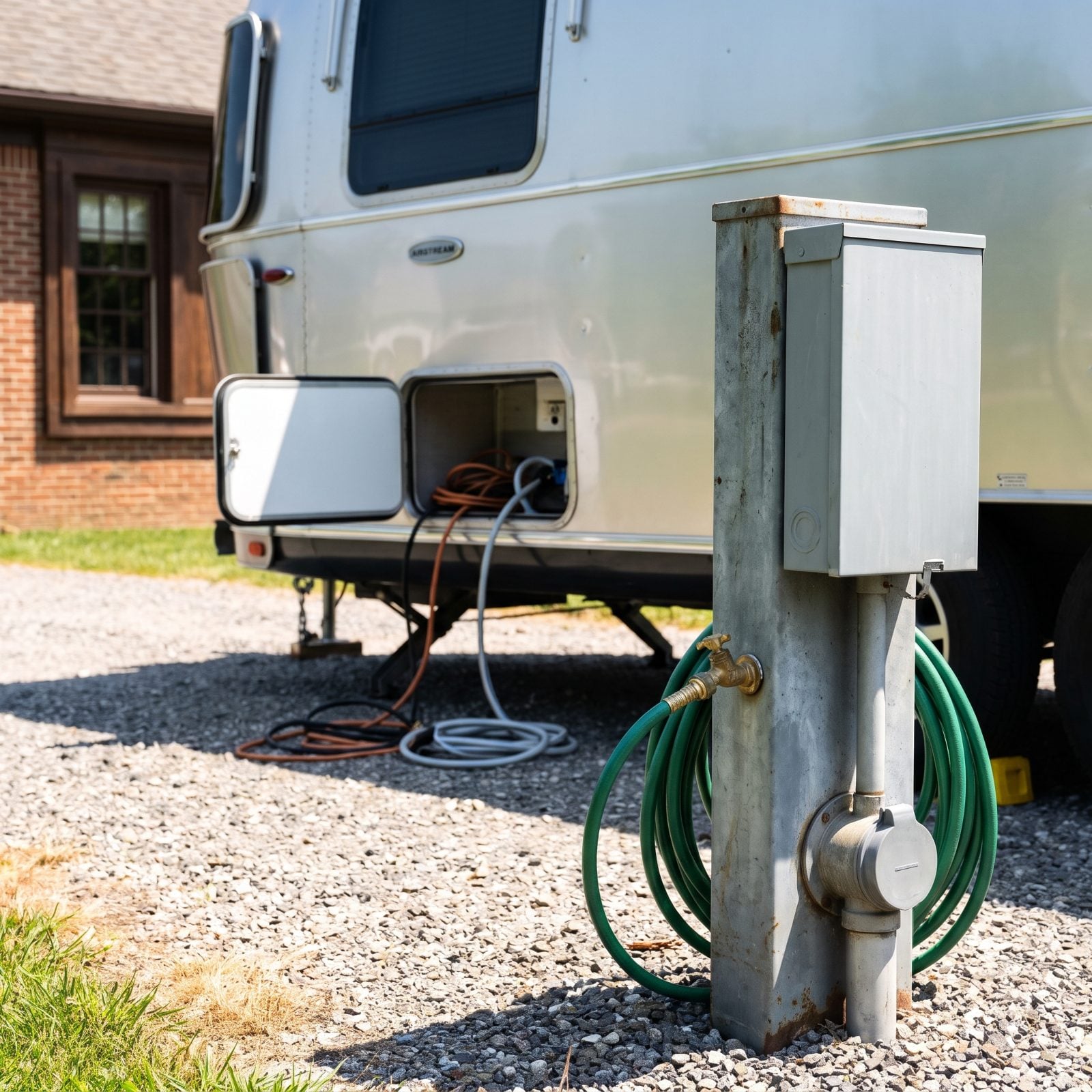
Utilities almost always sit on the driver’s side of the pad, and your rig’s hookups live on one specific side too. Back in facing the wrong way and your sewer hose won’t reach, your power cord stretches like a tightrope, and now you’re re-parking a forty-foot rig while a whole loop watches.
Check before you commit to the approach. Ask the host, or eyeball the pedestal position as you pull up, then plan your backing angle so your utility bay lands near the box. A ten-foot sewer hose does not forgive a thirty-foot gap.
21. Bring the Correct Electrical Adapter
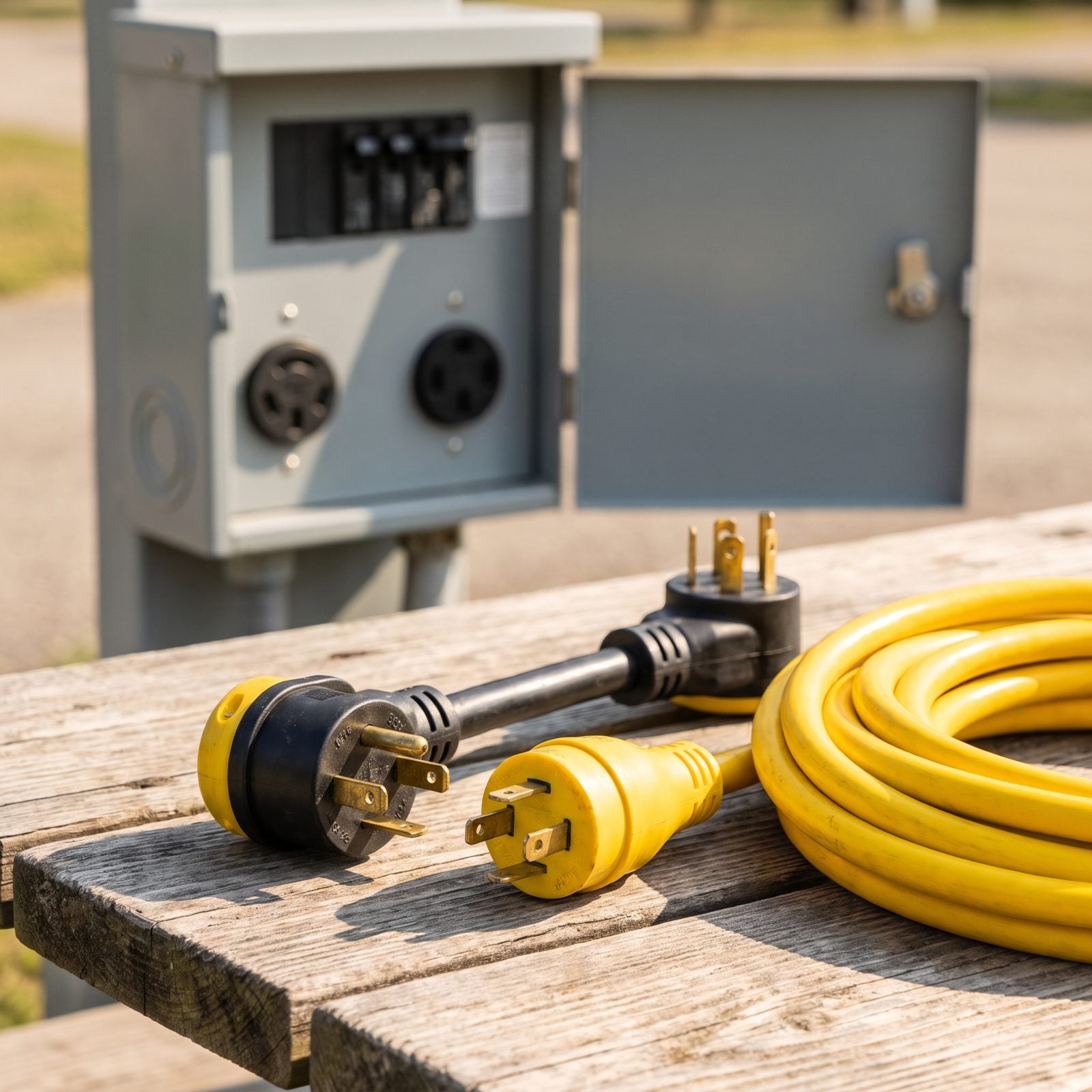
Pedestals vary, and the one at your site won’t always match your rig. Arrive without the right adapter and you’ve got a quiet, powerless coach on a hot night — plus a late drive hunting for a camp store that closed at six.
Carry the whole set. A 50-to-30 and a 30-to-15 “dogbone” cover almost every pedestal in North America. Keep them in one known bin, not scattered across three compartments.
One caution: dropping to a smaller amp service means dropping your draw too. Fifteen amps won’t run two air conditioners, so plan your load before you flip the breaker.
20. Bring a Dedicated Potable-Water Hose
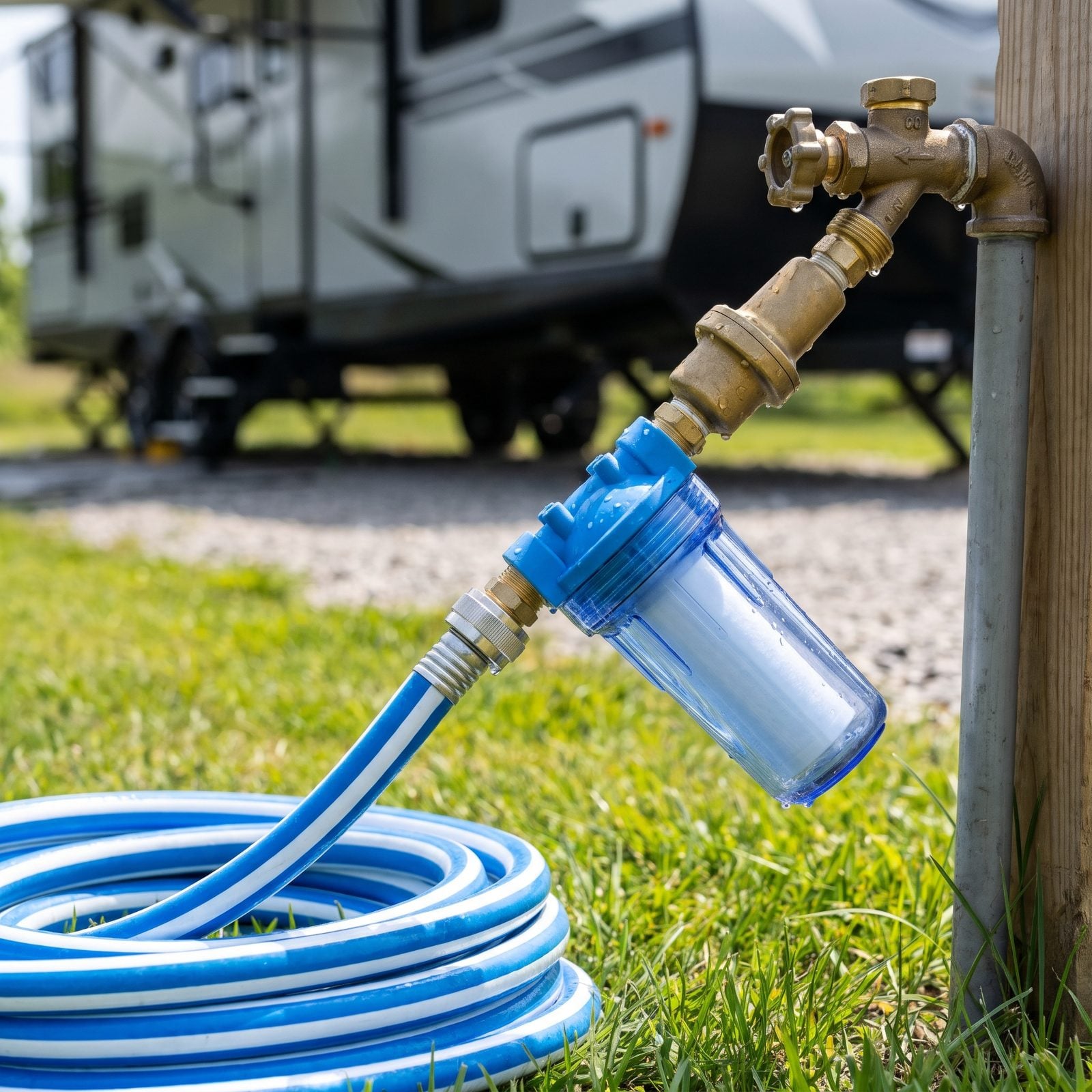
That green garden hose in the garage leaches a plastic taste into your drinking water and isn’t rated for it anyway. Potable hoses are white or blue, labeled drinking-water-safe, and that distinction matters every single time you fill the fresh tank.
Keep it separate from your sewer rinse hose. Always. Color-coding the two is the simplest habit in RVing and the one people skip until the day they grab the wrong one. Thread a pressure regulator onto the spigot while you’re at it — some campgrounds push 80-plus PSI that’ll split a fitting or blow a line inside the wall.
19. Carry a Sewer Hose and Seal
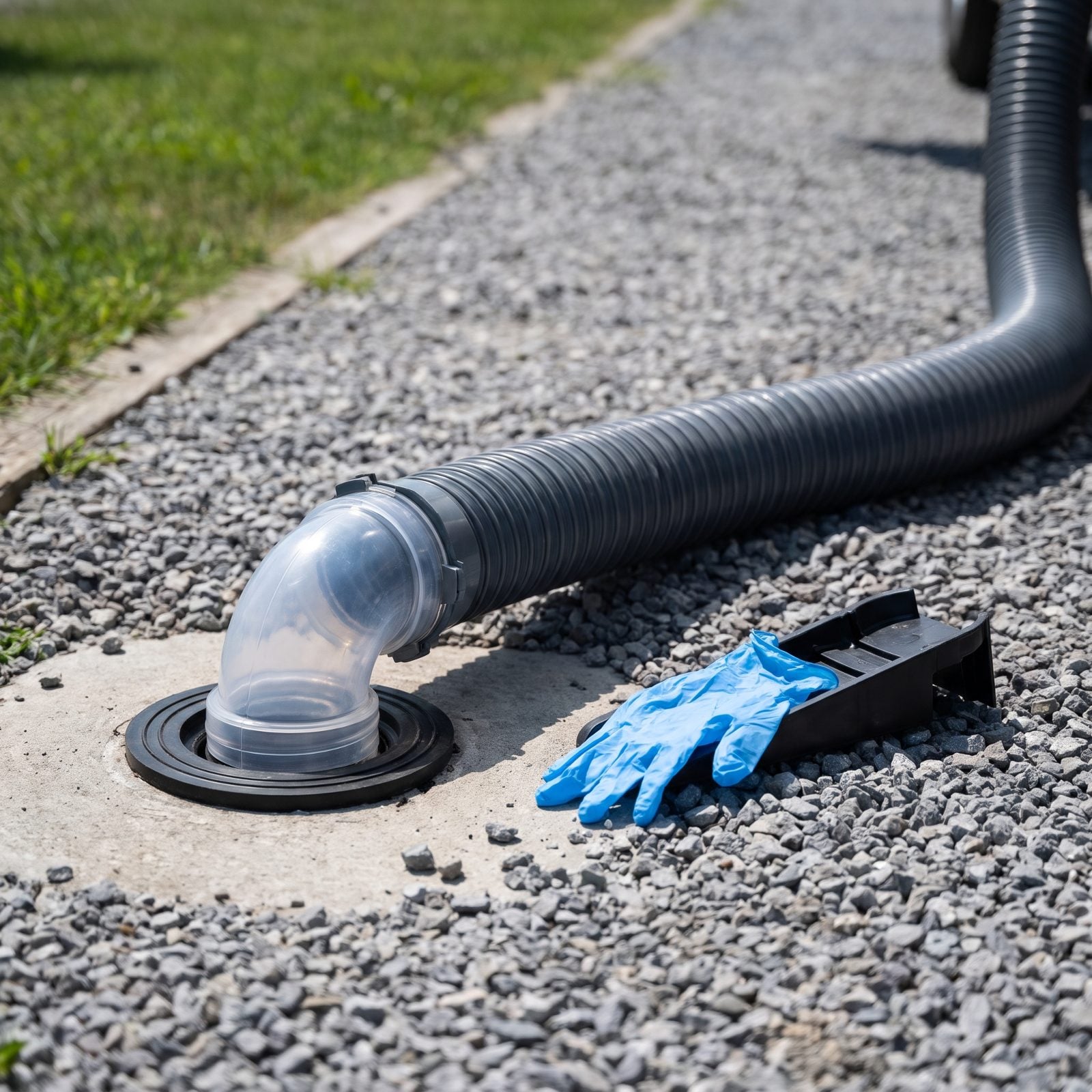
Every seasoned RVer owns a sewer kit, and every new one eventually learns why in a way they’d rather forget. You need the hose, the clear elbow so you can see when you’re done, and a rubber seal — the “donut” — that locks into the ground inlet so nothing escapes.
Hosts expect a sealed, odor-free connection, not a hose draped loosely into a hole. Many parks require the donut or a threaded fitting, and some will stop by to check. Carry disposable gloves and a dedicated tote for the whole mess. Keep it far, far away from your water hose.
Dump black first, gray second, so the gray water flushes the hose on its way out. That order saves you a nasty cleanup later.
18. Ask Where Gray Water May Be Discharged
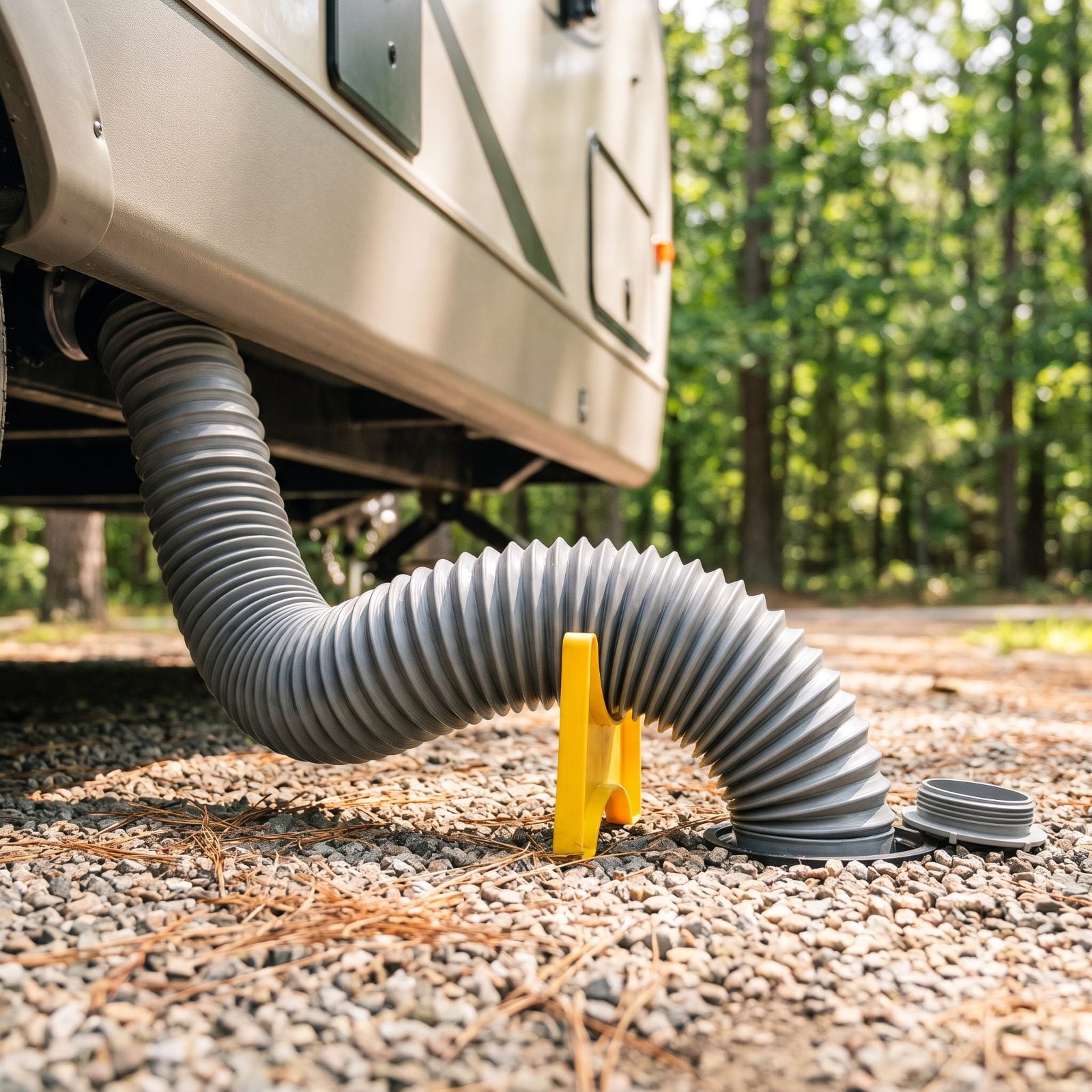
That innocent trickle of dishwater onto the grass? At plenty of parks it earns you a talking-to from the host, and at a few it earns you a polite request to leave. Gray water carries food particles and soap, which means it draws flies, raccoons, and complaints from whoever’s parked downwind.
Before you even unhook the bikes, ask the host one flat question: where does gray water go here? Some sites have a full sewer connection. Others want everything in your tanks until you reach the dump station. Almost nobody wants it on the ground.
17. Use a Surge Protector at the Pedestal
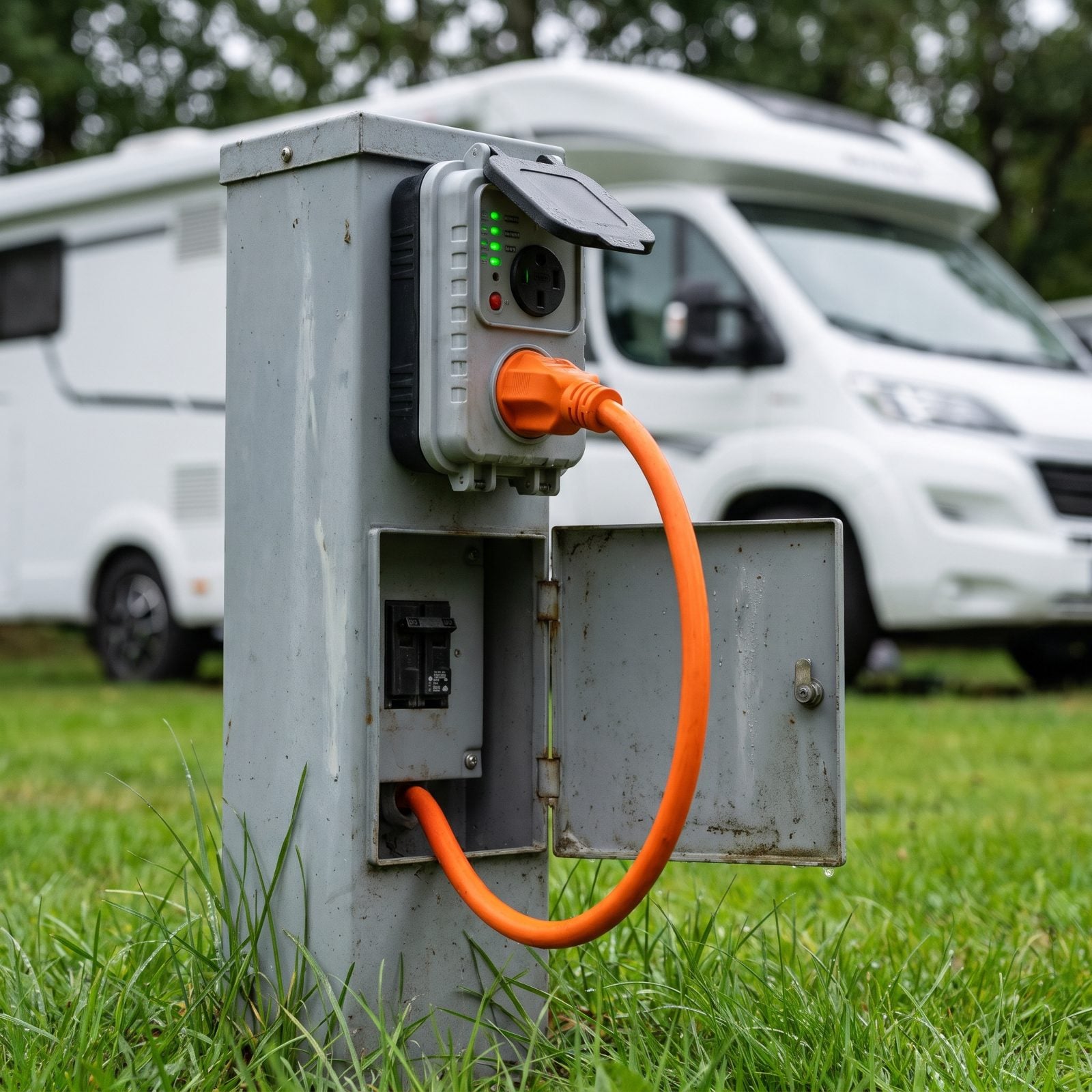
Old campground wiring is a lottery, and the ticket you don’t want is a miswired pedestal frying your converter, your fridge board, and your TV in one afternoon. A surge protector plugged into the pedestal reads the power right at the post.
Plug it in and check its status lights before you hook up the rig. The good ones run a diagnostic and light up to tell you if the pedestal has an open ground, reversed polarity, or low voltage. Throw a fault, and you call the host instead of cooking your electrical system.
I know people who skipped this for a decade and got lucky. Luck is not a surge strategy.
16. Switch the Breaker Off Before Plugging In
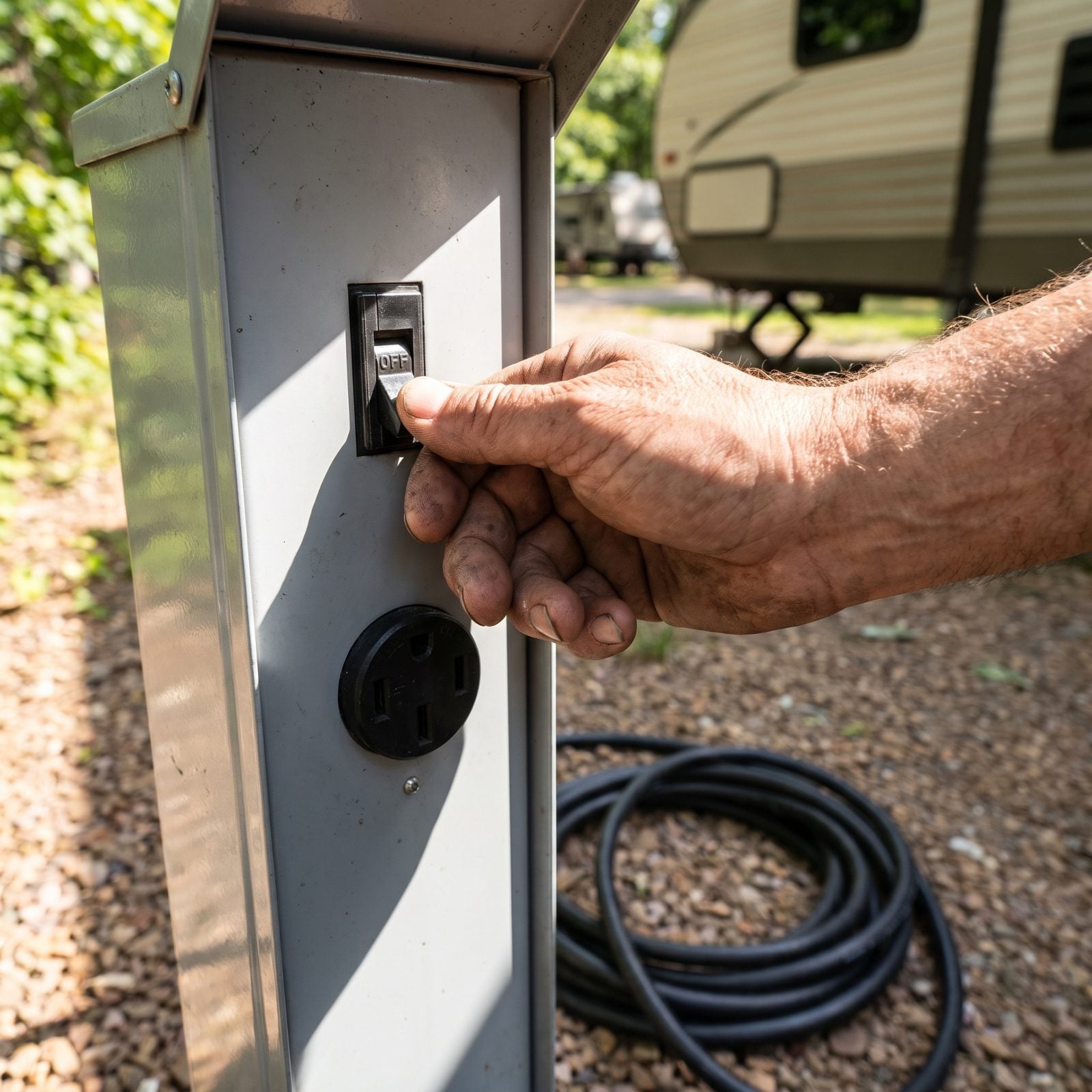
Plugging a live 30 or 50 amp cord into a hot pedestal throws a spark across the contacts, and over time that arcing pits the prongs and the receptacle until the connection runs hot and starts melting. You’ve seen the scorched outlets. That’s how they get there.
Flip the pedestal breaker off first. Seat your plug all the way in, then switch the breaker back on. No arc, no pitting, no slow cook.
It takes four seconds and almost nobody new does it. Hosts notice who does.
15. Keep Hookups Within Campsite Boundaries
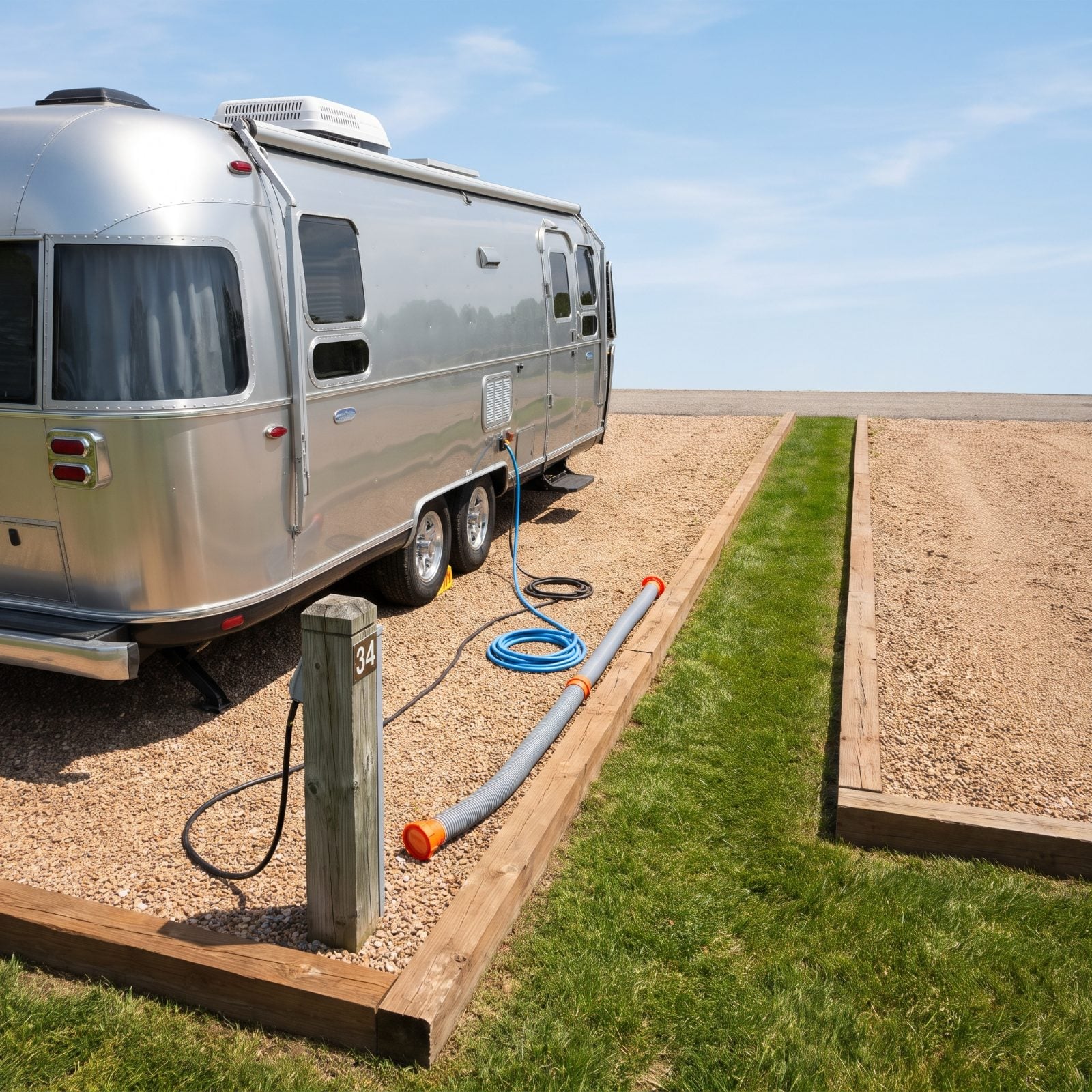
Running a hose or a cord through your neighbor’s site is the camping equivalent of parking in someone’s driveway. They can’t set up their chairs. Their dog trips on your cord. The host hears about it within the hour.
Keep every connection inside your own lines. If your cord won’t reach the pedestal without trespassing, that’s a parking problem, not a cord-length problem, so reposition the rig.
14. Level With Blocks, Not Campground Rocks
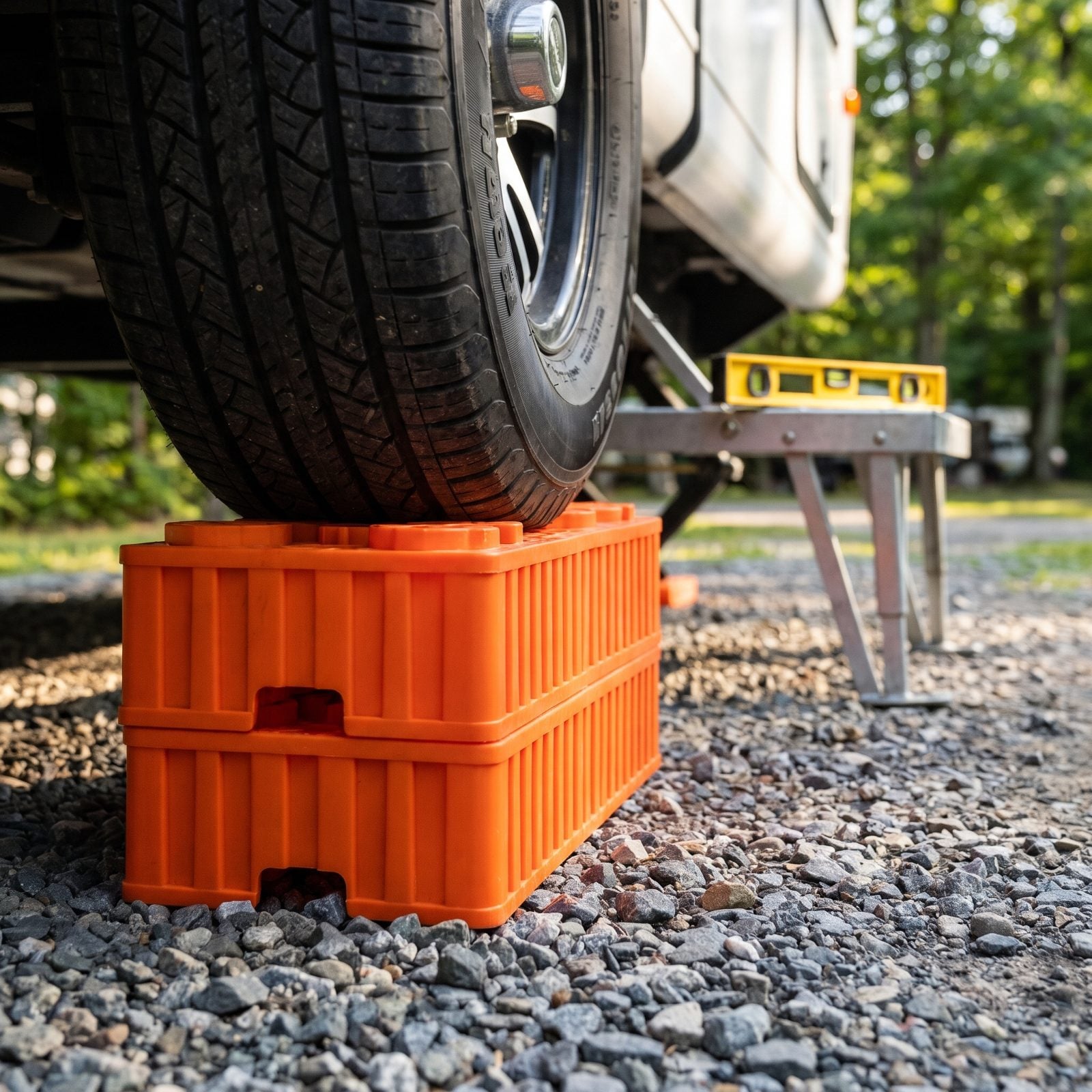
Stacking firewood, flat stones, or whatever rock you pried out of the fire ring under a tire feels resourceful. It also crushes, shifts, and sends a loaded rig rolling off its support at two in the morning. Found objects don’t carry even loads.
Use proper leveling blocks rated for your weight. Drive up onto them, chock the opposite side, and check the bubble before you drop the jacks.
Hosts have a sixth sense for a rig balanced on a Jenga tower of random debris, and they will come over. Save yourself the conversation and carry a set of orange RV leveling blocks.
13. Park Entirely on the Designated Pad
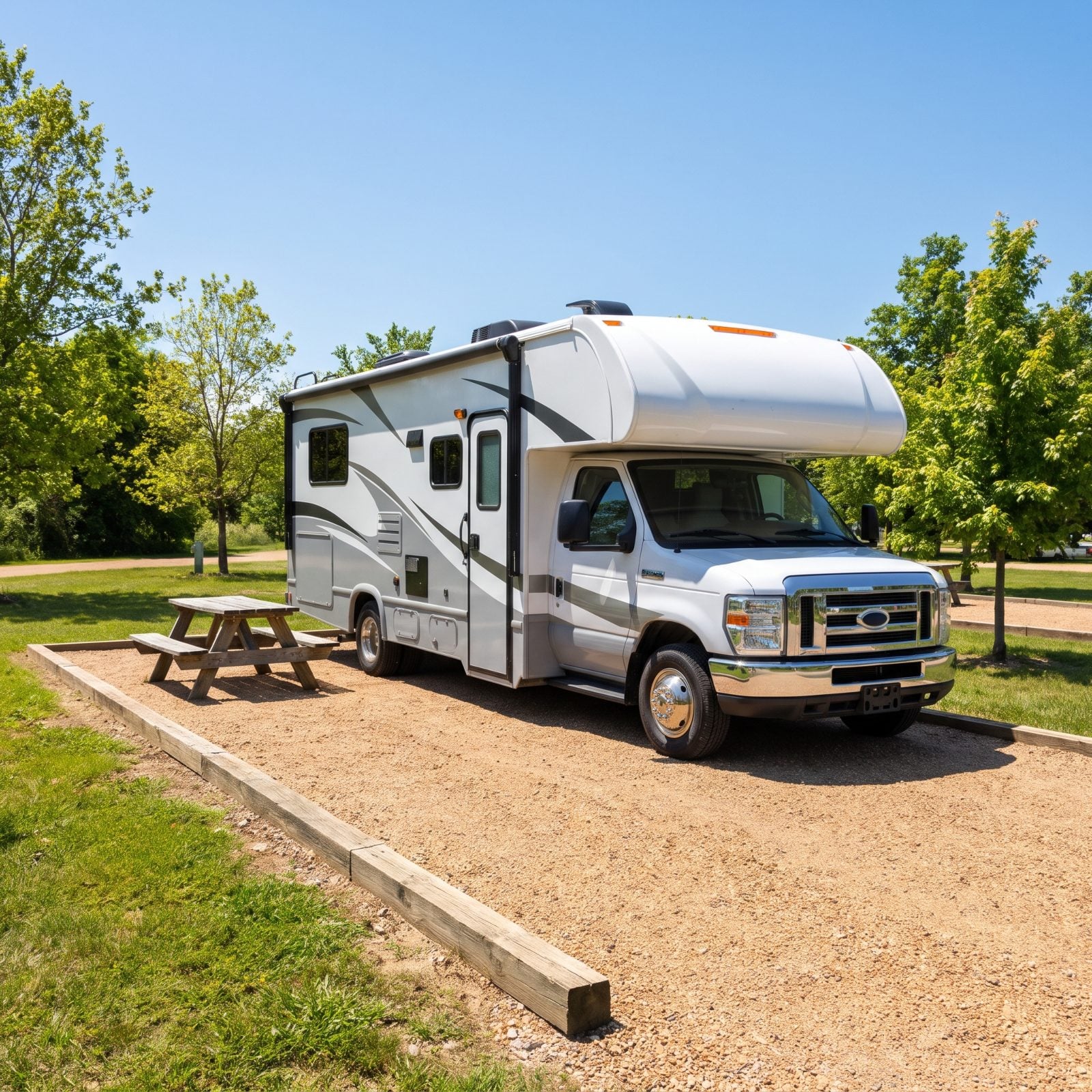
Pads are sized and leveled for a reason, and the edge of one often drops into soft fill that will swallow a stabilizer jack or a rear wheel after the first good rain. Half on, half off is how rigs get stuck and how hosts get grumpy.
Pull in so the whole rig sits on the compacted surface, slides and awning included once extended. Picture your awning out and your slide deployed before you commit to a position.
And yes, your truck counts. If the tow vehicle hangs into the road or the next site, you haven’t finished parking.
12. Keep Wheels Off Grass and Landscaping
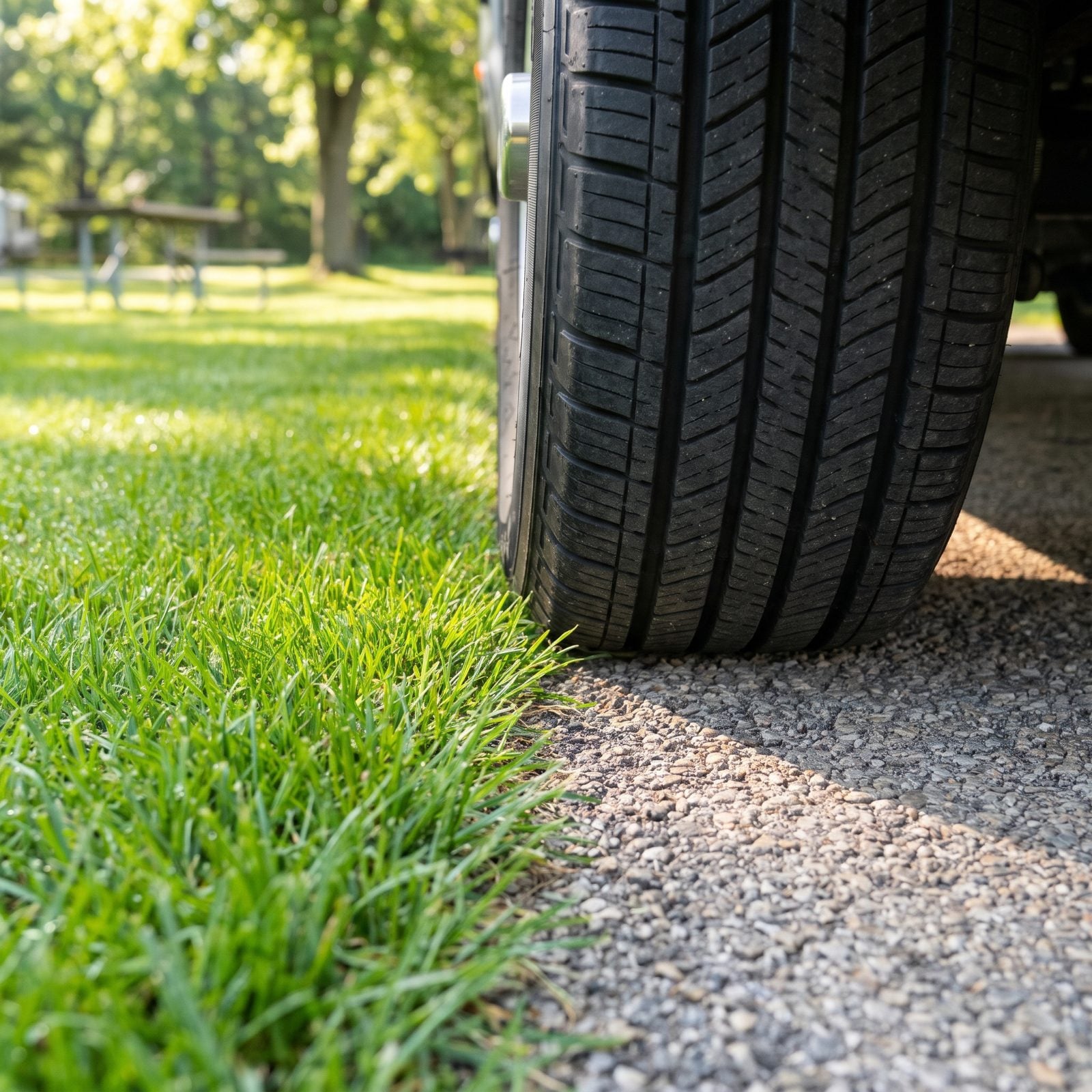
One rig cutting the corner across the grass leaves a rut, that rut turns to mud, and the mud becomes a permanent scar the host has to re-sod every spring out of a budget that doesn’t have room for it. Small parks feel this.
Keep your tires, jacks, and stabilizers on the hard surface. Need a wider turn to stay off the green? Take the extra pull-forward and try again.
11. Walk the Campsite Before Backing
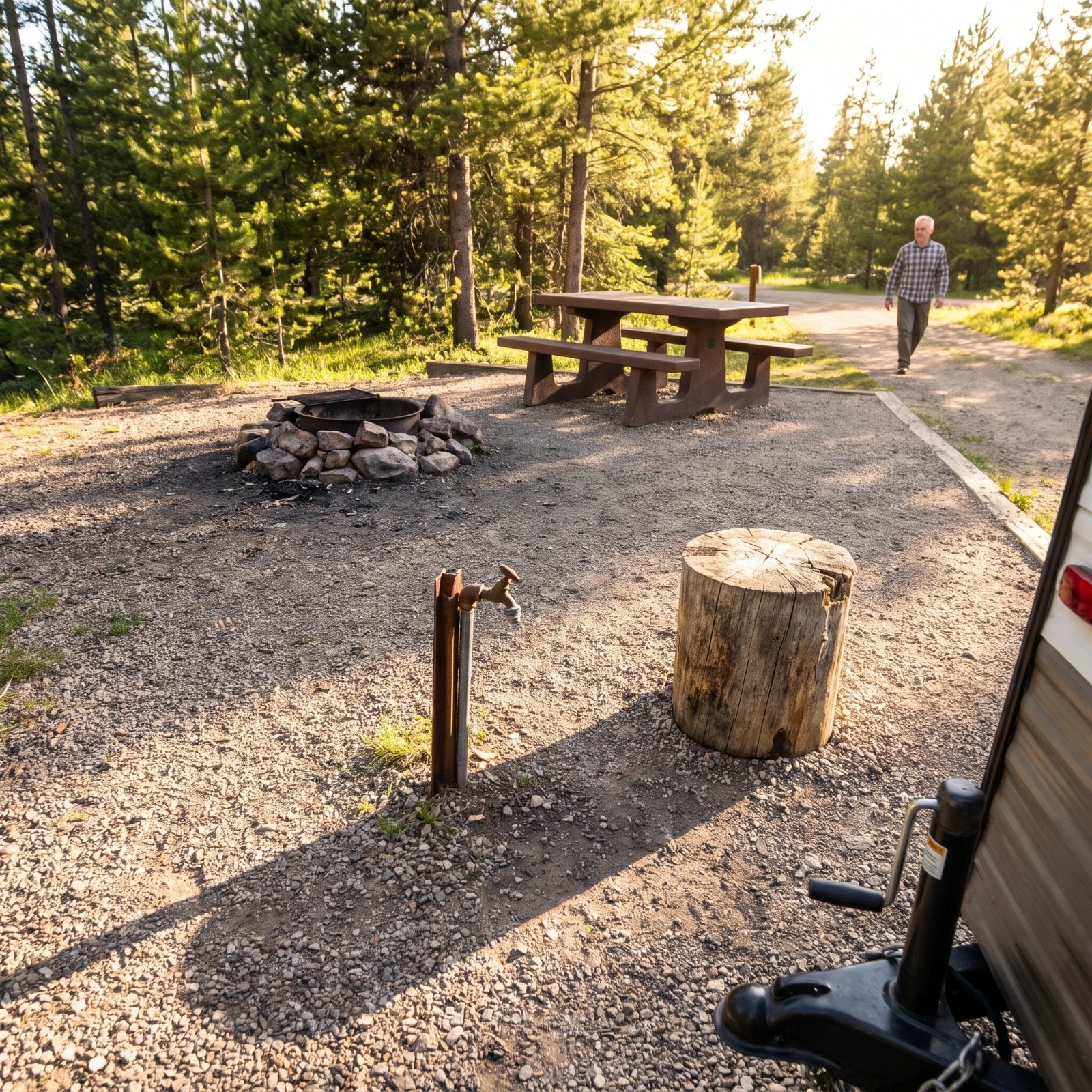
The things that wreck a rig while backing are the ones you can’t see from the driver’s seat. A low stump. A rebar stake. A water spigot that lines up perfectly with your rear bumper. A fire ring sitting exactly where your slide wants to go.
Get out and walk the whole pad before you touch reverse, looking for low obstacles, soft spots, the tree that’ll catch your corner, and where the picnic table and spigot land relative to your final position.
Thirty seconds on foot saves a body-shop estimate. Every seasoned camper does this walk.
10. Use One Designated Backing Spotter
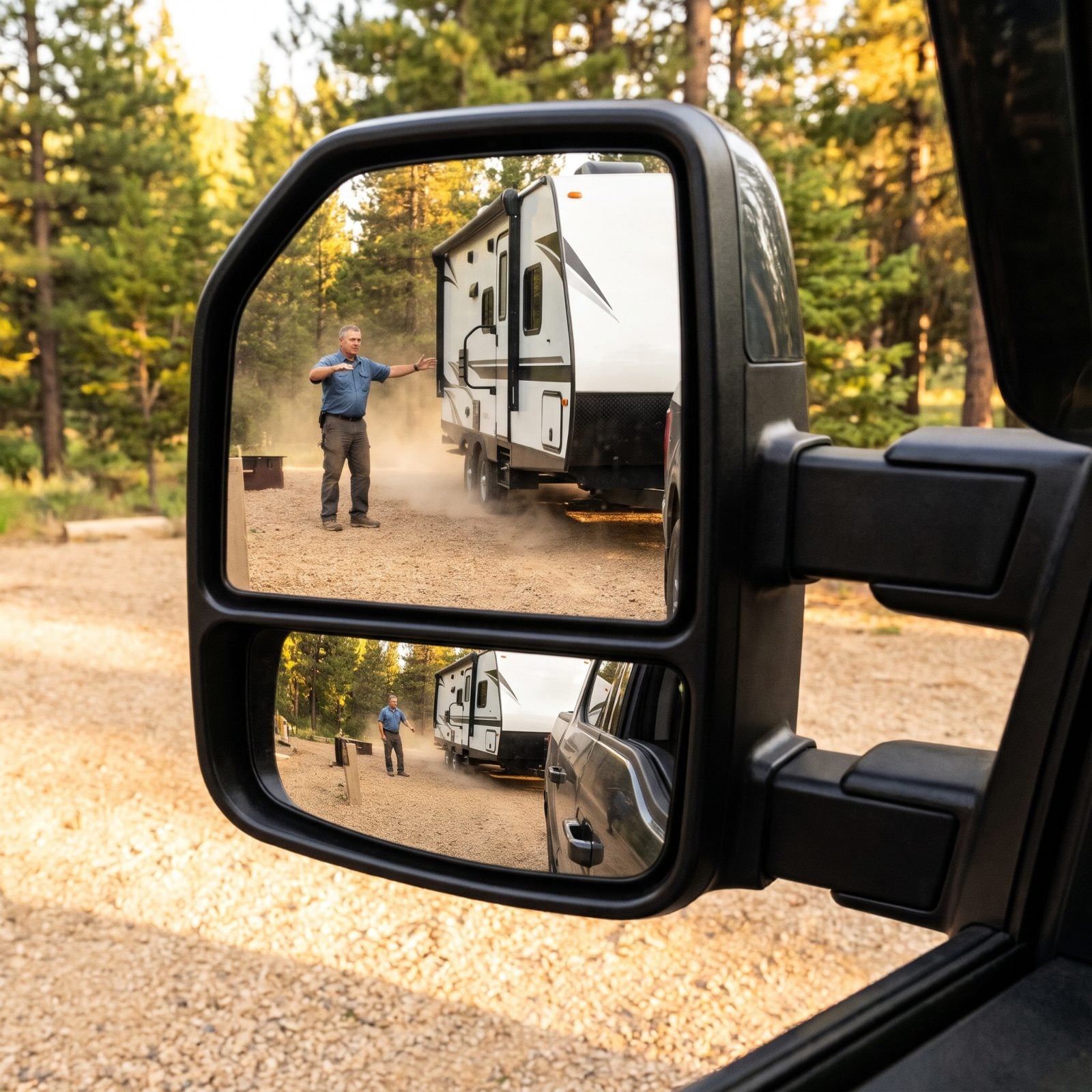
Two spotters is worse than none. One waves you left, the other waves you right, you split the difference, and you clip the pedestal. You’ve watched this comedy play out at every busy campground on a Friday afternoon.
Pick one person and agree on hand signals and a stop signal before anyone moves. The spotter stands where the driver can catch them in a mirror, never directly behind the rig where you can’t.
9. Check Overhead Branches Before Positioning
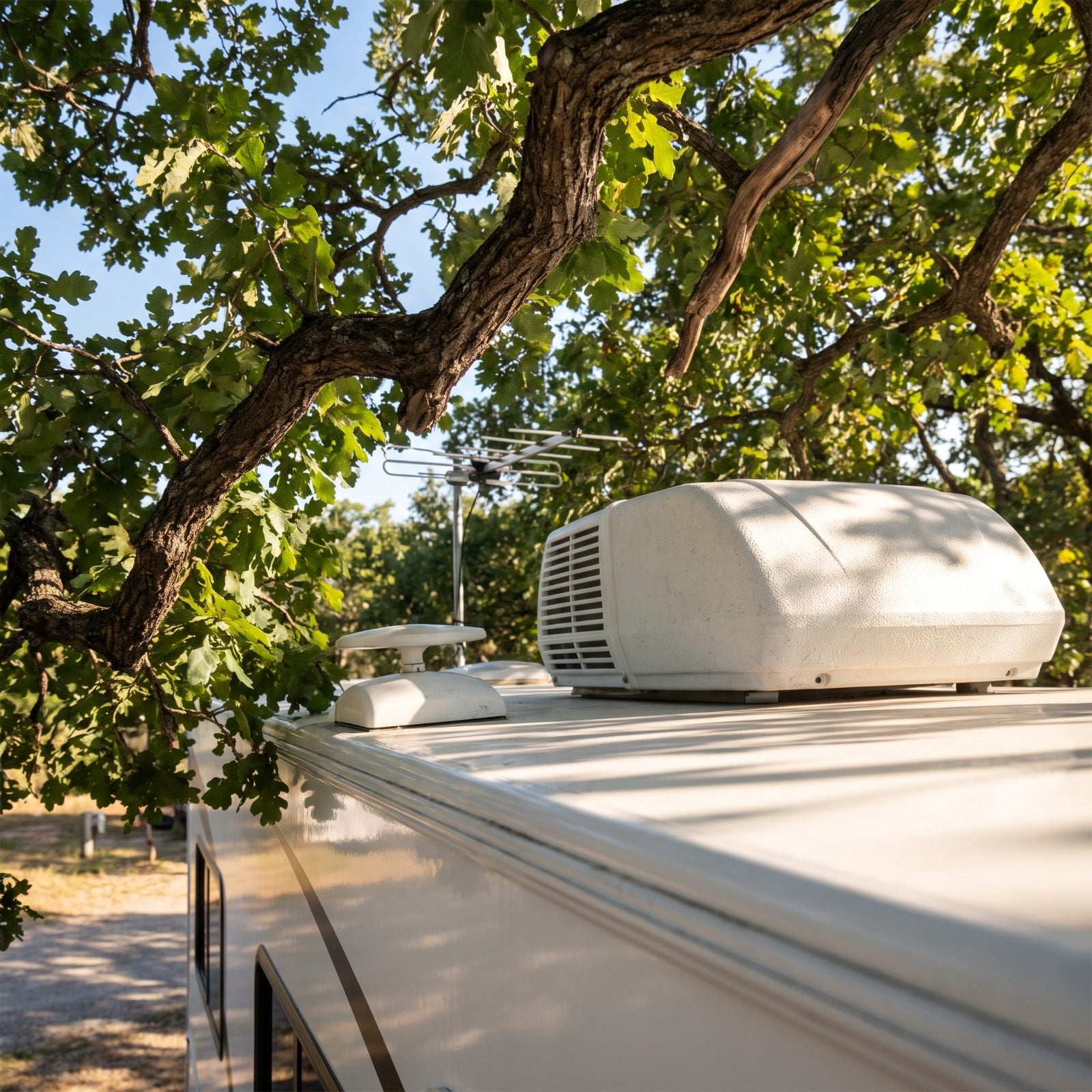
Everyone obsesses over the tire-level view and forgets the rig has a roof, and that roof carries your most expensive, most exposed equipment. A branch you slide under at setup becomes the branch that cracks your air conditioner shroud, bends the antenna, and gouges the roof membrane the first time wind pushes it down.
Look up before you pick your final spot. Clear the AC, the antenna, the vents, the solar panels. Give yourself more than a few inches, because that tree moves in a storm and your rig doesn’t.
8. Protect Utility Pedestals While Maneuvering
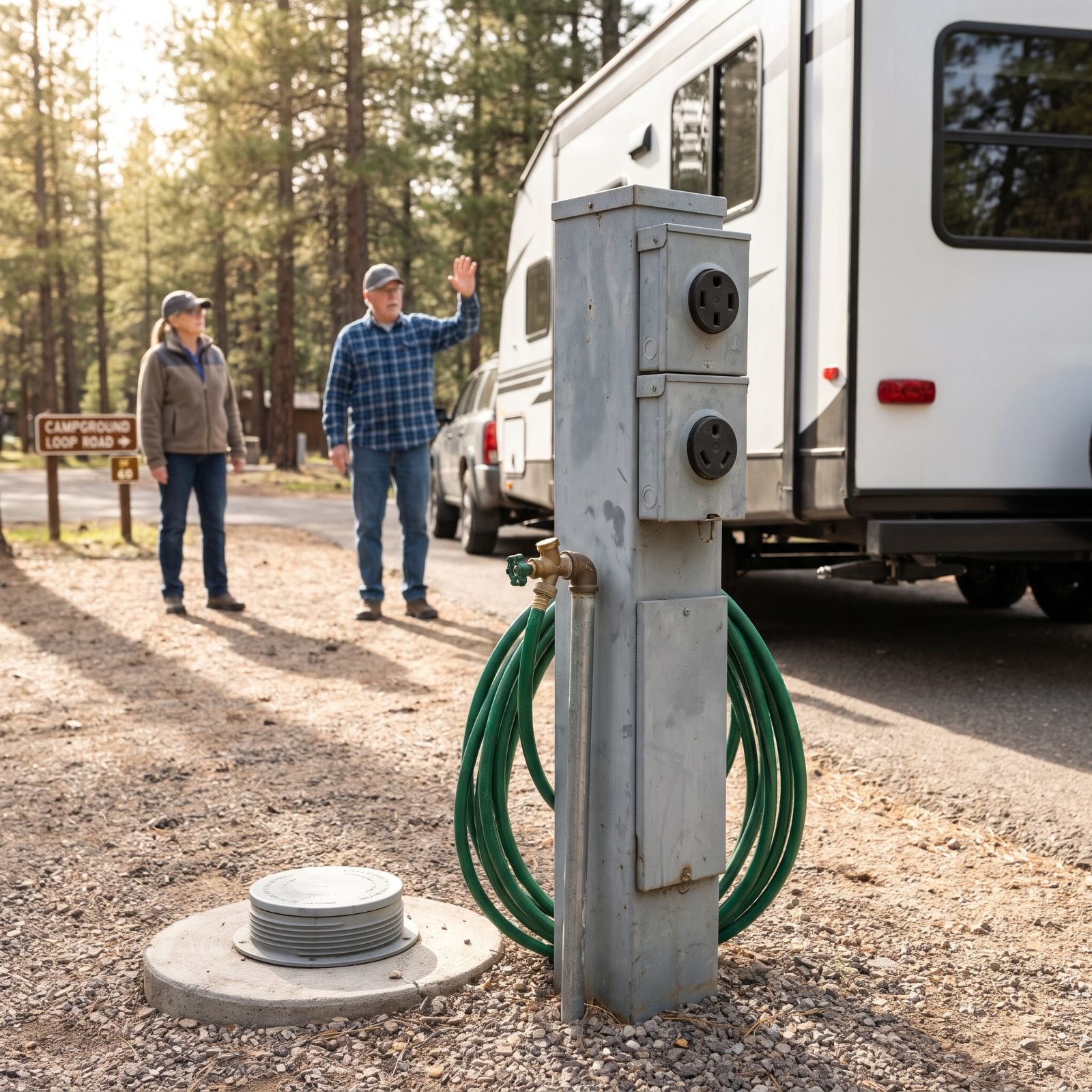
That grey metal utility pedestal costs the campground a few hundred dollars. Clip it and it costs you your deposit, your reputation, and a genuinely awkward conversation. New RVers tunnel-vision on the pad and forget the box is sitting right at bumper height.
Walk the site before you back in. Note where the power pedestal, water spigot, and sewer cap sit, then leave yourself a clear three to four feet of swing room. And picture the widest part of your rig, which is usually the rear overhang, not the body.
7. Fit the Tow Vehicle Within Your Site
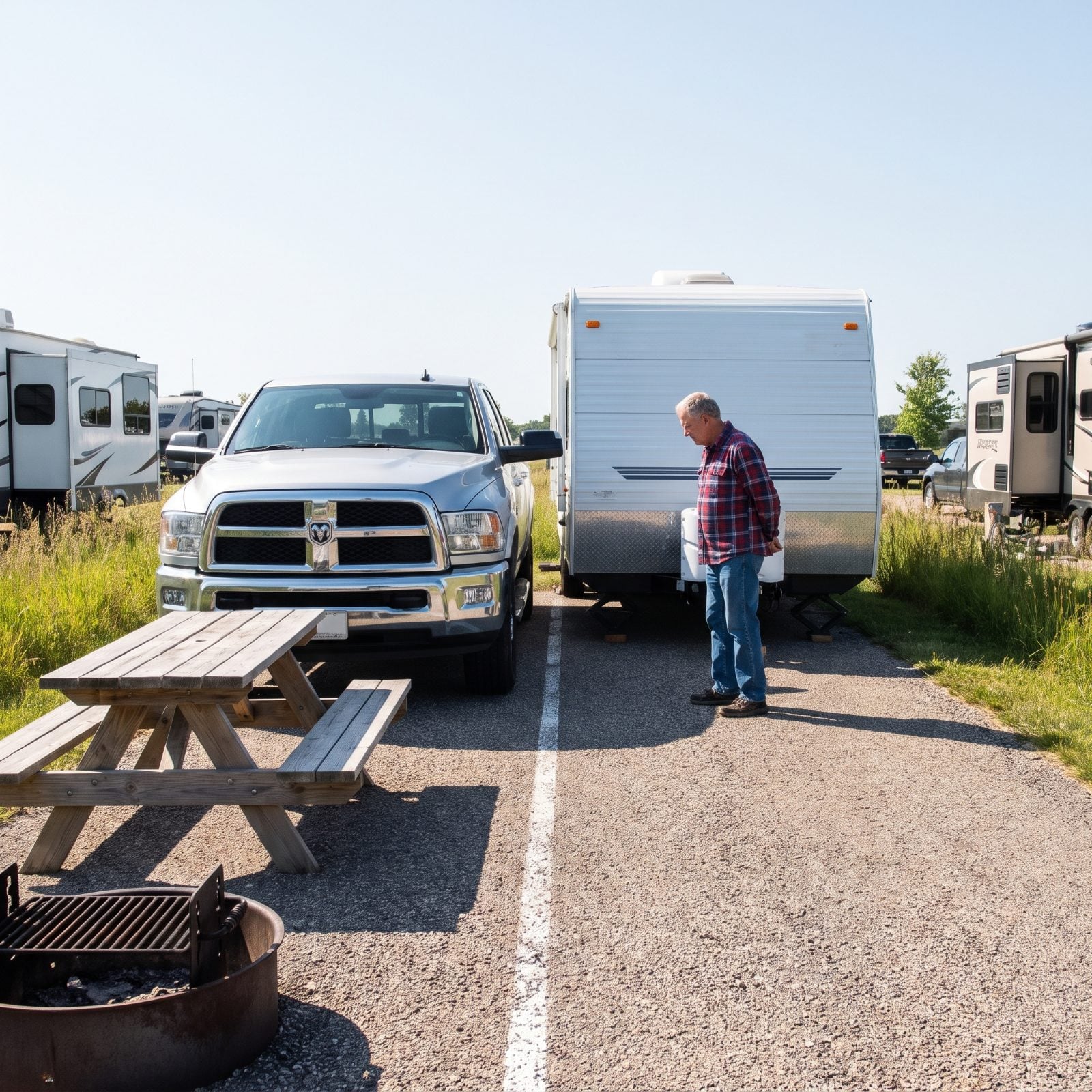
You booked a site that fits your trailer. Nobody mentioned the truck. First-timers unhitch, park the tow vehicle wherever feels natural, and discover half of it is sitting in the road or over the neighbor’s line.
Measure your tow vehicle and your rig together, then compare that against the site length listed on your reservation. Most sites quote the pad length, not pad plus vehicle. Call ahead and ask whether your truck has to park on the pad, in an overflow lot, or nose-in beside the trailer.
Tight loops in older state parks are the usual culprit. If your combined length runs long, assume parking is going to be a puzzle and solve it before you arrive — not at dusk with a line of rigs stacking up behind you.
6. Keep Slide-Outs Inside Campsite Limits
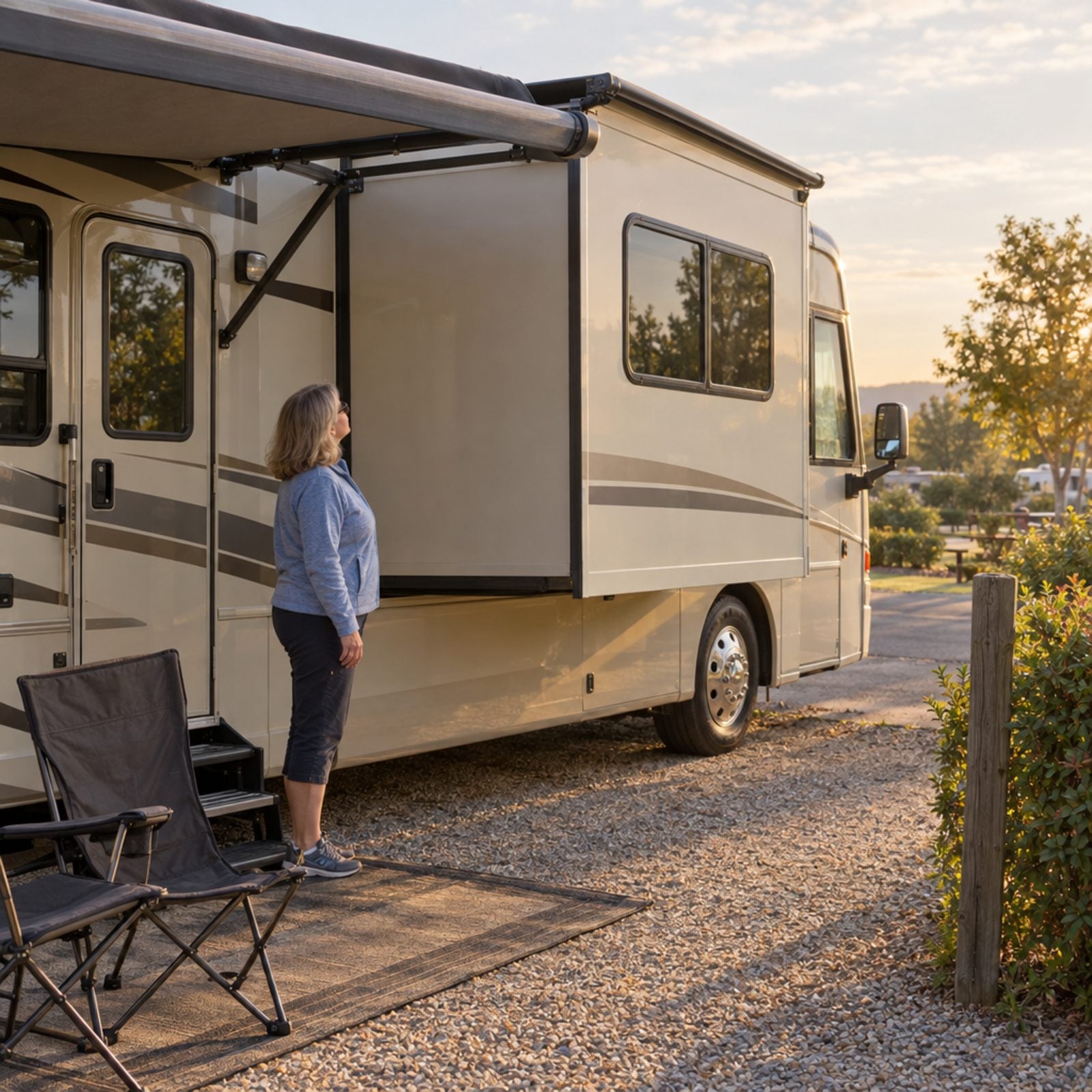
Here’s the one people genuinely forget: your rig is bigger set up than when you drove in. A slide-out can push three feet past your body, straight into the walkway, the neighbor’s awning, or a tree you cleared fine on the way in.
Before you extend anything, step out and eyeball both sides. Does the slide clear the pedestal, the low branches, the boundary marker? Then confirm the path is empty of chairs, hoses, and a sleeping dog.
The rig that fit the site driving in doesn’t always fit the site parked.
I once watched a slide stop six inches from a picnic table the driver swore was clear. Walk it first. Takes thirty seconds.
5. Review Quiet Hours Before Your First Night
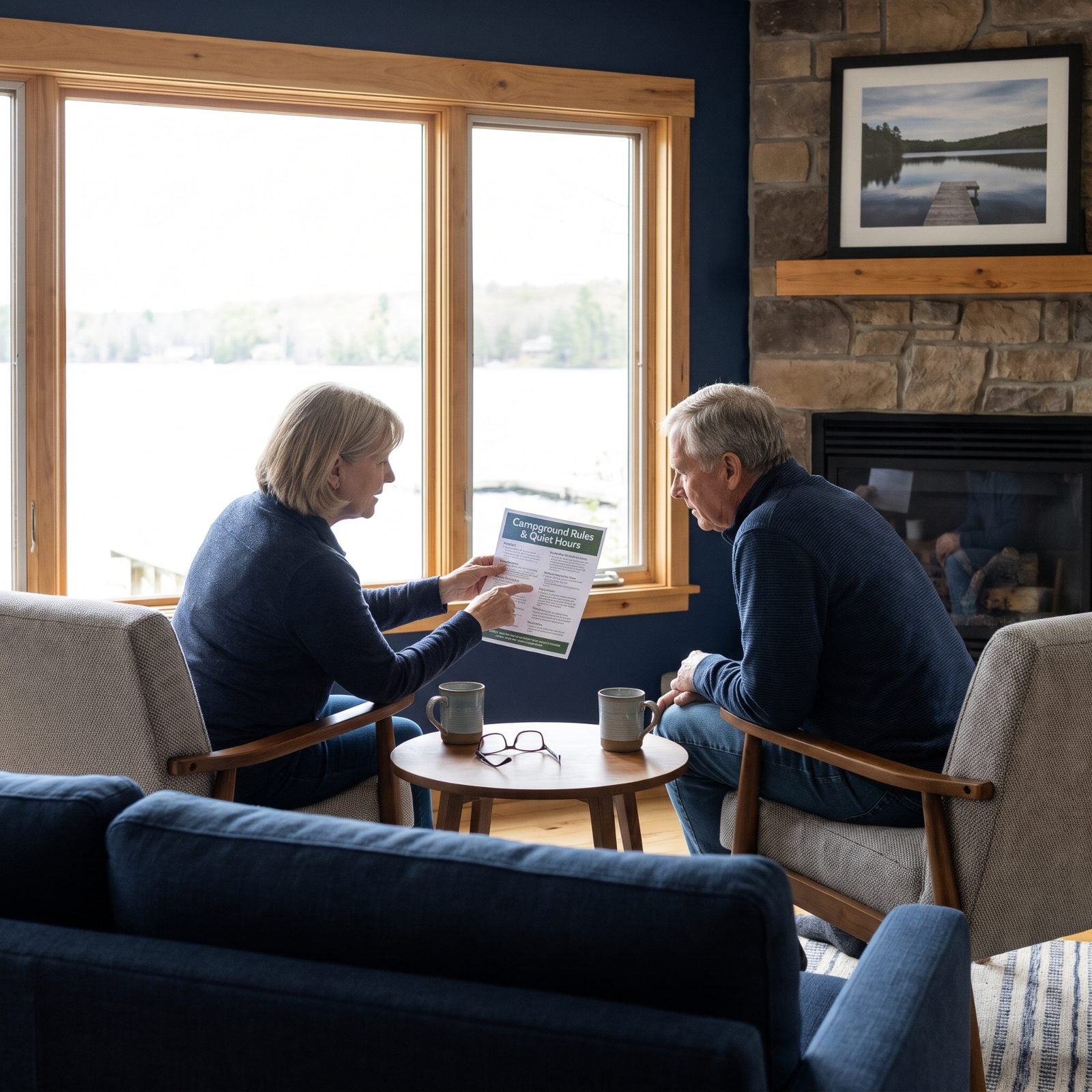
Quiet hours are the rule that turns neighbors into enemies fastest. Most campgrounds run them from 10 p.m. to around 7 or 8 a.m., but the exact window shifts place to place, and the generator carve-out sometimes differs from the general noise rule.
Read it on your confirmation or the posted board at check-in — don’t guess. Quiet hours cover way more than loud music. No slamming compartment doors, no long idling diesel, outdoor TV off.
4. Confirm Generator Rules and Hours
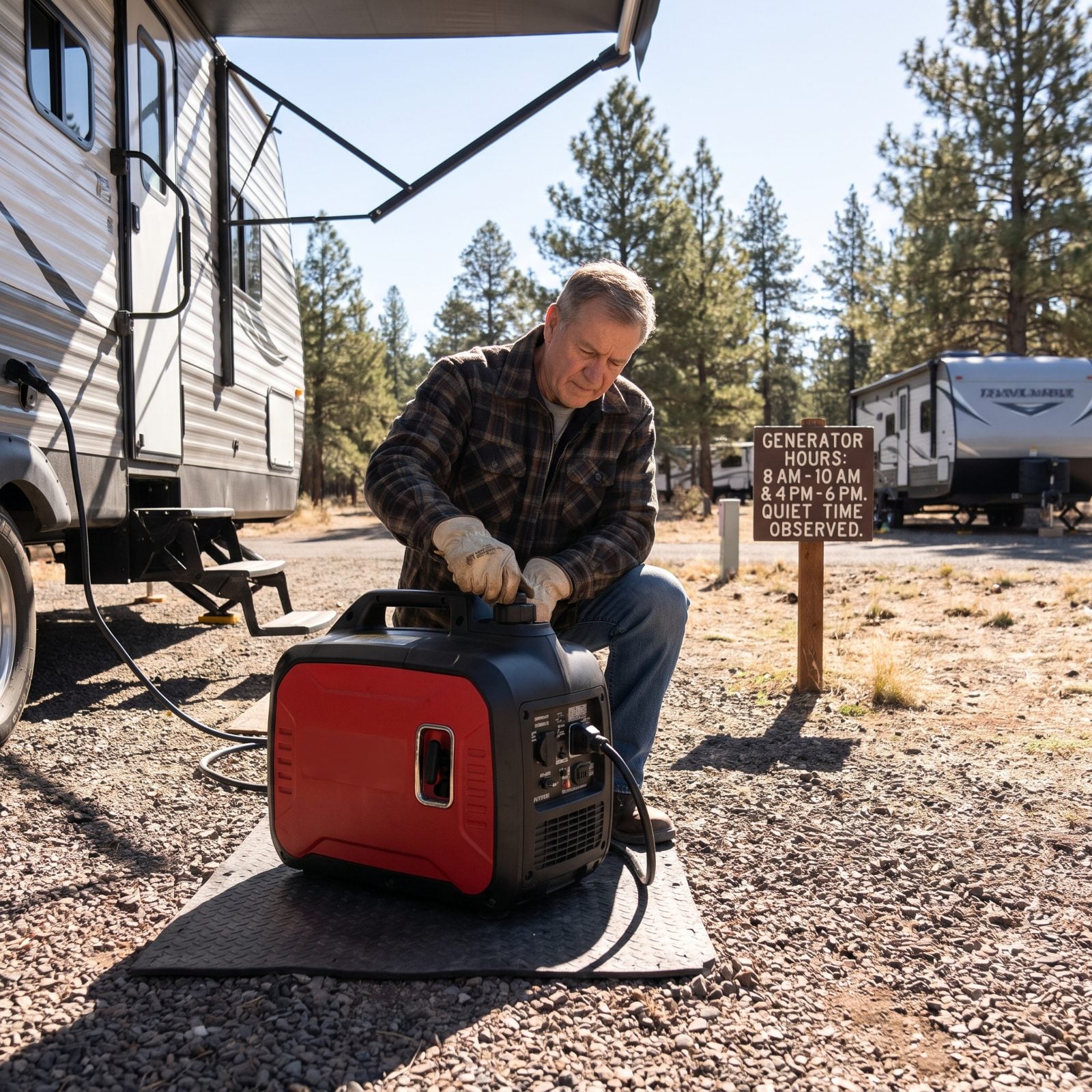
Generators are where dry campers and hosts collide. Some parks ban them outright. Others allow them only during set windows — often with a midday break — and almost all expect the quieter inverter units rather than those old open-frame construction generators that sound like a lawnmower in a tin can.
Confirm the policy before you roll in, because “I didn’t know” doesn’t earn much patience at 6 a.m. when yours is running under someone’s bedroom window.
Point the exhaust away from neighbors, set it on a mat to cut the vibration, and never run it during posted quiet hours even if your batteries are low. Plan your power around the rules, not the other way around. Need overnight juice? That’s what a second battery or a solar setup is for.
3. Leash Dogs Before Leaving the Vehicle
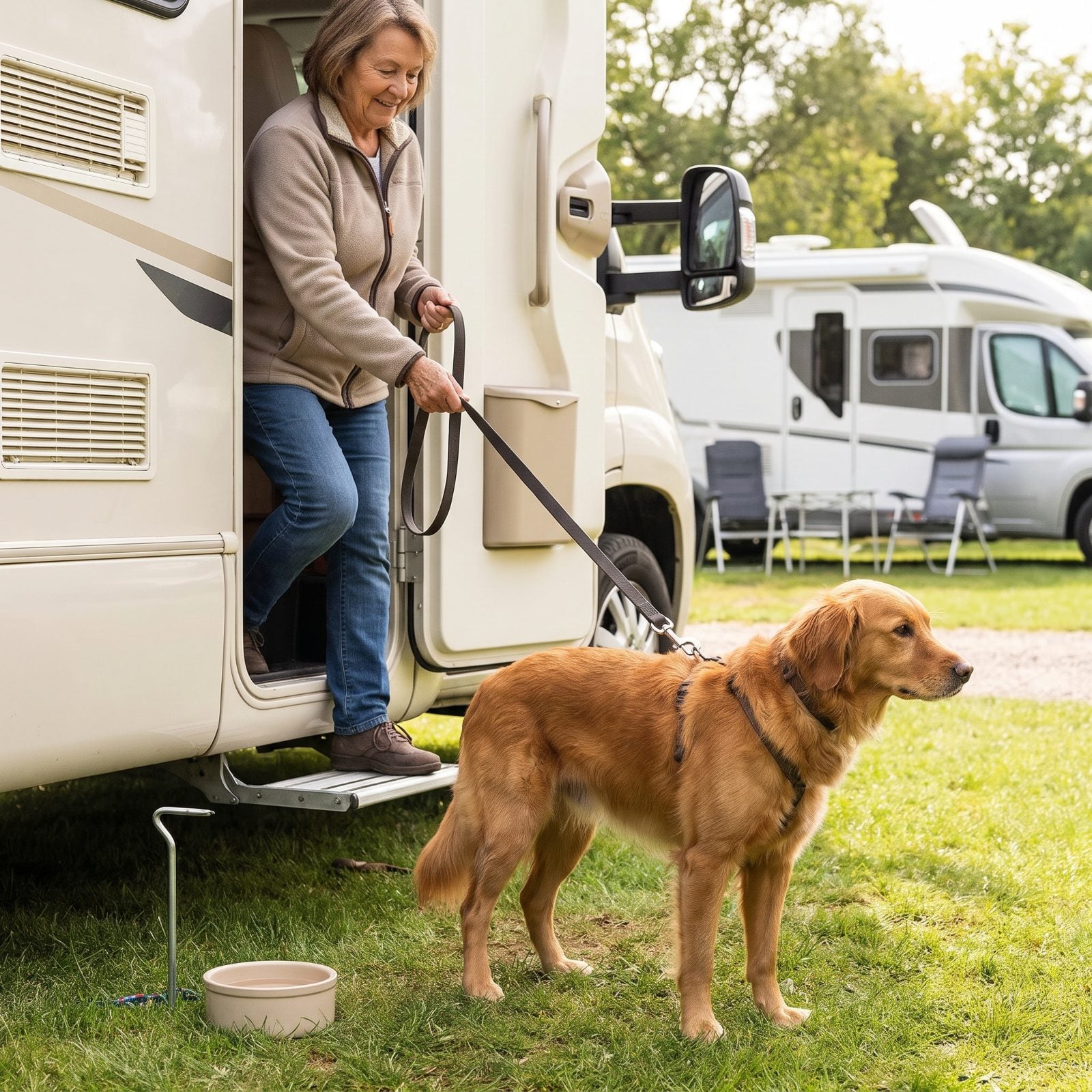
Your dog is wonderful. The campground still has a leash rule, usually a six-foot maximum, and hosts enforce it because one off-leash dog bolting at a neighbor’s leashed one is how good trips end in incident reports.
Clip the leash before the door opens, not after. Dogs read “we’ve arrived” and want to tear into a brand-new place packed with smells, and that’s exactly the moment one slips loose. Keep a tie-out and a water bowl at your site. Never leave a dog staked out alone.
2. Check Current Fire Restrictions Before Arrival
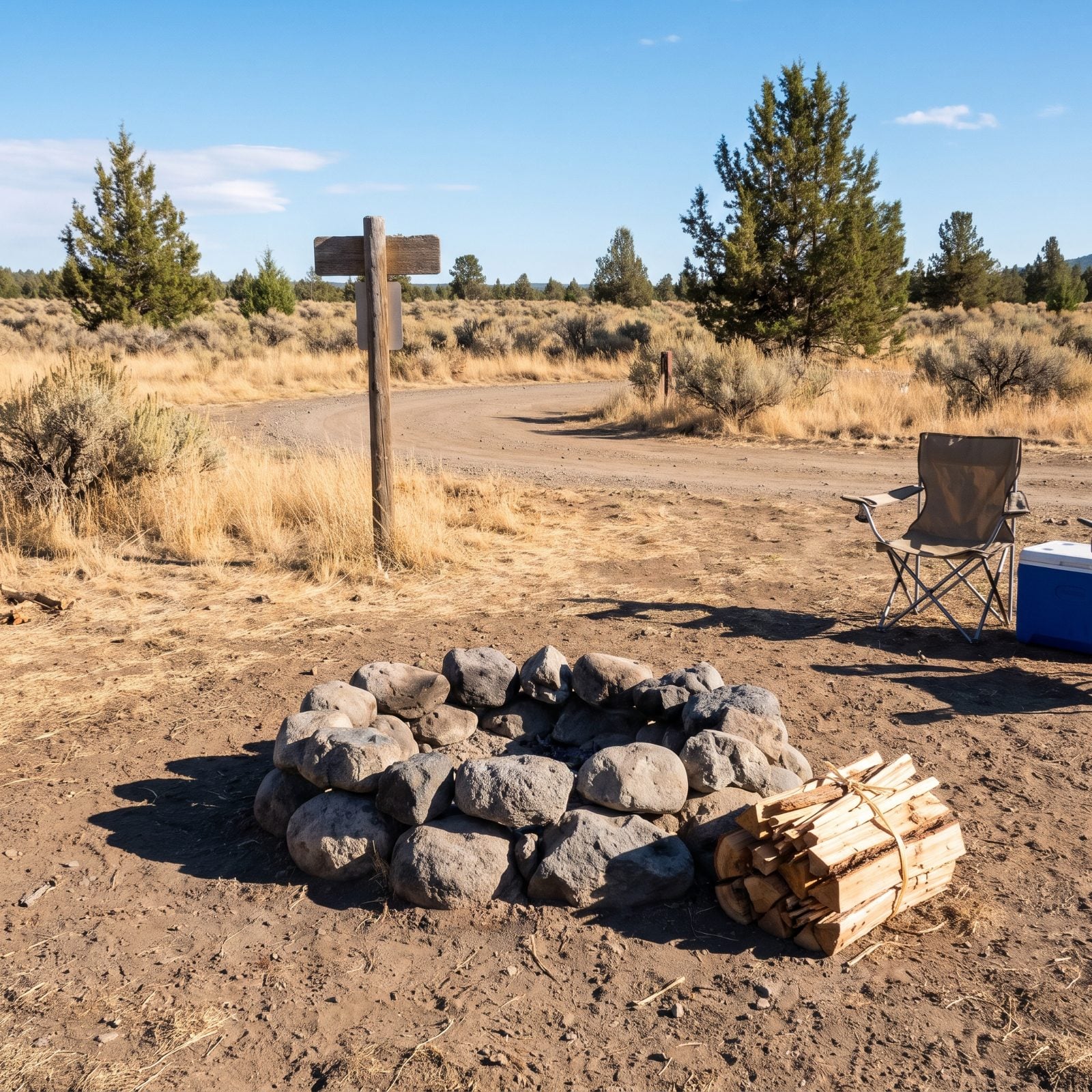
The firewood’s in the truck, the chairs are out, and the host tells you there’s a total fire ban in effect. Now what? Check before you leave home, not after you’ve driven four hours expecting marshmallows.
Fire restrictions can shift week to week during dry season, jumping from “campfires in rings only” to “no open flame at all” — a rule that sometimes swallows charcoal grills and even wood-burning stoves. Look up the park’s current status and the regional agency’s fire-danger rating a day or two before you leave.
1. Never Block Campground Fire Lanes
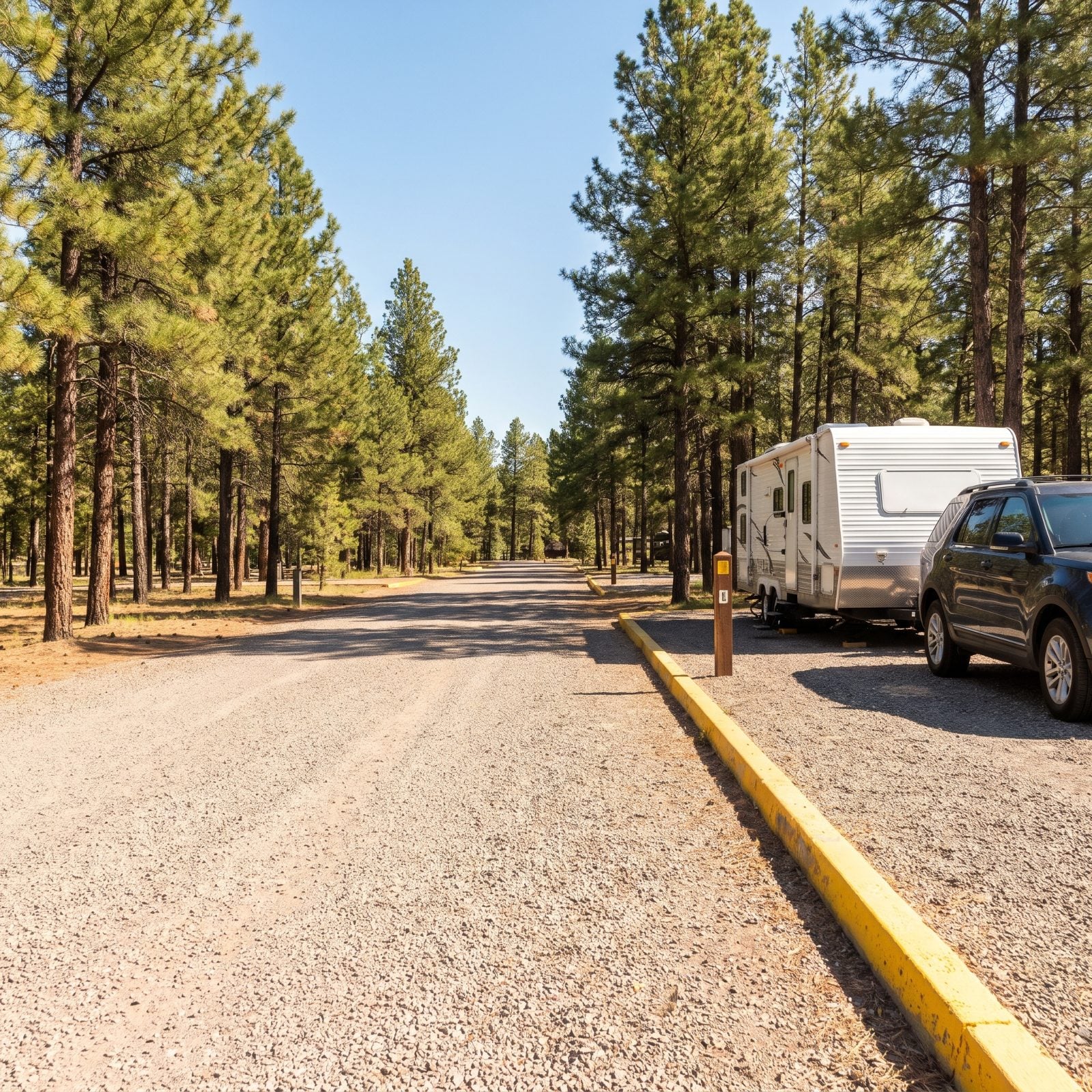
This is the one new RVers never even think about. Fire lanes are the loop roads and marked zones kept clear so a fire truck or ambulance can reach any site in the park. Park a trailer, a tow vehicle, a bike, or a stack of chairs across one and you’re not just breaking a rule — you’re building a wall between help and someone who needs it.
Keep everything inside your own pad.
If your rig won’t fit without spilling into the road, that’s an overflow-parking conversation with the host, not a park-it-and-hope situation. Watch the corners especially. Rigs that clear a straight road still cut the inside of a tight turn, and that’s the exact spot a long truck can’t thread. When in doubt, pull in tighter and leave the road wide open.
Your Printable Checklist
Save it to Pinterest or print it — every check from the list above on one page.