
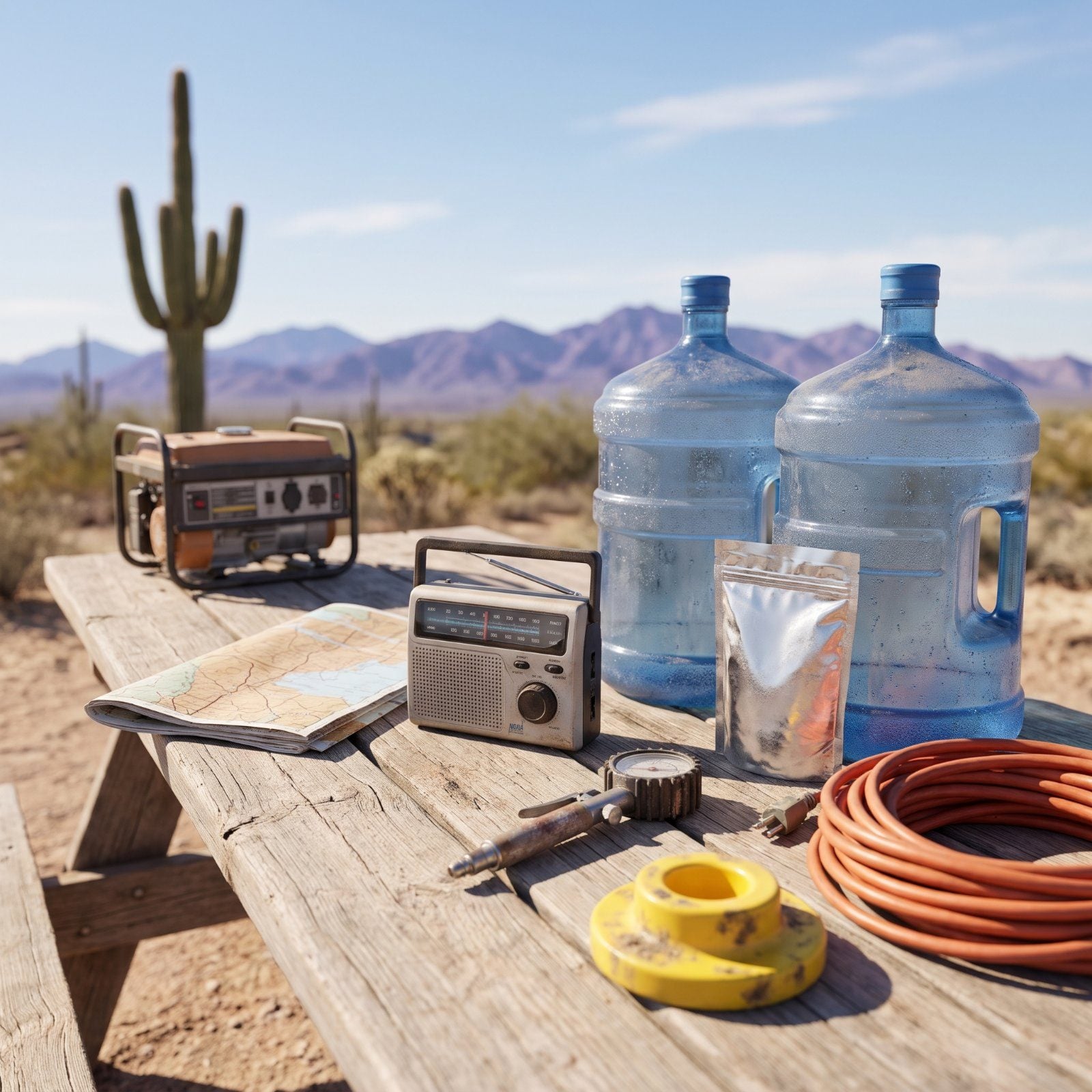
The desert forgives nothing, and it warns you with a whisper. A dry creek bed looks like the best campsite you’ve ever found until the sky four miles north decides otherwise, or an air conditioner runs flawlessly for years and then quits at 2pm in July. Here’s the frustrating part: most of these mistakes don’t feel like mistakes at the time. They feel like reasonable decisions the desert quietly files away for later. Everything below is cheaper, simpler, and faster than the problem it prevents.
Please note that some of the images in this article were created with the assistance of AI.
35. Camping in a Dry Wash Because It Looks Like the Perfect Flat Spot
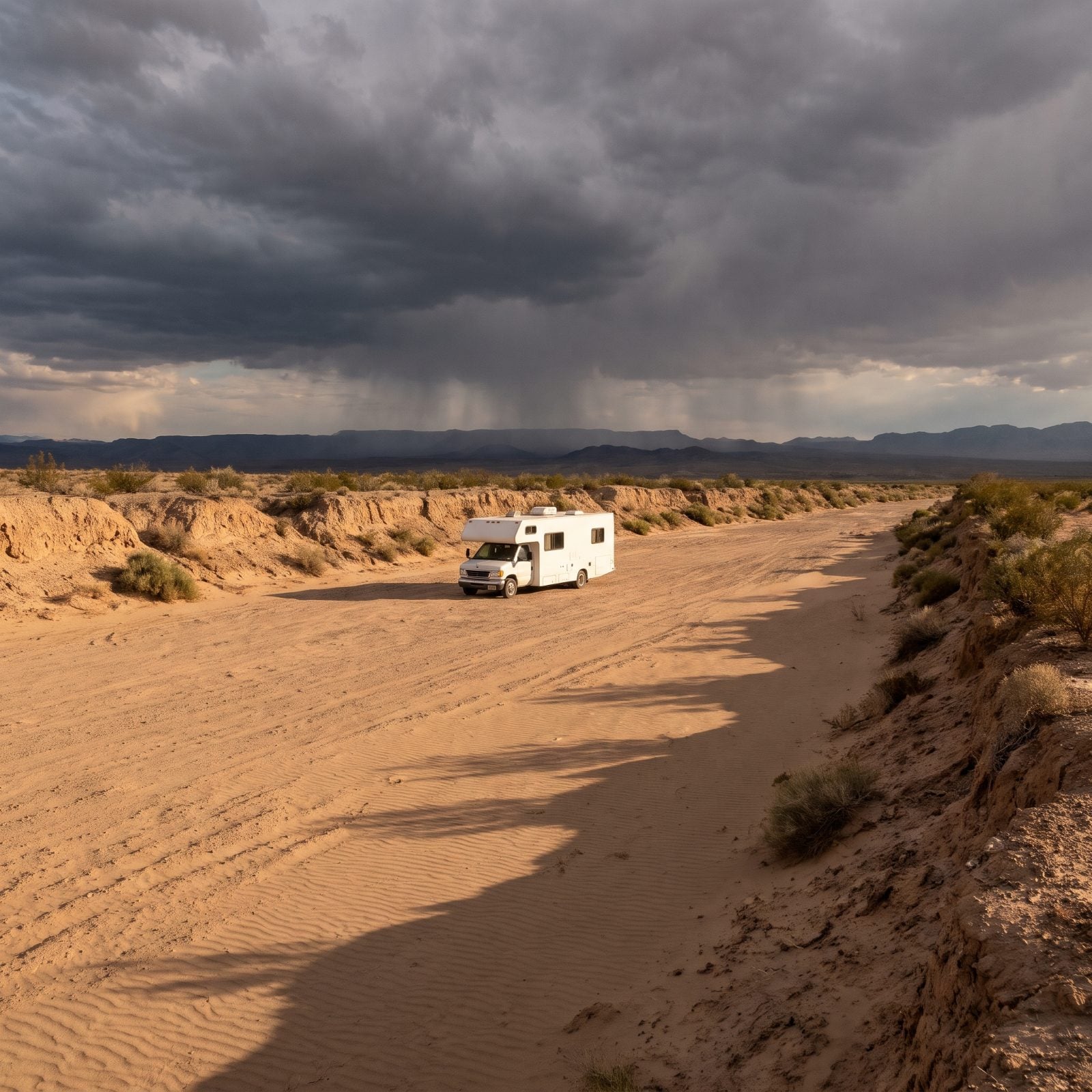
That smooth, flat, sandy strip between the low banks? It’s a creek. It just isn’t running today. Flash floods out here are famous for arriving from a storm you can’t even see, miles upstream, while the sky right overhead stays a mocking blue.
Water moves faster than you can hitch up. A wash that’s been bone-dry for eight months can go waist-deep and start shoving boulders in twenty minutes, and that’s how rigs end up wrapped around mesquite trees.
So read the ground before you park. Water-smoothed stones, ripple marks in the sand, a debris line of twigs caught on brush, banks that look cut rather than worn — all of it says water lives here sometimes. Camp up on higher ground even if it means a less level spot and a little more fiddling with the blocks.
Warning against camping in washes, a professional expedition guide wrote that “A dry wash in the American Southwest, the Australian outback, or any semi-arid environment can carry 3 to 5 feet of fast-moving water within 20 to 30 minutes of a storm that fell many miles away”
34. Leaving Pets Inside With the AC as Their Only Line of Defense
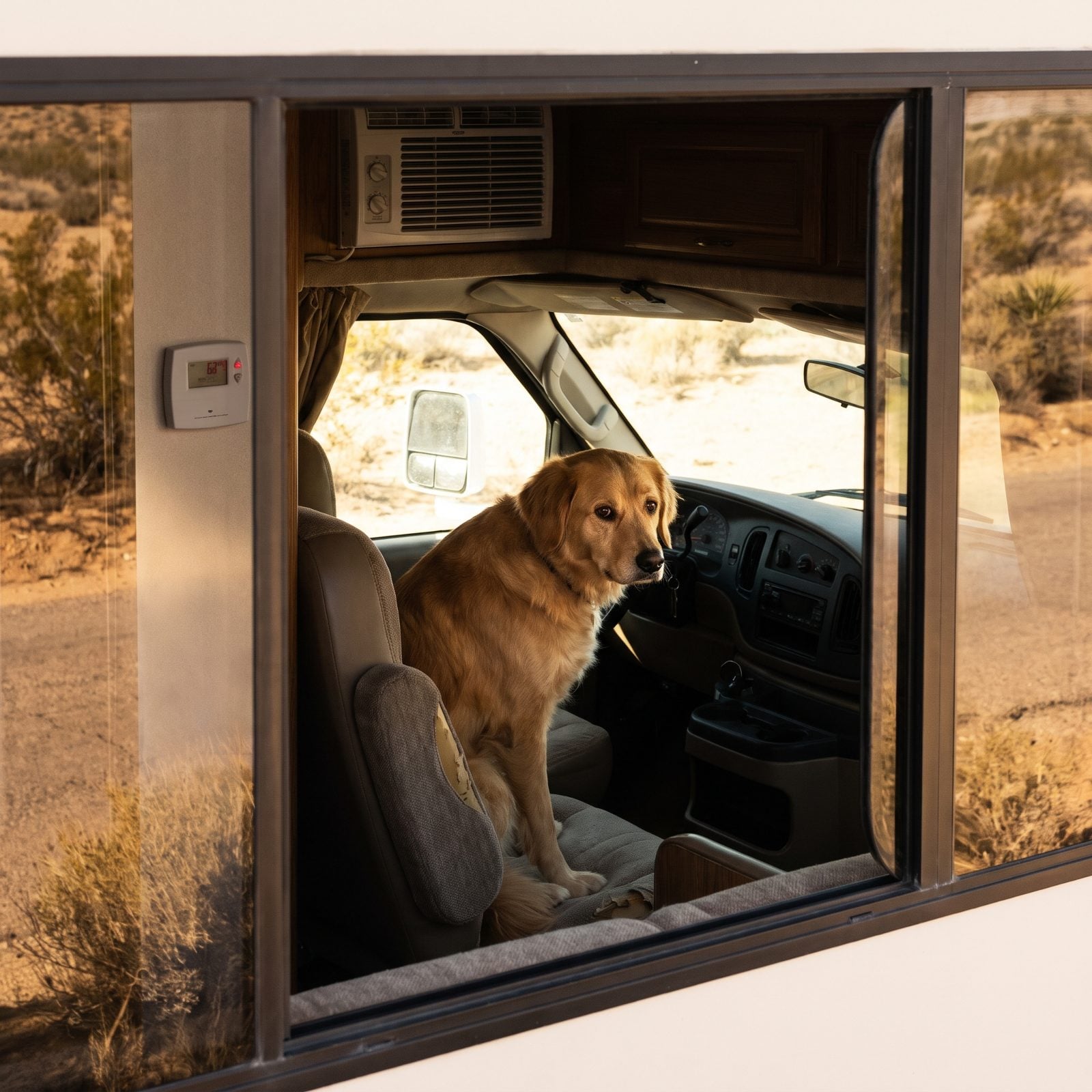
You duck out for groceries, the AC is running, the pup is fine. Then the breaker trips, or the generator stalls, or the shore power blinks — and the only thing keeping your dog alive is now off. You find out when you get back.
Inside temperatures in a closed RV spike fast once cooling stops. Pets can’t tell you, and they can’t get out.
Layer your defenses. A cellular temperature monitor like a Waggle or MarCELL texts your phone the second the interior climbs, so you know before it’s an emergency. Add a battery fan, a backup power source, and reflective window shades. And honestly? If the site is remote and the day is brutal, the pet comes with you. We’ve cut plenty of trips short rather than gamble on a single breaker.
33. Topping Up on Water But Forgetting Electrolytes
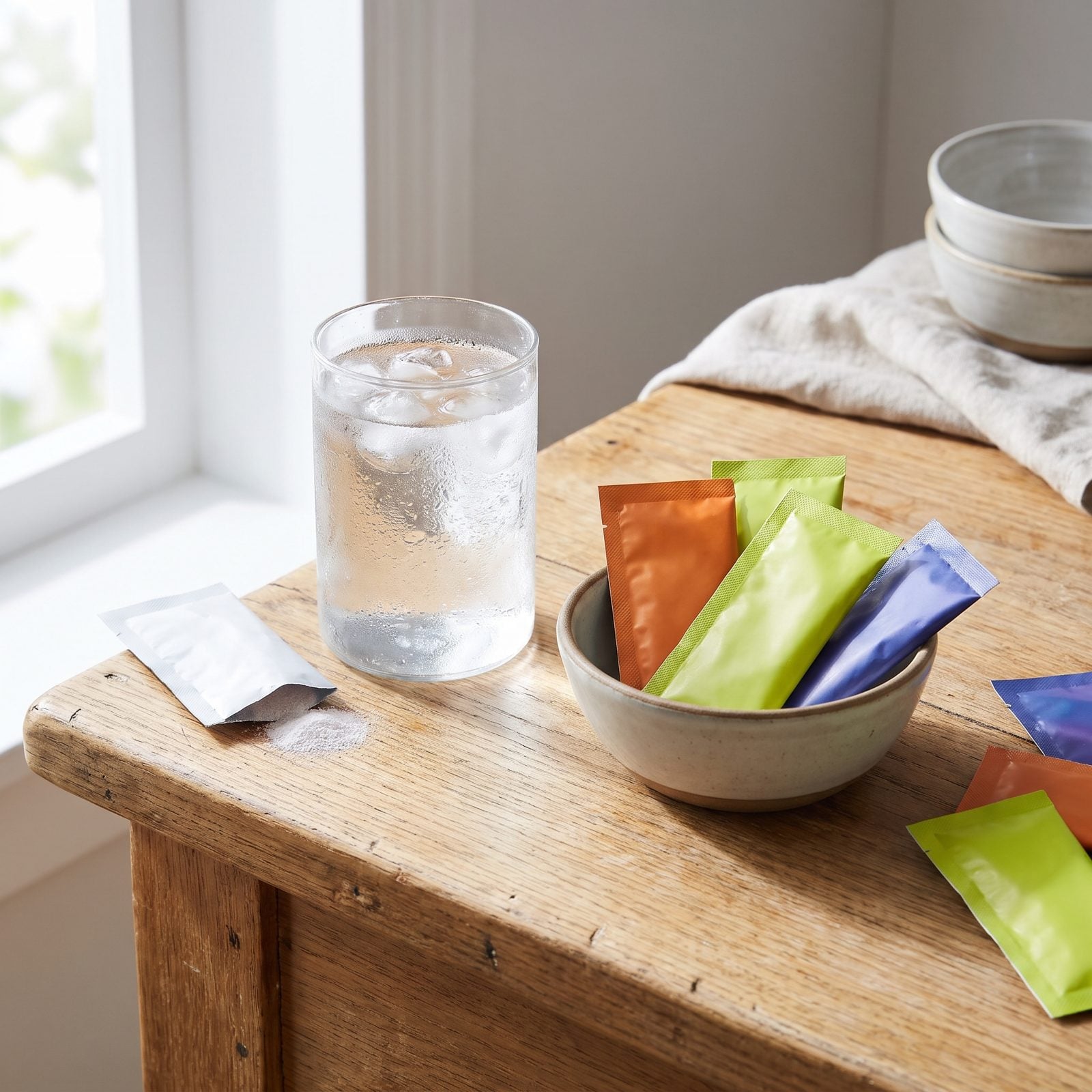
Drinking gallons of plain water in dry heat feels responsible. It can actually work against you. Sweat in the desert evaporates so fast you never feel wet, and you lose salt and minerals you never notice leaving.
Flood your system with water and no electrolytes and you can dilute yourself into headaches, cramps, and that foggy, wobbly feeling people mistake for ordinary tiredness.
So keep electrolyte packets or tablets in the rig and actually use them, especially on travel days and active afternoons. Liquid IV, LMNT, or even a pinch of salt and a squeeze of citrus in your water gets it done. Here’s the tell: if your water tastes like nothing and you’re still feeling off after drinking plenty, you’re short on salt, not water.
32. Bringing a Generator You’ve Never Run Under a Real Load
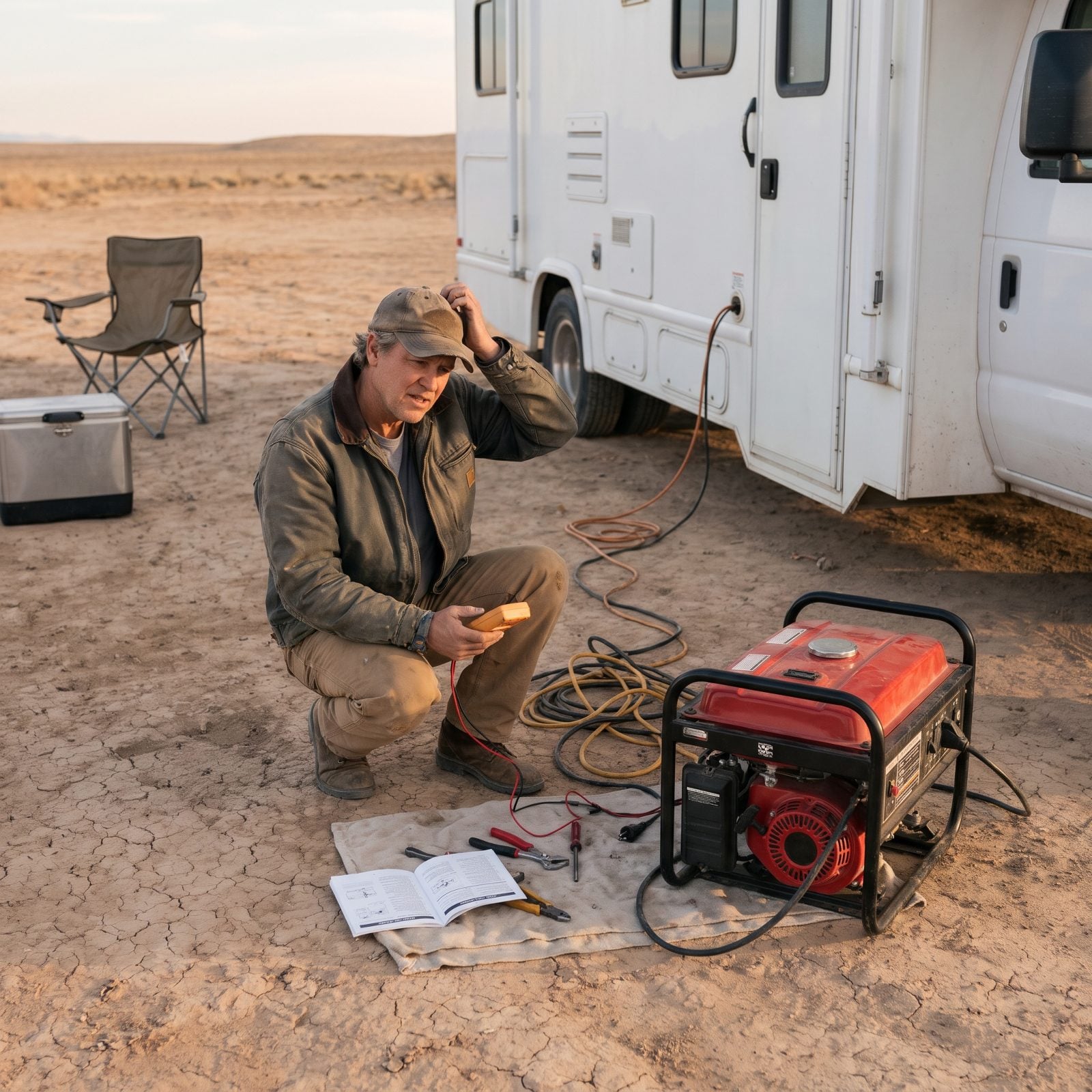
A shiny generator in the box feels like a solved problem. Then you fire it up in the desert, switch on the air conditioner, and it bogs, overheats, or trips before the compressor even spins up.
A unit that idles happily with a phone charger plugged in can choke the moment you ask it to carry a 13,500 BTU AC on a 105-degree day. Thin, hot air robs small engines of power too.
Test it under full load at home. Start the AC, the microwave, the fridge on electric — all the things you’ll actually run — and let it chug through a long afternoon. If it struggles in your driveway, it’ll fail you harder in the heat. Plenty of AC owners need two 2,000-watt units paralleled instead of one, and better to learn that now than at camp.
31. Showing Up Without Enough Fuel for a Long Outage
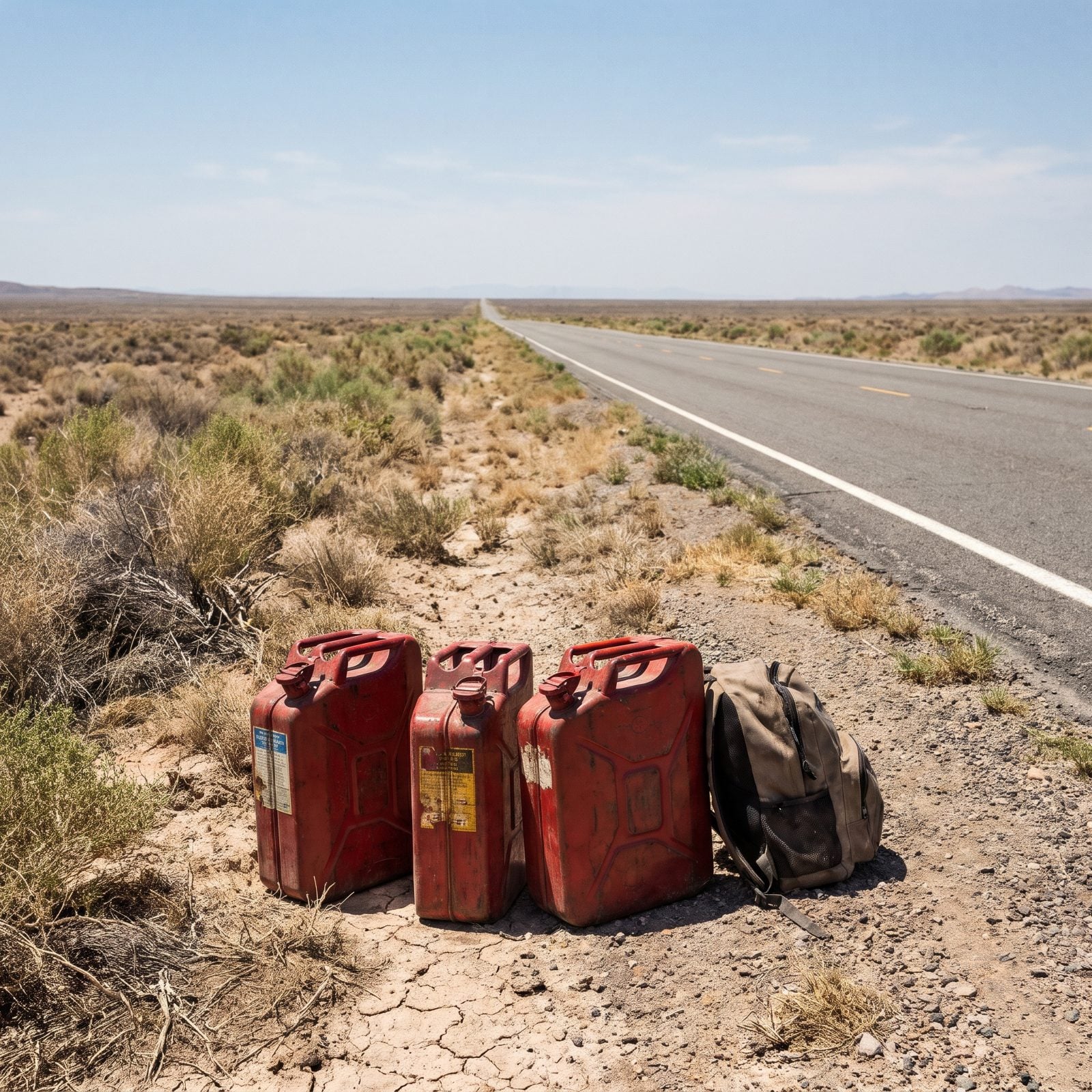
You bring enough fuel for the camping you planned. The desert occasionally has other plans — a stuck heat wave, a washed-out exit road, a longer stay than you meant to make. Suddenly your generator is the only thing keeping the fridge cold and the rig livable, and the tank reads near empty.
The nearest gas station might be forty miles of washboard away. That’s a long drive to make with the AC off in a hot RV.
Carry more fuel than your itinerary calls for, stored properly and legally in approved cans. Figure out your generator’s burn rate at the load you’ll run, multiply by the hours you’d need in a worst case, then add a cushion. Running low on power in the heat isn’t an inconvenience out there. It’s a safety problem.
30. Powering Your Rig Through a Skinny Extension Cord in the Heat
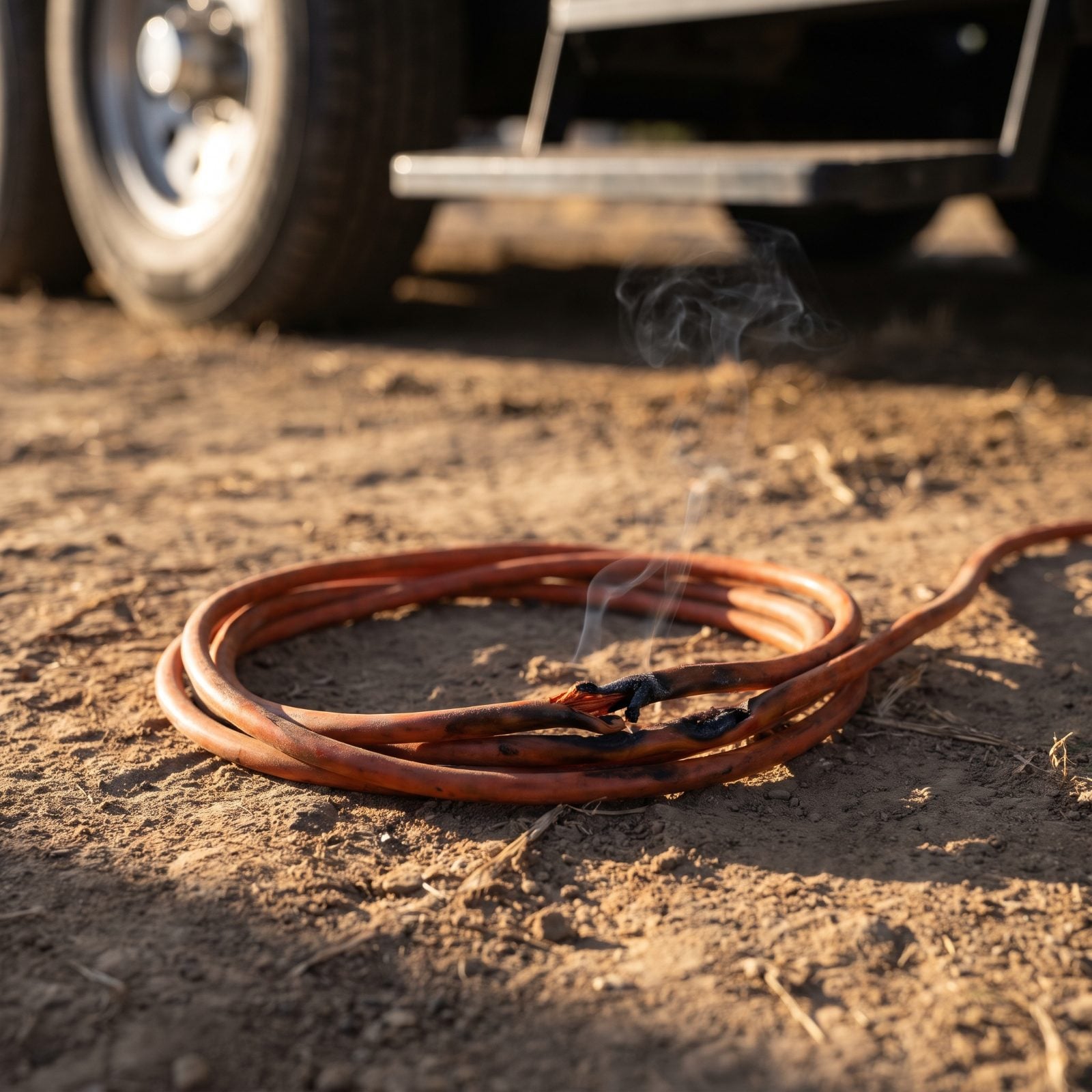
Grabbing the light orange extension cord from the garage to reach a distant pedestal feels harmless. It isn’t. Push a big air conditioning load through an undersized cord and the wire heats up, the voltage sags, and your appliances work harder on less power.
Desert heat makes the whole thing worse. A hot cord has less capacity, connectors warm up, and a thin cord running a full rig can get hot enough to melt its own jacket — a fire sitting in the dirt next to your home.
Use a proper heavy-gauge RV extension rated for your amperage: 10-gauge for a 30-amp rig, or the right heavy cord for 50-amp service. Keep runs short, check the connectors for heat with the back of your hand, and never chain two skinny cords together to stretch the distance.
29. Trusting Old Tires Because the Tread Still Looks Fine
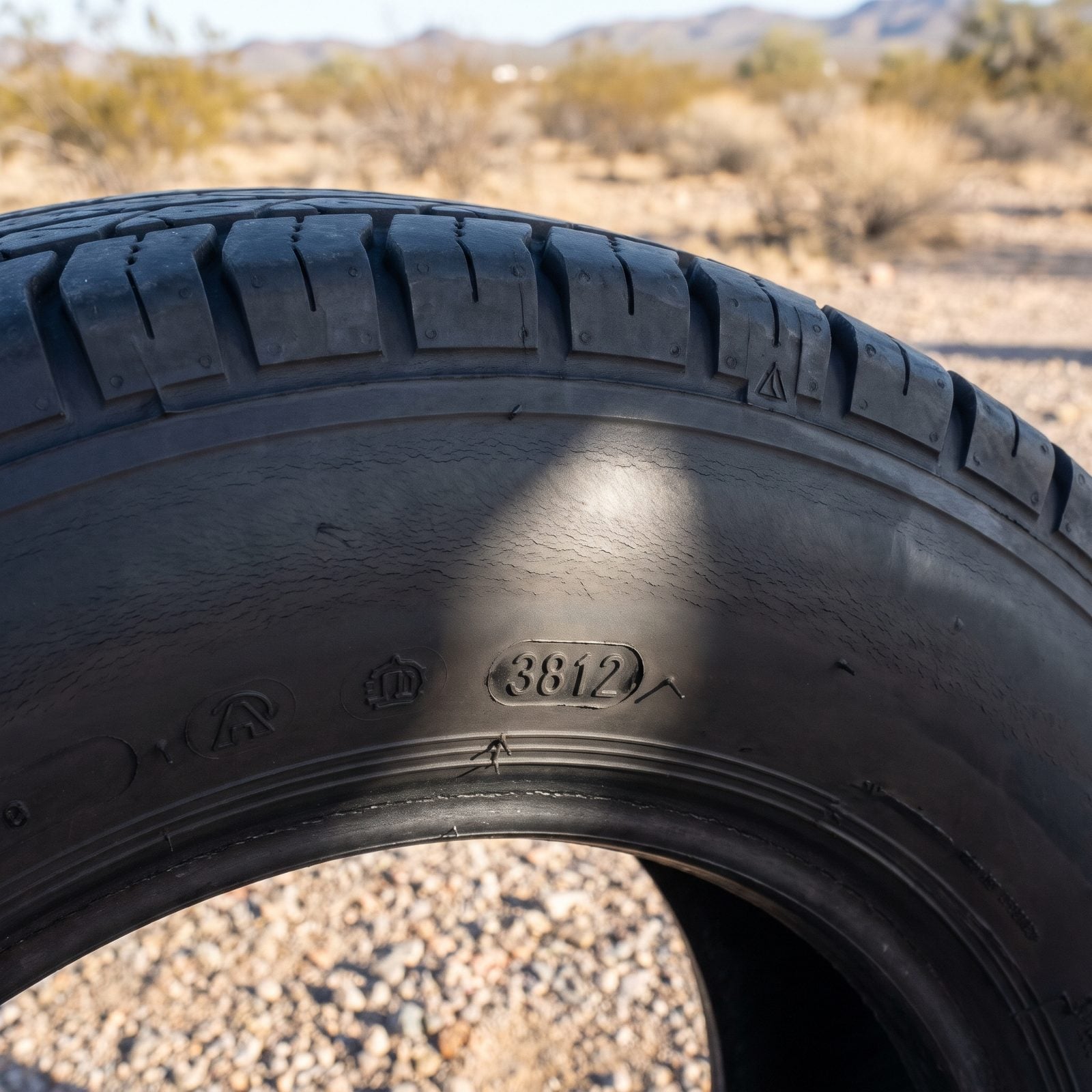
RV tires rarely wear out. They age out. A travel trailer tire can show beautiful tread and still be structurally shot, because it spent six years baking in UV and sitting under static weight.
Desert heat accelerates every bit of that. Hot pavement, blazing sun, and bone-dry air cook the rubber from the outside in until a sidewall lets go at highway speed on a hot afternoon. Good tread tells you nothing about that.
Read the date code on the sidewall — the four-digit stamp showing week and year of manufacture. Most RV tires want replacing at five to seven years regardless of tread, and sooner if you spot fine cracking in the sidewall. Check pressures cold, in the morning, before the heat inflates the reading and hides a slow leak.
28. Setting a Bottle Jack Straight Down on Soft Sand
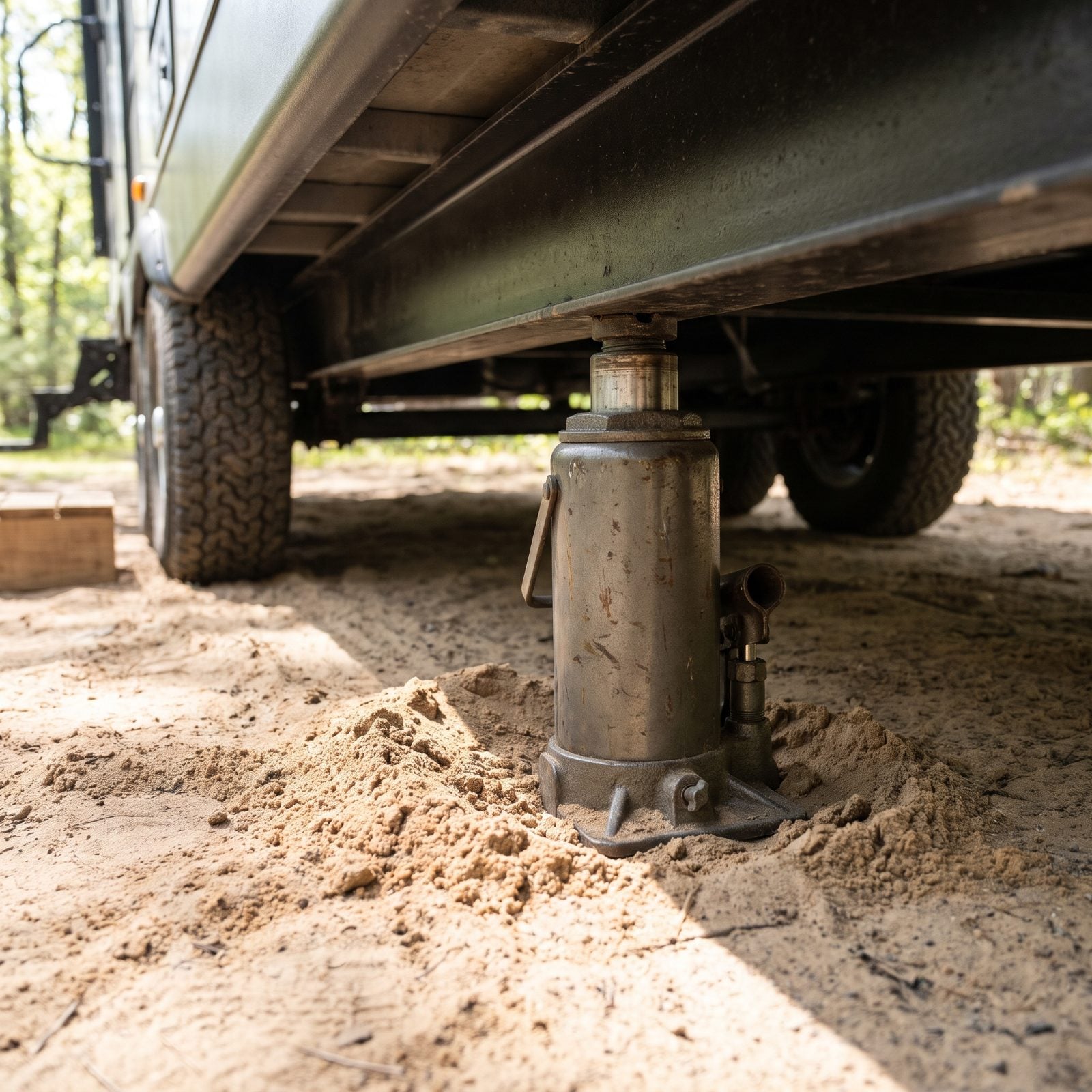
A bottle jack put straight on sand concentrates thousands of pounds onto a base the size of a saucer, and the desert floor just swallows it. The jack sinks, the rig tilts, and whatever you were doing underneath becomes genuinely dangerous. Soft ground plus a heavy rig is the exact recipe for a jack walking out sideways or burying itself mid-lift.
Spread the load instead. Set the jack on a wide, rigid pad — a dedicated jack pad, a thick hardwood block, a stout plywood square — so the weight transfers across a bigger footprint. Back it up with wheel chocks and a jack stand before any part of you goes near the underside. On sand, a flat base under the base is the whole difference between a lift and a lesson.
27. Pulling Onto a Soft Desert Shoulder
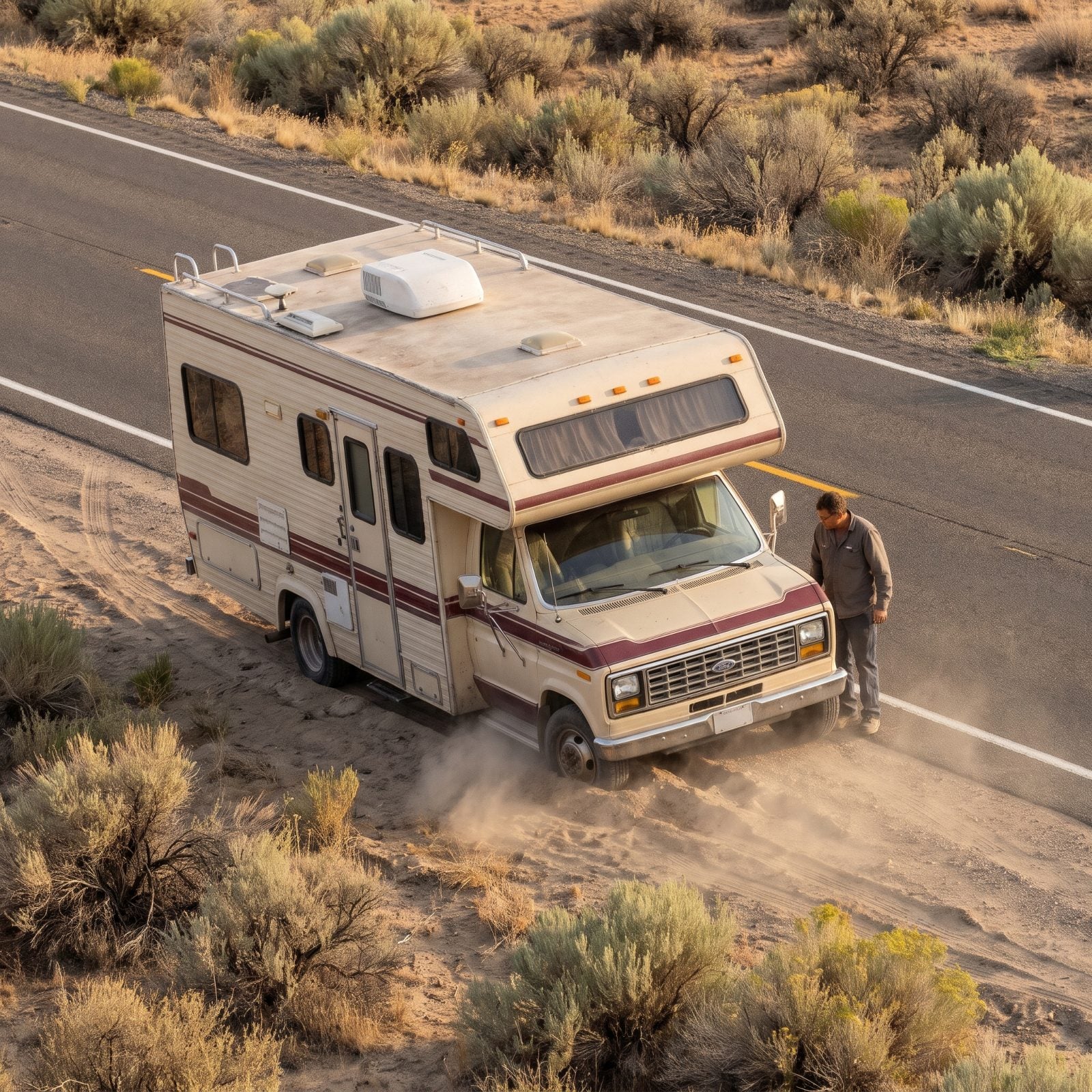
That wide, inviting shoulder is a trap. The top inch looks firm, but underneath it’s loose silt that grabs a tire the second you stop rolling, and a loaded coach doesn’t ease back out of it — it digs in and sits. We once watched a rig wait three hours for a tow truck that had to come from two counties over.
Keep at least your inside tires on hard pavement when you pull over. If you need a real break, wait for a paved pullout, a gas station, or a signed rest area. When in doubt, step out and press your boot into the ground first. Heel sinks? Your tires will too.
26. Taking an Unpaved Road Without Checking Recent Weather
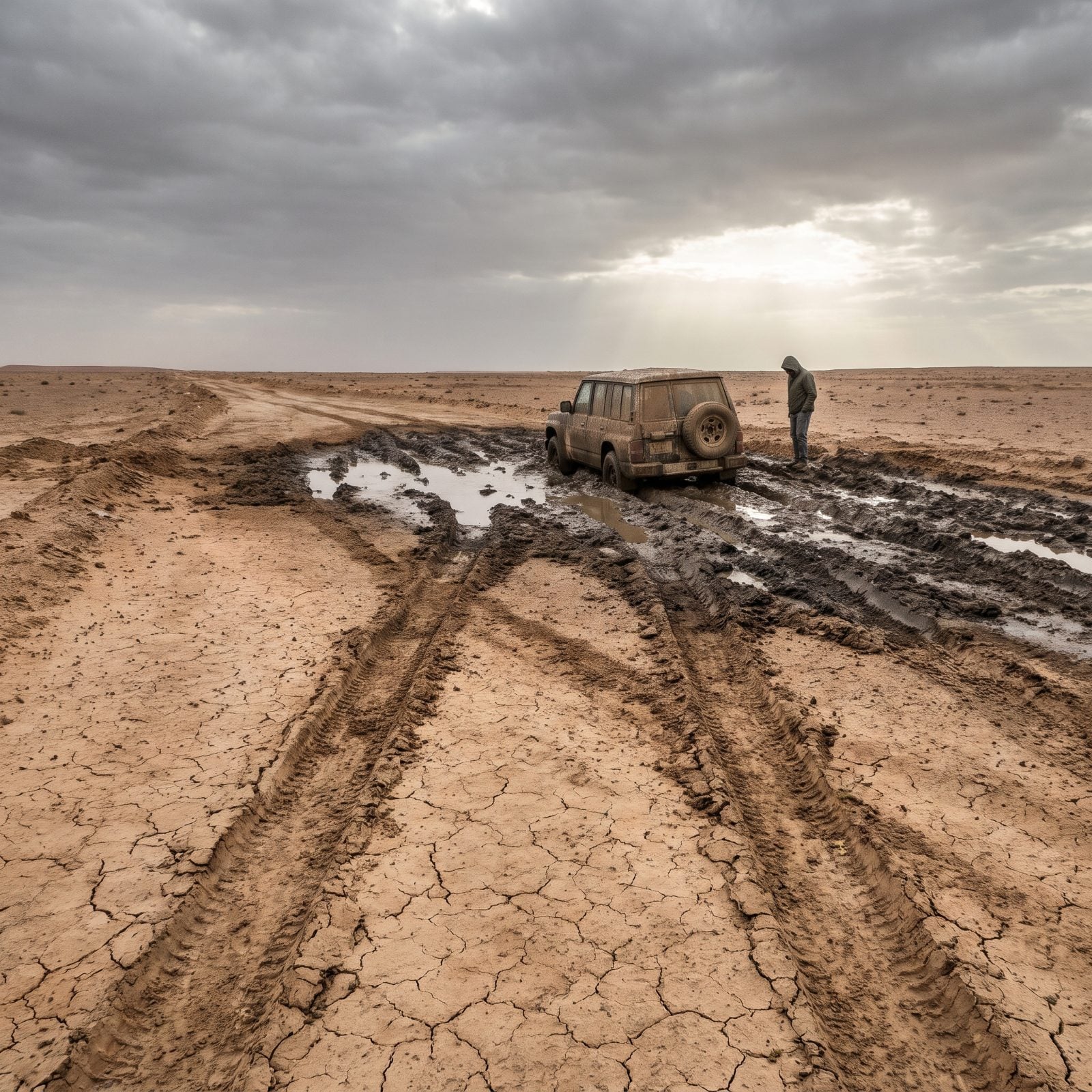
Desert dirt roads lie to you. They look bone-dry and feel like concrete, right up until you hit the spot where last night’s rain — miles away, somewhere you never saw — ran through a wash and turned the crossing to grease.
Flash floods don’t need rain where you are. They need rain upstream. Before you leave pavement, check the forecast for the whole watershed rather than just your dot on the map, then call the nearest ranger station or BLM field office about road conditions. Those folks know which crossings go soft.
25. Driving After Dark Through Open-Range Country
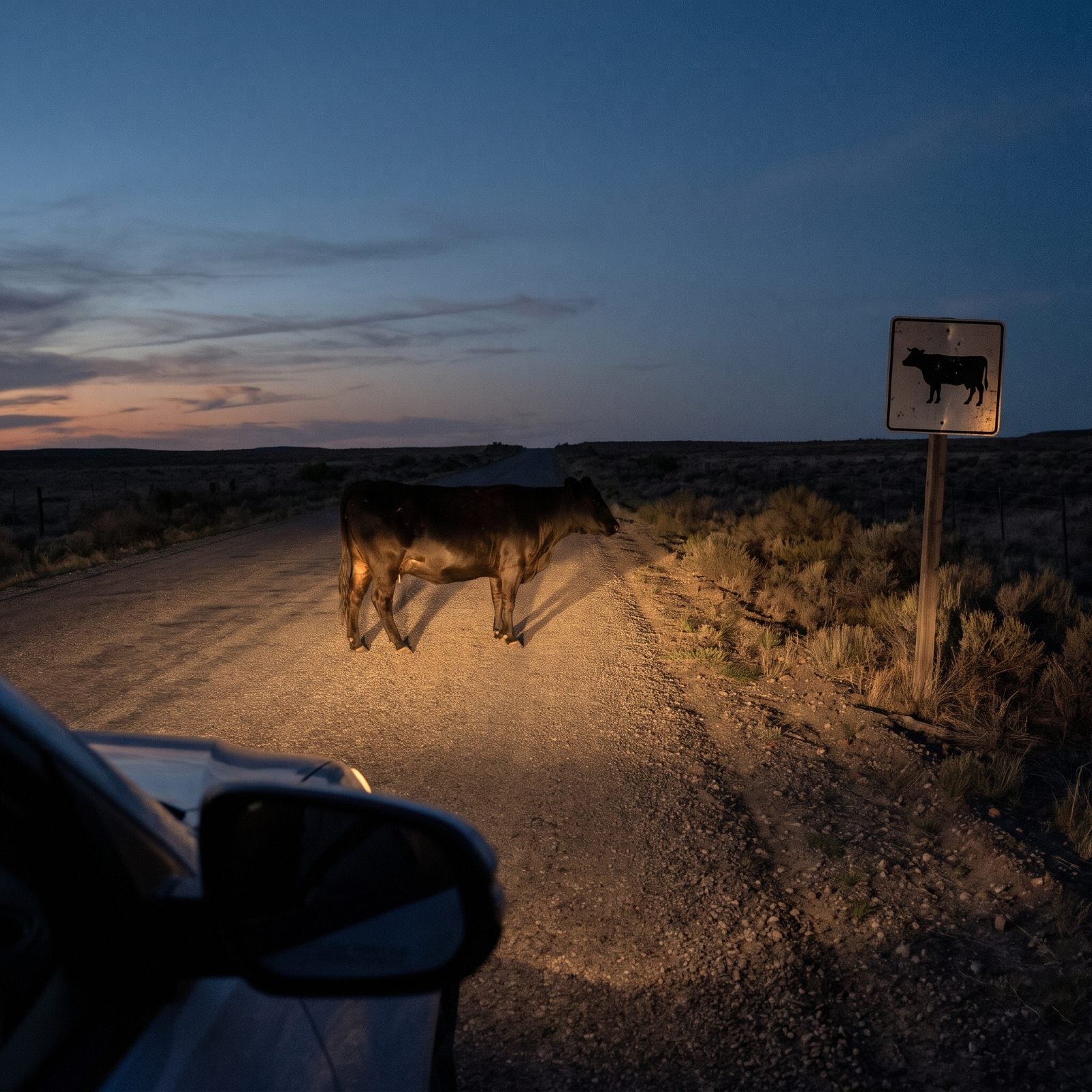
Open range means exactly what it says. No fence keeps cattle, horses, or mule deer off the road, and a black cow standing on warm asphalt at 9 p.m. is nearly invisible until your headlights are right on top of it. At highway speed in a heavy rig, there’s no stopping in time.
So plan your driving days to park before dusk. Dawn and dusk are peak hours for animals on the move, and they happen to be when your eyes see worst. If you must drive at night, drop your speed hard, run high beams whenever there’s no oncoming traffic, and scan the shoulders for the shine of eyes.
24. Entering Remote Country Without a Recovery or Towing Plan
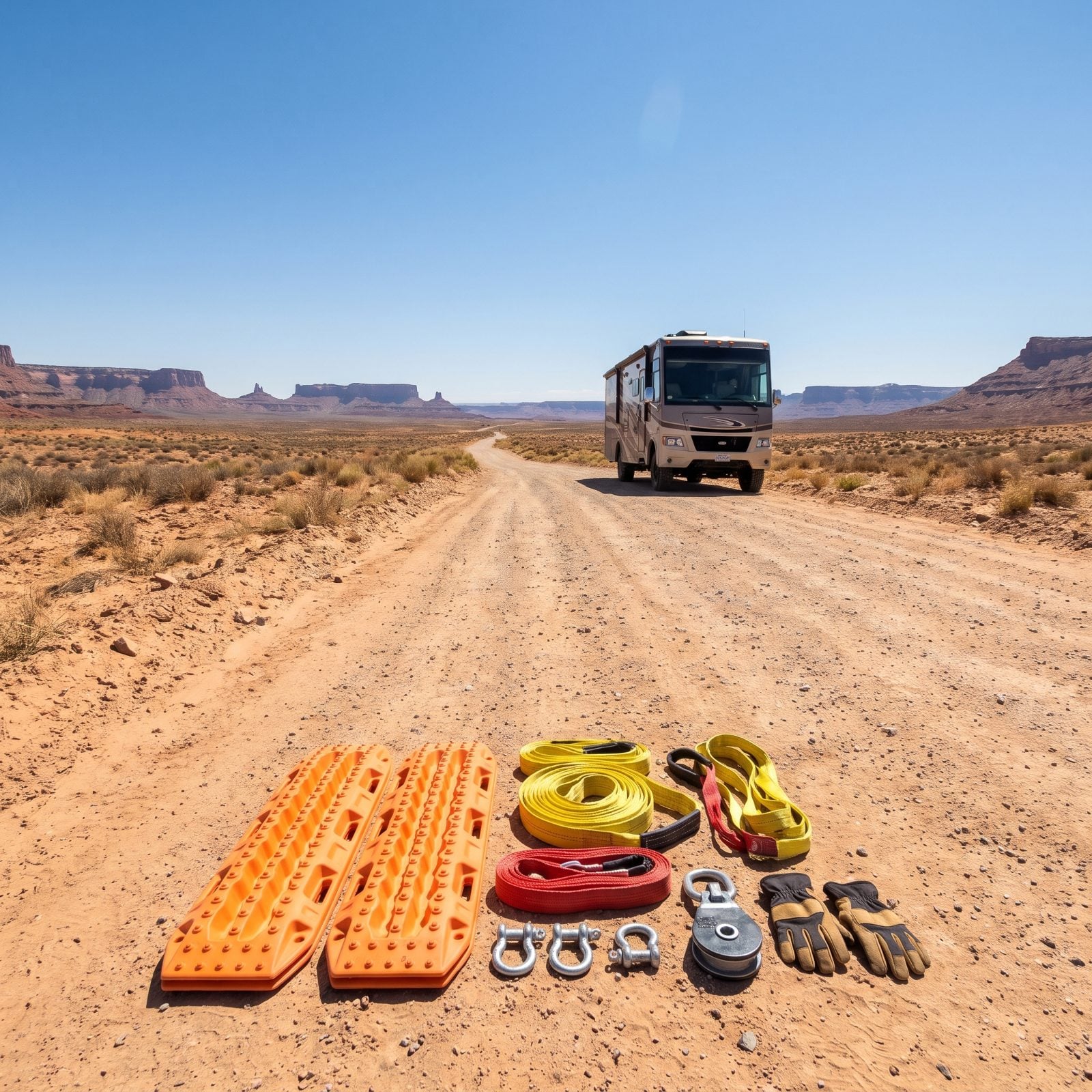
Twenty miles down a BLM road is a wonderful place to spend the night and a terrible place to need help you didn’t bring. Cell towers are gone, the nearest tow operator may not even service dirt roads, and a flatbed big enough for your rig could be a six-hour round trip — assuming one exists at all.
Build a self-recovery kit before you go remote, and know how to use it. The minimum: orange traction boards, a rated tow strap, a folding recovery shovel, a bottle jack, and solid jack pads for soft ground. Save the numbers for the regional tow companies that actually run heavy equipment, and tell someone your route and return date.
The gear you never use is the cheapest insurance you’ll ever buy.
23. Relying on Cell Service for Turn-by-Turn Navigation
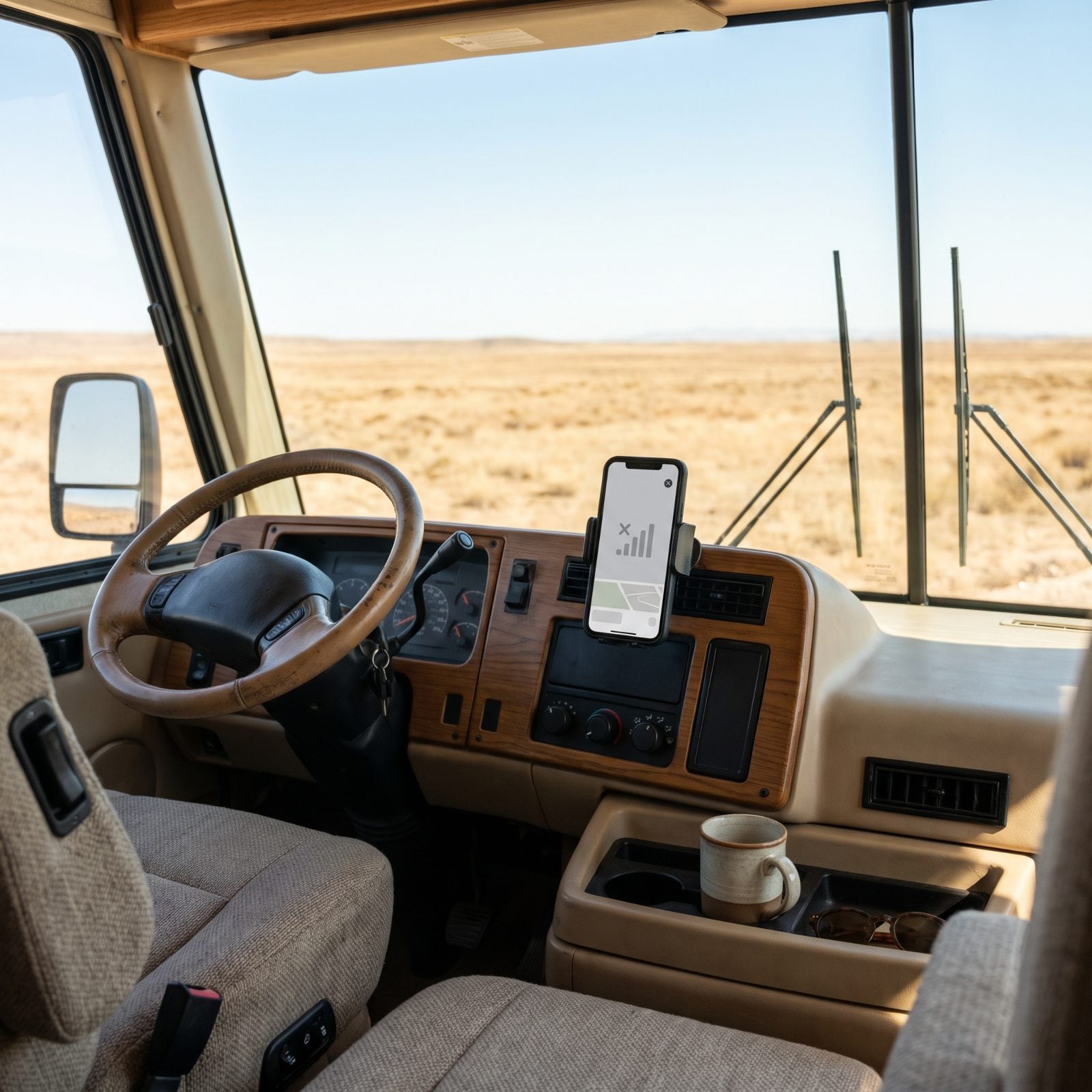
Your phone’s navigation is brilliant until the bars vanish, and across big desert stretches they vanish for an hour at a time. When the map goes gray, turn-by-turn quits mid-sentence — and that’s exactly when the unmarked forks and the wrong-way reroutes show up to test you.
Download offline maps for your whole region before you leave coverage. Google Maps, Gaia, and onX all let you cache areas ahead of time. And keep a paper atlas in the door pocket. A Rand McNally road atlas never loses signal, never needs charging, and hands you a big picture no phone screen can. We still trace our route on paper the night before. Call it a ritual.
22. Traveling Beyond Coverage Without a Satellite SOS Device
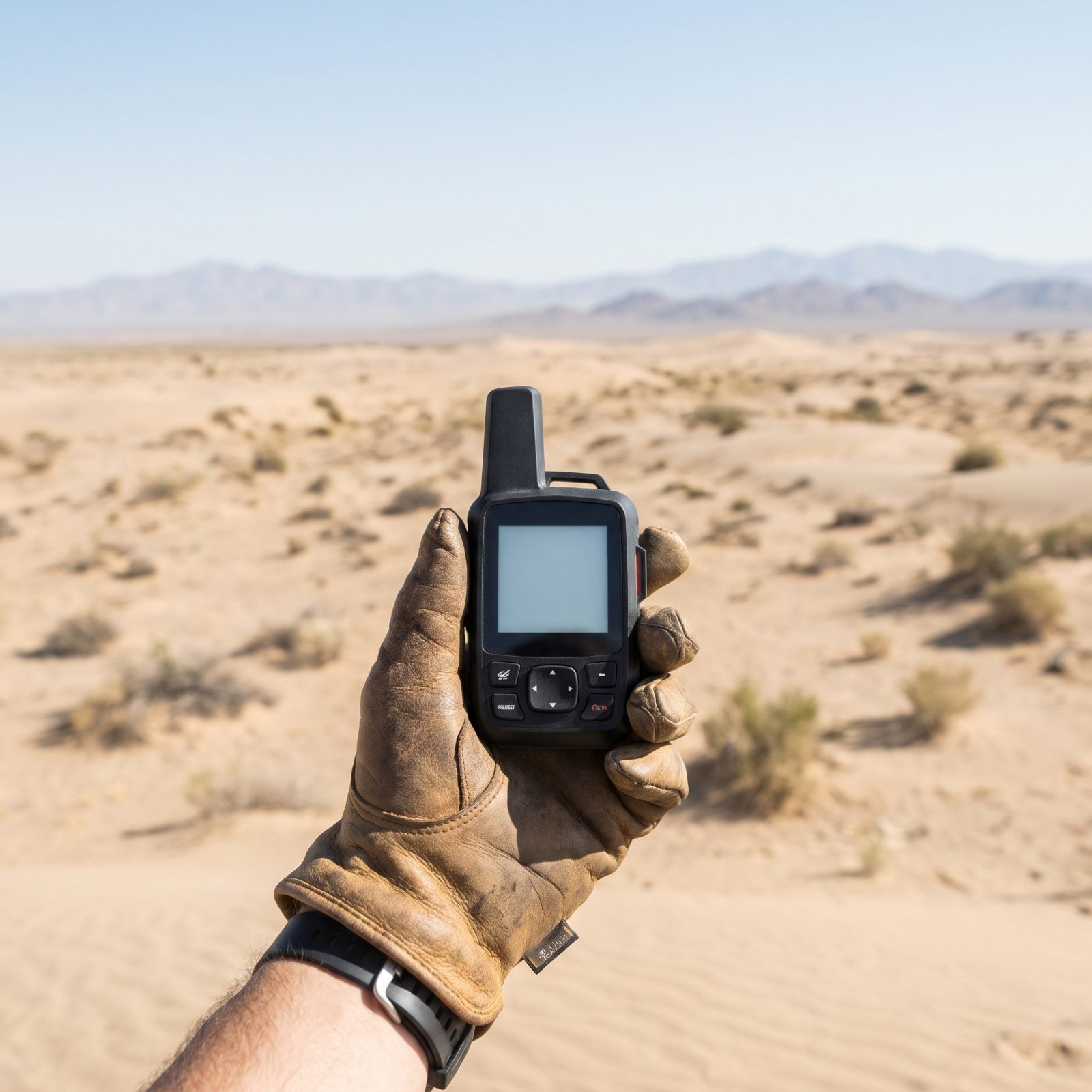
Picture the scenario nobody wants to: a medical emergency, no cell signal, and no way to call anyone. It happens in the backcountry every season, and the people it happens to are usually experienced and careful. They just didn’t carry a way to reach help.
A satellite messenger closes that gap. A Garmin inReach Mini or a ZOLEO lets you trigger an SOS to search-and-rescue and two-way text from anywhere with open sky, no towers required. Newer iPhones and some Androids now do emergency satellite texting too, which helps — but a dedicated device works where phones give up entirely.
21. Storing Heat-Sensitive Medications in a Hot Cabinet
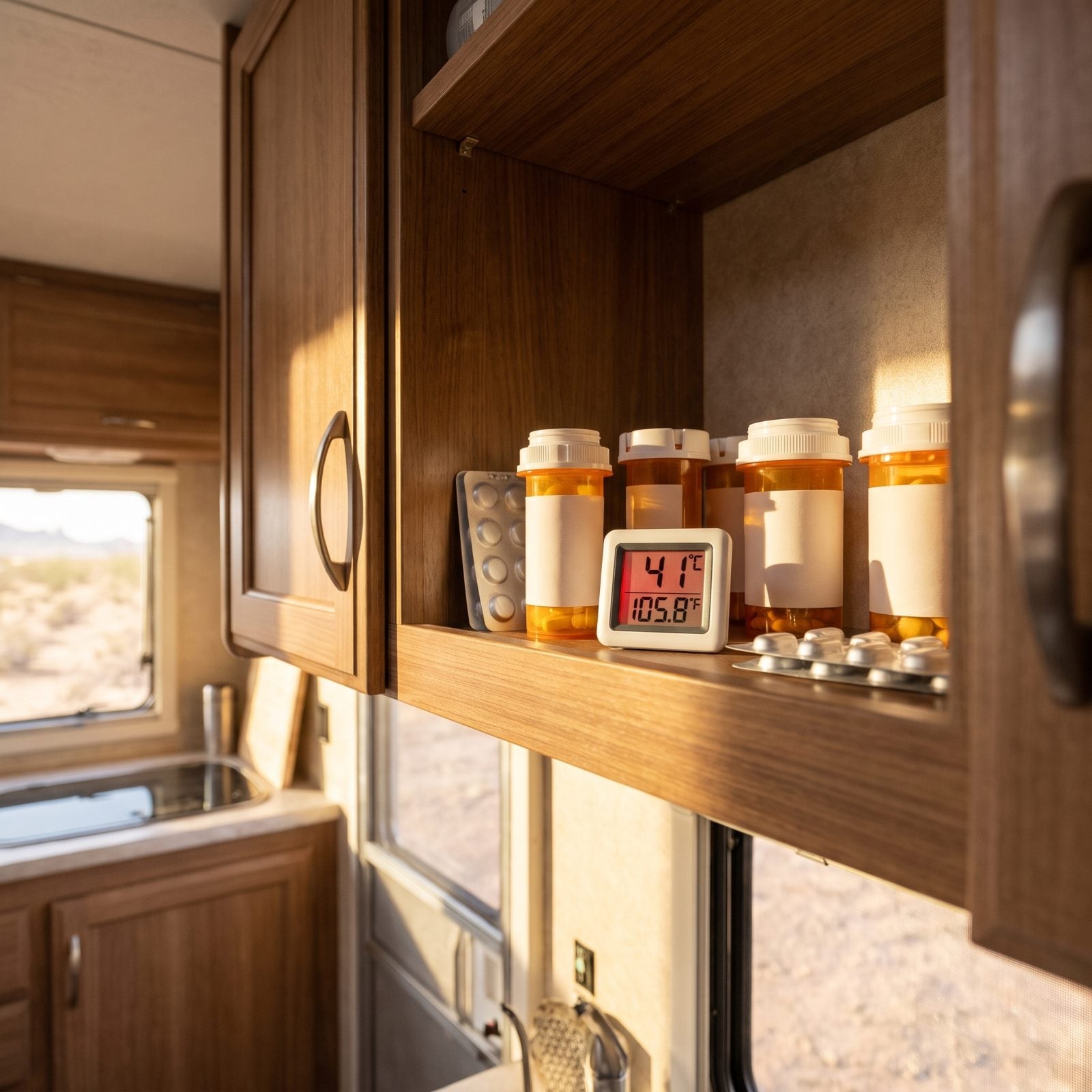
An RV cabinet in July desert heat can top 120 degrees by early afternoon, and most medications never advertise how badly that cooks them. Insulin, injectables, inhalers, plenty of common pills — they all lose potency in that heat, and you won’t see it, taste it, or feel it until the dose quietly stops working.
Store anything temperature-sensitive in your RV fridge or a dedicated medication cooler. Never a door pocket, glovebox, or upper cabinet on an exterior wall. Keep an insulated medication cooler for travel days and refuel stops. Check every prescription’s storage range on the label, and ask your pharmacist about anything you’re unsure of before you head south.
Warning about heat-exposed prescriptions, a pharmacy manager says “Like leaving your child in the car, same with your medications. Your medications can be affected, even by short times in extreme temperatures”
20. Walking a Dog Without Testing the Ground Temperature
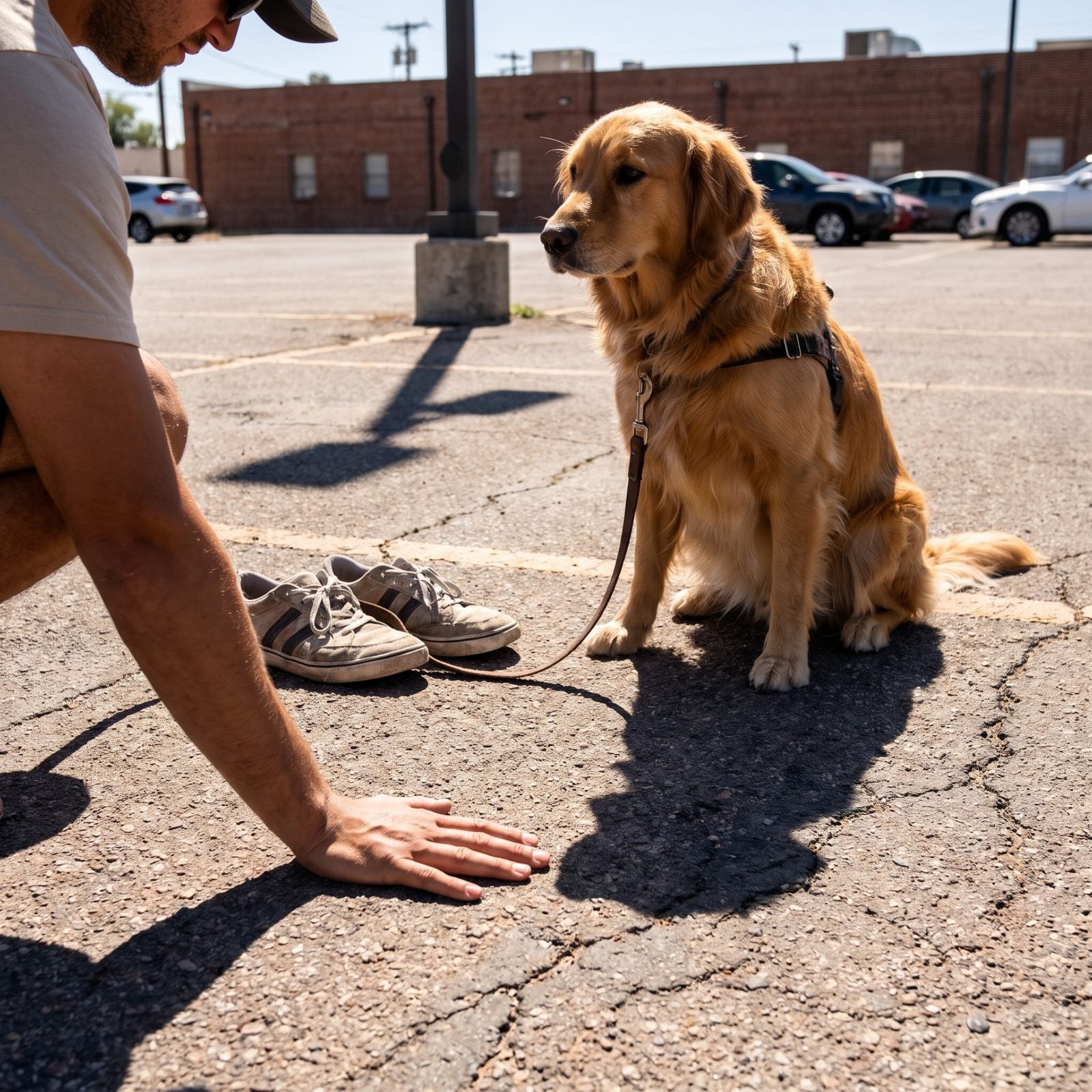
Desert pavement and sand can hit 150 degrees when the air is only 100, and that burns paw pads in under a minute. The cruel part? Dogs often won’t show it until the damage is done, because they’ll walk through pain to stay with you.
Do the seven-second test: press your palm flat on the ground. If you can’t hold it for seven seconds, it’s too hot for paws. Walk at dawn and after dark, stick to shaded dirt, and carry a collapsible water bowl everywhere you go.
Describing the paw burns its vets treat every summer, one veterinary clinic notes that “On an 87°F day, asphalt can reach temperatures above 140°F, hot enough to damage a dog’s paw pads in under 60 seconds.”
19. Reaching Into Rocks or Compartments Without Checking for Snakes
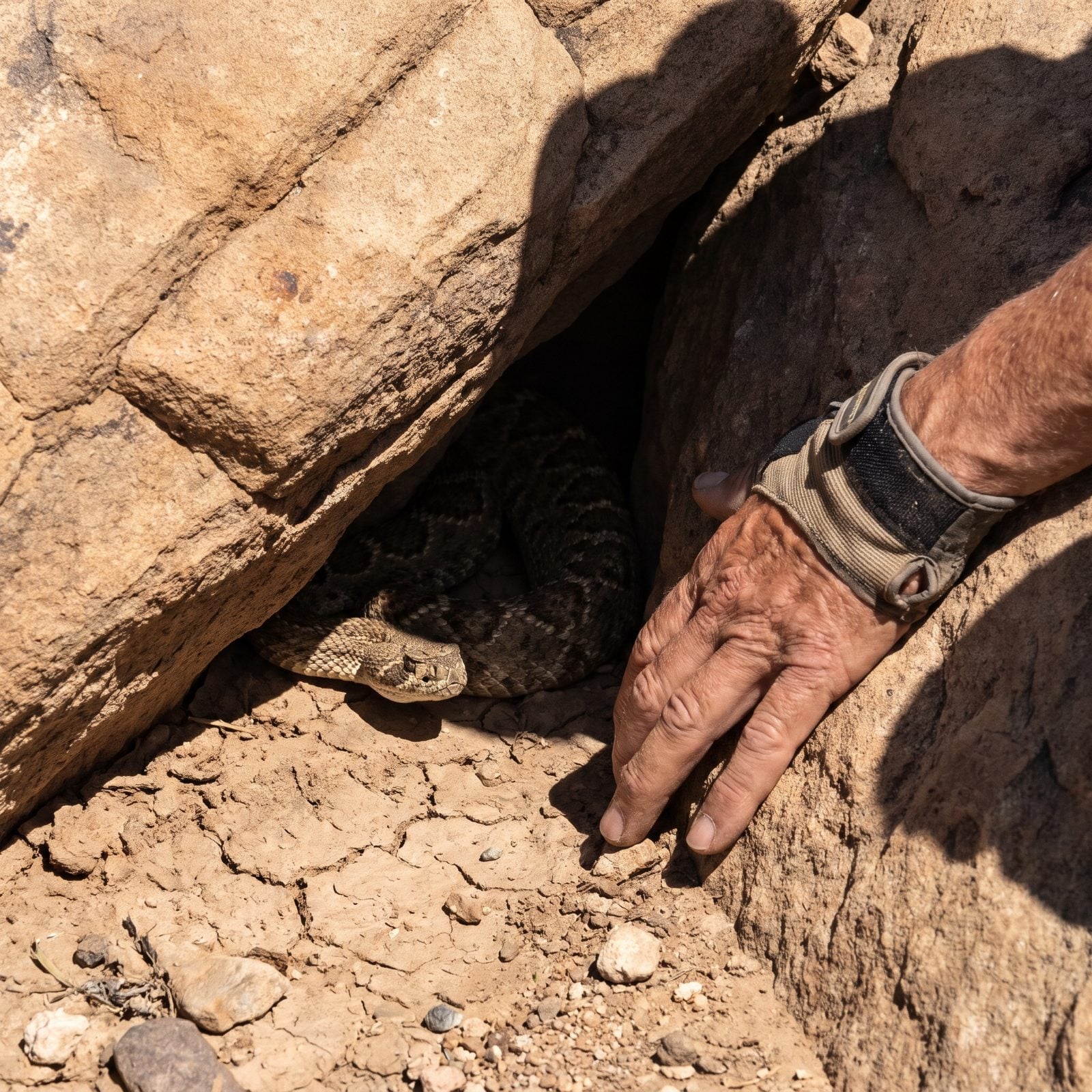
Rattlesnakes and scorpions want exactly what you want in the desert: shade and cool shelter. That means the gap under your rig, your dark storage bays, your firewood pile, and the shady side of any rock you’re tempted to grab for leveling.
Look before you reach. Shine a flashlight into compartments before you plunge a hand in, and never flip a rock or log with bare fingers. Keep bay doors closed between uses. Most bites land on hands and feet that reached into places the eyes never checked first.
18. Leaving Wiring and Food Accessible to Desert Rodents
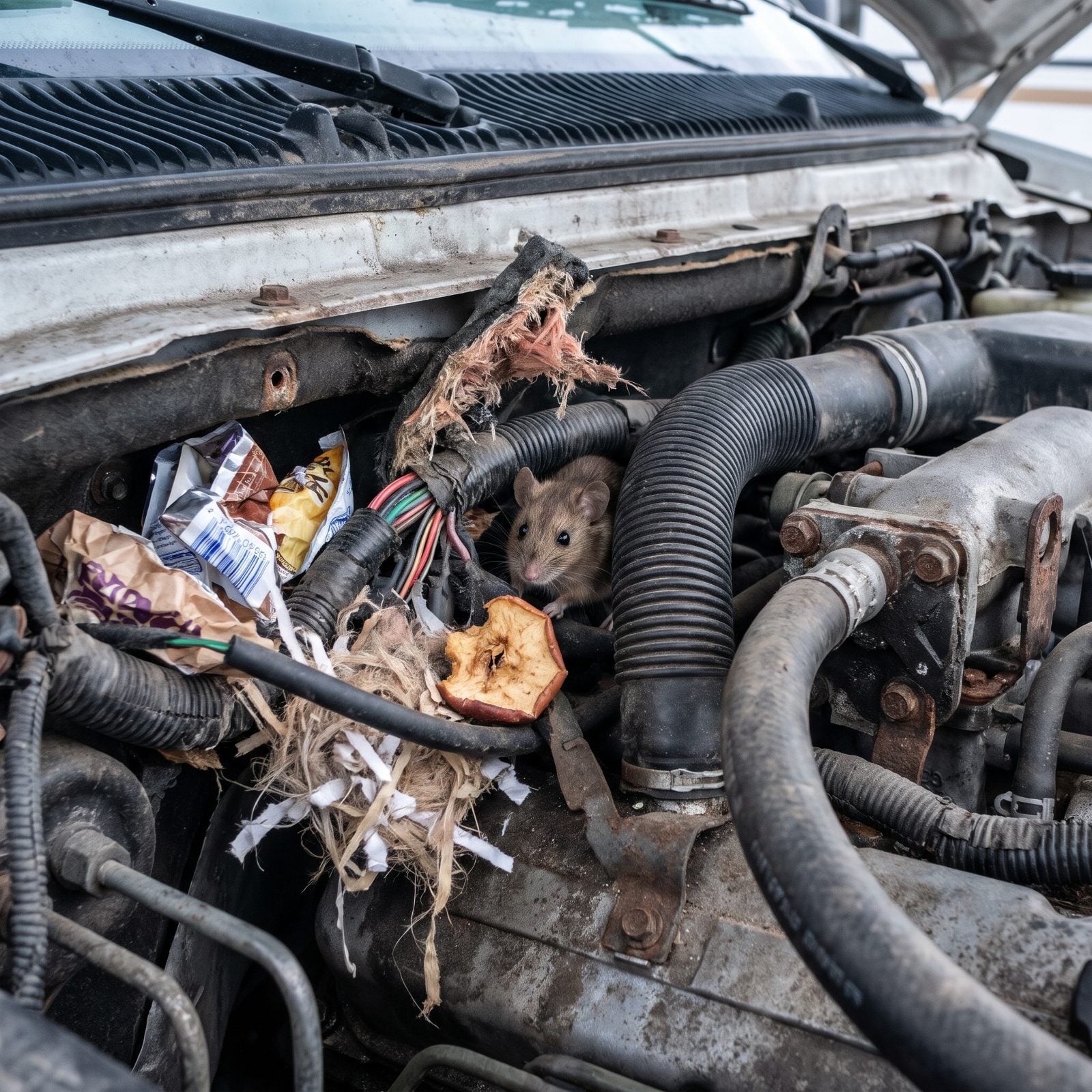
Packrats and desert mice love a warm engine bay, and they love the soy-based insulation modern manufacturers wrap around wiring even more. A nest builds overnight. The first sign you’ll get is a chewed harness and a repair bill that climbs into four figures.
Park with intention. Pop the hood every few days to break up nesting, run a battery or solar rodent-deterrent light in the engine bay, and never leave food — even sealed snacks — in open cabinets or exterior bays. Move everything tempting into hard-sided containers, sweep up crumbs, and maybe toss in a peppermint-oil pack as a mild backup. In long-term desert storage, this is what separates driving off clean from finding a surprise under the hood come spring.
17. Parking Beside Cholla Cactus Without Noticing It
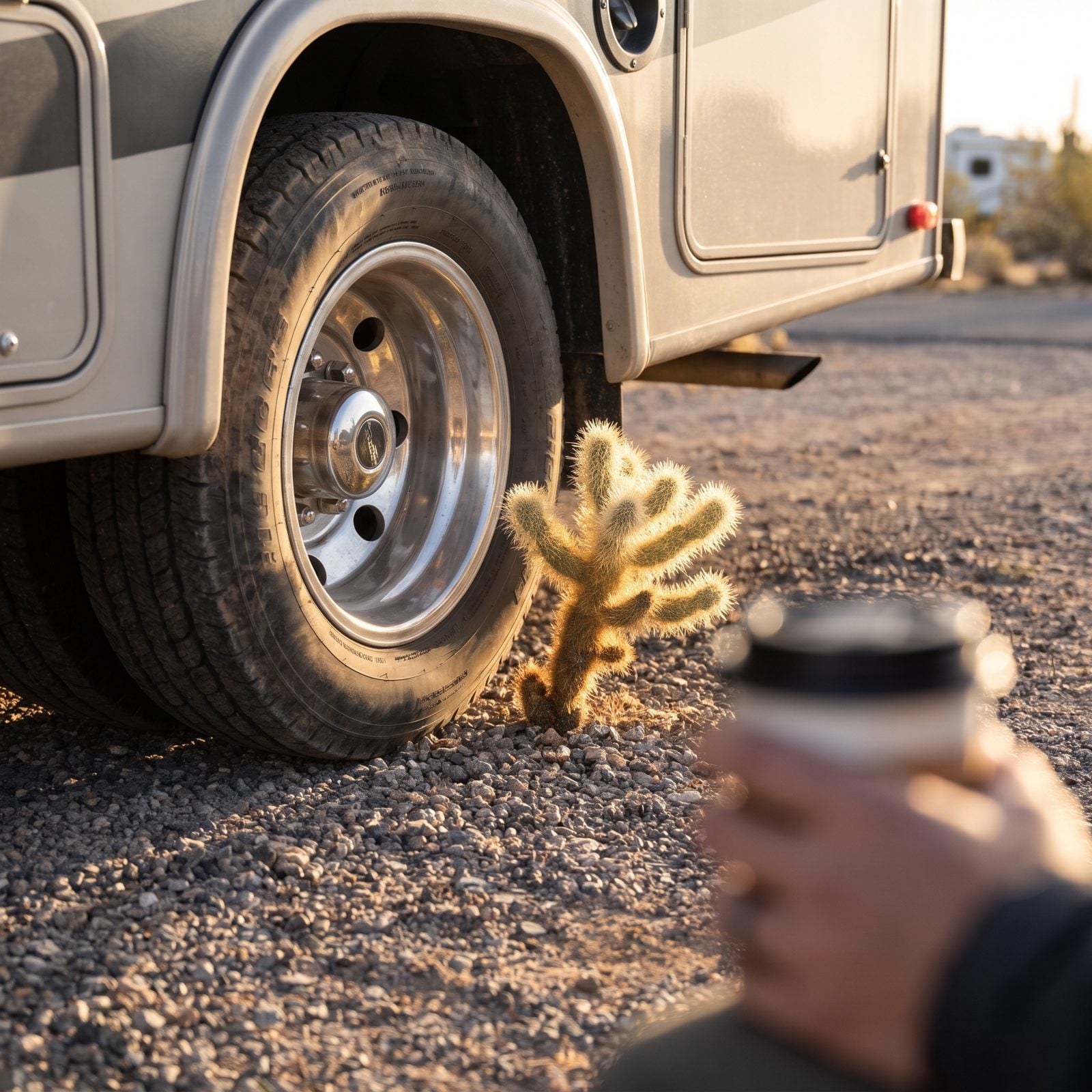
Cholla looks fuzzy and harmless from a distance, almost soft. It isn’t. The barbed spines hook into anything that brushes them, and the segments break off so easily that people swear the plant jumps. It doesn’t, but a light touch from a shoe, a leash, or a swinging tail is plenty.
Those loose segments litter the ground around the plant. Drag them in on a doormat, a dog’s paw, or a tire tread, and you’ll be picking spines out of fingers and fabric for days. The barbs make every one fight its way back out.
Before you set up, walk the site and look down as much as up. Keep the door, the mat, and the dog’s path well clear of any cholla, and kick dropped segments away with a boot, not a hand. Then stash a wide-tooth comb and needle-nose pliers by the door. Slide the comb under a stuck segment to flick it off, and use the pliers for the stragglers.
16. Underestimating UV Reflected From Sand and Pale Rock

You found shade, put on a hat, and still came back pink under your chin and around your eyes. Pale sand and light rock bounce sunlight back up at you, so UV hits from below and the sides as well as from straight overhead. A hat brim and an awning only handle one direction.
The dry, clear air and higher elevation of much desert country make it worse. There’s less haze to soften the sun, so a burn sneaks up faster than it would at home.
Treat the ground as a second sun. Wear sunscreen on the undersides you usually skip: chin, neck, ears, and the backs of your legs. Choose wraparound sunglasses labeled UV400 so reflected glare can’t slip in at the edges. Lightweight long sleeves and a wide brim beat reapplying lotion every hour, and your eyes will thank you on long, bright drives too.
15. Starting a Hike During Peak Afternoon Heat
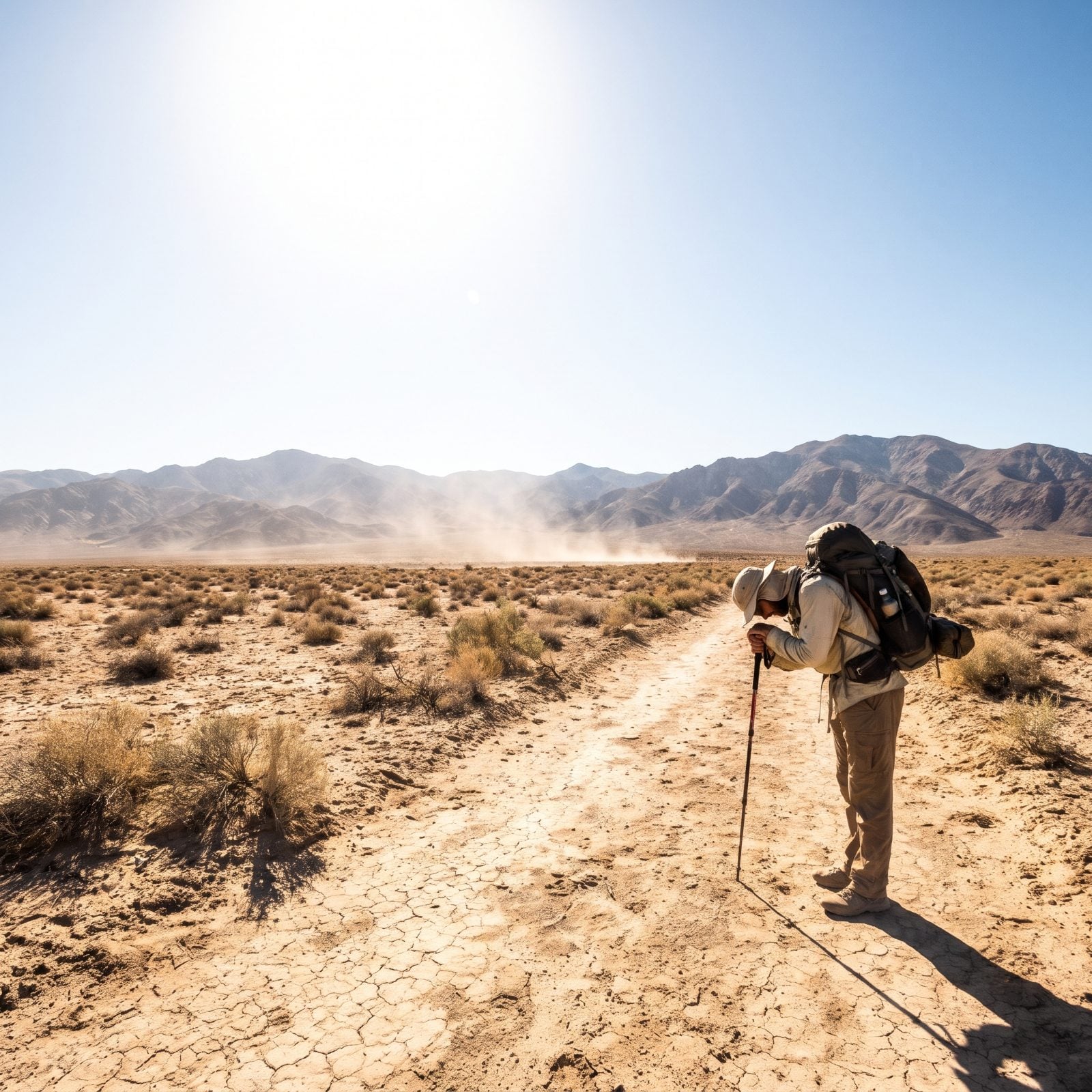
Afternoon looks like the obvious time to hike. You’ve had lunch, the coffee has worn off, and there’s daylight to spare. But desert heat peaks in the middle to late afternoon, long after the sun hits its highest point, because the rock and sand keep soaking up heat and radiating it back at you.
That’s how a two-hour loop turns into heat exhaustion halfway around. There’s no shade on the trail, the water you packed runs short, and the walk back to the rig is the same distance in worse conditions.
Start at first light and plan to be off the trail by late morning. If you only have afternoons, save the hike for the cooler weeks or swap it for a short evening walk. Carry more water than you think you need, and once half of it is gone, turn back no matter how close the viewpoint looks.
14. Packing for Hot Days but Not Freezing Desert Nights
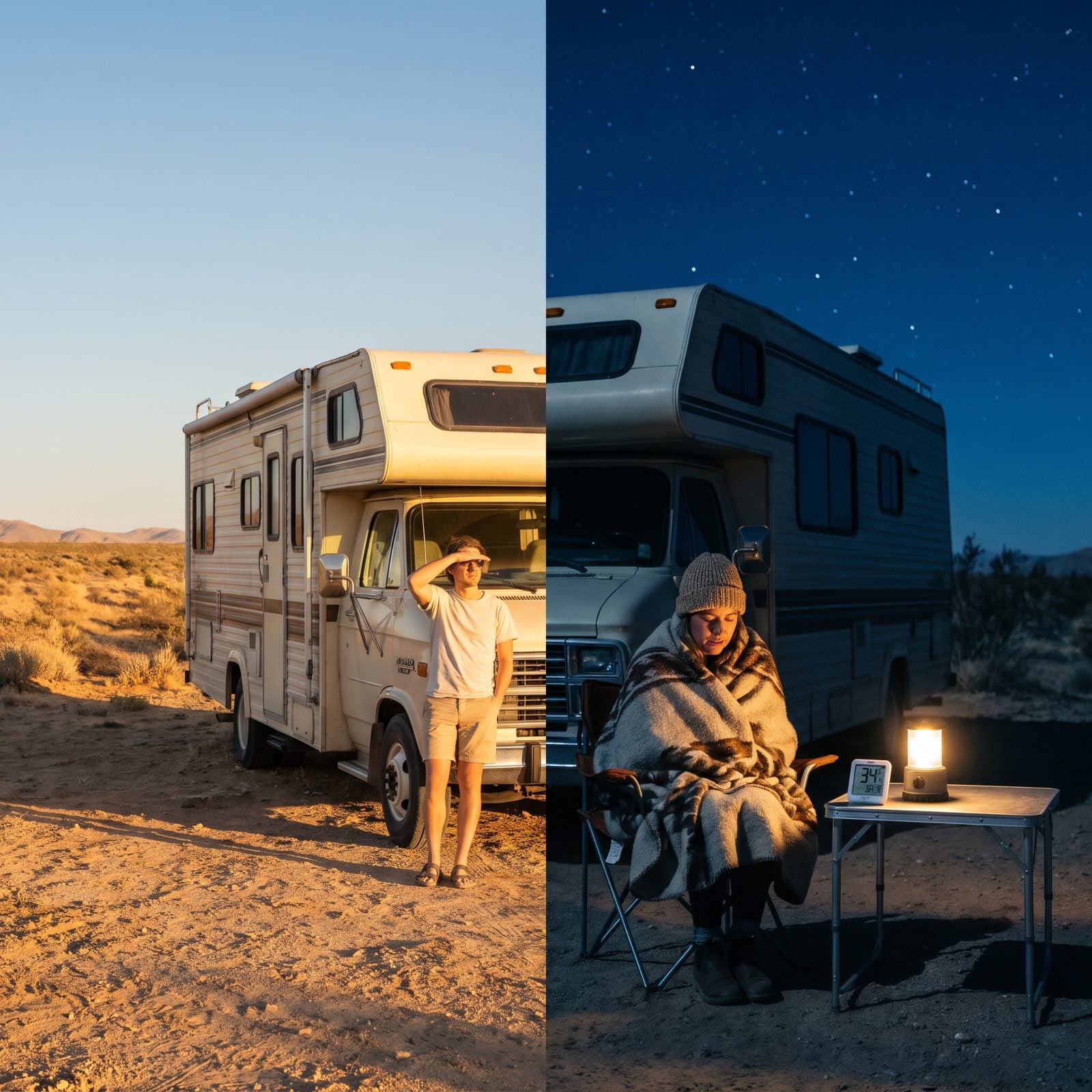
The desert does not stay hot after dark. Dry air holds very little heat, so once the sun drops, temperatures can fall dramatically, often by thirty degrees or more. In winter, high-desert nights regularly dip below freezing even after a shorts-and-sandals afternoon.
People who packed only for the heat end up shivering in camp chairs and running the furnace all night, burning through propane they planned to stretch for a week. Exposed water hoses and outdoor lines can freeze solid by morning, too.
Pack in layers: a warm jacket, a hat, real socks, and bedding rated for the cold, not the daytime high. Check the overnight low every evening, and when it’s heading toward freezing, disconnect and drain the outdoor hose or switch to a heated one. Keep an eye on propane levels so the furnace doesn’t run you dry at 3am.
13. Assuming Every Campground Spigot Provides Safe Drinking Water
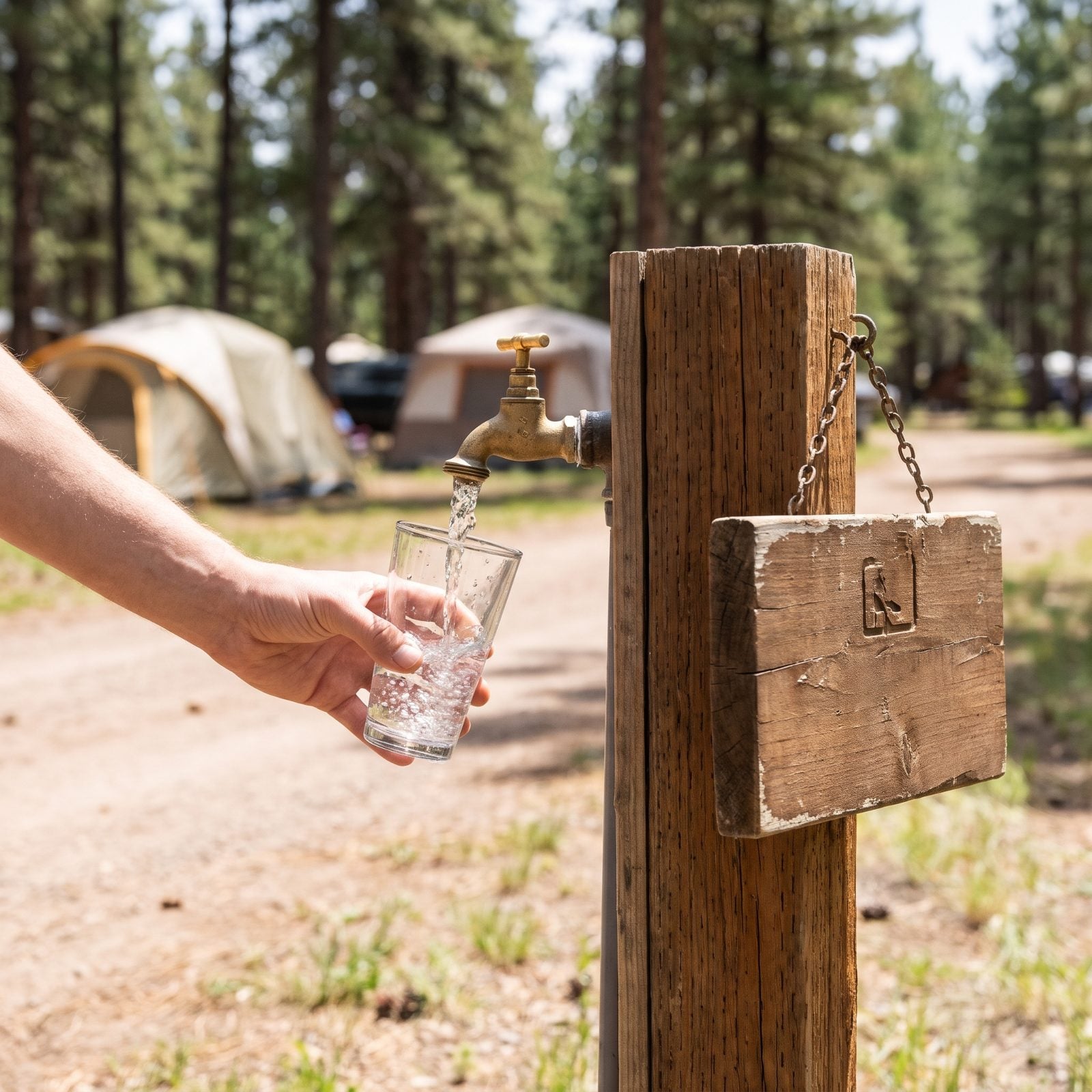
A spigot at your site feels like a promise. It isn’t one. Some desert campgrounds supply non-potable water meant only for flushing, washing, or filling stock tanks, and the signs that say so can be small, faded, or missing entirely.
Fill your fresh tank from the wrong spigot and you’ve contaminated the water you drink, cook with, and brush your teeth with, plus the tank and lines it lives in. Cleaning that up means a full sanitizing job, not just a refill.
Ask the camp host or check posted information before you connect, and look carefully for any non-potable labeling at the tap. Use a dedicated drinking-water hose, never the one you rinse the sewer gear with, and run an inline filter for taste and sediment. Just remember a basic filter isn’t a license to drink water that’s marked unsafe. When in doubt, fill up somewhere you know is good.
12. Waiting Until the Waste Tanks Are Full to Find a Dump Station
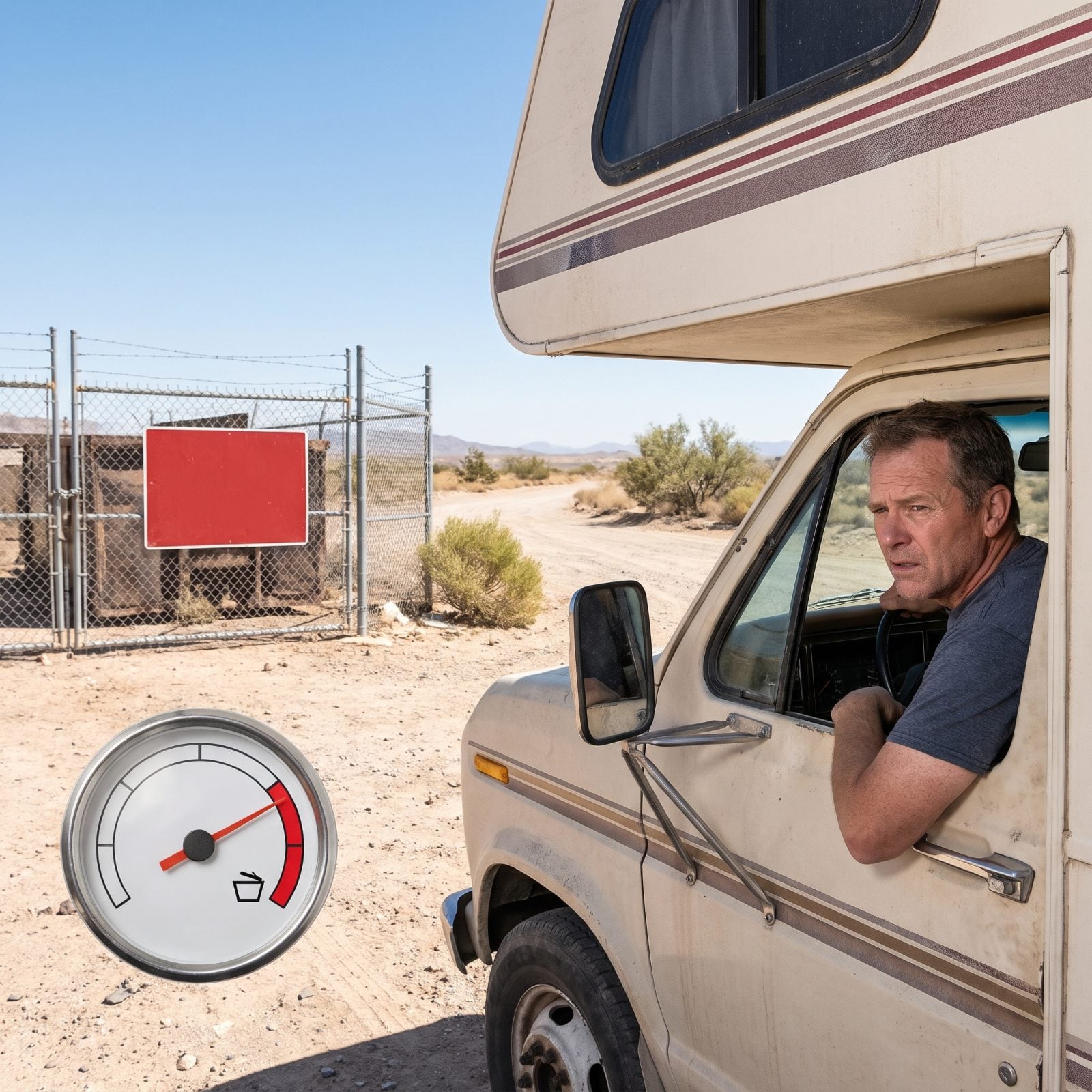
In the city there’s a dump station around every corner. Out here, the nearest one might be an hour away, closed for the season, or out of service with a handwritten sign taped to the cap. Waiting until the gauge reads full leaves you zero margin when that happens.
Heat makes the wait worse. A warm black tank gets smelly fast, and in dry air the contents can thicken and settle, which makes the tank harder to drain clean when you finally reach a dump.
Plan dump stops the way you plan fuel stops. Note the stations along your route before you head into remote country, call ahead about seasonal hours, and empty whenever you pass a good one, even at half full. Keep enough water in the black tank to keep things moving, and use a tank treatment suited to hot weather to keep the odor in check.
11. Leaving the Awning Out When You Leave Camp
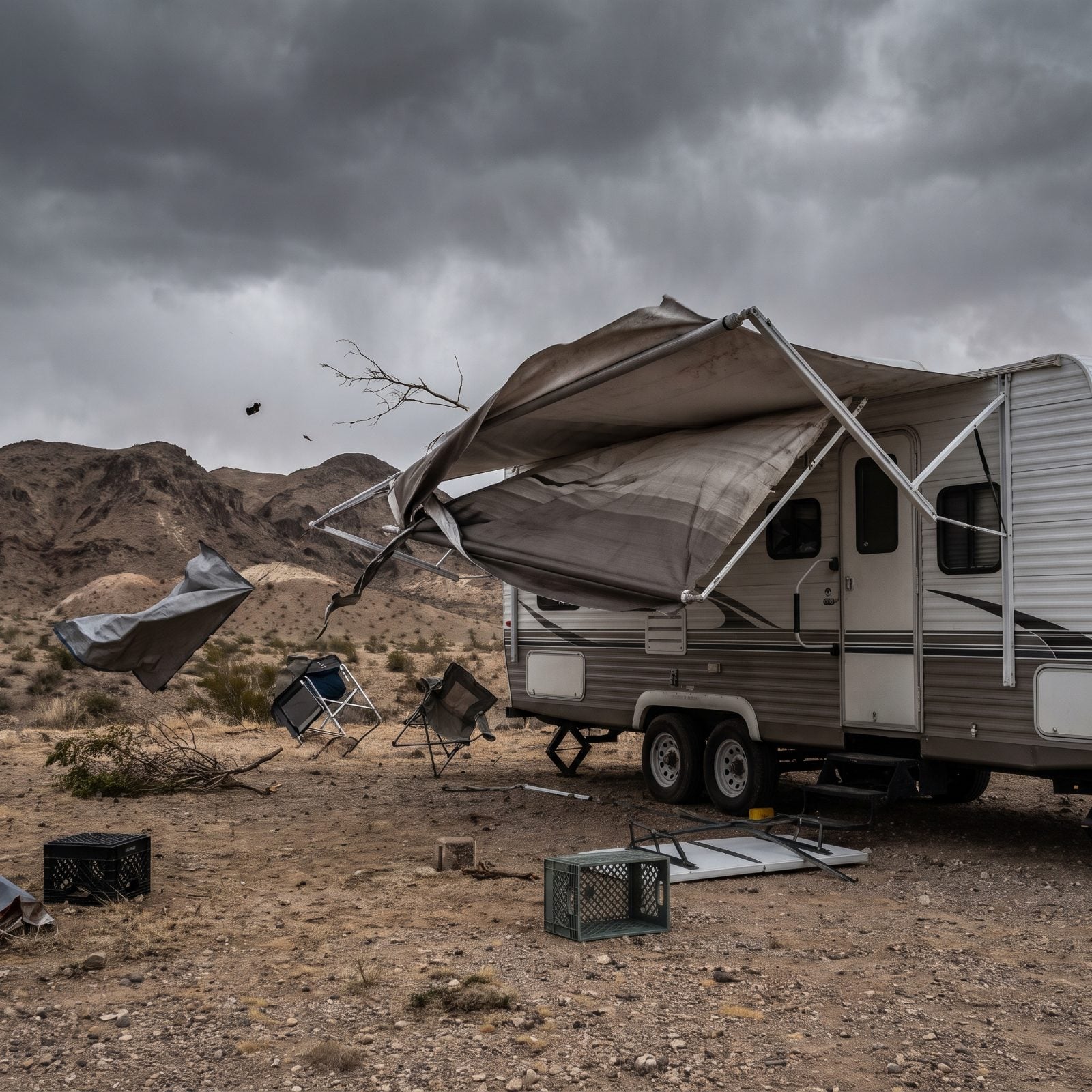
Desert wind arrives with almost no warning. A dead-calm morning can turn into hard gusts by midafternoon, and an extended awning acts like a sail bolted to the side of your rig. One strong gust can flip it over the roof, bend the arms, or tear the fabric straight off the roller.
That damage rarely stops at the awning, either. A flailing arm can dent siding, crack a window, or rip mounting hardware out of the wall, turning a simple replacement into a much bigger repair.
If you’re leaving camp, roll it in, even if you only plan to be gone an hour. Do the same at night and any time the forecast calls for gusts. Some power awnings have wind sensors that retract automatically, but treat that as a backup, not a plan. Check your owner’s manual for the wind limits your specific awning can handle.
10. Opening Roof Vents Without Dust-Blocking Covers
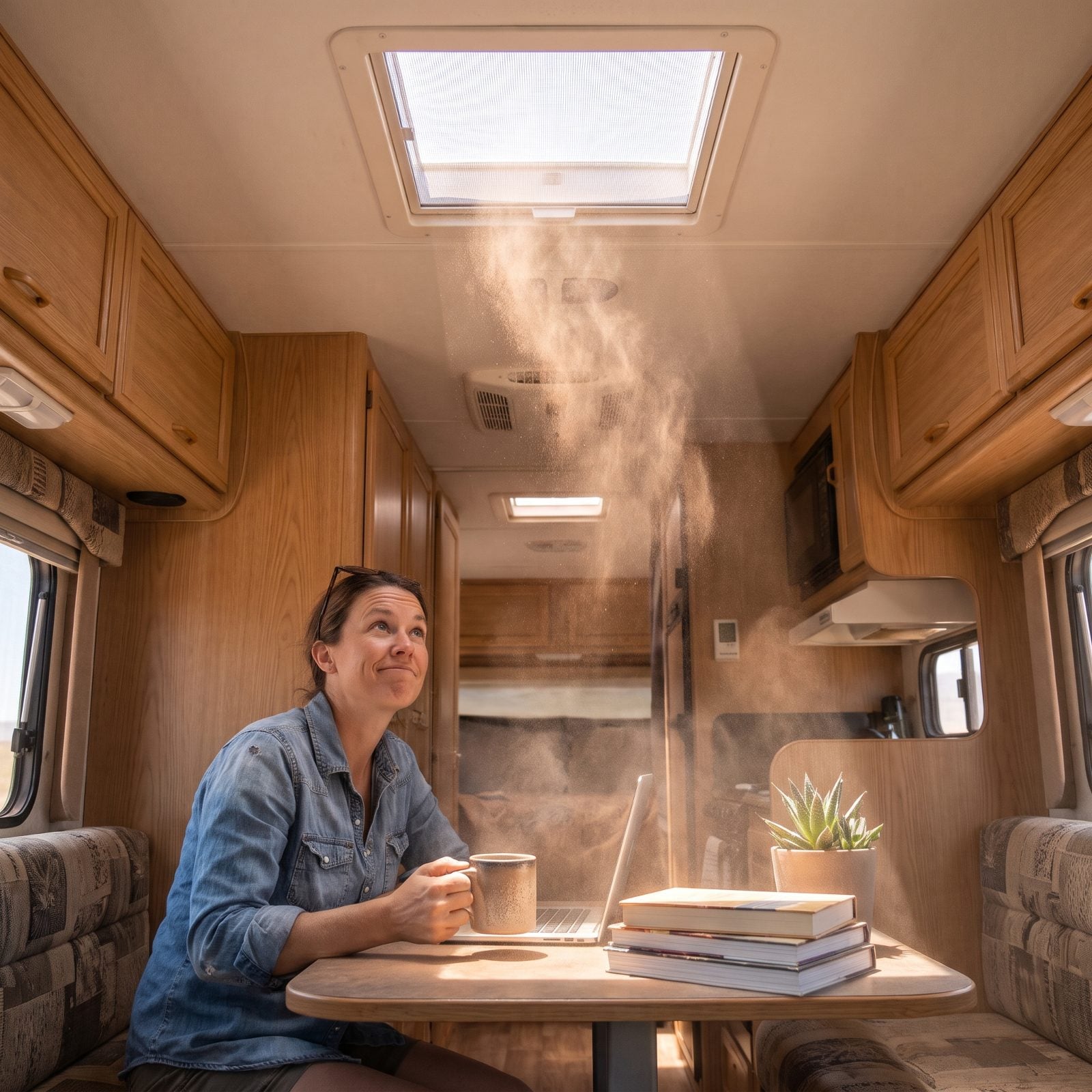
Open roof vents are wonderful for moving hot air out of the rig. They’re also wide-open doors for the fine desert dust that rides every breeze. That dust drifts down onto counters, bedding, electronics, and every surface you just wiped.
When a roof fan is running in exhaust or intake mode, it can pull even more dust through the opening. Leave it on when the wind kicks up and you’ll come home to a gritty film coating the whole interior.
Install vent covers that shield the opening from direct wind, and close the vents completely whenever you see dust blowing or a storm building on the horizon. Covers let you keep air moving through light breezes and passing showers, but they won’t stop a real dust event, so shut everything down before the brown wall arrives. Clean the fan screens regularly so built-up grit doesn’t choke the airflow.
9. Leaving the Windshield Exposed to the Afternoon Sun
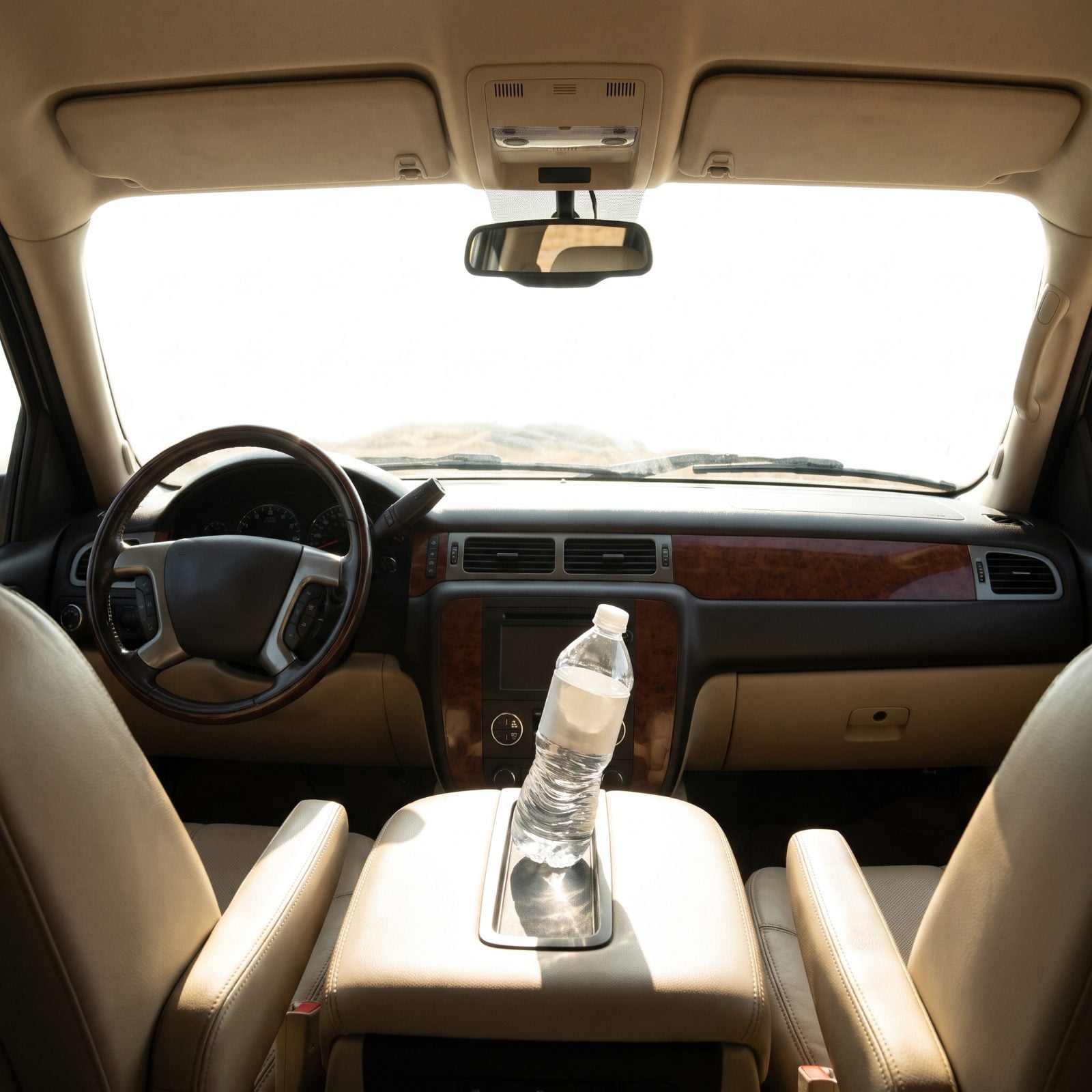
Your windshield is the biggest piece of glass on the rig, and in the afternoon sun it turns the cab into a greenhouse. Heat pours through, the dash bakes, and that warmth spreads back into the living area while the air conditioner struggles to keep up.
Over time that sun also takes a toll on what’s behind the glass. Dashboards can fade and crack, and any electronics left up front get cooked day after day.
Cover it. An exterior windshield cover blocks the sun before it ever hits the glass, which keeps far more heat out than an interior shade can. A reflective interior shade still beats nothing. When you have a choice of sites, park so the windshield faces away from the afternoon sun, and pull the cab curtain closed to keep any heat that does get in from spilling back into the coach.
8. Extending Slide-Outs Before Sweeping Sand Off the Seals
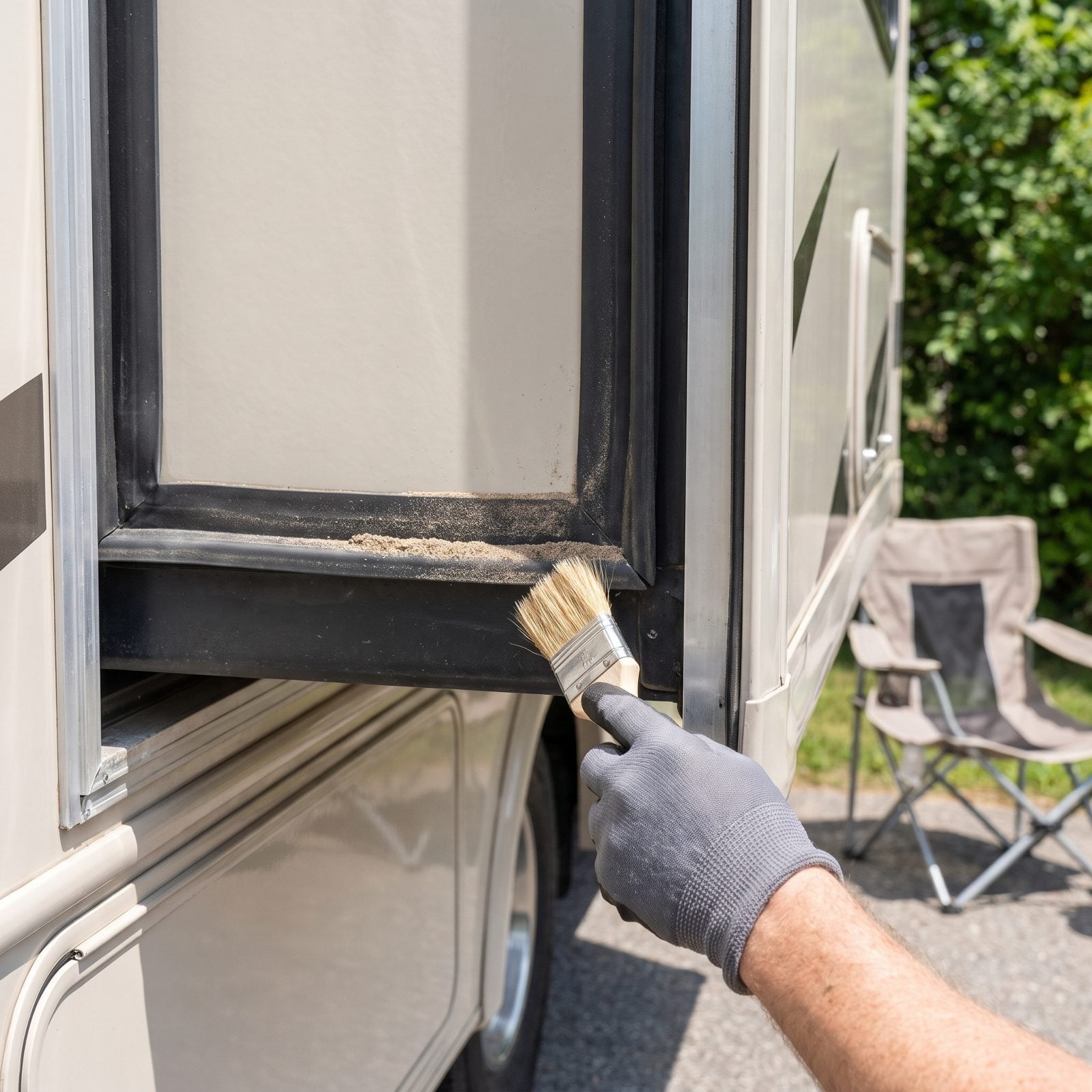
Dust on a slide seal acts like sandpaper. Run the slide in and out a few times with a fresh coat of blown grit sitting on the bulb seal, and you’re grinding the rubber a little more each cycle. Come next monsoon, there’s a leak and a seal job you could’ve skipped — those aren’t cheap.
So before you retract anything, take thirty seconds and knock the sand off. A soft brush along the top wiper, a damp cloth across the bulb seal, done. We keep a cheap paintbrush in the slide tray for exactly this.
7. Entering Dust Country Without a Spare Engine Air Filter
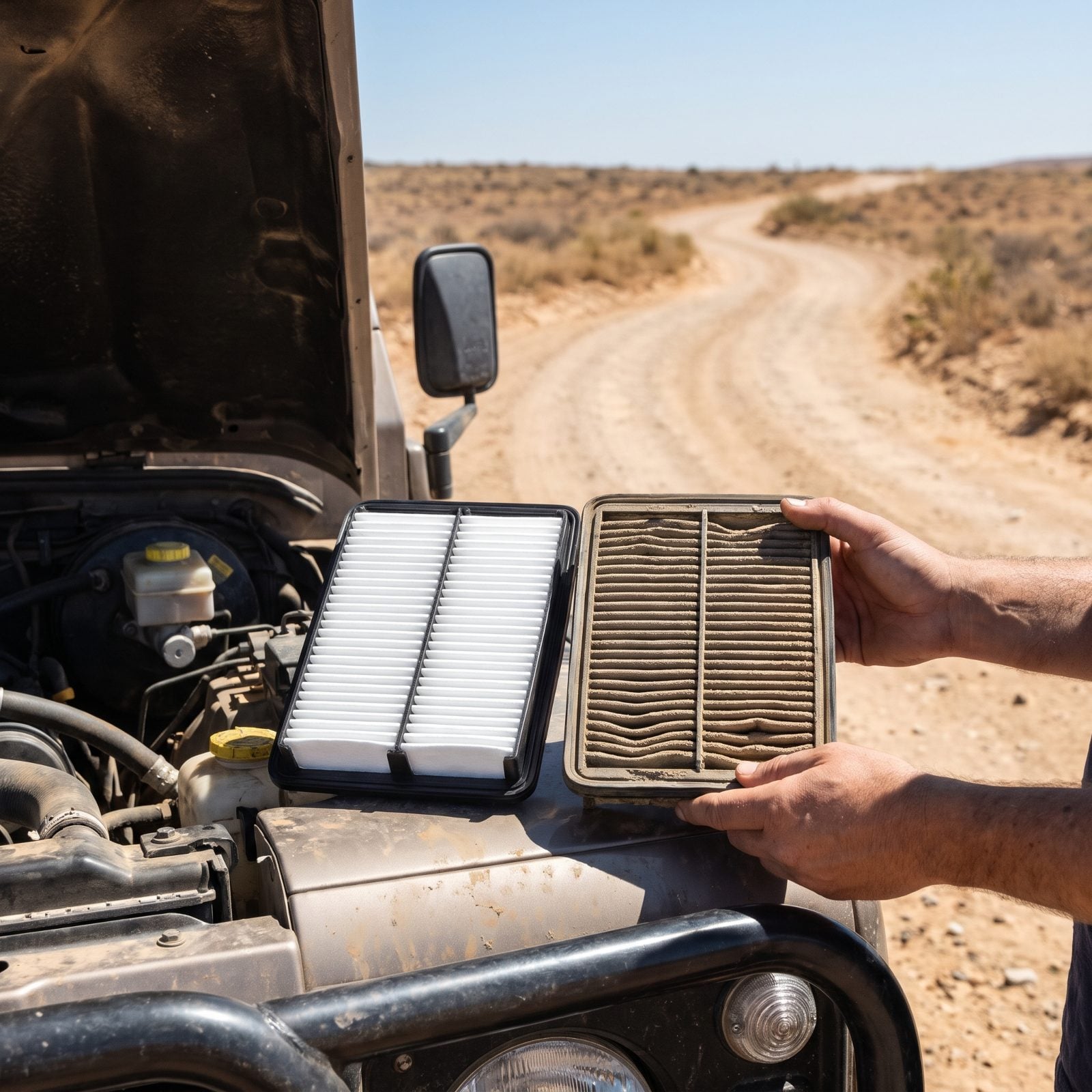
Dust country eats air filters. Drive a few days of washboard forest roads out to some remote boondocking spot and that filter goes from cream to coffee-brown before you’ve even unpacked — and a choked filter robs power, tanks your fuel economy, and makes the engine work harder in the exact heat where you least want it struggling.
Toss a spare in a sealed bag before you leave pavement. They’re cheap and weigh nothing, and the one time you need it you’ll be forty miles from the nearest parts counter. Check the old one at the fuel stop. If light won’t pass through the pleats, swap it.
6. Letting Dust Cake the Air-Conditioner Condenser Coils
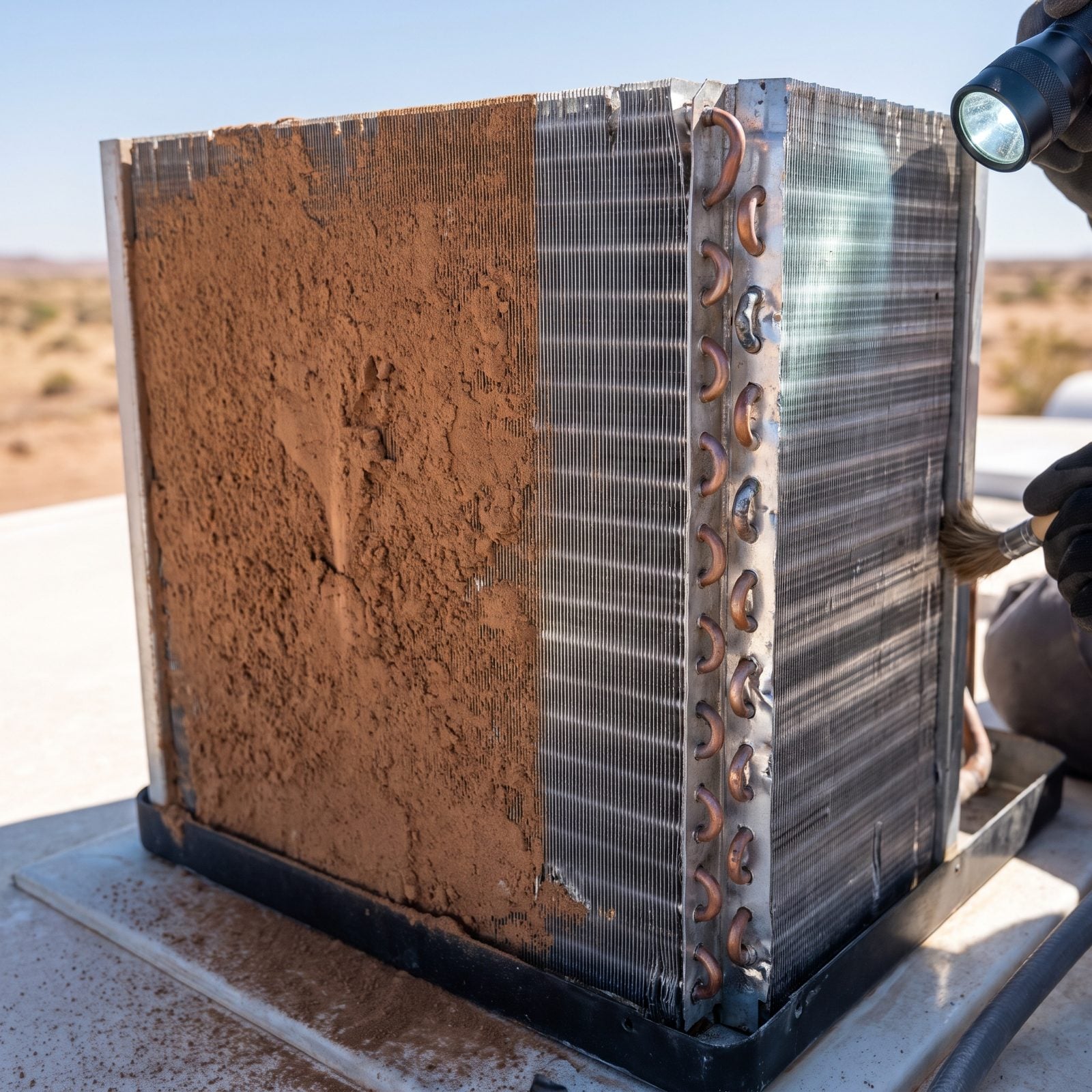
You’ve felt it. The AC runs all afternoon and the rig never really gets cool. Half the time the culprit is a condenser coil packed with desert dust, because those thin aluminum fins need airflow to dump heat — choke them with grit and the compressor runs longer, pulls more amps, and dies younger.
Once a month in dusty camping, pop the shroud off the rooftop unit and gently rinse the coils with a low-pressure hose, spraying straight down so you don’t bend the fins. Let it dry before you fire the AC back up.
A clean condenser in 95-degree heat can be the difference between a unit that keeps up and one that quietly surrenders.
5. Building a Campfire When the Wind Forecast Says Gusty
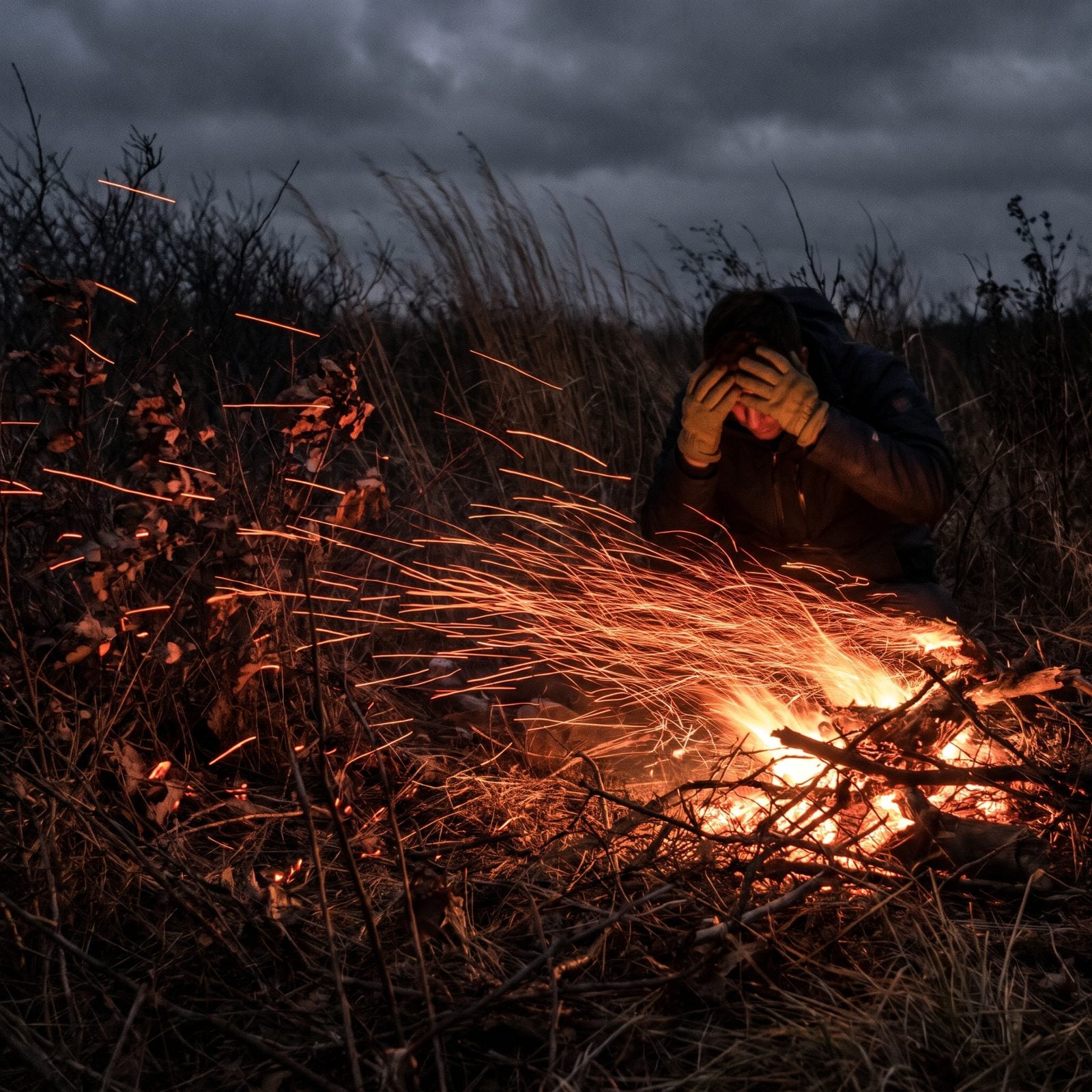
Gusty desert wind turns a friendly campfire into a flying-ember machine. One strong gust and sparks jump the ring into dry grass that hasn’t seen rain in months. The ground out here is tinder, and you may be the only water source for miles.
Check the wind forecast before you even think about a fire. If it’s gusting, skip it — nobody ever regretted the night they ran a propane fire pit instead. Flame, zero embers, and an off switch when the gusts pick up.
4. Rolling Past the Last Fuel Stop Without Topping Off
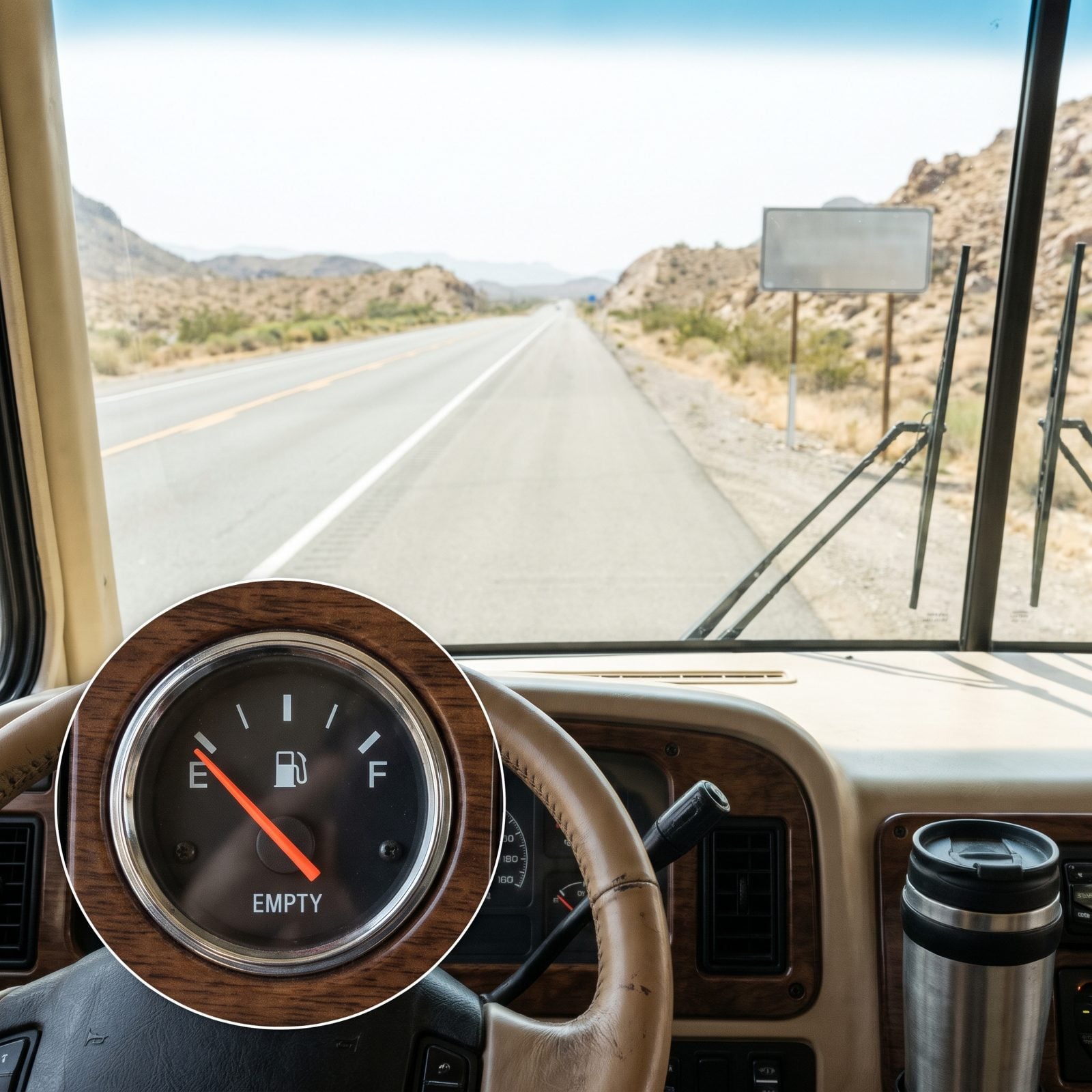
In the desert, the gap between gas stations can stretch far enough to catch even experienced travelers off guard. That half-tank that feels fine back in Ohio feels very different when the next pump is ninety miles out and the one you just passed was the last for a good while.
Simple rule out here. Top off at every reliable station once you’re below three-quarters, even when you don’t feel like stopping. Running the AC, climbing grades, fighting headwinds — it all burns more than your dash computer promised. And a full tank doubles as your backup furnace on a cold boondocking night.
3. Expecting a Winter Desert Campground to Have Walk-In Space
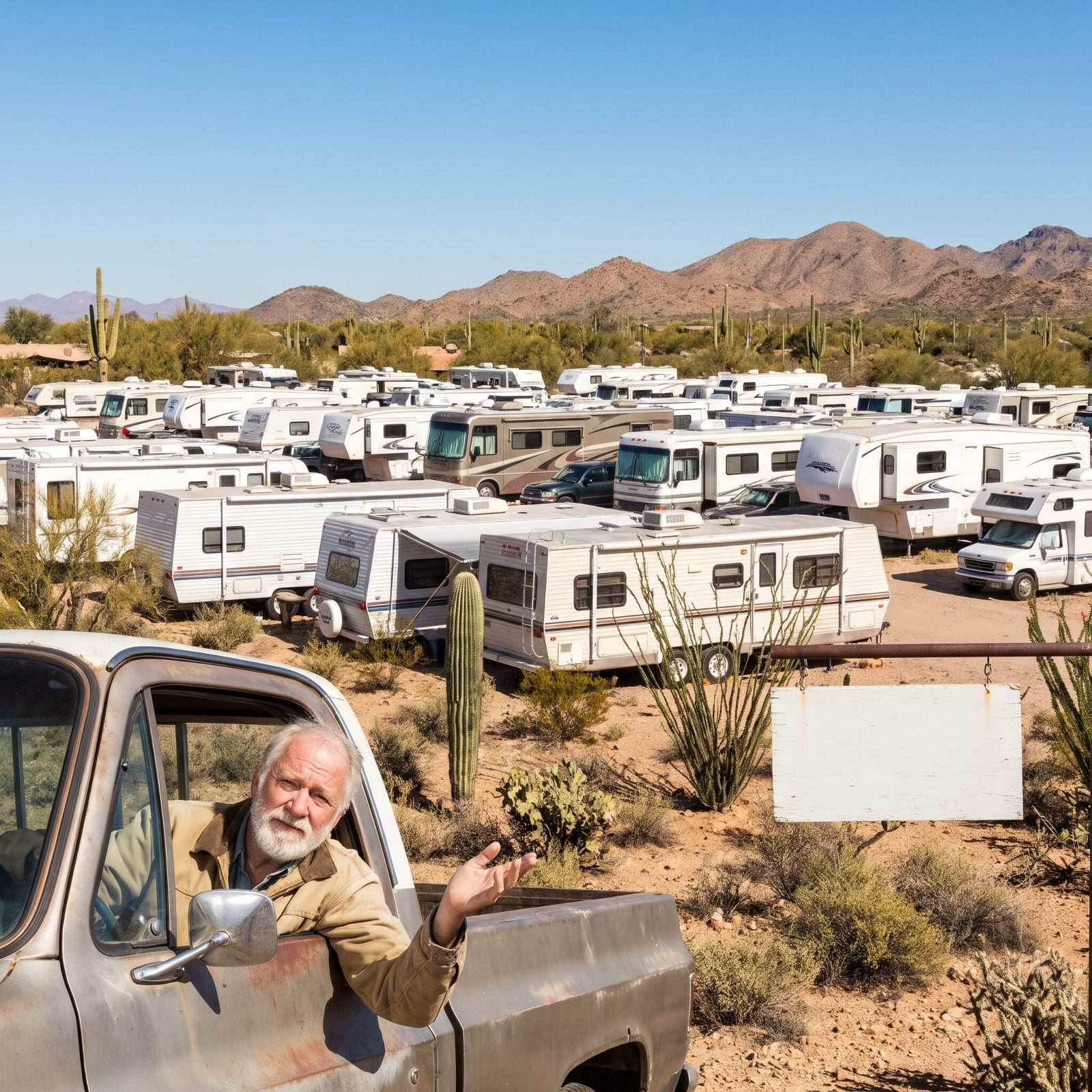
Snowbird season fills the Southwest. Show up in January expecting to roll into a quiet desert park and grab any open spot, and you’ll spend the afternoon driving loop after loop while the dash temperature creeps up. The good sites in the warm valleys book months ahead — some a full year out.
Reserve early for the popular winter bases. For the BLM long-term areas, have a backup plan and a backup to the backup. Keep your tanks and water topped so you can comfortably sit a night anywhere while you sort out a site in the morning. Flexibility is the whole game down here.
2. Staying on Exposed Open Ground During Desert Lightning
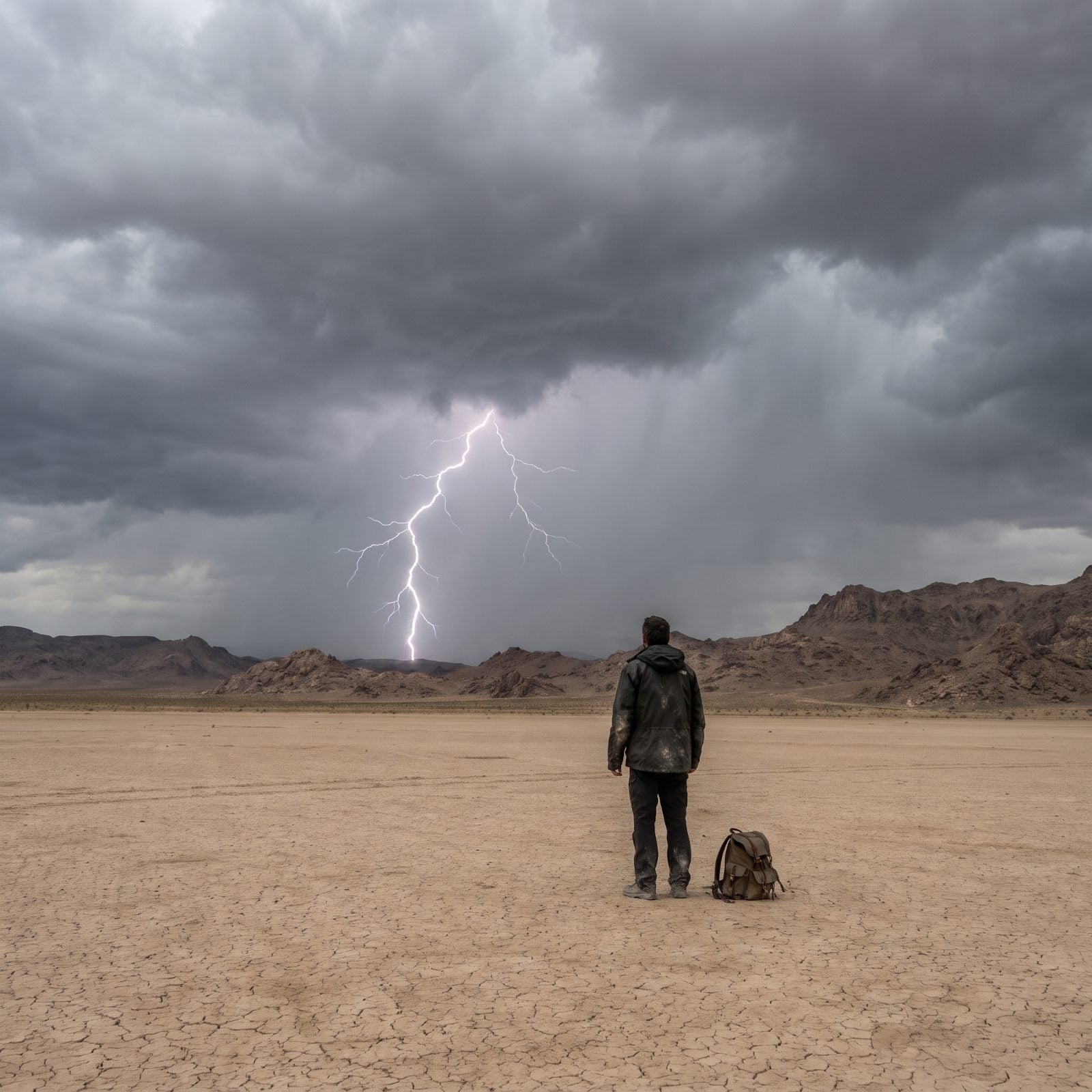
Desert storms build fast and the ground is wide open, which often makes you the tallest thing around. Lounging in a camp chair under the awning while lightning marches across the valley is a gamble you don’t want to take.
When you hear thunder, get inside. A hard-sided RV makes a decent shelter — the metal frame carries a strike around you rather than through you. Pull in the awning, stay off the dump valves and the water spigot, and wait it out. And don’t park in or near a dry wash; those flash-flood channels fill with water you’ll never see coming.
1. Trying to Push Through a Blowing Dust Storm
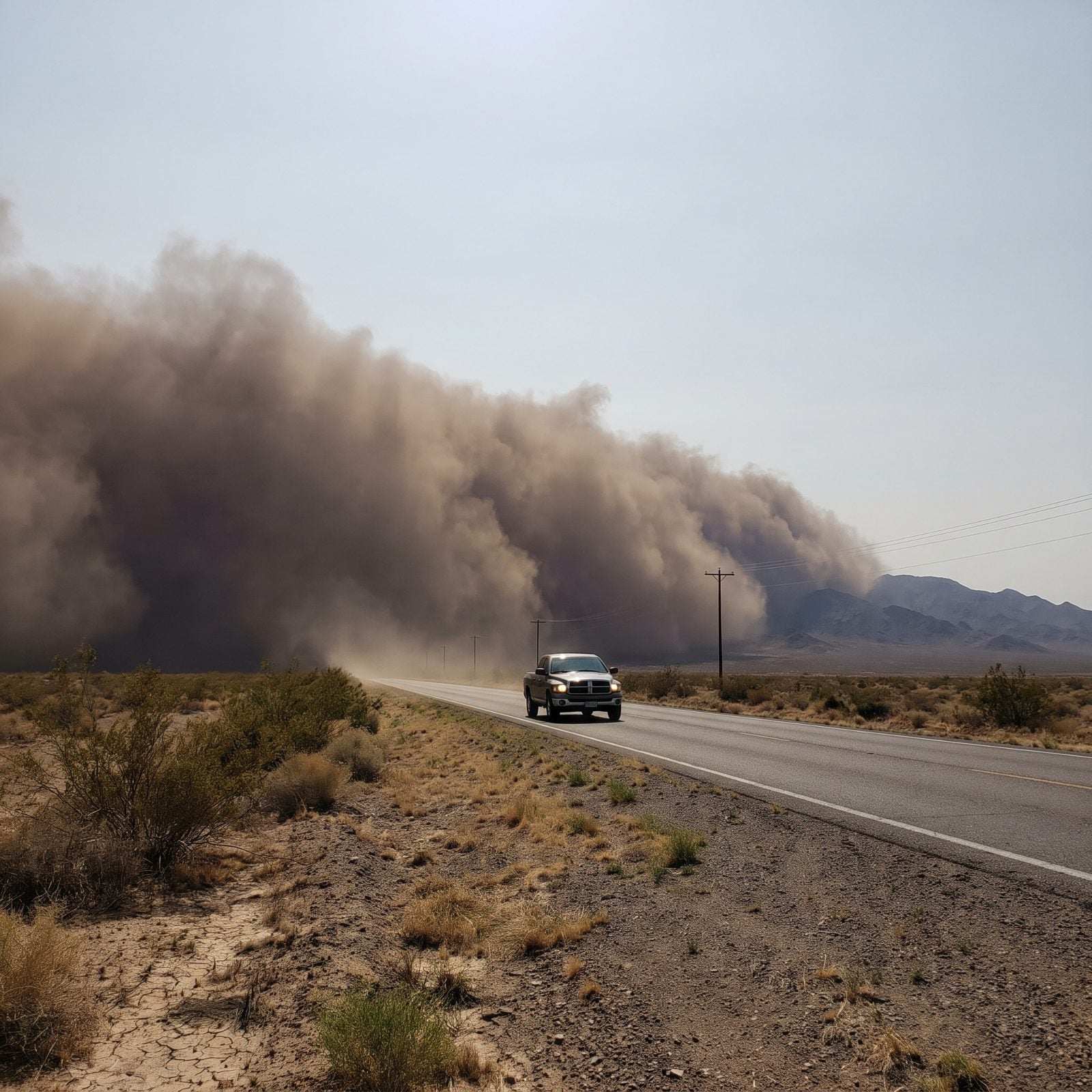
A haboob can drop highway visibility to nothing in seconds. Drivers who keep rolling into it, hoping to pop out the other side, are the ones who get rear-ended by the next car doing the exact same thing.
The desert rule is blunt and it works: pull aside, stay alive. Get as far off the road as you safely can, drop it in park, take your foot off the brake, and kill all your lights — hazards included. Lit taillights in a dust-out tell the driver behind you there’s a car to follow, and they’ll steer right into you. Then wait. It passes in minutes.