
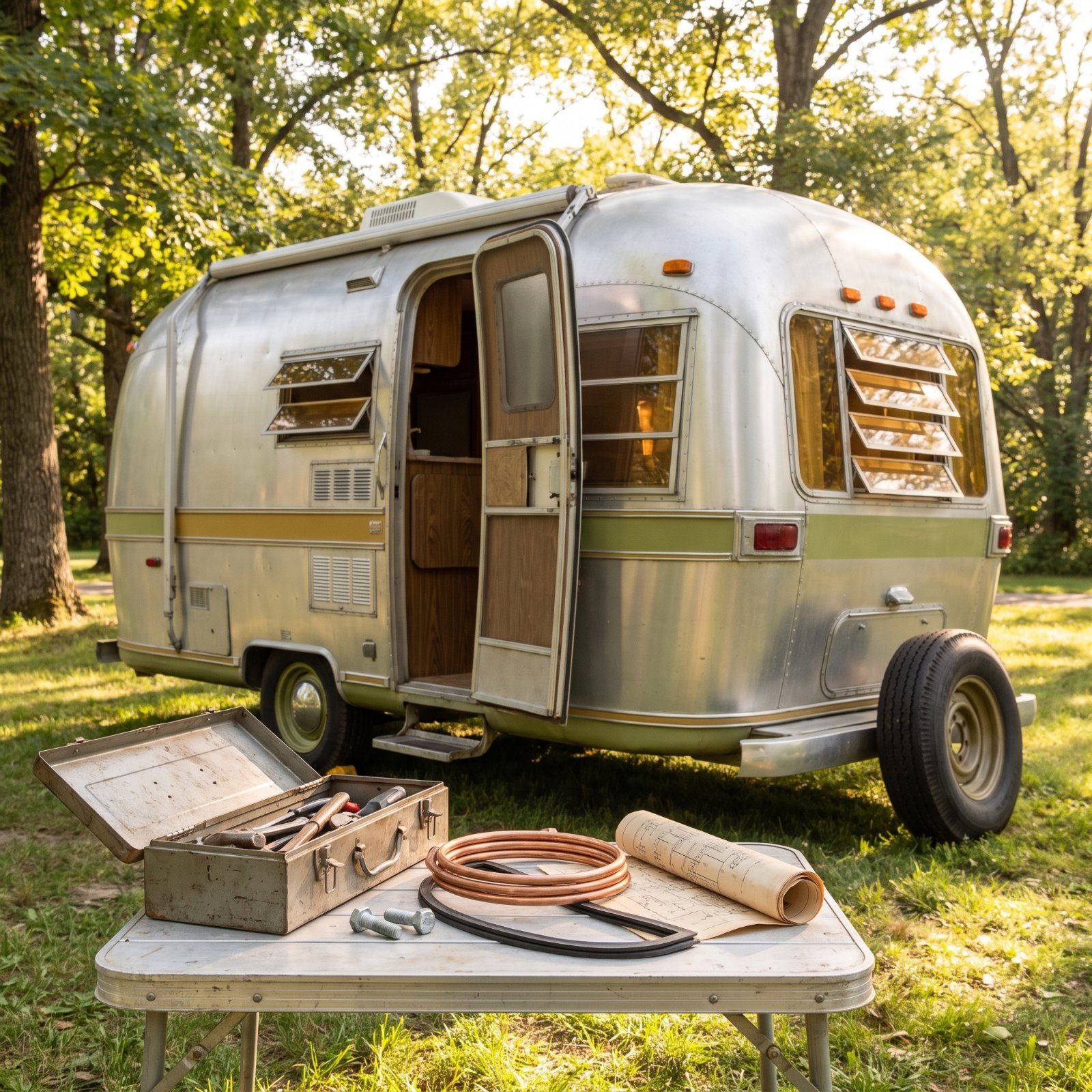
Pop the access panel on a 1974 travel trailer and you can see exactly what you’re looking at. A water line. A screw head. A plywood edge that hasn’t swelled into oatmeal after a spring leak. Nobody designed those campers to be impressive — they designed them to be fixed in a gravel lot with the tools you already owned. Half of that thinking got value-engineered out of modern RVs for the sake of weight and margin. Some of it deserves to come back, and here’s what we’d haul along with us.
40. Real Plywood Cabinets Instead of Fiberboard Boxes
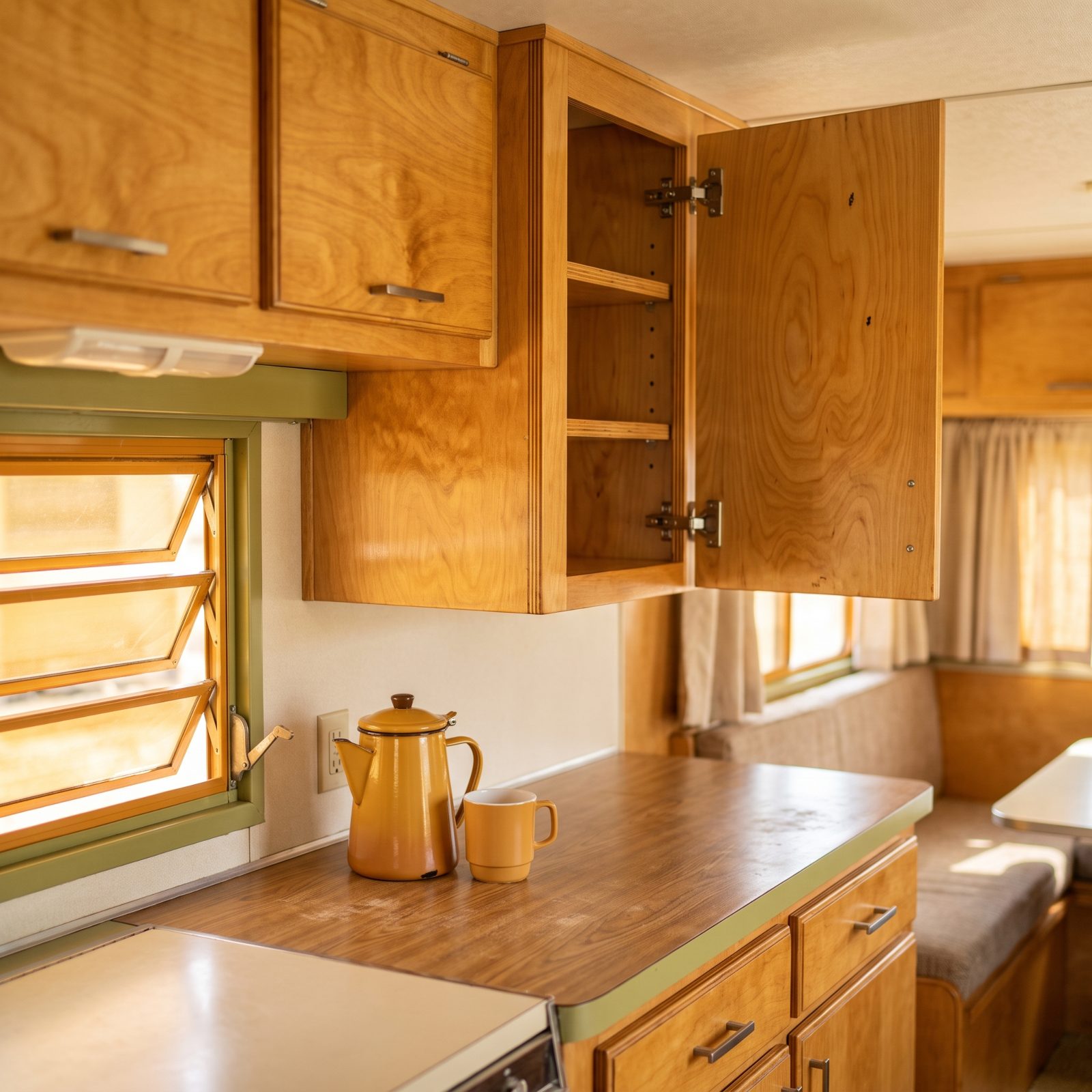
Open a modern RV cabinet and knock on the side. You get that hollow, papery thud of thin fiberboard wrapped in printed vinyl. Get one wet once — a dripping faucet, a roof seam you didn’t catch — and it swells into something with the structural integrity of a wet cereal box.
Seventies campers used actual plywood. Birch, often, with real wood screws holding the joints. You could drill it, patch it, re-hang a sagging door, add a shelf wherever you wanted one. It held weight. It held up.
I once tore out bloated fiberboard from a rig younger than my truck, and the stuff crumbled in my hands like damp drywall. That plywood galley from 1975 would’ve shrugged off the same leak and never said a word about it.
39. Repairable Riveted-Aluminum Body Panels
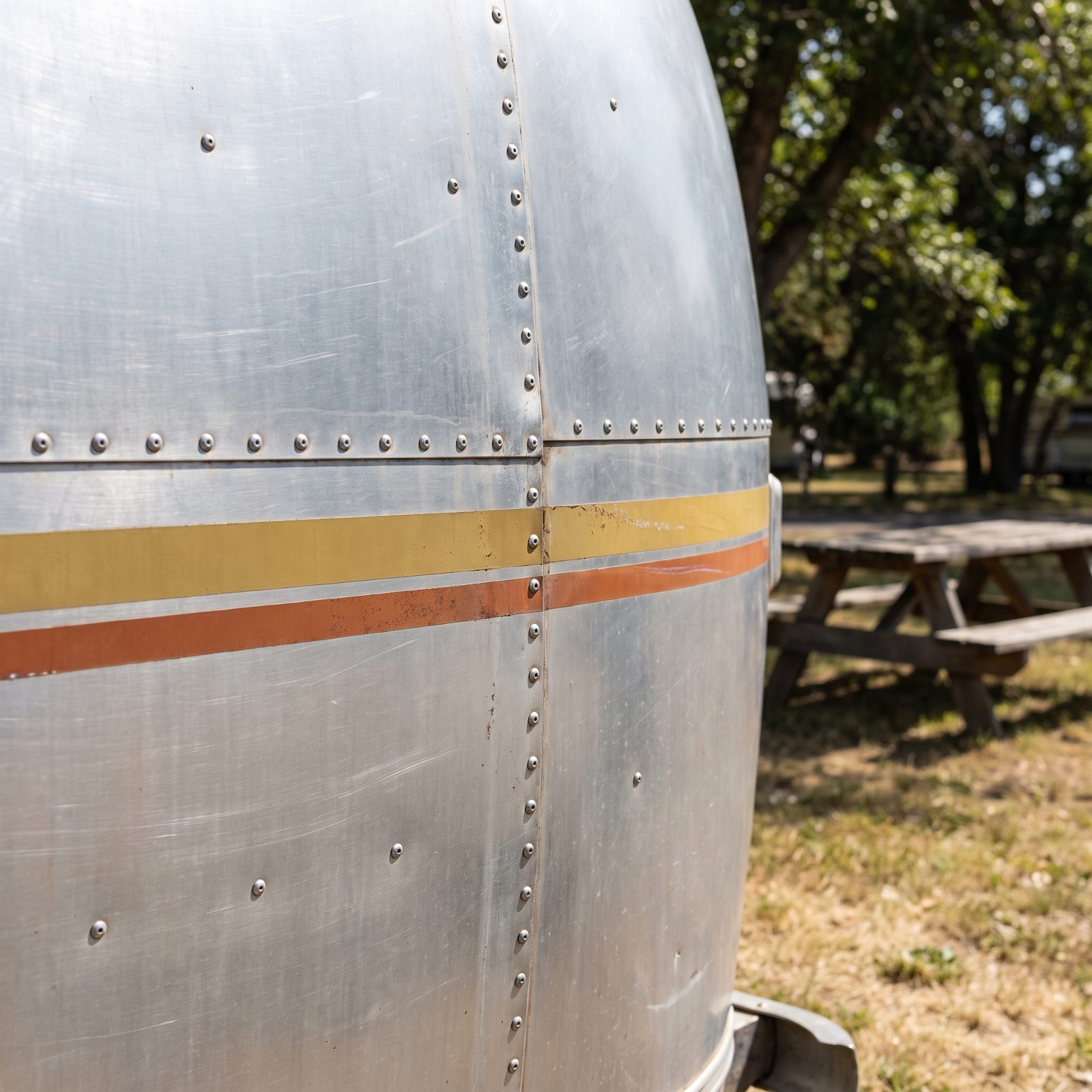
Dent a riveted-aluminum panel and you’ve got options. Drill out a few rivets, massage the metal, pull a replacement sheet, buck new rivets, done. No body shop required. Half the time the owner handled it in the driveway with a rivet gun from the hardware store.
Modern campers lean hard on bonded fiberglass sidewalls. Beautiful when new, smooth as glass. But crack or delaminate one and you’re looking at a structural panel glued to a frame — often a whole-wall replacement and a four-figure estimate.
Riveted aluminum told on itself. Every fastener sat right there in the open, so you could understand the whole wall at a glance and fix the small stuff before it turned into big stuff. That’s a kind of honesty I miss.
38. Screw-Fastened Interior Panels Owners Could Remove
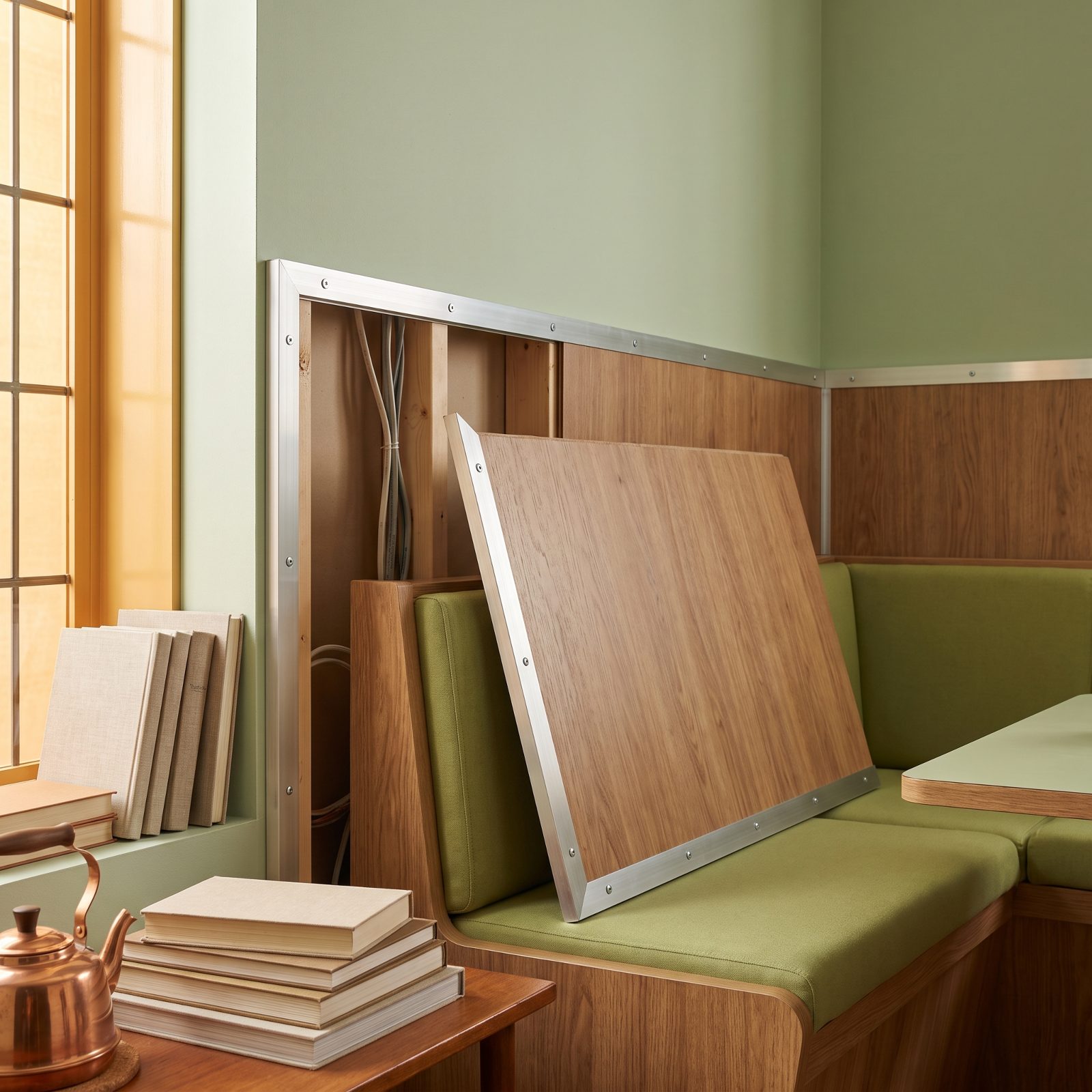
Everything behind the wall used to be a screwdriver away.
Panels in old campers went up with trim screws hidden under aluminum batten strips. Something leaked, shorted, or rattled? You backed out a dozen screws, pulled the panel, found the problem, and put it all back. No prying, no cutting, no stapled-and-glued skin that tears the moment you try.
Newer rigs staple and adhesive-bond interior panels straight to the framing. Seamless, sure. Great, right up until you need to get behind one. Then you’re cutting into your own wall and patching it afterward.
37. Plumbing Runs That Were Easy to Reach
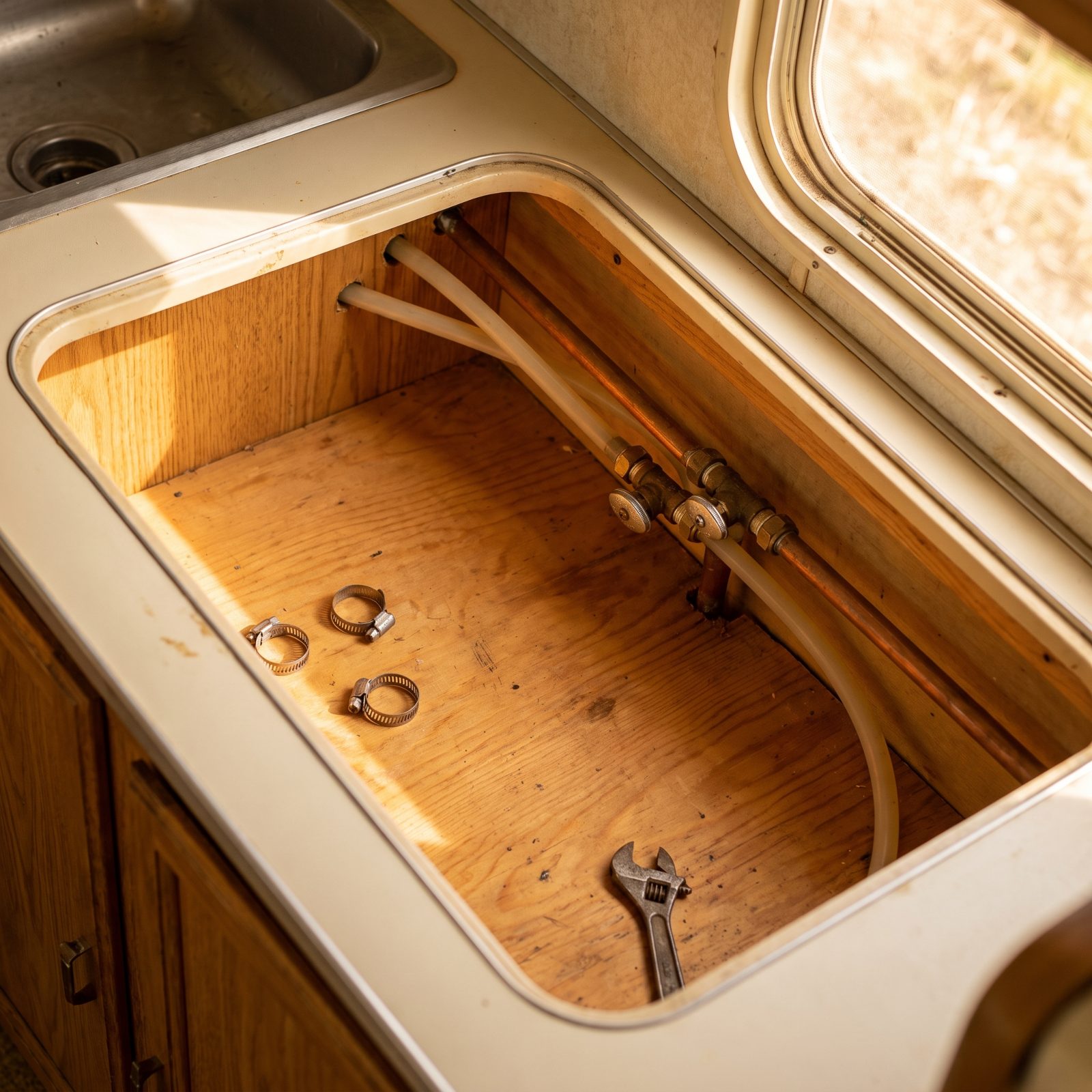
In a seventies trailer, the water lines usually ran where you could see them. Open the sink cabinet and there’s the supply, the shutoff, the fitting, right at eye level. A frozen or split line was an annoyance, not an archaeology dig.
Now so much plumbing gets buried inside the floor sandwich or routed behind bonded walls for a clean look. Until a fitting weeps and you’re pulling up flooring to chase a stain across the subfloor.
Give me the exposed run every time. I’ll swap a little visual tidiness for a fitting I can reach with one hand and a crescent wrench.
36. Appliances Designed to Slide Out Through the Cabinet Front
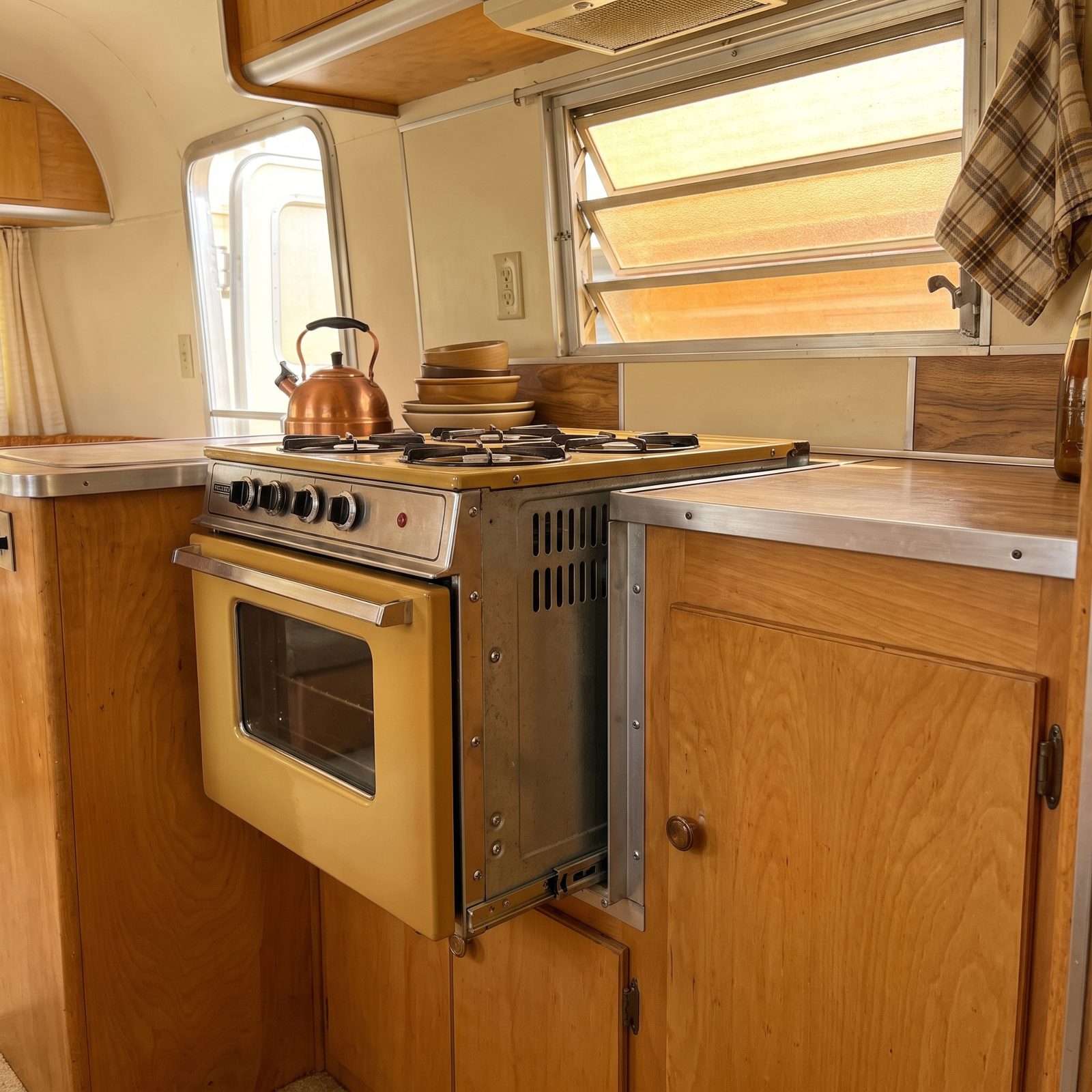
You could pull the fridge without demolishing the kitchen.
A lot of older campers mounted the propane fridge, range, and water heater to come out through the cabinet face. Back out a few screws, slide the unit forward on its own opening, and you had access to the burner, the gas line, the back of the box. Service calls often wrapped up on-site in an afternoon.
Some modern builds trap appliances behind trim and counters that have to come off first, which turns a burner cleaning into a half-day teardown. The slide-out-the-front logic wasn’t fancy. It just respected the fact that these things eventually need a human’s hands on them.
35. Standard Hardware Available at an Ordinary Store
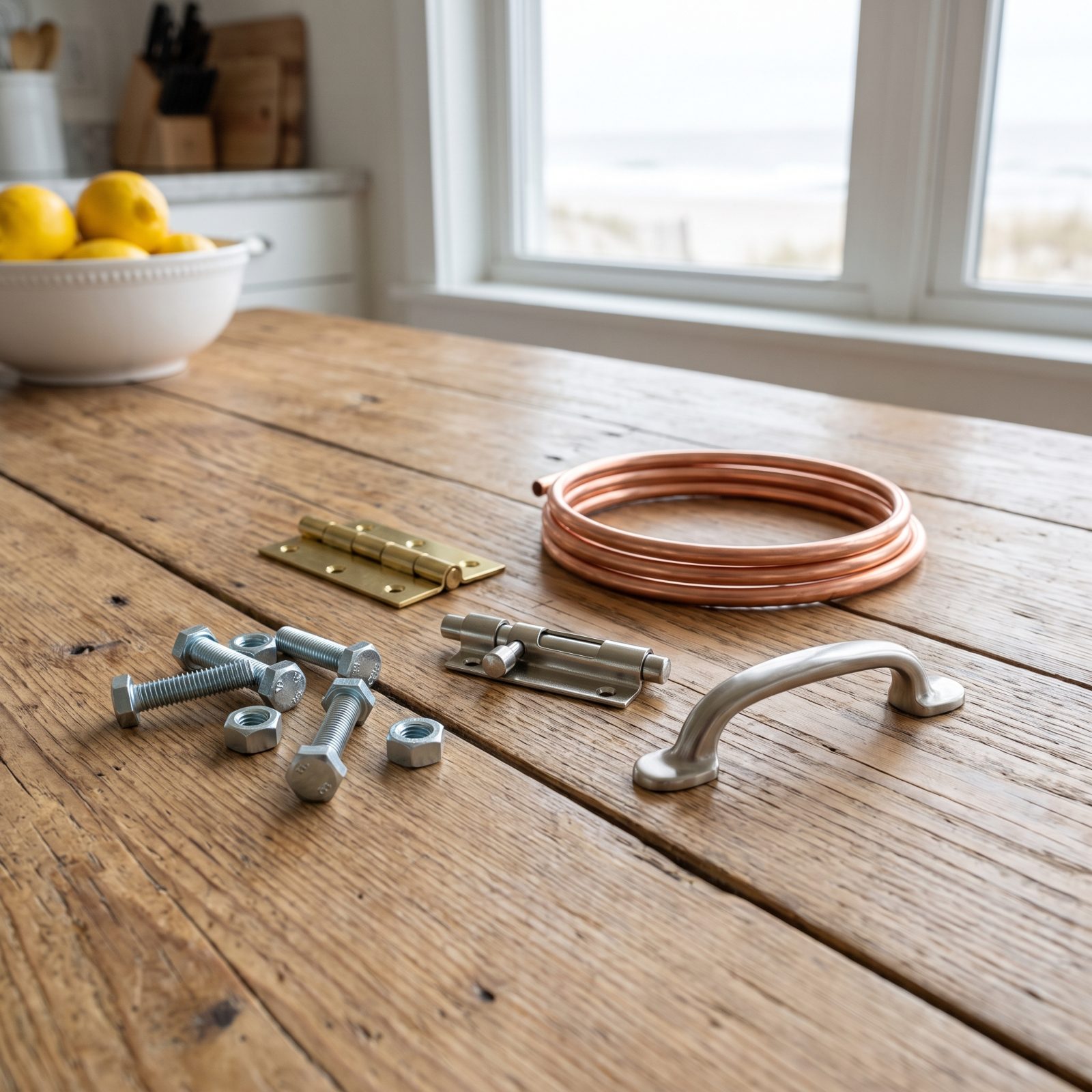
Lose a cabinet latch on a 1976 trailer and your fix was a five-minute stop at any hardware store. Standard hinges, standard bolts, standard pulls — the whole rig was assembled from parts the rest of the world also used.
Try that with a lot of today’s RVs. The latch is proprietary, molded, matched to a trim piece, available only through the manufacturer and backordered until next season. A two-dollar failure becomes a two-month wait.
34. Printed Wiring and Plumbing Diagrams
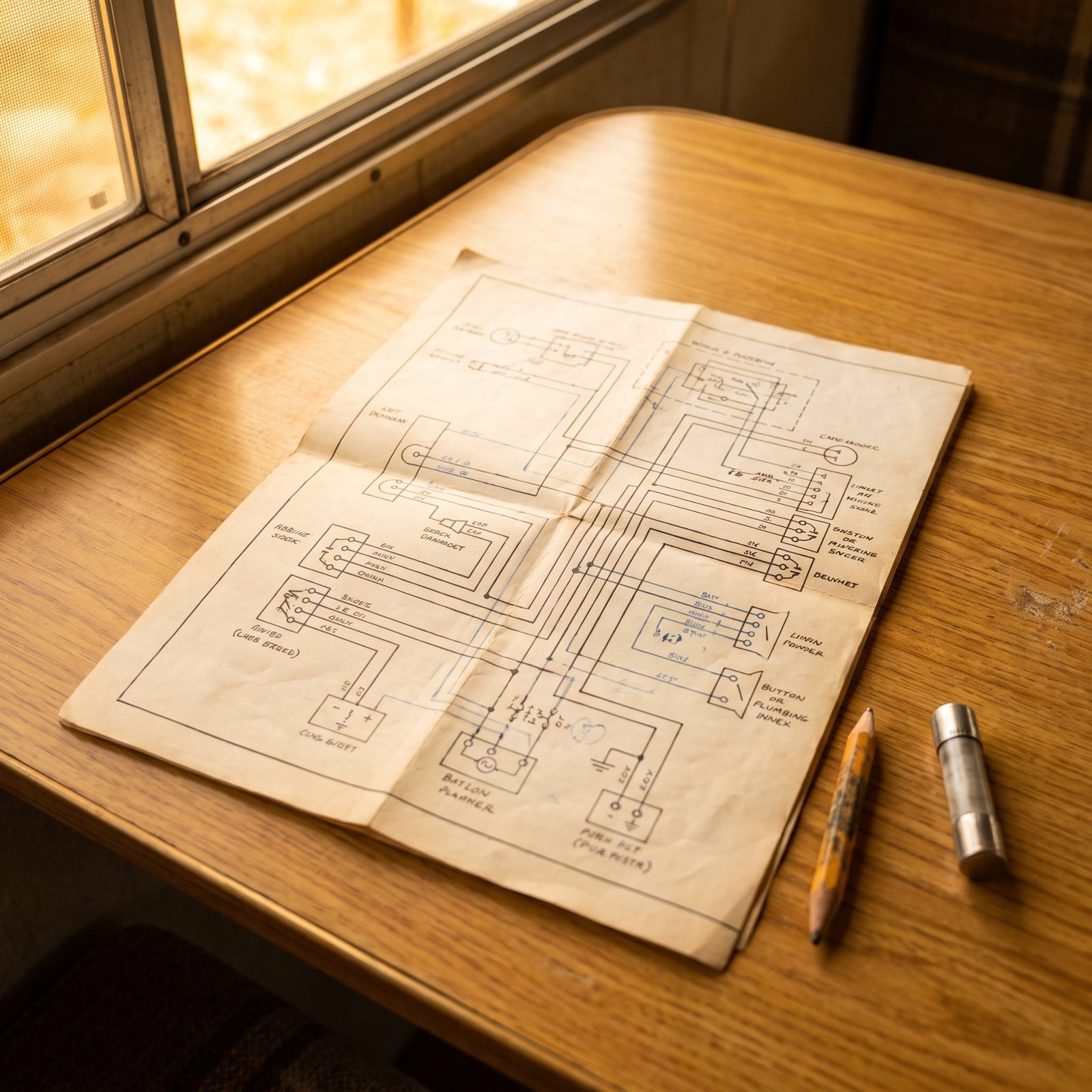
Tucked inside the dinette seat or glued to a cabinet door, a lot of old campers came with an actual diagram. The twelve-volt runs, the water lines, where the fuse went, what fed what. When something quit, you weren’t guessing — you had a map.
Most modern rigs hand you a glossy manual full of lifestyle photos and a wiring section that says, essentially, call the dealer. The one piece of paper you actually need is the one they left out.
I’d trade every stock photo of a smiling family at a lake for a single honest schematic that matches my particular coach.
33. Window Gaskets That Could Be Replaced Separately
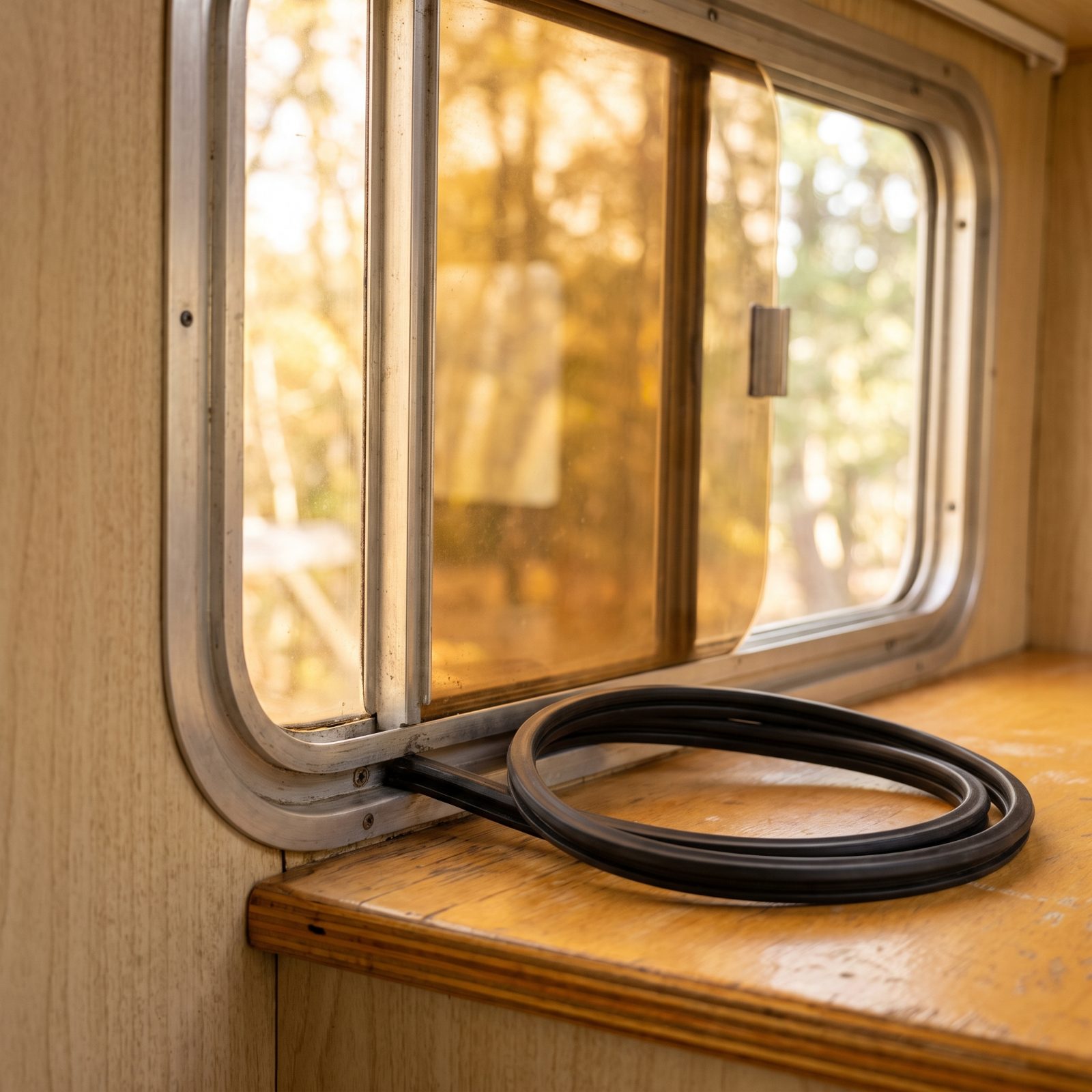
A leaky window used to mean a new seal, not a new window.
Old camper windows seated the glass with a replaceable rubber gasket. When it hardened and started letting weather in, you pulled the old gasket, pressed in fresh rubber, and the window was tight again. Cheap, and about an hour’s work.
Modern windows often bond the glass into the frame as a sealed assembly. The gasket fails, the whole unit gets condemned, and you’re buying a complete window. A worn length of rubber shouldn’t total a part you otherwise like just fine.
32. A Full-Size Spare Tire Mounted in Plain Sight
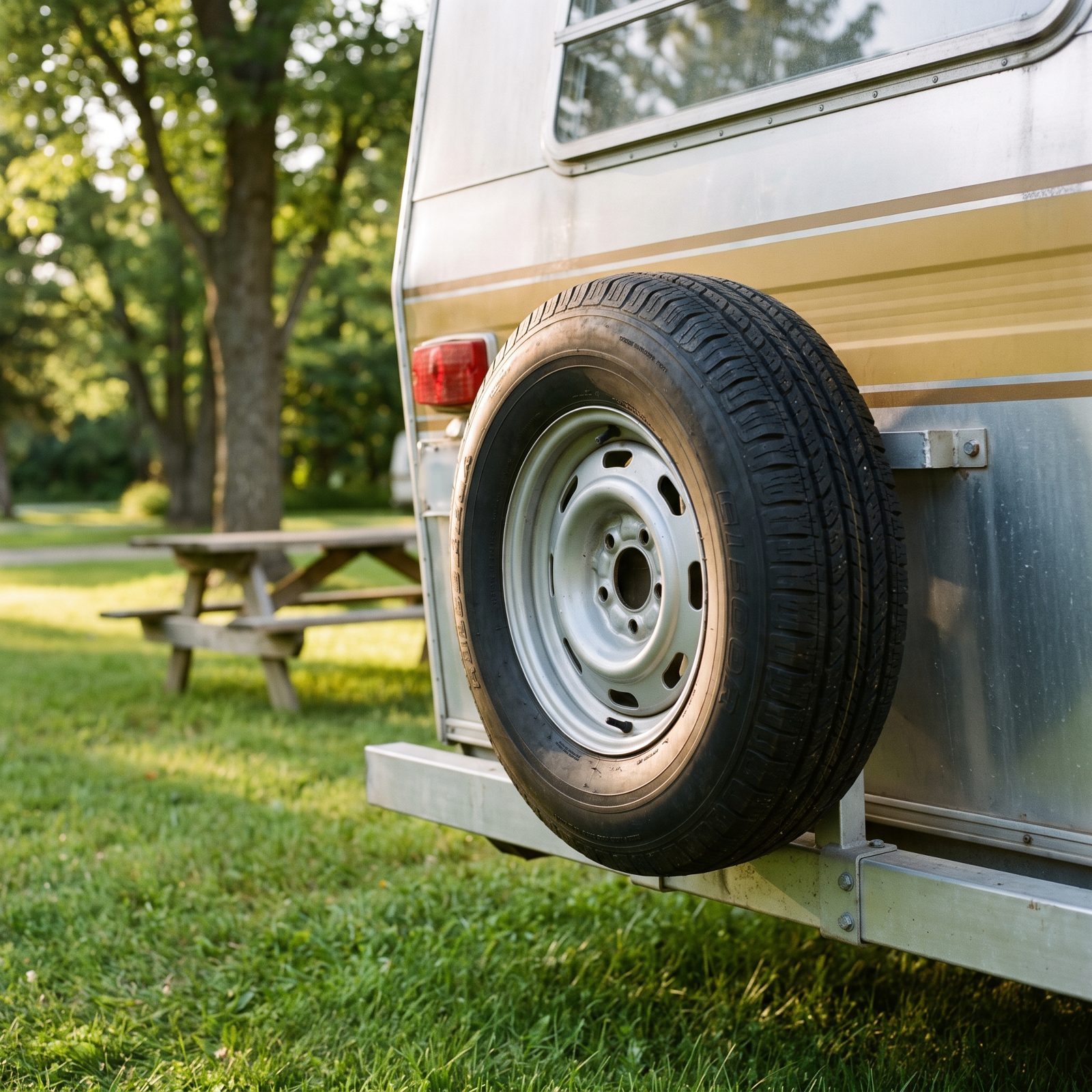
The spare hung right where you could see it. Bolted to the back wall, strapped to the A-frame, sitting in a visible carrier. Blow a tire on a back road at dusk and you knew exactly where your backup lived and that it was there.
Plenty of newer trailers hide the spare in an underbelly cradle with a crank-down winch, or ship with no spare at all and a roadside number instead. Out where the cell bars disappear, that number is a decoration.
Mount the spare where I can grab it. I’ve changed one in the dark on a shoulder, and trust me — you want it bolted somewhere obvious.
31. Steel Rear Bumpers That Could Take Real Use
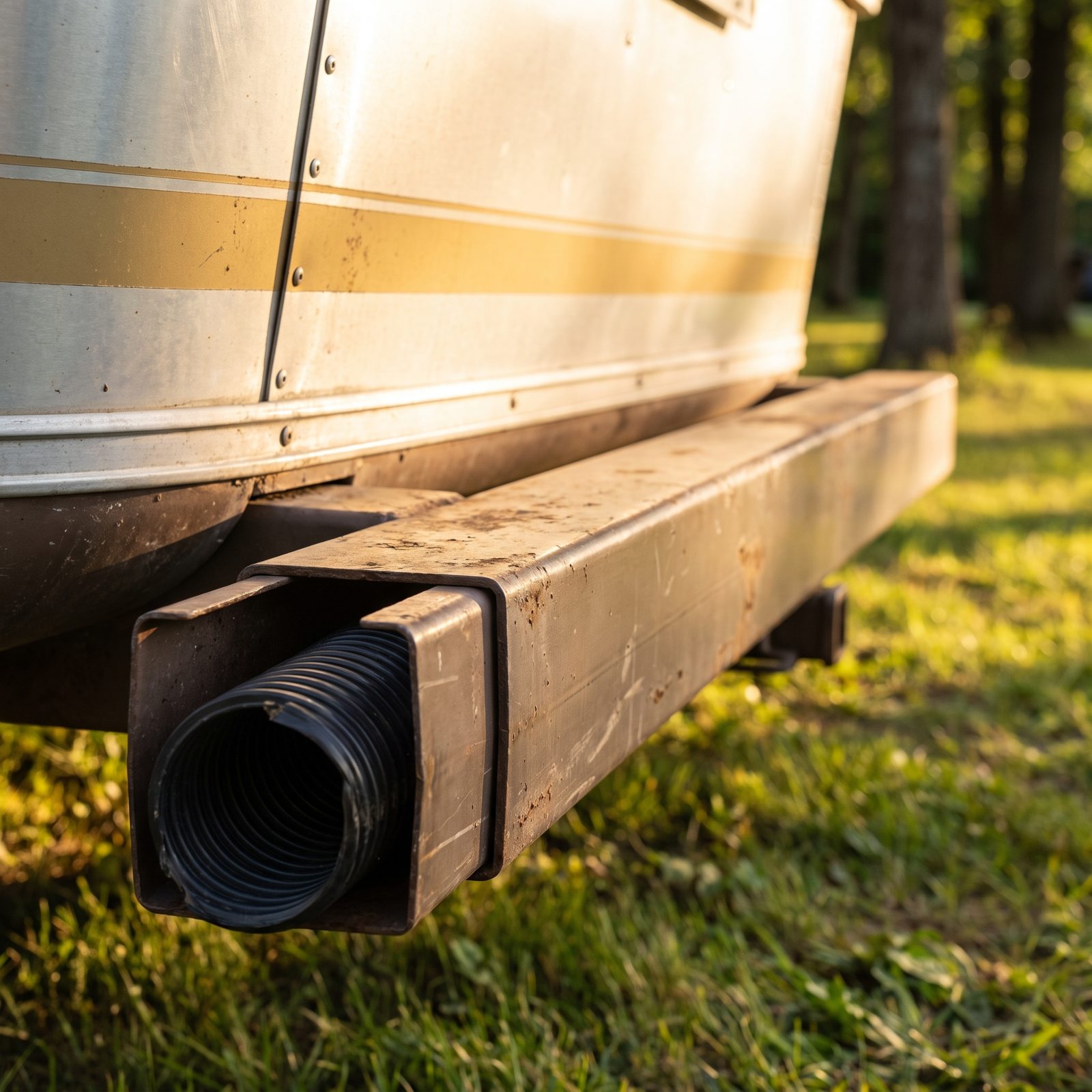
You could stand on it, hitch to it, and store your sewer hose inside it.
Those old rear bumpers were steel tubes you could trust. Scuff them, lean a jack against them, hollow the end out to stash the dump hose, bolt a bike rack on. They took abuse and asked for more.
A fair number of modern bumpers are lighter, thinner, and really there for the hose tube and not much else. Hang real weight off one and you find its limits fast.
Steel is heavier, and weight is the enemy of a tow rating, I know. But there’s a reason forty-year-old trailers still wear their original bumpers while the dent in last year’s rig came from backing into a post. Build the one part everyone abuses to actually get abused. Alright, end of sermon.
30. Tow Weights That Ordinary Family Cars Could Handle
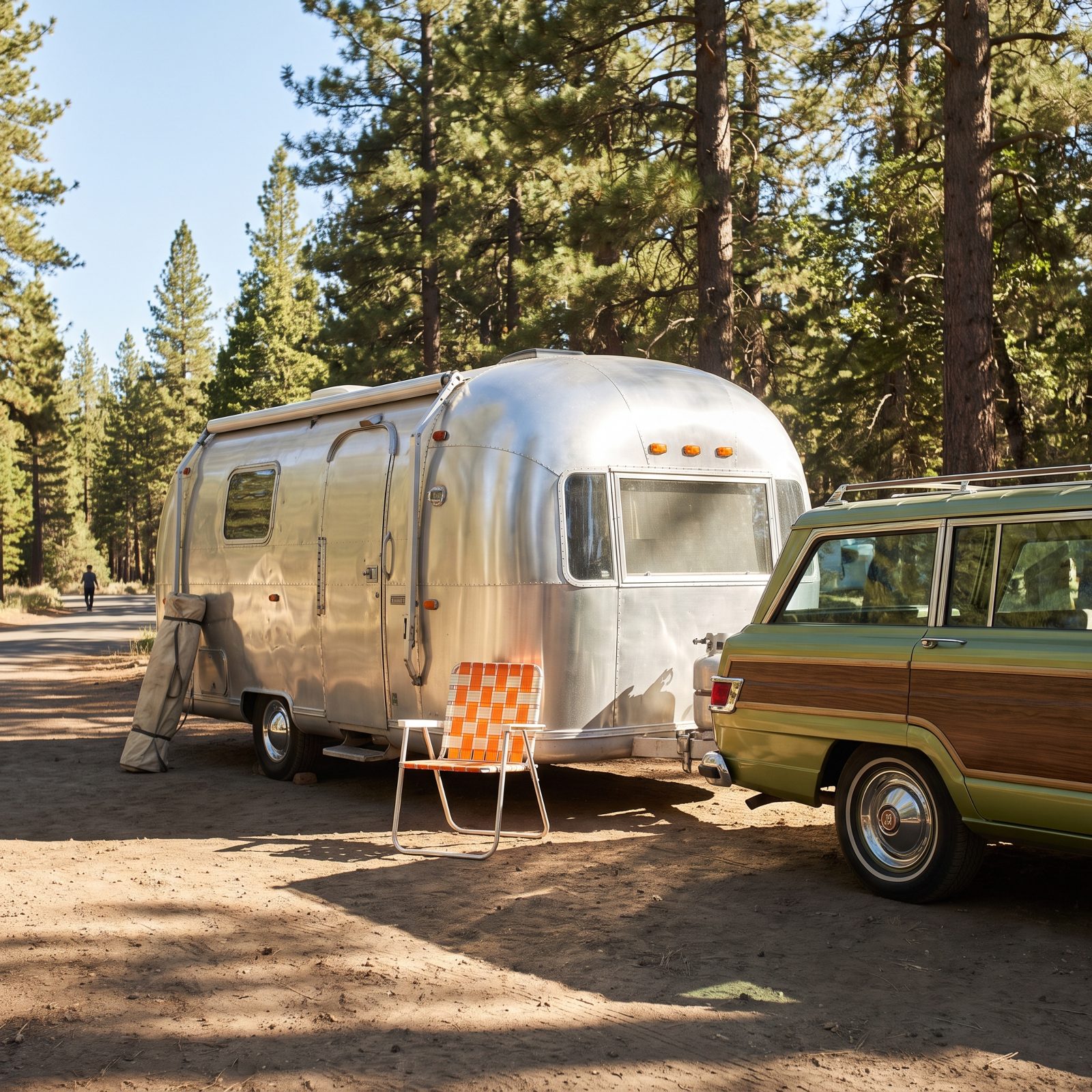
29. Narrower Bodies That Fit Older Roads and Campsites
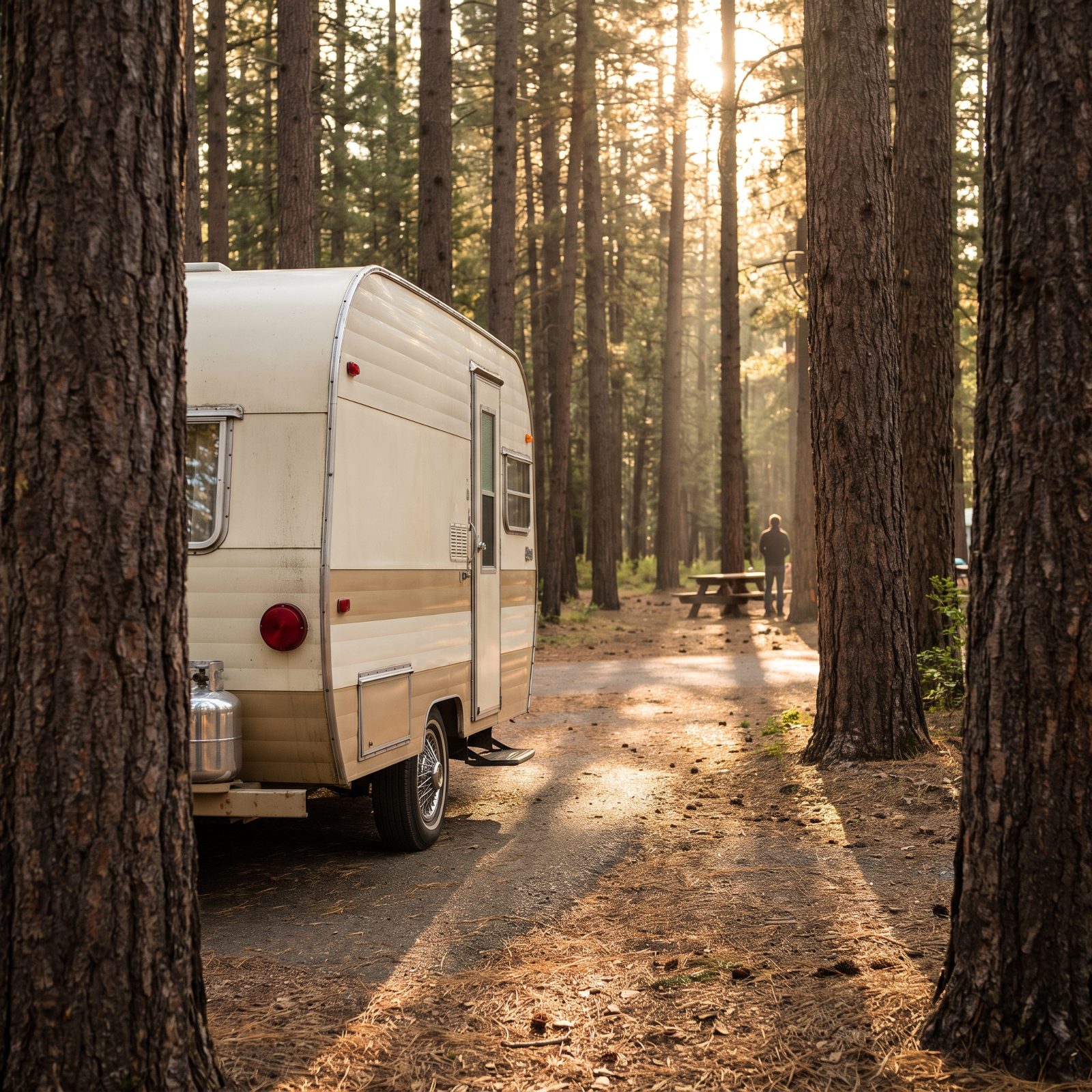
28. Floor Plans That Did Not Depend on Slide-Outs
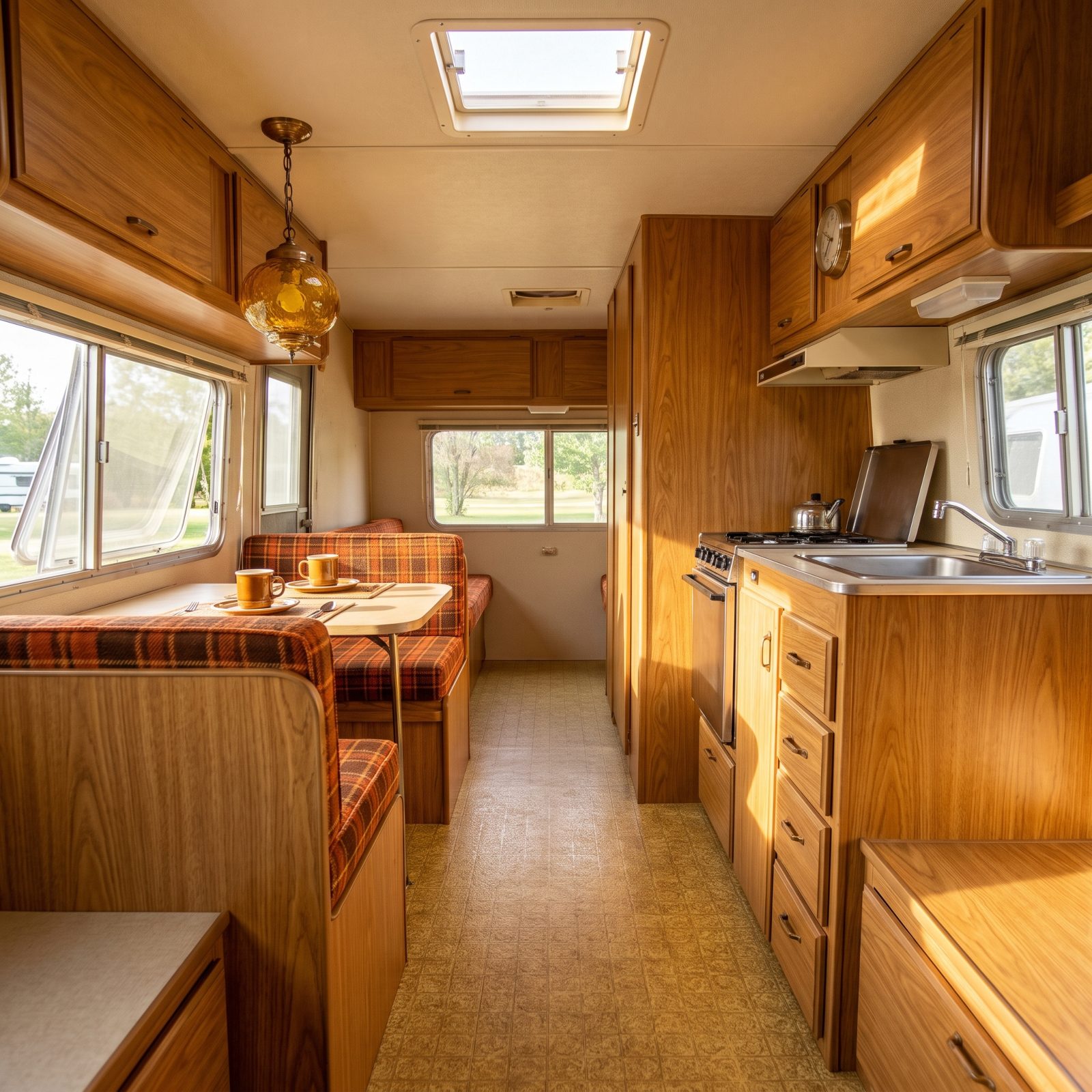
27. Rounded Front Ends Instead of Giant Flat Walls
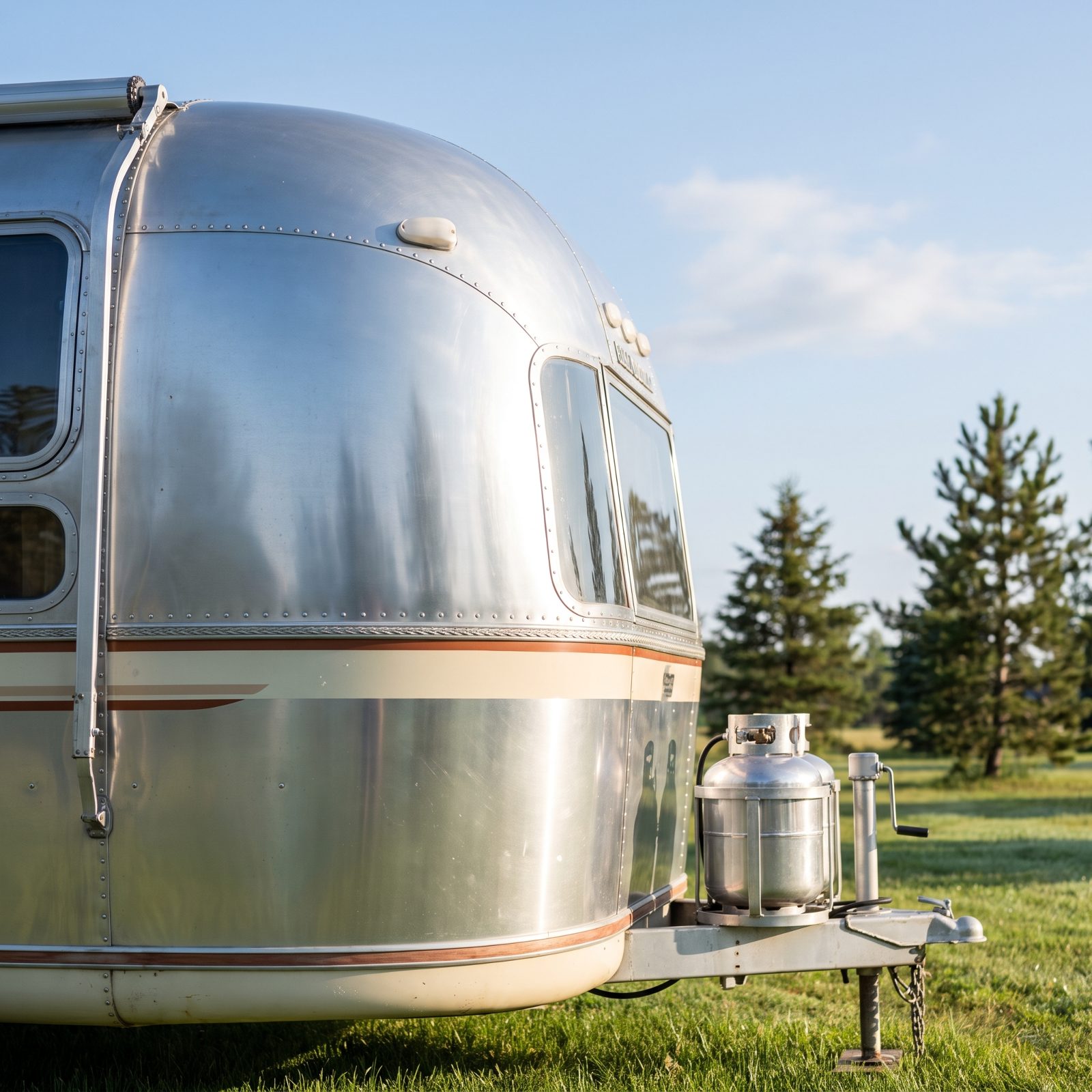
26. Enough Ground Clearance for Rustic Campgrounds
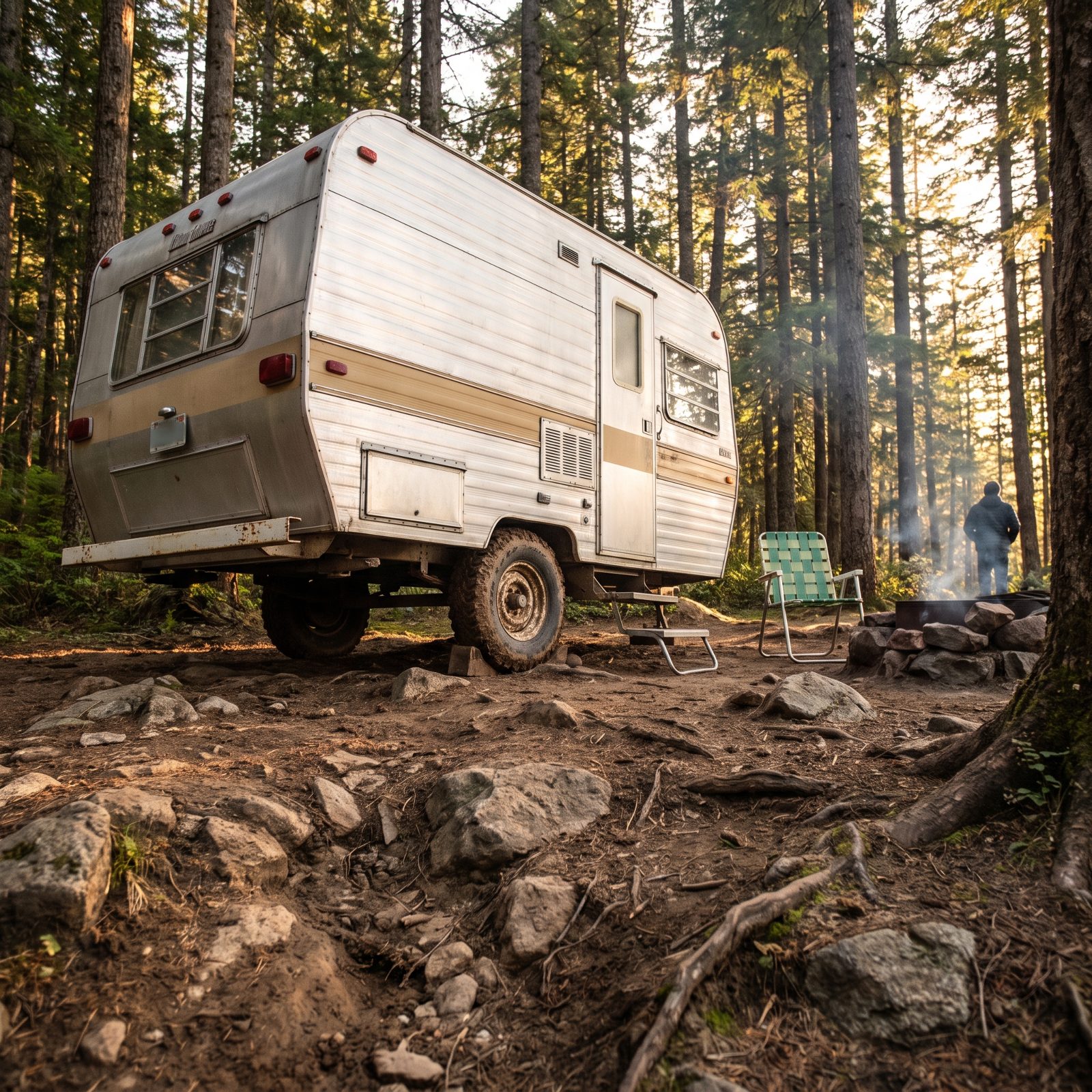
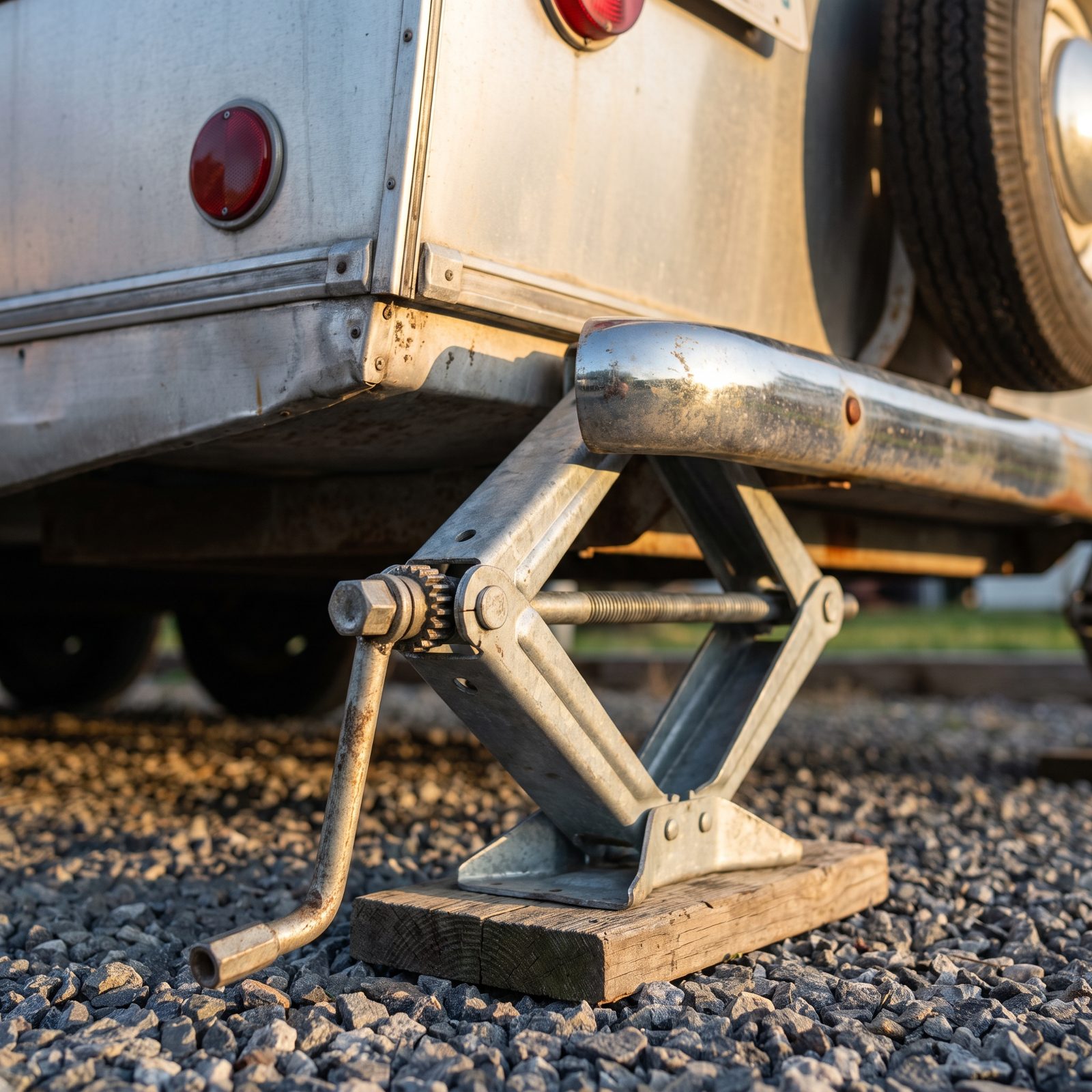
25. Manual Corner Stabilizers Without Motors or Circuit Boards
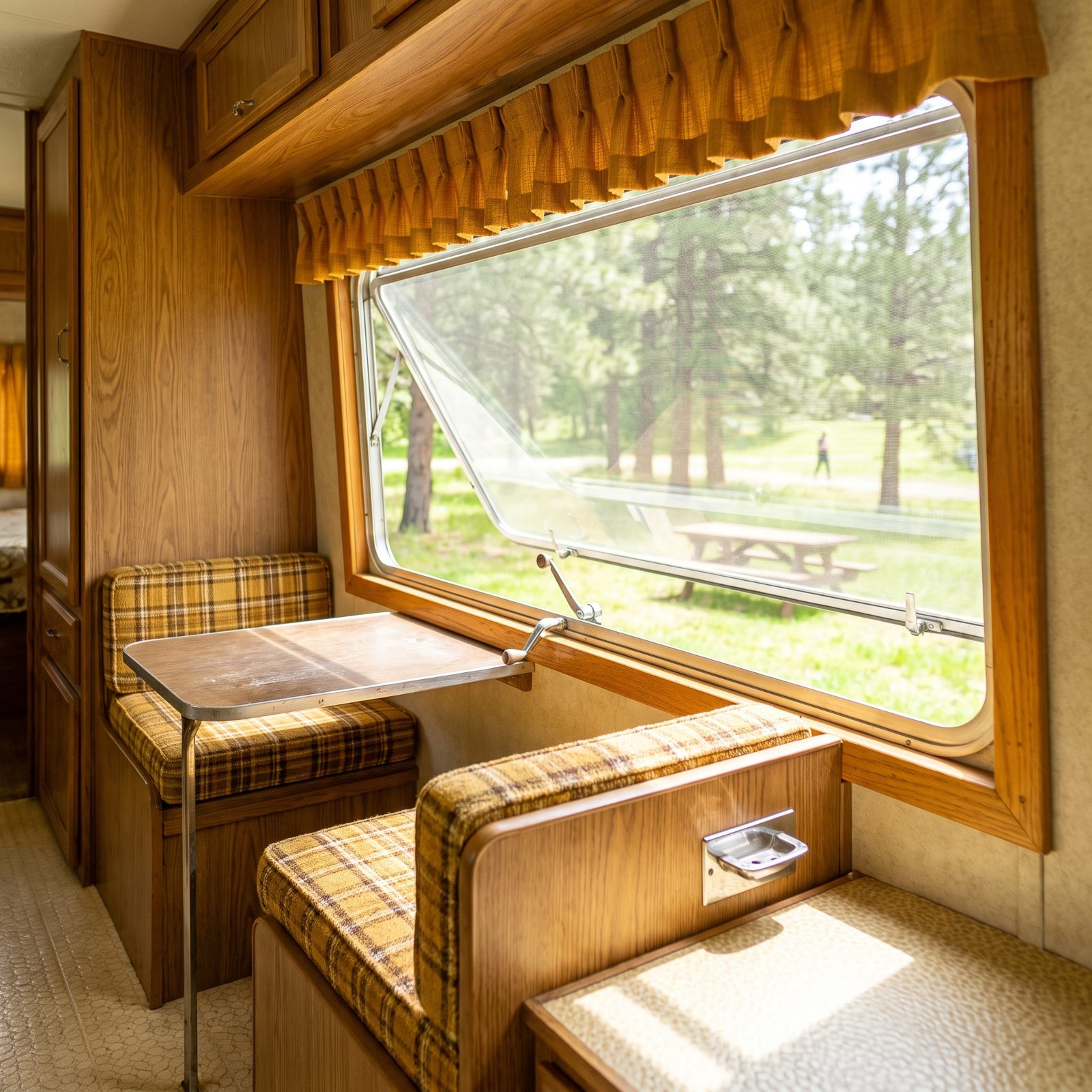
24. Large Side Windows That Opened Wide
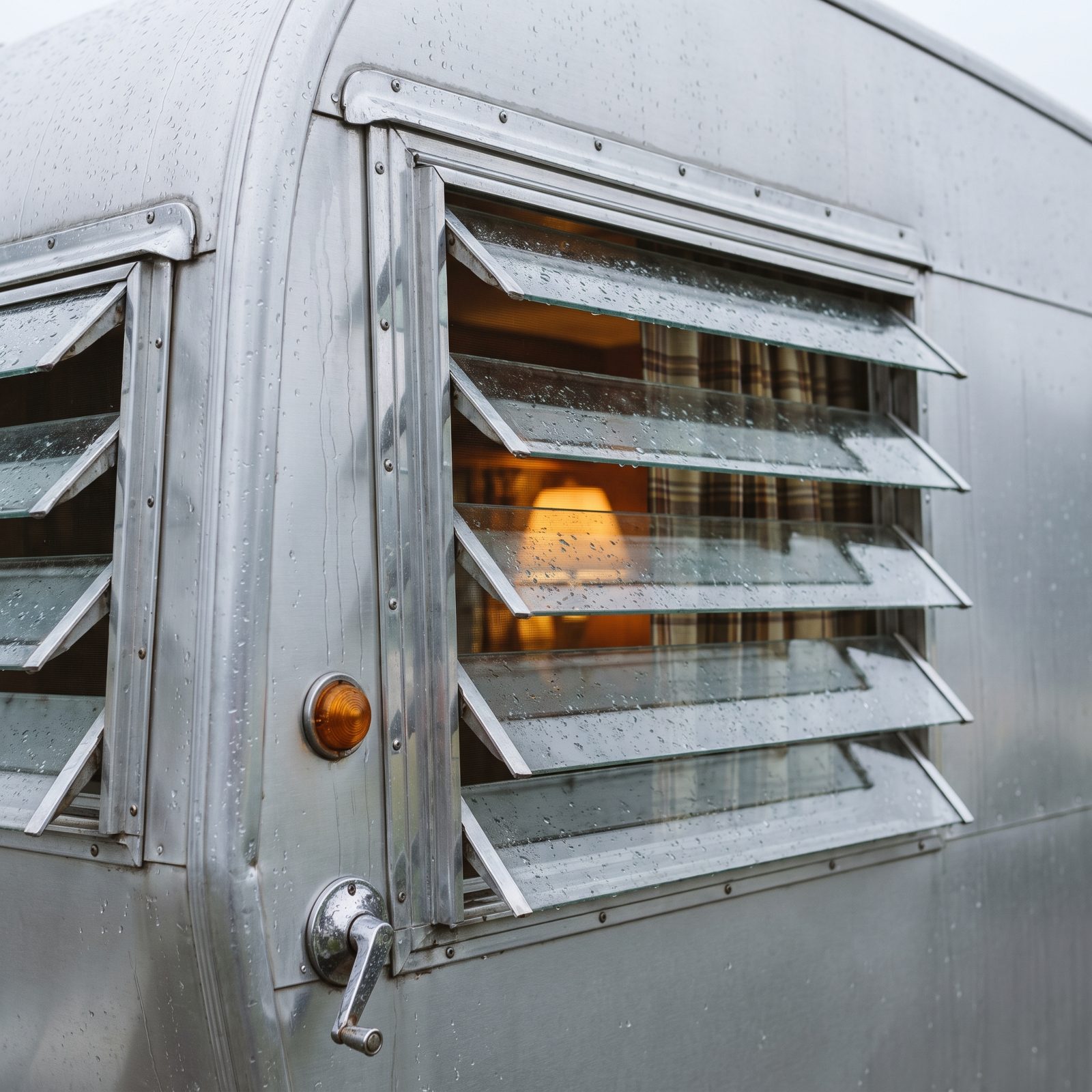
23. Jalousie Windows That Could Stay Open in Light Rain
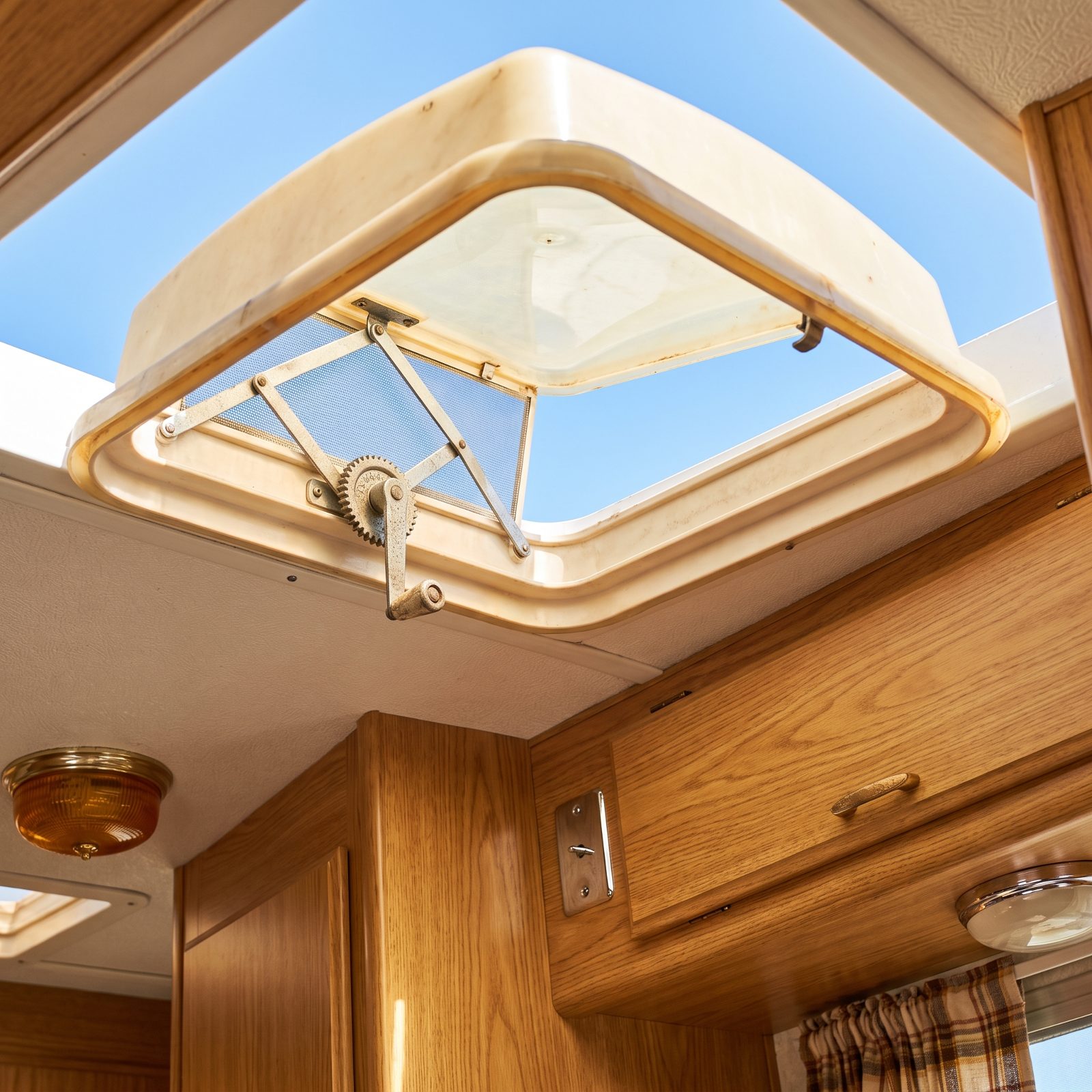
22. Roof Vents That Worked Without Electricity
21. A Proper Full-Size Screen Door
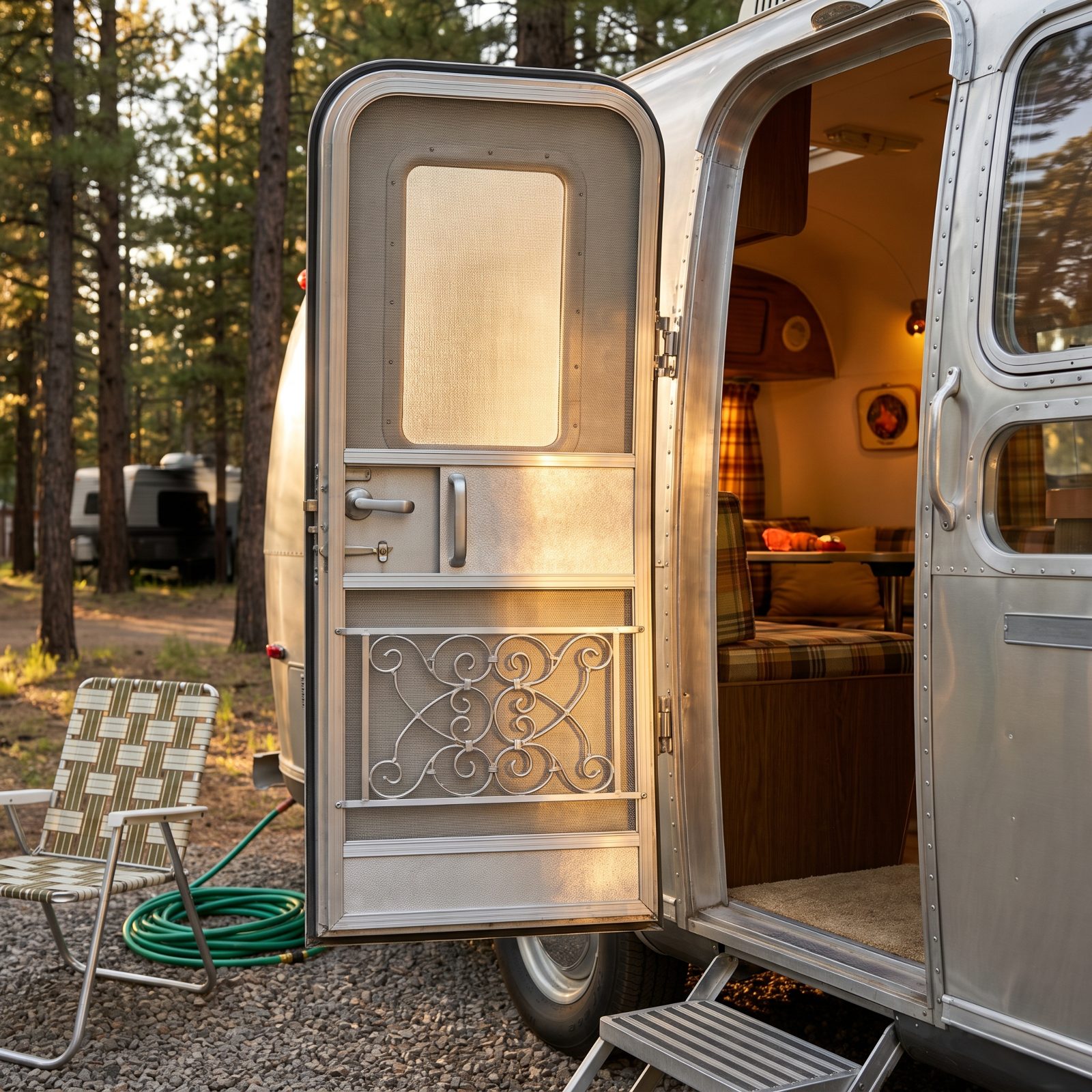
Here’s the one I miss most, and I’ll fight about it. A real screen door — full height, aluminum frame, a latch that clicked, a grab bar you could actually grab. And often a little starburst or scrollwork stamped into the lower panel, like someone cared.
You latched it, swung the main door wide, and the whole trailer breathed. Morning air came through, campground sounds came through. That screen was the membrane between inside and out, and it held up for decades on a simple spring and a lever.
Plenty of newer rigs still have screen doors. Sure. But the flimsy ones that rattle and sag and tear at the corner by week two? Different animal entirely. The old frames were stiff, the mesh stayed taut, and they slammed with a sound that meant somebody just stepped out to check the fire.
Give me a screen door I don’t have to baby, with a latch that survives the kids, and I’ll forgive a whole pile of other sins. That’s my hill.
20. Small Exterior Window Awnings That Fought Rain and Sun at Once
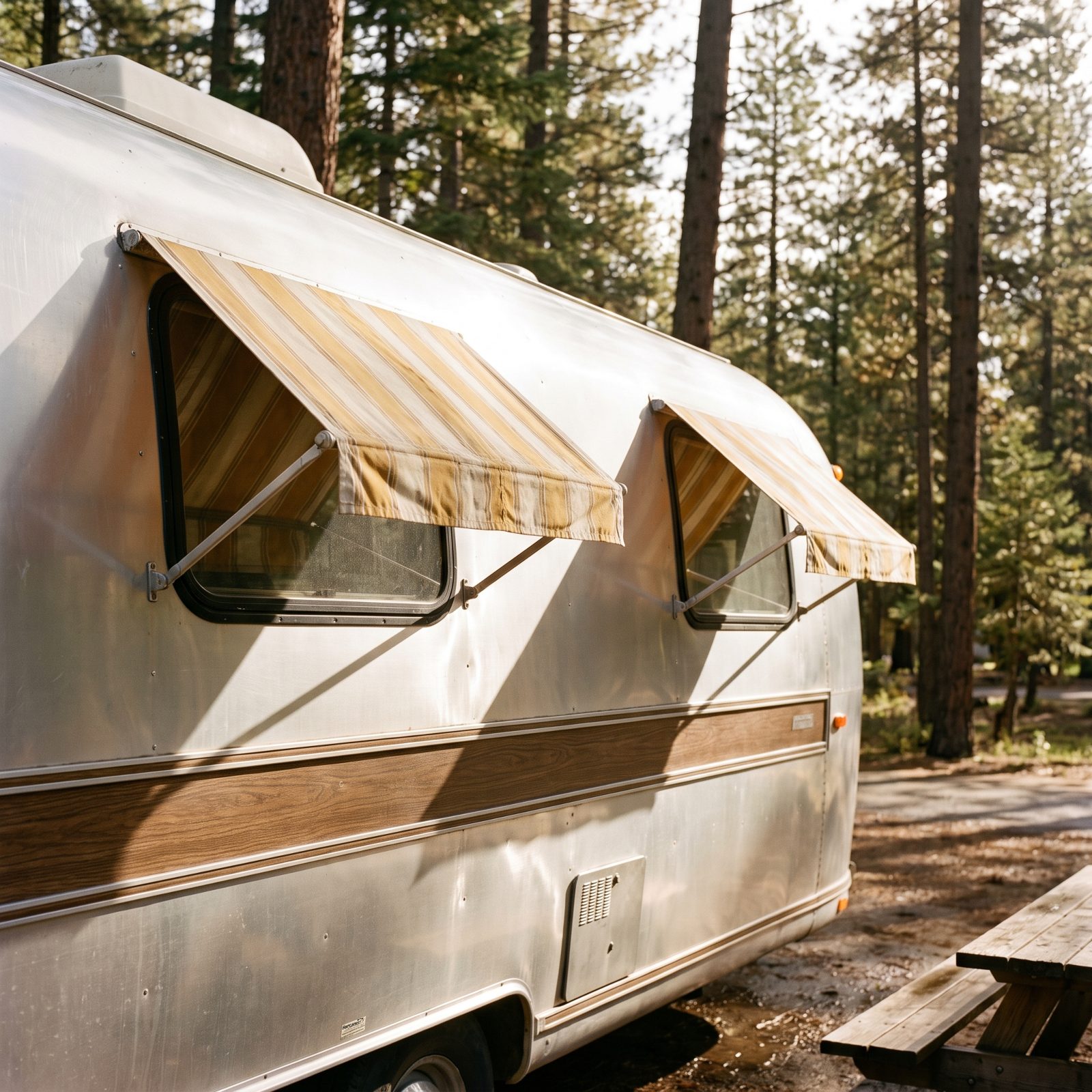
You could crack those side windows in a downpour and keep reading your paperback. The little aluminum awnings angled out over each window did one quiet job well: they kept the rain from pouring straight in while letting the air keep moving.
Modern RVs sealed everything up tight and handed the whole climate problem to the air conditioner. Fine, until you’re boondocking with no hookup and the inside feels like a closed car in July. These awnings let you leave windows open through an afternoon storm without a soggy cushion to show for it.
19. A Fixed Dinette That Was Always Ready to Use
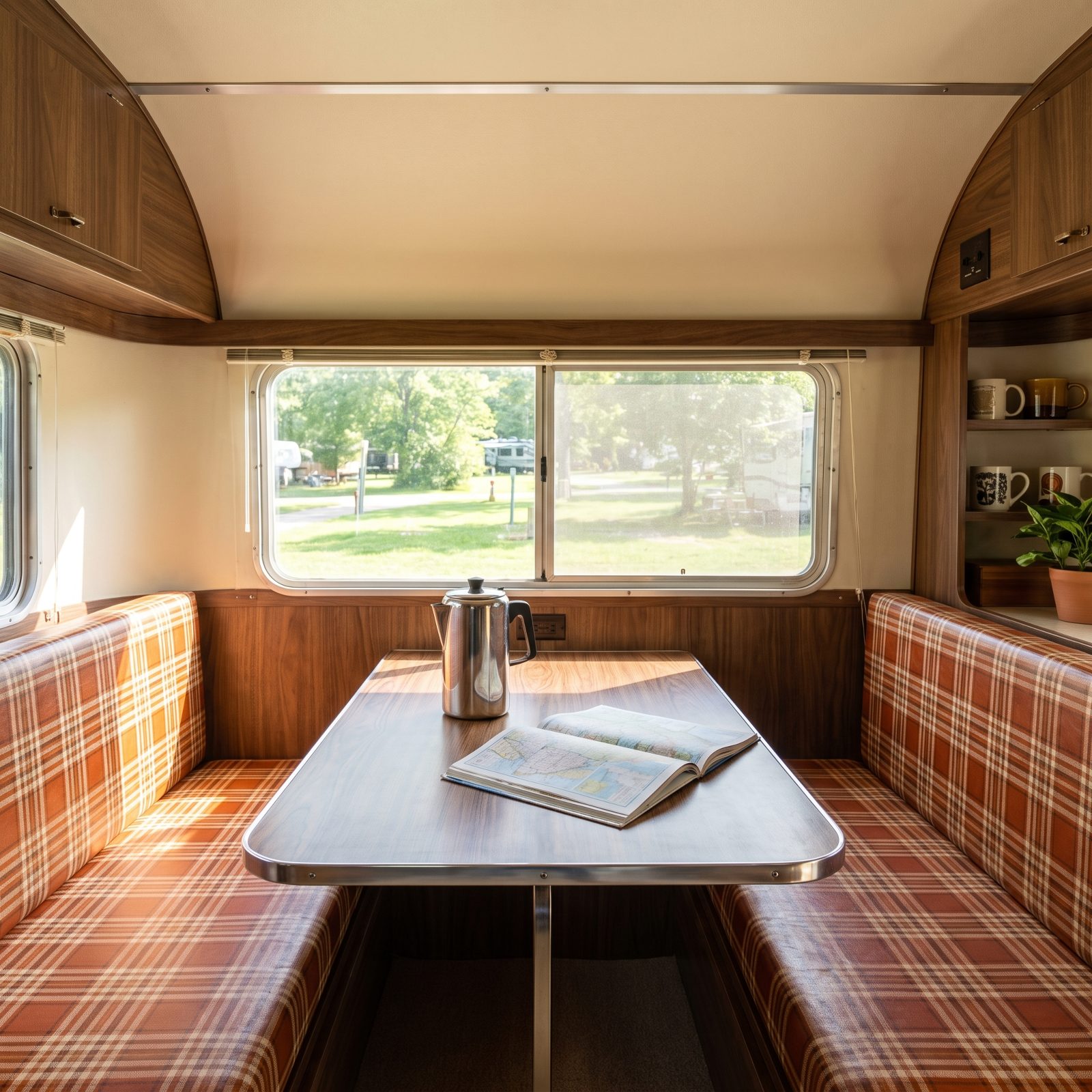
No assembly required. The dinette was just there — table bolted down, cushions in place, ready for coffee at 6 a.m. or cards at 10 p.m. without anyone converting anything.
Somewhere along the line manufacturers got obsessed with the convertible everything. Pull this, drop that, flip the tabletop, rearrange four cushions to make a bed, then do it all in reverse before breakfast. I’ve stood in a modern rig at midnight wrestling a dinette into a bed and wished, hard, for a table that simply stayed a table. A fixed dinette says: sit down, the camping has started.
18. The Space-Saving Gaucho Sofa-Bed
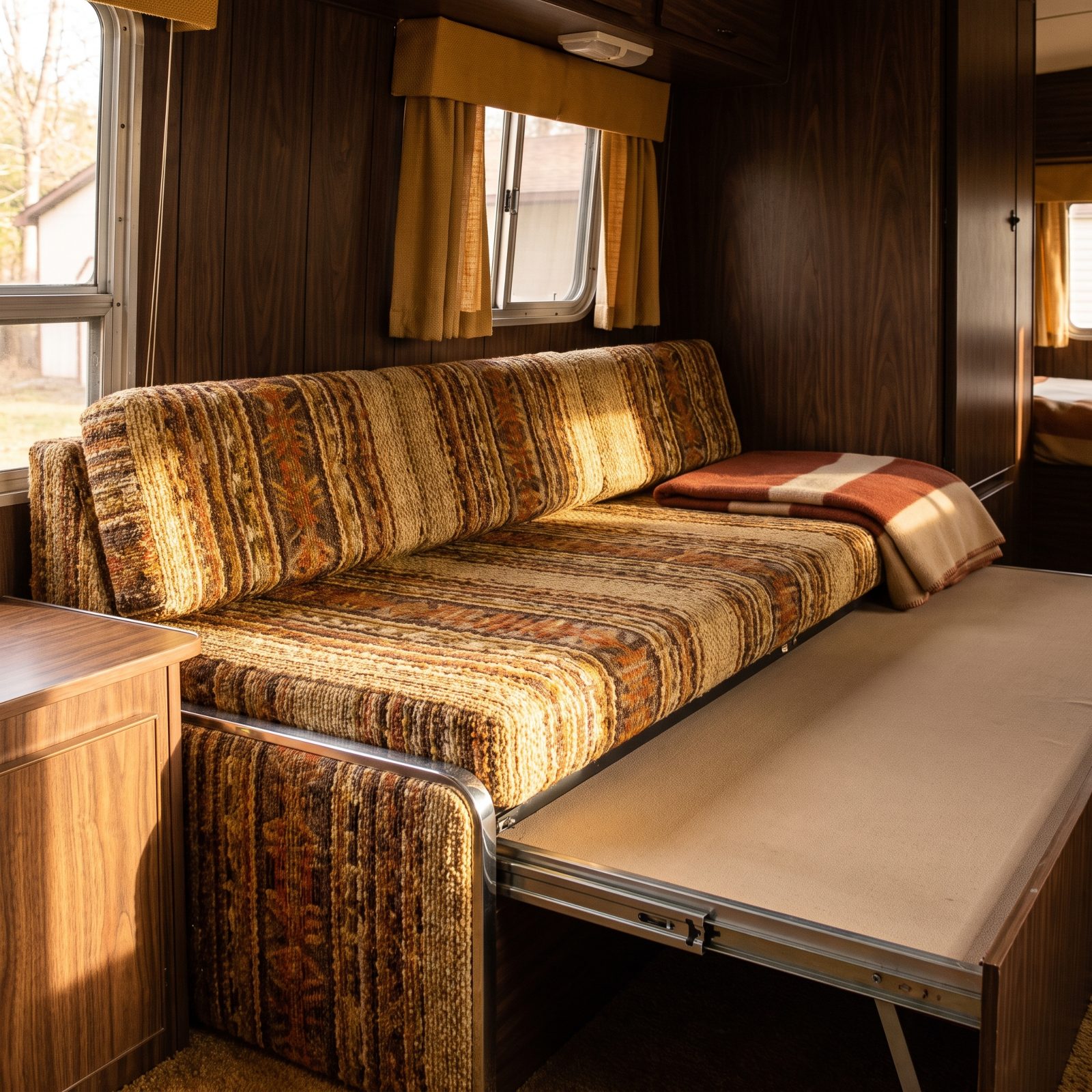
One piece of furniture, two full jobs, zero wasted inches. The gaucho sat flat against the wall as a slim sofa by day, then pulled forward on a simple track into a real bed at night. No bulky recliner mechanism, no fat armrests eating the floor.
That’s the trick modern layouts keep forgetting. A theater seat that reclines is great until you measure how much room it steals from a trailer that’s eight feet wide. The gaucho earned its footprint twice.
17. Overhead Bunks That Gave Children Their Own Space
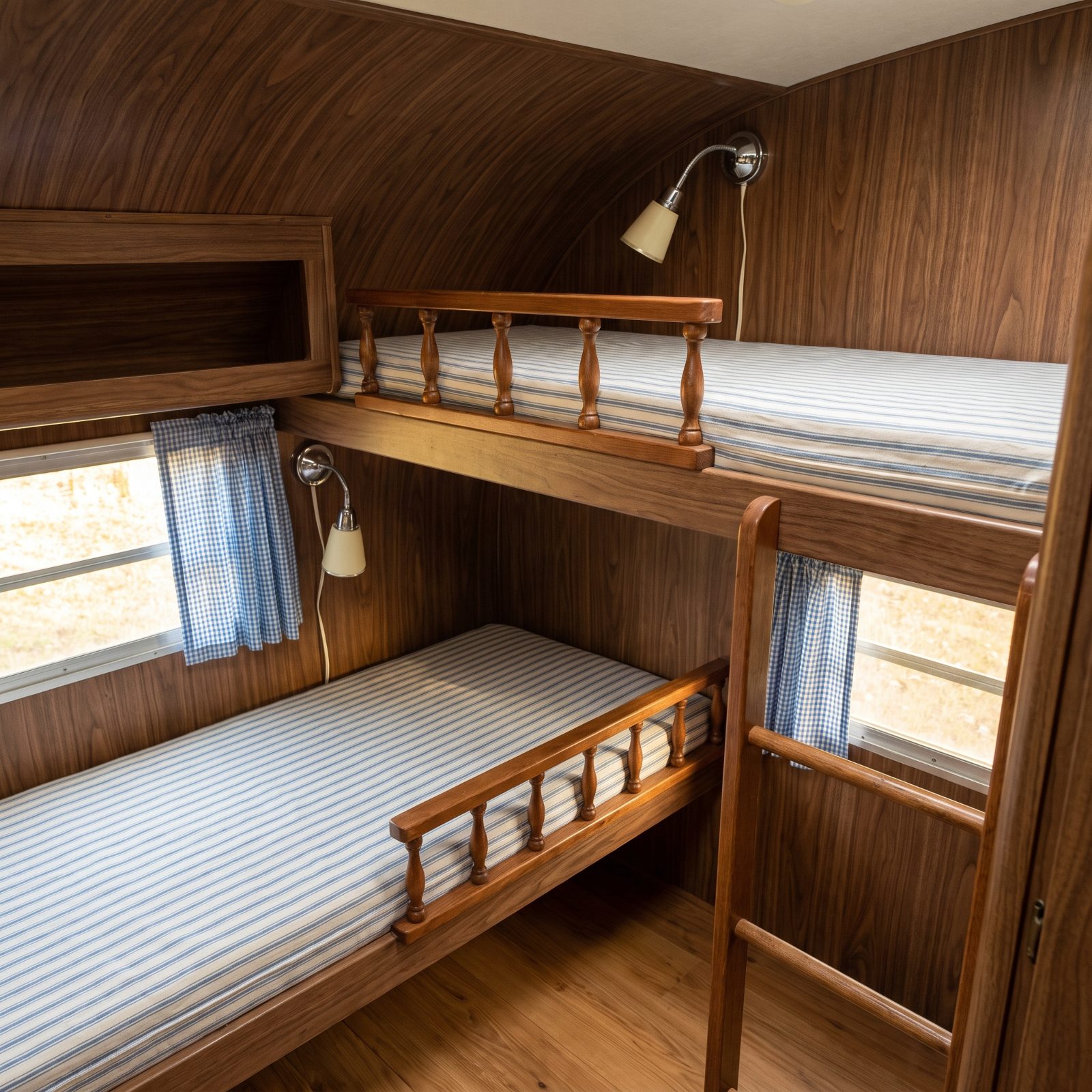
Climbing into that top bunk at nine years old felt like getting your own apartment. A thin mattress, a little rail, a reading light you controlled yourself, and a window at pillow height to watch the campground go dark.
Kids need a corner that belongs to them, even on a trip built around togetherness. The fixed overhead bunks gave children a den and handed parents the lower level back. Today those bunks got shoved to the very back of a bunkhouse, or dropped entirely for more storage. A shame, honestly. A kid with their own bunk sleeps like a stone.
16. Rear Kitchens With a View of the Campsite
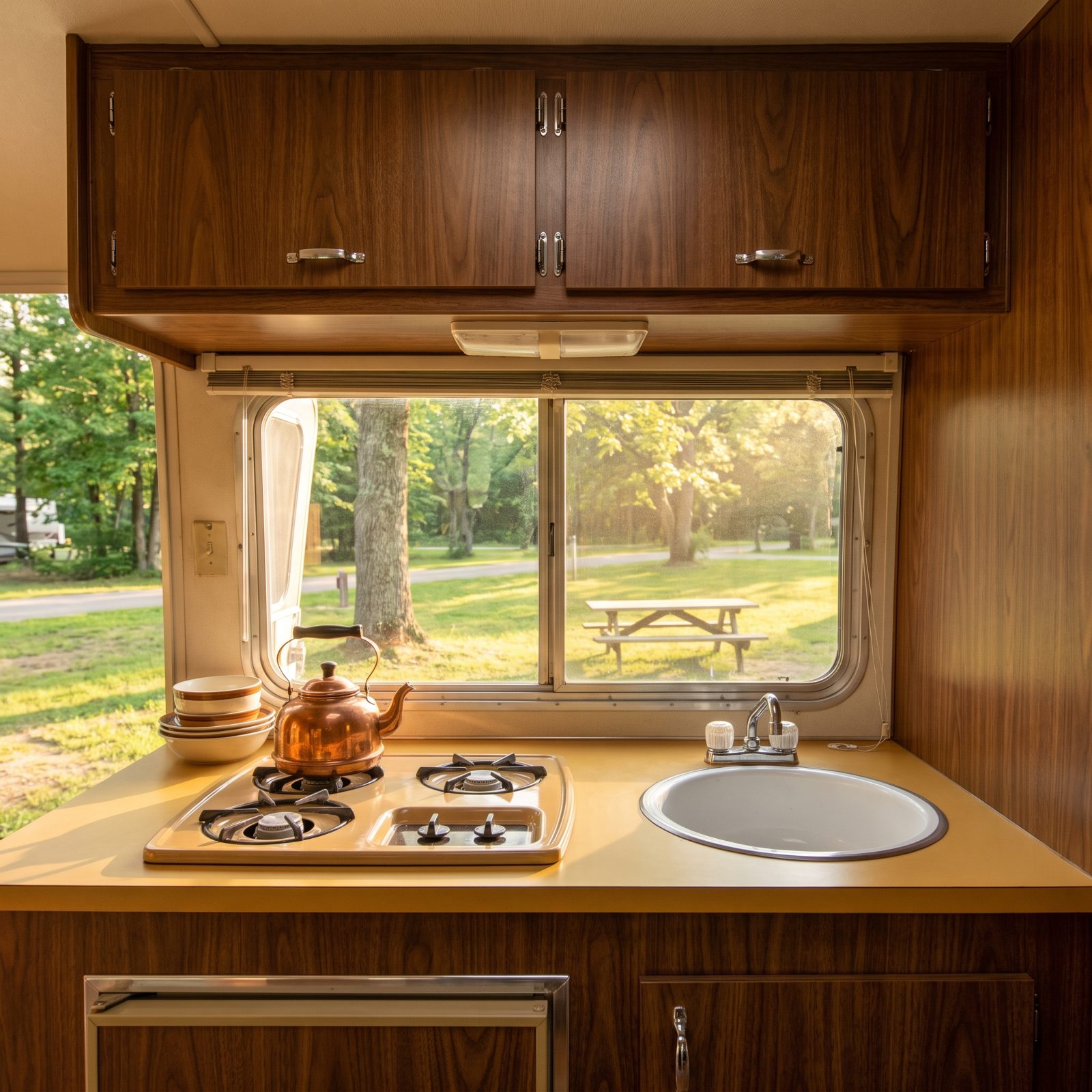
Doing dishes faced the whole campsite. The rear-wall galley put the sink and stove under a big back window, so you cooked while watching the kids at the fire and the light fade through the pines.
That orientation changed how the kitchen felt. Instead of standing with your back to everything, prepping in a dim corner, you were part of the scene. Modern rigs tend to bury the kitchen midship along a slide wall facing nothing but a cabinet. Give me a back window over a tidy backsplash any day.
15. Front Dinettes Wrapped in Panoramic Windows
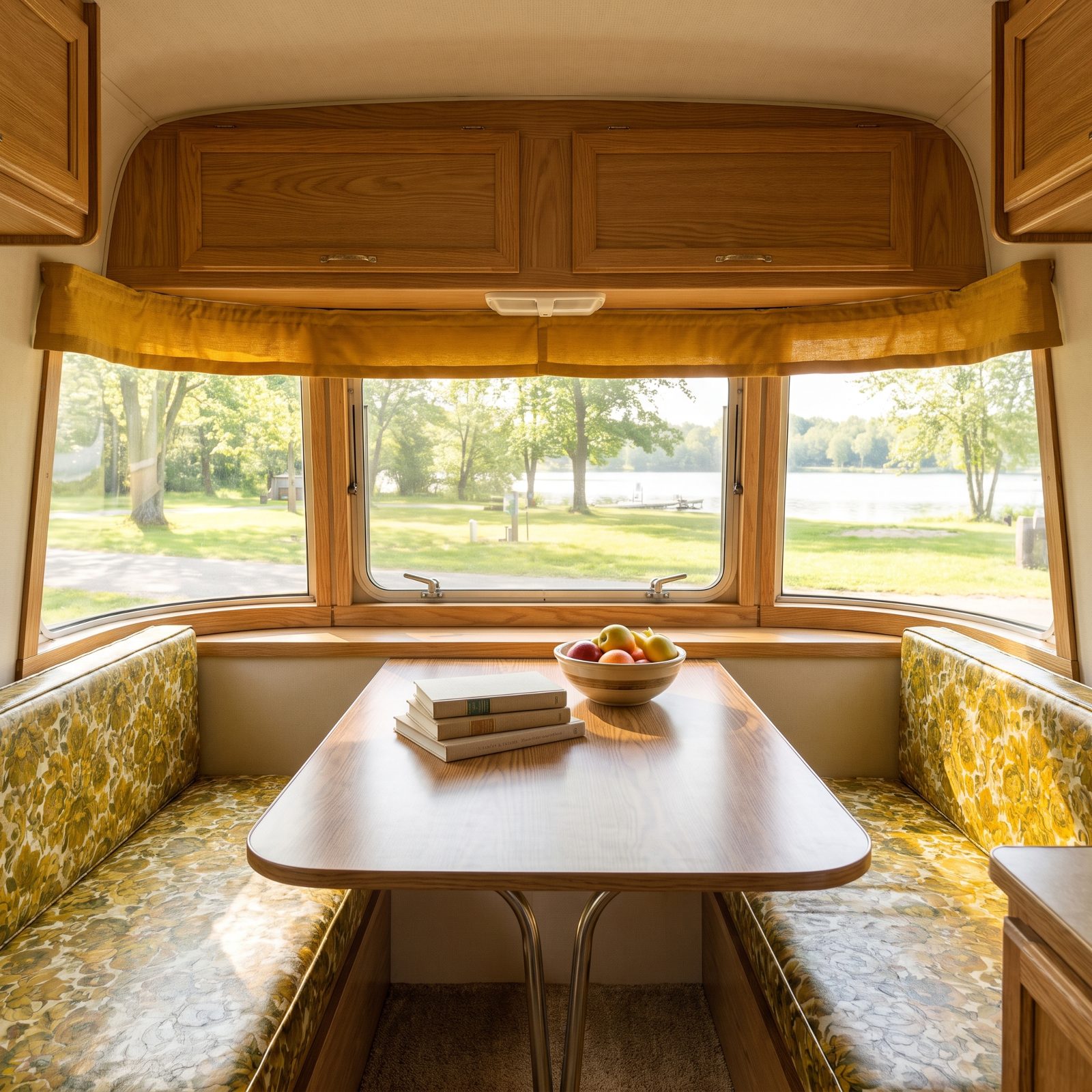
Breakfast in the nose of the trailer came with a wraparound view. Windows curved across the whole front cap, so the dinette felt less like a booth and more like a glassed-in porch pointed at the lake.
That front placement was smart. You got the best light, the best view, and the sense that the outdoors started right at your elbow. Newer floor plans often brick up the front for a bedroom or a giant TV wall. I understand the appeal. I’d still trade the TV for the windows.
14. Compact Wet Baths That Preserved Living Space
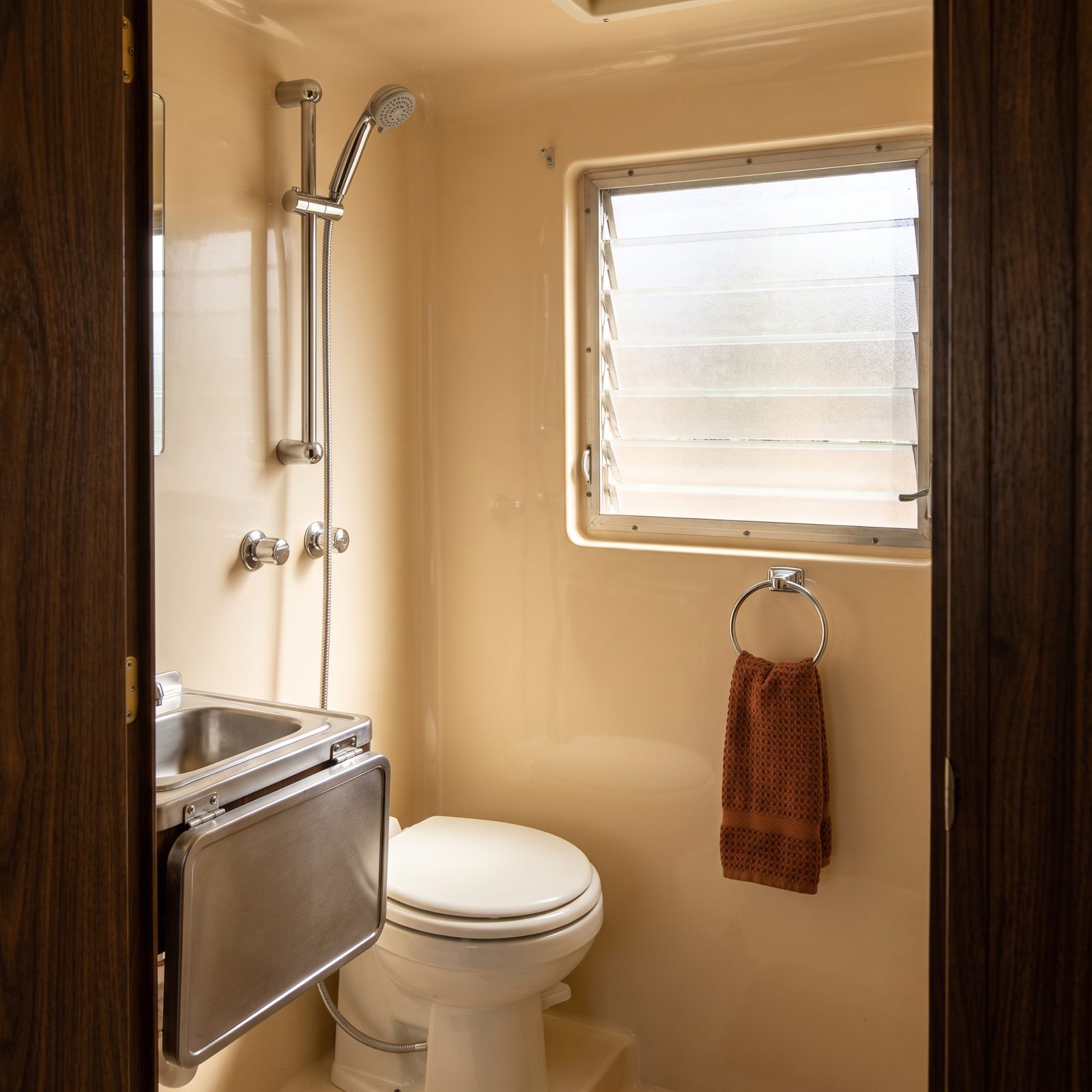
The whole bathroom was the shower. Toilet, sink, and showerhead shared one sealed little fiberglass room, and when you wanted to wash, the entire space got wet and drained out the floor. Cramped? Sure. But it bought back serious square footage for the parts of the trailer you actually lived in.
The math still holds. A wet bath might take a third of the floor a separate shower stall demands. In a small rig that’s the difference between a real dinette and a sad little flip-down ledge.
13. One-Step Galleys With Everything Within Reach
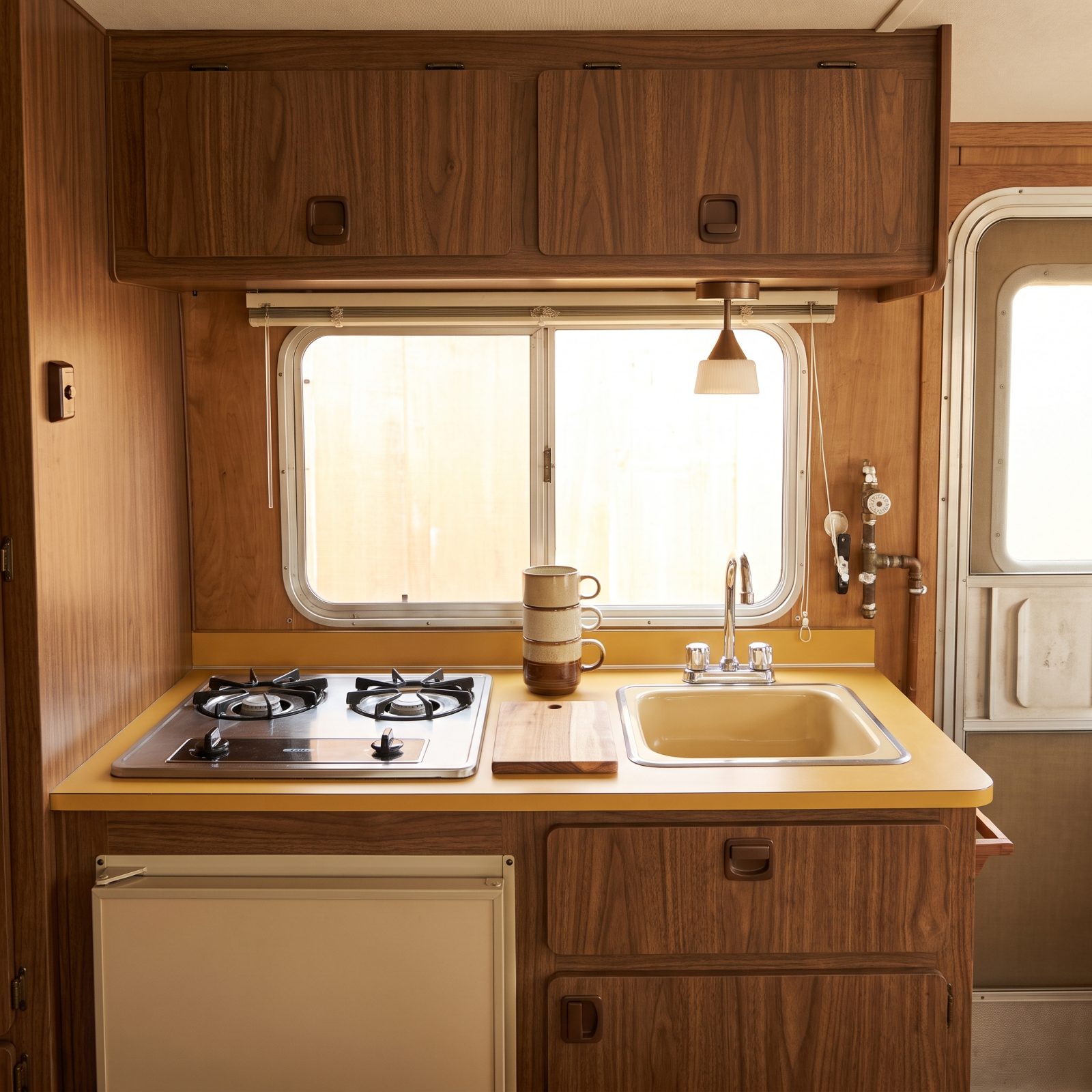
You could stir a pot, grab a spoon from the drawer, rinse it in the sink, and pull the milk from the icebox without taking a single step. The old galleys packed stove, sink, counter, and fridge into one tight run along the wall, all of it within an arm’s swing.
Big rigs now spread the kitchen across ten feet and a slide-out, which means you walk a little lap just to cook eggs. In a kitchen you use three times a day, efficiency beats sprawl. The compact galley respected that.
12. Windows Positioned at Seated Eye Level
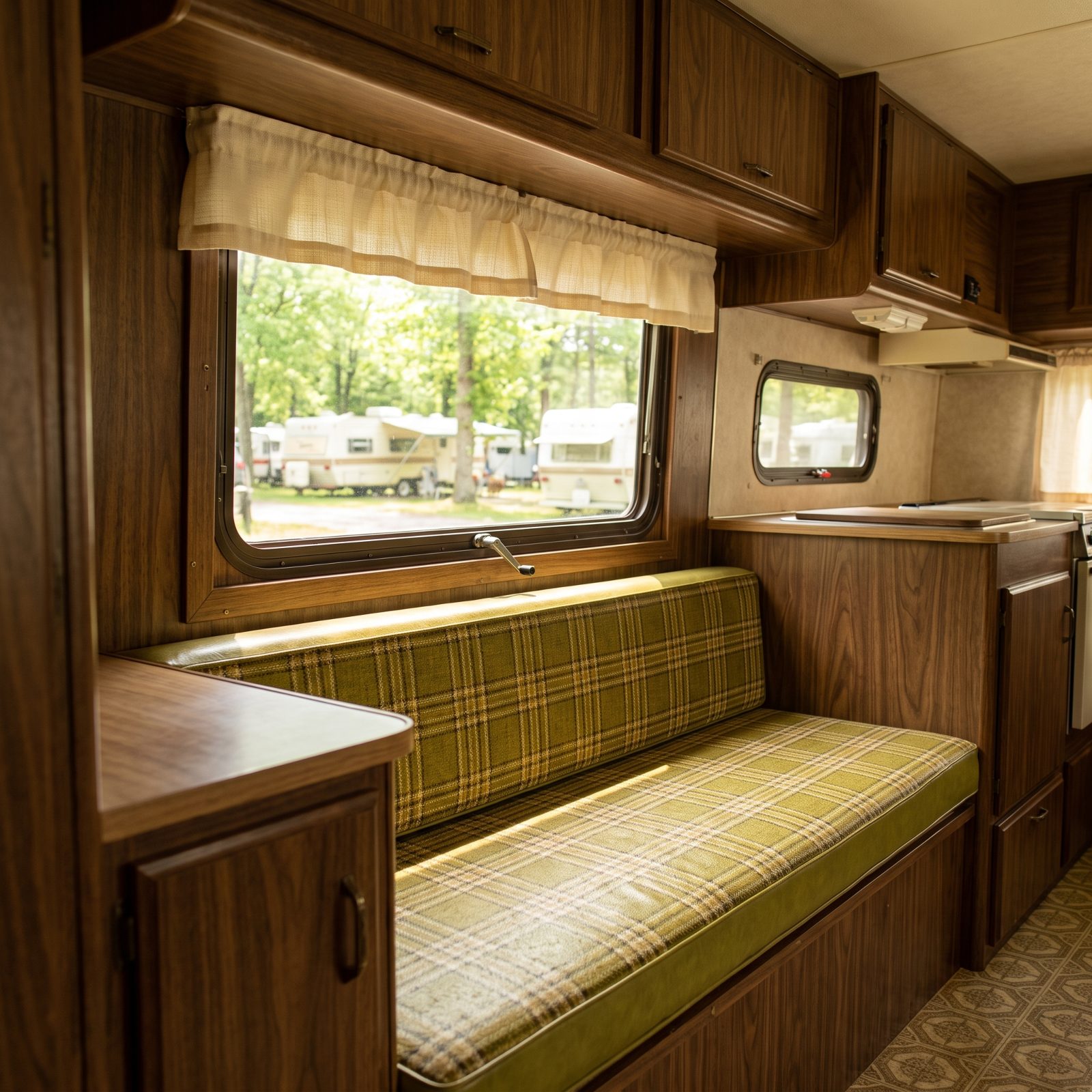
Sit down and the window met your eyes. Not up near the ceiling, not awkwardly over your head, but set low so a seated adult looked straight out at the trees, the lake, the firepit.
Small design choice, big daily payoff. You spend a lot of hours in a trailer sitting — at the dinette, on the gaucho, waiting out rain. Windows pitched for standing heights leave you staring at wall when you’re seated. The 1970s builders knew where bodies actually sat, and they cut the glass to match.
11. Deep Storage Lockers Beneath Dinette Benches
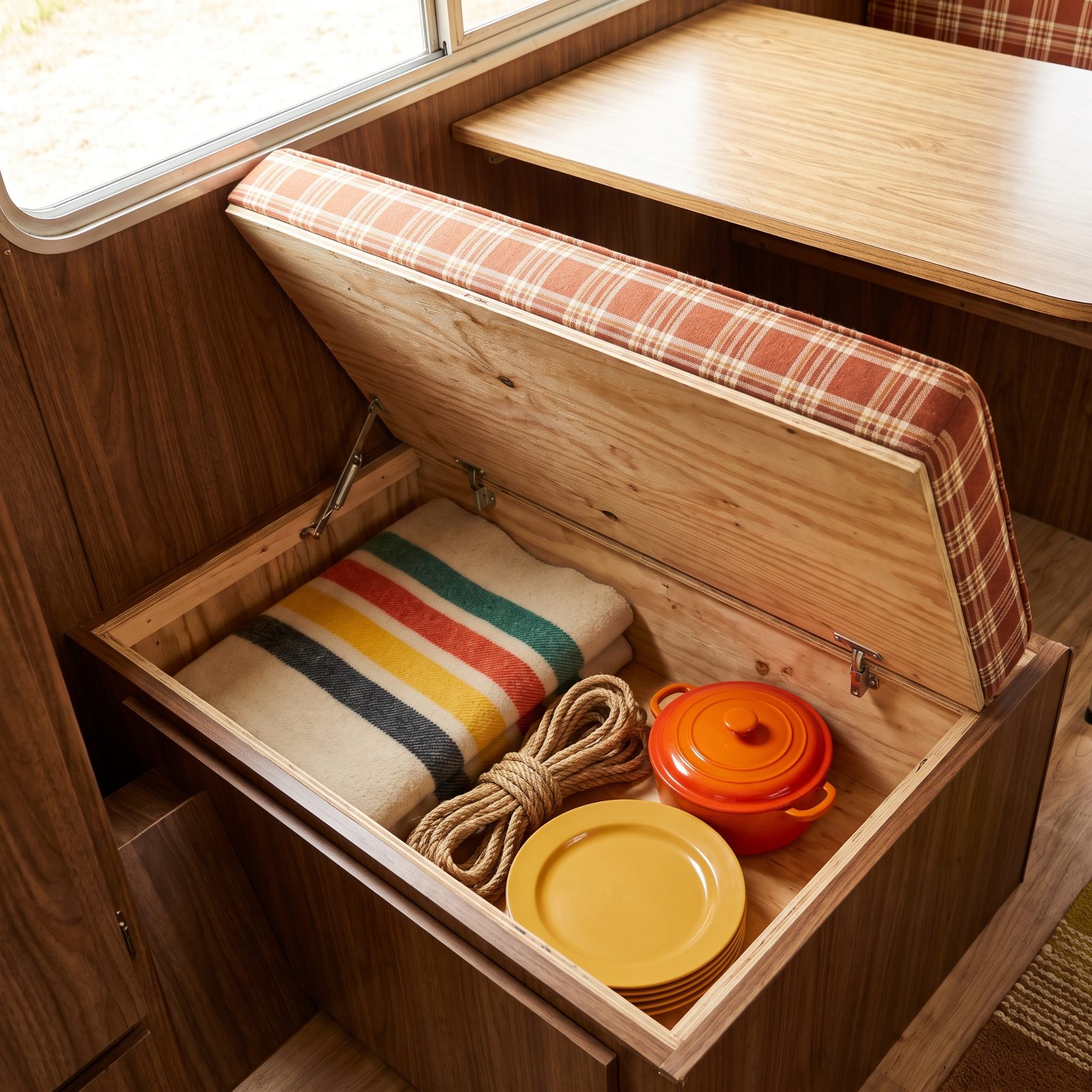
Lift the cushion and there was a cave under there. The dinette benches hinged open to reveal deep lockers that swallowed blankets, pots, board games — the whole clutter of a week on the road.
Modern trailers chase sleek panels and hidden lines, and sometimes storage loses the argument. That old bench didn’t care about looking slick. It cared about holding your stuff. I’ve measured under-bench space in a new rig and found a shallow tray barely deep enough for a magazine, then thought about the blanket-eating vault we had as kids and felt genuinely robbed.
10. Overhead Cabinets That Used the Full Wall Height
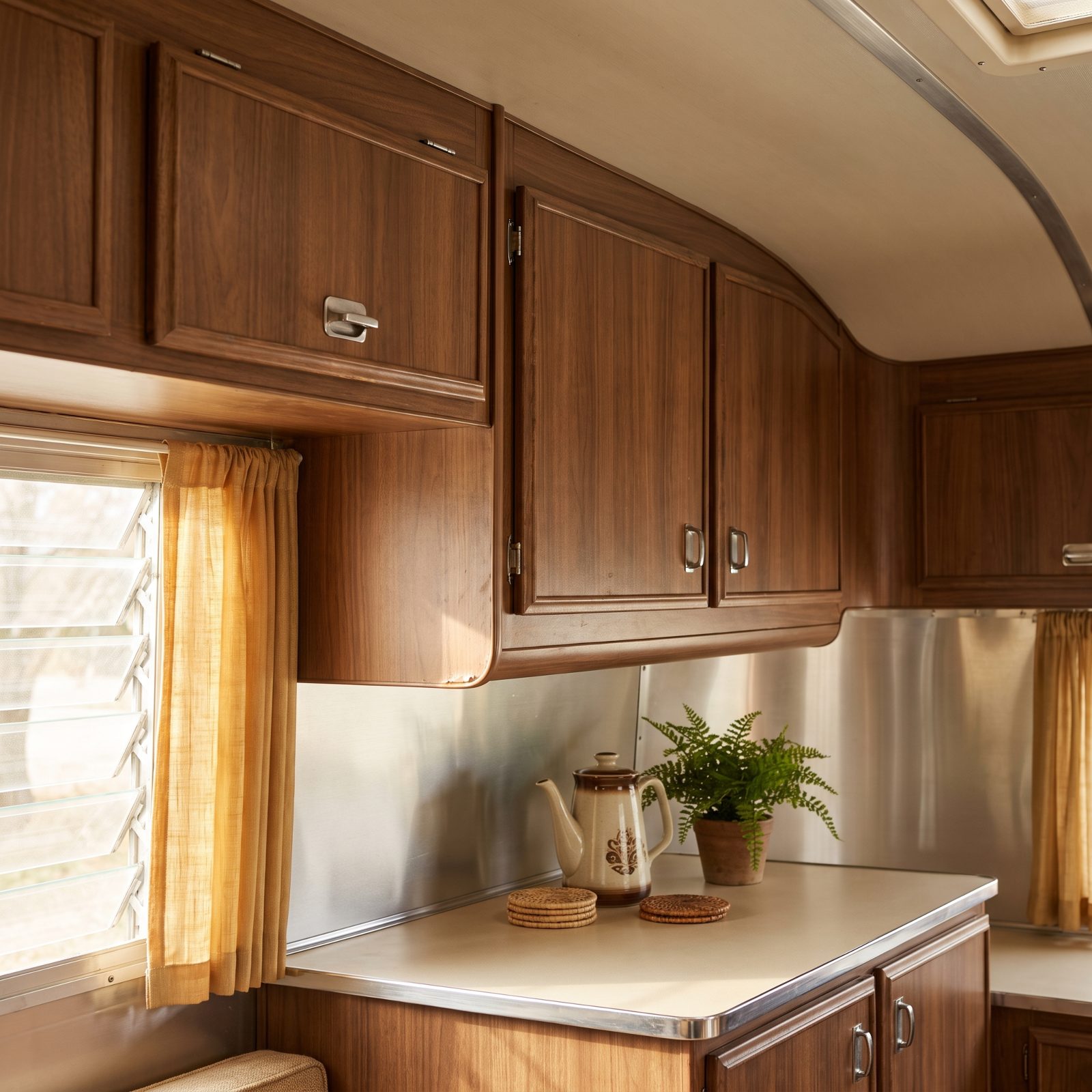
Look up in a 1970s trailer and the storage runs right into the ceiling curve — no awkward six-inch gap collecting dust above the cabinet tops. The box followed the roofline, which meant an extra row of shelving for canned goods, board games, and the stuff you only need once a trip.
Modern rigs love a flat cabinet top for a strip of LED lighting and a clean look. Fine. But that clean look costs you a full tier of storage in a vehicle where storage is the whole game. I’ll take the extra shelf over the mood lighting every time.
9. Built-In Racks for Maps and Campground Guides
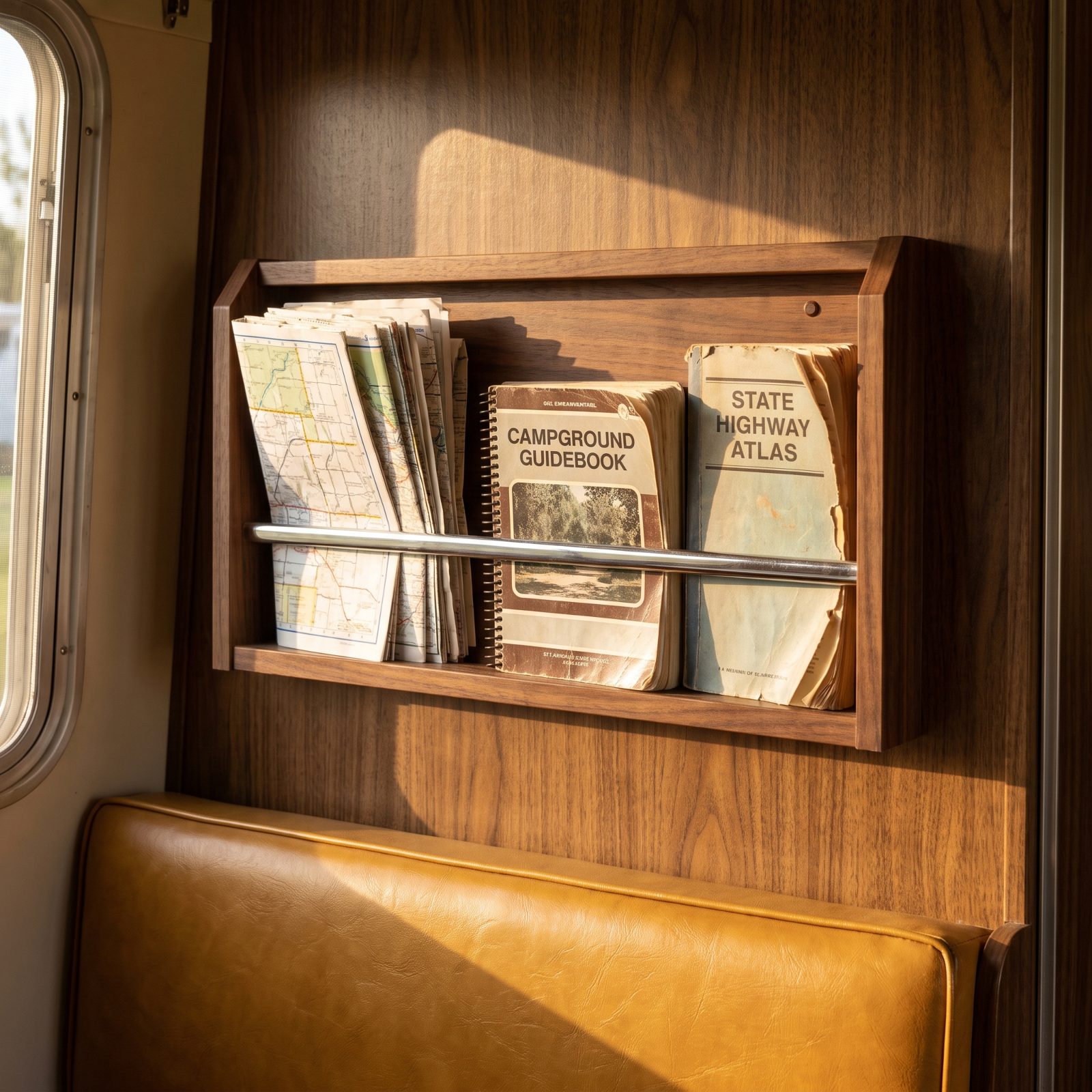
Right by the dinette, usually within arm’s reach of the driver’s side, sat a slim rack built to hold folded maps and the fat campground directory. Not a drawer where things got crumpled — an open slot, angled so you could grab the right map while someone navigated from the passenger seat.
We’ve traded all of that for a phone on a vent mount and a prayer for signal. The paper didn’t need a charge and didn’t drop you at the worst possible turn. A dedicated spot for reference material is one of those small things that made a trailer feel organized and ready.
8. Exterior Hatches That Reached Interior Storage
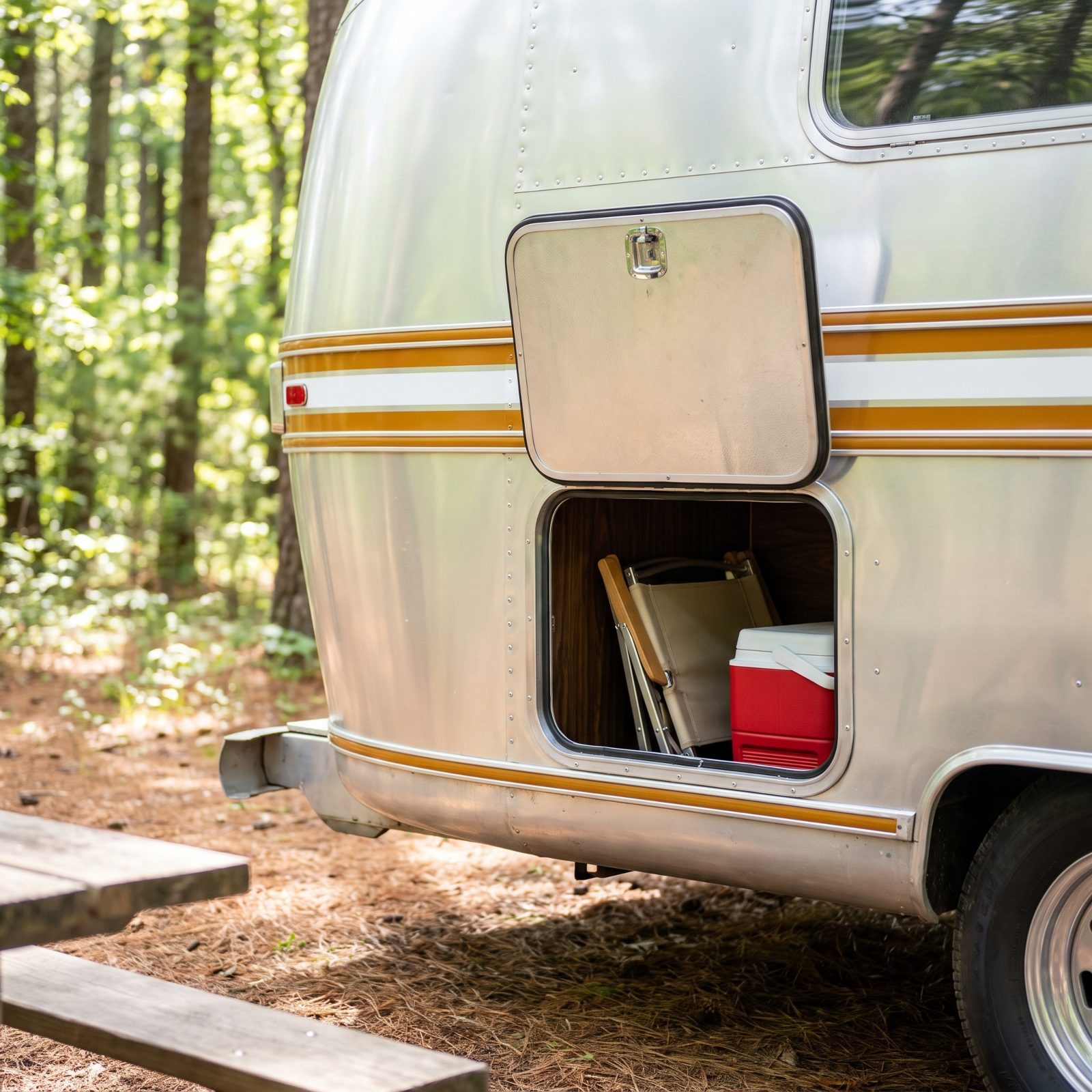
Here’s the trick older trailers pulled that newer ones mostly forgot. An outside hatch that didn’t just open into a dead-end pass-through, but reached the same compartment you could get at from inside. Load the awkward, muddy stuff from the exterior door and grab it later from the dinette seat without tracking dirt through the rig.
New campers have pass-through storage, sure, but it’s often sealed off from the living space entirely. The dual-access design meant one compartment did two jobs. Load it dirty, retrieve it clean.
7. Positive Cabinet Catches That Stayed Shut on Rough Roads
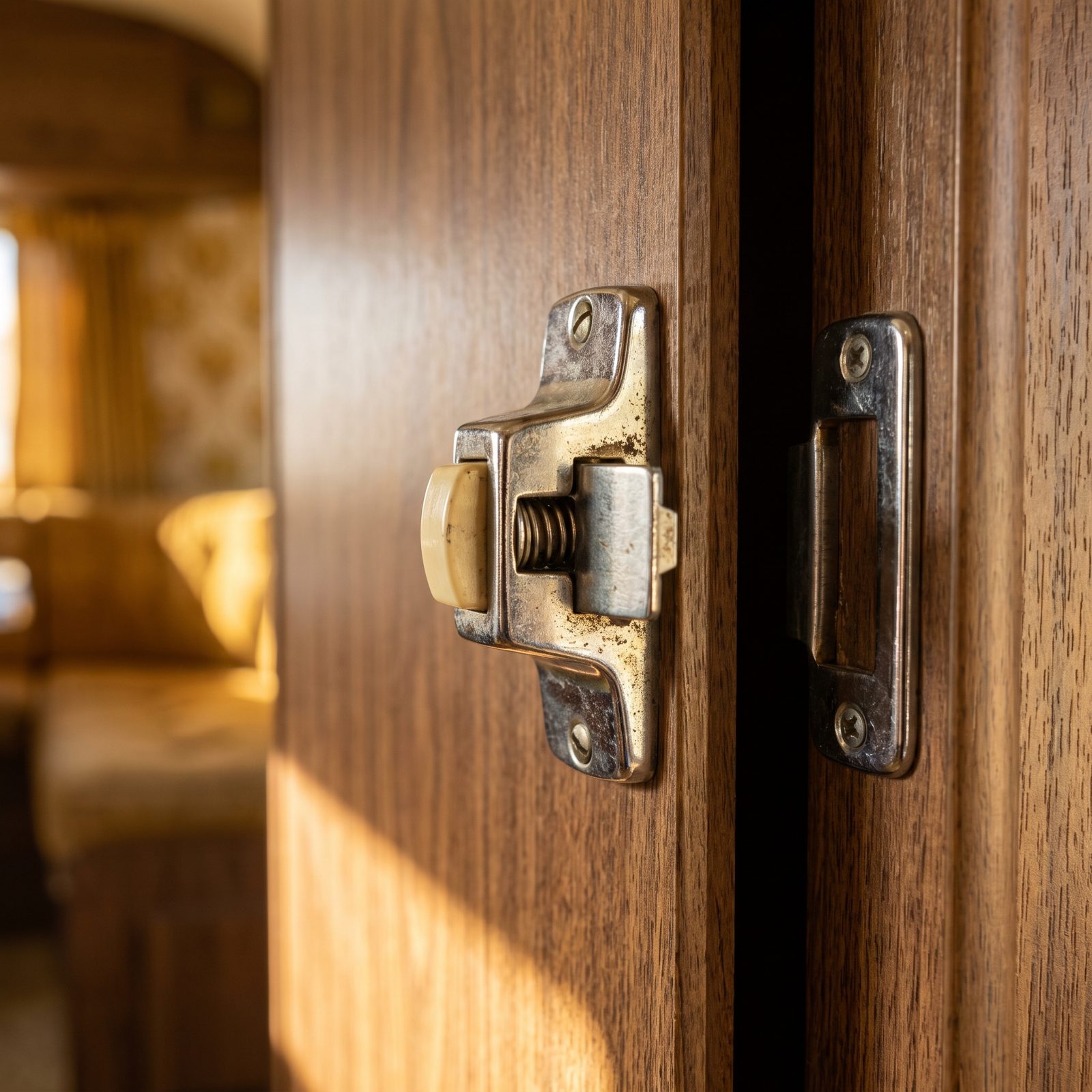
Drive a washboard forest road in a new trailer and you’ll often arrive to a floor full of cans and a cabinet door swinging on its hinge. The culprit? That friendly little magnetic push-latch that gives up the second things get bouncy.
Seventies cabinets used positive catches — a spring-loaded button, a twist knob, a mechanical grip that actually held the door against a strike plate. You felt it engage with a click, and it did not let go because the road got rough. Anyone who has cleaned up a pantry explosion at a rest stop knows exactly why this matters. I’ve cleaned up more than one.
6. Removable Pedestal Tables That Created Instant Floor Space
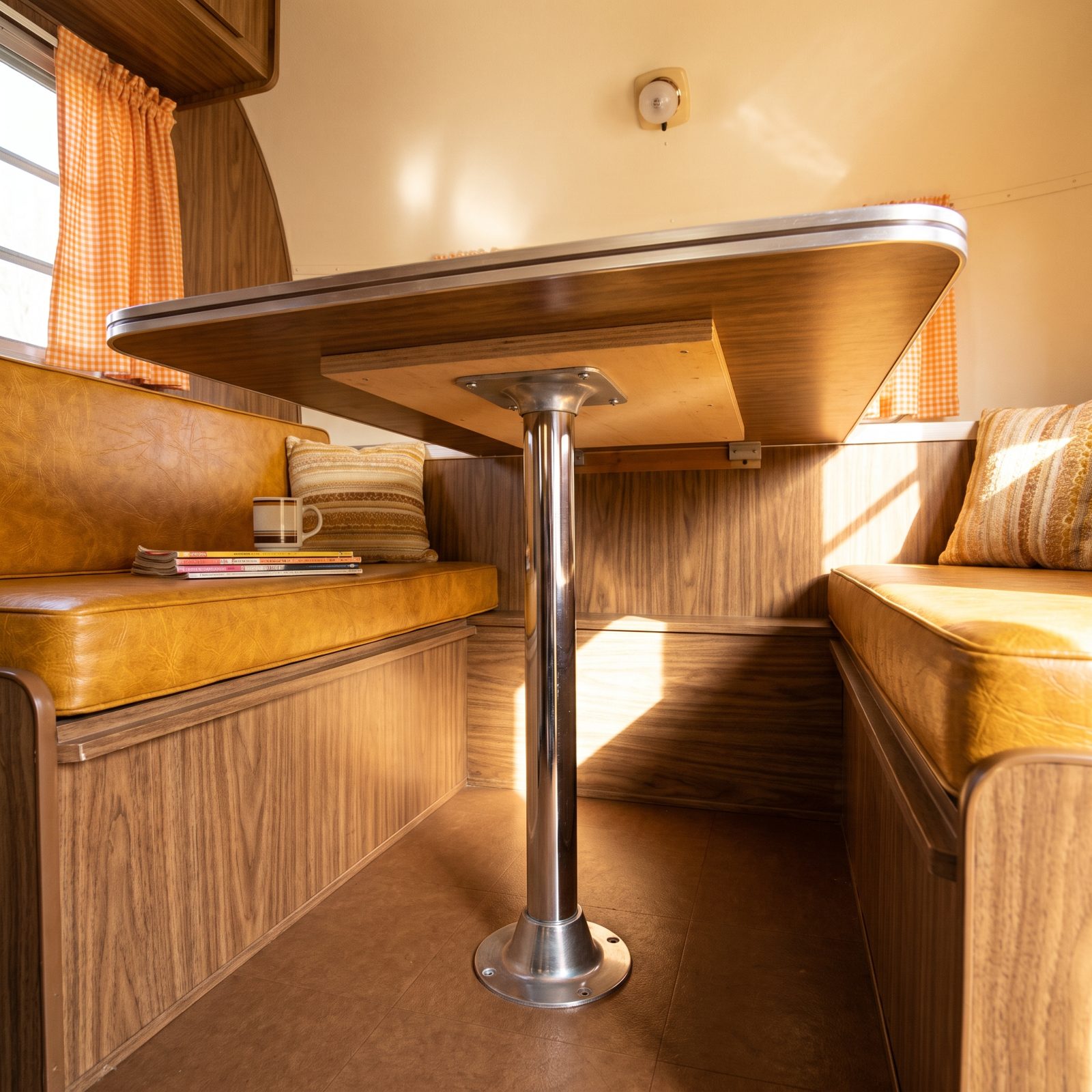
Lift, twist, done. The dinette table dropped onto a chrome pedestal post and came off just as easily. Pull it, and suddenly the floor opened up for a sleeping bag, a card game spread on the carpet, or just room to stand and change out of wet clothes.
That same post often doubled as a leg for the dinette-to-bed conversion. One piece of hardware, two functions, and a floor you could clear in ten seconds when you needed the space. Try doing that with a bolted-in theater seat.
5. A Real Oven for Rainy-Day Meals
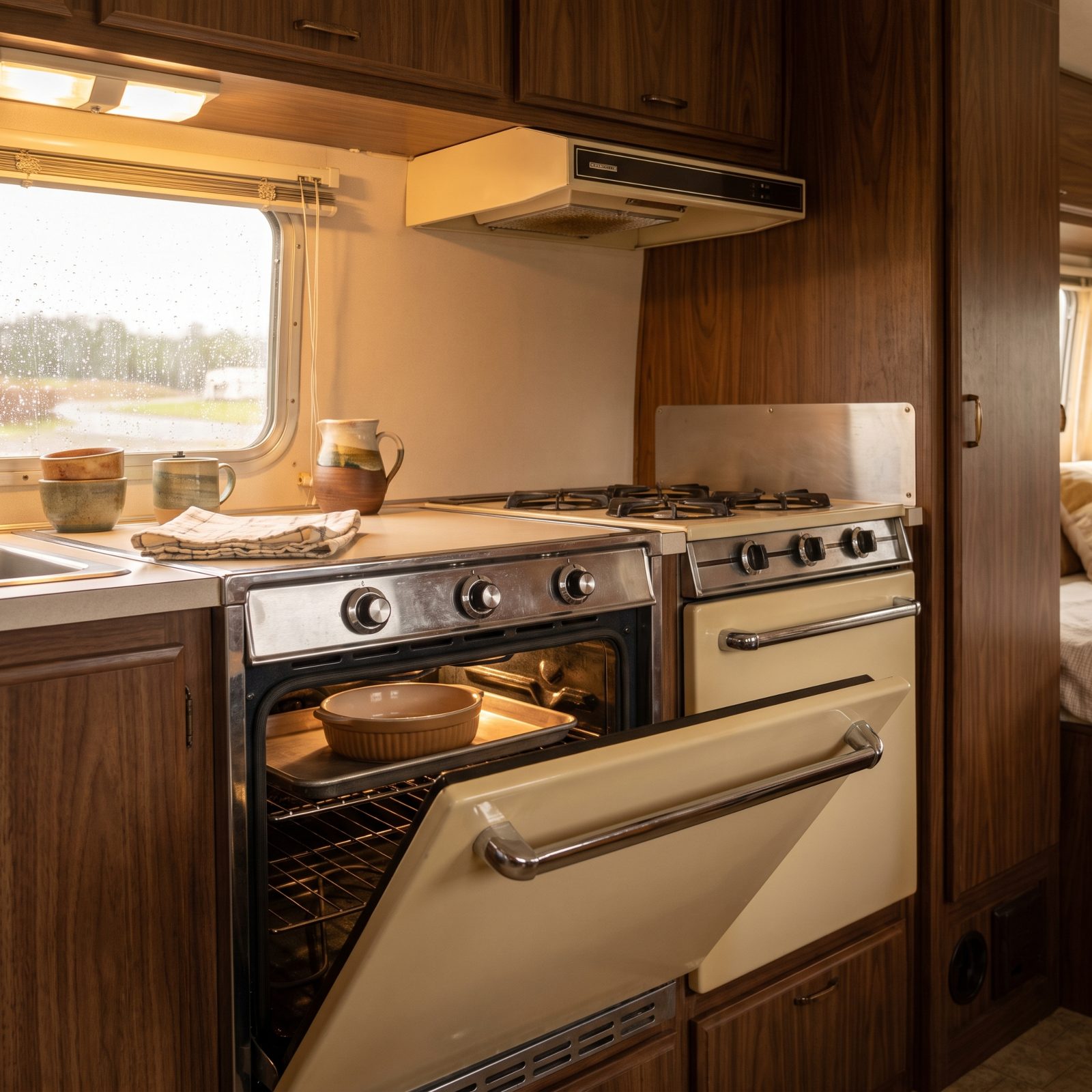
Rain sets in, the awning drips, and nobody wants to stand over a single burner outside. This is where the old trailers shined — a real gas oven, tucked under the cooktop, baking cornbread or a tray of biscuits while the weather did its thing.
So many new rigs ditched the oven for a bigger microwave and a drawer. I understand the floor-plan math. But a microwave can’t make the inside of a camper smell like a Sunday kitchen on a cold, wet afternoon, and that smell is half the reason to go camping.
A microwave reheats dinner. An oven makes the trailer feel like home.
4. A Manual Water-Pump Faucet as a Backup
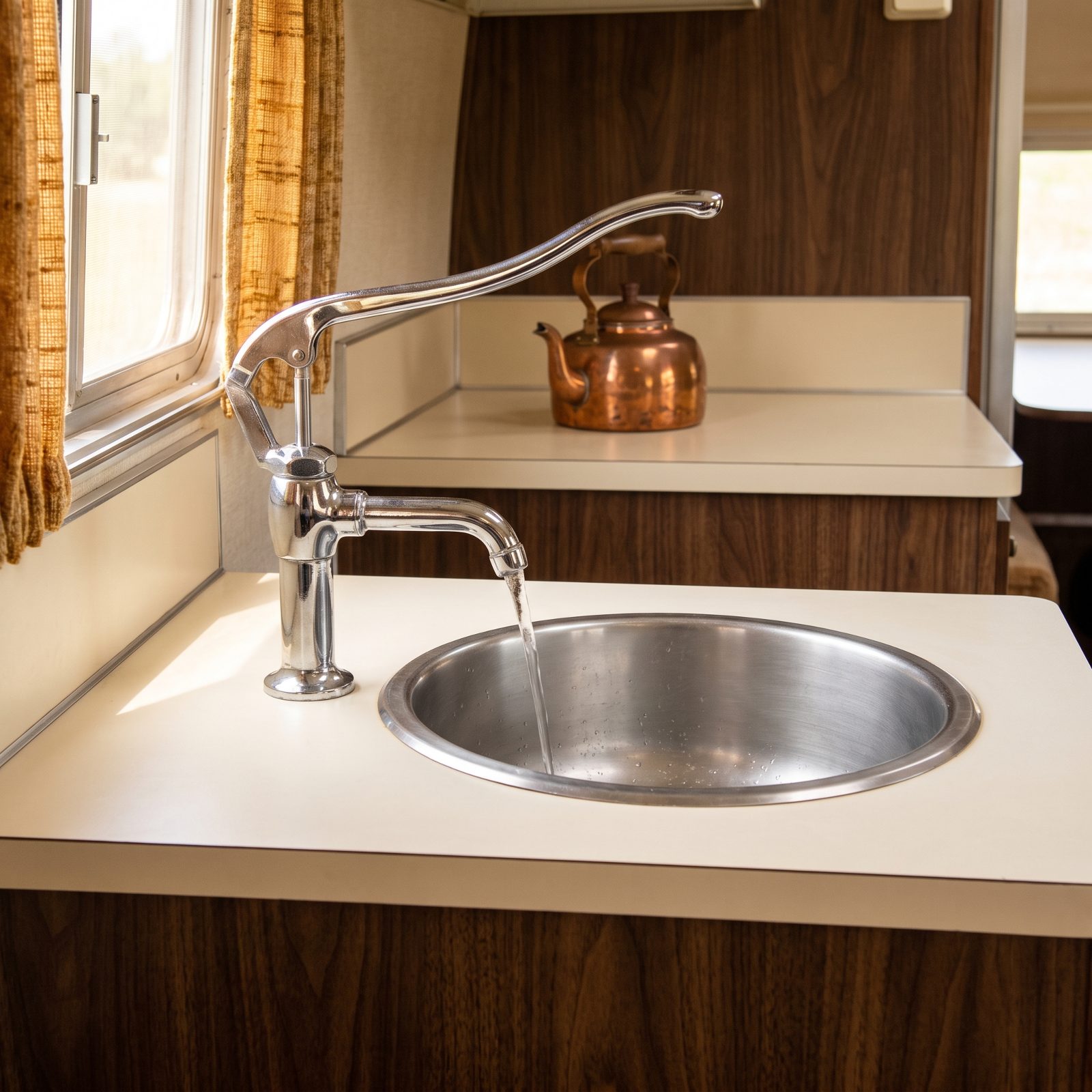
Every 1970s galley I’ve crawled through had one of these. A hand-pump faucet you worked with a lever, drawing water up by muscle instead of electricity. On a lot of trailers it sat right alongside the pressurized tap.
Dead battery? Failed water pump? You still drink, you still wash dishes. The manual pump asked nothing of the electrical system. In an era of rigs that need power just to deliver a glass of water, a backup that runs on your own arm is worth keeping.
3. A Vented Range Hood Over the Stove
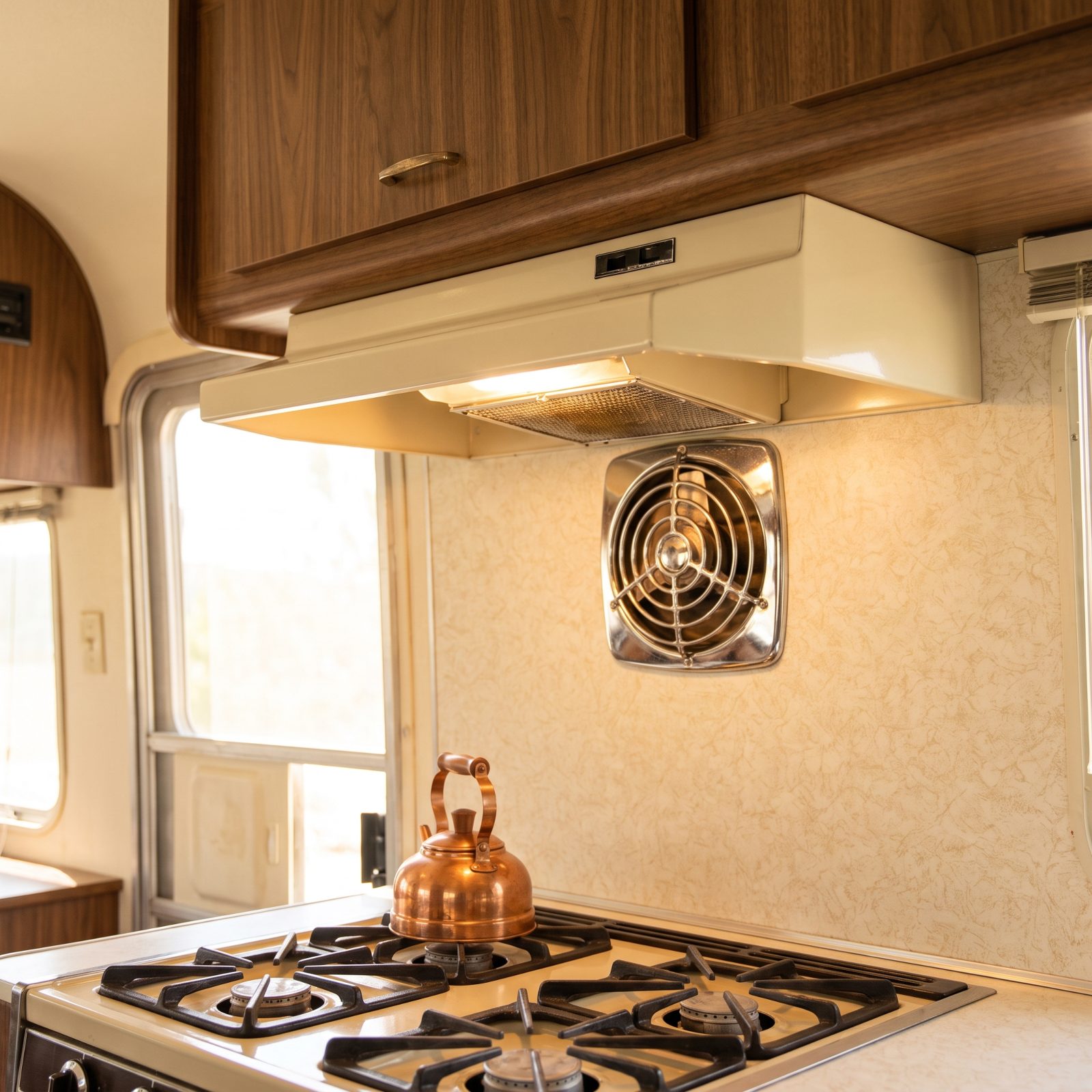
Fry bacon in a sealed aluminum box and you’ll live with that smell for two days unless something pulls it out. The old trailers knew this. A proper vented range hood sat over the stove, fan and exhaust pushing steam, grease, and odor outside instead of into the curtains and your sleeping bag.
Plenty of new campers use a recirculating hood that just shoves the air through a filter and back into the room — or skip the hood entirely. A vent to the outside is the difference between a cabin that airs out and one that smells like last night’s dinner all weekend.
2. Physical Switches for Every Major Function
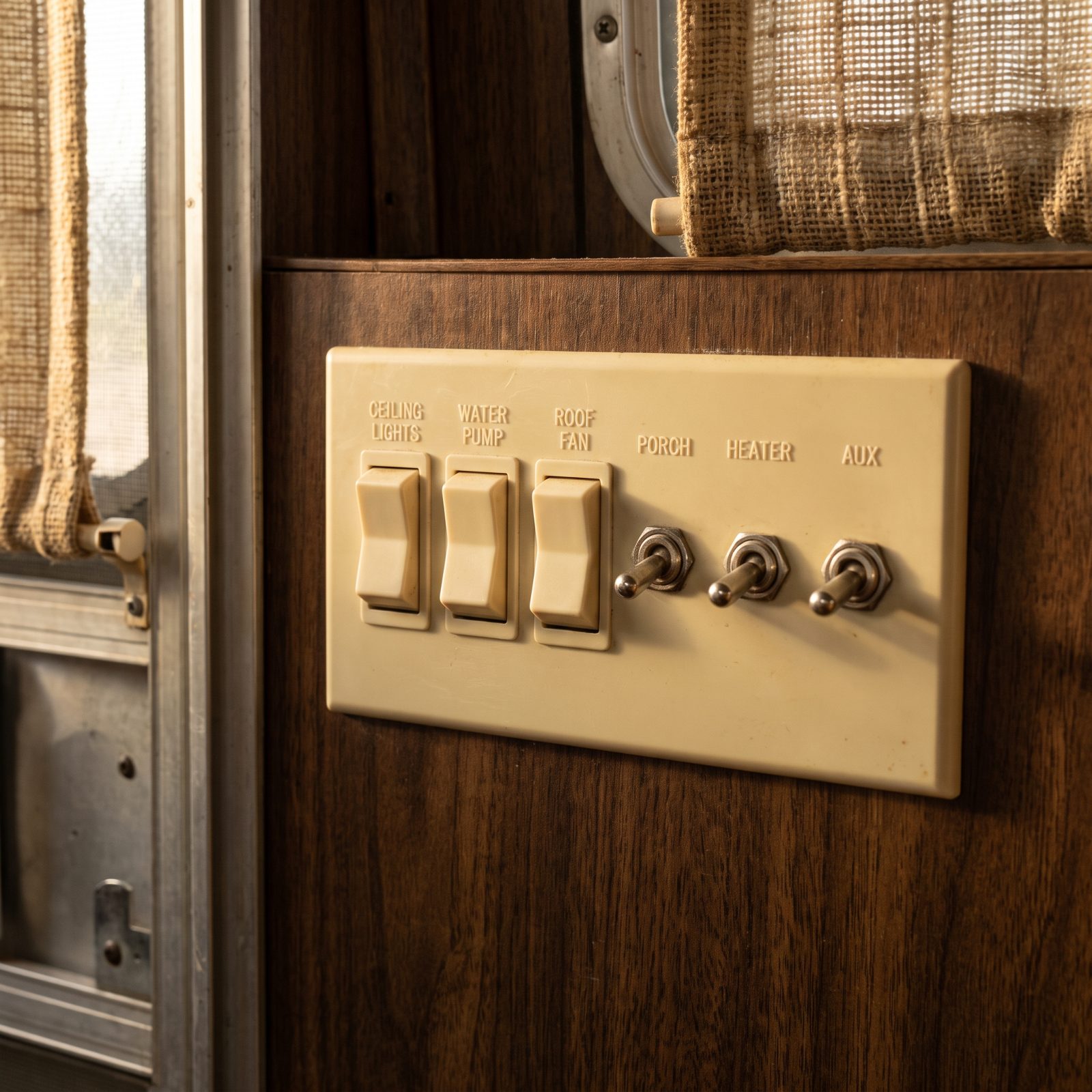
A cream switch panel by the door, each rocker doing one clear job. Lights. Pump. Fan. You could flip the right one in the dark without reading a thing, because your thumb learned where it lived on the first night.
Now half the industry routes everything through a glossy touchscreen. When that panel glitches, you’re stuck poking a frozen menu to turn on a light. A physical switch doesn’t crash, doesn’t need a firmware update, and works in a power brownout. I’ll say it plainly: for anything you need at 2 a.m., a toggle beats a screen.
1. Very Low Parasitic Battery Draw
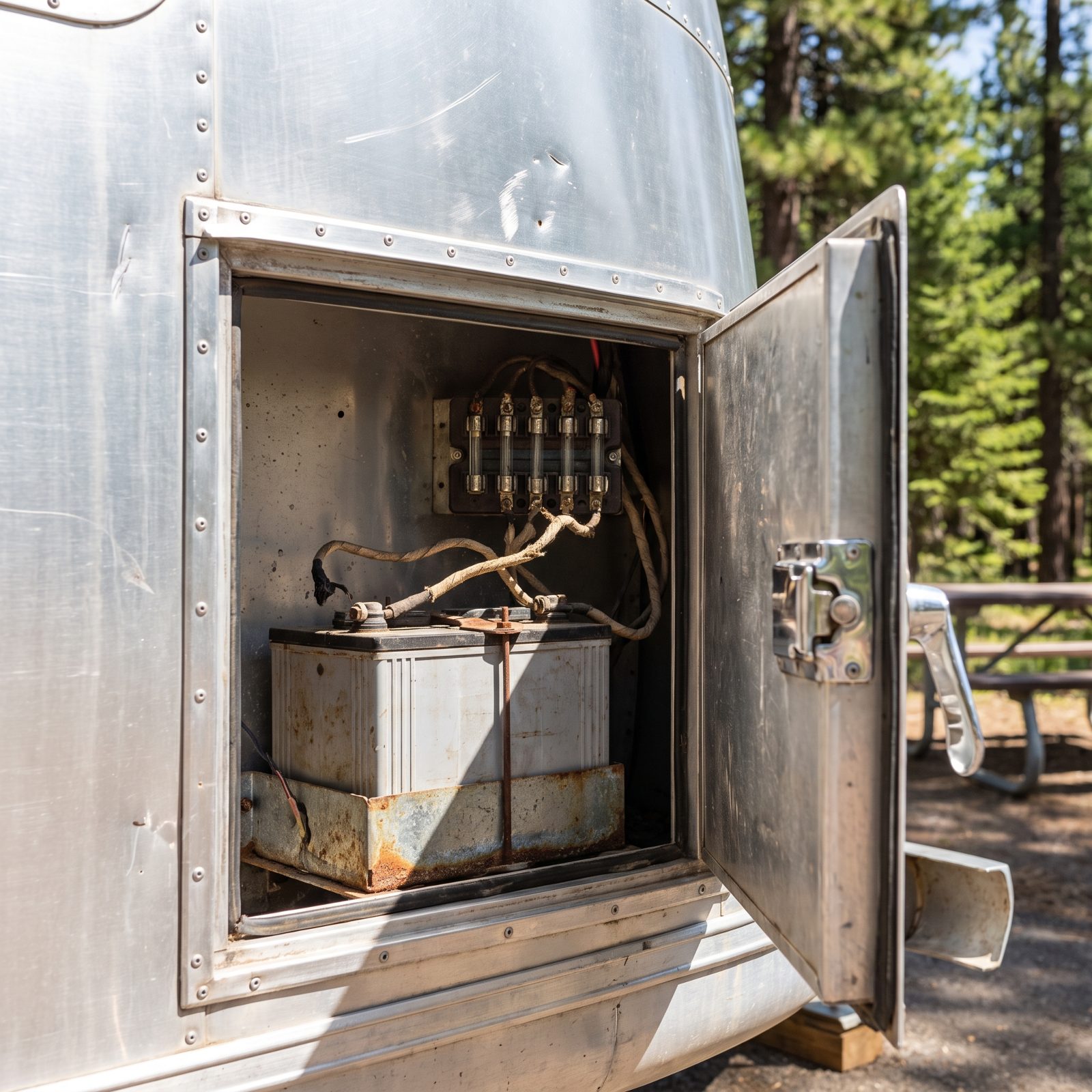
Park a vintage trailer for a long weekend with nothing running and the battery barely notices. Almost nothing drew power in the background — no standby boards, no always-on sensors, no screen sipping current while you sleep.
A modern rig can drain a good chunk of its battery just sitting there, with phantom loads nibbling away at propane detectors, control panels, and radio memory. The old trailers were close to zero when everything was off. For anyone who boondocks or stores a camper between trips, that quiet, idle-free electrical system is worth a serious look back.