
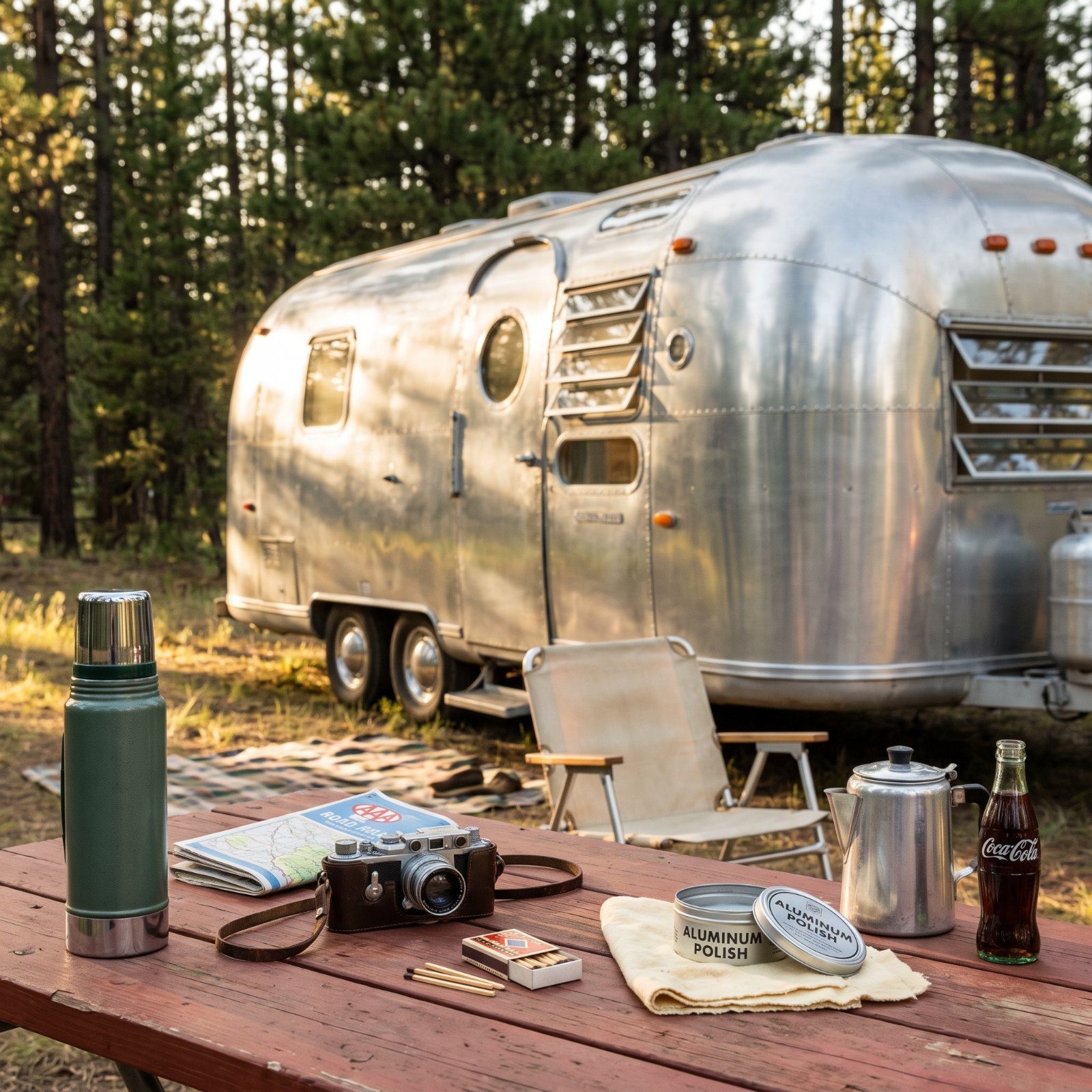
The smell hits first. Warm aluminum, propane, and whatever your mother was frying on a two-burner stove the size of a cutting board. A 1960s Airstream didn’t coddle you. It made you do things with your hands, taught you that a flame could be a chore, and then rewarded you with a silver shell that caught the sunset like nothing else in the whole campground. These are the small rituals and stubborn details that made traveling in one feel less like towing a trailer and more like piloting a low-flying spacecraft.
32. Polishing an Entire Aluminum Trailer by Hand
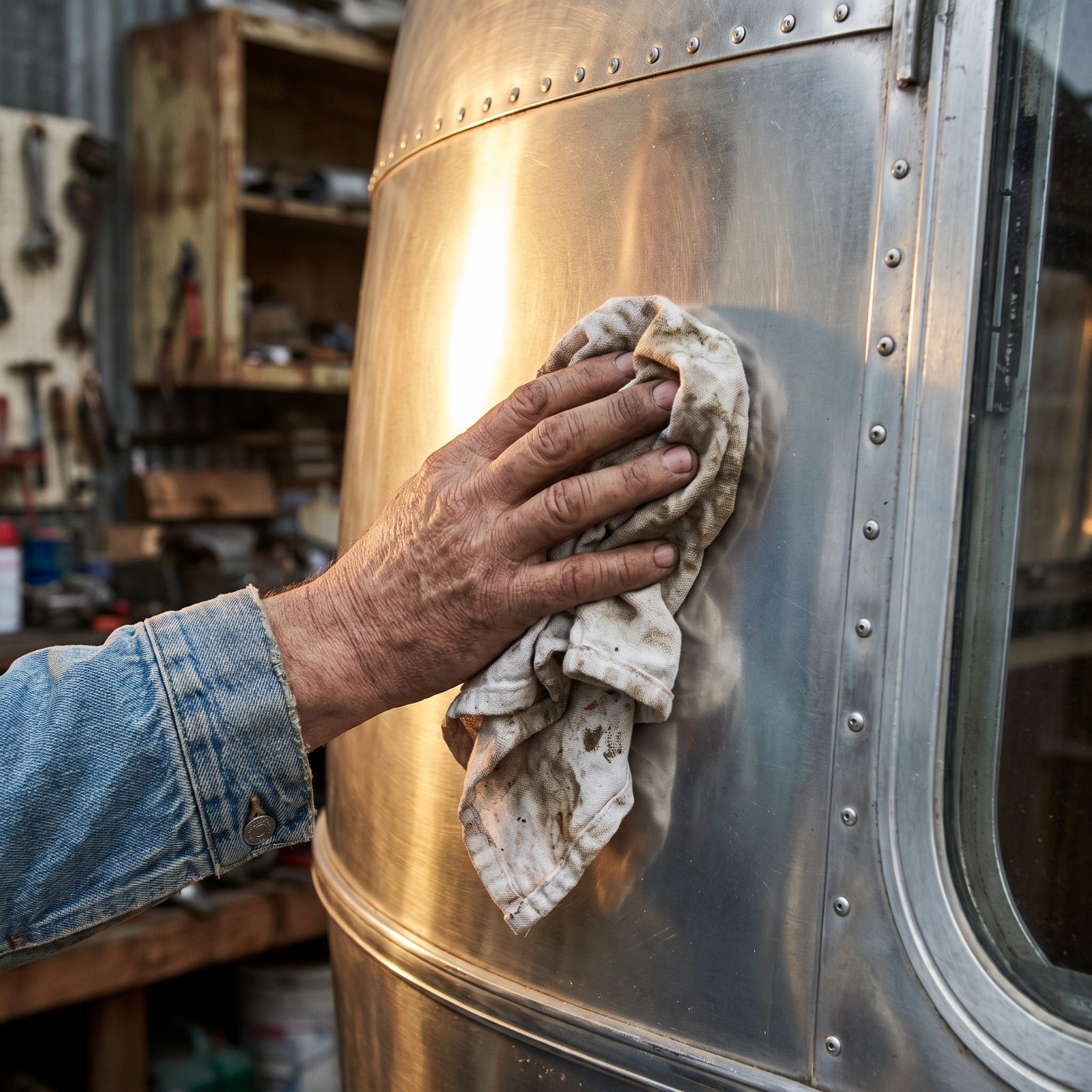
You didn’t wash an Airstream. You polished it, panel by curved panel, by hand, until your shoulder ached and your rag turned black. The reward was a shell so bright you could see the whole campground reflected back at you, warped and silver and a little ridiculous.
People who owned one will tell you it was meditative. People who were kids drafted into helping will tell you it was slave labor. Both are true. A tin of polish, a stack of old T-shirts, and a full Saturday was the going rate for keeping that mirror finish alive.
31. The Aircraft-Style Shell Pieced Together With Curved, Riveted End Caps
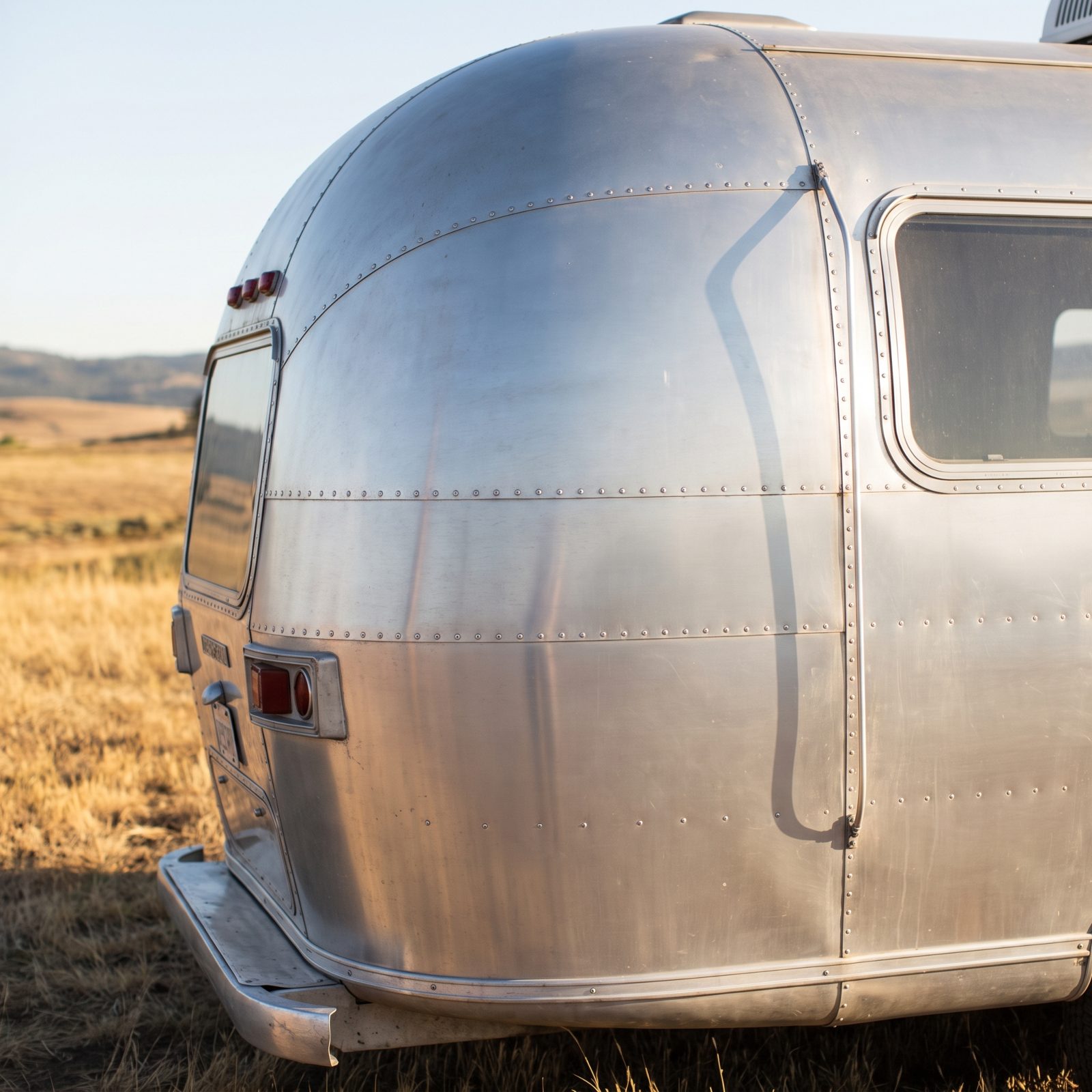
Run your hand along the back of one and you feel it: the shell curves in two directions at once, like the nose of a small plane. No flat walls, no square corners, just that monocoque aluminum body held together with thousands of rivets, each one hammered into place by somebody who cared.
That build is why they survived decades of washboard roads while the boxy competition cracked at the seams. The curves shed wind. The rivets flexed instead of splitting. Built like something meant to fly — and on the highway at speed, it practically did.
30. A Door That Closed With a Solid Mechanical Clunk
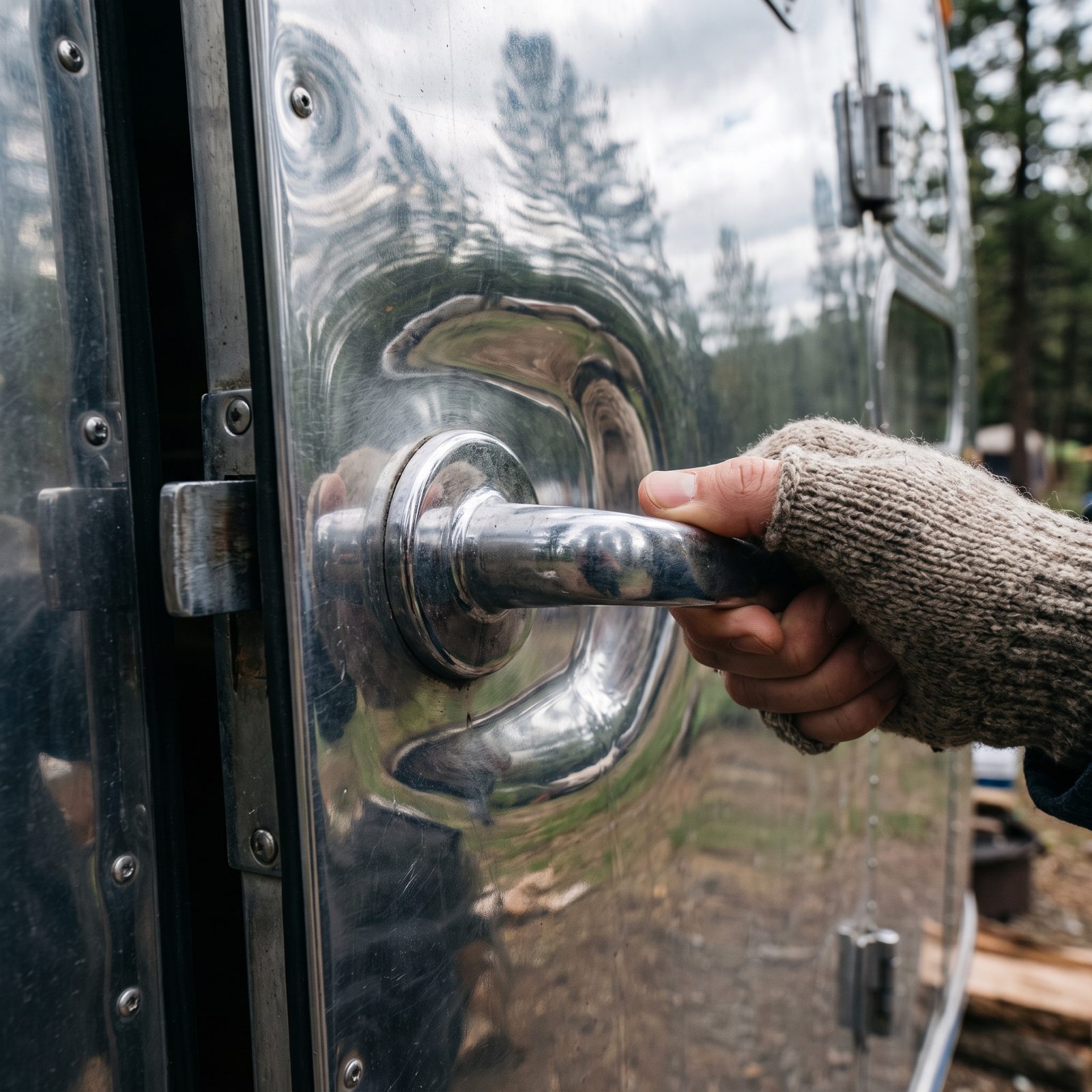
You remember the sound before anything else. That door didn’t slam. It engaged. A substantial chrome handle, a latch with real heft, and a clunk that told the whole family the day was done and everybody was in for the night.
Nothing about it was flimsy. Pull the handle, swing the curved door shut, feel the mechanism seat itself. That was the sound of being sealed inside your own little aluminum world, the campground noise suddenly muffled, your own voices filling the space.
29. Jalousie Windows Cranked Open One Glass Slat at a Time
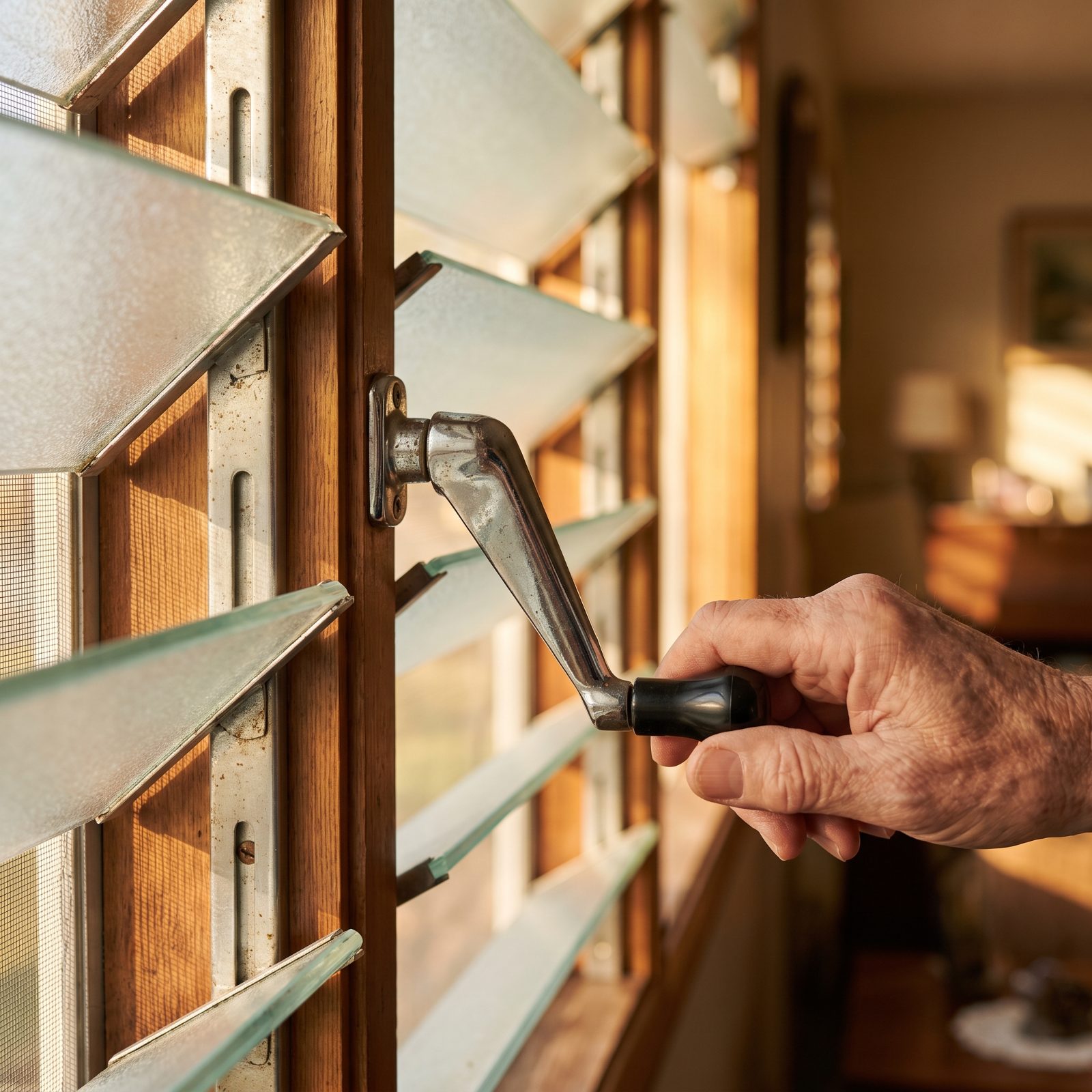
No single pane you slid up. Instead a little chrome crank, and with each turn the stacked glass slats tilted open together, louvered like window blinds made of glass. You could angle them to catch a breeze without catching the rain.
They squeaked. They fogged at the edges. Over the years a slat or two would crack and get held in with tape until somebody finally tracked down a replacement. But on a hot night, cranking every window open a few degrees and letting the cross-breeze move through was the only air conditioning most of these trailers ever had.
28. Turning the Front Gaucho and Dinette Cushions Into Beds Every Night
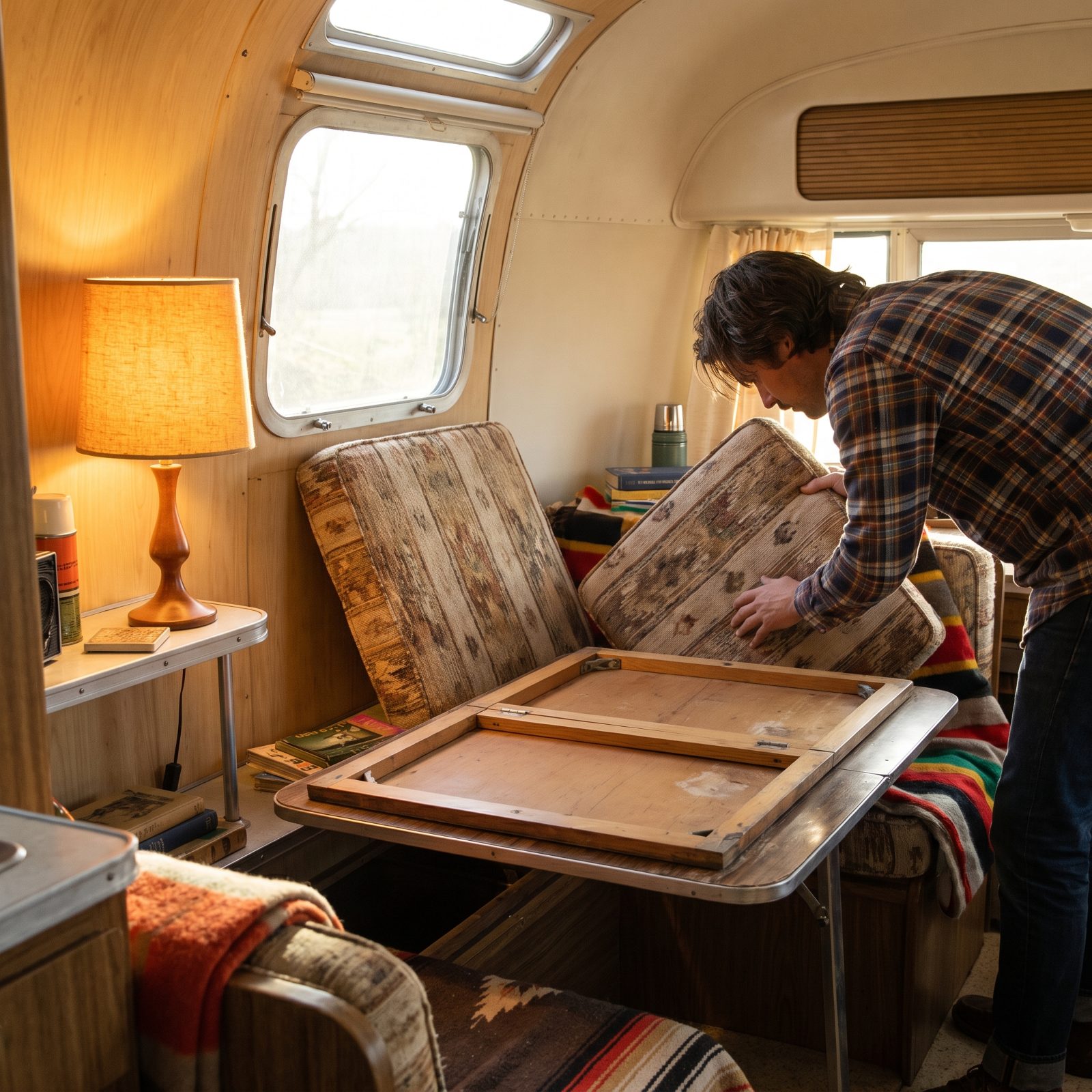
Every night, the living room disappeared. The dinette table dropped down onto its support, the bench cushions got shuffled into a flat platform, and where you’d eaten dinner an hour ago, somebody was now going to sleep.
The front gaucho did the same trick. Fold, flip, arrange. There was a right order to it and a wrong order, and every family had the one person who knew exactly how the cushions fit and got cranky when anybody else touched them.
Come morning you ran it in reverse. Beds back into benches, table back up, breakfast on the same surface somebody had been dreaming on twenty minutes earlier. The whole trailer worked harder than its square footage had any right to.
27. Cabinet Latches Designed for Rough Highways
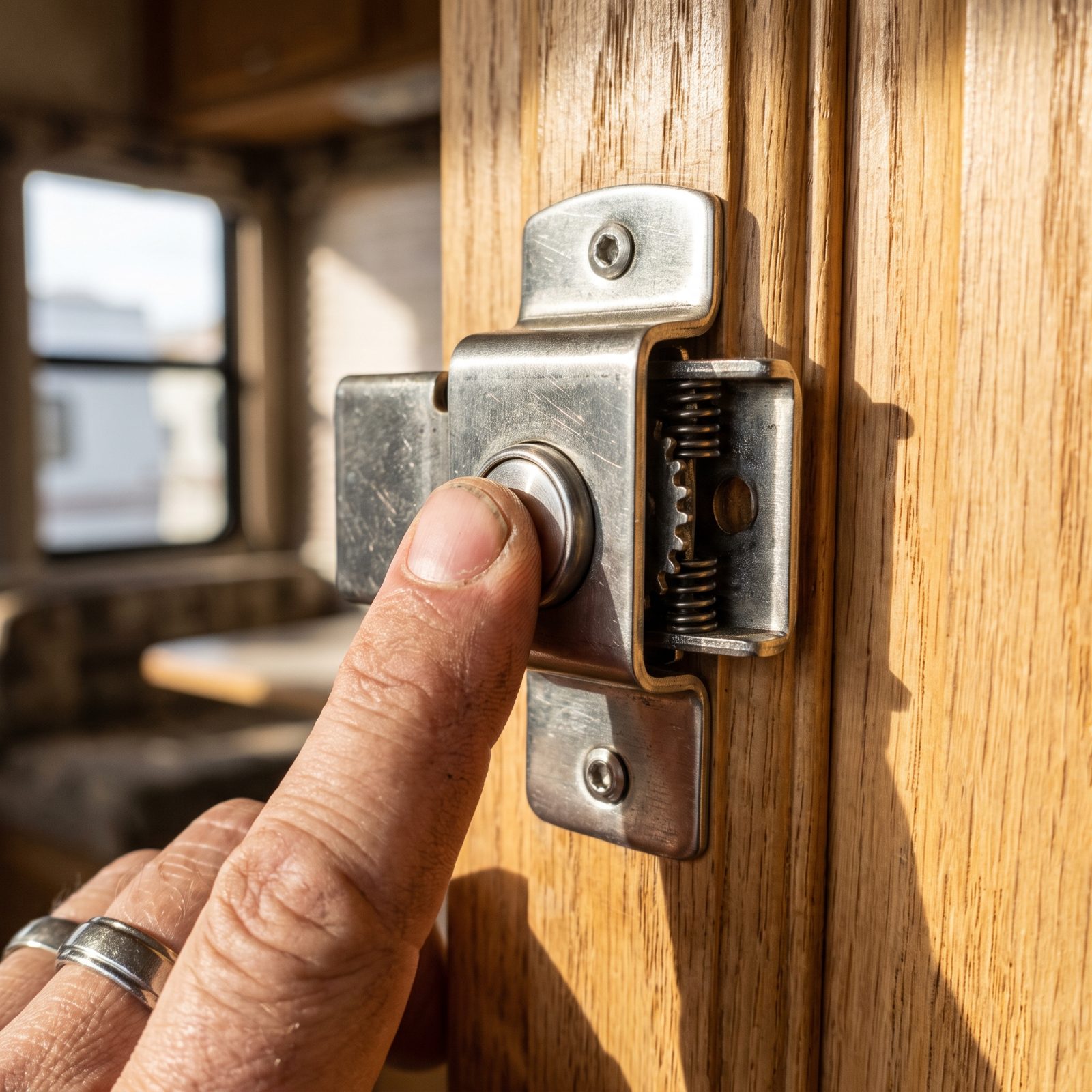
Ordinary cabinet doors fly open the first time you hit a pothole at fifty. Airstream knew that. So the latches weren’t magnets or flimsy plastic rollers — they were positive catches, chrome buttons you pressed to pop the door, built to stay shut no matter how the trailer bucked and swayed down a bad road.
You learned the particular click of them. Press, release, the door swings. Close it and feel it grab. After a day of washboard gravel, opening a cabinet to find everything still neatly stacked instead of shattered across the floor was the quiet payoff.
26. Real Wood Veneer Inside a Metal Travel Trailer
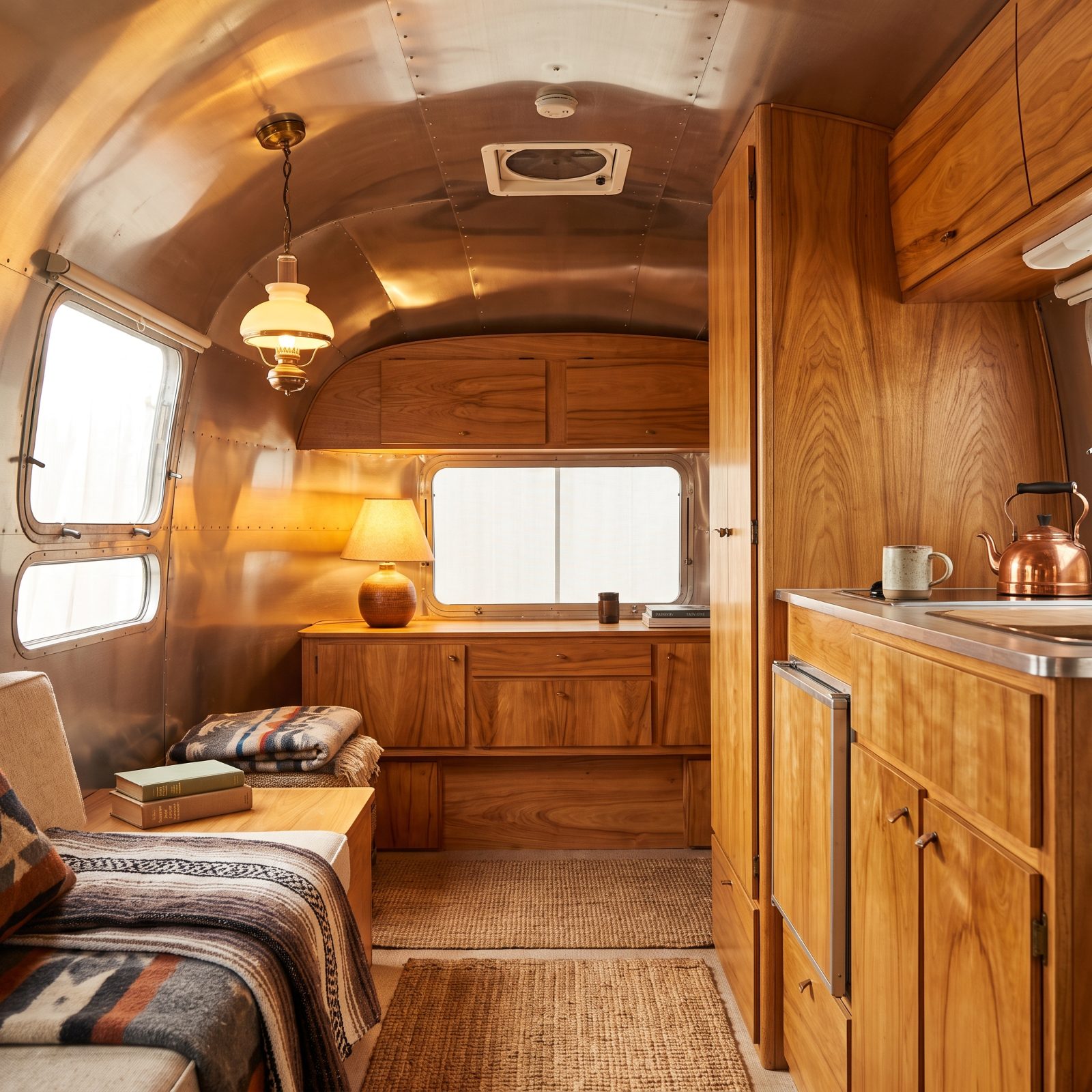
Step inside and the cold aluminum vanished. Everywhere you looked there was wood: blonde veneer cabinet faces, woodgrain wall panels, warm honey tones wrapping the whole living space. Outside, an aircraft. Inside, a tiny paneled den.
That contrast was the whole trick. Metal shell for strength and speed, wood veneer for the feeling of home. The grain caught the light differently in the morning than at night, and after a few seasons it picked up the smell of every meal and every rainy afternoon spent reading inside with the rain drumming overhead.
25. Overhead Lockers Shaped to Follow the Curved Roof
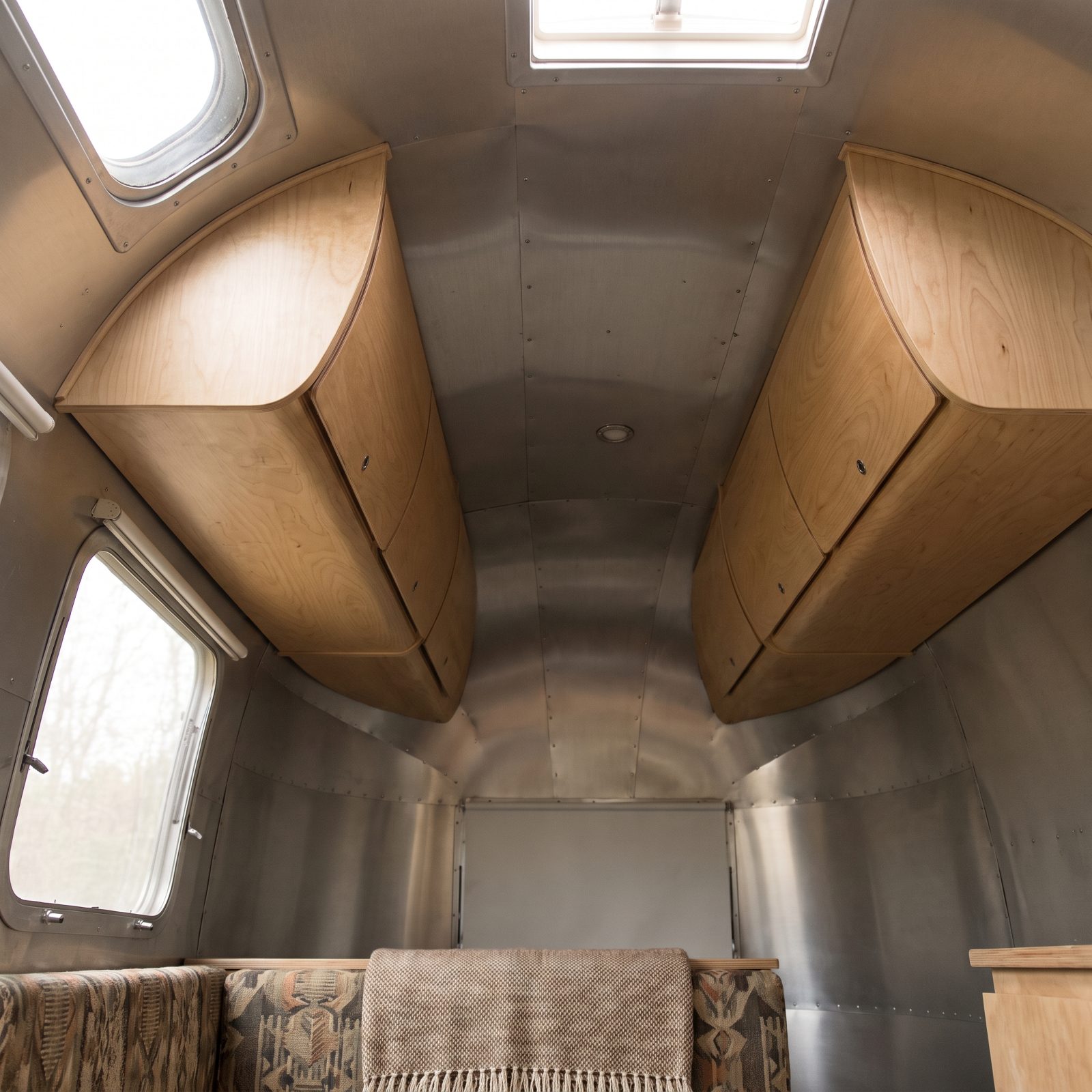
Look up and the storage followed the shape of the shell. Where a boxy trailer would waste the space where wall curves into ceiling, Airstream built wood lockers that hugged that bend, every door cut on a curve to match the roofline.
You stashed the blankets up there. The maps. The flashlight nobody could ever find in the dark. Each locker door opened on that same chrome catch, and reaching up to tuck something away felt like stowing gear in an overhead bin years before the airlines ever made that motion feel familiar. Not a square inch wasted, and all of it fitted by hand.
24. Lighting the Refrigerator by Hand and Checking the Flame Through a Tiny Opening
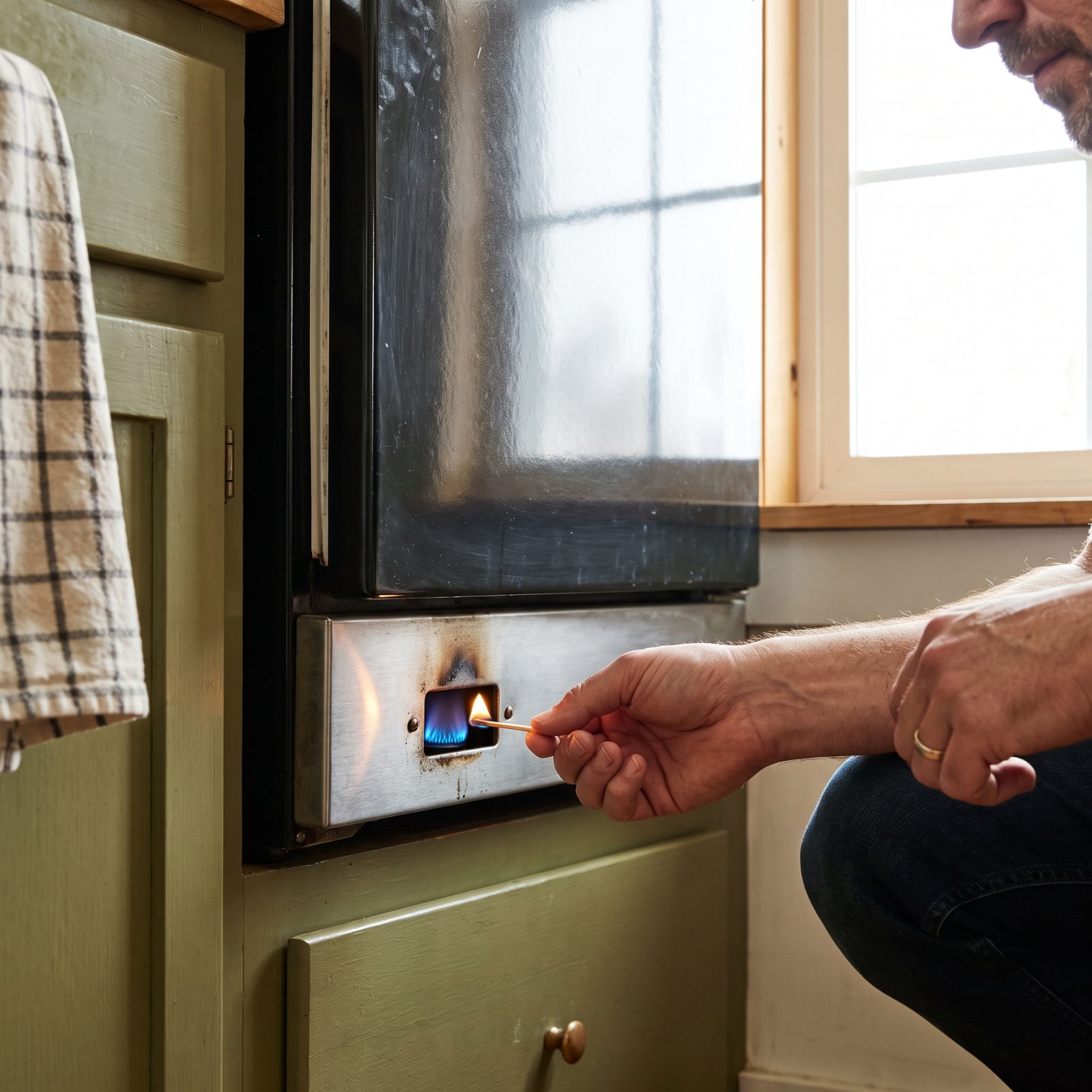
The fridge ran on fire. Propane absorption cooling, no compressor, no hum. To start it you crouched at a little access door, struck a match, held it to the burner, and waited to make sure the flame caught and stayed.
There was a tiny opening you’d peer through to confirm a small, steady blue flame. Too yellow and something was wrong. No flame at all and your milk was warm by noon. Before any long drive and after every stop, somebody checked that flame. First chore at every campsite, and a job nobody fully trusted to the kids.
23. Lighting the Stove Burners With a Match
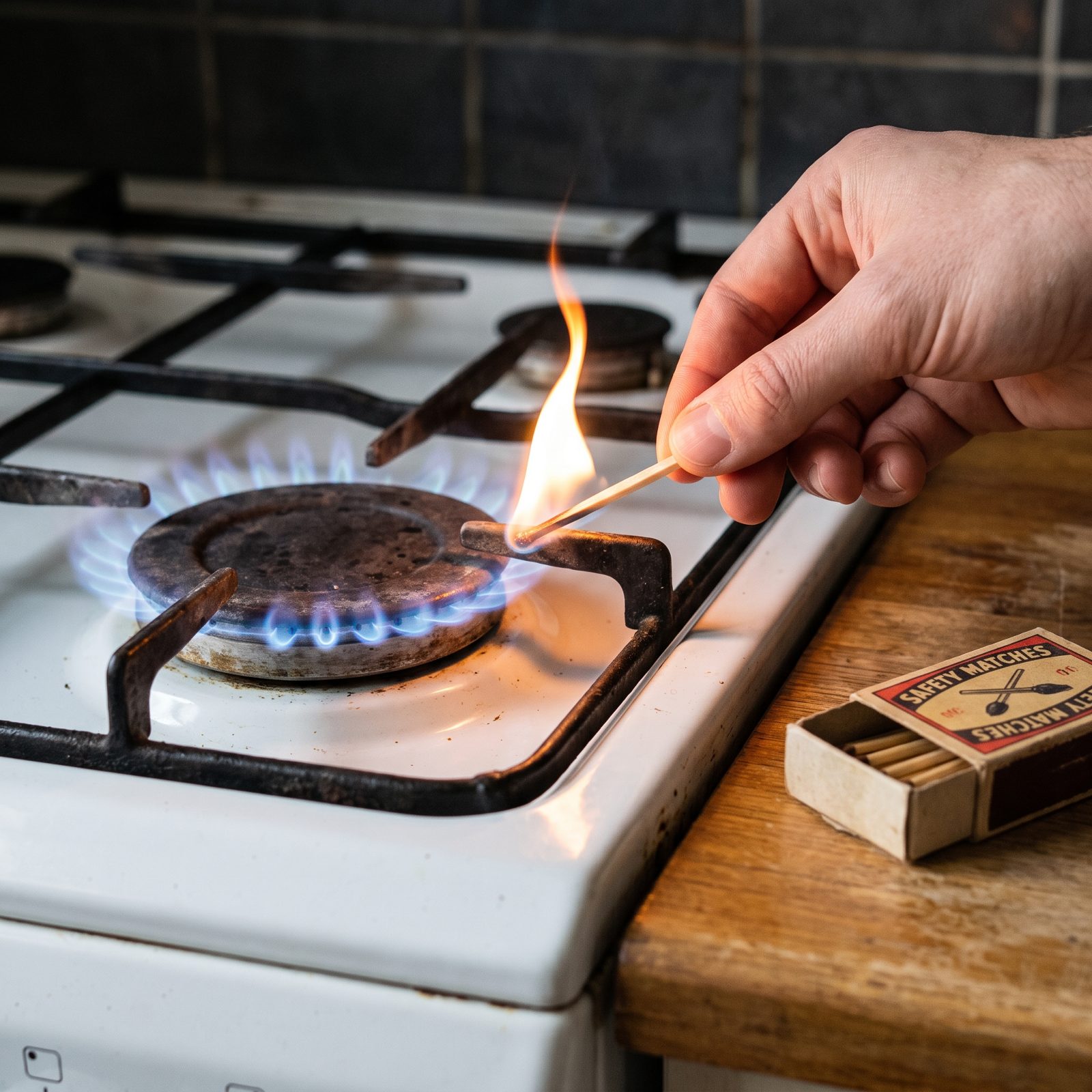
Turn the knob, hear the hiss, strike the match, touch it to the burner, and whoomp — breakfast was underway. No clicking igniter. No push-button spark. Just you, a box of wooden matches kept dry in a cabinet, and a little nerve.
Every morning started with that small flare of blue and the percolator going on top of it. You got good at the timing: light the match a beat before the gas, keep your hand steady, don’t dawdle with the burner open. It was the sound and smell of the whole camp waking up.
22. The Fold-Down Range Cover That Doubled Your Counter
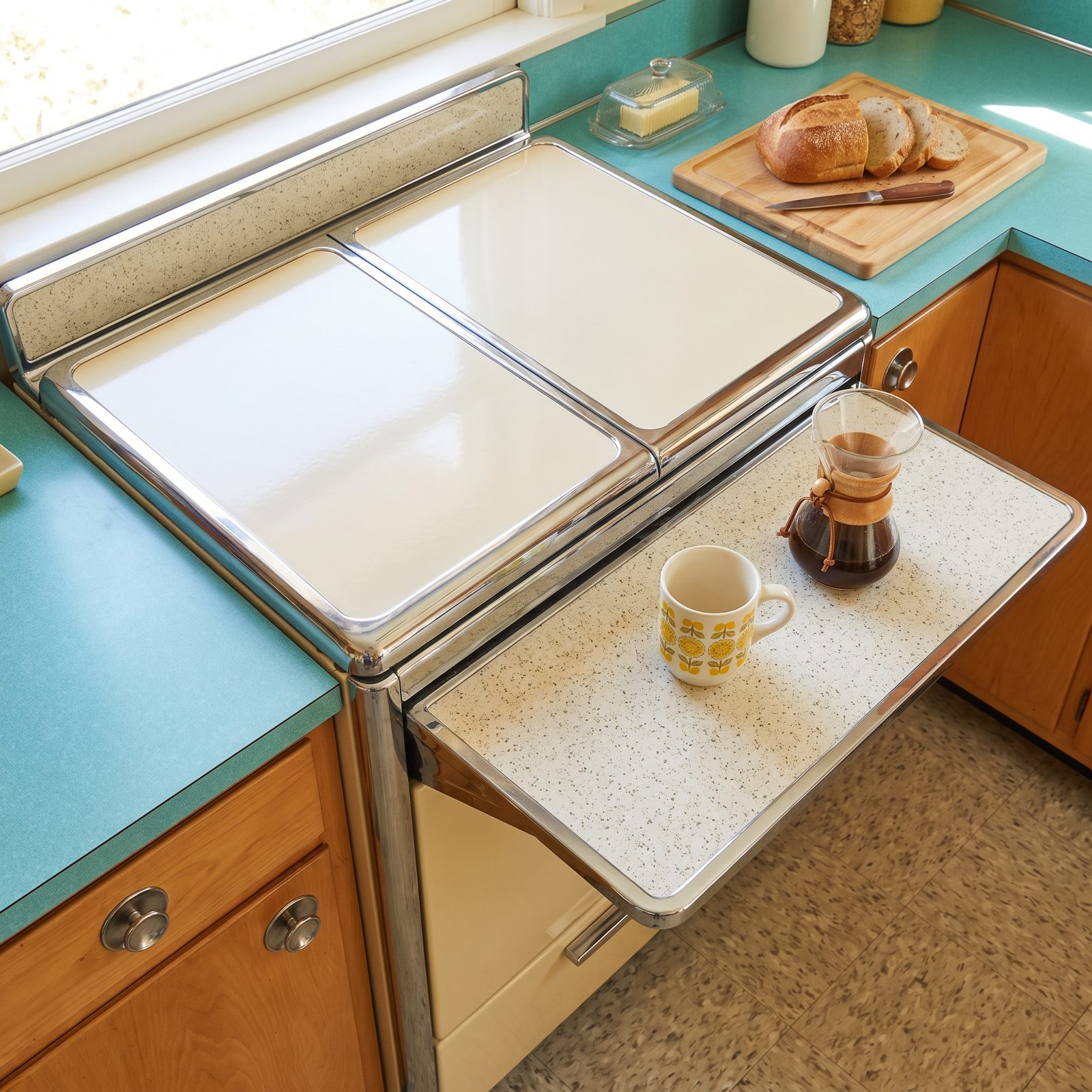
Counter space in a 1960s Airstream was a fiction you created on demand. The range had a hinged cover that folded flat over the burners, and the second you weren’t cooking, that cover became your cutting board station, your dish-drying zone, your spot to set the coffee pot down.
You cooked, flipped the lid, chopped. Three square feet of workspace appeared out of nowhere and vanished again when dinner started. Nothing in that galley got to do only one job, and the whole trailer ran on that idea.
21. A Stainless Sink and the Hand Pump That Fed It
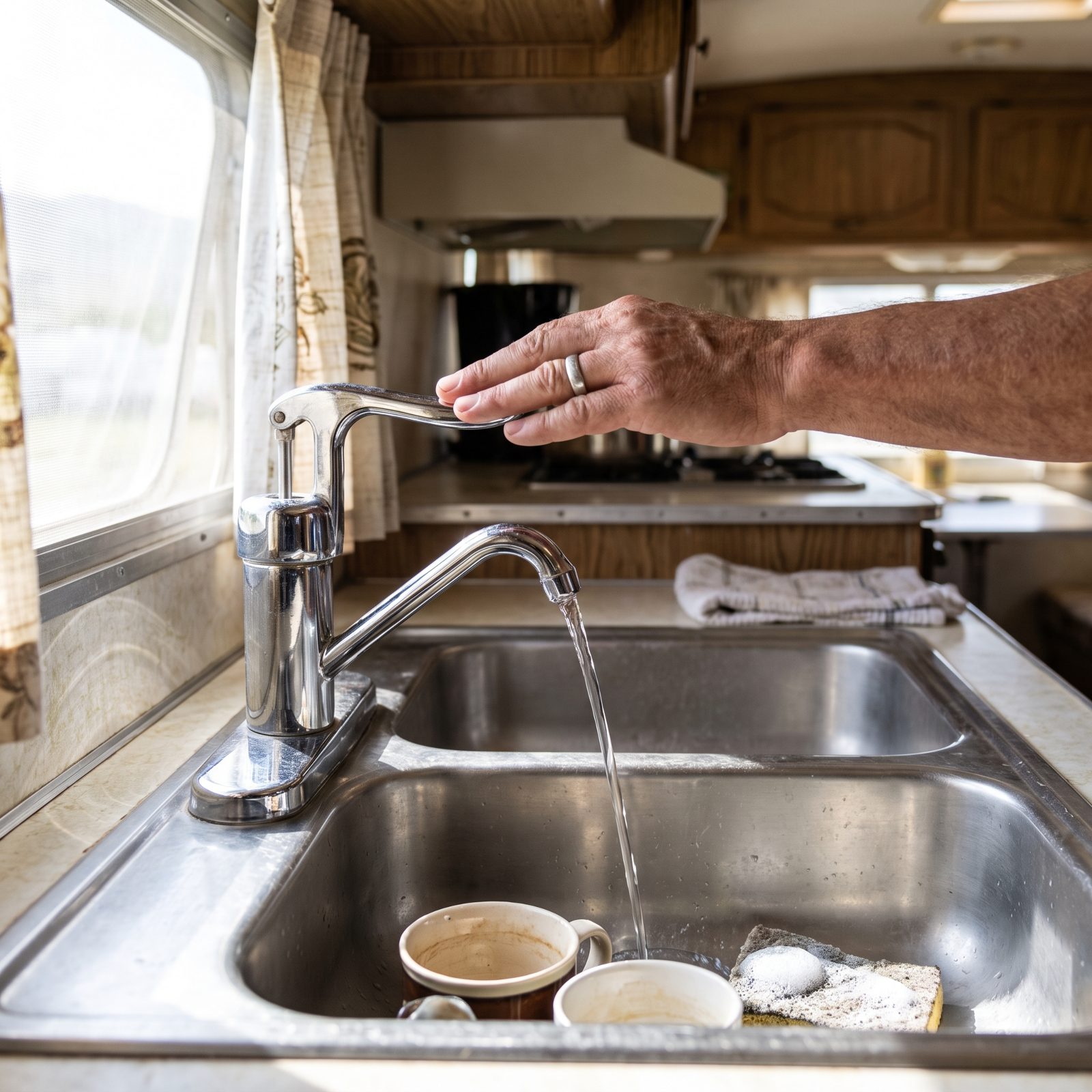
No faucet. No pressure. Just a chrome lever you worked up and down with the heel of your hand, and water came out in a reluctant little rhythm you controlled yourself.
Washing dishes was a two-handed operation: pump with one, scrub with the other, or get a kid to man the handle while you rinsed. You learned the exact number of strokes for a glass of drinking water versus a pot of dishwater. Slow, yes — but you never wasted a drop you didn’t mean to.
20. Treating Every Gallon of Fresh Water Like It Mattered
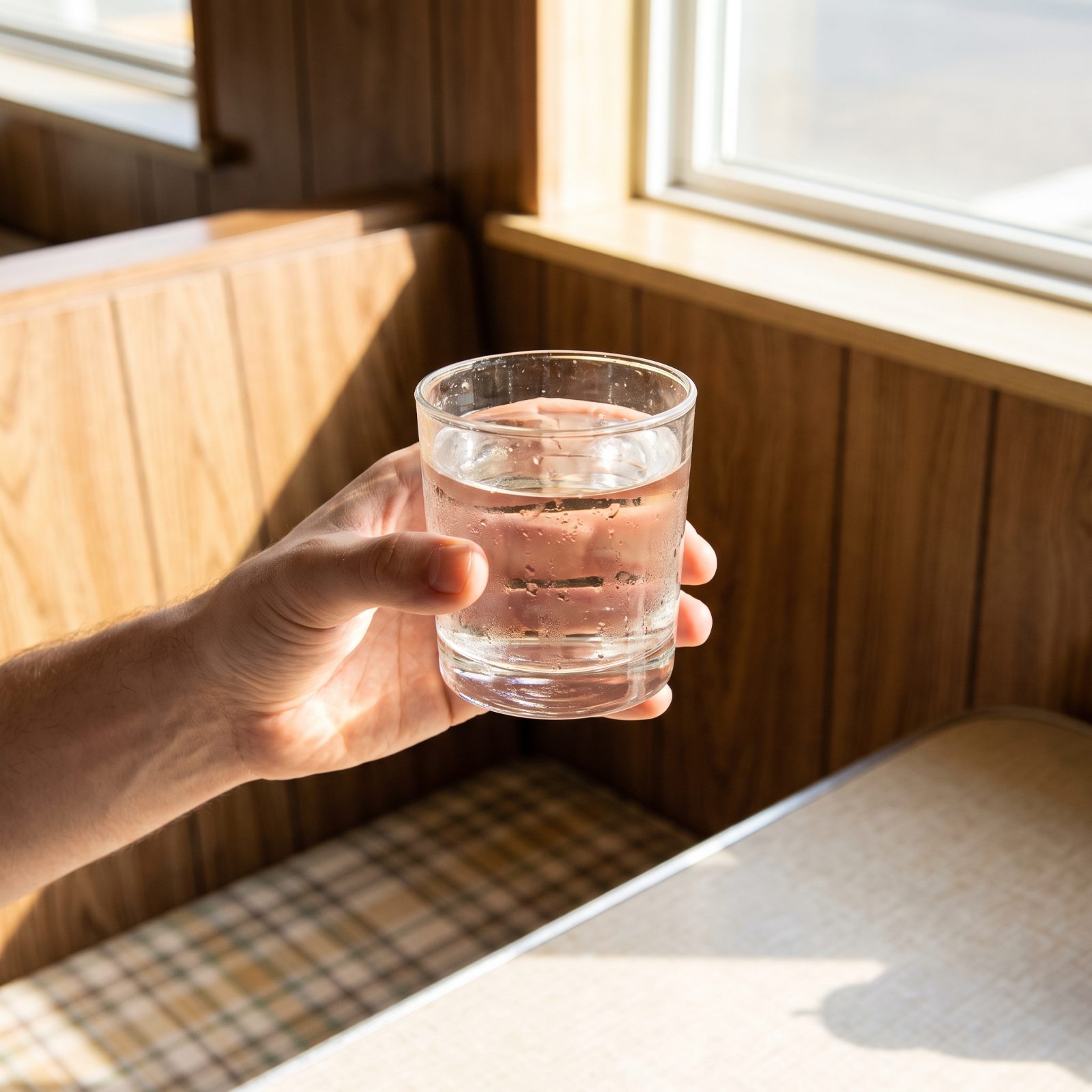
You knew exactly how much water you had, down to the gallon. That tank under the dinette held what it held, and the nearest spigot might be a day’s drive away.
So you rationed without even thinking about it. You caught the cold water in a pot while you waited for warm, and you washed the dishes dirtiest-last. Nobody left the pump running while they brushed their teeth, and I’d argue plenty of full-timers today could learn from that.
19. The Wet Bath Where Everything Got a Little Damp
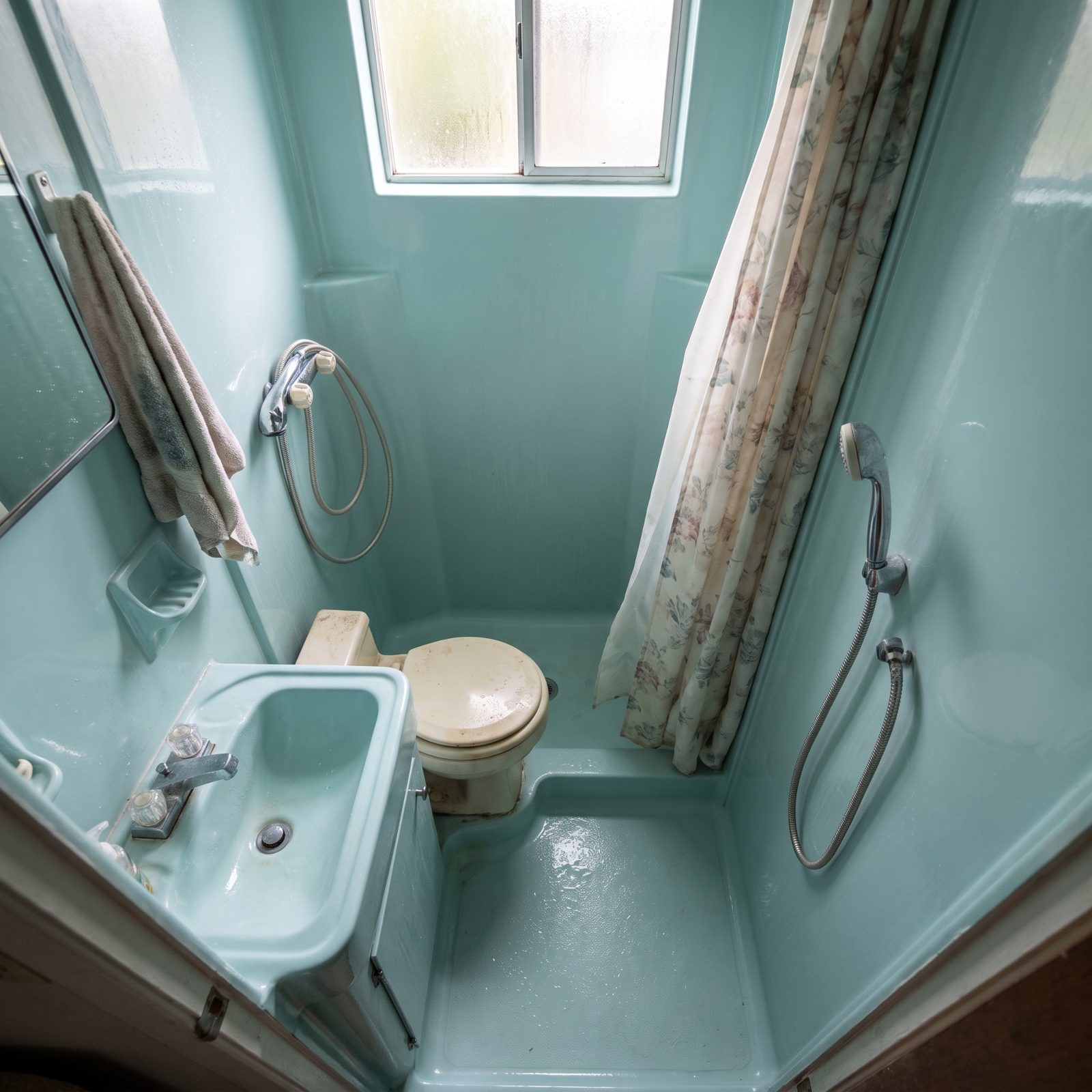
Picture a phone booth with a toilet, a tiny sink, and a shower head all crammed into the same square of fiberglass. That was the wet bath. When you showered, everything showered.
The trick was to move the toilet paper somewhere dry and accept that the whole room would be beaded with water afterward. You squeegeed, or you just left the vent open and let the aluminum do its slow warming thing. Compact to a fault — but when you’re parked under the stars, a hot shower of any size feels like a small miracle.
18. Tambour Doors That Rolled Away Into the Cabinetry
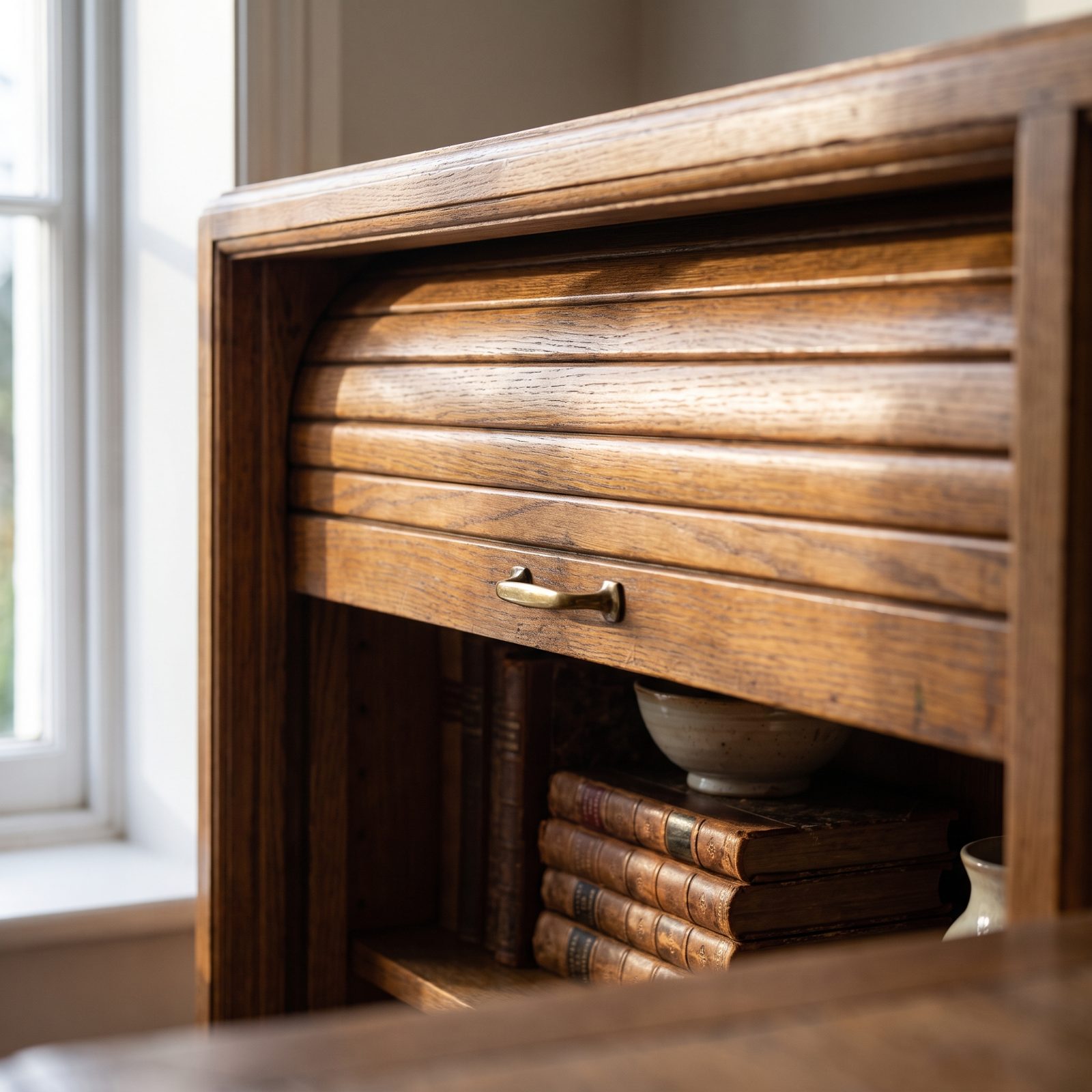
Flat-swinging cabinet doors waste space in a trailer that’s always moving. So Airstream used tambour doors, those roll-up panels of thin wood slats that glided sideways and tucked out of sight into the cabinet itself.
They made a lovely soft clatter when you rolled them back, like a tiny rolltop desk. No door swinging into your face on a corner, no banging while you drove — just honey-colored wood that disappeared when you opened it and reappeared when you didn’t need to see your coffee mugs.
17. Curtains Cut to Hug the Curved Panoramic Windows
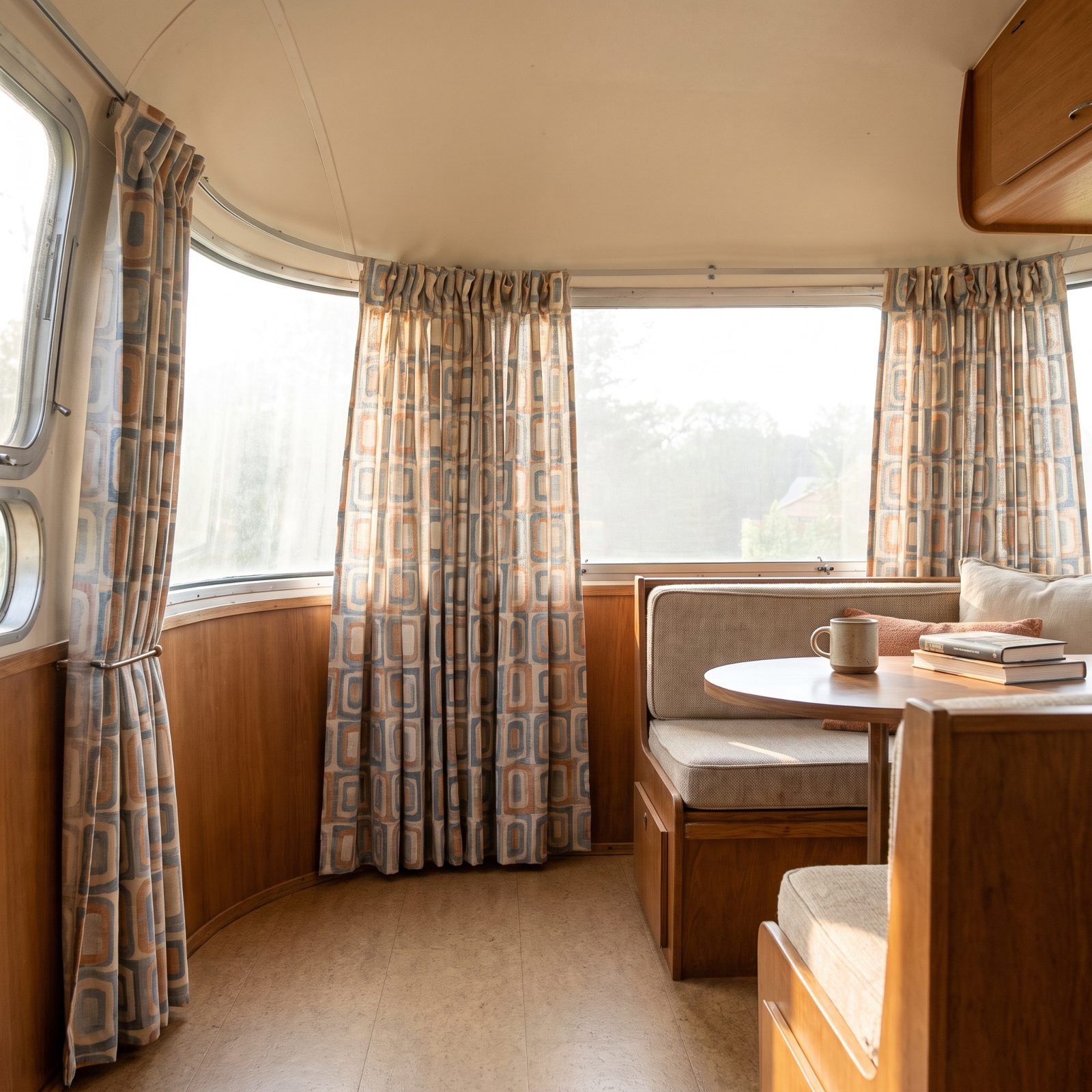
You can’t hang a straight curtain on a curved window. Airstream’s wrap-around glass swept up into the roofline, so the curtains had to be cut and sewn to follow that curve exactly, pleated to ride the arc without gapping.
Pull them at night and the whole cabin went soft and private. Open them at dawn and you got a sweeping view of wherever you’d parked, framed in bold geometric print. The fit was so specific that replacing a worn set meant tailoring, not shopping. Honestly, those curtains are half of why the inside felt like a home and not a vehicle.
16. Cooling Off With One Roof Vent and a Fan Down the Aisle
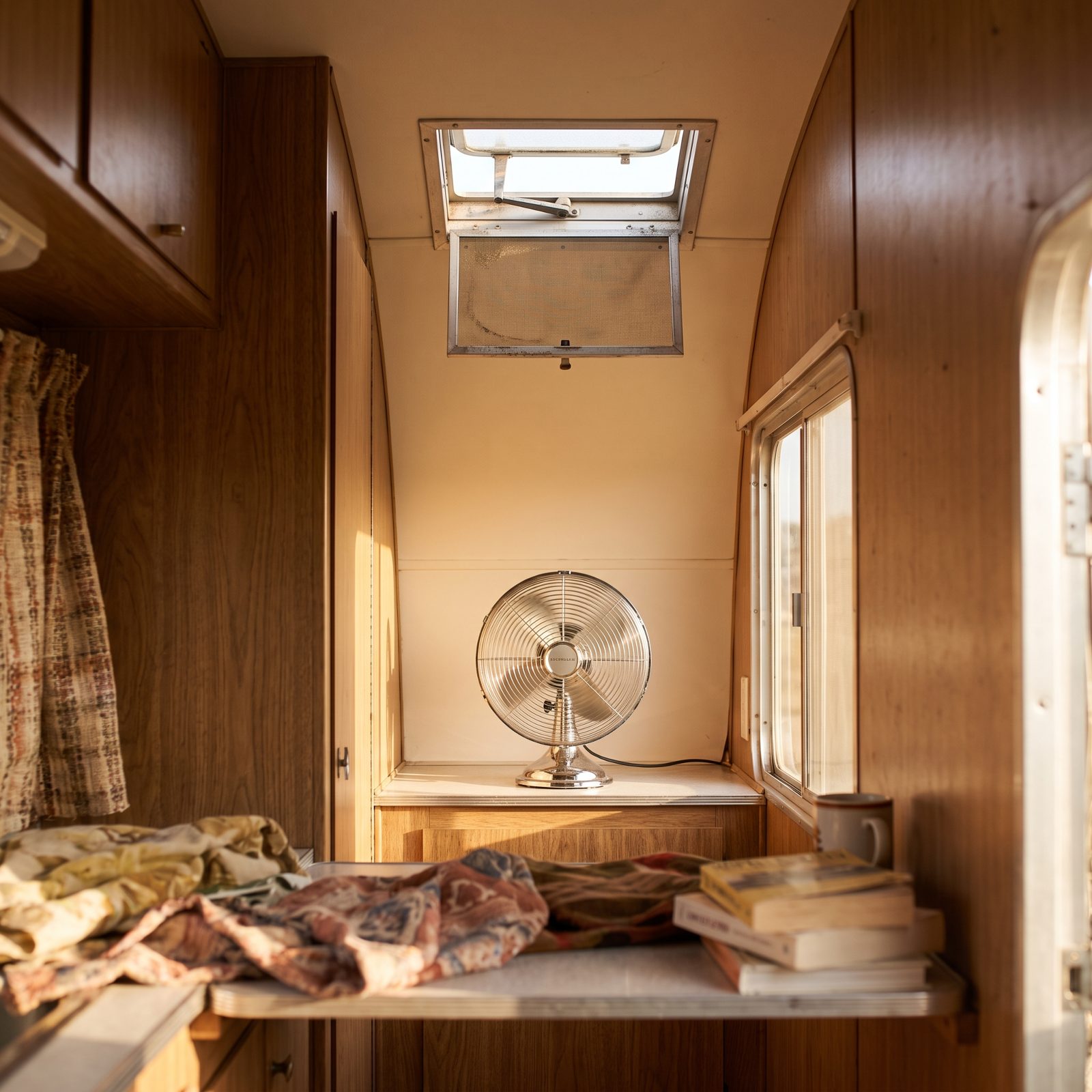
No rooftop AC humming you to sleep. Your climate control was a crank vent in the ceiling and a little chrome fan you aimed straight down the aisle to push air end to end.
You opened the vent to let the hot air rise out and cracked the jalousie windows to pull cooler air in. On a brutal afternoon you parked in the shade and stayed put until evening. Worked better than you’d expect, and the trade was simple: crickets at night instead of a compressor.
15. The Smell of Sun-Warmed Aluminum and Varnished Wood
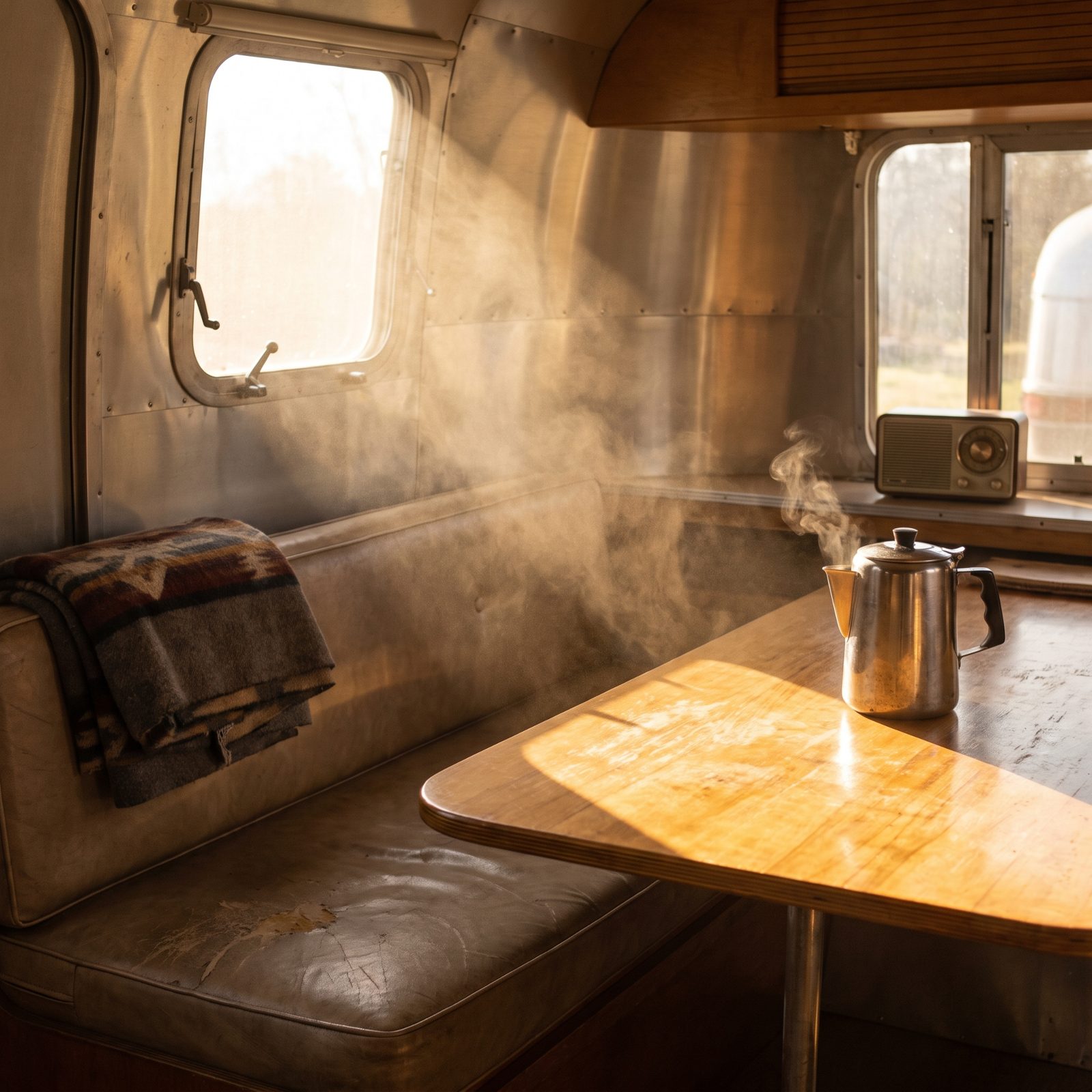
Open the door on a trailer that’s been baking in morning sun and you got it instantly: warm metal, old varnish, a trace of coffee, and whatever last night’s dinner left behind. That was the smell of the trailer waking up.
Aluminum has a scent when it heats, dry and faintly mineral, and the blonde woodwork added a sweet lacquered note underneath. Anyone who grew up in one of these can still conjure it. It’s the kind of memory that lives in your nose, not your head, and it comes back the second you catch it again.
14. Condensation Beading on the Cold Metal Window Frames

Cold night, warm bodies breathing inside a single-pane aluminum shell, and by morning the window frames wept. Little rows of droplets clung to every metal edge, and if you weren’t careful, they dripped onto the sill.
You wiped them down with a towel and learned to crack a vent before bed. It was the trailer reminding you that metal and cold air don’t negotiate. A minor nuisance, sure — but there’s something oddly peaceful about waking to that beaded-up window and a quiet, foggy campsite.
13. Backing Into the Site on Nothing but Hand Signals
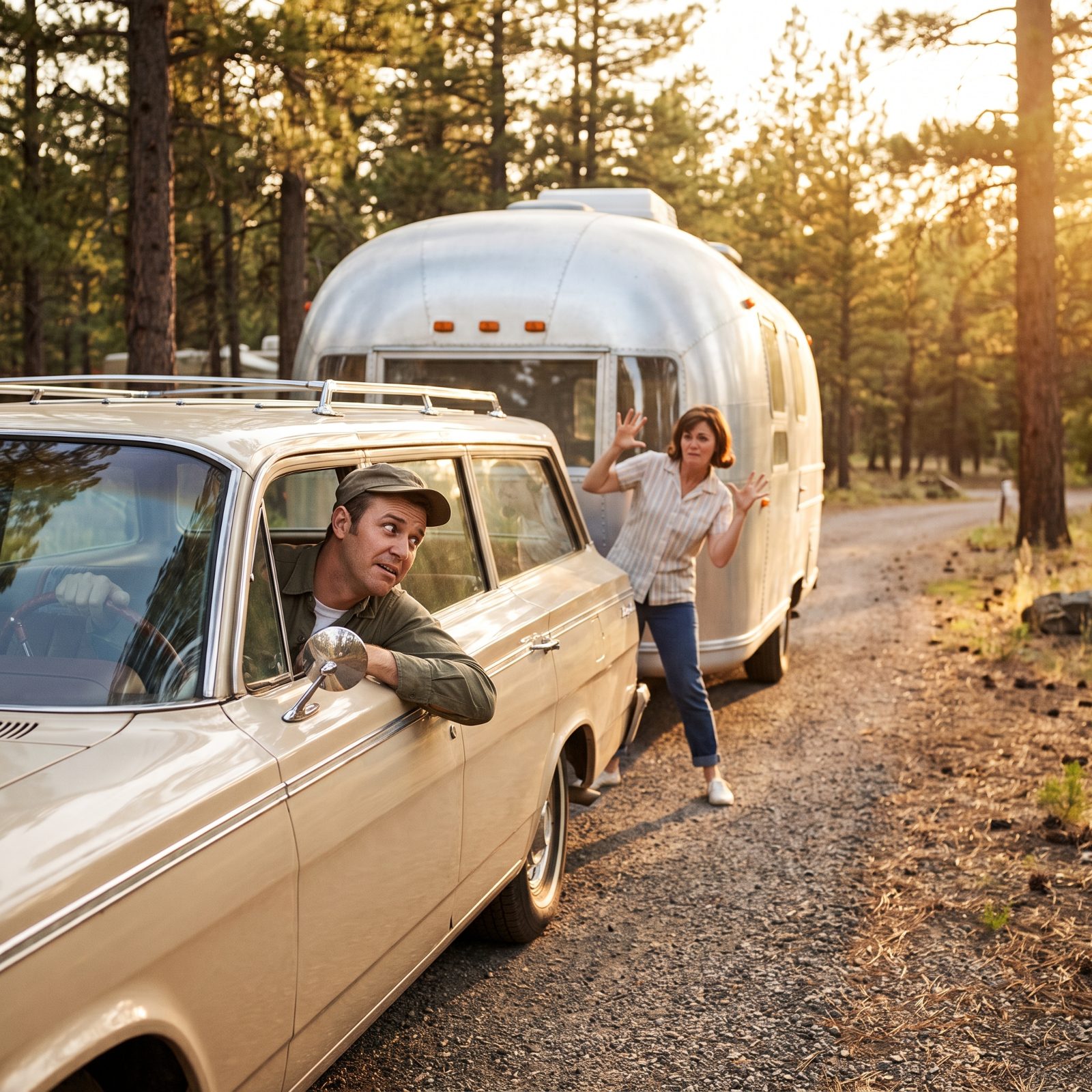
No backup camera. No sensors beeping. Just one person in the driver’s seat and one person behind the trailer waving their arms.
You developed a whole private language: flat palm for stop, a slow wave for keep coming, that frantic crossed-arms motion for no, no, NOT that way. Voices carried across the campground. Patience wore thin by the third attempt.
And when it finally slid level between the trees, you both felt like you’d pulled off something real. Nobody got to phone it in. Backing a trailer was a two-person act of trust, and getting it right was the first good moment of the trip.
12. Leveling the Trailer With Scrap Lumber and a Bubble Level
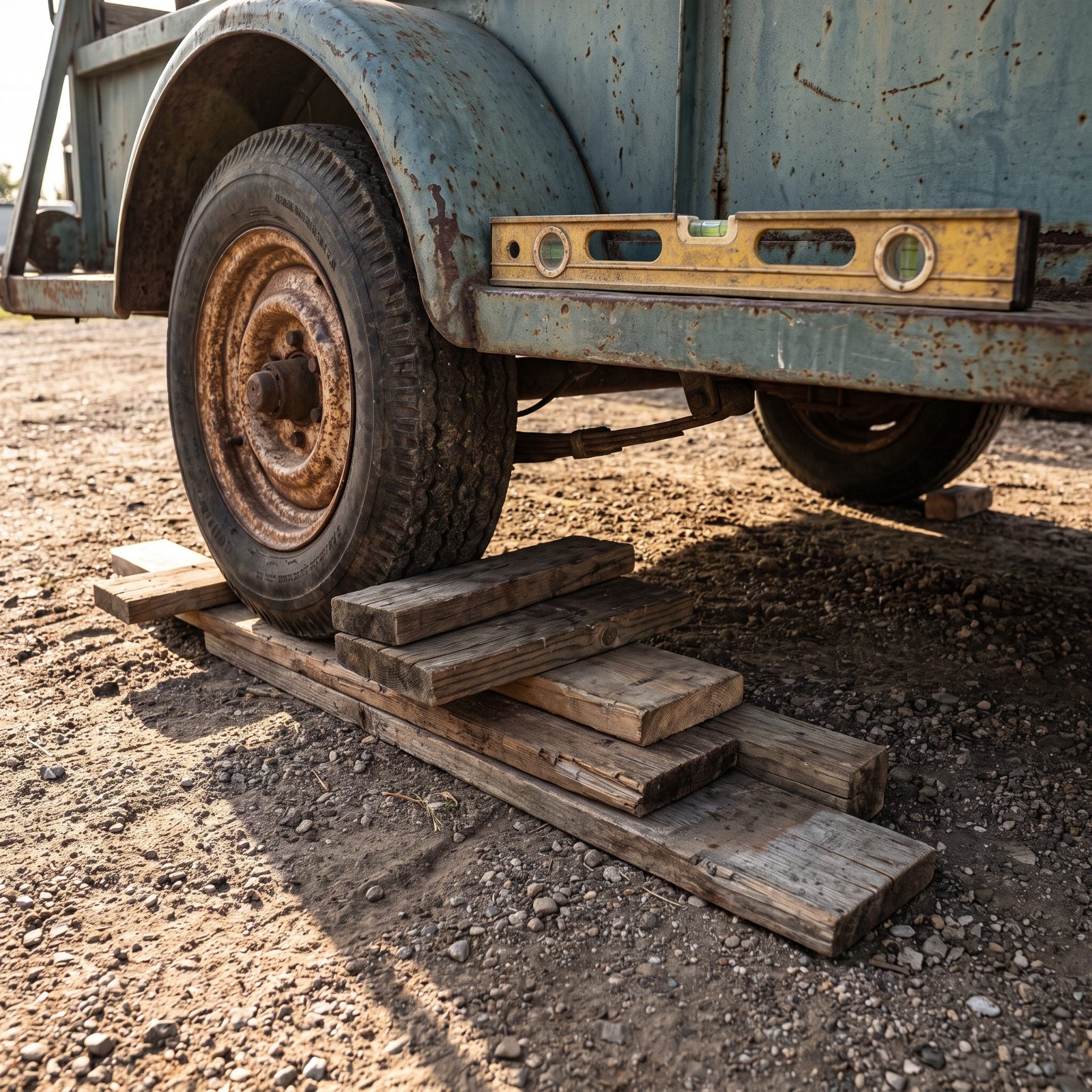
Before anyone owned a plastic leveling ramp, you leveled a trailer with whatever boards were kicking around the bed of the truck. A short stack of pine under the low tire, a bubble level balanced on the doorsill, and a lot of pulling forward three inches and checking again.
It was fussy work. You’d eyeball the vial, roll the wheel up another board, climb out, squint at the bubble, mutter, and roll back down. Sometimes it took ten minutes. Sometimes it took twenty and a second opinion from whoever was holding the coffee.
But there’s something satisfying about getting it dead level with a handful of lumber you’d stacked by the campfire the night before. No batteries, no app telling you you’re off by half a degree. Just wood, a glass vial, and the willingness to try again.
11. Cranking the Stabilizers Down by Hand
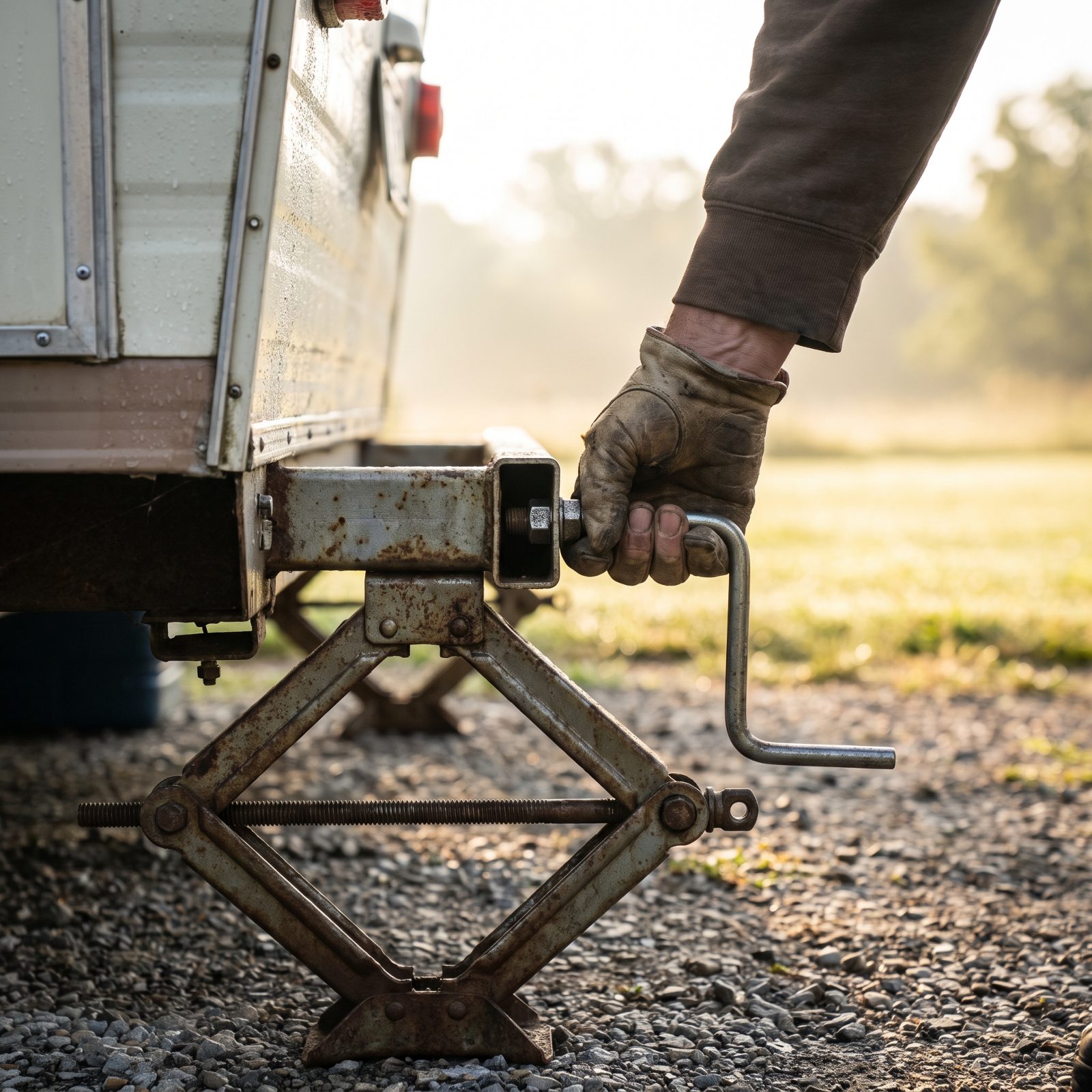
The first chore every morning, and the last one every night. You’d fit the crank handle onto the hex nut and turn, and turn, and turn some more until the scissor jack kissed the gravel and the trailer stopped its little shimmy.
Nobody owned a cordless drill with a jack adapter. Your forearm was the power tool. Four corners, by hand, every single stop. If the ground was soft you’d shove a board under the foot first, then crank down onto that.
It woke you up, honestly. Kneel in the dewy grass, grab the cold handle, and work until the aluminum belly overhead quit rocking. Then coffee.
10. Connecting Heavy Round Electrical Plugs in the Dark
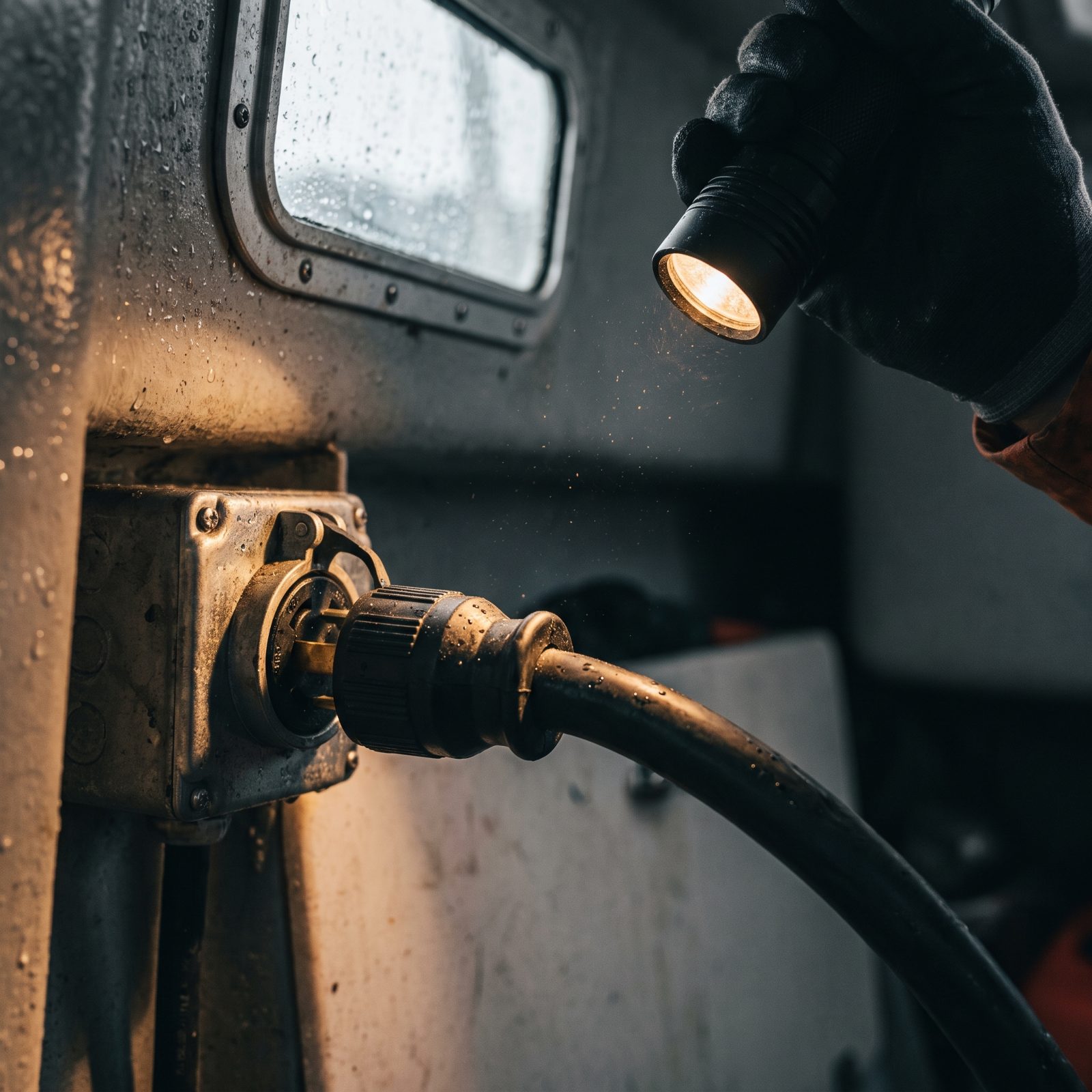
Shore power used to arrive through a fat rubber cord with a twist-lock plug heavy enough to brain a raccoon. You’d line it up with the weathered grey pedestal box, push, give it a quarter turn, and feel it click home.
Half the time you were doing this at dusk, flashlight jammed under one arm, the beam wandering off exactly when you needed it. The plug never wanted to seat on the first try. You’d fumble, swear a little, try the twist the other way, and then — click. Done.
Inside, the jalousie windows already glowing yellow. That click meant the lights would stay on and the percolator would run in the morning. Small ritual, big payoff.
9. Keeping Wheel-Bearing Grease in the Tool Kit
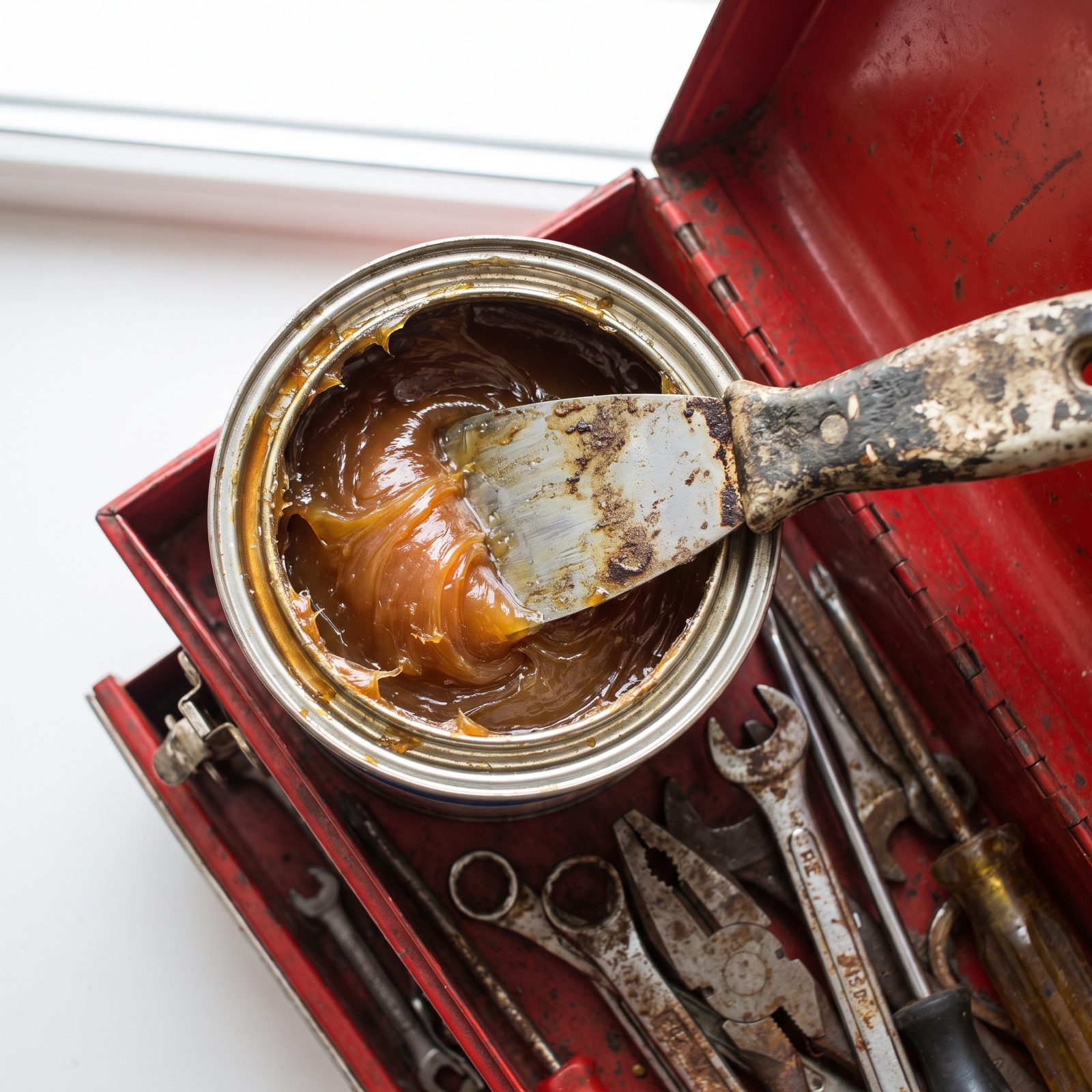
A tin of amber wheel-bearing grease lived in every trailer tool box, lid pried loose, a putty knife crusted beside it. You didn’t send the rig to a shop for this. You packed your own grease and you knew how to use it.
Repacking bearings was a roadside job. Open-end wrenches laid out on the tailgate, a shop rag gone grey, canvas gloves you never quite got clean. Your hands ended up amber to the wrist, and you wiped them on whatever was handy.
Self-reliance wasn’t a philosophy back then. It was the only option between towns.
8. Checking the Trailer Tires at Every Gas Stop
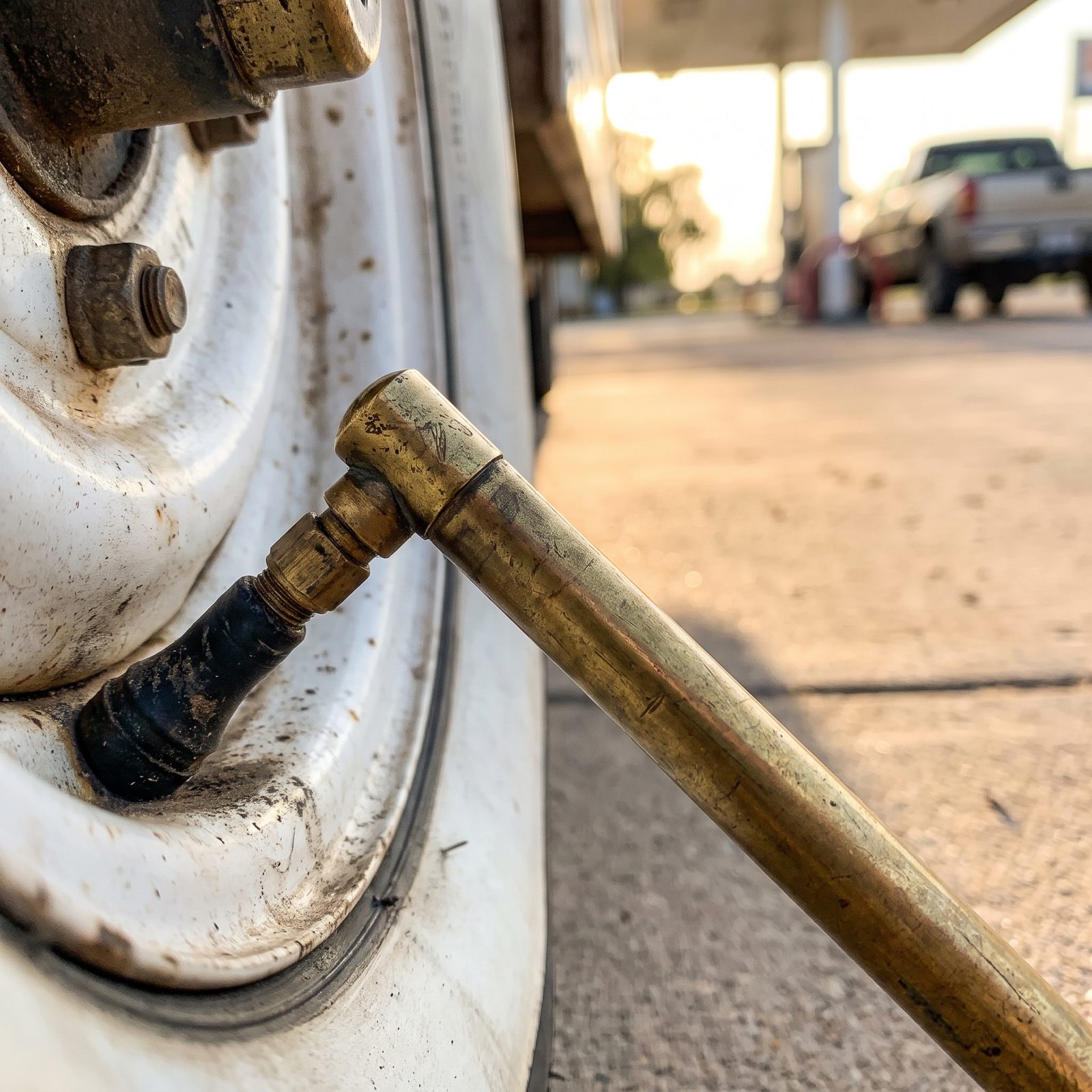
Every fuel stop meant crouching by the whitewalls with a pencil-style brass gauge and pressing it to each valve stem. The little calibrated stick popped out, you read the number, and you topped off from the hand-pump hose if it needed it.
A blown trailer tire out in the middle of nowhere could wreck a whole trip, so you caught the problem before it caught you. Underinflated, overloaded, cooking in the summer heat — that’s how they let go. A fifteen-second check at every stop was cheap insurance.
Hot rubber, gasoline fumes, a cold soda sweating on the bumper. Then back on the road.
7. Using Paper Maps at the Dinette
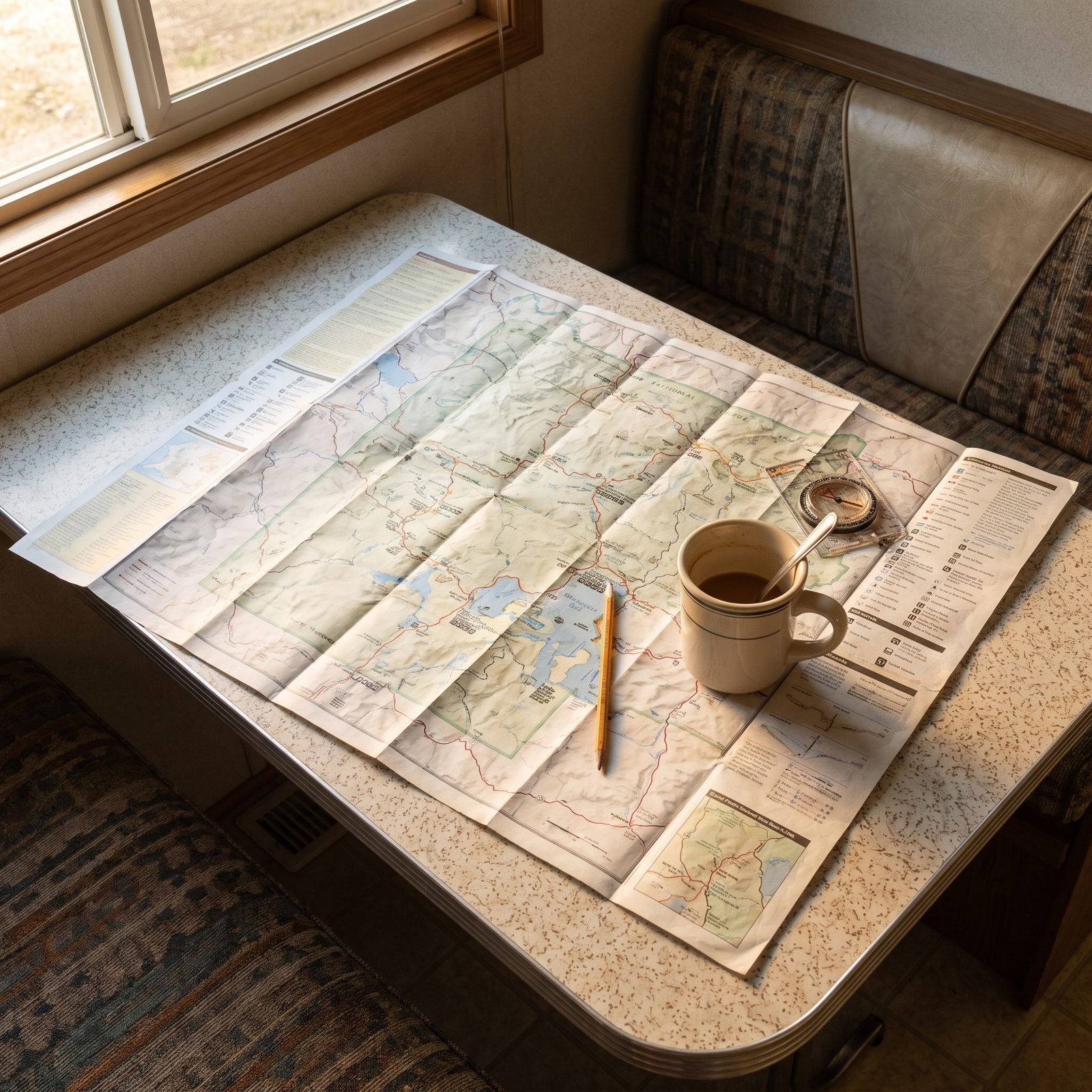
Morning route planning happened at the dinette with a map the size of a tablecloth. You’d spread it across the laminate, creases worn soft from folding, and trace the day’s drive with one finger and a yellow pencil while the coffee cooled in a melamine mug.
No voice saying “recalculating.” If you missed a turn, you figured it out from the next town’s name and a little dead reckoning. You learned the shape of the country that way — rivers, ranges, the grid of county roads.
Folding the thing back up correctly was its own skill. Some people never mastered it. The map lived crumpled in the glovebox either way.
6. Finding Campgrounds in Printed Directories
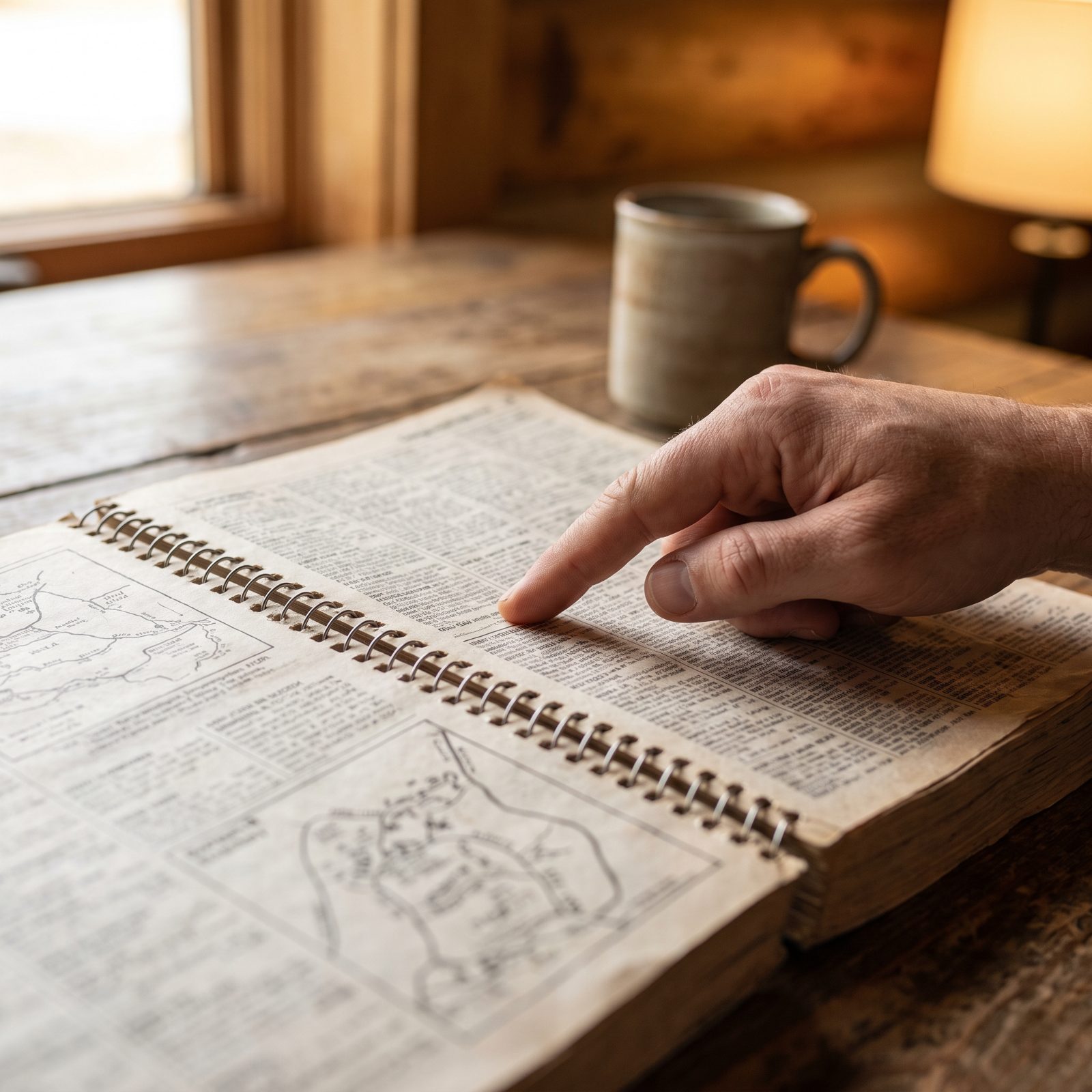
Tonight’s stop lived somewhere in a thick spiral-bound directory, pages packed with tiny-print listings and regional maps you practically needed a magnifying glass for. You’d flip through, finger marking your place, and jot candidates on a scrap of paper.
No reviews, no star ratings, no photos. The listing told you hookups, maybe a phone number, and whether there was a lake nearby. The rest was a gamble you took at the gate.
Picking the night’s camp this way had a slow pleasure to it. Iced tea sweating on the table, reading glasses perched low, a brass lamp throwing warm light over the pages. You weren’t scrolling. You were deciding.
5. Collecting Travel Decals Without Calling Them Branding
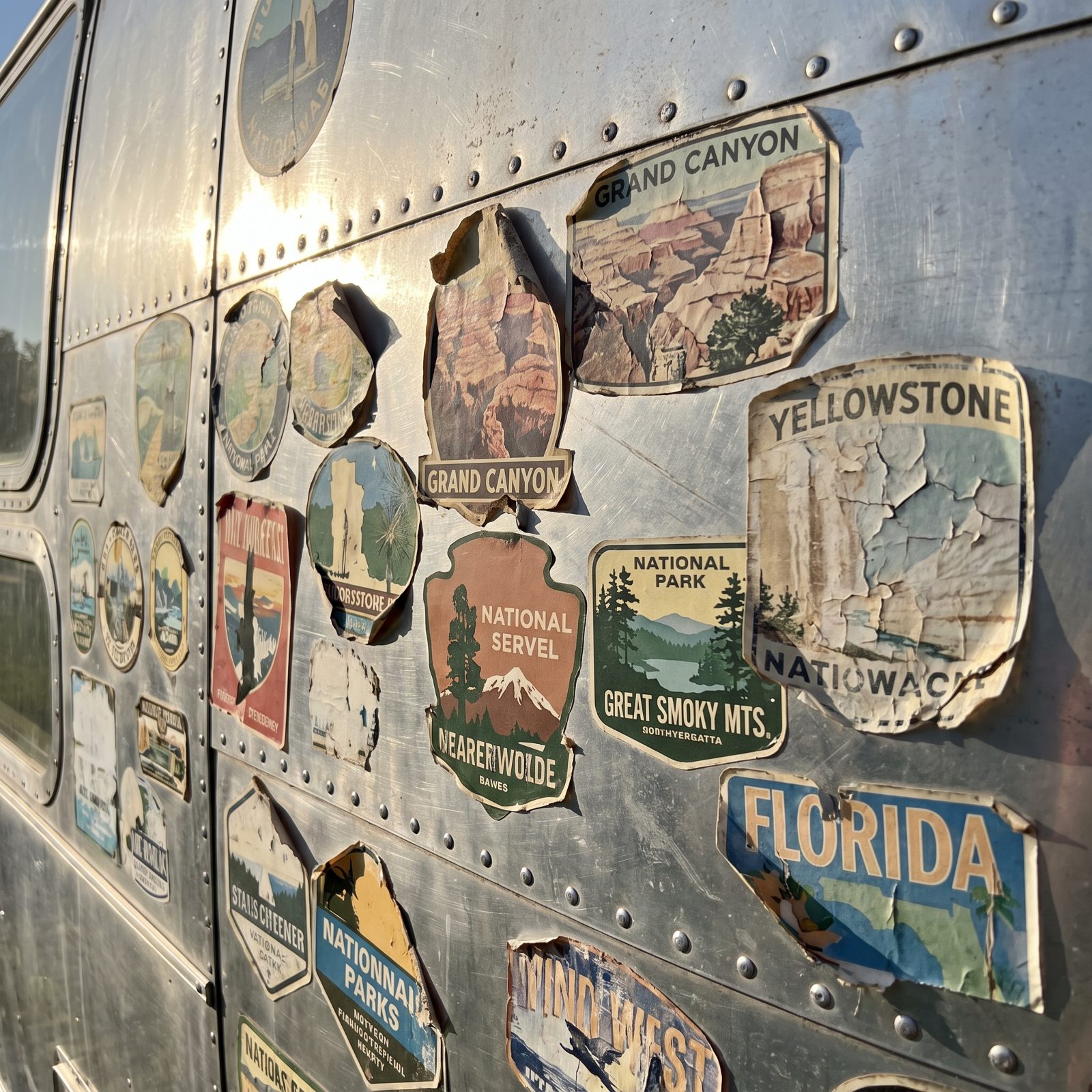
The back panel of an Airstream told your whole travel history in faded paper and vinyl — state outlines, park emblems, roadside-attraction stickers in sun-bleached reds and blues. Every one marked a place you’d actually gone.
Applying a fresh decal was a small ceremony. A jar of water, a sponge, a rag to smooth out the bubble, and then you stepped back to admire it against the polished rivets.
Nobody called it branding. It was a scrapbook you wore on the aluminum, a map of where you’d been rendered in cheap adhesive and pride. The more crowded that panel got, the more road you’d put behind you.
4. Waving at Every Other Airstream on the Highway
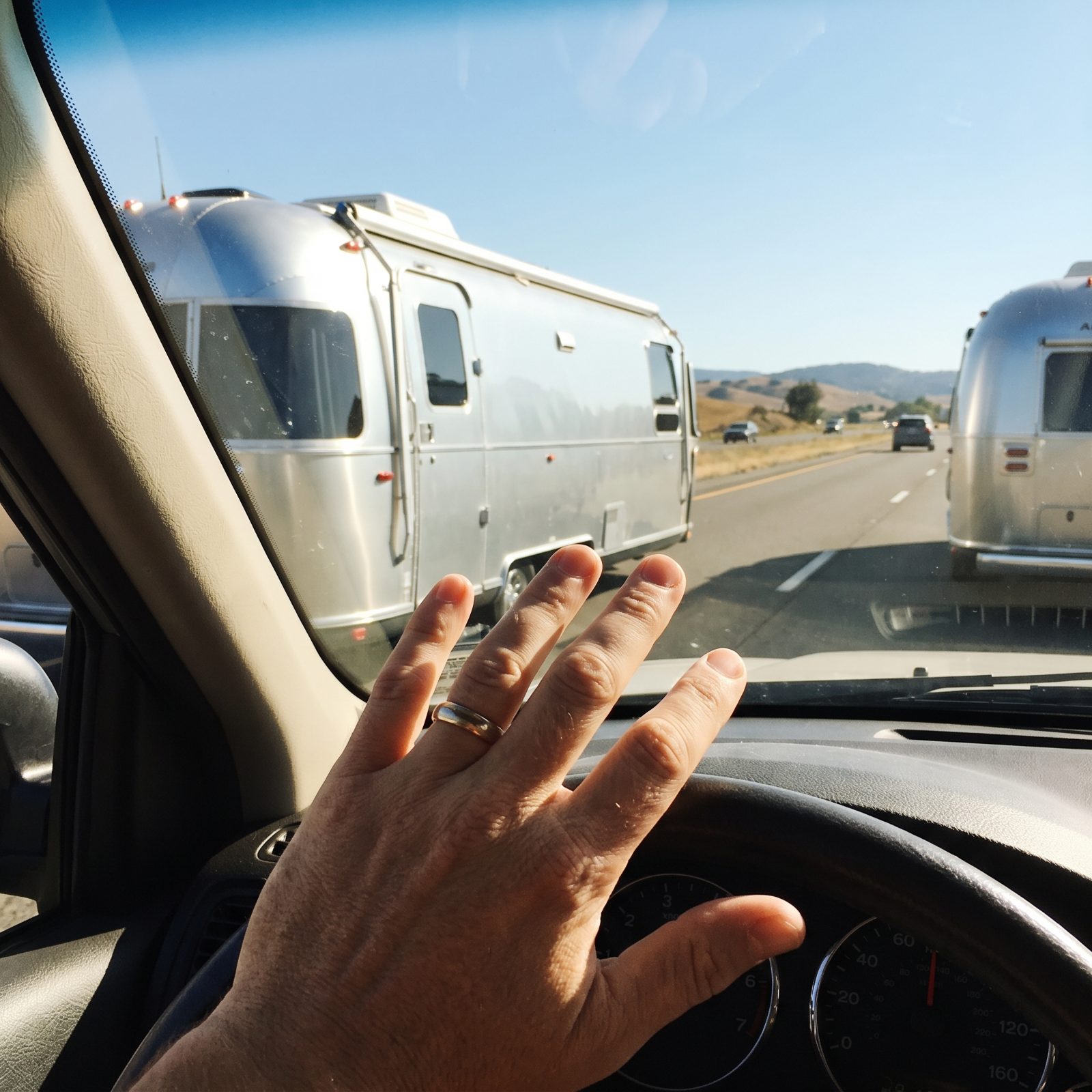
Spot an oncoming Airstream on a two-lane and your hand came off the wheel almost on its own. A little lift, maybe two fingers, acknowledged across the centerline at fifty miles an hour.
You didn’t know those people. Didn’t matter. They’d done the same leveling and cranking and bearing-packing you had, slept under the same curved aluminum, chased the same light across the same deserts. That was enough.
It was a quiet club with no dues and one membership rule: own one of these silver things and keep it moving. The wave said I see you, and you got one back every time.
3. Joining a Caravan Led by Printed Instructions
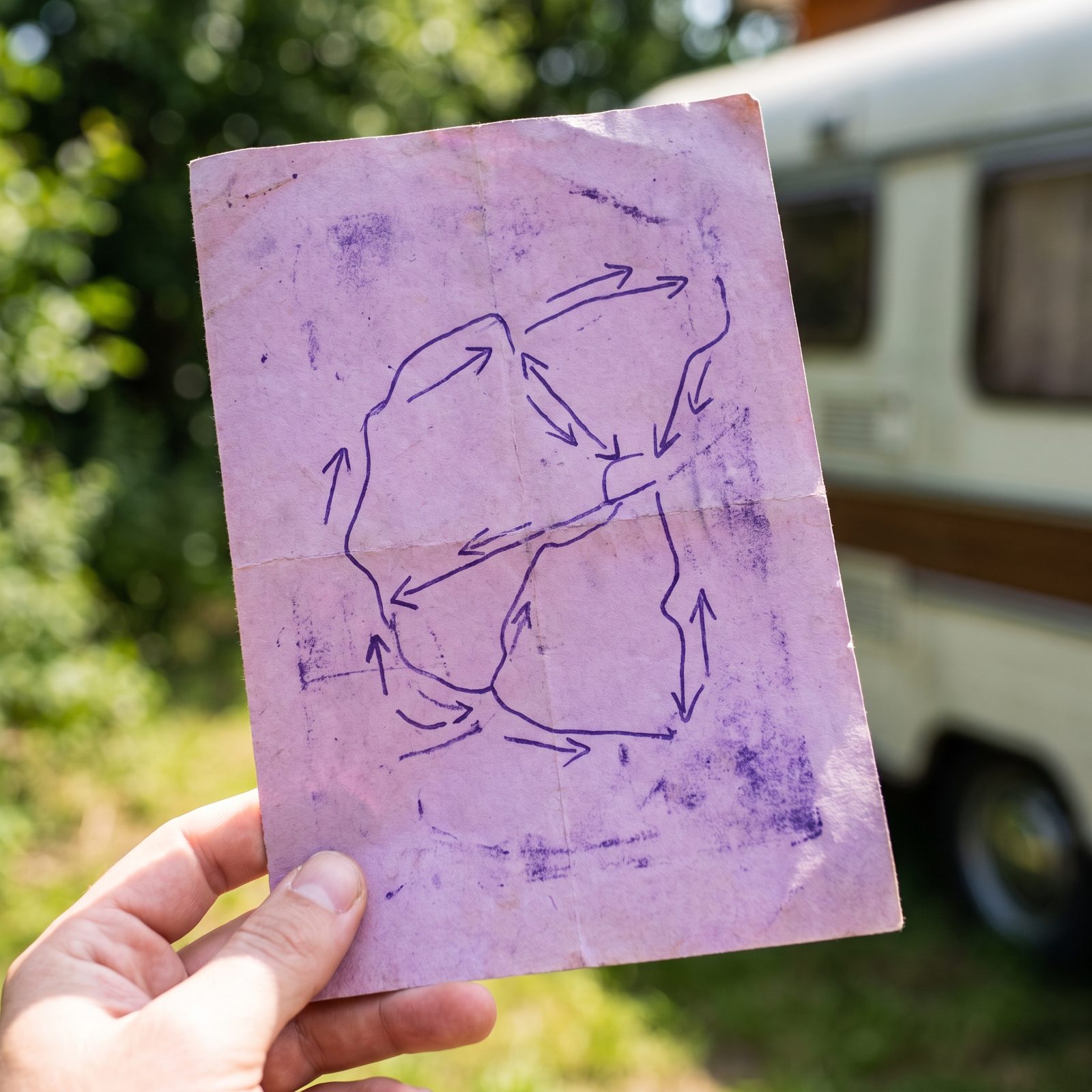
Before caravans ran on walkie-talkies and group texts, they ran on mimeographed sheets — purple ink, a hand-drawn route map, departure times typed out in a row. You read yours at a folding camp table with a stone holding it down against the breeze.
A dozen or more trailers lined up nose-to-tail in a grassy field, aluminum catching the morning sun in one long silver row. Someone had a chrome whistle. Someone else had a hand-cranked megaphone. The whole thing moved on paper and goodwill.
You followed the car ahead, trusted the sheet, and if you got separated you met at the spot circled in purple ink. Pennant flags snapping, coffee going cold in enamel mugs, the start of a shared journey nobody had to organize twice.
2. The WBCCI Caravan Number Painted Big on the Aluminum Shell
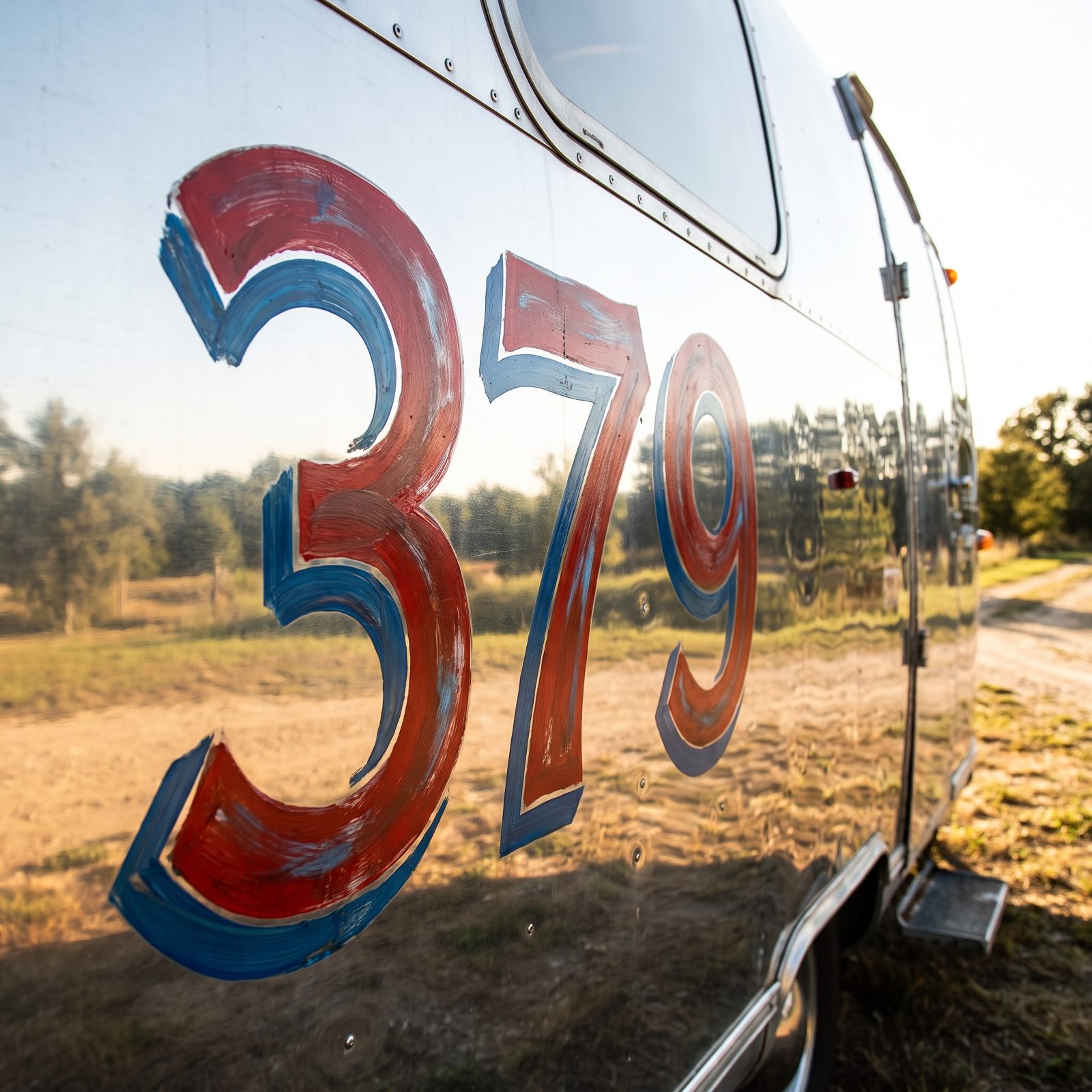
If you grew up around Airstreams, you knew the number before you knew the owner. Every member of the Wally Byam Caravan Club got a membership number, and on caravan runs they painted it big and bold, high on the upper curve of the shell where you could read it from three trailers away. Black digits on an oval white badge, near the roofline.
Why so large? Because on a caravan you were traveling in a long silver line, sometimes dozens of rigs rolling through small towns, and the number was how the lead car and the tail car kept everybody accounted for. It was practical. It was also a badge of belonging, and anyone who’s ever worn a club patch understands the difference between the two and how they blur together.
The paint went right onto the polished skin. Hand-buffed aluminum with those faint swirl marks, flush rivets running in gentle curves, the whole shell throwing back the afternoon light. Pull into a rally field and you’d see the arc of them on the mown grass, red-striped awnings out, folks in short-sleeve shirts standing between the trailers swapping road stories.
You don’t see the numbers much anymore. The club still exists, but the big painted caravan digit faded out as the long organized caravans themselves wound down. Which is a shame, honestly. There was something about reading a stranger’s number across a field and knowing they’d driven the same highways you had.
1. Listening to Rain Drum Against the Curved Aluminum Roof
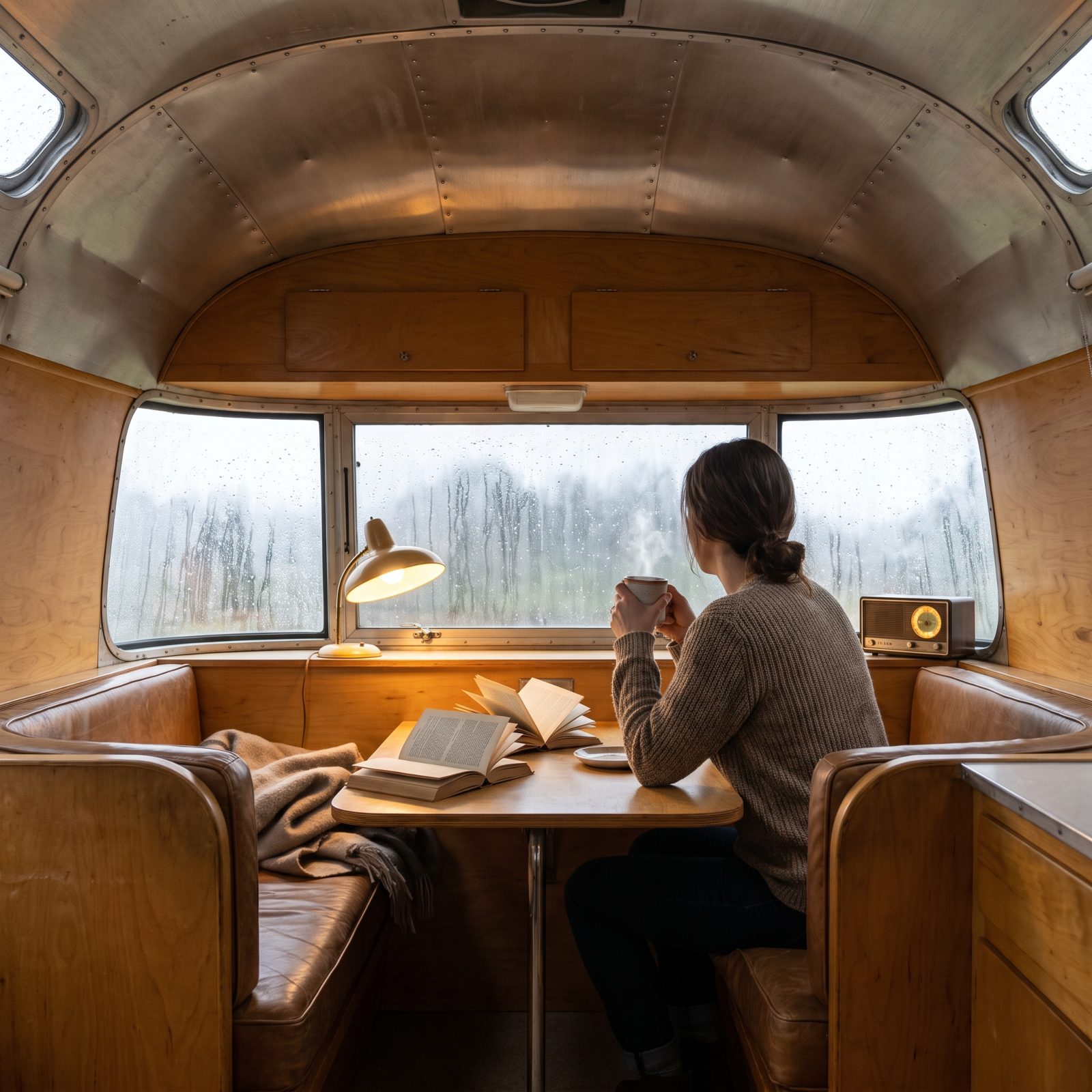
There’s a particular sound nobody who’s slept in an old Airstream ever forgets. Rain on that curved aluminum roof is nothing like rain on a hard fiberglass shell or a canvas tent. It drums. The whole skin acts like a soft instrument, and the sound comes down close and all around you, which has the strange effect of making the inside feel smaller and warmer the harder it comes down.
Picture the afternoon that storm rolls through. Gray light presses through the jalousie windows, water running down the louvered glass in thin ribbons, condensation fogging the lower corners. Up above, the riveted ceiling panels glow a cool silver.
And the inside holds all the warmth the weather can’t reach. Blond birch cabinets with chrome latches, a dinette done up in that burnt-orange and avocado geometric print nobody would dare sell today, a boomerang-pattern Formica table, a little propane heater ticking against the wall. Somebody’s folded a rust-and-cream wool plaid over the bench. The enamel coffee pot waits on the two-burner stove. You’re not going anywhere, and that’s fine.
Modern RVs insulate the sound away, and some folks like that. I don’t. Give me the drum of the storm overhead and a cup going cold in my hand, the kind of afternoon that makes you forget you ever had somewhere to be.