
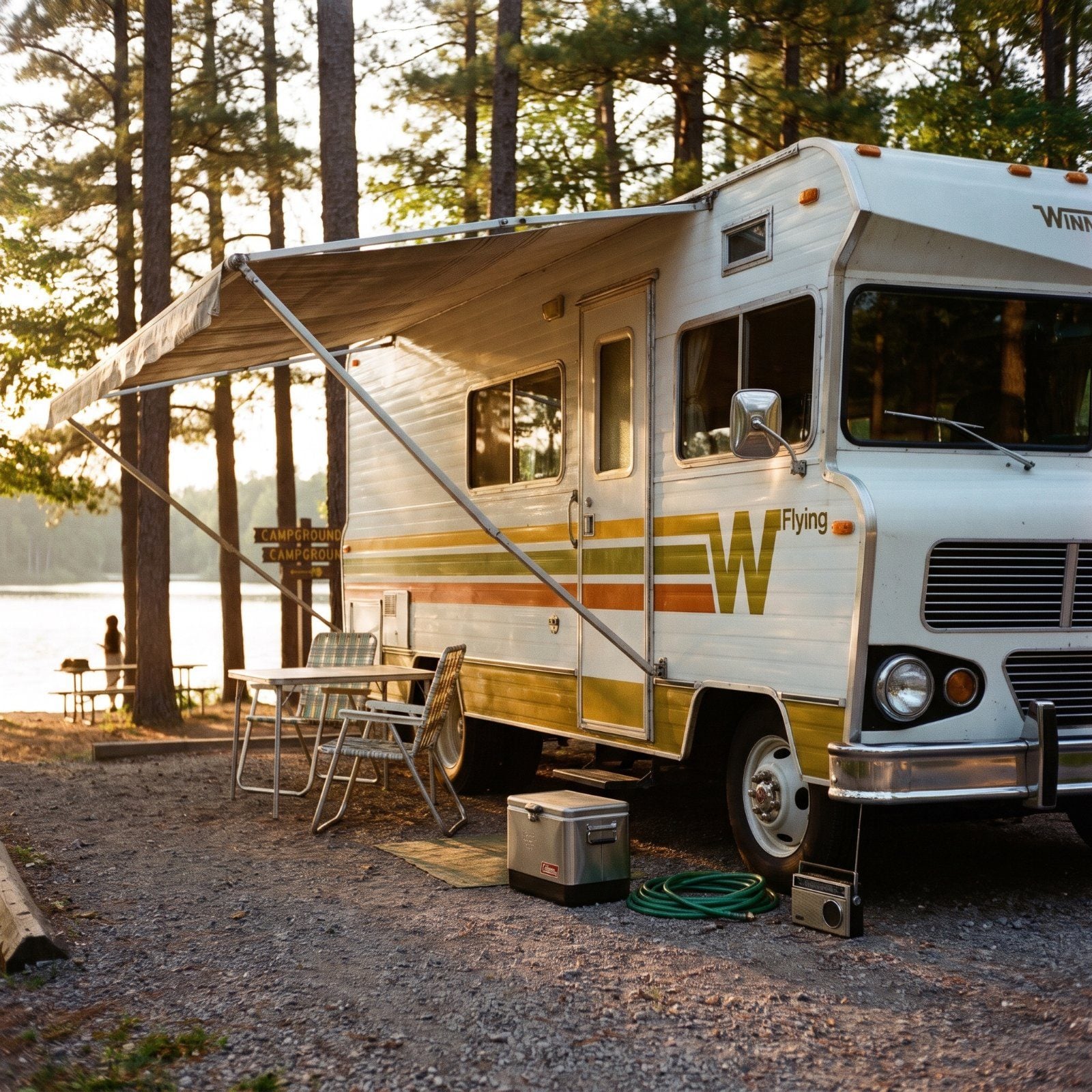
A Dodge V8 ticks and hums in a campground at dusk. Woodgrain cabinets glow under a ceiling light, a plaid cushion still holds the shape of whoever sat there last, and a road atlas lies folded open on the dinette. The Brave was never the fanciest rig on the lot, but it was the one kids pointed at from the backseat. It promised one thing: you could just go. Pull over wherever, sleep where you parked. Here’s why so many of us still remember it.
Please note that some of the images in this article were created with the assistance of AI.
37. That Unmistakable Eyebrowed Front End
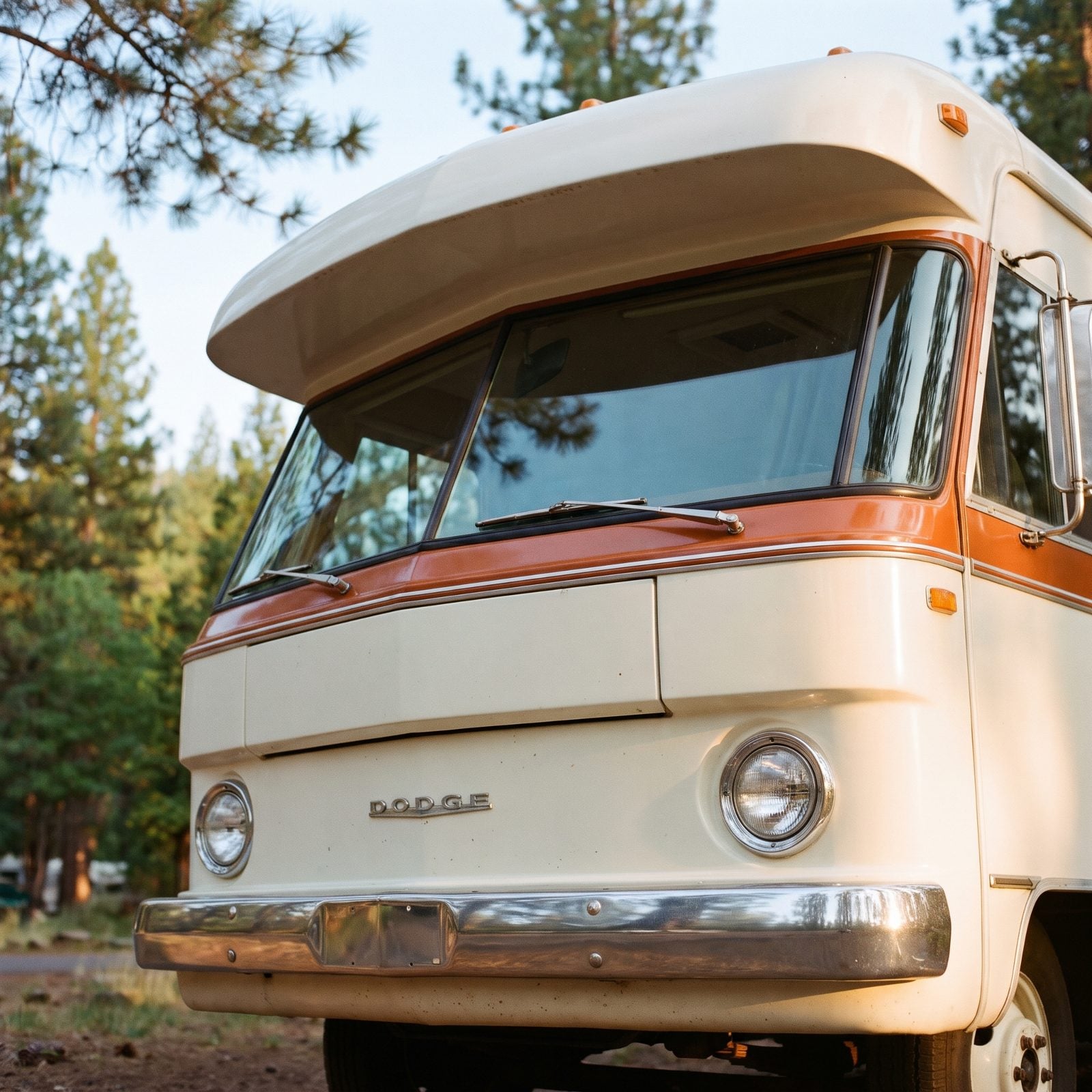
You knew it was a Brave before you could read a single badge. That front cap, a fiberglass brow curving over the windshield like a furrowed forehead, gave the whole motorhome a face. Kids named them. Parents spotted them three sites down.
The eyebrow wasn’t just styling, either. It shaded the enormous flat windshield and shed rain off the top of the glass, which mattered when you were squinting into a Nevada sunset at highway speed. Function wearing a personality.
36. The Giant Flying W on the Side
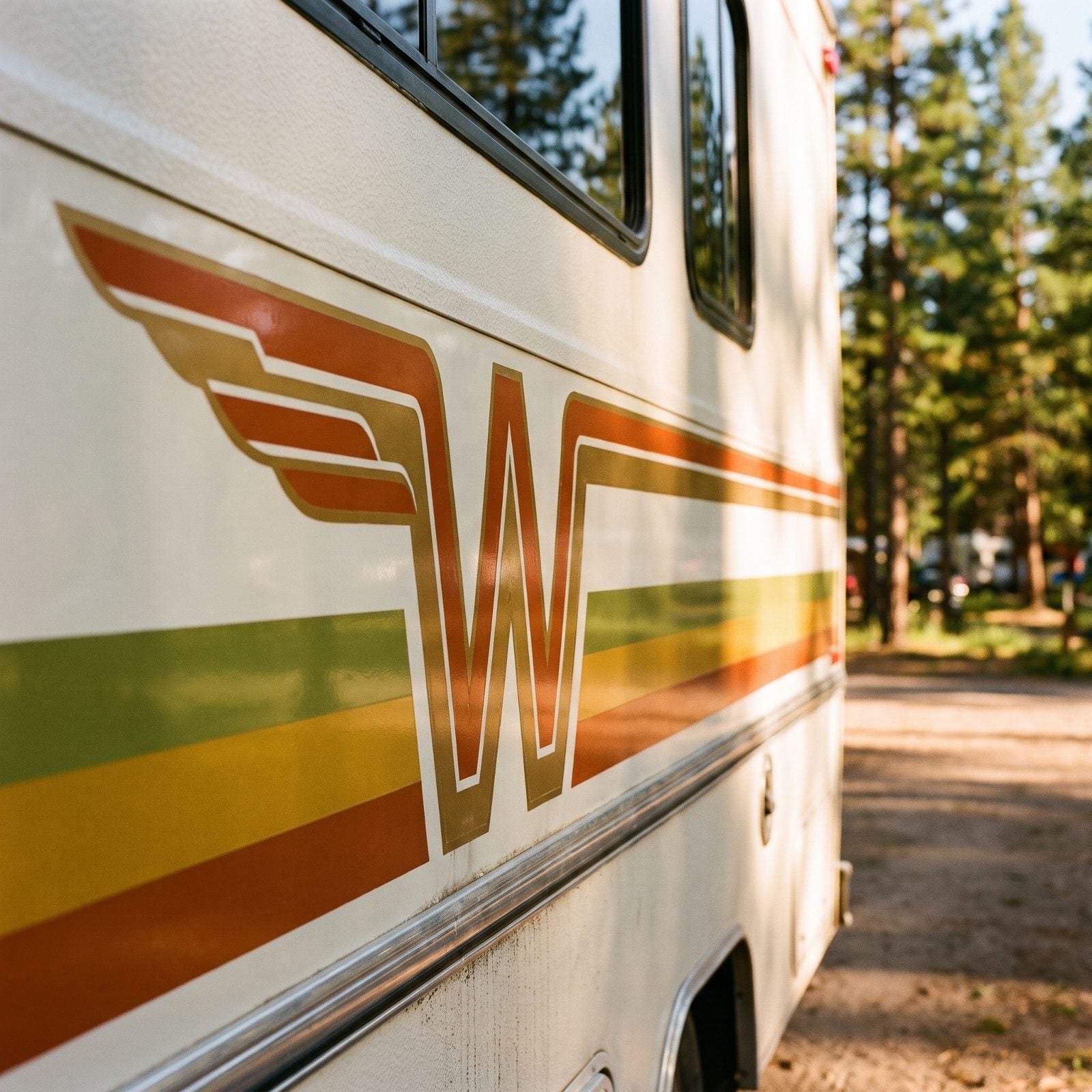
Big, confident, impossible to miss — the Flying W rode the side of every Brave like a team logo. Part wing, part letter, all swagger. It told the campground you’d arrived in something built on purpose.
And that mark did real marketing work. On a loop full of look-alike boxes, the W made Winnebago the name families remembered. It turned a brand into a flag you flew down the interstate.
35. A Boxy Shape That Maximized Every Inch
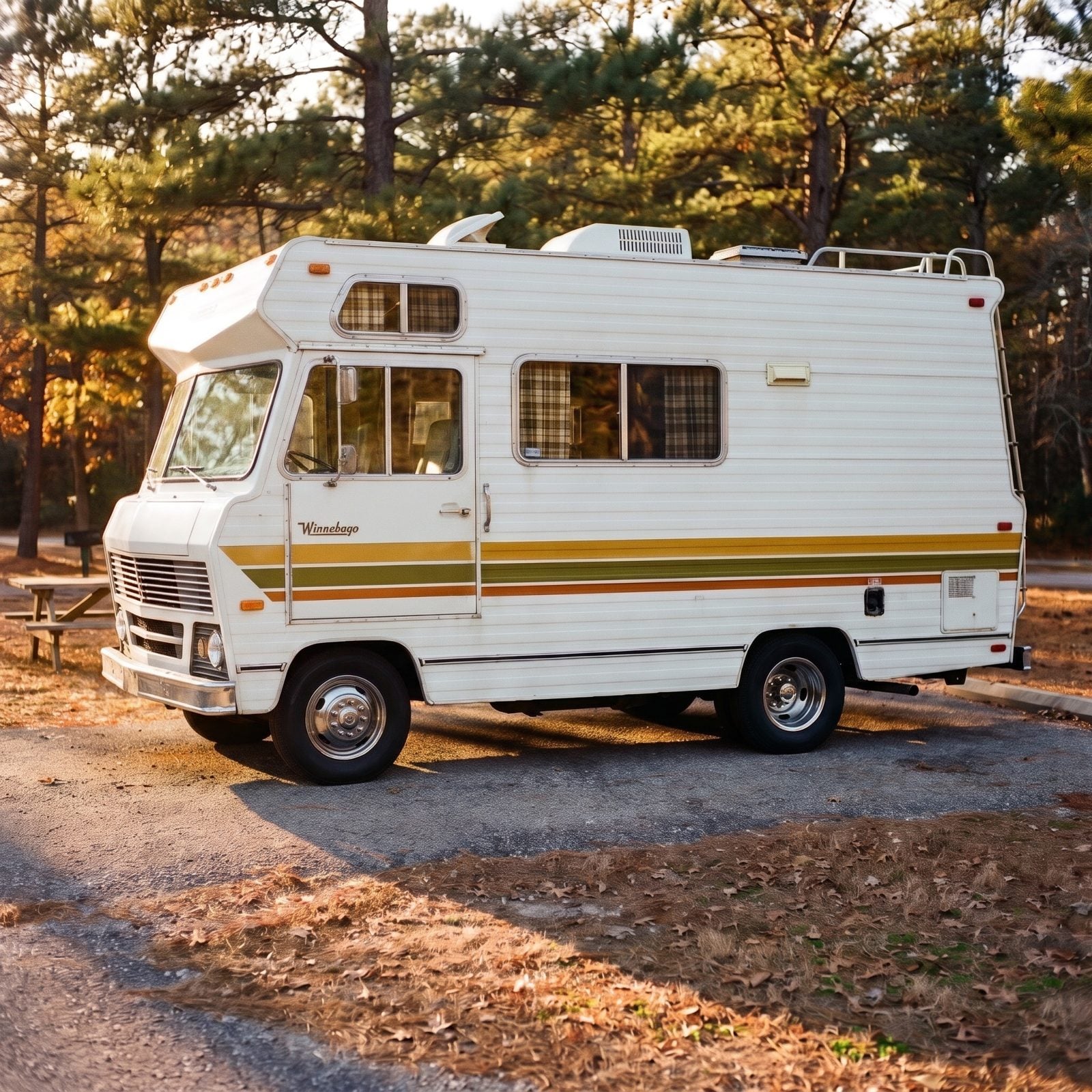
No tapering, no swooping, no wasted curves. The Brave was a box, and that was the genius of it. Flat walls meant real cabinets, a real dinette, and a real bed that didn’t apologize for the shape of the roof above it.
Inside you got headroom you could stand up in and corners you could actually use. The woodgrain cabinetry ran floor to ceiling because the walls were vertical. A fancier curve would have robbed you of exactly the storage a family of five needed for two weeks looping through the West.
34. Bold Stripes That Looked Ready for Adventure
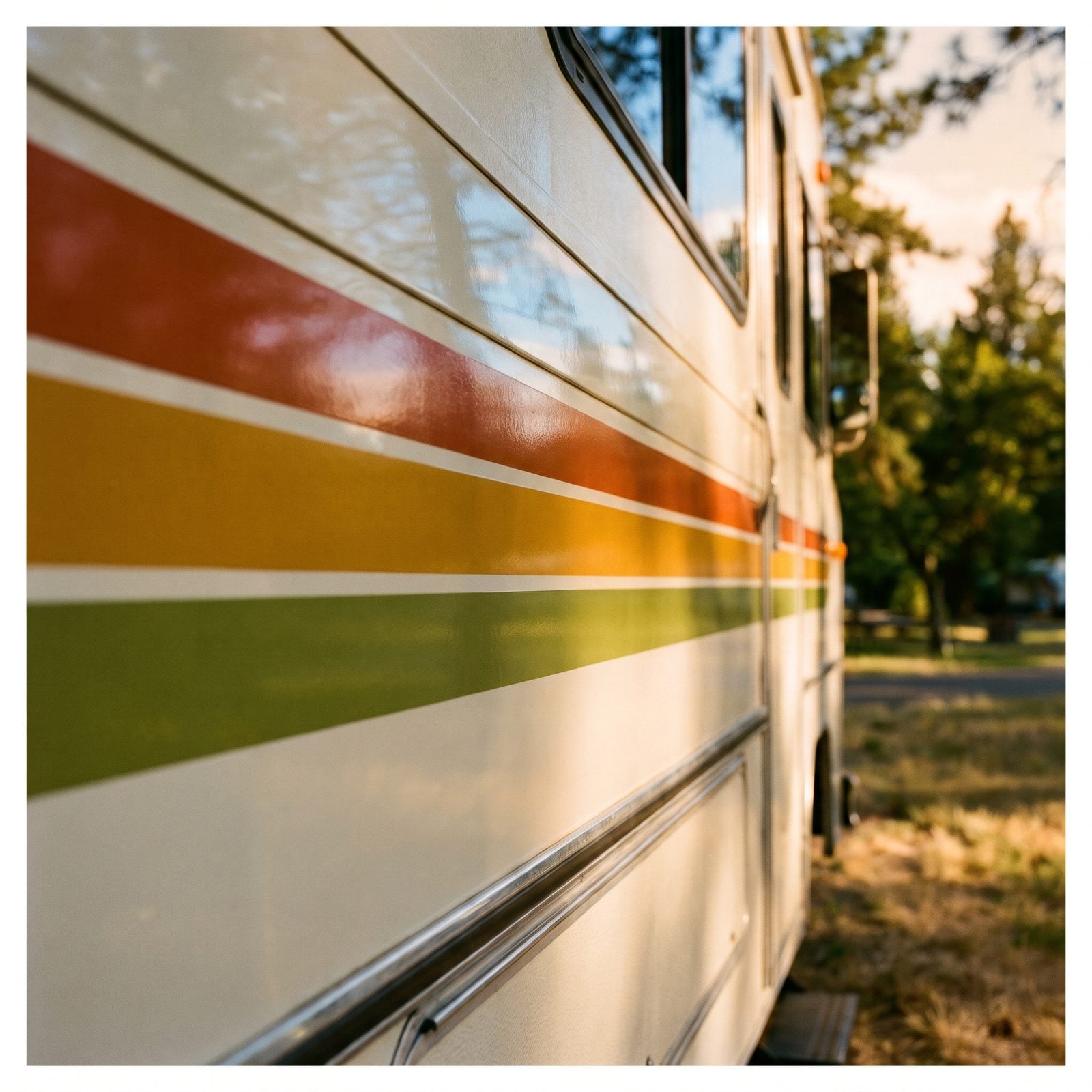
Those stripes didn’t whisper. Burnt orange over harvest gold over avocado, running the full length like racing livery on something that topped out at highway speed. They matched the carpet, they matched the curtains, they matched the whole loud, glorious decade.
I’ll admit it: I love them without a shred of irony. In a sea of plain white rigs, the striped Brave looked like it was already halfway to somewhere good.
33. A Compact Length That Felt Manageable
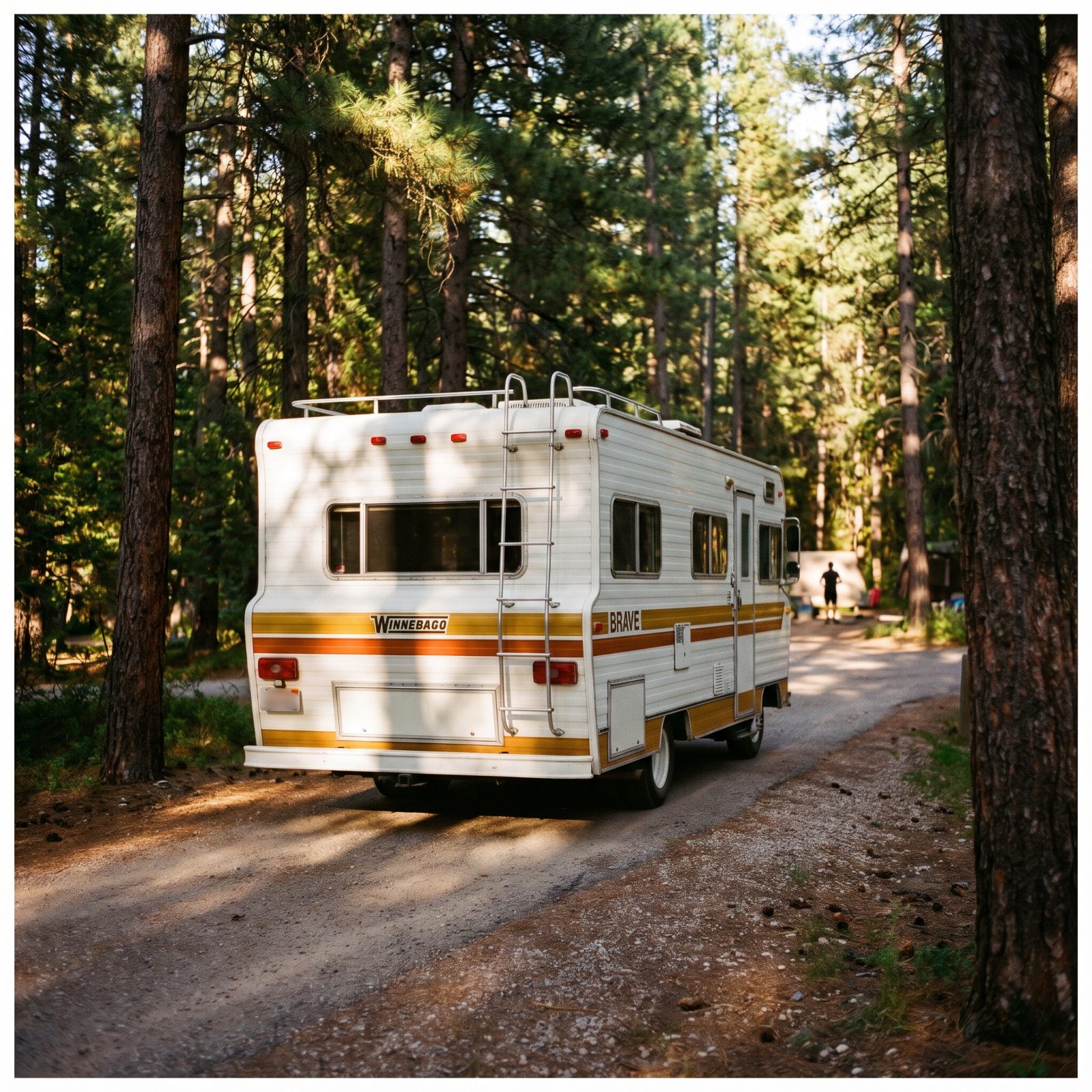
Not every family wanted a bus. The Brave came in lengths a nervous first-timer could back into a site without a marriage counselor on standby. You could park it at the grocery store, then wiggle it down a tight campground loop between two pines.
That manageability sold a lot of them. A motorhome you were scared to drive stayed in the driveway, but one that felt like a big station wagon got used every weekend from May to September.
32. A Huge Windshield for Panoramic Road Views
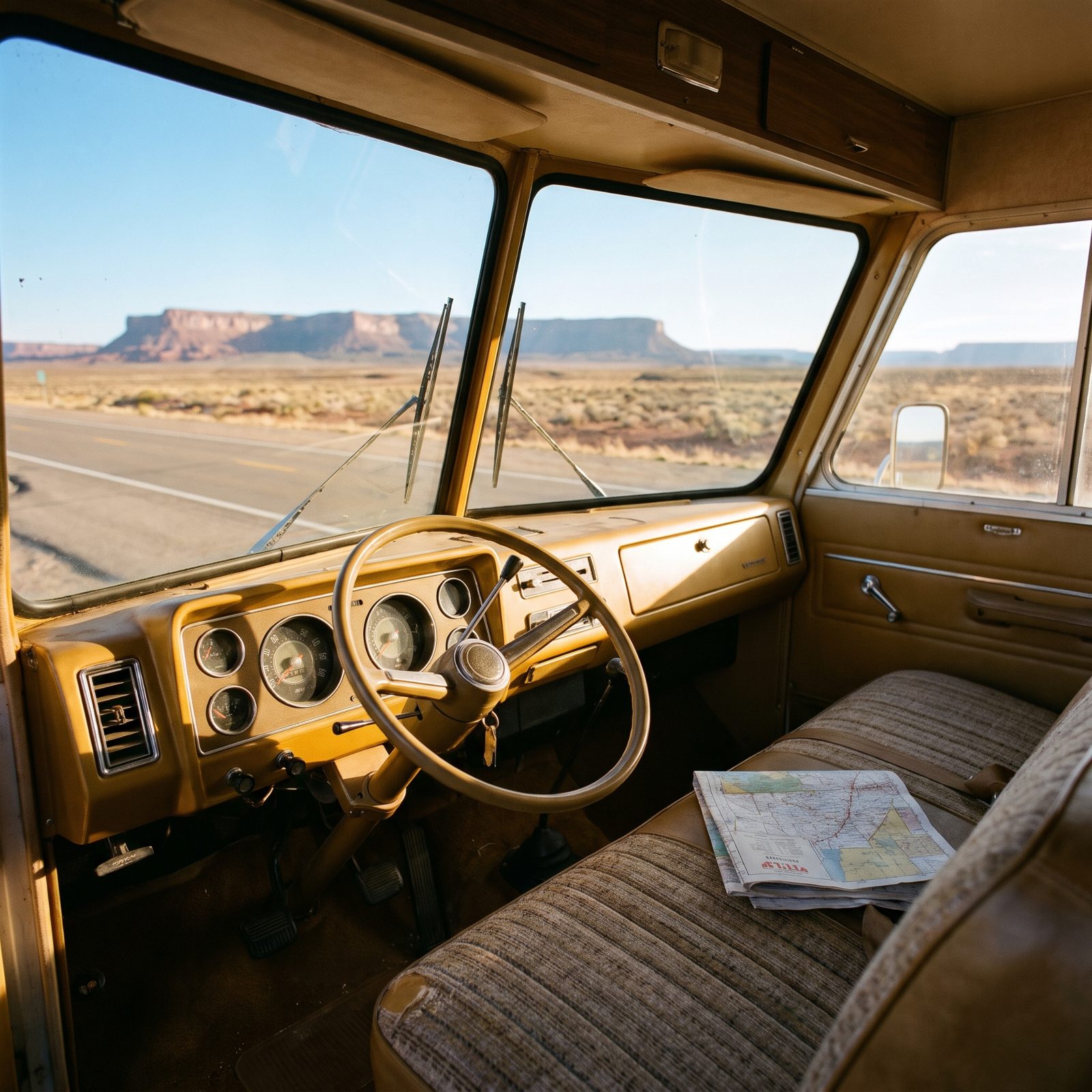
That flat windshield was practically a movie screen. Sitting up high behind all that glass, you saw the whole road, the whole sky, the whole reason you bought the thing — wheat fields, mesas, a thunderhead building forty miles off. All of it, right there.
The kids in back complained they couldn’t see. The driver never did. The view was the vacation, and the Brave handed it to you the second you turned onto the interstate.
31. The High Driving Position Above Traffic
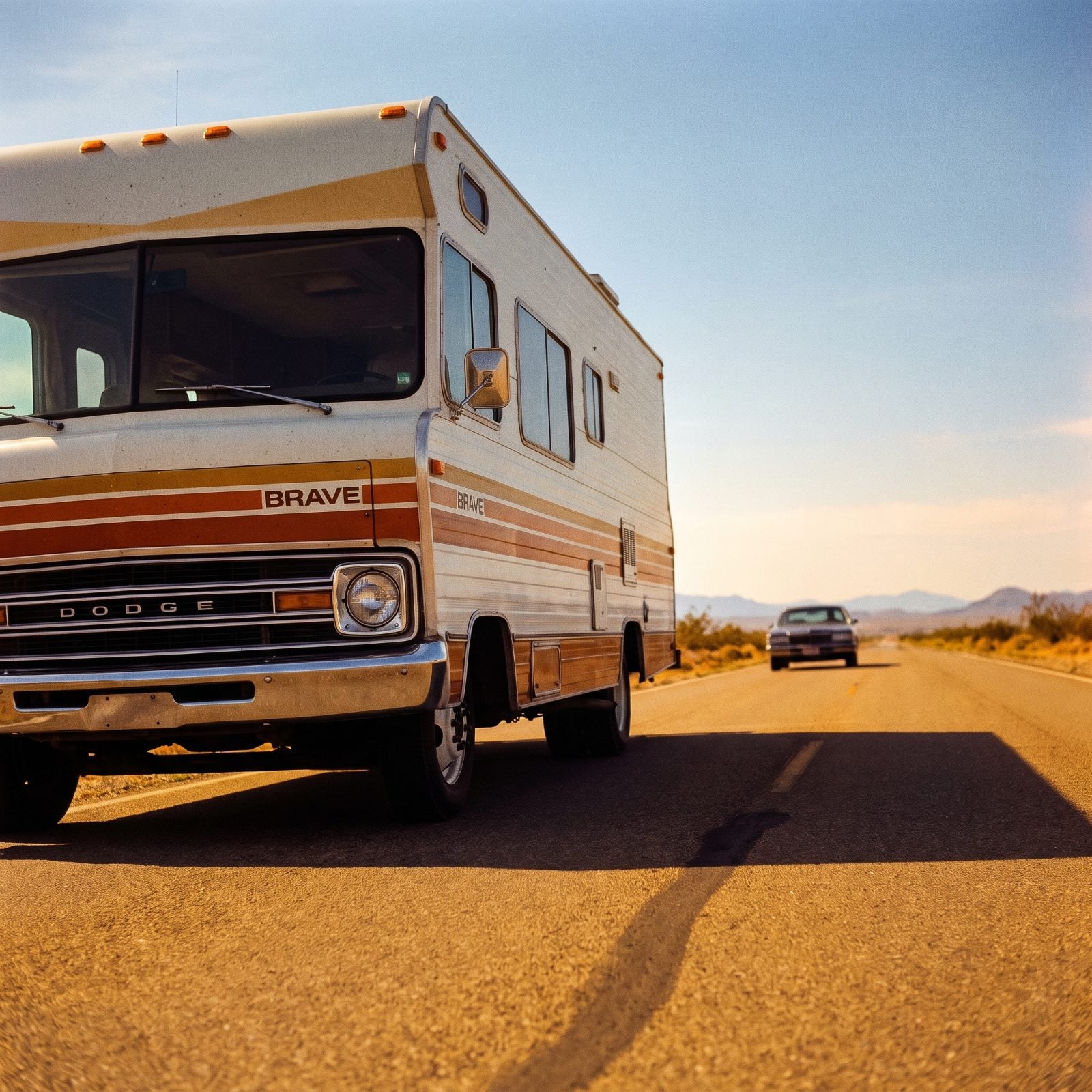
You sat above everyone. Up in the Brave’s cab the family sedan beside you looked like a toy, and the view over the hoods ahead made merging feel almost relaxed. That perch changed how the whole trip felt.
There’s a real psychology to it. Height reads as command. You weren’t stuck in the metal river of traffic — you were floating over it, scanning the exit signs two miles early. For a lot of drivers, that feeling alone was worth the price of admission.
30. The Cab-Forward Layout That Saved Living Space
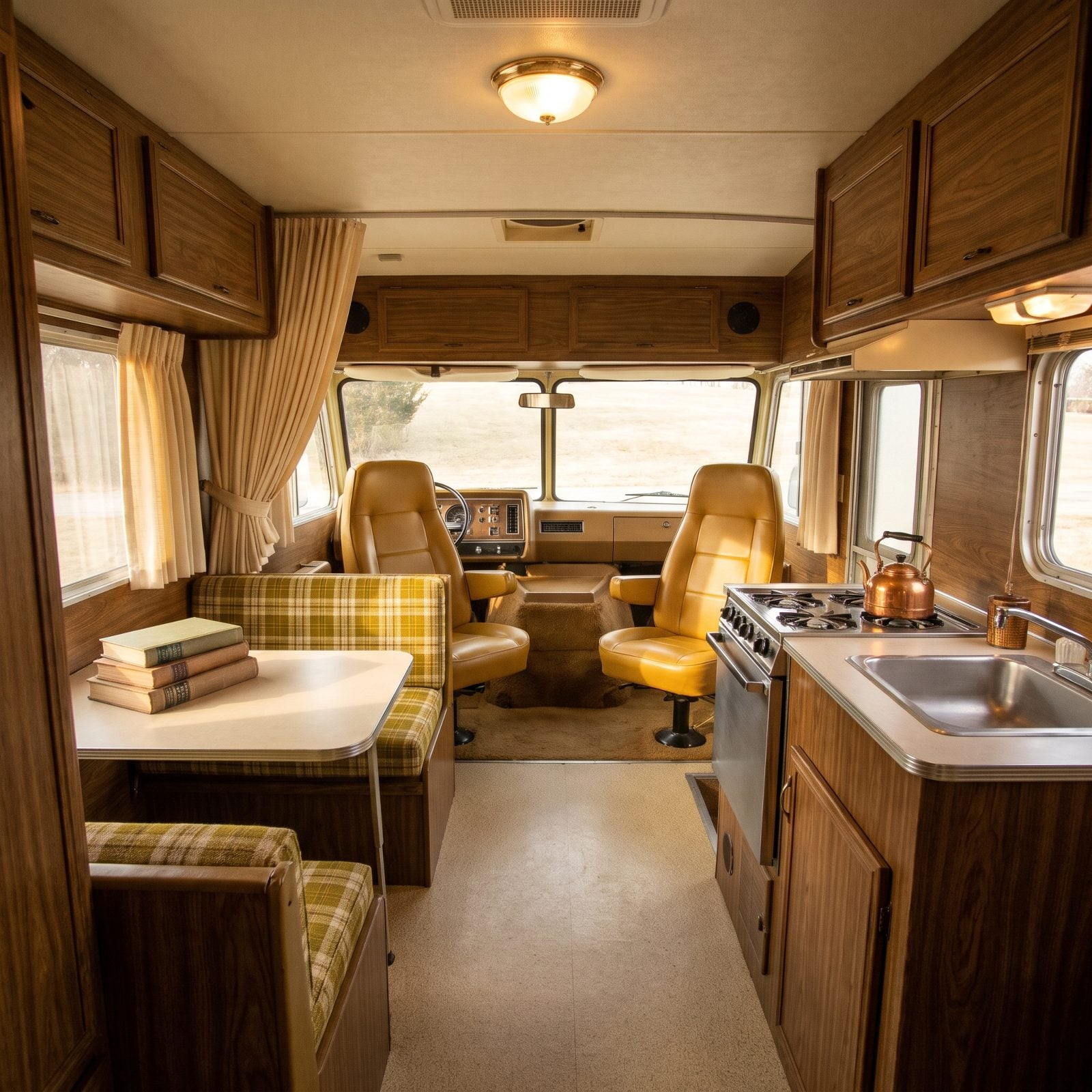
Push the driver up front, and suddenly the whole rest of the box is yours to live in. The Brave’s cab-forward design handed the dinette, galley, and beds the lion’s share of the floor plan instead of surrendering it to a long nose.
The swivel seats were the secret handshake. Park for the night, spin the captain’s chairs around, and the cockpit became two more seats at the dinette. A rig that drove like a vehicle, then quietly turned into a living room once you shut off the engine.
29. The Dependable Dodge Chassis Underneath
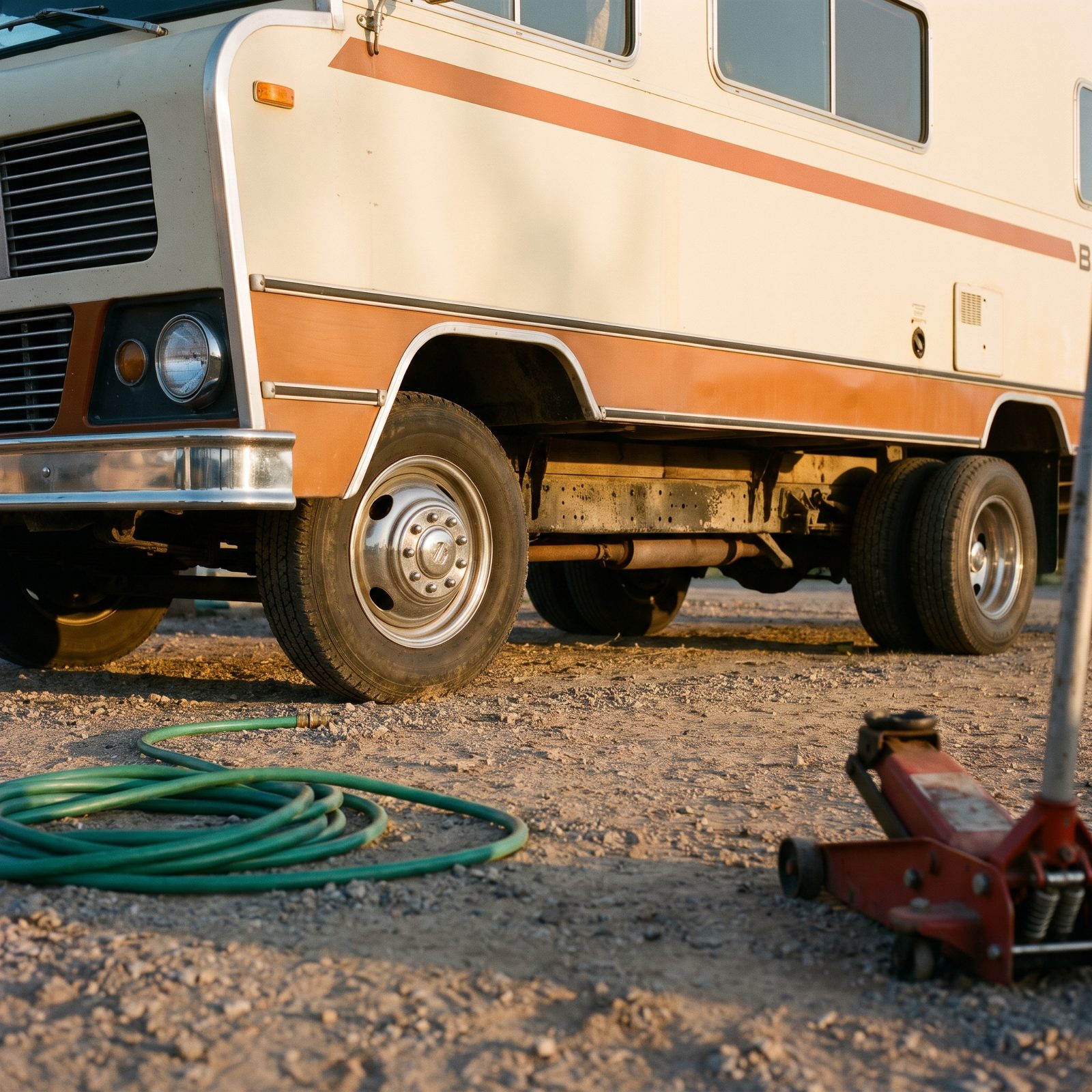
Under all that fiberglass sat a Dodge truck chassis, and that mattered more than any stripe. In those years, a Dodge motorhome frame meant you could find parts, find a mechanic, and get back on the road in a town you’d never heard of.
Simple, stout, serviceable. A country gas station could handle it with the tools already in the bay. That accessibility is a big reason so many Braves are still running today while glossier rigs rotted in side yards.
28. A V8 Engine Built for the Open Road
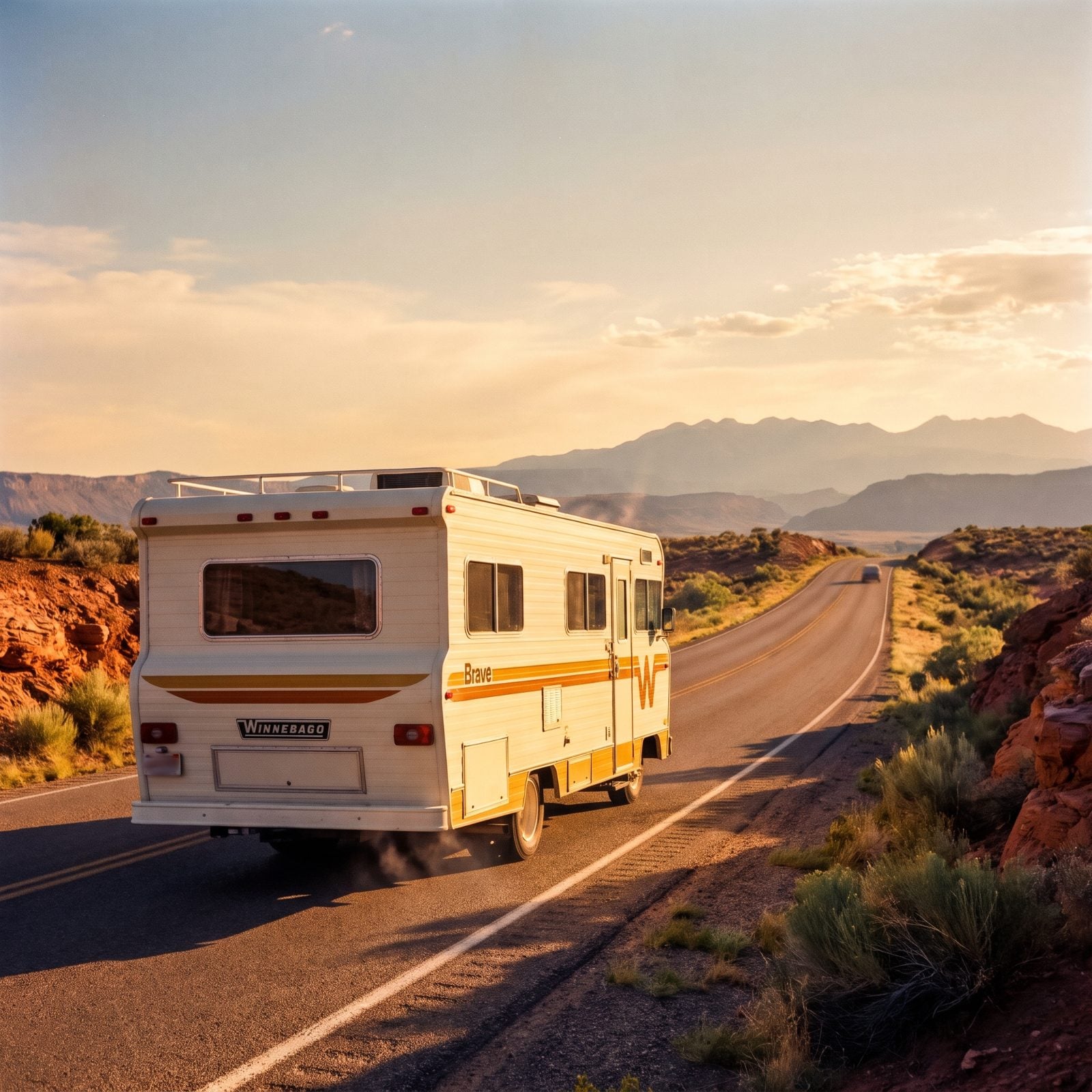
It wasn’t fast. Nobody bought a Brave to be fast. But that big Dodge V8 had the low-end muscle to haul a loaded box full of family, food, and folding chairs up a mountain pass without drama, and that was the point.
You heard it settle into a steady pull on the long grades, needle holding, air conditioner humming, the desert sliding by. Built not for speed but for distance — for the next town, the next lake, the next campground a hundred miles on.
And that promise, more than any stripe or logo, is what the Brave really sold. Not luxury. Range. The whole country out the windshield, with a place to sleep attached.
27. A Dashboard Like a Road-Trip Command Center
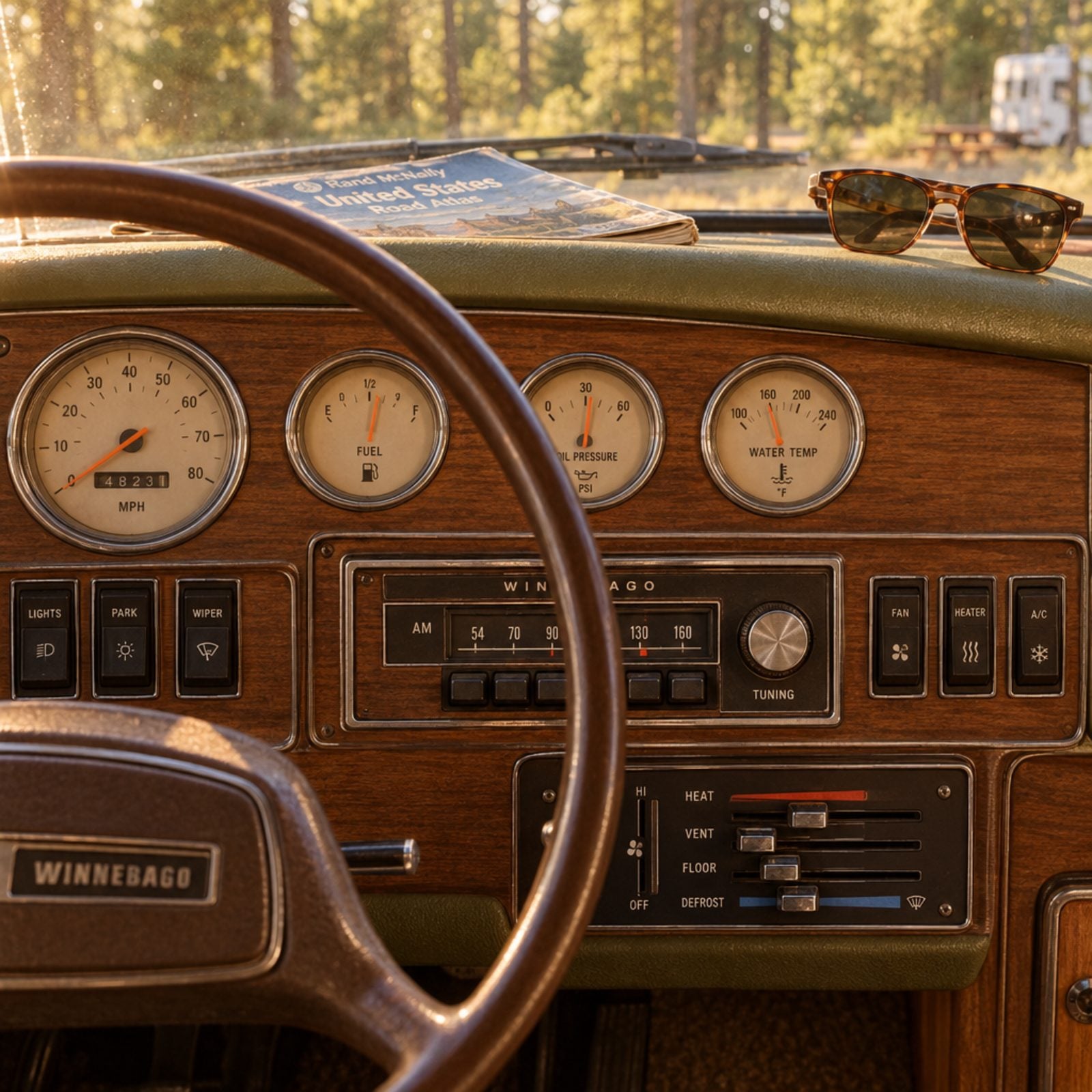
Every gauge had its own little chrome ring and its own job — speedometer, fuel, oil, temp, all lined up in a row of cream faces with orange needles that swung to life when the engine warmed. You learned to read them like a pilot, because that big V8 up front wanted watching.
The sliding heater controls carried red and blue labels. The AM radio got you one station, then static, then a brand-new station two hours down the road. Tying it all together: woodgrain laminate across the whole panel, warm and fake and completely of its time.
26. An Optional CB Radio for Highway Chatter
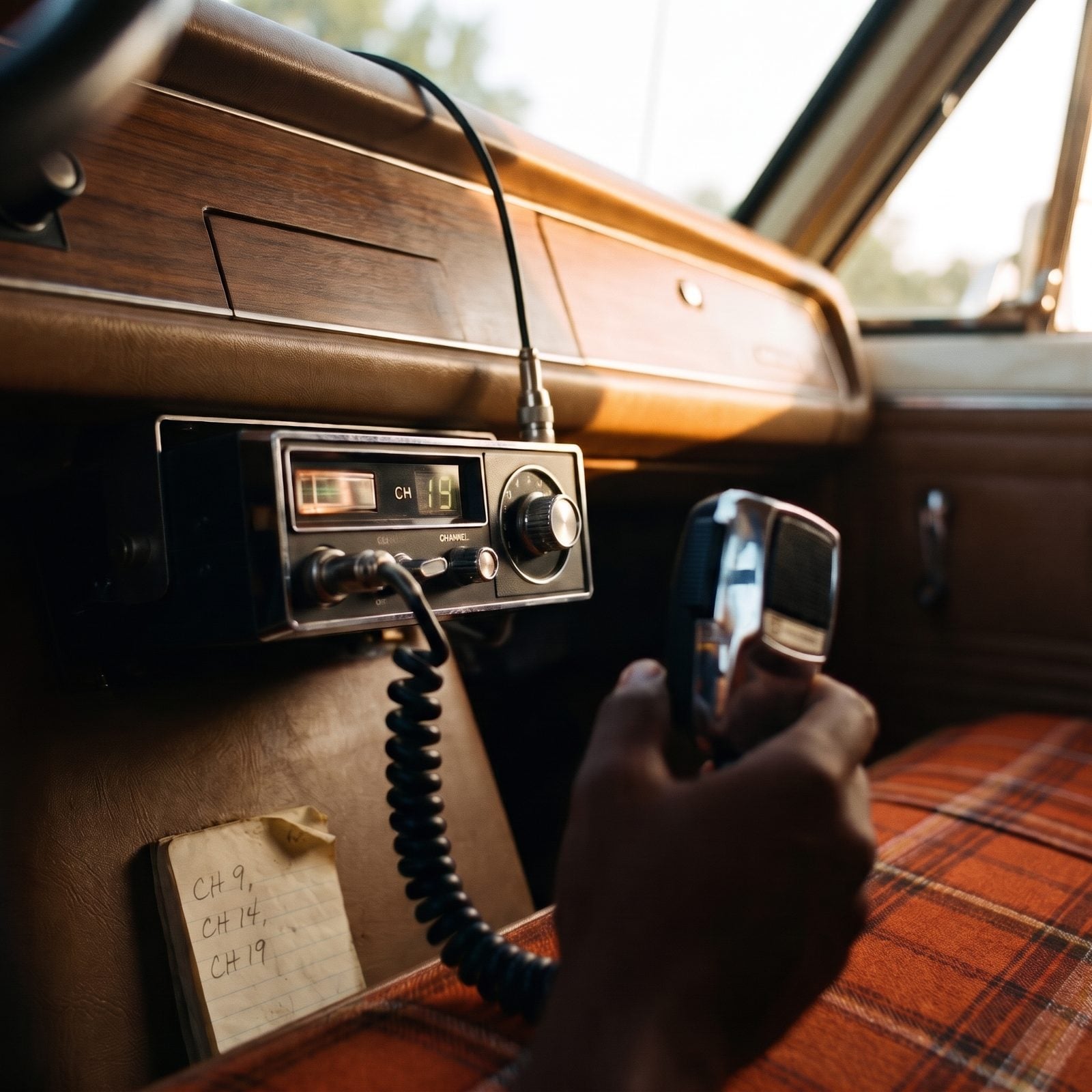
Check this box on the dealer sheet and you joined the party. The CB bolted up under the dashboard, mic on a coiled cord that always tangled, and all at once the highway talked back. Breaker one-nine. What’s your twenty. Smokey ahead at the county line.
Call it the family group chat of 1976 — except everyone on the channel was a stranger doing seventy in the next lane over. The kids begged to key that mic. And somebody always picked a handle that embarrassed the whole family.
25. A Dinette for Family Meals That Converted Into a Bed
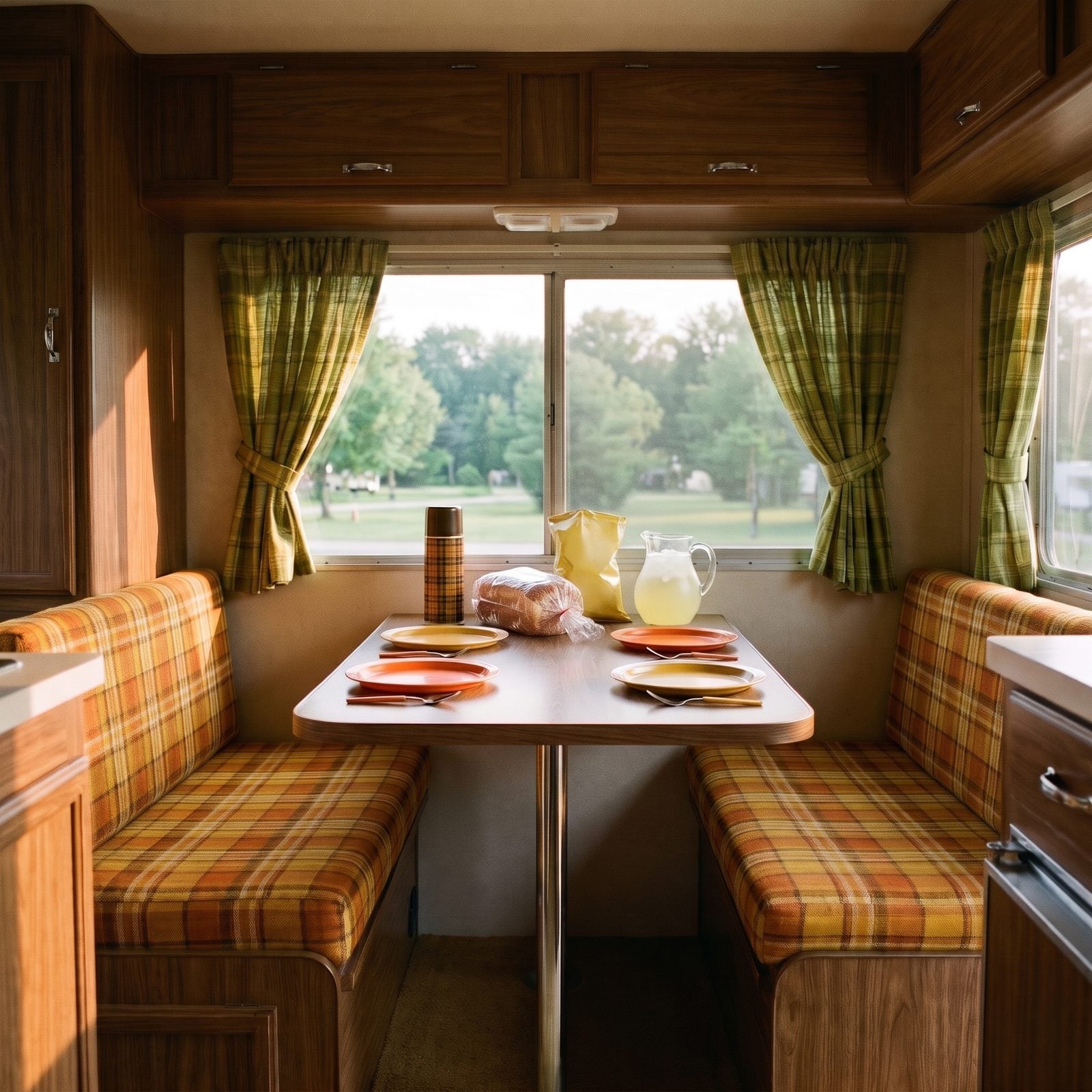
Here’s where the whole family squeezed in for dinner — elbows bumping, somebody on the end always catching a kick under the table. The laminate top and the plaid benches took spilled Kool-Aid and card games and rainy-afternoon Monopoly without a word of complaint.
Then came the trick. Drop the table down onto the bench rails, shuffle the cushions around, and the eating spot turned into a bed. Two kids slept there every night of the trip, heads at opposite ends, feet in each other’s faces. Once you’d done it a few times the whole swap took about ninety seconds.
24. A Cab-Area Bunk Children Couldn’t Resist
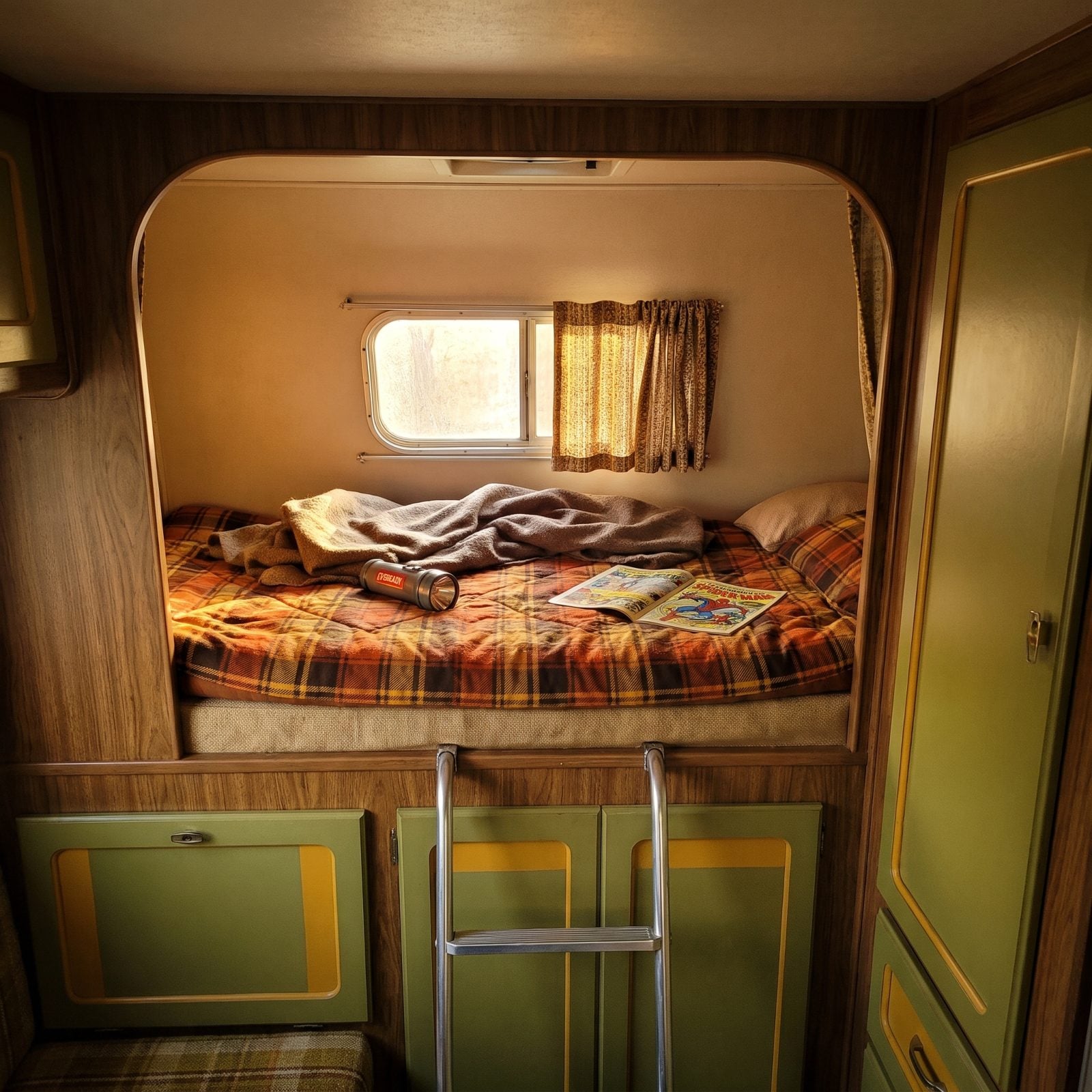
Every kid wanted the overcab bunk. It sat at the very top of the whole machine — a padded loft tucked up under the Brave’s eyebrow front, reached by a little ladder and defended fiercely by whoever claimed it first.
Pull the curtain across and you had your own cave, lying up there with a flashlight and a comic while the grown-ups talked below. On a drive you weren’t supposed to ride up there. Everybody did it at least once anyway, watching the road unspool through that tiny forward window.
23. A Sofa That Became Another Sleeping Space
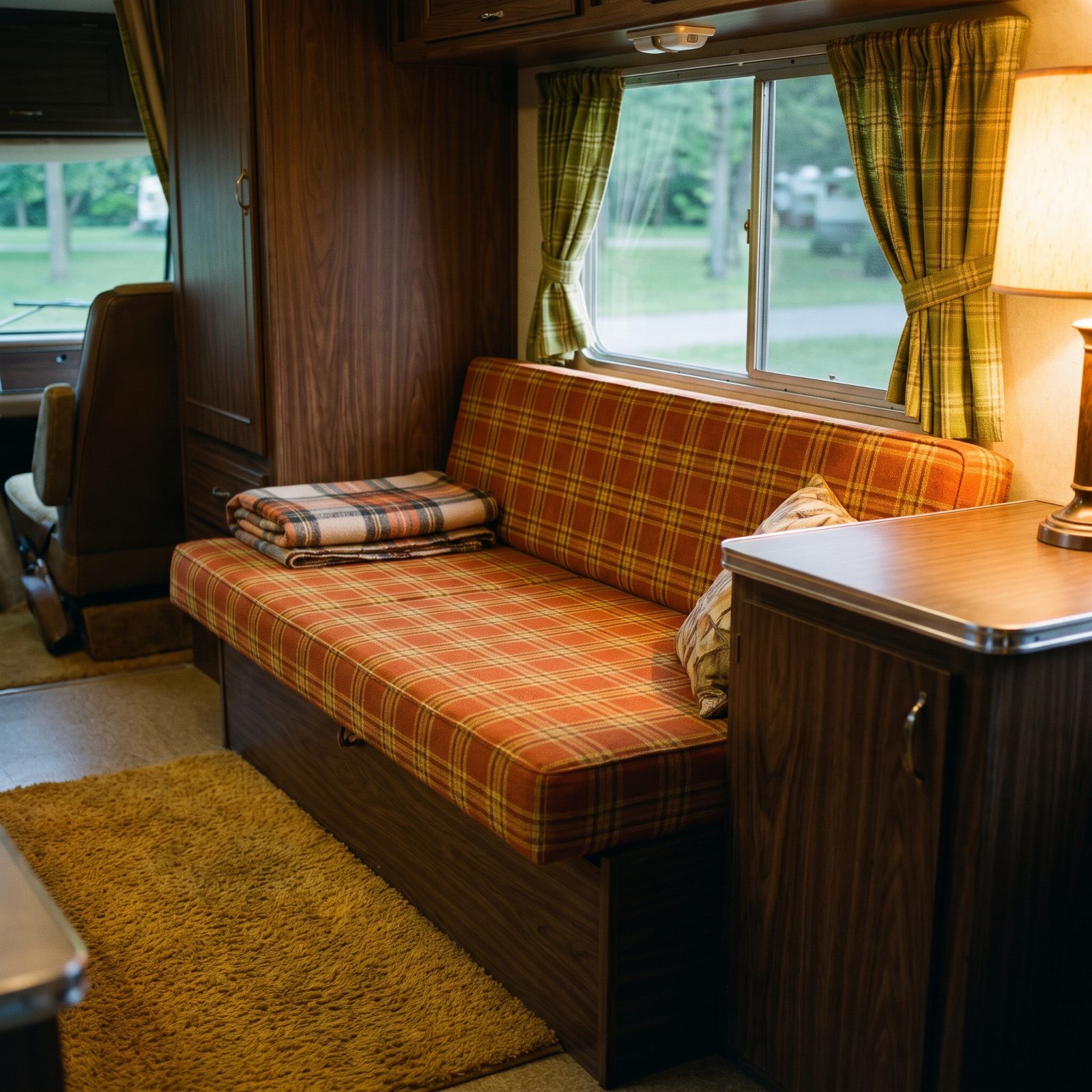
By day it was the couch. You flopped there with a paperback, or the whole family piled on to watch the little TV, or somebody napped through the long flat stretch of Kansas. That orange-and-gold plaid against the dark walnut cabinets went warm in the sun and cool after dark.
Then the seat pulled out and it stretched into a bed. One more kid tucked in — or Grandma, when she rode along for the week. A Brave that slept six pulled it off by making every single surface earn its keep twice over. Nothing in that coach had just one job.
22. Rear-Bed Floor Plans That Gave Parents Their Own Space
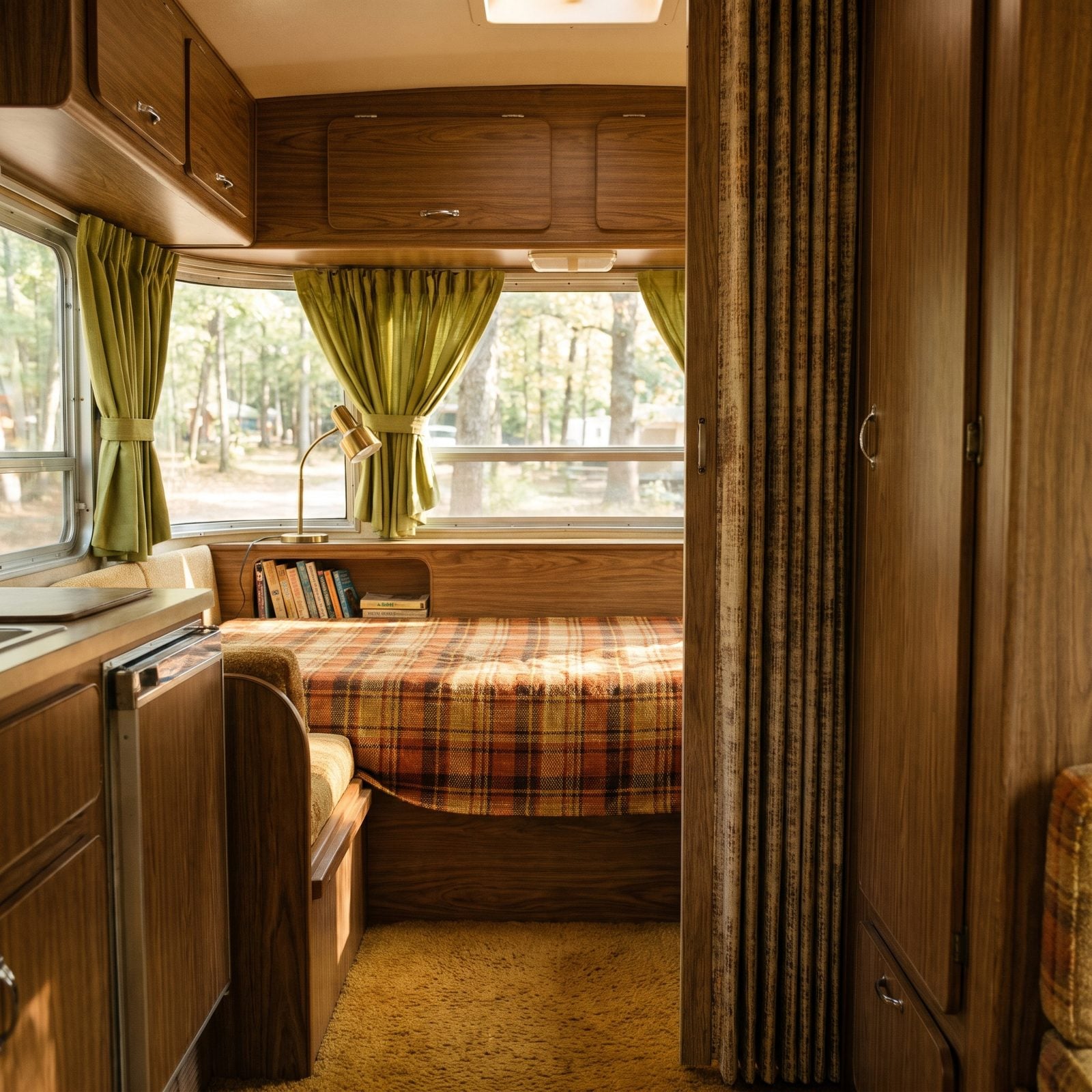
The rear-bed layout was the one parents circled on the brochure. A real bed at the back, made up and ready, no folding tables or shuffling cushions when bedtime came. Pull the curtain across the aisle and there was your room.
Kids up front in the bunk and the dinette, the back of the coach belonged to the adults. A little privacy after a whole day of “are we there yet” was worth every inch of floor plan it cost. And those big rear windows? You woke up looking at pines or a lake instead of a cinderblock parking wall.
21. A Real Oven for Campground Suppers
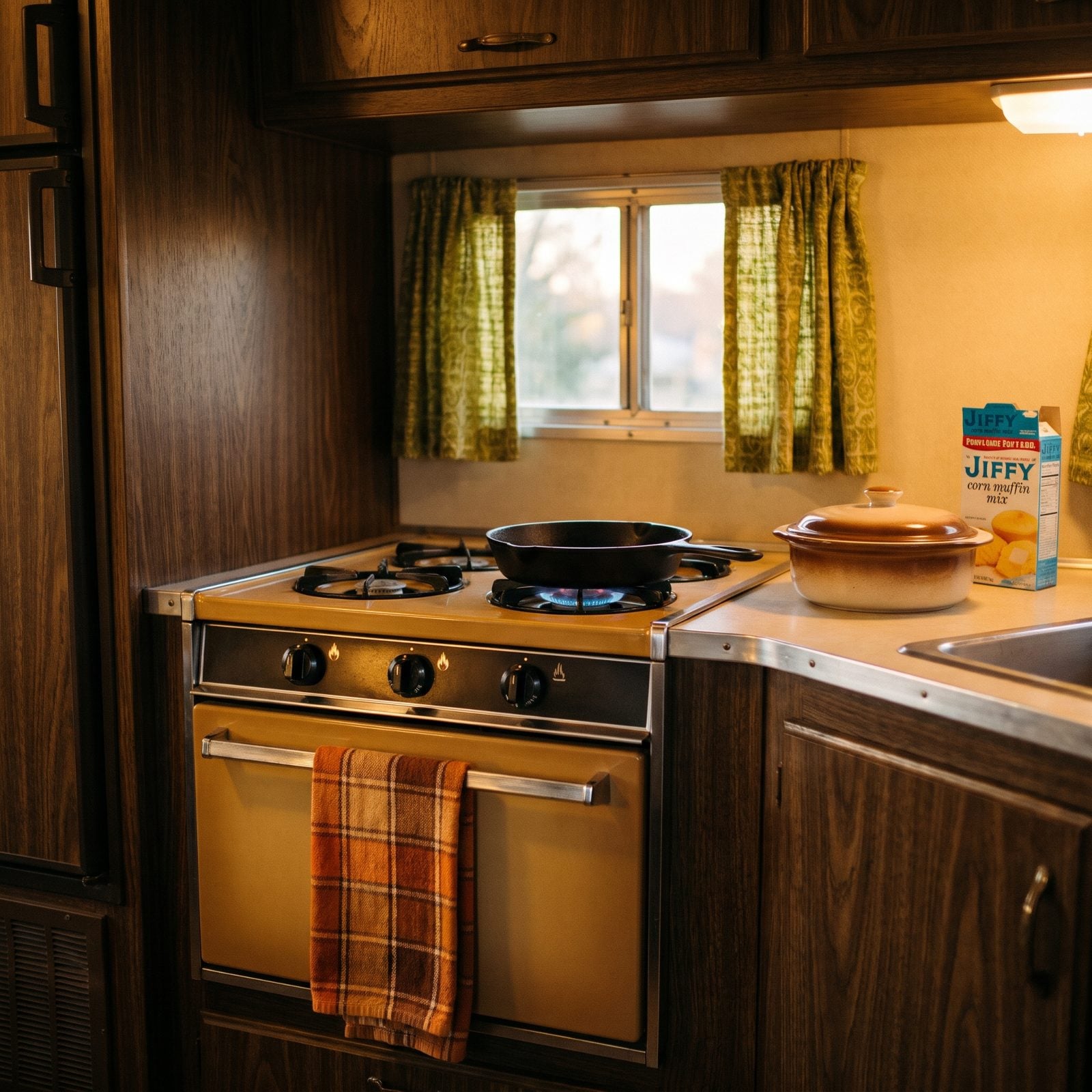
A propane range with a drop-down oven door, right there in harvest gold enamel. Not a hotplate. Not a camp stove teetering on a picnic table. A genuine oven you could bake cornbread or a casserole in while the rain hammered down outside.
You lit the burners with a match and listened for the whoosh. By six the whole coach smelled like supper. For families who’d grown up tent camping with a Coleman and a cooler, cooking a hot meal indoors felt like the absolute height of civilization.
20. A Refrigerator That Ended Constant Ice Runs
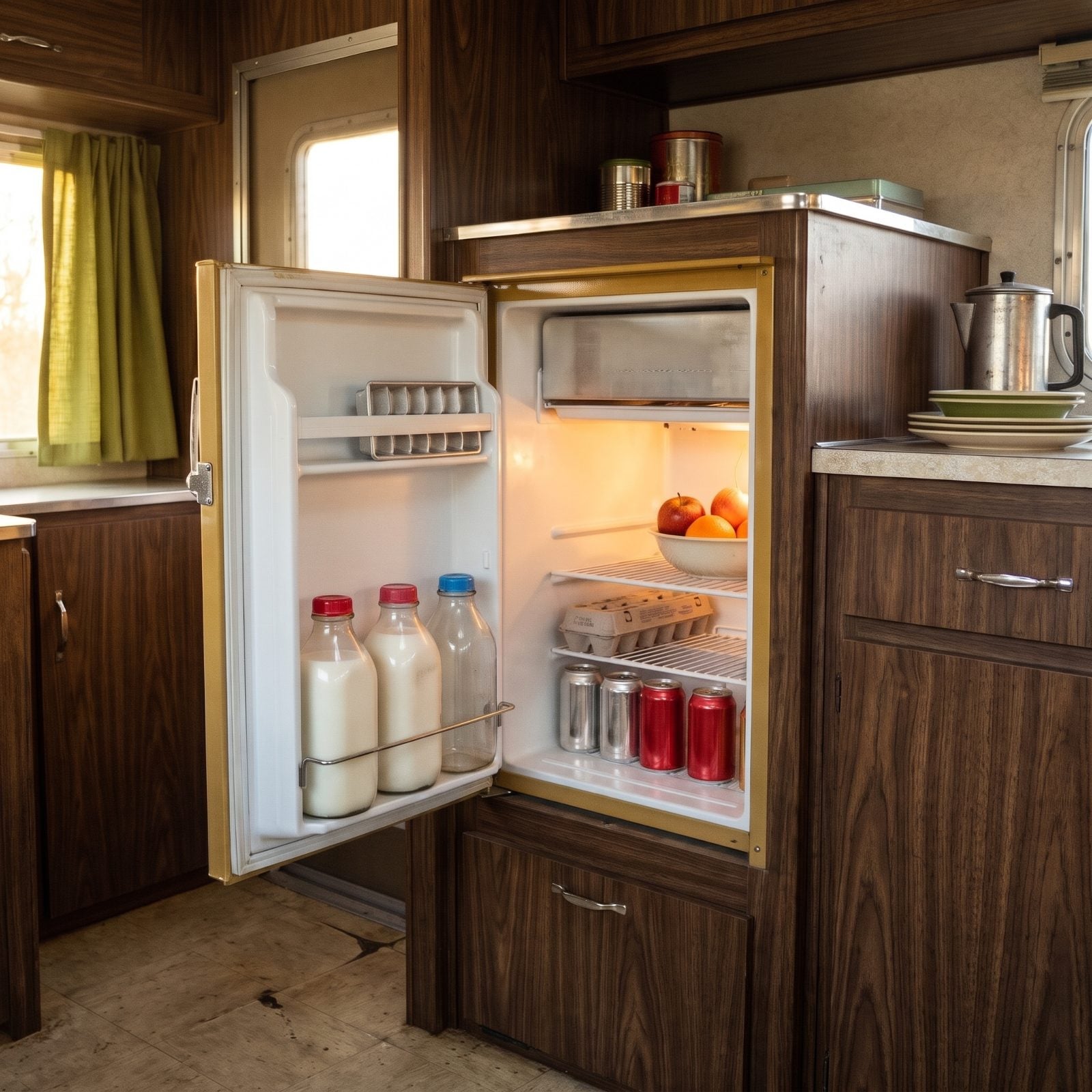
Cold milk at a campsite used to mean draining a cooler of gray ice-melt every single morning and driving off to some bait shop for a fresh bag. The Brave’s absorption fridge put a stop to all of it — propane when you were parked, electric when you plugged in.
Open that little door and there it was: fruit that wasn’t swimming, eggs that weren’t cracked, a metal ice cube tray tucked on the inside of the door, ready to fill and freeze. Not a huge fridge, mind you. But plenty for a week, and the ice runs were done.
19. A Stainless-Steel Sink With Running Water
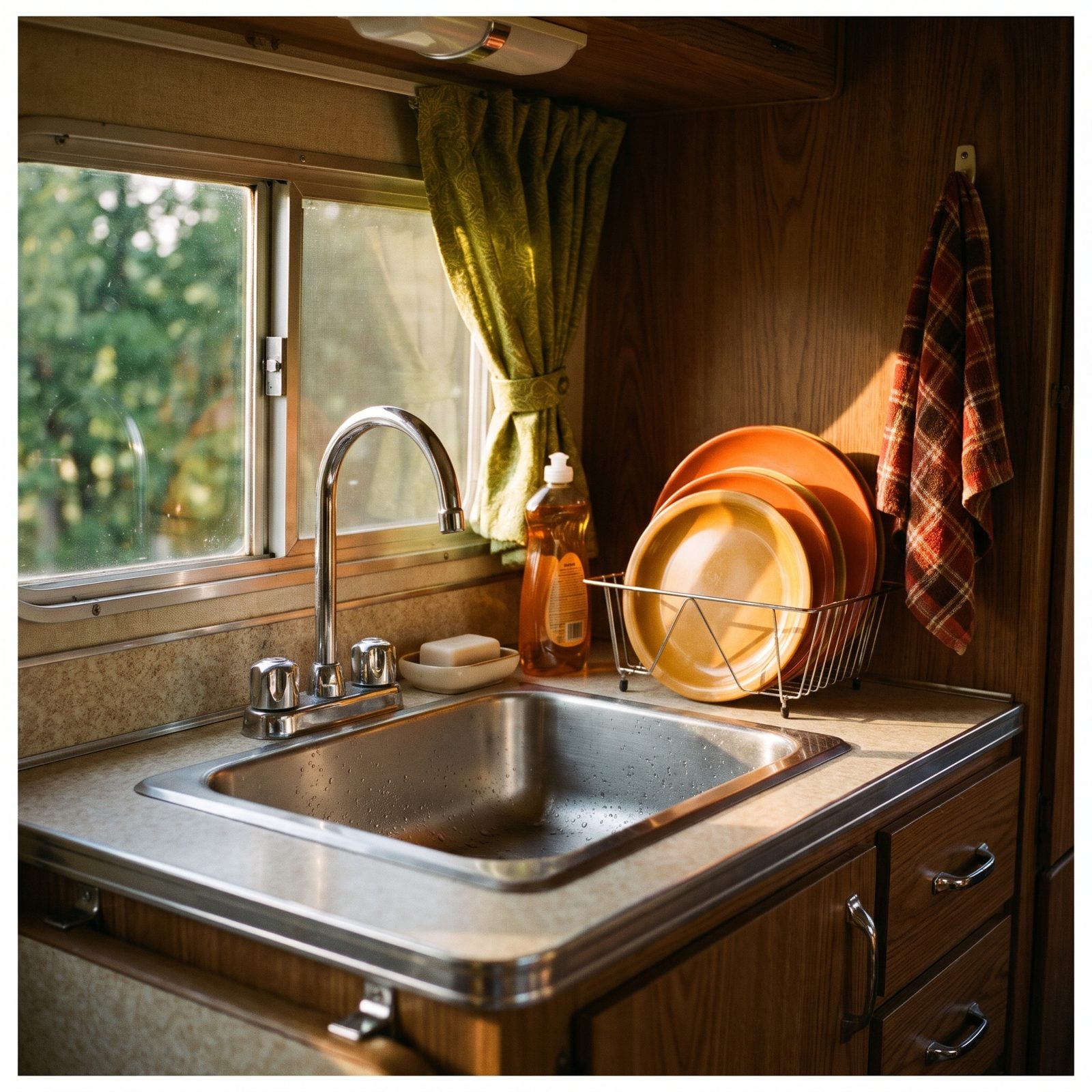
Turn the knob and water came out. After years of lugging jugs from a campground spigot, that stainless-steel basin with its chrome gooseneck faucet felt like plumbing beamed in from the future.
You washed dishes gazing out a little window with the avocado curtain tied back. The onboard tank meant you could rinse a cup or fill a pot without stepping a foot outside. Running water sounds like nothing — until you’ve spent a decade camping without a drop of it.
That sink, maybe more than anything else, was the quiet promise of the Brave: you brought your whole house with you, and it worked.
18. Overhead Cabinets Packed With Road-Trip Provisions
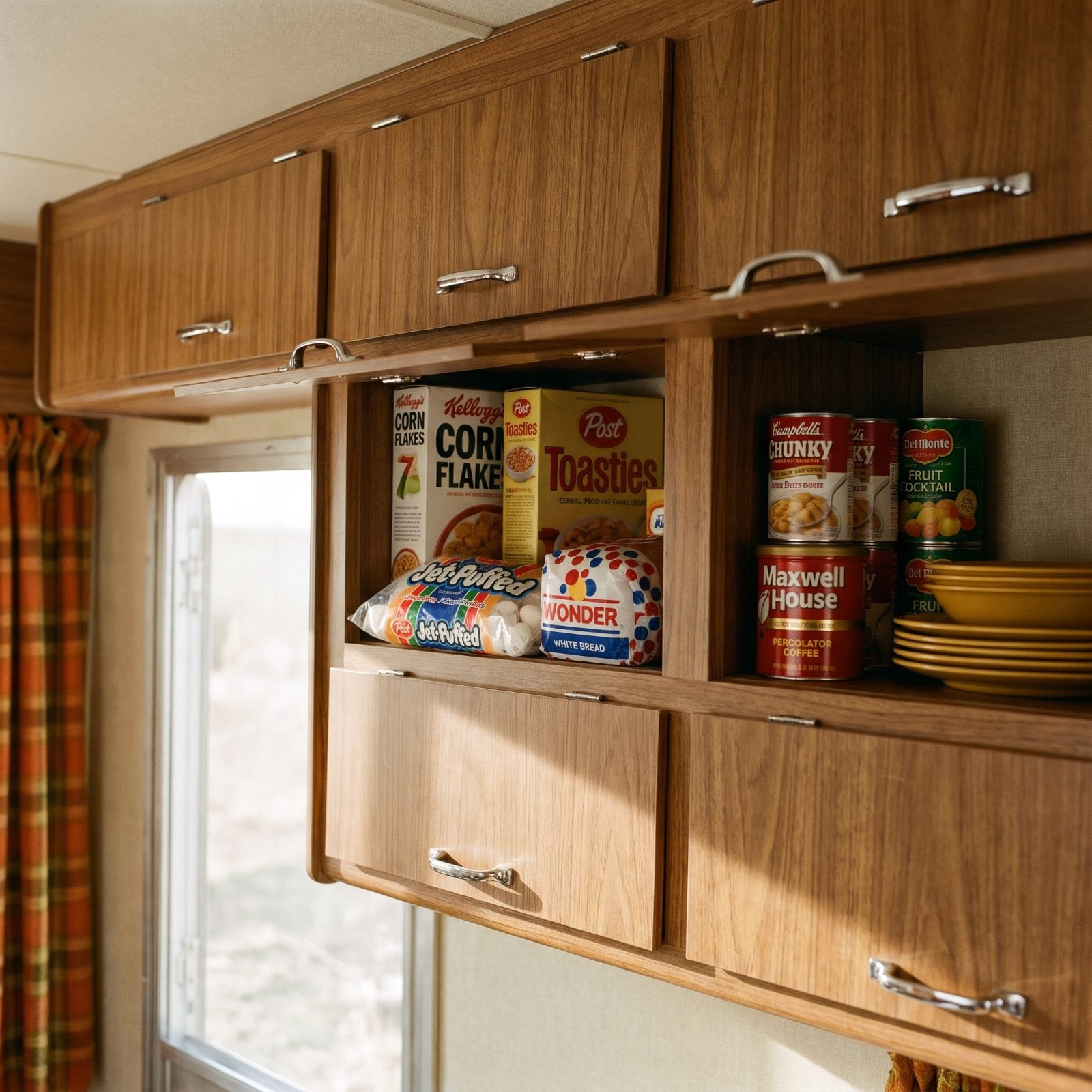
Open any cabinet above the dinette and a small avalanche threatened: a sleeve of saltines, the percolator tin, a half-eaten bag of marshmallows wedged behind the paper plates. The Brave gave you storage the family tent never dreamed of, and you filled every inch of it before leaving the driveway.
Those chrome latches held through washboard gravel and interstate ruts. You learned fast which cabinet rattled and which one dumped its contents the second you took a hard left out of a Stuckey’s parking lot.
17. A Private Bathroom With Its Own Toilet and Shower
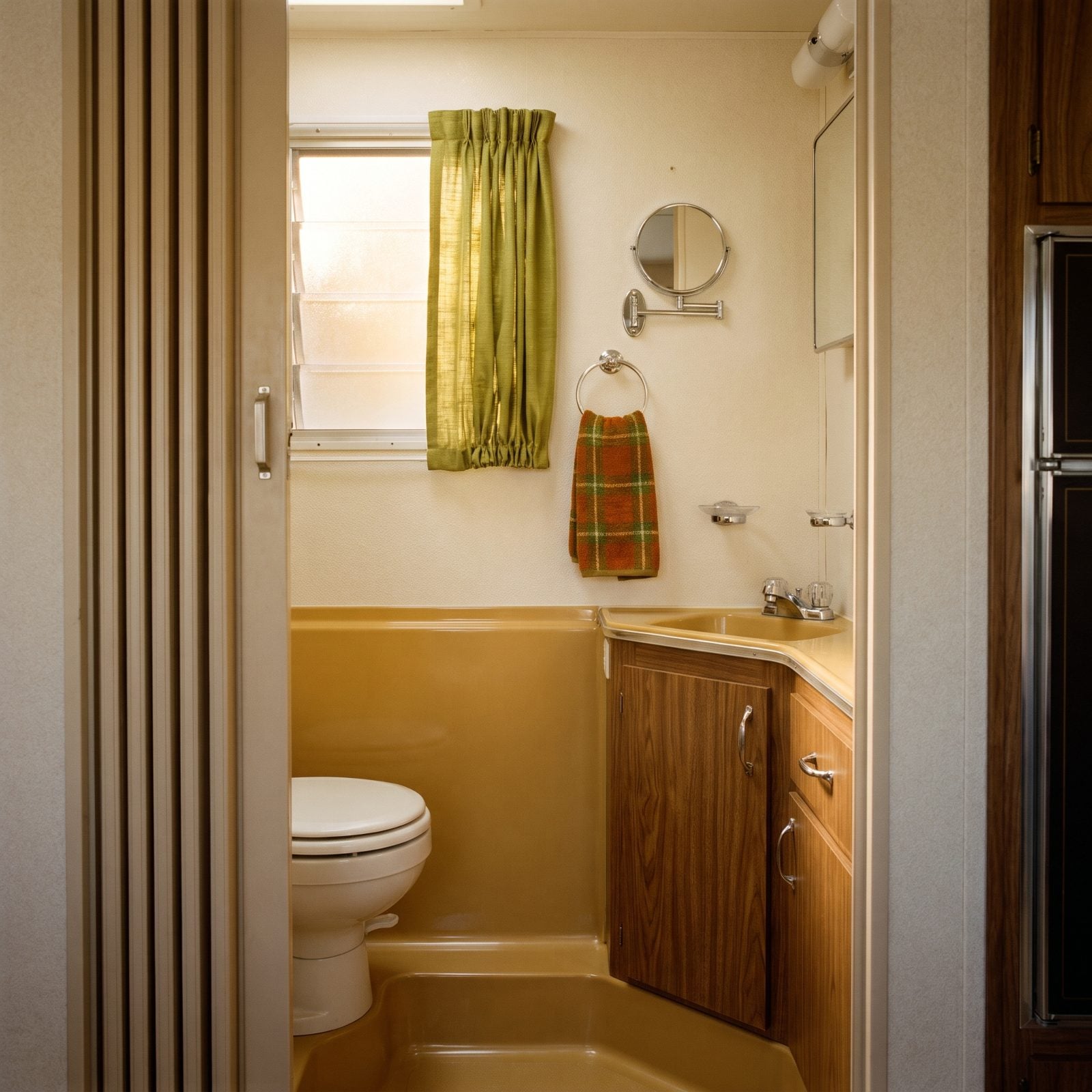
No flashlight walk to the campground cinderblock bathhouse at 2 a.m. The Brave had its own, right there behind an accordion door, and for families used to flip-flops on wet concrete, that was the whole pitch.
Was it roomy? No. You showered with your elbows tucked in and the curtain clinging to your shins, but you were dry, you were private, and nobody was hammering on the door. I’ll take a cramped shower over a communal one every single time.
16. Freshwater and Holding Tanks for Self-Contained Camping
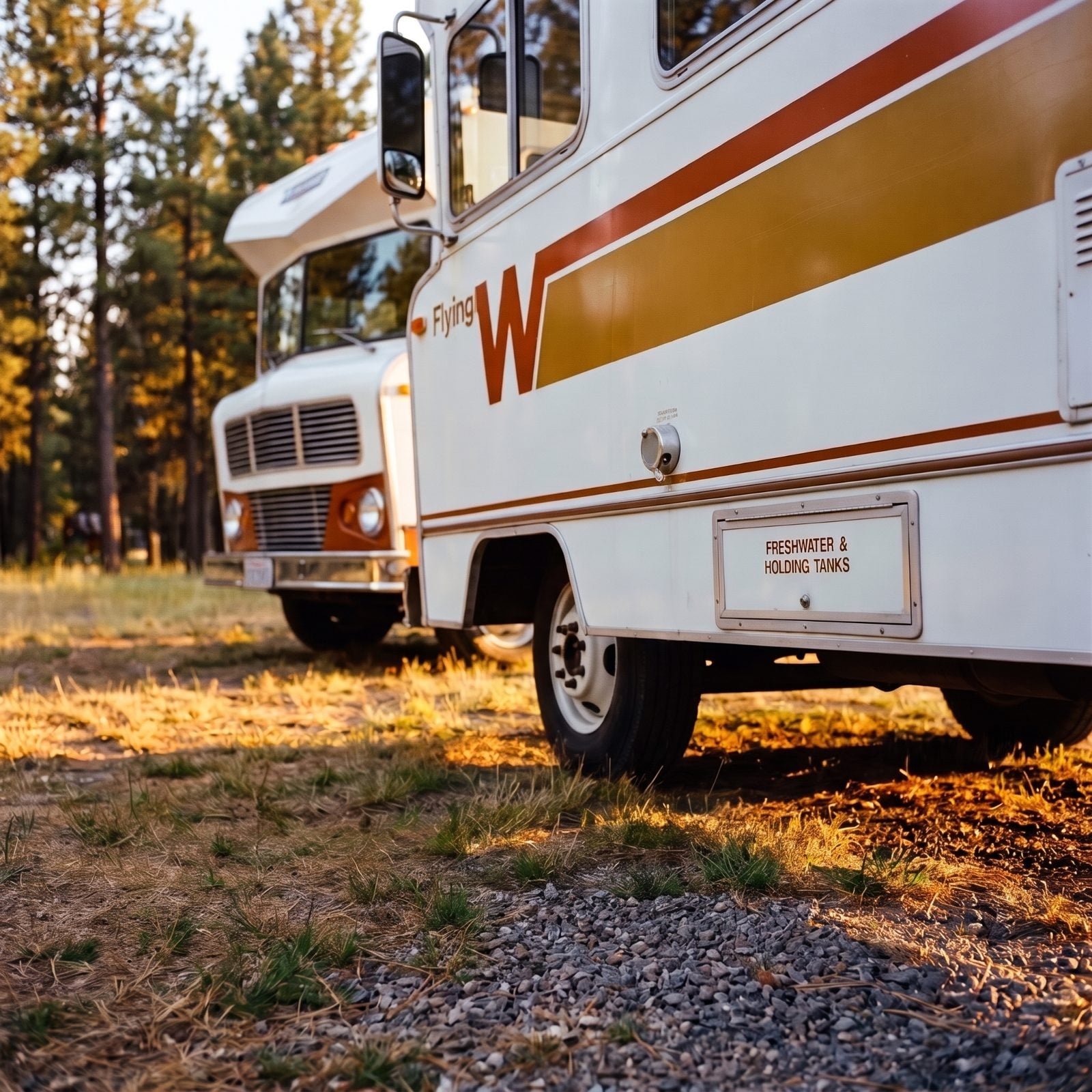
Freshwater on board, gray and black tanks underneath, and suddenly you could park where there were no hookups and no complaints. You carried your own water and took your own waste with you. That was the quiet brilliance of the whole thing.
You rationed that freshwater like gold on a long weekend. Quick rinses, a thumb over the faucet, the running joke that whoever used the last of it did the dishes for the rest of the trip.
15. Hot Water Available at the Campsite
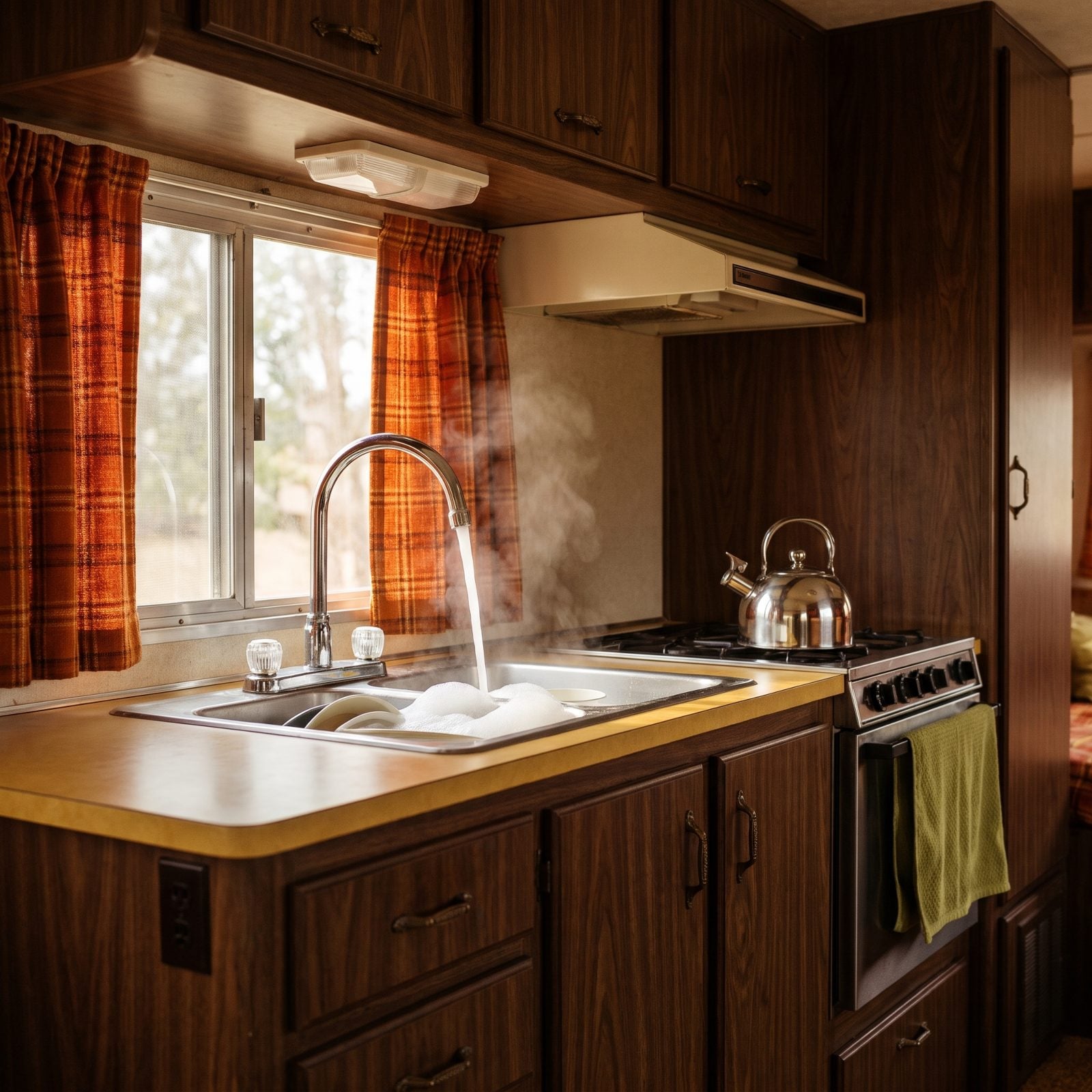
A propane water heater tucked in a side compartment meant warm water came out of the galley tap and the shower head, not out of a pot you boiled over the campfire. Small luxury, enormous difference.
You’d hear it kick on with a soft whump and know that in a few minutes the dishes, or the kids’ muddy knees, would get a proper warm rinse. Camping stopped feeling like roughing it and started feeling like a cabin that happened to move.
14. A Furnace That Extended the Camping Season
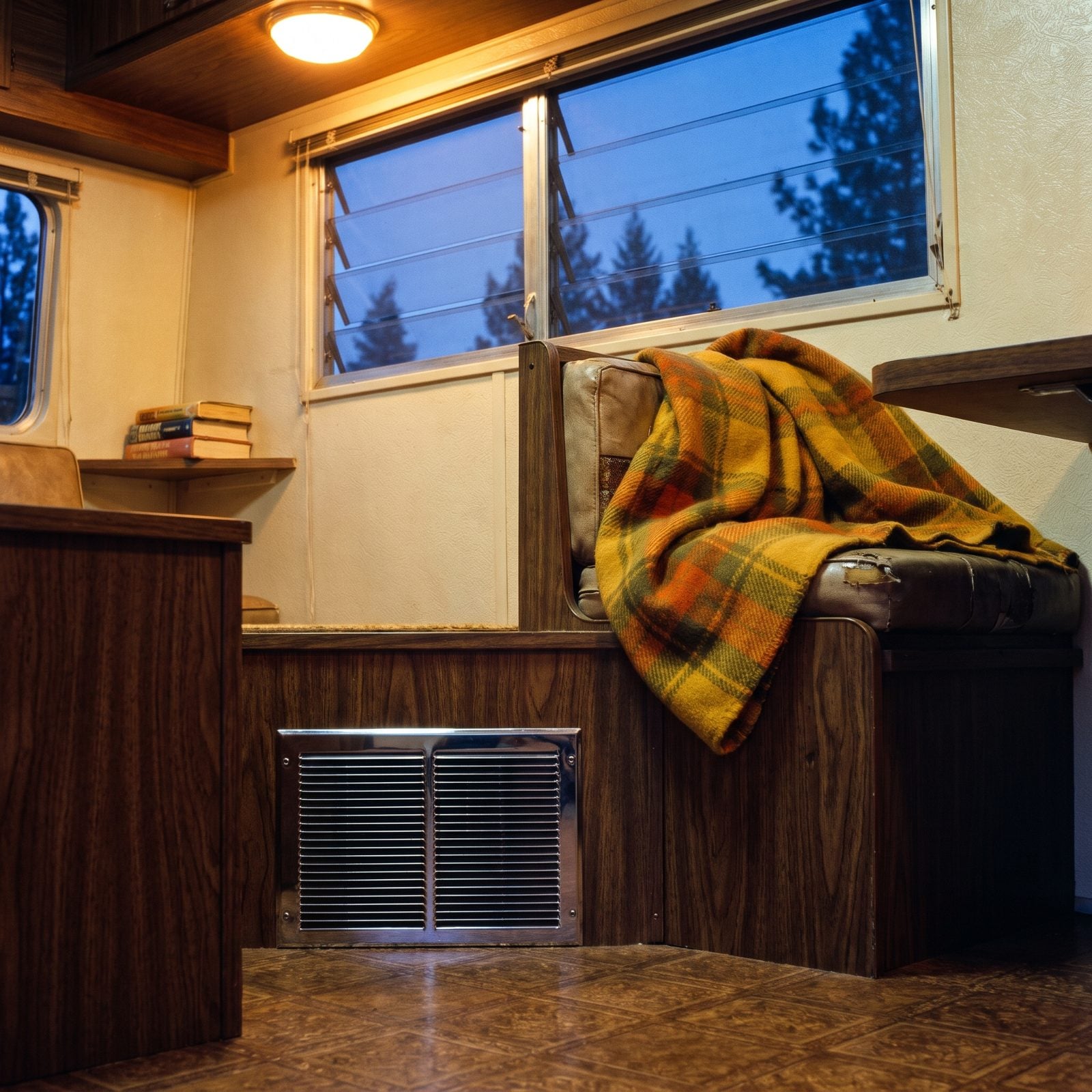
The furnace changed the calendar. With that forced-air heat rumbling under the floor, you weren’t packing it in the first cold weekend of September — you chased the fall color up into the mountains while the tent crowd went home.
It ran loud, it burned propane you kept a nervous eye on, and the register always seemed to blow straight at one person’s ankles. Nobody cared. Outside the window it was thirty-eight degrees. Inside, somebody was already asking if there was more cocoa.
13. Optional Roof Air Conditioning for Summer Trips
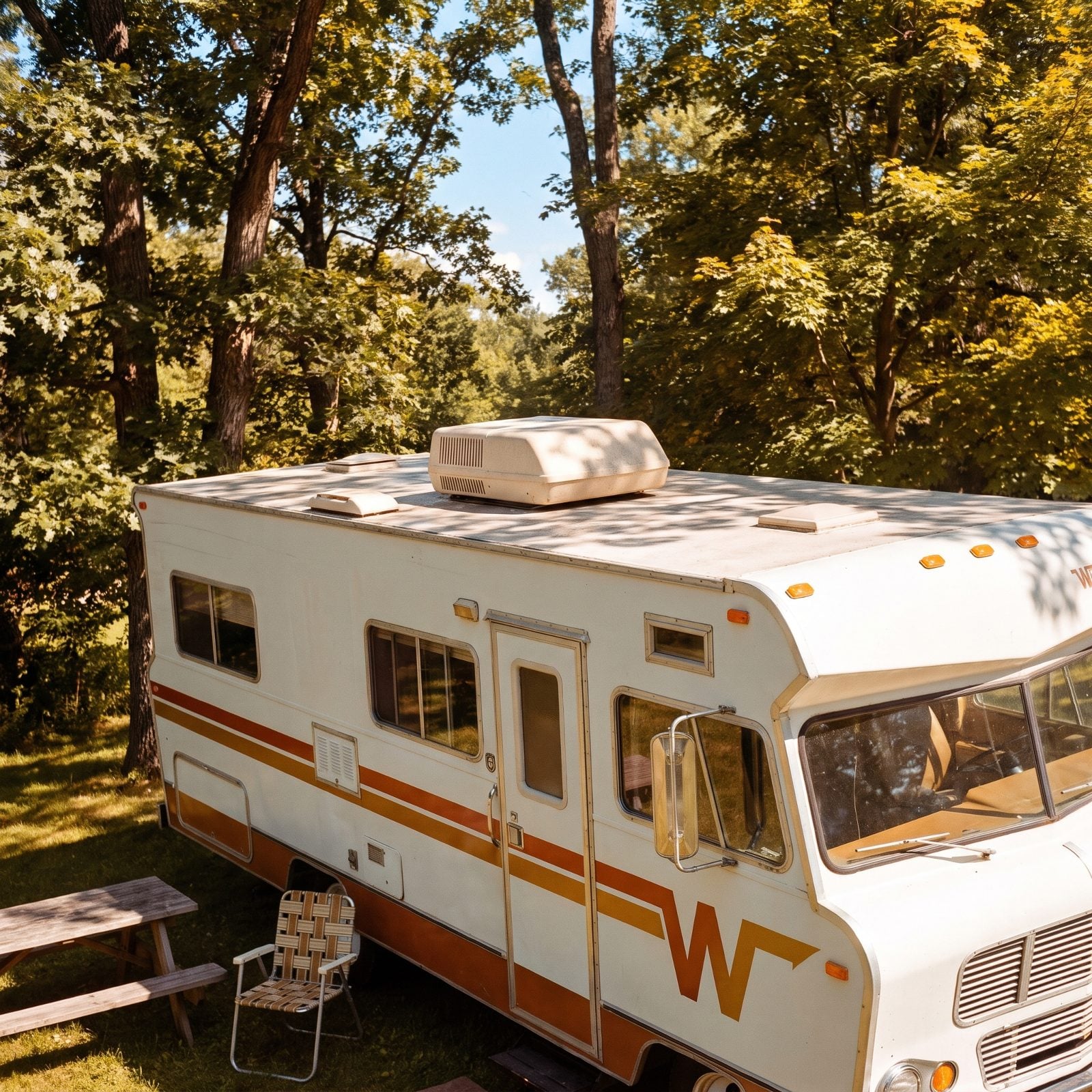
That boxy unit on the roof was the difference between a nap and a sweat-through afternoon in August. Check the option box at the dealer and suddenly a Georgia campground in July was survivable instead of something you endured.
It roared like a window unit from a cheap motel, and you planned your parking around shade anyway. But come midafternoon, when the asphalt shimmered and the tent sites emptied out, you were inside at a comfortable seventy-two, playing cards. I’ve never been smug about much. I’d have been smug about that.
12. Large Screened Windows Framing the Campsite
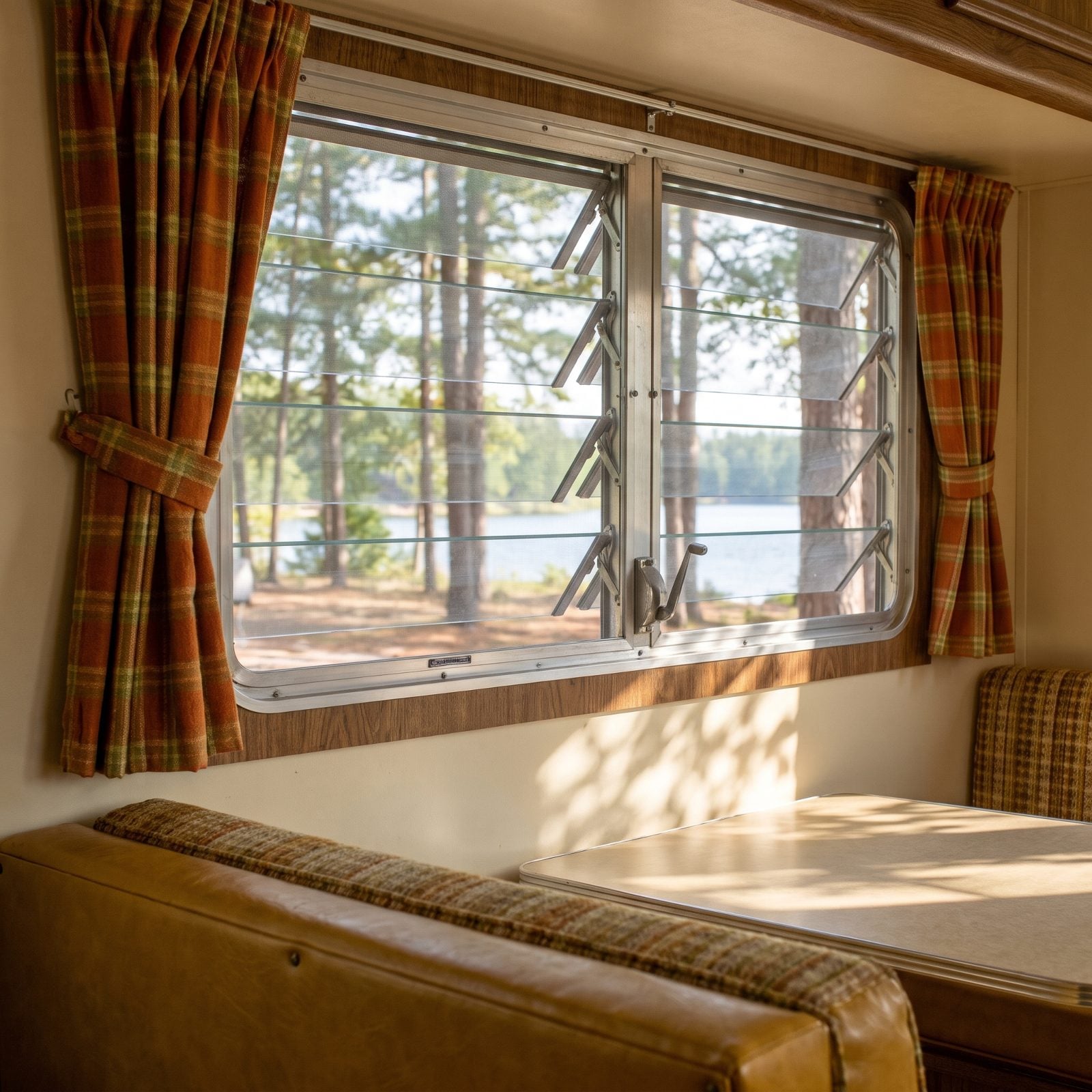
Crank those jalousie windows open and the whole campground came in: pine smell, the lake slapping at a dock somewhere, the neighbor three sites down firing up a Coleman stove. The Brave’s big screened panes turned a metal box into a porch.
Breakfast at the dinette came with a framed view, and the screens meant you got the breeze without the mosquitoes. That airflow mattered back before everyone counted on the roof AC.
11. Curtains That Turned the Cabin Private at Night
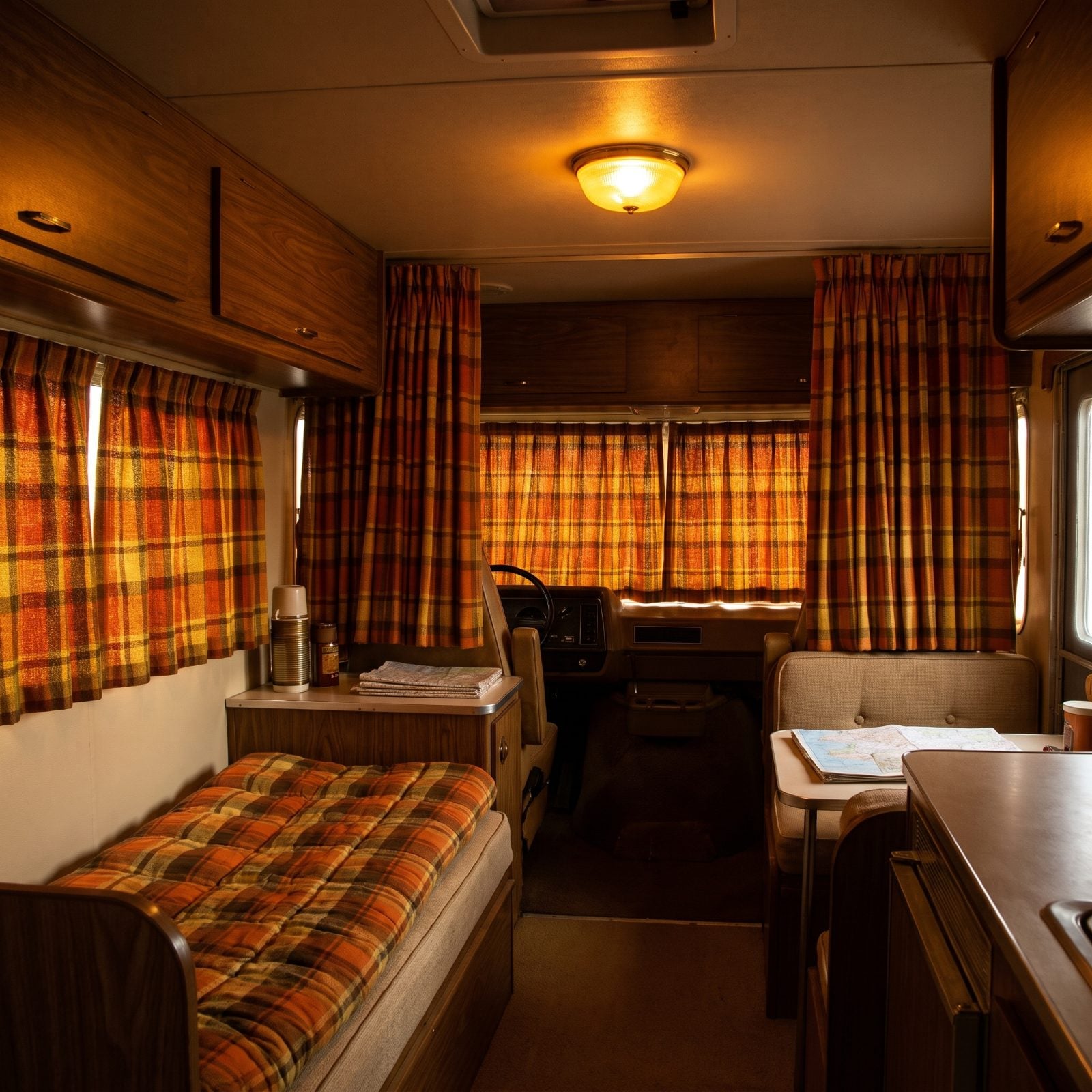
By day, the curtains stayed pulled back so sunlight could reach the short windows. Come bedtime, a quick pull on each set and the cabin went from fishbowl to private den.
Those pinch-pleated curtains in their bright orange-and-gold plaid did more than filter the light. They muffled the campground, hid the sleeping arrangements being unfolded, and gave a family of five the brief fiction of their own separate rooms. Slide them fully across the side windows, the windshield and the cab divider and you’d officially tucked the day away.
10. Woodgrain Cabinetry That Felt Like Home
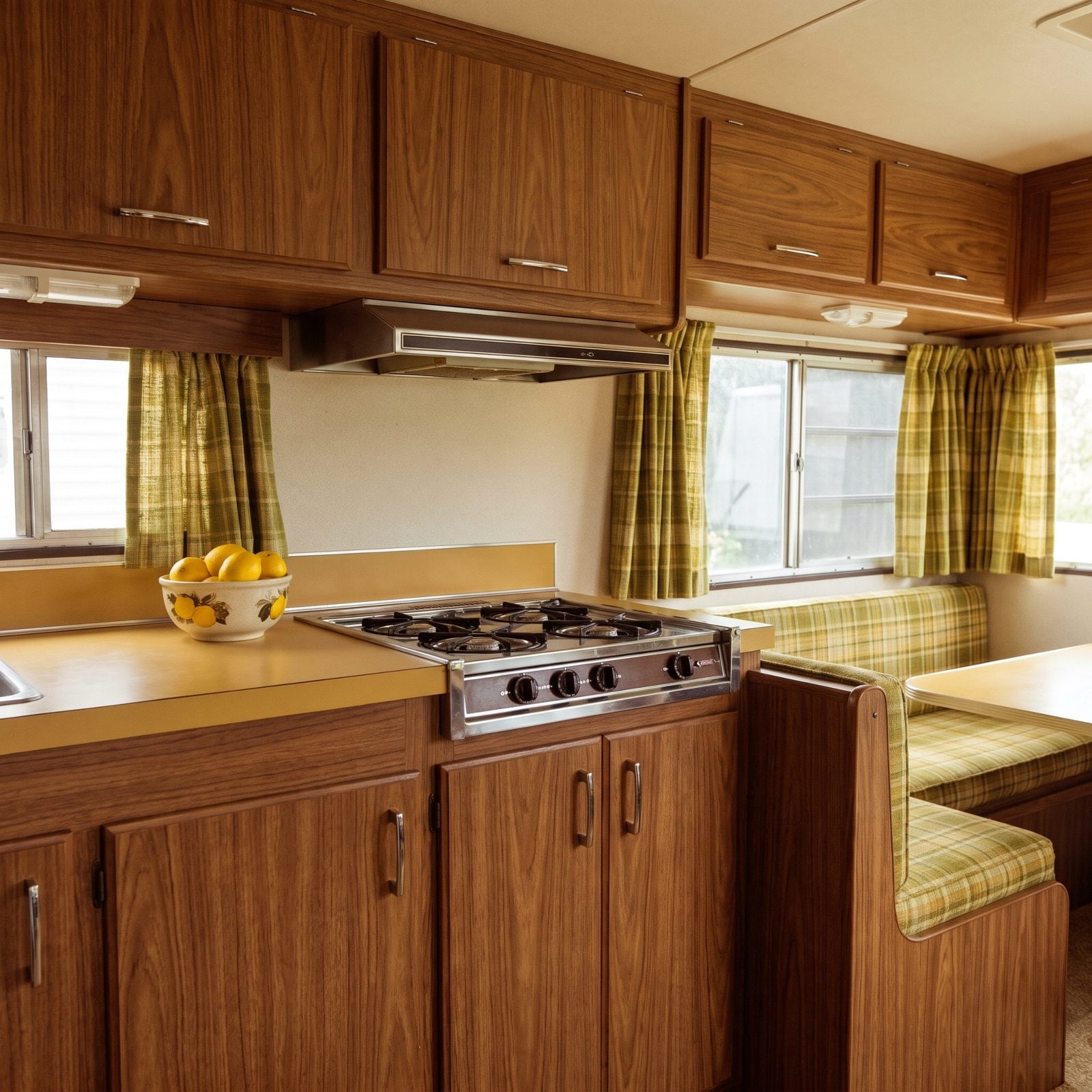
Walnut woodgrain laminate covered nearly every surface the eye landed on: cabinet doors, window frames, the dinette, the little drawer under the sink. It wasn’t real wood and nobody pretended it was. It still made the inside feel like a kitchen instead of a vehicle.
That warm medium tone did quiet work, softening the metal shell and catching the afternoon light so the place read as home the second you stepped up into it. Wipe it down with a damp rag and it looked settled, which was exactly the point of buying a whole house you could drive.
9. Plaid Upholstery in Harvest Gold, Avocado and Burnt Orange
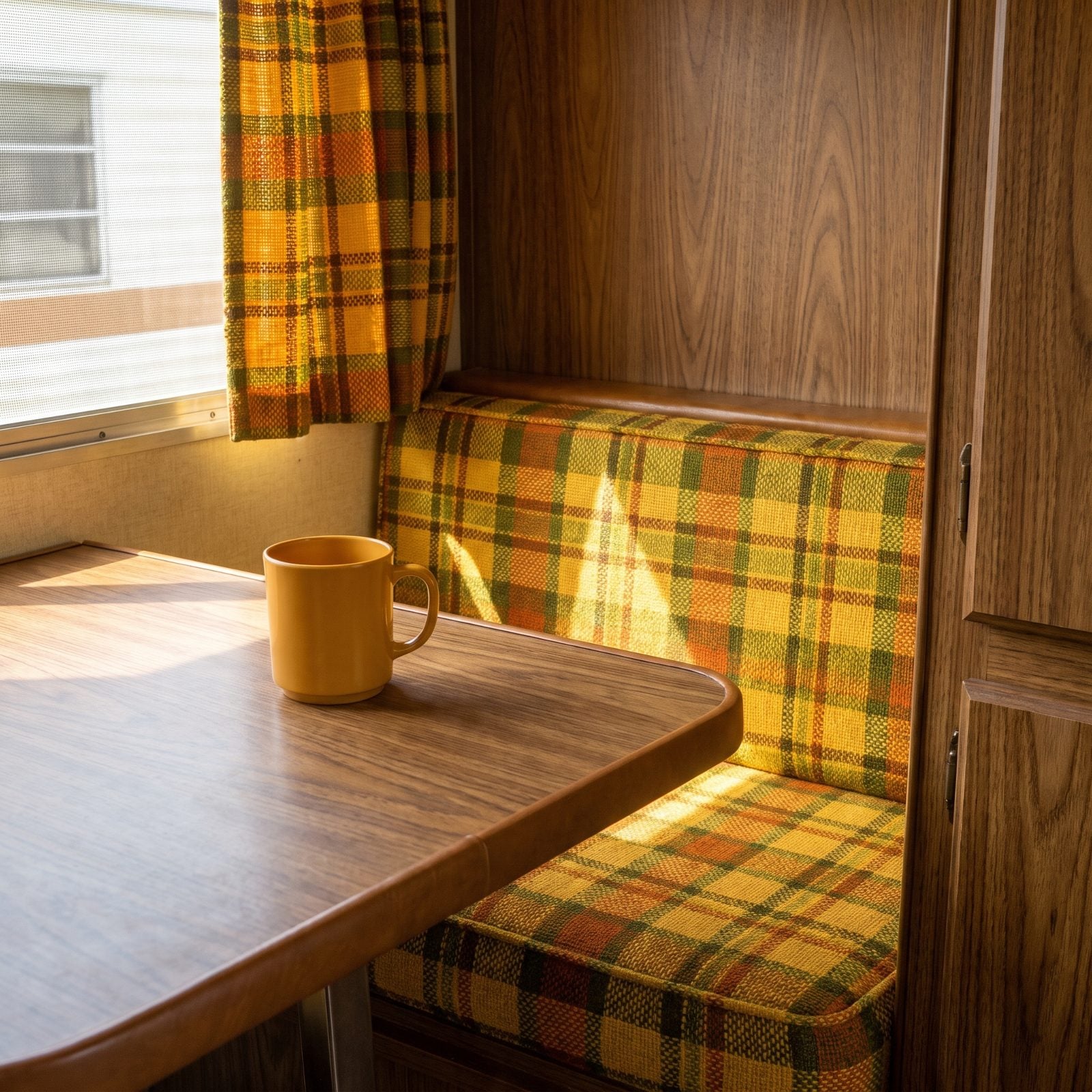
Harvest gold, avocado, burnt orange, all tangled up in one bold woven plaid across the dinette cushions and tied into the curtains. The single most 1970s thing in the whole coach, and I wouldn’t change a thread of it.
That plaid hid crumbs, campfire ash, spilled Kool-Aid and a decade of family vacations without ever looking tired. Durable, cheerful, committed completely to its moment. You sat down on it with sunburned legs and sandy feet and it never once made you feel bad about it.
8. Shag Carpet That Made the Lounge Feel Cozy
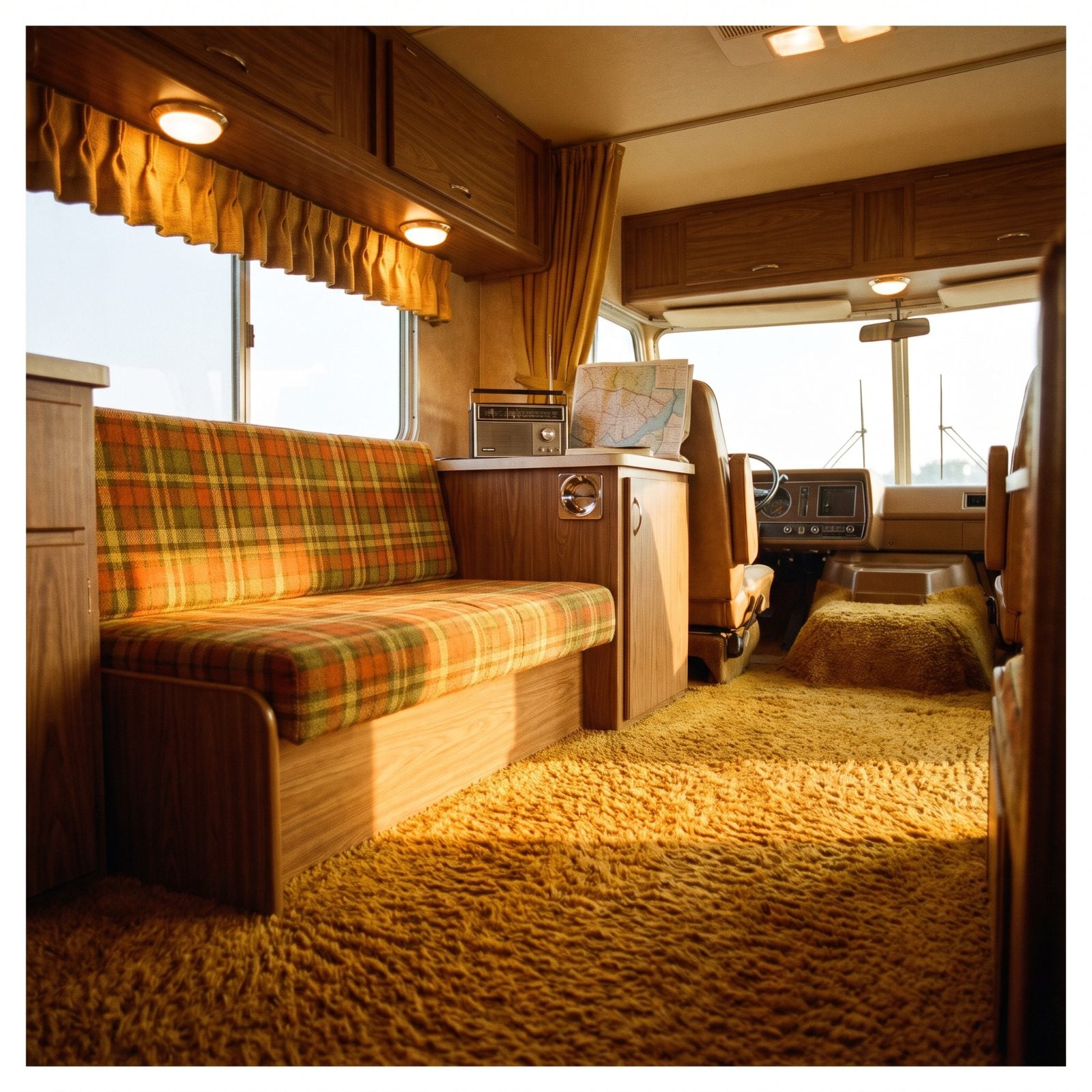
You felt it before you saw it. Bare feet sinking into that gold shag the second you climbed up from the stepwell, pile so deep it swallowed crumbs, bottle caps and the occasional checker piece until the next real vacuuming.
The Brave leaned into the carpet. It ran up over the stepwell and softened the hard edges of a vehicle built from aluminum and fiberglass, turning a rolling box into something that felt like a den. Kids sprawled on it with coloring books while grown-ups kicked off their shoes after a long haul. It held the warmth of the floor heat along with the smell of coffee and road dust.
Nobody pretended it was easy to clean, and that was never the point. A motorhome had carpet at all — that detail alone told you this was a home that happened to have wheels.
7. Exterior Compartments for Camping Equipment
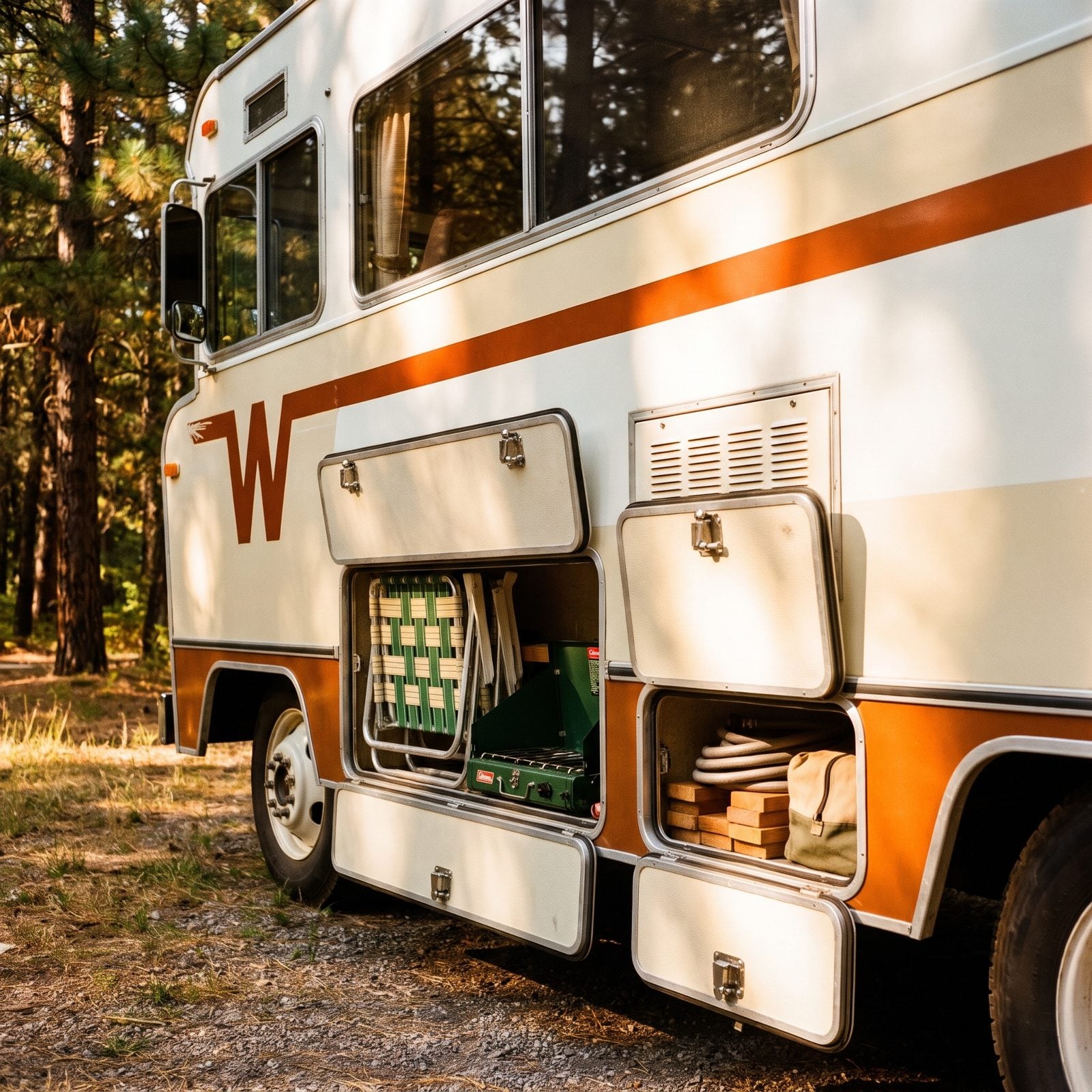
Walk the length of a Brave and you’d find a row of latched doors along the bottom, each one hiding a slice of the trip. One held the folding chairs with the plastic webbing that left waffle marks on your legs. Another swallowed the hose, the leveling blocks, the hatchet nobody admitted to packing.
These exterior bays were the quiet genius of the floor plan. Everything dirty, bulky or wet lived outside the living space, so the inside stayed a home instead of a garage. You backed into a site, popped three latches, and the whole campsite spilled out onto the grass.
6. A Roof Rack and Rear Ladder for Bulky Vacation Gear
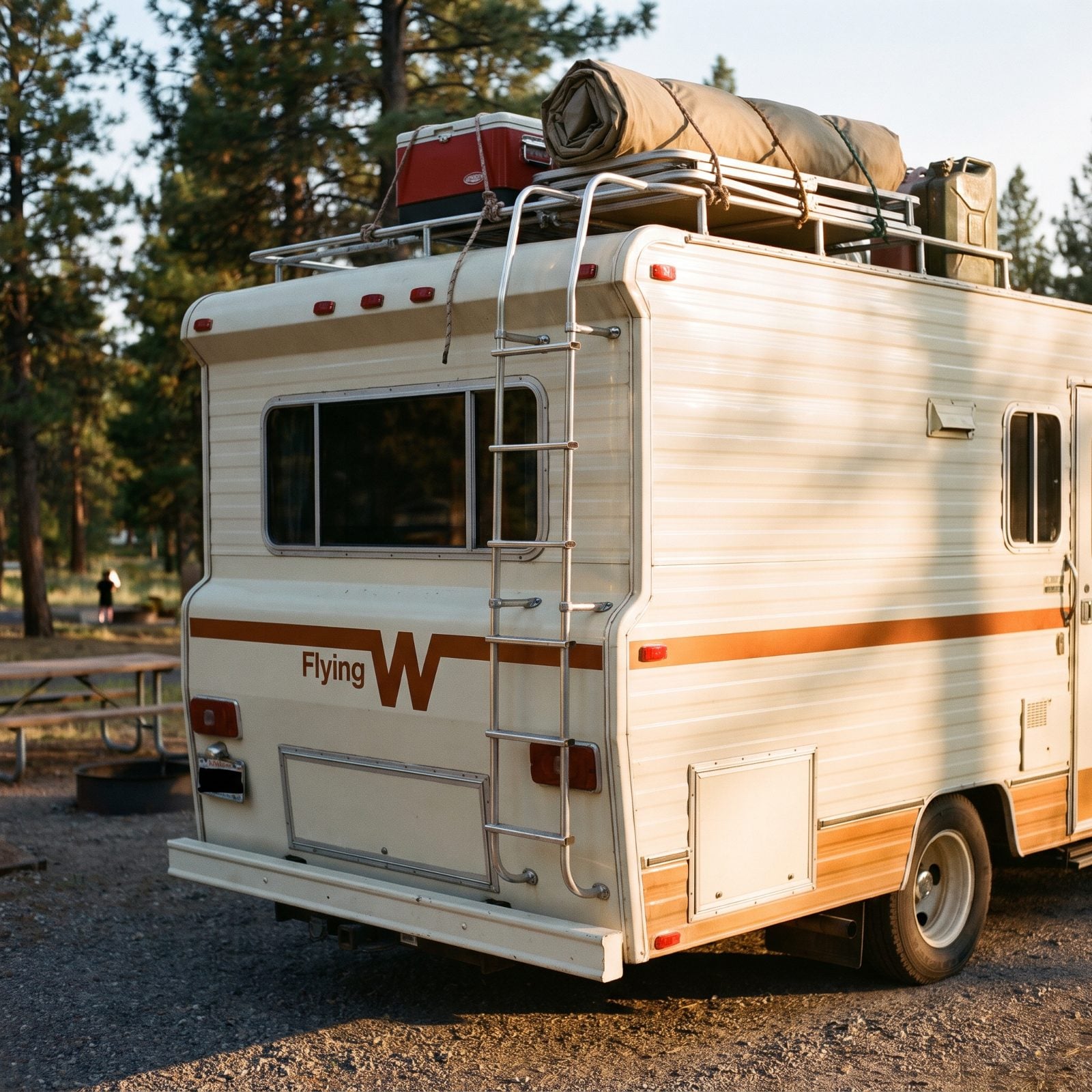
The ladder was an invitation. Somewhere outside Flagstaff, a dad would climb those chrome rungs to wrestle a rolled tent loose while everyone below shouted directions he couldn’t hear.
That roof rack carried the overflow of a family that refused to leave anything behind. The big tent for the cousins. The extra cooler. The folding cot, the spare gas can, the inflatable raft that seemed essential back in May. Rope and bungee cords held it all together, and every gas stop turned into a quick tug-test to make sure nothing had worked loose on the interstate.
5. An Awning That Created an Instant Outdoor Room
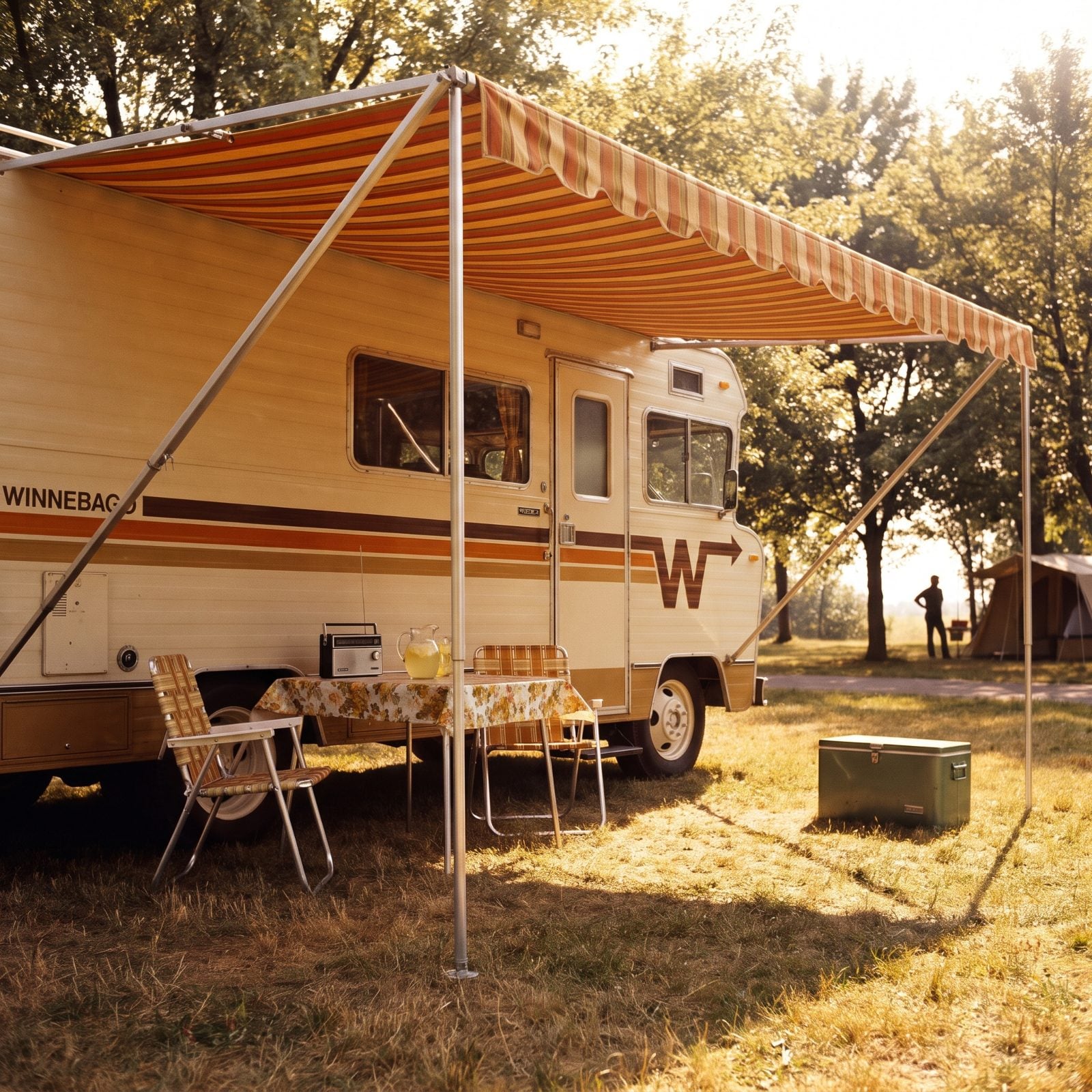
Crank it out, plant two poles, and suddenly you had a second room with no walls. The striped awning threw a rectangle of shade across the grass, and inside that shade the whole family relocated.
It was where the card games happened, where wet swimsuits dripped, where somebody always set up the folding table with the vinyl cloth that smelled faintly of the compartment it lived in. A parking spot became a patio. Rain pattered off it while you stayed dry underneath, and on brutal afternoons it was the only cool square foot for a hundred yards.
4. A Screen Door for Breezy Campsite Evenings
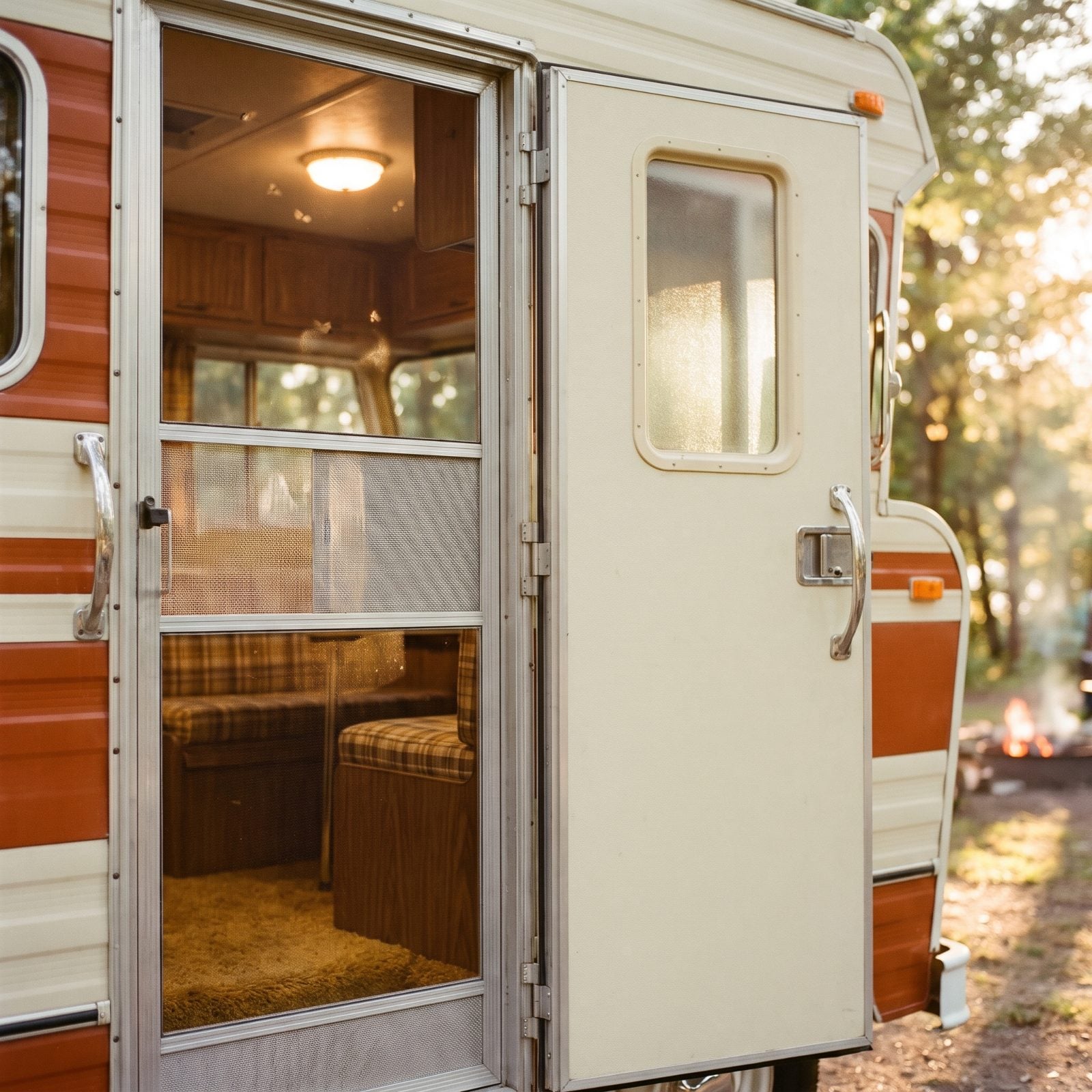
The sound carried. That light aluminum slap of the screen door as somebody ducked out to check the campfire, then the second slap a minute later coming back in with marshmallows.
With the solid door propped open and the screen latched, the Brave breathed. Evening air moved through the coach, carrying woodsmoke and the hum of crickets while the dome light glowed gold inside. You could sit at the dinette, watch the campsite, and still keep the mosquitoes on the correct side of the mesh.
Small feature. Enormous difference. It’s the thing that made a sealed metal box feel connected to the night outside it.
3. An Optional Generator for More Independence
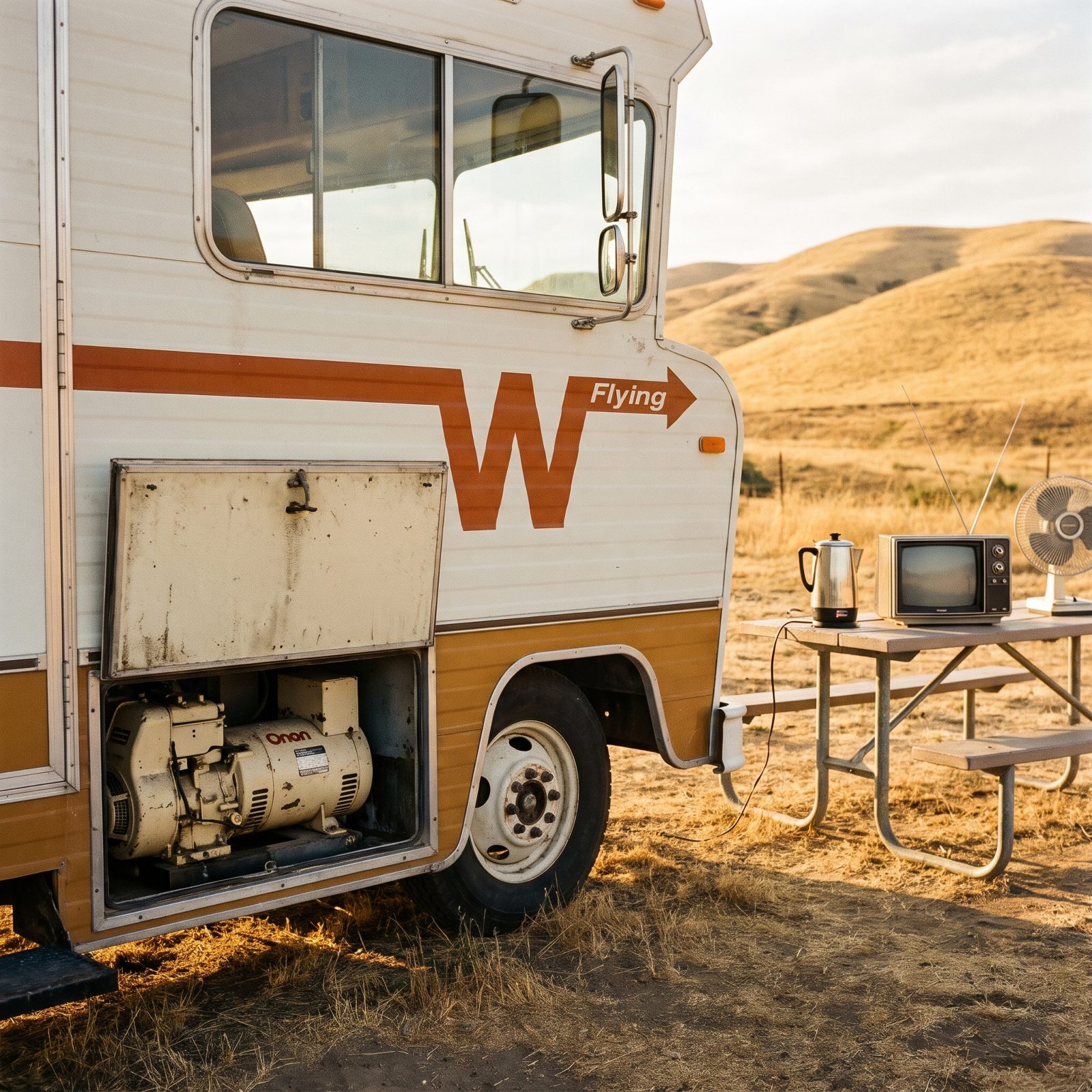
Flip a switch and the whole machine changed character. The generator rumbled to life somewhere under the front, and suddenly you could park a mile from the nearest hookup and still run the percolator, the fan, the little black-and-white TV with the rabbit ears.
This was the option that sold the dream of independence. No cord, no post, no begging a campground for an outlet. You could pull off onto a bluff overlooking nothing, drop the leveling blocks, and brew coffee while the whole kettle of civilization sat two hundred miles behind you.
2. The Freedom to Skip Motel Reservations
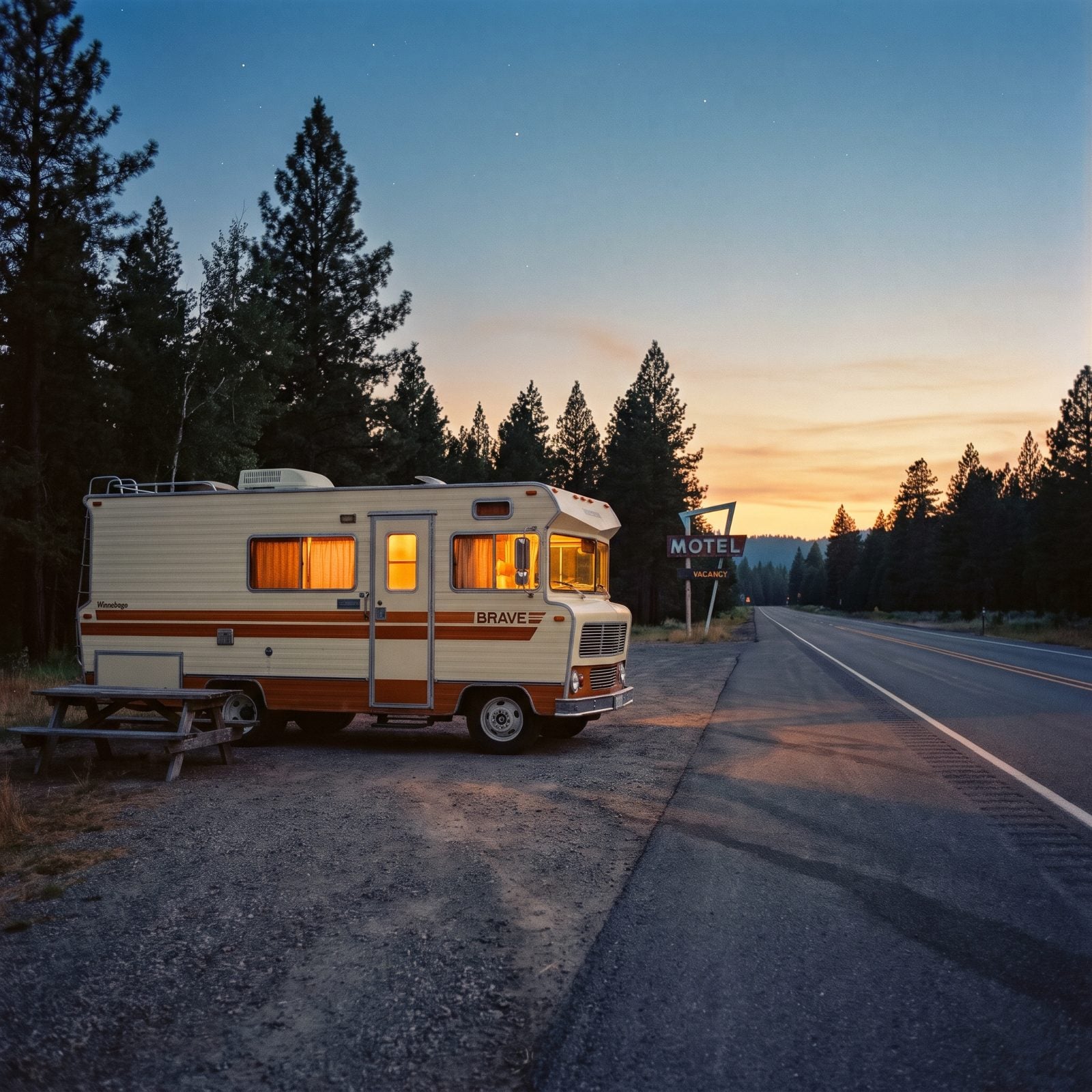
You know the feeling of hunting for a vacancy sign at nine at night, kids melting down in the back, every motel full or dubious. The Brave erased that feeling entirely.
Tired at dusk? Pull over. The bed was already made, the fridge already stocked, the bathroom already yours. No front desk, no reservation booked three states back, no hoping the photos matched the room. Your lodging followed you, and it never ran out of rooms.
This was the freedom people really bought. Not the campground — the not-having-to-plan. You could change your whole route at a gas pump and lose nothing, because home came along for every mile of it.
1. The Promise of Seeing America Without Leaving Home Behind
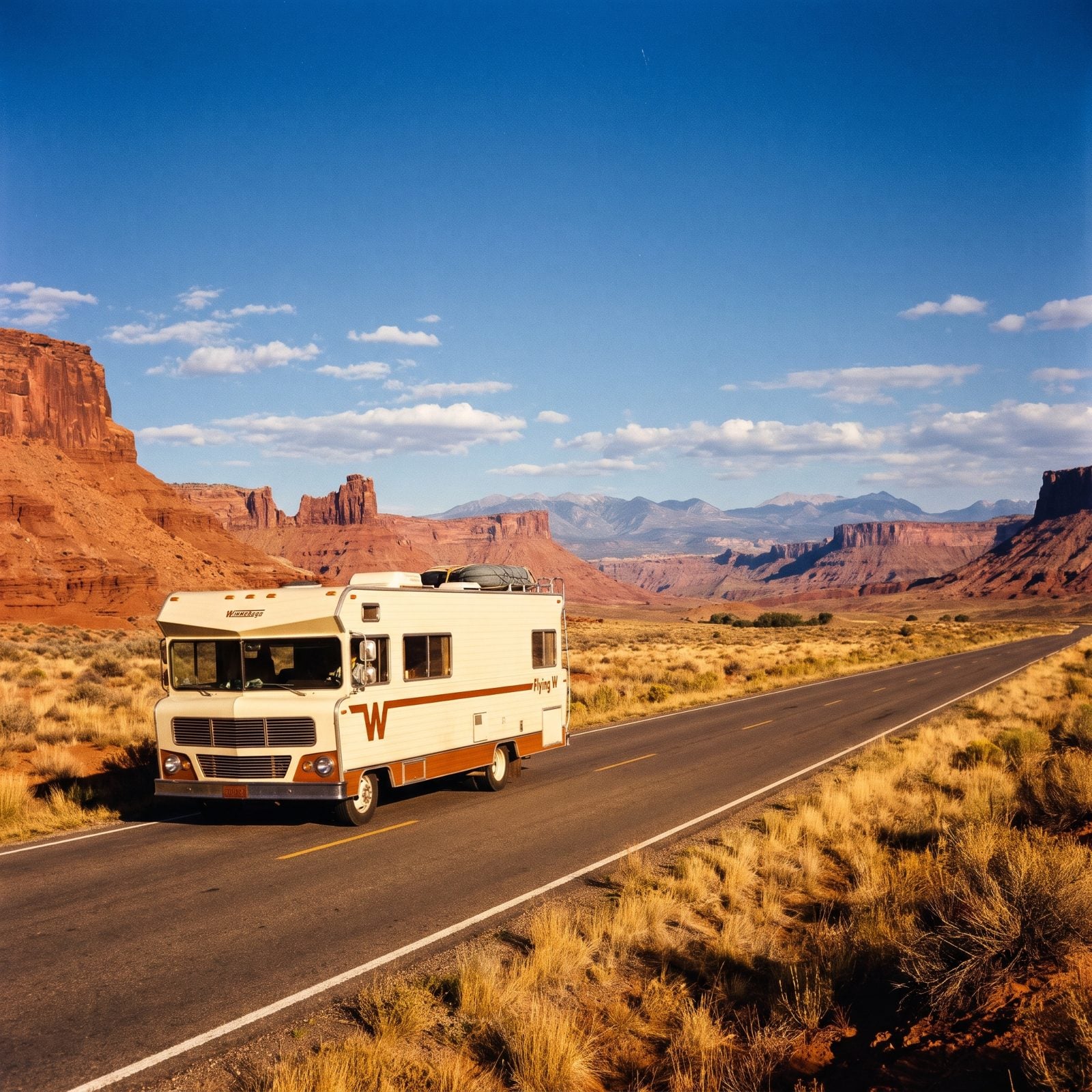
Here’s what the brochures were really selling, under all the floor plans and option lists. The Grand Canyon by Tuesday, your own bed every night in between.
The Brave promised the whole country without the usual trade. You didn’t have to pick between the adventure of the road and the comfort of home. You brought the kitchen, the bunks, the shag carpet and the family routines along, then pointed the eyebrowed front cap at a horizon and drove toward it.
That was the real magic of these coaches. A kid could fall asleep in Ohio and wake up near the Rockies, never once separated from the dinner table, the familiar smells, the sense of belonging to a place that moved. Home didn’t stay behind. It came with you, and it had a windshield the size of a picture window.