
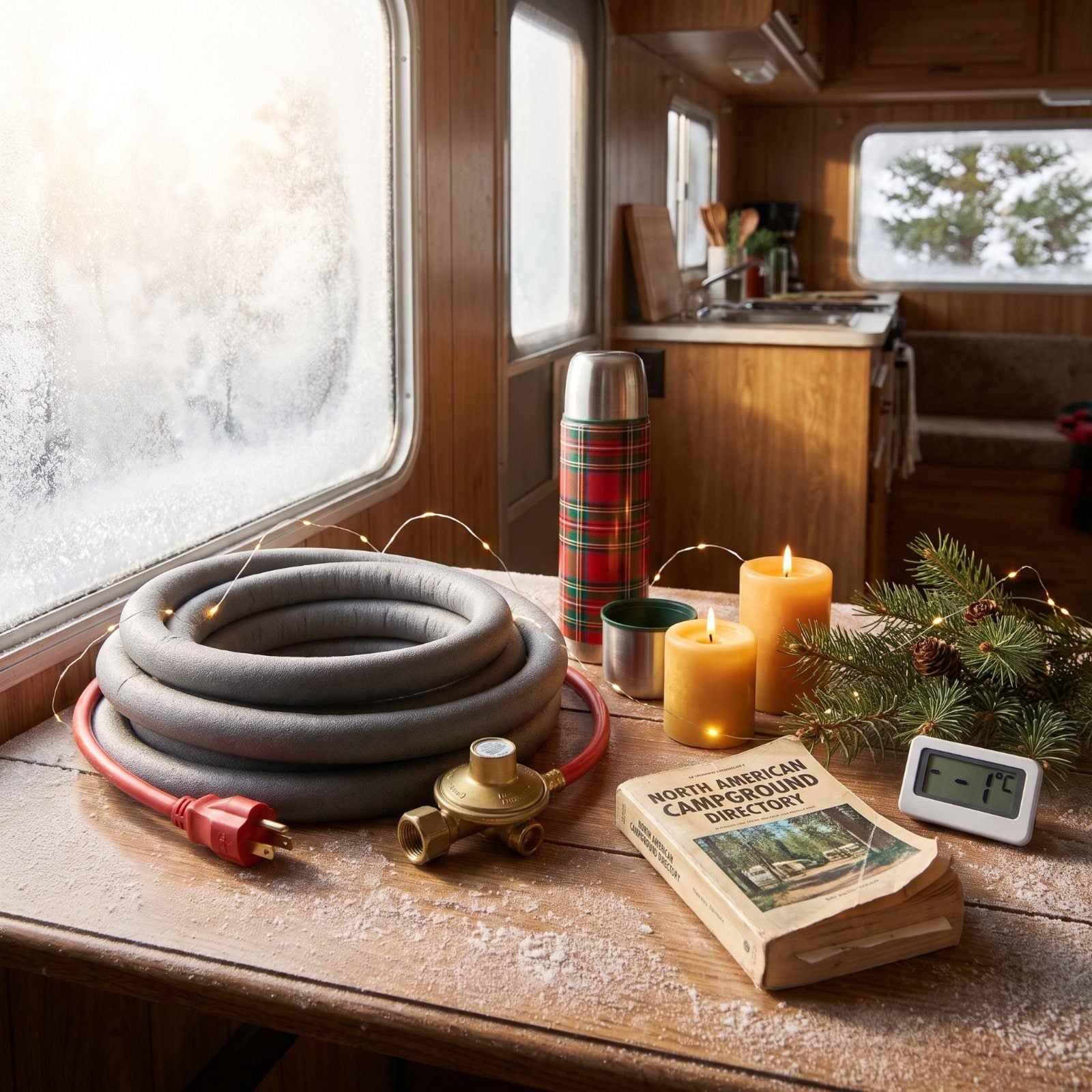
Nothing kills the holiday mood like a frozen water hose at 6 a.m. on December 23rd, the sky still dark and your hands too cold to thread the fitting. Winter RV living rewards the people who plan two weeks ahead and punishes everyone else. Here’s the good part, though: most of these mistakes cost nothing to avoid. The fixes are small, unglamorous habits — the kind that separate a warm, festive Christmas in the camper from a cold scramble in your socks. Here’s what trips people up, and what to do instead.
Please note that some of the images in this article were created with the assistance of AI.
45. Waiting Too Long to Book a Holiday Campsite
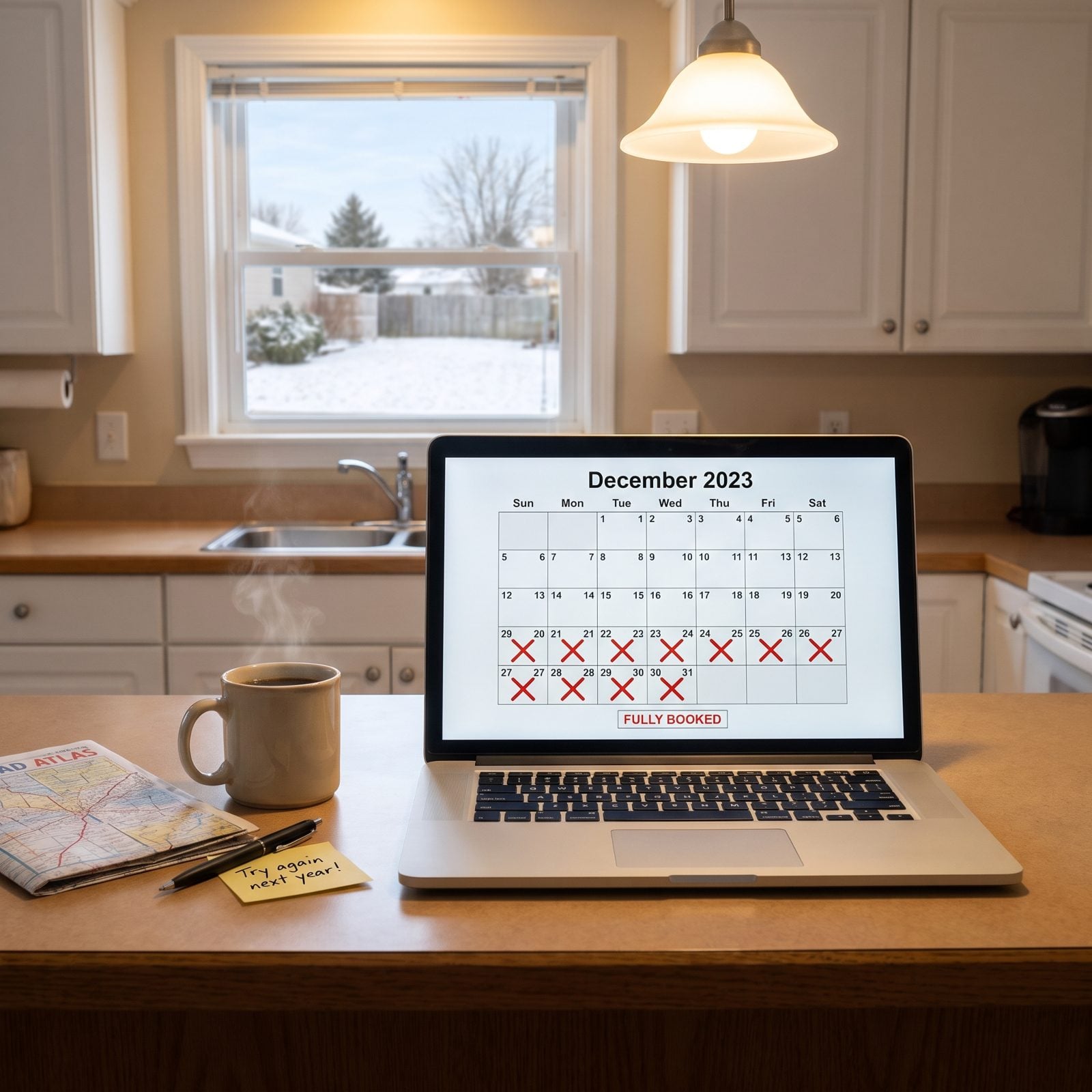
The Christmas-week campsite at a decent park — full hookups, plowed road — books out by Halloween. People assume winter means empty parks, and it doesn’t. Snowbird destinations and anywhere near family fill fast, and the spots left over are the ones nobody wanted: no sewer, bad slope, a water spigot that freezes by noon.
Book the moment you know your dates, even if that’s October. Call the park directly and ask two things: is this a winterized site with reliable water, and does somebody maintain the access road when it snows? A nice reservation on an unplowed loop is just a trap with a confirmation number.
44. Failing to Confirm Winter Water Service
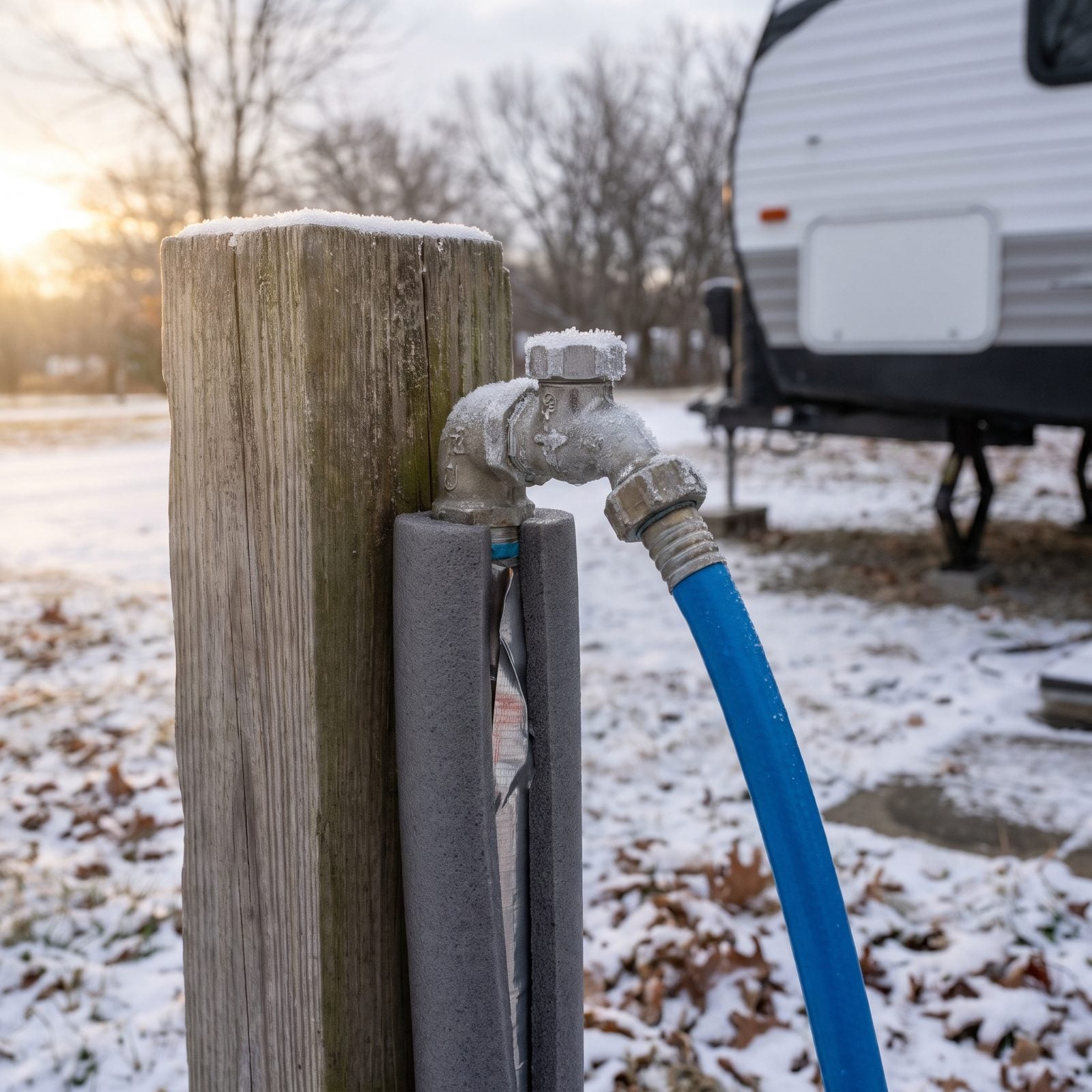
You roll in, hook up, turn the spigot, and get a dribble. Then nothing. Half the sites at plenty of parks have their water shut off at the main for winter, and the office forgot to mention it. Now you’re hauling jugs in the cold until spring.
Before you commit, ask the park flat out: is water live at my specific site, or just at a central fill point? Those are two very different winters. A central fill means you’ll be filling your tank and running off the pump, which is fine — but you need to know going in so you can plan tank capacity and a fill schedule, not discover it on a Tuesday night in the dark.
43. Packing an Unheated Freshwater Hose
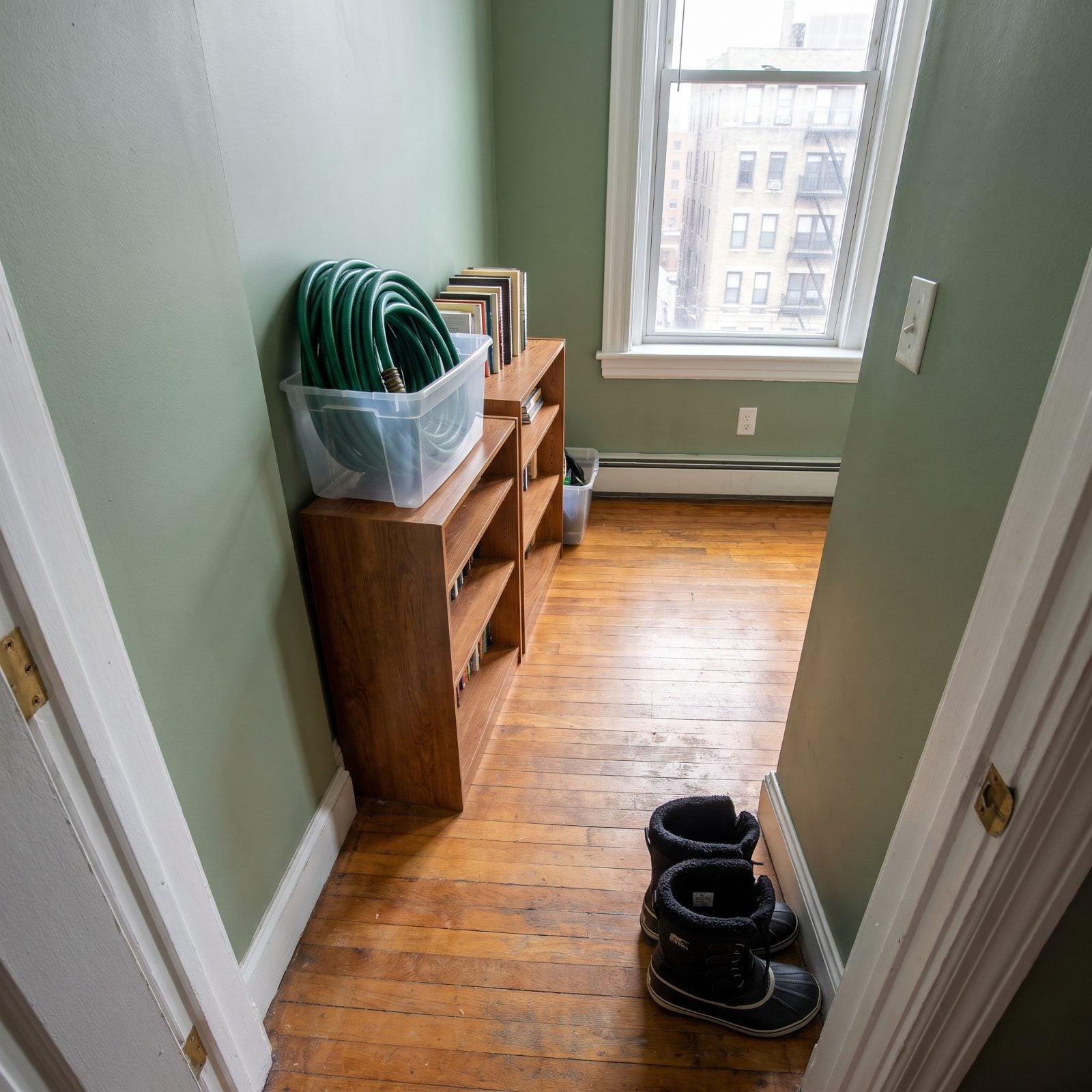
A regular garden hose at 20 degrees becomes a solid stick of ice by morning, and a cracked hose the day after. People run them one cold night, get away with it, and keep gambling until the line splits at the fitting.
Get a proper heated drinking-water hose. A heated RV water hose has a thermostat and a plug that keeps water flowing well below freezing. Wrap the spigot connection and your city-water inlet in foam pipe insulation on top of that. One cold-rated hose costs less than a service call and a whole lot less than a flooded wet bay. Buy the length you actually need — not fifty feet you’ll coil into a frozen loop that defeats the heat.
42. Leaving the Sewer Hose Exposed to Freezing Air
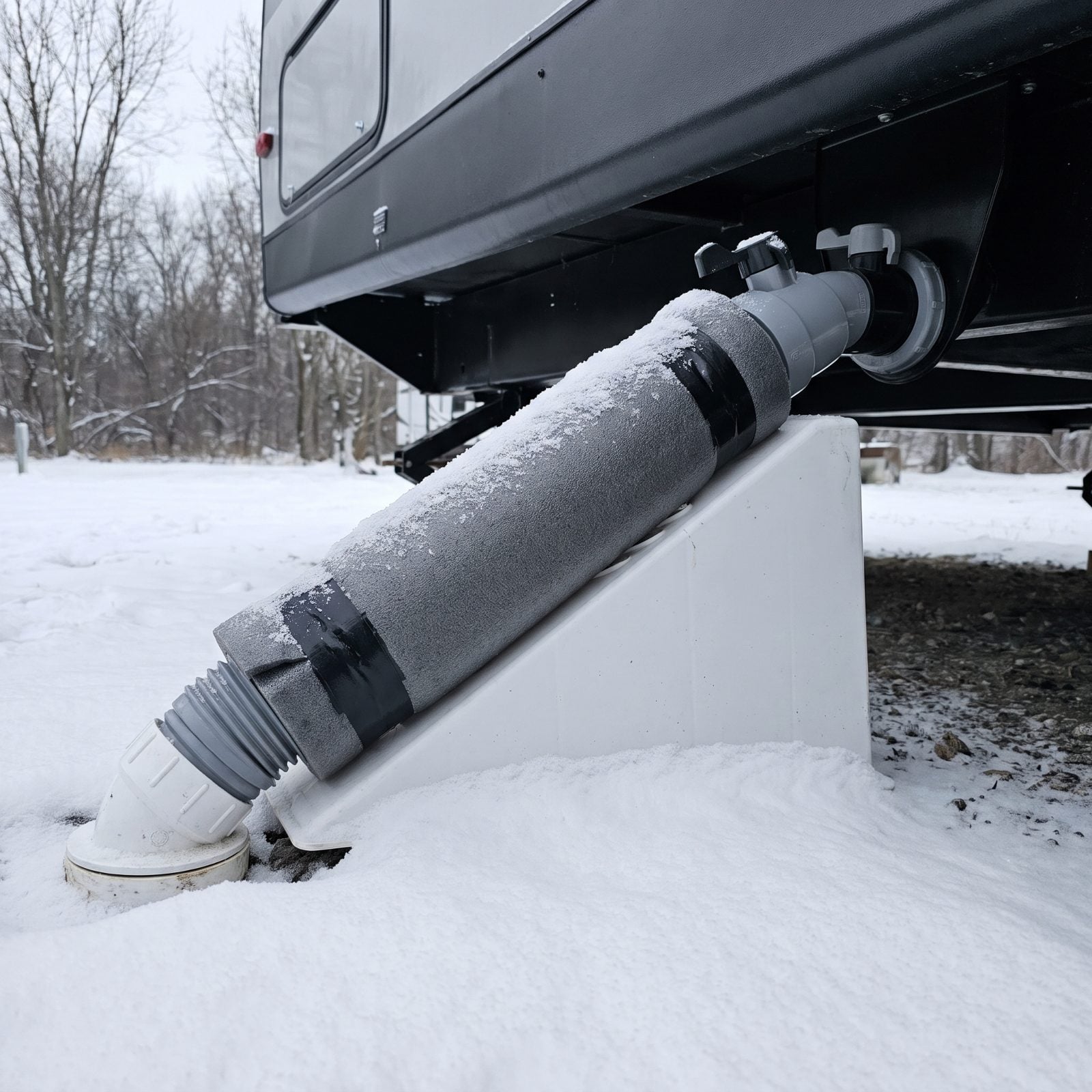
Standing waste freezes. Leave your gray or black hose open and draining into exposed air, and you get an ice plug somewhere in that ribbed plastic that you cannot see and cannot thaw without crawling under the rig with a hair dryer. Not a holiday I’d wish on anyone.
Keep your tank valves closed and only dump when the tanks are full, so waste moves fast and warm instead of trickling and freezing. Support the hose on a sloped stand for good drainage, wrap it in foam insulation, and when it’s brutally cold, run a short length of heat tape along it. A straight, fully pitched hose is your best defense against the mid-hose ice clog.
41. Forgetting Backup Drinking Water for a Frozen Hookup
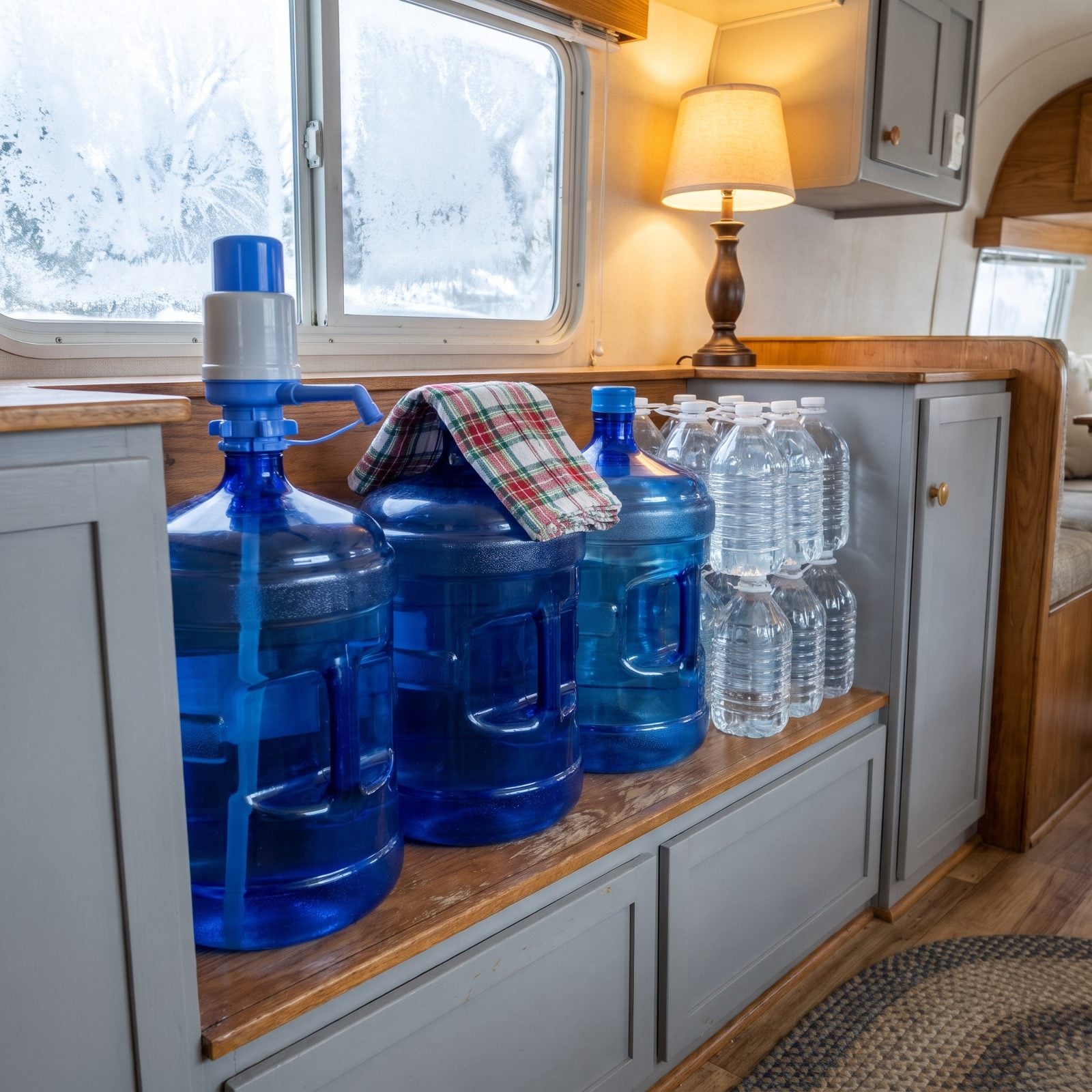
Even with a heated hose, a hard enough freeze can lock up a spigot overnight. And if your only water is that one connection, you wake up to no coffee, no dishes, no toilet flush, and a very long morning.
So keep backup drinking water on hand all winter. A couple of full seven-gallon jugs tucked in the wet bay buy you a day or two to thaw the line without panic. Top them off whenever you run errands. It’s the cheapest insurance in the whole rig, and the one time you need it, you’ll feel like a genius instead of a person standing in the snow glaring at a frozen tap.
40. Missing the Dump Station’s Holiday Closure Schedule
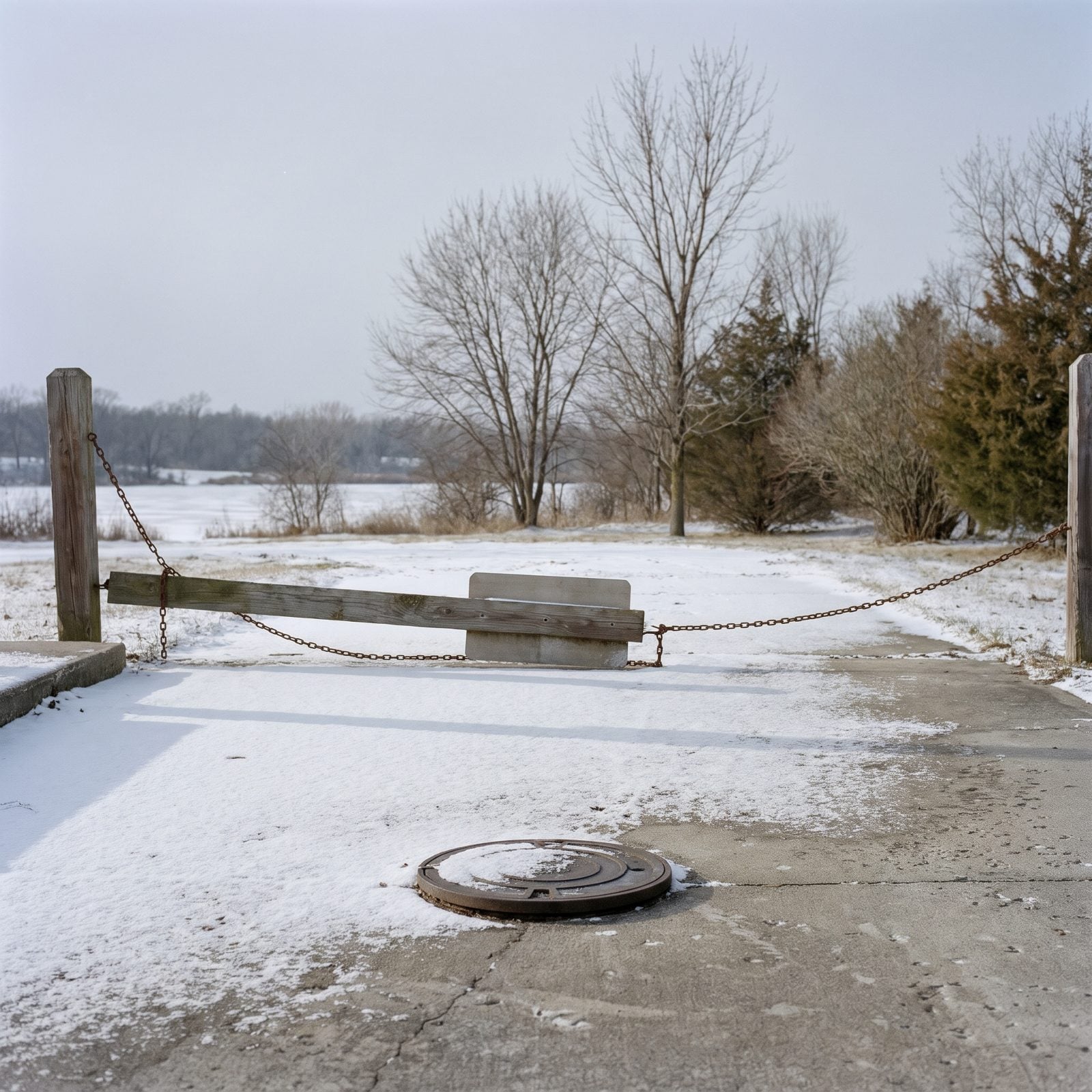
Plenty of parks close their on-site dump station over the holidays, or the nearest travel-center dump shuts for the week, and nobody posts it anywhere you’d think to look. You find out when your black tank is full on Christmas Eve and every gate is chained shut.
Dump before the holiday, not during it. A few days ahead, empty both tanks completely so you start the long weekend with maximum capacity. Then confirm — by phone — the hours of a backup dump station within reasonable driving distance. Apps like Sanidumps and RV Life help you find one, but call to confirm the holiday schedule. An app that says open and a gate that says chained are not the same thing.
39. Letting the Propane Tank Run Low
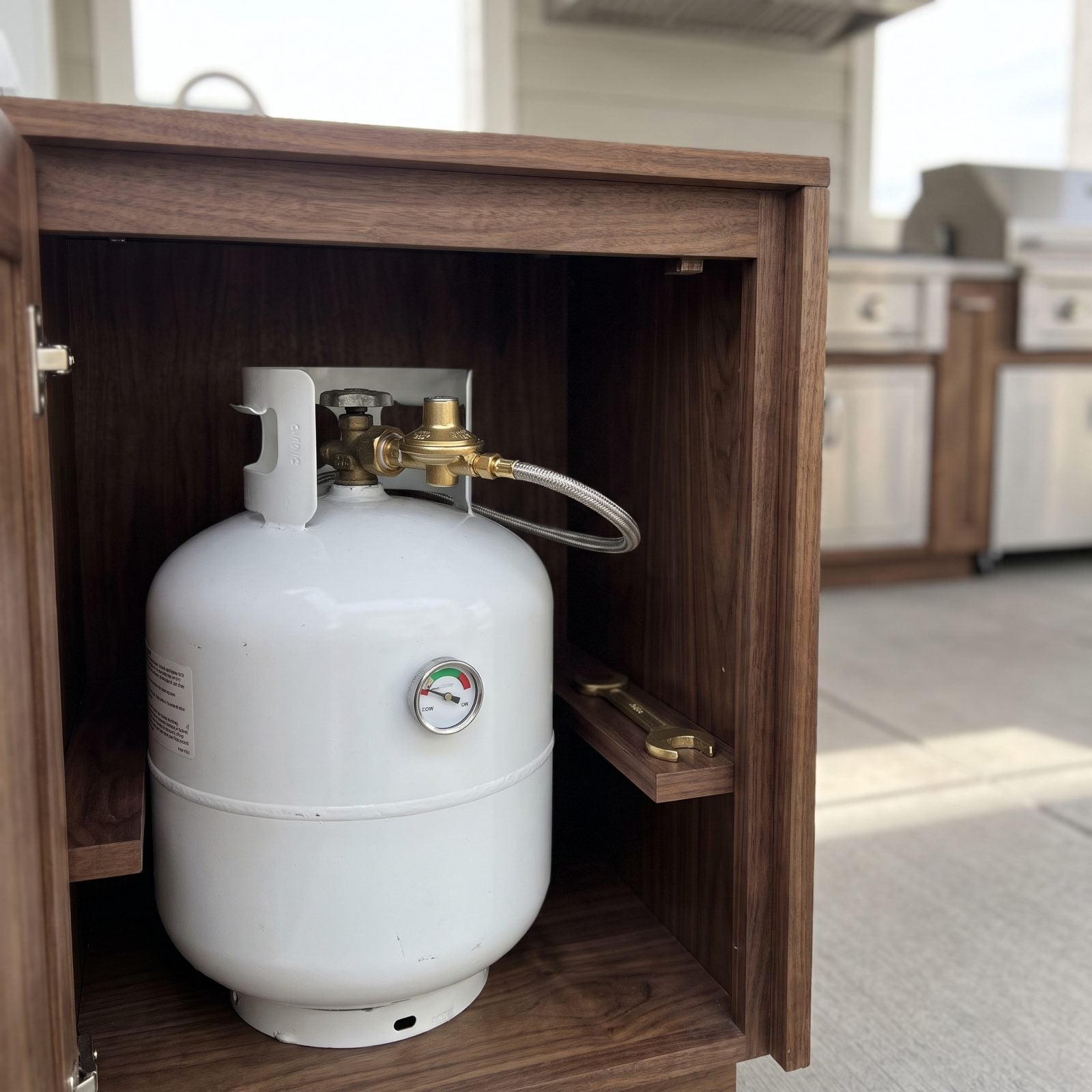
Winter burns propane faster than most people expect. The furnace cycles all night, the water heater works harder, and that 30-pound tank you thought had a week in it runs dry at 3 a.m. — fill stations closed, furnace dead, everybody shivering.
Run two tanks with an automatic changeover regulator so one takes over when the other empties, and the red indicator tells you to refill the spare at your leisure. Check your levels every few days with a magnetic gauge or the hot-water-on-the-tank trick. In a serious cold snap, refill at half, not at empty. You never want to be chasing propane in a blizzard.
38. Relying on a Single Heat Source
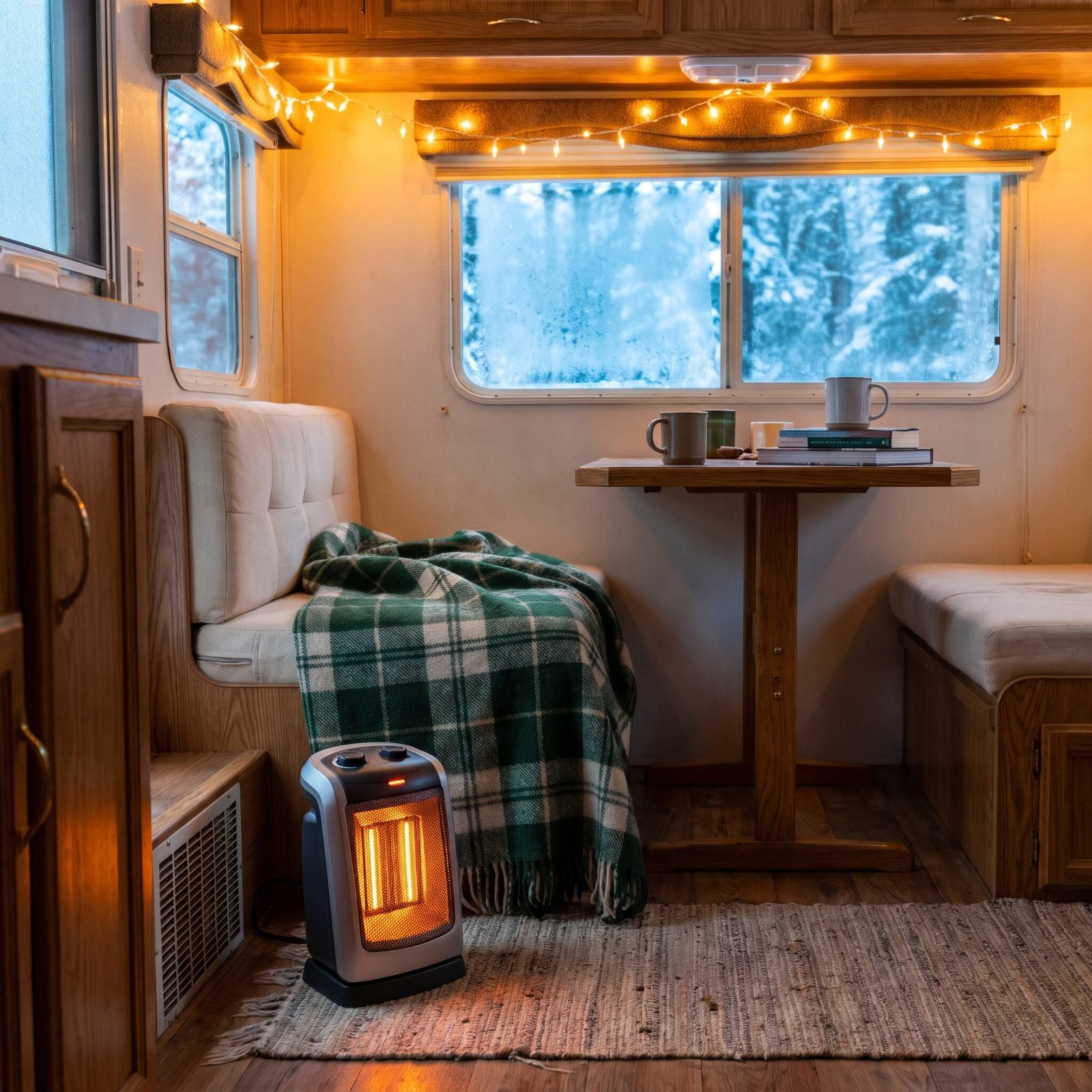
One heat source is a single point of failure, and winter is exactly when single points of failure fail. The furnace blower motor dies, the propane runs out, or your one electric heater trips a breaker — and suddenly it’s 40 degrees inside and you’re googling parts stores that closed for the holiday.
Run a layered setup instead. The propane furnace keeps the underbelly and plumbing warm, which matters most. A ceramic space heater or two handles living-space warmth on shore power and saves your propane. If you can swing it, a vented diesel or propane heater adds a third option. When one quits, you’re inconvenienced — not endangered.
37. Using an Unvented Propane Heater Indoors
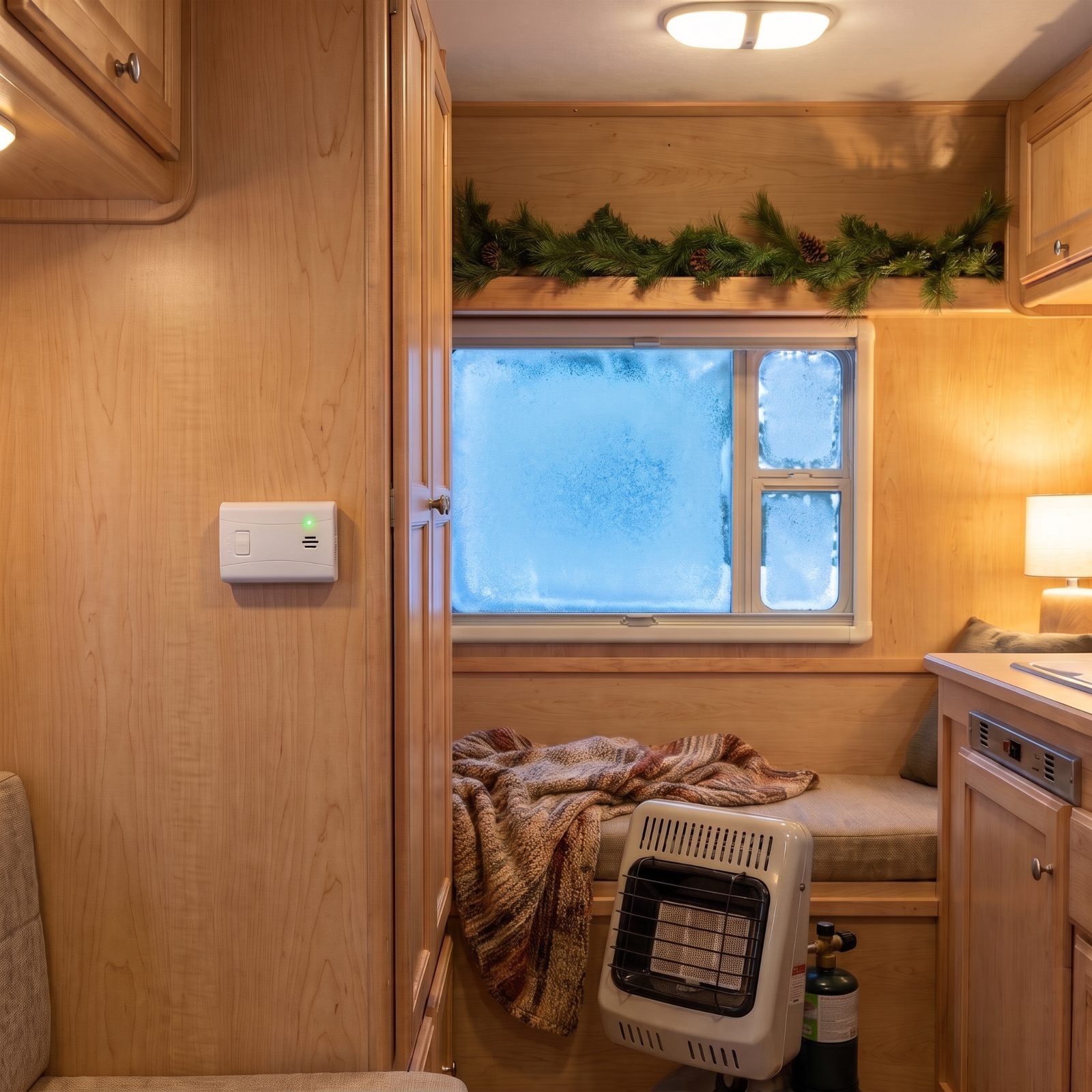
A little portable propane heater — the catalytic or open-flame kind sold for ice-fishing shacks — feels like a smart move when the furnace is thirsty. Run it closed up overnight and it quietly eats your oxygen and produces carbon monoxide. This is the mistake that doesn’t give you a second chance, so I won’t soften it.
Only ever use heaters rated for enclosed indoor use, and even then, keep a window cracked for fresh air. Better yet: use a vented heater that exhausts outside. And test your carbon monoxide detector today, right now, not in theory. If it’s older than five years or chirping, replace it this week. No cozy is worth that risk.
36. Overloading a 30-Amp Circuit With Space Heaters

Two space heaters, the microwave, and the water heater all on electric at once, and a 30-amp service taps out around 3,600 watts. The breaker trips, the heat dies, and now you’re outside at the pedestal in the dark resetting it. The opposite of festive.
Do the math before the cold hits. A typical space heater on high pulls about 1,500 watts, so two of them already eats most of your budget. Run one heater at a time, stagger the big draws, and switch the water heater over to propane when you want electric heat. A good surge protector with a readout lets you watch your amperage, so you catch the problem before the breaker does.
35. Overlooking Smoke Alarms and Fire Extinguishers
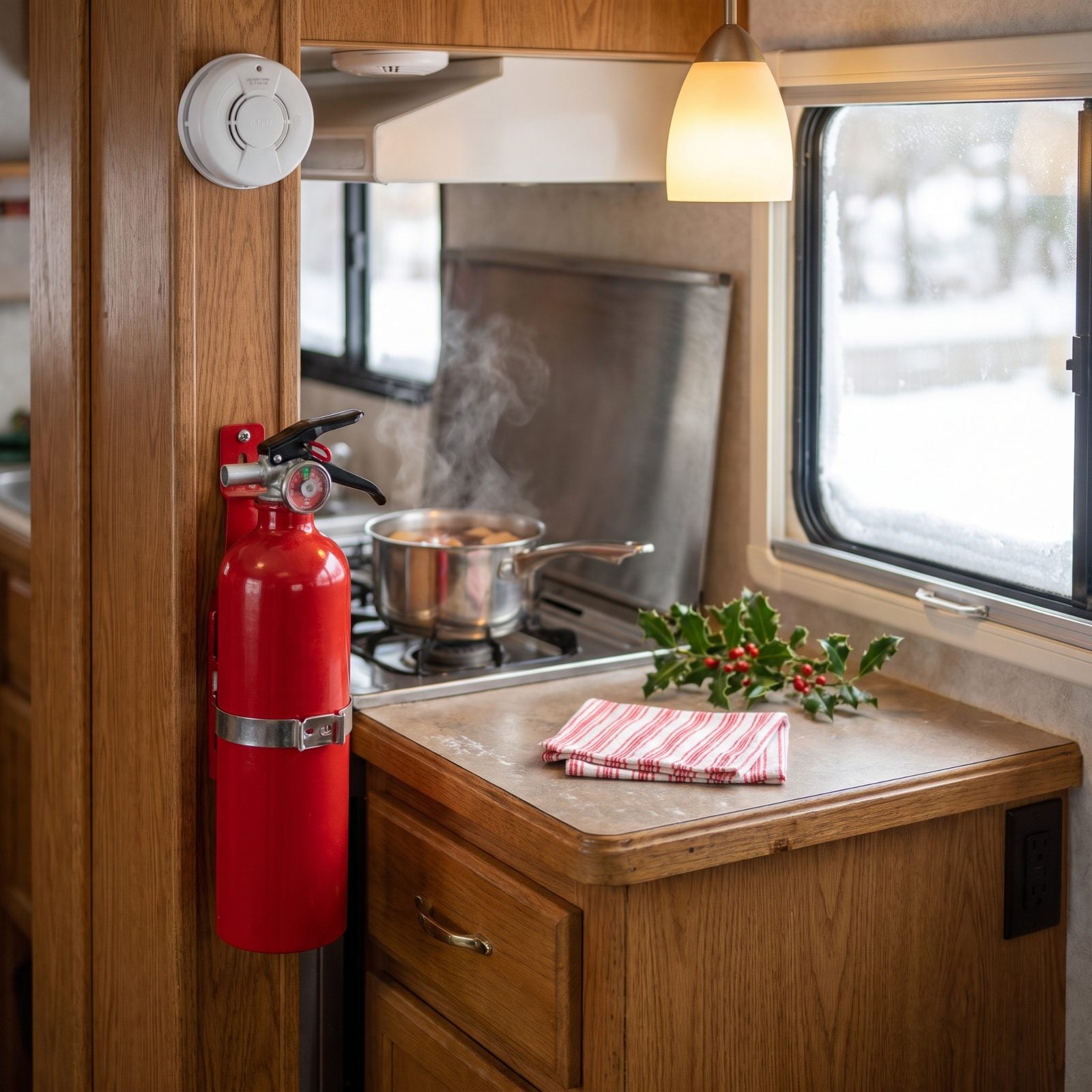
The extinguisher by the door came with the rig and hasn’t budged since. The gauge needle sits where it sat the day you drove off the lot. You assume both of those are good signs — and you’d be wrong.
RV extinguishers lose charge over time. The dry chemical inside settles into a packed brick if the unit never gets handled, and the single smoke alarm most campers come with is notorious for weak sensitivity near a cramped galley.
Pull the extinguisher out, flip it over, give it a firm smack on the bottom to loosen the powder. Check that needle. Test the smoke alarm, and honestly? Add a second one if your rig only has the one. A spare two-and-a-half-pound extinguisher for the bedroom costs about twenty bucks and lives at the far end from the kitchen, where a stovetop flare-up would block your main one.
34. Sealing the RV So Tightly That Condensation Takes Over
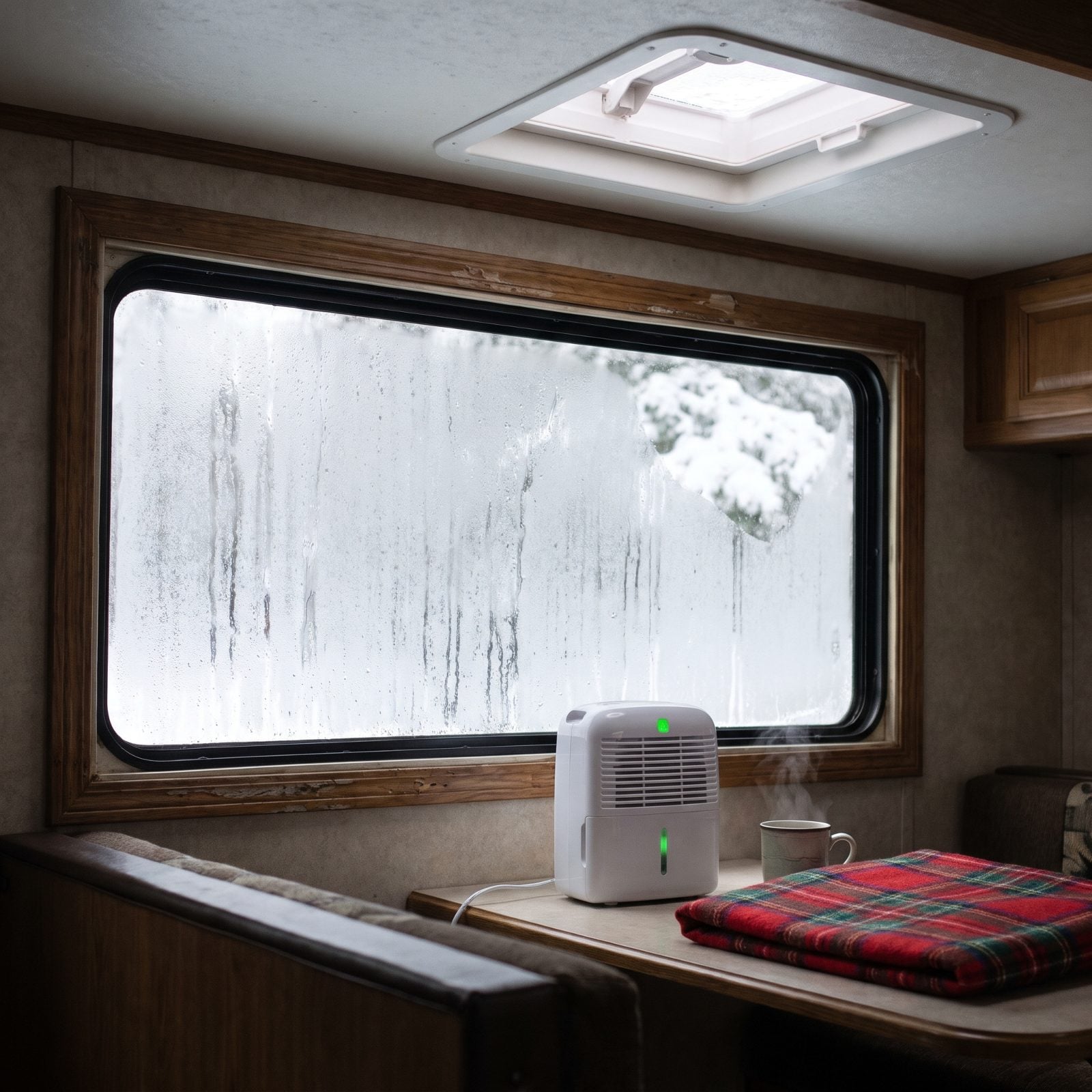
Warm rigs breathe. Sealed rigs sweat. Caulk every gap, close every vent, crank the furnace, and within a day you’ve got water running down the windows and dark spots creeping into the corner cushions.
Four people breathing, a pot of soup, a hot shower, a propane flame — all of it dumps moisture into the air. With nowhere to go, that moisture lands on the coldest surfaces and quietly grows mold behind your cabinets where you’ll never spot it until it’s bad.
Crack a roof vent an inch, even in the cold. Run a small dehumidifier or a few tubs of DampRid, wipe the windows each morning, and vent the bathroom hard after showers. You want a tight rig, not an airtight one.
33. Leaving Drafty Windows Uninsulated
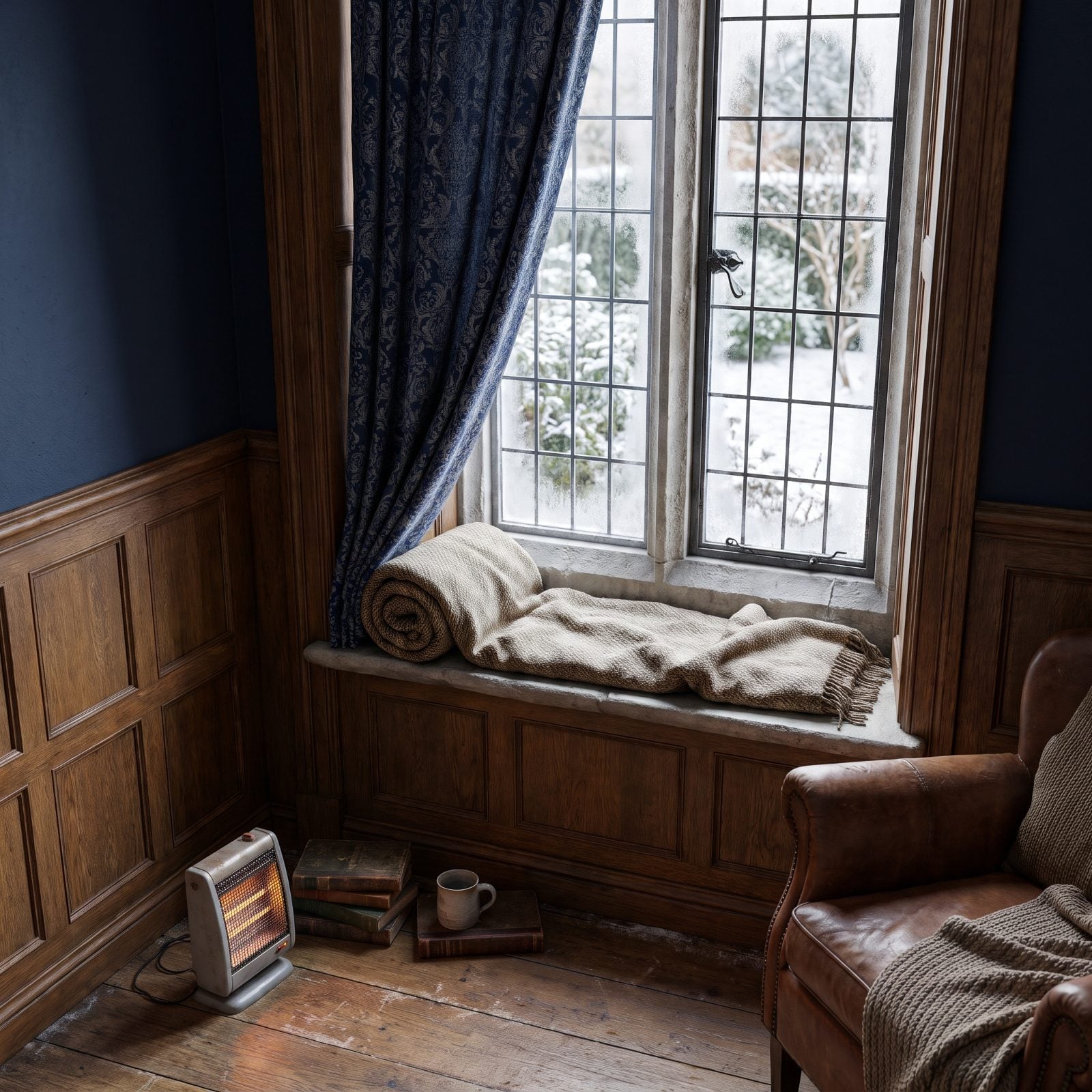
You can run the heater all night and still feel a cold river pouring off the glass by the window seat. That draft is why your heating bill is terrifying and your toes never warm up.
Older RV windows are thin — single-pane most of the time — and they leak heat like an open door. The heater just keeps chasing what’s slipping away.
Cut reflective foam board (the foil-faced Reflectix kind) to fit each window and press it into the recess at night. Hang thermal insulated curtains over the worst offenders. For a lighter touch, shrink-film window kits do a lot for about ten bucks a window. And leave the sunny side uncovered during the day — let that free heat in.
32. Camping in Deep Cold Without RV Skirting
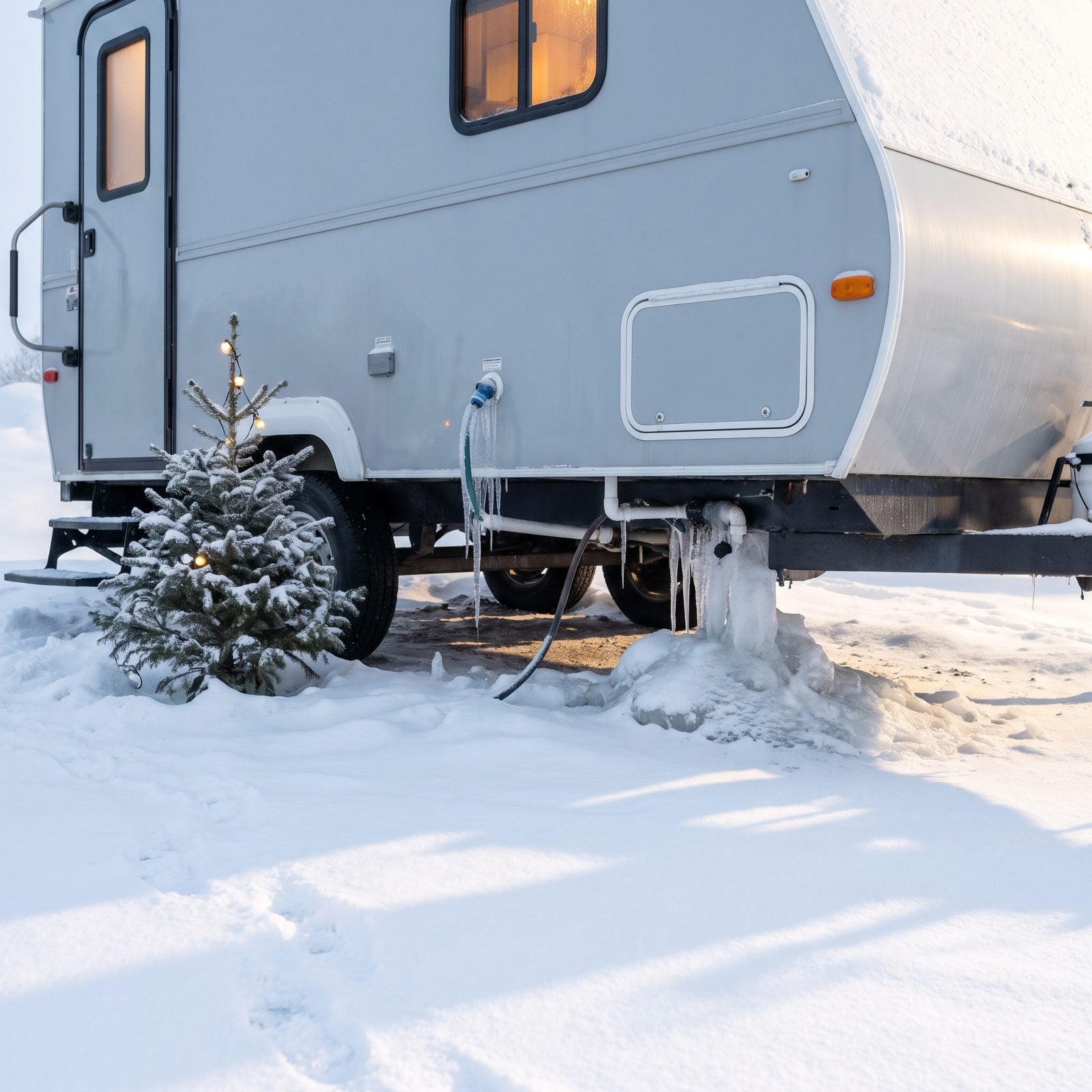
Nobody sees this one coming until the pipes freeze: the whole underbelly of the rig is sitting open to the wind. Your holding tanks, water lines, and the floor itself live in a wind tunnel while you pile blankets inside and wonder why it’s never enough.
Cold air sweeps under there and pulls heat straight out of the floor. Your feet stay cold, the furnace never shuts off, and one hard freeze can crack a line you won’t find until the thaw.
Skirt the rig. Vinyl skirting with snaps is the clean solution, but foam board, hay bales, or even snow banked against the base all work in a pinch. Trapping that pocket of still air underneath can raise the temperature down there by double digits, and it takes an afternoon to set up.
31. Ignoring the Cold-Weather Drop in Battery Capacity
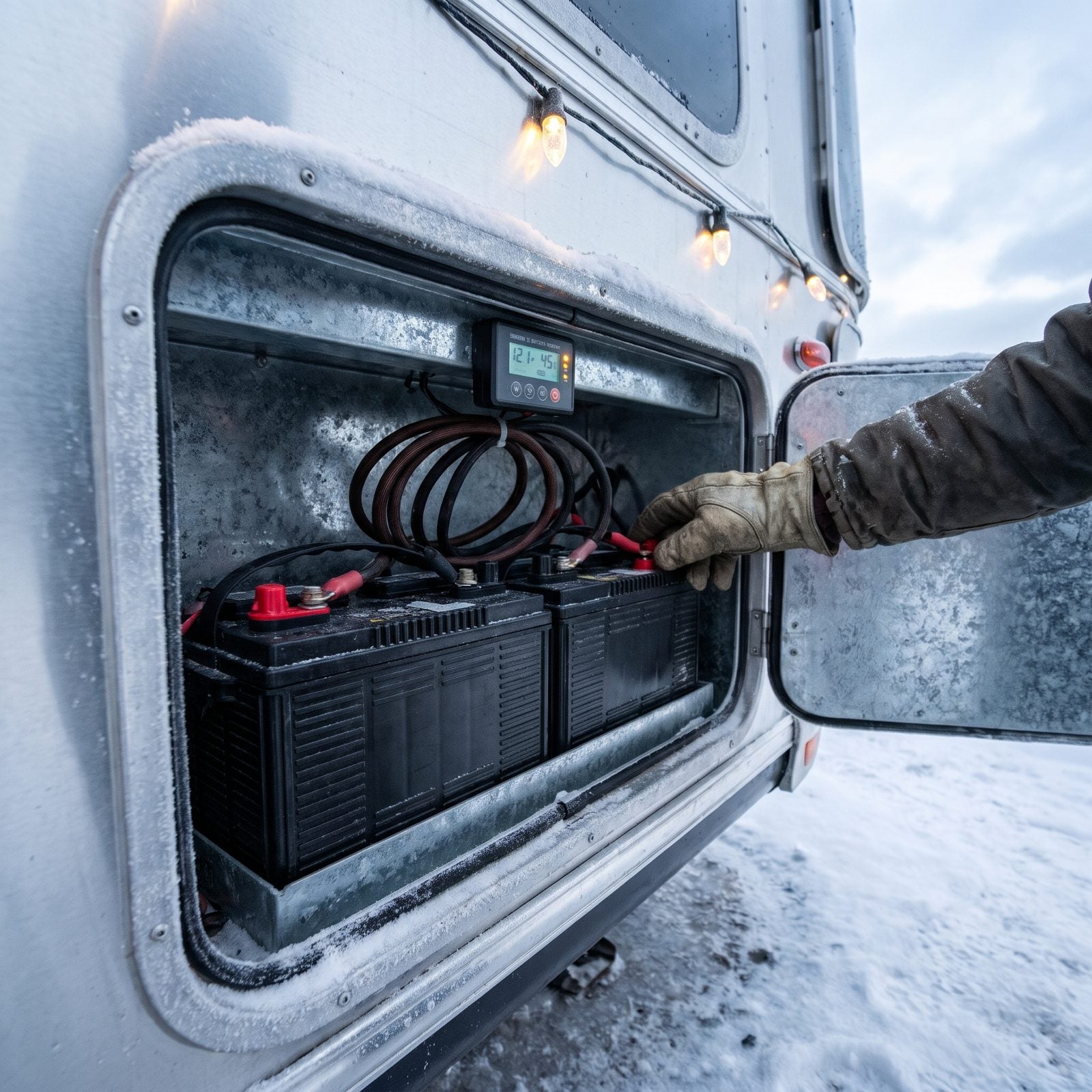
The battery that ran your lights all weekend in September suddenly dies by midnight in December, and it feels like a failure. It usually isn’t. It’s chemistry.
A lead-acid battery loses a big chunk of its usable capacity as the temperature drops, and a half-charged one can freeze and crack right open. A lithium battery won’t charge at all below freezing, which blindsides a lot of folks their first cold year.
Keep the bank topped up — a full battery resists freezing far better than a low one. Insulate the battery box, or move the bank somewhere warmer if your setup allows it. And if you run lithium, confirm it has low-temp charge protection or a self-heating feature before you count on it when the mercury drops.
30. Neglecting a Pre-Holiday Generator Test
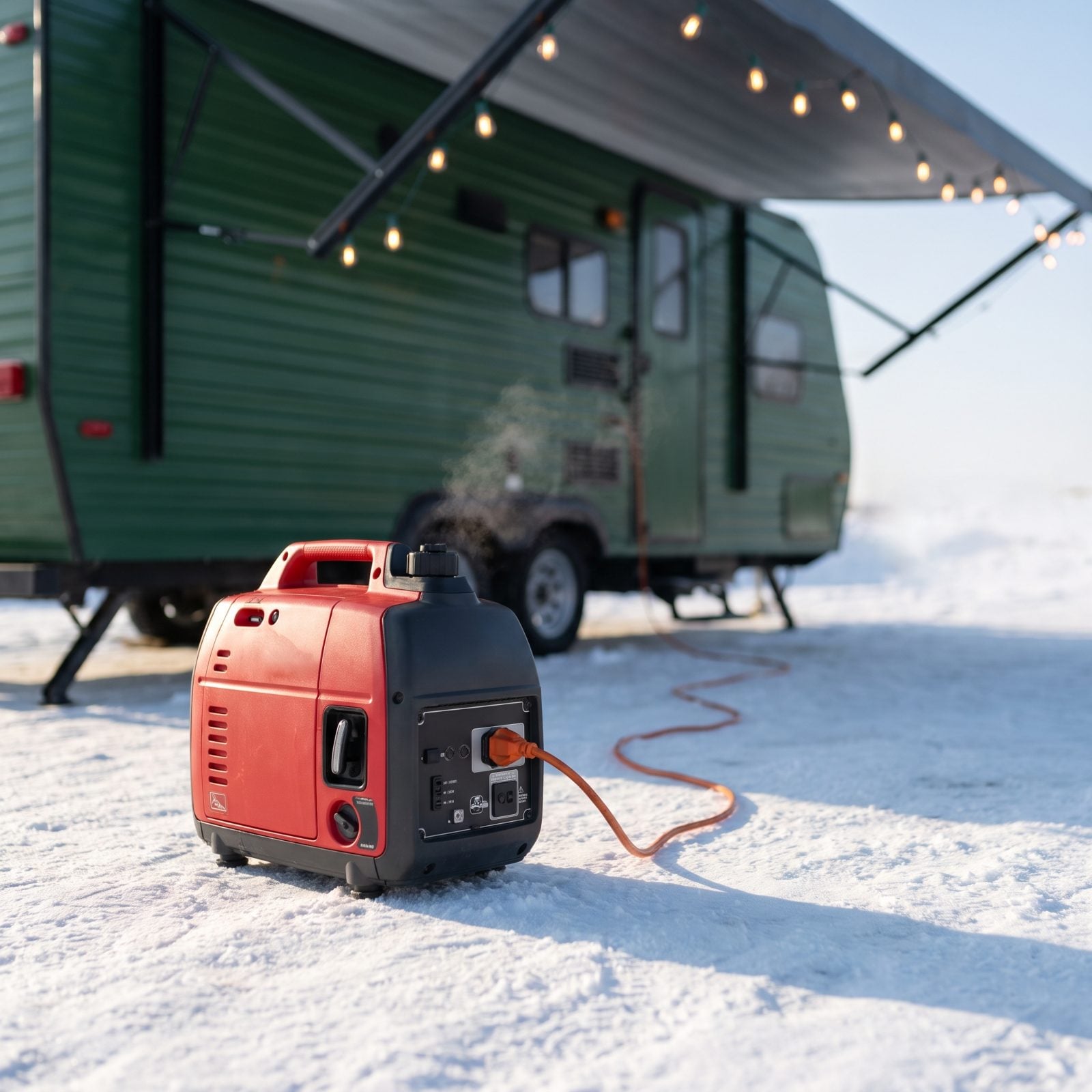
You picture the generator as your safety net for the holiday storm. Then the power actually drops, you pull the cord, and it coughs once and quits on fuel that went stale back in October.
Generators that sit unused gum up fast. Old gas varnishes the carburetor, the oil degrades, and the one time you truly need the thing is the worst possible time to learn any of that.
Run it under load for twenty or thirty minutes before the holidays. Check the oil, swap the air filter if it’s grimy, and either run fresh fuel or dose the tank with stabilizer. Store it a safe distance from the rig, and never run it enclosed or near an open window. Carbon monoxide doesn’t care that it’s cold out.
29. Connecting to Shore Power Without Surge Protection
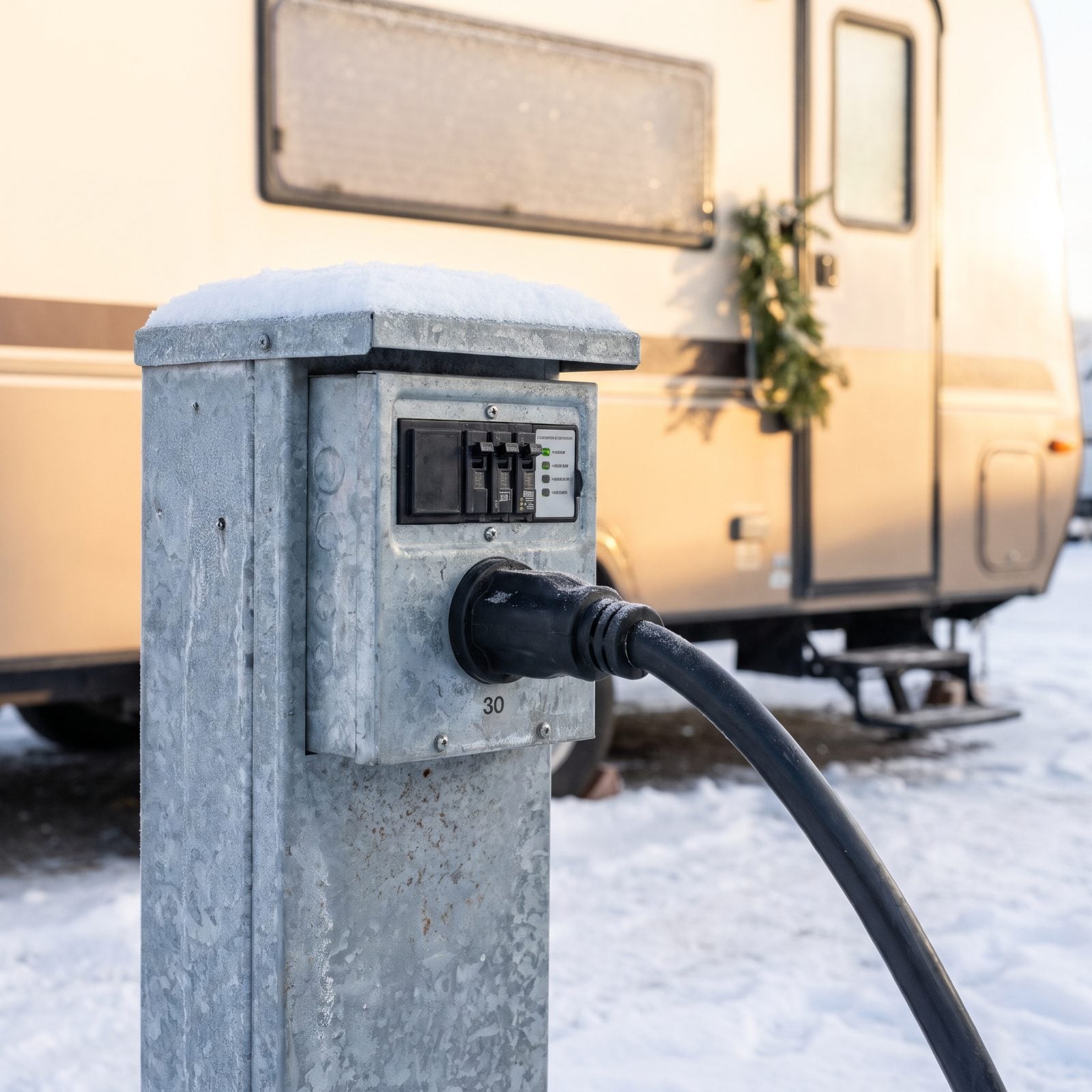
Plugging straight into the park pedestal feels like plugging into a wall at home. It isn’t. Campground wiring is a lottery, and holiday-season draws from everyone running space heaters only make the odds worse.
A miswired pedestal, a voltage spike, a brownout — any of them can fry your converter, your fridge board, and anything else plugged in, all in a single blink. That’s a repair bill that dwarfs the cost of prevention.
Use a surge protector. Better yet, an electrical management system that reads voltage and polarity and cuts power the instant something goes wrong. Plug it in, read the lights or the display, and let it do the thinking before your rig takes the hit.
28. Skipping a Cold-Weather Tire-Pressure Check
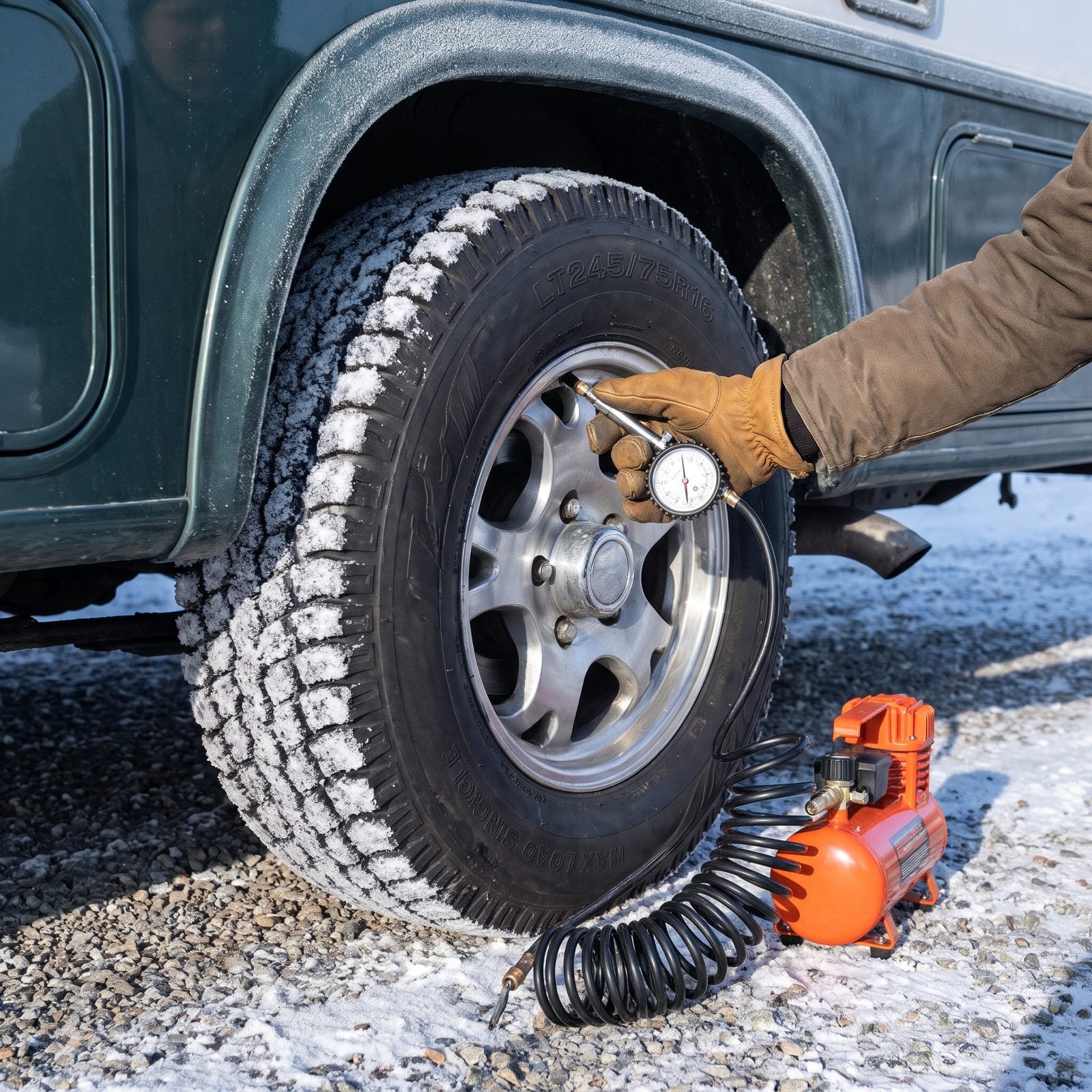
Your tires looked fine when you parked back in November. Then the cold hit and quietly let the air out from the inside.
Tire pressure drops roughly one PSI for every ten degrees the temperature falls. A rig aired up on a mild afternoon can sit well under spec after a hard freeze — and underinflated tires run hot, wear fast, and blow out on the highway far more often than you’d think.
Check pressure cold, before you drive, with a real gauge instead of a kick of the boot. Air up to the number on your door placard or tire sidewall. Keep a small 12-volt compressor in the rig so you’re not hunting for a working air pump in a snowstorm. And do this before any holiday drive, not after.
27. Driving Snowy Roads Without Chains or Traction Aids
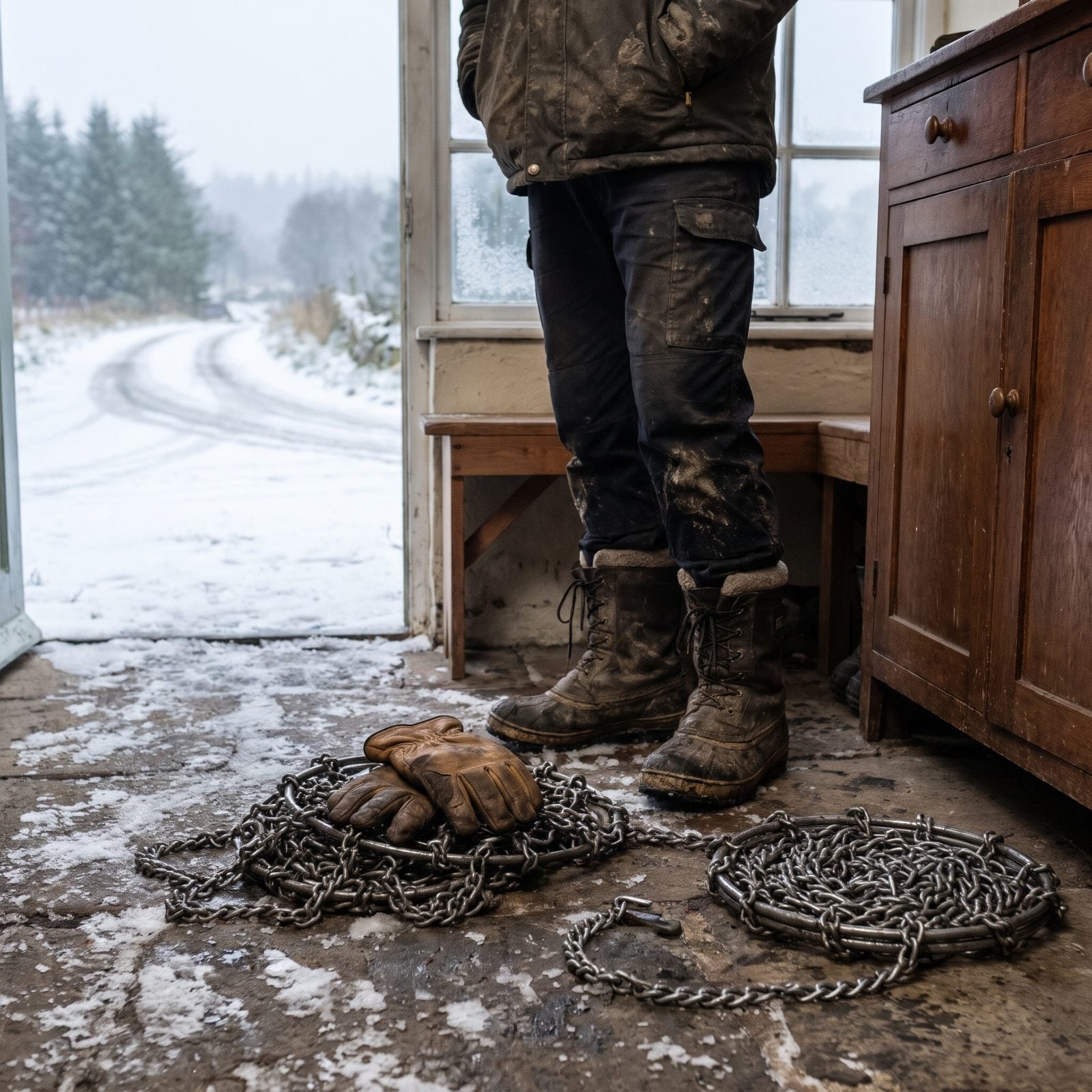
A fully loaded rig does not stop the way your car does. People learn this halfway down a grade, wheels locked, the whole thing sliding toward the shoulder.
RVs are heavy, long, and top-heavy, and on packed snow or black ice they take forever to stop and almost no provocation to jackknife a trailer. Betting on good all-season tires alone in real mountain winter is how holiday trips go sideways — literally.
Carry chains sized to your tires. Just as important, practice putting them on in your driveway where it’s dry and nobody’s panicking. Keep traction mats, a folding shovel, and a bag of sand or kitty litter in a bin. Check road and pass conditions before you roll, and when the sign says chains required, that isn’t a suggestion.
26. Arriving Without a Snow Shovel and Roof Broom
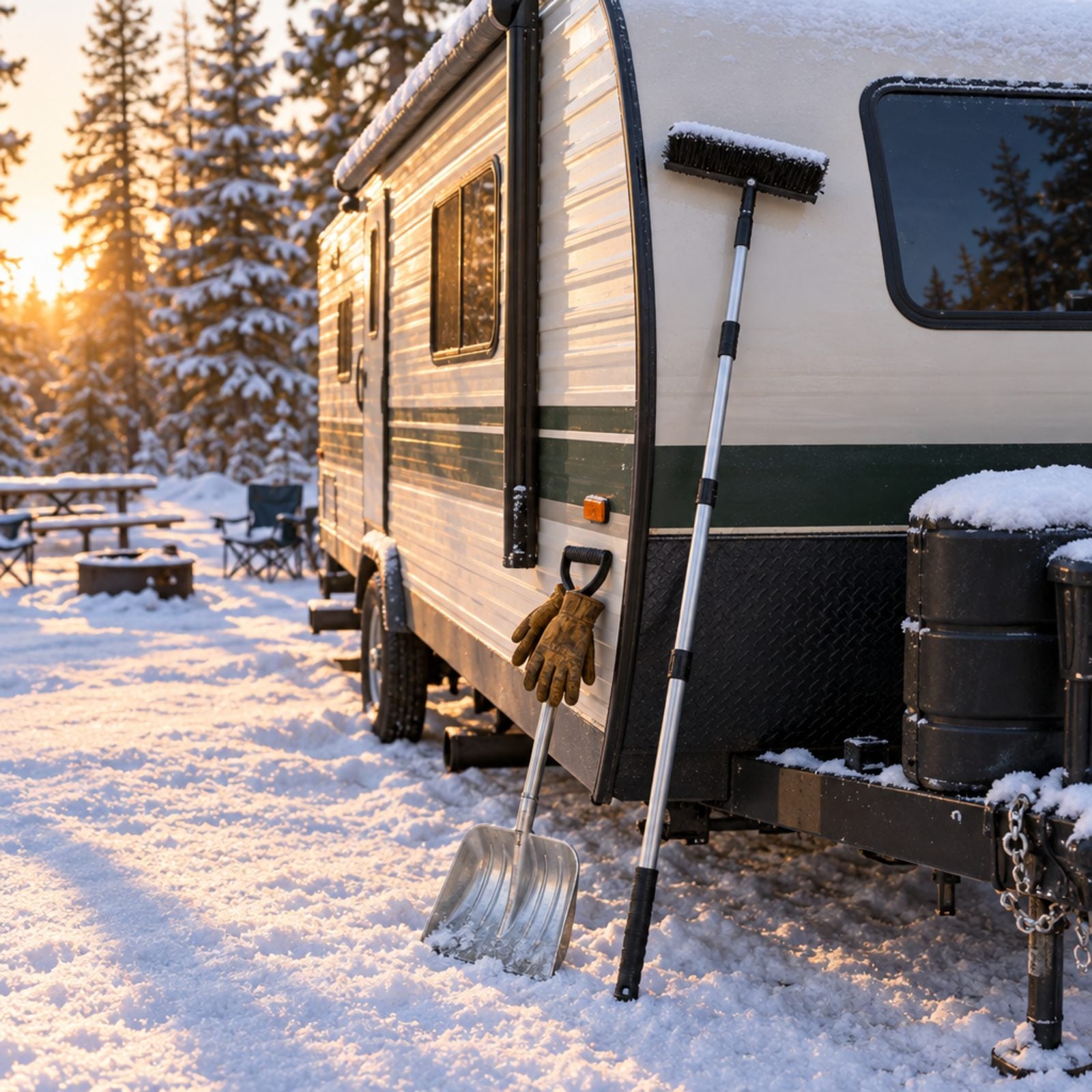
You pull into a snowed-in site, step out, and realize the only tool you packed was optimism. Now you’re scraping the roof with a dustpan and praying.
Nobody warns first-timers about this. A car ice scraper does absolutely nothing against six inches of wet snow sitting on a 30-foot roof, and by then it’s too late to shop for the right gear. You need two tools in the rig before you ever leave the driveway.
Pack a short aluminum snow shovel for the steps and site, plus a telescoping roof broom with soft bristles for up top. Those soft bristles aren’t optional. A stiff rake or a regular broom will gouge your rubber or fiberglass roof, and that repair costs real money.
25. Letting Heavy Snow Accumulate on the RV Roof
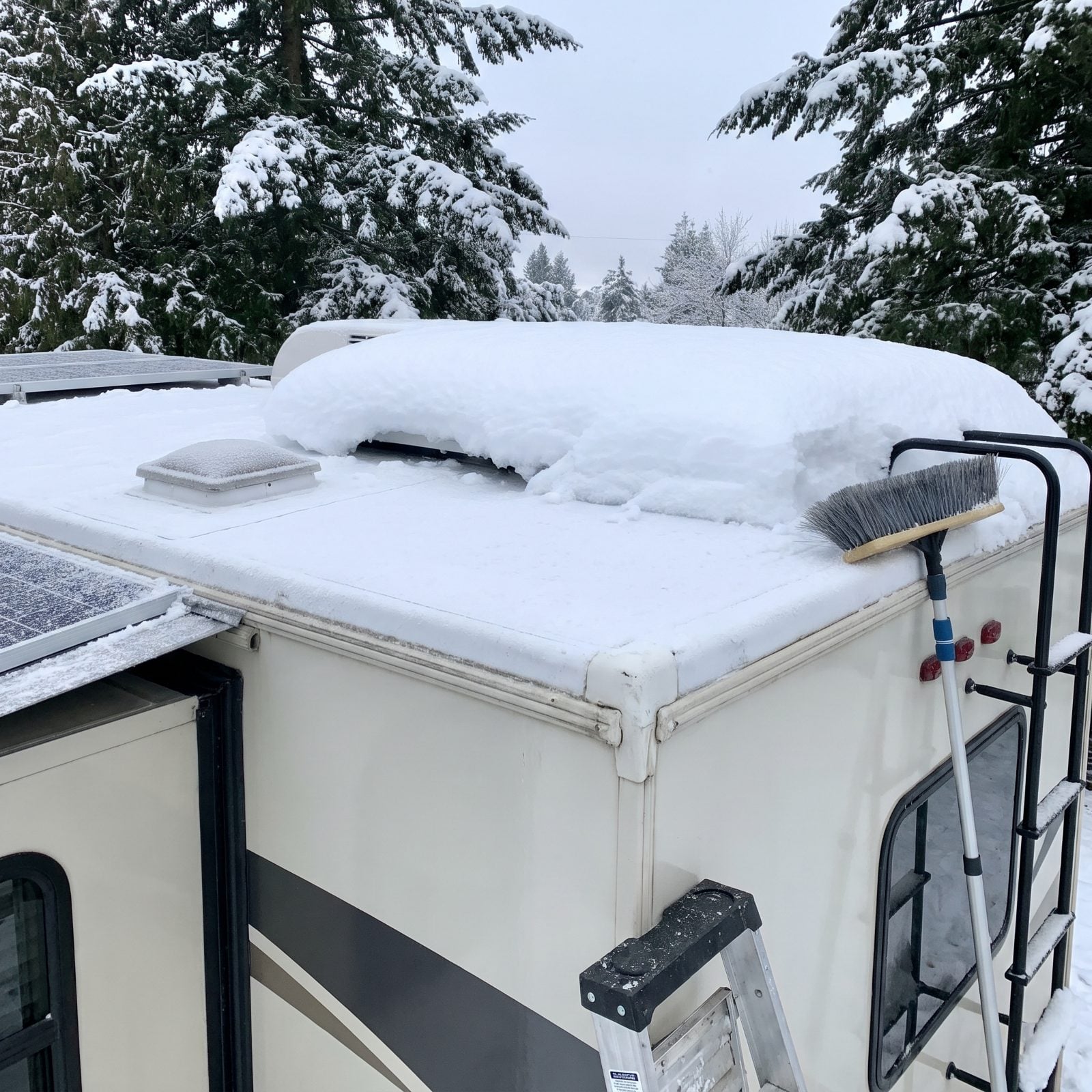
Snow looks weightless until it isn’t. Wet snow runs heavy, and a few inches spread across a full roof can add up to a load your roof was never built to hold while sitting still in a campground.
Let it pile up and you risk flexing the roof, stressing seams, and sending meltwater into every tiny gap you didn’t know you had. Then it refreezes. Now you’ve got ice working your seals like a crowbar.
Clear the roof after every real snowfall. Working from a ladder, pull the snow toward the edges with your soft broom, and never let more than three or four inches build before you deal with it.
24. Leaving the Awning Out in Snow or Wind
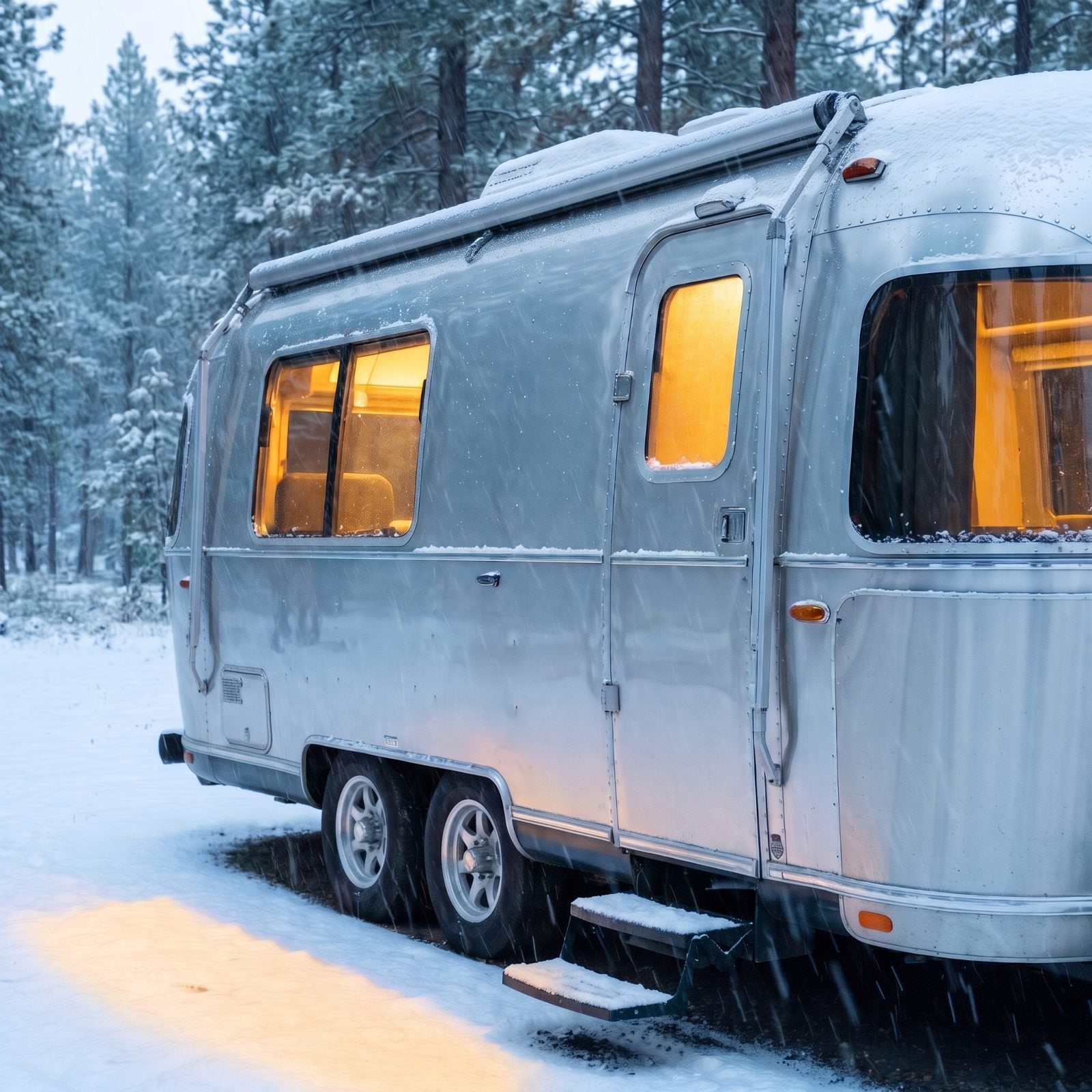
An extended awning in a snowstorm is a trap you set for yourself. Snow pools in the fabric, water collects, the weight builds, and that lightweight arm bends or snaps like a wishbone. Wind does it faster and uglier, catching the awning like a sail and peeling it off the rail.
The fix takes thirty seconds: roll it in. Leaving the site? Snow or wind in the forecast? Bring the awning all the way home against the body.
Want shelter over the door during a stay? A freestanding pop-up canopy you can drop fast beats trusting your attached awning through a storm.
23. Allowing Ice to Build Up on the Entry Steps
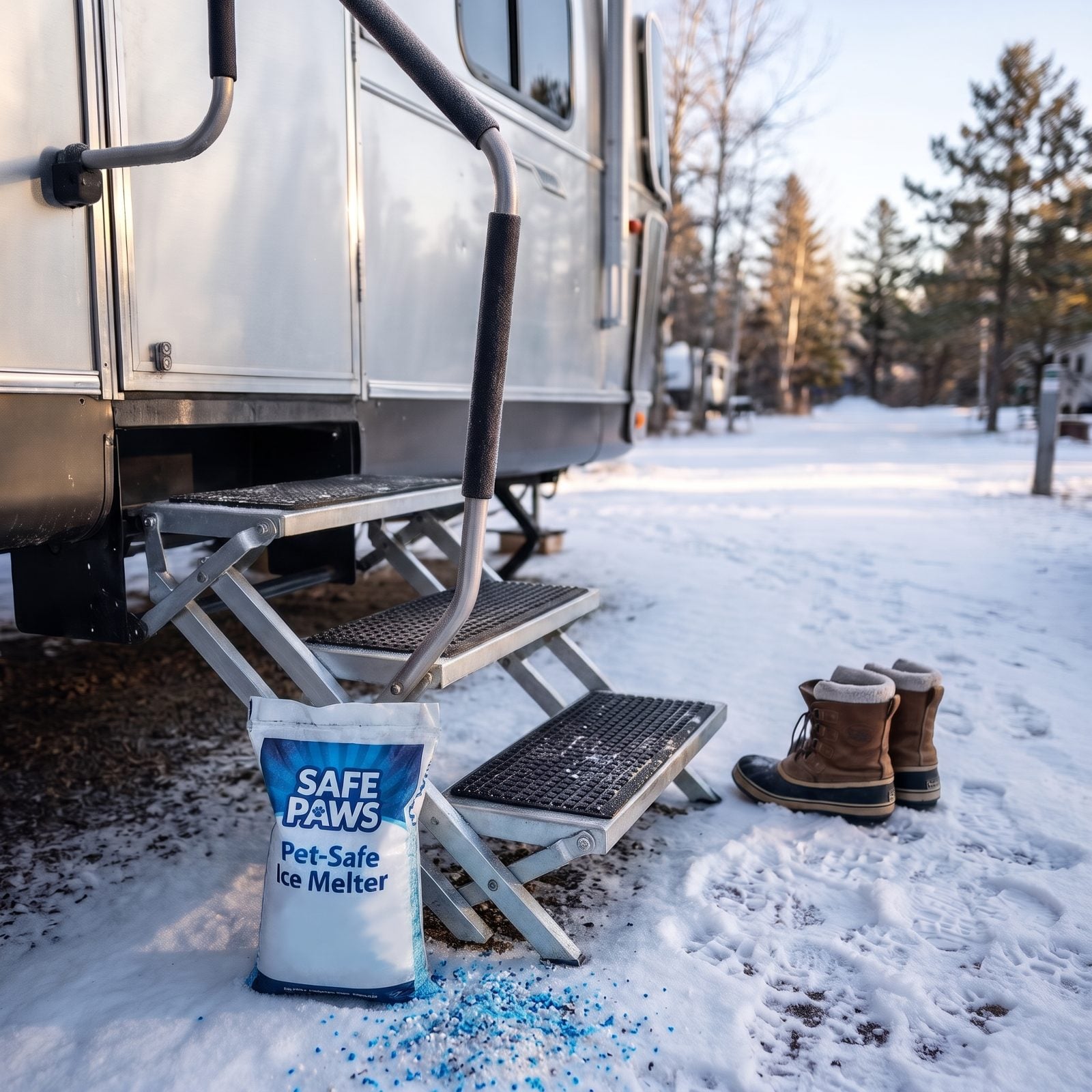
Metal RV steps turn into a skating rink overnight. One morning you step out half-awake with a coffee in hand and your foot finds a sheet of black ice that wasn’t there when you went to bed.
Folding steps are narrow, high, and unforgiving if you go down on them. This is the mistake that ends camping trips with a trip to urgent care.
Put down rubber stair tread mats cut to fit, wrap the handrail in grip tape, and keep a small bag of pet-safe ice melt by the door. Throw a little down before bed so the morning glaze never sets.
22. Using Indoor-Rated Christmas Lights Outside the RV
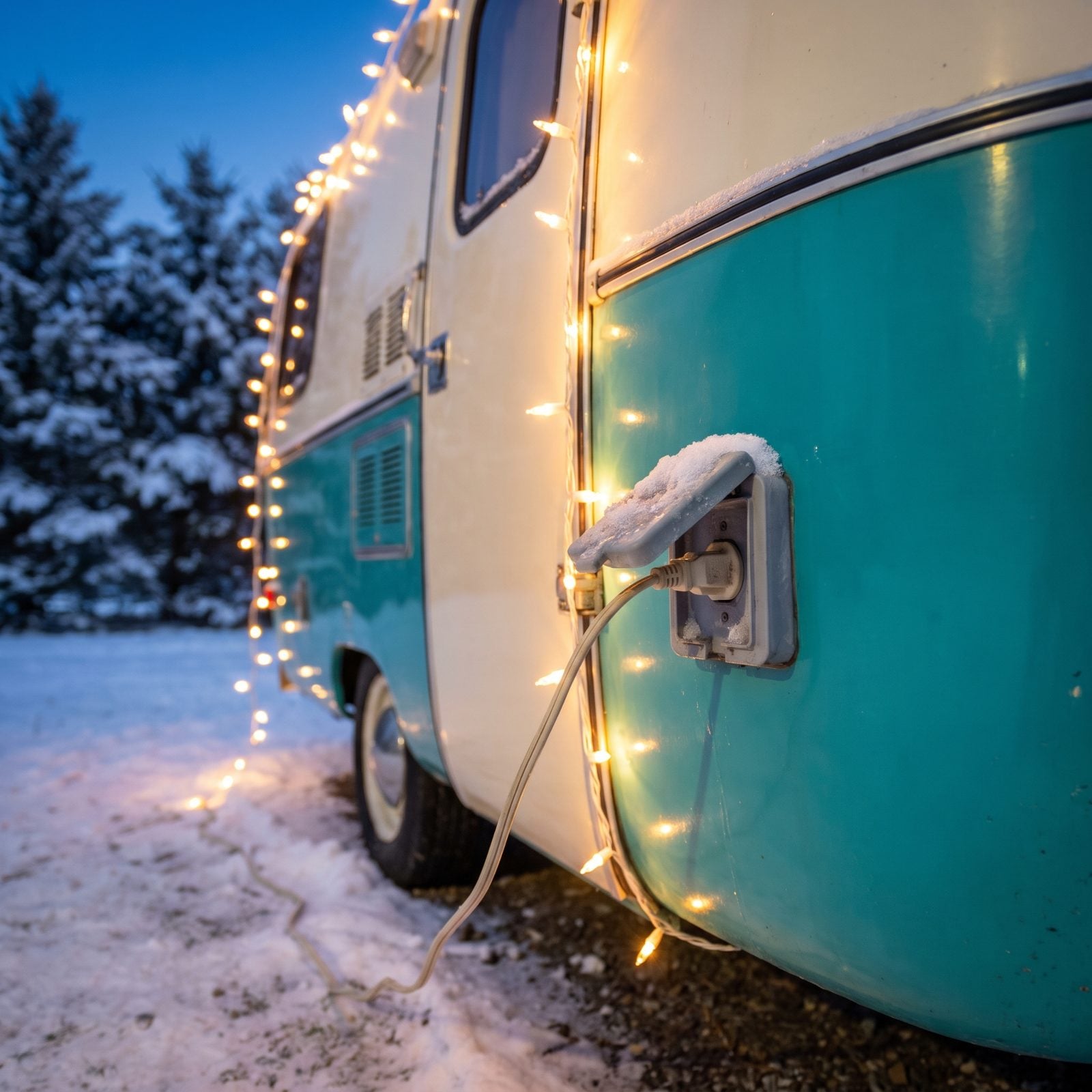
Indoor lights tossed up on the outside of the rig are a short circuit waiting for the first snowmelt. Those strands aren’t sealed against moisture, and water plus electricity plus a confined space is a combination you never want to meet.
Check the box before you hang anything. Look for strands rated for outdoor or indoor/outdoor use, paired with a weatherproof extension cord and, ideally, a GFCI outlet.
LED strands run cooler and sip power, which matters when you’re on a 30-amp pedestal already feeding your furnace. Keep the whole light budget modest so the holiday glow doesn’t trip your breaker on the coldest night of the year.
21. Blocking Vents, Marker Lights or the License Plate
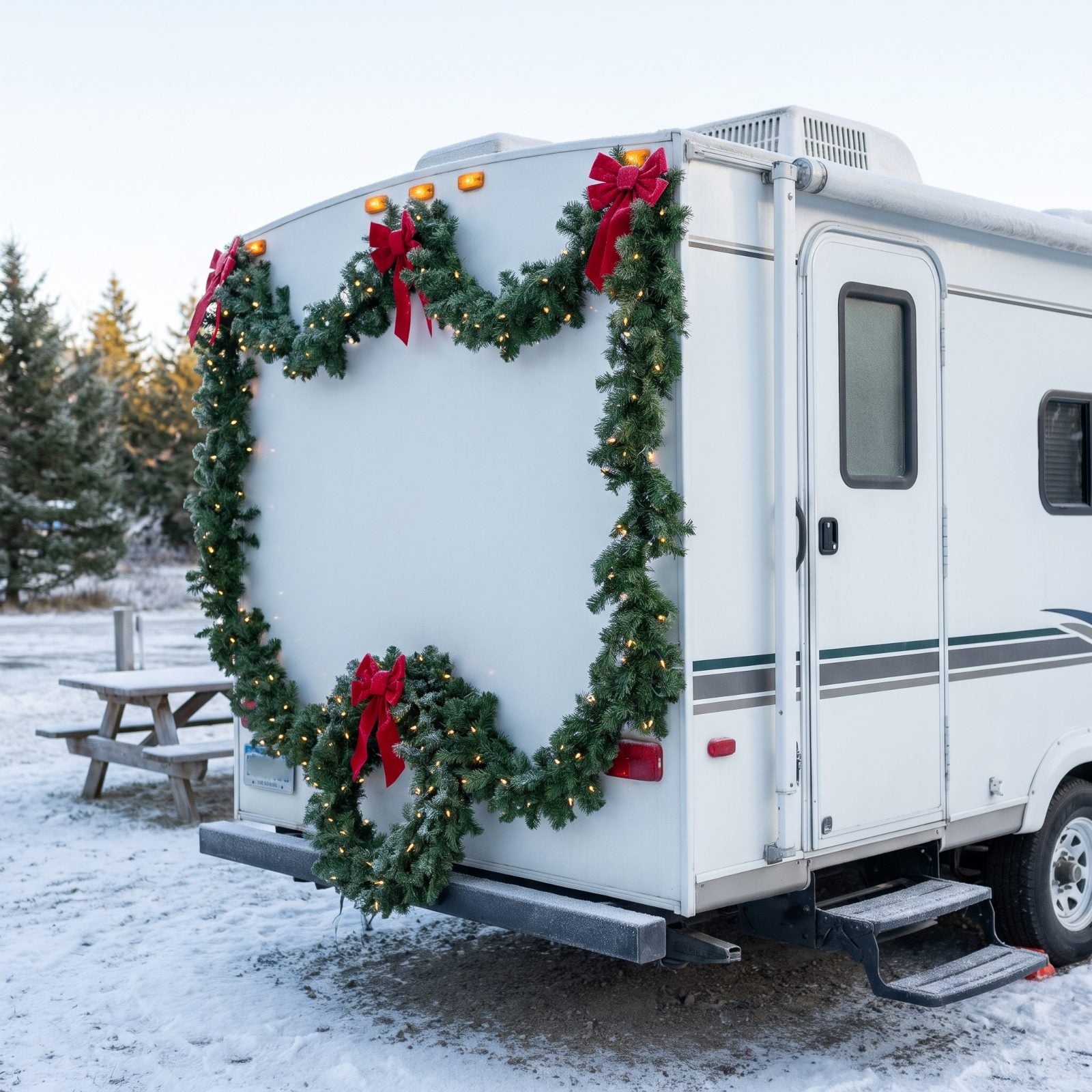
Garland looks great wrapped around everything until you realize you’ve buried the fridge vent, covered a marker light, and hidden your plate. One of those is a legal problem the moment you move the rig. The other two are a carbon monoxide and refrigeration problem that stays put.
Your furnace, water heater, fridge, and battery compartment all need to breathe. Smother a vent with decorations and you’re choking the appliance or trapping combustion gases where you sleep.
Before you call the decorating done, walk a full lap. Confirm every vent is open, every marker and tail light is uncovered, and your plate reads clean. Decorate the panels, never the function.
20. Running Light Strands Across Slide-Out Seals
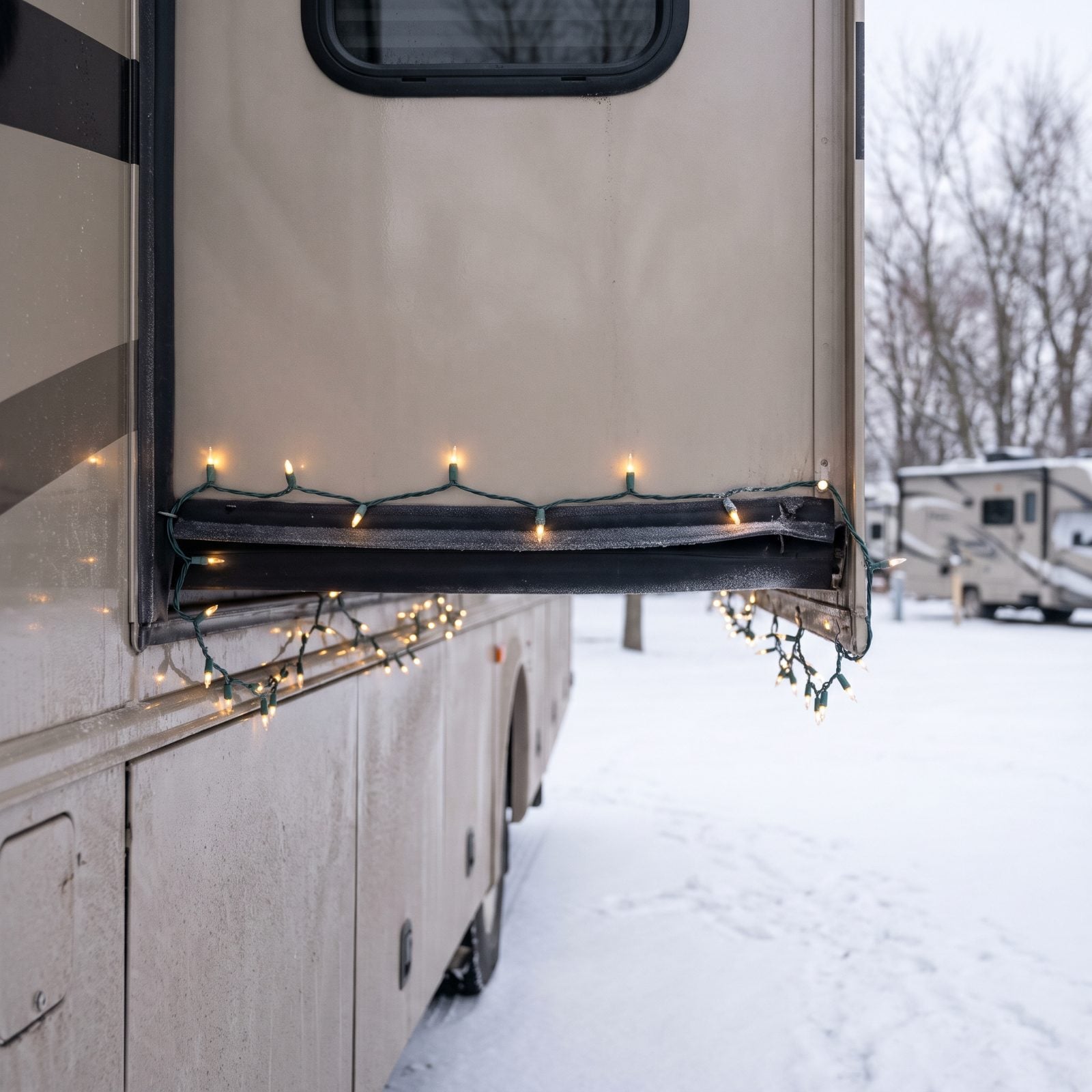
This one’s easy to miss. You run a cheerful strand of lights along the slide-out, pull the slide in for the night to hold heat, and crush the wire right across the rubber seal.
Now you’ve got a pinched cord, a compromised seal, and a draft whistling in exactly where you were trying to stay warm. Over time that mangled seal lets in water too.
Keep every light strand, cord, and bit of garland clear of the slide path. Want the slide lit? Decorate the fixed body around it and leave the moving seal line completely alone. Route your cord so it never crosses where the slide travels.
19. Placing Garland Near Furnace or Water-Heater Exhausts
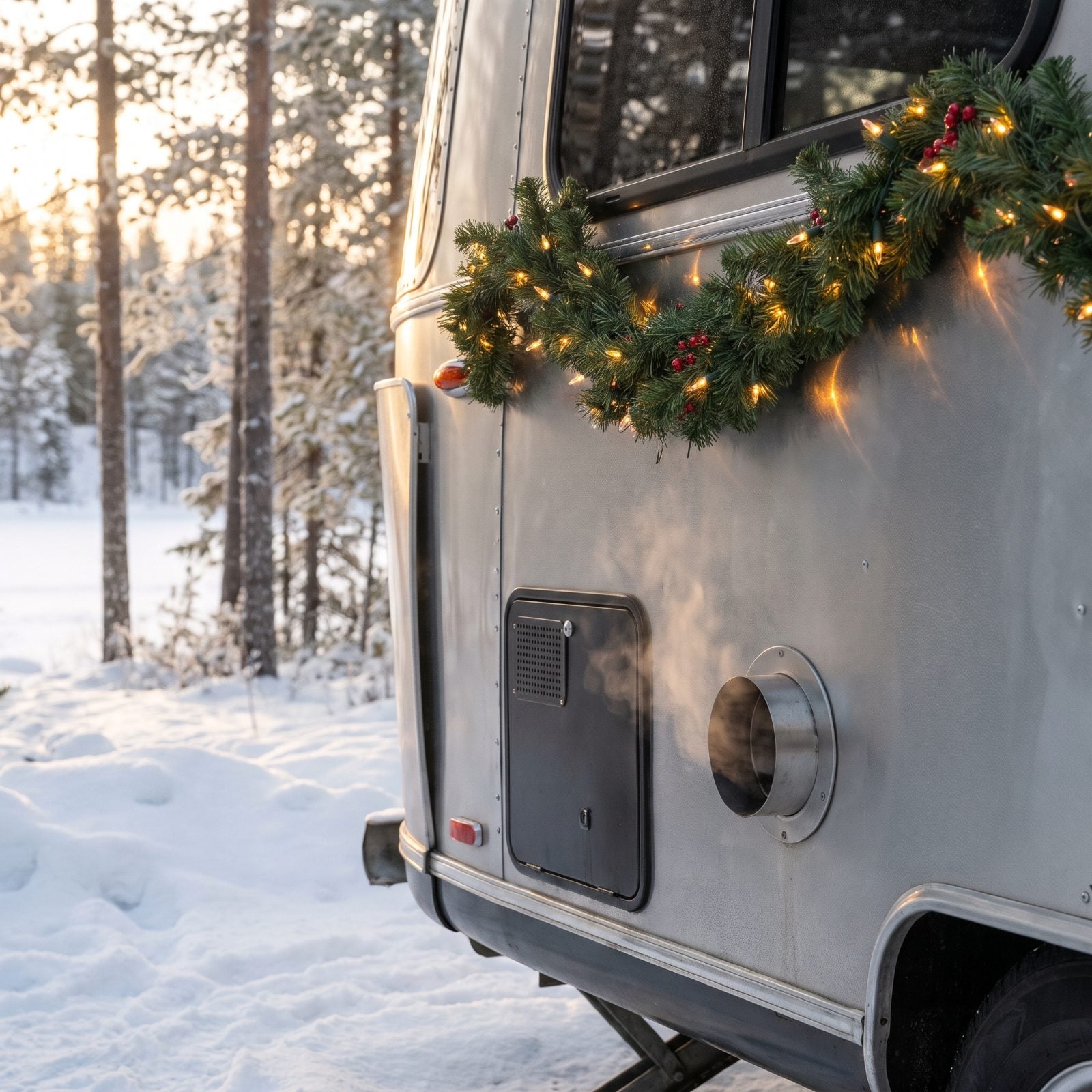
Garland near an exhaust is the mistake that stays quiet right up until it doesn’t. Your furnace and water heater push real heat and combustion gases out through small side panels, and that metal gets hot.
Drape flammable decoration too close and you’ve built kindling against a heat source. In a space as small as an RV, that’s not a risk worth the festive look.
Know where your exhausts are and keep a wide margin, at least a couple of feet, clear of any fabric, garland, or light strand. Not sure which panel is which? Run the furnace for a minute and feel for the warm air before you hang a thing.
18. Burning Real Candles Inside the RV
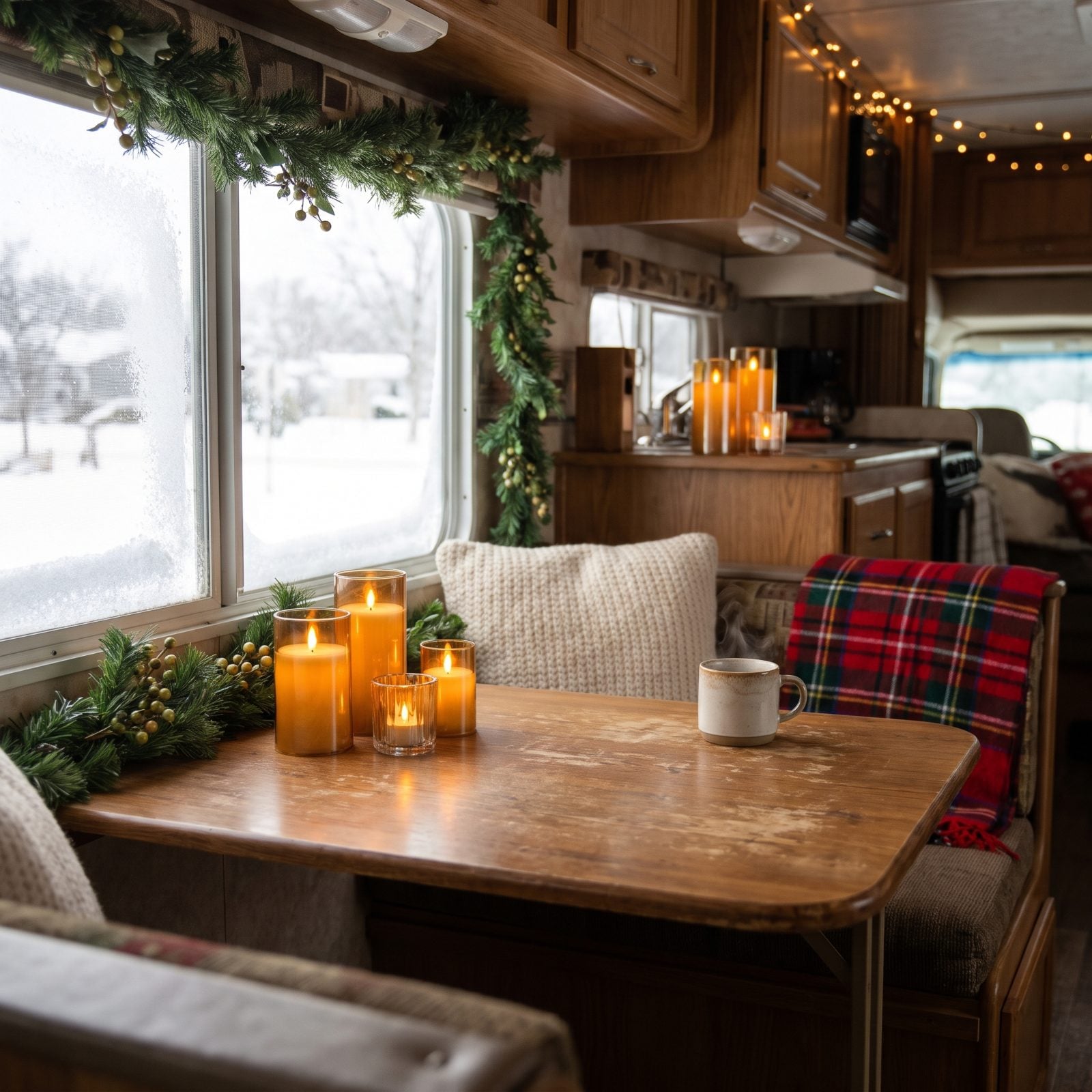
A real candle flickering in the window is lovely in a house. In an RV, you’re turning an open flame loose in a tight space full of fabric, propane, and a floor plan where the exit is one narrow door away.
It only takes a bump of the dinette, a curious pet, or a gust through a cracked window. RV interiors go up fast, and you don’t have a lot of room to get out.
Switch to flameless LED candles. The good ones flicker convincingly, run on a timer, and give you the whole warm glow with zero chance of catching a curtain. I resisted these for years as cheesy. I was wrong. They’re great.
17. Failing to Anchor the Christmas Tree for Travel
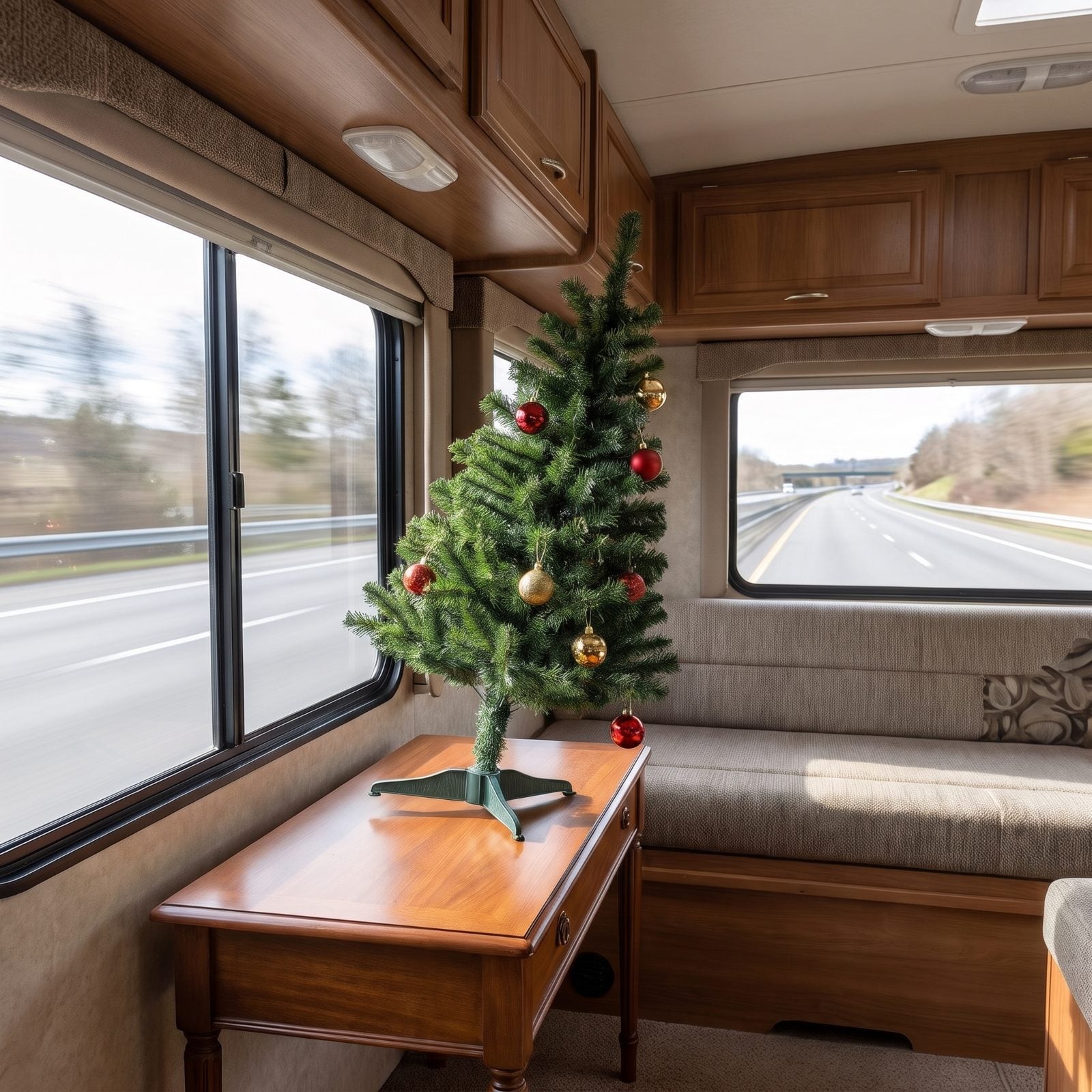
A loose Christmas tree becomes a projectile the second someone bumps the table. Even a small one slides, tips, and launches ornaments across the room. Glass bulbs don’t make it, and neither does your composure.
Pick a compact artificial tree, keep the ornaments shatterproof, and strap the whole thing down before you walk away. A bungee cord looped around the trunk and anchored to the table’s drawer pull takes seconds and holds through bumps and nudges.
Tree standing on the floor in a sturdy stand? You’ve got more freedom there. This rule is strictly for tabletop trees. Treat the tree like any other loose object: either it’s secured, or it’s going to fall.
16. Blocking the Emergency Exit With Gifts and Garland
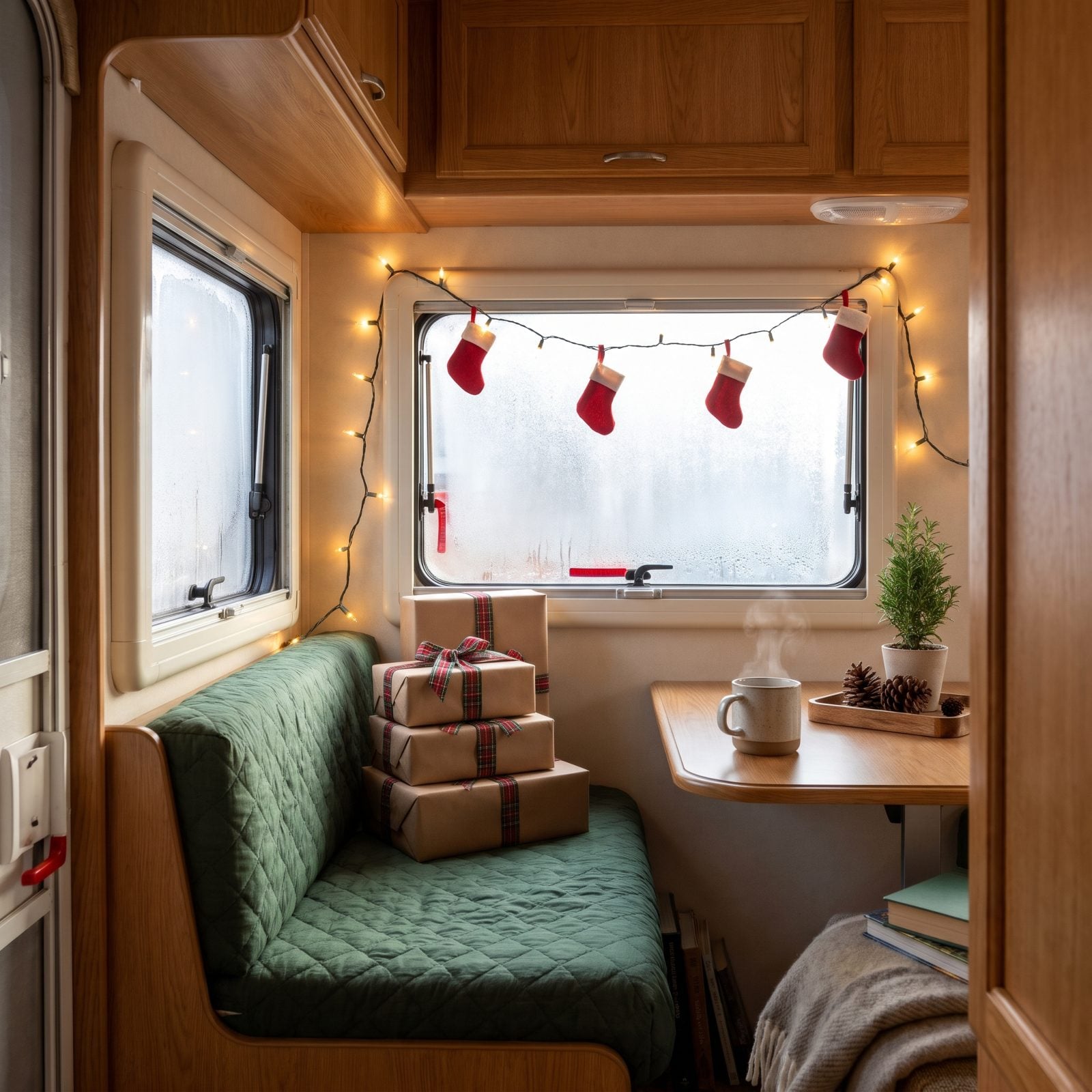
You hang the garland, stack the presents on the dinette, and suddenly that egress window is wearing a scarf of string lights and a pile of boxes. That window above the bed or the dinette is your second way out of a trailer. Picture clawing through tinsel and climbing over gifts to reach the latch at 2am — you’ve just turned a decoration into a trap.
Keep every escape route clear. Decorate around the exit, never over it. Stash the wrapped boxes under the bed or out in the truck until Christmas morning, and leave that latch bare and grabbable with one hand in the dark.
15. Hanging Edible Decorations That Invite the Neighbors You Didn’t Ask For
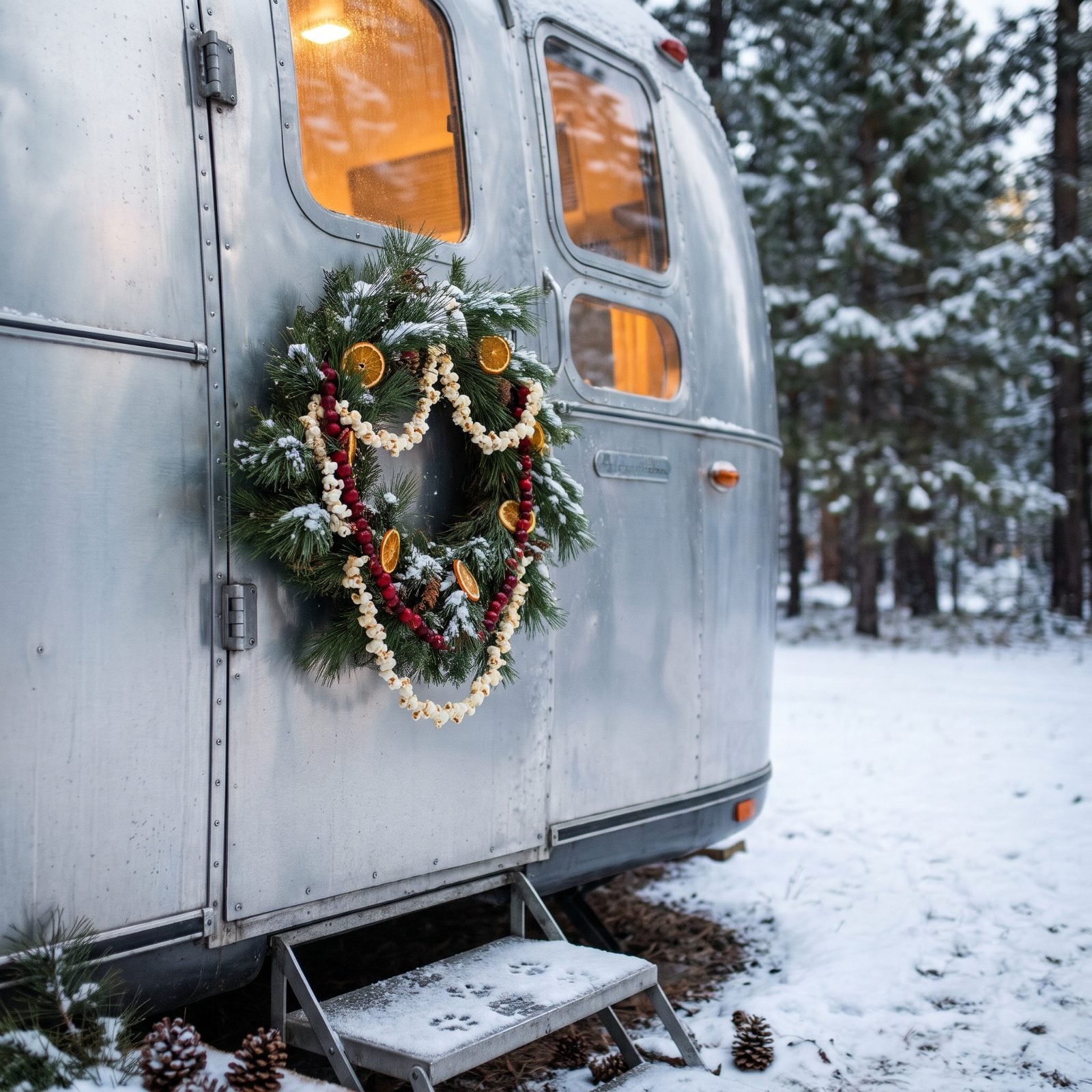
A popcorn garland and a cranberry-studded wreath look like a holiday card. They also read as a buffet to every raccoon, deer and curious bear within sniffing distance. Edible decor on the outside of your rig is an open invitation, and the cleanup after a midnight raid is not festive.
Go artificial instead — fake berries, pine cones, metal ornaments, ribbon. Love the dried-orange look? Keep it inside the door where the warmth stays and the wildlife can’t reach. Nature doesn’t need a snack station bolted to your awning.
14. Buying the Bulky Gift With Nowhere on Earth to Put It
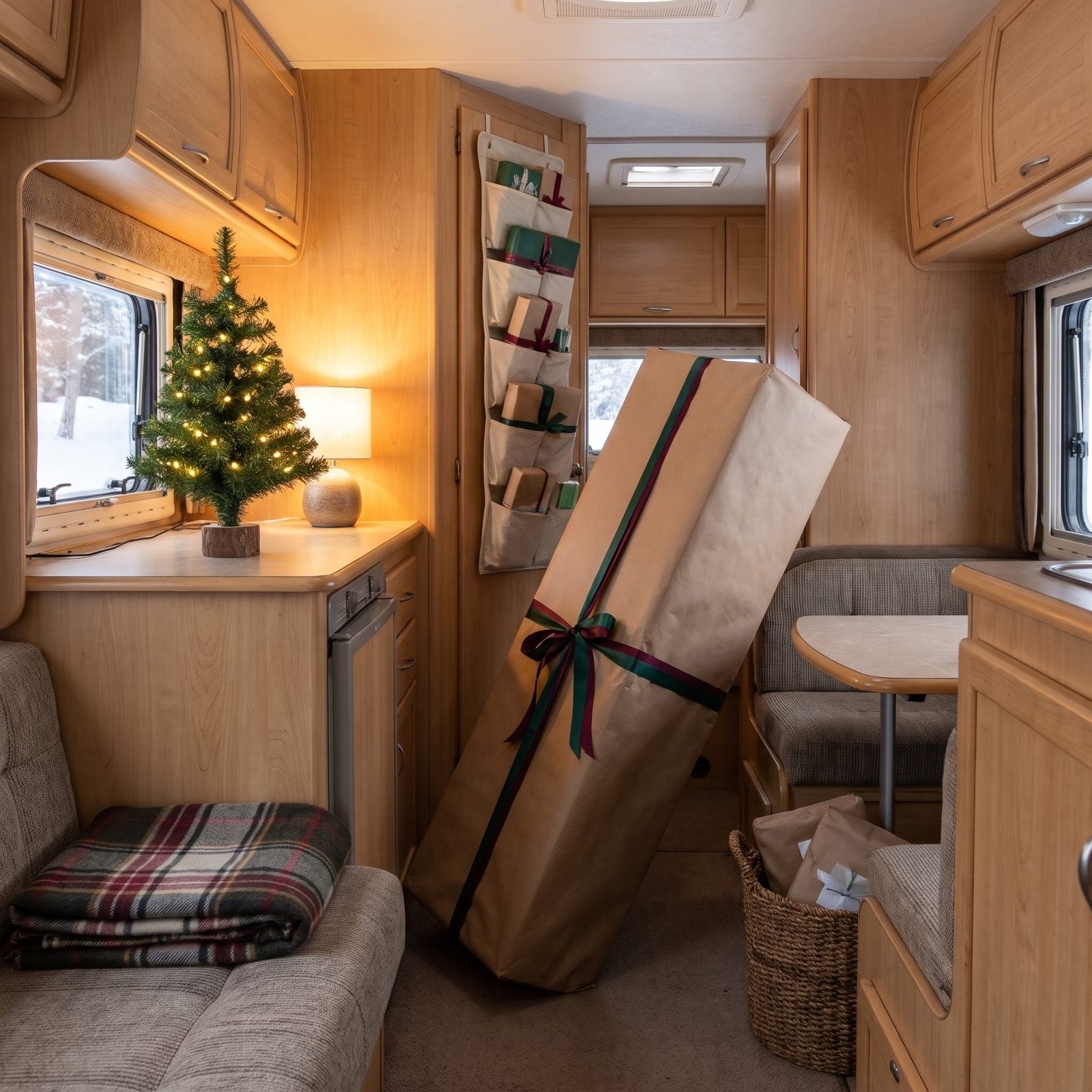
That giant dollhouse is a lovely thought and a terrible fit. It looks fine with a roomy living room around it, but in a rig, every gift has to live somewhere once the paper comes off. A bulky present in 200 square feet isn’t generous — it’s a space tax you pay for months.
Shop for flat, soft or consumable. Good coffee, warm socks, a slim book, a gift card for a night in a cabin. If it can’t earn its square inches or get used up, it stays on the store shelf. Your future self, hunting for the frying pan behind a three-story dollhouse, will thank you.
13. Shipping Packages Without Asking the Campground First
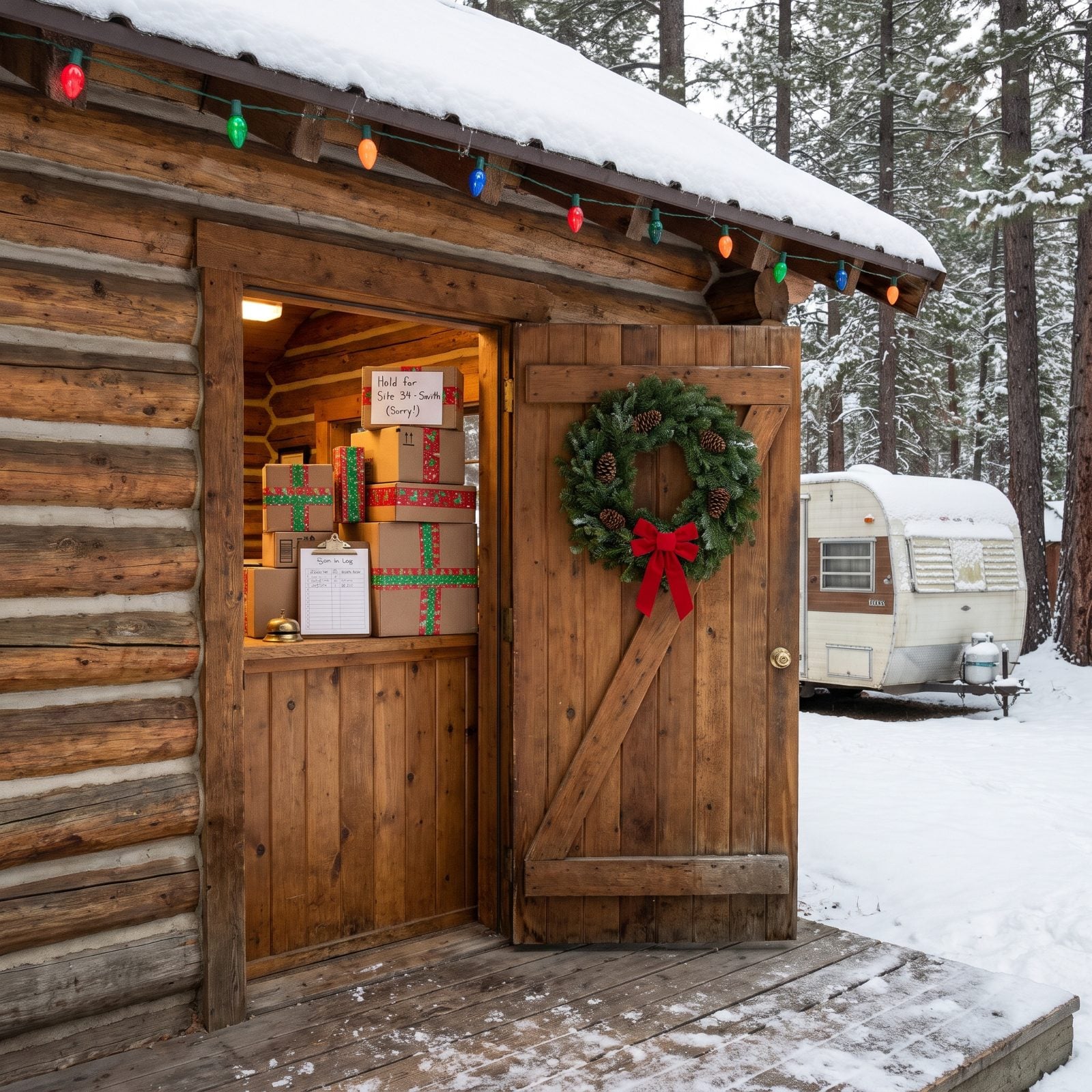
You order Mom’s gift to the campground, assume it’ll be waiting, and roll in to find they don’t take packages at all — or they held it three days then shipped it back. Not every RV park accepts deliveries, and plenty cap how long they’ll sit on a box. Your carefully timed present winds up in a return loop two states away.
Call ahead with the specific questions. Do you accept packages? What name and address goes on the label? How long do you hold it, and is there a fee? Get all of that before you click buy. For anything you genuinely can’t miss, a General Delivery hold at the local post office or an Amazon Locker is the safer play.
12. Trusting the RV Oven With a Turkey You’ve Never Baked In It
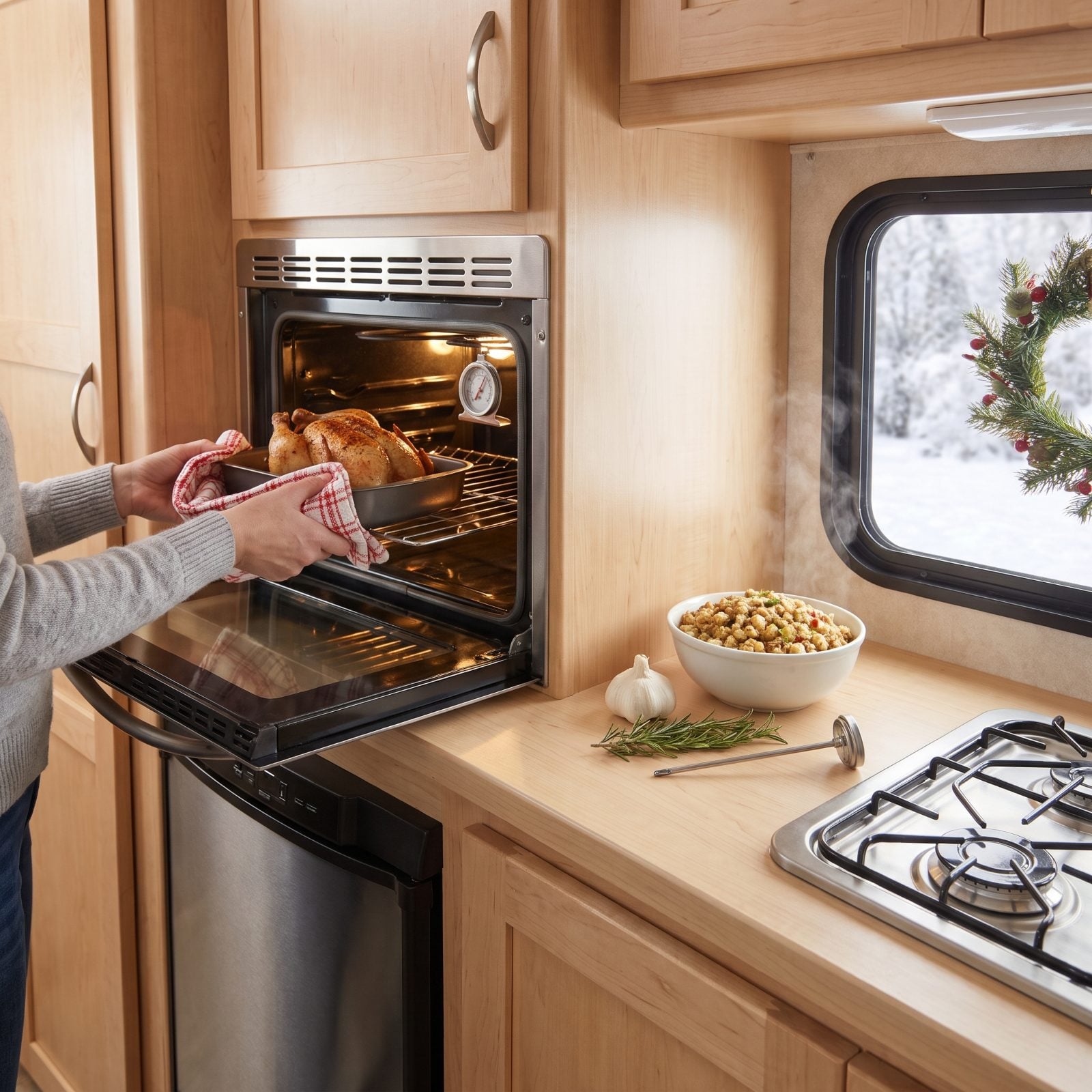
RV ovens lie. The dial says 350 while the burner side of the rack runs closer to 425 and the back corner barely clears 300. Make Christmas dinner the very first thing you ever bake in it and you’re gambling the whole meal on a mystery.
So do a dry run a week out. Hang a cheap oven thermometer inside, see where the real temperature lands, and learn your hot spots. Rotate the pan halfway through, drop a diffuser or a pizza stone in to even things out, keep a meat thermometer handy. One test loaf of bread tells you everything before the turkey’s on the line.
11. Cramming the Fridge Full Days Before the Big Meal
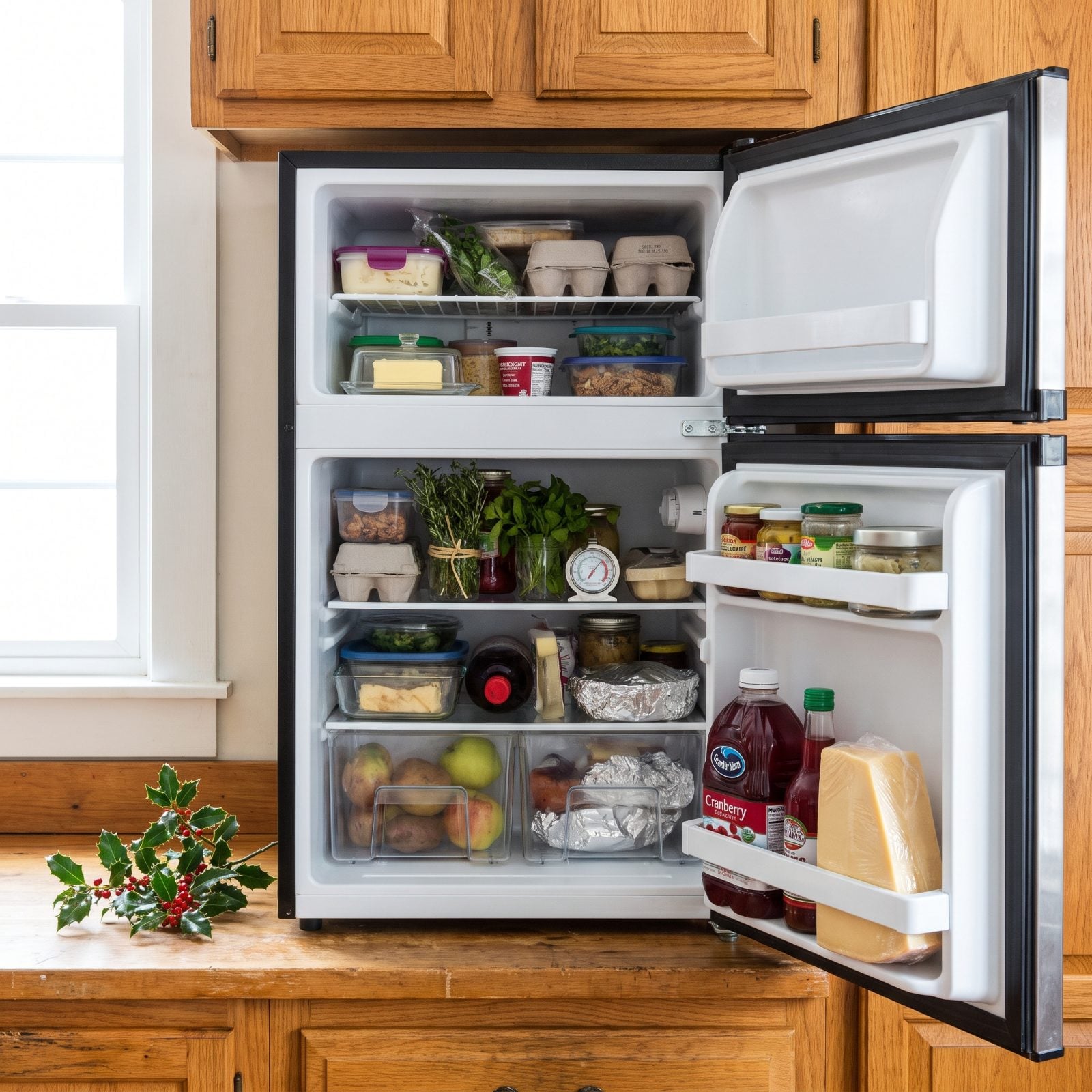
An RV fridge isn’t a house fridge. Most are absorption units that cool by convection, and they hate a tight pack. Jam every shelf with eggnog, casseroles and a ham, and the cold air can’t move — everything in there drifts warm right when you need it coldest.
Leave gaps so air can circulate. Keep a thermometer inside and aim for under 40 degrees. Prep ahead, but stagger it: chill the dishes you’ll serve soonest, lean on a cooler packed with ice for drinks and backups, and let the fridge do one job well instead of ten jobs badly.
10. Deep-Frying the Turkey Under the Awning
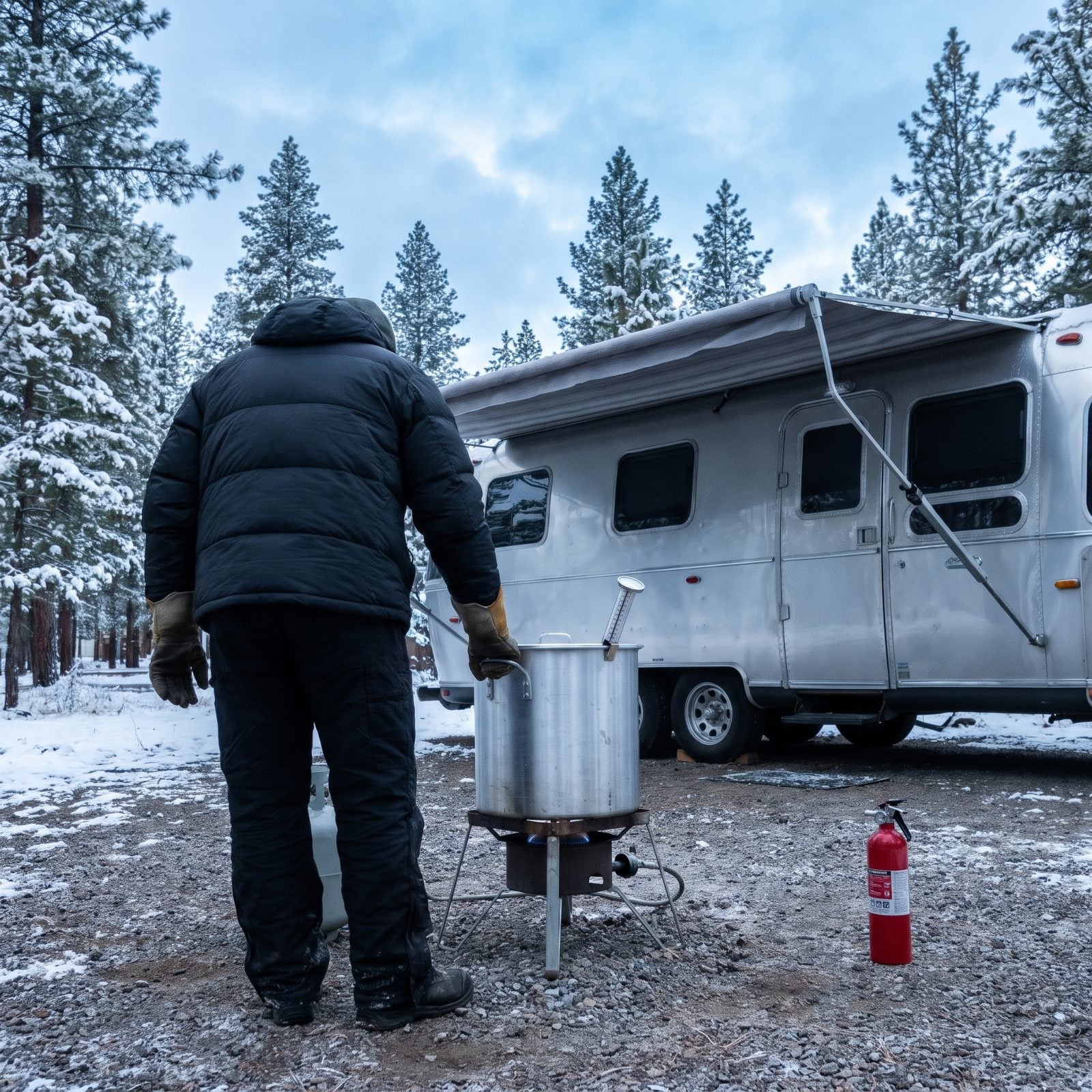
Deep-frying under the awning feels smart when it’s cold or drizzling. It’s also one of the fastest ways to turn a holiday into an insurance claim. Fryers flare, oil spatters, and awning fabric over a rig full of propane is not where you want flames getting ideas.
Fry on bare ground, well clear of the RV, with open sky above and nothing flammable within ten feet. Awning fully retracted. Keep a Class B extinguisher at arm’s reach, never walk away from the pot, and lower a fully thawed, dry bird in slowly — a wet or frozen turkey hitting hot oil erupts. Respect that and the worst that happens is dinner runs a little late.
9. Putting Off the Grocery Run Until Christmas Eve
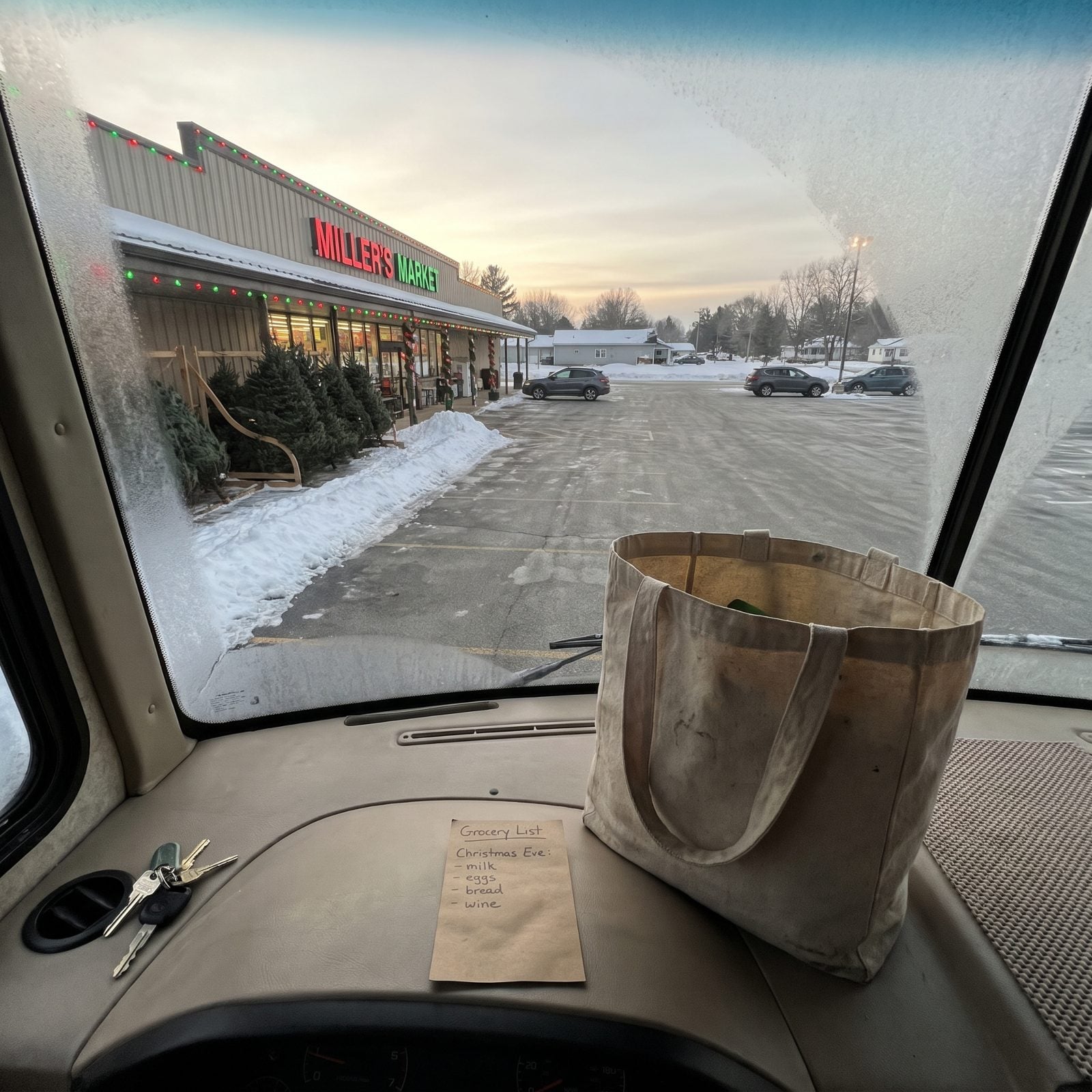
Nobody warns you about this part of camping over the holidays. The little town you’re parked near might have exactly one grocery store, and it closes at noon on Christmas Eve — or sits forty minutes away, or got picked clean by the 23rd. There’s no popping out at the last second like you could back home.
Scout the nearest real store the day you arrive, and check its holiday hours online. Shop two or three days early for anything that keeps, and only leave the fresh, cold stuff for the final run. Running out of butter on a house street is an errand. Running out at a remote campsite on the 24th eats your whole afternoon.
8. Leaving the Prescription Refill for the Last Minute on the Road
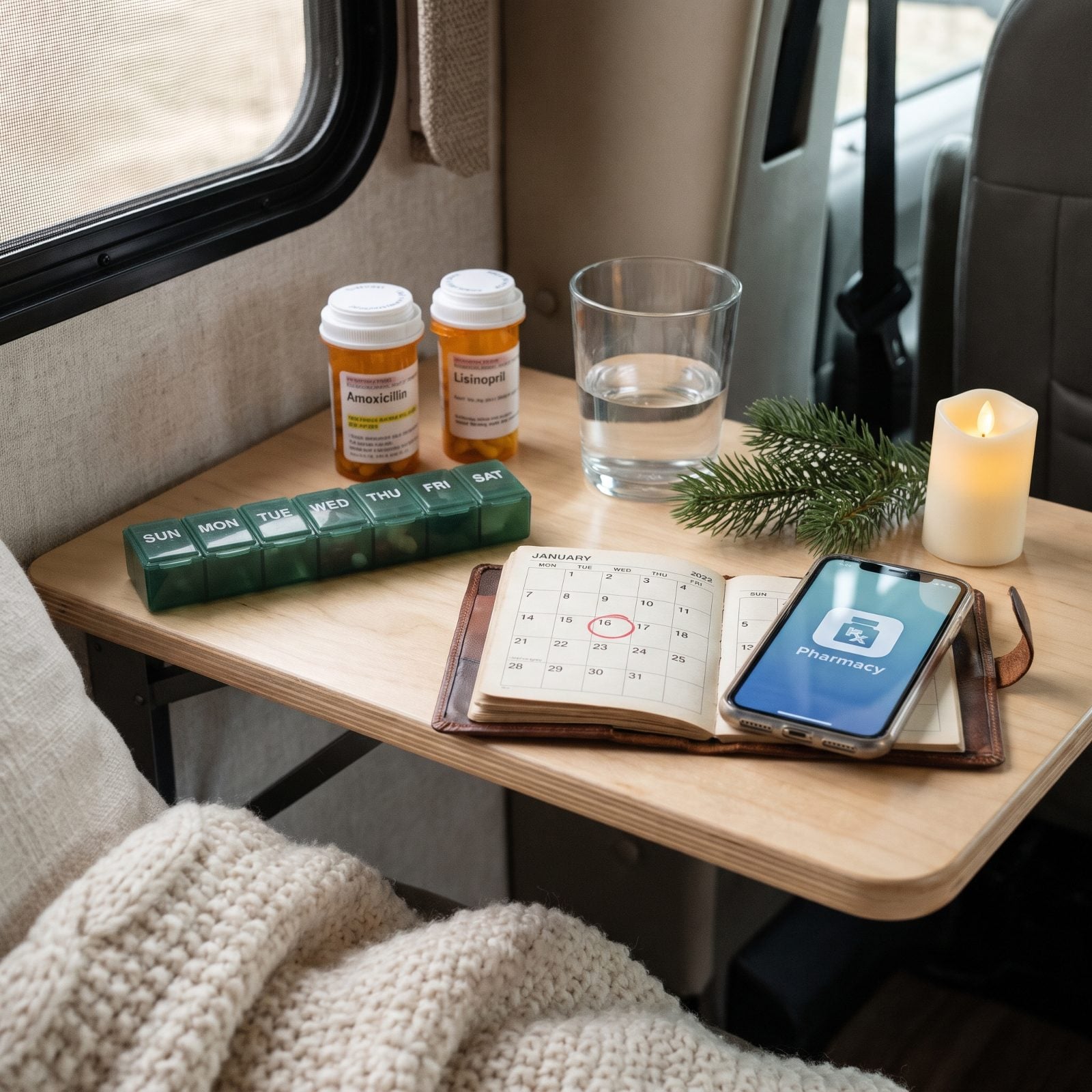
Pharmacies run holiday hours too, and the chain store two states ago can’t always transfer a refill to some one-off pharmacy in a town you’re just passing through. Add a doctor who’s out for the week and a mail-order shipment that stalls at the campground office, and suddenly you’re rationing something you shouldn’t be.
Count your pills now. Not on the 23rd — now. Refill anything that’ll run low over the next three weeks before you lose a signal or hit a holiday gap. A national chain lets you transfer across locations, so you can grab a refill on the road. And carry a few extra days’ buffer, because the road never runs exactly on schedule.
7. Not Knowing the Campground’s Actual Emergency Address
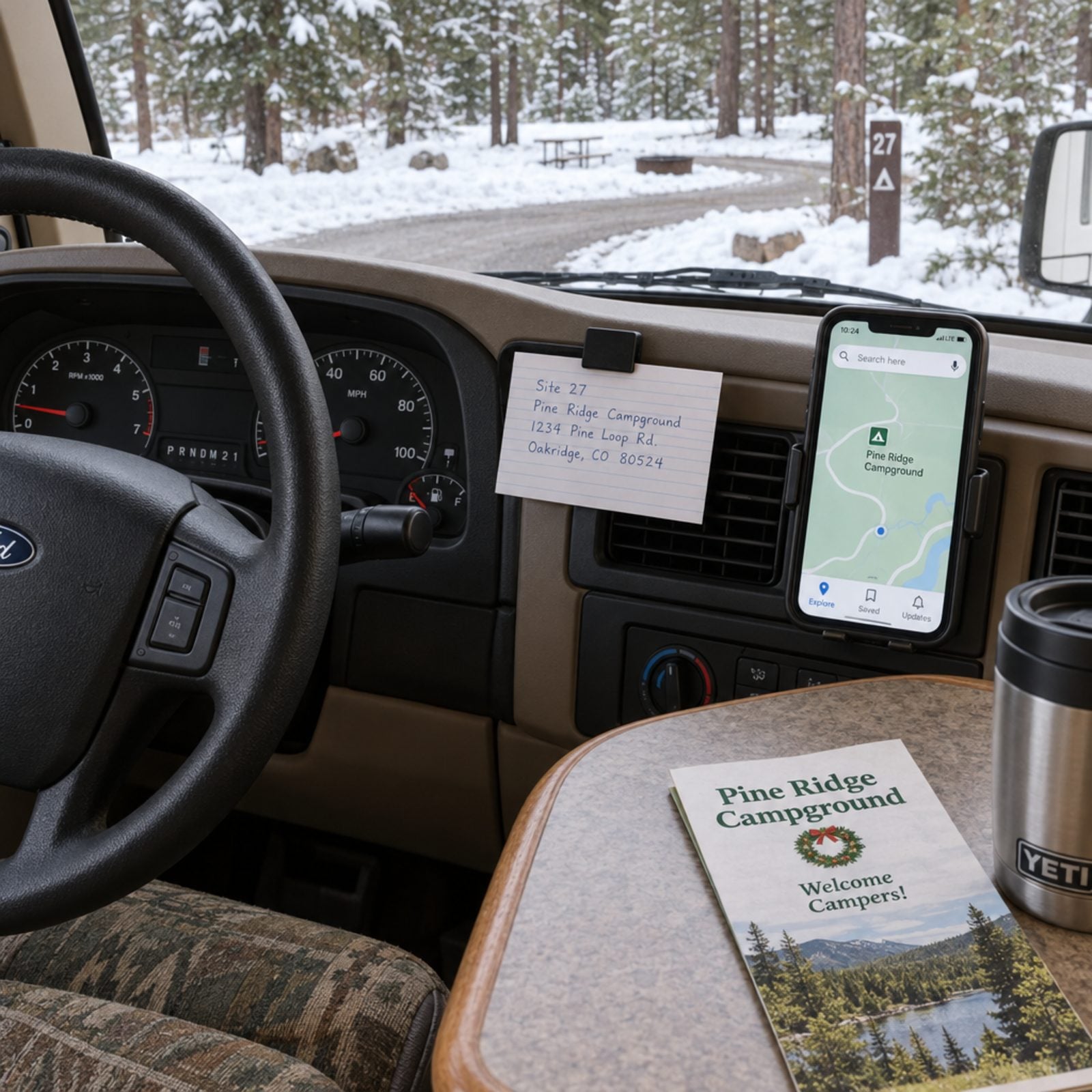
In an emergency, “we’re at the campground off Route 9” is not an address. Dispatchers need a street number, often a site number too, and GPS pins on long rural loops can route help to the wrong gate entirely. Those lost minutes are the ones that matter most.
The hour you arrive, nail down the exact physical address, the site number, and the fastest cross-street. Write it on an index card clipped to the dash, save it in your phone, make sure everyone traveling with you knows where it lives. Takes five minutes, and you’ll almost certainly never need it. Which is exactly why people skip it. Don’t be those people.
6. Treating the First-Aid Kit Like a Summer Afterthought
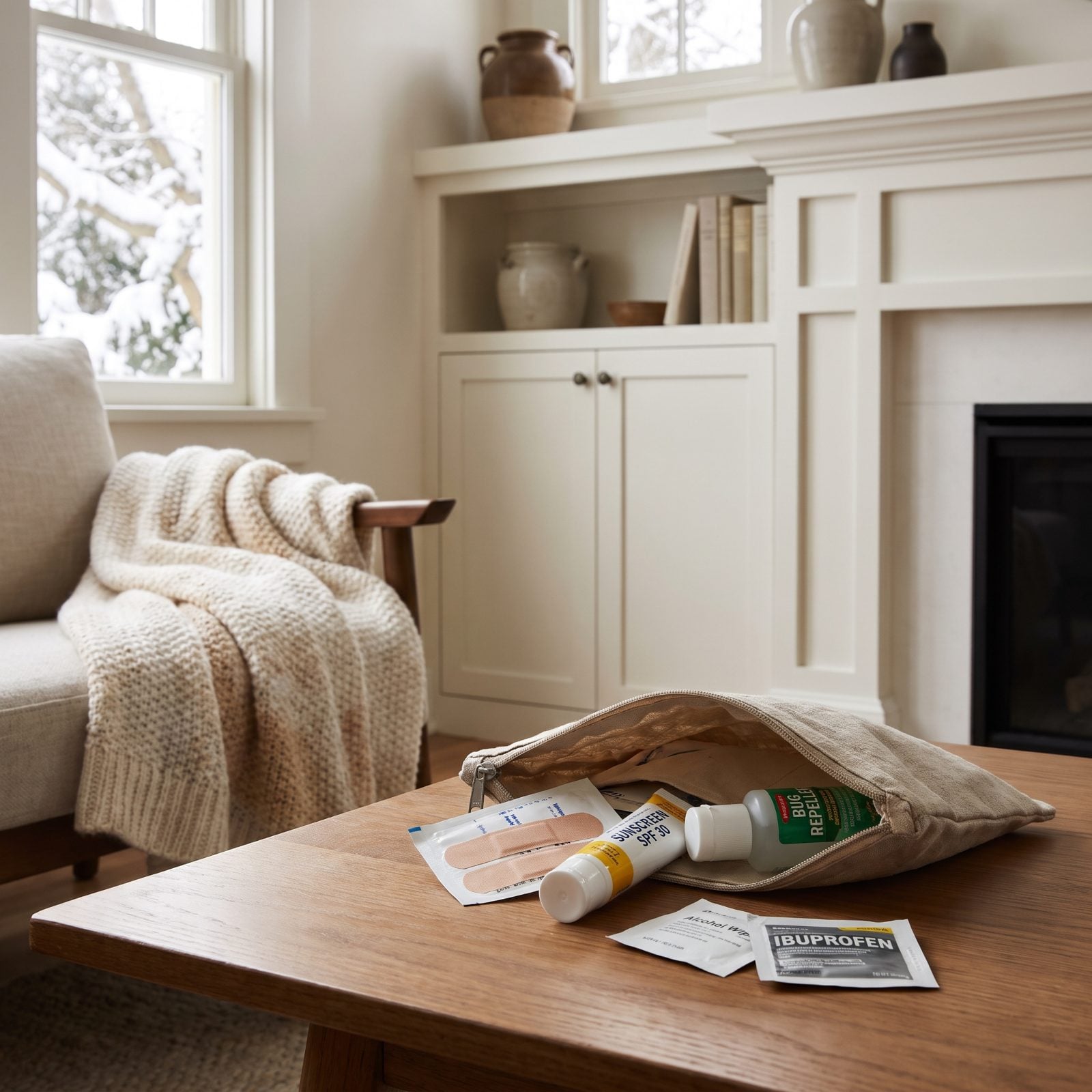
The summer kit gets you through a scraped knee and a bee sting. Come December, that same kit is missing everything that matters — no hand warmers, no space blanket, no backup meds for the week the nearest pharmacy is forty minutes of ice away.
Winter changes the math. A minor problem in July becomes a real problem when the heat quits at 2am and you’re waiting out a cold snap. What you don’t have on a snowy night, you can’t go get.
Build a cold-weather kit now. Add two foil emergency blankets, a box of chemical hand warmers, a hand-crank flashlight, a week of any prescription you take, and a basic trauma supply for the deeper cuts that come with icy steps. Keep it somewhere you can grab it in the dark without knocking over the cocoa.
5. Firing Up the Generator During Quiet Hours
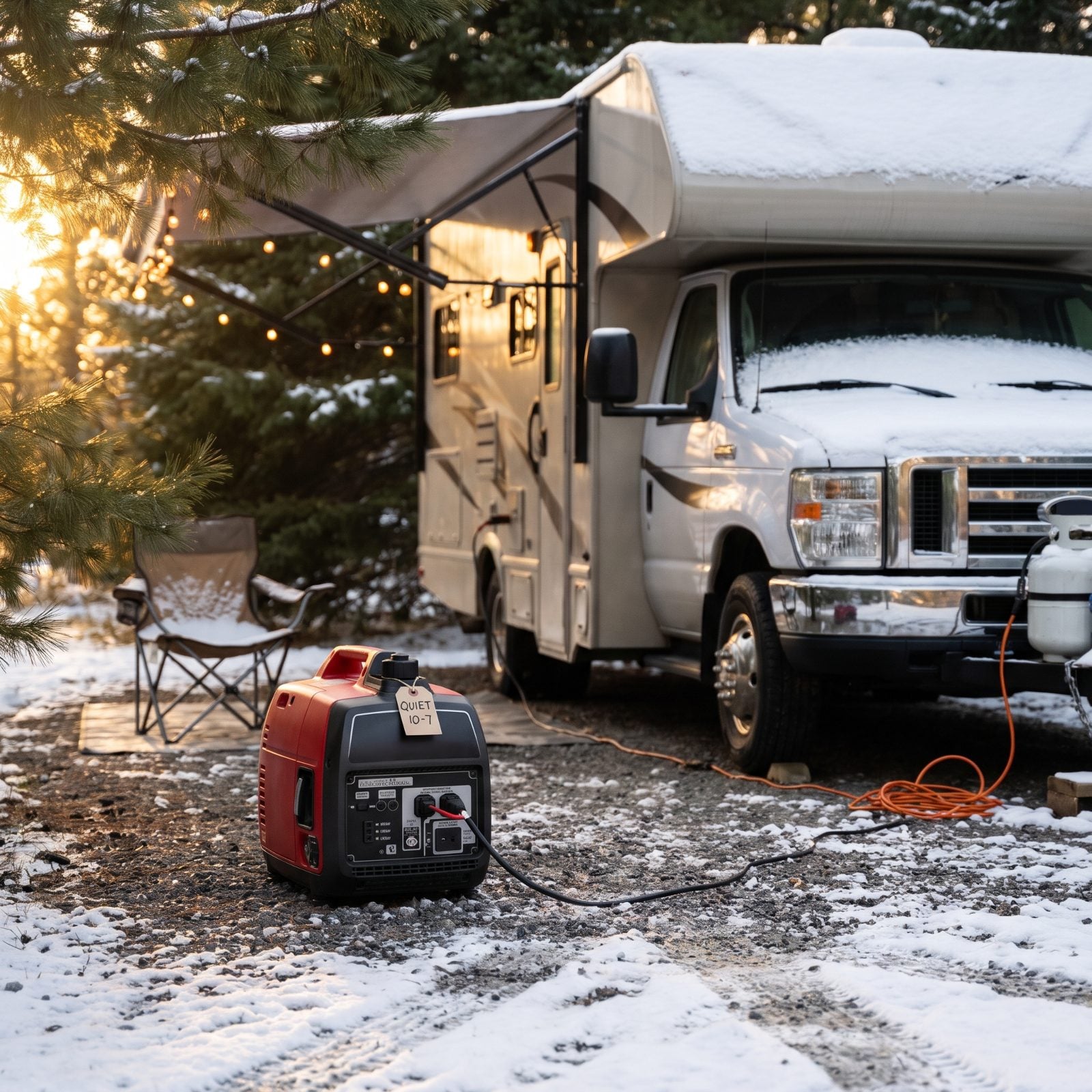
You want the microwave humming and the space heater blasting while you wrap presents. Trouble is, the sign by the office says quiet hours start at 10pm, and the generator doesn’t know it’s the holidays.
Run it past the posted hours and you become the site everyone complains about. Some parks will ask you to leave. Worse, your neighbors are retirees who came here for peace, and you’ve just handed them a reason to resent you all week.
Check the park’s quiet-hour window the day you arrive. Charge your house batteries and run high-draw appliances during permitted daytime hours, then coast on battery and propane through the evening. A decent lithium bank and a small inverter cover the lights, the furnace fan, and the coffee maker overnight without a sound.
4. Inviting the Whole Family Before Reading the Park’s Visitor Rules
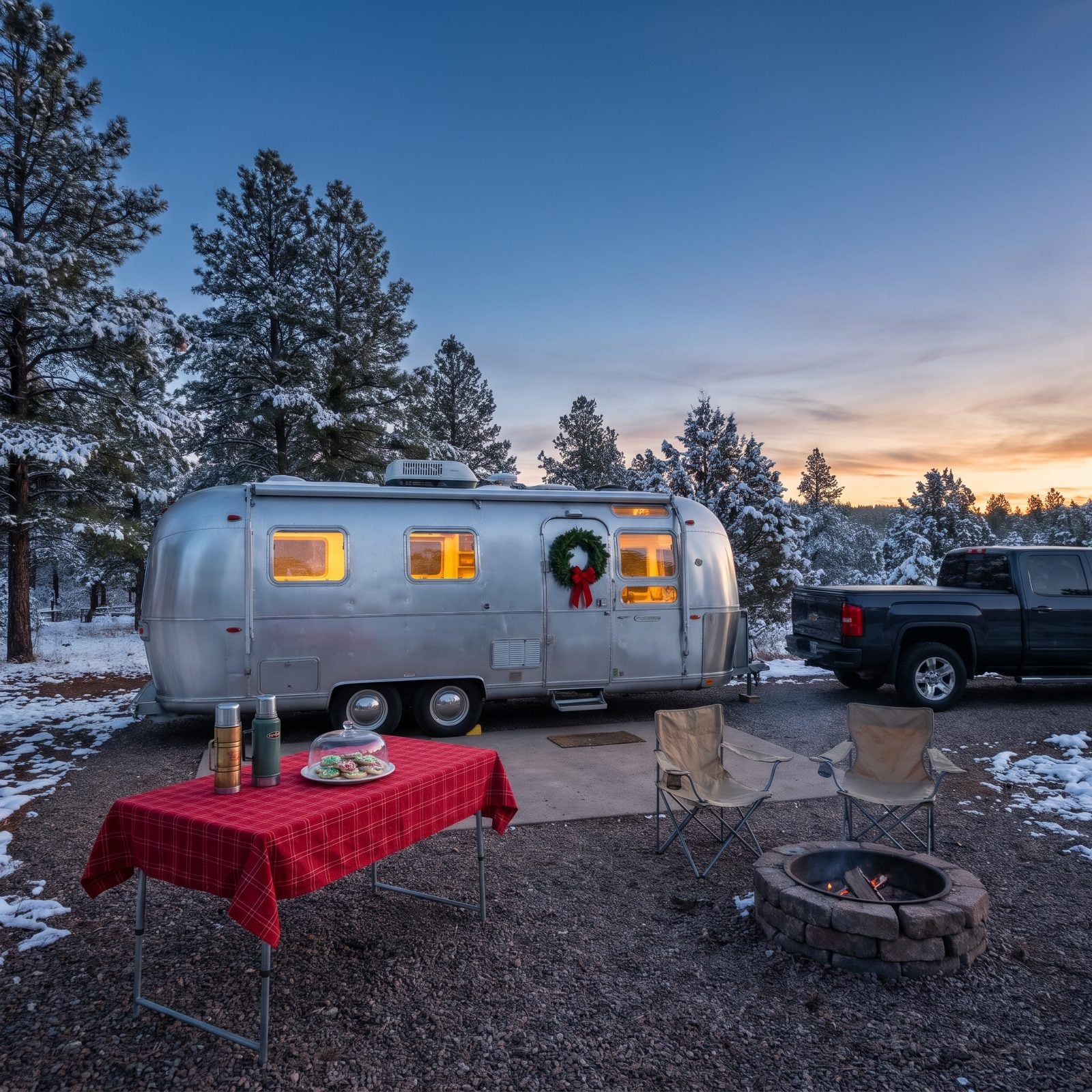
The text goes out in early December: come spend Christmas Eve at the RV. Everyone says yes. Then you find out the park allows two visitors per site, charges a daily guest fee, and has exactly one overflow parking spot for the whole loop.
Now you’re the host explaining to your family why half of them have to park at the gas station down the road. Not the festive welcome you pictured.
Call the office before you invite anyone. Ask three questions: how many day guests are allowed, where extra cars go, and whether there’s a visitor fee or gate code they’ll need. Most parks are generous if you ask first and a headache if you don’t.
3. Leaving the Dog Alone With the Ham and the Tinsel
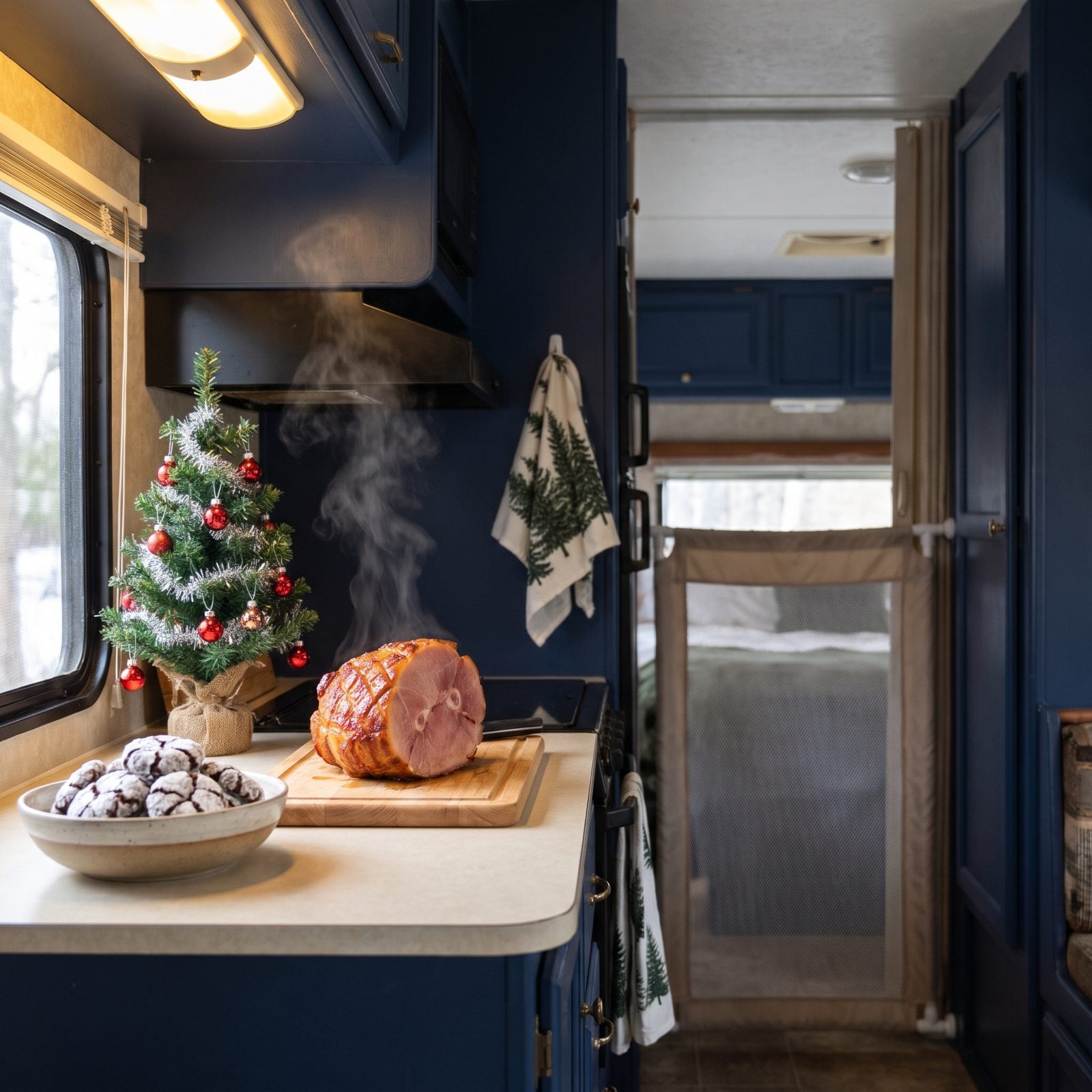
Tiny space, big temptation. In a 28-foot trailer, the holiday ham sits about three feet from the dog’s nose, and the ornaments hang at exactly tail-swipe height.
Grapes, chocolate, onions, cooked bones, raisins — all of it shows up on holiday tables and all of it lands pets at the emergency vet. Swallowed tinsel is its own nightmare, the surgical kind. On a holiday, the nearest open clinic could be two hours away.
Set up a tension-mounted pet gate across the galley before guests arrive, and push counter food to the back wall. Skip real tinsel entirely and hang shatterproof ornaments high. When you step out, crate the dog or shut it in the bedroom with a chew. A bored pet in a small rig will find whatever trouble you left out.
2. Assuming You Can Book Local Holiday Events on a Whim
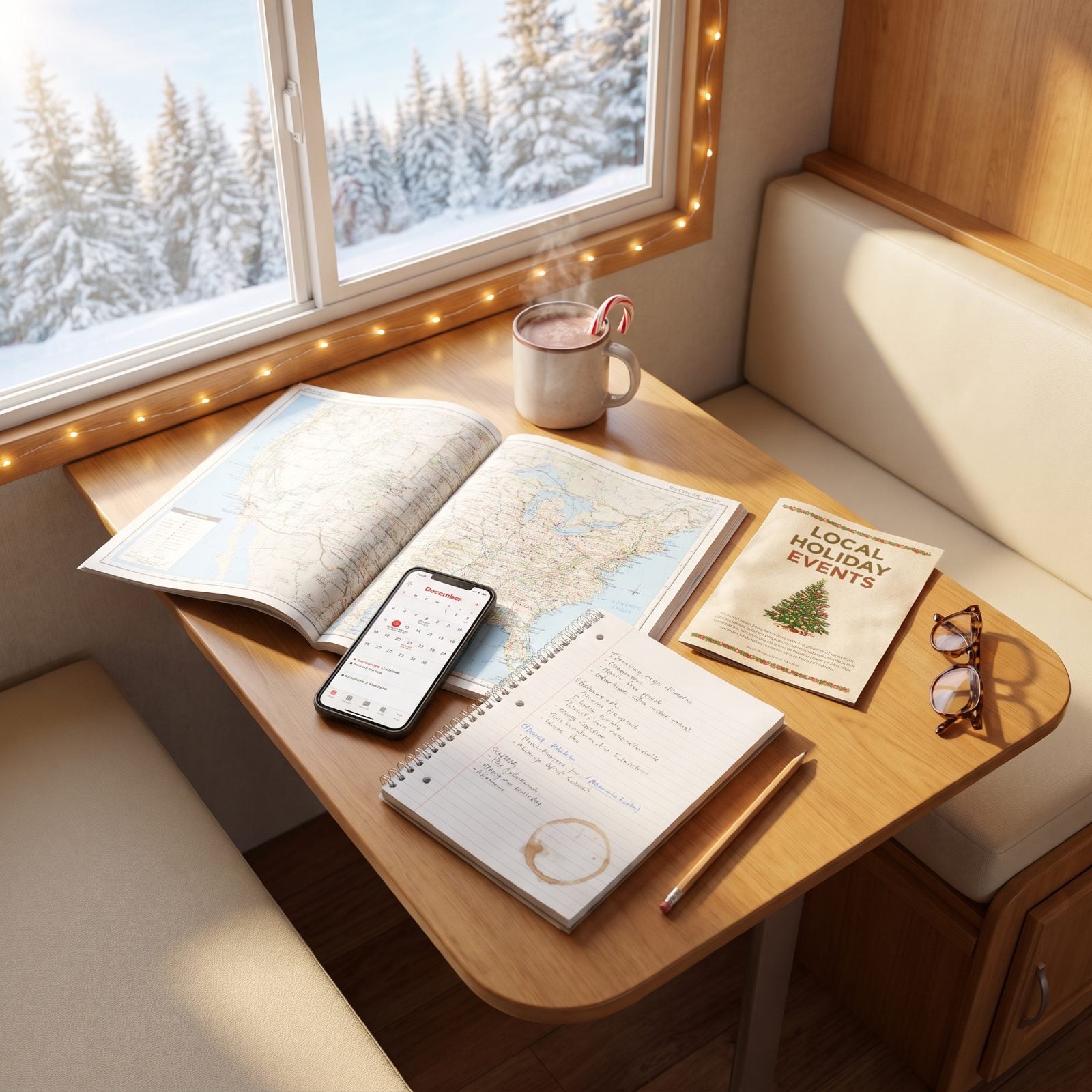
You roll into a mountain town on December 22nd figuring you’ll catch the holiday light parade, the tree-lighting, maybe the Christmas Eve service at the little stone church. Sold out. Sold out. Standing room only, and they stopped taking cars an hour ago.
Small towns punch above their weight at Christmas, and the locals lock these things in back in November. That charm you drove hours to see fills fast precisely because it’s small.
Once your route firms up, search the town’s chamber of commerce page and grab the ticketed events a few weeks out. Candlelight tours, train rides, holiday dinners — they cap attendance. A little advance work is the difference between watching the parade and watching the parking lot.
1. Rolling Into Winter Without an Escape Plan
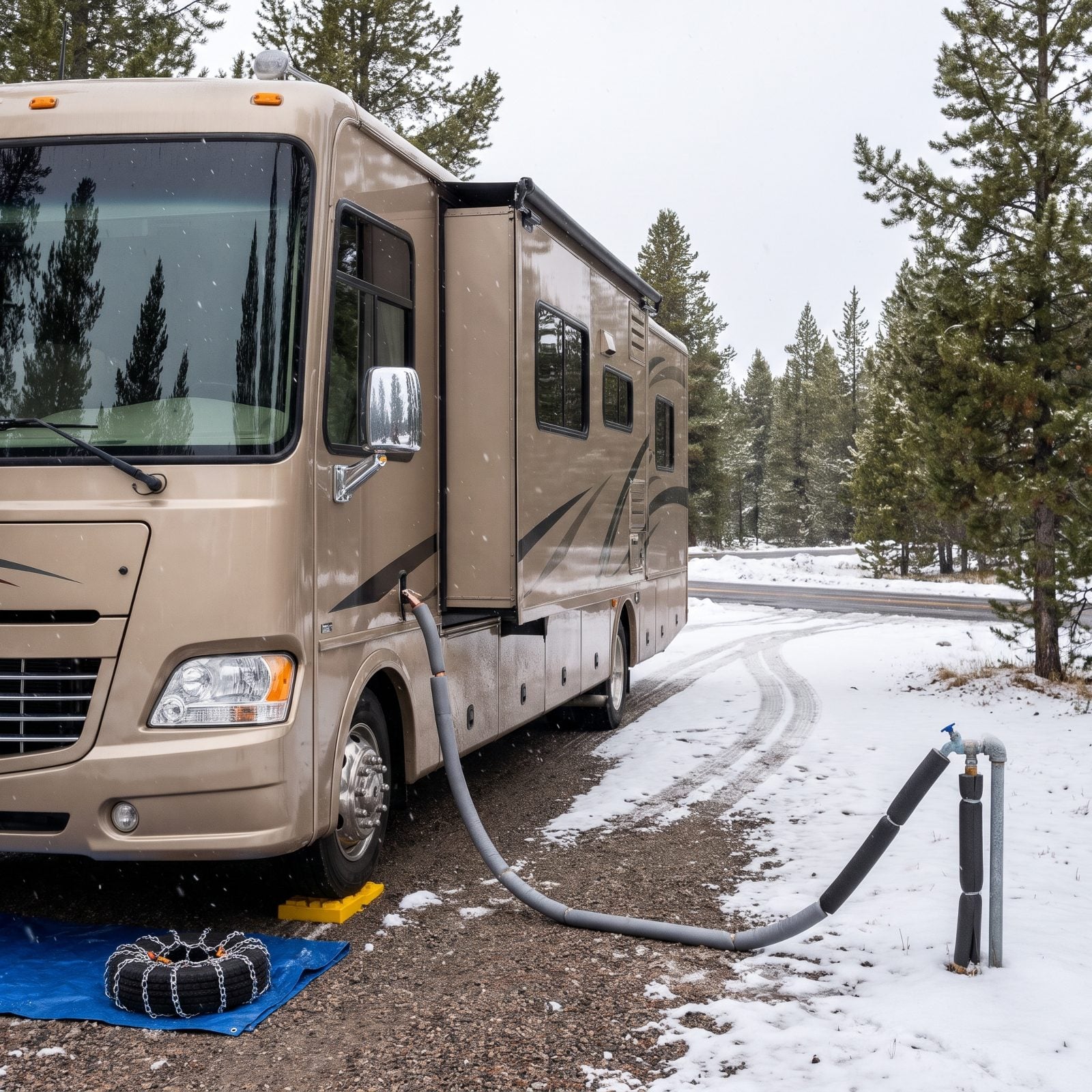
Snow is lovely until the forecast flips and a foot of it is coming by morning. If your rig is backed into a soft, unplowed site with your chains still lying in a tangle beside the tire and no idea which highways close first, you’re not camping anymore. You’re stuck.
I’ve watched people wait one day too long, then discover the mountain pass home closed overnight and the next window is Thursday. A festive trip turns tense fast.
So build an exit plan before any winter-season move. Know two routes out. Carry chains and actually know how to fit them — practicing in your driveway in October beats fumbling with frozen fingers at a pullout. Set a weather trigger: more than a few inches in the forecast and you leave the day before, not the day of. Park nose-out on firm ground, keep the tank above half, and treat the diesel.
The best winter-storm decision is almost always the one you make a day early.
Download the state DOT road app for wherever you’re headed. Live pass closures, chain requirements, all of it — and it’s saved more holidays than any amount of wishful thinking.