
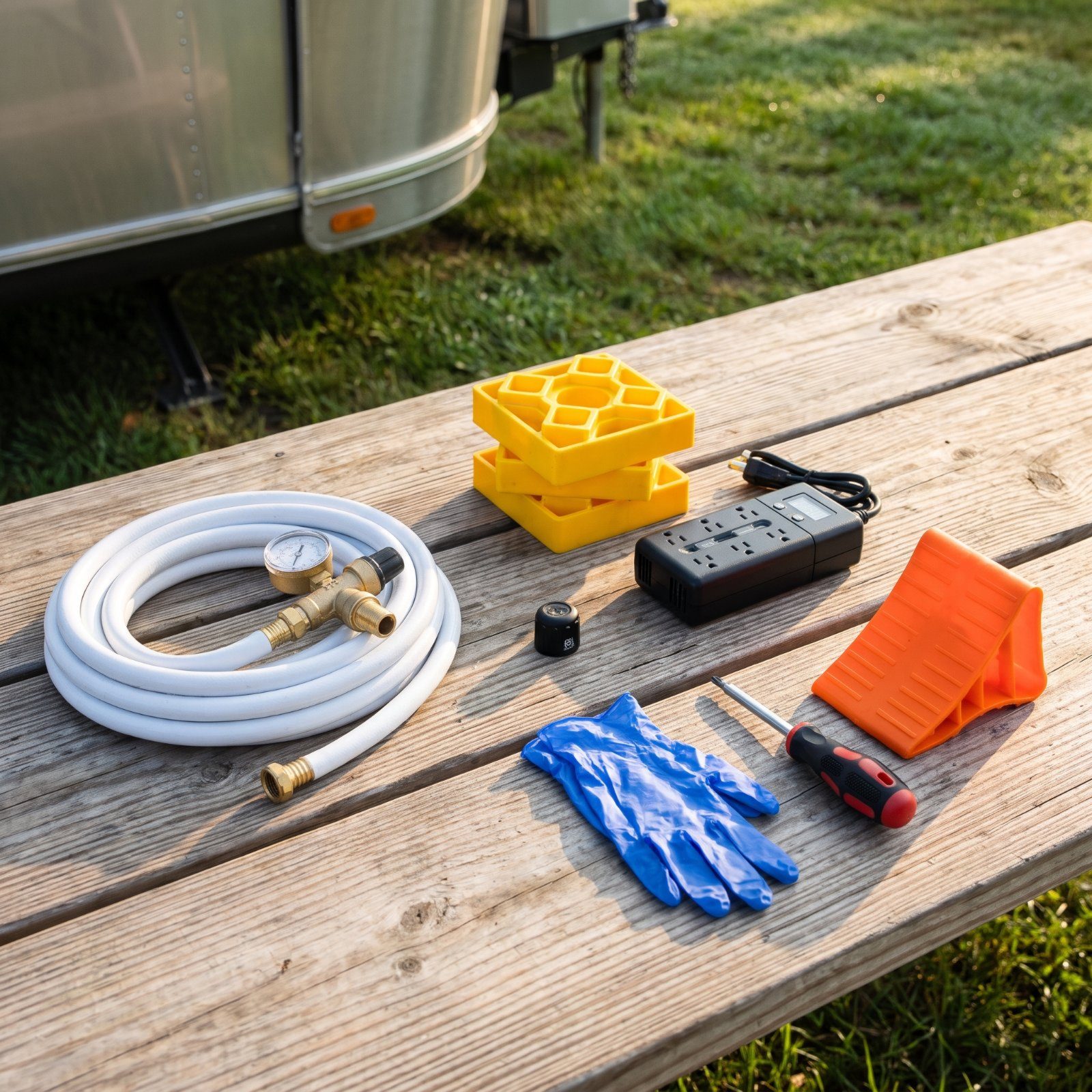
The first time a pedestal threw a dirty 140-volt spike through a brand-new fifth wheel, the owner learned a lesson that cost more than the RV payment. That’s the thing about full-timers and weekend veterans — we don’t pack the fun stuff first. We pack the boring stuff. The gear that quietly stands between a good trip and a tow truck. Half of what matters most lives in a bay you rarely open, costs less than a tank of diesel, and saves you on the one night everything goes sideways. Here’s the gear that earns its storage space every single mile.
Please note that some of the images in this article were created with the assistance of AI.
28. A Surge Protector That Actually Reads the Pedestal
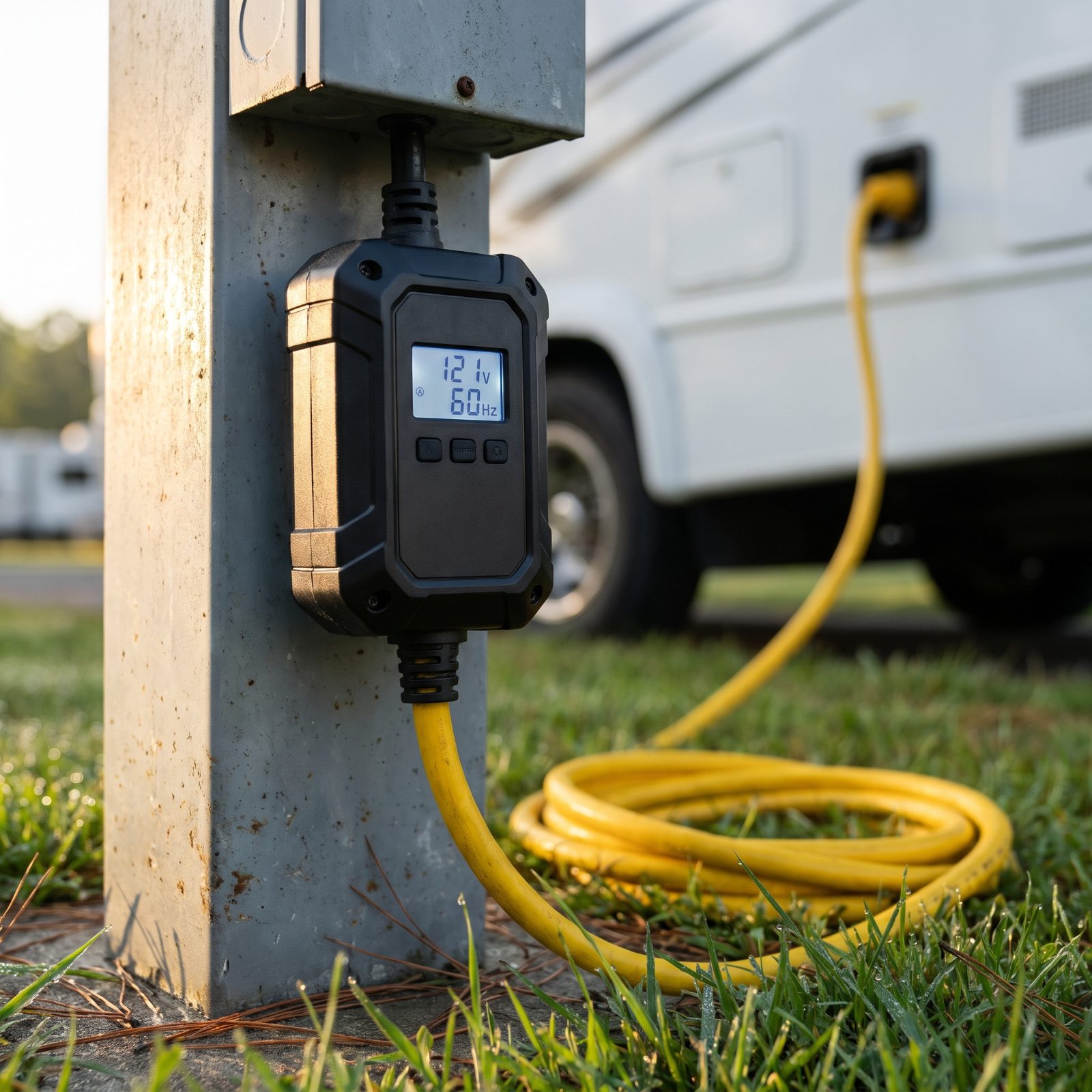
Cheap surge strips block a spike. A real power management unit does more — it reads the pedestal before it lets current into your rig, and it shuts the whole thing down if the voltage sags too low or the park wired the pole backward. Both of those ruin converters and AC units, and a plain surge protector sails right past them.
Expect to pay a couple hundred dollars for a hardwired or portable EMS unit. Feels like a lot until you price a new rooftop air conditioner. Plenty of RVers run a dumb surge strip for a season or two before an old park teaches them the difference.
27. A Tire Pressure Monitoring System You Can See From the Cab
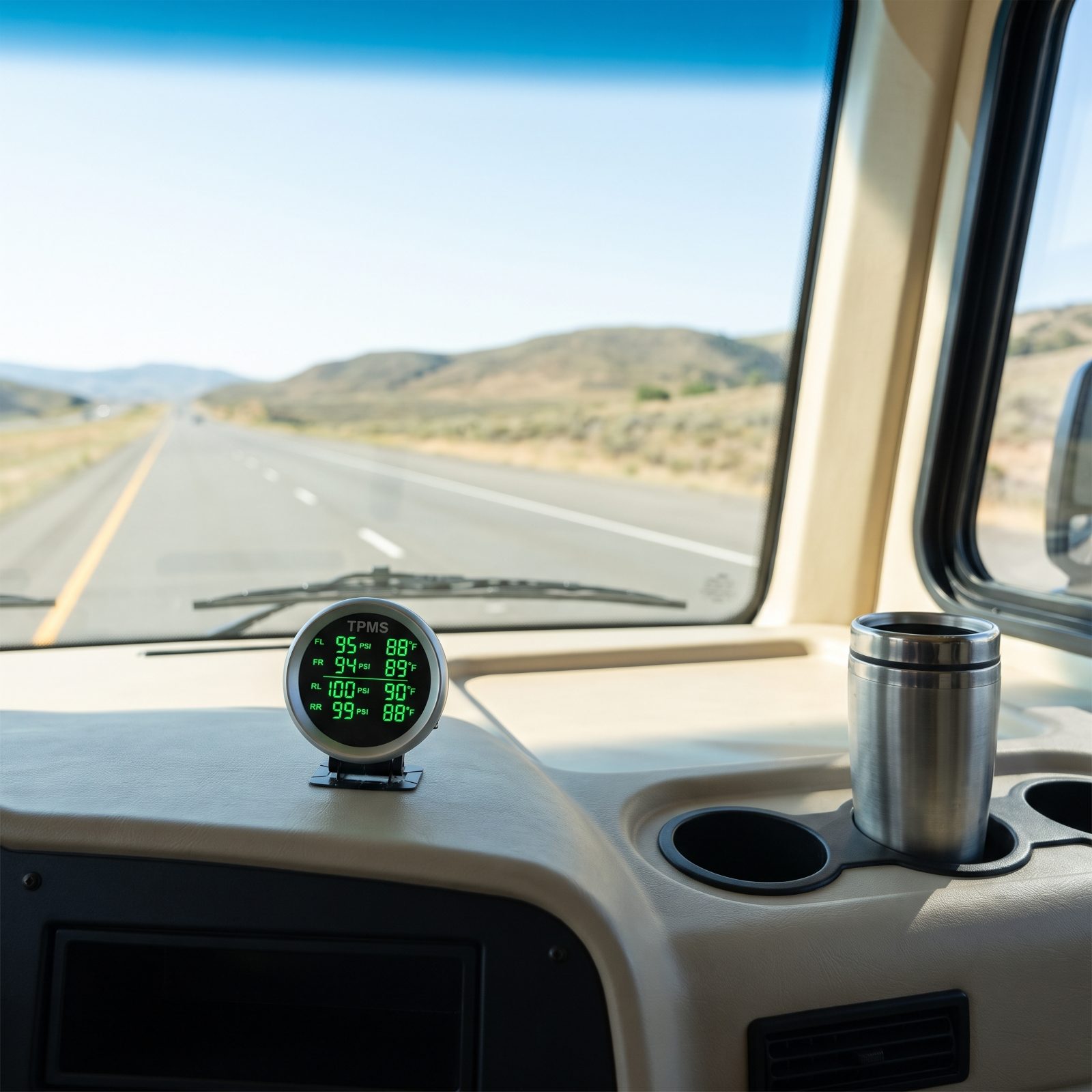
On a travel trailer or fifth wheel, you won’t feel a tire going soft. The truck rides the same, the mirrors look the same, and by the time you smell rubber or see smoke, that tire has already shredded and taken a chunk of fender, wiring, or underbelly with it. A tire pressure monitoring system catches the slow leak miles before it turns into a blowout on the shoulder.
The setup is simple. Small sensors thread onto each valve stem, and a monitor mounted on the dash shows live pressure and temperature for every tire on the rig, including the toad if you flat-tow. Mount the display where a glance tells you everything, not tucked in a cupholder where you’ll forget to look. On longer rigs, a signal repeater keeps the rear sensors from dropping out, and flow-through sensors let you add air without unscrewing anything.
26. A Water Pressure Regulator at Every Hookup
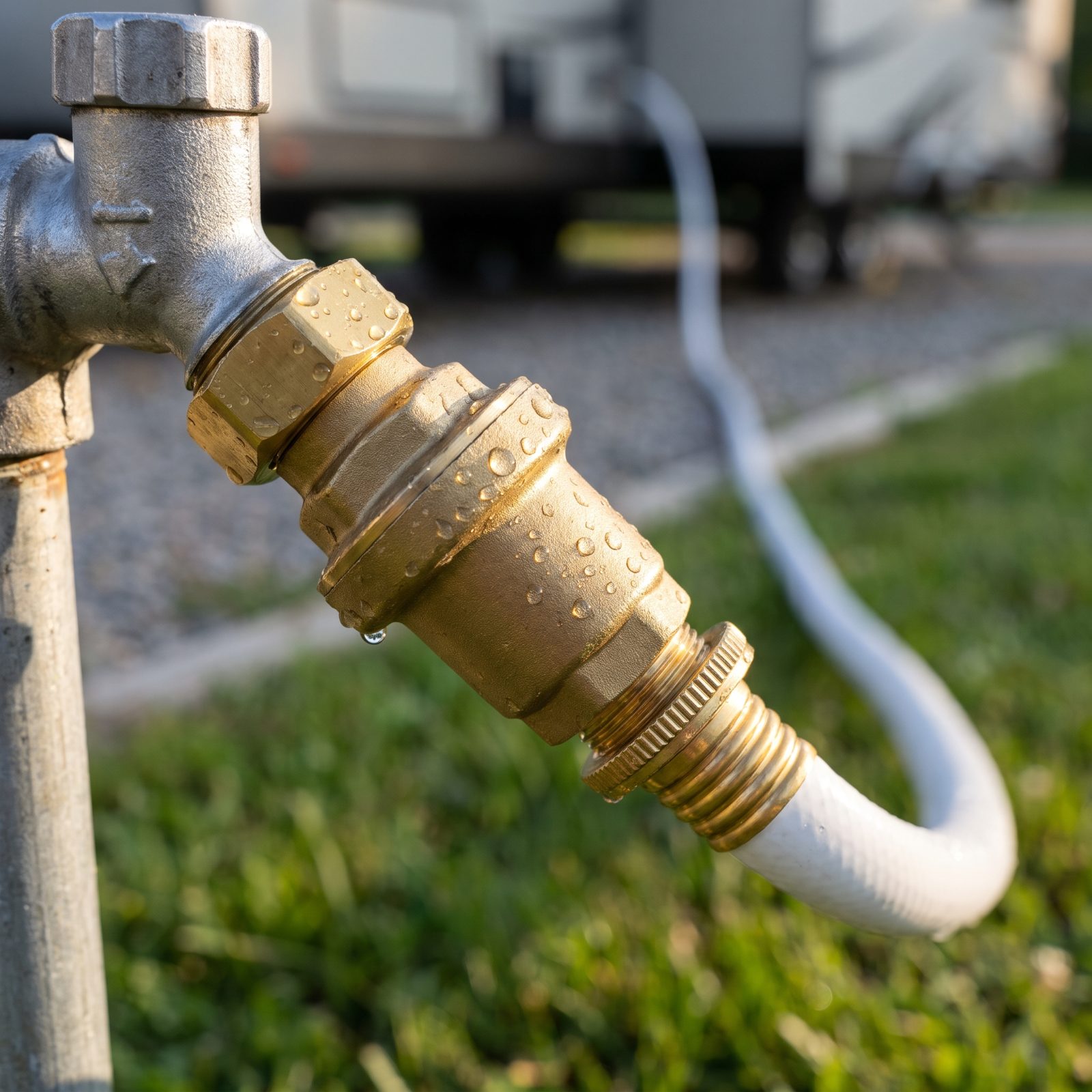
Some campgrounds run city water pressure that would strip paint — 80, 90, sometimes north of 100 psi. Your RV plumbing is happiest around 40 to 50. Guess which one wins when a fitting blows at 2 a.m. behind the shower wall.
The cheap inline brass regulators cap pressure at a fixed point and cost about as much as a sandwich. The adjustable ones with a gauge run a few times that and let you dial it in. Spend the extra. Watching the needle tells you when a park’s water system is having a bad day.
25. Interlocking Leveling Blocks and a Set of Curved Ramps
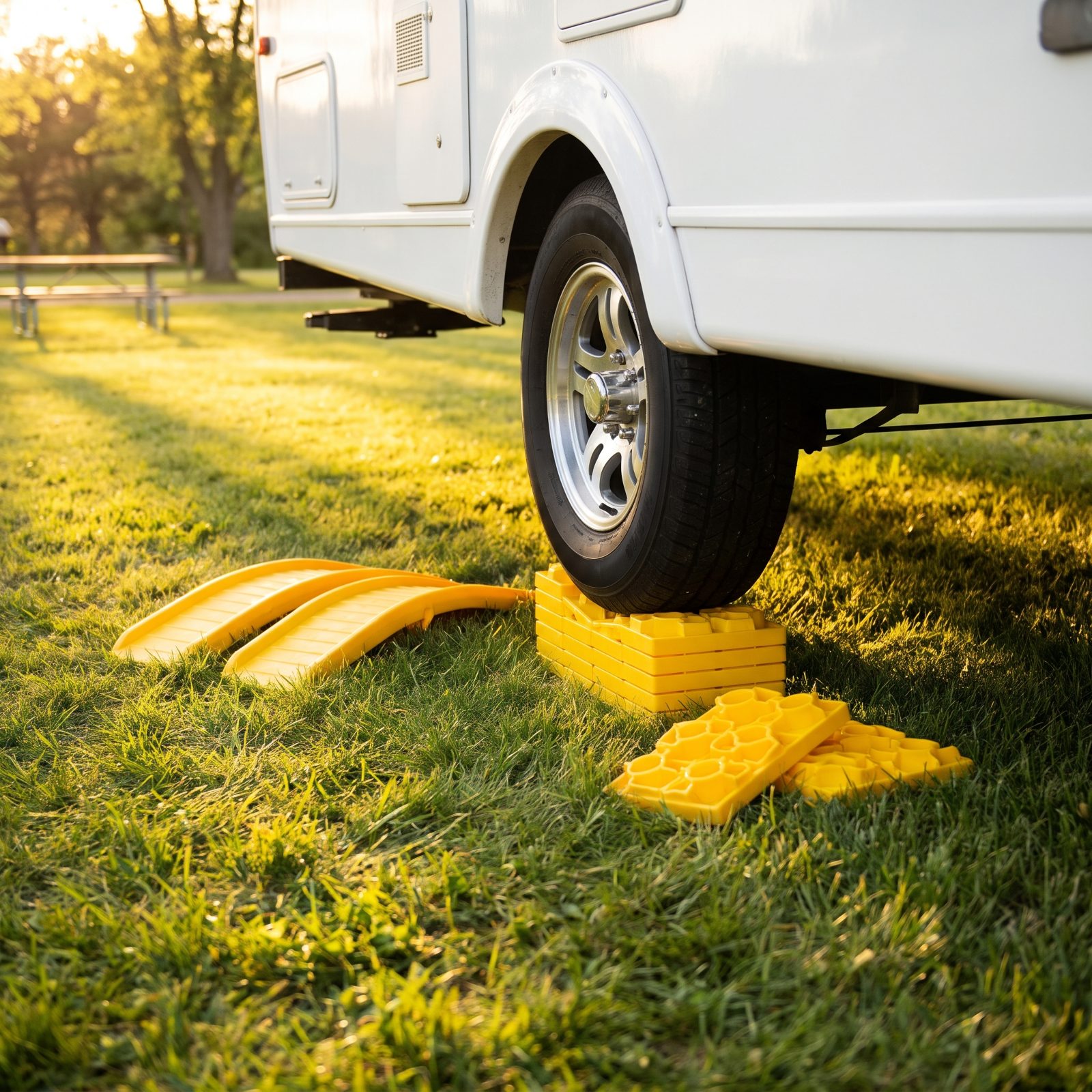
You will not find a truly level site. Not at the lake, not at the state park, not in your cousin’s driveway. And a fridge that sits more than a few degrees off cooling well is a fridge slowly dying.
Interlocking blocks stack like oversized building bricks and won’t dent your wallet. Curved drive-on ramps make single-axle leveling faster because you roll up instead of jacking. Both weigh almost nothing and live in a bay forever.
24. A Hose That’s Rated for Drinking Water (and Only That)
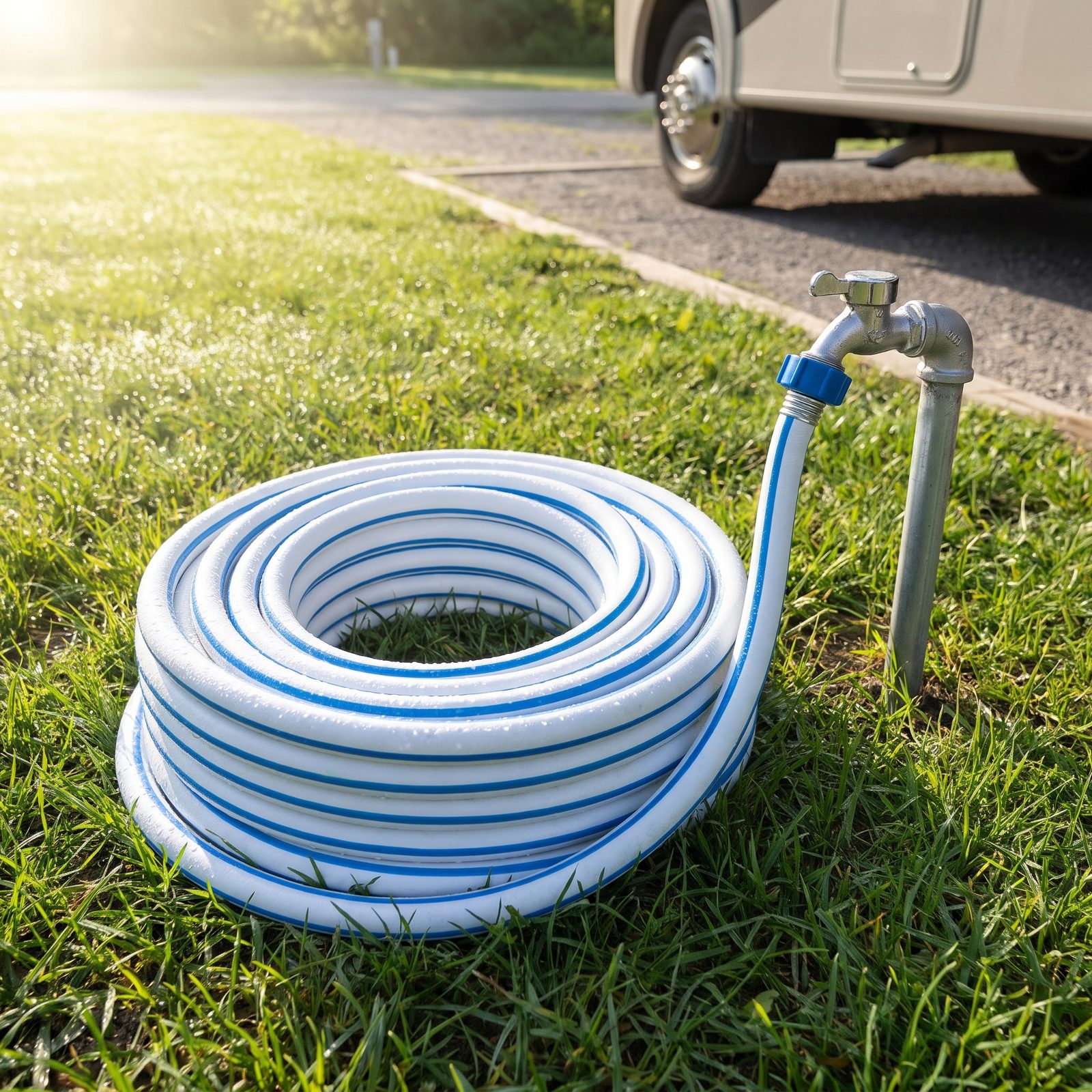
A garden hose leaches into your water. White, potable-rated RV hoses don’t, and that taste difference is not your imagination. Keep this hose for fresh water only and never, ever near the sewer side. Color-coding your gear — white for drinking, any other color for rinsing — is the kind of habit you adopt after one regrettable mix-up.
A good reinforced one is cheap. Buy two short lengths instead of one long coil. Easier to store, easier to reach the spigot that’s always planted in the wrong corner.
23. A Portable Air Compressor That Reaches RV Pressures
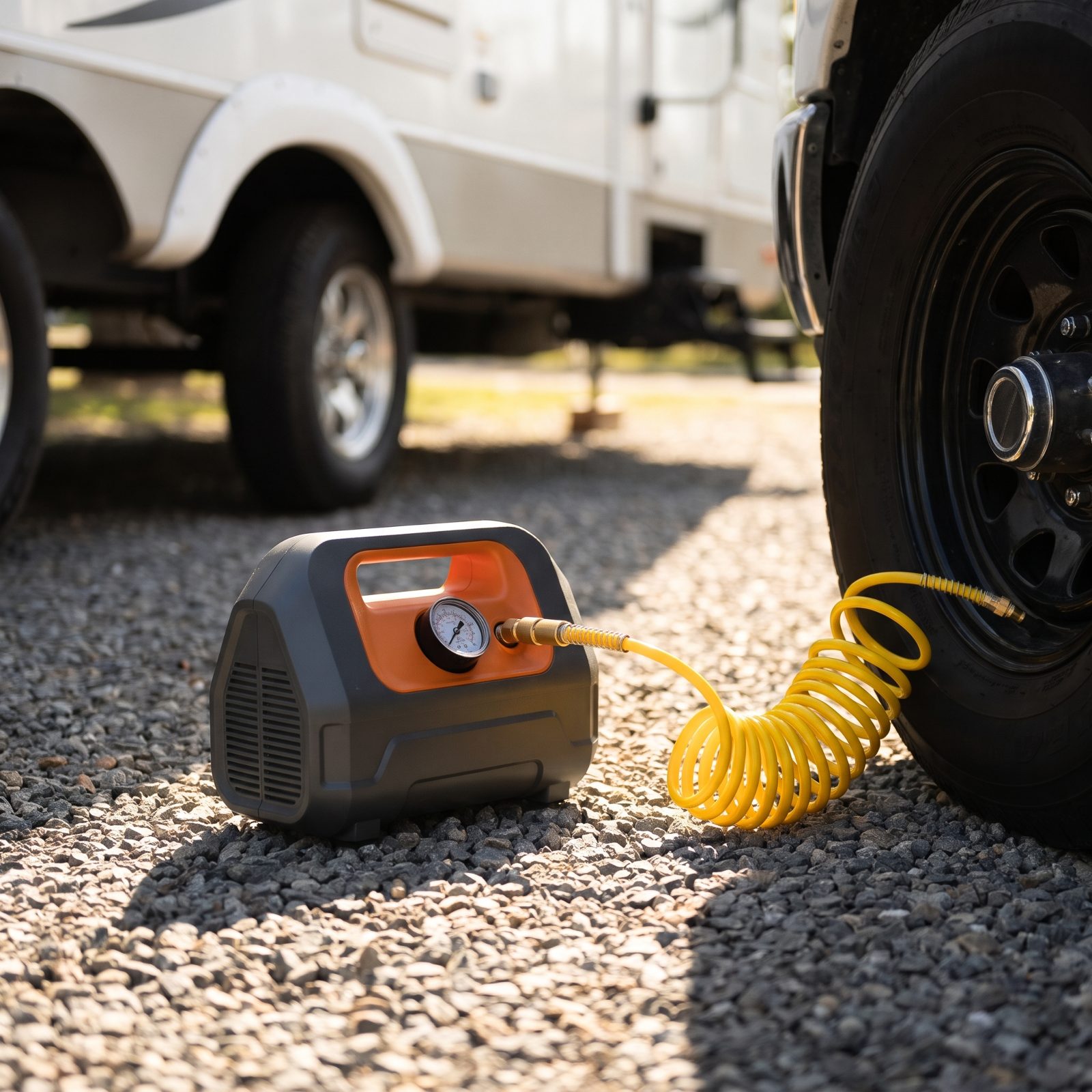
Here’s the catch nobody mentions. The cheap compressor from the auto aisle tops out around 35 psi and quits. RV tires often want 65, 80, even 110 psi on the big rigs. That little pump will run for ten minutes, get warm, and barely move the needle.
Get one rated well above your tires’ cold pressure, ideally with a built-in gauge and a duty cycle that won’t cook itself. You’ll use it to top off before every travel day, because tires that sat a week overnight drop pressure, and underinflated RV tires are how blowouts start.
22. Wheel Chocks That Hold the Rig Where You Put It
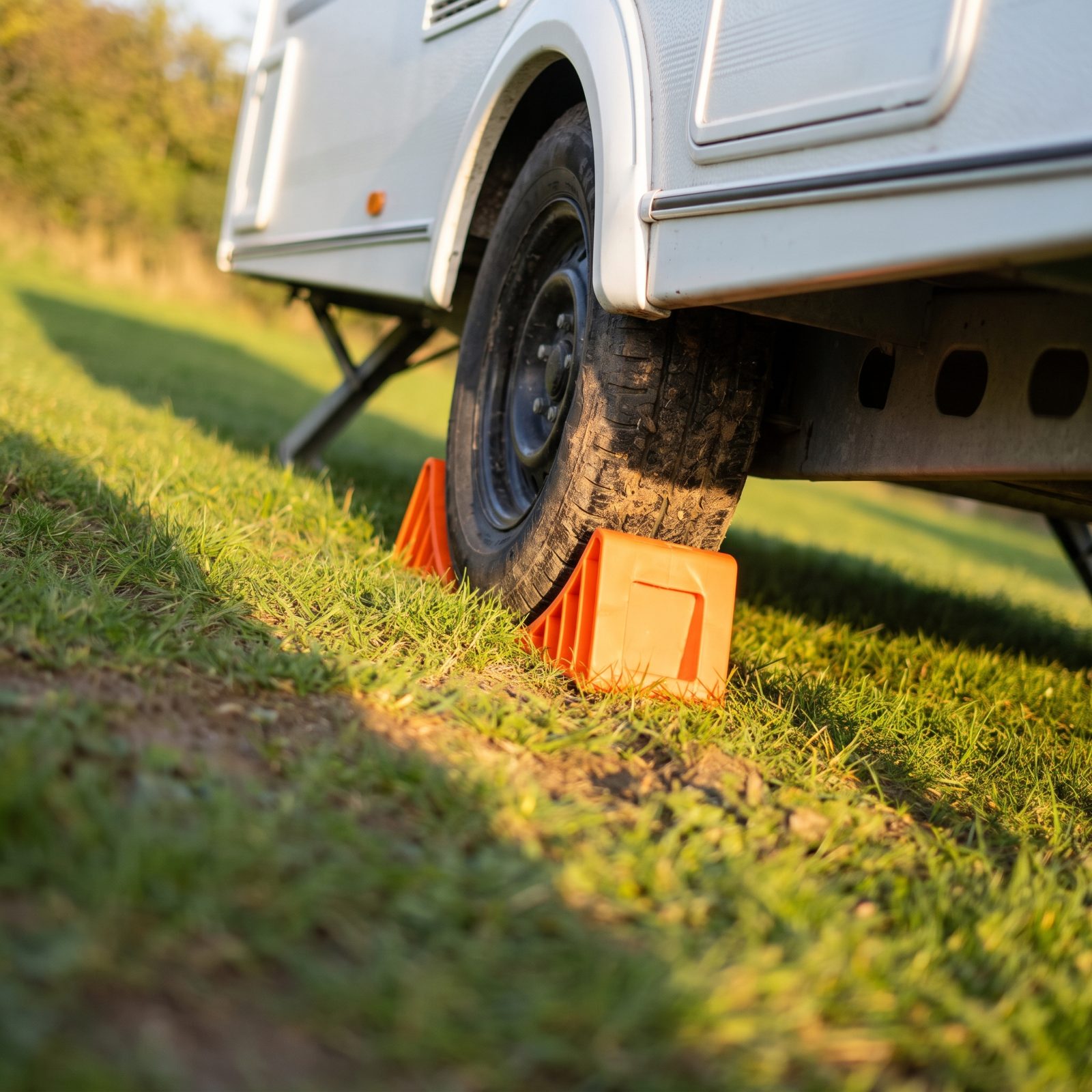
A travel trailer unhitched on even a slight grade will roll. It only has to roll once for you to never forget chocks again. The yellow plastic ones work fine for solo axles. For tandem axles, the scissor-style chock that ratchets between the two tires stops rocking better and keeps the rig from creeping.
Cheap insurance, all of it. Set them before you unhitch, not after — the moment the hitch lets go is the moment physics gets a vote.
21. A Collapsible Sewer Hose Kit With the Clear Elbow
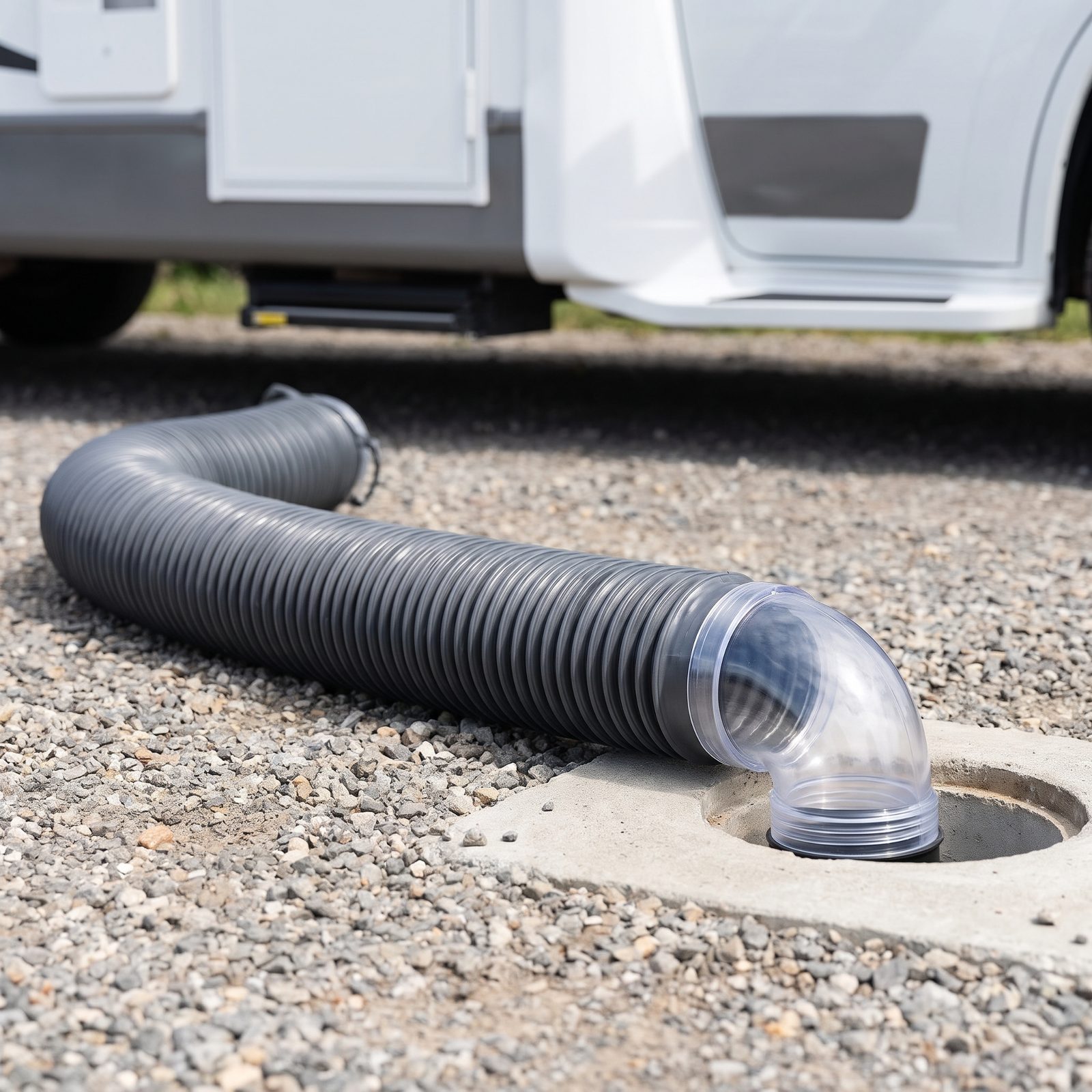
The hose that came with your used rig is probably cracked. Replace it before you need it. A collapsing accordion-style kit compresses down to a foot or so for storage and stretches out to reach the inlet that’s never close enough.
Spring for a kit with bayonet fittings and, most important, a clear elbow. That little window tells you when the water runs clean and the tank’s actually empty. Guessing in the dark is how you learn to appreciate it.
Flush black tank first, then gray. The soapy gray water rinses the hose on its way out, and you’ll thank yourself at the next dump.
20. A Box of Disposable Nitrile Gloves for Tank Duty
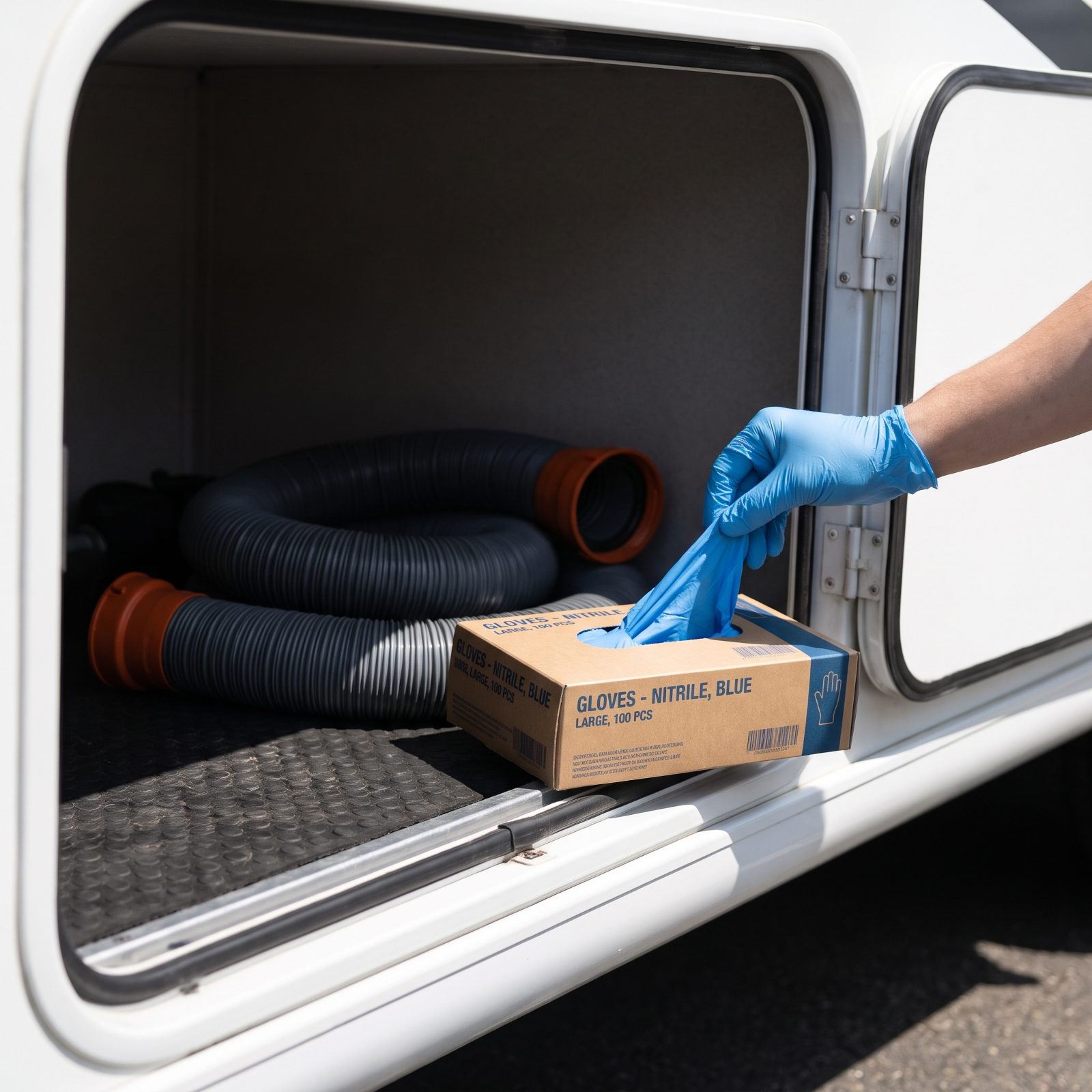
Not glamorous. Non-negotiable. Dumping tanks is a hands-off job, and the fittings leak, splash, and surprise you. Keep a box of nitrile gloves — not latex, people react to latex — in the same bay as your sewer gear so you never dump bare-handed because the gloves were in the other compartment.
A box of a hundred costs about what a fast-food lunch does. Toss them after every dump. This is the one place on your rig where you do not want to economize, and anyone who tells you otherwise has never had a fitting pop loose.
19. A Multi-Tip Screwdriver and a Basic Tool Kit
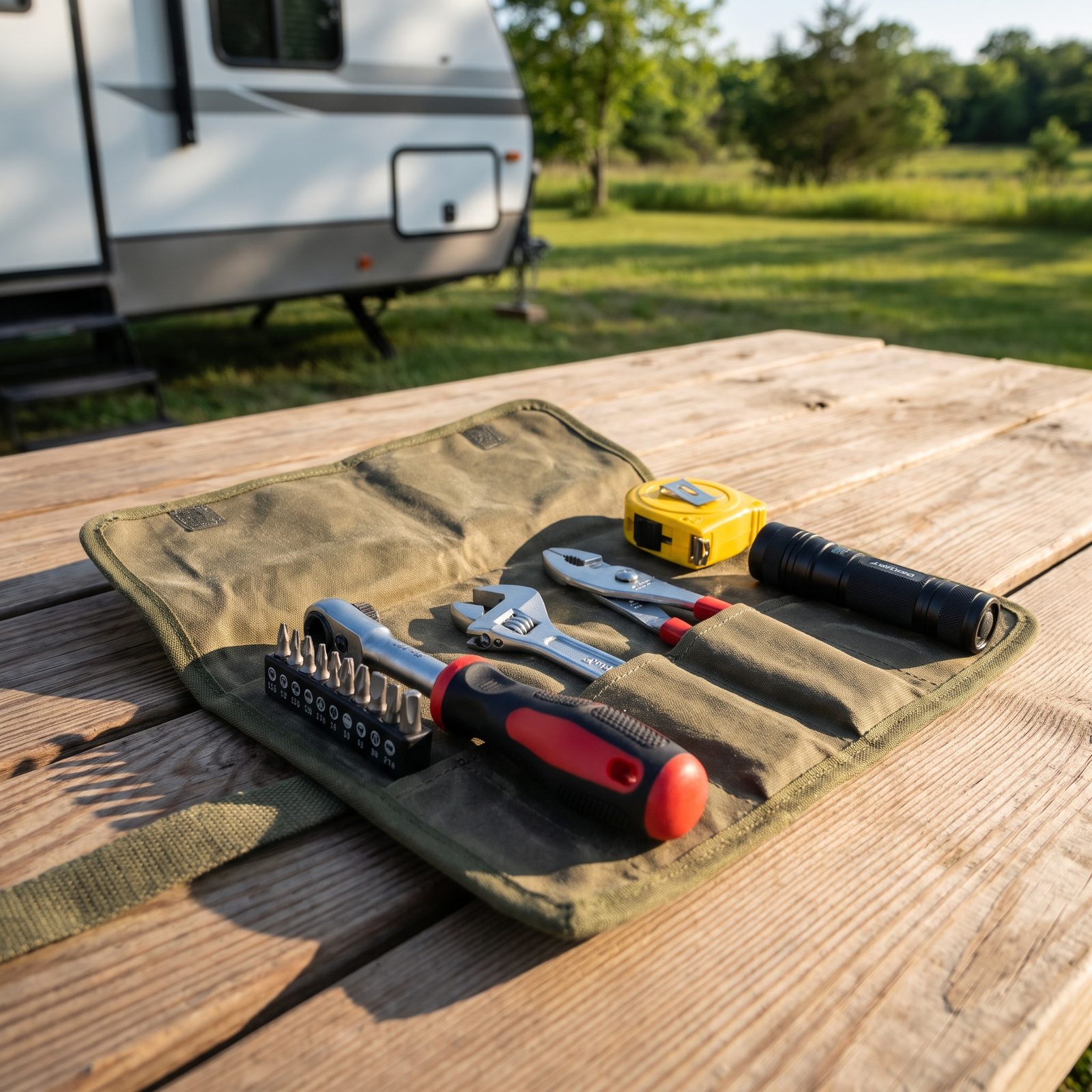
Something always needs tightening. A cabinet latch rattles loose on a washboard road, a battery terminal backs off, a trim screw works its way out. You don’t need a full workshop — a multi-tip ratcheting screwdriver with swappable bits, an adjustable wrench, pliers, a tape measure, and a decent flashlight will carry you a long way.
A sensible kit lives in one small box. The multi-tip driver alone handles most of what goes wrong, because RV manufacturers seem to use every screw head known to man in a single cabinet. Keep it where you can reach it without unpacking the whole bay. The problems never wait until you’re home.
18. A Headlamp That Keeps Both Hands Free
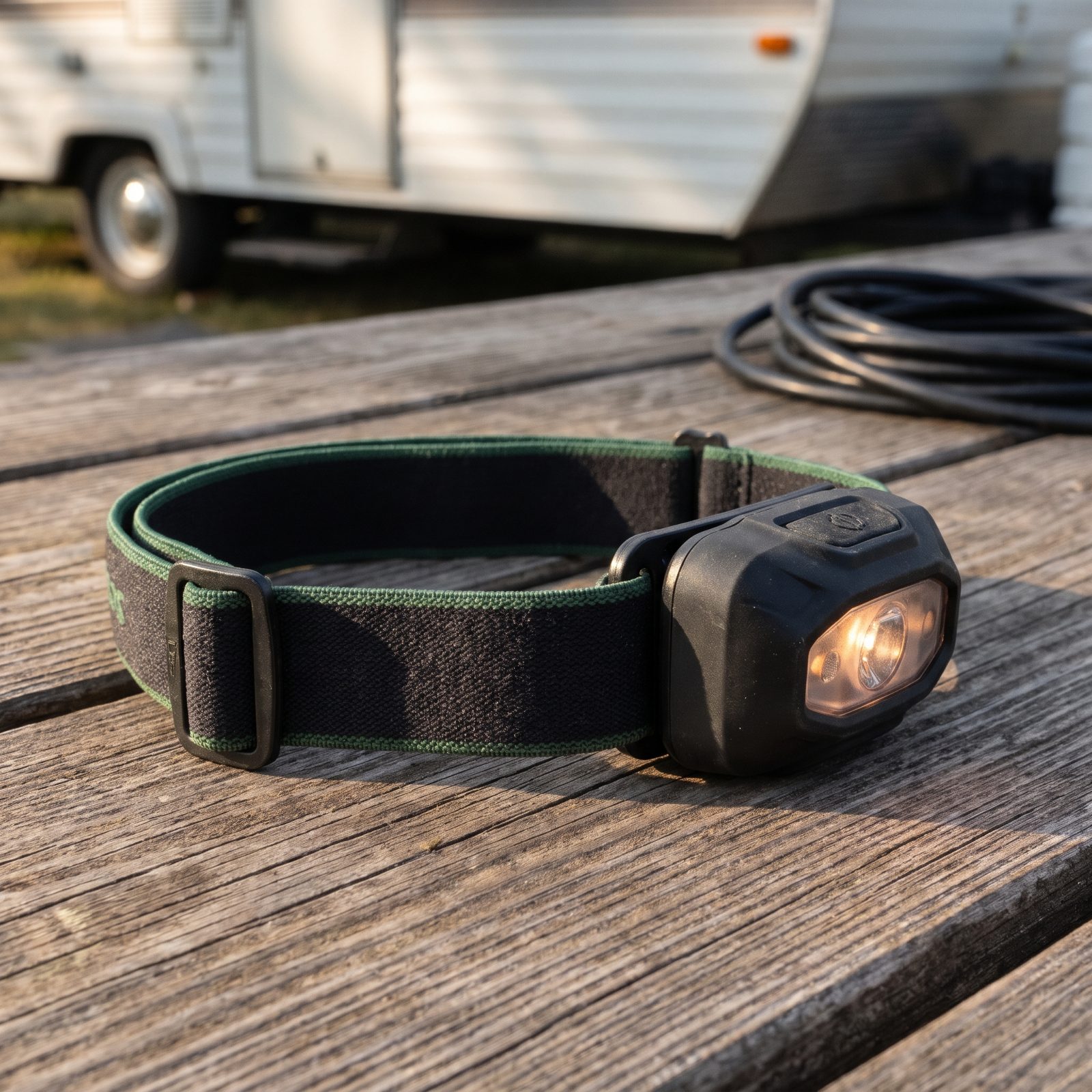
The first time you crawl under the back of the rig at dusk to wrestle with a dangling sewer hose, you learn why a flashlight clamped in your teeth is a terrible plan. A headlamp fixes that. Both hands land on the problem and the light follows wherever your eyes go.
Spend a little extra on one with a red-light mode — it saves your night vision and stops you from blinding the neighbors when you duck out to check the slide-out. Keep it clipped by the door, not buried in a drawer where it’ll die quietly.
17. Duct Tape and Self-Fusing Silicone Tape Together
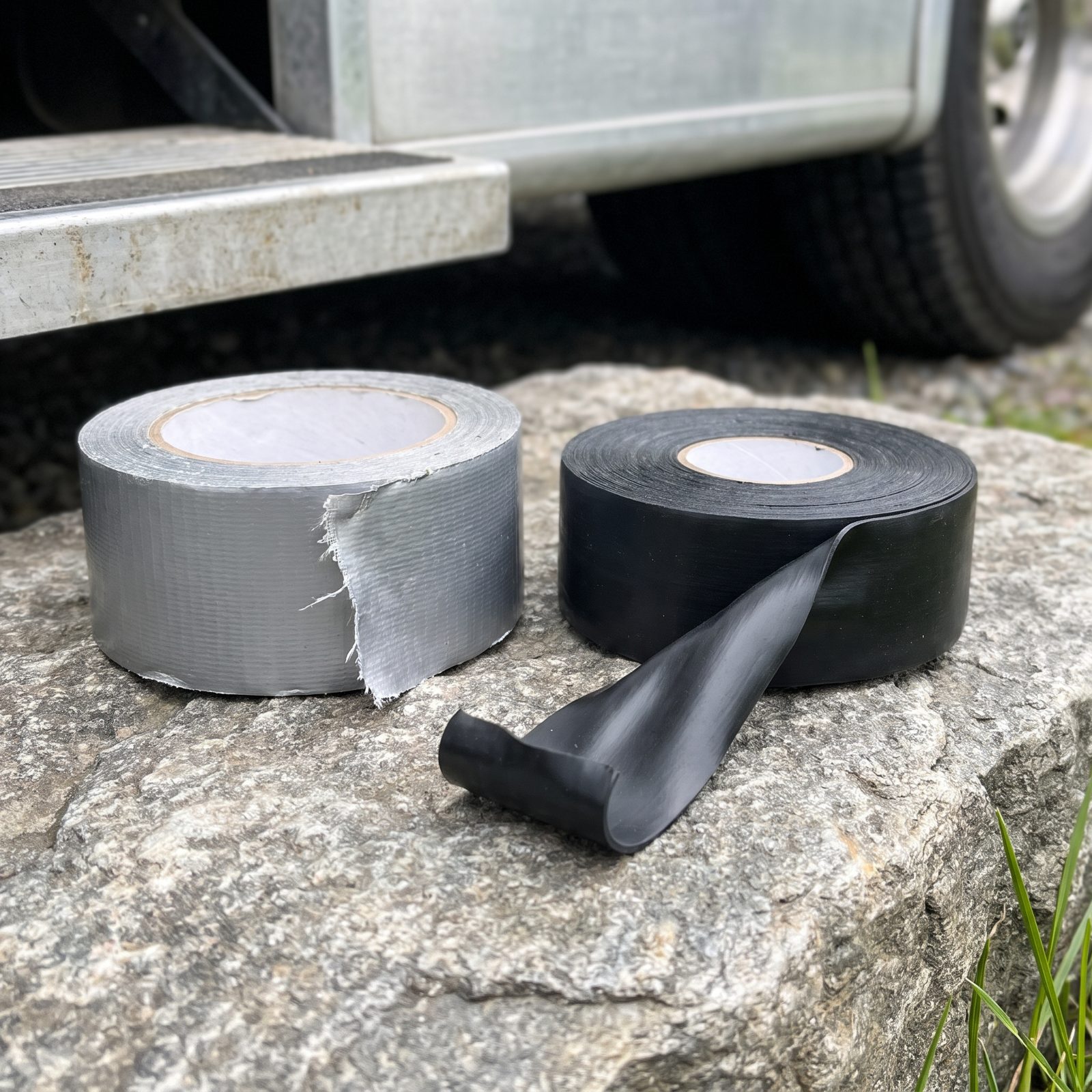
Duct tape patches the obvious — a flapping awning, a cracked trim piece, a cardboard windbreak for the camp stove. Everybody packs it. Fewer people pack the stuff that actually seals.
Self-fusing silicone tape bonds to itself instead of the surface, and it holds against water and pressure. Wrap it around a weeping hose fitting or a leaking water line and it buys you real time until the next parts store. Duct tape wrapped around a wet fresh-water leak tends to peel off inside ten minutes. The silicone stuff can hold for weeks.
16. A Pouch of Spare Fuses and Bulbs
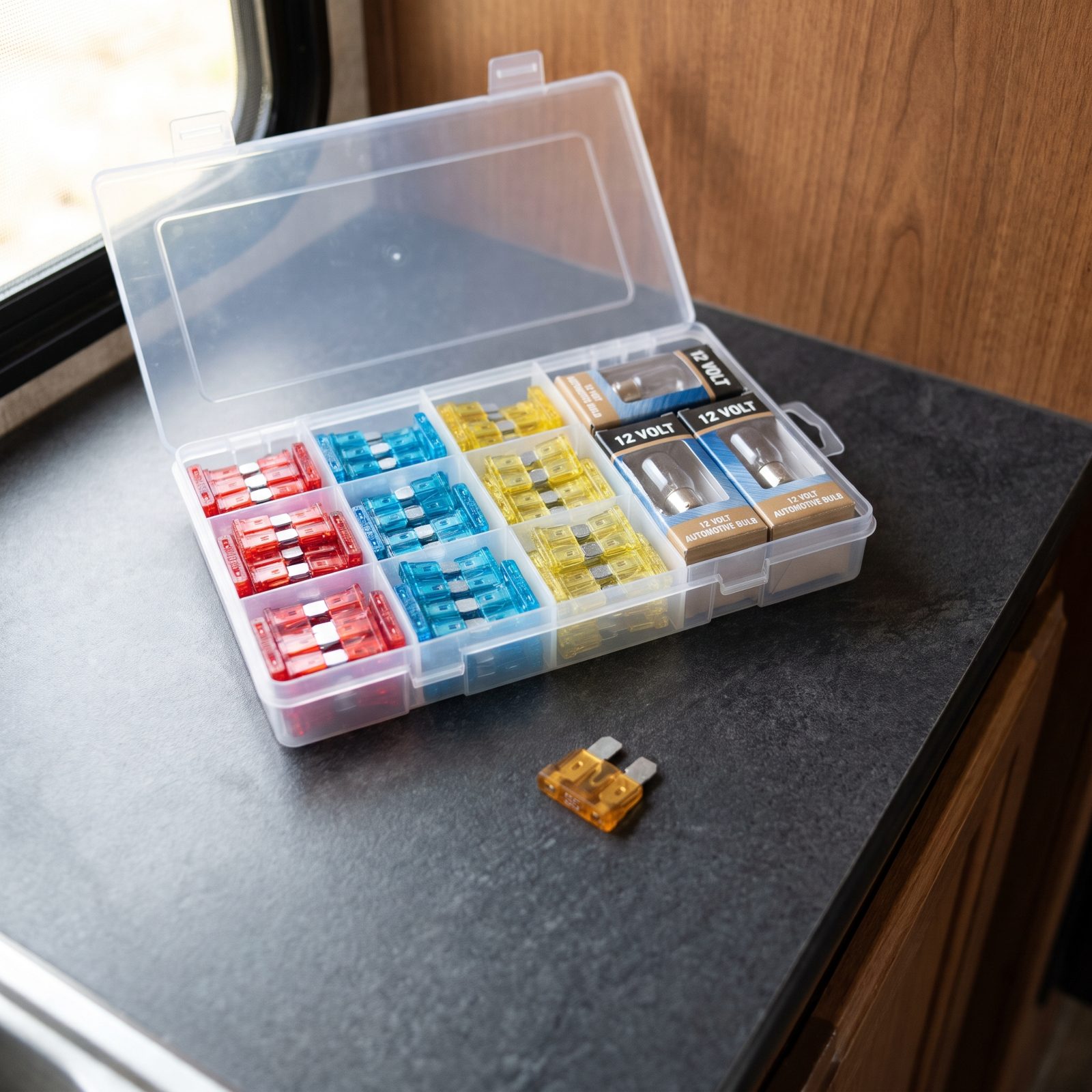
Blade fuses cost pennies and die at the worst moments. Your water pump quits, the fridge light goes dark, the step won’t retract — and you’re a long way from anywhere with a store still open.
Grab an assortment pack that matches your rig’s amperage ratings. Toss in a few spare 12-volt bulbs for the interior lights and tail lamps while you’re at it. The whole kit fits in a sandwich bag.
15. An Inline Water Filter Cartridge at the Hose
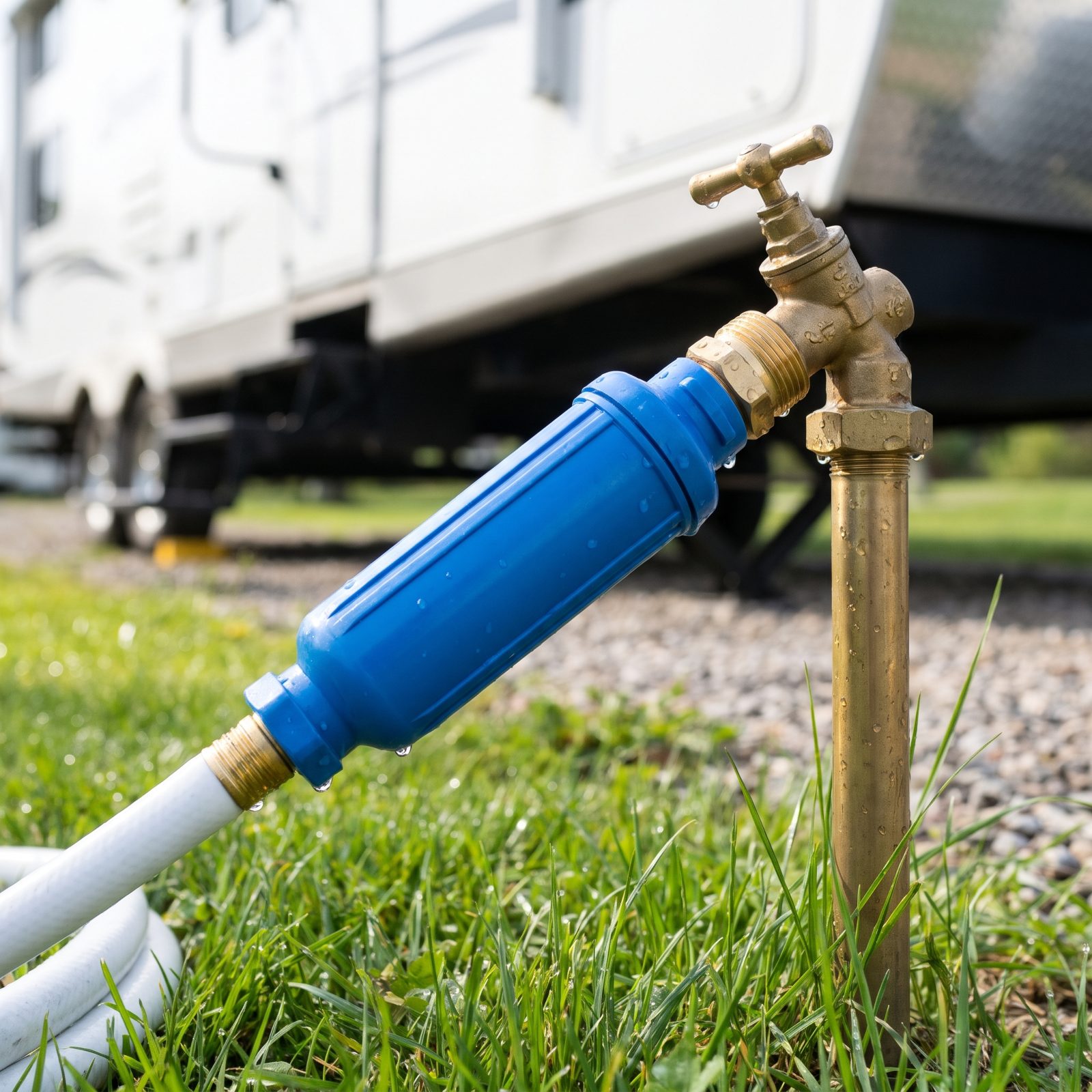
Campground water tastes like whatever pipe it traveled through to reach you. Sometimes that’s fine. Other times it’s a mineral tang or a chlorine punch that turns your morning coffee into a swimming pool.
A cheap inline cartridge screws onto the hose between the spigot and your inlet, knocking out sediment and most of the smell. One tends to last a season for a couple of travelers. Swap it when the flow slows or the taste comes creeping back. And run it on your drinking hose — never the one you use for the black tank rinse.
14. The 30/50 Amp Dogbone Adapter, Both Directions
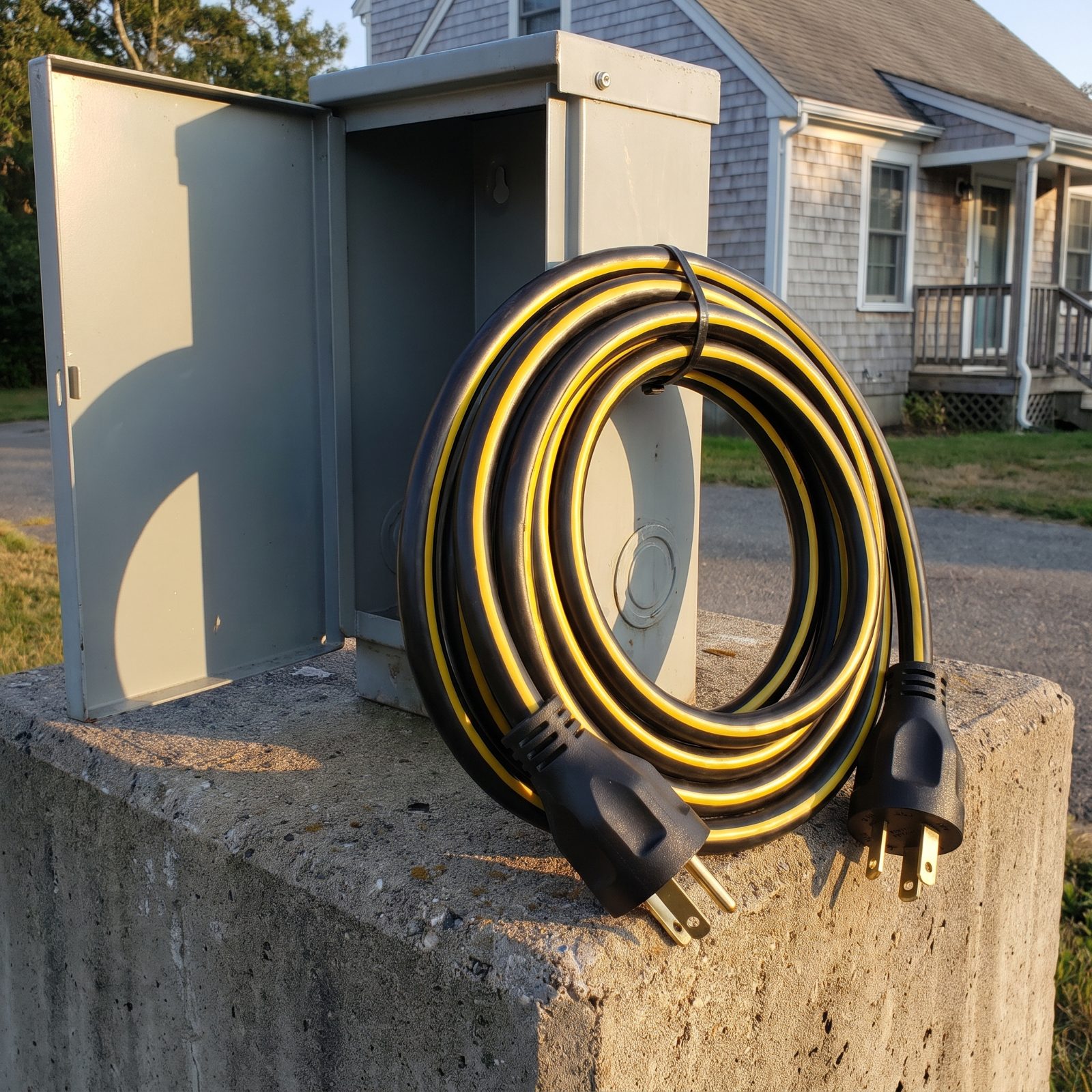
You pull into a site you booked months ago, swing open the power pedestal, and the only working outlet is the wrong amperage. It happens constantly at older parks.
Carry a dogbone adapter so your 30-amp rig can plug into a 50-amp pedestal, and one for the reverse too. The reverse won’t hand you more power, but it keeps you connected instead of listening to the generator rumble all night. Buy a thick, heavy-gauge adapter cord with molded plugs, and keep it coiled and strapped. The flimsy ones overheat right at the plug and can melt.
13. A Portable Backup Camera for Blind Hitching
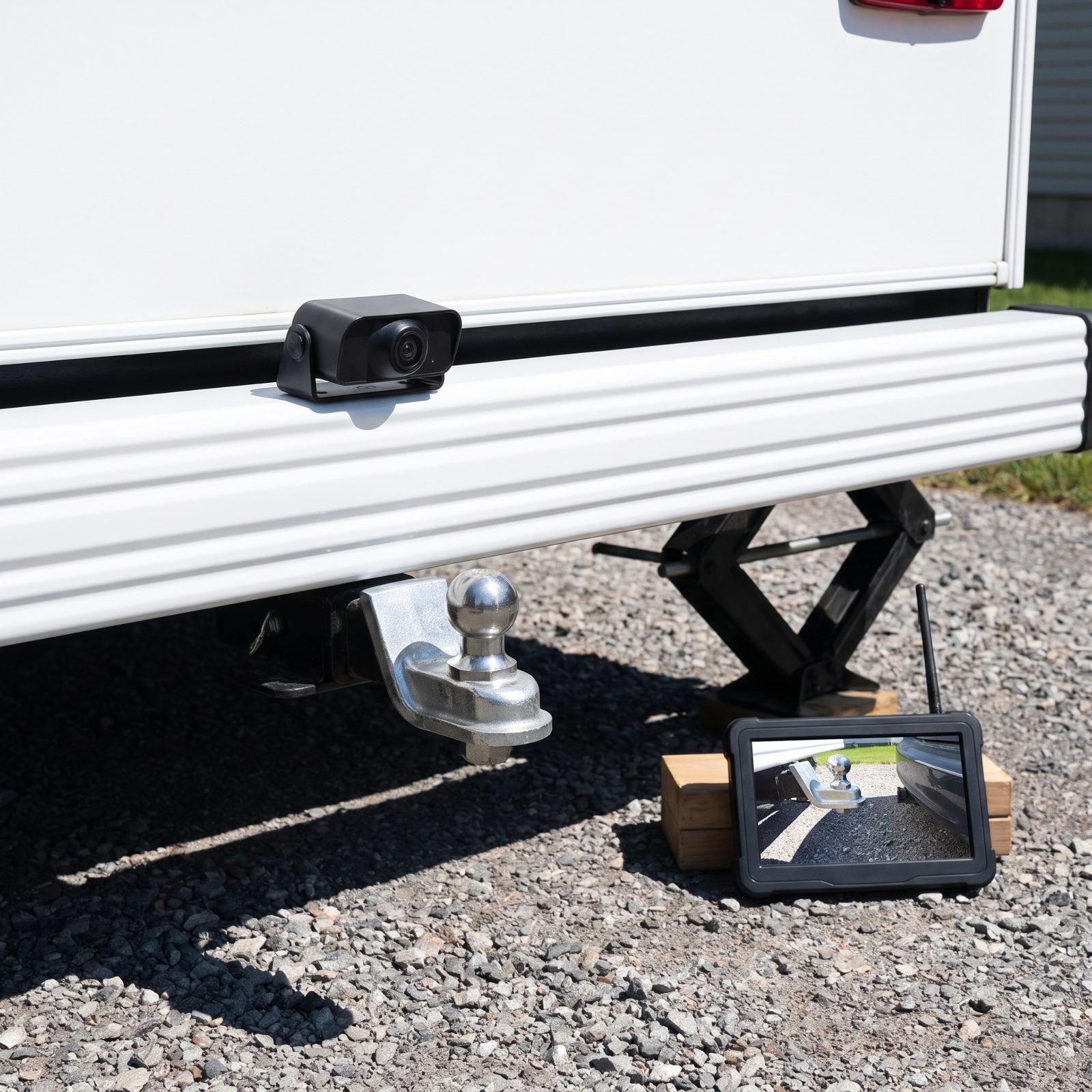
Backing a trailer solo is where good marriages go to be tested. A compact camera screwed down on its bracket to the rear bumper turns a two-person shouting match into a one-person job you can actually see your way through.
The wireless ones pair to a dash monitor or your phone, and the better models handle hitching, lane changes, and that nerve-wracking reverse into a tight tree-lined site. Battery versions let you move the camera exactly where you need it without wiring a thing.
Nobody ever regretted being able to see what’s behind twenty-eight feet of fiberglass.
12. A Fire Extinguisher Actually Rated for RV Use
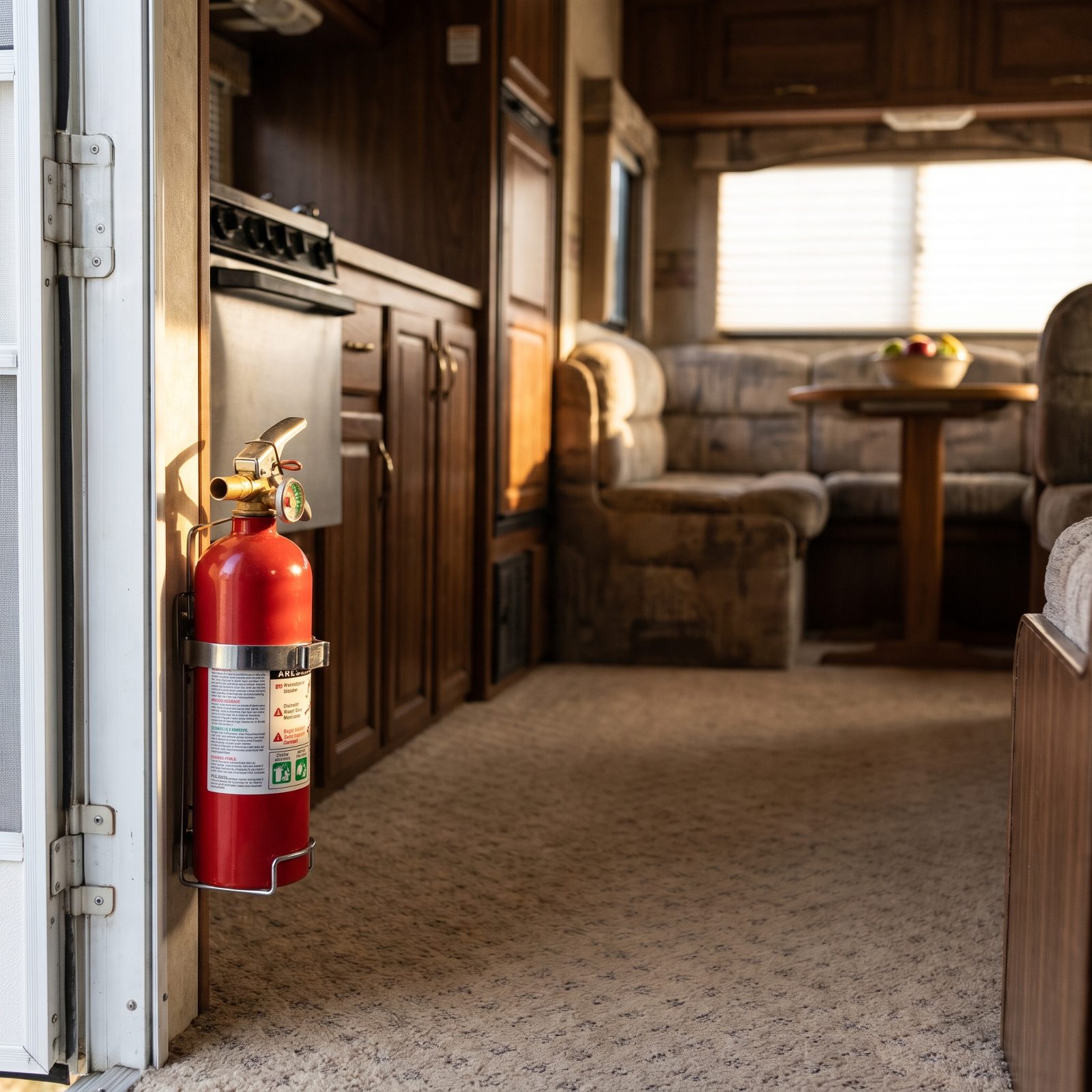
That little extinguisher mounted by your door when you bought the rig is the bare minimum, and it’s probably aimed at nothing more than a grease fire in the galley. One is not enough.
Carry at least two ABC-rated units — one within kitchen reach, one near the bedroom exit. Check the pressure gauge before every trip, because a needle in the red is just a red paperweight. Learn the PASS motion now. Not while something’s burning.
11. A Combined Carbon Monoxide and Propane Detector
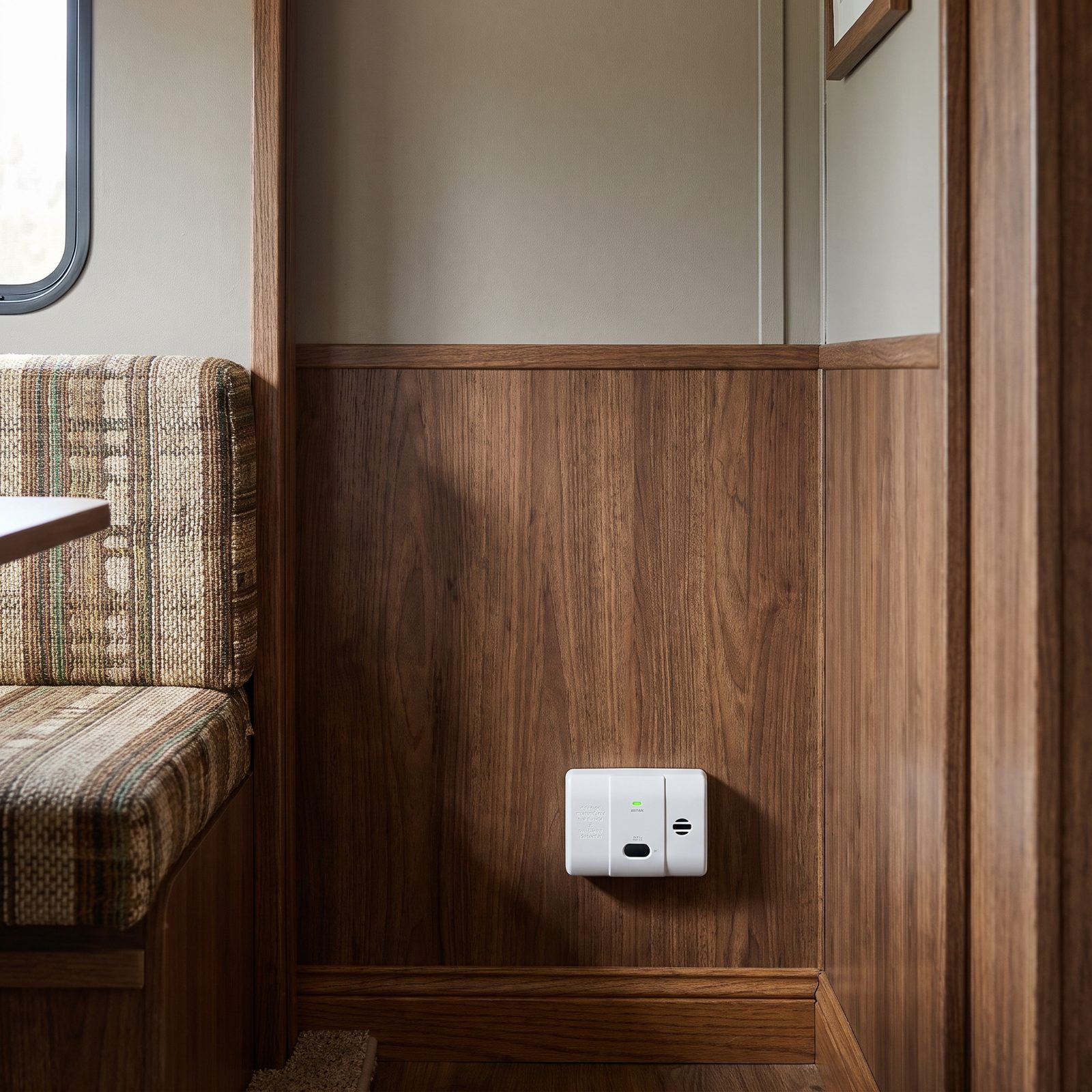
Propane sinks and carbon monoxide doesn’t, which is exactly why these detectors get mounted low in an RV, down near the floor where a leak would pool. The one bolted to your ceiling at home won’t do the job out here.
Most carry a shelf life printed right on the housing, usually several years from the manufacture date. After that the sensor quietly degrades whether the light’s still green or not. Press the test button before every trip and replace the whole unit when it ages out. This is not the gear to cheap out on.
10. A First-Aid Kit Built for the Campsite, Not the Junk Drawer
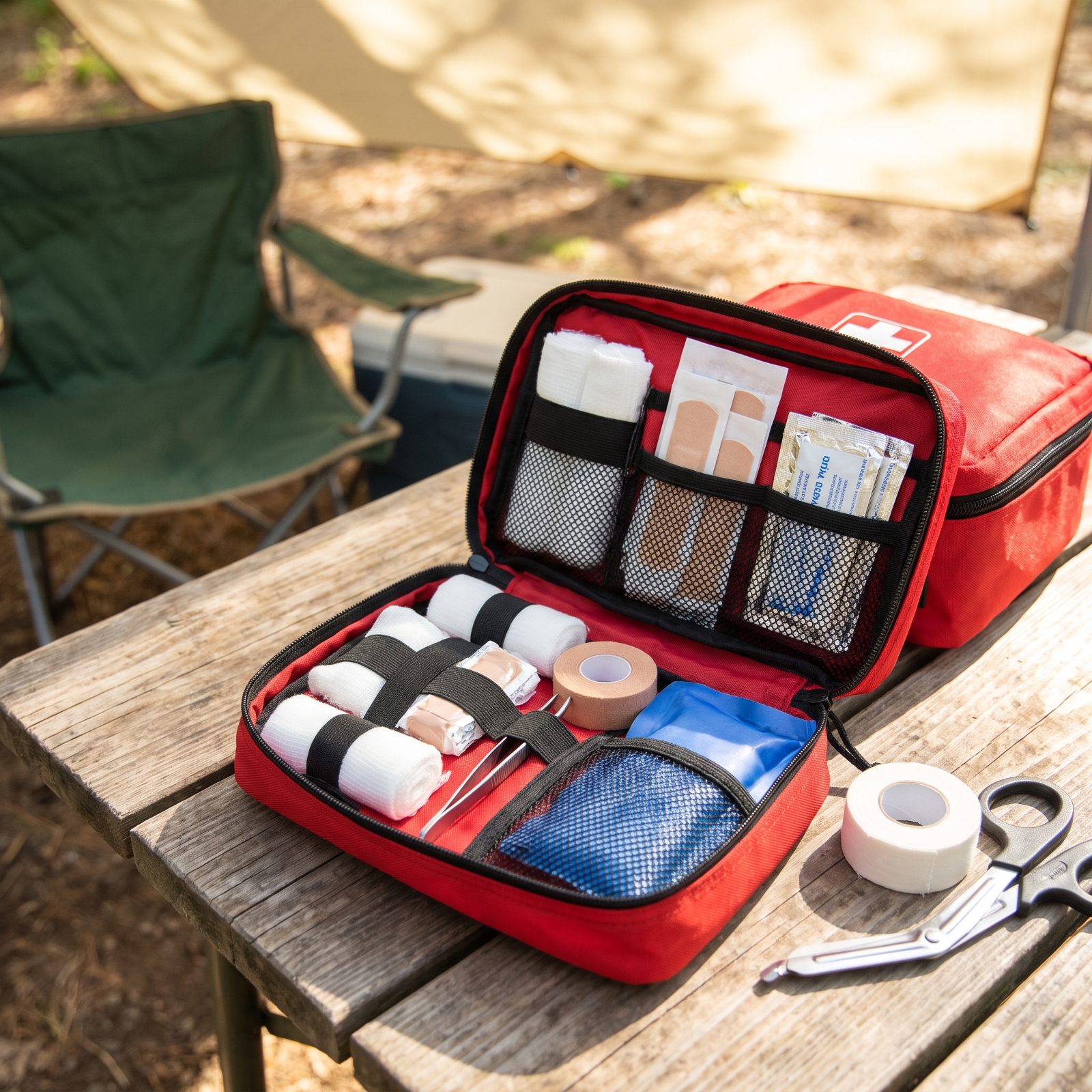
The drugstore kit with its forty tiny bandages and nothing else covers exactly none of what actually goes wrong at a campsite. Fishhooks. Splinters. Scraped shins, blisters from a longer hike than you’d planned, a kitchen knife that slipped mid-dinner.
Build or buy one that includes tweezers, real gauze, medical tape, antiseptic, blister pads, a cold pack, and whatever prescriptions you take daily. Camping in wooded country? Add tick removal tools and don’t skimp.
9. A Portable Jump Starter That Doesn’t Need a Second Vehicle
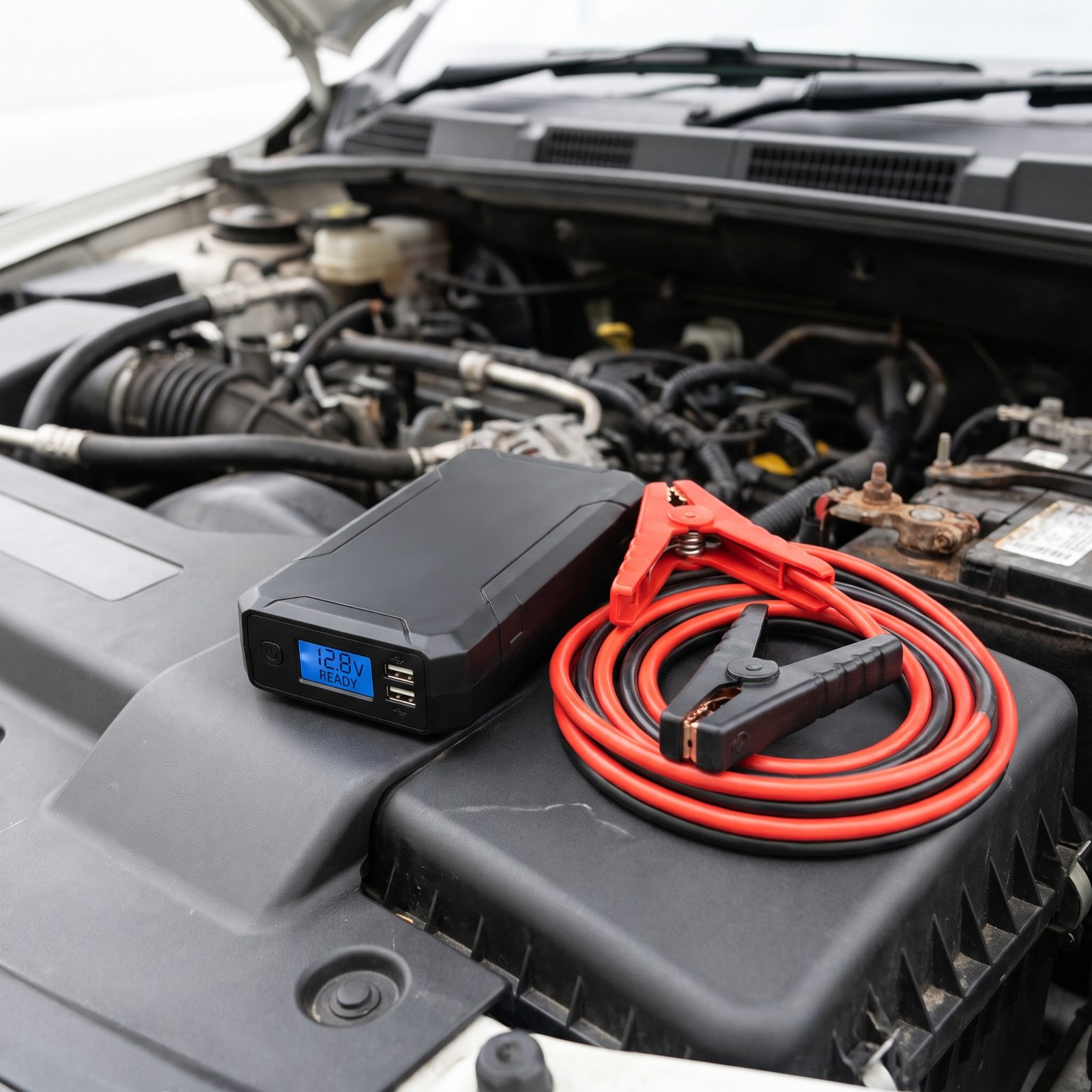
Classic jumper cables work fine, right up until you realize you’re parked in a remote boondocking spot with no second vehicle in sight and nobody to flag down.
A lithium portable jump starter solves the loneliness problem. It’s a brick about the size of a paperback that holds enough charge to crank an engine several times over, and most double as a USB power bank and an emergency flashlight. Keep it charged, though — a dead jump pack is as useless as no jump pack, and lithium cells drain slowly over the off-season. Top it off every couple of months and you’ll never be stranded waiting on a stranger’s good mood.
8. Reflective Warning Triangles for the Breakdown You Hope Never Comes
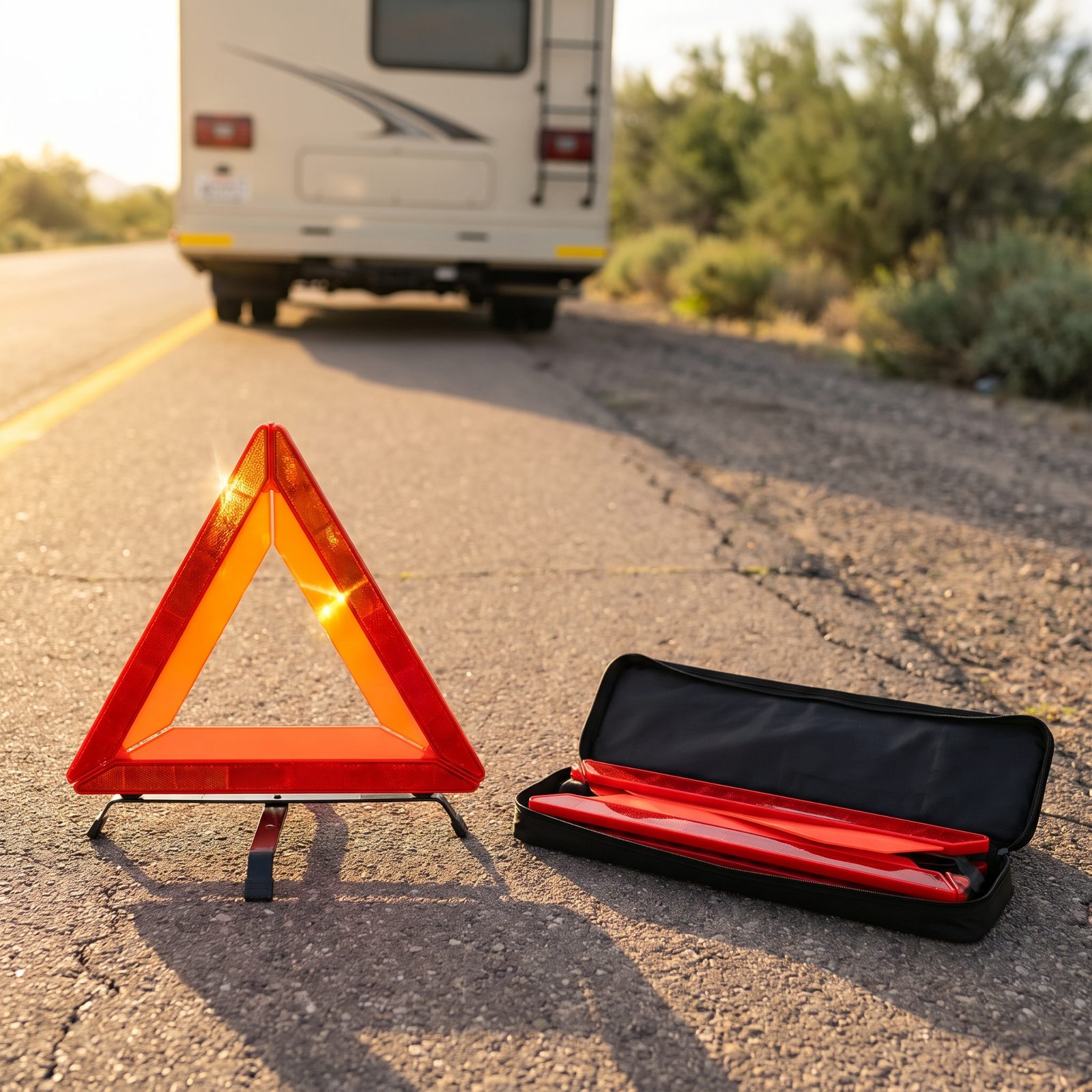
Flares die. Phones die. A triangle just stands there in the rain at two in the morning doing its one job, which is exactly why seasoned RVers carry a set of three.
Most state DOT rules want warning devices placed when a large vehicle sits on a shoulder, and a 30-foot rig stranded at dusk is the kind of thing a drowsy driver finds with their bumper. A three-pack costs about the price of two gas-station sandwiches. Buy the ones with a weighted base. The flimsy spring-loaded kind cartwheel into the ditch the second a semi blows past.
7. Backup RV Toilet Paper and Tank Treatment Before You Learn the Hard Way
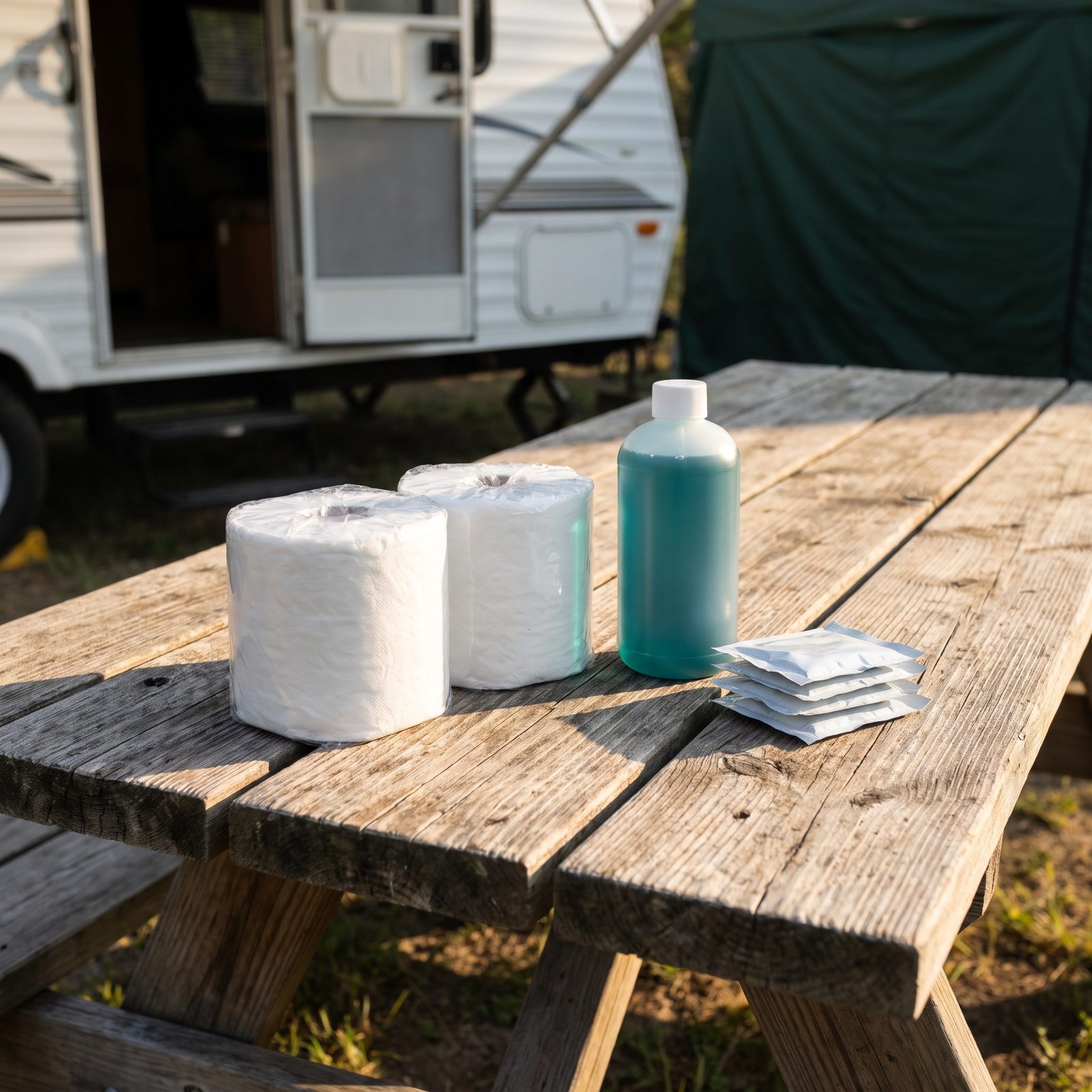
Regular toilet paper doesn’t dissolve the way RV paper does. It clumps, it builds, and eventually it turns your black tank into a problem you deal with on your knees with a wand. Ask anyone who’s done it once. They never do it twice.
Keep a couple extra rolls and a jug of tank treatment stashed where you won’t forget them. The treatment handles odor and breaks down solids, and roadside stores that carry it tend to charge double. A whole season’s worth costs less than one emergency dig.
6. Bungee Cords and Ratchet Straps for Everything That Won’t Stay Put
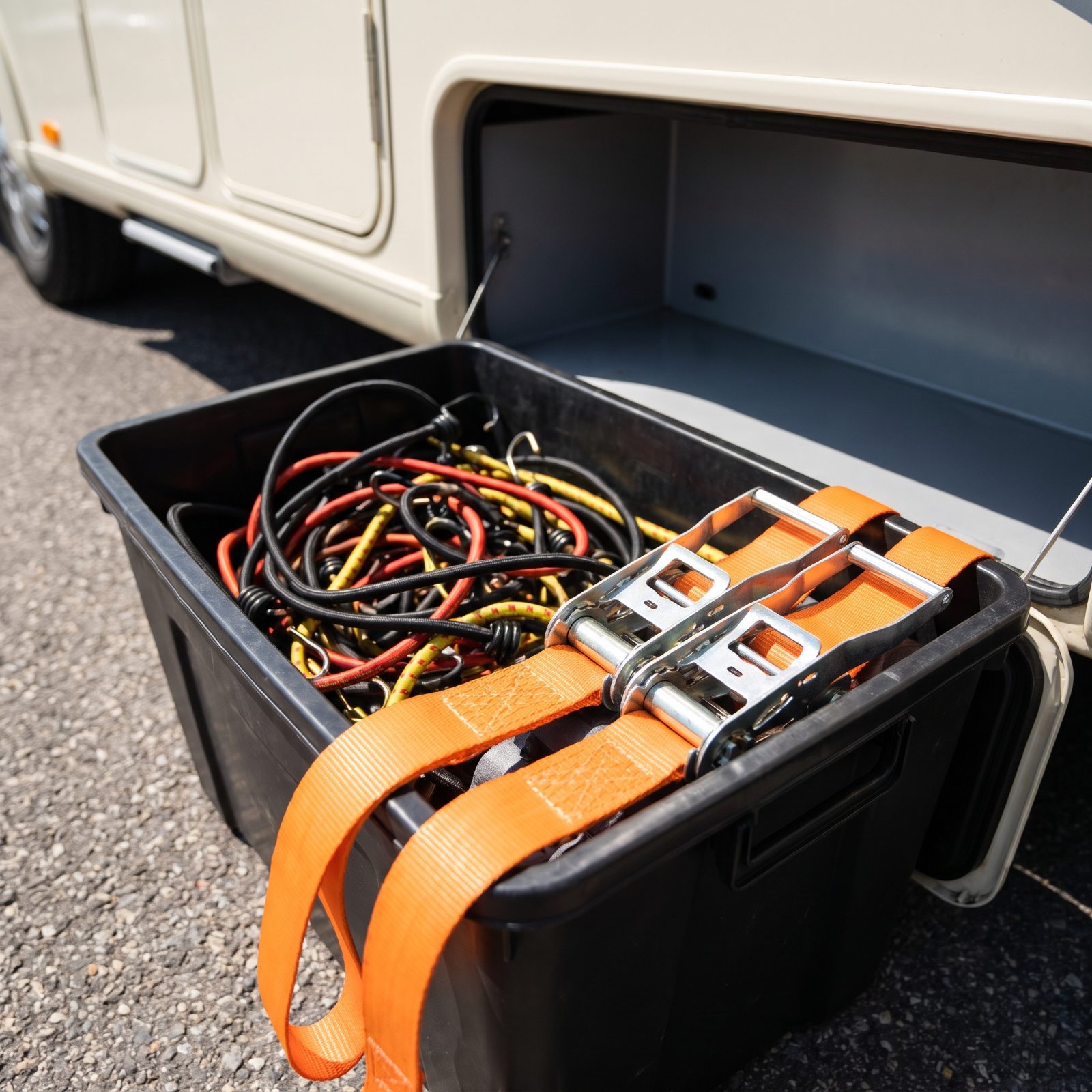
The cheapest fix for rattles, shifting cargo, and awnings that want to go sailing. A good assortment lives in every basement bay of every rig worth its salt.
Bungees handle the light stuff — holding a hose coiled, keeping a cabinet door from flapping on a rough road. Ratchet straps are for when it actually matters, like lashing a generator down or securing bikes. A bungee hook can let go and whip back, so wear sunglasses when you stretch one.
5. A Collapsible Water Jug for the Spigot That’s Nowhere Near Your Site
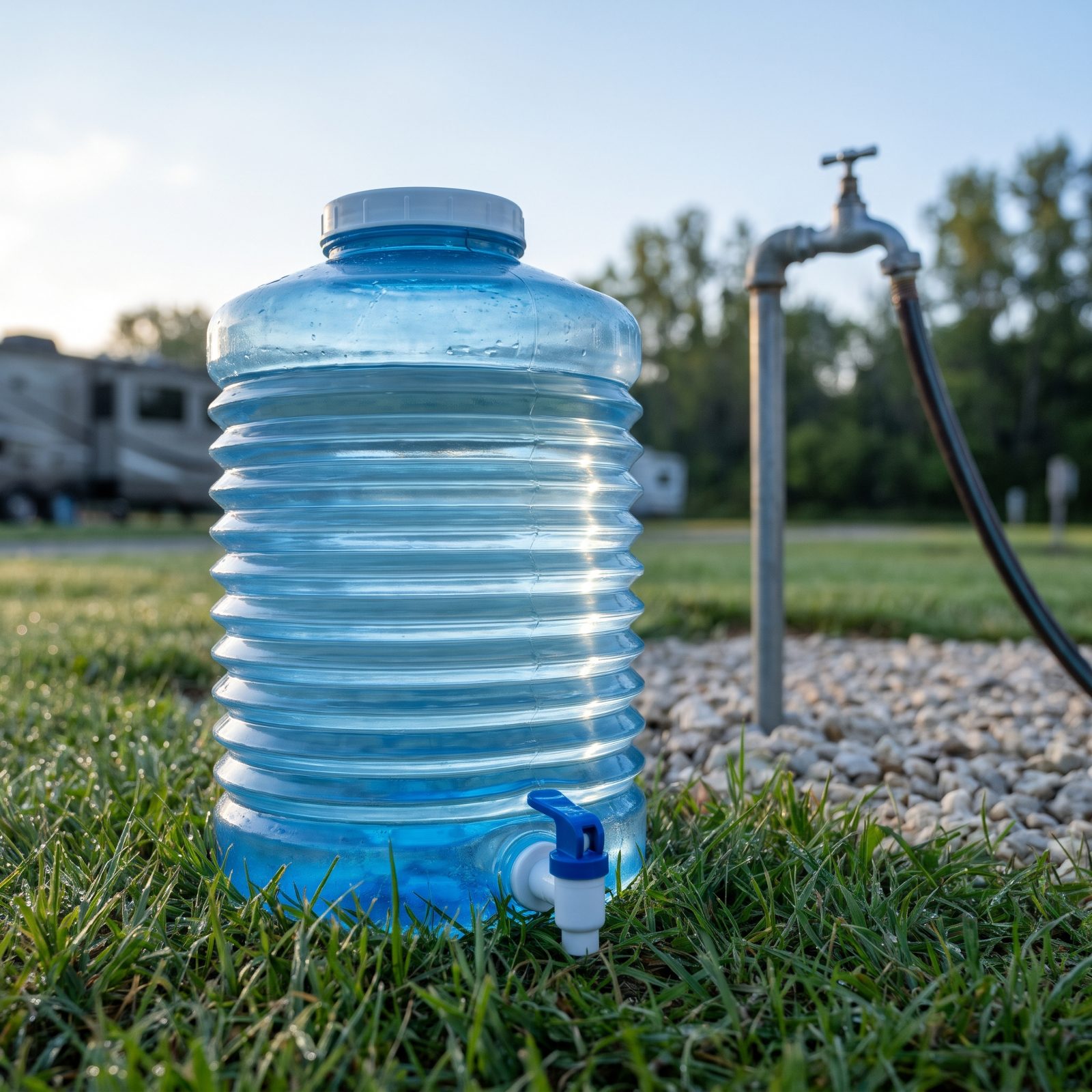
Not every site has water at the pad. Plenty of state parks and boondocking spots make you haul it, and a 5-to-7-gallon collapsible jug folds down to almost nothing when empty.
The flat-folding kind stores in a drawer while the rigid ones eat a whole cabinet. Get one with a sturdy spigot at the base — the cheap push-button caps leak, and you’ll find a puddle under your bed. It runs about twenty bucks and doubles as your handwashing and dish-rinse station when you’re trying to save tank water.
4. A Portable Power Station or Solar Bank for the Nights Off-Grid
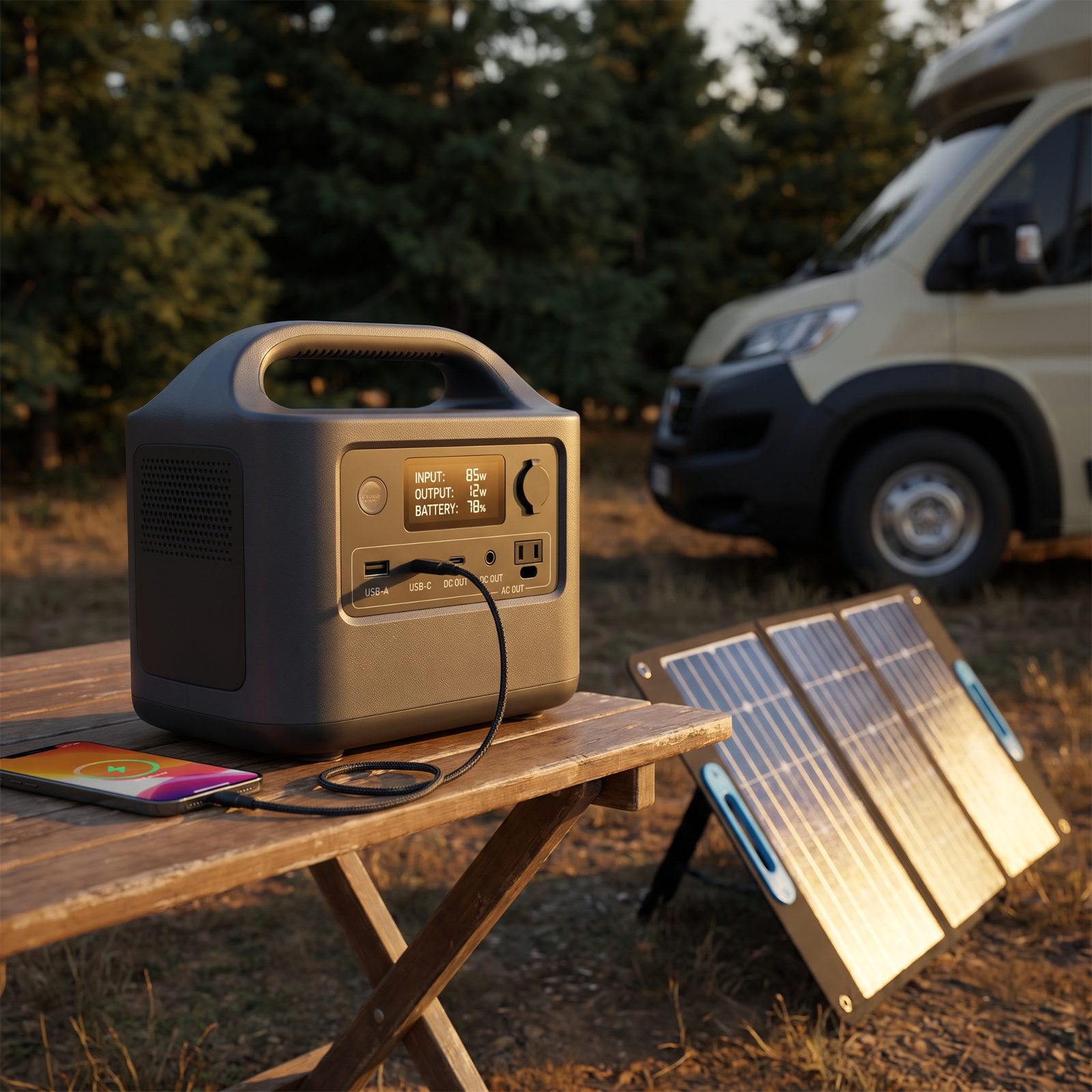
The quiet shift in camping is that you no longer need a roaring gas generator to keep a CPAP running overnight. A lithium power station handles phones, a laptop, a fan, and medical gear without waking the whole campground.
Here’s the honest trade-off. Gas generators give you more sustained power and refuel in minutes, but they’re loud, and most quiet-hours rules shut them down after dark. Solar banks are silent and clean, though they recharge slowly on a cloudy week. Plenty of full-timers carry both. If you buy one power station, size it to your actual overnight draw rather than your fantasy of running an air conditioner off a battery — that math rarely works.
3. A Weather Radio That Wakes You Before the Storm Does
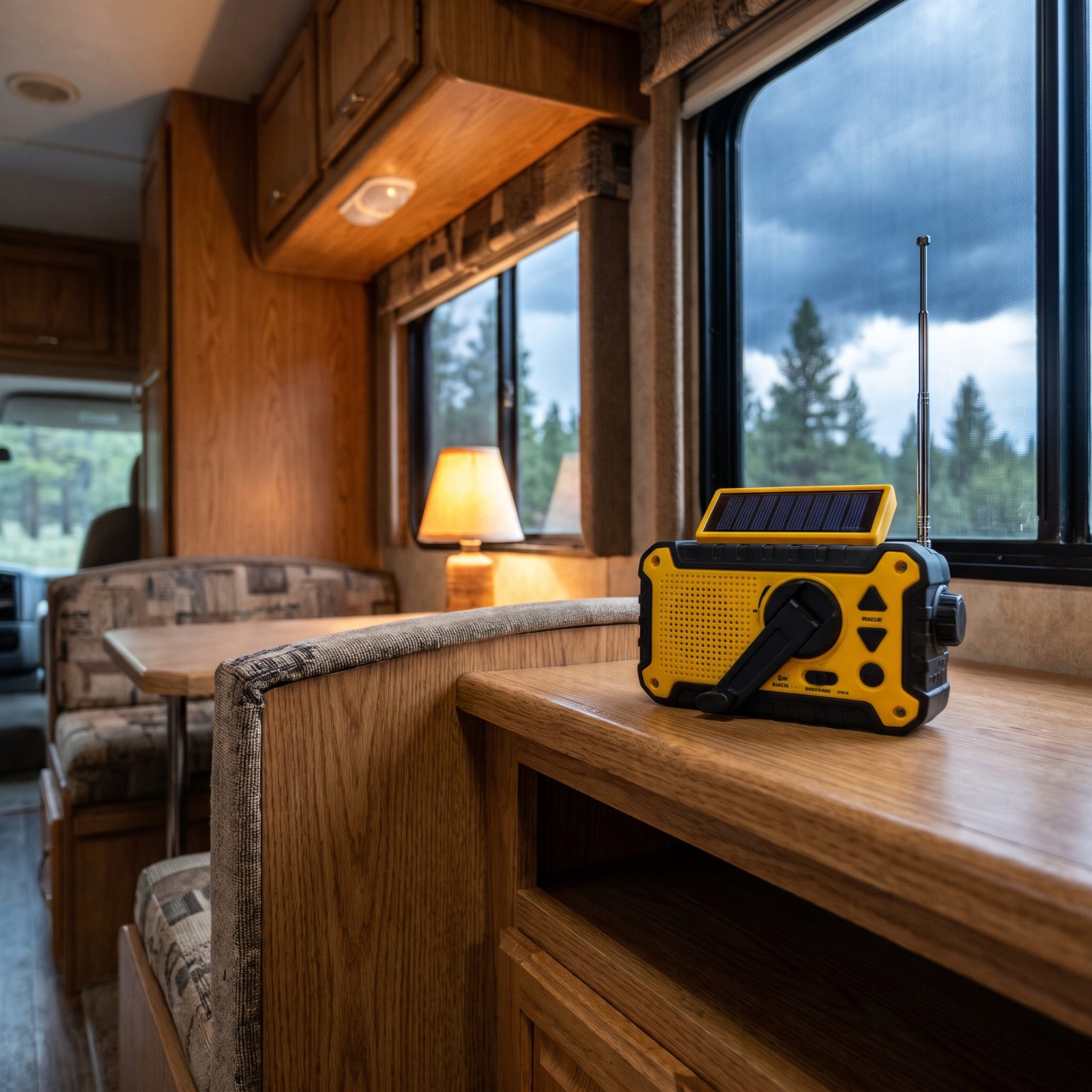
Cell service dies exactly where the weather gets interesting. A NOAA weather radio pulls alerts straight off the broadcast network, no bars required, and the good ones carry a tone alarm that trips in the night when a warning hits your county.
Get one that hand-cranks and takes solar, so a dead battery never leaves you deaf. It’ll charge a phone in a pinch too. The morning you wake to a tornado watch an hour before it reaches the park, you’ll stop thinking of it as clutter.
2. Paper Maps and a Campground Directory for When the Signal Vanishes
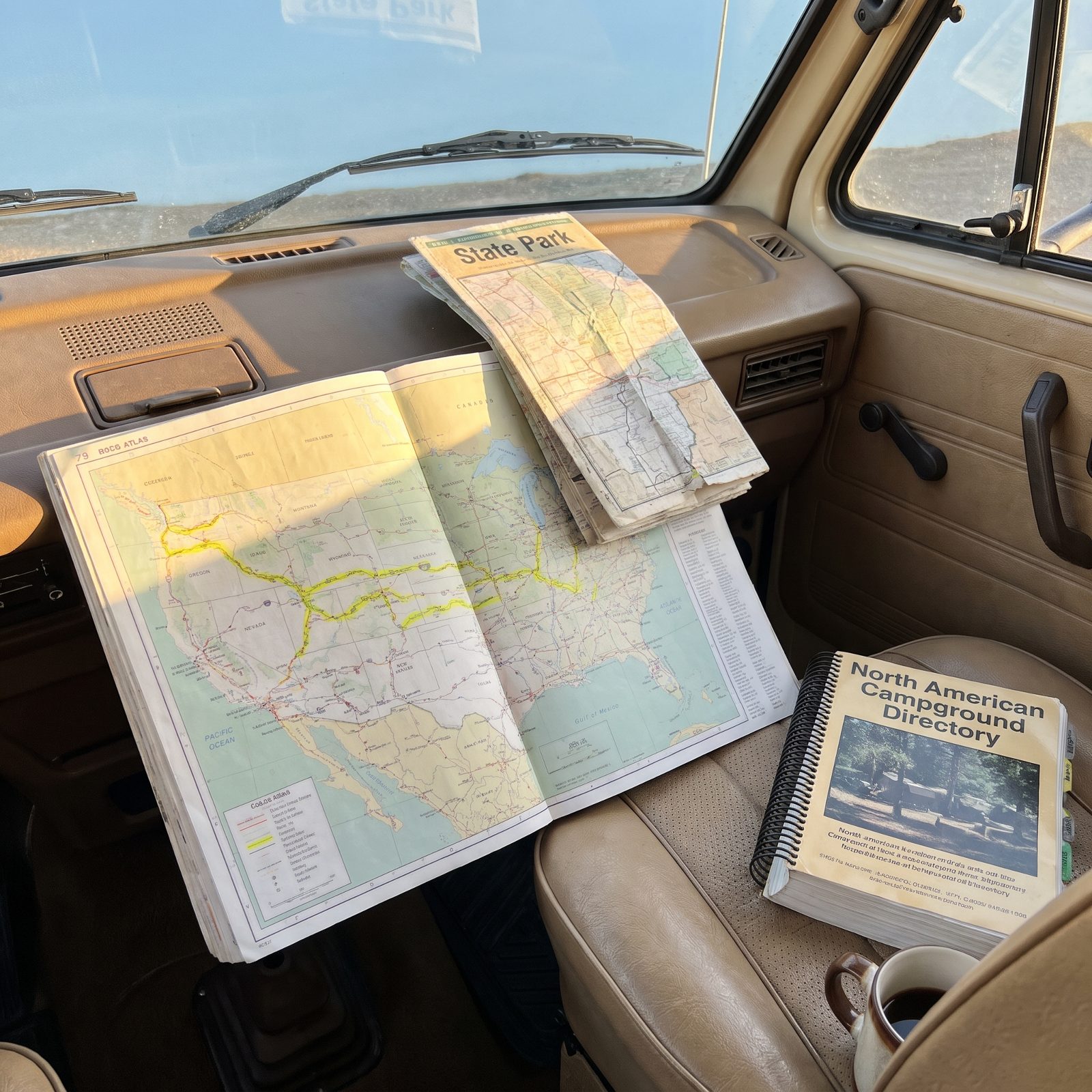
GPS sends more RVs down roads with low bridges and dead-end logging trails than just about anything else. A paper atlas never reroutes you under a 10-foot overpass, and it never loses signal in a canyon.
A current campground directory earns its shelf space too. It lists site lengths, hookup types, and the low-clearance warnings your phone app skips over. Picture yourself deep in a national forest with no bars, needing to know whether the next park even takes a 35-foot rig. A book in the door pocket answers faster than a spinning loading wheel ever will.
1. An Outdoor Rug and Leveling-Foot Pads for the Site That Isn’t Flat
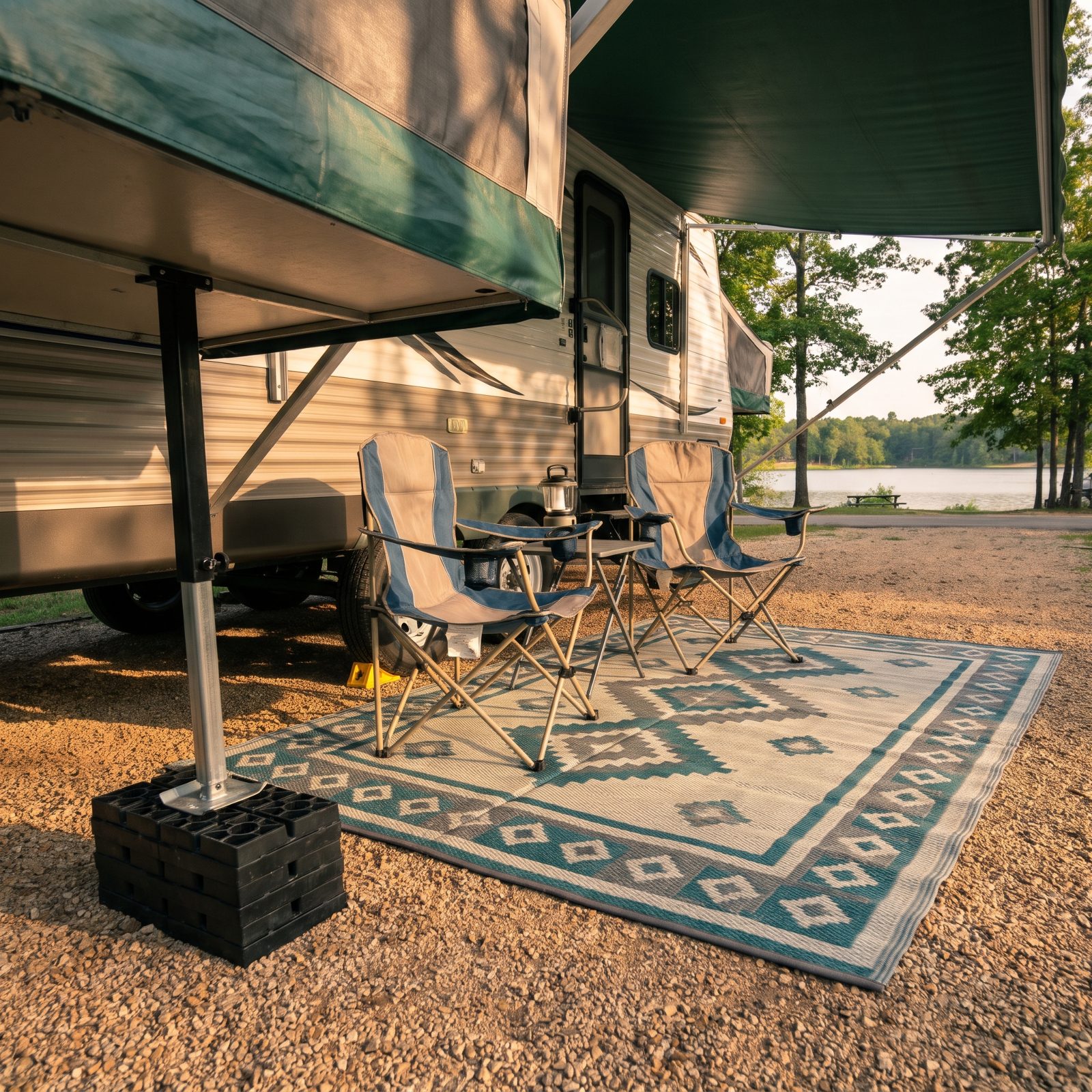
The rug keeps dirt, mud, and pine needles outside where they belong instead of tracked across your floor forty times a day. A reversible polypropylene one hoses clean and dries in the sun, and it turns a gravel pad into something that feels like a patio.
The foot pads are the unglamorous hero here. Set the support posts under your pop-out tent bunk on bare dirt and they sink, and the whole bunk end and its canvas sag and sway. Stack a few pads under each post to spread the load and you’ve got a solid platform even on soft ground.