
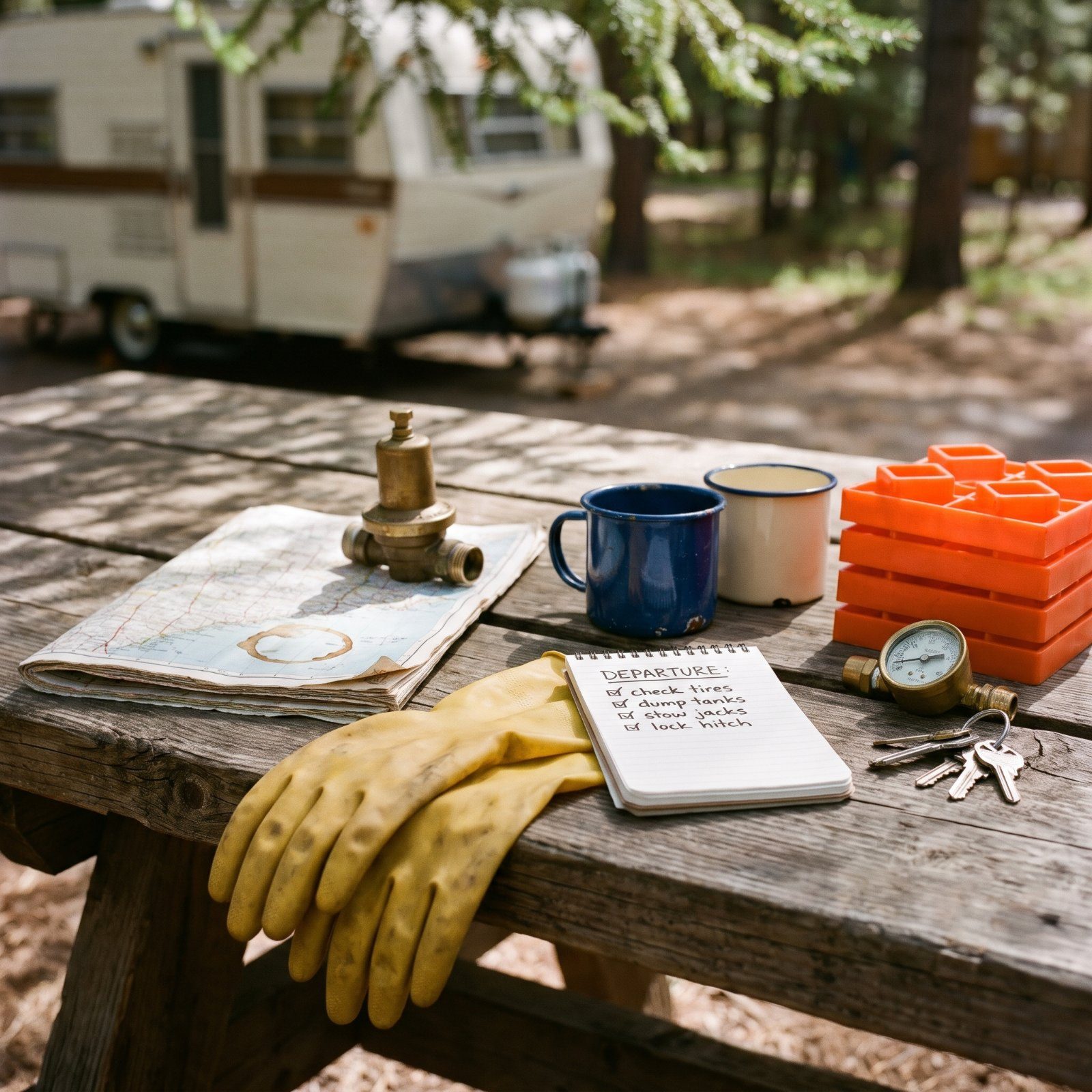
The dump station is a lie detector. Ten minutes at a campground sani-dump will tell you more about a person than a year of dinner conversations ever could. Who grabs the gloves. Who stands back and narrates. Who pretends to get an urgent phone call.
Please note that some of the images in this article were created with the assistance of AI.
An RV is a 300-square-foot pressure cooker on wheels, and pressure cookers don’t care about your first impression. The same wiring that makes a good business partner — carrying weight, planning ahead, staying calm when the plan folds — shows up on the road in ways you can actually watch. We’ve logged enough nights in a travel trailer to notice the patterns. Here are the habits worth paying attention to, and why the road and real life keep testing the exact same things.
18. You Take a Weekend Shakedown Trip Before Committing Cross-Country
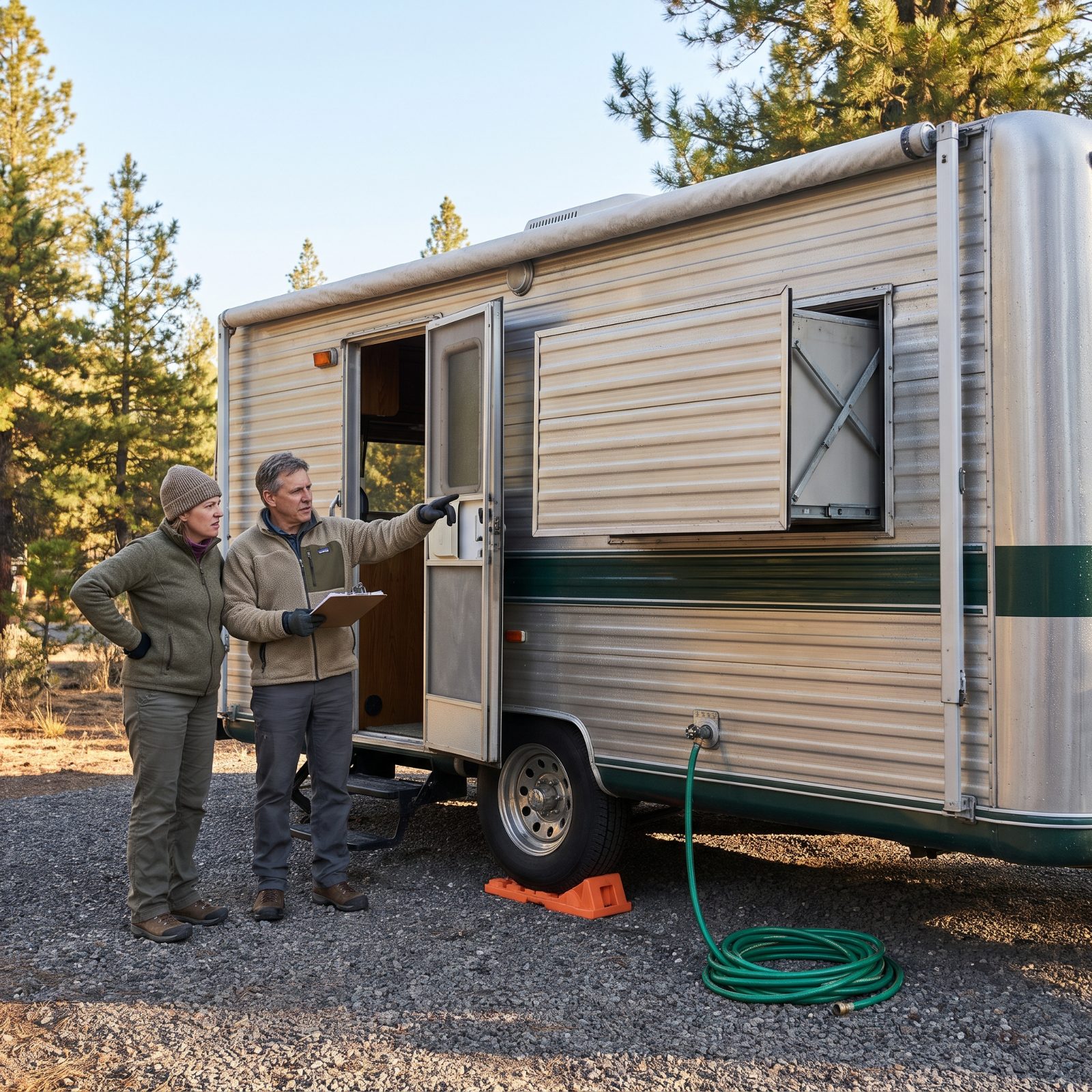
Nobody sane buys the rig and immediately points it at a 2,000-mile loop. You do one weekend close to home first — forty miles out, one night, see what rattles loose. The shakedown exists because small failures are cheap and big ones are not.
The same instinct runs every careful partnership. You pilot something before you sign the lease, take the small job together before the big one, find out how someone handles a dead battery at a quiet campground before you find out how they handle it at midnight in the rain.
Psychologists call this low-stakes trust testing. It works because it front-loads the surprises back when they’re still survivable. A partner who shrugs off the shakedown and wants to jump straight to the epic trip is telling you something — risk feels like an obstacle to them, not information.
17. You Compare Campground Budgets Before Anyone Touches the Keys
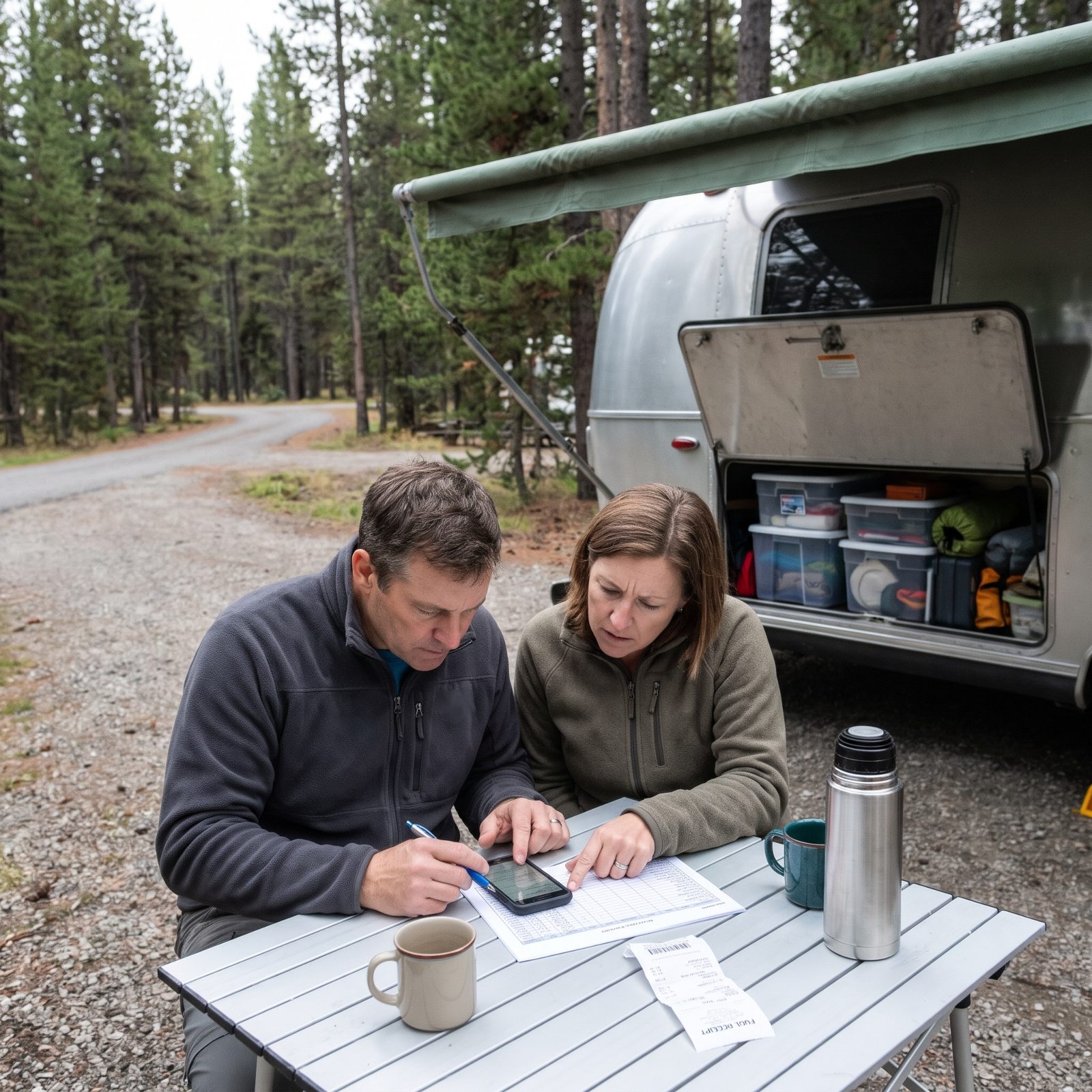
Before the engine turns over, somebody opens a notes app. Thirty-five a night at the state park, eighty at the KOA with the pool, or free on BLM land with no hookups. That conversation belongs at the kitchen counter, not at the registration window where it’s already too late.
First real tell right here. How two people talk about money when the stakes are small predicts exactly how they’ll talk when the stakes are large. A partner who waves it off with “we’ll figure it out” is the same one who waves it off when the furnace dies in October and the repair quote lands on the dinette.
Loss aversion makes money conversations feel heavier than they are, which is why so many people dodge them. The partner you want is the one who’ll sit in that mild discomfort and sort it out before you leave the driveway. Dodge it now and you’re just scheduling the argument for later, with interest.
16. Boondocking Versus Full Hookups Exposes Everyone’s Risk Tolerance
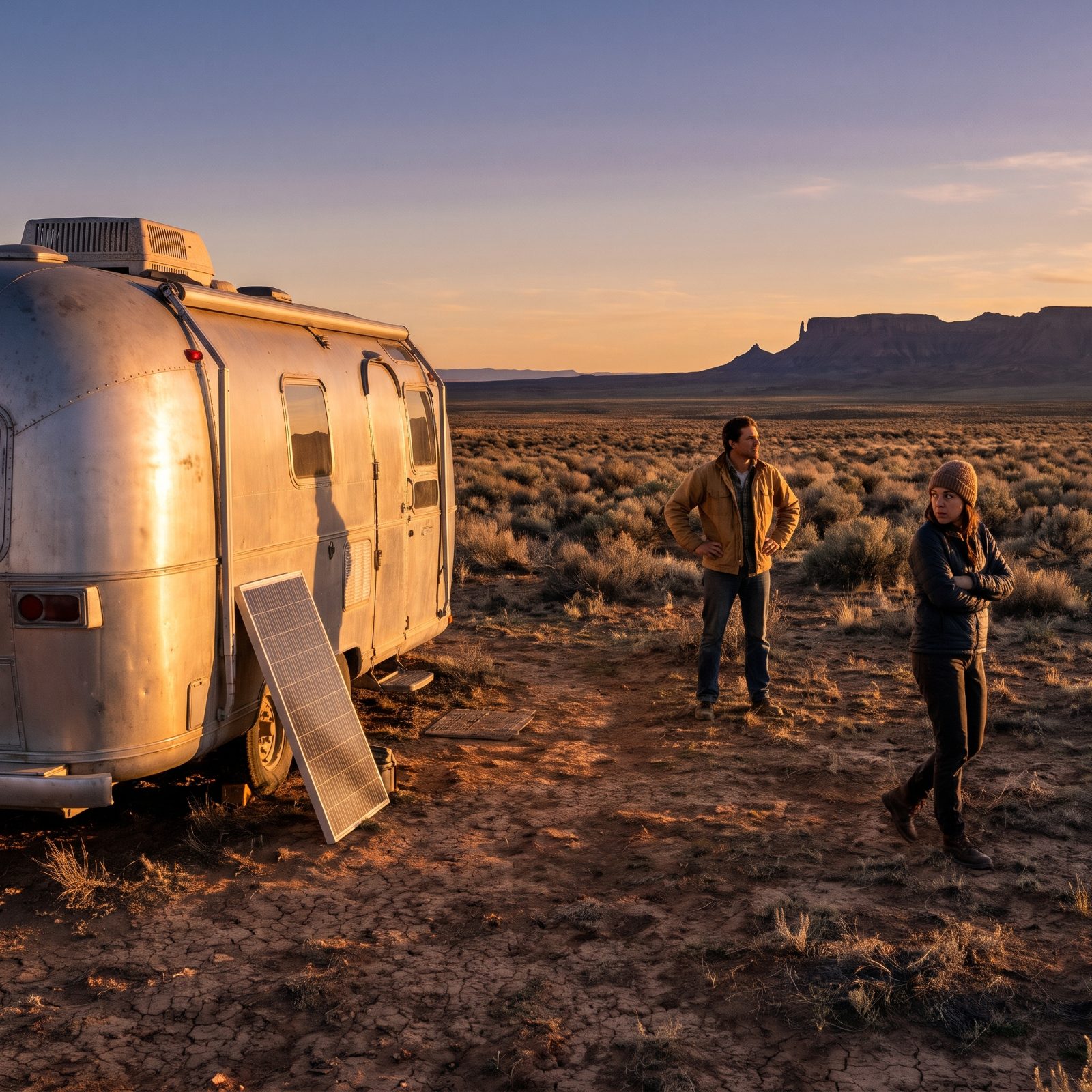
Here’s where people split. One person sees an empty patch of desert with no power, no water, no neighbors, and feels free. The other does the math on how many hours of battery stand between them and a dead fridge. Same spot, opposite nervous systems.
Boondocking reads risk tolerance fast. Some partners want the full-hookup pull-through with the pedestal and the sewer connection right there, everything guaranteed. Others want the wild site where you solve problems as they come. Neither is wrong. The mismatch is the problem, and the mismatch is what you’re measuring.
The question isn’t who’s braver. It’s whether you can stand each other’s definition of comfortable.
Every joint venture does this. One partner wants the salaried certainty, the other wants to bet the house on the idea. If you can’t name your tolerances out loud and build a trip that respects both, the desert will have the conversation for you — at a worse hour, with a warmer fridge.
15. Your 7 A.M. Departure Means Nothing Without Buy-In
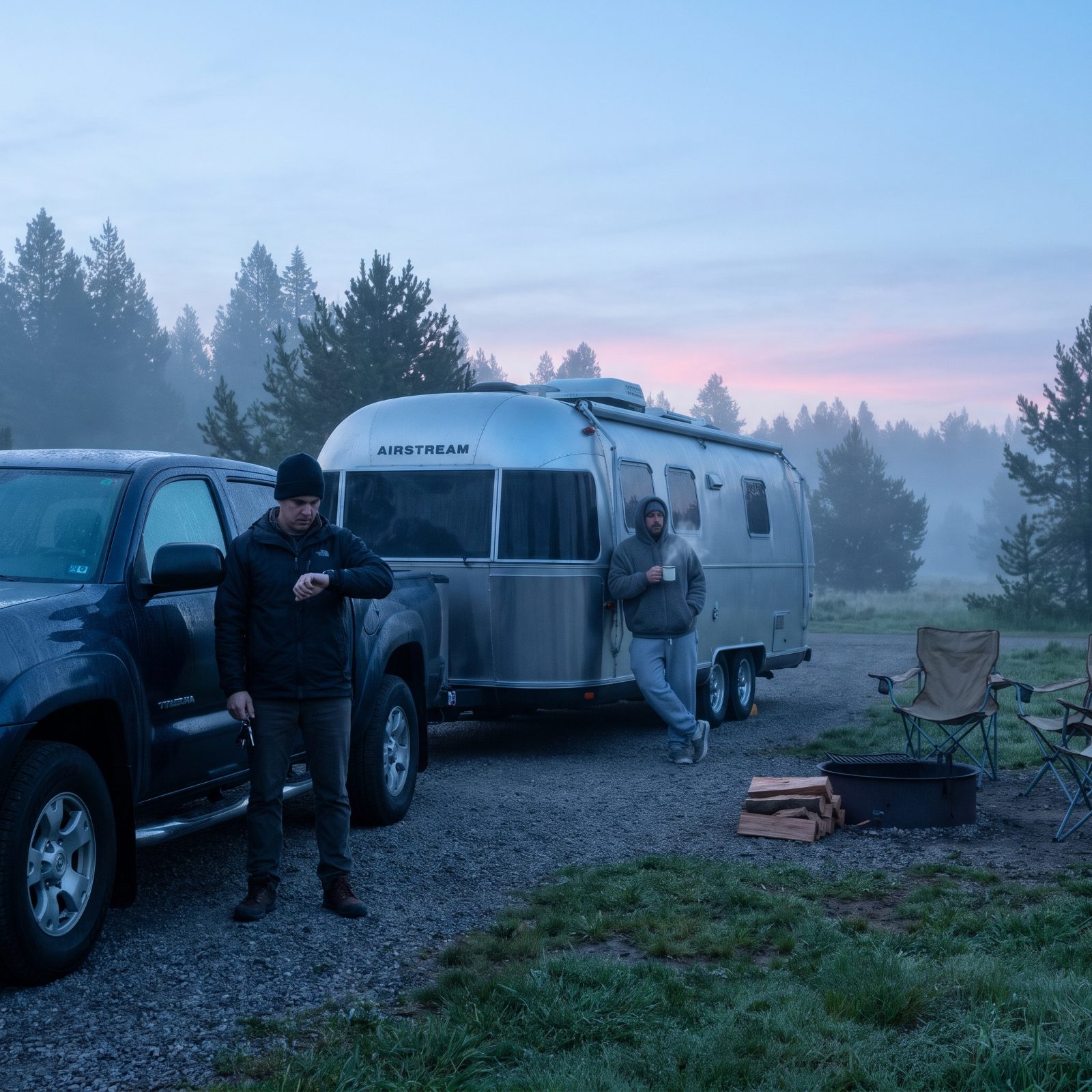
You say seven. You announce it the night before, picturing the empty highway and the coffee stop with no line. Seven comes. One of you is standing by the truck, keys in hand, checking a watch, while the other is still sipping coffee by the trailer door.
A departure time isn’t a plan unless both people actually agreed to it. One person declaring a schedule and the other nodding to end the conversation — that’s not agreement, it’s deferral. And deferral always collects its debt at the worst possible moment, usually with the keys already in hand.
This is the gap between compliance and commitment, and it’s the whole ballgame in any partnership. People follow plans they helped build. They drift from plans handed to them. The 7 a.m. departure that actually works is the one you both argued about and landed on together the night before.
14. Backing Into a Campsite Reveals Your Communication Style Fast
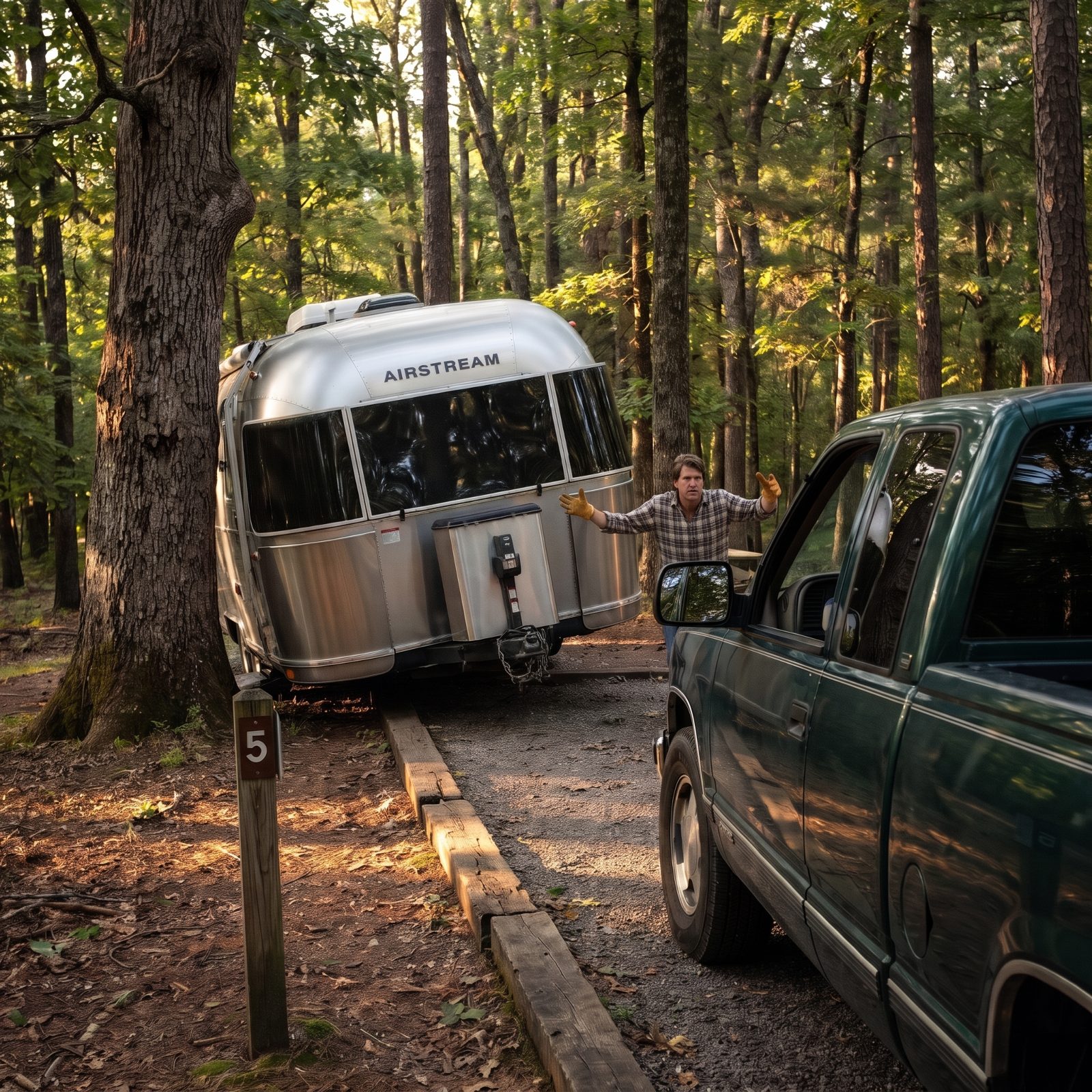
Backing a trailer into a wooded site, with one tree too close and the rear corner in the blind spot, is a two-person job that most couples turn into a one-person meltdown. The driver can’t see the corner that matters. The spotter can see it and can’t drive. Everything rides on the signals between them.
Watch who hollers and who stays even. Watch who blames the mirror and who adjusts. And watch whether “a little more” means six inches or three feet — because if those two numbers don’t match in your heads, you’re about to meet the tree.
Maneuvering a truck around a parked trailer is a clean read on how a pair handles real-time, high-stakes communication with no do-overs. Clear hand signals and an agreed vocabulary beat volume every time. The partner who stays calm and specific when the margins are thin is the one who’ll stay calm and specific when the stakes are anything else.
13. You Learn Who Grabs Gloves at the Dump Station
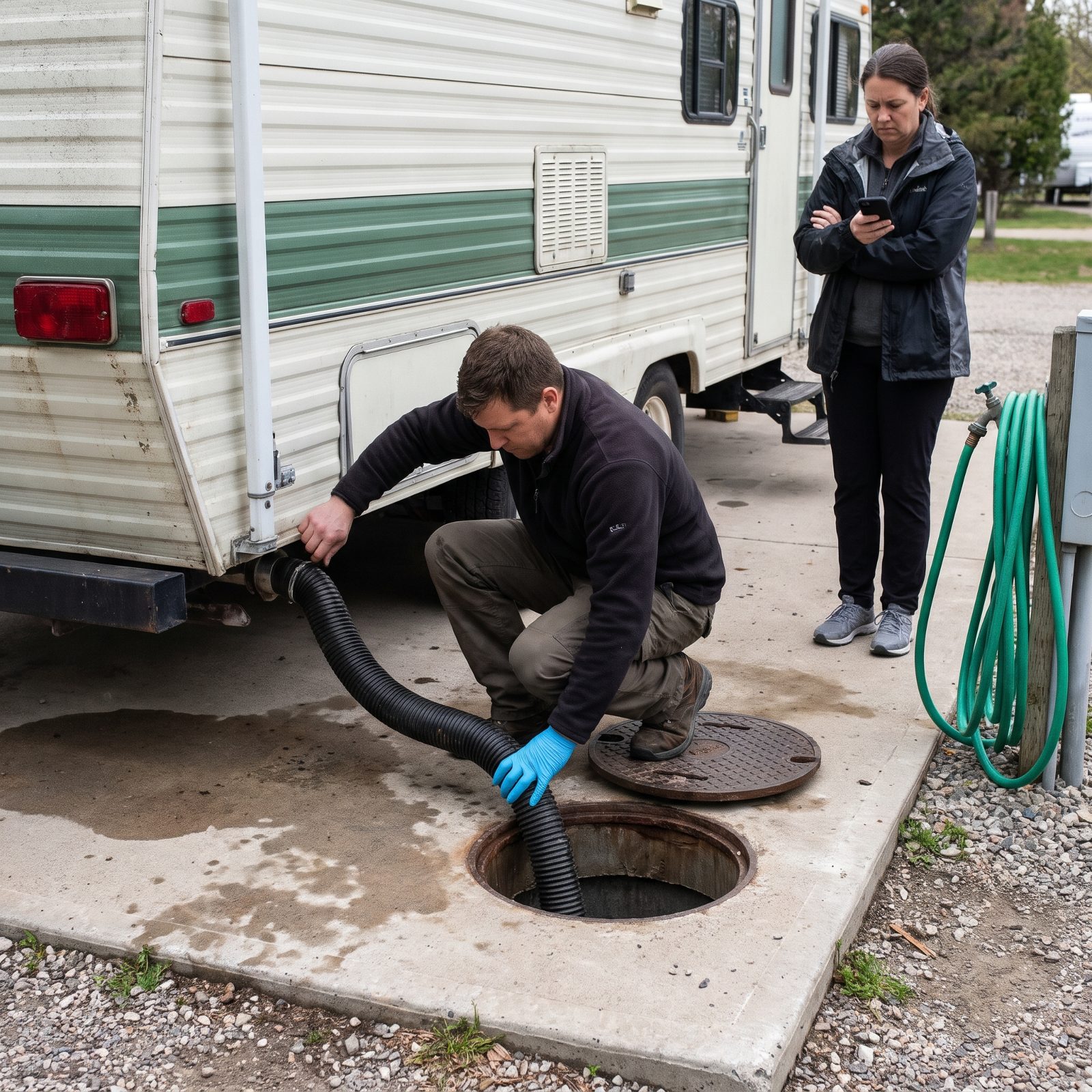
The dump station strips everyone down to who they actually are. No scenery to admire, no view to photograph, no pleasant part — just a hose, a tank valve, and a job nobody wants. Which makes it the most honest moment of the whole trip.
Somebody grabs the gloves and gets on with it. Somebody finds a reason to be elsewhere. Over months on the road, you learn exactly which one you’re traveling with, and the pattern never really changes.
Call it the unglamorous-work test. It’s the single best predictor of a durable partnership we know. Anybody will help with the fun parts. The person who shows up for the task with zero reward attached is the person who’ll show up when the whole thing stops being fun. That’s the one you keep.
12. Meal Plans Show Whether One Person Carries Every Detail

Someone planned the meals. Someone shopped, portioned the cooler, and worked out which nights have hookups for the slow cooker and which nights are cold sandwiches because you’ll be boondocking. On most trips that someone is one person, and the other genuinely has no idea it even took effort.
Meal planning is invisible labor, and invisible labor is where partnerships quietly rot. Not from big fights. From one person carrying a load the other doesn’t see, trip after trip, until the resentment has a weight of its own.
The read is simple. Does the planning get shared, or does it default to whoever cares most and then stay there forever? A partner who notices the unseen work and picks up a piece of it without being assigned one is rare and worth everything. In business they call it ownership. On the road it’s just whether you both eat without one of you simmering about it over the two-burner.
11. The Departure Checklist Reveals Who Respects Repeatable Systems
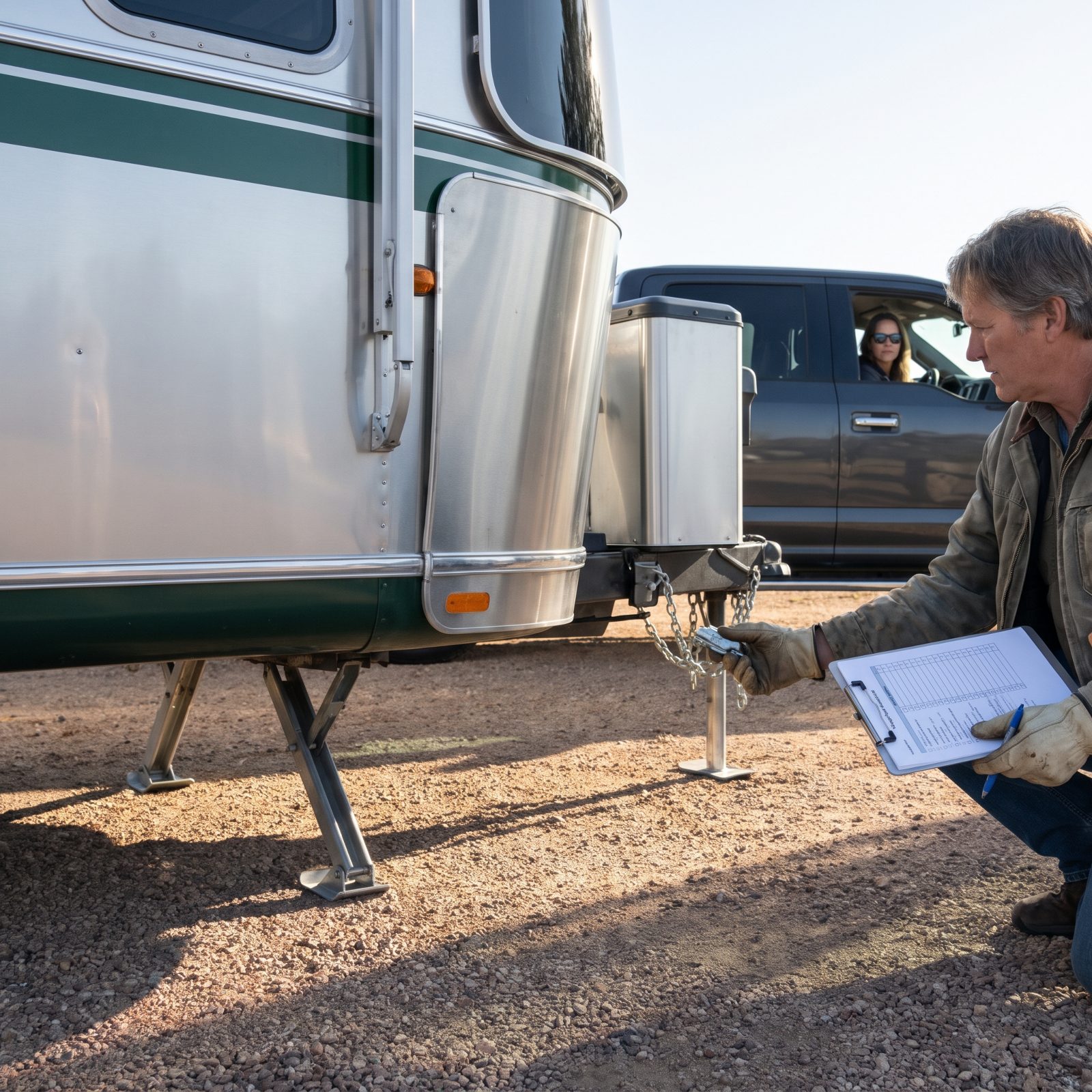
Every seasoned RVer has a departure checklist, because every seasoned RVer once drove off with the stabilizer jacks down, the TV antenna up, or the power cord still plugged into the pedestal. You make the list after the lesson. Then you run it the same way every single time, even when you’re dead sure you remember.
Some partners honor the list. Others roll their eyes at it and trust their memory — which is exactly how the awning ends up half out at highway speed. A checklist is a repeatable system, and respect for repeatable systems is one of the cleanest signals of a reliable partner.
- Systems don’t care how experienced you feel today.
- The step you skip is always the one that costs you.
- Discipline beats memory, every trip, forever.
Someone who follows the checklist on the boring, uneventful mornings is someone who’ll follow it on the one morning it saves the whole trip. That’s who you want holding the clipboard — and holding your end of anything.
10. You Notice Who Refills Propane Before It Runs Out
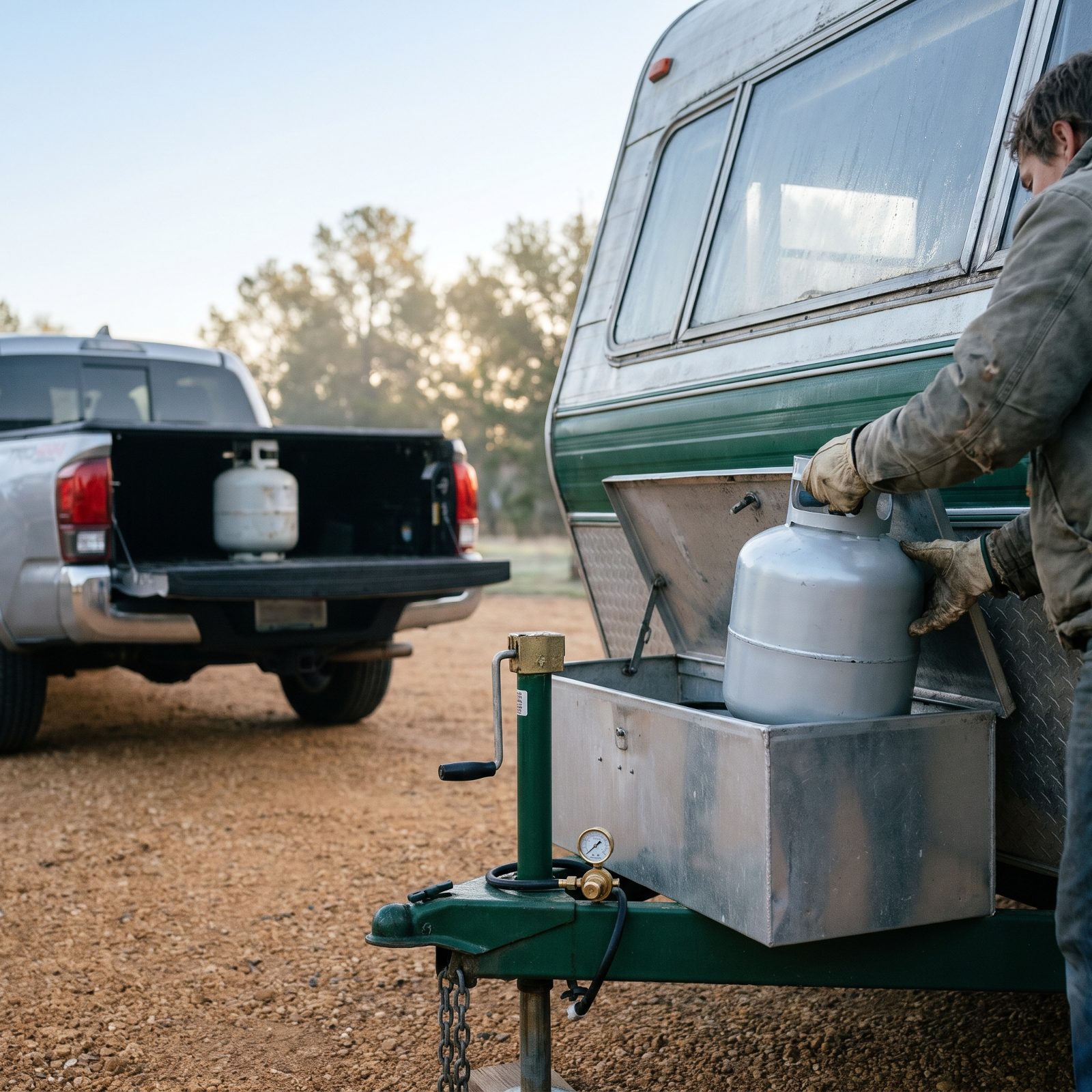
Two kinds of people on this earth. The ones who swap the propane tank when the gauge drops into the yellow, and the ones who find out it’s empty at 11 p.m. in January when the furnace clicks off and the trailer starts getting cold. You learn which one you’re with exactly once.
Refilling propane early isn’t really about propane. It’s about whether someone acts on foresight or only on crisis. Reactive people wait for the problem to announce itself. Proactive people see it coming and handle it while it’s still cheap and easy.
In any partnership this is the difference between a calm operation and a permanent fire drill. The partner who keeps the spare tank topped up, who checks the gauge without being asked, is managing risk quietly in the background so the loud emergencies never happen. You don’t always notice that person’s work. You absolutely notice its absence.
9. A Flat Tire Shows Who Solves and Who Spirals
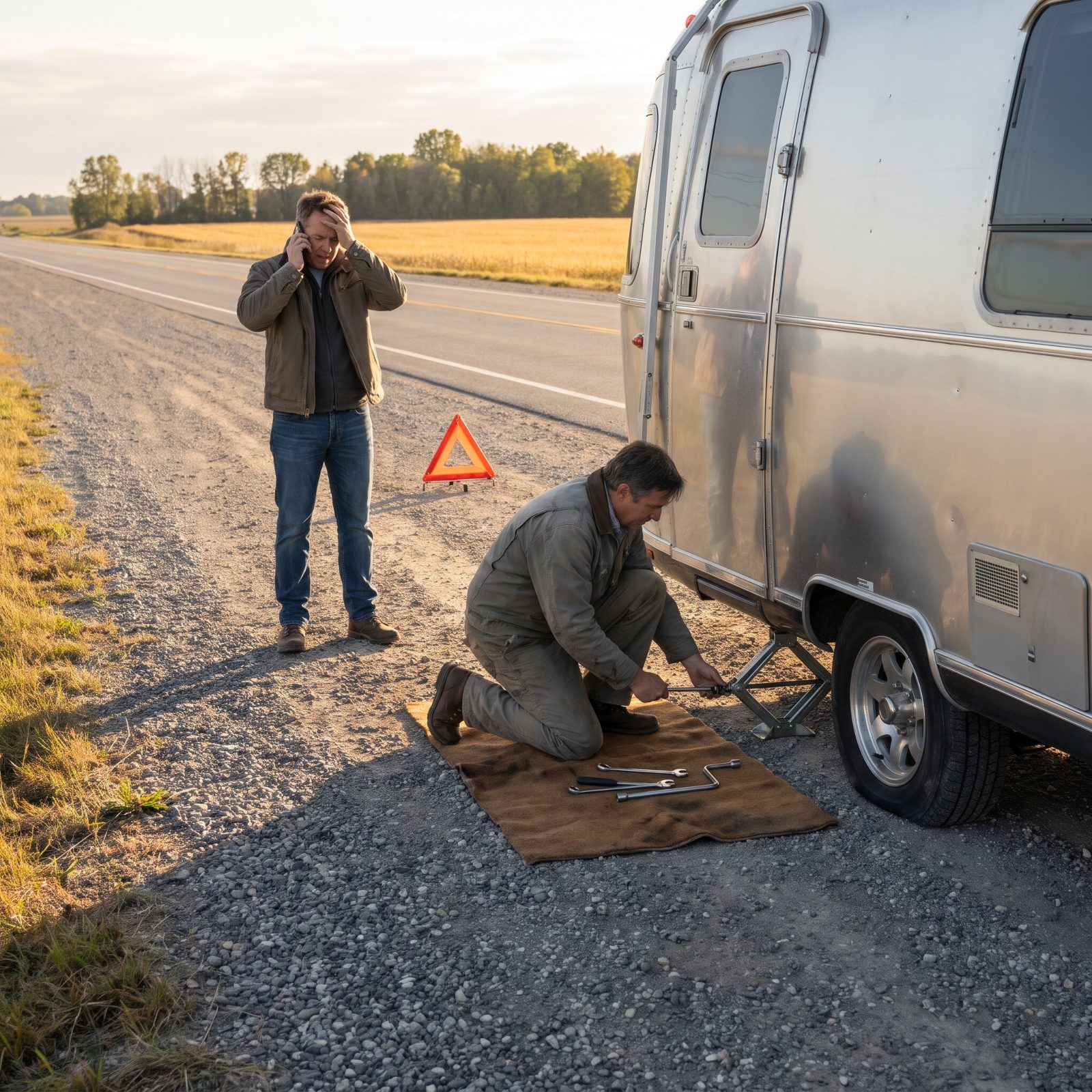
You’ll get a flat eventually. A blowout on the interstate, a slow leak discovered at the campground, a nail picked up on some forest road. It was never a question of if. The question is what the two of you become in the forty-five minutes after it happens.
One person drops into problem mode. Pull over safe, triangle out, jack staged, lug wrench found, spare down. The other sometimes drops into spiral mode — everything is a catastrophe, the trip is ruined, whose fault is this. Stress reveals the baseline you can’t see when things are easy.
This one matters enormously, because it mirrors every real crisis in a partnership. Not who’s technically skilled. Who stays functional when the plan breaks. The partner who gets quieter and more useful as the pressure rises is the one you want beside the road — and beside you anywhere else things can go wrong. Which, on the road and off it, is pretty much everywhere.
8. The Awning in a Windstorm Rewards Whoever Speaks Up
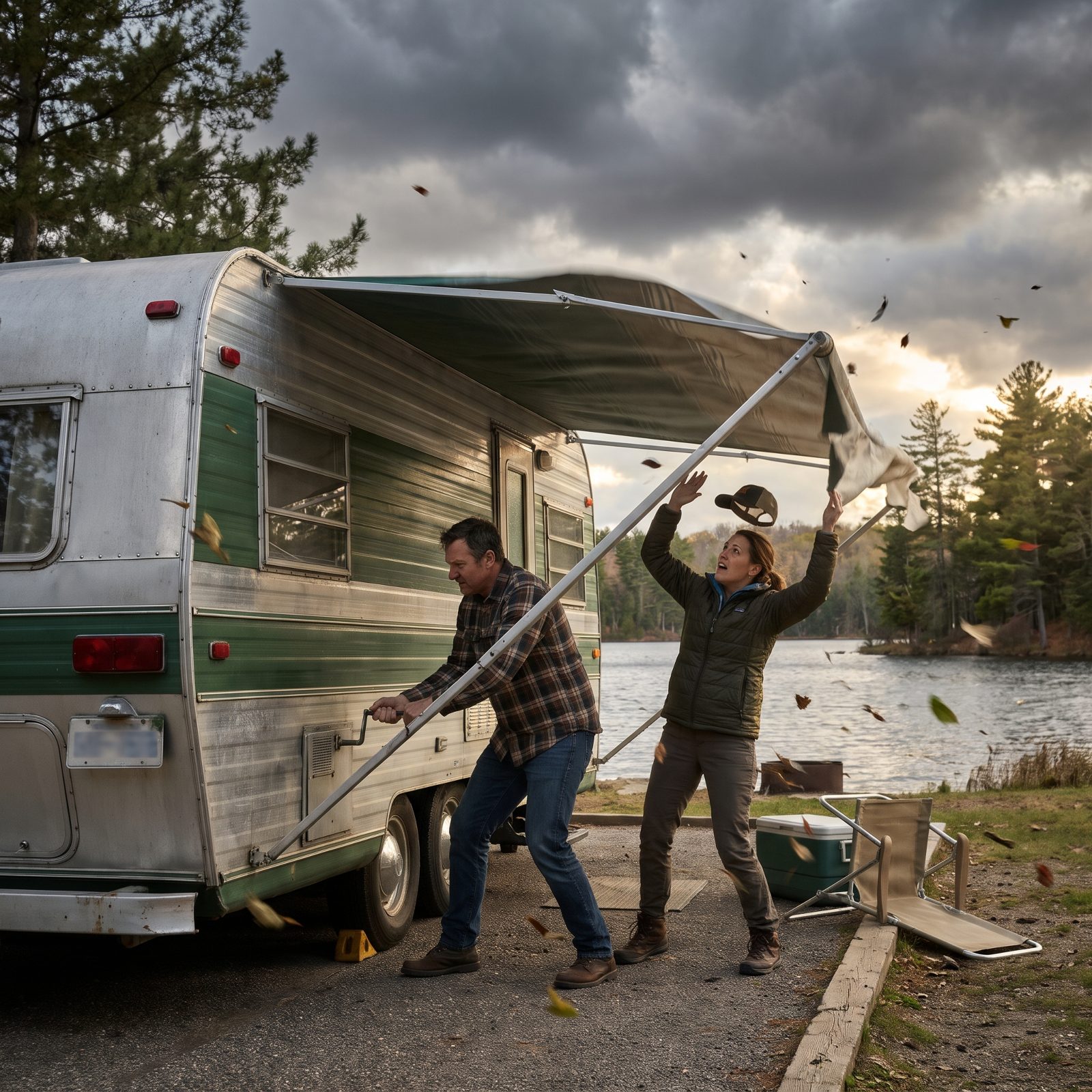
The wind picks up fast. One of you sees the awning start to buck and says it out loud, right now: roll it in. The other hesitates, wants to wait it out, figures it’ll settle. It doesn’t. The arm bends, and there goes a few hundred dollars and a ruined evening — all because nobody acted on the obvious thing before it became an expensive thing.
A good business partner does the same move in a meeting. They name the risk while it’s still cheap to name. No waiting for permission, no reading the room three times first.
Psychologists call the opposite problem the bystander effect. When nobody’s clearly in charge, everyone assumes someone else will act, and the gust wins. The companion worth traveling with doesn’t assume. They speak up even when they might be wrong, because being wrong costs less than a bent awning arm.
7. Leveling the RV Shows Who Can Accept Better Ideas
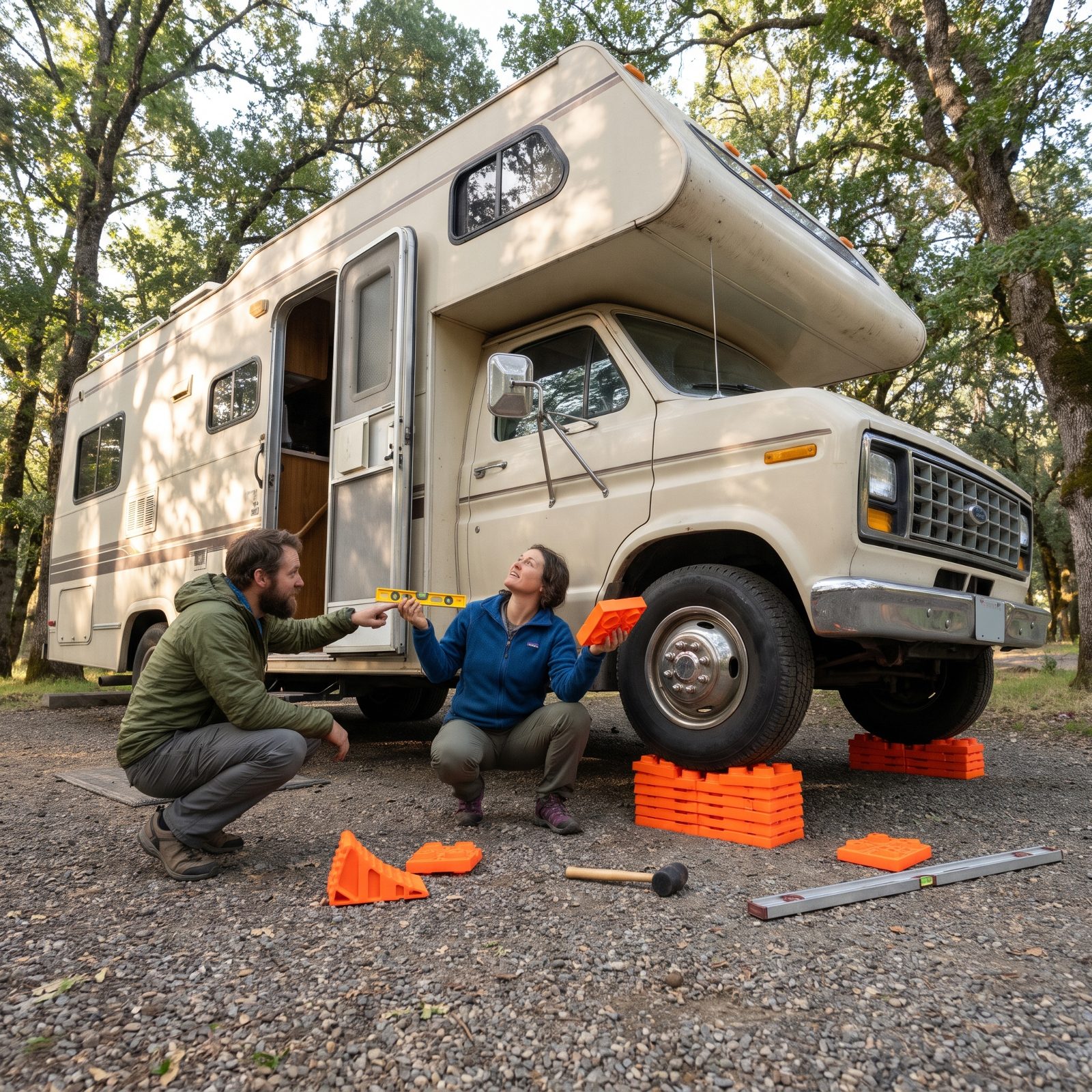
You’ve got the blocks stacked and you’re sure it’s level. Your travel partner glances at the bubble and says it’s still leaning left, try one more block under the rear. Here’s the whole test. Do you add the block, or do you defend your original stack because it’s yours?
Leveling an RV is small and low-stakes, which is exactly why it’s revealing. The person who can hear a better idea about something minor will hear one about something major. Dig in over a quarter-bubble and you’ll dig in over the budget.
Call it the endowment effect wearing camp clothes. We overvalue our own solution simply because it’s ours. A trustworthy partner, in business or on gravel, separates ego from outcome. They’d rather be level than be right.
We’ve watched good friendships survive worse than a block dispute. But if someone can’t take a tiny correction about a tire, that tells you plenty about the bigger drives ahead.
6. Route Changes Test Whether Decisions Stay Truly Shared

The plan said north to the coast. Then a storm shows up on the radar, or a friend texts about a better spot two hours east, and now someone wants to change the route. Watch what happens next. Does the driver announce the new plan, or propose it and wait for a real yes?
A changed route is where you find out if decisions were ever shared or just narrated. The good partner loops you in before the exit, not after. They treat a reroute like a joint call because the gas, the time, and tomorrow all belong to both of you.
Plans change. Partnerships are tested by who gets a vote when they do.
Business runs on the same current. Priorities shift constantly. The colleague you can trust renegotiates out loud; the one you can’t just quietly swaps the plan and hands you the result. On a trip, that’s a wrong turn. In a company, that’s a problem with a bigger fuel bill.
5. You Set Rules Before Friends Join the Campsite
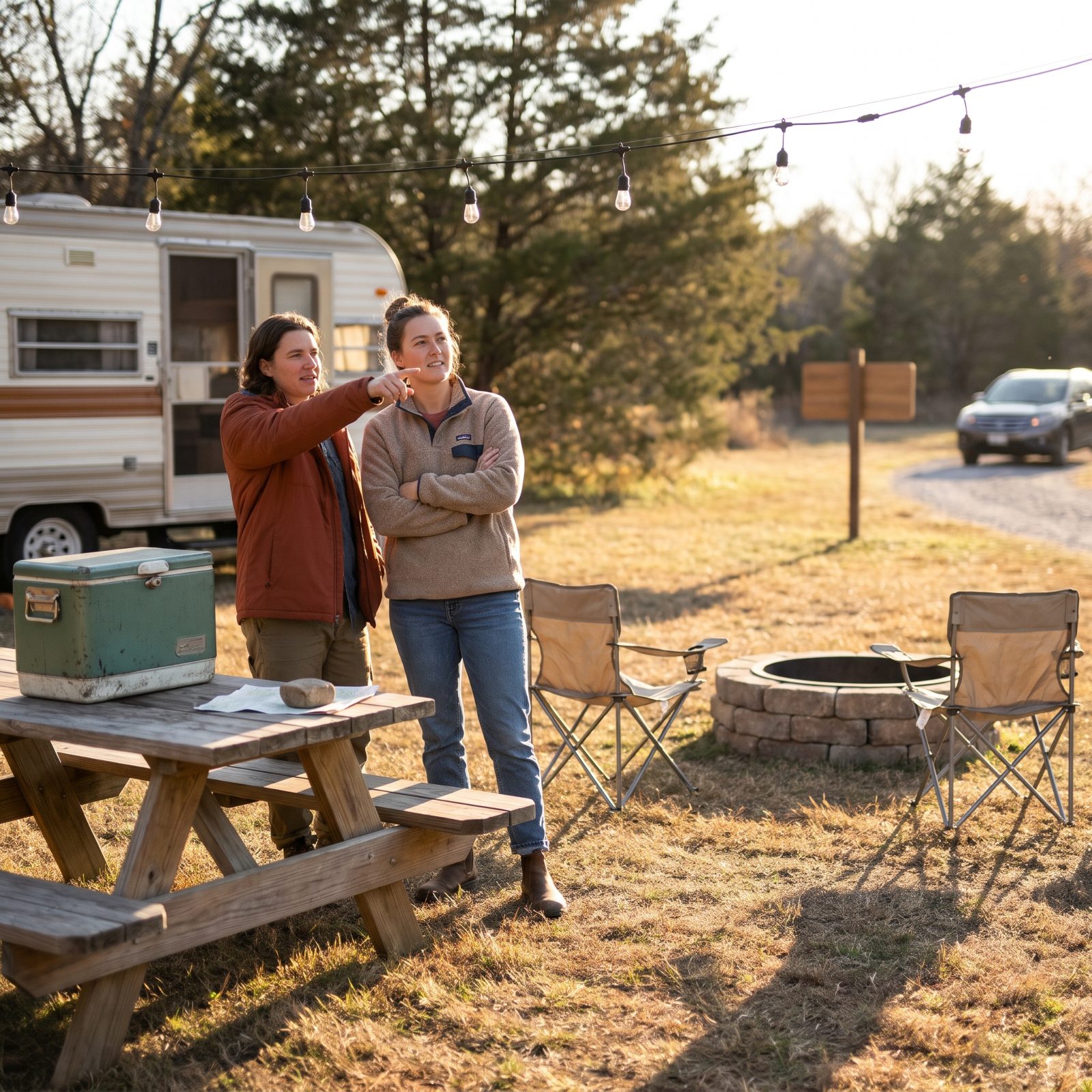
Friends are driving in to share your site for a few nights. The smart move happens before they arrive: you and your travel partner decide the house rules. Quiet after ten. Dishes get done the night of. Generator off during neighbors’ naps. You agree on it together, then present it together.
That little pre-brief is the tell. A reliable companion wants the boundaries set before the pressure’s on, not improvised in the moment when someone’s feelings are already involved. Rules are easier to agree to when nobody’s the villain yet.
Same instinct runs every good partnership. You align on terms before the third party sits down, and you don’t wing it and hope.
4. A Closed RV Door Can Protect Needed Solo Time
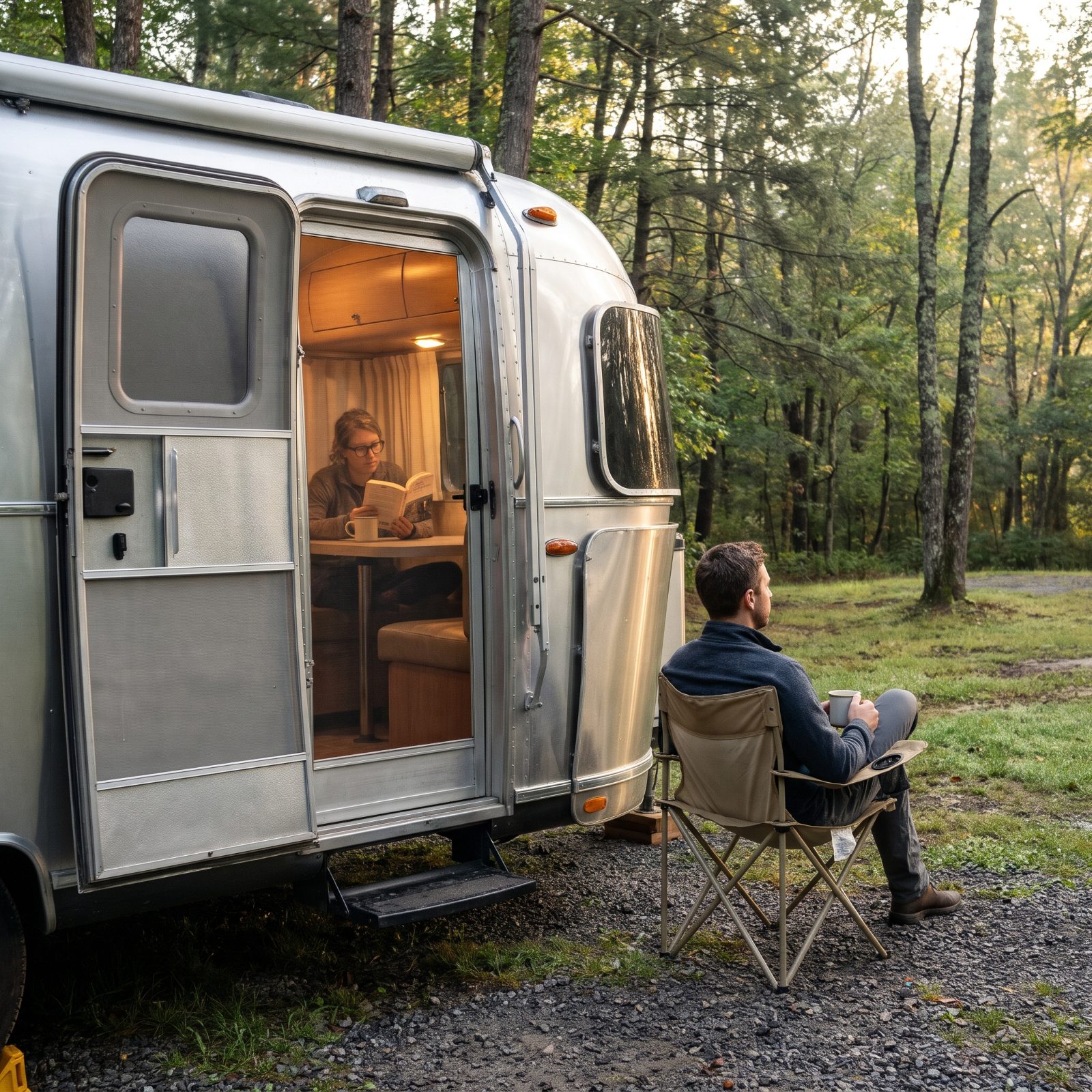
Two people in a few hundred square feet for a week straight. At some point one of you closes the door, puts on headphones, or takes a long walk alone. The question is how the other person reads it — as a slight, or as normal human maintenance.
A compatible travel partner doesn’t take a closed door personally. They understand that time apart is what makes time together workable, and they refill their own cup without needing you to apologize for needing yours.
Business partners who last have the same literacy. They don’t demand constant contact to feel secure. They trust the silence.
We used to feel guilty stepping away in a shared rig, like we owed every minute. Wrong instinct. The healthiest companions we’ve traveled with waved us off and went back to their book — nobody keeping score. Just two people who know closeness isn’t the same as proximity, and that a shut door is sometimes the kindest thing in the camper.
3. A Shared Fuel Card Demands Receipts, Not Good Intentions
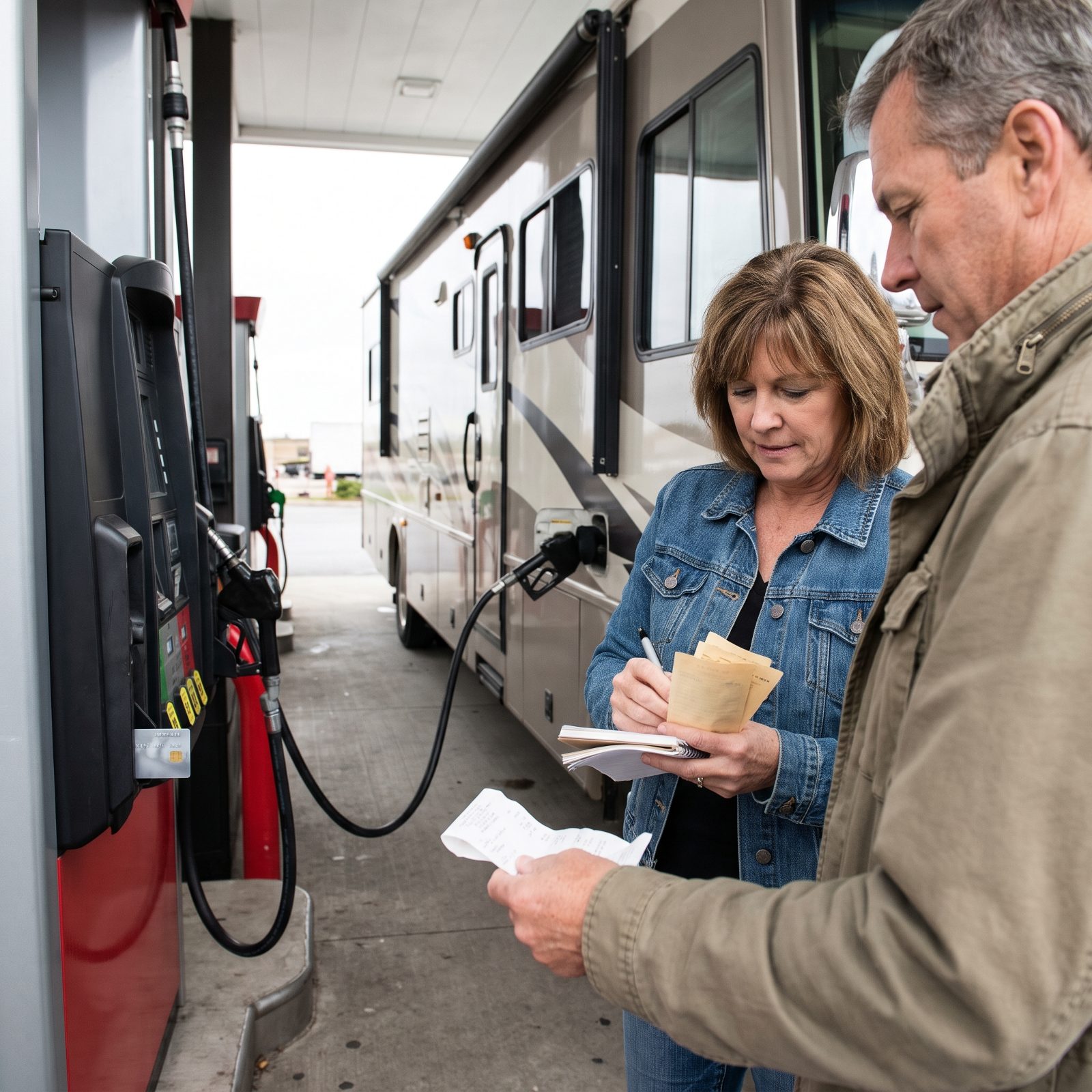
You split fuel on a shared card. Easy, until it isn’t. The partner you want keeps the receipt, logs it, and settles up at the end of the week without being chased — not because they’re suspicious, but because clear books keep friendships clean.
The partner you don’t want says don’t worry about it, we’ll figure it out later. Later never shows up with numbers attached. It arrives as a vague feeling that someone paid more, and vague feelings about money rot a trip from the inside.
Here’s where good intentions fail and systems win. Trust isn’t a vibe. It’s a paper trail both people can see.
2. Campground Chitchat Reveals Who Represents the Team Well
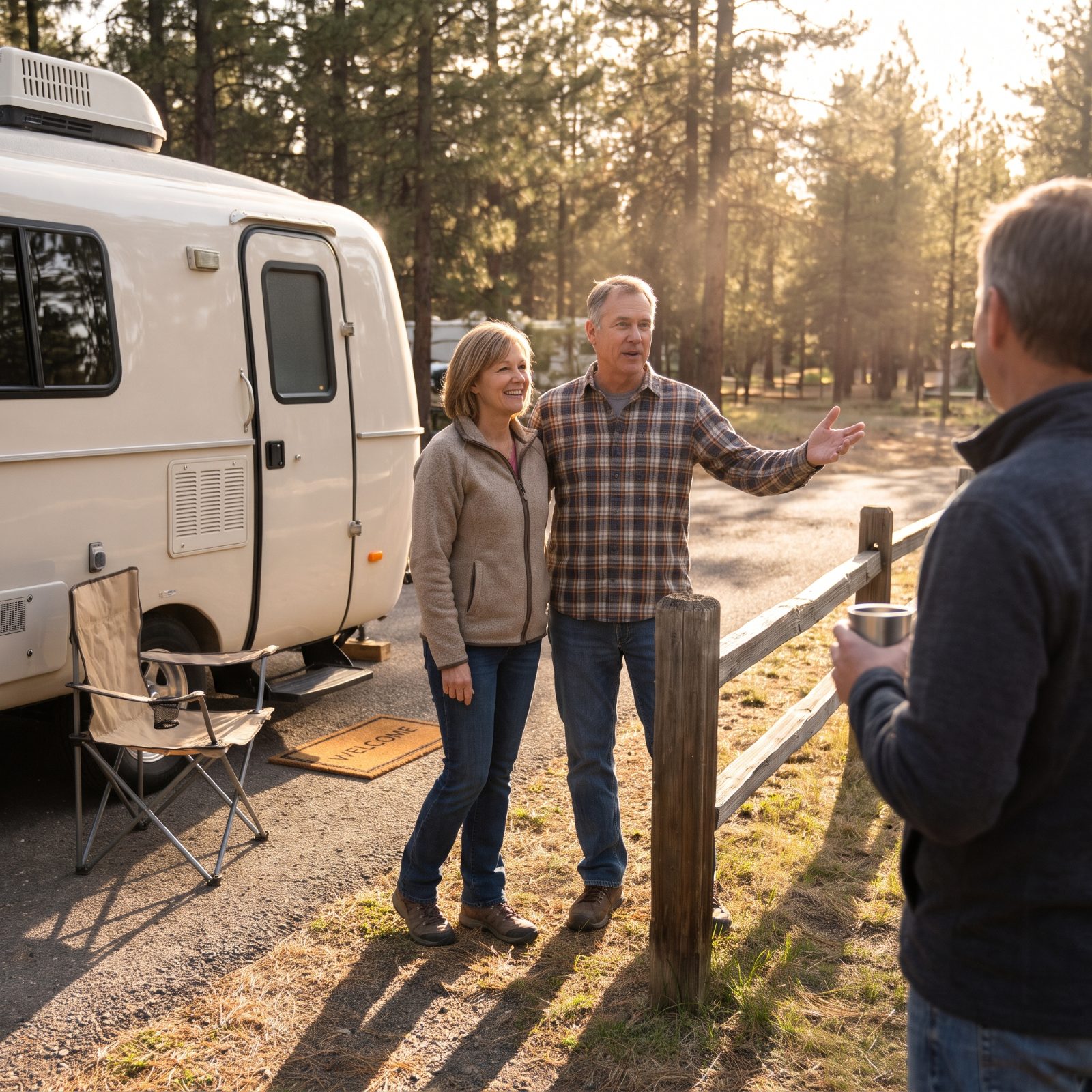
A neighbor wanders over to admire the rig. Watch how your travel partner handles it. Do they talk as a team, say “we,” fold you into the conversation? Or do they take all the credit, tell the whole story as a solo act, and leave you standing there like a bystander at your own campsite?
Casual chitchat is a free audition for how someone represents a partnership when you’re not the one talking. The good one makes you look good without being asked. They know the name on the site is both of you.
In business this is the colleague who says “our project” in the hallway, not “my project.” Small word. Big signal. It tells everyone within earshot whether you’re credited or erased.
1. You Need an Exit Plan Before Sharing an RV Loan
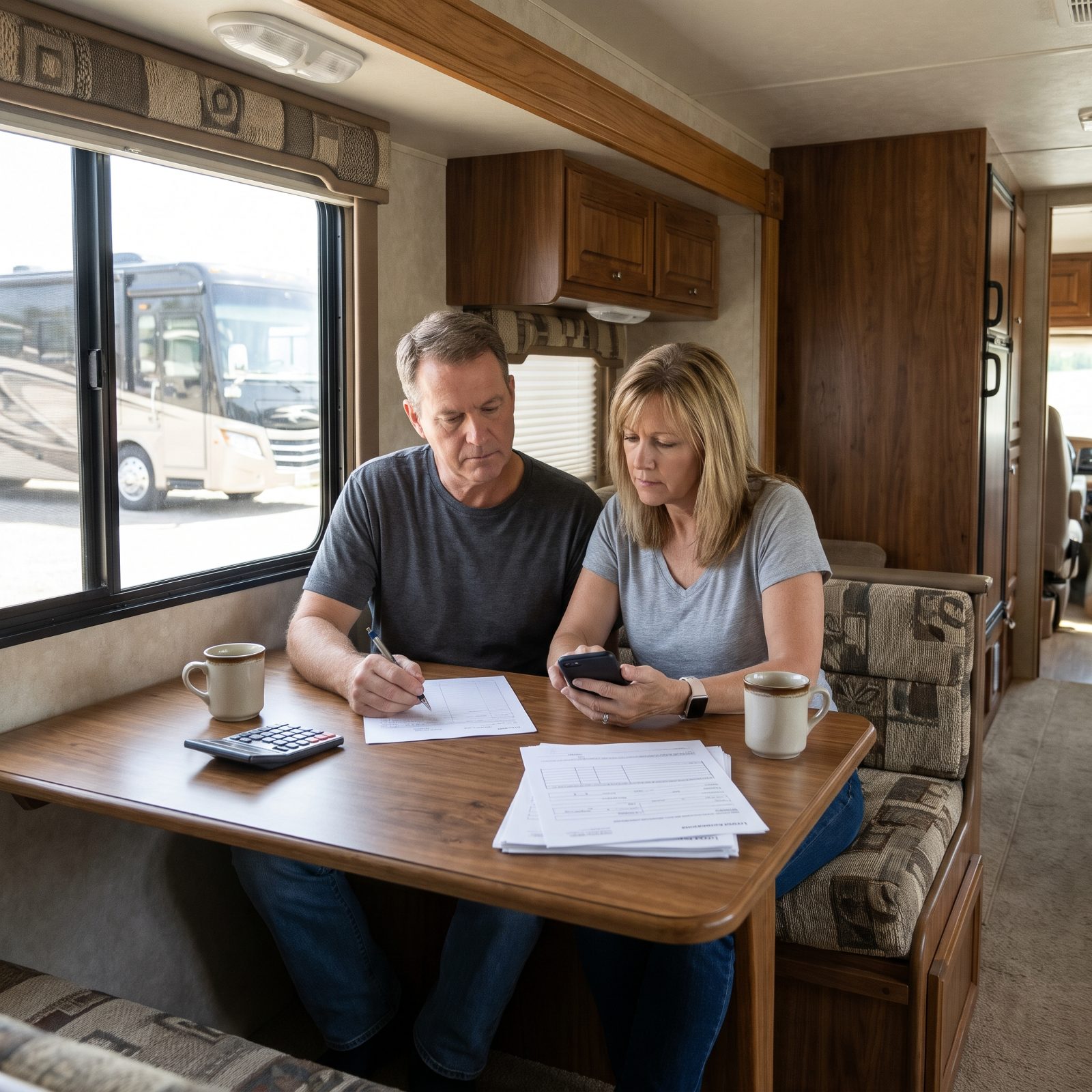
Co-signing an RV loan feels like the ultimate vote of confidence. It can also be the fastest way to torch a friendship. The partner worth binding yourself to is the one who, before a single signature, asks the uncomfortable question: what happens if this doesn’t work out?
They want the exit written down. Who keeps the rig. Who buys the other out. What a fair split looks like if one of you wants off the road in a year. Not because they expect failure, but because planning for it is how two people stay fair when the goodwill runs thin.
The partner who waves off the exit talk, who says we’ll be fine, we don’t need all that — that’s the one you’ll be untangling things with in small claims court someday. Avoiding the hard conversation isn’t optimism. It’s a bill arriving later.